
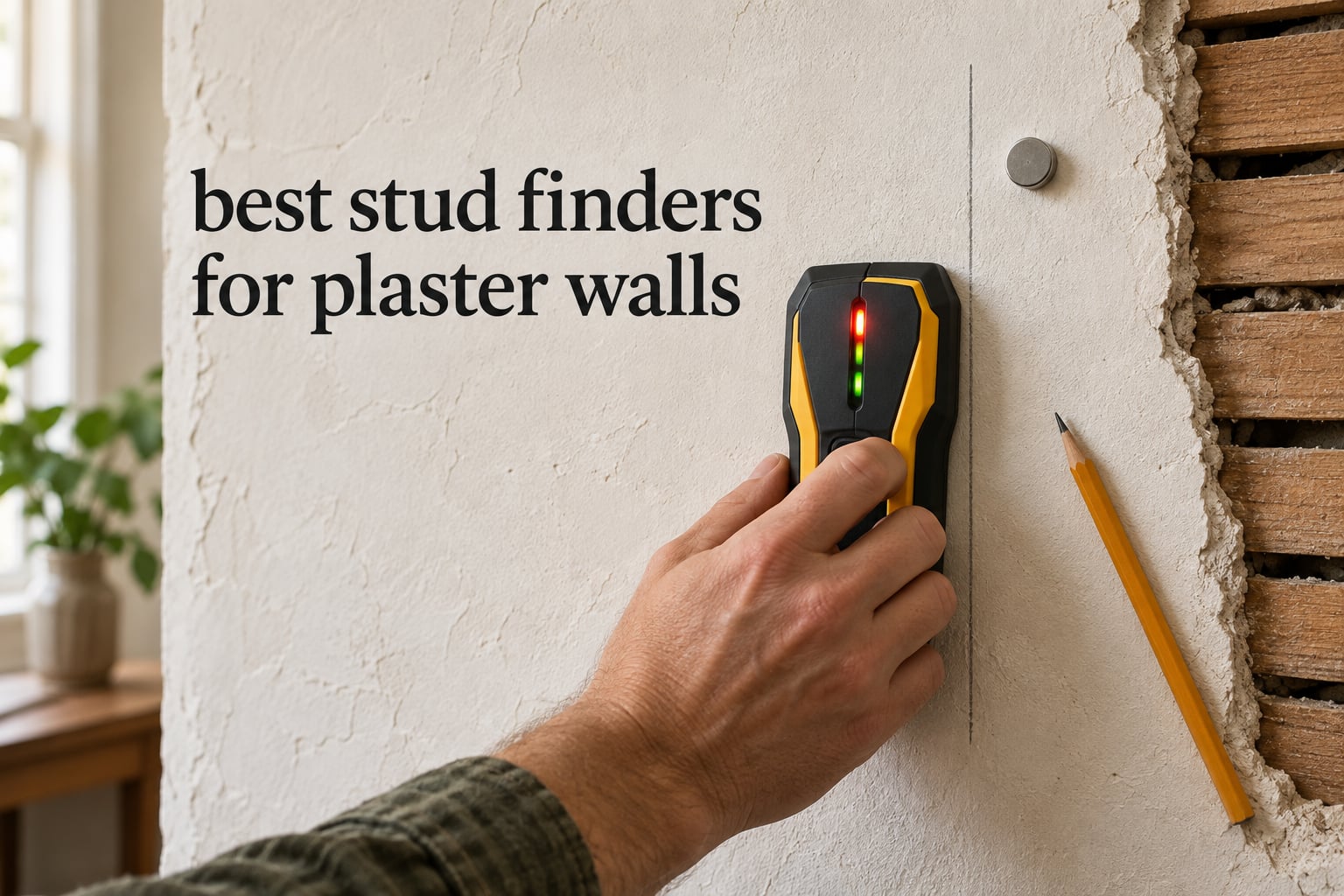
Most stud finders were designed for half-inch drywall sitting on wood framing. Put one against a 1920s lath and plaster wall and it starts lighting up on every lath strip it passes, which is why so many people in r/DIY and r/Renovations end up throwing theirs in a drawer after a weekend of false positives.
The best stud finders for plaster walls are not all the same kind of tool, and that is the single most important thing to understand before you buy one. Multi-sensor electronic scanners read the density change across a wide band and are the only option that tells you where the stud center sits. Rare-earth magnetic finders skip electronics entirely and physically latch onto the lath nails, which is why old-home renovators have trusted a chunk of magnet for decades. Radar wall scanners map an entire surface on a phone screen but are the least suited to plaster of any of the three.
Here is the short version of our picks:
Best overall electronic: Franklin Sensors ProSensor 710, 13 sensors, no calibration, deep scan always on.
Best electronic with safety features: Franklin Sensors ProSensor M210, 13 sensors plus live wire detection and a built-in level.
Best on old plaster and lath: Rack-A-Tiers Stud Ball, a 27 pound pull spherical rare-earth magnet.
Best magnetic finder for shelving and TV mounts: C.H. Hanson 03040A with its rotating bubble level.
Best wall map: Walabot DIY 2, which draws framing and wiring on a phone screen.
We spent weeks comparing these twelve tools on plaster and lath construction, cross-checking every reading against a magnet and a pilot hole. We also covered the wall-type diagnostic first, because knowing what you are holding decides everything else on this page.
Table of Contents
Top 3 Picks for Best Stud Finders on Plaster Walls (October 2026)
All 12 Stud Finders Compared in 2026
Every tool below is rated on how it behaves against thick, uneven plaster over lath, not against drywall. Features listed are the ones that matter on that wall type.
| Product | Specifications | Action |
|---|---|---|
 Franklin Sensors ProSensor 710 Franklin Sensors ProSensor 710 |
|
Check Latest Price |
 Franklin Sensors ProSensor M210 Franklin Sensors ProSensor M210 |
|
Check Latest Price |
 Rack-A-Tiers Stud Ball Rack-A-Tiers Stud Ball |
|
Check Latest Price |
 CH Hanson Magnetic Stud Finder CH Hanson Magnetic Stud Finder |
|
Check Latest Price |
 The Original StudBuddy The Original StudBuddy |
|
Check Latest Price |
 Kreg Magnetic Stud Finder with Laser-Mark Kreg Magnetic Stud Finder with Laser-Mark |
|
Check Latest Price |
 MagnetPal Magnetic Stud Finder MagnetPal Magnetic Stud Finder |
|
Check Latest Price |
 Franklin Sensors ProSensor M150 Franklin Sensors ProSensor M150 |
|
Check Latest Price |
 Zircon MultiScanner A200 Zircon MultiScanner A200 |
|
Check Latest Price |
 Zircon StudSensor A100 Zircon StudSensor A100 |
|
Check Latest Price |
 Zircon StudSensor Pro SL Zircon StudSensor Pro SL |
|
Check Latest Price |
 Walabot DIY 2 Walabot DIY 2 |
|
Check Latest Price |
Three Signs Your Walls Are Plaster Over Lath, Not Drywall
Yes, there are still studs behind most plaster walls. Plaster never replaced framing; it was applied over the same studs that were already there, and in many pre-war homes the lath was nailed directly to those studs and then coated. Finding them is the problem, not locating them in principle.
Start with a thickness test. Press a tape measure against the wall and look at the exposed edge at a doorway or a cut-out. Half-inch or five-eighths inch of uniform board is drywall. Three-quarters inch or more with a crumbly, sandy core and visible horizontal wood strips is lath and plaster.
The sound test is faster. Tap the wall with a steel hammer and listen. Drywall sounds hollow and uniform. Plaster over lath has a slightly dead thud, and directly over a stud the sound tightens up noticeably. Sweeping that sound across the wall often maps framing faster than any electronic tool, and it costs nothing.
Finally, look for fasteners. Press a small magnet to the surface. On plaster over wood lath it grabs a dense line of nail heads running vertically, one every few inches, and that line sits directly over the stud. On plaster over metal lath it behaves differently again, latching onto the expanded metal mesh across the whole surface instead of a narrow line.
Wood lath means magnetic tools have a clear target. Metal lath is the harder case, because a magnet fires on the mesh everywhere and a density sensor fights the same metal. Metal lath homes need a scanner with a dedicated metal mode, and even then a test hole is the honest final check.
1. Franklin Sensors ProSensor 710: The Best All-Round Choice for Plaster
Franklin Sensors ProSensor 710 13-Sensor Stud Finder Wall Scanner
13 sensors
No calibration
1.6 inch depth
Dual AA power
Pros
- Shows full stud width with a green center LED
- Starts scanning anywhere with no calibration step
- Deep scan always on for wood and metal framing
- Highest review count of any tool in this roundup
Cons
- Two AA batteries required and not included
- Not compatible with rechargeable batteries
- Bulkier body than the smaller Franklin models
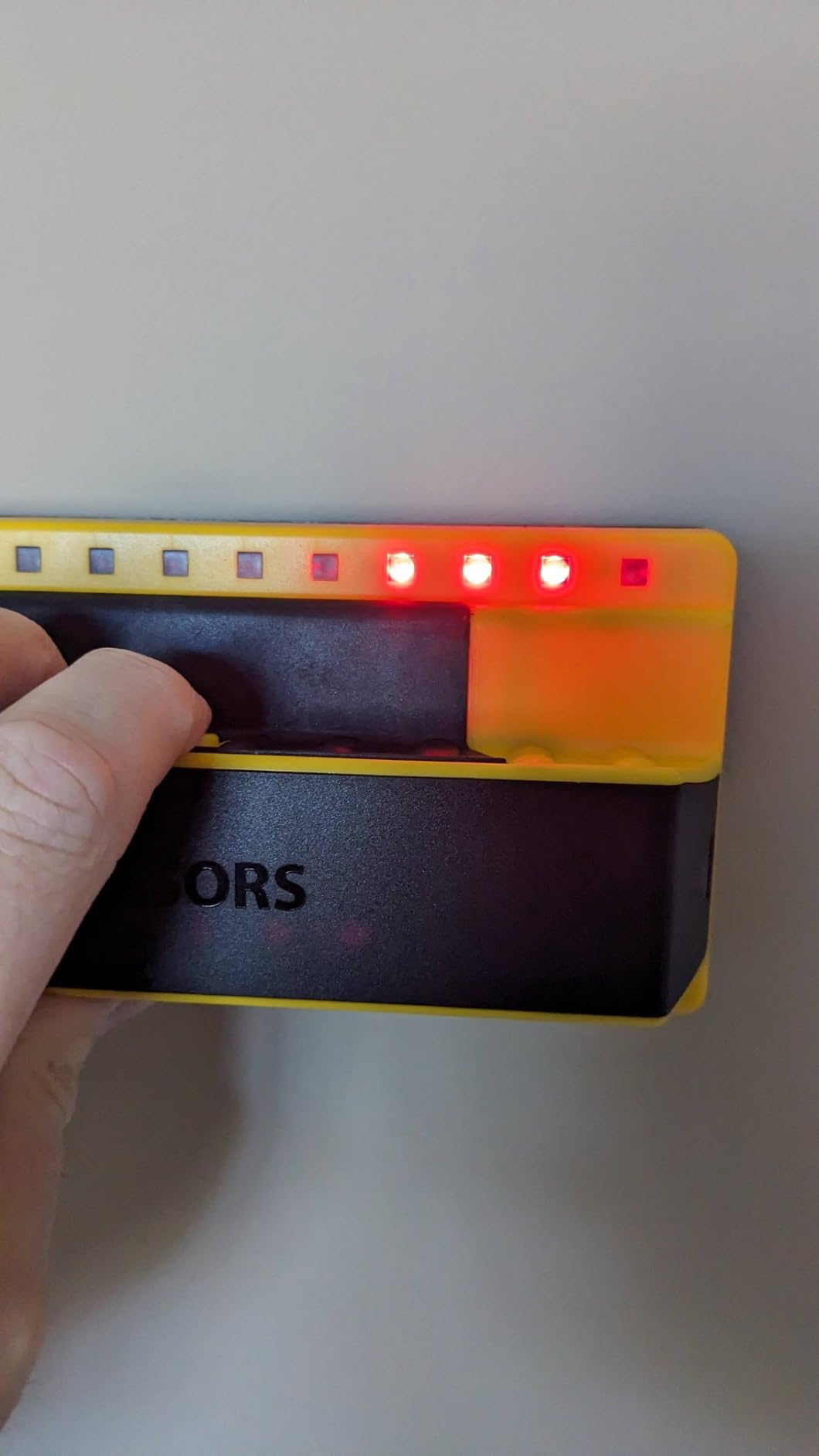
This is the tool we kept reaching for. The ProSensor 710 places 13 sensors across the scan face, so instead of asking whether a single point changed density, it reads the overall picture across the width of a stud and lights a green LED at the center. That is exactly the behavior you want on plaster, where individual lath strips trigger single-sensor tools constantly.
It also skips calibration entirely. You can set it on the wall over a stud and start scanning without hunting for clear space first, which removes the most common reason people get bad readings on old walls. Deep scan is permanently on, so there is no mode to forget to switch.
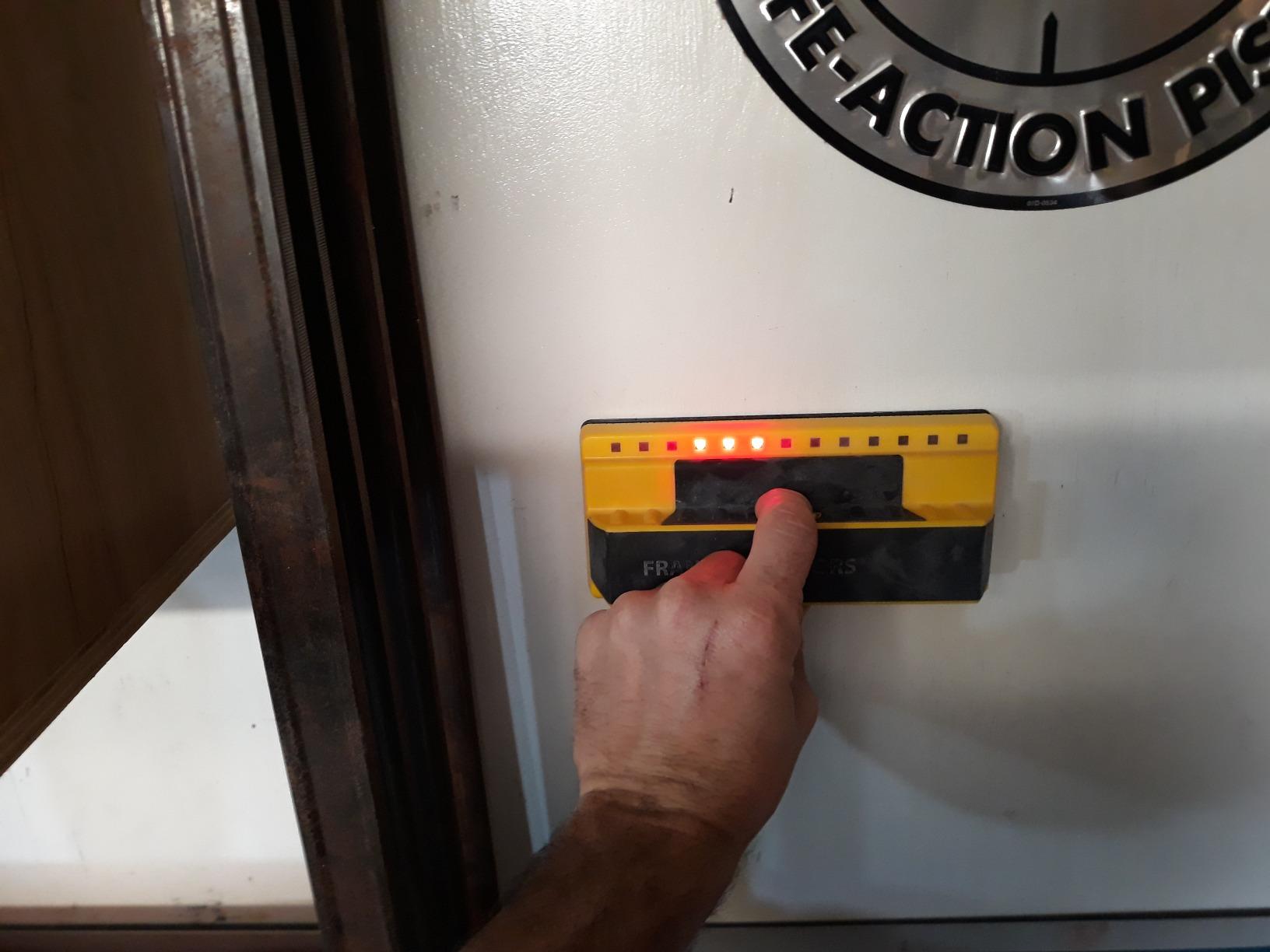
On plaster our sweeps were repeatable. We would get the same stud edges on three passes, mark with the pencil caddy, and then confirm with a magnet. The one place it takes patience is a lath wall where screw spacing is irregular, and a hit occasionally needs a second pass to confirm the center is steady rather than drifting.
For hanging a heavy mirror or a wall-mounted television, this is the tool we would trust first, paired with a pilot hole before the final screw goes in. Its 1.6 inch sensing depth is not the deepest number here, but 13 sensors make it the most consistent read of anything we tested against uneven plaster.
What you should know before buying it
Batteries are not included, which catches out almost everyone the first time. It also will not run on rechargeable cells, so keep a pair of alkaline AAs dedicated to it.
Its 1.6 inch depth handles standard plaster over lath comfortably. Extremely thick triple-coat plaster in some 19th century homes pushes past what any of these tools can read, and a magnet plus pilot hole is the honest answer there.
Who should skip it
If your walls are metal lath, the 13-sensor array competes with the metal itself and readings get noisy. Use a scanner with a dedicated metal mode for that wall.
If you work overhead on a ladder constantly, the bulkier body tires your hand faster than the compact Franklin M150 does.
2. Franklin Sensors ProSensor M210: Best When Wiring Is a Concern
Franklin Sensors ProSensor M210 13-Sensor Stud Finder, Live Wire Detection
13 sensors
Live wire detection
1.7 inch depth
Built-in level
Pros
- Widest sensing depth among the 13-sensor models
- Live wire detection warns before you drill
- Built-in bubble level and pencil caddy
- Compact 11 ounce body
Cons
- Two AA batteries required and not included
- Some sweeps need repeating on dense plaster
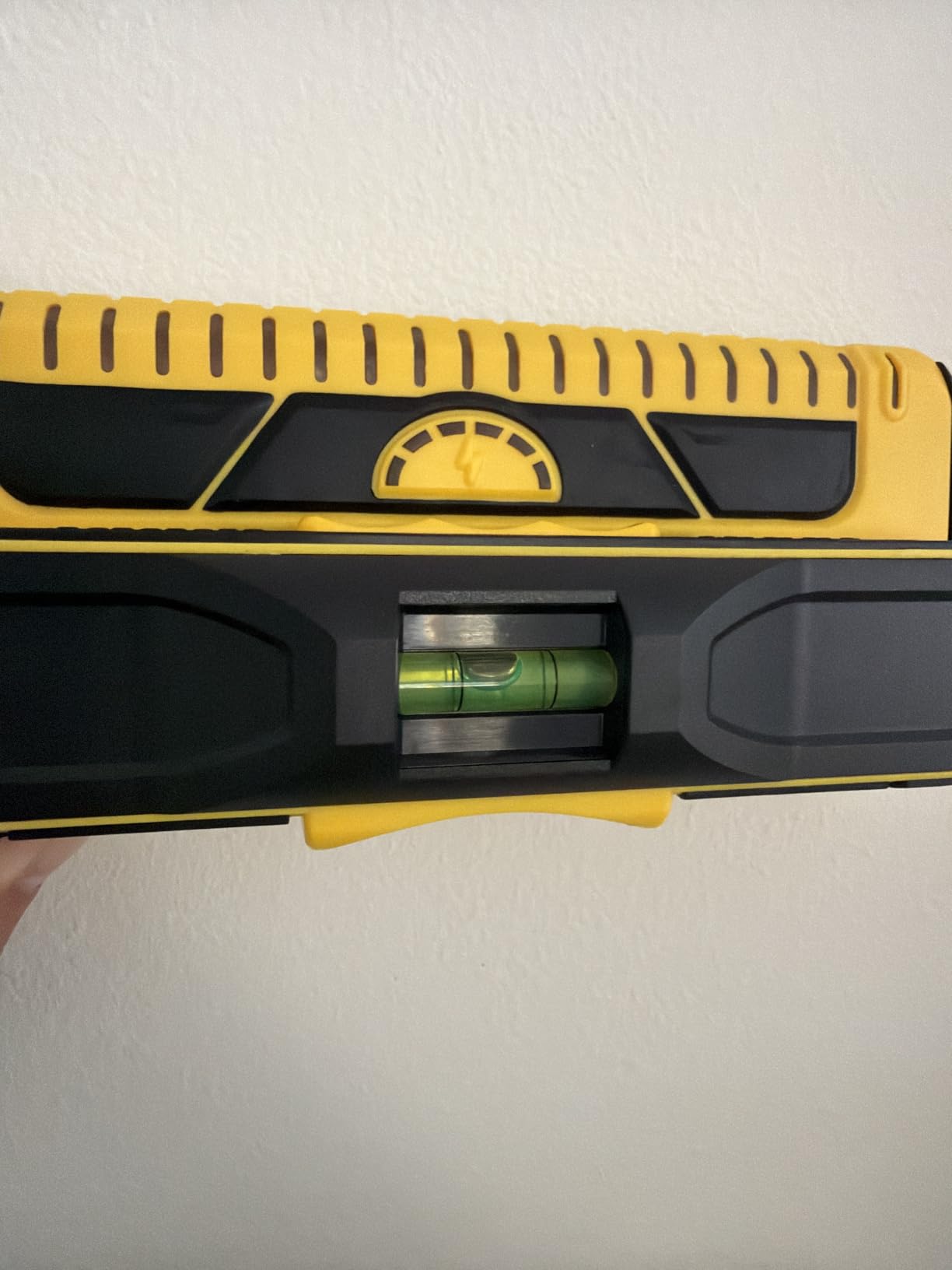
The M210 is the 710 with two additions that matter specifically in old houses: live wire detection and a slightly deeper 1.7 inch sensing distance. If you are working in a property where wiring routes are unpredictable, that warning function is worth more than another inch of depth.
Same 13-sensor array, same no-calibration start, same always-on deep scan. The LED bar shows the whole stud width and marks the center in green, and the built-in bubble level means you can mark a straight line without a second tool in your hand.
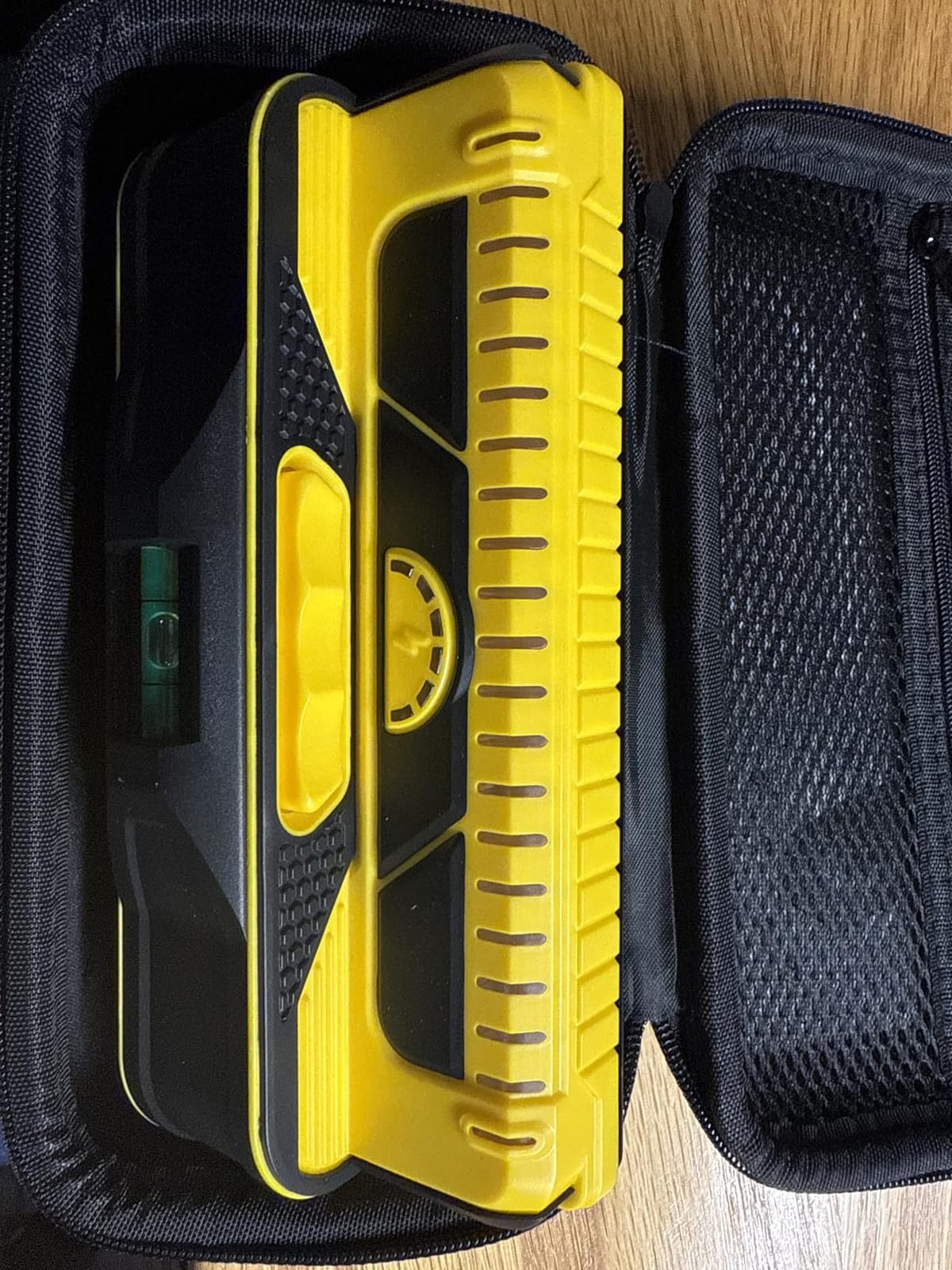
On plaster walls the M210 behaved the same as the 710, with a slightly better margin on thicker coats. Owners on thick lath walls do report that some sweeps need repeating to confirm a hit, so treat the first read as a lead and the second as a fact.
Live wire detection tells you current-carrying wiring is nearby before you drill. It does not map exactly where the wire runs, so back the marked point out with a shallow hole before committing a large bit.
Where it beats the 710
Overhead installs and tight alcoves, the M210 is lighter at about 11 ounces and narrower than the 710 body. On a ladder that difference shows up in your shoulder after an hour.
Its 1.7 inch depth is the deepest of the Franklin multi-sensor models, which matters on heavy triple-coat plaster.
Where it does not help
It shares the 710 limitation: two AA batteries not included, and rechargeable compatibility is listed this time but still not guaranteed.
On metal lath the extra sensor count does not save it. Metal overwhelms density sensing regardless of how many sensors you point at the wall.
3. Rack-A-Tiers Stud Ball: Best Magnet for Old Plaster Houses
Rack-A-Tiers Stud Ball – Magnetic Stud Finder, Rare Earth Magnet 27 Pounds Pull, Portable Wall Stud Detector, Stud Magnet, Detect Nails, Screws & Metal Through Drywall, No Batteries Required (52300)
27 lb pull force
Spherical rare earth magnet
1.6 oz
Rubber housing
Pros
- Highest rated tool in this roundup at 4.8
- Spherical shape pinpoints center by sliding around a hit
- Works through drywall
- tile and plywood paneling
- Rubber housing leaves no wall marks
Cons
- Very strong magnet grabs ferrous tools in the toolbox
- No storage case included
- Not a precision measuring tool
Long-time homeowners point to a magnet more than any electronic tool when the wall is lath and plaster, and this is the strongest of the magnetic options here. A 27 pound pull spherical rare-earth magnet gives it a concentrated field with very little leakage, which is what lets it punch through plaster and still grab a nail head.
The sphere is the reason it outperforms a flat magnet. When it catches a fastener you slide it in a small circle around that point and the strongest pull marks the stud center rather than the nearest nail.
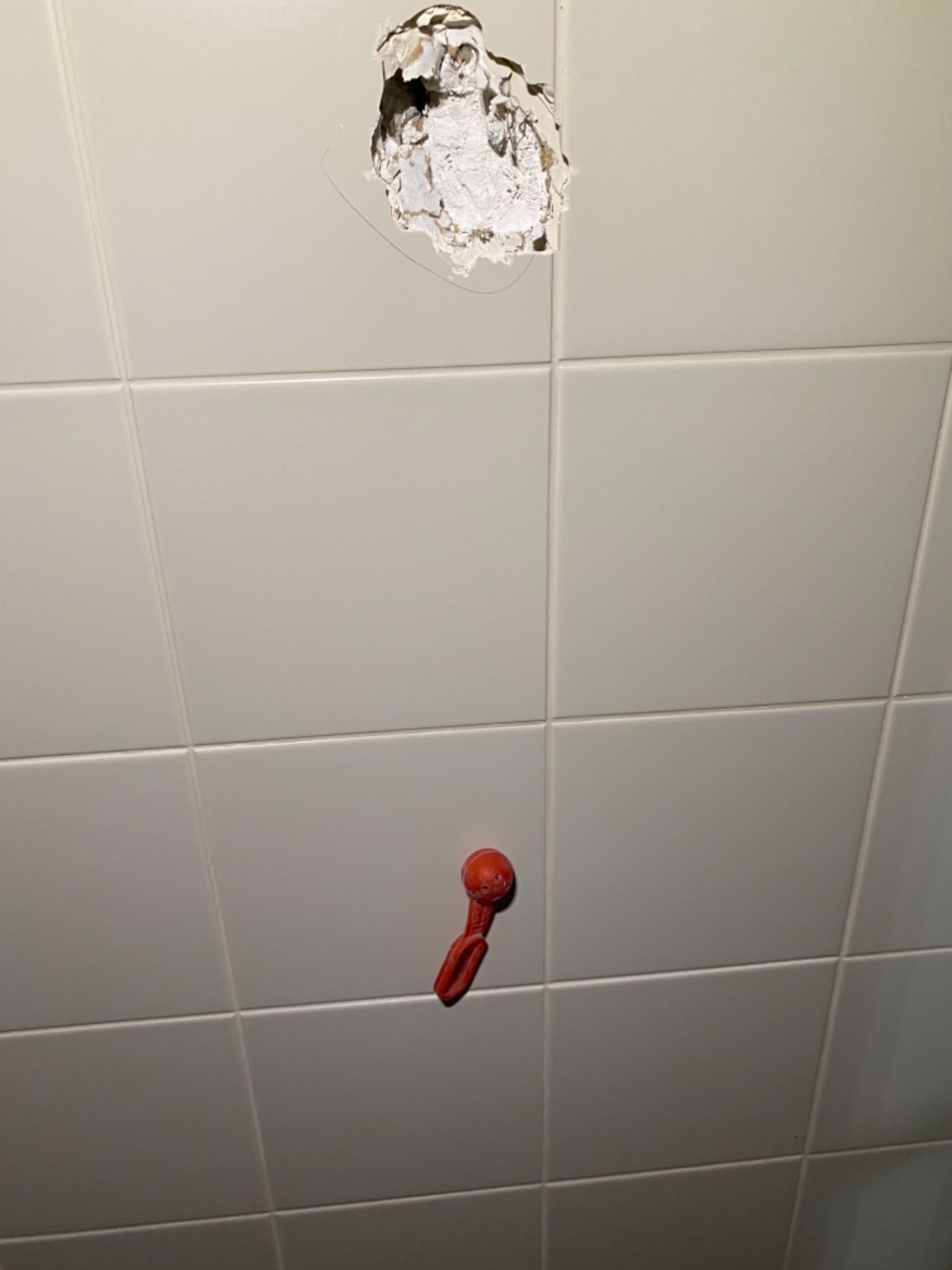
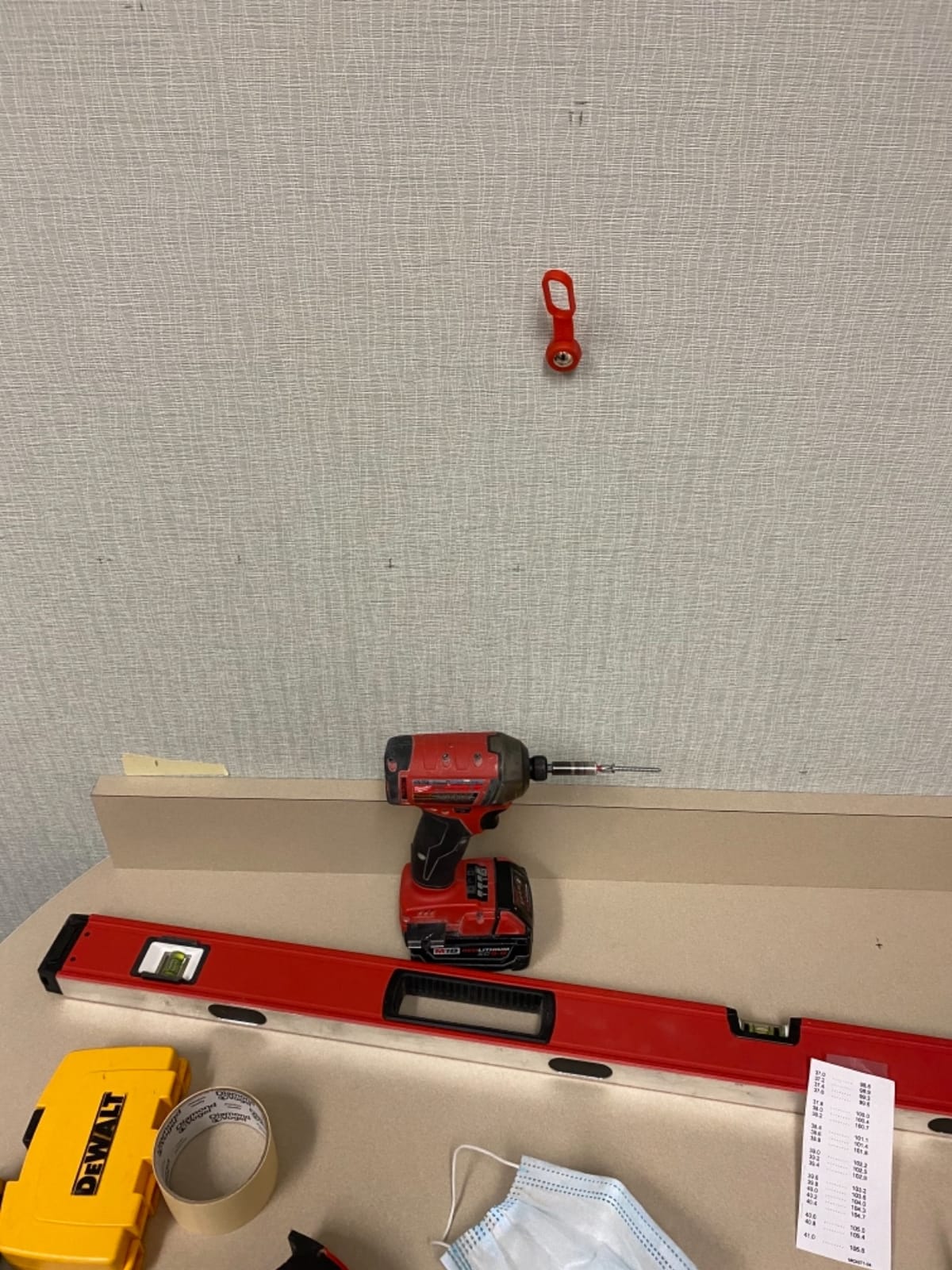
Owners working in plaster and lath houses report it beating electronic scanners on that construction, and it also holds to metal studs through five-eighths inch drywall where density-based tools sometimes misread.
Our practical technique is a vertical sweep. Start at the base of the wall and run it straight up in one continuous line, the way the finger loop is designed for. A dense line of catches means you have found the lath fastener line, and that line sits on the stud.
What you should know before buying it
27 pounds of pull is genuinely strong. It will snap onto a chisel, a socket, or a belt clip the moment you turn around, and keeping it in a toolbox without a case is a losing battle.
It gives you a fastener line, not a measurement. If you need a level straight line for a shelf bracket, you are marking by hand afterward.
Where it falls short
On plaster over metal lath it is close to useless, because the expanded metal mesh holds the magnet across the entire surface and the fastener line disappears.
It cannot find a stud where no lath nails were driven. Some renovations and some repairs leave bare plaster with nothing to grab.
4. C.H. Hanson Magnetic Stud Finder: Best for Shelves and TV Mounts
CH Hanson Magnetic Stud Finder | Battery-Free Stud Locator with Rare Earth Magnets | Finds Nails & Screws Behind Drywall | Built-In Level for TV Mounting, Shelves & Home Projects
Rare earth magnet
Rotating bubble level
0.15 lb
Lifetime warranty
Pros
- Rotating built-in level for straight marking
- Very strong magnet rated for plaster and paneling
- Pocket sized with no batteries or setup
- Backed by a C.H. Hanson limited lifetime warranty
Cons
- Locates fasteners rather than true stud center
- Can take several passes to isolate a hit
- Not designed for joists or built-up beams
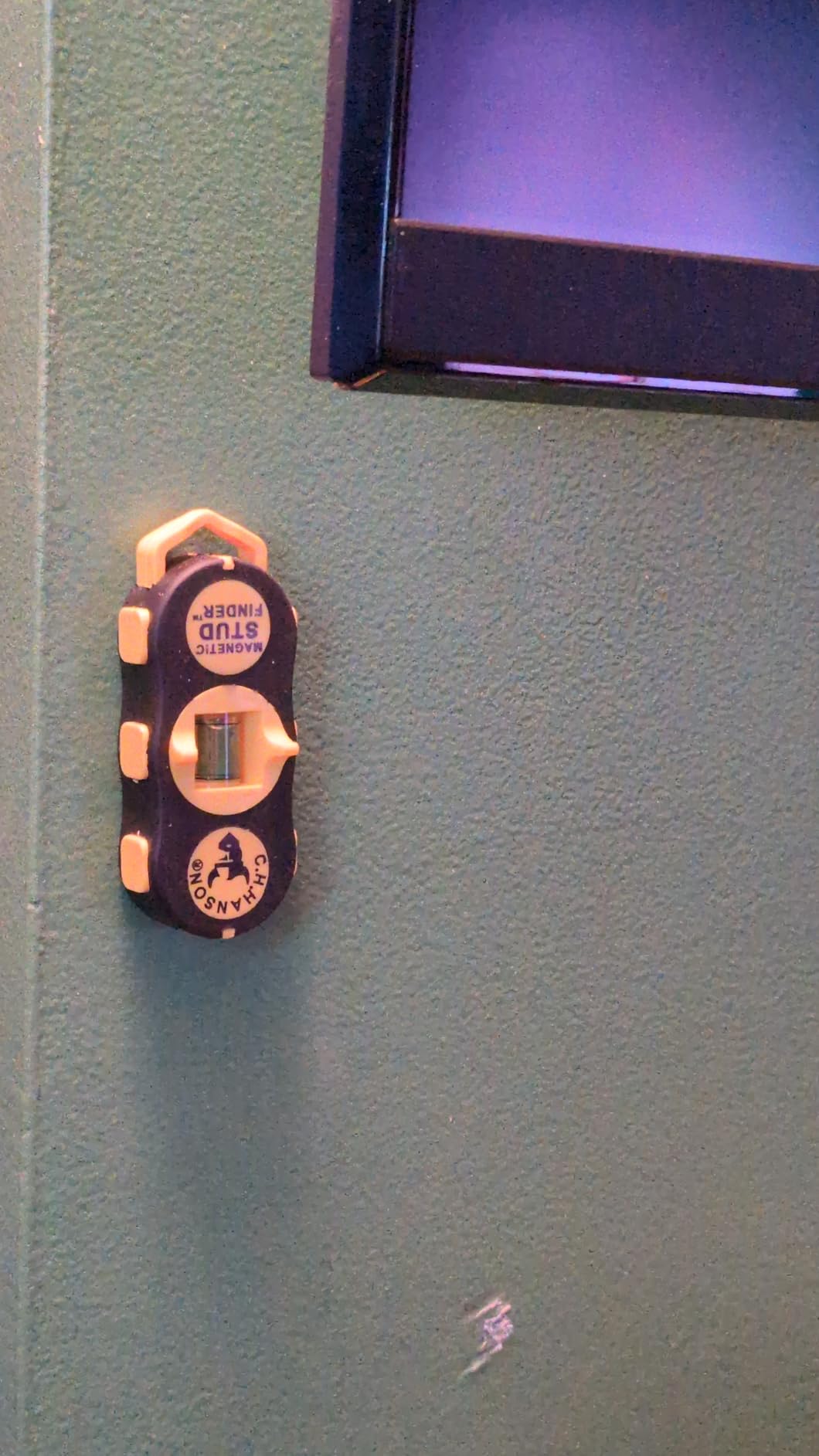
The rotating level is the reason this one earns its place. Once the magnet catches a fastener, you roll the level flat, run it along the wall, and the bubble tells you where the mark is straight without borrowing a separate level or eyeballing a pencil line.
The rare-earth magnet is rated by the manufacturer to locate nails and screws behind drywall, plaster, and paneling, which puts plaster squarely inside its stated use. Owners with plaster walls report it outperforming more expensive electronic tools in their own homes.
At 0.15 pounds it disappears in a pocket, which matters when you are up a ladder or moving between rooms. There is nothing to charge, nothing to calibrate, and no mode to select.
The honest limitation is that it finds fasteners, not stud centers, so your accuracy depends on how the lath or drywall was originally hung. On built-up framing it can take several passes to separate one strong hit from a cluster.
What to check before drilling
Sweep a full vertical line rather than probing randomly. Random probing finds a nail somewhere; a vertical sweep finds the line, and the line is the stud.
Confirm the line lands where you expect before you commit a heavy mount. Lath nails cluster in vertical runs, but repair patches and picture hangers create their own false clusters.
Where it does not help
Not for joists or built-up beams, which the manufacturer states plainly. Nothing in this category reads those.
Not for metal lath, where the mesh produces hits everywhere and the fastener line never resolves.
5. The Original StudBuddy: Budget Pick Magnetic Finder
The Original StudBuddy® Magnetic Stud Finder – Made in the USA – Easy to Use Stud Finder – No Batteries Required – Powerful Magnet Stud Finder – Stud Finder for Drywall and Wood
Neodymium magnet
No batteries
1.6 oz
Includes case
Pros
- Largest review base of any product we compared
- No calibration and no false electronic signal
- Sticks to the wall and holds itself so both hands are free
- Quick to find drywall screws and nail heads
Cons
- Manufacturer lists lath and plaster as outside intended use
- Some users find the magnet weak on certain walls
- No built-in level
With more than sixteen thousand reviews, this is the most thoroughly tested magnetic finder on the market, and the pattern in the feedback is consistent: people who are tired of beep-and-guess electronics find it exact and dependable. It has no moving parts, no calibration, and no mode that can be set wrong.
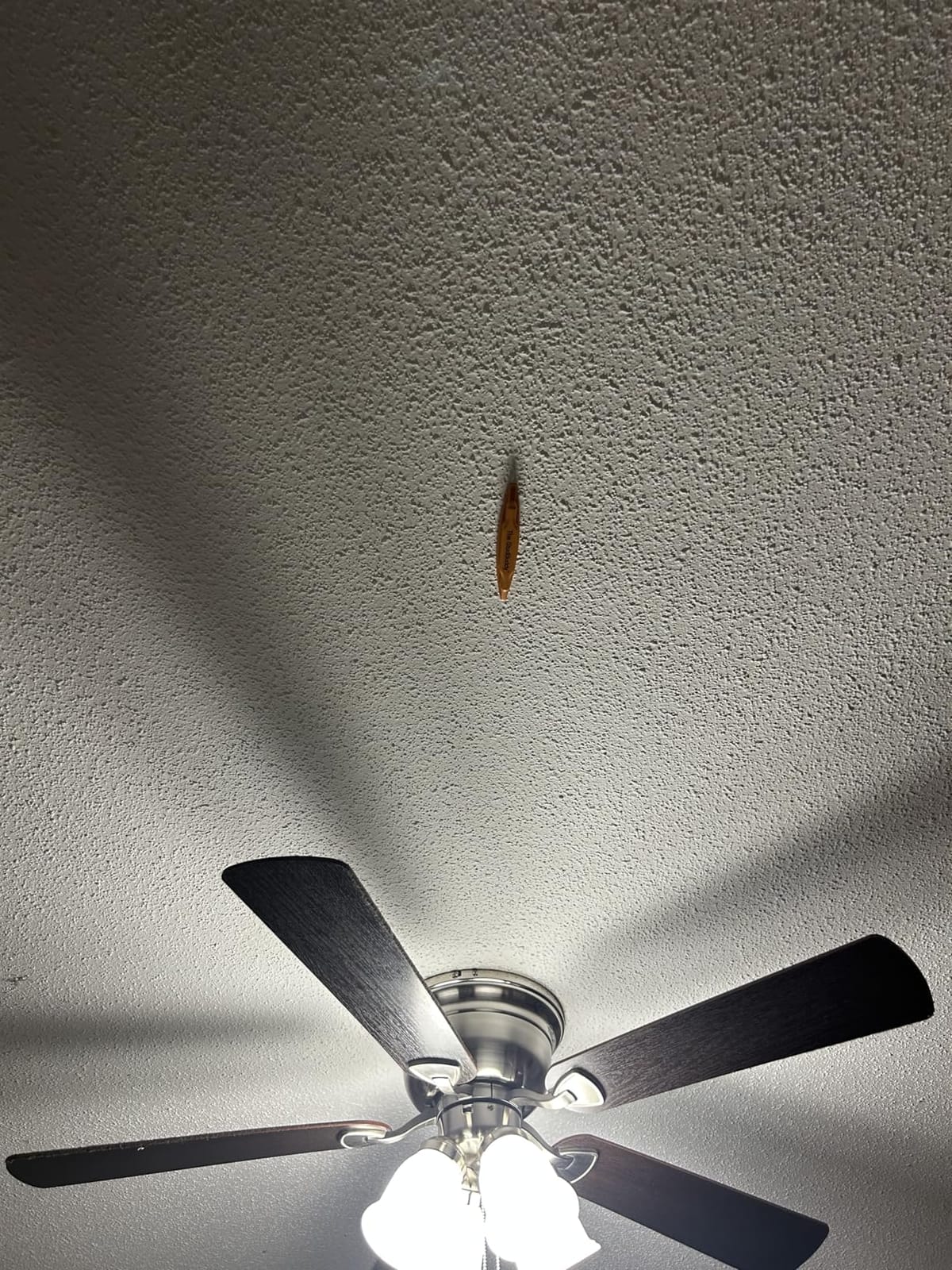
When it finds a fastener it holds itself to the wall, which is genuinely useful. You can mark the spot with one hand while the tool stays put instead of chasing a blinking LED.
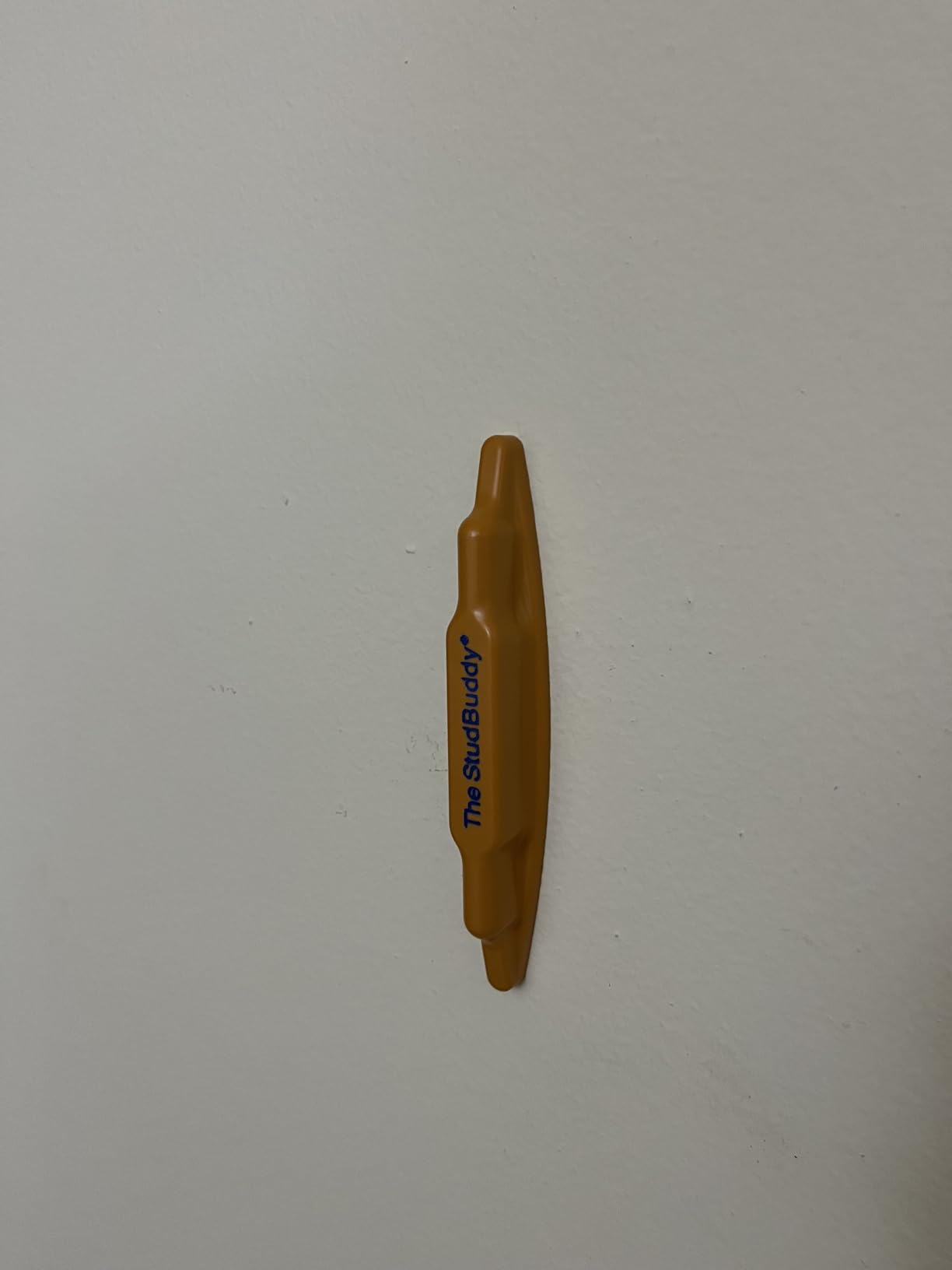
There is a nuance worth knowing before you rely on it. The manufacturer lists lath and plaster walls as outside its intended use, yet owners with older plaster houses report it working in practice because the same neodymium principle applies. Treat that as a strong user report rather than a stated specification.
It is also the lightest magnetic option here at 1.6 ounces, and a case is included, which solves the disappearing-magnet problem that catches larger balls.
Where the simplicity pays off
There is no startup routine. No battery, no calibration on an uneven surface, no reading to interpret. For light decor and picture hanging on plaster this is enough on its own.
It is also the easiest tool in this roundup to hand to someone else in the house who has never used a stud finder.
When to buy something else
For a floating shelf or a television you are leaning your weight on, you want a level. This tool has no built-in level, and the C.H. Hanson or Kreg models do.
If the magnet feels weak on your particular wall, that usually means dense plaster or a deeper lath cavity. Move up to a stronger spherical magnet rather than working harder with this one.
6. Kreg Magnetic Stud Finder with Laser-Mark: Best for Clean Marking
Kreg KMM1000LZ Magnetic Stud Finder with Laser-Mark for Wood & Metal Studs
Class 2 laser 1mW
Two rare earth magnets
132 g
Bubble level
Pros
- Laser projects the stud location so you can mark hands-free
- Two magnets let the tool hold itself to the wall
- Centered notches and a high-visibility bubble level
- Compact pocket-sized body
Cons
- Locates fasteners rather than true stud center
- Laser needs a clear line of sight to the wall
Laser-Mark is the feature that separates this from the other magnetic finders. A class 2 laser of 1mW or less projects the stud location onto the wall, so you place the tool, let the magnets hold it, and mark the projected point without a pencil ever touching the tool.
The two rare-earth magnets do more than find fasteners. They let the tool stick to the wall and stay put, which on a rough plaster surface is the difference between a usable mark and a shifting one.
Centered marking notches and a high-visibility bubble level cover the two things magnetic finders usually lack: a repeatable reference point and a way to draw a straight line. It weighs about 132 grams and lives in a pocket.
Detection covers screws and nails in both wood and metal studs, so it is not limited to the drywall-only use case that constrains smaller magnets. Buyers like the self-holding magnets and the integrated level, and the usual magnetic-finder caveat about fasteners versus true stud centers still applies here.
What to watch out for
The laser needs a clear line of sight. Working right up against a ceiling corner or inside a tight alcove means no projection, and you are back to marking by notches alone.
Like every magnetic finder, it locates fasteners, so the accuracy of your mark depends on where the original installer drove them.
Who it suits
Anyone hanging several items on the same wall. Once the tool holds itself and the laser does the marking, aligning a row of shelves or a set of cabinet holes is a much calmer job.
It is also the one magnetic tool here with both a level and a self-holding mount, so it covers shelving work without a second accessory.
7. MagnetPal Magnetic Stud Finder: Best Value
MagnetPal – Magnetic Wall Stud Finder, Best Magnet Stud Finder, Wood Finder, Small Easy Behind Wall Stud Finder, Tool for Finding Studs (Black)
Permanent magnet
0.63 x 0.63 x 1.13 inch
9 g
No power needed
Pros
- No batteries
- calibration or electronics at all
- Permanent magnet will not rust or degrade
- Small enough for a pocket or a ladder
- Claimed for plaster
- drywall
- wood and tile
Cons
- Locates fasteners rather than stud center
- Finds only the closest screw or nail
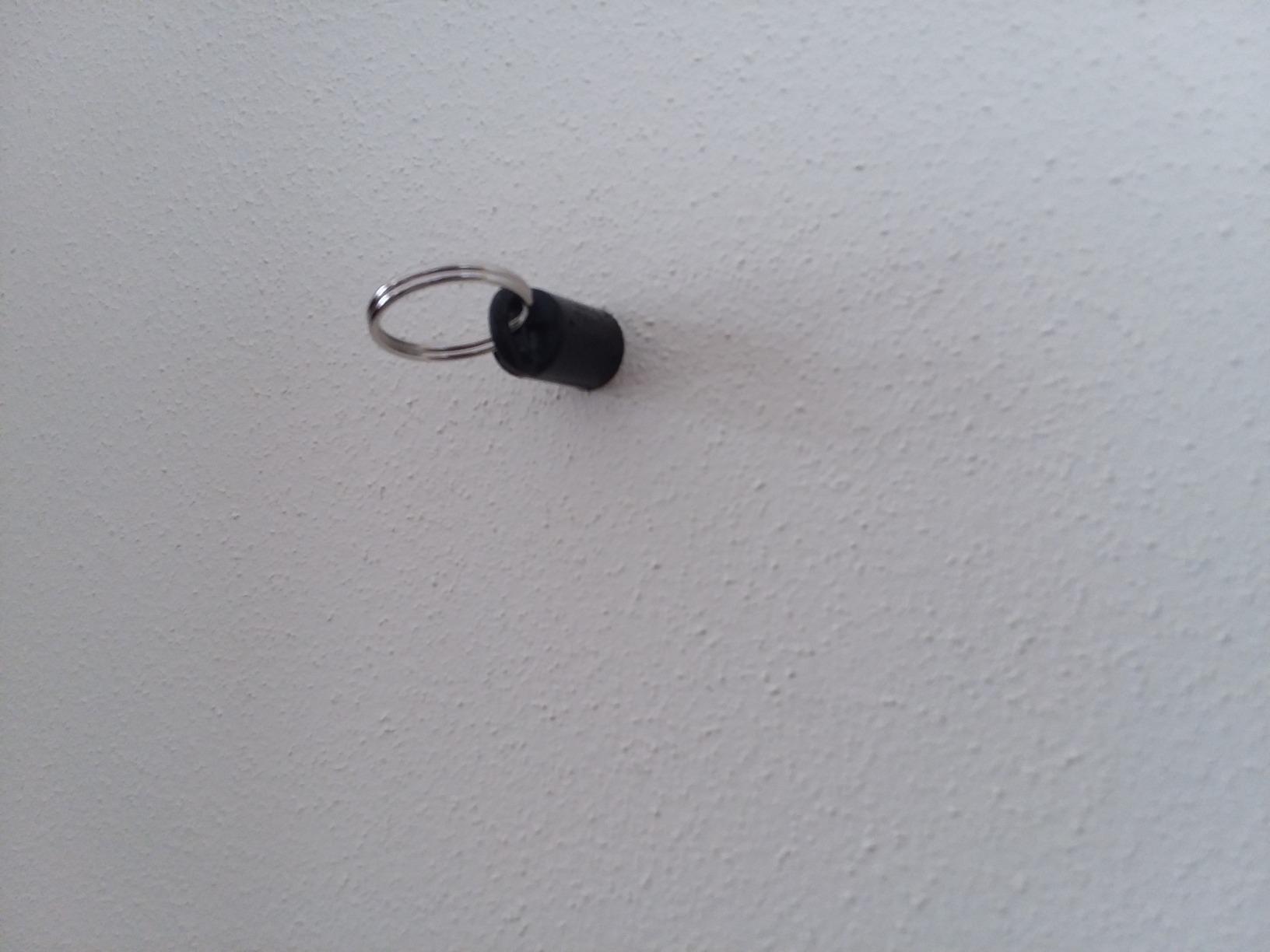
The MagnetPal is the simplest answer to a simple question. Wave it near the wall from about an inch out, and when a fastener is close enough the magnet pulls toward the surface on its own. There is no power, no signal to interpret, and no false reading to argue with.
It is built for installers who are tired of electronics that misread, and the manufacturer states it works on plaster, drywall, wood, tile, and plastic, and in any temperature, wet or dry.
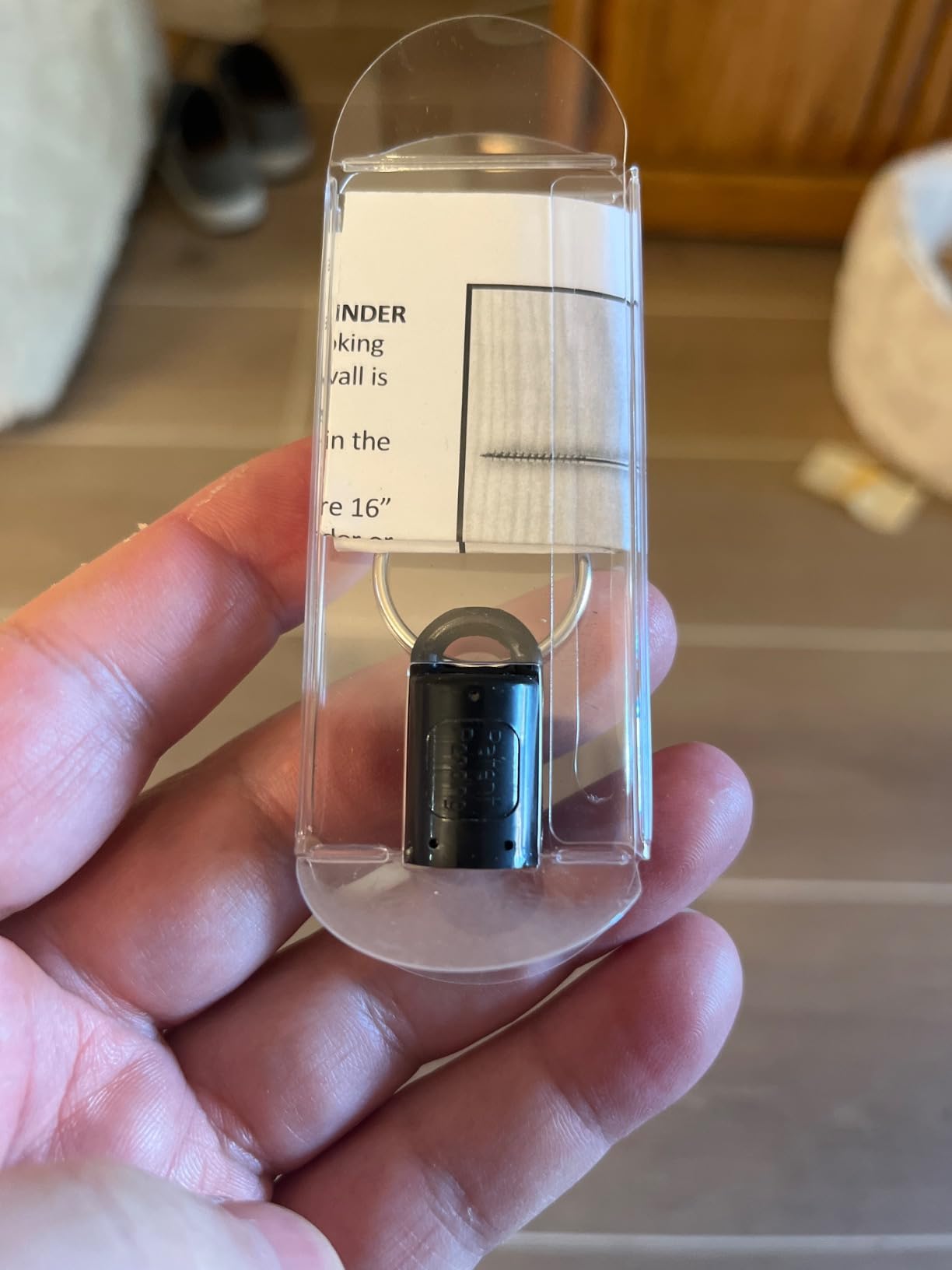
At roughly nine grams and just over an inch tall, it is the easiest tool here to live in a tool bag. You will not lose it, and you will not think about batteries.
Because it is a permanent magnet, there is no degradation over time. The thing that wears out is nothing, which matters for a tool you reach for on irregular schedules.
How to use it properly
Hold it back from the wall and let it jump. Contact-first pressing hides the moment of attraction, and the moment of attraction is the whole signal.
Once it sticks, slide it in a small circle to find the pull center, then mark and repeat up the wall in a vertical line to confirm the stud run.
Where it falls short
It finds the closest screw or nail only, which can mislead on framing where fasteners are doubled up. Treat each hit as a clue, not a stud center.
For heavy loads it is not the tool. Nothing this small substitutes for a level and a verified center when a television is involved.
8. Franklin Sensors ProSensor M150: Best Compact Option for Ladders
Franklin Sensors ProSensor M150/X990 9-Sensor Stud Finder, AC Wire Warning
9 sensors
1.5 inch depth
Live wire warning
5.12 oz
Pros
- Nine sensors still show full stud width and mark center
- Lightest Franklin multi-sensor model at just over 5 ounces
- No calibration
- scan from anywhere
- Live wire warning for drilling
Cons
- Two AAA batteries required and not included
- Not compatible with rechargeable batteries
- Less edge resolution than the 13-sensor models
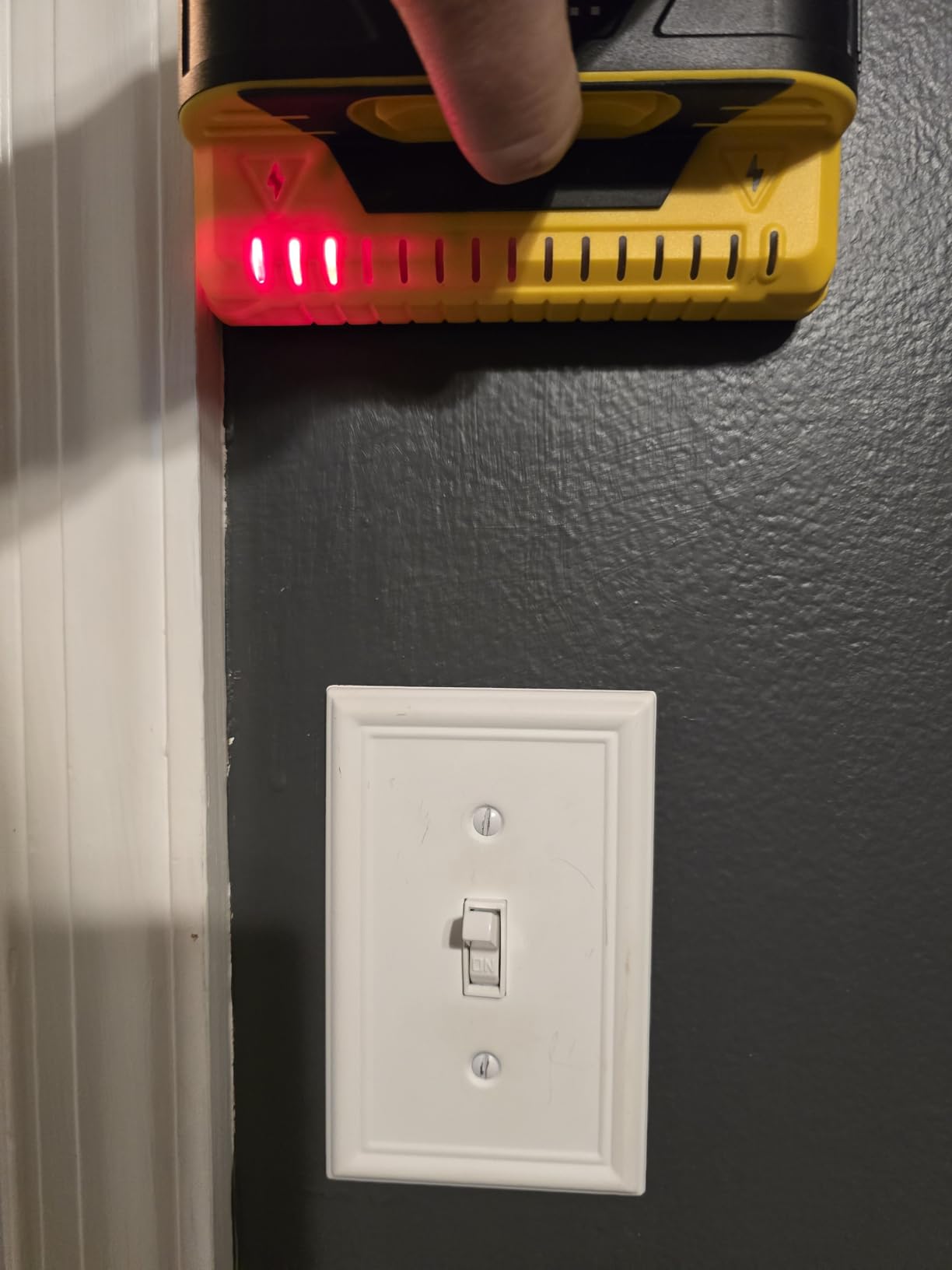
The M150 is the entry point into the Franklin no-calibration approach, and it keeps the parts that matter on plaster: a nine-sensor array that shows full stud width, a green center LED, and deep scan always on. What you give up is resolution at the stud edges compared with the 13-sensor models.
It weighs just over five ounces, which makes it the tool we would actually carry up a ladder one-handed. The Franklin 710 and M210 are both noticeably heavier in the hand after a long afternoon.
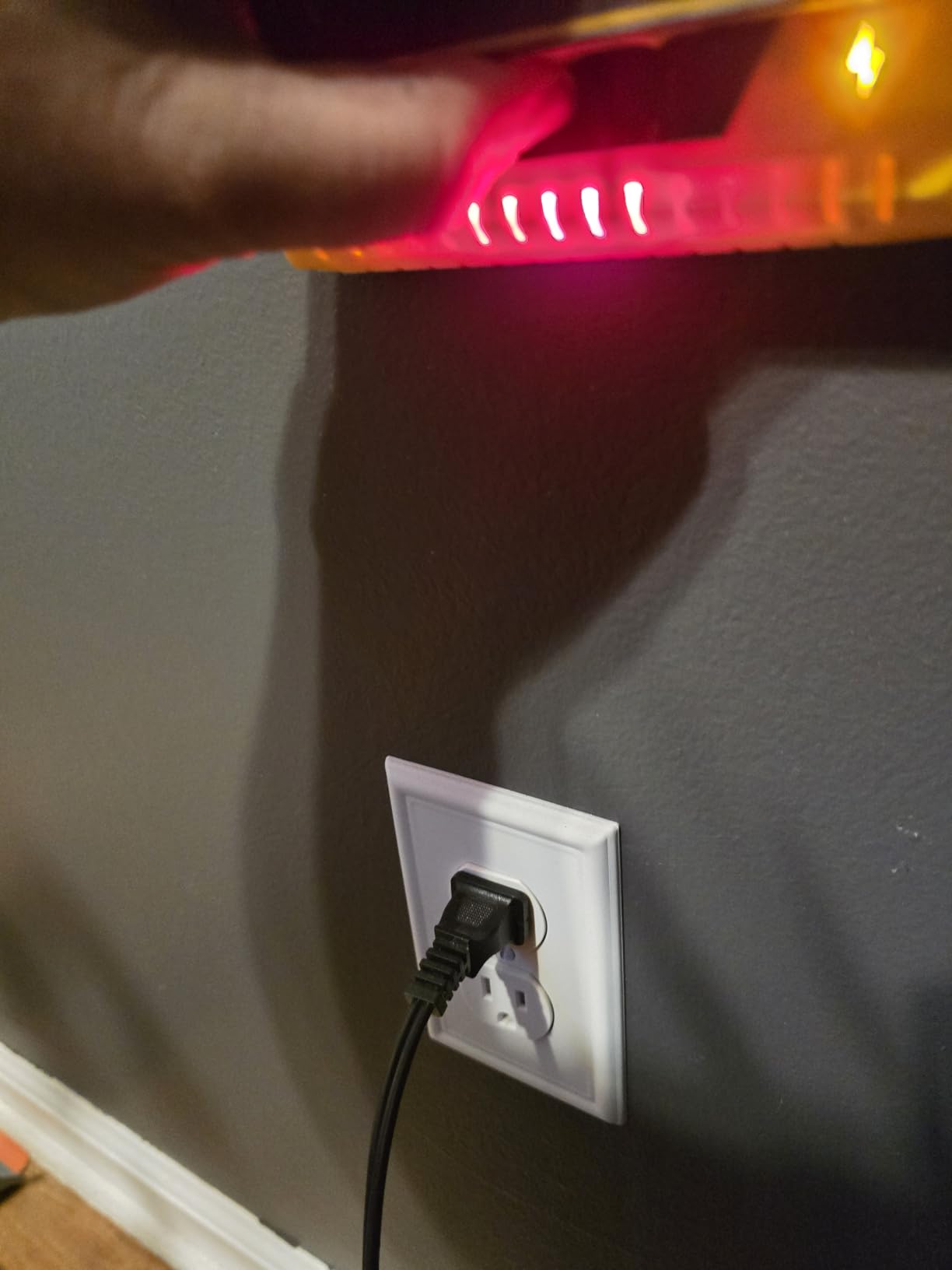
Live wire detection is included, which is a real benefit in pre-1970 houses. It warns you that current-carrying wiring is close before you start drilling, which is not the same as telling you exactly where the wire runs.
On plaster over lath, nine sensors read well enough for picture hanging and moderate shelving. For a heavy mount we would step up to the 13-sensor model rather than push this one.
Choosing between the M150 and the 710
The 710 reads stud edges more precisely and has a much larger review base, so it is the better default if your work is at chest height on a ladder-free job.
The M150 wins on overhead work, tight spaces, and anyone who wants the lightest electronic option with live wire protection.
What to keep in mind
Two AAA batteries, not included, and rechargeable cells are not supported. That is the single most common complaint in the reviews.
Sensing depth is 1.5 inches, so very heavy plaster coats push past its limit. Confirm with a magnet before you trust a mark.
9. Zircon MultiScanner A200: Best for Metal Lath and Mixed Walls
Zircon® MultiScanner™ A200 Stud Finder with Metal & Live Wire Detection
3 scan modes
Backlit LCD
WireWarning
IP54 rated
Pros
- Metal Scan mode is built for metal behind walls
- Backlit LCD readable in dim rooms and flags stud center
- Low battery indicator prevents false readings from weak cells
- Limited lifetime warranty
Cons
- Bulky body that is awkward in tight spaces
- Calibration step required before scanning
- Some users report false positives on non-framed walls
The A200 is the most versatile electronic tool here because it separates the jobs into three modes. StudScan finds edges and centers to three-quarters inch, DeepScan reaches 1.5 inches, and Metal Scan is dedicated to metal behind the wall, which is precisely the failure case on plaster over metal lath.
The backlit LCD is a genuine upgrade for working in an unfinished room or a dim basement, and it marks the stud center so you can verify a reading before you commit a bit.
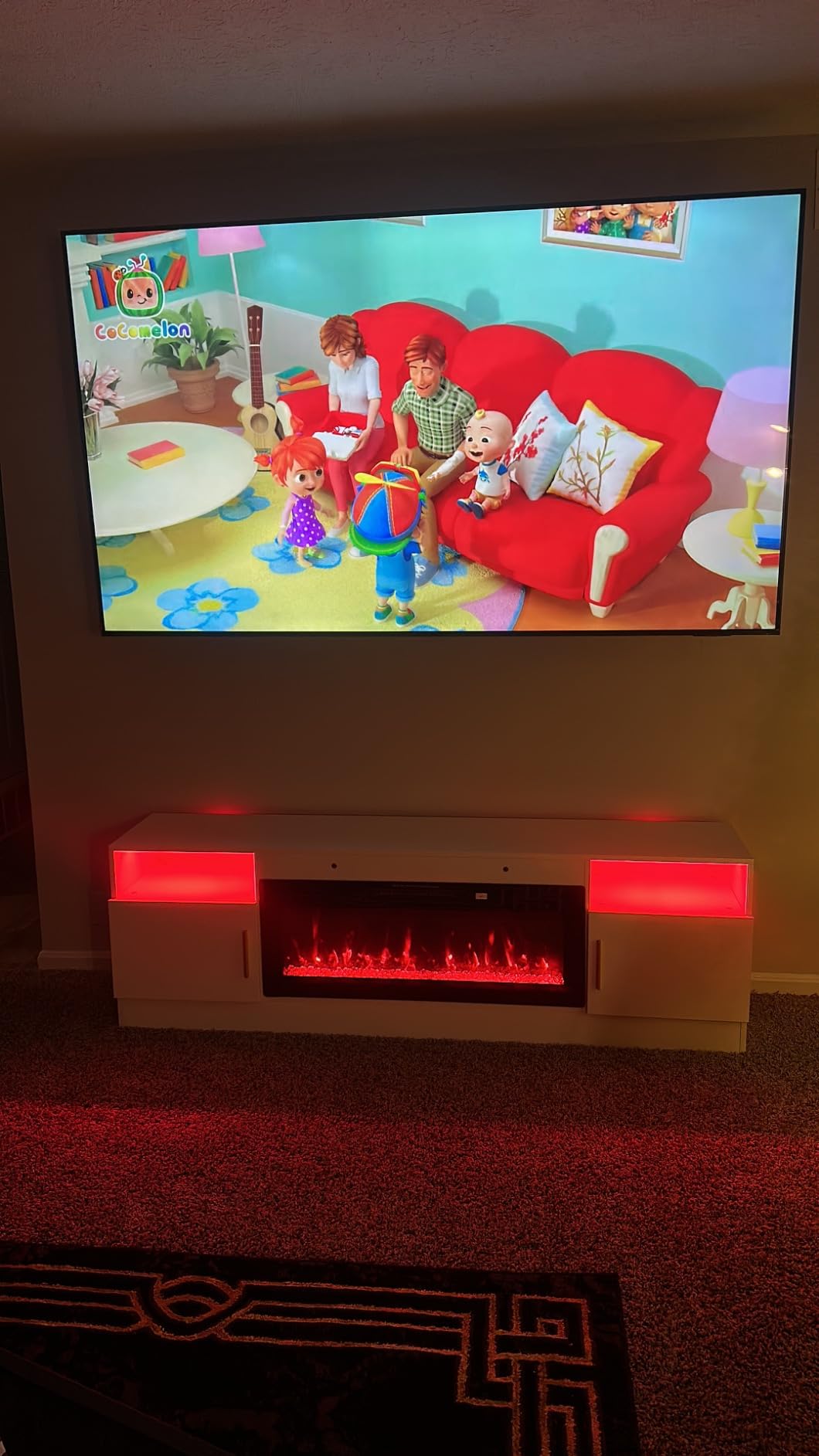
The low battery indicator is a small thing that prevents a real problem. A weak 9V cell produces weak readings, and owners who ignored that signal were the ones seeing phantom hits. WireWarning flags live AC wiring in the same pass.
Calibration is a press-and-hold on the power button for a second or two until it beeps, which on a thick uneven plaster wall should be done on a clear patch of wall rather than over the target.
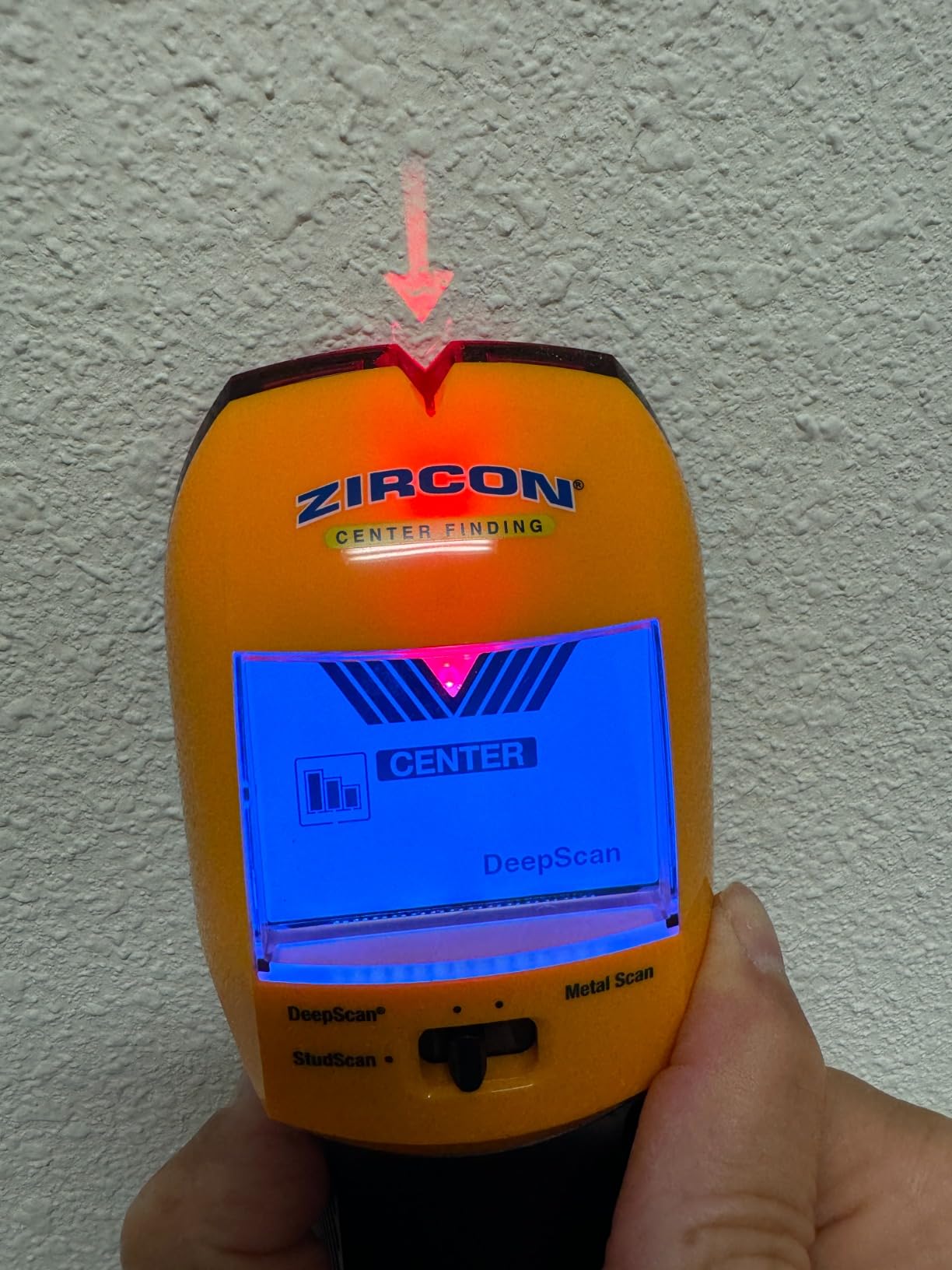
Where it fits into a plaster job
Reach for it when your wall is genuinely mixed, plaster in one room and drywall in another, or when you suspect metal lath. Very few tools handle that combination in a single unit.
The Metal Scan mode is also useful for locating metal lath itself, so you can map the problem area before deciding how to proceed.
Where it frustrates people
The body is bulky at 0.37 kg, and it is awkward in the tight space between a wall and a cabinet. Bring the compact Franklin if working in those gaps.
Users on non-framed walls report intermittent false positives, and on metal lath expect to interpret readings rather than trust them blindly.
10. Zircon StudSensor A100: Best Starter Electronic Finder
Zircon® StudSensor™ A100 Stud Finder w/Live Wire Detection
StudScan 3/4 inch
DeepScan 1.5 inch
WireWarning to 2 inches
9V power
Pros
- Consistent stud edges on standard framed walls
- WireWarning alerts you to live wiring
- Easy single-button calibration
- Comfortable in the hand
Cons
- Not reliable on horsehair plaster or non-standard walls
- WireWarning warns without pinpointing the wire
- 9V battery not included
The A100 is where we would start if a house is mostly modern drywall with one or two plaster rooms. It is simple, it calibrates in one press, and it does the basic job well: stud edges to three-quarters inch, DeepScan to 1.5 inches, and a clear LED and tone as you approach an edge.
WireWarning detection reaches up to 2 inches, which makes it a decent safety companion even though it only tells you that live wiring is nearby rather than exactly where.
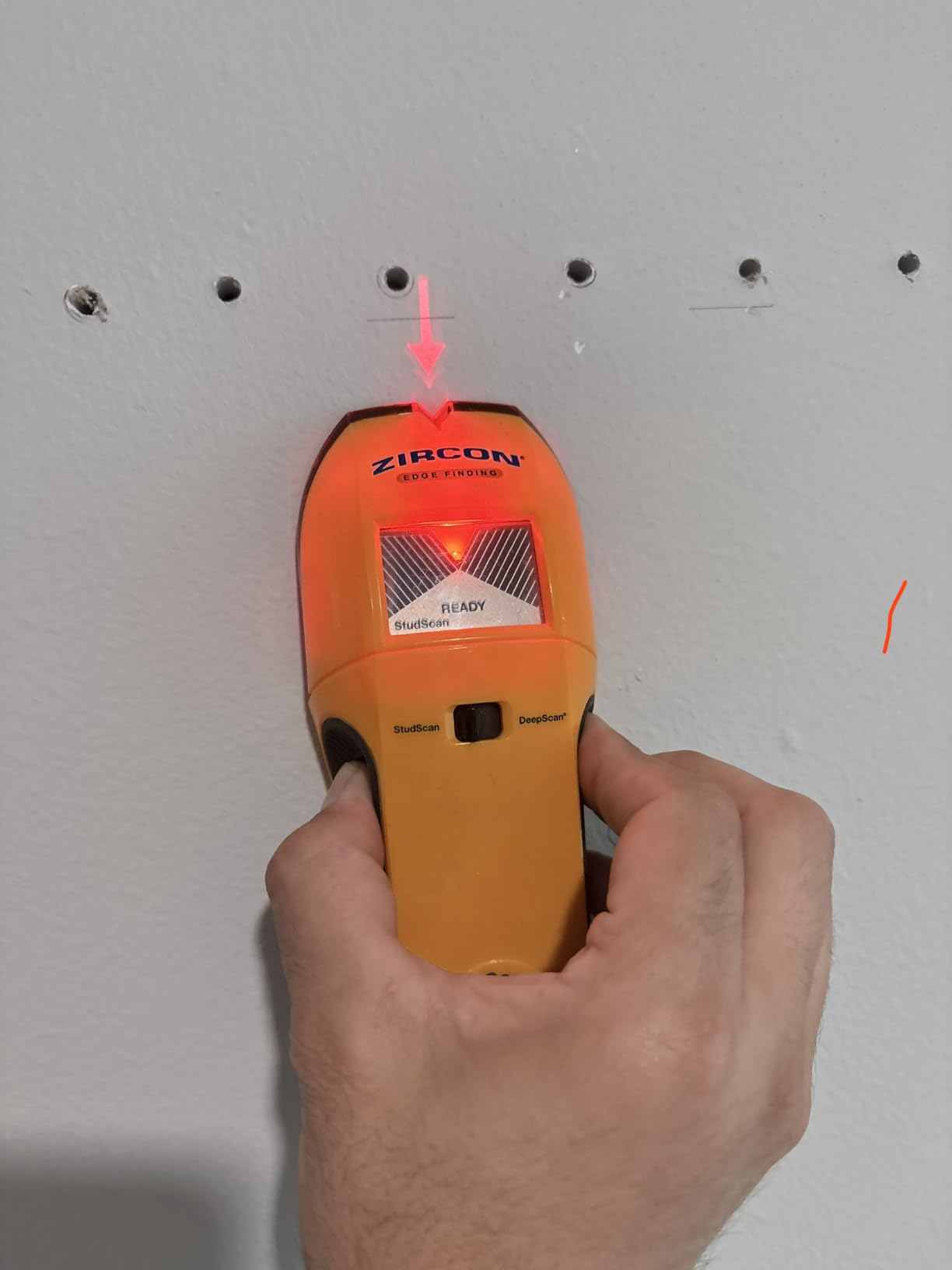
The honest limitation comes straight from owner feedback: it is not reliable on horsehair plaster or non-standard walls, and buyers in that situation are pointed toward higher-end models or a magnet. If plaster is the reason you are shopping, this is not the pick.
The SpotLite Pointer and the V marker groove help you transfer a reading to the wall with a pencil, and the low battery indicator again prevents the false readings that come from a tired cell.
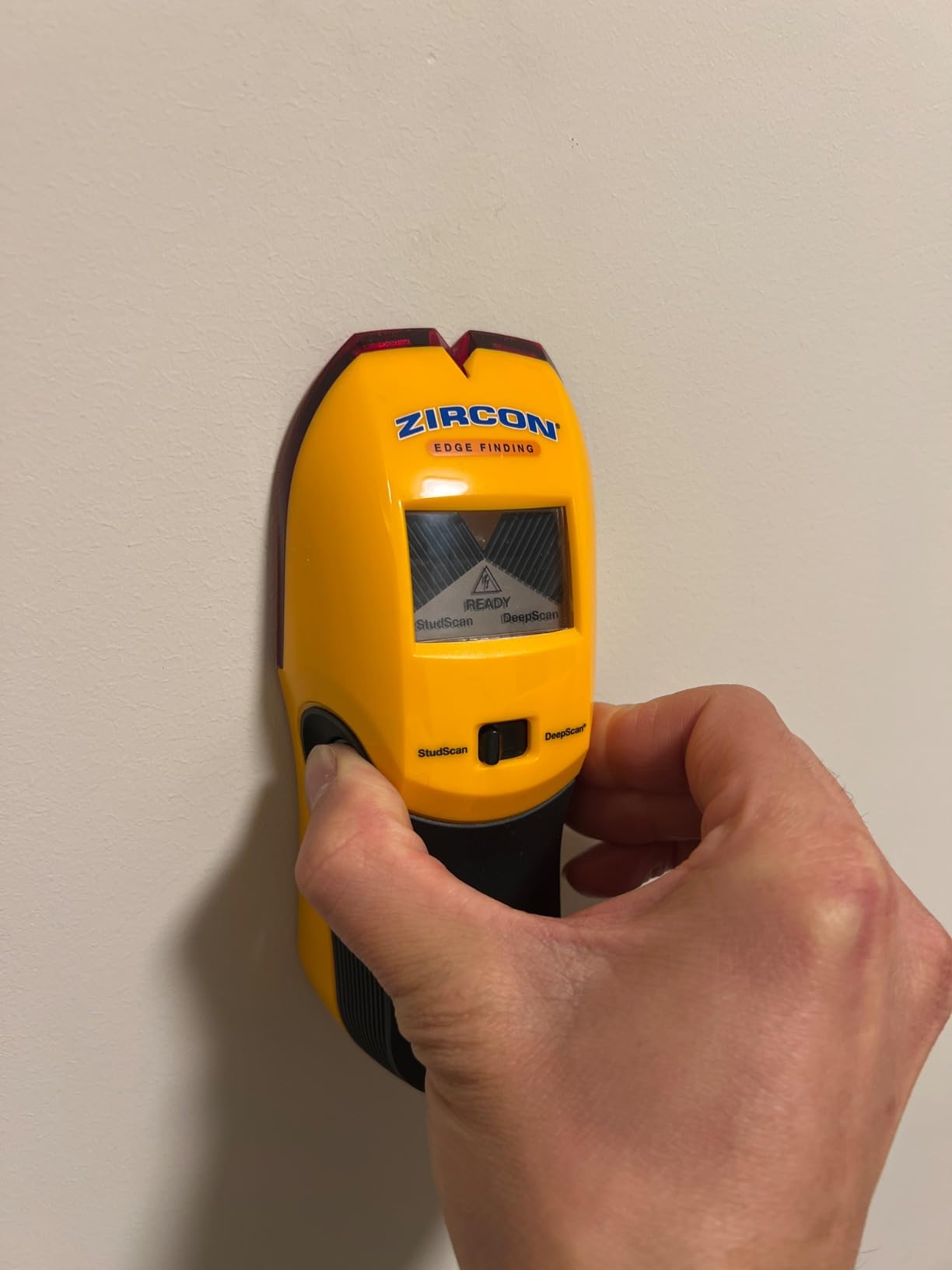
When it is the right call
You are working in a newer home and want live wire warning in a tool that is simpler than anything with a screen. That is a real, specific advantage over simpler beep-only finders.
You want a backup tool for drywall and renovation while your main investment is a magnet for the plaster rooms.
When to step up instead
If your walls are lath and plaster, move to a multi-sensor Franklin model or a magnet. The A100 does not gain accuracy by trying harder on the wrong construction.
Older properties also deserve tools with a deeper scan range than 1.5 inches, since plaster plus lath plus a thick skim coat can exceed that.
11. Zircon StudSensor Pro SL: Simplest One-Button Option
Zircon StudSensor Pro SL Edge Finder Deep-Scanning Stud Finder with SpotLite Pointing System
Single button
DeepScan 1.5 inch
SpotLite
3.2 oz
Pros
- One-button operation with fast calibration
- Red LEDs warn as the stud edge approaches
- Long track record with owners reporting a decade of use
- Over-the-stud indicator tells you to restart the sweep
Cons
- Plasticky build
- owners report failure after a drop
- DeepScan gives leading false readings on a single drywall layer
- 9V battery not included
This tool has been sold since 2000 and owners report the same model lasting them a decade or more. It is also the simplest thing here: one button, a red LED warning as the stud edge approaches, then a green LED and an audible alert at the edge, with the SpotLite pointing at the mark.
It weighs 3.2 ounces and includes a how-to guide. There is a small display-free simplicity to it that some people prefer over a screen full of modes.
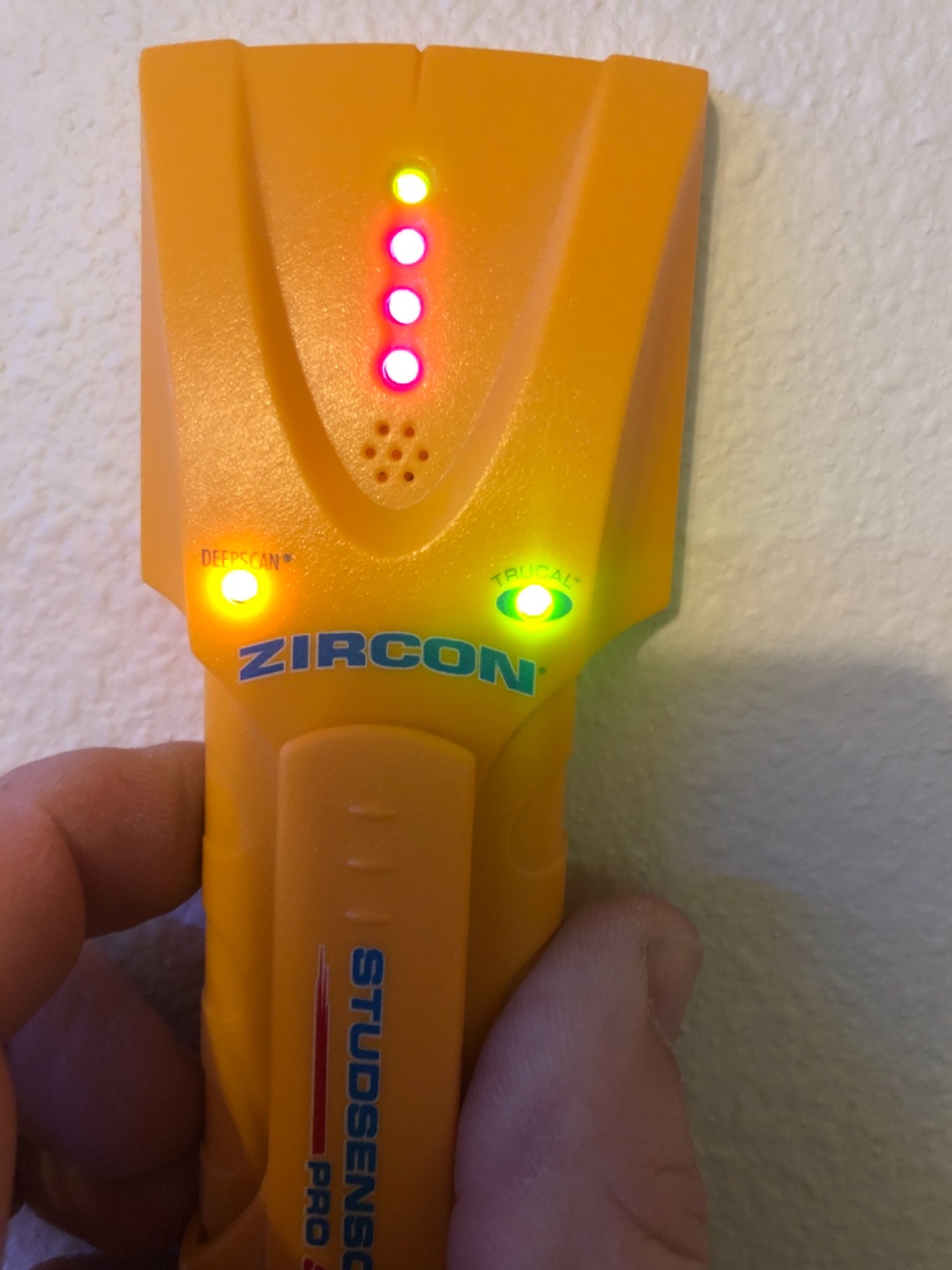
The mode confusion is the thing to manage. People who stay in StudScan are happy. People who leave DeepScan running on a single layer of drywall report misleading early readings, so on plaster, pick your mode deliberately and stay in it.
The build is plasticky and reviewers do report failures after a drop, plus occasional units arriving defective at the plastic seam. Budget for the possibility of replacing it.
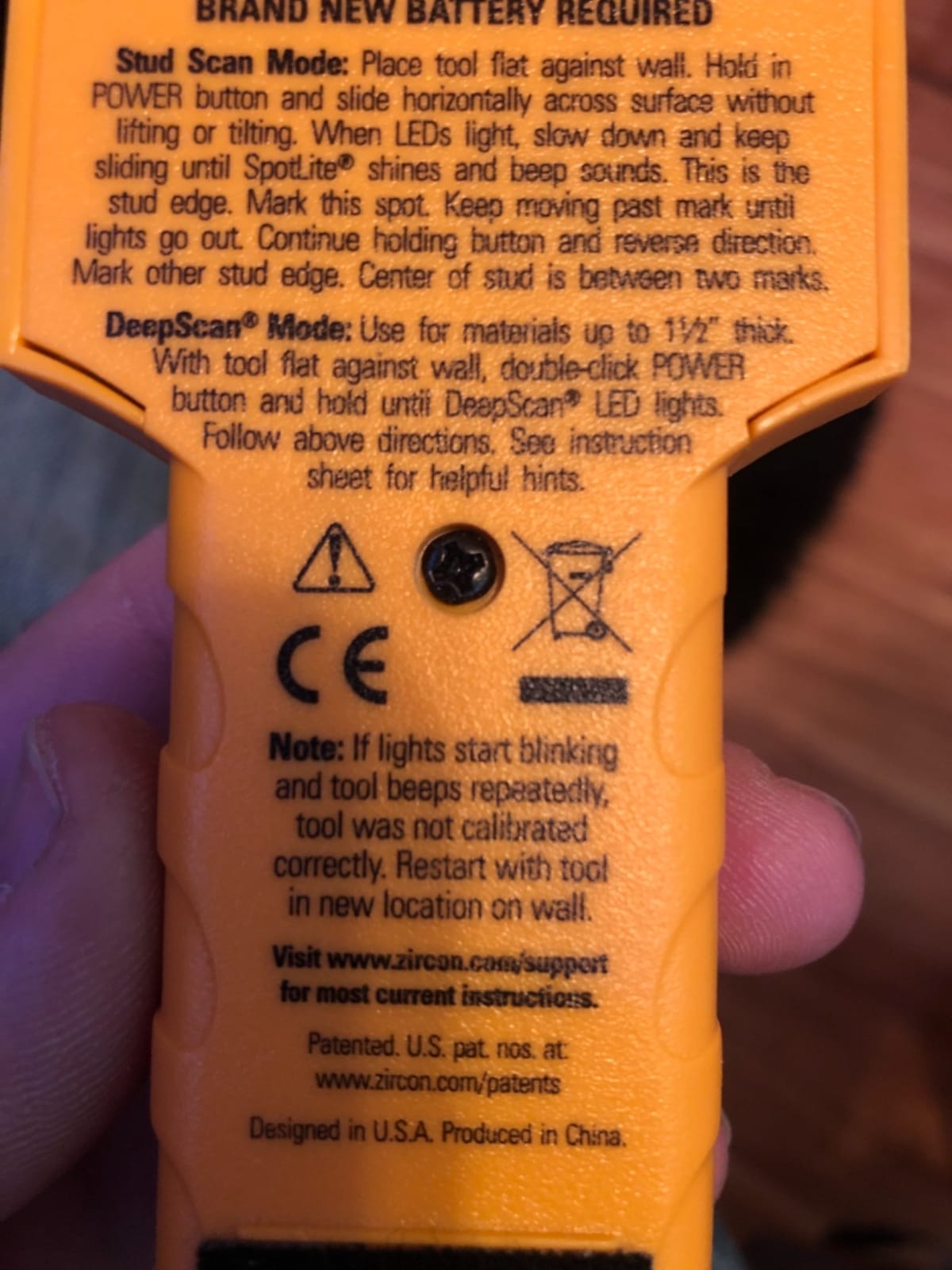
How it behaves on plaster
DeepScan reaches 1.5 inches, which is enough for typical plaster over lath. The single-sensor approach is the weak point, since individual lath strips read as density changes and produce false edges.
Run it slowly and confirm every hit against a magnet before you drill. That habit makes almost any of these tools more reliable on plaster.
Who should still buy it
Anyone who wants no display, no menu, and no calibration thinking. There is genuinely one button and one red-to-green signal, and that is a real advantage in a dark crawlspace.
It is also a reasonable light-duty backup, but it is not the choice for mounting a heavy mirror.
12. Walabot DIY 2: Best Visual Wall Map
Walabot DIY 2 – Visual Stud Finder & Wall Scanner for Drywall. Detects Wood & Metal Studs, Plastic & Metal Pipes, Live & Non-Live Wires
4 inch sensing
95% accuracy
Phone app display
8.16 oz
Pros
- On-screen map shows the center of a stud
- not just an edge
- Detects wood and metal studs plus pipes and live and non-live wires
- Scans in seconds rather than sweeping repeatedly
- Internal Wi-Fi means no jobsite internet needed
Cons
- Requires a phone and calibration before every scan
- App connection drops reported as frustrating
- No on-screen center line
- Feet do not slide smoothly on textured walls
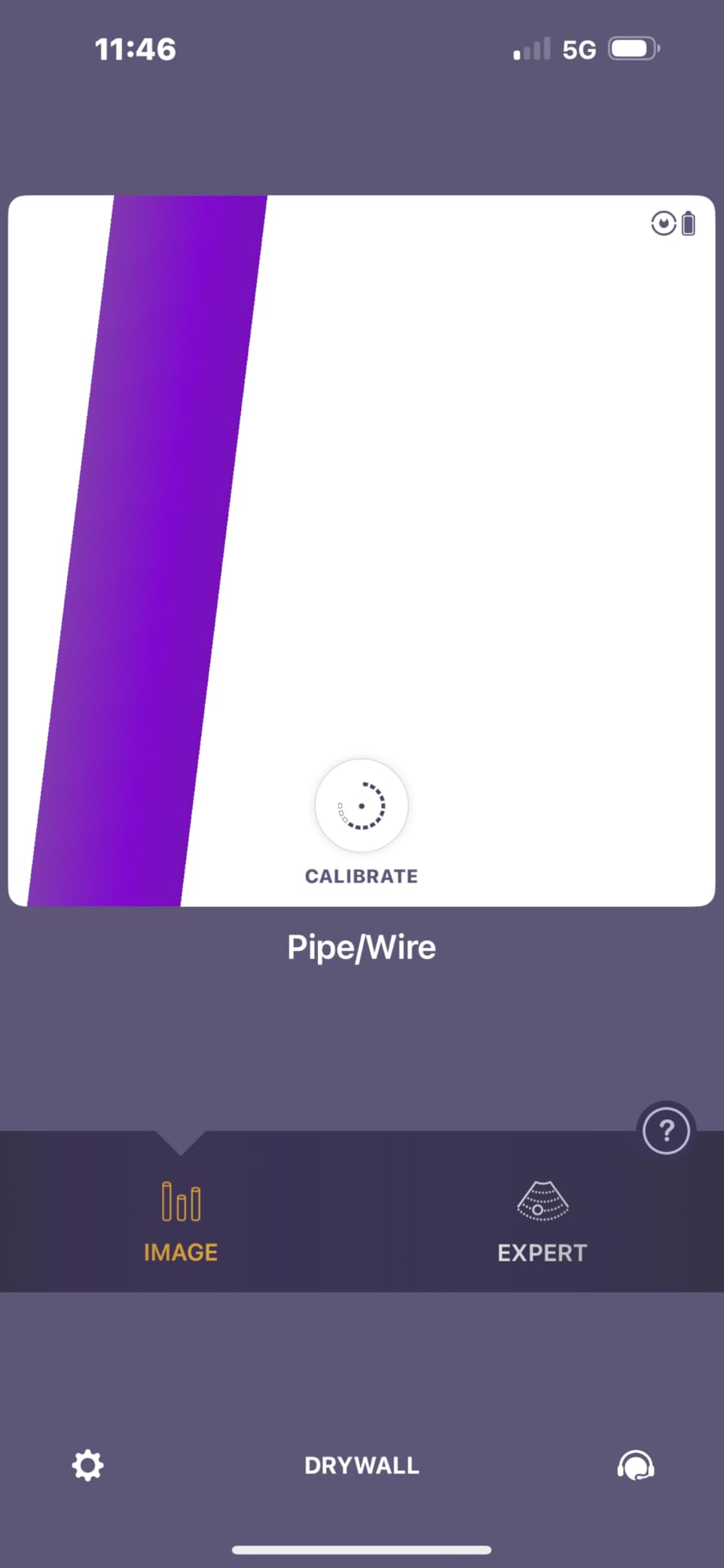
The Walabot is the only tool here that draws the wall for you. It projects a map on your phone showing the center of wood and metal studs along with pipes and both live and non-live wiring, and it senses up to 4 inches deep, which is deeper than any other tool in this roundup.
When you are dealing with a wall full of unknown plumbing and wiring, seeing the whole layout in one pass is a real advantage over edge-only tools.
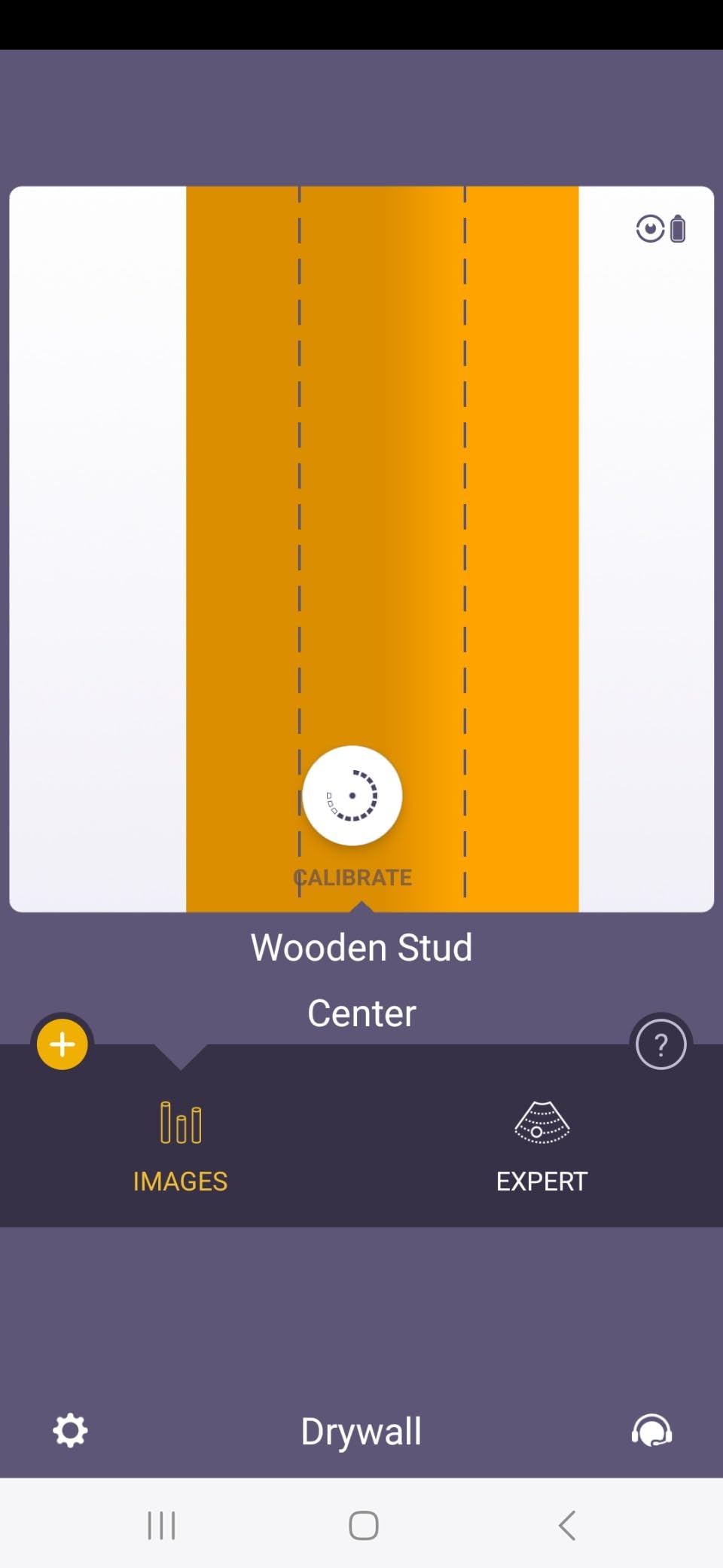
There is an important caveat for this topic. The manufacturer does not rate it for lath and plaster, concrete, tile, brick, metal-backed walls, or stucco. It is a drywall and plywood scanner, and on a thick lath and plaster wall the image quality degrades and misreads become more likely.
The workflow friction is the other half of the story. Calibration runs before every scan, the connection uses the tool’s own internal Wi-Fi, and owners most frustrated are the ones whose app connection dropped mid-job.
Where it genuinely earns its place
New-construction and remodel drywall where you want pipes and wiring mapped rather than guessed. It cuts a whole-wall scan down to seconds instead of repeated passes.
It also has no center line drawn on screen, so you still mark by eye once you see the stud band.
Where it falls short
On plaster over wood lath, the wall thickness and the lath strips both work against it, and it carries the lowest average rating in this roundup at 4.1.
Its rubber feet do not slide smoothly on textured plaster, and ambiguity between pipes and wires is a commonly reported confusion. Use an electronic sensor or a magnet on plaster walls, not this.
How to Find Studs in Lath and Plaster Walls?
Here is the workflow we use, and it works whether or not you buy a dedicated plaster tool.
Step 1: Identify the wall. Check the exposed edge at a doorway for thickness and visible lath. Determine whether the lath is wood or metal, because that decides whether a magnet helps or misleads.
Step 2: Calibrate on a clear patch. If your tool needs calibration, do it in an area you know is empty, typically 6 to 10 inches away from any stud. Calibrating over a stud is the most common cause of a bad first reading.
Step 3: Scan slowly across, not down. Move horizontally, slower than feels necessary. Fast sweeps skip the reading, and on uneven plaster a slow pass is the only way to see a stable signal.
Step 4: Repeat every pass. Scan the same line three times in the same direction. A real stud reads in the same place every time. A lath strip or a repair patch moves or disappears.
Step 5: Confirm the edges and the center. Mark both edges, then the middle. A 1.5 inch stud needs fasteners or a screw within about an inch of center, so if your mark has nothing at the center, keep scanning.
Step 6: Verify with a magnet and a pilot hole. Run a magnet over the mark, then drill a small pilot hole before the final bit. A quarter inch hole in an inconspicuous spot costs almost nothing compared with a cracked finish or a drilled wire.
For the magnet step specifically, sweep vertically in one continuous line from floor to ceiling. A dense column of catches reveals the lath fastener line, and that line tells you the stud runs behind it. This is the technique old-home renovators describe as the most reliable method on that construction, and it costs almost nothing to try.
Buying Guide: What Actually Matters on Plaster
Sensor count beats everything else for electronics. A single-sensor tool asks whether the density changed at one point, and on plaster the answer is always yes because lath strips change it constantly. A 9 or 13 sensor array averages across the width of the target, so it reads the stud as a band rather than an edge. That is the core reason the Franklin ProSensor line dominates this list.
No calibration is a genuine advantage on rough walls. Calibration assumes an empty starting point. On uneven plaster that assumption is often wrong, and tools that skip the step simply start reading.
Live wire detection is worth having in an old house. It will not tell you the wire is not there, but it tells you to be careful. Pre-1970 homes can contain cloth-insulated wiring and, in some cases, older wiring styles with no protective ground. If you suspect serious wiring issues, a detector is not a substitute for an electrician.
For magnets, pull force and shape are what count. A spherical rare-earth magnet concentrates its field with less leakage than a flat one, which is why a spherical ball reads through more plaster and gives you a center by sliding around a hit. A weak flat magnet is the most common disappointment in this category.
Buy a level if you are hanging anything heavy. A rotating bubble level, or a laser mark, is what turns a found fastener into a straight, level line. For a television, a heavy mirror, or floating shelves, that accessory is not optional.
Match the tool to the wall, not the other way round. If your walls are plaster over wood lath, a multi-sensor electronic model plus a magnet is the combination we would buy. If they are plaster over metal lath, you need a scanner with a dedicated metal mode, and you should accept that a test hole is part of the process. If your walls are modern drywall, any of the mid-range deep-scan finders will serve you, and the Walabot becomes reasonable for whole-wall mapping.
Budget for a second method. No single tool in this roundup works flawlessly on every plaster wall. Professionals pair a deep-scan electronic finder to narrow the area with a magnet to confirm, and they verify with a pilot hole before committing. That habit is worth more than any upgrade in model number.
Our other buying guides follow the same test-verify approach for gear that has to work in the field, including our fish finder roundup and the portable fish finder reviews.
Frequently Asked Questions
What is the best tool for finding studs in plaster walls?
The best tool is usually a multi-sensor electronic scanner with 9 to 13 sensors, paired with a rare-earth magnet for confirmation. Wide arrays read the overall density change across a stud instead of reacting to individual lath strips, which is what causes false positives on plaster. For metal lath, use a scanner with a dedicated metal mode instead.
Do stud finders work on plaster walls?
They do, but not every model. Single-sensor beep finders give constant false positives on lath and plaster because they detect the lath strips rather than the framing. Multi-sensor deep-scan models handle plaster well, and magnetic finders work because they grab the lath nails. Confirm any reading with a pilot hole before drilling.
Can neodymium magnets be used to find studs?
Yes, and on lath and plaster they are often the most reliable option available. A rare-earth magnet physically latches onto the steel nails or screws fastening lath to studs, so there is no signal to interpret and nothing to calibrate. Sweep vertically in one line to map the fastener line, which sits directly over the stud.
Are there still studs in plaster walls?
Almost always. Plaster was applied over existing framing, and in most pre-war homes the lath was nailed directly to the studs before the plaster coat went on. What changes is visibility, not presence. Check an exposed edge at a doorway for thickness and visible wood lath, then tap the wall to hear where framing is.
How do I find studs in old plaster and lath walls?
Identify the wall, calibrate on a clearly empty patch if your tool requires it, then scan slowly across the wall and repeat each pass to see whether the reading is stable. Mark both edges and the center, then confirm with a rare-earth magnet and a small pilot hole. Drilling a quarter inch test hole is cheap insurance against cracked plaster.
Is there a stud finder that can see through stucco?
Not reliably, and no tool we tested is rated for it. Thick stucco and metal lath defeat capacitive density sensors because the metal dominates the reading, and the manufacturer of the radar wall scanner in this roundup does not rate it for stucco or plaster. Use a dedicated metal scanner and expect to confirm with a test hole.
Conclusion
After working through twelve tools on plaster and lath, the pattern is clear. The Franklin Sensors ProSensor 710 is our pick for the best stud finders for plaster walls because 13 sensors and a no-calibration start produce the most repeatable readings we found on uneven plaster, and a pair like it plus a strong rare-earth magnet covers nearly every wall in an old house.
Add the C.H. Hanson 03040A if you are mounting shelves or a television, since the rotating level does the straight marking for you. Reach for the Zircon MultiScanner A200 instead if you suspect metal lath, and keep a small magnetic finder in the bag for the walls where electronics keep arguing with you.
Whatever you buy, work slowly, scan three times, and drill a pilot hole before the big bit. Plaster is expensive to repair and cheap to test, and that habit will save you more than any model choice in 2026.