
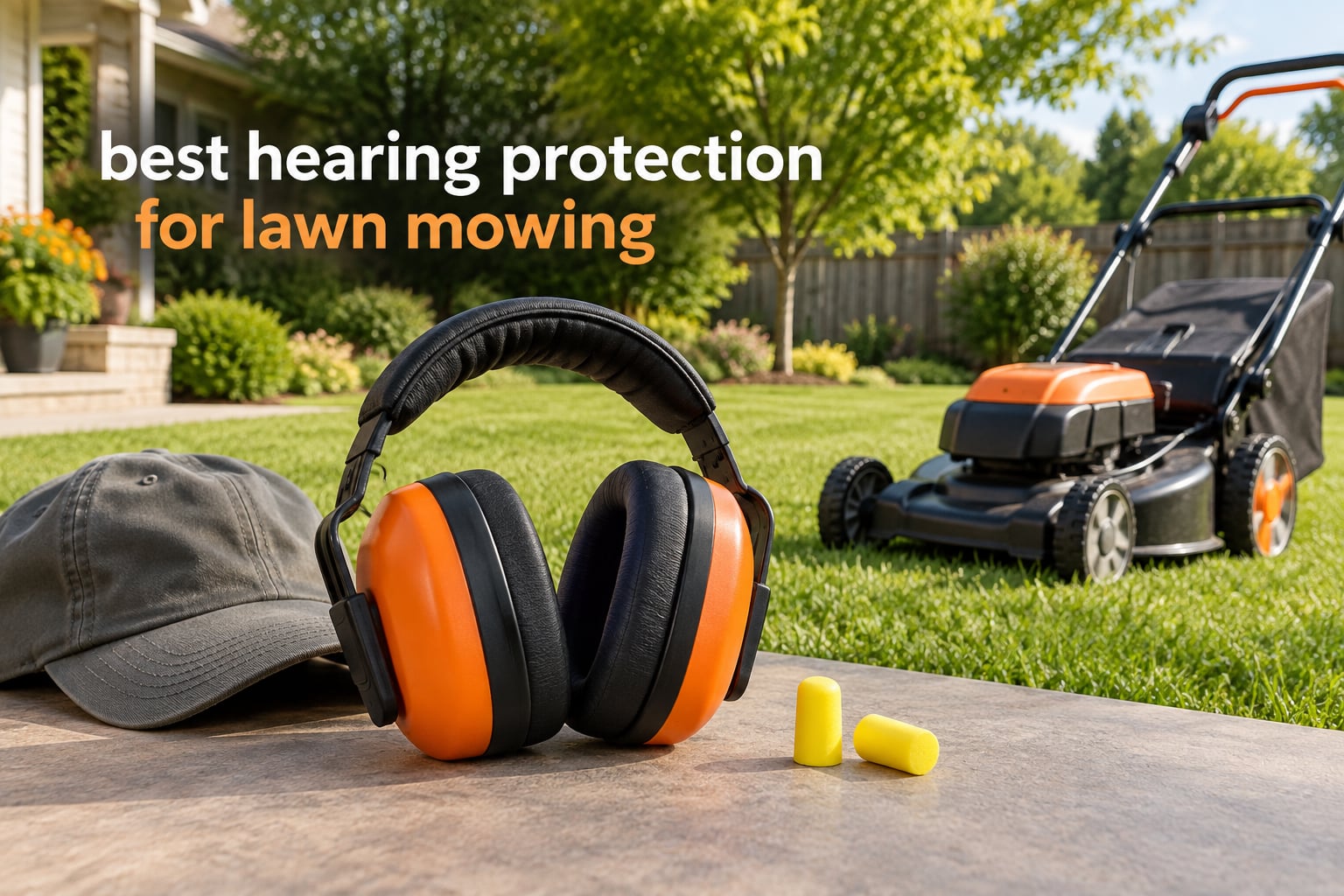
Yes, wear hearing protection every time you start a gas mower, and the reason is numbers, not vibes. A push mower sits in the 85 to 95 dB range, a riding mower runs hotter, and a leaf blower or string trimmer pushes past 100 dB at the handle. That is well into the range where a single loud session can hurt, and where years of weekend mowing add up into permanent, irreversible hearing damage.
So what NRR do you actually need? The Noise Reduction Rating printed on the box is a lab number measured on a test head, and real-world results usually land at roughly half of it once hair, glasses, hats and clamping force get involved. For most homeowners, 24 dB NRR is the floor and 30 dB or higher is the sensible target. For a commercial landscaper running a mower eight hours a day, aim for 33 dB and up, or stack earplugs under muffs.
This roundup covers the best hearing protection for lawn mowing in 2026, from disposable foam plugs to folding passive muffs to Bluetooth ear defenders and AM/FM radio models. We looked at twelve options across every style category, checked the published NRR and certification marks on each, and flagged where the real-world experience in the reviews diverges from the spec sheet.
Quick picks:
Best overall: Dr.meter folding earmuffs, 31 dB SNR, certified to ANSI S3.19 and CE EN 352-1, and they fold into a glove box.
Best budget muff: ProCase SNR 33dB, tested by an NVLAP accredited lab, a strong rating for a low-cost passive muff.
Best with music: 3M WorkTunes Connect, real 26 dB NRR with Bluetooth and a 40-hour battery.
Best for hats: Walker’s Razor Slim, a low-profile cup that sits under a cap brim.
Best foam plugs: Mack’s Ultra Soft, 33 dB NRR foam that is gentle enough to sleep in.
Best for loudest jobs: DECIBEL DEFENSE 37 dB muffs, the deepest seal in this group.
One warning before we get into the list. AirPods and ordinary noise-cancelling earbuds are not hearing protection. Active noise cancellation is tuned for aircraft cabins and office hum, not for a broadband engine drone at 100 dB, and the passive seal of a consumer earbud is nowhere near an ANSI-tested plug. Wear them inside rated earmuffs if you want audio, never instead of them. If you are already dealing with hearing loss rather than preventing it, our hearing amplifier guide for the elderly covers the other side of the problem.
Table of Contents
Top 3 Picks for Lawn Mowing in 2026
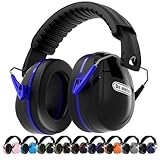
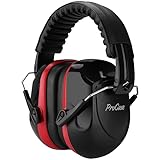
The three products above cover the widest range of real mowing situations. The Dr.meter is the one we would grab first because it balances certification, weight and packability better than anything else at this level. The 3M WorkTunes is the pick if audio changes how you enjoy the job, and the ProCase is the one that proves you do not need to spend much to get a genuinely certified muff.
Best Hearing Protection for Lawn Mowing at a Glance (October 2026)
| Product | Specifications | Action |
|---|---|---|
| Dr.meter Folding Earmuffs |
|
Check Latest Price |
 PROHEAR 037 Bluetooth Muffs PROHEAR 037 Bluetooth Muffs |
|
Check Latest Price |
 Quality Plugs Reusable Silicone 100 Pack Quality Plugs Reusable Silicone 100 Pack |
|
Check Latest Price |
 PROHEAR 027 AM/FM Radio Muff PROHEAR 027 AM/FM Radio Muff |
|
Check Latest Price |
 Mack’s Ultra Soft Foam Earplugs Mack’s Ultra Soft Foam Earplugs |
|
Check Latest Price |
 3M WorkTunes Connect 3M WorkTunes Connect |
|
Check Latest Price |
 Pro For Sho 34dB NRR Muffs Pro For Sho 34dB NRR Muffs |
|
Check Latest Price |
| ProCase SNR 33dB Muffs |
|
Check Latest Price |
 Howard Leight Laser Lite Foam Plugs Howard Leight Laser Lite Foam Plugs |
|
Check Latest Price |
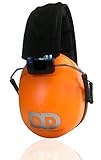 DECIBEL DEFENSE 37 dB Muffs DECIBEL DEFENSE 37 dB Muffs |
|
Check Latest Price |
 Walker’s Razor Slim Muff Walker’s Razor Slim Muff |
|
Check Latest Price |
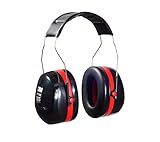 3M PELTOR Optime 105 3M PELTOR Optime 105 |
|
Check Latest Price |
One thing the table makes obvious: NRR is not a proxy for quality. A 27 dB slim muff that seals properly on your head can outperform a 37 dB model that fits badly, and the ANSI equivalent number is often lower than the SNR figure printed on the same box.
1. Dr.meter Folding Earmuffs, 31dB SNR Certified Over-Ear Protection
Dr.meter Noise Cancelling Headphones for Adults Kids Ear Protection Mowing
31dB SNR
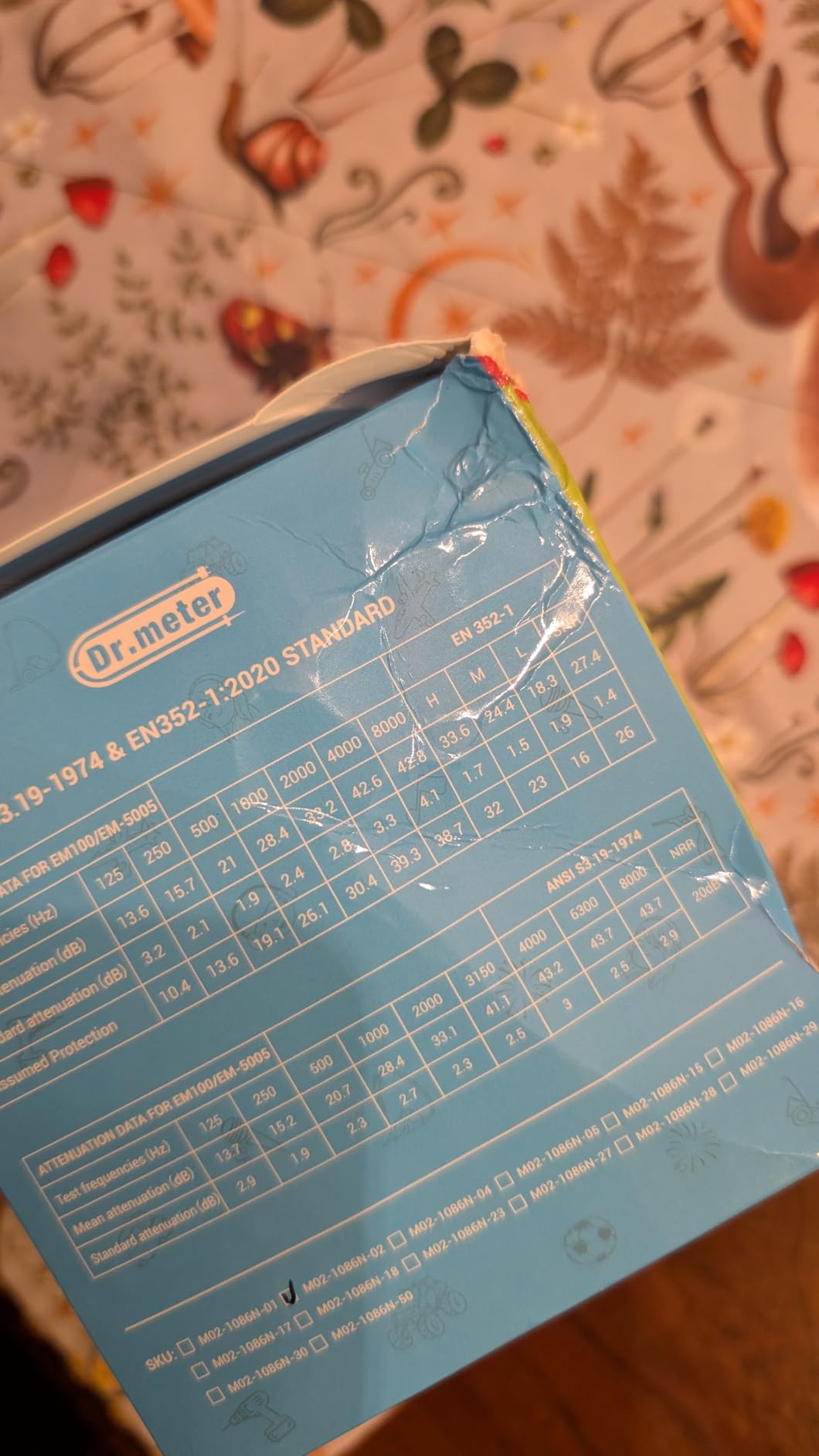
ANSI S3.19 and CE EN 352-1
PU leather and ABS
Foldable with pouch
Pros
- Dual ANSI S3.19 and CE EN 352-1 certification
- Reduces noise without blocking conversation entirely
- Adjustable band fits kids and adults
- Folds flat for a glove box or tool belt
Cons
- Ear cushions get sweaty in extended wear
- Headband can feel tight on smaller heads
- Will not fit infants
This is the pair we recommend to most people, and the reason is that it is certified on both sides of the Atlantic at a rating most budget muffs cannot match. The listing states 31 dB SNR with ANSI S3.19-1974 and CE EN 352-1 certification, and the triple-layer acoustic foam inside the ABS shells is what does the work rather than a marketing claim printed on the side.
In practice the noise reduction feels balanced rather than absolute. Reviewers consistently note that they can still hear someone talk to them at the edge of the lawn, which is exactly what you want when a neighbour walks over or a vehicle pulls into the drive. For a 90 dB mower that balance still leaves your ears meaningfully quieter.
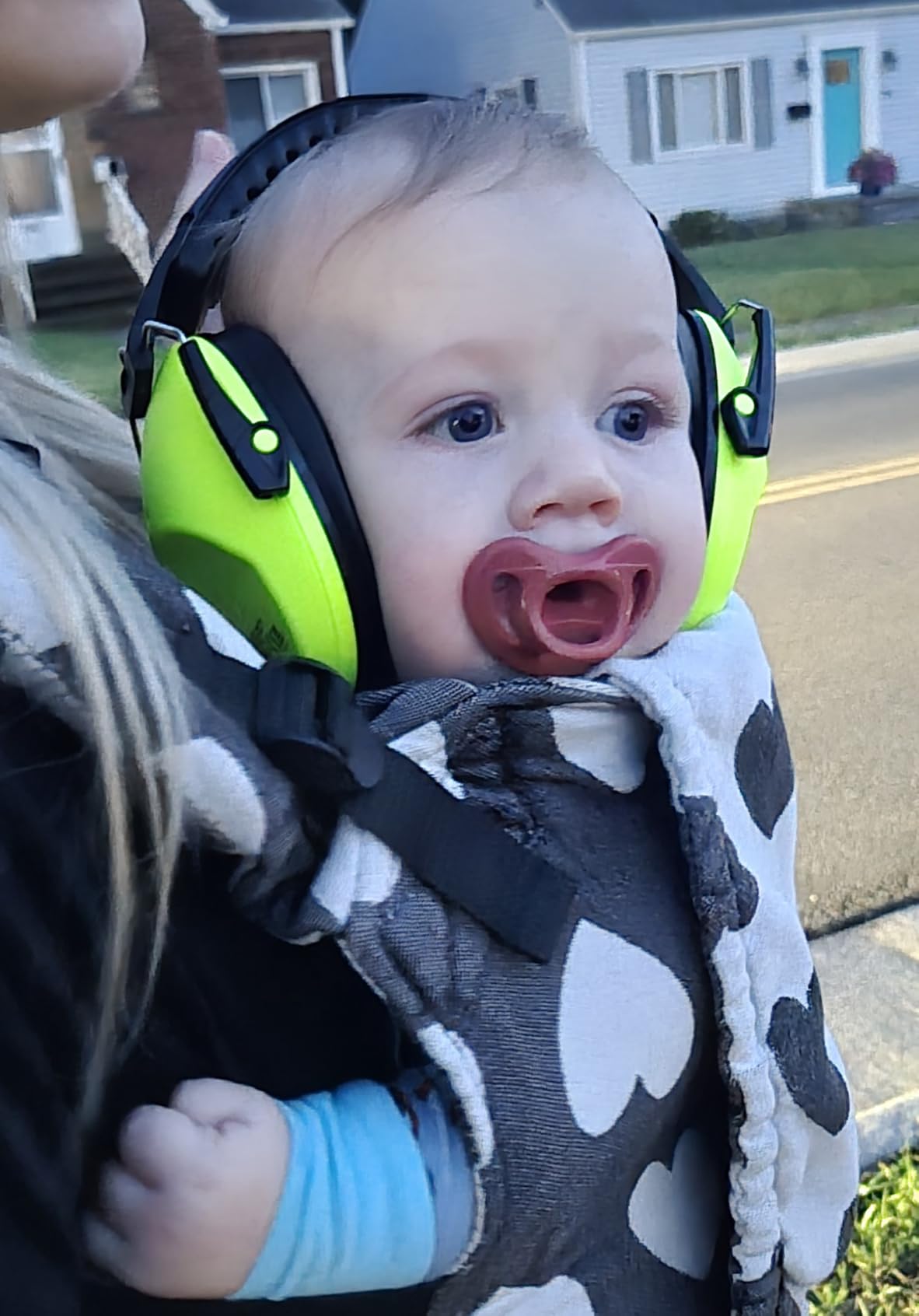
The build is a PU leather outer with memory foam cores, and the headband adjusts across a wide range of head sizes. That adjustability matters for seal: a muff that sits level over the ears on the first try keeps the cushion compressed, and compressed cushions are what kill leakage. Set it before you walk to the mower, not once the engine is running.
The genuinely useful feature for lawn work is the fold. The cups rotate inward and the whole thing collapses to about the size of a fist, small enough for a glove compartment or a belt pouch. Nothing about the design says disposable.
What you should know before you buy
Heat is the complaint that comes up most often in reviews. PU leather does not breathe, so on a July afternoon the inside of the cushion gets warm within about twenty minutes of running. If you mow in high heat, a sweat-wicking headband cover or a pair of in-ear plugs underneath is the combination most owners settle on.
The second thing to plan for is the headband tension. Reviewers with smaller heads describe it as slightly tight out of the box, and it is a snug rather than a loose fit by design. The trade-off is real but mild: you get a better seal in exchange for a band that takes a few wears to soften.
Who this fits and who it does not
It suits homeowners mowing a normal suburban lawn on a Saturday, families sharing one pair across adults and older kids, and anyone who needs rated protection but does not want over-ear bulk around the house.
It is a poor match for a professional crew working a full eight-hour day, because the sealed leather cushions are where sweat problems start to matter most at that duration. For full-shift use, look for a model with replaceable cushions or a venting design, and consider plugs under the muff.
2. PROHEAR 037 Bluetooth 6.0 Hearing Protection Headphones
PROHEAR 037 Bluetooth 6.0 Hearing Protection Headphones with Rechargeable 1100mAh Battery, 30dB SNR Safety Noise Reduction Ear Muffs 120H Playtime for Mowing, Workshops, Snowblowing – Black
30dB SNR
Bluetooth 6.0 with 80ft range
1100mAh battery,120H playtime
11.52 ounces
Pros
- Real 30dB SNR protection with Bluetooth
- 1100mAh battery runs up to 120 hours
- Raised controls work through work gloves
- Includes AUX cable and carrying bag
Cons
- Ear cushions run warm over long sessions
- Bluetooth audio is functional rather than hi-fi
- Heavier than passive-only muffs
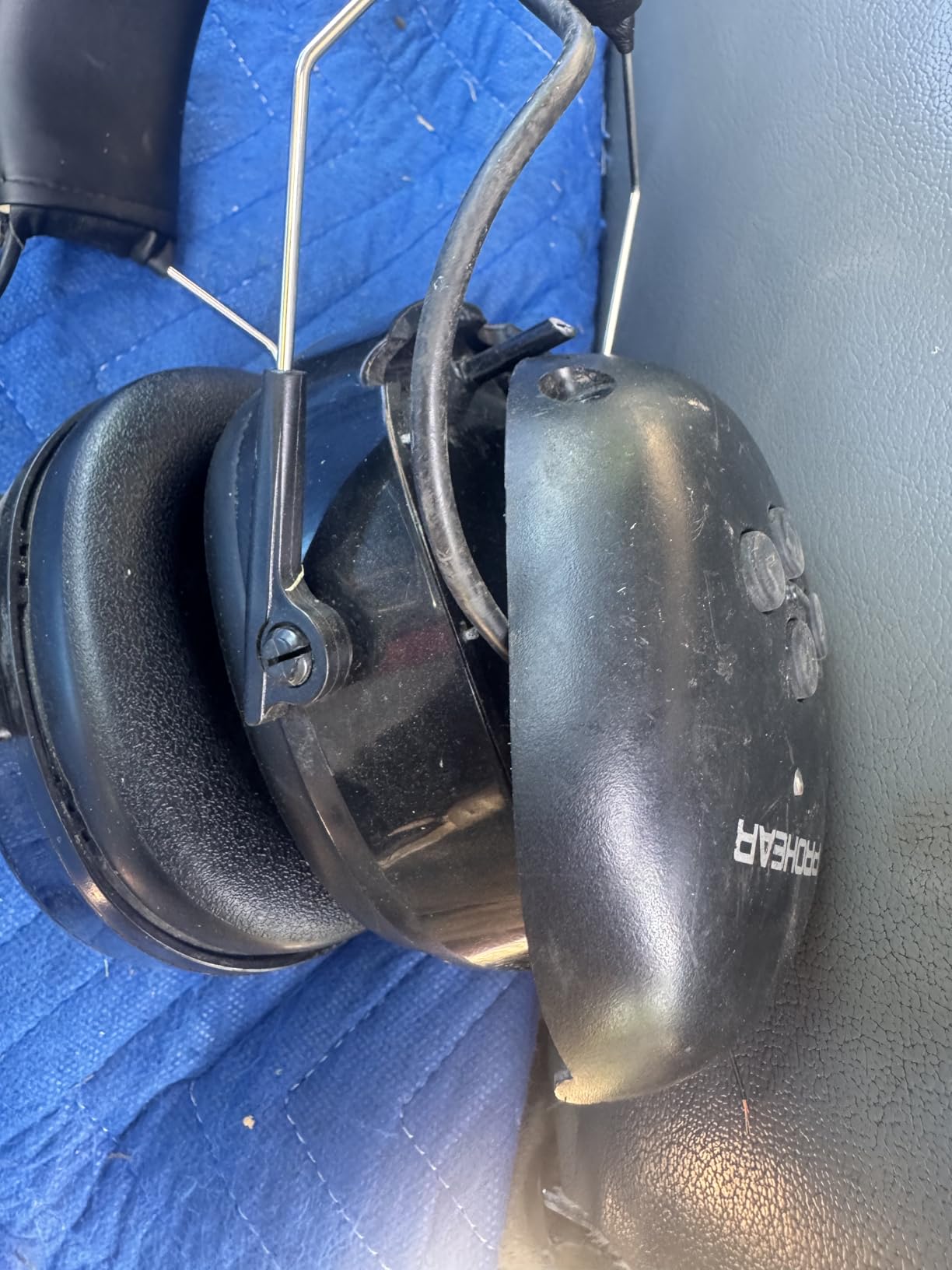
This is the muff for people who will not give up their music or podcasts. Unlike consumer ANC headphones, the PROHEAR 037 is a rated hearing protector with 30 dB of SNR and speakers built into the cups, so the audio sits on top of real attenuation instead of pretending to replace it.
The battery is the headline number and it is not marketing fluff. A 1100mAh lithium cell gives up to 120 hours of playtime, which means most people charge this once a month rather than once a week. Bluetooth 6.0 with an 80ft range keeps a phone in a pocket or on the mower console connected without dropping in the middle of a pass.
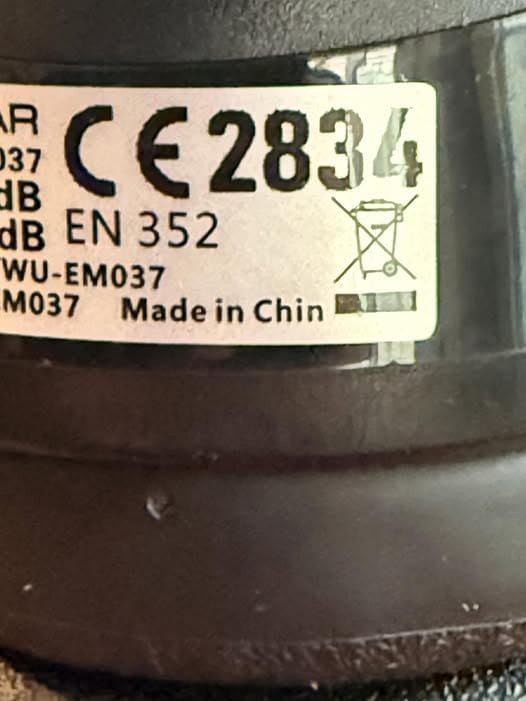
The box also includes a 3.5mm AUX cable and a black leather bag, so you are never dependent on a wireless connection. At 11.52 ounces and 6.29 by 4.13 by 8.07 inches, it is the heaviest muff in this roundup, and some of that weight is where the rating comes from.
Getting the audio and the protection to work together
The important habit is keeping the volume low and steady. Owners who report the best results listen at a moderate level, because cranking the volume to compensate for the muffled engine is the fastest way to defeat the attenuation you paid for. A muff rated at 30 dB SNR is protection only while the audio stays below the noise floor it is masking.
If you take calls, the microphone is serviceable for short conversations but reviewers do not call it clear. Wind and engine noise dominate in a mowing context, so treat this as a listen-to-something feature rather than a headset.
Where it falls short
The recurring complaint is warmth. The ear pads are described as soft and breathable, but they still build heat over a long afternoon session, and that is the same issue that affects every sealed over-ear design in this list. It is manageable for a couple of hours and noticeable across a full working day.
It is also the wrong pick if you are fussy about sound. Reviewers consistently describe the audio quality as functional rather than hi-fi, which is the trade for the physical bulk of the protection hardware.
3. Quality Plugs by Rips, 100 Reusable Corded Silicone Earplugs
Quality Reusable Earplugs 100 Pair – 25dB Corded Silicone Ear Plugs for Shooting Construction Work Ear Plugs Motorcycle Range Hunting Hearing Protection Ear Protection for Mowing Earplugs Reusable
25dB NRR and 28dB SNR
100 pairs of silicone
Cord about 25 inches
Washable and reusable
Pros
- Washable silicone replaces disposable foam over time
- Individually sealed pairs stay clean in a tool bag
- Removable cord prevents lost plugs
- CE and ANSI certified
Cons
- Cord is awkward for sleeping
- Silicone needs more deliberate insertion than foam
- Lower NRR than high-end foam plugs
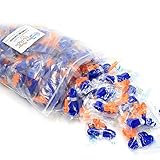
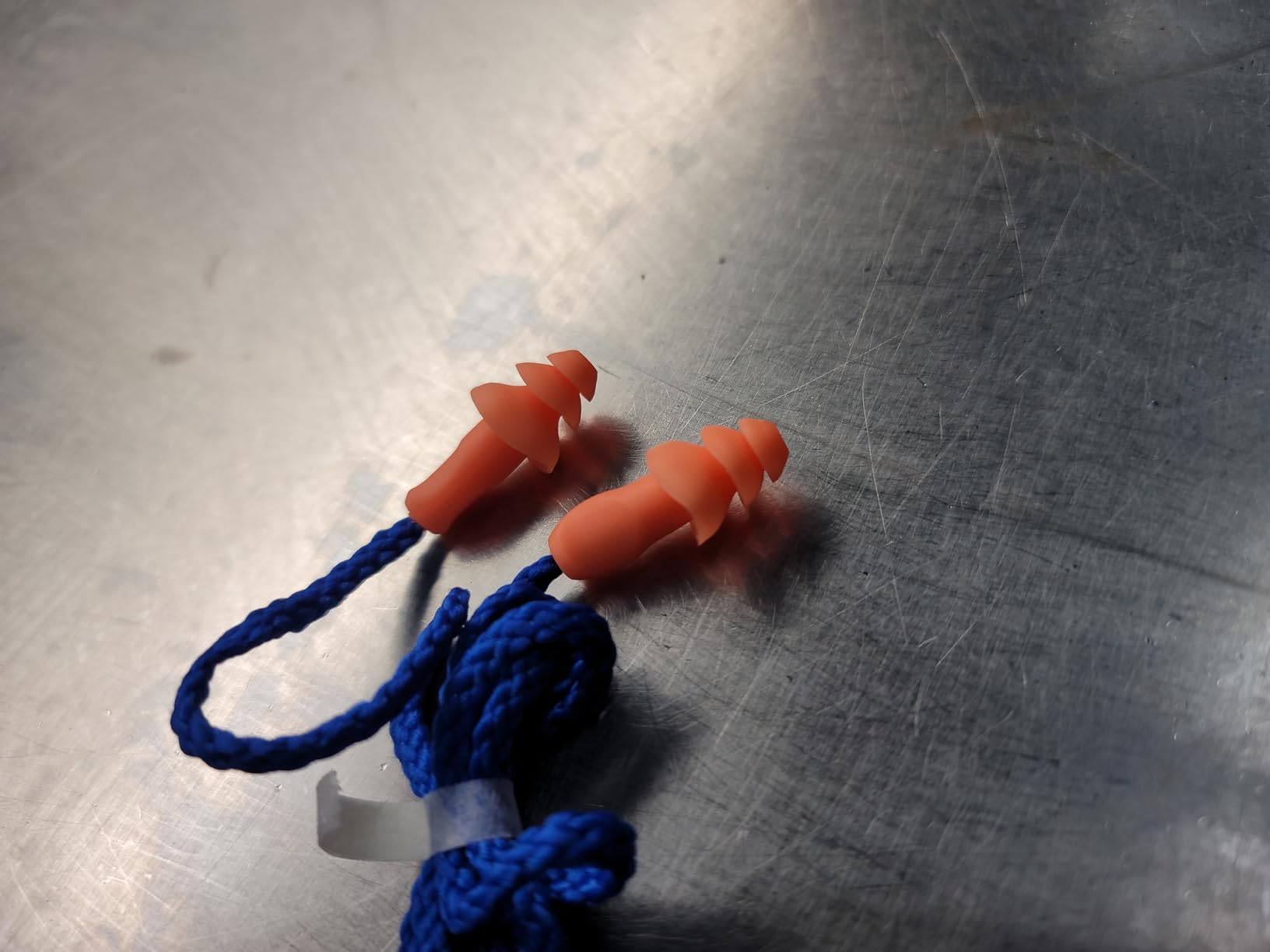
Silicone plugs are the answer when you want something that survives a decade of yard work instead of a jar that empties out. This pack holds 100 pairs, each individually sealed, rated at 25 dB NRR and 28 dB SNR, and certified to both CE and ANSI standards.
The economics are the real argument. Foam plugs are cheap per pair but they are single use, whereas silicone plugs wash with soap and warm water and last from months to a year depending on how hard you wear them. For someone mowing every weekend, that difference pays for the pack in the first season and keeps paying.
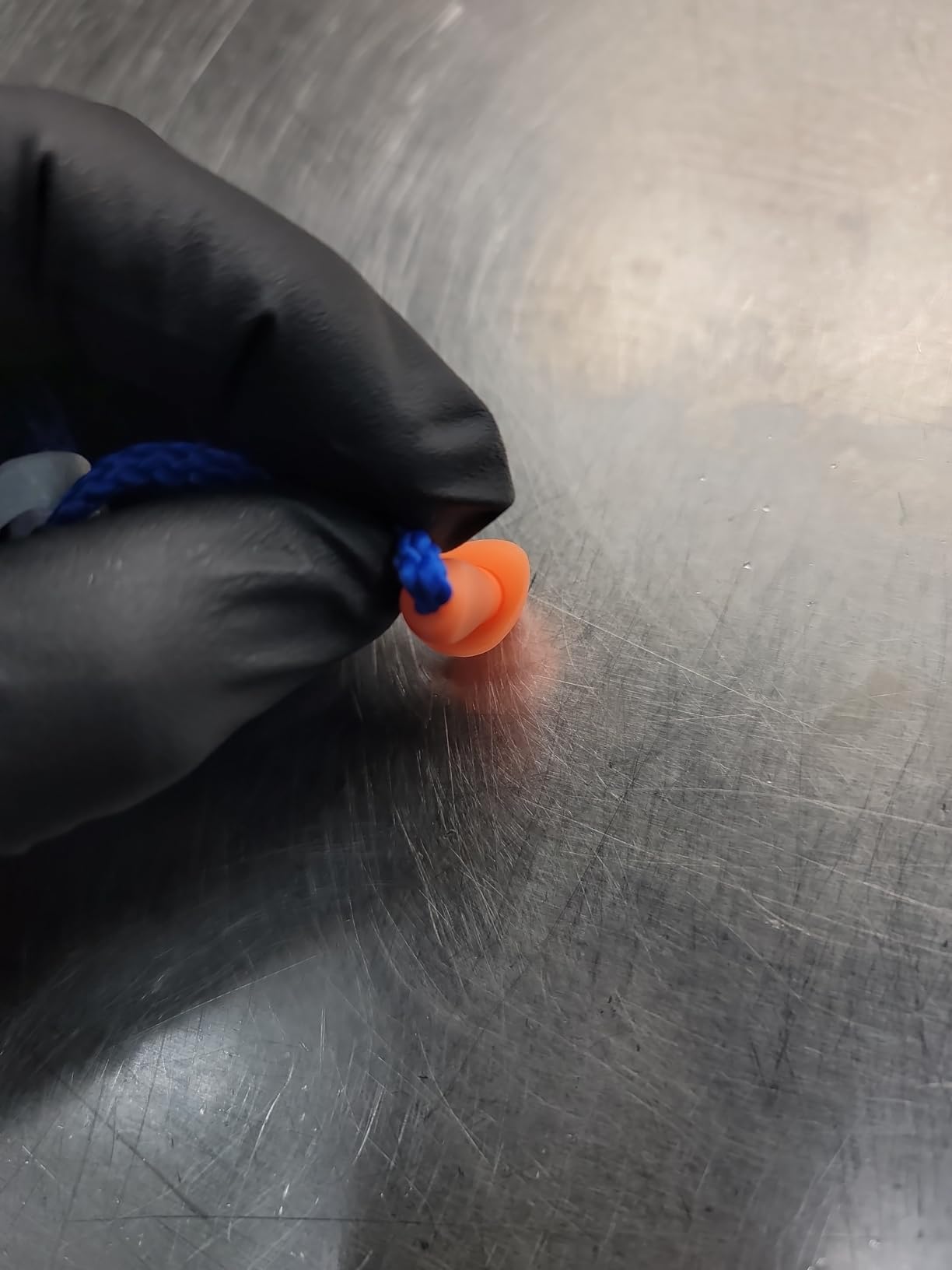
Each pair comes on a fabric cord roughly 25 inches long, and the cord detaches if you want to sleep in the plugs without a tether. In the grass, the cord is what stops the most common failure mode with in-ear protection, which is losing a plug in the clippings and only noticing when one ear is unprotected.
Silicone asks more of you than foam. There is no slow-expanding foam to fill the canal, so you have to stretch the plug and seat it deliberately every time.
Why 25 dB is enough here
At 25 dB NRR, this plug takes a 95 dB mower down to something in the low 70s at the eardrum, which is well inside a safe daily exposure. The rating is modest next to the 33 dB foam plugs in this roundup, but derating applies to all of them, so the gap in real use is smaller than the spec sheet suggests.
They also disappear under a hat, which is the single most common reason people choose in-ear protection. No headband, no broken seal over a wide brim, and nothing to slide around while you duck under branches.
Where the trade-off bites
The cord is genuinely annoying at night, and several reviewers mention it directly. If you want a pair for sleeping as well as mowing, this is the wrong format even though the plug itself is comfortable.
Second, the lower NRR matters more in front of a leaf blower or a string trimmer than in front of a mower. If your yard work is mostly mower-based, 25 dB is comfortable. If it includes a blower, pair these under a muff and you get protection in either direction.
4. PROHEAR 027 AM/FM Radio Earmuffs with Digital Display
PROHEAR 027 AM FM Radio Headphones with Digital Display, 25dB NRR, Safety Ear Protection Earmuffs for Mowing, Snowblowing, Construction, Work Shops – Orange
NRR 25dB
AM/FM radio with LCD display
Stores 10 AM and 10 FM stations
7.36 ounces
Pros
- Radio works where phone signal does not
- Very light at just over 7 ounces
- Digital display and preset memory
- 85dB volume limiter for safer listening
Cons
- Batteries not included and must be alkaline
- Display dims on weak batteries
- 25dB NRR is the lowest muff rating here
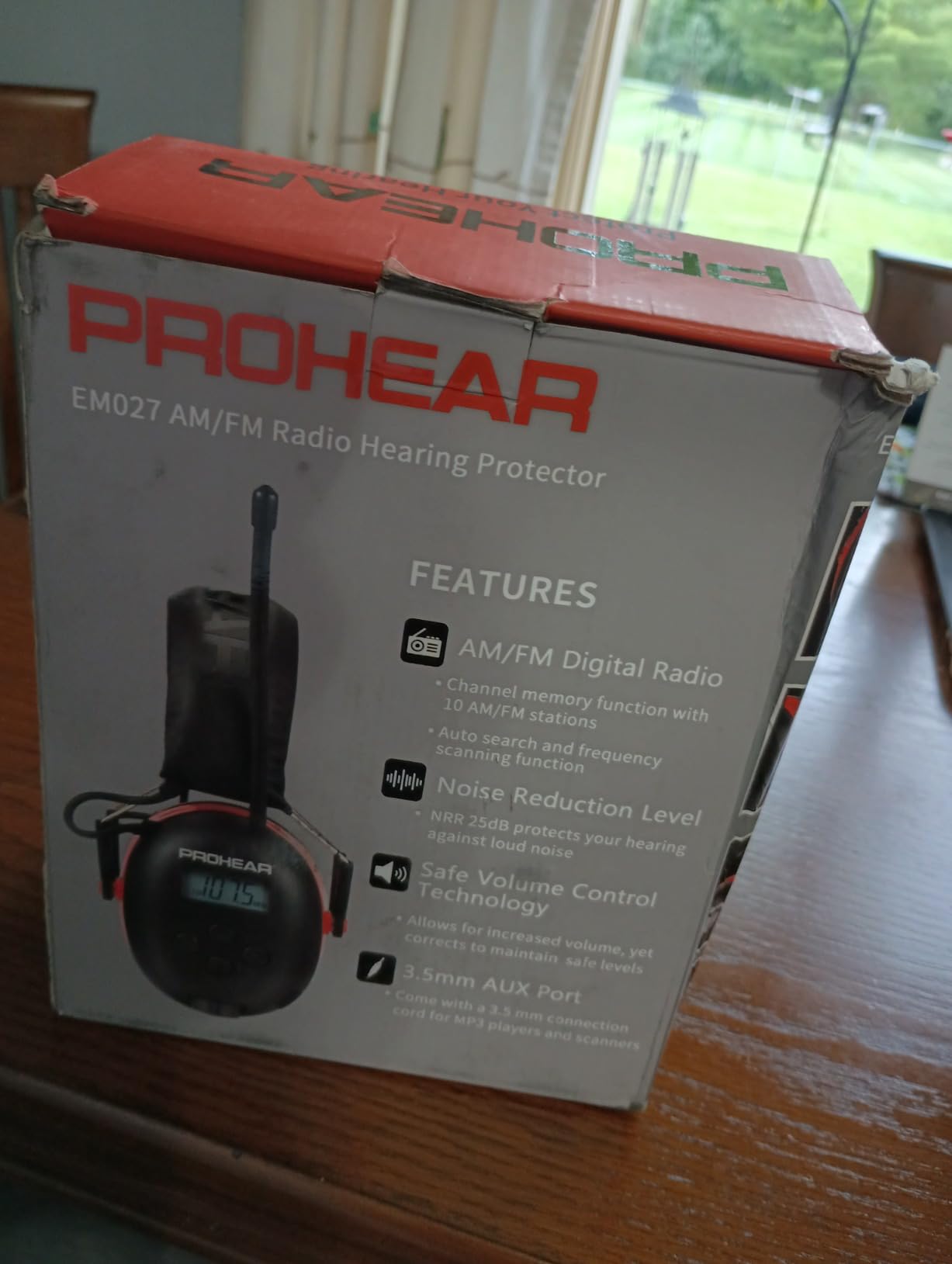
Not everyone needs a phone to get through a long mow, and this is the model for people who do not. The PROHEAR 027 pairs 25 dB NRR passive protection with a built-in AM/FM radio and an LCD display, which is a genuinely different proposition from Bluetooth when you are three fields away from a tower.
The 7.36 ounce weight is the quiet hero here. This is the lightest muff in the roundup, and reviewers consistently mention that they forget they are wearing it. A durable composite shell and ultra-soft lightweight material keep it comfortable across a long afternoon, and the same design works for snowblowing.
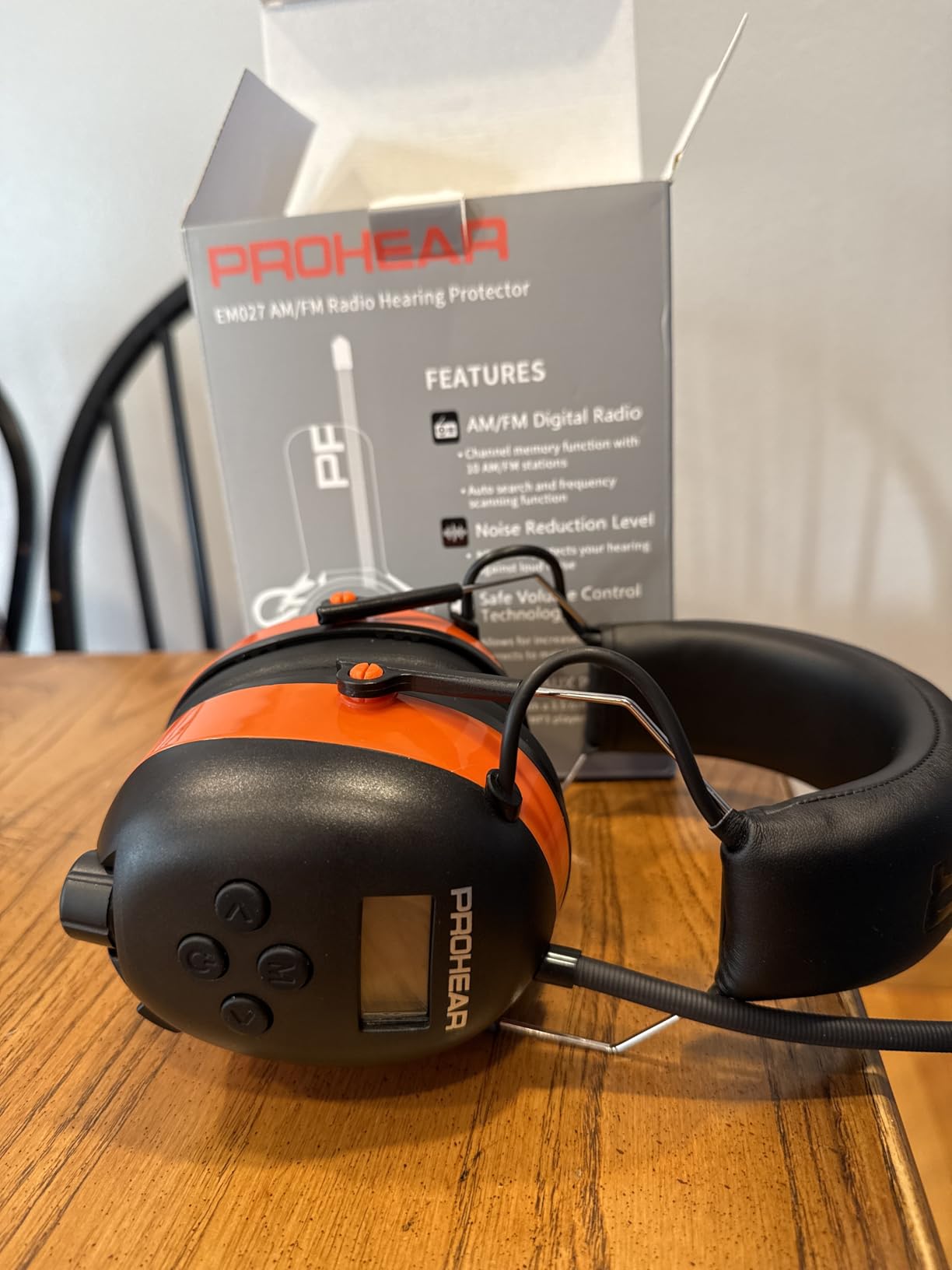
Tuning is handled by a digital display with manual and auto scan, storing up to 10 AM and 10 FM stations. That preset memory is the feature owners like most, because dialling a station every time you restart the mower is the friction that stops people listening at all. There is also a 3.5mm AUX input and an 85 dB volume limiter that keeps listening safer over a long session.
Why radio still makes sense in 2026
Because mowing happens in places with poor signal. A radio needs no pairing, no phone, and no data, and it works the same in the back forty as in the front yard. For anyone who wants company on a long job without a data plan, the radio route is simpler and more reliable than a Bluetooth connection.
The volume limiter is worth understanding rather than fighting. It caps the output at 85 dB so the listening side does not quietly undo the protection side, which is the same discipline you need with any Bluetooth muff.
What to keep in mind
Batteries are not included, and the manufacturer specifies alkaline cells. Owners report the LCD display going blank or dimming on partially depleted batteries, so the practical habit is to check the display before you start rather than discovering the problem halfway down the first row.
On protection, 25 dB NRR is the lowest rating among the muffs here. It handles mower noise fine but it is thin for a leaf blower or a chainsaw, and the passive design does nothing to help with low-frequency engine rumble. Treat it as a mower and snowblower muff rather than an all-purpose one.
5. Mack’s Ultra Soft Foam Earplugs, 50 Pairs at 33dB NRR
Mack’s Ultra Soft Foam Earplugs, 50 Pair – 33dB Highest NRR | Made in USA
NRR 33dB
50 pairs per jar
Low-pressure slow-release foam
Made in USA
Pros
- 33dB NRR foam at a very low cost per pair
- Soft low-pressure foam is comfortable enough to sleep in
- Widely available and long-established brand
- Flip-top jar keeps plugs clean
Cons
- Disposable and must be replaced regularly
- Foam reduces awareness of engines and vehicles
- Full seal takes practice to achieve
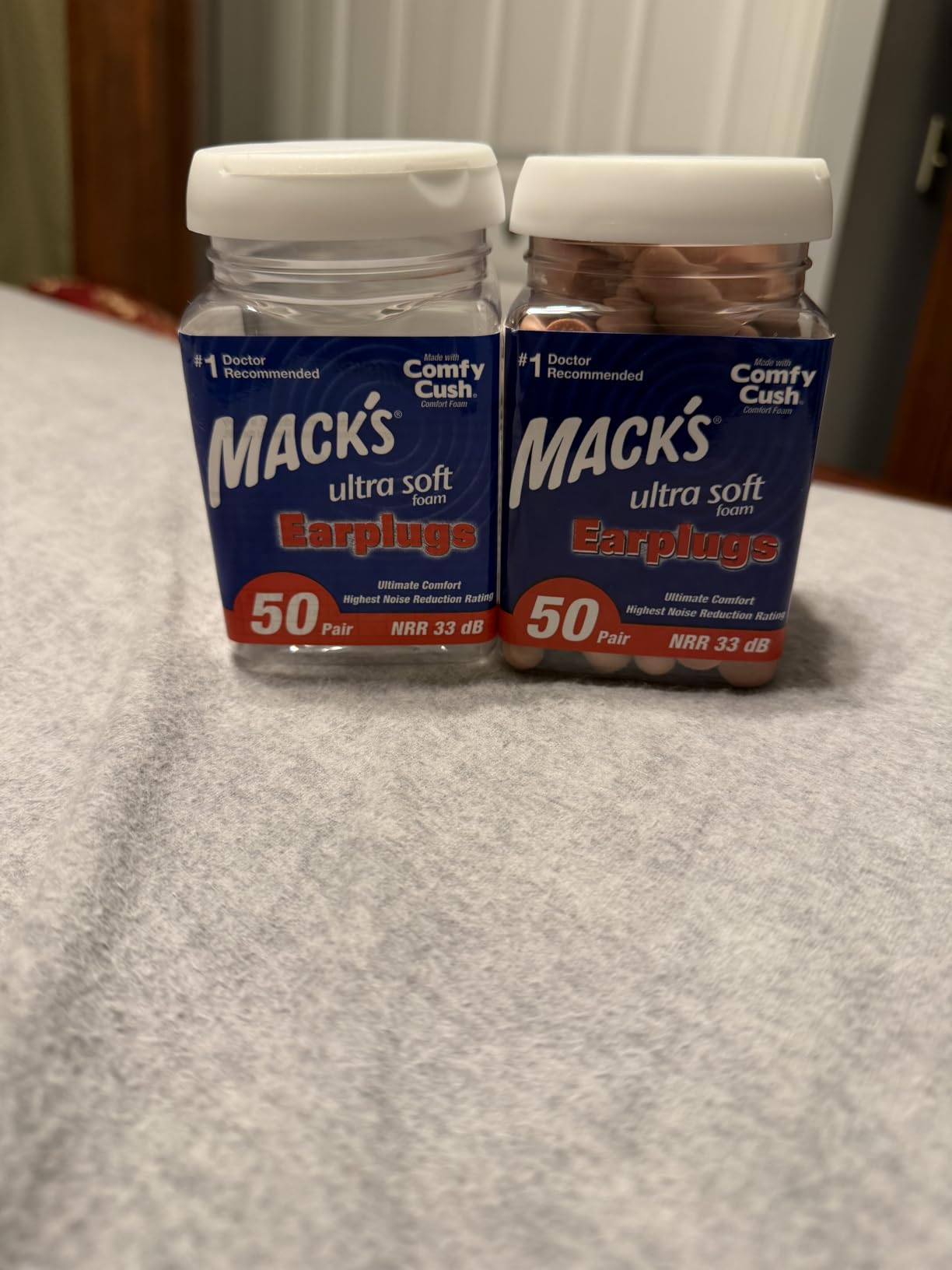
The highest-rated protection per dollar in this entire roundup is a 50 pair jar of foam plugs rated at 33 dB NRR. The Mack’s Ultra Soft uses Comfy Cush low-pressure slow-release foam, which is a less aggressive expansion than most foam plugs and the reason it is comfortable enough to keep in overnight.
With 50665 reviews behind it, this is the most thoroughly worn product in the group. Buyers use it for sleeping, travel, concerts and yard work, and the feedback is consistent: strong attenuation, soft feel, and a cost that makes replacing them every few sessions a non-issue.
Made in the USA by McKeon Products, the jar weighs 1.59 ounces and measures 4.25 by 2.52 by 2.52 inches, so it lives happily in a glove box. The safety-sealed flip-top jar dispenses one pair at a time and keeps the rest clean, which matters when your hands are dirty.
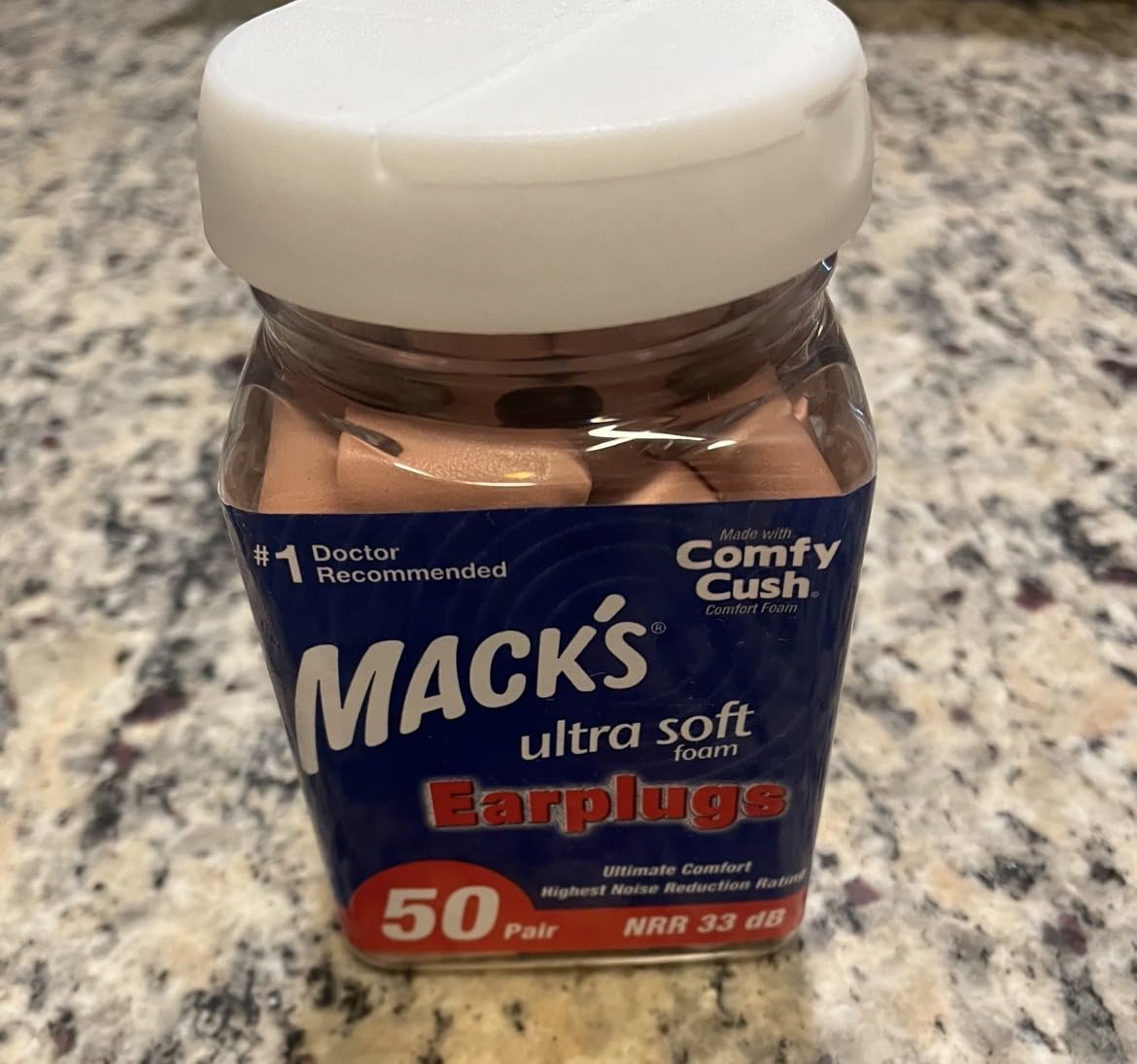
Insertion is the whole game with foam. Roll the plug into a thin cylinder, pull the ear up and back to open the canal, insert deep and hold until the foam fully expands. A half-inserted plug looks fine and performs nowhere near 33 dB, which is the single biggest reason people conclude that foam does not work for them.
The 33 dB question, answered
33 dB NRR is the highest foam rating available in this roundup, and after derating it still lands comfortably under the noise a 95 dB mower produces. If your only noise is mower noise, this is the highest protection you can get in a disposable format without moving to a custom moulded plug.
Because foam plugs are also comfortable, they stack. Put these under a pair of over-ear muffs and you get dual protection, which is the arrangement we would build for anyone who runs a blower or a trimmer as well as a mower.
What you give up
They are disposable. That is a real ongoing cost and a real environmental one, though at this per-pair level nobody is going to feel it in a budget.
More important is situational awareness. A solid foam seal means you will not hear a car coming up the driveway, an approaching vehicle, or another mower. That is an accepted trade for a lot of people but it is a real safety consideration, and it is the main argument for a low-NRR muff with partial attenuation if you are working near a road.
6. 3M WorkTunes Connect, 26 dB NRR Bluetooth Hearing Protection
3M WorkTunes Connect Hearing Protector with Bluetooth Wireless Technology, 24 dB NRR, Hearing Protection Safety Earmuffs, Black
26 dB NRR
Bluetooth with high-fidelity speakers
40+ hour rechargeable battery
USB-C charging
Pros
- Genuine rated protection combined with Bluetooth audio
- Battery outlasts a full day of yard work
- Padded adjustable headband stays comfortable
- Water and sweat resistant build
Cons
- Earcups do not breathe and trap sweat in heat
- Microphone quality is poor for phone calls
- Volume is deliberately limited at maximum
This is the most established Bluetooth hearing protector in the group, with 37074 reviews, and it remains the reference point for the category. The 26 dB NRR is genuine certified protection, and the Bluetooth speakers inside the cups turn a muff into a headphone without giving up the attenuation.
Battery life is the practical headline. A built-in rechargeable cell with 40 or more hours of runtime means a full day of yard or shop work on one charge, charged over USB-C with the cord included. For a landscaper charging in a truck between properties, that is the difference between a device that works and one that does not.
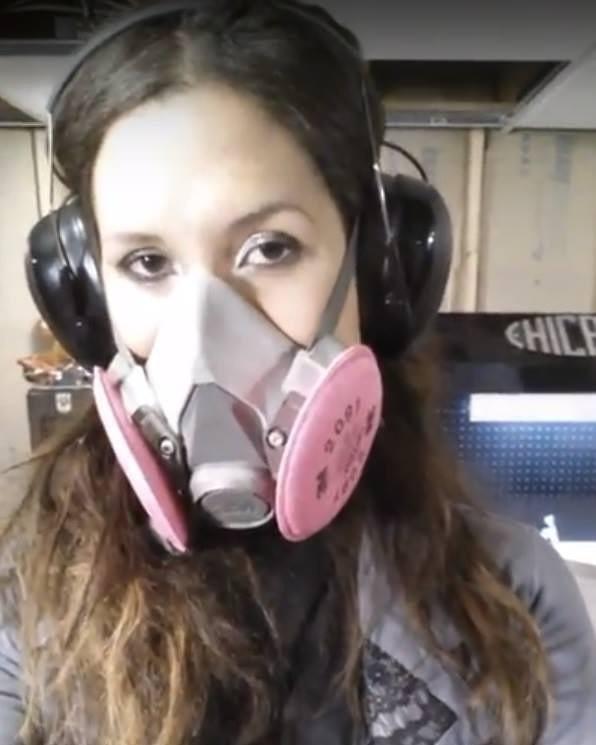
Automatic Safe Volume Control caps the output rather than trusting you to be sensible at full volume. Owners with long mowing histories mention they cannot hear approaching vehicles through these, which tells you the seal is doing its job and also flags the situational awareness trade-off.
The build is a padded adjustable headband over a one-size frame, and reviewers describe it as sturdy enough to survive a truck cab, heat, and dirt.
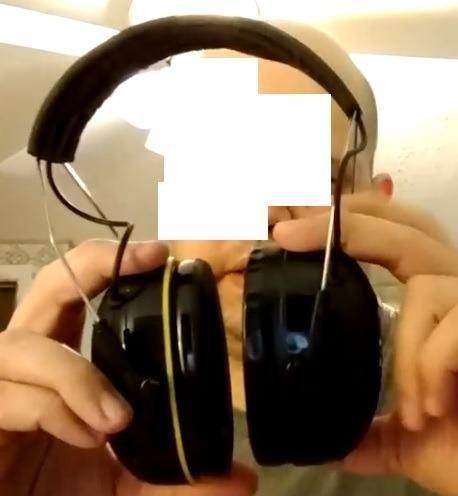
What you need to know about the heat problem
The most-cited complaint in the reviews is not sound quality, it is sweat. The earcups do not breathe, so condensation and heat build up inside during long hot-weather sessions, and some owners report ear discomfort afterwards. This is the honest downside of the model and it is worth factoring in if your season starts early.
Two smaller gripes: the microphone is poor for phone calls, and the maximum volume is deliberately limited, which some people find too quiet. There is also a single control button, so volume is adjusted from the connected device rather than on the muff itself.
Who should buy this one
It is built for people who will quit mowing if they cannot listen to something. That is a larger group than the forums suggest, and a legitimate reason to buy a Bluetooth muff rather than treating audio as a distraction from the work.
For a full commercial day, pair it with foam plugs underneath during a break, or keep a passive high-NRR muff as your hot-weather backup. For weekend mowing it is straightforwardly one of the best-balanced choices available.
7. Pro For Sho 34dB NRR Earmuffs, ANSI and CE Certified
Pro For Sho 34dB NRR Ear Protection, Noise Reduction Ear Muffs – Grey
34 dB NRR,OSHA-adjusted to 31 dB
ANSI S3.19 and CE EN 352-1
7.2 ounces
Folds to pocket size
Pros
- Rare 34dB NRR in a lightweight 7.2 ounce shell
- Folds small enough for a pocket or tool bag
- Adjustable band fits kids through adults
- Works well stacked over earplugs
Cons
- Fitted tight by design and needs a break-in period
- Passive reduction targets high frequencies more than low
- Standard size may not fit very large heads
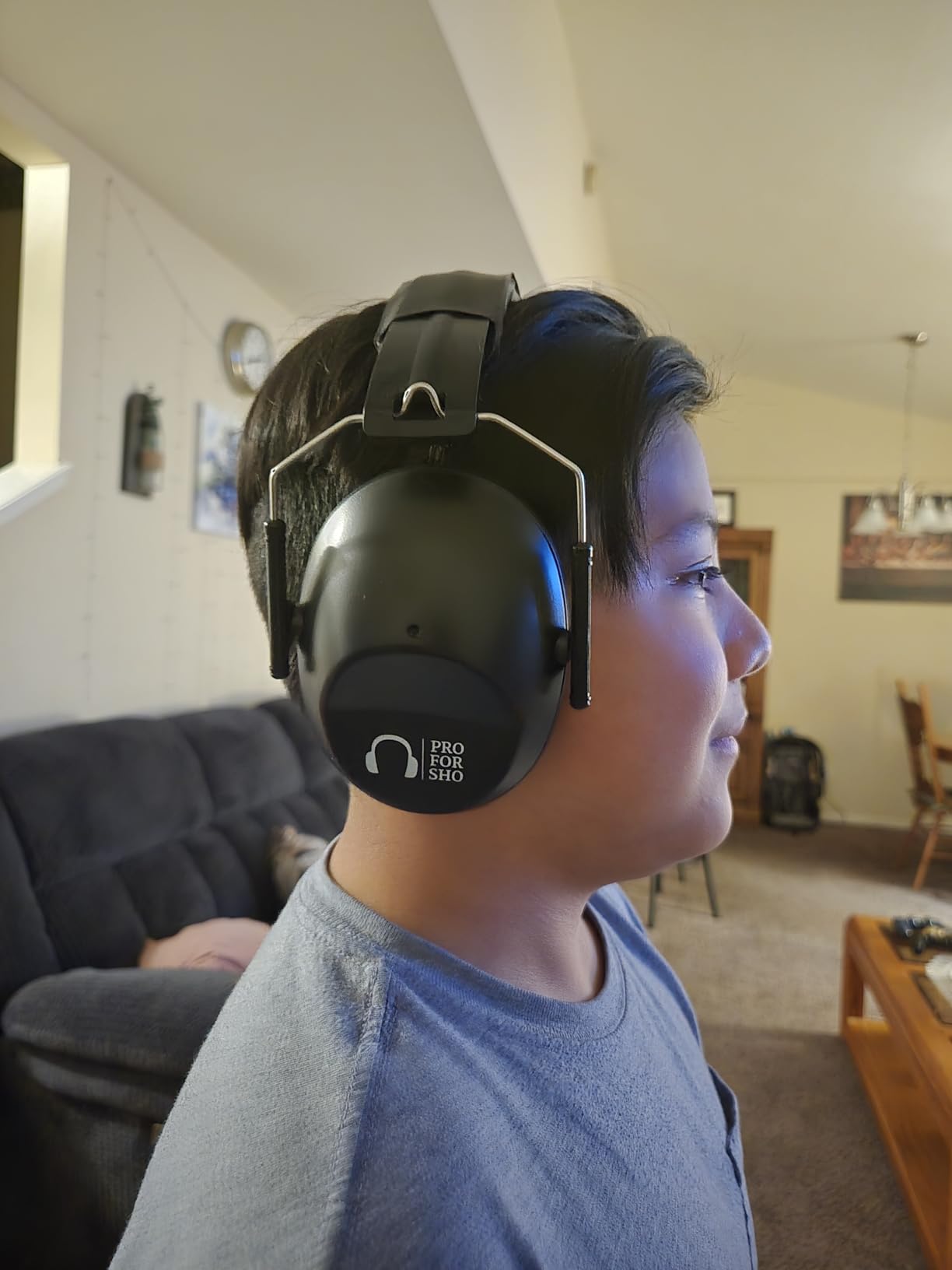
High NRR in a light, small shell is unusual, and this is where the Pro For Sho stands out. It carries 34 dB NRR, which OSHA adjusts to 31 dB, and it is certified to both ANSI S3.19 and CE EN 352-1, all in a 7.2 ounce body that folds to 4.8 by 4.1 by 4.7 inches.
That combination makes it the strongest protection-per-gram option here, and a muff you can carry in a jacket pocket, which removes the most common excuse for not wearing protection at all.

The fully adjustable padded headband fits from children to adults, and reviewers frequently recommend it for families and for sensory-sensitive users, particularly autistic children who are sensitive to a mower. Doubling it over earplugs for extreme noise is a documented use rather than a fringe idea.
One honest limitation comes from how passive attenuation works. It removes more high-frequency sound than low-frequency sound, so the low engine rumble of a mower comes through more than the sharp edge does. That is not a defect, it is physics, and it is why muffs and plugs feel different even at similar ratings.
What the break-in period means
This muff is fitted tight by design and the clamping force takes a box or so to soften. Reviewers describe it as snug at first and comfortable after. If you are someone who cannot tolerate headband pressure at all, buy a pair and wear them indoors for an hour a day for a week before judging them.
Standard and Large sizes are available, and the size matters more than usual. If you have a broad head, order the Large rather than forcing the standard.
Where it beats the competition
Safety glasses. This is the muff to pick if you wear prescription eyewear, because the cushion design seats over temple arms better than the slimmer low-profile cups. Muffs with thin cups and tight bands are the ones that leak around a glasses frame, and leakage there is exactly what ruins an otherwise good rating.
It also suits anyone who wants real attenuation without the bulk of a full-size industrial muff, and it layers cleanly over foam plugs when the job includes a blower or a chainsaw.
8. ProCase SNR 33dB Noise Cancelling Headphones
ProCase Hearing Protection Ear Muffs SNR 33dB, Noise Cancelling Headphones
SNR 33dB
NVLAP lab tested to EU EN352-1
28dB ANSI NRR equivalent
Folds into a ball
Pros
- Strong noise blocking while speech still comes through
- Comfortable enough for all-day wear or sleep
- Folds into a ball for a toolbox or bag
- Works with glasses without a large leak
Cons
- Runs small on very large heads
- Metal frame needs force to expand the first few times
- Mild pressure sensation inside the ears
The ProCase is the most generously rated muff here relative to what it costs, which is why it takes our value slot. It is SNR 33 dB tested by an NVLAP accredited lab to EU EN 352-1, roughly a 28 dB ANSI NRR equivalent, built from an ABS shell with thickened soft ear pads.
In practice reviewers describe blocking out a large share of ambient noise while still letting speech through, which is the balance most people actually want in a yard. A lot of them also use them for sleeping and for night shifts, which is the clearest possible sign that a seal is holding up over hours.
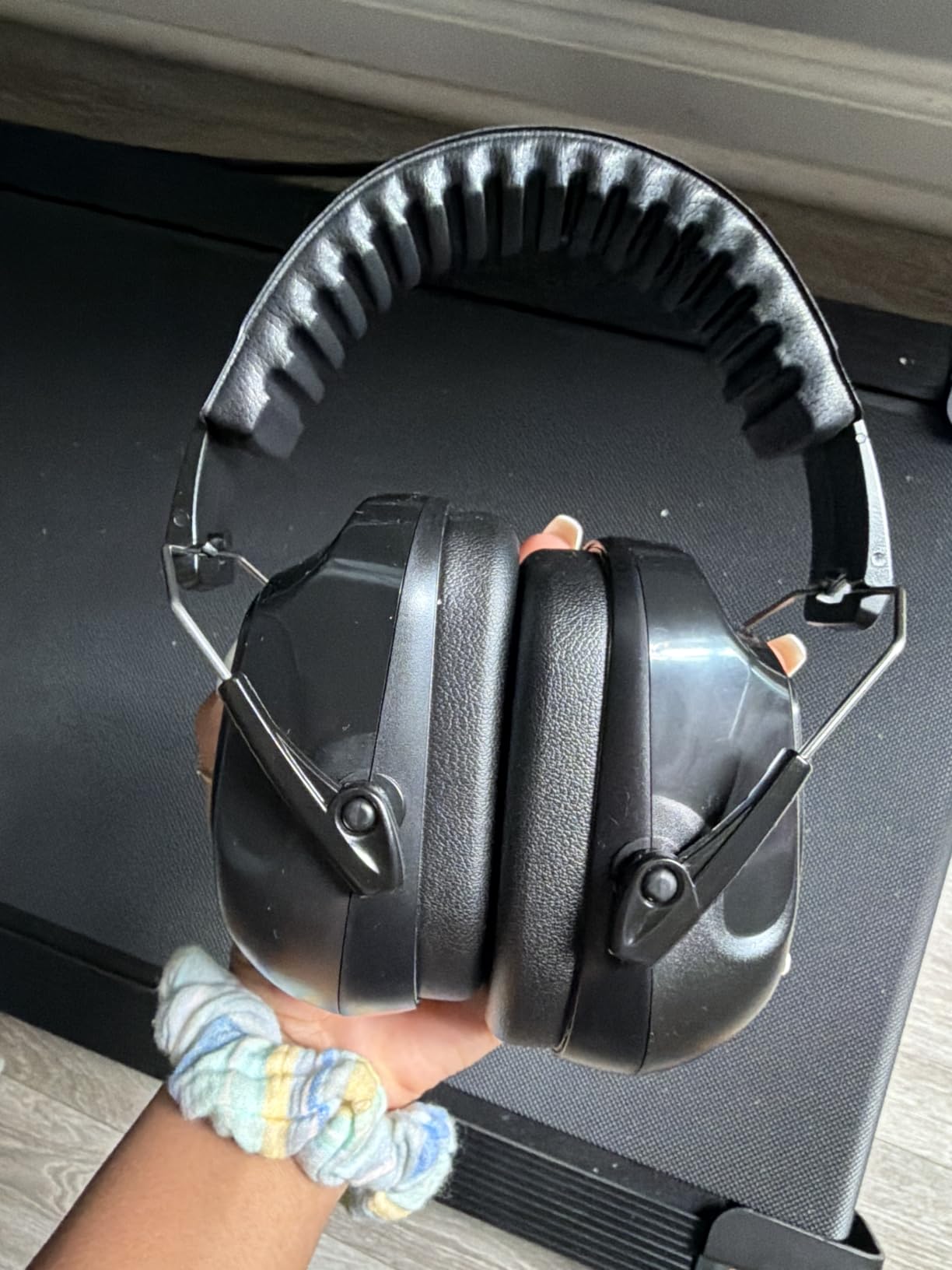
The foldable ball design is genuinely clever. The cups collapse into a compact sphere rather than a flat rectangle, so it drops into a toolbox without snagging, and an adjustable metal frame with a padded headband holds the shape back open between uses. Compatibility with glasses is called out in the specifications and confirmed by reviewers, who report minimal leakage around a frames.
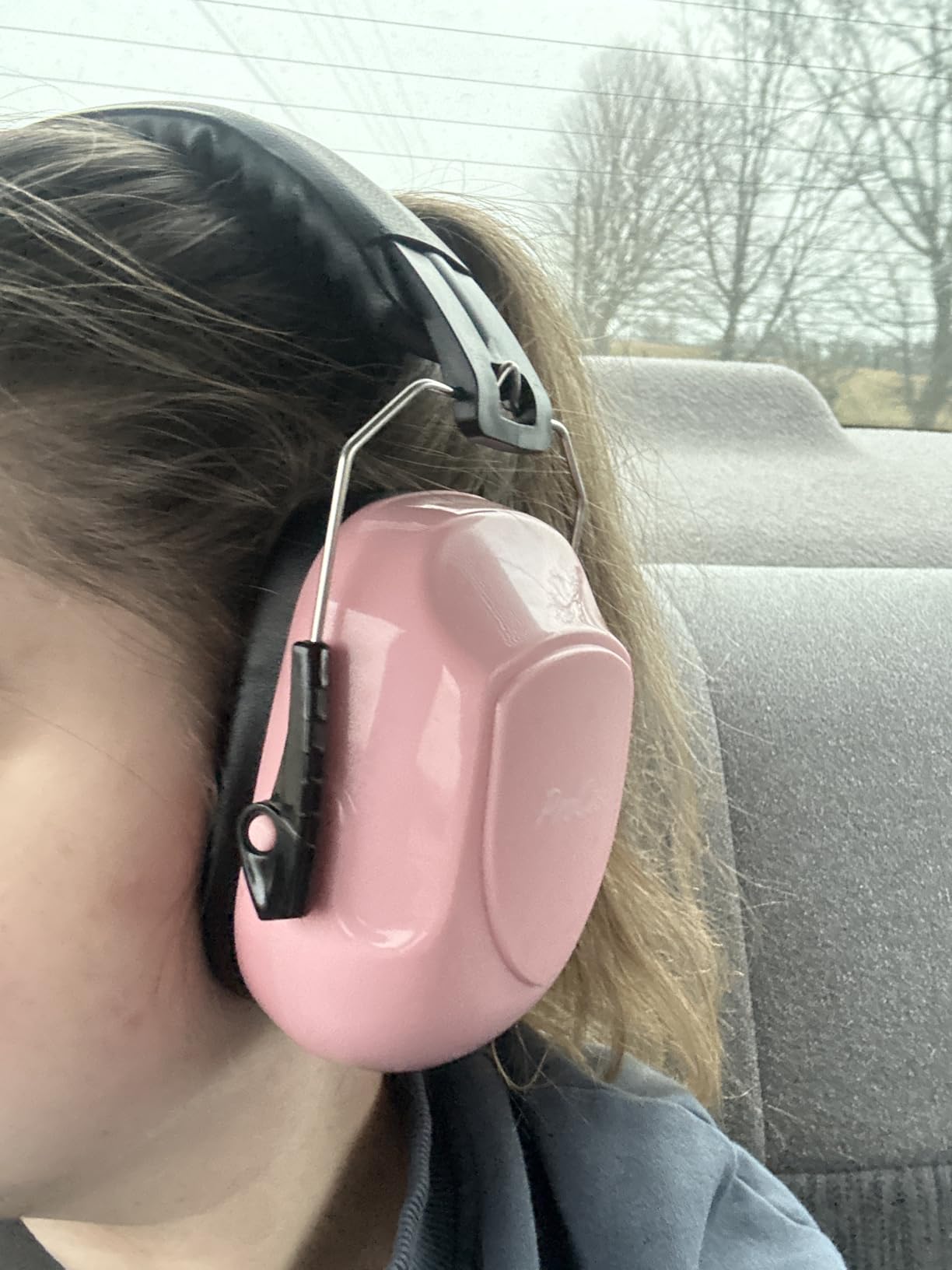
What to check before the first mow
Size is the first thing. The headband has less extra adjustment than some competitors and reviewers with very large heads find it runs small. If you are above average head size, read the fit complaints first and consider the larger industrial models in this list instead.
Second, the frame. Expanding the metal frame takes noticeable force the first few times and loosens afterwards, so do not judge the fit on the first attempt. Several reviewers describe a mild pressure sensation inside the ears, comparable to flying, which most people stop noticing once the cushions settle.
Where it fits best
It is a strong pick for anyone who needs real attenuation at a modest cost, and for people who wear glasses. Comfort is reported as good enough for all-day wear. Because it is passive and light on the head, it is also the better of the two if heat is your main worry, though like every over-ear design it will warm up over a long session.
9. Howard Leight Laser Lite High Visibility Foam Earplugs
Howard Leight by Honeywell – R-01204 Laser Lite High Visibility Disposable Foam Earplugs, Pack of 1 (50 Pairs),Yellow
NRR 32
High-visibility yellow and magenta
Contoured T-shape
50 pairs per pack
Pros
- Two-tone colors make dropped plugs easy to find
- 32dB NRR near the top of the foam options
- T-shape is easy to insert and remove
- Works across a range of ear sizes
Cons
- Disposable after repeated use
- Blocks alarms and approaching vehicles
- Cordless design can be lost outdoors
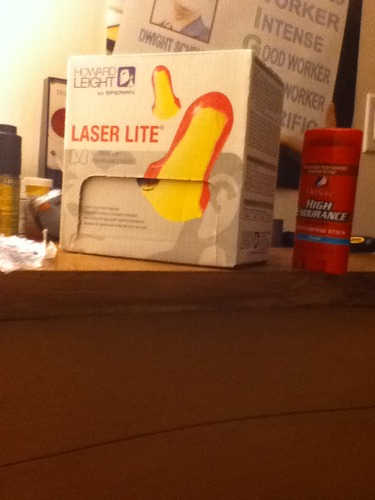
Everything about the Howard Leight Laser Lite is engineered around one specific problem, which is losing earplugs in the grass. The high-visibility yellow and magenta two-tone coloring means a dropped plug is visible against clippings, soil, sawdust or a workshop floor, and the cordless design keeps them simple to insert.
The NRR 32 rating puts it near the top of the foam plugs here, only a decibel below the Mack’s Ultra Soft. It is a self-adjusting polyurethane foam in a contoured T-shape, and the closed-cell foam skin is soil resistant, which matters for people who handle it with dirty hands at a job site.
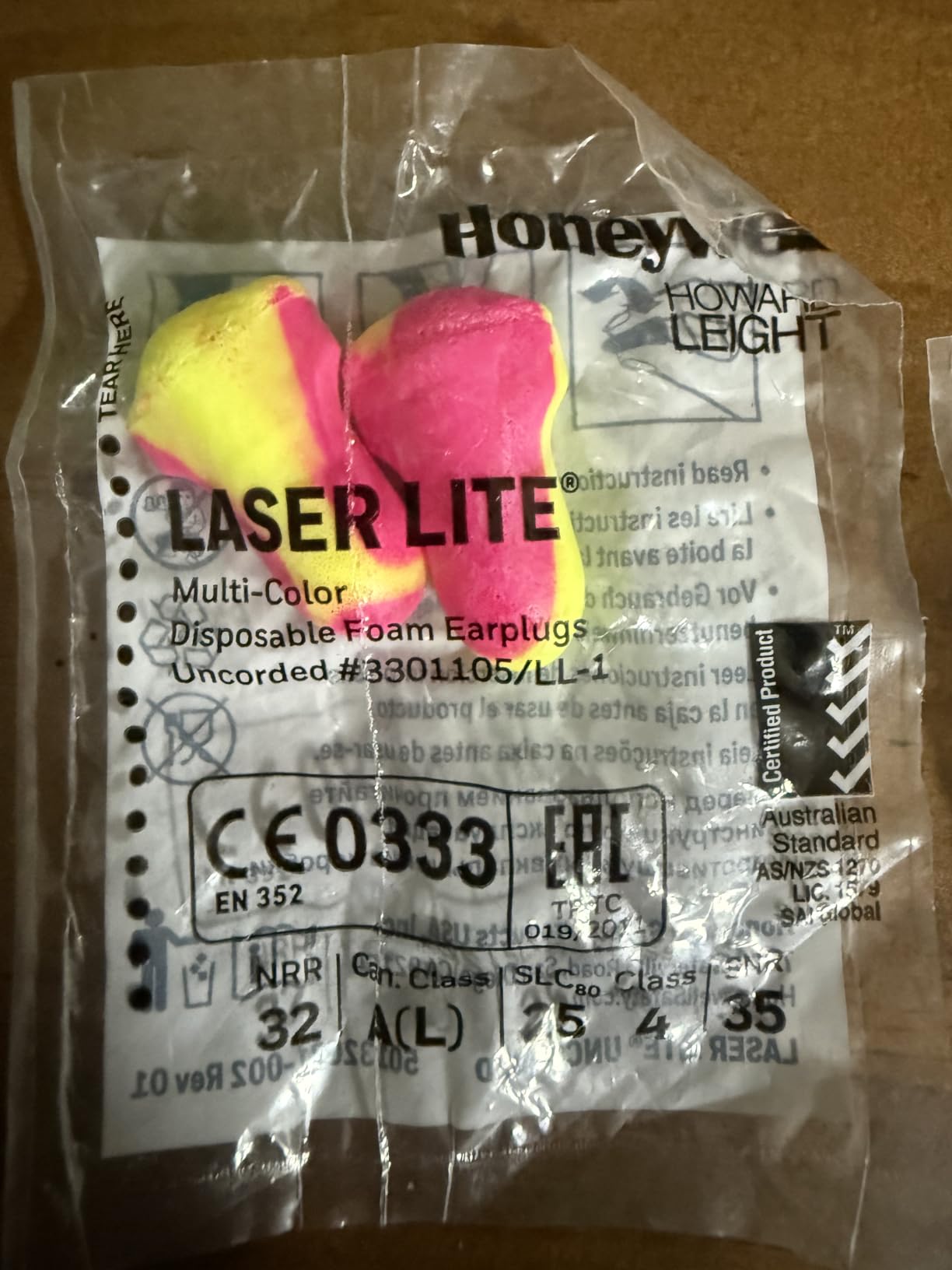
Reviewers appreciate that the T-shape is easy to handle with gloves or grimy fingers, and that the foam expands to fit a range of ear sizes without needing a size trial. The pack holds 50 pairs at a listed weight of 0.02 kg, so the whole box stays small in a truck or a shed.
Honeywell markets these for farming, construction, manufacturing, mining and transportation, which reads a lot like what most people do in a yard on a Saturday. The design is not mower-specific, it is general-purpose protection for people who lose things.
Why visibility changes the equation
Because an earplug in the grass is worse than no earplug in one ear. The failure mode of foam plugs is not that they are uncomfortable, it is that you drop one, do not notice, and spend a season walking around with one ear unprotected while believing you are protected. Two-tone color is a small design decision that fixes a real problem.
They also double as a quiet solution for sleeping and travel, though most reviewers in this category come back to yard and jobsite use as the main application.
The limits worth knowing
They are disposable and need replacing after repeated use, which is the standard foam compromise. At NRR 32 with a good seal, that is a generous level of protection for mower work.
The cordless format is also why they can go missing, and the plugs block alarms, engines and approaching vehicles. If you are working anywhere near traffic or public paths, a corded reusable plug or a muff with partial attenuation is the safer choice.
10. DECIBEL DEFENSE 37 dB NRR Earmuffs, Hi-Viz Orange
DECIBEL DEFENSE Ear Protection, 37 dB NRR Ear Muffs (HI-VIZ ORANGE)
37 dB NRR
ANSI S3.19 and CE EN 352-1 certified
12 ounces
Regular and XL sizes
Pros
- Highest NRR rating in this roundup
- Deep seal blocks noticeably more than slimmer muffs
- 12 ounces is light for the attenuation delivered
- No batteries or electronics to fail
Cons
- Bulky compared with slim folding muffs
- Regular size runs tight on large heads
- Adjustment mechanism is unintuitive
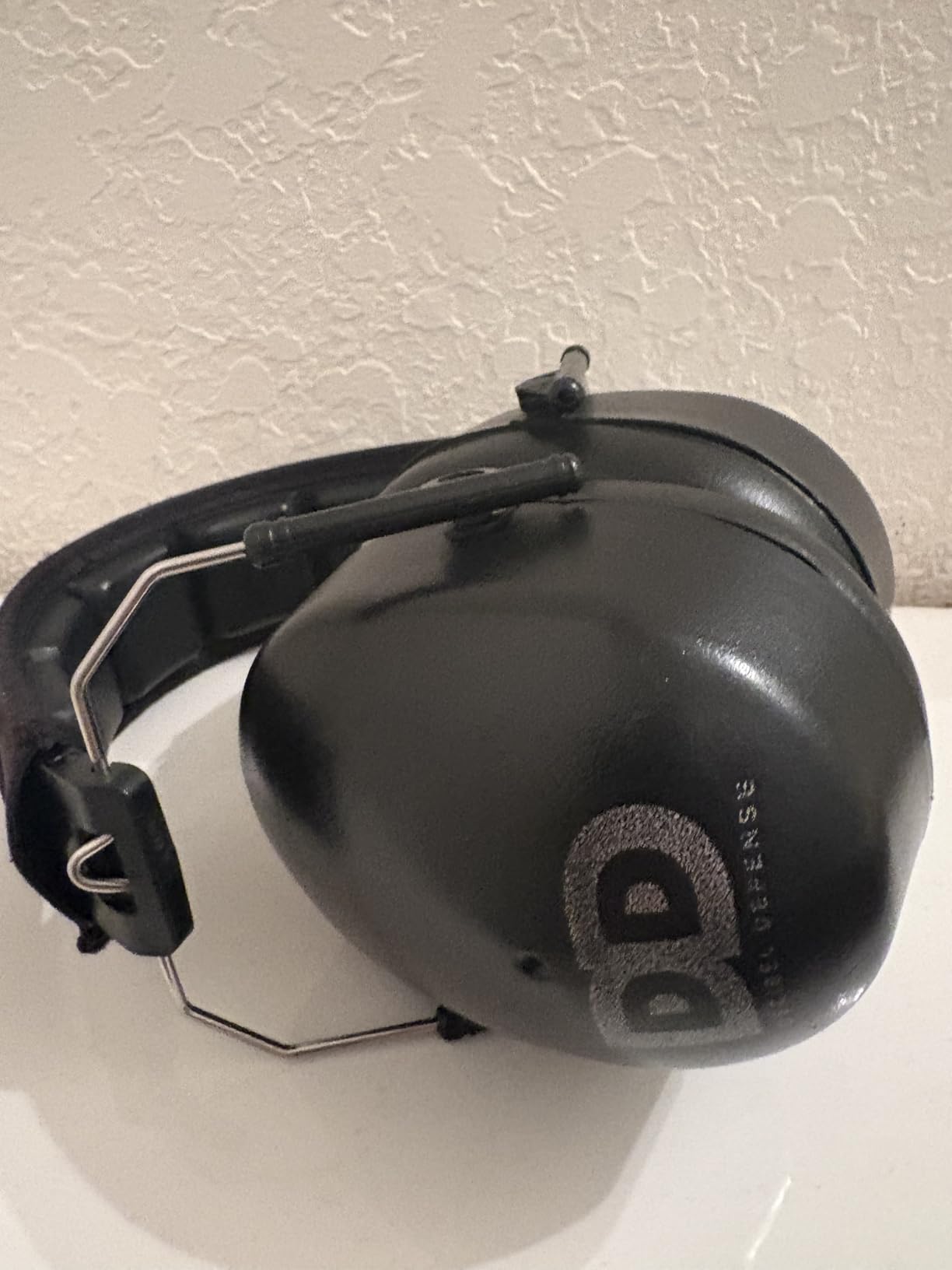
For the loudest yard work, the 37 dB NRR rating here is the number you want. The DECIBEL DEFENSE muff is certified to ANSI S3.19 and CE EN 352-1, uses ABS with dBTech foam and a padded headband, and needs no batteries or electronics of any kind, which is a genuine reliability advantage over any Bluetooth model.
Reviewers repeatedly describe the seal as deeper than what slimmer 27 to 34 dB muffs deliver, and that is the difference that matters in practice rather than on a spec sheet. A deeper seal on a blower or a chainsaw is not a marginal improvement, it is the difference between comfortable and not.
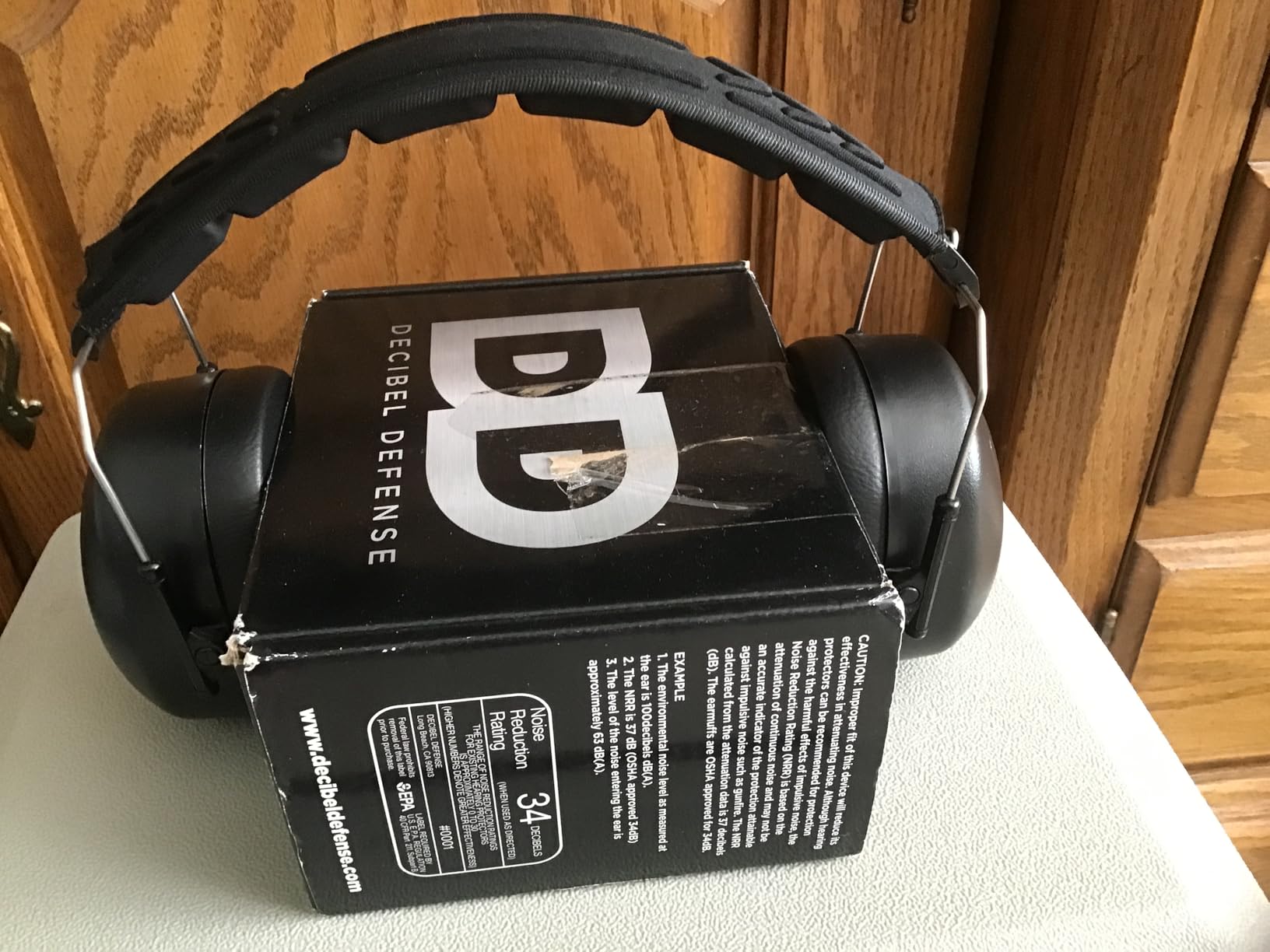
At 12 ounces and 5.75 by 3.75 by 5.25 inches, it is not the lightest thing here but it is well within the range of a muff you can wear for hours without ear soreness. Hi-viz orange is functional rather than decorative, since it is easy to spot in a truck bed or a field. Regular and XL sizes are available with sliding metal ear cup extenders, and the whole muff folds for storage. Because the design is entirely passive, there is nothing to charge and nothing to pair.
When 37 dB is the right call
When the noise is not a mower. A leaf blower, a string trimmer, a pressure washer or a chainsaw pushes well past the range where a 27 dB slim muff leaves you comfortable. If your yard work involves several of those in one afternoon, this is the muff that keeps the whole session at a safe level rather than protecting you during the easy part.
It is also a strong second layer. Worn over foam plugs, a 37 dB muff gives dual protection, and OSHA’s own guidance treats stacking a high-rated plug under a rated muff as the strongest practical option for very high noise.
What gives people trouble
Bulk. Compared with the slim folding muffs in this list, this is a large object to wear in 35 degree heat, and heat is the most common reason people downgrade protection mid-season.
Sizing is the second issue. Reviewers report the regular size runs tight on large heads, so if you are above average size go straight to the XL, and be aware that even the XL has been reported as small by some owners. The adjustment is also unintuitive with no printed instructions in the box, so budget a few minutes to work out the sliding extenders before you need them.
11. Walker’s Razor Slim Passive Earmuff
Walker’s Razor Slim Passive Earmuff for Range Shooting Hunting Hearing Protection, Unisex
27dB NRR
Slim low-profile ear cups
Metal wire frame headband
Collapsible folding design
Pros
- Slim profile fits under a cap or hat brim
- Very light and comfortable for all-day wear
- Wire frame headband resists bending
- Higher 4.7 rating across reviews
Cons
- 27dB NRR is lower than most muffs here
- Slim cups seal less completely than bulkier models
- Sized mainly for smaller heads
The Walker’s Razor Slim exists to solve the problem that ruins most over-ear protection in summer, which is the hat. Slim low-profile ear cups with a sound-dampening housing sit flat enough to wear under a cap brim or a low-profile hat without lifting the seal, and reviewers call that out as the reason they bought it.
It carries 27 dB NRR, which is modest, but a seal that holds is worth more than a rating that does not. Across 9557 reviews it holds a 4.7 rating, the highest average in this group, and the feedback is unusually consistent about comfort and stability during yard work.
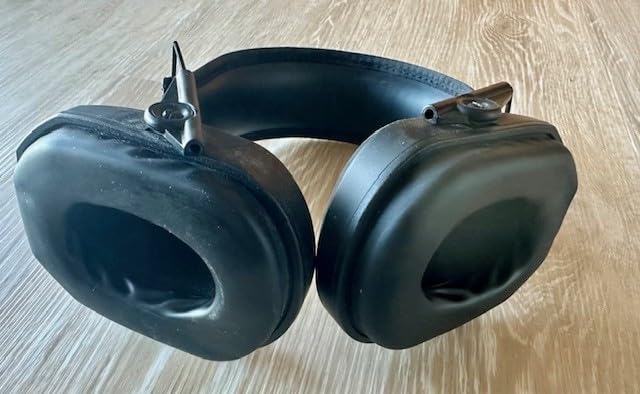
The construction is a rubberized coating over a metal wire frame headband, and the frame holds its shape where plastic headbands eventually crack. The whole muff collapses for storage, so it lives in a pocket or a glove box without taking up meaningful space.
It is also designed with smaller heads, youth and women in mind, which is a genuine design decision rather than an accident of shrinking an industrial muff. If you have a small head and have given up on over-ear protection because everything else was too big, this is worth a look.

The honest trade-off
27 dB NRR is the lowest muff rating here and the slim cups seal less completely than the 34 to 37 dB models. Against a push or riding mower at 90 to 95 dB, that is entirely adequate. In front of a blower or a chainsaw, it is not, and you should add plugs or choose something else.
So the question is whether hat compatibility is a bigger problem for you than headroom on protection. If you mow in a sun hat, it usually is, and the 4.7 rating suggests most people who bought it agree.
Who it suits
Anyone mowing in a hat who wants something light and unobtrusive for a moderate mower. It also works for smaller heads and younger users who cannot fit adult muffs, and for long low-noise jobs like sweeping or a light electric mower where comfort matters more than maximum attenuation.
For a commercial crew on a blower day, skip it. For a weekend mow with a cap on, it is one of the most comfortable options available.
12. 3M PELTOR Optime 105 Over-the-Head Earmuffs
3M H10A Peltor Optime 105 Over the Head Earmuff, Ear Protectors, Hearing Protection, NRR 30 dB
NRR 30dB
Rated for exposure up to 105dBA
Double-shell technology
Stainless steel headband
Pros
- 30dB NRR rated for exposure up to 105dBA
- Stainless steel headband holds shape for years
- Double-shell construction blocks more than single shell
- Pivoting ear cups stay comfortable in different positions
Cons
- Bulkier over-the-head shape than slim folding muffs
- Ear cushions can feel warm over long sessions
- Fixed design with fewer head-size options
The PELTOR Optime 105 is the one to buy if you expect to still be mowing in five years. It rates NRR 30 dB and is specified as effective protection for noise exposures up to 105 dBA, which covers everything in a yard except a chainsaw at close range.
The build is the story. A stainless steel headband resists bending and warping in a way plastic frames do not, and double-shell technology increases the noise blocking compared with a single-shell muff. That combination is why the 4.7 rating holds on a product that has been in service for years.
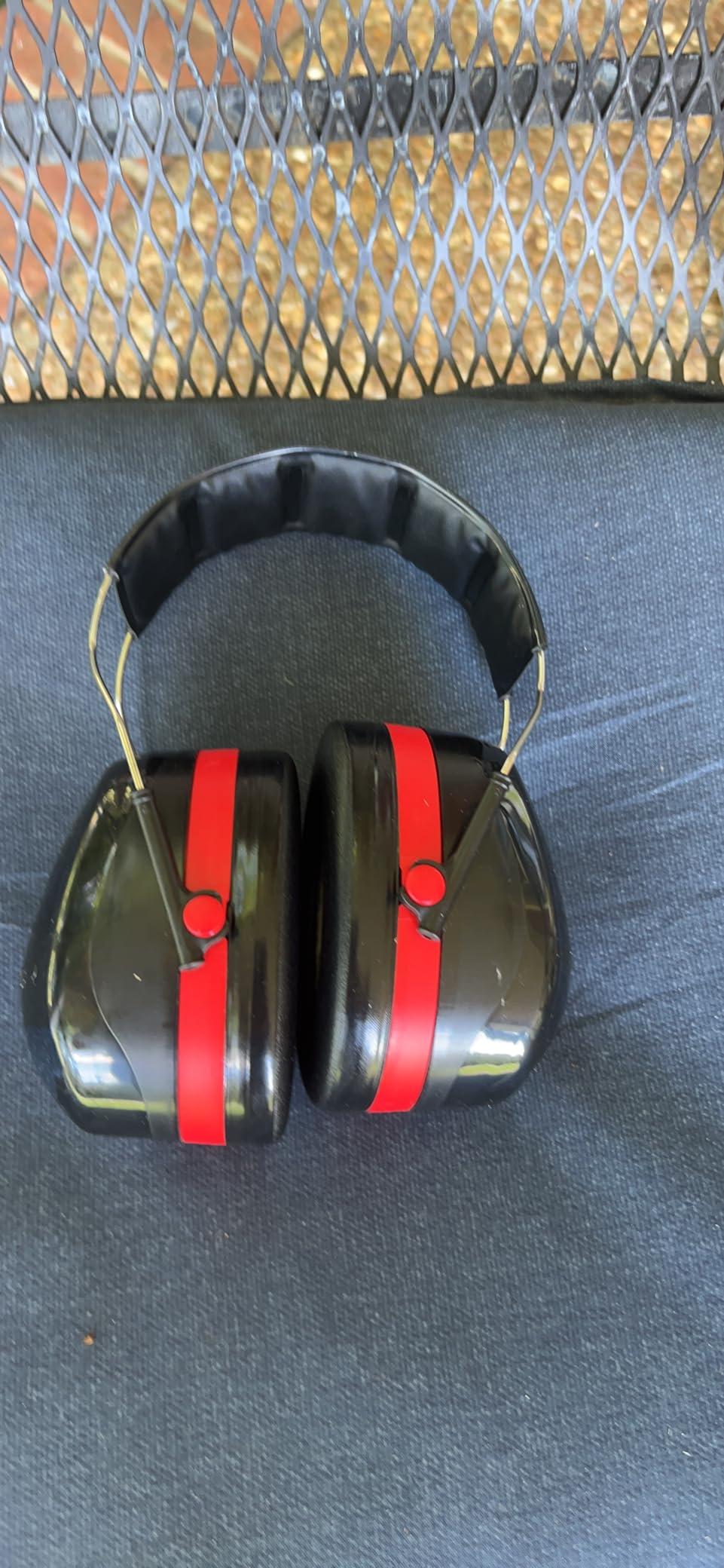
The ear cups pivot to tilt for comfort, which matters when you are wearing a hat or glasses, because the seal stays in contact with the head instead of being forced by the band. It is E-A-Rfit compatible, so it can be combined with compatible 3M earplugs for dual protection. It is a fixed one-size over-the-head shape, so for storage it is a negative and for a workshop wall hook it is irrelevant.
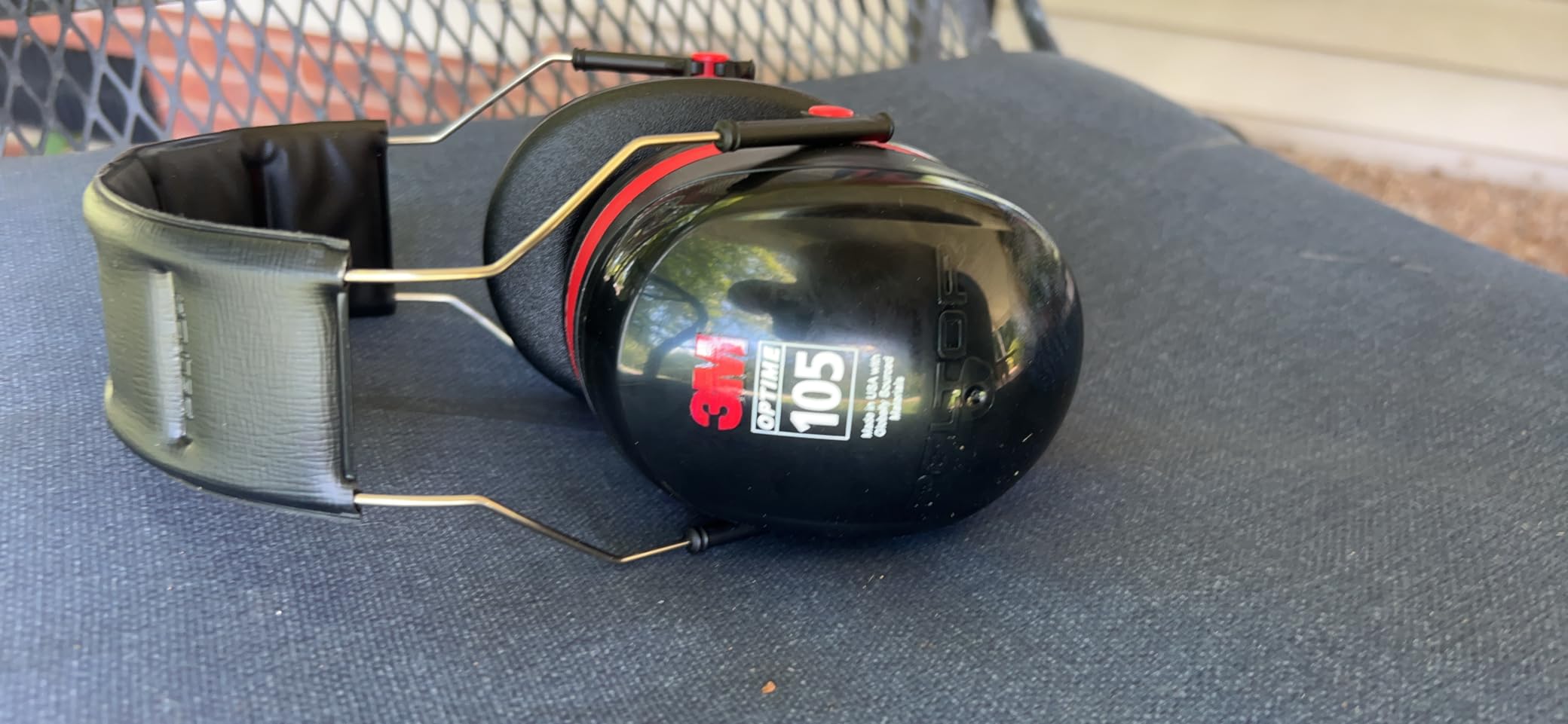
Why the 105 in the name matters
It refers to the exposure level the muff is designed to handle, up to 105 dBA. That matters for anyone who runs a riding mower, a zero-turn, or a blower alongside the mower, because it tells you the design was tested for a specific noise ceiling rather than a generic yard-work claim.
At 30 dB NRR with derating, a 100 dB blower still arrives at your eardrum at a level worth protecting, and stacking a plug underneath pushes it lower. That combination is the configuration we would set a full-time landscaper up with.
What to weigh up
It is bulkier than the slim folding muffs here, and the fixed over-the-head shape takes more room than a Walker’s Razor Slim. Ear cushions can also feel warm over an extended session, which is the recurring trade-off across every over-ear design in this roundup.
Fewer head-size options is the other limitation, since it is a one-size over-the-head design. If your head is at the small or large end, check the fit carefully before committing. If durability and a decade of service are what you are buying, this is the most convincing option available.
How to Choose Hearing Protection for Lawn Mowing?
What NRR means, and why the box number overstates it
NRR, the Noise Reduction Rating, is a lab measurement taken on a test head with a perfectly positioned seal, and it tells you how many decibels a device removes under ideal conditions. Real-world performance is lower, often by half, because the rating assumes nothing is in the way. Hair, glasses arms, hat bands, an unshaved jawline and a headband that is not tight enough all leak.
Use the NRR as a ceiling rather than a promise. A 33 dB plug might deliver 15 to 18 dB in a real ear, which still takes a 95 dB mower down to a safe level over a morning. Do not assume stacking doubles the number. If you stack a 33 dB plug under a 34 dB muff, add five decibels to the higher rating rather than adding them together.
Look for certification marks, not just numbers. ANSI S3.19 is the US method, CE EN 352-1 is the European equivalent with an SNR rather than an NRR, and OSHA publishes adjusted NRR values that account for real-world use, which is why you sometimes see two different numbers for the same product.
Earplugs or earmuffs: which one fits your yard
Earplugs win on heat, hats and glasses. They disappear under a cap, cost nothing to add, and leave your ears uncovered so sweat is not trapped. They also block the widest range of sound, which means you will not hear a vehicle or a neighbour, and they take practice to insert properly.
Earmuffs win on consistency and on being able to put them on and off. A muff has one correct position and you can put it on in three seconds with dirty hands, which for a quick trim is the difference between wearing protection and not. Their weakness is heat buildup, a broken seal over a wide-brim sun hat, and glasses interference.
The practical answer is to own both. A folding passive muff for the mower and a box of foam plugs for the blower, the trimmer, and any time you are working near a road.
Why AirPods and ANC earbuds do not count
Active noise cancellation is engineered to cancel low-frequency rumble, which is what makes aircraft cabins tolerable. A gas mower is a broad, mid-frequency broadband noise, and the correction circuits in a consumer earbud do not target it well. Worse, the passive seal of an earbud is designed for bass leakage, not 30 dB of broadband attenuation, and it is not tested to any standard.
You can wear earbuds under rated earmuffs, and plenty of people do it because the muff does the protecting while the earbud does the entertaining. What you cannot do is treat an earbud as protection on its own, and you should not turn the volume up to cut through engine noise, because that is the moment the noise and the music combine into something worse than either.
Fit, seal and double protection
For foam plugs, roll the plug into a thin cylinder, pull the ear up and back, insert until the front edge of the plug is flush with the top of the ear, then hold it in place for as long as it takes to fully expand. If you cannot hear your own voice humming, the seal is probably good. If the plug is half-expanded and loose, the rating is not being achieved.
For muffs, set the headband before you start the engine, centre the cups so the cushions sit level over the middle of your ears, and adjust until the clamping force feels firm. If you wear glasses, choose a muff with a cushion design that clears temple arms, and if you wear a hat, a low-profile ball cap works far better than a wide brim.
Double protection means plugs under muffs, never muffs over plugs, and it is the correct answer for a blower, a trimmer, a pressure washer, or a full working day. Add roughly five decibels to the higher of the two ratings, not the sum of both.
Weekend mower or full-time landscaper
These are different problems. A homeowner mowing 45 minutes on a Saturday needs enough protection to keep cumulative exposure low over decades, and anything in the 25 to 33 dB range handles that.
A commercial landscaper running a mower eight hours a day, five days a week, is exposed far past the safe threshold and should plan for 33 dB and above, or stack a high-NRR plug under a rated muff. The other half of that job is a serviceable pair that survives daily abuse, a replaceable cushion, and no battery that dies mid-shift. Our guides to knee protection for short track speed skating and heavy plant frost protection covers come at the same durability question from a different angle.
Care, cleaning and replacement
Wipe foam earplugs and silicone plugs with soap and warm water and let them dry fully before storing, because moisture trapped against the skin is what causes irritation. Foam plugs are single use and should be discarded once the foam stops springing back, which is usually within a few sessions of regular mowing.
Ear cushions compress and crack over time, and a cracked cushion is a leak. Check the muff cushions every season and replace them if the surface has gone shiny or hard, which is the cheapest protection upgrade available. Keep muffs out of a hot truck cab in summer if you can, and store Bluetooth models at partial charge rather than flat for long periods.
Finally, protect your ears everywhere else too. If you already have reduced hearing or ringing in the ears, our guides to the best OTC hearing aids for seniors and rechargeable hearing aids for adults cover amplification, but neither is a substitute for stopping the noise. Nothing recovers the hearing a mower takes, so prevention is the whole strategy.
Frequently Asked Questions
Should I wear ear protection while mowing?
Yes, if your mower is gas powered or a loud electric model. A push mower produces roughly 85 to 95 dB and a riding mower, leaf blower or string trimmer runs higher, which is above the level where repeated exposure causes permanent hearing loss. Even a short Saturday mow adds to a cumulative total that never resets, so protection matters even for occasional yard work.
How many decibels does a lawn mower put out?
A push mower typically measures 85 to 95 dB at the operator position, a riding or zero-turn mower runs a little higher, and a leaf blower or string trimmer commonly reaches 100 dB or more. A pressure washer and a chainsaw are louder still. Anything at or above 85 dB can cause damage with enough exposure, and mower noise reaches that threshold routinely.
What is the best type of hearing protection for lawn mowing?
Over-ear earmuffs with an NRR of 30 dB or higher work best for most homeowners because they are quick to put on and give a consistent seal. Foam or silicone earplugs are better in hot weather and under a hat, and they are the easiest option to stack for louder jobs. Bluetooth muffs add audio, but the protection rating matters more than the connectivity.
What are the best noise canceling headphones for mowing the lawn?
Choose Bluetooth earmuffs that are genuinely rated hearing protection, such as a model with an ANSI S3.19 or CE EN 352-1 certification and a published NRR. Consumer noise-cancelling headphones and earbuds are not protection, because active cancellation targets low-frequency rumble rather than broadband engine noise. Keep the volume moderate so the audio does not defeat the attenuation.
Can you wear earplugs and earmuffs at the same time?
Yes, and that combination is called dual protection. The correct order is earplugs first, then muffs over the top, because a muff seals better over the smooth skin of an ear than over a raised plug. When you stack, add about five decibels to the higher rating rather than adding the two together, since double protection is never a simple sum.
Can lawn mowers cause hearing loss?
They can, and the damage is usually permanent and gradual rather than sudden. Repeated exposure to mower noise in the 85 to 100 dB range builds up over seasons, and a long working week accelerates it. Tinnitus is a common early warning sign, and once it appears it rarely resolves. Protection costs very little compared with treating damage that is already done.
Are Bluetooth earmuffs OSHA approved?
Bluetooth itself is not what OSHA approves. What matters is the published NRR and the certification standard on the muff, such as ANSI S3.19 in the US or CE EN 352-1 in Europe. Electronic features such as Bluetooth and radio do not reduce the passive protection, but you should still confirm the NRR figure and keep audio volume within a safe limit.
Final Verdict
The best hearing protection for lawn mowing in 2026 depends less on brand than on three things: a real certification mark, a rating at or above 30 dB for mower work, and a seal that survives your hat and your glasses. Get those three right and the choice between styles becomes a comfort decision rather than a safety one.
Our overall pick is the Dr.meter folding earmuffs, because a certified 31 dB SNR rating in a body that folds to fist size is the least convenient excuse to not wear protection. For the highest protection in this group, go with the DECIBEL DEFENSE 37 dB muffs, and for anyone mowing under a sun hat, the Walker’s Razor Slim is the one that will not force a choice between protection and shade.
Pick your noise source before you pick your product. Mower only, a 27 to 33 dB muff is plenty. Add a blower, a trimmer or a full working week, and stack a foam plug underneath. Whatever you choose, wear it from the first pull of the cord starter, because the damage is cumulative and it does not reset between seasons.