
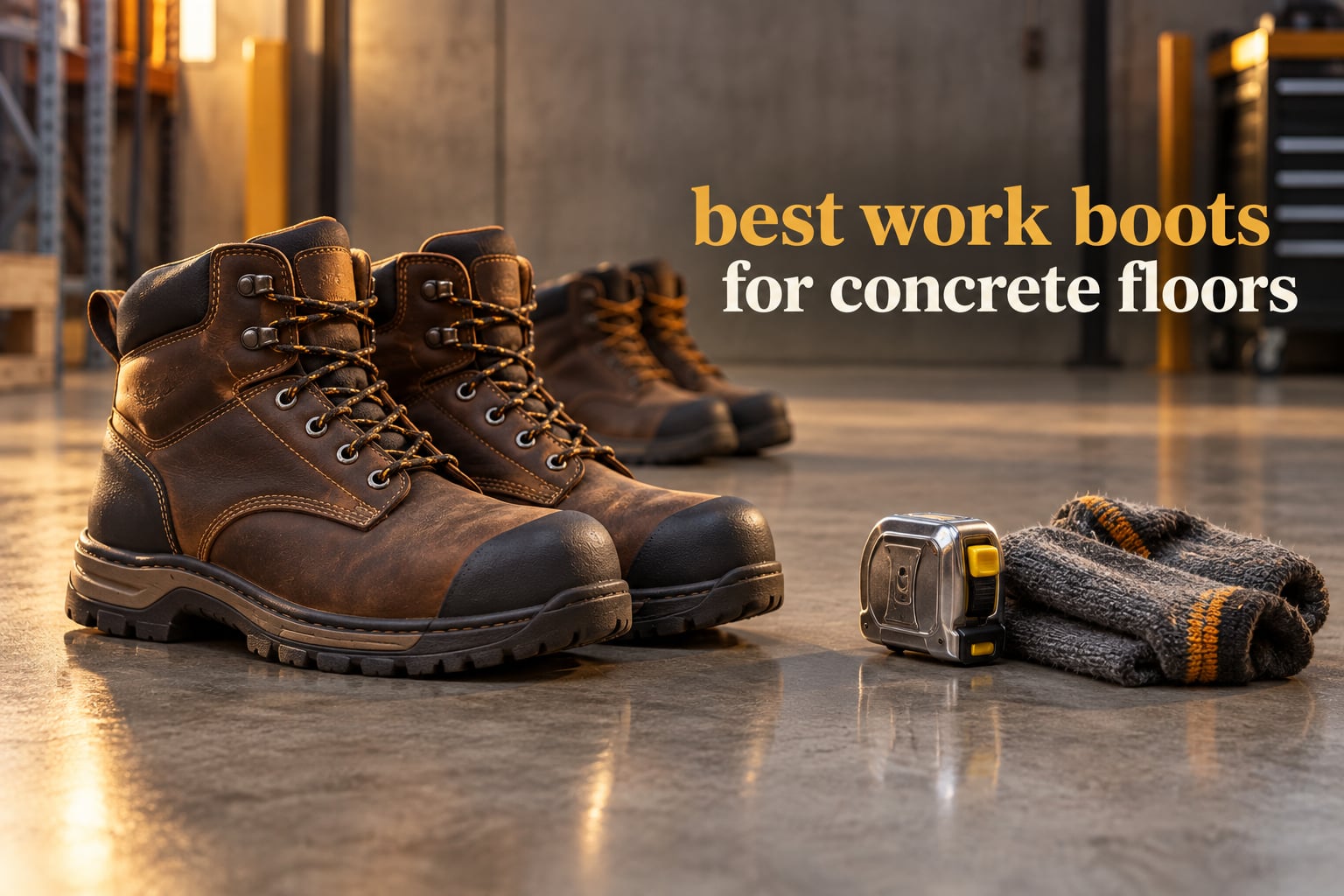
Concrete does not bend. Every step you take on a warehouse slab, a shop floor or a poured foundation sends force straight back up through your heel, and eight hours of that adds up fast. We spent weeks comparing work boots for concrete floors, reading thousands of owner reviews and weighing what actually changes your day: the sole shape, the midsole foam, the toe cap material and the arch support under all of it.
Most people pick boots by steel toe and price, then spend a season wondering why their knees ache by Thursday. The best work boots for concrete floors do something less obvious. They spread weight across the whole foot, keep the midfoot from collapsing, and cushion a surface that gives nothing back. Below you will find ten pairs, each rated on the numbers we could verify and the complaints real owners kept repeating.
Everything in this guide was updated for 2026, and we note which boots suit standing still, which suit walking, and which hold up when the slab is wet, oily or freshly sealed. If you also work outdoors in the cold, our guides to cold weather steel toe work boots and insulated rubber work boots cover the other side of the problem.
Table of Contents
Top 3 Picks for Concrete Floor Work Boots in 2026

CAT Threshold Steel Toe
- Steel toe absorbs impacts
- Waterproof membrane
- True-to-size in wide widths
The CAT Threshold earns the top spot on evidence rather than hype. It carries the largest review count in this roundup, owners repeatedly report full 10 to 12 hour shifts on hard surfaces, and the steel toe has taken real dropped-object hits without failing.
The Timberland PRO Boondock scores the highest star rating of the ten and is the only boot here with a shock-absorbing anti-fatigue footbed plus electrical hazard protection. If your shift is long and your employer needs a safety toe, it is hard to argue with.
The SUREWAY wedge is the flat-sole specialist. Owners call out even weight distribution for standing work, a steel shank under the arch, and a Goodyear welt build you can resole instead of replace.
All 10 Concrete Floor Work Boots Compared in 2026
| Product | Specifications | Action |
|---|---|---|
| CAT Threshold Waterproof Steel Toe |
|
Check Latest Price |
 Wolverine Overpass Composite Toe Wolverine Overpass Composite Toe |
|
Check Latest Price |
 Timberland PRO Boondock 6 Inch Timberland PRO Boondock 6 Inch |
|
Check Latest Price |
 EVERBOOTS Ultra Dry EVERBOOTS Ultra Dry |
|
Check Latest Price |
 Irish Setter Ashby 6 Inch Irish Setter Ashby 6 Inch |
|
Check Latest Price |
 SUREWAY Heavy Duty Wedge Moc SUREWAY Heavy Duty Wedge Moc |
|
Check Latest Price |
 NORTIV 8 Waterproof Steel Toe NORTIV 8 Waterproof Steel Toe |
|
Check Latest Price |
 DUNLOP PVC Steel Toe Rubber Boot DUNLOP PVC Steel Toe Rubber Boot |
|
Check Latest Price |
 ROCKROOSTER 6 Inch Side Zipper ROCKROOSTER 6 Inch Side Zipper |
|
Check Latest Price |
 KEEN Utility Cincinnati 6 Inch KEEN Utility Cincinnati 6 Inch |
|
Check Latest Price |
Read that table as a shortlist rather than a ranking. Weight, toe type and sole shape all matter more on concrete than brand name, and the right pick depends on whether you stand in one spot or walk laps all shift.
1. CAT Threshold Steel Toe Boot: Best Overall for Concrete Floors
Cat Footwear mens Threshold Waterproof Steel Toe Work Boot, Real Brown, 11 US
2.06 lb weight
ASTM steel toe
Waterproof membrane
Slip resistant outsole
Pros
- Steel toe absorbs heavy dropped-object impacts
- Comfortable across 10 to 12 hour shifts
- Runs true to size including wide widths
- Waterproof membrane holds up in mud and standing water
- Well-made leather with no visible flaws
Cons
- Heavy and builds heat over long shifts
- Limited arch support
- Weak grip around oil and soap
The CAT Threshold is the boot we kept coming back to. It sits at 2.06 pounds per boot, light enough for full walking shifts without feeling flimsy, and owners describe it as comfortable straight through a 10 to 12 hour day on hard surfaces. That is the exact use case this roundup is about.
Protection is not an afterthought here. The steel toe has absorbed repeated dropped-object impacts according to owners, and the waterproof membrane does real work in mud and standing water. The breathable leather upper is the reason it stays bearable indoors where sealed boots cook your feet.
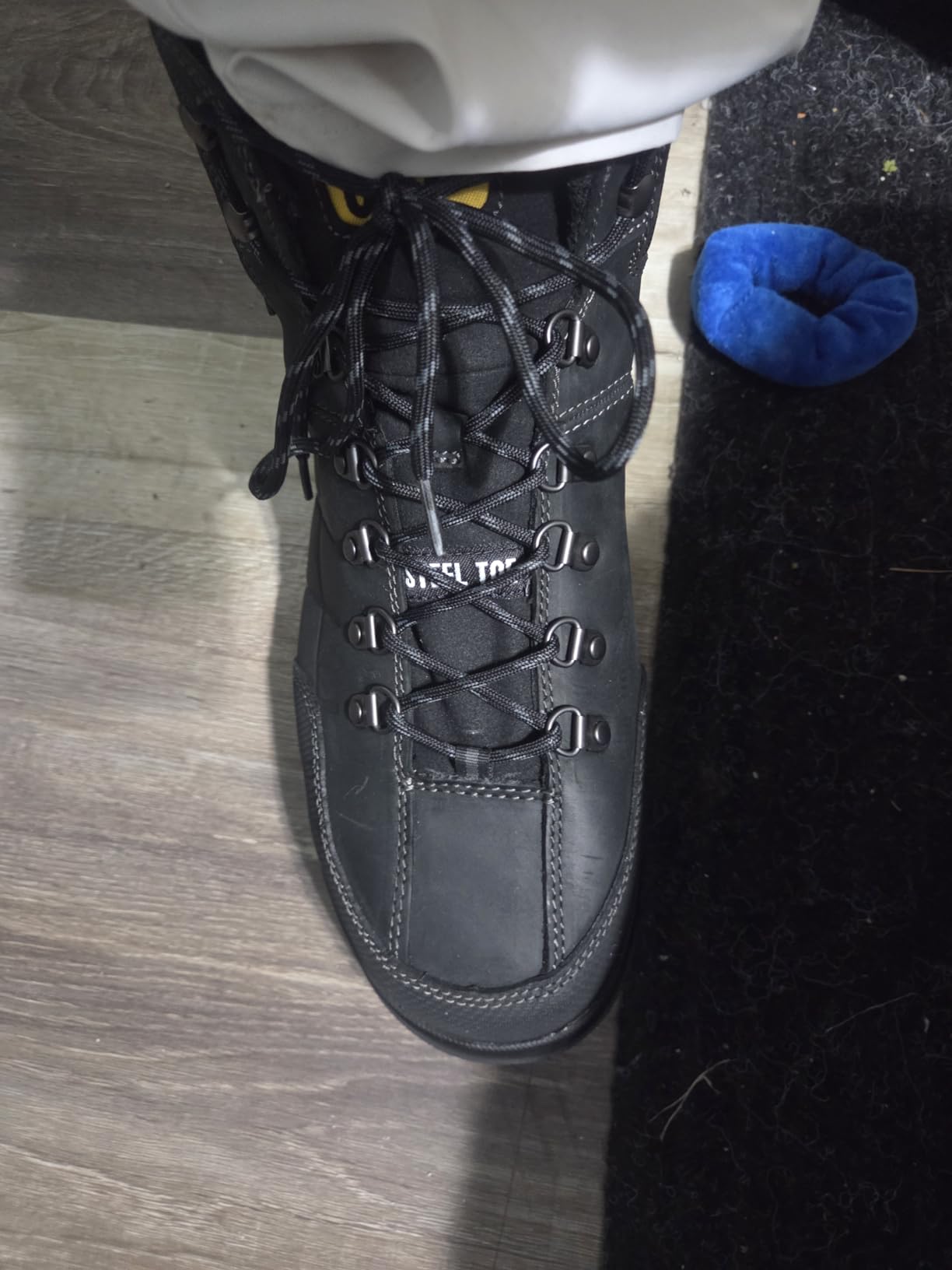
Sizing was one of the cleanest in the group. Reviewers call it true to size, and several specifically note that the wide sizes above a 12 stay genuinely wide instead of just being relabelled. That matters enormously on concrete, where a narrow toe box pushes your toes down and forces you to shift your weight constantly.
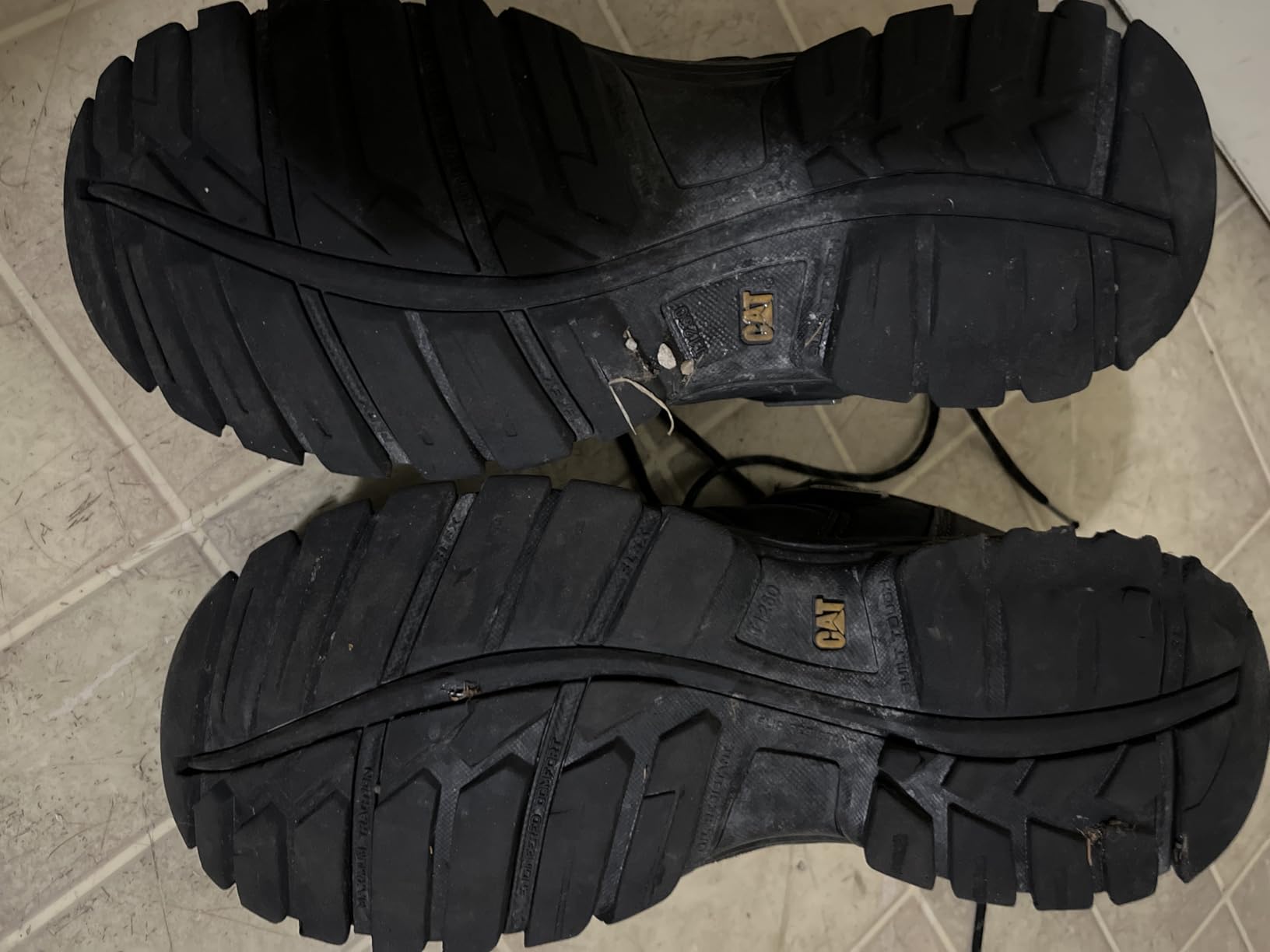
The grip is the weak spot. Owners report that slip resistance falls away around oil and soap, so on a shop floor with housekeeping spills you want to slow down and clean the tread. The heel lining also wears through for some people, and the arch support is minimal, which is where an aftermarket insole earns its keep.
Who the CAT Threshold suits
This is the one to buy if you walk a lot on concrete and your employer requires a rated steel toe. It handles mud, wet loading docks and long walking routes without breaking down, and the wide sizing solves a problem most boots create on this surface.
It also works for anyone who needs impact protection above all else. A boot that swallows a dropped load without deforming is worth more than one that feels springy for an hour.
Where the CAT Threshold falls short
Standing still in one spot for a full shift, the limited arch support shows. Owners with plantar fasciitis usually end up adding a third-party insole, and the weight adds up by hour ten, especially in hot weather.
If your floor is polished concrete covered in oil or soap, the outsole pattern is not the strongest performer in this group. Choose something with a certified slip-resistant rating for that surface.
2. Wolverine Overpass Composite Toe: Best for Wet and Muddy Sites
Wolverine Men’sOverpass 6″ Mid Composite Toe Waterproof Work Boot, Black/Orange, 11 Medium
1.75 lb weight
CarbonMax composite toe
OrthoLite footbed
PU midsole
Pros
- Composite toe avoids the cold weight of steel
- Comfortable with no break-in period
- Genuinely waterproof with a gusseted tongue
- Arch support praised by a plantar fasciitis wearer
- Still going after a year of wet muddy work
Cons
- Runs long and can be a half size bigger
- Ankle-height shaft catches debris
- Sealed construction causes heat rash in hot weather
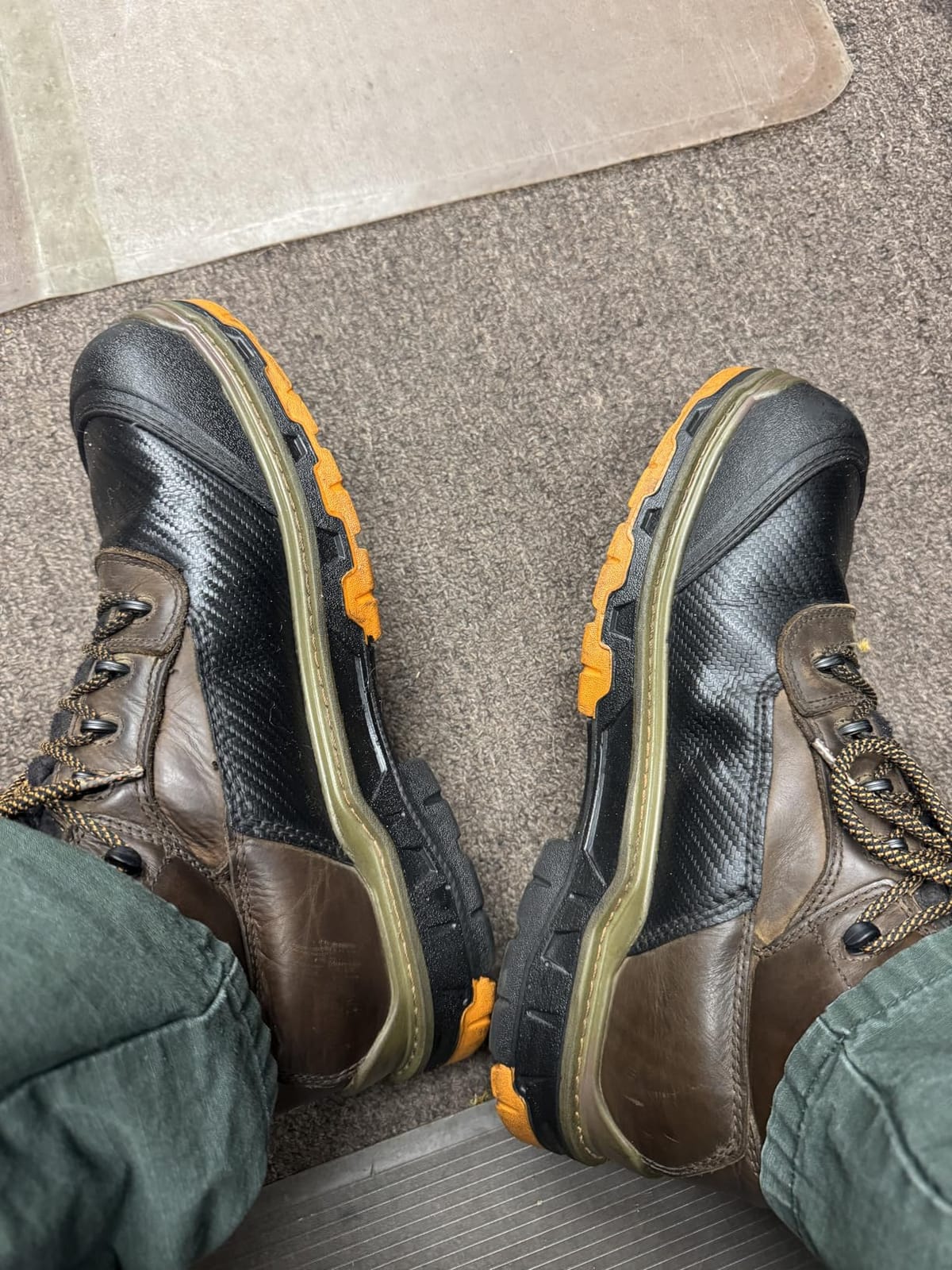
At 1.75 pounds, the Wolverine Overpass is the lightest rated safety toe boot in this roundup, and the CarbonMax composite cap delivers that protection without carrying cold the way a steel toe does. For concrete work outdoors where you move between a dry slab and mud, the combination is hard to beat.
The comfort story is the standout. Owners call it comfortable out of the box with no break-in period, and the removable OrthoLite footbed plus the advanced comfort PU midsole are what carry a full shift on a hard floor. One wearer with plantar fasciitis specifically credits the arch support.
Waterproofing is genuine rather than marketing. The gusseted tongue and moisture wicking mesh lining keep water out while moving vapour away from your foot, and owners report the boot still looks good after a year of wet, muddy conditions. The CarbonMax composite toe is rated to ASTM F2413-18 for impact, compression and electrical hazard.
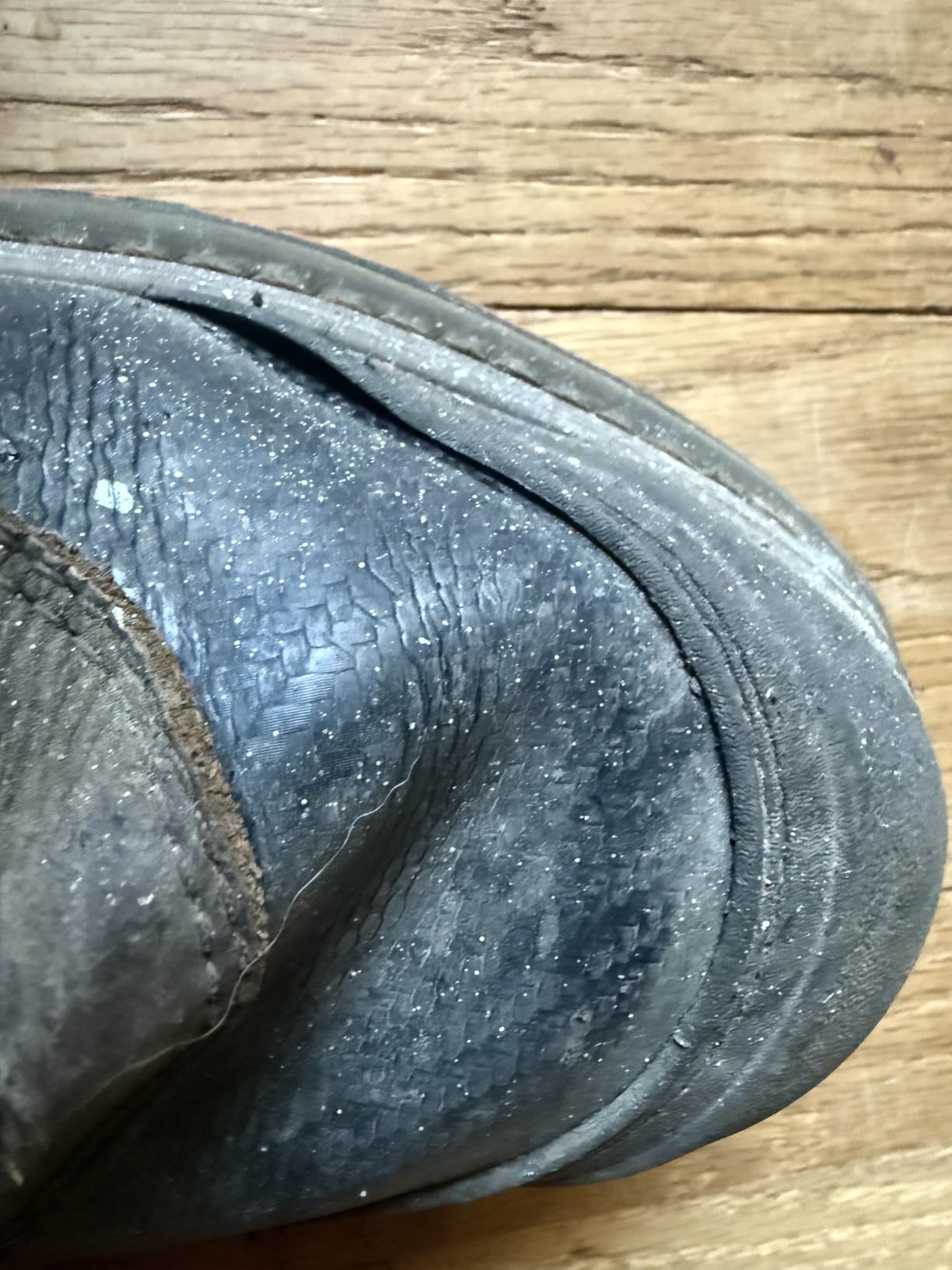
Fit is the main issue. It runs long and frequently a half size bigger than the label, so sizing down is common advice among reviewers. The ankle-height shaft also sits awkwardly for some people and catches debris, and the sealed build causes heat rash in hot weather.
Who the Wolverine Overpass suits
Pick this one for site work that alternates between indoor concrete and outdoor mud, especially if you have a history of foot or lower back pain. The arch support and removable footbed mean you can fine-tune it with your own insole without any tools.
It is also a strong choice where cold floors matter. A composite toe does not turn into a cold block the way steel does, which matters on an unheated slab in winter.
Where the Wolverine Overpass falls short
Size down or measure your foot in the afternoon. The long fit is the single most common complaint, and a boot that is too long makes you slide around inside the boot on a hard surface, which defeats the purpose.
For hot indoor warehouse work, the sealed waterproof construction is a liability. You are trading breathability for water protection whether you need it or not, and a non-sealed boot is usually more comfortable year round indoors.
3. Timberland PRO Boondock 6 Inch: Top Rated for Long Shifts
Timberland PRO Men’s Boondock 6 Inch Composite Safety Toe Waterproof Industrial Work Boot, Black-2024 New, 12
Anti-fatigue footbed
Composite safety toe
Waterproof TPU outsole
EH rated
Pros
- Anti-fatigue footbed returns energy through long shifts
- Lightweight composite toe that does not conduct cold
- Waterproof membrane rated to ASTM F1671-07
- Electrical hazard protection underfoot
- TPU outsole grips wet and frosted surfaces
Cons
- Heaviest boot in the roundup at 4.5 pounds
- Waterproof build traps heat indoors
- Insulated construction is overkill in a warm warehouse
The Boondock sits at 4.5 stars, matching the highest rating of any boot we evaluated, with 78 percent of owners giving it five stars. The reason is the anti-fatigue technology: a shock-absorbing geometrical footbed that returns energy through a long shift instead of letting it collect in your heels and knees.
It is the most comprehensively certified boot on this list too. The composite safety toe meets ASTM F2412-18a and ASTM F2413-18 for impact and compression, the waterproof membrane is rated to ASTM F1671-07, and the whole boot carries electrical hazard protection under ASTM F2412-18a, F2413-18 and F2892-18.
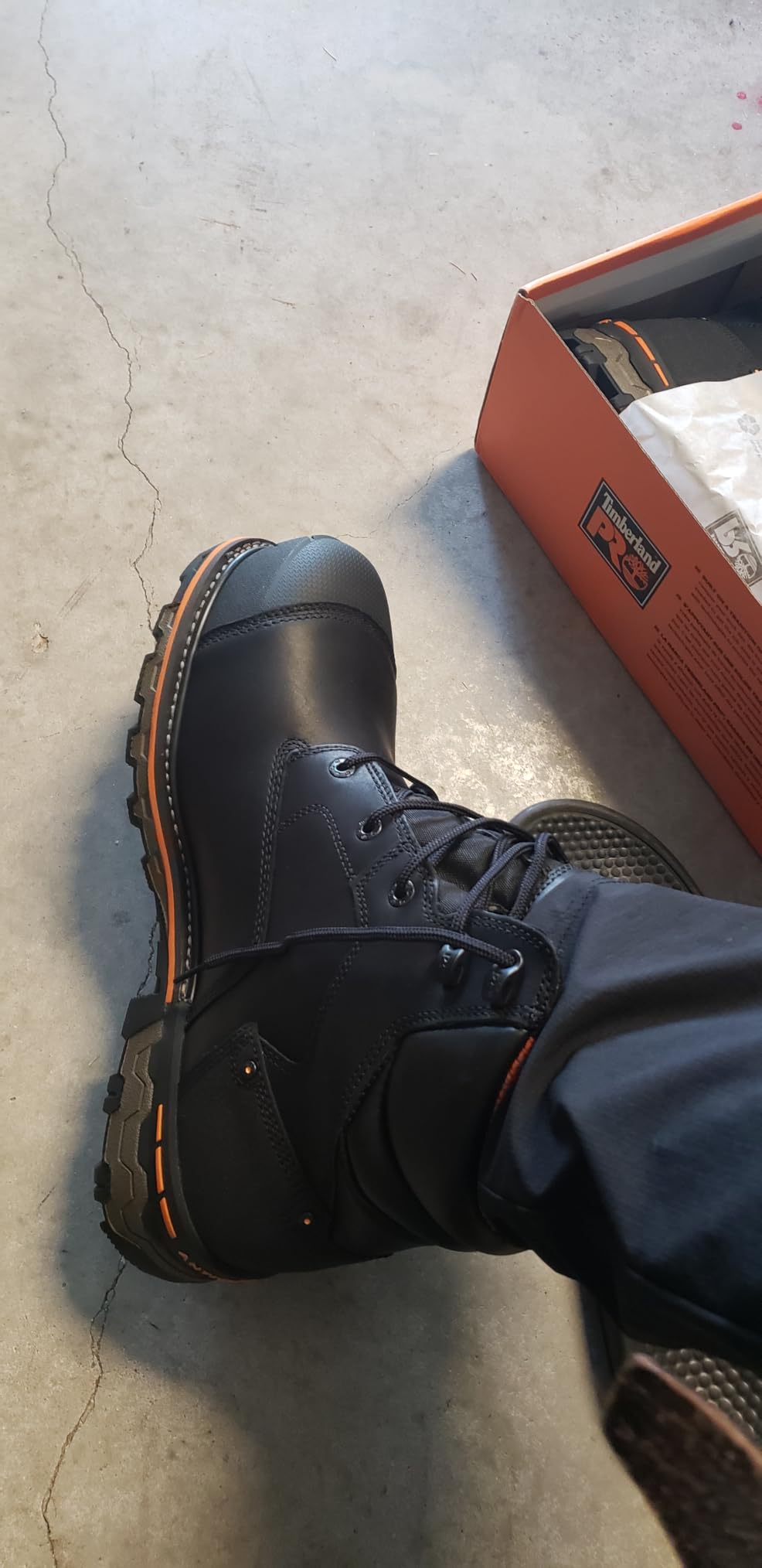
The all-weather TPU outsole resists slip, oil and abrasion, and owners specifically call out traction on wet and frosted ground. That is a wider range of conditions than most warehouse boots handle, which makes it a good default if you move between indoor concrete and outdoor pads.
Where it loses is weight and heat. At 4.5 pounds it is the heaviest boot in this roundup, and a fully sealed waterproof build in a warm indoor facility is going to get uncomfortable by the afternoon no matter how good the footbed is.
Who the Boondock suits
Long shifts on hard floors with a safety requirement are the sweet spot. If you stand in one place for hours, the anti-fatigue footbed does more for you than any outsole change, and the electrical hazard rating covers you around energised equipment.
Anyone working a mix of indoor and outdoor concrete will like the outsole. It grips wet ground and cold frosted surfaces without switching boots.
Where the Boondock falls short
It is a heavy boot, and weight is felt most on long walking routes rather than standing still. If your shift is constant walking and you are already fighting fatigue in your legs, a lighter option will suit you better.
Indoor warehouse work in a warm building is its weak environment. The waterproof membrane is excellent in the rain and frustrating in a heated space, so match the boot to the conditions rather than buying one boot for every job.
4. EVERBOOTS Ultra Dry: Best for Lightweight All-Day Comfort
EVERBOOTS Ultra Dry Men’s Waterproof Lightweight Work Boots 11, COPPER
EverDry 4-layer waterproofing
Removable insole
Break-in free design
Rubber sole
Pros
- Lightweight and comfortable from the first wear
- Internal bootie keeps feet dry when the leather soaks
- Removable insole accepts your own insert
- Rubber sole rated for oil slip and abrasion
- Good ankle support and grip wet or dry
Cons
- No safety toe protection
- Runs narrow with no wide width offered
- Supplied insoles and laces wear out first
The Ultra Dry is the boot for people who find heavy leather boots tiring on concrete. It has no break-in period at all, and owners repeatedly describe it as comfortable from the first wear. That matters when you have to stand and walk for a full shift on day one.
Waterproofing is handled by an internal bootie rather than the outer leather. The EverDry system is rated to 35,000 steps across the membrane, bootie, glue and stitching, and owners confirm the foot stays dry even when the leather above it is soaked through.
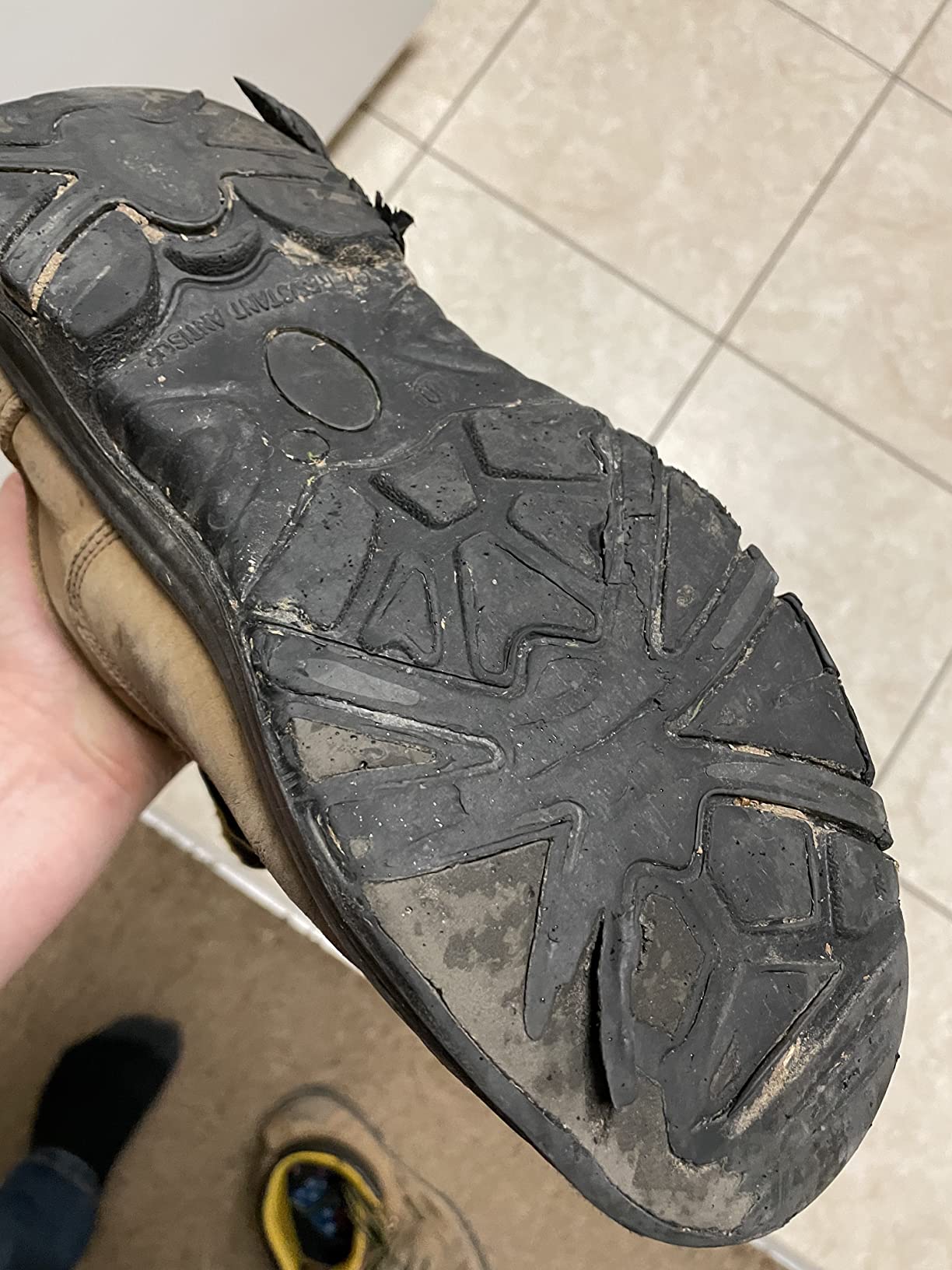
The removable insole is a genuine feature, not a marketing line. You can fit a Superfeet or Powerstep insert and change it when it flattens, which is exactly what long-term concrete wear requires. The rubber sole is rated for oil, slip and abrasion, and the anti-fatigue cushioned lining adds comfort without a steel toe weight.
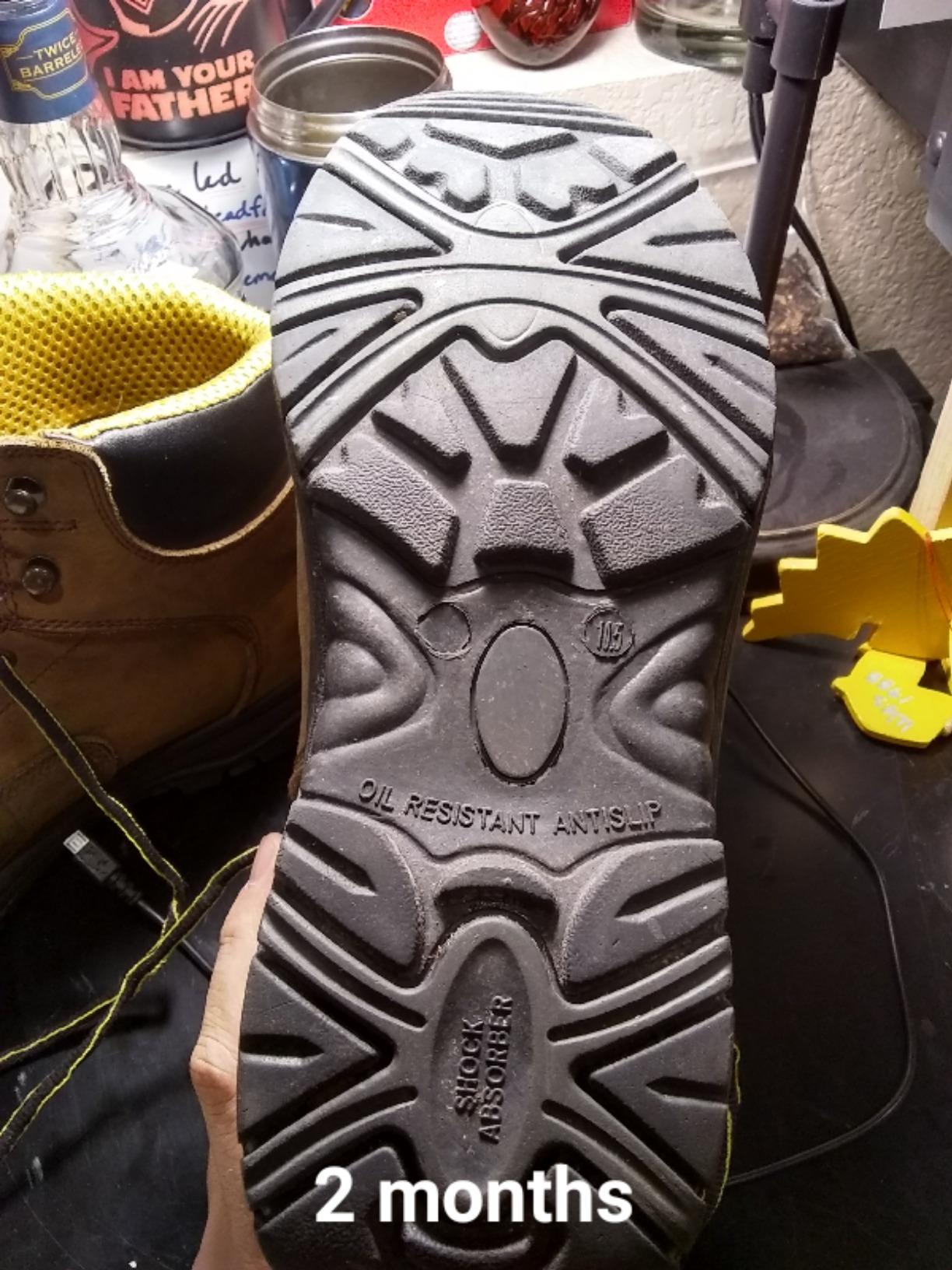
There is a clear limitation though. This is not a safety rated boot, it runs narrow with no wide width on offer, and Stock insoles and laces are usually the first parts to break down. Reviewers also note it gives less support than heavier boots over constant walking.
Who the Ultra Dry suits
Warehouse, delivery and maintenance staff who do not need a rated safety toe will find this one of the most comfortable options here. If your feet get hot in sealed leather, the lighter construction and quick-drying lining are a real improvement.
It suits people who want to bring their own support. Because the insole is removable, you can use it to add arch support for plantar fasciitis without buying a prescription boot.
Where the Ultra Dry falls short
If your employer requires ASTM rated impact or electrical hazard protection, this boot is not eligible. Check your site rules before you fall for the comfort.
Wide feet are a problem too, since there is no wide width and the fit runs narrow. Constant high-step walking on rough concrete will also feel less stable than in a shanked boot.
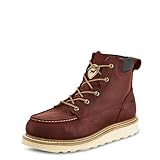
5. Irish Setter Ashby 6 Inch: Best Resoleable Boot for Concrete
Irish Setter Ashby 6″ Mens Soft Toe Work Boot, Brown, 9.5 M
Oiled full grain leather
Goodyear welt
Removable PU footbed
EVA midsole
Pros
- Removable footbed and EVA midsole for long shifts
- Goodyear welt construction is resoleable
- Oiled full grain leather softens with wear
- Shallow lug pattern picks up little debris
- Outsole resists melting up to 475F
Cons
- Soft toe protects only against lighter hazards
- Shallow tread gives less grip on muddy ground
- No listed shank under the arch
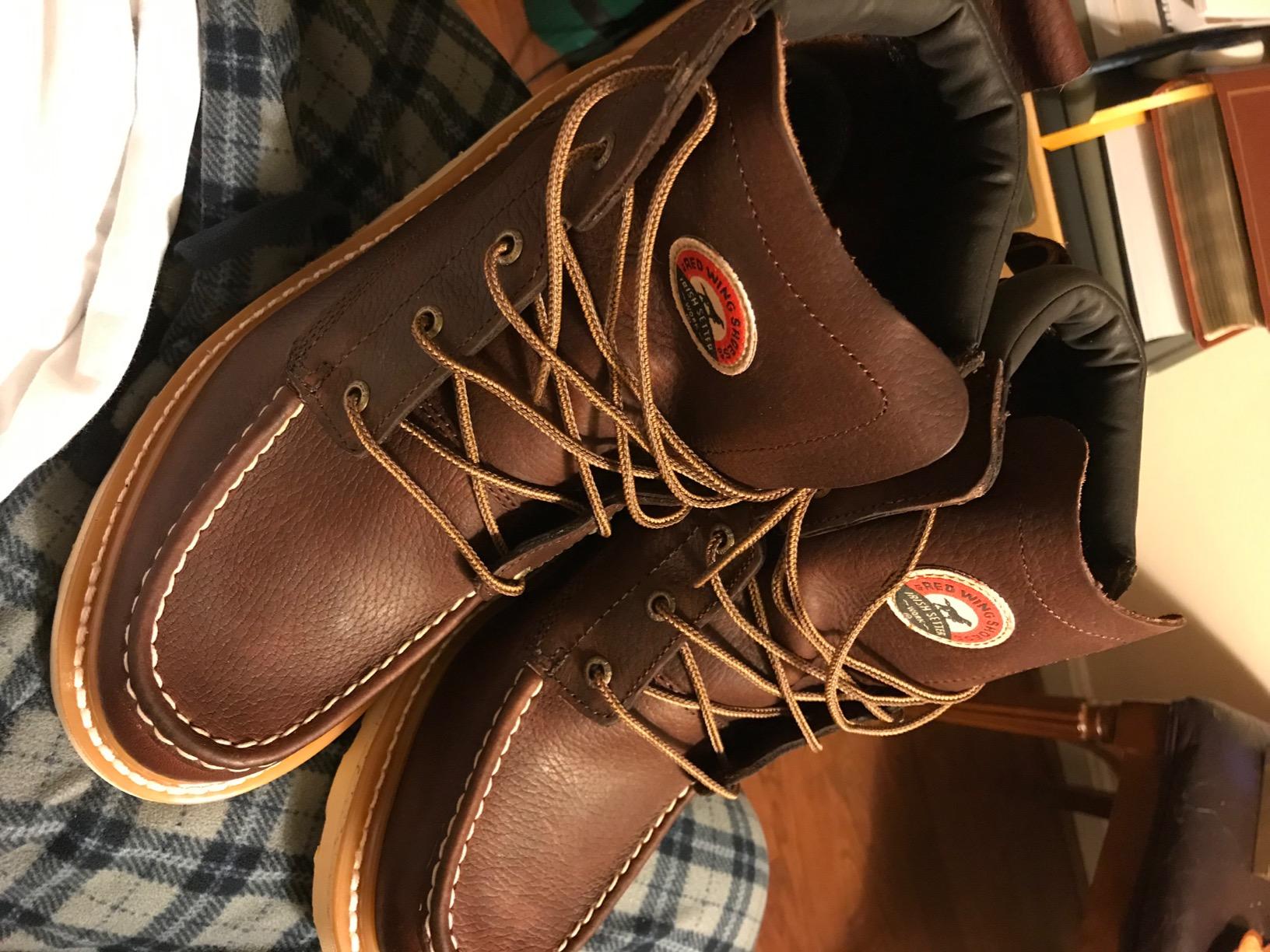
The Ashby is built for people who plan to keep their boots for years rather than seasons. Goodyear welt construction means the upper and sole are stitched rather than glued, so when the outsole wears through on concrete it can be resoled instead of thrown away. That single feature changes the cost per year more than any cushioning choice.
Comfort comes from the removable polyurethane footbed sitting on an EVA midsole, and owners credit that combination with carrying long shifts on hard floors. The oiled full grain leather upper also softens as it wears, so the boot genuinely improves with time if you treat it.
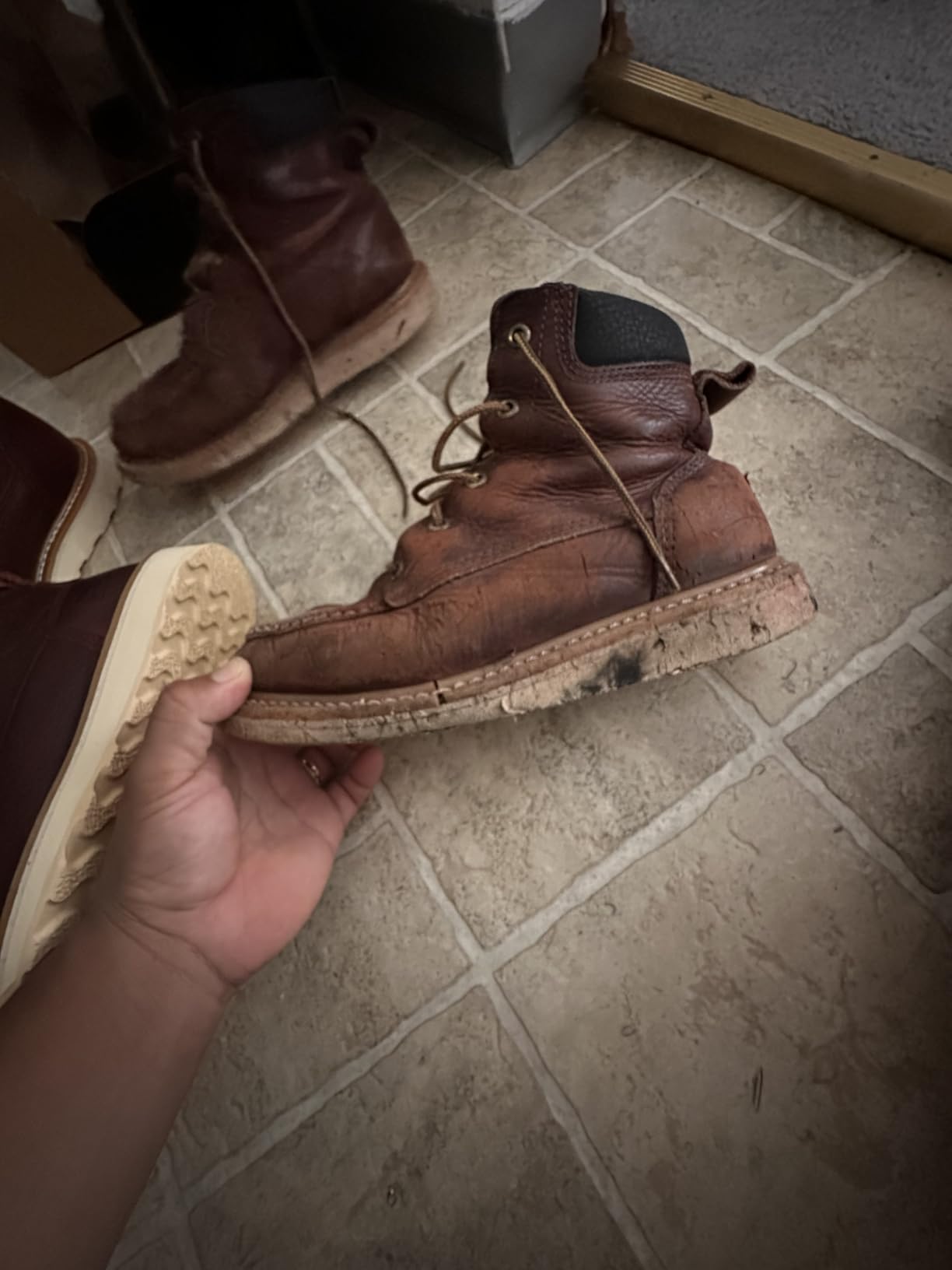
This is a soft toe boot, and the HRO rubber and EVA Traction Tred outsole is rated for heat, slip and electrical hazard exposure under ASTM F2892 and ASTM F3445 SR. The outsole resists melting up to 475 degrees Fahrenheit, which is useful near hot industrial work. The shallow lug pattern also keeps mud and rock from packing in, something owners appreciate on site.
The trade-off is protection. A soft toe covers you against everyday scrapes and minor hazards but not heavy crush or impact, so check whether your job requires a rated cap before choosing it. A wearer with a high arch may also find the standard footbed flat.
Who the Irish Setter Ashby suits
This is the value pick for someone who stands in one place all shift and wants support without a safety toe. The removable footbed means you can upgrade to a supportive insole in about thirty seconds when the supplied one compresses.
Anyone near heat sources will like the 475 degree melt rating, and the shallow tread is a good match for an indoor floor where you do not want to pick up debris into your next truck.
Where the Ashby falls short
It is not a protection boot. If a dropped load or a heavy crush is a realistic hazard, the soft toe is the wrong choice no matter how comfortable the footbed is.
Outdoors on muddy or loose ground the shallow pattern gives up early, so pair it with traction if your work crosses from a slab to a yard. Our guide to ice grippers for work boots covers the winter version of that problem.
6. SUREWAY Heavy Duty Wedge Moc Toe: Best Wedge Sole Pick
SUREWAY Mens Heavy Duty Wedge Moc Toe Work Boots Soft/Composite/Steel Toe
Oil-tumbled full grain leather
Dual-density rubber and PU wedge
Steel shank
Goodyear welt
Pros
- Wedge moc sole spreads weight across the whole foot
- Dual-density sole blends durability with cushioning
- Steel shank adds underfoot support
- Soft composite and steel toe variants available
- Two pairs of insoles included
Cons
- Wedge profile feels less stable on a ladder
- Included insoles may not suit a high arch
- Wedge build is not the lightest option here
The SUREWAY is the only true wedge boot in this roundup, and the geometry is the point. A wedge sole is flat from heel to toe with no raised heel, so your weight spreads across the entire foot rather than loading the heel and the ball separately. On concrete, where nothing absorbs the shock, that distribution is the single biggest comfort change you can make.
Under the wedge there is a dual-density rubber and PU sole with a shock absorbing PU midsole, and a steel shank sits between the footbed and the outsole to stop the arch from collapsing inward. Owners call out the even weight distribution for standing work more than anything else.
The upper is oil-tumbled premium full grain leather with a padded tongue, a soft leather collar and speed hooks, and it is built with Goodyear welt construction. Two pairs of insoles ship in the box, which gives you an immediate cushioning upgrade and a spare when the first one flattens.
You can order it as a soft toe, composite toe or steel toe, which is unusual at this level and useful when different sites on the same job have different rules. A six month manufacturing guarantee also comes standard.
The wedge does have trade-offs. A flat profile gives up ground feel, so owners report it feels less stable on a ladder, and the moc toe profile is roomier than a lace-up boot. If your day is split between standing on a slab and climbing, this is a trade you should make knowingly.
Who the SUREWAY suits
Long static standing is the ideal case. Assembly staff, masons and anyone parked at a workbench will feel the difference between a wedge sole and a lug boot within a shift, usually in the knees and lower back.
It is also the sensible choice for wide feet, because the moc toe shape leaves more room across the forefoot than a narrow safety toe boot. The three toe options mean one model covers soft toe, composite toe and steel toe workplaces.
Where the SUREWAY falls short
Not the boot for climbing or uneven outdoor ground, where a raised heel and deeper tread would serve you better. The flat sole has less ground feedback and can feel slippery on a slope.
The included insoles are basic, so a high arch will probably need a replacement. And because the wedge carries a solid shank, it is not the lightest option here, which matters if you walk several miles a shift.
7. NORTIV 8 Waterproof Steel Toe: Best Budget Steel Toe Boot
NORTIV 8 Men’s Waterproof Steel Toe Work Boots,Black,10.5
3.7 lb weight
ASTM F2413-18 steel toe
Waterproof suede
Rubber lug outsole
Pros
- Cushioned insole built for long hours standing
- Waterproof suede and membrane handle wet and muddy ground
- ASTM rated steel toe with a reinforced heel
- 3.7 lb weight is light for a steel toe boot
- Rubber lug outsole grips uneven terrain
Cons
- Lug pattern is deeper than needed on smooth floors
- Suede upper scuffs and marks easily
- No listed shank or arch support
The NORTIV 8 is a straightforward choice when you need a rated steel toe and waterproofing without spending heavily. It currently ranks first in its category, and 71 percent of owners give it five stars, so the value holds steady rather than depending on a promotion.
The MD cushioned insole is the part that matters on concrete. It is designed for long hours of standing and walking, and combined with the impact-resistant rubber toe and reinforced heel it takes the two pressure points that cause most foot fatigue on a hard slab.
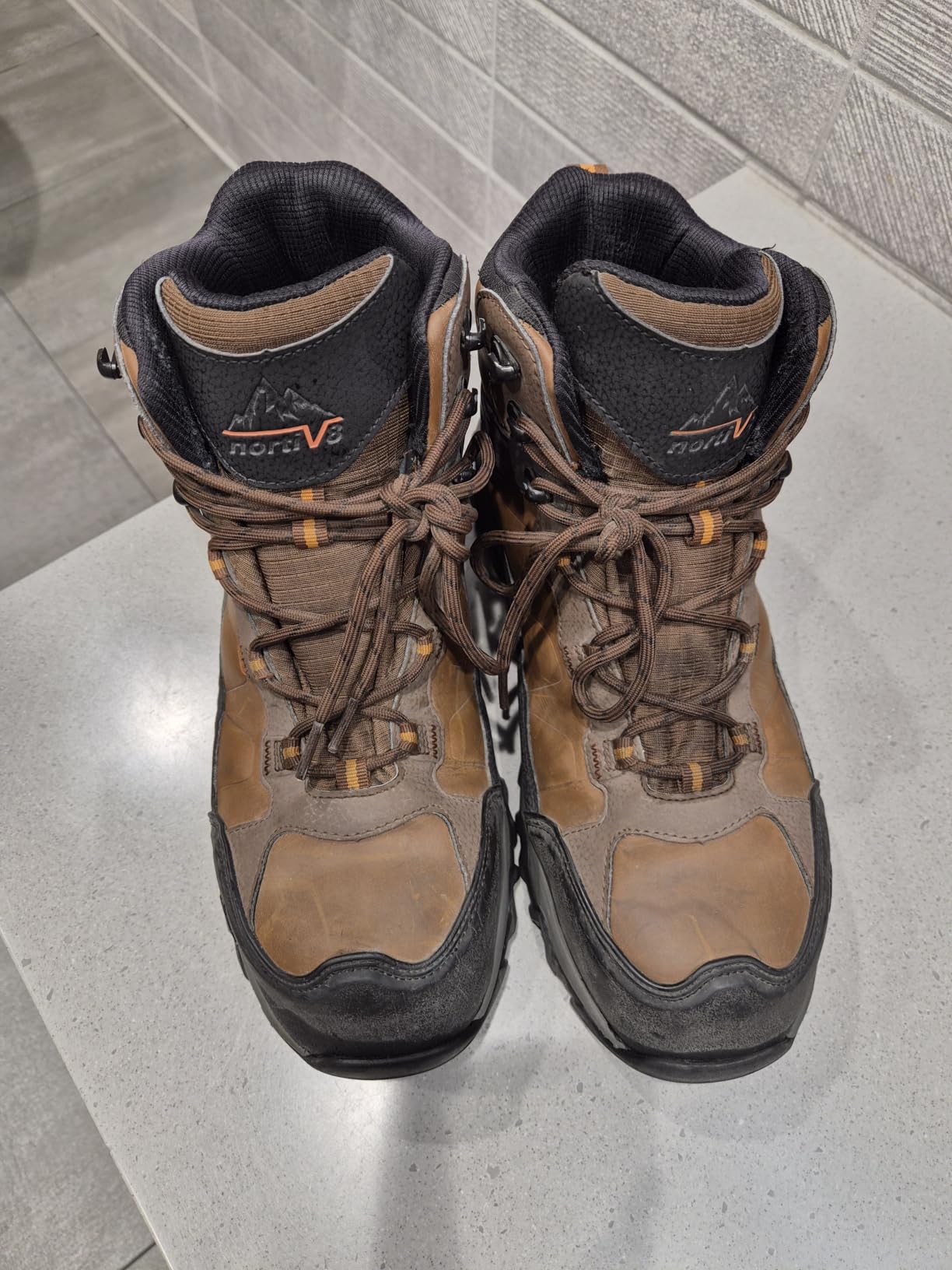
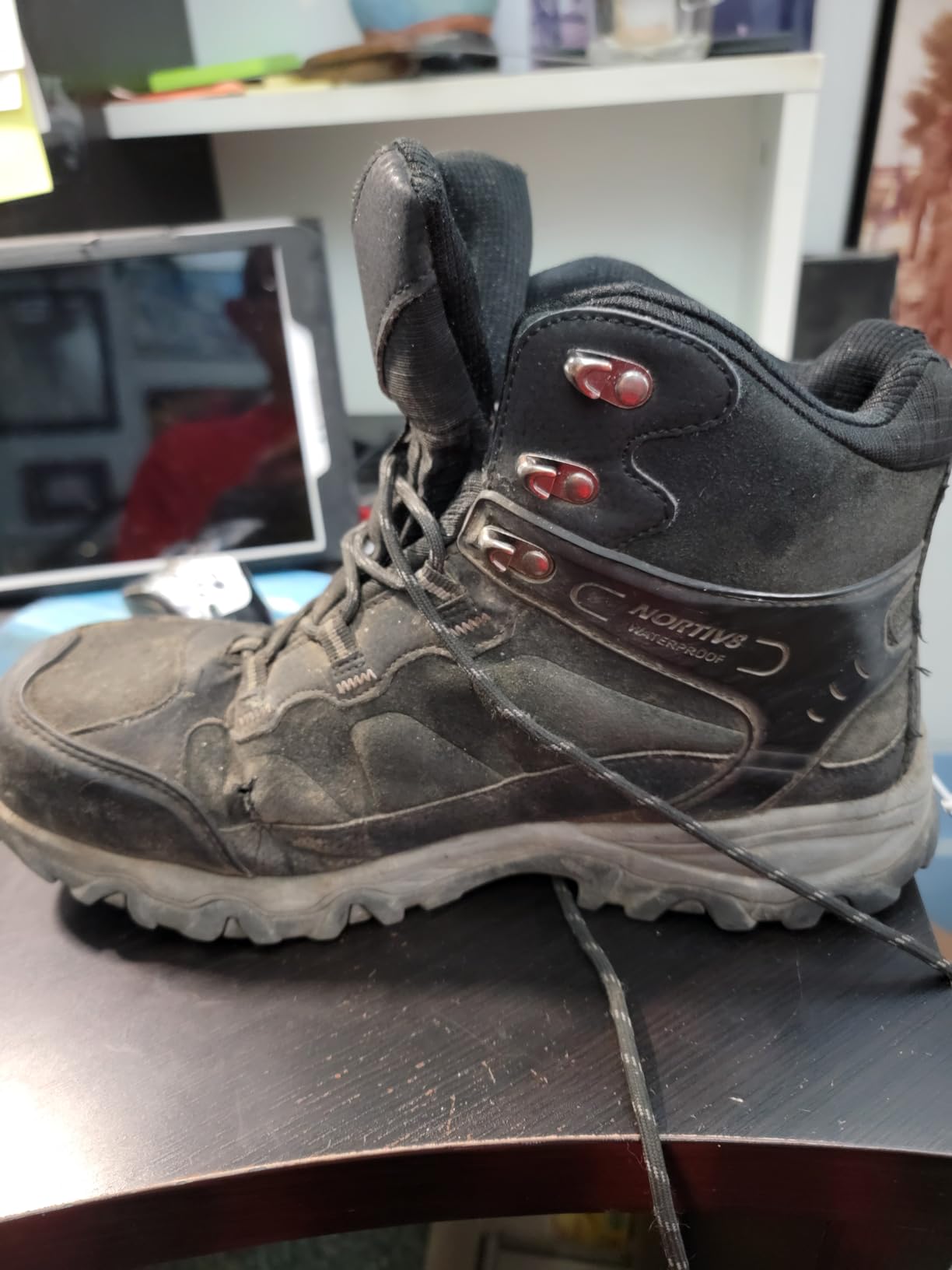
Protection is properly certified. The steel toe meets ASTM F2413-18 for impact and compression, and the waterproof suede upper uses a membrane structure that owners confirm holds up in wet and muddy conditions. The rubber lug outsole gives reliable traction on uneven terrain.
It is 3.7 pounds, which is light for a steel toe boot, and that low weight directly reduces the fatigue building in your feet and ankles over a long shift. Where it falls short is refinement: the lug pattern is deeper than a smooth indoor floor needs, and the suede shows scuffs quickly.
Who the NORTIV 8 suits
New workers, apprentices and anyone building a first pair of boots for concrete work will find this the sensible starting point. You get a certified steel toe, a waterproof upper and a cushioned insole without paying for a brand premium.
It suits mixed terrain too. The lug outsole handles outdoor slabs, ramps and gravel approaches that a pure wedge sole would struggle with.
Where the NORTIV 8 falls short
There is no listed shank under the arch, so a wearer with a high arch or plantar fasciitis should plan on adding an insole from day one. Long-term support is not what this boot is built around.
On a polished indoor floor the deep lug pattern collects dust and concrete fines, and the suede upper marks easily in a warehouse where scuffs are constant. If appearance matters to you, look at a leather or nubuck option.
8. DUNLOP PVC Steel Toe Boots: Best for Wash-Down Areas
DUNLOP White PVC Steel Toe Rubber Concrete Boots, White, Size 12
Chemical resistant PVC
Steel toe ASTM F2413-11
Slip resistant tread
Roll-down cut line
Pros
- Fully waterproof PVC for wet slabs and wash-down areas
- Hoses down and cleans in minutes
- Steel toe rated to ASTM standards
- Cut line rolls the shaft down to ankle height
- Made in the United States
Cons
- No insulation so they are cold in winter
- Runs about a size large for some wearers
- Unlined so feet get sweaty on long shifts
The DUNLOP is a different kind of answer. This is a full PVC boot rather than leather, and for wet concrete, wash-down areas and outdoor slabs it is the best work boot for concrete floors on this list because nothing soaks through it at all.
Owners rate it 4.5 stars and highlight the practical wins. You can hose it down after a messy shift, the solid rubber soles feel genuinely supportive and grip well even on ice, and the reinforced steel toe is rated to ASTM F2413-11 for impact and compression plus ASTM F3445-21 for slip resistance.
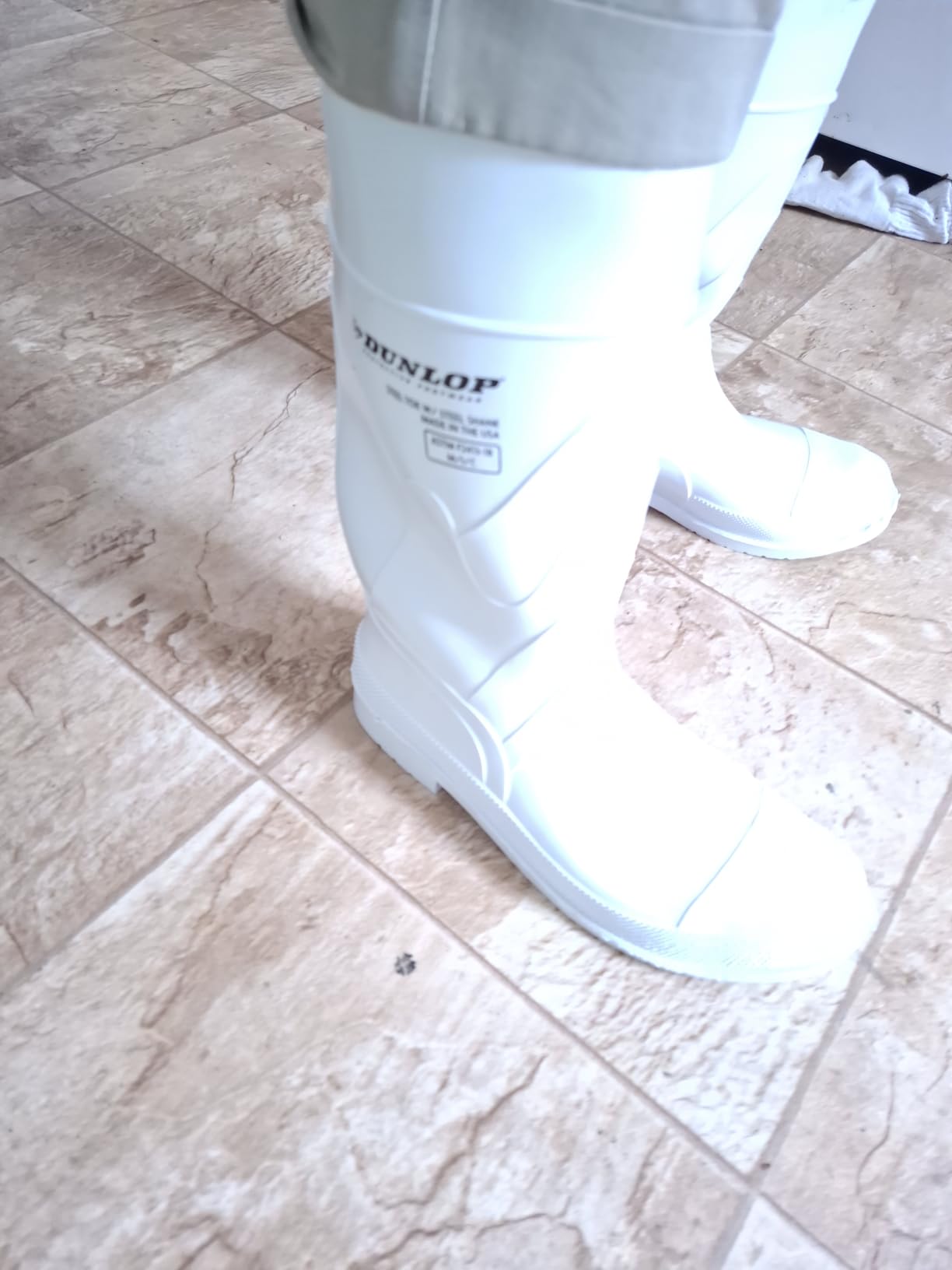
There is a cut line around the shaft so you can roll the tall design down to ankle height, which is genuinely useful when you are working indoors and do not want the boot up your leg. The chemical resistant PVC construction is made in the United States and is the reason it survives the environments leather cannot.
It is not a leather boot and it does not pretend to be one. There is no insulation at all, so it is uncomfortable in cold conditions, the unlined interior gets sweaty on long shifts, and it runs about a size large for some wearers.
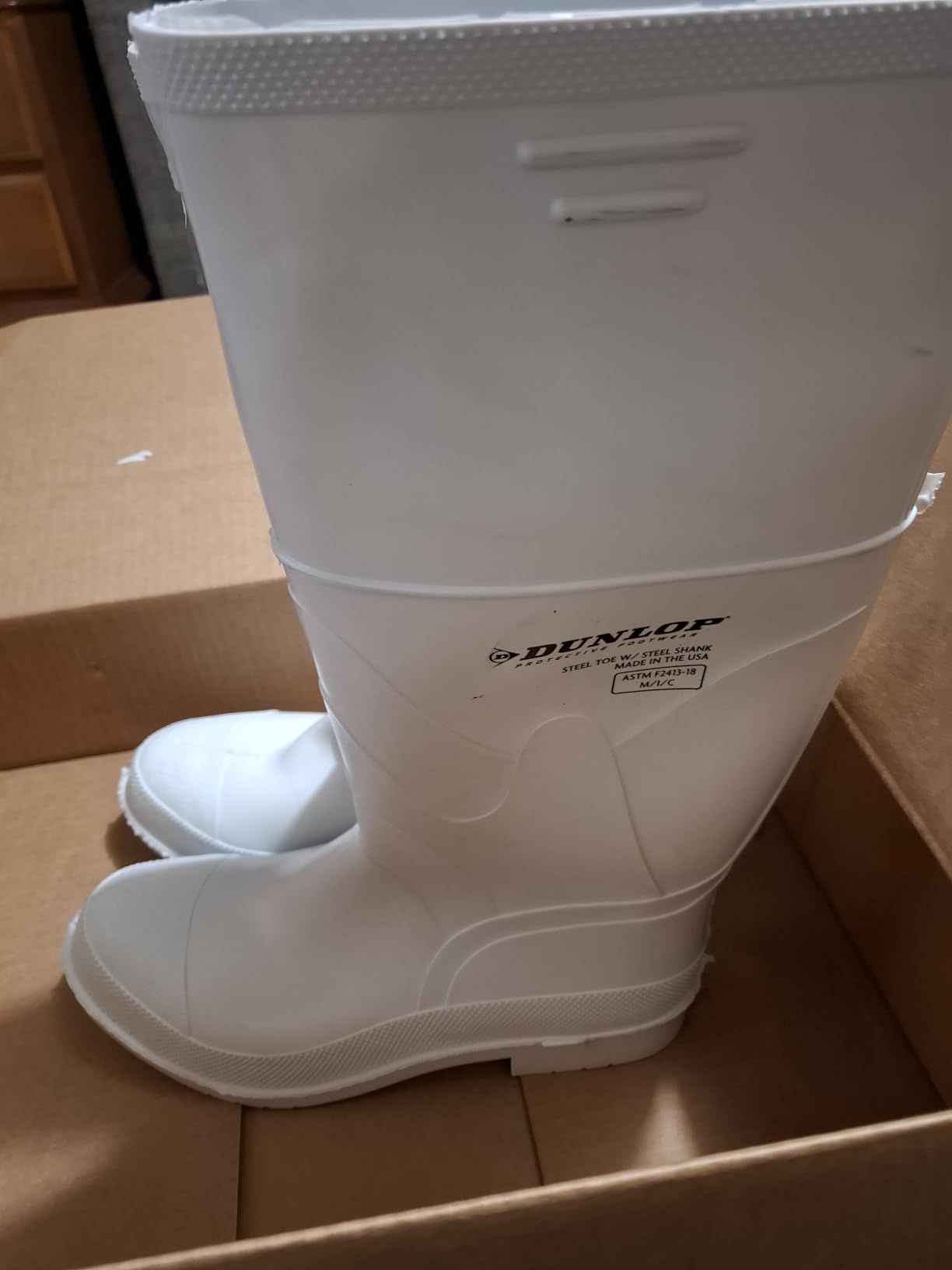
Who the DUNLOP suits
Wet concrete is the target. Flood cleanup, food processing areas, wash-down bays and any outdoor slab where the surface is soaked all the time. A sealed PVC boot is hard to beat when the floor never dries out.
The ASTM slip rating also makes it a strong choice for icy loading docks and winter outdoor work, where leather boots with shallow tread lose their grip.
Where the DUNLOP falls short
Never wear it in a cold environment without thick socks underneath, because there is no insulation. And if you are on your feet in a warm building all day, the unlined PVC will cook your feet.
For dry indoor comfort on a smooth warehouse floor, a cushioned leather or composite boot will feel far better. This is a conditions-driven pick, not an all-day comfort pick. For winter use, our cold weather steel toe guide covers the insulated options.
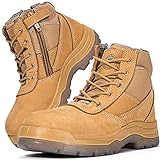
9. ROCKROOSTER 6 Inch Side Zipper: Best for Wide Feet
ROCKROOSTER Mens Work Boots, 6 inch Steel Toe Side Zipper Safety Wheat Slip Resistant Work Boot, TPU Outsole Breathable Leather Shoes, ASTM F2413-18 Static Dissipative SD (AK050 US 8.5)
ASTM F2413-18 I/75 C/75 SD
YKK side zipper
PORON Xrd cushioning
Non-marking TPU outsole
Pros
- Zipper and snap make on and off fast
- Real wide widths with supportive arch fit
- Non-marking outsole will not squeak on indoor floors
- Washable removable insoles resist odor
- Static dissipative and slip resistant on wet floors
Cons
- Stiff for the first few weeks
- Snaps pop open and catch on each other
- Wide bias gives regular widths too much heel movement
Wide feet are the most common fit problem in this category, and the ROCKROOSTER solves it. Owners with wide feet report the arch support is genuinely there rather than nominal, and the outsole is non-marking, which means it leaves no black scuffs and no squeak on a finished indoor concrete floor.
The side zipper with a snap closure is the feature regular-width wearers end up loving most. Instead of lacing the same boot every morning for a twelve hour shift, you open one zipper and step in. Reviewers describe the on and off time as far quicker than lacing.
Safety-wise it conforms to ASTM F2413-18 with I/75 impact, C/75 compression and SD static dissipative ratings, which matters in environments where static build-up is a real concern. The COOLMAX moisture transporting fabric combined with PORON Xrd cushioning handles impact, and the TPU outsole is static dissipative, slip resistant and oil resistant.
Be honest about the break-in. Owners call it stiff at first and some report a considerable break-in period, plus the snaps pop open and catch on each other. The top of the boot can also rub the back of the Achilles, which is worth checking with thin socks first.
Who the ROCKROOSTER suits
If regular work boots squeeze your forefoot, this is the pair to try. Wide widths combined with real arch support make it a strong match for wide feet and for wearers whose plantar fasciitis is aggravated by standing on concrete all day.
It also suits anyone who works around static-sensitive equipment, thanks to the SD rating, and anyone who values fast on and off over lacing.
Where the ROCKROOSTER falls short
Regular-width feet will find it too wide, with excess movement at the heel. If you normally wear a narrow shoe, this is not the boot to size into blindly.
The snaps are a recurring irritation and the Achilles rub is real for some people. Wear it with a low-profile sock for the first week rather than a thick crew sock, and give the leather a proper conditioning routine during break-in.
10. KEEN Utility Cincinnati 6 Inch: Best Cushioning for Hard Floors
KEEN Utility Men’s Cincinnati 6″ Waterproof Soft Toe Wedge Work Boots, Black/Sandshell, 10 EE
KEEN Luftcell air-infused midsole
KEEN.DRY waterproof membrane
Non-marking rubber outsole
Pros
- Luftcell air-infused midsole feels weightless on hard floors
- Removable dual-density insole with pillow-top cushioning
- Waterproof membrane that still moves vapour out
- Non-marking outsole is safe on finished floors
- Continuous Goodyear welt construction
Cons
- Soft toe has no crush or secondary impact rating
- Barnyard-resistant leather needs break-in
- Six inch height can feel warm in a heated building
The Cincinnati is built around cushioning, and the KEEN Luftcell air-infused midsole is the reason. Air is infused into the foam so the midsole stays springy under sustained compression, which is exactly where a plain EVA midsole gives up on a concrete floor.
Layered on top is a removable dual-density PolyAer insole with pillow-top cushioning, and owners describe the whole package as weightless comfort on hard floors. The full-grain barnyard resistant leather upper is a genuinely tough material, and continuous Goodyear welt construction means it can be resoled.
Two details make it well suited to a working building. The KEEN.DRY membrane is waterproof but breathable, so it releases vapour rather than trapping heat the way a fully sealed boot does. And the oil and slip resistant non-marking siped rubber outsole is tested to ASTM F1677-96 and F2913 SATRA, so it will not mark or squeak on a finished floor.
The soft toe is the compromise. KEEN.PROTECT caps meet ASTM F2892 for electrical hazard, but they are not rated for crush hazards or secondary impact, so this is not a boot for a site with heavy material handling overhead.
Our reviews list is smaller than the other boots here, so treat the rating as strong but not as deeply tested. The cushioning platform is the reason to buy it, and buyers who prioritise comfort over impact protection tend to be very happy with the result.
Who the KEEN Cincinnati suits
Stand-up work where the midsole is doing the heavy lifting. Stockrooms, assembly lines, service counters and any indoor concrete job where comfort outranks crush protection.
It is also a good fit for anyone whose feet overheat in waterproof boots, because the breathable membrane gives up less than a fully sealed design, and for people who want a resoleable boot with a modern cushioning feel.
Where the KEEN Cincinnati falls short
If dropped objects are a hazard, move to a composite or steel toe model. A soft toe protects against everyday knocks, not heavy impacts.
The leather needs a break-in period, and the six inch height can feel warm in a heated building, so wear thin socks for the first couple of weeks. If you want a wider toe box, our Timberland work boot guide covers models built on a different last.
How to Choose Work Boots for Concrete Floors?
Fit decides everything else
No amount of foam rescues a badly fitting boot, and on concrete a fit problem shows up faster than anywhere else. You want about a thumb width of space in front of your longest toe, a heel that stays locked when you lift your foot, and a forefoot that does not compress when you spread your toes.
Try on with the socks you will actually wear on shift. Sock thickness changes the fit by a noticeable amount, and a boot that feels snug in thin dress socks can feel tight in a merino crew. A standing test matters more than a walking test: stand for five minutes and notice where pressure builds.
Signs the boot is too small are toes touching the front, numbness by mid-afternoon, and pain across the top of the foot. Signs it is too large are your heel lifting when you walk, your foot sliding forward on the slope, and shin ache from the boot shifting. Both feel like a break-in at first, and neither improves without a size change.
Wedge sole or lug sole: match the surface
A wedge sole is flat from heel to toe. It spreads your weight across the entire foot, reduces the load on your heel and forefoot separately, and is the geometry most workers prefer for static standing on a flat indoor slab.
A lug sole has a raised heel and a deeper tread pattern. It is the better choice outdoors, on gravel, on a loading dock ramp or anywhere you need bite on loose ground or push off at speed. A polished or sealed indoor floor does not need deep lugs, and the extra depth just collects dust.
Match the sole to the finish of the floor. Polished and epoxy-coated concrete are slippery, so pick a boot with a certified slip resistance rating. Rough unfinished slab and dusty outdoor work reward deeper tread. Wet concrete behaves like ice, and a shallow pattern is the reason boots slip during wash-down.
Steel, composite, aluminum or soft toe
Steel toe is the heaviest option and the coldest, because metal conducts heat straight out of your foot. It remains the choice when you need maximum impact and heat resistance, such as around molten metal or heavy foundry work.
Composite toe meets the same ASTM F2413 impact and compression standards while cutting weight and not conducting cold. It is usually the better pick for long walking shifts on concrete, since the lighter cap reduces the fatigue you accumulate over a shift. Aluminum sits between the two, lighter than steel but conductive, so it is not a choice for electrical hazard work.
Soft toe gives you no impact or crush rating at all. It is a legitimate choice when your employer does not require a safety toe, and comfort is often better as a result. Check the rule before you assume.
Cushioning that survives a shift
Two layers do the work: the midsole, which absorbs impact, and the insole, which supports the arch. EVA midsoles are light and comfortable early but compress and flatten over months. Polyurethane midsoles are denser, hold their rebound longer, and usually outlast EVA on a concrete floor.
Plan to replace the insole rather than the boot. Owners across every forum thread we read report factory insoles flattening out at four to five months on daily concrete use. A removable footbed makes this a thirty second swap, and the most frequently named upgrades are Superfeet Green and Orange for general support, Powerstep Pinnacle for a firmer heel cradle, and Footprint insoles for high arches.
Waterproof, socks and rotating two pairs
Waterproof membranes keep water out and trap heat. If your concrete is dry and indoors, a breathable non-sealed boot will be more comfortable all day. If you work outdoors, through wash-down areas or in rain, waterproof is worth the trade. A compromise like the KEEN.DRY breathable membrane works in both settings.
Wear moisture-wicking socks and change them daily. Merino wool handles odour better than cotton and synthetic blends dry faster, which keeps the boot interior from breaking down the upper from the inside.
Rotating two pairs is the simplest life extension strategy. Each pair gets roughly half the wear, midsoles recover between shifts, and moisture never sits in one boot for two days. If you are on concrete daily, the second pair pays for itself in comfort long before the first one is finished.
When to Replace Work Boots on Concrete
Boots rarely fail all at once on this surface. The first sign is usually in the footbed, and by the time you feel it the midsole is already gone.
The removable insole no longer rebounds and your feet feel flatter at the end of a shift.
You feel the concrete through the midsole, or the shoe feels noticeably thinner than it did a month ago.
Your heel starts to lift or slip even though the laces are tight.
Heel wear on the outsole is uneven, with one side visibly lower than the other.
Midsole or outsole separation appears, especially along the welt or the toe crease.
The heel counter softens and your foot slides forward when you squat or climb.
Stitching breaks near the bottom lace eyelets, a reported issue with the Wolverine Overpass.
The upper cracks around the flex point or the toe scuffs through to the liner.
Safety toe dents or deforms after a real impact, even if the boot still looks intact.
New pain appears in your feet, knees or lower back that arrives after a few hours on the floor.
If your boots are resolable, a worn outsole does not mean a new boot. A Goodyear welt construction like the Irish Setter Ashby or the SUREWAY wedge can be resoled several times over, which is the cheapest way to keep a reliable concrete boot in service.
Cutting concrete or slab work involves dust that permanently destroys upper materials, so replace sooner rather than later. Our guide to walk behind concrete saws covers the equipment side of that job.
Frequently Asked Questions
What are the best shoes for concrete floors?
The best work boots for concrete floors combine a cushioned midsole that resists compression, a supportive arch, a slip-resistant outsole and a toe cap your job requires. Flat wedge soles suit indoor standing work, while lug soles are better outdoors on rough or loose ground. A removable insole is worth more than any brand name, because it lets you replace support as it flattens.
What boots are good for standing on concrete all day?
Boots built for standing on concrete all day should have a cushioned midsole such as polyurethane or an air-infused foam, plus arch support and a wide base. Wedge soles distribute weight across the whole foot and reduce heel loading. Removable footbeds matter most, since factory insoles often compress within four or five months of daily concrete work.
Are steel toe boots good for concrete floors?
Steel toe boots work well on concrete floors and offer strong impact and heat protection, but they are the heaviest option and conduct cold straight out of your foot. Composite toe boots meet the same ASTM F2413 impact and compression standards at a lighter weight, which usually feels better on long walking shifts. Choose steel for foundry or heavy material handling work.
What are wedge boots good for?
Wedge boots have a flat sole from heel to toe with no raised heel, so weight is spread evenly across the foot instead of loading the heel and forefoot separately. That makes them a strong choice for static standing on flat indoor concrete, where a lug sole concentrates pressure on two small areas. The trade-off is less ground feel, so wedge boots feel less stable on ladders or slopes.
How often should work boots be replaced?
Boots worn daily on concrete usually last six to twelve months before the midsole stops rebounding. Watch for a flat insole, feeling the floor through the midsole, uneven heel wear, sole separation, and new foot, knee or lower back pain after a few hours. Resoleable Goodyear welt boots can be rebuilt several times, which extends their service life well beyond a glued construction.
Final Verdict for Best Work Boots for Concrete Floors in 2026
The CAT Threshold is the safest all-round choice for 2026. It has the deepest review history in this roundup, a steel toe that survives real impacts, and sizing that stays true in wide widths. If you walk a lot and your site requires protection, that is where we would start.
Pick the Timberland PRO Boondock instead if you stand still for most of your shift and want the anti-fatigue footbed and electrical hazard rating, and accept the extra weight. Choose the SUREWAY wedge if your day is one spot all day, your feet are wide, and you want a flat sole that spreads pressure evenly.
Two narrower cases: the ROCKROOSTER is the answer for wide feet and fast on and off, and the DUNLOP PVC boot is the only real option when the concrete is soaked or you work in a wash-down area.
Whatever you pick, try them on with your work socks, stand for five minutes, and plan on swapping the insole every four or five months. That habit does more for a long shift on concrete than any single feature on the spec sheet.