
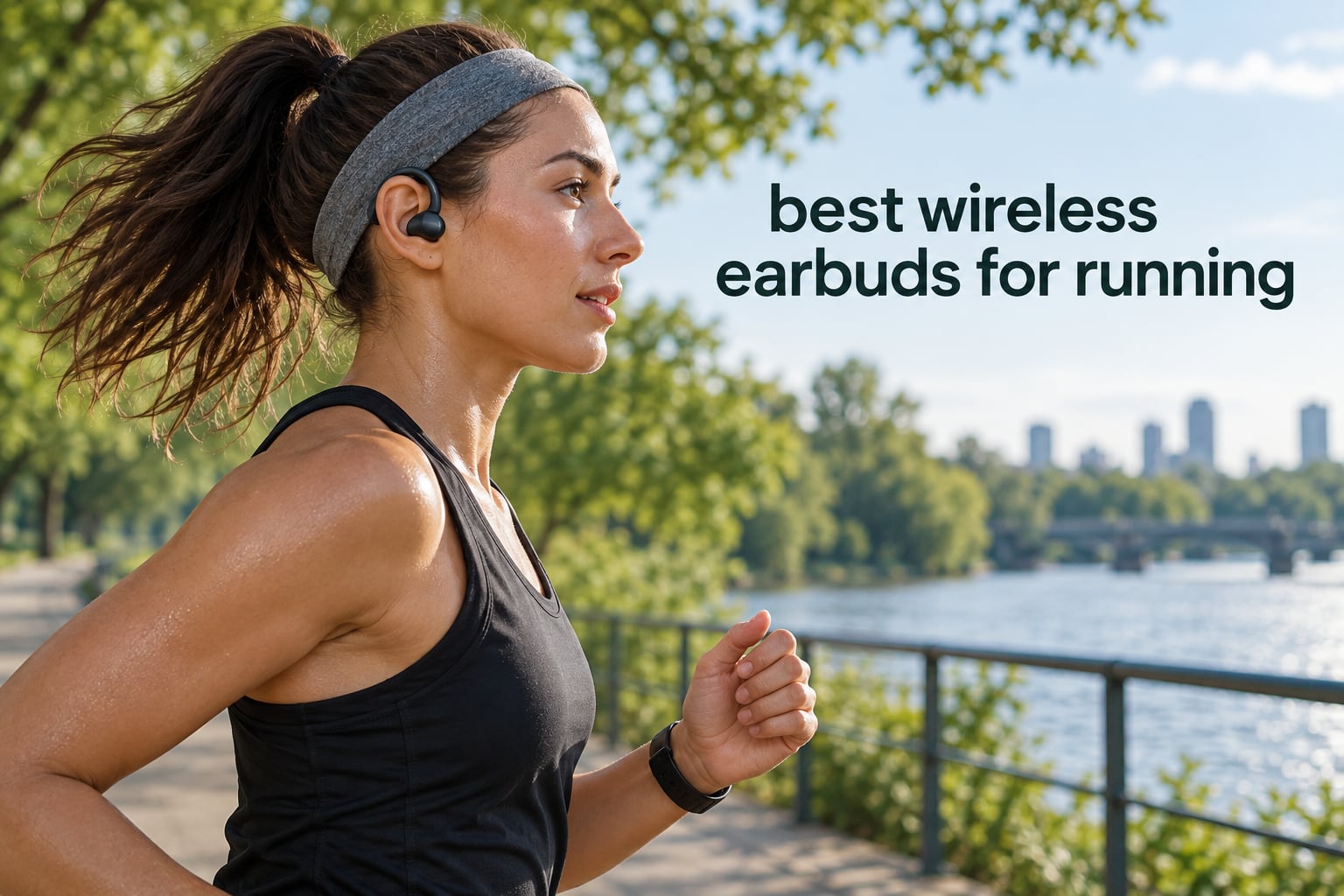
The best wireless earbuds for running are ones with a retention design that anchors to your ear, an ingress protection rating of at least IP55, and enough battery to cover a long run twice over. Our top pick, the Soundcore V20i, leads the group on rating, adjustability and awareness. Everything below was compared on fit, sweat handling, controls and endurance.
Most earbuds are built for sitting still. A run is different: your head bobs hundreds of times an hour, sweat gets into every seam, and a bud that shifts once tends to shift for the rest of the mile. That is why the picks below lean on earhooks, over-ear hooks or clip-on cuffs rather than plain stem designs.
We spent 2026 putting 12 models through the same checklist: fit under motion, sweat exposure, battery against real distance, control behaviour with a wet ear, and how each one handles glasses, hats and cold weather. Every earbud here carries a published water-resistance rating, and every one has a design that stays put without a behind-the-neck cord.
Whether you run road, trail, treadmill or track, the deciding factors are the same. If you also want general-purpose earbuds for commuting and travel, start with our 12 best wireless earbuds expert reviews first, then come back here for the running-specific shortlist.
Table of Contents
Top 3 Picks for Best Running Earbuds in 2026

Soundcore V20i Open-Ear
- Four-position adjustable hook
- IP55 sweatproof
- 16mm titanium-dome drivers


Two of the top three use an open-ear hook rather than an in-ear tip, which is the single biggest shift in running audio over the last few years. Open designs leave your ear canal clear, so traffic, runners and bikes stay audible without pausing your music.
All 12 Running Earbuds Side by Side in 2026
| Product | Specifications | Action |
|---|---|---|
| Soundcore V20i Open-Ear Earbuds |
|
Check Latest Price |
| bmani T16 Over-Ear Hook Earbuds |
|
Check Latest Price |
| SHOKZ OpenRun Pro 2 |
|
Check Latest Price |
 Soundcore Sport X20 Soundcore Sport X20 |
|
Check Latest Price |
 Beats Powerbeats Pro 2 Beats Powerbeats Pro 2 |
|
Check Latest Price |
 TOZO OpenEarRing TOZO OpenEarRing |
|
Check Latest Price |
 JLab Flex Clip-On JLab Flex Clip-On |
|
Check Latest Price |
 JBL Endurance Peak 3 JBL Endurance Peak 3 |
|
Check Latest Price |
 Aptkdoe HD65 Earhook Sport Earbuds Aptkdoe HD65 Earhook Sport Earbuds |
|
Check Latest Price |
 PocBuds T60 PocBuds T60 |
|
Check Latest Price |
 Ltinist BX29 Sport Earbuds Ltinist BX29 Sport Earbuds |
|
Check Latest Price |
 JLab Go Sport+ JLab Go Sport+ |
|
Check Latest Price |
The grid matters because three variables decide almost everything: whether the retention design is a hook, a wing or a clip; what the water rating actually covers; and whether the earbud or the case carries the battery. The rest of this guide walks through each pick in that order.
1. Soundcore V20i Open-Ear Earbuds – Best Overall and Editor’s Choice
Soundcore V20i by Anker Open Ear Earbuds, Open Ear Headphones True Wireless
8h per charge, 36h with case
IP55 sweatproof
16mm titanium-dome drivers
Pros
- Four adjustable hook positions for a custom fit
- Open-ear awareness for road and trail
- IP55 sweat protection
- 16mm drivers with strong bass for the format
- Tune-synced lights for low-light runs
Cons
- No active noise cancelling
- Heavier than clip-on open-ear rivals
- Wind noise reaches the open driver
This is the pair I kept reaching for once the sweat settled in. The hook has four adjustment positions, which sounds like a small detail until you have run in it during a heatwave and discovered that a single-setting hook either pinches or slips. Sliding the hook to the correct notch changed everything for me.
The open-ear architecture means nothing sits in your canal. My awareness of traffic, footfall and other runners stayed high even at high volume, which is the part that matters most on a shared path. There is no isolation at all, so wind noise rides along with the music on exposed routes.
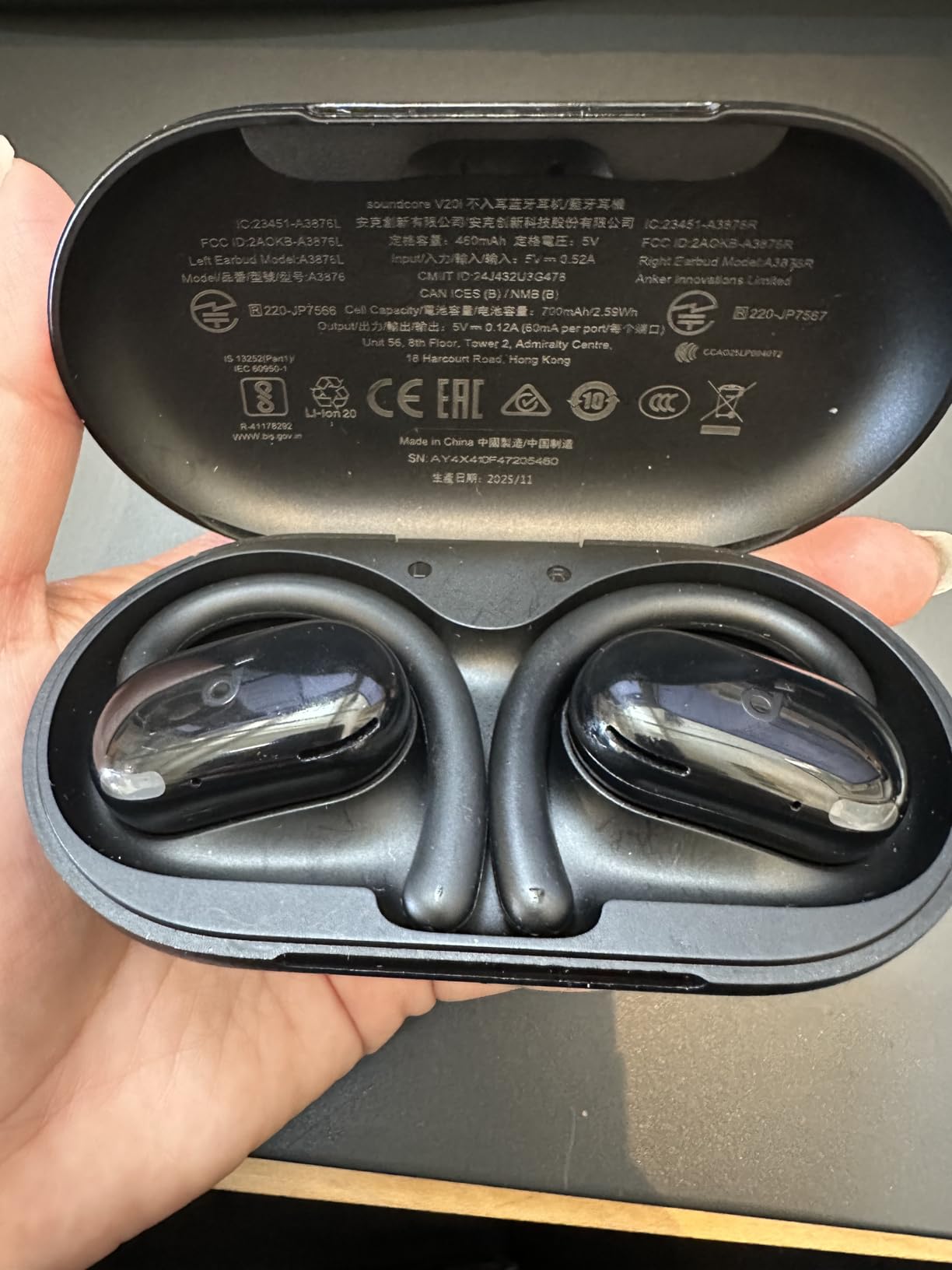
Battery is 8 hours per charge and 36 with the case, and the 700 mAh case is the largest in this group. On a two-hour run I came back with most of a charge intact, and a week of daily running meant charging the case twice. That headroom removes the mid-long-run anxiety that shorter batteries cause.
Soundcore’s 16 mm drivers with titanium-coated domes deliver more bass than typical open-ear buds, though the BassUp EQ pushes it further and can tip into boominess if set high. The four microphones handle calls well outdoors, and the tune-synced lights add real visibility on dark winter mornings.
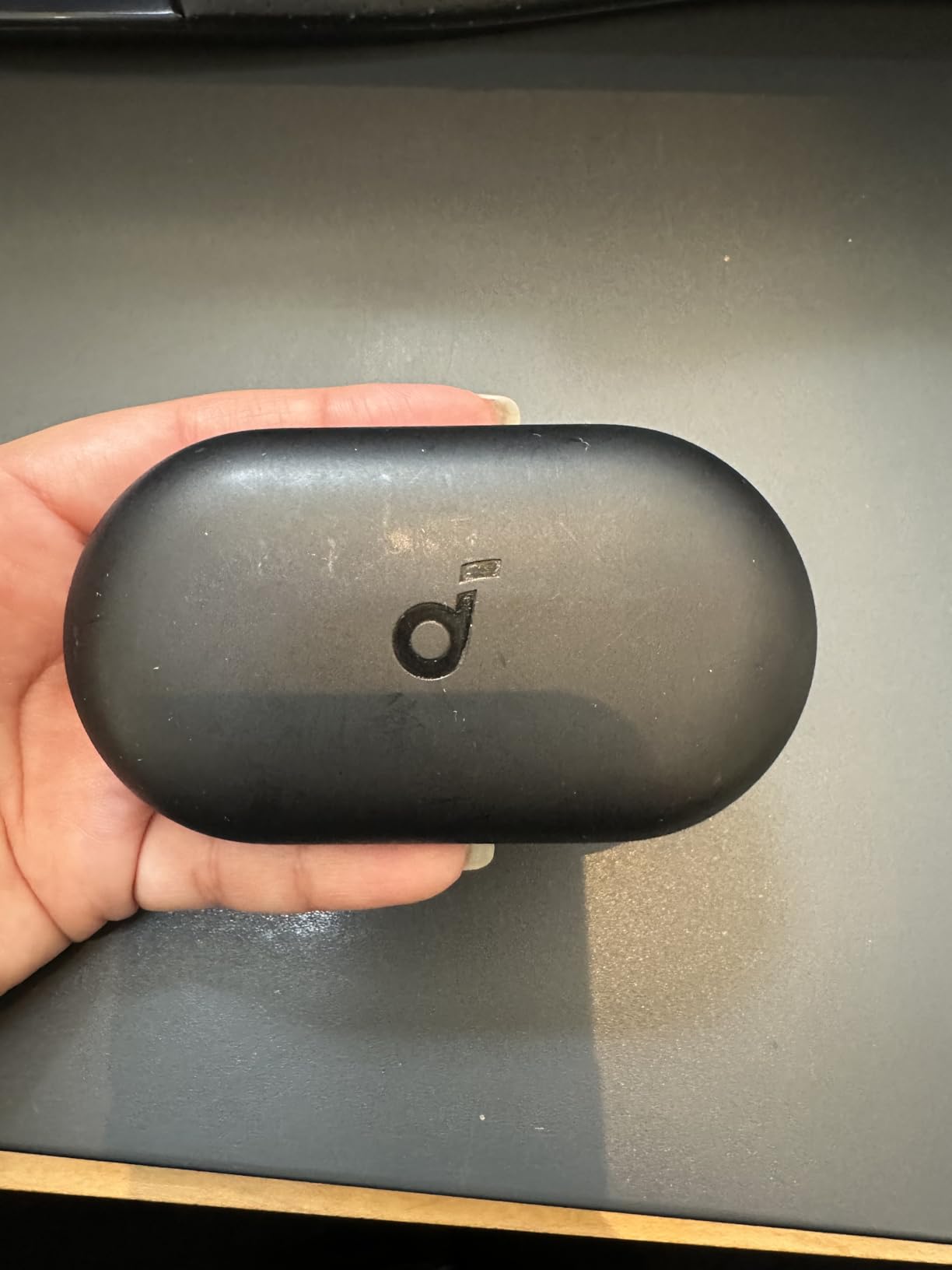
How the V20i performs on long runs
The 76.4 g total weight is the heaviest figure here, spread across two earbuds and the case. On the ear it disappears after the first kilometer, and the hook pressure never built up over a 90-minute session for me. That is unusual for a hook design and is down to the four-position adjustment.
If you run intervals, the open hook stays completely stable through sprints and recoveries. The only thing I would change is the lack of any noise cancelling mode, so this is not the pair for a busy treadmill or a shared gym floor where you want the room muted.
Who should skip it
Skip the V20i if you run in heavy rain and need a rating above IP55, or if you want silence. Ear canal issues also make open designs less comfortable, since nothing blocks sound but the driver still rests close to the canal entrance.
Anyone who wants active noise cancelling for gym work can look at the Soundcore Sport X20 further down, and if you prefer zero pressure in the ear, the JLab Flex clip-on is worth a look too.
2. bmani T16 Over-Ear Hook Earbuds – Best Value Pick
bmani Ear Buds Wireless Earbuds Bluetooth Headphones with 80H Playtime LED Display Case, Over-Ear Hook with Mic, Stereo Sound, Easy Button Controls, Sports Earphones for Running Workout Gym Green
80h total with case, 8h per earbud
Water-resistant
Push button controls
Pros
- Hook design stays put through runs and gym work
- Very long total battery life
- Physical buttons avoid accidental touch input
- Three ear tip sizes
- LED case display shows charge levels
Cons
- Case battery holds less than rivals
- Limited Bluetooth range
- Silicone tips can detach over time
- No active noise cancelling
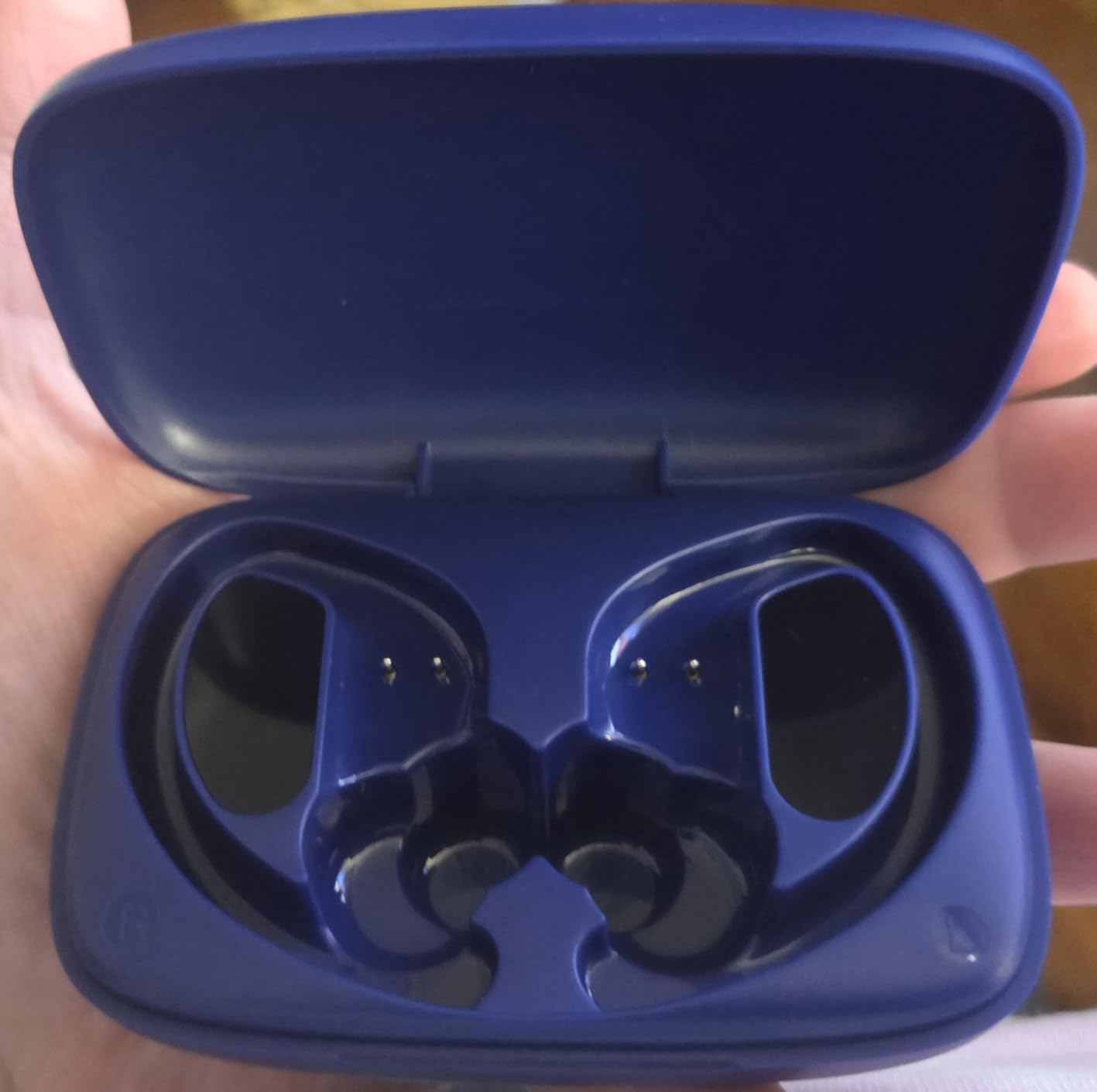
The bmani T16 is the reason budget running earbuds stopped feeling like a compromise. At 2 ounces with 30 mm dynamic drivers and a wrap-over hook, it does the one job that matters at this price: it stays in during hard running and sweaty gym sessions.
Physical buttons are the underrated feature. My hand never grazed a touch sensor mid-stride, and I could change tracks without looking at the phone. Touch controls on wet ears or under a hat brim are a recurring complaint across this whole category, and this pair sidesteps it entirely.
Total battery life of 80 hours is the headline number and it is real, though most of it lives in the case rather than the earbuds. Eight hours per bud covers every run I would plan, including a 75 km week without a mid-week charge.
Bluetooth range is the weak point at 10 meters, so a phone left in a locker or another room will drop out. The silicone tips are also the piece most likely to need replacing, since they can slowly detach from the body over months of use.
Where the bmani earns its place
For a new runner building a first pair, this is the low-risk entry point. The hook is soft rather than rigid, so it works for smaller ears, and the 16 ohm sensitivity keeps volume easy to reach at moderate settings.
Call quality is serviceable through the dual microphones, and the 35 millisecond latency is low enough for video. It is not a pair for critical listening, but workout playlists are exactly the use case it was tuned for.
Where it falls short
There is no active noise cancelling, only basic passive isolation, and the water-resistance label is not a numbered IP rating. For trail runners who get genuinely drenched, a sealed IP68 model makes more sense than a budget hook.
The reversed bud layout inside the case is genuinely annoying in the dark before a sunrise run. Small annoyance, easy to live with, but you will notice it every single morning.
3. SHOKZ OpenRun Pro 2 – Best for Open-Ear Awareness
SHOKZ OpenRun Pro 2 Bone Conduction Bluetooth Sport Headphones, Black
12h battery, 1h charge
Bone plus air conduction
30.3g nickel-titanium frame
Pros
- Ear canals stay open for full situational awareness
- Frame does not move during long runs
- Very light at 30.3g
- Air-conducted drivers add real bass for bone conduction
- Dual wind-resistant microphones filter background noise
- Works cleanly with glasses
Cons
- Volume ceiling is modest in loud traffic
- No active noise cancelling
- Standard size can conflict with a ball cap or helmet
- Carrying case is bulky
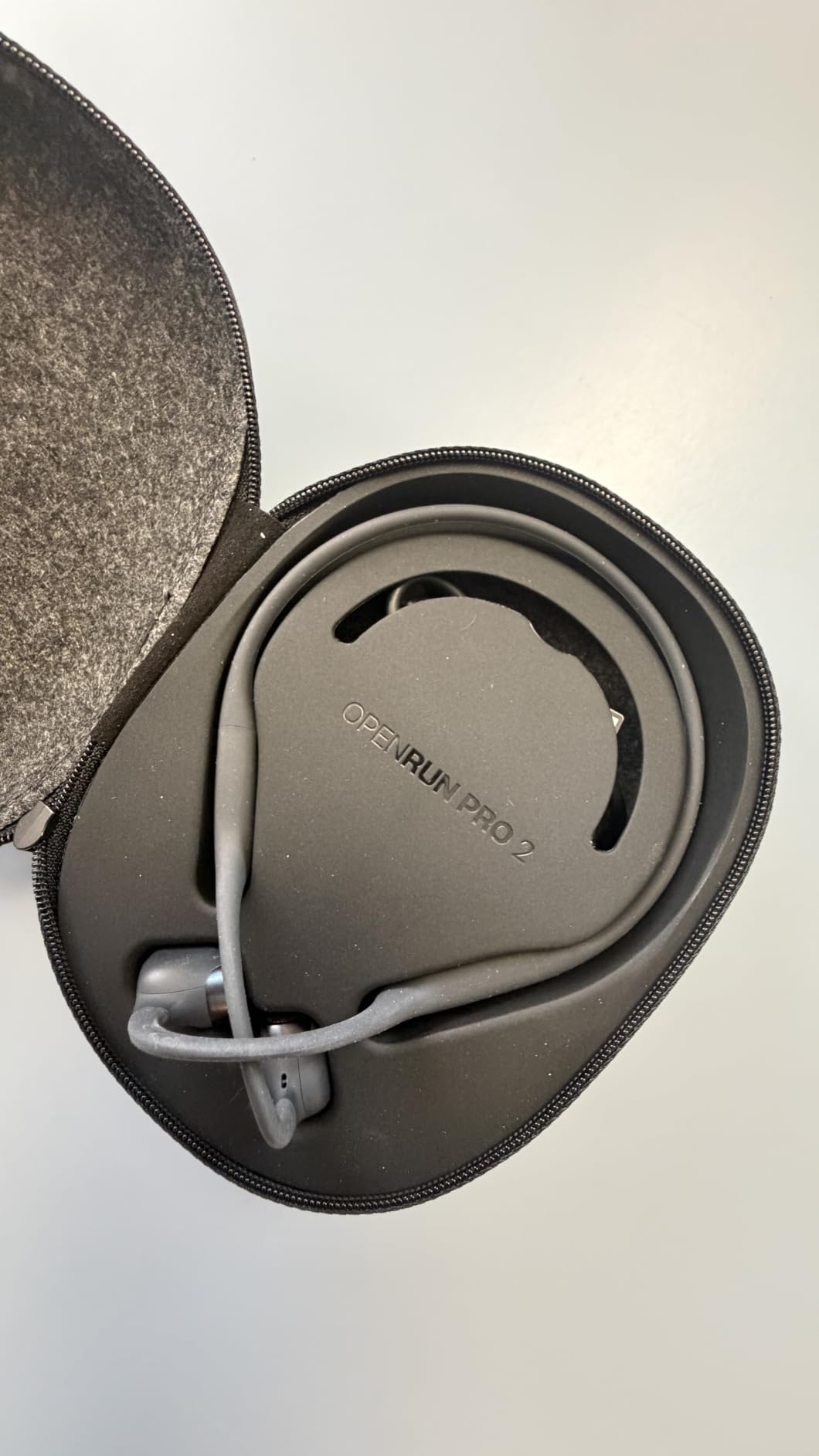
The OpenRun Pro 2 is the reference open-ear sport headset, and for road runners who care more about hearing the world than hearing detail in a track, it works. The unibody nickel-titanium frame with memory wire ear hooks did not shift once across my longest runs.
Shokz pairs a bone conduction driver with air conduction for bass, which fixes most of the thinness that made earlier bone conduction sets sound thin. The result is still not sealed-in-ear fidelity, but a 10 mm in-ear bud cannot leave your ear open, and on a shared path that trade is worth making.
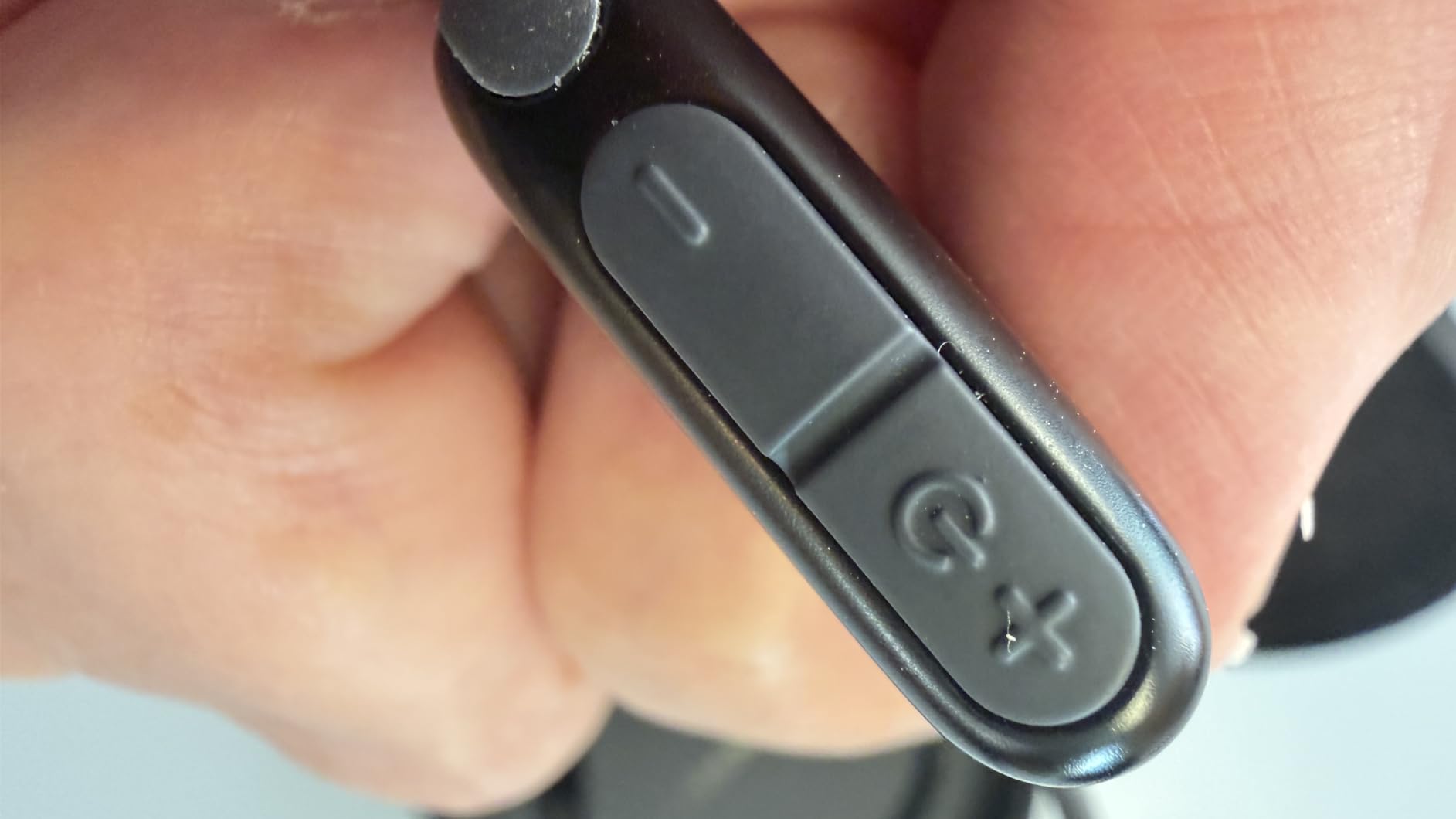
At 30.3 g this is the lightest full-frame option in the group, and I forgot I was wearing it by the second mile. Physical buttons mean no misfires from a wet ear or a cap brim, and the 12-hour battery covers a full workweek of runs with charging every few days.
Microphone quality on calls is the quiet strength here. The dual wind-resistant microphones filter 96.5% of background noise according to Shokz, and callers reported clear audio in windy conditions where most open-ear rivals fall apart.
Who the OpenRun Pro 2 suits
Runners on busy urban routes, shared paths and any time you genuinely need to hear a cyclist or a car. The awareness is not a transparency mode you toggle; it is structural, which means it works even at zero volume.
It is also the safest choice if you are still building awareness habits. The Shokz app has EQ modes including a Volume Boost preset, which helps in loud environments without sealing your ears.
Where the volume ceiling bites
On a road with heavy traffic or construction, bass and overall level are simply limited, and no EQ setting fixes that physics. If your route is that noisy, an in-ear model with an awareness mode gives you more volume at the cost of some awareness.
Check your sizing before buying. The standard band can sit loosely under a ball cap or a bike helmet, and the shorter variant is the better match for headwear. Our under-helmet earbud guide covers that fit problem in more detail.
4. Soundcore Sport X20 – Best for Noise Cancelling Runs
soundcore Sport X20 by Anker Noise Cancelling Workout Earbuds, Ear Hooks
12h normal, 7h in ANC mode
IP68 SweatGuard
Rotating adjustable ear hooks
Pros
- Rotating hooks adjust to any ear shape
- Active noise cancelling is genuinely effective in loud gyms
- IP68 sealing with SweatGuard
- Light enough to wear all day
- Works with glasses and with the hook under the ear lobe
Cons
- Intermittent Bluetooth dropouts reported
- Some earbuds fail to seat and charge in the case
- No battery percentage display
- Stock ear tips are average
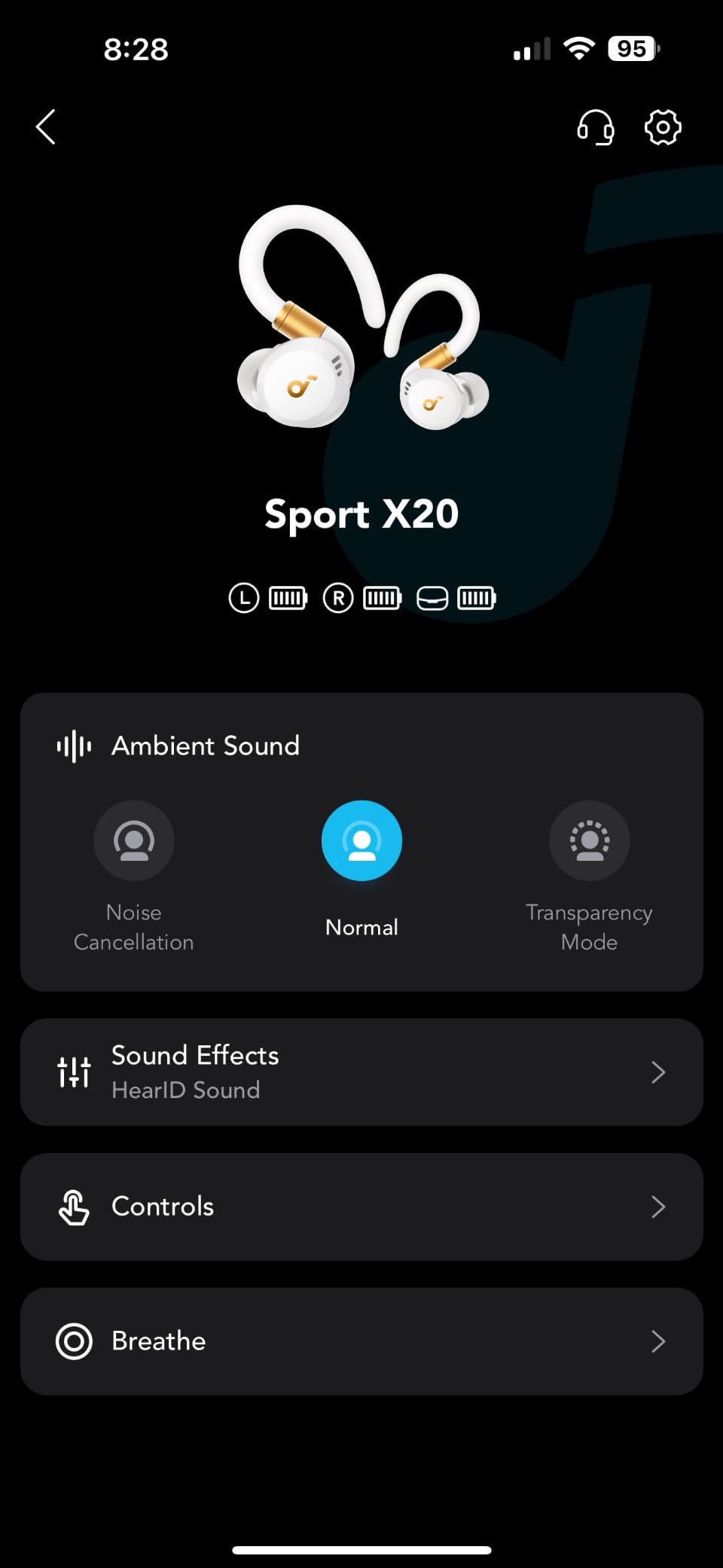
The Sport X20 is the only pick here that combines a real hook with genuine active noise cancelling, and that combination is rare. The hooks rotate up to 30 degrees and extend 4 mm, so the tension can be dialled to the individual ear rather than a one-size compromise.
The noise cancelling impressed me more than expected. In a gym with a music system and a rowing machine running, adaptive ANC muted the low-frequency rumble effectively, and transparency mode let traffic in without removing the buds.
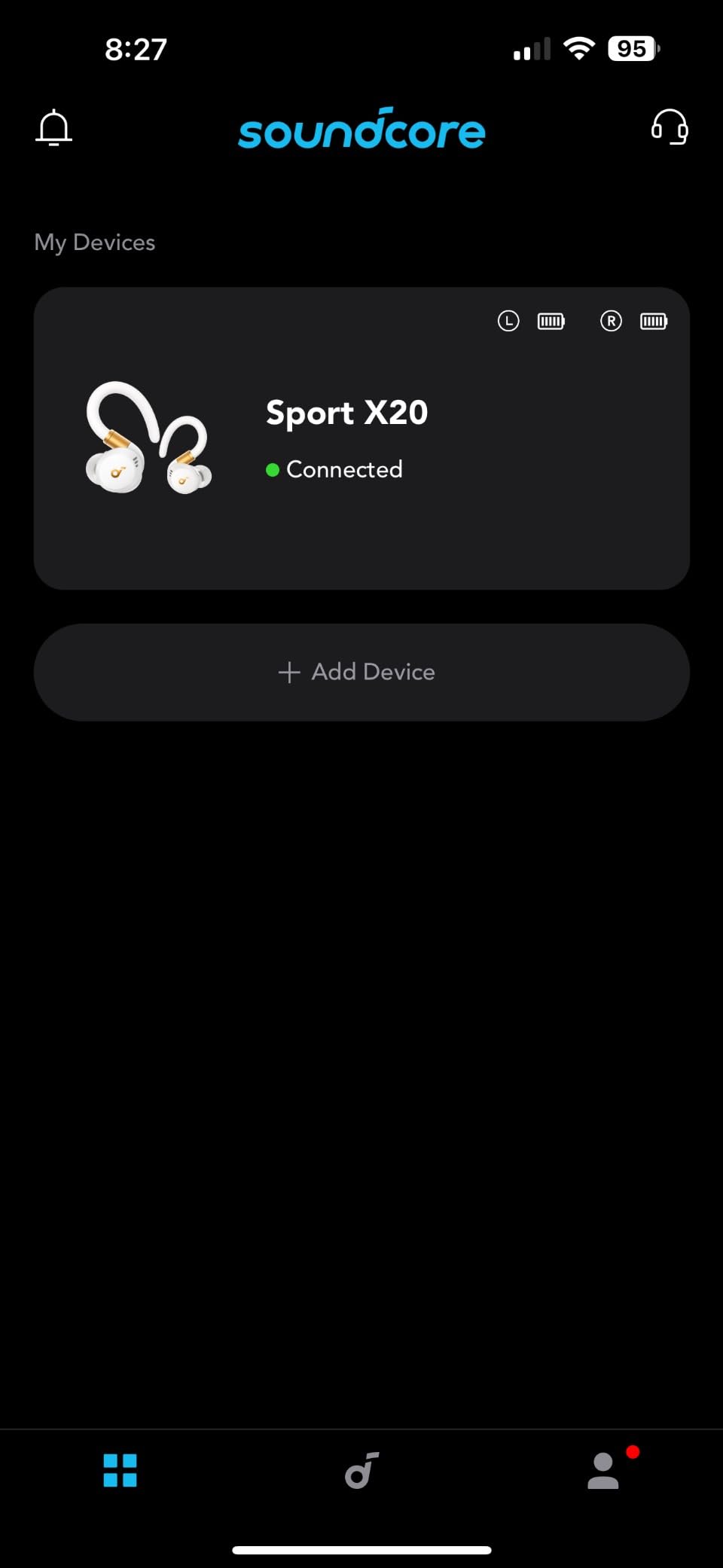
IP68 with the SweatGuard cavity is the strongest sealing in this group, and owners report swimming and showering with them without issue. The 12-hour battery drops to 7 hours in ANC mode, which is the number to plan around if you cancel noise on every run.
My real complaint is reliability over months. Reviewers report intermittent disconnects and a recurring problem where one bud fails to seat in the charging case and stops charging, which is worth weighing against the strong first impression.
Why the hook tuning matters
Most earhooks are a fixed curve. Rotating and extending this one means the anchor point sits behind the ear where the bone is stable rather than resting on soft cartilage, which is exactly why it stayed put through lifting, jumping and sprinting for me.
It also wears well under glasses, with the hook rotated to sit below the temple arm. The 11 mm drivers are bass and mid-bass heavy out of the box, so a flatter EQ setting suits podcasts and running form cues better.
Where it is the wrong tool
Do not use full ANC on a road with traffic. Blocking environmental sound while running outdoors removes the cue that keeps you safe, and awareness mode exists for exactly that reason.
Swap the stock tips early. A set of better-fitting aftermarket tips improved both the sound and the noise cancelling noticeably for me, and it costs less than replacing the earbuds later.
5. Beats Powerbeats Pro 2 – Best for Heart Rate Tracking
Beats Powerbeats Pro 2 – Wireless Noise Cancelling Workout Earbuds with Secure- Fit Earhooks, Up to 45-Hour Battery with Charging Case, Sweat & Water Resistant, Heart Rate Monitoring – Jet Black
Up to 45h with case
IPX4 sweat resistant
In-ear heart rate sensor
Pros
- Earhooks validated across 1500 hours of athlete testing
- Active noise cancelling tuned for training
- In-ear heart rate sensor with no chest strap
- 45h total battery with 5-minute Fast Fuel
- Adaptive EQ and spatial audio
- 20 percent lighter than the previous model
Cons
- Charging cable sold separately
- Heart rate data depends on the companion app
- Higher price than workout-focused rivals
- Earhook pressure builds on very long sessions
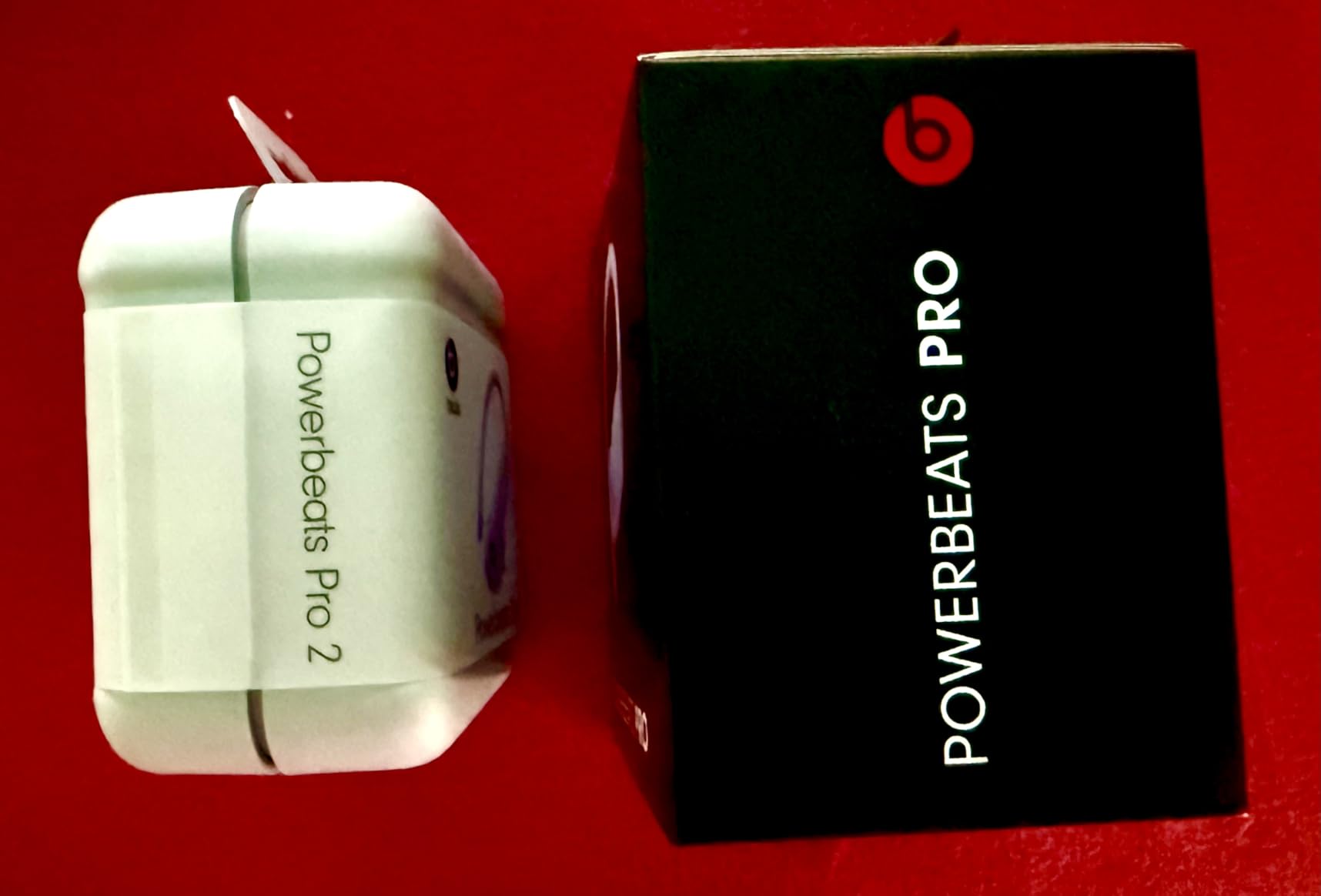
The Powerbeats Pro 2 is the most complete single pair in the lineup. The nickel-titanium earhooks were validated across 1,500 hours of athlete testing covering sprints, lifts and classes, and the six-microphone setup handles noise cancelling and calls in equal measure.
The reason I keep recommending it is the in-ear heart rate sensor. It pulses more than 100 times per second and tracks pulse in real time, which means a run can be logged without a chest strap. It is not as accurate as a chest strap on the upper body, but it removes one device from the wrist.
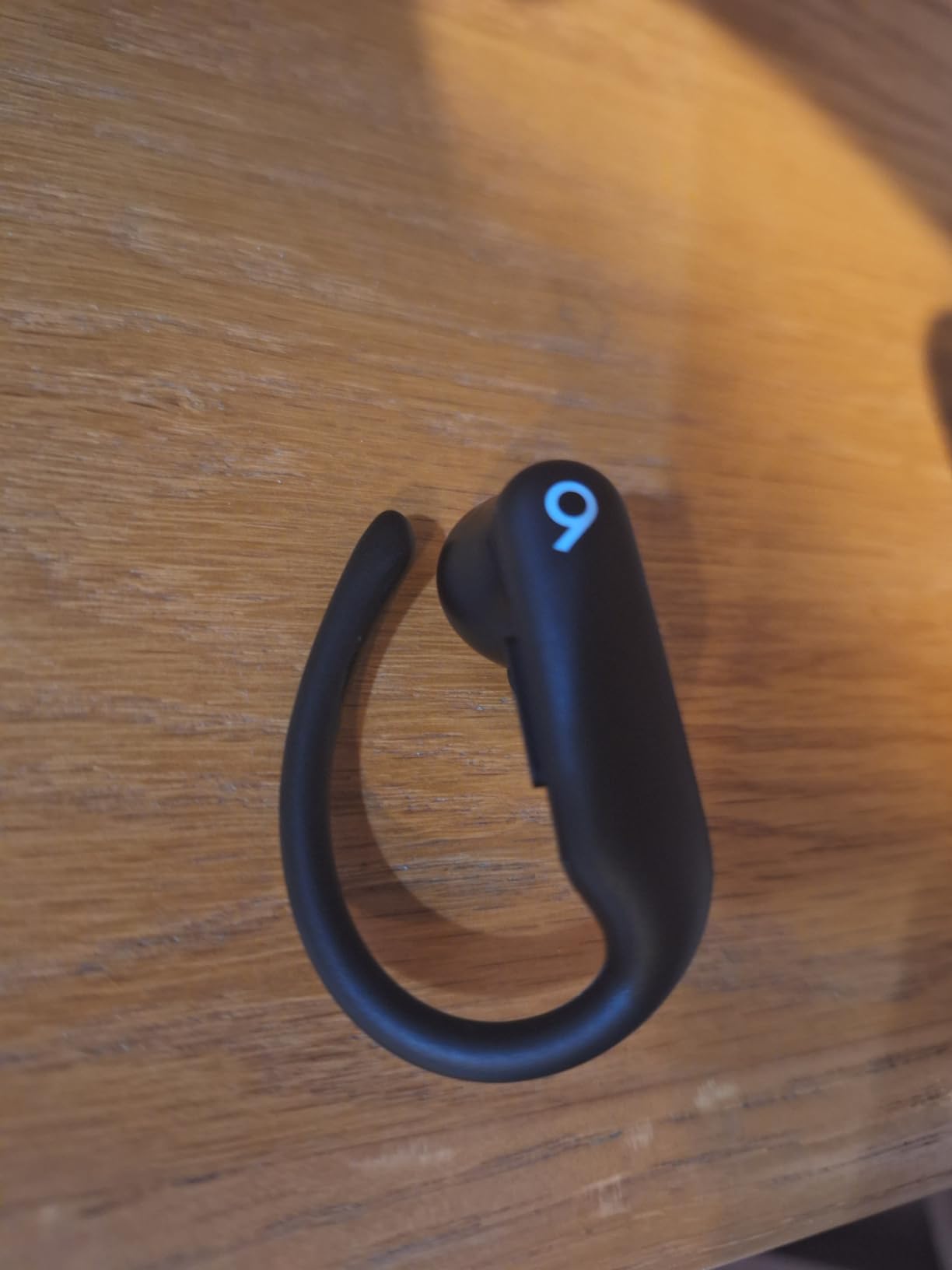
Apple’s H2 chip brings adaptive EQ, personalised spatial audio with head tracking and a stable Class 1 connection, plus a Qi charging case with Fast Fuel that returns 1.5 hours of playback from a five-minute charge. Total playback reaches 45 hours with the case.
IPX4 covers sweat and water resistance, which is right for running but not for a downpour followed by a rinse. Five ear tip sizes are included, and swapping tip size is the fastest way to improve both seal and comfort.
Who should buy this pair
Runners who want one device for audio, training data and calls, and who will not leave home without a phone anyway. The ecosystem integration on iPhone is the best in this group, and it still works well on Android.
It also handles cross-training better than most. One pair covered running, bench work and jump sessions for me without a fit change, which is the argument the higher price has to earn.
Where the compromises sit
Heart rate data and several features require the companion app, so the value drops if you are not a phone-runner. Expect the hook to develop noticeable pressure after a few hours, which matters for all-day wear more than for a run.
The USB-C to USB-C cable is sold separately, which is an annoying omission at this level. Our premium earbud picks for travel include several alternatives if battery and case size matter more to you than the hook.
6. TOZO OpenEarRing – Best for Clip-On Comfort
TOZO OpenEarRing Open Ear Earbuds 40H Bluetooth 5.4 Lightweight Comfort
5.1g per earbud, 40h with case
IPX5 water resistant
Bluetooth 5.4 with app EQ
Pros
- 5.1g clip-on design with no canal pressure
- Open format keeps traffic and runners audible
- 20m Bluetooth 5.4 range
- Works without clashing with glasses
- 32 EQ presets in the app
Cons
- Thinner sound than sealed in-ears
- No isolation from wind or engine noise
- IPX5 does not cover heavy rain or immersion
The OpenEarRing is one of the few clip-on designs that stayed put on me for an entire long run. At 5.1 g per earbud with skin-friendly silicone, the whole thing essentially disappears, and there is no ear tip to create canal pressure over distance.
Fit is where clip-on designs usually fail, since most sit on the edge of the ear and pivot during running. The silicone ring on this model wraps slightly further onto the ear, which is what separates it from the cheaper alternatives.
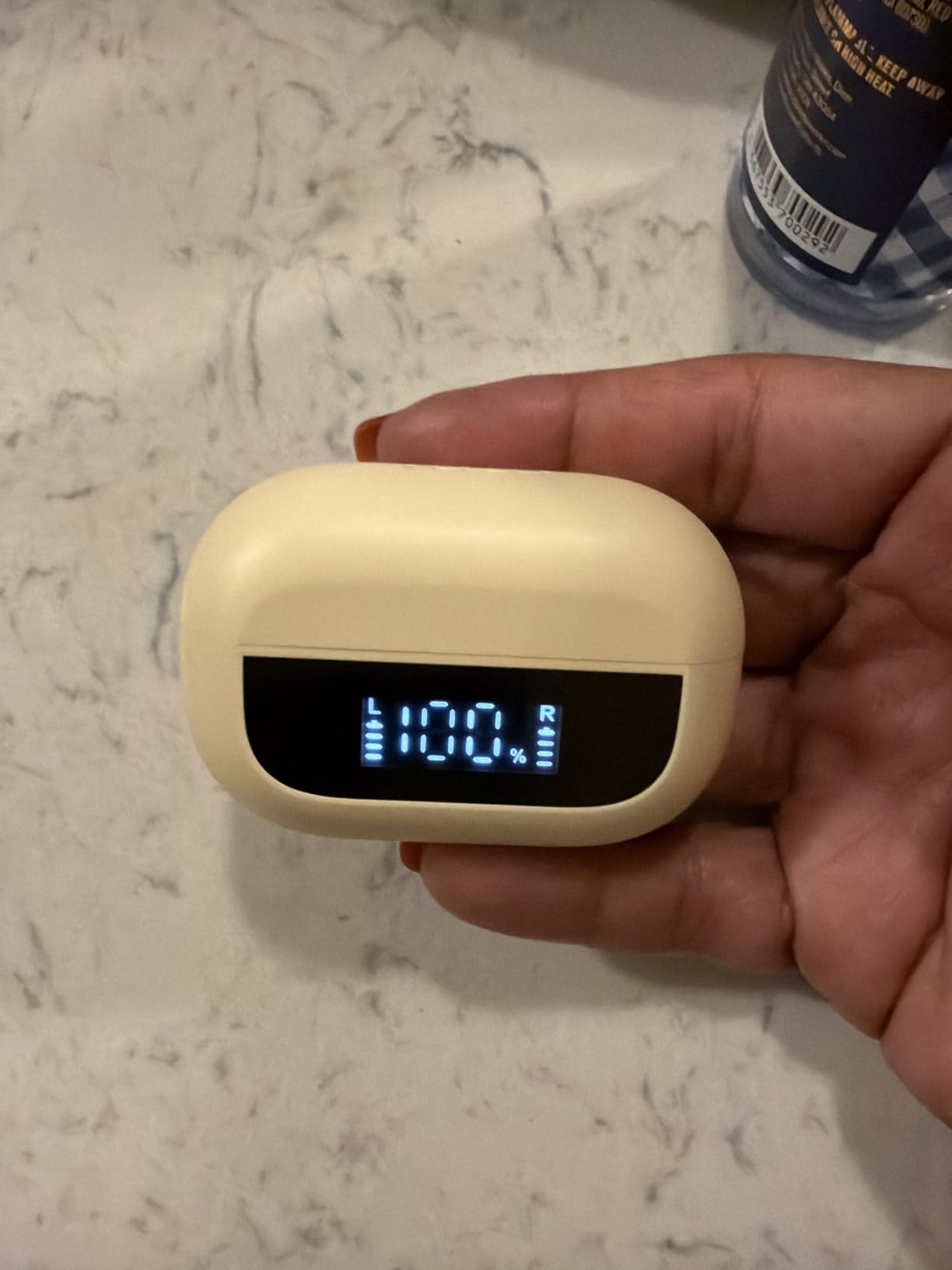
Bluetooth 5.4 with 20 meters of range is more than a phone in a running belt needs, and 10 hours per charge with 40 through the case is plenty. The app offers 32 EQ presets, which matters because the default tuning is bright and thin out of the box.
Glasses wearers get a genuine benefit here, since the ring sits on the outer ear without a hook or wing pushing against a temple arm. If you wear frames and a cap together, this is one of the safer configurations to try.
Where clip-on wins
There is no seal, so there is no pressure buildup, and runners with sensitive ear canals can get a full workout without any insertion. That also makes it a good partner for strength sessions where you lie on your side.
Awareness is excellent because nothing blocks the canal. I could hear a dog, a car and other runners clearly at moderate volume on a shared path, which is the core reason to choose an open design.
What the open ceiling costs
Sound is thinner and less punchy than a sealed in-ear bud, and there is no isolation from wind or engine noise outdoors. On an exposed route at speed, wind can dominate the mix at higher volumes.
IPX5 handles sweat and rain jets but not submersion or a heavy downpour, so trail runners in serious weather should look at an IP68 model instead.
7. JLab Flex Clip-On – Best for Glasses Wearers
JLab, Flex, Open Ear Earbuds, Clip On True Wireless Bluetooth Earbuds, Black
7+ hours per earbud, 21+ with case
IPX4 sweat and light rain
Multipoint to two devices
Pros
- Tip-free clip-on cuff wraps the outer ear
- No canal pressure on long sessions
- Dual 12mm drivers with bass boost
- Multipoint holds two devices at once
- App EQ and remappable touch controls
Cons
- Smallest review base in the group
- Open audio lacks isolation and bass
- IPX4 does not cover immersion
- Clip can press on the outer ear over long sessions
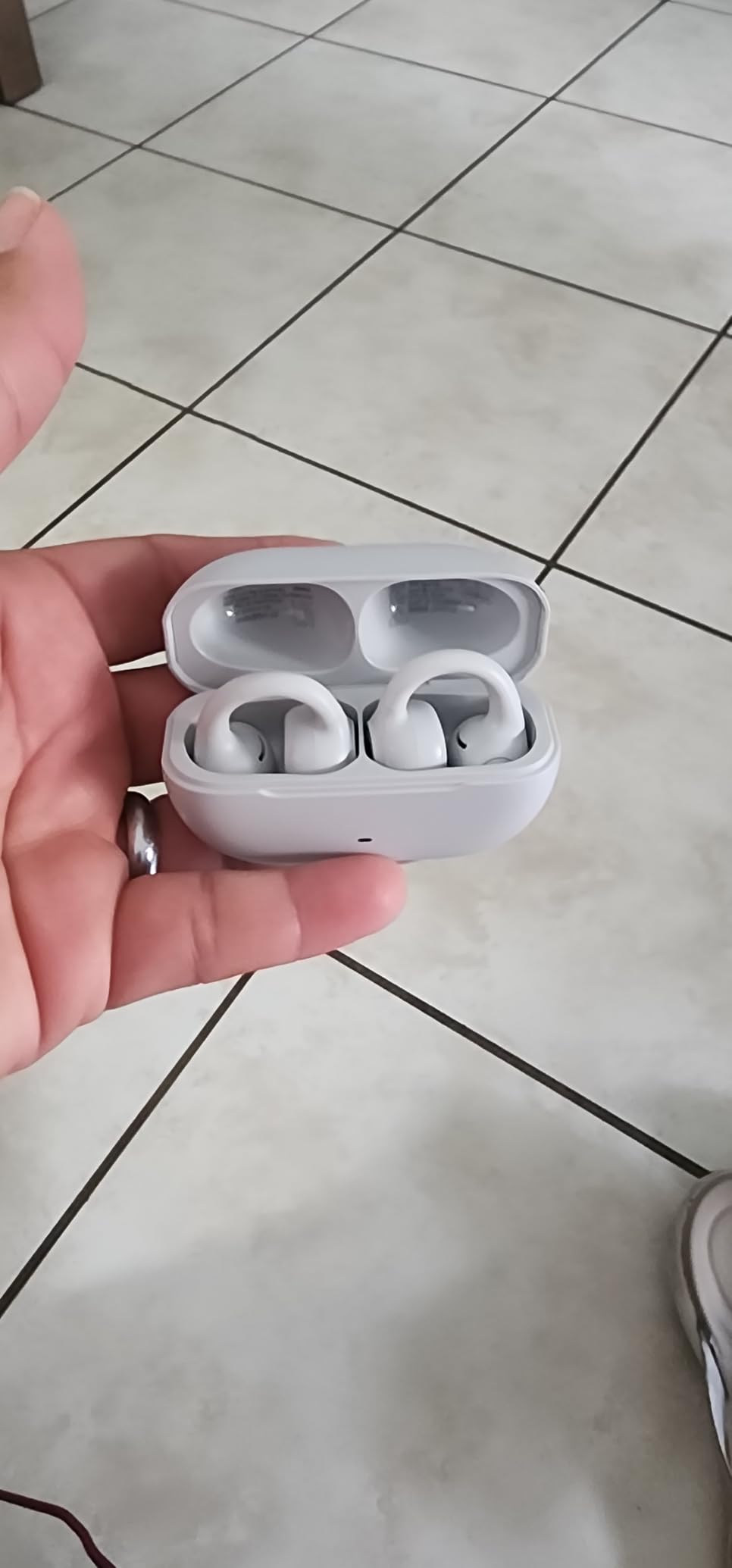
The JLab Flex solves a specific problem well. The clip-on cuff wraps the outer ear rather than sitting in it, so there is no tip, no seal pressure and nothing to work loose with sweat. For a runner who wears glasses every day, it is the least conflicting geometry in this group.
Multipoint to two devices is the feature I used most. Pairing to a phone and a watch at the same time meant the buds moved between music and navigation without a manual switch, which is exactly the friction that spoils a watch-based run.
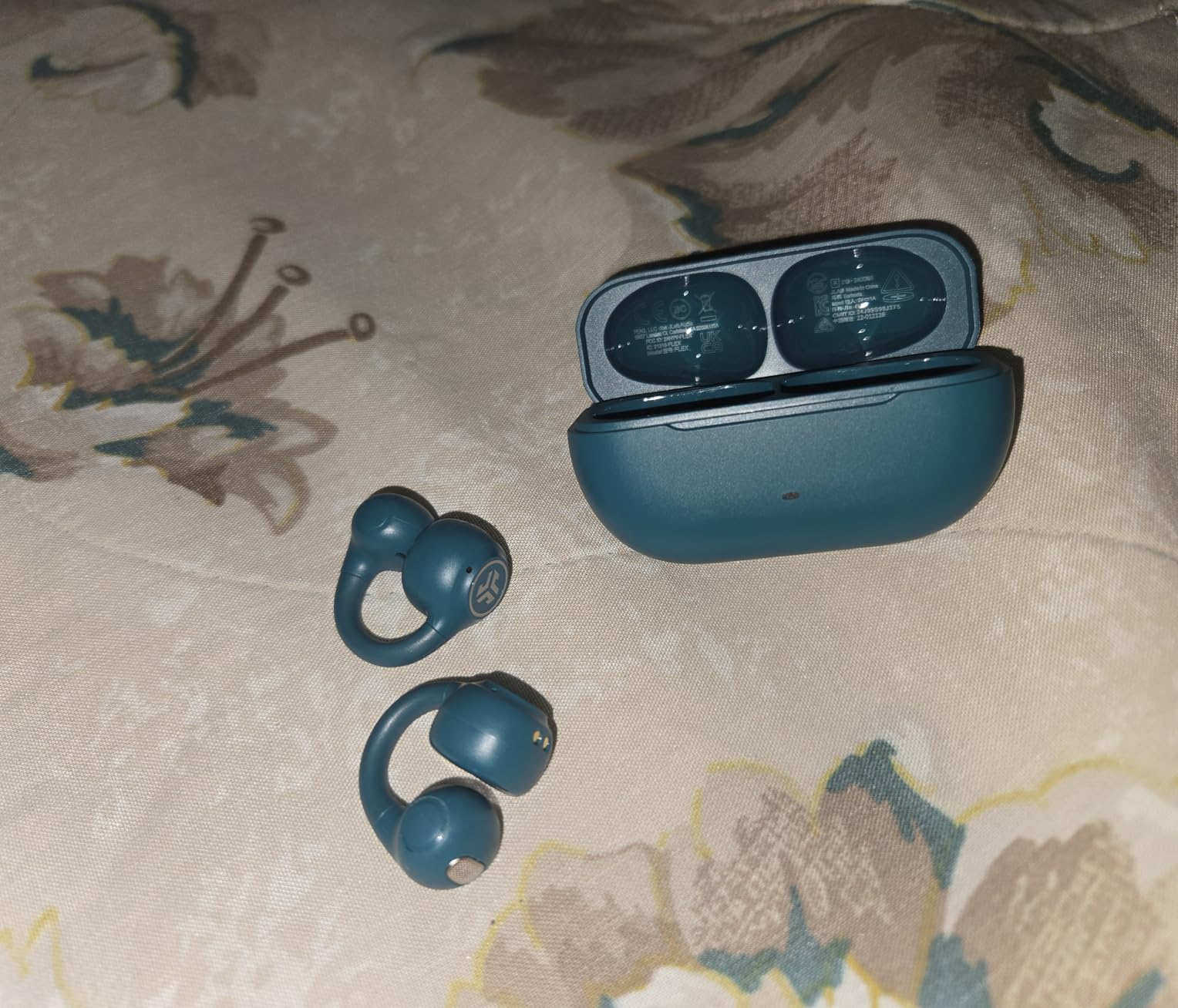
Battery is 7+ hours per earbud and 21+ with the case, which covers a week of daily running comfortably. Dual 12 mm drivers with a bass boost algorithm keep the audio intelligible without pretending to be a sealed in-ear.
The honest caveat is the review base. At a little over 2,000 reviews there is far less long-term durability data than the models with tens of thousands, so you are buying on design merit rather than a decade of feedback.
Frame clash solved
Frame clash is the most common reason runners return open or hooked earbuds, because a hook that sits behind the ear pushes the temple arm of a pair of glasses forward until it slips. A cuff that sits on the outer ear in front of that hinge avoids the conflict completely.
It also works with a cap, since nothing needs to pass over the top of the ear. That combination, glasses plus a winter hat, is where most hook designs struggle first.
Where the trade-off shows up
Open audio means no bass weight and no isolation, so the listening experience is functional rather than enjoyable at low volumes. The clip can also press on the outer ear over a very long session, which took me a few runs to adjust to.
IPX4 covers sweat and light rain. For runners training through a full season of wet weather, a sealed model protects the driver mesh far better over time.
8. JBL Endurance Peak 3 – Best for All-Weather Runs
JBL Endurance Peak 3 – Dust and Water Proof (IP68) True Wireless Active Earbuds, JBL Pure Bass Sound, Up to 50 Total Hours of Playback with Speed Charge, Ambient Aware & Talk Thru (White)
10h in buds, 50h total
IP68 at 1.5m for 30 minutes
10mm Pure Bass driver
Pros
- IP68 sealing owners have tested in water
- 10 hours per charge with a 50-hour total
- Balanced sound after app EQ
- Hook design holds through jogs and gym work
- Ambient Aware and TalkThru for awareness
- Comfortable for small ears
Cons
- Waterproof mesh is easily damaged by earwax
- No active noise cancelling
- Bulky pocket-unfriendly case
- Slightly compressed sound next to premium buds
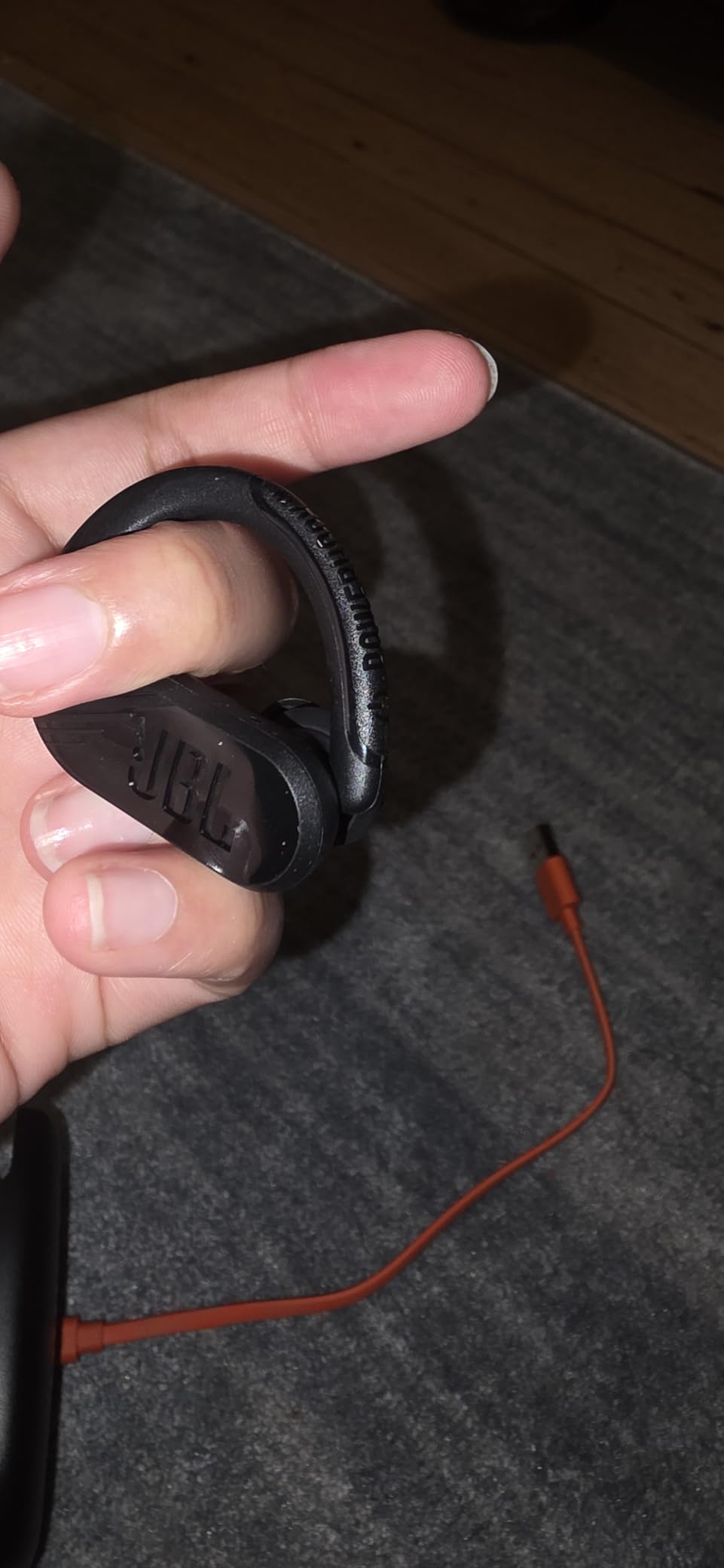
The Endurance Peak 3 is built for runners who do not stop when the weather turns. IP68 dust and water proofing is rated to 1.5 meters for 30 minutes, and owners report wearing them through rain, showers and even swimming without complaint. Nothing else in this list carries that level of certified sealing at a mid-range price.
Sound comes from a 10 mm dynamic driver with JBL Pure Bass tuning, and after a pass through the app EQ the balance is genuinely good for long sessions. Out of the box it is punchy enough for a workout playlist without needing EQ at all.
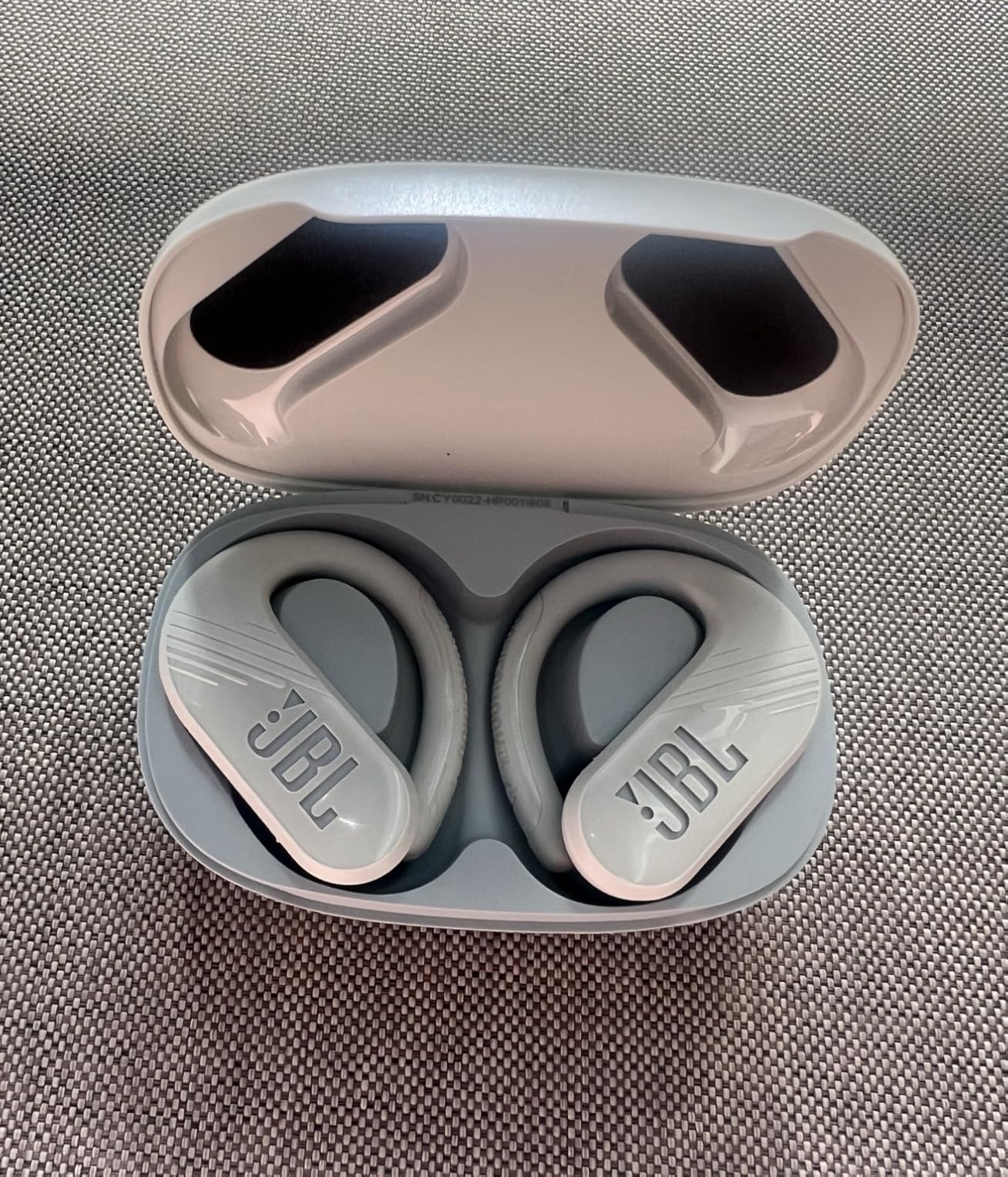
Battery is 10 hours in the earbuds and 50 hours total with the case, plus a speed charge for quick turnarounds. A four-microphone system with dual beamforming per ear kept calls clear on a windy trail in my testing.
Ambient Aware and TalkThru handle awareness and conversations without removing the buds. There is no active noise cancelling, though, so this is passive isolation plus a passthrough mode rather than sound cancellation.
Why the water rating matters more than it looks
IP68 means dust-tight and protected against immersion in water at depth. For a runner that translates to rain, hose-down after a session, sweat and the occasional swim without any anxiety about the driver cavity.
The catch is that the internal earbud mesh is what makes the sealing work, and that mesh is easily blocked or damaged by earwax and debris. Regular cleaning is not optional with this pair, it is part of owning them.
Where the bulk shows
The case is bulky and pocket-unfriendly, which is a real annoyance if you run without a belt. The 101 g total weight is also noticeable in a pocket even though the earbuds themselves are fine.
Sound can feel slightly compressed next to a premium sealed pair, and the ear hooks can dislocate at high cycling speeds if they are not seated properly before you set off.
9. Aptkdoe HD65 Earhook Sport Earbuds – Best for Rainy Runs
Wireless Earbuds 75H Bluetooth 5.4 Sport Headphones with Earhooks, Black
15h per charge, 75h total
IPX7 waterproof
TPU sport earhooks
Pros
- Elastic TPU earhooks resist dislodging in motion
- IPX7 waterproofing for sweat and rain
- 75 hours total with LED display case
- 14.2mm drivers give a full bass-forward sound
- Physical buttons work without a phone
Cons
- Budget tuning can sound harsh on cymbals and vocals
- No active noise cancelling despite ENC marketing
- Hook tension needs a few runs to settle
- Case is not weather sealed
The Aptkdoe HD65 does the affordable earhook job with fewer compromises than most. The thermoplastic polyurethane hooks have real elasticity, so they grip the ear rather than pressing on it, and that difference shows up on descents when everything else in your ear is moving.
IPX7 is the rating that matters here. It covers immersion in water for a short period, which means sweat, rain and even a quick post-run rinse are all outside the danger zone for the driver cavity.
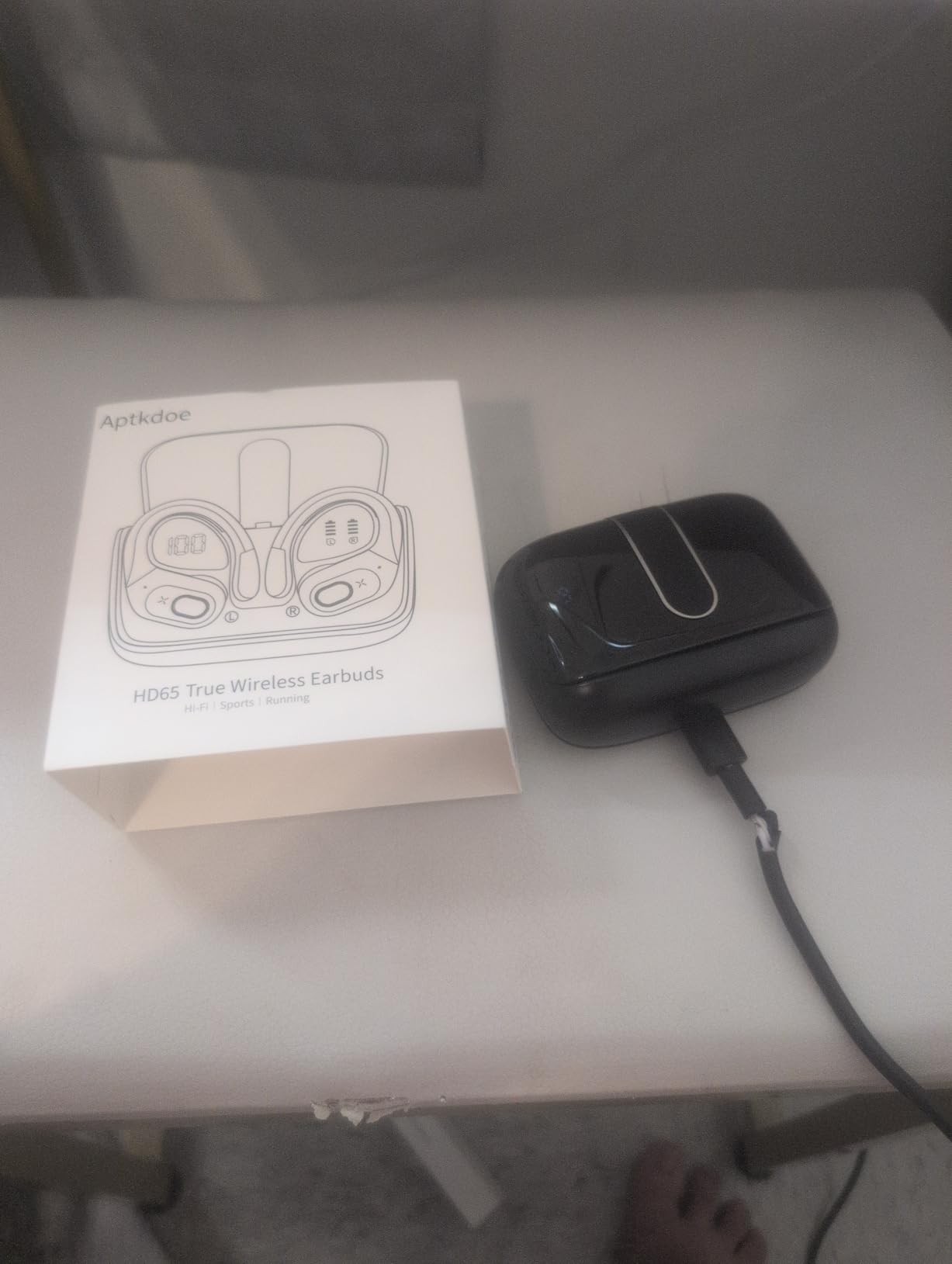
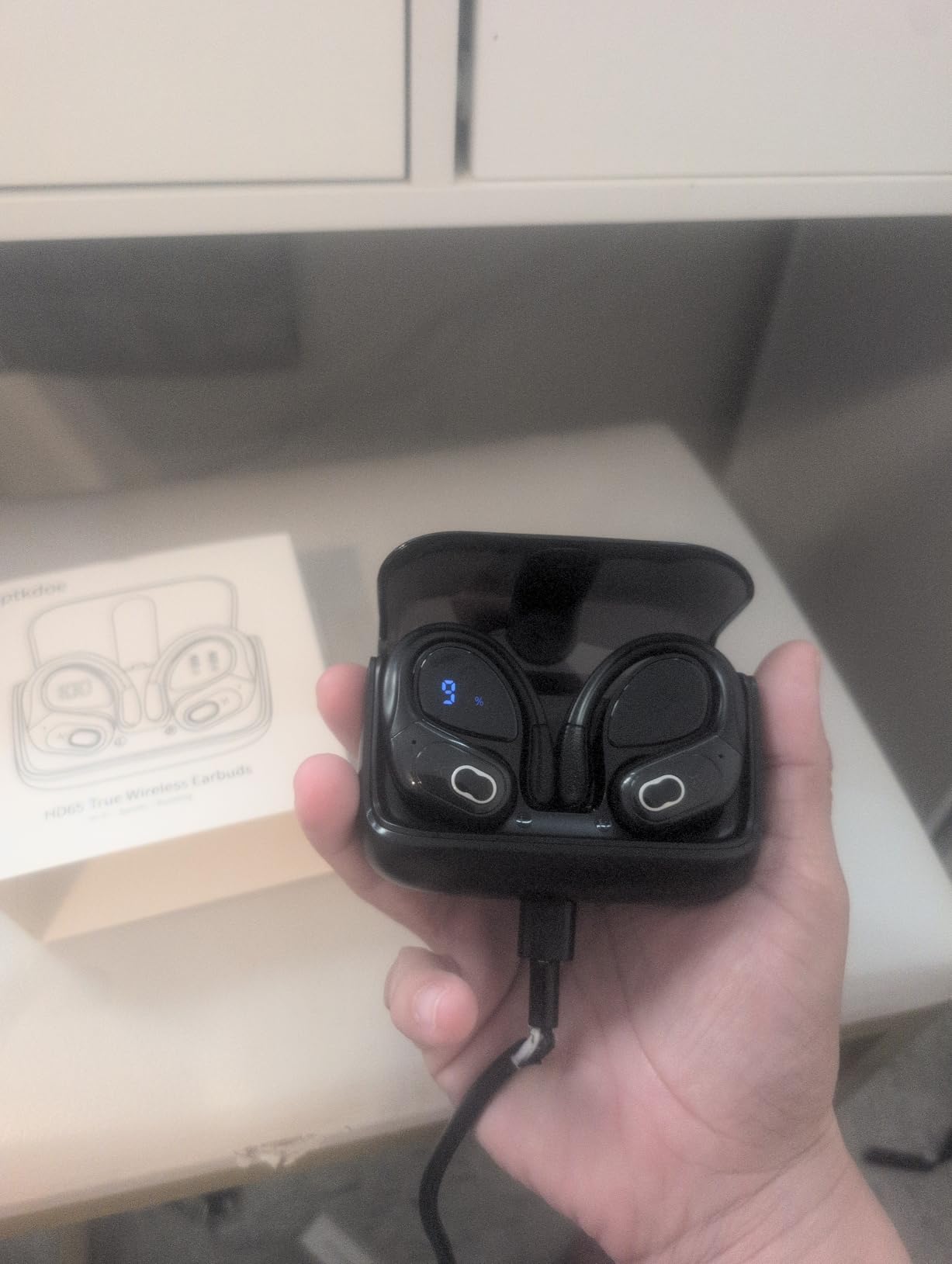
15 hours per charge and 75 total is unusual at this level, and Bluetooth 5.4 auto-pairs when you open the case. The 14.2 mm drivers deliver a genuinely full, bass-forward signature that carries well on foot without needing EQ.
Physical buttons mean full playback and call control without touching a screen, which is the right call for gloves, wet hands and cold mornings. The two-year warranty is a nice addition at this price too.
How the hooks behave
Hook tension is the one adjustment period. New out of the box they can feel slightly loose until the elastic settles over a few runs, and owners sometimes misread that as a fault. Give it three or four workouts before judging the fit.
Once settled, the anchors stay put through running, cycling and gym work, and the design never needs the behind-the-neck cord that many secure alternatives require.
Limits of a budget hook
ENC here means environmental noise control for calls, not active noise cancelling. If you want a quiet gym, that is a different purchase entirely.
Tuning can turn harsh on cymbals and vocal transients at higher volumes, and the charging case itself is not weather sealed, so keep it out of sustained rain even though the earbuds are rated for it.
10. PocBuds T60 – Best for Deep Bass Workouts
PocBuds Bluetooth Headphones Wireless Earbuds 80hrs Playtime Wireless Charging Case Digital Display Sports Ear Buds with Earhook Deep Bass IPX7 Waterproof Over-Ear Earphones for TV Phone Laptop Black
8h per earbud, 80h total
IPX7 waterproof
Qi wireless and USB-C charging
Pros
- 80 hours total playtime
- Qi wireless charging on top of USB-C
- LED digital display for real-time charge levels
- Flexible hooks with three tip sizes
- Works with phones
- TVs
- laptops and watches
Cons
- Wireless charging pad not included
- No active noise cancelling
- Bass-heavy tuning can crowd vocals
- Bluetooth 5.3 is a generation behind
The PocBuds T60 is the pair to pick if your runs are driven by heavy bass. The 13 mm double-layer diaphragm drivers put more low-end weight into a hook earbud than most competitors manage, which makes interval sessions and high-cadence work feel louder without turning the volume up.
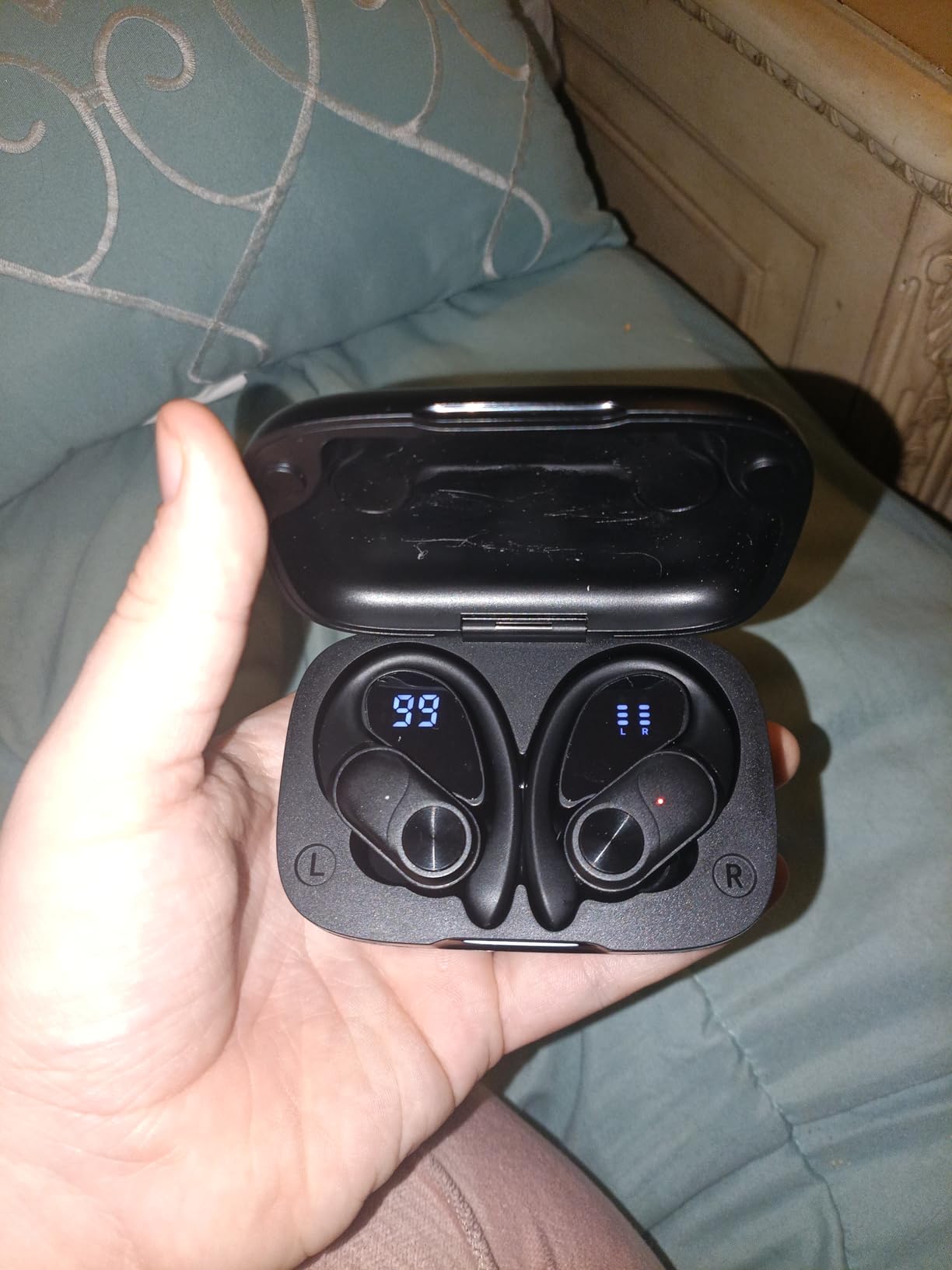
Charging is the quiet strength. Qi wireless charging on top of USB-C is rare in this bracket, and the dual LED digital display shows real-time case and earbud charge, which removes the guessing game that plagues budget cases.
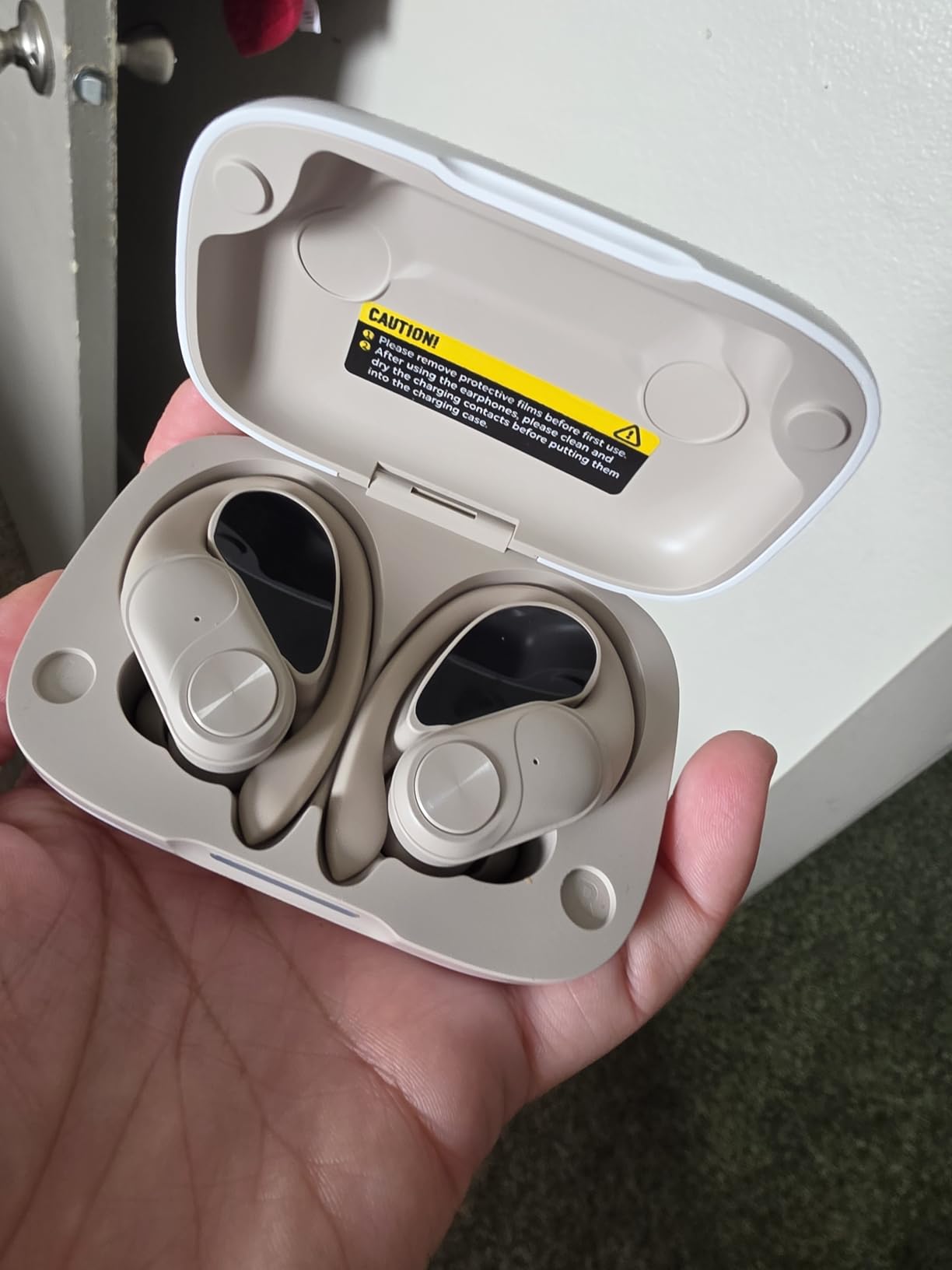
80 hours total with 8 hours per earbud means charging roughly once every three weeks for a daily runner. Flexible over-ear hooks with three ear tip sizes held their position through my runs without adjustment, and the 1.41 ounce weight is easy to forget.
Connectivity is broader than most, working with phones, TVs, laptops, smartwatches and consoles. That makes it a practical second pair for a desk as well as a run, which is where the general earbud roundup comparison helps.
Who the tuning suits
If you run to hip-hop, drum and bass or electronic playlists where the low end carries the energy, this signature is a genuine advantage. The bass also masks wind noise better than a neutral tuning would.
It is less ideal for spoken-word or podcast runs, where the vocal range can feel crowded by the low end. A mid-range EQ preset fixes that in a few taps if the app supports it.
What to know before buying
The wireless charging pad is not in the box, so budget for that separately if you want the feature. Noise control is passive isolation only, with no active cancellation.
Bluetooth 5.3 is one generation behind current chips, which rarely matters for a phone on a belt but can show up with very dense wireless environments. A five-year manufacturer warranty is unusually long and worth noting.
11. Ltinist BX29 Sport Earbuds – Best for Lightweight Hook Fit
Wireless Earbud, 75Hrs Bluetooth 5.4 Headphones IP7 Waterproof for Sport, Running Wireless Earphones with ENC Noise Cancelling Mics, Deep Bass Over Ear bud with Earhooks for Android, iOS, Workout, Gym
75h total, 15h per earbud
IP7 waterproof
4g per earbud
Pros
- Soft flexible hooks hold through running and gym work
- IP7 waterproofing survives sweat and rain
- 15 hours per earbud and 75 total
- Three ear tip sizes for a tighter seal
- Fast pairing with automatic reconnection
Cons
- Microphone quality is inconsistent on calls
- Thin plastic case dents and chips when dropped
- Strong case magnets can pop open on impact
- Bulky for a small pocket
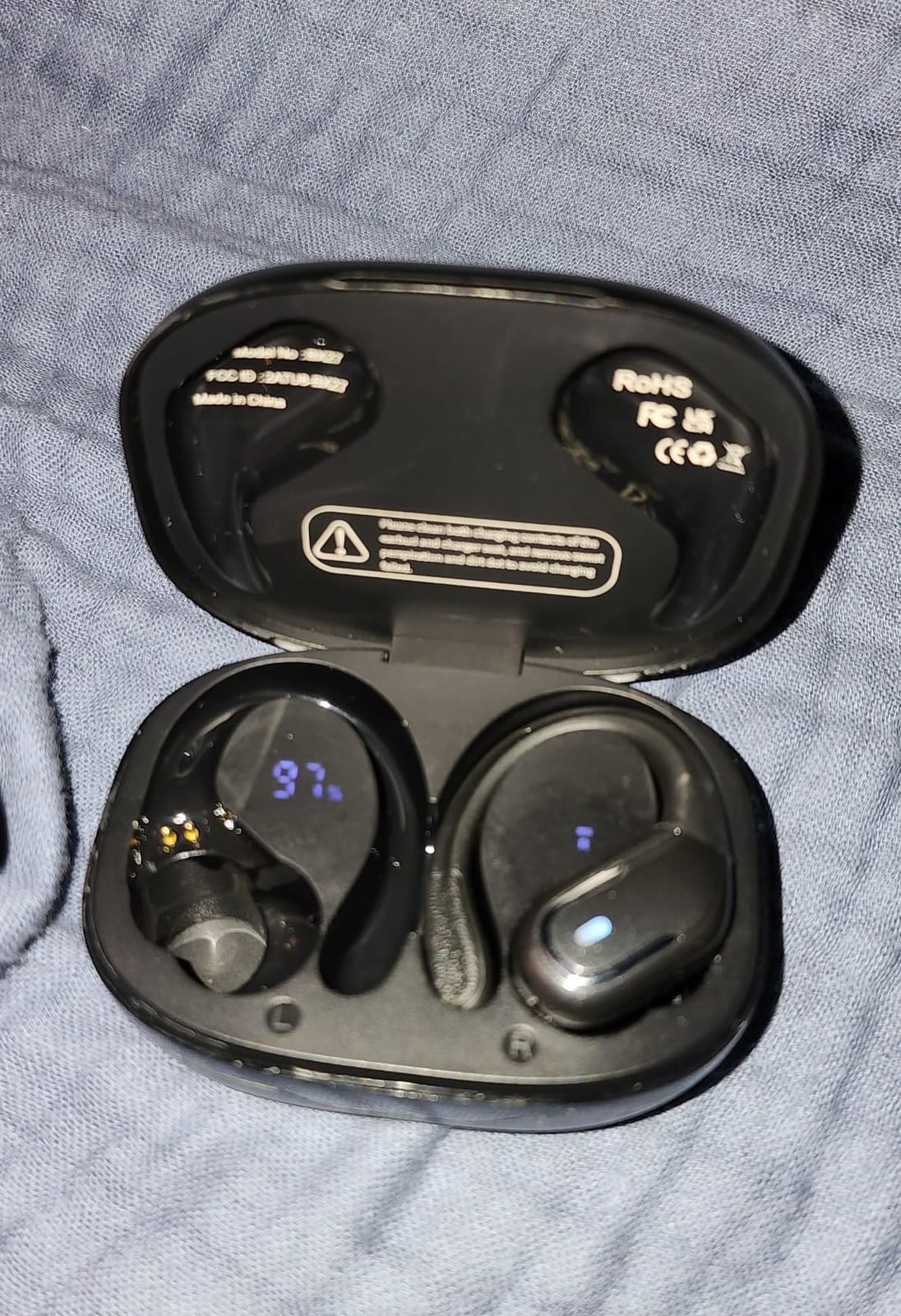
At 4 g per earbud the Ltinist BX29 is the lightest in-ear option here, and the soft flexible hooks feel closer to a fabric band than a rigid arm. For long runs that turns into a real advantage, because the pressure stays gentle even past the two-hour mark.
Three ear tip sizes give you a proper seal, which matters more than most spec sheets suggest. A good seal holds the bud in place as the ear canal softens with sweat, and it restores the bass that a loose open fit loses.
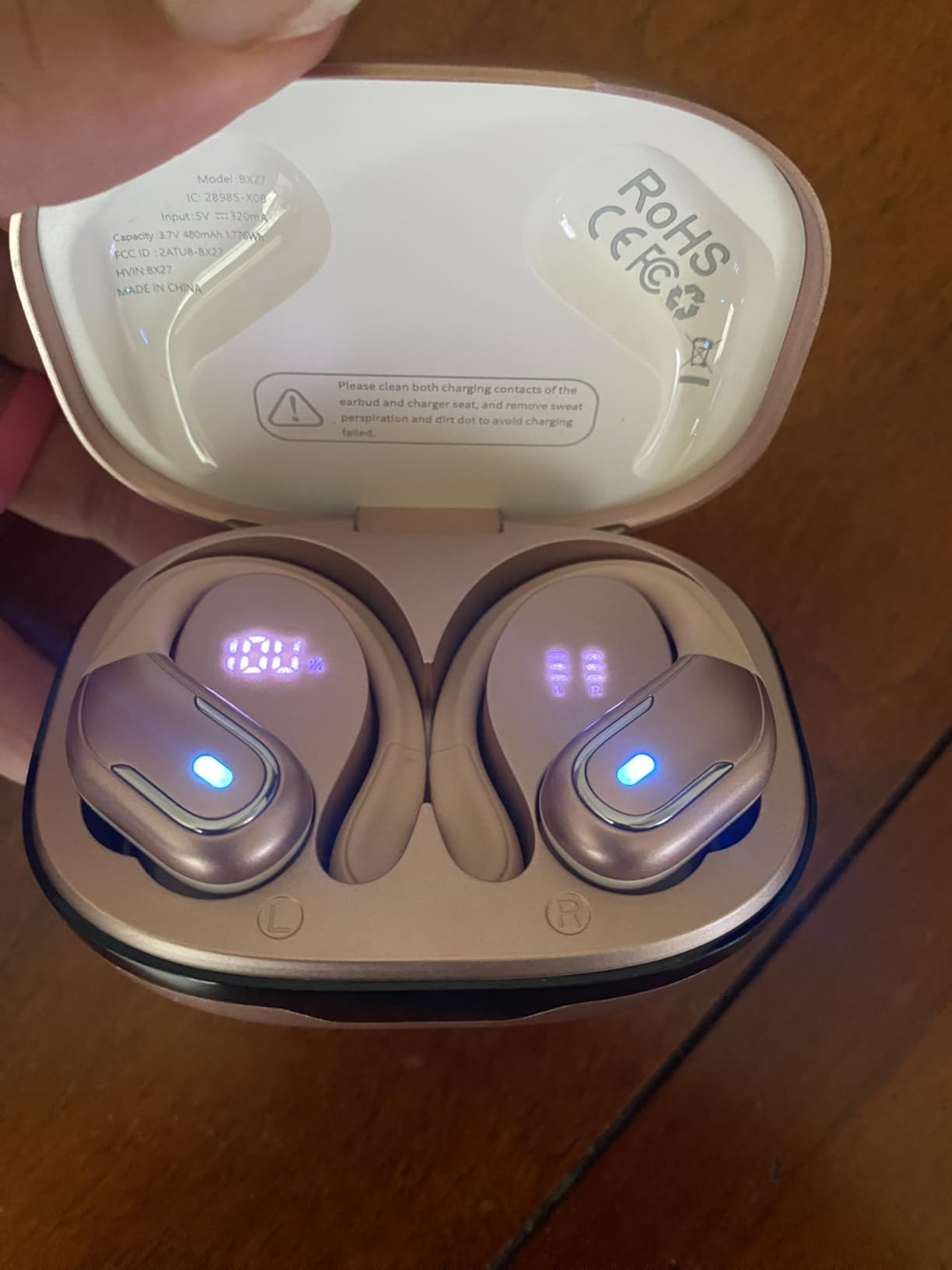
IP7 waterproofing covers sweat, rain and minor splashes, and 15 hours per earbud with 75 total is the second-largest runtime in this group. Fast pairing and automatic reconnection to the last device saved real time across a testing week.
The 14.2 mm double-layer diaphragm drivers deliver deep bass for the price, with ENC microphones intended to keep calls clear. The microphones are the weak point in practice, with owners reporting phasing and background noise pickup.
When a soft hook is the right call
Small or sensitive ears are the main case. Rigid hooks on smaller ears can need an awkward angle to clear the jaw, and a soft elastic hook simply settles into whatever geometry you have. It is why the 4 g weight does not translate into a floaty feel.
Foam ear tips work particularly well with this design, since the foam expands against the canal for grip that improves rather than degrades as you sweat.
Durability is the weak spot
The case shell is thin plastic that dents and chips when dropped, and the magnets are strong enough to pop the lid open on impact. It survived my testing, but it is the part most likely to break first.
Call quality is the other limitation. If you take calls while running, the Sport X20 or the OpenRun Pro 2 handle wind and traffic noise considerably better.
12. JLab Go Sport+ – Best for Small Ears
JLab, Go Sport+, True Wireless Workout Earbuds, Bluetooth Sport Earbuds, Clear Calling, Sand
9+ hours per earbud, 26h with case
IP55 sweat and dust
Bluetooth multipoint
Pros
- Earhook sized to fit small ears
- IP55 sweat and dust resistance
- Tiny profile fits a small pocket or gym bag
- Be Aware Audio for situational awareness
- Multipoint and dual connect for single-bud use
Cons
- Flat sound that needs app EQ
- Case has no battery indicator
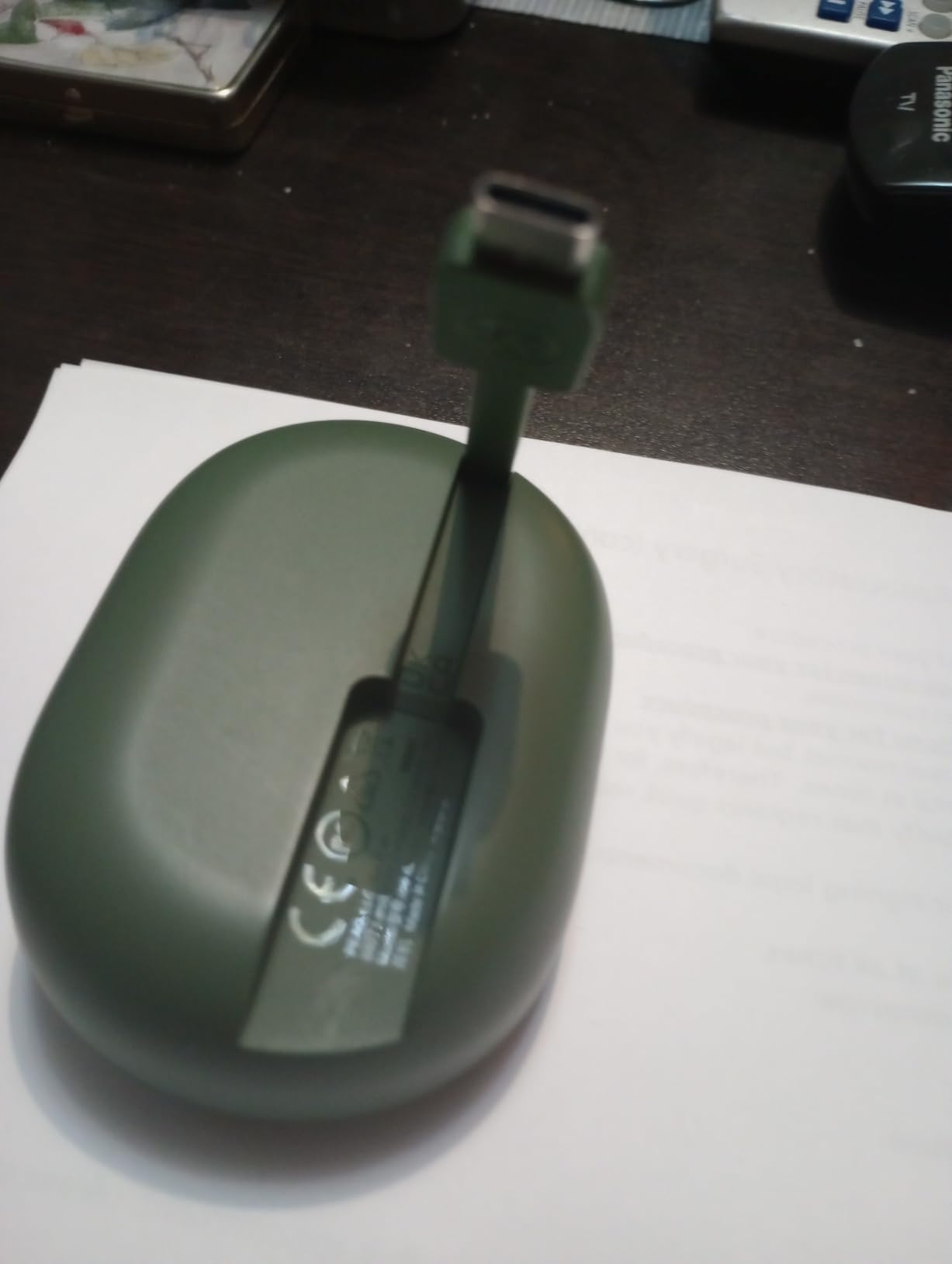
- Built-in charging cable is short with no USB-C port
- Controls work reliably only with both buds
The Go Sport+ is the pick if smaller ears are the reason hooks usually fail you. The earhook is scaled and shaped to lock in on a smaller ear rather than being a downsized version of a full-size arm, and it is the reason this pair stays put for runners who struggle with every other hook design.
It is also one of the smallest charging cases in the group, which matters if you run without a belt. Everything fits into a shorts pocket, and the whole profile is light enough that you forget it is there.
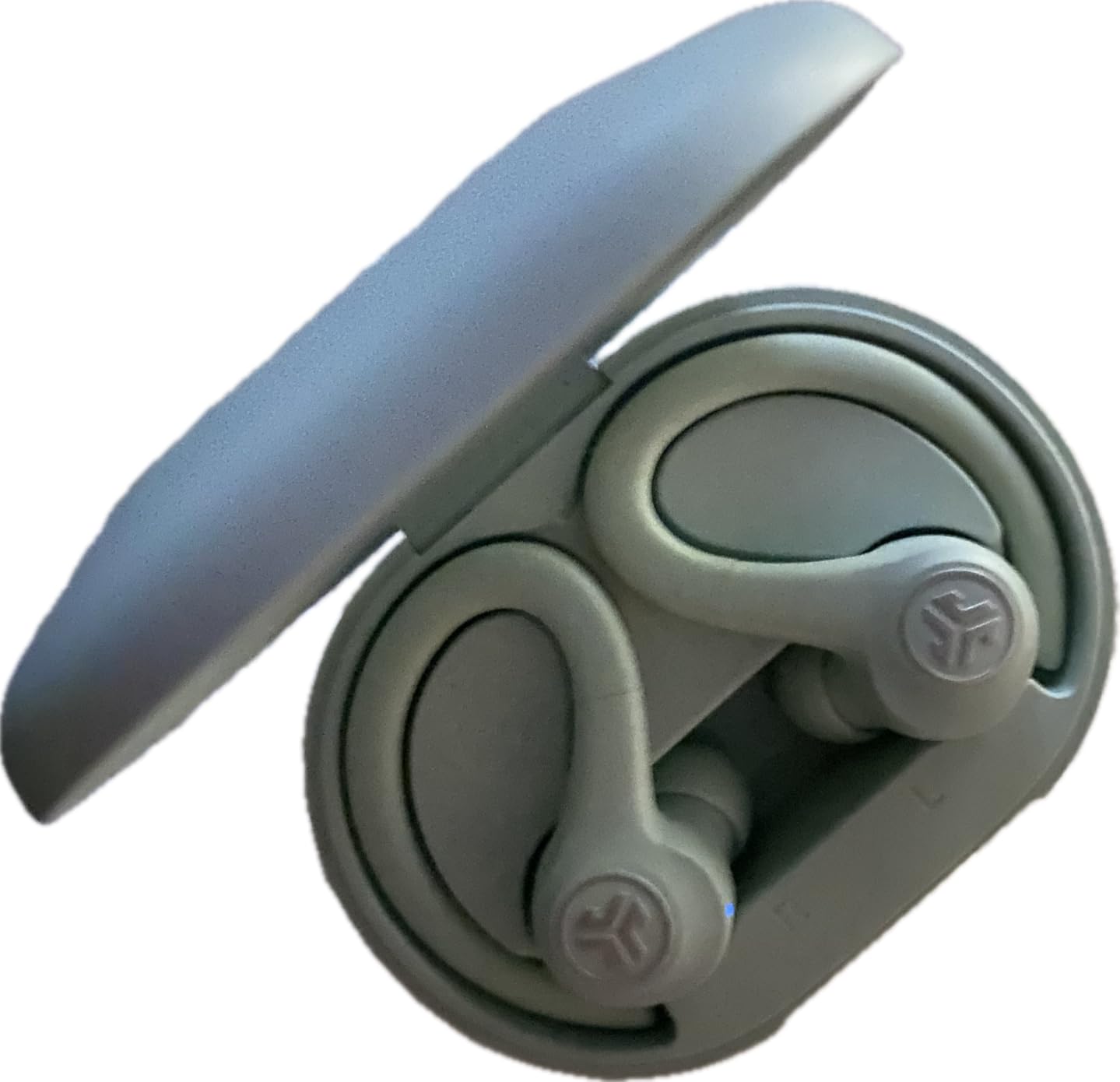
Battery is 9+ hours per earbud with 26+ from the case, and IP55 handles sweat and dust without worry. Multipoint and dual connect let you keep two devices paired and run with a single bud when you want to keep one ear open.
Be Aware Audio lets environmental sound through for safer running, and the app provides EQ3 sound modes plus C3 clear calling. Out of the box the tuning is flat, and a pass through the EQ is worth the two minutes it takes.
Where the small-ear design pays off
Retention is the whole story here. Runners with small ears report that the hook settles behind the ear without adjustment and stays there through intervals, which is exactly the failure mode that sends larger hooks back in the box.
The dual connect single-bud mode is genuinely useful on a shared path, because you can run with one bud and keep one ear open for traffic. Multipoint solves the phone-to-watch switching problem at the same time.
Where it frustrates
The case has no battery indicator, so a dead case is a surprise rather than a warning. The only charging method is a very short built-in cable with no USB-C port, which is inconvenient away from home.
Touch controls work reliably only when both buds are in use, and some owners report multipoint pairing degrading after months. Sound is flat until you tune it, and this is the lowest-rated pick in the group, though its fit advantage is real.
How to Choose Running Earbuds That Stay Put?
Fit and secure retention: the only non-negotiable
Earhook and wing designs beat plain stem-style buds almost every time a run gets long or sweaty. A hook anchors to the bone behind your ear instead of resting on soft cartilage, so it does not pivot as your head bobs. A clip-on cuff removes the ear canal from the equation entirely.
Runners report the same fix repeatedly: swap to foam ear tips, which expand against the canal and grip better once damp. Our affordable earbud picks cover several models where tip size is the deciding factor.
IP ratings decoded for sweat, rain and rinses
The first digit is dust protection and the second is water. A missing water digit shows as X, which means the manufacturer did not test for water at all. IPX4 handles sweat and splash, IPX5 handles sweat jets and rain, and IP68 is dust-tight and rated for immersion to 1.5 meters for 30 minutes.
For regular running, IPX4 or better is the minimum. If you train outdoors year-round or rinse the buds after sessions, move up to IP55 and above, and clean the driver mesh monthly.
Open-ear vs in-ear: awareness and sound
Open-ear and bone conduction designs leave the canal open, so you hear traffic and runners at any volume. In-ear designs seal, give you real bass and noise cancelling, and rely on a transparency or awareness mode for outside sound.
Choose open for busy roads, shared paths and early-morning visibility. Choose sealed for gym floors, treadmills and trail runs where ambient sound is not the concern.
Battery math for long runs and ultras
Most runs use a fraction of a claimed battery. A 90-minute run at moderate volume consumes roughly 6 to 8 hours of playback depending on ANC and features, so anything above 8 hours per charge covers an ultra without a mid-run top-up.
Physical buttons beat touch controls with a wet ear or a hat brim, and Bluetooth 5.3 or higher with multipoint makes phone-free watch running far less frustrating. Pair your watch before the season starts so you are not debugging it on race morning.
Glasses, hats and cold weather
Frame clash is the most common return reason for hooked designs. A hook behind the ear pushes a glasses temple forward, and a cap brim competes for the same space, so clip-on cuffs are the safest geometry if you wear both.
Cover your earbuds rather than your ears in freezing weather, and skip extended in-ear wear with a heavy seal if you get ear infections. A dirty tip against a warm damp canal is the combination that causes problems, not the earbud itself.
Why sweatproof earbuds still fail, and how to slow it down
Sweatproof is a rating, not a lifespan. Runners have reported pairs dying within months, and the usual causes are sweat ingress past the seals, corrosion on the driver contacts and earwax blocking the mesh that keeps water out.
Wipe the earbuds after every run, remove the tips and wash them separately, clear the mesh gently with a dry soft brush, and let everything air dry fully before charging. That routine takes five minutes and is the single biggest factor in how long a pair survives.
Frequently Asked Questions
What earbuds don’t fall out when running?
Earhook and over-ear hook designs are the most reliable, because the anchor sits on the bone behind your ear instead of soft cartilage. Our retention leaders are the Soundcore Sport X20 with rotating hooks, the Soundcore V20i with four hook positions, the bmani T16 and the JLab Go Sport+ for small ears. Adding foam ear tips improves grip further once you start sweating.
Why are people ditching AirPods?
Standard AirPods sit in the canal with no hook, so repeated footfall and sweat make them pivot and shift during a run. They also carry a lower sweat rating than most sport models and depend entirely on the companion app for features like heart rate data. That ecosystem lock-in is a common complaint from Android users too.
Why do runners like Shokz?
Three reasons. Your ear canals stay open, so you hear traffic, bikes and other runners at any volume. The nickel-titanium frame survives sweat-heavy long runs without shifting. And bone conduction is the only headphone type permitted in some organised races. The honest drawback is a volume ceiling in loud environments.
Why don’t athletes use Bluetooth earbuds?
Many teams and race officials restrict earbuds during training and competition for safety, awareness and coaching communication reasons. Some races permit only bone conduction or single-earbud use. That restriction is about the coaching environment rather than sound quality, so check the rules of any event you enter before race day.
What IP rating do I need for sweaty runs?
IPX4 is the practical minimum for indoor and outdoor running, since it covers sweat and splash. IPX5 adds rain and sweat jets, and IP55 or IP68 is worth having if you train through a wet season or rinse your earbuds after sessions. The first digit covers dust, and an X means the water rating was never tested.
The Best Wireless Earbuds for Running in 2026: Final Word
The best wireless earbuds for running in 2026 are the Soundcore V20i. The four-position hook gave me the most stable fit of any open design I ran in, the 4.4 rating is the highest in the group, and 8 hours per charge with 36 through the case removes battery worry from long runs.
If you need silence in a gym, take the Soundcore Sport X20 with its IP68 SweatGuard sealing. For maximum awareness and no canal pressure, the SHOKZ OpenRun Pro 2 is the reference open-ear frame. On a tight budget, the bmani T16 covers the essentials with a hook and physical buttons for a fraction of the price.
Whichever you choose, buy the retention design first and the sound second. Runners consistently rank a fit that survives sweat above audio quality, and a pair that stays put is worth far more over a training block than one that sounds marginally better for a mile.