
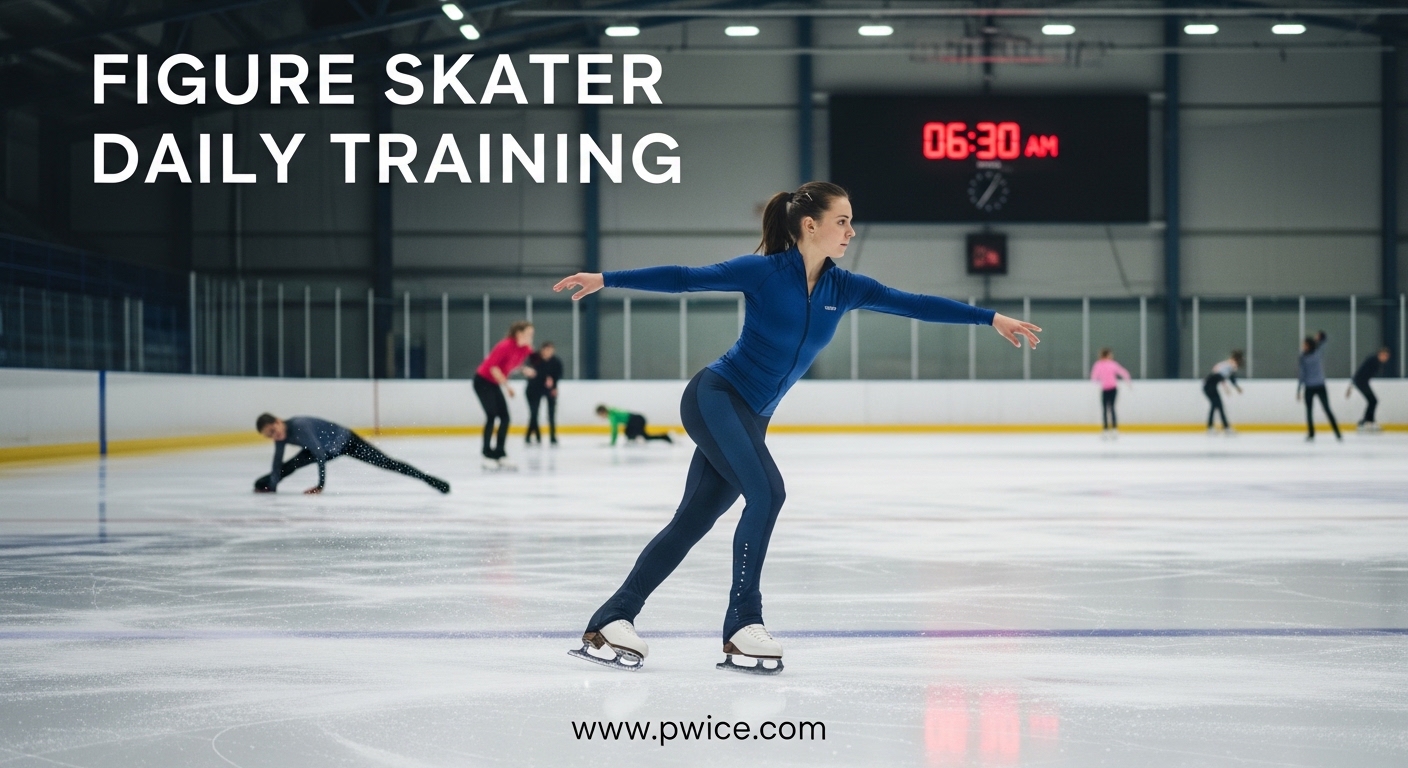
Have you ever watched an Olympic figure skater glide across the ice and wondered what it takes to reach that level? I spent months researching and talking to coaches, elite athletes, and adult recreational skaters to understand exactly what figure skater daily training looks like at every level.
Most people see the final performance but miss the thousands of hours that happen before the spotlights turn on. In this guide, you will discover the complete breakdown of a figure skater’s daily schedule. We will cover everything from early morning wake-up calls to the specific off-ice exercises that build the strength needed for quadruple jumps.
Whether you are a parent researching training for your child, an adult skater trying to balance work with practice, or simply curious about the sport, this article will give you the real picture of daily figure skating life in 2026.
Table of Contents
Figure Skater Daily Training: Hours and Schedule Overview
Elite figure skaters train 4 to 8 hours daily, combining both on-ice and off-ice activities. This total typically breaks down into 2 to 4 hours on the ice and 2 to 4 hours of dryland training. Most competitive athletes train 5 to 6 days per week, with Sunday often reserved for complete rest.
The exact hours vary dramatically based on skill level and competitive goals. Here is the real breakdown from my research:
Training Hours by Skill Level
Olympic and Elite Skaters: 6 to 8 hours daily, 6 days per week. These athletes treat skating as a full-time job. Nathan Chen reportedly trained over 30 hours weekly on the ice alone during his competitive peak.
National and Junior Competitive: 4 to 6 hours daily, 5 to 6 days per week. This level requires significant dedication while often balancing school or university studies.
Adult Competitive Skaters: 2 to 4 hours daily, 3 to 5 days per week. Many adult skaters hold full-time jobs and train early mornings, lunch breaks, or evenings. The Reddit skating community reports that most working adults manage 6 to 10 hours weekly total.
Recreational Adult Skaters: 1 to 3 hours weekly of on-ice time, often with minimal off-ice work. This level focuses on enjoyment and skill maintenance rather than competition.
Weekly Training Frequency
A typical competitive skater’s week includes 15 to 25 hours on the ice plus 10 to 20 hours of off-ice training. The schedule follows a progressive intensity pattern, with harder training days early in the week and lighter sessions before competitions. Most skaters take at least one full rest day completely away from training.
Morning Routine: How Figure Skaters Start Their Day
Most elite skaters wake between 5:00 and 6:30 AM to begin their training day. This early start allows them to complete morning ice sessions before the rinks become crowded with public skaters. Adult recreational skaters often follow similar schedules to fit training around work commitments.
Nutrition and Breakfast Timing
Skaters typically eat a light breakfast 60 to 90 minutes before hitting the ice. Common choices include oatmeal with fruit, whole grain toast with nut butter, or Greek yogurt with granola. The goal is sustained energy without stomach discomfort during spins and jumps.
Hydration starts immediately upon waking. Elite athletes often consume 16 to 20 ounces of water before their first session. Proper hydration prevents the dizziness that can occur during rapid rotation training.
Mental Preparation and Visualization
Before leaving home, many skaters spend 10 to 15 minutes on mental preparation. This includes reviewing goals for the session, visualizing successful jump landings, and practicing breathing exercises. Olympic coaches emphasize that mental training is as important as physical preparation.
Visualization techniques include mentally rehearsing program choreography, imagining the feeling of clean takeoffs, and preparing for competition pressure. Studies show that mental rehearsal activates the same neural pathways as physical practice.
Commute and Equipment Prep
The morning routine includes packing equipment bags with multiple skate sharpening tools, backup laces, tape, and training journals. Many skaters keep detailed logs of daily jump counts, spin attempts, and coaching feedback. This documentation helps track progress over months and years.
On-Ice Training Components: What Happens on the Rink
On-ice training forms the technical foundation of figure skating. A typical session lasts 45 to 90 minutes, with elite skaters completing 2 to 4 sessions daily. Each session has specific technical goals rather than random practice.
Jump Training and Repetition
Jump practice consumes 40 to 50 percent of most on-ice sessions. Elite skaters perform 50 to 100 jump repetitions daily, starting with single jumps and progressing through double, triple, and quadruple rotations. Quality matters more than quantity, so skaters often stop a specific jump after 10 failed attempts.
Training follows a structured progression: warm-up jumps, single rotation review, double jump combinations, triple jump attempts, and finally quad training for elite athletes. Coaches use video analysis between attempts to correct technique immediately. Slow-motion review helps identify takeoff edge errors and landing position issues.
The backflip remains the only forbidden trick in competitive figure skating. This rule dates back to 1976 when Terry Kubicka performed a backflip at the Olympics, after which the ISU banned the move for safety reasons. While skaters can practice backflips during training, performing one in competition results in automatic disqualification.
Spin Practice and Position Refinement
Spin training typically occupies 20 to 30 percent of on-ice time. Skaters work on basic positions including camel, sit, and upright spins before combining them into difficult sequences. The goal is increasing rotation speed while maintaining precise positions.
Advanced skaters practice the Biellmann spin, layback variations, and flying entrances. Each spin requires dozens of repetitions to build the muscle memory for automatic execution under competition pressure. Spin practice often includes drills using a spin trainer or off-ice spin board.
Edge Work and Footwork Sequences
Edge quality determines a skater’s control and speed across the ice. Daily training includes edge drills focusing on inside and outside edges, forward and backward skating, and turn combinations. These fundamentals may look simple but require constant maintenance.
Footwork sequences add complexity with turns like brackets, counters, rockers, and choctaws. A single step sequence might contain 20 to 30 individual turns linked together. Skaters practice these sequences repeatedly until they become automatic.
Edge and footwork training often happens during the first 15 minutes of a session when the ice is freshly cleaned and provides the best glide. This timing allows skaters to focus on blade control without fighting rough ice conditions.
Program Run-Throughs and Stamina Building
Complete program run-throughs simulate competition conditions. A short program lasts 2 minutes 40 seconds for men and 2 minutes 40 seconds for women. Free skate programs run 4 minutes for women and 4 minutes 30 seconds for men at the senior level.
Skaters typically complete 2 to 3 full run-throughs daily during competition preparation. These sessions are physically exhausting, requiring cardiovascular endurance and muscular stamina. Between run-throughs, skaters rest 10 to 15 minutes to simulate competition warm-up protocols.
Coaches often schedule back-to-back run-throughs to build stamina for the demanding schedules of multi-day competitions. The ability to perform at 90 percent capacity while fatigued separates good skaters from champions.
Off-Ice Training: Building Strength Beyond the Rink
Off-ice training contributes as much to skating success as time on the ice. Elite skaters spend 2 to 4 hours daily on dryland exercises designed specifically for figure skating demands. This training prevents injuries and builds the explosive power needed for jumps.
Strength Training for Figure Skaters
Lower body strength powers jumps and landings. Skaters perform squats, lunges, and deadlifts with careful attention to knee alignment. Single-leg exercises like Bulgarian split squats develop the stability needed for takeoffs and landings on one foot.
Core strength connects upper and lower body movements. A strong core maintains posture during spins and absorbs landing impact. Daily core work includes planks, Russian twists, and medicine ball throws. Most skaters dedicate 15 to 20 minutes specifically to core training.
Upper body strength supports lift positions and overall athleticism. While figure skating emphasizes lower body power, skaters need arm and shoulder strength for spins, lifts in pairs skating, and maintaining frame during footwork. Pull-ups, push-ups, and rowing exercises appear in most training programs.
Plyometrics and Jump Simulation
Plyometric training develops the explosive power for jump takeoffs. Box jumps, depth jumps, and bounding exercises train the fast-twitch muscle fibers essential for height and rotation. Elite skaters often perform 200 to 300 plyometric repetitions weekly.
Off-ice jump simulation allows skaters to practice rotation without ice. Using jump harnesses or trampoline setups, athletes work on air position and rotation speed. These tools let skaters attempt triple and quadruple rotations safely before trying them on the ice.
Beach running and resistance band training add variety while building ankle stability. Many elite training camps incorporate sand training for proprioception and lower leg strength. The unstable surface forces small stabilizing muscles to work constantly.
Flexibility, Ballet, and Body Control
Flexibility training occurs daily, often both morning and evening. Static stretching after workouts improves long-term range of motion. Dynamic stretching before sessions prepares muscles for explosive movements. Skaters hold stretches for 30 to 60 seconds per position.
Ballet classes remain standard for competitive figure skaters. The body alignment, turnout positions, and graceful arm movements translate directly to skating performance. Most competitive skaters attend 2 to 4 ballet classes weekly in addition to their other training.
Yoga and Pilates provide complementary benefits including breath control, balance, and core engagement. These practices also offer mental recovery from the intensity of jump training. Many skaters report that yoga improves their competition focus and reduces performance anxiety.
Cardiovascular Endurance
Cardio conditioning supports the stamina needed for complete program run-throughs. Skaters use running, cycling, swimming, and elliptical training to build aerobic capacity. High-intensity interval training (HIIT) mimics the stop-start nature of competitive skating.
A typical cardio session lasts 30 to 45 minutes at moderate intensity. During competition preparation, skaters might increase cardio to simulate the demands of skating multiple programs across a weekend. Heart rate monitoring ensures training stays in optimal zones.
Nutrition and Recovery: The Hidden Training Components
What happens between training sessions matters as much as the training itself. Proper nutrition fuels performance while recovery protocols prevent injuries and burnout. Elite skaters treat rest and nutrition with the same discipline as their on-ice practice.
Meal Timing and Composition
Figure skaters eat 5 to 6 smaller meals daily rather than 3 large ones. This approach maintains steady energy without the digestive burden of heavy meals. Protein intake supports muscle recovery, while carbohydrates provide fuel for high-intensity sessions.
A typical competition-day menu includes oatmeal and eggs for breakfast, a protein shake mid-morning, chicken and rice for lunch, fruit and nuts as an afternoon snack, salmon and vegetables for dinner, and Greek yogurt before bed. Hydration targets vary by body weight but generally exceed 3 liters daily.
Sleep and Rest Requirements
Sleep serves as the primary recovery tool for athletes. Elite skaters prioritize 8 to 10 hours of sleep nightly, often including afternoon naps between training sessions. Growth hormone releases during deep sleep, making it essential for muscle repair and adaptation.
Rest days are not optional but planned components of training cycles. Most skaters take at least one day completely off from all physical activity weekly. During this rest day, gentle stretching and light walking substitute for training while the nervous system recovers.
Injury Prevention and Management
Ice skating can contribute to plantar fasciitis, especially in skaters with foot structure issues or those who train excessively without proper recovery. The rigid boot and repetitive landing impact stress the plantar fascia tissue on the bottom of the foot.
Prevention strategies include proper boot fitting, orthotic inserts when needed, calf stretching, and gradual training progression. Skaters experiencing heel pain should reduce jump volume immediately and consult sports medicine professionals. Early intervention prevents chronic conditions that could end careers.
Other common skating injuries include stress fractures, tendonitis, and back issues from repetitive rotation. Off-ice conditioning specifically targets these vulnerable areas. Strong hips and glutes protect knees during landings, while core strength supports the spine through rotation forces.
Training by Skill Level: From Beginner to Elite
Not every skater trains like an Olympian. The most effective training schedule matches the skater’s goals, physical development, and life circumstances. Understanding these differences helps set realistic expectations and avoid burnout.
Adult Beginner Schedules
Adult skaters starting figure skating typically train 1 to 3 hours weekly on the ice. This conservative approach allows the body to adapt to new movement patterns without overwhelming muscles unaccustomed to skating positions. Many adults begin with Learn to Skate classes before advancing to private lessons.
The Reddit skating community consistently reports that adult beginners should focus on consistency over intensity. Three 45-minute sessions weekly proves more effective than one marathon session. This frequency builds muscle memory without excessive fatigue.
Off-ice training for adult beginners includes basic stretching, light cardio, and balance exercises. As skills advance, off-ice work becomes more important for jump development. Most adult recreational skaters add structured off-ice training after 6 to 12 months of skating.
Competitive Youth Training
Young competitive skaters typically train 10 to 20 hours weekly, depending on age and level. Children under 12 focus on fundamental skills with less emphasis on jump repetition to protect growing joints. Training intensity increases gradually through the teenage years.
Balancing school with skating presents the biggest challenge for competitive youth. Many skaters attend online school or flexible scheduling programs to accommodate training. Morning ice sessions are common, requiring 4:30 AM wake-ups before school.
Parental involvement is essential at this level. Parents manage transportation, nutrition, communication with coaches, and emotional support. The family commitment extends far beyond the skater alone, often requiring significant financial and time investments.
Elite and Olympic Preparation
Olympic-level training consumes 6 to 8 hours daily, 6 days per week. Every aspect of life supports training goals, from nutrition to sleep to social activities. Athletes at this level typically have full support teams including multiple coaches, choreographers, strength trainers, physical therapists, and mental performance coaches.
The training year cycles between preparation, competition, and recovery phases. Pre-season training builds physical capacity. Competition season maintains sharpness while traveling to events. Post-season provides physical and mental recovery before rebuilding for the next cycle.
Peak training occurs in the years leading up to Olympic seasons. Athletes may increase training volume by 20 to 30 percent during these periods while monitoring carefully for overtraining signs. The margin between optimal training and injury is narrow at this level.
Frequently Asked Questions
How many hours a day do figure skaters train?
Elite figure skaters train 4 to 8 hours daily, combining 2 to 4 hours on the ice with 2 to 4 hours of off-ice conditioning. Competitive youth skaters typically train 3 to 5 hours daily, while adult recreational skaters may skate 1 to 3 hours weekly. The exact hours depend on skill level, competitive goals, and age.
What trick is forbidden in ice skating?
The backflip is the only trick explicitly banned in competitive figure skating. The International Skating Union prohibited backflips after Terry Kubicka performed one at the 1976 Olympics. While skaters can practice backflips during training, performing one in competition results in immediate disqualification for safety reasons.
Can ice skating cause plantar fasciitis?
Yes, figure skating can contribute to plantar fasciitis due to the rigid boot construction and repetitive impact from jump landings. The condition causes heel pain and is more common in skaters with high arches or flat feet. Prevention includes proper boot fitting, orthotic support, calf stretching, and gradual training progression.
What is the best age to start figure skating?
Most elite figure skaters began between ages 4 and 7, but successful skaters have started at all ages. Children starting young develop muscle memory and comfort on the ice early. However, adult beginners can achieve significant skill and even compete successfully with proper training and dedication. The best age is whenever passion and commitment align with opportunity.
Conclusion: Your Figure Skater Daily Training Journey
Understanding figure skater daily training reveals the extraordinary dedication behind every performance. From the 5 AM wake-up calls to the final stretching session at night, elite athletes structure every hour around their skating goals. The combination of on-ice technical work and off-ice conditioning creates the complete athlete capable of landing quadruple jumps.
Whether you dream of Olympic gold or simply want to master your first axel, the principles remain the same. Consistent practice, progressive training buildup, proper recovery, and mental preparation form the foundation of success. Start where you are, use the resources available, and build your training schedule gradually.
Figure skating rewards patience and persistence. Every triple jump began as a single rotation. Every Olympic champion started with wobbly crossovers. Your daily training journey starts with a single step onto the ice.