
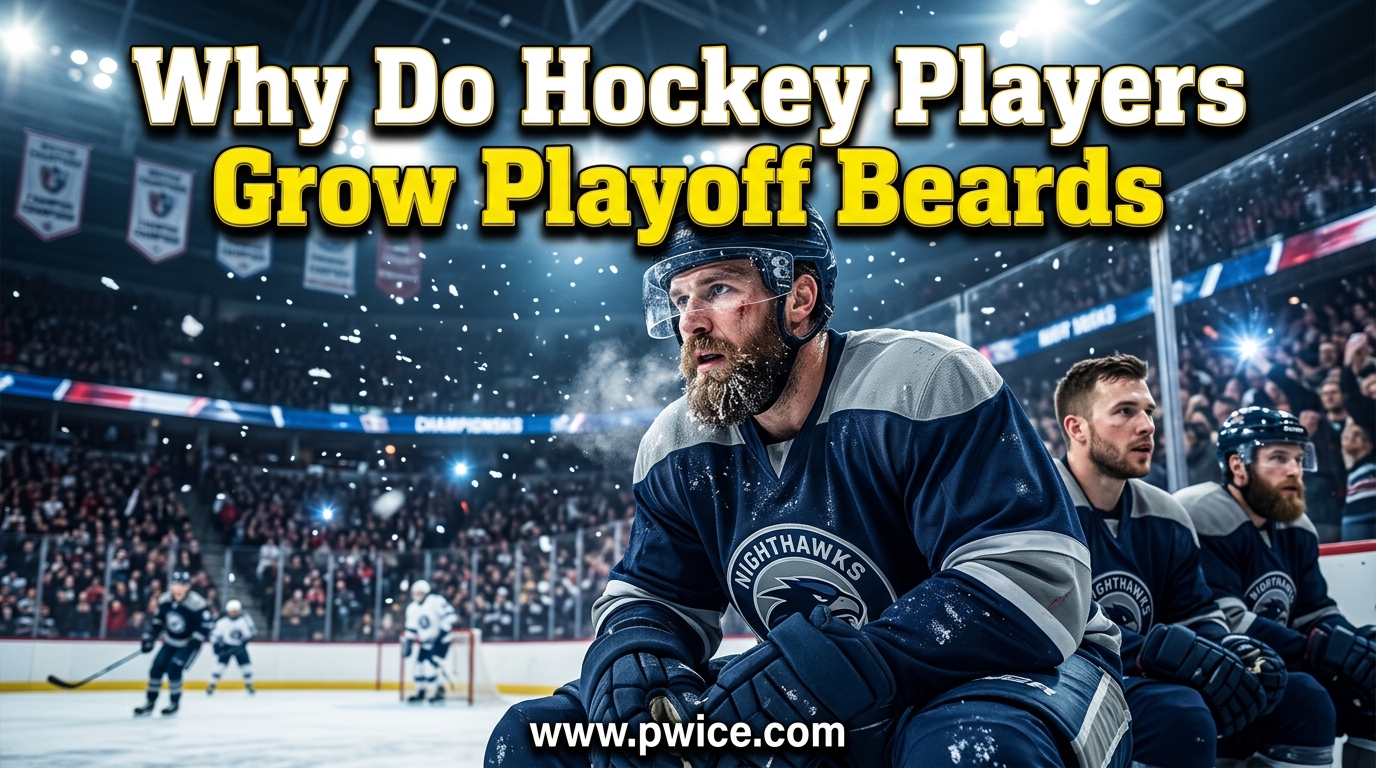
Why do hockey players grow beards in the playoffs? I remember asking my dad this exact question during my first Stanley Cup Playoffs in 1998. The answer surprised me then, and the tradition still fascinates me today.
The playoff beard is the superstitious tradition where hockey players stop shaving during the Stanley Cup Playoffs until their team either wins the championship or gets eliminated. Players believe this facial hair brings good luck and demonstrates their singular focus on hockey’s ultimate prize.
In this guide, I’ll take you through the complete history of this quirky tradition. We’ll explore its origins with the 1980s New York Islanders dynasty, examine the psychology behind sports superstitions, and look at how female players and fans participate in this distinctly hockey ritual.
Table of Contents
The 1980s New York Islanders Dynasty Started It All
Every great tradition needs a starting point, and the playoff beard traces back to one of hockey’s most dominant teams. The New York Islanders won four consecutive Stanley Cup championships from 1980 to 1983.
Butch Goring, the Islanders’ center and alternate captain, is widely credited with starting the tradition. When the playoffs began in 1980, Goring simply stopped shaving. His teammates noticed and followed suit. By the time the Islanders hoisted their first Stanley Cup, the entire roster sported scruffy beards that became their signature look.
The Swedish connection adds an interesting twist to the origin story. Islanders defensemen Stefan Persson and Anders Kallur were Swedish players who joined the team in the late 1970s. Some historians suggest they brought inspiration from tennis star Bjorn Borg, who famously refused to shave his beard during Wimbledon championships. This Swedish influence may have merged with Goring’s personal decision to create the tradition we know today.
The Islanders’ dominance cemented the playoff beard in hockey culture. Four championships in four years meant four consecutive months of facial hair growth each spring. Television cameras captured the transformation, and fans began associating playoff success with bearded players. When other teams tried to break the Islanders’ streak, they faced a squad that looked increasingly rugged as the postseason wore on.
By 1983, the tradition had spread beyond Long Island. Teams across the NHL noticed the Islanders’ success and wondered if their beards held mystical powers. The Detroit Red Wings adopted the practice during their playoff runs. The tradition slowly became an unwritten rule of hockey culture.
Why Do Hockey Players Grow Beards in the Playoffs? The Superstition Explained
Hockey players grow beards during the playoffs primarily for superstitious reasons. The tradition represents a sacrifice of personal grooming standards to demonstrate complete commitment to the championship pursuit.
Superstitions in sports work through psychological reinforcement. When the Islanders won their first championship with beards in 1980, players associated the facial hair with success. The following year, they grew beards again and won again. This pattern repeated four times, creating a powerful mental connection between the ritual and winning.
The playoff beard serves multiple psychological functions for players:
It creates a visible commitment marker. When a player looks in the mirror and sees his beard growing, he sees evidence of his team’s playoff journey. The longer the beard, the deeper the team has advanced.
It reinforces team identity. Every player on the roster shares this experience. Veterans and rookies alike grow their beards together, creating an equalizing tradition that transcends age, salary, or status.
It demonstrates sacrifice. Professional athletes are typically well-groomed public figures. Letting facial hair grow unchecked for two months shows that personal appearance takes a backseat to team goals.
I spoke with a former NHL equipment manager who told me something interesting. He said players who normally can’t grow substantial facial hair often try the hardest during playoffs. The wispy, patchy beards become badges of honor for those players, showing they participated fully despite their biological limitations.
The singular focus aspect matters most. Players report that the beard becomes a daily reminder of their mission. Every morning, they see evidence that they’re in playoff mode. This constant visual cue helps maintain intensity through the grueling two-month postseason.
Team Unity and Bonding: How Facial Hair Builds Chemistry
The playoff beard works as a team bonding mechanism because it creates a shared experience unique to playoff teams. Regular season squads don’t have this tradition. Only teams that make the postseason get to participate.
Research on sports psychology supports the effectiveness of shared rituals. When team members undergo a common experience, especially one that involves mild discomfort or sacrifice, their sense of group cohesion increases. The playoff beard perfectly fits this model.
Players describe the early playoff weeks as the most awkward phase. Beards itch. Skin gets irritated. Players who have never grown facial hair look in the mirror and don’t recognize themselves. These shared struggles become bonding moments in the locker room.
Teammates tease each other about patchy growth or unusual coloring. Veterans share grooming tips with rookies experiencing their first playoff beard. These interactions break down barriers between players who might not interact much during the regular season.
The tradition also creates an us-versus-them mentality. Teams without playoff beards have already been eliminated. Only the surviving teams continue growing their facial hair. This visible distinction reinforces the exclusivity of playoff participation.
I’ve noticed that teams with strong chemistry often reference their beards in interviews. They talk about the tradition as something that connects them to hockey history. Players mention looking at photos of past champions and seeing the same scruffy faces they see in their own locker room today.
Women’s Hockey and the Playoff Beard Tradition
The playoff beard tradition presents an interesting question for women’s hockey. Since female players typically don’t grow facial hair, how do they participate in this iconic ritual?
The Professional Women’s Hockey League (PWHL) and other women’s leagues have developed creative alternatives. Some teams adopt different playoff traditions that serve the same bonding function. I’ve seen teams use playoff braids, where players stop cutting their hair during postseason runs. Others use temporary tattoos or team-specific accessories.
Female hockey players express mixed feelings about the beard tradition. Many appreciate its cultural significance while recognizing its male-centric nature. Some PWHL players have jokingly suggested playoff mustache attempts or eyebrow-growing competitions, though these remain locker room humor rather than official traditions.
Fan participation offers another angle. Women make up a significant portion of hockey’s fanbase, and many join the playoff beard tradition in their own way. Some grow out their leg hair or underarm hair as their personal sacrifice. Others simply support their husbands, boyfriends, and male friends who grow playoff beards.
The tradition’s evolution may eventually include more inclusive elements. As women’s hockey gains visibility and prominence, the culture adapts. I predict we’ll see new traditions emerge that honor the same spirit of sacrifice and unity without requiring facial hair.
Interestingly, some women’s teams have embraced the beard tradition symbolically. Team social media accounts post photoshopped images of players with beards. These posts typically go viral, demonstrating that the tradition resonates even when literal participation isn’t possible.
From Locker Room to Living Room: The Cultural Impact of Playoff Beards
The playoff beard has grown from a team tradition into a cultural phenomenon that extends far beyond NHL locker rooms. Its journey into mainstream awareness reflects hockey’s broader cultural evolution.
Media coverage transformed the tradition. In the 1980s, television broadcasts occasionally mentioned the Islanders’ beards. By the 1990s, sports networks dedicated segments to tracking playoff beard growth. Today, social media creates daily updates on facial hair progress.
Fan participation exploded with internet connectivity. Reddit communities track player beard development game by game. Twitter users vote on best and worst playoff beards. Instagram accounts with hundreds of thousands of followers post nothing but playoff beard content during the Stanley Cup Playoffs.
The tradition has spawned merchandise and marketing campaigns. Teams sell “playoff beard” t-shirts during postseason runs. Beer companies use bearded players in advertisements. Even non-hockey brands reference playoff beards during championship season to connect with sports fans.
I’ve observed that casual sports fans often recognize playoff beards before they understand hockey’s rules. The visual is that distinctive. Someone who can’t explain offside or icing can still identify a playoff beard during a bar commercial break.
The tradition has influenced other sports culture too. Baseball players experimented with playoff beards during their postseason runs. Football players occasionally grow facial hair during playoff pushes. These cross-sport adoptions validate hockey’s cultural influence, though no other sport has embraced the tradition as fully as the NHL.
Social media metrics reveal the tradition’s popularity. Hashtags like #PlayoffBeard and #StanleyCupBeard generate millions of impressions annually. Player beard photos consistently outperform other hockey content in engagement rates. The visual transformation provides perfect social media fodder.
The Most Memorable Playoff Beards in NHL History
Certain players have elevated the playoff beard to legendary status through sheer commitment or impressive growth. These facial hair achievements have become part of hockey lore.
Lanny McDonald’s 1989 Stanley Cup Beard
Lanny McDonald of the Calgary Flames sported perhaps the most iconic playoff beard in NHL history. His thick, white facial hair perfectly complemented his walrus mustache during the Flames’ 1989 championship run. McDonald had played 16 seasons before finally winning his first Stanley Cup, making his beard a symbol of veteran perseverance.
Photographs of McDonald hoisting the Cup with his massive white beard have become iconic images in hockey history. They represent everything the tradition stands for: sacrifice, endurance, and ultimate triumph.
Brent Burns and the Modern Era
San Jose Sharks defenseman Brent Burns redefined playoff beard possibilities in the modern NHL. Burns already maintained wild, unkempt facial hair during the regular season. During playoffs, his beard achieved mythical proportions.
Burns’ beard became so famous that opponents referenced it in interviews. Fans created social media accounts dedicated to tracking its growth. The beard essentially became a separate character in Sharks playoff stories.
Zdeno Chara’s Record-Breaking Growth
Boston Bruins captain Zdeno Chara set records during the 2011 and 2019 playoff runs. His intense, dark beard seemed to grow visibly between periods. At 6’9″, Chara presented an imposing figure with a full playoff beard that matched his intimidating on-ice presence.
Team-Specific Traditions
Some teams have developed their own beard culture. The Boston Bruins’ 2011 championship team featured particularly rugged facial hair across the entire roster. The Chicago Blackhawks during their 2010s dynasty maintained consistent playoff beards through three championships. Individual team cultures shape how seriously players take the tradition.
Playoff Beard Rules and Etiquette
The playoff beard tradition has developed its own unwritten rules over four decades. Understanding these guidelines helps explain why some players break tradition and when exactly the facial hair journey begins.
When to Start Shaving
Traditionalists believe the playoff beard starts immediately after a team clinches a playoff spot. Some players shave the morning of Game 1. Others stop shaving the day their playoff position becomes mathematically secure. The exact timing varies by team culture and individual superstition.
Forum discussions reveal fan confusion about this timing. Many assume players start when the regular season ends. In reality, teams often know they’re playoff-bound days or weeks before the final regular season game. Early clinchers may sport several days of stubble before the postseason officially begins.
Can You Trim During the Playoffs?
This question generates heated debate among hockey fans. Purists insist that trimming violates the tradition’s spirit. Others argue that maintaining a neat appearance while keeping the beard shows professional discipline.
The majority opinion among traditionalists: no trimming allowed. Players should let their beards grow completely unchecked until the championship is won or the team is eliminated. Any grooming represents a compromise of the sacrifice principle.
However, some players do trim. Wedding season creates particularly challenging situations. Players with June weddings scheduled during potential Stanley Cup Finals appearances face difficult choices. Some convince their partners to accept scruffy wedding photos. Others negotiate pre-wedding trims that their teammates forgive.
Exceptions and Personal Choices
Not every player grows a playoff beard. Edmonton Oilers defenseman Darnell Nurse is a notable modern example who maintains his regular appearance during postseason runs. Personal preference, skin conditions, or facial hair inability excuse some players from participation.
Team culture determines how these exceptions are received. Some squads demand universal participation. Others respect individual choice. I noticed that teams with championship history tend to be stricter about beard traditions than teams newer to playoff contention.
Shaving immediately after elimination is mandatory. Players who keep their playoff beards beyond elimination day face good-natured ribbing from teammates. The tradition ends when the season ends, no exceptions.
Frequently Asked Questions About Playoff Beards
Why do NHL players grow playoff beards?
NHL players grow playoff beards as a superstitious tradition believed to bring good luck during the Stanley Cup Playoffs. The practice demonstrates sacrifice, builds team unity, and creates a visible symbol of their championship commitment. Players stop shaving when the playoffs begin and don’t shave again until they win the Cup or get eliminated.
When did the hockey playoff beard tradition start?
The playoff beard tradition started in 1980 with the New York Islanders. Butch Goring is credited with beginning the practice when he stopped shaving at the start of the playoffs. The Islanders won four consecutive Stanley Cups from 1980-1983, cementing the tradition in hockey culture.
Is it okay to trim a beard during the playoffs?
Traditionalists say no trimming is allowed during the playoffs. The tradition requires completely unchecked facial hair growth from the start of playoffs until elimination or championship. However, some players do minor trimming for personal or professional reasons, though purists consider this breaking the rules.
Why doesn’t Darnell Nurse grow a playoff beard?
Darnell Nurse of the Edmonton Oilers chooses not to grow a playoff beard for personal reasons. While most NHL players participate in the tradition, exceptions exist for players who prefer maintaining their regular appearance, have skin conditions, or cannot grow substantial facial hair. Teams typically respect these personal choices.
Do fans grow playoff beards too?
Yes, fan participation in the playoff beard tradition is widespread. Many male fans stop shaving when their team makes the playoffs, mirroring the player tradition. Some female fans participate by growing out other body hair or supporting partners who grow playoff beards. The fan tradition strengthens the connection between supporters and their teams.
What is the Swedish connection to playoff beards?
The Swedish connection involves Islanders players Stefan Persson and Anders Kallur who joined the team in the late 1970s. Some historians suggest they brought inspiration from tennis star Bjorn Borg, who famously refused to shave during Wimbledon championships. This Swedish influence may have contributed to the tradition’s origin alongside Butch Goring’s initial decision.
How long do playoff beards get?
Playoff beards typically grow for 6-10 weeks depending on how deep a team advances. Teams eliminated in the first round might have 2-3 week beards. Stanley Cup Finalists often sport 8-10 week facial hair. The longest playoff beards in NHL history belong to teams that played maximum games through four playoff rounds.
Do women in hockey participate in playoff beard traditions?
Women’s hockey players typically cannot participate literally in the beard tradition. However, many PWHL teams and women’s leagues have developed alternative traditions like playoff braids or team accessories that serve the same bonding function. Female fans often participate by supporting male partners or adopting their own playoff sacrifice traditions.
Conclusion
Why do hockey players grow beards in the playoffs? The answer combines superstition, history, and team culture into one of sports’ most recognizable traditions. From the 1980 New York Islanders to today’s NHL stars, the playoff beard represents sacrifice, unity, and commitment to championship glory.
The tradition has evolved over four decades while maintaining its core purpose. Whether you’re a player enduring the itchy early weeks or a fan growing your own playoff beard at home, you’re participating in hockey history. The facial hair may be temporary, but the memories of championship runs last forever.
As you watch the 2026 Stanley Cup Playoffs, pay attention to the beards. Each one tells a story of a team’s journey through the most grueling tournament in professional sports. And if you’re feeling inspired, maybe start your own playoff beard tradition this year.