
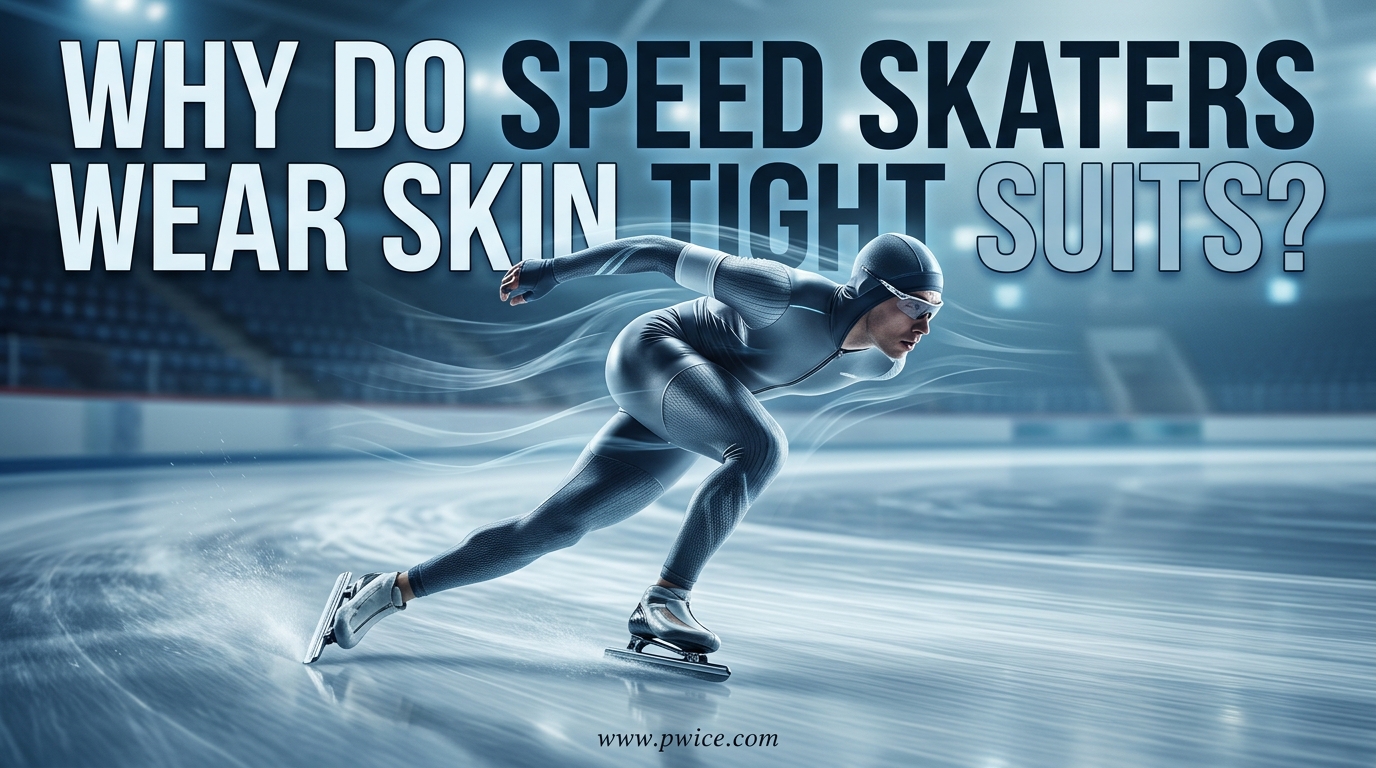
Speed skaters wear skin-tight suits primarily to reduce air resistance and minimize friction between the thighs when skating at high speeds. These specialized suits, called skinsuits, create smooth airflow around the body that can reduce drag by up to 65% compared to loose clothing. The tight fit also provides muscle compression and includes special friction guard panels on the inner thighs to prevent chafing when legs cross during the skating motion.
When you watch Olympic speed skating, those skintight uniforms that look like superhero costumes serve a critical function beyond aesthetics. Every design element has been engineered and tested to help athletes shave fractions of seconds off their times. In a sport where races are decided by hundredths of a second, even minor reductions in drag can mean the difference between standing on the podium and going home empty-handed.
I have spent time analyzing the science behind these suits and talking with athletes about their experiences. The technology involved is fascinating, and the reasons skaters choose these sometimes uncomfortable garments reveal just how competitive elite speed skating has become.
Table of Contents
The Science of Aerodynamics and Drag Reduction
Air resistance is the single biggest obstacle speed skaters face once they get moving. At racing speeds of 30 to 35 miles per hour, skaters battle significant drag forces that slow them down. The faster they go, the more air pushes back against them.
Loose clothing creates turbulence in the air flowing around the body. Imagine sticking your hand out of a car window at highway speed. When your hand is flat and streamlined, the air flows smoothly over it. When you cup your hand or wear a loose sleeve, the air becomes chaotic and creates resistance. This same principle applies to speed skaters.
Laminar flow versus turbulent flow is the key concept here. Laminar flow means air moves in smooth, parallel layers over a surface. Turbulent flow means the air is chaotic, swirling, and creates drag. Skin-tight suits maintain laminar flow by presenting a smooth surface to the oncoming air. Loose clothing disrupts this flow and creates pockets of turbulence that act like brakes.
Think of it like the difference between a sports car and a box truck driving down the highway. The sports car slices through the air efficiently. The box truck has to push much more air out of the way. Speed skaters want to be the sports car, not the box truck.
Research from wind tunnel testing shows that proper aerodynamic suits can reduce drag by significant percentages. While exact numbers vary based on the skater’s position and the specific suit design, the reduction is meaningful enough that every serious competitive skater wears a skinsuit.
Friction Guards: The Gray Panels on the Inner Thighs
If you have ever watched speed skating on television, you have probably noticed the distinctive gray or different-colored patches on the inner thighs of the skaters’ suits. These are called friction guards, and they serve a specific purpose that has nothing to do with aerodynamics.
Speed skaters adopt a low, crouched position with their legs tucked close together. As they skate, their thighs rub against each other with every push. At high speeds, this repeated motion creates significant friction that can cause painful chafing and even skin damage.
The gray panels, sometimes branded as “ArmourGlide,” are made of super-slick material that reduces friction between the thighs by up to 65% according to manufacturer testing. This allows skaters to maintain their aerodynamic tuck position without discomfort or injury.
The placement of these panels is strategic. They cover the area where the inner thighs make contact when the skater’s legs are pressed together in the racing position. The material is different from the rest of the suit, often smoother and more slippery to minimize the coefficient of friction.
Interestingly, the design of these friction guards has evolved over time. Early suits had a single panel covering the inner thigh area. Testing revealed that adding a second panel reduced friction even more, by approximately 60% compared to the single-panel design. Modern suits now typically feature dual friction guard panels for maximum benefit.
Compression Benefits Beyond Aerodynamics
While reducing drag is the primary reason for skin-tight suits, the compression they provide offers additional performance benefits that many people do not know about.
Muscle vibration occurs naturally during high-intensity exercise. When you skate at maximum effort, your muscles oscillate slightly with each stride. These micro-vibrations waste energy and contribute to fatigue. Compression fabric reduces this vibration, allowing more of the muscle’s energy to go directly into propulsion.
Compression also improves blood circulation. The gentle pressure on the muscles helps push blood back toward the heart more efficiently. This can delay the onset of muscle fatigue and help maintain performance throughout a race.
Another benefit is improved proprioception, which is your body’s awareness of its position in space. The constant pressure from a tight suit gives the nervous system more feedback about limb position and movement. This enhanced body awareness can lead to better technique and more efficient skating form.
Recovery benefits extend beyond the race itself. Compression garments are widely used in sports medicine to reduce muscle soreness after intense exercise. While speed skaters primarily wear their suits for competition, the same compression principles apply.
Speed Skating Suit Technology and Design Elements
Modern speed skating suits are engineering marvels that incorporate multiple design features, each serving a specific purpose. Understanding these elements shows just how much thought goes into every square inch of fabric.
The aerodynamic hood covers the skater’s head and neck, creating a smooth transition between the helmet and the suit. Without this hood, the exposed neck would create turbulence and drag. The hood also often includes a face shield or aerodynamic shaping around the face.
Thumb loops at the end of the sleeves serve two purposes. First, they keep the sleeves from riding up and creating gaps that would disrupt airflow. Second, they allow skaters to tuck their hands into a more aerodynamic position while maintaining full coverage.
The diagonal zipper design is another aerodynamic optimization. Traditional vertical zippers create a straight line that air can catch and pull at. Diagonal zippers disrupt this airflow pattern and reduce the zipper’s contribution to overall drag.
Dimpled fabric technology borrowed from golf ball design appears on some suits. The tiny dimples create a thin layer of turbulent air right at the surface, which paradoxically helps the main airflow stay attached to the body longer. This reduces the size of the wake behind the skater and lowers overall drag.
Wind tunnel testing plays a crucial role in suit development. Manufacturers place skaters or mannequins in wind tunnels and test different fabrics, panel placements, and designs at racing speeds. They measure drag forces and use high-speed cameras to visualize airflow patterns. The suits that make it to Olympic competition have undergone hundreds of hours of this testing.
Other materials like polyurethane strips and strategic mesh panels further optimize performance. Polyurethane can be placed in specific areas to smooth airflow, while mesh panels provide minimal ventilation where cooling is needed without significantly increasing drag.
What Speed Skaters Wear Under Their Suits?
A common question from spectators is what, if anything, speed skaters wear underneath their skin-tight suits. The answer reveals another layer of safety technology built into the sport.
Professional speed skaters typically wear a cut-resistant body suit underneath their skin suit. These underlayers are made from Kevlar or similar cut-resistant materials and provide protection against skate blade cuts. Falls and collisions do happen, especially in short track racing where multiple skaters share a tight oval, and the razor-sharp blades can cause serious injury.
This protective layer is recommended for all skaters, not just professionals. While it adds a small amount of bulk, the safety benefit outweighs any minor aerodynamic disadvantage. The cut suit, as it is sometimes called, has become standard equipment in the sport.
Beyond the protective underlayer, skaters wear minimal additional clothing. Extra layers would create wrinkles and gaps that increase drag. The skin suit is designed to be worn directly against a thin base layer or the cut-resistant suit, nothing more.
How Speed Skating Suits Compare to Other Sports In 2026?
Skin-tight racing suits appear in multiple sports, but speed skating suits have unique characteristics that distinguish them from cycling or swimming equivalents.
Speed skating versus cycling skinsuits: Cycling skinsuits share many similarities with speed skating suits, including aerodynamic hoods and tight fits. However, cycling suits often include padding in the seat area for comfort on the bike saddle, which speed skaters do not need. Cycling suits also typically offer more thermal options since cyclists face variable weather conditions, while speed skating occurs in controlled indoor ice rinks.
Some inline speed skaters do use cycling skinsuits for competition. The aerodynamic principles are similar enough that the suits are somewhat interchangeable. However, dedicated speed skating suits are optimized for the specific body positions and movements of ice skating.
Speed skating versus swimming tech suits: Competitive swimming has seen similar advances in suit technology. Swimming tech suits compress the body and reduce drag through the water. However, water drag is a completely different physics problem than air drag. Swimming suits focus on compression and hydrophobic materials that repel water, while speed skating suits prioritize smooth airflow and often include features like friction guards that have no swimming equivalent.
The unique requirement of speed skating is the combination of extreme aerodynamics with the need for thigh friction reduction. No other sport has this specific combination of demands.
Why Skaters Rip Off Their Suits Immediately After Racing?
If you watch speed skating competitions closely, you will notice that skaters often rip off their skin suits the moment they finish racing. They pull at the zipper and practically tear the suit off their bodies before they even catch their breath. This behavior is not just about cooling down.
The suits are uncomfortable to wear for extended periods. The extreme compression that provides performance benefits during a race becomes constriction once the effort ends. Skaters describe the sensation as feeling like they cannot breathe properly while wearing the suit at rest.
Temperature regulation is another factor. While the ice rink is cold, racing generates enormous amounts of body heat. The tight suit traps this heat with no ventilation. Once the race ends, skaters overheat quickly and need to shed the suit to cool down.
The relief of removing compression after intense physical exertion is immediate and noticeable. Many athletes report that the sensation of taking off a racing suit is one of the best feelings in the sport, second only to winning.
Forum discussions among skaters confirm that race day sprint suits are “simply awful to wear” for any longer than necessary. The discomfort is accepted as the price of performance, but nobody wears these suits a moment longer than required.
Why Do Speed Skaters Wear Skin Tight Suits? Frequently Asked Questions
Why do speed skaters wear tight clothes?
Speed skaters wear skin-tight suits to reduce air resistance (drag) and minimize friction between the thighs. The tight fit creates smooth airflow around the body, reducing drag by up to 65% compared to loose clothing. The suits also include friction guard panels on the inner thighs to prevent chafing when legs cross during the skating motion.
Do speed skaters wear anything under their suits?
Yes, speed skaters typically wear a cut-resistant Kevlar body suit underneath their skin suit for protection against cuts from skate blades. This protective layer is recommended for all skaters, especially during training and competition. Beyond this safety layer, skaters wear minimal additional clothing to maintain the aerodynamic fit.
What are the inner thighs on speed skaters uniform?
The gray patches on speed skating suit inner thighs are called friction guards or ArmourGlide panels. These super-slick material panels reduce friction between the thighs by up to 65% when skaters cross their legs at high speeds. They prevent chafing and allow skaters to maintain their aerodynamic tuck position without discomfort.
Why do speed skaters wear sunglasses?
Speed skaters wear sunglasses or goggles to reduce glare from ice under bright arena lights, protect their eyes from wind at high speeds up to 35+ mph, and improve visibility and focus during competition. The eyewear also helps shield eyes from ice particles and provides aerodynamic benefits by creating a smooth surface around the eye area.
Do speed skaters wear helmets?
Short track speed skaters wear helmets due to the high risk of falls and collisions on tight turns with multiple competitors on the ice. Long track speed skaters typically do not wear helmets as the risk of falls is lower on straightaways and the aerodynamic penalty of a helmet outweighs the safety benefit in that discipline.
Do figure skaters get their periods?
Yes, figure skaters do get their periods. However, intense training at competitive levels can sometimes lead to irregular cycles, a condition known as athletic amenorrhea. Many athletes manage their periods normally while competing using standard hygiene products. This does not typically affect their training or competition schedules.
Conclusion
Why do speed skaters wear skin tight suits? The answer combines physics, engineering, and the relentless pursuit of marginal gains that define elite sports. These specialized suits reduce aerodynamic drag by creating smooth airflow around the body, minimize friction between thighs with specially designed panels, provide muscle compression for better performance, and incorporate safety features like cut-resistant underlayers.
Every element of a speed skating suit has been tested and optimized in wind tunnels. The tight fit, the gray friction guards, the thumb loops, and the aerodynamic hood all serve specific functions. Even the discomfort skaters accept is part of the trade-off for maximum performance.
When you watch speed skating at the next Olympics, you will now understand that those skintight uniforms represent hundreds of hours of engineering work and scientific testing. They are not just clothing. They are carefully crafted tools that help athletes achieve the fastest times humanly possible on ice.