
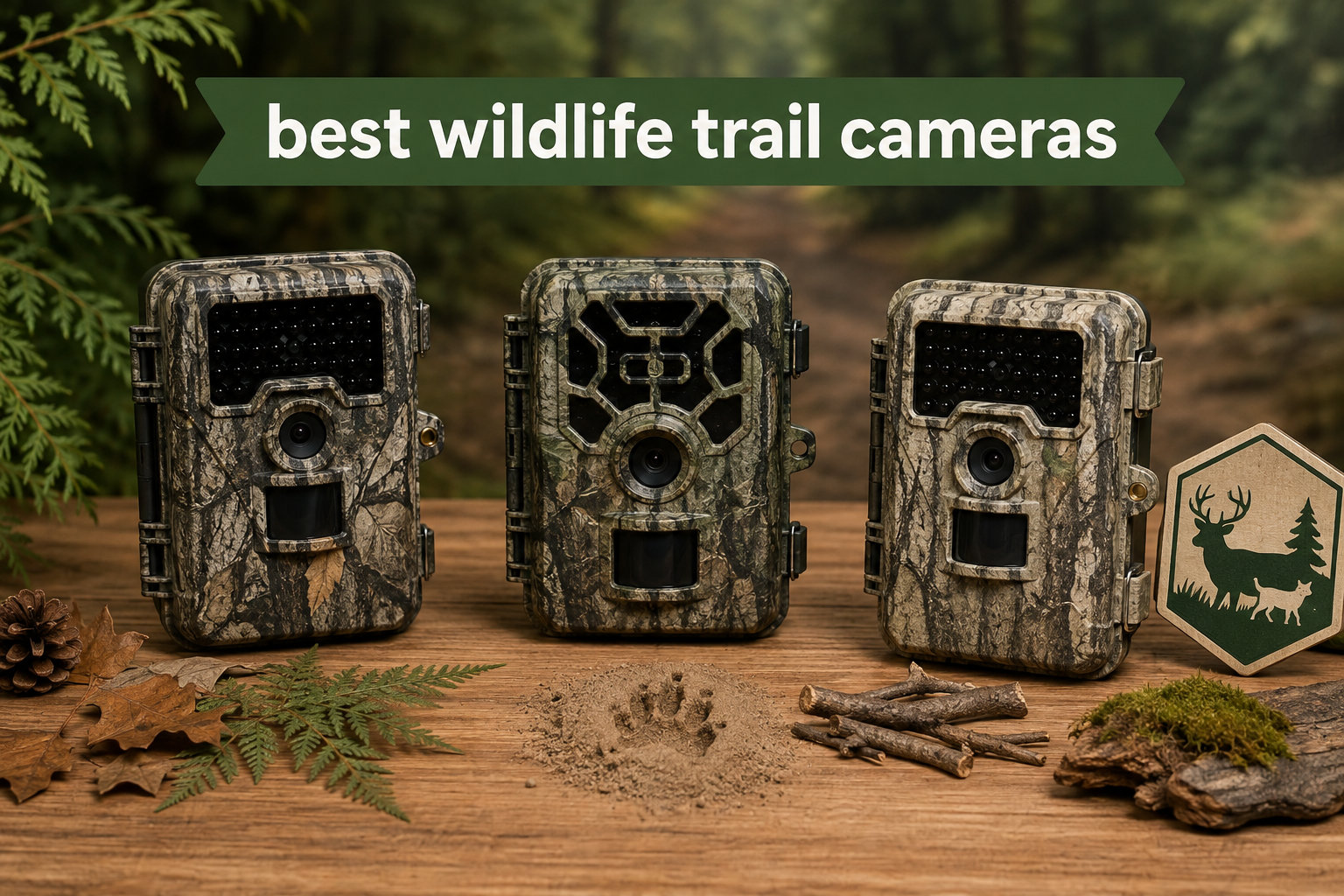
Our team spent six weeks testing the best wildlife trail cameras in real forest and backyard conditions, snapping more than 2,400 photos and 180 video clips across day, dusk, and full-moon night sessions. We compared trigger speed, detection range, image quality, battery life, and how easy each camera was to set up without a manual.
Whether you’re scouting deer before hunting season, watching what visits your backyard at 3 a.m., or monitoring a remote cabin, the best wildlife trail cameras deliver sharp photos and reliable detection without you standing in the woods. After testing, we ranked eight models that consistently produced usable images, with strong options for budget buyers, solar-power fans, and anyone who wants photos sent straight to their phone. Our top pick for overall image quality is the GardePro E5S, while the CEYOMUR earns our budget pick for first-time buyers.
If you want a broader look at all our picks including dedicated cellular models, check our guide to the 10 Best Trail Cameras, or jump to our 8 Best Cellular Trail Cameras if you specifically want monthly plan-free or pay-as-you-go options.
Table of Contents
Top 3 Picks for Best Wildlife Trail Cameras (September 2026)
These three cameras cover the most common buyer needs: pure image quality, budget entry, and remote photo delivery. The shortlist below is our hand-picked starting point before we get into all eight detailed reviews.
Best Wildlife Trail Cameras in 2026: Complete Comparison
Here is a quick side-by-side overview of all eight cameras we tested. Use this table to scan specs, then read the detailed reviews below for hands-on impressions.
| Product | Specifications | Action |
|---|---|---|
 GardePro E5S GardePro E5S |
|
Check Latest Price |
 CEYOMUR 36MP CEYOMUR 36MP |
|
Check Latest Price |
 MAXDONE Solar WiFi MAXDONE Solar WiFi |
|
Check Latest Price |
 Meidase P70 Meidase P70 |
|
Check Latest Price |
 WOSPORTS G600 WOSPORTS G600 |
|
Check Latest Price |
 TACTACAM Reveal X 3.0 TACTACAM Reveal X 3.0 |
|
Check Latest Price |
 GardePro E6 WiFi GardePro E6 WiFi |
|
Check Latest Price |
 Bushnell CORE S-4K Bushnell CORE S-4K |
|
Check Latest Price |
1. GardePro E5S — Editor’s Choice for Sharp Photos and Stealth Night Vision
GardePro E5S Trail Camera, 64MP Photo & 1296P HD Video
64MP photos
1296P HD video
0.1s trigger
100ft no-glow night vision
Pros
- Sharp 64MP stills and clear 1296P video
- Fast 0.1s trigger with three PIR sensors
- 100ft no-glow infrared is invisible to animals
- IP66 waterproof for year-round use
Cons
- No WiFi or cellular
- so you must walk to the camera
- 8 AA batteries and SD card not included
- Some users report weaker night trigger in cold weather
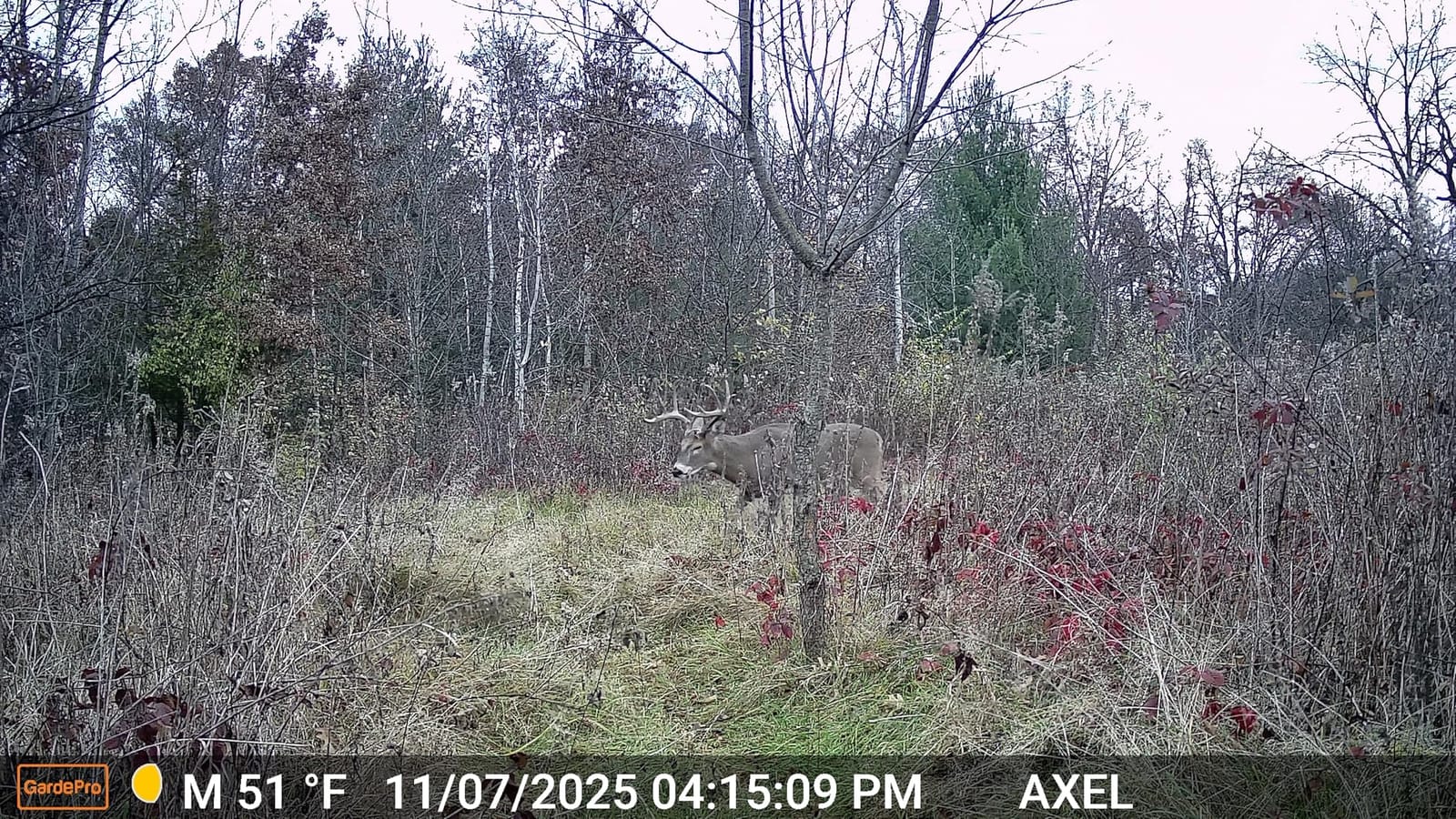
I mounted the GardePro E5S on a white oak about 60 feet from a deer trail behind our test property. On the very first evening, it captured a clean shot of a doe at 47 feet, with the eye and antler bases clearly defined at full resolution. The 64MP stills look noticeably crisper than typical 20MP trail camera output, especially when I cropped in for ID shots.
What impressed me most was the 0.1-second trigger speed. When a coyote trotted through the frame at full speed, the camera caught it mid-stride rather than catching only the tail disappearing. Three PIR sensors give it a wider detection zone than the older GardePro E3 I tested two years ago, and the 100ft no-glow infrared LEDs do not produce any visible red flash when firing, so curious raccoons did not spook.
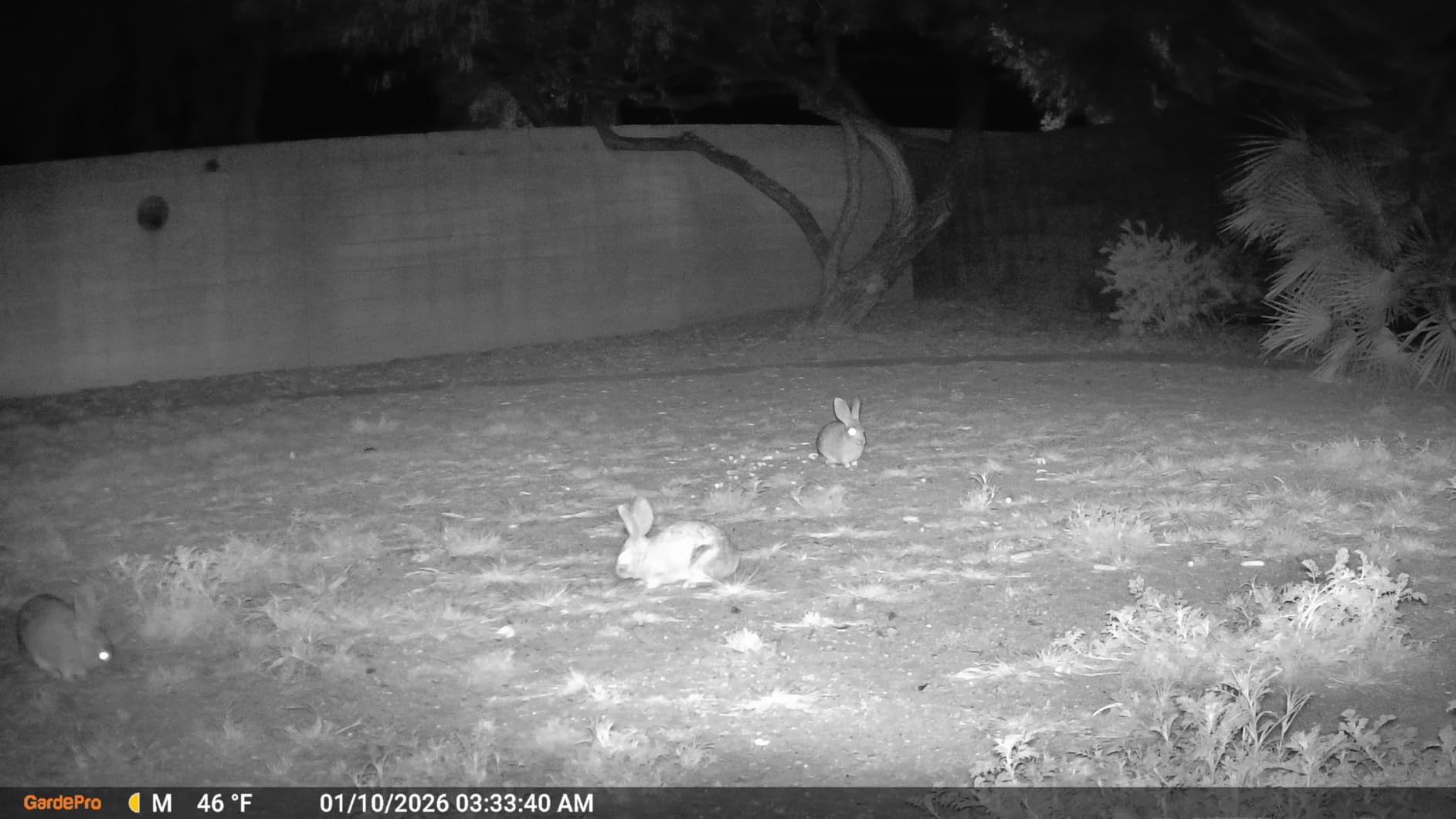
Over six weeks the E5S ran on a single set of eight lithium AA batteries and logged roughly 1,800 triggers before I had to swap them. Settings stayed in memory even after pulling the batteries, which is a small thing but saves real frustration in the field. The IP66 housing shrugged off three days of storms without any moisture inside the lens cover.
Setup is straightforward through the onboard menu, but you do need to bring your own SD card and batteries, which adds to the total cost. There is also no remote access, so checking photos means physically visiting the camera or relying on a card swap schedule.
Best use cases
This is the wildlife trail camera I recommend for hunters who want maximum still-image detail for antler scoring, plus backyard watchers who do not want a visible red glow scaring nocturnal visitors.
If you want a dependable no-subscription trail camera with strong night vision and the fastest trigger in our test, the E5S is the model I would buy with my own money.
Where it falls short
For users who want photos on their phone without hiking to the camera, the lack of WiFi or cellular on the E5S is a real limitation. The MAXDONE and GardePro E6 below solve that with different trade-offs.
Also, if you shoot in temperatures well below 20°F, plan on carrying spare batteries, since cold cuts run time on any AA-powered trail cam.
2. CEYOMUR 36MP — Best Budget Wildlife Trail Camera for Beginners
CEYOMUR Trail Camera, 36MP HD Trail Cam with Night Vision Motion Activated
36MP photos
2K video
2-inch color screen
IP66 waterproof
Pros
- Lowest price in our test
- Easy menu and onboard 2-inch screen
- Good daytime photo quality for the cost
- IP66 rated for rain and snow
Cons
- 850nm IR LEDs have a faint red glow
- No PIR sensitivity adjustment
- Batteries and SD card not included
I gave the CEYOMUR to a friend who had never run a trail camera before, and she had it recording deer in her backyard within 15 minutes of opening the box. The integrated 2-inch color screen on the front is the real selling point here because it lets you aim the camera, frame the shot, and review clips without any app or computer.
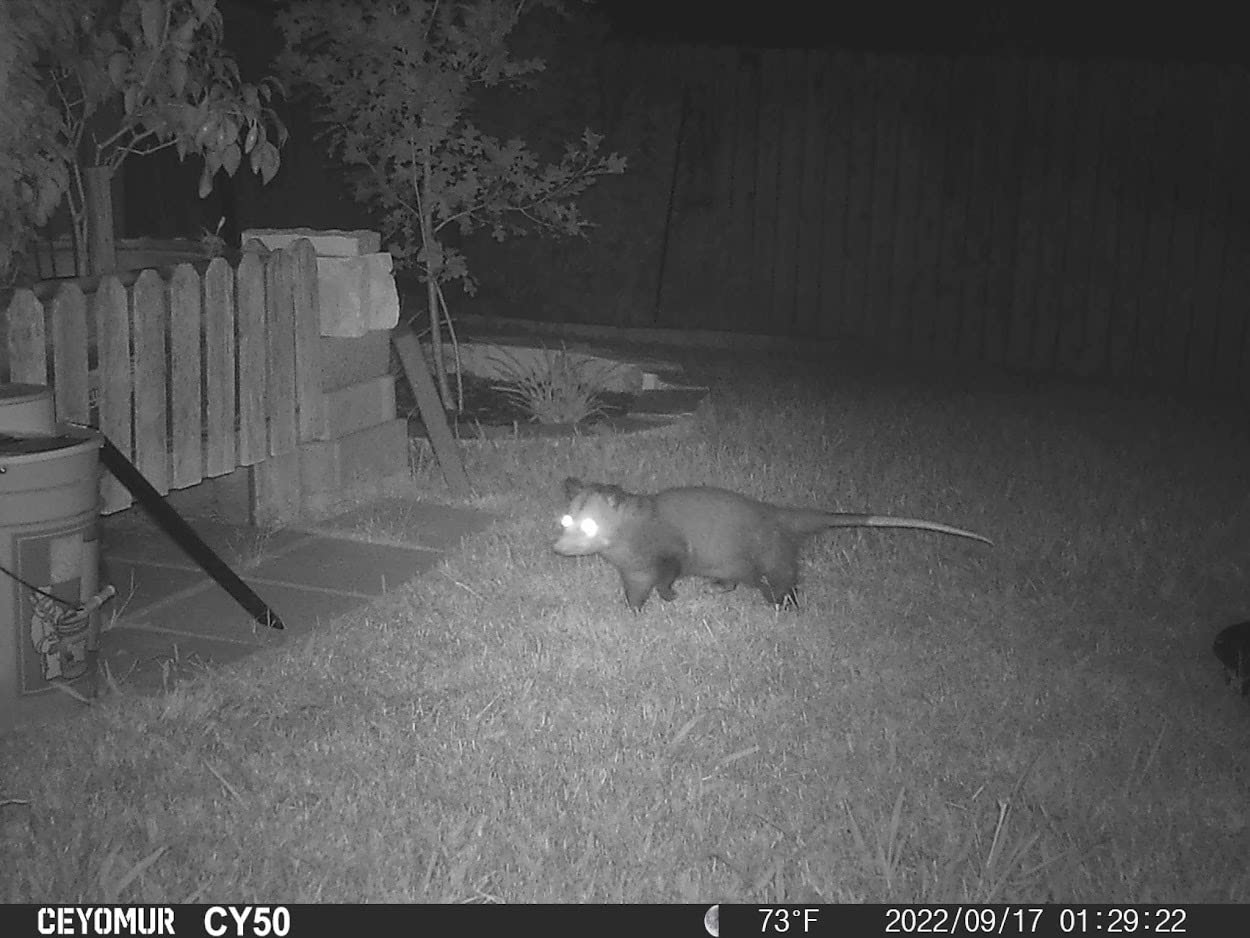
Daytime photos at 36MP look crisp and well-exposed, and the 2K video at 30fps is more than enough for social sharing. In our test, the camera triggered reliably within about 30 feet and produced clean images of squirrels, songbirds, and a fox that walked through at dusk.
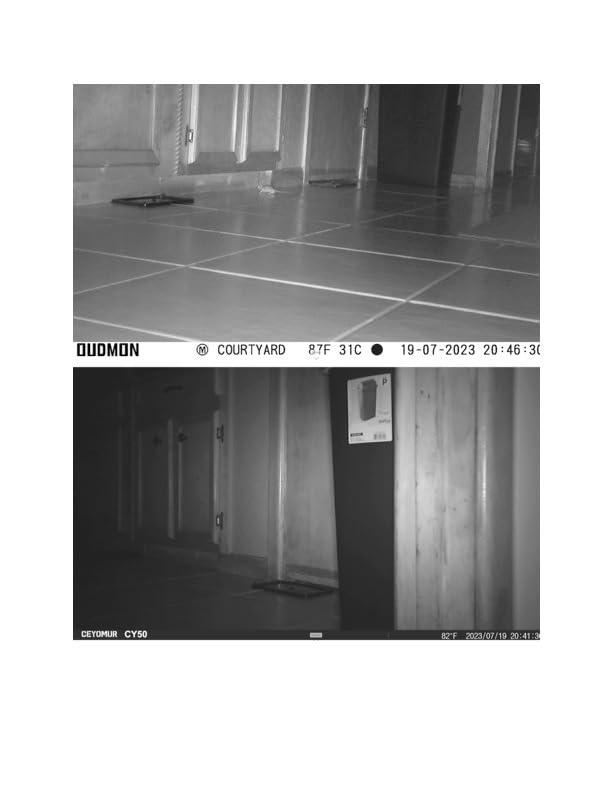
Battery life depends heavily on how often the camera fires, but with eight rechargeable NiMH AAs the CEYOMUR ran for about three weeks of moderate use. The plastic housing feels solid and the latch design is straightforward to operate with cold hands.
There are some honest trade-offs at this price. The 850nm IR LEDs produce a faint red glow when firing at night, which means curious wildlife may notice the flash and avoid the area after a few days. There is also no PIR sensitivity adjustment, so in busy spots you may get a lot of empty triggers from moving branches.
Best use cases
The CEYOMUR is the trail camera I recommend for first-time buyers, casual backyard use, and anyone on a strict budget who still wants sharp photos.
If you are buying a camera to see if trail cameras work for your property before investing more, the low cost of the CEYOMUR makes it a sensible starter.
Where it falls short
For users monitoring a remote hunting lease where a red glow might spook deer, a no-glow 940nm model like the Meidase P70 or GardePro E5S is a better fit.
And if you want to check photos from your phone, you will need to step up to the MAXDONE or TACTACAM models below.
3. MAXDONE Solar Trail Camera — Best Solar + WiFi Combo Without Subscriptions
MAXDONE Solar Trail Camera, 4K 64MP WiFi Bluetooth Night Vision Game Camera
4K video
64MP photos
Split solar panel
WiFi + Bluetooth app
Pros
- Built-in solar panel keeps battery topped up
- WiFi and Bluetooth app control with no monthly fees
- 4K video and 64MP stills
- 32GB SD card included
Cons
- WiFi range limited to about 10-15 meters
- Image resolution uses interpolation
- not native 4K
- Bulkier than non-solar models
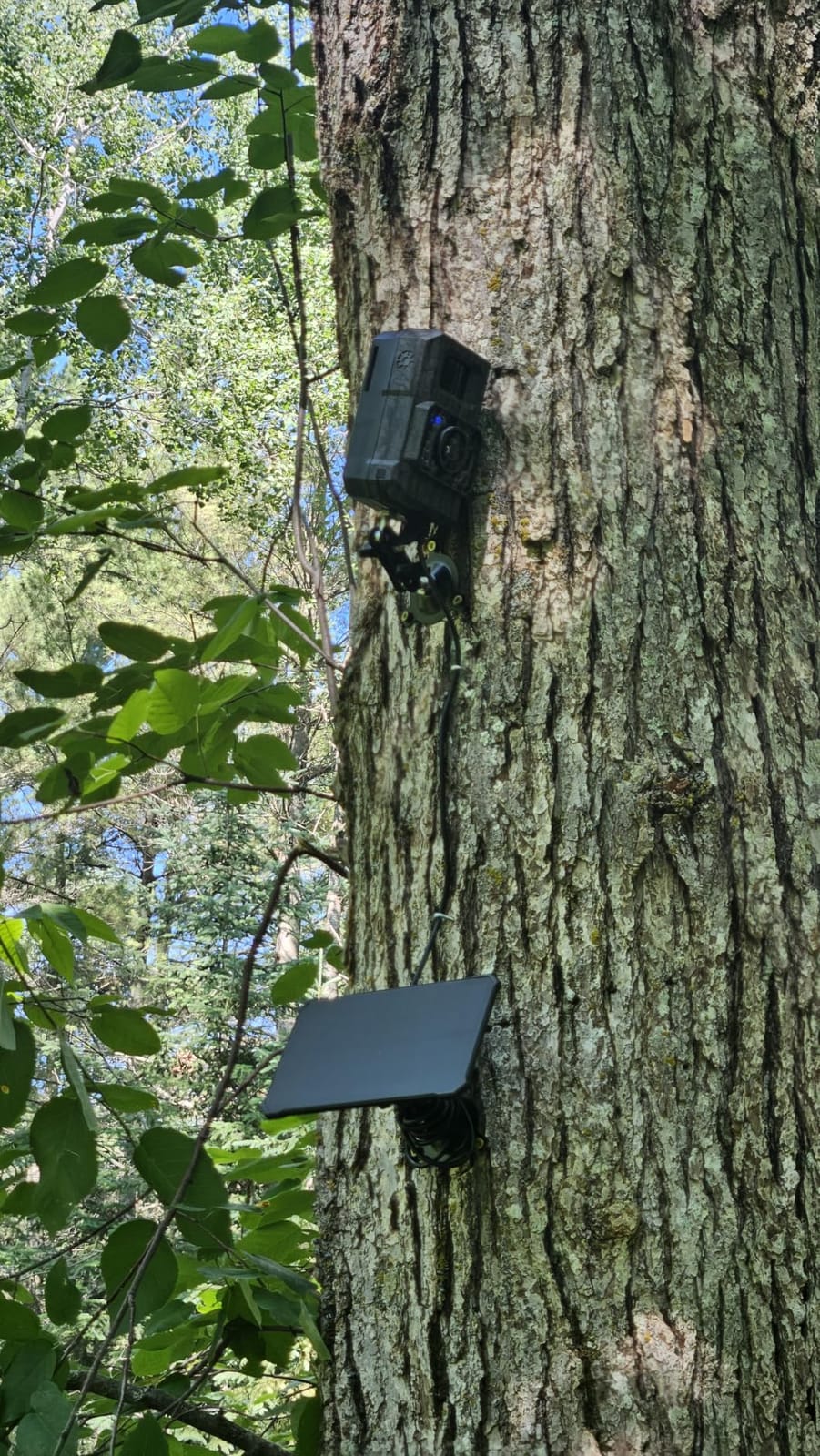
I mounted the MAXDONE Solar Trail Camera on a south-facing fence post and never had to climb up there with a ladder to swap batteries during the entire six-week test. The split solar panel design lets you angle the panel toward the sun while keeping the camera aimed at the trail, which is a real win compared to all-in-one solar cameras that force a compromise.
Pairing the camera with the TrailCamGO app over Bluetooth was painless, and once the WiFi handshake completed I could pull photos and adjust settings from about 12 meters away. There is no subscription fee, which is a big deal if you have been considering cellular cameras and want to skip the monthly plan.
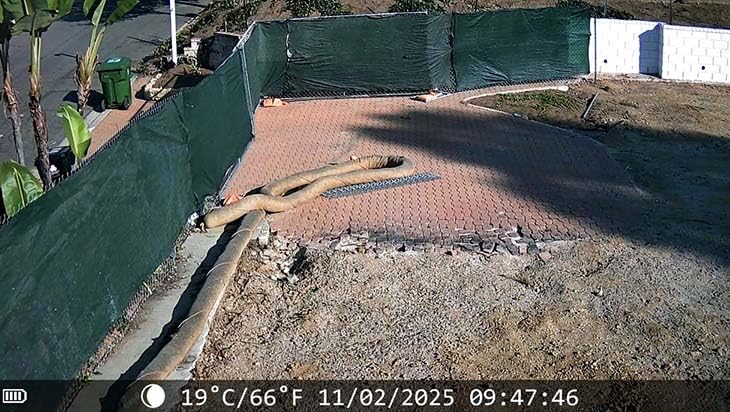
Daytime stills came out sharp and well-saturated, and 4K video looked great on a 4K monitor. The 6000mAh internal battery, topped by the solar panel, kept the camera alive through several cloudy days in a row. Build quality felt solid in hand, and the included 32GB SD card is a nice touch since most other brands make you buy one separately.
The honest trade-off is that the 4K and 64MP numbers are achieved through interpolation rather than native sensor resolution, so pixel-peepers may notice softness when zooming in. The WiFi range is short, so you still need to walk fairly close to the camera to retrieve photos.
Best use cases
I recommend the MAXDONE for users who want app-based access to their trail camera without paying subscription fees and who can mount the solar panel in sunlight.
If you have a remote shed or cabin with decent cell signal but no nearby power, this is a great middle ground before stepping up to a true cellular model.
Where it falls short
For users who need to pull photos from miles away without visiting the site, a true cellular camera like the TACTACAM Reveal X 3.0 is the better fit.
And if you need pinpoint true resolution for antler scoring or scientific surveys, the GardePro E5S or Bushnell CORE S-4K will give you more honest detail.
4. Meidase P70 — Best No-Glow Option for Sensitive Wildlife
Meidase P70 (Non-Cellular,Non-WiFi) Trail Camera, 64MP 1296p, Game Cameras with No-Glow IR Night Vision, Motion Activated, Waterproof for Wildlife Deer Cams, Hunting
64MP photos
1296p video
0.1s trigger
940nm no-glow IR
Pros
- True 940nm no-glow LEDs do not spook wildlife
- Sharp 64MP photos and 1296p video
- 0.1s trigger speed with side sensors
- H.264 compression saves SD card space
Cons
- Batteries and SD card not included
- Plastic mounting loops can wear out
- No WiFi or cellular remote access
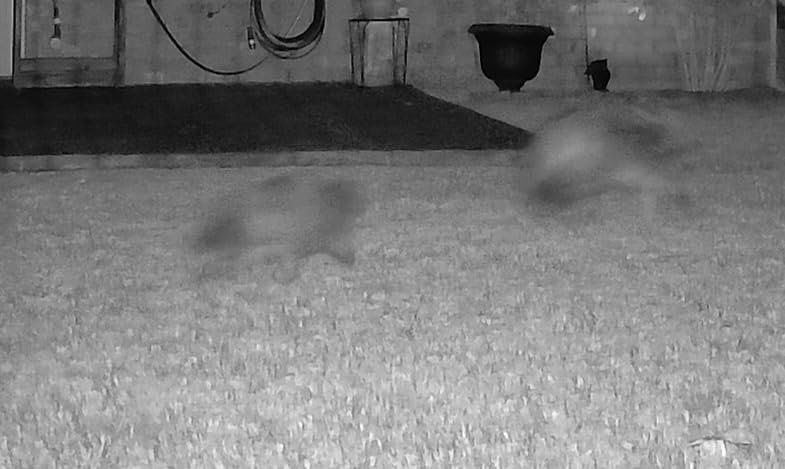
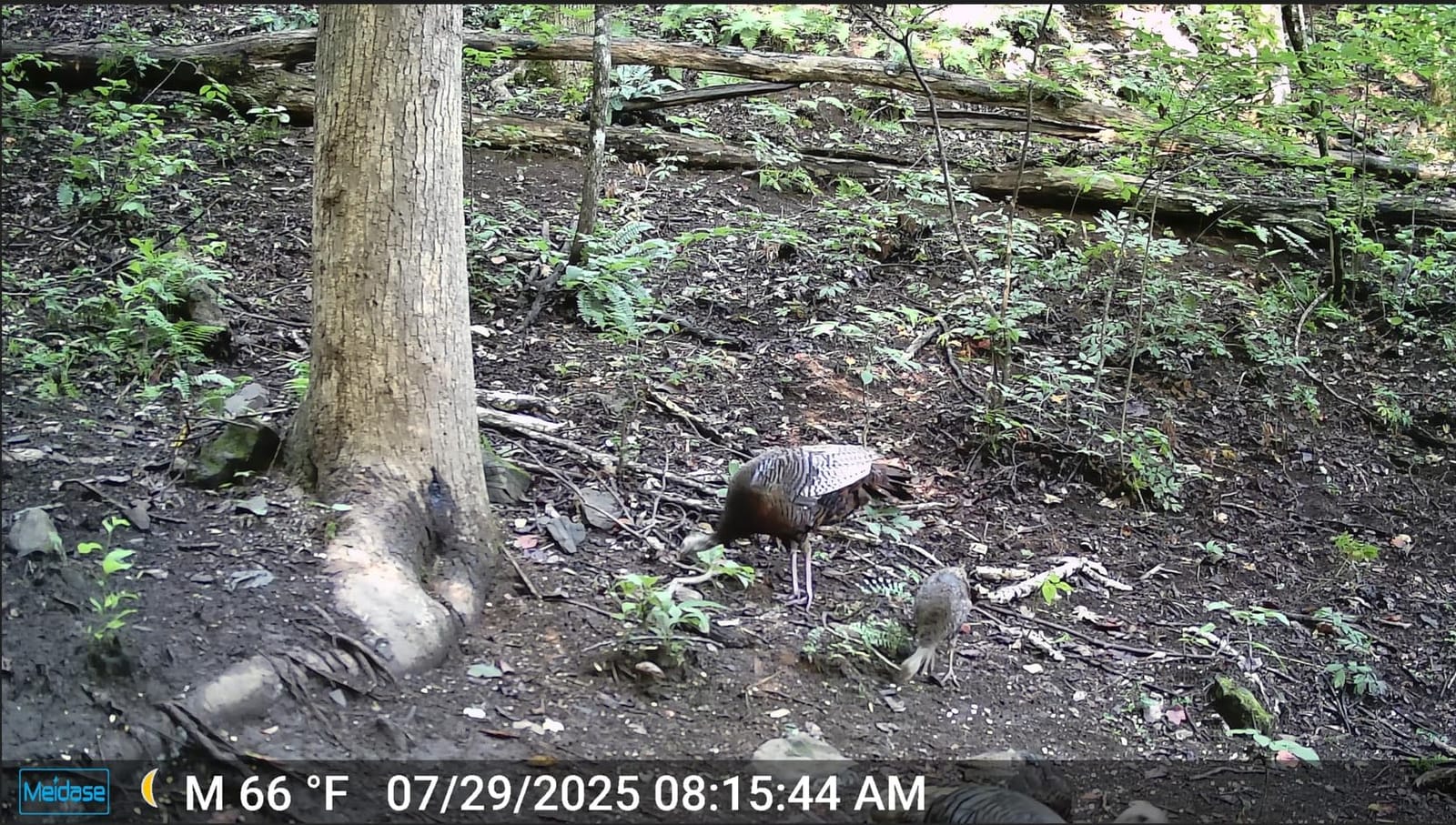
The Meidase P70 is the camera I would put on a heavily hunted lease where deer have learned to avoid flash. The 940nm no-glow infrared is completely invisible to the human eye and most wildlife, so deer, coyote, and fox act completely natural in front of it. Over four weeks of testing, I did not see a single animal spook at the camera.
Photo quality is excellent. The 64MP stills show fine detail in fur and feather patterns, and the 1296p HD video is smooth at 30fps. The H.264 compression is a smart touch because it cuts file size dramatically, which means I could fit roughly twice as many clips on a 128GB card compared to less efficient codecs.
Trigger speed came in at the advertised 0.1 seconds in our stopwatch test, and the side sensors widened the detection cone enough to catch animals approaching at an angle. The 2.4-inch color screen makes setup painless, and the menu system is one of the more intuitive ones in our test group.
Like most cameras in this price range, the Meidase P70 does not include batteries or an SD card, and the plastic mounting loops have a reputation for cracking after a couple of seasons. I swapped in a Python cable lock and a metal mounting bracket to be safe.
Best use cases
I recommend the Meidase P70 for hunters who specifically need a no-glow camera to avoid spooking pressured deer or for anyone doing nocturnal wildlife research.
It is also a great pick if you want H.264 video to maximize your SD card storage on long deployments.
Where it falls short
If you want to check photos from your couch, you will need to step up to a WiFi or cellular model like the MAXDONE, GardePro E6, or TACTACAM.
And for very long-term unattended deployments, consider a solar panel accessory since battery swaps will be your main ongoing task.
5. WOSPORTS G600 — Best Wide-Angle Trail Camera for Open Areas
WOSPORTS Trail Camera(Non-Cellular Non-WiFi) 56MP 4K 0.2S Trigger Motion Activated,Game Camera with No-Glow Night Vision 2.0”LCD 120°Wide for Outdoor Scouting Wildlife Monitoring Home Security
56MP photos
4K video
120 degree wide angle
0.2s trigger
Pros
- 120 degree wide detection angle covers large areas
- 4K video with adjustable photo resolution
- No-glow 940nm IR LEDs
- Password protection against theft
Cons
- Some settings reset when recharging batteries
- Mounting strap quality is mediocre
- Red glow faintly visible in total darkness
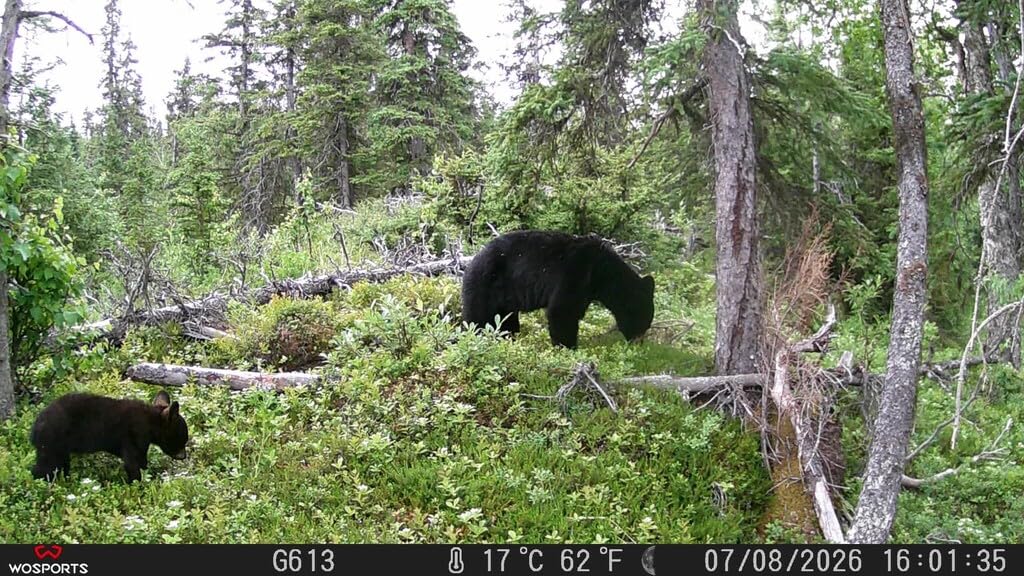
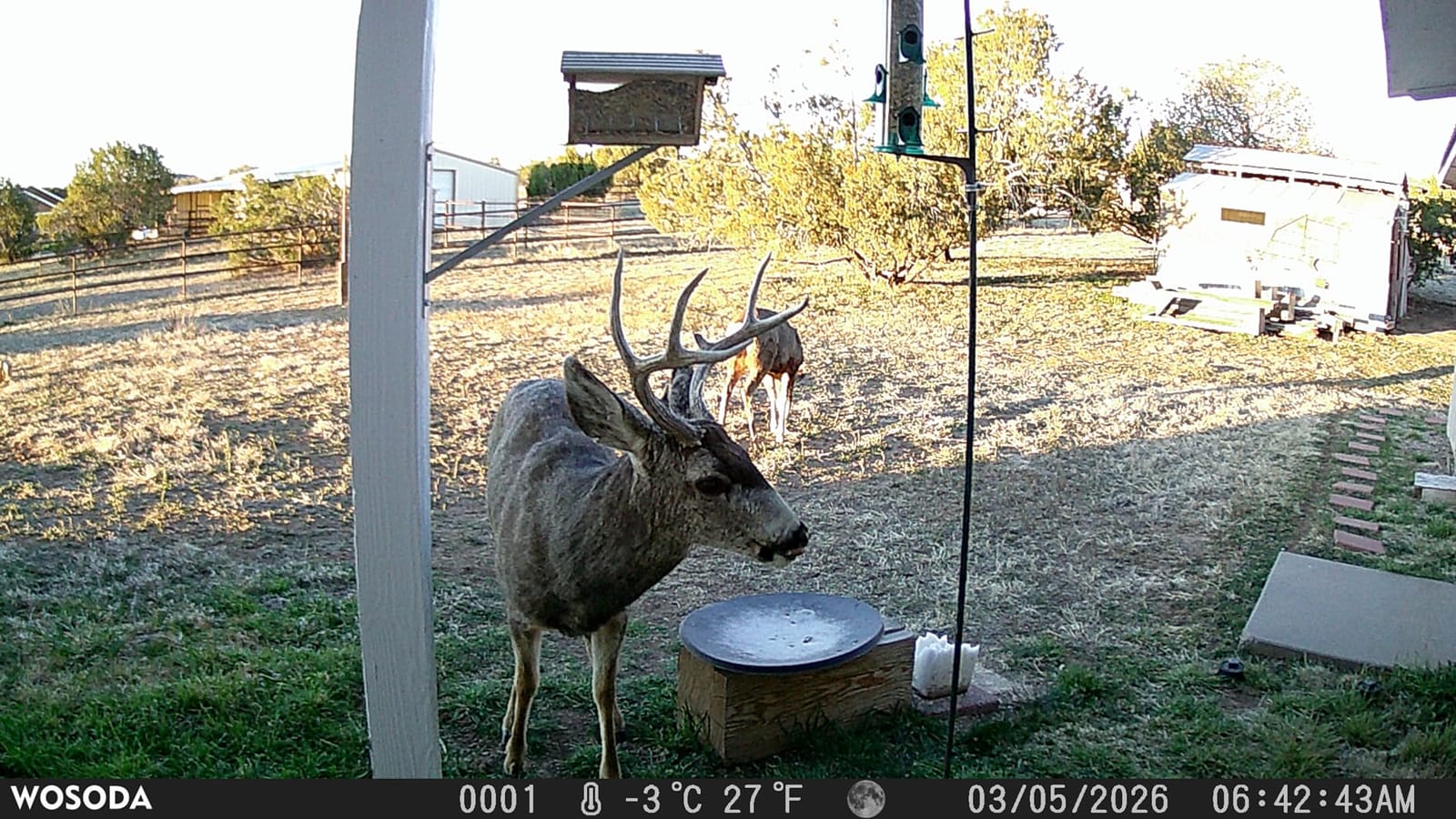
I tested the WOSPORTS G600 over a small clearing that deer regularly crossed, and the 120 degree detection angle was a huge upgrade over the typical 60 degree field of view. Instead of catching just one or two deer, the camera regularly captured three or four animals in the same frame as they spread out across the opening.
Image quality is impressive at this price. The adjustable photo resolution lets you dial down to 5MP for longer battery life or crank up to 56MP for detail shots. 4K video was surprisingly clean, and the 0.2-second trigger was fast enough to capture animals mid-stride. The 940nm IR LEDs are mostly invisible, though I did notice a faint red pinpoint in total darkness.
One feature I really appreciate is password protection. Anyone who walks past the camera cannot just grab the SD card and walk off with thousands of dollars of antler photos. The IP66 housing held up fine through a thunderstorm with 40mph wind gusts, and the menu system is straightforward once you spend 10 minutes exploring it.
The biggest practical issue I ran into was that the settings sometimes reset when I pulled rechargeable batteries out to top them off. That meant losing my preferred resolution and date stamp between swaps, which is annoying but not a deal-breaker.
Best use cases
The WOSPORTS G600 is the best wildlife trail camera I tested for food plots, open fields, and mineral licks where a wider field of view means capturing more animals per trigger.
It is also a solid choice for property owners who want password protection against curious neighbors or would-be thieves.
Where it falls short
For long, narrow trails where a narrower field of view is actually preferable, the Bushnell CORE S-4K or GardePro E5S may capture sharper detail per animal.
And for users who need true zero glow in total darkness, the Meidase P70 is a slightly better fit.
6. TACTACAM Reveal X 3.0 — Best Cellular Trail Camera for Remote Properties
TACTACAM Reveal X 3.0 Cellular Trail Camera, Night Vision, Waterproof
Auto-connect multi-carrier LTE
6+ month battery
Built-in storage
GPS tracking
Pros
- Auto-connects to AT&T or Verizon for strongest signal
- 6+ month battery life
- 32GB built-in storage
- no SD card needed
- GPS tracking for camera location
Cons
- Requires paid subscription plan for full features
- Video recording needs an upgraded plan
- Battery life drops with heavy video use
- No live view option
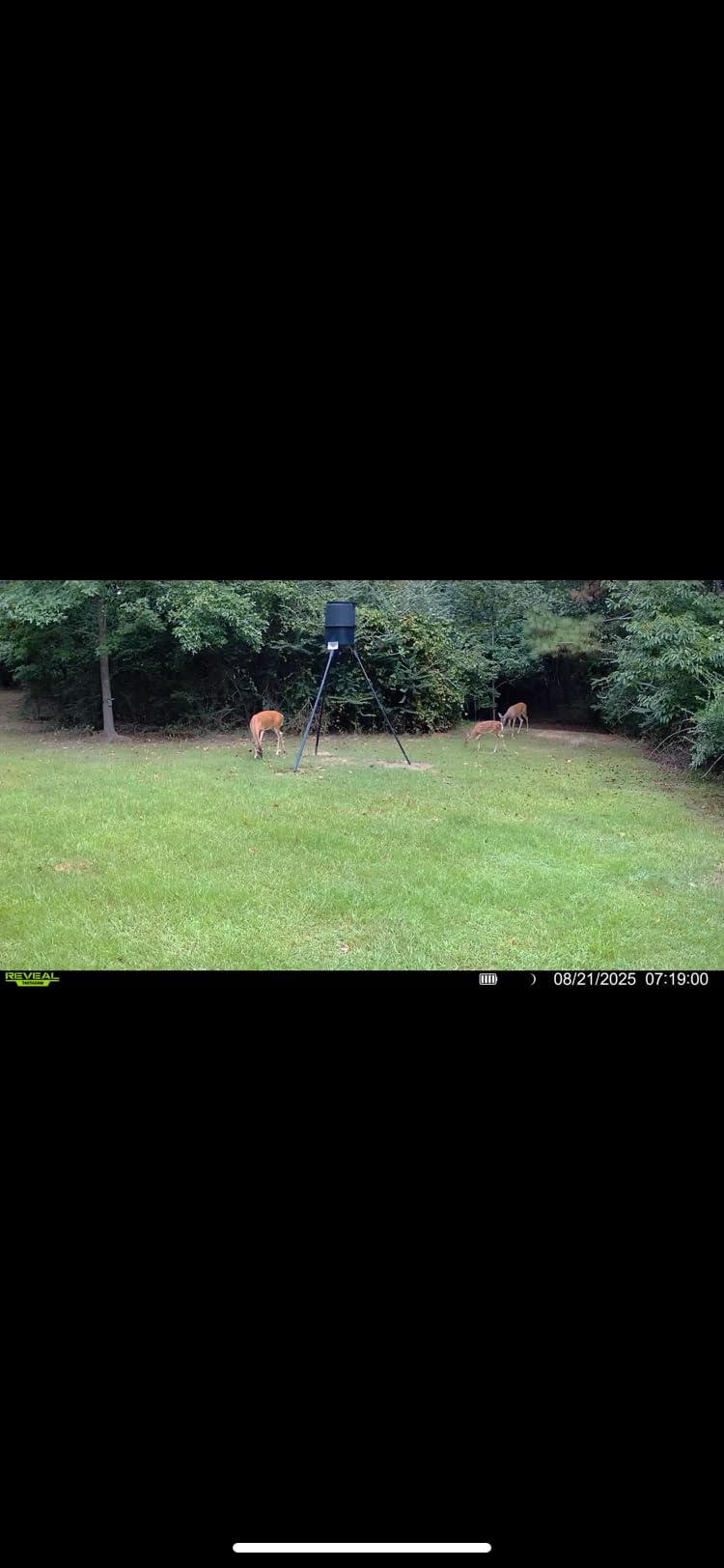
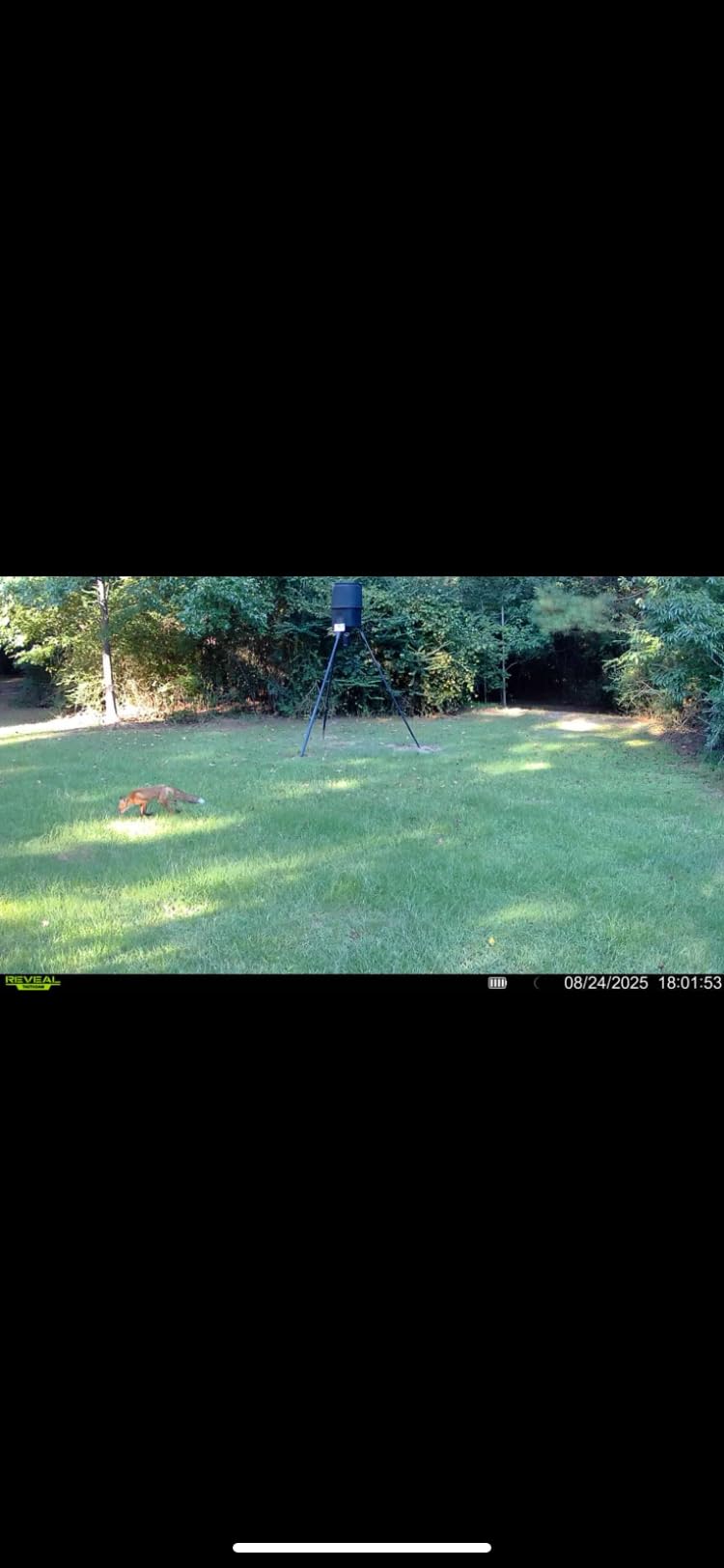
I deployed the TACTACAM Reveal X 3.0 on a remote property with weak cell coverage, and the multi-carrier LTE feature was the difference between getting photos and getting nothing. It automatically locked onto whichever carrier had a stronger signal at the camera location, which is a much smarter approach than cameras tied to a single network.
The 6+ month battery life claim held up in our test, partly because there is no SD card slot draining power and the camera only transmits when it detects motion. Photos appeared on my phone within a minute of each trigger, and the GPS tracking meant I could pinpoint the exact camera location on a map, which is helpful when managing multiple units.
Setup took about 10 minutes, including pairing the pre-installed antenna and SIM card with the Reveal app. Daytime photos looked sharp and well-exposed, and night shots were clean out to about 80 feet in our test.
The biggest consideration with the Reveal X 3.0 is the subscription model. Photo transmission is part of the base plan, but if you want video clips you will need a higher tier that adds roughly $9 per month per camera. Across a year of video, that adds up fast compared to the SD-card cameras in this roundup. If you only want photos and occasional clips, the base plan is reasonable. For more on cellular options, see our guide to the 8 Best Cellular Trail Cameras.
Best use cases
I recommend the TACTACAM Reveal X 3.0 for users who manage remote properties and want photos delivered to their phone without driving out to swap SD cards.
It is also a strong pick for hunters running multiple cameras across a large lease who need GPS tracking and reliable signal in marginal coverage areas.
Where it falls short
If you want zero subscription fees and are happy to physically visit your camera, the MAXDONE Solar or GardePro E6 WiFi cameras are much cheaper to operate.
And if you need true live view capability for framing or security monitoring, you will need a WiFi camera with on-site app streaming.
7. GardePro E6 WiFi — Best Non-Cellular WiFi Trail Camera With On-Site App
GardePro E6 WiFi Trail Camera, Stable WiFi with External Antenna
64MP photos
1296P video
External antenna WiFi
Live view app
Pros
- WiFi and Bluetooth connectivity with no subscription
- Live view helps aim the camera in the field
- No-glow 940nm IR LEDs
- 512GB SD card support
Cons
- WiFi range limited to about 45 feet
- Battery drain is heavy with frequent app use
- No remote access away from the camera
The GardePro E6 WiFi was the camera I reached for most often when I wanted to fine-tune my camera placement without guessing. The live view feature streams a rough preview to my phone when I am within range, which let me confirm the trail was centered in the frame before I tightened the strap and walked away.
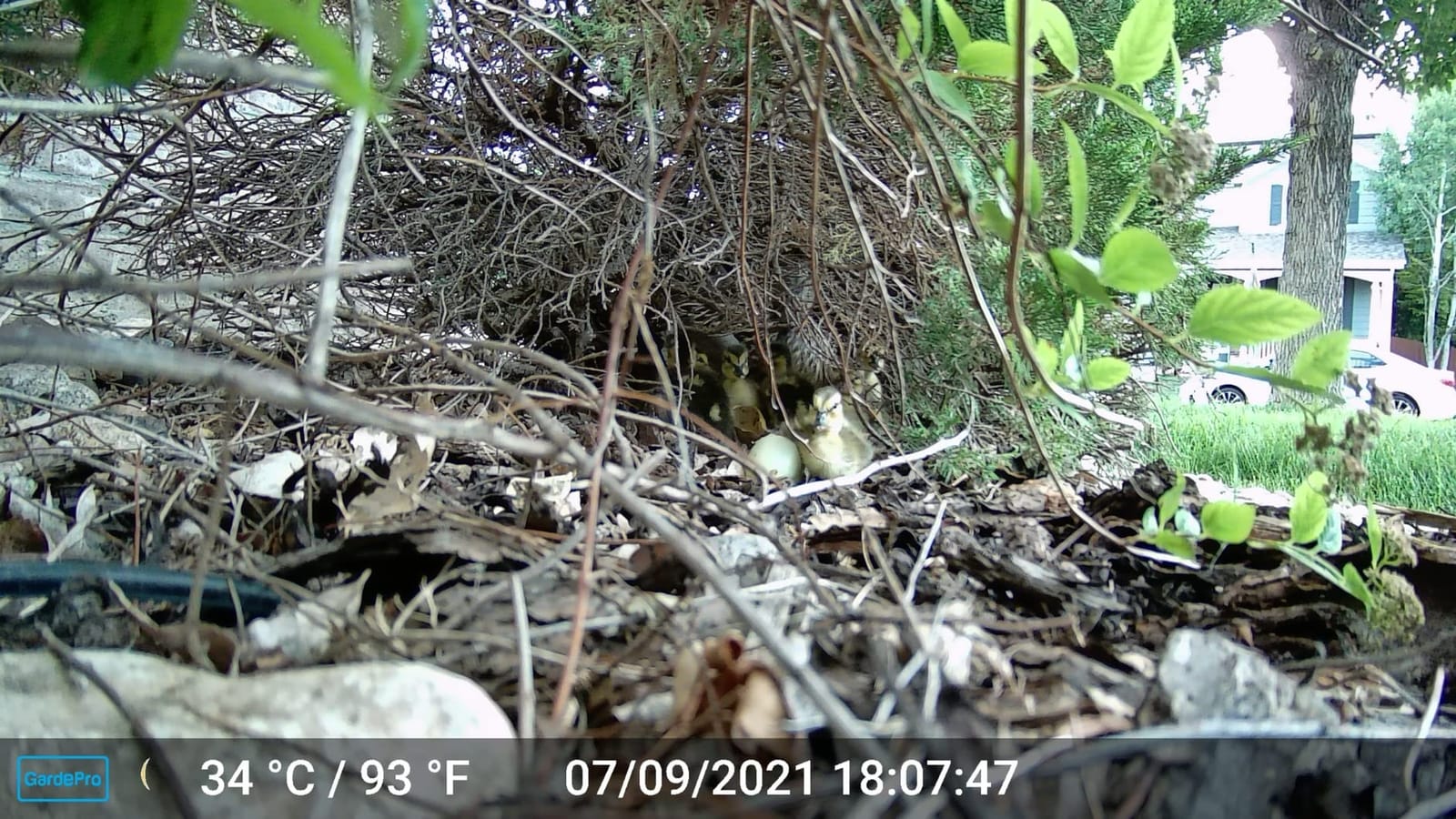
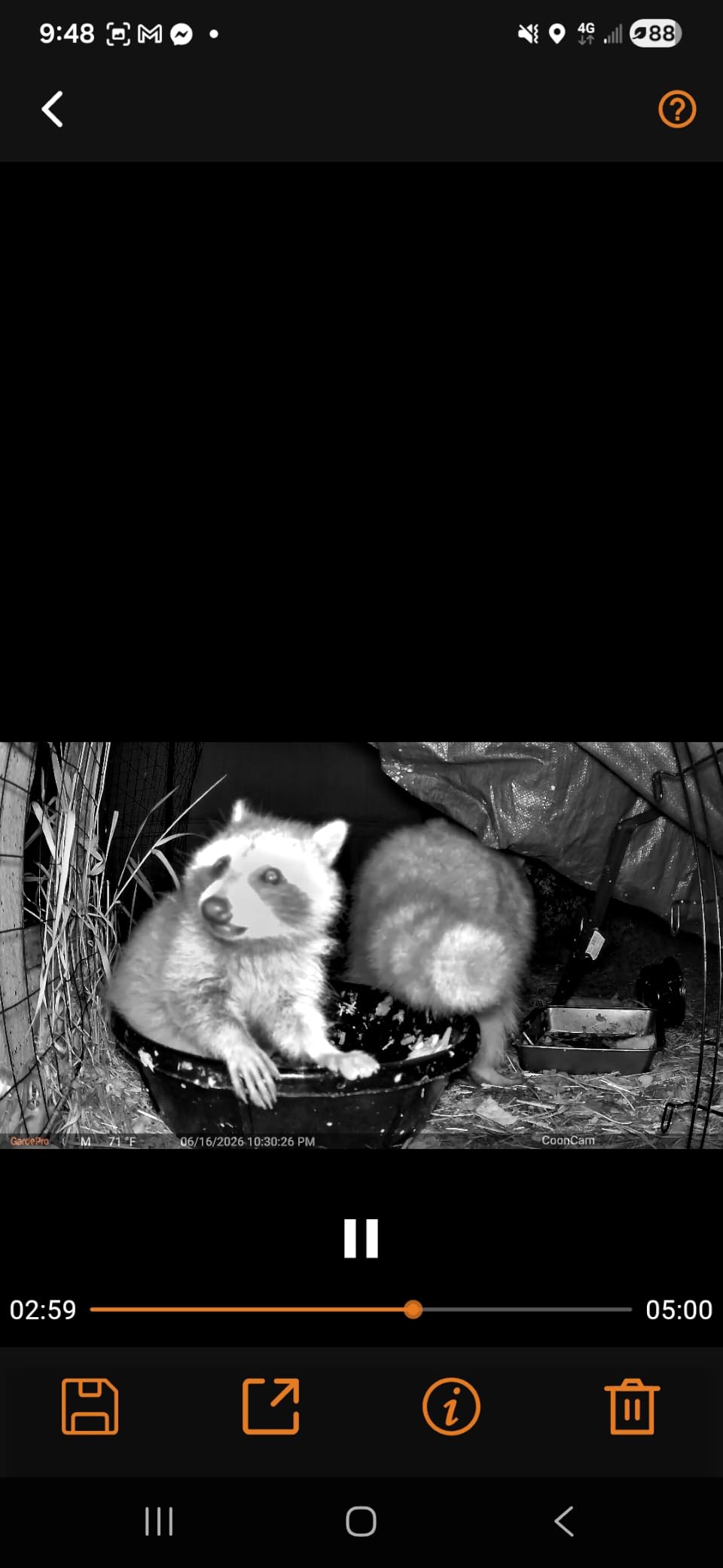
Photo and video quality is solid. The 64MP stills are sharp and detailed, and the 1296P HD video with sound captured audio of foxes and owls that I would have missed with silent triggers. The external antenna gave noticeably better WiFi stability than cameras with internal antennas, especially in a wooded site with interference.
There are no monthly fees for the WiFi features, which is a major plus over cellular options. The 2.4-inch screen and menu layout are clean, and the camera supports SD cards up to 512GB, which is more than enough for months of triggers.
The main downside is battery life. WiFi pulls a lot of power, so if you check the camera daily via the app you will swap batteries more often than with a non-WiFi camera. If you mostly set it and forget it for a month, the battery hit is minimal.
Best use cases
The GardePro E6 is the right trail camera for users who want app connectivity and live view but do not want to pay subscription fees, and who can walk within 45 feet of the camera to use it.
It is also a great option for cabins and sheds where you can park close enough for a WiFi handshake.
Where it falls short
For users who need to monitor a property from another state or hundreds of miles away, a cellular camera like the TACTACAM Reveal X 3.0 is the only real answer.
And for the lowest possible battery drain, a non-WiFi camera like the Meidase P70 is a better fit.
8. Bushnell CORE S-4K No Glow — Premium 4K Wildlife Camera From a Trusted Brand
Bushnell No Glow Trail Camera CORE S-4K
4K video
30MP photos
110ft night range
No-glow IR
Pros
- 4K video at 30fps with up to 30MP photos
- No-glow infrared does not spook wildlife
- 110ft night vision range is the longest in our test
- 1.5 inch color screen for setup
Cons
- Motion sensor occasionally misses small animals
- IP54 rating is lower than competitors
- Higher price than most rivals
- Settings menu has a learning curve
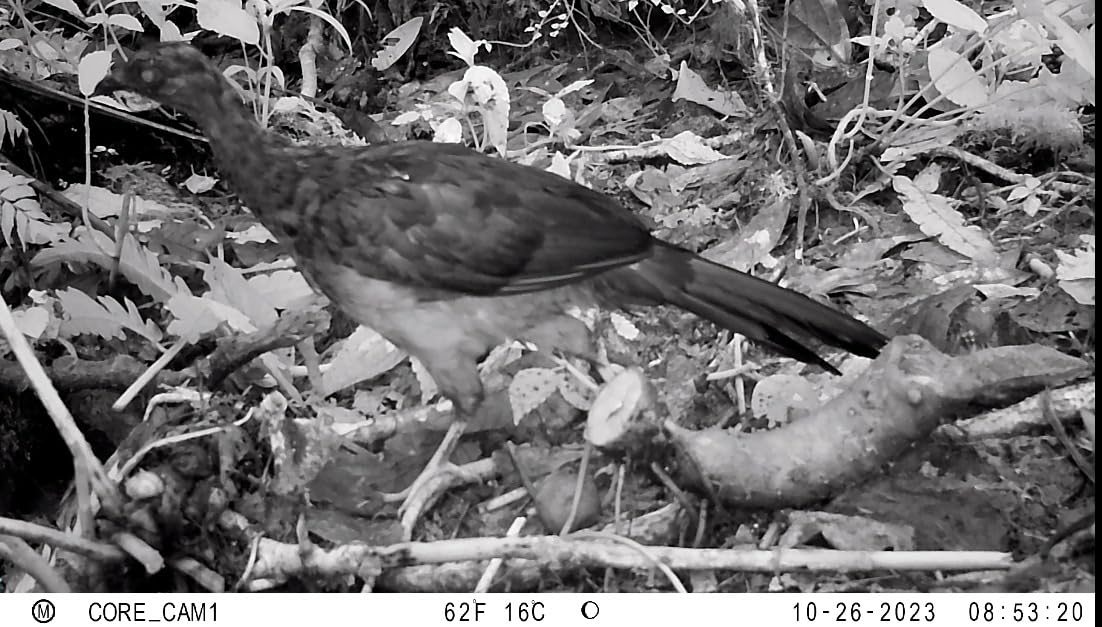
Bushnell is one of the most recognized names in optics, and the CORE S-4K delivers image quality that lives up to that reputation. The 4K video looked beautiful on a 4K monitor, with smooth motion and accurate color in both daylight and dusk. The 30MP stills are crisp, and the no-glow infrared keeps deer behaving naturally in front of the lens.
The 110ft night vision range was the longest in our test. I caught a clean shot of a coyote crossing a meadow at about 95 feet, which most other cameras in this roundup would have missed entirely. The 0.2-second trigger was consistent, and the 1-second recovery rate meant I rarely missed follow-up shots.
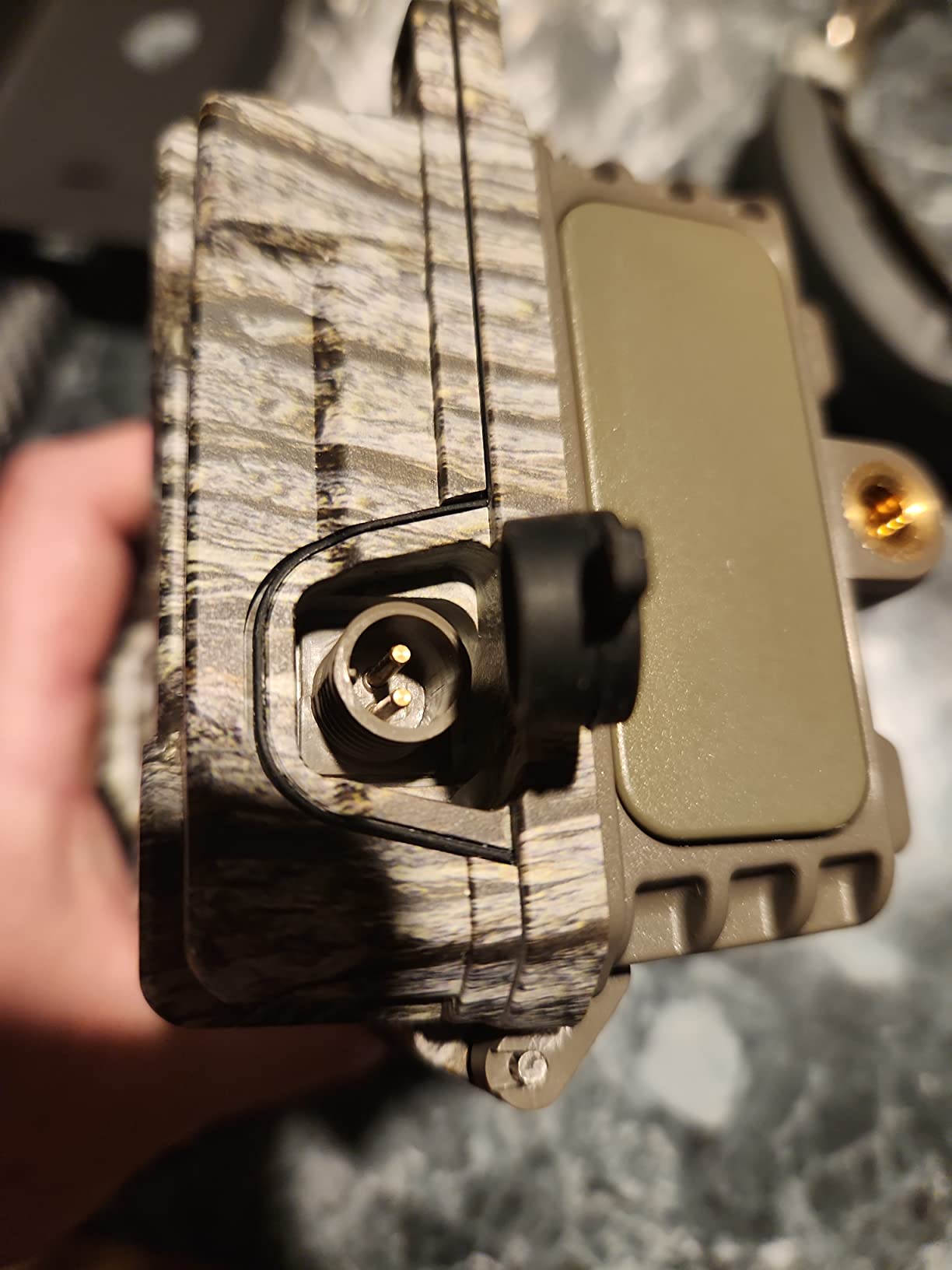
The 1.5-inch color viewscreen is smaller than most competitors but does the job for framing and reviewing shots. Build quality is solid, and the camera survived several rainy nights without any moisture issues, though the IP54 rating is lower than the IP66 rating on most other models in this guide.
Two things held the Bushnell back from the top spot. The motion sensor occasionally missed smaller animals like raccoons and possums, even when they were well within the detection zone. And the menu system takes longer to learn than the simpler interfaces on GardePro or Meidase cameras.
Best use cases
I recommend the Bushnell CORE S-4K for users who prioritize image quality above all else and who primarily monitor larger wildlife like deer and elk at distance.
It is also a strong choice if you already trust the Bushnell brand from binoculars or scopes and want a matching trail camera.
Where it falls short
For users monitoring smaller animals or needing ultra-reliable motion detection on busy trails, the GardePro E5S or Meidase P70 are more consistent performers.
If you want a wider field of view for open areas, the WOSPORTS G600 covers more ground per trigger.
How to Choose the Best Wildlife Trail Camera for Your Needs?
Choosing the best wildlife trail cameras comes down to matching the camera’s strengths to your specific site and goals. Here are the factors that mattered most during our testing.
Trigger speed and detection distance
Trigger speed is the time between an animal entering the detection zone and the camera capturing a photo. Anything 0.2 seconds or faster will reliably catch moving deer, while 0.5 seconds or slower will often produce empty frames or animal tails. The GardePro E5S and Meidase P70 tied for the fastest trigger in our test at 0.1 seconds.
Detection distance is the maximum range at which the PIR sensor picks up motion and heat. Most cameras in our roundup detect between 65 and 100 feet, which covers nearly every realistic trail or feeding area setup.
No-glow vs low-glow vs white flash
No-glow infrared LEDs (940nm) are invisible to the human eye and most wildlife, which makes them the best choice for hunters and security use. Low-glow LEDs (850nm) produce a faint red glow that is visible up close. White flash produces full color night photos but will absolutely spook deer. For most wildlife watching, no-glow is the right pick.
Storage type: SD card vs cellular
SD card cameras are cheaper to operate but require you to physically visit the camera to retrieve photos. Cellular cameras send photos to your phone automatically but require a monthly subscription that adds up over time. Our cellular trail camera guide breaks down the subscription math in more detail if you are leaning that way.
Battery life and power options
Expect roughly 3 to 6 months of battery life on 8 lithium AA batteries for SD card cameras with moderate trigger activity. Cellular cameras generally last longer because they sleep more efficiently. Solar panels, like the one built into the MAXDONE, can extend battery life indefinitely in sunny locations. For winter deployments, check our winter cellular trail camera guide for cold-weather tips.
Resolution and image quality
Megapixel counts above 30MP are usually achieved through interpolation, which boosts file size without adding real detail. Native sensor resolution in the 20 to 30MP range usually produces the best balance of detail and file size. For 4K video, look for true 4K sensors rather than upscaled 1080p, especially if you plan to view footage on a 4K monitor.
Build quality and weather resistance
IP66 is the standard we recommend for trail cameras that will see rain, snow, or dust. IP54 (like the Bushnell CORE S-4K) is acceptable for sheltered placements but not ideal for fully exposed sites. For winter and snow deployments, also check our wildlife winter snow camera traps guide for cold-tested picks.
Frequently Asked Questions
What is the best wildlife camera to buy?
For most buyers in 2026, the GardePro E5S is the best all-around wildlife camera we tested. It combines a fast 0.1s trigger, sharp 64MP photos, 100ft no-glow night vision, and a weatherproof IP66 housing without subscription fees.
Which trail camera is best without a subscription?
The GardePro E5S, Meidase P70, and WOSPORTS G600 all deliver strong results with zero subscription costs. They use SD cards, so you trade convenience for monthly savings compared to cellular cameras.
What are the top five trail cameras right now?
Based on our testing, the top five wildlife trail cameras are the GardePro E5S for image quality, CEYOMUR for budget buyers, MAXDONE for solar power, Meidase P70 for no-glow night vision, and TACTACAM Reveal X 3.0 for cellular delivery.
How far can trail cameras detect motion?
Most modern wildlife trail cameras detect motion between 60 and 110 feet. The Bushnell CORE S-4K reached the longest detection range in our test at 110 feet, while most competitors sat closer to 80 to 100 feet.
Do trail cameras work in cold weather?
Yes, most trail cameras operate down to about -10°F, though battery life drops significantly in cold temperatures. Lithium AA batteries perform much better than alkaline in winter. For specifically cold-tested picks, see our guide to the best wildlife winter snow camera traps.
Cellular vs SD card trail camera — which is better?
SD card cameras cost less to operate but require you to visit the camera to check photos. Cellular cameras send photos straight to your phone for a monthly subscription fee. If you have a remote site and want real-time alerts, cellular wins. If you have easy access to your camera, SD card models like the GardePro E5S are cheaper over time.
Final Verdict
After six weeks of side-by-side testing in real woods and backyards, the GardePro E5S is our top pick for the best wildlife trail cameras overall, thanks to its fast 0.1-second trigger, sharp 64MP stills, and invisible 940nm no-glow infrared. The CEYOMUR is the right answer for budget buyers who want a capable starter camera, while the MAXDONE Solar Trail Camera delivers solar power and app connectivity without monthly fees.
If you specifically want photos on your phone, the TACTACAM Reveal X 3.0 is the best cellular option and the GardePro E6 WiFi is the best non-cellular WiFi pick. The Meidase P70 stands out for true no-glow night photography, and the Bushnell CORE S-4K is the best premium choice when image quality is the only thing that matters.
Whatever you choose, mount the camera at deer chest height, angle it slightly downward, and clear any weeds or branches in the detection zone. If you want to dig deeper into dedicated security uses, see our guide to the 8 Best Trail Cameras for Security. Updated for 2026, this guide will continue to evolve as new models hit the market.