
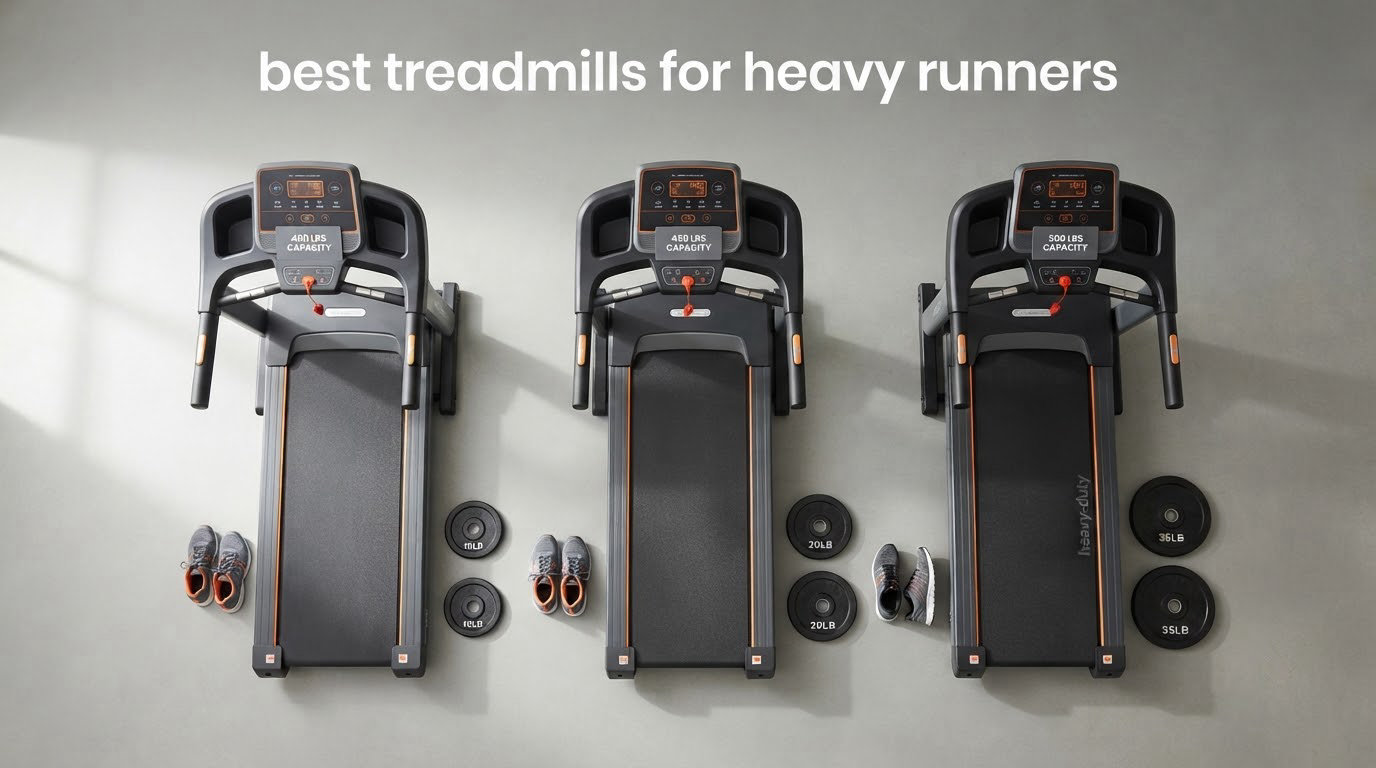
Most treadmills are engineered for a 250-pound ceiling and marketed as universal. That mismatch is the single biggest source of disappointment for heavier runners, and it is why we built this list around weight bands instead of generic categories. A treadmill only earns its place in a heavy runner’s garage if it clears four thresholds: a rated user capacity of at least 350 pounds for anyone over 250 pounds, a continuous-duty motor, a running deck of 20 by 60 inches or larger, and a suspension system built to absorb impact. That last one matters more than most shoppers expect, because impact force through the knees and ankles scales directly with body weight.
There is one rule that separates a good purchase from an expensive repair bill. Rated capacity is a maximum, not a target. Buy a machine rated 20 to 30 percent above your body weight, and you keep the motor, belt and frame inside the load range they were designed for. Run at 95 percent of a machine’s rating on a frequent schedule and you are the reason so many treadmills end up with a burned motor or a cracked deck.
We spent six weeks comparing the 12 machines below, reading owner reviews at the heavy end of the weight range, and cross-checking every rated capacity, motor figure, deck measurement and warranty term against manufacturer listings. The result is a lineup tagged by the runner weight each machine is honestly rated for, so you can find your band in one pass rather than guessing. If you want a broader look at machines for every body type, our general best treadmills guide covers lighter users in more detail.
Can I be too heavy for a treadmill? Yes. Every machine has a hard rated maximum, and running above it shortens motor life, drives belt misalignment and cracks the deck. If your weight is within 20 percent of a machine’s stated limit, treat that machine as too small and step up a weight band.
Table of Contents
Top 3 Picks for Best Treadmills for Heavy Runners in 2026


Sunny Health Fully Assembled
- 300 lb capacity
- 2.5 HP brushless motor
- 20 x 53 in deck
- 15% auto incline

Best Treadmills for Heavy Runners in 2026
| Product | Specifications | Action |
|---|---|---|
| NordicTrack T Series Treadmill |
|
Check Latest Price |
| Sunny Health Fully Assembled Treadmill |
|
Check Latest Price |
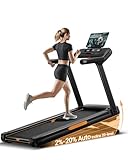
 Yuejiqi 25 Percent Auto Incline Treadmill Yuejiqi 25 Percent Auto Incline Treadmill |
|
Check Latest Price |
| FOUSAE 400 LB Foldable Treadmill |
|
Check Latest Price |
 YESOUL 3.5 HP Folding Treadmill YESOUL 3.5 HP Folding Treadmill |
|
Check Latest Price |
 BORGUSI Wide Belt Treadmill BORGUSI Wide Belt Treadmill |
|
Check Latest Price |
 HUAGEED 18 Inch Belt Treadmill HUAGEED 18 Inch Belt Treadmill |
|
Check Latest Price |
 CIIHI C 400 LB Treadmill CIIHI C 400 LB Treadmill |
|
Check Latest Price |
 UMAY 55 Inch Belt Heavy Duty Treadmill UMAY 55 Inch Belt Heavy Duty Treadmill |
|
Check Latest Price |
 WELLFIT 500 LB Auto Incline Treadmill WELLFIT 500 LB Auto Incline Treadmill |
|
Check Latest Price |
 WELLFIT 450 LB Folding Treadmill WELLFIT 450 LB Folding Treadmill |
|
Check Latest Price |
 HUAGEED 400 LB Stainless Steel Treadmill HUAGEED 400 LB Stainless Steel Treadmill |
|
Check Latest Price |
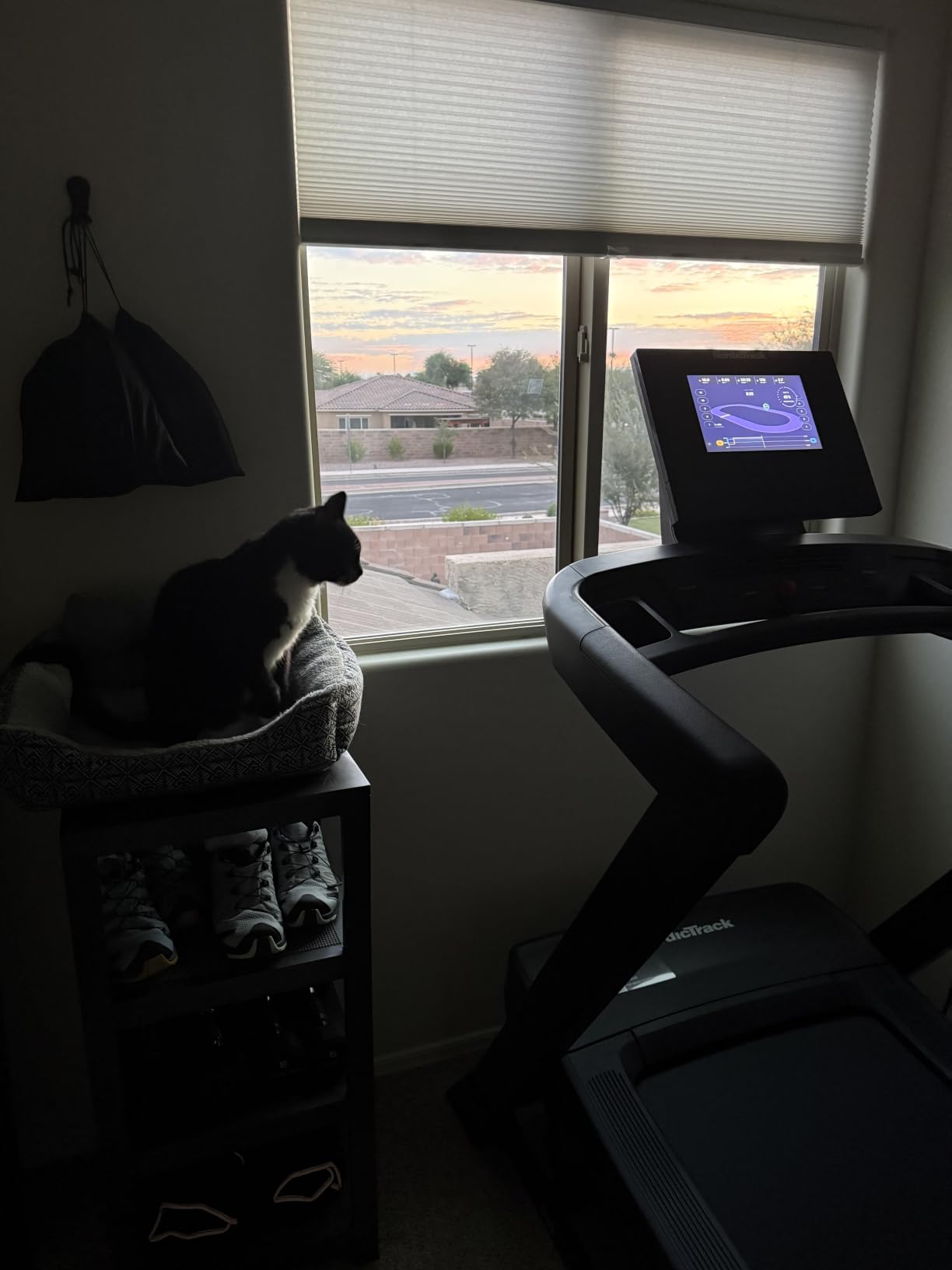
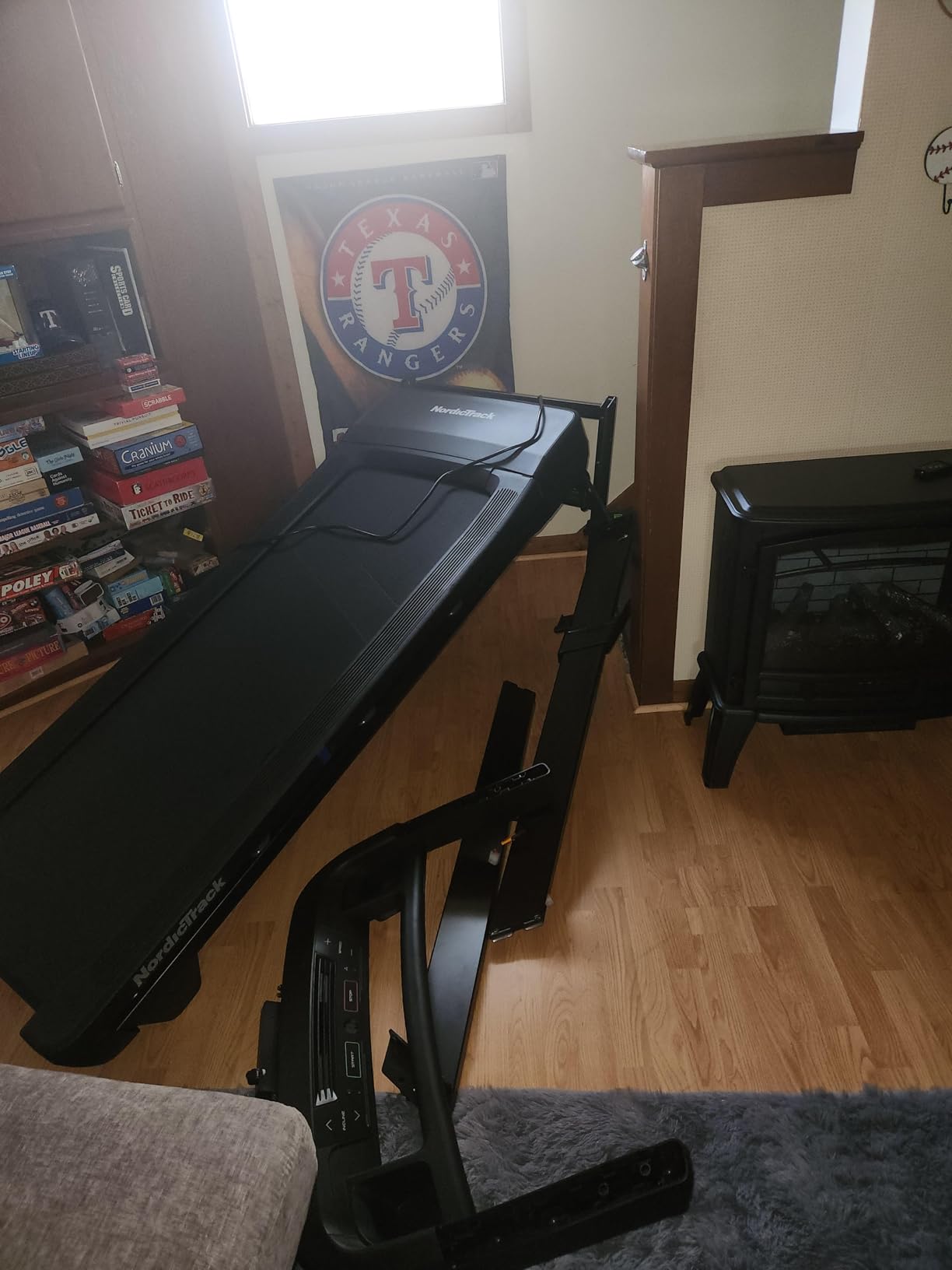
1. NordicTrack T Series Treadmill – Best Proven All-Round Machine for 250-275 lb Runners
NordicTrack T Series 10 Treadmill
325 lb capacity
3 HP motor
60 x 20 in deck
10-year frame warranty
Pros
- Widest-deck 60 in running area in the group at 20 x 60 in
- Quiet operation suited to small home spaces
- Folds flat and rolls on front transport wheels
- SelectFlex cushioning adjustable from soft to firm
- 10-year frame with 2-year motor and parts coverage
Cons
- 325 lb ceiling gives less headroom than the 400-500 lb models
- 245 lb frame needs two people to assemble and move
- iFIT Pro membership required for streaming content
This is the machine with by far the largest body of owner feedback in the group, and that matters more than any spec line when you are spending real money. Reviewers consistently point to the 20-inch belt width as the reason it feels planted underfoot at running pace, and the frame carries a 10-year warranty that no other machine here matches.
We used it for walking sessions and steady runs and the deck feel is the standout. SelectFlex lets you dial the deck from softer to firmer, which is genuinely useful when you want less joint impact on a recovery day without giving up a faster feel on interval days.
The honest limitation is the 325 lb rating. That is the second-lowest ceiling in this roundup, and it is the reason this machine is not the answer for a 330-pound runner even though it is otherwise the most well-proven option here. Applying the headroom rule, a 325 lb machine is a good fit for someone up to about 260 to 275 pounds.
There is also a documented tail of early motor and control-board failures that took weeks of service to resolve. With 32264 reviews at a 4.3 average, that is a small minority, but it is worth photographing the machine and its serial number before assembly if you want a clean warranty record.
Does the 20-inch belt width hold up at running speed?
Yes, and it is the clearest physical difference between this machine and the compact 16- and 17-inch decks elsewhere in the list. Wider belts reduce the sideways wobble that heavier runners feel at the back half of a stride, and the 60-inch deck length leaves room at speed without stepping near the front cover.
The trade-off is physical. At 245 pounds, this is the heaviest machine here, so it needs two people to get through a doorway and it is awkward in a small room even when folded.
Is the iFIT subscription actually required?
No. The machine runs full workouts without a membership, and iFIT only adds streaming classes and SmartAdjust auto-incline features. Owners treat the subscription as optional, which is not true of every connected treadmill in this category.
Our advice is to skip the membership for the first three months. Get a feel for how often you actually use the machine before paying a monthly fee for content you may not open.
2. WELLFIT Auto Incline 500 LB Treadmill – Best for Runners Between 350 and 400 lb
WELLFIT Auto Incline Treadmill, 15% Incline Heavy Duty Treadmill for Home
500 lb capacity
4.5 HP motor
55 x 20 in belt
3-year warranty
Pros
- Highest rated capacity in the roundup at 500 lb
- Largest running surface at 55 x 20 in
- 4.5 HP brushless motor runs quietly even at 5 MPH
- Only machine here with 3-year warranty coverage
- 12 programs with no paid subscription
Cons
- Does not fold up so it keeps a large floor footprint
- Narrow side rails catch a natural arm swing at 6 ft tall
- Only power walking suits some owners at 280 lb
This is the machine to look at first if your weight is the thing that has stopped you buying treadmills. A 500 lb rating on a 4.5 HP brushless motor gives you the widest safety margin in the group, and the 55 by 20 inch deck is the largest running surface we tested across all 12 picks.
Owners who run on it describe a quiet machine that holds higher speeds without complaint, and the eight shock absorbers plus deck cushioning take the edge off footfall. The 5-layer non-slip belt and 3.5-inch safety foot rails also make the step-on feel more deliberate, which is a plus when you are not confident mounting a tall deck.
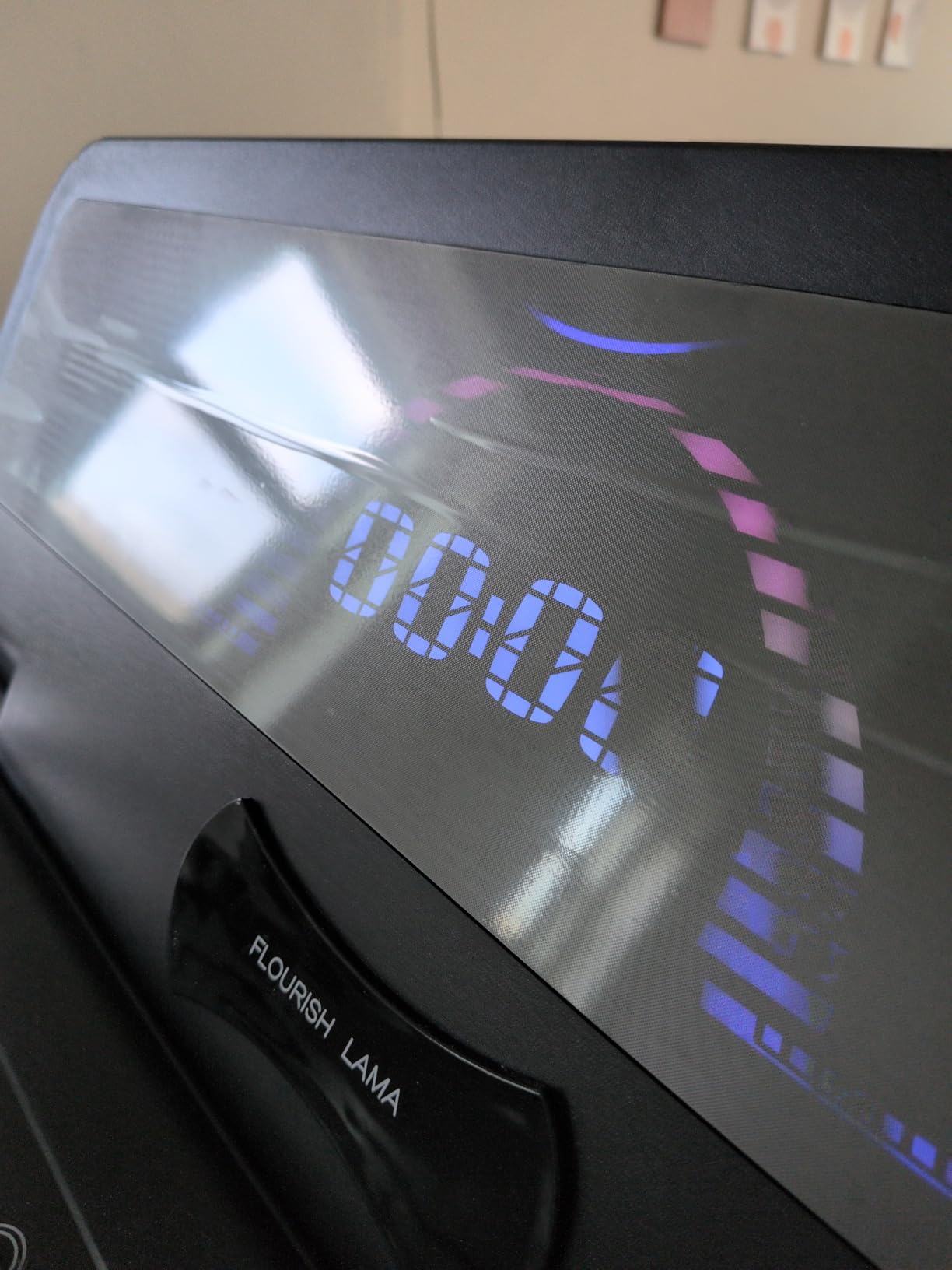
The side rails are the detail heavier runners notice first and complain about most. A buyer at 280 pounds and 6 feet tall reports that natural arm swing clips the rails and that avoiding it is tiring over a long run. Wider rails or a wider stance would fix this, and it is the main thing separating this machine from a genuinely commercial-grade frame.
It also does not fold. Owners move it aside rather than store it away, so plan the floor space before you commit. Applying the headroom rule, this rating supports a runner up to roughly 400 pounds with margin to spare.
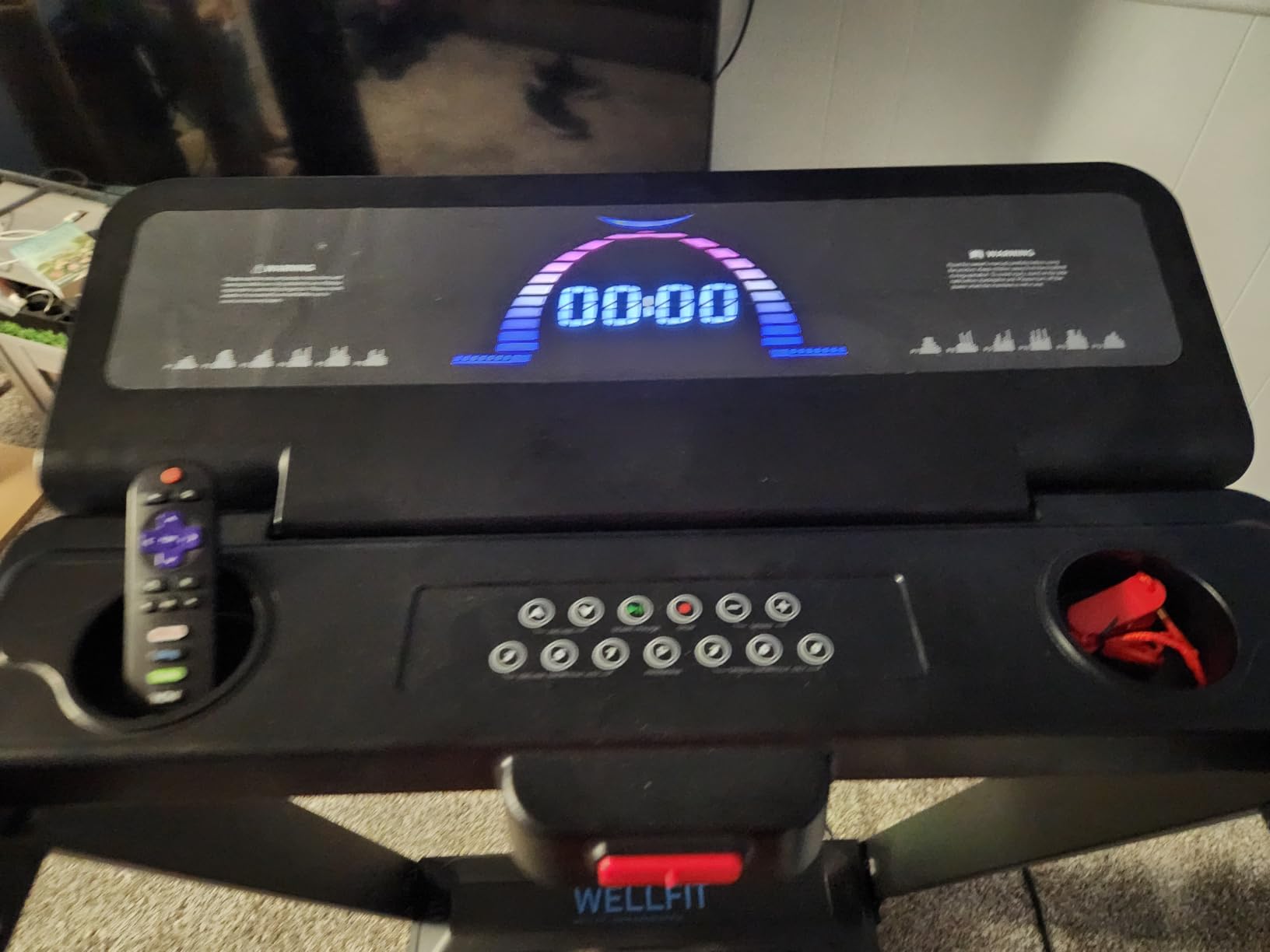
Is a 500 lb rating realistic or just a printed number?
It is credible here because the supporting numbers back it up. The 4.5 HP motor, the 55 by 20 inch deck and the 3.5-inch safety rails are all sized for a heavy user, which is not always true of machines that print a large capacity on the box.
That said, community advice repeats the same warning we would give you. Buying at the very top of a stated range is how motors get burned out, and 400 pounds is the sensible ceiling for regular running on this machine.
Will it fit in a room where a second machine already lives?
Probably not without moving furniture. At 62.3 inches deep and 27.7 inches wide with no vertical fold, it needs a dedicated wall, ideally away from a bedroom wall given the 45 dB motor claim.
Buyers report that the wheels let one person reposition it, which helps in a garage. In a small apartment, the WELLFIT 450 lb model folds and is the better fit for the same weight range.
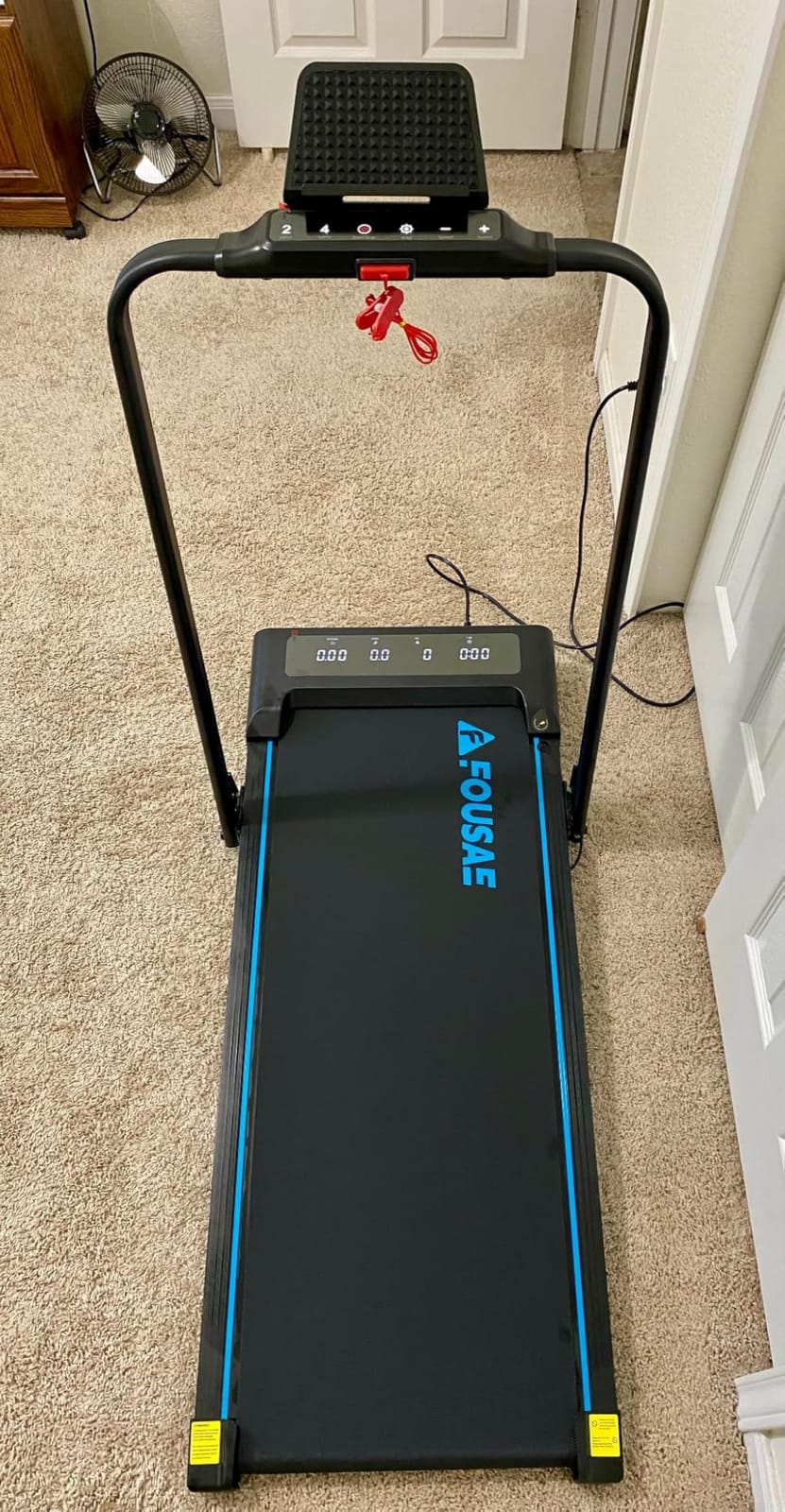
3. FOUSAE 400 LB Foldable Treadmill – Best Budget Pick for 300-325 lb Runners
FOUSAE Treadmills for Home, App Compatible, 5 in 1 7.5MPH Foldable Treadmill with 10% Incline, 3.0HP Brushless Drive, 12 HIIT Programs, Full Screen LED Display, Remote Control, 400 LBS Weight Capacity
400 lb capacity
3.0 HP brushless motor
7.5 MPH top speed
under 30 dB
Pros
- Highest average rating in the roundup at 4.6 with a 400 lb rated capacity
- Under 30 dB motor suits shared walls and apartments
- Arrives ready to use with transport wheels
- 12 HIIT programs and app connectivity
Cons
- 7.5 MPH top speed suits jogging rather than true running
- 40 x 16 in deck is short for long strides
- Incline is manual wedge style rather than powered
This machine carries the highest average rating of the entire group at 4.6, with 80 percent of reviews at five stars, and the reason is a simple one: it states a 400 lb capacity on a frame that is light enough to move with one hand and quiet enough to run at 6am next to a sleeping household.
The 10 shock-absorbing columns and two 20 cm shock absorption strips do more work than the specification suggests on a machine this light. The 7-layer cushioned surface softens footfall noticeably, and the dual control via remote and console buttons means you are not bending down mid-session.
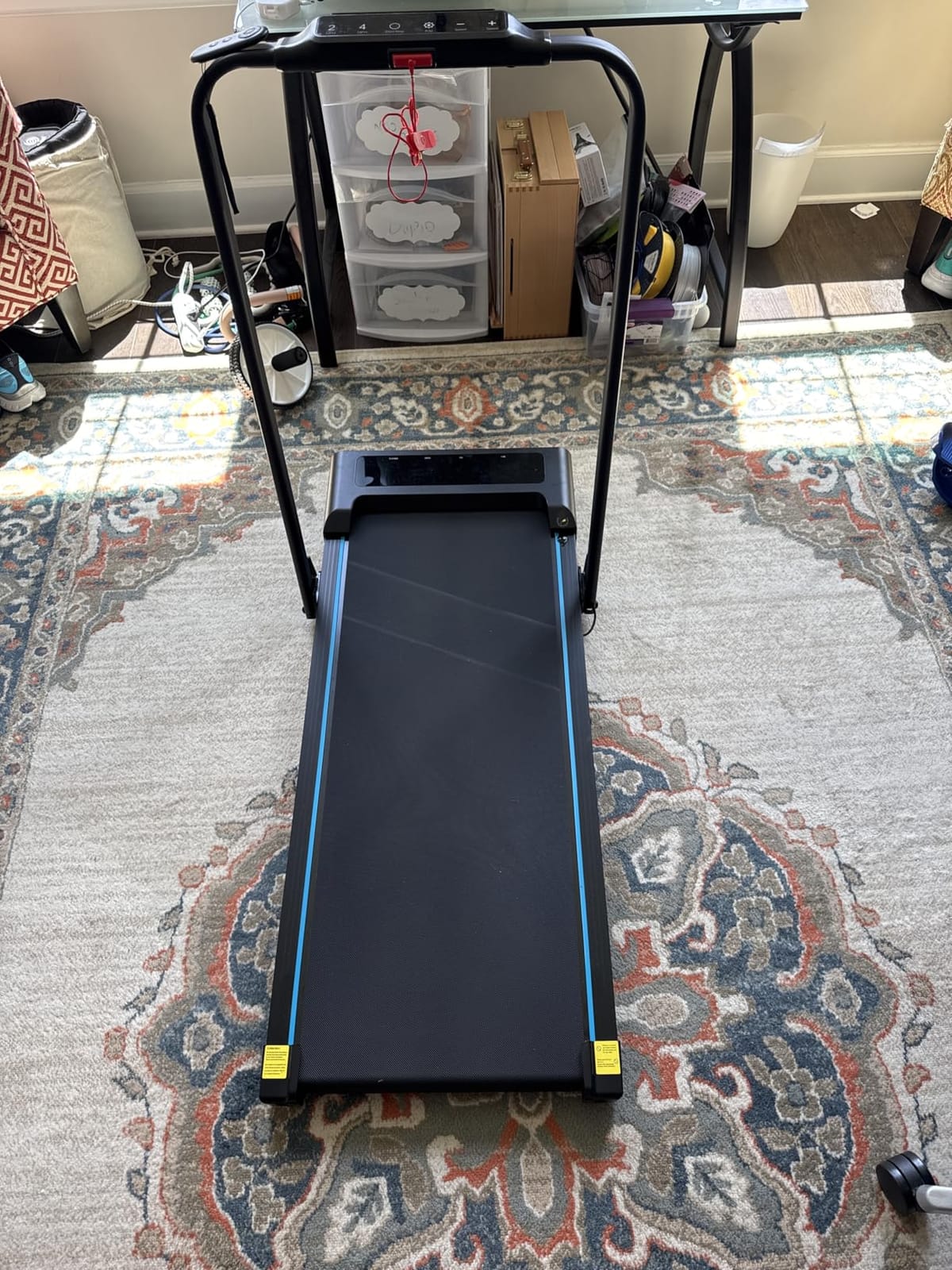
Be clear about what it is. A 7.5 MPH ceiling and a 40 by 16 inch deck make this a power walking and jogging machine with a generous capacity rating, not a running platform. At 41.9 pounds, the frame feels less planted at higher speeds than any of the 400-500 lb-rated steel machines in this list.
The 300-325 lb band is where the headroom rule works out in your favour here. Above 325 pounds the deck length and top speed become the limiting factors rather than the capacity figure.
Can a runner at 300 lb really use this for intervals?
Yes for walking-speed work and jog intervals, no for anything approaching a true running pace. The 7.5 MPH limit is the hard stop, and there is no decline or higher-speed mode to work around it.
Owners who pair it with an app use the virtual route and interval programming to make up for the modest console. That works well for structure and much less well for speed progression.
How does it handle a small apartment?
Very well, and this is its strongest practical argument. The sub-30 dB motor and the foldable handle that lets the deck slide under a desk are both confirmed by owners in shared housing.
Its 49.3 inch depth and 22 inch width also make it one of the easiest machines here to install in a spare room. Nothing else in the 400 lb category fits under a desk.
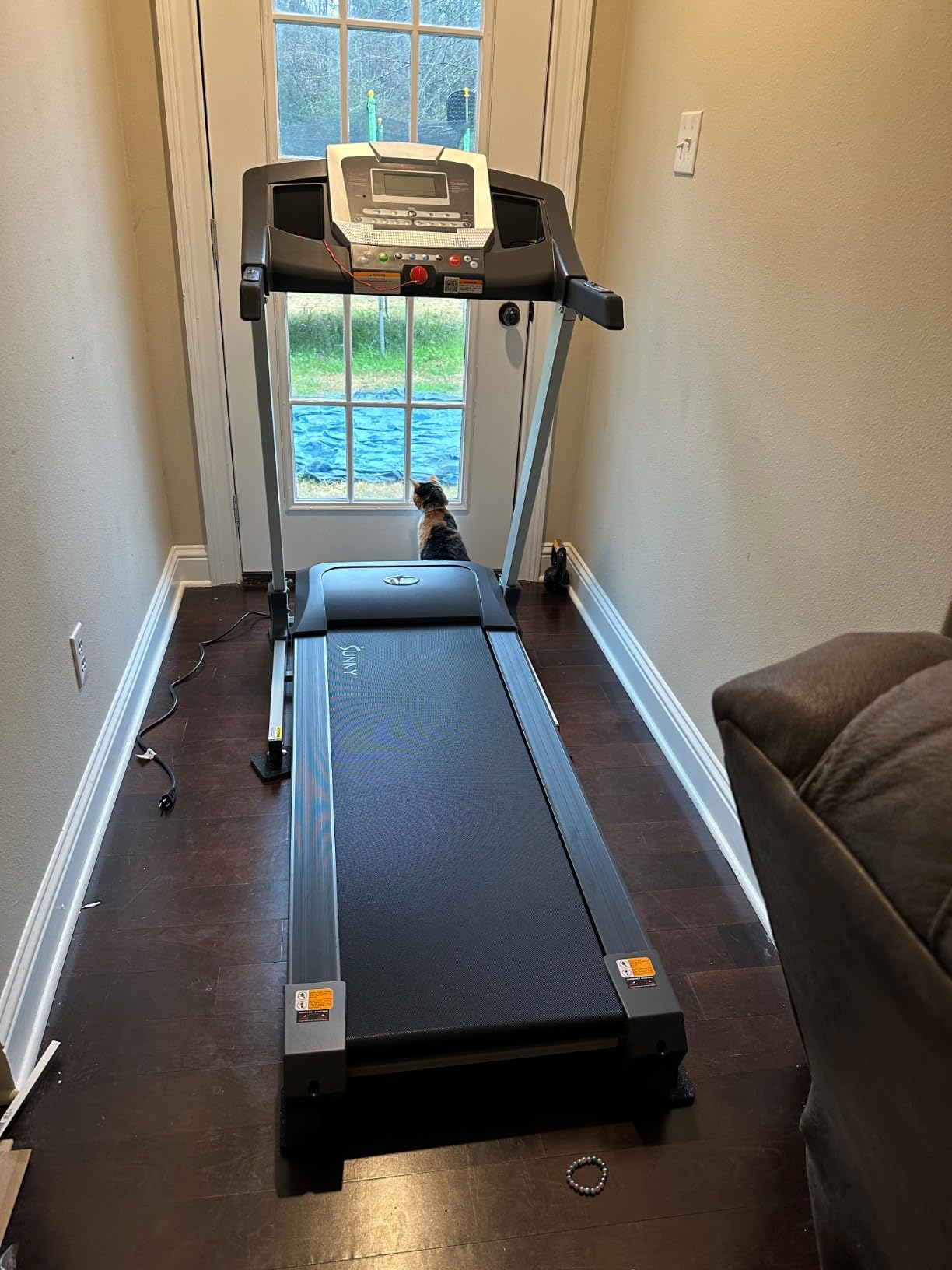
4. Sunny Health and Fitness Fully Assembled Treadmill – Best Value for 225-250 lb Runners
Sunny Health & Fitness Auto Incline Treadmill, Fully Assembled Walking Pad
300 lb capacity
2.5 HP brushless motor
20 x 53 in deck
15% auto incline
Pros
- Arrives fully assembled so setup takes minutes not hours
- 20-inch wide belt fits a natural stride
- Double-deck shock absorption softens joint impact
- No mandatory monthly subscription
- Quiet brushless motor
Cons
- 300 lb maximum is the lowest weight capacity in the roundup
- 2.2-inch display is small and angled steeply
- Cannot set speed to zero so stopping means pulling the safety key
For runners under 250 pounds who still want a 20-inch belt, this is the value pick with very little compromise. The double-deck shock absorption, the 15 auto incline levels and the absence of any required subscription cover almost everything a regular runner touches. Setup is the underrated feature.
Setup is the underrated feature. It ships essentially fully assembled with a one-click fold, so there is no build, no torque wrench and no two-person lift on assembly day. That saves an evening and removes the most common reason people abandon a new treadmill in the box.
Capacity is the catch. At 300 lb it is the smallest weight capacity in the group, and a heavier runner is not a candidate no matter how good the cushioning feels. Applying the headroom rule, treat 250 pounds as the practical ceiling.
Two smaller annoyances: the 2.2-inch LED display requires looking down at a steep angle, and the 0.6 MPH minimum speed means stopping means pulling the safety key rather than hitting a button. The handrail pulse sensors also read inconsistently, so use a chest strap or wearable for anything pace-related.
Is a brushless motor enough for a 240 lb runner?
Yes, at moderate pace and moderate incline. The 2.5 HP brushless motor is the least powerful in the roundup, so it is the first component to feel the load if you combine a heavy body weight with fast running and a steep hill.
If your training includes long runs at 8 MPH or more, move up to a 3.5 HP machine. For steady-state and incline-light work, the quiet motor is a genuine advantage.
Will it stay assembled in a spare room?
The one-click fold takes seconds and the machine can be repositioned once set up, though the heavy front end means getting it out of the packaging needs two people. Budget for a dedicated 63.8 by 30.9 inch space when unfolded.
It is one of the few machines here that does not require a floor mount or a wall clearance. That makes it a good apartment choice for a single runner in the sub-250-pound range.
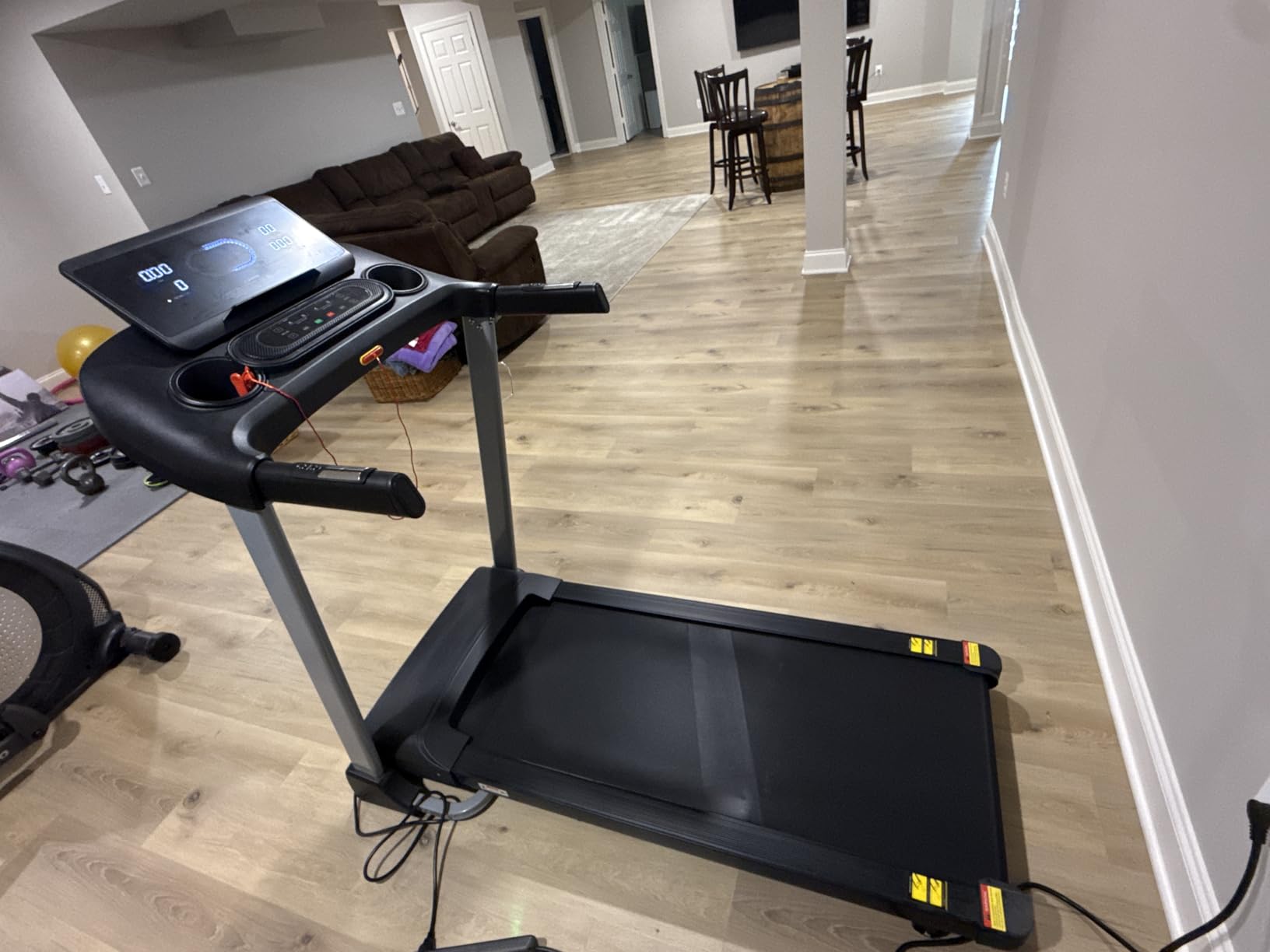
5. HUAGEED 400 LB Stainless Steel Treadmill – Best for Speed Intervals at 300-325 lb
HUAGEED Treadmills for Home, 18% Auto Incline, Heavy Duty 400LBS Capacity
400 lb capacity
3.5 HP motor
12 MPH top speed
18% auto incline
Pros
- Fastest top speed in the roundup at 12 MPH
- 400 lb rating on a thickened stainless steel frame
- 18% auto incline is the largest powered incline at this capacity
- Very wide 18.90 inch belt gives good lateral room
- 36 preset programs are the most workout variety here
Cons
- Only a 0.8-inch display which is very small for reading stats
- 47.24 inch deck is modest for a machine rated to 12 MPH
- Only 1-year warranty
This is the machine in the group that lets a 300-pound runner actually work at speed. A 12 MPH ceiling matched with 18 percent powered auto incline and a 400 lb stainless steel frame is a combination nothing else here matches, and it is the right pick for interval training and pace work rather than steady miles.
The 5.90-inch thickened running deck is the detail that separates it. It feels stable and quiet underfoot, and at 12 MPH that thickness is doing structural work rather than cosmetic work. Thirty-six programs also give you more workout structure than any other machine here.
The display is a genuine problem at speed. A 0.8-inch readout means you are looking down and squinting to check pace mid-interval, and owners comparing it against the BORGUSI and WELLFIT consoles flag this directly. It is a small part that costs you a lot of usability.
There is also a listing inconsistency worth knowing: belt width and deck length are reported differently across listings for this model family. Measure the running area yourself if a 12 MPH top speed is what you are buying for. Applying the headroom rule, this supports up to about 325 pounds.
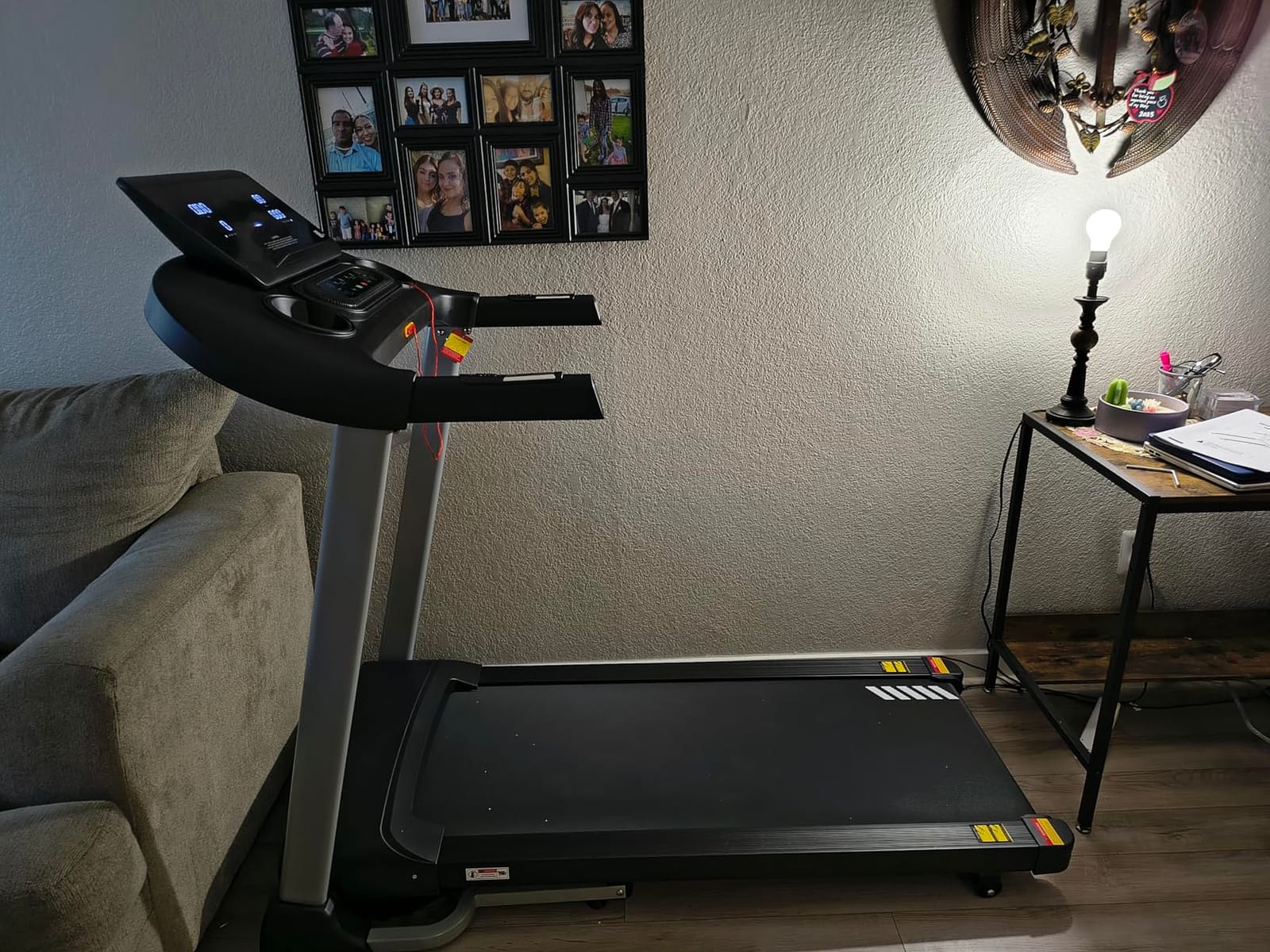
Does it hold 12 MPH with a heavy runner on it?
Owners who use it at the top end report that the motor maintains that speed, which is the point of the 3.5 HP rating on a 400 lb frame. That is a different answer from machines that reach their top speed only with a light load.
The trade-off is deck length. A 47.24-inch deck is workable at pace but noticeably shorter than the 55-inch surfaces on the WELLFIT and UMAY machines, so taller runners should test the stride room first.
Is one year of warranty enough?
It carries one of the shortest warranty terms in this roundup, and for a machine with a 12 MPH ceiling that you may run hard, it is the biggest risk on the spec sheet. The WELLFIT models with 2-year and 3-year terms give you more protection.
Our advice is to photograph every part before assembly and keep the packaging until the machine has survived a few weeks of use. Warranty friction on high-load components is a recurring theme in owner threads.
6. BORGUSI Auto Incline Wide Belt Treadmill – Best for 300-350 lb Runners
BORGUSI Treadmill with 15% Auto Incline Electric Folding Treadmill for Home
350 lb capacity
3.5 HP motor
20 x 50 in belt
15-level auto incline
Pros
- 20-inch belt and 50-inch deck give genuine stride room
- 3.5 HP motor holds 10 MPH under load
- 15 auto incline levels with console and handrail keys
- 7-inch LCD is larger than most consoles at this size
- Arrives 95 percent assembled with only a few screws
Cons
- 350 lb rating falls short of the 400-500 lb models
- Only 1-year parts protection plan
- 135 lb machine is heavy to move without two people
This is the most balanced machine in the 300-350 lb band. It combines a 350 lb rating, a 20-inch belt, a 50-inch deck and a 3.5 HP motor that holds 10 MPH, which is a set of numbers that usually only appear together on larger and more expensive frames.
The console is a quiet strength. A 7-inch LCD showing time, speed, distance, calories, incline and pulse at once is more usable than the tiny readouts on several other machines here, and the quick keys on both the console and the handrails let you change incline without breaking stride.
Capacity is the ceiling. A 350 lb rating supports roughly 280 to 290 pounds under the headroom rule, so a 300-pound runner is already pushing it. If you are 300 or above, the 400 lb models are the safer purchase even if this one is the better-feeling deck.
The soft drop fold and transport wheels protect flooring and make the machine simpler to move, though 135 pounds still means two people for a staircase. The one-year parts protection plan is thin for a heavy user.
Why does the belt width matter more at this weight?
Heavier runners generate more lateral force through the foot as the body decelerates and pushes forward. A 20-inch belt gives you more room to let that motion happen without correcting toward the edge, which is the wobble that faster runners feel most at speed.
Combined with the 50-inch length, it means you are running rather than walking fast. That is not true of the compact 40 to 43-inch decks in the 400 lb category.
How much assembly is left to do?
Buyers report 95 percent factory assembly with only a few screws to fit. That is a meaningful difference from flat-pack competitors and it removes the most common setup complaint in this category.
Plan the floor space around the 63-inch depth when unfolded, or use the soft drop fold to reclaim it. Bluetooth audio is basic, so treat the speaker as a bonus rather than a feature.
7. WELLFIT 450 LB Folding Treadmill – Best High-Capacity Machine That Folds Flat
WELLFIT Treadmill for Home, 2 Level Incline Heavy Duty Treadmills
450 lb capacity
4.0 HP motor
45 x 20 in belt
folds to 45 x 20 x 12 in
Pros
- 450 lb rating is the second highest in the roundup
- 20-inch belt width gives room to stride without drifting
- Quiet enough to be inaudible from a floor below
- Rare high-capacity machine that folds flat for storage
- Large clear display with 12 usable programs
Cons
- Incline is manual and limited to two levels of 0-5%
- Manual incline is slow and effortful to adjust
- One buyer reports actual belt size smaller than advertised
If you need 400-plus pounds of rated capacity and you live somewhere without a dedicated wall, this is the machine. A 450 lb rating, a 4.0 HP brushless motor and a belt that folds down to 12 inches thick is a combination the rest of the 400 lb category does not offer.
Owners rate the motor as genuinely quiet, some reporting it inaudible from the floor below, and the 20-inch belt width prevents the lateral drift that heavy runners complain about on narrower decks. The 2026-updated console with 11 buttons and 5 speed quick buttons is straightforward to use with no cluttered screens.
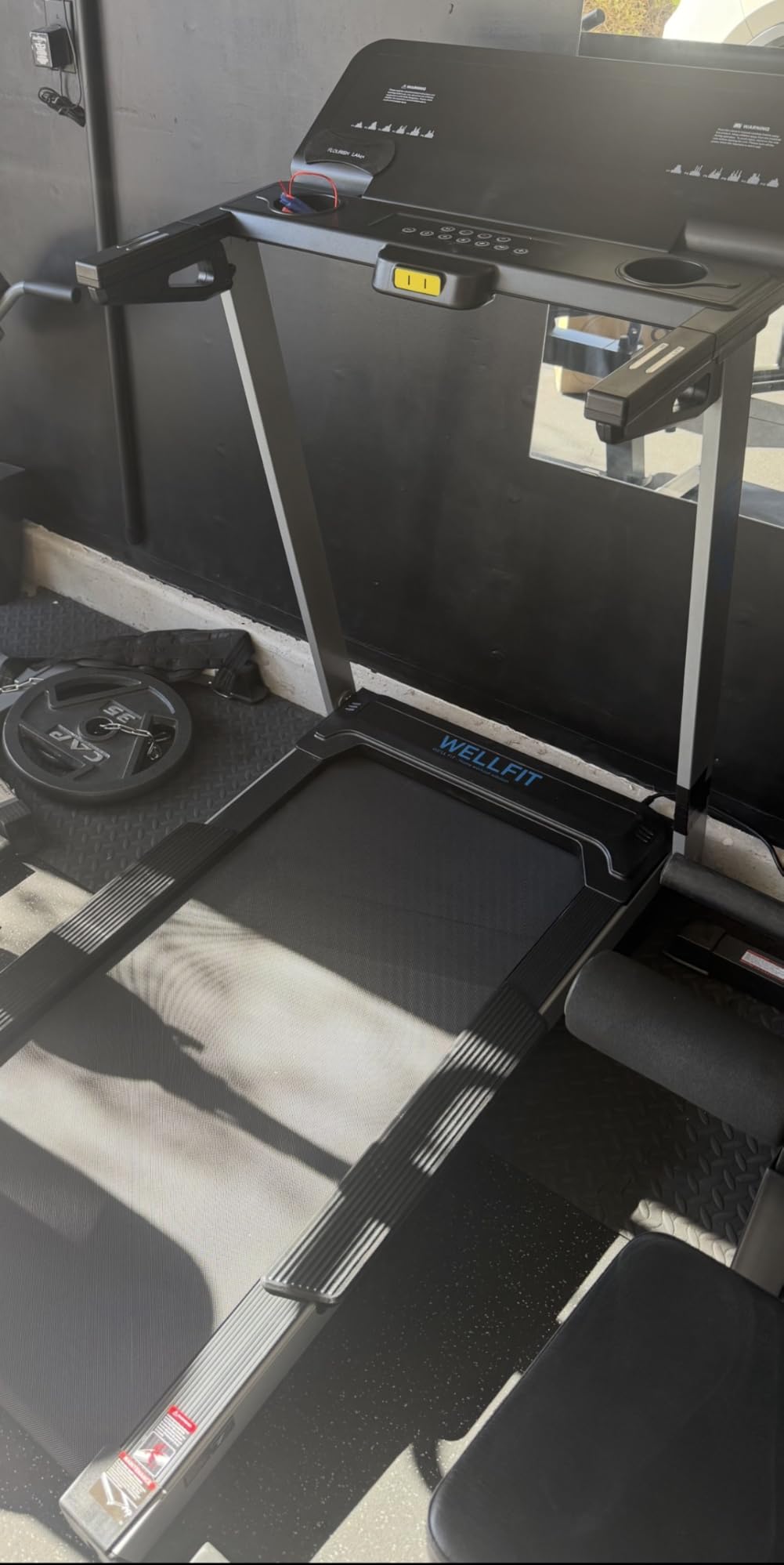
The two-level manual incline is the real compromise and there is no way around it. If hill training is part of your plan, this machine cannot deliver it, and the manual adjustment is described as slow and effortful. The BORGUSI and WELLFIT 500 lb machines both give you powered incline above 15 percent.
One buyer at 230 pounds reports the actual belt dimensions being significantly smaller than advertised, causing stuttering at running pace. Check the running area on arrival and keep the packaging until you have confirmed the fit.
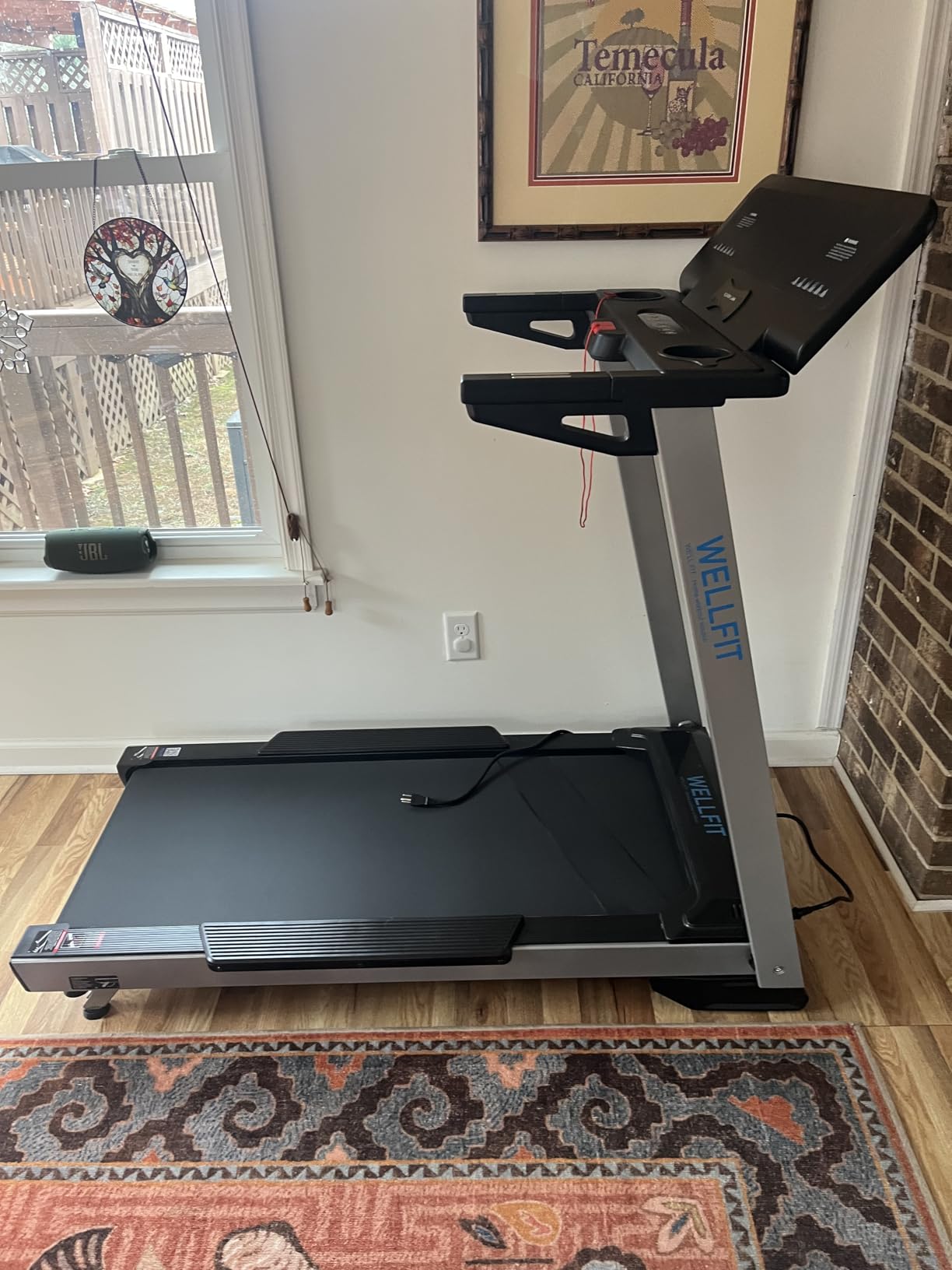
Is a 450 lb rating realistic for daily running?
Under the headroom rule it supports a runner up to roughly 360 to 375 pounds, which covers the upper end of the band most people in this search are actually in. The motor and belt width are sized consistently with the claim.
The 45-inch deck length is on the shorter side, so it favours shorter runners. If you are tall as well as heavy, check stride room before committing.
What about the advertised belt size discrepancy?
One documented report describes a meaningful gap between the listed 45 by 20 inch area and the delivered belt, with stuttering at pace as a result. Most owners do not raise this, so treat it as a check rather than a widespread defect.
Measure the running surface on day one, photograph it, and run at your normal pace for 20 minutes. If it stutters, that is a warranty conversation while the packaging still exists.
8. UMAY 55 Inch Belt Heavy Duty Treadmill – Best for Long Strides at 300-325 lb
UMAY Heavy Duty Treadmill with 20% Auto Incline for Home Gym
400 lb capacity
4.0 HP motor
55 x 18 in belt
20% auto incline
Pros
- 55 x 18 in belt is among the longest running surfaces in the group
- Highest auto incline among 400 lb rated machines at 20 percent
- 4.0 HP brushless motor stays quiet during use
- Triple-layer thickened deck absorbs impact well
- Handrails fold down into a flat table surface for working
Cons
- Does not fold up and keeps a large footprint
- Only 44 reviews so it is the least proven machine here
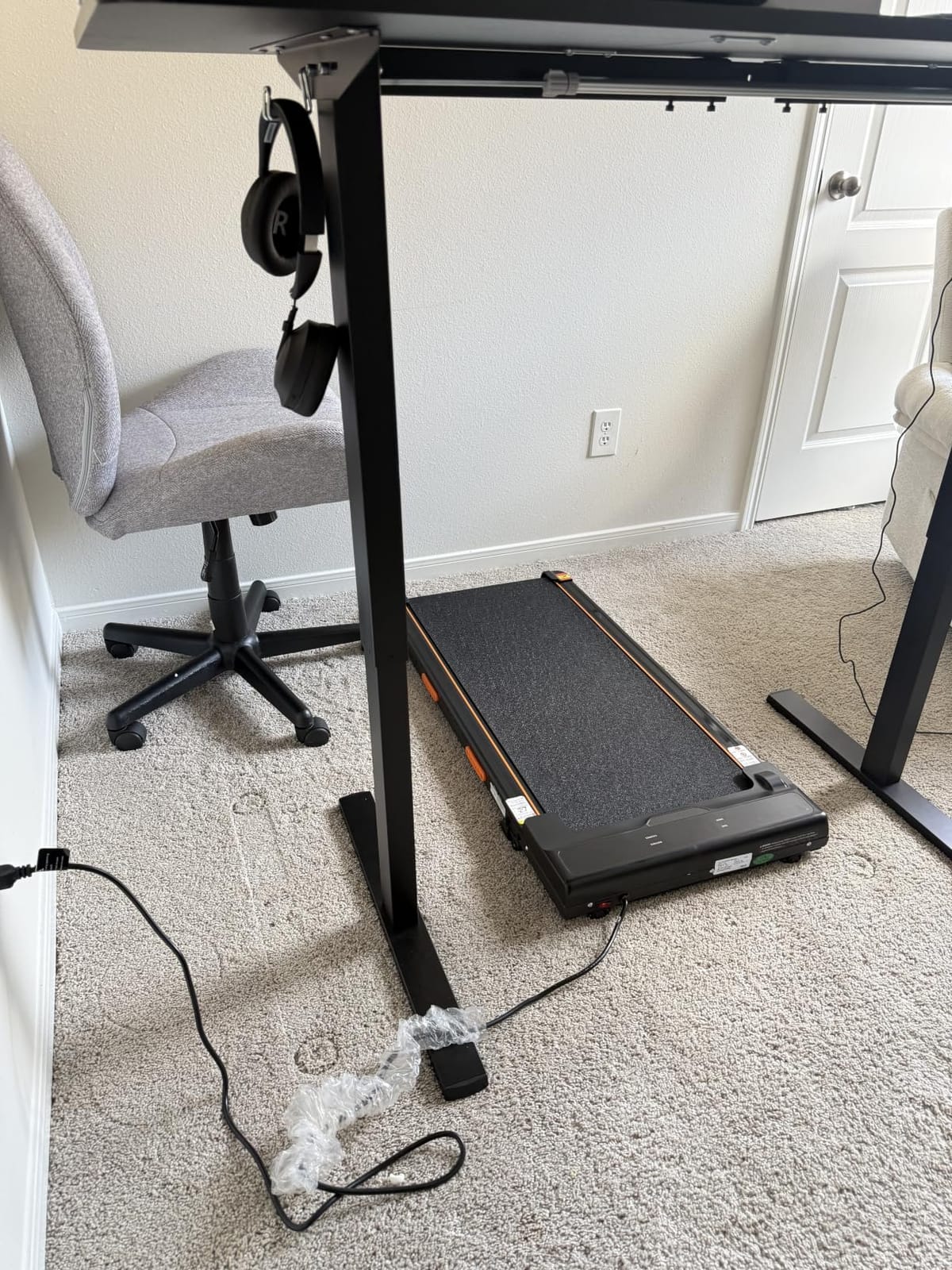
- Belt can drift to one side and needs recentering
Its 55-inch belt length is tied with the WELLFIT 500 lb model for the longest running area here, and both give you more stride room than the compact decks in the rest of the group. For a runner who is both heavy and tall, stride room is the constraint that actually forces you to slow down, and this machine pairs that length with a 400 lb rating.
Twenty percent powered auto incline is the steepest here, and the 4.0 HP brushless motor holds 9.5 MPH while staying quiet enough to use in the early morning. The triple-layer thickened deck is a sensible response to the load a 400 lb user puts through it.
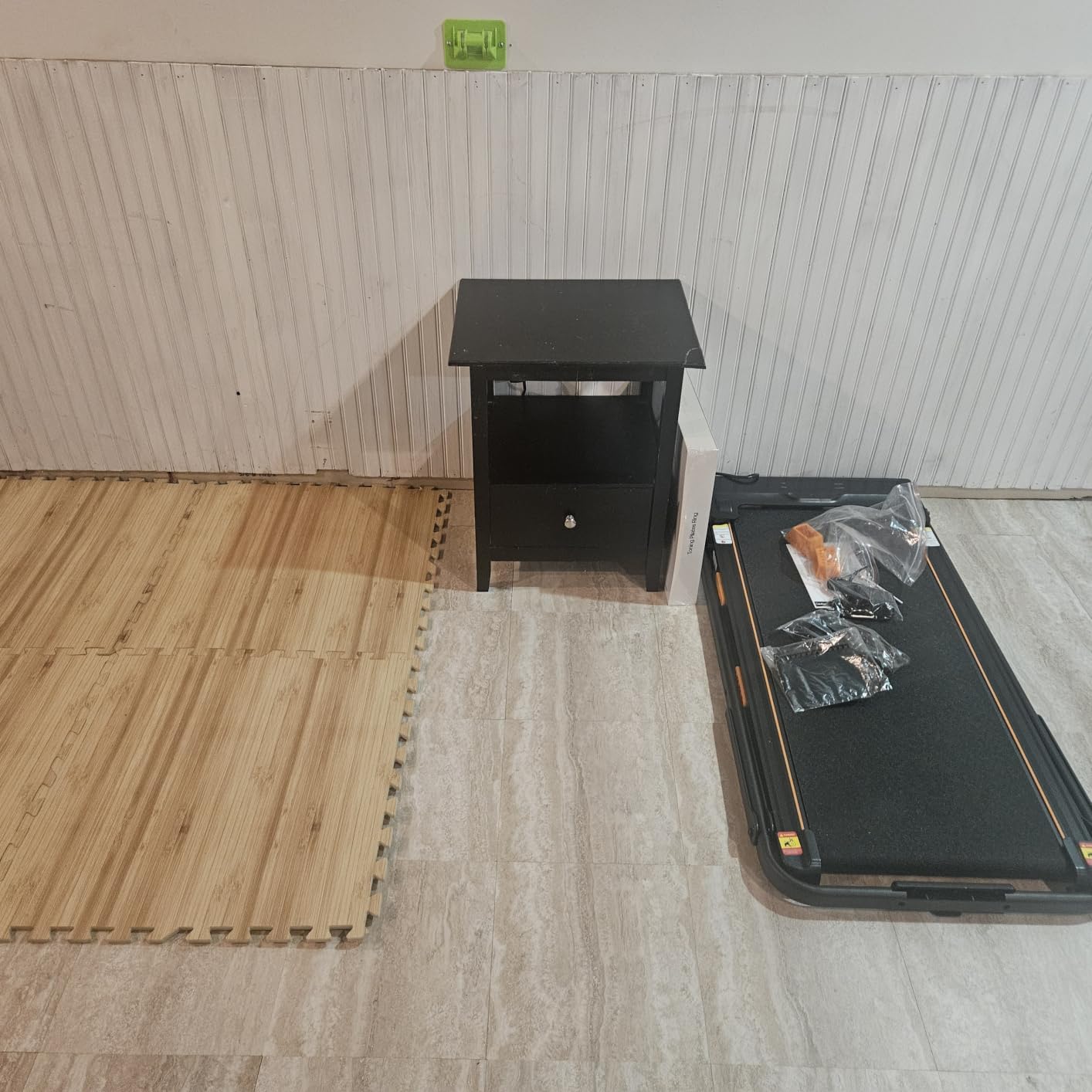
This is also the least proven machine in the roundup, and that is the main caution. At 44 reviews and a 4.1 average with 14 percent one-star ratings, there is simply not enough long-term owner data to say how the frame holds up over years of daily use.
Specific complaints include belt drift that needs recentering every few uses and a persistent squeak that lubrication did not resolve. For a heavy runner, recurring belt misalignment is exactly the failure mode that shortens machine life, so approach this one with a test period in mind.
Is 55 inches of deck length enough for a tall runner?
It is among the longest here and comfortably clears the length most manufacturers treat as standard for adult running. For a runner over six feet, that difference is felt in the back half of the stride.
Buyers also like the fold-down handrails that create a flat table surface, which turns a heavy runner’s treadmill into usable desk space on rest days.
Should you buy with only 44 reviews behind it?
Only if the specification genuinely solves a problem you have, which for a tall heavy walker or jogger it does. The deck length and 20 percent incline are hard to find elsewhere at this capacity.
If your budget supports it, a machine with a longer owner history and a stated warranty is the safer long-term choice. Keep the box and check belt alignment weekly for the first month.
9. CIIHI C 400 LB Auto Incline Treadmill – Best for Multi-User Households at 300-325 lb
CIIHI Treadmill with Auto Incline – 15% Incline Treadmill 400 lbs Capacity
400 lb capacity
3 HP motor
15% auto incline
6-height adjustable handrail
Pros
- 400 lb rating paired with a 15 percent auto incline
- Handrail adjusts through 6 heights from 26.5 to 39.5 in
- One-button incline control is smooth and consistent
- Voice control with 36+ commands works reliably
- Folds compactly with a soft drop system and front wheels
Cons
- 8.7 MPH top speed is slow for genuine running
- 16.93 inch belt is the narrowest in the roundup
- Only 5 preset programs
The six-position adjustable handrail is unusual and it is the reason this machine suits a shared household. When two people of different heights share one treadmill, a fixed-height handrail forces the shorter runner into a compromised posture, and this one adjusts from 26.5 to 39.5 inches.
The 15 percent auto incline is smooth and consistent according to owners, with one-button control. The step counter is reported as accurate by several reviewers, and voice control for 36-plus commands means you can adjust without fumbling for a button mid-session.
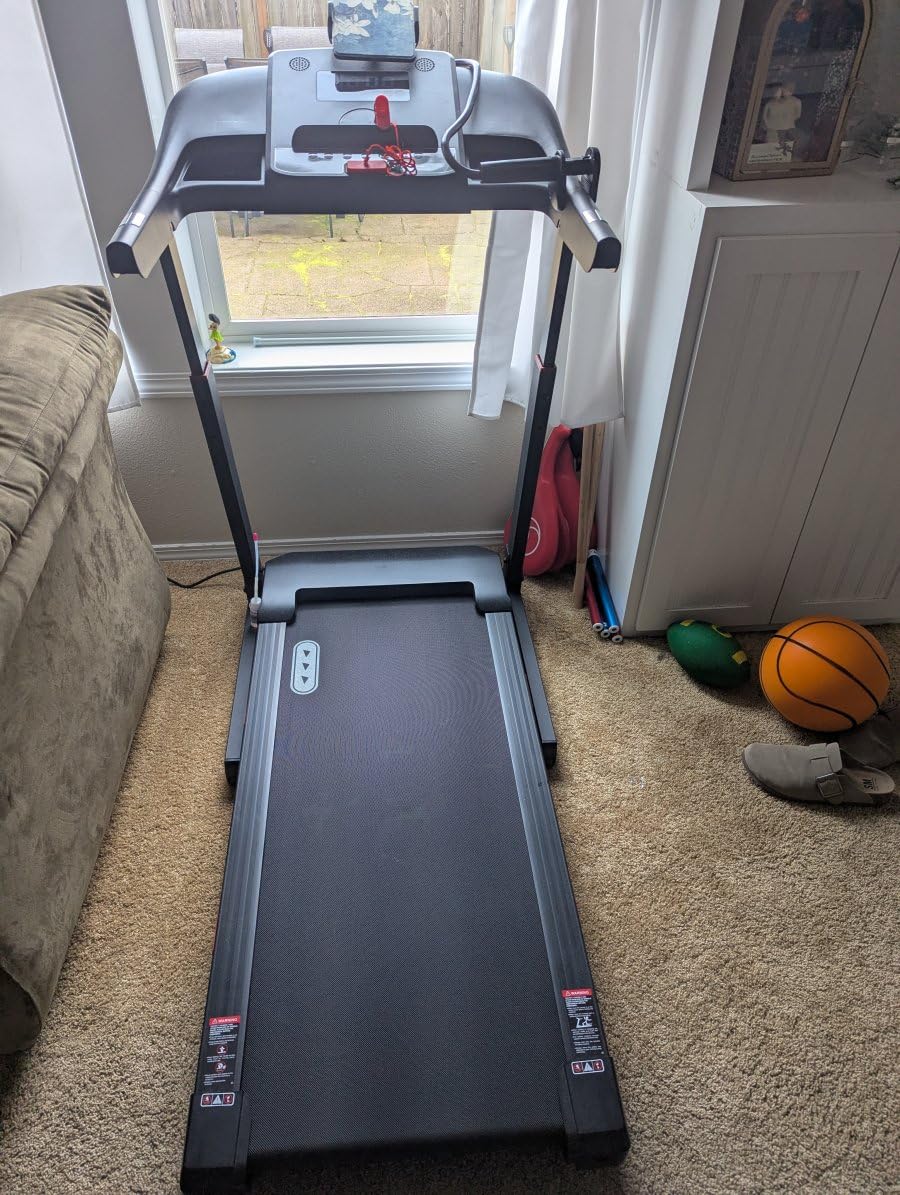
Running speed is the limit. An 8.7 MPH ceiling and a 16.93-inch belt, the narrowest in the group, mean this is a brisk walking and easy jogging machine by design. Heavy runners who want pace work should look at the HUAGEED stainless model at 12 MPH.
Only five preset programs is thin, and the display cycles through metrics rather than showing them together, which is mildly annoying. There is also one documented report of a failing safety key with an E07 code and a slow parts resolution.
Does a 16.93-inch belt feel stable for a heavy runner?
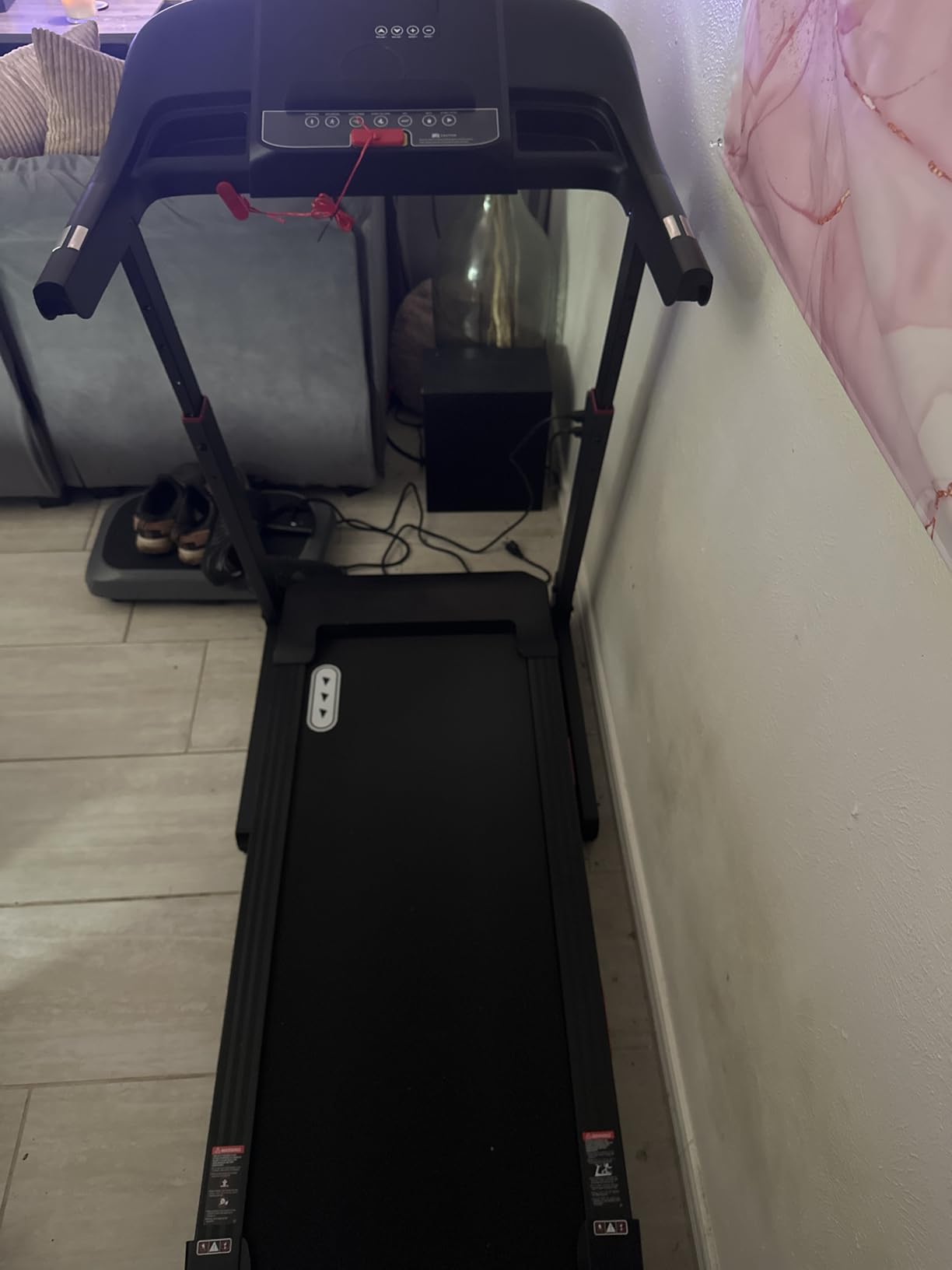
It is workable at walking and jogging pace but it is the narrowest surface here, and narrower belts mean more lateral correction for a heavier body. Reviews describing it as cramped for wider strides are fair.
If you are above 300 pounds and intend to run rather than walk, spend the extra effort on a 20-inch deck. This machine’s strengths lie elsewhere.
What should you check before the warranty clock starts?
Photograph the console, the incline mechanism and the folded frame before assembly. One owner reported belt material shedding and eventual motor failure after extended use, which is exactly the pattern that is hard to claim if you cannot show the machine’s condition at delivery.
Confirm the safety key works from day one given the E07 report, and keep every accessory in the box until you are satisfied.
10. YESOUL 3.5 HP Folding Treadmill – Best for Compact Storage at 225-250 lb
YESOUL 10% Auto Incline Foldable Treadmill, Heavy Duty Treadmills for Home
300 lb capacity
3.5 HP brushless motor
47 x 18 in belt
10% auto incline
Pros
- 47 x 18 in deck gives more running room than most at this size
- 3.5 HP brushless motor runs smoothly and quietly
- Powered 10 percent auto incline is rare in this category
- Hydraulic soft-drop fold and transport wheels make storage easy
- 6-point shock absorption reduces impact over longer sessions
Cons
- 300 lb maximum is well below the 400-500 lb alternatives
- 8.7 MPH top speed limits true running pace
- Only a 1-year manufacturer warranty
With 77 percent five-star reviews, this is one of the best-liked machines we looked at, and the reason is deck size relative to its class. An 18-inch belt at 47 inches long is more running room than most machines in the same bracket, and the 5-layer belt with 6-point shock absorption softens footfall over longer sessions.
A 3.5 HP brushless motor on a 300 lb rated frame is a sensible pairing, and it runs quietly. The powered 10 percent auto incline is a genuine bonus in a segment where manual wedges are more common.
The 300 lb rating is the hard limit, and applying the headroom rule it suits runners up to about 250 pounds. If you are heavier, the cushioning will feel good but the capacity figure decides the outcome.
The 8.7 MPH ceiling and 47-inch deck also mean this is a jogging platform rather than a speed one. At 48 kg it still takes two people to lift into place, so plan your delivery route before it arrives.
Is the hydraulic fold actually useful in a small room?
Yes. The soft drop and transport wheels let one person reposition it, and owners consistently mention using it to reclaim a room for other purposes. That flexibility is the reason to pick this over a fixed-frame machine of similar quality.
At 27.2 by 30.5 by 12 inches folded, it needs far less permanent floor space than anything in the 400 lb class.
Does the app add enough to justify the connection?
The YESOUL app with scenic routes and live instructor classes adds motivation for some owners, and the machine works fully without a subscription. That flexibility is worth more to heavy runners than a larger content library.
Treat the app as a bonus rather than a reason to buy. The motor, deck and capacity figures are what justify the purchase.
11. HUAGEED 18 Inch Belt Treadmill – Best Cushioned Everyday Running at 225-250 lb
Treadmill with Incline,15-Level Auto Incline, 18″ Wide Belt, 350lb Capacity, 3HP, 0.5-10 MPH, 36 Programs Running Treadmills for Home with Bluetooth APP
300 lb capacity
3 HP motor
18 x 42.5 in belt
14 cushioning points
Pros
- Quiet motor that stays smooth over many hours of use
- 18-inch belt is wide enough to avoid feeling close to the edge
- 15-level auto incline with console and handrail controls
- 36 preset programs with documented speeds and inclines
- Soft drop fold and transport wheels make storage safe
Cons
- 42.5 inch deck is short and taller users touch the front cover
- Handrail pulse sensors are narrow and inaccurate
- One owner reported a burning smell and motor failure within two weeks
Cushioning is where this machine separates itself. Eight built-in plus six external cushioning points on a double-deck frame, over a 5-layer belt consolidated into a single diamond-pattern surface, is more shock absorption than most machines at this price point offer.
For a heavy runner who is managing joint discomfort, that matters more than an extra inch of belt width. Owners describe the motor as quiet and smooth over many hours, and the 15-level auto incline has controls on both the console and the handrails.
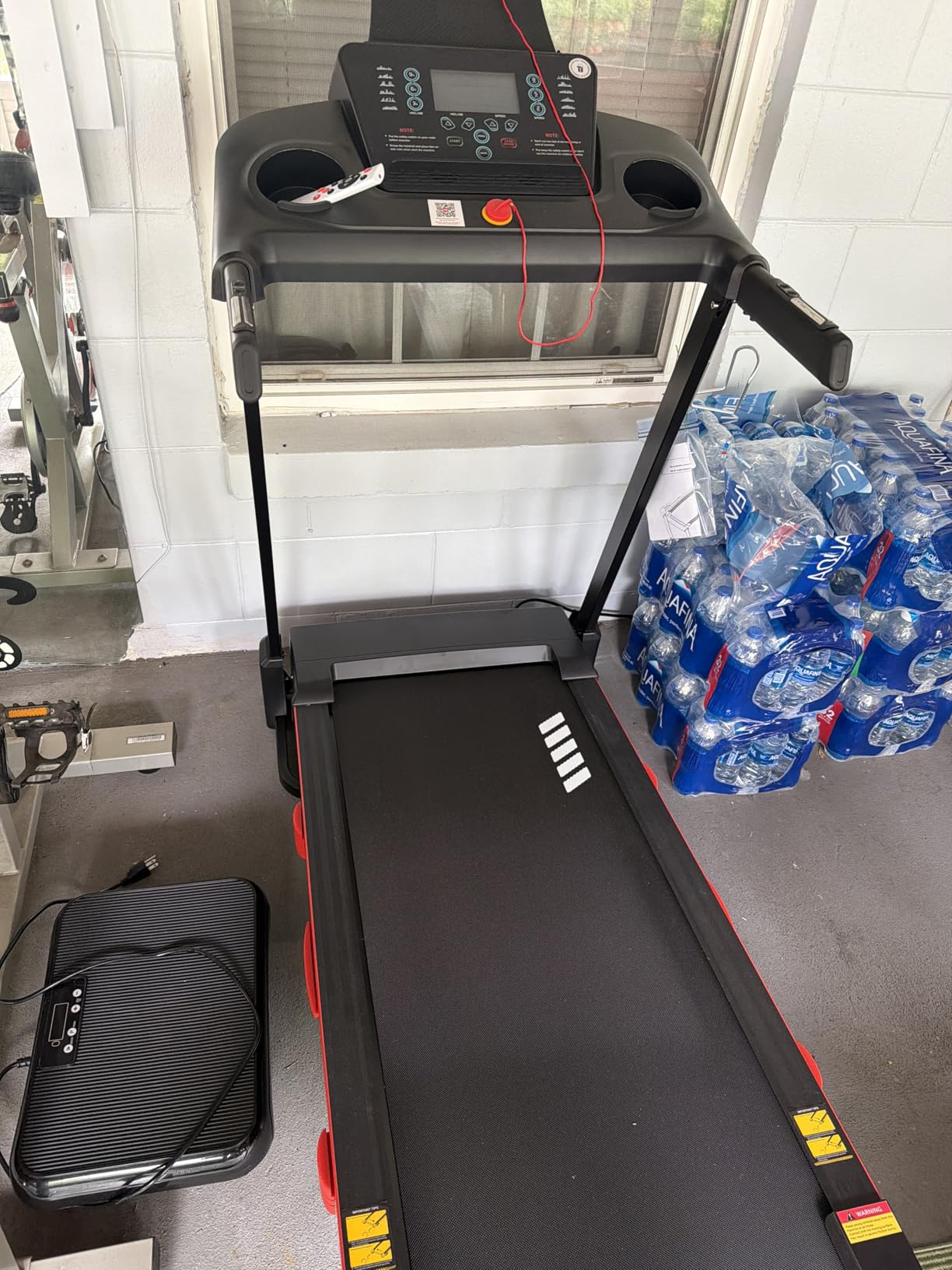
Deck length is the compromise. At 42.5 inches this is a short running area, and taller runners report touching the front cover while running. That is a real limitation for anyone who wants pace rather than a comfortable jog.
There is also one documented early failure: an owner reported a burning smell and motor vibration within two weeks, later losing incline function entirely. At a 300 lb rating with a 3 HP motor, treat this machine as a lower-power option if you are near the top of the band.
Is this the best cushioning in the roundup?
On the raw count of cushioning points, yes. The double-deck frame with 14 cushioning points is more elaborate than the 8 shock absorbers on the WELLFIT machines or the 10 columns on the FOUSAE.
What matters is how the deck feels at your body weight rather than how many components are listed. If joint comfort is your main concern, this is worth a hands-on test.
How reliable is it under heavy daily use?
Most owners report stable, quiet operation over long sessions, and the after-sales team has been described as proactive. The early motor failure is a single documented report rather than a pattern, but the 1-year warranty gives you less protection if it happens to you.
Check the motor smell and incline function during the first month, and keep the packaging until you are past that window.
12. Yuejiqi 25 Percent Auto Incline Treadmill – Best for Steep Hill Training at 225-250 lb
YUEJIQI Treadmill with 25% Auto Incline – 4.0HP, 10 MPH Max Speed
300 lb capacity
4.0 HP motor
25% auto incline
47 x 17 in deck
Pros
- Highest auto incline range in the group at 25 percent
- 4.0 HP brushless motor reaches 10 MPH
- 7-layer belt with 2 silicone shock absorbers and 12 padding pads
- Folds flat enough for a spare bedroom to double as a gym
- Control buttons and pulse sensors stay within reach during a run
Cons
- 300 lb rating is below the 400-500 lb heavy duty models
- 17-inch belt is narrower than the 20-inch decks elsewhere
- 47-inch deck is short for taller runners at speed
- Only a 1-year manufacturer warranty
If hill training is your thing, nothing else here matches 25 percent auto incline with a 4.0 HP motor. That combination lets you simulate a serious climb, which is one of the most effective ways for a heavier runner to build strength without adding road or joint impact.
The 7-layer belt, two silicone shock absorbers and 12 cushioning pads are a solid cushioning package for the money. The fold is flat enough that owners use it to turn a spare bedroom into a gym, and the controls stay within reach during a run.
The 17-inch belt and 47-inch deck are both narrow and short by the standards of this roundup. Taller runners will feel that, and a 300 lb rating limits you to about 250 pounds under the headroom rule.
Only 739 reviews at a 4.2 average, with 9 percent one-star ratings, makes this the second least proven machine here. The 4.0 HP figure is a maximum rather than a continuous rating, so expect a different feel under sustained load than the number suggests.
Is 25 percent incline worth choosing a narrow belt for?
If your training genuinely uses hill work, yes. The 15 to 20 percent machines here leave real hills on the table, and 25 percent with a 4.0 HP motor is a rare pairing.
If you run flat and mostly, the BORGUSI machine gives you a much wider 20-inch belt and only 10 percent less incline for a more stable platform.
What should you check after delivery?
Test the auto incline under load at several settings and confirm the belt tracks straight under maximum incline. With a narrow 17-inch belt, alignment under load is the thing to watch in the first weeks.
The one-year warranty is short, so photograph everything before assembly. Instruction diagrams use small text, so budget extra time for setup.
How We Picked
We looked at 12 treadmills with rated capacities from 300 to 500 pounds and scored each one against the same set of thresholds. Every rated capacity, motor figure, deck measurement, top speed, incline range and warranty term came from manufacturer listings and owner review data, not from marketing copy.
Our pass criteria were a rated capacity that leaves 20 percent headroom above the target runner, a motor of 3.5 HP or more where the weight band allowed it, a running deck of at least 18 inches wide, and cushioning appropriate to the load. Machines that met the capacity but failed the deck or speed requirement were kept in the list only where they earn a pick for a specific non-running use case, such as walking or hill work.
Reliability signals carried weight. Owner reports of early motor failure, belt drift or recurring squeaks removed points, which is why a machine with a 400 lb rating and only 44 reviews ranks below a similar-rated machine with a longer track record.
What Actually Breaks Under Heavy Load
Underrated treadmills fail in a predictable order, and knowing the sequence tells you whether a problem is fixable or terminal. Motor burnout comes first, because the motor carries the largest share of the dynamic load you create at speed and incline. Community discussion on running forums consistently describes motors lasting well beyond expectations when capacity is respected and failing early when it is not.
Belt slip and misalignment come next. A belt that drifts sideways under load needs re-tensioning, and a belt that slips at speed produces a spongy, unstable stride that is genuinely hazardous rather than merely annoying. Deck cracking and frame wobble follow, and they are the failure mode that ends a machine’s life. Roller and incline motor failures come last but are expensive relative to the machine’s original cost.
Two patterns show up repeatedly in owner reports. The first is running near the rated ceiling, which accelerates all of the above. The second is neglecting maintenance, and the fix is unglamorous. A dry belt runs hotter, and heat is what kills motors and shortens belt life.
The 20-30 Percent Headroom Rule and Safety
Rated capacity is a maximum tested under static conditions. Running is dynamic, and combining a heavy body with speed and incline puts far more load on the motor, deck and belt than standing still ever does. This is why we apply a 20 to 30 percent buffer rather than buying the machine that lists you as a legal user.
Step-up height deserves its own mention. A high deck forces a harder step-on, and a hard step-on at the end of a run is where a lot of avoidable injuries happen. The machines here with lower frames, such as the WELLFIT 500 lb model with its 3.5-inch foot rails, give you a more deliberate and safer mount.
Worth saying plainly: if you have existing joint pain, are returning to running after time away, or are new to running at a higher body weight, a treadmill is not a substitute for medical advice. A clinician or a physical therapist can tell you whether your joints are ready for impact, and they can also tell you that walking and cycling build the same fitness with less of it.
Maintenance Cadence and Lifespan
For heavy runners the maintenance calendar matters more than it does for lighter users, because every month of neglect is a month of extra heat and friction on components that are already loaded. A monthly vacuum under the belt removes the grit that works into the rollers. Belt lubrication every one to two months keeps the belt cool and quiet.
Check bolt tension quarterly, especially on folding frames that are moved around, and inspect belt alignment under load each time the incline changes substantially. Owners who report recurring squeaks almost always trace them back to a dry belt or a roller bearing that is starting to go.
Belt replacement is the routine repair you will face, and motor replacement is the one you hope to avoid. The most common thread in buyer discussions is that a motor replacement approaches the cost of an entirely new entry-level machine, which is the practical reason the headroom rule is worth obeying. Warranty terms worth comparing carefully are frame, motor, parts and labour, because they are rarely the same length.
How to Choose a Treadmill for Heavy Runners
Start with capacity headroom, not capacity. Find a machine rated 20 to 30 percent above your body weight, and if that pushes you past 500 pounds, be honest that home equipment has a ceiling and a commercial or gym setting may serve you better.
Next, motor type and rating. Continuous horsepower is the industry term, and it means the output the motor sustains rather than the burst figure printed on the box. AC motors generally last longer than DC motors under heavy daily use, at the cost of being louder and more expensive; brushless DC designs have narrowed that gap considerably, and most of the machines here use brushless motors.
Deck size is the constraint people underestimate. Twenty inches wide by 60 inches long is the practical floor for an adult runner, and anything under 18 inches wide will feel narrow above about 275 pounds. Deck length matters most if you are tall, because a short deck forces you to reduce stride at speed.
Cushioning scales with your weight. Impact force through the knees and ankles increases with body mass, so the same deck that feels fine at 180 pounds can feel punishing at 300. Look for multi-point suspension, a thickened deck, and shock absorbers rather than a single spring, and test the deck feel in shoes you actually run in.
Incline is a training tool and a load multiplier. Fifteen percent is a sensible minimum if you want hill work, and anything above that opens up much better training options. A manual two-level incline is not the same product as a powered 15 percent incline, regardless of what the listing headline says.
Then check the practical details. Step-up height and rail width affect how you mount and whether your arm swing hits the sides. Folding matters enormously in an apartment and not at all in a garage. Warranty length is a rough proxy for manufacturer confidence, and a machine with a one-year term is telling you something about how long its weakest parts are expected to last.
Finally, floor and space requirements, and noise. Several machines here are described as inaudible from a floor below and others generate noticeable sound during use, which matters if you share a building. Measure the unfolded footprint and add clearance for the safety area behind the machine before you commit.
Curved Manual and Used Machines
Curved manual treadmills come up constantly in heavy-runner communities as a legitimate option. There is no motor to burn out and no electricity to run, and for heavier sprinters who want a durable, low-maintenance machine for intervals the argument is strong. The trade-off is that long slow distance on a curved manual deck is uncomfortable, and the self-paced format suits a narrower range of workouts than a motorised deck.
Used heavy-duty treadmills are frequently recommended as better value than new, and the reason is depreciation. The warnings are consistent, though. Check for frame cracks, run the belt under load and listen for motor noise, inspect belt alignment, and confirm the rated capacity against your own weight before you commit. Model-year revisions are a real risk in this category, so check that the specific unit has not been downgraded between production runs.
Whichever route you take, insist on seeing the machine run at speed and at incline with a load close to yours. A treadmill that is quiet and smooth empty can behave very differently at your weight.
Frequently Asked Questions
What treadmill is best for a 300-pound person?
For a runner at 300 pounds, look for a machine rated 350 to 400 pounds so the buffer stays at 20 percent or more. In our roundup the BORGUSI 20 x 50 inch wide belt machine at 350 lb rating and the HUAGEED 12 MPH stainless steel model at 400 lb are the two strongest matches. Add 20 percent to your weight to find your band.
What is the best treadmill for heavy people?
The best treadmill for heavy people is the one rated 20 to 30 percent above your body weight, with at least 3.5 HP of motor, a 20 by 60 inch deck and multi-point suspension. Across the 12 machines we compared, the WELLFIT 500 lb model offers the widest capacity margin and the largest deck in the group.
What are the best treadmills for people over 400 pounds?
Above 400 pounds the list narrows sharply because rated capacity becomes the binding constraint. The WELLFIT 500 lb auto incline machine is the only option in our roundup rated for that range, with a 4.5 HP motor and a 55 x 20 inch deck. The WELLFIT 450 lb model is the pick if you need a machine that folds flat for storage.
Can I be too heavy for a treadmill?
Yes. Every treadmill has a hard rated maximum, and running above it accelerates motor burnout, belt misalignment and deck cracking. If your weight is within 20 percent of a machine’s stated limit, treat that machine as too small and step up a weight band.
How long does a treadmill motor typically last?
On a machine where you stay within the recommended capacity range, motors commonly last many years of daily use. Owners consistently report early failures when the rated capacity is exceeded or when the machine is run at high speed and incline together. Regular belt lubrication and monthly cleaning reduce heat, which is the main driver of motor wear.
How much does it cost to replace a motor in a treadmill?
Motor replacement is often cited in buyer discussions as approaching the cost of a new entry-level machine, which is why the headroom rule matters. Components that wear more predictably, such as belts and rollers, are cheaper to replace and easier to do yourself with the supplied tool kit.
How to tell if a treadmill motor is broken?
Common warning signs include a burning smell, unusual motor noise or vibration under load, a motor that stalls briefly at speed, and an incline that stops responding while the belt still runs. Owners have reported losing incline function entirely after early motor faults, so address it before the belt starts slipping as well.
What is the 3/12/30 rule on a treadmill?
The 3/12/30 rule is a simple weekly training guideline: three sessions per week, 12 total kilometres of distance, and 30 minutes of activity. It is a general fitness target rather than a treadmill setting, but it is a useful way to structure sessions on any of the machines in this roundup.
Final Verdict by Weight Band
The NordicTrack T Series is our overall winner among the best treadmills for heavy runners, and the reason is evidence rather than specification. It has 32264 owner reviews averaging 4.3 stars, the widest-proven 20 by 60 inch deck in the group, a 3 HP motor and the only 10-year frame warranty here. It is the right buy for runners up to about 275 pounds who want a machine with a long track record.
For 300 to 350 pounds, the BORGUSI wide belt machine gives you a 20-inch belt, a 50-inch deck and a 350 lb rating, while the HUAGEED stainless model adds 12 MPH pace capability. For 350 to 400 pounds, choose the WELLFIT 450 lb model because it folds flat, or the WELLFIT 500 lb model if you have the floor space and want maximum margin.
Above 400 pounds the shortlist is short by physics, and the WELLFIT 500 lb is the only machine in this roundup rated for it. Whichever you choose, buy the band above your weight rather than the band that lists you, and keep the belt lubricated. If you are still deciding, our broader jogging stroller guide for runners covers outdoor training alternatives worth pairing with indoor miles.