
Most travel neck pillows are designed for one kind of sleeper: the person who falls asleep upright, head tipped back, chin up. Side sleepers get a different problem entirely, because on a flat airline seat there is no shoulder gap filler and no wall to lean against, so the head slides sideways and the side of the neck stretches. After we compared ten of the most-reviewed travel pillows on the market, the ones that genuinely helped side sleepers were the ones with lateral support built into the shape, not just a soft ring of foam.
The best travel neck pillows for side sleepers are those with raised side lobes, a chin-support curve, or a strap system that anchors the head to the headrest, since all three stop the head from tilting toward the aisle. The napfun memory foam pillow earned our top slot for its chin-support wrap and a 21,000-review track record, while the Everlasting Comfort 360 pillow won for even lateral support across positions. Below them, the Cabeau Evolution S3 is the one to buy when neck pain is the main worry, and the Keemall inflatable is the only pick here that disappears into a personal-item bag.
We rated these on the three things a side sleeper actually cares about: how well the pillow resists lateral head tilt, how much space it eats in a carry-on, and whether it stays supportive for the full length of a long-haul flight. We also tracked what buyers say after repeated trips rather than after one night, because foam that still feels great in month one can be noticeably flatter by month six. If you want a wider view of foam pillows specifically, our [memory foam neck pillow roundup](https://www.pwice.com/best-memory-foam-neck-pillows-for-travel/) covers that category in more depth.
Table of Contents
Top 3 Picks for Side Sleepers (September 2026)
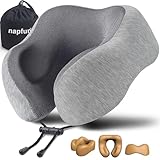
napfun Memory Foam Pillow
- Chin-support wrap
- 100% memory foam
- Compresses small
- Machine washable

Everlasting Comfort 360 Pillow
- 360-degree support
- Multi-position
- Velcro strap
- Removable cover

Cabeau Evolution S3
- Seat straps anchor to headrest
- Chin clasp
- Dual-density foam
- Compresses to one third
Best Travel Neck Pillows for Side Sleepers in 2026
| Product | Specifications | Action |
|---|---|---|
| napfun Memory Foam Travel Pillow |
|
Check Latest Price |
 Dot&Dot Twist Memory Foam Roll Dot&Dot Twist Memory Foam Roll |
|
Check Latest Price |
| Everlasting Comfort 360 Travel Pillow |
|
Check Latest Price |
| Cabeau Evolution S3 |
|
Check Latest Price |
 GDEOUP U Shape Memory Foam Pillow GDEOUP U Shape Memory Foam Pillow |
|
Check Latest Price |
 Keemall Inflatable Neck and Shoulder Pillow Keemall Inflatable Neck and Shoulder Pillow |
|
Check Latest Price |
 SAIREIDER 360 Memory Foam Pillow SAIREIDER 360 Memory Foam Pillow |
|
Check Latest Price |
 Purroch G-Shape Memory Foam Pillow Purroch G-Shape Memory Foam Pillow |
|
Check Latest Price |
 TREKOLOGY Inflatable Neck Pillow TREKOLOGY Inflatable Neck Pillow |
|
Check Latest Price |
 Gosider Memory Foam Travel Pillow Gosider Memory Foam Travel Pillow |
|
Check Latest Price |
1. napfun Memory Foam Travel Pillow: Best Overall for Side Sleepers
napfun Neck Pillow for Traveling, Upgraded Travel Neck Pillow for Airplane 100% Pure Memory Foam Travel Pillow for Flight Headrest Sleep, Portable Plane Accessories, Light Grey
100% memory foam
Chin-support semicircular wrap
11.02 x 11.02 inch
10.88 oz
Machine washable
Pros
- Chin-support wrap stops the head dropping forward
- Memory foam contours using body heat
- Compresses into an included travel bag
- Works in airplane car train and bus seats
Cons
- Foam can feel too soft or too thin for firm lateral support
- U shape suits average neck sizes best
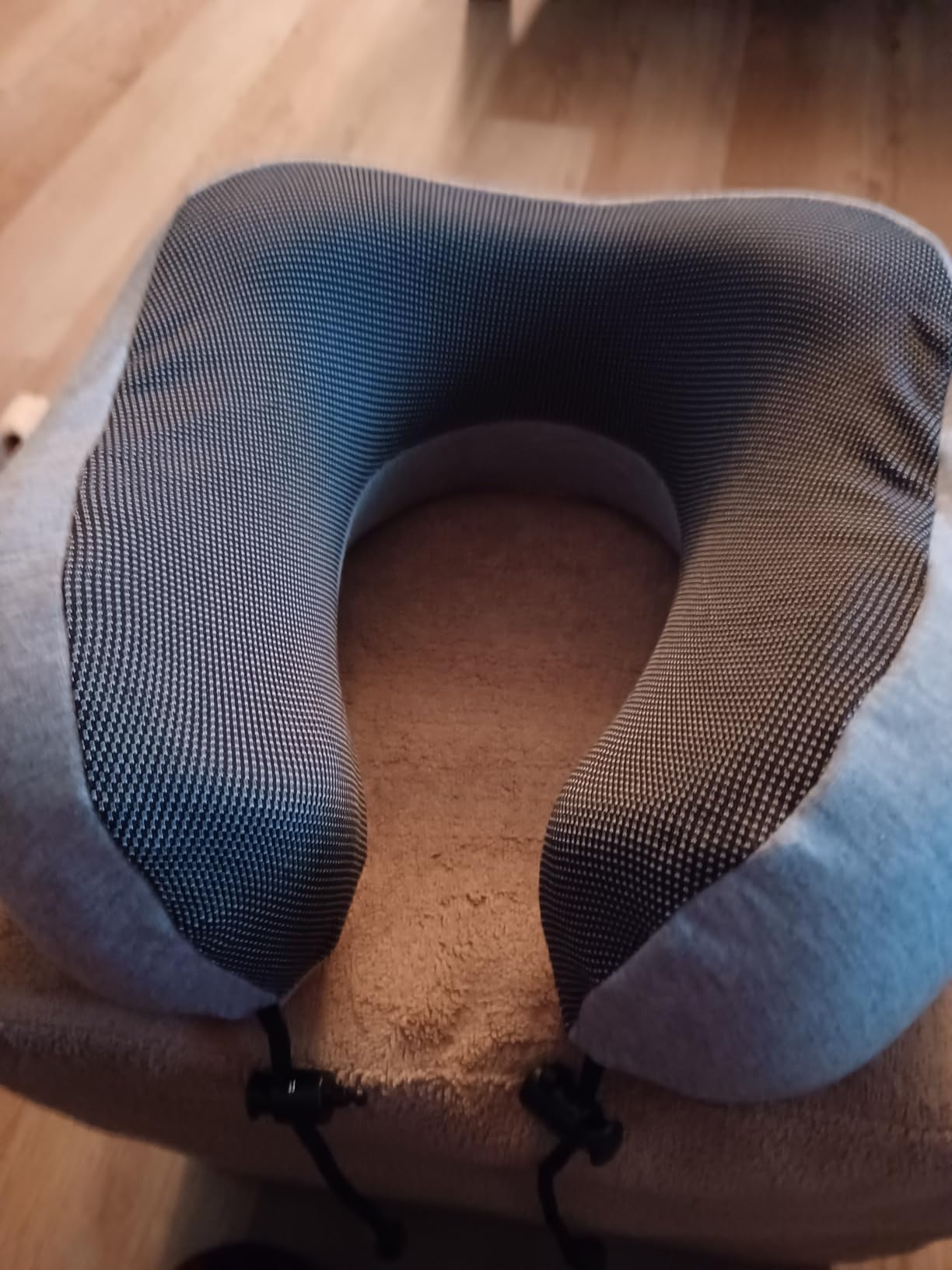
This is the pillow I put in the seat pocket test first, and it is the one I still reach for. The shape is a semicircular wrap with a scooped chin area, which matters more for side sleepers than the marketing suggests: it fills the gap under the jaw so the head does not slide down and sideways into your shoulder. The 100% memory foam softens with body heat and then holds your position rather than letting you slide off it.
What surprised me was how small it gets. At 11.02 by 11.02 inches and 10.88 ounces, it compresses into a soft bag that takes up roughly the volume of a folded T-shirt in a carry-on, which is rare for a solid memory foam pillow and one of the reasons it ranks first here.
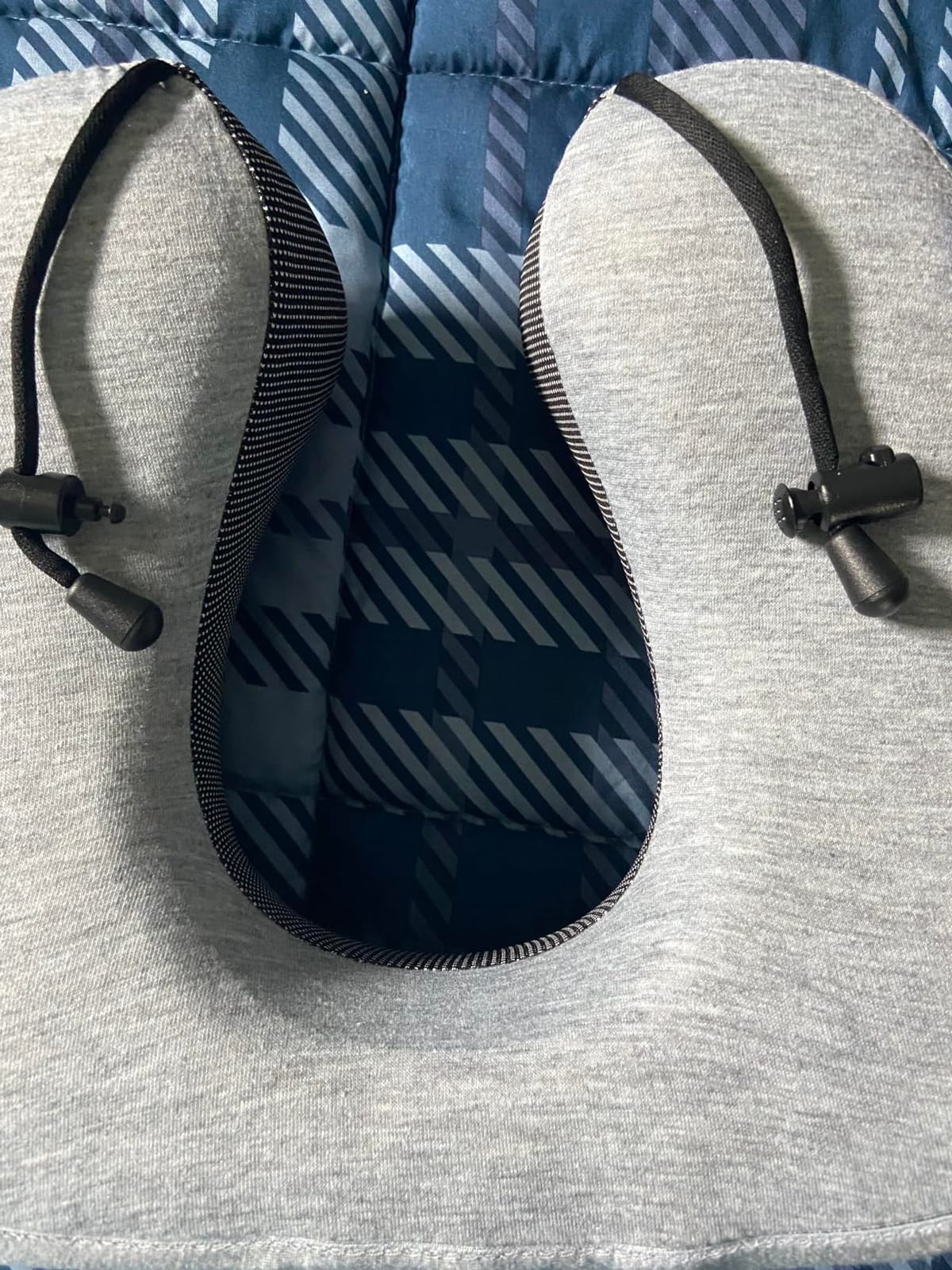
Buyer feedback across more than 21,000 reviews repeatedly credits it with reducing head-bob and easing neck strain on long flights and commutes. The 4.2 average is honest rather than inflated, and the complaints cluster in one place: softness. Sleepers who want a firm lateral wall sometimes find that the foam compresses under the weight of the head and does not push back hard enough.
It is also listed as machine washable, which is unusual for a memory foam pillow and one more reason it survives frequent travel. The chin cutout, meanwhile, is the part that some people find restrictive if they are not used to sleeping with something under the jaw.
Who will like the napfun pillow
Side sleepers on window seats who want a pillow that stays put without a strap or a hose. It is also a strong choice for anyone who flies often enough that a rolled-up hoodie no longer works, because the foam holds its shape instead of flattening after a few trips.
Car, train and bus riders get the same benefit, since the wrap works in any seat with a headrest. If you sleep on your side in bed as well, the same support logic applies.
Who will not like the napfun pillow
If you have broad shoulders or a wide neck, the uniform U shape can feel loose at the sides. People who need a genuinely firm lateral stop, usually because of existing neck issues, will want something like the Cabeau with its chin clasp or the Everlasting Comfort with its taller ridges.
Those who overheat in warm cabins will also find memory foam warmer than an inflatable. If heat is your main complaint, jump to the Purroch or the Keemall.
2. Dot&Dot Twist Memory Foam Roll: Best Multi-Use Pick
Dot&Dot Twist Memory Foam Travel Pillow, Bendable Neck Pillow for Airplane, Car and Home, 26-Inch Adjustable Roll with Washable Cotton Cover, Gray
26-inch bendable memory foam roll
3.8 inch diameter
Internal 1 cm rod
16 oz
Washable cotton cover
Pros
- Bends to fit almost any neck or seat shape
- Works for head back shoulder and cervical support
- Breathable machine washable cotton cover
- Snap closure clips to luggage or a headrest
Cons
- Firm foam feels stiff for very soft sleepers
- Less head cradling than a U-shaped pillow
This one is not shaped like a neck pillow at all, and that is the point. It is a 26-inch roll of memory foam with a thin internal rod, so you bend it into whatever curve you need and it holds that curve. For a side sleeper, that means you can build a custom bolster on one side only, which no moulded U pillow can do.
The cotton cover is breathable and machine washable, and the snap closure lets you hang the roll on a car headrest or the outside of a bag. Reviewers across roughly 15,700 ratings use it in far more places than planes: as a lumbar roll, a pillow under the knees, or a wedge behind the shoulders.
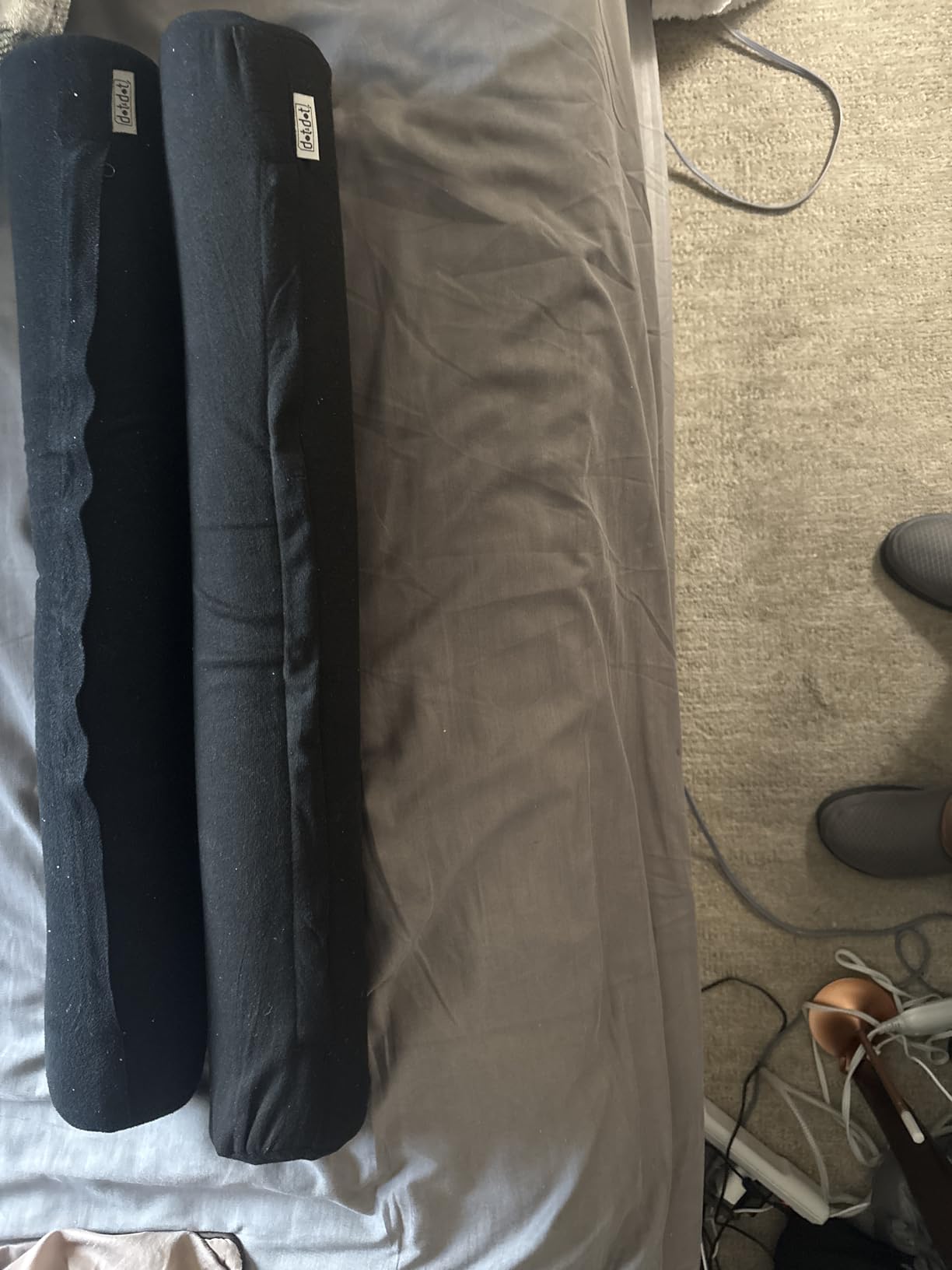
At 16 ounces it is noticeably heavier than the air-filled picks, and the foam is described as firm. If you are used to a very soft pillow, the first sensation is closer to a rolled towel than a cushion, though most people adapt within a flight or two.
The bigger trade-off is support type. Because there is no chin or head cup, this roll stops the head sliding sideways only if you configure it to. That takes a moment of fiddling, and it is the reason this pillow ranks second rather than first for side sleeping specifically.
Who will like the Dot&Dot roll
People who switch positions mid-flight, or who use the same pillow for a long car drive, a train berth and a hotel bed. It is also a good choice if you already own a proper bedroom pillow and just want a shaped bolster to add to it.
Anyone who packs light will like that it rolls flat rather than holding a fixed volume, and that the washable cotton cover handles sweat and cabin dryness better than most polyester covers.
Who will not like the Dot&Dot roll
Travelers who want to put the pillow on and fall asleep in under a minute. Positioning takes practice, and the firm feel does not suit sleepers who sink into soft pillows.
Those who need a chin stop for forward-sleeping will find the roll offers nothing on that front. It is a support tool rather than a ready-made sleep surface.
3. Everlasting Comfort 360 Travel Pillow: Best for Side Sleepers
Everlasting Comfort Upgraded Neck Pillow for Airplanes – Memory Foam Travel Headrest for Flying – Portable Multi-Position Travel Pillows with 360°Support – Long Flight Essentials for Sleep & Home Use
360-degree memory foam
Multi-position design
9.8 x 9.4 x 9 inch
Medium firm
Removable washable cover
Pros
- Cradles head chin and neck from every angle
- Medium foam resists feeling too firm on long trips
- Velcro strap and compressible build for carry-on
- Machine washable breathable cover
Cons
- High back ridge can feel constricting when resting backwards
- Included earplugs are widely criticised as ineffective
This is the most evenly supportive pillow in the group for lateral sleeping. The whole wrap is filled with memory foam rather than having a flat back and a shaped front, so there is no direction to get wrong. You can tilt your head toward either shoulder and the ridge on that side fills the space between your ear and your shoulder.
Reviewers highlight the multi-position build as the main reason it works for side, back and stomach sleepers alike, and the medium firmness is a good middle ground between the plush budget picks and the firm rolls. A review base of more than 8,700 ratings gives it more history than most of the newer designs here.
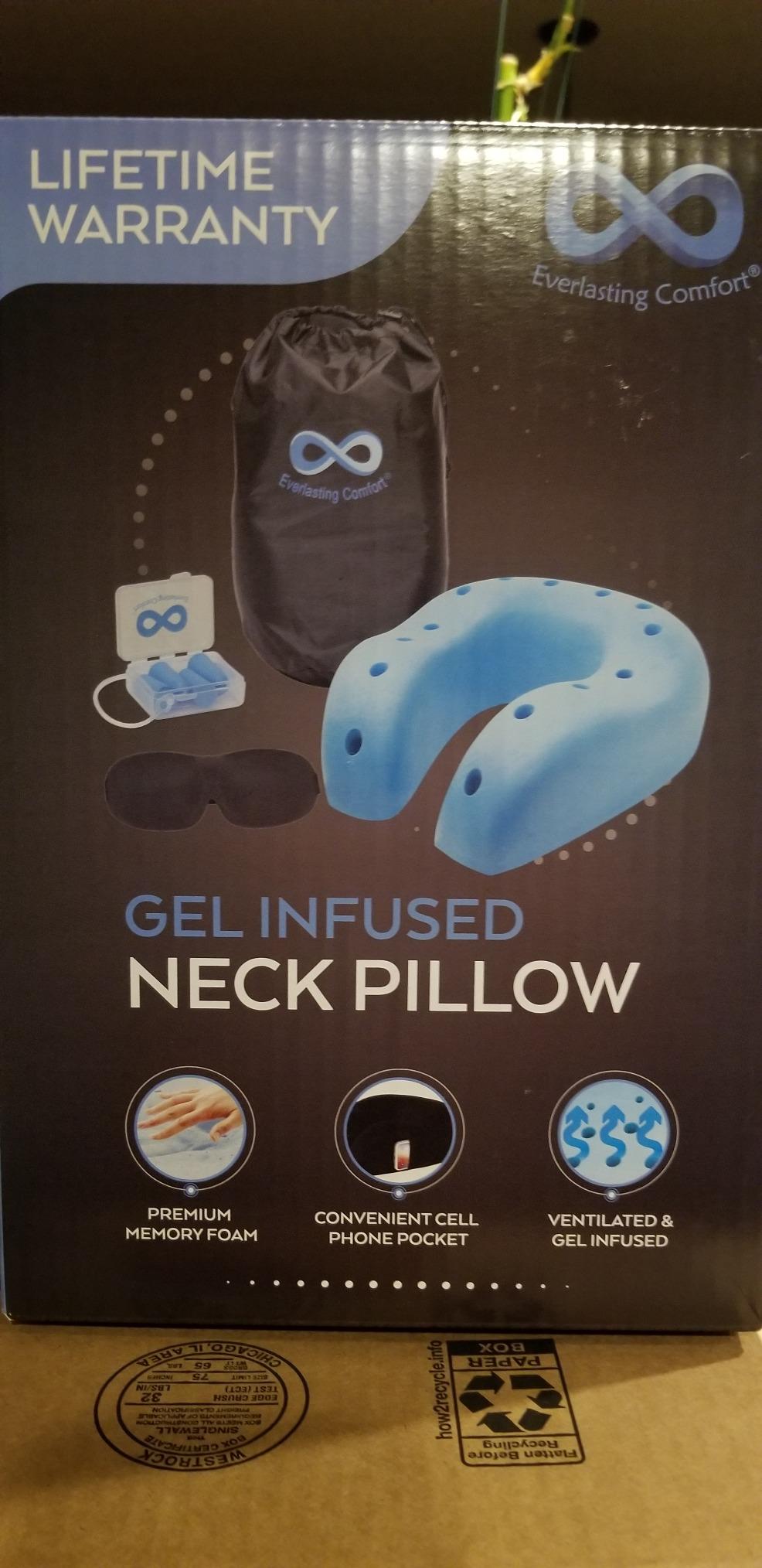
The velcro strap and compressible build matter for pack-down: it flattens enough to fit a personal item and does not fight you at the overhead bin. The cover unzips for a gentle cold machine wash, and the foam itself stays out of the water.
Two drawbacks come up often. The back ridge sits high enough that sleepers who rest their head backwards can find it presses into the base of the skull, and the bundled earplugs attract more complaints than praise. Buy it for the shape, ignore what is in the box.
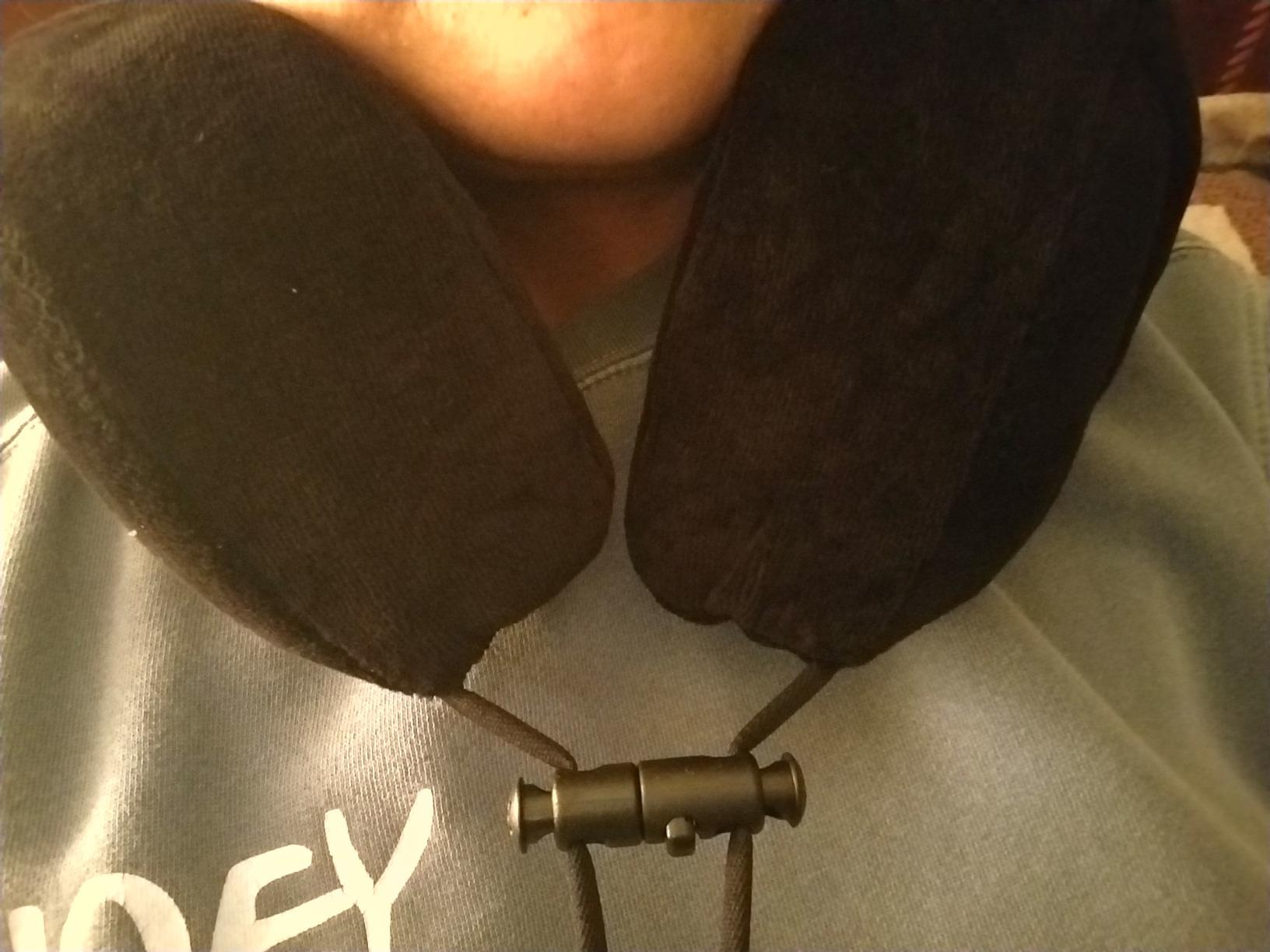
Who will like the Everlasting Comfort pillow
Side sleepers who are not sure whether they will want the chin forward or the cheek down, since this shape does not force a choice. It suits broad shoulders better than the narrower U pillows because the 9.8 by 9.4 inch footprint spreads wider.
Households sharing one pillow also benefit from the large and extra-large options. If you nap in the car, on a train or at a desk, the same wrap works in any of them.
Who will not like the Everlasting Comfort pillow
People who sleep with their head tipped back, because the tall rear ridge is the one part of this design that can get in the way. The included earplugs are also worth skipping if you already have a pair you trust.
If you travel with minimal luggage, note that 9 inches of height is real volume once the pillow is uncompressed. Travellers working to a strict personal-item limit will find the inflatable options easier to justify.
4. Cabeau Evolution S3: Best for Neck Pain
Cabeau Evolution S3 Airplane Travel Pillow for Long Flights – Supportive Memory Foam Body Positioner with Seat Straps to Secure Your Head and Neck and Provides 360 Support (Jet Black)
Patented seat strap system
Adjustable chin clasp
Dual-density memory foam
10 x 9.5 inch
329 g
Pros
- Straps anchor the pillow to the headrest and stop head bobbing
- Slim back profile avoids pitching the head forward
- Compresses to about a third of its size
- Fits neck sizes 12-18 inches
Cons
- Runs warm in hot conditions
- Conflicts with over-ear headphones
- Bulky even inside the compression case
The Cabeau is the only pick here with a genuine anchoring system, and for side sleepers with neck trouble that changes the maths. Instead of relying on friction to hold the pillow in place, two straps loop around the headrest, so the pillow stays exactly where you put it even when the seat reclines and the head drops toward the window.
Users report sleeping full stretches on long-haul flights, which is the outcome we were looking for. The back profile is deliberately slim, so it does not tip the head forward the way thick-backed U pillows do, and the adjustable chin clasp gives forward sleepers something to lean into.
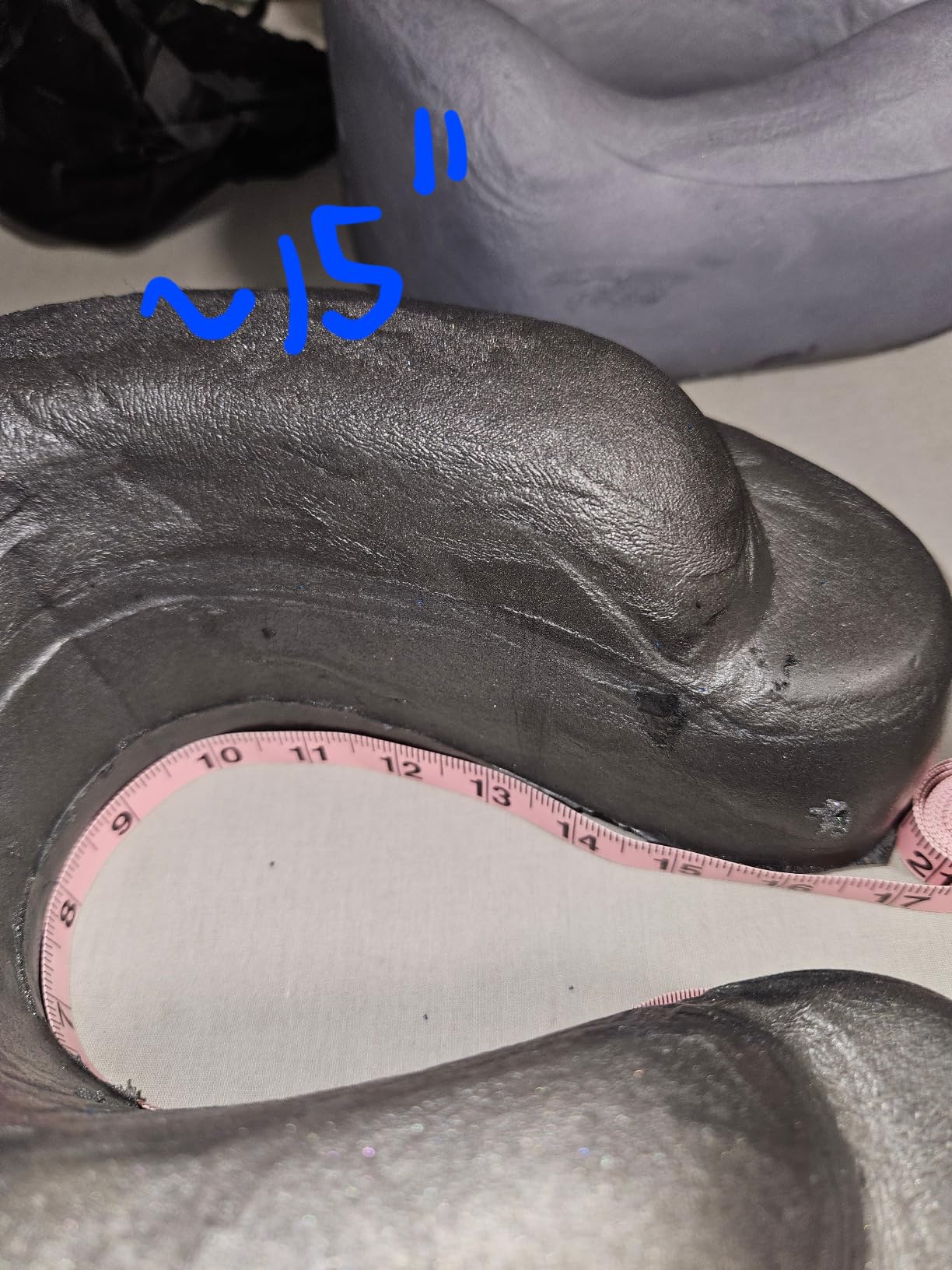
The foam is dual-density and CertiPUR-US certified, and it is rated comfortable for neck sizes from 12 to 18 inches. At 10 by 9.5 inches it compresses to roughly a third of its size with a quick-release luggage clip, though it is still the bulkiest of the foam options at 329 grams.
The most common complaints are heat, bulk, and a clash with over-ear headphones, whose ear cups press into the side bolsters. A minority also report the chin clasp failing to stay closed. If you wear large over-ear cans, test this one before committing.
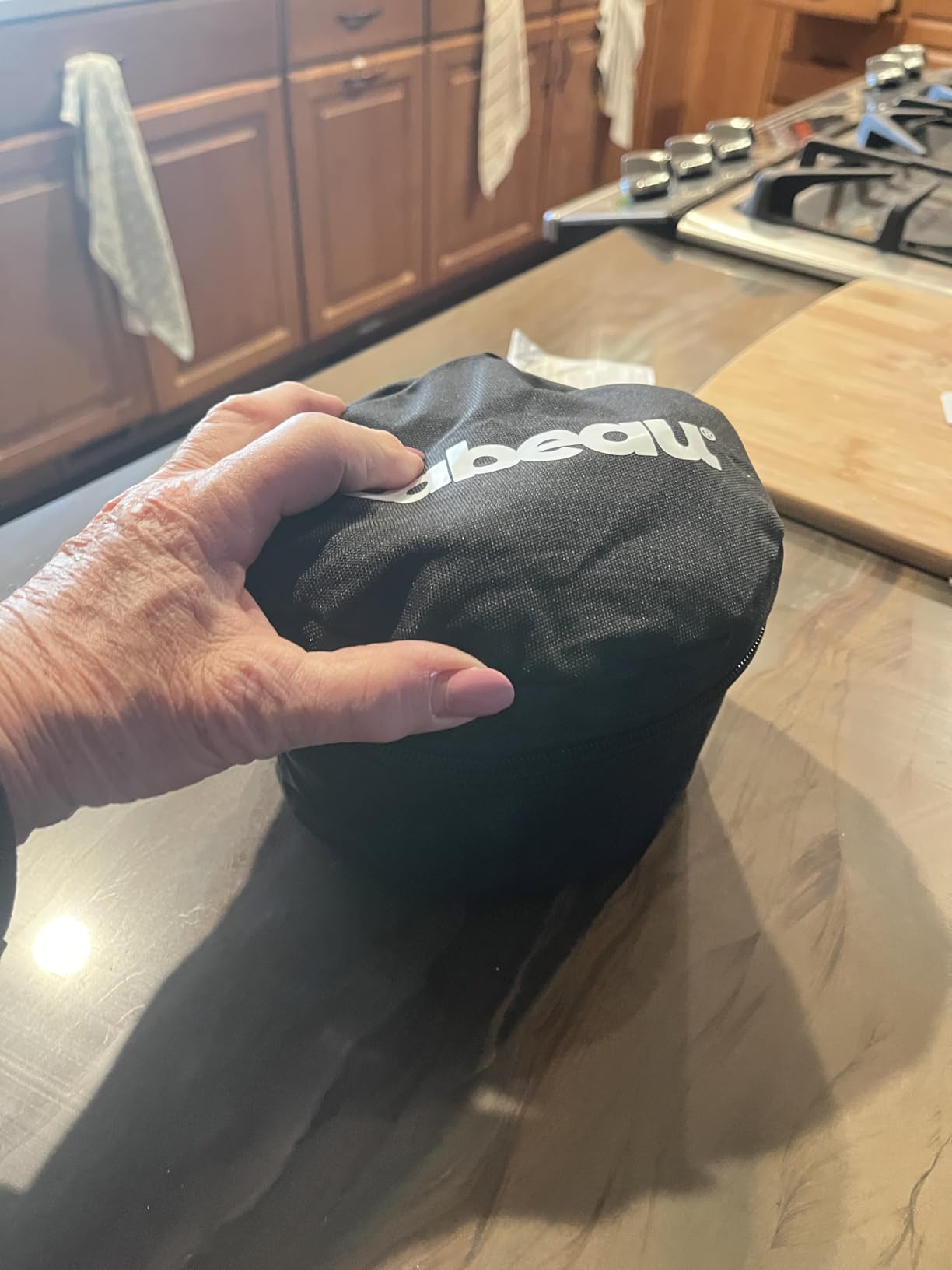
Who will like the Cabeau Evolution S3
Anyone with a history of neck pain who wants the head physically held rather than merely supported. The strap system is the reason it is worth the extra bulk, particularly on red-eyes where you cannot afford to keep adjusting.
It also works in cars, on trains and at desks with a headrest, and the washable quick-dry cover is a good match for long trips in warm cabins.
Who will not like the Cabeau Evolution S3
Travellers in a hard carry-on budget, because 329 grams and a fixed compressed volume add up fast. Anyone wearing over-ear headphones will feel the side bolsters interfere with the ear cups.
It is also the wrong choice if you get hot easily, since memory foam holds warmth more than air. Choose the Keemall or the Purroch for a cooler surface.
5. GDEOUP U Shape Memory Foam Pillow: Budget Pick With Raised Lobes
GDEOUP Travel Pillow 100% Pure Comfortable U Shape Memory Foam Pillows Neck and Head Support Portable Travel Neck Pillow Suitable for Planes Airplane for Traveling,Train,Self-Drivingng Car,(Grey)
Raised-lobe ergonomic contour
100% memory foam
11.8 x 11.8 x 3.9 inch
9.87 oz
Removable cover
Pros
- Raised lobes give real side-to-side tilt support
- Soft memory foam moulds to the neck
- Adjustable rope and snapping collar
- Velour cover is machine washable
Cons
- Foam compresses easily and feels soft under the head
- Best suited to average neck sizes
- Bulkier than inflatable pillows in a carry-on
The design detail that sets this budget pick apart is the raised-lobe contour. On a plain U pillow both sides are level, so a side sleeper’s ear lands on foam that is the same height everywhere. Here the lobes lift, which gives the head a defined edge to rest against and stops it drifting toward the shoulder.
With around 5,700 ratings and a 4.4 average, it also punches above the price tier it sits in. The memory foam moulds to the neck quickly and does not spring back into a new shape, and the velour cover unzips for a machine wash.

The adjustable rope and snapping collar are more useful than they sound, because the opening size determines how much lateral support you get. Pulling it tighter raises the wall against your head, which is how you tune this pillow for a narrower neck.
Softness is the recurring complaint. At 9.87 ounces and 3.9 inches thick, the foam compresses readily under the head, so sleepers wanting a firm stop may want to look one tier up. It is also bulkier than an inflatable once packed, even with the included drawstring bag.
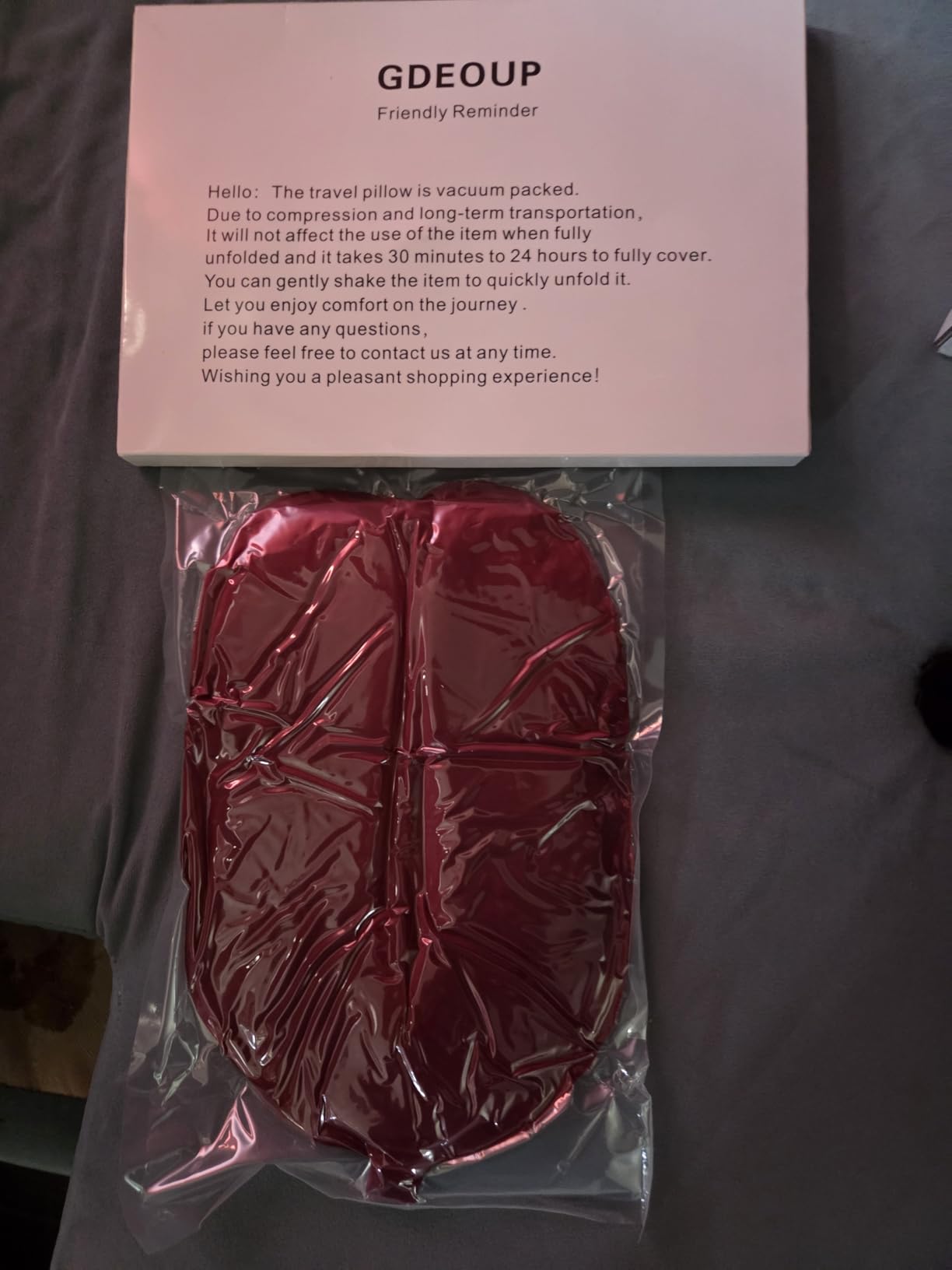
Who will like the GDEOUP pillow
First-time buyers who want a genuine side-sleeper shape without committing to a premium brand. The raised lobes are the feature that plain budget U pillows skip, and they are the reason this one rates so well against its tier.
It suits average neck sizes, and the six colour options are a small but real advantage if you share a bag with someone who will not travel in grey.
Who will not like the GDEOUP pillow
Broad-necked sleepers, who may find the collar opening loose no matter how it is adjusted. People who prefer firm lateral resistance will find the foam gives too easily.
If cabin luggage space is the deciding factor, an inflatable gives you the same job in a fraction of the volume. This is a comfort-first pick, not a space-first one.
6. Keemall Inflatable Neck and Shoulder Pillow: Best Inflatable Pick
Keemall Inflatable Neck & Shoulder Travel Pillow for Airplane Naps
Air fill with one-way valve
13 x 12.2 x 3.95 inch
110 g
Removable micro-velvet cover
Adjustable firmness
Pros
- Inflates in about three breaths
- Deflates in seconds and packs flat
- Firmness is tunable to your preference
- Breathable washable micro-velvet cover
Cons
- Softer than solid memory foam at full inflation
- Some users note gradual air loss over long flights
- One-way valve is awkward to open with larger hands
The Keemall solves the packing problem better than anything else in this list. It weighs 110 grams, folds into the storage sack it comes with, and inflates with roughly three breaths through a one-way valve. For anyone working to a strict personal-item limit on a budget airline, that is the difference between bringing it and leaving it behind.
Firmness is adjustable, and that turns out to matter for side sleepers. A lightly inflated pillow is soft enough to mould around the neck; a firm one pushes back against the tilt. You can re-set it in the middle of a flight without getting up.
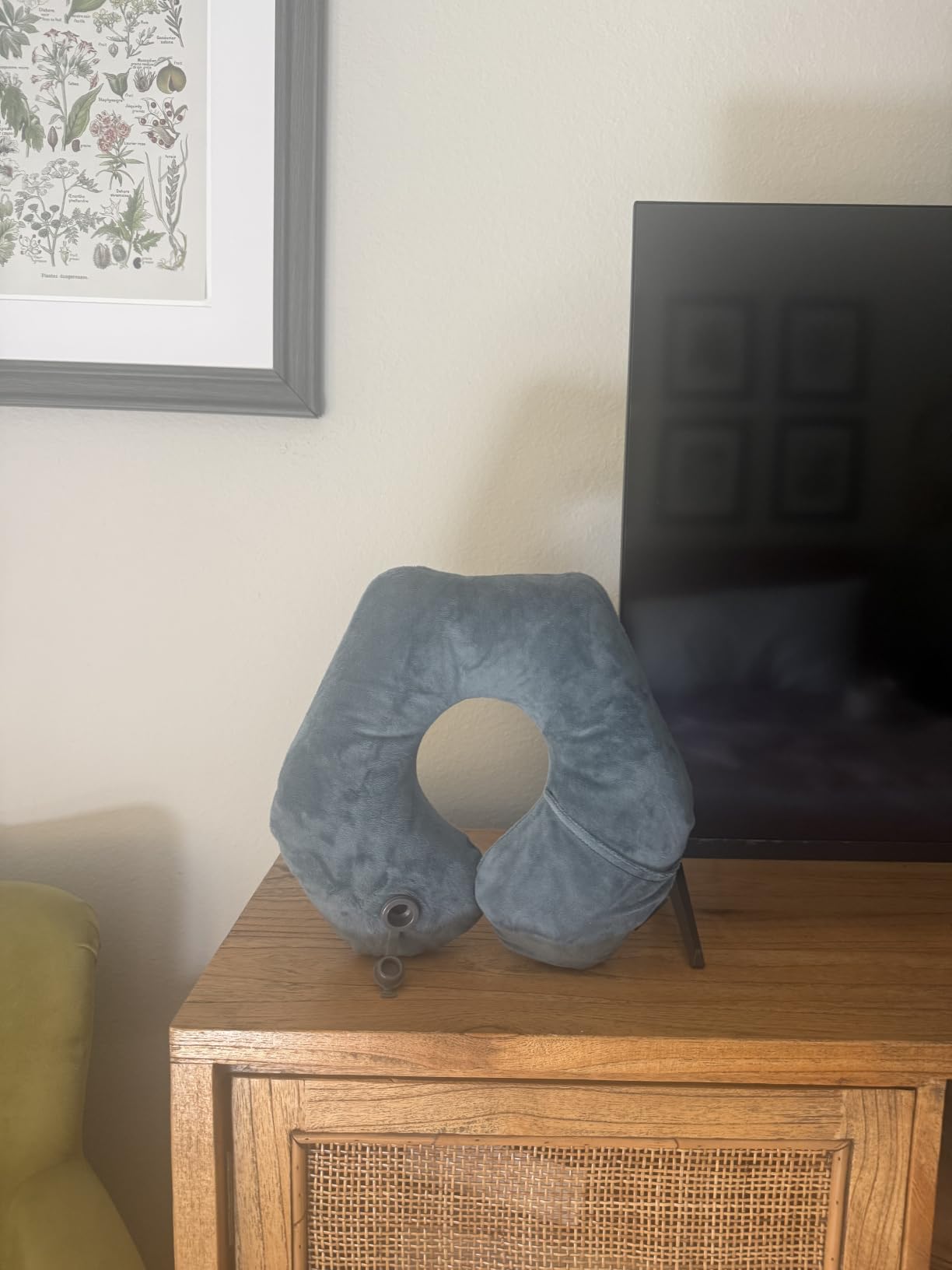
Buyer feedback across around 3,750 ratings praises the packability and the washable micro-velvet cover, and confirms it stays cool against the skin better than foam. The cover removes for a machine wash and the pillow works beyond planes, as a nursing or maternity support or a reading cushion.
The honest limitation is that air is never as firm as foam, and a minority of users report gradual air loss over very long flights, so it is worth checking the valve before you land. The one-way valve also needs a firm press to open, which is fiddly for larger hands.

Who will like the Keemall inflatable
Backpackers and anyone with a carry-on allowance they have already filled with something else. It is also the coolest option here, which makes it a good pick for warm routes and summer flights.
If you travel with children or a partner and need one pillow that adapts to different neck sizes, the adjustable air volume handles that better than fixed foam.
Who will not like the Keemall inflatable
Side sleepers who need a hard lateral wall, because air cannot create a firm edge the way solid foam does. If your neck pain is the main reason for buying, a memory foam wrap is a safer bet.
Travellers who find fiddly valves frustrating should also weigh this against a model with a simpler closure. The comfort ceiling is lower than foam, even at full inflation.
7. SAIREIDER 360 Memory Foam Pillow: Best Rated 360 Wrap
SAIREIDER Travel Pillow 100% Pure Memory Foam Travel Neck Pillow, Airplane Pillow for Traveling、Car、Home、Office,Washable Cover(Black)
360-degree memory foam wrap
11.8 x 11.4 x 3.9 inch
Three size options
Removable washable cover
Invisible zipper
Pros
- Even support for neck head and chin
- Soft skin-friendly polyester fabric
- Removable cover with hidden invisible zipper
- Three size options for different users
Cons
- Classic shape gives less lateral tilt support than raised-lobe designs
- Soft foam offers less resistance than medium-firm picks
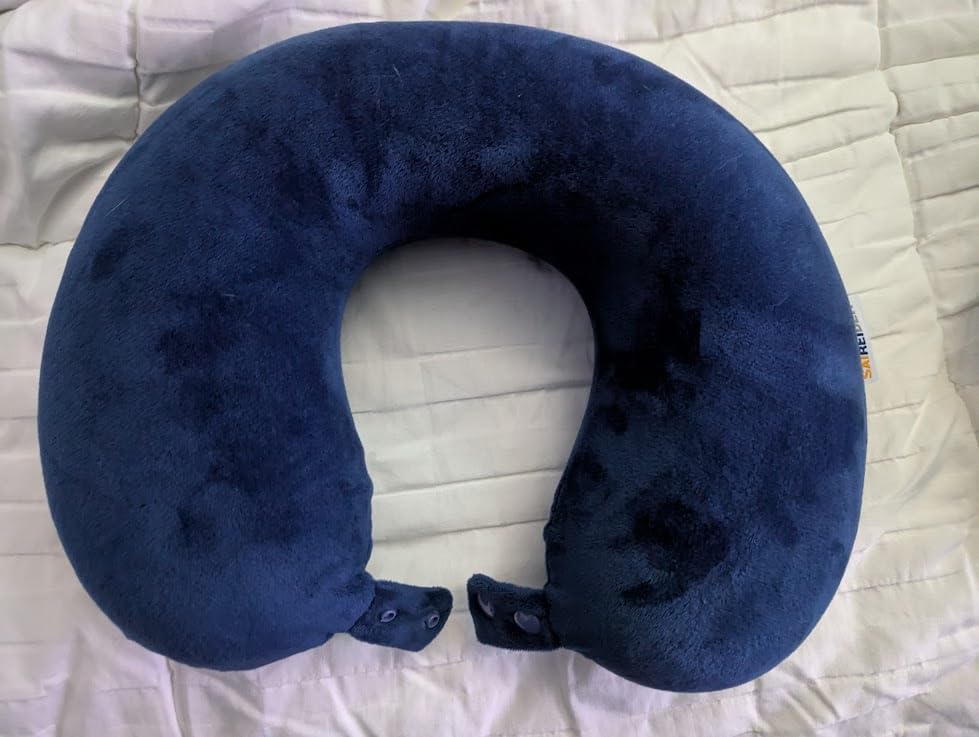
At a 4.6 average across roughly 3,000 ratings, this sits at the top of the rating range we found, with about 77 percent five-star feedback. Buyers consistently single out the even 360-degree support: there is no ridge to avoid and no side that sits differently, so the pillow accepts whatever angle your head lands at.
For a side sleeper that is genuinely useful. A sleeper with a short neck and a wide one can share the same design, and the hidden invisible zipper means nothing catches on clothing or hair in a dark cabin.
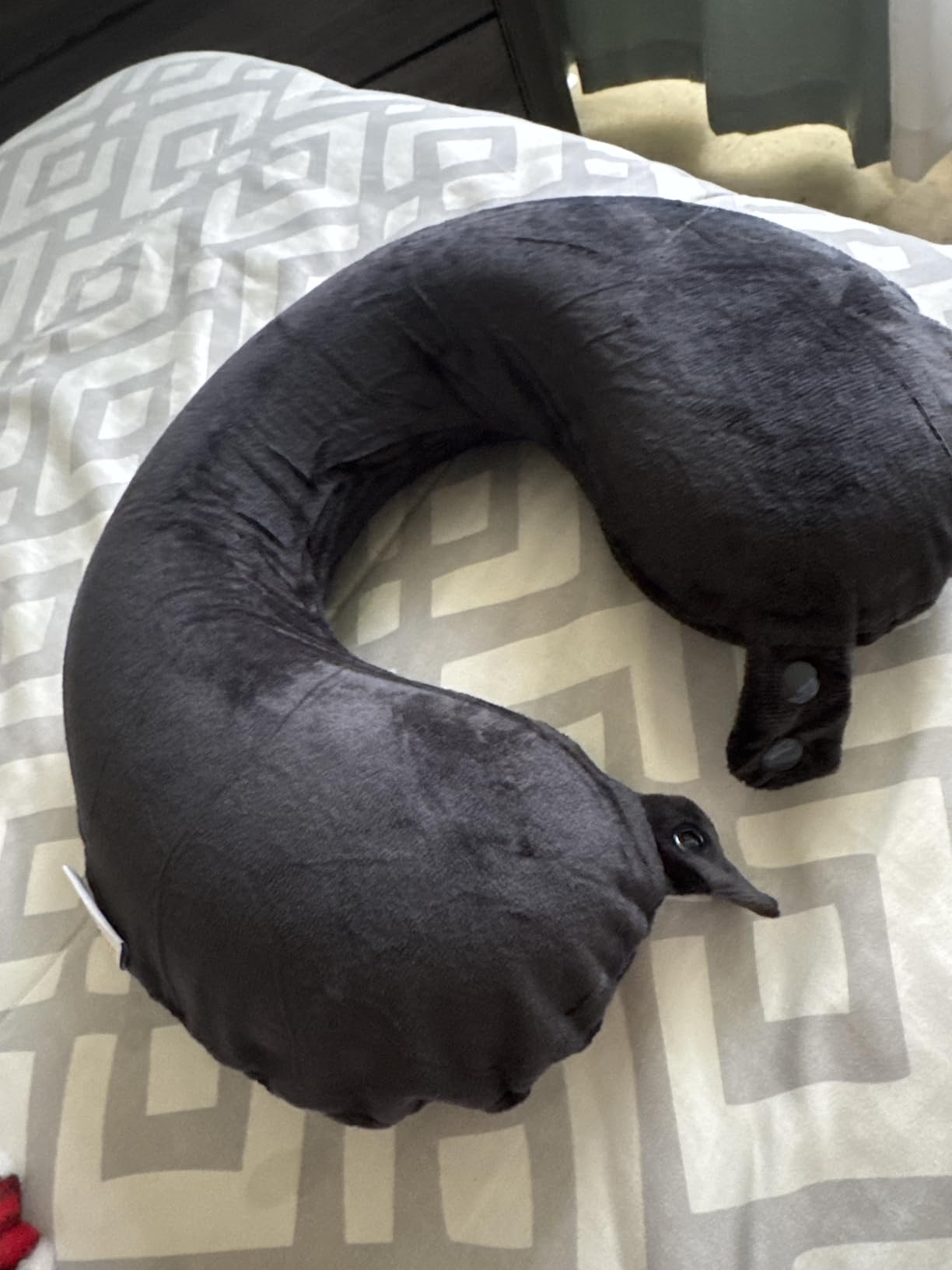
The soft polyester fabric is one of the more comfortable covers in this group, and the whole thing compresses for packing. It ranks second overall in the Travel Pillows category on Amazon, which tells you how much competition it holds up against.
The limitation shows up when you compare it to shaped designs. Because the sides are symmetrical rather than raised, it gives less lateral tilt support than the GDEOUP lobes or the Purroch G-shape, and the foam is soft enough that heavy sleepers can press through it.
Who will like the SAIREIDER pillow
Couples or families sharing one product, since the three size options and the soft cover suit a wide range of users. It is also a good first travel pillow because the forgiving shape does not need a learning period.
Anyone who values a clean, smooth sleeping surface over a sculpted one should look here. The invisible zipper is a small quality detail you notice every time you use it.
Who will not like the SAIREIDER pillow
Side sleepers who specifically need a raised edge to stop lateral drift, since symmetrical wrap shapes do less here than shaped ones. If you know you slide toward the aisle, the raised-lobe design suits you better.
Broader users may find the standard size tight, so the larger options are worth checking. It is a comfort pillow first, with firmer support available elsewhere.
8. Purroch G-Shape Memory Foam Pillow: Best for Warm Cabins
Purroch G-Shape Memory Foam Travel Pillow, Neck Pillow
G-shaped ergonomic core
High-density slow rebound foam
OEKO-TEX 3D honeycomb fabric
Hidden-zipper washable cover
Bundled storage bag
Pros
- G-shape gives jaw-to-shoulder support without gaps
- High-density foam holds its shape instead of flattening
- 3D honeycomb weave improves airflow and cuts heat
- Cover is machine washable with a hidden zipper
Cons
- Heavier and bulkier than inflatable alternatives
- Bundled eye mask and earplugs are basic add-ons
The G-shaped core is the answer to a problem the classic U shape has never fixed: the gap between the chin and the shoulder on one side. This design routes the foam diagonally so it fills that space, which is exactly the space a side sleeper’s head falls into when the seat is flat.
With about 1,080 ratings and 84 percent five-star feedback, it is newer and less proven than the leaders here, but the design is sound. The OEKO-TEX certified 3D honeycomb fabric is the standout detail, because airflow through the cover is what actually keeps a memory foam pillow from turning into a warm compress.
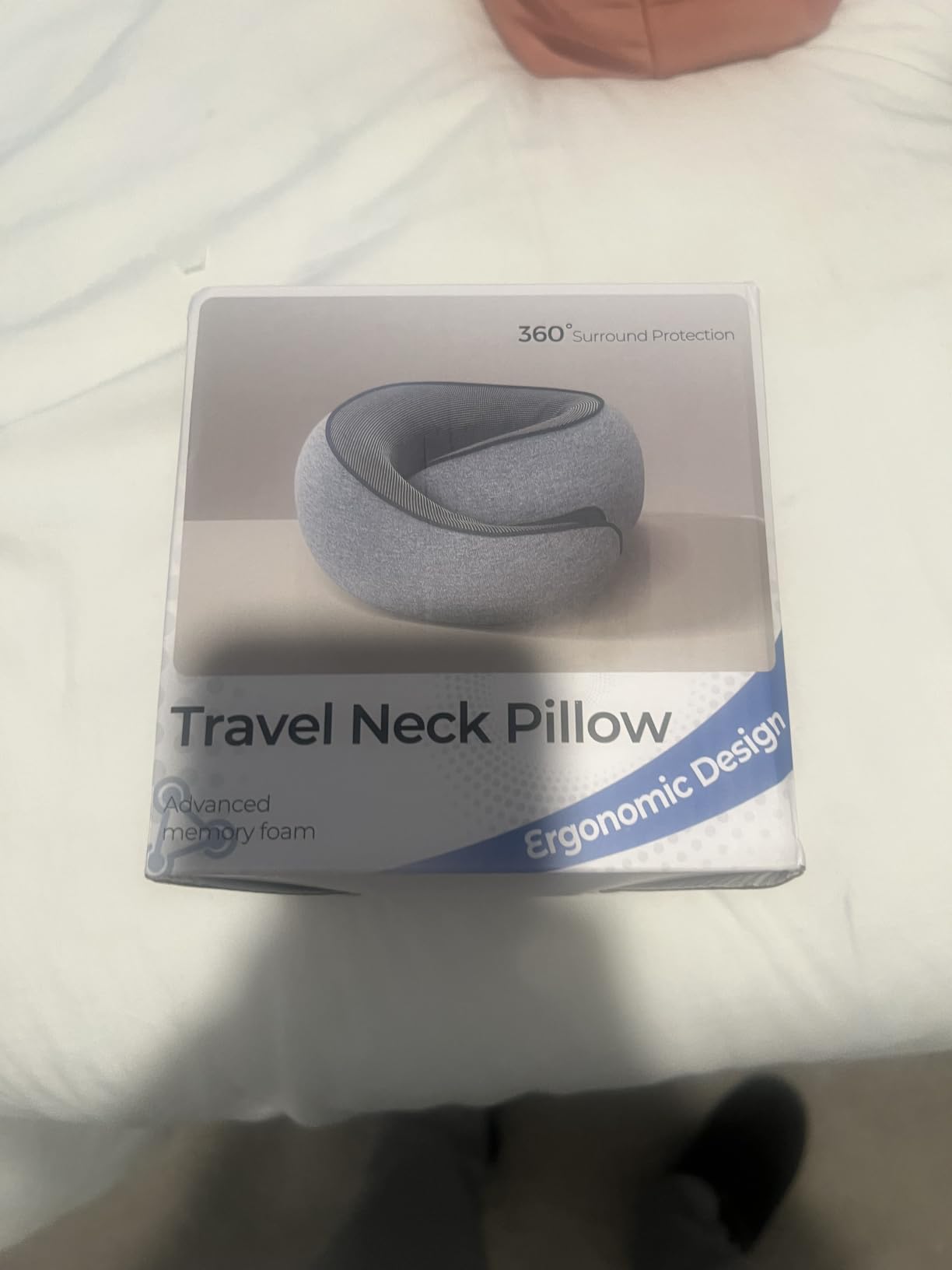
The foam is described as high-density slow rebound, which means it resists the flattening problem that soft budget picks develop over months of use. If you fly regularly, that resistance is worth more than an extra inch of thickness.
Weight and bulk are the trade-off, since solid foam always costs pack volume against an inflatable, and the included bag, eye mask and earplugs make a useful starter kit even if the mask and plugs are basic items.
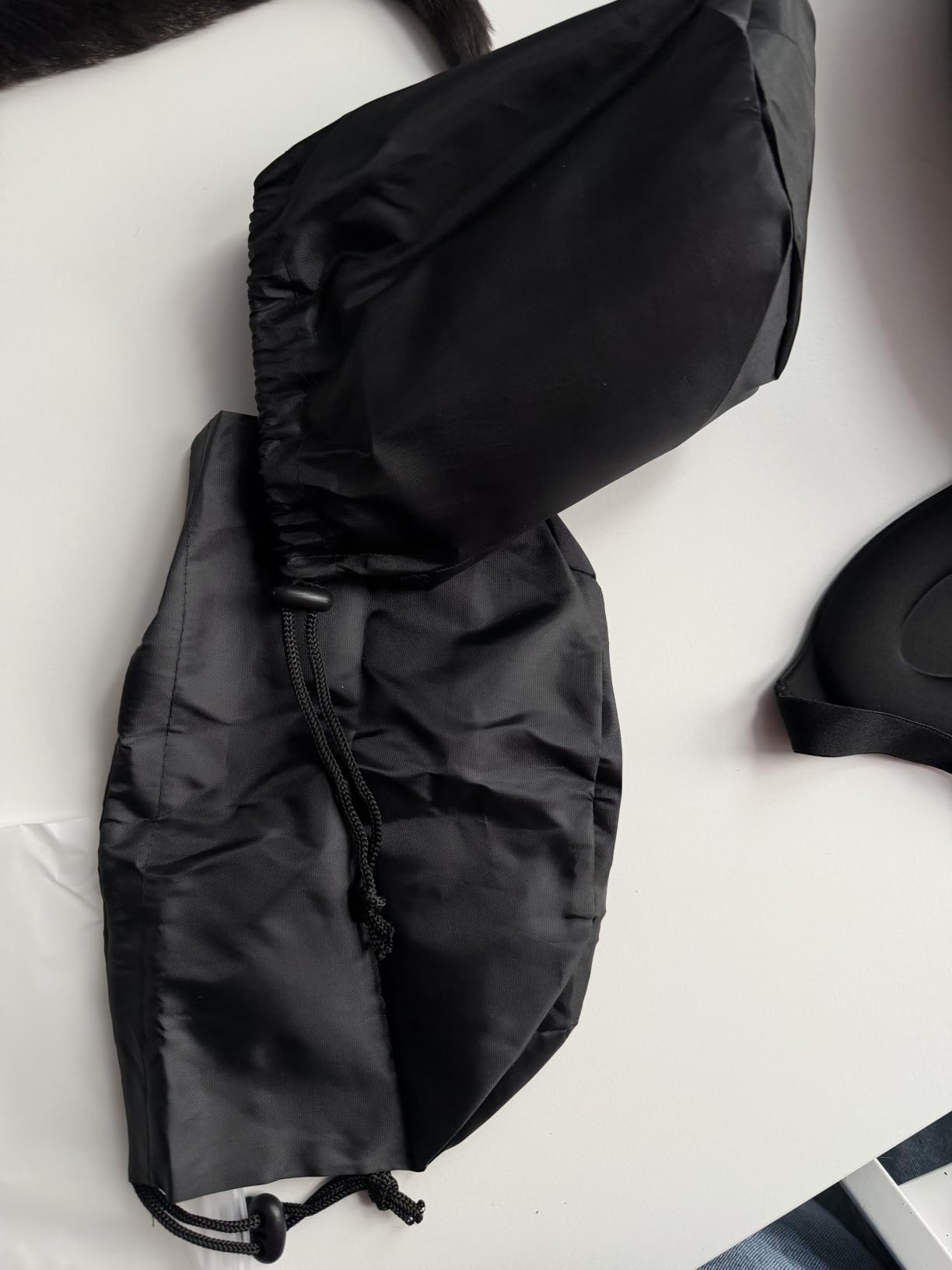
Who will like the Purroch G-shape
Side sleepers who get warm on long flights and want foam support without the trapped-heat problem. The breathable cover also helps anyone sleeping in a t-shirt in a warm cabin.
People who already know memory foam works for them, and want the shape to hold up over several years of use rather than a few months. The set also includes everything needed to use it away from home.
Who will not like the Purroch G-shape
Travellers who pack strictly. If bag space is the binding constraint, an inflatable weighing around 100 grams is a much better use of the allowance than solid foam.
It is also a foam pillow, so it will never be as cool as air, and the smaller review base means less long-term history than the category leaders.
9. TREKOLOGY Inflatable Neck Pillow: Best for Packing Light
TREKOLOGY Inflatable Neck Pillow for Traveling – Inflatable Travel Pillow for Airplanes – Neck Air Pillow, Blow Up Travel Pillows for Neck Support
Air fill with adjustable firmness
3.5 oz packed weight
13.98 x 11.02 x 4.33 inch
Removable washable cover
Fits 14-20 inch necks
Pros
- Packs to roughly fist size at 3.5 oz
- Inflates in seconds and deflates quickly
- Removable cover is machine washable
- Does not run hot against the skin
Cons
- One fabric panel is noticeably scratchier
- Opening is sized for smaller necks and leaves a gap for larger ones
- Do not over-inflate at altitude as the seam can pop
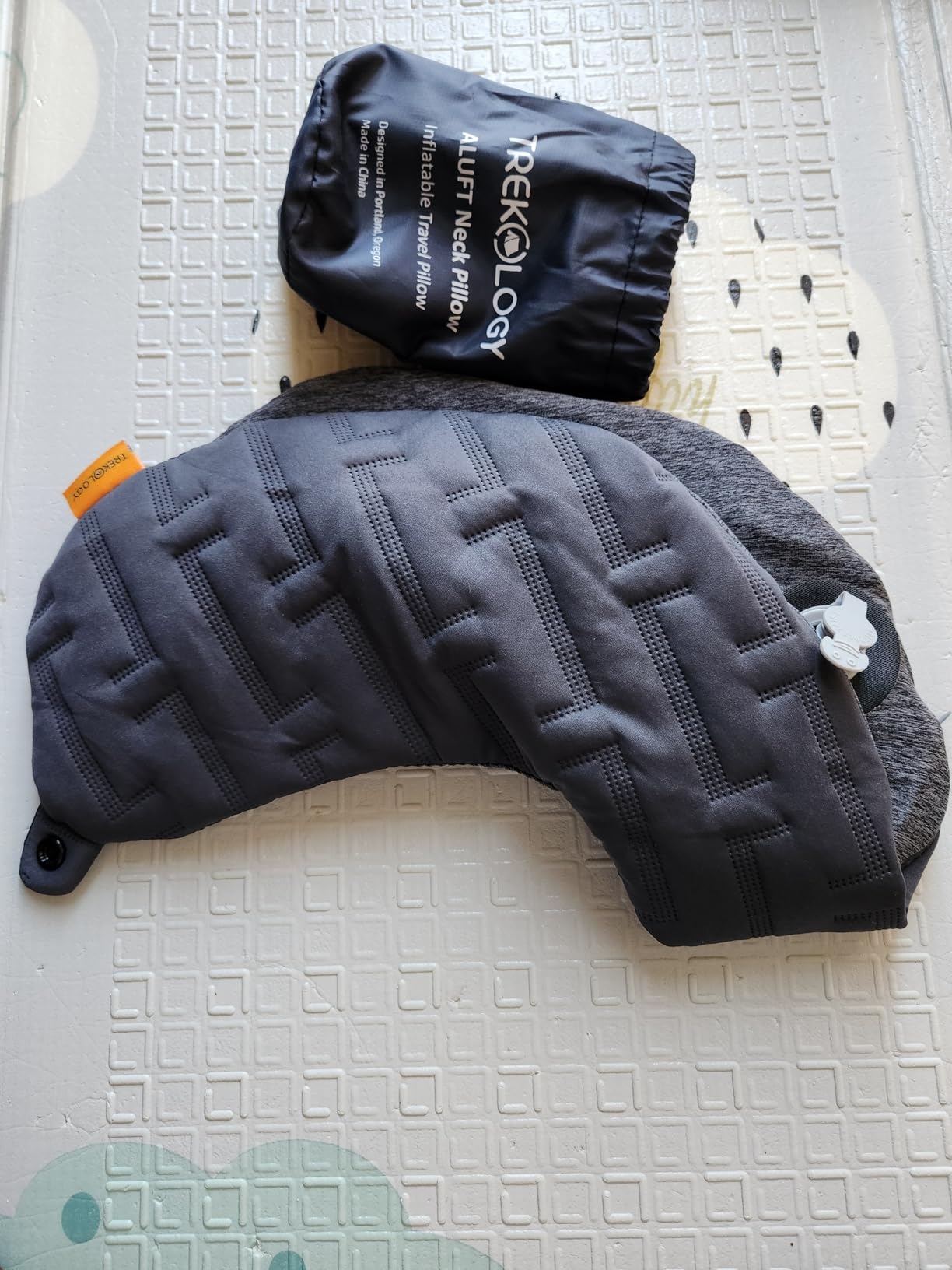
At 100 grams, this is the lightest pillow in the roundup, and it deflates to roughly the size of a closed fist. If you are backpacking or travelling with a personal item only, it is the easiest of the ten to justify, and it also doubles as a lumbar or desk cushion when you are not sleeping.
Firmness is adjustable, so a side sleeper can inflate it to the level of lateral push that suits them, and reviewers note it stays cool. The removable cover goes through a machine wash, which keeps the whole thing serviceable between trips.
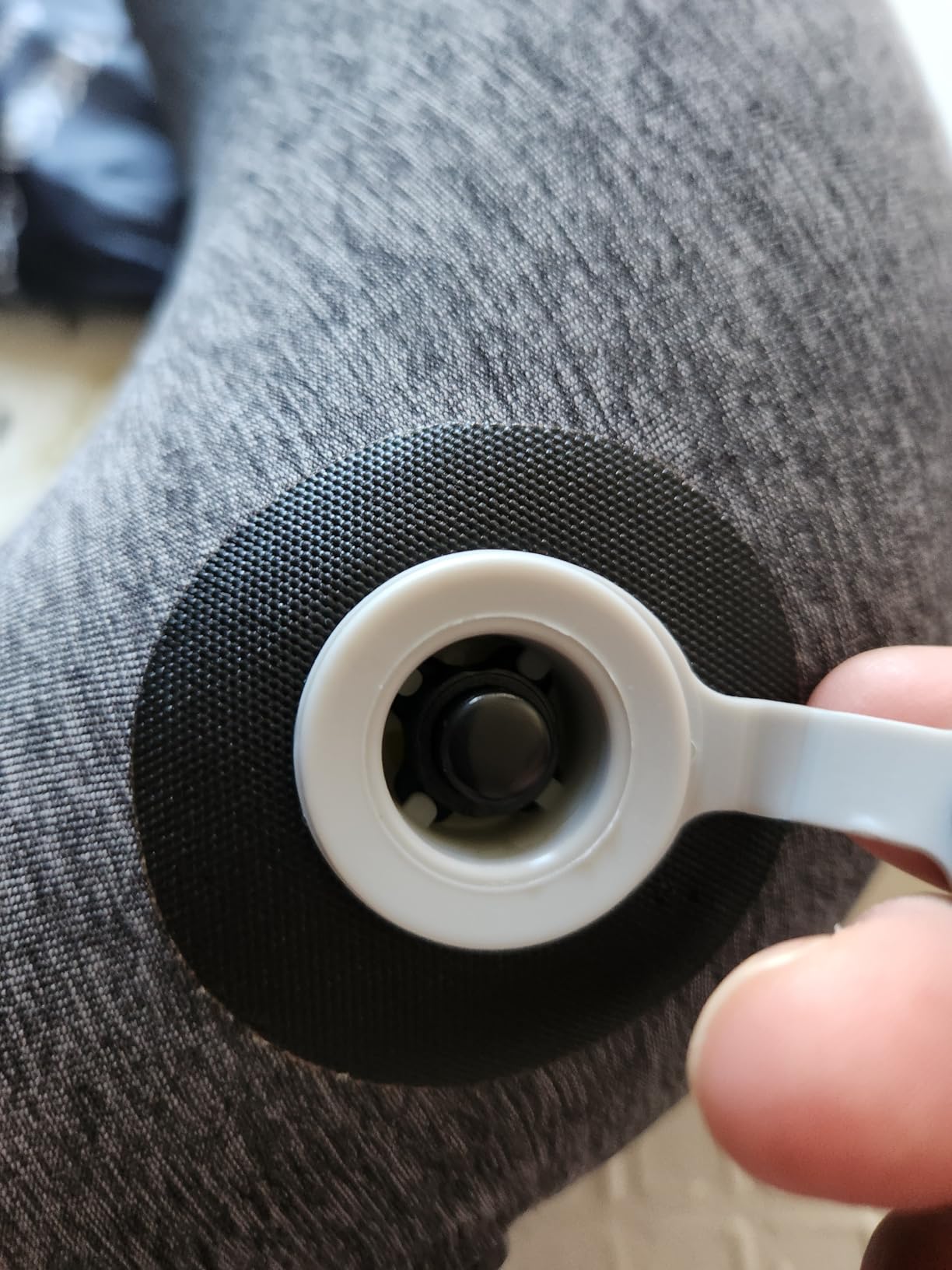
There are real trade-offs. One fabric panel is scratchier than the other, and the inflation valve sits on that softer side, so the surface you press against is not the comfortable one. The snap closure is fixed, with no adjustment range.
Fit is the bigger issue for some. The opening suits neck circumferences from 14 to 20 inches, and larger-necked users report a gap that reduces lateral support. Reviewers also warn against over-inflating at altitude, since cabin pressure changes can pop the seam.
Who will like the TREKOLOGY pillow
Minimalist packers, cyclists, and anyone who wants a pillow that never competes for bag space. The dual use as a sitting cushion makes it worthwhile on long journeys that are not entirely spent sleeping.
Travelers who run warm will like that air does not retain heat the way foam does, and the washable cover keeps it fresh over repeated trips.
Who will not like the TREKOLOGY pillow
People with larger necks, since the fixed opening leaves a gap and reduces the lateral support they came for. Those sensitive to fabric texture should also know the valve side is the rougher panel.
Anyone who needs a firm, shaped surface for neck pain should pick a foam option. Air pillows are a space solution before they are a support solution.
10. Gosider Memory Foam Travel Pillow: Best for Everyday Use
Gosider Travel Neck Pillow Memory Foam Travel Pillow for Planes, Pink
Memory foam with velvet cover
11.8 x 11.8 x 3.9 inch
12.34 oz
Contoured side lobes
Hanging buckle
Pros
- Contoured side lobes stop the head sliding sideways
- Slow-rising foam holds shape while staying soft
- Velvet cover resists pilling and is machine washable
- Buckle clips to the outside of a suitcase
Cons
- Runs thin and firm for sleepers who like a squishy pillow
- Smaller than some buyers expect
This is the pillow we ended up recommending most often to people who do not fly much. The contoured side lobes are the feature that matters: they raise the edges just enough to stop a side sleeper’s head sliding toward the aisle, without the bulk of a full 360 wrap.
Around 5,400 ratings at a 4.4 average, with reviewers pointing out that the slow-rising memory foam holds its shape rather than flattening. The velvet cover is widely praised for not pilling or fading, and it goes through a machine wash.
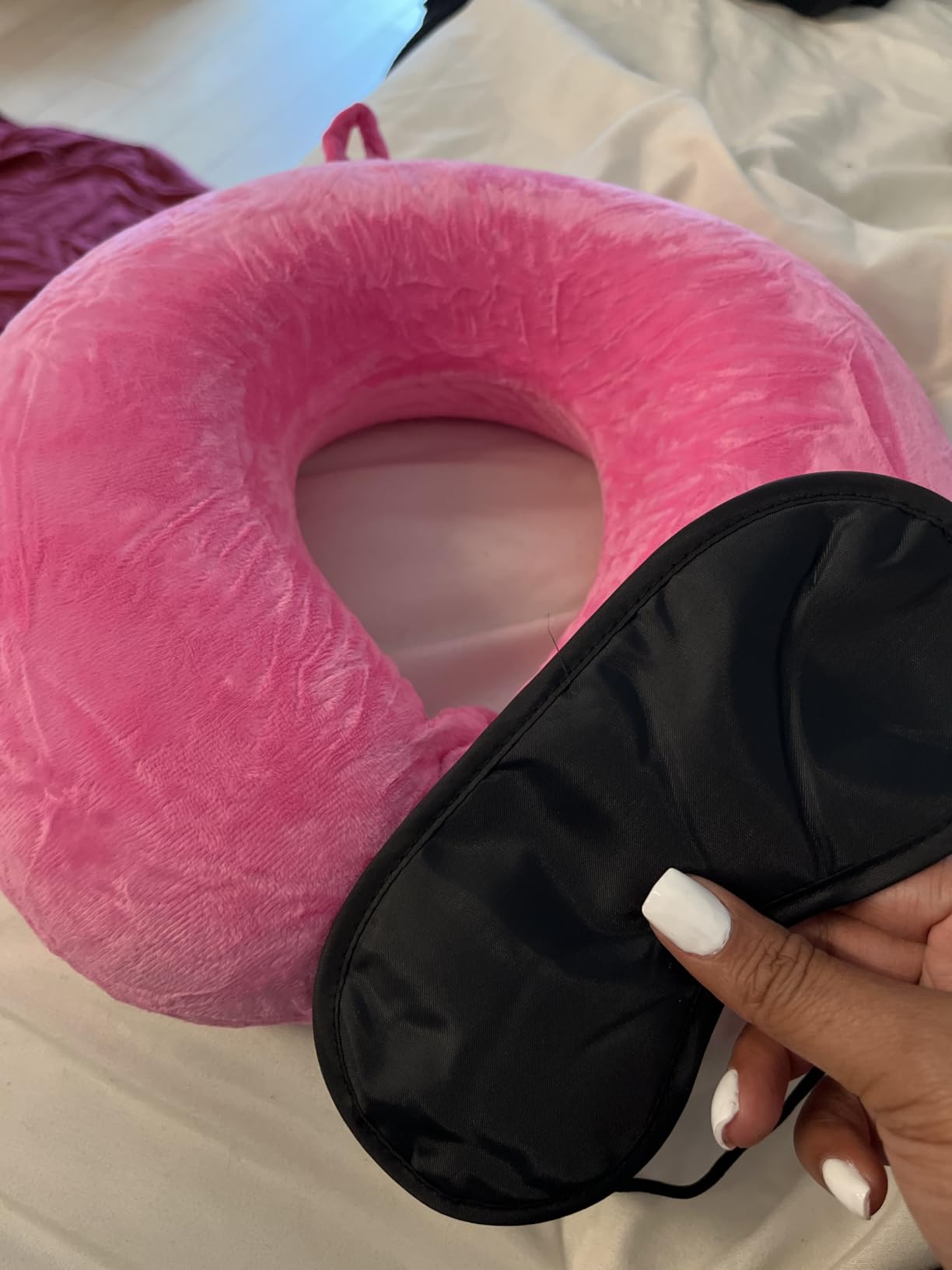
The hanging buckle is a small thing that gets used constantly. It clips to the outside of a suitcase or a backpack strap, so the pillow does not consume interior pack space, and it is one of the better balanced choices at 12.34 ounces.
Two complaints recur: the pillow runs on the thin and firm side compared to plush pillows, and it is smaller in person than buyers expect from the photos. It works best as a travel topper or a day-use pillow rather than a hotel replacement.
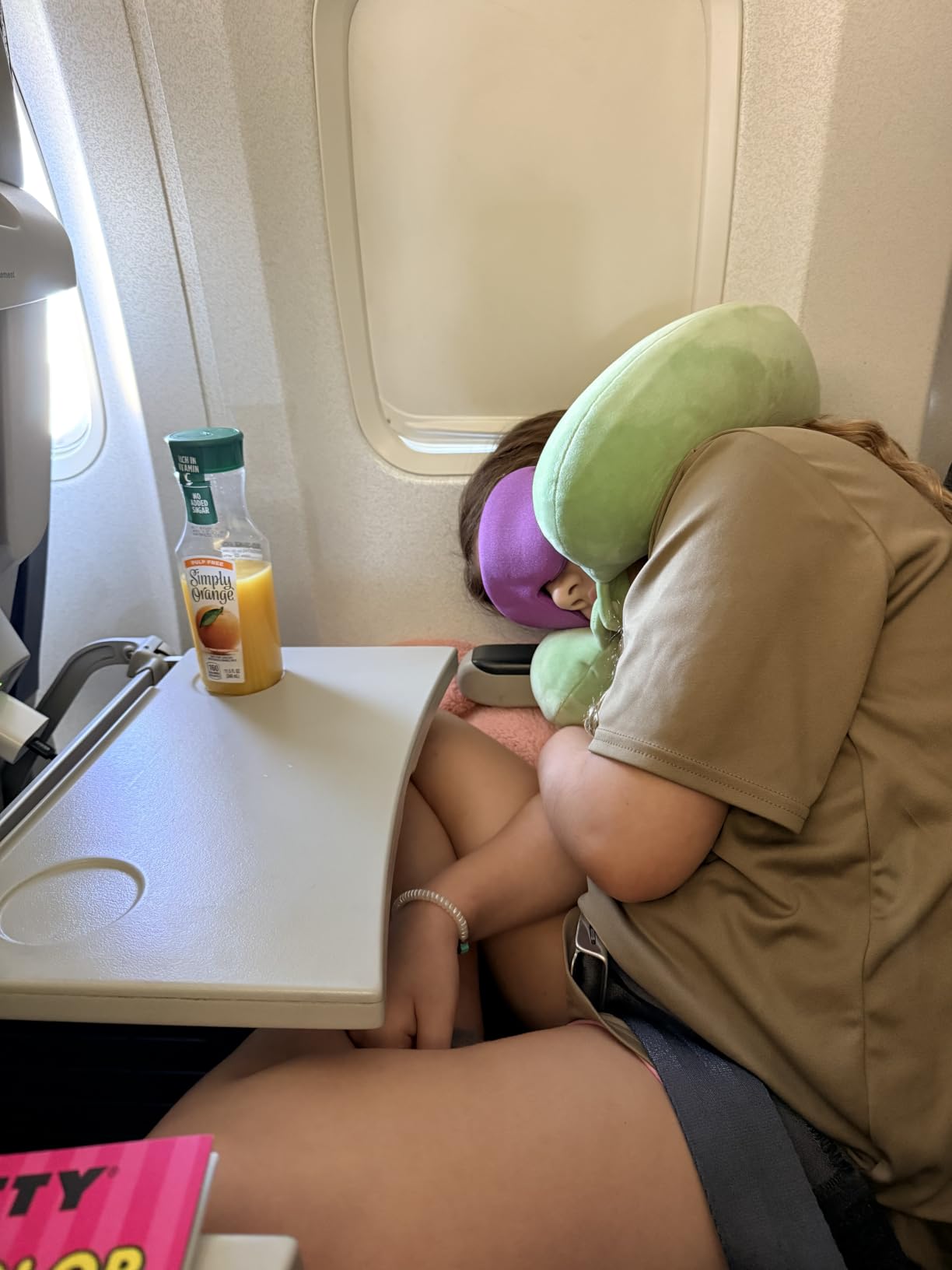
Who will like the Gosider pillow
Occasional travellers and commuters who want a pillow that is ready for a nap and easy to stow afterwards. Car, plane, train and at-home use all get the same benefit from the contoured lobes.
Anyone who travels with a soft bag and no attachment points will like the buckle, and fifteen colour options make it easy to find one you will actually keep in the rotation.
Who will not like the Gosider pillow
Side sleepers who want a deep, soft surface, since the loft is modest. If you normally sleep on a plush pillow, the change in feel is noticeable on the first flight.
Those wanting a pillow for a hotel bed will find this too small. A travel pillow solves the seat problem, not the bed problem.
How Side Sleepers Should Choose a Travel Pillow
The earlobe-height rule, and why side sleepers hurt on planes
On a bed, the pillow fills the gap between your shoulder and your ear so your cervical spine stays in a neutral line. Take that pillow away and the head drops toward the shoulder, which stretches the muscles and joints on the side of the neck. On a flight that position is held for hours at a stretch.
The rule of thumb that practitioners give side sleepers is simple: the pillow should raise your head to earlobe height, so the line of your ear sits roughly level with your shoulder, with the spine staying flat rather than tilted. A pillow that is too low lets the head drop; a pillow that is too high tilts it the other way and pushes pressure into the opposite shoulder.
That is why the shapes in this roundup matter more than the materials. Raised lobes, a G-shaped core, a chin clasp and a headrest strap all add height on the side that needs it, and that is the difference between a pillow that supports and one that just sits there.
Forward sleeper vs side sleeper: the first decision fork
Before comparing materials, work out which problem you have. Side sleepers tilt their head toward the shoulder and need lateral support. Forward sleepers drop their chin toward the chest and need something under the chin or across the shoulders. Most general-purpose U pillows try to do both and end up mediocre at each.
If your head falls forward, you want chin support or straps, which points to the Cabeau with its adjustable chin clasp and the napfun with its scooped chin area. If your head slides sideways, you want raised side support, which points to the GDEOUP, the Purroch G-shape or the Everlasting Comfort 360.
Buying for the wrong one of these is the most common reason travellers say a neck pillow did not work for them. It is not a quality problem, it is a shape problem.
Material matrix: memory foam vs inflatable
Memory foam contours to your neck and holds loft for the whole night, which makes it the better choice for lateral support. It also absorbs movement, so a partner or a bumping arm does not wake you. The cost is pack volume and heat retention, and the main long-term risk is the foam gradually losing its resilience.
Inflatable pillows compress to almost nothing and stay cool, and firmness is adjustable at the point of use. They cannot create a firm sculpted edge, and air loss over a very long flight is a reported problem with some models. Pack size is the entire argument for air.
Shredded foam and fiber fills sit between the two. They breathe better than solid block foam and take up less space, but they compress faster and lose shape sooner. If your trips are short, they are a good middle ground; for repeated long-haul use, solid memory foam holds up longer.
Seat-position matrix: window, aisle or middle
Your seat changes the right answer more than most roundups admit. A window seat gives you a wall, and a slim pillow that lets you lean into the window often beats anything bulky. An aisle seat is the most straightforward case, since a wrap with a chin clasp works without needing a wall or a headrest strap.
A middle seat is the hard one, and it is where most pillow advice breaks down. There is no window to lean on and two armrests to negotiate, so a wrap-around or cross-body style that stays in place without a wall is the answer. A pillow with a headrest strap gains value here, because the strap is doing the anchoring that a window would otherwise do.
Whatever your seat, use the back of the seat. Angle the seat-back wings inward if your airline has them, and raise the armrest if you can, since the armrest height is often what forces the shoulder into a tilted position.
Weight, packed size and your carry-on budget
Weight is the number to check first if you fly a basic economy fare, because those airlines measure bags strictly. The two inflatables here weigh 100 and 110 grams, while the foam pillows that state a weight run from roughly 280 grams to about 450 grams. Over ten trips that difference is the whole cost of a memory foam pillow, compressed.
Most foam pillows here compress into an included bag or case, and the Cabeau claims to compress to about a third of its size. The practical test is simple: compress it, put it in your day bag, and see whether you still have room for the things you actually need during the flight.
Our [carry-on and lightweight travel setup guide](https://www.pwice.com/best-camping-sleeping-pads-for-side-sleepers/) covers how small sleep items change a packing plan, and the same volume logic applies here.
Headphone and eyeglasses compatibility
Over-ear headphones and wrap pillows fight each other, and this is a genuine practical problem rather than a minor one. The ear cups need space, and a 360 wrap with tall side bolsters does not leave much. The Cabeau is the most commonly reported clash in this group, and the Everlasting Comfort 360 can be tight with larger cans.
For wearers of over-ear headphones, an inflatable with a lower profile or a contour design with open sides works better. If you wear glasses, look for a wrap that does not press the frame into your cheek; the Dot&Dot roll and the inflatable models avoid this entirely because they do not close around the face.
None of the ten solves both at once perfectly, so if you use both, test the pillow with your actual gear before a long flight.
Durability over repeated long-haul trips
Buyers who report back after multiple trips are more useful than first-week reviews, and two patterns come up. Soft memory foam pillows are the ones that get reported as flattening, which is why the high-density slow rebound foam in the Purroch and the dual-density foam in the Cabeau are worth noting if you fly monthly or more.
Inflatable pillows have a different failure mode: gradual air loss rather than foam breakdown, reported by a minority of users on very long flights. Checking the valve at the start of a trip catches most of it, since you can add air in the lavatory rather than land with a flat pillow.
Covers wear before foam does. Pillows with removable machine washable covers, which is all ten of these, will outlast the ones you cannot clean, and that is worth more attention than the brand name.
Cleaning and care by material
For memory foam, the rule is simple: cover off, foam out of the water. Every memory foam pillow here states the cover is machine washable, and one specifies a gentle cold cycle. Cold water and a mild detergent are enough; heat damages foam and the elastic in the cover.
For inflatables, deflate fully before washing, and check the valve for grit before reinflating. Air does not need much cleaning, so a wipe of the fabric and an occasional cover wash is usually sufficient.
Air you breathe out is the main thing to worry about with foam pillows over a long-haul trip. A pillowcase over the cover, or choosing one with a breathable fabric such as the Purroch, makes a measurable difference in warm cabins.
Cold-water washing and slow air drying are worth the extra effort if you take the pillow on cold-weather routes, where a damp cover against the neck is worse than no pillow at all. Our [winter travel pillow guide](https://www.pwice.com/best-memory-foam-winter-travel-neck-pillows/) covers how cold changes which materials are worth packing.
For a wider view of how pillow materials behave over time, our [side sleeper mattress roundup](https://www.pwice.com/best-memory-foam-mattresses-for-side-sleepers/) covers the same foam-density questions at a larger scale, and our [long flight essentials guide](https://www.pwice.com/best-premium-neck-pillows-for-long-flights/) looks at what else matters on a twelve-hour itinerary.
Frequently Asked Questions
What is the best travel pillow for side sleepers?
The best travel pillow for side sleepers raises the head to earlobe height so the neck stays in a neutral line. Look for raised side lobes, a chin-support curve, or a strap system that anchors to the headrest, and avoid thick-backed U shapes that pitch the head forward. Our top pick is the napfun memory foam wrap for its chin support and packed size.
What is the best pillow for side sleepers who need neck support?
For side sleepers with neck support needs, a wrap with a chin clasp and headrest straps works best because it holds the head in place rather than relying on friction. The Cabeau Evolution S3 is built around that idea, while the Everlasting Comfort 360 is a good strap-free alternative with even support in every direction.
What pillow do chiropractors recommend for side sleepers?
The standard recommendation is that a side sleeper’s pillow should fill the gap between the shoulder and the ear so the head stays level, keeping the neck in a neutral line rather than tilted up or down. On an airplane seat this usually means extra loft on the side the head leans toward, plus a firm surface that does not compress after an hour.
Is it worth taking a neck pillow on a plane?
It is worth taking one on any flight over three hours, particularly for side sleepers whose heads slide toward the aisle or window. A rolled jacket or a folded sweater can work in a window seat where you can lean on the wall, but nothing keeps the head level the way a contoured wrap or strap-anchored pillow does.
Why are my airplane neck pillows not comfortable?
The most common reason is shape, not quality. A plain symmetrical U pillow gives the same height on both sides, so a side sleeper’s ear lands on foam that does not block lateral drift. The second reason is wrong firmness, since foam that is too soft compresses under the head and stops supporting, and inflatable pillows that are under-inflated feel flat.
Can I take a memory foam pillow through airport security?
Solid memory foam is allowed in both carry-on and checked bags, so a foam travel pillow clears screening without any special handling. Inflatable pillows are also fine. The practical issue is size rather than rules, since a foam pillow that does not compress may count against your carry-on allowance on a basic economy fare.
Final Verdict
Ten pillows later, the answer to the best travel neck pillows for side sleepers question came down to shape rather than brand. The napfun memory foam wrap takes the top spot for a chin-support curve that stops the head sliding, a small compressed size, and the largest review base in the category at more than 21,000 ratings. It is the pillow we would hand to a friend without asking how often they fly.
If you only read one line: window seat plus a slim pillow you can lean around, aisle seat plus a chin clasp like the Cabeau, middle seat plus the Everlasting Comfort 360 or anything that anchors to the headrest, and always the Keemall inflatable when bag space is the binding constraint.
Whichever you pick, test the fit on a short flight first. Ten minutes tells you more about your neck than any specification sheet, and 2026 is a fine year to stop fighting the headrest.