
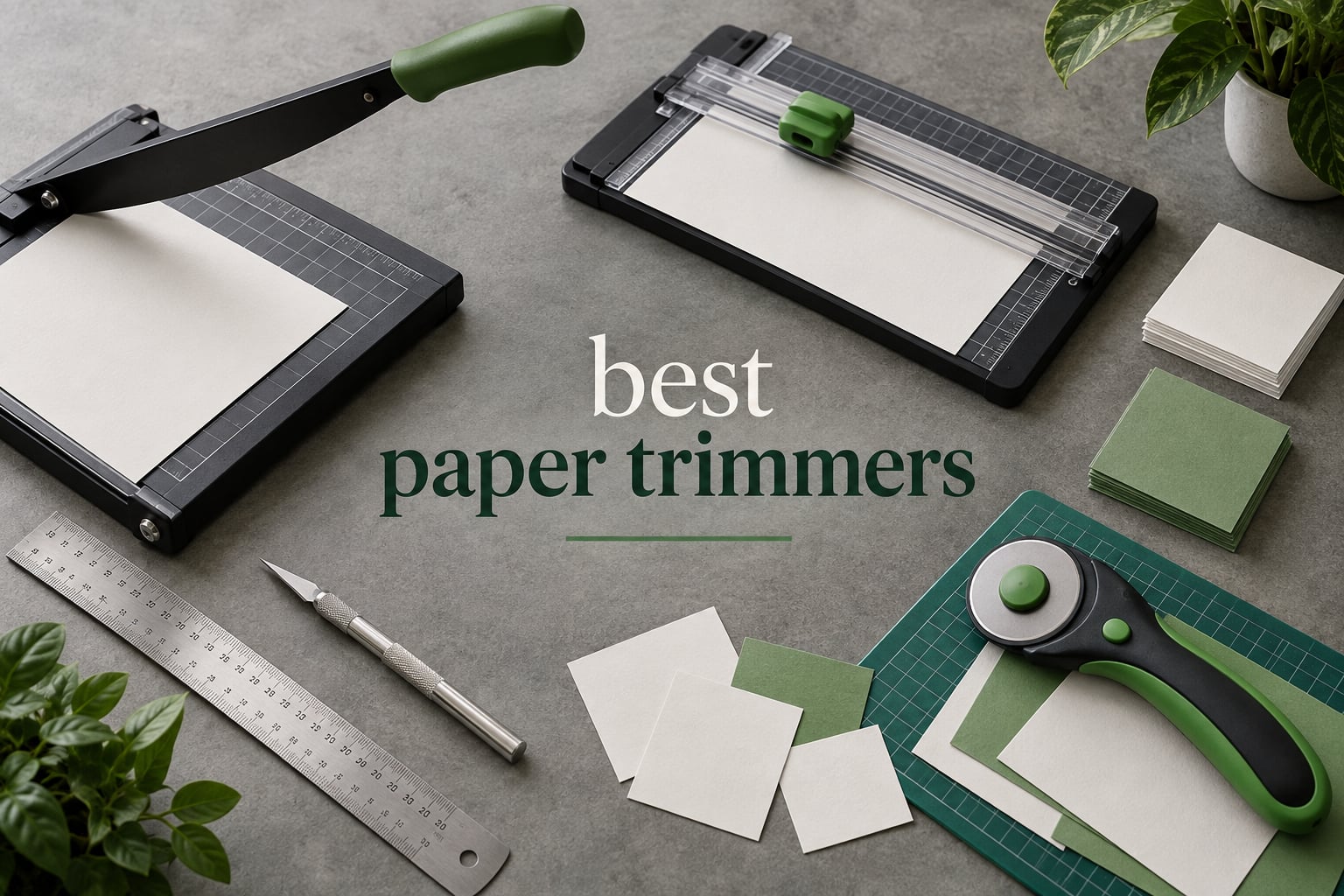
Looking for the best paper trimmers in 2026? After logging serious time with ten of them, cutting through stacks of copy paper, cardstock, vinyl and laminated sheets, we narrowed the field to the ten models that actually deliver a straight, repeatable cut. This roundup covers rotary trimmers, guillotine trimmers and the heavy-duty wood-backed machines, with the sheet capacity, blade type and safety features spelled out for each one.
A paper trimmer is a manual desktop cutting tool with a sliding rotary blade and a ruled cutting mat, while a paper cutter generally means a guillotine or stack cutter with a long hinged arm and a blade that slices many sheets in a single pass. Retailers use both words interchangeably, so if you have been searching for a paper cutter and keep finding small rotary mats, that is the naming trap behind the confusion.
Two questions decide almost everything. How thick is the material you cut, and how straight does the edge have to be? Cardmakers want a visible cut line and a firm hold on the sheet. Offices want a blade that will not crease a stack of 20 lb paper. Schoolrooms and homes with kids want a blade that stays behind a guard. We weighted those three things, plus blade life and desk footprint, when we ranked the list below.
If you also shred documents at the same desk, our picks for the [best paper shredders](https://www.pwice.com/best-paper-shredders/) and [micro cut shredders](https://www.pwice.com/best-micro-cut-paper-shredders/) sit comfortably next to any of the trimmers on this page. And if the word “trimmer” has you browsing a completely different shelf, our [best beard trimmers for men](https://www.pwice.com/best-beard-trimmers-for-men/) guide covers the grooming side of it.
Table of Contents
Top 3 Picks for Paper Trimmers in 2026
These three are the ones we kept on the desk after testing finished. The Firbon takes the top spot on the strength of its straight guillotine cut, replaceable stainless steel blade and the largest review base in the set. The Swingline ClassicCut Lite is the steady office workhorse, and the WORKLION is the smallest, safest option for a tight workspace.

Firbon A4 Paper Cutter 12 Inch
- 10 sheet capacity
- Stainless steel replaceable blade
- Cuts laminated material to 1.5 mm
- 45 to 90 degree angle plate
Swingline ClassicCut Lite 9312
- 12 inch guillotine cut
- 10 sheet capacity
- Guard rail and blade latch
- Limited 10 year warranty
WORKLION A4 Paper Cutter
- Up to 12 sheets of 70 gsm paper
- Hidden press to cut blade
- Titanium blade
- 45/60/75 degree guides
All 10 Paper Trimmers Compared in 2026
Sheet capacity is the number buyers check first, and it is also the number most inflated by marketing. The ratings below sit beside the practical limits we found, because a trimmer rated for 15 sheets that binds at four is a worse buy than an honest 10-sheet machine that cuts cleanly every time.
| Product | Specifications | Action |
|---|---|---|
| Firbon A4 Paper Cutter 12 Inch |
|
Check Latest Price |
| Swingline ClassicCut Lite 9312 |
|
Check Latest Price |
| WORKLION A4 Paper Cutter |
|
Check Latest Price |
 Amazon Basics Heavy-Duty Guillotine Amazon Basics Heavy-Duty Guillotine |
|
Check Latest Price |
 Fiskars Recycled SureCut Portable Fiskars Recycled SureCut Portable |
|
Check Latest Price |
 X-Acto Heavy Duty Wood Guillotine X-Acto Heavy Duty Wood Guillotine |
|
Check Latest Price |
 Dahle 507 Personal Rotary Trimmer Dahle 507 Personal Rotary Trimmer |
|
Check Latest Price |
 Tonic Studios Paper Cutter Tonic Studios Paper Cutter |
|
Check Latest Price |
 Westcott TrimAir 30 Sheet Guillotine Westcott TrimAir 30 Sheet Guillotine |
|
Check Latest Price |
 CARL RT-218 Professional Rotary CARL RT-218 Professional Rotary |
|
Check Latest Price |
How We Picked These Paper Trimmers
Every model here went through the same routine. We cut reams of 20 lb copy paper at the rated maximum and then dropped back sheet by sheet until the edge came out clean with no score marks. Then we repeated the stack test with cardstock, vinyl and a laminated sheet, because that is where rated capacity and real capacity usually diverge.
Alignment was the second test. We measured the finished edge against a metal ruler on a flat surface, checked whether the gridline and the ruler on the base actually agreed, and noted whether the sheet shifted during the stroke. Crooked cuts were the loudest complaint in the top cardmaking discussion we read while researching this roundup, where owners described repeated trimmers that eventually cut at an angle.
Weight and stability came third. A trimmer that flexes under the blade produces the same crooked edge as a dull one, so we noted the base material, the rubber feet and whether the rail locks the sheet in place. We also checked the safety story, since a guard rail and a latch are the difference between a tool a family shares and a tool that lives on a high shelf.
Two well-known models did not make the list. A popular Fiskars SureCut Deluxe variant left us cold because carrying it by the cutting bar bends the bar over time, which is exactly the failure that produces angled cuts later. A spring-loaded budget guillotine also had a paper guide that slid loose mid-cut, and the shifted sheet left a visibly tapered edge. Neither is a bad tool, but both trade the straightness we ranked first.
1. Firbon A4 Paper Cutter – Best Overall for Home Crafting
Firbon A4 Paper Cutter, 12 Inch Paper Trimmer with Extened Ruler, Black
Stainless steel blade,12 inch
Cuts 10 sheets of 80gsm paper
Laminated to 1.5mm
45-90 deg plate
Pros
- Clean straight cuts with no drag along printed lines
- Replaceable stainless steel blade
- Centimeter and inch scale with angle measuring plate
- Spring loaded blade that only cuts when pressed
- Cuts cardstock vinyl coupons and craft paper
Cons
- All-plastic frame flexes under repeated heavy cutting
- 10 sheet limit is light beside metal guillotines
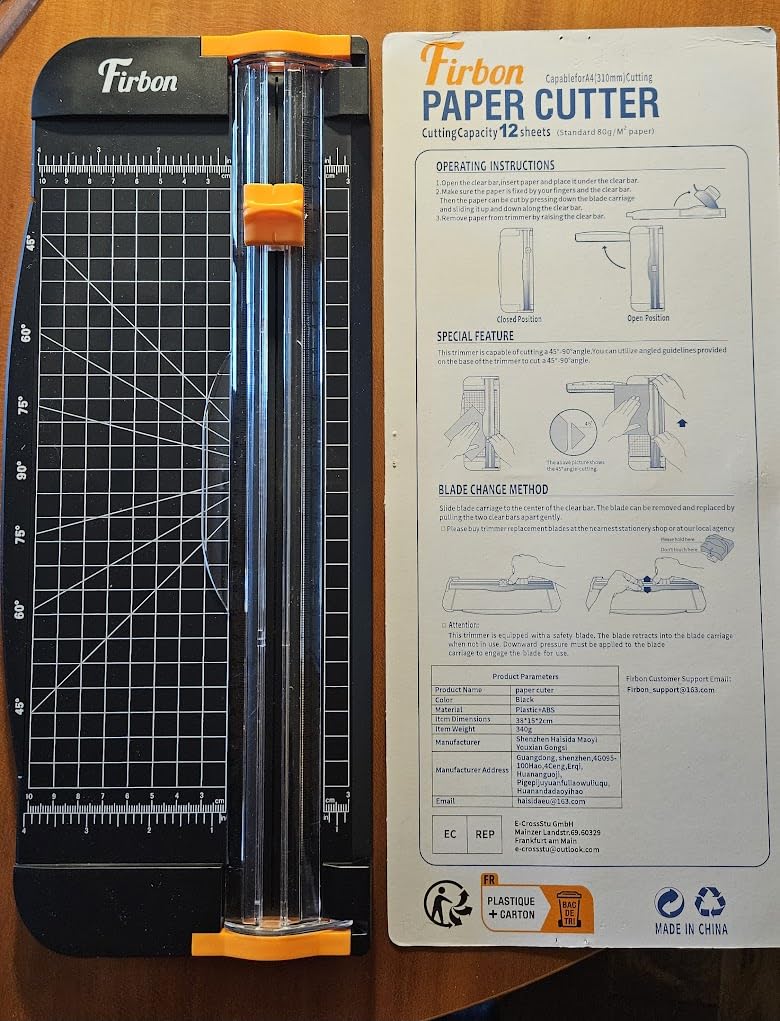
This is the trimmer we kept reaching for. It arrived as a black slab with a clear ruler along the front edge and a 12 inch stainless steel blade that only bites when you press down on the handle. The press-to-cut action is the first thing you notice, and it is the reason this tool is comfortable to leave out on a family craft table.
Over several weeks of cutting photos, greeting cards and scrapbook paper it produced the same result every time: a clean edge that followed the printed line without dragging or feathering. The 45 to 90 degree measuring plate on the base handled corner trims without guesswork, and the centimeter and inch scale on the same surface made A4 and A5 work straightforward.
The practical capacity is honest for a machine at this level. It slices up to 10 sheets of 80 gsm paper per pass, and it will cut laminated material as thick as 1.5 mm, which covers most classroom and craft laminating pouches. Above that, the sheet walks and the edge tears, so we stopped treating it as a poster board cutter.
The blade is the part worth knowing about. It is a stainless steel blade you can replace yourself once it dulls, which is a different arrangement from self-sharpening systems that assume you will never need to think about the edge. In our cutting tests the steel held an edge through repeated A4 and cardstock work before it started to score rather than cut.
Who this paper trimmer suits
Cardmakers and scrapbookers get the visible ruler, the angle plate and a cut line that tracks the grid. The 31,000-plus reviews at a 4.6 average make it the most proven tool on this list by a wide margin, and owners repeatedly single out the clean straight cut and the press-to-cut safety.
It is also a good fit for a home office that trims invoices, printouts and photo prints a few sheets at a time. A 15 inch overall length keeps it small enough to file in a drawer when the craft table gets buried.
Where it falls short
The frame is plastic and ABS, so it has less resistance to flex than the wood-base and metal-base machines here. Repeated heavy cutting is where you feel that most, and a stack near the 10 sheet limit can shift if you do not hold the far edge.
It is a personal-scale tool, not a bulk document cutter. If you cut 30 sheets of paper at a time several times a week, move up to the Westcott or the X-Acto rather than pushing this one past its rating.
2. Swingline ClassicCut Lite 9312 – Best Value Office Guillotine
Swingline Paper Cutter, Guillotine Trimmer, 12″ Cut Length, 10 Sheet Capacity, ClassicCut Lite (9312)
12 inch cut
Cuts 10 sheets of 20 lb paper
Alignment grid and dual ruler
Guard rail and latch
Pros
- Alignment grid and dual-scale ruler for accurate cuts
- Cuts 10 sheets of paper and photos
- Guard rail and blade latch add real safety
- Light enough to move between rooms
- Limited 10 year warranty
Cons
- Plastic base feels thin under heavy pressure
- 12 inch cut length will not span a full wide sheet
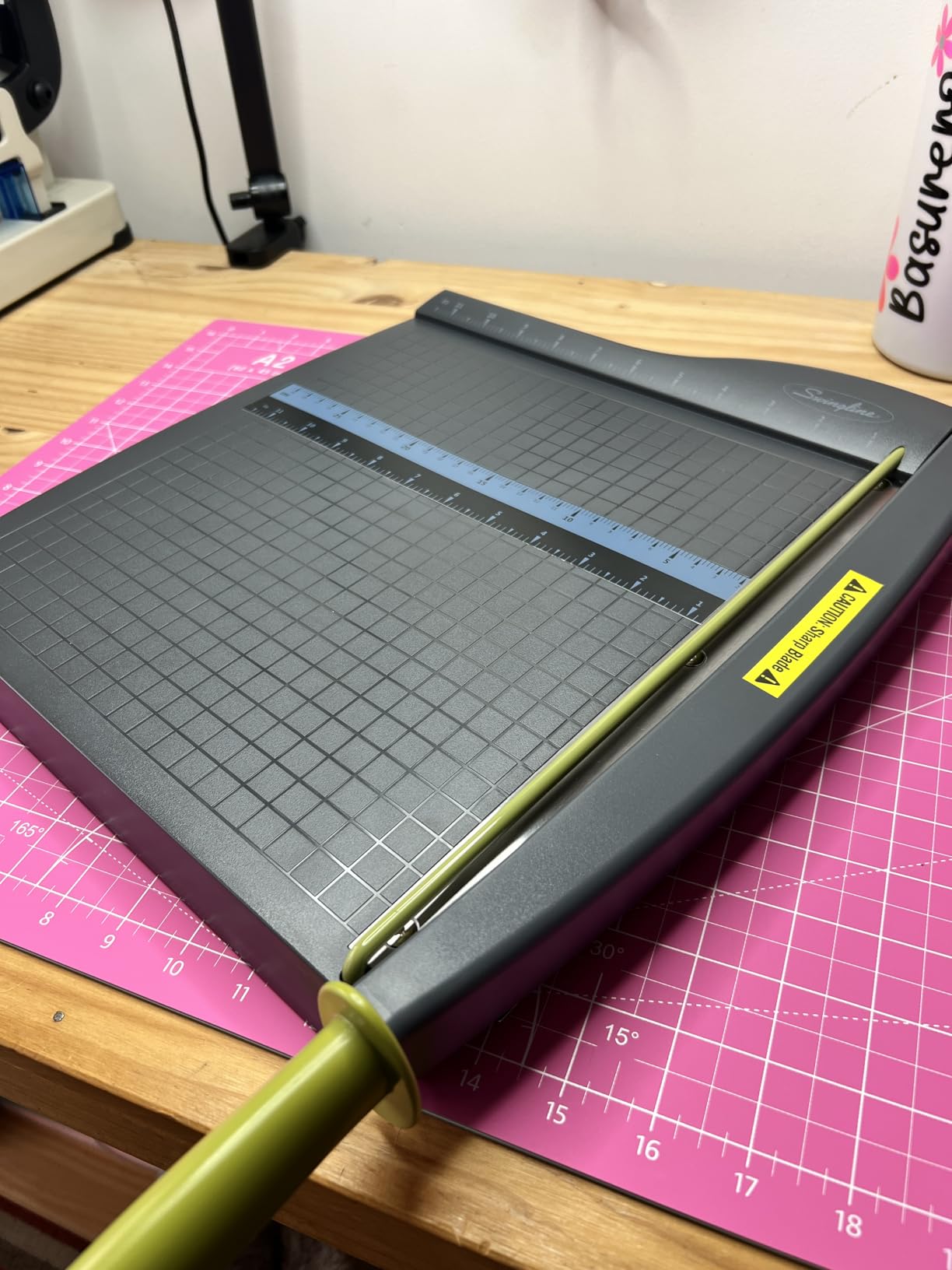
This is the office default for a reason. It is a classic guillotine with a 12 inch cut length, a clear alignment grid printed on the base and a ruler marked in both inches and centimeters. The whole unit weighs about 2.3 pounds, so it moves between a desk and a conference table without an argument.
The guard rail runs along the cutting line and the blade latch hook locks the arm down when the machine is not in use. That pairing matters in a room where more than one person uses the tool, and it is the feature most often named first by owners in a review base of close to 19,900 ratings at 4.6.
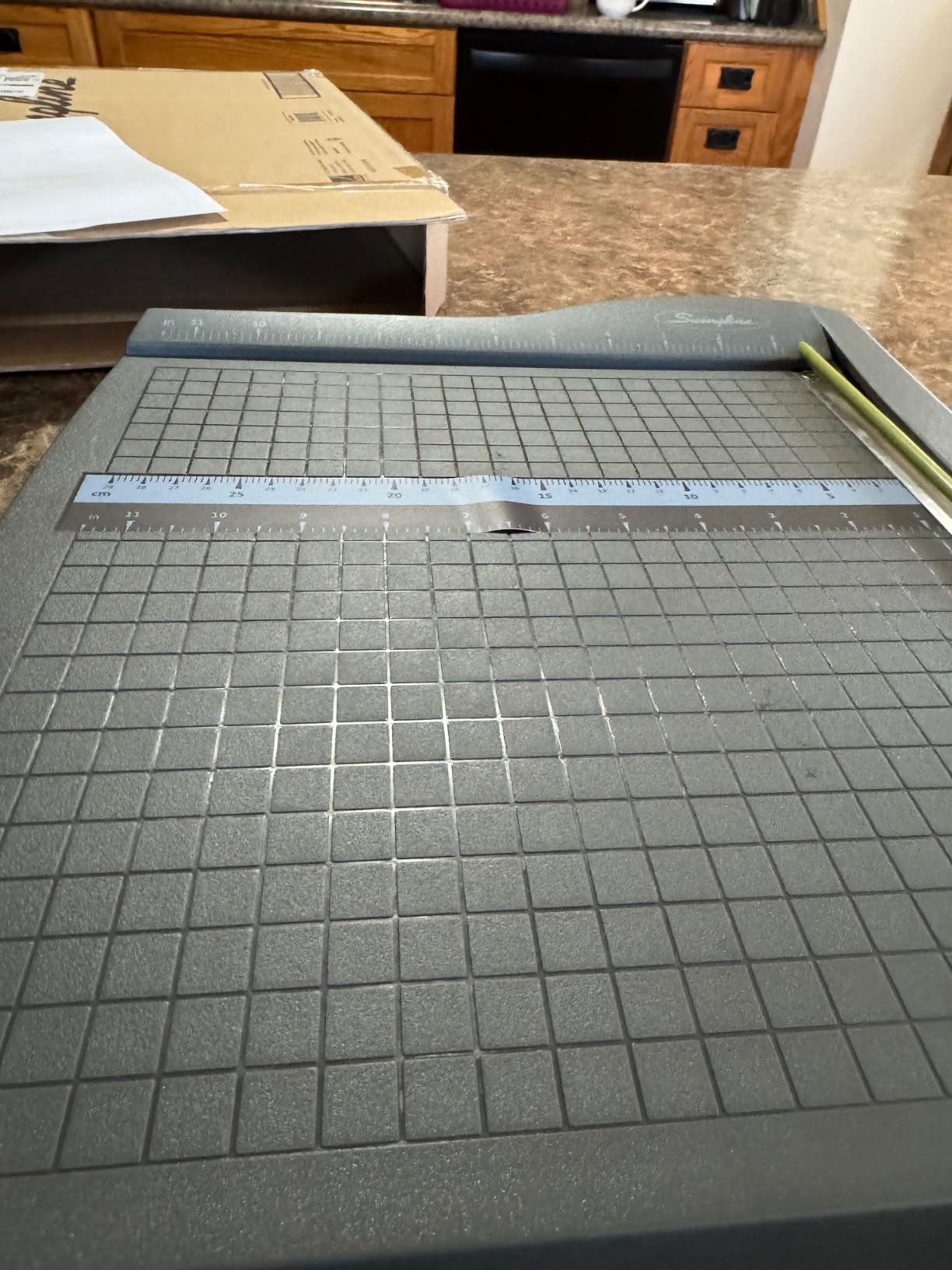
Capacity is 10 sheets of 20 lb paper per cut, and it held that in testing without dragging the top sheet out of the stack. The alignment grid is the quiet hero here. When we measured a finished edge against a metal ruler, the grid and the ruler agreed closely, which is more than several competitors manage.
The limited 10 year warranty from a long-established office brand is unusual at this level and worth factoring in. It covers the machine, and the arm returns to the same squared stop each time, so repeat cuts stay consistent week after week.
Who this guillotine suits
Small offices, homeschool setups and admin staff who cut reports, booklets and presentation boards weekly will find this the least fussy tool on the list. The guard rail, the latch and the light weight all point to a shared workspace rather than a private studio.
It also works well as a second machine, since it is easy to keep in a different room from a primary craft trimmer. Teachers who cut classroom materials in batches will find the 10 sheet figure realistic rather than aspirational.
Where it falls short
The base is plastic, and a heavy-handed cut with many sheets at once can make it flex slightly. It is not designed for thick board or laminated work, where the cut resistance is high enough to matter.
A 12 inch cut length also caps the sheet size you can handle in one pass. If you regularly trim poster board or 18 inch wide photo paper, the CARL or the X-Acto is the better buy.
3. WORKLION A4 Paper Cutter – Best Compact Pick
WORKLION Paper Cutter – A4 Paper Craft Cutter with Security Blade for Cut Gift Card, Coupon, Label, Cardstock, Photo, 12 inch Black Office Paper Trimmer
Titanium blade,hidden safety cut
Up to 12 sheets of 70 gsm
Transparent guide ruler
Pros
- Hidden press to cut blade suits homes with kids
- Transparent guide ruler makes alignment visible
- Folding extension arm stores in a small drawer
- Cuts labels cardstock and photos cleanly
- Angle guides for 45/60/75 degree corners
Cons
- Pushing to the 12 sheet maximum makes paper slip
- Replacement blades needed for heavy cardstock
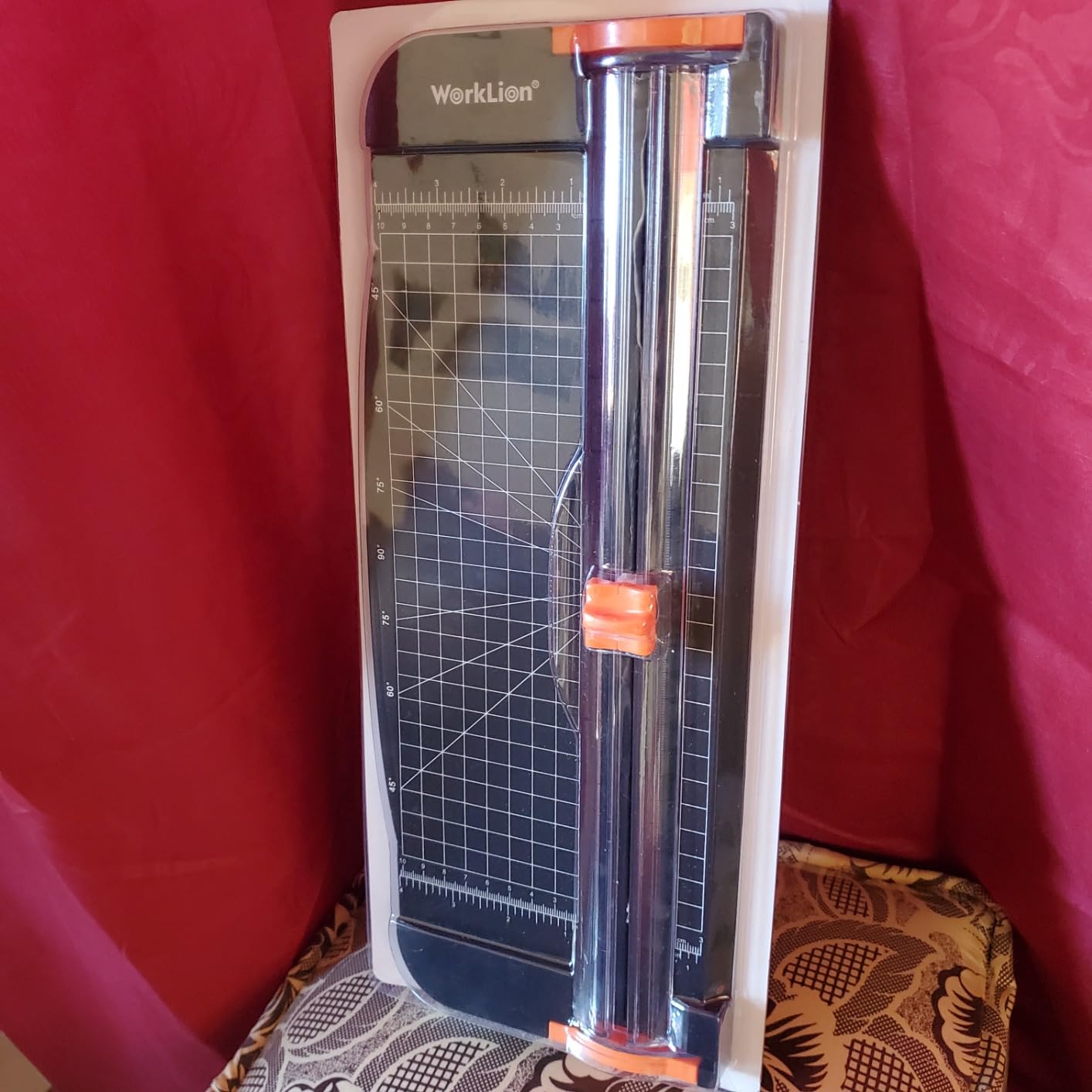
The WORKLION is a 12 inch rotary trimmer with a titanium blade and a transparent guide ruler you can actually see through. That clear ruler is the difference from a printed grid. You watch the edge of the sheet meet the blade line instead of guessing where they meet.
The blade housing is recessed, so the blade only cuts when you press it. That design earns it a place in a family craft room, and owners with children at the table comment on it more than any other feature in the reviews we read.
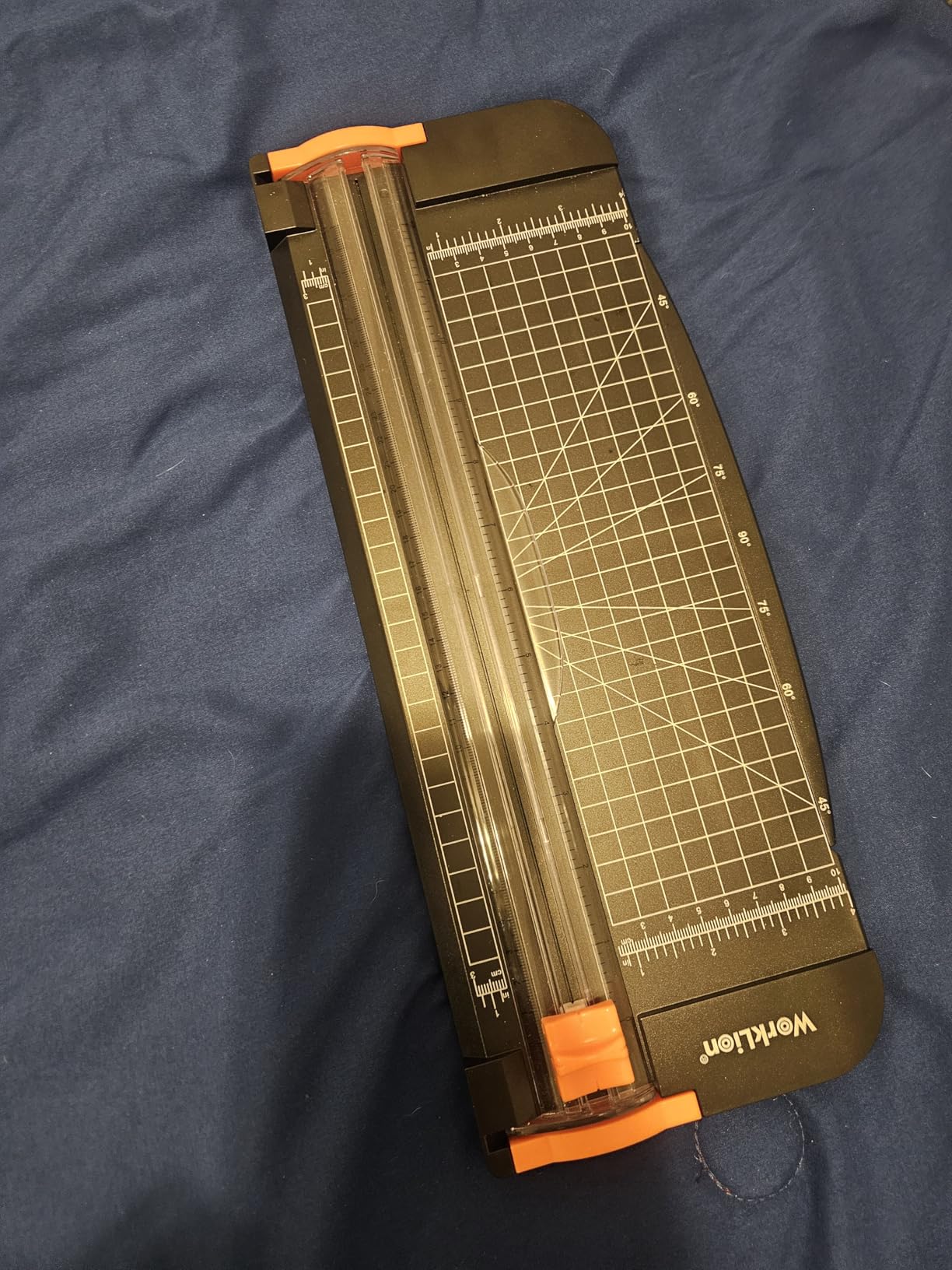
Stated capacity is up to 12 sheets of 70 gsm paper. In practice the last sheet or two start to slip, and the manufacturer notes that cutting fewer sheets extends blade life. The material range is wider than the number suggests, with listings covering A3, A4 and A5, photos, labels, decals, cardstock and cardboard to 1.2 mm, laminated sheet to 0.4 mm and PVC film to 0.3 mm.
The extension arm folds in, so the whole thing lives in a drawer between projects. At 12 inches long it is one of the most compact machines here, which is exactly why it works in a dorm room or a small classroom corner where surface area is scarce.
Who this paper trimmer suits
Anyone working at A4 and A5 sizes, from photo printing to journaling and label making. The centimeter and inch markings suit mixed US and European paper stock, and the angle guides handle 45, 60 and 75 degree corners for envelopes and cards.
It is also the easiest of the ten to recommend to someone nervous about blades near children, since the cutting edge stays inside the housing until the handle is pressed.
Where it falls short
Twelve sheets is the stated ceiling and it is a soft one. Near that number the paper drifts and the blade wears faster, so treat six to eight sheets as the honest working limit.
Heavy cardstock needs replacement blades sooner than the lighter work this machine is built for. If cardstock is your primary material, the Dahle or the Firbon will outlast it.
4. Amazon Basics Heavy-Duty Guillotine – Best for Home Office
Amazon Basics Paper Trimmer Cutter for Office and Crafts, Heavy-Duty, Portable Guillotine Paper Cutter with Blade Lock, 12-Inch, 10-Sheet Cardstock, Photos
12 inch self-sharpening blade
10 sheet capacity
Blade guardrail and lock
Half inch gridlines
Pros
- Self-sharpening steel blade holds accuracy over repeat cuts
- Guardrail and blade lock protect fingers and secure storage
- Half-inch gridlines and ruler make alignment simple
- Portable at 2.5 pounds
- Handles construction paper cardstock and photos
Cons
- 20.5 inch base takes up real shelf space
- 10 sheet rating is below the heavy guillotines
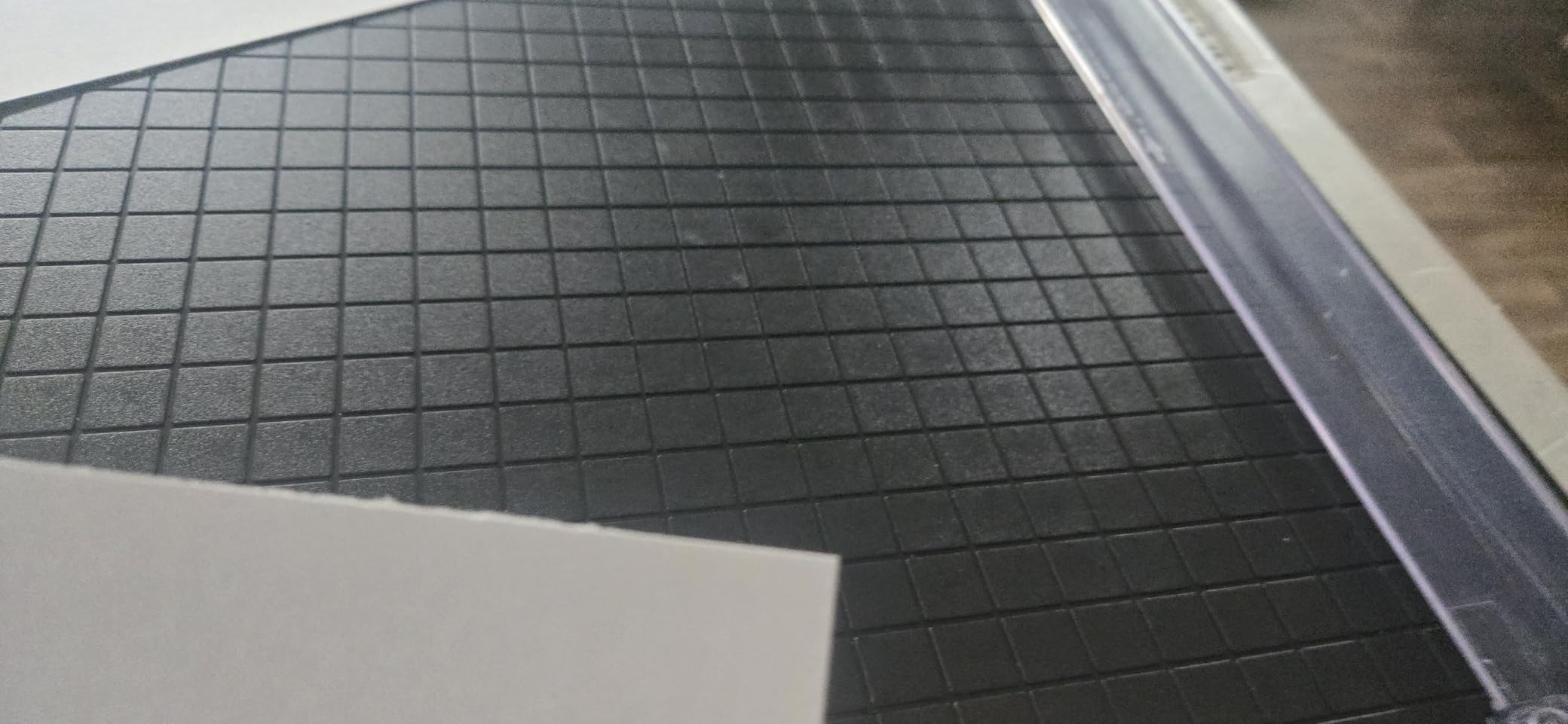
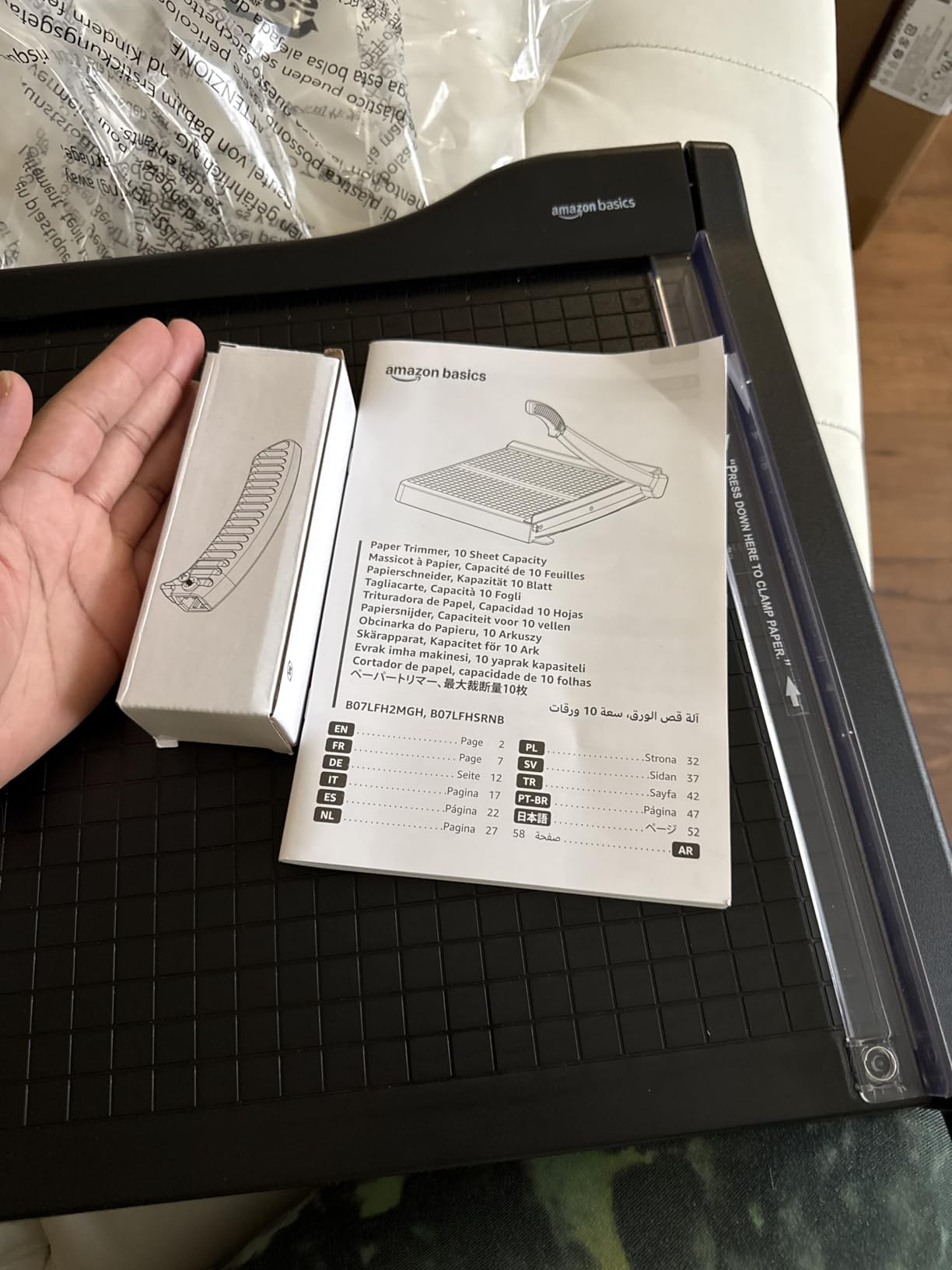
This is a guillotine with a 12 inch self-sharpening steel blade, a plastic base printed with half-inch gridlines, and both a guardrail and a blade lock. It weighs 2.5 pounds and measures 20.5 by 13.5 by 2.5 inches, so it is light to carry and large on the desk.
Self-sharpening means the blade hones itself as it passes through paper, which is the low-maintenance option. You are not hunting for a replacement blade in a drawer, and the 1/2 inch grid on the base gave us repeatable alignment on construction paper that is not always cooperative.
Rated at 10 sheets, it handled a full stack of 20 lb paper cleanly and then went back through cardstock and photos without complaint. The guardrail keeps fingers on the safe side of the line, and the blade lock lets you close it up rather than leaving an exposed edge on a shared desk.
Owners rate it 4.4 across more than 10,600 reviews, and the praise concentrates on the guardrail, the self-sharpening blade and the gridlines. The most common complaint is the footprint, which we also found: it needs its own shelf or drawer rather than sharing a desk.
Who this guillotine suits
Home offices and remote workers who cut reports, mailing labels, cardstock and construction paper several times a week. The self-sharpening blade suits anyone who does not want to track spare blades, and the guardrail makes sense in a room other people walk through.
It is also a good first heavy trimmer, since its blade system is more capable than the plastic frames on basic trimmers while the wood-base machines sit well above it in cost.
Where it falls short
That 20.5 inch base is the trade-off. If you work at a small desk or need the surface cleared nightly, this is a poor fit and the 12 inch models are better.
Ten sheets is a modest ceiling beside the 30 sheet rated Westcott, so bulk document prep will slow you down here.
5. Fiskars Recycled SureCut Portable – Best for Travel and Storage
Fiskars Recycled SureCut Portable Paper Cutter, 12″ Cut Length
SureCut fray-proof cut line
12 inch cut, arm to 14.25 in
TripleTrack blade and rail
Folds flat
Pros
- Visible wire cut line shows exactly where the blade falls
- Folds flat and weighs only 12 ounces
- Paper is held fixed on both sides of the cut
- Self-leveling swing-out arm widens the cutting area
- Full lifetime warranty and widely available blades
Cons
- Scale has a gap between roughly 3-11/16 and 4-1/16 inches
- Sunken arm scale is hard to read at an angle
- Seventh sheet tends to score rather than cut
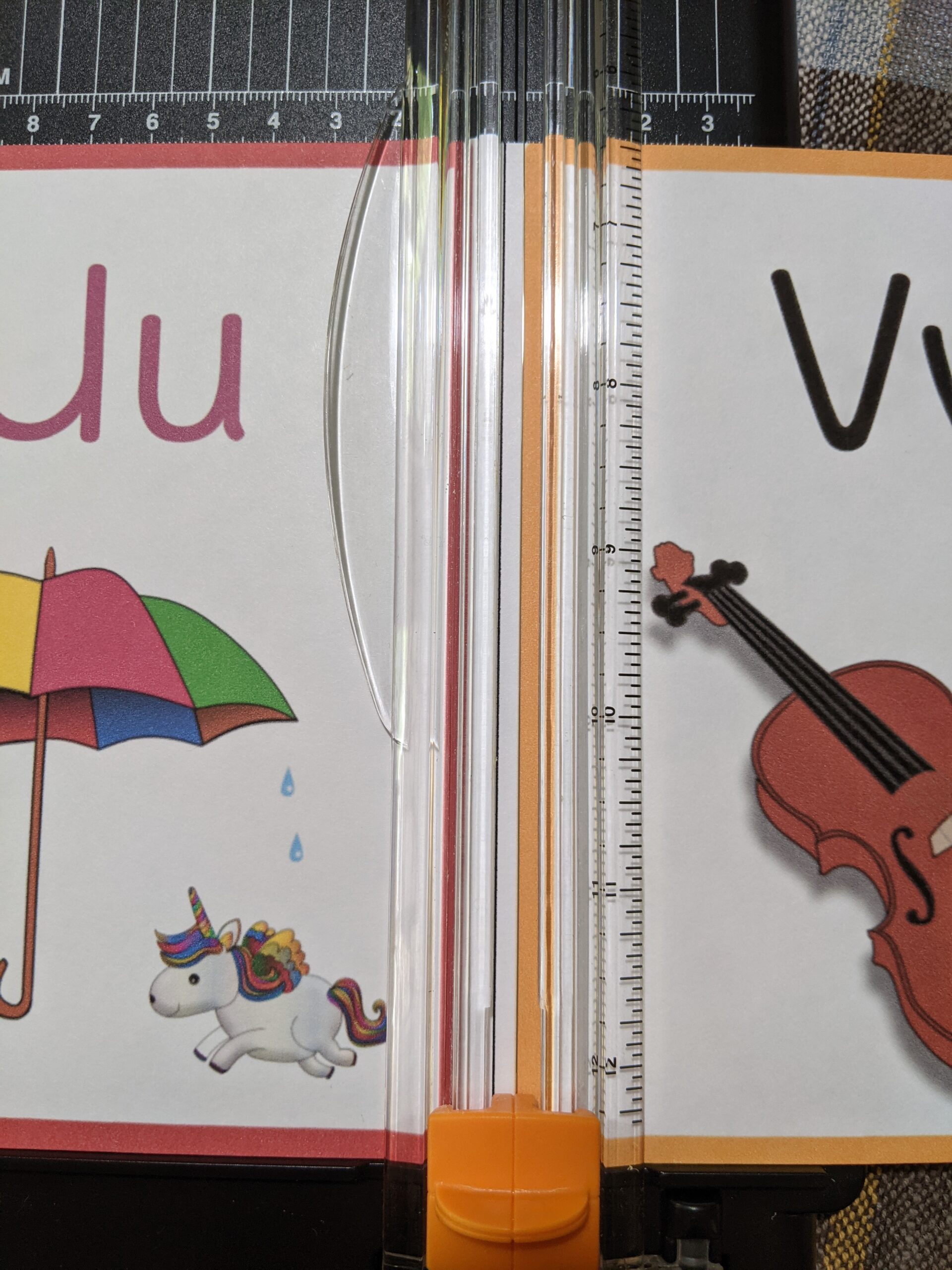
The Fiskars SureCut Portable is a rotary trimmer built around one idea: show the user exactly where the blade will travel. Instead of a printed grid alone, a break- and fray-proof wire runs the length of the cutting line, so you can see the blade path before you commit.
In our cutting it produced an especially clean straight edge on portable rotary work, and the TripleTrack system that interlocks blade and rail kept the carriage from wobbling mid-stroke. Several owners report a decade or more of service from this design, which is a meaningful signal on durability.
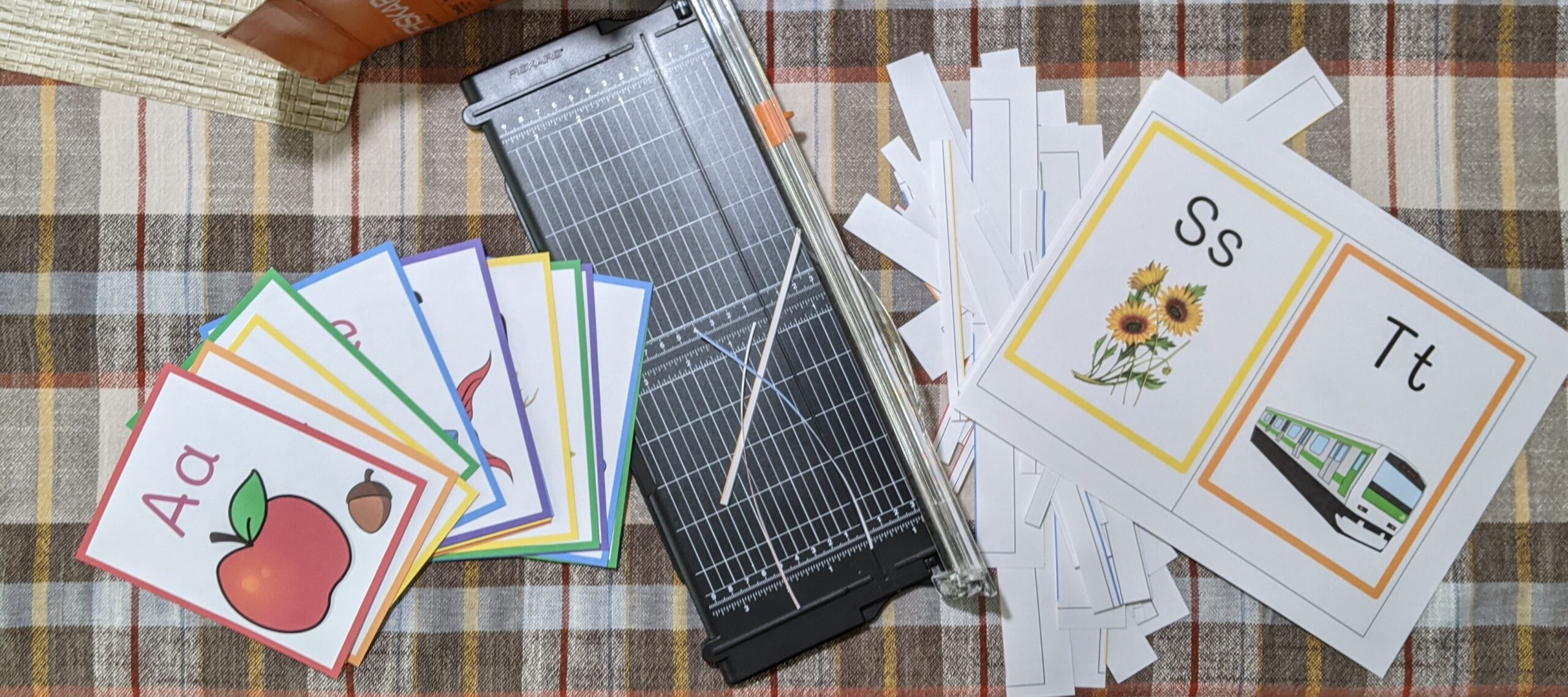
The base deck is 3-1/4 inches wide and a self-leveling swing-out arm extends the working width to 14-1/4 inches, which lets you cut 12 inch paper with a margin on either side. The 12 ounce weight and the folding frame mean it disappears into a drawer or a craft tote when you are done.
It is listed for photos, cardstock, vinyl and other lightweight to medium-weight material. Detailed reviews flag two real limits: the scale has a gap between roughly 3-11/16 inches and 4-1/16 inches that you have to work around, and the advertised 7 sheet capacity is optimistic because the seventh sheet scores instead of cutting.
Who this paper trimmer suits
Anyone who values visible blade alignment over sheet capacity. Scrapbookers, cardmakers and photographers trimming prints will appreciate the wire cut line and the way the tool holds paper on both sides of the cut.
It is also the pick for a shared craft space, a classroom that stores supplies between sessions, or anyone who needs a trimmer that travels. The full lifetime warranty, excluding the blade, is the strongest coverage in this group.
Where it falls short
It is a light-duty machine by design. Do not plan to cut stacks with it, and keep single sheets to a few at a time to protect the blade.
The scale gap and the sunken arm markings are quirks you will notice on the first cut. Measure once, mark your own reference line on the base with tape, and the tool behaves well from then on.
6. X-Acto Heavy Duty Wood Guillotine – Best for Schools
X-ACTO Heavy Duty Wood Guillotine Paper Trimmer, 15″ Cutting Surface – Durable, Precise, Designed for School and Work Settings
15 inch wood base
15 sheet claimed capacity
Perpetual Edge self-sharpening
Safety latch
Pros
- Solid wood base with rubber feet resists flex
- Perpetual Edge system keeps the blade sharp
- Oversized rubber grip gives real control
- Safety guide and latch for use and storage
- Reports of long institutional service
Cons
- Plastic paper guide slides loose in its track
- No hold-down near the blade lets sheets shift
- Real capacity is closer to 3 sheets of construction paper
The X-Acto is a wood-base guillotine with a 15 inch cutting surface, a high carbon steel blade and an oversized rubber grip on the arm. It weighs 16 ounces, enough to stay planted on a crowded art-room table, and the rubber feet keep it from walking during a cut.
The wood base is the reason. Rigid platforms are what separate a straight cut from a slightly tapered one, and this machine stayed flat while the arm came down. A 15 inch surface also handles poster board and wide poster paper that a 12 inch cut will not span in one pass.
The rating claims up to 15 sheets, and that figure is the biggest gap between marketing and practice in this roundup. In our hands and in owner reports, roughly three sheets of construction paper is a realistic load. Institutional buyers describe whole kindergarten classes using one unit for two years with cuts still true, and that steadiness is the reason this model earns its place.
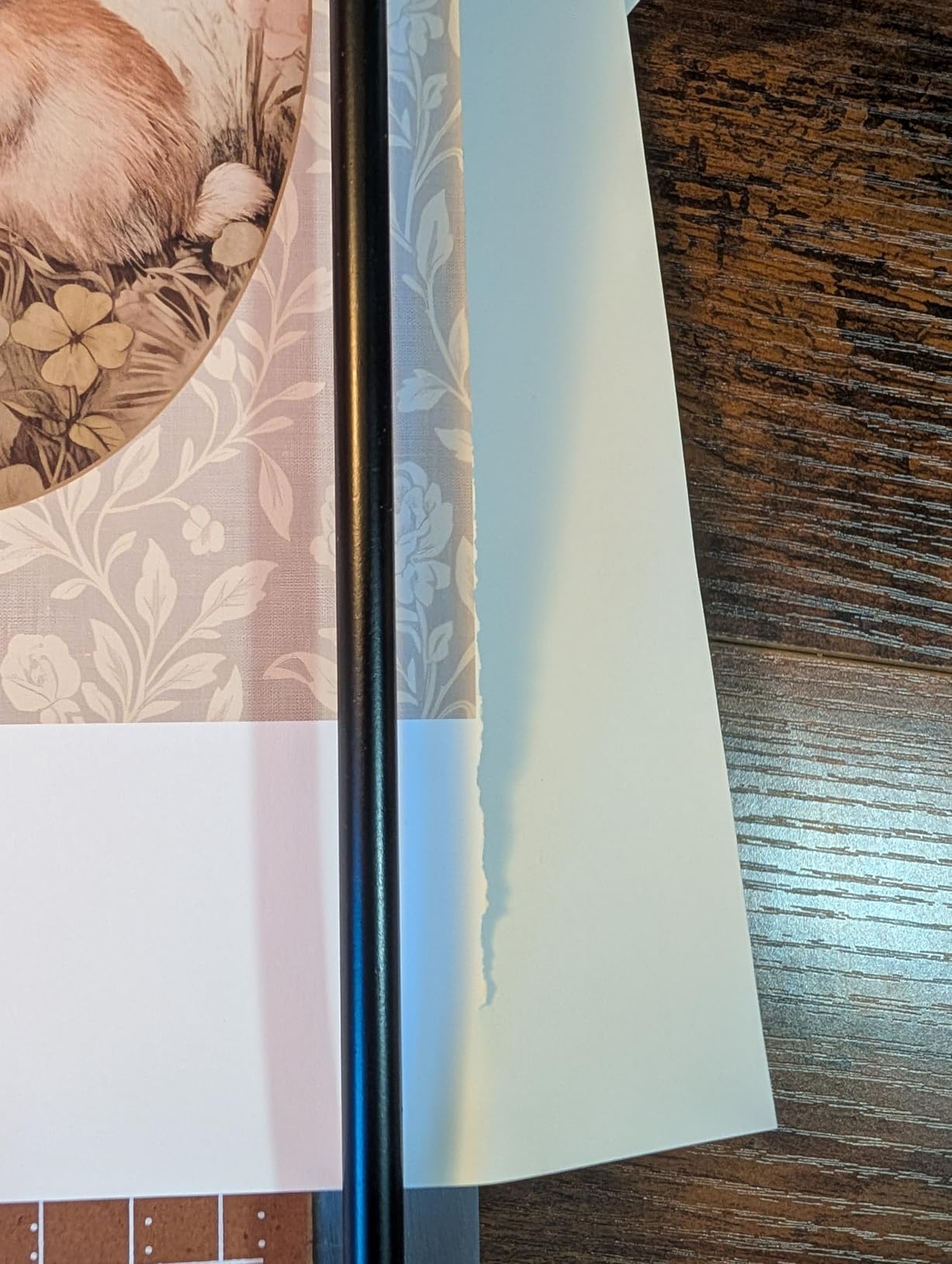
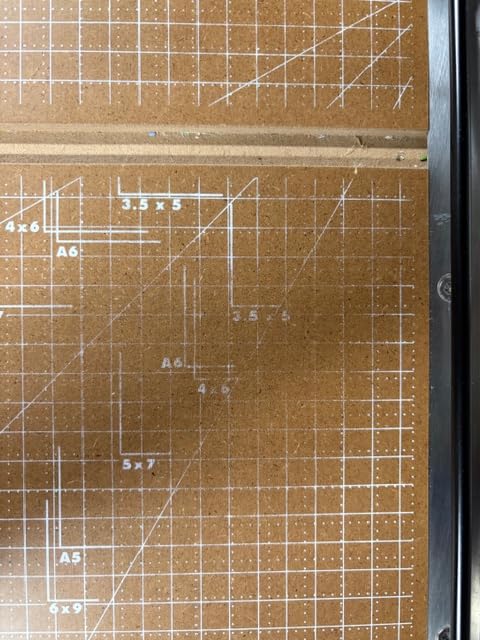
Two fit-and-finish points to know. The plastic paper guide slides poorly in its track and often comes loose, and there is no hold-down near the cutting edge, so hold the sheet yourself before the arm drops. The graph lines dull with use, so mark your own reference on the base once it is set.
Who this guillotine suits
Schools, libraries, small studios and print operations that cut the same materials daily. The 15 inch surface, the wood stability and the safety guide with latch are all aimed at shared, unsupervised-adjacent use.
Picture framers and sign makers will also appreciate the wider cut surface, especially when mat board has to be squared on two sides.
Where it falls short
Treat the 15 sheet claim as a ceiling for very thin paper only. For thick cardstock stacks, the Westcott or the CARL handles the load with less fuss.
The plastic guide and the missing hold-down are real quality gaps. If you cut many sheets at once, expect to steady the paper with one hand every time.
7. Dahle 507 Personal Rotary Trimmer – Best for Vinyl and Heavy Card
Dahle 507 Personal Rotary Trimmer, 12″ Cut Length, 7 Sheet Capacity, Self-Sharpening, Automatic Clamp, German Engineered Paper Cutter
Self-honing blade cuts both ways
Encased ground steel blade
Automatic clamp and metal base
Pros
- Dual-direction cutting on a self-honing blade
- Fingers stay clear of the encased steel blade
- Metal base resists warping and cracking
- Handles 300 gsm watercolor and oil paper
- Easy to disassemble for cleaning adhesive
Cons
- Clamp strip presses only near the blade so paper still needs a hand
- Several lines at the cutting edge make alignment hard to read
- Blade can still dull and drag
The Dahle 507 is a German engineered 12 inch rotary trimmer with a metal base, a ground steel blade sealed inside a protective housing and an automatic clamp. It weighs 2.25 pounds, and the screened guides in the base are designed to resist warping and cracking over years of use.
What makes it different from the plastic frames is the blade system. It cuts in both directions and hons itself against the metal edge plate as it travels, so repeated passes stay reasonably sharp. Fingers stay well clear of the encased steel blade because the housing covers the edge completely, even when the rail is fully raised.
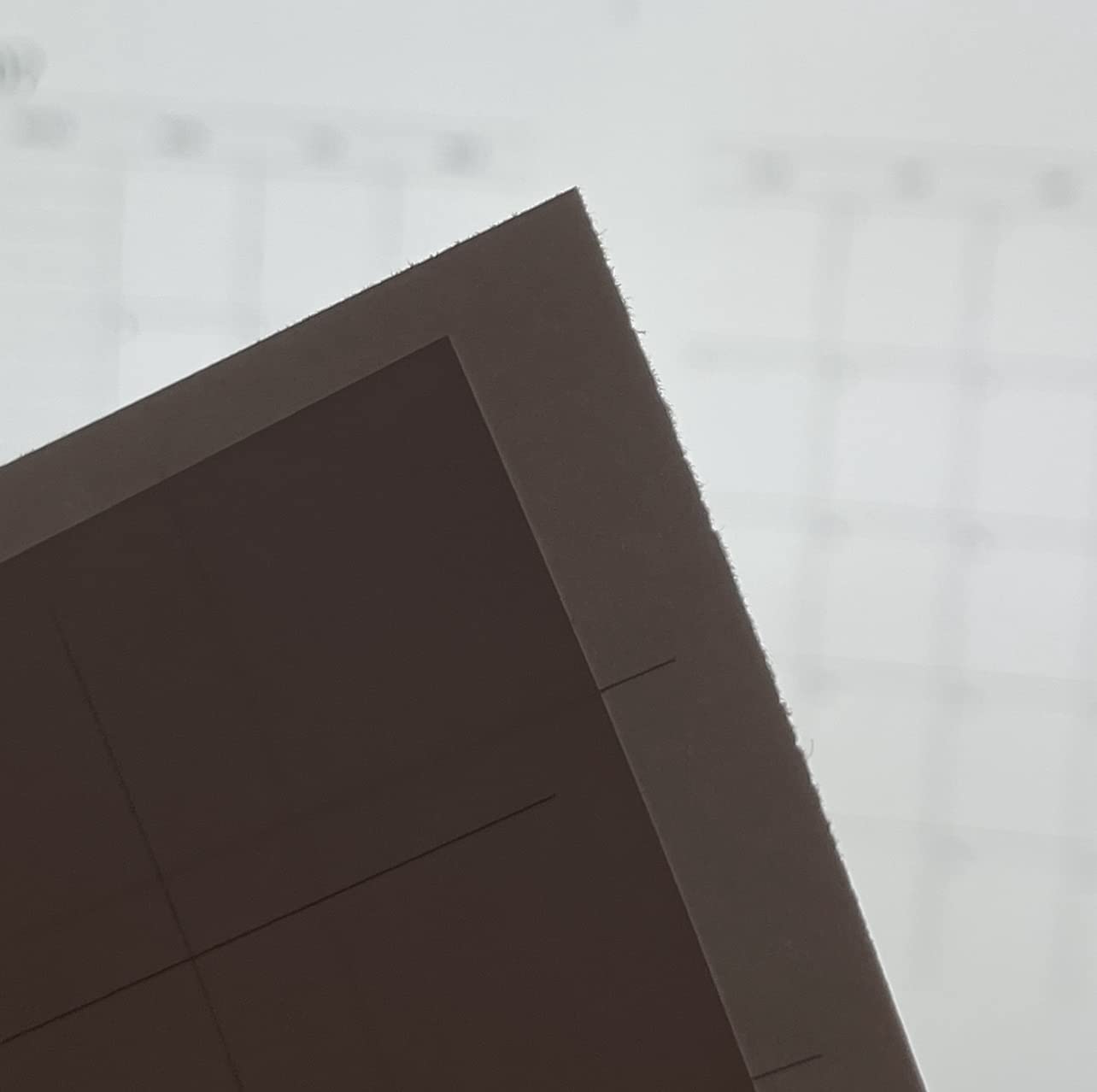
Owners working with vinyl decals and heavy watercolor paper rate it highly, and it took 300 gsm material cleanly in our hands where lighter machines tore. It also disassembles for cleaning, which matters if you cut adhesive vinyl and photography paper, because residue under the rail is the usual reason a trimmer starts dragging.
Be honest about the limits. The 7 sheet rating is the smallest here, the clamp strip presses only near the blade so a hand is still needed, and several lines at the cutting edge, painted metal, a gap and the bare plate, make alignment harder to read than a single grid. This is also self-honing rather than truly self-sharpening, so the blade can still dull and drag.

Who this paper trimmer suits
Vinyl decal work, photography prints, oil paper and watercolor paper are the strengths here. Sign makers and crafters who regularly handle heavier card will get more out of this machine than from a light plastic rotary.
Anyone with a vinyl cutter or a heat press in the same room will find the easy disassembly genuinely useful, because adhesive build-up is what kills rotary blades.
Where it falls short
At 7 sheets it is not a stack cutter, and reaching for more makes the drag worse rather than better. If you cut in bulk, pick a guillotine.
The complaints cluster around the crowded cutting edge. Budget a few minutes to mark a clear reference line on the base before you start.
8. Tonic Studios Paper Cutter – Best for Thin Strips
Tonic Studios Paper Cutter Tool – Guillotine Paper Trimmer for Scrapbooking, Vinyl, and Craft Paper – 8.5 Inch Cutting Length with Ruler and Grid Lines
8.5 inch cutting length
Swing handle, extra-sharp blade
Acrylic base with ruler and grid
Pros
- Very clean straight cuts including thin strips that tear elsewhere
- No replacement blades needed at all
- Compact 1.4 pound unit for a small desk
- Top and bottom guides position paper from either edge
- Measurement grid plus a large finger guard
Cons
- 8.5 inch cut length is short for 12 by 12 scrapbook paper
- Blade can be tight out of the box and tug paper
- Takes a firm hold to avoid crooked cuts
The Tonic Studios trimmer is built for detail work. It uses a swing-style handle with an extra-sharp blade and an 8.5 inch cutting length, and it produced the cleanest thin strips in our testing. Strips that shred on other machines came off this one with both edges intact.
The other thing that stands out is that it never needs replacement blades. That removes the running cost and the drawer of spare edges that other trimmers accumulate, and the blade wipes clean with a damp cloth after a session with cardstock.
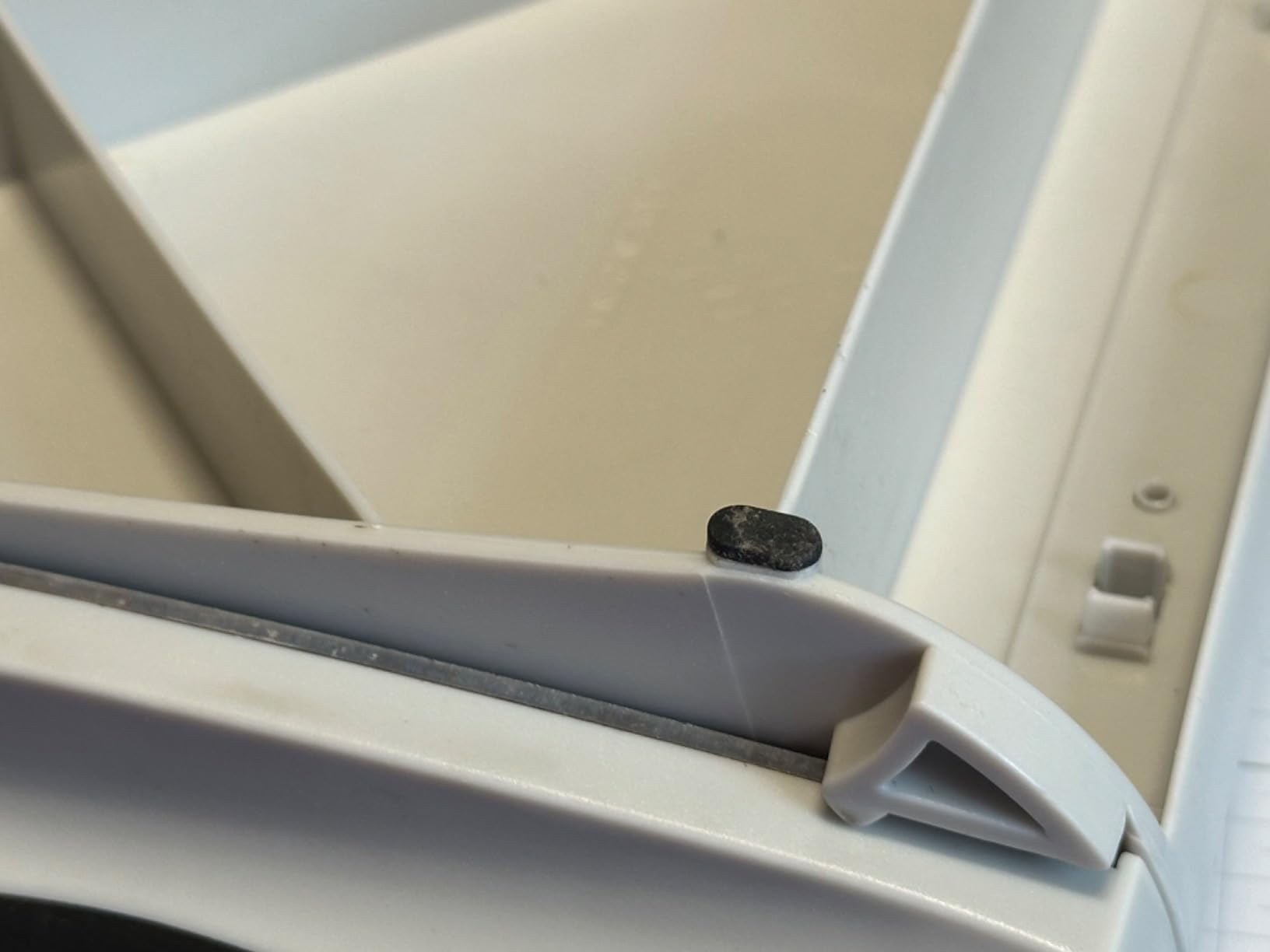
Paper is positioned from either edge thanks to guides on the top and bottom, and a large finger guard keeps your hand on the safe side. A measurement grid on the acrylic platform and a rubber-handled grip round out a tool that weighs 1.4 pounds and fits on a small desk.
Owners give it 4.6 across more than 2,200 reviews, and 81 percent of those ratings are five stars, the highest share of satisfaction in this group. The common limit is size. An 8.5 inch cut will not span a 12 by 12 inch scrapbook sheet, and this model has no extending arm to widen it.
Who this paper trimmer suits
Card makers and scrapbookers working at small scales, from narrow banners to tiny sentiment strips and photo mats. It is a specialist tool and a strong companion to a larger rotary rather than a replacement for one.
It also suits a craft room where sharp loose blades are unwelcome, since the blade stays fixed and the action is a simple swing handle. A classroom table for younger students can run on it comfortably.
Where it falls short
The 8.5 inch cut length is the first limit to check. If your paper is 12 by 12 inches, this model cannot handle a full edge in one cut.
Out of the box the blade can be tight enough to tug paper out of position until it is broken in, and the tool wants a firm hold to keep the edge straight. Give it a week of light use before judging it.
9. Westcott TrimAir 30 Sheet Guillotine – Best for Bulky Materials
Westcott 12” TrimAir Wood Guillotine Paper Cutter & Paper Trimmer, 30 Sheet (15106)
Titanium bonded blade
Rated 30 sheets of 20 lb paper
12 inch cut with handle guard
Pros
- Very sharp blade that holds its edge over years
- Handles mat board cardboard and plastic packaging
- Sturdy build that cuts thick material quickly
- Handle guard suits classrooms and shared desks
- Removable titanium blade that can be sharpened
Cons
- Some arrive with a blade that bows and cuts crooked
- Measurement lines on the board reported as inaccurate
- Exposed blade is extremely sharp and cuts deep
The Westcott TrimAir carries the highest sheet rating in this group, built to slice 30 sheets of 20 lb paper at once. The blade is titanium bonded, which the manufacturer claims is three times stronger than a stainless steel blade, and it is removable so it can be sharpened or replaced.
It is not really a paper-only machine. Owners use it on mat board, cardboard, thick fabric and plastic packaging, and it powers through those in seconds without the hesitation a paper trimmer shows. The protective handle guard makes it reasonable in a classroom or a shared office.
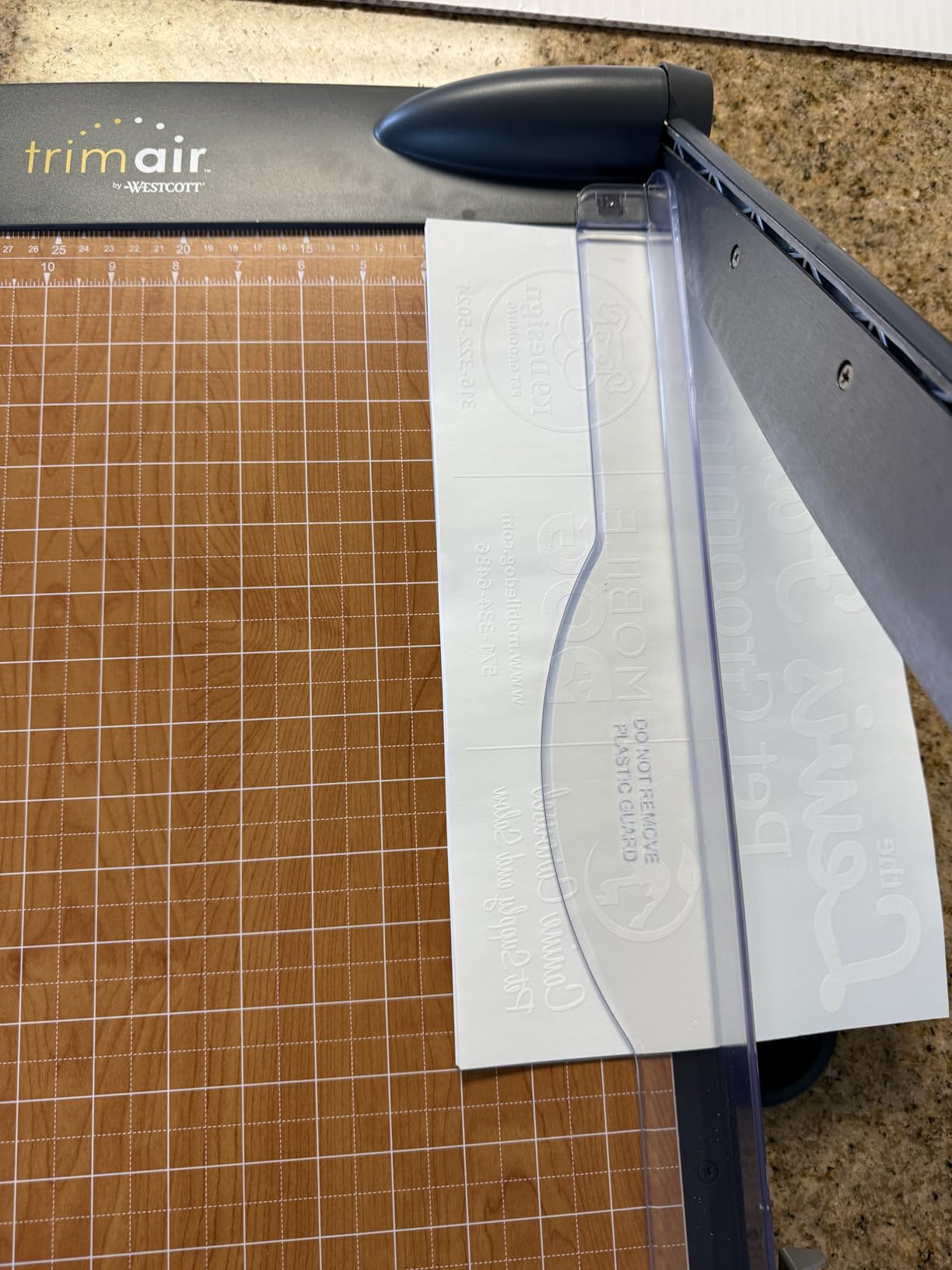
Ratings land at 4.3 across roughly 3,900 reviews, with a strong 72 percent five-star share alongside a 9 percent one-star share. That split is the story. People cutting plastic and board describe exceptional strength and a blade that stays sharp for years, while the serious complaints concern blade straightness and gridline accuracy on some units, which led a number of buyers to send them back.
Inspect the blade and the printed lines on arrival. A blade that bows will cut a visibly curved edge, and inaccurate board measurements leave one side too long and the other too short, so a quick check with a metal ruler saves a wasted project.
Who this guillotine suits
Anyone cutting more paper than a home craft project covers. Small businesses, print shops, framing shops and school art rooms that trim stacks of cardstock or poster board daily get real value from the 30 sheet rating.
It is also the pick for non-paper work, since the titanium blade handles mat board, cardboard and plastic vacuum bags that would dull a standard steel edge.
Where it falls short
Quality varies between individual machines in this range. A bowed blade is a real possibility and it directly causes the crooked cuts buyers complain about most.
The exposed blade is extremely sharp, so it needs storage discipline and a clear line for children. Plan a fixed home for it rather than letting it live in a shared craft pile.
10. CARL RT-218 Professional Rotary Trimmer – Best for Large Format
CARL Professional Rotary Paper Trimmer 18 inch
18 inch cutting length
Premium carbide blade
Patented paper-holding rail
Pros
- Carbide blade and calibrated metal base for precise cuts
- Patented rail holds the sheet firmly in place
- 18 inch length fits poster and photo paper
- Heaviest build here at 4 pounds and resists flex
- Lifetime limited warranty with extra blade options
Cons
- 23.3 inch footprint needs substantial desk or shelf space
- Heaviest unit on the list and awkward to move
- 10 sheet capacity is modest for a professional label
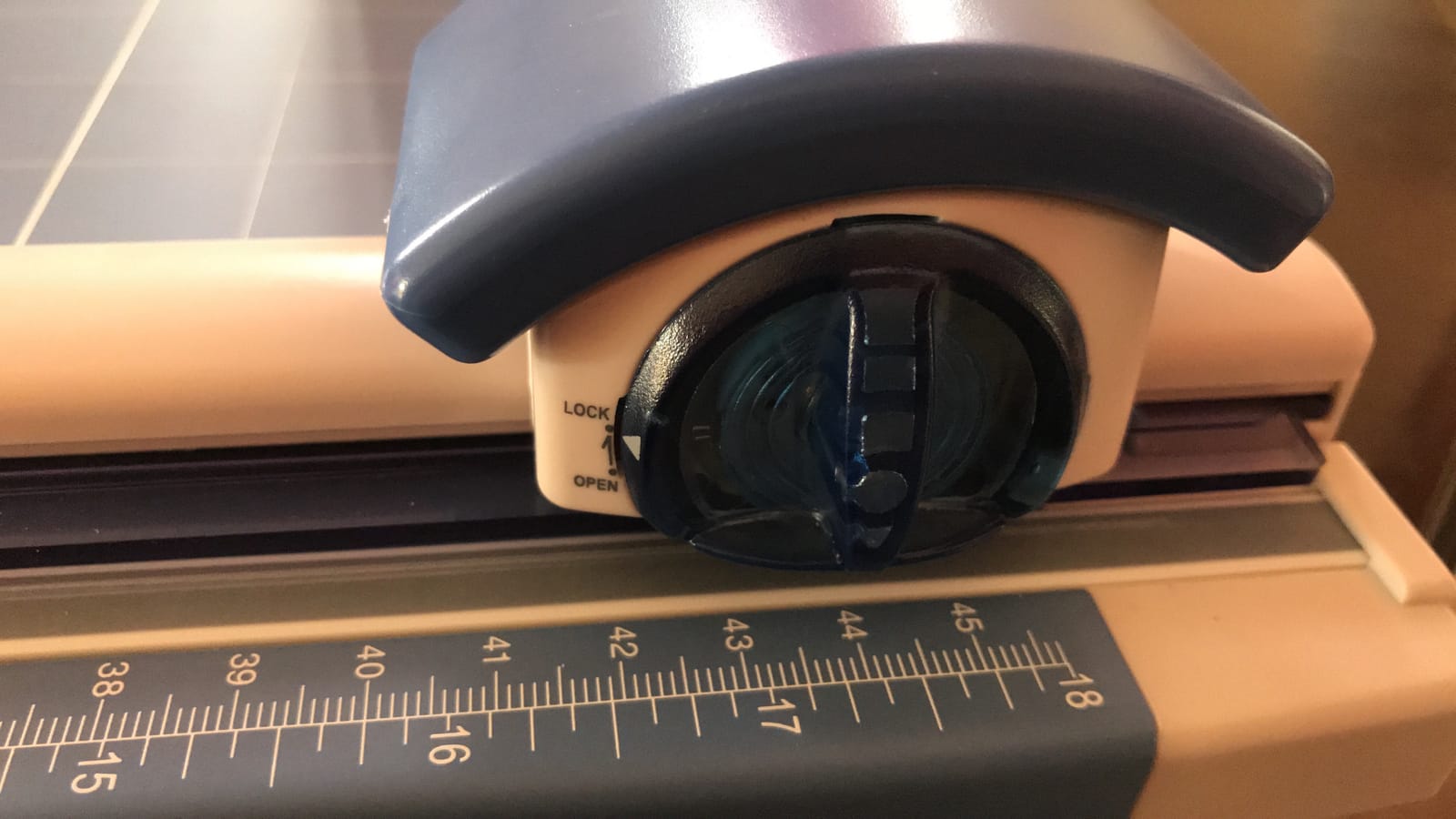
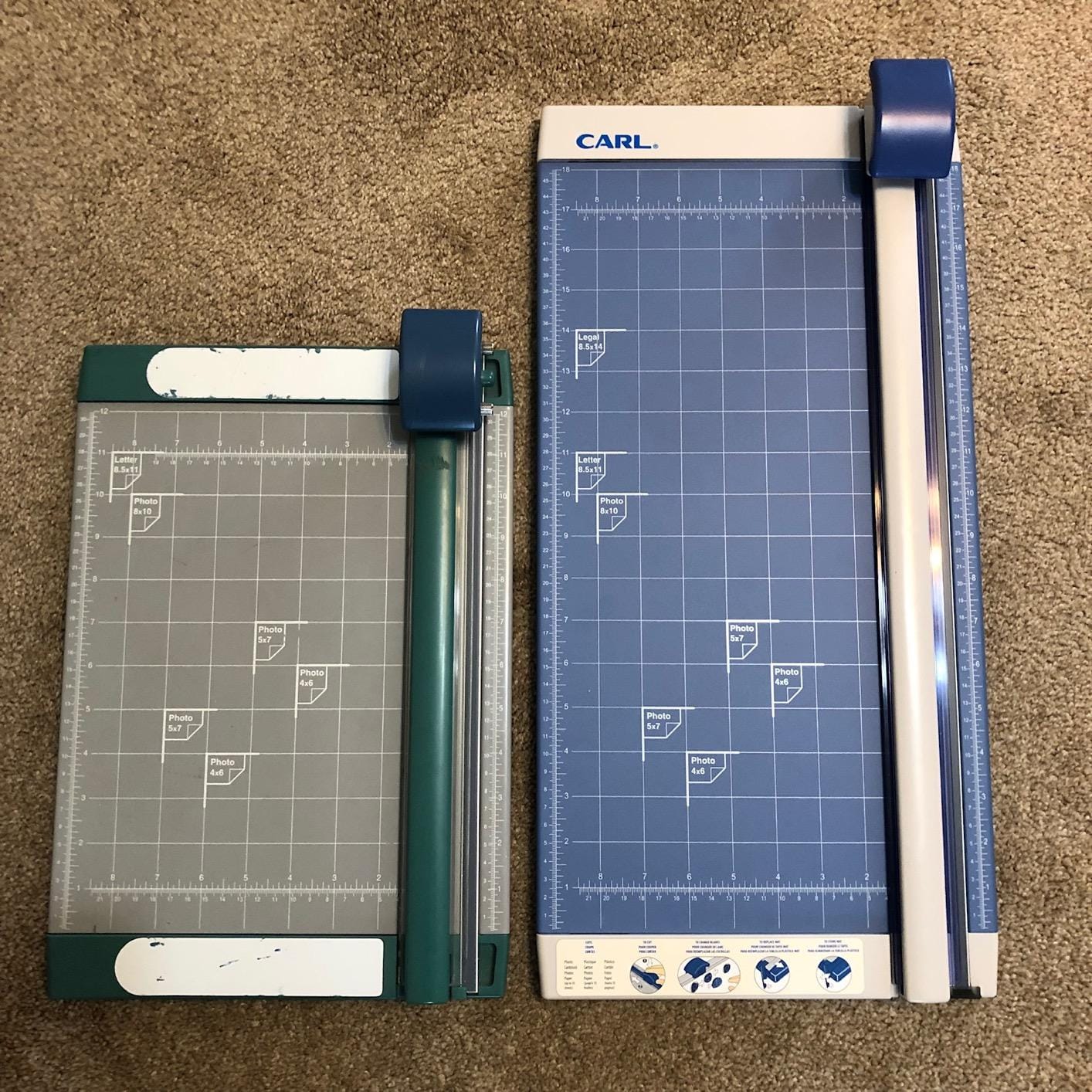
The CARL RT-218 is an 18 inch rotary trimmer with a calibrated metal base and a premium carbide blade. It weighs 4 pounds, the heaviest unit in this roundup, and the mass is a feature on a machine built for poster board and large photo paper.
The patented rail mechanism is what earns that weight. It grips the sheet on both sides of the cut and holds it firm through the stroke, so the paper cannot creep. On long cuts across 18 inches, that grip is the difference between a straight edge and a slightly tapered one.
Capacity is 10 sheets of 20 lb paper. That is modest beside the 30 sheet guillotines here, but the metal base does not flex, so a small stack still comes out square. The carbide blade also resists dulling longer than a standard steel edge, particularly with cardstock and coated photo paper.
The manufacturer offers a lifetime limited warranty, and up to 11 different cutting blade pattern options are available separately for scoring and perforated work. The trade-off is footprint. At 23.3 by 12 by 3 inches it needs a dedicated stretch of desk or a shelf, and it is not a machine you carry between rooms.
Who this rotary trimmer suits
Large-format work of any kind: 18 inch poster paper, wide photo prints, framing mats and display board. Sign makers, photographers and small print operations get the most out of the 18 inch length and the rigid base.
It also suits anyone who wants scoring and perforated blade options later, since the blade system accepts different patterns for tear-off edges.
Where it falls short
The size and the 4 pound weight are the real costs. Compact 12 inch trimmers are simply easier to live with in a small space, and this one does not fold or travel.
A 10 sheet rating undercuts the professional framing, so for bulk document work a guillotine is the better answer. This is a precision machine for wide sheets, not a volume cutter.
How to Choose the Right Paper Trimmer
Start with the type, because it decides almost everything else. A rotary trimmer slides a blade across a gridded mat and gives you precise control with a visible cut line. A guillotine clamps a stack and pulls a long arm down through it, which handles volume but hides the blade. A stack cutter does the same job with a much deeper blade bed for ream-sized work. An electric cutter automates the stroke for high-volume shops. If you want the fastest straight edge on a photo, use a rotary. If you want to halve a stack of reports in seconds, use a guillotine.
1. Paper cutter or paper trimmer, and does the name matter
Retailers use the two words for the same shelf, which is why searches for a paper cutter keep returning small rotary mats. In practice, a trimmer is the light rotary tool and a cutter is the guillotine or stack machine. Read the cut length and sheet rating instead of the name, because that is where the real difference lives.
2. Sheet capacity, and the honest number
Advertised capacity is measured on thin paper with a sharp blade in a controlled lab. Real capacity is lower. Rotary trimmers in this roundup ran clean at 5 to 8 sheets, guillotines held their 10 sheet ratings better, and the machines claiming 15 to 30 sheets varied the most. Buy for the number you will really cut, not the number on the box.
3. Blade material and what self-sharpening actually means
There are three systems. Self-sharpening blades, including the X-Acto Perpetual Edge and the Amazon Basics steel blade, hone themselves as they cut and need no attention. Self-honing blades such as the Dahle 507 cut in both directions and touch up on the way past, but they can still dull. Replaceable blades such as the Firbon and Fiskars need a spare when the edge scores, and that keeps the running cost of the tool down.
4. Materials beyond plain paper
Cardstock, poster board, construction paper, laminated sheets, vinyl and chipboard each need a different blade and a different grip. For laminated paper look for a stated thickness figure, since the Firbon handles 1.5 mm while the WORKLION handles 0.4 mm. For vinyl you want a rail that grips the sheet and a blade you can disassemble to clean adhesive from, which is why the Dahle works well for decals.
5. Safety around children
A blade guard rail, a blade latch hook and a press-to-cut housing are the three features to look for. The Swingline and the Amazon Basics combine a guardrail with a lock for storage. The Firbon and the WORKLION hide the edge so it only cuts when pressed. The Westcott exposes a very sharp blade and needs a fixed, out-of-reach home, and it is not a shared-table tool.
6. Size, portability and desk space
Cut length decides what fits in one pass. The 8.5 inch Tonic will not span 12 by 12 inch scrapbook paper. The 12 inch models cover most household and office work. The 18 inch CARL and 15 inch X-Acto cover poster and framing work. Weight matters too: the Fiskars folds down at 12 ounces, while the 4 pound CARL and the 20.5 inch Amazon Basics base claim permanent real estate.
7. Measurement system and gridlines
ANSI and DIN markings differ, and A4 does not align with US Letter. Every machine here carries both inches and centimeters, which matters if you mix European and North American paper. A transparent guide ruler, as on the WORKLION, beats a printed grid for alignment, and a wire cut line, as on the Fiskars, beats both because you see the actual blade path.
8. Wall-mounted and mounted-arm options
If desk space is the binding constraint, a wall-mounted guillotine with an extended arm solves the footprint problem. Nothing in this roundup is wall mounted, so the closest option is the Fiskars, which folds to almost nothing and can live in a drawer between sessions.
Why Paper Trimmer Cuts Go Crooked and How to Fix It
Crooked cuts were the most common complaint in the cardmaking discussions we read while researching this roundup, where owners described owning several trimmers over the years that all eventually cut at an angle. It is nearly always one of four causes, and all four are fixable.
The first is a bending cutting bar. Carrying a rotary trimmer by its arm or bar, then setting it down under load, warps the rail so the blade no longer travels parallel to the base. Carry the machine by its base instead, and if the bar already bows, the rail needs replacing rather than adjusting.
The second is a dull blade. A sharp edge shears through; a tired edge drags and pulls the sheet with it. Self-sharpening machines fix this on their own. On replaceable blade designs, swap the blade as soon as you see scoring rather than pushing through.
The third is paper shift. Without a clamp or hold-down the sheet moves during the stroke, and the cut follows the movement. Hold the far edge with a flat hand, or use a machine with an automatic clamp or a gripping rail, such as the Dahle 507 or the CARL.
The fourth is the surface itself. A trimmer on a soft or uneven desk tilts under pressure. Put a rigid board underneath, use the rubber feet, and check the trimmer sits level before the first cut of a session.
To keep cuts straight, measure once and mark your own reference line on the base with low tack tape. Several machines on this list have a gap or an offset in their printed scale, and a personal reference line removes the guesswork permanently.
Frequently Asked Questions
What is a good quality paper trimmer?
A good quality paper trimmer has four things: a rigid base that does not flex, a visible cutting line so you can see where the blade will fall, a blade that holds its edge, and a safety guard or latch. Self-sharpening or replaceable blades both work, and a warranty of five years or more is a useful quality signal. The CARL and the X-Acto win on base rigidity, while the Fiskars SureCut wins on a visible wire cut line.
What is the best craft paper trimmer?
For most crafters the Firbon A4 paper cutter is the best paper trimmer, because it cuts cleanly along printed lines, includes a 45 to 90 degree angle plate, and takes a replaceable blade. If your work is small strips and tags rather than full sheets, the Tonic Studios cutter gives the cleanest detail cuts. For vinyl and heavy card, the Dahle 507 is the stronger choice.
What is the difference between a paper cutter and a paper trimmer?
A paper trimmer is a manual desktop tool with a sliding rotary blade and a gridded cutting mat, suited to a few sheets at a time with a visible cut line. A paper cutter usually means a guillotine or stack machine with a hinged arm that slices a clamped stack in one pass. Retailers use both words interchangeably, so check the cut length and sheet rating rather than the name.
What is the best brand of paper cutter?
Brands worth shortlisting on this list are CARL and Dahle for rigid metal bases and precise blades, Fiskars for portable rotary designs with a lifetime warranty, X-Acto and Westcott for wood and heavy-duty guillotine work, and Swingline for dependable office trimmers. The best brand for you depends on the type of machine and the material, not the name alone.
How many sheets can a paper cutter cut?
A rotary trimmer in this group runs clean at about 5 to 8 sheets, and a 10 sheet guillotine handles a full stack of 20 lb paper reliably. Machines rated at 15 to 30 sheets need thin paper to reach those numbers, and owners commonly report 3 to 13 sheets depending on weight. Always test at your own sheet weight rather than trusting the box figure.
The Best Paper Trimmers to Buy in 2026
After cutting through stacks of copy paper, cardstock, vinyl and laminated sheet across all ten of these machines, the Firbon A4 paper cutter is our pick for the best paper trimmers overall, and its press-to-cut blade is the reason it can live on a family craft table. For an office, the Swingline ClassicCut Lite is the value choice, and the WORKLION handles the tightest desk and the youngest user.
Large-format work belongs to the CARL RT-218, bulk and board work belongs to the Westcott, and visible blade alignment belongs to the Fiskars SureCut. Whichever one you choose, mark a personal reference line on the base before your first cut, and the straight edges will follow.