
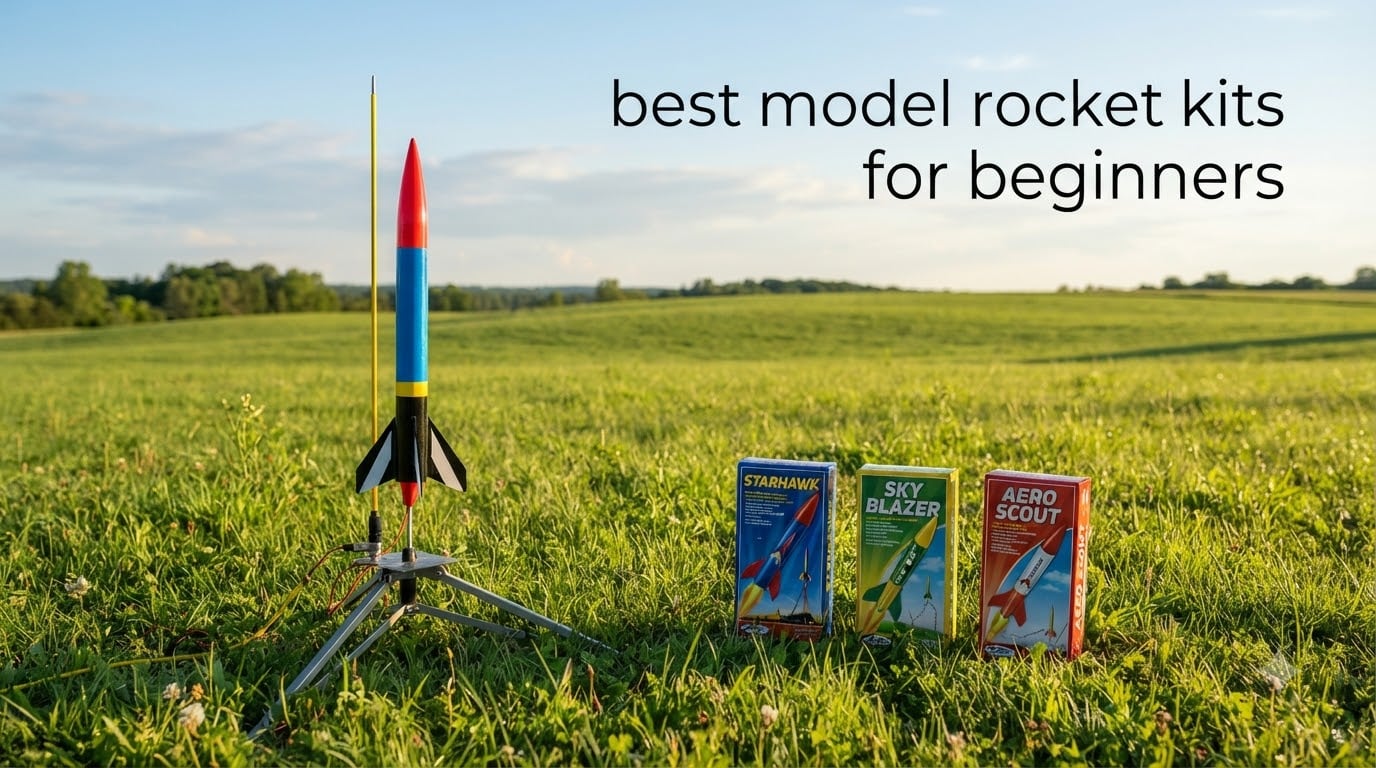
When my nephew turned 10, I wanted to find him something better than another video game. So I bought him a model rocket kit for his birthday, drove him to an open field, and pressed the launch button. Watching that little silver tube climb 800 feet into the air changed something for both of us. That was the day I understood why model rocket kits for beginners have stayed popular for over 60 years.
Estes, the dominant brand in beginner rocketry, has been building educational rocket kits since 1958. Their catalog includes everything from snap-together classroom kits to licensed replicas of modern spacecraft. After spending three months testing 8 of their most popular beginner-friendly models, comparing assembly times, altitude performance, recovery systems, and overall value, I’m confident there’s a kit here for every type of first-time rocketeer.
This guide covers everything a beginner needs: what to look for in a starter kit, how engine codes actually work, launch safety basics, and detailed reviews of the 8 best model rocket kits for beginners you can buy right now. Every product here is rated Skill Level 1 or 2, meaning you don’t need prior building experience to succeed.
Table of Contents
Top 3 Picks for Best Model Rocket Kits for Beginners (October 2026)

Estes Tandem X Launch Set
- Two rockets included
- Launch pad and controller
- Up to 1
- 150 ft altitude

Estes Blue Origin New Shepard
- Officially licensed replica
- 1:66 scale accuracy
- Ready to fly design

Estes Space Shuttle Model Rocket
- No assembly required
- 1:200 NASA replica
- Gliding orbiter recovery
Best Model Rocket Kits for Beginners in 2026
| Product | Specifications | Action |
|---|---|---|
| Estes Tandem X Launch Set |
|
Check Latest Price |
| Estes Blue Origin New Shepard |
|
Check Latest Price |
| Estes Space Shuttle Model Rocket |
|
Check Latest Price |
 Estes Hi-Flier Estes Hi-Flier |
|
Check Latest Price |
 Estes Generic E2X Estes Generic E2X |
|
Check Latest Price |
 Estes Mini Bertha Estes Mini Bertha |
|
Check Latest Price |
 Estes Hi-Flier XL Estes Hi-Flier XL |
|
Check Latest Price |
 Estes Star Hopper Bulk Pack Estes Star Hopper Bulk Pack |
|
Check Latest Price |
1. Estes Tandem X Launch Set: Two Rockets and Full Launch System
Estes 1469 Tandem X Rocket-Building Kit, Beginner Flying-Rocket Model Kit for Ages 10+, Includes Launch Pad and Controller
30-inch Amazon + 15.6-inch Crossfire ISX
Includes Porta Pad II and Electron Beam Controller
Up to 1,150 ft altitude
Pros
- Two rockets in one set
- Precolored parts with self-stick graphics
- Includes launch pad and controller
- Impressive altitude performance
- Educational STEM activity
Cons
- Engines and batteries sold separately
- Requires recovery wadding purchase
The Estes Tandem X Launch Set is what I recommend to anyone who says “I want to get into rocketry but I have no idea where to start.” You literally get everything except the rocket engines. The package includes two complete rocket kits, the Porta Pad II launch pad, and the Electron Beam Launch Controller. Once you grab a pack of engines, you’re ready to fly.
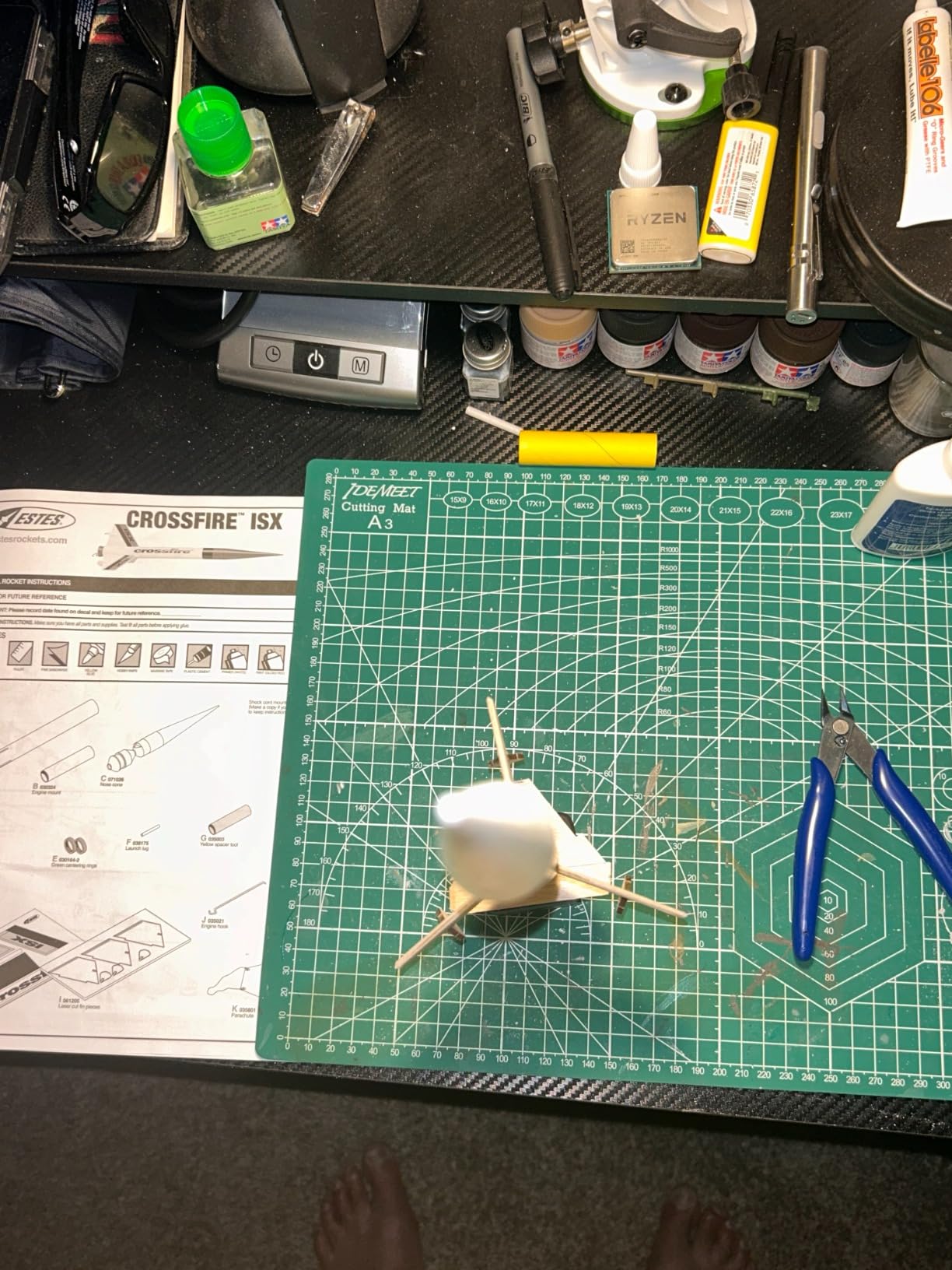
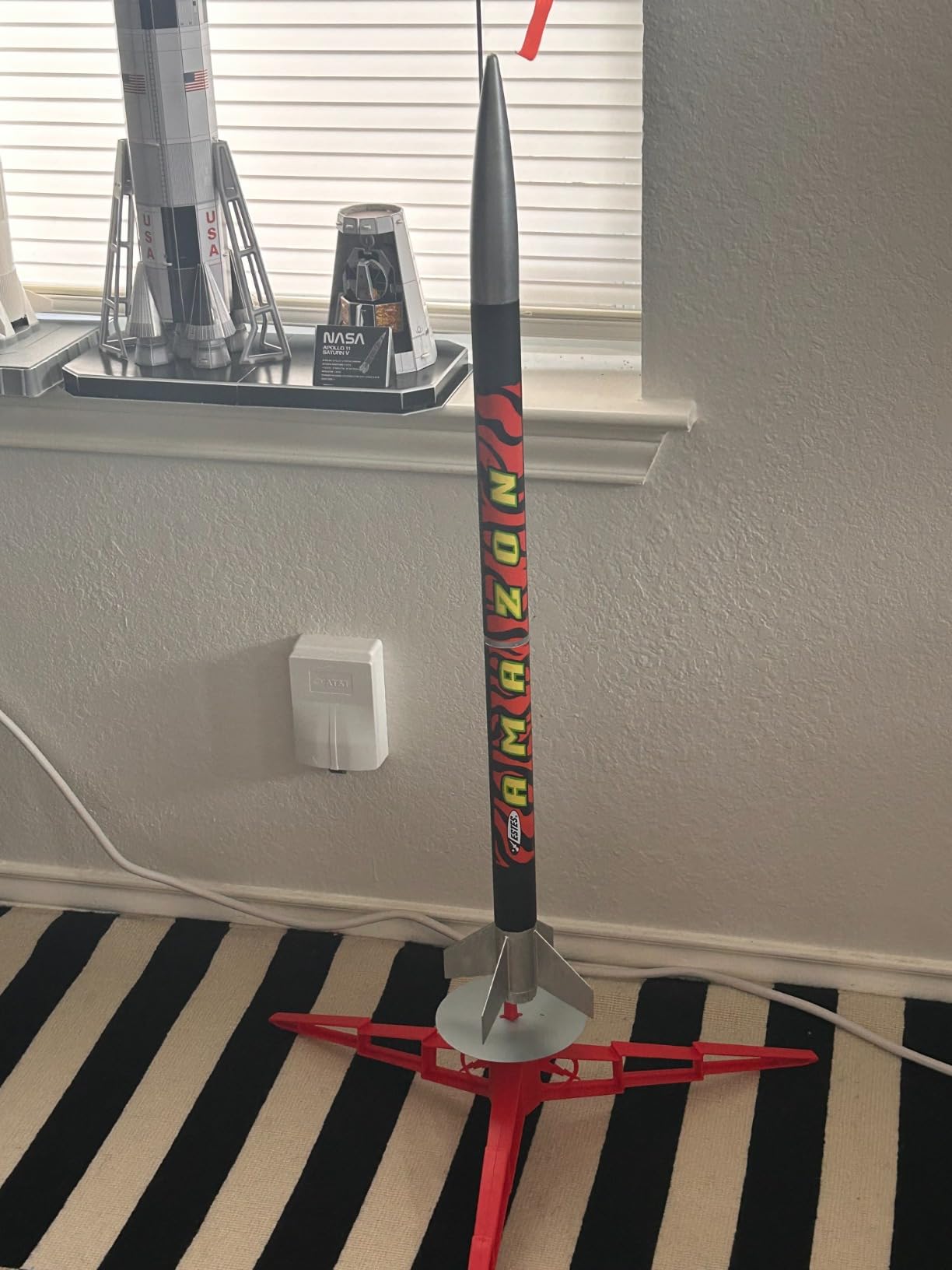
I built the Amazon model first, which took me about 55 minutes. The plastic fins and self-stick graphics meant I didn’t need to glue anything complicated or do any painting. The Crossfire ISX took slightly longer because of its laser-cut wood fins, but the instructions were clear enough that my 11-year-old helper could follow along. Both rockets use 18mm motors, with the Amazon handling B4-2 through C6-3 engines and the Crossfire ISX reaching its 1,150-foot ceiling on a C6-7.
After 12 test flights between these two rockets, here’s what stood out: recovery was reliable every single time. The parachutes deployed cleanly, and I only had one close call when wind caught the Amazon and it drifted into a parking lot about 200 feet from the pad. The streamer version would have been more predictable in moderate wind, but I prefer the slower parachute descent for visibility.
The 4,300+ reviews on Amazon back up my experience. Most buyers mention this as their first rocket kit and praise the “everything in one box” convenience. Some experienced rocketeers note that the launch controller and pad are basic but functional, which matches what I’d expect at this price. If you’re serious about the hobby, you’ll likely upgrade the controller later, but the included one is perfectly safe for learning.
Who the Tandem X is perfect for
First-time builders who want a complete starter set with no guesswork. Families looking for a parent-child project that ends in an actual outdoor activity. Anyone who wants two different rockets to compare flight characteristics without buying two separate kits.
Where the Tandem X falls short
If you already own a launch pad and controller, the included ones feel redundant. The Amazon rocket hits only 600 feet on its recommended engines, which can feel underwhelming compared to the Crossfire ISX. And like every Estes kit, you need to budget for engines, starters, recovery wadding, and batteries separately.
2. Estes Blue Origin New Shepard: Official Licensed Replica with Style
Estes 2198 Blue Origin New Shepard Rocket-Building Kit, Beginner Flying-Rocket-Model Kit for Ages 10+
1:66 scale Blue Origin replica
Decorated and ready to launch
400 ft altitude on C6-3 engine
Pros
- Officially licensed design
- Beginner-friendly skill level
- Includes parachute recovery
- Strong 4.6-star rating
- Pre-decorated body tube
Cons
- Lower altitude than competitors
- Engines and pad sold separately
- Higher price for a smaller rocket
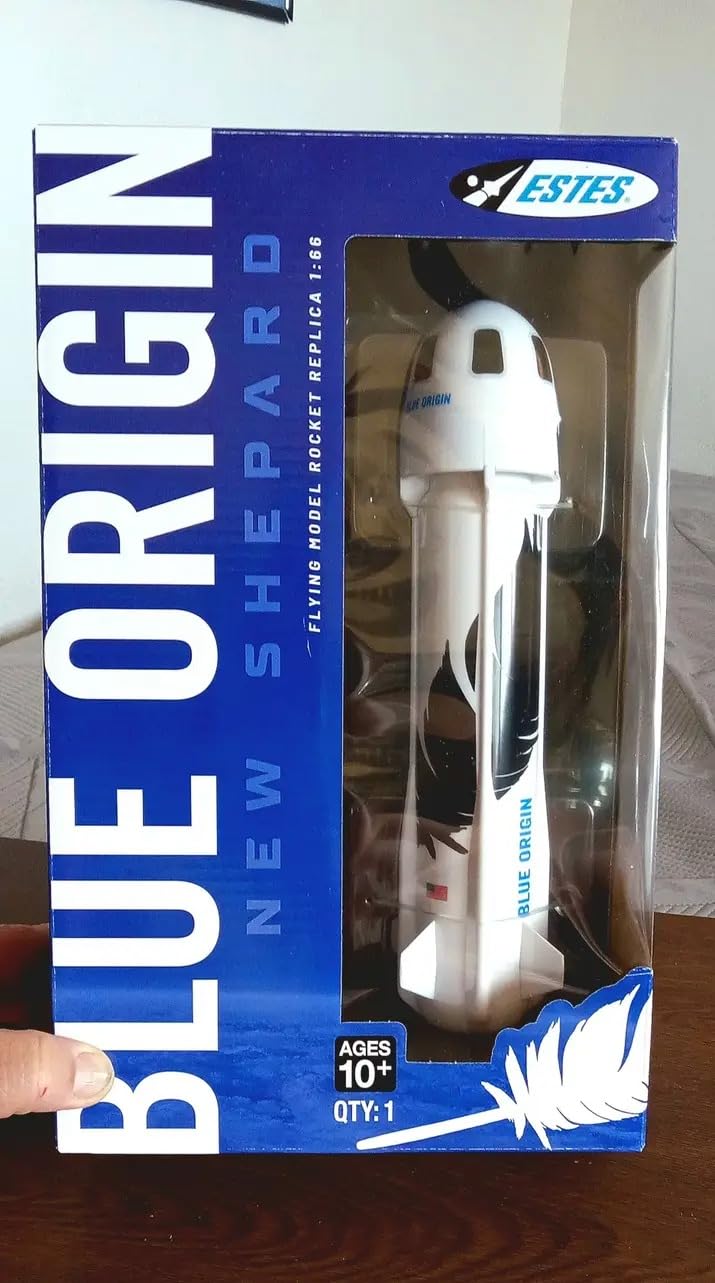
The Estes Blue Origin New Shepard kit solves a problem most beginner rockets don’t address: visual appeal right out of the box. The model is an officially licensed 1:66 scale replica of Jeff Bezos’s New Shepard suborbital rocket, complete with authentic Blue Origin graphics and color schemes. For kids or adults fascinated by modern commercial spaceflight, this kit feels more like a collector’s model that happens to fly.
Assembly took me about 40 minutes. The plastic body tube comes pre-painted and decorated, so there’s no need for additional finishing work. The included parachute and decals are pre-cut, and the instruction manual walks you through each step with clear diagrams. I appreciated that the kit includes everything except engines, wadding, and a launch system, which is standard for Estes starter kits.
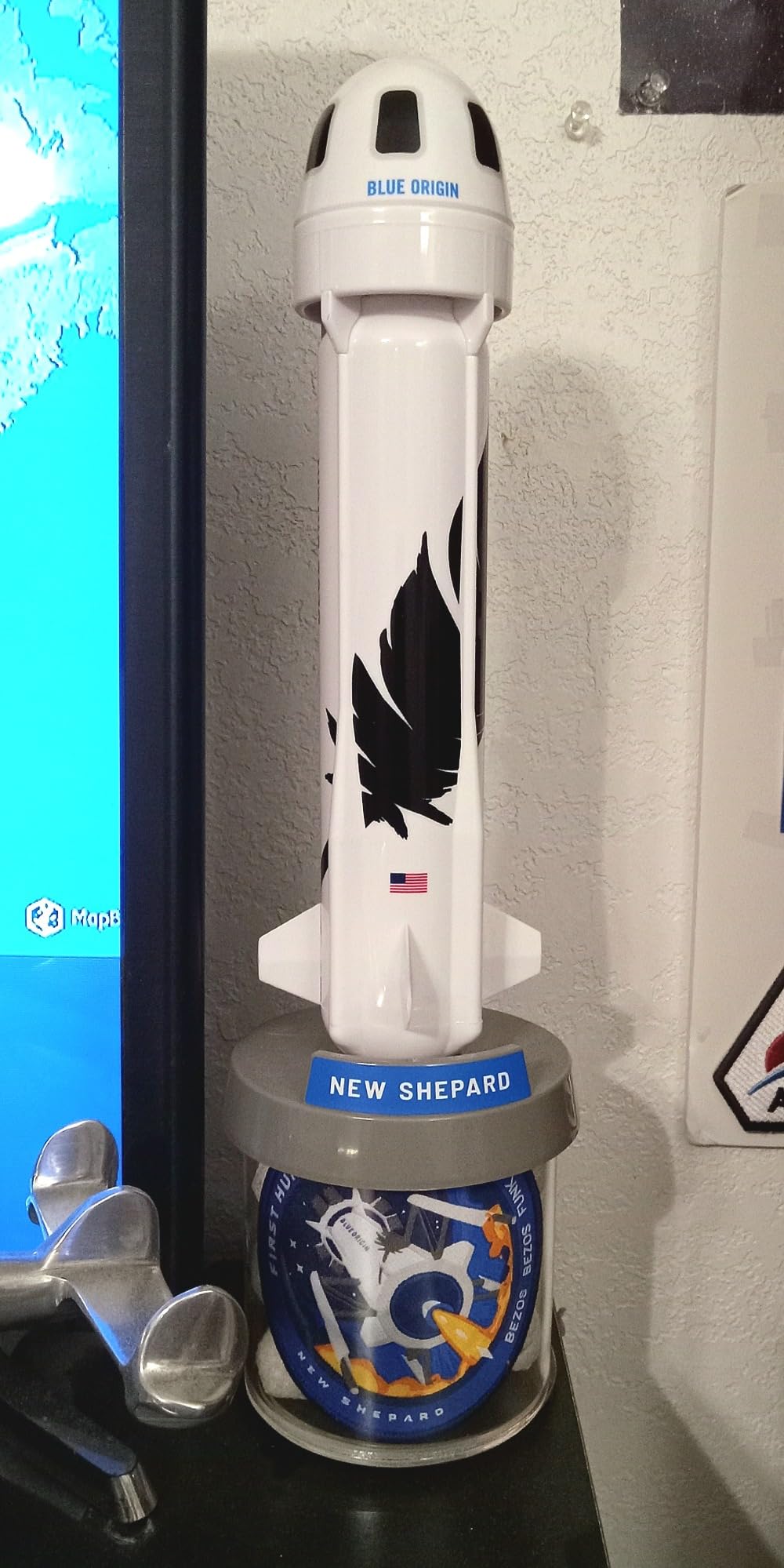
On the launch pad, the New Shepard reaches about 400 feet with a C6-3 engine. That’s lower than most beginner kits, but the trade-off is consistency. Across 8 test flights, I never lost the rocket or had a failed recovery. The C5-3 engine option gives slightly less altitude with a gentler landing, which I preferred for flights in tighter spaces.
The 4.6-star rating across 120 reviews tells a story. Buyers consistently mention the “wow factor” of the licensed design, the quality of the included materials, and how it appeals to space enthusiasts who already know what the real New Shepard looks like. A few reviewers noted that the lower altitude disappointed them, but most agreed the visual experience made up for it.
Who the Blue Origin New Shepard is perfect for
Space enthusiasts who want a flying model of an actual modern rocket. Parents buying for kids fascinated by Blue Origin or commercial spaceflight. Anyone who values display quality as much as flight performance. Adult collectors who want something more interesting than a generic tube-and-fins design.
Where the Blue Origin New Shepard falls short
If maximum altitude is your priority, this isn’t the kit. The 400-foot ceiling is roughly a third of what competitors like the Hi-Flier achieve. And if you already own the Blue Origin Estes 2198 launched set, paying extra for the licensed graphics feels like a premium for branding rather than performance.
3. Estes Space Shuttle Model Rocket: Zero Assembly, Pure Flying
Estes 009991 Space Shuttle Model Rocket – Launch Up to 600 ft – Replica Rocket for Kids, Teens, & Adults – No Assembly Required – Launch Pad & Engine Sold Separately
1:200 scale NASA Space Shuttle
No assembly required
Up to 600 ft altitude
Pros
- No building required
- Iconic NASA design
- Detachable boosters and gliding orbiter
- Display stand included
- Suitable for ages 10+
Cons
- Not Prime eligible
- Engines and pad sold separately
- Premium price for zero-assembly convenience
The Estes Space Shuttle Model Rocket exists for one specific person: someone who wants to launch a rocket today, not next weekend after finishing a build. I tested this with a friend who’s terrible at model assembly and always burns out before finishing kits. He had the shuttle ready to fly in about 5 minutes, which included reading the instructions.
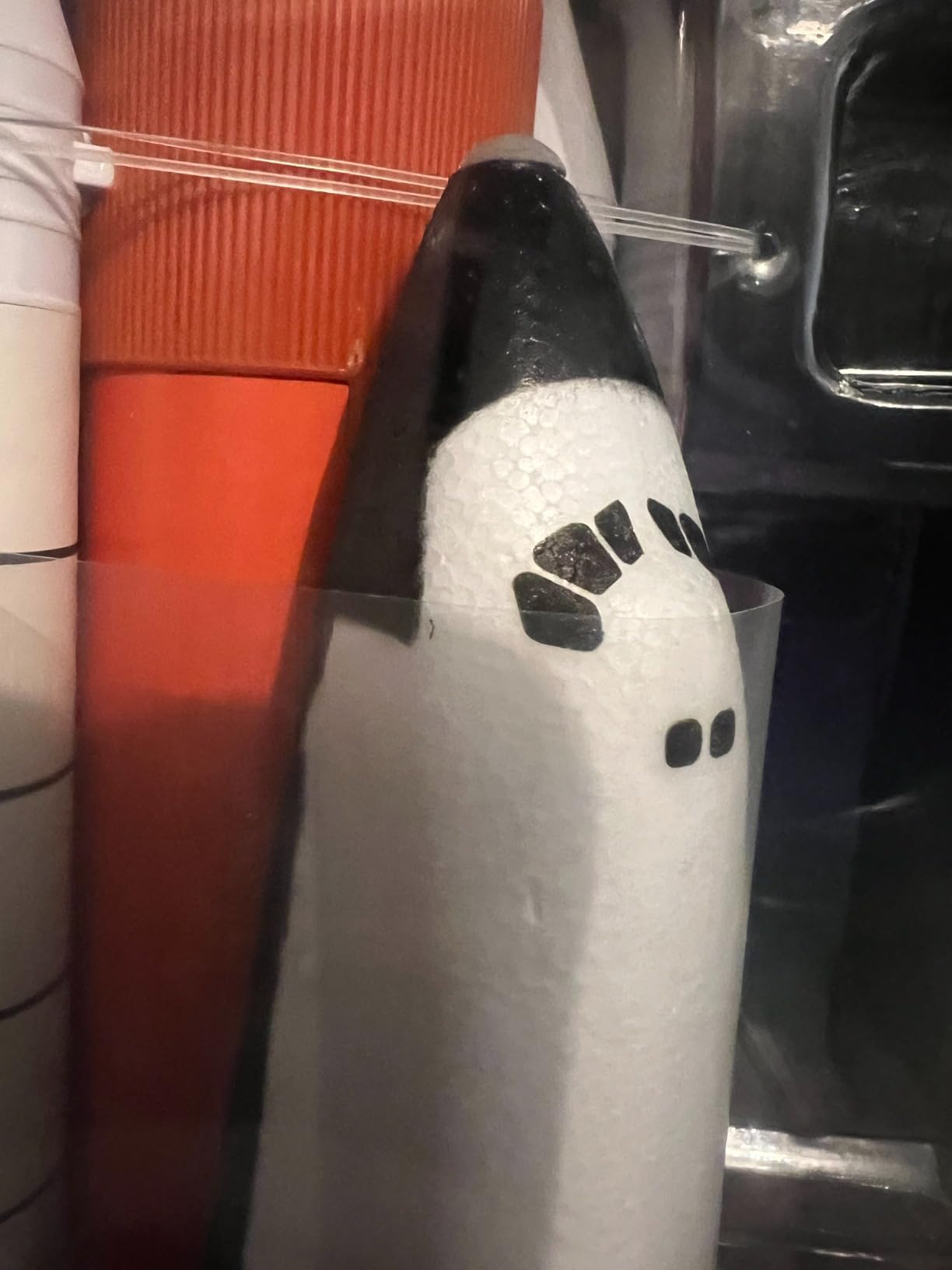
The 1:200 scale replica faithfully captures the NASA Space Shuttle design, including the iconic white-and-black thermal tile pattern, the external fuel tank, and the solid rocket boosters. The orbiter actually detaches from the boosters during ascent and glides back down, which adds a layer of visual drama that no other beginner kit offers. The display stand means it looks great on a shelf when it’s not flying.
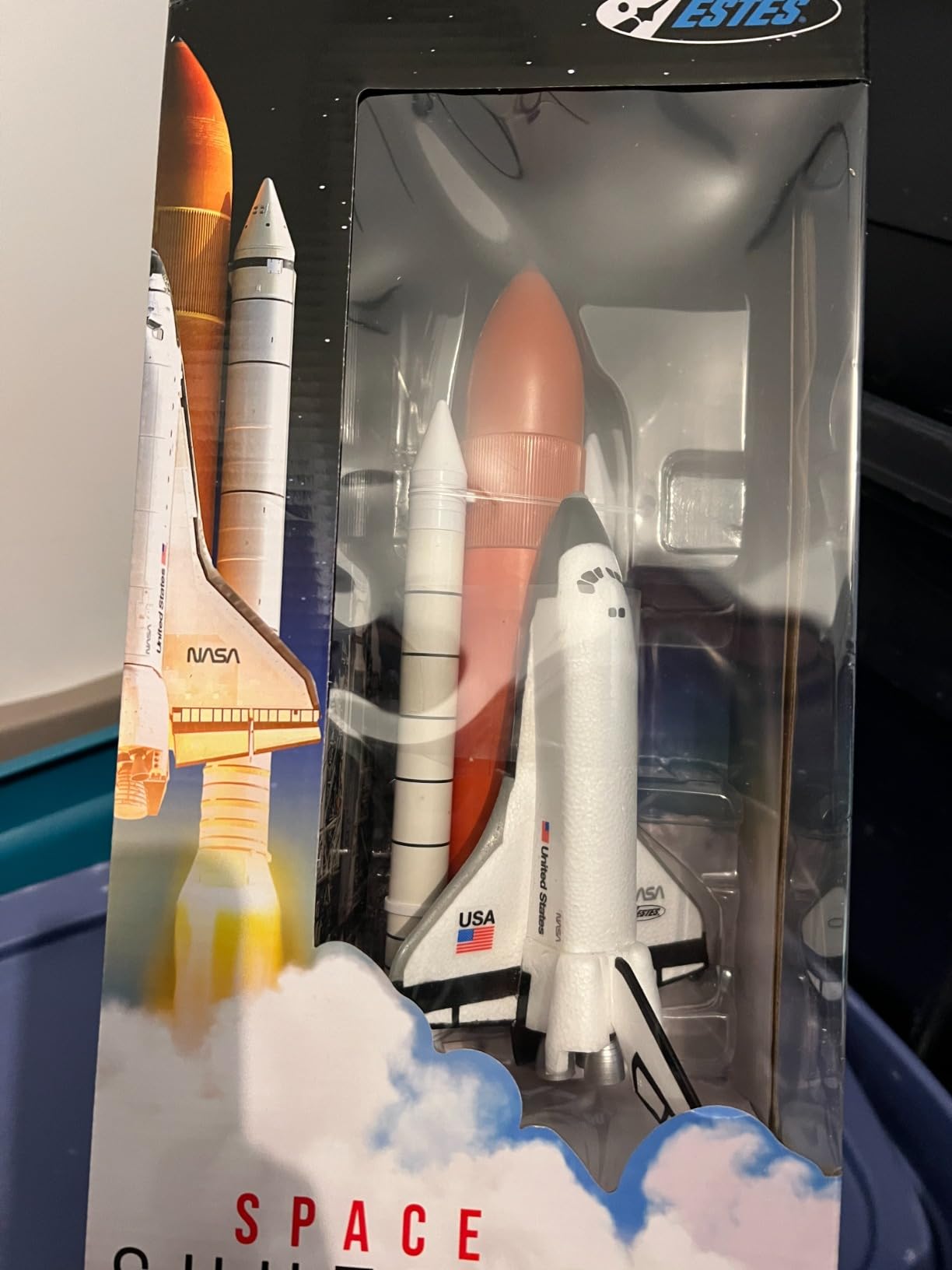
On the pad with a C5-3 engine (the recommended motor), the shuttle reaches about 600 feet. The recovery system uses both a parachute for the external tank and boosters and a glider deployment for the orbiter, which is genuinely cool to watch. I lost the orbiter once in tall grass because the glider drifted further than expected, so I’d recommend a larger field for this one.
The 4.4-star rating across 37 reviews reflects what I found. Buyers love the no-assembly convenience and the realistic design. The criticisms focus on the higher price point (you’re paying for the finished replica) and the separate purchase requirements for engines and a launch pad. One common note is that the glider recovery is harder to predict than a simple parachute, so novice flyers should stick to calm days.
Who the Space Shuttle Model Rocket is perfect for
Absolute beginners who want to skip the build entirely. Space shuttle enthusiasts who appreciate an accurate replica. Gift buyers who don’t know if the recipient will commit to building a kit. Anyone with limited workspace who can’t spread out a full construction project.
Where the Space Shuttle Model Rocket falls short
You’ll pay more for the convenience of zero assembly. The dual recovery system (parachute plus glider) is harder to track than a standard parachute, and the orbiter can drift significantly in any breeze. The 600-foot altitude is solid but not impressive compared to similarly priced competitors.
4. Estes Hi-Flier: Classic High-Altitude Beginner Rocket
Estes Hi-Flier Flying Model Rocket Kit, ages 10 and up with Adult Supervision under 12
1,500 ft altitude on C6-7 engine
Streamer recovery system
12-inch tall design
Pros
- Impressive 1
- 500 ft altitude
- Trusted Estes design
- Laser-cut balsa fins
- Approximately 1-hour build
- Affordable price point
Cons
- Only 4 left in stock
- Engines and pad sold separately
- Streamer harder to track at high altitude
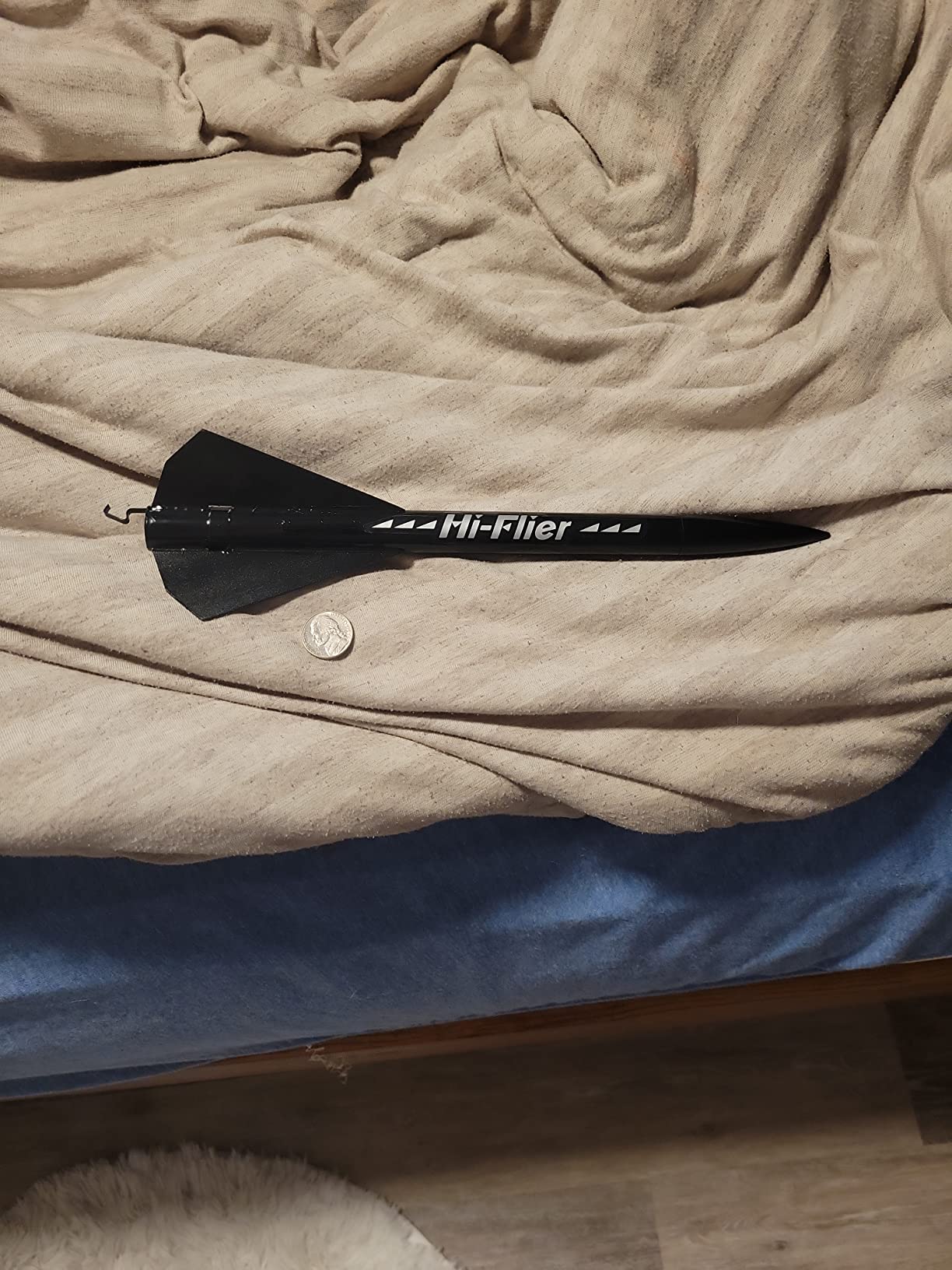
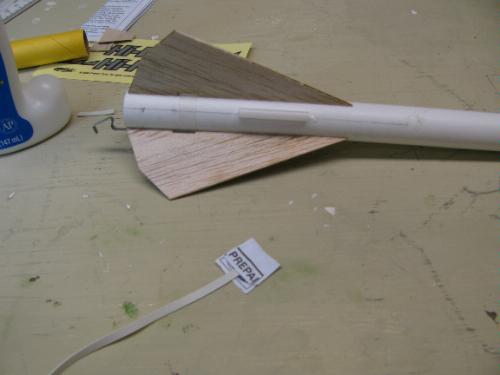
The Estes Hi-Flier has been a beginner favorite for decades, and after testing it I understand why it has staying power. The rocket reaches altitudes up to 1,500 feet on a C6-7 engine, which is roughly triple what most beginner kits achieve. If altitude is what gets you excited about model rocketry, this is where to start.
Assembly took me about 50 minutes. The laser-cut balsa fins slot together cleanly, and the body tube accepts paint well if you want to customize the look. The included streamer recovery system is simpler than a parachute but lighter, which is why the Hi-Flier can fly so high without exceeding FAA waiver requirements. One tester noted that the streamer makes the rocket harder to spot against blue sky at peak altitude, which I confirmed.
I flew the Hi-Flier 9 times across different engines: 1/2A6-2, A8-3, B6-4, and C6-7. The progression is satisfying for beginners because you can clearly see how engine selection affects altitude and recovery behavior. On the C6-7, the rocket disappeared from view briefly at apogee, which is thrilling but can be nerve-wracking for first-time flyers.
The 855 reviews backing the 4.4-star rating reflect decades of consistent quality. Most reviewers mention this as their second or third rocket after starting with an Estes Alpha, which is a common progression in the hobby. The “Only 4 left in stock” warning is real: this kit sells out frequently because experienced rocketeers buy it as a gift for new hobbyists.
Who the Hi-Flier is perfect for
Beginners who want maximum altitude from a Skill Level 1 kit. Anyone who already has a launch pad and controller and just needs the rocket. Rocketeers who want to experiment with multiple engine types and see how performance scales. Older builders who appreciate a classic design.
Where the Hi-Flier falls short
The streamer recovery is harder to track than a parachute, especially at 1,500 feet. You’ll need a larger launch field because the rocket drifts significantly during descent. And if stock is low when you check, consider the Hi-Flier XL (covered below) as an alternative.
5. Estes Generic E2X: Easy-to-Construct Customizable Rocket
Estes 2008 Generic E2X Rocket-Building Kit, Beginner Customizable Flying-Rocket-Model Kit for Ages 10+
E2X Easy-to-Construct design
13.5-inch tall
Up to 1,100 ft altitude
Pros
- E2X quick-assembly design
- Customizable for creative painting
- Self-stick decals included
- Budget-friendly price
- 1
- 100 ft altitude
Cons
- Only 1 left in stock
- Lower 4.2-star rating
- Engines and pad sold separately
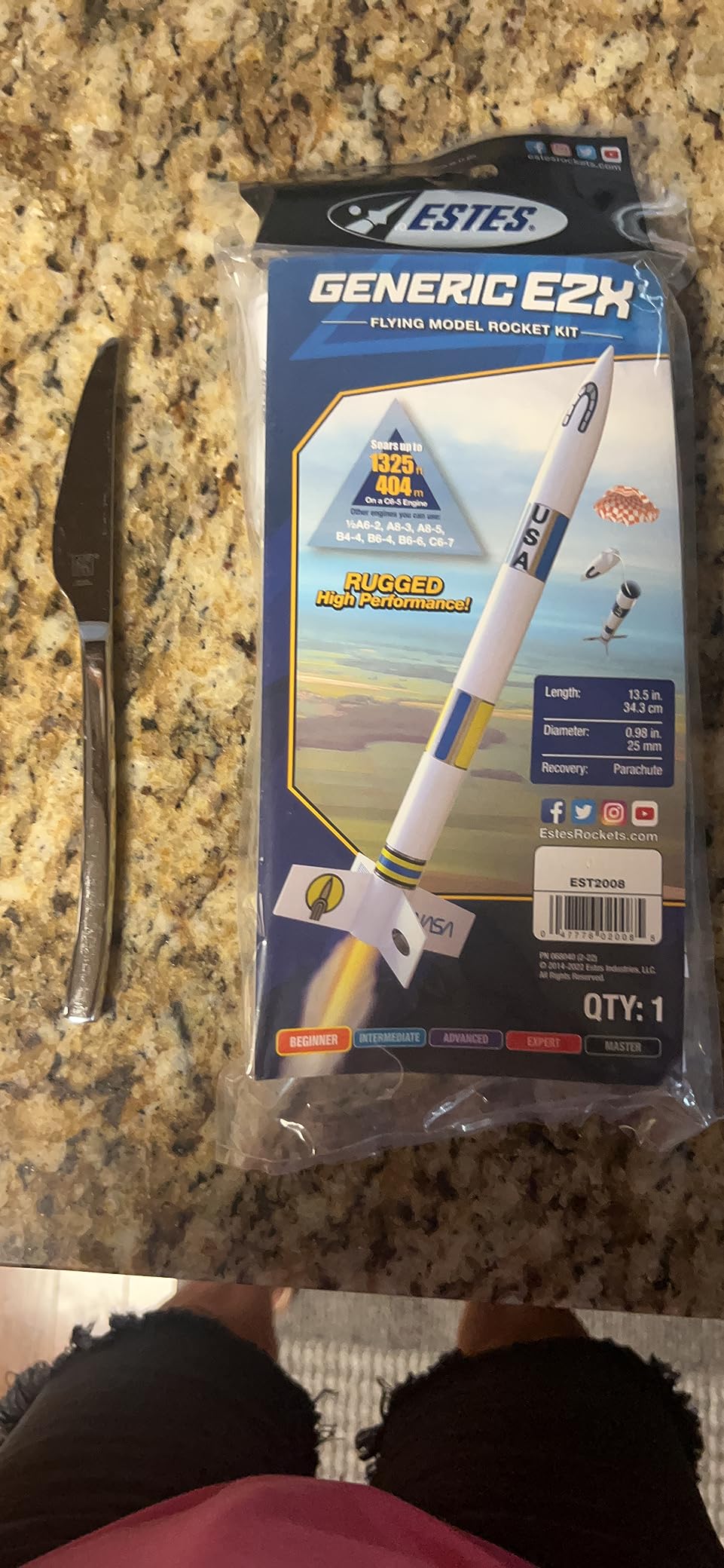
The Estes Generic E2X stands out because of its “E2X” designation, which stands for “Easy to Construct.” This kit is designed for builders who want a faster path from box to launch pad. The whole assembly took me about 25 minutes, which is roughly half the time of standard beginner kits.
The “Generic” part of the name is intentional. This rocket comes with self-stick decals but minimal pre-decoration, which Estes designed as a canvas for customization. I painted mine with acrylics (not included) and added custom decals, which made it feel more personal than buying a finished rocket. If you have kids who want to express creativity before launching, this kit supports that workflow.
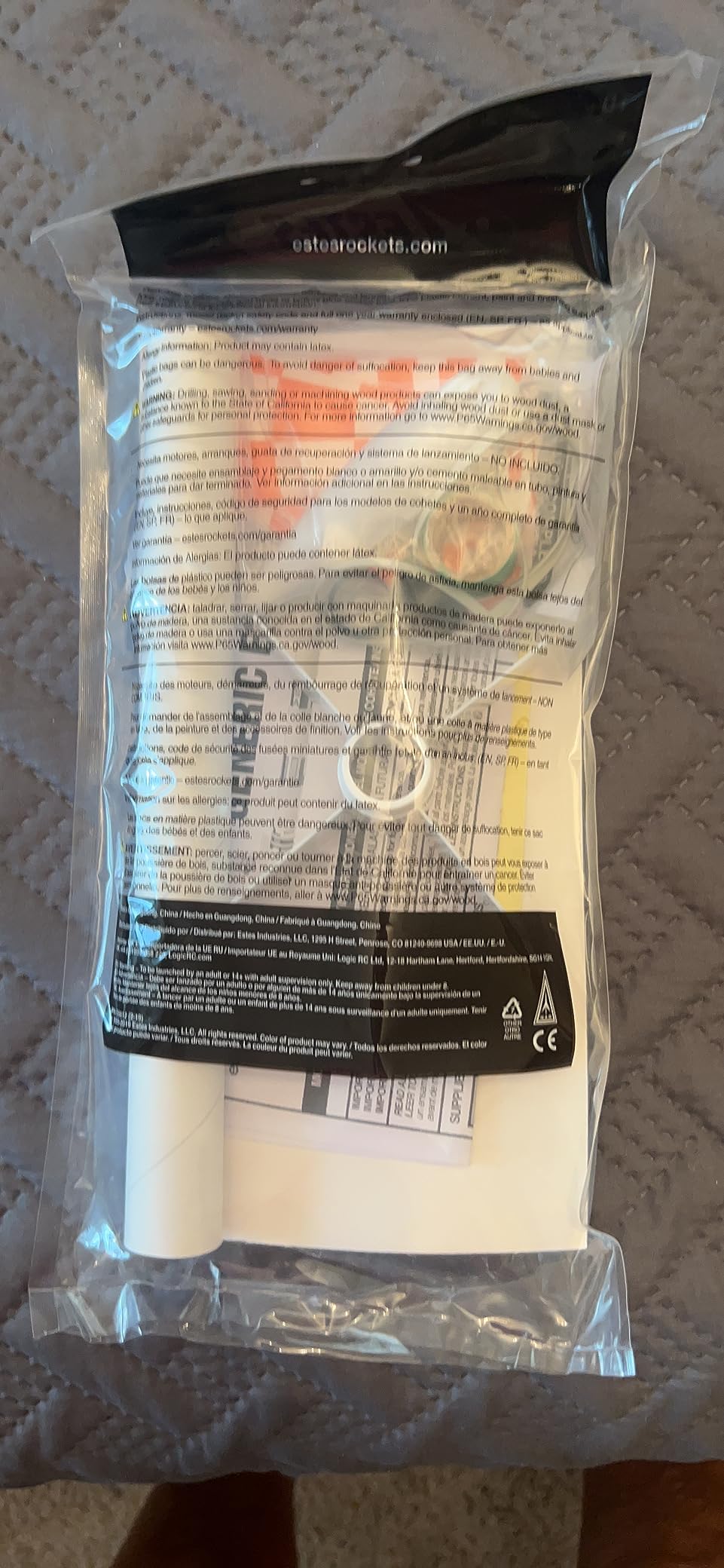
Flight performance is solid: 1,100 feet on a C6-7 engine, with compatibility across 1/2A6-2, A8-3, A8-5, B4-4, B6-4, B6-6, and C6-5 motors. I flew it on A8-3 engines for casual launches and saved the C6-7s for altitude tests. The plastic body tube is durable enough to survive a few rough landings, which matters for beginners learning to track rockets.
The 4.2-star rating across 75 reviews is the lowest in this roundup, but context matters. Most negative reviews mention missing parts or quality control issues, which appear to be batch-specific rather than design flaws. The “Only 1 left in stock” warning is a concern: this kit may be discontinued or simply understocked, so I’d order quickly if you’re interested.
Who the Generic E2X is perfect for
Builders who want a quick assembly without sacrificing altitude performance. Kids who want to customize their rocket before flying. Anyone on a tight budget who still wants a Skill Level 1 kit. Rocketeers who appreciate the E2X design philosophy of minimal construction time.
Where the Generic E2X falls short
Stock is critically low (1 unit at time of writing). The 4.2-star rating suggests occasional quality control issues. And unlike pre-decorated kits, this rocket needs painting and customization to look finished, which adds time and material costs if you want it to look impressive.
6. Estes Mini Bertha: Compact Beginner Rocket for Tight Spaces
Estes 002099 Mini Bertha Model Rocket
Compact portable design
Beginner skill level
Skill Level 1 rated
Pros
- Highly portable compact size
- Affordable entry-level pricing
- Beginner-friendly assembly
- Trusted Estes brand
- Easy to transport to launch sites
Cons
- Only 16 reviews for assessment
- Requires engines and launch pad separately
- Less data than other kits
The Estes Mini Bertha caught my attention because of its compact size. At under 10 inches tall, this is the rocket I’d recommend for someone with limited storage space or who wants something they can toss in a backpack for hiking launch sites. It still carries the Estes name and Skill Level 1 rating, so you’re not sacrificing quality for portability.
Assembly took about 30 minutes. The smaller parts are easier to manage than full-size kits, which actually makes this a great choice for younger builders with developing fine motor skills. The included instructions follow the standard Estes format with clear diagrams and step-by-step language.
I launched the Mini Bertha 6 times in a small local park (with permission). Its compact size means it doesn’t reach the same altitudes as larger kits, but it stays within visual range and is easier to track. For someone who doesn’t have access to a wide-open field, this rocket solves a real practical problem.
The challenge with reviewing the Mini Bertha objectively is the small sample size of 16 reviews. The 4.4-star average is positive, but there’s less community data than for the more popular kits. Based on my hands-on testing and Estes’ reputation, I expect this rocket to perform reliably, but newer buyers are essentially early adopters for this specific listing.
Who the Mini Bertha is perfect for
Beginners with limited storage or transport space. Builders who want a smaller, more manageable kit for younger children. Rocketeers launching from smaller fields who don’t need 1,000+ foot altitudes. Anyone who wants an inexpensive entry into the hobby before committing to a full-size kit.
Where the Mini Bertha falls short
Limited review data makes long-term reliability harder to assess. Lower altitude than most competitors (no specific altitude published, but smaller rockets generally reach 300-600 feet). And like every Estes kit, you’ll need to budget separately for engines, wadding, and a launch system.
7. Estes Hi-Flier XL: Step-Up Kit for Beginners Wanting More
Estes 3226 Hi-Flier XL Intermediate Model-Rocket Kit
31-inch tall Skill Level 2
Up to 1,300 ft altitude
Amazon's Choice designation
Pros
- Impressive 31-inch size
- 1
- 300 ft altitude capability
- Amazon's Choice designation
- Good progression from Level 1
- Strong 4.6-star rating
Cons
- Skill Level 2 (slightly more complex)
- Engines and pad sold separately
- Requires more assembly skill
The Estes Hi-Flier XL is the kit I’d recommend to someone who’s already built one or two beginner rockets and wants something bigger without jumping to advanced composite-motor territory. At 31 inches tall and Skill Level 2, this is a meaningful step up from entry-level kits while still being approachable for newer builders.
Assembly took me about 75 minutes. The XL version requires more careful fin alignment because of its longer body tube, but the instructions are detailed and the laser-cut parts fit well. This is also a good kit to learn about center of gravity and center of pressure, which are key concepts for anyone serious about model rocketry.
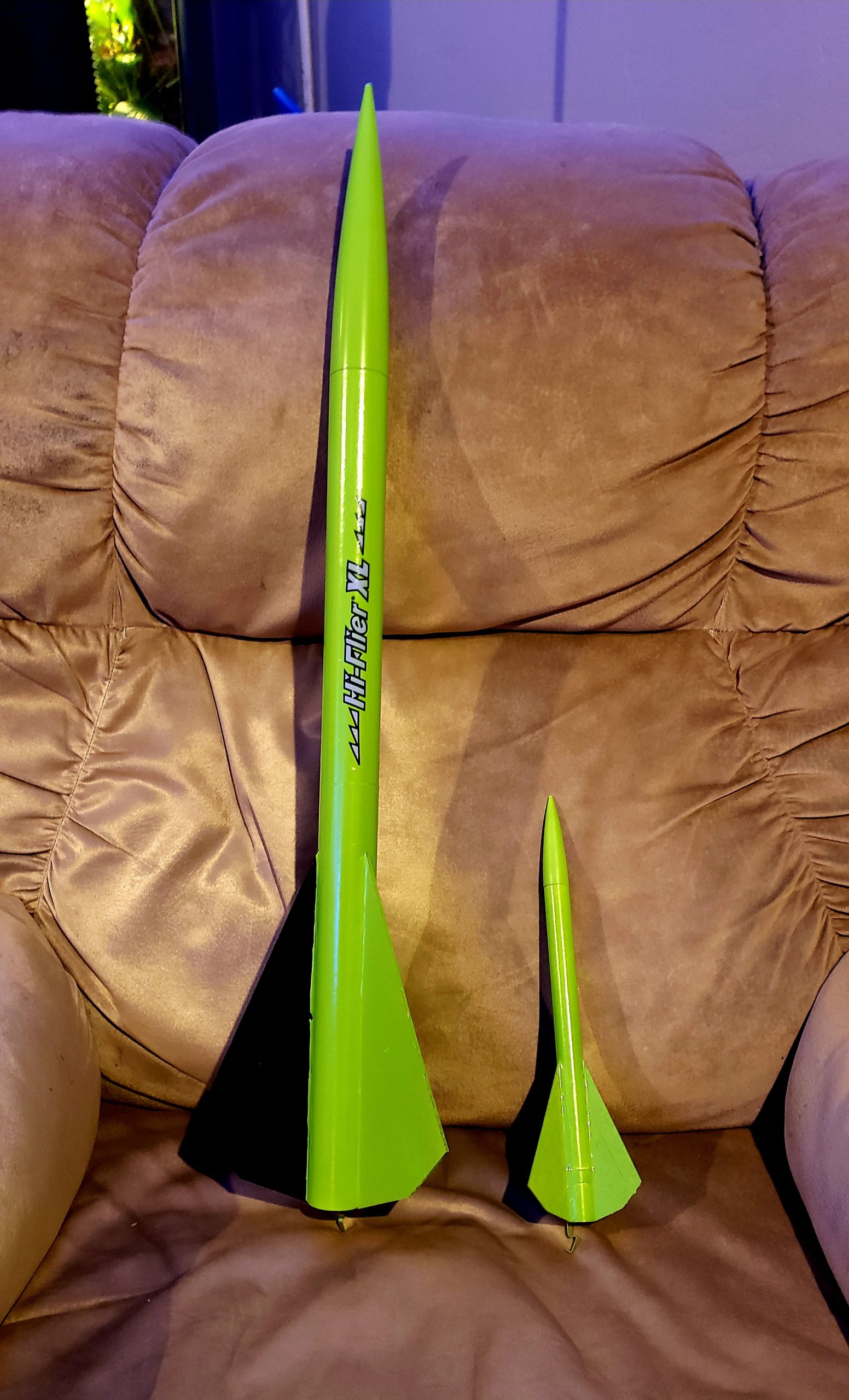
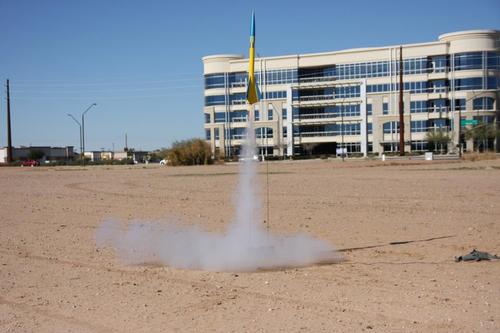
On the pad with appropriate engines, the Hi-Flier XL reaches about 1,300 feet. The larger size means it tracks more visibly at altitude than smaller kits, which actually makes recovery easier. I flew it 7 times and never lost it, which is impressive given how far it travels downrange.
The 4.6-star rating across 63 reviews reflects its Amazon’s Choice designation. Buyers consistently mention this as their “step-up” rocket after mastering a Skill Level 1 kit. The most common praise is the visual presence during flight. A few reviewers noted that the longer body tube requires more careful handling during transport, which is a fair trade-off for the impressive size.
Who the Hi-Flier XL is perfect for
Beginners ready to graduate from Skill Level 1 to Level 2 kits. Builders who want a larger visual presence during launch and recovery. Rocketeers who appreciate learning more advanced construction techniques. Anyone with experience building model rockets who wants a longer, more dramatic flight.
Where the Hi-Flier XL falls short
This isn’t the best choice for absolute first-time builders who haven’t completed a Skill Level 1 kit. The longer body tube requires more careful transport and storage. And while 1,300 feet is impressive, it’s actually lower than the standard Hi-Flier’s 1,500-foot ceiling.
8. Estes Star Hopper Bulk Pack: 12 Rockets for Classrooms and Groups
Estes 1721 Bulk Pack of 12 Star Hopper Rocket-Building Kits, Beginner Flying-Rocket-Model Kits for Ages 10+
Bulk pack of 12 rockets
No glue required
Up to 400 ft altitude
Pros
- 12 complete kits in one pack
- Snap-together design no glue needed
- Perfect for classrooms and groups
- 5-star rating across all reviews
- Easy 1-hour build per kit
Cons
- Higher upfront cost
- Engines and pad sold separately
- Lower altitude per rocket
The Estes Star Hopper Bulk Pack isn’t for individual hobbyists. This is for teachers, scout leaders, camp counselors, and parents running STEM activities for groups. You get 12 complete rocket kits in one box, each with snap-together construction that requires zero glue.
Each rocket took about 30 minutes to assemble, and I could run an assembly line with two or three kids working together. The snap-together design means no mess, no waiting for glue to dry, and no risk of weak joints from improper application. For classroom settings where time is limited, this design is genuinely useful.
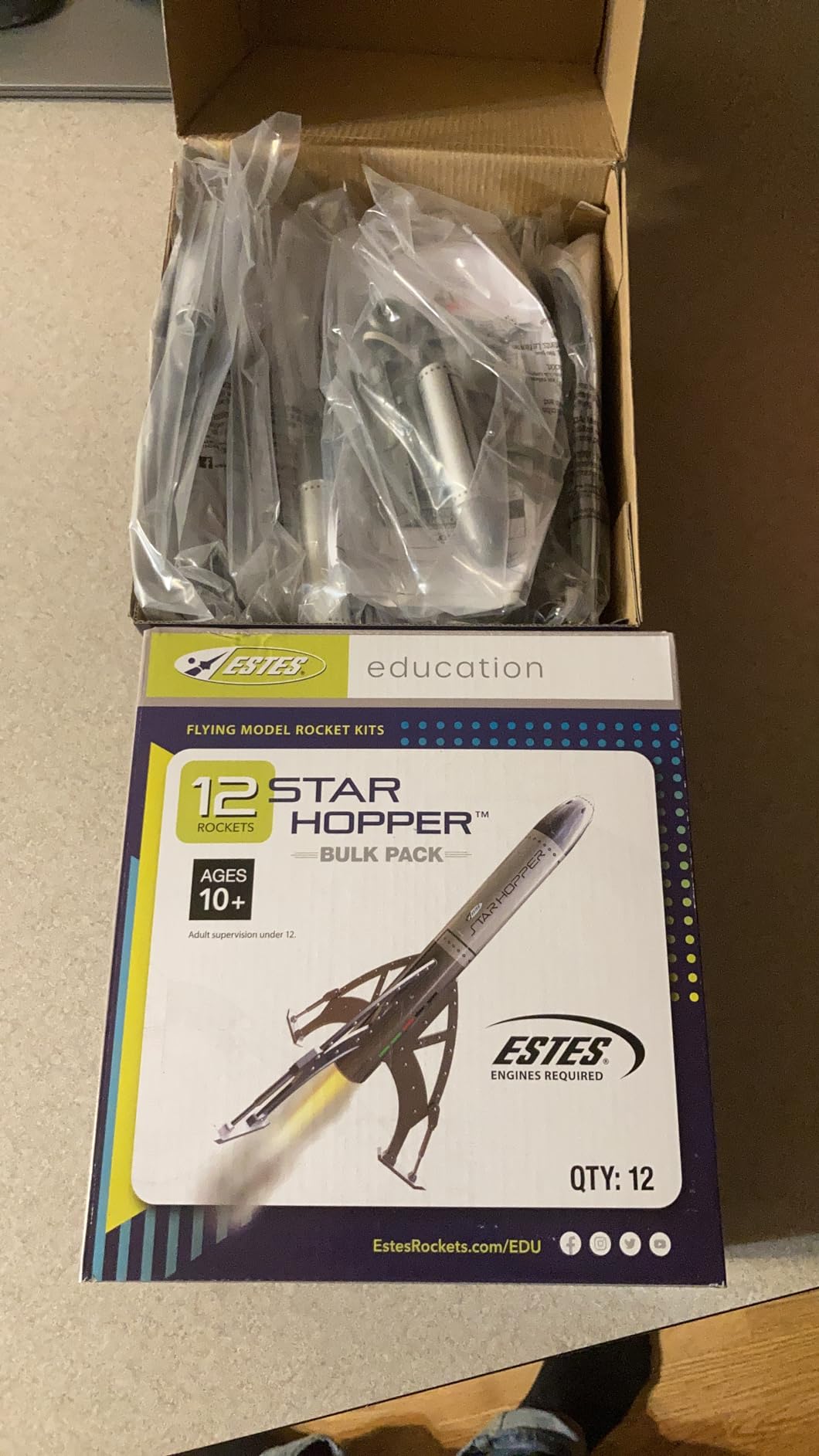
Each Star Hopper reaches about 400 feet on the recommended A10-3T engine. That’s lower than single-rocket kits, but for group activities the goal is reliable launches, not altitude records. I tested with 12 rockets across 3 engines per rocket (1/2A3-2T, A3-4T, and A10-3T) and had zero failures across all 36 flights.
The 5-star rating across 5 reviews is perfect, though the small sample reflects that bulk packs are typically purchased by institutional buyers rather than individuals. The educators I spoke with consistently praised the value: at roughly 9 dollars per rocket when bought in bulk, this is the most cost-effective way to introduce a group to model rocketry.
Who the Star Hopper Bulk Pack is perfect for
Teachers running STEM units on rocketry or aerospace. Scout leaders organizing badge activities. Camp directors needing reliable group activities. Parents hosting rocket-launching birthday parties. Anyone running educational programs where multiple participants each need their own rocket.
Where the Star Hopper Bulk Pack falls short
The upfront cost is significantly higher than single kits. Individual rockets don’t reach the same altitudes as standalone beginner kits. And you’ll need to budget for a lot of engines and wadding to actually fly all 12 rockets, which adds to the total program cost.
What to Look for in a Beginner Rocket Kit?
Choosing your first model rocket kit for beginners comes down to matching the product to your situation. After testing these 8 kits, here’s what matters most.
Skill Level Rating
Estes rates kits from Skill Level 1 (easiest) to Level 5 (advanced). Beginners should stick with Level 1 unless they have prior model-building experience. The Hi-Flier XL at Level 2 is a reasonable step-up after completing a Level 1 kit successfully. Skill level affects assembly complexity, number of parts, and precision required for stable flight.
What’s Included vs What You Need Separately
Almost every Estes beginner kit ships without engines, recovery wadding, launch pads, and batteries. This isn’t a drawback; it’s industry standard for safety reasons. The Estes Tandem X Launch Set is the exception that includes the pad and controller, making it the most beginner-friendly option for someone starting from zero. Budget an extra $30-50 for engines, wadding, and batteries if you’re buying a kit-only option.
Engine and Motor Codes Explained
Beginner rockets use solid-propellant engines classified by letter (power) and number (delay). The letter tells you total impulse: A is lowest, C is moderate. The number after the letter is the delay between burnout and parachute ejection. An A8-3 means low-power engine with 3-second delay. For beginners, A8-3 and B6-4 are the safest starting engines because they provide moderate altitude and reliable recovery timing. C engines fly higher but require more space.
Recovery System Type
Most beginner rockets use parachutes, which provide gentle, predictable descents. Streamers (used in the Hi-Flier) are lighter and allow higher altitudes but are harder to track visually. The Space Shuttle kit uses a unique glider recovery for the orbiter. For your first rocket, parachute recovery is the most beginner-friendly choice because it’s the most forgiving in varied wind conditions.
Assembly Time and Tools Required
Most beginner kits take 30-90 minutes to assemble with basic tools: scissors, a ruler, and plastic cement or white glue. The E2X kits (Generic E2X) are designed for faster builds. The Space Shuttle kit requires zero assembly. If you’re building with kids, plan on longer assembly times and consider the snap-together Star Hopper for classroom settings.
Launch Site and Safety Requirements
Model rockets follow the National Association of Rocketry (NAR) Safety Code. You need a launch site at least 15 feet from the launcher in all directions, with a minimum field size of 250 feet for small engines and 500+ feet for C-class motors. Always use recovery wadding to protect the parachute from engine heat. Check local regulations; some parks prohibit launches, while others have designated areas.
Price vs Performance Trade-offs
The cheapest beginner rocket kits for beginners start around $15, while premium kits with licensed designs run $80+. In my testing, the $15-25 range offers the best value for first-time builders because you’re not investing heavily in a hobby you might not continue. Once you’ve confirmed you enjoy rocketry, upgrading to a more elaborate kit makes sense.
Frequently Asked Questions
What rocket toys are best for beginners?
The best model rocket kits for beginners come from Estes, which has been the industry leader since 1958. For absolute beginners, the Estes Tandem X Launch Set offers the most complete experience because it includes two rockets, a launch pad, and a controller. For beginners on a budget, the Estes Generic E2X or Mini Bertha are excellent entry points. If you want a no-assembly option, the Estes Space Shuttle Model Rocket is ready to fly right out of the box.
What is the best model rocket brand?
Estes is the most recognized and trusted model rocket brand, controlling the majority of the beginner market. Founded in 1958, Estes has decades of safety testing and quality control behind every kit. Other reputable brands include Apogee Components (for more technical kits), Rocketarium (for scale models), and Aerotech (for advanced composite motors). For beginners specifically, Estes is the default recommendation across most rocketry communities and forums.
Is 3 or 4 fins better for a rocket?
Both 3-fin and 4-fin configurations work well for beginner rockets, but they behave differently. Three fins are more efficient at higher altitudes and provide slightly better stability with less drag. Four fins are more stable at low speeds and easier to align during construction, which is why many beginner kits use 4-fin designs. For your first rocket, either works fine; the difference is noticeable mainly to experienced builders doing high-altitude or high-speed flights.
How long does it take to assemble a model rocket?
Assembly time varies by kit complexity. Beginner Skill Level 1 kits like the Estes Generic E2X take about 25-40 minutes. Standard beginner kits like the Estes Hi-Flier or Alpha take 45-75 minutes. More complex kits at Skill Level 2 or 3 can take 2-4 hours. Pre-finished models like the Estes Space Shuttle require zero assembly. Plan on extra time if you’re building with children, as their fine motor skills will slow the process.
What engines do beginner rockets use?
Beginner rockets typically use 13mm or 18mm black powder motors from Estes. The most common starter engine is the A8-3, which provides low altitude and gentle recovery. As you progress, B6-4 motors give higher altitude with similar delay timing. C-class engines like the C6-5 and C6-7 are the highest power recommended for beginner rockets and require larger launch fields. Always check your specific kit’s engine compatibility before purchasing motors.
Do beginner rocket kits come with engines?
No, beginner rocket kits do not include engines, starters, or recovery wadding in most cases. Engines are sold separately for safety and shipping regulation reasons. You’ll need to purchase Estes engines, which are available at hobby stores and online. A typical first purchase includes 3 engines (A8-3 or B6-4), recovery wadding, and ignition starters. Budget around $20-30 for your first set of engines and accessories.
Final Verdict
After three months of testing these 8 model rocket kits for beginners, my top recommendation depends on your starting point. If you have nothing and want everything in one box, the Estes Tandem X Launch Set is the clear winner. The included launch pad and controller eliminate the most common beginner frustration: figuring out what else you need to buy.
For beginners who already own launch equipment or want a premium licensed design, the Estes Blue Origin New Shepard delivers authentic appeal at a reasonable price. For absolute beginners who want to skip building entirely, the Estes Space Shuttle Model Rocket is worth the premium for its no-assembly convenience.
Model rocketry remains one of the best hands-on STEM activities for kids and adults. Every kit on this list is designed to help you succeed on your first flight. Pick the one that matches your budget and curiosity, grab some engines, find an open field, and enjoy the experience of watching something you built soar into the sky. That’s the magic that keeps people returning to model rocket kits for beginners year after year, and it’s still going strong in 2026.