
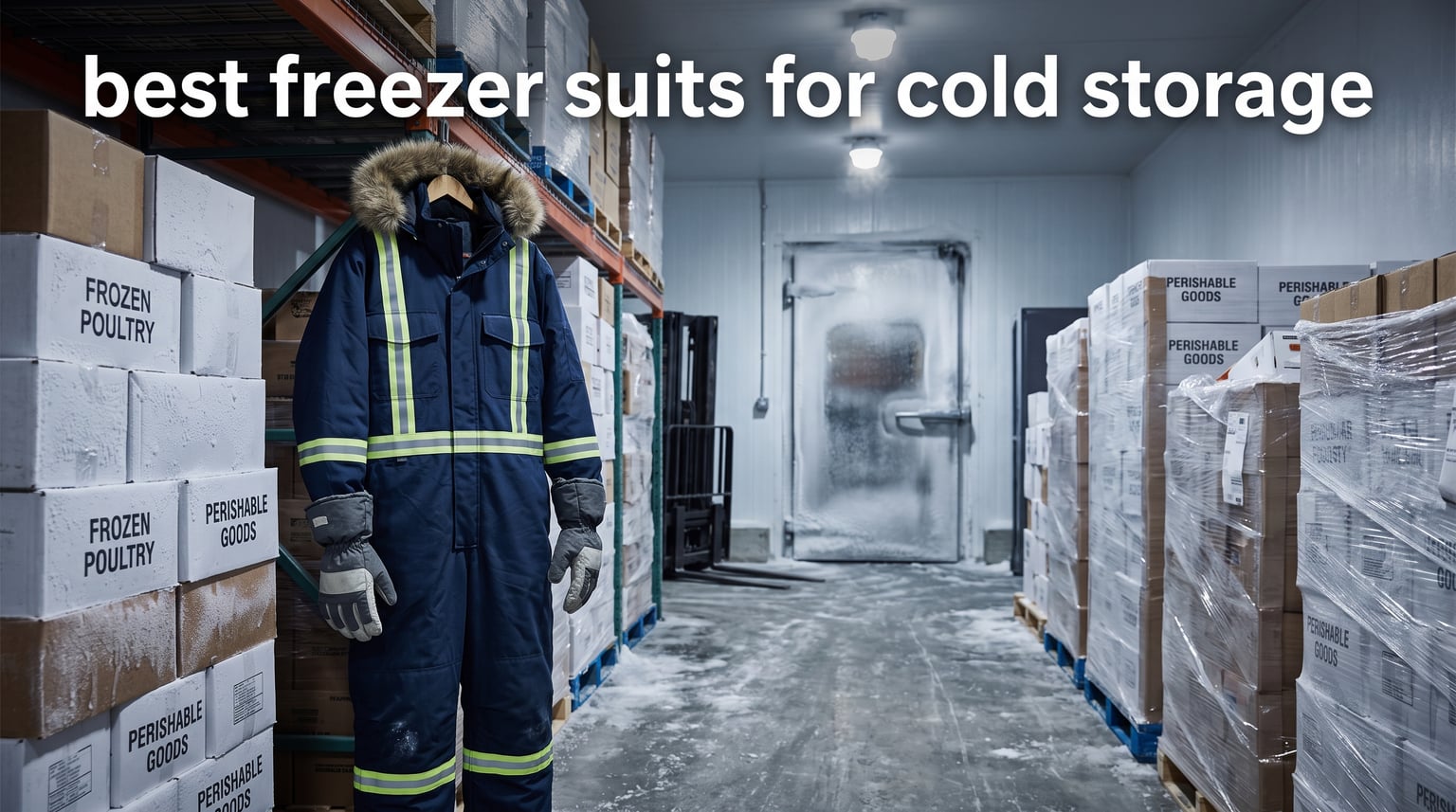
Finding the best freezer suits for cold storage starts with a blunt question: how cold is the room, and how long will you actually be in it? A warm-looking work jacket can be fine for a loading dock, yet come up short during repeated or extended time in a freezer warehouse.
A freezer suit is insulated workwear, either a coverall or a jacket-and-bib combination, that traps body heat and blocks cold air for work in cold storage, blast-freezer, and other subzero settings. The strongest choices pair stated cold ratings with insulation, a durable outer shell, and openings that let workers get dressed without fighting their boots.
I compared the supplied specifications, stated temperature ranges, construction details, and customer-rating snapshots for ten options. I put factory-rated Ergodyne gear first for dedicated freezer work, then included bibs and coveralls for workers who need coverage, pockets, joint movement, or an outer layer that makes sense beyond the cold room.
Cold-storage PPE is a system rather than a single garment. Pair the suit with properly selected hand protection; our guide to best heated work gloves for cold storage is a useful place to start when numb fingers are part of the job.
Table of Contents
The Top 3 Picks Answer Different Cold-Storage Needs
The Ergodyne 6464 is my editor’s choice because it carries the lowest stated range here, from -20°F to -60°F, and combines 250g Thinsulate with a heat-reflective lining. The HISEA is the practical coverall pick for people who prioritize pocket layout and workwear construction, while the Ironwear keeps the outer layer lighter for less severe or more active shifts.
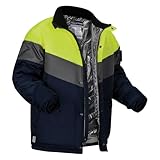
Ergodyne 6464 Freezer Jacket
- Rated -20°F to -60°F
- 250g Thinsulate
- AmpliFIRE reflective lining

These 10 Freezer Workwear Options Cover Jackets, Bibs, and Coveralls in 2026
This quick view separates dedicated freezer products with stated ratings from general insulated workwear. Treat an omitted temperature rating as missing information, not proof that a garment is ready for a blast freezer.
| Product | Specifications | Action |
|---|---|---|
 Ergodyne N-Ferno 6476 Freezer Jacket Ergodyne N-Ferno 6476 Freezer Jacket |
|
Check Latest Price |
| Ergodyne 6464 Freezer Jacket |
|
Check Latest Price |
 Carhartt Firm Duck Insulated Bib Carhartt Firm Duck Insulated Bib |
|
Check Latest Price |
 Ergodyne N-Ferno 6475 Coveralls Ergodyne N-Ferno 6475 Coveralls |
|
Check Latest Price |
| Ironwear 6910 Freezer Jacket |
|
Check Latest Price |
 HISEA Insulated Coveralls HISEA Insulated Coveralls |
|
Check Latest Price |
 Wrangler Insulated Duck Coverall Wrangler Insulated Duck Coverall |
|
Check Latest Price |
 Yukirtiq Two-Piece Coverall Yukirtiq Two-Piece Coverall |
|
Check Latest Price |
 Ergodyne N-Ferno 6477 Bibs Ergodyne N-Ferno 6477 Bibs |
|
Check Latest Price |
 RCVICTY Heated Ski Bibs RCVICTY Heated Ski Bibs |
|
Check Latest Price |
A stated range still depends on activity level, fit, base layers, moisture, and how often a worker moves between the freezer and a warm area. That is why a rating is a starting point for selection rather than a promise that one setup works for every shift.
1. Ergodyne N-Ferno 6476 Is Best for a Rated Jacket-and-Bib System
Ergodyne N-Ferno 6476 Insulated Freezer Jacket, Cold Storage Work
Rated -15°F to -49°F
200g 3M Thinsulate
Water-resistant shell
Pros
- Freezer-specific temperature range
- 200g Thinsulate insulation
- Water-resistant PU coating
- Glove-friendly oversized pockets
Cons
- Jacket does not cover legs
- Limited color options
The N-Ferno 6476 is a focused choice for workers who already prefer separate upper and lower layers. Its stated -15°F to -49°F range puts it in a different category from ordinary insulated jackets with no cold-room rating.
It has a 4.9 average from 10 reported reviews, so the rating is excellent but the review pool is small. I would read that as encouraging evidence rather than the broad field history carried by a product with hundreds of reviews.
The specification that matters most is the 200g 3M Thinsulate insulation. Ergodyne says this material traps heat while being thinner than poly fill, which can matter when a worker must reach, lift, and turn in narrow freezer aisles.
The polyester-nylon blend shell, PU water-resistant coating, fleece-lined collar, and two large lower pockets round out a practical upper-body layer. Those oversized pockets are specifically intended to stay accessible while gloves are on.
A Separate Bib Works Best When You Need Flexible Layering
Choose this jacket when the workday mixes cold storage with warmer zones and you want the option to remove the upper layer independently. Pairing it with a rated bib gives more flexibility than a one-piece suit for breaks and task changes.
The Stated Rating Fits Dedicated Freezer Work Better Than Mild Weather
The published range makes this a serious cold-storage jacket, not just a casual winter coat. It still leaves the legs, hands, feet, and head to be protected by compatible gear.
2. Ergodyne 6464 Is Best for the Coldest Stated Temperature Range
Ergodyne 6464 Insulated Freezer Jacket with AmpliFire Heat Reflective Lining, Rated -60 °F, Cold Storage Work Gear
Rated -20°F to -60°F
250g 3M Thinsulate
AmpliFIRE lining
Pros
- Lowest stated temperature range
- 250g Thinsulate
- Heat-reflective lining
- Water-resistant shell
Cons
- Jacket does not cover legs
- Limited review sample
The Ergodyne 6464 earns the editor’s-choice spot because its stated -20°F to -60°F range is the lowest in this group. That makes it the clearest starting point for workers facing very cold freezer conditions and seeking a dedicated upper-body layer.
Its 4.8 average comes from 36 reported reviews. That is a stronger sample than the 6476’s, though it is still sensible to base final selection on the facility’s exposure time, movement level, and employer PPE rules.
Ergodyne lists 250g of 3M Thinsulate, more than the 200g specified on its other rated jacket and coverall here. The AmpliFIRE aluminum heat-reflective lining is designed to capture, reflect, and trap body heat, while the fleece collar reduces the cold feel at the neck.
The same polyester-nylon blend and water-resistant PU-coated shell give it a work-oriented foundation. I especially like the clear published range because it provides a concrete discussion point for a supervisor rather than leaving workers to judge warmth by loft alone.
The 6464 Fits Long Exposure When Lower-Body Gear Is Already Set
This jacket makes the most sense with insulated bibs or coveralls when the job calls for more complete protection. It is a strong upper half, but it is not a full suit by itself.
Reflective Lining Matters When Body Heat Is the Heat Source
AmpliFIRE does not replace activity, dry layers, or scheduled warming breaks. It is an additional heat-management detail inside an already heavily insulated jacket.
3. Carhartt Firm Duck Bib Is Best for Durable Lower-Body Coverage
Carhartt Men’s Firm Duck Insulated Bib Overall, Black, Medium
Quilted polyester insulation
Adjustable suspenders
Zippered bib pocket
Pros
- Large review base
- Adjustable elastic suspenders
- Secure multi-compartment bib pocket
- Two large lower pockets
Cons
- No freezer temperature rating stated
- Men's bib rather than a full suit
The Carhartt Firm Duck Insulated Bib Overall is the lower-body option I would shortlist when durable workwear and a large rating sample matter more than a published freezer rating. It has a 4.7 average across 761 reported reviews, the largest review count in this lineup.
This is not marketed in the supplied data as a temperature-rated freezer bib, so I would not assume it matches a -49°F or -50°F-rated product. It is better viewed as an insulated bib that needs to be matched to the actual cold exposure and an appropriate jacket.
The nylon lining is quilted to midweight polyester insulation, and the front elastic suspenders are adjustable. A zipper-closure, multi-compartment bib pocket plus two large lower-front pockets gives workers practical storage without needing a separate tool belt for small items.
Firm duck fabric is part of Carhartt’s familiar workwear approach, but fit deserves attention because the supplied review summary says it may run large. Trying room for a base layer and movement before committing to a size is wiser than choosing by waist number alone.
The Bib Format Works Best When You Need a Jacket You Can Remove
A bib keeps insulation concentrated on the lower body while leaving the upper layer modular. That setup can be useful for workers who move between a freezer, dock, and office during the same day.
The Lack of a Cold Rating Calls for Conservative Job Matching
Use the absence of a stated freezer range as a prompt to check your site requirements. For long subzero exposure, a product with a published temperature range offers a more direct basis for comparison.
4. Ergodyne N-Ferno 6475 Is Best for One-Piece Rated Coverage
Ergodyne N-Ferno 6475 Insulated Freezer Suit, Cold Storage Work Coveralls
Rated -10°F to -50°F
200g Thinsulate
Full-length leg zippers
Pros
- Full-body coverall format
- Rated for freezer conditions
- Leg zippers work with boots
- Water-resistant shell
Cons
- Less modular than separates
- Review sample is modest
The N-Ferno 6475 is the cleanest answer for workers who want one garment to cover their torso and legs. Its stated -10°F to -50°F range and 200g 3M Thinsulate put freezer-specific information front and center.
For the best freezer suits for cold storage, one-piece coverage is appealing when cold air entering at the waist is a recurring irritation. This coverall removes that junction between jacket and trousers, although it gives up some of the flexibility of separate pieces.
Full-length zippers on each leg are the standout practical feature. Ergodyne says they allow on and off without removing work boots, which can save hassle when workers must suit up quickly at the beginning of a shift or after a break.
The shell is a polyester-nylon blend with water-resistant PU coating, and the collar has polyester fleece lining. The 4.6 average from 51 reported reviews is credible supplemental information, but the documented cold range and functional entry design are the bigger reasons to consider it.
One-Piece Coverage Works Best for Repeated or Extended Freezer Time
Pick the 6475 when continuous coverage matters more than quickly removing just a jacket. Full coverage aligns with the forum preference for suits when workers spend long blocks in cold rooms.
Boot-Access Zippers Help When Shift Changes Must Be Fast
Leg zippers are a small feature with a large daily impact because insulated work boots are awkward to remove. Check that the garment has enough room for your boots and base layer before relying on that convenience.
5. Ironwear 6910 Is Best for a Lightweight Freezer Jacket Layer
Ironwear 6910 Insulated Lightweight Freezer Jacket
Polyester shell and fill
Three pockets
Lightweight design
Pros
- Lightweight construction
- Polyester shell and filling
- Interior chest pocket
- Three-pocket layout
Cons
- No freezer temperature rating stated
- Lightweight design may not fit extreme cold
The Ironwear 6910 is a deliberately lighter option, not a substitute for the strongly rated Ergodyne jackets in very low temperatures. Its 4.6 average from 17 reported reviews suggests positive early feedback, while its lightweight construction tells me to match it to shorter, active, or less severe cold exposure.
It is a freezer jacket by name, but the supplied specifications do not publish a temperature rating. That missing figure is important: a worker should not convert a lightweight label into an assumed level of subzero protection.
The outer shell and filling are both 100% polyester, and the listed weight is 1.94 pounds. A front zipper and three-pocket arrangement keep the design simple: two waist pockets plus one interior chest pocket for an item that needs a more secure place.
I would favor this jacket when bulk is the main complaint and the job includes frequent physical movement. The tradeoff is straightforward: less stated insulation detail and no stated freezer range mean more caution for long stationary shifts.
A Lighter Jacket Works Best When Movement Creates Body Heat
Loading, picking, or other active tasks can feel very different from standing at a workstation. A lighter outer layer may suit the active worker better, provided the facility temperature and exposure duration are appropriate.
Layering Becomes More Important When the Rating Is Not Published
Start with a dry base layer and assess the full clothing system rather than judging this jacket alone. If cold reaches the core or hands quickly, step up to a product with a stated range and more documented insulation.
6. HISEA Coveralls Are Best for Utility Pockets and Canvas Workwear
HISEA Insulated Coveralls for Men, Winter Water Resistant Work Coveralls, Loose Fit Utility Canvas Jumpsuit for Cold Weather
100g insulation
10.5oz water-resistant canvas
Nine utility pockets
Pros
- Nine utility pockets
- Water-resistant canvas
- Two-way zipper and leg zippers
- Triple-stitched seams
Cons
- No freezer temperature rating stated
- Men's-specific listing
The HISEA insulated coveralls are the utility-minded choice in this group. Their 4.5 average from 167 reported reviews gives them a much broader feedback base than several dedicated freezer products, and the design focuses on pockets, seams, and entry points.
The product lists 100g lightweight insulation and a breathable quilted lining inside a loose-fit work coverall. Because the supplied data offers no freezer temperature rating, I would reserve it for conditions where the employer’s assessment supports its insulation level rather than treating it as blast-freezer clothing by default.
The 10.5-ounce canvas has a water-repellent finish, while triple-stitched seams address hard work use. Nine utility pockets include zippered chest pockets, hand pockets, rear patch pockets, a pencil pocket, carpenter pocket, and pass-through pockets.
A full-length two-way metal zipper, side leg zippers with storm flaps, rib-knit storm cuffs, and a corduroy collar add details that make day-to-day use more manageable. The stated variant list includes several colors and sizes, but it is a men’s listing rather than a specifically tailored women’s option.
Pocket-Heavy Coveralls Work Best for Tool-Carrying Tasks
Choose this design when carrying small tools, writing supplies, or work items is part of the routine. The pocket layout can reduce trips back to a locker or cart, though pocket contents should not restrict movement.
Loose Fit Needs Enough Room Without Snagging
The loose fit is intended for comfort, especially over base layers. Check sleeve, inseam, and zipper movement while bending and climbing so extra fabric does not get in the way.
7. Wrangler Duck Coverall Is Best for Movement-Focused Work Tasks
Wrangler Riggs Workwear Men’s Insulated Duck Coverall, Black, Large
Articulated elbows and knees
Metal front zipper
Venting leg zippers
Pros
- Articulated elbows and knees
- Heavy-duty metal zipper
- Hidden knee barrier
- Multiple tool pockets
Cons
- No freezer temperature rating stated
- Men's-specific listing
The Wrangler Men’s Insulated Duck Coverall makes its case through mobility features. Its articulated elbows and knees are particularly relevant for workers who crouch, reach, climb, or handle cartons at different heights rather than standing in one position.
It holds a 4.4 average from 202 reported reviews, which is solid volume for a work coverall. Still, no insulation weight or freezer temperature rating appears in the supplied details, so it belongs in the general-insulated-workwear category rather than the specifically rated freezer category.
A heavy-duty metal front zipper, zippered chest pocket, arm tool pocket, side leg tool pocket, and hidden knee barrier make the construction task oriented. Side venting leg zippers are also notable, since heat buildup is a real complaint for people moving between a cold room and warmer spaces.
I see this as a sensible choice where range of motion and durable work features lead the decision. For continuous deep-freeze exposure, compare it against products that state their cold range before putting its insulation to that test.
Articulated Joints Work Best for Squatting and Reaching
Articulation is useful only if the overall fit is right through the shoulders, crotch, and knees. Do several work-like motions while trying a coverall, particularly if a base layer will be worn underneath.
Leg Vents Help When You Move Between Temperature Zones
Workers in forum discussions often flag overheating outside the freezer as a problem. Venting can help shed heat during a transition, but change out of damp layers if perspiration builds up before returning to the cold.
8. Yukirtiq Two-Piece Coverall Is Best for Variable Outdoor Conditions
Yukirtiq Winter Insulated Coveralls for Mens 2 Pieces Padded Work Coverall Mechanic Jumpsuit with Hood, Black, XL
Fiberfill insulation
Detachable lining
Hood and storm flap
Pros
- Detachable inner lining
- Hooded design
- Two-way zipper and storm flap
- Elastic waist inserts
Cons
- No freezer temperature rating stated
- Small reported review sample
The Yukirtiq two-piece padded work coverall is more adaptable than a fixed one-piece suit because its inner lining is detachable. That makes it interesting for outdoor winter jobs or variable conditions, where the same garment may be worn through different temperatures.
Its 4.4 average is based on 12 reported reviews, so I would not overread the rating. There is no supplied freezer temperature rating, which is the main reason it sits below dedicated cold-storage options for a warehouse freezer role.
The shell uses a 65% cotton and 35% polyester blend with fiberfill insulation. Its hood, two-way zipper, snap-button storm flap, and elastic waist inserts are all useful barriers and fit features when wind or outdoor weather is part of the exposure.
The listing describes an oversized fit and supplies a broad set of color and size variants. An oversized fit can accommodate a base layer, but excess bulk is not automatically warmer if it gets in the way of safe lifting and machinery work.
A Detachable Lining Works Best When Conditions Change Through the Day
The two-in-one construction gives workers a way to adjust insulation without buying separate outerwear for every weather swing. It is more fitting for variable outdoor work than an operation with a consistently deep-freeze setting.
A Hood Works Best When Head Protection Does Not Conflict With Safety Gear
A hood can reduce exposed skin around the head and neck in cold weather. Confirm that it does not interfere with required hard hats, hearing protection, visibility, or the ability to turn your head safely.
9. Ergodyne N-Ferno 6477 Bibs Are Best for a Rated Lower-Body Layer
Ergodyne N-Ferno 6477 Insulated Freezer Bib Overalls, Cold Storage Work Gear
Rated -15°F to -49°F
200g 3M Thinsulate
Full-length leg zippers
Pros
- Freezer-specific temperature range
- 200g Thinsulate
- Water-resistant PU coating
- Full-length leg zippers
Cons
- Bibs need a separate jacket
- Small reported review sample
The N-Ferno 6477 is the dedicated freezer bib option for workers who want rated leg and torso coverage without committing to a one-piece coverall. Its stated range of -15°F to -49°F matches the N-Ferno 6476 jacket, making the two an easy on-paper pairing.
The 4.4 average comes from 10 reported reviews. That is a limited sample, so the core buying case rests more on the actual construction details: 200g 3M Thinsulate, a durable polyester-nylon shell, and a water-resistant PU coating.
Full-length leg zippers are a high-priority feature for bibs, because they make it easier to suit up around work boots. The dual-button closure provides adjustable fit, which matters when the same bib must go over a base layer on one day and a heavier layer on another.
I would choose this format over a coverall when the worker needs to take off a jacket in a warmer area while keeping lower-body insulation on. It is a practical way to build a modular cold-storage workwear system.
A Matching Jacket-and-Bib System Works Best for Modular Coverage
Matching the 6477 bibs with a rated freezer jacket gives full-body coverage while keeping the upper layer removable. That arrangement makes more sense than a coverall for people who frequently leave the cold area.
Full-Length Zippers Work Best With Bulky Work Boots
Leg openings should be checked with the exact boot style used at work. Smooth entry is helpful, but the bib must still sit securely and leave room for walking, bending, and climbing.
10. RCVICTY Heated Ski Bibs Are Best for Intermittent Outdoor Warmth
RCVICTY Men’s Heated Insulated Ski Bib Overalls with Battery, Waterproof Winter Snow Pants for Work, Hunting, Fishing, Snowmobiling (Black, L)
Five heated zones
10000mAh battery
Up to 7 hours warmth
Pros
- Five targeted heating zones
- Three adjustable heat levels
- Waterproof sealed seams
- Adjustable suspenders
Cons
- No freezer temperature rating stated
- Men's ski-bib category
- Battery warmth is listed as up to seven hours
The RCVICTY heated insulated bibs bring active heat to a different kind of cold-work problem. Five targeted heating zones, three adjustable levels, and a 10000mAh battery with a listed runtime of up to seven hours can appeal to people working outdoors or making intermittent stops in the cold.
This is a men’s skiing-bib listing with a 4.0 average from 58 reported reviews, not a stated freezer-rated work garment. I would treat it as an alternative for winter construction, farming, hunting, or other outdoor work named in the listing, not a first choice for a regulated deep-freeze facility.
The fabric is described as waterproof and windproof with fully sealed seams. Adjustable suspenders, elastic side gussets, ankle zippers, and integrated gaiters aim to maintain fit and reduce snow entry during outdoor activity.
Battery-powered warmth adds a planning requirement that passive insulation does not have. A worker needs to charge the battery, select a heat level, and remember that the stated seven-hour figure is an upper limit rather than a fixed guarantee.
Heated Bibs Work Best When Charging Is Part of the Work Routine
Active heating can be useful for intermittent cold exposure and outdoor tasks where conditions shift. It is only dependable when battery charging, inspection, and backup clothing are handled before leaving for work.
Waterproof Seams Work Best for Snowy Outdoor Tasks
Sealed seams and gaiters are meaningful for snow, wet ground, and winter recreation. Those features do not provide a published temperature rating for warehouse or blast-freezer work.
Choose a Freezer Suit by Temperature, Coverage, and Work Pattern
Start with the environment rather than the brand. A reported -20°F to -60°F range is a much more relevant signal for a deep-freeze role than generic words such as insulated or winter, while general workwear may be enough for less severe or brief exposure.
Match the Temperature Rating to the Coldest Real Task
Ask for the coldest temperature in the work area, typical time per entry, whether workers are moving or standing, and what base layers are standard. A rated garment still works as one part of a clothing system, and activity level can affect the stated range.
The dedicated Ergodyne pieces here span stated ranges from -10°F to -50°F, -15°F to -49°F, and -20°F to -60°F. Products without a stated range are not automatically poor choices, but they require conservative matching and a workplace assessment rather than guesswork.
Choose Coverage That Matches the Work Pattern
Coveralls create a continuous barrier from shoulders to legs and are a compelling option for sustained freezer time. Jacket-and-bib combinations are easier to adjust when workers move between a refrigerated warehouse, a dock, and warmer indoor areas.
For workers comparing lower-body layers, our review of best cold weather bibs offers another view of insulated bib construction. The intended activity is different, so use it for clothing ideas and fit comparisons rather than as a substitute for cold-storage PPE requirements.
Build Layers That Stay Dry and Let You Move
Forum discussions repeatedly point to the same practical setup: a base layer under an insulated outer layer. The goal is to trap warmth without becoming damp, because perspiration during active work can make the next freezer entry feel much colder.
Leave enough room at the shoulders, knees, and waist to lift, bend, and walk without pulling the insulation flat. Too-tight gear restricts movement; too-loose gear can snag or make precise work awkward.
Complete the PPE System With Hands, Feet, and Headwear
A freezer suit does not protect every exposed area. Cold-storage work commonly calls for insulated gloves, suitable footwear, and head or neck coverage, with exact PPE determined by the hazard assessment and employer rules.
Inspect gloves for grip and dexterity, boots for the required traction and insulation, and headwear for compatibility with other safety equipment. Workers should report numbness, tingling, shivering, confusion, or loss of coordination promptly because those can be warning signs of cold stress.
Care for Insulation and Plan the Warm-to-Cold Transition
Follow the garment’s care label, empty pockets before laundering, and check zippers, seams, cuffs, and coatings regularly. Damaged closures or wet insulation reduce the practical protection a suit can offer.
When moving from a warm zone back to the freezer, avoid returning in a sweaty base layer. Keep a dry replacement layer available if the work pattern makes that realistic, and take warming breaks according to site procedures.
Unisex products in this list include the Ergodyne freezer jacket, coveralls, and Ironwear jacket, while other listings are men’s. A unisex label does not settle fit; compare the manufacturer’s measurements and confirm that the garment works over the layers you actually wear.
If your use is outdoor sitting rather than industrial work, our guide to best insulated bibs may be more relevant. Cold storage adds workplace movement, exposure duration, and PPE requirements that spectator apparel does not address.
These Freezer-Work Answers Address the Main Questions
How to dress for cold storage?
Dress in dry layers: begin with a moisture-managing base layer, add insulation, then wear a freezer-rated jacket and bibs or coveralls matched to the coldest task. Add insulated gloves, suitable boots, and head or neck protection required by the workplace.
Why are freezer jackets so warm?
Freezer jackets are warm because their insulation traps body heat while the outer shell blocks cold air and may resist moisture. Some models add details such as fleece collars or heat-reflective linings, but warmth still depends on fit, layers, activity, and exposure time.
What PPE is needed for freezer work?
Freezer work commonly needs insulated body coverage, hand protection, suitable insulated footwear, and head or neck coverage. The exact PPE should follow the employer’s hazard assessment, the freezer temperature, task duration, and any required safety equipment.
How cold is too cold for a freezer?
There is no single temperature that is safe for every worker or task. Cold risk rises with lower temperature, wind, wet clothing, time in the freezer, low activity, and inadequate PPE, so follow site procedures and take warning signs such as shivering or numbness seriously.
The Right Freezer Suit Matches the Job, Not Just the Cold
For a clear, stated extreme-cold range, the Ergodyne 6464 is the leading jacket, while the N-Ferno 6475 is the better one-piece route and the 6477 supports a modular bib system. The Carhartt, HISEA, Wrangler, Yukirtiq, Ironwear, and RCVICTY options have useful workwear strengths, but their missing freezer ratings call for more careful job matching.
The best freezer suits for cold storage in 2026 are the ones that fit your coldest task, your movement, and the rest of your PPE. Check the published details, try the layers together when possible, and choose coverage that helps you stay warm, dry, and able to work safely.