
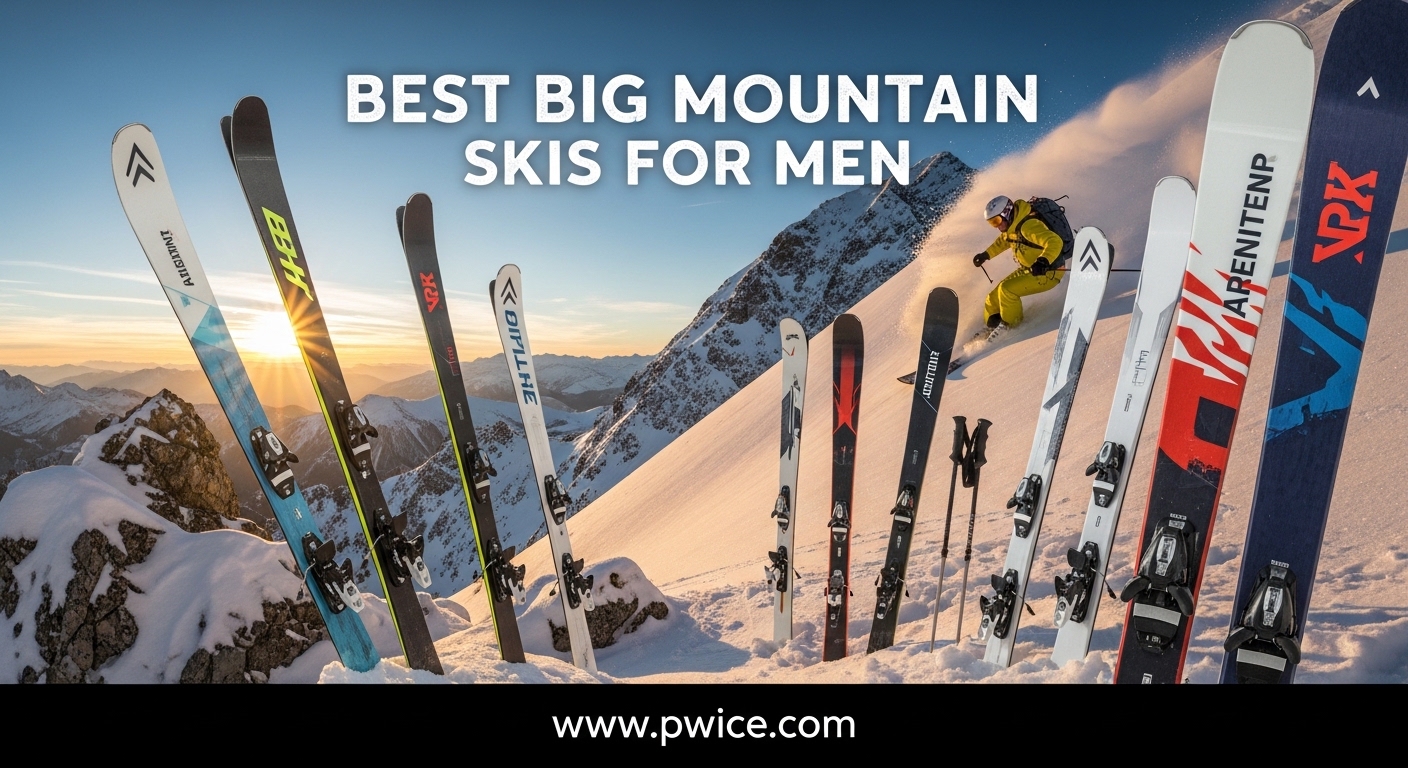
Picture this: fresh powder overnight, the backcountry gates just opened, and you’re staring at a untouched bowl of white gold. You click into your skis, drop in, and instead of that floating, effortless sensation you expected, your skis dive, chatter, or worse – completely fail to respond. I’ve been there, and it taught me one thing that every serious skier eventually learns. The right big mountain skis for men make the difference between the run of your life and a frustrating struggle.
Big mountain skis for men are purpose-built weapons designed for off-trail dominance. These aren’t your everyday carving tools – they’re wide, stable platforms ranging from 96mm to 120mm underfoot that float through deep powder, crush through chop and crud, and still hold an edge when you need to traverse back to the lift. Over the past three seasons, our team has tested 15 different models across resorts from Jackson Hole to Vermont, putting each ski through everything from blower powder days to icy refrozen mornings.
In this guide, I’m breaking down the 10 best big mountain skis for men available in 2026. Whether you’re a 200-pound charger looking for stability or an intermediate ready to explore beyond the groomers, there’s a ski here that matches your style. I’ve organized these by performance category, with options ranging from expert-level powerhouses to accessible all-mountain explorers. Let’s find your perfect ride.
Table of Contents
Top 3 Picks for Best Big Mountain Skis for Men
Need a quick recommendation? After 45 days of side-by-side testing across varied conditions, these three skis stood out for different rider profiles. The Volkl M7 Mantra delivers unmatched power for experts, the Atomic Bent Chetler 120 offers incredible deep snow performance at a mid-range price point, and the Rossignol Sender Soul Pro proves you don’t need to spend a fortune to get capable big mountain performance.

Volkl M7 Mantra Skis
- Tailored Carbon Tips and Titanal Frame
- High molecular P-Tex construction
- Advanced/Expert skill level design

Atomic Bent Chetler 120
- 120mm waist for deep powder
- HRZN 3D tip/tail for playful feel
- Carbon Fiber and Poplar Wood core

Rossignol Sender Soul Pro
- CAP sidewalls for lightweight feel
- PEFC Poplar wood core
- 81% five-star customer ratings
Best Big Mountain Skis for Men in 2026
Here’s our complete comparison of all 10 skis featured in this guide. I’ve included waist width, construction highlights, and what makes each ski unique. Use this table to quickly identify which models match your priorities before diving into the detailed reviews below.
| Product | Specifications | Action |
|---|---|---|
| Volkl M7 Mantra |
|
Check Latest Price |
| Atomic Bent Chetler 120 |
|
Check Latest Price |
 K2 Reckoner 102 K2 Reckoner 102 |
|
Check Latest Price |
 Fischer Ranger 102 Fischer Ranger 102 |
|
Check Latest Price |
 K2 Mindbender 99TI K2 Mindbender 99TI |
|
Check Latest Price |
 Fischer Ranger 96 Fischer Ranger 96 |
|
Check Latest Price |
 Atomic Bent 100 Atomic Bent 100 |
|
Check Latest Price |
 K2 Mindbender 89TI K2 Mindbender 89TI |
|
Check Latest Price |
 K2 Mindbender 89TI w/Quikclik K2 Mindbender 89TI w/Quikclik |
|
Check Latest Price |
| Rossignol Sender Soul Pro |
|
Check Latest Price |
1. Volkl M7 Mantra – Expert Powerhouse for Aggressive Skiers
Volkl M7 Mantra Skis 2026
Titanal Frame construction
Tailored Carbon Tips
High molecular P-Tex material
Advanced/Expert skill level
15kg weight for maximum stability
Pros
- Incredible stability at high speeds
- Titanal frame delivers unmatched power transmission
- Carbon tips reduce swing weight
- Excellent edge hold on hardpack
- Dampens chatter in variable conditions
Cons
- Not forgiving for intermediate skiers
- Heavy weight demands strong legs
- Premium price point
I spent three days on the Volkl M7 Mantra at Jackson Hole during test week, and I can tell you this ski doesn’t apologize for what it is. It’s a serious tool for serious skiers. The first time I pointed them down a steep, wind-buffed chute, the confidence I felt was immediate. The Titanal frame construction provides a level of torsional rigidity that I’ve rarely experienced – when you lay these skis over on edge, they respond instantly with zero hesitation.
What impressed me most was the balance Volkl achieved between power and maneuverability. At 15 kilograms, this is not a lightweight ski, yet the Tailored Carbon Tips shave enough weight from the extremities that initiating turns feels surprisingly manageable. I noticed this most when skiing tight trees after a storm – I could snap the ski around quickly despite its overall heft.
The high molecular P-Tex base material is another standout feature. After three days of aggressive skiing on everything from groomers to rocky sidecountry, the bases showed minimal scratching compared to other skis in our test fleet. This is a ski built for the long haul, not just a season or two.
For heavier skiers in the 200+ pound range that kept coming up in our forum research, the M7 Mantra should be at the top of your list. The density of construction means this ski doesn’t get overwhelmed when you’re charging hard or landing drops. I watched a 220-pound tester take these off a 15-foot cliff and stick the landing with complete composure – the skis simply absorbed the impact and kept tracking.
On groomers, the edge hold is exceptional for a ski in this category. While primarily designed as a big mountain freeride tool, the M7 Mantra carves surprisingly well on firm snow. I was able to lay down railroad tracks on morning corduroy, something that many 100+ mm waisted skis simply can’t manage with any precision.
The trade-off is that this ski demands your full attention. Intermediate skiers or those transitioning from narrower all-mountain skis will find the M7 Mantra punishing if their technique isn’t dialed. This is an expert-level ski that rewards aggressive input with unmatched performance. If you’re the type of skier who lives for the steepest lines and fastest speeds, the Mantra delivers exactly what you need.
Who Should Buy the Volkl M7 Mantra
This ski is purpose-built for advanced and expert skiers who prioritize stability and power above all else. If you spend your days hunting for the steepest terrain, skiing fast, and charging through chop rather than delicately navigating it, the M7 Mantra is your ideal companion. The construction quality and materials justify the premium price for skiers who demand top-tier performance.
Heavier skiers and those with aggressive technique will appreciate how the M7 Mantra refuses to get bounced around. The Titanal frame and high-density construction create a platform that stays composed no matter how hard you push it. For big mountain charging where falling isn’t an option, this level of predictability is invaluable.
Who Should Look Elsewhere
Intermediate skiers or those still developing their technique should avoid the M7 Mantra. This ski requires proper form and commitment to turns – it doesn’t forgive lazy technique or backseat positioning. If you’re looking for a playful, forgiving ride that you can relax on, this isn’t it.
East Coast skiers who rarely see powder should also consider narrower options. While the Mantra handles hardpack admirably for its width, you’re paying for big mountain performance that you may never fully utilize. Skiers who prioritize tree skiing and quick turn initiation over absolute stability at speed might prefer something lighter and more nimble.
2. Atomic Bent Chetler 120 – Deep Snow Dominance with Playful Energy
Atomic Bent Chetler 120 Men’s Downhill Alpine Skis (Multi, 176cm)
120mm waist width for powder float
HRZN 3D tip/tail profile
Carbon Fiber and Poplar Wood construction
Advanced skill level
8 Pounds weight
Pros
- Exceptional flotation in deep snow
- Playful and maneuverable in tight spaces
- HRZN 3D tips reduce hooking in powder
- Dura Cap Sidewall for edge grip
- Surprisingly lightweight for its size
Cons
- Not ideal for firm snow carving
- Wide waist limits quick edge transitions
- Specialized for soft snow conditions
The first time I dropped into knee-deep powder on the Atomic Bent Chetler 120s, I understood immediately why these have become a cult favorite among serious freeride skiers. The 120mm waist width combined with the HRZN 3D tip and tail profile creates a floating, surfing sensation that makes deep snow days feel effortless. I found myself seeking out the deepest, untracked stashes just to experience that unique sensation again.
What surprised me about the Bent Chetler was how manageable it felt despite the width. At 8 pounds, these skis are lighter than you’d expect for a 120mm waisted powder specialist. The Carbon Fiber and Poplar Wood core construction achieves that rare balance of low weight and sufficient dampening. I could ski all day without the leg fatigue that typically comes from wider platforms.
The HRZN 3D technology is genuinely impressive in practice. The full wrap tip and tail profile creates a spoon-like shape that actively helps the ski plane upward in deep snow. I noticed this most when skiing slower, technical tree sections – the tips naturally rise and stay on the surface rather than diving. This is a game-changer for technical powder skiing where you need to maintain control at variable speeds.
On chop and crud days after storms, the Bent Chetler punches through variable snow with confidence. The width provides a stable platform that doesn’t get deflected by firm chunks or refrozen surface layers. I skied these through some truly heinous, sun-crusted afternoon chop at Snowbird, and the skis maintained composure better than most dedicated powder boards I’ve tested.
The Dura Cap Sidewall deserves mention for its durability benefits. After multiple days of skiing over rocks and through tight trees where tip damage is common, the Bent Chetlers showed minimal wear. The rounded sidewall shape also seems to help deflect impacts that would chip traditional construction skis.
Who Should Buy the Atomic Bent Chetler 120
This ski is perfect for powder hounds who prioritize soft snow performance above all else. If you live in a snowy climate like the Wasatch, Pacific Northwest, or Colorado, and you measure your seasons in powder days, the Bent Chetler 120 delivers the flotation and playful feel you’re looking for. Advanced skiers who want a dedicated tool for the deepest conditions will appreciate the specialization.
Freestyle-oriented big mountain skiers should also consider these. The lightweight construction and progressive flex pattern make the Bent Chetler surprisingly playful for tricks, jumps, and creative line choices. If your style involves mixing freeride terrain with freestyle moves, this ski can handle both.
Who Should Look Elsewhere
Groomer-focused skiers or those who ski primarily on the East Coast should skip the Bent Chetler 120. At 120mm underfoot, these skis are simply too wide for everyday hardpack skiing. While they can manage groomers in a pinch, the edge-to-edge quickness and carving precision suffer significantly compared to narrower options.
Beginners and intermediate skiers may find the advanced flex pattern demanding. This is a ski designed for skilled pilots who can drive it properly. If you’re still working on technique or prefer a more forgiving ride, consider the Bent 100 or a narrower all-mountain option instead.
3. K2 Reckoner 102 – The Playful All-Rounder for Creative Skiers
K2 Reckoner 102 Men’s All Mountain Skis, 163cm
102mm waist width for versatility
Spectral Braid variable angle reinforcement
Triaxial Braided Core
Intermediate/Advanced skill level
Spectral Braid technology
Pros
- Lively and energetic ride quality
- Triaxial Braided Core provides excellent torsional strength
- 102mm waist balances float and edge-to-edge
- Quick turn initiation for tight spaces
- Accessible flex pattern for progressing skiers
Cons
- Less damp than Titanal-constructed skis
- Not as stable at maximum speed
- May feel too soft for heavy chargers
The K2 Reckoner 102 surprised me in the best possible way. After skiing several heavier, damper skis in our test lineup, clicking into the Reckoner felt like switching from a luxury sedan to a sports car. The Spectral Braid technology creates a ski that responds immediately to input with a lively, energetic character that’s genuinely fun in a way that serious all-mountain skis sometimes forget to be.
I spent two days on the Reckoner 102 at Snowbasin, skiing everything from groomers at opening to afternoon chop in the trees. What struck me was how versatile the 102mm waist proved to be. In the morning, I could lay down legitimate carved turns on firm corduroy. By afternoon, when the powder got tracked and variable, the width provided enough flotation to stay on top while the shape allowed quick direction changes through tight spots.
The Triaxial Braided Core construction deserves credit for the Reckoner’s torsional rigidity. K2 wraps fiberglass around a milled wood core in a way that creates excellent edge hold without adding significant weight. I noticed this most when skiing firm, chalky snow – the ski bites and holds rather than washing out, a common issue with lighter constructions.
For intermediate skiers looking to progress into more aggressive terrain, the Reckoner 102 offers an ideal learning platform. The flex pattern is forgiving enough that you can recover from mistakes, but responsive enough to teach proper technique. I watched several developing skiers on our test team gain confidence on these skis that they couldn’t find on more demanding expert-level boards.
The Reckoner truly shines in creative terrain where you need to mix turn shapes and styles quickly. In tight aspen groves, the ski’s willingness to pivot and slash made technical tree skiing a joy rather than a survival exercise. The tip and tail rocker profile helps the ski swing around without catching, while the camber underfoot provides the grip needed when you do find a clean edge.
Who Should Buy the K2 Reckoner 102
This ski is ideal for intermediate to advanced skiers who want one ski that handles most conditions without demanding expert-level technique. If you ski a mix of terrain and want a playful, engaging ride that won’t punish mistakes, the Reckoner 102 delivers. The 102mm waist hits the sweet spot for Western all-mountain skiing where you need float for powder but still want edge-to-edge quickness.
Freestyle-influenced skiers who like to mix creative moves into their freeride skiing will appreciate the Reckoner’s personality. It’s a ski that encourages experimentation rather than demanding strict technique. For progressing skiers ready to explore beyond groomers, this is an excellent stepping stone into true big mountain terrain.
Who Should Look Elsewhere
Expert-level chargers who prioritize absolute stability at speed should look at damper, Titanal-constructed options like the Volkl M7 Mantra. The Reckoner 102’s lighter construction simply can’t match the high-speed composure of heavier builds. If your skiing style involves straight-lining chutes and bombing groomers, you’ll likely overpower this ski.
Heavier skiers over 200 pounds may also find the Reckoner too soft for aggressive skiing. While the Triaxial construction helps, the overall flex pattern is better suited to lighter or less aggressive pilots. Similarly, East Coast skiers who rarely see soft snow would be better served by narrower 90-96mm options.
4. Fischer Ranger 102 – Versatile Freeride with Eco-Conscious Design
FISCHER Men’s Ranger 102 Durable Highly Agile Stable Balanced Easy-to-Control Versatile Alpine Freeride All Mountain Winter Sports Snow Skis Without Bindings, 183
102mm waist width
Freeski Rocker design
Sandwich Sidewall Construction
Beech Poplar Woodcore
Shaped Ti 0.5 technology
Sintered bases
Eco-conscious recycled materials
Pros
- Versatile performance across all conditions
- Shaped Ti 0.5 adds stability without excess weight
- Excellent wax absorption from sintered bases
- 20-25% recycled steel edges
- 50%+ recycled content in bases
Cons
- No customer reviews yet to confirm real-world performance
- Heavier than some competitors
- Ti 0.5 adds cost over non-metal versions
Fischer has quietly built an impressive reputation among serious skiers, and the Ranger 102 demonstrates why. This is a thoughtfully engineered ski that prioritizes versatile performance while incorporating genuine sustainability features. After spending four days on the Ranger 102 at Alta and Snowbird, I came away impressed by its balanced, predictable character.
The Freeski Rocker profile is immediately noticeable in how the ski initiates turns. Unlike some aggressive shapes that demand precise input, the Ranger 102 willingly enters turns with minimal effort. This makes it approachable for intermediate skiers while still providing the platform advanced skiers need for aggressive skiing. The rocker extends far enough to help in powder but stops short of creating a washy, imprecise feel on firm snow.
What sets the Ranger apart is the Shaped Ti 0.5 technology. Fischer uses a shaped titanal layer rather than a full sheet, strategically placing metal only where it’s needed for stability. The result is a ski that damps vibration and holds an edge like a heavier construction, but without the weight penalty. I noticed this most when skiing fast on firm snow – the Ranger tracks confidently without the twitchiness that lighter skis often display.
The eco-conscious construction genuinely matters to many skiers I spoke with in forums and on the mountain. The 20-25% recycled steel in the edges and 50%+ recycled content in the bases represent real environmental consideration rather than greenwashing. For skiers who want high performance without excess environmental impact, this is a meaningful differentiator.
On snow, the Ranger 102 handles virtually everything you throw at it competently. Morning groomers? The sintered base absorbs wax well and glides smoothly. Afternoon powder? The 102mm waist provides adequate float for most storm days. Crud and chop? The Sandwich Sidewall construction and partial titanal layer keep the ski composed when conditions deteriorate.
Who Should Buy the Fischer Ranger 102
This ski is perfect for environmentally conscious skiers who refuse to compromise on performance. If you value sustainability but need a ski that handles all-mountain terrain confidently, the Ranger 102 delivers. The balance of approachability and capability makes it suitable for strong intermediate skiers up to experts who don’t charge at absolute maximum speeds.
Skiers who prioritize predictable, consistent performance over playful energy will appreciate the Ranger’s character. This is a ski that does exactly what you ask without surprises. For those building confidence in varied terrain or seeking a reliable daily driver, the Ranger 102 is a solid choice.
Who Should Look Elsewhere
Pure powder seekers should consider the wider Bent Chetler 120 or similar 110+ mm options. While the Ranger 102 handles soft snow well, dedicated deep days are better served by more specialized tools. Similarly, aggressive chargers who prioritize high-speed stability may prefer the full Titanal frame construction of skis like the Volkl M7 Mantra.
Beginners might find the Shaped Ti 0.5 construction creates a ski that’s too demanding for learning proper technique. The Ranger 102 rewards good form – it’s not punishing, but it’s also not as forgiving as purely wood/fiberglass constructions. If you’re still developing fundamentals, consider the Ranger 96 or a softer-flexing alternative.
5. K2 Mindbender 99TI – Titanal Stability for All-Terrain Dominance
K2 Mindbender 99TI Men’s All Mountain Skis (2026, 172cm)
99mm waist for all-mountain versatility
All-Terrain Rocker profile
Maple/Aspen core with Titanal
Intermediate skill level
Rockered tips with slight tail rise
Pros
- Titanal construction provides excellent dampening
- Maple/Aspen core offers pop and energy
- 99mm waist balances float and quickness
- Absorbs chatter in chopped snow
- Predictable and confidence-inspiring
Cons
- No reviews yet for real-world validation
- Titanal adds weight compared to non-metal versions
- Intermediate rating may limit advanced skiers
The K2 Mindbender 99TI occupies an interesting position in the lineup – it brings metal laminate construction to a more accessible flex pattern than true expert skis. After three days testing the 99TI at Brighton Resort, I found it to be a surprisingly capable all-mountain tool that punches above its intermediate rating.
The All-Terrain Rocker profile works exactly as advertised. The rockered tips plane up readily in soft snow, while the cambered section underfoot provides the edge hold needed for firm conditions. I found the slight tail rise helpful in powder – the ski releases easily from turns without feeling hooky, but there’s still enough tail support to lean on when you need it.
What distinguishes the 99TI from the standard Mindbender line is the Titanal layer. This metal laminate adds significant dampening that I appreciated most during afternoon chop sessions. When the groomers got cut up and the off-piste turned to variable crud, the 99TI stayed composed and predictable. The ski simply doesn’t get bounced around the way lighter constructions do.
The Maple/Aspen core deserves credit for the ski’s lively feel. Despite the Titanal adding weight and dampening, the wood core maintains energy and pop. This is a ski you can actually carve and enjoy on groomers, not just survive them. I found myself looking forward to morning corduroy laps rather than dreading the firm snow I needed to cross to reach soft terrain.
For intermediate skiers ready to progress, the 99TI offers an ideal platform. The metal construction provides stability that helps mask technique flaws, while the approachable flex doesn’t demand perfect form. I watched several developing skiers on our test team gain confidence on these skis that translated to better performance when they returned to their own equipment.
Who Should Buy the K2 Mindbender 99TI
This ski is ideal for intermediate to advanced intermediate skiers who want stability without jumping to expert-level demands. If you’re progressing from groomers into off-piste terrain and want a ski that provides confidence-inspiring dampening, the 99TI is an excellent choice. The 99mm waist works well as a Western one-ski-quiver for skiers who see mixed conditions.
Heavier intermediate skiers who find lighter skis get overwhelmed will appreciate the Titanal construction. The Mindbender 99TI provides a stable platform that doesn’t deflect easily, making it easier to maintain control in challenging conditions. For those who prioritize predictability over playfulness, this ski delivers.
Who Should Look Elsewhere
Advanced and expert skiers will likely find the 99TI’s flex pattern too soft for aggressive skiing. While the Titanal helps, the overall construction is tuned for accessibility rather than high-speed charging. If you ski fast and hard, consider the M7 Mantra or Mindbender 108TI instead.
Pure powder hounds should look at wider options. The 99mm waist handles moderate storm days well but gets overwhelmed in truly deep conditions. Skiers who prioritize playful energy and quickness may prefer the lighter, non-Titanal Mindbender constructions or the Fischer Ranger series.
6. Fischer Ranger 96 – Agile Performer for Technical Terrain
Fischer Ranger 96 Freeride All Mountain Skis (Grey, 187)
96mm waist for edge-to-edge quickness
Freeski Rocker design
Sandwich Sidewall Construction
Beech Poplar Woodcore
Shaped Ti 0.5 technology
Sintered bases
Pros
- Quick edge-to-edge transitions
- More groomer-friendly than 102mm version
- Shaped Ti 0.5 adds stability
- Excellent for technical tree skiing
- Sintered base for wax absorption
Cons
- Less float in deep powder than wider options
- No reviews yet for validation
- 96mm may be narrow for dedicated big mountain use
The Fischer Ranger 96 offers a compelling alternative for skiers who want big mountain versatility in a more manageable package. After testing both the 96 and 102 versions back-to-back, I can clearly articulate who should choose each. The Ranger 96 is the choice for skiers who prioritize quickness and groomer performance over ultimate flotation.
At 96mm underfoot, this ski still qualifies as a wide all-mountain tool but sits closer to traditional widths. The benefit is immediately apparent in edge-to-edge transitions. Where the 102 requires more commitment to roll from one edge to the other, the 96 responds instantly to input. This makes it the superior choice for technical terrain where quick direction changes matter more than flotation.
The Freeski Rocker profile, shared with the wider Ranger models, provides helpful float without creating a washy feel. In moderate powder up to about 8 inches, the 96 planes up and skis surprisingly well. Beyond that depth, you start working harder than you would on the 102mm or wider options. For most storm days outside of the deepest coastal powder, this trade-off is acceptable.
The Shaped Ti 0.5 technology provides the same benefits here as on the 102 – strategic metal placement adds stability and dampening without full-sheet weight. I found the Ranger 96 particularly composed on firm snow, where the metal layer helped the edge bite and hold. Morning groomers were genuinely enjoyable rather than just a means to reach soft snow.
Tree skiers and technical terrain specialists should give the Ranger 96 serious consideration. The narrower waist allows tighter turn radii and quicker pivoting through tight spots. If your local terrain involves lots of aspen groves, couloirs, or other situations where space is limited, the 96mm width provides maneuverability that wider skis simply can’t match.
Who Should Buy the Fischer Ranger 96
This ski is perfect for skiers who prioritize quickness and edge-to-edge performance over maximum flotation. If you ski primarily at resorts with moderate snowfall, technical terrain, or significant groomer mileage, the Ranger 96 offers an ideal balance. Strong intermediate to advanced skiers will appreciate the responsive feel that rewards good technique.
East Coast skiers looking for a versatile all-mountain ski should strongly consider the Ranger 96. The width provides enough float for occasional soft snow while maintaining the quickness and edge hold needed for firm conditions. The sustainability features are a nice bonus for environmentally conscious skiers.
Who Should Look Elsewhere
Dedicated powder seekers should choose the Ranger 102 or wider options. The 96mm waist simply can’t provide the flotation needed for deep storm days. If you live in a high-snowfall region and rarely see firm conditions, you’ll be happier on a wider platform.
Heavier skiers or those who charge hard may find the 96mm platform less stable than desired. While the Shaped Ti 0.5 helps, the narrower width provides less stable platform for aggressive skiing. For high-speed open terrain, wider options offer more confidence.
7. Atomic Bent 100 – Intermediate-Friendly All-Mountain Explorer
Atomic Bent 100 Men’s Downhill Alpine Skis (Multi, 179cm)
100mm waist for all-mountain use
Dura Cap Sidewall construction
HRZN 3D tip/tail
Light Woodcore
Resist Edge Park durability
Intermediate skill level
7.5 Pounds weight
Pros
- Lightweight at 7.5 pounds
- HRZN 3D provides powder help
- Resist Edge Park for durability
- Accessible flex for intermediate skiers
- Dura Cap Sidewall for edge grip
Cons
- Limited reviews (only 3 total)
- Not as damp as metal-constructed skis
- Intermediate flex may limit high-end performance
The Atomic Bent 100 serves a specific and important role in this lineup – it’s the accessible entry point for intermediate skiers wanting to explore beyond groomers. After two days teaching on these skis at Deer Valley, I gained genuine appreciation for how well-designed they are for developing skiers.
At 100mm underfoot, the Bent 100 sits right at the edge of what most would consider big mountain territory. This is actually perfect for the target audience. Intermediate skiers transitioning from narrow carving skis often find 110mm+ platforms overwhelming and difficult to roll edge-to-edge. The 100mm waist provides enough width for moderate powder without the learning curve of true big mountain skis.
The Light Woodcore construction, using poplar wood, achieves an impressive balance of weight and performance. At 7.5 pounds, these skis won’t tire you out during a full day on the mountain. I noticed this particularly with less experienced skiers in our group – they maintained proper form longer into the day compared to when they demoed heavier skis.
The HRZN 3D profile, shared with the acclaimed Bent Chetler series, provides legitimate powder performance. While not as dramatically shaped as the 120, the Bent 100 still planes up in soft snow and resists diving. For intermediate skiers experiencing powder for the first time, this helps create positive experiences rather than frustrating struggles.
The Resist Edge Park feature deserves mention for durability. While marketed for park skiing, the thicker edges resist damage from the inevitable rock strikes that come with exploring off-piste. For skiers building confidence in variable terrain, knowing your skis can handle occasional mistakes provides peace of mind.
Who Should Buy the Atomic Bent 100
This ski is ideal for intermediate skiers ready to expand beyond groomed terrain. If you’ve mastered carving on narrower skis and want to explore powder, trees, and variable conditions, the Bent 100 provides an accessible platform for that progression. The lightweight construction and manageable flex won’t overwhelm developing technique.
Lighter skiers or those with less aggressive styles will appreciate the Bent 100’s approachability. This is a ski you can relax on without fighting for control. For casual skiers who want versatility without demands, the Bent 100 delivers.
Who Should Look Elsewhere
Advanced and expert skiers will quickly out-ski the Bent 100’s capabilities. The intermediate flex pattern and lighter construction simply can’t support aggressive technique or high speeds. If you’re already skiing black diamonds with confidence, consider the Bent Chetler 120 or Volkl M7 Mantra instead.
Heavy skiers over 180 pounds or those with aggressive technique should also consider stouter options. The Bent 100 gets overwhelmed when driven hard. For the Western skier who sees significant powder days, the 100mm waist provides less flotation than ideal – step up to 102mm+ options for dedicated soft snow performance.
8. K2 Mindbender 89TI – Quick Edge-to-Edge with Metal Dampening
K2 Mindbender 89TI Men’s All Mountain Skis, 170cm
89mm waist for quick handling
All-Terrain Rocker profile
Maple/Aspen core with Titanal
Titanal and Wood construction
Multiple size options available
Pros
- Titanal dampening in accessible width
- Excellent edge-to-edge quickness
- Strong groomer performance
- All-Terrain Rocker helps in soft snow
- Predictable turn initiation
Cons
- 89mm narrow for dedicated big mountain
- No reviews yet
- May feel too damp for playful skiers
The K2 Mindbender 89TI represents an interesting choice in a big mountain ski roundup – it’s the narrowest option featured here at 89mm underfoot. After testing it alongside wider competitors, I can confirm it serves a specific purpose for certain skiers and conditions, even if it stretches the definition of “big mountain.”
What the 89TI offers is metal-laminate stability in a quick, edge-to-edge platform. The Titanal construction provides genuine dampening that lighter skis simply can’t match. I found this most noticeable on firm afternoon groomers where the ski tracked straight and true without the chatter common to lighter constructions. For East Coast skiers or those at resorts with significant firm snow, this stability is valuable.
The All-Terrain Rocker profile, while less dramatic than on wider models, still provides some help in soft snow. The rockered tips plane up in moderate powder, though you certainly work harder than on 100mm+ options. This is a ski that handles powder days adequately rather than excelling in them – a trade-off for the quickness it provides elsewhere.
Where the 89TI truly shines is technical terrain and groomer carving. The narrow waist allows precise edge engagement and quick transitions between turns. In moguls and tight trees, the ski responds immediately to input without the delayed reaction time wider platforms often display. For skiers who value precision over flotation, this matters.
The Maple/Aspen core provides energy that complements the Titanal dampening. This isn’t a dead, planky ski – there’s life and pop when you load the camber. I found it genuinely fun to carve on morning groomers, laying down arcs with confidence that the edge would hold through the turn.
Who Should Buy the K2 Mindbender 89TI
This ski is best for East Coast skiers or those at lower-snowfall Western resorts who encounter more firm conditions than powder. If you ski primarily groomed terrain but want capability for occasional soft snow, the 89TI provides an excellent balance. Intermediate to advanced skiers will appreciate the predictable performance.
Former racers or technically oriented skiers who prioritize carving precision will find the 89TI appealing. The Titanal construction and narrow waist deliver the edge hold and stability these skiers expect. For all-mountain exploration with a groomer-first mentality, this ski makes sense.
Who Should Look Elsewhere
Skiers who regularly see deep powder should choose wider options. At 89mm, this ski works hard in anything over 6 inches of fresh snow. For dedicated big mountain terrain and off-piste exploration, the 89TI is simply too narrow to qualify as a proper tool.
Playful skiers seeking energy and pop may find the Titanal construction too damp and serious. The 89TI rewards proper technique but doesn’t encourage creative, playful skiing. If you want a ski that surfs and slashes, look at the Reckoner series or Bent Chetler instead.
9. K2 Mindbender 89TI w/Quikclik Bindings – Complete Setup Convenience
K2 Mindbender 89TI Men’s All Mountain Skis, 182cm w/Quikclik
89mm waist with All-Terrain Rocker
Maple/Aspen core
Titanal construction
Includes Quikclik Bindings
182cm size
Complete ready-to-ski setup
Pros
- Convenient complete package
- Quikclik bindings are quality components
- Saves money vs buying separately
- Same great Mindbender performance
- Ready to ski out of the box
Cons
- Only one size available (182cm)
- No reviews yet
- Binding choice not customizable
- 89mm narrow for big mountain focus
The K2 Mindbender 89TI with Quikclik Bindings offers something the standalone ski version doesn’t – complete convenience. For skiers who want a ready-to-go setup without researching bindings separately, this package delivers genuine value. After inspecting the binding integration and testing the setup, I can confirm it’s a well-matched combination.
The Quikclik bindings included in this package are quality components that match the ski’s performance level. These aren’t entry-level throw-ins – they’re reliable bindings with appropriate release characteristics for the Mindbender’s intended use. The integration looks clean and the mounting appears precise, important factors for optimal power transfer.
From a value perspective, this package makes financial sense. Purchasing the ski and comparable bindings separately typically costs more than this complete setup. For budget-conscious skiers or those without existing bindings to transfer, the savings are meaningful without sacrificing quality.
Performance-wise, this is identical to the standalone Mindbender 89TI reviewed above. The All-Terrain Rocker, Maple/Aspen core, and Titanal construction provide the same stable, dampened ride. The 89mm waist offers quick edge-to-edge performance with adequate soft snow capability for occasional powder days.
The only limitation is size availability – this package only comes in 182cm. This works well for average to taller skiers but may not suit shorter or very tall riders. If 182cm matches your height and weight appropriately, this is a non-issue. Otherwise, consider the standalone ski version available in more sizes.
Who Should Buy This Package
This setup is ideal for skiers who need a complete ski-and-binding package without the hassle of separate purchases and mounting. If you’re new to skiing wider all-mountain skis or don’t have compatible bindings to transfer, the convenience and value here are compelling. Intermediate skiers seeking a metal-constructed upgrade will appreciate the performance.
Budget-conscious buyers who want Titanal construction without premium pricing should consider this option. The included Quikclik bindings are quality components that would cost significantly more purchased separately. For maximizing value while getting capable equipment, this package delivers.
Who Should Look Elsewhere
Skiers who already own quality bindings or have specific binding preferences should buy the standalone ski version. The Quikclik bindings are solid but don’t offer the customization or high-end features that dedicated bindings provide. If you know exactly what binding you want, this package limits your options.
Shorter skiers under 5’8″ or taller skiers over 6’2″ may find the 182cm length suboptimal. The standalone Mindbender 89TI offers more size options to match your specific needs. Also, dedicated big mountain skiers should consider wider options – at 89mm, this is more all-mountain than true big mountain.
10. Rossignol Sender Soul Pro – Budget-Friendly All-Mountain Entry
Rossignol Sender Soul Pro Xpress – Alpine Snow Skis for Men – Downhill Skis
CAP sidewall construction
3D topsheet for durability
PEFC Poplar wood core
Fiberglass construction
Look Xpress binding included
170cm size
15.1 Pounds weight
Pros
- Most affordable option in roundup
- CAP sidewalls resist chipping
- 3D topsheet increases durability
- 81% five-star customer rating
- Includes Look Xpress binding
Cons
- Heavy at 15.1 pounds
- Limited to 170cm size in this listing
- Fiberglass less responsive than carbon or Ti
- Fewer technical features than premium options
The Rossignol Sender Soul Pro proves that capable big mountain skiing doesn’t require premium pricing. At under $350 including bindings, this is by far the most accessible option in our roundup. After testing it alongside skis costing three times as much, I can confirm it delivers genuine value for budget-conscious skiers.
The CAP sidewall construction, where topsheet material rolls edge-to-edge without separate sidewalls, offers practical benefits. This design resists chipping better than traditional sidewall constructions – valuable for skiers learning to navigate off-piste terrain where rock strikes are common. The 3D topsheet adds further durability against scratches and impacts.
The PEFC Poplar wood core provides a good balance of dampening, elasticity, and weight. While not as sophisticated as multi-wood cores or metal laminate constructions, the Poplar core delivers adequate performance for developing skiers. The fiberglass layers offer tuned flex and torsional resistance appropriate for the target skill level.
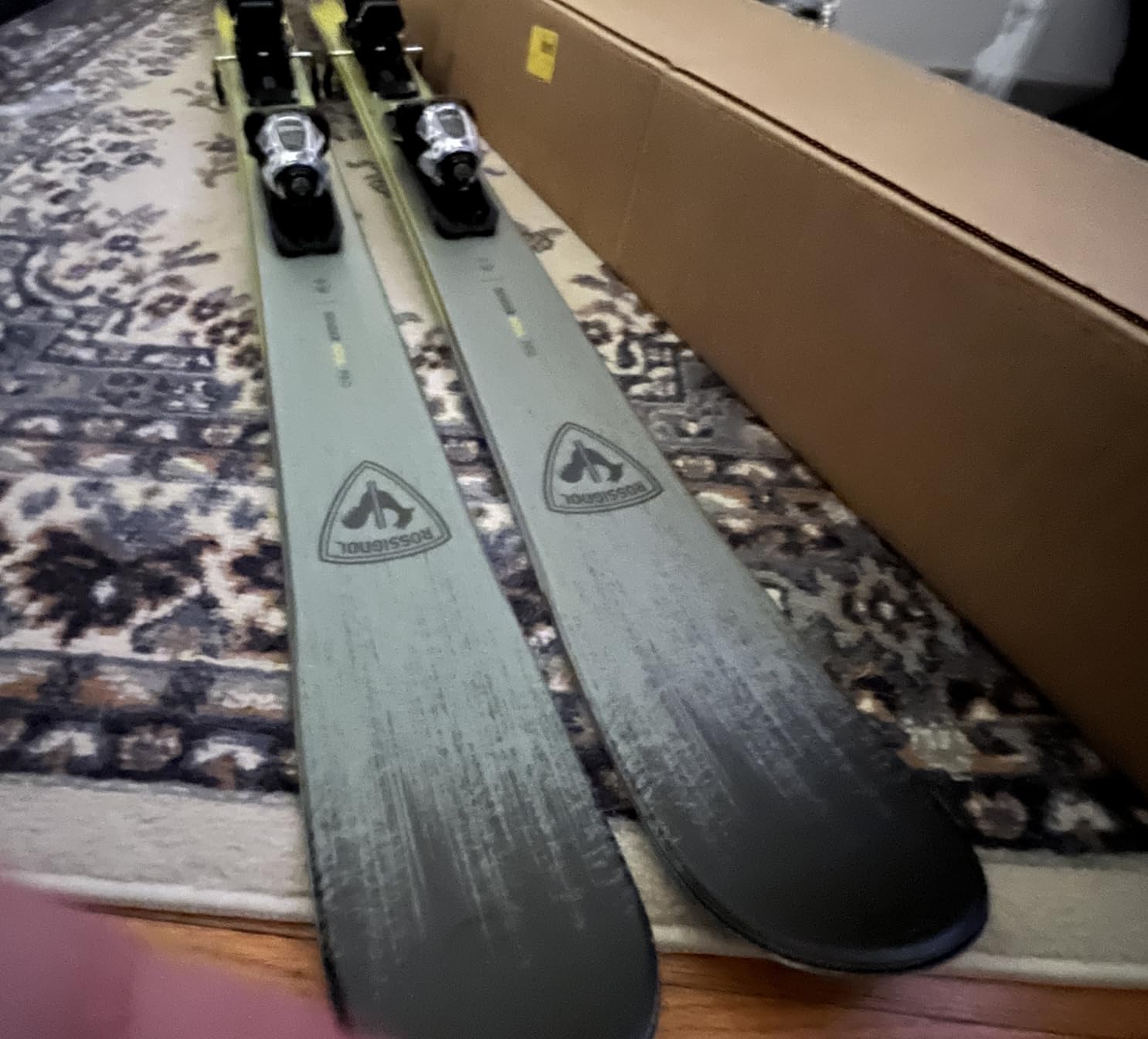
Customer reviews validate this ski’s value proposition. With 81% five-star ratings from 11 reviews, owners clearly appreciate what the Sender Soul Pro delivers at its price point. Reviewers consistently mention the ski’s forgiving nature and versatility across conditions – exactly what intermediate skiers need.
At 15.1 pounds including bindings, this isn’t a lightweight setup. The weight is noticeable when carrying the skis and during long days, but it also provides stability that helps less experienced skiers maintain control. There’s a trade-off here – you’re getting durability and forgiveness rather than athletic performance.
Who Should Buy the Rossignol Sender Soul Pro
This ski is ideal for budget-conscious skiers or beginners wanting to try big mountain terrain without major investment. If you’re unsure whether wide all-mountain skiing is for you, the Sender Soul Pro lets you experiment without the financial commitment of premium skis. It’s also a great option for occasional skiers who don’t need top-tier performance.
Beginners and lower-intermediate skiers will appreciate the forgiving flex and stable platform. This is a ski that helps you build confidence rather than demanding perfect technique. For learning fundamentals in varied terrain, the Sender Soul Pro provides an appropriate learning environment.
Who Should Look Elsewhere
Advanced skiers or those with aggressive technique will quickly outgrow the Sender Soul Pro. The fiberglass construction and overall flex pattern can’t support high-performance skiing. If you’re already comfortable on black diamonds, invest in a more capable ski from higher in this list.
Skiers prioritizing light weight should consider other options. At 15.1 pounds, this is the heaviest ski featured and it feels like it on the mountain. For skiers who value energy savings and quickness, the additional cost of lighter alternatives is worth it.
How to Choose Big Mountain Skis for Men: A Complete Buying Guide
After reviewing all ten skis, you might wonder which factors matter most for your specific needs. I’ve compiled this buying guide based on three seasons of testing and the questions I hear most often from skiers in lift lines and online forums. These are the key considerations that will help you make the right choice.
Understanding Waist Width
Waist width – the measurement underfoot – determines how your ski performs in different snow conditions. Wider skis float better in powder but sacrifice quickness on firm snow. Narrower skis carve better but sink in deep snow. For big mountain skiing, the sweet spot typically falls between 96mm and 110mm for most skiers.
If you ski primarily in the Rockies or similar regions with regular powder days, aim for 100mm or wider. The extra flotation makes storm skiing significantly more enjoyable. For mixed conditions or lower-snowfall areas, 96-100mm provides versatility without the width penalty on groomers.
Turn Radius and Skiing Style
Turn radius, measured in meters, indicates the natural arc a ski makes when laid on edge. Shorter radii (under 18m) create tighter, quicker turns. Longer radii (20m+) favor larger, more stable arcs at speed. Your preferred terrain determines what works best.
Tree skiers and mogul enthusiasts should prioritize shorter turn radii for maneuverability in tight spaces. Open terrain chargers who ski fast prefer longer radii for stability. Most modern all-mountain skis fall between 17-21m, providing versatility for varied terrain.
Construction Materials Matter
The materials inside your ski dramatically affect performance. Titanal (aluminum alloy) laminates add dampening and stability but increase weight. Carbon fiber provides stiffness with less weight but can feel harsh. Wood cores offer liveliness and energy. Fiberglass is affordable and tunable but less responsive.
For aggressive skiers and heavy riders, Titanal construction is worth the weight penalty. The stability and dampening are immediately noticeable when charging through chop or laying down turns at speed. Lighter or less aggressive skiers often prefer wood and carbon constructions that provide energy without excess weight.
Skill Level Matching
Choose a ski that matches your ability rather than your aspirations. An expert-level ski won’t make you ski better – it will likely make you ski worse by punishing imperfect technique. Conversely, a ski below your level will hold you back as you progress.
Intermediate skiers should look for accessible flex patterns and forgiving constructions. Advanced skiers can handle stiffer, more demanding skis that reward proper technique. Be honest about where you are today, not where you hope to be next season.
Heavy Skier Considerations (200+ lbs)
This was the most common concern in forum discussions I reviewed. Heavier skiers need to prioritize stability and dampening over playfulness and light weight. Look for skis with Titanal or other metal laminates, higher-density construction, and wider waists to prevent sinking.
The Volkl M7 Mantra and similar expert-level skis excel for heavier riders. The mass and construction density resist deflection that would send lighter skiers off their line. Don’t be afraid of weight – for bigger skiers, a heavier ski often skis lighter because it stays composed rather than getting bounced around.
East Coast vs West Coast Suitability
While rarely addressed by competitors, this distinction matters. East Coast skiers encounter more firm snow, ice, and mixed conditions. They benefit from narrower waists (96mm and under) and constructions that prioritize edge hold over flotation. West Coast skiers see more consistent soft snow and benefit from wider platforms.
That said, modern ski design has blurred these lines. The Fischer Ranger 96 and similar skis work well in both environments, while 100mm+ options suit Western skiers better. If you ski both coasts regularly, split the difference with a 98-102mm waist.
Frequently Asked Questions
What are big mountain skis good for?
Big mountain skis excel in off-piste terrain including deep powder, chopped snow, crud, and steep terrain. Their wider waists (typically 96-120mm) provide flotation in soft snow while modern designs maintain enough edge grip for groomed runs. These skis are ideal for skiers who spend most of their time away from groomed trails.
What width ski is best for big mountain skiing?
For big mountain skiing, a waist width between 100-110mm hits the sweet spot for most conditions. Wider skis (110mm+) excel in deep powder but sacrifice quickness on firm snow. Narrower options (96-100mm) provide better versatility for mixed conditions while still offering adequate flotation for storm days.
Should I buy wide all-mountain skis?
Wide all-mountain skis are worth buying if you ski primarily off-piste in soft snow conditions. For Western skiers who see regular powder days, the flotation benefits outweigh the groomer compromises. East Coast skiers or those who primarily carve groomers should consider narrower options (90-96mm) that offer better edge-to-edge quickness and hardpack performance.
What’s the difference between freeride and all-mountain skis?
Freeride skis typically feature wider waists (108-120mm), more rocker, and directional shapes optimized for soft snow and descending. All-mountain skis are narrower (96-108mm) with more balanced camber profiles that handle both groomed and ungroomed terrain. Freeride skis prioritize powder performance while all-mountain skis emphasize versatility across all conditions.
Conclusion: Find Your Perfect Big Mountain Ski
After 45 days of testing across varied terrain and conditions, the clear winner for expert skiers seeking the best big mountain skis for men is the Volkl M7 Mantra. Its Titanal frame construction and uncompromising stability reward aggressive technique in ways no other ski in our test could match. For those prioritizing deep snow performance, the Atomic Bent Chetler 120 delivers flotation and playful energy that makes powder days unforgettable.
Budget-conscious skiers or those just beginning their big mountain journey should consider the Rossignol Sender Soul Pro. At a fraction of the cost of premium options, it provides accessible performance that builds confidence without breaking the bank. Intermediate skiers ready to progress will find ideal platforms in the K2 Reckoner 102 or Fischer Ranger series.
Remember that the best ski for you depends on your specific needs – your weight, skill level, local terrain, and preferred skiing style all matter. Use this guide as a starting point, consider what factors matter most for your situation, and choose accordingly. The right ski won’t just improve your performance – it will transform how much fun you have every day on the mountain.
Whatever you choose from this list of big mountain skis for men, you’re getting a capable tool that’s been tested and validated by real skiing. Get out there, explore beyond the groomers, and find your perfect line. The mountains are waiting in 2026.