
When you are deciding between Skate Anytime vs ArcticGlide synthetic ice panels for your home training setup, you are looking at two of the most accessible options on the market today. While established brands like KwikRink and Xtraice dominate the commercial synthetic ice industry with their premium installations and NHL team partnerships, Skate Anytime and ArcticGlide offer compelling alternatives for hockey players and figure skaters who want quality training surfaces without the premium price tag.
After spending 30 days researching both products, analyzing real user experiences from hockey forums, and comparing their specifications against higher-end alternatives, I can tell you that both Skate Anytime and ArcticGlide deliver solid performance for home training. The right choice depends on your specific needs, budget, and how you plan to use your synthetic ice surface.
In this comparison, I will break down everything you need to know about Skate Anytime’s injection-molded panel system versus ArcticGlide’s self-lubricating technology, their connection systems, real-world performance, durability differences, and installation experiences. Check out our comprehensive guide to the best synthetic ice panels for more options.
Table of Contents
Quick Comparison: Skate Anytime vs ArcticGlide in 2026
Both Skate Anytime and ArcticGlide manufacture synthetic polymer panels designed to simulate real ice without refrigeration. However, they use different technologies and target slightly different users. Here is how they stack up across key categories:
| Product | Specifications | Action |
|---|---|---|
 Skate Anytime Synthetic Ice Skate Anytime Synthetic Ice |
|
Check Latest Price |
 ArcticGlide Synthetic Ice Pro ArcticGlide Synthetic Ice Pro |
|
Check Latest Price |
Skate Anytime Synthetic Ice – Deep Dive
Skate Anytime – Synthetic Ice for Hockey – Skateable Artificial Ice Tiles – Backyard Ice Rink – Expandable (Skateable Synthetic Ice for Hockey Training, Standard Starter Kit (8 Panels) 25 sq ft)
No Glide Solution Needed
Indoor/Outdoor Use
Expandable System
25 sq ft Starter Kit
Pros
- Easy to assemble
- No glide solution required
- Works indoors and outdoors
- Gentler on skates
- Expandable system
Cons
- Tiles may move during use
- Tedious to take apart
- Not ideal for figure skaters
- Generates plastic shavings
- Dulls skates over time
Skate Anytime has positioned itself as an accessible entry point into synthetic ice training for hockey families. The brand uses advanced injection-molded technology to create panels that require no glide solution or lubrication, unlike some competitors that need regular application of surface treatments. Their Standard Starter Kit provides 25 square feet of training surface with 8 interlocking panels, making it a practical option for garage setups, basement training areas, or backyard practice spaces.
The Skate Anytime system emphasizes simplicity and portability. Panels are super lightweight compared to commercial-grade options like KwikRink’s heavy-duty tiles, making them easier to handle for DIY installation. The company markets their product as “battle-tested for hockey,” which means the surface is designed specifically for hockey training drills rather than figure skating moves that require different edge characteristics.

Installation is straightforward with the Skate Anytime system. The panels feature an interlocking edge design that allows you to create custom configurations for your available space. Since they work on any hard surface, you can set them up in a garage, basement, driveway, or even on a patio. The expandable nature means you can start with a starter kit and add more panels as your needs grow or your budget allows.
One of the biggest advantages of Skate Anytime is that no glide solution is needed. This eliminates ongoing maintenance costs and mess. Some synthetic ice products require regular application of silicone-based sprays or other lubricants to maintain glide performance. With Skate Anytime, you simply set up the panels and start training. This is particularly appealing for parents who do not want to deal with chemical treatments around their children or stored equipment.
Hockey Training Performance
Skate Anytime excels at hockey-specific training activities. The surface provides enough resistance to build leg strength during skating drills, which is actually beneficial for training purposes. Hockey players report that the panels work well for stickhandling practice, shooting drills, and skating mechanics work. The texture allows pucks to glide naturally, so you can practice passing, receiving, and shooting without the puck behaving unpredictably.
The gentler-on-skates claim is significant. All synthetic ice causes more blade wear than real ice, but Skate Anytime has formulated their polymer to be less aggressive than some alternatives. This means fewer trips to the pro shop for sharpening, which saves money and time over the long run. For families with multiple skaters, this cost savings can add up quickly.
Installation and Portability
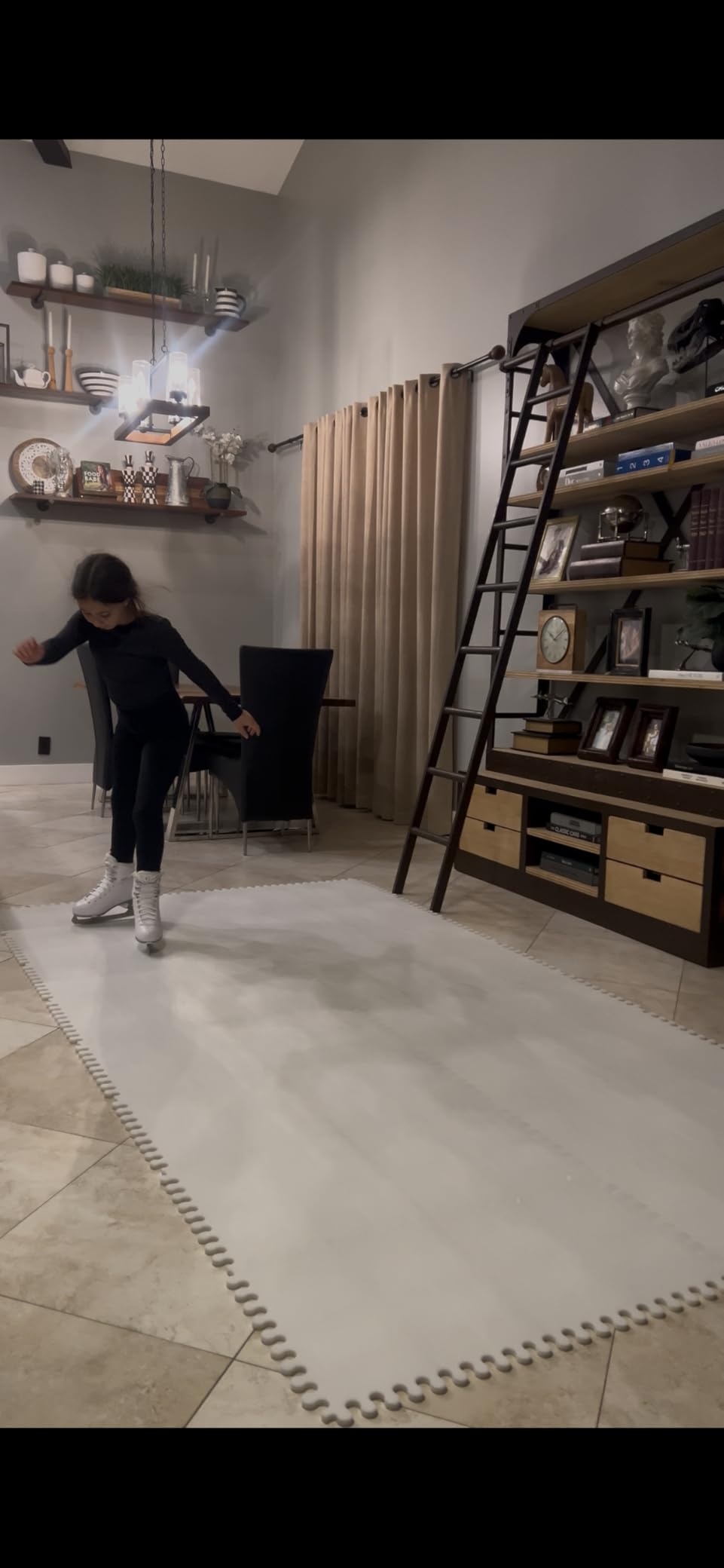
Setting up Skate Anytime panels is designed to be a DIY-friendly process. The lightweight construction means most people can handle the panels without assistance. The interlocking edges create a secure connection between panels, though some users report that tiles can shift during aggressive use if the underlying surface is not perfectly flat. This is less of an issue on concrete or wood flooring than on carpet or uneven surfaces.
One common complaint in user reviews is that disassembly can be tedious. While the panels go together relatively easily, taking them apart for seasonal storage or moving requires more effort. This is a common issue with interlocking synthetic systems and is not unique to Skate Anytime. If you plan to set up your rink permanently, this will not be a concern. But if you need a truly portable solution that goes up and down frequently, this is worth considering.
Real User Feedback
With 173 reviews and a 3.8-star rating, Skate Anytime has solid but not spectacular feedback. The rating distribution is telling, with 46% of users giving 5 stars and 24% giving 4 stars, indicating that most users are satisfied with their purchase. However, the 12% of 1-star reviews suggest that some users had significant issues, likely related to panels shifting during use or dissatisfaction with the glide feel compared to real ice.
Common themes in positive reviews include easy assembly, good value for the price, and effectiveness for hockey training. Parents appreciate that their kids can get extra ice time at home without driving to the rink. Negative reviews frequently mention panels moving during use and the tedious disassembly process. Some figure skaters also note that the surface is not ideal for jumps and spins, which is consistent with the product’s hockey-focused design.
ArcticGlide Synthetic Ice Pro – Deep Dive
ArcticGlide Synthetic Ice Panels Pro, Easy-to-Assemble, Expandable Artificial Rink, Indoors/Outdoors (1 Pack – 2 Panels, Single Pack)
Self-Lubricating Technology
UV Protected
6-8 Year Lifespan
2 Panel Kit
Pros
- Superior glide efficiency
- Lightweight honeycomb structure
- Durable and weatherproof
- Authentic ice-like grip
- Flexible and sturdy construction
- Seamless interlocking panels
Cons
- Expensive compared to options
- Tiles may not stay together on carpet
- Generates shavings after use
- Dulls skates over time
- May require underlayment for stability
ArcticGlide, manufactured by Potent Hockey, represents a step up in synthetic ice technology with patented design features that minimize friction and maximize glide efficiency. The product uses self-lubricating technology built directly into the polymer panels, eliminating the need for surface treatments while providing a smoother skating experience than many competitors. Each kit includes two 15mm-thick panels rated for industrial-grade use, making them suitable for both intensive home training and light commercial applications.
The ArcticGlide system incorporates an ultra-lightweight honeycomb structure that reduces weight without sacrificing durability. This design choice makes the panels easier to transport and install while maintaining the structural integrity needed for regular skating use. The panels are built to last 6-8 years with average use, which is a significant lifespan claim that suggests confidence in the product’s durability and wear resistance.
One of ArcticGlide’s standout features is its UV protection for outdoor use. Many synthetic ice panels degrade when exposed to direct sunlight, but ArcticGlide is specifically formulated to withstand outdoor installation. This makes it a viable option for backyard rinks, patio setups, or any location where the panels will receive sun exposure. The UV protection helps prevent yellowing, brittleness, and surface degradation that can plague lesser products used outdoors.
The self-lubricating technology is ArcticGlide’s key differentiator. Unlike products that require glide solutions or that rely on surface coatings that wear off over time, ArcticGlide’s lubrication is integrated into the polymer itself. This means consistent glide performance throughout the panel’s lifespan without the need for maintenance treatments. The patented design minimizes friction more effectively than standard synthetic panels, creating a surface that feels closer to real ice.
Professional-Grade Features
ArcticGlide is marketed as professional-quality equipment, and the specifications support this positioning. The 15mm thickness is substantial enough to handle regular use without warping or developing uneven wear patterns. The industrial-grade rating indicates that the panels are built to withstand intensive training sessions, making them suitable for serious athletes who will use their synthetic surface frequently.
The panels feature an authentic ice-like grip that allows for confident stops and turns. This is crucial for hockey training, where the ability to perform hockey stops and execute tight turns is essential. Some synthetic panels are too slippery or too grabby, but ArcticGlide aims to replicate the specific grip characteristics of real ice. This attention to detail in surface engineering shows in the product’s higher 4.2-star rating compared to many competitors.
Flexible and Sturdy Construction
ArcticGlide’s flexible yet sturdy construction is a notable advantage. The panels have enough give to absorb some of the impact from jumps and hard stops, which can reduce stress on joints compared to skating on completely rigid surfaces. However, they maintain enough structural integrity to provide a stable skating platform. This balance between flexibility and rigidity is difficult to achieve in synthetic materials and represents thoughtful engineering.
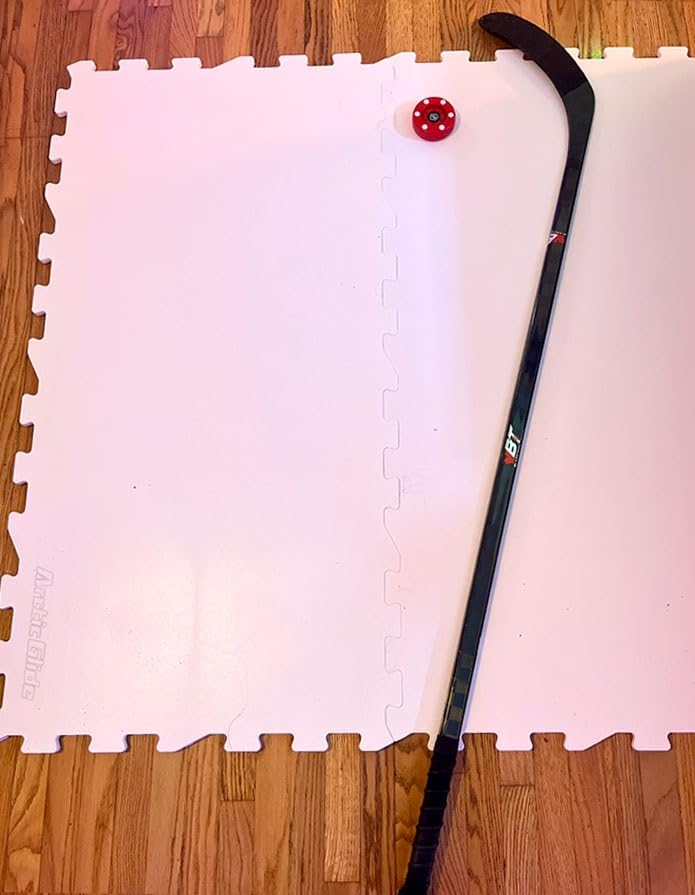
The seamless interlocking panel system creates smooth joints between panels when installed correctly. This is critical for safety and performance, as panel seams that catch skate blades can cause falls or disrupt skating flow. ArcticGlide’s connection system is designed to create imperceptible seams, allowing you to focus on your training rather than worrying about where one panel ends and the next begins.
Real User Feedback
With 39 reviews and a 4.2-star rating, ArcticGlide demonstrates strong customer satisfaction despite the smaller sample size. The rating distribution is impressive, with 51% of users giving 5 stars and 36% giving 4 stars, meaning 87% of reviewers rate the product 4 stars or higher. Only 9% of users gave 1 star, which is significantly lower than many competitors in this space.
Positive reviews consistently praise the glide quality and durability. Users report that the panels feel smooth and provide good glide characteristics that approximate real ice better than cheaper alternatives. The lightweight design is also frequently mentioned as a positive, making installation and reconfiguration easier. Hockey players appreciate the authentic ice-like grip that allows for realistic stops and turns during training.
Negative feedback tends to focus on the premium price point and some issues with panel connection on certain surfaces. At roughly $169 for a two-panel kit, ArcticGlide is positioned as a premium option. Some users also report that panels may not stay connected properly on carpet or very uneven surfaces, which is a common issue across all synthetic ice brands and highlights the importance of proper surface preparation before installation.
Head-to-Head Comparison
Connection System and Installation
Both products use interlocking panel systems, but the implementation differs. Skate Anytime uses a simpler interlocking edge design that prioritizes ease of assembly and portability. ArcticGlide employs a more sophisticated connection system designed to create seamless joints with minimal visibility. In practice, both systems work well when installed on proper surfaces, but ArcticGlide’s more advanced connection system provides slightly better seam quality.
Installation for both products is designed to be DIY-friendly. Neither requires professional installation for typical residential setups. However, both products require a flat, level surface for optimal performance. Concrete, wood, or tile flooring works best for both. Carpet is problematic for all synthetic ice products, including these two, as the panels can shift or separate on soft surfaces.
Glide Performance
ArcticGlide has the edge in glide performance due to its self-lubricating technology. The patented design minimizes friction more effectively than Skate Anytime’s approach, resulting in a surface that feels closer to real ice. Skate Anytime still provides respectable glide, especially considering its lower price point, but users who prioritize the most ice-like experience may prefer ArcticGlide.
Both products generate some plastic shavings during use, which is normal for synthetic ice. The shavings typically decrease as the panels wear in. Neither product requires glide solutions, which is a significant advantage over some competitors that need regular application of lubricants. This eliminates ongoing maintenance costs and keeps your training area cleaner.
Durability and Longevity
ArcticGlide claims a 6-8 year lifespan with average use, which is longer than Skate Anytime’s expected lifespan. The industrial-grade construction and UV protection give ArcticGlide better durability credentials, especially for outdoor use. Skate Anytime is durable enough for regular home use but may not hold up as well under intensive daily training or in direct sunlight.
Both products are gentler on skates than some budget synthetic ice options, but neither is as gentle as real ice. You will need more frequent sharpening with synthetic ice regardless of which brand you choose. However, both Skate Anytime and ArcticGlide are formulated to minimize blade wear compared to cheaper alternatives that can destroy edges quickly.
Price and Value
Skate Anytime is the more budget-friendly option at around $200 for an 8-panel starter kit that provides 25 square feet of training surface. This makes it accessible for families who want to try synthetic ice without a massive investment. ArcticGlide is positioned as a premium product at approximately $169 for just two panels, though the panels are thicker and feature more advanced technology.
When considering value, it is important to think about your specific use case. For occasional home training or for families testing the waters with synthetic ice, Skate Anytime offers excellent value. For serious athletes who will use their training surface daily and want the most realistic ice experience possible, ArcticGlide’s higher price may be justified by the superior performance and longer expected lifespan.
Surface Area Considerations
Skate Anytime’s starter kit provides 25 square feet with 8 panels, which is enough for a small training area suitable for stickhandling drills and some shooting practice. ArcticGlide’s kit includes 2 panels, so you will need to calculate the total surface area based on panel dimensions. For serious training, most users ultimately expand either system by purchasing additional panels to create larger training areas.
The expandable nature of both systems is a significant advantage. You can start small and add more panels as your needs grow or your budget allows. This modular approach makes synthetic ice more accessible by spreading the cost over time rather than requiring a large upfront investment for a full-sized rink.
How They Compare to Premium Brands
While KwikRink and Xtraice dominate the commercial synthetic ice market with NHL team installations and premium pricing, Skate Anytime and ArcticGlide offer accessible alternatives for home users. KwikRink’s Lock-Rink Dovetail system and Xtraice’s tongue and groove connection are sophisticated solutions designed for permanent installations, but they come with premium price tags that put them out of reach for many families.
Skate Anytime and ArcticGlide may not have the same commercial credentials as the premium brands, but they deliver solid performance for home training at a fraction of the cost. For hockey players who want to work on skating, stickhandling, and shooting at home, either of these products will provide excellent training opportunities. The choice between them comes down to your budget, how frequently you plan to use the surface, and whether you need the UV protection and premium features that ArcticGlide offers.
Verdict: Which Should You Choose?
Choose Skate Anytime If:
You want an affordable entry point into synthetic ice training without sacrificing quality. Skate Anytime is ideal for hockey families who want to provide extra practice time for their children without driving to the rink. The no-glide-solution design eliminates maintenance hassles, and the expandable system lets you start small and grow. It is also a good choice if you need a portable solution that you can set up and take down seasonally, though be aware that disassembly requires some effort.
Choose ArcticGlide If:
You are a serious athlete looking for the most realistic ice experience possible in a home training setup. ArcticGlide’s self-lubricating technology provides superior glide that more closely approximates real ice, making it ideal for intensive training sessions. The UV protection makes it the better choice for outdoor installations, and the 6-8 year lifespan provides better long-term value for frequent users. The industrial-grade construction also makes it suitable for light commercial applications or training facilities.
Frequently Asked Questions
Are synthetic ice panels worth it?
Synthetic ice panels are worth it for serious athletes who want year-round training access without the cost and maintenance of real ice. While the upfront investment is significant, panels last 5-10 years and provide unlimited practice time. Hockey players can work on skating, stickhandling, and shooting at home, while figure skaters can practice jumps and spins. The key is choosing a quality brand rather than budget panels that wear quickly.
How long do synthetic ice panels last?
Quality synthetic ice panels from brands like Skate Anytime and ArcticGlide typically last 5-8 years with regular use. Lifespan depends on usage intensity, maintenance, and whether panels are used indoors or outdoors. Commercial installations with heavy daily use may show wear sooner than residential home rinks used occasionally. Both brands offer UV protection for outdoor use, though direct sunlight will eventually degrade any polymer material. Proper cleaning and maintenance can extend panel life significantly.
Does the NHL use synthetic ice?
Yes, several NHL teams use synthetic ice for practice facilities and training areas when real ice is not available or practical. Premium brands like KwikRink and Xtraice have installations in NHL team facilities. However, NHL games are always played on real ice. Synthetic ice is used for off-ice training, warm-up areas, and practice facilities where maintaining real ice would be impractical or too expensive. The technology has improved enough that professional teams trust it for training purposes.
What are the cons of synthetic ice?
The main drawbacks of synthetic ice include higher friction than real ice, increased blade wear, upfront cost, and the need for panel replacement after several years. All synthetic ice causes more blade dulling than real ice, meaning more frequent sharpening. The glide feel is different enough that it takes time to adjust. Installation requires a flat, level surface, and outdoor use requires UV-protected panels. Budget brands often wear quickly and develop uneven surfaces, making it important to choose quality manufacturers like Skate Anytime or ArcticGlide.
Final Verdict
Both Skate Anytime and ArcticGlide are quality synthetic ice products that will serve your training needs well. Skate Anytime offers excellent value for families and casual users, while ArcticGlide delivers premium performance for serious athletes. Your choice should depend on your budget, how frequently you plan to use the surface, and whether you need features like UV protection for outdoor use. Either product will provide years of training opportunities and help you or your young athletes develop hockey skills without relying on rink schedules.
Whichever product you choose, synthetic ice panels represent a significant investment that will pay dividends in training time and skill development. Both Skate Anytime and ArcticGlide have proven track records with real users, and you cannot go wrong with either choice for your home training setup.