
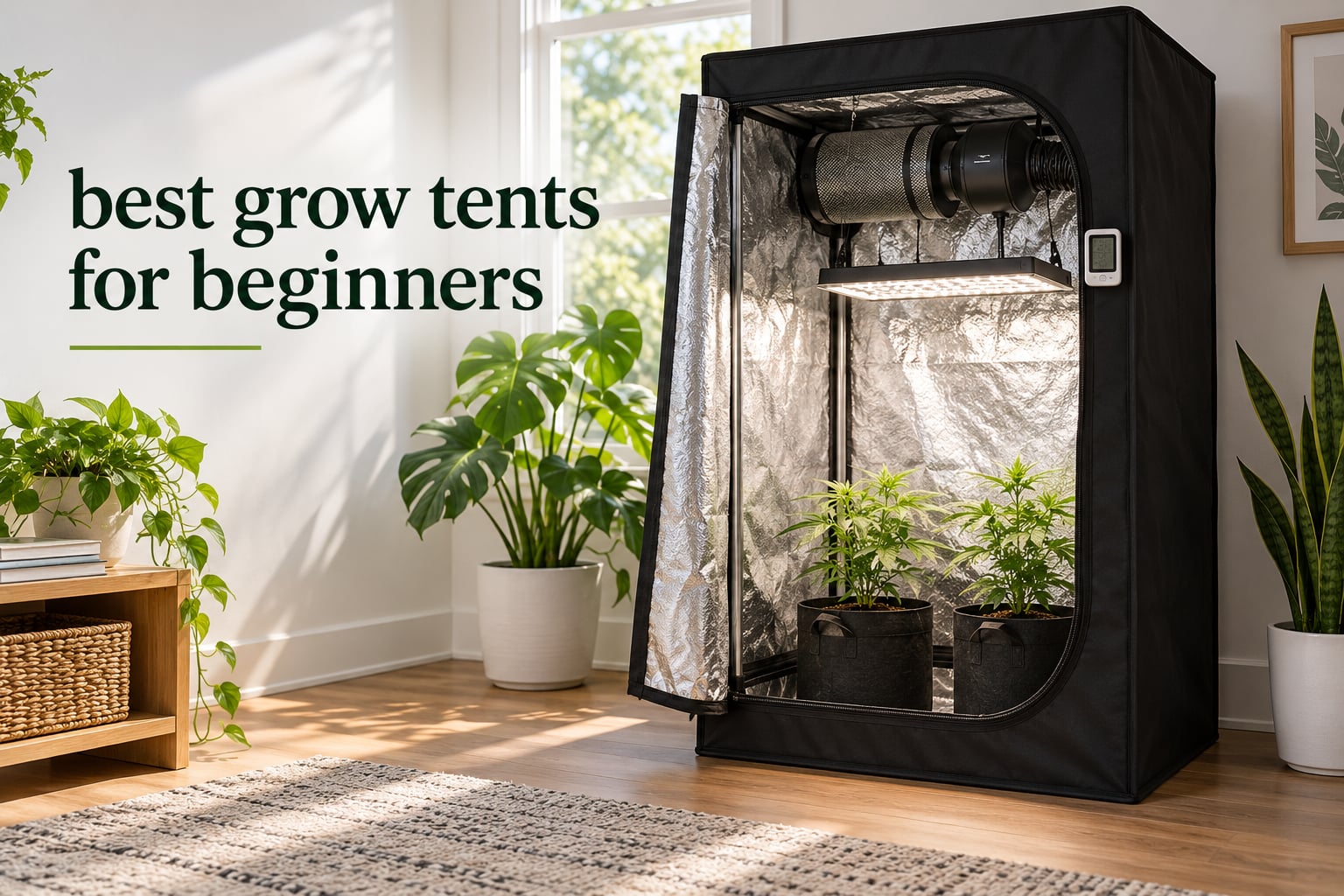
If you are starting your first indoor grow, the tent is the cheapest piece of equipment you will buy and the one that decides whether everything else works. A grow tent is a fabric-and-frame enclosure with a reflective lining that creates a sealed, lightproof microclimate around your plants, so light, heat, humidity and odor all stay under your control in a space the size of a closet.
Our top three for 2026 are the VIVOSUN S425 2×4 as the best overall starter, the AC Infinity CLOUDLAB 642 as the most durable build, and the Mars Hydro 3.3×3.3 as the best square-foot value. The best grow tents for beginners share a short list of traits: a real steel frame, 600D or heavier exterior fabric, light-sealing zippers, at least two ducting ports, and a removable waterproof floor tray.
In this guide we compared ten tents and complete grow tent kits, all of them popular enough to have thousands of reviews. You will find a quick comparison table, a section on tent-only versus kit, a plain-English guide to fabric denier, and a first-grow budget walkthrough. If your space is tight, we also cover large walk-in grow tents for when you outgrow a closet-sized box.
Table of Contents
Top 3 Beginner Grow Tent Picks in 2026
These three cover the realistic range of a first purchase: the tent with the most owners behind it, the tent built to last the longest, and the tent that gives you the most usable floor area for the money you spend on fabric and frame. The same three carry badges on their individual cards below.

10 Best Grow Tents for Beginners (October 2026)
Every pick below is either a tent on its own or a kit that bundles a tent with a light, fan and filter. Six are tent-only. Four include the electronics, and those four save a first-time grower the most decision-making.
| Product | Specifications | Action |
|---|---|---|
| VIVOSUN S425 2×4 Grow Tent |
|
Check Latest Price |
 AC Infinity CLOUDLAB 642 4×2 AC Infinity CLOUDLAB 642 4×2 |
|
Check Latest Price |
 Mars Hydro 3.3×3.3 Advanced Tent Mars Hydro 3.3×3.3 Advanced Tent |
|
Check Latest Price |
 Spider Farmer 2×2 Grow Tent Spider Farmer 2×2 Grow Tent |
|
Check Latest Price |
 MELONFARM 2×2 Grow Tent MELONFARM 2×2 Grow Tent |
|
Check Latest Price |
 Mars Hydro 3×3 Smart Kit with TS1000 Mars Hydro 3×3 Smart Kit with TS1000 |
|
Check Latest Price |
 Mars Hydro 2×2 Kit with TS600 Mars Hydro 2×2 Kit with TS600 |
|
Check Latest Price |
 IPOW 2×2 Complete System IPOW 2×2 Complete System |
|
Check Latest Price |
 zazzy 4×2 Grow Tent zazzy 4×2 Grow Tent |
|
Check Latest Price |
 ATOUR 4×2 Grow Tent ATOUR 4×2 Grow Tent |
|
Check Latest Price |
1. VIVOSUN S425 2×4 Grow Tent – Best Overall for a First Grow
VIVOSUN S425 2×4 Grow Tent 48″x24″x60″ High Reflective Mylar Tent
48 x 24 x 60 inch
600D Oxford canvas
100 lb bar capacity
Two-year warranty
Pros
- Keeps light inside with 600D Oxford canvas and reflective mylar
- Tool-free corner connectors and hanging bars rated to 100 lbs
- Removable mylar floor tray plus two observation windows
- Two hanging straps for carbon filter mounting
- Two-year manufacturer warranty
Cons
- SBS zipper snags on the lightguard lining
- Small pinhole leaks near the stitched zipper area
- Instructions cover several models so size diagrams can be missing
We spent the most time with this tent because it has the deepest owner base in the group. At 33362 reviews with a 4.5 average, it is not a speculative pick. It is the tent most first-time growers actually end up with, and the pattern across those reviews is very consistent.
The build is straightforward: 600D Oxford canvas outside, a reinforced polyethylene layer, and 100% reflective mylar walls inside. The frame is metal with tool-free corner connectors, and the two hanging bars are rated to 100 lbs each, which is enough headroom for a fan, a filter and a light driver without bowing the top bars.
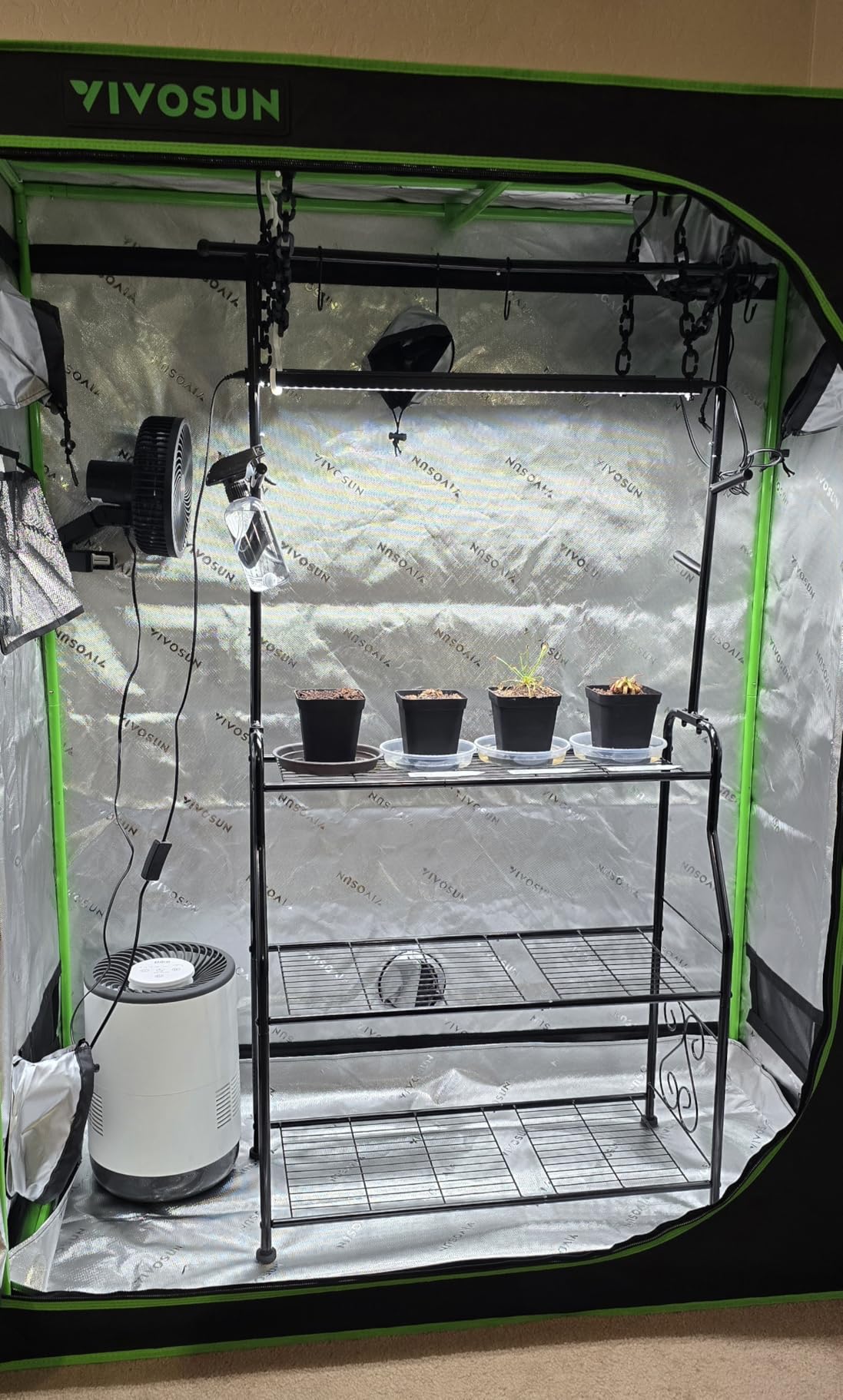
Owners repeatedly mention the light blocking working exactly as advertised, and several describe running the same tent across multiple grow cycles. On r/cannabiscultivation, growers repeatedly advise sticking with the heavy duty models from Vivosun because they last longer through repeated cycles, and the frame and zipper weight is usually the reason given.
Assembly is tool-free and takes minutes once you find the corner adapters. The internal tool organizer and the multiple ducting and electrical port openings are small touches that stop the build from turning into a mess of cords in a small space.
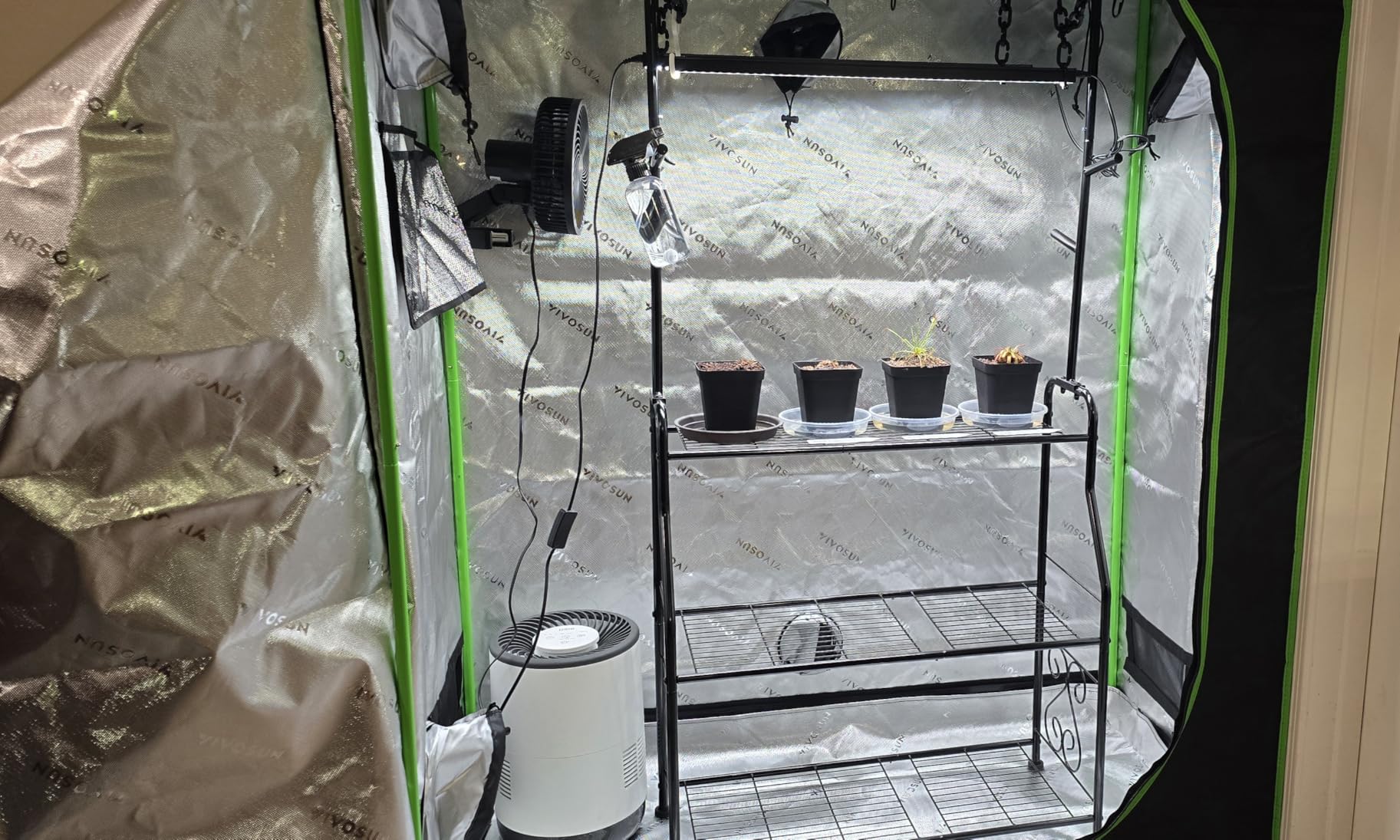
What you get for the space it takes up
At 48 by 24 by 60 inches this is a 2×4 footprint, which suits 2 to 4 plants and a single-row light. The 60 inch height gives you usable room above the canopy before the light fixture starts to press down on growth.
Two hanging straps come in the box for a carbon filter, and the removable mylar floor tray makes cleanup between cycles simple. That combination is why this tent shows up in first-grow guides so often.
Where it falls short
The most repeated complaint is the SBS zipper catching on the lightguard lining, which makes it slower to open and close than a premium zipper. A second theme is small pinhole leaks around the stitched area near the zipper, usually mentioned alongside advice to realign the fabric during setup.
The instruction booklet covers multiple models, so the diagrams for your exact size can be missing. None of these are deal breakers for a first grow, but they are the three things to check when your tent arrives.
2. AC Infinity CLOUDLAB 642 4×2 Grow Tent – Best Durability
AC Infinity CLOUDLAB 642, Advance Grow Tent 4×2, Thickest Poles & Mylar
48 x 24 x 72 inch
2000D canvas
150 lb capacity
4 6 and 8 inch duct ports
Pros
- Highest rated pick in the group at 4.7
- Thickest 2000D canvas with 1 inch steel poles
- Lab tested reflective mylar
- Controller mounting plate with lightproof cable passthrough
- Reinforced corners and heavy duty catch tray
Cons
- Costs more than the budget tents in this roundup
- Included tool bag and catch tray add bulk for a 2 plant setup
This is the tent we would buy if the plan was to keep growing past the third cycle. It has the highest average rating in the lineup, and 84% of its reviews are 5-star with another 8% at 4-star, which is the most consistent satisfaction spread of any pick here.
The CLOUDLAB 642 is a 4×2 at 48 by 24 by 72 inches, so it is the tallest enclosure in the group. That extra height is the quiet advantage: canopy has room to grow before it reaches the fixture, which is the number one complaint beginners hit with shorter tents.
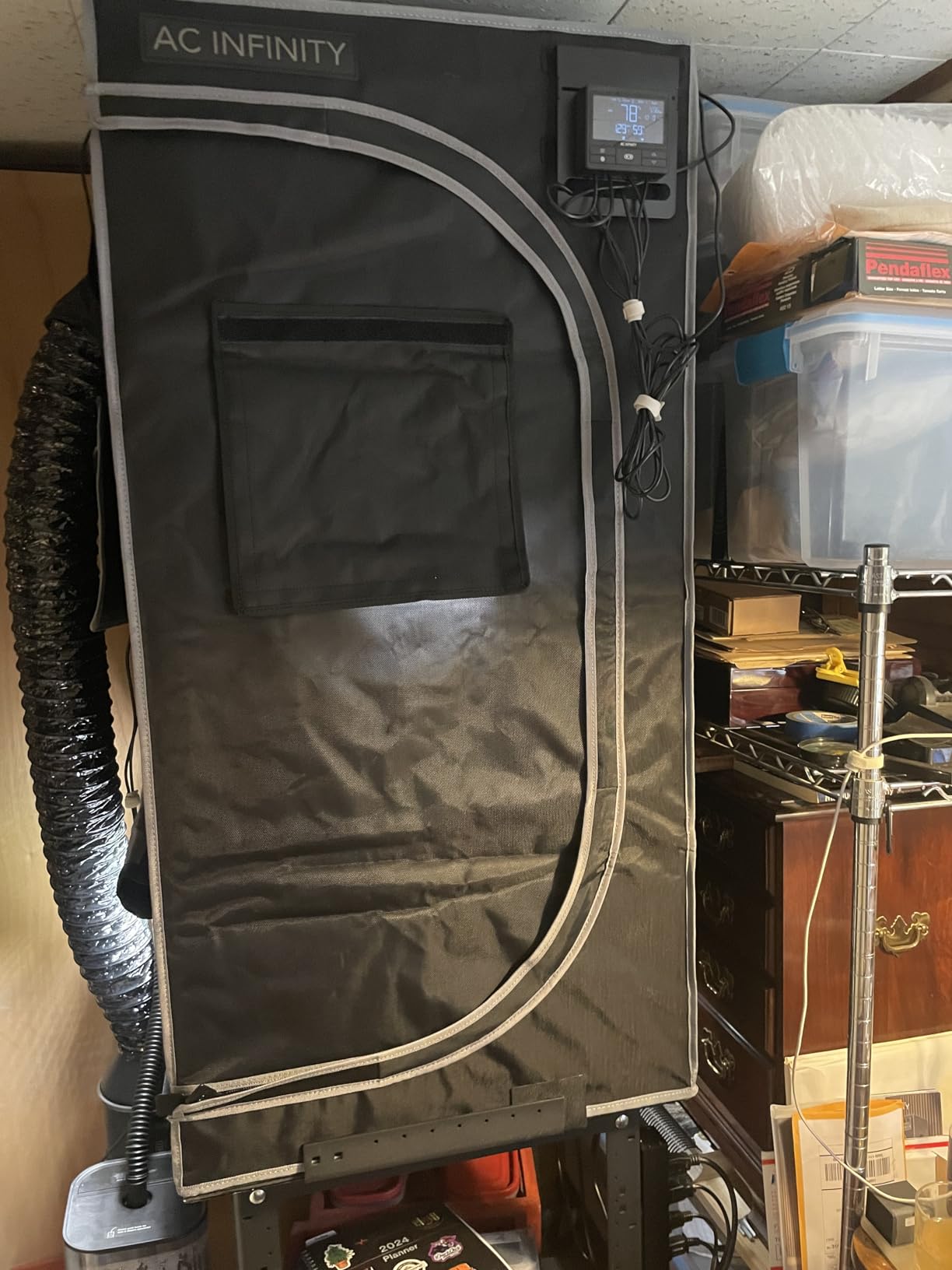
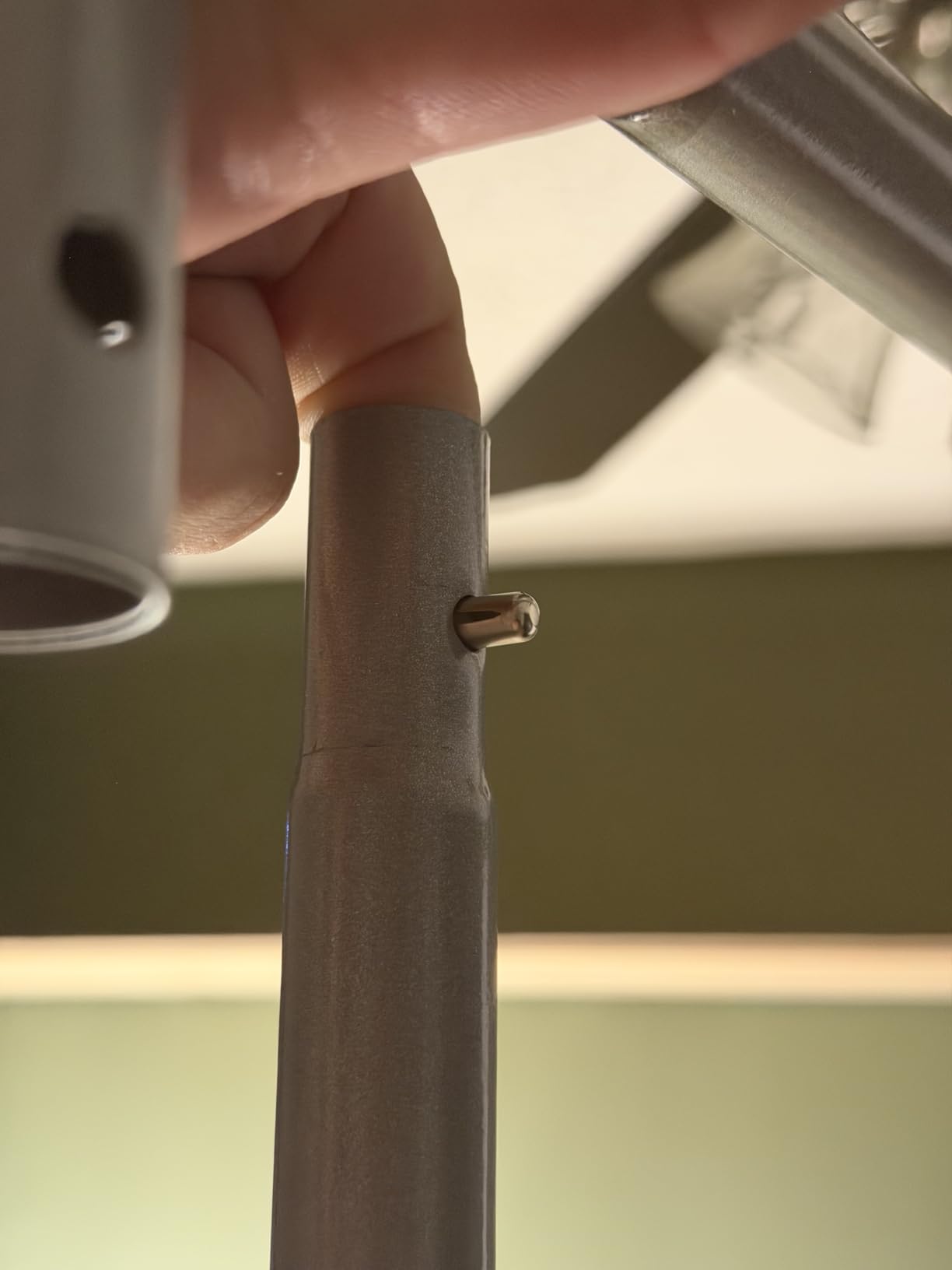
The fabric is 2000D waterproof Oxford canvas with a diamond mylar lining, and the poles are 1 inch alloy steel with reinforced corners. The stated weight capacity is 150 lbs, and there are three hanging bars plus duct ports sized 4, 6 and 8 inches, so it accepts standard 4 inch inline fans without an adapter.
Two details are genuinely useful rather than decorative. The controller mounting plate gives you somewhere to fix an environmental controller, and its cable passthrough is lightproof, so you can run wires out without opening the door. The front zipper flaps are the second line of defense against leaks.
Why the 2000D fabric matters here
Denier measures thread density, and a higher number means a heavier weave that resists tearing and blocks stray light better. Most budget tents here use 600D. This one is 2000D, the thickest in the group, and it also carries a lab tested mylar with the highest reflectivity in its class.
The difference is not dramatic over one cycle. Across three or four cycles with a filter and a light hung from the bars, that is where the heavier weave starts to pay for itself.
Where it falls short
The cost is the obvious trade. It sits at the premium end of this roundup, and if your plan is a single first run, a good portion of that spend buys durability you may not use.
Accessories are also generous rather than minimal. The tool bag and heavy-duty catch tray add bulk that is awkward in a 2-plant setup. It is a problem of excess rather than quality.
3. Mars Hydro 3.3×3.3 Grow Tent – Best Value per Square Foot
MARS HYDRO 3.3×3.3 Advanced Grow Tent 39″x39″x71″ Indoor Plant Growing
39 x 39 x 71 inch
1680D double-stitched canvas
Shade cloth zipper seal
Pop-snap frame
Pros
- Shade cloth over zipper stitching blocks pinhole leaks
- 1680D double-stitched tear resistant canvas
- Smooth heavy duty dual zippers with double black lining
- Double layer viewing window and detachable floor tray
- Pop-snap assembly in minutes
Cons
- Some smaller sizes in the same line come without a viewing window
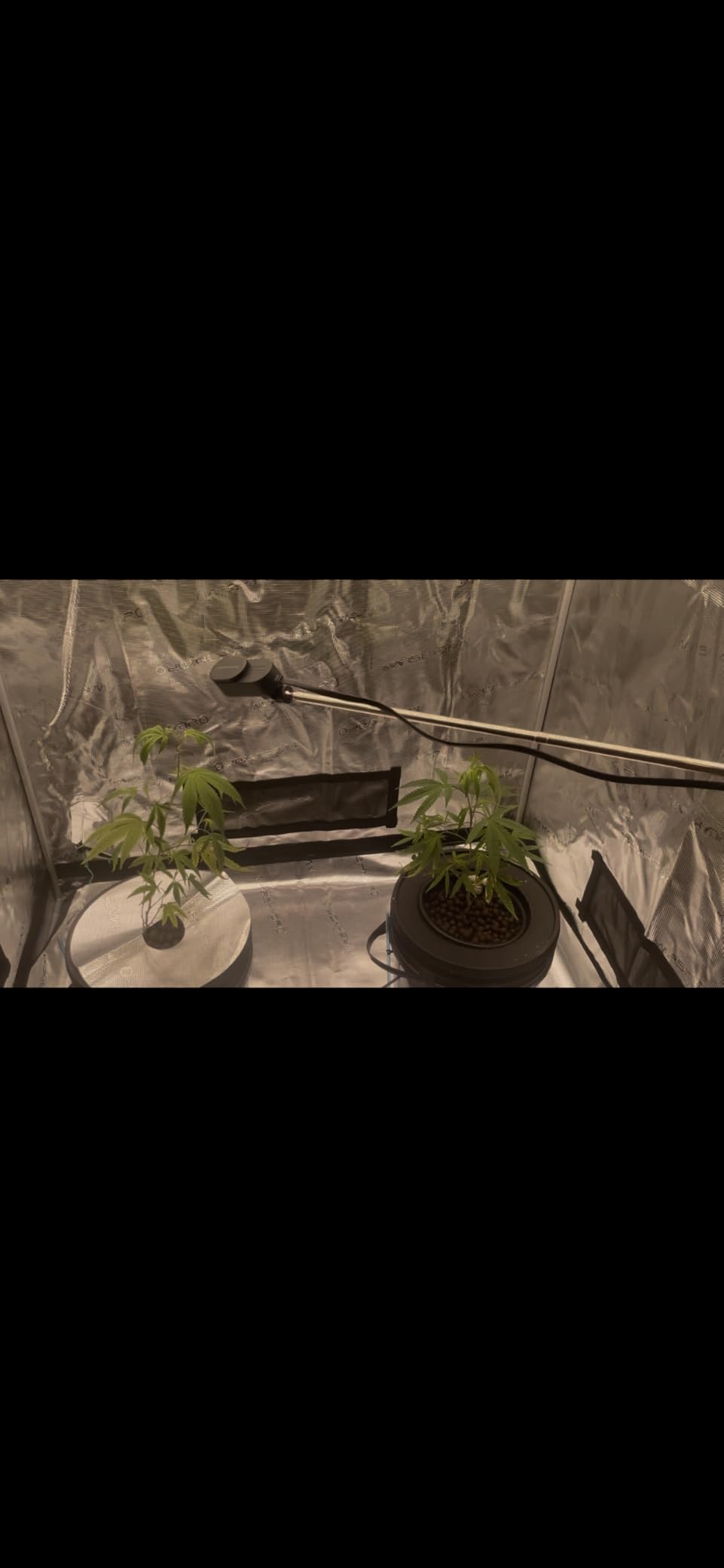
This is the one we keep coming back to for value. At 39 by 39 by 71 inches it covers 10.56 square feet of floor area, and the fabric is 1680D double-stitched canvas, which puts it a full tier above the 600D tents at a mid-range build cost.
The detail that changed our mind is the zipper seal. Mars Hydro runs a strip of shade cloth between the stitching and the canvas, so the needle holes that create pinhole leaks in cheaper tents are covered. Reviewers describe that single feature as the reason their tent stays dark during the night cycle.
The zippers themselves are described as smooth heavy duty metal dual zippers with a double black inner lining, and they do not snag on the lining the way some budget zippers do. That matters because a zipper that catches gets forced, and forced zippers fail.
Assembly is pop-snap, meaning hole-and-pole, and it builds in minutes without tools. There is a double layer viewing window, a detachable waterproof floor tray, and rust resistant metal poles with corner adapters and top bars. 79% of reviews are 5-star.
How a 3.3×3.3 fits a first grow
A square tent is easier to light evenly than a rectangle. With four plants at the corners you get even spacing and no stretched corners, and the square footprint means one fixture covers the whole area rather than a strip.
At 71 inches tall it clears the light-fixing tension that causes canopy burn in short tents, so a beginner gets a forgiving starting height. It is also wide enough to add a small oscillating fan and a humidifier without crowding the floor.
Where it falls short
The square shape is not ideal if you want a single long light bar across a narrow room. It also needs roughly a 4 by 4 foot footprint of usable floor space around it, which rules it out of some closets.
One reported drawback is that some of the smaller sizes within this product line come without a viewing window, so check what is in the box for the exact size you are buying.
4. Spider Farmer 2×2 Grow Tent – Best for a Closet Grow
Spider Farmer 2×2 Grow Tent 24″x24″x48″ for Indoor Plant Growing 2026 New
24 x 24 x 48 inch
1680D Oxford canvas
120 lb pole support
SBS zippers
Pros
- SBS zippers with double protection flap and dual stitching
- 1680D waterproof Oxford canvas with diamond mylar
- Hardened steel poles 3x thicker with 120 lb support
- Controller hooks and cable pass-through included
- Tool-free corner adapter frame
Cons
- Small footprint limits vertical space for larger plants
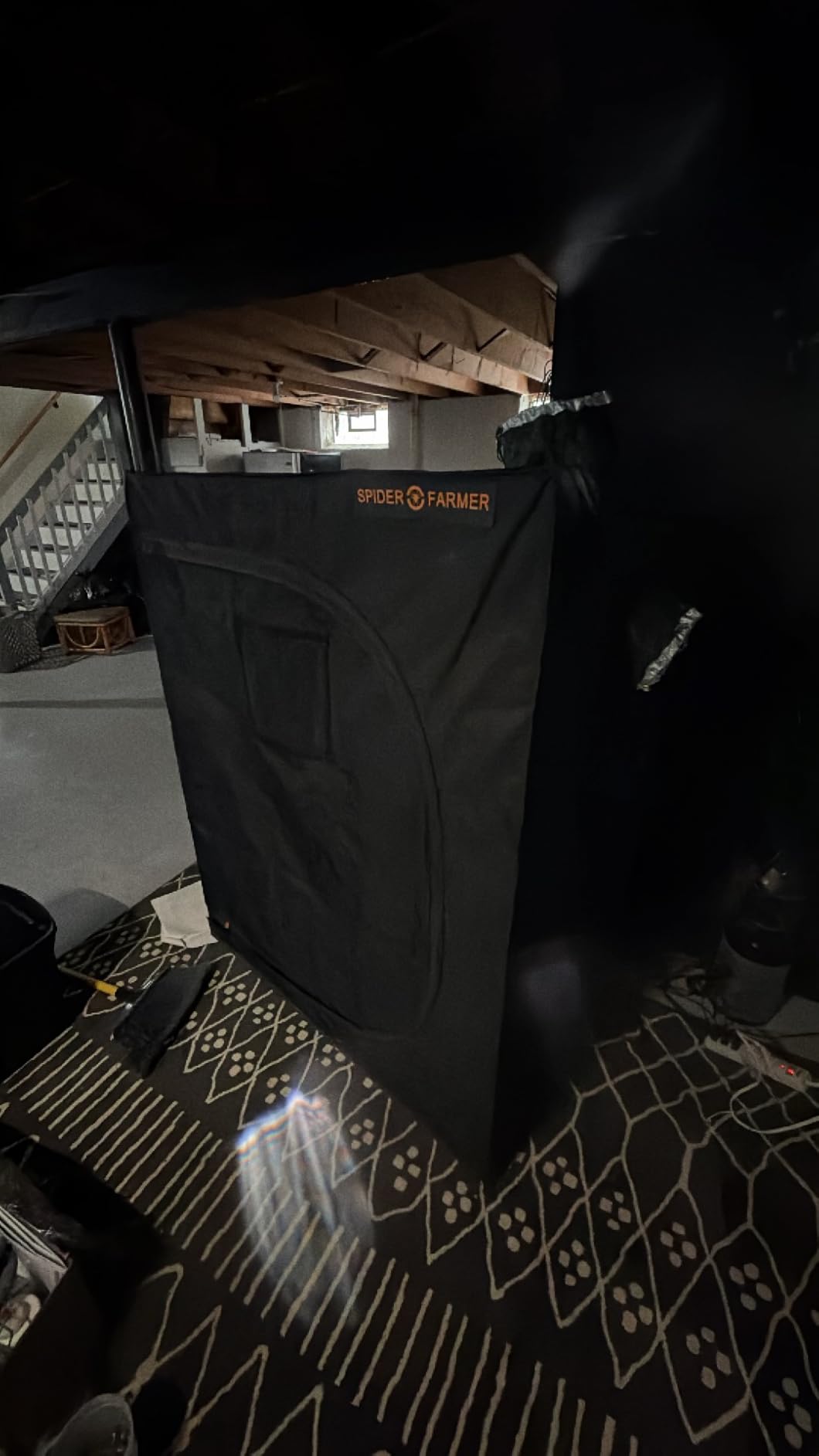
At 24 by 24 by 48 inches with 16 cubic feet of chamber volume, this is the smallest tent in the group and the one that fits the most awkward rooms. It is a genuine two-plant tent, and 79% of its reviews are 5-star.
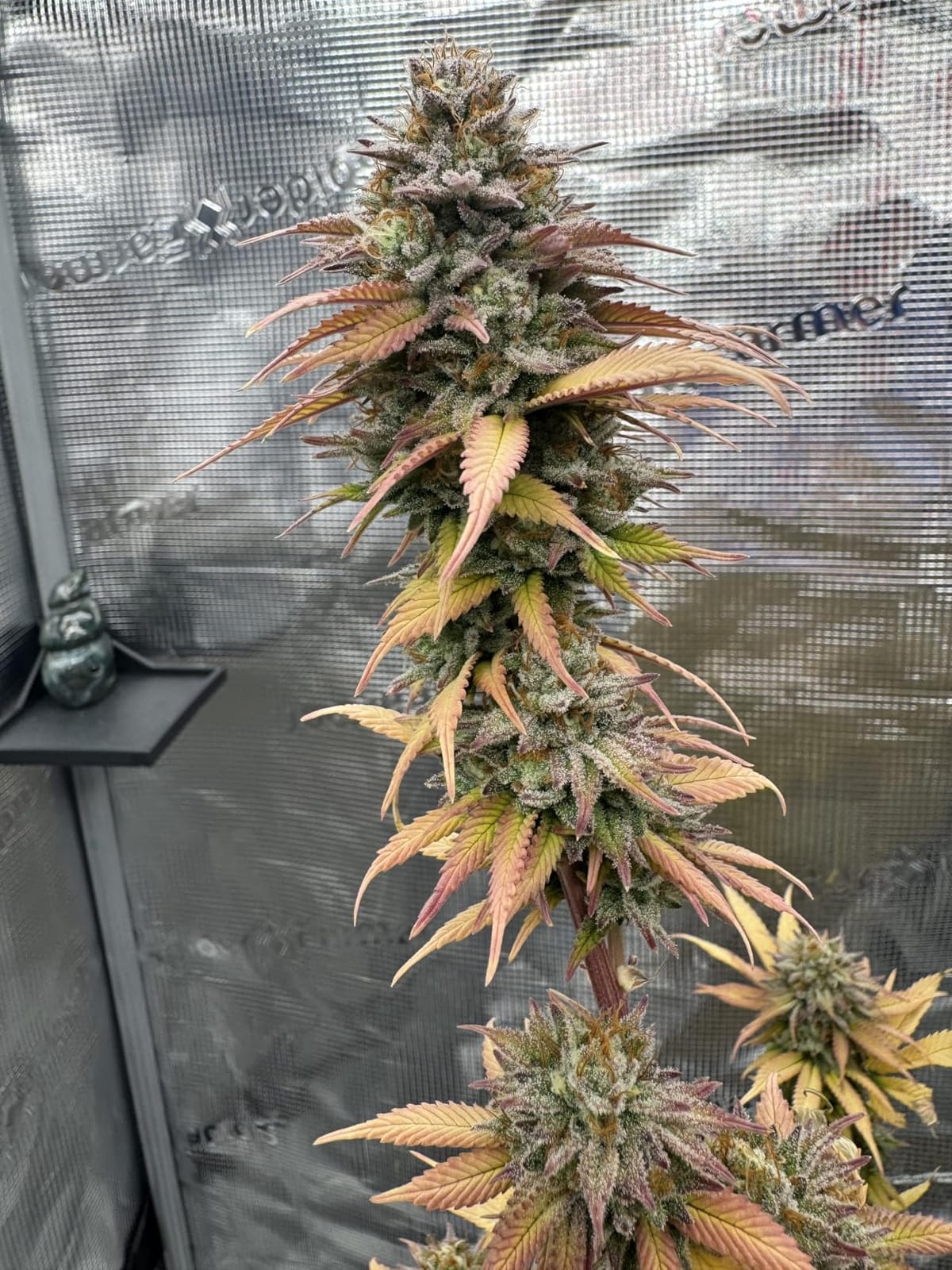
What surprised us is the fabric and hardware in a tent this size. The exterior is 1680D waterproof Oxford canvas with a diamond reflective mylar lining, and the hardened steel poles are 3x thicker than standard with reinforced adapters rated to 120 lbs. That weight rating is higher than the larger VIVOSUN 2×4 in this roundup.
Zippers are premium SBS with a double protection flap and dual stitching, and there is a side buckle for fastening the main door so you can open it without the flap swinging wide. The interior gets controller hooks, a cable pass-through, an 11.8 by 11.8 inch viewing window and a waterproof floor tray.
Owners frequently pair this tent with Spider Farmer lights, and the low profile suits a wardrobe, a closet or a corner of a room where a taller tent would not fit.
Where a 2×2 actually works well
A 2×2 is not a compromise if your goal is a first cycle and a small footprint. Two plants fill it without crowding, and every watt of light is delivered to a small area, so a 100W class fixture is genuinely enough.
Fewer plants also mean fewer mistakes. A smaller tent is a better classroom, so beginners learn to read a plant rather than running a space too large to inspect, and two plants you can watch every day beat six you cannot.
Where it falls short
The obvious limitation is vertical space. At 48 inches the canopy has very little room before it reaches the fixture, and light burn on the tops of plants is the single most common review theme on small tents this size.
Weight capacity and controller access are also tight. Hanging a filter, a light and a driver in a 2×2 leaves little working room, so anything you add needs to be small.
5. MELONFARM 2×2 Grow Tent – Best Low-Cost Enclosure
MELONFARM 2×2 Grow Tent, 24″x24″x48” High Reflective 600D Diamond Mylar Canvas with Observation Window and Floor Tray for Hydroponic Indoor Plant Growing
24 x 24 x 41 inch measured
600D canvas
Double observation windows
Tool-free install
Pros
- Ranks first in the Grow Tents category on Amazon
- 600D double-stitched light-proof canvas
- Two transparent observation windows
- Floor tray and storage bag included
- Tool-free installation
Cons
- 600D canvas is thinner than the 1680D and 2000D options
- Listed 40.84 inch height runs below the 48 inch in the title
- 4.3 average with an 8 percent one-star share
MELONFARM holds the number one position in the Grow Tents category, which tells you how much traffic passes through this listing. Buyers treat it as an affordable starter enclosure, and 72% of its reviews are 5-star.
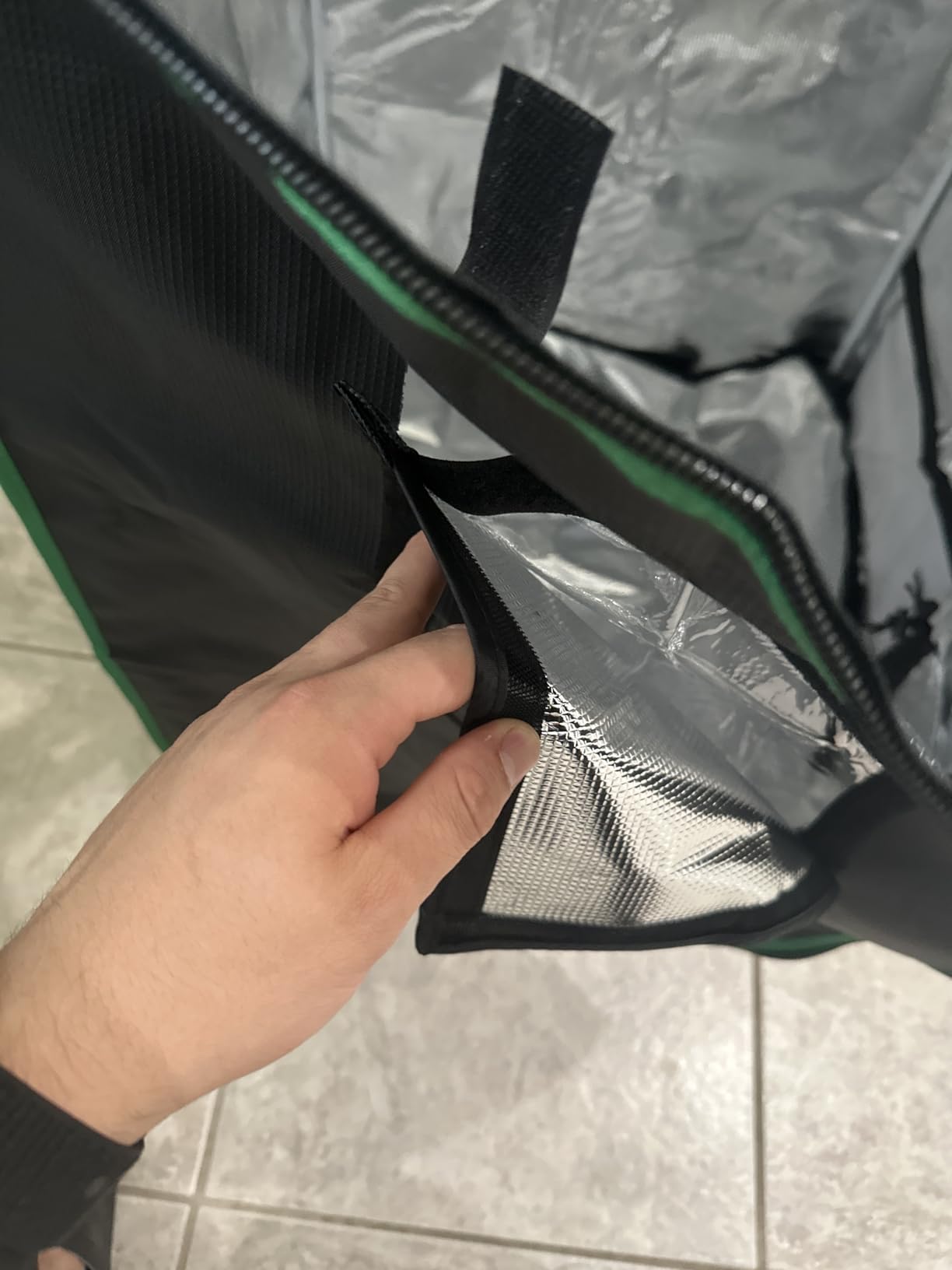
The exterior is 600D double-stitched canvas that reviewers describe as light-proof and tear resistant, with a reflective waterproof polyester lining inside. It has two transparent observation windows rather than one, a large heavy duty zipper door, a floor tray for cleanup, and a storage bag for the accessories.
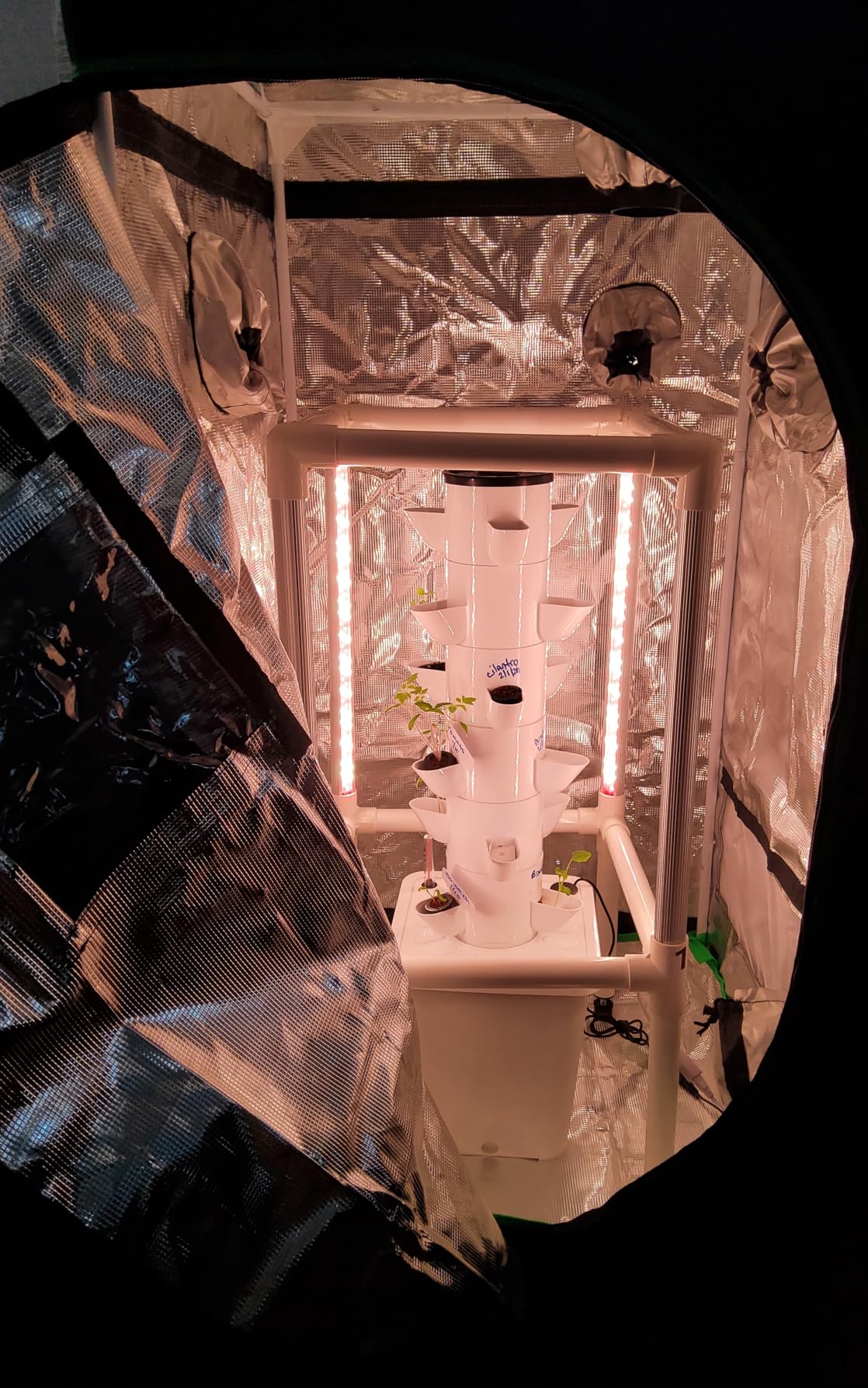
Installation is tool-free and quick, which is the main appeal for someone who has never built a frame before. Buyers also use it for seedlings, microgreens and houseplants, not just flower rooms, so it earns its space in a mixed setup.
One thing to note up front: the listed dimensions are 24.41 by 24.41 by 40.84 inches, so the tent is about 7 inches shorter than the 48 inches the title implies. Measure your space against the listed figure.
What a 600D tent gives you for less
600D canvas is the standard entry grade and it blocks light well enough for a dark cycle. What it does not do is survive rough handling, repeated folding and years of damp cycles as well as 1680D or 2000D fabric does.
For a single first grow, or for seedling and microgreen use, that is an acceptable trade. It also carries the highest one-star share in this group at 8%, so inspect the stitching and zipper on arrival.
Where it falls short
Material thickness is the honest limitation. The 600D shell is clearly thinner than the 1680D and 2000D tents here, and the 4.3 average is the lowest in the roundup, which tracks with the extra complaints about light sealing.
The height mismatch matters more than the price difference. At just over 40 inches, this tent is short enough that light burn becomes a likely problem rather than a possibility.
6. Mars Hydro 3×3 Smart Grow Tent Kit with TS1000 – Best Complete Kit
MARS HYDRO 3×3 Smart Grow Tent Kit with TS1000 with iControl Controller
32 x 32 x 63 inch tent
TS1000 dimmable light
205 CFM fan
App controlled
Pros
- Bundles tent light fan carbon filter ducting netting and grow bags
- iControl WiFi app tracks temperature humidity VPD and CO2
- TS1000 light dims 0 to 100 percent with reflective hood
- Quiet 4 inch smart fan rated 205 CFM at 26.8 dB
- 1680D diamond mylar interior
Cons
- No power strip in the kit
- Included light does not cover the full floor area
- Included support straps are cheaply made
This is the kit we would hand to someone who does not want to make decisions. It includes the 32 by 32 by 63 inch tent, the TS1000 light, a 4 inch smart inline fan, a carbon filter, 13 ft of ducting, trellis netting and four 5-gallon grow bags. Add seeds, medium and nutrients and you are growing.
The smart controller is the differentiator. The iControl unit connects to an app over WiFi and reports temperature, humidity, VPD and CO2, so a beginner can see problems on a phone instead of guessing. The TS1000 light dims from 0 to 100 percent and uses a patented reflective hood to raise intensity.
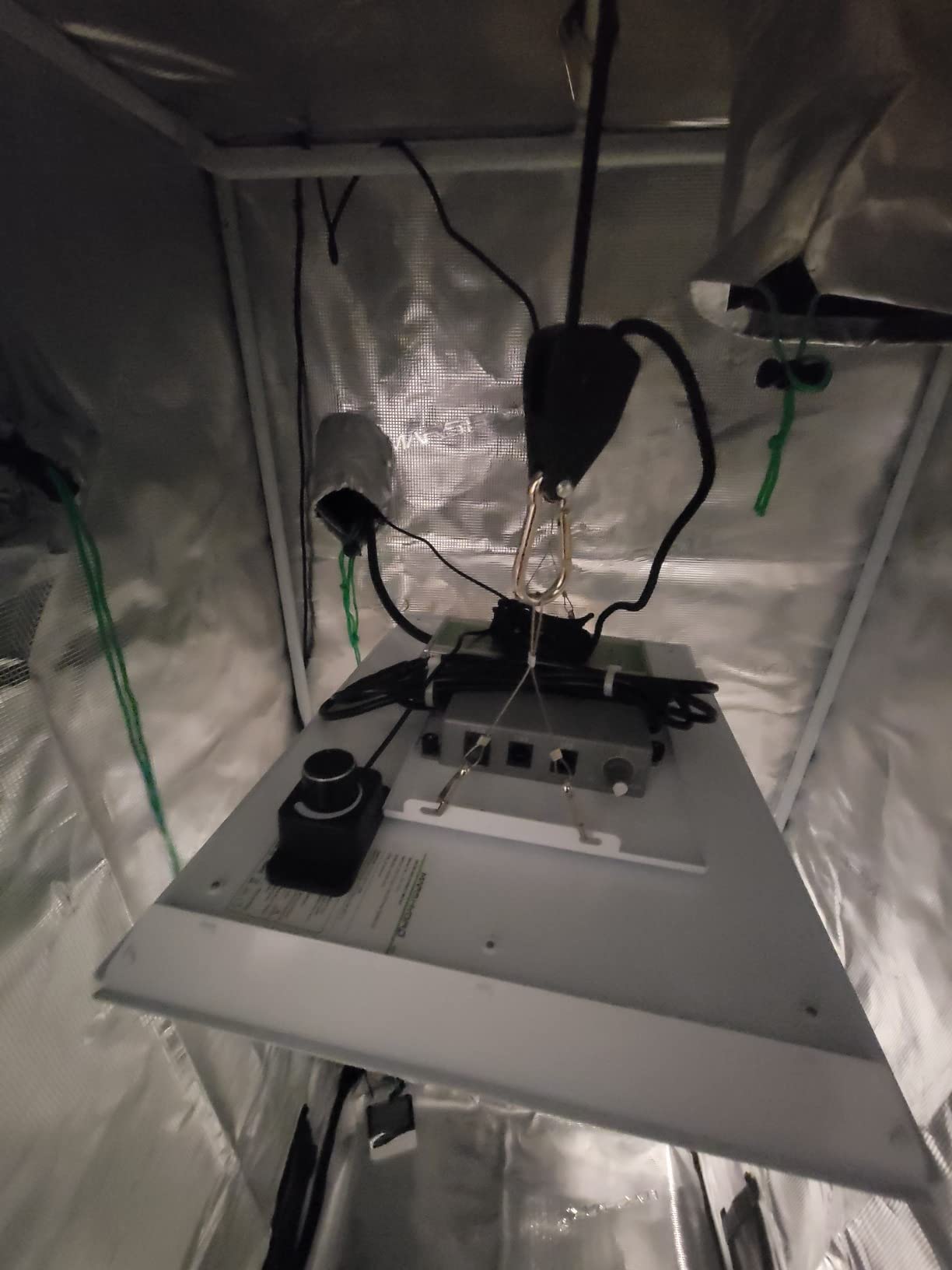
Ventilation is the strongest included in the group. The 4 inch smart inline fan moves 205 CFM at 3000 RPM and runs at 26.8 dB, which is quiet enough for a bedroom. The carbon filter uses 1050+ Australian virgin charcoal, and the tent frame is 0.8mm metal rated to 88 lbs with a viewing window and floor tray.
Reviewers describe this as the kit that let them start a grow with nothing else bought, and the 1680D diamond mylar interior is claimed to lift PPFD by 25 percent over a 600D tent, which makes the light work harder in a small space.
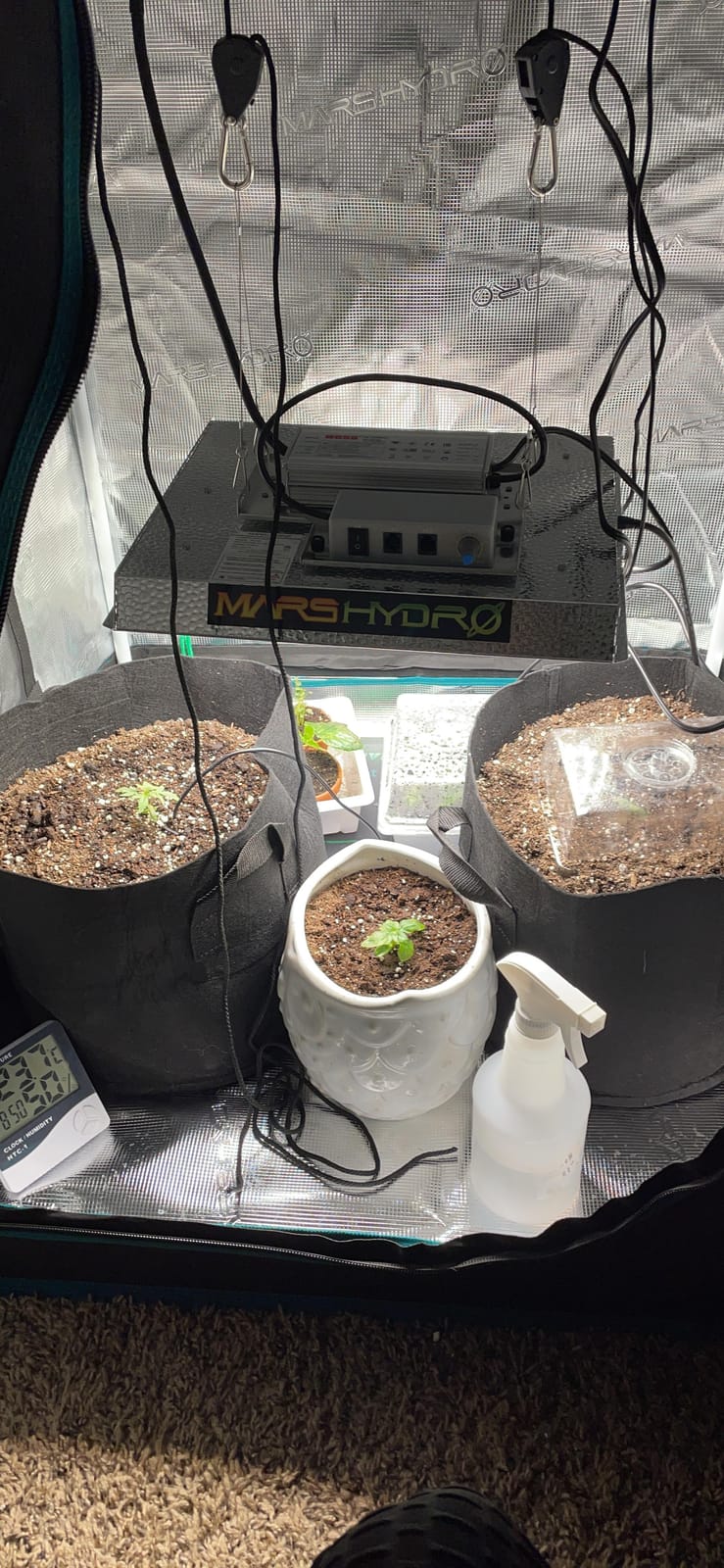
Why an all-in-one kit suits a first grow
A kit removes the biggest beginner trap: mismatched parts. The fan, filter and ducting all match the tent ports, so there is no leak at the connection and no guessing about diameters.
It also sets a working baseline. A 205 CFM fan matched to a 3×3 gives you the air exchange rate that the tent was designed around, which is a number no budget shopping list will give you for free.
Where it falls short
The light does not cover the full footprint of the tent, so plants in the corners grow more slowly unless you rotate them. Some inspection windows also leak light around their edges, and the included support straps are cheap enough to slip and drop equipment.
No power strip is included, and assembly is a two-person job, since one person holds the frame while the other hangs the light and filter. Budget for both.
7. Mars Hydro 2×2 Grow Tent Kit with TS600 – Best Kit for a Small Room
MARS HYDRO 2x2ft Grow Tent Kit with TS600 100W Full Spectrum LED Grow Light
24 x 24 x 55 inch
TS600 100W light
205 CFM at 26.8 dB
Carbon filter
Pros
- Complete set with light fan filter ducting netting and grow bags
- TS600 delivers 430 umol per m2 per s at 100W with dimming
- 1680D diamond mylar with light blocking fabric at the zipper
- Locking pins keep the frame aligned during assembly
- Speed controller lets you tune fan noise
Cons
- Light cannot always be dimmed low enough for sensitive plants
- 55 inch height is tight for full size plants
- Included meter has unclear programming instructions
The 2×2 TS600 kit is the version of the Mars Hydro bundle that fits inside a small room, and owners repeatedly describe it as a good first tent. 75% of its reviews are 5-star, with easy assembly, no light leaks and a bright, low-heat fixture as the common themes.
The box contains the 24 by 24 by 55 inch tent, the TS600 light, a 4 inch inline fan with a 0-100 percent speed controller, a carbon filter, 25 ft of ducting, elastic trellis netting and three grow bags. The light uses 225 LEDs and produces 430 umol per square meter per second at only 100W.
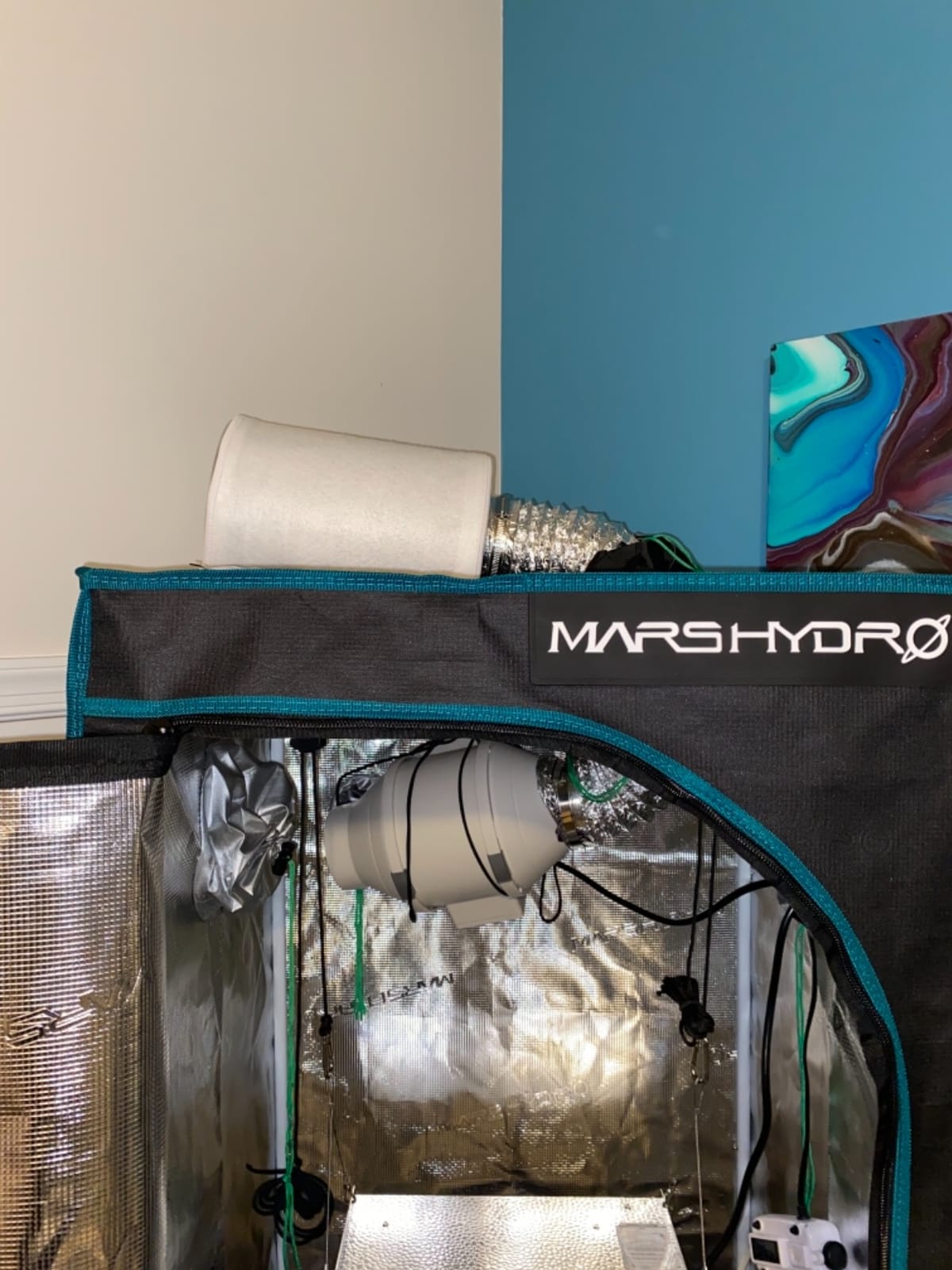
Build quality is better than the price suggests. The frame is 0.8mm metal rated to 88 lbs, the interior is 1680D diamond mylar, and light blocking fabric is sewn between the zipper and the canvas so the stitch holes are not exposed. Poles use locking pins, which keeps the frame square as you build it.
The EC motor inline fan runs at 205 CFM and 26.8 dB, and the speed controller is the detail most small-room growers appreciate, since you can drop it to a low setting overnight.
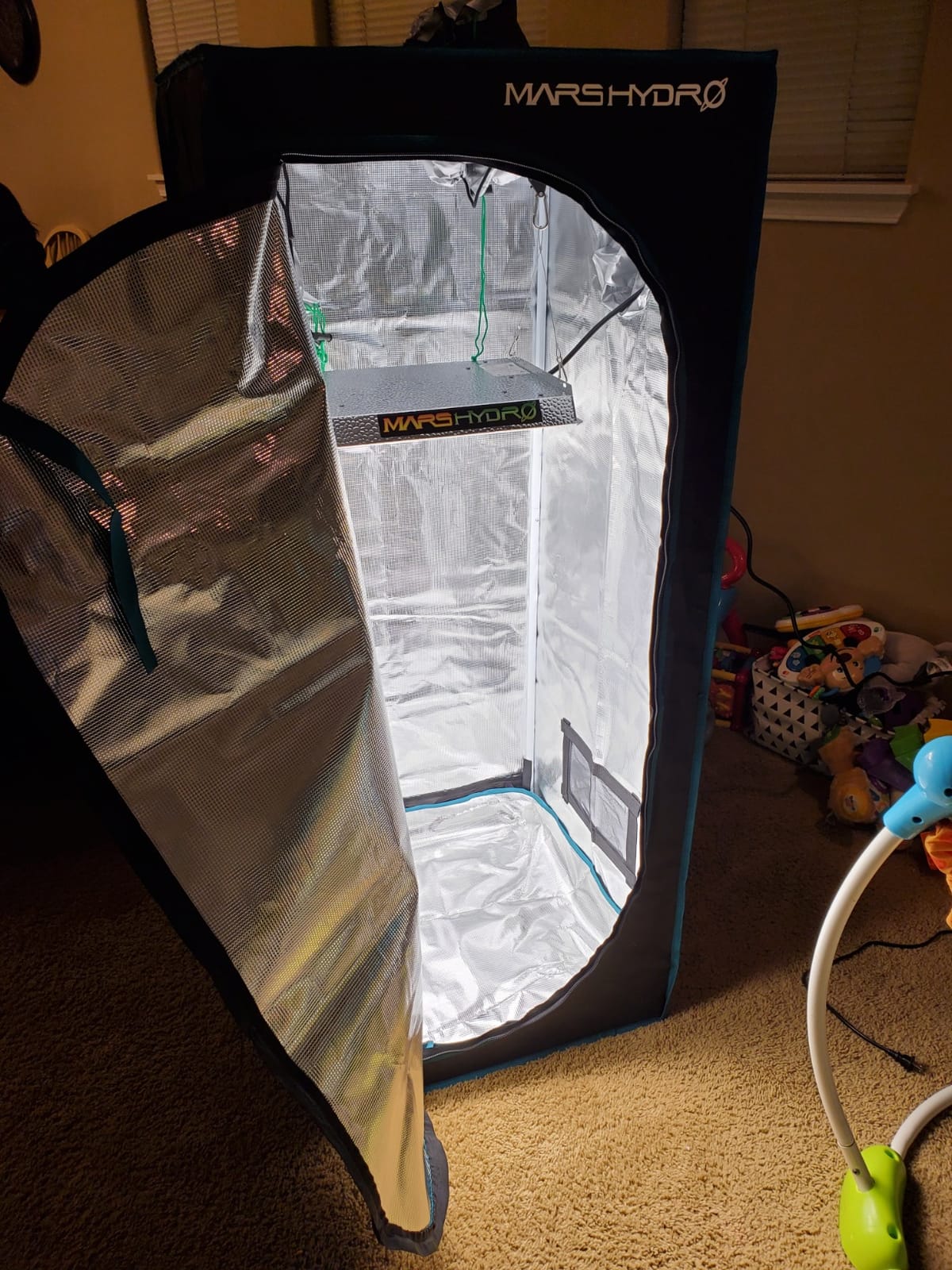
How to deal with the brightness complaint
The most common negative is that the light cannot always be dimmed low enough. If you are running leafy plants, the fix is height: hang the fixture at the top of the tent and lower it only as the canopy grows.
The 55 inch height is the other recurring note. It works for short and medium plants, but a tall strain at the end of a cycle will be closer to the fixture than you would like.
Where it falls short
Beyond brightness, the included thermometer and humidity meter is difficult to program because the instructions are unclear. The ducting is also a tight fit over the carbon filter opening and may need trimming before it seals properly.
Mounted outside the tent, the fan is noticeably louder at high speed. In a bedroom or a shared wall, keep it on the lower speed setting and duct the exhaust outside the room.
8. IPOW 2×2 Complete System – Most Parts in One Box
IPOW Grow Tent Kit Complete System 2×2 ft with VS1000 Led Grow Light, 4 Inch 190CFM Inline Fan, Carbon Filter and 8ft Ducting Combo, 24″ x 24″ x 55″
24 x 24 x 55 inch
100W LED light
190 CFM fan
Four grow bags
Pros
- Bundles tent light fan filter ducting clamps meter timer bags and hangers
- Light uses 100W with 240 LEDs and IP65 waterproofing
- Alloy steel frame with heavy duty 600D oxford exterior
- Ratchet hangers make light height adjustment easy
- Multiple owners report no light leak
Cons
- Included 300W inline fan is noisy and overpowered for a 2x2
- No speed control and several reports of early fan or timer failure
- Meter arrives without a battery and does not state the size
This is the most complete box on the list by item count, and the ratchet hangers on the included light setup are a real convenience. The 24 by 24 by 55 inch tent, a dimmable 100W full spectrum LED light with 240 LEDs, a 4 inch 190 CFM inline fan, a carbon filter, 8 ft of ducting, clamps, a thermometer, a hygrometer, a 24-hour timer, four 5-gallon grow bags and two rope hangers.
Buyers often call it a complete first-grow solution requiring only seeds and medium. The frame is alloy steel, the exterior is heavy duty 600D oxford cloth with double stitching, and the interior is reflective mylar over a waterproof floor tray.
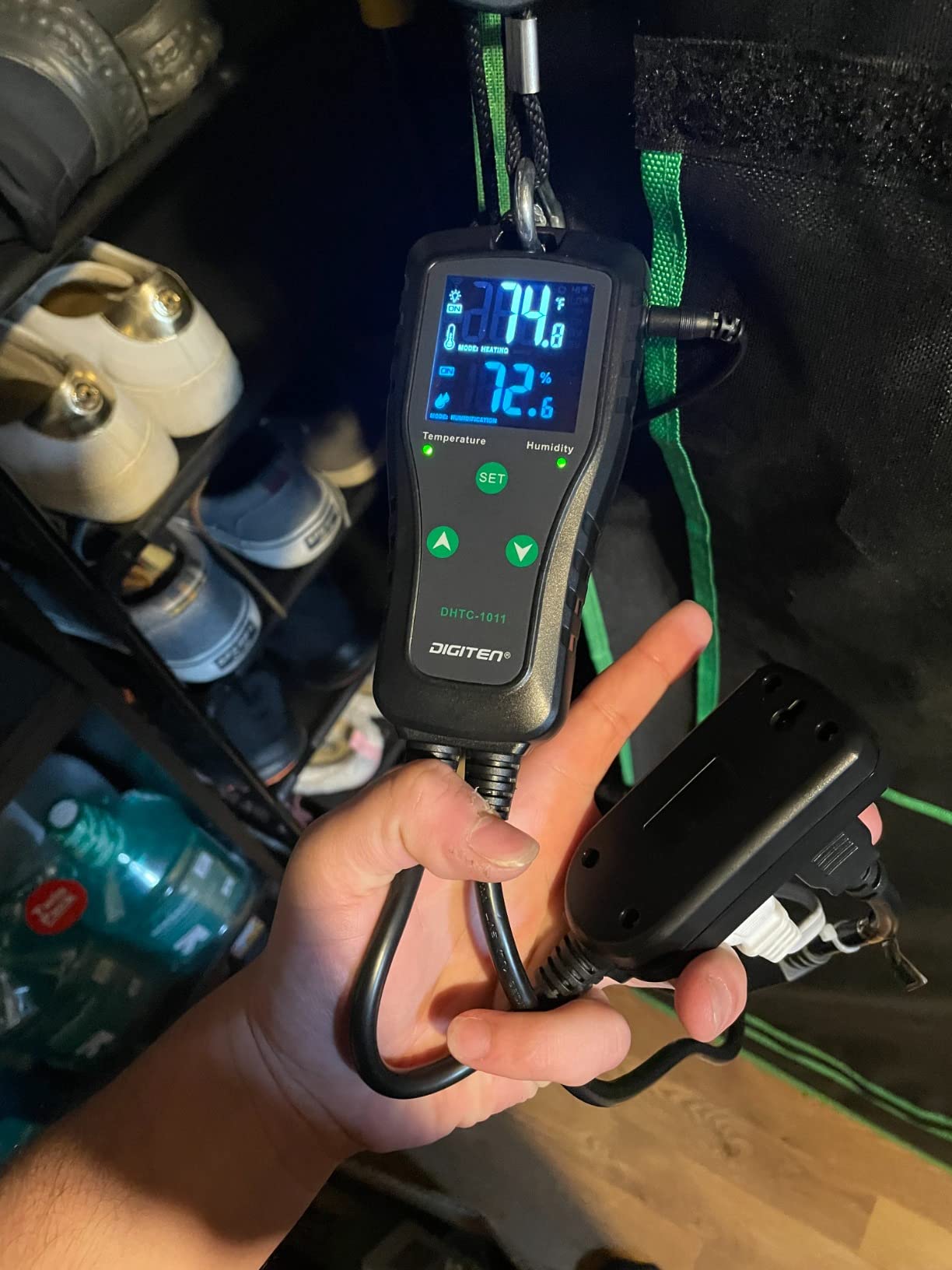
The light is the part we liked most relative to the rest. At 100W with 240 LEDs and IP65 waterproofing it is efficient, and the ratchet hangers let you raise and lower it as plants grow, which solves the height problem that usually comes with a 55 inch tent.
Owners also report that the assembly is easy and that several mention no light leak at all once the fabric is aligned properly on the frame.
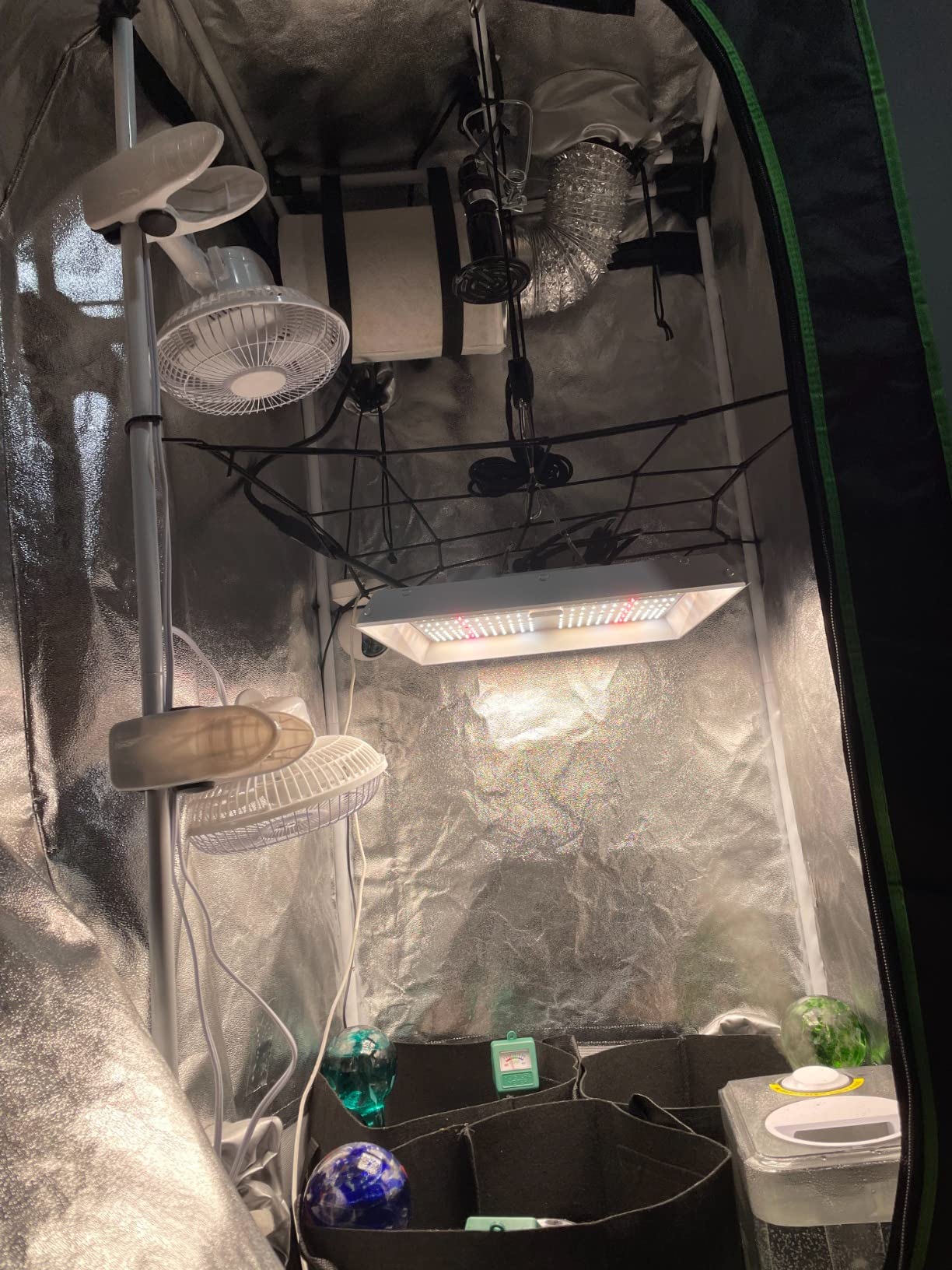
The fan is the part to inspect first
The dominant complaint is the included fan, which reviewers describe as too powerful for a 2×2 and noticeably loud, with no speed control. In a small room that noise is the difference between a grow space and an annoyance.
Several reviews also report the fan or the timer failing early. Because the fan is the shared element behind most of the 1-star reviews, it is the part we would test on day one before relying on it.
Where it falls short
The meter arrives without a battery and does not state which size it takes, and there is no surge protector or clip-on circulation fan in the box. Both are small gaps, but both sit on the list of things a complete kit should cover.
At 288 reviews it also has the thinnest owner base here, so treat the feedback as a useful signal rather than a settled verdict.
9. zazzy 4×2 Grow Tent – Best 4×2 Budget Tent
4×2 Grow Tent Plant Tent 600D Mylar Hydroponic 48″x24″x60″ Grow Tent
48 x 24 x 60 inch
98 percent reflective mylar
Anti-rust corners
Tool-free
Pros
- 98 percent reflective extra thick mylar lining
- PA anti-rust corner connectors with adjustable tightness
- Meshed ducting rectangle window keeps out dust and insects
- Tool-free install in about 20 minutes
- Measured dimensions match the advertised size
Cons
- Minor pinhole leaks at the zipper and viewing window
- Stitching and zipper lighter than premium brands
- Cover fit can be tight during assembly
The zazzy 4×2 sits at 48 by 24 by 60 inches, the same footprint as the VIVOSUN S425 and the ATOUR, but with a different selling point: honest dimensions and rust-proof hardware. Buyers repeatedly say the measured size matches the advertised size, which is not something you can assume in this category.
Inside is extra-thick mylar with 98 percent reflective lining, wrapped in double-stitched 600D tear-proof canvas. The upgraded PA anti-rust corner connectors have adjustable tightness, and reviewers note the anti-rust treatment avoids the detent button rusting they see on other budget brands.
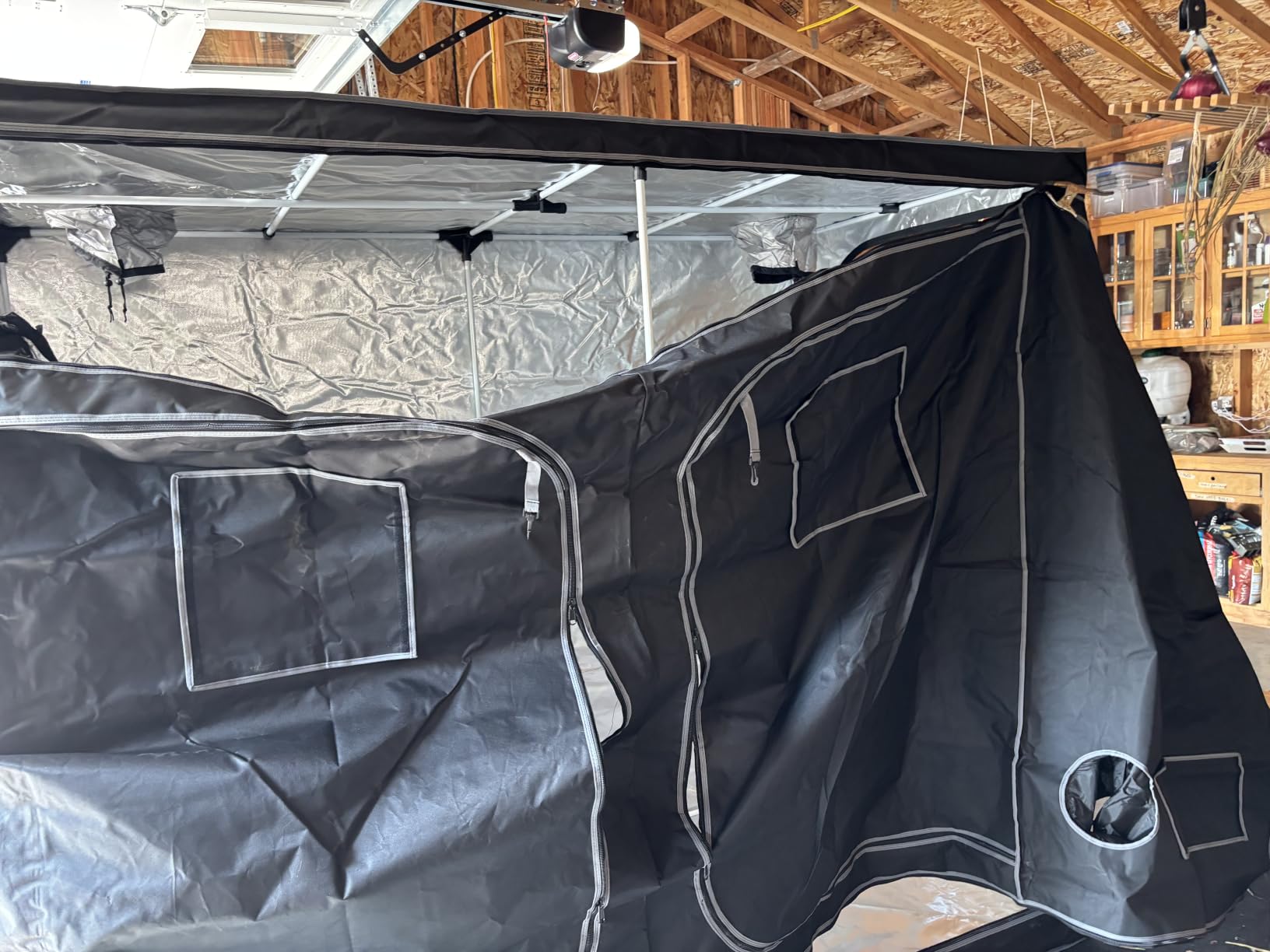
Ventilation is well thought out for a budget tent. There are multiple vents for fans and filters plus a meshed ducting rectangle window, so insects and dust do not come in through the ducting the way they do with a bare port. A removable mylar floor tray handles runoff and makes cleaning simple.
Tool-free installation takes about 20 minutes or less, and 76% of reviews are 5-star. Some owners also note the newer model’s zipper is noticeably smoother than the earlier version.
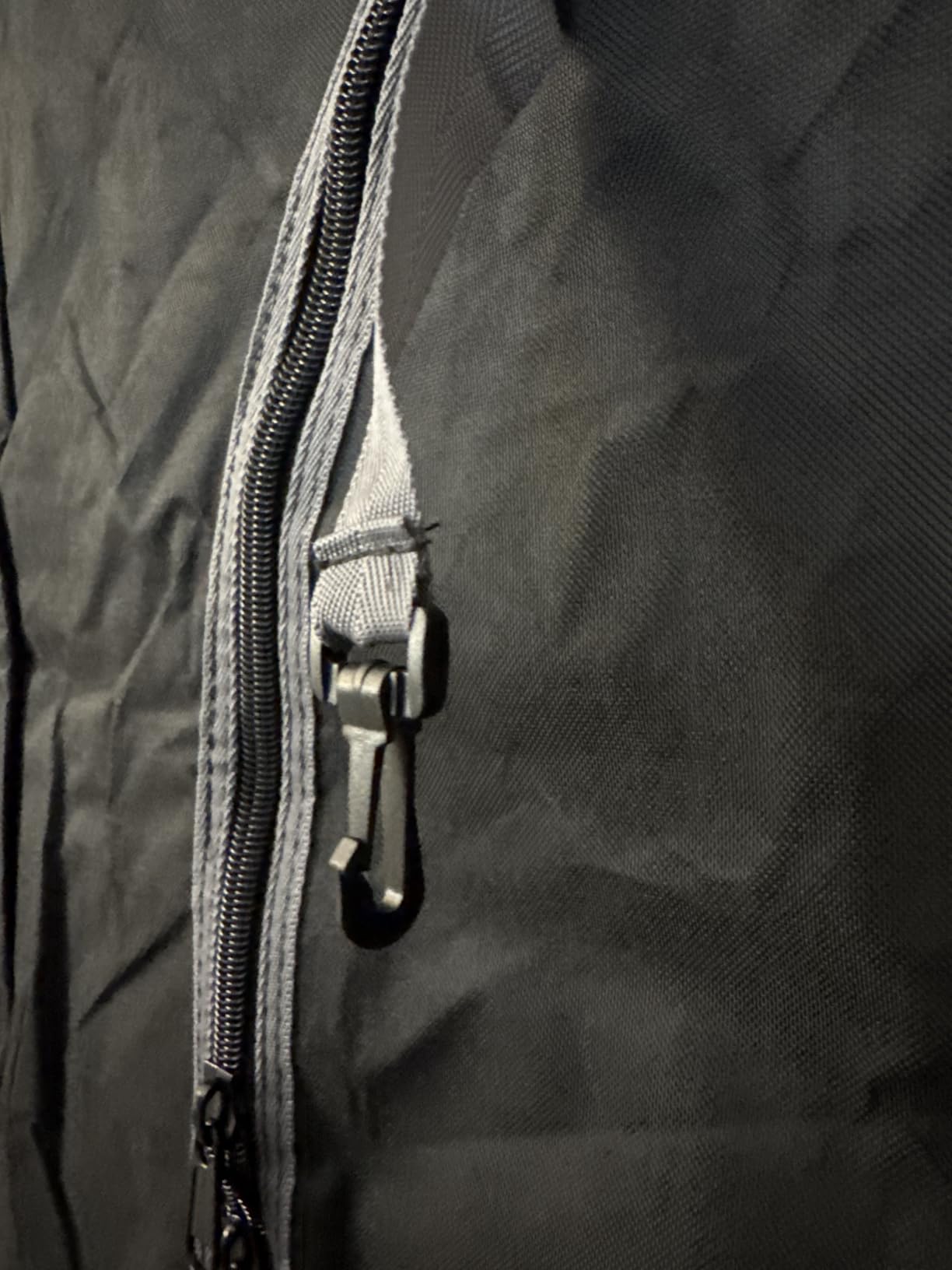
Why the corner connectors matter
The frame joints are where budget tents usually fail. Plastic corners crack under the combined weight of a carbon filter, a light and a driver, and then the whole frame racks. Adjustable-tightness PA connectors hold their grip instead.
If you plan to hang a filter, check that the connectors are the adjustable type, since that is the part doing the structural work.
Where it falls short
Leakage is the main caveat, with minor pinhole light leakage reported at the zipper and around the small viewing window in some units. Reviewers usually add that aligning the fabric properly during setup closes most of it.
Stitching and zipper quality are lighter than premium brands, and the cover fit can be tight, which makes single-handed assembly fiddly. There are also occasional reports of a missing part or a unit arriving damaged.
10. ATOUR 48x24x60 Grow Tent – Best for Seedlings and Drying
ATOUR 48”x24”x60” Grow Tent, Reflective 600D Mylar,Hydroponic Grow Tent with Observation Window and Floor Tray for Indoor Plant Growing 4’x2’
48 x 24 x 60 inch
600D mylar canvas
Reflective polyester lining
Zipper flap
Pros
- Thick canvas and reflective film lining for the price tier
- Interior zipper flap helps block escaping and entering light
- Tool-free assembly completed in about 15 minutes alone
- Multiple bottom vent openings for air exchange
- Suitable for wardrobes basements and balconies
Cons
- Instructions in the box may cover other sizes only
- Velcro on the observation window loosens with frequent use
- Zipper and frame pole holes are not perfectly finished
The ATOUR is an 8 square foot tent with 40 cubic feet of chamber volume, and reviewers position it as a capable budget option rather than a heavy-duty one. It often comes up for seedlings, drying and a first grow, and 72% of its reviews are 5-star.
The build is 600D mylar canvas with zipper and double stitching protection, a reflective polyester film interior, and reinforced heavy metal rods. An interior zipper flap helps block light escaping the room or leaking in from outside, which is the difference between a dark cycle and a glowing closet door.
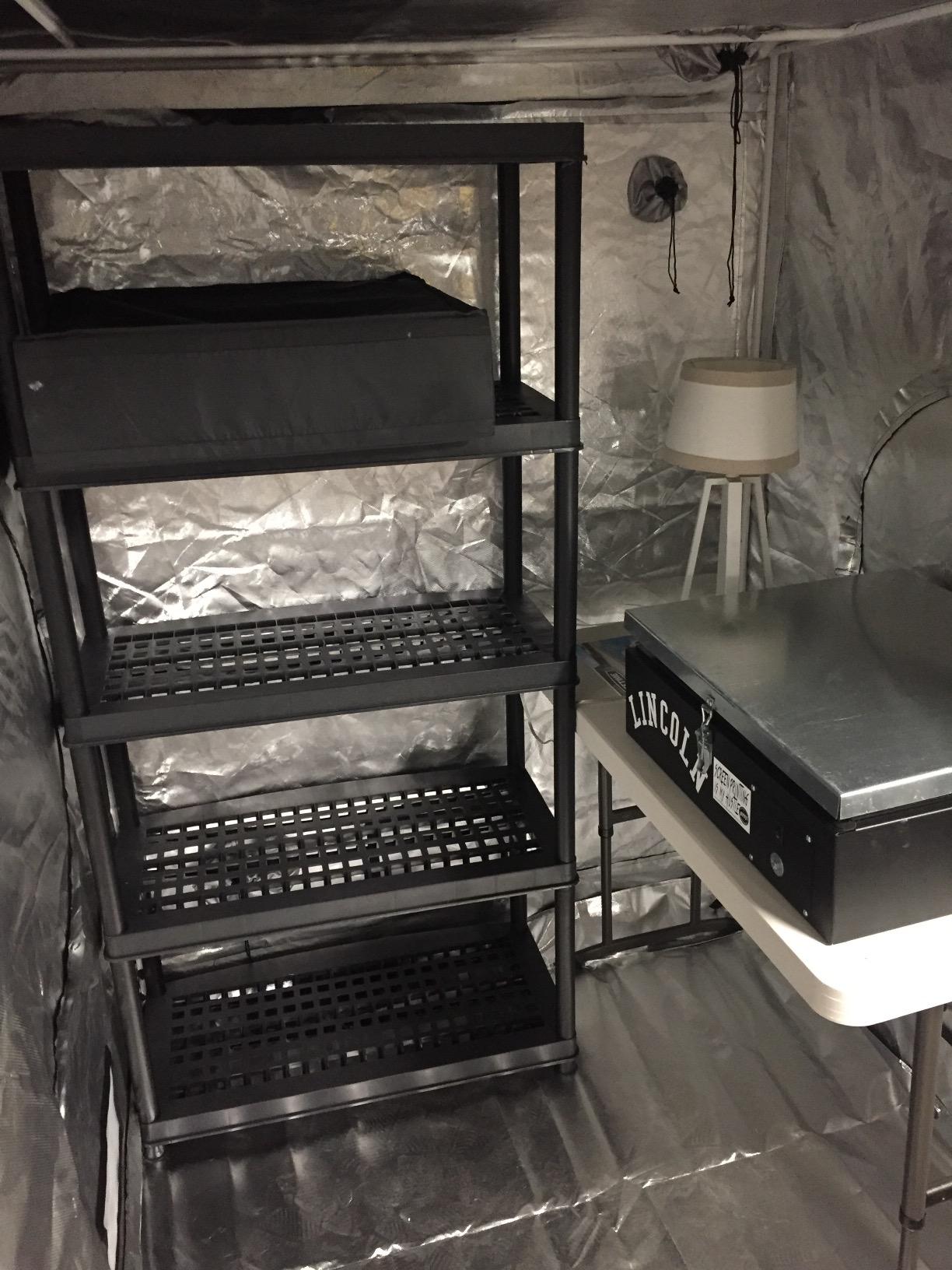
Assembly is tool-free, and one buyer completed it alone in about 15 minutes. There is a clean observation window for checking plants, and multiple bottom vent openings that most people forget to use until they need them for fresh air intake.
It fits the awkward places: wardrobes, basements and balconies, where a 4 by 2 footprint is easier to work with than a square tent.
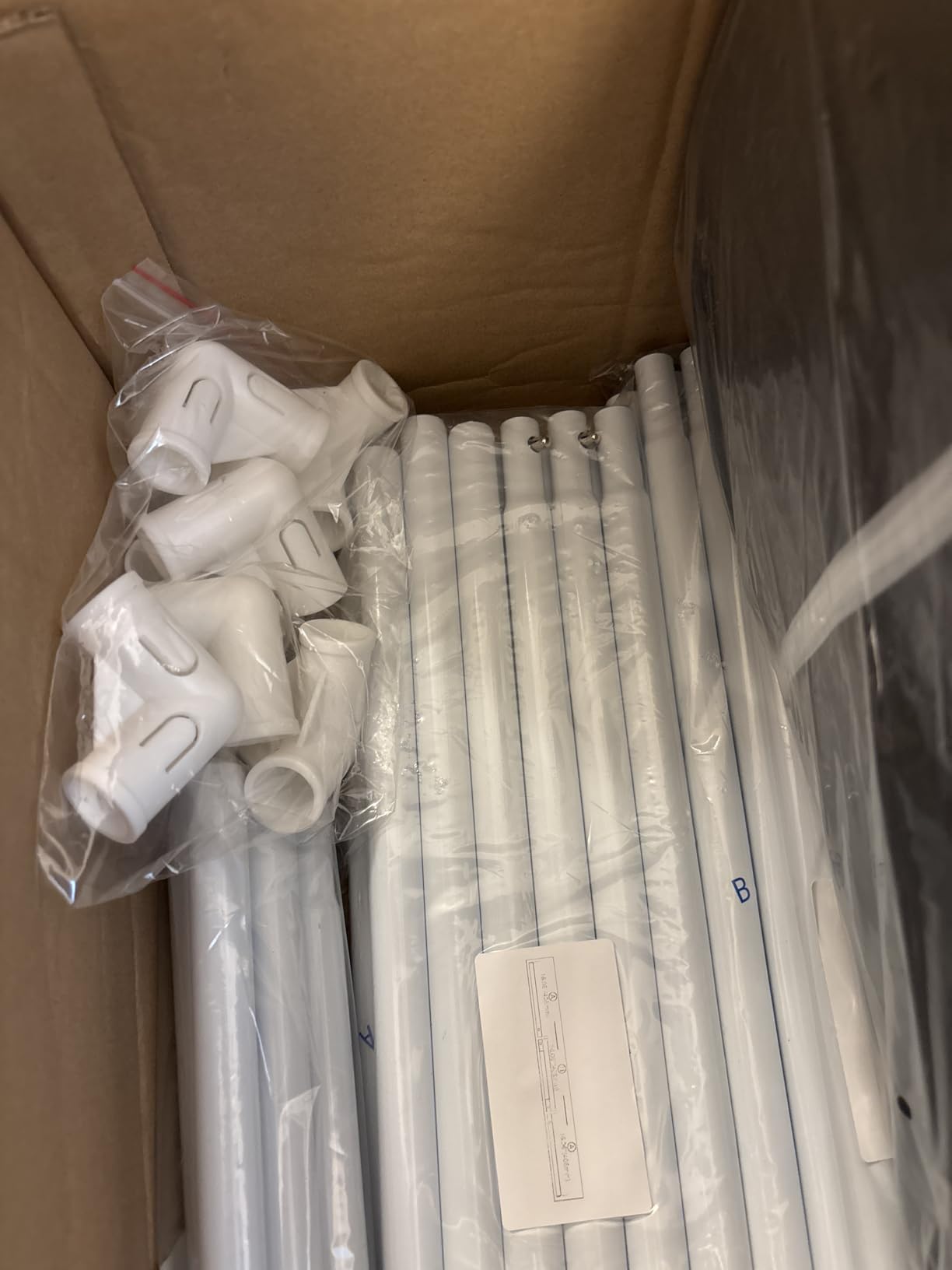
A second use beyond a first flower grow
At 40 cubic feet this tent works well as a propagation or seedling space, and the bottom vents give seedlings the airflow they need without a full extraction setup. It also does the job as a drying tent, where height is less critical than darkness.
Either way, the reflective film interior keeps light moving around the canopy instead of soaking into fabric, and the observation window lets you check progress without breaking the seal.
Where it falls short
Quality control is uneven at this level. Some buyers report that the instructions in the box cover only other sizes, and that the zipper is not the highest quality with frame pole holes that do not align perfectly.
The Velcro on the observation window can come loose with frequent opening, and bracing could be stronger if you plan to hang heavy equipment. Treat it as a light-duty tent rather than a long-term one.
What Size Grow Tent Do Beginners Need?
Size is the first decision, and it is easier to make than most buyers think. The rule that matters is plant count against floor area, not the number on the box. A 2×2 fits one or two plants, a 2×4 fits two to four, a 3×3 fits around four in a square layout, and a 4×4 fits four to six.
Second rule: check your ceiling. Anything under about 5 feet tall gives the canopy very little room before it reaches the fixture, and canopy burn is the most common beginner complaint on short tents. The 2×2 Spider Farmer at 48 inches and the MELONFARM at just over 40 inches are the two picks where height is the limiting factor.
Third rule: measure the room, not the tent. A tent needs clearance in front of the door to open it, and ducting needs a path to the outside. If you plan to grow large later, our walk-in tent guide covers the next step up.
Complete Kit vs Tent-Only: What a Beginner Should Buy
A tent-only purchase is the flexible choice. You control every component, replace anything that fails, and reuse the enclosure across many cycles. It is the right move if you already know which light and fan you want, or if you want to grow something that does not need a light at all, such as microgreens, houseplants or mushrooms.
A complete kit is the fast route. It removes the sizing guesswork between the tent ports, the fan diameter and the ducting length, and the four kits here all include a light, a fan, a carbon filter and ducting. Two of them also include grow bags or netting, so seeds, medium and nutrients are genuinely the only things missing.
One caveat from buyers: a kit is only as good as its weakest part. The most common first-year complaints about kits are the included fan failing or running loud, the light not covering the full floor area, and straps that are not strong enough. Buy the kit for convenience, then check the fan and the straps on day one.
What to Look for in a Beginner Grow Tent
Fabric denier. The D number is thread density, and a higher number means a heavier weave. 600D is the entry grade used by the VIVOSUN S425, the zazzy 4×2, the ATOUR and the tent inside the IPOW kit. 1680D appears in the Mars Hydro 3.3×3.3, the Spider Farmer and the two Mars Hydro kit tents, and 2000D is exclusive to the AC Infinity CLOUDLAB here.
For a single first run, 600D blocks light well enough for a dark cycle. Across repeated cycles it is where the heavier weave starts to pay for itself, since it resists tearing and handling far better.
Frame and weight capacity. Look for steel or alloy steel poles and reinforced corners, not plastic. Published capacities in this roundup run from 88 lbs on the 0.8mm Mars Hydro kit frames to 150 lbs on the AC Infinity, with the Spider Farmer frame supporting 120 lbs. Whatever you hang, the total of light, driver and filter has to sit comfortably under that number.
Zippers and light leaks. This is the quality signal experienced growers mention most often, more than any other spec. Heavier zippers last longer, and a zipper that snags gets forced and eventually fails mid-cycle. Look for SBS zippers, dual stitching, and a flap or shade cloth covering the stitch holes. The Mars Hydro 3.3×3.3 does the shade cloth version, and the VIVOSUN has a black inner lining at the zipper for the same reason.
Five minutes of testing under a dark room with a light inside is worth more than any spec on the box.
Ducting ports and height. At least two ports matter, one low for intake and one high for exhaust, and they should accept a standard 4 inch inline fan without an adapter. The AC Infinity adds 6 and 8 inch ports, which is the most flexible arrangement here. Height decides whether the light can hang far enough above the canopy, and taller is always easier to manage.
Lining and floor. Reflective mylar or diamond mylar bounces stray light back onto the plants instead of absorbing it, and reflective percentages in this group reach 98 percent on the zazzy. A removable waterproof floor tray is not optional in our view, because runoff that sits on a floor with no tray turns into mold across cycles. Every tent in this roundup has one.
Ventilation and Odor Control Basics
Air exchange is what keeps a tent healthy. The standard target is to replace the volume of air in the tent every one to three minutes, which is how you arrive at the CFM figures quoted in the kits. The Mars Hydro 2×2 and 3×3 kits include 4 inch fans rated at 205 CFM, and the IPOW kit includes a 4 inch fan at 190 CFM.
Intake goes in low, exhaust goes out high, and the fan on the top port pushes warm, stale air out through a carbon filter. Filters in these kits use 1050+ Australian virgin charcoal, and the size of the filter has to match the fan. An undersized filter or a long ducting run is the usual reason odor escapes into a living space.
Noise is worth planning for if you are growing in a bedroom. The 26.8 dB EC motor fans in both Mars Hydro kits sit at the quiet end, and the 2×2 kit adds a 0-100 percent speed controller so you can turn it down overnight. The IPOW fan is louder with no speed control, so plan on mounting it outside the room.
Vents matter too. Both the ATOUR and the zazzy have lower vent openings for intake, and the zazzy adds a meshed rectangle ducting window so insects do not come in through the port. Leaving the lower vents open during the dark cycle also helps keep temperature down.
What Your First-Grow Budget Still Needs
The tent is the part most people plan for and the smallest part of the total. This is what a kit leaves you still needing, and it is why we always advise against spending everything on a premium enclosure.
Consumables come next: pots or grow bags, a growing medium, a nutrient set, and a pH and EC meter if you are growing in soil rather than a pre-mixed medium. None of the tents here include these, and none of the kits include seeds.
Electrical and control items are the quiet extras: a timer, a surge protector, extension cords rated for the light load, and a thermo-hygrometer if the kit did not include one. A digital hanging scale for checking weight also pays for itself, since a two-plant tent is easy to overwater.
Flexibility comes last but matters most. Rope hangers, a small oscillating clip fan, a thermometer probe that sits at canopy height and a spare set of frame corners will each solve a problem you did not predict. The forum consensus is consistent on this: buy the tent and the light so you can afford a carbon filter and a decent fan, rather than the reverse.
Mistakes to Avoid on Your First Grow Tent
Buying the tent before you plan the ducting route is the most common one. A long ducting run or a bend around a corner drops airflow sharply, and the fix is a shorter, straighter path to an outside wall or window.
Spending the whole budget on the tent leaves nothing for the light or the filter, which is why the mid-tier builds here score so well. A 1680D tent with a modest light beats a 2000D tent with no light.
Ignoring height is the third. Two of the tents in this roundup are short enough that the canopy will reach the fixture before the plant is finished, and that is a light burn you cannot undo.
Finally, check for light leaks before you plant anything, and inspect the zippers and stitching under a dark room with a light inside. Five minutes at that stage saves a reseeding cycle later.
Frequently Asked Questions
What is the perfect grow tent setup for beginners?
A 2×2 or 2×4 tent at least 5 feet tall with a steel frame, 600D or heavier canvas, a reflective mylar lining, two ducting ports and a removable waterproof floor tray, paired with a dimmable LED light, a 4 inch inline fan and a matched carbon filter. Kits such as the Mars Hydro 3×3 smart kit or the IPOW 2×2 system bundle most of that list so a first-timer only adds seeds, medium and nutrients.
What size grow tent do I need as a beginner?
Match the tent to your plant count and your ceiling. A 2×2 fits one or two plants, a 2×4 fits two to four, a 3×3 fits about four in a square layout and a 4×4 fits four to six. Height matters as much as footprint, because anything under 5 feet puts the canopy close to the light fixture and raises the risk of light burn.
Should a beginner buy a grow tent kit or buy the pieces separately?
A kit is faster and avoids mismatched parts, since the fan, filter and ducting already match the tent ports. Buying separately gives you control over every component and lets you reuse the tent across more cycles. Whichever route you take, reserve budget for a carbon filter and a decent inline fan, because a tent and a light alone will not control heat or odor.
Are AC Infinity tents worth it for a first grow?
The AC Infinity CLOUDLAB 642 is the most durable tent in this roundup, with 2000D canvas, 1 inch steel poles, a 150 lb capacity and a 4.7 average across 7384 reviews. It is also the most expensive tent-only option here. The build pays off across several cycles or for a taller 4×2 setup; for one run, a 1680D tent gives you most of the benefit for less.
Should I keep the vents in my grow tent open or closed?
Keep the lower intake vents open during the dark cycle so fresh room air enters the tent, and let the inline fan on the upper port pull warm, stale air out through the carbon filter. Closing everything traps heat and pushes humidity up, which shows as curling leaves and slow growth. Upper ports only need to be open when the fan is running.
How hot is too hot inside a grow tent?
Most growers treat the low 80s Fahrenheit as the ceiling and aim for the mid 70s during the light cycle. Above that range plants stop transpiring properly and growth slows. Fixes in order of effect: increase air exchange with a correctly sized inline fan, add a clip fan across the canopy, run the light cycle cooler at night, and confirm the carbon filter is not restricting airflow.
Conclusion
The best grow tents for beginners come down to three picks. The VIVOSUN S425 2×4 is the safest first purchase, with the deepest owner base and a two-year warranty. The AC Infinity CLOUDLAB 642 is the one to buy if you want the build to last, and the Mars Hydro 3.3×3.3 gives you the best usable area at mid-range build quality.
If you would rather not assemble a list of parts, the Mars Hydro 3×3 smart kit and the Mars Hydro 2×2 TS600 kit carry everything except seeds, medium and nutrients. Check the frame, the zippers and the height against your room before the box arrives, and you will avoid almost every problem the first grow throws at you.
If you are still comparing setups, our general tent reviews cover the shape and fabric questions that sit underneath this list.