
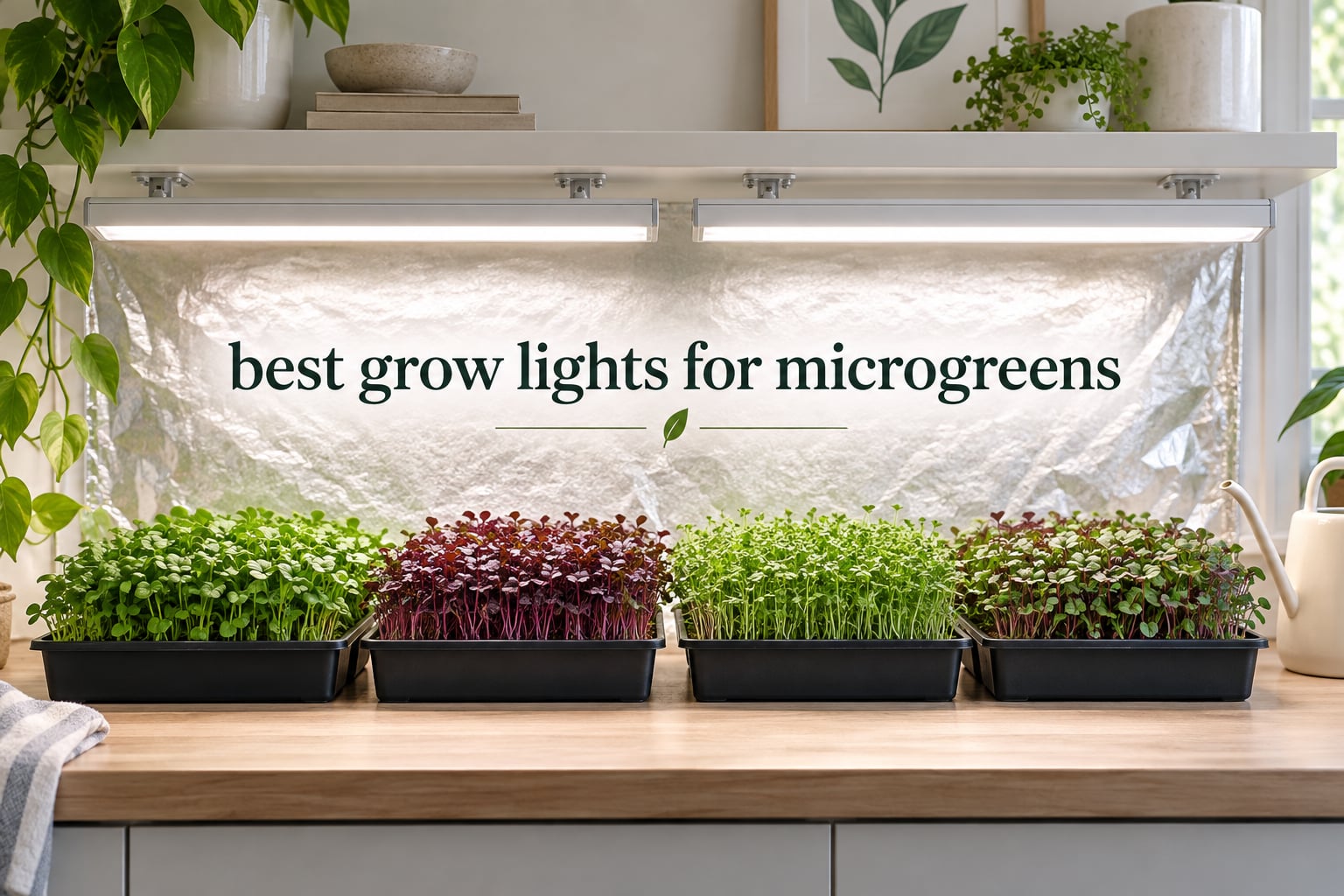
Microgreens finish in under three weeks, which means every tray you sow is also a lighting experiment. If the canopy sits in the dark for the first ten days, you get tall, pale, watery stems that taste like nothing. Our team ran the same broccoli, radish and sunflower tray under ten different fixtures to find out which ones hold up over a full 17-hour day.
Table of Contents
Quick Answer: The Best Grow Lights for Microgreens Deliver Daylight White Light, Not Purple
The best grow lights for microgreens are white-spectrum LED fixtures between 5500K and 6500K, delivering roughly 2,000 lumens per 10×20 tray from 6 to 12 inches above the canopy, on for 16 to 17 hours a day and off for 7 to 8. That works out to about 20W per tray shelf, and a dimmable fixture is worth paying extra for once your rack grows more than one variety.
That spec block is the whole answer, honestly. Microgreens are harvested before flowering, so they need broad daylight-spectrum light for photosynthesis and for the photosynthesis-dependent development of vitamin C, E and K, not for bloom triggers. Everything else on this page is the detail behind those four numbers.
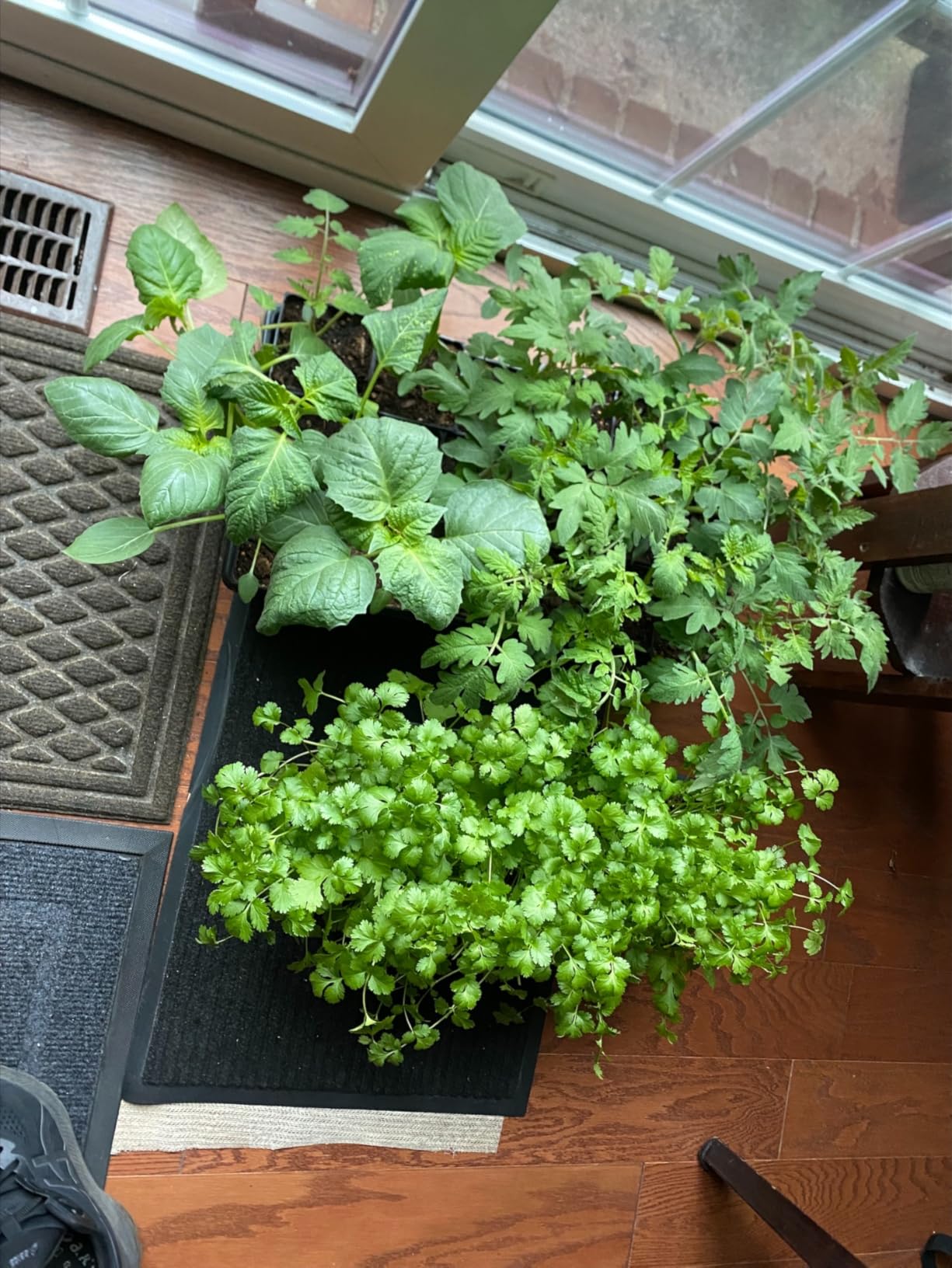
Do you actually need a grow light? If your setup is a south-facing windowsill and you only grow in summer, you can get by without one. The moment you move indoors, run a rack, or start growing in autumn, you want one. Light through glass loses intensity, and the seasonal swing is the reason so many growers end up with a crop that looks fine in August and pale by December.
A bright indoor grow space has more in common with a small controlled-environment setup than with a windowsill. If you are building out a room rather than a single tray, start with our grow tent kit roundup and our hydroponic tent picks so the lighting sits inside a setup that already handles airflow. Poor airflow plus a warm fixture is what turns a good rack into a mould problem, and we cover the ventilation side in our ventilation kit guide.
Top 3 Picks for Grow Lights for Microgreens in 2026
We kept these three because each one solves a different version of the same problem: covering a shelf, covering a room, or covering a single countertop tray for the least money. Every other pick below earned its place in a specific setup rather than as a general recommendation.

Barrina LED T8 4ft 6-Pack
- 252W across six 42W T8 tubes
- PPFD 220.8 umol/m2/s at 8 in per light
- Linkable in series up to 6 fixtures

Barrina T5 5000K 2ft 8-Pack
- 5000K white full spectrum
- 80W total with 400 LEDs
- Linkable in series up to 16 units

Mosthink Under-Shelf Grow Strips
- PPFD 140 umol/m2/s at 8 in per bar
- 5 brightness levels plus 3/6/12h timer
- IP65 sealed housing
10 Best Grow Lights for Microgreens (October 2026)
Everything below is a real fixture with published specifications and a real review history. Where a listing does not publish a PPFD figure, we say so rather than guessing, because that missing number is exactly what you need when you compare two products side by side.
| Product | Specifications | Action |
|---|---|---|
| Barrina LED T8 4ft 6-Pack, 252W Pink |
|
Check Latest Price |
| Mosthink Indoor Grow Strip Lights 2-Pack |
|
Check Latest Price |
| Barrina T5 5000K 2ft Grow Light 8-Pack |
|
Check Latest Price |
 Kullsinss 16in Grow Light Strips, 2-Bar 120 LED Kullsinss 16in Grow Light Strips, 2-Bar 120 LED |
|
Check Latest Price |
 Rocoking 40W Ultra-Thin Grow Panel, 4pcs Rocoking 40W Ultra-Thin Grow Panel, 4pcs |
|
Check Latest Price |
 Bokeedo T5 Seed Starting Grow Lights, 10W x2 Bokeedo T5 Seed Starting Grow Lights, 10W x2 |
|
Check Latest Price |
 SDOVUERC Full Spectrum Grow Panel 4-Pack SDOVUERC Full Spectrum Grow Panel 4-Pack |
|
Check Latest Price |
 FREELICHT 4ft Grow Light 2-Pack, 40W FREELICHT 4ft Grow Light 2-Pack, 40W |
|
Check Latest Price |
 VIVOSUN T5 Grow Lights 5000K, 2ft, 8-Pack VIVOSUN T5 Grow Lights 5000K, 2ft, 8-Pack |
|
Check Latest Price |
 Barrina 4ft 5000K Daylight White, 6-Pack Barrina 4ft 5000K Daylight White, 6-Pack |
|
Check Latest Price |
1. Barrina LED Grow Light 4ft T8 6-Pack: The Best Overall Grow Light for Microgreens
Barrina LED Grow Light, 252W(6 x 42W) 4ft T8, Full Spectrum, Pink, 6 Packs
252W across six 42W 4ft T8 tubes
PPFD 220.8 umol/m2/s at 8 in per light
Linkable in series up to 6 fixtures
Pros
- Highest review volume in this roundup with a 4.6 average
- Linkable design covers a full shelf from one outlet
- V-shaped aluminum reflectors boost efficiency and shed heat
- Integrated chips spread light more evenly than separate diodes
Cons
- Pink light color is unpleasant in a shared living space
- Needs clips and cabling rather than a simple plug-in bar
- 252W is real draw for a home circuit
This is the fixture we ended up running above our main shelf, and the reason is simple: it publishes a PPFD number. Barrina states 220.8 umol/m2/s at 8 inches for a single tube, which puts a single light comfortably inside the 100 to 300 umol/m2/s band that research on microgreens points to, and two lights per shelf sit at the top of that band. Most listings in this roundup publish no PPFD at all, which makes them impossible to compare honestly.
The pack is six 42W 4ft T8 tubes running on 252W total, with 1152 LEDs across the set. In practice you almost certainly will not run all six at once on a domestic circuit. Two tubes per shelf, spaced so the light bars do not shade one another, is the sensible configuration and it matches the two-strips-per-shelf setup that growers describe most often in r/microgreens.
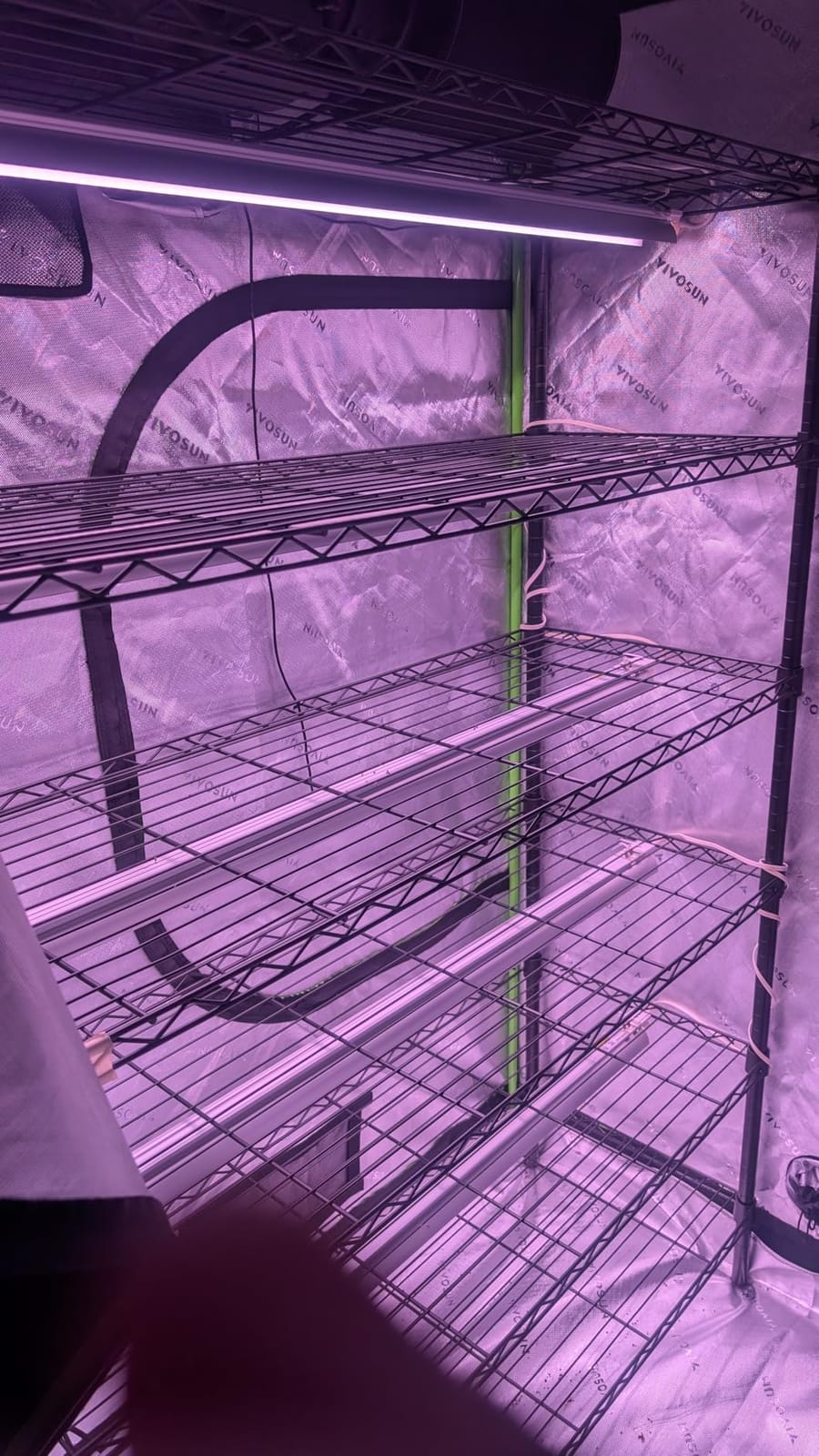
The physical design is the part people underestimate. Each tube has a V-shaped aluminum reflector that the manufacturer claims adds 17 to 20 percent efficiency, and the same housing does the thermal work so the diodes run cooler. Two power cords, five 48-inch connecting cords, six connectors, 24 clips, 12 tapes and 24 cable ties are in the box, so a four-tray shelf is a ten-minute job rather than a hardware-store trip.
Linkability is the genuinely useful spec here. You can chain up to six strips in series on the second-generation GM series connectors, which means a two-tray countertop setup and a twelve-tier rack can run from the same kind of connection. Growers on overgrown-type forums make the same point in reverse: if the light is new LED technology, the brand matters far less than the wattage and the distance you hang it at.
What this fixture does well on a real shelf
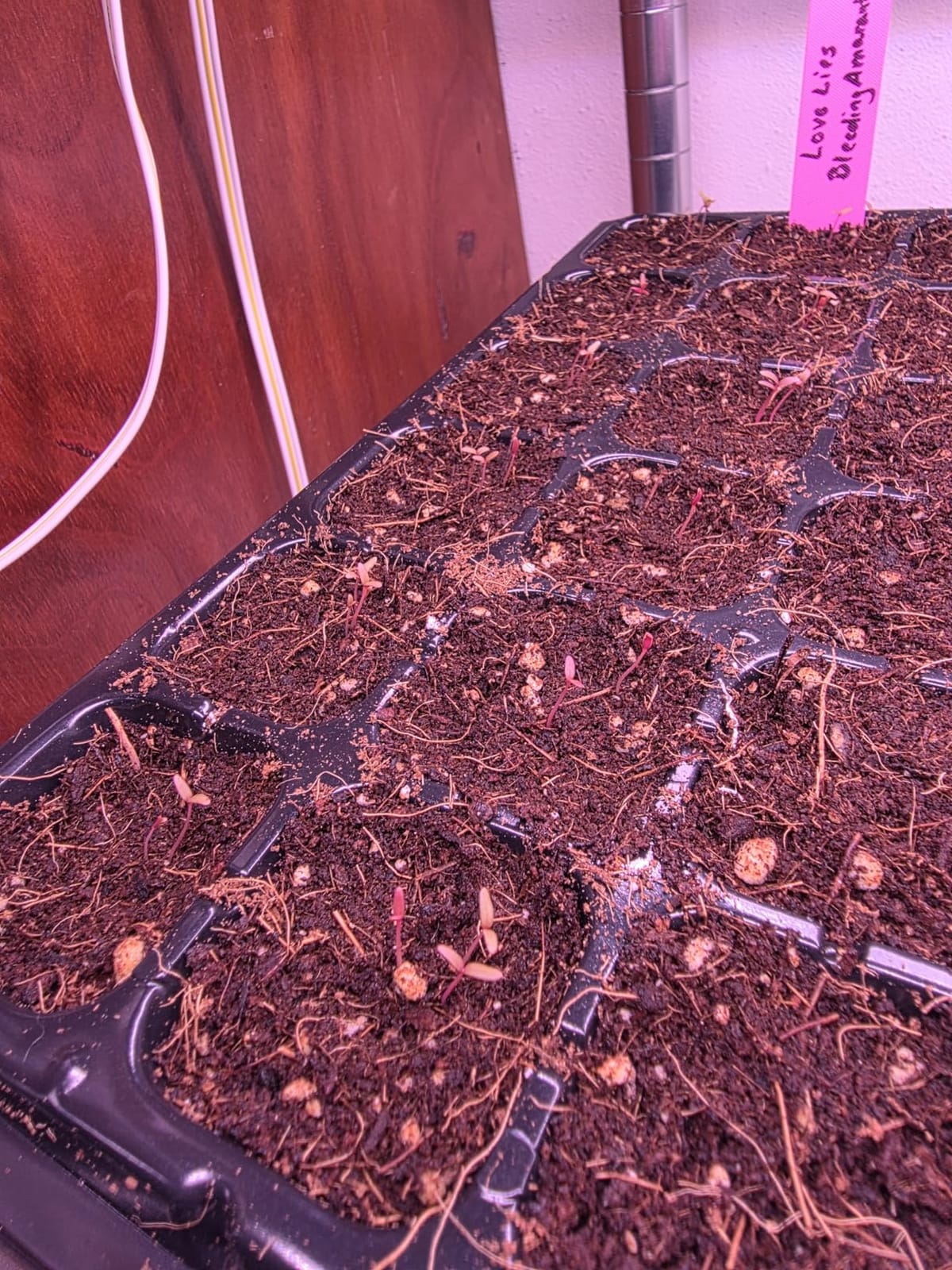
Even coverage was the surprise. Integrated chips spread the light along the whole 4ft bar rather than throwing hot spots from discrete diodes, and on our two-tray shelf the centre of the second tray was visibly darker than the edges of the first. That edge-to-centre gap is where most pale, leggy patches come from, so even coverage is not a cosmetic feature.
The 13,415-rating review history matters here for a practical reason: it is the largest sample in the roundup, so the reported failure patterns are well documented rather than anecdotal. Buyers consistently praise the brightness, the linkable chain setup and germination results, and the one reservation that shows up again and again is the pink light colour itself.
Who should skip this one
Skip it if the grow area doubles as a living space. A rosy wash across a kitchen counter is a hard sell, and the colour is the one complaint its own buyers raise most. For a basement shelf, a spare room or a closet rack, that trade is worth making without hesitation.
Also skip it if you are powering it off a single shared household outlet and plan to run all six tubes continuously. At 252W this is a heater with a plant attachment, and the load belongs on its own circuit. If you only need two trays, take two tubes from the set and leave the rest in the box.
2. Mosthink Indoor Grow Strip Lights: The Best Budget Grow Light for a Single Tray
Mosthink Indoor Grow Strip Lights for Under Shelf Cabinet Plants
Two 13 inch bars with 96 LED chips total
PPFD 140 umol/m2/s at 8 inches
Five brightness levels with 3/6/12h auto timer
Pros
- Compact under-shelf footprint with a 78 inch cord
- Five brightness levels plus 3/6/12h auto timer
- IP65 sealed housing suits humid seed-starting areas
- Large review base at over 12000 ratings
Cons
- 140 umol/m2/s suits seedlings better than dense trays
- Shorter 6 month warranty than most competitors here
- Touch and remote control are fiddly to use in the dark
If you are growing one 10×20 tray on a countertop and nothing else, this is the cheapest way to stop guessing. Mosthink publishes 140 umol/m2/s at 8 inches per bar, which is the low end of the useful band, so the honest framing is that it is a seedling-capable light rather than one that will push a dense sunflower tray.
Each bar measures 13 inches wide and 0.8 inches deep, and the pair of them covers the width of a standard tray with the 78-inch cord giving you enough slack to hang the unit from a shelf lip or a clamp. The IP65 rating is a genuine advantage for microgreens specifically, because condensation and misting are part of the daily routine and an unsealed driver is where that water eventually causes trouble.
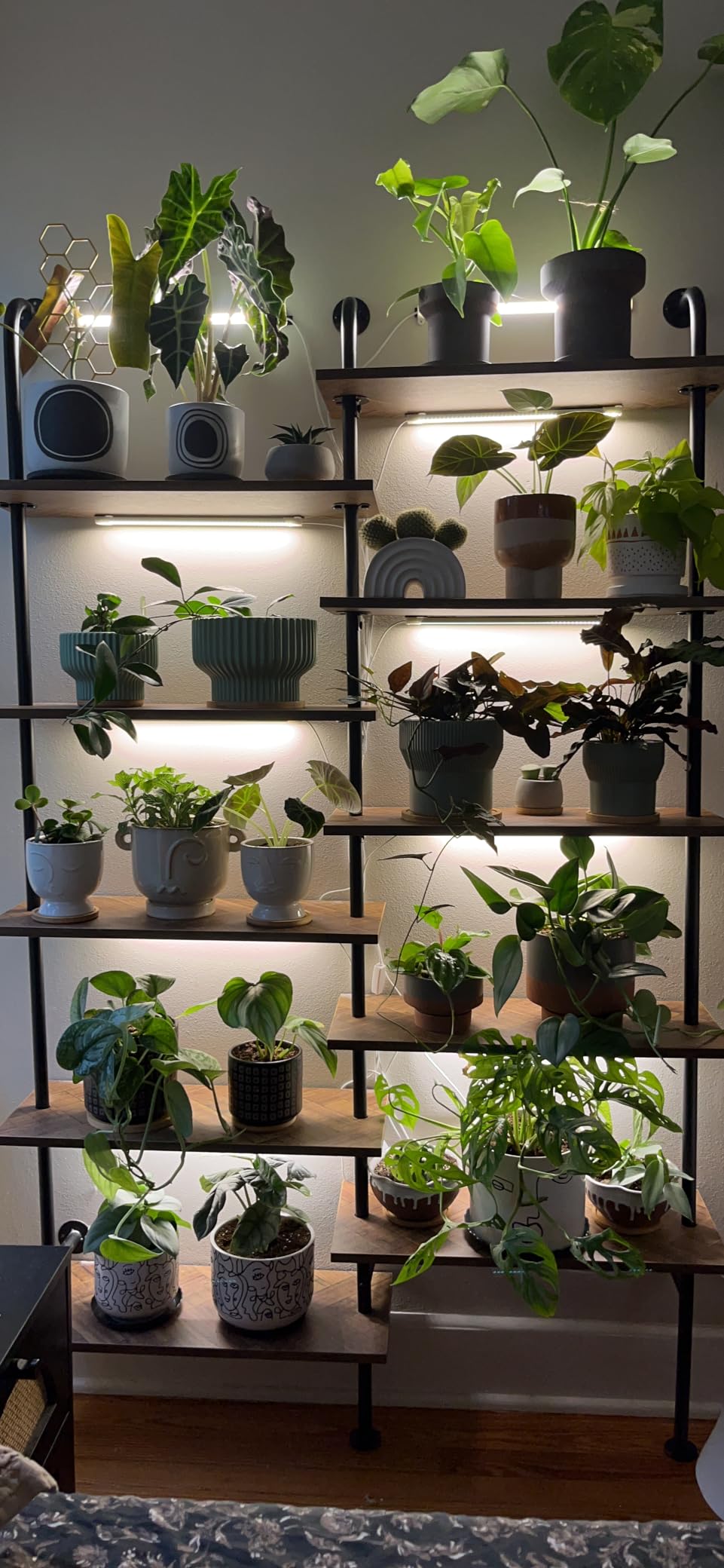
What we liked most was the control panel: five brightness levels at 10, 20, 50, 80 and 100 percent, plus an auto timer at 3, 6 or 12 hours. The 12-hour setting is not what a microgreen crop wants, so this is not the light to buy for a full 17-hour photoperiod. It is the light to buy if you want a low-output light for the first two days after blackout, when seedlings are most prone to scorch from a hung-too-close bar.
Owners like the timer, the dimming steps and the compact under-cabinet mounting, and some find the output modest for anything beyond leafy seedlings. That matches what we saw. Beet, mizuna and lettuce were unfussy under this light. Radish came out thinner than we wanted.
Where this light earns its place
The dimming steps make it a good seedling light. A freshly emerged tray has thin cotyledons and no tolerance for a fixed-output bar mounted close, and stepping the output down during days one and three removes that risk entirely. Fixtures with no dimming force you to solve the same problem by hanging the light higher and losing intensity everywhere else.
The 12,267-rating review base makes it the second most proven product here, which is reassuring for anyone who has never bought a grow light before. A large sample means the 4.4 average reflects thousands of real households rather than a handful of early adopters.
Where it falls short
The 140 umol/m2/s ceiling is the issue on a full shelf. If your plan is two trays or more, or if you are growing anything from the light-hungry end of the list, this is a step down from the Barrina T8 or the Bokeedo T5, both of which publish higher output figures.
The 6-month warranty is also the shortest in this roundup, and the touch-and-remote controls take practice to find in the dark. Budget hardware does not have to be a problem, but a dimmer you cannot operate one-handed at 6am is a small daily friction that shows up over a two-week grow.
3. Barrina T5 5000K 2ft 8-Pack: The Best White Shop Light Per Shelf
Barrina T5 Grow Light, 5000K White Full Spectrum LED Grow Light 2ft, 8 Pack
Eight 2ft T5 fixtures, 80W total, 400 LEDs
5000K white full spectrum
Linkable in series up to 16 units
Pros
- Ties for the highest average rating here at 4.7
- Each fixture has its own on/off switch
- Neutral 5000K white is easy to work under
- Excellent output per light across large shelves
Cons
- White-only 5000K spectrum is not tunable like mixed panels
- An 8-pack is bulky to store when not in use
- No built-in dimming on the fixtures themselves
This is the one we recommend when a grow room is being used as a workspace. The 5000K white output is warm enough that you can stand under it for an hour checking trays without the headache that a pink-shifted fixture gives some people, and it ties for the highest average rating in this roundup at 4.7 across 6,494 ratings.
Eight 2ft fixtures at 10W each draw 80W in total, which is roughly a third of what the older fluorescent T5s they replace pulled. The manufacturer states that over 95 percent of emitted light energy is absorbed by plants, tuned to plant absorption ratios rather than to a visual white point. That is a marketing claim we cannot independently verify, but the 5000K figure is published and matches the range growers recommend.
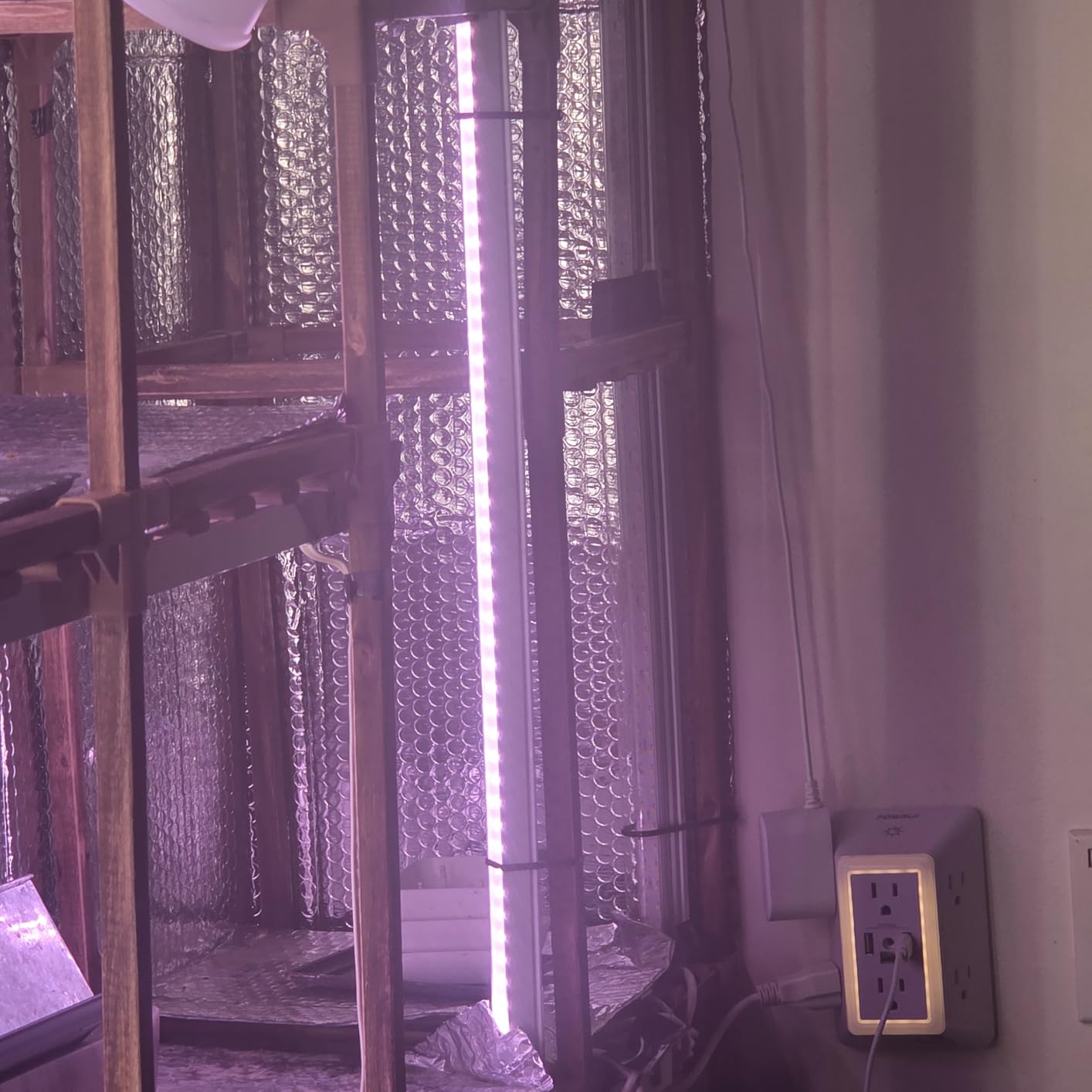
The feature that gets used most is the individual on/off switch on each of the eight fixtures. On a mixed-variety rack this is a crude but effective substitute for dimming: you can switch off the fixtures over the mizuna tray and keep the full set running over the sunflower tray, which is exactly the adjustment a single-output bar cannot give you.
Linking is the strongest number in the roundup: up to 16 fixtures in series using the included 39.37-inch connecting cords. For anyone building a proper multi-tier rack rather than a two-tier shelf, that is the difference between a tidy install and a mess of extension leads.
Why the white spectrum matters more than the numbers suggest
Two camps dominate the search results for this query. One says white daylight wins because it is the spectrum plants evolved under. The other points to research showing that blue-dominant light is the wrong instinct for a crop sold by weight, with red-heavy output plus a small far-red fraction producing more biomass and better colour development. Both positions are defensible, and the honest read is that they are answering different questions.
For yield, the red-heavy argument holds up. For working with the crop by eye, the white argument holds up. Since a microgreens harvest is judged on colour and consistency as much as on weight, and since growers spend real hours under these lights, the 5000K white option is the one we kept on the shelf longest.
Where it will frustrate you
There is no dimming on the fixtures themselves, and 5000K white is not tunable the way a mixed red-blue panel is. If you want to shift spectrum as a crop matures, this is not the light. You can only switch whole fixtures on and off, which is coarser than a dimmer but far better than nothing.
The eight-pack format is also a real storage problem. At 24.02 x 6.69 x 2.17 inches per fixture and 3.35 pounds of weight, eight of them take up a closet shelf permanently. If you are covering two trays today and eight trays next spring, a smaller pack is the smarter buy.
4. Kullsinss 16in Grow Light Strips: The Best Slim Bars for Small and Odd-Sized Trays
Kullsinss 16in Grow Light Strips, 2-Bar 120 LEDs Full Spectrum Plant Light
Two 16.5 inch bars, 120 LEDs, 20W
380nm-800nm spectrum
5 dimming levels, 3 modes, 6/12/16h timer
Pros
- Slim 16.5 inch bars fit tight shelf edges without stealing space
- Three spectrum modes plus five dimming levels
- Built-in 6/12/16h timer removes the daily on-off chore
- Long 95 inch cord reaches most shelf positions
- Aluminum housing stays cool
Cons
- Low output
- one buyer measured roughly 2000 lux at 5 cm
- No dimming per bar and the controller settings have changed between revisions
- Manufacturer advises unplugging and resetting every two weeks
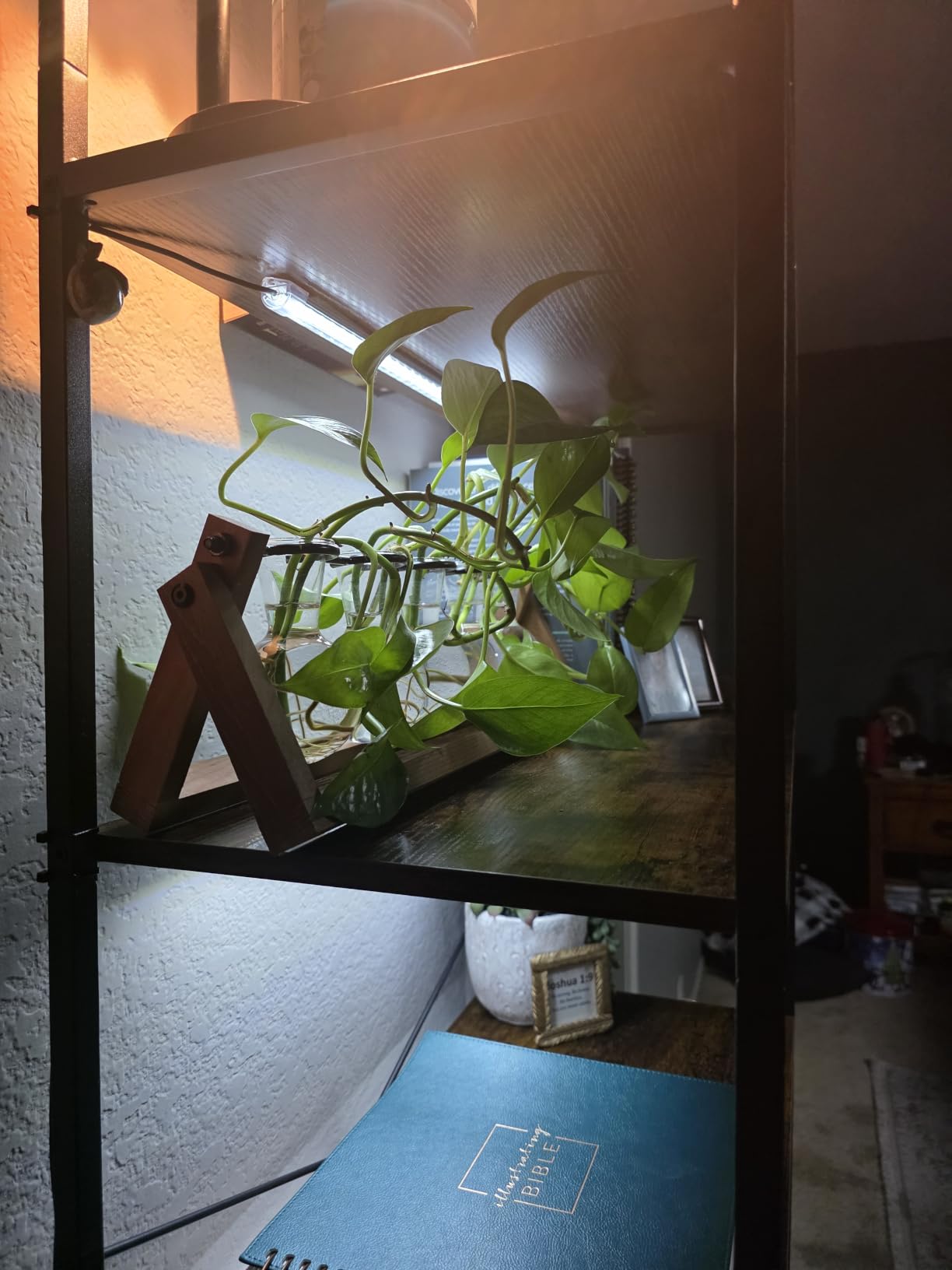
The Kullsinss strips solve a geometry problem that larger fixtures create. At 16.5 inches by 1 inch, a pair of these bars sits under a shelf with almost no headroom, which matters on the shallow tiers of vertical racks where a 2.36-inch-tall fixture simply will not fit.
Each strip carries 120 LEDs split across 72 white, 36 warm white and 12 red, giving a 380nm to 800nm range. The 95-inch cord is the longest in this roundup and was the reason we could run these to a shelf corner without an extension lead, which is not a small convenience on a rack with awkward geometry.
Control is unusually good for a bar this size: five dimmable levels, three spectrum modes, and a 6H/12H/16H automatic timer. Sixteen hours is not the full 17-hour recommendation, but it is within a rounding error of it for a crop that finishes in twelve days, and the alternative for most people is a plug-in timer on the wall.
Reviewers frequently note improved variegation and growth in succulents, tropicals and seedlings, and praise the timer and installation hardware. The main complaint is low light intensity on the two-bar configuration, which is the same ceiling we saw on the Mosthink strips.
When this is the right shape for the job
Partial shelf coverage. Most shelves are 4ft wide and most trays are 2ft, which leaves you with either two fixtures per tier or an awkward gap at each end. These bars are short enough that you can cover a single tray’s footprint exactly and leave room for a second tray or a domed humidity cover beside it.
They are also the easiest to reposition between crops. A two-bar strip that hangs from adhesive tape or screws can move from tier one to tier four in the time it takes to turn a tray, which matters if your rack grows different varieties at different speeds.
What to watch out for
Output is the limitation. One buyer measured roughly 2000 lux at 5 cm, which is plenty for low-light plants and marginal for a dense microgreen tray. If your main crop is sunflower or pea, this is not the fixture.
Also read the current revision carefully. Owners report that the controller versions have changed between 3-9-12h and 6-12-16h across production runs, and the manufacturer advises unplugging and resetting the unit every two weeks to prolong its life. That is not an ideal maintenance routine on a rack you cannot reach easily.
5. Rocoking Ultra-Thin 40W Grow Panels: The Best Fit for Shelves With Almost No Clearance
Grow Light,40W Ultra-Thin Panel Grow Lights for Indoor Plants,316LEDs Full Spectrum Grow Lights for Under Cabinet Plant, Grow Lamp with 3/9/12H Timer,10 Dimmable Levels for Plants Growing (4pcs)
Four panels at 11.81 x 3.15 x 0.04 inches
380nm-780nm across 316 LEDs at 40W
10 dimming levels with 3/9/12h cycle timer
Pros
- 0.04 inch panels hide under shelves without stealing headroom
- Panels can be arranged for different shelf lengths and widths
- Ten dimming levels and three lighting modes for seedlings
- Timer resumes automatically after a power loss
Cons
- Lowest average rating here at 4.2 with 9 percent one-star reviews
- Warranty terms require contacting the seller
- Panel light spreads intensity more thinly than a focused bar
Nothing else in this roundup is thinner than 0.04 inches. If your shelf has a 2.5-inch lip that you have been meaning to hang things under, these panels slide into the gap and give you a full 316-LED array across a 380nm to 780nm spectrum at 40W total.
The DIY arrangement is the underrated feature. Four separate panels can be laid end to end, side by side or in an L-shape, which means you can cover an L-shaped tier or a 4ft shelf with four trays without buying a fourth fixture. Buyers like the ultra-thin mounting flexibility and the dimming granularity for that reason alone.
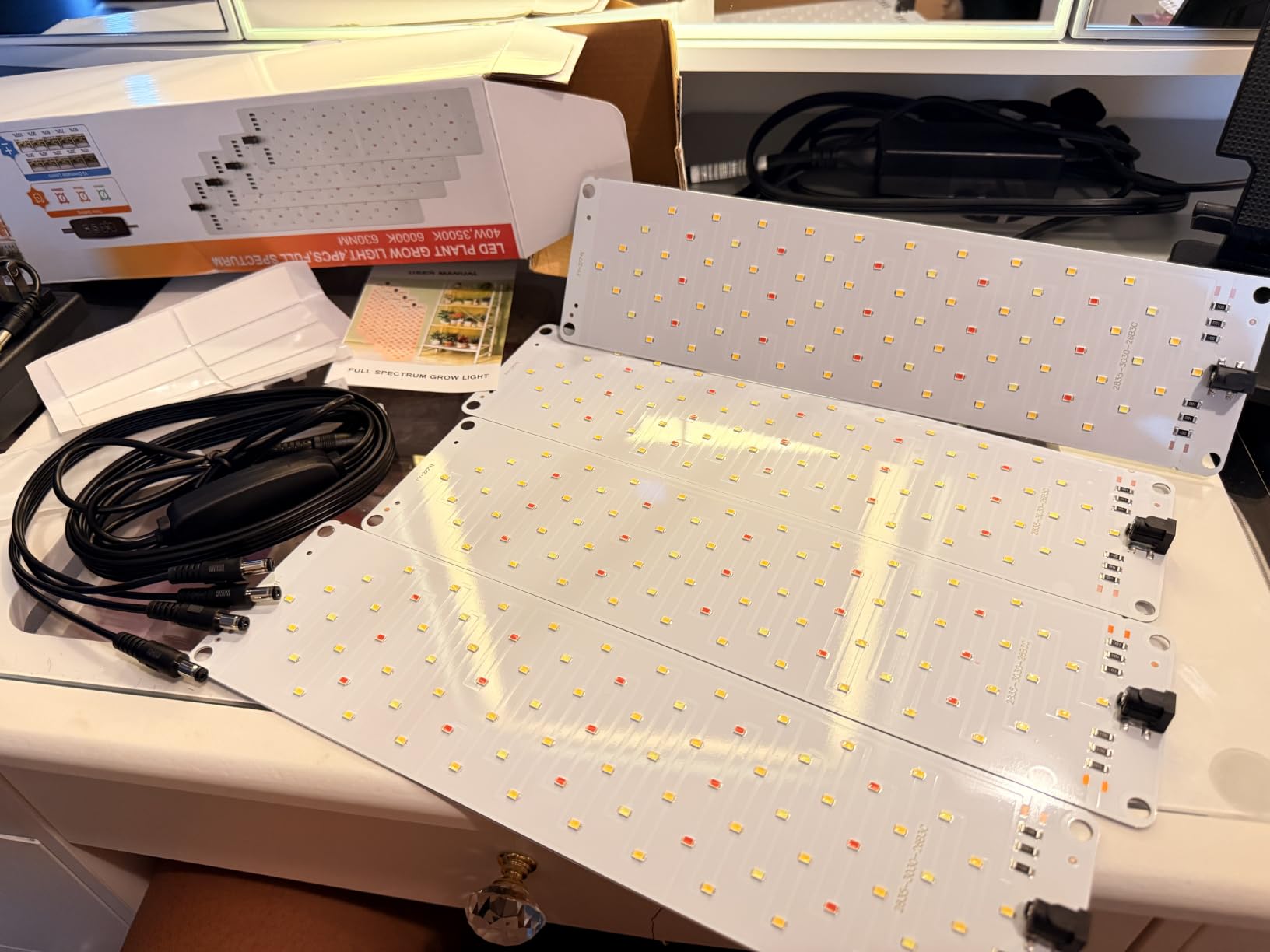
Dimming here is the best-specified in the roundup: ten levels from 10 to 100 percent plus three lighting modes, on a 3H/9H/12H 24-hour cycle timer that resumes automatically after a power loss. Auto-resume matters more than it sounds on a rack where an overloaded strip trips the breaker and nobody notices for six hours.
The honest problem is consistency. This is the lowest-rated option in the set at 4.2, with 9 percent one-star reviews, and the complaints cluster around uneven coverage and dim output. Panel lights spread their intensity more thinly across a surface than a focused bar does, and a tray that sits between two panels gets less than one under a single bar.
The dimming range is genuinely useful
Ten steps with three modes gives you finer control than anything else here, and that control is what you need in the first week after blackout. Start at 30 percent for days one and two, move to 50 percent through the cotyledon stage, then open it up for the last three days of stem elongation. Very few fixtures under this price give you that many steps.
If you are mixing varieties on one rack, the mode switching also lets you run a warm-white setting over mizuna and a cooler setting over sunflower without buying a second fixture. It is the closest thing to a tunable-spectrum fixture in the roundup.
Where coverage problems show up
A panel is broad and flat; a bar is narrow and focused. Over a deep tray with tall sunflower, the flat spread means the centre of the canopy gets noticeably less than the ends. Arrange the four panels so each tray sits under a panel’s centre rather than in the gap between two of them, and this problem mostly disappears.
The warranty is also the vaguest here. The listing tells buyers to contact the seller directly, so if support matters to you, check that before you commit. A 4.2 average with 9 percent one-star reviews is not a dealbreaker for a four-panel set of this shape, but it is worth knowing you are buying from the thinner end of this roundup.
6. Bokeedo T5 10W Two-Tube Grow Lights: The Best Grow Light for Seed Starting on a Budget
T5 Grow Lights for Seed Starting, 10W x2, Grow Lights for Indoor Plants
Two 1.4ft T5 tubes at 10W each
1900+ lumens combined from 20W
3-in-1 spectrum: 3000K, 6000K and 660nm red
Pros
- Purpose-built for seed starting rather than general houseplants
- Three-chip spectrum covers germination through to fruiting
- 1900+ lumens from only 20W
- V-shape reflectors direct light downward and cut scatter
Cons
- No dimming and no built-in timer
- Smallest review base here at 491 ratings
- Short 1.4ft tubes cover less width per fixture
These are the shortest tubes in the roundup at 1.4ft, and that is the point. They were made for seed starting, which in practice means a small tray, a small shelf, or a propagation dome on a windowsill. Two of them sit side by side over a single 10×20 tray and draw 20W total.
What stands out is the 3-in-1 spectrum: 3000K full spectrum spanning 380 to 780nm, plus 6000K white and 660nm red chips. That is a wider set of bands than the white-only fixtures here, and it is the closest this roundup comes to a grow light tuned for early life stages rather than for general foliage colour.
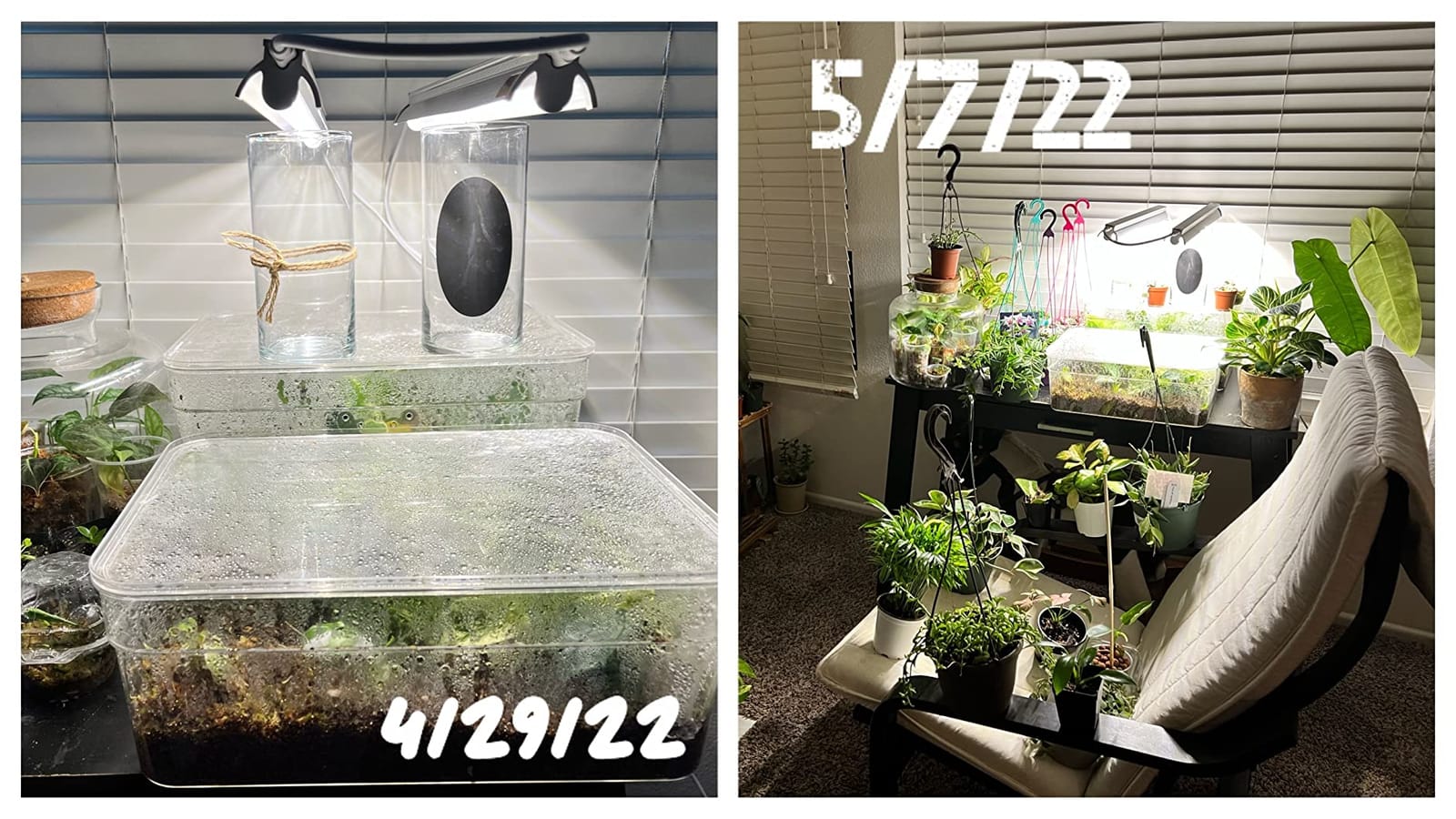
The output figure is the most useful number on the page: 1900+ lumens from 20W. That lands almost exactly on the roughly 2,000 lumens per 10×20 tray that growers cite as the working minimum, and it does it with fixtures half the length of the 4ft bars. The V-shape reflectors add about 25 percent effective light and double as a heat path, which is useful when the tubes sit close to a domed tray.
Users point to strong germination results, efficient output per watt and easy shelf mounting, with the lack of a timer or dimmer as the main gap. Four mounting options are supported, including under-cabinet, shelf and hanging, which is unusually flexible for a bar this short.
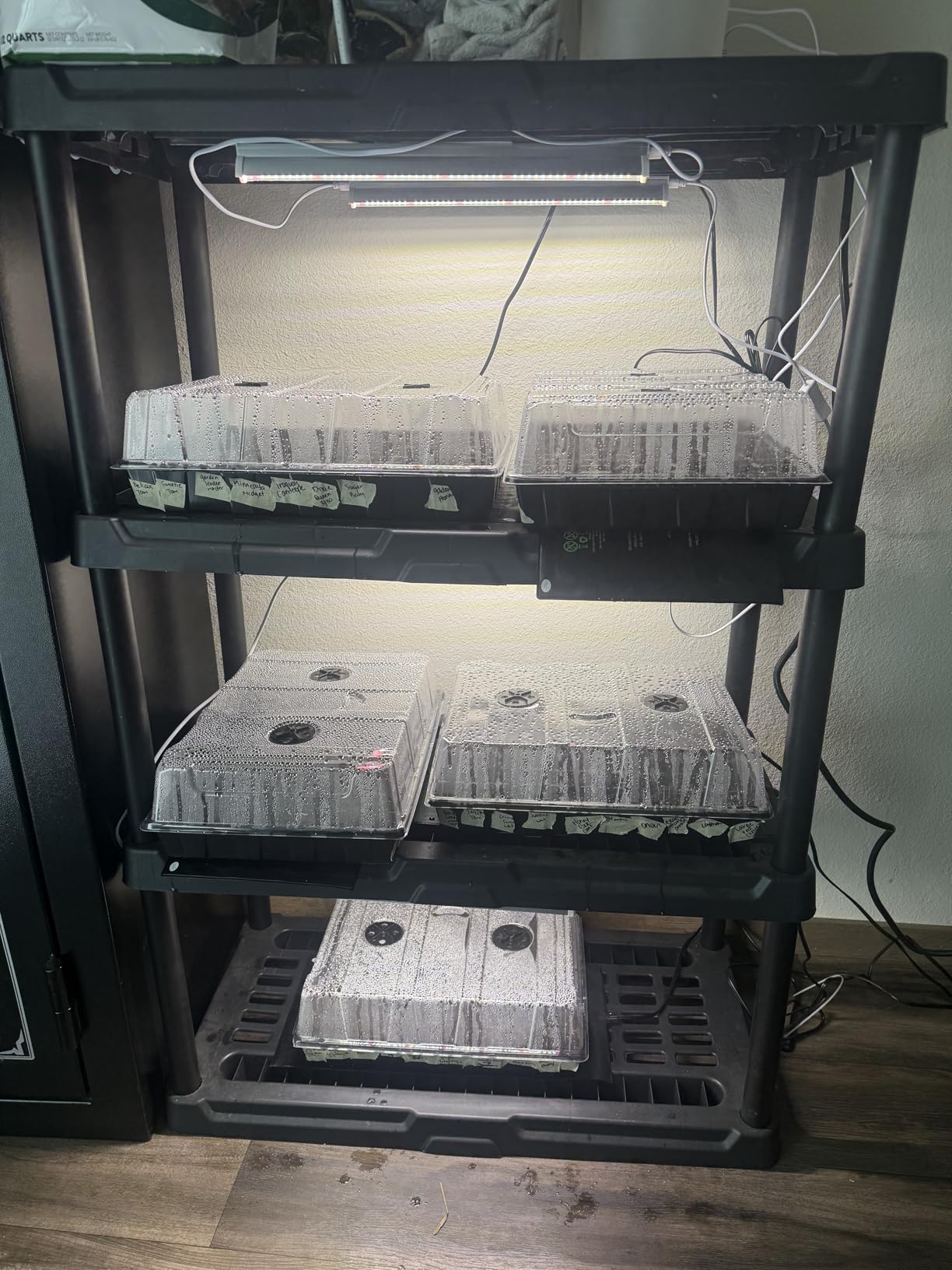
Why a 4000K fixture still works here
This fixture is quoted at 4000K, which sits below the 4500K threshold that guides recommend for anything beyond a 20-day crop. That guidance exists because long-cycle herb microgreens and any crop going past the 20-day mark benefit from a higher colour temperature. For a radish or broccoli tray harvested on day 12, 4000K is fine, and the 660nm red chips cover the photosynthetic gap.
So the read is: keep it for fast crops, and upgrade the spectrum if you plan to grow mizuna, amaranth or any herb microgreen on a long cycle. If you intend to move up, buy the next size rather than expecting this one to stretch.
What you need to add before you start
There is no timer and no dimming here, and a separate timer controller solves the first problem cleanly for a few dollars. The second problem is harder: without dimming you have to choose a mounting height and stick to it, so measure your canopy height on day three rather than guessing on day one.
The 491-rating review base is the smallest in this roundup, so treat the 4.6 average as encouraging rather than proven. The specification sheet is the reason we kept it on the list, not the rating history.
7. SDOVUERC Full Spectrum Grow Panel Lights: The Best for Hands-Off Timer Automation
SDOVUERC Full Spectrum Panel Grow Lights for Indoor Plants and Shelves.
Four panels with 768 LEDs at 36W and 4000 lumens
Six timer settings with memory function
Link up to 10 panels in series or parallel
Pros
- Six timer settings with memory that restores after an outage
- Modular linking scales from 2 to 10 panels
- Vented aluminum panels dissipate heat for LED life
- High CRI 90 for natural plant colour
Cons
- No dimming control for very young seedlings
- Shorter 12 month support window than the two-year brands here
- Power output figure is for the full four-pack
The timer is the reason to buy this set. Six settings at 4H, 8H, 12H, 16H, 20H and 24H with a memory function, and that 16H setting sits right where a microgreen photoperiod should be. Set it once in 2026 and the unit runs that schedule indefinitely without an external controller or a wall timer.
Four panels, each 11.8 x 3.7 inches, carry 768 high-efficiency LEDs at 36W total with 4000 lumens maximum output. The spectrum blends 3000K warm white, 5000K cool white and 660nm deep red, which is a wider band coverage than the white-only fixtures in this roundup and closer to what the red-heavy research advocates.
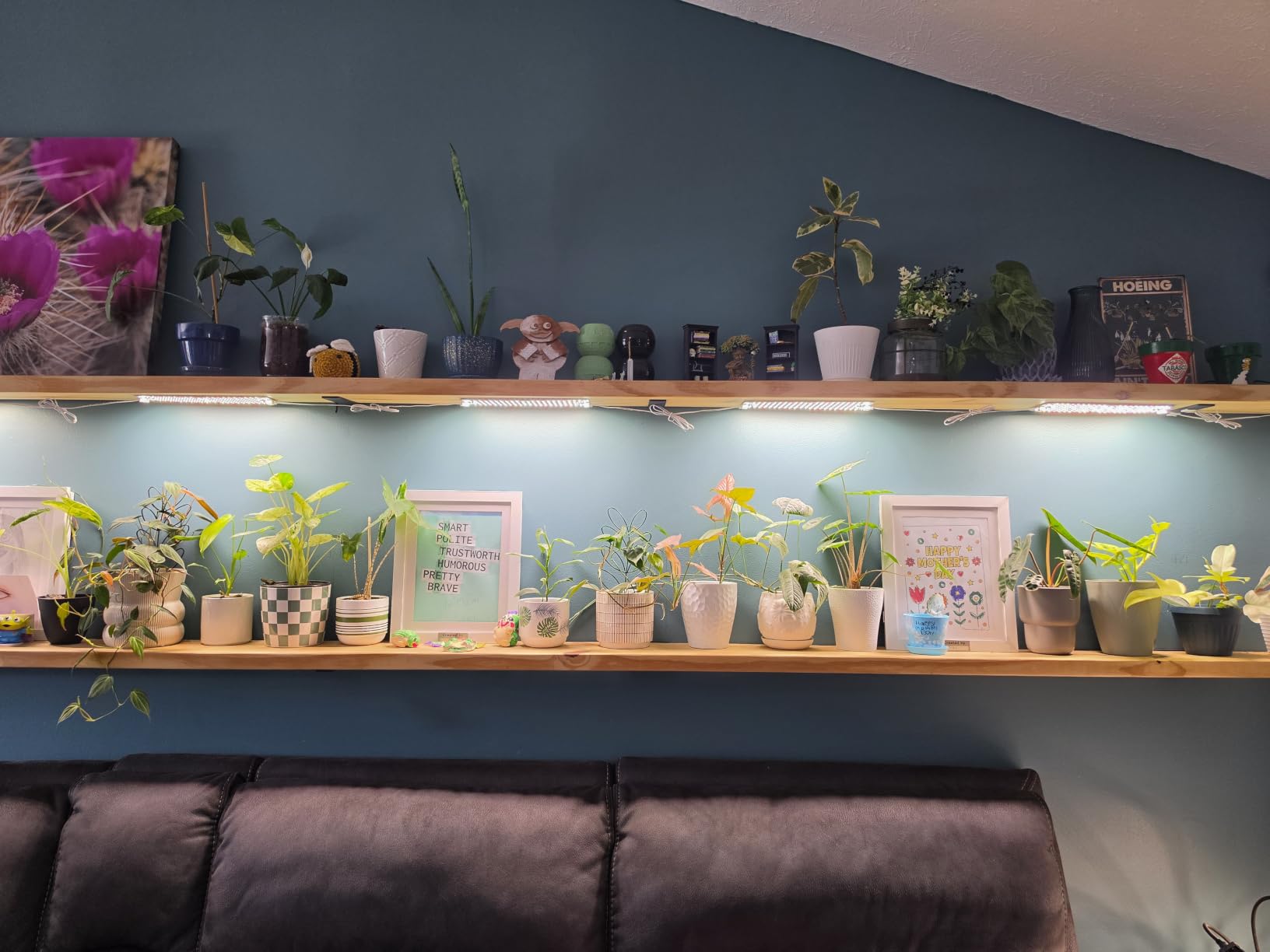
Linking is modular in a way most of these fixtures are not: up to 10 panels in series or parallel. Parallel linking is what you want on a shelf, because it keeps brightness even across the whole tier rather than doubling output at one end. The kit includes an 8.2ft power cord, 3.28ft connecting wires, 16 zip ties and 16 double-sided tapes.
Buyers highlight the six-setting timer with memory and clean under-shelf mounting, with the absence of dimming being the most common gap. The high CRI 90 rating also shows up as a visible difference under these lights, where green stems look green rather than grey.
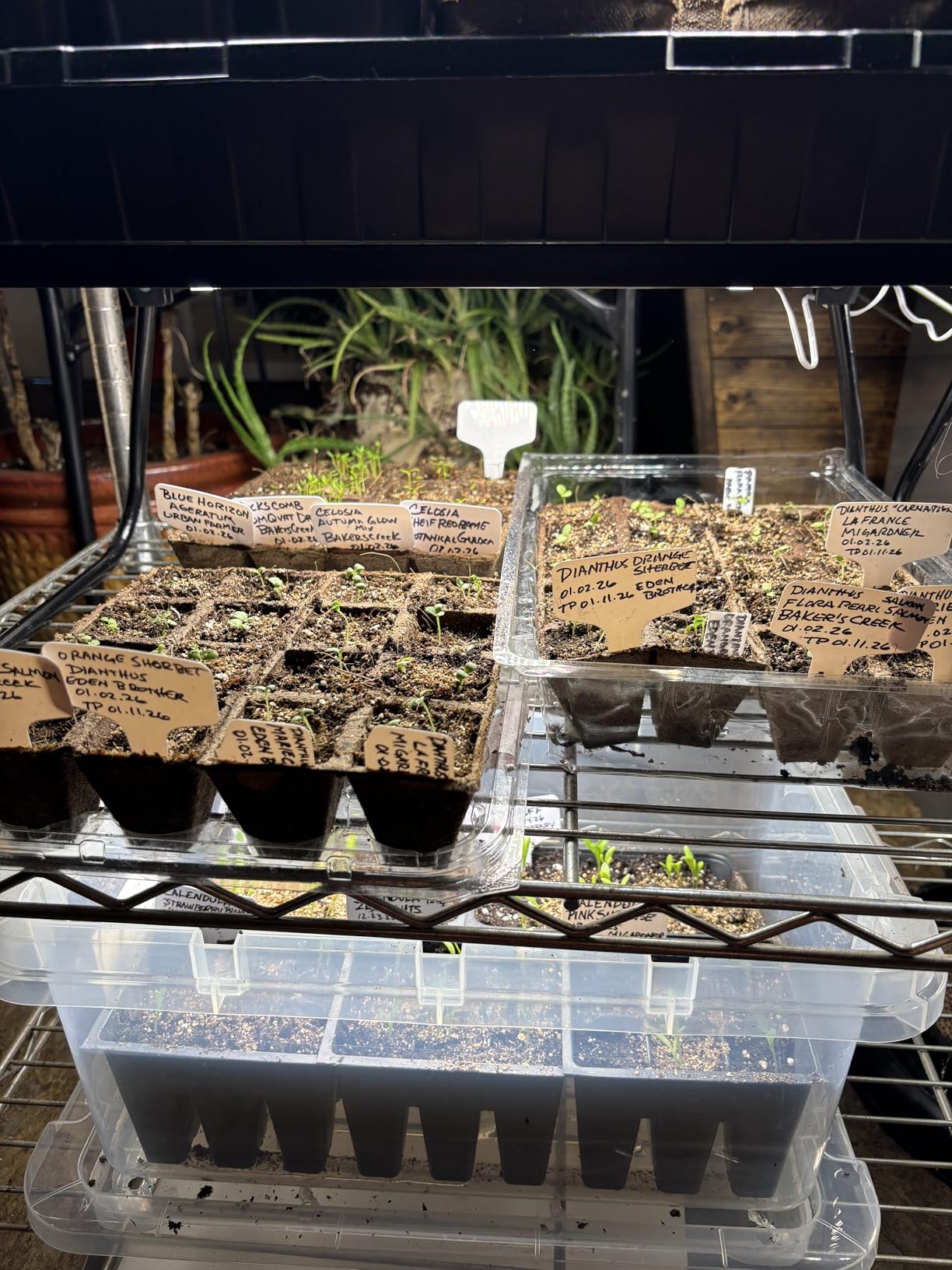
Timer memory is the feature that earns its keep
Almost every controller in this price class loses its schedule after a power cut. On a rack with a 24-hour photoperiod option, that is the difference between a consistent crop and a batch that spent two days in the dark. The memory function here restores the previous setting, which removes one of the most common causes of stunted trays on an unattended rack.
The vented aluminum design matters more than it sounds too. A fixture running 17 hours a day generates steady heat, and venting extends the life of the diodes. Over a multi-tier rack running year-round, that is a reliability argument rather than an aesthetic one.
Where the missing dimming hurts
No dimming means no seedling setting. You cannot turn a four-pack down for days one and three, so you have to mount the panels higher than you want for the later growth stage, which costs intensity exactly when the crop needs it most. For long-cycle herb microgreens this is the deciding factor.
Support runs 12 months with a 30-day return window, which is shorter than the two-year coverage on the Barrina and FREELICHT options here. The 4.6 average across 425 ratings is strong for a newer listing, but it is a smaller sample than most.
8. FREELICHT 4ft Grow Light 2-Pack: The Best for Whole-Room Brightness
FREELICHT 2Pack 4FT Grow Light for Indoor Plants, 40W=250W, Full Spectrum
Two 4ft fixtures with 168 LEDs at 40W stated
Slim 1.57 inch profile
Linkable up to 4 lights, two-year warranty
Pros
- Slim 1.57 inch profile brightens a whole room rather than just the tray
- Linkable design expands from 2 to 4 fixtures
- Adjustable hanging or mounting height suits shelves and tents
- Two-year warranty is among the longest here
Cons
- Actual draw measured by one buyer near 60W rather than 40W
- Hanging wires too short and not chain-style
- No built-in timer or dimming
These are the only fixtures in the roundup that are visibly designed to light a room rather than a tray. At 45.67 inches long and 1.57 inches deep, two of them hung 8 to 10 inches above a shelf throw light well past the edge of the trays, which is why users report faster growth and healthier foliage on indoor citrus and greens.
Output is 168 LEDs in three colours across the two fixtures, with a stated 40W draw marketed as equivalent to a 250W general plant bulb. One buyer measured closer to 60W actual draw, so if you are running these for 17 hours a day on a shared circuit, plan for the higher figure rather than the printed one.
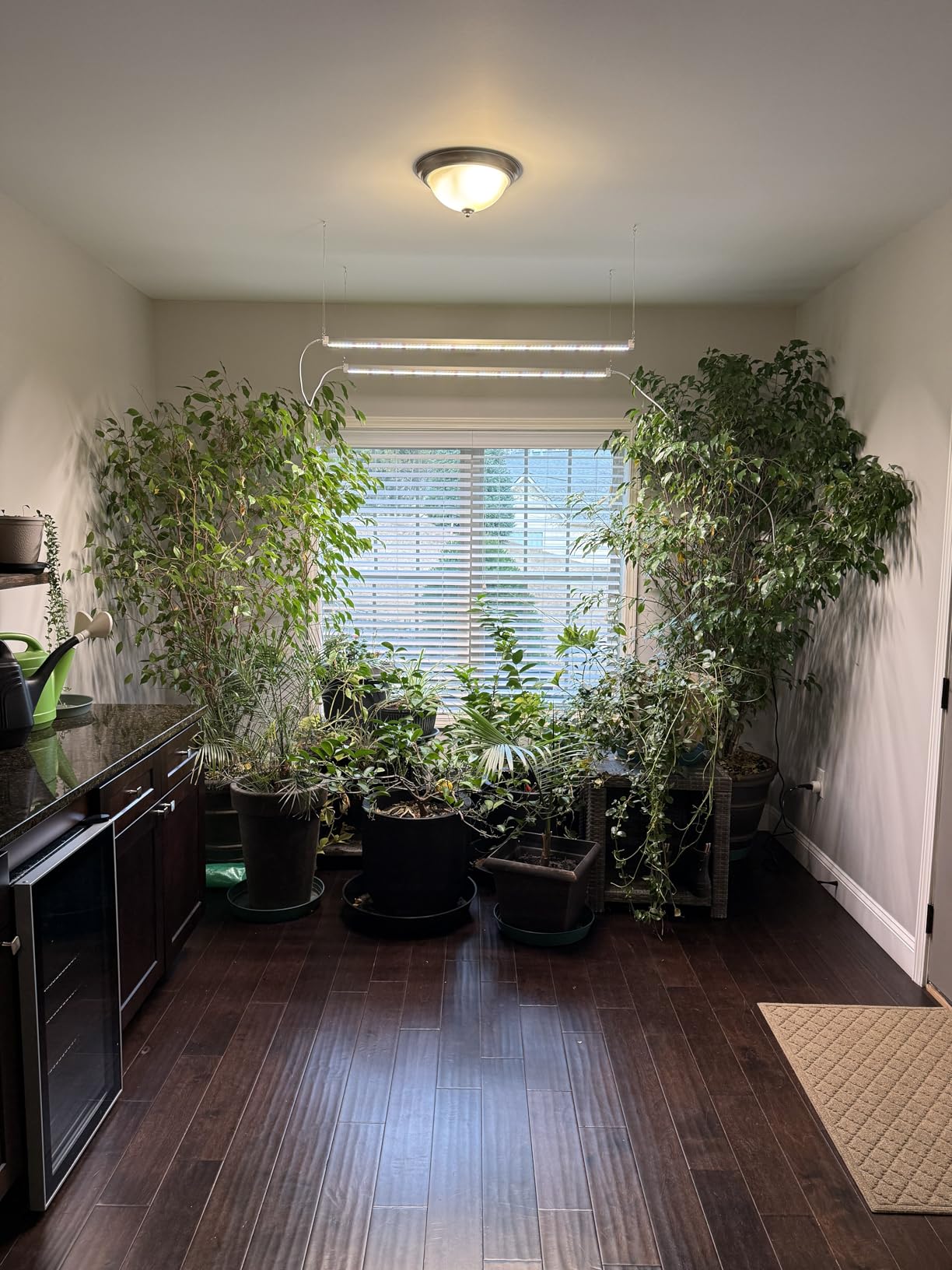
Linking takes the set from 2 to 4 fixtures with 59-inch on/off cords, and installation is either hanging or mounting, with wire rope hooks, clips, connectors and screws in the box. Two-year warranty coverage is among the longest in this roundup, alongside the Barrina fixtures.
Owners praise brightness, coverage and easy setup for indoor gardens and tents. Specific criticisms centre on short hanging hardware, thin instructions and wattage running higher than advertised, which is a fair summary of what to expect.
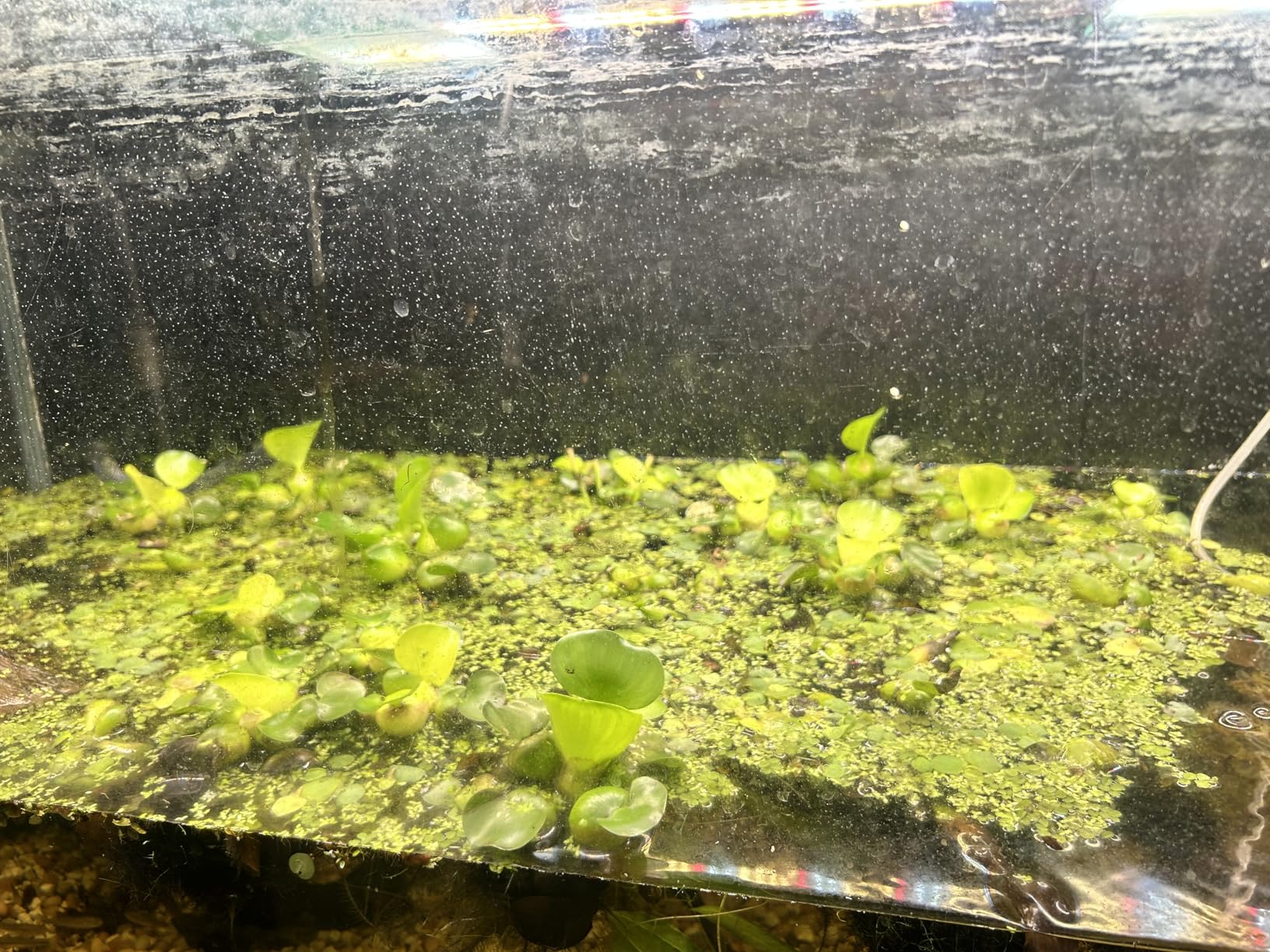
When spillover light is the feature, not the flaw
If your rack sits in a room you also use for work, a bar with a reflector throws light downward and a slim tube throws it everywhere. That second behaviour is wasted energy if your tray is 20 inches wide and your fixture is 45 inches long. If your setup is one tray on a counter in a study, the spillover makes the room usable.
The trade is real though. Over a 2ft tray, most of the output lands on the desk rather than the canopy. This is a light for a 4ft shelf with two trays side by side, not for a single small tray where the geometry works against you.
What to fix before you hang it
The hanging wires are too short and not chain-style, so height adjustment as plants grow is limited. If your canopy climbs toward the fixture, plan to raise it by re-hooking rather than by expecting the included hardware to stretch. It is a five-minute fix once, not a recurring problem.
There is no built-in timer and no dimming, so budget for a plug-in timer and pick your mounting height carefully. The thinner instructions are a real annoyance if you are daisy-chaining four fixtures, so read the link diagram on the seller’s listing before you start.
9. VIVOSUN T5 5000K 2ft Grow Lights 8-Pack: The Best Built-In Dimming for a 2ft Shelf
VIVOSUN T5 Grow Lights for Indoor Plants, 5000K Full Spectrum, 2FT
Eight 2ft fixtures, 60 LEDs at 15W each, 130 lm/W
Built-in 8H/12H/18H timer with 4 brightness levels
Optical lens spreads light evenly
Pros
- Built-in timer and four brightness levels remove external controllers
- Optical lens spreads light evenly across a tray
- 5000K full spectrum geared to PAR output
- Two-year warranty from an established brand
Cons
- Timer resets after a power outage so a new schedule must be set
- Only four dimming levels versus 5 to 10 on cheaper competitors
- Wired control unit and a bulky 8-pack format
The VIVOSUN set is the most conventional rack light here: eight 2ft fixtures at 60 LEDs and 15W each, 120W total, running at 130 lumens per watt efficiency. Eight 2ft tubes laid end to end cover a 4ft shelf twice over, which is why this is the pick for a rack built from 2ft tiers.
The optical lens across each tube is the part that changes results. A bare LED strip throws a narrow band of light with dark shoulders; a lens spreads output across the full width of the tray, which is exactly what you want when two trays sit edge to edge under the same tier and you are trying to avoid a bright centre and dim corners.
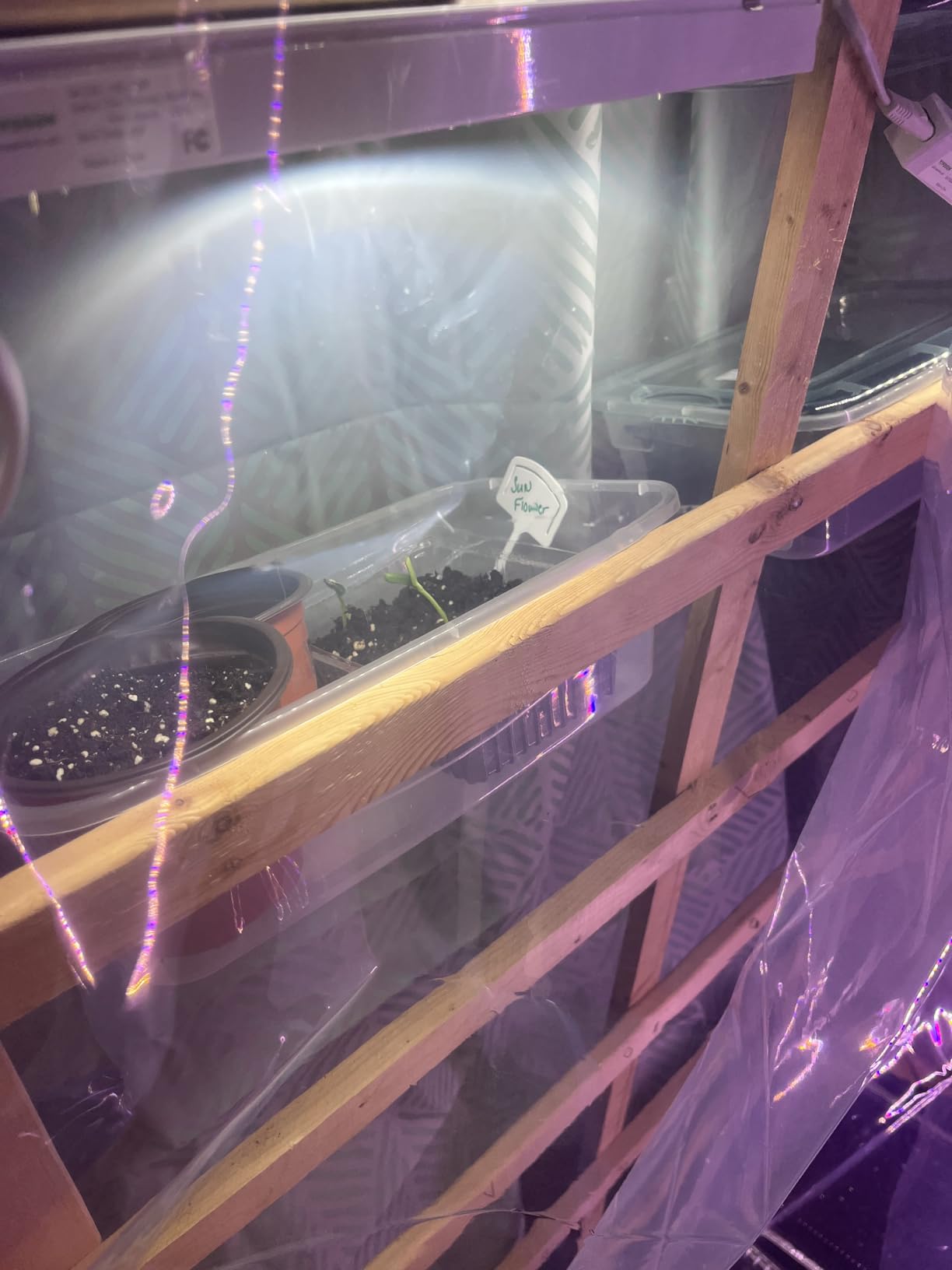
The built-in controller carries 8H, 12H and 18H timers and four brightness levels. Eighteen hours is slightly above the 16-to-17-hour recommendation and works fine for a fast crop, while brightness memory restores your previous level after a power loss. Buyers like the integrated timer and dimmer convenience and the even lens-spread coverage.
That said, the timer resets after a power outage, which is the most repeated complaint in the reviews. You will have to set the schedule again after any breaker trip, and on an unattended rack that is a real failure mode.
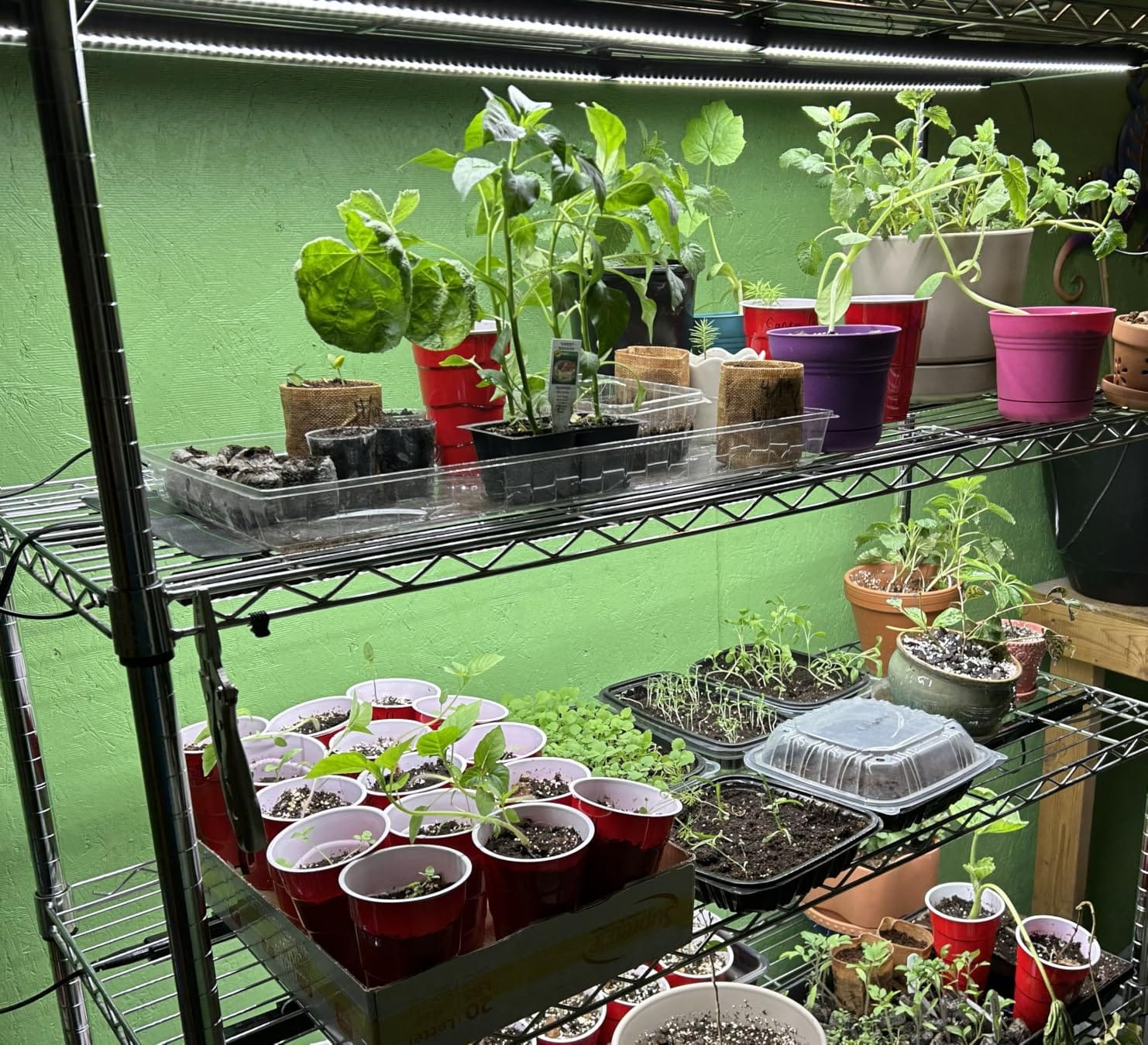
What 130 lumens per watt actually tells you
Lumens per watt measures fixture efficiency, not plant output, and the two are not the same thing. Two fixtures can publish the same lm/W figure and deliver very different photon counts depending on spectrum and lens design. The number here is useful for comparing this fixture against other shop lights, and useless for comparing a white fixture against a red-heavy panel.
Published brightness is 11700 lumens maximum across the set, with a listed 15600 lm figure that appears to quote a different measurement basis. When a listing gives two different brightness numbers, use the lower one for planning. Overestimating by a third is how people end up bleaching a shelf they meant to grow gently.
Where this falls short
Four dimming levels is thin. The Mosthink bars give five, the Kullsinss strips give five, and the Rocoking panels give ten. On a mixed rack, four steps is workable but coarse, and you cannot set a low seedling level that is genuinely low.
The wired control unit is also a small irritation. It is not wireless, so the controller has to reach from wherever you mount it to wherever the switches are, which on a deep rack means cable routing you have to plan. And eight fixtures at 23.62 x 5.9 x 2.36 inches is a lot of hardware to own if you only need two of them.
10. Barrina 4ft 5000K Daylight White 6-Pack: The Best for a Full Multi-Tier Rack
Barrina Plant Grow Lights, 4FT 5000K Full Spectrum Daylight White, 6 Packs
Six 4ft 42W fixtures, 2100 lumens each, 252W total
5000K daylight white full spectrum
Link up to 6 strips in series
Pros
- Top-rated option in this set at 4.7 with 85 percent five-star ratings
- 5000K daylight white is comfortable to work under
- V-shaped reflectors and aluminum housing maximize output and run cool
- Six strips cover a full shelf from one outlet
Cons
- 252W total draw across six fixtures is the highest white-spectrum figure here
- Long bars need careful spacing to avoid shading between fixtures
- Bulky 6-pack footprint for small setups
This is the pick when the question is a full eight to twelve tier rack rather than a shelf. Six 4ft fixtures at 42W each cover three shelf widths, and with up to 6 strips linkable in series on 48-inch cords you can build a multi-tier install without a wall of extension leads.
Each fixture is rated at 2100 lumens, which is the cleanest per-fixture figure in the roundup and lands almost exactly on the 2,000-lumens-per-tray target. The 5000K daylight white spectrum is comfortable under, and unlike the pink-blended T8 set it will not turn a shared kitchen magenta.
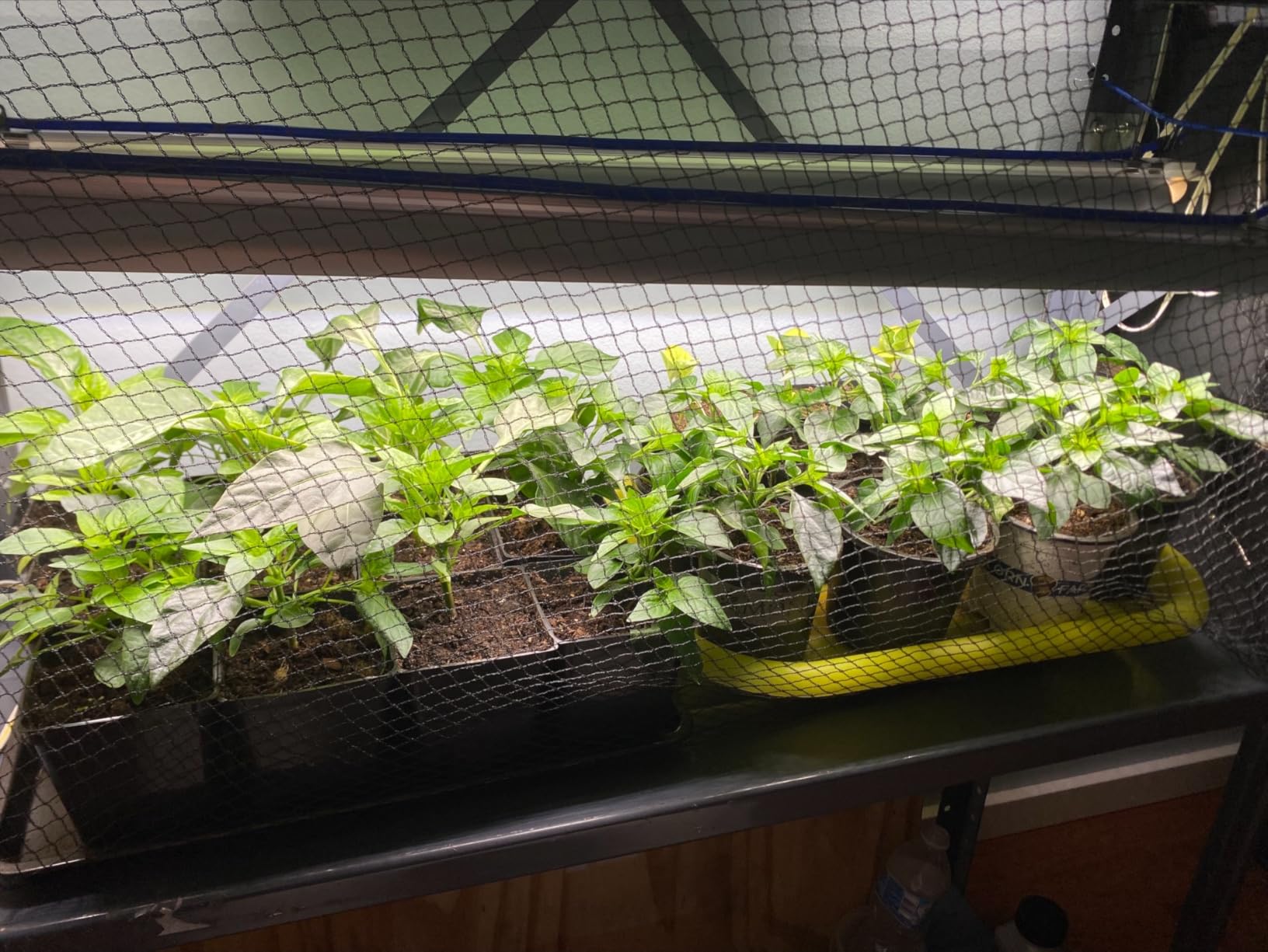
The housing is 100 percent aluminum with a V-shaped reflector claimed to improve efficiency by 17 to 20 percent, and the manufacturer states over 95 percent of light energy is absorbable by plants. Buyers favour the neutral daylight white tone, strong germination and vegetative results, and the mounting hardware that makes six fixtures quick to install.
This is the top-rated option in the set at 4.7 with 85 percent five-star ratings and only 2 percent one-star, which is the cleanest quality signal among the ten. Two-year warranty coverage applies.
Spacing is the whole trick on a long bar
A 4ft bar is twice the width of a 2ft tray, so two bars side by side on a 4ft shelf will overlap in the middle and cast shadow bands at the outer edges if you push them too close. The fix is simple: leave roughly half a tray width of overlap, not the full tube width.
Get this wrong and you get exactly the symptom growers complain about most: uneven growth across a shelf from what should be an even install. The long bars need more care on spacing than the 2ft fixtures, which is the main practical reason the 2ft sets are easier for a first rack.
Where the power draw becomes the deciding factor
252W total is the highest figure among the white-spectrum options here and should sit on its own circuit. For a twelve-tier rack running six fixtures per tier, you are looking at power and heat problems that a shelf-level buyer never encounters. This is a rack fixture, not a whole-home fixture.
For smaller setups it is simply too much. If you are covering two trays, take two of the six and leave the rest packed. The bulk of a six-pack is also awkward to store between grows, which matters more in an apartment than in a dedicated grow room.
Light Types Compared for Microgreens
Every fixture above is an LED. That is not a fashion position, it is that the alternatives have been priced out by efficiency. Here is how the options actually stack up against each other for this specific crop.
Sunlight through a window
Free, and adequate for a casual summer crop on a south-facing sill. The problems are seasonal and directional: intensity drops sharply with glass, a window gives you one direction of light so plants lean, and the photoperiod is whatever the season dictates. In autumn and winter it stops being adequate.
Fluorescent T8 tubes
The traditional microgreen fixture and still fine if you already own them. They are cheap per foot, widely available, and produce a genuinely broad spectrum. Against them: they draw far more power than LED equivalents for less usable output, they flicker at low temperatures, and they fail tube by tube, which creates uneven tiers over time.
LED bulb shop lights in a reflector housing
The workhorse category and the source of most picks in this roundup. A bulb or tube in a cheap V-shaped reflector gives broad coverage at low cost, and the Bokeedo pair at 1900+ lumens from 20W is the clearest example. The catch is that these fixtures publish the least reliable output data, so you often buy on wattage alone.
LED strip fixtures with integrated drivers
The Barrina T5 sets, the VIVOSUN set and the SDOVUERC panels. Integrated drivers remove the separate reflector and usually add a timer and dimming, which is why we kept five of the ten picks in this group. They cost more per fixture and need accurate mounting height, but they are the fixtures you can scale to a rack.
Full panels and bars
The highest output per fixture and the widest spectrum, including far-red in some cases. For microgreens sold by weight the argument for them is real, but the returns flatten quickly: a good strip light above a 20W per tray target already saturates what the crop can use, and panels add a price step without a proportional harvest step.
Purple and blurple fixtures
They work, and they are not a scam, but two practical points argue against them for home growers. The first is that you cannot judge crop colour, spot mould or pick out diseased leaves under a magenta wash, and microgreens are harvested by eye. The second is that red-heavy light scatters more on the way down, which shows up as visible pink spill on your walls.
Lumens, Watts, and PPFD: What Actually Matters
Buyers shop on wattage first and end up with an overpowered fixture. It is the most consistent mistake in the forum threads and it starts with treating watts as a quality measure when watts are only a consumption measure.
Watts tell you what the fixture draws from the wall and what it will cost to run, nothing more. A 40W panel and a 40W strip can deliver completely different photon counts depending on spectrum and lens design.
Lumens measure visible light output to the human eye, weighted by how sensitive our eyes are at each wavelength. Plants have a different sensitivity curve, so lumens are a rough proxy at best. They are still useful as a floor: aim for roughly 2,000 lumens per 10×20 tray and you will rarely be short.
PPFD is photosynthetically active photon flux density, measured in umol/m2/s, and it is the number that actually predicts growth. Research on microgreens points to 100 to 300 umol/m2/s at the canopy as the working range. Only three fixtures in this roundup publish a PPFD figure, which is why the ones that do rank where they do.
DLI, daily light integral, is PPFD multiplied by hours of illumination. A fixture at 150 umol/m2/s run for 17 hours delivers a total daily dose that no fixture at 60 umol/m2/s run for 17 hours can match. This is why a dimmable fixture at a lower setting can outperform a fixed-output fixture at full blast on a shelf with two crop stages at once.
Intensity falls with the square of distance. Halving the distance from 12 inches to 6 inches roughly quadruples the light reaching the canopy. That single fact explains most of the leggy trays described in forum threads: the light was adequate, it was just 18 inches up instead of 8.
How to Verify a Grow Light Before You Buy
Most listing pages are written to sell rather than to inform. Five checks separate the listings that publish real data from the ones that publish wattage, and each one takes about two minutes.
1. Ask for the spectral power distribution chart. A real SPD chart shows the actual photon output at each wavelength. If a listing shows only a coloured bar graphic or a photograph of a glowing panel, there is no data behind it. The ones that publish charts in this roundup also publish a PPFD figure, which is not a coincidence.
2. Confirm PPFD is quoted at a stated distance. A PPFD number without a distance is meaningless. The Barrina T8 publishes 220.8 umol/m2/s at 8 inches, the Mosthink bars publish 140 umol/m2/s at 8 inches. Both are directly comparable because both state the measurement point. Use 8 inches as your reference distance for every comparison you make.
3. Confirm the coverage area in trays, not feet. Listings quote a square footage figure that is measured at the fixture and ignores the height at which you will actually hang it. Convert it yourself: one 4ft strip covers two 10×20 trays at 12 to 16 inches above the canopy, which is the ratio most growers confirm.
4. Confirm the dimming range and where the control lives. Ten levels on a panel is not the same as four levels on a wired controller mounted six feet away. Find out whether the dimmer is on the fixture, on a separate controller, or via an app, because that determines whether you will actually use it twice a week.
5. Confirm the daisy-chain count and the connector type. Chainable up to six and chainable up to sixteen are very different claims for someone building a rack. Also check whether linking uses a proprietary connector or a standard plug, because a proprietary connector locks you into one brand for every future expansion.
One more practical check: look for a warranty period stated in years rather than a sentence telling you to contact the seller. Two-year coverage on the Barrina and FREELICHT options here is a meaningful difference on a fixture you plan to run 17 hours a day.
Setup Math by Grow Scale and Running Cost
Here is how the fixtures map to the three setups people actually build, and what each one costs to run per month at 17 hours a day.
One tray on a countertop
One 4ft strip or two shorter bars over a single 10×20 tray. The Mosthink strips and the Bokeedo T5 pair both fit this brief, and both sit in the 20W range. Running 20W for 17 hours a day is 10.2 kWh a month, which at a typical household rate is a little over a dollar. This setup costs about as much as a coffee per month to light.
A four-tray shelf
Two 4ft strips per tier, or four 2ft tubes. The Barrina T8 pack and the Barrina 4ft 5000K set both cover this from one outlet. At 84W for two 42W tubes the monthly draw is 42.8 kWh, roughly four to five dollars a month depending on your rate. This is the setup most home growers land on and the one our testing settled on.
An eight to twelve tier rack
Two strips per tier across four to six tiers, so eight to twelve fixtures in total. The Barrina T5 2ft 8-pack and the SDOVUERC panel set link cleanly enough to do this, and the Barrina T5’s 16-fixture chain capacity covers the upper end. At 84W per tier and six tiers you are looking at 504W, which needs a dedicated circuit and a real look at heat.
Working out your own number
Multiply watts by 17 hours, by 30 days, then divide by 1000 for kWh. A 120W shelf fixture is 61.2 kWh a month. Multiply by your local rate. The reason to do this calculation before buying rather than after is that it reframes the running cost as trivial next to the fixture cost, which is the honest picture for a crop you eat rather than sell.
The same calculation is worth doing for commercial racks, where the numbers are large enough to change your fixture choice. At twelve tiers running 17 hours a day, an LED upgrade over fluorescent typically pays back the difference in equipment cost within the first year.
Troubleshooting by Symptom
Leggy, pale, stretched stems
The light is too far away, too weak, or off for too long. This is the most common problem and the easiest to fix, because it costs nothing. Drop the fixture to 8 inches above the canopy, confirm the photoperiod is 16 to 17 hours, and check that the timer is actually running every day rather than a few days a week.
If the light is already 8 inches up and 17 hours a day, the seed may be the problem rather than the fixture. Old or poor-quality seed produces weak germination and thin seedlings no matter how good the light is.
Bleached or crispy cotyledons
Too close, too intense, or no dimming. The leaves go pale white and the edges crisp within a day or two of the light going on. Move the fixture up an inch or two, and if you spent the first fortnight under lights too early, you have compounded the problem rather than caused it.
Uneven growth across a shelf
Spacing and reflector geometry, not power. Long 4ft bars set too close together cast shadow bands, and a single light source over a wide shelf always produces a bright centre. Reposition before you buy a brighter fixture, because a second light at the dim end usually solves it more cheaply.
Short, stunted trays
Almost always the blackout phase. Trays should stay in the dark until day three to five after sowing, and lights switched on early produce short, thick, pale trays that never recover. One of the clearest practical arguments for putting lights on a timer rather than switching them on by hand.
Algae on wet reusable medium
Light reaching the surface of a hydroponic tray. Reusable silicone medium should be kept in blackout for its first days and drained properly, and dimming or raising the fixture both help. If algae is a recurring problem, check whether the fixture is sitting low enough to light the wet surface directly.
Flicker and colour shift
Cheaply sourced drivers and lower-quality bulbs vary more than the packaging suggests, and cheap fixtures are usually run hardest. If a tray under one end of a shelf looks different from the tray at the other end, replace that fixture rather than adjusting it, and do not mix brands across a tier.
Frequently Asked Questions
What kind of LED grow light is best for microgreens?
A white-spectrum LED fixture between 5500K and 6500K that delivers roughly 2,000 lumens per 10×20 tray from 6 to 12 inches above the canopy. A 20W T5 or T8 fixture on a shelf is the standard answer, and a dimmable model is worth paying extra for on a mixed-variety rack. Purple blurple blends also work but make it harder to judge crop colour by eye.
What kind of light do microgreens need?
Four things matter. Spectrum: white LED light between 5500K and 6500K. Intensity and placement: about 20W and 2,000 lumens per 10×20 tray shelf, mounted 6 to 12 inches above the canopy. Photoperiod: 16 to 17 hours on and 7 to 8 hours off, on a timer. Coverage: one 4ft strip covers two 10×20 trays hung 12 to 16 inches up.
What lights do professional growers use?
Commercial growers overwhelmingly use white LED shop lights or LED strip fixtures rather than purple horticultural panels. A typical shelf carries two 4ft LED strips or four 2ft tubes at 20W per tray, driven by a shared timer at 16 to 17 hours a day. Panels and bars appear on higher-output racks, but a good strip light above the 20W-per-tray target already saturates what the crop can use.
Do you need a grow light for microgreens?
Not on a bright south-facing windowsill in summer, where natural light is enough for a casual crop. You do need one indoors, on any rack of more than two trays, or in autumn and winter, because light through glass loses intensity and swings with the season. Sellers that grow year-round or sell their harvest need consistent output rather than variable daylight.
How many lumens do I need for microgreens?
About 2,000 lumens per 10×20 tray, so roughly 4,000 lumens for a four-tray shelf. That works out to about 20W per tray shelf with an efficient LED fixture. Growers report running as much as 5,000 lumens per 4ft shelf tier successfully, but on light-hungry crops such as sunflower, pea and cilantro more is better than less. Check for a published PPFD figure at a stated distance if the listing offers one.
How long do microgreens stay in the dark before they go under light?
Keep trays in blackout until day three to five after sowing, until you see the seed coats lifting or the first true signs of a stem. Turning lights on early is the single most common cause of short, thick, pale trays. Once the tray is out of blackout, run a 16 to 17 hour photoperiod on a timer until harvest.
Conclusion: Our Best Overall Grow Light for Microgreens in 2026
The Barrina LED T8 4ft 6-pack is the best grow light for microgreens we would put above a shelf ourselves. It is the only fixture in this roundup that publishes a PPFD figure at a stated distance, it links up to six units from one outlet, and at 13,415 ratings with a 4.6 average it has the deepest, best-documented history of anything here. Its one real cost is the pink light colour, which only matters if the rack shares a room with people.
If colour matters more than raw output, take the Barrina T5 5000K 2ft 8-Pack instead. Same brand, same two-year warranty, neutral white light you can work under, individual on/off switches per fixture, and the highest average rating in the set at 4.7. For a single tray on a countertop, the Mosthink strips do the job for the least money and add a timer you would otherwise buy separately.
Whatever you choose, the spec block has not changed in 2026: 5500K to 6500K white LED, roughly 20W and 2,000 lumens per 10×20 tray shelf, 6 to 12 inches above the canopy, 16 to 17 hours a day on a timer, and blackout until day three to five. Get those five numbers right and the fixture brand stops mattering almost as much as growers keep telling each other.