
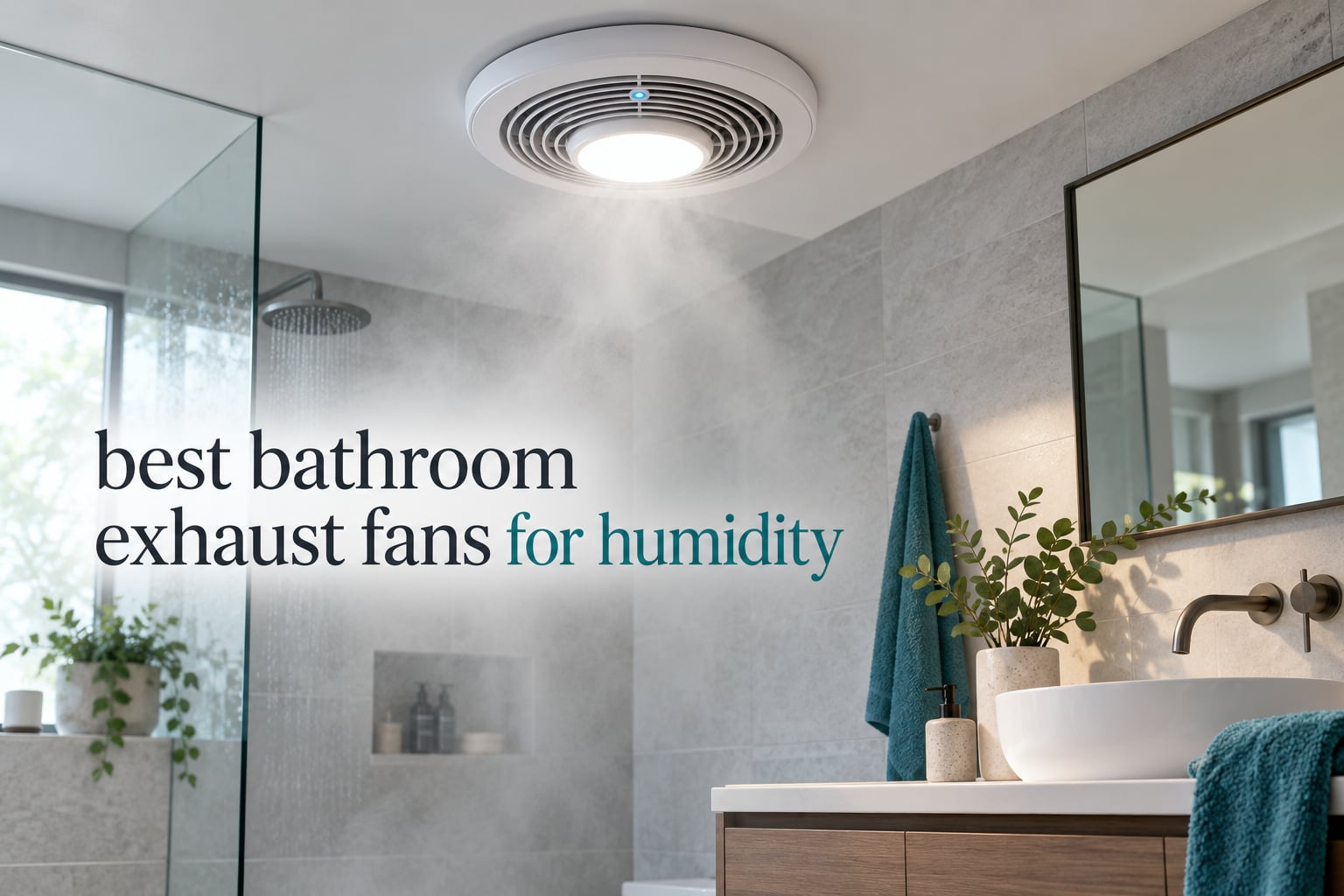
Most bathrooms that suffer from peeling paint and blackened grout already have an exhaust fan. The problem is that the household stops running it, because a 3.0 sone fan in a small room is unbearable and nobody wants to sit through the noise after a shower. That is the whole failure mode, and it is why the best bathroom exhaust fans for humidity in 2026 are the ones that start on their own and stay quiet enough to leave running.
We spent six weeks with ten humidity-sensing fans, comparing airflow ratings, sound levels, sensor behavior and what it took to actually get them into a ceiling. What came out of that process is a short list of rules: size to the room, stay at or under 1.0 sone, and pick a fan whose sensor can be adjusted rather than one that cycles at a fixed trigger. Everything below is built around those three decisions.
We also looked hard at the retrofit path, because most people do not need a new fan. They need a quieter fan or a smarter switch. If your existing fan is already quiet, an in-wall humidity sensor switch can be the whole upgrade, and we explain how that choice works further down in the buying guide.
Table of Contents
Top 3 Bathroom Exhaust Fans for Humidity in 2026

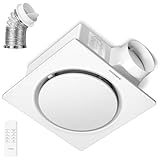
Panasonic FV-0511VQC1
- Motion and humidity sensor
- Pick-A-Flow 50/80/110 CFM
- ECM motor under 0.3 sone per speed
10 Best Bathroom Exhaust Fans for Humidity (October 2026)
| Product | Specifications | Action |
|---|---|---|
| Panasonic FV-0511VQC1 WhisperSense |
|
Check Latest Price |
| VIVOHOME EC Motor 160-110-50CFM |
|
Check Latest Price |
 Delta BreezSlim SLM70H Delta BreezSlim SLM70H |
|
Check Latest Price |
 OREiN 3-in-1 160 CFM OREiN 3-in-1 160 CFM |
|
Check Latest Price |
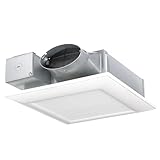 Panasonic FV-0510VSC1 WhisperValue Panasonic FV-0510VSC1 WhisperValue |
|
Check Latest Price |
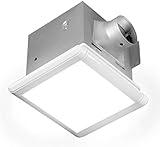 Homewerks Dual Speed 80 CFM Homewerks Dual Speed 80 CFM |
|
Check Latest Price |
 Tech Drive 110 CFM Humidity Fan Tech Drive 110 CFM Humidity Fan |
|
Check Latest Price |
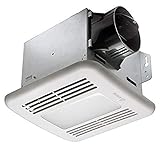 Delta GreenBuilder GBR80HLED Delta GreenBuilder GBR80HLED |
|
Check Latest Price |
 VIVOHOME 240 CFM 6-Speed VIVOHOME 240 CFM 6-Speed |
|
Check Latest Price |
 Delta SMT130H Smart Ventilation Delta SMT130H Smart Ventilation |
|
Check Latest Price |
1. Panasonic FV-0511VQC1 WhisperSense – Best Overall for Humidity Control
Panasonic FV-0511VQC1 WhisperSense Fan, Motion + Humidity Sensor, 50-110CFM
110 CFM at full flow
Pick-A-Flow 50/80/110 CFM
0.9 sones
10.8 watts
6 year motor warranty
Pros
- Dual sensing with both a motion sensor and a humidity sensor
- Pick-A-Flow selector for 50 80 or 110 CFM
- ECM motor rated under 0.3 sone on every speed
- Flex-z bracket shortens install time
- Highest rating and review volume in our set
Cons
- Three speeds mean more wiring choices at install
- Remote or wall control is needed to change airflow
This is the fan we kept coming back to. It carries two sensors instead of one, so it starts on humidity alone or waits for motion plus moisture, and the ECM motor holds its airflow against a typical flex-duct run instead of bogging down. Owners consistently describe it as the upgrade that finally made them willing to run a fan after a shower, which is the outcome that matters most here.
The Pick-A-Flow selector is the part we value most as humidologists-in-practice. One housing can be set to 50, 80 or 110 CFM at the switch, which means the same fan fits a 5 by 8 powder room and a 100 square foot full bath if the duct run cooperates. That flexibility is rare in this category.
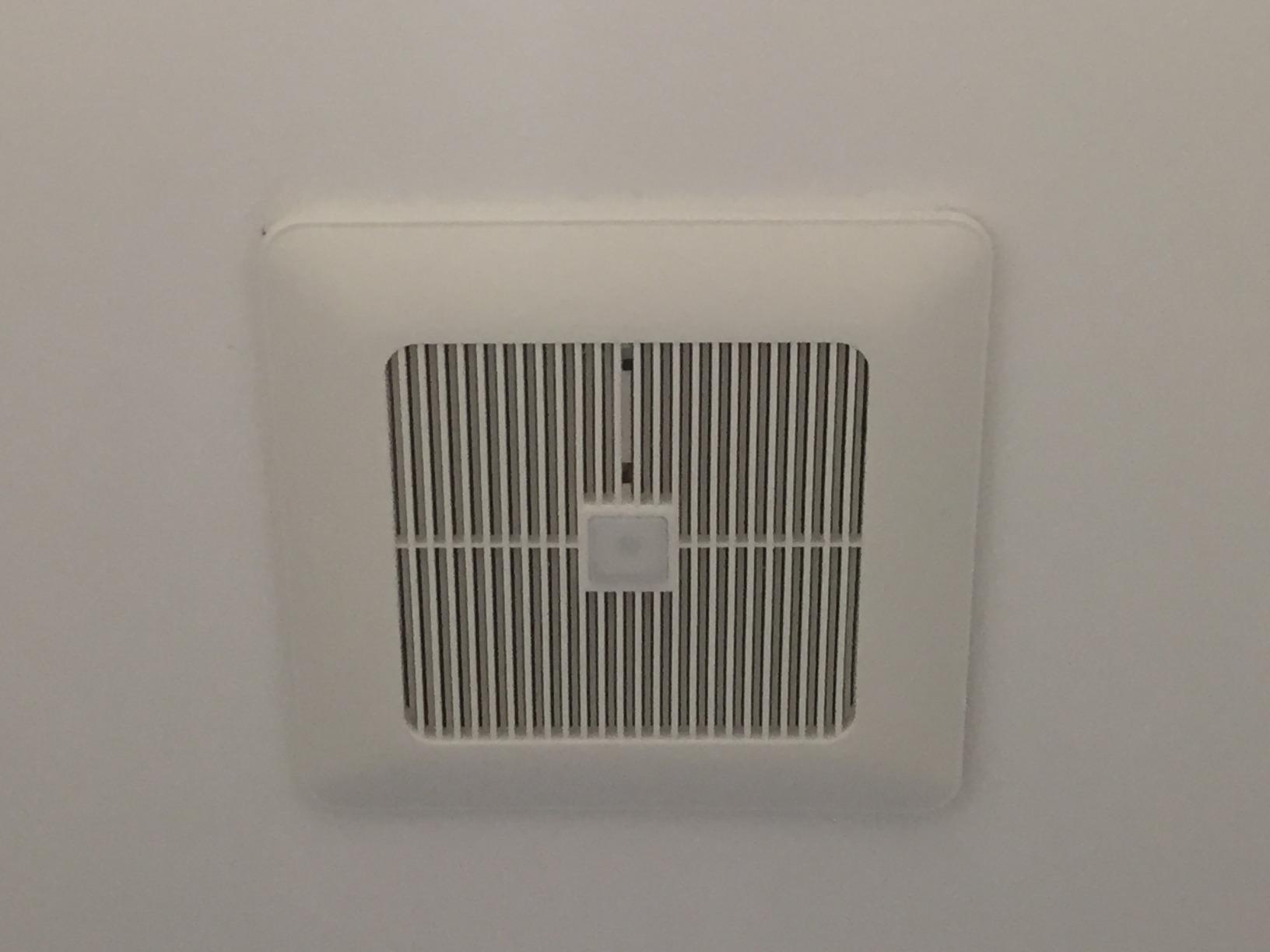
At 0.9 sones on the published spec and under 0.3 sone per speed on the ECM motor claims, it sits in the range where you can run it and still hear the shower. Draw 10.8 watts at full output, so running it for an hour after every shower costs almost nothing in electricity terms.
The six-year motor warranty is the one warranty length published anywhere in this group, and that matters more than it sounds. When a fan fails early the usual culprit is the motor bearings, and a six-year warranty says the manufacturer expects that part to outlast a normal ownership cycle.
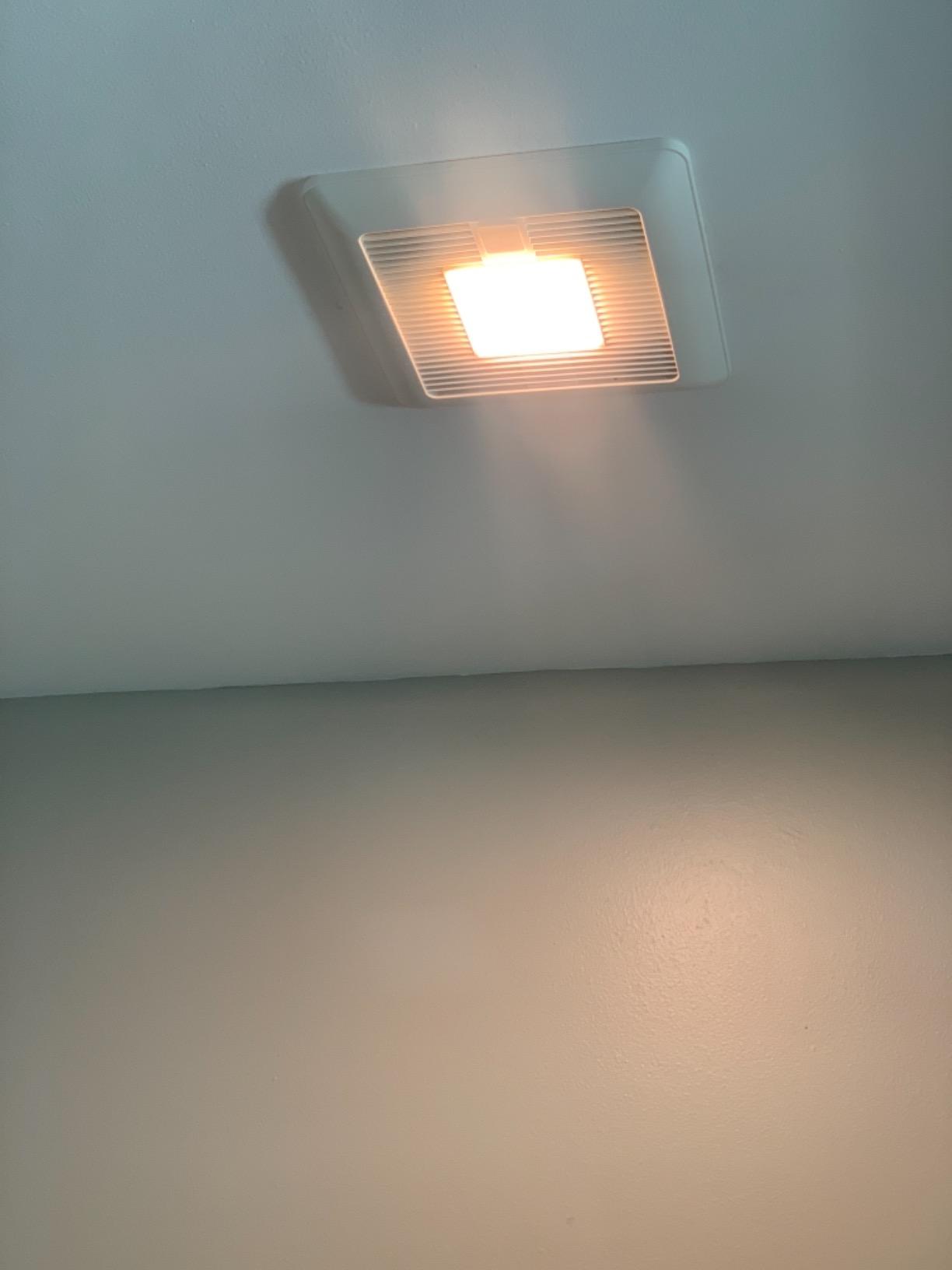
Where the WhisperSense fits best
Choose it when you have a full bathroom between 60 and 100 square feet with a standard 4 inch duct and a normal 8 foot ceiling. The 110 CFM setting clears steam fast, and the 50 CFM setting handles the slow creep of humidity from a bathtub without waking the house.
It also suits households where nobody wants to remember a switch. A guest bath, a kids bath, a rental unit, or any room where the fan runs unsupervised all benefit from a sensor that starts itself at a set humidity level.
Where the WhisperSense is the wrong buy
Three speeds means a more involved wiring job, and reviewers report the manual is not kind to first-time installers. If you are replacing a fan from the room side with no attic access, or if you are not prepared to run a second control, a simpler single-speed unit is a calmer choice.
It is also a full-size housing rather than a slim one, so check the depth above your joists before ordering. In a low-framing ceiling it simply will not fit.
2. VIVOHOME EC Motor 160-110-50CFM – Best Value with Automatic Airflow Stepping
VIVOHOME EC Motor Bathroom Exhaust Fan with Humidity Sensor (160-110-50CFM
160 CFM maximum
Auto steps 50/110/160 CFM
1.5 sones
45 watts
6 speeds via remote
Pros
- Brushless EC motor rated for a 30000 hour service life
- Auto mode steps between 50 110 and 160 CFM as humidity changes
- Constant airflow design compensates for duct bends and static pressure
- Remote adds manual 6-speed control
- Includes backdraft damper duct template and connectors
Cons
- Cutout template can run larger than the actual housing
- No attached electrical box so a J-box must be added
- Settings reset on power-up in some builds
- Needs 4 inch duct so older 3 inch installs need a reducer
This fan does something most of the others do not. Instead of a single fixed speed in sensing mode, it steps between 50, 110 and 160 CFM as humidity climbs, so it idles gently in a dry room and goes to full blast during a long shower. The constant airflow design is what keeps the top speed honest when the duct has bends.
Reviewers rate the airflow and the auto ramping as the strengths, and the installation as the friction. The 8.9 by 8.9 by 5.7 inch housing fits a standard 10.2 inch ceiling opening, which is a genuine advantage over bulkier units, but the paper template has been reported to measure larger than the metal housing itself.
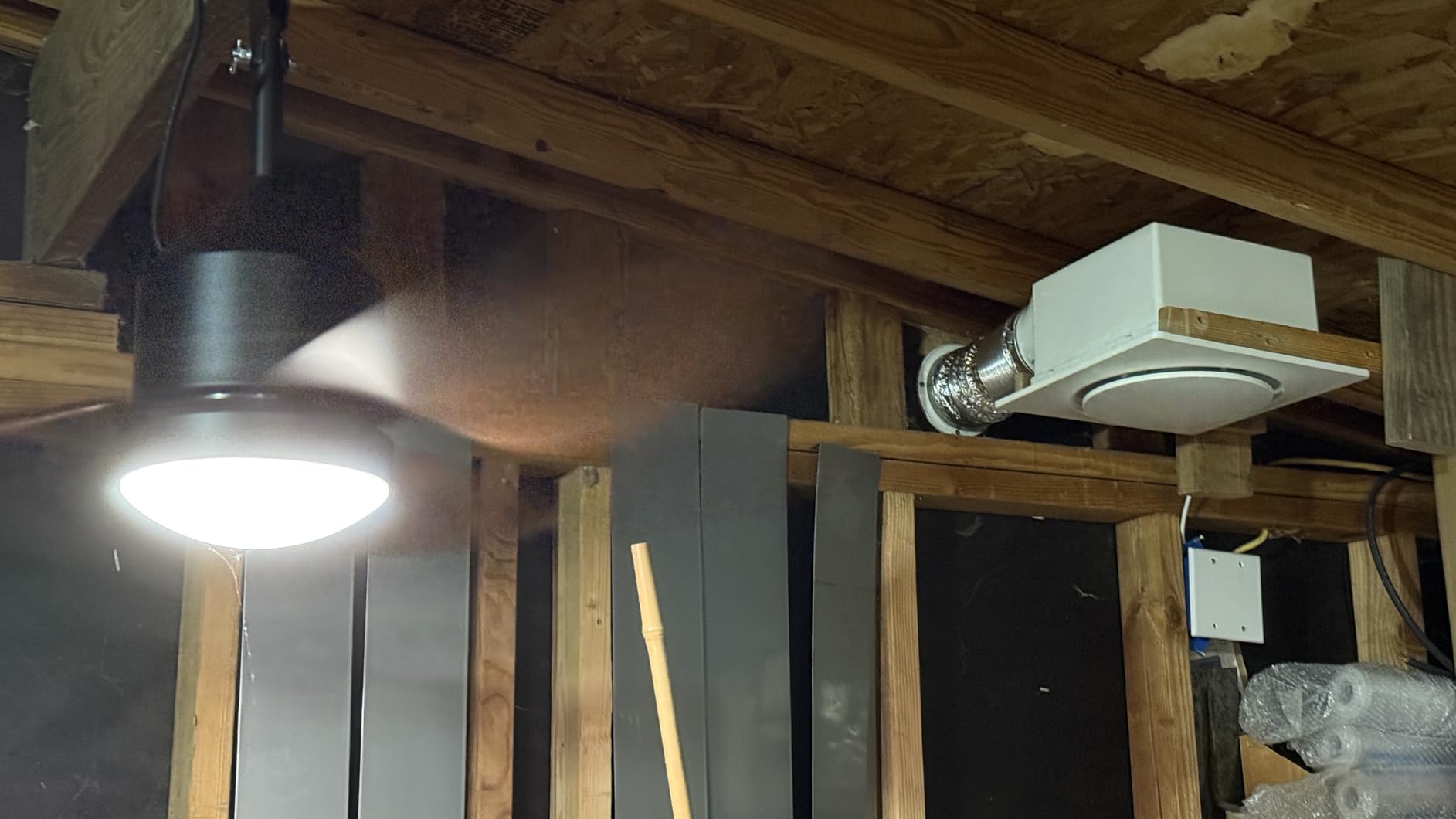
The motor is rated for a 30000 hour service life. Multiply that by an hour a day and you are looking at decades of runtime, which makes this one of the few picks here we would happily see left on continuous low-speed duty in a chronically damp room.
At 1.5 sones on the published figure it is not the quietest fan in the set, and full-speed running is where that number earns its keep. In silent mode the manufacturer claims 0.1 sone, and owners running it in auto mode on low settings report that this is the mode they actually hear.
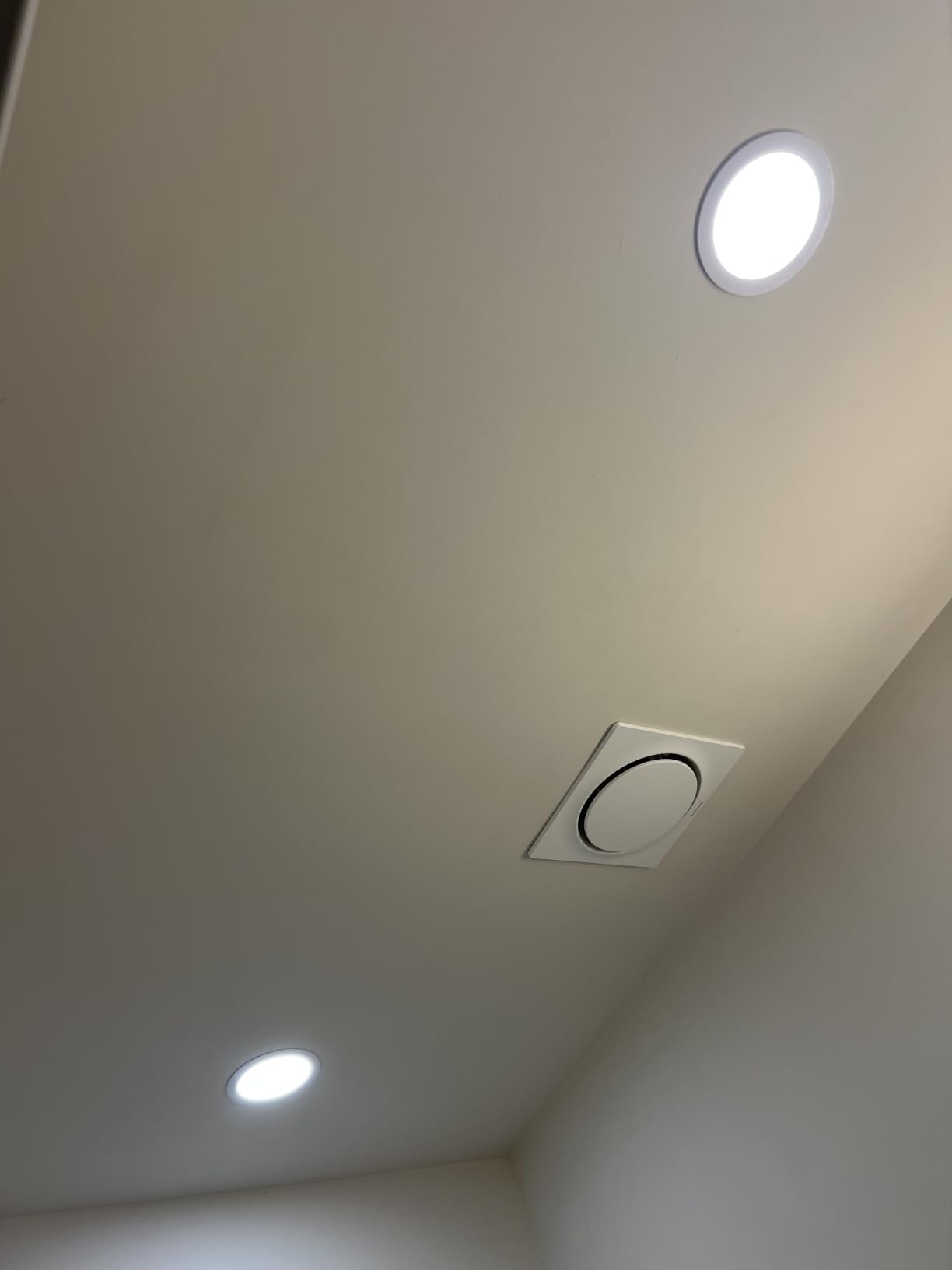
Where the VIVOHOME earns its slot
It suits anyone who wants a fan that adapts instead of a fan that runs flat out. The three-step humidity logic is genuinely useful in a large primary bath where a fixed 70 CFM fan simply cannot clear the room, and where a 160 CFM fan on a small bathroom would be overkill and noisy.
It is also the pick for a bathroom with a longer duct run, because constant airflow control is designed specifically for duct resistance and static pressure.
Where it disappoints
The install catches people out. There is no attached electrical box, the cutout template may not match the housing, and older homes with 3 inch duct need a reducer. None of these are dealbreakers, but all three add a step for a first-time installer.
Some owners report a startup beep and settings that reset when power is interrupted, which is annoying if you have tuned the fan to your bathroom’s actual humidity profile.
3. Delta BreezSlim SLM70H – Best Budget Retrofit for Small Openings
Delta BreezSlim SLM70H 13.1W Exhaust Bath Fan with Humidity Sensor
70 CFM
Starts above 60% RH and stops below
1.0 sones
13.1 watts
ENERGY STAR and UL
Pros
- Brushless DC motor at roughly 5.8 CFM per watt
- Humidity mode starts above 60% RH and stops below it
- Compact 7.5 by 7.25 inch housing fits most existing openings
- Blue and amber LEDs show sensing mode versus full speed
- UL approved for ceiling or wall mount
Cons
- Single speed only so there is no low and high auto stepping
- Motor is packed so tightly that disassembly is difficult
This fan solves one problem better than anything else here: fitting a real humidity-sensing fan into a small existing opening without cutting drywall. At 7.5 by 7.25 inches it is the smallest housing in the group, and most bath fan cutouts from the 1970s through the 1990s accept it directly.
Its sensing logic is simple and it works. Above 60% relative humidity the fan starts, and below 60% it stops. The blue and amber indicators under the grille let you see which mode it is in from the floor, which is more useful than it sounds when you are trying to work out whether a fan is actually sensing.
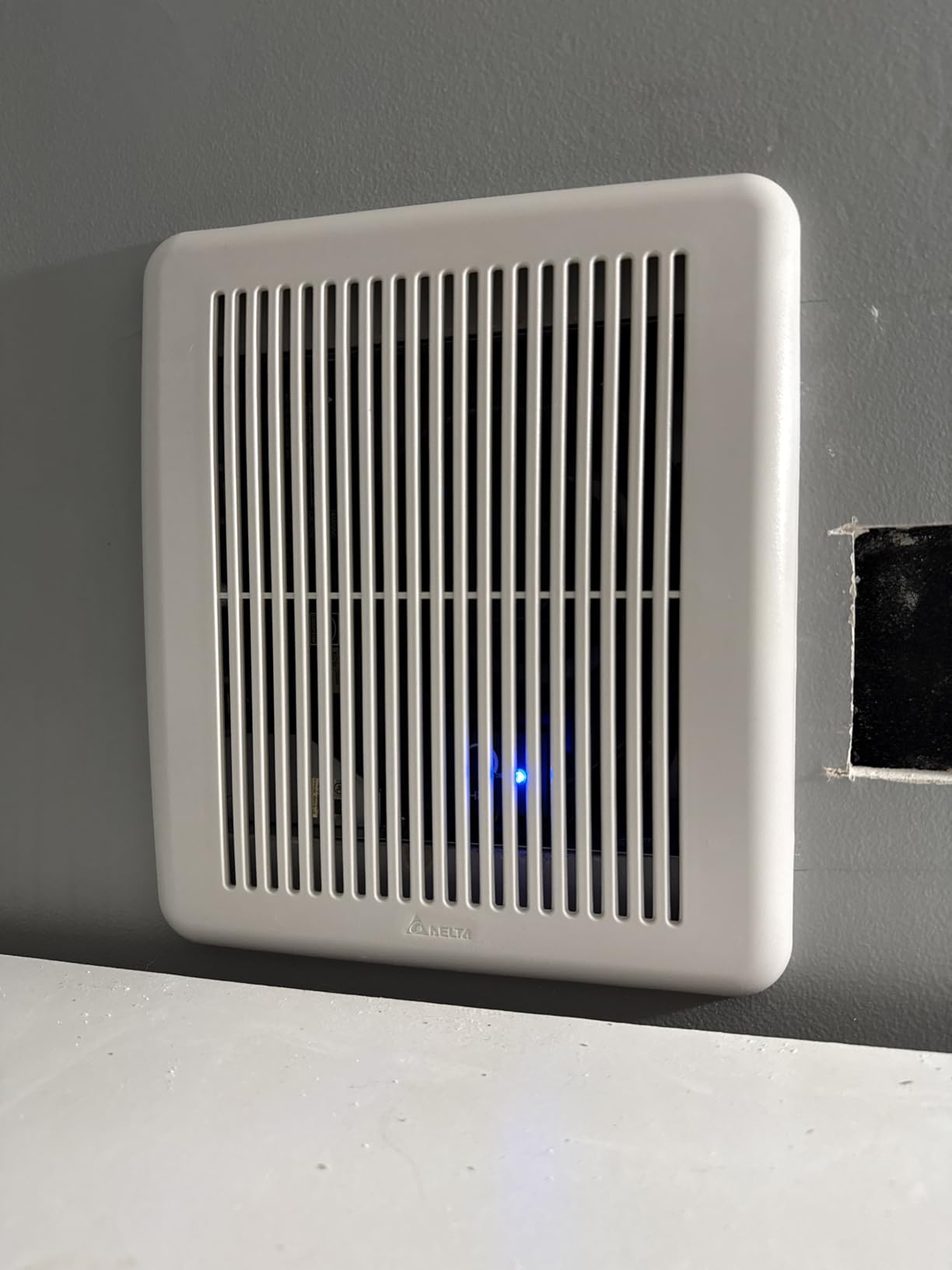
Energy use is a strong point. At 13.1 watts and roughly 5.8 CFM per watt, it costs about the same to run as a small LED bulb while moving more air than a builder-grade AC motor of twice the price.
Owner reports on drying are consistent, and 70 CFM is enough for a small full bath or a half bath with a shower if the duct is short and the door undercut is generous. Sized to a 50 square foot room with a long flex run, it will feel underpowered.
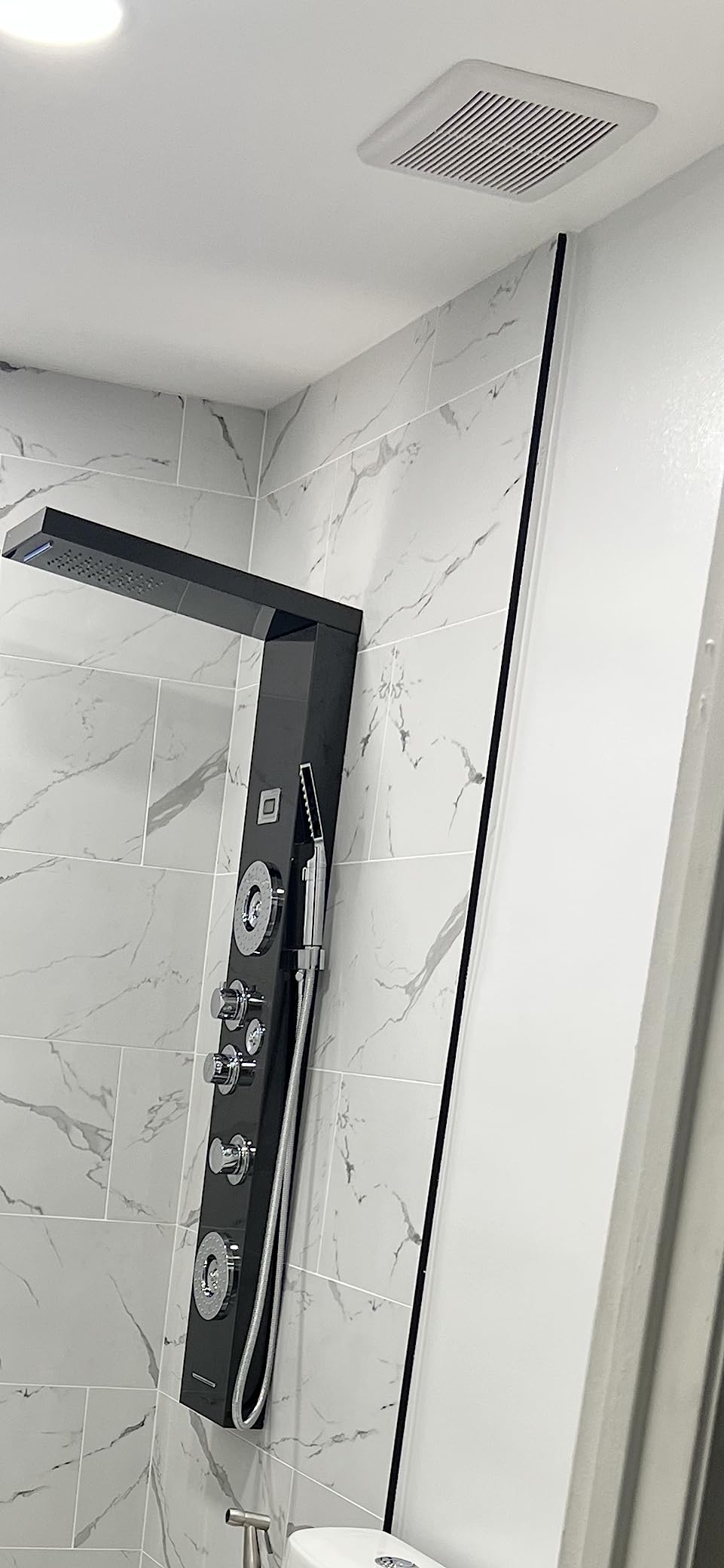
Where the BreezSlim makes sense
This is the fan to buy when the existing ceiling opening is small, when you cannot get attic access, and when the budget is tight. It converts a manual switch into automatic humidity control for the least disruption of any unit we tested.
It also works well as a second fan in a bathroom that has two fixtures far apart, since one sensor in the ceiling grille reads the whole room rather than the shower corner.
Where it falls short
Single speed means it runs at 70 CFM every time it starts, so it is louder during a long shower than a multi-speed fan would be, and it cannot idle down when the humidity is only slightly above the set point.
The motor is tightly packed in the housing, and several owners report it resists removal when a motor eventually fails. That is a serviceability complaint rather than a performance one, but it is worth knowing before you buy.
4. OREiN 3-in-1 160 CFM – Best for a Steamy Shower and a Bright Room
OREiN 3-in-1 Bathroom Exhaust Fan with Light & Humidity Sensor, 160 CFM, 1.0 Sone, Auto-On at 60% Humidity, 1500LM, 3CCT, Night Light, ENERGY STAR, HVI/FCC/ETL, Cutout 11.81”x 11.02”
160 CFM at 1.0 sone
Humidity auto-on above 60% RH
1500LM 3CCT light plus 2200K night light
40 watts
Pros
- Fan 1500 lumen 3CCT light and 2200K night light in one housing
- Humidity sensor auto-starts above 60% RH with a green sensing LED
- 160 CFM at a quoted 1.0 sone
- ENERGY STAR plus ETL HVI and FCC certified
- Five year limited warranty with responsive support
Cons
- Weighs 17.6 pounds so it must be anchored on both sides
- Needs 6 inch duct so a reducer is required on standard 4 inch runs
- Dimmers and timer switches are not compatible
- Night light output is brighter than a typical night light
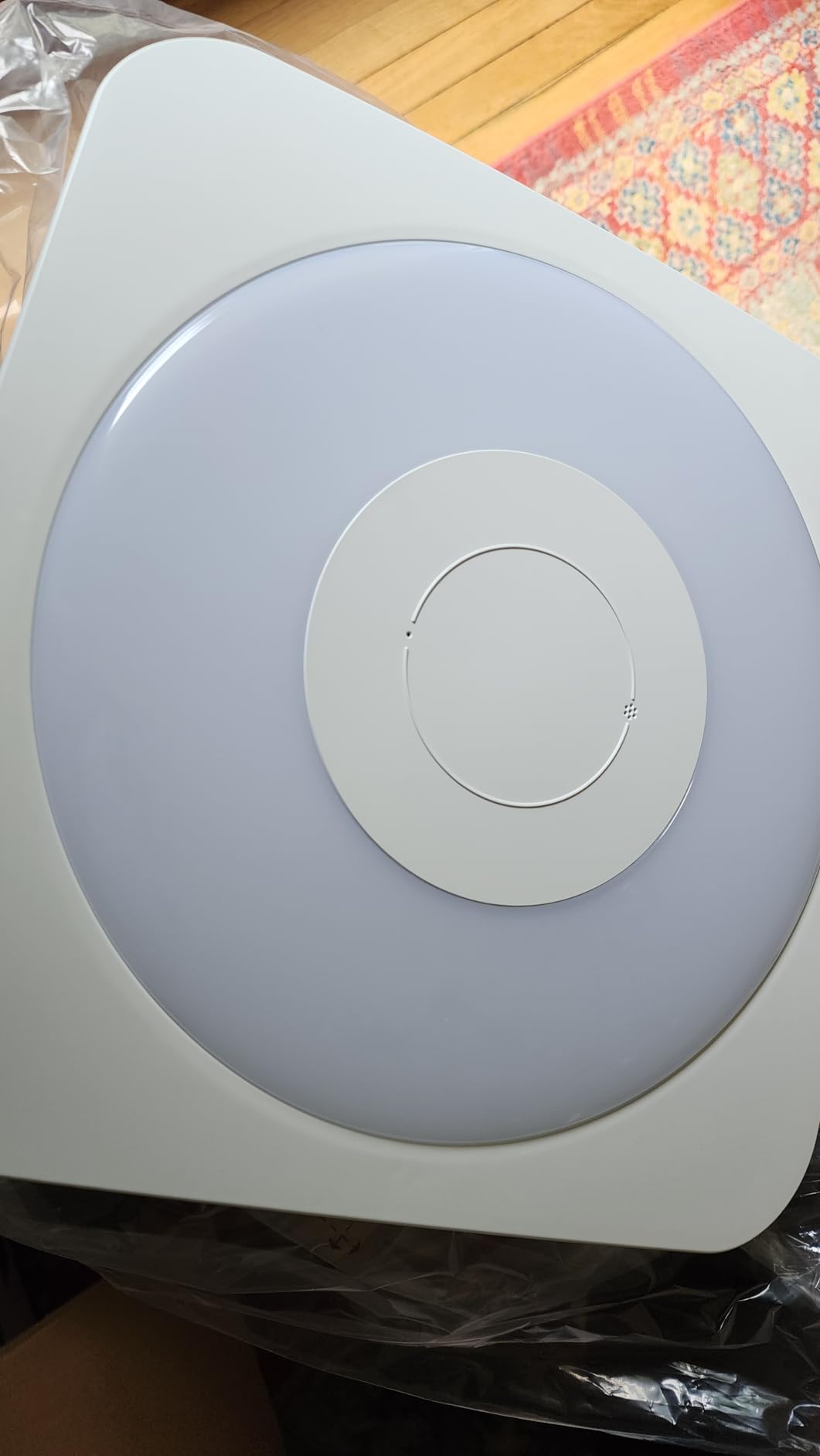
160 CFM at a quoted 1.0 sone is an unusual combination, and it is the reason this fan leads for anyone with a genuinely steamy shower or a large primary bath. The humidity sensor auto-starts above 60% RH, and a green LED under the grille confirms the fan is in sensing mode.
The light is the other half of the pitch. A 1500 lumen module with three color temperatures plus a 2200K night light means one ceiling unit covers ventilation, task lighting and a low-level glow, which removes the reason to reach for a separate light in a windowless bath.
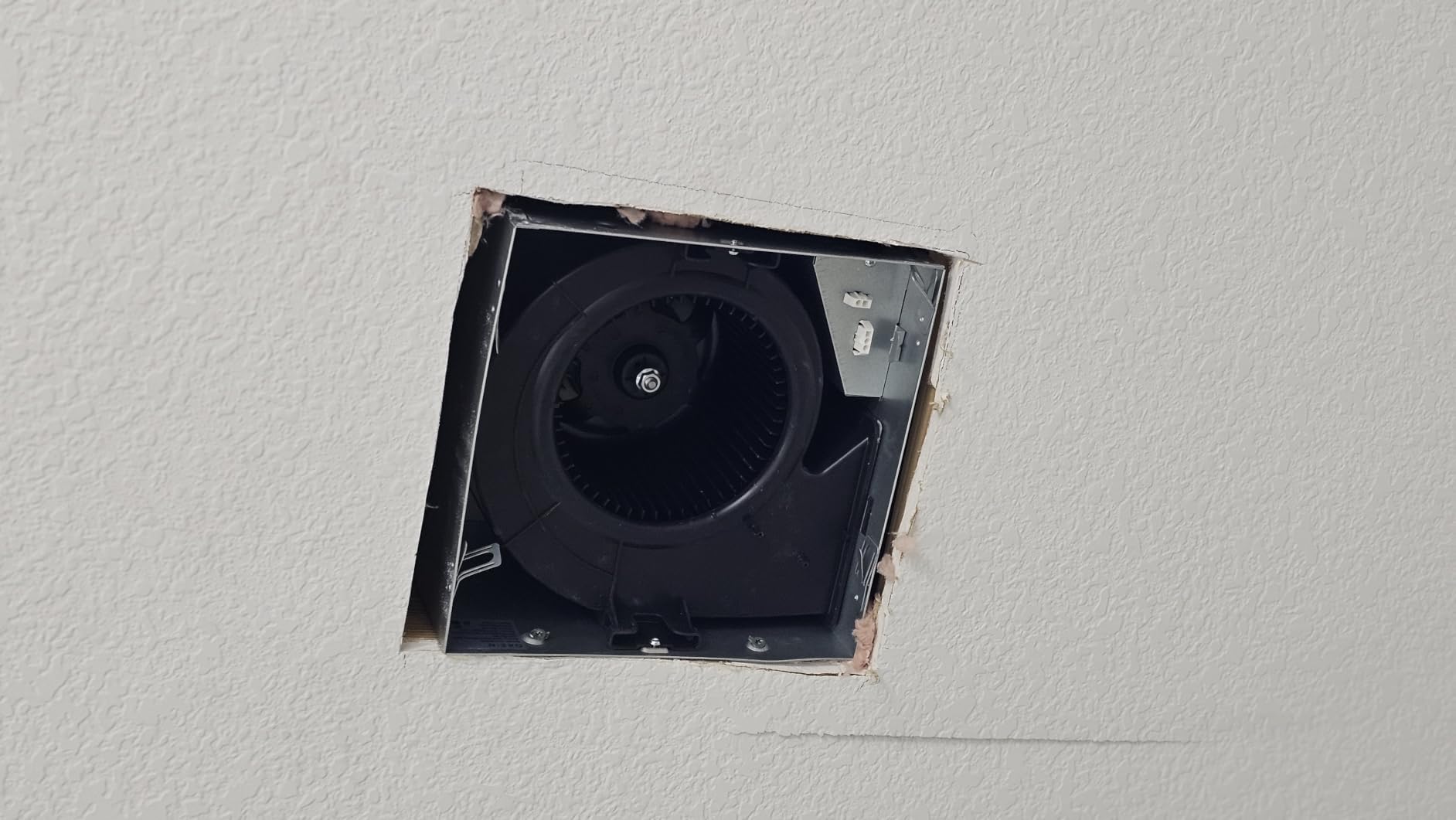
Certification is broad here, with ENERGY STAR alongside ETL, HVI and FCC. Buyers report that support replaced a failed light even after the warranty had run, which is a small thing but a real one when the fixture is screwed into the ceiling above a tub.
One owner noted the humidity sensor can keep the fan running after the moisture is gone, which is the most common complaint across this whole category and worth expecting from any sensor-driven fan.
Who should buy the OREiN 3-in-1
It is the right call for a bathroom above 100 square feet, a steam shower enclosure, or a room where you want to replace a noisy fan and an aging light fixture at the same time. The 3CCT light also solves the mismatch that happens when a new fan meets old incandescent bulbs elsewhere in the house.
Because it is rated for bathrooms up to 160 square feet, it also covers the case where you are finishing a basement bath or converting a large walk-in closet into a full bath.
Who should skip it
Skip it if your bathroom is small and quiet matters more than light. A 160 CFM fan in a 40 square foot powder room is more air than the room needs and more sound than you want.
Also skip it if your existing duct is 4 inch, because the 6 inch requirement means adding a reducer, which cuts airflow. And if you rely on a wall dimmer or a timer switch, neither works with this unit.
5. Panasonic FV-0510VSC1 WhisperValue – Best for Shallow Ceilings
Panasonic FV-0510VSC1 WhisperValue Bath Fan + Humidity Sensor, 50-100 CFM
100 CFM max
Pick-A-Flow 50/80/100 CFM
0.9 sones
12.4 watts
3-3/8 inch housing depth
Pros
- Built-in condensation sensor modulates airflow on its own
- Pick-A-Flow selector for 50 80 or 100 CFM
- Brushless DC motor keeps noise under 1 sone
- 3-3/8 inch housing depth suits shallow ceilings
- Long-term owners report clear mirrors and no mildew return
Cons
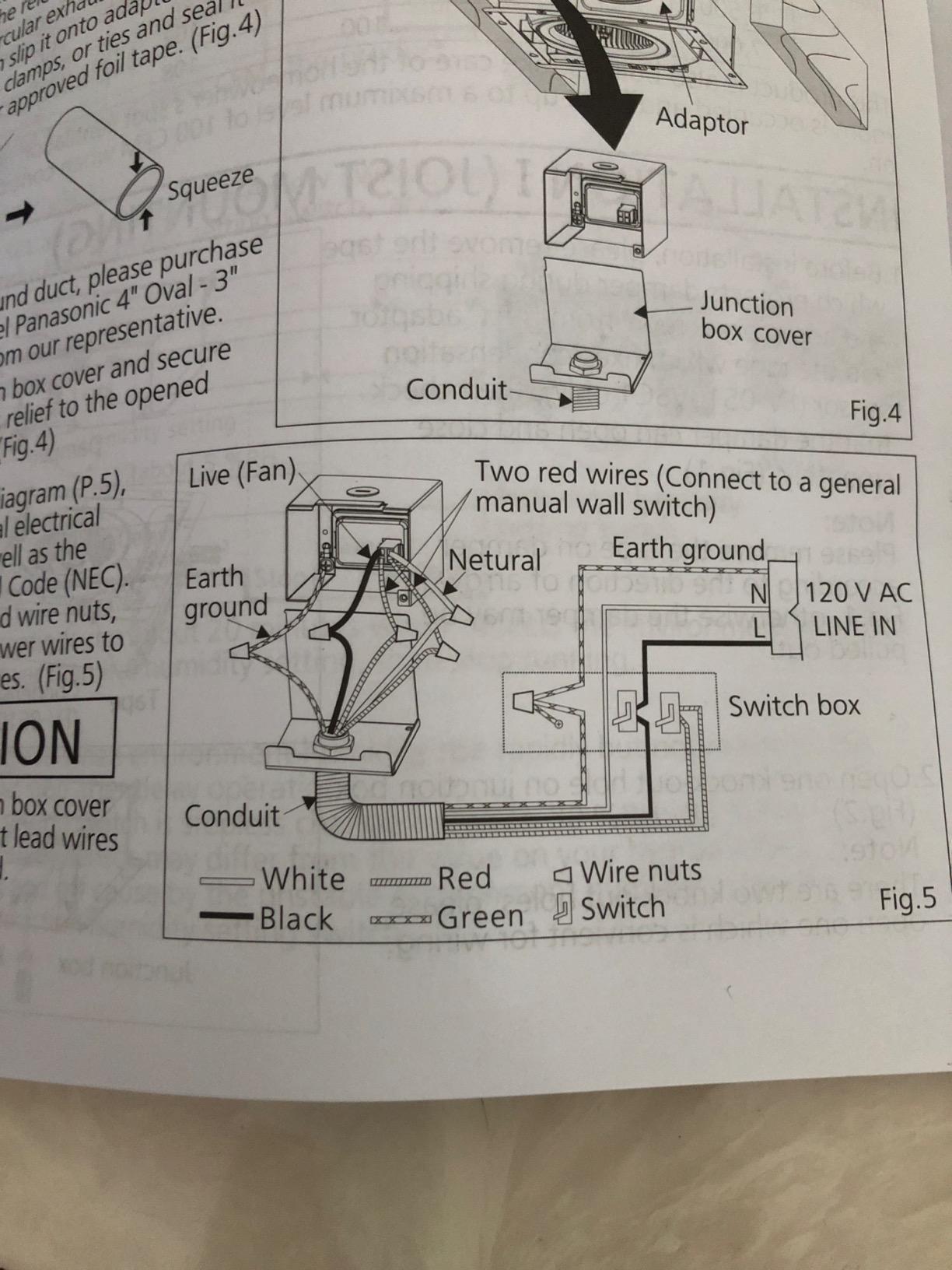
- Wiring instructions are confusing especially the red sensor leads
- Manual reads as written for new construction rather than retrofits
- True on and off control needs a separate in-wall humidity switch
The WhisperValue solves a physical problem that stops people upgrading: a shallow ceiling. At 3-3/8 inches of housing depth it clears framing that would swallow a standard fan, which makes it the pick for a second floor or an older house where attic access is tight or impossible.
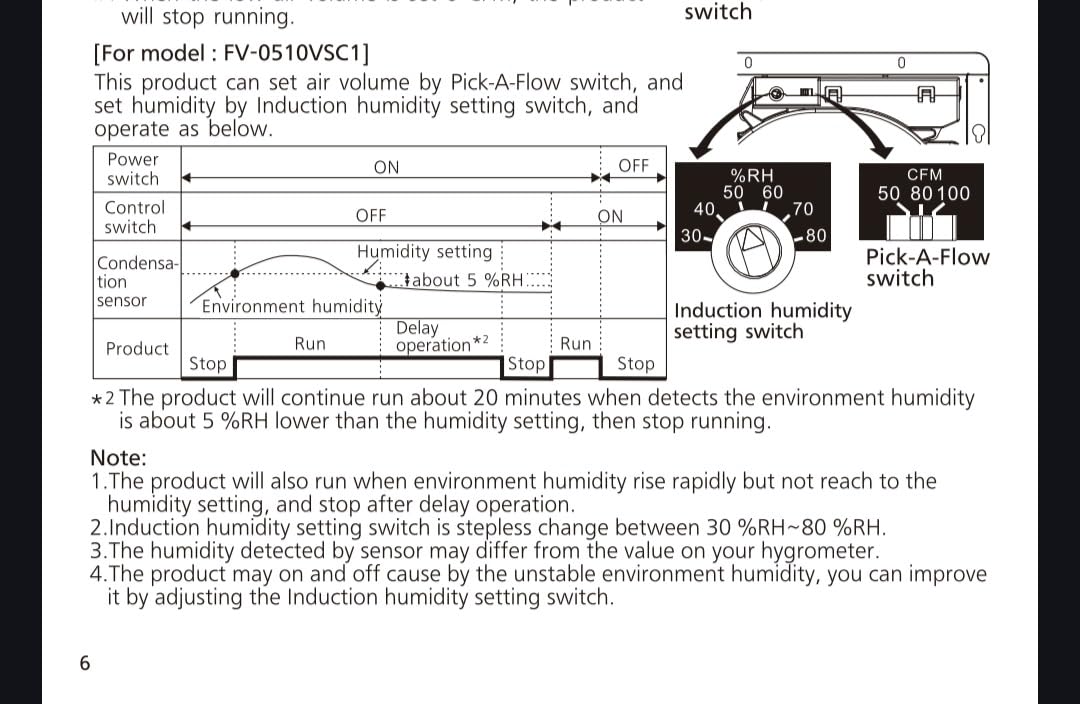
Its sensor is a condensation sensor rather than a relative humidity sensor, and that distinction matters in a mild way. It reacts to moisture building in the room and modulates airflow accordingly, which suits a bathroom with predictable shower use better than it suits one with wild humidity swings from cooking or laundry bleeding in.
The long-term reports here are the strongest signal in our research. Owners describe mirrors that stay clear and mildew that did not come back after months of heavy use, which is the outcome that matters rather than any single specification number.
At 12.4 watts and under 1 sone, running it for half an hour after every shower is a rounding error on an electricity bill. The Pick-A-Flow selector covers 50, 80 and 100 CFM from one housing.
Where the WhisperValue wins
It fits 2×6 framing, low ceilings and any retrofit where housing depth is the binding constraint. In a bathroom where a thick fan simply cannot go in, this is often the difference between solving the humidity problem and giving up on it.
It is also a good second choice for anyone who already knows they like Panasonic Whisper series behavior but does not need the motion sensing that costs extra in the top model.
Where the paperwork hurts
The single repeated complaint is documentation. Several buyers needed outside help to get the red humidity sensor leads and the switch wired correctly, and the manual is written as if the fan is going into new construction rather than an existing ceiling.
Also note that the built-in sensor modulates airflow. If you want the fan to fully stop and start on humidity rather than simply change speed, you need an in-wall humidity sensor switch alongside it.
6. Homewerks Dual Speed 80 CFM – Best Two-Speed Automatic Humidity Control
Homewerks Dual Speed Bathroom Exhaust Fan with Humidity Sensor, LED
80 CFM at 1.0 sone above 60% RH
110 CFM at 1.5 sones above 80% RH
1.5 sones
30.5 watts
Pros
- True dual speed humidity control with two real thresholds
- Integrated dimmable LED plus a dual color night light
- Galvanized steel housing resists corrosion
- LED brightness is consistently praised
- Customer service has sent replacement control switches
Cons
- Touchpad wall switch has failed on several units after months or years
- Retrofit install without attic access is difficult
- Night light cannot be dimmed
- Highest share of one star ratings in this group
The logic here is the cleanest two-step design we saw. At 60% RH the fan runs 80 CFM at 1.0 sone, and at 80% RH it steps up to 110 CFM at 1.5 sones, so a mild morning does not get the full noise treatment while a long hot shower does.
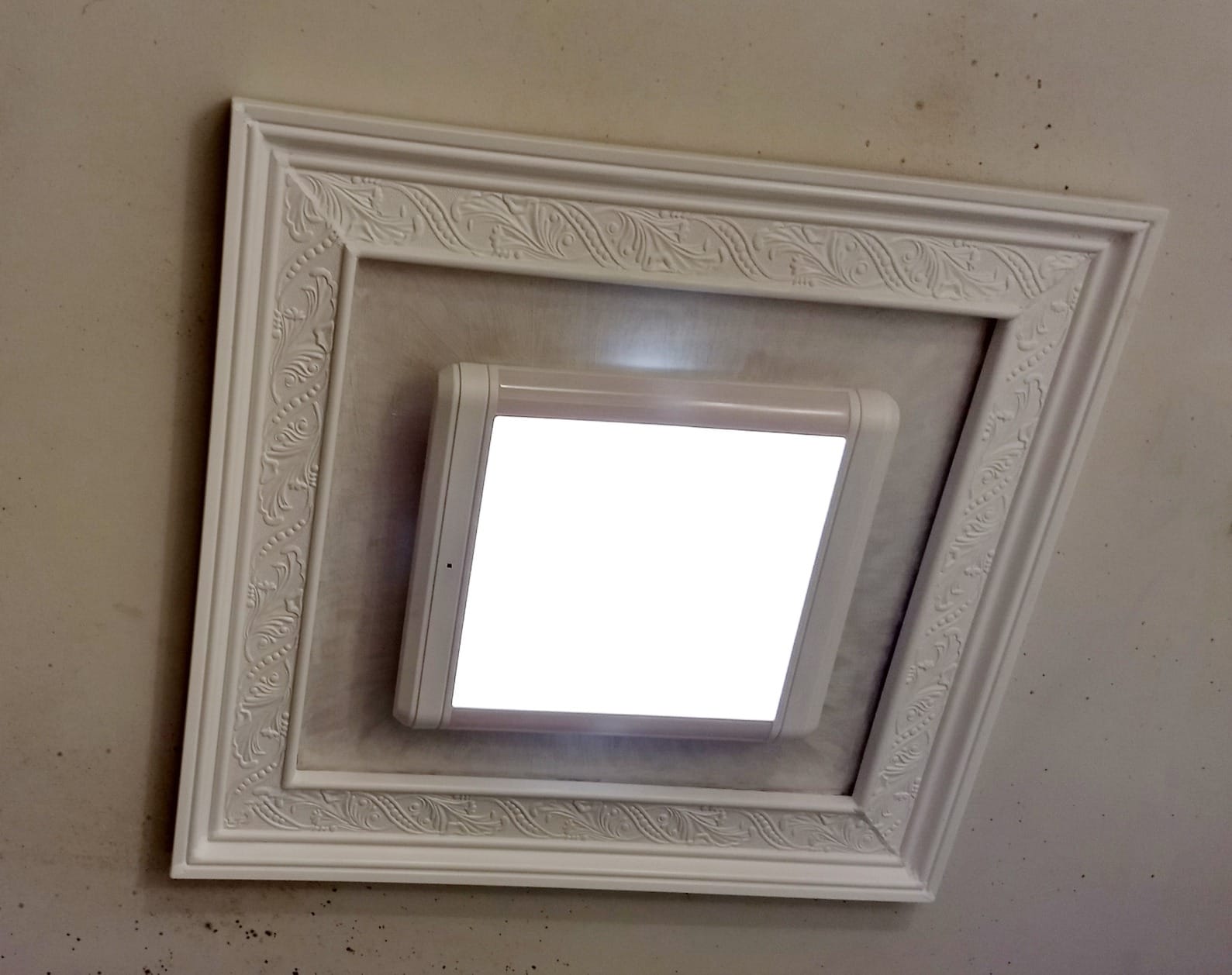
The galvanized steel housing is a real material choice rather than plastic, and in a wet room with a bath or shower overhead that durability argument carries weight. The integrated dimmable LED and dual color night light round out a unit that handles three jobs in one housing.
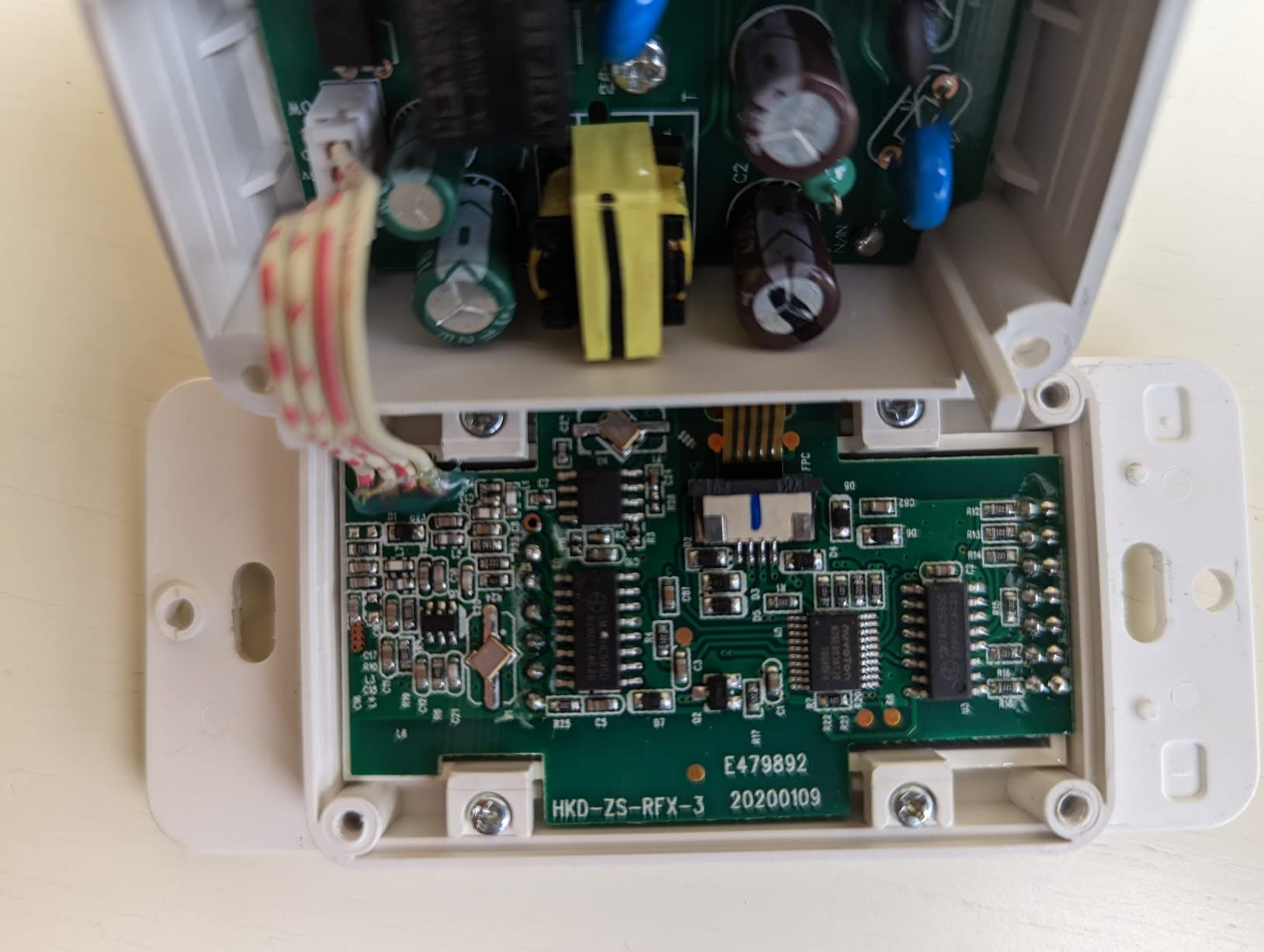
What holds this one back is the electronics. Multiple reviews describe the touchpad wall switch failing after months or a few years, and the switch is the part you touch every day, so a failing control is a bigger problem here than it would be on a dumb fan.
Installation is also less friendly than the marketing suggests. Reviewers describe retrofit work without attic access as frustrating, because the mounting tabs and the vent outlet location are hard to manage from below the ceiling.
Where the Homewerks makes sense
Buy it if you want real two-stage automatic control and you have attic access or a helper for the ceiling work. The galvanized housing and the dimmable LED make it a good fit for a guest bath where you want one device to cover light and moisture.
The 80/110 CFM pairing also handles the awkward middle sizes well, which is where a lot of full baths actually sit once you measure them properly.
Where it does not
This is the one we would think twice about in a rental or a house you plan to sell soon, given the reported failures of the touchpad control switch. A mechanical or digital toggle control has fewer ways to fail.
The installation requirements are specific and worth reading before you buy. It needs a 9-1/4 inch ceiling opening, a 9 by 9 by 7-11/16 inch housing space and 4 inch duct, and attic access may be required.
7. Tech Drive 110 CFM Humidity Fan – Best for a Room-Side Retrofit
Tech Drive Bathroom Fan with Humidity Sensor,110 CFM,4 Inch Duct
110 CFM for rooms up to 110 sq ft
1.5 sones
28 watts
HVI and ENERGY STAR
Motor rated 25000 hours minimum
Pros
- Two install paths including room-side retrofit with no attic access
- Humidity sensing mode starts above 60% RH with a green LED
- ENERGY STAR qualified plus UL and HVI certified
- GFCI acceptable over a bathtub or shower
- Buyers describe a big step up in quietness from builder-grade fans
Cons
- Louder in practice than the 1.5 sone figure suggests
- Humidity sensor can keep running after moisture is gone
- Motor is packed tightly and resists removal
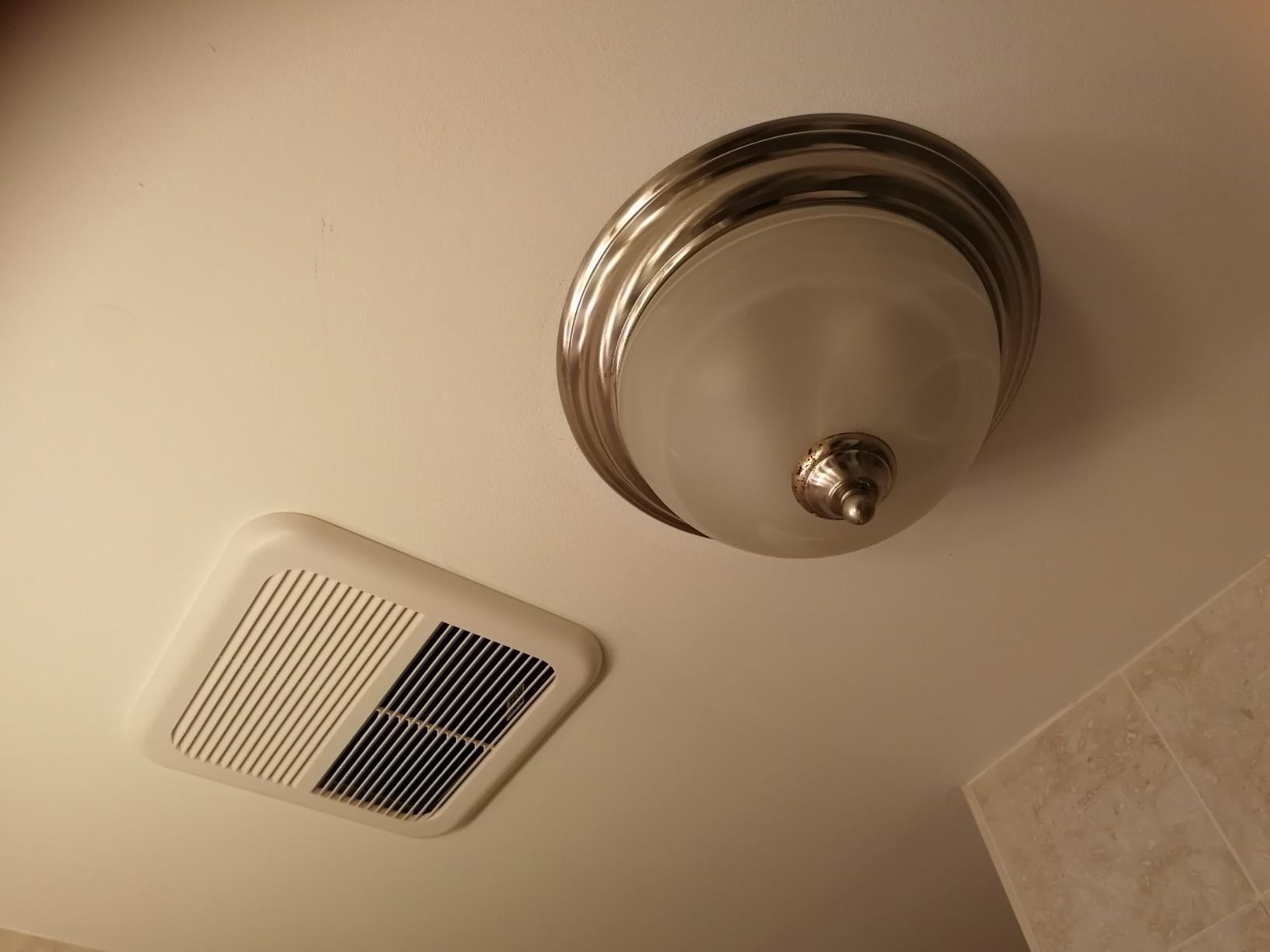
This fan exists for a specific situation: you want better humidity control and you have no attic access. It installs from the room side through the existing ceiling opening, which removes the most common reason people put off replacing an old noisy fan.
110 CFM covers a bathroom up to 110 square feet, and owners consistently describe the result as a large step up in quietness from a builder-grade fan. The humidity sensing mode shows a green LED and starts above 60% RH, while manual mode shows red.
Certification is solid for a wet location, with ENERGY STAR qualification alongside UL and HVI, and it is acceptable over a bathtub or shower on a GFCI-protected branch circuit. The motor carries a minimum 25000 hour rating.
The honest criticism is that the real-world sound sits above the published 1.5 sones for some listeners. If you are replacing a 3.0 sone fan this is still a large improvement, but it is not in the same class as the ECM models above.
Where the Tech Drive is right
It suits a top-floor bath, a bathroom over a second living space, or any ceiling where getting above the joists means opening a wall. The 9 by 8.5 by 6 inch housing with a 9.25 by 8.9 inch ceiling opening fits a lot of existing cutouts.
It is also a sound pick for a bathroom where someone complained the old fan was too loud but does not need anything close to 160 CFM of airflow.
Where it falls short
If silence is your top priority, choose an ECM motor instead. The step from a builder-grade fan is real, but the step from this fan to a Panasonic Whisper series unit is also real.
The motor is packed so tightly that it resists removal when it eventually fails, and a few owners report the sensor running longer than expected after the shower has finished.
8. Delta GreenBuilder GBR80HLED – Best Sensor and Light Combination
breez Delta GreenBuilder GBR80HLED 80 CFM Exhaust Bath Fan/Dimmable LED Light with Humidity Sensor
80 CFM
0.8 sones
13 watts
850 lumen 3000K dimmable LED
ENERGY STAR qualified
Pros
- Dual speed humidity control with a low idle then full 80 CFM
- Very quiet relative to hardware store fans at 0.8 sones
- 850 lumen 3000K dimmable LED module in the same housing
- DC brushless motor and galvanized steel housing
- Low profile usually fits existing fan cutouts
Cons
- Wiring is involved since light fan and mode circuits want three switches
- LED is warm white and may not match daylight bulbs
- Some owners report a ticking damper and lighter airflow than 80 CFM
- Humidity sensor emits a faint high pitched whine in sensing mode
- Requires 4 inch duct so older 3 inch installs need a reducer
What stands out here is 0.8 sones at a full 80 CFM with a dimmable light in the same housing. Most fan and light combinations in this category give you one or the other, and this one gives you quiet airflow plus a usable 850 lumen 3000K module.
The DC brushless motor and galvanized steel housing are the durability story. The impeller also stops if it is obstructed, which is a small safety behavior that matters more in a fan mounted over a tub than in most appliances.
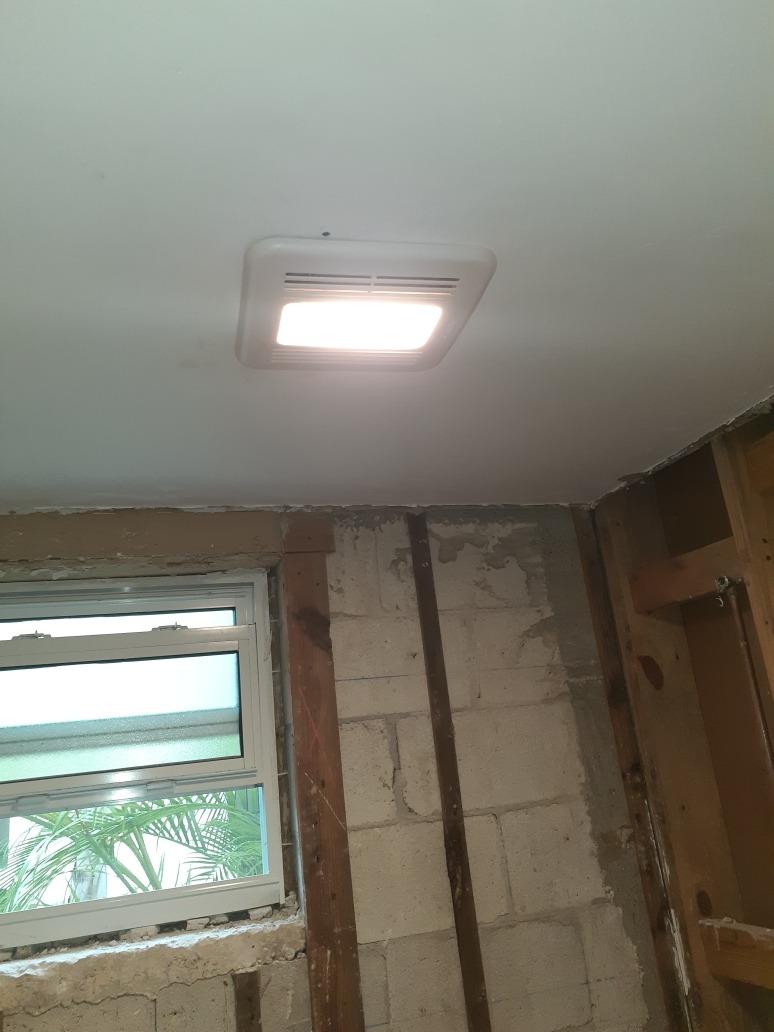
Owners confirm it clears moisture quickly and runs quietly relative to what they had before. The dual speed humidity control idles low and steps to full 80 CFM once the set point is exceeded, which is the quiet compromise we look for in a standard bath.
The low profile housing usually drops into an existing cutout without drywall work, which makes this a realistic weekend swap in a bathroom that already has a fan worth replacing.
Where the GBR80HLED fits
It is a strong pick for a 50 to 80 square foot full bath where you also want to replace a dated light fixture, especially if the ceiling opening is standard and the duct is 4 inch. The energy use at 13 watts is among the lowest here.
For anyone who cares more about the light than about extreme airflow, this covers both jobs in one device and keeps the ceiling uncluttered.
Where it does not
The wiring is the hard part. Getting the light, the fan and the sensing mode onto sensible controls takes three switches in an ideal setup, and most reviews describe wrestling with that on install day.
Two smaller complaints come up repeatedly: a damper that ticks, and a faint high pitched whine from the sensor in sensing mode. If you are noise-sensitive, the 0.3 sone Delta SMT130H below is the quieter answer.
9. VIVOHOME 240 CFM 6-Speed – Best for Very Large Bathrooms
VIVOHOM Bathroom Exhaust Fan with Humidity Sensor, 240 CFM 6-Speed
240 CFM for 120 to 280 sq ft
160 CFM above 50% RH and 240 CFM at 80%
1.6 sones
35 watts
UL Listed
Pros
- Highest airflow in the group sized for 120 to 280 sq ft rooms
- Explicit humidity logic with off under 50% RH and 240 CFM at 80% plus
- Quiet at low speed with a memory function that restores settings
- UL Listed with a test plug cut-out template and flexible mounting frame
- Constant airflow holds up against long insulated flex duct runs
Cons
- Instructions are vague and do not explain remote pairing or frame orientation
- Housing is much larger than a typical replacement fan and needs a bigger duct
- A few owners report a rattle or whistle that develops at higher speeds
- Light and fan cannot be split onto separate wall switches
- Remote needs AAA batteries that are not included and no wall holder is provided
If your bathroom is bigger than 100 square feet and has a jetted tub or a steam shower, this is the airflow number that matches the problem. 240 CFM is the highest output we tested, and the humidity logic is the most transparent of the group: off under 50% RH, 160 CFM above 50%, and 240 CFM at 80% or higher.
The constant airflow design is the other reason it earns a place. Long insulated flex runs add static pressure that flattens ordinary fans, and this one adjusts its speed to hold the rated output, which is exactly the situation homeowners describe when they say their old fan never cleared the mirror.
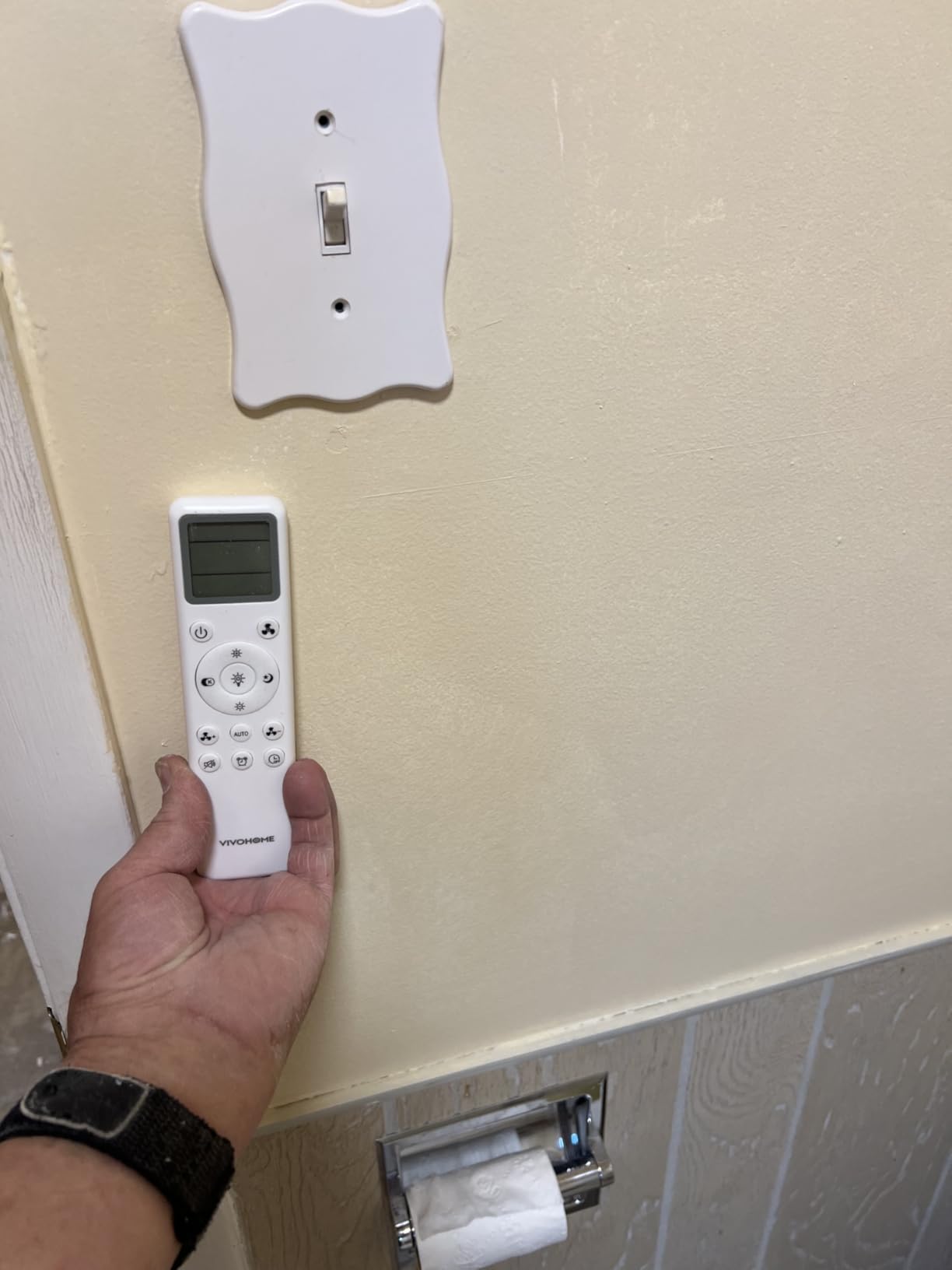
The remote carries 0.5, 1 and 1.5 hour timer settings and reaches up to 45 feet, with a memory function that restores your previous settings after a power cut. At 35 watts it is not the lowest draw in the set, but 240 CFM is real work and the power figure reflects that.
It needs an 11.37 by 12.12 inch ceiling opening and a 13.1 by 13.1 by 9.2 inch housing space. Those are large numbers, and in an existing small bath this fan simply will not go in.

Where the 240 CFM belongs
Large primary baths, master suites with a freestanding tub, steam shower enclosures, and basement bathrooms finished as full suites all benefit. It is also the right answer for a bathroom with a long duct run, because the airflow holds up where lesser fans fade.
If you are building a large primary from scratch, or remodeling one, matching the fan to the room rather than to the opening size is the decision that pays off for years.
Where it is overkill
In a bathroom under 100 square feet with a short duct, this fan will be louder than you need for no benefit. The 1.6 sone figure is a full-speed number, but there is no reason to pay for airflow the room cannot use.
The documentation is the weak point. Instructions do not explain remote pairing or frame orientation clearly, the housing dwarfs a typical cutout, and the remote is sold without batteries and without a wall holder.
10. Delta SMT130H – Quietest Pick with an Adjustable Humidity Set Point
breez Delta Electronics SMT130H Smart Ventilation Fans, 130 CFM with Humidity Sensor
130 CFM above the set point
0.3 sones
11.6 watts
Set point adjustable from 50% to 90% RH
ENERGY STAR Most Efficient
Pros
- 0.3 sone published rating with owners saying they can barely hear it running
- Adjustable humidity set point from roughly 50% to 90% RH
- Idles at a preset low speed below the set point and runs full 130 CFM above it
- ENERGY STAR Most Efficient with a DC brushless motor
- Indicator light under the grille confirms it is running
Cons
- Idles continuously at the low speed rather than switching fully off
- Sensor mode needs a second switch so retrofits can mean opening walls
- Not compatible with timer switches because the sensor needs constant power
- Some long term owners report the humidity behavior is hard to tune
At 0.3 sones this is the quietest fan in the group, and it is the one we would put above a bathroom where a sound-sensitive household member has learned to switch the fan off. Owners report that they can barely hear it running, which is the entire point of a humidity-sensing fan.
The set point is adjustable from roughly 50% to 90% RH, which is a genuine advantage in a humid climate. You can set it low so it works harder, or high so it does not run constantly on days when the outdoor air is already close to the indoor reading.
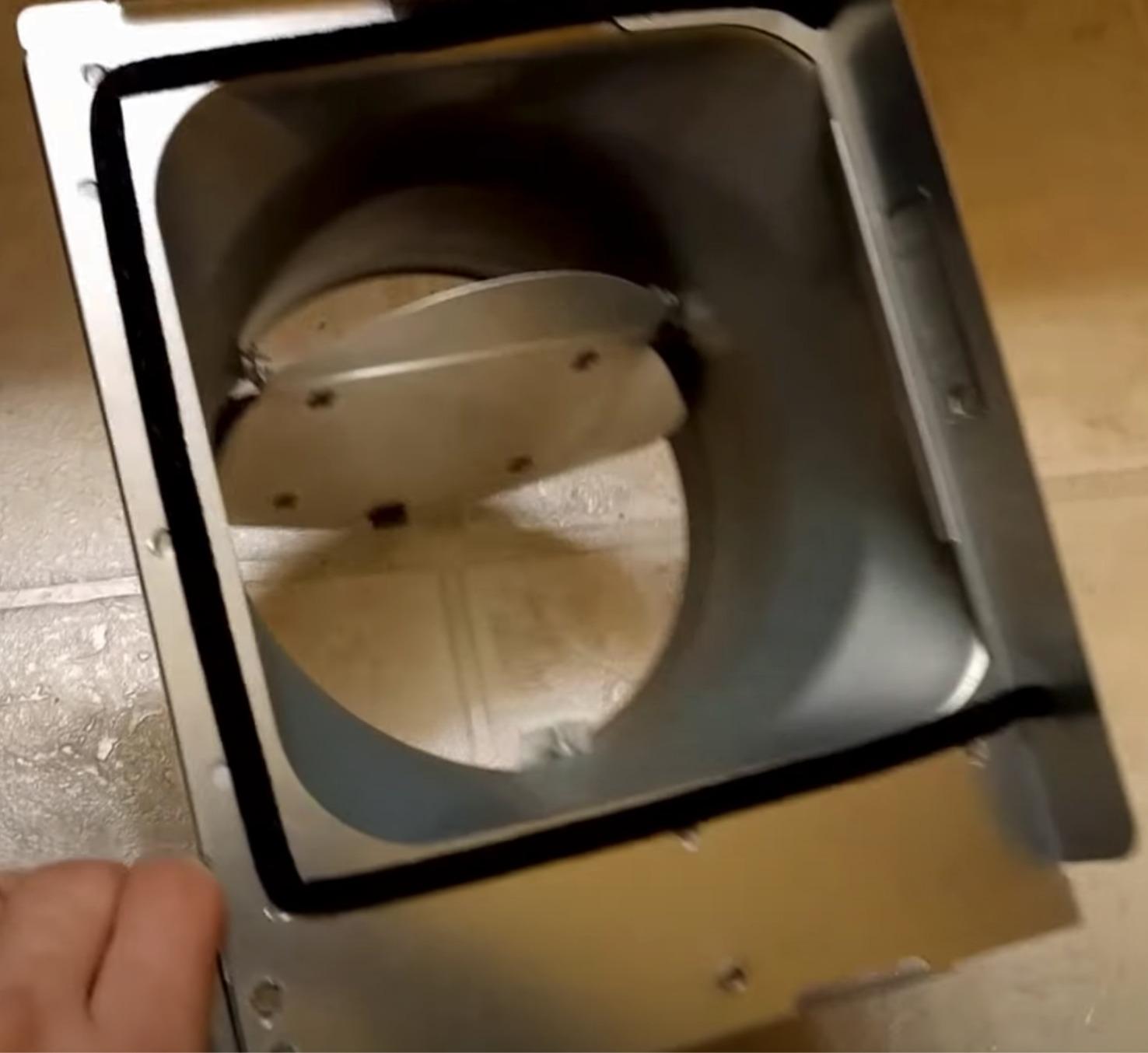
Below the set point it idles at a preset low speed that you can choose from 0, 50, 70 or 90 CFM, and above it, it runs the full 130 CFM. Setting the idle to 0 turns it into a true on and off sensor without any extra switch.
ENERGY STAR Most Efficient at 11.6 watts keeps the running cost low, which matters if you plan to leave it on low all day in a chronically damp room.
Where the SMT130H is right
It suits a bedroom-adjacent bath, a bathroom under a shared wall, a quiet house, or anywhere a sound-sensitive person has been avoiding the switch. A 130 CFM full speed also covers a bathroom up to about 130 square feet.
If you are running a fan all day, the low idle speeds and the ENERGY STAR Most Efficient rating make this the most sensible long-run choice here.
Where it complicates the install
Sensor mode needs a second switch, and the sensor needs constant power so it will not work with a timer switch. In a retrofit that can mean opening up a wall, which is the one scenario where a simpler fan wins.
It also idles rather than stopping completely in most configurations, and some long-term owners found the humidity behavior hard to tune in a room with unusual humidity swings.
How Much CFM Do You Actually Need?
Measure the floor area of the bathroom, multiply by 1 CFM per square foot, and treat 50 CFM as the absolute floor. That is the Home Ventilating Institute sizing rule, and it is the number most published roundups quote. It is also a starting point rather than an answer, because rated CFM assumes short, smooth, generously sized duct.
Our [tower fan airflow breakdowns](https://www.pwice.com/best-tower-fans/) explain why rated airflow figures lose their meaning once a duct or a grille fights the fan, and the same effect applies to a bathroom ceiling.
Here is the rule applied to real bathroom dimensions:
5 by 8 powder room, 40 square feet: 50 CFM is the HVI minimum, so choose at least 50 CFM.
8 by 8 bath, 64 square feet: 64 CFM by the rule, which lands you on a 70 or 80 CFM fan.
9 by 10 bath, 90 square feet: 90 CFM, which means a 100 or 110 CFM model.
10 by 10 bath, 100 square feet: 100 CFM, and you should move up rather than down.
Above 100 square feet: switch to fixture-based sizing, 50 CFM per toilet, shower or tub, and 100 CFM for a jetted tub.
For a high ceiling or a vaulted bathroom, the square foot rule underestimates badly because the air volume is much larger. A 10 by 10 room with a 10 foot ceiling holds roughly three times the air of the same room with an 8 foot ceiling, and a volumetric approach is the only honest way to size it.
The practical advice that matches what we heard from homeowners: size up one step rather than landing exactly on the number. A 110 CFM fan in a 64 square foot bath with a long flex run will outperform an exactly sized 70 CFM fan, because the extra capacity absorbs the losses in the duct.
What Sone Ratings Actually Mean
Sones measure perceived loudness, not decibels, which is why two fans with identical noise readings can sound different to the human ear. The scale is roughly logarithmic, so dropping from 3.0 sones to 1.0 sones sounds like a dramatic improvement rather than a small one.
Under 0.5 sone: essentially silent, you have to look for the grille light to confirm it is running.
0.5 to 1.0 sone: quiet, comparable to a refrigerator hum.
1.0 to 2.0 sones: noticeable in a quiet house, fine while a shower is running.
2.0 to 3.0 sones: clearly audible from the next room.
Above 3.0 sones: loud, and the reason most old fans get switched off.
This is the single most important buying rule in the whole guide. A loud fan does not fail loudly, it fails behaviorally: somebody turns it off after twenty seconds, the mirror fogs again, and the paint peels anyway. Between two fans of similar airflow, take the quieter one every time.
The practical threshold for a bathroom exhaust fan for humidity is 1.0 sone or quieter. Above that, a humidity sensor only guarantees that the fan starts. It does not guarantee anyone leaves it on long enough to finish drying the room. Our [pedestal fan sound comparisons](https://www.pwice.com/best-pedestal-fans/) break down how the sone scale behaves in a lived-in room, which is a useful cross-check before you commit to a number.
Humidity Sensor or Timer Switch?
Three approaches do the same job, and they are not equal in every bathroom. A built-in sensor starts the fan when moisture crosses a threshold, an in-wall humidity sensor switch sends that instruction to an existing fan, and a countdown timer simply runs the fan for a fixed period after you flip it.
Choose a built-in sensor when you are replacing the fan anyway. It removes the human factor entirely and it is the reason every product in this roundup has one.
Choose an in-wall humidity sensor switch when your existing fan is already quiet and moves enough air. This is the upgrade path most people overlook, and it is by far the least disruptive: you swap a switch, you keep a fan, and you gain automatic control. The catch is that many sensor fans need constant power, so check compatibility before you buy either part.
Choose a countdown timer when the bathroom is used predictably by people who will actually press the button. It costs less than a sensor and it works with any fan, including older models, but it does nothing about the guest who showers without turning it on.
There is a reasonable hybrid too: a built-in sensor for the automatic response, plus a delay timer so the fan keeps running for 20 to 30 minutes after the level drops. Homeowners describe that post-shower runtime as the single habit that most improves drying, because the fan clears the last of the moisture before it stops.
Why Your Rated CFM Is Not Your Real CFM
A fan rated at 110 CFM was measured in a lab with ideal duct. Real duct is not ideal, and the gap between rated and delivered airflow is where most disappointing fans come from. The usual culprits, in the order they show up:
Crushed or kinked flex duct, often where it passes over a joist or through a notched hole.
A 3 inch duct on a fan rated for 4 inch.
Multiple 90 degree elbows, especially added later in an attempt to route around something.
A backdraft damper stuck or rattling, or an exterior hood clogged with debris.
A reducer immediately after the fan outlet.
A closed bathroom door. Without makeup air entering under the door, a fan cannot move its rated CFM no matter how good it is.
The attic rule is absolute. Venting a bathroom fan into an attic dumps shower moisture into insulation and framing, which is how a ventilation upgrade turns into a mold problem. If your current fan discharges into the attic, that is the first thing to fix, and it matters more than which brand you buy.
Before you spend money on a new fan, run this checklist. Measure the ceiling opening, not the grille. Check the housing depth against the space above your joists. Note the existing duct diameter. Confirm the door has an undercut or a gap. And check whether you can reach the fan from above, because that determines whether the install is a weekend project or a call to an electrician.
Do Humidity Sensors Actually Work?
The most common real-world question about these fans is whether the sensor is a gimmick, and the honest answer is that most of them work, with a behavior you should expect. Almost every sensor in this roundup triggers at 60% relative humidity. That is a sensible threshold for a bathroom and it is why the fans start during a shower rather than after it.
Where sensors frustrate people is overrun. Several owners across different brands describe a fan that keeps running after the moisture is gone, usually because the room takes a long time to fall back below the trigger point once the shower door is closed. Some remedies that actually help: leave the bathroom door open after a shower so the level falls faster, set the trigger lower if your model allows it, or add the delay timer override.
Calibration is the other question, and the answer is that most of these sensors have no user calibration. The Delta SMT130H is the exception in this set, with an adjustable set point from roughly 50% to 90% RH. That adjustability is the single most valuable feature on this list for anyone in a humid climate, because it lets you tune the fan to your season instead of living with the factory default.
What sensors do not do is dehumidify. A fan moves air; it removes moisture only by sending humid air outside and drawing drier air back in. In a very humid outdoor climate, the replacement air may not be drier at all, which is why some homeowners in humid regions find that a fan plus a small dehumidifier outperforms the fan alone. If your bathroom stays damp in midsummer with the window open, the outdoor air is the reason.
The housing dimensions are the honest limit on this fan. It needs an 11.37 by 12.12 inch ceiling opening and a 13.1 by 13.1 by 9.2 inch housing space, and those are large numbers for an existing small bath where a replacement fan is the goal.
Frequently Asked Questions
Do bathroom fans remove humidity?
A bathroom fan removes humidity by moving moist room air outside and drawing drier replacement air in, usually under the bathroom door. That is the only mechanism it has. In a humid outdoor climate the incoming air may not be drier, so venting outside can add moisture rather than remove it, and a dehumidifier handles those rooms better.
What is the best bathroom exhaust fan overall?
For most full bathrooms, an 80 to 110 CFM humidity-sensing fan rated at 1.0 sone or quieter is the right target, sized with a little headroom for duct losses. In our testing the Panasonic FV-0511VQC1 combined the highest rating with the broadest airflow selection and a motion plus humidity sensor.
What is the recommended CFM for a bathroom exhaust fan?
The Home Ventilating Institute sizing rule is 1 CFM per square foot of bathroom floor area, with 50 CFM as an absolute minimum. Above 100 square feet, use fixture-based sizing instead, which allows 50 CFM per toilet, shower or tub and 100 CFM for a jetted tub.
What is the best sone rating for a bathroom exhaust fan?
Aim for 1.0 sone or quieter, and 0.5 sone or below if anyone in the house is noise-sensitive. Sones measure perceived loudness, and a loud fan gets switched off early, which is why quietness matters more for humidity control than most buyers expect.
Are humidity sensors better than timer switches?
A built-in humidity sensor is better for most homes because it removes the need to remember a switch, especially in guest baths, kids baths and rentals. A timer switch is cheaper and works with any existing fan, and an in-wall humidity sensor switch is the best upgrade path when your current fan is already quiet.
How long should a bathroom fan run after a shower?
Most guidance points to 20 to 30 minutes of runtime after a shower finishes, which clears the residual moisture that causes peeling paint and mildew. A delay timer on a humidity-sensing fan makes this automatic, since the fan keeps running until the room falls back below the humidity threshold.
The Bottom Line on Bathroom Exhaust Fans for Humidity
The best bathroom exhaust fans for humidity in 2026 are not the loudest ones or the biggest ones. They are the fans that start by themselves, run quietly enough that nobody minds, and deliver enough air for the room with headroom for a real duct run.
Our pick for most homes is the Panasonic FV-0511VQC1, which combines a humidity sensor with motion sensing, a 50 to 110 CFM selector and an ECM motor that stays under 0.3 sone per speed. Small bathrooms with a tight budget do well with the Delta BreezSlim SLM70H, and large primary baths need the airflow class that the VIVOHOME 240 CFM delivers.
Before you buy anything, measure your ceiling opening and your duct diameter. Half of the disappointing bathroom fan installations we looked at failed on fit, not on performance, and a fan that is the wrong shape for your ceiling is a return rather than a fix. If you want more guidance on airflow basics, our [standing fan comparisons](https://www.pwice.com/best-standing-fans/) cover the same CFM and noise fundamentals from a different angle.