
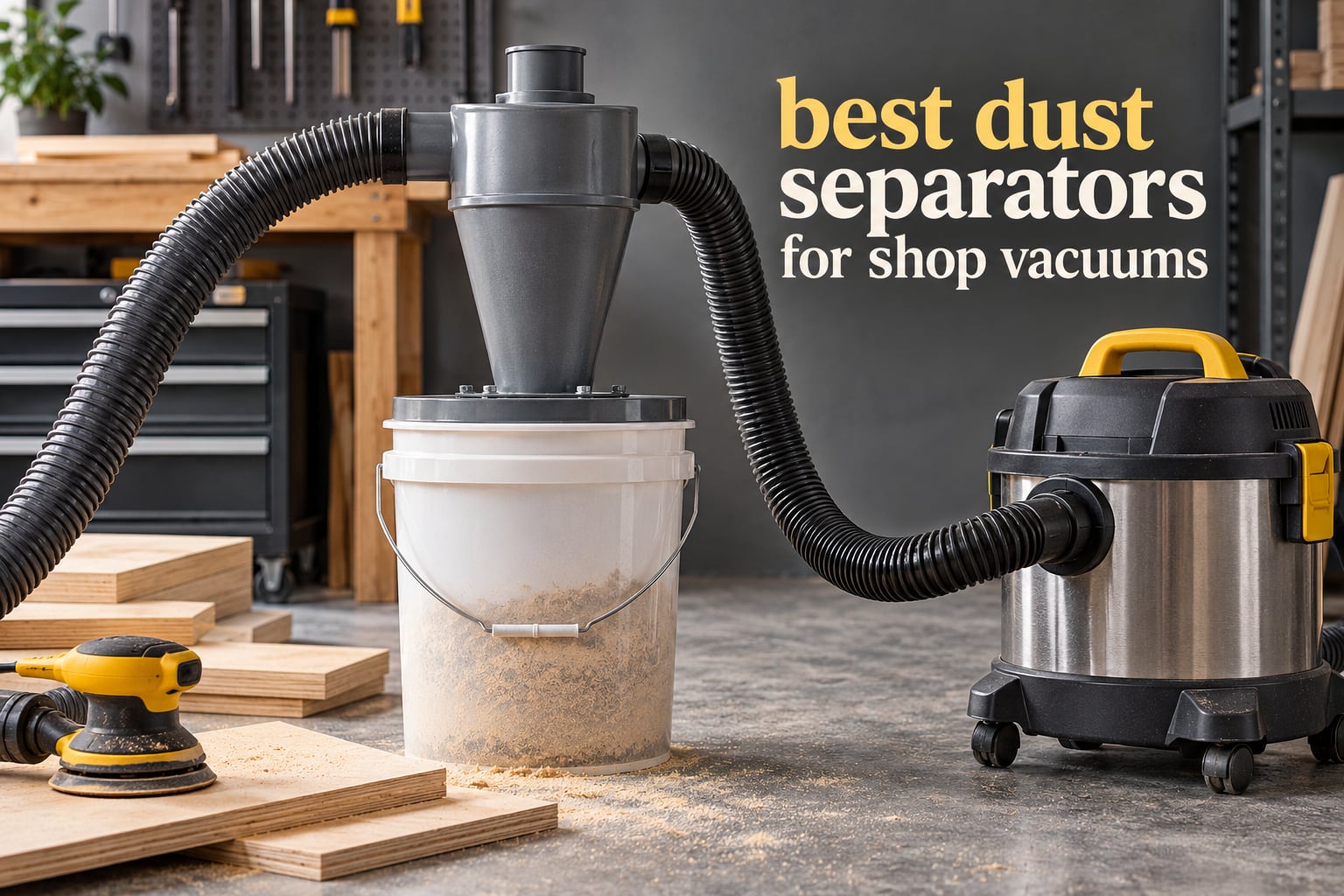
The first sign is usually not dust on the floor. It is the sander that suddenly feels sluggish three minutes into a job, and then the faint gray puff that comes out of the exhaust port when you carry the can across the garage. That is a shop vac filter loading up, and it is the single most common complaint I see in woodworking forums. Almost every thread ends with the same fix: put a cyclone between the tool hose and the vacuum so the heavy debris drops into a bucket and only fine air reaches the filter.
That is what a dust separator does, and it is why we went looking for the best dust separators for shop vacuums rather than another vacuum. A separator does not add suction. It keeps the filter clean so the suction you already paid for keeps working, which means fewer filter replacements, less time shaking debris out of a pleated element, and a lot less fine dust hanging in the air of a small shop.
We lined up 12 separators, from a bare bolt-on lid that costs about as much as a takeout order to a one-piece parabolic unit that costs more than a decent orbital sander, and looked at what each one actually does with your air path. If you are still choosing a vacuum first, our shop vacuum picks and wet dry vac picks cover the motors that sit at the end of the hose.
Table of Contents
Top 3 Dust Separators for Shop Vacs in 2026

Oneida Dust Deputy DIY
- Neutral Vane separation
- 2.0 inch tapered ports
- Bucket and hose sold separately

Dustopper PRO
- 99.9 percent efficiency claim
- Preinstalled EPDM gasket
- Two sweep elbows included
POWERTEC Low Profile
- Fits 5 gallon buckets
- Works with 2-1/4 and 2-1/2 inch ports
- Hose and elbow included
The Dust Deputy DIY takes the top spot because it has the deepest review history in the category and the widest material range, and it holds its own against far more expensive units. The Dustopper PRO is the one to buy if you want zero assembly and a gasket that is already seated in its groove. The POWERTEC is the value pick, and its low-profile lid is genuinely easier to balance on a standard pail than a tall barrel design.
12 Best Dust Separators for Shop Vacuums (October 2026)
| Product | Specifications | Action |
|---|---|---|
| Oneida Dust Deputy DIY |
|
Check Latest Price |
| Dustopper PRO |
|
Check Latest Price |
 DEWALT 6 Gallon Dust Separator DEWALT 6 Gallon Dust Separator |
|
Check Latest Price |
 Rockler Dust Right Rockler Dust Right |
|
Check Latest Price |
| POWERTEC Low Profile |
|
Check Latest Price |
 Cen-Tec Quick Click Cen-Tec Quick Click |
|
Check Latest Price |
 Oneida 2.5 Deluxe Kit Oneida 2.5 Deluxe Kit |
|
Check Latest Price |
 POWERTEC 6 Gallon Cyclone Kit POWERTEC 6 Gallon Cyclone Kit |
|
Check Latest Price |
 Mullet Cyclone Dust Collector Mullet Cyclone Dust Collector |
|
Check Latest Price |
 Kreg Dust Separator Kreg Dust Separator |
|
Check Latest Price |
 Taytools Cyclone Lid Taytools Cyclone Lid |
|
Check Latest Price |
 VEVOR Metal Tank Cyclone VEVOR Metal Tank Cyclone |
|
Check Latest Price |
A dust separator spins dust out of the airstream before your filter sees it
A dust separator for a shop vacuum is a cyclone-style attachment that sits between your tool hose and the vac. Dirty air enters through a side port and spirals down a cone, and centrifugal force throws heavier chips and dust into a bucket below. Only the fine particles pass through the outlet to the vacuum, so the filter stays clean and suction stays high.
That single idea explains every design difference below. A taller funnel spins the air longer. A curved upper housing smooths the airstream before it reaches the cone. A seal that actually holds under suction matters more than the brand name on the lid. And a low-profile design matters when you are moving the whole assembly across a garage floor.
1. Oneida Dust Deputy DIY – Best Overall Cyclone Separator
Oneida Air Systems Dust Deputy DIY Anti-Static Retrofit Cyclone Separator for Wet/Dry Shop Vacuums (DD DIY)
Neutral Vane separation
Made in the USA
Tapered 2.0 inch ports
Container and hose sold separately
Pros
- 20 percent more efficient with Neutral Vane technology
- Extends filter and bag life dramatically
- Handles wood drywall concrete ash and metal shavings
- Only lid and gasket to buy so you choose your own bucket
Cons
- No hoses or adapters in the box
- Tippy without a cart or weighted base
- Thin plastic buckets can collapse under suction
The most reviewed separator we covered, with 4205 ratings averaging 4.6. Owners describe one result in plain terms: never buying a replacement element again. We have run the DIY version on a 12-gallon wet dry vac for months, and the filter simply stays clean.
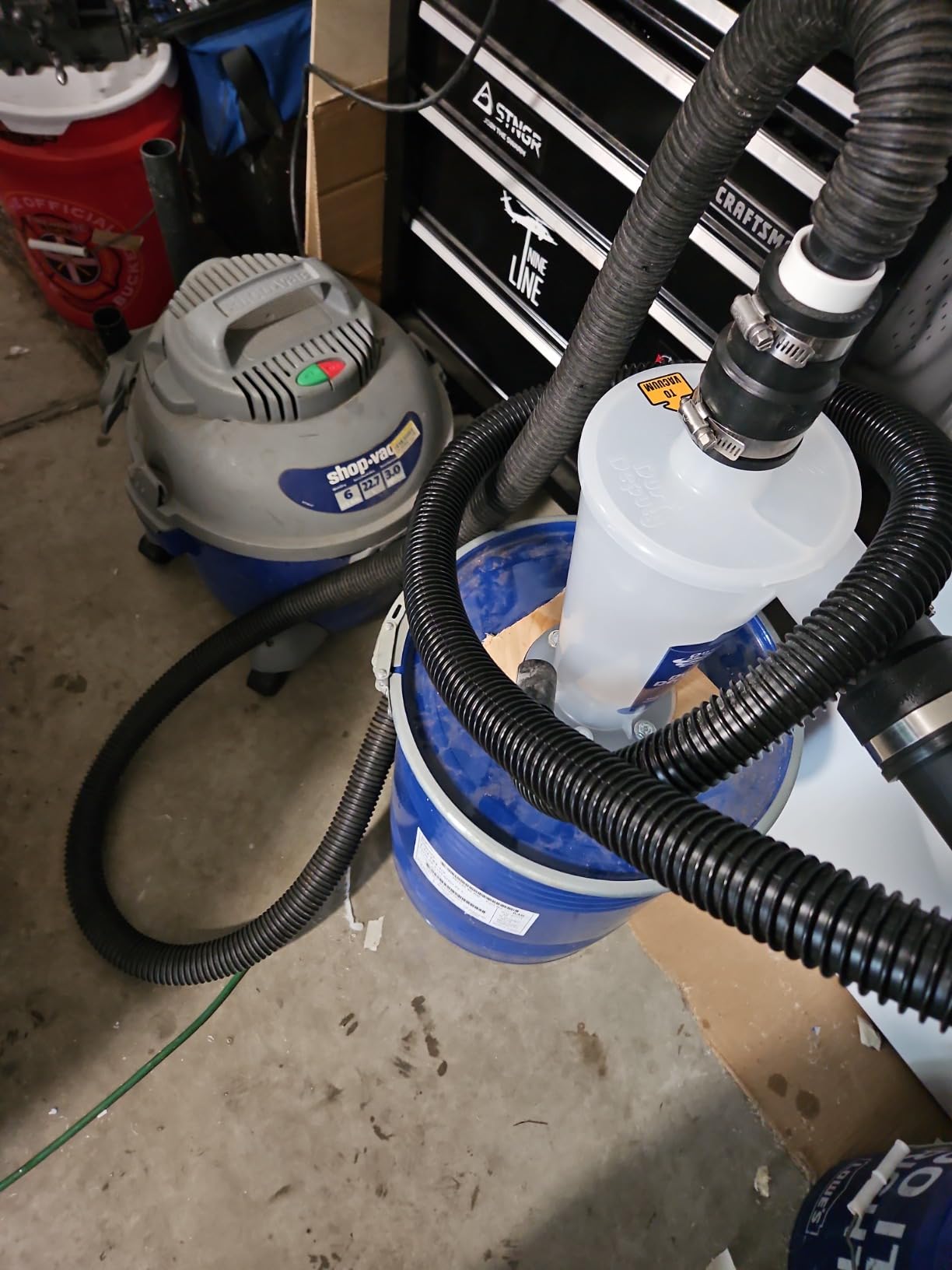
You get the cyclone body, a gasket and mounting hardware. You supply the bucket and the hoses, which is why it costs so little and why some people get frustrated. Drill a hole in a five-gallon lid, bolt the body on and run your existing hoses through the two tapered ports.
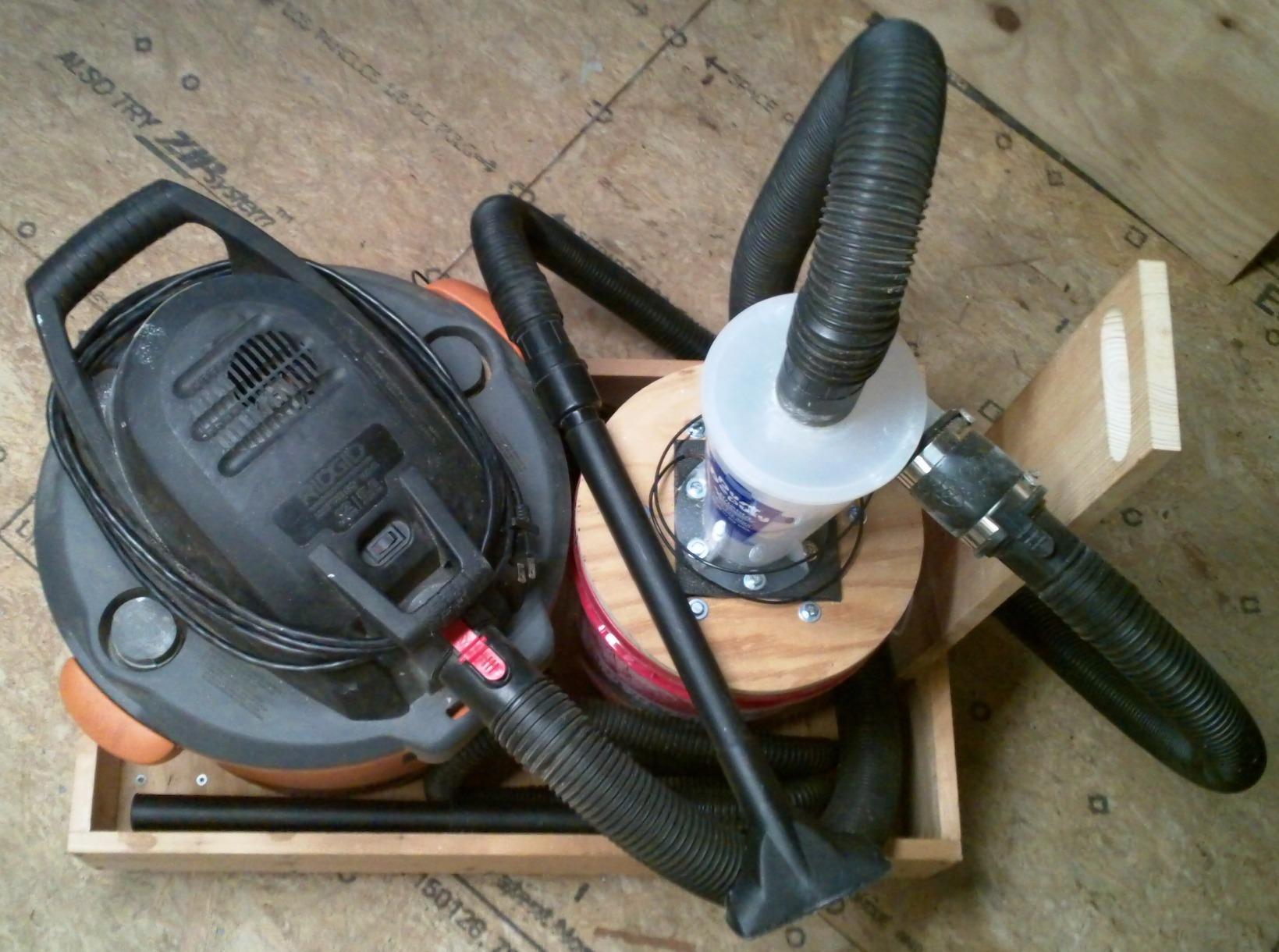
Oneida claims 85 to 99 percent of dust and debris is captured before it reaches the filter. Wood dust, drywall dust, concrete dust, ash, water and metal shavings all pass through it, so one rig handles sanding days and clean-up days.
The weak spot is container quality. A thin-walled pail flexes inward under suction and leaks air, so a heavy metal pail or a nested pair of buckets is the fix. Some bases also arrive slightly warped and want a bead of caulk.
Who should buy the Dust Deputy DIY
Buy it if you already own two suitable buckets and a stack of 2.5 inch hose, and if your work spans more than one material. The material list on this one covers more ground than any other separator we covered.
Skip it if you want something that works the minute it comes out of the box. Sourcing adapters is the step that trips people up, and a kit that includes elbows and hose will save you an evening.
What to watch after install
Keep the bucket under half full, because spinning air loses headroom as the drum fills and carry-over into the vacuum rises. Test the seal with a sander running and listen for the pitch change that means air is bypassing the gasket.
2. Dustopper PRO – Most Versatile Separation
Dustopper PRO Dust Collector – 99.9% Efficiency Cyclone Dust Separator
Anti-static resin body
Preinstalled EPDM gasket
Two sweep elbows included
3.6 pound unit
Pros
- Gasket is preinstalled so there is no assembly
- Aerodyne tested on sawdust and drywall powder
- Clear housing lets you watch separation work
- Over 1218 owners report a near-empty vacuum drum
Cons
- Needs a powerful vacuum to shine
- Builds static with fine drywall powder
- Top-heavy without a wheeled cradle
The reason this one stands out is the gasket. It is a hollow-core EPDM ring that sits in its groove from the factory, so there is no guessing at the seal and no leak path straight past your cyclone. Owners moving drywall compound and shop sawdust through it report filling buckets while the vacuum stays essentially empty.
Two high-flow sweep elbows come in the box, and those matter more than they sound. Sharp elbows create turbulence, and turbulence creates eddy currents that pull dust back up into the airstream.
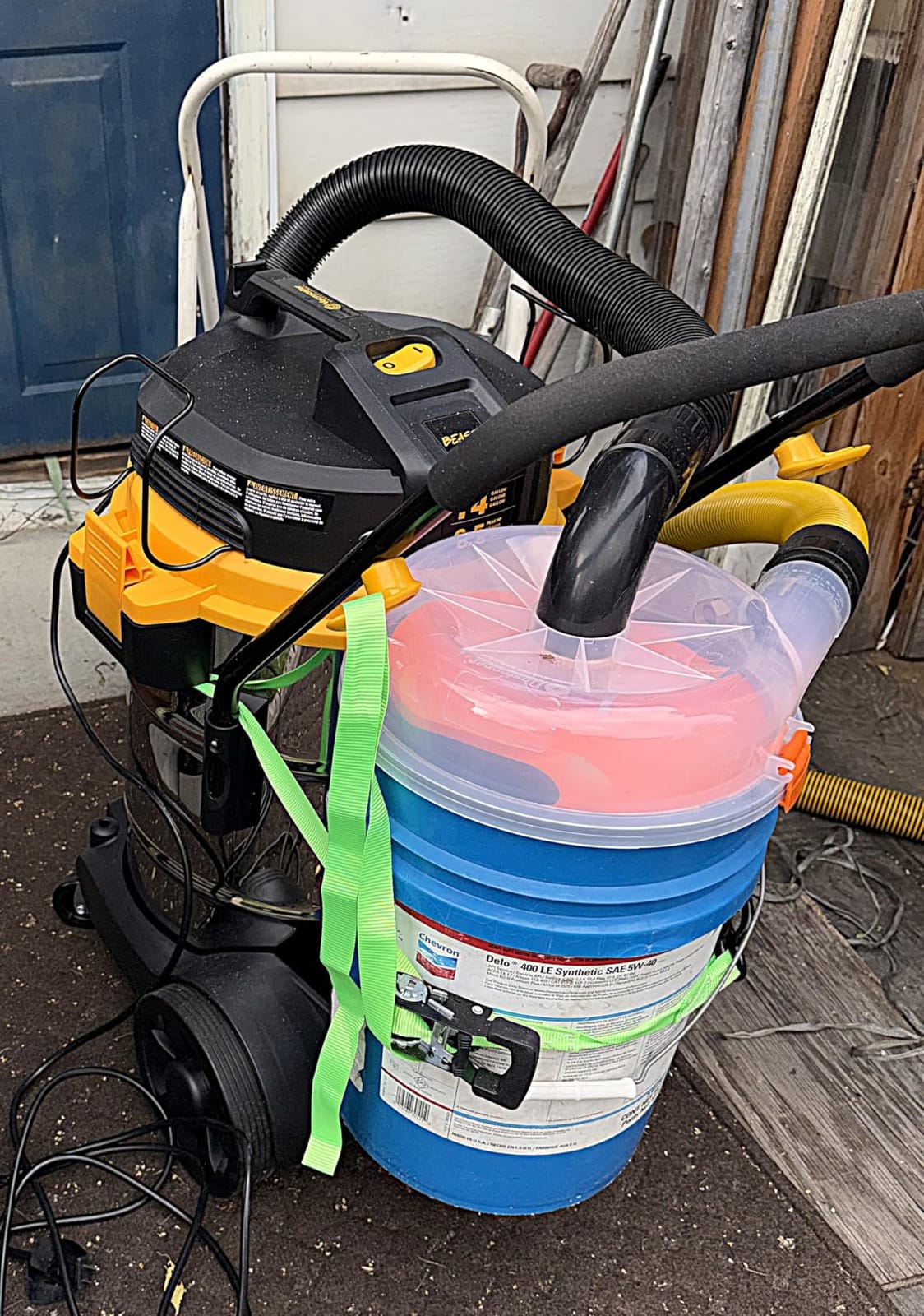
Two limitations come up repeatedly. The resin body can hold a static charge with fine drywall powder, and on a small vacuum the separation is noticeably weaker than on a stronger motor.
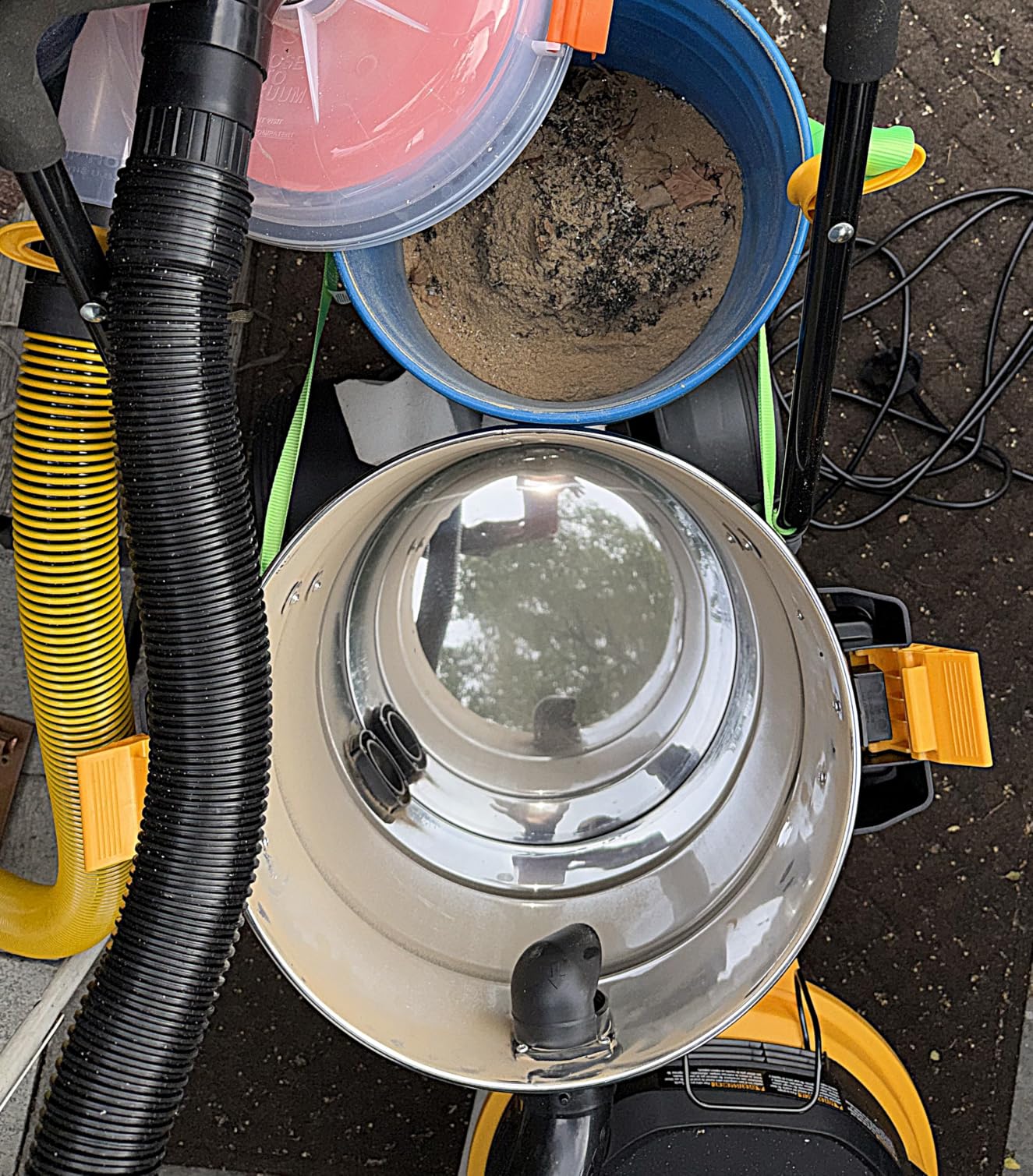
Who should buy the Dustopper PRO
Buy it if you are done fighting fittings and want a sealed, ready-to-bolt unit with a 4.6 average across 1218 ratings. Skip it if you run a small vacuum or spend your days producing very fine drywall powder.
How to get the most from it
Put it on a heavy container and, if you move it often, on a small wheeled cradle. Check the gasket seat each time you swap buckets, since it can lift out of its groove on a loaded pail.
3. POWERTEC Low Profile – Best Value Separator
POWERTEC Low Profile Dust Separator for Shop Vac & Dust Collectors, Fits 5 Gallon Buckets, For 2-1/4″ Shop Vacuum Port, 2-1/2″ & 4″ Dust Collection System, Cyclone Dust Collection Kit w/Hose & Elbow
Low profile lid
Fits 5 gallon buckets
2-1/4 inch shop vac ports
Kit includes hose and elbow
Pros
- Low profile design resists tipping on a standard pail
- Handles 2-1/4 inch shop vacs and 2-1/2 or 4 inch collection lines
- Good floor and broom pickup from several feet away
- Complete kit with gasket
- latches
- elbow
- adapters and 3 foot hose
Cons
- Bucket latches pop out easily
- Gasket can arrive short of full circumference
- Fine powdery dust escapes more than premium units
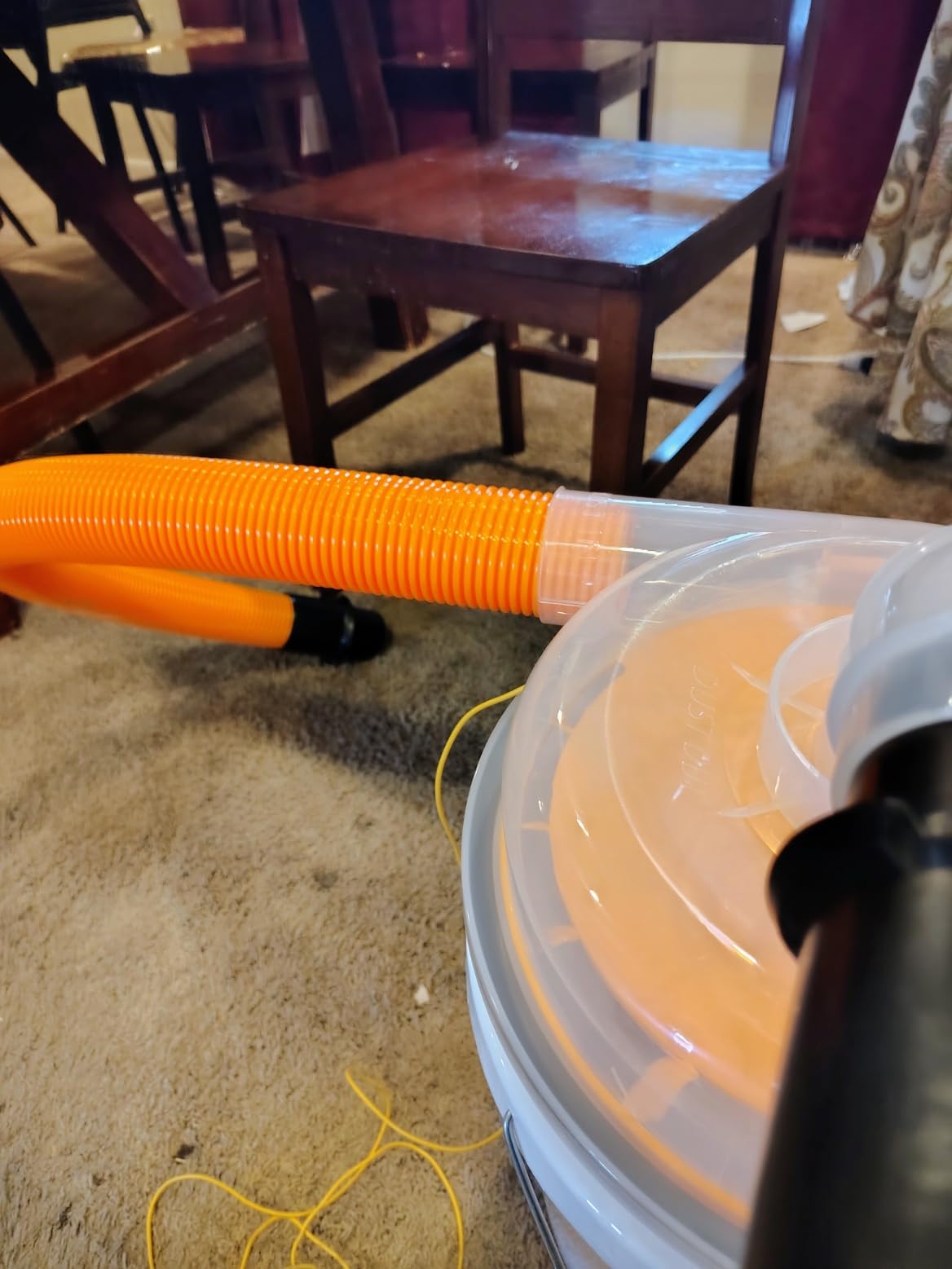
The low-profile idea is the whole argument here. Most barrel-style cyclones put their center of gravity high on top of the bucket, so the assembly wants to tip when you pull it across the floor. POWERTEC flattens the cone and drops the profile, and on a standard five-gallon pail the thing just sits still.
The kit also solves the fitting problem that trips up the DIY route. You get the separator lid, a foam gasket, dual latches, a 90 degree elbow for a 2-1/4 inch shop vac, hose adapters, a three foot hose and grounding hardware.
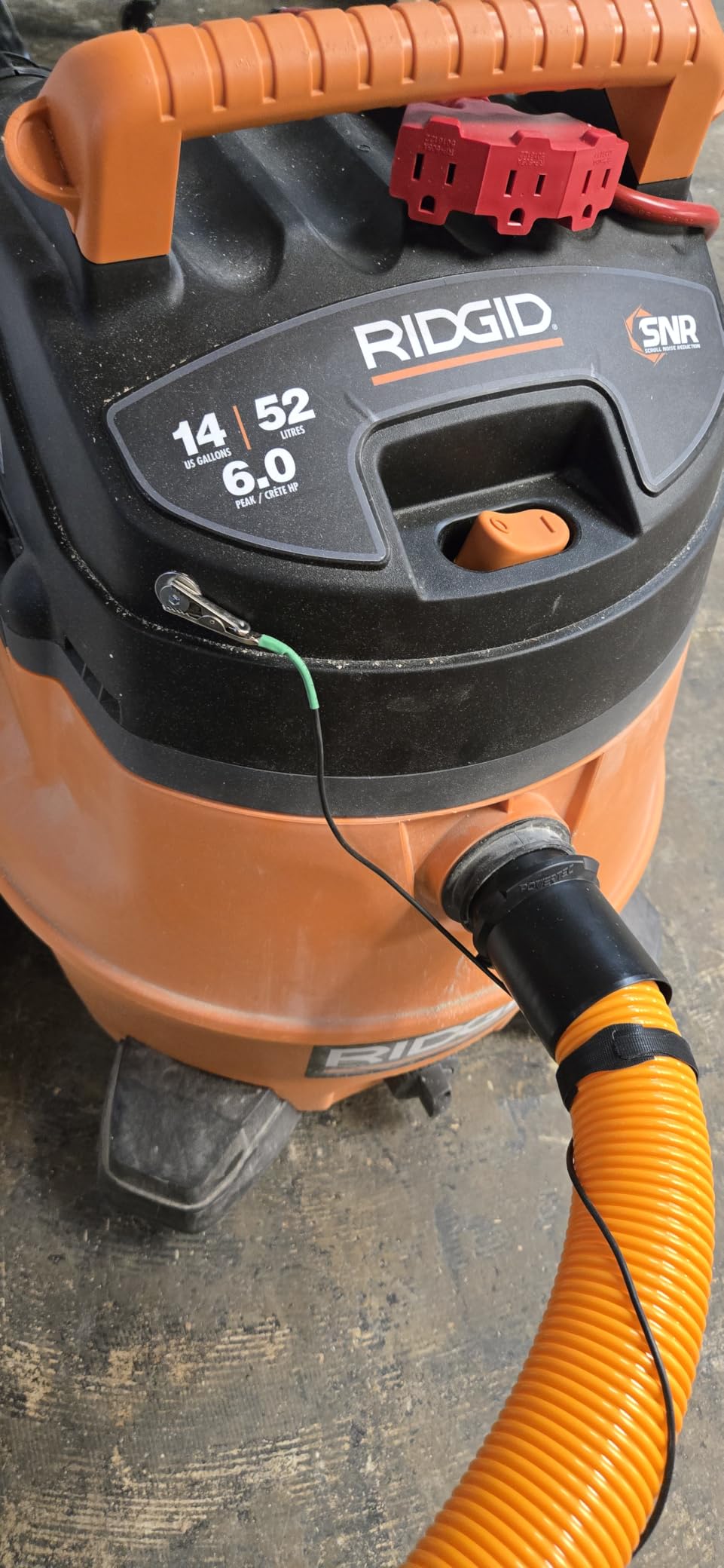
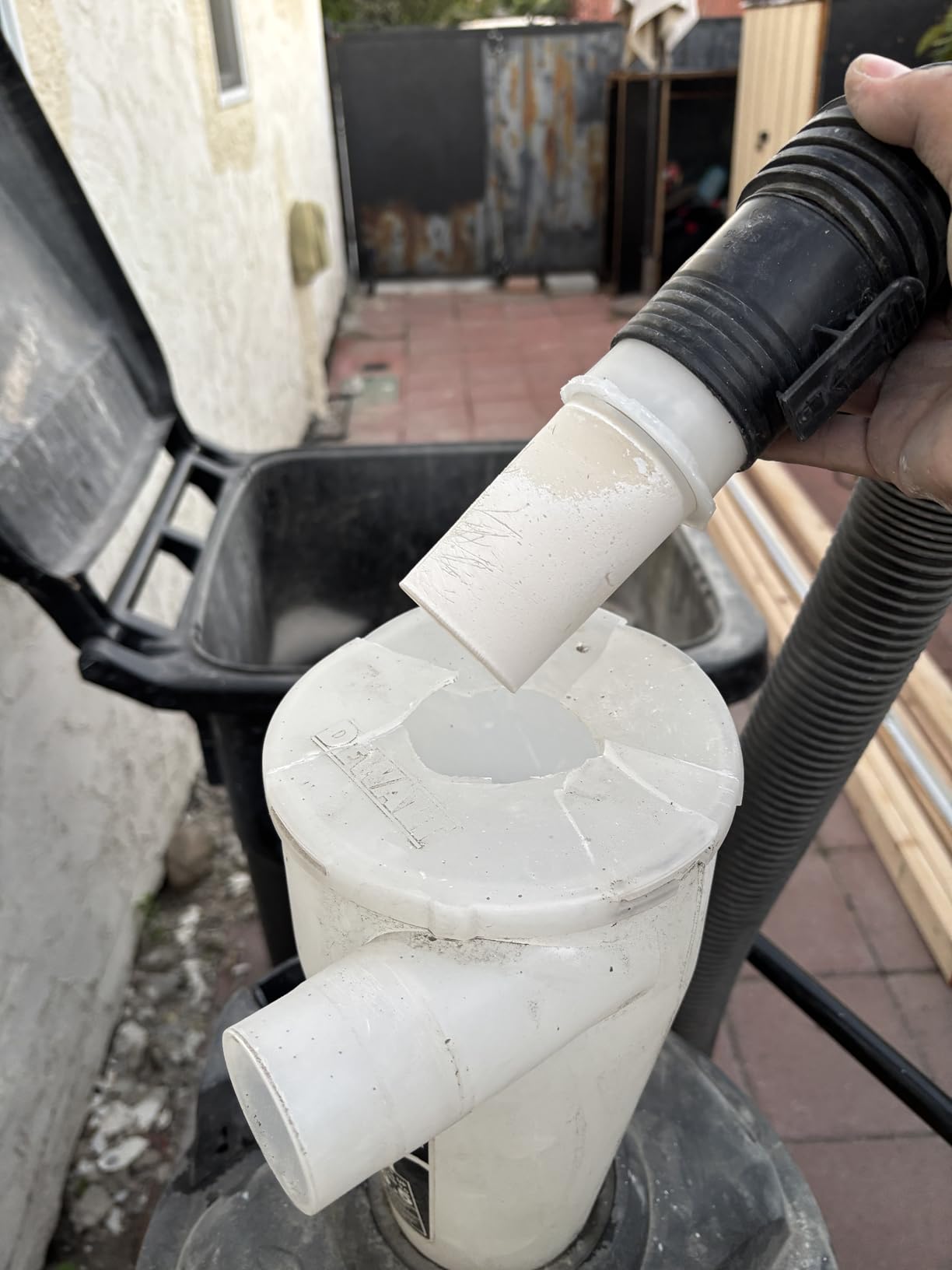
Owners who compared it against premium imports point to the same three gaps: thin latches, a gasket that may not quite close the full circumference, and more fine powder escaping past the cone. Those gaps show up most on drywall sanding and least on floor cleanup.
Who should buy the POWERTEC Low Profile
Buy it if you sweep more than you sand, or if you want a full kit without hunting for adapters. Skip it if your primary dust is fine and powdery, or if you plan to lean on it in front of a planer.
What to inspect on day one
Run the gasket around its channel with your thumb before latching the lid down, and keep a spare latch and bracket on hand. That single leak point is what turns a good separator into an expensive length of hose.
4. DEWALT 6 Gallon Dust Separator – Best All-in-One Kit
DEWALT 6 Gallon Dust Separator for Wet/Dry Shop Vacuums,DXVCS002
6 gallon poly bucket included
Four caster base
1-7/8 or 2-1/2 inch ports
3 year limited warranty
Pros
- Bucket
- lid
- hose
- latches and casters all included
- Four caster base stays stable and moves easily
- Six gallon capacity empties fast
- Backed by a 3 year limited warranty
Cons
- Taller than lid-mounted separators and needs floor space
- Included hose is short for reaching distant machines
- Performance still depends on the paired vacuum
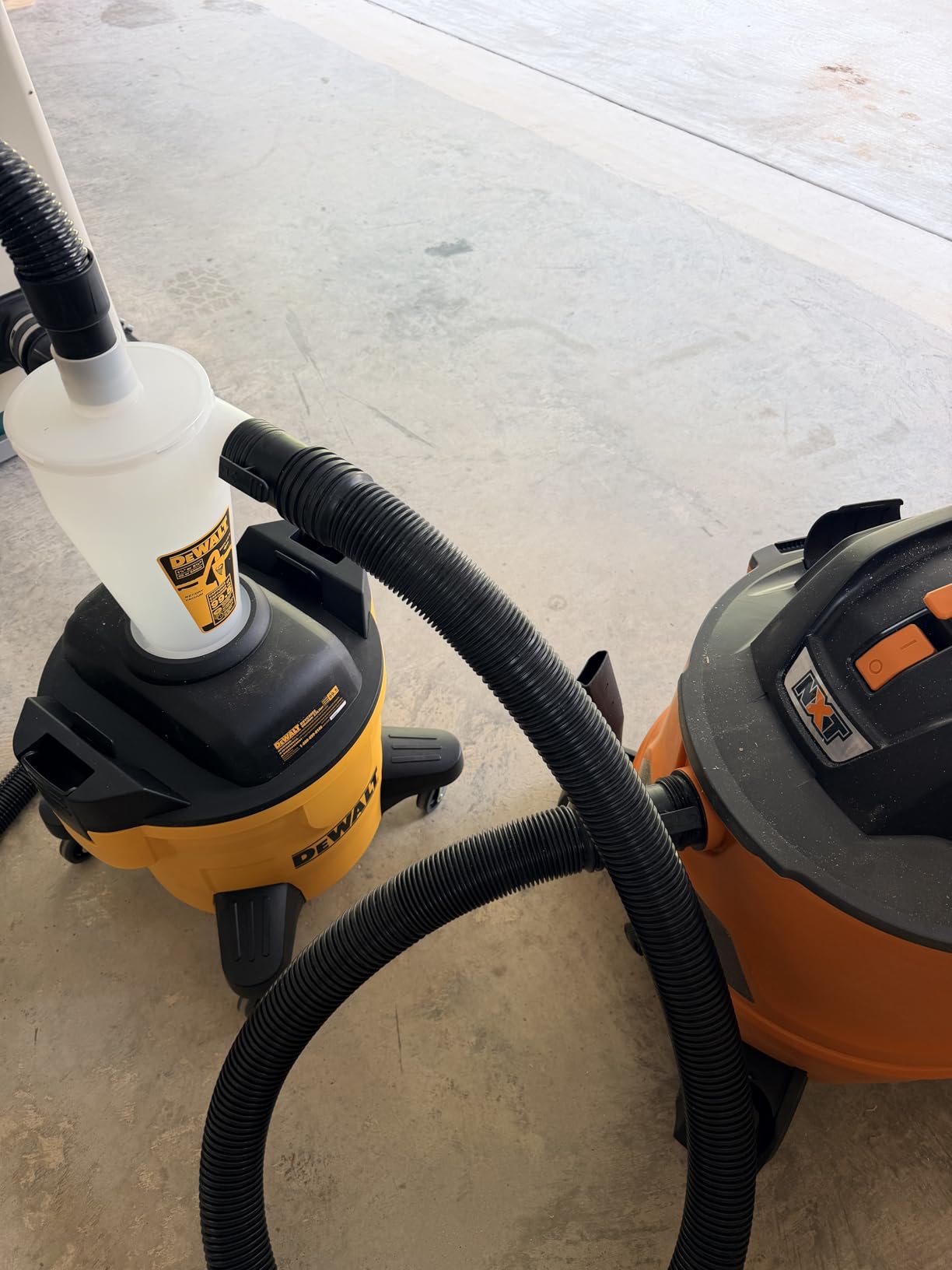
The DEWALT is the pick for anyone who wants a separator that works on assembly day without a second hardware run. The box contains the cyclone, a six-gallon poly bucket, a lid, sealing strips, latches, handles, a one and seven-eighths inch hose, a wheel bracket, caster bushings and screws.
Port compatibility is unusually broad for a packaged kit. It works with 1-7/8 inch and 2-1/2 inch ports, which covers a large share of household and industrial wet dry vacs without an adapter hunt.
The four-caster base is the detail I like most. At 31.4 inches tall and 12 pounds empty, this is not a unit you want to carry across a shop with a half bucket of drywall compound inside.
Who should buy the DEWALT 6 Gallon
Buy it if this is your first separator and you would rather not spend an evening in the hose aisle. Skip it if floor space is tight, since the caster base needs a real corner of the shop.
How it performs on wet material
It is rated for wet and dry use, so occasional liquid pickup runs through the same rig. Check the lid sealing strips after the first few runs, since they dry out fastest on a unit that sees moisture.
5. Rockler Dust Right – Best for Table Saws and Long Runs
Rockler Dust Right Dust Separator w/ 36” Hose & 10Ga Bucket for Shop Vac
10 gallon translucent bucket
Five-caster base
36 inch hose included
11.2 pound unit
Pros
- 10 gallon capacity is about twice a typical competitor
- Translucent drum shows the fill line at a glance
- Five-caster base is stable and easy to maneuver
- Hoses connect inside ports to prevent disconnections
Cons
- Lid can crack under sustained heavy load with large machines
- Seam can leak shavings with high output tools
- Suction loss is noticeable on smaller vacs
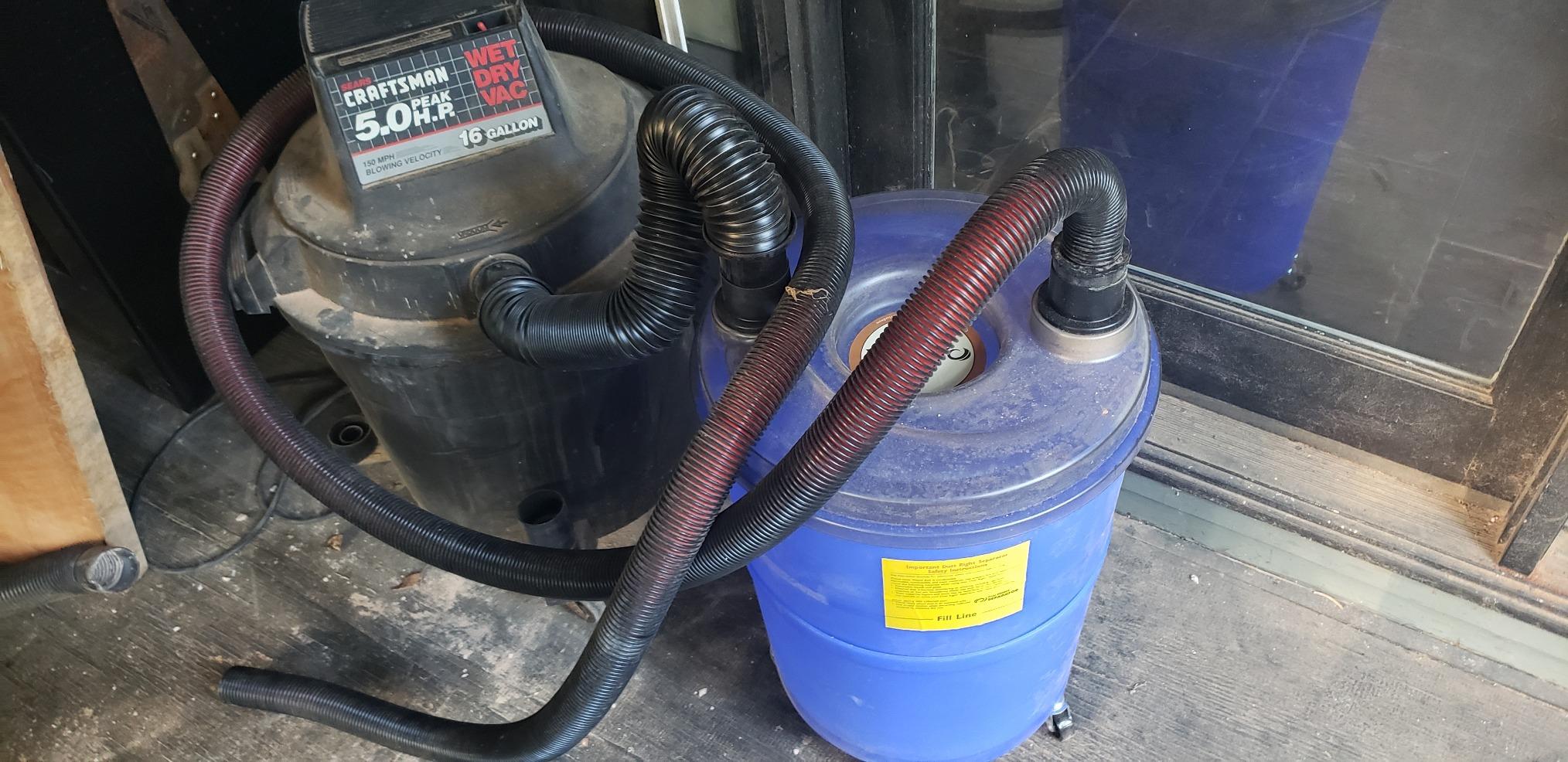
Capacity is the reason to look here. At ten gallons this drum holds roughly twice what a five-gallon pail does, and the translucent wall shows the fill line without opening the lid. On a table saw run, fewer stops means more work done between swaps.
It converts any 2-1/4 inch shop vac outlet into a two-stage extractor, the 36 inch hose is included, and the five-caster base keeps it upright and rollable.
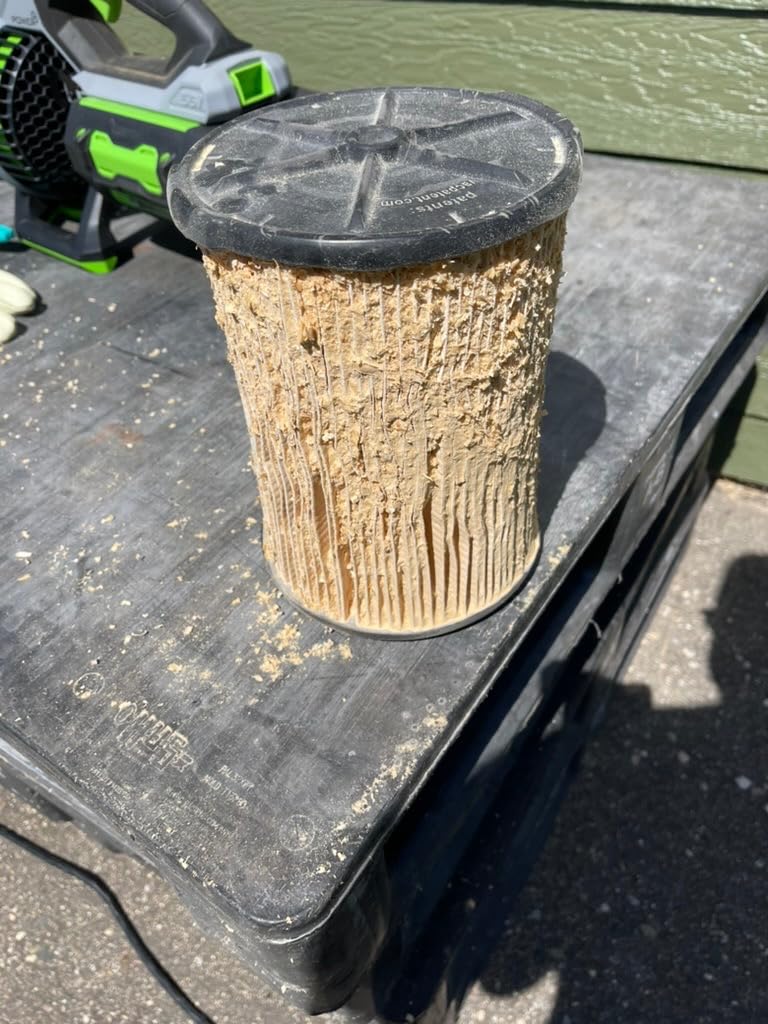
The 4.2 average across 672 ratings reflects two specific complaints. Owners running sustained heavy load on large machines report lid cracks, and a gap at the lid and container seam lets shavings escape when output is high. Fine powdery dust can also still find its way past the cone.
Who should buy the Dust Right
Buy it if your biggest dust source is a table saw or planer and you want fewer bucket swaps. Skip it if fine powder is the priority or if you run a compact vacuum.
When the seam starts to leak
Inspect the lid and container joint when it first leaks. A thin bead of silicone along the mating surface stops escaped shavings before they coat the floor, and owners who reseal report the leak disappearing.
6. Cen-Tec Quick Click – Best No-Fuss Hookup
Quick Click Dust Collection Separator
8 inch curved upper housing
2.375 inch inlet and outlet
Translucent body
3.4 pound unit
Pros
- Average rating of 4.8 with 85 percent five star reviews
- Curved housing smooths the airstream around the baffle
- Connects to Ridgid
- Shop Vac
- Vacmaster and DeWalt
- Commercial grade rubber gasket seals tightly
Cons
- Separator only
- so you need to source a bin
- 2.375 inch inlet means some smaller hoses need adapters
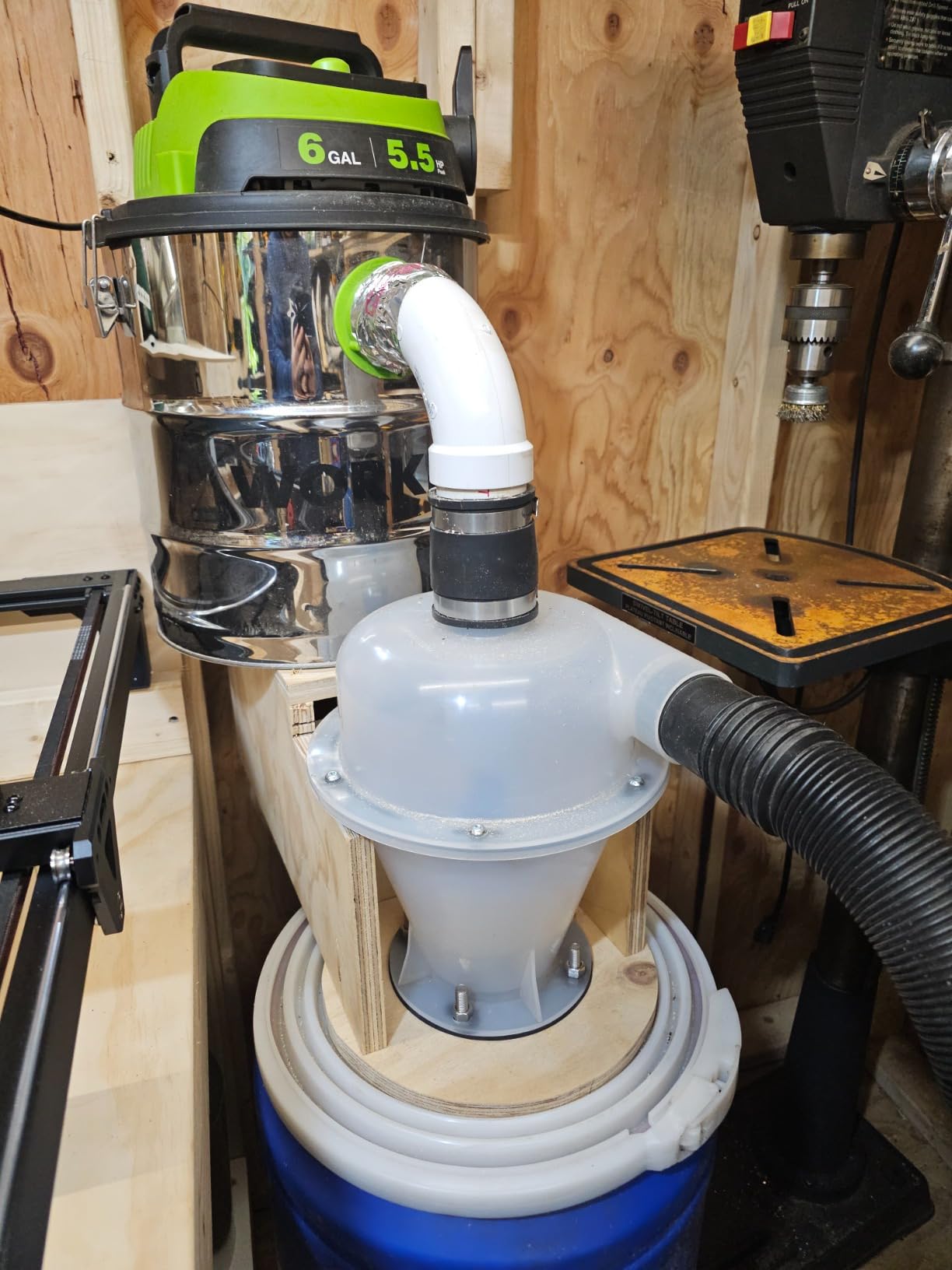
With 375 ratings averaging 4.8, this sits in the top tier of everything we tested, and eighty-five percent of those ratings are five star. The eight inch curved upper housing rounds off corners where air would otherwise tumble, so the airstream reaches the cone smoothly and the spin actually develops.
Owners report connecting it to Ridgid, Shop Vac, Vacmaster and DeWalt units with minimal adapters or nothing at all, and the commercial grade rubber gasket holds under real suction where foam does not.
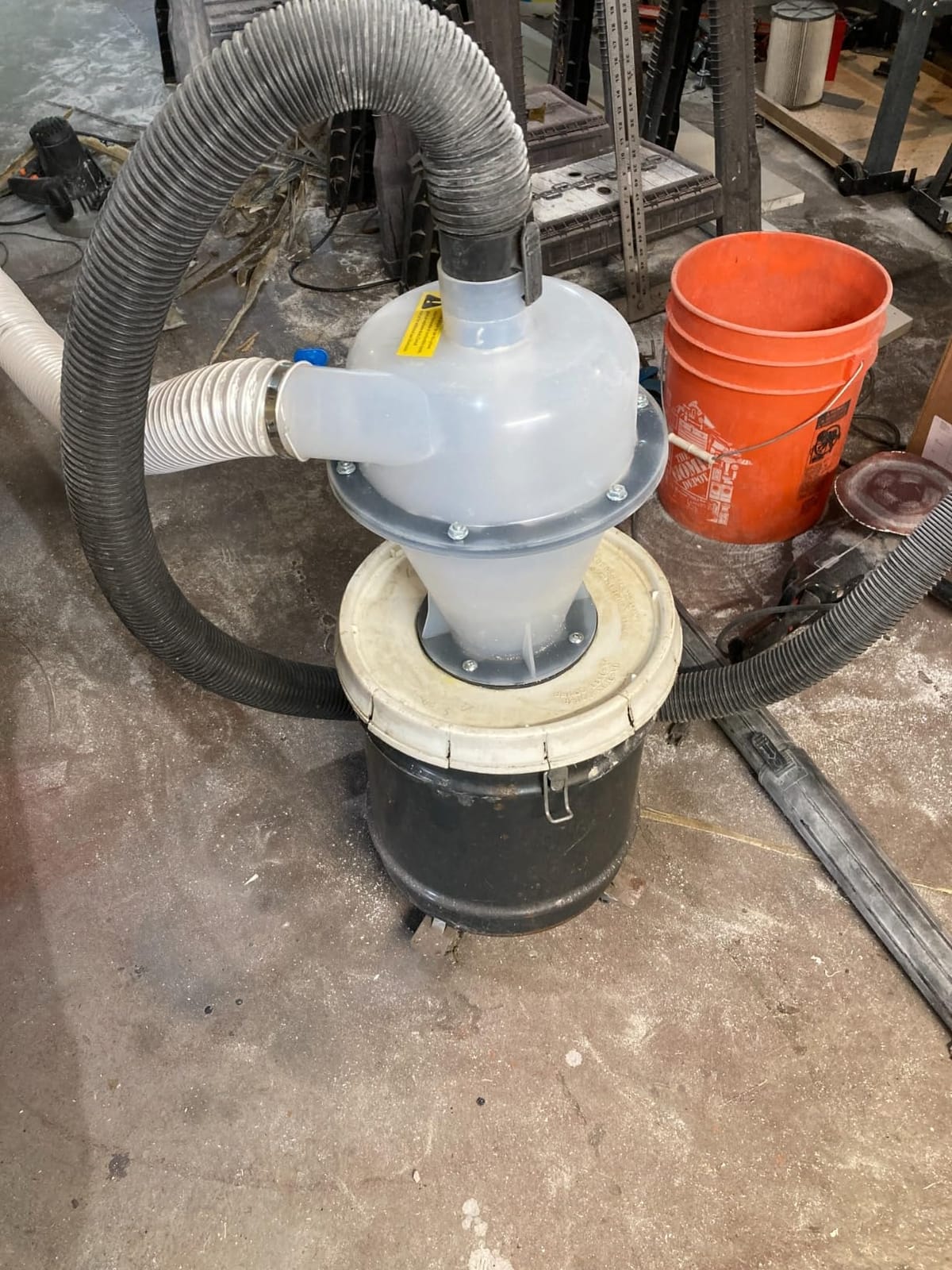
Two things to plan around. The 2.375 inch inlet and outlet mean some smaller hoses will need an adapter, and you get the separator without the bin, so most setups need a pail purchased separately.
Who should buy the Quick Click
Buy it if you have a mainstream wet dry vac and want the least amount of assembly available. Skip it if you want a complete sealed system in one purchase, since the container is separate.
Getting the seal right the first time
Set the rubber gasket on the rim and check that it sits flat all the way around before lowering the housing. If the rim is rolled or dented, a cheap new pail fixes a problem that no amount of tape will.
7. Oneida 2.5 Deluxe Kit – Best Collapse-Proof Bucket
Oneida Air Systems Dust Collector & Cyclone Separator Kit w/ Clear Bucket, 2.5 Deluxe 5-Gal – Portable Cyclone Machine for Wet and Dry Shop Vacuums
Complete kit with bucket and casters
2.5 inch hose with swivel cuffs
Pre-cut foam gasket
Neutral Vane technology
Pros
- Ready to run with bucket
- casters
- hose
- gasket and tether kit
- Collapse-proof bucket resists buckling under suction
- Four free-rotating casters included
- Works with drywall
- wood
- flour
- grass
- pet hair and metal shavings
Cons
- Average rating of 4.1 with 9 percent one-star reviews
- Clear bucket shows dust less clearly than a translucent one
- Bulkier than a bare lid only separator
The reason this kit earns its place is the bucket. Vacuum collapse is the quiet killer of budget rigs, and this pail is built not to buckle when the airflow pulls on it.
Everything else is in the box too: four casters and mounts, a two and a half inch hose with swivel cuffs, a vacuum tether kit, a pre-cut neoprene foam gasket and the cyclone. The Neutral Vane design delivers roughly a 20 percent separation improvement.
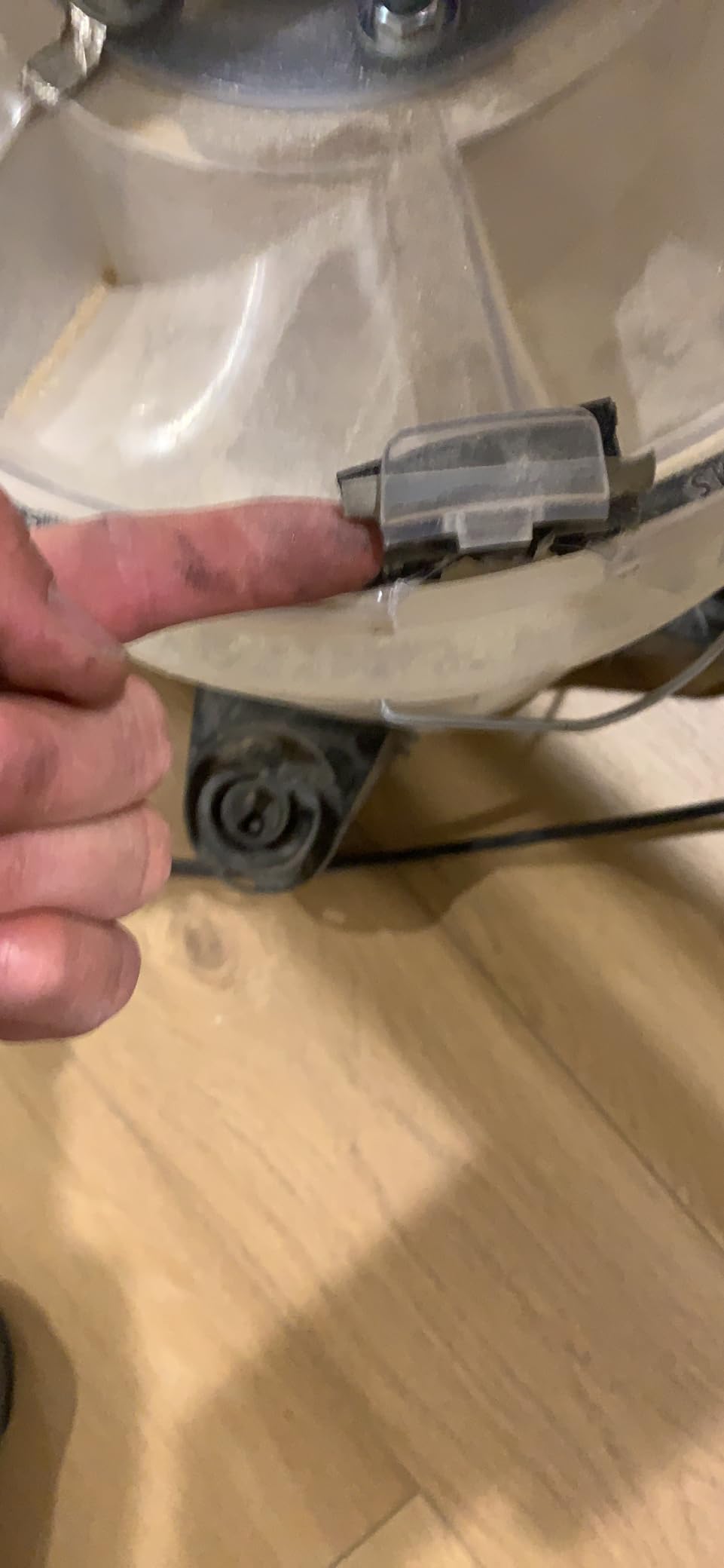
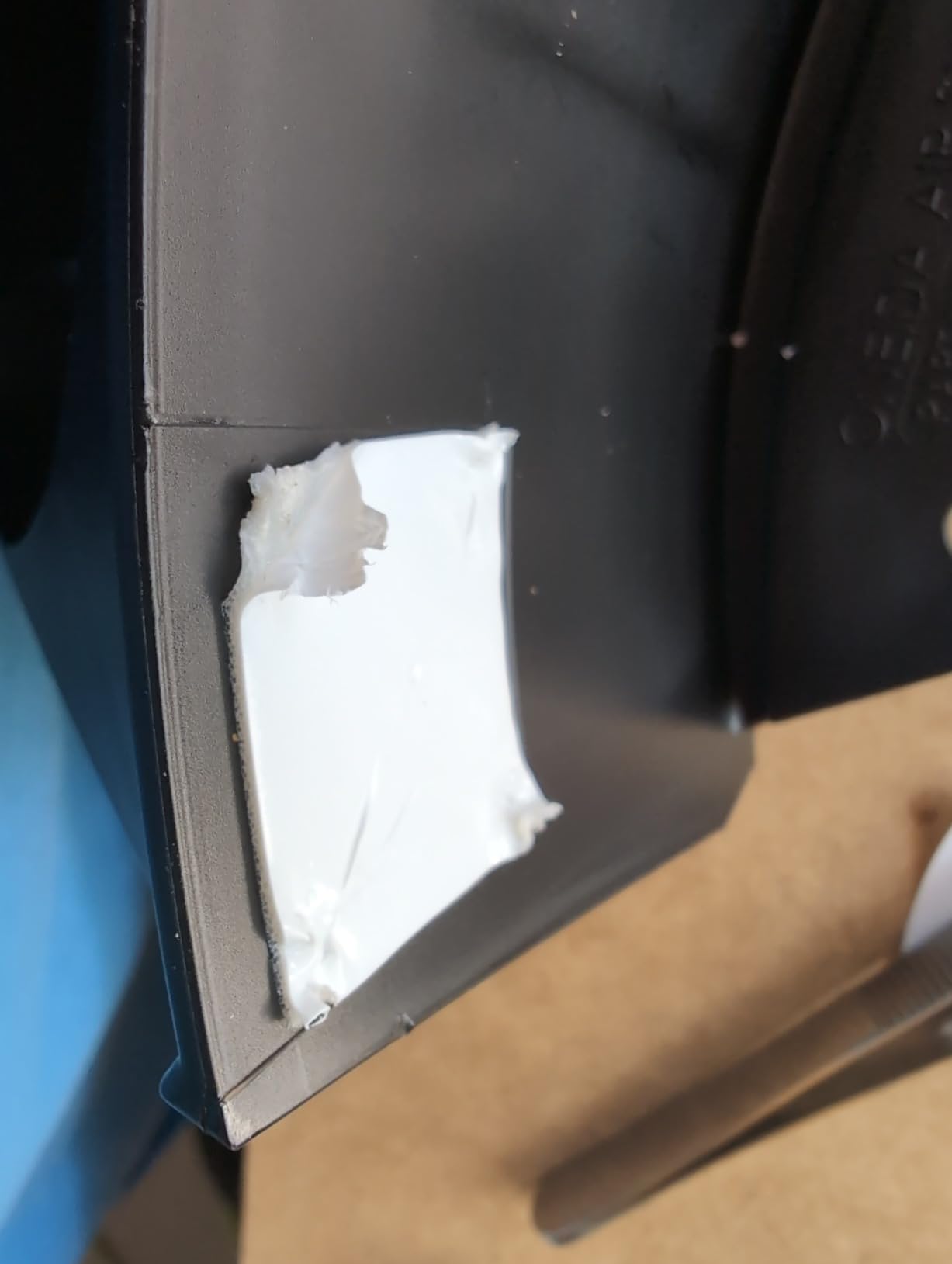
Its 4.1 average across 360 ratings sits near the bottom of the field, with nine percent one-star responses, and the complaints cluster around value rather than function. The 2.5 inch fittings also limit you to vacs that use that hose size.
Who should buy the Oneida 2.5 Deluxe Kit
Buy it if you have a 2.5 inch vacuum hose, if bucket collapse has bitten you, or if you want one box containing every part. Skip it if you already own a heavy duty bucket and a set of casters.
Storage and stability notes
Onboard accessory storage keeps elbows and adapters with the unit. Set it up on level floor before you start, since a caster that is not seated properly will drag rather than roll.
8. POWERTEC 6 Gallon Cyclone Kit – Best for Planers and Jointers
POWERTEC 70293V Cyclone Dust Collector and Separator Kit w/Clear 6 Gallon Dust Bucket, Hoses, Reducers, Couplers and Hose Clamps
6 gallon clear bucket
Includes reducers and couplers
Expandable vacuum hose
7.2 pound kit
Pros
- Full assortment of reducers
- couplers
- clamps and hose in one kit
- Clear bucket makes the fill point obvious
- Reducers fit planers
- drum sanders and jointers across brands
- Heat resistant construction with an anti-clogging design
Cons
- Multiple fittings restrict airflow more than a simple lid
- More parts to assemble than a bare separator
Where this kit pulls ahead is everything that is not the cyclone. Reducers, couplers, hose clamps and an expandable vacuum hose are all included, so you can connect a planer, drum sander or jointer outlet straight to the separator without a separate hardware run. Most people trying to rig a jointer spend the first weekend tracking down fittings.
The clear six-gallon bucket is a practical choice. You can see the debris level from standing height, and the extra gallon extends the time between swaps on machines that produce volume.
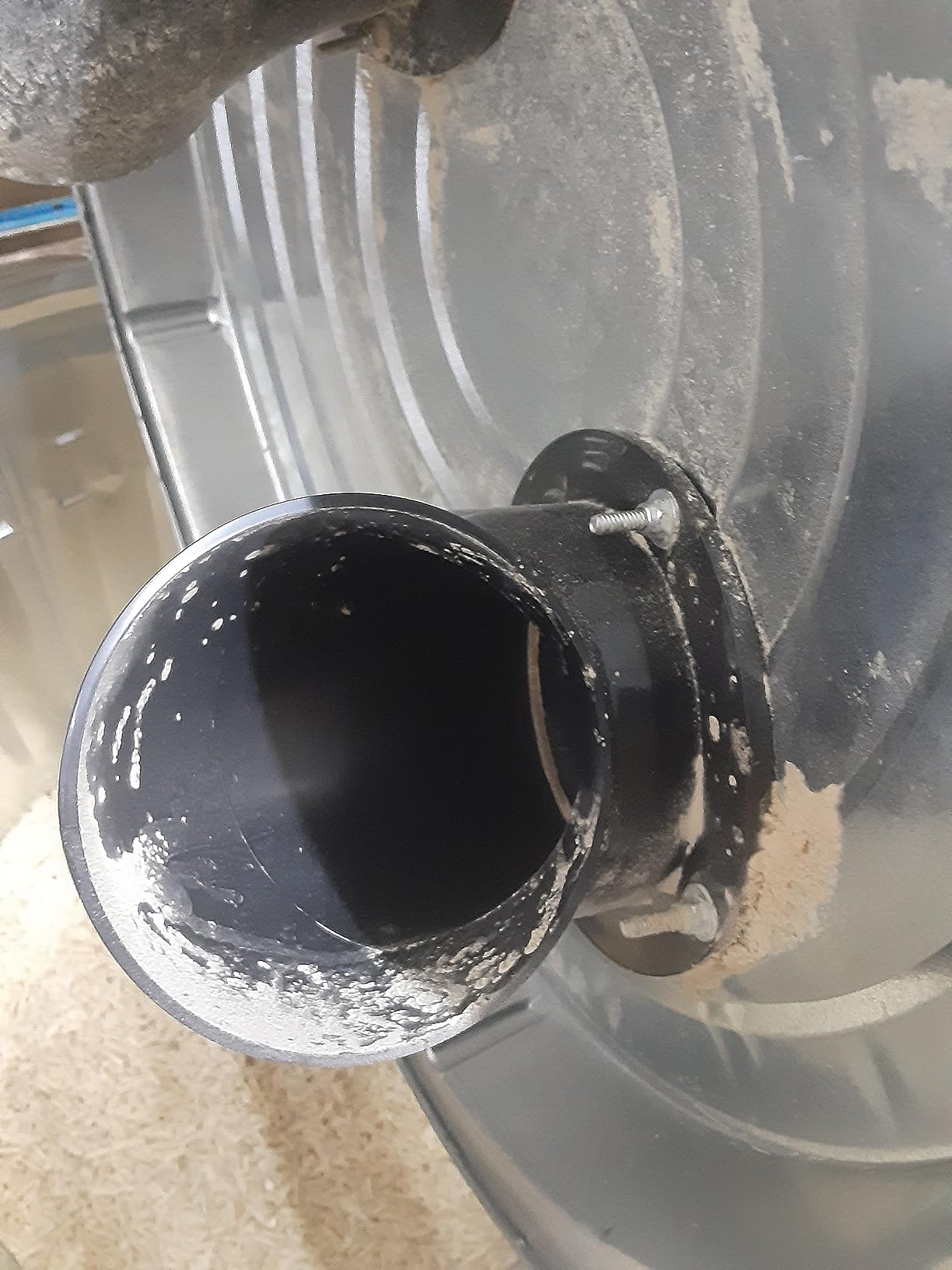
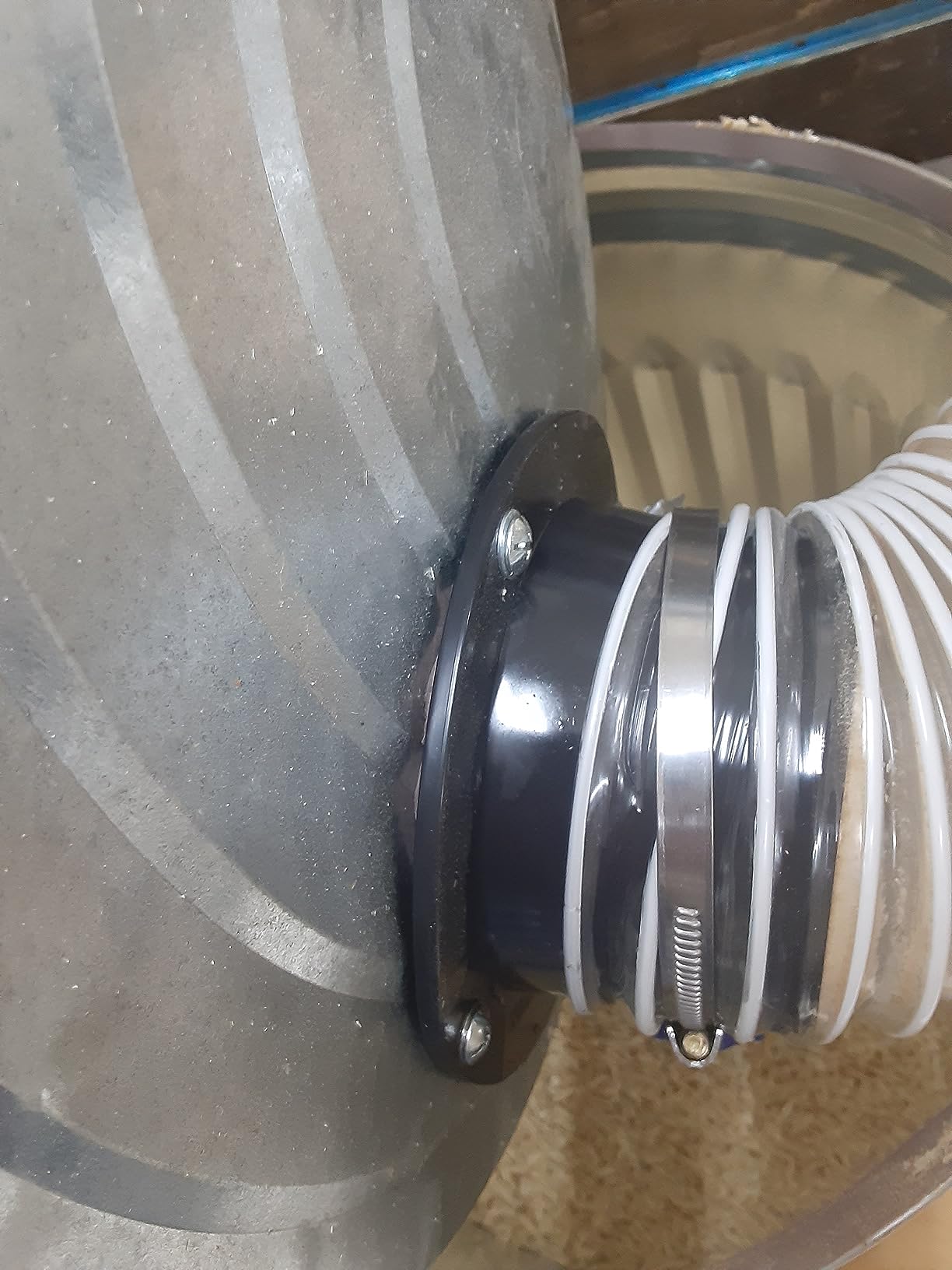
The tradeoff is airflow. Every extra fitting narrows the effective bore, and owners who converted from a simpler setup report slightly less suction. Assembly is also a step up, so budget an evening rather than a ten minute job.
Who should buy the POWERTEC 6 Gallon Kit
Buy it if you are collecting from machines with dedicated dust ports rather than a handheld hose. Skip it if you are running a hand tool straight into a shop vac and want maximum airflow for a sander.
Planning the layout before you buy fittings
Sketch the run first. The shortest path from machine port to separator inlet, and from separator outlet to the vac, is the layout with the most airflow. Clamp every joint, since vibration turns a snug connection into a leaking one over a season.
9. Mullet Cyclone Dust Collector – Best Fine-Dust Capture
Mullet Cyclone Dust Collector, High-Speed Separator for Shop Vac
One-piece parabolic body
Rigid PVC connection
Over 99 percent pre-separation
72 dB sound level
Pros
- Seamless parabolic body spins air faster than straight-wall designs
- Pre-separates over 99 percent of debris
- Cut-to-fit PVC connection removes bungee cords and duct tape
- Hose adapters fit nearly any wet dry vac
Cons
- Highest price point among the kits we covered
- Requires rigid PVC plumbing rather than flex hose
- You supply the collection container and blast gate
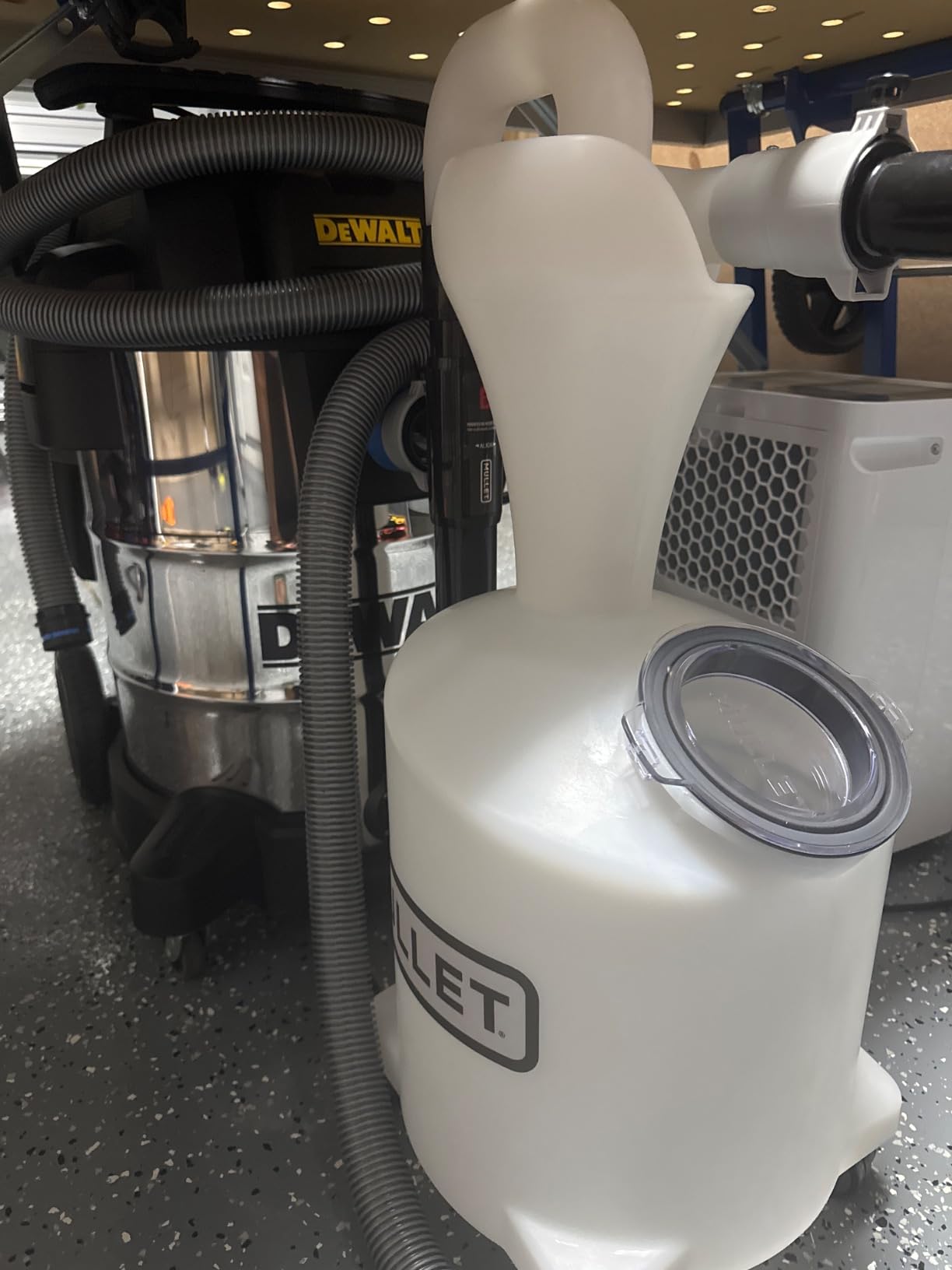
The Mullet is the one to look at if your problem is fine dust rather than chips. Its body is a single seamless parabolic piece, and the curved wall accelerates the airstream continuously instead of letting it straighten out at the top of the cone.
Rated at 4.8 across 289 ratings with eighty-eight percent five star, it sits at the top of the field. The connection is rigid cut-to-fit PVC rather than flex hose, and two wet dry vac hose adapters are included.
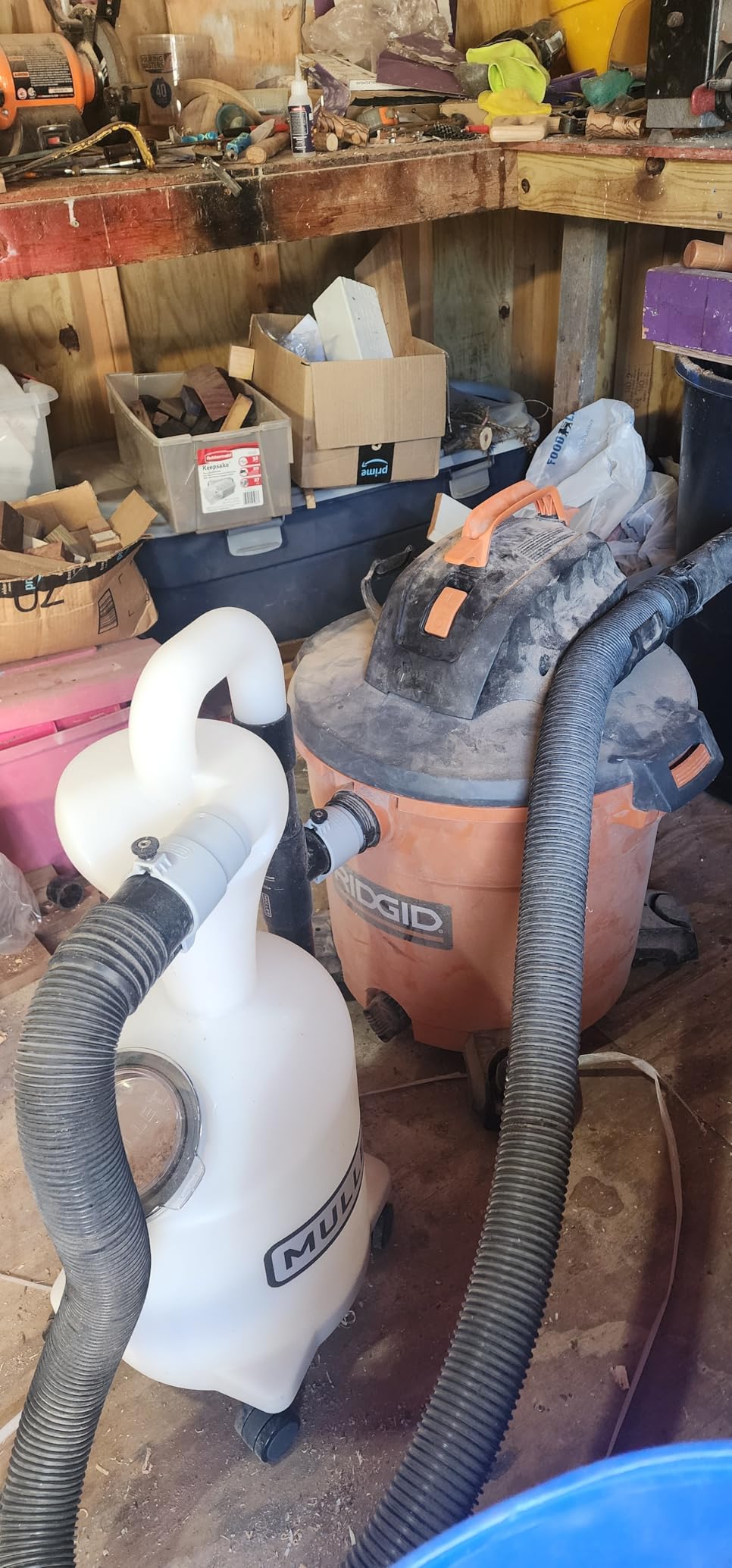
This is the most involved install on the list. You need rigid plumbing, a blast gate arrangement and your own collection container. The stated sound level is 72 dB, though the vac motor remains the louder part of the system.
It is also the priciest unit here by a wide margin, and the fine-dust problem it solves is real in drywall and CNC work. If you only make wood dust, a five-gallon kit does the same job.
Who should buy the Mullet Cyclone
Buy it if fine powder is the material you actually produce, if you run a CNC or rotary machine, or if a straight-wall cyclone has disappointed you. Skip it if you want a bolt-on afternoon project.
Why rigid plumbing matters here
A flex hose at the outlet collapses under the pressure difference a cyclone creates, and a collapsing hose cuts your airflow. Dry fit every joint before cementing, since a single mis-cut fitting turns an airtight system into a leaking one.
10. Kreg Dust Separator – Best for Kreg Table Ports
Kreg Dust Separator, Dust Collection Separator, KWS-DS100
FilterMaxx fins
Swivel top connection
Simple hose cuffs
2.9 pound lid
Pros
- Swivel top reduces tipping
- Kreg table ports connect without special adapters
- Lightweight at 2.9 pounds
- Users report the shop vac interior staying nearly empty
Cons
- Top-heavy and easy to knock over
- Hose too short to clear a taller vacuum
- Hose cuffs fit loosely on some ports and need tape
If your machines are Kreg, this is the low-friction choice. The hose cuffs mate with Kreg table ports directly, and the swivel top connection is designed to reduce tipping. Owners running a Kreg dust collector report the inside of their shop vac staying nearly empty.
The FilterMaxx fins catch fine dust that would otherwise ride the airstream out, and at 2.9 pounds the lid is light enough to lift onto a full pail without wrestling.
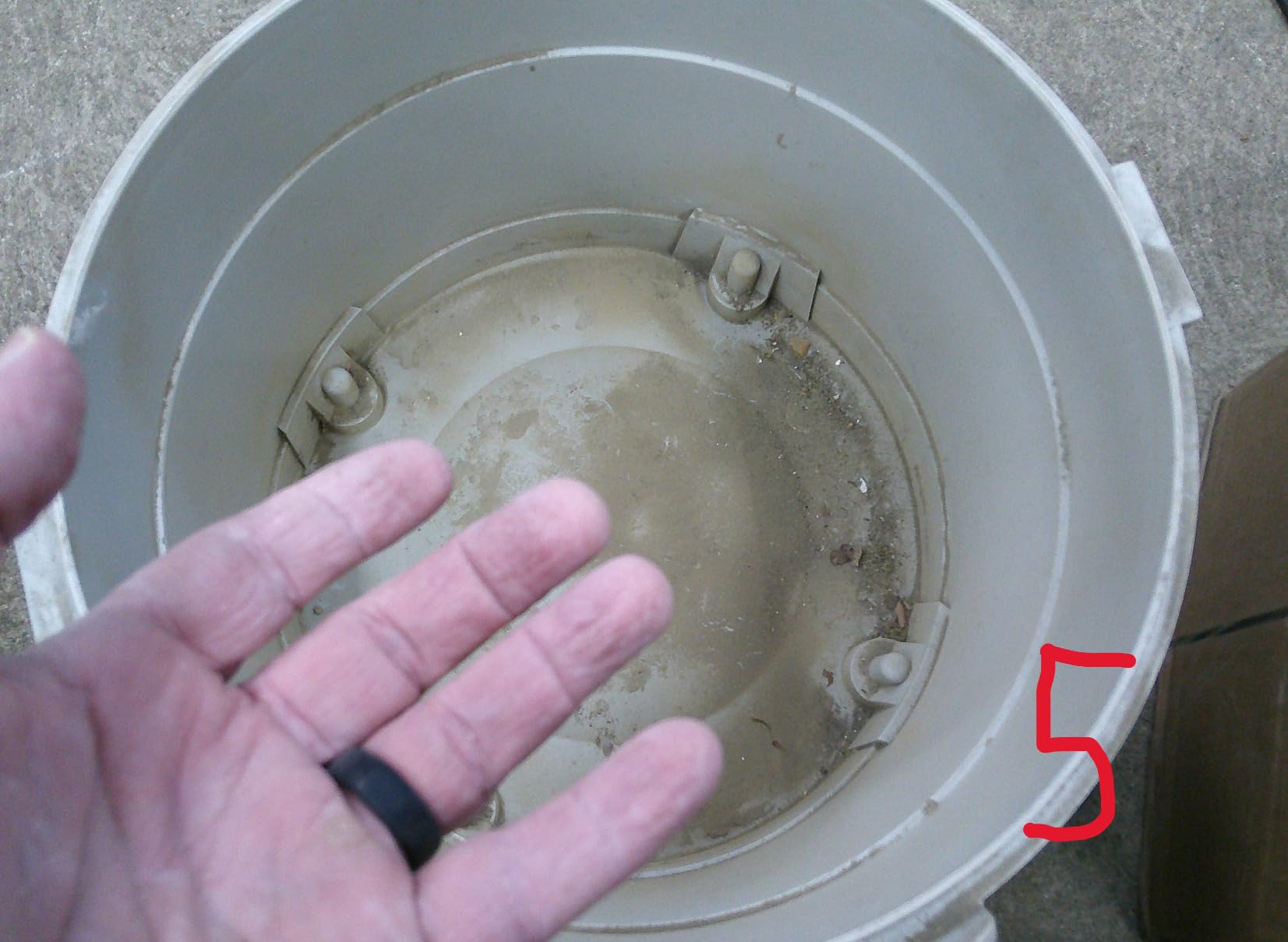
The 4.1 average across 168 ratings comes from fit and finish problems rather than separation failures. The hose is too short to clear a taller vacuum, which leaves a filled bucket at an angle, and it does not capture all of the fine dust that clogs filters.
Who should buy the Kreg Dust Separator
Buy it if Kreg is your brand across the board and you want a clean, no-adapter connection to Kreg table ports. Skip it if you have mixed brands, a tall vac, or powdery dust.
Checking the unit before install
Look through the inlet holes before connecting anything, since misaligned holes restrict airflow and look exactly like a clogged filter later. If the hose will not reach your vacuum height, add length rather than forcing a connection.
11. Taytools Cyclone Lid – Best Budget Starter
Taytools 114970 2-1/2 Inch Dust Collection Cyclone Separator Lid for 5 Gallon Pails Buckets Trash Cans
Bolts onto any 5 gallon pail
2-1/2 inch ID hose ports
ABS plastic
Foam gasket seal
Pros
- Least expensive way to turn a pail into a two-stage separator
- Fits 5 gallon pails
- buckets and trash cans
- Elbow on the inlet induces cyclonic airflow
- Foam gasket gives a solid seal
- Only weighs 16 ounces
Cons
- Limited to a 5 gallon container that fills fast
- Top-heavy and tips when the bucket is full
- No casters so the whole assembly must be carried
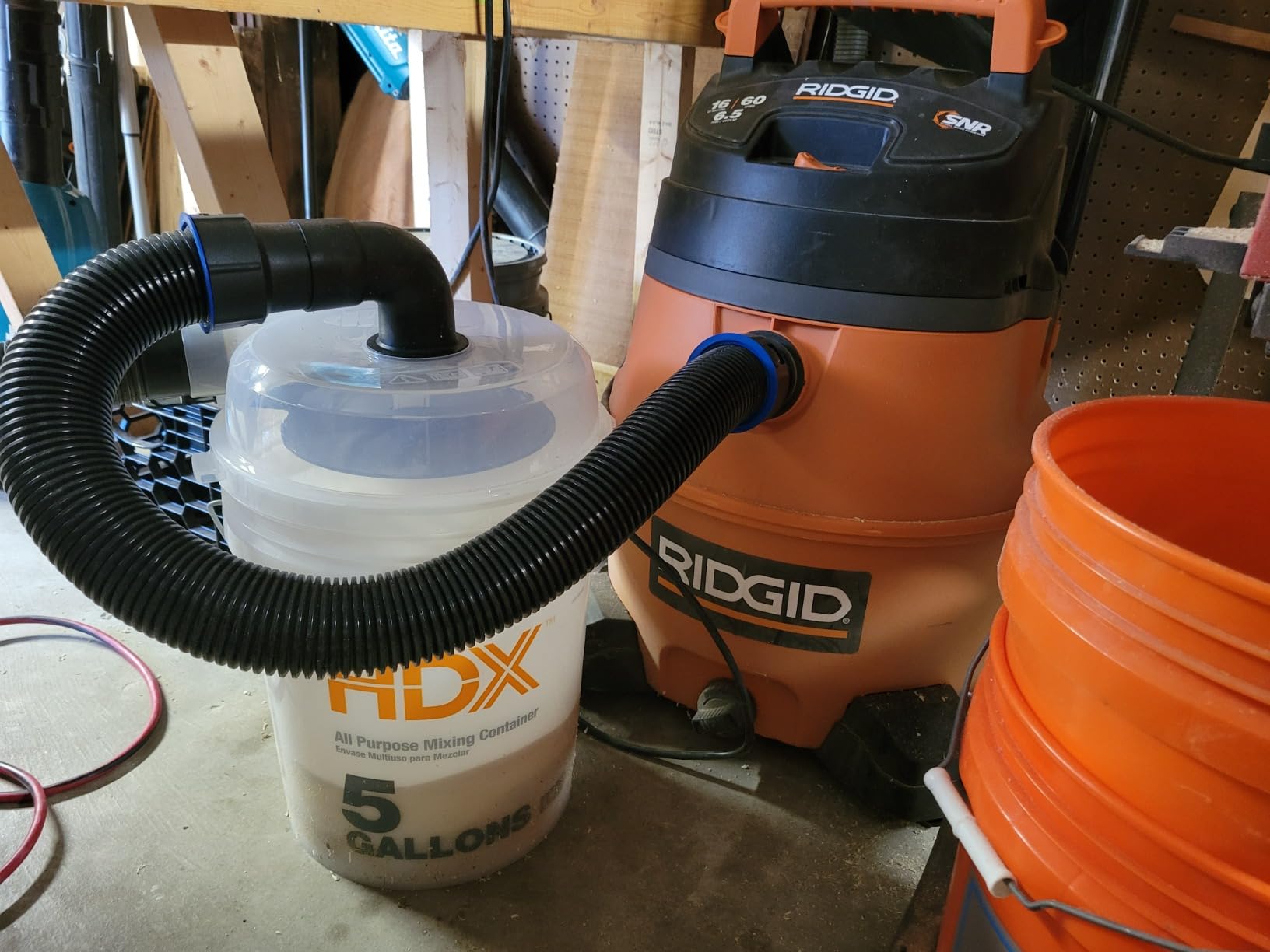
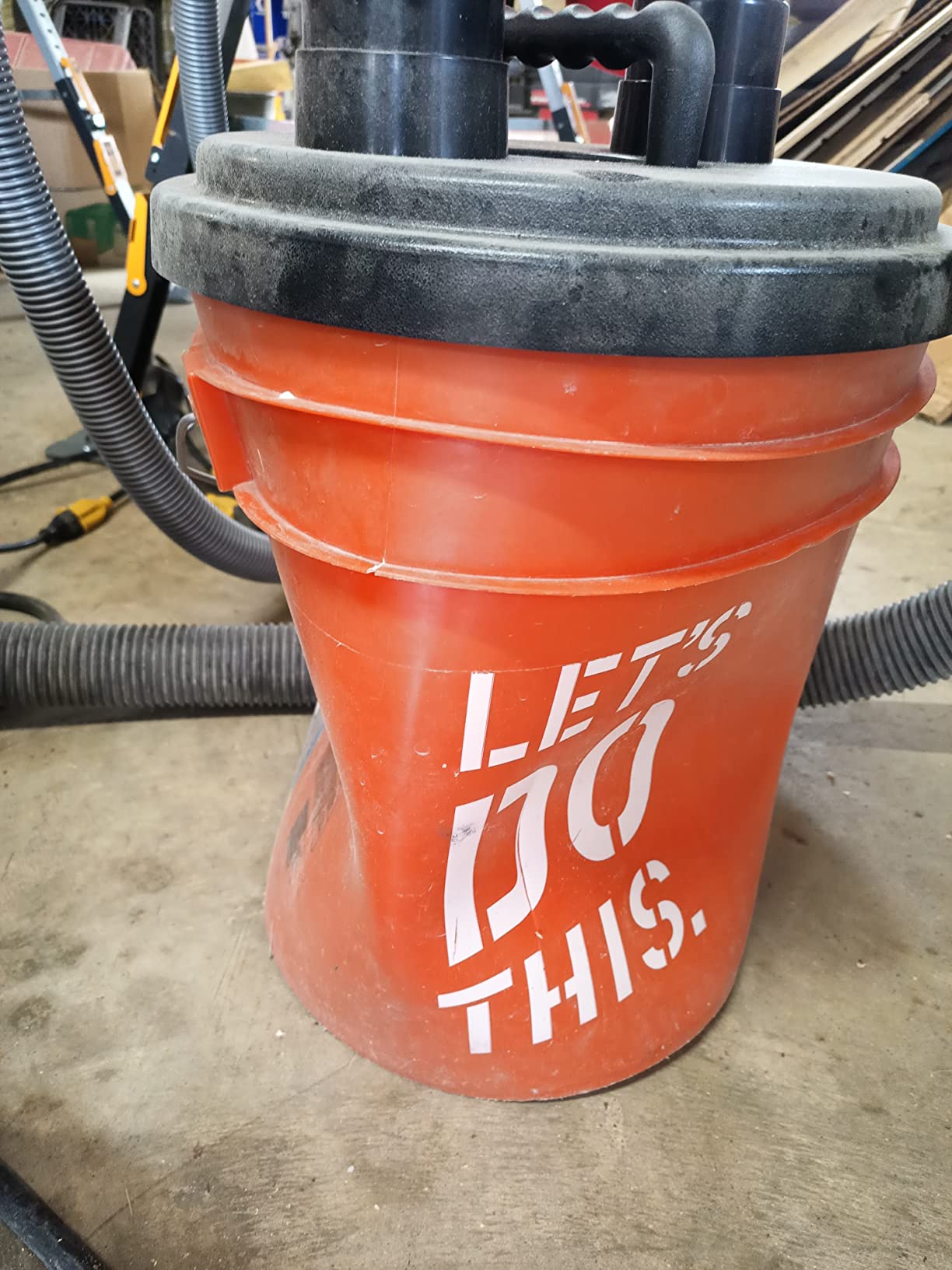
The cheapest way to find out whether a separator makes sense in your shop. It bolts onto any five-gallon pail, bucket or trash can, adds an elbow on the inlet side to induce cyclonic airflow, and seals with foam.
At 16 ounces the lid is almost weightless and the ABS construction is sturdy enough for regular service. Owners treat it as an inexpensive add-on rather than a permanent rig.
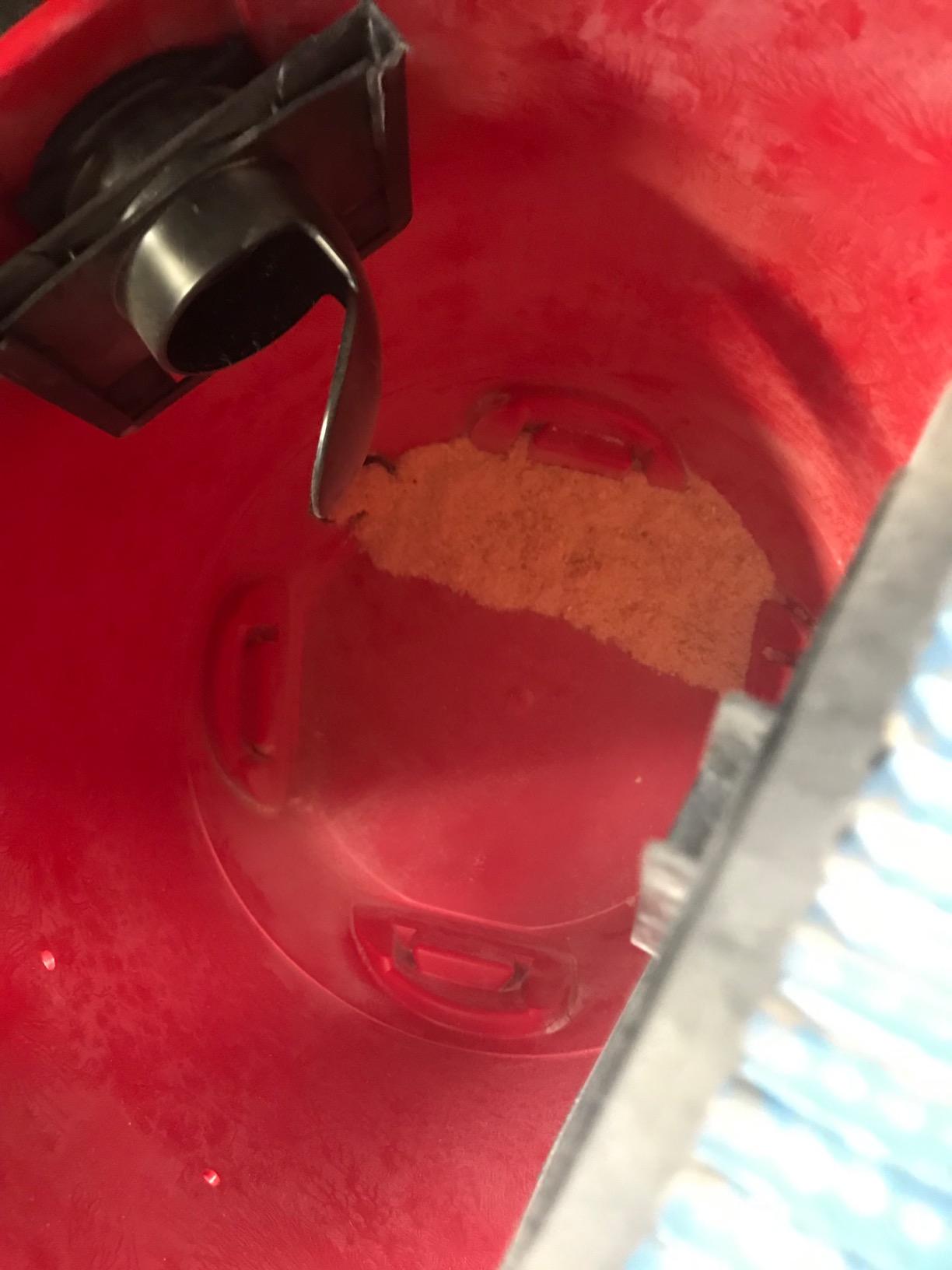
Capacity is the limit. Five gallons fills quickly on any serious run, and the straight barrel lid has no casters. Thin household trash cans are the other recurring problem, because they collapse inward under suction.
Who should buy the Taytools Lid
Buy it if you have a spare pail and want to test the concept cheaply. Skip it if you produce heavy volume, need wet pickup alongside dry separation, or dislike carrying a full bucket by hand.
Pick the right container
Use a container that will not deform. A heavy-gauge pail or a metal bucket holds its shape under suction; a thin disposable trash can does not. Plan on a second bucket so swapping takes seconds.
12. VEVOR Metal Tank Cyclone – Best Metal Barrel
VEVOR Cyclone Dust Separator with Metal Tank, 4″ Retrofit Cyclone Separator for Dust Collectors, ABS Material With 2″ Hole O.D. Connector & Hose for Wet/Dry Shop Vacuums, Fits 13.21 Gallon Tank
13.21 gallon iron barrel
3.81 inch main port with 1.97 inch adapter
Up to 99.61 percent separation
17.86 pound unit
Pros
- Metal tank is far more durable than plastic
- Works with 4 inch ducting and includes a 2 inch adapter
- Users report leaving the upstream collector bag nearly empty
- Handles high pressure collectors rated up to 4 HP
Cons
- Ships with only three caster points so the barrel wobbles
- Short dust ports need a clamp for movable setups
- Included reducers fit poorly and better parts work better
The metal barrel is the difference here. At 13.21 gallons of iron it will not collapse, it will not flex when the airflow pulls on it, and it takes the abuse of being dragged around a shop floor.
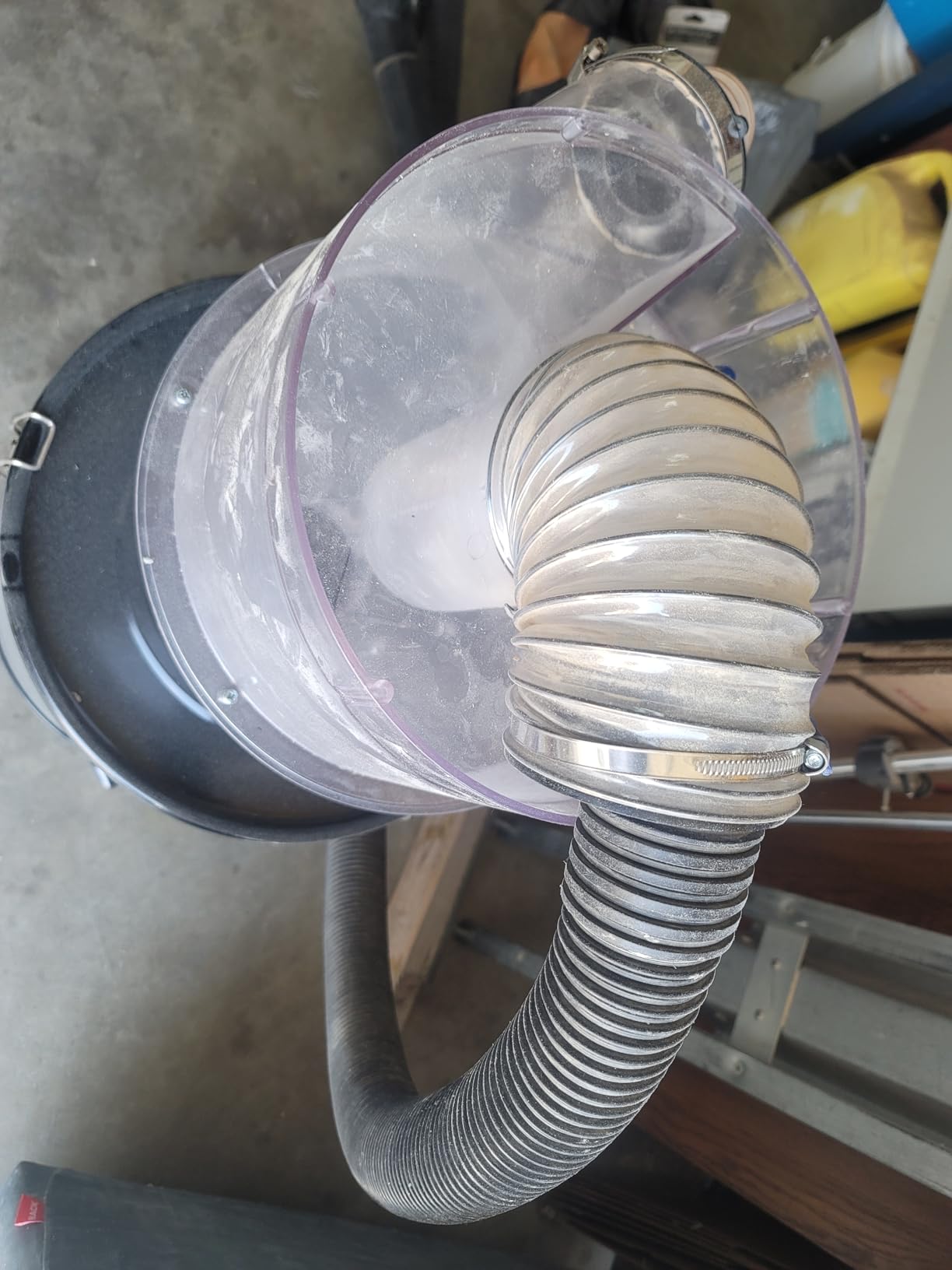
It connects to four inch ducting directly and includes a 1.97 inch adapter for two inch household hoses. The claimed separation rate is up to 99.61 percent, and owners running planers and milling report leaving the upstream bag nearly empty.
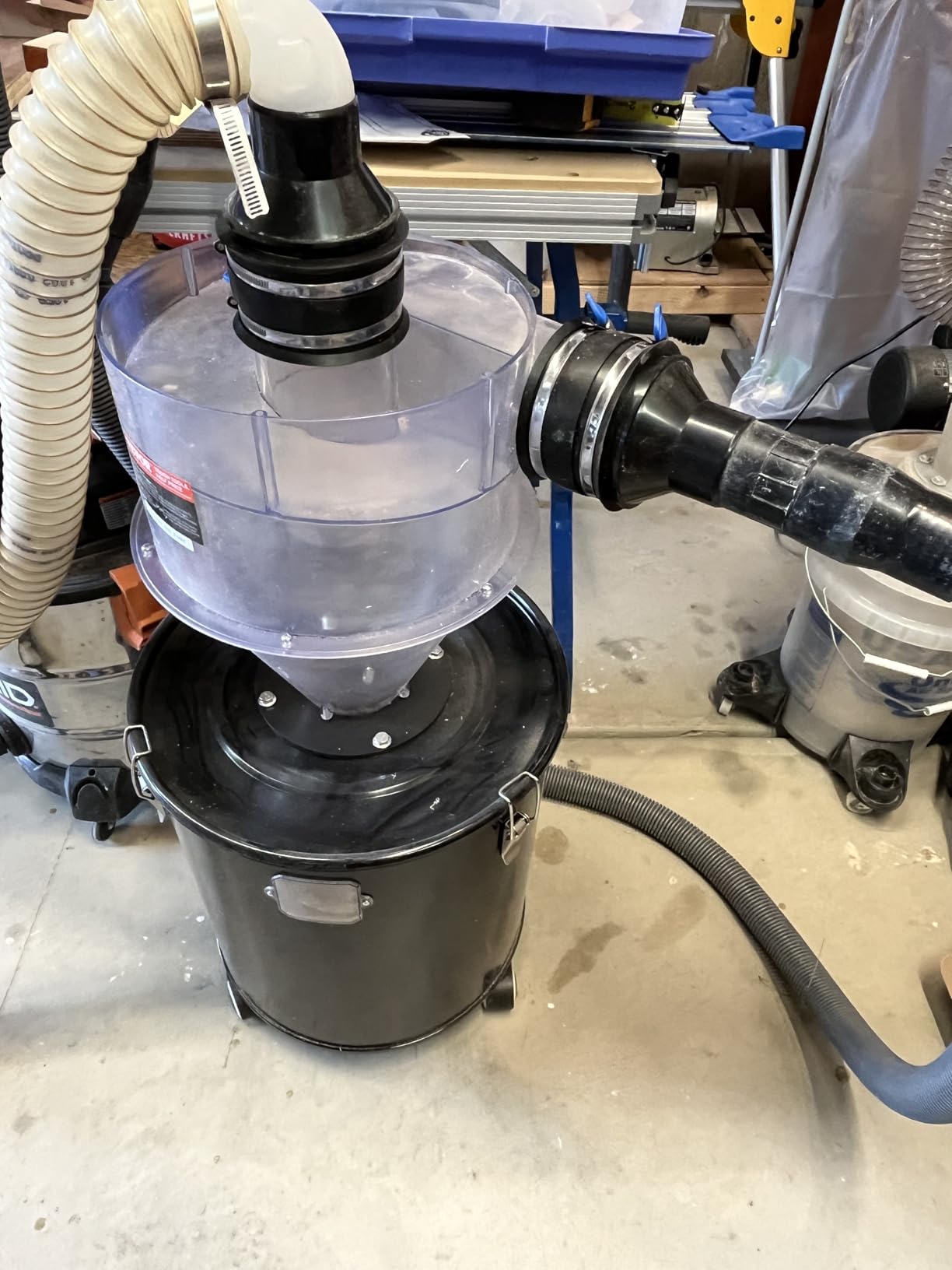
The weak point is the base. It comes with only three caster points, which makes a tall full barrel wobble, and the dust ports are short, so a movable setup needs an external clamp.
Who should buy the VEVOR Metal Tank Cyclone
Buy it if you are feeding a separator from a real dust collector, or if you want a barrel that outlasts the rest of the rig. Skip it if you need something compact.
Fixing the three-point base
Set the barrel on a level floor so all four corners bear weight, or add a fourth caster point and re-level it. Plan the port height before assembly, with the barrel empty.
What size separator fits your shop vac depends on the hose-end diameter
Compatibility is the one thing that catches almost every new separator owner out, and it comes down to one measurement. Take the diameter of the hose end that plugs into your vacuum, not the hose itself, because the two are often different sizes. Then match that number to the port on the separator.
Most household and light commercial wet dry vacs use a 2-1/4 inch or 2-1/2 inch port. The Cen-Tec Quick Click uses a 2.375 inch inlet, which pairs with mainstream vacs with little or no adapting. The DEWALT kit covers 1-7/8 inch and 2-1/2 inch ports, and the POWERTEC low profile handles 2-1/4 inch vacs while also accepting 2-1/2 inch and 4 inch collection lines.
Once you know your hose size, the rest is simpler. Anything that fits a 5 gallon pail works with a pail, and that covers most of the lid designs here. If you are running from a machine port instead of a handheld tool, you will need a 4 inch line, which points toward the VEVOR or the multi-port POWERTEC kit.
While you are in the shop, remember that lighting changes what you can see. A clear separator barrel only helps if you can see the swirl, so if your bench area is dim, our shop lighting picks are worth a look before you judge a unit’s visibility. If you also want to shop vacs that work cordlessly around the same space, our cordless shop vacuum guide covers that side.
Are dust separators worth it? Yes, if your filter clogs twice a month
A dust separator pays for itself when you replace filters on a schedule rather than once in a blue moon. If you go through a pleated element every few sanding sessions, the money you would have spent on replacements goes into a separator that lasts years, and your suction stays where it started instead of fading job by job.
The gain is not free. Each added hose length and fitting costs airflow, so a separator does not create suction. It protects the suction you already have. Run a smaller vac through a separator and you may see no benefit at all, which is why motor size matters as much as separator quality.
It is also worth being clear about what a separator cannot do. A shop vac and a cyclone handle a sander, a router, a track saw or a drill press without trouble. A table saw or a planer produces far more air volume than either can move, and that job needs a properly rated dust collector instead. Our dust collector roundup covers that side of the shop.
How to install a dust separator on a shop vac in six steps
First, measure the hose-end diameter on your vacuum and confirm it matches the separator ports before you buy anything. This single step prevents most of the disappointment people report with these products.
Second, set up your container. Choose a heavy pail, a metal bucket or a collapse-proof drum, and give the bucket somewhere flat to sit so it cannot tip when you pull it.
Third, fit the gasket or foam seal onto the rim of the bucket and check that it sits flat around the entire circumference. A pinched seal leaks air and quietly destroys performance.
Fourth, drill and bolt the separator onto the lid, or place a lid-style cyclone onto the prepared container, depending on which design you chose. Torque the fasteners evenly so the body does not sit crooked.
Fifth, keep the run between the separator outlet and the vac as short and straight as possible. Every extra foot of hose and every extra fitting reduces airflow, and this is where most of the lost performance comes from.
Sixth, test the seal with the sander running before you rely on it. Listen for the change in motor pitch that signals air pulling through a leak instead of through the cone, then reseal whatever you find.
How to keep your shop vac from blowing dust everywhere
Start with the filter. When a pleated element is saturated, air bypasses it and carries dust out the exhaust. Checking and cleaning the filter on a schedule is still the cheapest fix available, and it is the one people skip.
Next, stop the dust at the source. A blast gate or backer board at the tool port keeps the airstream focused and prevents the plume from forming in the first place, and it works with or without a separator.
Empty the vacuum drum outdoors or into a sealed bag. The puff you get when you tip a full drum is exactly what a separator is meant to prevent, so once you have one, empty the bucket instead and keep the drum clean.
Handle static cling on plastic barrels by grounding the container. Conductive hose and a bonding strap stop fine dust from hanging to surfaces instead of falling where you can sweep it, which also makes cleanup faster.
Finally, expect separation to fade as the bin fills. Air needs headroom to spin, so a straight-sided bucket at three quarters full will carry debris over into the vacuum where a full funnel cyclone would not. Empty at the halfway mark and the difference stays with you.
Dust separator vs. dust collector vs. dust extractor
The three words get used interchangeably, and they describe different jobs. A dust separator upgrades the air path of a vacuum you already own. A dust collector is a standalone machine built to move a specific volume of air, rated in CFM, and it is what a table saw or planer needs. A dust extractor is a hybrid with a vacuum motor built in, sitting between the two.
For handheld tools, a sander, a router or a track saw, a separator on a shop vac is the right call and the least money. For machines with large ports and high airflow demand, the collector is the only answer that keeps up. The separator is a filter-life device first and a dust-capture device second.
One practical note on noise. Shop vacs are the loud part of any of these setups, and a separator does not change that. If your main concern is noise, address the vacuum motor rather than the cyclone, and read our wet dry vac roundup for quieter options.
Frequently Asked Questions
What is the best dust separator for a shop vac?
The Oneida Dust Deputy DIY is the best overall for most shops because it has the deepest review history, handles the widest range of materials and costs the least to get running. The Dustopper PRO is best if you want zero assembly with a preinstalled gasket, and the POWERTEC Low Profile is the best value option with a complete kit and a stable low-profile lid.
Are dust separators worth it?
Yes, when your shop vac filter clogs every few sanding sessions. A separator keeps bulk debris out of the filter, so you keep full suction longer and replace filters far less often. It does not create suction, though, since every added hose length and fitting costs some airflow, so a weak vacuum benefits less.
Is Dust Deputy worth it?
The DIY version is worth it if you already have two suitable buckets and 2.5 inch hose. Owners report that once they added it they stopped replacing shop vac filters, and the material range covers wood dust, drywall, concrete, ash and metal shavings. Skip it if you want something that works immediately without sourcing hoses and adapters.
What is a dust stopper?
A dust stopper is the common name for a low-cost bucket-lid separator that bolts onto a five-gallon pail and uses the bucket itself as the collection chamber. It is cheaper and simpler than a full funnel cyclone, but it has less headroom for the air to spin and it fills faster, so separation drops as the bucket gets full.
What is the best cyclone separator for home use?
For most home workshops the Oneida Dust Deputy DIY or the POWERTEC Low Profile are the strongest choices, since both mount on a standard five-gallon pail and work with the hose sizes most household wet dry vacs use. Home users rarely produce enough airflow to justify a rigid-plumbing unit like the Mullet.
What is the difference between a shop vac and a dust collector?
A shop vac is a general purpose vacuum with a filter and a hose, rated for household messes and small debris. A dust collector is built to move a specific volume of air, usually rated in CFM, and is required for machines like a table saw or planer that generate far more air than a vacuum can pull.
Do I still need a filter with a dust separator?
Yes. A separator catches the bulk debris, but fine particulate still reaches the vacuum and will load the filter over time. Keep a clean filter installed, empty it on a schedule, and your replacement interval stretches out considerably compared with running without a separator at all.
Final verdict for the best dust separators for shop vacuums in 2026
The Oneida Dust Deputy DIY is the best dust separator for a shop vacuum because it has the largest body of real-world use behind it, handles nearly every material you will meet, and costs the least to put into service. If you already own buckets and hose, it is the obvious first buy.
Buy the Dustopper PRO when you want a sealed unit with no assembly, the POWERTEC Low Profile when you want a complete kit and an easy-to-move profile, and the DEWALT 6 gallon when you want everything in one box. The Rockler Dust Right handles table saw volume, the Mullet handles fine powder, and the VEVOR metal tank handles anything a plastic barrel would not survive.
Whichever one you choose, measure your hose-end diameter first and keep the vacuum side of the run short. Those two habits decide whether the separator feels like an upgrade or an expensive length of hose. As an Amazon Associate, we earn from qualifying purchases.