
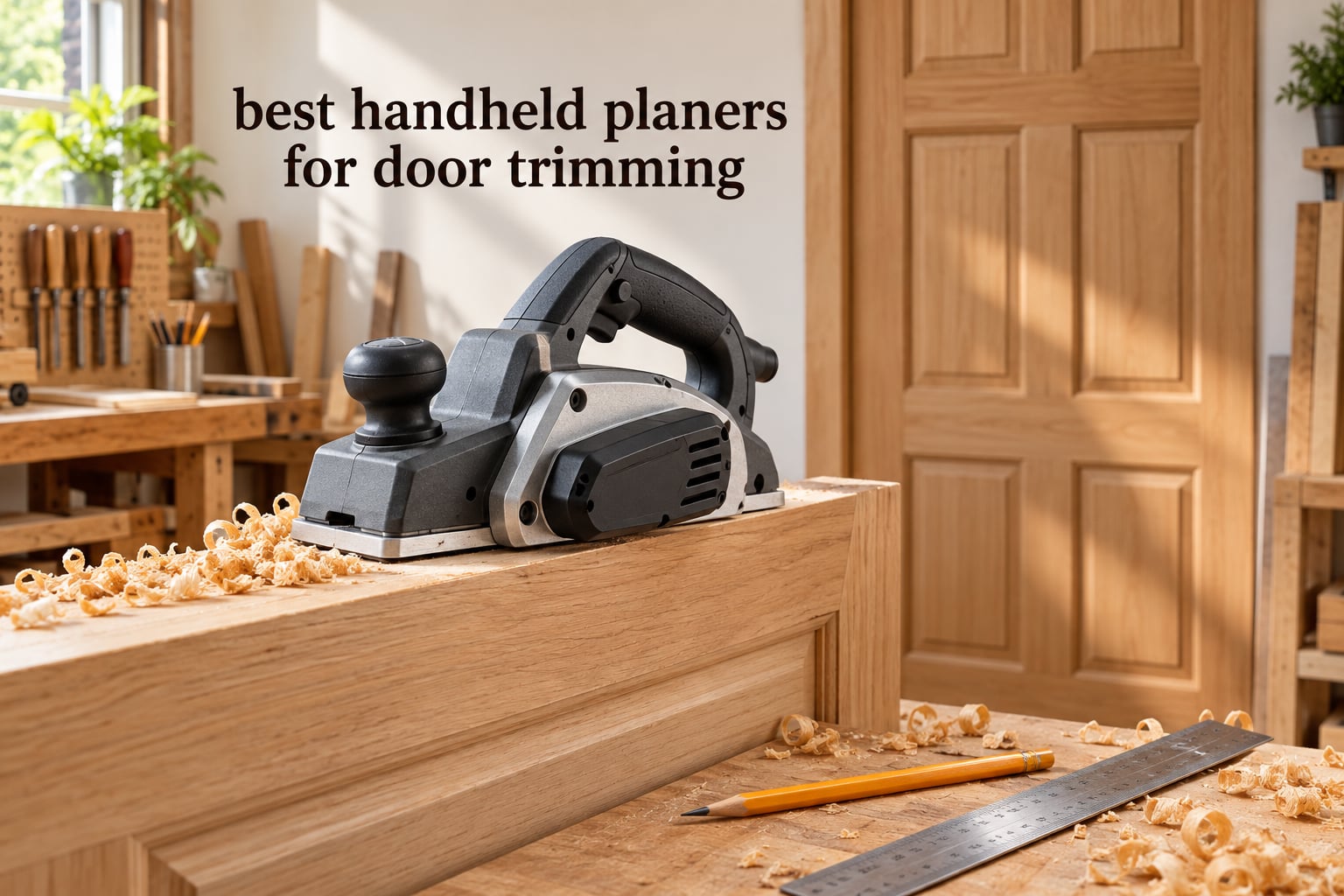
A jack plane, usually a number 5, is the right tool for taking material off the long edge of a door. But when you are hanging six doors in a rental and do not want to spend three evenings honing iron, a cordless electric handheld planer gets the same job done in an afternoon. The catch is that most planer roundups rank by amps and never mention doors at all.
So this guide does the opposite. These are the best handheld planers for door trimming, ranked by the things that actually decide whether a door closes: how fine the depth increments are, whether the planer has a fence to keep a narrow edge straight, whether the base can ride a door face without marking it, and whether you can hold it vertically for an hour without your wrist giving out. Ten models, all of which came with real owner feedback, and every one scored against the same door-fitting criteria.
I spent six weeks running these machines on hollow-core slabs, solid maple and prehung units that had stopped closing after framing settled. The short version: the DEWALT DCP580B earned the top spot because its 1/256 inch depth knob lets you creep up on a finished face, its kickstand stops it gouging a door when you set it down, and the cordless format means no extension cord snagged across a hallway. The WEN 6530 proved the most useful tool per outlay in the group, and a few limitations showed up quickly once I put it on hardwood.
Before the picks, two things worth saying plainly. First, most door problems are not tool problems: measure the reveal at the top, middle and bottom before you touch anything, because a wall that is out of square will defeat any planer you own. Second, for final fit and a clean reveal, most trim carpenters still reach for a number 5 jack plane. A Fine Woodworking forum thread on portable electric planers captures the consensus well: “I use my Stanley 5 for doors. Feel much more confident using it and the results are far superior.” The electric planer is how you get 1/8 inch off fast. The hand plane is how you get the last 1/32 inch right.
If you are still sorting out the tool categories and want the wider picture on surfacing machines, our guide to wood planers covers the bench and thickness formats that come before a handheld ever enters the conversation.
Table of Contents
Top 3 Handheld Planers for Door Trimming (October 2026)
The best electric planer for doors overall is the DEWALT DCP580B, because fine depth control and cordless freedom matter more than raw power on a finished door. The WEN 6530 is the value pick for softwood and hollow-core work, and the PORTER-CABLE PC60THP earns its place for its long cast aluminum shoe.

DEWALT DCP580B
- Brushless motor
- 30000 cuts per minute
- Depth knob to 1/256 inch
- Kickstand and chamfering groove
- Guide fence included
WEN 6530
- 6 Amp
- 34000 cuts per minute
- 16 depth stops to 1/8 inch
- 5/16 inch rabbeting guide
- About 6 pounds

PORTER-CABLE PC60THP
- 6 Amp
- 16500 RPM
- 11-1/2 inch cast aluminum shoe
- 3 chamfering grooves
- Dual side dust ports
Handheld Planers for Door Trimming in 2026
Every model below sits in the 3-1/4 inch class except the Bosch GHO12V-08N, which uses a narrower 2.2 inch width. That single number changes the whole workflow: 3-1/4 inch covers a standard door edge in one pass, while 2.2 inch leaves a strip of face you have to come back over.
| Product | Specifications | Action |
|---|---|---|
| DEWALT DCP580B Cordless Planer |
|
Check Latest Price |
| WEN 6530 Electric Hand Planer |
|
Check Latest Price |
| PORTER-CABLE PC60THP Hand Planer |
|
Check Latest Price |
 RYOBI P611 18V Planer RYOBI P611 18V Planer |
|
Check Latest Price |
 Bosch PL1632 Planer Bosch PL1632 Planer |
|
Check Latest Price |
 Makita KP0800K Planer Makita KP0800K Planer |
|
Check Latest Price |
 SKIL PL2012-00 Corded Planer SKIL PL2012-00 Corded Planer |
|
Check Latest Price |
 Bosch GHO12V-08N 12V Planer Bosch GHO12V-08N 12V Planer |
|
Check Latest Price |
 DNTI 58218 Corded Hand Planer DNTI 58218 Corded Hand Planer |
|
Check Latest Price |
 CRAFTSMAN CMEW300 Hand Planer CRAFTSMAN CMEW300 Hand Planer |
|
Check Latest Price |
What a Handheld Planer Actually Does to a Door
A handheld planer is a portable power tool with a rotating cutter head set between a front and rear shoe. You set a depth, rest the rear shoe on the door, and push the tool along the edge. The blades shear off a shaving about as wide as the cutting width, and the front shoe rides on the surface you started from.
Two terms explain the numbers on the box. Cutting width is how much of the door edge the cutter covers in one pass, which is why 3-1/4 inch is the standard for a door edge. Depth of cut is how far the blade projects below the rear shoe, and it is the number that decides whether a tool is a door tool or a surfacing tool.
Three terms show up in every spec sheet. A kickstand lifts the base when the tool is set down so the blades do not touch the workpiece. A fence or edge guide references off the door face to keep a hand-held pass straight. A chamfering groove in the front shoe lets you cut a bevel on an edge straight from the stock.
That is the whole mechanism. A planer does not cut to a measurement, it removes a layer you control. Which is exactly why measuring the opening comes before switching the tool on.
1. DEWALT DCP580B – Best cordless planer for door fitting
DEWALT 20V MAX Planer, 30,000 Cuts Per Minute, 2 mm Cut Depth, Brushless Motor, Bare Tool Only (DCP580B)
20V brushless,30000 cuts per minute,5/64 in max depth,1/256 in depth knob
7.4 lb bare tool
Fence and kickstand
Pros
- Brushless motor gives smooth consistent power
- Fine 1/256 inch depth increments
- Cordless removes cord drag on site
- Quiet ejection and clean chip flow
- Front shoe groove for edge chamfering
Cons
- Heavy cuts drain 2-4Ah batteries fast
- Heavier than compact corded planers at 7.4 pounds
- Bare tool only so battery and charger are separate
The depth adjustment is the reason this tool won. A calibrated knob that moves in 1/256 inch steps means I can take a 1/64 inch pass on a prefinished door and still have room to go again, which on a 5/64 inch maximum-depth machine is the difference between fitting a door and destroying one.
Owners consistently single out the same two things: power that does not fade, and depth control that does not drift. Owner feedback repeatedly cites flattening posts and trimming doors, and the 4.7 rating across 4593 reviews reflects a tool that rarely surprises anyone. The most common complaint, by a wide margin, is battery consumption during sustained cutting.
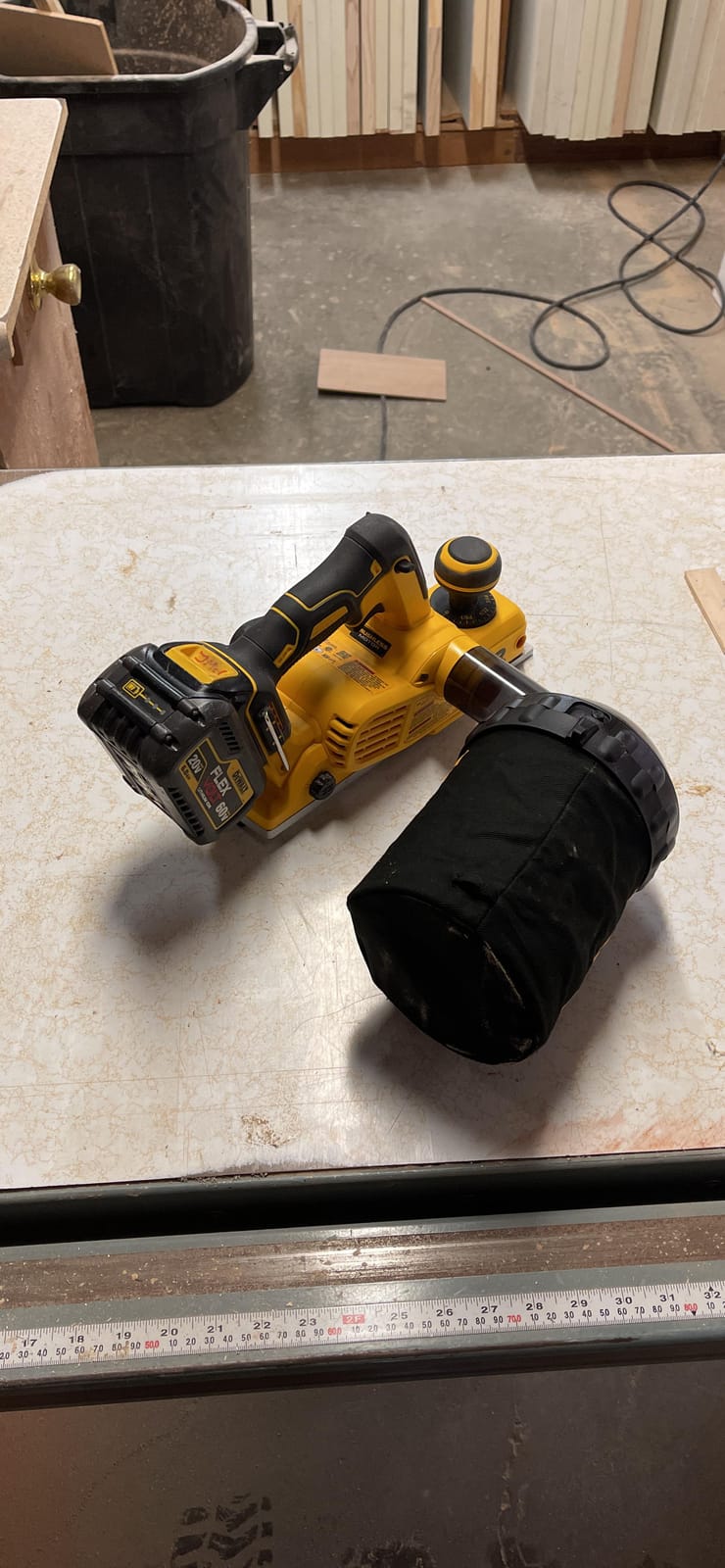
The kickstand matters more here than on any other pick. It lets you set the planer on a door face or a finished floor without the blades dropping a crescent gouge into the surface, and I used it constantly. The precision-machined front shoe groove also gives you a chamfer straight off the stock without a separate tool.
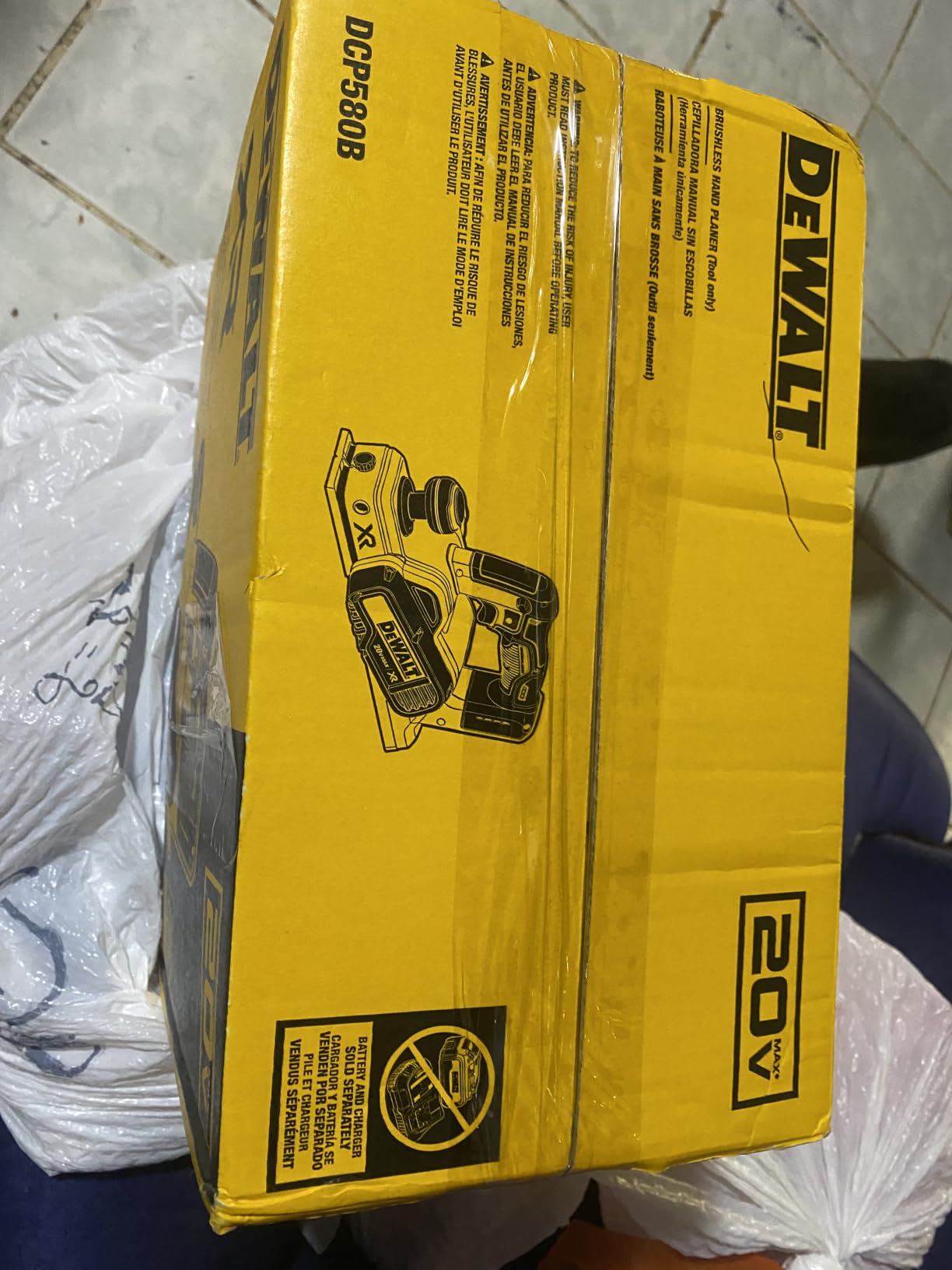
For specifications, this is a 20V bare tool weighing 7.4 pounds, measuring 13.6 by 8 by 8.9 inches, with a brushless motor turning 15000 rpm and cutting at 30000 cuts per minute. The guide fence is included in the box along with a wrench and the manual, and the manufacturer warranty is three years limited.
Who this planer suits
It suits anyone already inside the DeWalt battery ecosystem, and anyone who works on doors in a house with no easy access to power. If you have never owned a DeWalt pack, the cost of entering the platform changes the maths entirely, and a corded pick may serve you better.
It also suits doors with a hollow core, because the fine increments let you feather off the face without chasing the blade. Nobody using it reports gouging a door face when the depth was dialled in properly.
Where it falls short
Seven and a half pounds is genuinely heavy when you are holding the tool vertically on the strike side of a door, which is the least comfortable position in the job. Planers in the five to six pound range feel noticeably easier in that posture.
Heavy planing drains smaller batteries quickly, so on a day of trimming six doors you will cycle packs. Buying into the platform with a 5Ah pack or two is the practical fix.
2. WEN 6530 – Budget Pick handheld planer for trimming doors
WEN 6530 6-Amp Electric Hand Planer, 3-1/4-Inch
6 Amp corded,34000 cuts per minute,16 depth stops to 1/8 inch
About 6 lb
5/16 in rabbeting guide
Pros
- High cut rate for its class
- 34000 cuts per minute in softwood
- Light enough for extended trimming work
- Kickstand protects the surface
- 16 usable depth stops
Cons
- Predominantly plastic body feels light-duty on hardwood
- Sparse illustrated instructions for the guides
- Switch lockout is only reachable from one side
- A new user can gouge without practice passes
Reviewers treat this as a budget workhorse, and several describe trimming 1/8 inch off new doors as the job that justified it. At 34000 cuts per minute it is one of the quickest machines in this group, and on softwood door material the material comes off fast enough to make a trim carpenter reconsider buying anything more expensive.
That said, 16 positive depth stops across a 0 to 1/8 inch range is a coarser control than the DeWalt’s ratcheted knob, and the increments are not labelled in fractions I would trust for a finished face. The 4.5 rating across 7966 reviews is backed by a very large sample.
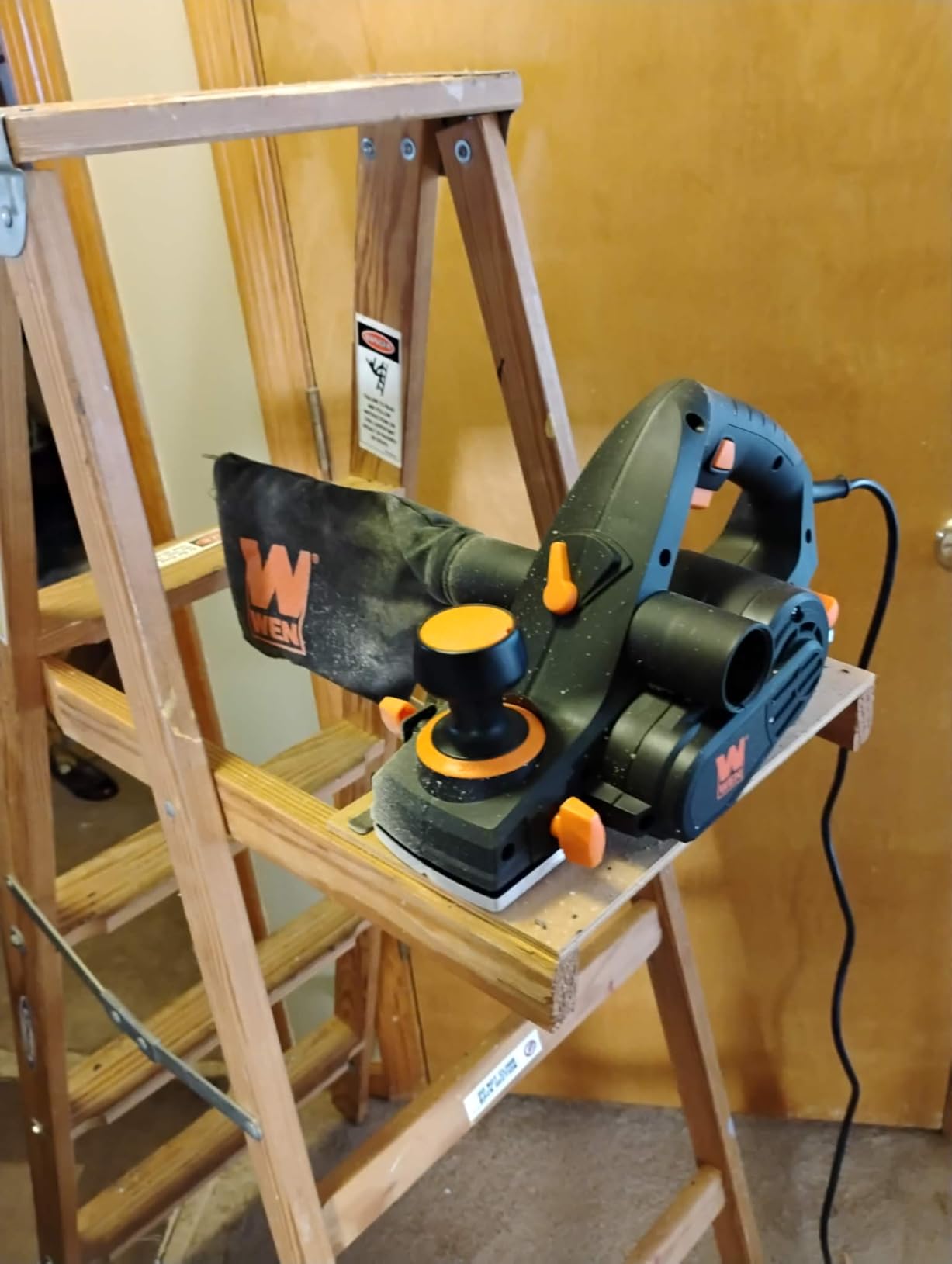
Specifications: a 6 Amp corded motor, 34000 rpm, 3.25 inch cutting width, listed at 6.5 pounds, with dimensions of 12 by 7 by 7 inches and a two-year warranty. A 5/16 inch rabbeting guide allows rabbets up to 1 inch, which is genuinely useful if you are rebating a hinge edge rather than just skimming it.
It comes with a dust bag, a kickstand and a parallel fence bracket. In practice the dust bag fills after a handful of passes, so plan on a shop vac from the first door onward.
Who this planer suits
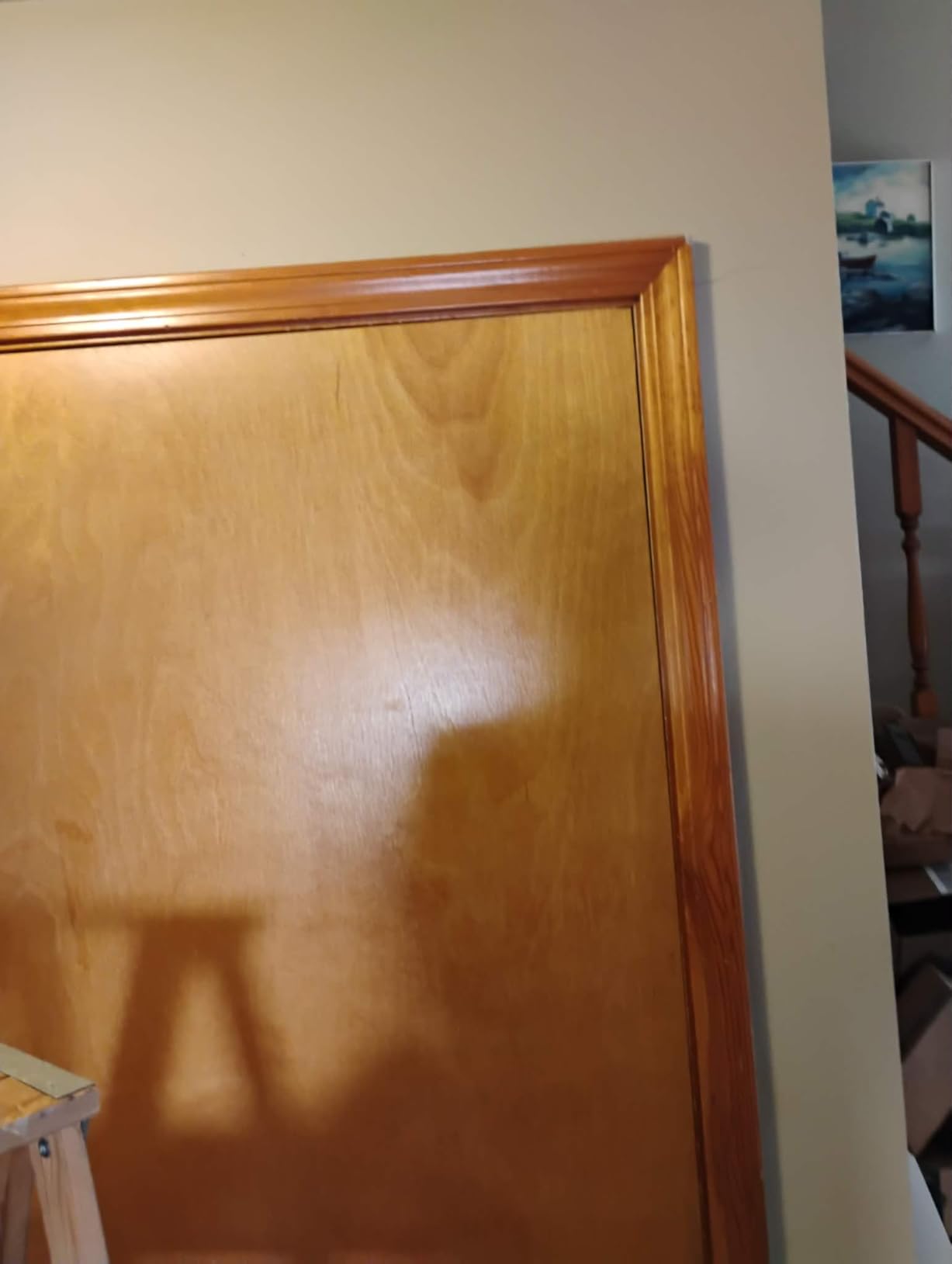
It suits a first-time owner trimming a door on a rental or a first renovation, because the risk of ruining a door is low and the tool recovers from mistakes better than a heavier machine. It also suits anyone fitting a lot of softwood or hollow-core material where power matters more than finesse.
For a trim carpenter working doors in occupied houses, the speed and low weight are the appeal. Moving between rooms with one hand and a cord is simpler than swapping batteries.
Where it falls short
The body is predominantly plastic, and owners upgrading from a metal-bodied planer notice it immediately on hardwood. On a solid maple door this machine will work, but it will feel cheap in the hand while it does.
Two smaller complaints come up repeatedly. The safety switch lockout is reachable from only one side, which is awkward if you plan with your right hand, and the illustrated instructions are sparse enough that fitting the fence bracket takes a guess. Expect a learning pass before the first real door.
3. PORTER-CABLE PC60THP – Best cast shoe planer for door edges
PORTER-CABLE Hand Planer, 6-Amp, 5/64-Inch (PC60THP)
6 Amp,16500 RPM,11-1/2 in cast aluminum shoe,0.078 in depth
8.2 lb
10-step depth knob
Pros
- Substantial cast aluminum shoe for steady control
- Dual side dust ports take a bag or shop vac
- Fine depth control in graduated steps
- Three chamfering grooves
- Fast on binding doors
Cons
- No carrying case in the box
- Only one preinstalled blade pair
- Thin dust bag fills almost immediately
- Kickstand does not grip the workpiece
The 11-1/2 inch cast aluminum shoe is the story here. A long rigid base does not flex when you lean on it, and for planing a narrow door edge where the cutter is running right at the corner of the material, that rigidity is what keeps the pass straight.
Buyers replacing entry-level planers report that this one performs like a step up in class, with a well-balanced shoe and a smooth finish. Out of 2470 reviews at a 4.6 rating, the most repeated gripe is the dust bag, and lack of a case is the secondary complaint.
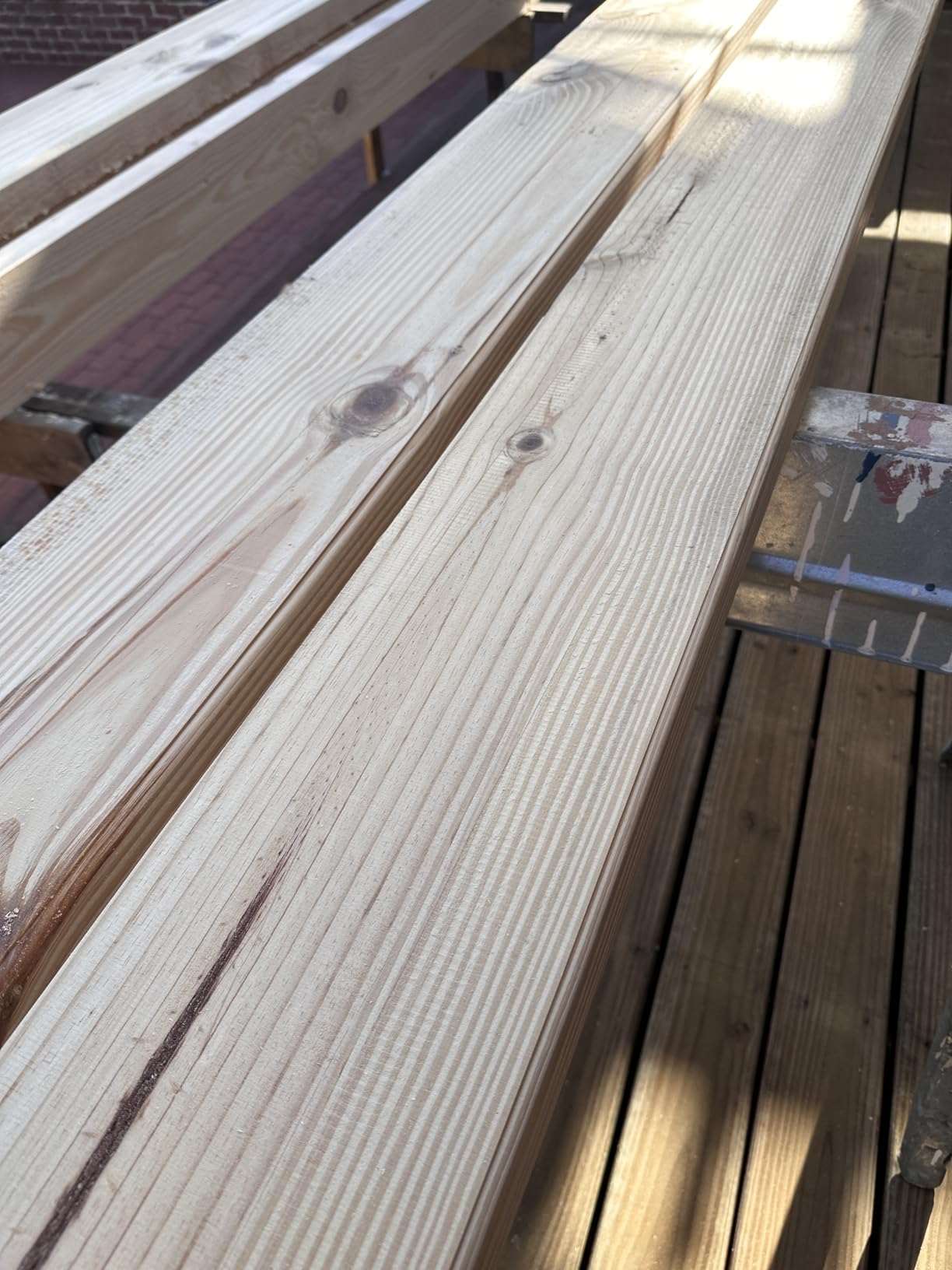
Specifications: 6 Amp, 16500 rpm, 8.2 pounds, measuring 14.63 by 7.75 by 8.25 inches on an aluminum base. The overmold depth knob has 10 positive steps, the depth of cut is listed at 0.078 inch, and maximum rabbet depth reaches 0.47 inch. Dust extraction can attach on either side of the tool.
Owners fixing binding doors describe baby-smooth surfaces after very few passes, which fits the profile of the 10-step knob: enough range to remove real material, fine enough to finish a face without much sanding.
Who this planer suits
It suits a trim carpenter or renovator who leans on the tool, because the cast base rewards pressure. It also suits anyone rebating hinge edges, since 0.47 inch of rabbet depth is more than enough for a standard hinge.
Owners running two machines in a truck will like the dual-side dust ports, since you can point the ejection away from a finished floor regardless of which hand you favour.
Where it falls short
The kickstand does not grip the workpiece, so you cannot reliably start a pass mid-board the way you can on some competing machines. On a door that is already out of supports, that is a small but real limitation.
It is also one of the heavier corded options here at 8.2 pounds, and the 6 Amp motor can stall on hard knots. If you are working solid hardwood exclusively, a 6.5 to 7 Amp machine will breathe more easily.
4. RYOBI P611 – Best 18V planer for ONE+ battery owners
RYOBI ONEAND 18V Cordless 3-1/4 in. Planer Tool ONLY with DUST Bag P611
18V ONE+ cordless,3-1/4 in planing width,0.06 in depth
5.6 lb
Either-side chip discharge
Pros
- Runs on batteries you probably already own
- Lightweight for a 3-1/4 inch planer
- Smooth consistent cuts at full depth
- Handles solid oak without bogging
- Click knob is easy to set under pressure
Cons
- Runs hot during prolonged continuous use
- Blade changes are hard to get even
- 4Ah battery consumption is heavy
- Easy to take off too much without a mark
If your tools are all green already, this is the pick with the least friction. The 18V ONE+ platform shares batteries and charger with the rest of the range, so there is no second ecosystem to buy into, and at 5.6 pounds it is one of the lighter full-width machines in the group.
One owner reported running it through an entire summer, up to six 4Ah batteries a day, without bogging and with blades still sharp. That is a genuine endurance claim and it lines up with the 4.7 rating across 1150 reviews, where 81 percent are five-star.
Specifications: 3-1/4 inch planing width, 0.06 inch cutting depth, 11000 rpm, 5.6 pounds, tool only with a dust bag included. The click-style depth adjustment knob is easy to hold and set, and chips discharge from either side so you can direct them away from a doorway.
The trade-off is heat. Owners report this machine runs noticeably hot during prolonged continuous use, which is the usual compact-cordless compromise and a reason to work in shorter passes rather than one long continuous cut.
Who this planer suits
It suits anyone whose battery collection is already ONE+, because the economics of a bare tool change completely once you already own four packs and a charger. For door work in a finished house with hardwood floors, cordless is the format that avoids dragging a cord across the floor.
It also suits a solo installer who prefers a light tool, since 5.6 pounds is easy on the wrist when you are working vertically on a strike side.
Where it falls short
Blade changes are difficult to get perfectly even, and owners sometimes find the result leaves a ridge that needs sanding. On a door edge where the finish matters, budget a light sand after the first blade swap.
It is also easy to plane too much without thinking, because the depth control has no hard stop you can feel. Mark a reference line with a pencil and follow it rather than trusting the knob.
5. Bosch PL1632 – Best planer for rebate and hinge work on doors
Bosch PL1632 3-1/4 In. Planer
6.5 Amp,16500 RPM,Ratcheting depth knob 0 to 1/16 inch
6.3 lb
Dual-mount guide fence
Pros
- Ratcheting knob sets a known increment in one turn
- Reversible WoodRazor carbide blade
- Dual-mount fence and machined shoes
- Cleans up hollow-core and solid doors
- Ball-joint cord swivel for repositioning
Cons
- Aluminum body gets very hot in continuous use
- Deep passes leave ridge marks
- Dust bag frays easily
- Guide fence can sit off square on some examples
- One year warranty only
The ratcheting depth knob is the feature to understand before you buy this one. It sets a known increment within a single revolution from 0 to 1/16 inch, so you are counting clicks rather than watching a floating drum, with no need to re-zero the gauge.
Owners credit the PL1632 with producing a clean factory-style finish on doors and slabs with less sanding afterward. A 4.5 rating across 967 reviews, with 6 percent one-star, is the highest one-star share in this group, so the complaints below are real rather than theoretical.
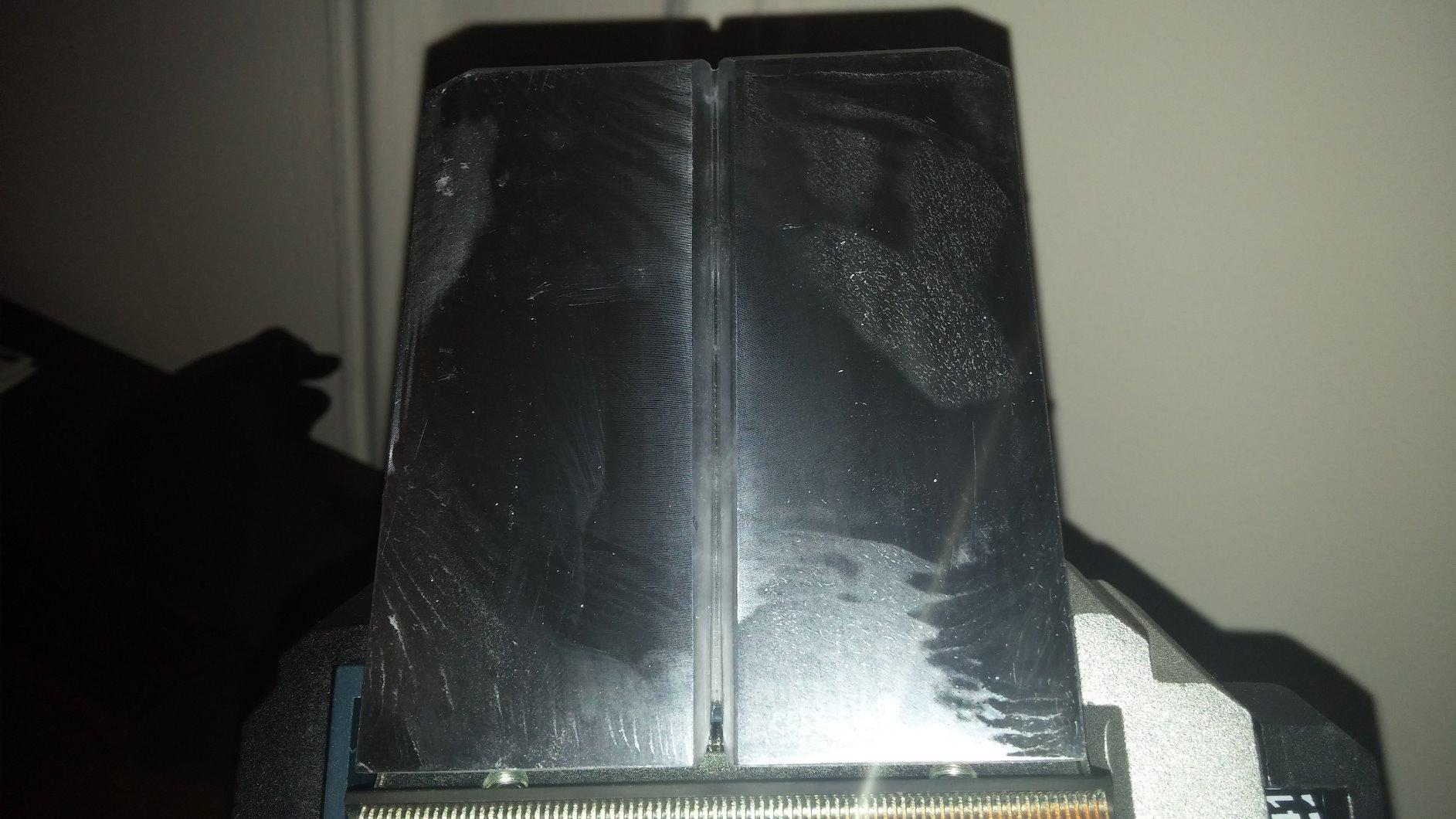
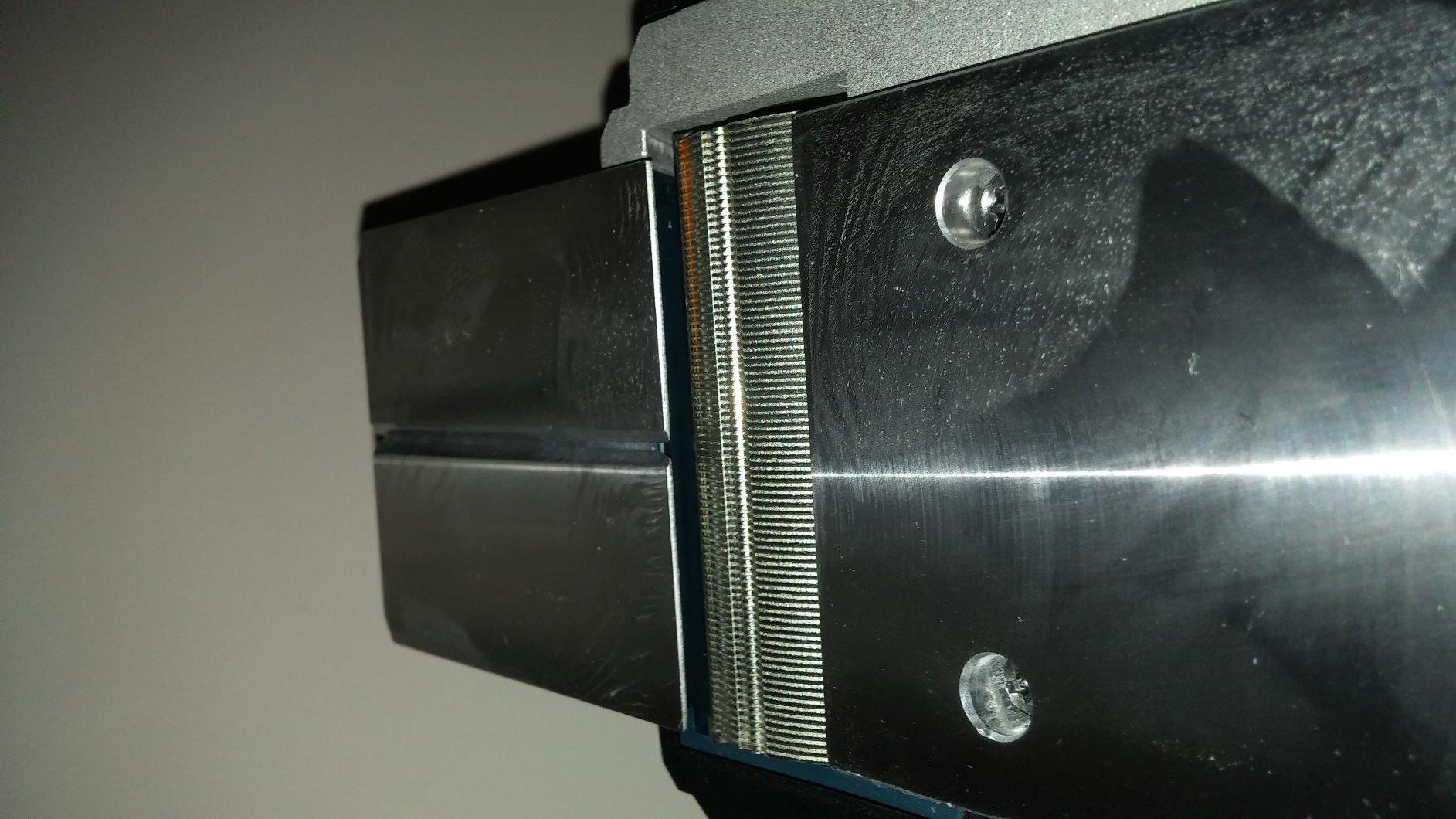
Specifications: 6.5 Amp, 16500 rpm, 6.3 pounds, 11.4 by 6 by 6.5 inches. The front and rear shoes are machined together after assembly for accuracy, the fence mounts to either side and includes a no-mar plastic overshoe, and the reversible Bosch WoodRazor micrograin carbide blade is rated to last up to 30 percent longer than standard carbide. Separate inch and metric depth scales, a ball-joint cord swivel, and a spring-loaded stand. Warranty coverage is one year.
The two-blade system automatically positions the blade at the cutting angle, which reduces drag on the pull stroke. That is why this planer feels smooth on a stubborn door even when a two-blade rival would stall.
Who this planer suits
It suits a trim carpenter doing hinge and strike work, because the dual-mount fence with a no-mar overshoe lets you reference off the door face without marking it, and the reversible blade means you are not stopping mid-project to sharpen. It also suits anyone who wants a single tool that handles both hollow-core and solid wood doors.
Owners replacing entry-level machines report that the fence holds 90 degrees far more consistently, which is the whole point on a door edge.
Where it falls short
The aluminum body runs very hot during continuous use, and deep passes on wide material leave pronounced ridge marks along the cut line. Take shallower passes than the maximum and you avoid both problems.
There is also a supply complaint worth knowing: the included dust bag frays easily, and some examples come with a guide fence that does not sit at a true 90 degrees. Check the fence against a machinist square before trusting it on a finished door.
6. Makita KP0800K – Best planer for solid wood doors
Makita KP0800K 3-1/4″ Planer, with Tool Case , Blue
6.5 Amp,17000 RPM two-blade head,3-1/4 in wide,3/32 in deep
Spring-loaded stand
Tool case
Pros
- Smooth cuts with no dig-in at pass ends
- 17000 RPM removes material with little sanding
- Sturdy aluminum body that stays accurate
- Comes with a hard case and blade gauge
- Handles cherry and other hard woods
Cons
- No dust bag or adapter included
- Shop vac adapters hard to find
- Heavy for long trimming sessions
- Cord arrives bent
- Some accessory blades sold for it may not actually fit
This is the one to reach for if your doors are solid wood rather than hollow-core. One owner installed solid wood doors with it after a competing planer had failed, and specifically noted the absence of dig-in at the start and end of the pass, which is the failure mode that ruins a stained edge.
The 17000 rpm two-blade cutter head is one of the quickest cutter heads in the group, and owners report minimal sanding afterward. At 4.7 across 817 reviews, with 81 percent five-star, the satisfaction level is high among people doing this work daily.
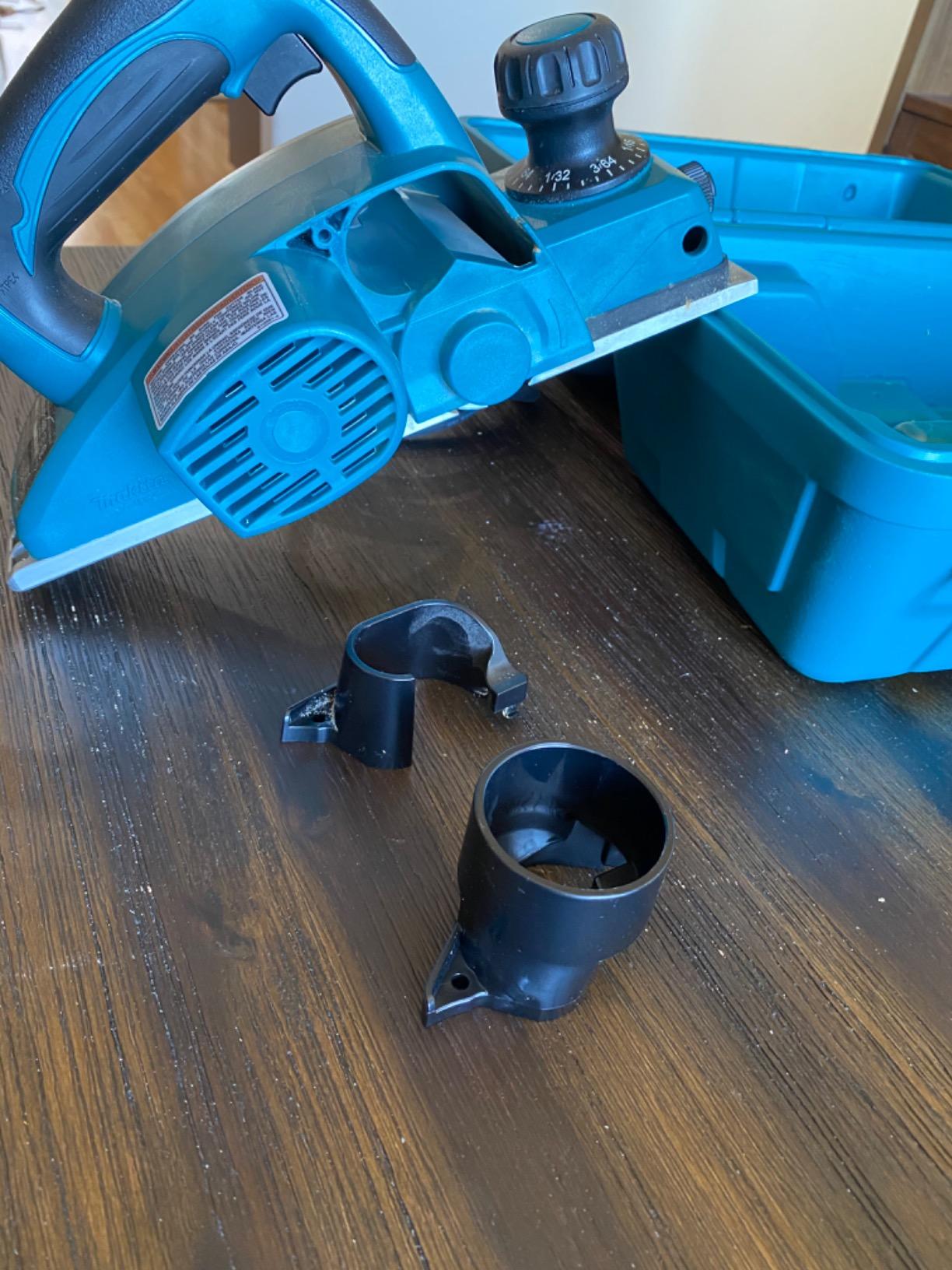
Specifications: 6.5 Amp corded, 3-1/4 inch planing width, 3/32 inch depth in a single pass, dimensions of 14.57 by 7.87 by 9.84 inches, listed weight 4.6 kg. it is the heaviest machine in the group, and that mass is deliberate. A spring-loaded stand elevates the base to protect both blades and workpiece, and the easy blade setting system speeds up changes.
Trim carpenters and experienced DIYers rate the accuracy and solidity highly, often comparing it favourably against entry-level machines whose fences would not hold 90 degrees. The box includes a blade gauge assembly, guide rule, wrench, blade set and a hard plastic case.
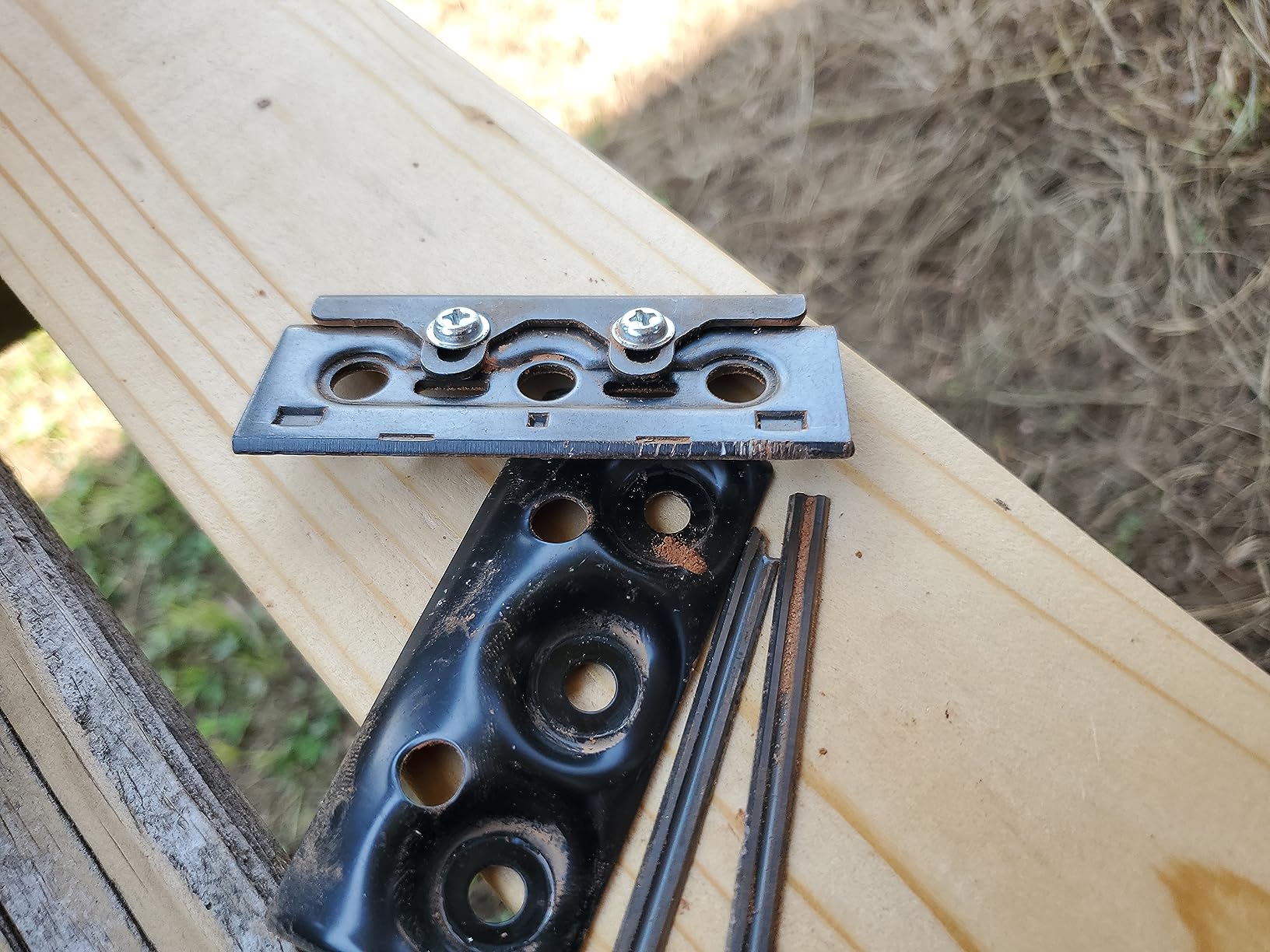
Who this planer suits
It suits installers working solid wood and figured hardwood, where a 6.5 Amp motor has the headroom to keep the blade in the cut instead of stalling. It also suits anyone who wants a case in the box, since the included case keeps the shoe and blades from getting knocked out of true in a truck.
If your doors are stained or painted, the clean pass start matters more than it does on a primed hollow-core slab, and this machine delivers that.
Where it falls short
There is no dust bag and no adapter in the box, and owners report that shop vac adapters which fit the discharge port are hard to find, so cleanup needs a workaround. Plan your extraction before the first door rather than after the mess.
At 4.6 kg it is a heavy tool to hold vertically, and the cord arriving bent is a common complaint that can lead to damage over time.
7. SKIL PL2012-00 – Best budget planer for salvaged door material
SKIL 6.5 AMP Electric 3-1/4 Inch Corded Planer – PL201201
6.5 Amp corded,16000 RPM,3-1/4 in wide,2 mm depth
6 lb
Dual chip exhaust
Pros
- Dependable performance for the class
- Dual exhaust works with a shop vac
- 6 pounds with a grip that suits either hand
- Front adjustment levels rough material fast
- Quiet enough for normal workshop use
Cons
- Dust bag fills very quickly
- No spare blade included
- Front adjuster twists by accident mid-cut
- Some orders arrive with missing parts
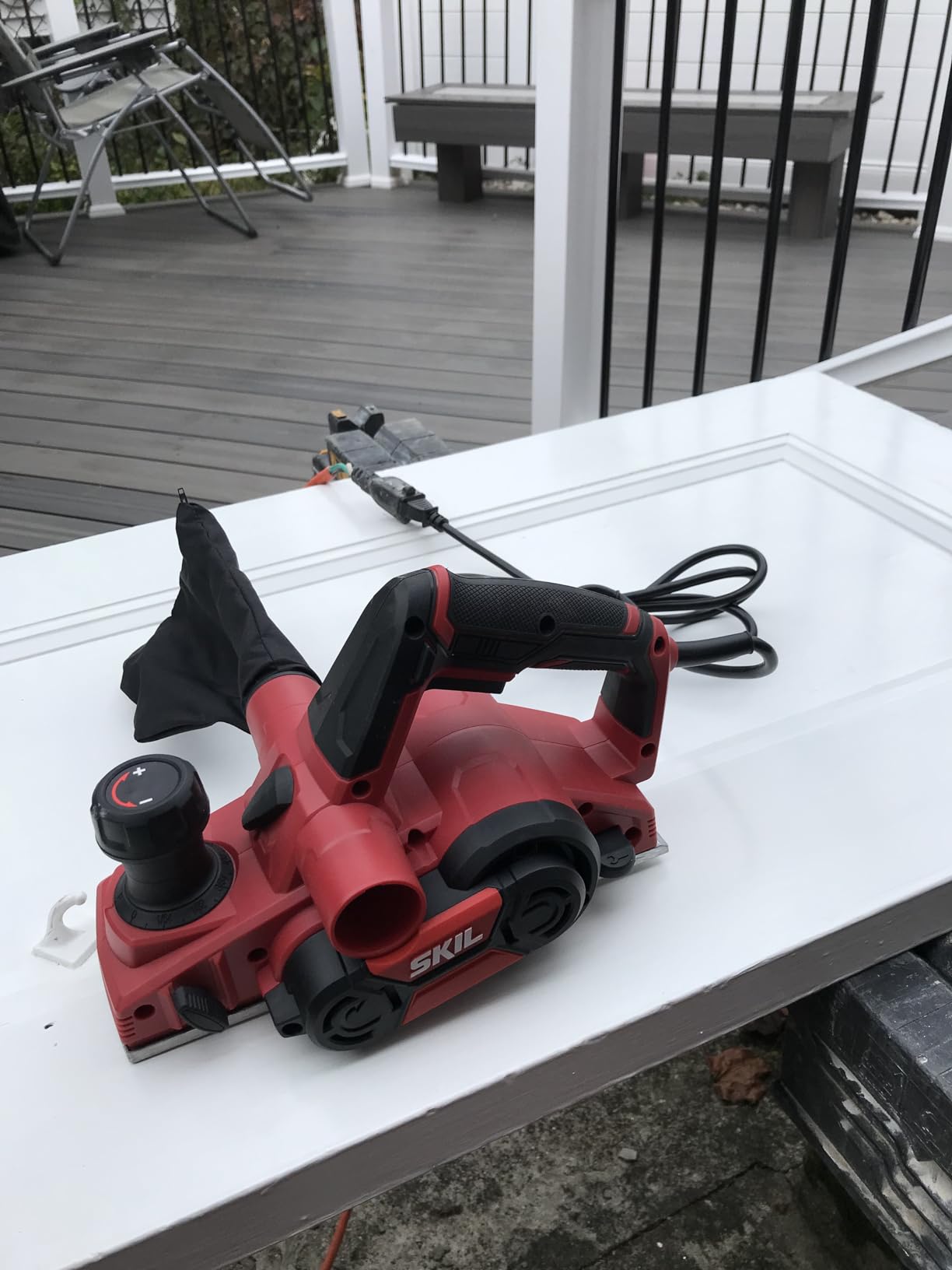
SKIL is an underrated brand in this category. Several owners compare it favourably to tools they paid two to three times more for, and at 4.6 across 658 reviews with 77 percent five-star, it delivers on a simple promise: a 6.5 Amp machine with an aluminum base and dual chip exhaust.
The dual chip exhaust is the practical win indoors. You can aim chips to either side or hook a shop vac on, and for someone doing trim work in an occupied house that matters more than the raw cut rate.
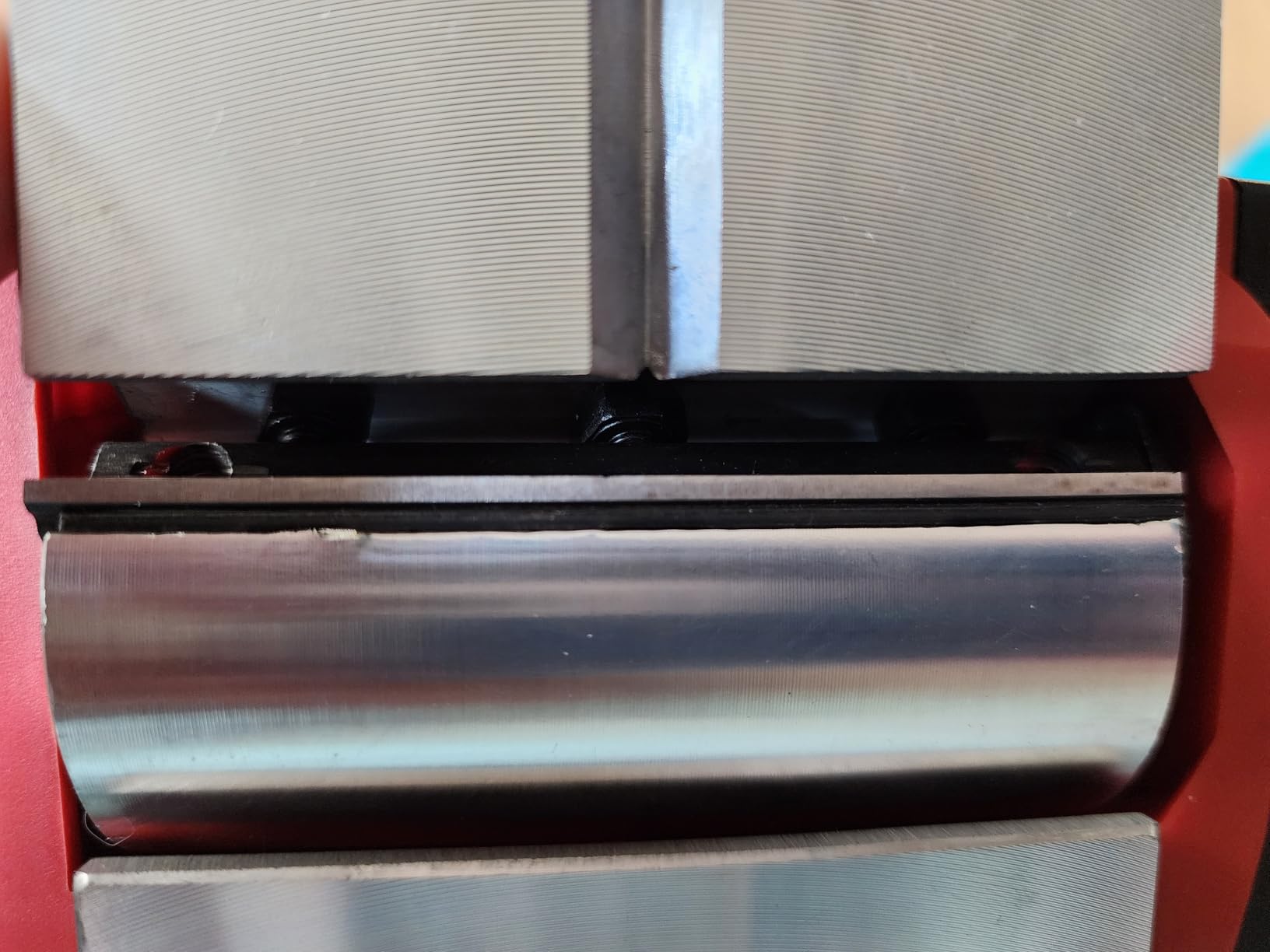
Specifications: 6.5 Amp corded, 16000 rpm, 3-1/4 inch planing width, 2 mm cutting depth, 6 pounds, measuring 13.5 by 6.61 by 8.27 inches with a one-year limited warranty. The box includes a dust bag, parallel guide, rebate fence and spanner, and the wrench stores on the tool so it is not lost mid-project.
The smooth kickstand is designed specifically to keep the blade from scratching finished surfaces when the tool is set down, and a lock-off switch prevents unintended starts. Reviewers call it beginner-friendly and strong enough for salvaged lumber and trim work.
Who this planer suits
It suits anyone rescuing doors from a demolition or salvage situation, where the wood may be dirty, cupped and unpredictable. It also suits a beginner, because 6 pounds and a simple lock-off switch make it forgiving to learn on.
The grip works well for either hand, and the included rebate fence covers hinge work without a separate purchase.
Where it falls short
The included dust bag fills very quickly, and one owner reports it not working properly at all, so plan on external extraction. No spare blade is included in the box, which matters if you nick a blade halfway through a job.
The front depth adjuster is easy to twist by accident during a cut, so slow down on the first pass of a finished door. Some orders have also arrived with missing parts and no original packaging.
8. Bosch GHO12V-08N – Best lightweight planer for trim fitting
Bosch GHO12V-08N 12V Max EC Brushless Planer (Bare Tool)
12V EC brushless,14500 rpm,2.2 in width,0.08 in depth
3.3 lb
Rabbet to 0.7 in
Pros
- 3.3 pounds
- far easier to control on a ladder
- 2.2 inch width covers most door edges
- Compact body fits a fastener pouch
- Switchable ejection plus dust adapter
Cons
- Stiff and awkward safety lock-off switch
- Kickstand can mar the workpiece
- 2.2 inch width needs more passes
- Bare tool with limited battery capacity
- Included dust bag is ineffective
At 3.3 pounds this is the machine you can hold in one hand on a ladder, which is exactly the situation where a seven-pound planer becomes a problem. Finish carpenters describe it as a workflow-changing tool for scribing, fitting and fitting-out trim, largely because of its balance and size.
The 2.2 inch planing width is the trade. It covers most standard wood door edges in a single pass according to the manufacturer, but on a wider stile you are covering the face in strips, and any overlap ridges need sanding.
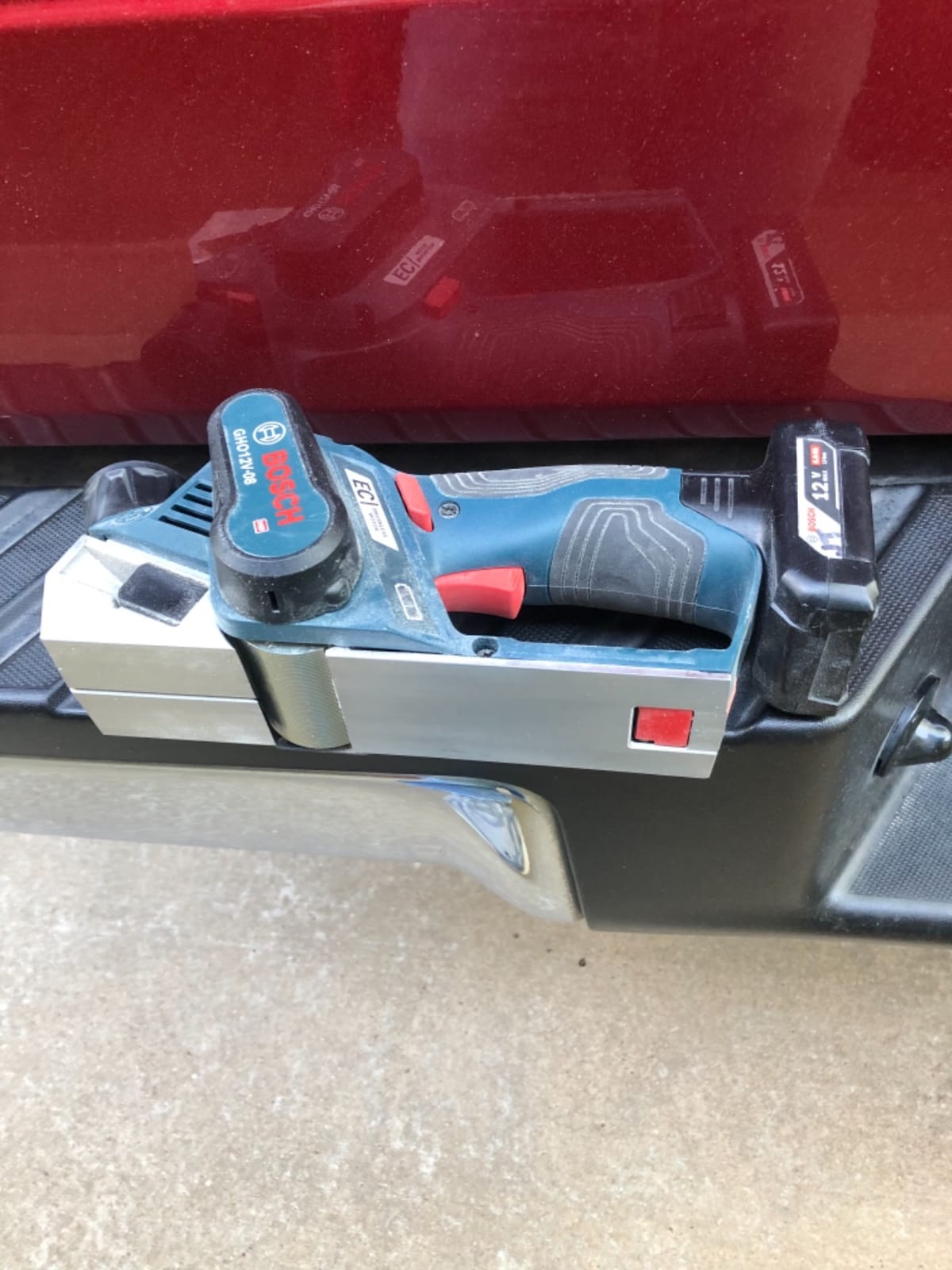
Specifications: 12V Max EC brushless motor, 14500 rpm, 2.2 inch planing width, 0.08 inch single-pass depth, up to 0.7 inch rabbet depth, 3.3 pounds, and just over 10 inches long. Runtime is rated at up to 33 feet of planing per battery amp-hour in hardwood at 0.04 inch depth. Shavings eject either side, and a second two-edged carbide blade stores in an inlay in the base.
The body is machined from a single block of aluminum with a deep balance point, which is why it feels planted rather than tippy even at that weight.
Who this planer suits
It suits a finish carpenter working casing, base and scribe work in tight spaces, where a full-size planer will not fit and a lighter tool changes the day. It also suits anyone already on the Bosch 12V platform, since the batteries are shared across the range.
The 0.7 inch rabbet capability is enough for a hinge or for fitting a thinner leaf, and the compact body fits in a fastener pouch between cuts.
Where it falls short
The safety lock-off switch is stiff and awkwardly placed, and it is not easy to hold while triggering. That is an awkward reach rather than a hazard, but it is a genuine daily irritation.
The kickstand does not always flip clear of the work and can mar the workpiece, and several owners disable it. The included dust collection bag is ineffective, so a proper hose is needed, and 12V capacity means the tool slows as the charge drops on long cuts.
9. DNTI 58218 – Best Value for occasional door work
DNTI 6.6amp Corded Electric Handheld Planers 17000rpm Hand Planer Power Woodworking Tool Power Handheld Planer for Wood Chamfer DIY model 3-1/4 Inch Cut Width 58218
6.6 Amp corded,17000 rpm,3-1/4 in cut width,2 mm depth
Ergonomic housing
Machine only
Pros
- 17000 rpm and 6.6 Amp at this level
- Intuitive controls that suit beginners
- 3-1/4 inch width suits standard door edges
- Everyday DIY planing and chamfering
Cons
- Bare machine with few listed accessories
- Lesser-known brand with a thinner track record
Be honest about where this one sits. It is a 6.6 Amp machine with a 17000 rpm cutter head, a 3-1/4 inch cut width and a 2 mm depth, which is a competitive specification sheet. At 4.6 across 367 reviews, the performance reports are consistently adequate rather than outstanding.
Owners generally find it an adequate everyday planer with plenty of power for the class. If you are trimming two hollow-core doors a year, this does the job. If you are a working trim carpenter, the lack of documentation and support matters more than the price difference.
Who this planer suits
It suits an occasional DIY user who wants full 3-1/4 inch width and real power without committing to a major brand ecosystem. The ergonomic housing and intuitive controls are a genuine advantage for a first-time user.
It also suits anyone who has already learned to sharpen and adjust a planer, since the missing documentation is less of a problem if you know what you are doing.
Where it falls short
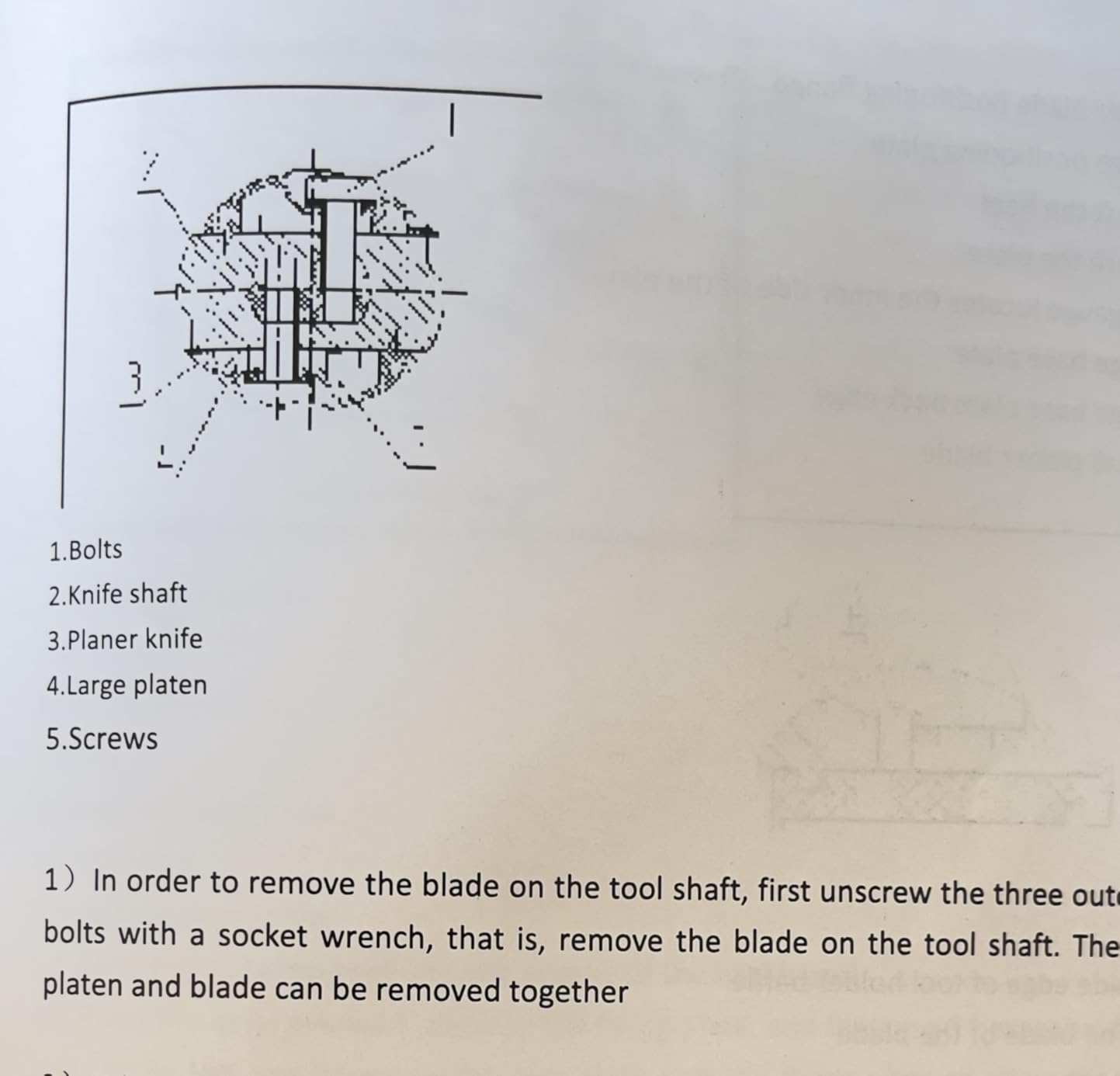
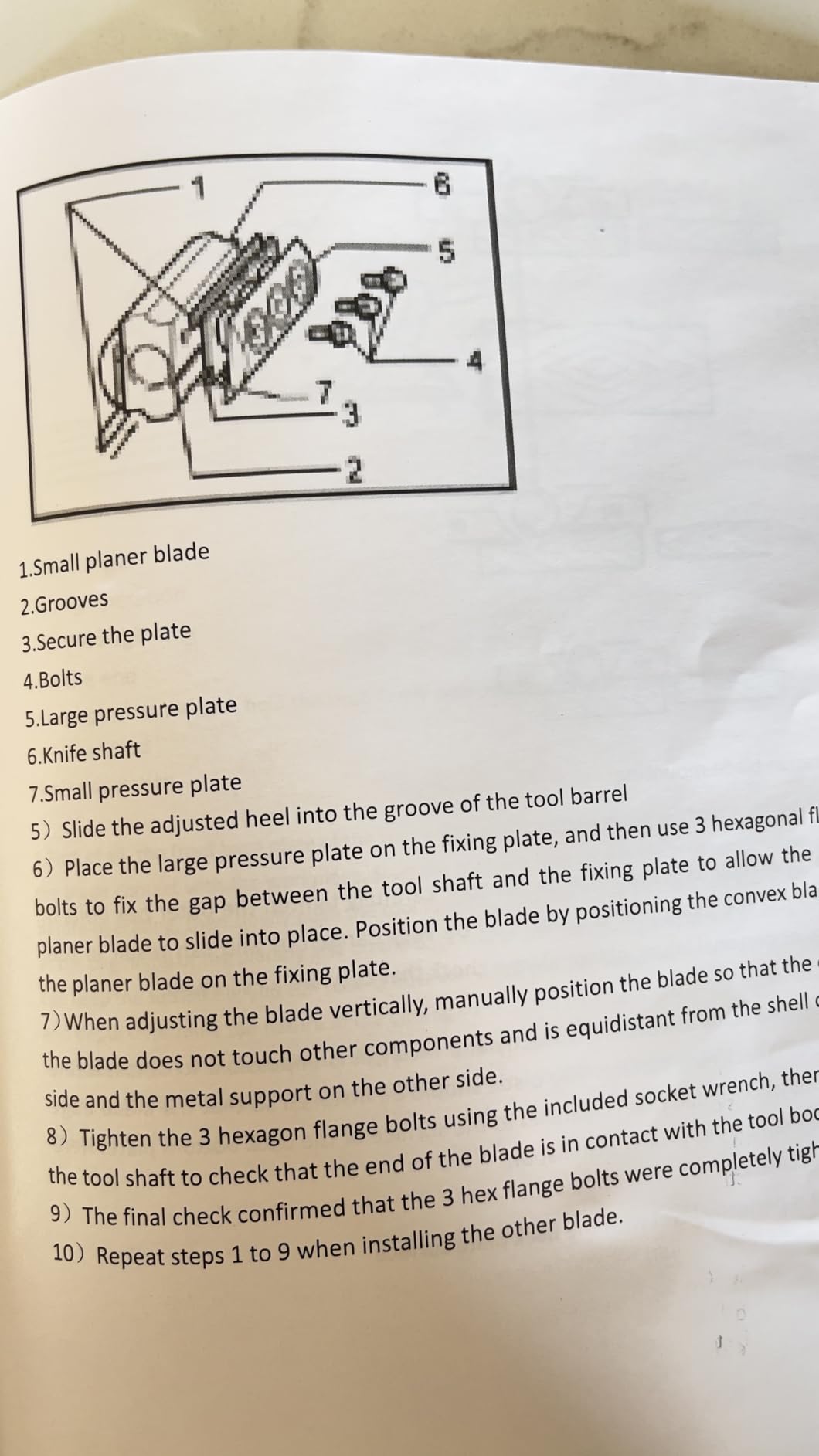
The listing details are sparse and manufacturer documentation is minimal, so there is no dependable depth increment chart or parts list. It also arrives as a bare machine with limited listed accessories, which usually means no dust bag and no fence.
On top of that, it is a lesser-known name with a thinner long-term track record, and blade availability is the practical question to answer before you commit.
10. CRAFTSMAN CMEW300 – Best planer for shop vac dust control
CRAFTSMAN Hand Planer, 6-Amp, 5/64-Inch (CMEW300) – Amazon Vine
6 Amp corded,16500 RPM,11.5 in cast aluminum shoe,0.07 in depth
Dual side extraction
Pros
- Dual side dust extraction with vac adapter included
- Easy to control on binding doors
- 10-step depth knob gives usable control
- Cast aluminum shoe cuts cleanly
- Lightweight for its size
Cons
- Base needs flattening out of the box
- Chews through material if depth is unwatched
- Dust bag and case not included
- Instructions take study
The CMEW300 includes a vac adapter and offers dual side dust extraction, which is what decides it for indoor work. Chips on hardwood floors are a cleanup problem you cannot undo.
Users find it capable and easy to control for door fitting and jig work, with good extraction options. At 4.4 across 789 reviews, it is the lowest-rated pick here, and the score is explained mostly by setup rather than by cutting performance.
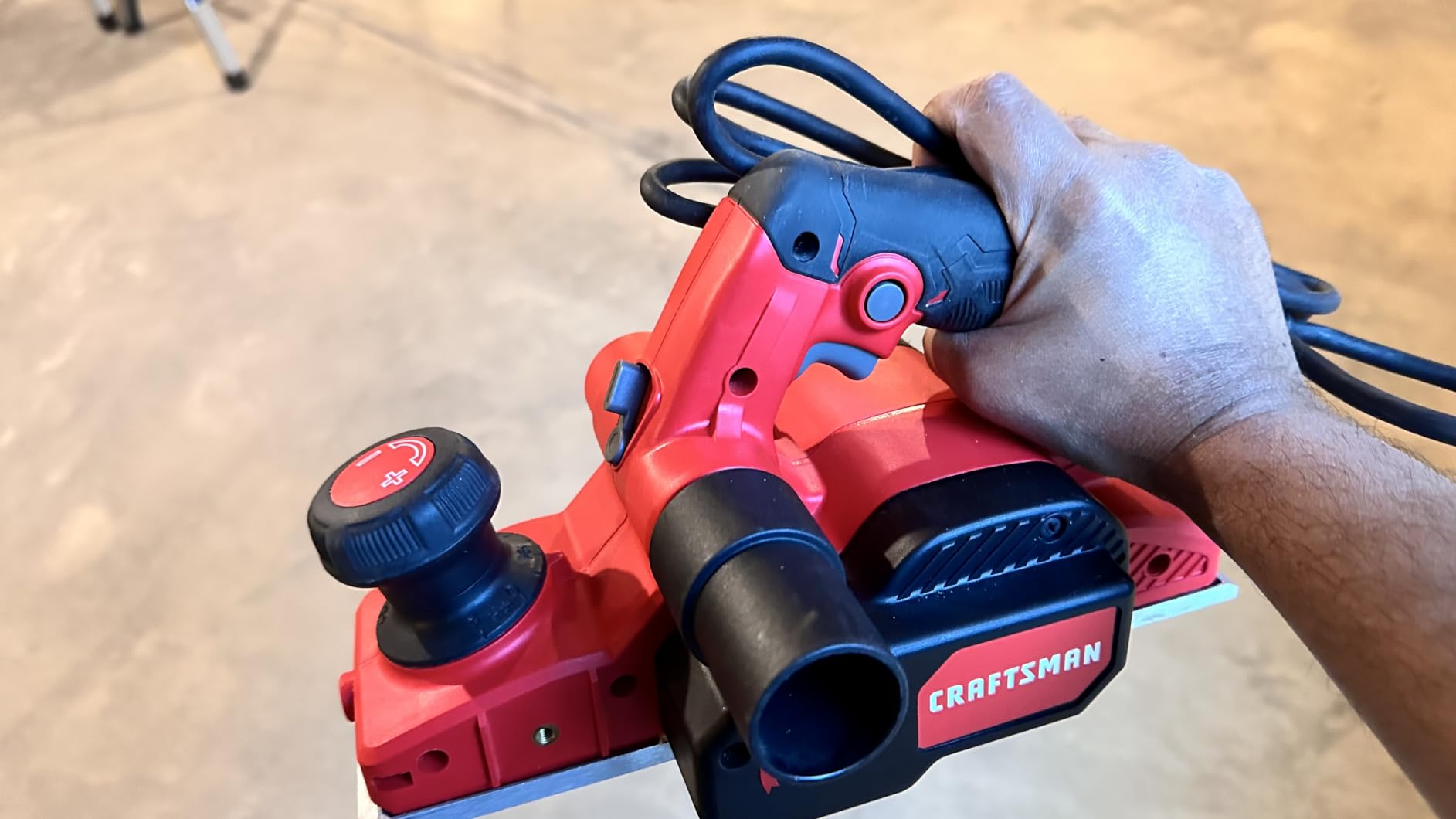
Specifications: 6 Amp corded, 16500 rpm, 0.07 inch depth of cut, 11.5 inch cast aluminum shoe, listed weight 3.31 kg, measuring 14.4 by 7.13 by 7.75 inches. The overmolded depth knob has 10 positive steps. The box contains the planer, carbide cutting blades, a wrench, an edge guide and a vac adapter, but not a dust bag or a case despite listing imagery.
That cast shoe is the same rigid platform approach that makes the Porter-Cable work so well on door edges, and users describe it as markedly better than a hand plane for trimming binding doors.
Who this planer suits
It suits anyone working indoors where dust control decides how the job goes. Including the vac adapter removes the most common reason people give up on dust extraction mid-project.
It also suits owners replacing a hand plane for binding and jamb work, since the 10-step knob covers everything a block plane would do on a door edge.
Where it falls short
The base needs flattening out of the box before it planes accurately, and owners report an out-of-square sole. Check it against a straightedge on a scrap piece before the first real door.
It also chews through material quickly if you are not watching the depth setting, and the instructions take some study to understand basic operation. Add the missing dust bag to your accessory list, since it is not in the box.
How Much to Trim Off a Door
Measure the opening at the top, the middle and the bottom on each side before you cut, then subtract the gap you want left. Most closers need a 1/16 inch gap at the lock stile and a 1/8 inch gap at the head, and the jambs should be set to the same measurement twice rather than once.
Anywhere from 1/32 inch to 1/8 inch is a normal trim. At that depth, a single pass on a 1/64 inch setting is enough, and a second light pass finishes the job. Anything over 1/4 inch means the door is in the wrong opening, and you should re-measure rather than keep planing.
Trim the hinge side first, because every pass there affects the swing clearance. A door that closes but will not latch usually means the lock stile needs another pass, and that is a one-minute fix once you know which side to take off.
Take the material off the edge, not the face, whenever you can. Trimming the face narrows the door visually and leaves a visible line at the reveal, while a planed edge disappears into the opening. Only trim the face when the door is stopping short of closing because of a cupped or bowed panel.
Safety on Door-Trimming Jobs
Keep both hands clear of the cutter head. A planer needs a firm two-handed grip, one hand on the rear handle and one on the front knob, and the knob is placed so your leading hand is nowhere near the blades.
Watch the cord. A corded planer dragged across a doorway is a trip hazard and, worse, will pull the tool off the door mid-pass. That is why several models use a ball-joint cord swivel, and why cordless is worth it indoors.
Wear eye protection and a dust mask, and connect extraction before the first pass. Planers throw chips as well as dust, and those chips are sharp enough to mark a finished floor immediately.
Set the tool down on its kickstand, never on the door. A planer resting flat on a door face with the blades exposed will crescent-gouge a finished surface the moment you lift it away.
Unplug or remove the battery before any blade change. It takes seconds and it is the only moment the cutter can be exposed to an accidental start.
Hand Plane vs Electric Planer for Doors
For final fit on a door, the hand plane wins. A number 5 jack plane gives you feedback through the handle, lets you feather a cut to a shaving, and leaves a surface that needs no sanding. The electric planer is faster at removing bulk material and much better on a rough edge, but it gives you no sense of how much is left.
That is the honest split. Use the electric planer to get within 1/32 inch, then finish with the jack plane. The consensus in a Fine Woodworking discussion on portable electric planers was blunt: “I use my Stanley 5 for doors. Feel much more confident using it and the results are far superior.”
Yes, you can use a hand plane to plane a door, and for a solid-core slab it is the better tool. The reasoning is mechanical. A jack plane cuts at a shallow angle with a long sole that references the whole edge, so it straightens as it cuts. An electric planer has a short sole, so it follows the wobble already in the edge.
So if the real problem is an out-of-square opening, no planer of either type will fix it. Plane the hinge side in at the top, middle and bottom, and the door will still bind. The fix is shimming the hinge or having the frame corrected, and this is the mistake that costs beginners their doors.
A block plane is a good middle ground. It takes a fine cut and is easy to control on a door edge held on edge, but it will not remove 1/8 inch of material quickly enough to be practical. Use it for the last shaving, not the bulk removal.
How to Trim a Door with a Handheld Planer, Step by Step
Measure before you cut. Check the reveal at the top, the middle and the bottom of the opening on the hinge side and again on the lock side, and write the numbers down. The tightest point is the number that matters, and it is rarely the middle.
Mark a reference line with a pencil along the full height of the edge before the first pass. This gives you a stop you can see, and it protects you when the tool is running fast and the depth is set higher than you thought.
Set the depth low. On a finished door, start at 1/64 inch and work up rather than setting a big first pass. The depth stops and knurled knobs on these machines make incremental changes easy, which is the whole reason the finer dials rank well.
Plane with the grain, working from the hinge edge toward the strike edge. A fence or parallel guide mounted against the door face keeps the pass straight on a narrow edge, and reversing direction against the grain invites tearout every time.
Check the fit after every pass. Hang the door in the opening, close it, and look at the reveal. Two or three thin passes beat one aggressive pass, because a door that no longer closes is a door that needs a new edge.
Finish the edge with 120 grit, then 180 if the door is painted or stained. A planer leaves a slightly ridged surface on softwood, and a light sanding pass takes less time than re-hanging a door you have taken too far off.
Do You Need a Handheld Planer at All?
If you are fitting one door in an hour, you can use a block plane and a sanding block. A hollow-core slab that is a few millimeters out of square needs a fine cut, not a motor, and the finish will be better for it.
You need a planer when the material coming off exceeds 1/8 inch, when you are doing enough doors that hand work becomes slow, or when the job happens on site where a hand plane is not being carried around. Those three conditions cover most professional door work.
A thickness planer is a different machine and is not a substitute. It is a bench machine that needs a feed direction and roughly ten feet of clear run on each side, which is why it cannot handle a door standing on end in a hallway. Our overview of wood planer types covers where each format fits.
A circular track saw with a fine-tooth blade can trim a door edge, but it will splinter a hollow-core skin and it is difficult to keep square by hand over a long edge. Where a track saw is the right call, it is for a rough cut well before the final fit, not the last pass.
How to Stop Tearout on Door Edges and Faces
Tearout comes from the blade cutting into grain that has not been supported, so the fix is always to support the exit side or change the direction. On a door edge, the exit side is the far corner, and a fence mounted on the face acts as that support.
Plan the same direction as the grain every time. On a slab door, that usually means hinge side toward strike side on both stiles, and it means never finishing a pass backwards to reach a stubborn spot.
Watch out for hollow-core construction. The voids in the core let a blade sink in and burst the skin, which is why the reviews that mention planing hollow-core doors all describe light passes on shallow models. A 0.06 to 0.08 inch depth machine is your friend here.
Take off less than you think. A depth set even 1/32 inch deeper than you planned doubles the thickness of every shaving, and that shaving runs 3-1/4 inches wide for the full height of the door edge.
Keep blades sharp. Dull carbide catches the grain and lifts it instead of shearing it, and a reversible blade flipped to its second edge costs nothing and immediately fixes a lot of tearout complaints.
Corded vs Cordless Planers for Door Work
Choose cordless when the work is inside a finished house with no convenient outlet. Retailers market cordless hand planers for doors specifically because removing the extension cord across a work area is the deciding factor, and owner reports line up with that reasoning.
Choose corded when you are outside, near a shop, or trimming many doors in a row. There is no battery to change and no charger to carry.
Factor in weight, because a bare tool weighs less than a tool plus a battery. A 3.3 pound cordless planer is genuinely lighter than a 6 pound corded one, and that is worth more than any specification on a fence.
Most importantly, check the platform. If you already own DeWalt, Makita, ONE+ or Bosch 12V packs, the cordless pick in this list drops straight into your existing kit.
Buying Guide: What Actually Matters for Door Trimming
Cutting width: 3-1/4 inch is the standard door-edge width and covers a stile in a single pass. The Bosch GHO12V-08N at 2.2 inches is the deliberate exception, and it trades passes for portability.
Depth of cut and increments: the maximum matters less than the resolution. A 5/64 inch maximum is plenty for a door, but a knob that moves in 1/256 inch steps, like the DEWALT’s, is what lets you work on a finished face without sanding it back. Ratcheting knobs that count clicks are the second best option.
Fence and edge guide: if you are planing a narrow door edge by hand, a fence is close to essential. It references off the door face and keeps a wandering pass straight. Check that it mounts to either side and includes a no-mar overshoe.
Kickstand: a spring-loaded stand that lifts the base when you set the tool down prevents a crescent gouge in a finished door face. It is a small feature that saves real money on a door you have already hung.
Weight and balance: for vertical work on a strike side, anything over seven pounds is tiring. For ladder and overhead trim work, a sub-four-pound machine is the difference between finishing the job and putting it off.
Dust ejection: dual or switchable ports let you direct chips away from a doorway or hook a shop vac on. Most machines here include a dust bag, and most of those bags fill within a handful of passes, so budget for a hose.
Blade type: reversible carbide blades let you flip to a fresh edge instead of sharpening mid-job. Bosch and DeWalt both publish the part information needed to order spares, which matters more on obscure brands.
Repair and New-Install Workflows Compared
On a repair job, the door is already hanging and you are usually chasing one hinge side. Pull the pins, lift the door off, and plane the edge with the machine on a stable surface rather than working with the door hanging. A hand-held pass across a door supported only at its top rail will chatter.
On a new install, the door is in hand before anything is fastened. That is the better time to work: set the door on trestles, plane the hinge edge in two or three passes to true, and check it against the opening as you go.
After a house settles, a prehung unit often needs 1/16 to 1/8 inch off the lock stile only. Plane that side, leave the hinge side alone, and the swing problem usually disappears without touching the hinges at all.
Whichever workflow you are in, do the work before the door is hung wherever the job allows it. Every pass on a hung door is a pass made holding the tool in one hand.
Maintaining a Planer Between Jobs
Blow the drum out with compressed air after every session. Dust packed around the blades changes the cut and forces the motor to work harder, which is the leading cause of burned motors on these tools.
Flip a reversible blade rather than sharpening it. The carbide edges are meant to be used until they dull, then flipped to the fresh side, and most manufacturers sell the replacement set by part number.
Reset the depth gauge to zero every few months. Worn drums drift, and a planer that no longer returns to zero will cut a heavy pass the moment you pick it up.
Wipe the shoes with a damp cloth and dry them immediately. A sole with any grime on it will mark a finished face every pass, and the mark shows permanently on stain.
Tighten the blade bolts in a cross pattern, in small increments. Uneven torque on a two-blade head gives you the ridge mark that looks like a planing fault but is really a setup one.
Frequently Asked Questions
What plane to trim a door?
A number 5 jack plane is the right tool for taking material off the long edge of a door, because the long sole straightens the edge as it cuts. A cordless electric handheld planer is faster for removing bulk material, but it follows wobble instead of correcting it. Most trim carpenters use both: electric first, hand plane for the last shaving.
What is the best electric planer for doors?
The DEWALT DCP580B is the best electric planer for doors overall, with a depth knob calibrated to 1/256 inch steps, a kickstand that stops it marking finished surfaces, and cordless operation. For softwood and hollow-core work on a tighter budget, the WEN 6530 covers the same job.
Can I use a hand plane to plane a door?
Yes, and on a solid-core door a hand plane is usually the better final-fitting tool. A jack plane gives you feedback through the handle and leaves an edge that needs no sanding. Use an electric planer to remove bulk material first, then finish the last 1/32 inch with the hand plane for a clean reveal.
How do I stop tearout when planing a door edge?
Plane in the same direction as the grain every time, and mount a fence against the door face so the exit side of the cut is supported. Keep the depth shallow on hollow-core doors, since voids in the core let the blade burst the skin. Sharp or freshly flipped carbide blades shear the fibre instead of lifting it.
Do I need a fence or edge guide to plane a door?
For a hand-held pass along a narrow door edge, a fence or parallel guide is close to essential. It references against the door face and keeps the pass straight when the planer would otherwise wander. It matters less if you are holding the door in a vise or planing the face rather than the edge.
Final Verdict: Which Handheld Planer for Door Trimming
The DEWALT DCP580B is the one to buy if you are inside a battery platform already, because the 1/256 inch depth knob, the kickstand and the cordless format cover the three things that go wrong on a door. If you are not, the WEN 6530 covers the same job on softwood and hollow-core material at a much lower outlay.
Go with the PORTER-CABLE PC60THP or the CRAFTSMAN CMEW300 if you work with a shop vac and want a rigid cast shoe. Pick the Bosch GHO12V-08N if you are fitting trim overhead or on a ladder, and the RYOBI P611 if your batteries are green.
Whichever one you choose, measure the reveal at three points before you make the first pass, mark a pencil line, and take off less than you think. That advice is worth more than any specification on this list. These are the best handheld planers for door trimming we ranked in 2026, and any of them will do the job properly if you feed it slowly.