
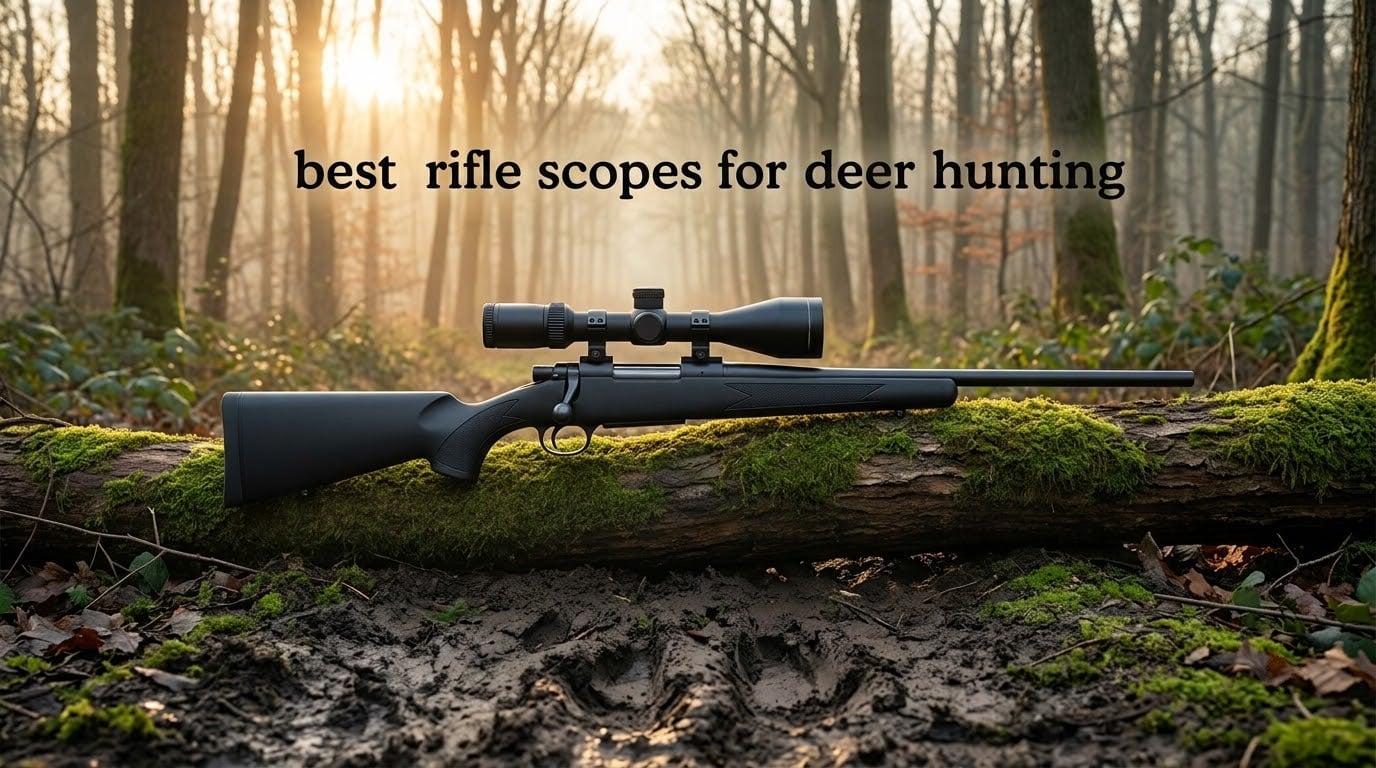
Most deer get shot inside 200 yards, and the scope you hang on the rifle decides whether you can identify the animal at that distance before legal light runs out. Choosing among the best rifle scopes for deer hunting in 2026 is not about maxing out power. It is about matching magnification, glass, and eye relief to the terrain you actually hunt.
Our team put 12 scopes through a deer-specific evaluation this season, weighting the things that end hunts early: a bright image at dawn, an eye box that does not black out the moment you shift your head, turrets that click instead of mush, and a weight your neck will tolerate at 4 a.m. on a ridge. Two of the twelve are premium glass that most deer hunters will never need, and several are plain scopes that will not break a bank. We say which is which in every section below.
This guide is written for deer hunters, not long-range competitors. That distinction matters. A deer hunter needs to find a buck in thick timber at 40 yards and a doe in a harvested field at 250, often in the same week, without losing the animal off the face of the glass at high power. Where deer hunting and target shooting diverge, we follow the deer.
Before the glass goes on the rifle, it helps to know where the animals actually are. A trail camera setup will tell you what is working your country and how far you are likely to be shooting, and that answer drives every other decision in this guide.
Table of Contents
Top 3 Picks for Deer Hunting in 2026

Vortex Crossfire II 3-9x40mm
- Long eye relief and forgiving eye box
- Fully multi-coated lenses
- Unlimited lifetime VIP warranty

Bushnell Banner Dusk and Dawn 3-9x40mm
- 6 inches of eye relief
- Argon purged and IPX7 waterproof
- Multi-X reticle
Vortex Triumph HD 3-9x40mm
- Dead-Hold BDC reticle
- 1-inch Hunter Rings included
- One pound total weight
Best Rifle Scopes for Deer Hunting (October 2026)
| Product | Specifications | Action |
|---|---|---|
| Vortex Crossfire II 3-9x40mm |
|
Check Latest Price |
| Bushnell Banner Dusk and Dawn 3-9x40mm |
|
Check Latest Price |
| Vortex Triumph HD 3-9x40mm |
|
Check Latest Price |
 SIG Sauer Buckmasters 3-12x44mm SIG Sauer Buckmasters 3-12x44mm |
|
Check Latest Price |
 Leupold VX-Freedom 3-9x40mm Leupold VX-Freedom 3-9x40mm |
|
Check Latest Price |
 Leupold VX-5HD 3-15x44mm Leupold VX-5HD 3-15x44mm |
|
Check Latest Price |
 Burris Droptine 3-9x40mm Burris Droptine 3-9x40mm |
|
Check Latest Price |
 SIG Sauer Tango-MSR 1-6x24mm SIG Sauer Tango-MSR 1-6x24mm |
|
Check Latest Price |
 Bushnell Banner 2 3-9x40mm Bushnell Banner 2 3-9x40mm |
|
Check Latest Price |
 Vortex Venom 5-25x56mm FFP Vortex Venom 5-25x56mm FFP |
|
Check Latest Price |
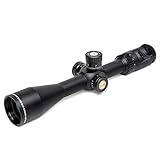 Athlon Argos BTR GEN2 6-24x50mm Athlon Argos BTR GEN2 6-24x50mm |
|
Check Latest Price |
 Arken SH4J GEN2 6-24x50mm Arken SH4J GEN2 6-24x50mm |
|
Check Latest Price |
1. Vortex Crossfire II 3-9x40mm — Best Overall Deer Hunting Scope
Vortex Crossfire II 3-9×40 Second Focal Plane, 1-inch Tube Riflescope – V-Plex Reticle
Magnification 3x-9x
Objective 40mm
Single-piece aluminum tube
14.8 ounces
Pros
- Long eye relief and an ultra-forgiving eye box speed up target acquisition
- Anti-reflective fully multi-coated lenses give a bright image
- Fully multi-coated and weather sealed for dawn hunts
- Single-piece aircraft-grade aluminum tube is shockproof
- Unlimited unconditional lifetime warranty
Cons
- Fixed magnification range suits close-to-mid range hunting only
- V-Plex reticle carries no holdover marks for elevation dope
The Crossfire II is the scope we hand a hunter who tells us they are still figuring out what they are doing. It sits at 14.8 ounces, it is a single-piece aluminum tube, and its eye box is forgiving enough that you can find a deer in gray light without a practiced cheek weld.
What separates it from the budget pack is the glass. Fully multi-coated, anti-reflective lenses produce an image that holds up when the sun is still behind the ridge line, which is the situation that ends more deer hunts than bad shots do.
At 4.7 stars across 728 reviews and a category ranking of number one in rifle scopes, the Crossfire II has the strongest combination of owner satisfaction and volume in this entire guide. That is why it is our top pick rather than a scope with a marginally higher star average but a fraction of the owners behind it, and why we rate the Vortex Crossfire II 4.7 out of 5.
How it performs on a 200-yard whitetail
At 3x you can cover a 34-foot field of view and pick a buck out of a group of does without hunting for him. By 9x you have enough magnification to confidently identify antler structure across a 200-yard draw. The 3x low end is what makes it a hunting scope rather than a spotting scope that happens to bolt to a rifle.
Because the reticle is a V-Plex with no drop marks, plan on ranging by estimation or carrying a rangefinder. For deer inside 200 yards with a center-fire bolt action, that is rarely a problem.
Where it falls short
The ceiling is the real limit. If your country produces shots at 350 yards across an open valley, a 3-9×50 variant of this same scope family will make you far happier, and the Crossfire II line offers 4-12×44 and 3-9×50 configurations for that reason.
There is also no parallax adjustment on the base configuration, so inside about 100 yards the reticle can swim slightly. For deer at typical ranges, that is a non-issue; for rimfire plinking at 30 yards, it is not.
2. Bushnell Banner Dusk and Dawn 3-9x40mm — Best Value Pick
Bushnell Banner Dusk & Dawn Multi-X Reticle Riflescope with 3.3-Inch Eye Relief, 3-9X 40mm , Black
Magnification 3x-9x
Objective 40mm
Eye relief 6 inches
12.96 ounces
Pros
- Bright high-contrast image from Dusk and Dawn multi-coated lenses
- 6 inches of eye relief clears glasses and bolt actions
- Argon purged and IPX7 waterproof to 3 feet for 30 minutes
- Classic 3-9x40 hunting configuration
- Limited lifetime warranty
Cons
- Plastic construction feels lighter and less rigid than metal tube scopes
- Multi-X reticle has no drop compensation marks
With 3577 reviews at 4.6 stars, the Bushnell Banner Dusk and Dawn is the most examined scope in this guide by a wide margin. That kind of volume is its own kind of evidence: when thousands of owners report the same brightness and the same durability, the sample stops being anecdotal.
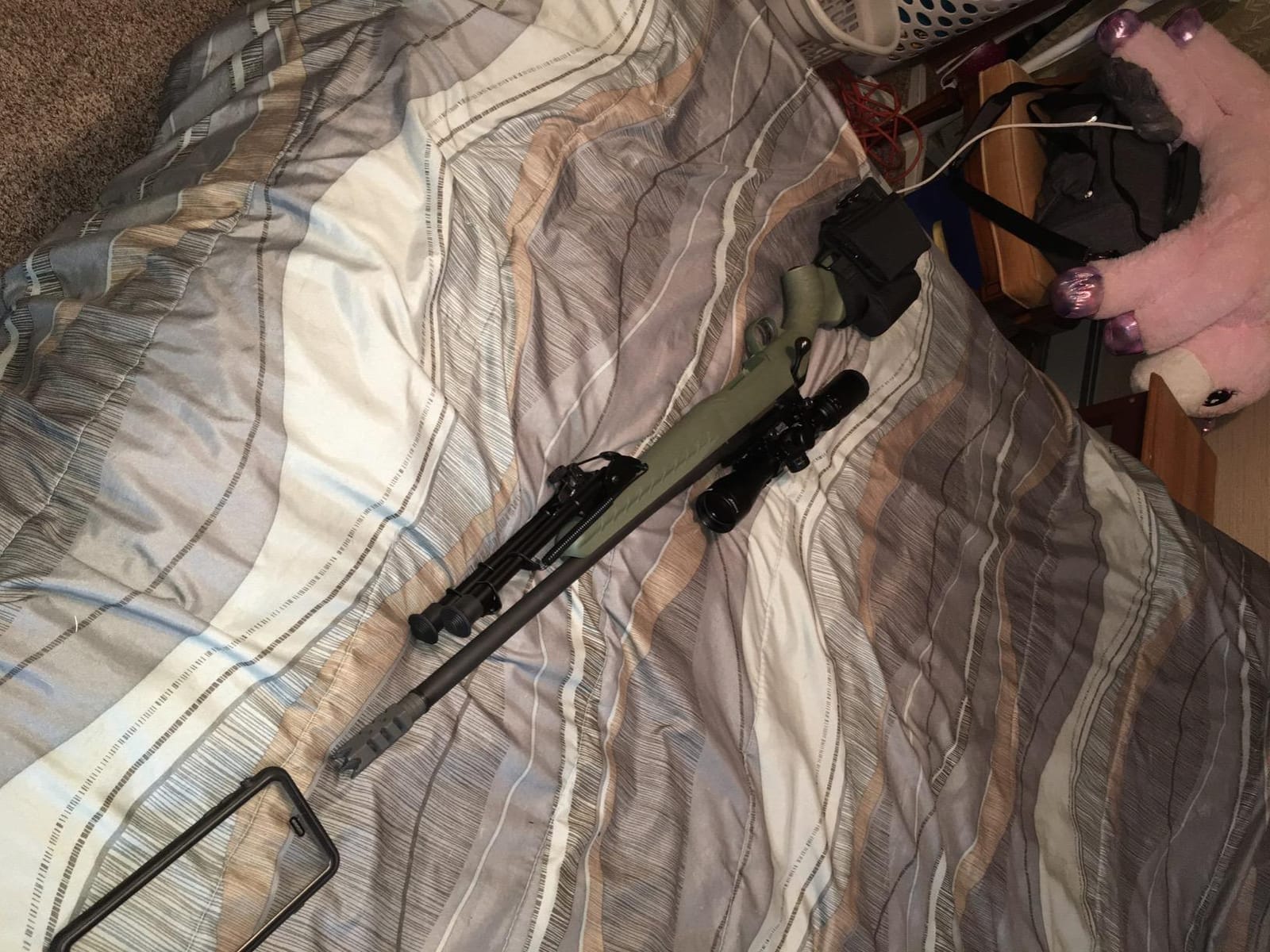
That eye relief figure is not a marketing line. Eye relief is the distance between your eye and the rear lens, and at six inches you can get behind the scope in a dark tree stand, find the animal, and still keep a full field of view. Most scopes in this price class deliver half that, and argon purging plus IPX7 rated construction means the internals survive being rained on during a sit-down wait.
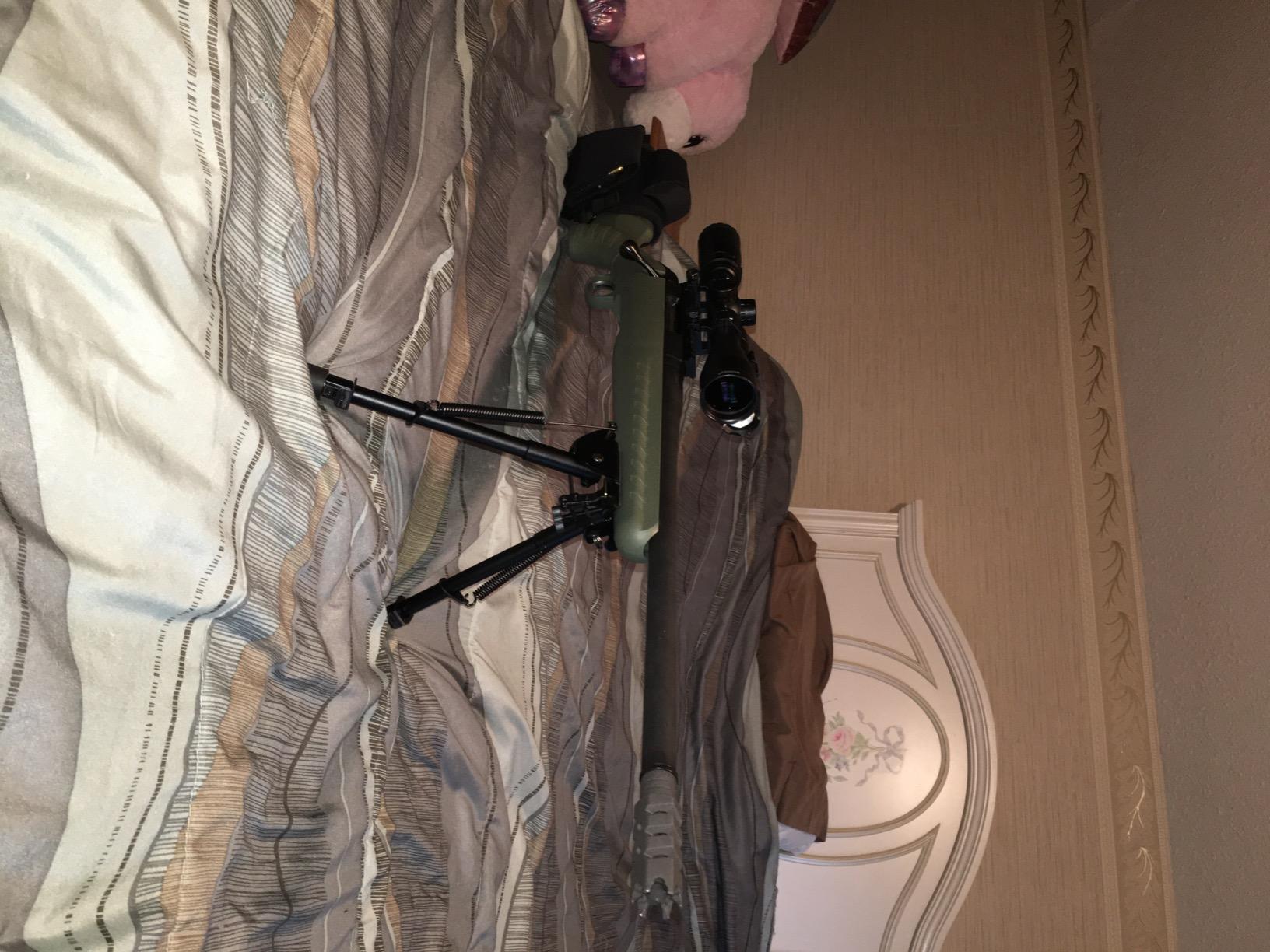
Why eye relief matters more than magnification
A buck at 60 yards in heavy timber is a shape, not an animal. The scope has to hand you that shape instantly, with no hunting for the image. Extra eye relief is what makes that instant, because it widens the area behind the ocular lens where you can still see a full picture.
Owners who switched to this scope from a stingy-eye-box model routinely describe the same reaction: the blackouts stop. If you have ever had to settle into a position, find nothing, and move your head slightly only to lose the target again, this is the fix.
Where it falls short
The plastic body is the honest limitation. It is lighter than a metal scope, which some hunters love on a mountain rifle and others read as flex in the body, and it simply does not feel as rigid under a hard bolt cycle. The Multi-X reticle also gives you nothing to hold over with on a downhill shot past 200 yards.
If you want a ballistic reticle at this tier, the Bushnell Banner 2 later in this list is the version to look at instead.
3. Vortex Triumph HD 3-9x40mm — Most Versatile, and the Only Scope That Comes With Rings
Vortex Triumph HD 3-9×40 Second Focal Plane, 1-inch Tube Riflescope Kit
Magnification 3x-9x
Objective 40mm
1-inch tube, second focal plane
1 pound
Pros
- Kit includes 1-inch Hunter Rings at 0.90 inch low height
- Crisp bright image in early morning and late evening light
- Holds zero consistently after mounting with standard rings
- Lightweight and balanced so the rifle is not front-heavy
- Unlimited unconditional lifetime VIP warranty
Cons
- Fixed parallax causes noticeable error inside 100 yards
- Single-plane BDC hash marks are less informative than a first focal plane grid
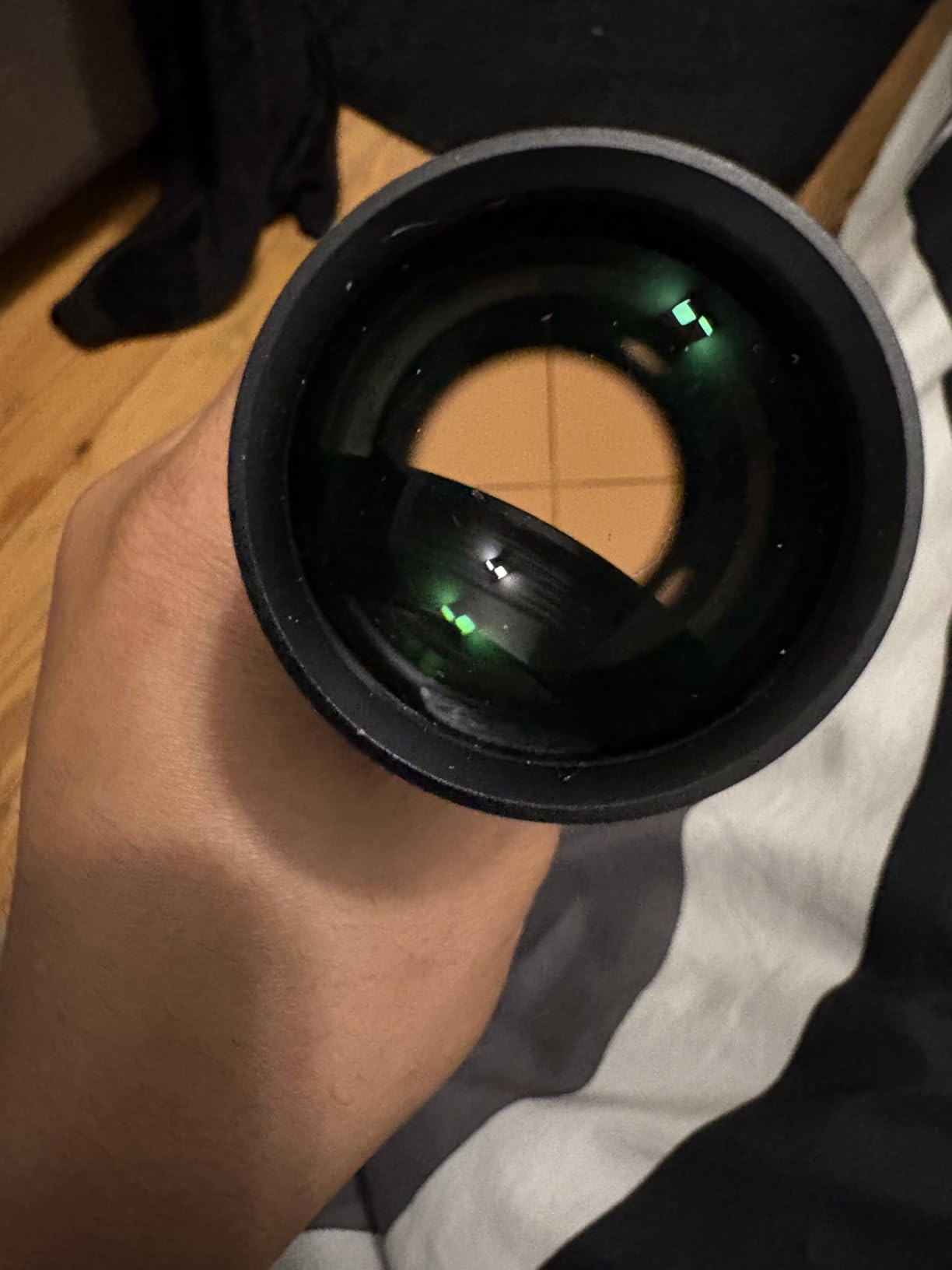
The Triumph HD solves a problem nobody advertises: the rings. Every other scope in this guide needs a separate ring and mount purchase, and a decent set plus installation runs a meaningful share of what a budget scope costs. This one arrives with 1-inch Hunter Rings at 0.90-inch low height, a turret tool, a neoprene case, and a lens cloth.
It weighs one pound, which keeps a mountain rifle from turning into a front-heavy pack item, and the 3-9×40 configuration sits exactly where most deer shots live. The Dead-Hold BDC reticle gives you a set of custom hash marks for holdover and windage without burying you in a grid.
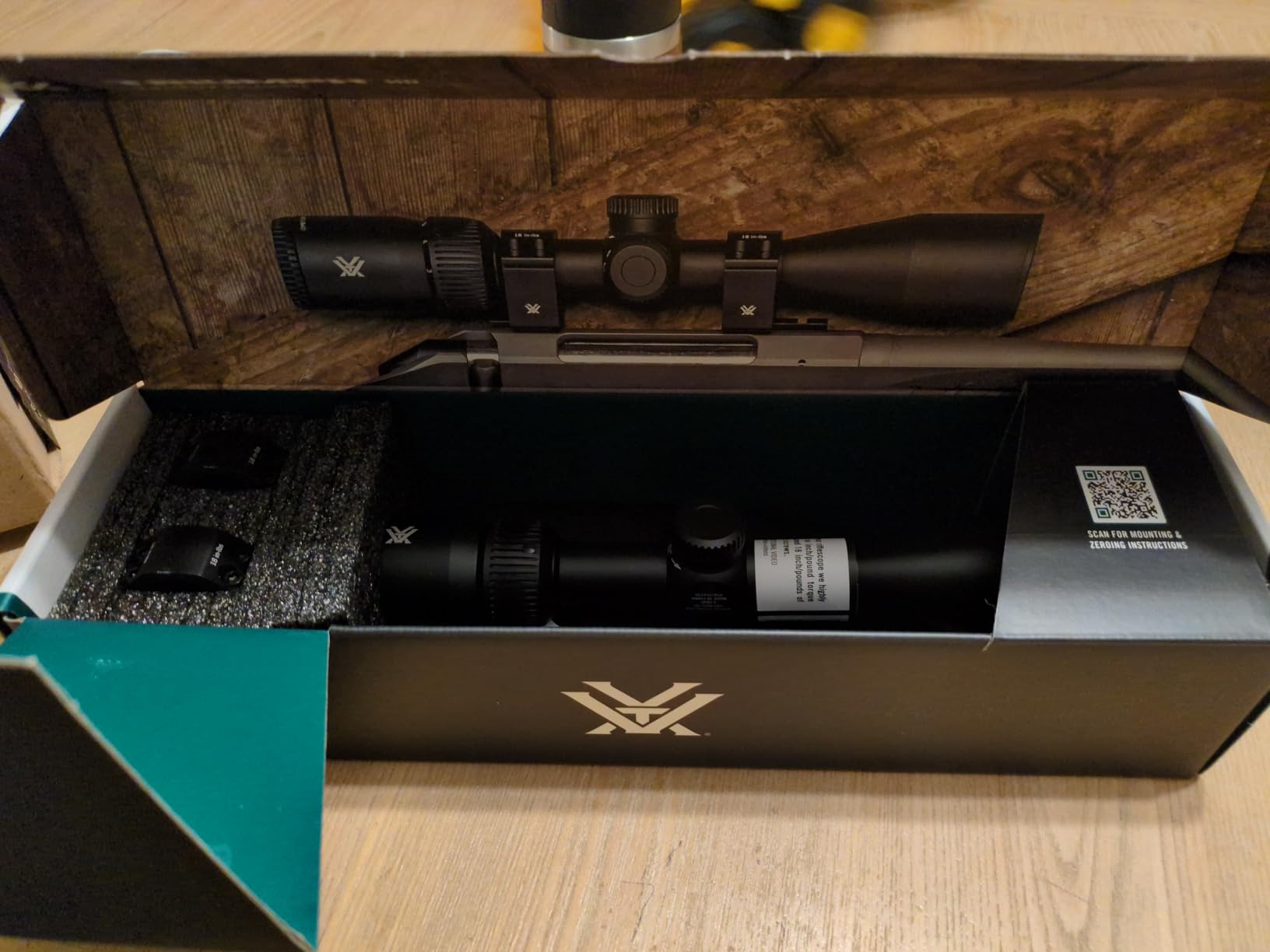
Reviewers rate it 4.7 stars across 482 reviews, with 86 percent at five stars, and describe it consistently as the best general hunting scope in the entry tier. The recurring complaint is a real one and worth stating plainly, which we cover below.
What you get for the money in the box
For a new hunter building a first deer rifle, the rings are the difference between a finished setup on Saturday morning and a project that slips a week, and the 0.90-inch low profile rings keep your cheek weld and your bolt-hand clearance comfortable. A scope thrown loose in a truck bed collects dust and grit in the turret housing, and the neoprene case is what keeps grit out of the threads between seasons.
Where it falls short
There is no side focus or parallax dial, so inside 100 yards the reticle floats off the target. On a 150-yard deer it is irrelevant; on a rimfire rabbit at 35 yards it is annoying. That is the one complaint that shows up repeatedly in owner feedback.
The hash marks are also only as meaningful as your zero. Holdovers assume a 100-yard zero and a standard trajectory, so confirm yours before you trust a mark you have not tested.
4. SIG Sauer Buckmasters 3-12x44mm — Best for Open Country Hunts
SIG SAUER Buckmasters 3-12x44mm Riflescope
Magnification 3x-12x
Objective 44mm
Single-piece 1-inch tube
15.2 ounces
Pros
- Sharp clear image across all magnifications from low-dispersion glass
- BDC holdover dots extend to 500 yards
- Durable single-piece 1-inch aluminum tube
- Integrated throw-lever thread for fast magnification changes
- Waterproof shockproof and fogproof build with flip-back lens covers
Cons
- Non-illuminated reticle limits usability in very low light
- 44mm objective adds weight versus smaller-tube hunting scopes
Open country changes the arithmetic. A mule deer at 300 yards across a grass flat is a small brown dot until you get magnification on it, and this is one of the most direct ways to get 12x with a reticle that can compensate for bullet drop.
The Buckmasters BDC reticle carries holdover dots out to 500 yards, which is more than most deer hunters will ever need and exactly enough for a western hillside, and the low-dispersion glass produces a sharp image at every power setting, including the top end where cheap scopes tend to go soft and gray.
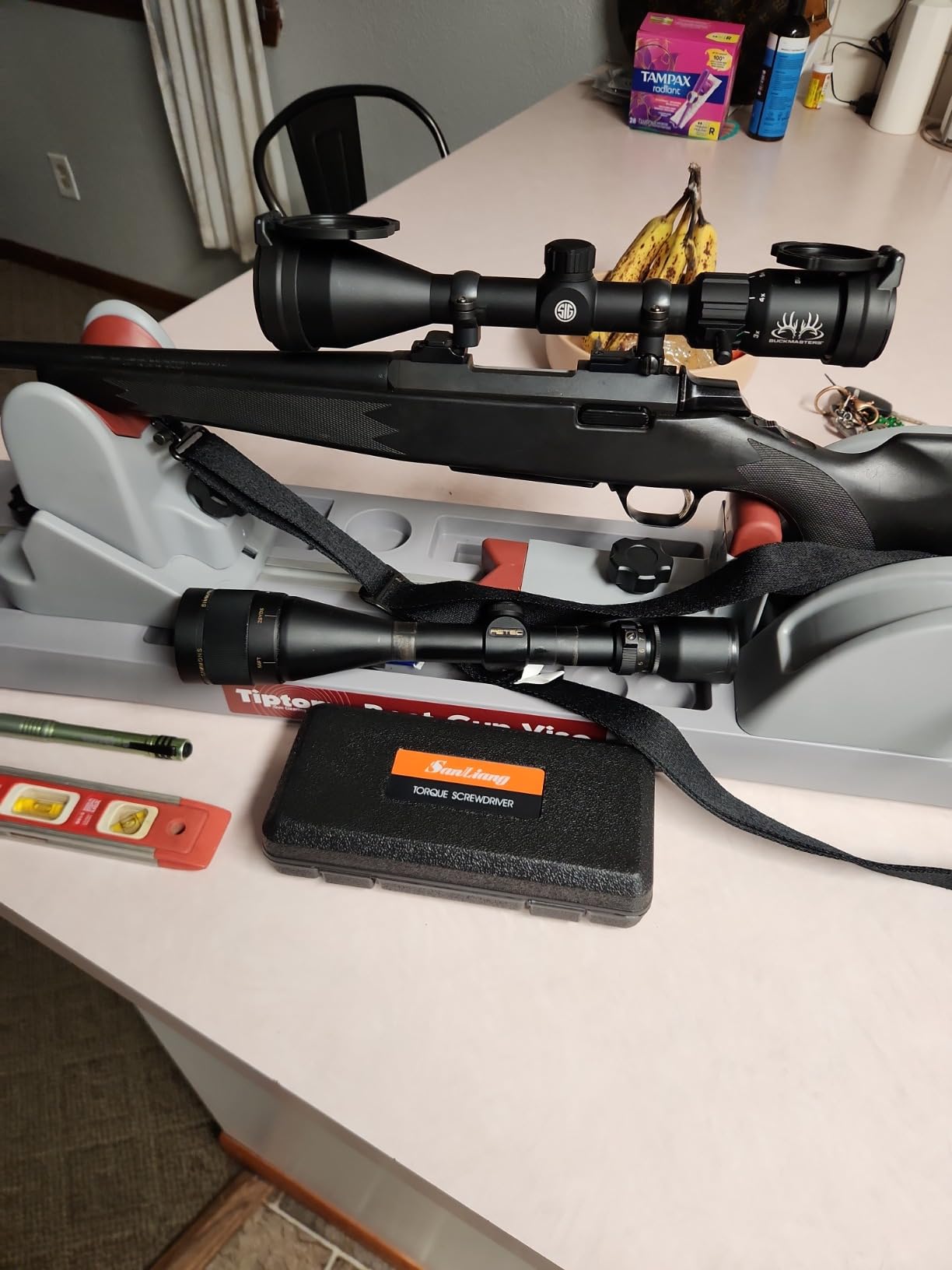
At 15.2 ounces with a single-piece 1-inch aluminum tube and an integrated throw-lever thread, it is a scope you can dial quickly when a buck steps into a clearing, and eighty percent of its 735 reviews are five stars. It is also rated waterproof, shockproof, and fogproof, and it comes with flip-back lens covers, which matter on a big objective because a scratched or fogged front element is the difference between seeing a deer and guessing at one.
Reading BDC holdover dots on a downhill shot
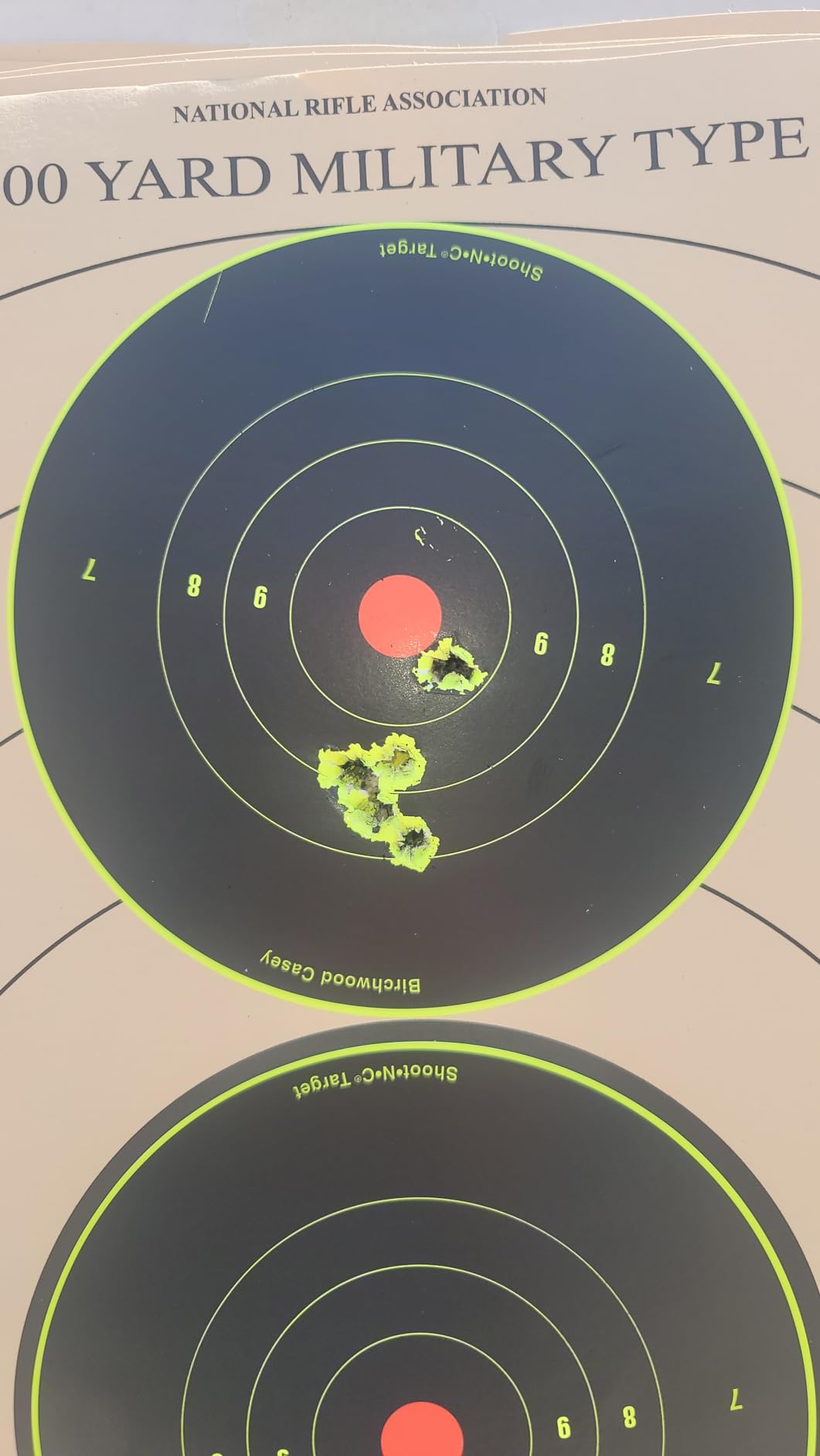
Holdover marks are built around a standard ballistic solution, so they work best on a level shot. If you are shooting downhill at 45 degrees, the drop changes and the printed dot will not save you. Use the dot to identify the general solution, then confirm with a rangefinder and a hold of your own.
The other thing to know is that the dots assume a 100-yard zero. Set your zero there first, verify it in the field, and only then start trusting the marks.
Where it falls short
There is no illumination, and that is a real cost when you are shooting the last legal 20 minutes of light in November. A lit reticle can be the difference between a legal shot and a wasted one on a dark hillside.
At 15.2 ounces it is also heavier than the 3-9x40s in this list, and a 44mm objective is a compromise between brightness and pack weight. If light is the priority, a 3-9×40 with a 50mm objective may serve you better at the same overall weight.
5. Leupold VX-Freedom 3-9x40mm — Best for Dawn and Last Light
Leupold VX-Freedom 3-9×40 (1 inch) CDS Duplex Reticle Riflescope
Magnification 3x-9x
Objective 40mm
Field of view 13.6 feet
1.2 pounds
Pros
- Twilight Light Management System adds up to 10 extra minutes of shooting light
- Exceptionally clear and bright glass for the class
- CDS dial tracks smoothly and precisely for repeatable zeroing
- Lightweight at about 1.2 pounds
- Made in the USA under the Leupold Full Lifetime Guarantee
Cons
- CDS turret is exposed with no top cap and takes knocks
- No parallax adjustment so it is limited to hunting ranges
- One owner reported the plastic windage knob serrations stripping
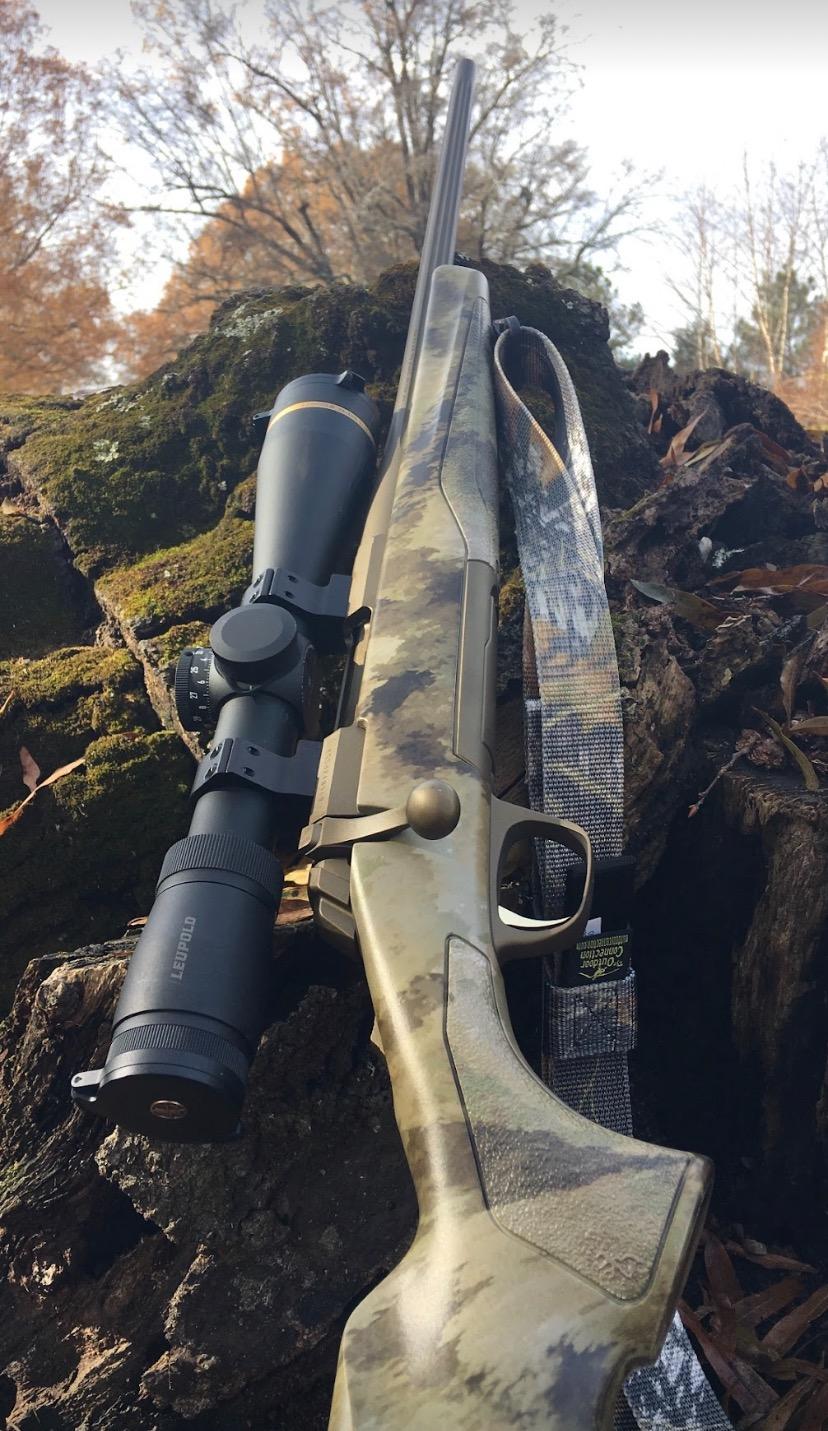
The Twilight Light Management System is the reason this scope exists, and it is the reason we picked it for low light. Leupold states it adds up to 10 extra minutes of shooting light and cuts glare, which on a November morning is not a rounding error. Ten extra minutes is often the difference between a shot and a story about a shot.
Owners describe the glass as clearly brighter than other scopes in the same bracket, the CDS turret gives you a real custom ballistic dial without disturbing the windage, and adjustments are 1/4 MOA finger clicks, precise enough for deer at any range you will realistically take. At 4.8 stars across 294 reviews it has the highest five-star share in the guide, with 88 percent at five stars and 7 percent at four.
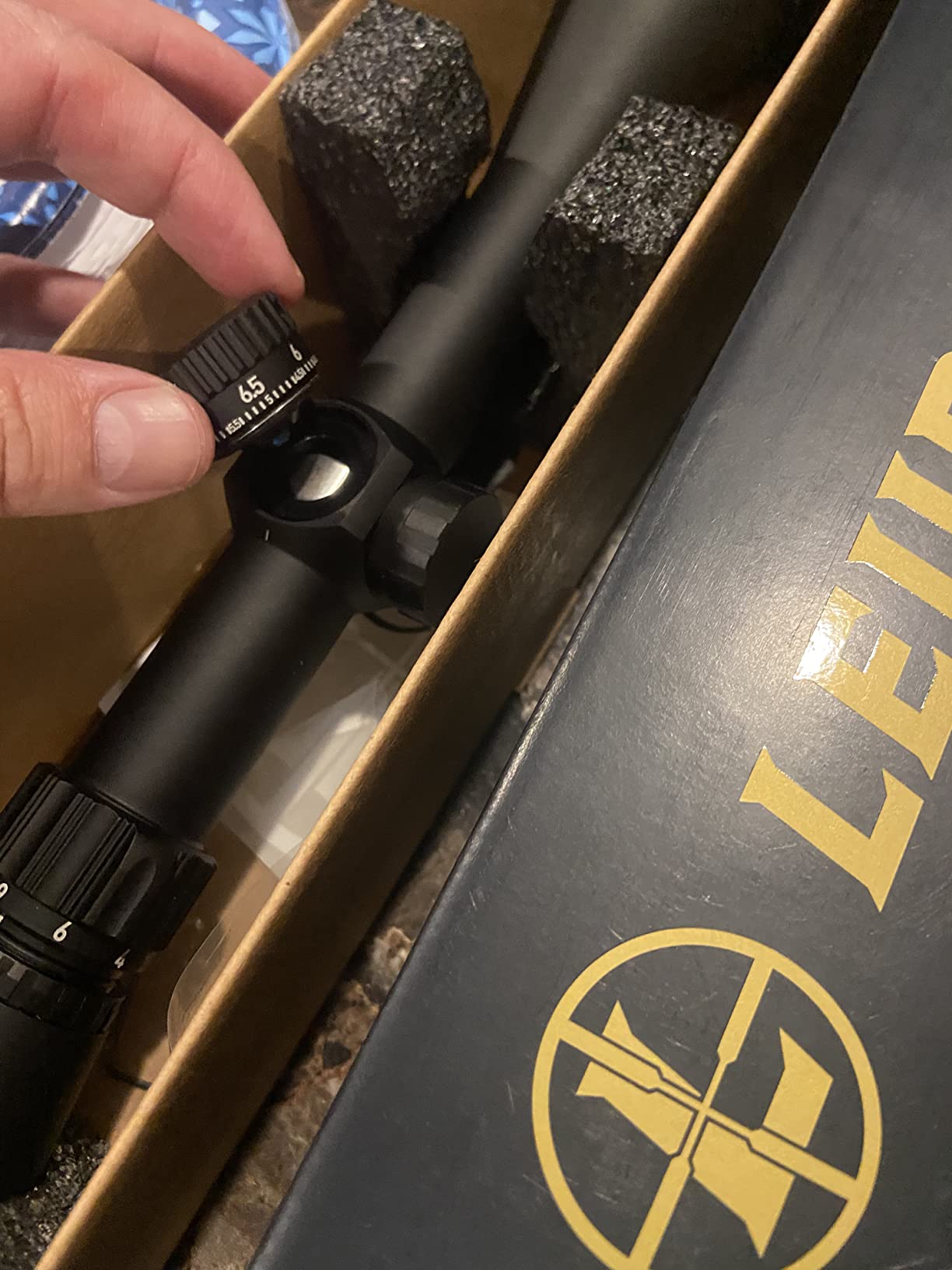
Reviewers also highlight zero retention on heavy-recoil calibers, which matters if you ever pair it with a 45-70. It is made from 6061-T6 aircraft-grade aluminum, is Punisher tested, carries the Leupold Full Lifetime Guarantee, and weighs about 1.2 pounds so it will not turn a lightweight mountain rifle into a brick.
How much usable light do you really need?
Deer hunting pressure is usually a clock, not an absolute. Legal light is a fixed number, and the question is how much of it arrives at your eye through the glass. Objective lens diameter drives that, but so does coating quality, which is why a 40mm scope with premium coatings can out-perceive a larger lens with cheap ones.
The practical test is simple. Look at a familiar object at the same distance and time of day, with and without the scope. If the difference is small, you do not need to chase a bigger objective for the rest of your life.
Where it falls short
The CDS turret is exposed, with no cap. That means it collects grit and takes knocks from branches in a tree stand, and in exchange you get a scope with no cap to lose and a fast dial. Hunters who work thick timber may prefer capped turrets for that reason.
There is no parallax adjustment, so it is a hunting-range scope by design. One owner also reported the plastic windage knob serrations stripping and the knob spinning, which is an isolated report rather than a pattern, but it is worth knowing.
6. Leupold VX-5HD 3-15x44mm — Best Multi-Purpose Deer Scope
Leupold VX-5HD 3-15×44 (30mm) CDS-ZL2 Side Focus Illum. FireDot Duplex
Magnification 3x-15x
Objective 44mm
Field of view 38.3 feet
16 ounces
Pros
- High-definition lenses stay clear across the full 3-15x range
- CDS-ZL2 ZeroLock 2 push-button turret prevents accidental drift
- Side focus parallax adjustment is fast from any position
- Guard-ion hydrophobic coating sheds dirt and water
- Illuminated FireDot reticle aids low-light aiming
Cons
- Premium tier that a close-range deer hunter does not need
- 3-15x package is heavier and bulkier than a dedicated 3-9x40
If one scope has to cover every deer scenario you will face, the VX-5HD is the one. Three power for a buck in the timber, fifteen for a doe across a river bottom, and a 44mm objective holding the image together in between.
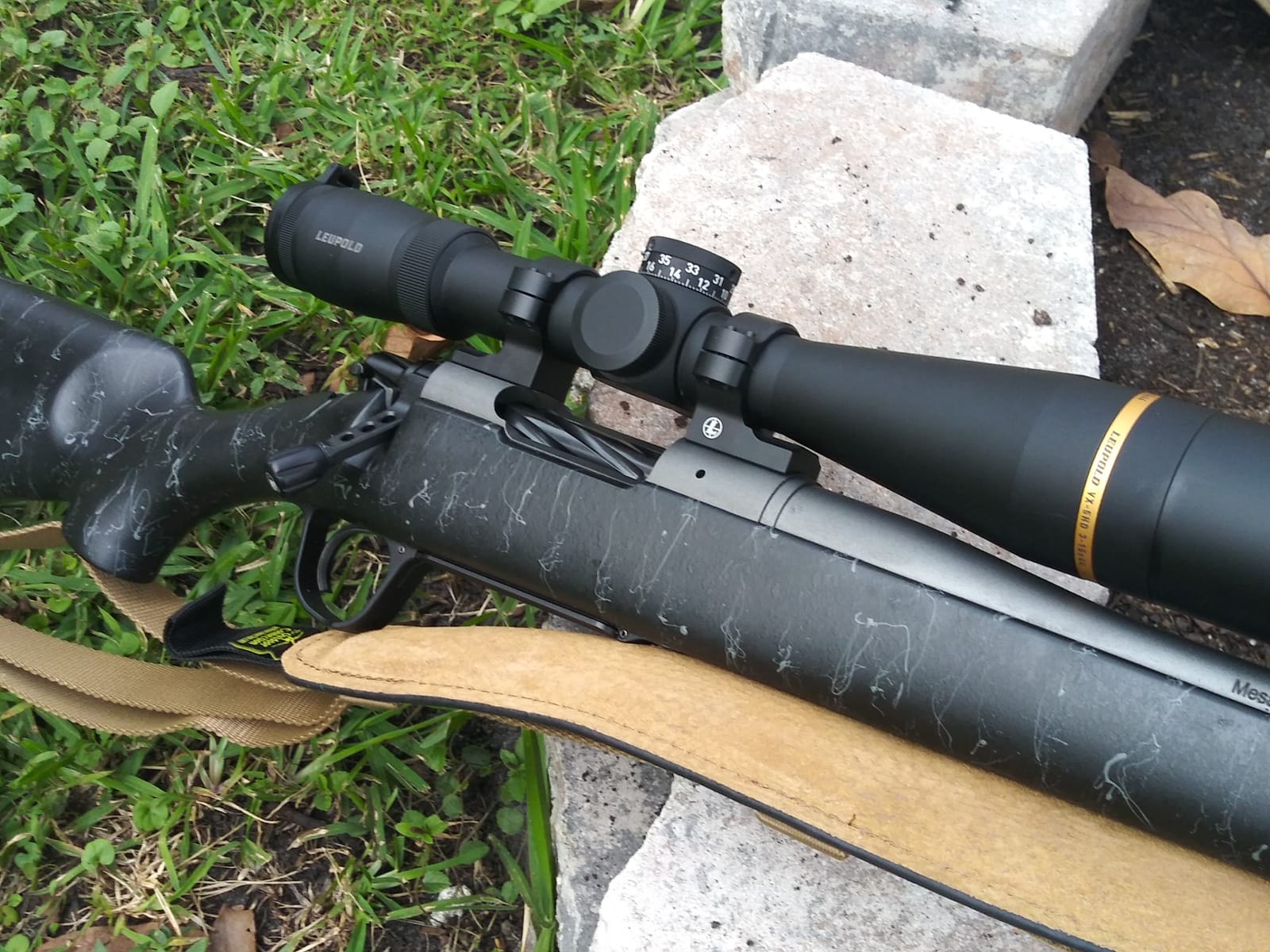
The ZeroLock 2 push-button turret system is the feature we would highlight. It gives you two full revolutions of elevation and, more importantly, it will not drift when you brush it against a tree or set the rifle down hard. Losing a zero at mile 40 of a drive is a uniquely miserable afternoon.
Side focus parallax means you can bring the reticle and the target to the same plane from any shooting position, the illuminated FireDot reticle gives you a center reference in the last minutes of light, and the Guard-ion hydrophobic coating sheds rain and mud without a lens cloth. It is designed, machined, and assembled in the USA under the Leupold Full Lifetime Guarantee.
When a wider range actually pays off
Picture a day where the hunt starts in hardwoods at 50 yards and ends with a doe stepping out at 280 across a valley. That is not a hypothetical; it happens most November weekends. A 3-9×40 handles the first part well and makes the second part work, while a 3-15x gives you confidence on the second part.
The trap is assuming you will use the top of the range often. Track your own shots for a season before you pay for power you will not use.
Where it falls short
Class and build quality is the first honest drawback, and there is no way around it: this sits in the premium tier, well clear of the entry scopes. For a hunter who shoots 90 percent of their deer inside 150 yards, the money buys capability that will sit unused.
Second, 16 ounces and a 44mm objective make it a heavy glass for a mountain rifle. Pack weight adds up over five days of climbing, and the VX-5HD is not the scope you want when every ounce is a decision.
7. Burris Droptine 3-9x40mm — Best for Ballistic Holdover
Burris Hunting Durable Waterproof Droptine Riflescope with Ballistic Plex Reticle, 3-9x 40mm
Magnification 3x-9x
Objective 40mm
Field of view 33 feet
12.96 ounces
Pros
- Turrets are truly indexed to the reticle so mounting and levelling are easy
- Clear bright glass in daylight low light rain and snow
- Lightweight at 12.96 ounces with generous eye relief
- Ballistic Plex reticle gives holdover guidance at a fraction of premium glass cost
- Low-profile capped turrets and adjustable diopter
Cons
- No parallax adjustment so it is limited to longer ranges
- Ballistic Plex is busy on a hunting scope compared with a simple duplex
- Magnification ring can feel stiff
- One owner reported field fogging
The Burris Droptine is the value pick in this group if your country produces shots past 200 yards and you want marks on the reticle that mean something. The Ballistic Plex gives you holdover guidance at a price point where most competing scopes give you a plain duplex and nothing else.
The detail reviewers mention most is turret indexing. The windage and elevation turrets are genuinely aligned to the reticle out of the box, so mounting and levelling is close to a two-minute job instead of a half hour of adjusting and re-adjusting. On a rifle where the rings are already set, that saves you a whole evening.
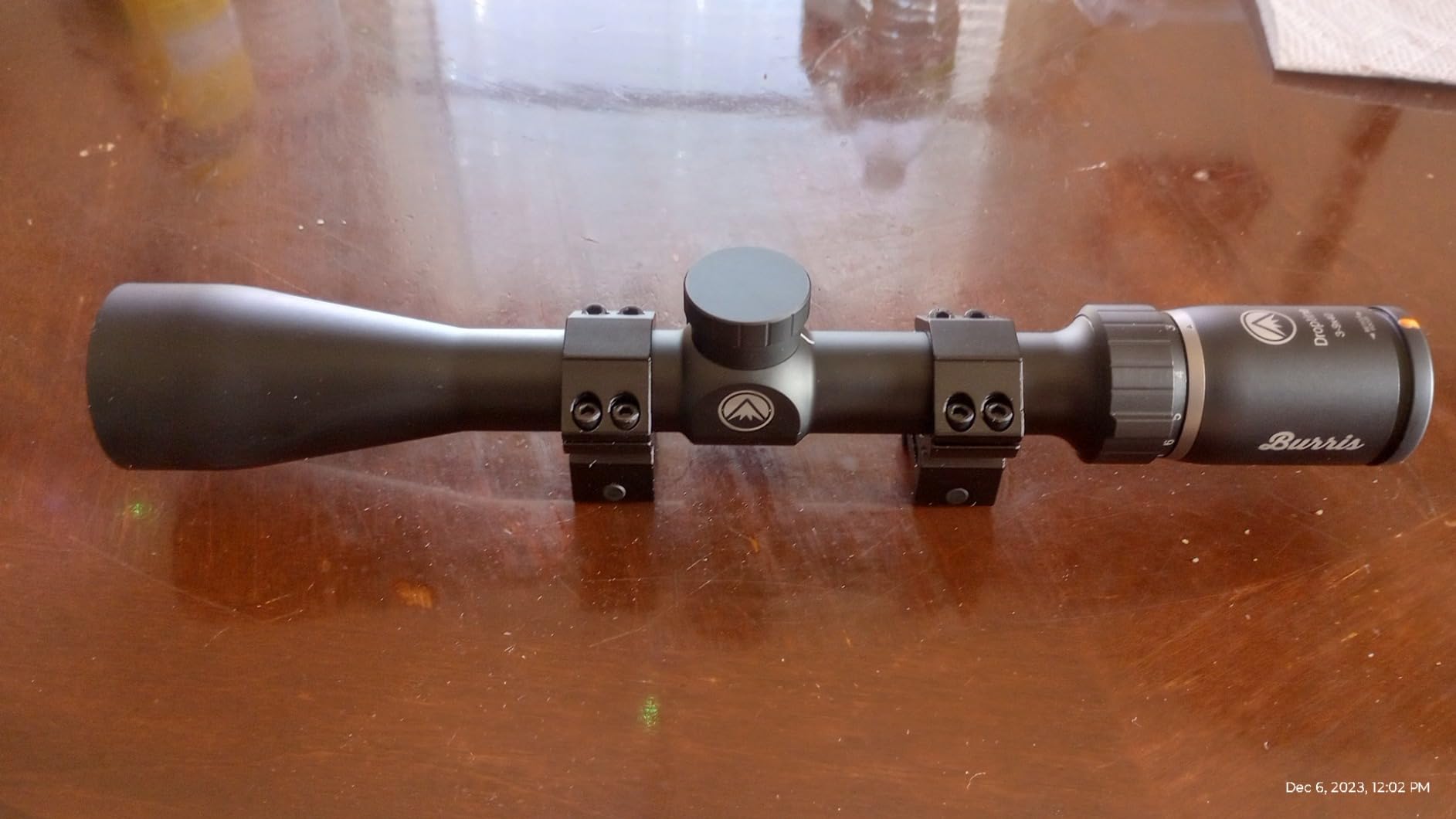
It weighs 12.96 ounces, has generous 2 to 3 inch eye relief, and uses Hi-Lume multicoated high-grade glass with precision-ground lenses. Owners describe the image as clear and bright in rain and snow as well as in daylight, and the low-profile capped turrets will not swing into your shooter’s cheek. The integrated eyepiece has an adjustable diopter for glasses wearers, the outer tube is shock-resistant for heavy-recoiling calibers, and the Burris Forever Warranty covers it for life.
When a ballistic reticle beats a plain duplex
A duplex reticle tells you exactly where the barrel is pointed. A ballistic reticle also tells you what the bullet will do over the next 300 feet. On a steep hillside shot at a running buck, that information is worth more than a cleaner-looking glass.
The caveat is that the marks assume a 100-yard zero and a typical center-fire trajectory. Zero it properly, confirm in the field, and treat the marks as a starting point rather than a promise.
Where it falls short
There is no parallax adjustment, so inside about 100 yards the reticle can shift on the target. For deer at 150 yards and beyond, that is fine. For close work, it is not.
The Ballistic Plex is also visually busy compared with a simple hunting reticle, and one owner reported fogging in the field. If you hunt in genuinely wet cold conditions, our anti-fog rifle scope guide covers the options built specifically for that.
8. SIG Sauer Tango-MSR 1-6x24mm — Best for Close-Range Timber Hunts
SIG SAUER Tango-MSR LPVO 1-6x24mm Waterproof Fogproof Hunting Riflescope
Magnification 1x-6x
Objective 24mm
Second focal plane
Illuminated BDC-6 reticle
Pros
- High light transmission and clarity from the 6x low-dispersion system
- Illuminated MSR BDC-6 reticle with 11 brightness levels
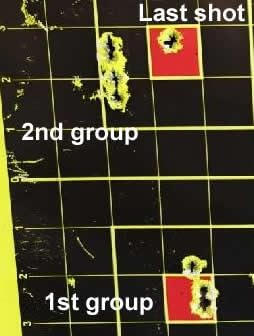
- Holds zero reliably over hundreds of rounds
- One-piece aluminum cantilever mount and flip-back covers included
Cons
- Heavy at about 1 pound 9.7 ounces with the flip caps
- Small eye box at 6x causes scope shadow with small head moves
- BDC drop marks are calibrated for flatter cartridges not rimfire
- Unlabeled holdover marks with a 5 MOA first tick
A true 1x is the rarest and most useful thing in this list. At one power you have both eyes open, natural peripheral vision, and a deer at 30 yards in a dim tunnel of hardwoods simply cannot hide. Every other scope here starts at 3x, which is already magnification when the animal is close.
The Tango-MSR pairs that with an illuminated MSR BDC-6 reticle running 11 brightness levels, which owners describe as the best value illuminated LPVO available. Brightness control matters more than most buyers expect: the first two settings are the only ones you will ever use in real hunting, and a scope with ten unusable levels is a worse scope.
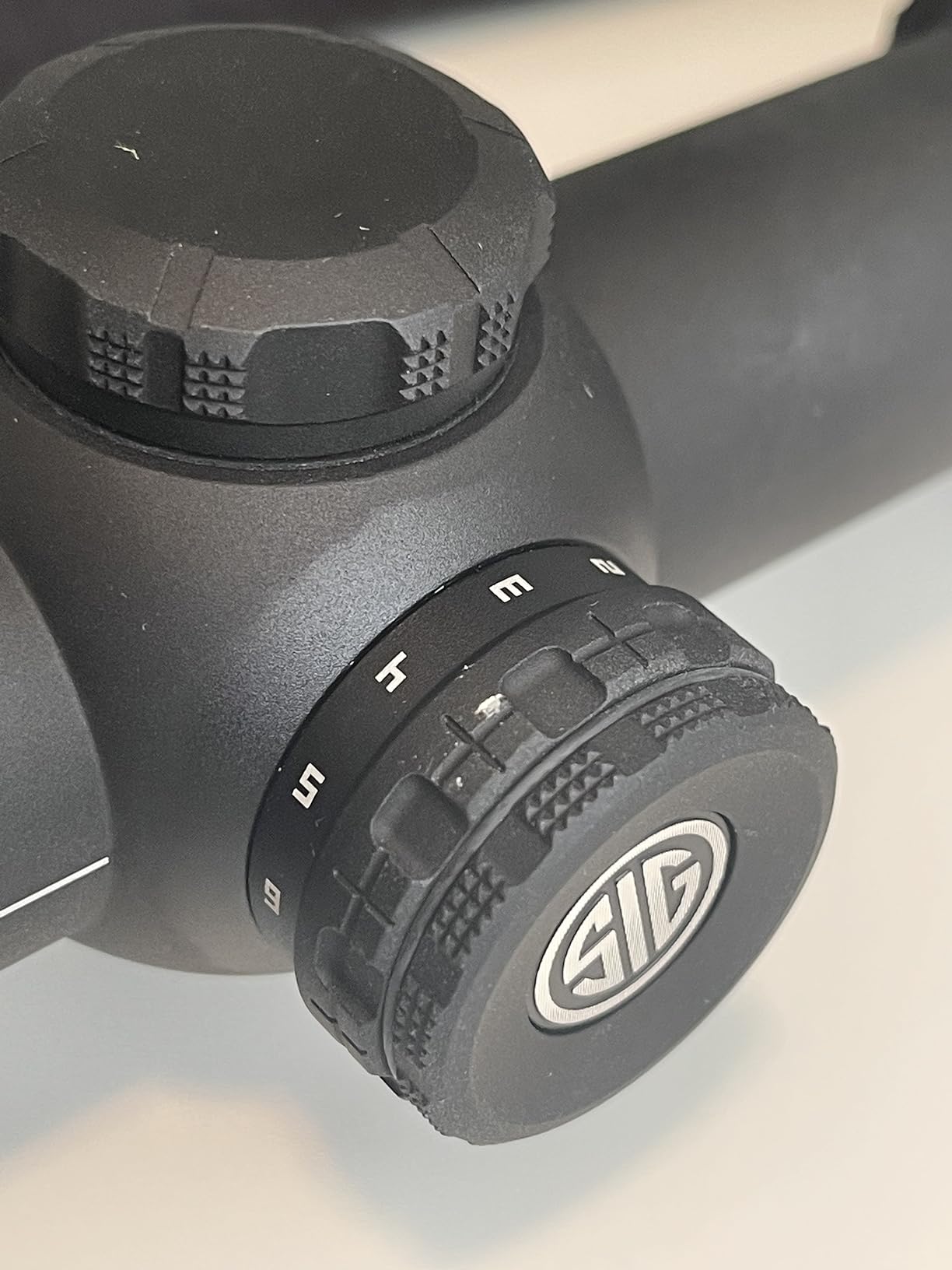
It holds zero reliably over hundreds of rounds, which is the number one fear in the forums and the number one deal-breaker in our experience, and it comes with an ALPHA-MSR one-piece aluminum cantilever mount and factory-installed flip-back lens covers, so the fitment problem is solved at the factory. It is nitrogen-purged, sealed, and waterproof.
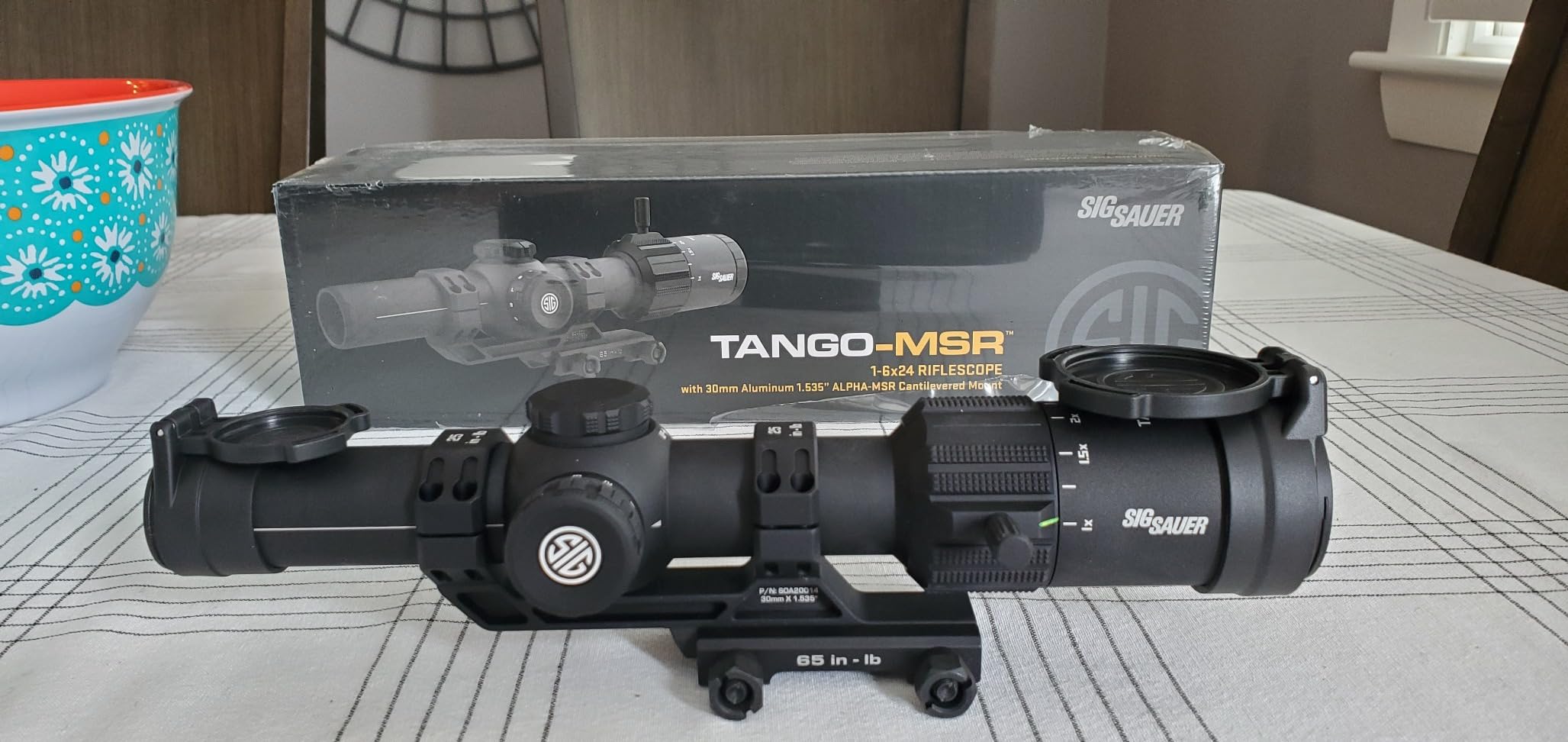
Why 1x matters when a buck is 30 yards away
For timber, the low end of the range does the real work. A whitetail in hardwoods disappears behind branches the moment you start turning magnification, and at 1x you can walk through timber with the animal in view and shoot when the moment is right.
The 24mm objective is small by design, and that is the tradeoff. In flat light at 200 yards this glass is not going to match a 50mm, but for shots inside 100 yards it is brighter than the number suggests.
Where it falls short
Weight is the headline drawback, at roughly 1 pound 9.7 ounces with the flip caps. On a light mountain rifle that is a noticeable lump of glass, and the cantilever height can interfere with some over-ear hearing protection.
Two more honest notes: the eye box at 6x is small, so scope shadow shows up with small head adjustments, and the BDC drop marks are calibrated for flatter-shooting cartridges rather than rimfire or 300 Blackout. Owners also point out the marks are unlabeled and the first tick is 5 MOA.
9. Bushnell Banner 2 3-9x40mm — Best for Bolt-Action Rifles
Bushnell Banner 2 3-9×40 Riflescope, DOA Quick Ballistic, Black
Magnification 3x-9x
Objective 40mm
Weaver rings included
15 ounces
Pros
- Eye relief clears the bolt action so the cycle is not interrupted
- Exceptionally clear crisp glass for a budget-priced scope
- Easy to mount and quick to zero while holding zero across calibers
- Weaver-style aluminum rings included in the box
- One-piece aluminum body rated IPX7 waterproof
Cons
- Non-illuminated reticle becomes hard to aim in very low light
- 3-9x40 tops out well short of long-range magnification
If your deer rifle is a bolt action, eye relief is a mechanical requirement rather than a comfort preference. The Banner 2 is rated at about 3.5 inches and owners confirm it clears the bolt, so you can cycle the action without lifting your head off the stock or dragging your cheek weld sideways.
That is not a small detail. Most cheap scopes force bolt-action shooters into a permanently canted shooting position, and by the third round your neck and shoulder are fighting you. This one is built so you can shoot the way the rifle was designed to be shot, and zero retention across .22, .357, 30-30, and bolt-action rifles is what owners keep mentioning most.
The DOA Quick Ballistic reticle comes with six dead-on aiming points and wind-hold lines calibrated for a 5 mph crosswind at each distance, and it pairs with the Bushnell Ballistic app for chambering and load data. Reviewers note the reticle needs the app to interpret, so read it before you rely on it.
At 4.6 stars across 318 reviews with 81 percent five-star ratings, this is a scope a lot of people have mounted and then never thought about again, which is the highest compliment a hunting optic can earn.
Wind-hold marks versus holding a dope card
Wind-hold lines let you correct for a crosswind without switching reticles or remembering a formula, which matters when a buck is moving and you have one shot. The practical caveat is that the printed lines assume roughly 5 mph of wind, so they are a starting point, not a substitute for reading conditions.
Before the season, spend an afternoon zeroing and confirming a couple of the holds on a bench at 100, 200, and 300 yards. Marks you have not verified are decoration.
Where it falls short
The reticle is not illuminated. In the last 15 minutes of legal light on a November afternoon, a non-illuminated reticle becomes genuinely hard to resolve, and that is a limitation of the design rather than a defect.
It also tops out at 9x, so if your best deer shots come from beyond 300 yards, look at the Buckmasters 3-12×44 or a scope with more power instead.
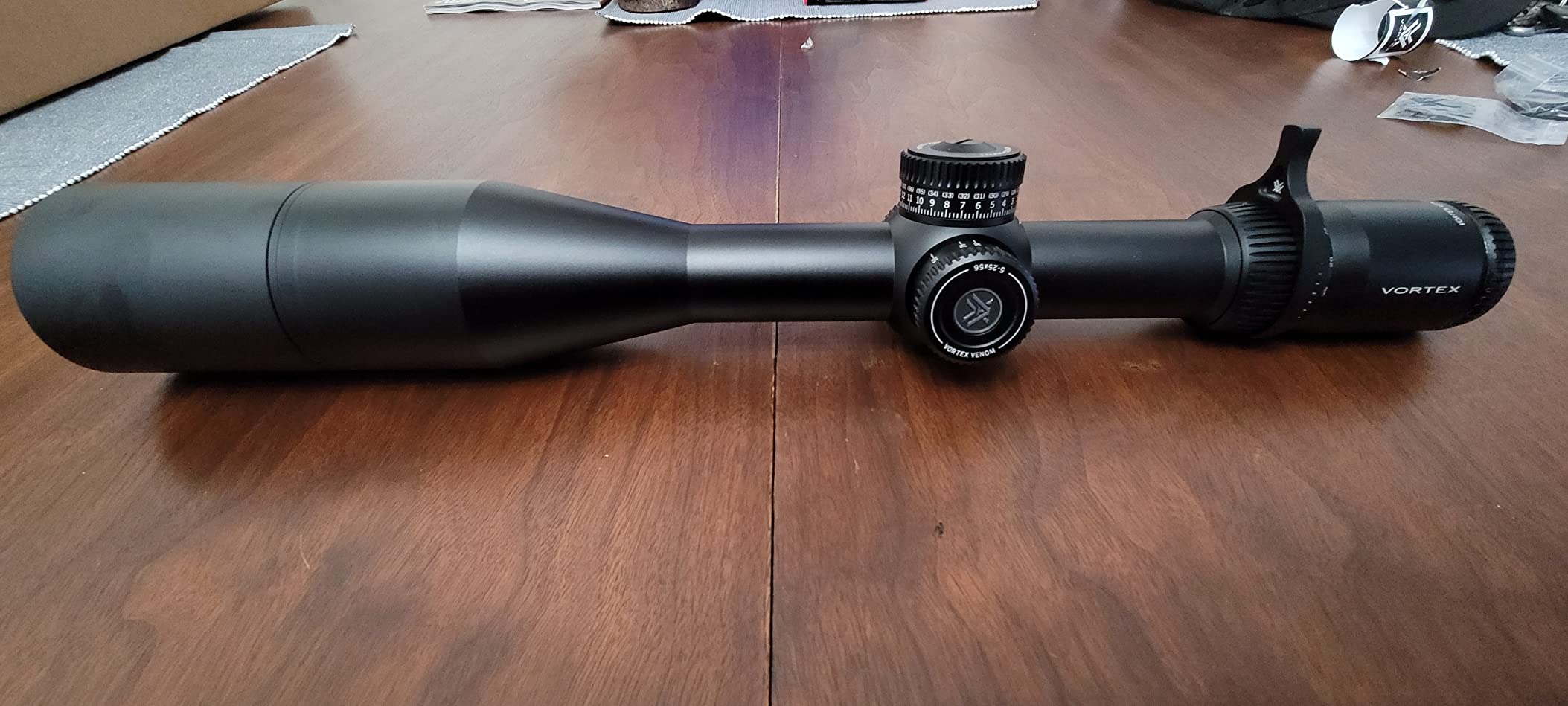
10. Vortex Venom 5-25x56mm FFP — Best for Long-Range Dialing
Vortex Venom 5-25×56 First Focal Plane Riflescope – EBR-7C (MOA) Reticle
Magnification 5x-25x
Objective 56mm
34mm main tube
85 MOA of adjustment
Pros
- Exceptionally clear glass with strong color and edge-to-edge sharpness
- 85 MOA of turret travel in a 34mm tube for dialing
- EBR-7C first focal plane subtensions stay accurate at any power
- Tactile positive turret controls
- Unlimited unconditional lifetime VIP warranty
Cons
- Very fine reticle lines are hard to see with poorer eyesight
- Large and heavy for a lightweight hunting rifle
- 5x floor prevents use at close range
The Venom is the most capable scope in this guide, and the least suited to a typical deer hunt. We include it because a meaningful share of deer hunters also shoot across long bowls, and because the features that make it excellent for that job are worth understanding even if you never buy it.
The 34mm main tube carries 85 MOA of total elevation and windage travel, which means you can dial a full ballistic solution for a long shot without cranking turrets past their marks. The EBR-7C first focal plane reticle keeps its subtensions accurate at every magnification, so your holdovers mean the same thing at 8x as at 25x.
Owners describe edge-to-edge sharpness, strong color rendition, and turret controls that feel positive rather than vague, and 87 percent of its 626 reviews are five stars. The box also includes a 3-inch sunshade, a throw lever, a turret tool, and a RevStop zero ring, and it carries the unlimited unconditional lifetime VIP warranty.
First focal plane versus second focal plane, in practice
In a first focal plane scope the reticle physically grows as you zoom, so a mil or a MOA measurement stays true at any power. That matters when you are dialing a solution for a shot at 500 yards and want the reticle itself to be your backstop.
In a second focal plane scope the reticle stays the same size and only the target grows. The lines get thin and can be hard to see at low power, but at high power the reticle is a simple, familiar cross with a fixed line weight. For hunting inside 300 yards, plenty of experienced shooters prefer the simplicity.
Where it falls short
For deer hunting, the 5x floor is the problem. At 5x you cannot pick up a buck in close timber, and a 56mm objective on a 34mm tube is 2.2 pounds of glass. That weight will tell on you during a full day of walking.
The fine reticle lines are also a genuine accessibility issue for shooters with reduced vision, and the whole package is aimed at a precision rifle rather than a hunting gun.
11. Athlon Argos BTR GEN2 6-24x50mm — Best for Precision Zero Stop
Athlon Optics Argos BTR GEN2 6-24×50 Riflescope – APMR FFP IR MIL, Black
Magnification 6x-24x
Objective 50mm
First focal plane illuminated
0.1 MIL clicks
Pros
- First focal plane reticle stays valid at every magnification setting
- Precision Zero Stop lets you dial back to zero in the dark
- Side focus parallax from 10 yards to infinity
- Fine 0.1 MIL clicks with 18 MIL of total adjustment
- Fully multicoated optics brighten the image
Cons
- Bulky 50mm objective is heavier than 3-9x40 hunting glass
- Fine mil-based reticle takes practice to interpret
The Argos BTR GEN2 packs a mechanical Precision Zero Stop into a scope that most buyers would not expect to find it in. A zero stop is a hard mechanical stop at your zero, so you can return to zero by feel in the dark instead of counting clicks and hoping.
That single feature is worth more to a hunter than it first appears. After a 45-minute climb in the cold, with gloves on, the last thing you want is a turret that will not tell you when you are back where you started.
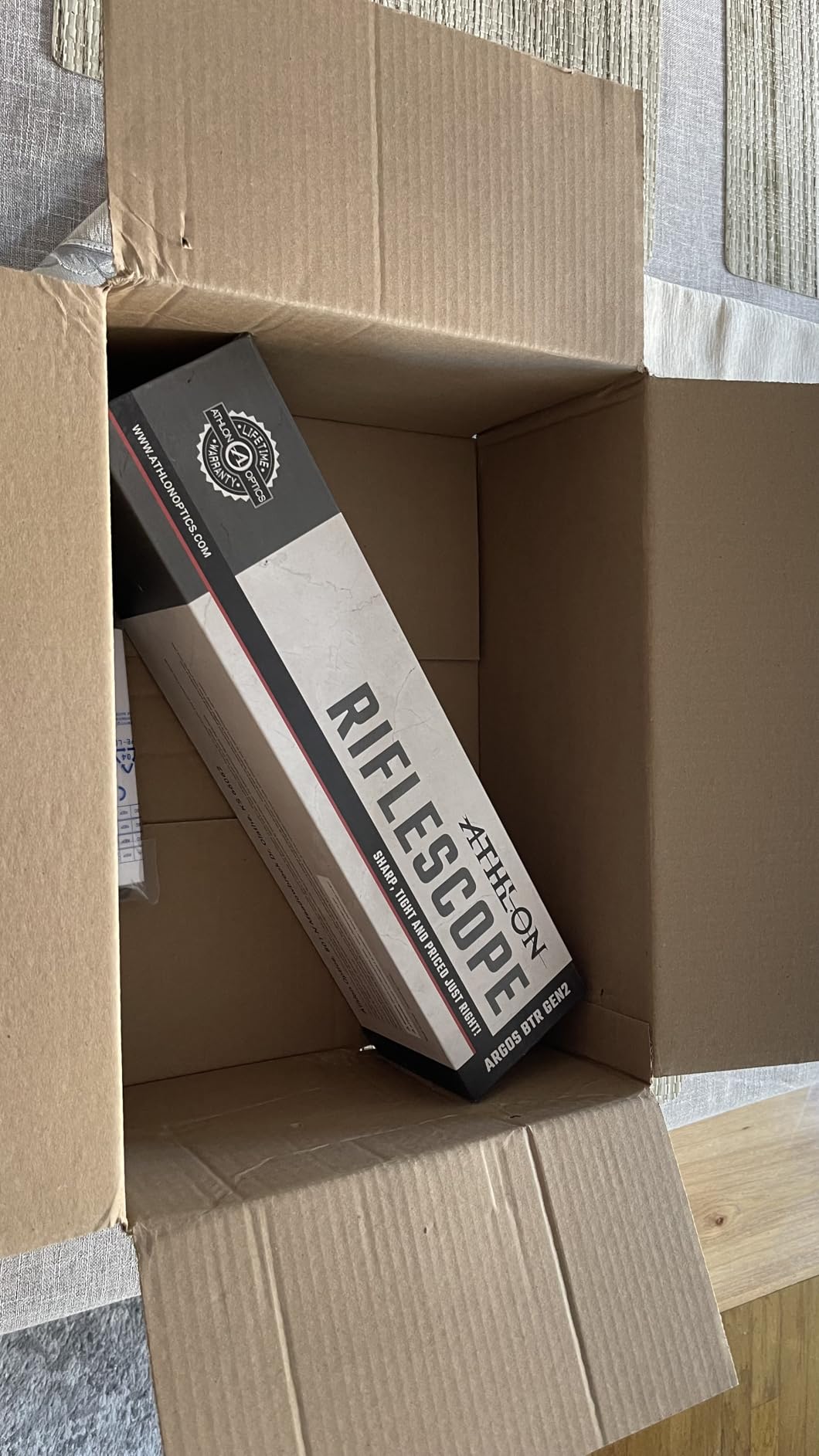
The rest of the package is built the same way: a first focal plane illuminated APMR MIL reticle, 0.1 MIL click value with 18 MIL of total windage and elevation, and side focus parallax running from 10 yards to infinity with a lock. Fully multicoated optics and a sunshade come in the box, and at 4.7 stars across 307 reviews with 85 percent five stars, reviewers value these as features normally found in a higher tier.
Reading a mil-based reticle without overthinking it
A mil-based grid looks intimidating and behaves simply. One mil is one thousandth of a radian, which at 100 yards is about one inch. So hold the center of the post on the deer, slide down the vertical stadia until the next mark meets his heart, and that is your hold.
Because the reticle is first focal plane, the spacing between marks stays the same at 6x and at 24x. Shooters describe the mil grid as taking practice to interpret, and practice is the correct word. An afternoon on a bench with a rested position will do more than a season of guessing.
Where it falls short
At 1.9 pounds with a 50mm objective, this is heavy hunting glass. A hunter who cares about total rifle weight will feel it, and most of that weight is the front lens doing the light-gathering you do not strictly need for a 150-yard deer.
It also is not a close-range scope. A 6x floor will not find a buck in timber, so this one works alongside a hunting scope rather than replacing it.
12. Arken SH4J GEN2 6-24x50mm — Best for Japanese Glass Value
Arken Optics SH4J 6-24×50 FFP Rifle Scope,VPR MOA Illuminated Reticle
Magnification 6x-24x
Objective 50mm
34mm single-piece tube
2.3 pounds
Pros
- Japanese ELD glass stays sharp at every power including low light
- Crisp non-sloped MOA clicks with large easy-to-read adjustment knobs
- AZS zero stop makes field re-zeroing fast and reliable
- Holds zero and tracks consistently including on a precision rifle
- Full lifetime manufacturer guarantee with no proof of ownership needed
Cons
- Heavier and bulkier than lighter 3-9x class scopes
- Lowest illumination setting bleeds across the reticle at high power
- Parallax is sensitive and awkward to set quickly in the field
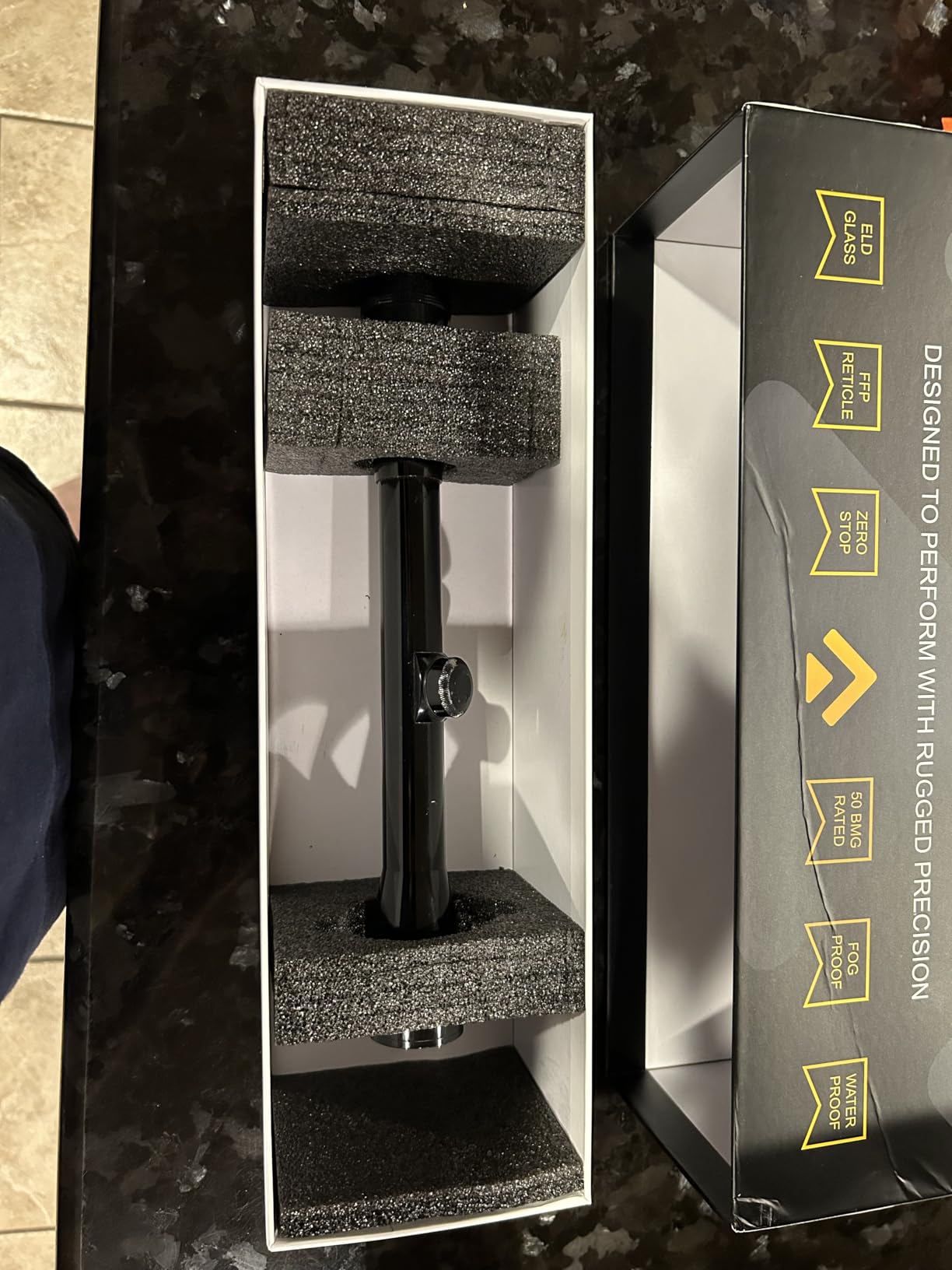
The Arken SH4J GEN2 is the one in this group that pairs Japanese ELD glass with a first focal plane illuminated reticle and a real zero stop, and it does so well below where comparable premium optics sit. Precision shooters who own it frequently compare its clarity favourably to more expensive Vortex models.
Its AZS zero stop gives you a hard stop at zero, and the side knob parallax adjustment has range numbers visible from the shooting position so you are not guessing while kneeling on a hillside. The Christmas-tree style first focal plane reticle comes with an illuminated center dot, with VPR and VHR MOA or MIL variants.
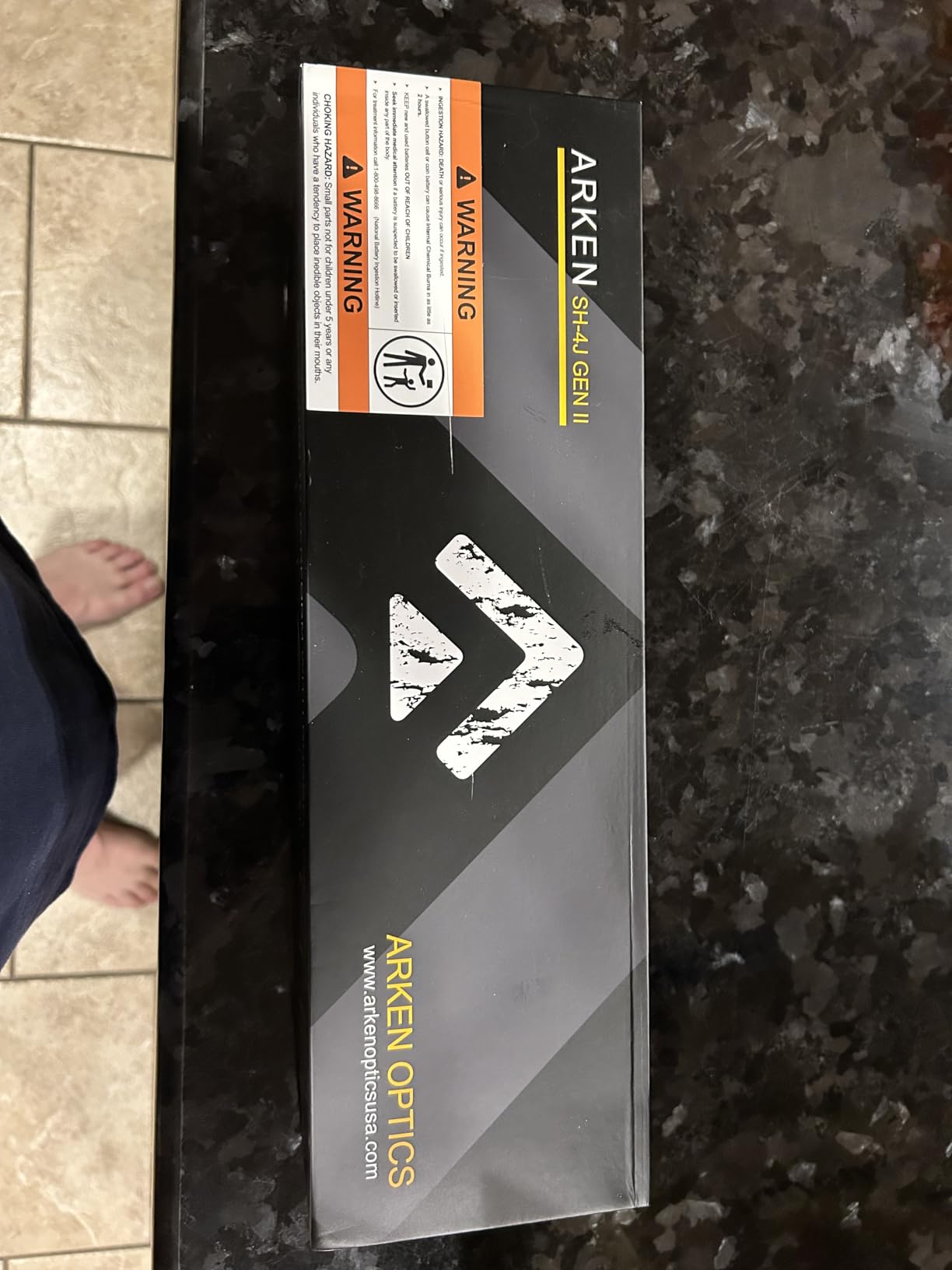
The 34mm single-piece aircraft-grade aluminum tube is O-ring sealed and nitrogen purged, and the Arken Full Lifetime Guarantee covers materials and workmanship at no charge, with no proof of ownership and no time limit. That is a stronger warranty position than most scopes at this level offer, and with 4.6 stars across 177 reviews it has the smallest owner base in the group but 78 percent five-star ratings, with consistent reports of dependable tracking and zero retention over hundreds of rounds.
What a zero stop actually saves you
A zero stop removes the single most common way hunters lose confidence in their scope. Without one, returning to zero means counting clicks from the top of the dial in the cold, in the dark, sometimes with numb fingers. Get that count wrong and your next shot is high or low for reasons you do not understand.
With a mechanical stop, you dial up, shoot, and dial back until the scope stops. Your zero is a physical thing you can feel, not a memory you have to trust.
Where it falls short
At 2.3 pounds, this is the heaviest glass in the guide alongside the Tango-MSR, and a 50mm objective is a lot to carry up a mountain. If you shoot deer inside 200 yards, the weight buys you nothing.
Two smaller issues worth naming: the lowest illumination setting bleeds across the reticle at high power, and the parallax adjustment is sensitive to range, so it needs setting precisely rather than roughly. Both are manageable once you know they are there.
How We Evaluated These 12 Scopes
We scored every scope on six criteria in the order that actually ends deer hunts. Optical performance came first, because a bright, clear image decides whether you can identify an animal before the light goes. Aiming system came second, covering turret feel, click consistency, and whether the scope tracks and returns to zero.
Third was light-gathering and eye box, measured against the conditions deer hunters really shoot in rather than laboratory darkness. Fourth was fitment and weight, because a scope that will not clear the bolt or that ruins a mountain rifle is not a good scope. Fifth was reticle legibility for hunting, and sixth was build and warranty.
Two things we deliberately refused to weight heavily. Purchase cost played no part in scoring, because value depends on your terrain and not on a number. And magnification ceiling scored low, because the most common buyer mistake in this category is buying power nobody needs.
Where our ranking differs from an aggregate of star ratings, it is because review volume changes how much confidence a rating deserves. A 4.8 across 200 reviews is a smaller sample than a 4.6 across 3500, and the second pick has been in the field far longer.
How to Choose a Deer Hunting Scope
What magnification do I actually need for deer?
Most deer are shot inside 200 yards, so a 3x to 9x range covers the overwhelming majority of hunts, and 3x to 12x covers nearly all of them. You need more only when your country regularly produces shots past 300 yards, or when you hunt open western terrain where the animal starts small.
You will also see the rule of one power per 100 yards repeated constantly. It comes from a military context where shooters were engaging targets at far longer distances, and it is not a deer-hunting standard. A 100-yard deer hunt does not require 10x, and buying it means you start every close shot with a deer you cannot find.
How big should the objective lens be?
Bigger is brighter at low light, because the objective lens collects the light that the exit pupil then divides among the magnification settings. For deer hunting, 40mm to 50mm covers the range that matters. Beyond 50mm you are carrying weight for light you will rarely need.
Coating quality matters as much as diameter, and it is why the Leupold VX-Freedom performs so well at 40mm. If you shoot in fog, cold, or rain, our cold weather scope guide covers the sealing and coating features that hold up in those conditions.
What is considered good eye relief on a rifle scope?
Good eye relief is 3.5 inches or more, and 4 inches or more is better if you wear glasses or shoot a bolt-action rifle. Eye relief is the distance between your eye and the rear lens; too little and the scope blackouts the moment your head shifts even slightly.
The related term is eye box, which is the area across which you can see a full picture. A forgiving eye box does more for your shooting than any other single specification, and it is the first thing we check when a scope feels hard to use.
Should I get a first focal plane or second focal plane scope?
For deer hunting, a second focal plane reticle is simpler and lighter, and most hunters get along with it fine because most deer are inside 200 yards. A first focal plane reticle is worth the extra weight and cost when you dial precise holds at longer distances or use a scope for both hunting and target practice.
The practical difference: a first focal plane reticle grows as you zoom, so its subtensions stay true at every power. A second focal plane reticle stays a fixed size, which keeps the lines bold but makes them thinner at high power.
Do I need a BDC reticle or ballistic marks?
Only if you shoot past 200 yards or need wind correction. For closer hunting, a simple duplex or V-Plex reticle is cleaner, faster to read, and one less thing to misread under pressure.
Whichever you choose, verify it. Set a 100-yard zero at the range, confirm it in the field, and check one holdover mark at 300 before you trust it on an animal.
How do I mount a scope and pick rings?
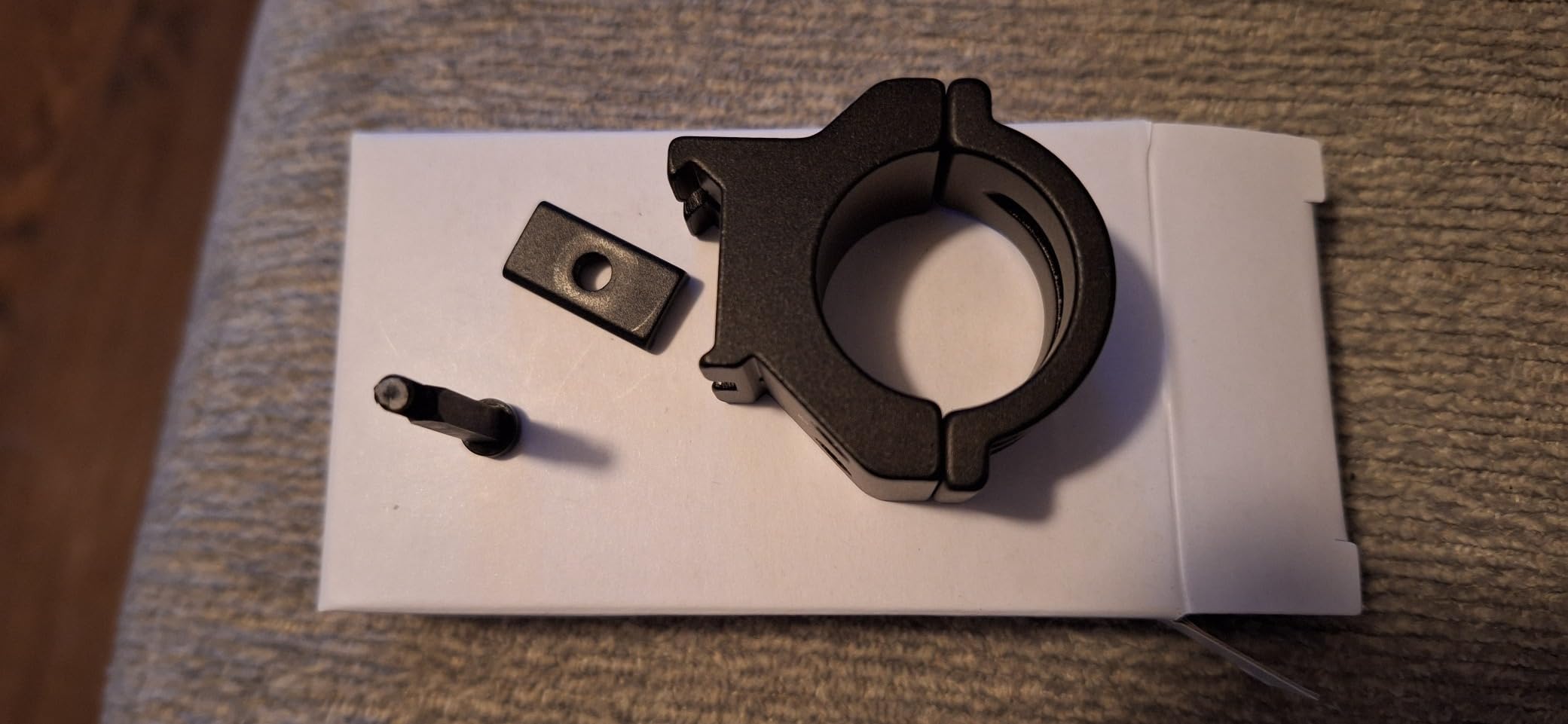
Match the ring diameter to your rail or receiver. Most modern hunting rifles take a one-inch ring, and one-inch and 30mm scopes need one-inch and 30mm rings respectively, since the ring clamps the tube and has to fit it exactly.
You also need enough ring height for the front and rear bells to clear the rifle. Back up the rifle, measure the gap between the rail and the lowest point of the scope body, and add the ring height before you buy. Torque the screws to the manufacturer specification with a torque wrench, not by feel, because over-torquing strips screws and under-torquing loses zero.
Magnification Matched to Deer Terrain
Matching the scope to the ground is worth more than any premium. Buying high power for thick timber is the most common and most expensive mistake in this category, and the fix is entirely in the terrain match.
Thick timber and close cover: 1x to 6x or 3x to 9x, and a wide field of view at the low end. You need to find the animal before you can identify it. The SIG Sauer Tango-MSR is built for exactly this.
Flat farmland and mixed cover: 3x to 9x handles nearly everything, typically 100 to 200 yard shots. This is the most common deer situation and the reason a 3-9×40 is the default recommendation in this guide.
Open western country and draw shoots: 3x to 12x with a ballistic reticle, typically 250 to 400 yard shots. Drop data matters here. The SIG Sauer Buckmasters fits, and a 50mm objective helps at the long end.
Mountain and backcountry: 3x to 9x at 12 to 15 ounces, and use a tree stand setup where timber allows it so you are not climbing all day. Every ounce on the glass is an ounce you carry five days running.
Dawn and last light: any of the above with a 44mm to 50mm objective and, ideally, illumination. The Leupold VX-Freedom and the SIG Sauer Tango-MSR are our two low-light answers, and a spotting scope is still the fastest way to confirm a distant animal.
One note on glass selection. At 20x and above a spotting scope beats a rifle scope for identification, because you are not supporting a rifle and the light gathering at that magnification favors a dedicated glass. If after-dark work is part of your hunt, our thermal scope guide covers the electronic side.
Frequently Asked Questions
What is the best rifle scope combo for deer hunting?
The best rifle scope combo for deer hunting is a 3-9x40mm scope on a bolt-action or semi-auto hunting rifle with a proper one-inch ring set mounted to spec. Our top pick is the Vortex Crossfire II 3-9x40mm, which pairs a forgiving eye box with a lifetime warranty. Match magnification to terrain, not to aspiration.
What is the best magnification for a rifle scope for deer hunting?
A 3x to 9x range covers most deer hunting because most deer are shot inside 200 yards, and 3x to 12x covers nearly all of them. Add power only when your country regularly produces shots past 300 yards. Starting at 3x matters more than the ceiling, since a buck in timber is hard to find at high magnification.
How many yards is a 3-9×40 scope good for?
A 3-9×40 scope is good from inside 50 yards out to about 200 yards with a center-fire bolt action, which covers the majority of deer hunts. Beyond 250 yards you will want a ballistic reticle and more power. Inside 75 yards, a 3x low end keeps the animal in view in cover.
What is considered good eye relief on a rifle scope?
Good eye relief is 3.5 inches or more, and 4 inches or more is better if you wear glasses or shoot a bolt-action rifle with a bolt sweep you must clear. Eye relief is the distance between your eye and the rear lens, and too little causes scope blackout when your head shifts. The Bushnell Banner Dusk and Dawn lists 6 inches.
Is Vortex or Leupold better for hunting?
Vortex generally offers more magnification options under a given budget and an unlimited unconditional lifetime warranty, while Leupold tends to lead on low-light coating performance and finishes build quality in the USA. For deer, a Vortex 3-9×40 and a Leupold VX-Freedom 3-9×40 cover very different budgets and both earn their place.
Is a 308 overkill for a deer?
A .308 Winchester is more than enough for deer and is a good choice for new hunters because its mild recoil keeps you on target between shots. Choose the rifle you can shoot accurately and afford to reload. Once the rifle is picked, choose a scope with a ballistic reticle so holdovers match your actual cartridge.
Should I get FFP or SFP for deer hunting?
Most deer hunters are fine with a second focal plane reticle, because the bold fixed lines are easier to read and the scope is lighter. Choose a first focal plane reticle when you dial precise holds past 300 yards or use one optic for hunting and target shooting.
Is a cheap scope as good as an expensive one?
For deer inside 200 yards, a well-made budget scope is genuinely good, and owners of the Bushnell Banner and Vortex Crossfire II report brightness and durability that match far more expensive glass. The premium scopes pay for low-light clarity, first focal plane detail, and zero-stop systems. Match the tier to your terrain rather than to the price tag.
Final Verdict and Where to Start
The Vortex Crossfire II 3-9x40mm is the best rifle scope for deer hunting for most people reading this, because it combines a forgiving eye box, bright multi-coated glass, and an unlimited lifetime warranty with the largest volume of real-world use behind it. It is the scope we would put on a first deer rifle without hesitation.
If your budget is tighter, the Bushnell Banner Dusk and Dawn 3-9x40mm gives you six inches of eye relief and IPX7 sealing, and the Vortex Triumph HD 3-9x40mm arrives with rings already in the box so you can finish the build in an afternoon. Both are proven choices rather than compromises.
Hunt open country and see deer past 250 yards? Move up to the SIG Sauer Buckmasters 3-12x44mm for the holdover dots. Shoot in thick timber or in the last minutes of light? The SIG Sauer Tango-MSR 1-6x24mm gives you true 1x and eleven illumination levels. Need every dawn minute you can get? The Leupold VX-Freedom 3-9x40mm is built for exactly that.
Whatever you choose in 2026, buy the rings, torque them to spec, zero at 100 yards, and confirm the zero in the field before opening season. A scope that holds its zero and lets you see the animal is worth more than one with a longer spec sheet.