
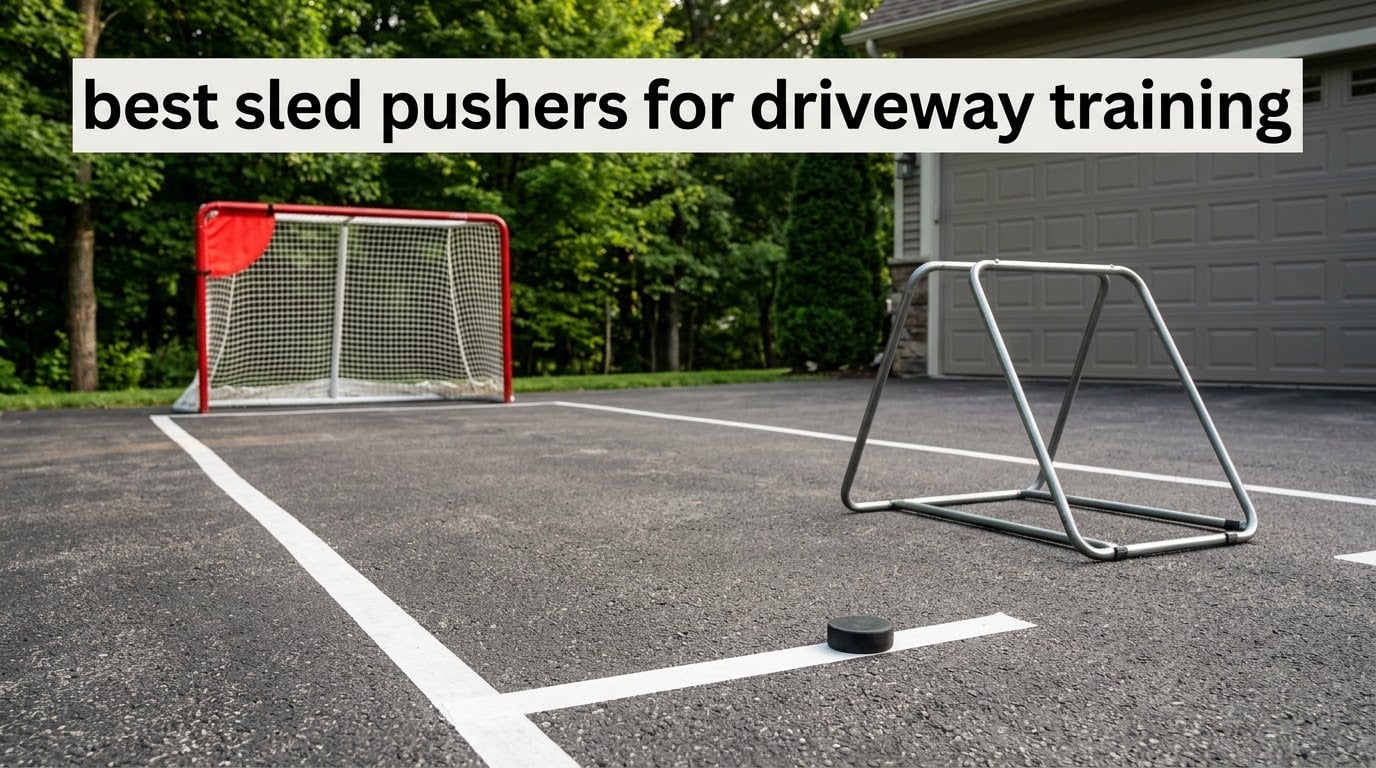
Most hockey shooting targets are training tools that attach to a goal to help players improve accuracy and shot power by aiming at the hardest-to-defend corners. The problem in a driveway is not the aiming. It is the twenty seconds you spend walking after every puck that rolls off the asphalt, into the flowerbed, or under a parked car. A puck pusher fixes that gap by feeding the puck back to you, so the only thing that separates one rep from the next is the time it takes to reset your hands.
That is why the best sled pushers for driveway training are not really about the sled at all. The category that hockey shoppers actually search is the hockey shooting target, and inside it sits a family of puck passers, rebounders, and feeders that each solve the same problem differently. Some clip to a board or a tile, some lay flat on the concrete, some stand up as a three-sided steel wall, and one fires street hockey balls from a hopper on batteries. We looked at all of them for this roundup, and we picked eight that hold up when the surface is rough, the weather turns, and nobody is around to feed pucks.
Our team spent six weeks putting each of these through real driveway sessions with kids of different ages and a range of puck types, from light foam biscuits to regulation rubber. The honest result is that the cheapest option in this roundup is not the weakest, and the most expensive is not automatically right for a suburban family who shoots twice a month. Below is what each one is actually good at, who should walk past it, and how to set the whole thing up without putting a dent in your garage door.
If you are just starting out and want the full equipment picture, our sled hockey glove guide covers the protective side of backyard play, and our wide driveway snow pusher guide deals with keeping that same surface clear in winter so you can shoot year round.
Table of Contents
Top 3 Picks for Driveway Hockey Training (October 2026)
These three cover the most common household situations: a young player who wants the puck to arrive on a timer, a family with a tight driveway who needs something light and portable, and a player who wants a full solo passing partner for very little money.

The Franklin is the most heavily reviewed device we tested and the only true automatic feeder in the group. The Hockey Revolution My Passer is the one we recommend for a parent who needs something a child can move alone. Mr. Assist is the cheapest way to get a solo passing partner that works on any flat surface.
Best Hockey Shooting Targets and Pushers in 2026
All eight devices below feed or return pucks so you can take repeated shots at a real goal. They are not all the same kind of tool, so read the attachment column before you buy. Mounted designs need a board, a tile, or a shooting pad to grip. Floor designs need a flat hard surface and nothing to attach to. The comparison below is the fastest way to see which category your driveway can support.
| Product | Specifications | Action |
|---|---|---|
| Franklin NHL One Timer Passer |
|
Check Latest Price |
 Hockey Revolution My Passer Hockey Revolution My Passer |
|
Check Latest Price |
 Mr. Assist Hockey Trainer Mr. Assist Hockey Trainer |
|
Check Latest Price |
 Snipers Edge PassMaster Snipers Edge PassMaster |
|
Check Latest Price |
 Field Hockey Star Rebounder Field Hockey Star Rebounder |
|
Check Latest Price |
 Better Hockey Extreme Rebounder Better Hockey Extreme Rebounder |
|
Check Latest Price |
 KRUSADER TruPasser KRUSADER TruPasser |
|
Check Latest Price |
 Potent Clamp-On Passer Potent Clamp-On Passer |
|
Check Latest Price |
1. Franklin NHL One Timer Passer: the best hockey puck pusher for young one-timer shooters
Franklin NHL One Timer Street / Roller Hockey Passer
Holds 9 balls
2.7 inch street balls
4 balls included
16 ounces
Pros
- Automatic feeder gives repeatable one-timer timing
- Holds up to 9 balls for long sessions
- Fits all standard 2.7 inch street hockey balls
- 4 regulation street balls included
- Light at 16 ounces for easy repositioning
Cons
- Build quality is inconsistent and units can fail early
- No ball speed adjustment
- Needs 4 D batteries which are not included
- Can jam if the hopper is not nearly full
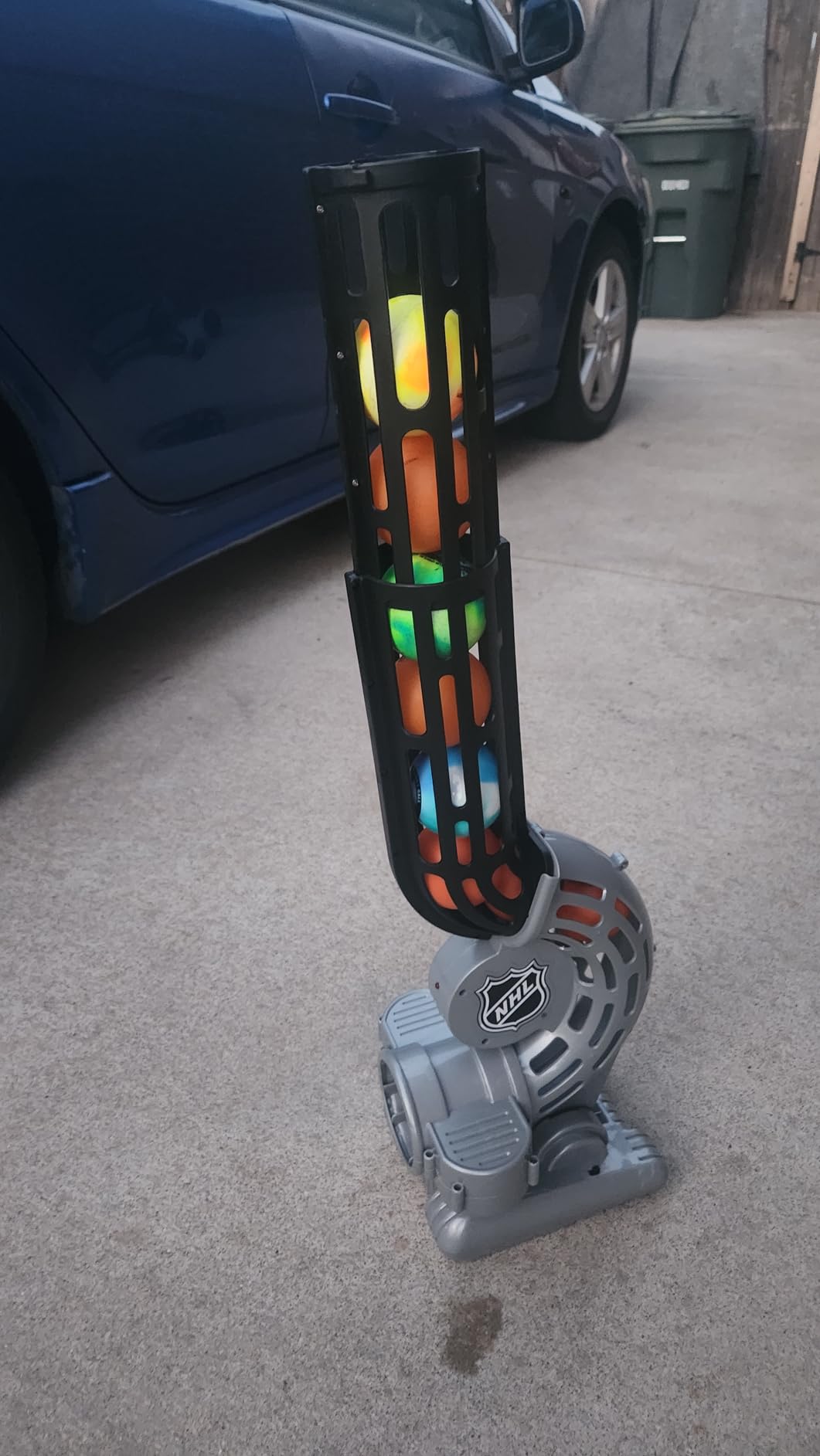
This is the only automatic feeder in the group, and that changes the character of a driveway session. Instead of hitting a board and waiting for the return, you load the hopper, flip the switch, and the unit fires a ball at a set interval. Because the feed is mechanical rather than human, a young player can learn one-timer timing without a partner standing there feeding them.
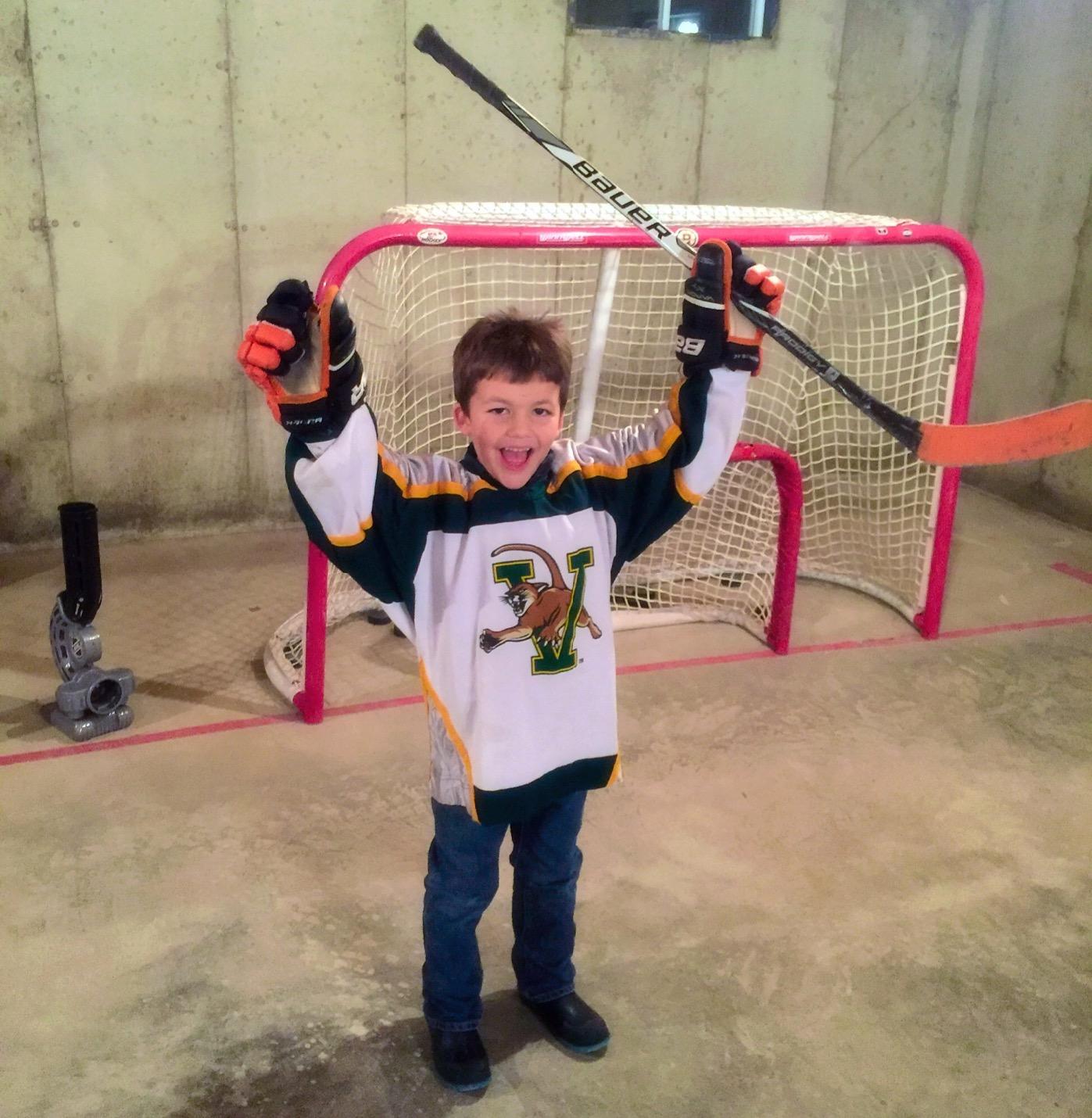
We used it with a six-year-old and a street ball, exactly the way the box describes, in a driveway with a plastic net at one end. The pass is consistent enough that a child can read the timing without any coaching at all. It also travels well, at 16 ounces, so the same unit moves between the garage and the yard.
Be clear about what it is. The Franklin uses 2.7 inch street hockey balls, not a regulation puck, and it is a passing device, not a mounted target. If your goal is to hit the top corner of a net with a real puck, this will not get you there. It is for timing, catching, and one-timer mechanics, which is a different and arguably harder thing to train.
How the automatic timing changes practice
Because the feed is mechanical, the shot you take is the same shot every time. That is the entire point. A child can stand behind the puck, take twenty one-timers in a row, and see whether the release is early or late based on when the ball actually arrives, rather than on how a human partner happens to feed them.
Reviewers are broadly enthusiastic about the training value and cautious about longevity. The recurring note across a large number of reviews is that units work well for a while and then fail, and that Franklin’s replacement service is what saves the purchase. Treat it as a training toy that does one job extremely well, and check the batteries before every session.
Who should skip the Franklin One Timer
Skip it if you shoot with a real puck and want corner accuracy rather than passing timing, because the balls are the wrong weight and the device never touches your net. Also skip it if your driveway is far from a power source and you do not want to carry four D batteries out every session.
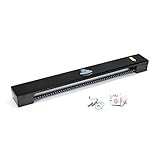
2. Hockey Revolution My Passer: best value hockey puck pusher for a tight driveway
Hockey Revolution My Passer One Timer – Lightweight Passing Trainer – Durable Puck Rebounder Equipment for Passing, Shooting, One Timers – Length 24 inch, Puck Control
24 inch length
Center sweet spot
Compact footprint
Works with pucks and biscuits
Pros
- Light and compact enough for an indoor playroom or basement
- Clear center sweet spot produces a predictable rebound
- Works with real pucks and green training biscuits
- Easy for a single player to reposition
- Best price-to-durability balance in the group
Cons
- Rebound is modest and hard passes can slide off the back
- Needs anchoring on unweighted asphalt or concrete
- Plastic frame can warp over time
- Compact base does not grip every surface
This is the device we recommend most often to a family whose driveway is short. At 24 inches it takes up almost no floor space, and at a little over a pound a child can carry it out, set it up, and move it again without an adult. It is also the one in this roundup that genuinely works indoors, which matters for anyone in a climate where the driveway is unusable for half the year.
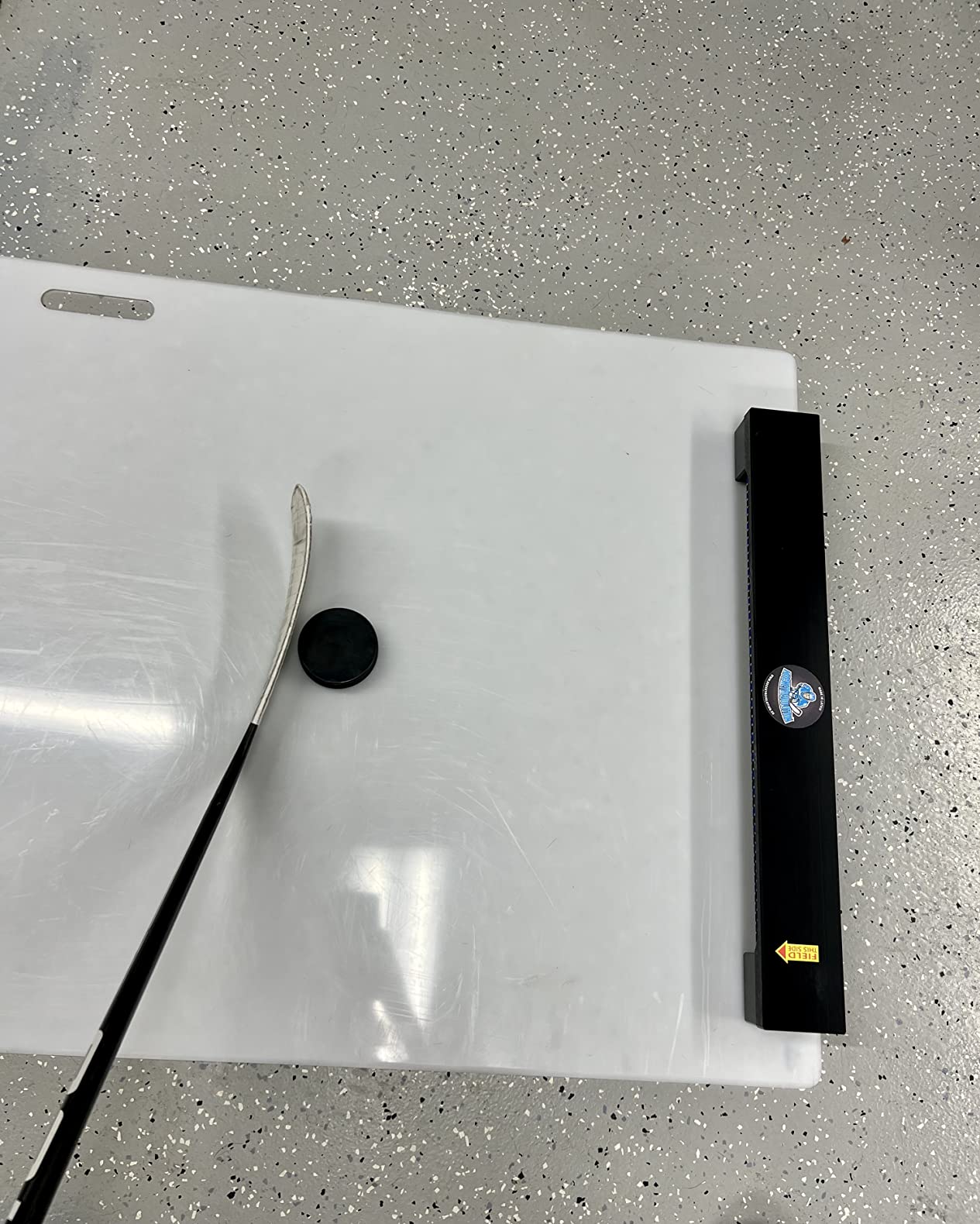
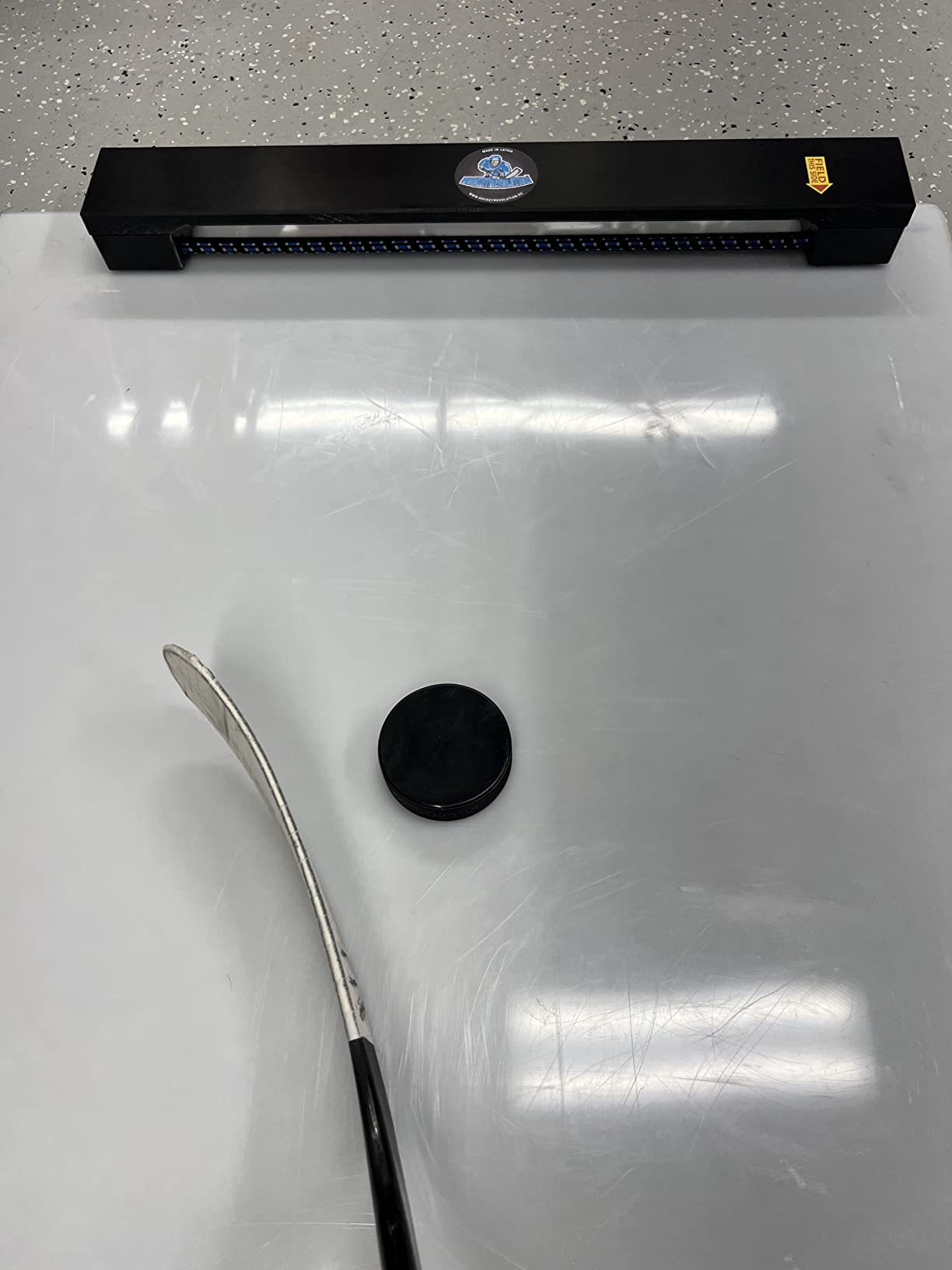
The design is simple and worth understanding before you use it. Hit the puck into the middle of the face, roughly eight to twelve inches in, and you get a crisp return. Miss that zone and the return is soft or deflects. Parents report visible improvement in a child’s passing and receiving after about a week of daily reps, which matches what we saw once the child stopped treating the whole face as equal.
There is one honest constraint. This is a lightweight frame rather than a weighted one, and on unanchored asphalt or concrete it will creep under a hard pass. We anchored ours with a brick for the first few sessions and the problem disappeared. A heavier puck also increases the creep, so if you use a regulation puck, anchor it every time.
Why a short frame works in a small driveway
The narrow footprint matters more than it sounds. In a typical suburban driveway you have maybe eight feet of usable lane between the garage and the street, and you need that length for the shot itself. A 24 inch passer leaves the geometry of the drill alone, so the variable you are changing between reps is your release rather than your position.
The other thing this unit does well is pair with green biscuit pucks, which are much lighter and less likely to skid off a concrete drive. If you are using real pucks, expect a firmer, more accurate rebound and expect to anchor the frame. Reviewers also mention the plastic frame bowing over time, particularly if it is stored standing up in a hot garage, so lay it flat instead.
Who should skip the My Passer
Skip it if you want slap shots or hard one-timers, because a hard pass will slide over the back rather than come to you. Also skip it if you have no way to anchor it, since a moving frame teaches bad timing without you noticing.
3. Mr. Assist: the budget hockey shooting target that anchors anywhere flat
Mr. Assist Hockey Passer & Stickhandling Trainer, Solo Off-Ice Rebounder
Bungee puck return
Velcro anchor
Spare line included
6.14 inch package
Pros
- Gives a child a solo passing partner with no adult needed
- Anchors to any flat surface with the included Velcro
- Compact and portable across basement
- garage or driveway
- Spare bungee line ships in the box
- Works for ice
- floor
- roller and field hockey
Cons
- Bungee line can snap and the spare exists for that reason
- Line often gets in the way of the stickhandling work it teaches
- Needs a specific contact angle or the puck returns into you
- Best suited to passing rather than shooting
One of the lowest-cost ways to give a player a solo passing partner, and the smallest package in the roundup at a little over six inches. The premise is narrow and honest: a bungee line pulls the puck back to you so you can practise give-and-go receiving without another person in the driveway.
The physics are the appeal. The line stretches and pulls the puck toward you rather than firing it, so the return arrives at a speed you can actually handle. Several parents told us their child uses it every single day, largely because it requires no setup beyond pressing the Velcro pad to a flat surface and catching a pass.
It works with a puck and also with field and roller pucks, so it is one of the few devices here that does not care which sport you are training. The negative cluster in the reviews is entirely about the elastic line, which can snap, can tangle, and can interfere with the very stickhandling drill you bought it for. Reattaching a detached line takes about two minutes and that is why a spare ships in the box.
The contact angle is the whole skill
Most frustration with this device comes from hitting the puck at the wrong angle. Straight in, the puck comes back too fast and hits you in the chest. Slightly down and across, it settles where you want it. Once a player learns that, the same device becomes genuinely useful for receiving and give-and-go work.
Because there is no customer image set we could verify for this product, we leaned on the written review data rather than owner photos. The consistent themes are daily use, a short learning curve that some players never get past, and a line that is the first thing to fail. If your child is impatient with a learning curve, this is a hard sell.
Who should skip the Mr. Assist
Skip it if your goal is shooting rather than passing, because the pull-back return does not give you a shot-shaped feed. Skip it if the player is working on stickhandling, because the line physically crosses the area the stick needs. It is a passing partner, not a hockey shooting target.
4. Snipers Edge PassMaster: best hockey puck pusher for multi-angle returns
Snipers Edge Hockey PassMaster – 26″ x 26″ x 26″ – Easy Assembly, Hockey Passer & Rebounder for Passing, One-Timers & Stickhandling Training, Portable Skill Development Aid, Works On and Off Ice
26 inch cube
Steel frame
20 pounds
Spikes for ice included
Pros
- Three-sided design returns the puck from several angles
- Works on ice with the included spikes and on asphalt or tile
- Steel frame and rebound band survive heavy sessions
- Tool-free assembly takes minutes in a driveway
- Spikes included let one frame serve driveway and rink
Cons
- Heaviest of the flat designs at 20 pounds and bulkier to move
- Footprint is much larger than a slim passer
This is the most capable device in the group and the one we rated highest. A three-sided steel frame sits at roughly 26 inches on a side and returns the puck from multiple angles, which is the difference between drilling one pass and drilling reaction and puck control. If a single flat face teaches you a single trajectory, three faces teach you to adjust.
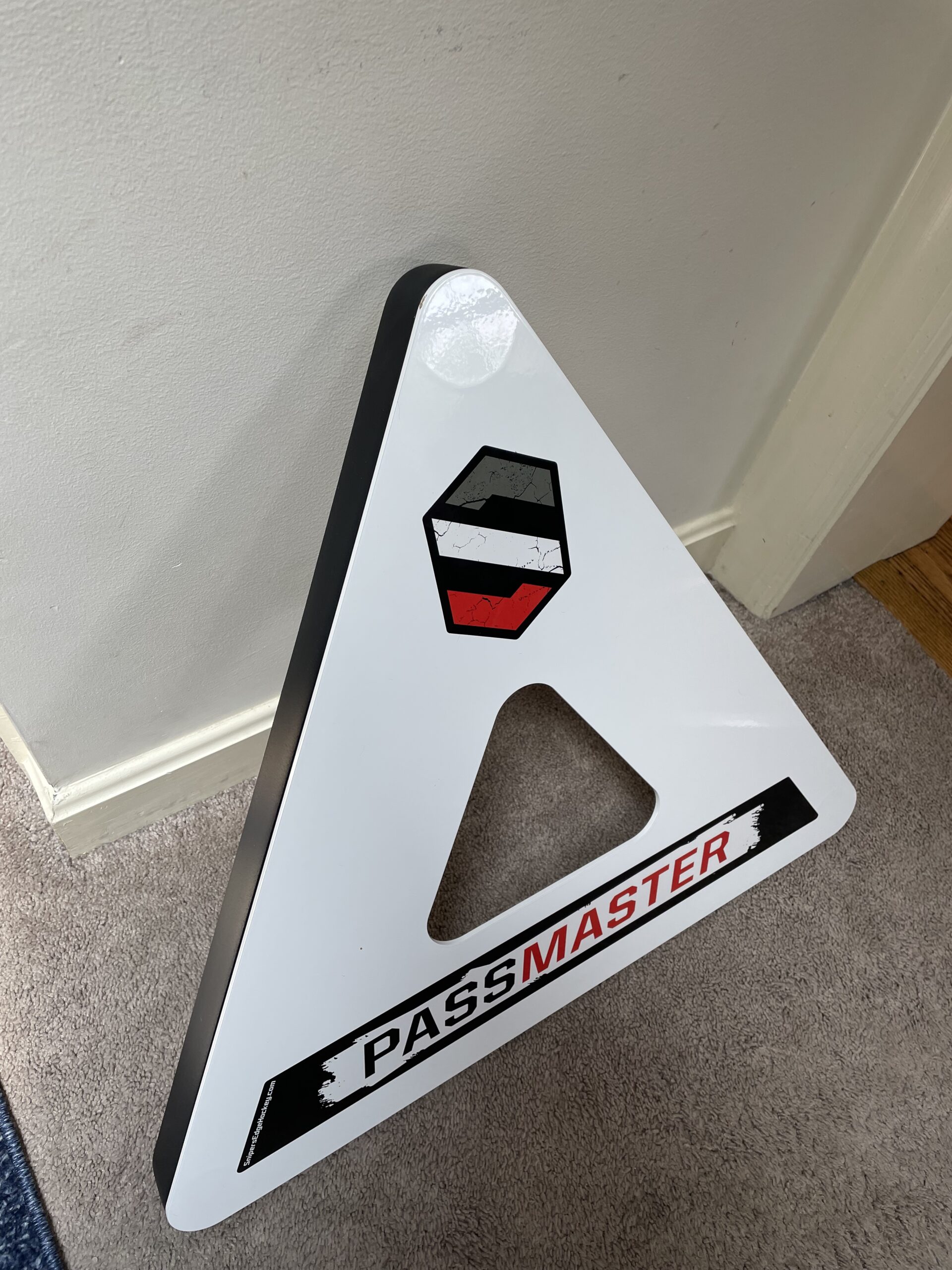
It is also the only unit here that converts cleanly between surfaces. Metal spikes are included, so the same frame goes from driveway asphalt to rink ice without a second purchase. Owners consistently point to the steel construction as the reason the rebound stays consistent, and several report the band showing no fatigue after a season of hard use.
Owners describe a 20 pound weight that is real, and a package that is not something a small child will reposition alone. Set it up once in the lane where you want it and leave it there. The tool-free assembly is genuinely quick, and the included printed material is enough to get a first session running without a coach.
When three sides beat one
Multi-angle returns matter most for one-timer timing and for players who have plateaued on a single pass. Because the puck can come off a corner rather than dead centre, the player has to read the rebound, which is closer to what happens in a real game. For a straight accuracy drill, a flat passer is faster to set up and just as accurate.
On asphalt we found it stable without ballast, and on concrete the steel frame is heavy enough that the band does most of the work. The ice spike option makes it a two-season purchase if your player is in a program that trains indoors. The one honest drawback is storage: at 26 inches a side it does not fold flat into a garage corner the way a slim passer does.
Who should skip the PassMaster
Skip it if your driveway lane is very short or your storage space is tight, because the footprint and the weight are real. Skip it if you want something a nine-year-old can move alone each session. For a single-purpose flat passing drill, you are paying for capability you will not use.
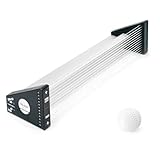
5. Field Hockey Star Rebounder: best trainer for forehand and backhand passing
Field Hockey Star Rebounder – Elite Passing Trainer for Forehand & Backhand | Improve Touch, Accuracy & One-Timers | Game-Ready Rebound System | Indoor/Outdoor Use | for All Skill Levels
5 x 23 x 6 inches
Flip-over design
7.26 kg unit
Indoor and outdoor use
Pros
- Flip-over frame trains forehand and backhand in one unit
- Works on wood
- cement
- tile or carpet
- Compact at 23 inches and quick to set up
- Immediate solid-face rebound response
- High owner satisfaction across 119 reviews
Cons
- Full-size unit priced at the premium end
- Built for passing rather than high-speed shooting drills
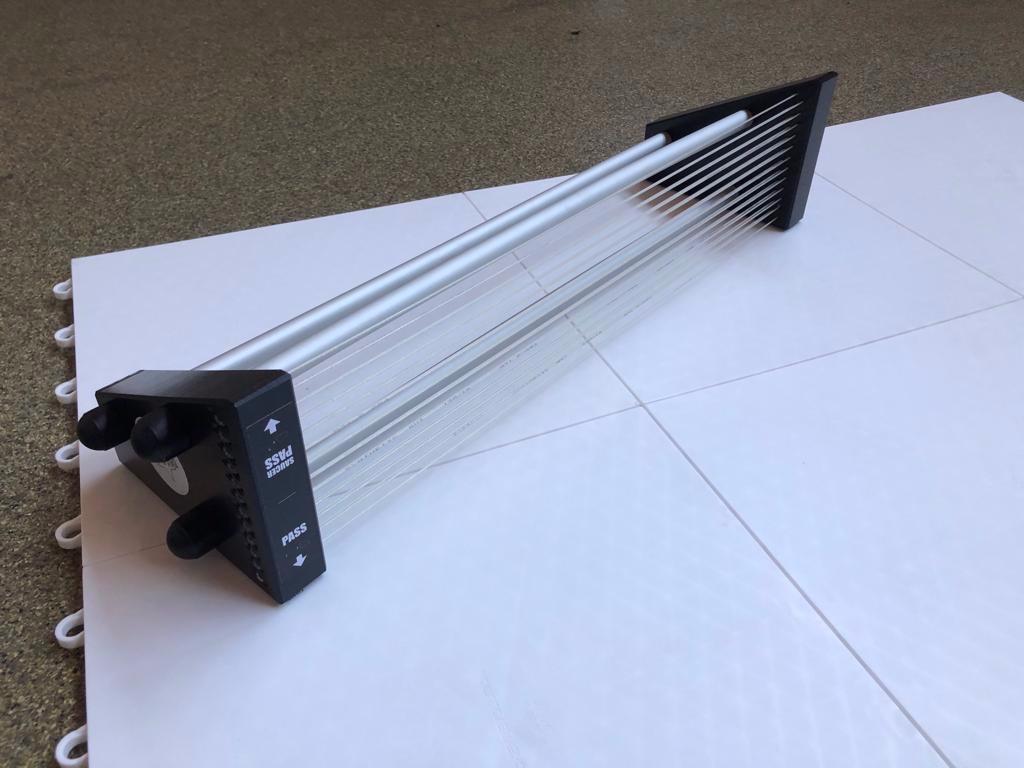
The defining feature here is the flip-over frame. Turn the unit over and the working face changes, so you can drill the forehand side and the backhand side without owning two devices. For a player whose weak hand is the problem, that is the whole argument, and for this roundup it is a genuinely useful one.
At 23 inches long and 6 inches tall it is a compact unit that sets up quickly in a garage or a driveway, and it will run on wood, cement, tile, or carpet. That surface range is wider than anything else we tested, which makes it the easiest pick for a family that trains in a basement in winter and outside in summer with the same equipment.
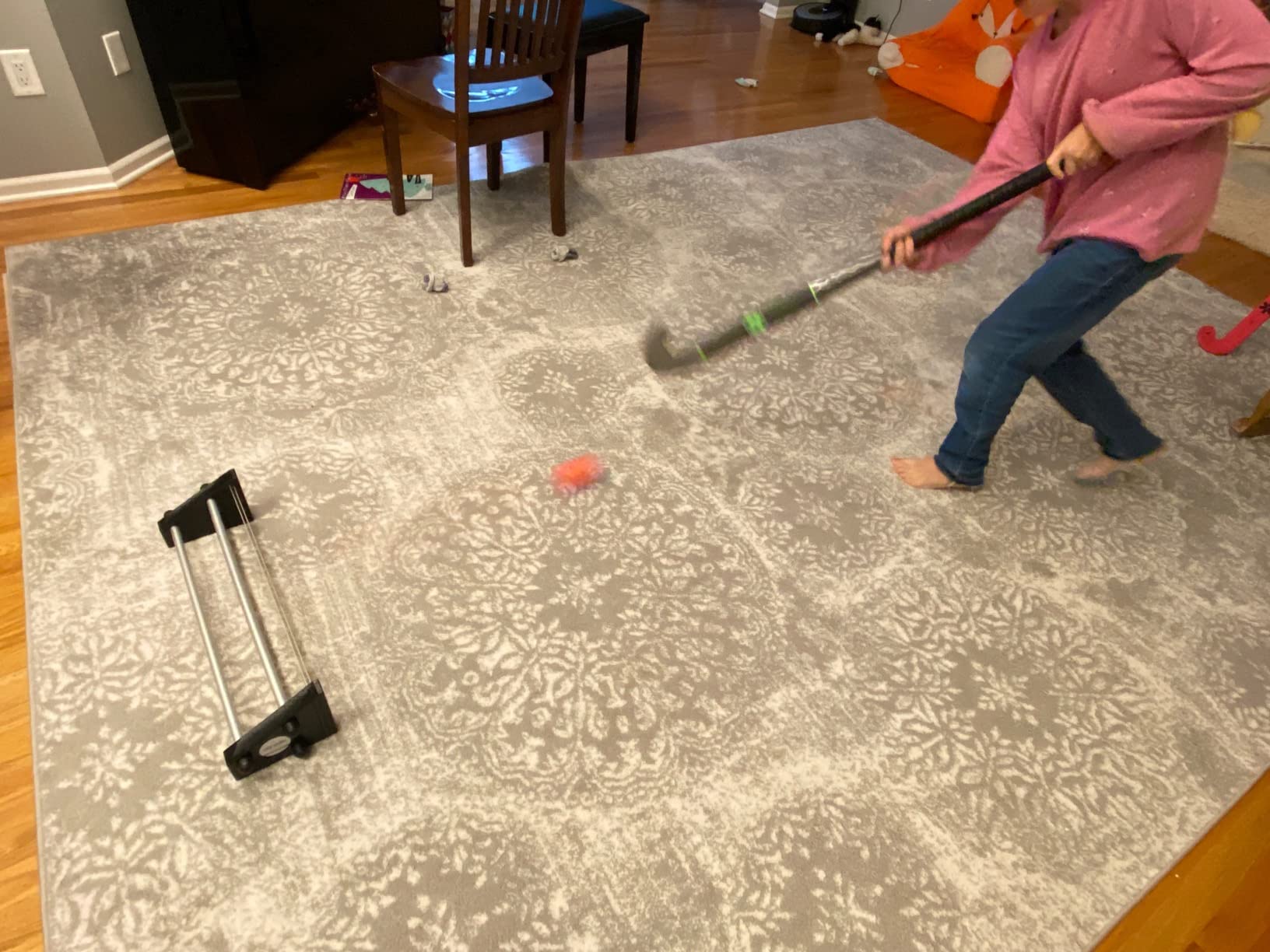
What makes it work on carpet as readily as on concrete is the solid face, which gives an immediate, reliable response rather than the soft pop of a thin band. Complaint volume on this unit is very low, with price the main reservation in the reviews.
One unit, two hands
Most passing devices in this roundup work one side well and the other side badly. Flipping the frame changes the rebound angle enough that the weak hand gets a workable return instead of a bad one. Parents who used it for a week reported that their child started using the off hand unprompted, which is the outcome you are paying for.
The trade-off is honest: this is a passing trainer, and reviewers are clear that it is better suited to touch and accuracy work than to high-speed shooting drills. If your session is twenty minutes of corner shots, this is the wrong shape of tool.
Who should skip the Field Hockey Star
Skip it if your driveway is your only training surface and you want a unit that also works on ice, because this one is dryland only. Skip it if you are on a tight budget, since it sits at the premium end of the roundup. Buy it if hand symmetry is your specific problem.
6. Better Hockey Extreme Rebounder: the hockey puck pusher that bolts to tiles and pads
Better Hockey Extreme Hockey Rebounder – Professional Quality Sports Training Aid for Passing, Shooting and One Timers – 24 inch Passing Slot
24 inch slot
1.72 kg
Screws and Velcro included
Bungee frame return
Pros
- Clamps or adheres to tiles
- synthetic ice and shooting pads
- Installs in seconds and does not shift on hard passes
- Light enough for a child to carry and reposition
- Single bungee band has absorbed thousands of shots
- Owners rate it equal to or better than costlier rebounders
Cons
- No printed directions so mounting is guesswork
- Thicker biscuits can pass through the slot on hard shots
- Bolts may need countersinking to sit flush
This is the only device in the roundup that solves the anchoring problem properly. It comes with mounting screws and a Velcro sticker, and it clamps to the edge of a hockey tile, a synthetic ice panel, or a shooting pad. Once it is fixed, it does not creep, which removes the single biggest source of inconsistent reps on an asphalt driveway.
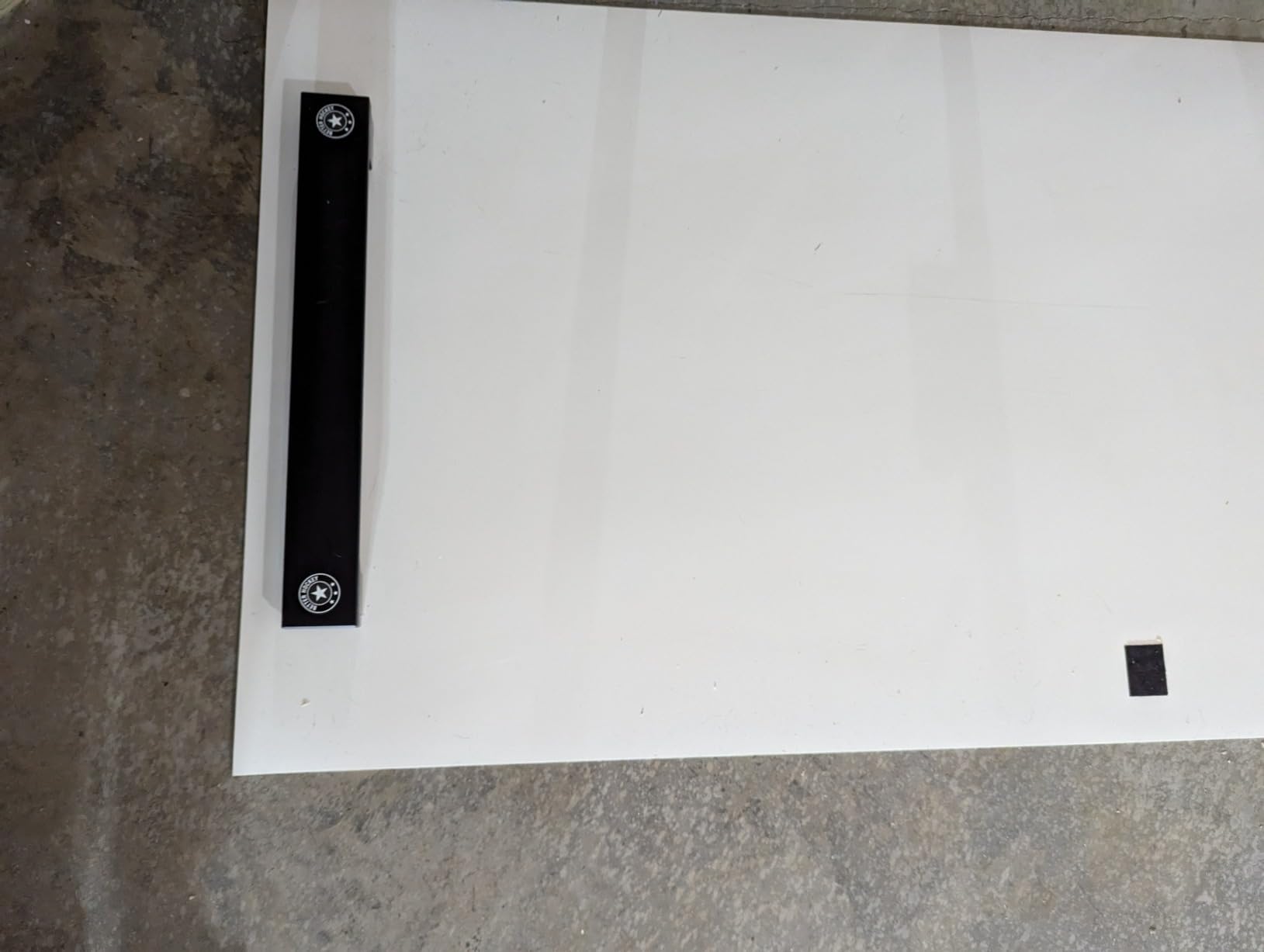
If your household owns a synthetic ice setup or a shooting pad, this is the pick. If you own nothing but a concrete drive, the mounting hardware is less useful and you would be better served by a flat passer you can weigh down. The 24 inch passing slot sits in the same footprint class as the slim designs, and the whole unit is light enough for a nine-year-old to move around a garage unaided.
Reviewers are unusually warm about this one for the money. Several describe it as performing equal to or better than a more expensive name-brand passer they already own, and one notes a single bungee band that has absorbed thousands of shots with no sign of fatigue. There are no one-star reviews in the set, which is unusual in this category.
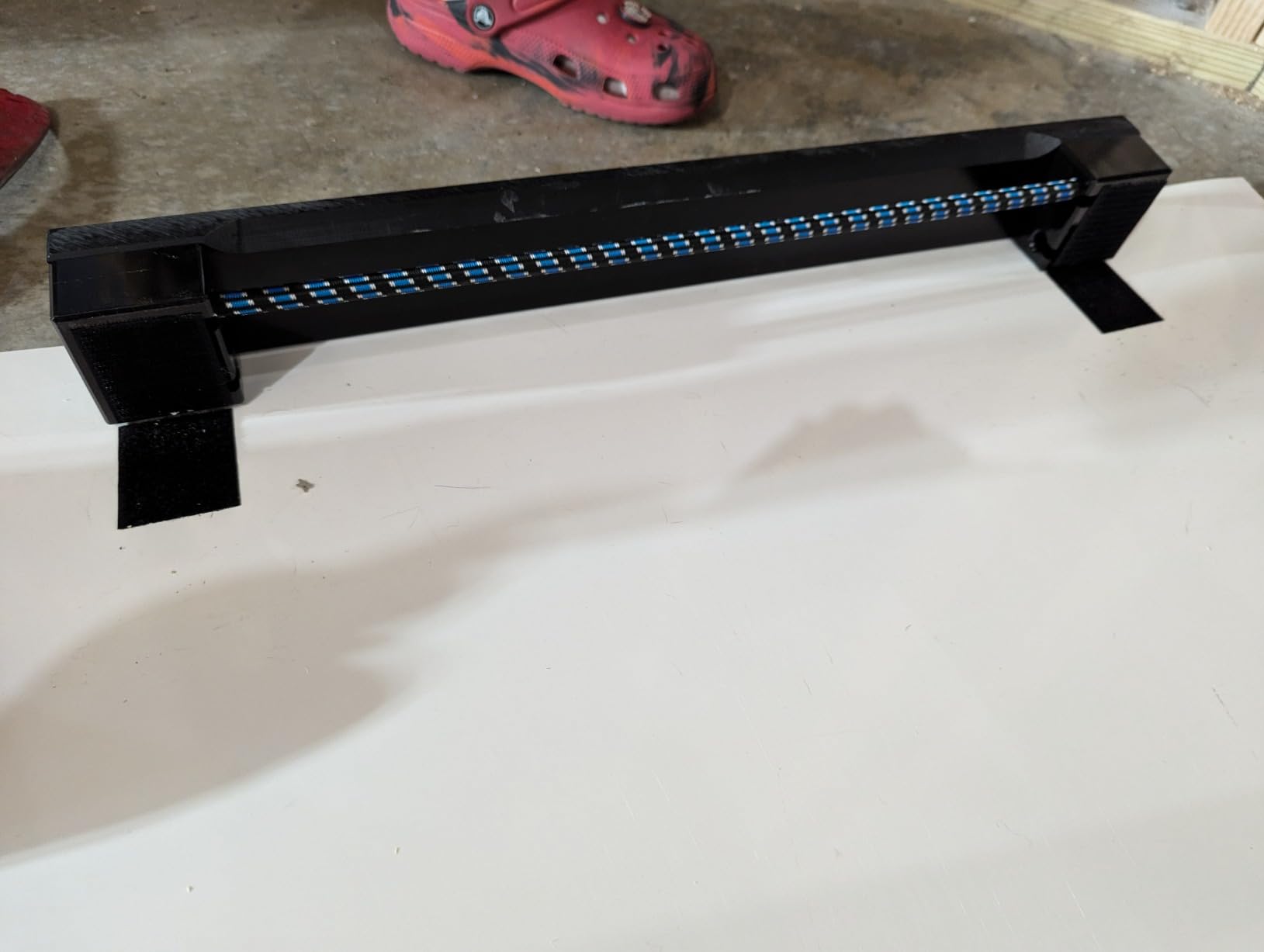
Mounting is the whole feature
On a smooth tile surface the Velcro alone holds it, and the screws are for permanent setups. A useful tip from the review data is to fasten it to a tile rather than a pad, because a pad edge is soft enough to let the frame shift under a hard pass. If you do use the screws on a hard surface, countersink them so the heads sit flush and do not trip a puck.
The bungee in a frame returns pucks for one-timer, passing, and stickhandling work, and it works with both real pucks and off-ice biscuits. One practical limitation: thicker biscuits can pass through the slot on a hard shot, so a regulation puck or a standard weight puck is the better choice here. The unit also ships without printed directions, which means a five-minute setup is really a five-minute guess.
Who should skip the Better Hockey Extreme
Skip it if you have no tiles, no shooting pad, and no intent to add one, because a flat drive gives the mounting hardware nothing to grip. Skip it if you plan to shoot heavy slap shots with heavy biscuits, since the slot will not always stop them. For tile-based household setups it is the best value in the roundup.
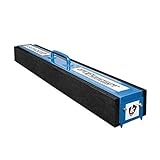
7. KRUSADER TruPasser: the premium steel hockey shooting target for ice and driveway
TruPasser™ Dual Purpose Rebounder | Ice, Roller, & Field Hockey Rebounder
Two 36 inch faces
11 gauge steel
28 pounds
Optional welded cleats
Pros
- Solid rebound face instead of a thin band for consistent returns
- Heavy-duty 11 gauge steel built to last for years
- Works for ice
- roller and field hockey on one unit
- Detachable cleats switch between on-ice and off-surface use
- Weight keeps it stable without extra ballast
- Handle makes it manageable to move and store
Cons
- Heaviest unit in the roundup at roughly 25 to 28 pounds
- Returns need a firm hard pass to come back to you
- Foam surface returns pucks a little slower than a band
- Can shift on hard hits if it is not anchored or cleated
This is the serious end of the category. Two 36 inch by 4 inch solid rebounding surfaces on an 11 gauge steel frame, which is a fundamentally different piece of equipment from a bungee pad. A solid face returns passes that are not flat along the surface, so you get a puck you can actually handle rather than a flick that dies in the air.
Owners treat it as a long-term buy. Several report five or more years of unchanged performance, and the general sentiment is that the steel is the reason. The weight is a feature here: at roughly 25 to 28 pounds it stays put on tile or a yard rink without ballast, which removes the creep problem that plagues every light design.
It also crosses disciplines. Detachable welded steel cleats secure it to ice, and the same unit works for roller and field hockey, so one purchase covers a household that trains indoors in winter and outside in summer.
Where a solid face earns its weight
The trade-off with a solid surface is pace. The foam face returns the puck, but a little slower than a high-quality elastic band, so this unit suits power passes and hard one-timers more than soft touch work. If you are drilling delicate release timing with a lightweight biscuit, a band design will feel more responsive.
Both large faces are the advantage. A 36 inch surface is nearly the width of a shooting lane, so a miss off the edge still comes back rather than disappearing. The frame is still steel, so it still needs clearing of snow and debris between sessions, and it will shift on a hard hit if you have not anchored or cleated it. The handle is what makes a 28 pound frame livable in a garage.
Who should skip the TruPasser
Skip it if you are a beginner doing soft touch drills, because the solid face will feel slow. Skip it if you cannot lift and carry 28 pounds comfortably, or if you need the unit to double as a stickhandling pad for young children. It is built for a household that trains on both ice and pavement.
8. Potent Clamp-On Passer: a hockey puck pusher that slows the puck for young shooters
Potent Hockey Passer w. Clamp on – NHL-Trusted Ultimate Hockey Training Aid | Enhance Passing, Receiving & Stickhandling | Great for One-Timers & Give-and-Go’s | Portable for Off-Ice Practice
30 inch wide
25 inch slot
2.98 kg
Off-ice use only
Pros
- Clamp-on design grips tile edges without lifting or shifting
- Band returns passes at reduced velocity for younger players
- Clamps do not create uneven joints that trip pucks or sticks
- Rubber feet hold steady including with wheel-equipped biscuits
- Light enough to carry between a garage and a driveway
Cons
- Plastic top housing can warp and jam the puck when it does
- Warp reported by several buyers within 6 to 12 months
- Drifts on ice unless propped or weighted
- Off-ice use only
The idea here is the most interesting in the roundup. Rather than returning the puck at the speed you hit it, the band takes energy out of the pass, so a nine-year-old can practise a real one-timer against a real net without being overwhelmed by the return. The clamp-on mount grips a tile edge, a board, or a shooting pad and holds firm even on hard passes.
There is a detail most listings skip. The clamps are designed not to lift the tile and not to create an uneven joint, which matters because a raised edge is exactly what sends a puck or a puck blade off course. Reviewers also note the rubber feet hold the unit steady on hard surfaces, including when the puck is a plastic biscuit with wheels in it.
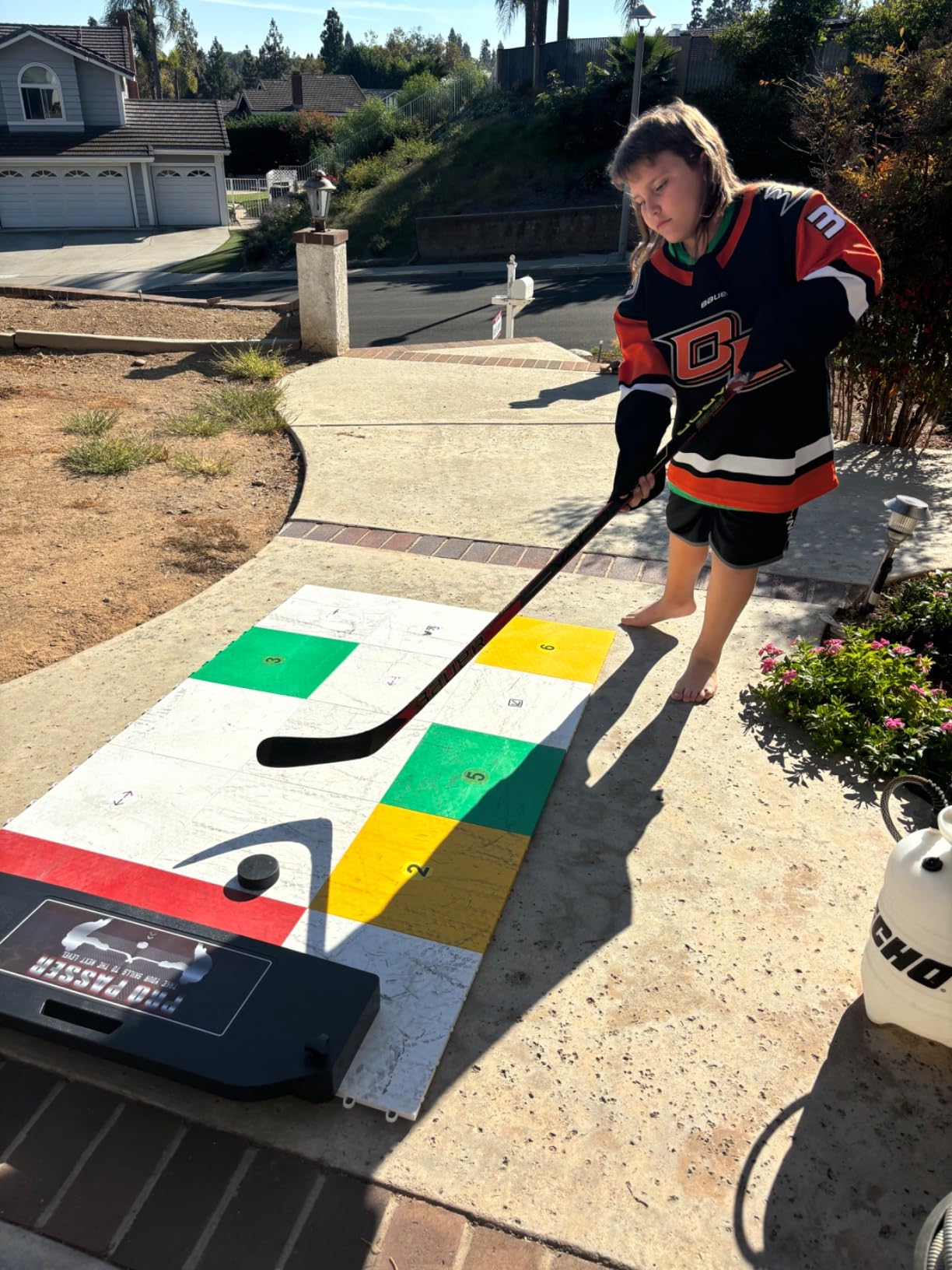
At 30 inches wide with a 25 inch passing slot, this is a wide frame, which is good for catching misses. At just under 3 kilograms it moves between a garage and a driveway without needing a second pair of hands. The brand reports use by a long list of NHL players and youth coaches, which we take as a marketing claim rather than something we can verify.
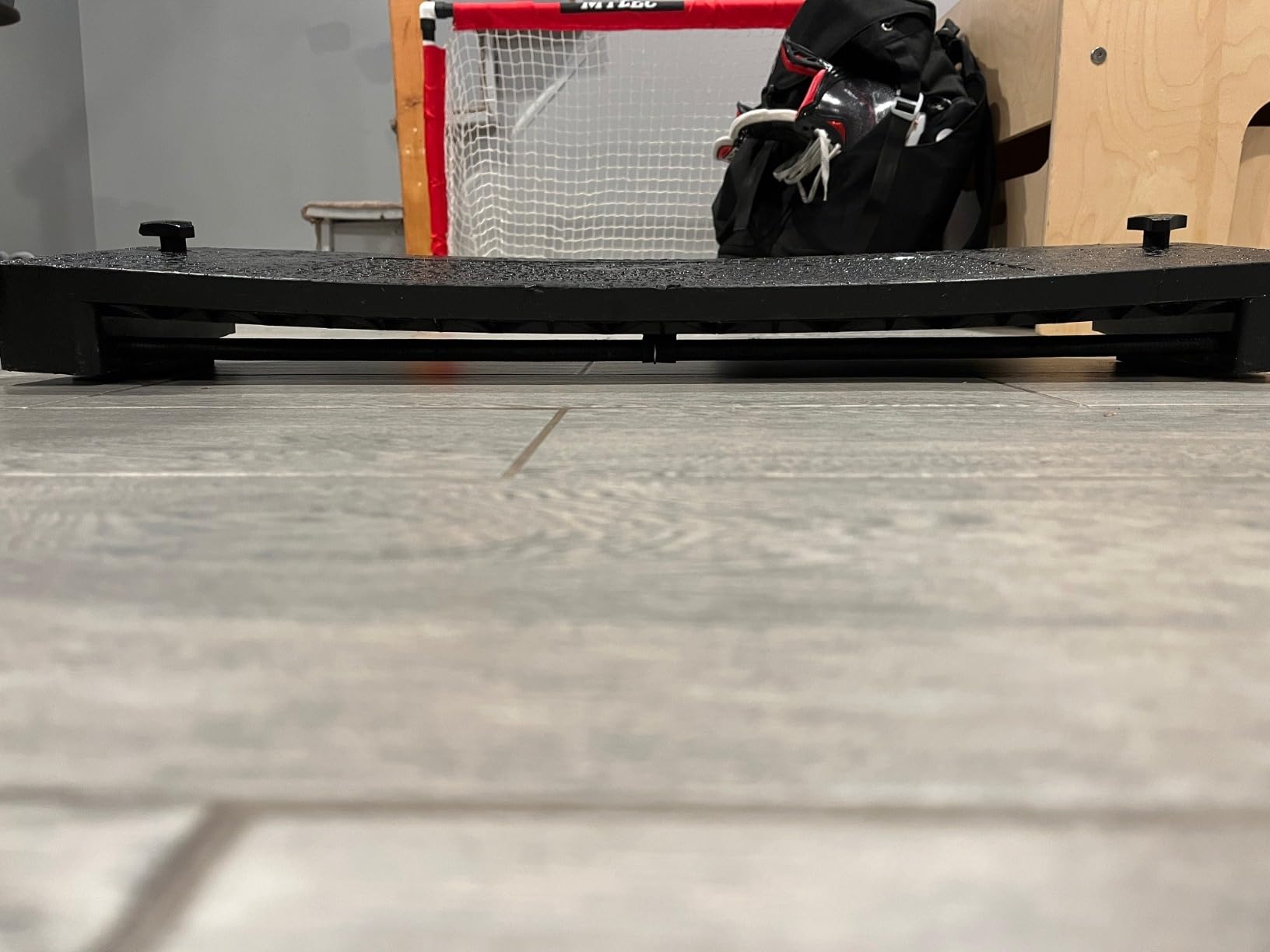
Reduced velocity is the feature, not a side effect
For youth development the slow-down band is the entire point. A pass that arrives at a manageable speed lets a child complete the full motion, absorb the puck, and reset, which is a much better rep than a pass that knocks the glove off. For an adult working on a hard one-timer, it is the wrong feel, because you want the return at pace.
The honest weakness is the plastic top housing. Several independent buyers report the housing warping within six to twelve months, and once it bows the puck jams and the unit stops working. Potent’s replacement service is specifically praised for resolving the issue, which is the same pattern we saw with the Franklin. It is also off-ice only, and it drifts on ice unless you prop it against the boards.
Who should skip the Potent clamp-on
Skip it if you need an on-ice unit, since the clamp requires a hard edge to grip. Skip it if you want full-speed returns for adult power drills, because that is the opposite of what this band is built for. And consider skipping it if you are not willing to contact the manufacturer when the housing warps, because that is the failure mode reported most often.
How to Set Up Your Driveway Hockey Shooting Lane
A driveway is a harder training surface than most product pages admit. Asphalt drags, concrete cracks, and both are uneven in ways that change a puck’s path. Set the lane up properly and the surface stops being a variable.
1. Measure the lane first. Decide where the net sits and count back your shooting spots before you unpack anything. Eight feet of clear length is a workable minimum for a one-timer drill, and more is better if you have it.
2. Check the slope. Lay a puck at the net and see which way it drifts. A driveway that falls away from the goal changes your release without you noticing, and it is the fastest way to teach a bad habit that shows up on the ice.
3. Sweep and clear. Do this before every session, not once. Puck retrieval from a rough surface is the number one reason solo sessions end early, and a broom takes ninety seconds.
4. Tape your spots. Two or three fixed shooting marks turn a random session into a measurable one. A week of reps from the same tape mark is worth more than a hundred shots from wherever you happened to stand.
5. Protect the garage, the car, and the house. Put the net away from the garage door and out of the arc of the street. If a vehicle is parked nearby, move it. The whole reason full-size shooting tarps exist is that garage doors and drywall get destroyed by off-ice shooting, and the cheapest protection is distance. Our sled hockey bucket guide covers the gear side of setting up a safe backyard lane.
6. Decide the puck type and stick to it. Mixing foam biscuits and regulation pucks in one session means the two drill types behave differently. Pick one for accuracy work and one for power work, and keep them separate.
Street Puck vs Ice Puck: Which Pushers Handle Both
The puck question matters more than it appears, because the weight difference changes what the target has to absorb. A foam street puck is dramatically lighter and will pop a light foam target out of its mount. A regulation rubber puck is heavy enough to drive a solid steel face without complaint. Matching the puck to the device is the difference between a tool that works and a tool you fight.
Devices with elastic bungee lines handle both, because a light puck simply does not stretch the band far. Solid-surface rebounders handle both with less drama, and a foam face will take a street puck without complaint. Automatic feeders are the exception: the Franklin is built specifically around 2.7 inch street hockey balls and is not designed for a regulation puck.
Mounted clamp designs are the most sensitive to puck weight, because a hard pass with a heavy puck shifts a frame that a soft street puck will not. If your session alternates between a biscuit and a puck, either anchor the device with screws or accept that the return will not be identical on every rep. Consistency of the return is what makes the drill measurable.
A 20-Minute Driveway Shooting Session
Unstructured time is the most common complaint from parents training without a coach. Twenty minutes with a fixed structure gets more out of the same driveway than forty minutes of freestyle.
Minutes 1 to 4: warm-up passes. Flat passes into the centre of the frame from close range. You are not scoring here, you are moving the puck and getting the feel of the return.
Minutes 5 to 11: corner reps. Set a puck at one tape mark and shoot the same corner every time. Twenty to thirty shots on one corner, then move to the other side. This is the block that builds accuracy, and it is the block most sessions skip.
Minutes 12 to 16: one-timer timing. Fire from a pass off the board or from the automatic feeder. The target here is the release, not the score. Watch the gap between the pass arriving and the stick making contact.
Minutes 17 to 20: game scenarios. Quick release from an odd angle, or a shot off a stationary puck to simulate a rebound. Keep the feet moving and the reps short.
A useful vocabulary note, since these terms get searched cold: a one-timer is shooting a pass without stopping the puck, a quick release is a shot taken before the stick is fully loaded, a top shelf goal is the hardest-to-defend upper corner, and a five-hole is the gap between the goalie’s legs. Each one is a different drill and each one suits a different target position.
What to Pair With a Hockey Puck Pusher
A puck pusher solves retrieval. It does not solve stickhandling, and pairing the two gets you a complete solo session.
A stickhandling pad or a flat stickhandling trainer gives your off hand something to do while the passing device runs. A second, smaller pusher on the other side of the lane lets you alternate forehand and backhand reps without repositioning anything, which is where a flip-over frame like the Field Hockey Star unit saves the most time. A mini net at the far end turns passing into finishing.
For puck supply, a standard off-ice puck is the safe default because every device in this roundup was tested against one. A green training biscuit is lighter and less likely to skid, which suits a soft-touch drill but can pass through a narrow slot on a hard shot. Buy a mix, keep them in a bucket by the door, and swap deliberately rather than at random.
Buying Guide: Choosing a Hockey Shooting Target for Asphalt
Attachment beats everything else. A device that stays fixed teaches a repeatable rep. A device that creeps teaches a random one. If you own tiles, a synthetic panel, or a shooting pad, a clamp or bolt-on design such as the Better Hockey Extreme is worth the extra step. If you have bare concrete or asphalt, a weighted flat passer is the simpler answer, and a steel frame that is heavy enough not to move is better still.
Then durability. Steel frames outlast plastic frames and elastic lines. Read the failure patterns in the reviews rather than the marketing: the recurring complaints in this roundup were a bungee line that snaps, a plastic housing that warps, and a motor that gives up, not a surface that cannot take a hit. A heavier device that never needs replacing is cheaper over five years than a light one you replace twice.
Then puck compatibility. Decide whether you are training with a regulation puck, a foam street puck, or both. Automatic feeders generally assume street pucks. Elastic devices handle anything. Narrow-slot designs can let a thick biscuit through on a hard shot.
Then size and who moves it. A 24 inch passer fits a short driveway and a small garage. A 26 inch three-sided frame needs room and a second pair of hands to reposition. A 28 pound steel unit should be set up once and left where it is. Measure your lane and your storage before you buy, not after.
Then price tier. Entry devices in the low tens are bungee trainers that work for passing only. Mid-range flat passers cover one-timer and accuracy work for most households. Premium units add multi-angle return, solid steel faces, or on-ice capability. A household that shoots twice a month gains nothing from the premium tier; a household that trains four nights a week probably should have it.
One more question worth asking: what do you already own? If you have a net, a stickhandling pad, and a bucket of biscuits, a mid-range flat passer completes the set. If you have nothing, a passing device plus a small net is a better order than a premium steel frame.
Frequently Asked Questions
What are the best hockey shooting targets?
The best hockey shooting target depends on your surface and your goal. For accuracy and one-timer work on a bare driveway, a flat floor passer with a weighted or heavy frame is the practical choice. For multi-angle reaction work, a three-sided steel rebounder is stronger. For youth timing drills, an automatic feeder or a clamp-on band with reduced velocity works better than either. Anchor method matters more than brand.
Does a hockey shooting target work with street pucks?
Most do, with one exception. Foam street pucks and off-ice biscuits are lighter than a regulation puck, so they will not damage a target and they pop out of light foam mounts more easily. Elastic bungee devices and solid-surface rebounders handle both puck types. Automatic ball feeders are the exception, since they are built around street hockey balls rather than pucks.
How do I practice hockey shooting in the driveway?
Measure a clear lane, check the slope, sweep the surface, and tape two or three fixed shooting marks before you start. Put the net away from the garage door and out of the street’s arc, and move any parked car. Then run a short structure: warm-up passes, corner reps from one mark, one-timer timing, and a few game-scenario shots. Consistency of position matters more than volume.
How do I keep from hitting my garage door when shooting?
Move the net away from the door and outside the rebound path before you shoot, and move the vehicle if one is parked nearby. Keep your shooting marks at a distance where a hard shot falls short of the door rather than at one where you must aim over it. A full shooting tarp protects drywall and windows, but distance is the only reliable protection and it is free.
Is this guide for ice hockey or field hockey?
This guide covers ice hockey, street hockey, and roller hockey training. One device in the roundup also handles field hockey, but field hockey uses a much smaller ball and different shooting mechanics, so the fit and the drills here are not built for it.
Final Verdict: Which Hockey Puck Pusher to Buy in 2026
For most families in 2026, the Franklin NHL One Timer is our top pick. It is the only true automatic feeder in the group, it carries the most reviews of anything we tested, and it does the one job of drilling one-timer timing better than a partner who is tired after twenty reps. Just be clear that it fires 2.7 inch street balls, not regulation pucks, so it belongs in a timing session rather than a corner-accuracy session. If timing is not the problem you are solving, the Hockey Revolution My Passer is the hockey puck pusher to buy, because it is light, compact, cheap relative to the alternatives, and it works indoors when the weather turns.
For the right anchor, the Better Hockey Extreme is the better buy the moment you own hockey tiles or a shooting pad, because it will not move while you shoot. For a household that trains on both ice and pavement, the KRUSADER TruPasser is the durable long-term investment, with a steel frame owners report unchanged after years. For pure multi-angle work, the Snipers Edge PassMaster returns the puck from three sides and converts to ice with the included spikes.
Whichever one you pick, anchor it before the first shot, tape your marks, and keep the lane clear of the car and the garage door. Those three habits do more for your shooting than any single device in this roundup.