
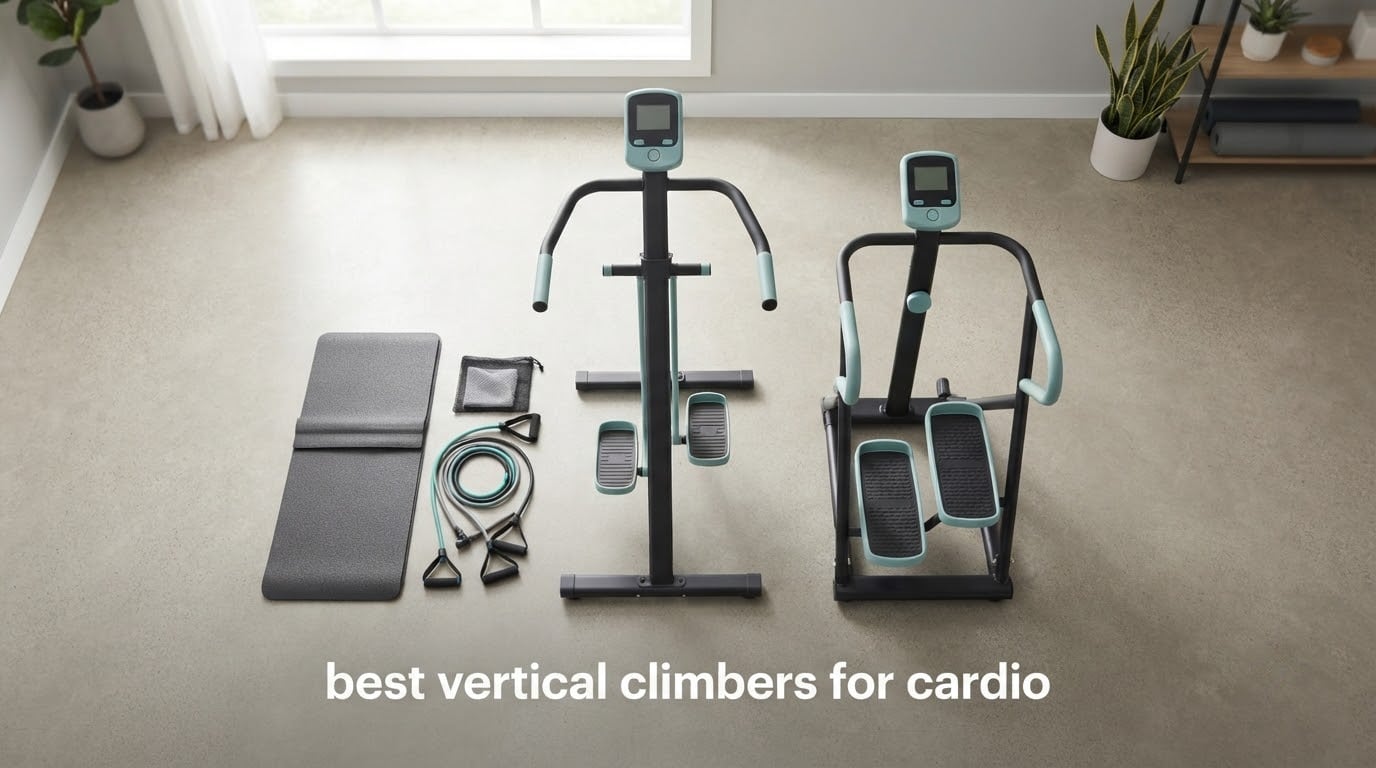
The best vertical climber for cardio in 2026 is the Sunny Health & Fitness Smart Twist Stair Stepper. It stacks a full twisting, low-impact climb into a frame you can carry between rooms, supports up to 350 pounds, and logs every rep to a free companion app. We put 12 vertical climbers and stair steppers side by side and ranked them on what actually matters for cardio: how hard they let you work, how much floor space they cost you, and whether you can live with the noise.
A vertical climber is a slim tower with two independently moving foot pedals and a pair of handles you pull in opposition. You push one pedal down and pull the opposite handle down, then alternate, and that contra-lateral rhythm drives your heart rate up while working legs, glutes, core, shoulders and arms at the same time. Because your feet never leave the pedal, there is almost no downward impact on the knees, which is the whole reason buyers pick one over a treadmill.
Some machines here are true climbing towers with a long vertical stroke. Others are compact twist steppers that fit beside a desk. We treat them as one family because they deliver the same low-impact full-body cardio, but we score them very differently once you factor in stride length, resistance range and how much room they eat up. If you want the same joint-friendly conditioning without a floor machine at all, our guide to the best Nordic ski machines for cardio covers a different way to raise your heart rate in a tiny footprint.
We earn a commission when you buy through links on this page, at no extra cost to you.
Table of Contents
Top 3 Picks for the Best Vertical Climbers for Cardio (October 2026)
These three came out on top because each one does something the other eleven cannot. The Smart Twist wins on overall balance of climbing motion, capacity and app tracking. The Smart Power Stepper handles the heaviest user load in the mainstream tier and adds resistance bands. The Climbing Stair Stepper has the longest true stride here, which is why it finished at the top of the owner satisfaction scores.

Sunny Smart Twist Stair Stepper
- Twisting low-impact climb
- Adjustable step height
- SunnyFit app and LCD
- Up to 350 lb

Sunny Smart Power Stepper
- 400 lb steel frame
- Resistance bands included
- Pulse-grip handlebar
- SunnyFit app

Sunny Climbing Stair Stepper
- 21.5 inch stride
- Four handlebar heights
- Foldable frame
- Up to 330 lb
Best Vertical Climbers for Cardio (October 2026)
| Product | Specifications | Action |
|---|---|---|
| Sunny Health & Fitness Smart Twist Stair Stepper |
|
Check Latest Price |
| Sunny Health & Fitness Smart Power Stepper |
|
Check Latest Price |
| Sunny Health & Fitness Climbing Stair Stepper |
|
Check Latest Price |
 MERACH Foldable Stair Climber MERACH Foldable Stair Climber |
|
Check Latest Price |
 HXD-ERGO Stair Stepper HXD-ERGO Stair Stepper |
|
Check Latest Price |
 EPHESPORT 3-Level Stair Stepper EPHESPORT 3-Level Stair Stepper |
|
Check Latest Price |
 Body-Solid Total Body Vertical Climber Body-Solid Total Body Vertical Climber |
|
Check Latest Price |
 Stamina Cardio Climber with Smart Coaching Stamina Cardio Climber with Smart Coaching |
|
Check Latest Price |
 Relife Stair Stepper Vertical Climber Relife Stair Stepper Vertical Climber |
|
Check Latest Price |
 YOLEO 3-Mode Folding Stairmaster YOLEO 3-Mode Folding Stairmaster |
|
Check Latest Price |
 BULAPEACH Vertical Climber Stepper BULAPEACH Vertical Climber Stepper |
|
Check Latest Price |
 Healfith Foldable Vertical Climber Healfith Foldable Vertical Climber |
|
Check Latest Price |
1. Sunny Health & Fitness Smart Twist Stair Stepper – Best Overall
Sunny Health & Fitness Smart Twist Stair Stepper with Adjustable Handlebar
Twisting low-impact step
Adjustable step height
350 lb max user
LCD plus SunnyFit app
Pros
- Compact frame that stores anywhere
- Quiet hydraulic operation
- App coaching and progress tracking
- Quick assembly
Cons
- Short stride
- Light resistance at low settings
- Calorie readings can be off
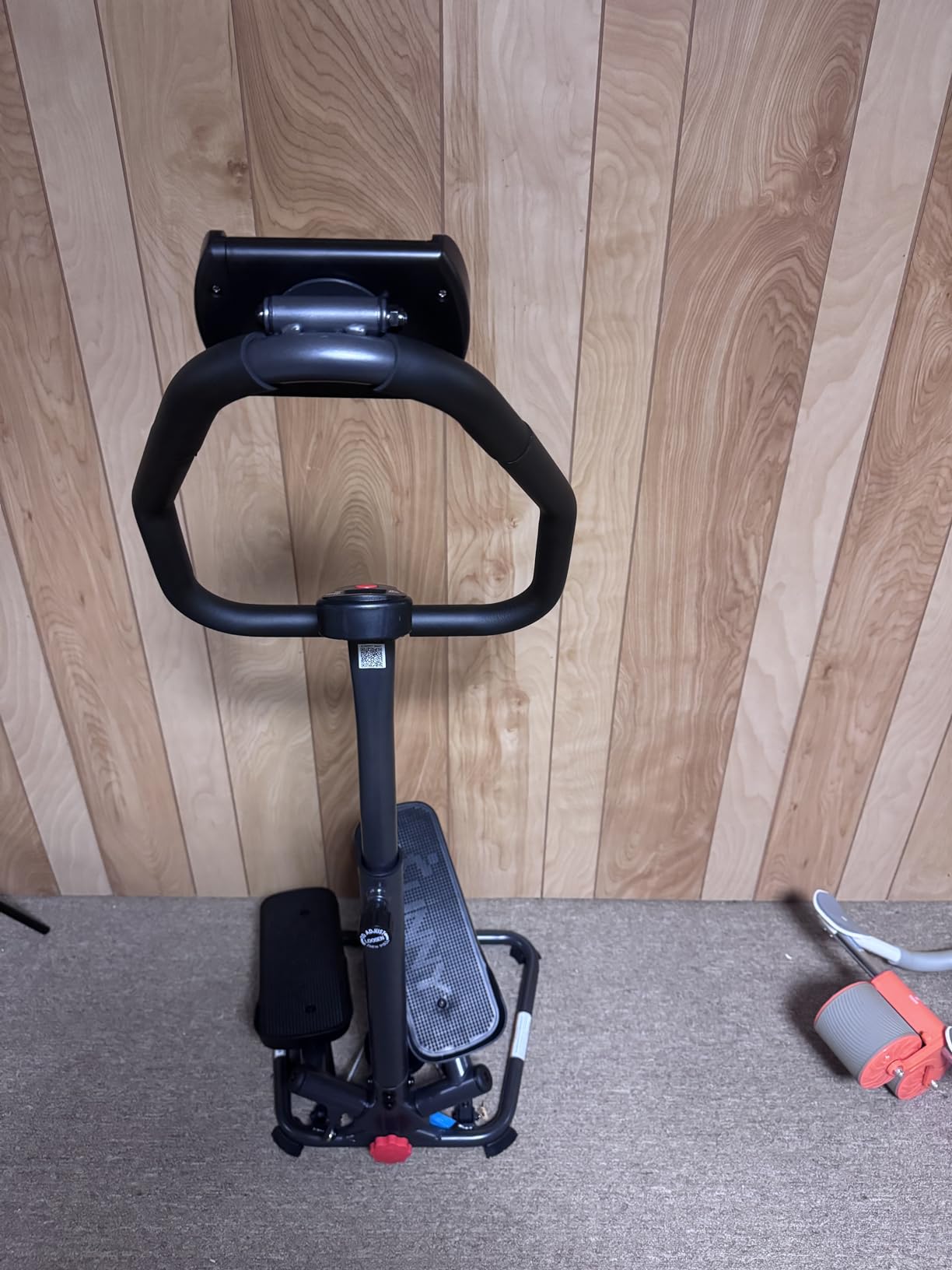
This is the machine I recommend to anyone who asks me what a vertical climber machine actually is, because it is the version that fits normal life. You step on, the platform twists side to side under your feet, and the twist is what makes this such an efficient piece of cardio equipment for the floor area it uses. Twenty minutes on it feels like a real session rather than a warm-up, and I can fold it and slide it beside the sofa in seconds.
The build is alloy steel, it weighs about 26 pounds, and the footprint is 26.6 by 19.1 inches with a height of 56.1 inches. Step height is adjustable, which is the one dial you get, and it goes from a gentle warm-up pace to a genuinely hard effort. Warranty is one year on the structural frame and 180 days on everything else.
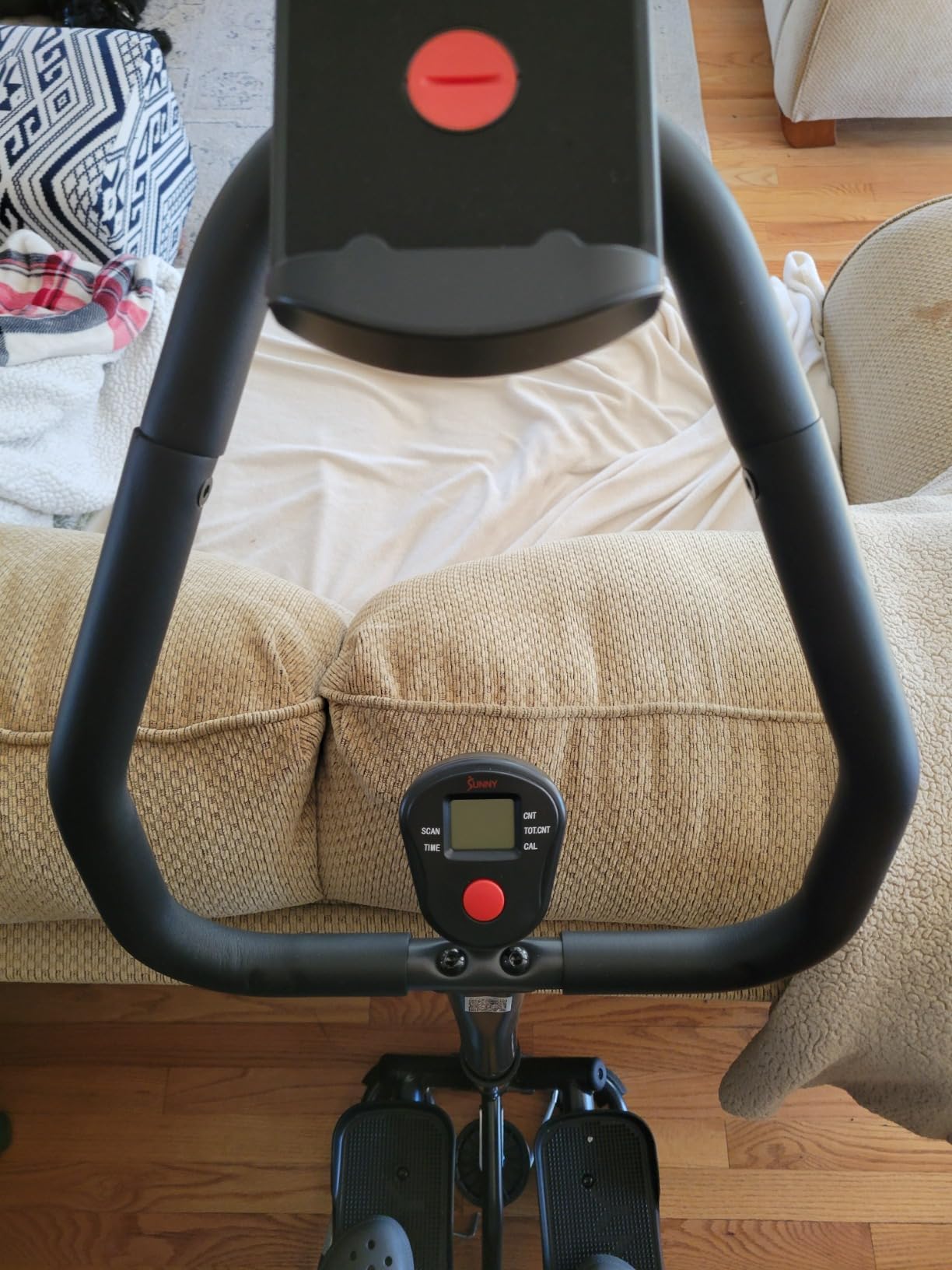
Owners consistently point to two things. The quiet hydraulic system means you can use it at 6am without anyone hearing a thing, and the SunnyFit app adds trainer-led workouts and scenic tours that solve the boredom problem most cardio machines create by week three. Owner reviews run deep, with 5233 ratings and a 4.3 average, and the five-star share is 63 percent.
The honest weakness is that this is not a long-stride machine. If you have done stair-stepping before, the motion range will feel small, and the resistance at the lower settings is light. Buyers who want to climb like they are climbing stairs should read the next entry instead.
There is no built-in program library beyond what the SunnyFit app supplies, and a handful of reviewers describe the calorie figure as optimistic. Neither is a dealbreaker on a machine you can carry between rooms with one hand, which is the trade most buyers accept without thinking.
Who it works for and why it holds up
This suits beginners, apartment dwellers, anyone returning from a knee or hip injury, and multi-user households where a 350-pound rating leaves headroom for two very different body sizes. The twist loads the glutes and core from an angle an up-and-down step never reaches, which is why the burn feels disproportionate to the effort going in.
It also suits anyone who wants their cardio tracked without buying a separate wearable. The integrated LCD shows calories, step count and total count, and the app takes it from there. Set the phone in front of you and follow a coached session instead of guessing at pace.
Where it falls short
It will not satisfy a serious athlete looking for a vertical climbing range to train against. There is no resistance adjustment beyond step height, no weighted loading, and the calorie counter is one of the less accurate ones in this group. Also expect occasional squeaking from the piston, which a shot of lubricant fixes in most cases.
The app setup draws complaints too. Reviewers describe it as cumbersome, with a long list of permission prompts before you get to your first workout. If you would rather just step and watch something, that friction is real.
2. Sunny Health & Fitness Smart Power Stepper – Best with Resistance Bands
Sunny Health & Fitness Smart Heavy Duty Stepper w/Handlebar & Device Holder
400 lb reinforced steel
Dual hydraulic cylinders
Included resistance bands
Pulse-grip handlebar
Pros
- 400 lb reinforced steel for heavier users
- Bands add upper body work
- Device holder and pulse sensors
- Stores under a bed
Cons
- Heavier to move
- Light low-end resistance
- Unreliable calorie counter
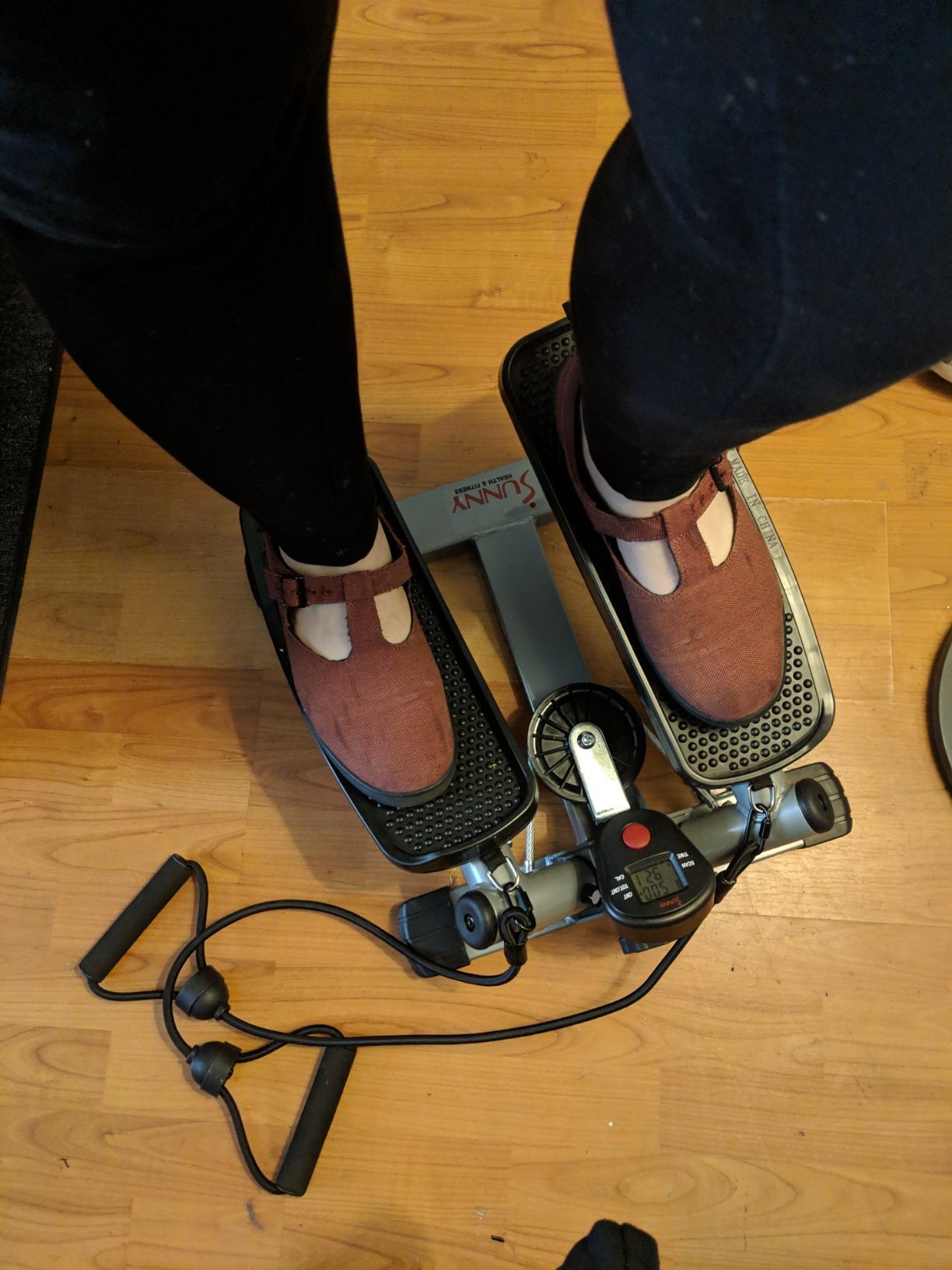
This is the stepper I recommend to heavier users who want more than cardio. The frame is rated to 400 pounds, a clear step above the foldable steppers here, and the pair of resistance bands let you push and pull upper body work into the same session as your legs. That combination makes it a genuinely full-body machine rather than a cardio-only purchase.
Step height adjusts through a wide range so you can warm up shallow and finish deep, and the height-adjustable handlebar carries padded grips plus integrated pulse sensors. At 36.2 pounds it is the heavier of the two Sunny steppers, and the extra weight is the reason it stays planted under hard intervals. Dimensions are 26.2 by 17.7 inches with a height of 56.9 inches.
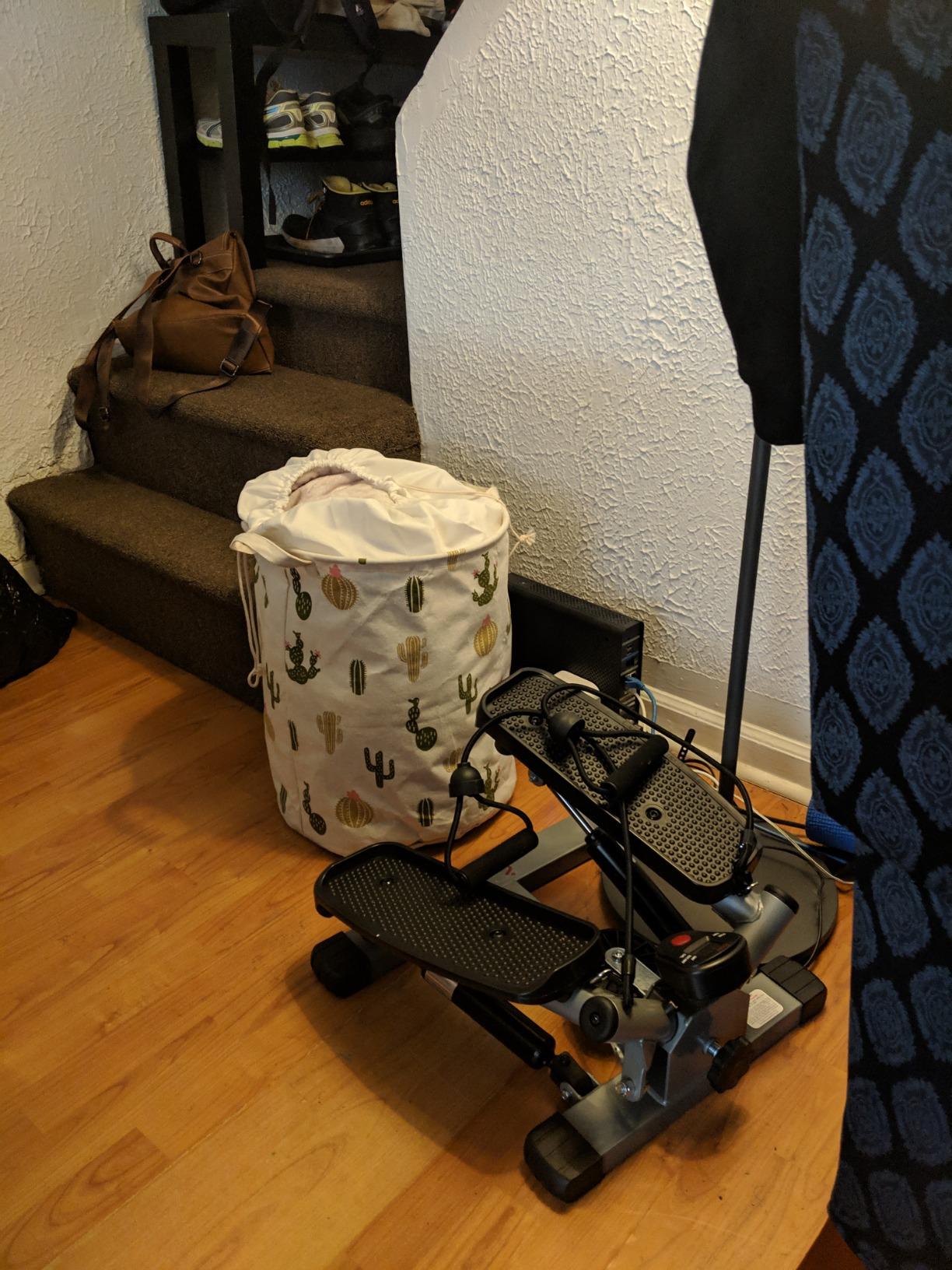
Dual hydraulic cylinders give the step a controlled, quiet quality that the single-cylinder machines cannot match, and the device holder means you can run a SunnyFit session or a video without a separate stand. Assembly is genuinely quick, with most owners finishing in under five minutes. The 4.2 average across 5044 ratings comes with a 62 percent five-star share.
What you give up for the frame weight and the bands is portability for smaller users and for anyone with injuries that make lifting 36 pounds unwise. Reviewers single that out as the top drawback.
The alternative view is that you are buying stability you can feel. A frame that does not shift when you change direction lets you keep the pace up, and on a machine whose job is heart rate, holding pace is the point.
What makes it the most capable mainline climber here
For users in the 300 to 400 pound range, this is the machine I would put in a home gym without hesitation. The reinforced steel frame and wide non-slip pedals hold stability through aggressive pace changes, and the pulse sensors give you heart rate feedback without asking you to wear anything.
The bands change the character of the workout. Two minutes of fast stepping followed by a slow band press gives you a conditioning circuit rather than a single repetitive motion, and that variety is what keeps people on a machine past month two.
Where you will notice the compromises
Moving it between rooms is a two-person job for most people. At the lowest settings the resistance feels light, so a fit user planning to progress will be limited by how hard the hydraulics can push rather than by effort. The pedal texture is also uncomfortable in bare feet or thin socks.
The calorie counter draws regular criticism, and the app asks for the same long list of permissions as the Smart Twist. Treat the displayed calories as a rough trend rather than a measurement.
3. Sunny Health & Fitness Climbing Stair Stepper – Longest True Stride
Sunny Health & Fitness Smart Cardio Step Climber for Home – Gray
21.5 inch stride
9.8 to 24.8 inch travel
Four handlebar heights
Foldable frame
Pros
- Closest thing to real climbing here
- Self-paced resistance engages the core
- Four handlebar positions
- Folds for small homes
Cons
- Larger floor footprint than twist steppers
- No discrete resistance levels
- Longer learning curve
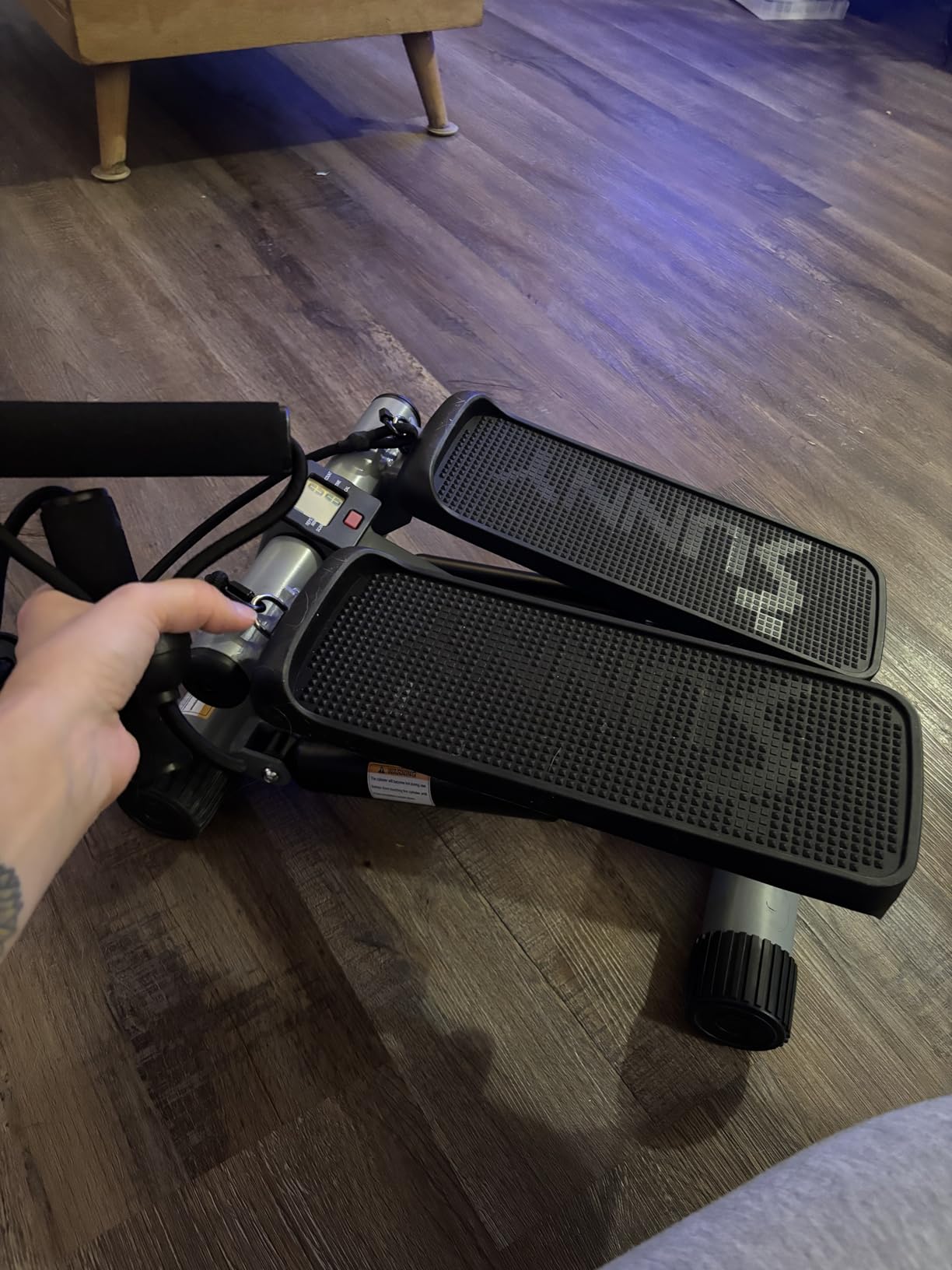
If you want a genuine climbing motion rather than a compact twist, this is the one. The vertical travel runs from 9.8 to 24.8 inches across a 21.5-inch stride, which is a real range of motion, and it is the difference between climbing and stepping up and down. Owners describe it as a mid-size home gym machine rather than a mini stepper, and they are right.
There is no preset resistance here at all. Each step is self-paced, which sounds like a downgrade until you realise it means the core has to stabilise you on every rep and you can surge as hard as you want mid-set. Four handlebar positions fit a wide spread of heights, and tilt-adjustable footplates let you move the work between calves, quads and glutes.
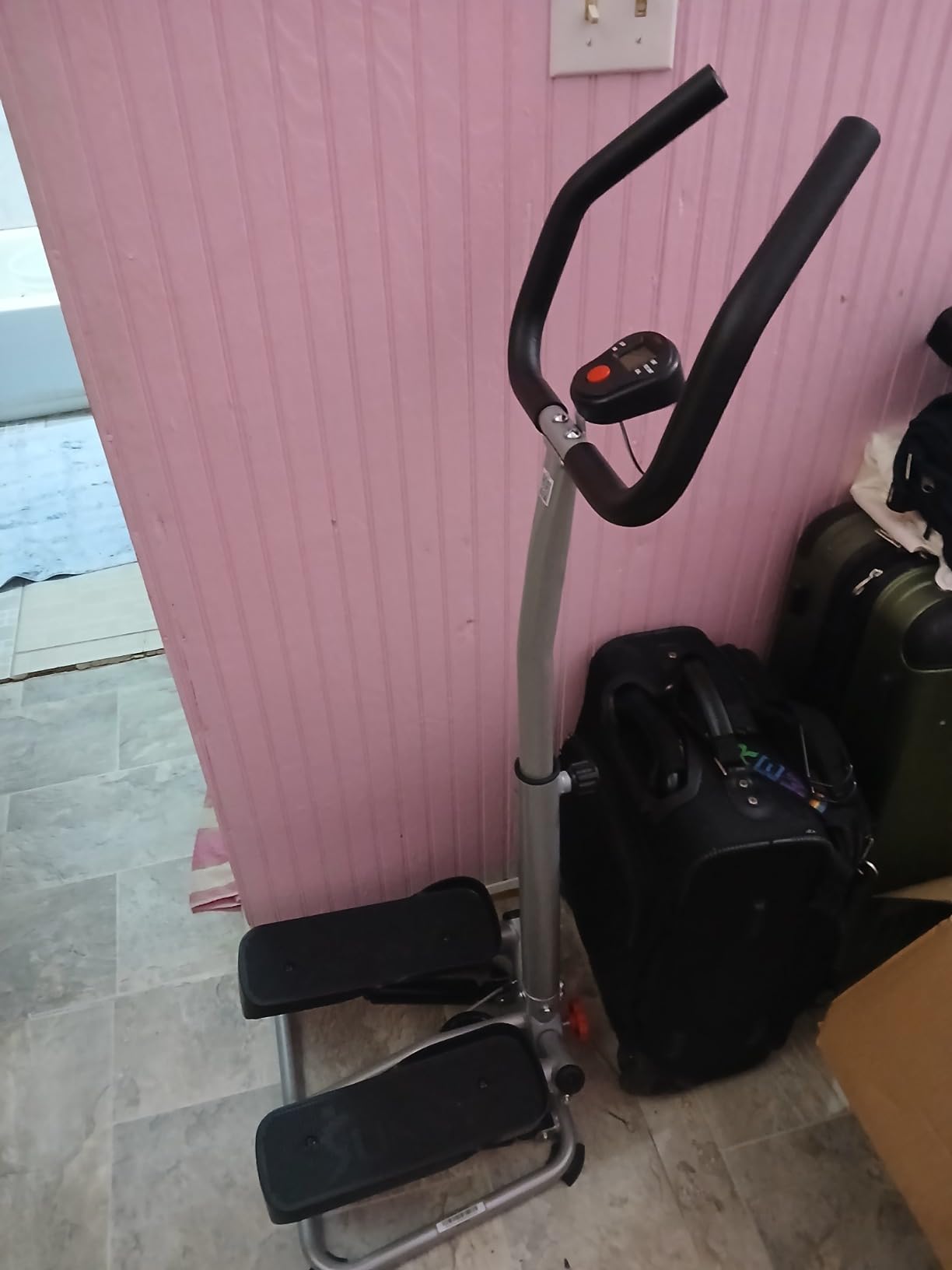
The 66 percent five-star share across 2507 ratings is among the highest satisfaction rates in this group, and it pairs with a 4.3 average. Reviewers single out the foldable frame as the reason it works in an apartment, and the LCD plus the SunnyFit app handle time, steps, step rate and calories. The triangular frame is rated to 330 pounds.
The trade is space. At 35.6 by 18 inches and 55.9 inches tall, it needs a real footprint, not a corner slot. At 28.9 pounds it is heavier than the twist steppers too.
Owners also flag that the higher step travel takes longer to learn than a flat mini stepper, so give it three sessions before you judge it. Once the rhythm settles, the range of motion is what you notice.
Why this is the best true climber for cardio
The long stroke means each rep moves real distance, and that distance is what keeps your heart rate up without the machine fighting you. For someone who finds a mini stepper too easy within a month, the range of motion is the difference between boredom and progress.
Self-paced effort also makes it excellent for intervals. You can push fifteen seconds at near-maximum and float for thirty, and the machine lets you do that without hunting for a resistance knob that does not exist. That is a genuine cardio tool, not a stepper with aspirations.
When to choose something else
If your workout space is measured in inches rather than feet, this is the wrong machine. The vertical travel takes longer to learn than a flat stepper, and buyers warn that you should read the instructions carefully before the first assembly. There are no resistance levels, so intensity control depends entirely on your technique.
Taller than 6 foot 2 and you may find the fixed frame height uncomfortable. The handlebars adjust but the machine does not grow, and this is the most common fit complaint across the whole climbing-tower category.
4. MERACH Foldable Stair Climber – Best Value
MERACH Stair Stepper with Adjustable Resistance, Foldable Stair Climber
Three pedal angles
Adjustable handlebar
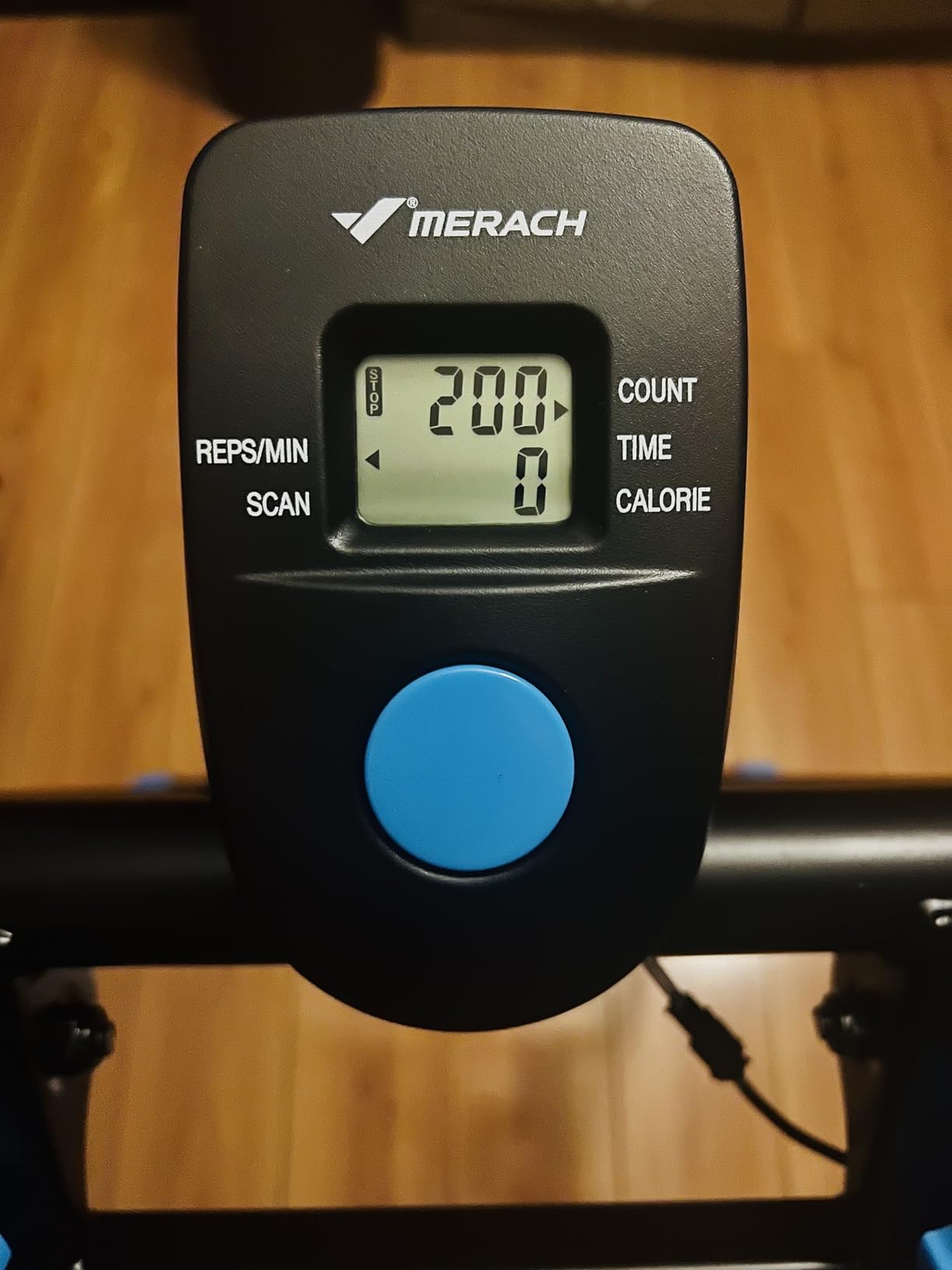
Built-in LCD monitor
300 lb capacity
Pros
- Strong category sales rank
- Three pedal angles change the exercise
- Light enough to move and fold
- Real leg and glute burn in short sessions
Cons
- Resistance feels lighter than expected
- Levels are hard to tell apart
- No app connectivity
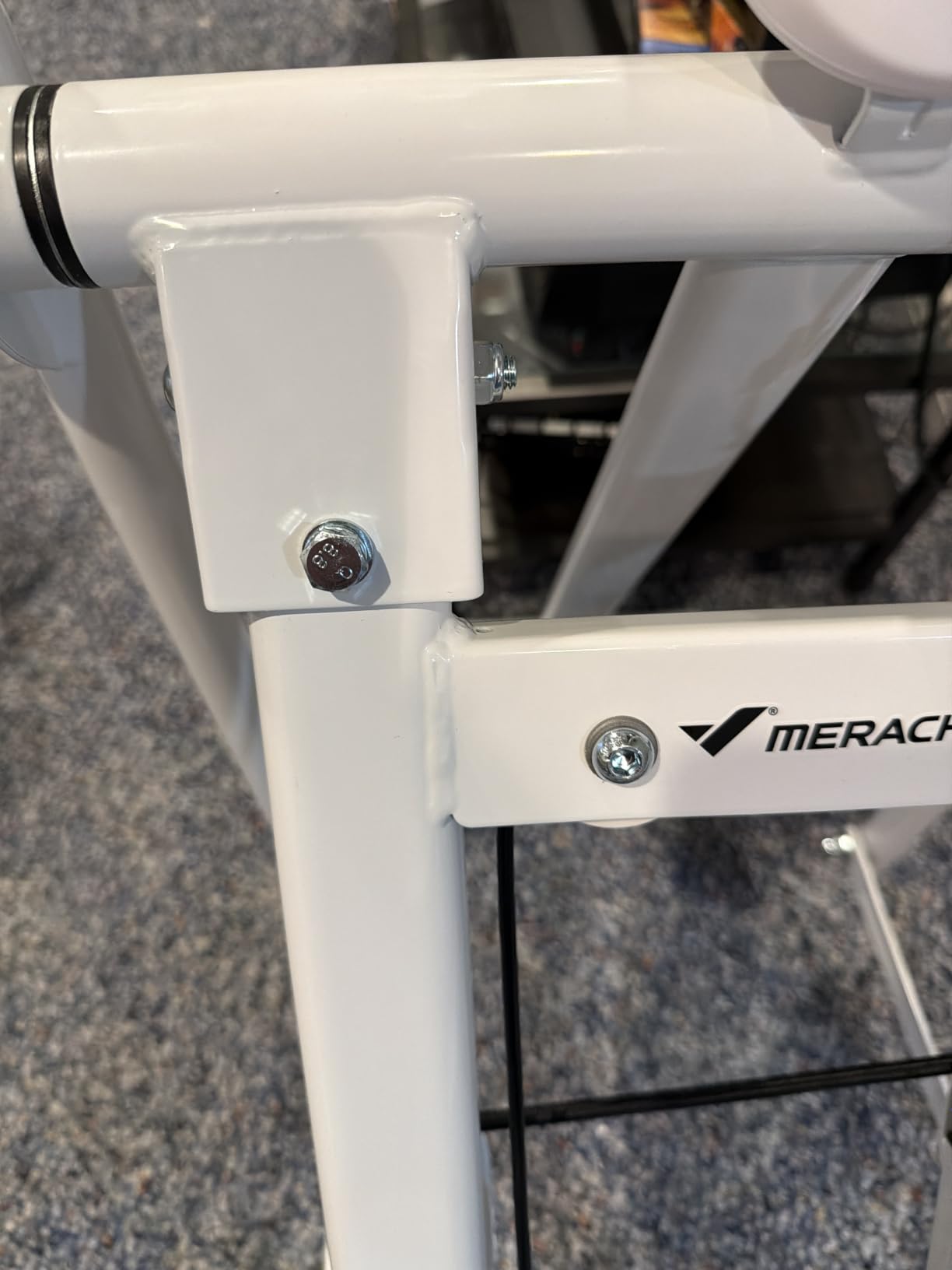
The MERACH is the pick if you want a genuine climbing-shaped machine without spending serious money. Its triangular frame mimics natural climbing movement, the handlebar adjusts for users from petite to tall, and three pedal angles change the exercise from climbing stairs to pushing up a hill. Reviewers report a real leg and glute burn in about ten minutes, which is a good sign for a machine at this level.
It weighs about 26.5 pounds and folds flat, so moving it between the living room and a bedroom is realistic. Dimensions are 33.9 by 22.1 inches with a height of 47.2 inches, which makes it a low frame that stores upright more easily than most here. The built-in LCD tracks time, steps and calories, and the warranty is one year.
Sales rank tells a story here. It sits at number 5 in the step fitness machines category with 1145 ratings at a 4.1 average, so this is a machine with genuine volume behind it rather than a listing with three reviews.
Buyers cite the adjustable handlebars, the pedal angles and the smooth, quiet operation as the reasons it works.
The 10 percent one-star share is high for a machine with this much volume behind it. Most of those complaints are about colour accuracy arriving wrong and questions over the branding itself, not about the machine failing. The 47.2 inch height is low, which makes this easier to store upright than the taller climbers.
Where it earns its place in a home gym
The three pedal angles are more useful than they sound. Flat works for steady endurance, a raised angle shifts load into the glutes and hip flexors, and a negative angle targets the calves and quads differently. You get variety without owning three machines.
For an apartment this is one of the safer picks. The frame is light, the mechanism runs quiet, and it folds without needing to remove hardware, which matters when you are setting it up and putting it away every day.
Where buyers get disappointed
Resistance is the honest limitation. It feels lighter than users expect at the lower settings, and reviewers struggle to tell the levels apart, which defeats the point of having three. The step transition can also feel abrupt rather than gliding.
There is no app. If you want your workouts logged automatically you are buying a separate wearable or copying numbers off the LCD. The 4.1 average reflects a good machine held back by a control that does not communicate well.
5. HXD-ERGO Stair Stepper – Most Versatile Budget Climber
HXD-ERGO Stair Stepper for Home with Adjustable Handlebar for Full Body
Bodyweight-only resistance
Three handlebar heights
Triangular steel frame
300 lb capacity
Pros
- Very quiet for early or late sessions
- Knee-friendly low impact
- Easy to move between rooms
- Good for rehab work
Cons
- No resistance adjustment at all
- Weak included bands
- Short pedals and handlebar
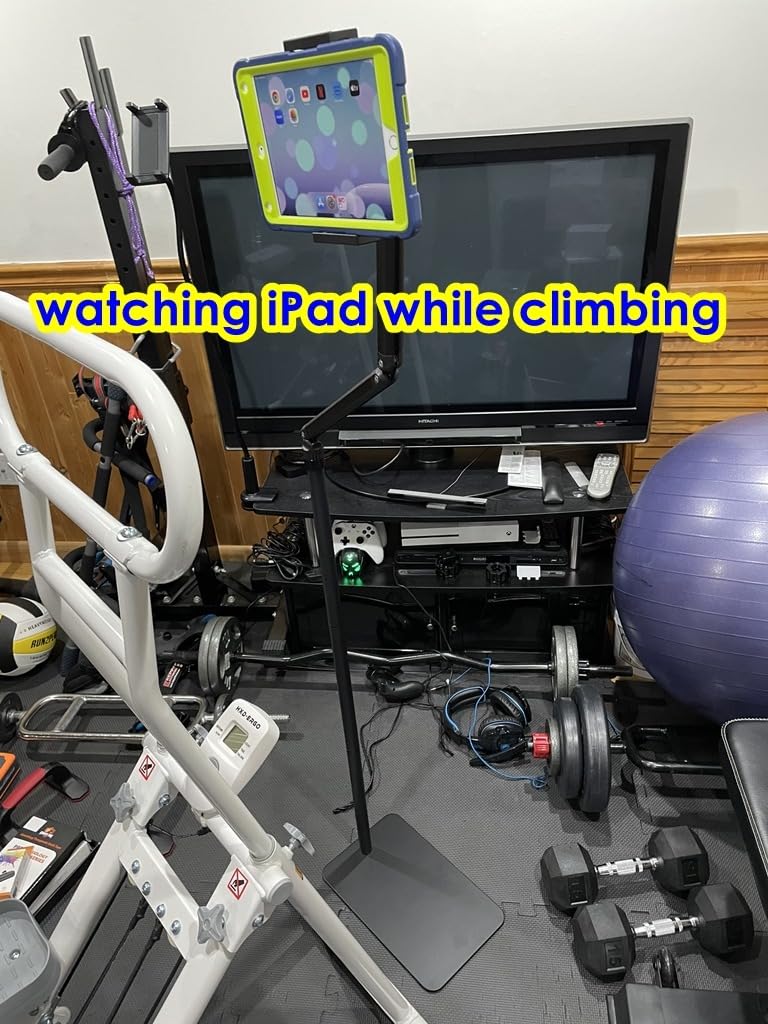
This is the machine I point people toward when the binding constraint is noise. Reviewers describe it as smooth and silent, and the marketing claims early-morning or late-night use, which lines up with what owners actually report. If you live above someone with sensitive sleep and you need a machine that will not carry sound through the floor, this is the shortlist answer.
The triangular steel structure is corrosion resistant and rated to 300 pounds. The handlebar adjusts to three height levels, the LCD reports time, reps and calories, and you can release the handlebar entirely if you want a harder balance and core challenge. It weighs 28 pounds, and the frame measures 20 by 28 inches at 72 inches tall.
Knee-friendly low impact is the other repeated theme, and it comes up from older users and people doing rehab work. The frame limits peak knee loading to roughly one to one and a half times body weight, well under what running asks of the same joint.
For recovery days after a run, that low knee loading is the whole point of the machine.
Its 12 percent one-star share is tied for the highest here, driven by the missing resistance control plus assembly quality issues. Reviewers still describe it as a machine that quietly delivers a genuine leg, glute and core workout, particularly for rehabilitation work and older users.
Who gets the most out of it
Anyone working with a physiotherapist, rebuilding legs after an injury, or simply starting a fitness routine from a standing position that does not involve impact. The three handlebar heights mean a 65-year-old and a 29-year-old can both get a correct posture out of the same frame.
It is also the machine I would suggest for a second workout of the day. It is quiet, it does not require changing clothes to be presentable afterwards, and 28 pounds is a weight most people can move between rooms without planning for it.
Why it will frustrate you later
There is no resistance adjustment. The only things that change are handlebar height and whether you are holding on, which means a fit user plateaus in about six weeks and has to buy a weighted vest to continue progressing. That is the single most common regret reported for this category of machine.
The pedals are too short to take a full foot, which loads the calves, and the handlebar runs short for taller users. Folding also requires removing two large knobs that are easy to lose, and a few orders have arrived without the handlebar or with screws that would not thread cleanly.
6. EPHESPORT 3-Level High-Tension Stair Stepper
EPHESPORT Stair Stepper for Home with 3-Level High-Tension Resistance
Switchable gravity springs
Three resistance levels
Quiet-glide rollers
330 lb capacity
Pros
- Real difficulty progression via springs
- Compact foldable storage
- Folds flat against a wall
- Arrives 90 percent assembled
Cons
- Spring changes are manual and slow
- Lowest setting is too easy
- Rocks slightly during use
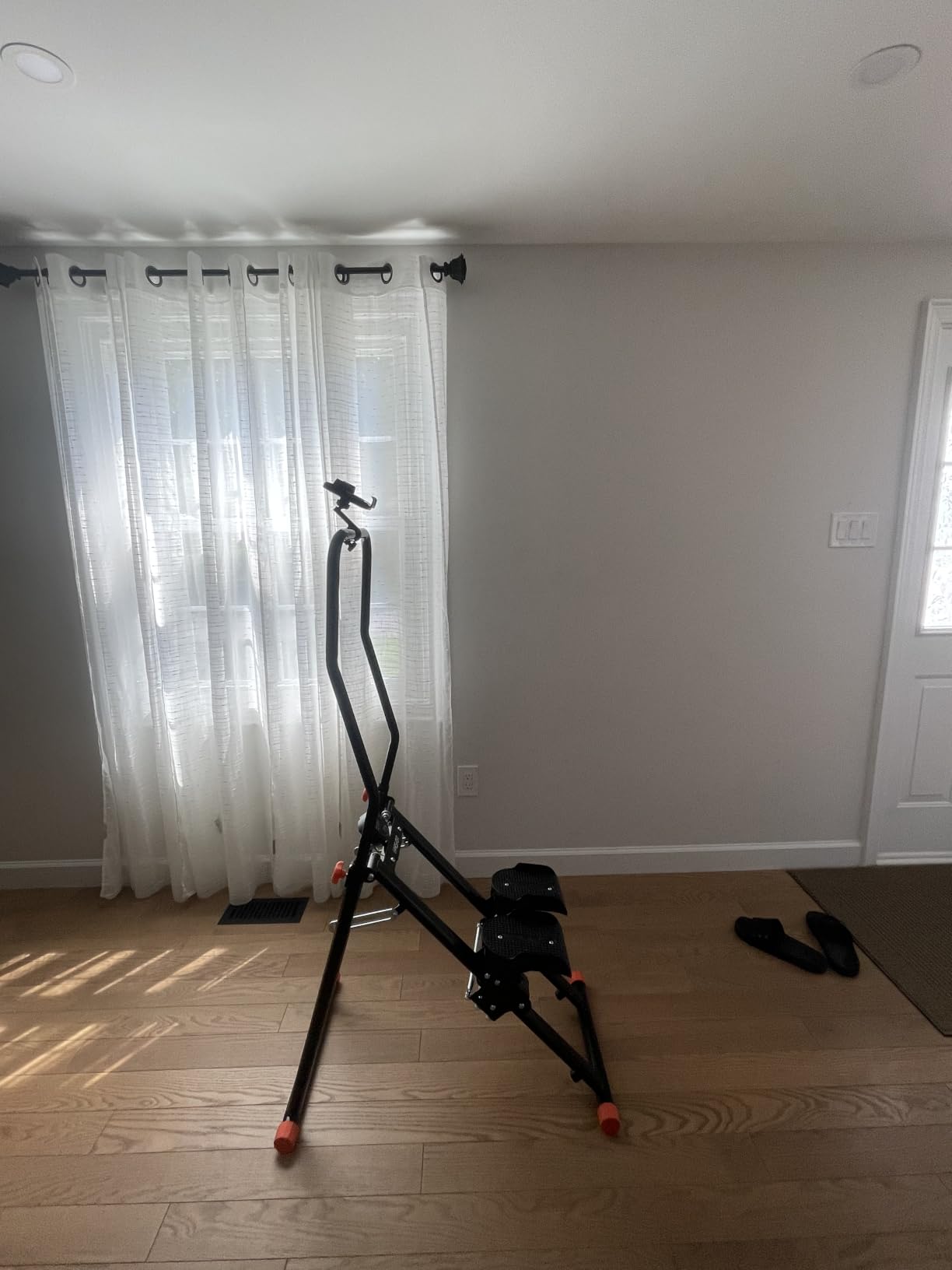
This is the only machine in the group with a resistance system that actually gets harder in a meaningful way. Three heavy-duty gravity springs switch between light, medium and heavy, so you can start a beginner session genuinely easy and finish a hard block without changing machines. For anyone who plateaued on a bodyweight climber, that is the feature that decides the purchase.
The reinforced triangular steel frame is rated to 330 pounds, the pedals are wide and textured for grip, and the low-friction sliding system runs on quiet-glide rollers. It arrives 90 percent pre-assembled and owners report about five steps of assembly, which is as close to no assembly as this category gets.
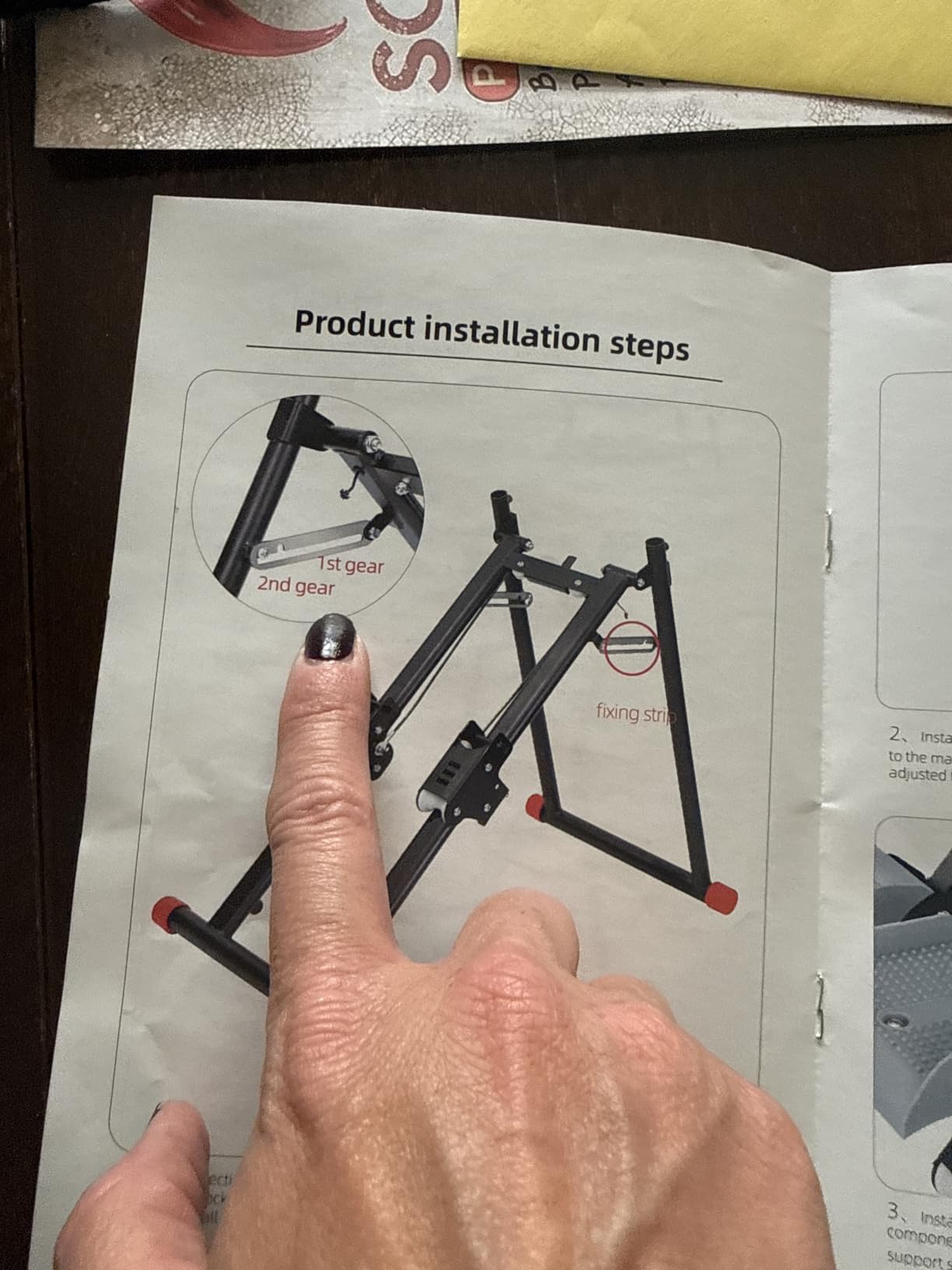
The 69 percent five-star share across 234 ratings is the highest satisfaction rate among everything we ranked, though the review count is small enough that I read those stars as promising rather than proven. Reviewers repeatedly recommend it for knee rehabilitation and for rebuilding leg strength after a break.
The phone holder, the LCD tracking steps, time, calories and total count, and the fold-flat footprint make it a practical apartment machine despite the spring hardware.
Why the springs matter more than the console
Every other budget climber here leaves you with a fixed effort and a weighted vest as your only upgrade path. This one lets you increase load properly, which means your legs actually get stronger instead of just more tired. If you are past the beginner stage, this is the difference between a machine you keep and a machine you sell.
Three pedal angles plus two incline settings give you a second axis of variation, which matters on a machine where you already own one dial. The wide non-slip pedals also hold up better than most at higher speeds.
What to know before you buy
Changing resistance means physically removing or adding springs, which is a two-minute job every time you want a different level. Not fatal, just friction, and the reason I do not rate it above the machines with instant adjustment.
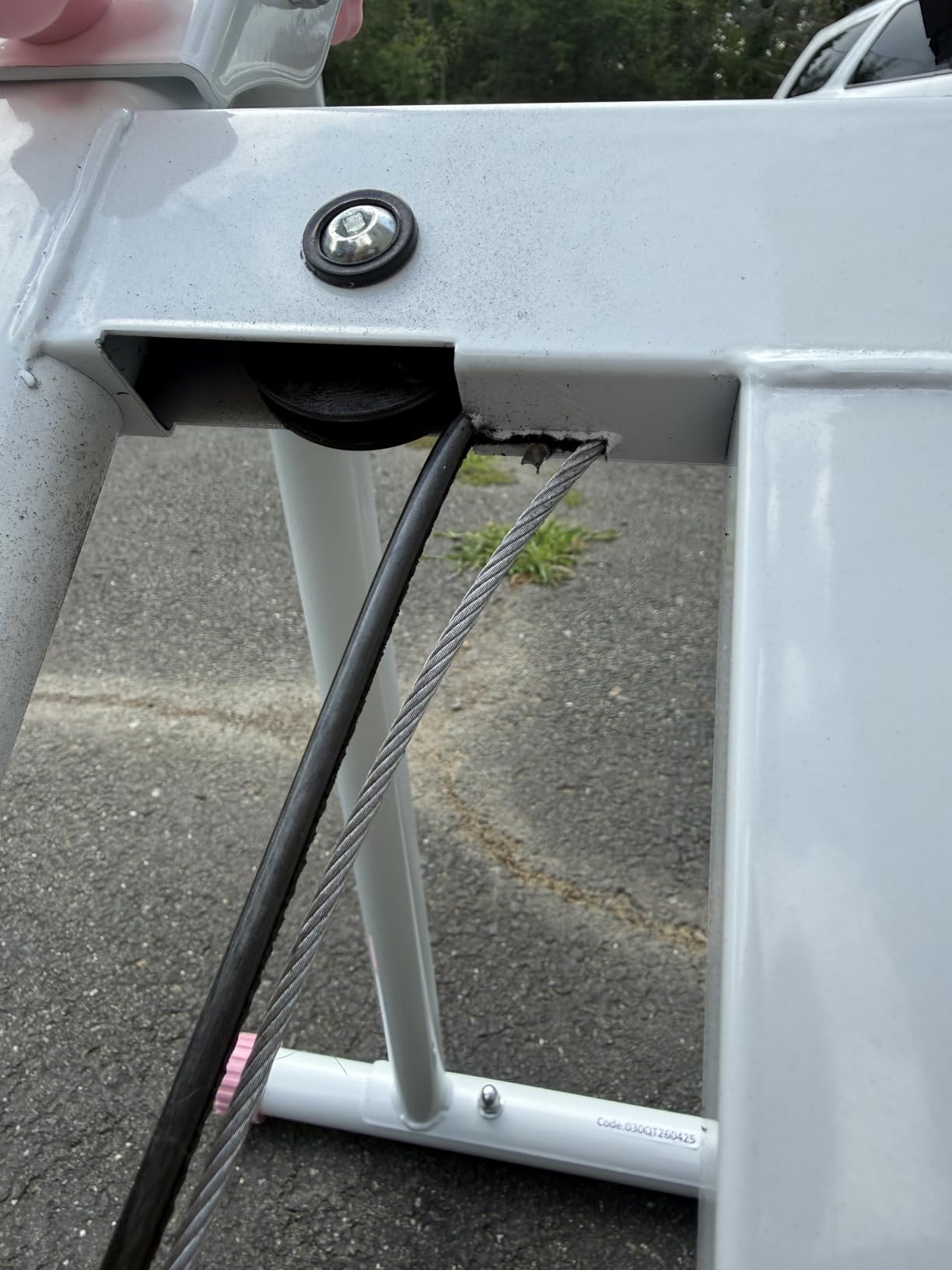
Some owners note the machine rocks slightly under load, the lowest spring setting is too easy for an intermediate user, and the motion reads as more elliptical than stair-like. A few have had a spring snap or a pedal cable casing crack, both resolved under the 12-month warranty.
7. Body-Solid Total Body Vertical Climber – Tallest Climbing Range
Body Solid (BFMC10B) Total Body Workout Exercise Machine, Vertical Climber, Maxi Climber, Max Jacob Cardio Ladder for Home and Commercial Fitness Gym, Black
85 inch climbing frame
Alloy steel construction
Adjustable foot platform height
Multi-function display
Pros
- Tallest climbing range in this group
- Heavy-duty alloy steel frame
- One machine covers arms chest back legs core
- Adjustable platform height
Cons
- Bulky 37 by 25 inch footprint
- Thinnest owner feedback base
- Lowest rating in the group
The Body-Solid is the closest thing here to a traditional full-body climber, and at 85 inches tall it offers the tallest climbing range in this list. The frame is heavy-duty alloy steel, the foot platform is wide and non-slip with adjustable height, and the machine works arms, chest, back, legs, core and cardio in one pass.
Adjustable settings let you vary intensity, and the multi-function display shows time, distance and calories. It is rated to 330 pounds. This is the pick if you want to train against a real vertical range rather than a stepper motion, and if you have the ceiling height and floor area to use it.
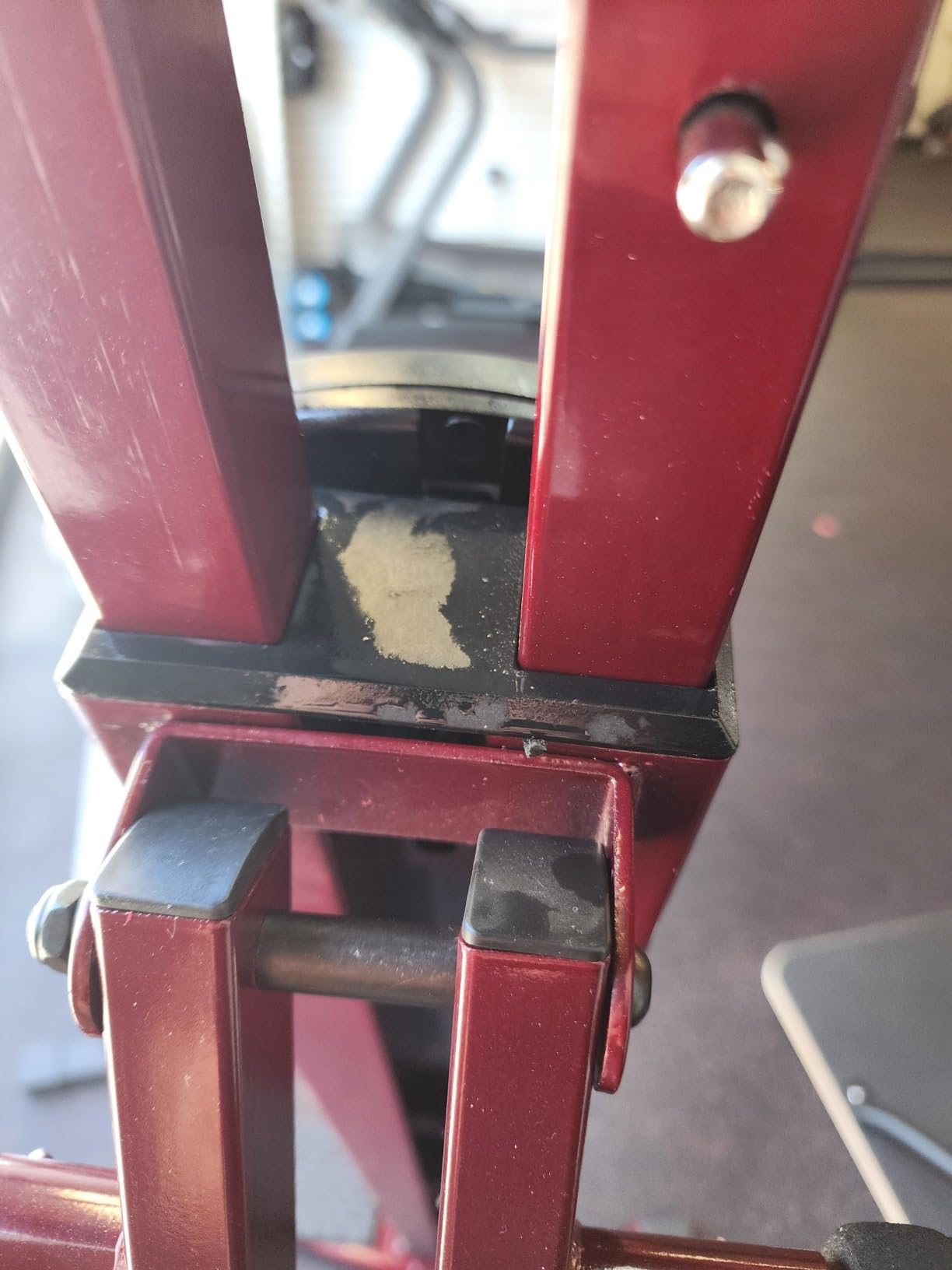
Its rating of 3.9 is the lowest in this group, and the 54 percent five-star share is well behind the machines above it. With only 121 ratings you also have far less third-party guidance than elsewhere on this list, which is worth weighing before you commit. Ranked lowest in the step fitness category as well, at number 78.
The alloy steel frame and adjustable platform height are the most commonly cited strengths. The size is the most common complaint.
Who should spend the space
Tall users get more out of this frame than from any other machine here. An 85-inch rail gives you room to take long climbing strokes rather than crouching into a short travel range, which is the fit problem that turns people off climbers entirely. If you are 6 foot 2 or above, this is the model worth testing in person.
Anyone with a garage or a dedicated corner gym can treat the footprint as a permanent fixture. At 37 by 25 inches and 48.5 pounds, you will not be moving it into storage after every session.
Why it lost ground in our ranking
The footprint is the practical dealbreaker. In anything smaller than a garage, an 85-inch tower takes up more usable floor than most people want to give up to cardio, and 48.5 pounds means relocation is a two-person job.
Then there is the feedback problem. A 3.9 average on a thin review base tells you the machine has not been proven out the way the Sunny, MERACH and Stamina machines have. For the same category of money, the machine with thousands of owners is a safer bet.
8. Stamina Cardio Climber with Smart Coaching
Stamina Cardio Climber – Fitness Cardio with Smart Workout App – Cardio Climber Stepping Machine for Home Workout – Up to 300 lbs Weight Capacity
8 magnetic resistance levels
89 lb steel frame
Two handlebar sets
Transport wheels
Pros
- Smooth magnetic resistance
- Heavy frame resists rocking
- Transport wheels and phone holder
- 5 year frame warranty
Cons
- No folding frame
- Small pedal platform
- Resistance tops out modest
The Stamina is the only machine here with true magnetic resistance, and that changes the feel of the workout. Magnetic resistance stays smooth as it ages because there is no friction pad wearing down, which is precisely the failure mode that ruins cheap climbers within a few months. Eight levels of adjustment give you a real progression path.
At about 89 pounds this is the heaviest machine on the list, and that weight is a feature. It does not rock, shift or creep, and it stays planted through hard intervals in a way that a 28-pound frame cannot. Two sets of handlebars with multiple grip positions add genuine upper body work, and the LCD tracks speed, feet climbed, calories and elapsed time.
Built-in wheels make it movable despite the weight, and the frame carries a five-year warranty against 90 days on parts, which is the strongest frame coverage in this group. The 4.2 average comes from 89 ratings, so treat the satisfaction data as limited, but reviewers widely describe it as the best mid-tier climber they have used.
Connected coaching runs through the muuv app with guided sessions and demo videos, which fills the boredom gap on a machine with no built-in programs.
Why the weight and the wheels are the selling point
Stability changes how hard you can work. On a light frame you hesitate at high speed because the whole tower moves under you, and that hesitation caps your heart rate. On an 89-pound steel base you can push to the top of a magnetic level and stay there, which is the difference between exercising and training.
The dual handlebars are the other quiet win. Most climbers here work the upper body incidentally through the handlebar stem, while this one gives you positions that genuinely load the back, shoulders, chest and arms alongside your legs.
What the owners flag most often
Pedal size is the top complaint. Reviewers report foot discomfort on sessions longer than about half an hour, which is a real problem for a machine meant for twenty-minute work. The handrails also slant downward, so you have to hold the top horizontal section to support your weight properly.
It does not fold, so it needs a permanent home, and the resistance tops out modestly even on the highest magnetic setting. The console is small, runs hot, and a few owners report pre-built console noise or a pedal tension screw breaking.
9. Relife Stair Stepper Vertical Climber
Relife Stair Stepper, Vertical Climber Exercise Machine for Home Gym
Five training levels
Four metal guide rails
Foldable frame
330 lb capacity
Pros
- Five levels mapped from jogging to climbing
- Grease supplied for a quieter ride
- Radian pedals reduce outward tilt
- Folds flat for corner storage
Cons
- Assembly quality control issues reported
- Guide rails get loud without grease
- Residual wobble at the base
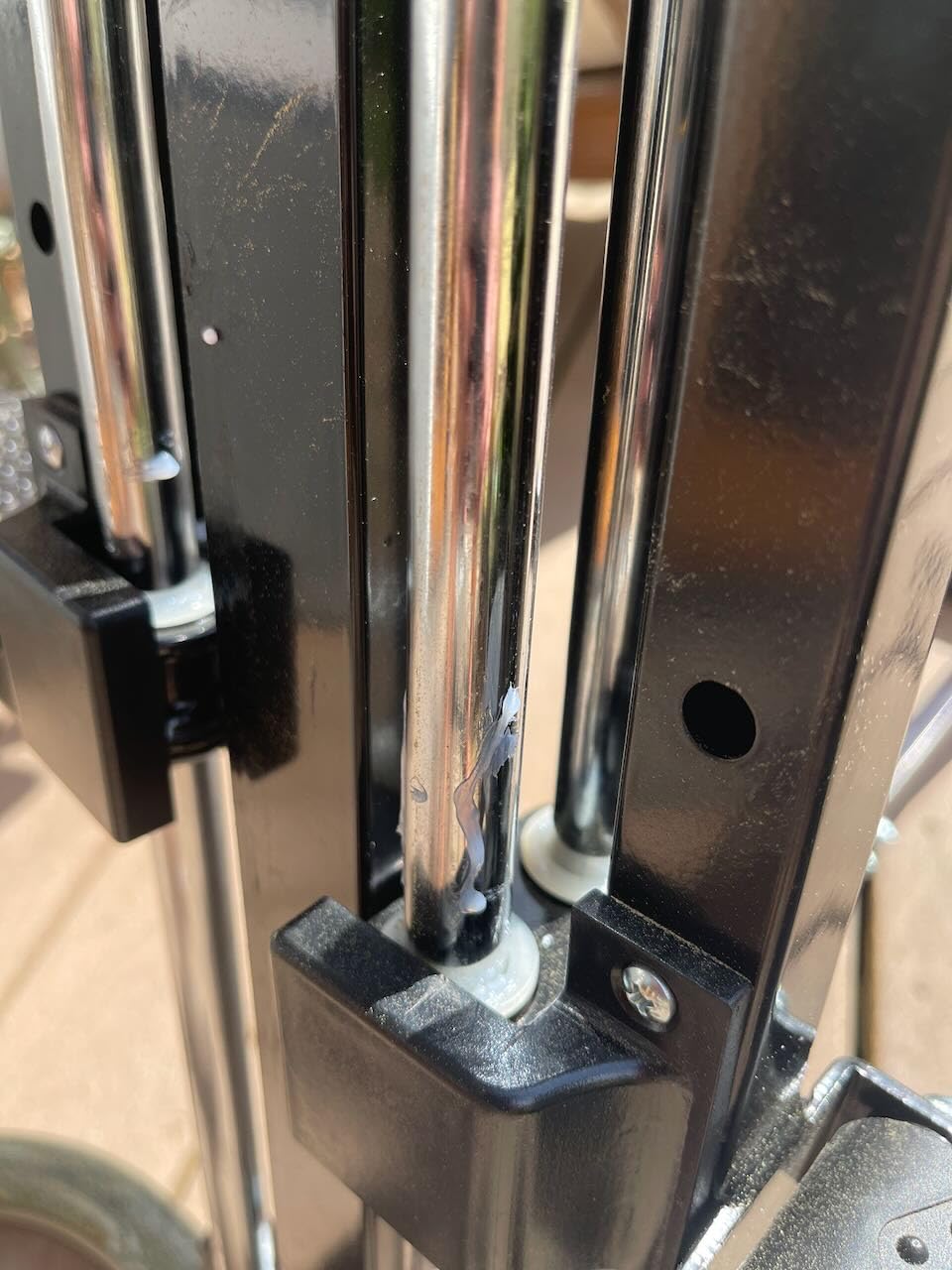
The Relife gives you five discrete levels mapped from jogging pace through to rock climbing intensity, which is a wider progression range than most machines in this group offer. Four metal guide rails run the pedals, and a packet of lubricating grease is included because the rails need it. Apply the grease on day one and the machine stays notably quieter.
The radian pedal design keeps the centre of gravity close to the frame instead of throwing it outward, which reduces the tipping feeling and makes the step feel more stable for a frame this light at 30 pounds. It folds flat for a corner, under a bed or on a balcony, and the frame is rated to 330 pounds.
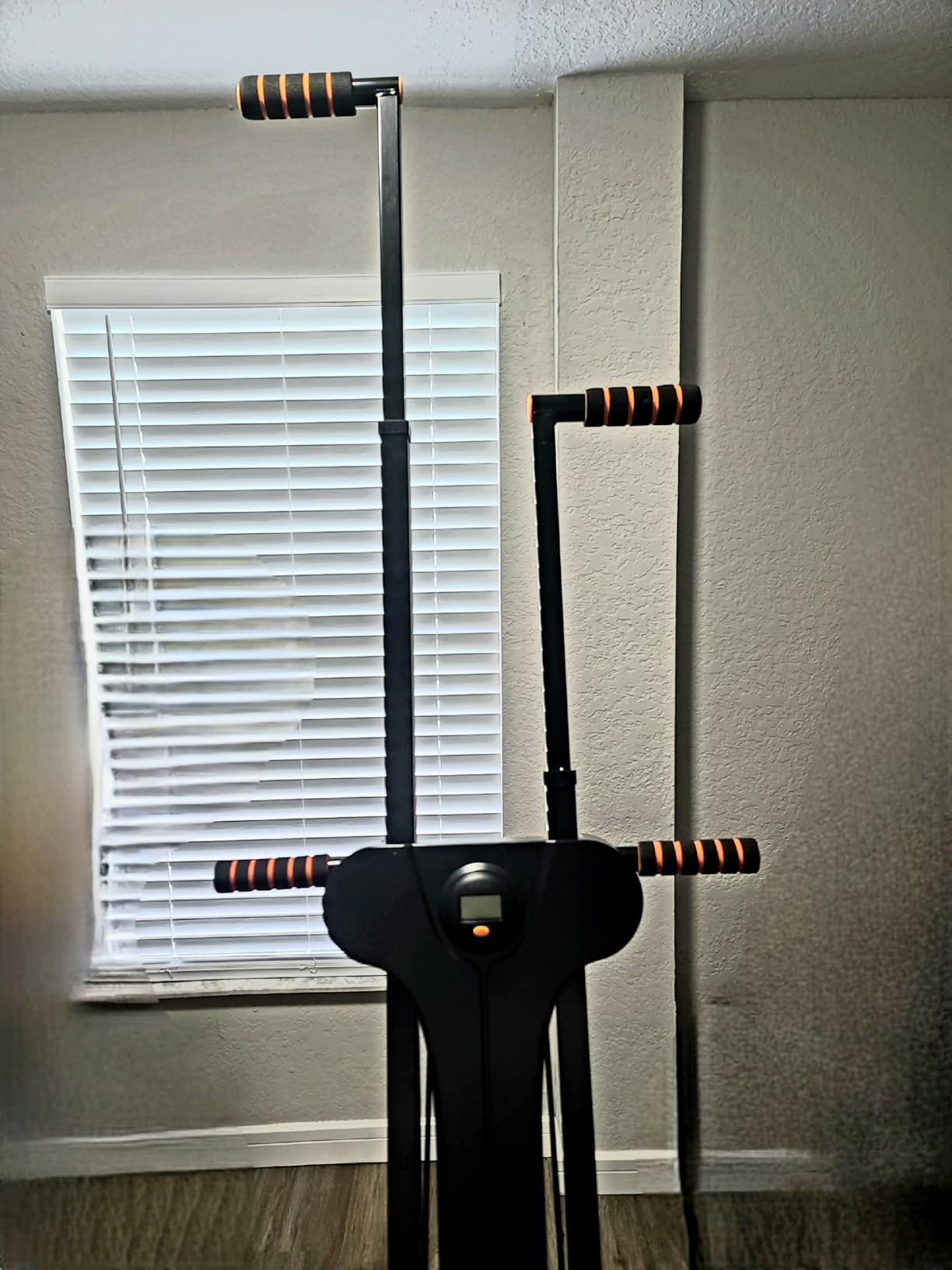
Owners describe the machine as challenging, stable and space-efficient, with quick largely pre-assembled setup. The warranty is one year with support responding within about 12 hours, which is a better service commitment than most at this tier.
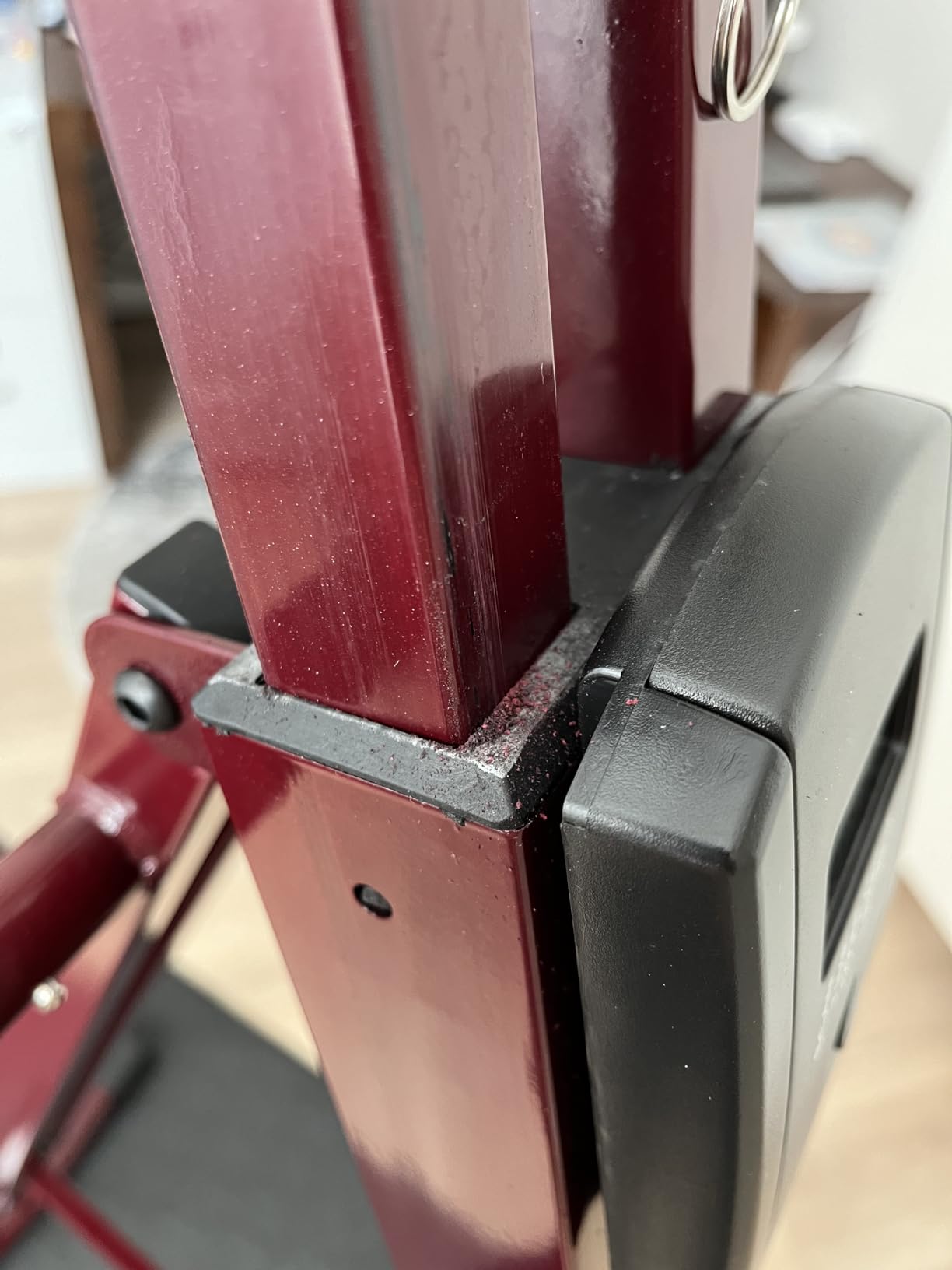
At 56 ratings this is a thin feedback base, and the assembly problems are worth taking seriously. Some buyers received an unpunched frame hole and a misassembled locking pin, which meant tools and swapping parts on arrival.
Five levels is genuinely useful for interval work
Most budget climbers give you one effort or an indistinguishable set of two. Five mapped levels lets you build a real session: level 1 for warm-up, level 3 for steady conditioning, level 5 for the working sets. That structure is what turns a machine into a programmable cardio tool.
For a small home gym the combination of five levels and a flat fold is hard to beat. You can change intensity and then put the machine away in one motion, which is what keeps people actually using it rather than stepping over it.
What to check on arrival
Open the box and confirm every frame hole is punched before you build it. That single check catches the most reported failure with this model and takes a minute instead of an afternoon.
Expect some wobble at the base even after a correct assembly, and keep the grease nearby because the guide rails get rough and loud without it. The instructions are poorly translated and vague about base-bar orientation, so budget extra time for that step, and treat the calorie readout as decorative.
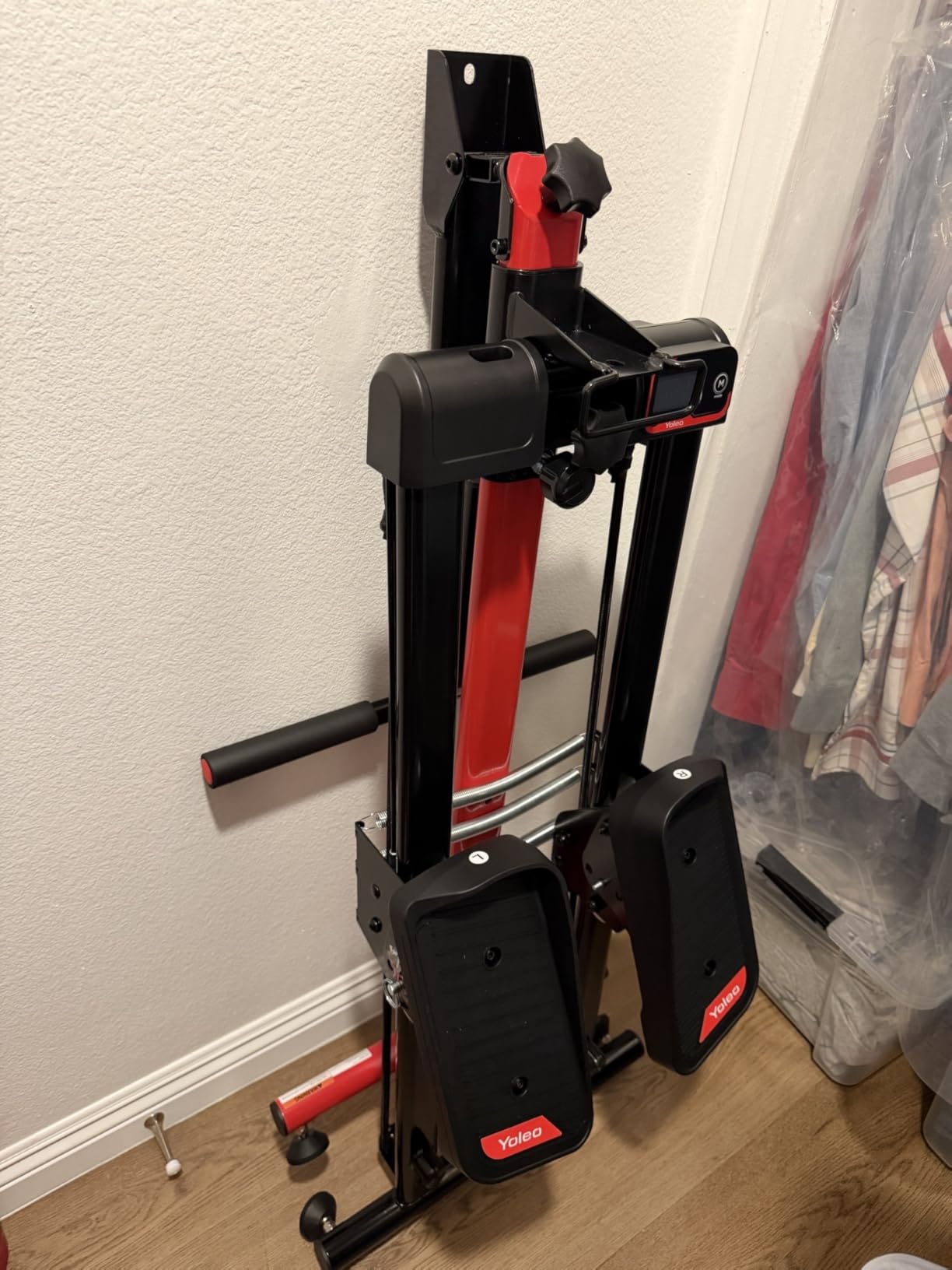
10. YOLEO 3-Mode Folding Stairmaster
YOLEO Adjustable Resistance Stair Steppers for Exercise at Home, Folding Cardio Stairmaster with 3 Workout Modes & Oversized Pedal,90% Pre-Assembled Stair Climber with Handlebar for Full Body Workout
Three workout modes
660 lb dual-triangle frame
Oversized pedals
Folds to 1.6 sq ft
Pros
- Three distinct workout modes
- 660 lb user capacity
- Oversized double-length pedals
- About 18 minute solo setup with tools
Cons
- Springs create loud scraping noise
- Resistance knob stuck on one unit
- Slight wobble at top of motion
The YOLEO is the machine I would look at first if you are a larger user, because the dual-triangle steel frame is rated to 660 pounds, roughly double the limit on most machines here. That headroom is genuine and it means the frame does not flex or creak under a heavy load. It also runs 11mm resistance bands and dual springs, so there is real load to work against.
The distinguishing feature is three workout modes: climbing, incline hiking and a ski simulation. Each one shifts the muscle emphasis, which gives you variety without buying anything else. Oversized non-slip pedals that are roughly double the length of standard steppers also solve the foot support problem that trips up several cheaper machines.
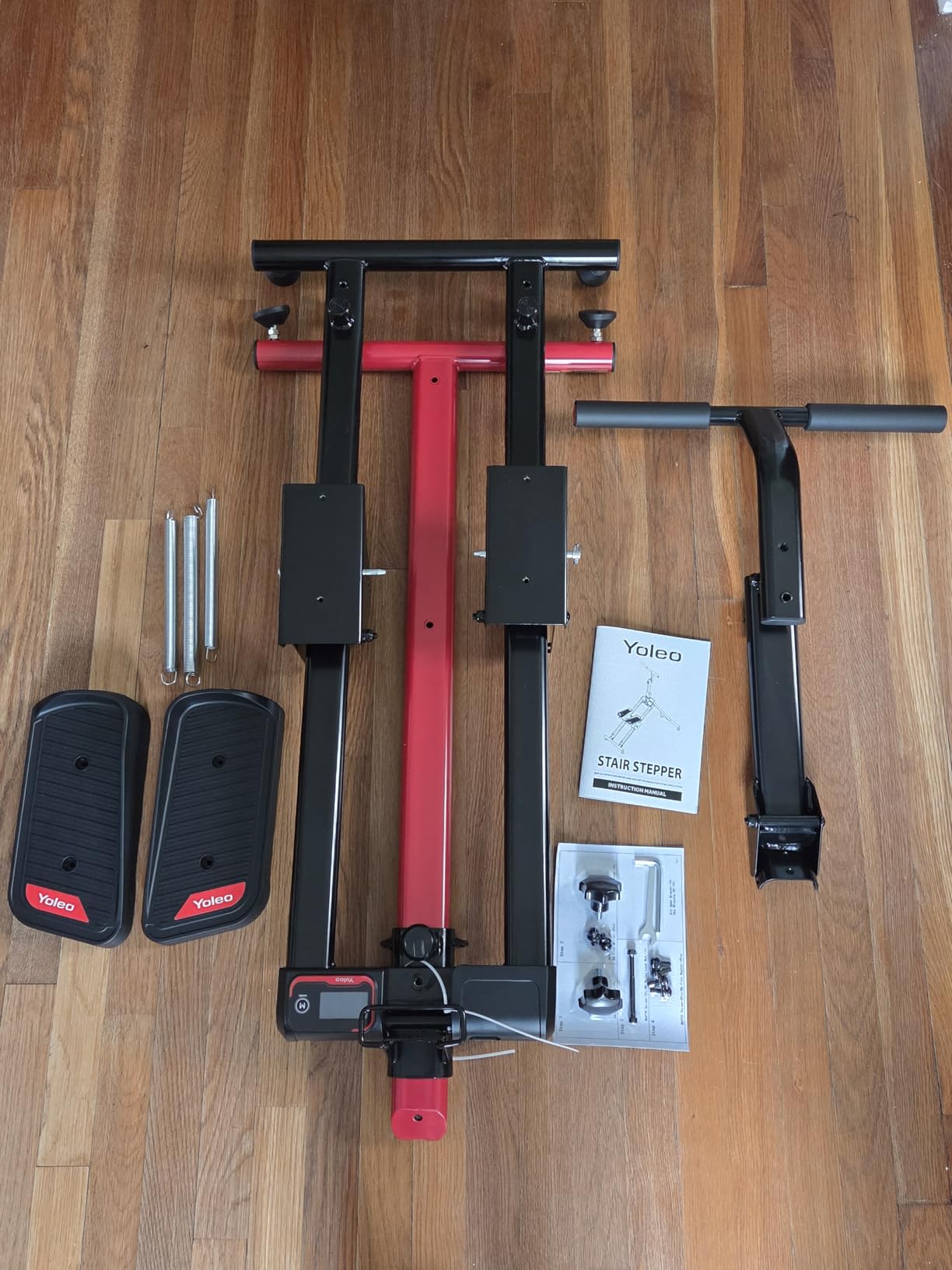
Setup is about 18 minutes solo with tools included and the machine arrives 90 percent pre-assembled, which is unusually honest for the category. The fold-down footprint is about 1.6 square feet with a swivel caster mat, making it one of the better storage options here. The LCD tracks time, calories, step count and total count.
At 58 ratings there is not much owner history, and what there is splits. Praise is for versatility, pedal comfort, capacity and the fold; criticism is almost entirely about mechanical noise.
What the three modes are actually good for
Climb mode is a straightforward vertical climber session. Incline hiking mode raises the frame angle so the load shifts into the glutes and hamstrings with less knee travel. The ski simulation drives the legs through a narrower, faster stroke that works like a ski erg without the machine.
Having three patterns means you can train three different days without your body adapting to one movement. For a machine you own rather than rent, that variety is what keeps sessions from blending into each other.
Where the noise becomes a real problem
This is the one machine in the group I would hesitate to recommend above ground-floor neighbours. Owners report the springs rubbing together and producing loud crunching and scraping that gets worse with use, which is a maintenance issue rather than a defect but still a genuine downside.
Other flags: a resistance knob that would not move off level 1 on one unit, slight wobble at the top of the range of motion, and a stiff feel during the first sessions before the frame breaks in. The 1-year manufacturer warranty is standard.
11. BULAPEACH Vertical Climber Stepper
Stair Stepper for Home, Vertical Climber Workout Machine with Handlebar for Full Body Exercise Stair Climber Machine with Stable Frame & 3 Adjustable Height
Silent mechanism
Three handlebar heights
Foldable triangular frame
300 lb capacity
Pros
- Runs completely silently
- About 15 minutes to assemble
- Folds flat for under-bed storage
- Curved armrests keep knees clear
Cons
- No resistance or incline adjustment
- Suits beginners over advanced training
- Indoor-feel build quality
The BULAPEACH stands out for noise, and it is the simplest of these machines to live with. Owners report no mechanical noise during use at all, which makes it the safest pick for a small apartment, a shared wall or a bedroom. Assembly takes about fifteen minutes or less for most people, and the frame folds flat for under-bed or corner storage.
The triangular steel structure is rated to 300 pounds, the handlebar adjusts to three heights so different users in one household can both get a correct posture, and curved outward armrests keep your knees from contacting the frame during long strides. The LCD tracks time, calories and step count. Overall weight is about 26 pounds.
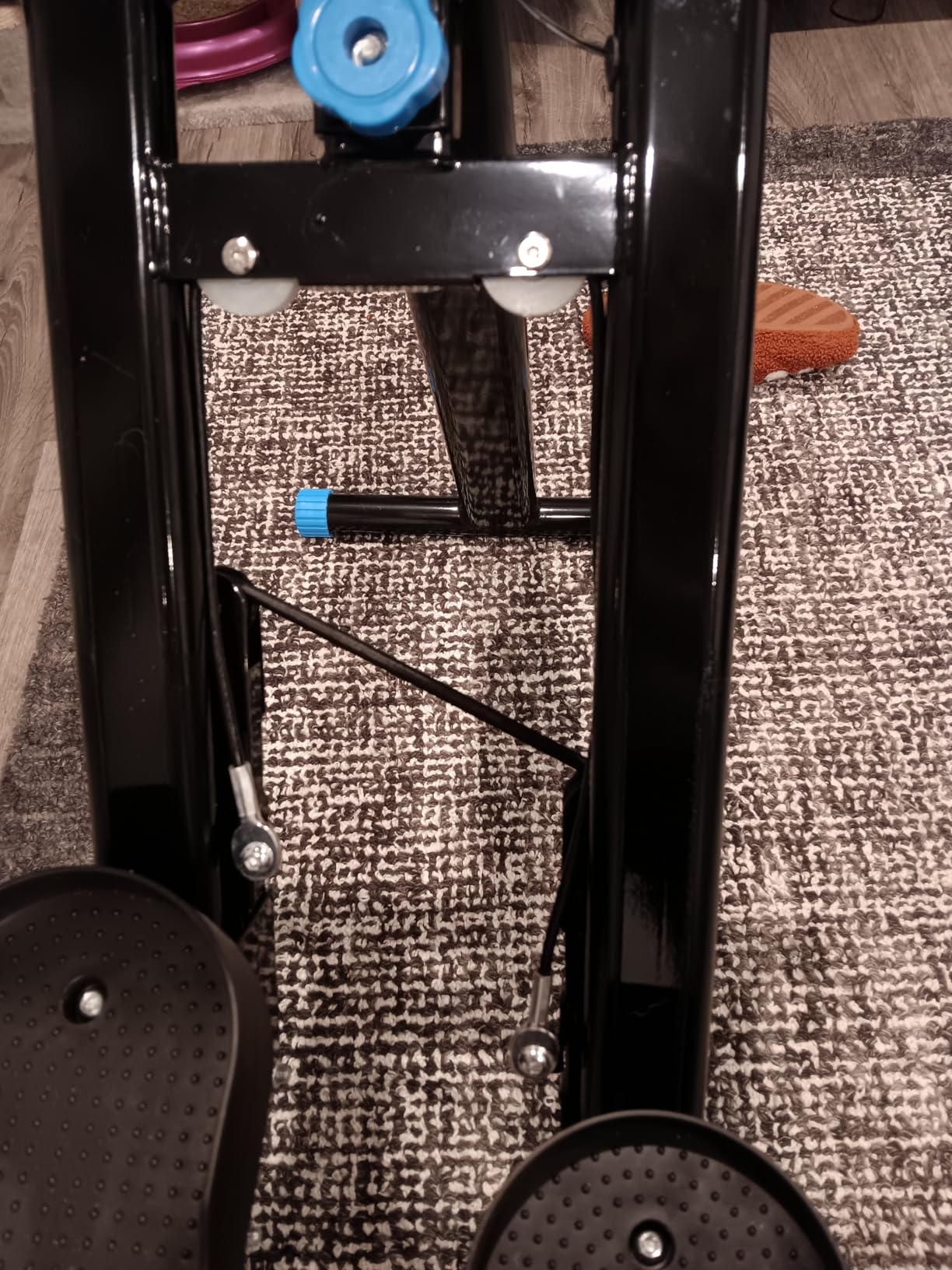
It delivers a solid low-impact burn that reviewers consider satisfying for the effort involved, and at a 4.3 average across 47 ratings it scores well, though the review base is small. Colour options and a compact footprint come up repeatedly as genuine positives for buyers in shared spaces.
Nothing about the mechanism is adjustable. There is no resistance control and no incline, so the intensity is fixed at whatever the design delivers.
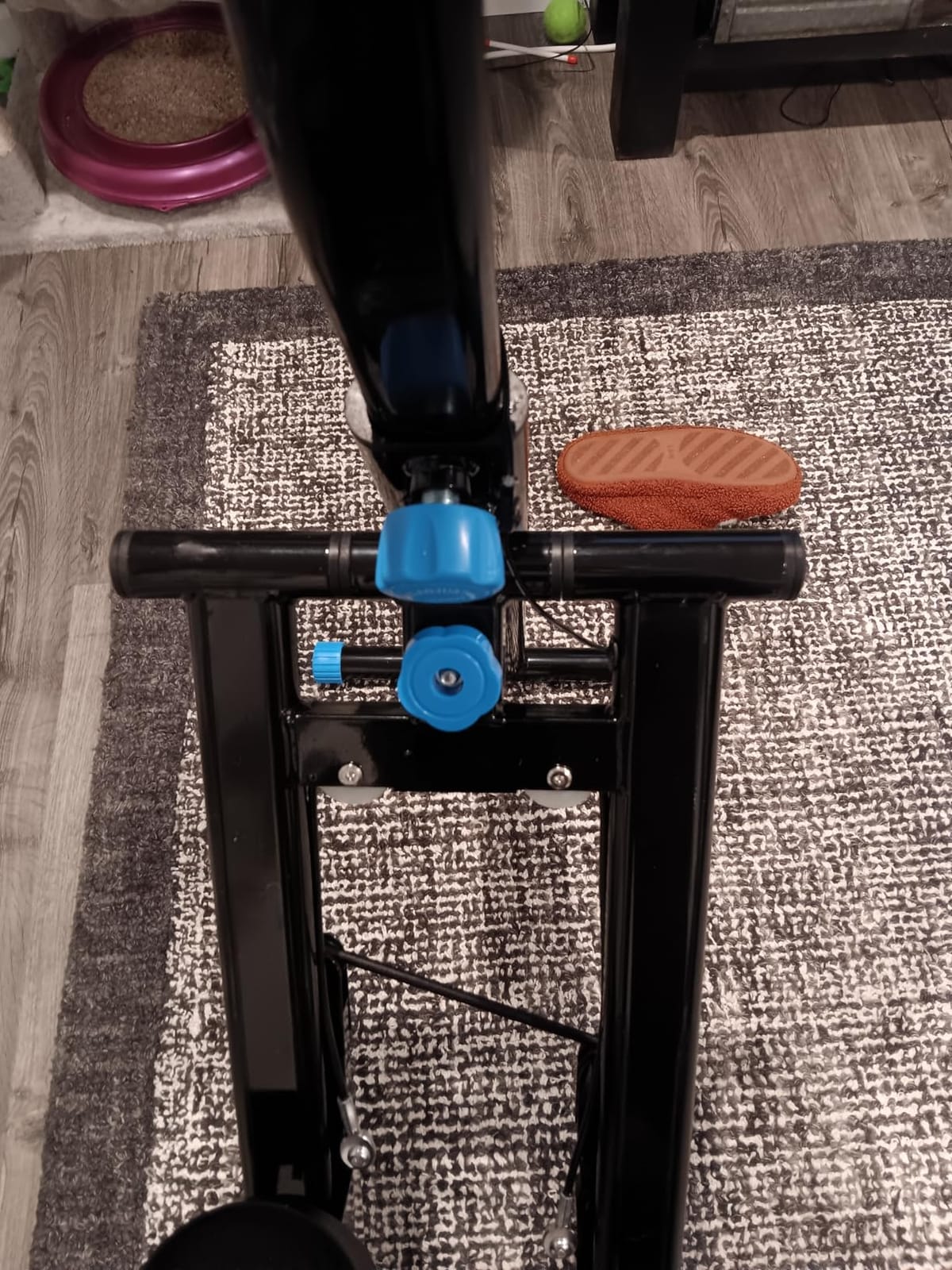
Why silence changes the decision
If you are on an upper floor with a downstairs neighbour or working from home with thin walls, noise eliminates most of the shortlist before any spec matters, and the machine has no resistance hardware that reviewers mention wearing, which matches what owners report rather than a marketing claim.
The folding profile completes the picture. A silent machine you can put away in ten seconds gets used, and a quiet machine that has to be wrestled into a cupboard does not.
What you trade for that silence
Beginners and light-to-moderate users are the clear fit. Anyone training for events needs to make the machine harder over time and there is no way to do it here except by holding the handlebar differently or driving harder on every stroke.
Reviewers also note the build feels inexpensive, and the instructions include a 15-minute-per-session usage limit printed in small type. That restriction is easy to miss and worth knowing before you settle into a long session.
12. Healfith Foldable Vertical Climber
Stair Stepper for Home,Stair Climber Foldable,Large Pedal Vertical Climber Machine for Full-Body Workout,Steppers for Exercise at Home with 300LBS Loading Capacity
15.2 cm folded thickness
Three pedal inclinations
Large pedals
110 kg capacity
Pros
- Folds to 15.2 cm thick
- Three pedal inclinations plus tilt
- Large pedals suit more users
- Low-impact knee friendly motion
Cons
- Vague assembly instructions
- Listed accessories sometimes missing
- Light tension on the bands
The Healfith is the machine to buy if storage space is your main constraint. It folds to about 15.2 centimetres thick, which is thin enough to slide behind a door, into a closet or along a skirting board where nothing else in this group fits. For a studio flat or a small rental, that single dimension decides more than any other spec.
Once unfolded it is a proper vertical climber with a high-strength steel triangular frame rated to 110 kilograms, large pedals, and adjustable handrails so different sized users find a comfortable position. Three pedal inclinations at 10, 0 and minus 10 degrees plus an adjustable tilt give you more variation than the price suggests.
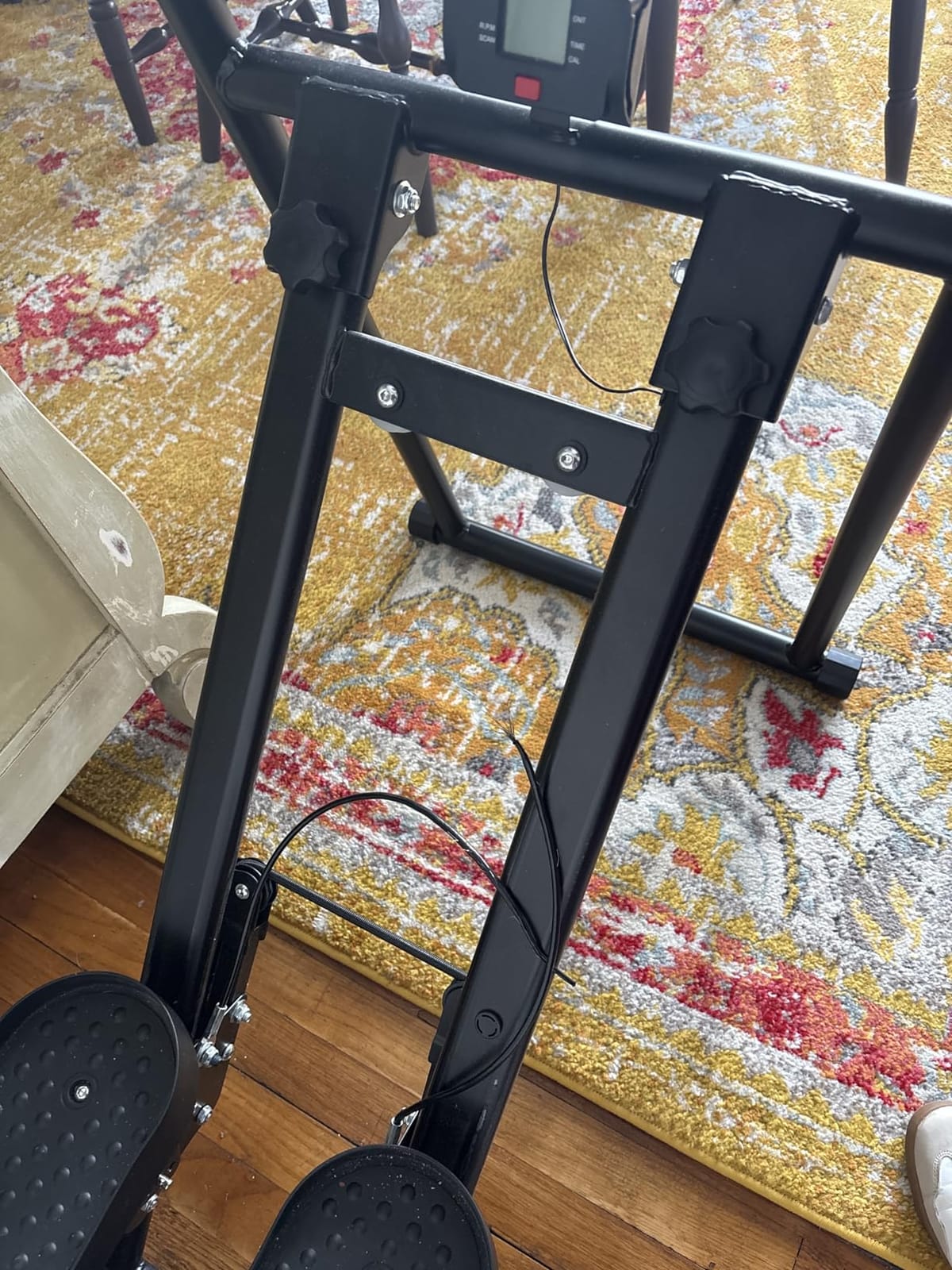
The low-impact motion is easier on the knees than walking on hard pavement, and most buyers are satisfied with the frame and the beginner-friendly full-body workout for the money. It targets legs, glutes, abs and core.
At 35 ratings this is the thinnest owner feedback in the group, and the negatives cluster around fulfilment rather than performance. Buyers report unclear instructions, accessories described in the listing that do not arrive, and one unit with a dead display that needed a new battery and hot glue.
What the three inclinations do for you
A positive angle makes the step harder and shifts work into the calves and quads, a flat angle is neutral for steady conditioning, and a negative angle reduces knee bend while loading the glutes and hamstrings. Combined with the tilt adjustment, that is four settings from one frame without needing a resistance system.
The large pedals are the quiet win. Foot support is the most common fit complaint on cheaper climbers, and these take a full foot without the forefoot hanging off the edge.
Before you order, know this
Read the specifications carefully before checkout and tick off what is actually in the box, because listings for this machine describe a phone holder that reviewers report not receiving. The instructions are vague, so allow extra time for assembly and expect to work from the diagrams.
Resistance tension feels light and some buyers wish for stronger bands, and a few have had broken parts arrive that needed warranty replacements. At a 4.2 average from 35 ratings the machine performs as described, but the service experience is less predictable than the brands with deeper support.
How Many Calories Do You Burn on a Vertical Climber?
Here is the honest answer, because the numbers published elsewhere contradict each other badly. Depending on your body weight and how hard you work, expect roughly 400 to 900 calories an hour on a vertical climber, with most people landing between 500 and 650 during a hard 30-minute effort. Anyone quoting you a single fixed figure for every user is reading a marketing number, not measuring anything.
The reason body weight matters so much is that these machines are bodyweight machines. You are lifting yourself against gravity on every stroke, so a 200-pound person does more work per rep than a 130-pound person at the same cadence. Cadence matters just as much: a self-paced climber like the Sunny Climbing Stair Stepper can push you into a genuinely hard zone that a machine with fixed low resistance cannot.
Three practical notes. Machine calorie counters are unreliable, and owners on several models here call their readings out directly, so use a heart rate strap or a watch if you care about accuracy. Machines with real resistance adjustment, like the EPHESPORT springs or the Stamina magnetic levels, let you sustain a higher intensity for longer, which lifts the total. And if your goal is weight loss, the calorie number matters far less than whether you can still train hard in week twelve.
Vertical Climber vs. Stair Climber vs. Treadmill vs. Elliptical
A vertical climber wins on impact and floor space and loses on adjustability and app quality. A stair climber is a smaller, cheaper cousin with the same up-and-down motion in a box you can roll into a closet. A treadmill burns more per hour but is the loudest, bulkiest and hardest on joints. An elliptical is the smoothest and quietest of the four, and also the least engaging if you want to sweat.
For a shared wall, the elliptical and a silent climber like the BULAPEACH win. For heart rate and calorie burn, a climber or a stair climber beat an elliptical of the same price. For anything involving running or walking outdoors, the treadmill wins outright and no climber competes with it. If you want the same joint-friendly conditioning without any floor machine, our Nordic ski machine cardio guide covers that category.
How to Choose a Vertical Climber Machine
Start with weight capacity and buy well above your own weight. Every machine here rates between 300 and 660 pounds, and a frame rated exactly at your weight will flex and rattle under hard intervals. Next look at resistance type, because this is the decision most buyers get wrong. Self-paced and bodyweight-only machines have no dial, so a weighted vest is your only route to progression. Spring, band and magnetic systems let you increase load over time, and that matters far more than any console feature.
Then check stride and vertical travel. Compact twist steppers have a short stroke and feel easy within weeks. Full climbers with 20-plus inches of stride and a tall frame give you a genuine climbing range and suit taller users, at the cost of floor area. Measure your ceiling height before buying anything above 60 inches tall, and note that the tallest frame here stands 85 inches.
Footprint and folding come next. Standard machines run roughly 20 to 37 inches long and 18 to 28 inches wide; the folded thickness ranges from about 15 centimetres on the Healfith to no fold at all on the Stamina. Then evaluate frame material and base width. Alloy and heavy-duty steel frames with triangular bases stay planted, while lighter frames rock once you sprint, and rocking is what limits how hard you are willing to push.
Finally, weigh console quality, warranty length and noise. An LCD that shows time, steps, step rate and calories is enough; Bluetooth app tracking is a bonus worth having if motivation is your problem. Frame warranties range from one year to five. And if you live above anyone, prioritise a machine with no belt, chain or spring contact, then plan to lubricate guide rails on day one if they come with grease.
Who Should Skip a Vertical Climber
Skip this category if you are around 6 foot 2 or taller and have not tried the frame in person. Fixed-height frames are the single most common fit complaint, and the handlebar adjustments available do not solve a torso that is too long for the machine.
Skip it if you need to increase load weekly and your budget points at a bodyweight-only machine. Without a resistance system you will plateau inside two months, and buying the machine twice is more expensive than buying the right one once. Skip it if noise is a dealbreaker in your building and you are looking at a spring-driven model, since spring contact is the loudest mechanism here.
Also skip it if you want the same training without any floor machine at all. A climber is a cardio tool, not a strength machine, and it will not replace a rower or a loaded barbell if your goals involve progressive resistance.
Exercises and Workouts You Can Do on a Vertical Climber
Here is a simple 20-minute session for a beginner, built around the features the machines actually have. Start with 2 minutes of easy stepping at level 1 or a slow self-paced cadence, hands on the bar, to raise your heart rate without spiking it. Then run 8 rounds of 30 seconds hard, 60 seconds easy, alternating between the two handlebars or releasing one entirely to shift the load. Finish with 5 minutes of steady climbing at the hardest level you can hold while still talking in short sentences.
Once that feels easy, three progressions pay off. Add slow negatives by extending the return stroke on every rep for a few seconds, which turns the cardio into a strength session without extra load. Add single-leg emphasis by keeping one handlebar low and driving harder through one pedal, which unloads a knee that is not tolerating the motion. And add resistance band or vest work if your machine is bodyweight-only, which is how the EPHESPORT spring levels and the YOLEO bands are meant to be used.
On machines with app connectivity, the SunnyFit sessions on the two Sunny steppers and the Sunny Climbing Stair Stepper already structure this for you, with adaptive plans and guided coaching. On self-paced climbers like the Stamina, the eight magnetic levels are enough to build a proper interval ladder once you know what each level feels like.
Frequently Asked Questions
Do vertical climbers really work for cardio?
Yes. A vertical climber raises your heart rate as effectively as a stair climber while placing almost no downward impact on the knees or hips, because your feet never leave the pedals. Most people land between 500 and 650 calories an hour at a hard effort, though machine counters are unreliable, so use a heart rate strap or watch for accurate readings.
Can you lose weight with a vertical climber?
You can, because a vertical climber burns a high number of calories per square foot of floor space while being joint-friendly enough to repeat often. Weight loss depends on a sustained calorie deficit and on whether you can keep training hard for months, which is why machines with adjustable resistance progress better than bodyweight-only climbers.
Can you use a vertical climber every day?
Yes for most people, since the movement is low impact. Give yourself at least one rest day per week, treat soreness in the knees, lower back or grip as a signal to ease off, and remember that many budget models have a printed 15-minute per session limit. Muscles grow through recovery, not through daily climbing.
What is the weight limit on a vertical climber?
Most models in this group rate between 300 and 330 pounds, with the Sunny Smart Power Stepper rated to 400 pounds and the YOLEO dual-triangle frame rated to 660 pounds. Buy well above your own weight so the frame does not flex, and check the rating again if more than one person will use it.
Are vertical climbers good for joints?
Yes. Because there is no landing phase, knee loading stays roughly one to one and a half times body weight, well below the two to three times that running asks. That makes climbers a common choice for knee rehabilitation, joint-friendly weight loss and post-run recovery, though a fixed frame can still bother tall users who cannot get a comfortable posture.
The Best Vertical Climber for Cardio in 2026
The best vertical climbers for cardio in 2026 come down to how much real work you can put in per minute and how much of your life the machine takes up. The Sunny Health & Fitness Smart Twist Stair Stepper wins that balance outright: a quiet twisting climb, adjustable step height, a 350-pound rating and app tracking in a frame you can carry between rooms. If you are heavier than 350 pounds or want bands for your upper body, step up to the Smart Power Stepper. If you want a true climbing stroke, the Climbing Stair Stepper with its 21.5-inch stride is the one to beat.
Check your ceiling height and your floor plan before you order anything, and prioritise a real resistance system over a fancier console. Both mistakes are the ones buyers regret most.