
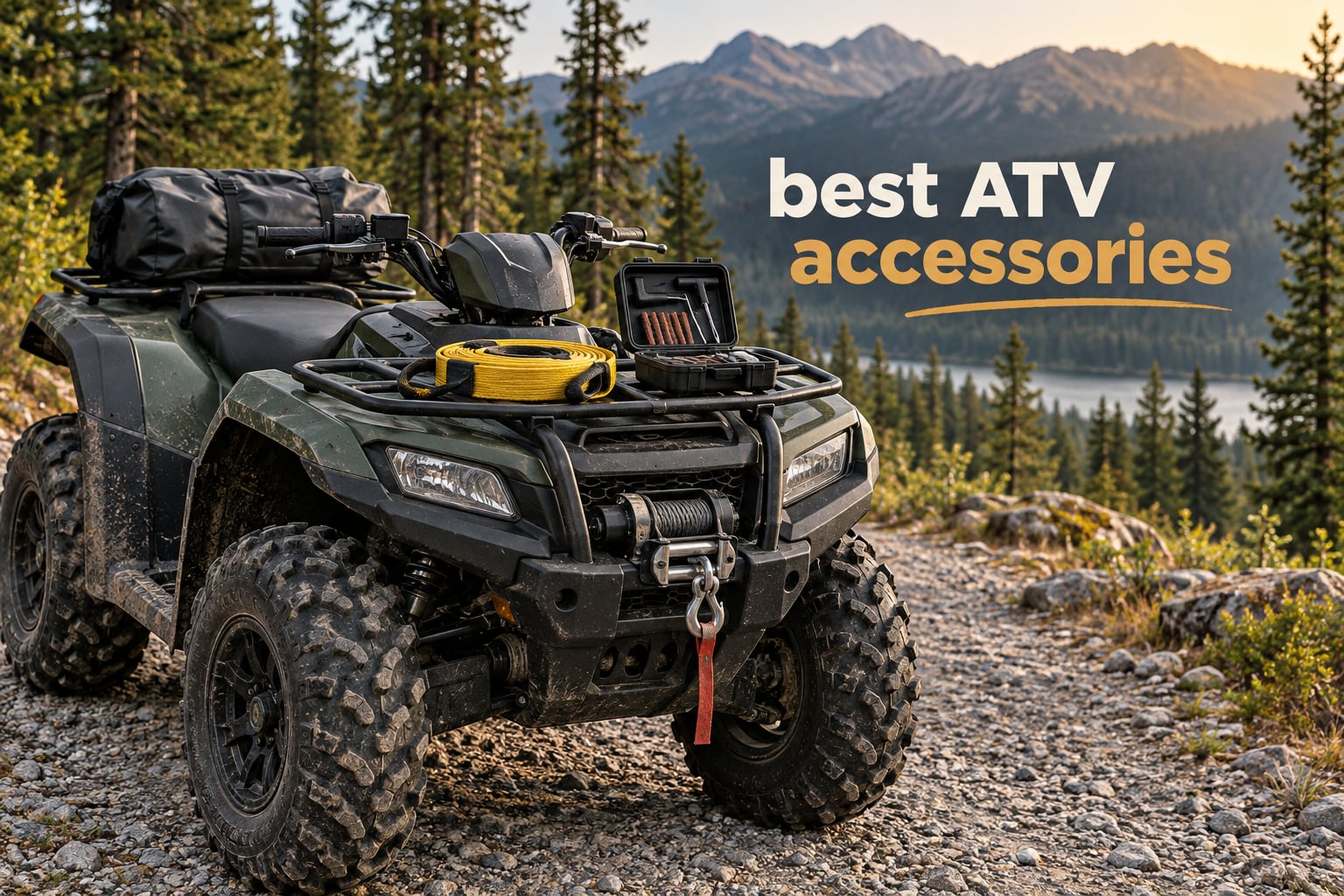
The best ATV accessories fall into six practical groups: recovery gear, lighting and visibility, storage and cargo, trail repair, rider comfort, and electrical reliability. A winch or tow strap decides whether a bad day ends with a ride home or a recovery bill, a plug kit and compressor fix most punctures before they matter, and a battery maintainer is low-cost insurance a four-wheeler owner can own.
That is the short answer. Below it is the long one. We sorted through 12 of the strongest options on the market right now, weighted them by fitment clarity, published load and power ratings, and how well they hold up under trail vibration, and then explained exactly where each one belongs on a real machine.
Most of what circulates online about ATV accessories is either unbranded marketplace gear with no published rating, or a dealer list aimed at one brand. We took the opposite approach. Every pick below has a stated dimension, a stated rating or load figure, and thousands of owner reviews behind it. If you want the short list of where to start, our guide to the best ATV bags covers the storage category in more detail than a single line here can.
One note before we start. A surprising number of the products on this list cost less than a single dealer service hour, which means you can build a genuinely complete trail-ready package without a large budget. What you cannot do is skip fitment. More on that in the buying guide.
Table of Contents
Top 3 Picks for Best ATV Accessories in 2026

Battery Tender Junior 12V Charger
- Charges then holds in float mode
- Works with flooded AGM and gel cell batteries
- Spark-proof with reversed hook-up detection
- 5-year warranty
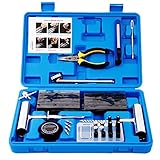
AUTOWN 68-Piece Tire Plug Kit
- 68 pieces in one case
- T-handle and spiral reamers
- Depth stop on the plug inserter
- Fits ATVs tractors and trailers

KEMIMOTO Handlebar Cup Holder
- Clamps 0.6 to 1.5 inch bars
- Two-screw adjustable alligator clamp
- Holds up to 24oz with a drain hole
- 600D Oxford fabric body
Best ATV Accessories at a Glance in 2026
Every product below appears in this table, with the category it belongs to, the fitment situation you need to confirm before ordering, and the figure that matters most for that product type. Scan this first, then jump to the block that matches how you actually ride.
| Product | Specifications | Action |
|---|---|---|
| Battery Tender Junior 12V Charger and Maintainer |
|
Check Latest Price |
| AUTOWN 68-Piece Flat Tire Repair Kit |
|
Check Latest Price |
 Badass Moto Roll Bar Grab Handles Badass Moto Roll Bar Grab Handles |
|
Check Latest Price |
 TOPTOW 2-Inch Trailer Hitch Towing Adapter TOPTOW 2-Inch Trailer Hitch Towing Adapter |
|
Check Latest Price |
 Graspur Double ATV Gun and Bow Rack Graspur Double ATV Gun and Bow Rack |
|
Check Latest Price |
 UNIGT 150-Piece Body Fastener and Rivet Kit UNIGT 150-Piece Body Fastener and Rivet Kit |
|
Check Latest Price |
 Xislet Adjustable Rear Passenger Foot Rests Xislet Adjustable Rear Passenger Foot Rests |
|
Check Latest Price |
 KEMIMOTO UTV Turn Signal Kit with 110dB Horn KEMIMOTO UTV Turn Signal Kit with 110dB Horn |
|
Check Latest Price |
| KEMIMOTO Handlebar Cup Holder |
|
Check Latest Price |
 KEMIMOTO Handlebar Mirrors KEMIMOTO Handlebar Mirrors |
|
Check Latest Price |
 Kolpin Matrix Seat Bag Kolpin Matrix Seat Bag |
|
Check Latest Price |
 NEVERLAND Waterproof Heavy Duty ATV Cover NEVERLAND Waterproof Heavy Duty ATV Cover |
|
Check Latest Price |
1. Battery Tender Junior 12V Charger and Maintainer
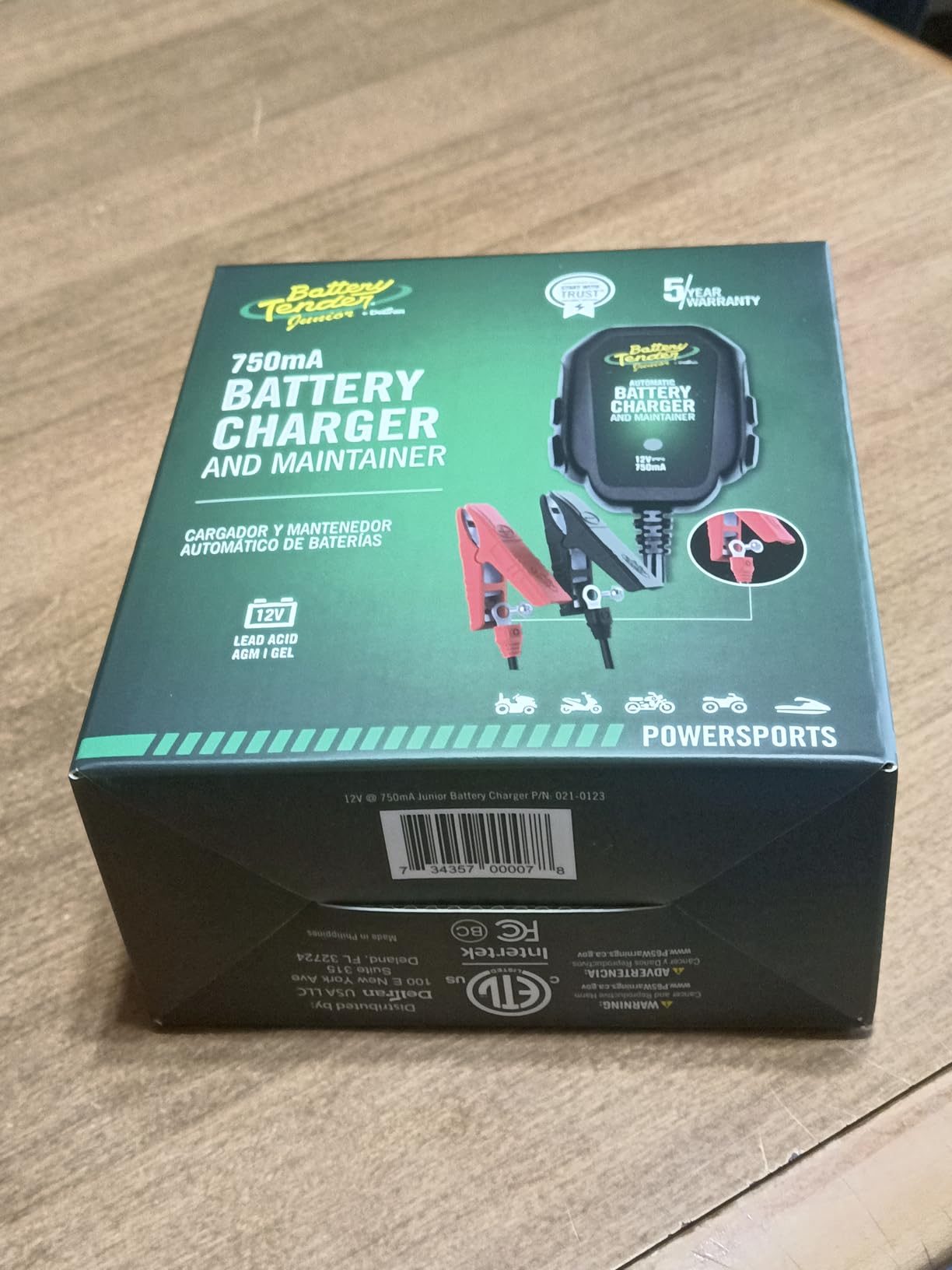
Battery Tender Junior 12V, 750mA Charger and Maintainer: Automatic 12V Powersports for Motorcycle, ATVs, and More – Smarter Than a Trickle Charger – 021-0123
0.75A 12V charger
Lead-acid flooded AGM and gel cell
4-step charge program
5-year warranty
Pros
- Charges fully then holds in float mode for storage
- Works across four common battery chemistries on one charger
- Spark-proof circuitry with automatic reversed hook-up detection
- Two-color LED charge status indicator
- Fused ring terminal harness and alligator leads included
Cons
- 750mA output is slow for a deeply discharged large-capacity battery
- Included leads are short for tight or rear-mounted battery compartments
This is the accessory we recommend before anything else on the list, and the reasoning is unglamorous. An ATV that sits for a month between rides will start with a sulfated battery in spring, and a charger with a proper float stage keeps that from happening. This one runs a four-step program: initialization, bulk charge, absorption, then float, which is the sequence that separates a real maintainer from a wall wart.
We like that it works across lead-acid, flooded, AGM, and gel cell batteries in the same unit. That matters more than it sounds, because the battery chemistry in a modern quad is frequently not the one in the one you already own, and a charger that only understands flooded cells will cook an AGM battery over time.
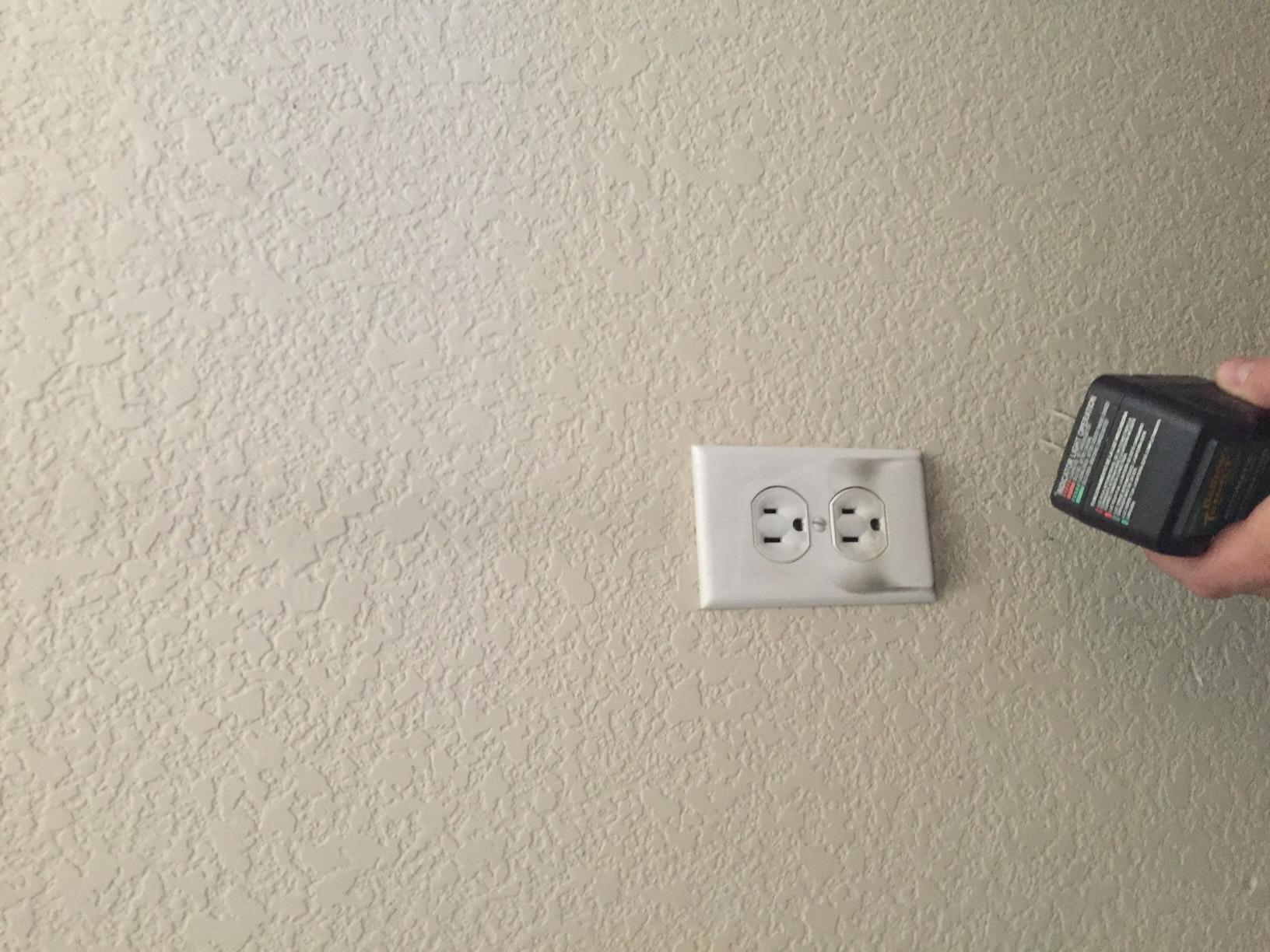
The safety design is the part buyers underrate. Spark-proof circuitry and automatic detection of a reversed hook-up mean you can clip it on in a dark garage without thinking about it. The two-color LED tells you at a glance whether it is actively charging or holding, and the adaptive re-charge under load function recovers voltage lost while the machine is running.
It weighs about a pound and measures a little over three inches tall, so it lives in a saddlebag or a toolbox permanently. The included 12-foot output cord, fused ring terminal harness, and alligator clip cables cover both permanent and temporary mounting situations.
What to check before you buy
Confirm the lead length against your battery location. Many quads tuck the battery under a rear fender or behind a plastic panel, and the ring terminal lead is shorter than you want for that spot. A pair of alligator clips in the same box solves it.
Do not expect rescue speed. At 750mA, a battery that has been sitting deeply discharged takes a long time to come back up, and the honest use case for this unit is maintenance, not recovery. If you ride once a month, it is the ideal tool. If you ride daily and your battery is dying weekly, you have a charging system problem, not a charger problem.
Who should skip it
Anyone running a lithium-ion pack should check the battery maker’s guidance first, since charging profiles differ from lead-acid chemistry. Riders with dual batteries already using a smarter maintainer with a maintenance-mode float stage have this covered.
It is also not an accessory that will get noticed on the trail. That is the point. It is the least glamorous item in this roundup and the one most likely to be thanked by you in eight months.
2. AUTOWN 68-Piece Flat Tire Repair Kit
AUTOWN Flat Tire Repair Kit 68pcs, Heavy Duty Tire Plug Kit to Fix Puncture
68 pieces
Refined steel tools
11.81 x 7.88 x 2.36 inches
1.39 pounds
Pros
- T-handle and spiral probe reamers make insertion easier
- Depth stop keeps plugs from sinking all the way into the tire
- Works on ATVs tractors mowers trailers and trucks
- Compact case stores in a glovebox or tool roll
Cons
- Included plastic storage case feels cheap
- First-time users face a short learning curve on reaming the hole
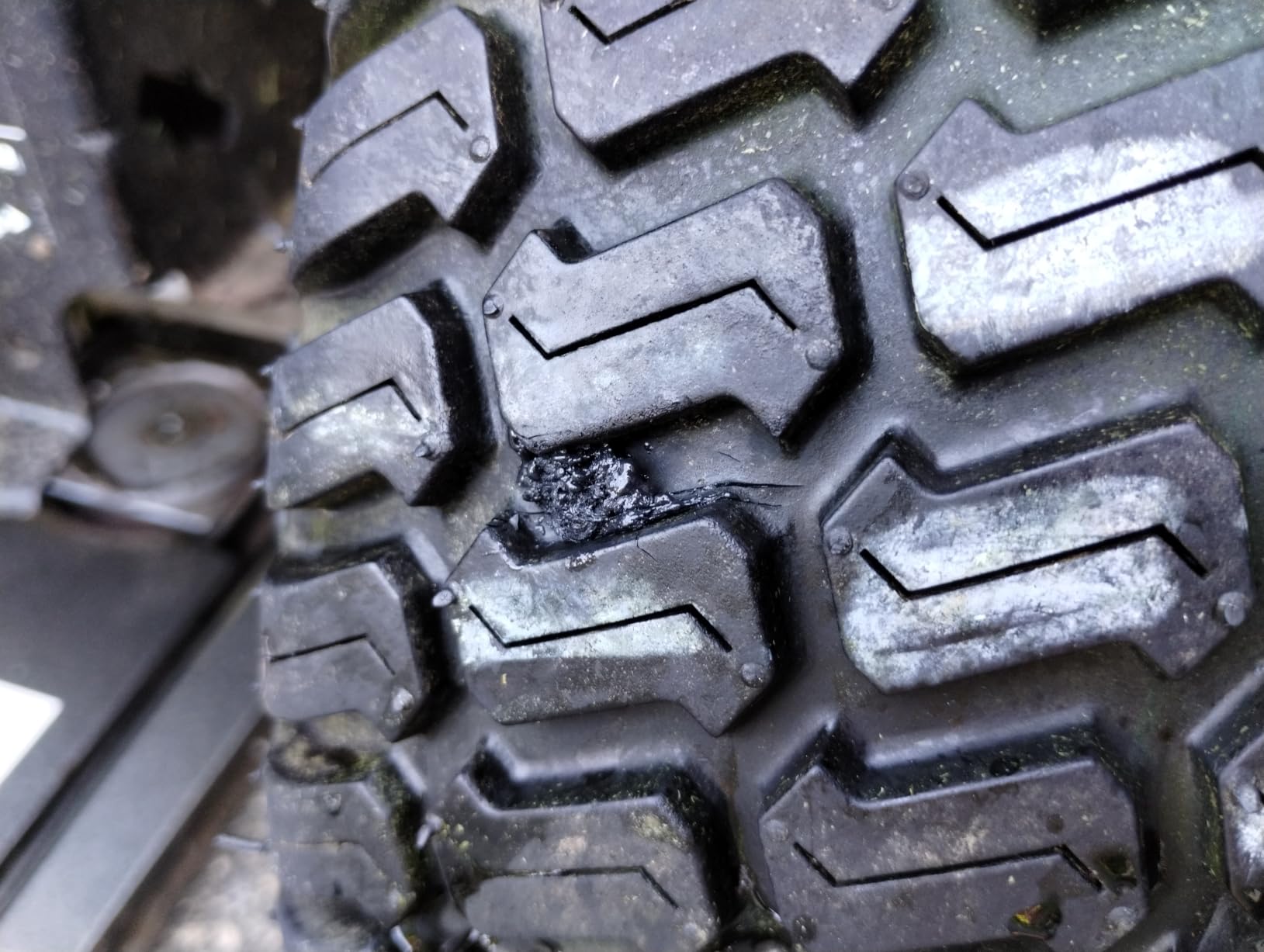
Most punctures on a quad are caused by a thorn, a stick, or a sharp rock edge, and all three produce a small hole that a string plug seals in about five minutes in dry conditions. This kit gives you everything needed to ream, plug, and reinflate, in one case, at a price that makes owning two of them sensible.
The 68 pieces cover more plug sizes than most kits at this level, which matters because ATV and lawn mower tires are different sizes. The T-handle reamer and the spiral probe are both included, and the plug installer has a depth stop, a small feature that prevents the plug from disappearing entirely into the tire where you cannot find it again.
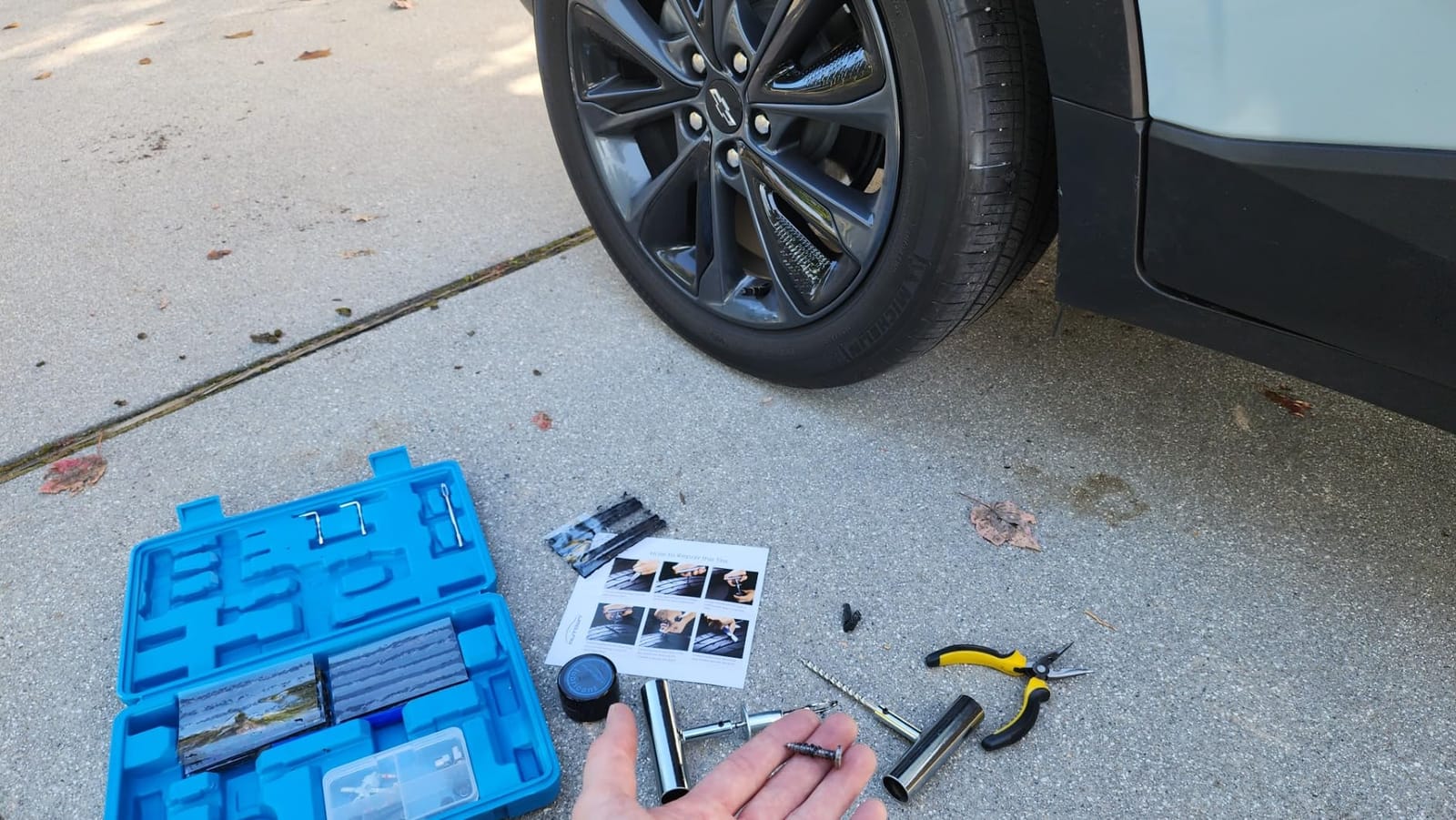
Owners report sealing punctures reliably and finishing the job fast, with the case being small enough to keep permanently in the machine. The material is refined steel, and the components feel heavier than the price suggests, which is the single best indicator of long-term satisfaction in a tool kit.
Compatibility is broad. The same kit handles car, motorcycle, ATV, tractor, lawn mower, RV, jeep, and truck tires, so if you own anything with a tire, one kit covers the property.
What to check before you buy
Buy a second, cheap plug, and mount an air compressor within reach of it. A plug fixes the hole. Only a compressor reinflates the tire so you can ride away, and the two together fit in less space than a lunchbox.
Also decide where the kit lives. A glovebox mount means it is always there. A garage shelf means it is there on the days you planned to need it, which research suggests is not the same set of days.
Who should skip it
Skip it if your tires run at very low trail pressure. Plug repair is a temporary field fix designed to get you home, and repeated low-pressure runs will eventually destroy a repaired tire regardless of the plug quality.
Also skip the expectation that this replaces a mounted spare or a full tube. This is a roadside repair kit, and a serious sidewall or bead failure needs a different solution entirely.
3. Badass Moto Roll Bar Grab Handles
Badass Moto SxS Accessories UTV Grab Handles, 4 Wheeler roll bar Grips, 2pk
Fits 1.5-1.75 inch round bars
Stainless steel
Velcro strap mount
7.36 ounces
Pros
- Tool-free install in about 60 seconds with no drilling
- Velcro straps hold even for large riders climbing in
- Covers most round cages including RZR Ranger Defender and Mule
- Available in 2-packs and 4-packs
- Coordinate colors to match the machine
Cons
- Will not fit profile-shaped roll cages
- Straps can need tightening after heavy trail use
These are not accessories in the styling sense. They are the difference between climbing into a cage without using both hands on the frame and swinging your leg over it. On a machine with a rear seat, a passenger benefits far more than the driver does.
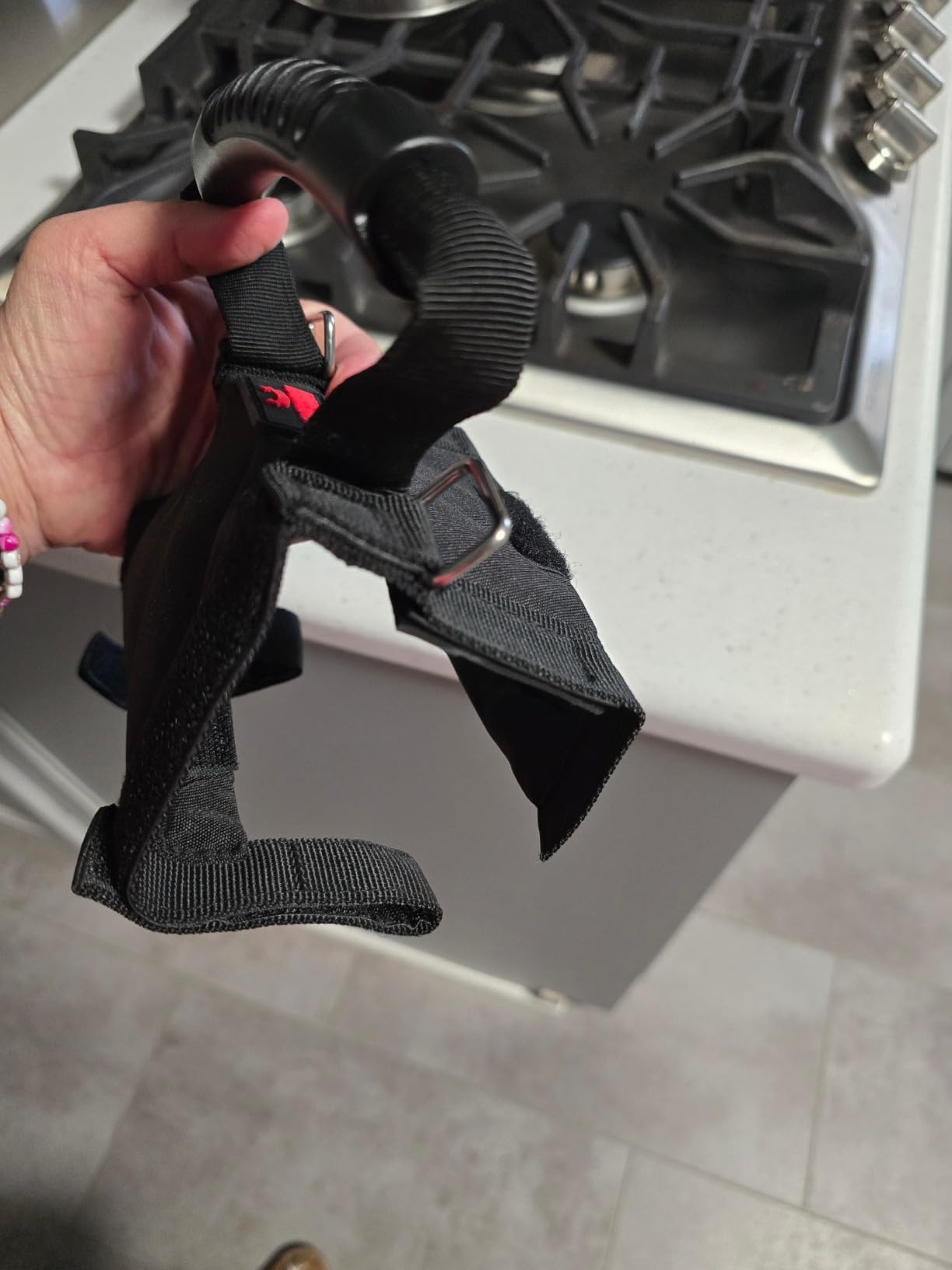
Construction is stainless steel with an adjustable velcro strap attachment, and the whole thing weighs about seven ounces. Installation takes roughly a minute per handle with no tools and no drilling, which matters when the cage tubing is already crowded with light bars, harnesses, and winch line.
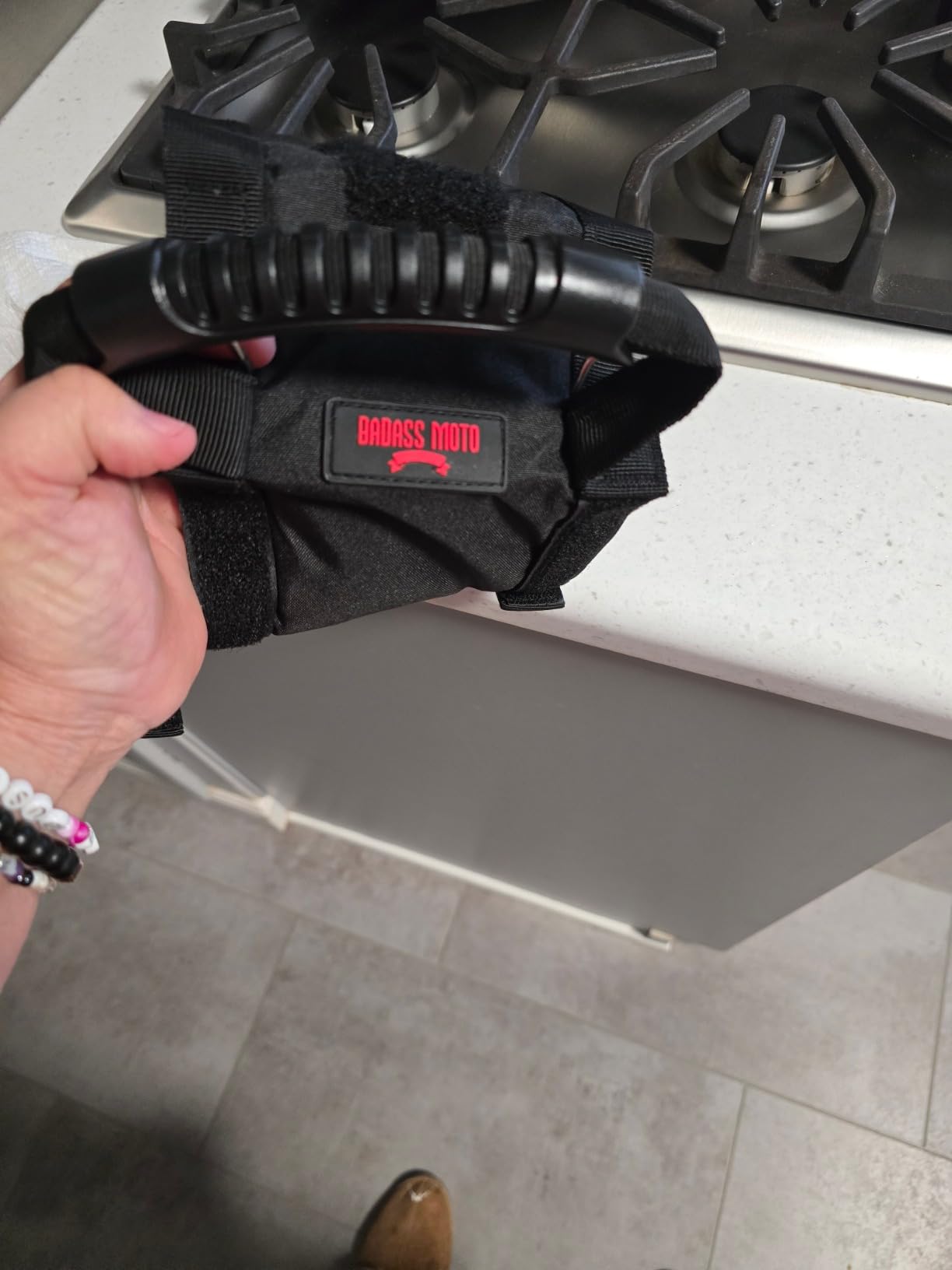
The fitment spec is the useful part: 1.5 to 1.75 inch diameter round tubing. That covers most round-style cages across Polaris, Kawasaki, Honda, and Yamaha machines, and owners across those brands report a grip that holds their weight when climbing in. Larger riders are the group that mentions this most, and the answer they give is consistently positive.
They are sold in 2-packs and 4-packs, so buying a pair for one cage or a full set for a four-seat machine both work without leftover hardware.
What to check before you buy
Measure your cage tubing before ordering. This is the most common fitment error in this category, and it is easy to avoid. If your tubing is 1.75 inch or larger, or if your cage is a profile shape rather than a round tube, these handles will not work, and no amount of creative mounting will change that.
Position them where a passenger’s hand naturally lands getting in, not where they look best. The rear hoop entry point is where a handle earns its keep.
Who should skip it
Single-riders with no rear seat will get minimal benefit. Anyone running a full cage with a hard top or a large enclosure may find the mounting point already occupied by other hardware, which forces the handle inward where it is awkward to reach.
Expect to re-tighten the straps after aggressive trail days. That is normal for a velcro-mounted part, and it takes seconds.
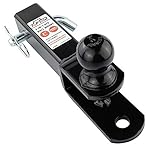
4. TOPTOW 2-Inch Trailer Hitch Towing Adapter
TOPTOW ATV/UTV Trailer Hitch Towing Ball Mounts, 2-Inch Ball, Clevis Pin, Fits 2-Inch Receiver
Ball clevis and pin hole in one
Alloy steel
2000 lb ball rating
5000 lb strap loop
Pros
- One adapter covers ball clevis and pin hole towing styles
- Drops into a standard 2-inch receiver with no modifications
- Powder coated finish resists corrosion on muddy trails
- Includes a 5/8 inch hitch pin for immediate coupling
Cons
- 2000 lb tow ball ceiling rules out heavy equipment trailers
- Not intended for loads beyond the published ball and strap loop ratings
Farm, ranch, and property owners already know the hitch on a quad is the bottleneck, not the machine. The factory receiver is typically a 2-inch tube with no ball, no clevis, and no way to connect a small trailer. This adapter fixes that in one part.
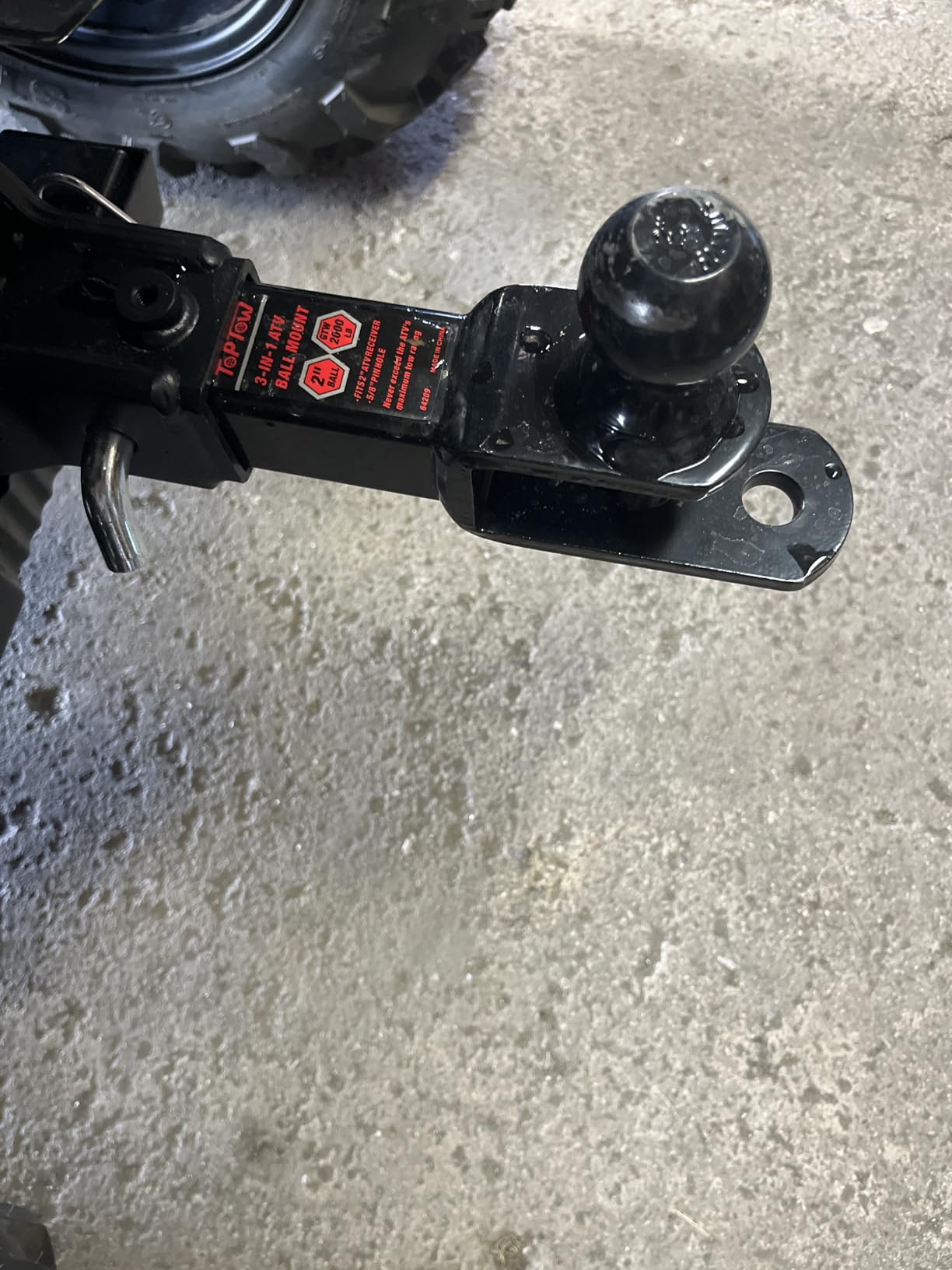
It is a three-in-one design: a 2-inch weld-on style tow ball, a 1/2-inch clevis pin, and a 3/4-inch clevis pin hole in the same adapter. The 2-inch by 2-inch square shank drops into any industry-standard 2-inch receiver, so there is no modification to the machine at all.
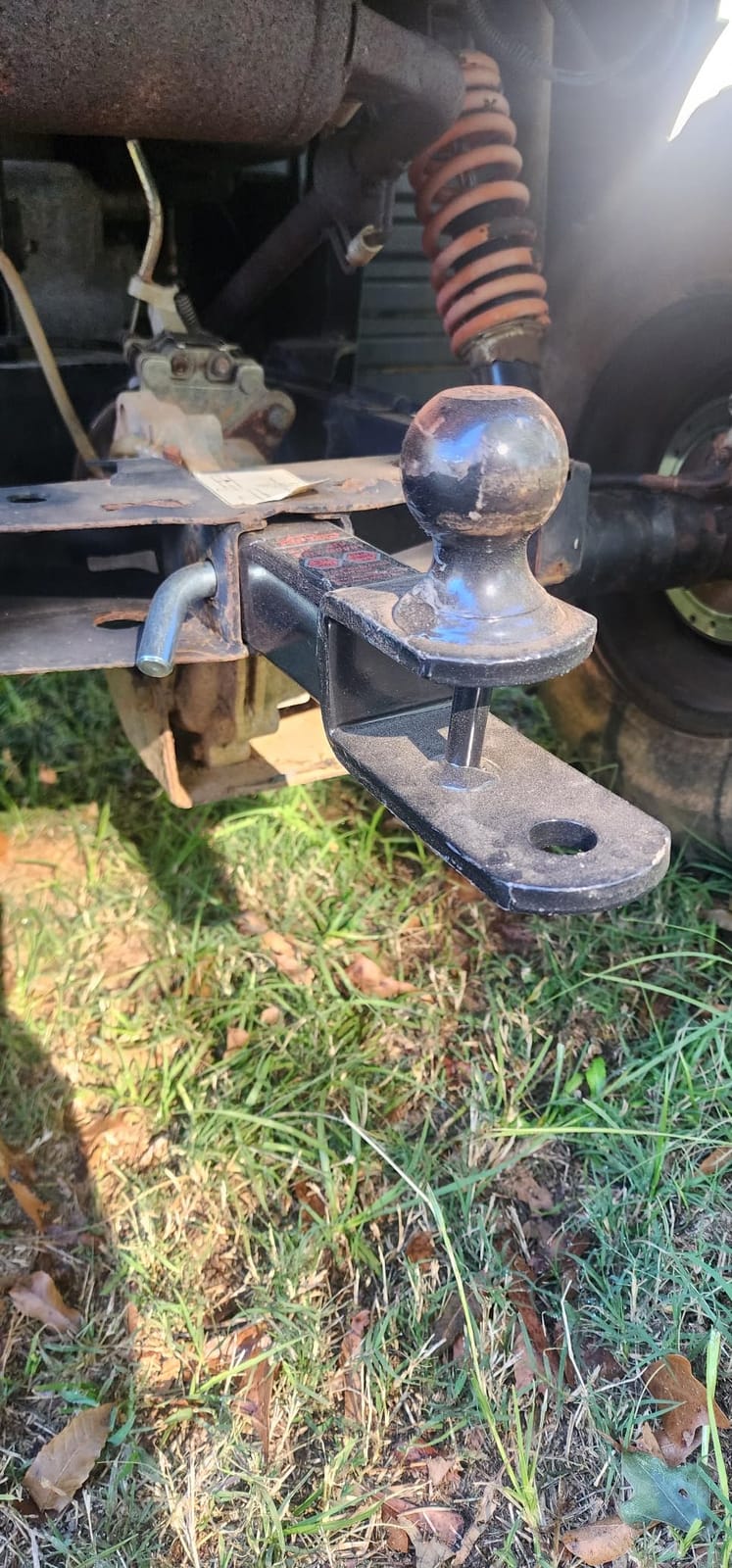
Published ratings are stated, which is refreshing in this category: 2000 pounds on the tow ball and 5000 pounds on the winch strap loop. The material is alloy steel with a black powder coated finish, and the coating is the part that decides whether the adapter looks good after two winters of mud. A 5/8-inch hitch pin is included, so you can couple up immediately.
That 5000-pound strap loop rating is the number most riders will actually use. It gives you a rated connection point for winch-based recovery work and for pulling a small utility trailer with a winch strap.
What to check before you buy
Confirm your receiver is a 2-inch square tube. Some older and some budget machines use a different receiver dimension, and the shank is the only part that determines fitment here. Measure the outside dimension of your receiver tube before you order.
Then think about tongue weight rather than total trailer weight. A small utility trailer, mower trailer, or dog trailer sits comfortably inside a 2000-pound ball rating. A loaded equipment trailer does not, and no adapter fixes that.
Who should skip it
Skip it if you plan to haul full-size equipment or a loaded landscape trailer. The ball rating is the ceiling and it is not generous, so treat it as a light-duty towing solution.
Trail riders with no towing or farm use will not get value from this one. It is a work accessory, and it earns its place only if you actually move something.
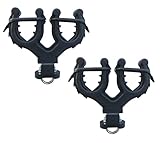
5. Graspur Double ATV Gun and Bow Rack
Graspur Double ATV Gun & Bow Rack – Model ATV2
150 lb load capacity
Alloy steel nylon and rubber
9.1 x 11.6 x 2.5 inches
Made in the USA
Pros
- Soft rubber spurs grip rifles and tools without scratching
- Carries two guns side by side or shovels and fishing rods
- Works with any tubular bar from 5/8 to 1 inch
- Built with a stated 150 lb load capacity
Cons
- Rubber snubbers have a weak attachment point and can pop out while tightening
- Frame clamps can loosen and need re-snugging before each use
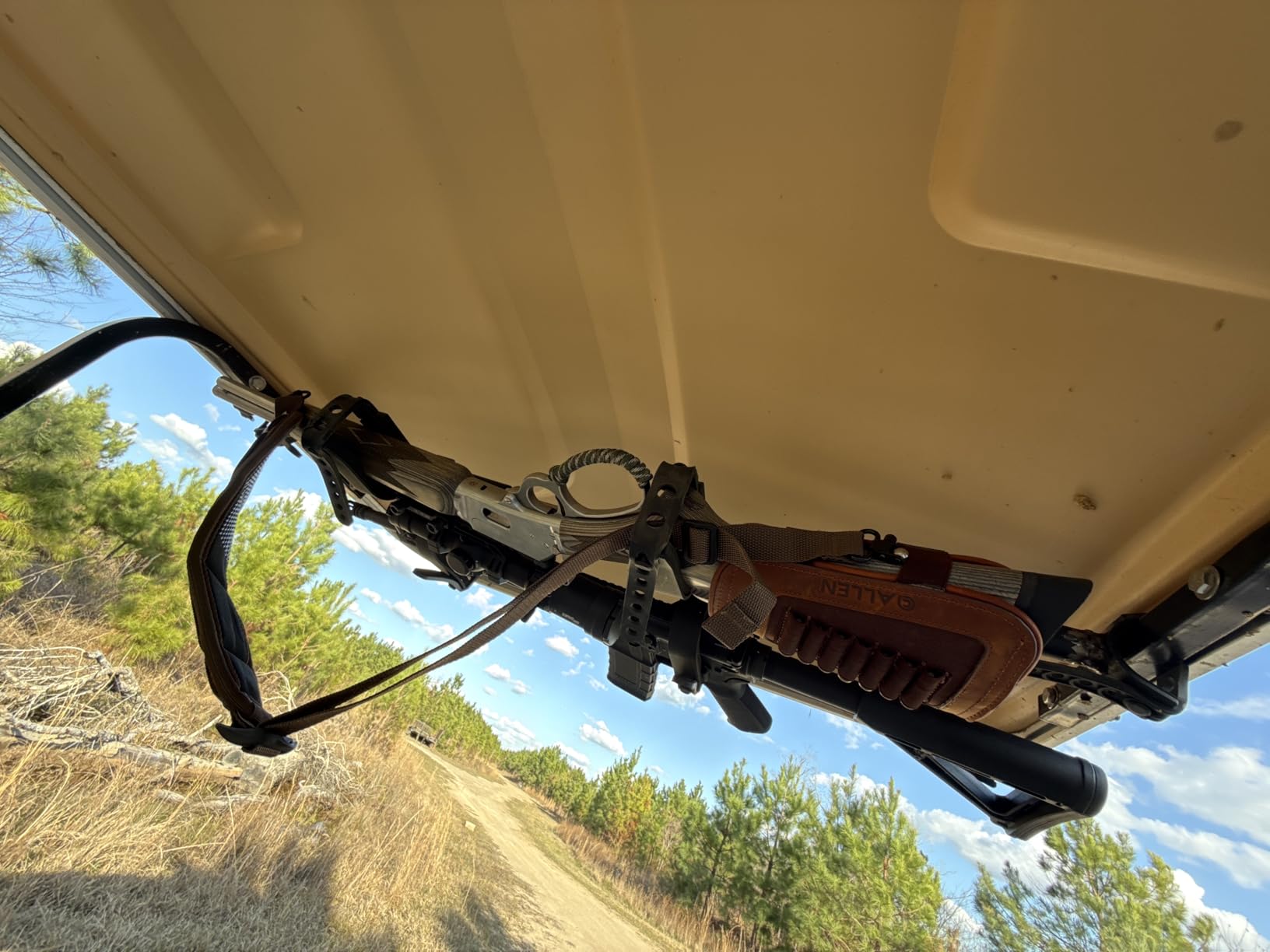
Hunting accessories have one job beyond convenience, which is making sure a firearm is not loose in a rack while a machine is bouncing across a logged hillside. This rack treats that as the design priority, and the soft rubber cradle is the reason it does the job well.
The construction is a nylon core covered in thick soft rubber, with rubber spurs that cushion and grip cargo to prevent scratching. It mounts to tubular bars or railings from 5/8 inch to 1 inch in diameter using a power grip mount, which covers the majority of front racks and rear hoops on the market.
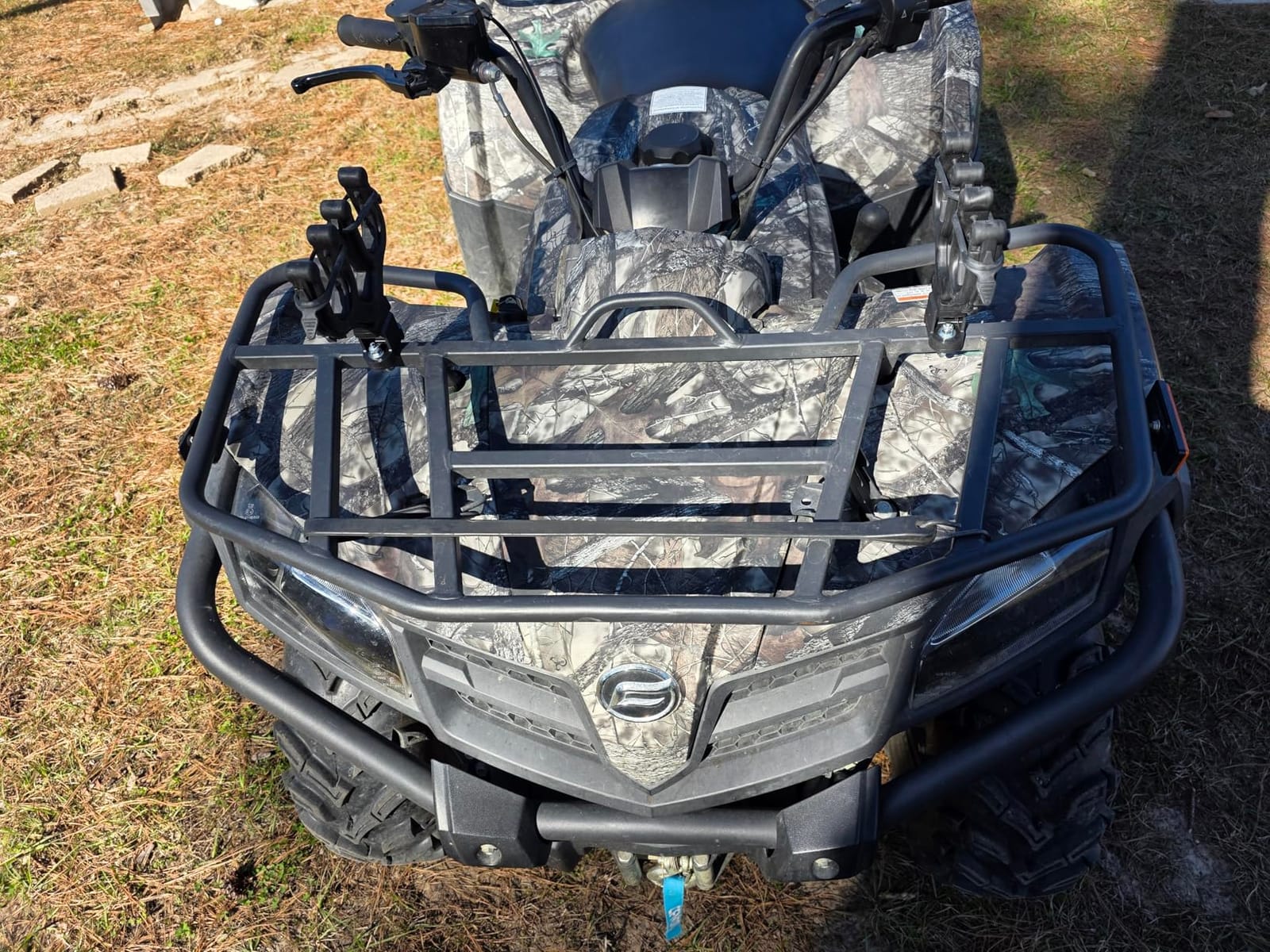
It carries two guns side by side, or the same space holds shovels and fishing rods, which makes it a general cargo cradle rather than a gun-only device. The stated load capacity is 150 pounds, the unit weighs about six ounces, and the dimensions are 9.1 by 11.6 by 2.5 inches. It is made in the USA.
If you want a deeper look at the alternatives in this category, our roundup of the best ATV gun racks compares several mounting styles side by side.
What to check before you buy
Check the diameter of the bar you plan to mount to and measure it. Anything outside the 5/8 to 1 inch window will not clamp correctly, and forcing it is how frames get damaged.
Note the exclusions too. This rack is not recommended for ice augers or for crossbows, both of which load a cradle in a way it was not designed for. Also plan a re-check of the clamps before each ride; loaded racks have a habit of loosening on rough ground.
Who should skip it
Skip it if you carry a crossbow or an ice auger, since the manufacturer explicitly rules both out. Riders who haul firewood or bulky gear are better served by a basket or a strap-based rack, which handles odd shapes better than a cradle.
For non-hunting users, the rubber snubber attachment point is a known weak spot. Check it before each use and you will get many seasons of service out of it.
6. UNIGT 150-Piece Body Fastener and Rivet Kit
UNIGT 150pcs ATV UTV Body Fastener Rivets Push Pins 8mm
150 pieces
8mm nylon push pins
Domed solid head
Removal tool included
Pros
- Replaces common OEM part numbers used across major brands
- Nylon pins resist cracking when levered out
- Removal tool makes taking old clips out straightforward
- Large count covers several machines and future repairs
- Storage bag included for the spares
Cons
- Included removal lever is basic plastic and works best on older brittle clips
- Only fits 8mm groove diameter push pins so other fastener sizes will not substitute
This is the least glamorous item on the list and one of the most useful. Every year of trail riding puts a branch through a fender edge, and every fender edge is held on by small plastic push pins. Those pins do not come back on their own.
You are getting 150 pieces of 8mm universal plastic fender clip and body rivet with an OEM-style design. The 8mm groove diameter is the number to verify, because that is what determines whether the pin seats properly in your fender. The material is nylon or plastic with a domed head and solid push fastener type.
What to check before you buy
Compare the part numbers listed for the kit against the clips on your machine. The set replaces 7661855, 90653-HC4900, and 90653HC4900, and it is stated as working on Can-Am Commander, Maverick, and Outlander, Polaris Sportsman, Ranger, and RZR, Suzuki KingQuad, Vinson, and snowmobiles.
If your machine uses a different clip diameter, this set will not help. Measure one of your existing clips before ordering, and take a photo of the fender edge while you are out there.
Who should skip it
Skip it if your machine is spotless, spot-welded, or held together with screws and quarter-turn fasteners. This kit is for the plastic push-pin style used on most consumer ATVs and UTVs of the last two decades.
Also plan where the spares live. A storage bag in a saddlebag costs nothing and turns this from a one-time fix into permanent field insurance.
7. Xislet Adjustable Rear Passenger Foot Rests
Xislet Pairs ATV Foot Rests for Four Wheeler Rear Passenger Foot Peg
Universal fit
Height adjustable
Folding design
Metal with rubber tread
Pros
- Height adjustment fixes the discomfort for shorter rear passengers
- Non-slip rubber tread grips well over rough ground
- Folds up neatly when you are riding solo
- Backing plate reinforces thin plastic fenders
Cons
- Included bolts are too long for thin 3/8 inch plastic fenders
- Some buyers recommend larger washers for stability
Two-up riding is where a stock quad is most obviously uncomfortable, and foot placement is usually the reason. A passenger hanging on the rear fender with no platform is unpleasant for the passenger and a handling problem for the driver. Adjustable foot rests solve both.
These are solid metal with a non-slip rubber tread, and the height adjustment is the feature that matters. A fixed-height peg helps a tall passenger and leaves a short one hanging. These change position to suit the person riding, which is why riders with children on the back rate them so highly.
What to check before you buy
Measure your fender thickness. The most common fitment issue is the supplied bolts being too long for thin 3/8 inch plastic fenders, which means they bottom out or crack the plastic. A pack of shorter bolts and larger washers solves it in a hardware store, and a few buyers do exactly that.
Confirm the fitment list covers your machine. It is stated as universal for Polaris Sportsman 450 through 1000S and Scrambler 850 and XP 1000S, Honda Fourtrax, Foreman, Rubicon, Kodiak 450 and 700, Suzuki KingQuad 400 through 750, and Kawasaki Brute Force 300 and 750.
Who should skip it
Solo riders who never carry a passenger should skip it. The folding design means they will not interfere, but you are carrying two metal brackets and a hardware bag for a seat you never use.
Be aware the review pool here is smaller than the rest of this list. The rating is solid and the feedback is consistent, but you are relying on a thinner body of owner experience than with the picks above it.
8. KEMIMOTO UTV Turn Signal Kit with 110dB Horn
KEMIMOTO UTV Turn Signal Kit with 110D Horn, Plug and Play UTV ATV Blinker with Rocker Switch, Universal Street Legal Kit Compatible with Polaris, Can-Am, Kawasaki (Without License Plate Holder)
Four amber LED signals
110dB horn
Plug and play harness
12 volt waterproof unit
Pros
- Pre-assembled plug and play harness saves hours of wiring
- Amber LEDs stay visible at distance in fog and rain
- 110dB horn has a press-and-release switch that cuts out when released
- Harness length suits vehicles up to 220 inches
- Covers 2- 4- and 6-seater side-by-sides
Cons
- Does not include a license plate holder
- Some buyers report a learning curve routing and mounting the harness
If your machine ever sees a road, this category is not optional. Turn signals and a horn are the two things that separate a legal road-going vehicle from a machine that will get you pulled over, and they are the most commonly skipped electrical upgrade on the list.
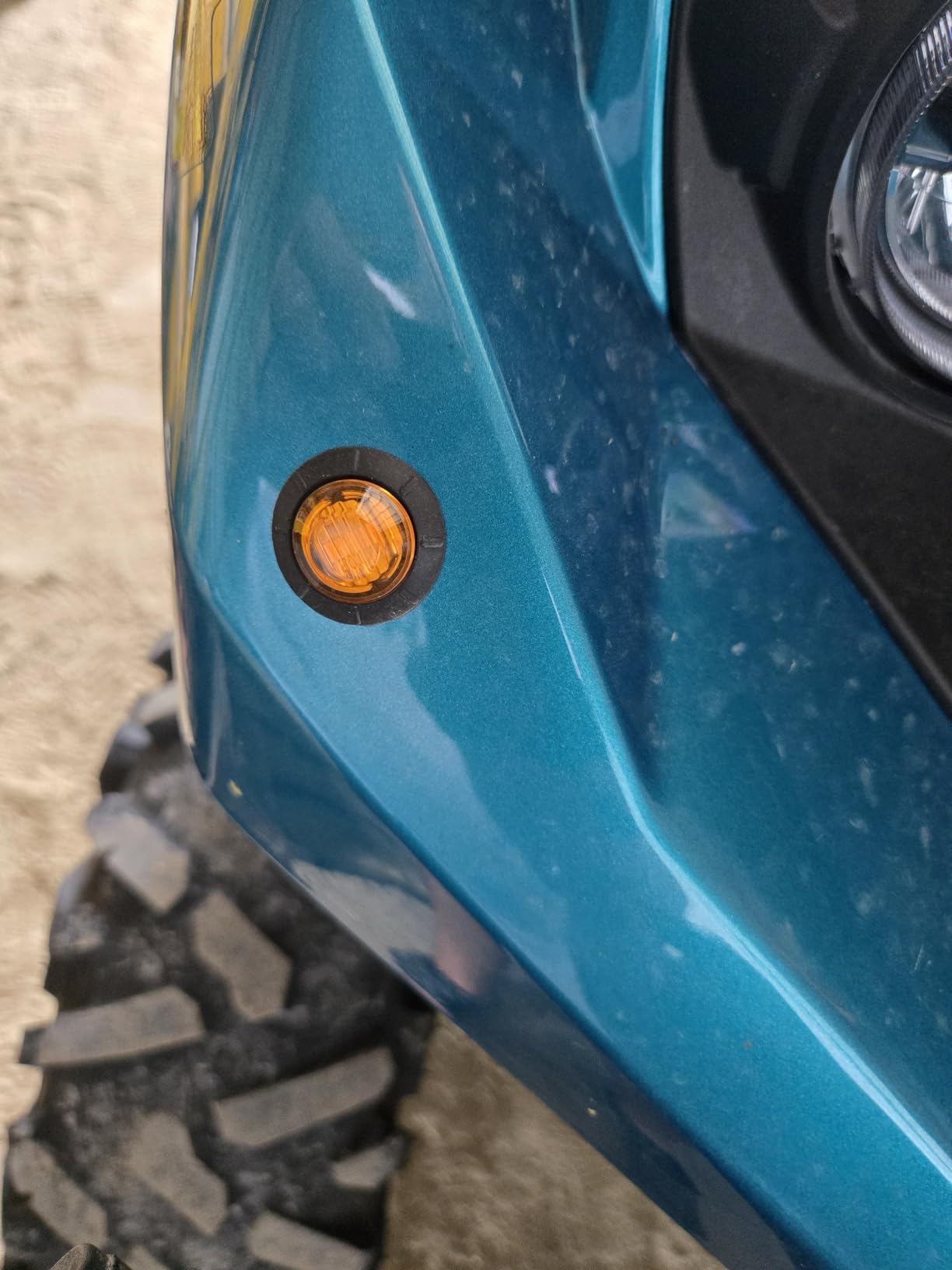
The reason most riders skip it is fear of the wiring. This kit removes that objection. You get a pre-assembled, color-coded, plug-and-play harness with labeled light connector positions, which turns a wiring project into a routing project. Four amber LED signals cover front and rear, and a 110dB horn comes with a flexible press-and-release rocker switch that goes silent the moment you let go.
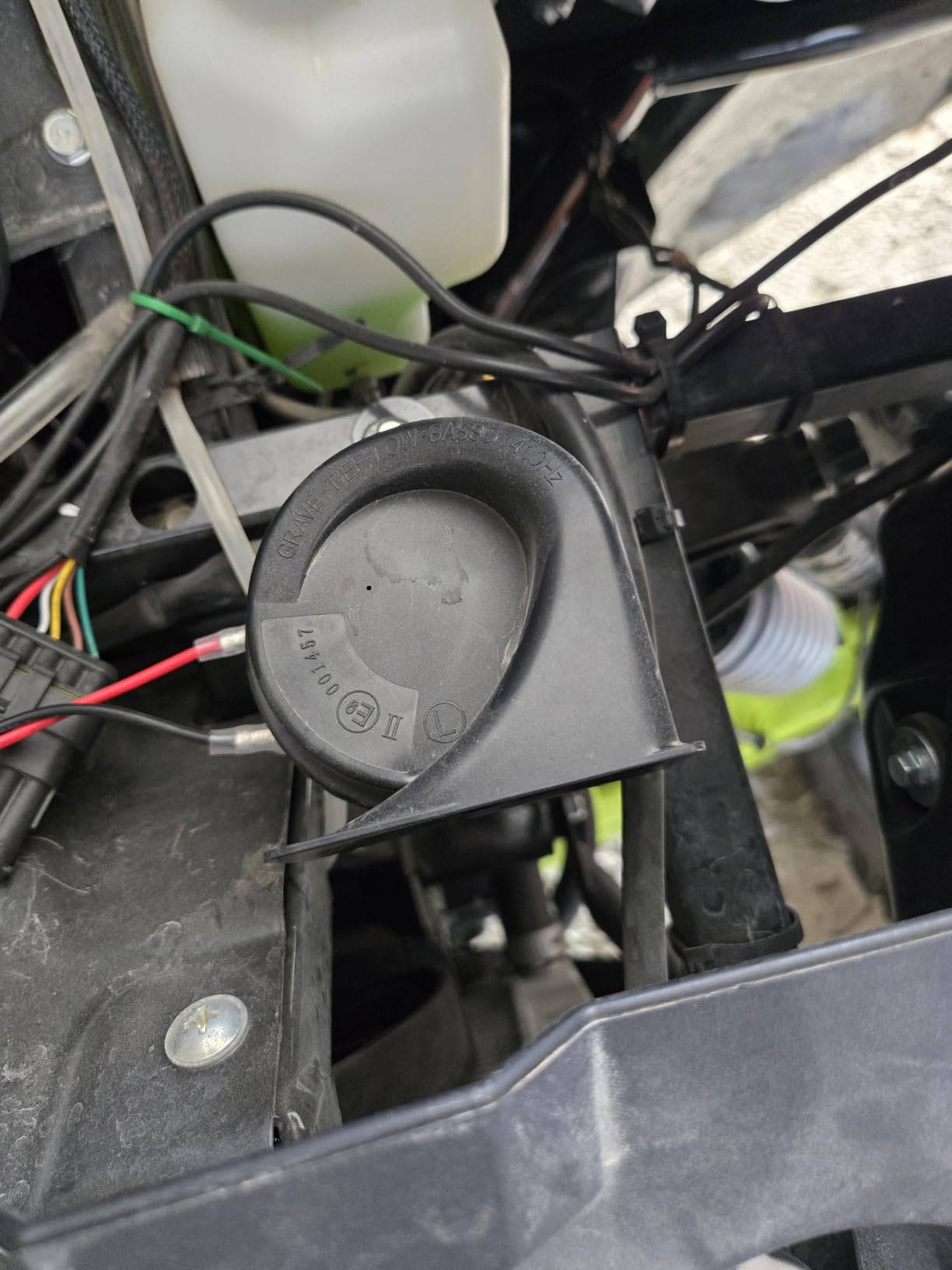
The amber LEDs are specified for long-distance visibility in rain and fog, and the lenses are polycarbonate on a waterproof 12-volt unit drawing 67.5 watts. The harness is upgraded in length to fit vehicles up to 220 inches, which covers a six-seater side-by-side without a splice.
Compatibility is broad, spanning Polaris RZR, Ranger, Pioneer, and Talon, Can-Am X3, Kawasaki Teryx and Mule, Arctic Cat, CFMOTO, and golf carts. Note the orientation: the lights mount front and rear, and the kit works on 2-, 4-, and 6-seater machines.
What to check before you buy
Check your state or local rules before you spend anything, because equipment requirements vary and a horn is not universally required. Also note this kit does not include a license plate holder, so full street legality may need one more purchase depending on where you ride.
Plan the routing before you start. Most complaints in this category are not about the lights failing, they are about a harness routed badly enough to chafe against a frame tube.
Who should skip it
Pure trail riders with no road access should skip it. On a closed course the signals add weight and a wiring job for no benefit, and the horn is unnecessary noise.
If you ride in an area where side-by-sides are restricted on public roads, the legal argument disappears entirely and this becomes purely optional equipment.
9. KEMIMOTO Handlebar Cup Holder
KEMIMOTO Motorcycle Cup Holder, Oxford Fabric Motorcycle Drink Holder with 0.6″-1.5″ Alligator Clamp, Universal Water Bottle Cup Accessories for Bike, ATV/UTV, Scooter, Boat, Walker
Clamps 0.6-1.5 inch bars
Two-screw adjustable clamp
Holds up to 24oz
600D Oxford fabric
Pros
- Two-screw clamp holds firmly and does not spin at speed
- Reinforced drawstring keeps drinks upright on rough ground
- Fabric body will not rust and is washable
- Two mesh pockets give keys and small items a home
Cons
- Requires a handlebar or pole between 0.6 and 1.5 inch in diameter
- Not compatible with Road King Spyder RT or Burgman 400 models
A cup holder is not a serious purchase, but a spilled drink in a saddlebag at 30 miles per hour is a genuinely bad afternoon, and this solves that. It is also the second most-reviewed product in this entire roundup, which tells you how many people have been looking for one that does not fall off.
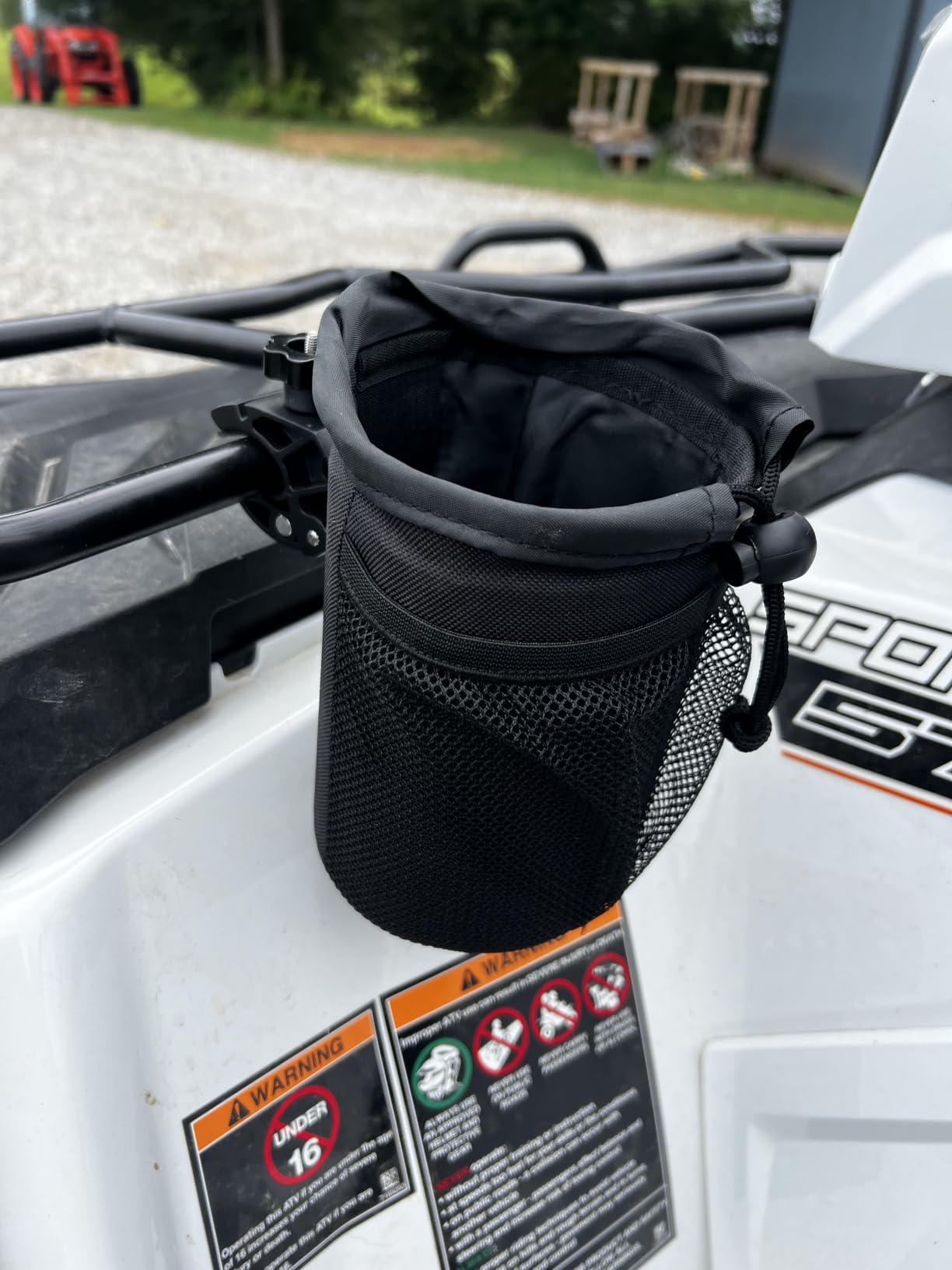
The failure mode for cheap holders is a clamp that loosens under vibration. This one addresses it directly: the alligator clamp is a patented 90-degree adjustable design upgraded from one screw to two, with an added cross-mounting hole for stability. That two-screw pattern is the reason it holds position at speed instead of rotating around the bar.
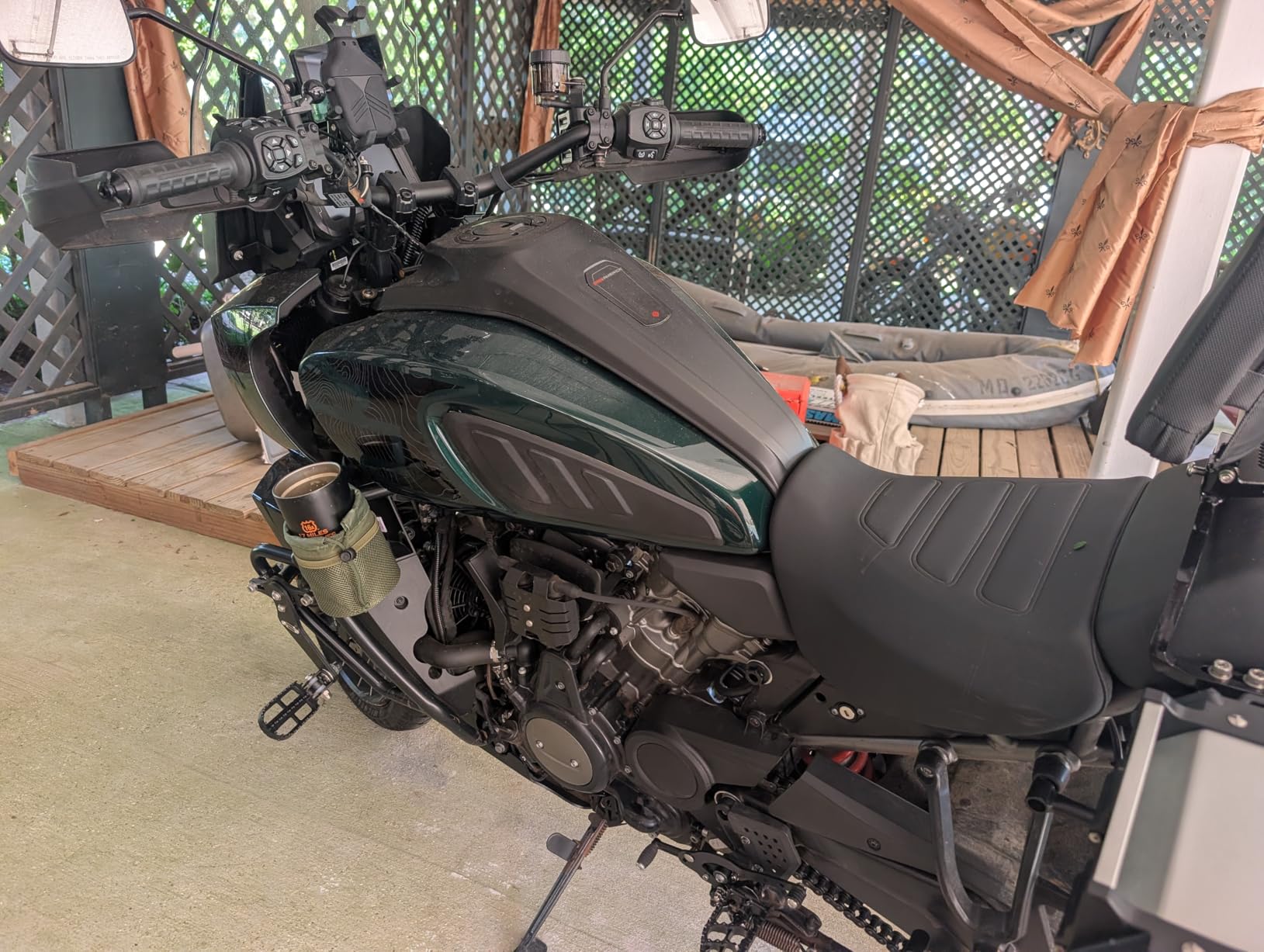
It clamps to handlebars or poles from 0.6 inch to 1.5 inch in diameter. The body is 600D Oxford fabric with a reinforced adjustable drawstring at the top that cinches the drink down on bumpy ground, and the base is 3.94 inch in diameter with a drain hole, holding up to 24 ounces.
Two separate mesh pockets give keys, a wallet, or a phone a place to live, which removes the other loose-cargo problem that comes with handlebar-mounted gear. The fabric will not rust, and it wipes clean.
What to check before you buy
Measure your handlebar diameter and confirm it falls between 0.6 and 1.5 inches, because the clamp will not open wider. Most ATV and UTV bars land comfortably inside that range, but certain narrow scooter bars do not.
Check that the clamp location does not fight your existing controls. Mount it behind a brake lever cluster and out of the way of the thumb throttle, and check that it clears your shifter at full steering lock.
Who should skip it
Skip it if you ride technical single-track with a lot of standing on the pegs, or if your handlebar already carries crowded hand controls. A cup holder is a comfort item and it should never compete with a lever for room.
The listed exclusions for certain touring bikes do not apply to quads, but the diameter range still governs the decision on anything with an unconventional bar.
10. KEMIMOTO Handlebar Mirrors
KEMIMOTO ATV Mirrors, 8MM 10MM Motorcycle Mirrors for Handlebar ATV Accessories Compatible with Scooter Snowmobile Mope, 360 Degrees Ball Type Adjustment
Convex scratch-resistant lenses
360-degree ball joint
7/8 inch clamp included
Rubber-sleeved mounts
Pros
- Convex lenses noticeably widen the field of view behind you
- 360-degree ball joint holds position on rough rides
- Rubber sleeves keep water and mud out of the mount interfaces
- Includes clamp plus 8mm and 10mm screw adapters
Cons
- Fitment depends on the right clamp or screw size for your bar
- ABS housing is more fragile in a hard rollover than metal
Most ATVs ship without mirrors, which means every trail merge, every parking exit, and every wide corner involves a head turn. On a machine that travels faster and quieter than a car, that head turn is where a lot of near misses come from.
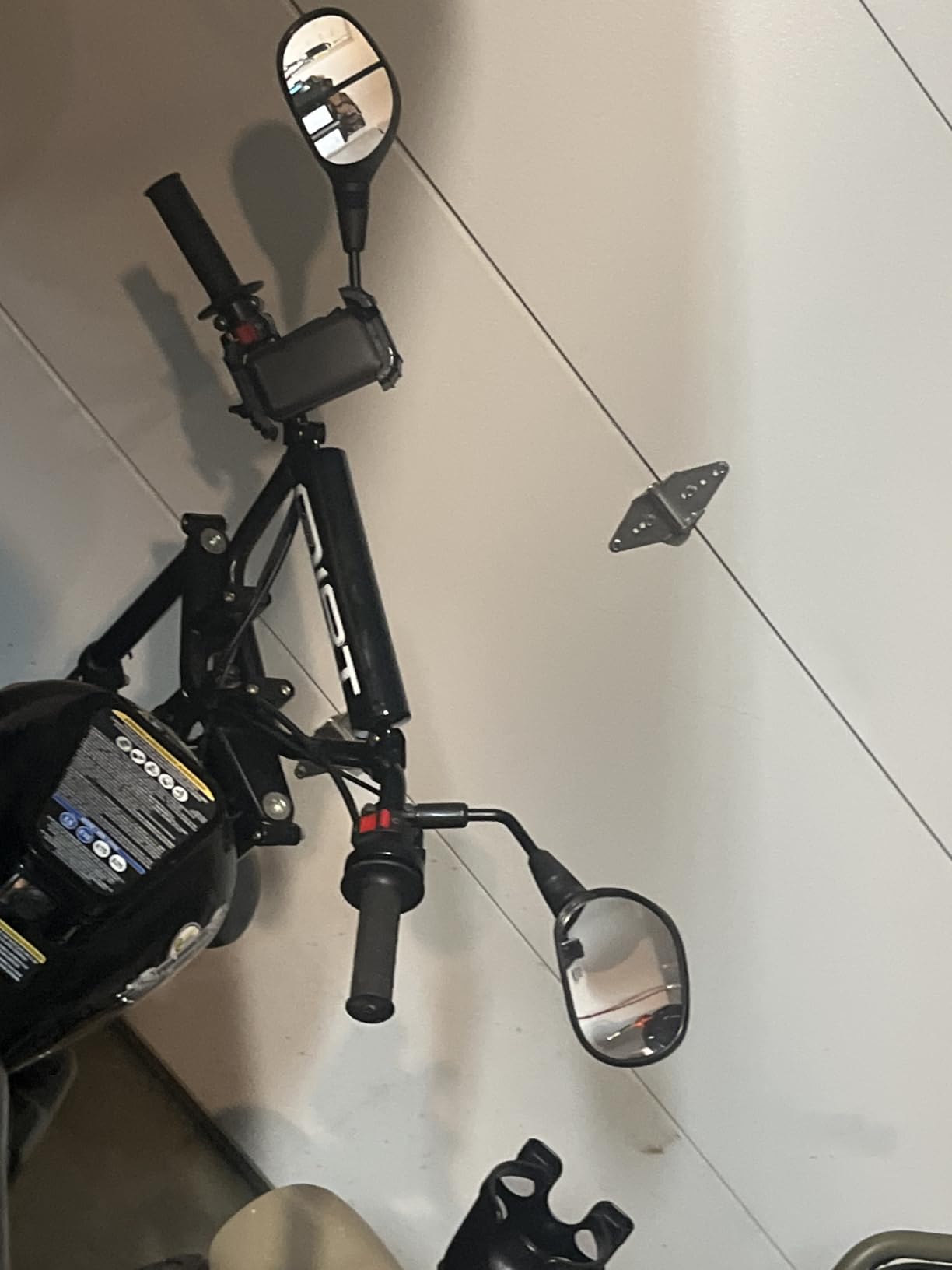
These are universal handlebar mirrors at 5.12 by 3.19 inches each, with convex high-definition lenses. Convex matters more than size here, because the curvature widens the view behind you in a way a flat lens cannot, and it directly reduces the blind spot that makes head checks necessary.
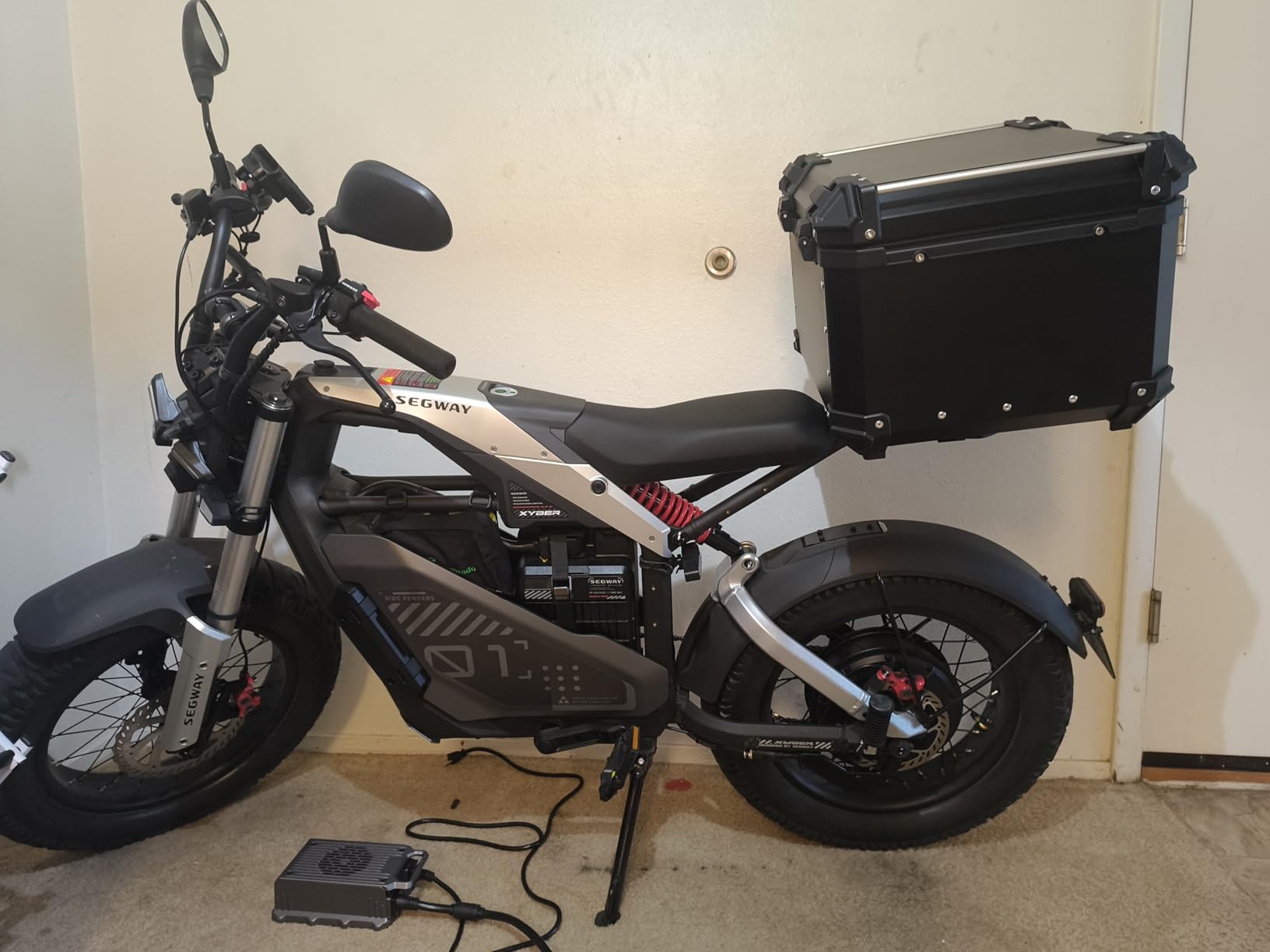
The mounting design is the part we like most. Larger protective rubber sleeves shield the mount interfaces from rain, mud, and snow, which is the exact failure point on cheap mirrors that then rust and freeze solid. The adjustment is a 360-degree ball joint, and it holds position once set instead of drooping on the first rough section.
The housing is high-impact, scratch-resistant ABS. The kit includes a 7/8 inch handlebar clamp, two M10 screws, and three M8 screws, giving you adapters for handlebars with and without factory mirror mounts.
What to check before you buy
Check your handlebar diameter against the included clamp, and check whether your bar has flat mirror tabs that want studs instead of a clamp. Most quads use the clamp, and the screw adapters cover the rest, but the measurement decides it.
Plan the mounting position on the risers rather than on the bar itself. Mounted on a rotating bar, the mirror vibrates constantly and the ball joint works harder than it needs to.
Who should skip it
Skip it if you ride exclusively on tight single-track in dense trees, where a mirror can be a liability in a close encounter with a branch. Wide-open terrain, work roads, and any trail with merges are where the payoff is immediate.
Also weigh the material honestly. ABS is lighter and resists scratching, but in a hard rollover a plastic housing is more likely to crack than a metal one. Keep that in mind if you ride aggressively over rocks at speed.
11. Kolpin Matrix Seat Bag
Kolpin Matrix Seat Bag – Black – 91155, 32″ x 22″ x 11″
57 liter capacity
Three compartments
Integrated padded back rest
16 ounces
Pros
- Padded back rest lets the bag double as a passenger seat
- Cooler section holds up to a 12-pack of beverages
- Hydro Shield coating and Rhino Armour hold up to mud and trail wear
- Detachable gear bags give flexible storage options
- Web reinforced buckles attach to nearly any ATV
Cons
- Bulkier than a simple rack or handlebar bag
- At 32 by 22 by 11 inches it needs a suitable rear rack
This is the most expensive item in the roundup and the one with the most polarizing rating, which tells you something useful: people either value exactly what it does or they find it excessive. At 57 liters with a padded back rest, it is designed for long days out, not for a 20-minute loop around the property.
Construction is 600 denier nylon with a Hydro Shield coating against dirt and mud, plus Rhino Armour reinforcement in the high-wear areas. The material is water repellent rather than fully waterproof, so plan for rain cover if you camp in exposed terrain.
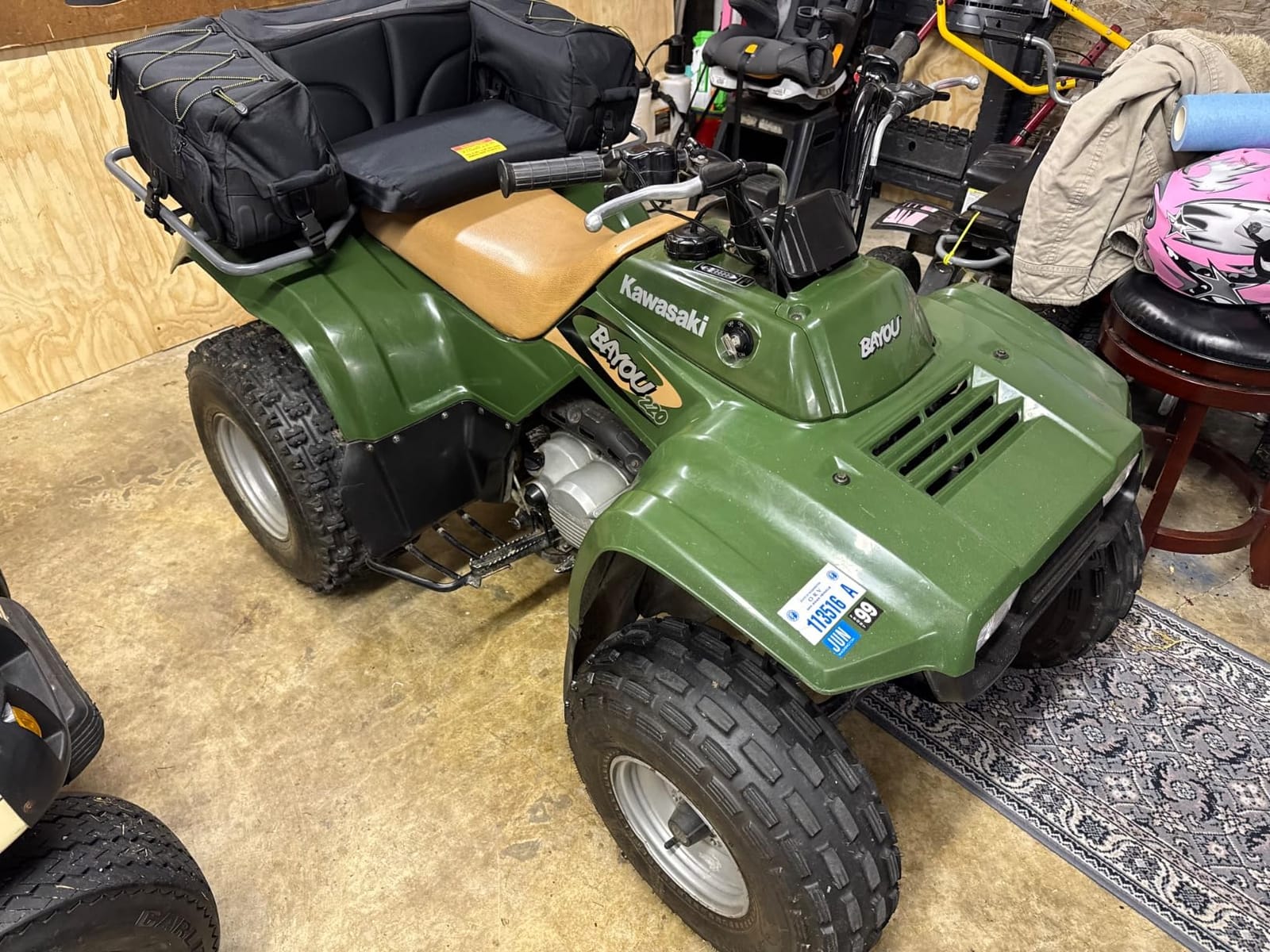
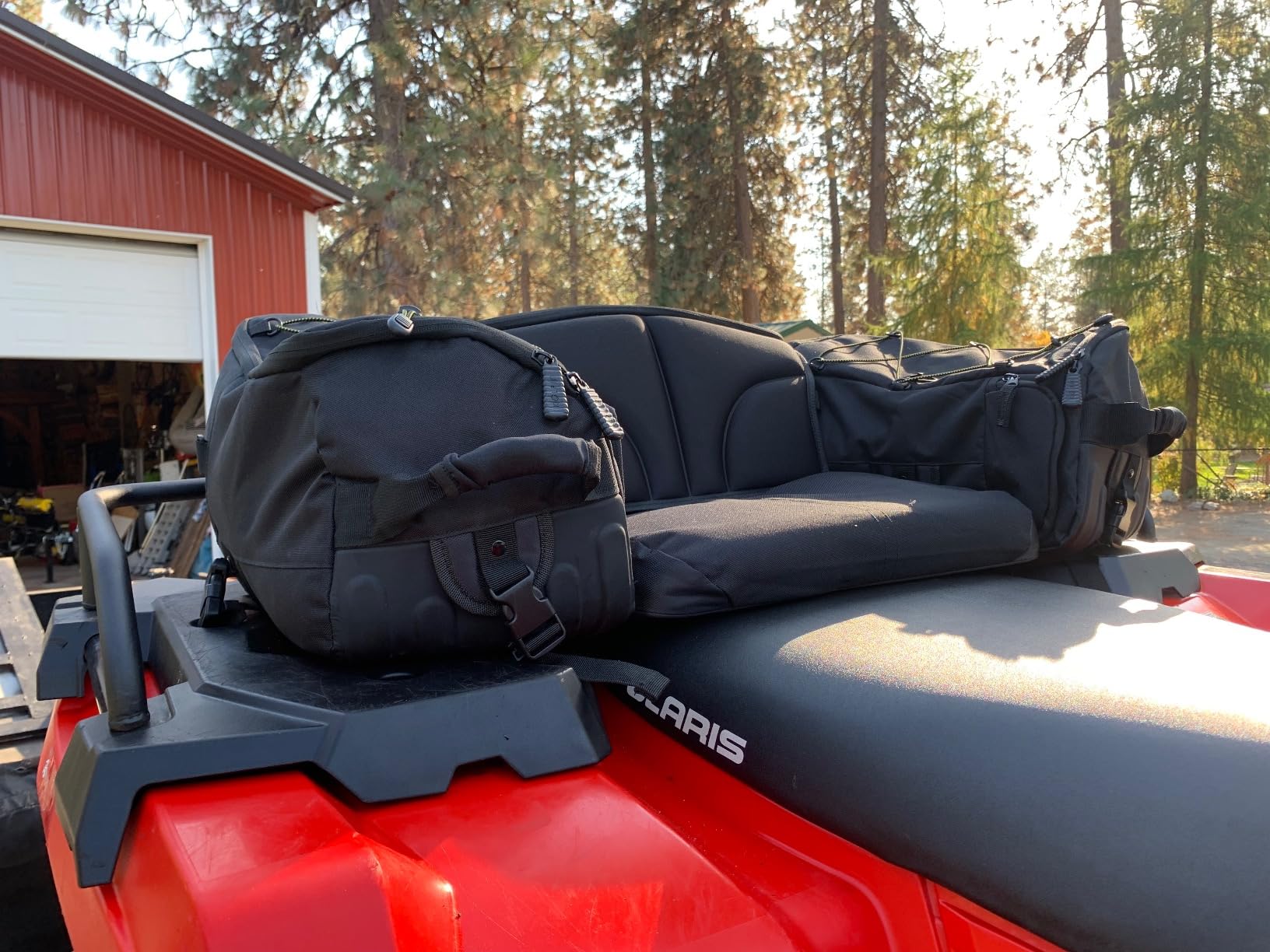
The center section is a Matrix cooler compartment sized for a 12-pack of beverages, which is the detail that turns this from a bag into a day-trip system. There is an integrated padded back rest, three compartments, a zipper closure, a web handle, and adjustable straps, and it attaches to any ATV using web reinforced buckles.
Storage is modular. The multi-piece detachable gear bags pull out for separate loads, and the side pods measure 16 by 6 by 8 inches. At 16 ounces empty, the whole assembly is light enough that the extra capacity does not meaningfully change handling.
What to check before you buy
Measure your rear rack. At 32 by 22 by 11 inches, this bag needs a rack of real length, and on a smaller sport quad it may crowd the solo seat rather than serving as a passenger perch. On a utility machine with a long rear rack, the trade works well.
Consider how often you actually carry cold drinks and a full load. If the answer is rarely, a smaller rack bag is the better purchase and the money is better spent elsewhere.
Who should skip it
Skip it on sport machines, on short trail rides, and for riders who want a clean solo seat. The lower rating in this list reflects exactly that: owners who bought it for storage love it, owners who wanted a lighter setup found it bulky.
Also note it is water repellent, not submersible. A wet-weather rider should plan a separate dry bag inside it rather than trusting the outer shell alone.
12. NEVERLAND Waterproof Heavy Duty ATV Cover
NEVERLAND ATV Cover Waterproof Heavy Duty 4 Wheeler Cover for Honda XL
82.7 x 47.2 x 45.2 inch fit
Four-layer coated polyester
Reflective striping
Storage bag included
Pros
- Sheds water well through heavy rain and high wind
- Straps and elastic hem stop it blowing off on a trailer
- Reflective striping makes a parked quad easier to see at night
- Compacts to a small package when not in use
- Multiple sizes available for larger quads
Cons
- Thin material can split at seams within a year of continuous outdoor exposure
- Runs small over quads fitted with a rear trunk
UV damage and weather are what end the life of a quad that lives outside. A cover is a low-cost way to extend the life of everything else on this list, and it also stops bird droppings, tree sap, and dirt from reaching plastics and upholstery.
Construction is four layers: polyester, a waterproof coating, a UV coating, and a PU coating. That stack is what handles rain, wind, snow, sun, and organic staining in one material, and the seams are all top-stitched with heavy-duty nylon thread, which is the correct place to judge whether a cover will hold together.
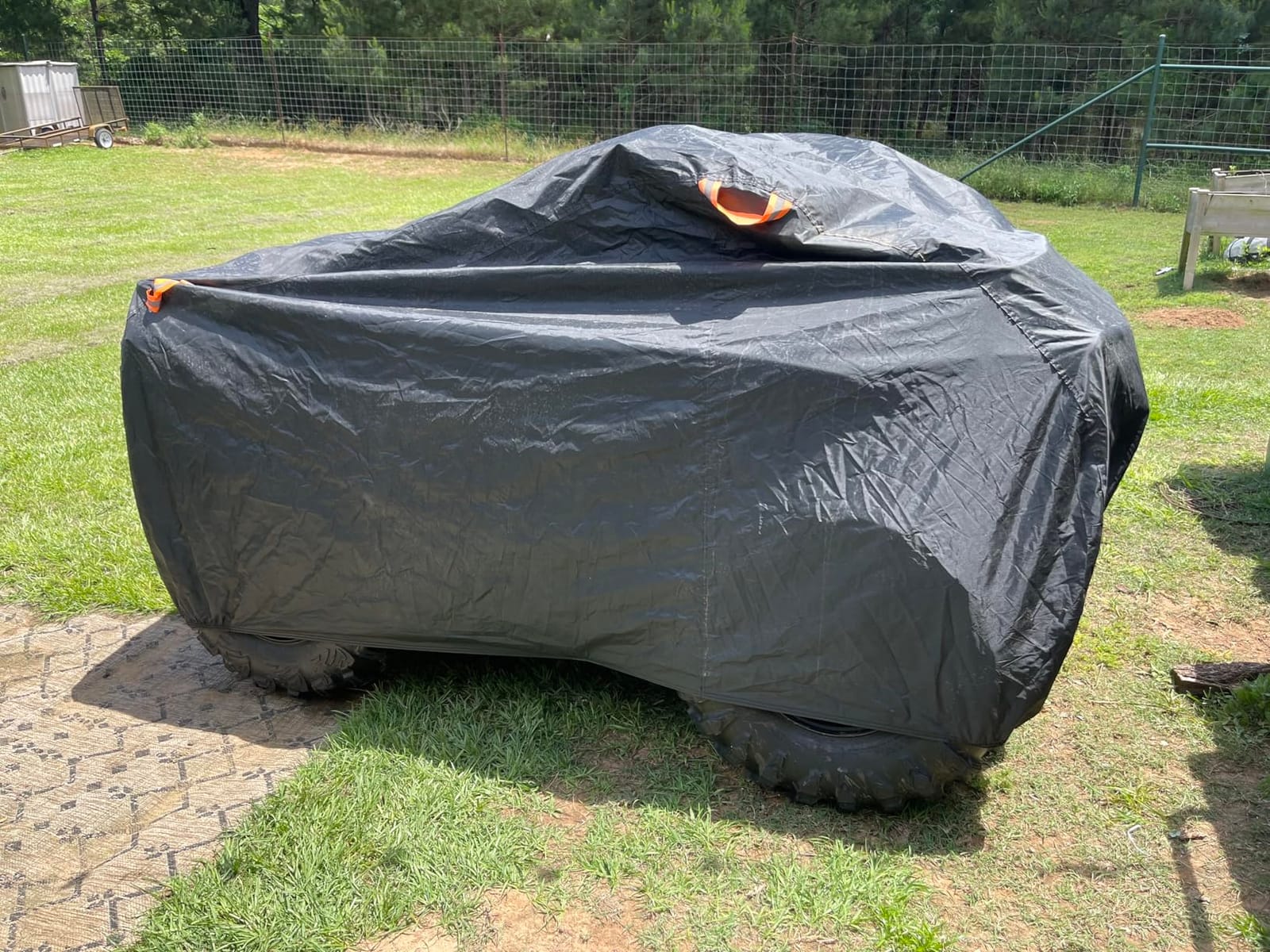
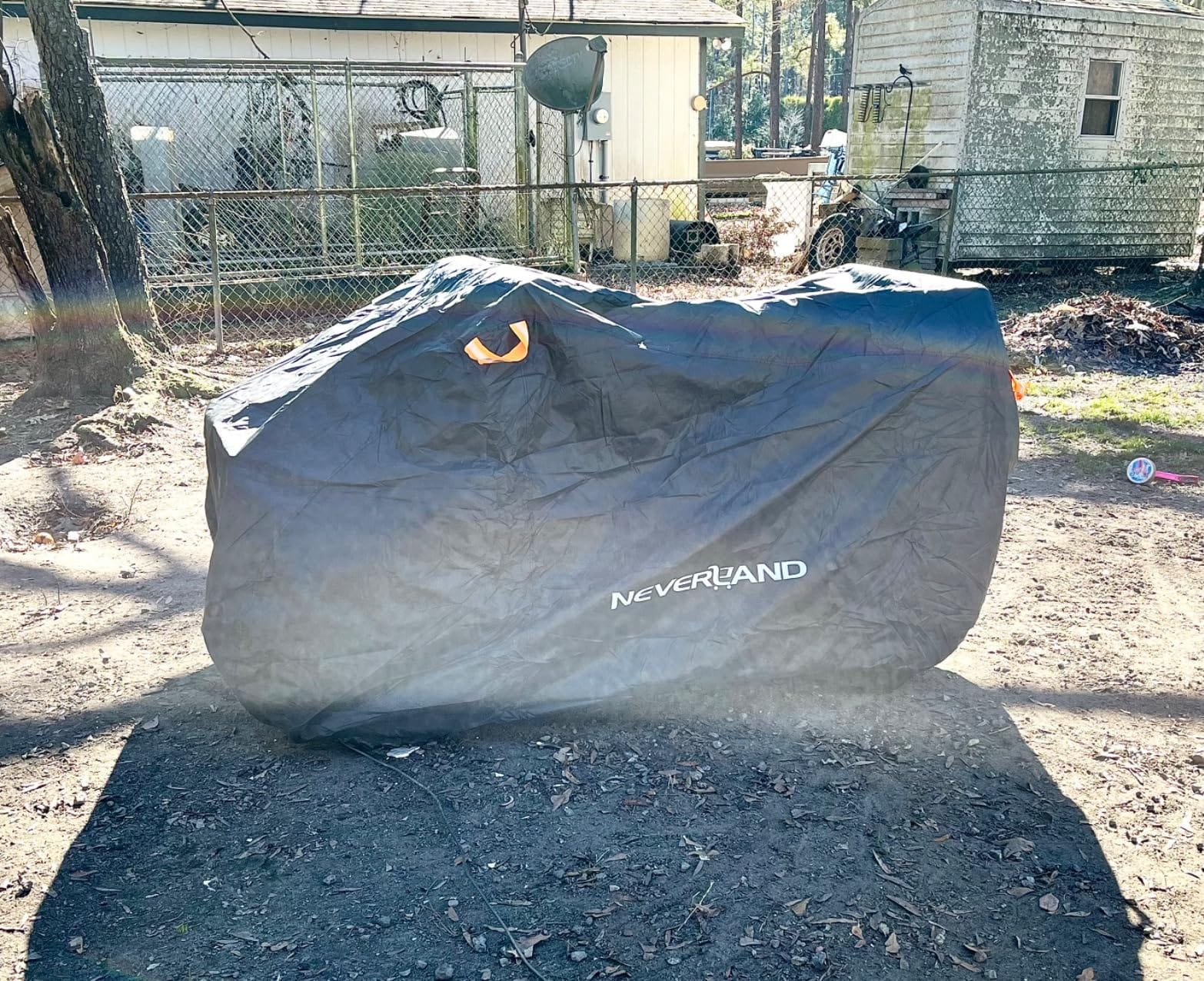
Two details make it work outdoors. Adjustable windproof buckle straps and a bottom elastic cord hold it tight to the machine, so it does not become a sail in a storm. Reflective striping on all four sides makes a parked quad visible at night, which matters if it is parked near a road or in a driveway.
It is available in several sizes, with the version here fitting quads up to 82.7 by 47.2 by 45.2 inches, and it includes a storage bag that packs down small when it is not in use.
What to check before you buy
Measure your quad with a tape, not by model name, and measure it with whatever rear trunk or rack bag is fitted. A snug fit over a rear trunk is the most common sizing complaint here, and a cover that requires stretching to fit wears at the seams.
Decide whether the quad lives indoors or out. For a machine in a garage this is unnecessary expense, and for a machine parked under a roofed carport the payback is much longer.
Who should skip it
Skip it for indoor storage. This is an outdoor-rated product and the price buys nothing for a machine living under a roof.
If your quad lives outside year-round with no cover at all, expect a service life measured in seasons rather than years from this model, and check the seams after the first winter. Cheap covers fail at the stitching, not the fabric.
How to Match Accessories to Your ATV
Fitment is where most ATV accessory purchases go wrong, and the most repeated complaint across owner forums is that something labeled universal did not actually fit once installed. That is not a scam. It is a shortcut in the listing, and you can avoid it with a ten-minute check.
Start with the dimension, not the product name. Grab handles need round tubing between 1.5 and 1.75 inches. Cup holders and mirrors need a bar between 0.6 and 1.5 inches. Gun racks need a bar between 5/8 and 1 inch. Fenders need an 8mm push pin. Each of those is a measurement you can take in a driveway in five minutes, and each one eliminates or confirms a purchase instantly.
Then check the part number. For fasteners and trim, the part number is definitive. The UNIGT kit in this roundup states the OEM numbers it replaces, and matching yours to that list is faster and more reliable than any description.
Understand what universal fit actually guarantees. It guarantees the part is dimensionally within a stated range and that no drilling or cutting is required. It does not guarantee clearance. A grab handle can fit the bar diameter perfectly and still foul your light bar bracket, and a mirror can fit the bar and sit in the way of your shifter at full lock. Check clearance, not just attachment.
Finally, confirm the machine list before you order. Every product here lists the models it covers, and the list is worth reading properly. It is the difference between a five-minute purchase and a return shipping label.
What to Buy First: The Priority Order
If you are starting from a brand-new machine, buy in this order. It reflects what stops a problem from becoming a disaster, not what looks best, and it is the sequence experienced owners keep coming back to.
First: a battery maintainer. It costs almost nothing and it prevents the single most common cause of a dead quad in spring. Nothing else on this list matters if the battery is flat on the trailhead.
Second: a plug kit and a small compressor. Together these weigh under three pounds and fix the majority of trail punctures where you stand. If you ride alone or far from a town, this is the most valuable pair in the roundup.
Third: a recovery item. Either a winch with a fairlead, or a proper recovery strap with a rated recovery shackle. This is where the budget gets serious, and it is the right place for it. A ratchet strap is not a recovery strap and must never be used as one.
Fourth: body fastener clips. A 150-piece kit is trivial and means a torn fender is a two-minute fix at the trailhead instead of a trailer ride home.
Fifth: visibility. Mirrors and, if you ride in poor weather, lighting. Cheap to add and immediately noticeable in how the machine feels to ride.
Sixth: a cover, if the quad lives outside. This protects everything above it from UV and weather damage.
Everything else, including racks, storage, cup holders, and comfort items, comes after those six. If your budget is limited, stop at step five and you are in good shape. Choosing the right starting tires matters as much as any accessory here, and our guide to the best ATV tires for trail riding is worth reading before you spend on anything bolted to the machine.
Budget Tiers: What Each Level Buys
Prices change constantly, so we will describe tiers by what they buy rather than by a number. What follows is the order we would buy within each tier, and it works well if you are gifting to someone as well as if you are buying for yourself.
Entry tier: the essentials package. A plug kit, a body fastener kit, a battery maintainer, and a cover. These four are small, cheap relative to everything else, and they protect the machine rather than styling it. If your budget stops here, you have the most important items covered.
Mid tier: the working package. Add a cup holder, mirrors, passenger foot rests, and a turn signal kit with a horn if you ride near roads. This is the level most riders land on and it covers the majority of real use.
Upper tier: the recovery and cargo package. A hitch adapter, a gun or gear rack, and a proper recovery strap with rated hardware. Money here goes to capability rather than convenience, so buy it based on the work you actually do.
Premium tier: the touring package. The Kolpin Matrix seat bag, plus anything you want for comfort over long days. For cold-weather riders, a layered kit like our picks in the best heated ATV riding pants does more for ride comfort than most bolt-ons.
One gifting note. Avoid buying a light bar or a large cargo basket as a present unless you know the rider’s bar diameter and rack rating. Cheap accessories with wrong dimensions come back, and the replacement cost is more annoying than the original purchase.
Install Difficulty and Electrical Load
Two questions decide whether a purchase is a weekend project or a trip to the dealer, and both are worth asking before you order.
How hard is the install? Most of this roundup is clamp-on or bolt-on with hand tools. Grab handles, cup holders, mirrors, the hitch adapter, the gun rack, and the tire plug kit are all under an hour each with basic tools. The body fastener kit needs no tools beyond the supplied removal lever. Two items are more involved: the turn signal kit, which is straightforward thanks to the plug-and-play harness but still needs careful routing to avoid chafing, and passenger foot rests, which may need shorter hardware on thin fenders.
A winch or plow is different. Those are the items where dealer installation is genuinely worth paying for, because a winch needs correct solenoid wiring, a properly grounded battery, and a fairlead that is rated for the load. Nobody needs that on day one.
Can your charging system handle it? Everything electrical on a quad runs off the 12V DC system, and the alternator has a ceiling. A light bar, a winch, and a plow running together can demand more than the factory charging system supplies, and the result is a battery that is flat at the trailhead. Adding a lithium or AGM battery often solves this better than removing anything, because the winch pulls a huge spike that a weaker battery cannot recover from cleanly.
This is the interaction that catches people out, and it is why a battery is a performance accessory rather than a boring one.
How much weight can a rack hold? The front is the limiting end on almost every quad, and this is where riders get into trouble. A heavy front basket raises the effective center of gravity and changes how the machine turns and stops on a side slope. A loaded plow on the same end compounds it.
The Graspur rack in this roundup states a 150 pound capacity, which is a useful example of why published load ratings matter. Check yours before you load it, and treat the rating as a ceiling rather than a target. Winter work raises the same question in a different form, and our guide to the best ATV snow groomer attachments covers the weight and electrical requirements of that use specifically.
Safety and Legal Considerations
Accessories can create legal problems you did not intend, and a few rules are worth knowing before you spend anything.
Helmet certification is the big one. In the United States, an ATV or UTV helmet needs to carry a DOT certification to be used on public roads. ECE-certified helmets, common in Europe, are not DOT approved. They are excellent helmets, and they are not the same approval. Many riders discover this after buying, so check the certification label, not the marketing.
Never use a ratchet strap as a recovery rope. This one is called out by manufacturers and riders without exception. A ratchet strap stores load, and releasing that load under tension is dangerous. Recovery gear is a strap or rope designed to stretch and pull, paired with a rated shackle or winch hook.
Road use is regulated locally. States and municipalities vary widely on where ATVs and side-by-sides may be ridden on public roads, what equipment is required, and whether adult riders are permitted on public land. Check your local rules before planning a trip rather than after.
Load and lighting are inspection issues. A modified machine carrying an overloaded rack or a light bar pointing at oncoming traffic is a problem in several states. If you add a light bar, aim it properly and consider whether your riding position puts it above the headlight line.
Rider gear is not an accessory. Eye protection, gloves, over-ankle boots, and body armor are the cheapest risk reduction available. A heated layer makes cold-weather riding possible rather than merely uncomfortable, and we cover that separately in our heated riding pants roundup.
Frequently Asked Questions
What are some cool accessories for my ATV?
The most useful cool additions fall into a few groups. Lighting and visibility items such as an LED light bar and handlebar mirrors change how a machine feels to ride immediately. Cargo and convenience items include a handlebar cup holder, a front rack basket, and a rack-mounted seat bag. Recovery gear like a winch with synthetic rope is the most capable but also the most expensive. Trail repair items such as a tire plug kit and a portable air compressor weigh almost nothing and save the most rides. Style items such as grab handles and body kits come last in our recommended buying order.
What are some must-have accessories for a 4-wheeler?
For a new owner, the must-have list in priority order is short. First a battery maintainer, which prevents the most common cause of a dead quad. Second a tire plug kit paired with a small air compressor, which fixes most trail punctures on the spot. Third recovery gear, either a winch with a fairlead or a rated recovery strap with a shackle. Fourth a set of body fastener clips so a torn fender is not a trailhead tragedy. Visibility gear and a cover follow, and style upgrades come last.
What accessories boost ATV performance the most?
The performance upgrades that genuinely change how a machine behaves are weight, power delivery, and electrical headroom. A lithium or AGM battery is often the highest-impact change, because it recovers from the voltage spike a winch pulls and keeps the charging system ahead of accessory draw. A properly set suspension lift and matching tire choice affect handling more than any cosmetic part. Adding a winch, light bar, and plow together on a factory charging system can exceed what the alternator supplies, so the battery or electrical work is what makes the rest perform.
Are universal ATV racks and mounts actually universal?
Mostly, within a stated range, and the range matters. Universal means the part is dimensionally compatible within the dimensions the manufacturer publishes and requires no drilling or cutting. It does not mean clearance is guaranteed. A grab handle can fit the correct bar diameter and still collide with a light bar bracket, and a cover can measure correctly and still be tight over a rear trunk. Always measure the bar diameter or groove diameter on your machine, check the published range, and then confirm clearance before ordering.
Can I run a winch and a light bar at the same time?
You can, but understand the electrical math first. A winch draws an enormous current spike, and a light bar adds continuous draw on top of it. A factory charging system on a smaller machine may not supply enough to run both plus the rest of the machine’s electrical load, and the outcome is a flat battery at the trailhead rather than at home. Upgrading to a lithium or AGM battery, adding a proper wiring relay for the light bar, and keeping the battery charged with a maintainer all make the combination workable on most machines.
Do I need a DOT approved helmet for an ATV?
If you ride on public roads in the United States, yes. Road use requires a helmet carrying DOT certification, and ECE-certified helmets sold widely elsewhere are not DOT approved. Both are legitimate safety standards, but they are not interchangeable and many riders only discover the difference after buying. Off-road riding on private land and closed courses has no federal helmet requirement, though wearing one is still the single best protection decision you can make. Always check the certification label inside the helmet rather than the packaging.
What is the difference between a ratchet strap and a tow strap?
A ratchet strap is a tie-down. It has a ratchet mechanism that tensions and holds cargo in place, and that stored energy is why it must never be used for recovery, because releasing it under load is dangerous. A tow or recovery strap is flat webbing with no ratchet, designed to stretch and pull under load, and it is used with a rated shackle or winch hook. For recovering a stuck quad you want recovery straps plus rated hardware, and you want them stored where you can reach them without unpacking everything.
Final Verdict on the Best ATV Accessories
If you buy one thing from this roundup, make it the Battery Tender Junior charger and maintainer. It is the smallest item here, it costs the least, and it prevents the failure that strands more riders than any other cause: a flat battery when you planned to ride.
From there, the order matters more than the total. Plug kit and compressor next, then proper recovery gear, then fasteners, then visibility, then a cover if the quad lives outside. Everything else in this roundup, from the Kolpin seat bag to the grab handles, makes riding more pleasant once the machine is reliably started and reliably coming home.
Check your fitment numbers before you order, because that single ten-minute measurement prevents nearly every complaint we see about universal accessories. And whatever you build, test the recovery gear on solid ground before you need it in a bog on a hillside in the dark.
We will keep updating these picks as new models land through the year, so check back for the 2026 refresh of this guide before your next purchase.