
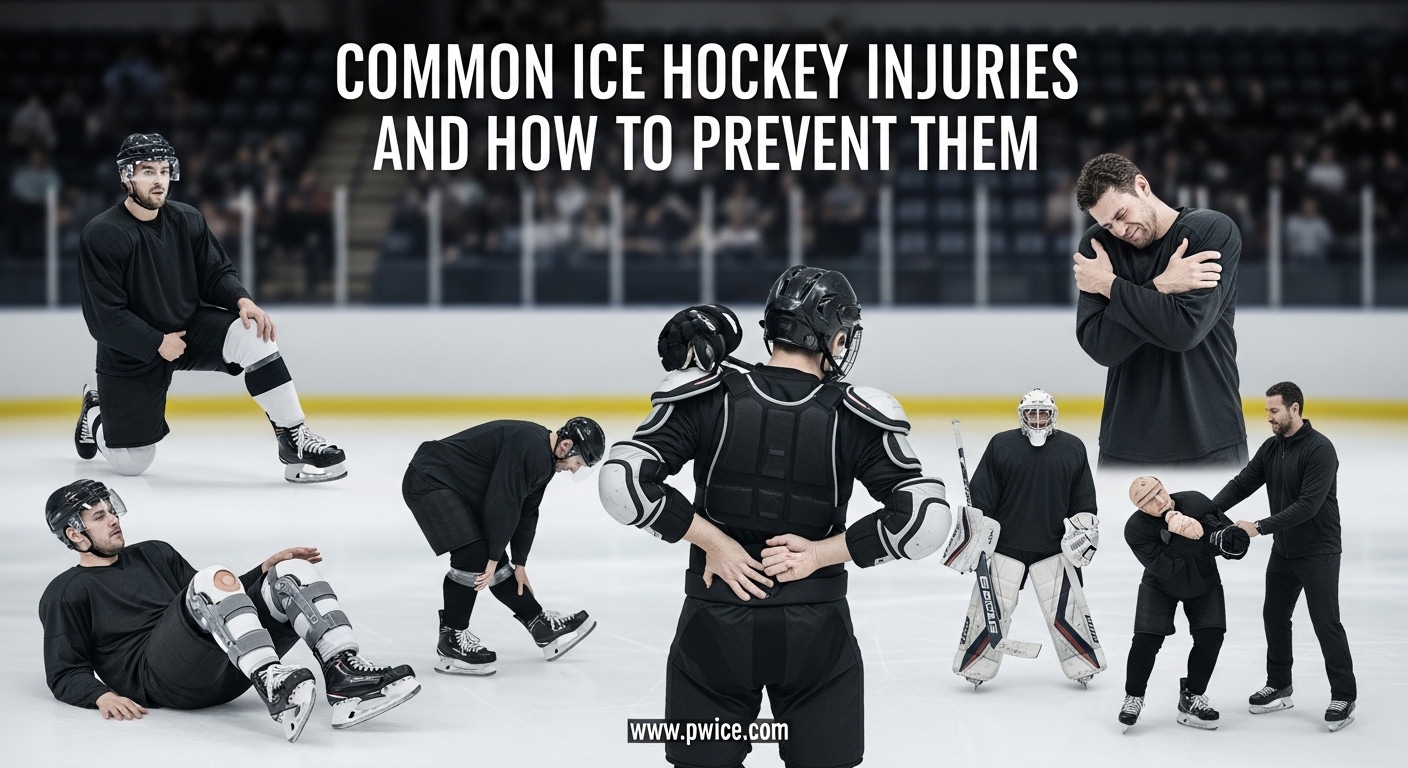
Ice hockey is a fast-paced collision sport where players skate at speeds exceeding 20 mph while handling a puck, navigating opponents, and absorbing contact. The combination of ice, speed, sticks, and intentional body checking creates an environment where injuries are common at every level from youth leagues to professional play. Understanding common ice hockey injuries and how to prevent them is essential for players, parents, and coaches who want to enjoy the game while minimizing time lost to the training room.
The most common injuries in ice hockey fall into two categories: contact injuries from collisions with players, boards, pucks, and sticks; and non-contact injuries from overuse, repetitive skating motions, and sudden directional changes. Contact injuries include concussions, shoulder separations, MCL knee sprains, and contusions. Non-contact injuries typically involve groin strains, hip impingement, lower back pain, and overuse conditions that develop over a season of play.
I have worked with hockey players at various levels over the past decade, and I have observed that the majority of injuries are preventable with proper preparation, equipment, and awareness. The difference between a player who stays healthy all season and one who spends weeks recovering often comes down to off-ice preparation and attention to detail in equipment fitting. This guide covers everything you need to know about hockey injuries and proven prevention strategies.
Table of Contents
The Most Common Ice Hockey Injuries
Research from orthopedic hospitals and sports medicine clinics consistently identifies the same injuries appearing at the top of hockey injury statistics. Hospital for Special Surgery data shows these five injuries account for the majority of hockey-related medical visits. Understanding which injuries are most likely helps you focus your prevention efforts where they matter most.
The top five most common hockey injuries are: concussions from head impacts, shoulder separations involving the acromioclavicular joint, MCL knee sprains from valgus stress, groin strains or adductor muscle tears, and ankle sprains from skate blade catches or falls. These injuries range from minor conditions that heal in days to serious injuries that can end seasons or careers.
Contact vs Non-Contact Injuries
Hockey injuries occur through distinct mechanisms, and understanding the difference helps target prevention strategies effectively. Contact injuries happen during collisions, checks, puck impacts, and falls into the boards. Non-contact injuries develop from the repetitive biomechanics of skating, shooting, and goaltending without external impact.
| Injury Type | Common Examples | Primary Cause | Prevention Focus |
|---|---|---|---|
| Contact Injuries | Concussion, shoulder separation, MCL sprain, contusion | Collisions with players, boards, pucks, sticks | Proper technique, awareness, protective equipment |
| Non-Contact Injuries | Groin strain, hip impingement, lower back pain, overuse tendinitis | Repetitive skating mechanics, muscle imbalances | Strength training, flexibility, conditioning |
Concussions: The Most Serious Hockey Injury
Concussions represent the most concerning injury in ice hockey due to their potential for long-term neurological effects. A concussion is a traumatic brain injury caused by a bump, blow, or jolt to the head or body that causes the brain to move rapidly within the skull. In hockey, concussions typically result from checks into the boards, player-to-player contact, falls onto the ice, or puck impacts to the helmet.
Symptoms include headache, dizziness, confusion, memory problems, balance issues, sensitivity to light or noise, and feeling sluggish or foggy. These symptoms may appear immediately or develop over hours after the incident. Any player suspected of having a concussion must be removed from play immediately and evaluated by a medical professional before returning.
Prevention strategies include wearing a properly fitted helmet that is CSA, HECC, or CE certified and not expired. Keep your head up when skating through the neutral zone and approaching the boards. Practice proper checking technique using the shoulder and not the head. Strengthening neck muscles may also help reduce concussion risk by improving the head’s ability to withstand impact forces.
Return to play after a concussion must follow a graduated protocol: complete rest until symptoms resolve, light aerobic exercise, sport-specific exercise, non-contact practice drills, full-contact practice, and finally game play. Each step requires 24 hours minimum and medical clearance is mandatory. Never rush back from a concussion, as repeat injuries before full recovery have serious consequences.
Shoulder Injuries: AC Joint Separations and Dislocations
The shoulder is particularly vulnerable in hockey due to the nature of checking and falling. Acromioclavicular joint separations, commonly called shoulder separations, occur when the ligaments connecting the collarbone to the shoulder blade are stretched or torn. This typically happens when a player is checked into the boards and lands directly on the point of the shoulder or when extending an arm to break a fall.
AC joint injuries are graded from 1 to 6 based on severity. Grade 1 involves mild stretching with minimal pain and 1-2 weeks recovery. Grade 2 involves partial ligament tearing with visible bump and 3-4 weeks recovery. Grade 3 involves complete rupture with prominent deformity and 6-8 weeks recovery. Grades 4-6 are severe injuries requiring surgical consultation.
Shoulder dislocations involve the glenohumeral joint where the arm bone separates from the shoulder socket. These are more serious than separations and often require emergency reduction followed by extensive rehabilitation. Recurrent dislocations may require surgical stabilization, particularly in young athletes.
Prevention focuses on strengthening the periscapular muscles that stabilize the shoulder blade, improving kinetic chain control from the core through the shoulder, and ensuring proper shoulder pad fit. Shoulder pads should cover the AC joint completely without restricting arm movement. Learning to roll with falls rather than extending arms can prevent many shoulder injuries.
Knee Injuries: MCL Sprains and Meniscus Tears
The medial collateral ligament, or MCL, is the most commonly injured knee ligament in ice hockey. The MCL runs along the inside of the knee and resists valgus forces that push the knee inward. MCL sprains typically occur during open-ice checks, when players collide and the knee is forced inward, or when a skate catches the ice while the body continues moving laterally.
MCL injuries are graded from 1 to 3. Grade 1 involves mild stretching with tenderness but no instability, requiring 1-3 weeks recovery. Grade 2 involves partial tearing with mild instability and 3-6 weeks recovery. Grade 3 is complete rupture with significant instability, often requiring 6-12 weeks and occasionally surgical repair if other structures are damaged.
Meniscus tears often accompany MCL injuries or occur independently from twisting motions while the foot is planted in the skate. The meniscus acts as a shock absorber between the thigh and shin bones. Tears cause pain, swelling, locking, and catching sensations. Treatment ranges from physical therapy to arthroscopic surgery depending on tear pattern and symptoms.
Prevention emphasizes neuromuscular control training, particularly exercises that teach the knee to maintain stable alignment during lateral movements. Single-leg balance drills, lateral band walks, and proper skating technique training help players avoid positions that stress the MCL. Strengthening the hip abductor and external rotator muscles also protects the knee by improving overall lower extremity alignment.
Groin and Hip Injuries: Adductor Strains and FAI
Groin strains affecting the adductor muscles are extremely common in hockey due to the skating stride mechanics. The adductor muscles pull the legs together, opposing the abductor muscles that push outward. Hockey skating requires constant balance between these muscle groups, and imbalances lead to strains when one side overpowers the other.
Adductor strains range from mild pulls to complete tears. Symptoms include sharp pain in the inner thigh, difficulty squeezing legs together, and pain with cutting or pushing off. Recovery times vary from one week for minor strains to several months for complete tears requiring surgery. The best predictor of future groin injury is previous groin injury, making prevention critical for players with a history.
Femoroacetabular impingement, or FAI, is a condition where abnormal contact occurs between the femoral head and hip socket. Hockey players, particularly goalies, develop FAI from repetitive deep hip flexion in the butterfly position and skating stride mechanics. FAI causes groin pain, limited hip range of motion, and can lead to labral tears and early arthritis if untreated.
Prevention requires maintaining proper adductor-to-abductor strength ratios through targeted strength training. Copenhagen adductor exercises have been proven effective for groin injury prevention in hockey players. For hip impingement, maintaining adequate hip mobility through stretching and foam rolling, combined with avoiding excessive deep flexion when not necessary, helps reduce risk. Goalies should pay particular attention to hip mobility work.
Ankle Sprains and Lower Leg Injuries
Ankle sprains in hockey typically occur when skate blades catch in the ice during stops, starts, or changes of direction, causing the ankle to roll outward. The lateral ankle ligaments stretch or tear, resulting in pain, swelling, and difficulty bearing weight. While less severe than knee or shoulder injuries, ankle sprains can keep players off the ice for weeks if not managed properly.
The RICE method (Rest, Ice, Compression, Elevation) remains the standard initial treatment for ankle sprains. Most grade 1 and 2 sprains heal with conservative treatment including bracing and physical therapy. Severe grade 3 sprains with complete ligament rupture may require surgical repair, particularly for high-level athletes who need full stability for cutting movements.
Prevention involves balance and proprioception training to improve ankle stability. Single-leg exercises on unstable surfaces, ankle strengthening with resistance bands, and proper skate fitting all reduce sprain risk. Skates should fit snugly without allowing excessive foot movement that could cause the blade to catch unexpectedly. Taping or bracing may provide additional support for players with previous ankle injuries.
Other Common Hockey Injuries
Lower Back Pain
Hockey players frequently experience lower back strain from the skating posture, which requires sustained forward flexion and rotational forces during shooting. The hunched position in skating combined with rapid twisting motions stresses the lumbar spine muscles and discs. Core strengthening and proper posture awareness during off-ice training help prevent chronic back issues.
Wrist and Hand Injuries
Wrist fractures and hand injuries often occur when players extend their hands to break falls onto the ice. The stick, puck, and other players’ skates also cause finger and hand contusions, lacerations, and fractures. Wearing properly fitted gloves with adequate padding and learning to tuck hands in during falls reduces these injuries.
Contusions and Lacerations
Bruises from puck impacts, stick checks, and board collisions are so common in hockey that they are considered part of the sport. Most contusions heal within days to weeks. Lacerations from skate blades are more serious and require immediate attention. Proper equipment including cut-resistant socks and neck guards provides essential protection against potentially life-threatening cuts.
Youth Hockey Injury Considerations
Young hockey players face unique injury risks compared to adults due to growing bodies, developing coordination, and varying skill levels. The most common injuries in youth hockey differ from the adult pattern, with wrist and forearm fractures from falls being particularly prevalent. Children tend to extend their arms when falling, leading to buckle fractures of the forearm bones that heal quickly but require proper casting.
Checking introduces a major injury risk factor, and leagues have implemented age restrictions to protect developing players. USA Hockey mandates that body checking be introduced only at the 14-and-under level or higher, with some regions delaying until 16-and-under. These rules recognize that younger players lack the size, strength, and checking technique to perform body contact safely.
Growth plate injuries are another youth-specific concern. The growth plates at the ends of long bones are weaker than mature bone and susceptible to injury from repetitive stress or acute trauma. Sever’s disease (heel pain), Osgood-Schlatter disease (knee pain), and growth plate fractures require careful management to avoid long-term growth disturbance.
Parents should ensure children have properly fitted equipment that accommodates growth without being oversized and unsafe. Equipment that is too large shifts during play and fails to protect vulnerable areas. Regular equipment checks throughout the season are essential as children grow rapidly.
Goalie-Specific Injuries
Goaltenders face a completely different injury profile than skaters due to the unique demands of the position. The butterfly position, where goalies drop to their knees with pads flared outward, places extreme stress on the hips and groin. Repetitive deep hip flexion and internal rotation leads to femoroacetabular impingement, labral tears, and chronic groin pain that can end careers if not addressed.
Hip impingement in goalies develops gradually over years of play. Early symptoms include groin pain when dropping into the butterfly, difficulty recovering to standing, and pain with prolonged sitting. Screening for hip mobility limitations and implementing targeted stretching and strengthening programs can delay or prevent FAI progression.
Goalie equipment, while protective, adds weight and restricts movement in ways that create injury risks. Heavy leg pads increase the load on hips and knees during the butterfly. Chest protectors limit upper body rotation, potentially increasing stress on the lower back and hips during saves. Finding properly fitted, appropriately sized equipment is crucial for young goalies especially.
Prevention for goalies must include specific hip mobility work, adductor strengthening using exercises like the Copenhagen protocol, and limiting unnecessary repetitive butterfly practice when not needed for skill development. Goalie coaches should monitor for early signs of hip problems and adjust training volume accordingly.
How to Prevent Hockey Injuries
Injury prevention in hockey requires a comprehensive approach addressing equipment, physical preparation, technique, and recovery. The most successful prevention programs combine multiple strategies rather than relying on any single intervention. Players who consistently implement these evidence-based prevention methods significantly reduce their injury risk throughout the season.
Step 1: Complete a Dynamic Warm-Up Before Every Practice and Game
A proper warm-up increases muscle temperature, improves joint mobility, and activates neuromuscular control systems that protect against injury. Static stretching alone is insufficient and may actually impair power output if performed before activity. Instead, hockey players should perform 10-15 minutes of dynamic movements that mimic skating mechanics.
Effective warm-up components include light jogging or skating to raise body temperature, dynamic leg swings front-to-back and side-to-side, walking lunges with rotation, high knees and butt kicks, lateral shuffles, and single-leg balance reaches. Include several progressive accelerations building from 50% to full effort sprints to prepare the nervous system for high-intensity play.
Step 2: Maintain Year-Round Strength and Conditioning
Off-ice strength training is the foundation of injury prevention for hockey players. Research consistently shows that structured strength and conditioning programs reduce injury rates across all sports. For hockey specifically, targeting the adductor muscles, hip stabilizers, core, and shoulder girdle provides the greatest protection against common injuries.
| Exercise Category | Specific Exercises | Sets x Reps | Prevention Target |
|---|---|---|---|
| Adductor Strengthening | Copenhagen adductor planks, side-lying adductor lifts | 3 x 30 sec / 12 reps | Groin strains |
| Hip Stability | Clamshells, lateral band walks, single-leg RDLs | 3 x 15 / 12 / 8 each | Knee injuries, hip impingement |
| Core Control | Pallof presses, dead bugs, plank variations | 3 x 10 / 10 / 45 sec | Lower back pain, overall stability |
| Shoulder Stability | Face pulls, Y-T-W raises, push-up plus | 3 x 15 each | AC joint injuries, dislocations |
| Balance/Proprioception | Single-leg balance on foam pad, eyes closed progressions | 3 x 30 sec each | Ankle sprains, knee stability |
Perform this routine 2-3 times per week during the season and 3-4 times during the off-season. Focus on quality movement patterns rather than maximum weight lifted. Consistency over months and years provides the protective benefits, not single intense sessions.
Step 3: Practice Proper Technique and Body Awareness
Technique training prevents both contact and non-contact injuries. Learning to give and receive checks properly reduces concussion and shoulder injury risk. Skating instruction that emphasizes knee bend, hip hinge, and proper weight distribution protects the lower extremities. Even experienced players benefit from periodic technique review with qualified coaches.
Heads-up hockey keeps players aware of their surroundings and ready to protect themselves from unexpected contact. Players should scan the ice continuously, call for pucks clearly, and recognize dangerous positions near the boards. Coaches should emphasize that head-down skating through the neutral zone creates unnecessary concussion risk.
Step 4: Prioritize Recovery and Overuse Prevention
Overuse injuries develop when tissues do not have adequate time to recover between stress exposures. Year-round hockey without off-season rest significantly increases overuse injury rates. Players should have at least 2-4 weeks completely away from skating after the season ends, followed by a progressive return to activity.
Sleep is when tissue repair occurs, and inadequate sleep impairs recovery and increases injury risk. Teenage athletes need 8-10 hours of sleep per night for optimal recovery and performance. Nutrition also plays a role, with adequate protein intake supporting muscle repair and carbohydrate availability fueling performance that prevents fatigue-related injuries.
Cross-training with different sports or activities during the off-season develops overall athleticism while giving hockey-specific muscles a break. Swimming, cycling, and court sports provide cardiovascular fitness without the repetitive skating motions that contribute to overuse injuries.
Protective Equipment Checklist
Proper protective equipment is the last line of defense when prevention strategies fail and contact occurs. Equipment must fit correctly to provide protection, as ill-fitting gear shifts during play and leaves vulnerable areas exposed. This checklist covers essential hockey equipment and fitting considerations for injury prevention.
| Equipment Item | Fitting Requirements | Replacement Indicators |
|---|---|---|
| Helmet | Snug fit with no movement when shaking head; chin strap tight enough to prevent shifting | After any significant impact; every 3-5 years due to foam degradation |
| Face Shield/Visor | CSA/HECC certified; properly attached with no gaps | Cracks, deep scratches, or loose mounting |
| Mouth Guard | Custom or boil-and-bite fitting snugly to upper teeth; protects lips and teeth | When holes, tears, or poor fit develop; annually minimum |
| Shoulder Pads | Cover AC joint completely; straps secure without restricting arm movement | When straps no longer hold position; if caps become compressed |
| Elbow Pads | Centered on elbow point; forearm and bicep coverage without slipping | When straps lose elasticity; cracked caps |
| Gloves | Fingers touch ends without curling; thumb aligned properly; wrist mobility maintained | When palm wear creates holes; insufficient padding |
| Shin Guards | Cover knee cap centered; extend from bottom of pants to top of skate tongue | When knee cap no longer centers; cracked shells |
| Pants | Hip and tailbone pads centered; suspenders or belt secure without sagging | When padding compresses or shifts; tears in outer shell |
| Skates | Heel locked with no lift; toes lightly brush front when standing; ankle supported | When boot breaks down; blades worn to bottom of stanchions |
| Neck Guard | BNQ, ASTM, or CE certified; snug without restricting breathing or head movement | When cut-resistant material shows wear or tears |
Neck guards are now mandatory in most youth leagues and highly recommended for all players. They protect against potentially fatal lacerations from skate blades to the neck area. Cut-resistant socks and wrist guards provide additional protection against laceration injuries that can occur from skate contact.
For growing youth players, resist the temptation to buy oversized equipment that can be grown into. Proper fit is essential for protection, and equipment that shifts during play creates both safety and performance problems. Consider used equipment in proper sizes or rental programs that allow frequent size changes as children grow.
Return to Play Guidelines
Returning to hockey after injury requires careful progression to prevent re-injury and ensure full recovery. Players who return too early often suffer more severe re-injuries that require longer recovery periods. Following evidence-based return to play criteria protects both immediate and long-term athletic participation.
The return to play decision tree follows a simple progression: First, obtain medical clearance from a physician or athletic trainer. Second, complete daily activities without pain. Third, demonstrate full pain-free range of motion and strength comparable to the uninjured side. Fourth, complete sport-specific movements on dry land. Fifth, complete full practice participation. Finally, return to game play.
Each step requires at least 24 hours, and any return of symptoms requires stepping back to the previous level. Concussion protocols have specific graduated return requirements mandated by most leagues and should never be rushed. Soft tissue injuries like muscle strains need careful monitoring as the risk of re-injury is highest in the first weeks after return.
Communicate openly with coaches and medical staff about symptoms during return to play. Hiding pain or limitations to accelerate return often leads to worse outcomes. Trust the process and prioritize long-term athletic health over short-term game participation.
Frequently Asked Questions
What is the most common injury in ice hockey?
The most common injuries in ice hockey are concussions, shoulder separations (AC joint injuries), and MCL knee sprains. Concussions are particularly concerning due to potential long-term effects. Shoulder separations occur frequently from contact with the boards and other players. MCL sprains result from the valgus stresses common in open-ice checking and rapid direction changes.
How to prevent injuries in hockey?
Prevent hockey injuries by wearing properly fitted certified equipment, completing dynamic warm-ups before every session, maintaining year-round strength and conditioning with emphasis on adductor and hip stability, practicing proper checking and skating technique, staying hydrated, and ensuring adequate recovery time between intense sessions. Off-ice preparation including neck strengthening and balance training provides additional protection.
What hockey position gets injured the most?
Goaltenders face unique injury risks different from skaters. The repetitive butterfly position leads to high rates of hip impingement (FAI) and groin strains in goalies. Defensemen experience more high-impact contact injuries from defensive zone play. Forwards have higher overall injury incidence due to speed and offensive zone pressure. However, all positions share risk for concussions, shoulder injuries, and knee sprains.
What is the most common injury in youth hockey?
The most common injuries in youth hockey are wrist and forearm fractures from falls. Young players tend to extend their arms when falling onto the ice, leading to buckle fractures of the radius and ulna. These fractures typically heal well with casting but require proper medical management. Other common youth injuries include contusions, ankle sprains, and growth plate injuries like Sever’s disease and Osgood-Schlatter disease.
When is it safe to return to hockey after a concussion?
Return to hockey after concussion only after medical clearance and completion of a graduated return-to-play protocol. This includes 24 hours at each step: complete rest until symptom-free, light aerobic exercise, sport-specific exercise, non-contact practice drills, full-contact practice, then game play. Any return of symptoms requires stepping back to the previous level. Never rush concussion recovery as repeat injuries can have serious long-term consequences.
What equipment is most important for preventing hockey injuries?
The helmet is the most critical piece of equipment for preventing concussions and head injuries. It must be CSA, HECC, or CE certified and properly fitted. Neck guards are essential for preventing lacerations and are now mandatory in many youth leagues. Properly fitted shoulder pads that cover the AC joint prevent separations. Well-fitting skates prevent ankle injuries. All equipment should be inspected regularly and replaced when damaged or expired.
Conclusion
Understanding common ice hockey injuries and how to prevent them empowers players, parents, and coaches to enjoy the game safely. The combination of proper equipment, dynamic warm-ups, off-ice strength training, and smart recovery practices significantly reduces injury risk. While some injuries are unavoidable in a collision sport, the majority can be prevented with consistent attention to preparation and technique.
Prioritize the prevention strategies outlined in this guide, and do not hesitate to seek medical evaluation when injuries occur. Early proper treatment leads to faster recovery and reduces the risk of chronic problems. By taking injury prevention seriously, you can extend your hockey career and enjoy more time on the ice doing what you love.
Stay safe, play hard, and keep skating in 2026 and beyond.