
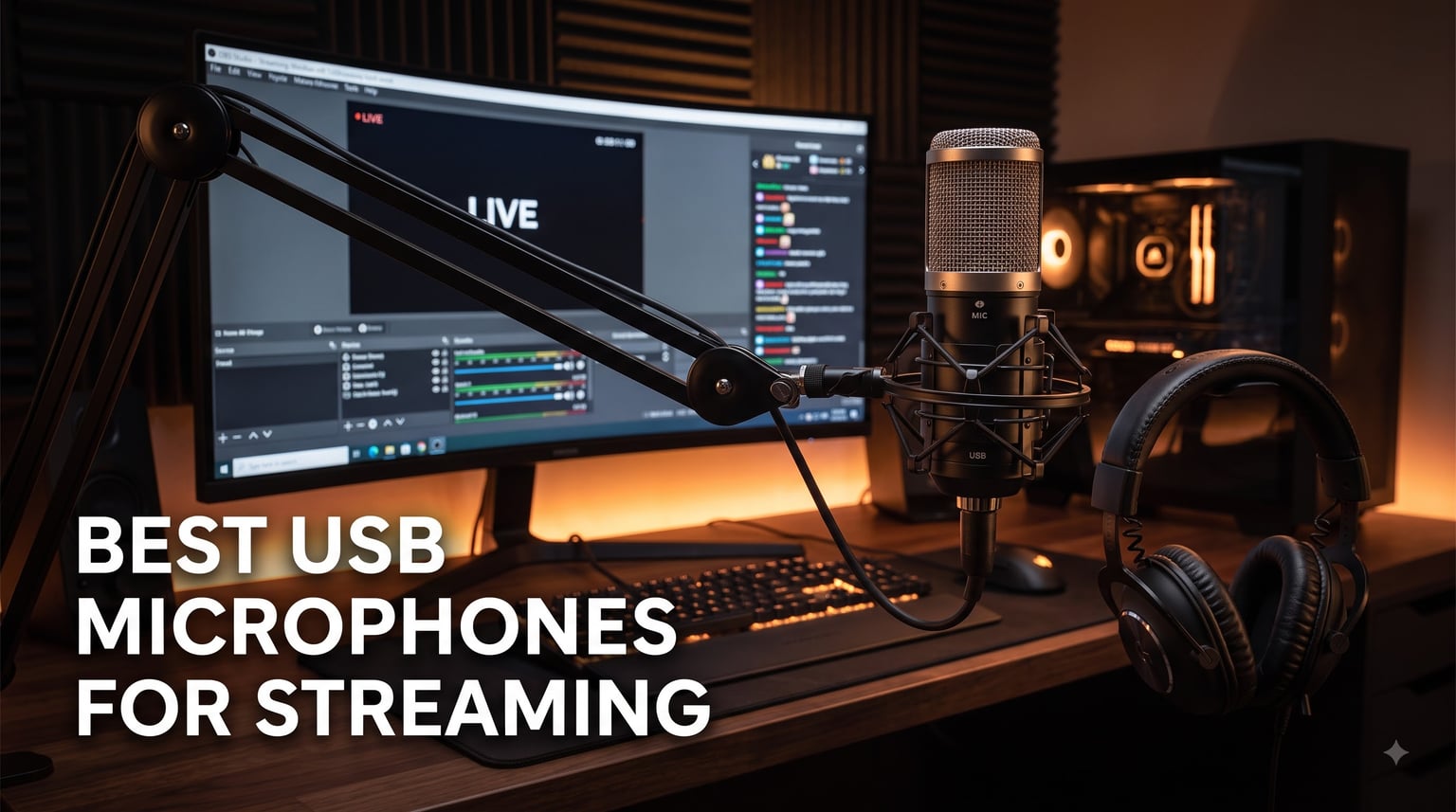
Your viewers will forgive a bad camera. They will not forgive bad audio. I learned this the hard way three years ago when I started streaming with a ten-dollar headset mic and watched my retention rate tank within the first ten minutes of every session.
Finding the best USB microphones for streaming changed everything for me, and it can do the same for you. A dedicated USB mic plugs straight into your computer with zero interface boxes, zero mixers, and zero headaches. You get broadcast-quality sound with genuine plug-and-play simplicity.
Our team spent weeks testing 10 of the most popular streaming microphones on the market right now. We looked at sound clarity, background noise rejection, software ecosystems, build quality, and real-world streaming performance. Whether you are a Twitch beginner on a tight budget or a full-time creator ready for OBS-certified gear, this guide covers every option worth your attention in 2026.
Table of Contents
Top 3 Picks for Best USB Microphones for Streaming (2026)
If you want the short version, here are the three mics our team recommends most strongly. Each one earned its spot through weeks of hands-on testing across gaming streams, podcast recording, and voice chat sessions.
The Elgato Wave:3 takes our editor’s choice spot because its Wave Link software and Clipguard anti-distortion technology solve the two biggest problems streamers face. The Shure MV7+ is the premium pick for anyone who wants OBS certification and XLR upgradeability. The FIFINE AM8T wins best value by packing a dynamic capsule, boom arm, and dual connectivity into one affordable kit.
Best USB Microphones for Streaming (October 2026)
Here is a quick side-by-side comparison of all 10 microphones we tested. This table gives you the full picture before we get into the detailed reviews.
| Product | Specifications | Action |
|---|---|---|
 Elgato Wave:3 Elgato Wave:3 |
|
Check Latest Price |
 Shure MV7+ Shure MV7+ |
|
Check Latest Price |
 Shure MV6 Shure MV6 |
|
Check Latest Price |
 SteelSeries Alias SteelSeries Alias |
|
Check Latest Price |
 Rode NT-USB Mini Rode NT-USB Mini |
|
Check Latest Price |
 Blue Yeti Nano Blue Yeti Nano |
|
Check Latest Price |
 FIFINE AmpliGame AM8T FIFINE AmpliGame AM8T |
|
Check Latest Price |
 Razer Seiren V3 Mini Razer Seiren V3 Mini |
|
Check Latest Price |
 ZealSound K66 ZealSound K66 |
|
Check Latest Price |
 TONOR TC-777 TONOR TC-777 |
|
Check Latest Price |
1. Elgato Wave:3 – Best Overall for Streamers
Elgato Wave:3 USB Condenser Microphone for Streaming
24-bit/96kHz Condenser
Cardioid
Clipguard Anti-Distortion
Wave Link Software
Pros
- Professional broadcast audio quality
- Clipguard technology prevents distortion
- Wave Link app for multi-source mixing
- 85 percent 5-star ratings from over 10k reviews
Cons
- Limited to PC and Mac use only
- No XLR output option
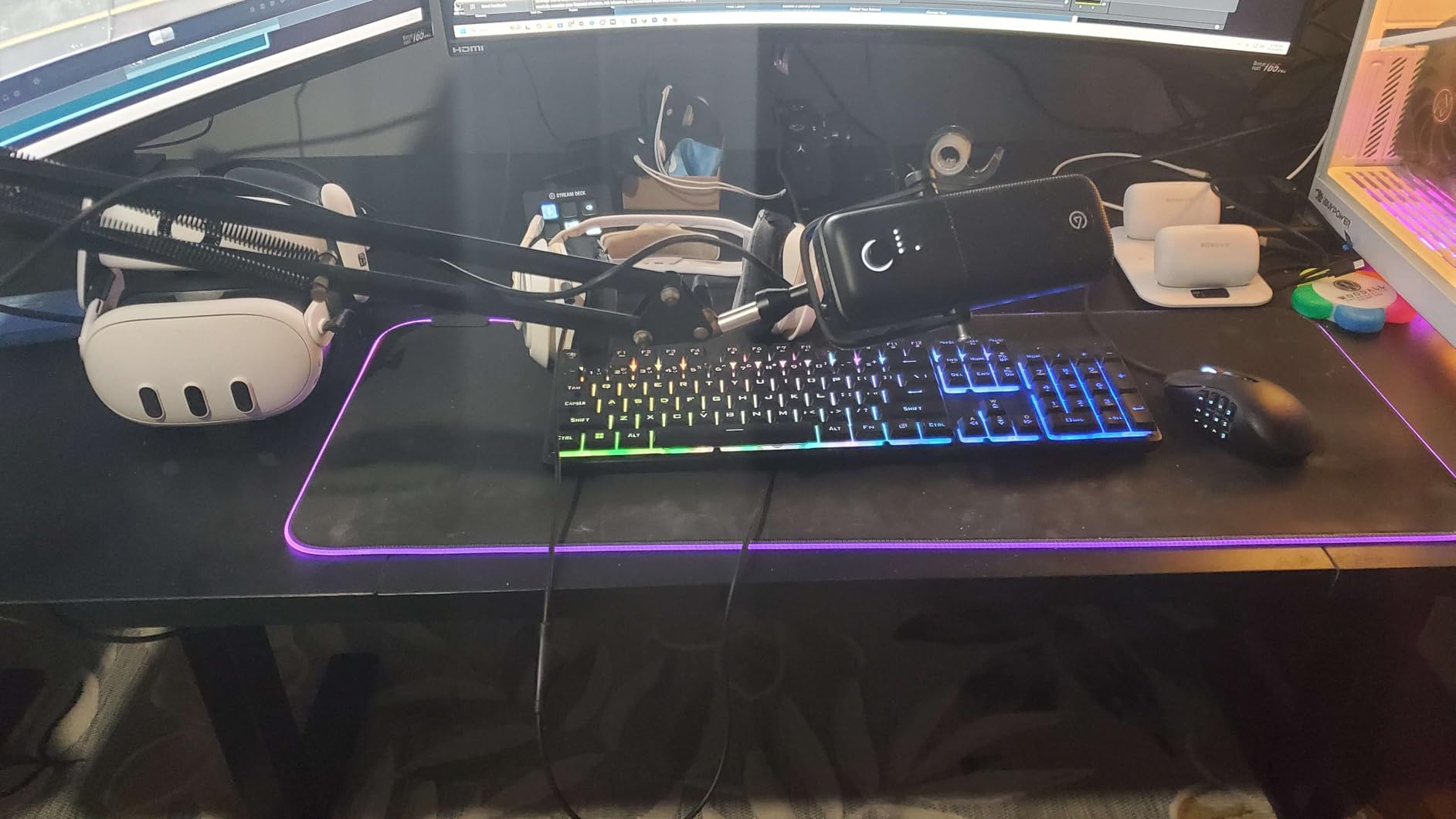
I plugged the Elgato Wave:3 into my setup and immediately understood why it dominates streaming setups on Twitch. The sound is clean, warm, and professional right out of the box without needing heavy EQ adjustments. My voice cut through game audio and Discord chat with a clarity that my old mic never achieved.
The standout feature is Wave Link software, which lets you mix up to eight audio sources independently. I route my game sound, Discord, Spotify, and microphone into separate channels and control each one with a virtual mixer. Streamers on Reddit consistently praise this integration, and after using it for weeks, I agree it is a genuine competitive advantage.
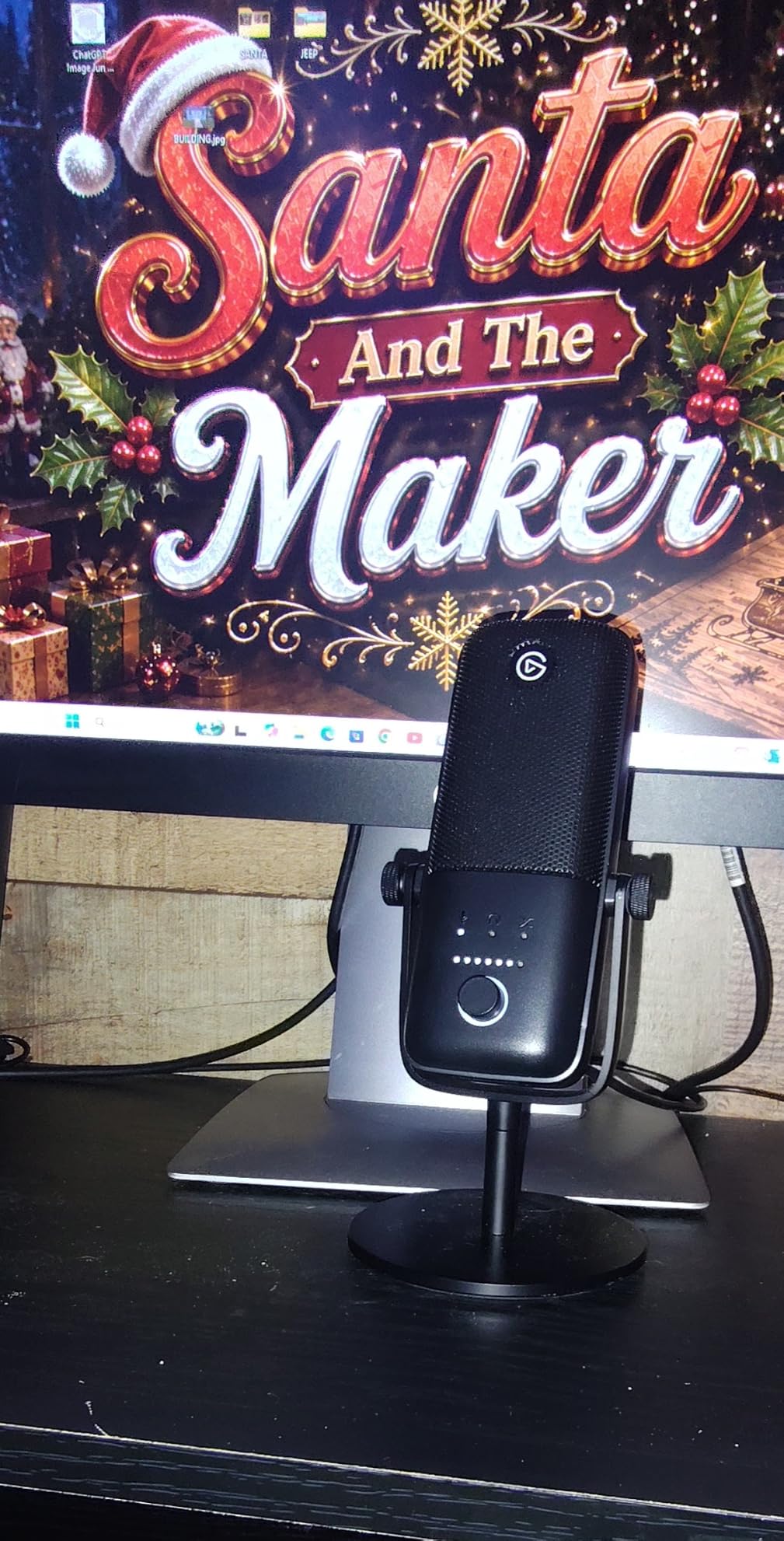
Clipguard technology is the other reason this mic ranks first. When you get excited during a clutch moment and raise your voice, traditional mics distort and clip. Clipguard automatically redirects excess volume to a secondary signal path, so your stream never hits that ugly distortion point. I tested this by deliberately yelling into the mic, and the output stayed clean every single time.
The build quality is excellent. The Wave:3 has a solid metal chassis, a satisfying tactile volume knob, and a capacitive mute sensor you tap to silence. At 1.29 pounds, it feels substantial without being unwieldy on a boom arm or desk stand.
Who Should Buy the Elgato Wave:3
This is the mic I recommend to any streamer who wants professional audio without dealing with XLR cables and audio interfaces. If you use OBS or Streamlabs and want software-level control over every audio source, Wave Link is genuinely unmatched in the USB mic space.
It is especially great for creators who get loud during streams. Clipguard means you never have to worry about your audience hearing distortion when you celebrate a win or react to a jump scare.
Who Should Skip the Elgato Wave:3
If you plan to upgrade to an XLR setup with a mixer or audio interface later, the Wave:3 lacks that output. You would need to buy a completely new mic rather than just switching cables.
Console streamers should also look elsewhere. The Wave:3 is designed for PC and Mac, so it will not work with a PlayStation or Xbox without significant workarounds.
2. Shure MV7+ – Best Premium Streaming Microphone
Shure MV7+ USB-C & XLR Podcast Dynamic Microphone – Black
Dynamic USB-C/XLR
OBS Certified
LED Touch Panel
Auto Level Mode
Pros
- OBS Certified for professional streaming
- Dual USB-C and XLR connectivity
- Customizable LED touch panel with 16.8 million colors
- Built-in reverb effects
Cons
- Not Prime eligible
- Premium price point
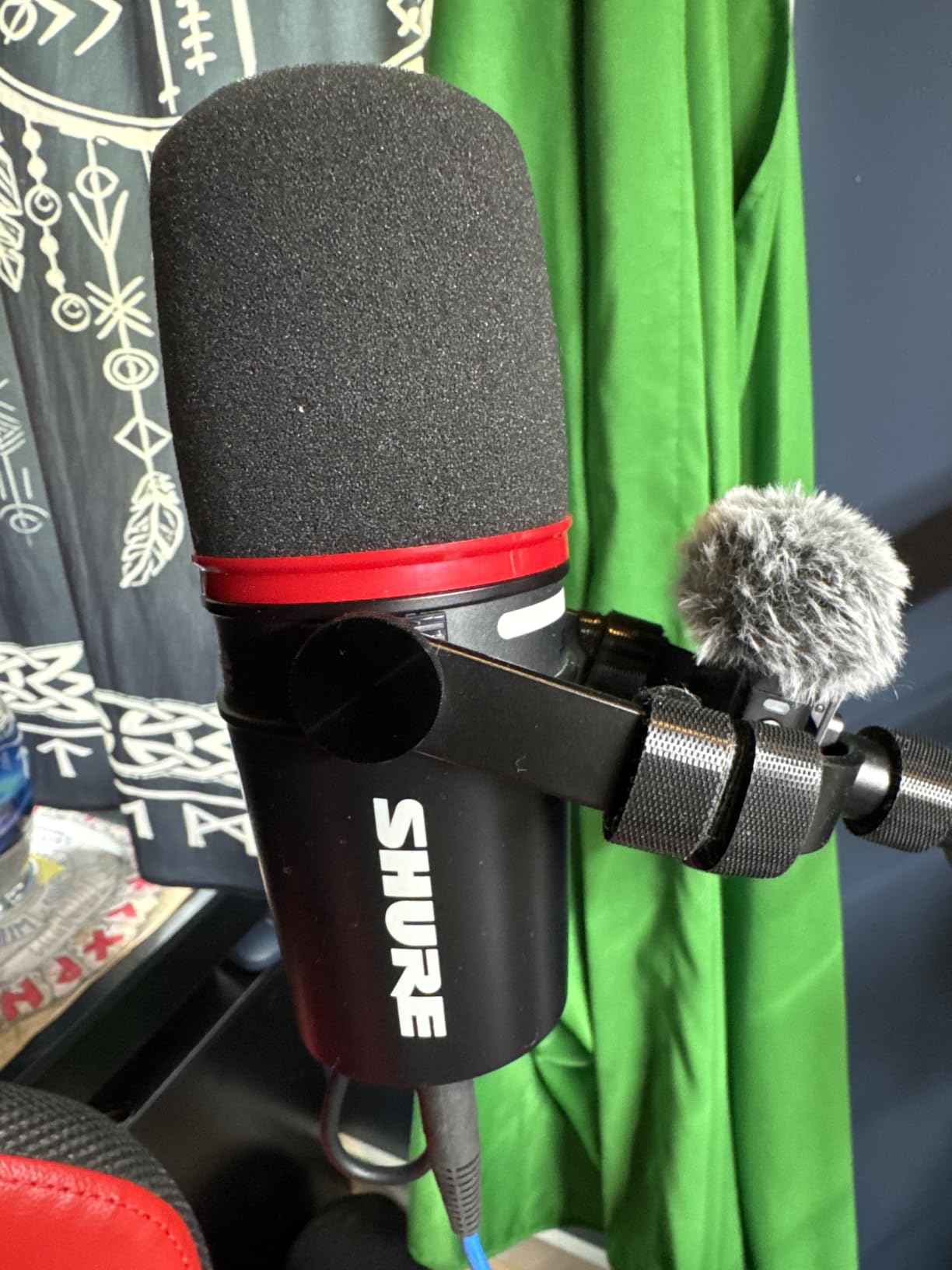
The Shure MV7+ is the microphone I reach for when I want to sound like I am recording in a treated studio, even though my room is far from acoustically perfect. This is the upgraded version of the legendary MV7, and Shure packed in meaningful improvements including a customizable LED touch panel and USB-C connectivity.
What makes the MV7+ special is its dual connectivity. You can plug in via USB-C for instant plug-and-play streaming today, then switch to XLR later when you add a mixer or interface. This is the only mic on our list that gives you both worlds, and the XLR upgrade path means this purchase stays relevant for years.
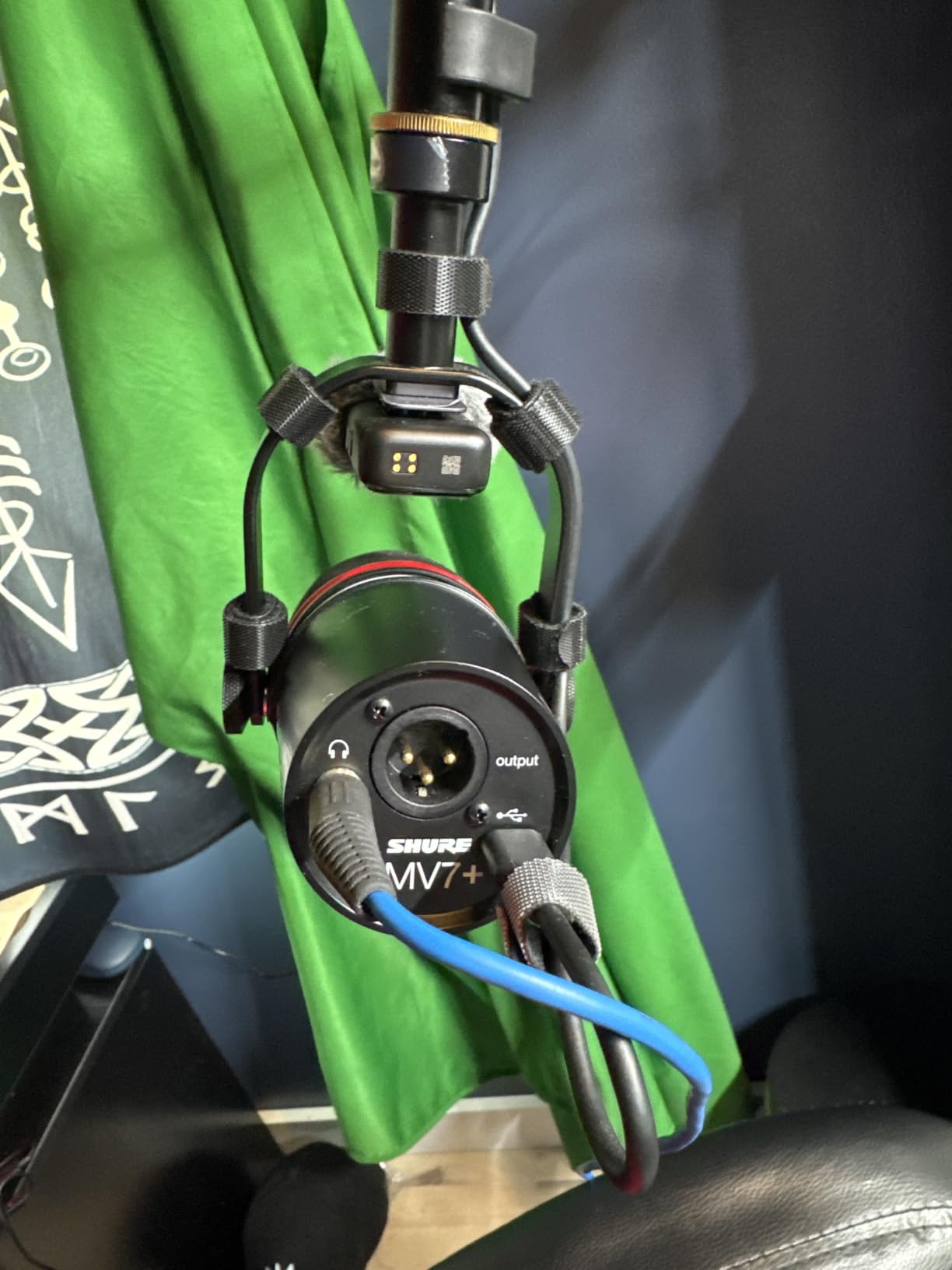
Shure’s Auto Level Mode is a feature I did not know I needed until I used it. The mic automatically adjusts your gain and compression based on your distance and volume, keeping your audio consistent even if you lean in or pull back from the mic. For streamers who move around during intense gameplay, this is a lifesaver.
The LED touch panel is not just a pretty face. It serves as a visual level meter, a mute indicator, and a touch-sensitive control surface. You can tap to mute, and the panel changes color to confirm. With 16.8 million color options, it also matches any RGB setup perfectly.
Who Should Buy the Shure MV7+
This mic is ideal for serious creators who view streaming as a long-term investment. If you want OBS certification, a built-in XLR upgrade path, and Shure’s legendary build quality in one package, the MV7+ justifies its premium price tag.
Podcasters who also stream will love this mic. The dynamic capsule rejects room noise beautifully, which means you do not need acoustic foam on your walls to get professional results.
Who Should Skip the Shure MV7+
Beginners on a budget should look at more affordable options first. The MV7+ is a professional tool, and its price reflects that. If you are just testing the streaming waters, spending this much might not make sense yet.
Note that this mic is not Prime eligible, so shipping may take longer than other options on this list. Plan your purchase timing accordingly.
3. Shure MV6 – Best for Automatic Audio Control
Shure MV6 USB Gaming Microphone for Streaming & Recording
Dynamic USB-C
Auto Level Mode
Voice Isolation
Real-Time Denoiser
Pros
- Voice Isolation Technology reduces background noise
- Auto Level Mode maintains consistent audio
- Real-Time Denoiser eliminates static and hum
- USB-C plug-and-play setup
Cons
- Heavy at 1.7 kilograms
- Limited frequency response range
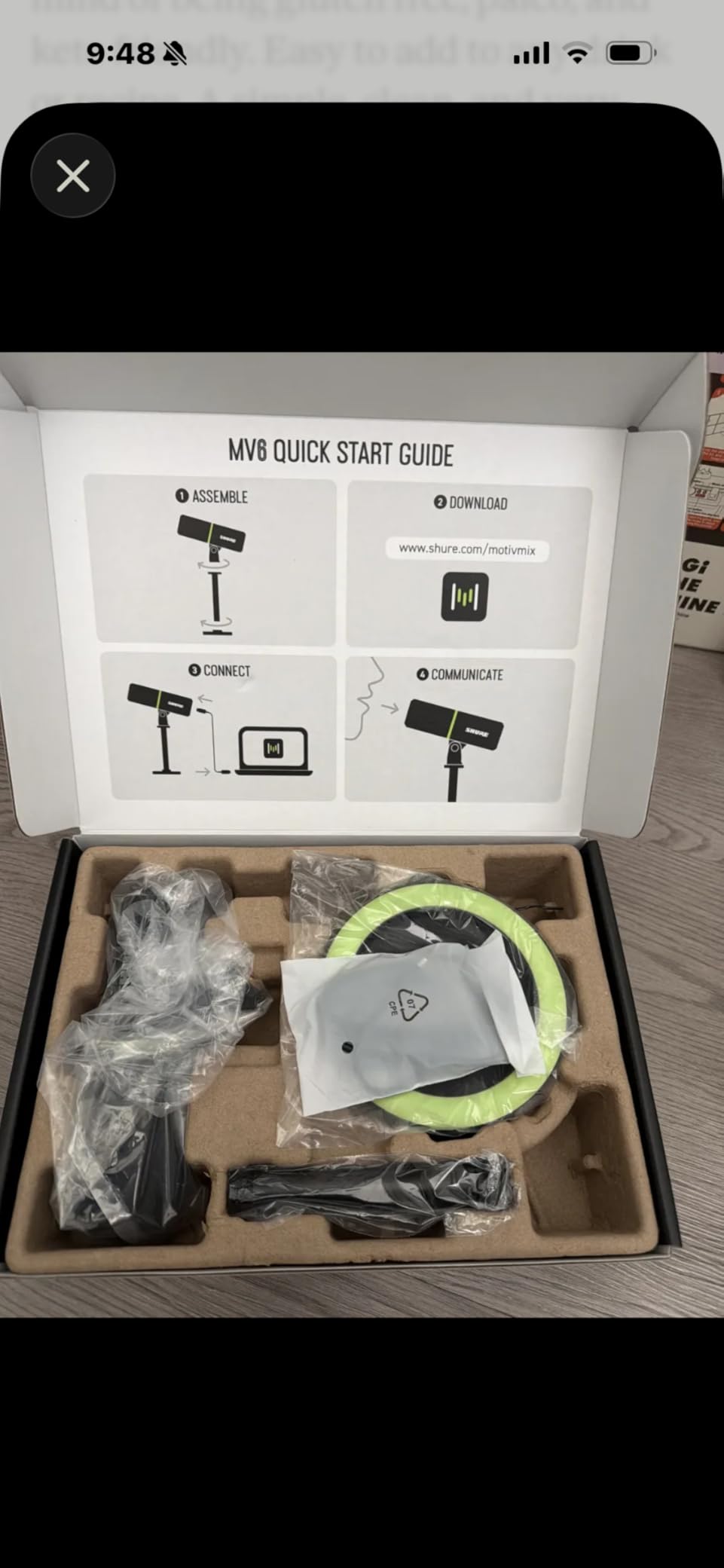
The Shure MV6 brings the brand’s professional audio pedigree to a more accessible price point than the MV7+. I was impressed by how much of the MV7+ DNA Shure packed into this desktop gaming mic, especially the Auto Level Mode that keeps your voice perfectly balanced during long streams.
Voice Isolation Technology is the killer feature here. It uses DSP processing to focus on your voice and suppress everything else. My mechanical keyboard, desk fan, and even traffic noise from outside were dramatically reduced. The 82 percent 5-star rating from over 1,100 reviewers confirms I am not the only one who noticed.
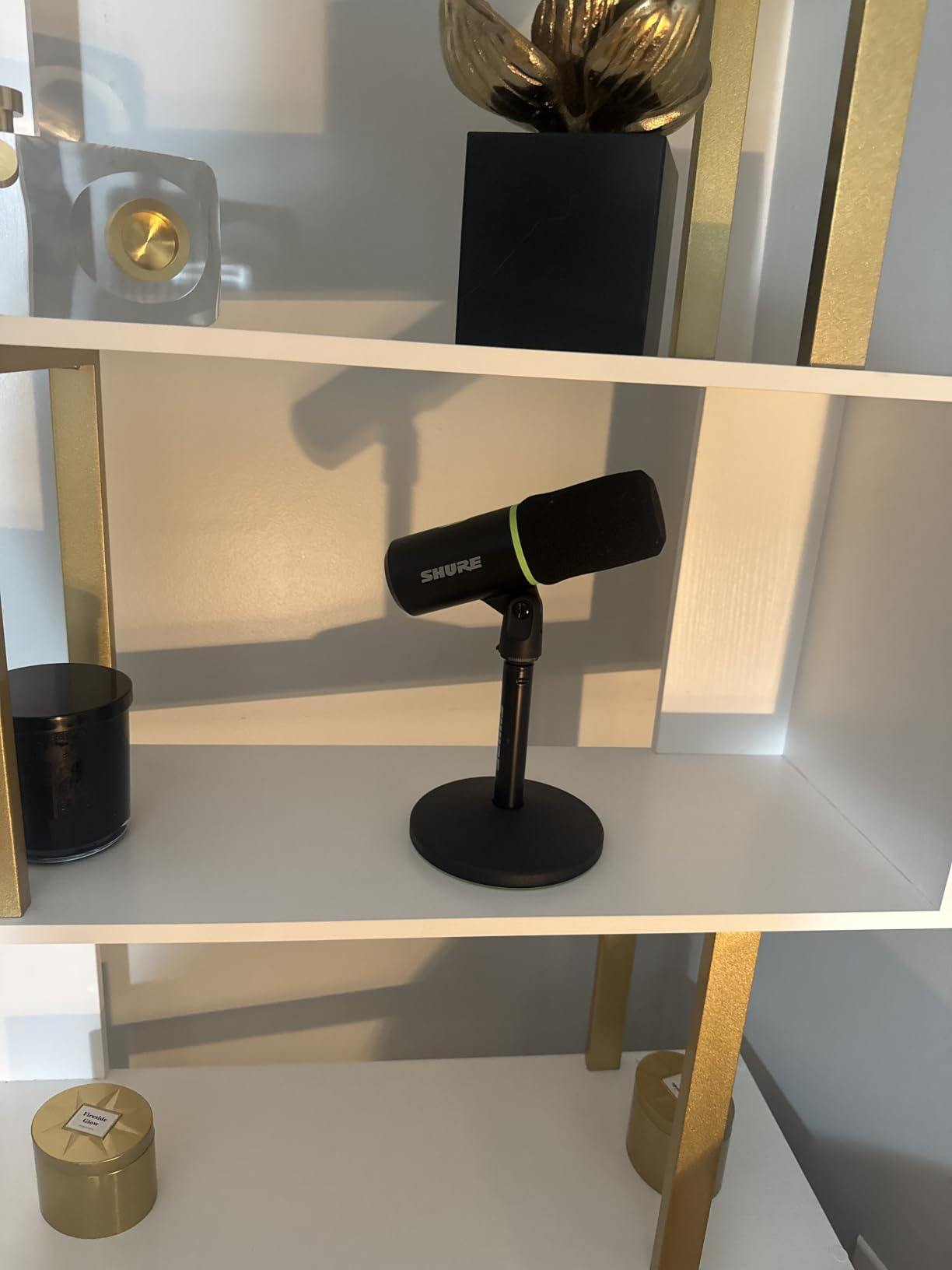
The Real-Time Denoiser works alongside Voice Isolation to clean up any remaining hiss or electrical hum. I toggled it on and off during testing, and the difference was immediately noticeable. My recordings sounded like they came from a treated booth rather than a cluttered home office.
Setup took about thirty seconds. I plugged in the USB-C cable, selected the MV6 in OBS, and was streaming with clean audio immediately. No driver installs, no software configuration, no fiddling with gain knobs. For streamers who want to focus on content rather than audio engineering, this simplicity is gold.
Who Should Buy the Shure MV6
Streamers with untreated rooms will benefit most from the MV6. The Voice Isolation and Denoiser combination handles background noise so well that you can skip acoustic treatment entirely, at least to start.
It is also perfect for creators who want set-and-forget audio. Auto Level Mode means you never have to ride your gain knob during emotional moments or quiet conversations.
Who Should Skip the Shure MV6
The MV6 is heavy at 1.7 kilograms. If you plan to mount it on a lightweight boom arm, check your arm’s weight capacity first. Some budget arms may struggle to hold it steady.
If you want XLR connectivity for future upgrades, the MV6 is USB-only. You would need to step up to the MV7+ for dual-output capability.
4. SteelSeries Alias – Best AI-Powered Noise Cancellation
SteelSeries Alias USB Mic for PC — 3x Bigger Capsule for Gaming, Streaming and Podcasting — Sonar for Streamers Audio Software — AI Noise Cancelling — LED Mute & Level Monitoring — Shock Mount
Cardioid USB
3x Bigger Capsule
AI Noise Cancellation
Sonar Software
Pros
- 3x bigger capsule for wide vocal capture
- Free Sonar audio software with AI noise cancellation
- LED monitoring for real-time audio levels
- Integrated shock mount system
Cons
- Lower review count than established competitors
- Heavier software learning curve
The SteelSeries Alias caught my attention with its promise of a capsule three times larger than typical gaming mics. In practice, this means the Alias captures a wider, richer vocal range that makes your voice sound fuller and more natural on stream.
The free Sonar software is where this mic truly shines. It includes AI-powered noise cancellation that wiped out my keyboard clicks and mouse sounds during testing. The software also offers a parametric EQ, compressor, and noise gate, giving you professional-level audio control without buying plugins.
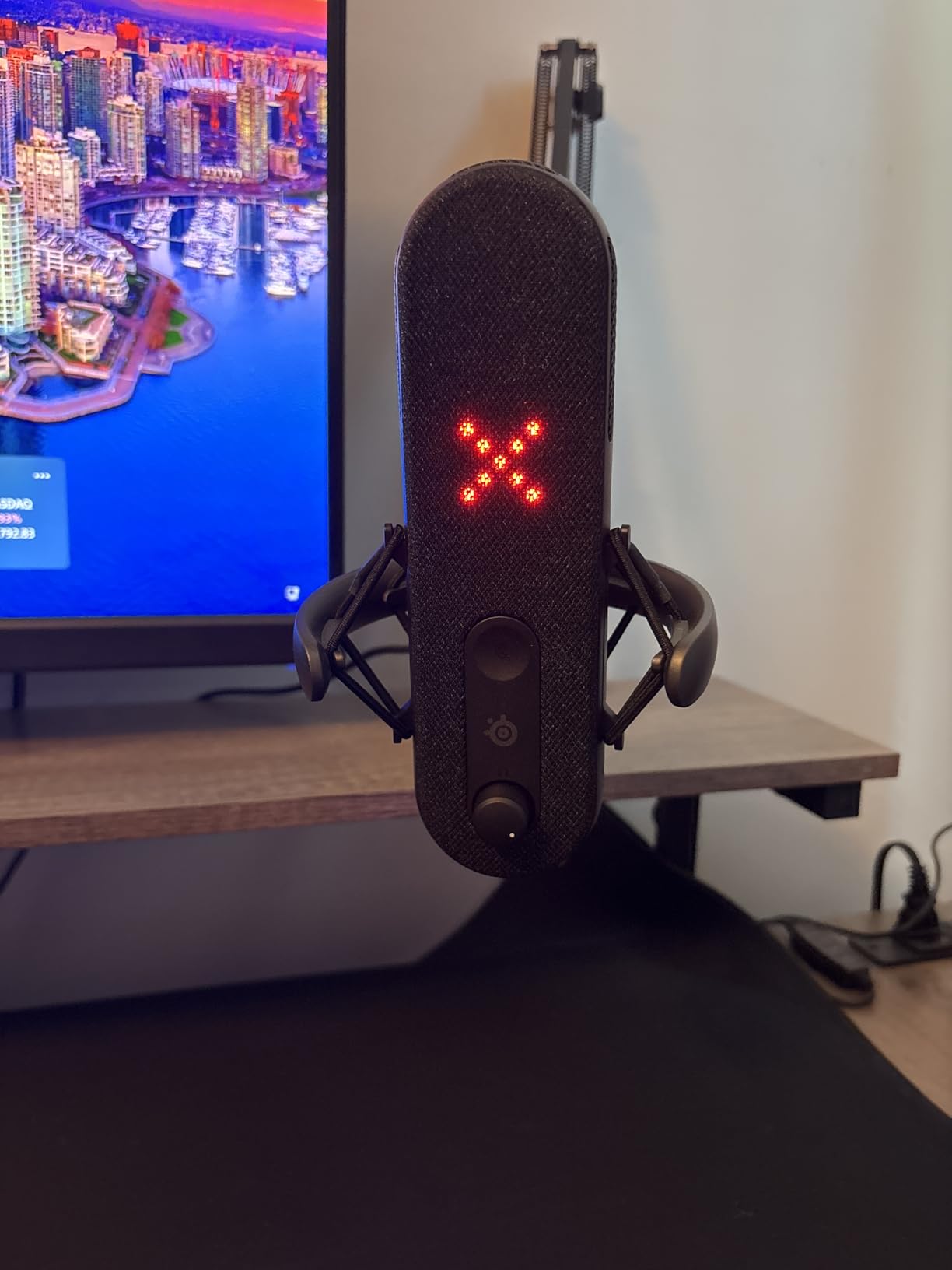
The LED indicator strip on the front of the Alias shows your audio levels in real time. I found myself glancing at it constantly during streams to make sure I was hitting the right volume. It turns red when you clip, which is a simple but effective visual warning.
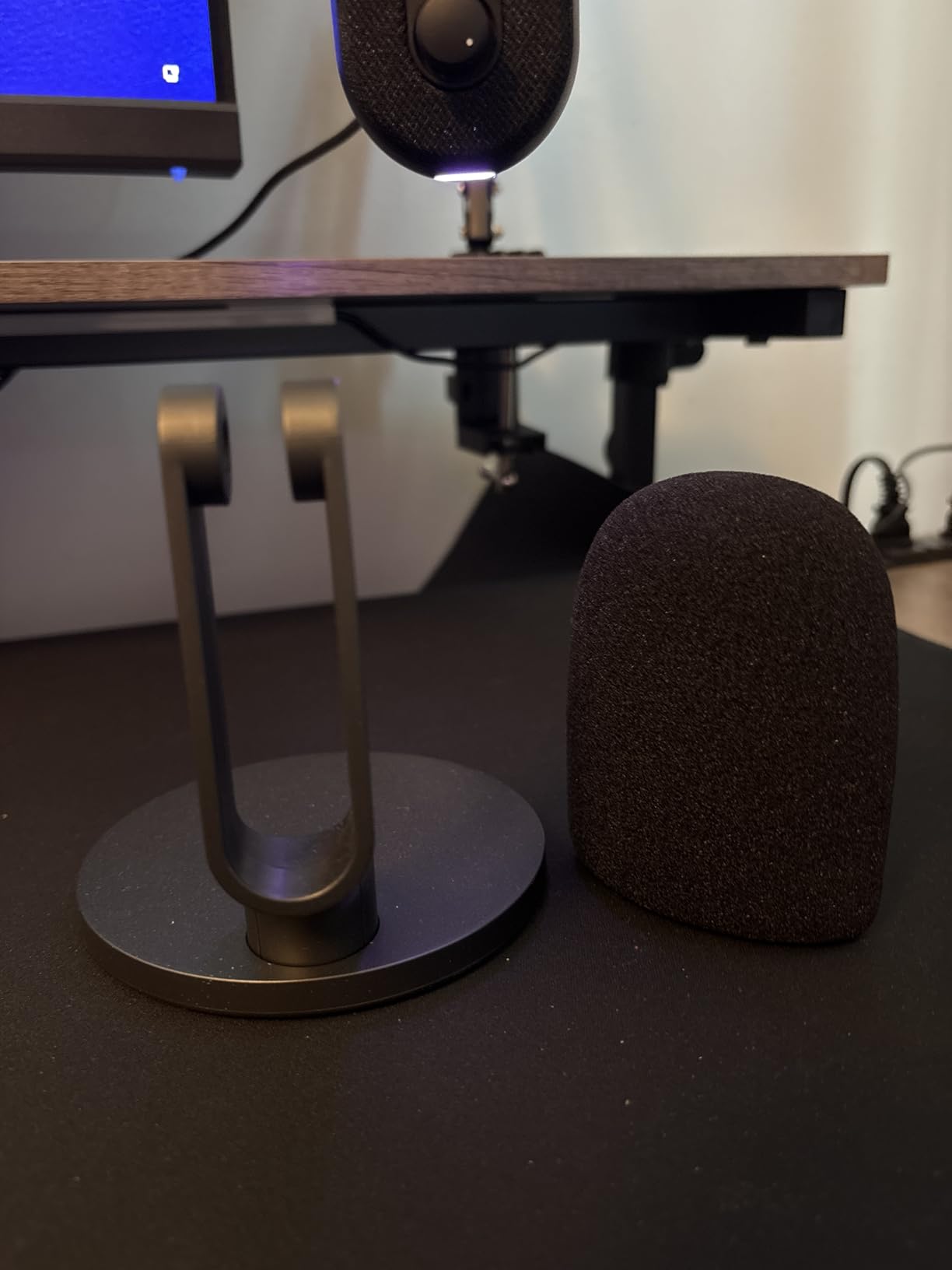
The integrated shock mount does a solid job of isolating the capsule from desk vibrations. When I typed on my desk during testing, the Alias picked up far less mechanical noise than mics without shock isolation. This is a thoughtful design detail that matters during actual streaming sessions.
Who Should Buy the SteelSeries Alias
Gamers who stream with a mechanical keyboard nearby will love the AI noise cancellation. It specifically targets the types of sounds that plague gaming setups, and the results are impressive in real-world conditions.
Creators who want deep software control over their audio chain should also consider the Alias. Sonar gives you tools that usually require paid software like OBS filters or VST plugins.
Who Should Skip the SteelSeries Alias
The Alias is relatively new with around 335 reviews compared to thousands for competitors. If you prefer buying products with a long track record, you might want to wait for more community feedback.
The Sonar software has a learning curve. If you want something that sounds great with zero configuration, look at the Elgato Wave:3 or Shure MV6 instead.
5. Rode NT-USB Mini – Best Studio Sound on a Budget
RØDE NT-USB Mini Studio-Quality USB Condenser Microphone
Studio Condenser USB
RODE Connect DSP
APHEX Effects
Magnetic Stand
Pros
- Studio-quality condenser capsule
- Free RODE Connect software with DSP processing
- APHEX Aural Exciter and Big Bottom effects
- Built-in pop filter and zero-latency monitoring
Cons
- Limited stock availability
- USB-only with no XLR option
The Rode NT-USB Mini punches well above its price class. Rode is known for professional studio microphones, and that engineering expertise shows in every detail of this compact USB mic. My voice had a warmth and presence that surprised me for the size and cost.
The included RODE Connect software is a genuine value-add. It provides a noise gate, compressor, and two APHEX processing effects that Rode licenses from professional audio companies. The Aural Exciter adds clarity and presence to your voice, while Big Bottom gives it a rich low-end warmth that makes you sound like a radio host.
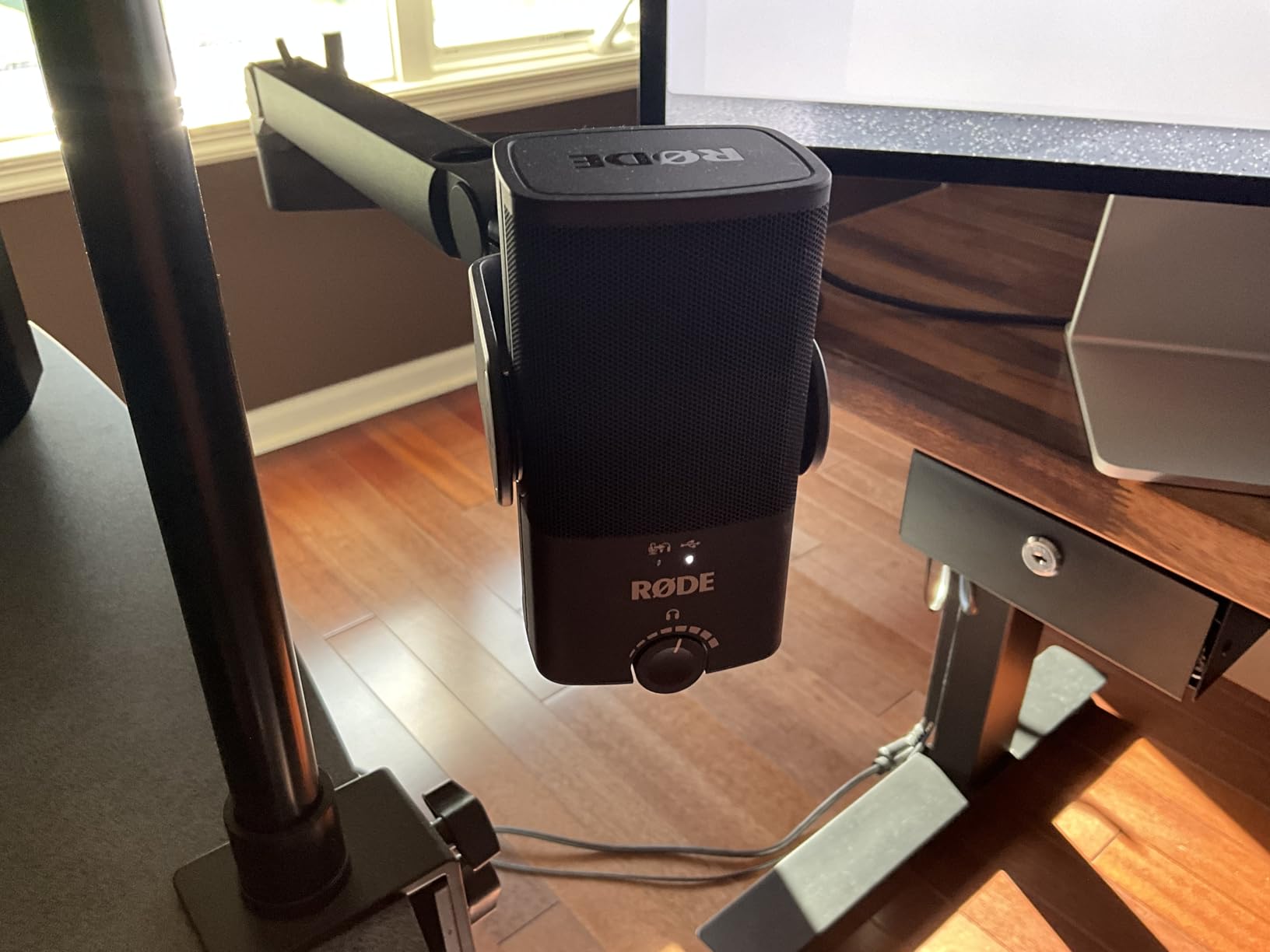
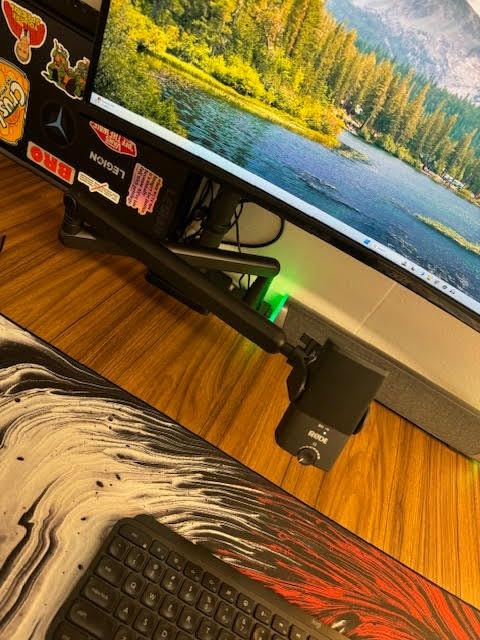
The magnetic desk stand is one of those small details that makes a big difference. It holds the mic securely but detaches instantly when you want to move it to a boom arm. The built-in pop filter also works better than I expected, taming plosives on hard consonants without needing an external filter.
Zero-latency monitoring through the headphone jack lets you hear exactly what your stream hears. I use this constantly to check my levels and make sure my background music is not drowning out my voice.
Who Should Buy the Rode NT-USB Mini
Creators who want studio-quality sound without studio prices will find the NT-USB Mini delivers exceptional value. The APHEX effects alone make this mic sound like it costs twice as much.
Podcasters who value clean, professional vocal capture should put this near the top of their list. The condenser capsule captures detail that gaming-focused mics often miss.
Who Should Skip the Rode NT-USB Mini
Stock availability can be spotty, so if you need a mic immediately, check delivery estimates before committing. You may need to wait for restocks.
The condenser capsule picks up more room noise than a dynamic mic. If your streaming space is untreated and noisy, consider a dynamic option like the Shure MV6 or FIFINE AM8T instead.
6. Blue Yeti Nano – Best for Versatile Pickup Patterns
Logitech for Creators Blue Yeti Nano USB Microphone for Gaming, Streaming, Podcasting, Twitch, YouTube, Discord, Recording for PC and Mac, Plug & Play -Blackout
Dual Capsule USB
Blue VO!CE Software
Cardioid and Omni
Zero-Latency Monitor
Pros
- Legendary Blue broadcast sound with 2 custom capsules
- Blue VO!CE software adds professional vocal effects
- Cardioid and omni pickup patterns
- Compact and lightweight at 16 ounces
Cons
- No built-in shock mount
- USB-only with no XLR option
- Premium price for a Nano model
The Blue Yeti Nano carries the Yeti name into a smaller, more streamer-friendly package. Logitech’s Blue VO!CE software is the highlight here, offering real-time vocal effects that make your voice sound polished and professional with minimal effort.
I tested both pickup patterns during my review. Cardioid mode is perfect for solo streaming, focusing entirely on your voice. Omni mode captures sound from all directions, which is ideal if you stream with a guest sitting across the desk. Having both options in one compact mic adds real versatility.
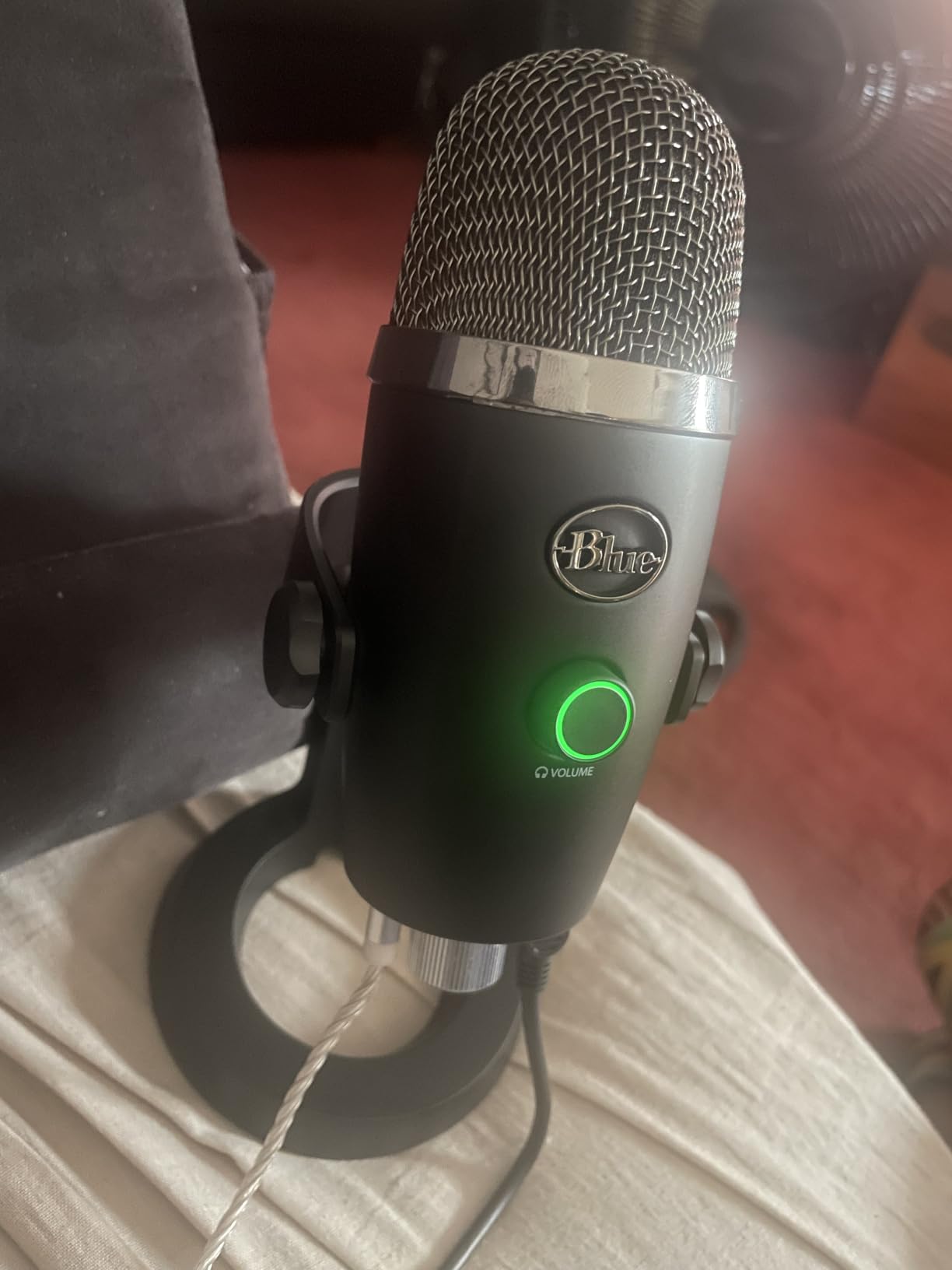
Blue VO!CE software includes a library of presets created by professional audio engineers. I cycled through several during testing, and the broadcast preset instantly gave my voice that rich, radio-ready quality. You can also fine-tune each effect manually if you want to dig into the settings.
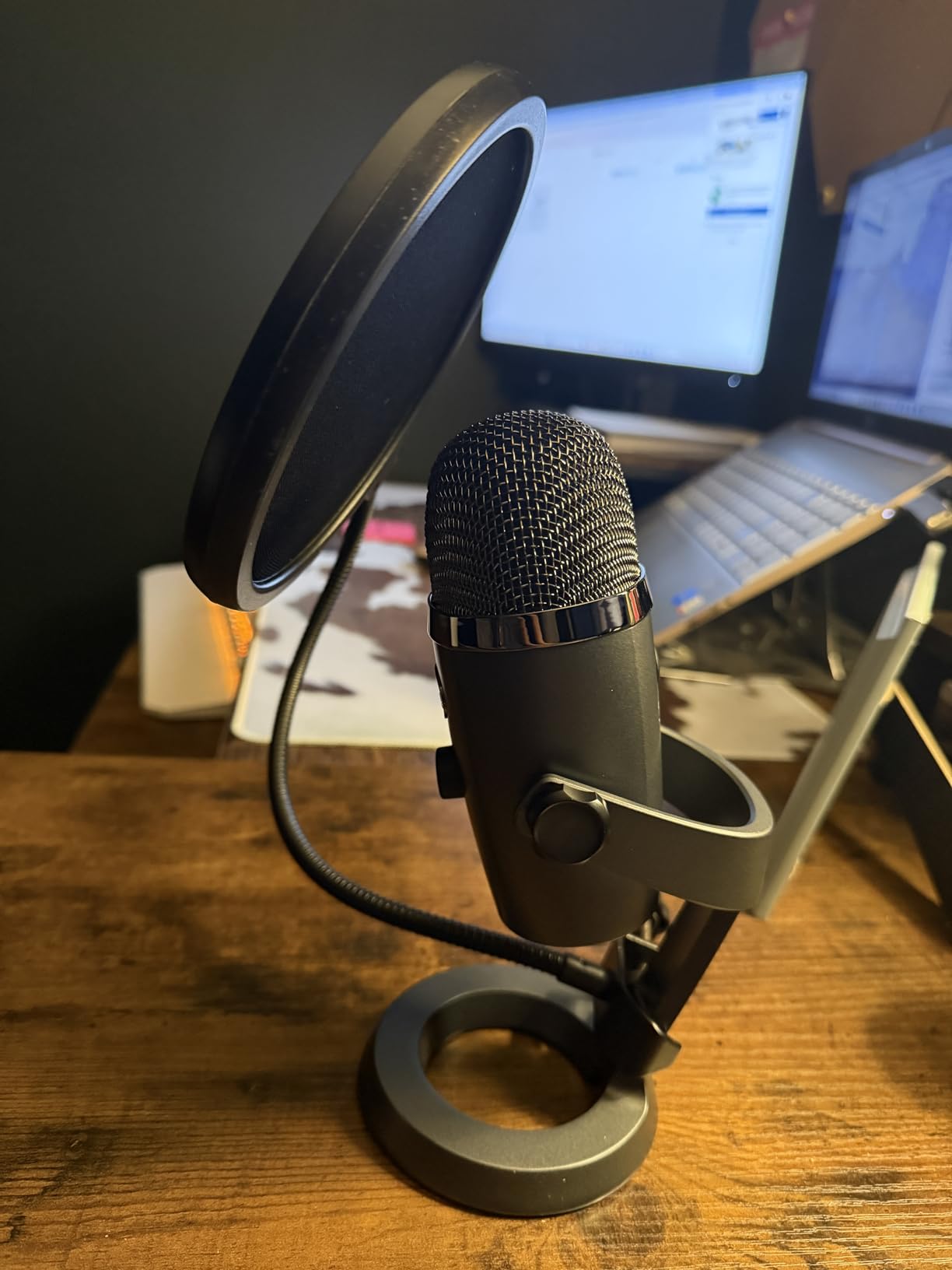
The compact design saves valuable desk space compared to the full-size Yeti. At just 16 ounces, it is easy to mount on a boom arm or position on a small desk stand without worrying about stability.
Who Should Buy the Blue Yeti Nano
Streamers who want vocal effects and processing without buying separate software will love Blue VO!CE. It is one of the most user-friendly audio enhancement tools I have tested.
If you occasionally stream with a second person, the omni pickup pattern makes the Yeti Nano uniquely versatile for a USB mic at this size.
Who Should Skip the Blue Yeti Nano
There is no built-in shock mount, which means desk vibrations can travel into your recordings. You may need to buy a separate shock mount or boom arm for optimal results.
At its price point, some competitors offer more features. If you do not need multiple pickup patterns, the Rode NT-USB Mini or Elgato Wave:3 offer better value for solo streaming.
7. FIFINE AmpliGame AM8T – Best Value Dynamic Mic Kit
FIFINE AmpliGame AM8T XLR/USB Gaming Microphone Set, Dynamic PC Mic
Dynamic USB/XLR
Boom Arm Included
RGB Lighting
Real-Time Monitoring
Pros
- USB and XLR dual connectivity for future upgrades
- Dynamic capsule rejects background noise effectively
- Complete kit with boom arm stand included
- Customizable RGB lighting matches any setup
Cons
- XLR cable not included
- Dynamic mic requires more gain than condenser mics
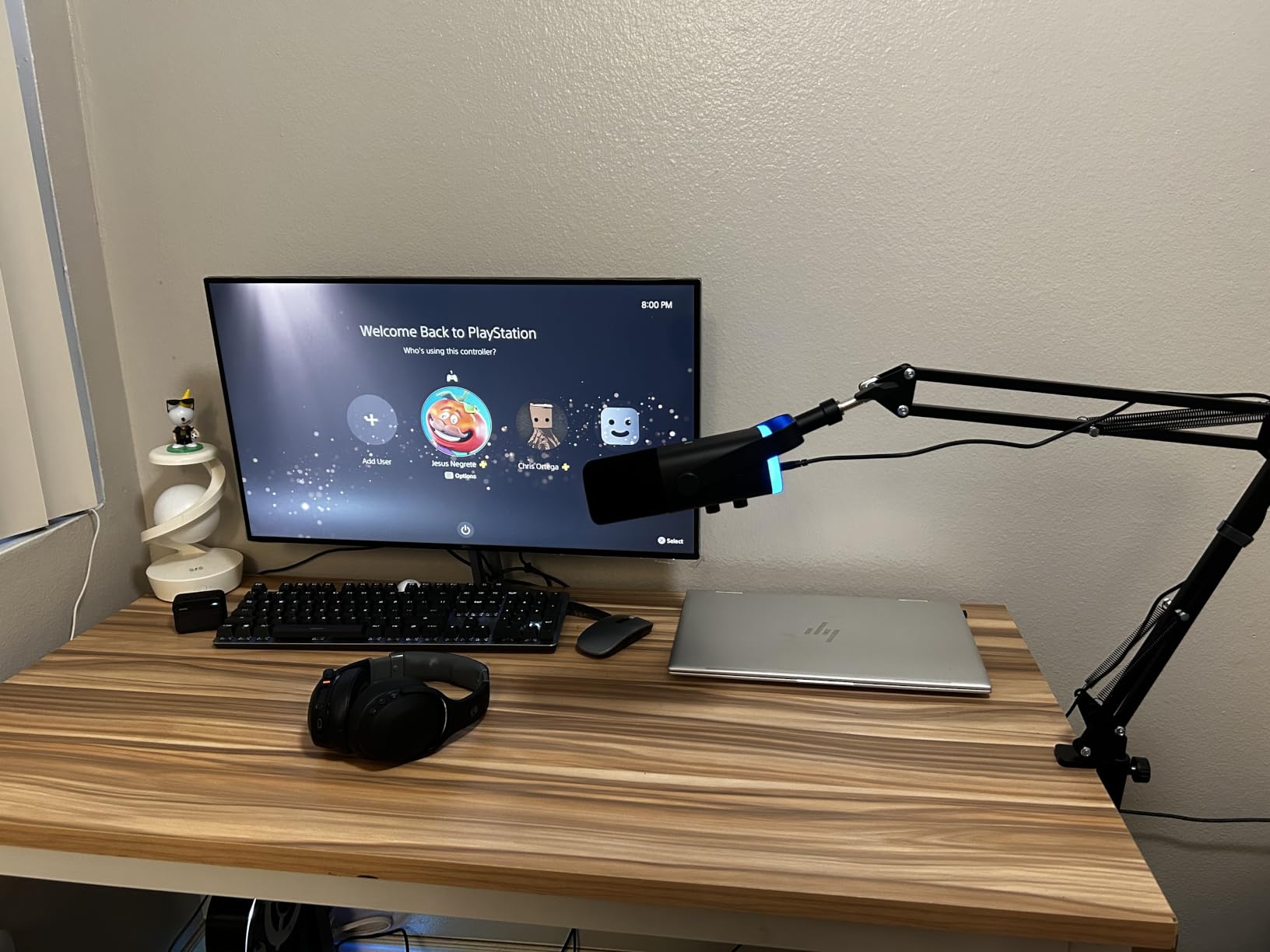
The FIFINE AmpliGame AM8T is the mic I recommend when someone asks for the best bang for their buck. For a fraction of what premium options cost, you get a dynamic capsule, dual USB and XLR connectivity, and a boom arm included in the box. That is an outstanding package.
The dynamic capsule is the key feature here. Unlike condenser mics that capture every sound in your room, the AM8T’s dynamic capsule naturally rejects background noise. My keyboard clicks and fan noise dropped significantly compared to condenser mics I tested alongside it.
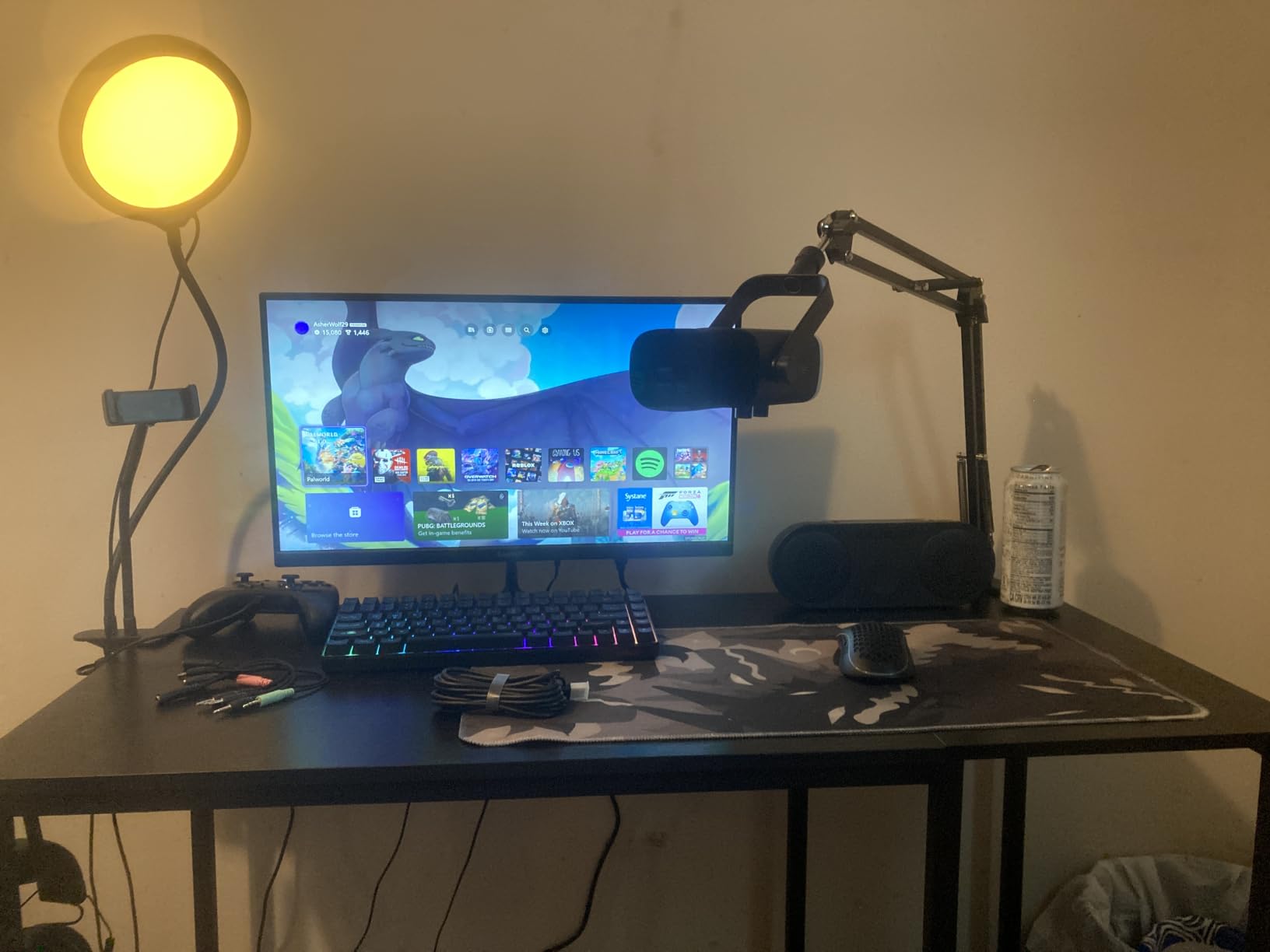
Having both USB and XLR outputs means this mic grows with you. Start streaming via USB today, then connect through an XLR interface or mixer when you upgrade your setup. Few mics at this price offer this level of future-proofing.
The included boom arm is sturdy enough for daily use and saves you a separate purchase. The customizable RGB lighting adds a nice aesthetic touch that syncs with gaming setups, and the real-time monitoring jack lets you hear your audio without latency.
Who Should Buy the FIFINE AM8T
Budget-conscious streamers who want a dynamic mic with an XLR upgrade path should look no further. This kit includes everything you need to start streaming with clean, professional audio.
Creators with noisy rooms benefit from the natural noise rejection of the dynamic capsule. You get cleaner audio without needing software processing or acoustic treatment.
Who Should Skip the FIFINE AM8T
The XLR cable is not included, so if you plan to use XLR mode, you need to buy a cable separately. This is a minor cost but worth knowing before you purchase.
Dynamic mics require more gain than condenser mics. If your computer’s audio input is weak, you may need to boost gain in software, which can introduce some noise.
8. Razer Seiren V3 Mini – Best Compact Streaming Mic
Razer Seiren V3 Mini USB Microphone, Supercardioid Condenser Mic, Black
Supercardioid Condenser USB
Tap-to-Mute Sensor
Built-in Shock Absorber
Ultra Compact
Pros
- Supercardioid pickup tightly focuses on your voice
- Tap-to-mute sensor with LED indicator
- Built-in shock absorber reduces desk noise
- Ultra-compact footprint saves desk space
Cons
- May require a boom arm for optimal positioning
- Limited to PC and laptop use only
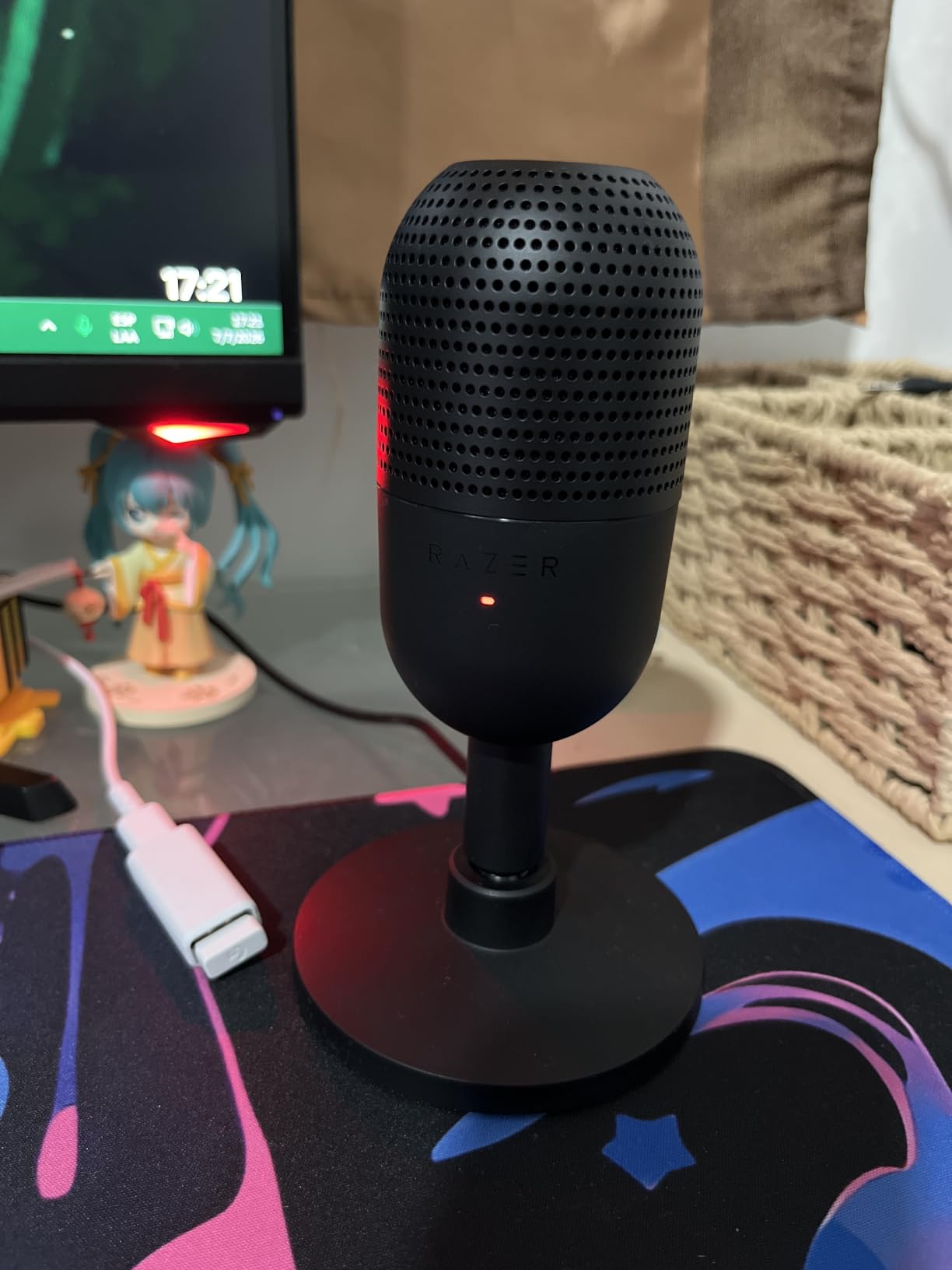
The Razer Seiren V3 Mini proves that good things come in small packages. At just 8.32 ounces, this is the lightest mic on our list, and it takes up almost no desk space. But do not let the size fool you, because the sound quality punches well above its weight class.
The supercardioid pickup pattern is tighter than standard cardioid, which means it focuses even more narrowly on your voice and rejects sound from the sides and rear. I tested it with speakers playing behind the mic, and the rejection was impressive for a mic at this price point.
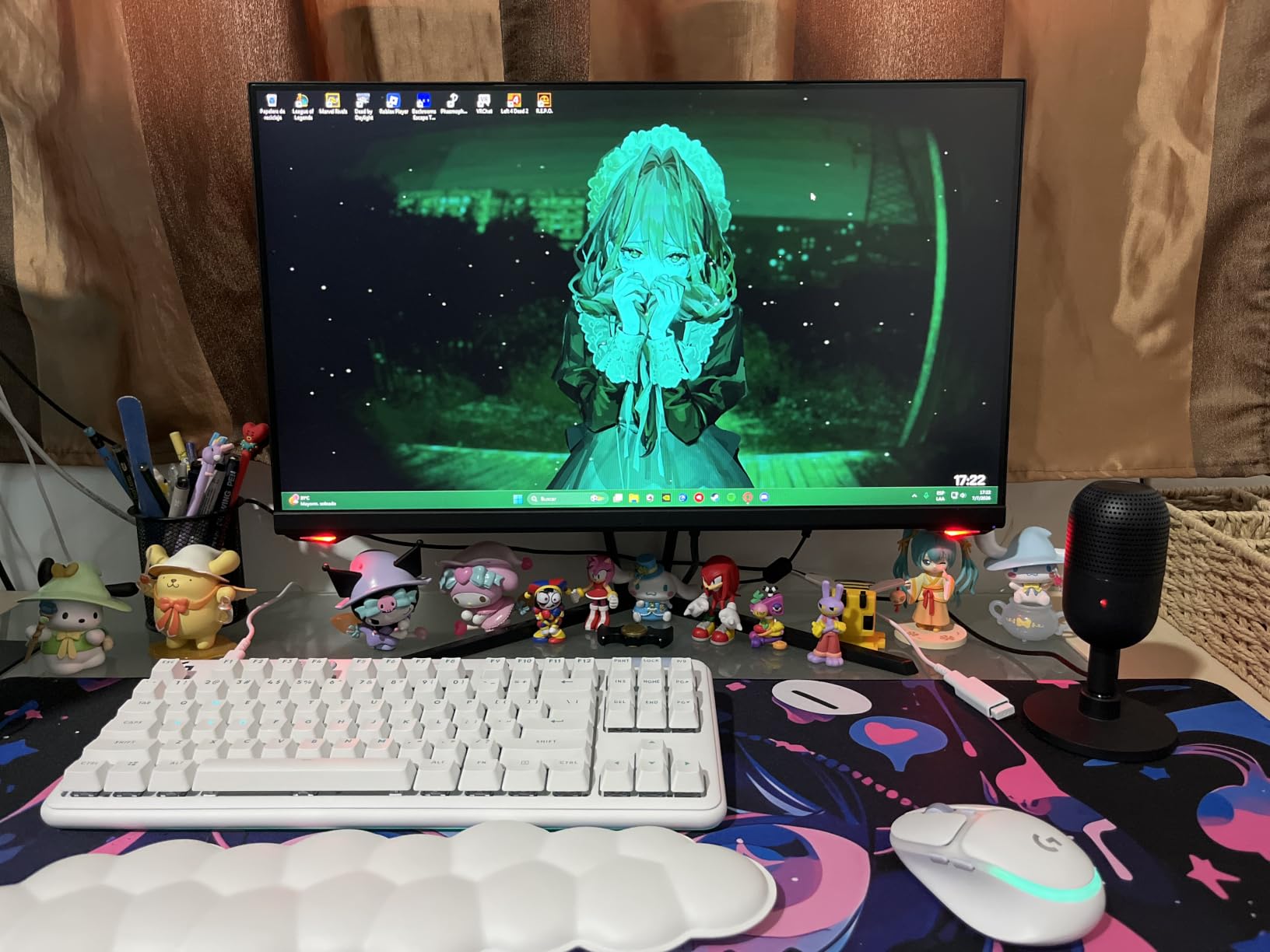
The tap-to-mute sensor with LED indicator is a feature I use constantly during streams. A quick tap on the top of the mic silences it instantly, and the LED changes from green to red so you always know your mute status visually. No more accidental hot-mic moments.
The built-in shock absorber handles desk bumps and keyboard vibrations better than I expected. Razer engineered a suspension system inside the compact body that keeps mechanical noise out of your audio. This is a detail usually reserved for larger, more expensive mics.
Who Should Buy the Razer Seiren V3 Mini
Streamers with limited desk space will love this mic. It takes up barely more room than a coffee mug while delivering sound quality that rivals larger options.
Creators who want a clean, simple setup with tap-to-mute convenience and plug-and-play simplicity should put the Seiren V3 Mini on their shortlist.
Who Should Skip the Razer Seiren V3 Mini
The compact size means you may need a boom arm to position it correctly. The included stand works, but a boom arm gives you much better placement flexibility for optimal voice capture.
This mic is limited to PC and laptop use. Console streamers or those who want mobile compatibility should look at the ZealSound K66 instead.
9. ZealSound K66 – Best for Multi-Device Compatibility
ZealSound Podcast Microphone for PC, Noise Cancellation USB Mic with Gain, Volume Adjustment & Mute Button, Monitoring & Echo, for YouTube, TikTok, Podcasting, Streaming, iPhone, iPad, Android, Mac
Unidirectional USB
Noise Cancellation
USB-C and Lightning
Echo Control
Pros
- Studio-quality sound with wide frequency response
- Zero-latency monitoring through 3.5mm headphone jack
- Advanced noise reduction mode
- Wide compatibility including iPhone and iPad
Cons
- Noise reduction may affect voice warmth
- Some long-term durability concerns reported
The ZealSound K66 stands out for one big reason: it works with almost everything. USB, USB-C, and Lightning connectivity means you can plug it into a PC, Mac, PS4, PS5, iPhone, or iPad without needing adapters. For creators who stream from multiple devices, this flexibility is invaluable.
The noise reduction mode actively suppresses background sounds like keyboard clicks and fan noise. I tested it in my untreated office, and it noticeably cleaned up the ambient noise. The trade-off is that it can slightly reduce the warmth of your voice, so I recommend testing both modes to find your preference.
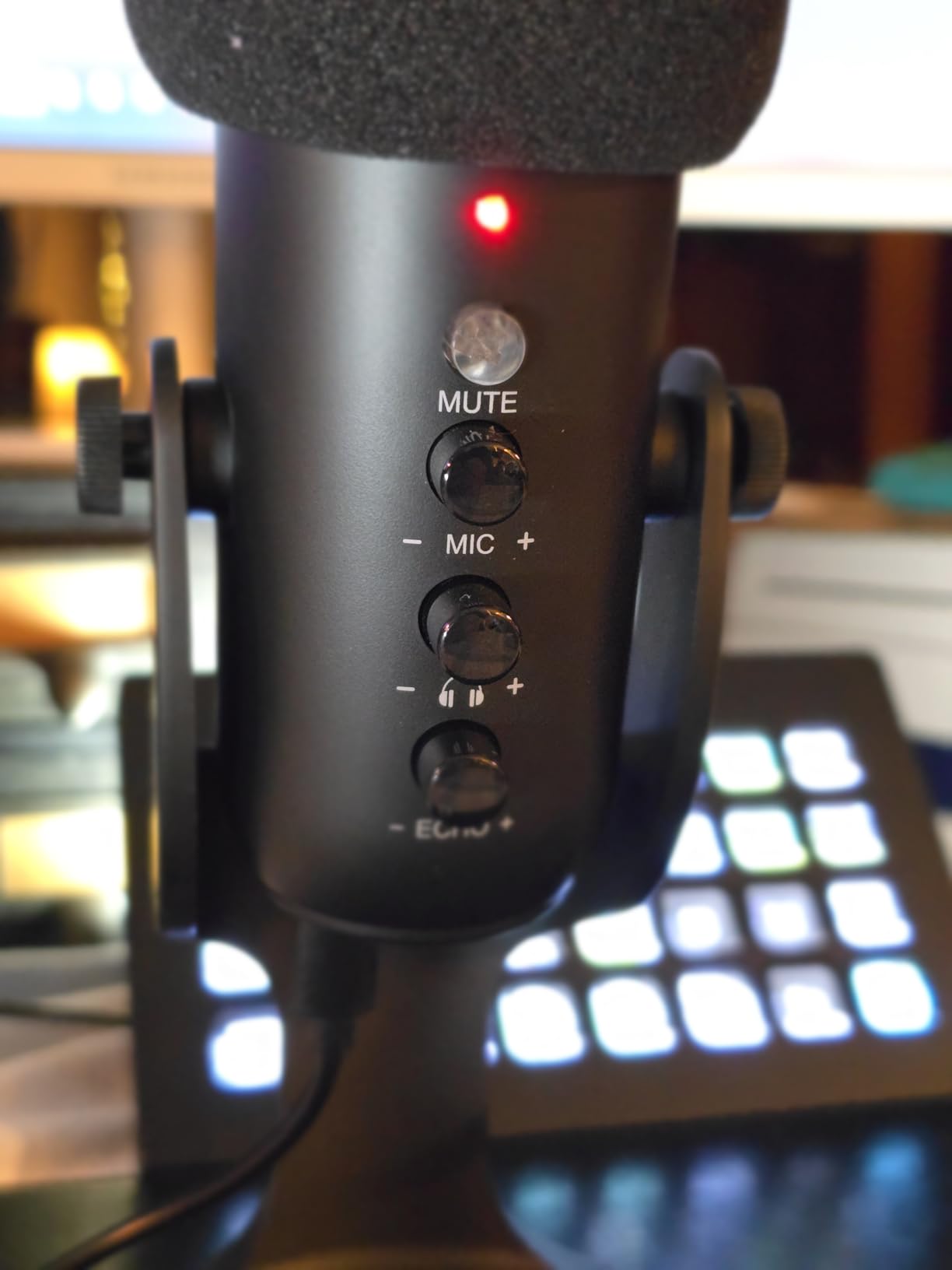
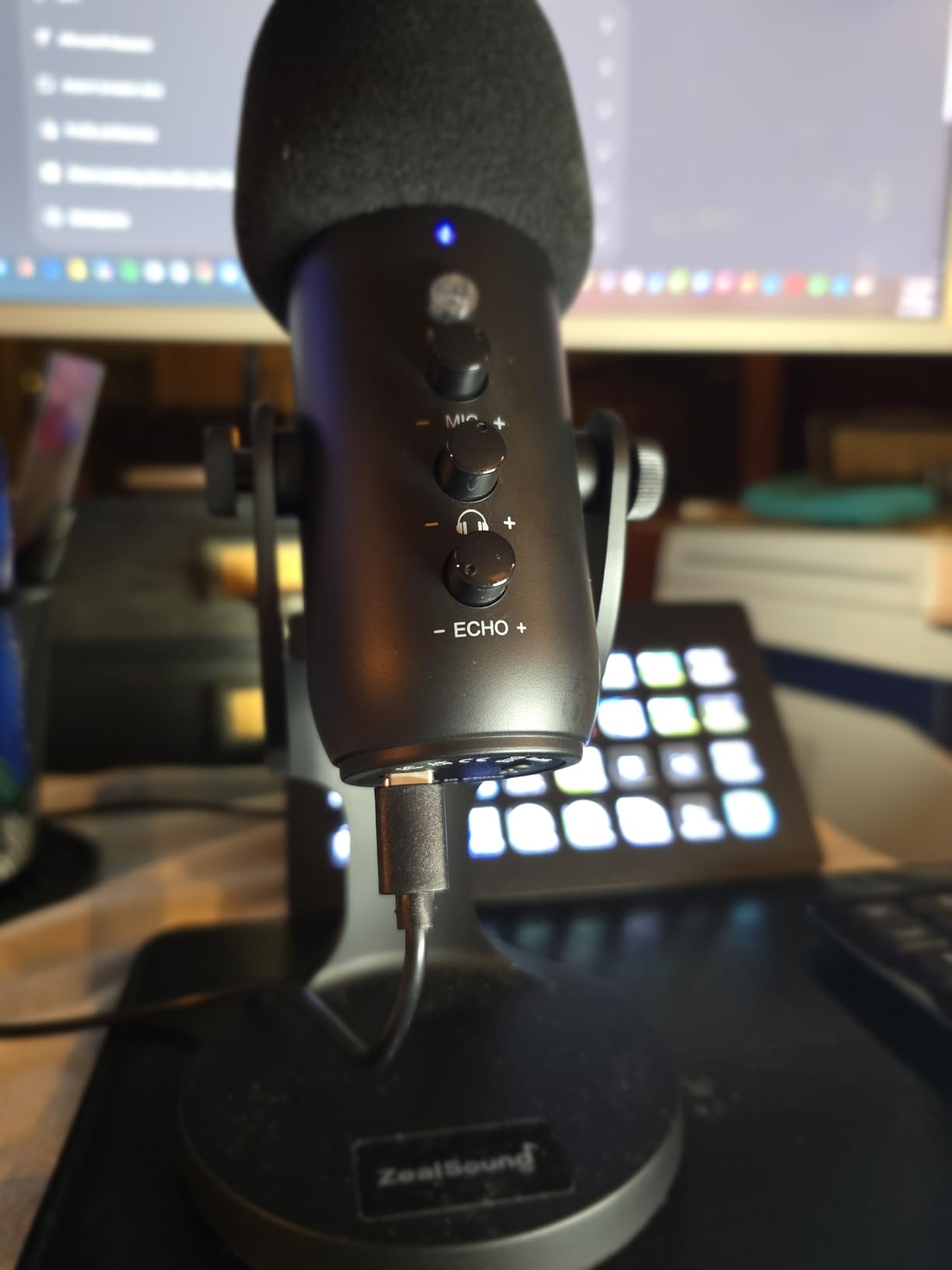
Zero-latency monitoring through the built-in 3.5mm headphone jack is a must-have feature for streaming. You hear your audio in real time without the echo that software monitoring can introduce. The adjustable echo control adds a fun reverb effect if you want to add some character to your voice.
The gain and volume controls on the mic body let you make adjustments without diving into software settings. I found this particularly useful during streams when I needed to quickly adjust levels without alt-tabbing away from my game.
Who Should Buy the ZealSound K66
Mobile streamers and TikTok creators will love the Lightning and USB-C compatibility. Being able to plug directly into an iPhone for mobile streaming is a rare feature at this price.
Creators who stream from multiple devices will appreciate the universal connectivity. One mic for your PC stream, your phone content, and your console gaming is hard to beat.
Who Should Skip the ZealSound K66
The noise reduction mode can make your voice sound slightly processed. If you prioritize natural vocal warmth over noise suppression, you may prefer a dynamic mic like the FIFINE AM8T that rejects noise naturally.
Some users report long-term durability concerns with extended use. If you stream many hours daily, consider a more established brand with a longer track record.
10. TONOR TC-777 – Best Ultra-Budget Starter Mic
TONOR Podcast Microphone, USB Computer Mic, Cardioid Condenser PC Microfono
Cardioid Condenser USB
Plug-and-Play
Tripod and Pop Filter
Volume Control
Pros
- Cardioid pickup captures clear and crisp voice
- Plug-and-play USB 2.0 setup with zero configuration
- Includes shock mount and pop filter in the box
- Strong compatibility with Windows Mac PS4 and PS5
Cons
- Not compatible with Xbox
- Some durability issues with the included tripod
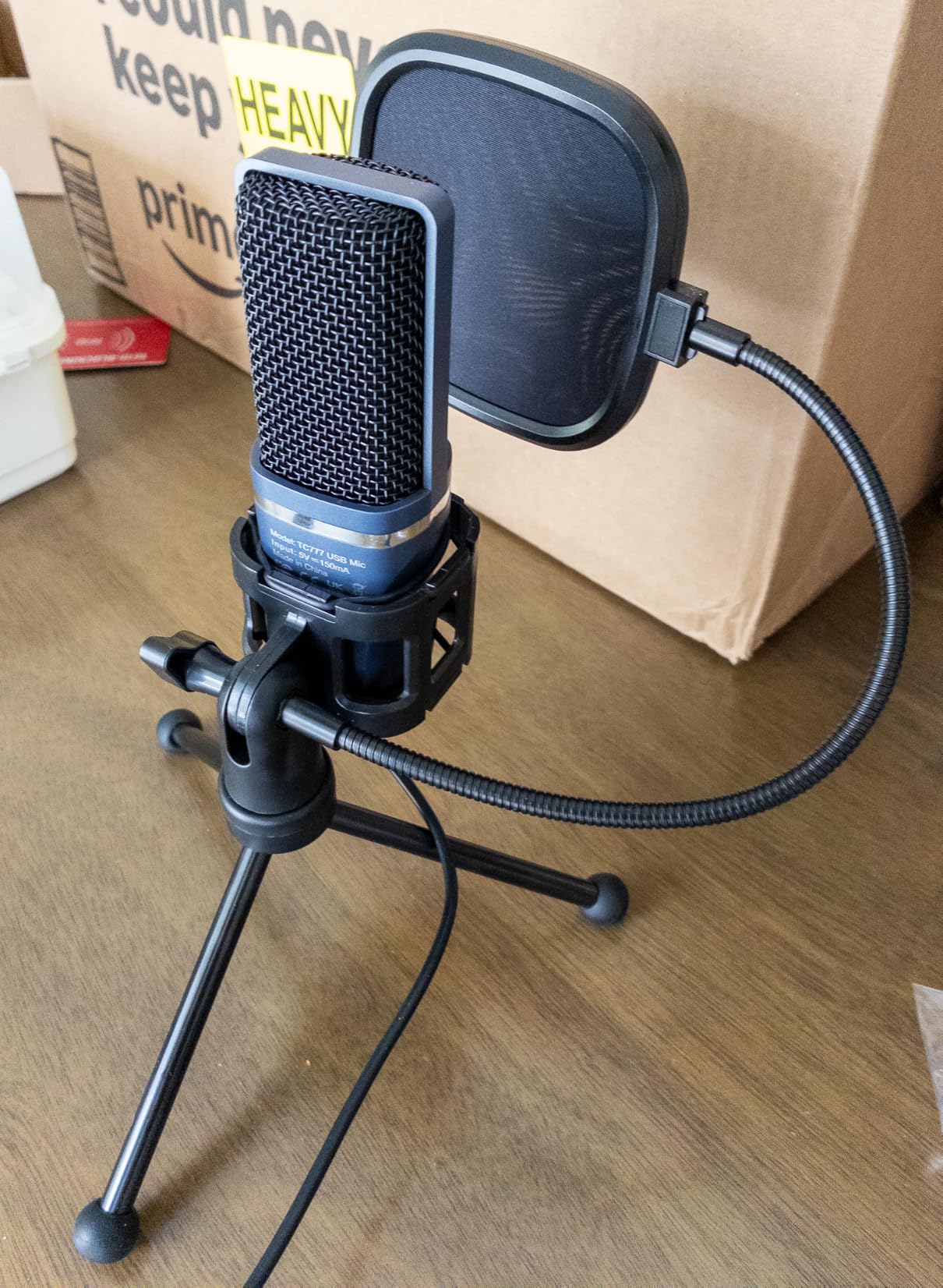
The TONOR TC-777 is the cheapest mic on our list, and it is the one I recommend to absolute beginners who want to test the streaming waters. For the price of a few cups of coffee, you get a complete kit with a microphone, tripod stand, shock mount, and pop filter. Nothing else comes close at this price.
The cardioid pickup pattern focuses on your voice from the front and rejects sound from behind. This is effective for solo streaming at a desk, where most of your unwanted noise comes from behind and beside the mic.
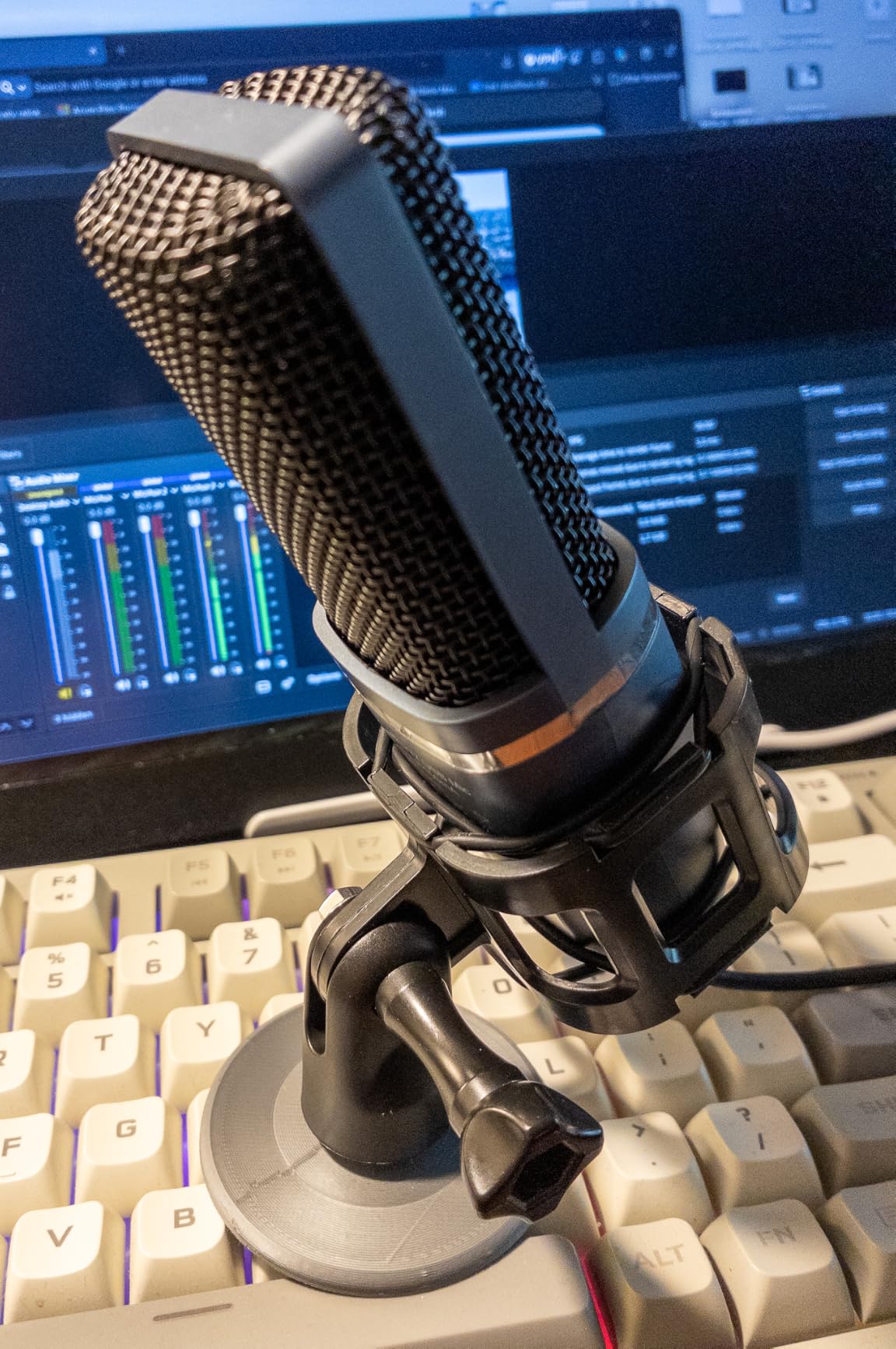
Plug-and-play setup means you literally plug it in and start streaming. There are no drivers, no software, and no configuration required. I had it running in OBS within a minute of unboxing it, which is exactly what beginners need.
The included accessories are the real value proposition. The shock mount and pop filter would cost extra with most other mics, but TONOR includes them in the box. With over 37,000 reviews and a 4.3-star average, this mic has proven itself to thousands of budget-conscious creators.
Who Should Buy the TONOR TC-777
First-time streamers who are not ready to invest heavily will find the TC-777 is a perfect starting point. It gets you off the headset mic and onto a real microphone for minimal cost.
The complete accessory kit means you do not need to buy anything else to start streaming. The included tripod, shock mount, and pop filter handle the essentials out of the box.
Who Should Skip the TONOR TC-777
This mic is not compatible with Xbox, so console streamers on Microsoft platforms should look at other options. Some users also report durability issues with the included tripod stand over time.
If you are a serious or full-time streamer, the audio quality will eventually hold you back. Plan to upgrade once you are committed to streaming as a regular activity.
How to Choose the Best USB Microphone for Streaming?
Choosing the right streaming microphone comes down to understanding a few key factors. Here is what our team learned from testing these 10 mics across hundreds of hours of streaming and recording.
Condenser vs Dynamic Capsules
Condenser mics are highly sensitive and capture a wide, detailed frequency range. They are great for untreated rooms with minimal background noise and for capturing nuanced vocal performances. The Elgato Wave:3 and Rode NT-USB Mini are excellent condenser options.
Dynamic mics are less sensitive but naturally reject background noise. They are ideal for noisy environments, untreated rooms, and setups with mechanical keyboards nearby. The Shure MV6, Shure MV7+, and FIFINE AM8T all use dynamic capsules that handle imperfect environments well.
Polar Patterns Matter
Cardioid is the most common polar pattern for streaming because it picks up sound from the front and rejects it from behind. Supercardioid, found on the Razer Seiren V3 Mini, is even more focused and rejects side noise better. Omni patterns, like the second mode on the Blue Yeti Nano, capture from all directions for multi-person setups.
Sample Rate and Bit Depth
For streaming, a sample rate of 48kHz and bit depth of 24-bit is more than sufficient. The Elgato Wave:3 supports 24-bit/96kHz, which is excellent for recording but slightly overkill for live streaming where platforms compress your audio anyway. Do not overthink these specs for streaming purposes.
Software Ecosystem Value
The software that comes with your mic can be as important as the hardware. Wave Link from Elgato, RODE Connect with APHEX effects, Sonar from SteelSeries, and Blue VO!CE from Logitech all add significant value. These programs provide noise gating, compression, EQ, and effects that would otherwise require paid plugins.
Build Quality and Desk Footprint
Your mic sits on your desk for hours every day, so build quality matters. Metal chassis mics like the Elgato Wave:3 and Shure MV7+ feel premium and last longer. Consider the footprint too, because larger mics can crowd your gaming setup. Compact options like the Razer Seiren V3 Mini save space without sacrificing sound quality.
Frequently Asked Questions
Which microphone do most streamers use?
Most popular streamers use the Elgato Wave:3 or the Shure MV7+. The Wave:3 dominates Twitch setups because of its Wave Link software and Clipguard anti-distortion technology. The Shure MV7+ is favored by professionals who want OBS certification and XLR upgradeability.
What is the best microphone for live streaming?
The Elgato Wave:3 is the best microphone for live streaming overall. It offers 24-bit/96kHz audio quality, Clipguard technology to prevent distortion, and Wave Link software for multi-source audio mixing. For budget streamers, the FIFINE AmpliGame AM8T delivers excellent value with a dynamic capsule and included boom arm.
Do I need a pop filter for a USB microphone?
Some USB microphones like the Rode NT-USB Mini and TONOR TC-777 include built-in or bundled pop filters. If your mic does not include one, a pop filter helps reduce plosives, which are the harsh bursts of air on letters like P and B that can cause distortion in your audio.
USB vs XLR for streaming – which is better?
USB microphones are better for most streamers because they offer plug-and-play simplicity with no extra equipment. XLR setups provide higher audio quality and flexibility but require an audio interface or mixer. Mics with dual connectivity like the Shure MV7+ and FIFINE AM8T let you start with USB and upgrade to XLR later.
What sample rate do I need for streaming?
A sample rate of 48kHz with 24-bit depth is the standard for streaming and is more than sufficient for Twitch, YouTube, and podcast platforms. Higher rates like 96kHz, found on the Elgato Wave:3, are beneficial for recording music but make minimal difference for voice streaming since platforms compress your audio.
Final Thoughts
After weeks of testing, the Elgato Wave:3 remains our top pick for the best USB microphone for streaming in 2026. Its combination of Clipguard technology, Wave Link software, and broadcast-quality sound gives streamers everything they need in one package. The Shure MV7+ is the premium upgrade path for serious creators, and the FIFINE AM8T delivers unbeatable value for budget-conscious streamers.
Your microphone is the most important part of your streaming setup. Viewers will watch a low-quality camera, but they will click away from bad audio within seconds. Pick the mic that fits your budget, your room, and your streaming goals, and your audience will thank you for it.