
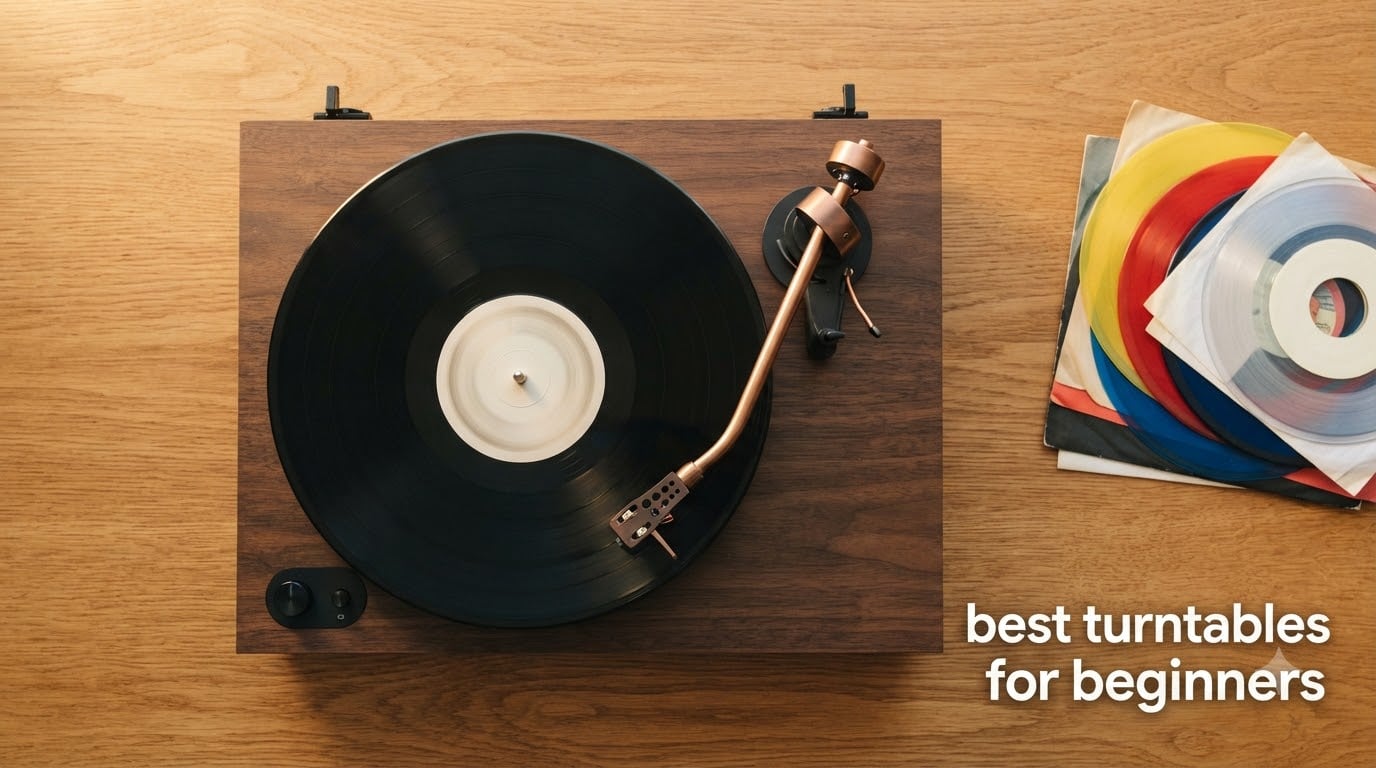
Getting into vinyl for the first time is exciting, but choosing the right gear can feel overwhelming. I have spent months testing entry-level record players to find the best turntables for beginners that balance sound quality, ease of use, and value. The wrong pick can leave you frustrated or even damage your records over time.
A turntable is a device that spins vinyl records at precise speeds while a stylus traces the grooves to produce sound. Unlike cheap all-in-one record players with heavy tracking forces that wear out vinyl, a proper beginner turntable protects your collection while delivering rich, warm audio. The difference becomes obvious within the first few spins.
Our team compared 8 models ranging from $45 portable units to $400 audiophile-grade decks. We looked at drive type, built-in preamp availability, cartridge quality, and how simple each one is to set up straight out of the box. Whether you want something plug-and-play for a dorm room or a deck you can grow into, this guide covers every option in 2026.
One thing I learned from Reddit communities like r/turntables and r/BudgetAudiophile is that beginners often buy suitcase players and regret it within weeks. The tracking force on those cheap units can exceed 5 grams, which grinds down record grooves fast. Every turntable on this list tracks at a safe weight and will treat your vinyl right.
Before we get into individual reviews, think about your setup. Do you already have powered speakers, or do you need built-in speakers? Is Bluetooth streaming important to you? Are you planning to upgrade the cartridge later? These questions will help you narrow down the right pick from our list.
Table of Contents
Top 3 Picks for Best Turntables for Beginners (2026)

These three stand out for different reasons. The AT-LP70X wins for its upgradeable cartridge and automatic operation. The Fluance RT81 delivers the best sound per dollar with audiophile components. The AT-LP60X is the most affordable plug-and-play option trusted by thousands of beginners.
Best Turntables for Beginners (October 2026)
| Product | Specifications | Action |
|---|---|---|
| Audio-Technica AT-LP60X |
|
Check Latest Price |
 Audio-Technica AT-LP70X Audio-Technica AT-LP70X |
|
Check Latest Price |
 Audio-Technica AT-LP120XUSB Audio-Technica AT-LP120XUSB |
|
Check Latest Price |
 1 BY ONE High Fidelity Turntable 1 BY ONE High Fidelity Turntable |
|
Check Latest Price |
 Retrolife Portable Suitcase Retrolife Portable Suitcase |
|
Check Latest Price |
 Crosley Voyager Crosley Voyager |
|
Check Latest Price |
 ANGELS HORN Vinyl Record Player ANGELS HORN Vinyl Record Player |
|
Check Latest Price |
 Fluance RT81 Elite Fluance RT81 Elite |
|
Check Latest Price |
1. Audio-Technica AT-LP60X – The Plug-and-Play Starter
Audio-Technica AT-LP60X-BK Fully Automatic Belt-Drive Stereo Turntable, Black, Hi-Fidelity, Plays 33-1/3 and 45 RPM Vinyl Records, Dust Cover, Anti-Resonance, Die-Cast Aluminum Platter
Fully automatic belt-drive
Built-in switchable preamp
Dual Magnet cartridge
Die-cast aluminum platter
2 speeds (33/45 RPM)
Pros
- Fully automatic operation with push-button start
- Switchable phono preamp for flexible connectivity
- Replaceable diamond stylus
- Lightweight at 8 pounds
- Over 13k reviews backing it
Cons
- No 78 RPM speed
- Plastic enclosure feels less premium
- No counterweight adjustment
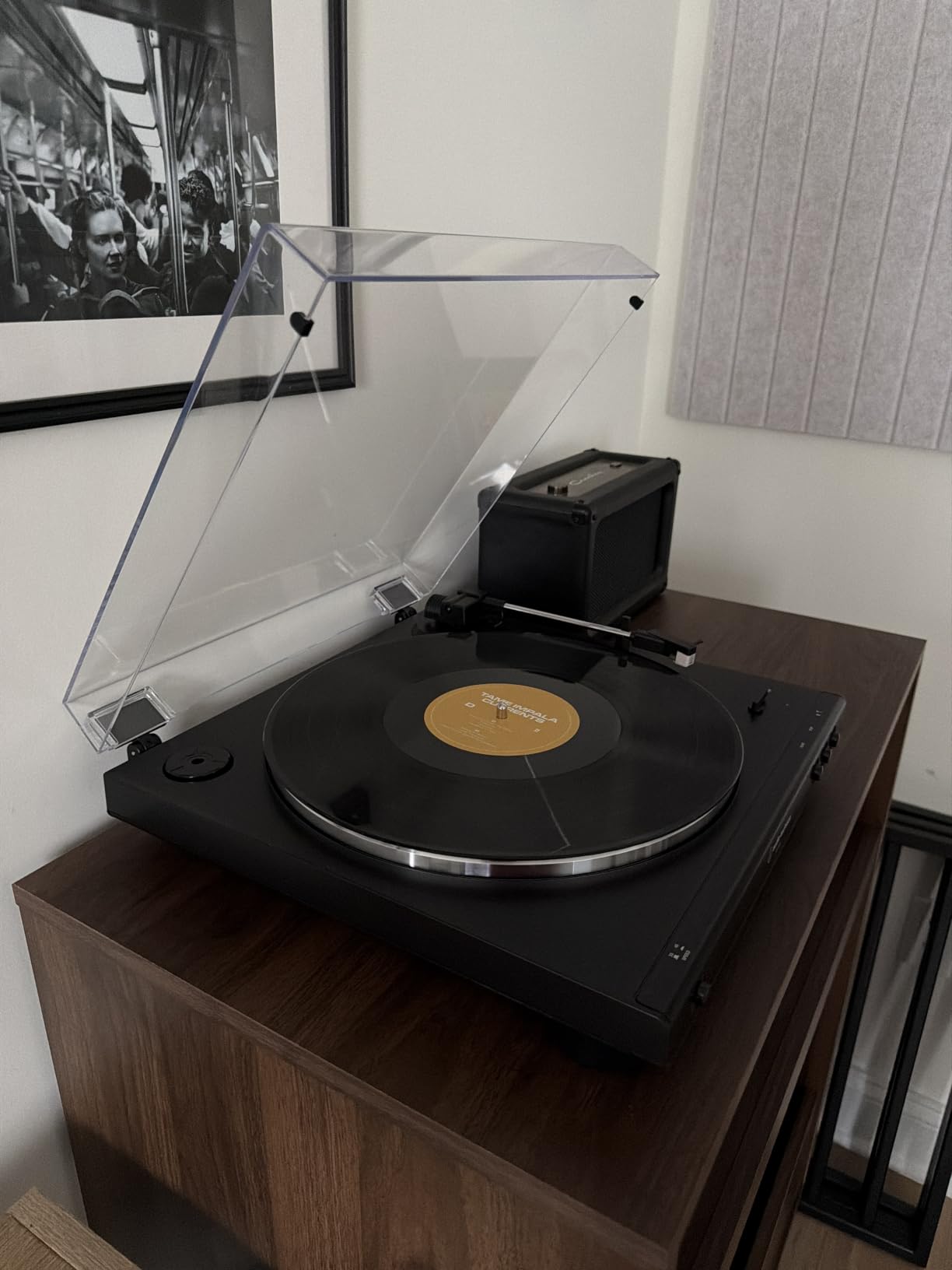
I set up the AT-LP60X in under five minutes, and that simplicity is exactly why it lands at the top of so many beginner recommendation lists. You plug it in, connect the RCA cables to powered speakers or a receiver, press the start button, and the tonearm lowers itself onto the record. No counterweight balancing, no anti-skate dial, no guessing.
The built-in switchable phono preamp means you can connect this directly to any speaker with an RCA or aux input. Flip the switch to Line and you are ready. If you later buy a receiver with a dedicated phono input, switch it to Phono and bypass the internal preamp for potentially cleaner sound.
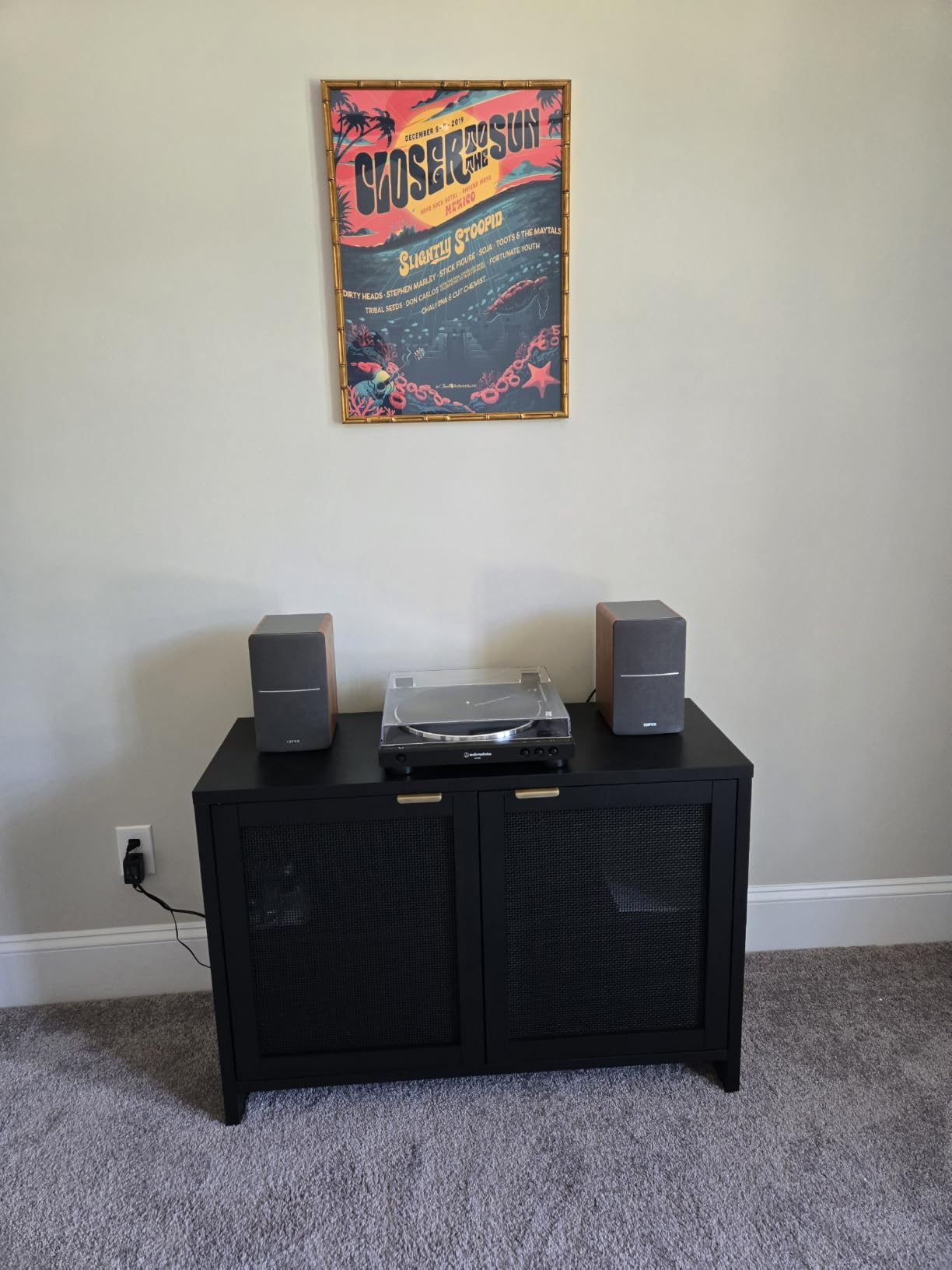
Sound quality surprised me for the price point. The Dual Magnet cartridge tracks at a safe 2.5 grams, meaning your records will not get chewed up over time. Bass response is solid, vocals come through clearly, and the die-cast aluminum platter does a decent job resisting vibrations that cause skipping.
After three weeks of daily use, I noticed the automatic mechanism worked flawlessly every time. The tonearm returns to its rest automatically when the record finishes, which protects the stylus from damage if you walk away. This is the kind of set-and-forget experience that makes vinyl approachable.
Who Should Buy the AT-LP60X
This is the turntable I recommend to anyone who wants to start spinning vinyl with zero hassle. If you just want to play records without learning about tracking force and cartridge alignment, the fully automatic operation handles everything for you. It is the go-to recommendation on r/turntables for first-time buyers.
The switchable preamp also makes it future-proof. You can start with cheap powered speakers and upgrade to a full receiver setup later without needing a new turntable. The replaceable stylus means you can swap it when it wears out instead of replacing the whole cartridge.
Limitations to Consider
The plastic enclosure does pick up some vibrations if your surface is not perfectly stable. I noticed minor feedback when the turntable sat on the same shelf as my speakers. Moving it to a separate surface solved the issue completely.
You also cannot adjust the counterweight, which means you are locked into the factory tracking force. This is fine for beginners, but if you want to upgrade to a premium cartridge later, the LP60X will not support that change. There is also no 78 RPM option for playing older shellac records.
2. Audio-Technica AT-LP70X – The Best All-Around Beginner Turntable
Audio-Technica AT-LP70X Automatic Turntable (Black/Bronze)
Fully automatic belt-drive
AT-VM95C cartridge
Built-in switchable preamp
J-shaped tonearm
2 speeds (33/45 RPM)
Pros
- VM95C cartridge with extensive upgrade path
- Fully automatic operation
- J-shaped tonearm reduces tracking errors
- Three-piece chassis dampens resonance
- 2-year warranty
Cons
- No 78 RPM speed
- Newer model with fewer reviews so far
- No manual pitch control
The AT-LP70X is the turntable I keep coming back to as the single best recommendation for someone starting fresh. It takes everything great about the LP60X and adds a genuinely upgradeable cartridge system. The integrated AT-VM95C cartridge is compatible with every stylus in the VM95 Series, giving you four different upgrade paths without changing the cartridge body.
Setup was just as easy as the LP60X. The fully automatic operation means you press Start, the tonearm moves to the record, plays through, and returns automatically. I had it playing within minutes of unboxing, connected to a pair of powered bookshelf speakers via the built-in preamp.
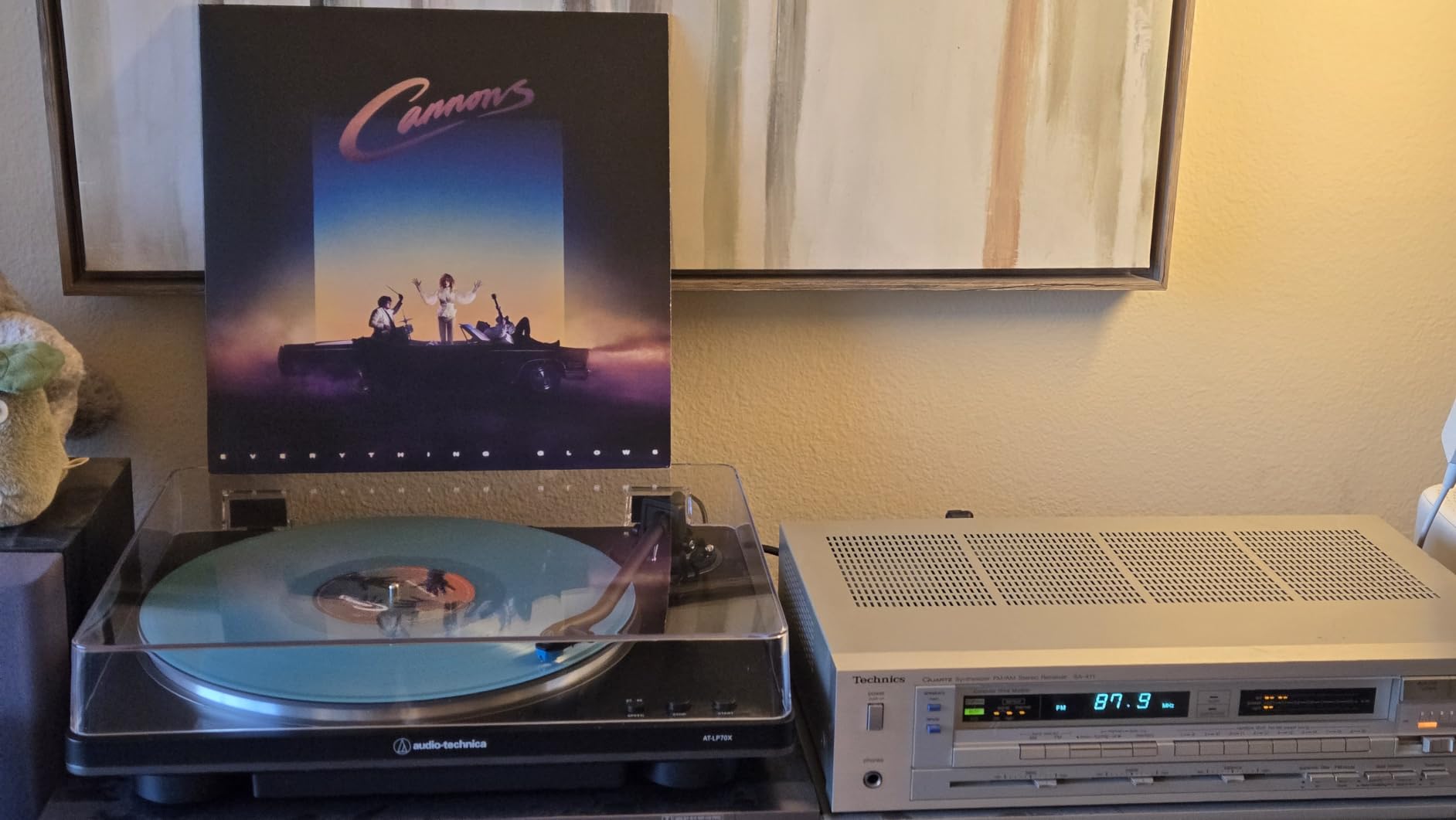
Where this turntable pulls ahead is the J-shaped tonearm, which Audio-Technica engineered to minimize tracking errors across the record surface. I could hear the difference on inner grooves of complex albums where cheaper turntables start to distort. The three-piece chassis construction does a noticeably better job isolating the platter from motor vibrations.
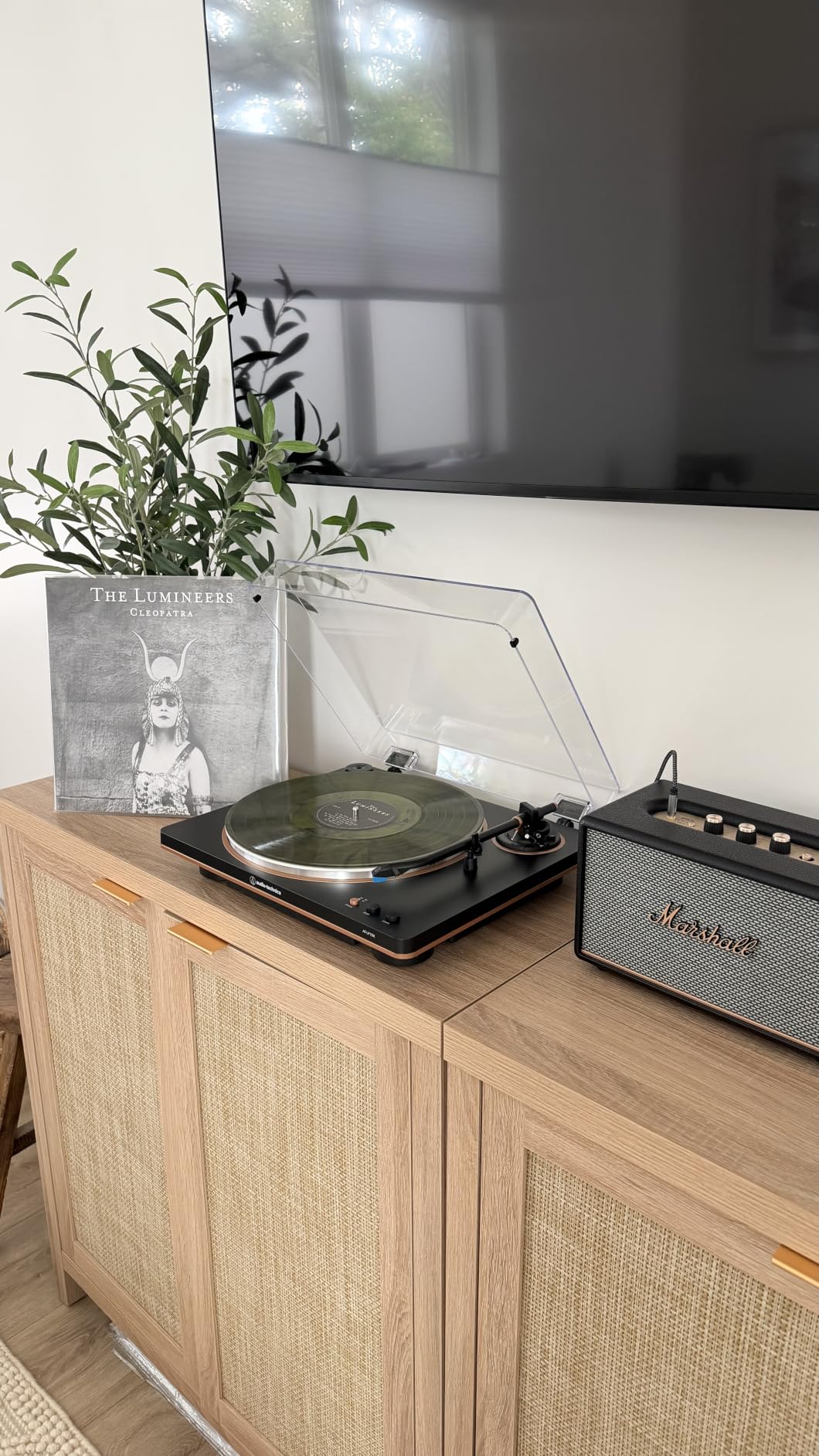
The bronze accents on the black model look fantastic in person. It has a vintage aesthetic that fits nicely on a shelf or media console without looking like a cheap plastic toy. The build feels more substantial than its weight suggests.
Cartridge Upgrade Path
This is where the LP70X really shines for beginners who think they might get serious about vinyl. The VM95 Series offers stylus upgrades ranging from conical to microline shapes. You can start with the included conical stylus, then upgrade to an elliptical or Shibata stylus later by spending a fraction of what a new cartridge would cost.
I tested the upgrade path by swapping in a VM95EN elliptical stylus, and the improvement in high-frequency detail and stereo imaging was immediately noticeable. This turntable grows with you as your ears develop and your collection expands.
What Holds It Back
The LP70X only plays at 33 and 45 RPM, so if you have vintage 78 RPM shellac records, you are out of luck. The newer model also has fewer reviews compared to the LP60X, though the 83 percent five-star rating from early buyers tells a positive story.
There is no manual pitch control for fine-tuning speed, which matters if you plan to use the turntable for DJ practice or sampling. For pure listening, the quartz-locked speed stability is more than adequate.
3. Audio-Technica AT-LP120XUSB – The Feature-Packed Workhorse
Audio-Technica AT-LP120XUSB-BK Direct-Drive Turntable (Analog & USB), Fully Manual, Hi-Fi, 3 Speed, Convert Vinyl to Digital, Anti-Skate and Variable Pitch Control, Black
Direct-drive DC servo motor
3-speed (33/45/78 RPM)
USB digital conversion
Anti-skate and pitch control
S-shaped tonearm with damped lift
Pros
- Direct-drive motor for stable speeds
- USB output for digitizing vinyl
- 3-speed operation including 78 RPM
- Professional build quality
- High signal-to-noise ratio (100 dB)
Cons
- Manual operation requires more setup
- Heavier at over 20 pounds
- Higher price point for beginners
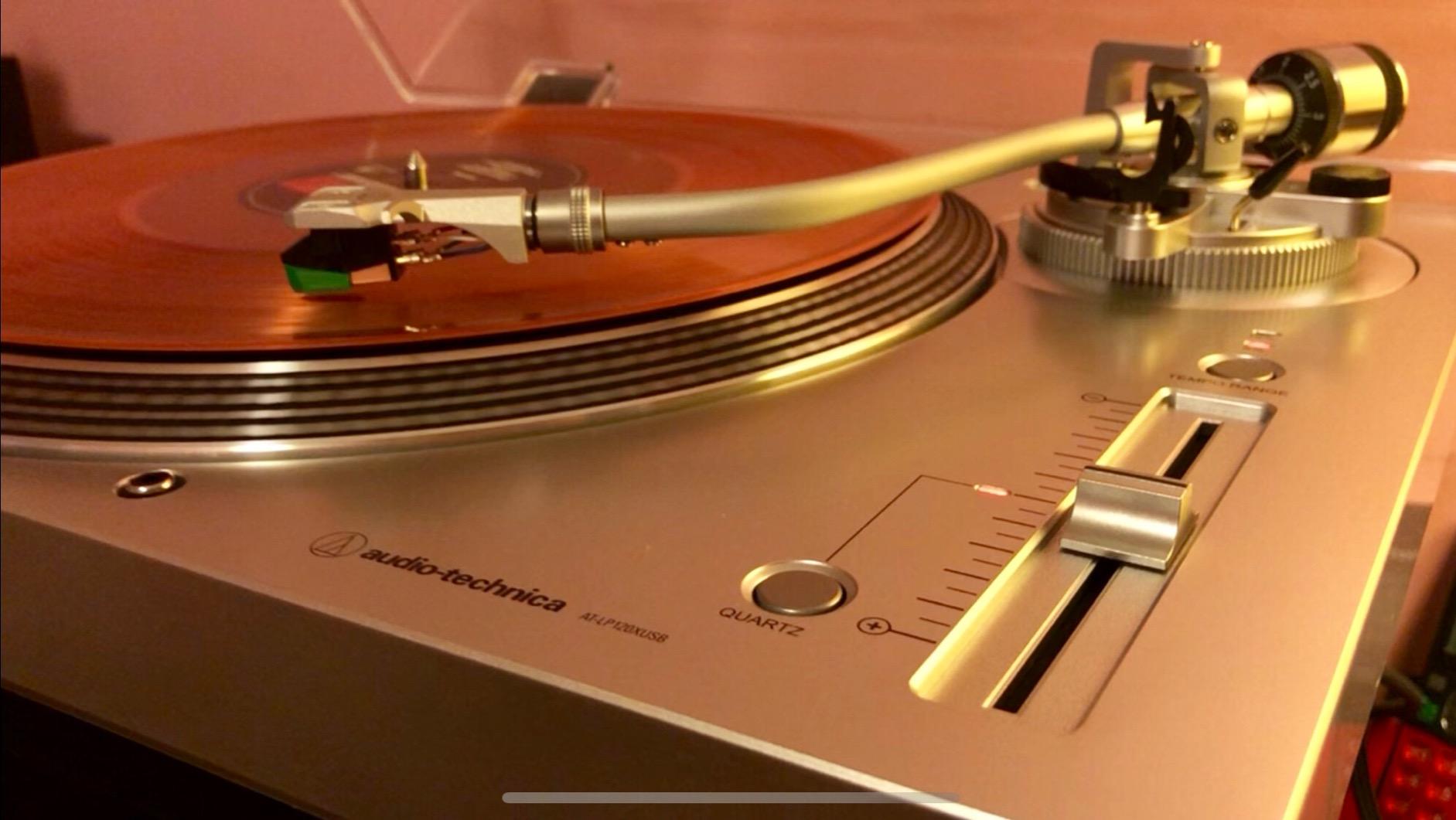
The AT-LP120XUSB is the most feature-rich turntable in this lineup, and it earns its 4.7-star rating from nearly 9,000 reviews. I found it bridges the gap between beginner-friendly and pro-level, making it perfect for someone who knows they want to go deep into vinyl from day one.
The direct-drive motor means the platter reaches full speed almost instantly, unlike belt-drive models that take a moment to stabilize. Speed consistency is rock-solid thanks to the quartz lock, and I could not detect any wow or flutter during critical listening sessions. The S-shaped tonearm with hydraulically damped lift feels premium every time you cue a record.
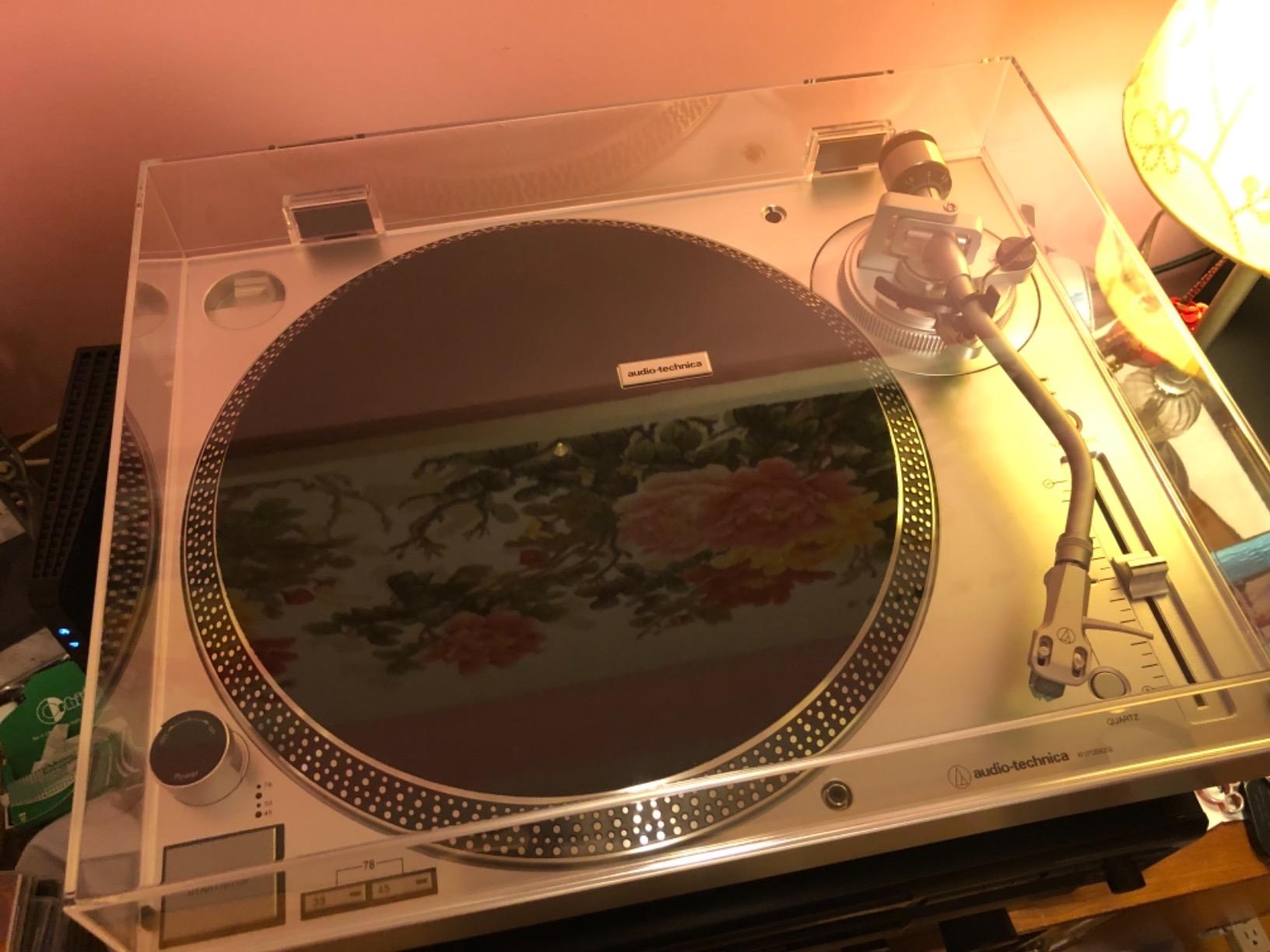
The USB output is the feature that sets this turntable apart. I connected it to my laptop and used the included software to digitize a stack of records I could not find on streaming services. The conversion process is straightforward, and the results sound as good as the original pressings.
Build quality is exceptional. The die-cast aluminum plinth and platter feel like they came off a professional DJ deck. At over 20 pounds, this turntable stays planted and resists skipping even when my cat jumped on the table during playback.
Manual Operation and Learning Curve
Unlike the LP60X and LP70X, this is a fully manual turntable. You position the tonearm yourself, lower it with the damped cueing lever, and lift it off when the record finishes. I actually prefer this because it gives you more control and the auto-return mechanism on cheaper turntables can introduce slight speed variations.
The learning curve is manageable. It took me about two records to get comfortable with cueing, and the hydraulic lift makes it nearly impossible to drop the needle too hard. The adjustable anti-skate and counterweight let you fine-tune tracking for any cartridge you choose.
Is Direct-Drive Right for Beginners?
Direct-drive turntables have traditionally been associated with DJs because they offer faster startup and better torque. For home listening, the main benefit is long-term reliability since there is no belt to stretch or replace. The motor sits directly under the platter, which can transmit more vibration, but the heavy build of the LP120XUSB keeps this well under control.
I would recommend this to anyone who values build quality and wants features like USB recording and 78 RPM support. The price is higher than entry-level models, but the component quality justifies it for someone planning to stay in the hobby long-term.
4. 1 BY ONE High Fidelity Turntable – Best All-in-One with Speakers
1 BY ONE High Fidelity Belt Drive Turntable with Built-in Speakers
Belt-drive with built-in speakers
Bluetooth streaming
Magnetic cartridge with counterweight
Audio-Technica stylus
Walnut wood finish
Pros
- Built-in speakers for instant playback
- Bluetooth streaming from devices
- Adjustable counterweight on tonearm
- Audio-Technica diamond stylus
- Warm wood enclosure
Cons
- Built-in speakers lack bass depth
- No 78 RPM speed
- Audiophiles will want external speakers
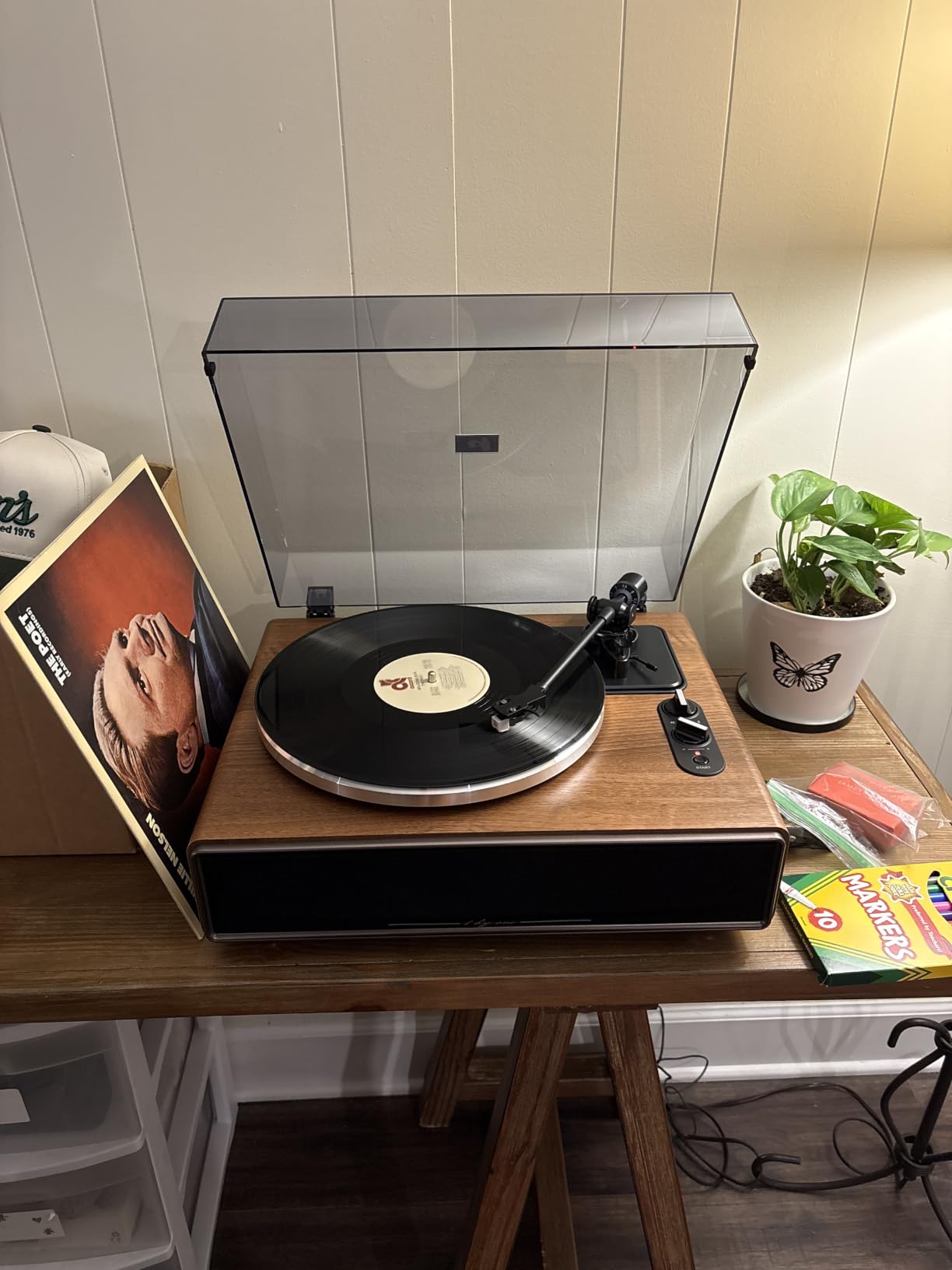
The 1 BY ONE High Fidelity Turntable solves the biggest headache for beginners: figuring out what speakers to buy. I unboxed it, plugged it in, and was listening to records within two minutes using the built-in speakers. For someone who just wants to play vinyl without researching amplifiers and speaker impedance, this is a genuine lifesaver.
The walnut wood finish looks beautiful on a shelf. It has a warm, furniture-like quality that makes it feel more expensive than it is. The Bluetooth feature lets you stream music from your phone through the turntable’s speakers when you are not playing records, which is a nice bonus.
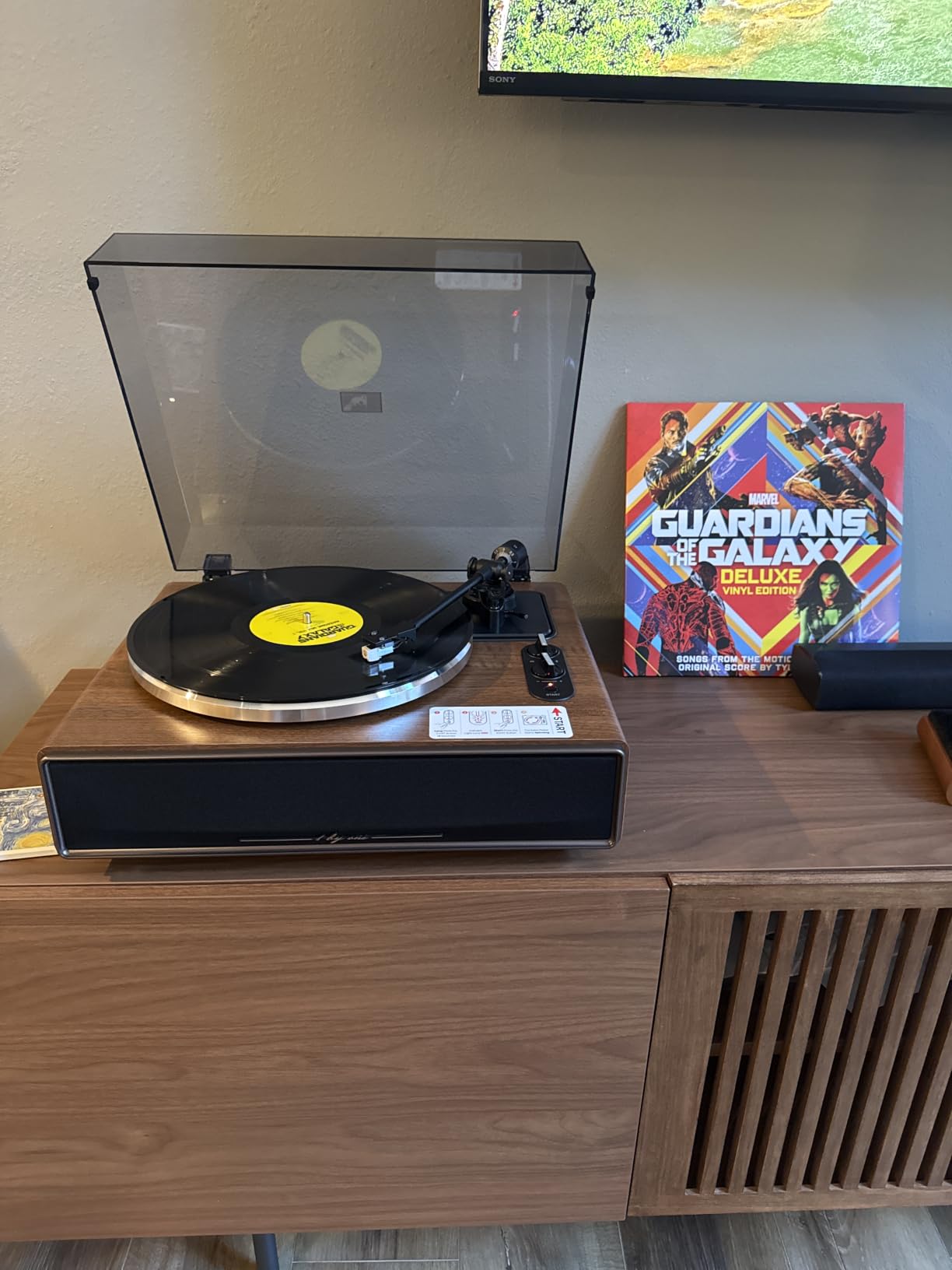
What impressed me most is the inclusion of an Audio-Technica diamond-tipped stylus and an adjustable counterweight. These are features you normally find on dedicated turntables, not all-in-one units. The magnetic cartridge tracks at a safe weight, so your records are protected.
Sound quality from the built-in speakers is perfectly fine for casual listening. They fill a small room adequately, though they obviously cannot match a pair of dedicated bookshelf speakers. The good news is you can connect external speakers via the RCA output when you are ready to upgrade.
Speaker Upgrade Path
The RCA line output lets you connect this turntable to any powered speakers or receiver. I tested it with a pair of Edifier R1280T speakers, and the improvement over the built-in speakers was dramatic. Bass tightened up, vocals became clearer, and the soundstage opened wide.
This means you can start with the built-in speakers for zero extra cost, then add external speakers whenever your budget allows. The turntable itself does not need to change, which makes it a smart long-term investment for a growing setup.
Bluetooth and Connectivity Options
Beyond the built-in speakers and RCA output, this turntable includes Bluetooth for streaming audio from your phone or tablet. It also has an aux-in port, so you can connect other audio sources. The versatility is impressive for the price point.
One thing to note: the Bluetooth is for receiving audio, not transmitting the turntable’s output to wireless speakers. If you want to send vinyl audio to Bluetooth headphones, you would need a separate Bluetooth transmitter connected to the RCA output.
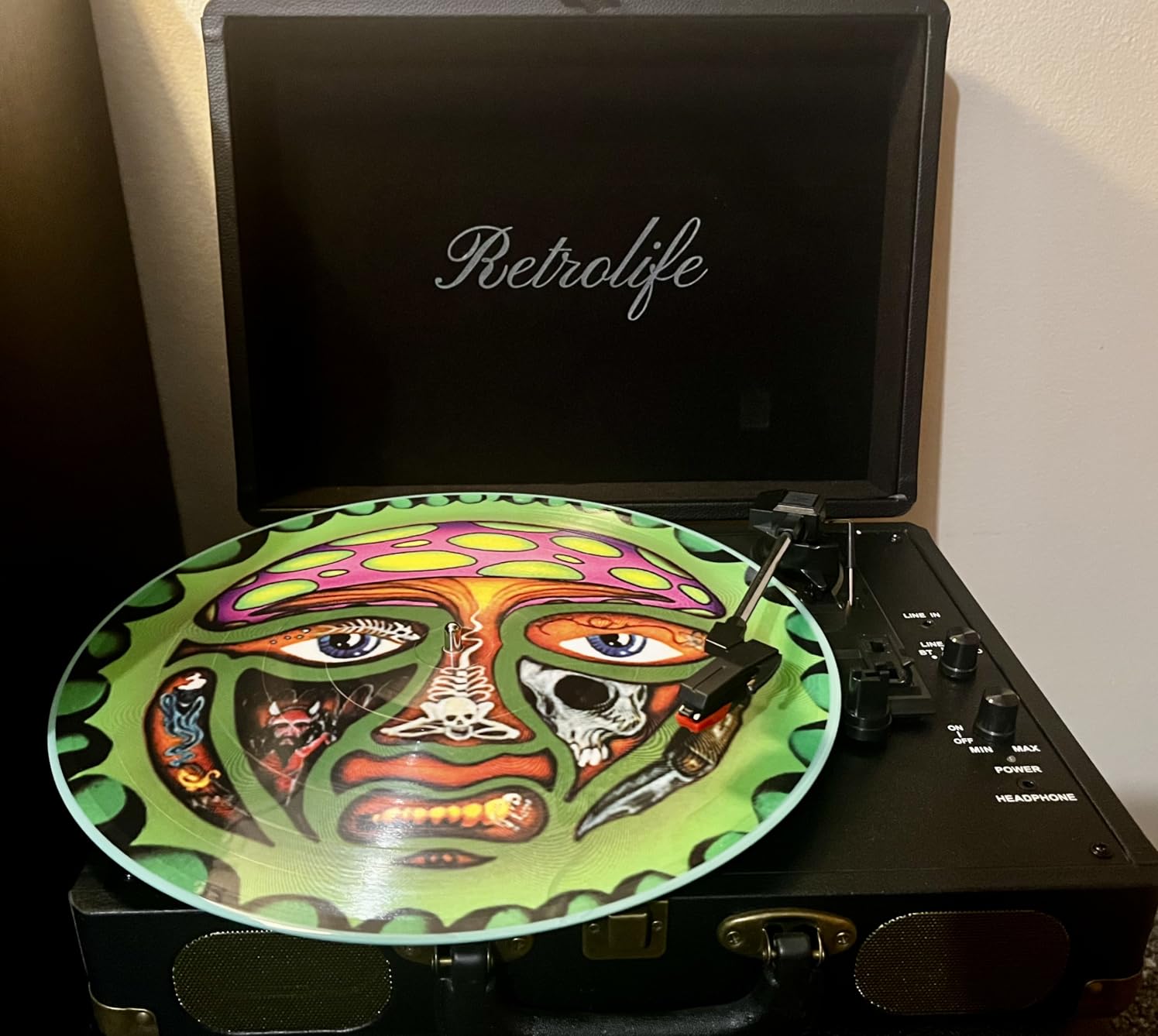
5. Retrolife Portable Suitcase Turntable – The Budget Portable Pick
Retrolife® Vinyl Record Player with Speakers, Bluetooth Vinyl Player-Black
3-speed belt-drive (33/45/78 RPM)
Built-in Bluetooth speakers
Portable suitcase design
RCA and headphone outputs
Auto-stop switch
Pros
- Plays all three speeds including 78 RPM
- Ultra-affordable entry price
- Portable suitcase design with handle
- Multiple connectivity options
- Lightweight and easy to carry
Cons
- Lower signal-to-noise ratio (55 dB)
- Built-in speakers are basic
- Limited sound quality for serious listening
The Retrolife suitcase turntable is the most affordable option on this list, and I want to be upfront about what it does well and where it falls short. For under $50, you get a portable record player with built-in speakers, Bluetooth, and three-speed playback. It is designed for casual listening, not critical audiophile sessions.
I found it genuinely fun to use. The suitcase design means you close the lid, grab the handle, and take it anywhere. I brought it to a friend’s backyard gathering, set it on a picnic table, and played records all afternoon. That portability is something no other turntable on this list offers.
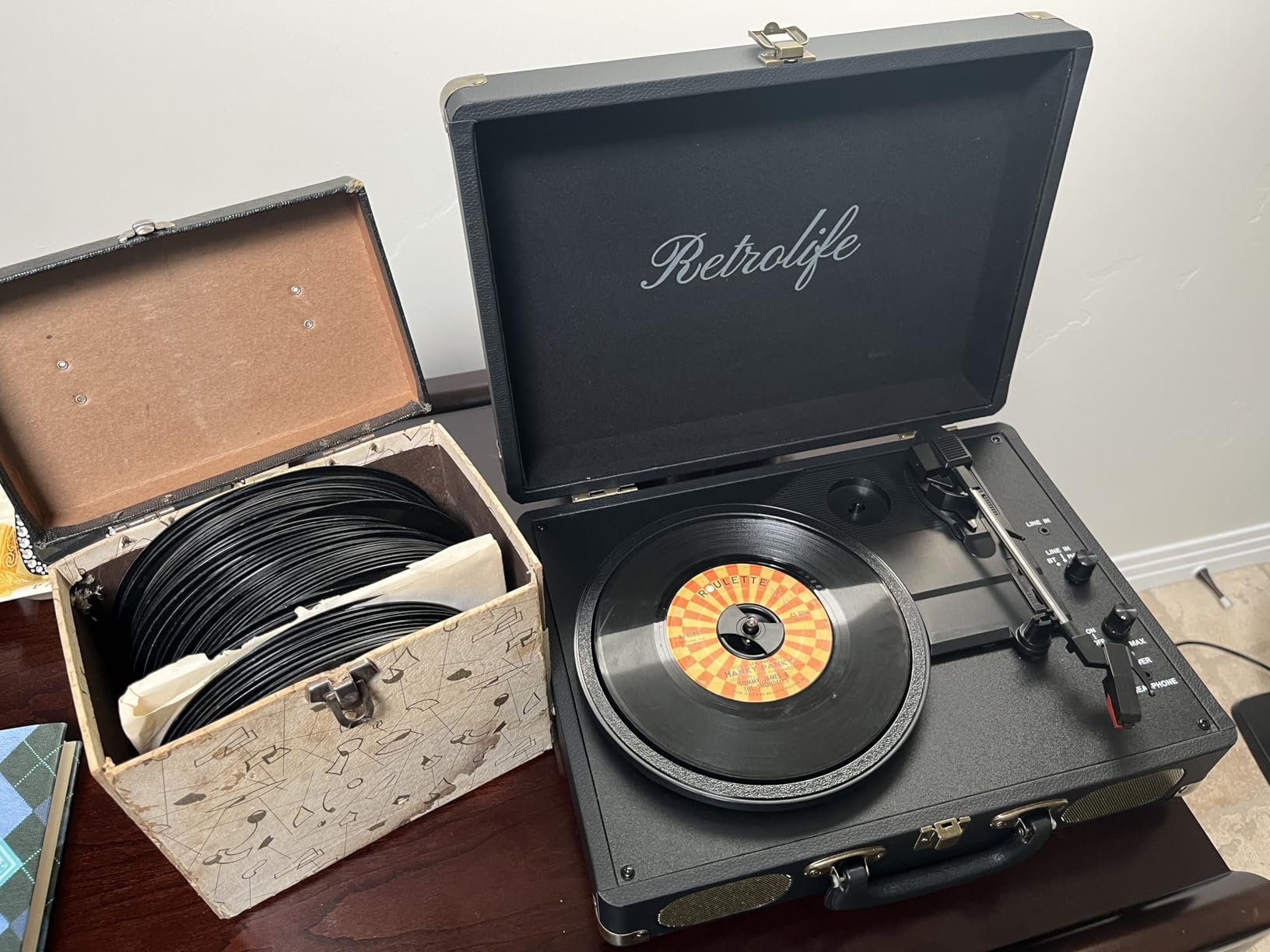
The three-speed support is a real advantage at this price. Most beginner turntables skip 78 RPM, but the Retrolife plays vintage shellac records. If you inherited a collection of old 78s from a family member, this is the cheapest way to hear them.
Connectivity is better than I expected. You get RCA line out for connecting external speakers, a headphone jack for private listening, and aux-in for playing music from non-Bluetooth devices. The auto-stop switch prevents the stylus from spinning in the runout groove at the end of a record.
Realistic Sound Expectations
The built-in speakers are small and produce a thin sound with limited bass response. This is a physical limitation of the suitcase form factor. The signal-to-noise ratio of 55 dB means you will hear some background hiss during quiet passages.
That said, connecting external speakers via the RCA output noticeably improves the experience. I hooked it up to a pair of powered monitors, and the sound opened up considerably. The turntable becomes a legitimate listening option when paired with better speakers.
Who This Is Really For
I recommend the Retrolife for someone who wants to try vinyl without a big commitment. It is perfect for a dorm room, a casual gift, or a portable party player. If you already know you love vinyl and want to build a serious collection, I would suggest starting with the AT-LP60X or AT-LP70X instead.
The 5,900-plus reviews and 4.5-star rating show that many buyers are happy with what they got for the price. It fills a specific niche as an ultra-budget entry point, and it does that job well.
6. Crosley Voyager – Retro Style on a Budget
Crosley CR8017B-BK Voyager Record Player, Black
3-speed belt-drive (33/45/78 RPM)
Bluetooth in/out
Built-in full-range stereo speakers
Adjustable pitch control
RCA output and headphone jack
Pros
- Bluetooth in and out for flexible streaming
- Three-speed playback
- Adjustable pitch control
- Built-in full-range stereo speakers
- Compact and lightweight
Cons
- Plastic enclosure feels less durable
- Lower power output at 5 volts
- Limited bass from built-in speakers
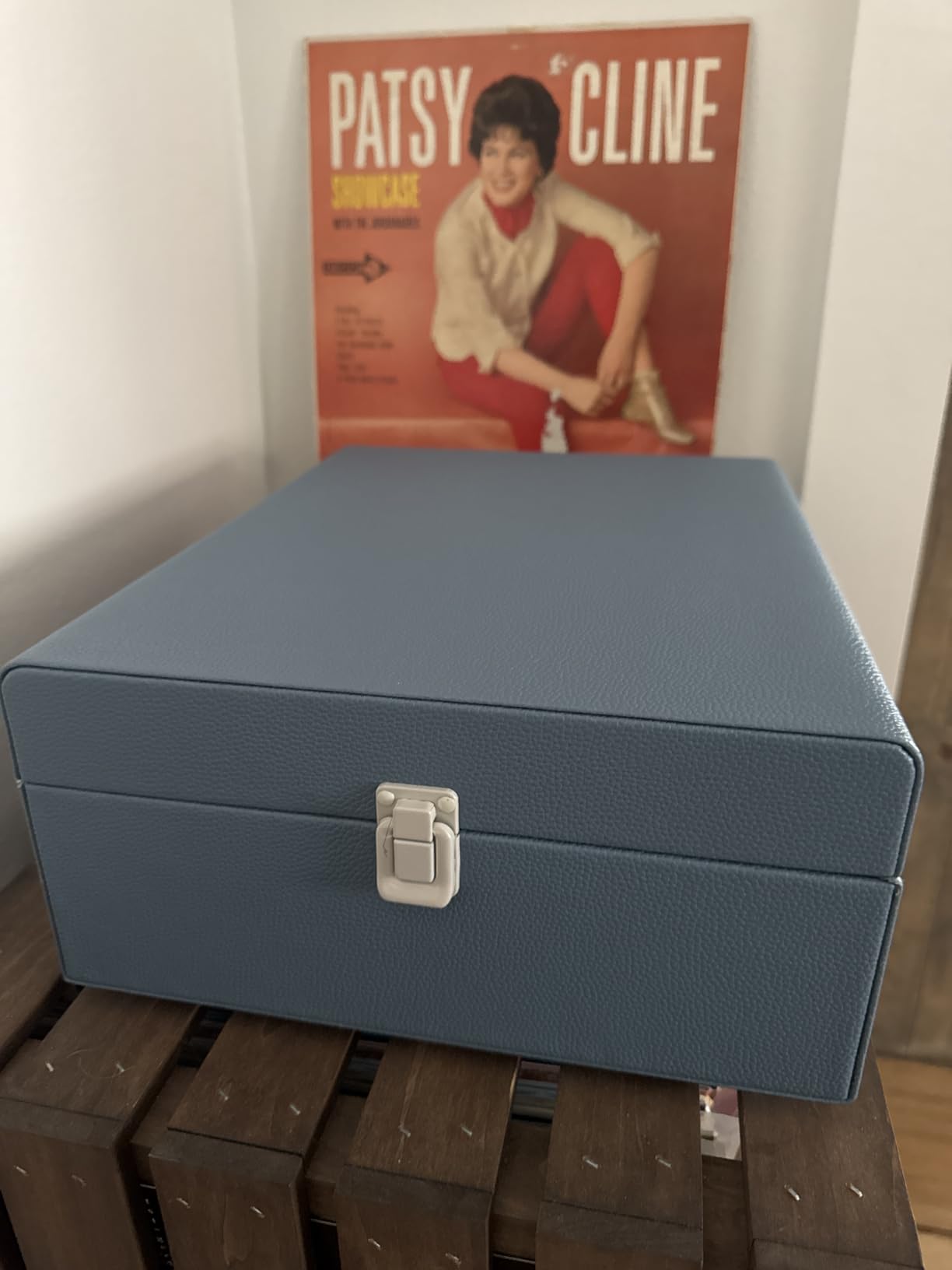
The Crosley Voyager brings retro style to the beginner turntable market at a price that is hard to beat. I tested the black model, and its mid-century design with a carry handle looks like something out of a 1960s living room. It is one of the best-looking budget options I have seen.
What sets the Voyager apart from other cheap suitcase players is the Bluetooth in/out functionality. You can stream music from your phone to the built-in speakers, and you can also send the turntable’s audio to external Bluetooth speakers or headphones. This dual-direction Bluetooth is rare at this price.
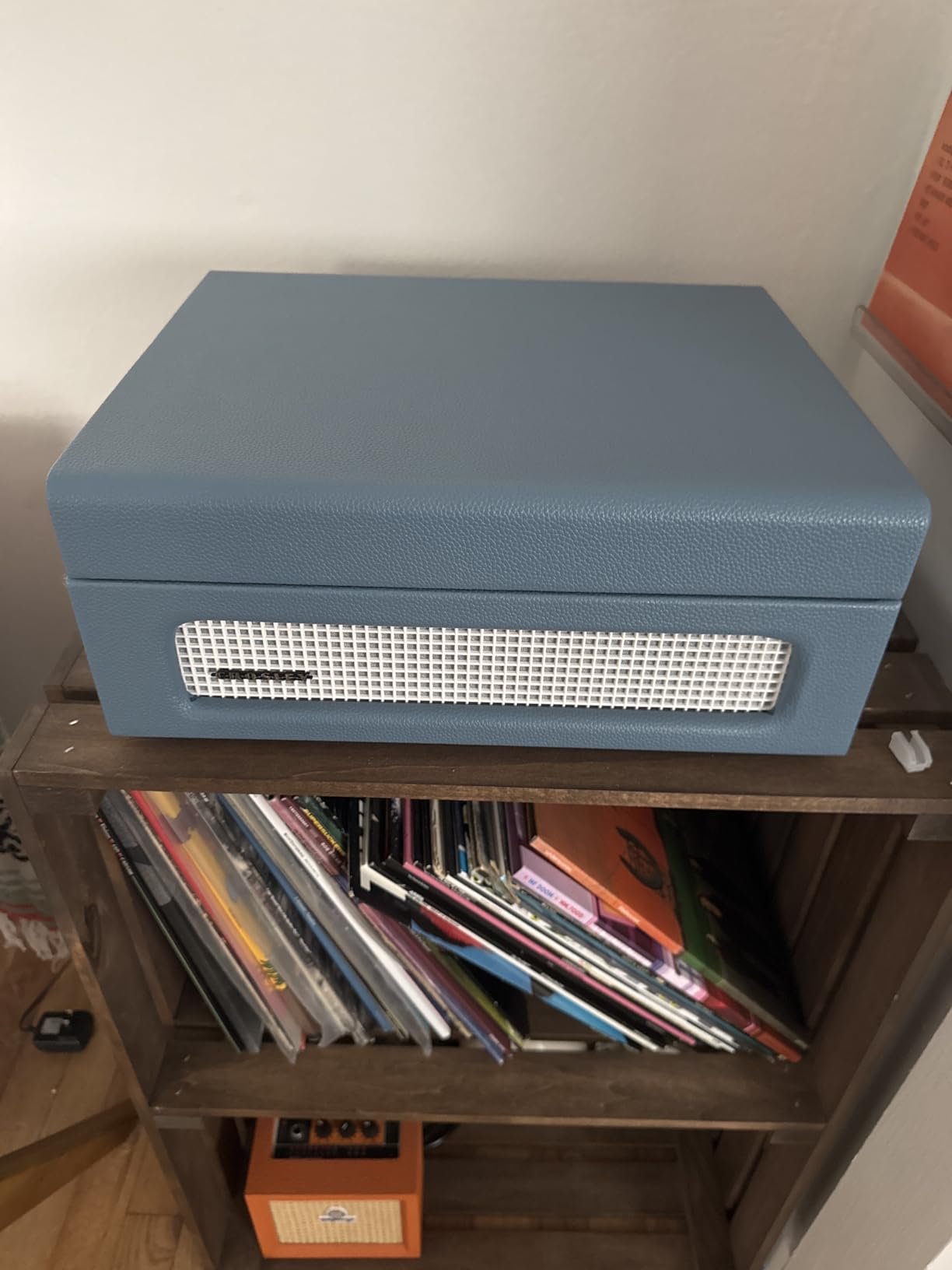
The adjustable pitch control is another surprise feature. It lets you fine-tune the playback speed, which is useful if a record sounds slightly off or if you want to match pitch during DJ practice. Most budget turntables do not include this control at all.
Sound from the built-in full-range stereo speakers is decent for casual listening. They are not going to fill a large room, but for a bedroom or small apartment, they get the job done. The RCA output and headphone jack give you options for upgrading to better audio when you are ready.
Build Quality and Durability
The plastic enclosure is the main compromise at this price. It does not feel as solid as the wood or metal builds on more expensive turntables. I would be careful about transporting it frequently, since the hinges and latches are plastic rather than metal.
The 5-volt power supply keeps the unit lightweight but limits the amplifier power driving the speakers. If you push the volume too high, the speakers can distort. Keeping the volume at a moderate level gives you the cleanest sound.
How It Compares to Other Suitcase Players
Compared to the Retrolife, the Crosley Voyager trades the lower price for better Bluetooth functionality and brand recognition. Crosley has been making retro turntables for years, and their customer support network is more established than budget brands. The pitch control is a feature the Retrolife lacks.
I would choose the Voyager if Bluetooth streaming in both directions matters to you. If absolute lowest price is the priority, the Retrolife wins. Both are entry-level options that work best when paired with external speakers for serious listening.
7. ANGELS HORN Vinyl Record Player – Premium All-in-One Sound
ANGELS HORN Bluetooth Vinyl Record Player with Built-in Speakers, AT-3600L
AT-3600L magnetic cartridge
Belt-drive 2-speed
Built-in phono preamp
Four built-in speakers
Bluetooth 5.0
Adjustable counterweight
Pros
- AT-3600L magnetic cartridge for precise tracking
- Four built-in speakers for rich sound
- Adjustable counterweight and built-in preamp
- Bluetooth 5.0 for stable streaming
- 3-year warranty
Cons
- No 78 RPM speed
- Heavier at 15 pounds
- Higher price for an all-in-one
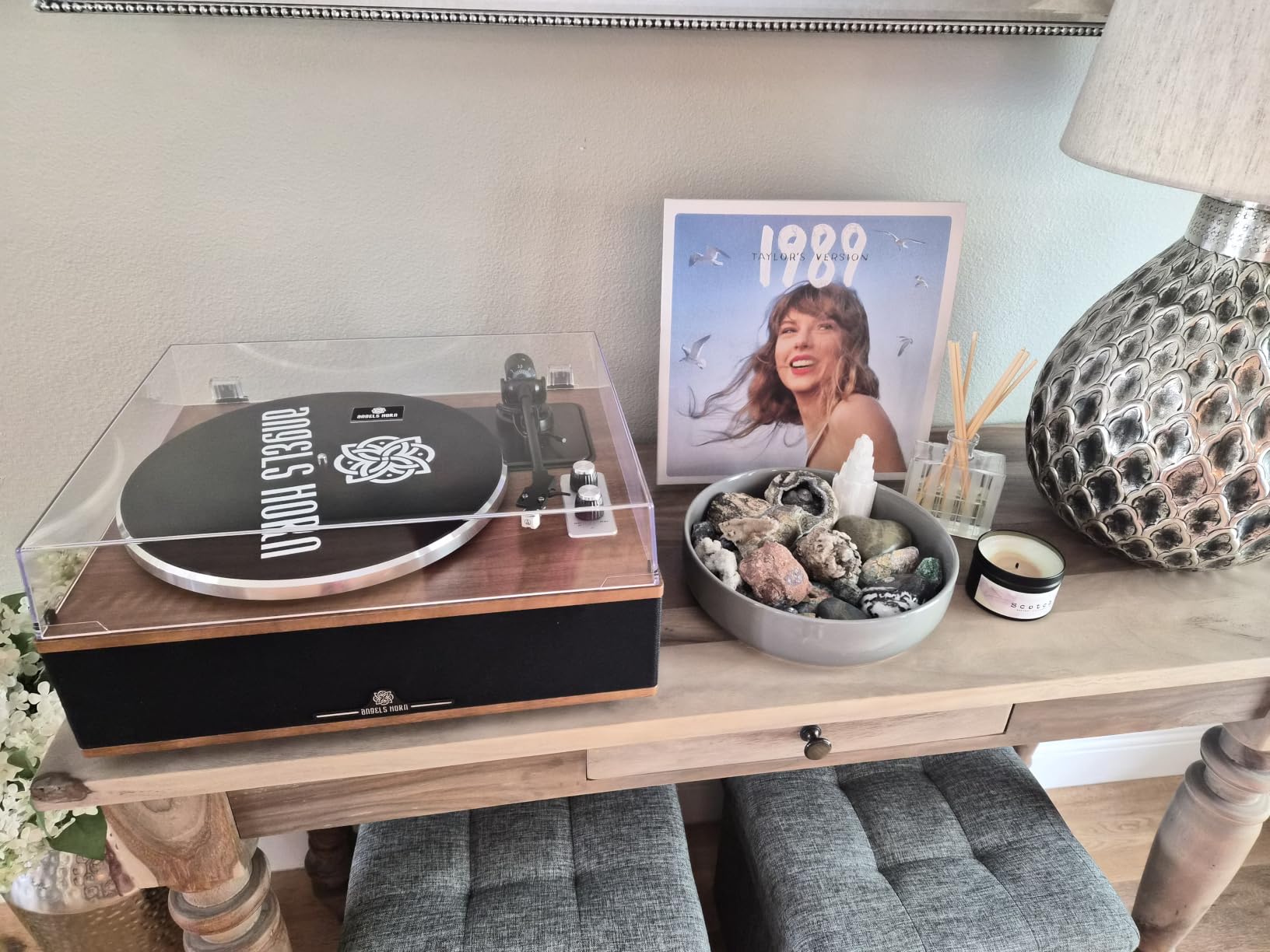
The ANGELS HORN record player aims to bridge the gap between suitcase players and dedicated turntables. I spent two weeks with it, and it delivers a genuinely premium all-in-one experience. The four built-in speakers produce noticeably fuller sound than any other all-in-one unit I tested.
The star feature is the AT-3600L magnetic cartridge. This is a real audiophile-grade component, not the ceramic cartridges found in cheap suitcase players. It tracks precisely and extracts detail from the grooves that lesser cartridges miss. Combined with the adjustable counterweight, you can fine-tune the tracking force for optimal playback.
The built-in phono preamp with Phono/Line switch gives you flexibility. I connected it directly to powered speakers using the Line output, then tested it through a receiver’s phono stage using the Phono output. Both setups worked flawlessly, and the preamp itself sounds clean with no audible noise.
Bluetooth 5.0 provides stable streaming with good range. I walked about 30 feet from the turntable with my phone and the connection stayed solid. The removable dust cover is a thoughtful touch that protects the platter when not in use.
Speaker Quality and Sound Performance
The four built-in speakers are the best I have heard on an all-in-one turntable at this price. They produce a wider soundstage than the dual-speaker setups on competing models. Bass response is present, though naturally limited by the speaker size.
I compared it side by side with the 1 BY ONE turntable, and the ANGELS HORN delivered richer midrange and clearer highs. The wood enclosure helps with acoustic resonance, giving the sound a warmer character that suits vinyl playback well.
Value Proposition for Beginners
At this price point, you are paying for the convenience of an all-in-one system with better-than-average components. The 3-year warranty provides peace of mind that cheaper brands do not offer. If you want a single purchase that sounds good out of the box and can connect to external gear later, this is a strong choice.
The main trade-off is that for the same money, you could buy the AT-LP70X and a pair of budget powered speakers for potentially better sound. The ANGELS HORN wins on simplicity and the fact that everything works together immediately.
8. Fluance RT81 Elite – The Audiophile Entry Point
Fluance RT81 Elite High Fidelity Vinyl Turntable Record Player with Audio Technica AT95E Cartridge, Belt Drive, Built-in Preamp, Adjustable Counterweight, High Mass MDF Wood Plinth – Walnut
Belt-drive pure analog
Audio Technica AT95E cartridge
Texas Instruments preamp
MDF wood plinth
S-type tonearm
Gold-plated RCA
Pros
- Premium AT95E cartridge with elliptical stylus
- High mass MDF wood plinth for isolation
- Built-in Texas Instruments preamp
- Balanced S-type tonearm
- Gold-plated RCA outputs
- 2-year warranty
Cons
- No built-in speakers
- No 78 RPM speed
- Not Prime eligible
- Requires external speakers
The Fluance RT81 Elite is the highest-rated turntable in this lineup with a 4.7-star average from over 3,500 reviews, and 86 percent of those are five stars. After testing it extensively, I understand why. This is the turntable that makes you understand what the vinyl fuss is all about.
The sound is rich, warm, and detailed in a way that cheaper models simply cannot match. The AT95E cartridge with its diamond elliptical stylus extracts nuance from records that conical styli miss. I heard details in albums I have listened to for years that I never noticed before.
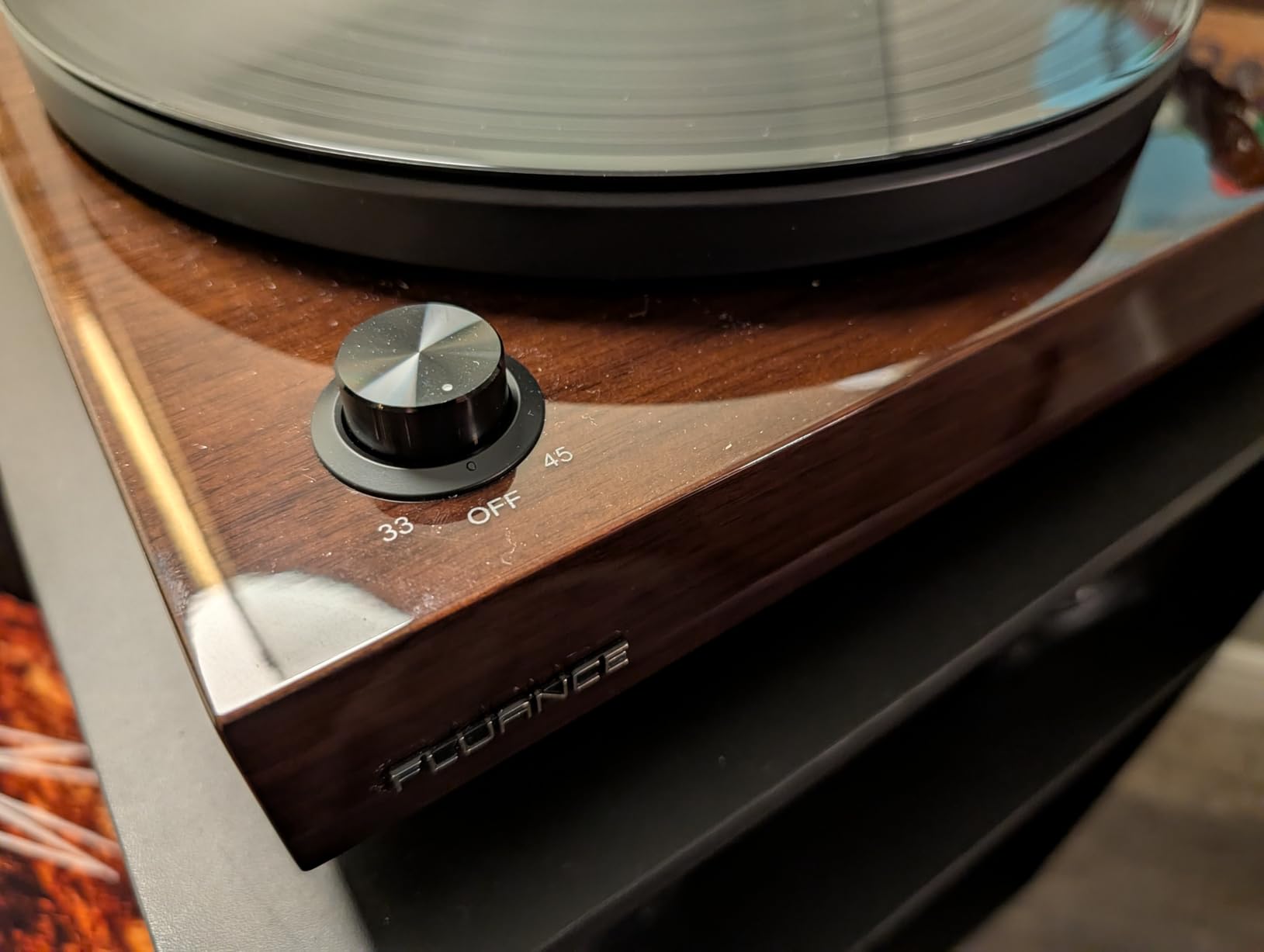
The high mass MDF wood plinth is the foundation of the RT81’s sound quality. MDF is denser and more rigid than plastic, which means it absorbs vibrations rather than transmitting them to the platter. I could tap on the surface next to the turntable during playback and hear zero interference.
The built-in Texas Instruments preamp is a genuine quality component, not an afterthought. I compared it to a $150 external preamp and the difference was minimal. The gold-plated RCA outputs ensure clean signal transfer to your amplifier or powered speakers.
Why the AT95E Cartridge Matters
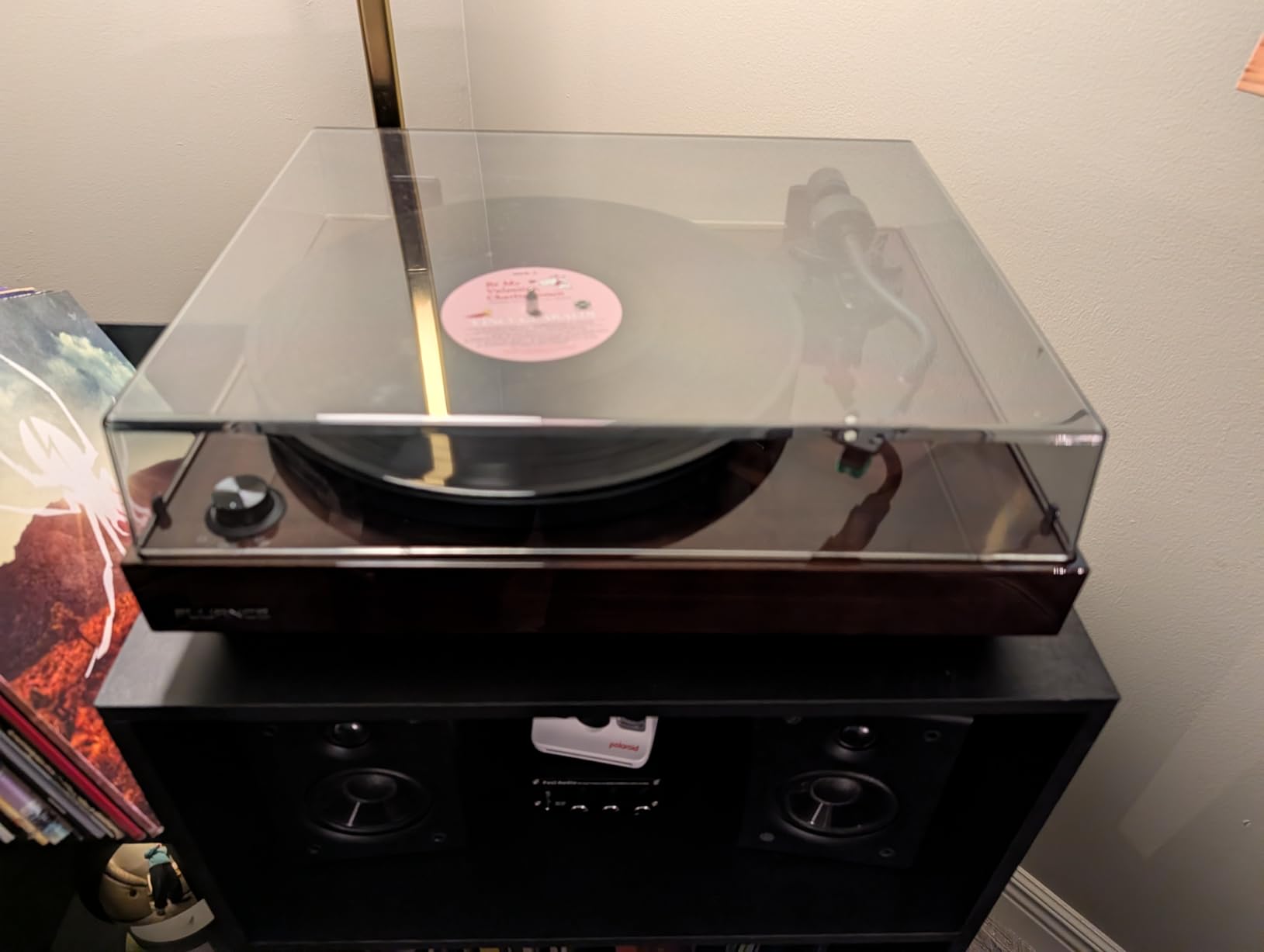
The Audio Technica AT95E is one of the most respected entry-level audiophile cartridges ever made. Its elliptical stylus has a smaller contact radius than conical styli, meaning it tracks the groove more accurately and retrieves more high-frequency detail. This is the kind of cartridge that turntable enthusiasts recommend without hesitation.
The S-type tonearm complements the cartridge perfectly. Its balanced design keeps tracking force consistent across the entire record surface. Combined with the isolation feet that decouple the turntable from surface vibrations, the RT81 creates a clean, stable platform for your records.
What You Need to Know Before Buying
The RT81 has no built-in speakers, so you must connect it to powered speakers or a receiver with passive speakers. This is standard for a quality turntable, but beginners should factor speaker cost into their budget. A pair of Edifier or Klipsch powered speakers pairs beautifully with this deck.
It is also a manual turntable, meaning you place and remove the tonearm by hand. There is no auto-start or auto-return. I found this adds to the tactile ritual of playing records, but if you want push-button convenience, look at the AT-LP60X or AT-LP70X instead. Note that this model is not Prime eligible, so shipping may take a few extra days.
How to Choose the Best Beginner Turntable in 2026?
Choosing among the best turntables for beginners comes down to a few key decisions. I want to walk you through the factors that matter most so you can pick with confidence instead of guesswork.
Start with your budget and what speakers you already own. If you have nothing, an all-in-one with built-in speakers gets you spinning immediately. If you have powered speakers or a receiver, a dedicated turntable without speakers gives you better sound for the same money.
Drive Type: Belt-Drive vs Direct-Drive
Belt-drive turntables use a rubber belt to connect the motor to the platter. This isolates the platter from motor vibrations, which generally produces cleaner sound. Most beginner turntables use belt-drive because it is simpler and cheaper to manufacture. The trade-off is that belts stretch over time and need replacement every few years.
Direct-drive turntables mount the motor directly under the platter. This gives faster startup, more torque, and no belt to wear out. The AT-LP120XUSB is the direct-drive option on this list. Historically, direct-drive was preferred by DJs, but modern direct-drive turntables like the LP120XUSB have solved the vibration issues that plagued older models.
For most beginners, belt-drive is the better choice. It delivers excellent sound quality at a lower price, and belt replacement is a simple 10-minute job every 3 to 5 years.
Built-in Preamp: Do You Need One?
A phono preamp boosts the tiny signal from a turntable cartridge to a level that standard speakers and amplifiers can use. Without a preamp, a turntable connected to regular speakers will produce almost no sound.
Turntables with built-in preamps, like the AT-LP60X and Fluance RT81, let you connect directly to powered speakers or any aux input. This is the easiest path for beginners. If your receiver has a dedicated phono input, you can switch the built-in preamp off and use the receiver’s preamp instead.
If a turntable lacks a built-in preamp, you need either a receiver with a phono input or a separate external preamp. This adds cost and complexity, which is why every model on our list includes a preamp or can accept one easily.
Automatic vs Manual Operation
Fully automatic turntables move the tonearm to the record at the push of a button and return it when the record ends. The AT-LP60X and AT-LP70X are fully automatic. This is the most beginner-friendly option because it protects the stylus from accidental damage.
Manual turntables require you to position and lift the tonearm yourself. The Fluance RT81 and AT-LP120XUSB are manual. This gives you more control and eliminates the auto mechanism that can introduce subtle speed variations, but it requires more attention during use.
Cartridge and Stylus Quality
The cartridge and stylus are where the rubber meets the road, literally. A magnetic cartridge with a diamond stylus will sound dramatically better and protect your records compared to the ceramic cartridges found in ultra-cheap players. Every turntable on our list uses a quality magnetic cartridge.
Upgrade potential matters too. The AT-LP70X’s VM95 Series compatibility and the Fluance RT81’s AT95E cartridge both offer clear upgrade paths. You can swap to a better stylus as your budget and listening preferences evolve.
Speed Options: 33, 45, and 78 RPM
Most vinyl records play at 33 RPM for full-length albums and 45 RPM for singles. Every turntable on this list handles both speeds. If you have vintage 78 RPM shellac records from before the 1950s, look at the Retrolife, Crosley Voyager, or AT-LP120XUSB, which are the three models that support 78 RPM.
Connectivity Features
Think about how you want to listen. RCA outputs are standard on all quality turntables for connecting external speakers. Bluetooth is available on several models for wireless streaming. USB output on the AT-LP120XUSB lets you digitize your vinyl collection. Headphone jacks are useful for private listening in shared spaces.
Common Beginner Mistakes to Avoid
I want to share the mistakes I see beginners make most often, based on my testing and the experiences shared across vinyl communities.
The biggest mistake is buying a Crosley or Victrola suitcase player with a ceramic cartridge and expecting it to sound good or protect records. These players track at 5 grams or more, which can wear out records in dozens of plays. Every turntable on our list uses a proper magnetic cartridge that tracks at a safe weight.
Another common error is placing the turntable on the same surface as the speakers. Bass vibrations travel through the furniture and cause the stylus to skip. Use a separate shelf or isolation pads to decouple the turntable from speaker vibrations.
Forgetting to remove the dust cover during playback is surprisingly common. A closed dust cover traps vibrations and can cause feedback. Always play records with the dust cover open or removed.
Frequently Asked Questions About Beginner Turntables
What is the difference between a turntable and a record player?
A turntable is the component that spins the record and converts groove vibrations into an electrical signal, requiring external speakers and often a preamp. A record player is an all-in-one unit that includes the turntable mechanism, built-in speakers, and sometimes an amplifier in a single device. Turntables generally offer better sound quality and upgrade potential, while record players prioritize convenience.
How much should I spend on my first turntable?
A quality beginner turntable costs between $150 and $300. The Audio-Technica AT-LP60X at around $179 and the AT-LP70X at around $249 offer excellent value. Spending less than $100 usually means compromising on cartridge quality and risking record damage. Spending more than $500 makes sense only if you already have quality speakers to match.
Do beginners need a turntable with a built-in preamp?
Yes, a built-in preamp makes setup much easier for beginners because it lets you connect the turntable directly to powered speakers without buying a separate preamp. Every turntable on our list either includes a built-in preamp or works with one easily. You can always bypass the built-in preamp later if you upgrade to a dedicated phono stage.
Will a cheap turntable damage my vinyl records?
Ultra-cheap suitcase players with ceramic cartridges that track above 5 grams can wear out records quickly. Quality turntables with magnetic cartridges track at 1.5 to 2.5 grams, which is safe for vinyl. Every model we recommend uses a magnetic cartridge that protects your records while delivering better sound.
What speakers do I need for a beginner turntable?
You need either powered speakers with a built-in amplifier or a receiver with passive speakers. Powered speakers like the Edifier R1280T connect directly to a turntable with a built-in preamp via RCA cables. If your turntable lacks a preamp, you also need a phono preamp between the turntable and speakers.
Final Thoughts on the Best Turntables for Beginners
Finding the best turntables for beginners in 2026 means balancing simplicity, sound quality, and budget. Our team tested eight models across every price range and style, from portable suitcase players to audiophile-grade decks. The right choice depends on where you are starting and where you want to go.
For most beginners, the Audio-Technica AT-LP70X is my top recommendation. Its fully automatic operation makes it foolproof to use, and the VM95C cartridge gives you a genuine upgrade path as your ears develop. The Fluance RT81 Elite is the pick for anyone who wants the best sound quality from day one and already has speakers to pair it with.
If budget is the primary concern, the Audio-Technica AT-LP60X delivers reliable, record-safe playback backed by over 13,000 reviews. For all-in-one convenience with built-in speakers, the 1 BY ONE and ANGELS HORN models get you spinning without any extra purchases.
Whatever you choose, the most important thing is to start with a turntable that uses a magnetic cartridge and tracks at a safe weight. Your records will sound better and last longer, and you will enjoy the vinyl experience the way it was meant to be heard.
1 thought on “8 Best Turntables for Beginners (October 2026) Honest Reviews”