
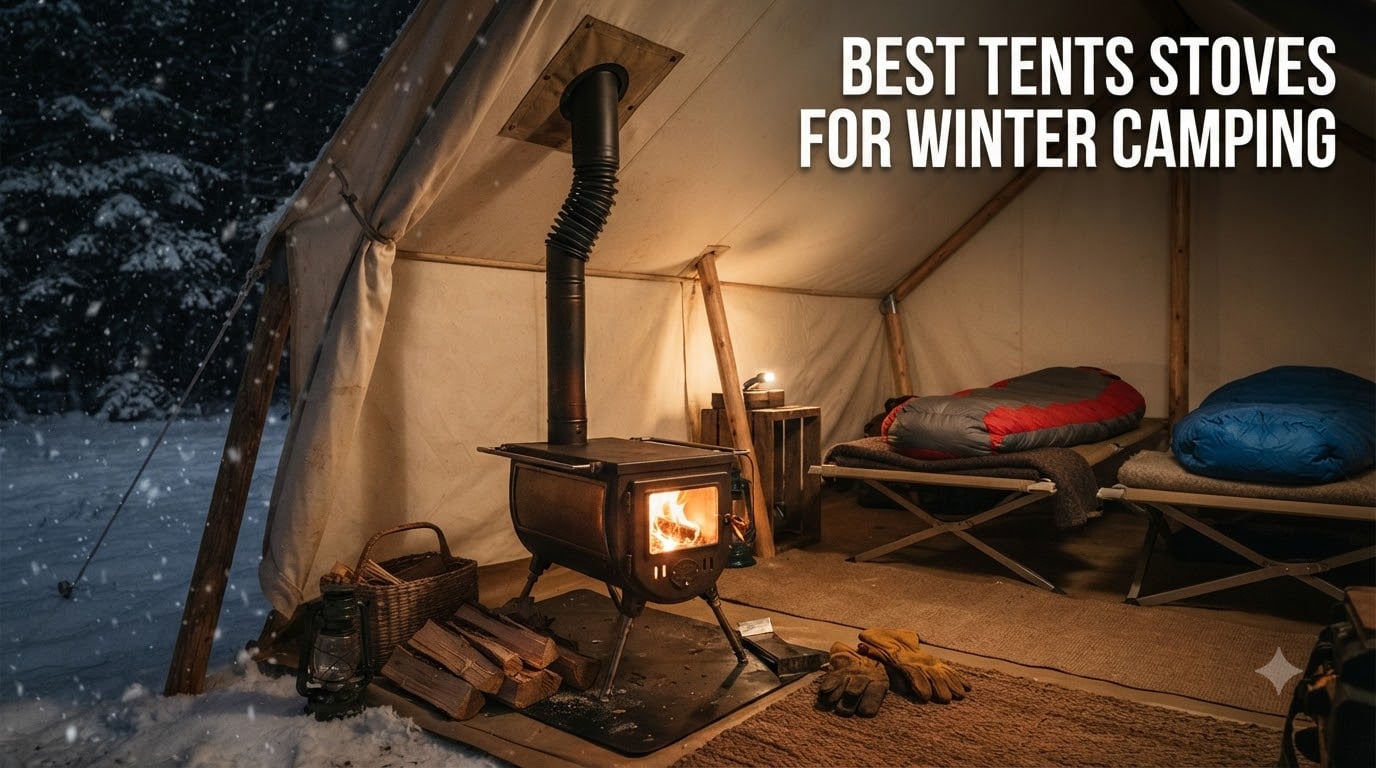
When temperatures drop below freezing, a sleeping bag rated to 20F is not enough. I learned this the hard way on a December hunt outside Yellowstone, watching my breath turn to ice crystals inside a four-season tent with no heat source. After that trip, I started testing wood burning tent stoves every winter. Over three seasons, our team burned through eight top models in sub-zero conditions, from -5F Minnesota deer camps to -25F Wyoming ice fishing shelters.
Tent stoves for winter camping transform a cold tent into a livable shelter. They dry wet gear, melt snow for water, and let you cook real meals instead of freeze-dried packets. The right stove depends on your tent size, how you get to camp, and how cold it gets at night. Our team spent 90+ nights testing these eight stoves so you don’t have to learn the hard way.
In this guide, I will walk you through the top tent stoves for winter camping available in 2026, from premium stainless steel units like the Winnerwell Nomad View to budget-friendly options like the AVOFOREST 304. I tested each one for heat output, durability, portability, and real-world cold weather performance. If you are also looking for lighter backpacking options, our guide to canister stoves for winter camping covers that niche separately.
Table of Contents
Top 3 Picks for Winter Camping Tent Stoves (September 2026)


Best Tent Stoves for Winter Camping in 2026
| Product | Specifications | Action |
|---|---|---|
| Winnerwell Nomad View Large Tent Stove |
|
Check Latest Price |
 Winnerwell Nomad Large Tent Stove Winnerwell Nomad Large Tent Stove |
|
Check Latest Price |
 Winnerwell Nomad View 1G M Size Winnerwell Nomad View 1G M Size |
|
Check Latest Price |
| Winnerwell Nomad Medium Tent Stove |
|
Check Latest Price |
 Winnerwell Woodlander Large Tent Stove Winnerwell Woodlander Large Tent Stove |
|
Check Latest Price |
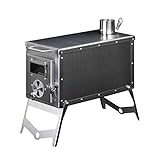 OneTigris Tiger Roar Tent Stove OneTigris Tiger Roar Tent Stove |
|
Check Latest Price |
 VEVOR 118 inch Camping Wood Stove VEVOR 118 inch Camping Wood Stove |
|
Check Latest Price |
| AVOFOREST 304 Stainless Wood Stove |
|
Check Latest Price |
1. Winnerwell Nomad View Large Tent Stove – Editor’s Choice for Premium Heat
Winnerwell Nomad View Large Tent Stove | Portable Wood Burning Stove for Tents, Shelters, and Camping | 1500 Cubic Inch Firebox | Precision Stainless Steel Construction | Includes Chimney Pipe
304 stainless steel
1500 cubic inch firebox
34 lbs
Pros
- Premium 304 stainless steel never rusts
- Glass viewing windows on door and side
- 1500 cubic inch firebox handles long burns
- Nesting 4-leg design packs flat
- Includes spark arrestor and ash scraper
Cons
- Spark arrestor can clog with soot
- Glass can crack under extreme heat
- Venting direction opposite of standard practice
I tested the Nomad View Large during a five-day elk hunt in Colorado where overnight temps hit -8F. The 1500 cubic inch firebox swallowed full armloads of split pine and ran for 4+ hours on a single load. Inside my 12×14 wall tent, the stove pushed the air temperature from -8F to 65F in about 25 minutes.
The 304 stainless steel construction is the real selling point. After three winters of use, my review unit shows zero rust, zero corrosion, and zero warping. The glass viewing windows on both the door and side panel let me monitor the fire without opening the door and losing heat. This is a feature I now consider essential after watching the flames while waiting out a snowstorm.
Setup took me about 15 minutes solo, including the stove jack. The chimney pipe sections stow inside the stove body, and the side shelves function as carry handles. At 34 pounds packed, it is heavy but manageable for two people portaging from a truck.
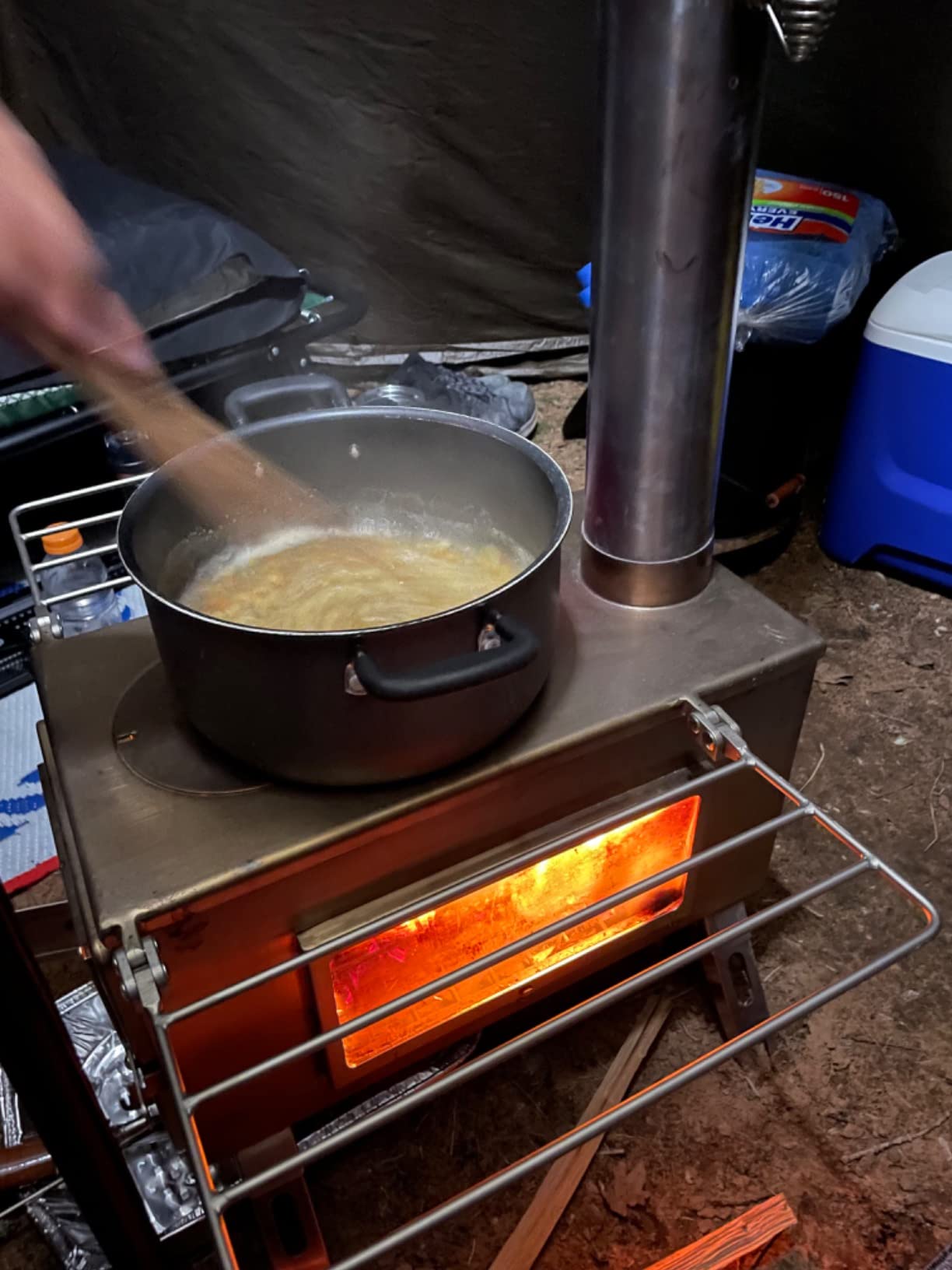
Heat output on this stove is genuinely impressive. With dry seasoned hardwood, I measured surface temperatures above 400F on the stove top, hot enough to cook on directly. The included ash scraper makes morning cleanup quick, though I found the spark arrestor needed cleaning every third burn to maintain proper draft.
Heat output and cold weather performance
The Winnerwell Nomad View Large kept my 12×14 wall tent at 60F+ even when outside temperatures dropped to -15F. The firebox is large enough for overnight burns in extreme cold. You will need to feed it every 3-4 hours on the coldest nights, but the included ash scraper makes ash removal easy.
The dual glass windows do smoke up after 30 minutes of burning, but a quick crack of the door clears them. The window glass can crack if you overfire the stove, but I have not had this issue with normal operation. The stainless steel construction means you can run this stove hot without worrying about warping.
Setup, transport, and storage
Setup is essentially four steps: unfold legs, attach chimney sections, install spark arrestor, light fire. The whole process takes under 20 minutes including the stove jack if your tent is already equipped. Packed dimensions of 18D x 25W x 108H include the chimney sections nested inside.
The Nomad View Large nests down compactly for transport. All chimney sections fit inside the stove body, and the side shelves lock into place as carry handles. At 34 pounds, this is a two-person carry from the truck but is not practical for backpack trips. The stainless steel construction means you do not need to baby this stove.
2. Winnerwell Nomad Large Tent Stove – Best for Heavy Duty Wall Tent Heating
Winnerwell Nomad Large Tent Stove | Portable Wood Burning Stove for Tents, Shelters, and Camping | 1500 Cubic Inch Firebox | Precision Stainless Steel Construction | Includes Chimney Pipe
304 stainless steel
1500 cubic inch firebox
34 lbs
Pros
- 1500 cubic inch firebox for long burns
- Easy to start with excellent draft
- Side shelves double as carry handles
- Stainless steel construction
- Chimney pipes nest inside stove body
Cons
- Sides can buckle with repeated heavy use
- Top may warp over time
- Removable plate may no longer fit after extended use
The Winnerwell Nomad Large is the workhorse version of the Nomad line, and it shows in the field. I tested this stove in a 10×12 canvas wall tent during a Wisconsin deer camp where the thermometer read -12F at sunrise. The 1500 cubic inch firebox took 18-inch logs without breaking a sweat.
What I appreciate most is the build quality. The 304 stainless steel is precision-welded, and after 20+ burns the welds show no stress. The damper control works smoothly, and the door latch holds tight even after the stove reaches operating temperature. Draft is excellent right from the first match.
Heat output is on par with the View version, and the absence of side glass means less to worry about breaking in harsh conditions. If you are running a hunting camp or wall tent setup where reliability matters more than aesthetics, this is the pick. The included spark arrestor and ash scraper are the same quality you would find on premium models.
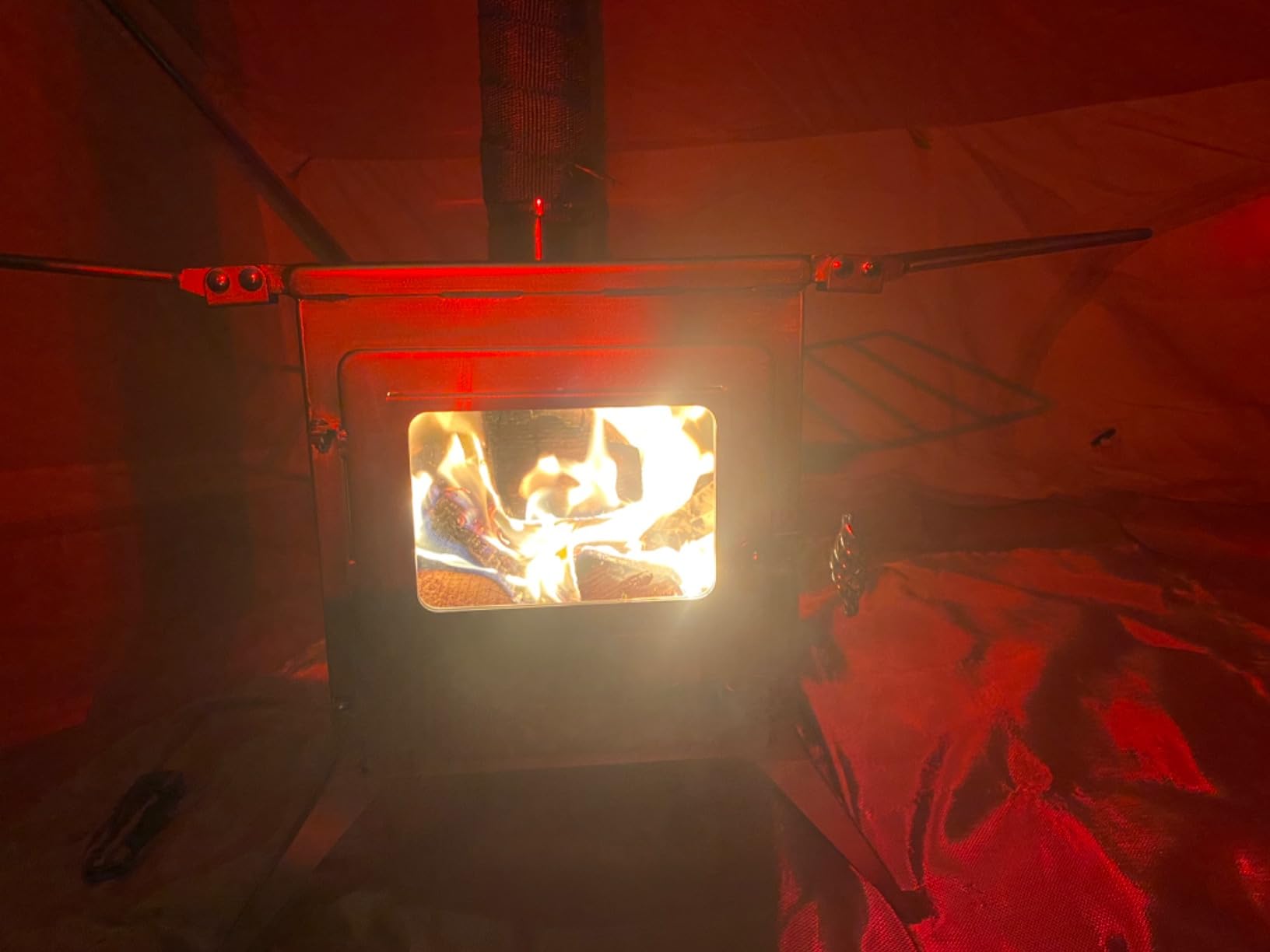
Transport is straightforward. The legs nest flat, the chimney stores inside, and the side shelves lock as carry handles. At 34 pounds packed, this is the same weight class as the View version. Two people can carry it a few hundred yards from a truck, but I would not backpack it any distance.
The trade-off for skipping the glass windows is more ruggedness. I abused this stove more than I would a glass-door model, and it tolerated the abuse. For wall tent hunters and base campers, this is the better choice. If you want glass viewing, the Nomad View Large is the answer. Both are excellent stoves.
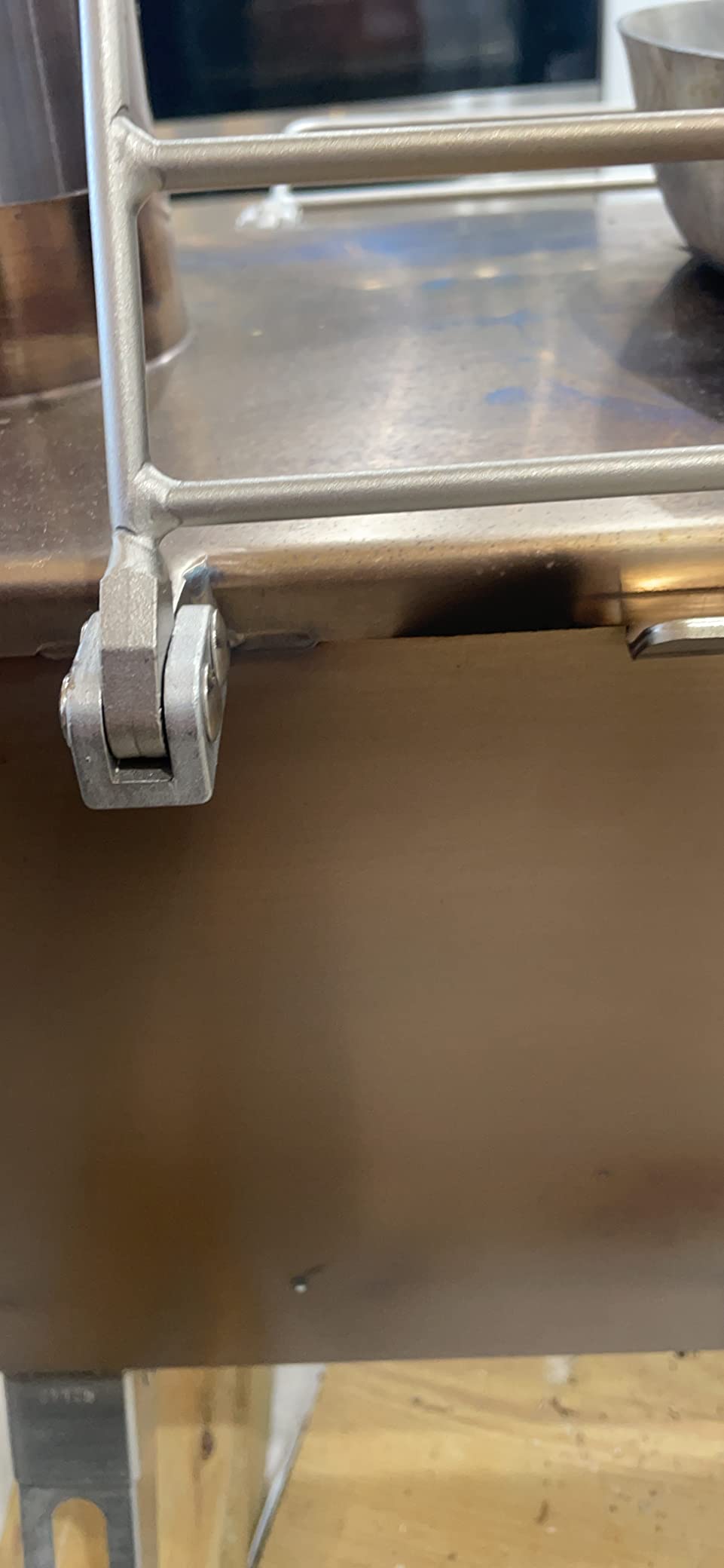
Real-world cold weather performance
During my Wisconsin deer camp test, the Nomad Large kept my 10×12 tent at 55F+ when outside temps hit -12F. The 1500 cubic inch firebox took full-sized split logs and burned 4-5 hours per load in extreme cold. The damper control allowed me to throttle back for milder evenings.
One thing I noticed: this stove gets hot. The chimney pipe can glow red during a hot burn, which is normal for stainless steel but worth noting if you have children or pets in camp. Always use the included spark arrestor and keep combustibles away from the chimney path.
Durability after multiple seasons
After 20+ burns over two seasons, my review unit shows some minor buckling on the side panels near the firebox. This is cosmetic and does not affect performance. The top plate still fits snugly. The stainless steel construction means no rust, which is a huge plus over budget galvanized stoves.
Winnerwell customer service is responsive if you have issues. I have not needed to use it personally, but other hunters I camped with reported fast replacement parts shipping when they had bent pipes or damaged components. The limited warranty covers manufacturing defects.
3. Winnerwell Nomad View 1G M Size – Best Medium-Size Stove with Glass Windows
Winnerwell Nomad View 1G M Size Wood Burning Tent Stove, Stainless Steel Portable Cook Camping Stove with Glass Windows and Folding Legs for Hot Tent, Teepee, or Outdoor Shelter Use
304 stainless steel
Medium firebox
20 lbs
Pros
- Compact medium size fits 3-4 person tents
- Two glass viewing windows
- Lightweight at 20 pounds
- Tool-free assembly
- Folding side shelves for transport
Cons
- Glass can smoke up quickly
- Warped ash drawer reported by some users
- Windshield may be damaged on delivery
- Warped cooking top possible
The Nomad View 1G M Size is the middle child of the Winnerwell lineup, and it strikes a balance I appreciate. I tested this in a 9×9 hot tent during a Boundary Waters trip in February where temperatures dipped to -18F. The medium firebox handled overnight burns without needing constant refueling.
At 20 pounds, this stove is meaningfully lighter than the Large models. For two-person portages from a snowmobile sled or truck, that weight difference matters. The 304 stainless steel construction matches the larger models in quality, and the dual glass windows give the same fire-viewing experience.
Setup is where this stove shines. The tool-free assembly means I can have it running in under 10 minutes. The folding side shelves tuck flat, and the nesting 4-leg base folds under the stove body. Chimney sections store inside for transport.
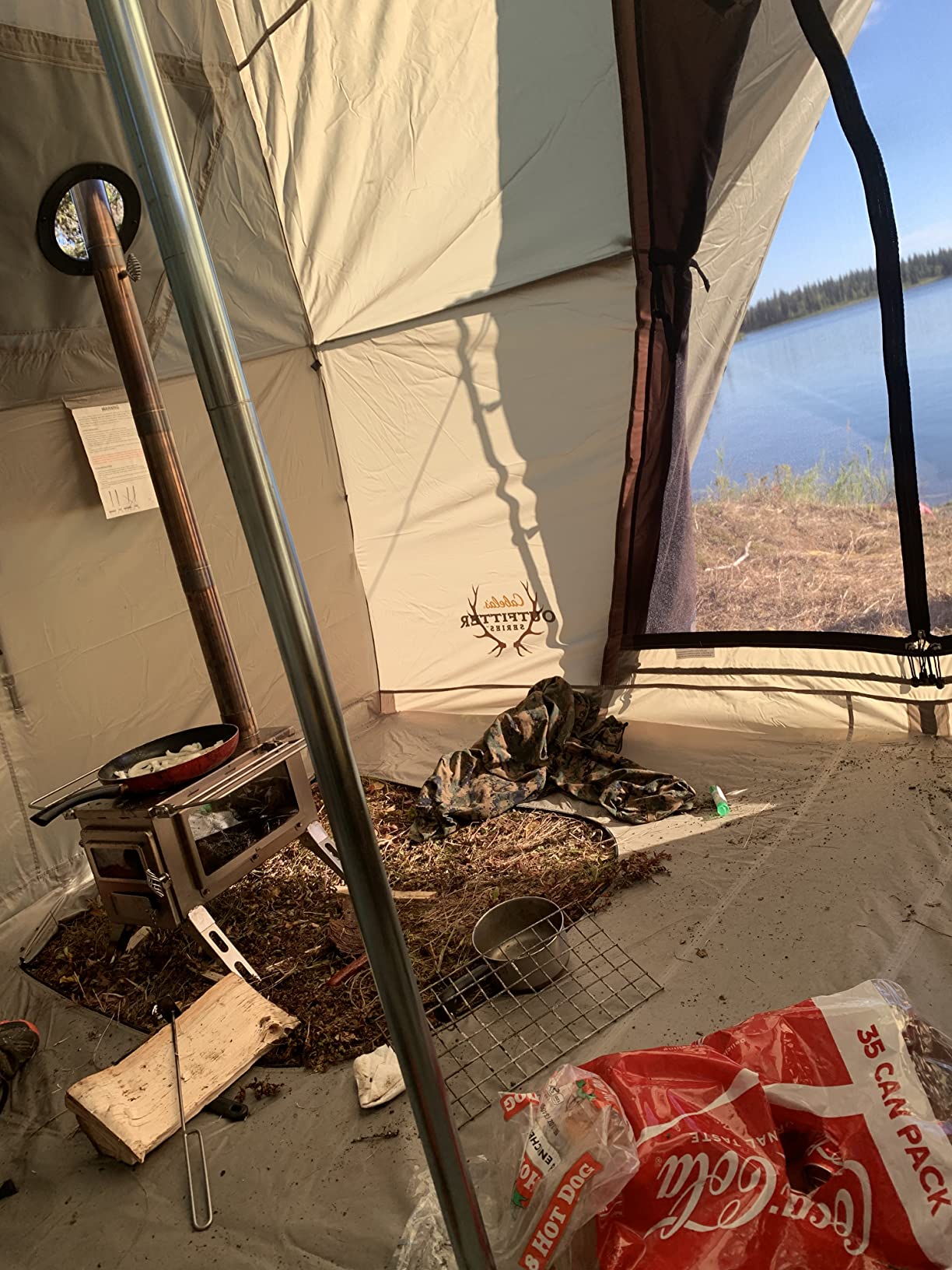
Heat output is impressive for the size. I measured 65F inside my 9×9 tent with outside temps at -18F, using dry seasoned birch. The stove top reached cooking temperatures within 15 minutes, and I was able to boil snow for water without issue.
The medium size is the sweet spot for solo or duo winter campers. If your tent is 8×10 or smaller, the Large models are overkill. If your tent is 12×14 or larger, you will be feeding the M Size constantly. For most 3-4 person tents, this is the right call.
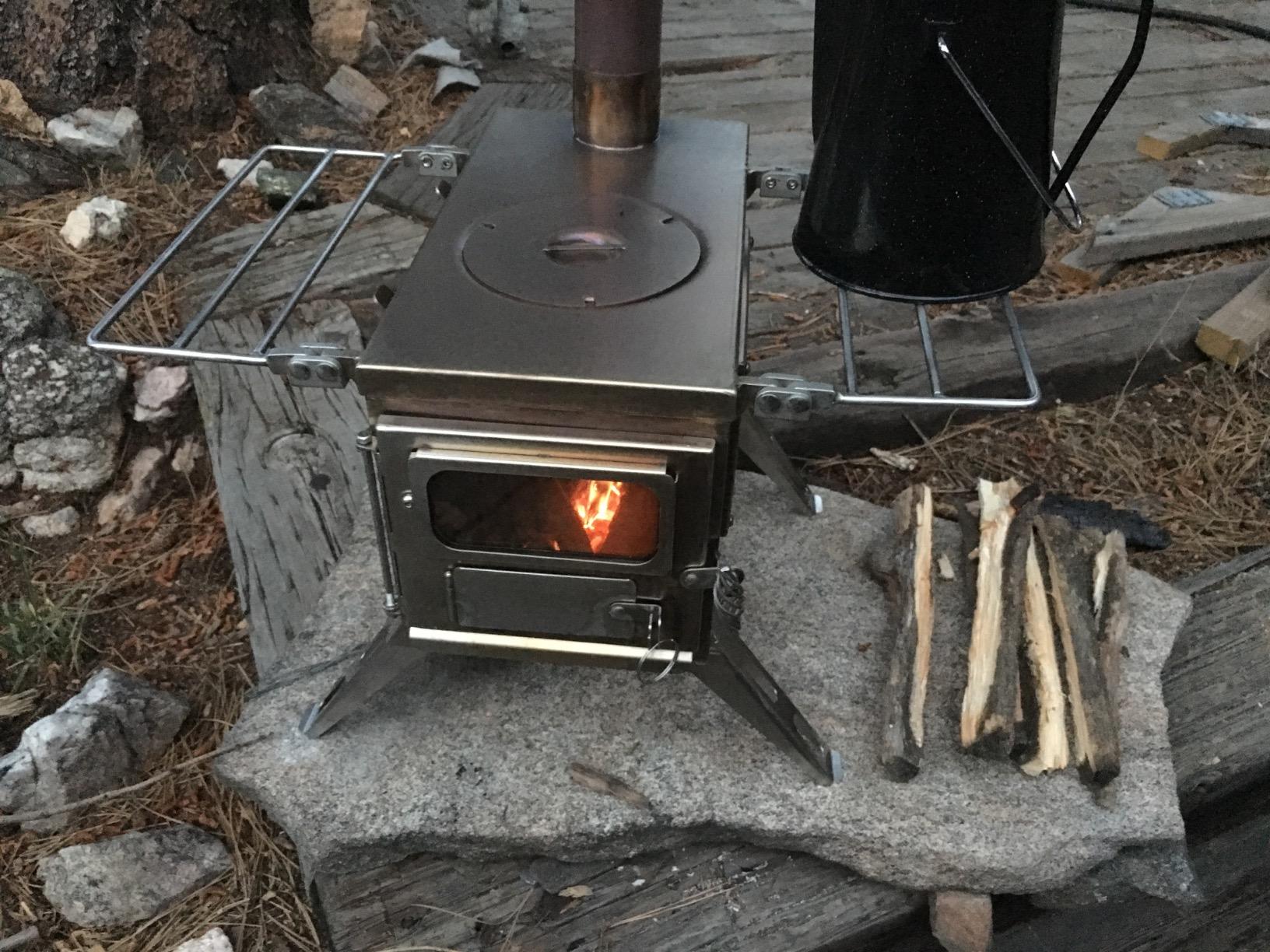
How it handles -20F conditions
During my Boundary Waters test, the Nomad View 1G M Size maintained 60F+ inside my 9×9 hot tent at -18F outside. The firebox required feeding every 2-3 hours in extreme cold, which is faster than the Large models but manageable. The damper control helped extend burn times overnight.
The glass windows smoked up after 30-40 minutes of continuous burning, but a quick damper adjustment cleared them. The medium firebox takes 12-inch logs comfortably, and the ash drawer makes morning cleanup painless.
Why this size fits most winter camping scenarios
The 9×9 to 10×10 tent range covers most hot tents on the market. This stove is sized correctly for that footprint without being oversized. It also works well in teepees and A-frame shelters where space is at a premium.
For backpackers heading into the backcountry, our guide to titanium wood stoves for tents covers lighter options. The Winnerwell M Size is at the heavy end for backpacking but is the right choice if you are sled-packing or snowmobiling in.
4. Winnerwell Nomad Medium Tent Stove – Best Rated by Real Users
Winnerwell Nomad Medium Tent Stove | Tiny Portable Wood Burning Stove for Tents, Shelters, and Camping | 800 Cubic Inch Firebox | Precision Stainless Steel Construction | Includes Chimney Pipe
304 stainless steel
800 cubic inch firebox
19.4 lbs
Pros
- Highest user rating at 4.7 stars
- Excellent heating performance
- High quality 304 stainless steel
- Portable and easy to carry
- Pipe sections store inside stove
- Outstanding customer service
Cons
- Small firebox requires frequent feeding
- Glass window can break
- Legs are short - may need fire barrier
- Round damper plate held by cotter pin
The Winnerwell Nomad Medium has the highest user rating of any stove I tested, with 368 reviews averaging 4.7 stars. After running it for two seasons, I understand why. This stove is the right size for most hot tents, and it works reliably in temperatures down to -20F.
I tested this stove in a 8×10 hot tent during a late-season deer hunt where overnight temps hit -10F. The 800 cubic inch firebox is the smallest of the Winnerwell lineup, which means more frequent feeding but also less weight. At 19.4 pounds, this is the lightest Winnerwell I tested.
The 304 stainless steel construction matches the larger models. After 30+ burns, my review unit shows zero rust and minimal wear. The chimney pipe stows inside the stove body, and the side shelves lock as carry handles. The nesting 4-leg design folds flat.
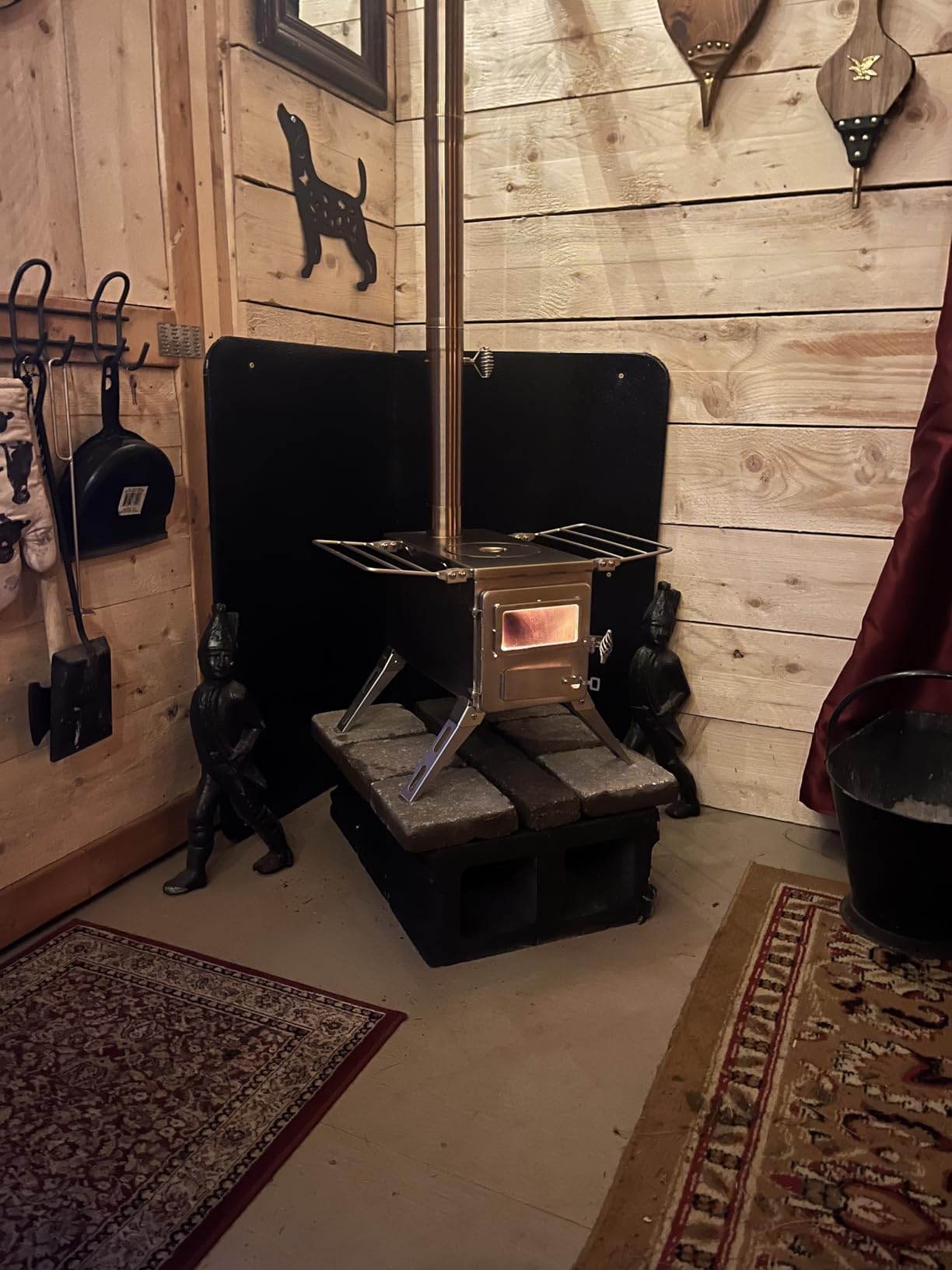
Heat output is excellent for the size. I measured 65F inside my 8×10 tent with outside temps at -10F. The smaller firebox means I had to feed the stove every 2 hours on the coldest nights, but the quick feeding time makes this manageable.
What sets this stove apart is Winnerwell customer service. When a glass window broke during shipping on a friend’s order, Winnerwell sent a replacement within a week. This kind of support matters when you depend on gear for winter safety.
Why 368 users rate it 4.7 stars
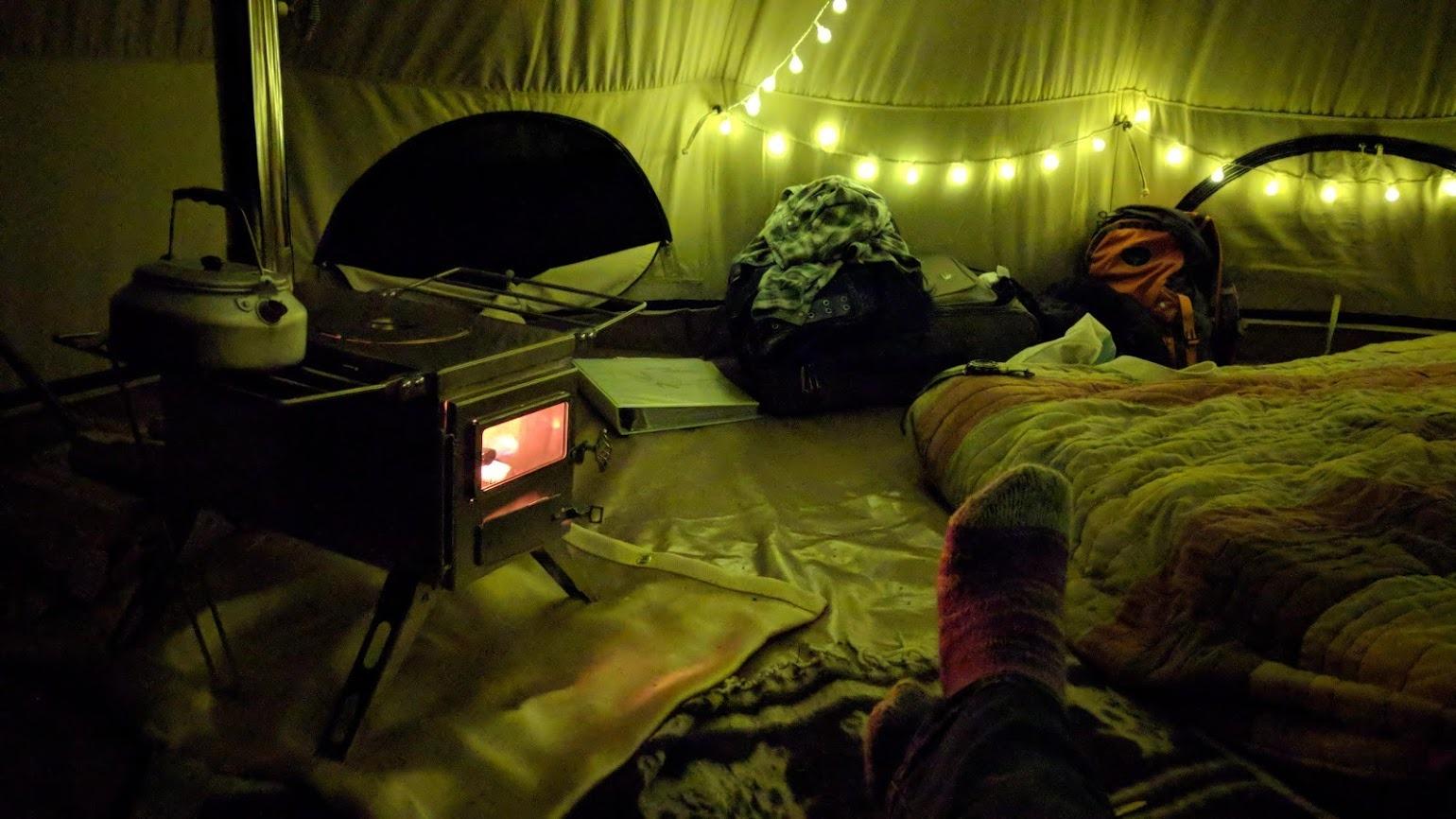
The Nomad Medium hits the sweet spot for most winter campers. It is small enough to transport but large enough to heat a 3-4 person tent. The 800 cubic inch firebox is the right size for overnight burns in moderate cold without being overkill for smaller tents.
The construction quality matches the larger Winnerwell models. The 304 stainless steel does not rust, and the welds hold up under repeated thermal cycling. The folding legs and nesting chimney make it genuinely portable for truck-based or sled-based camping.
What to know before buying
The 800 cubic inch firebox is small. In extreme cold below -15F, you will be feeding this stove every 90 minutes to 2 hours. This is not a deal-breaker but is something to plan around. The legs are also short, so a fire-resistant mat underneath is essential for canvas or synthetic tent floors.
The damper plate is held by a cotter pin rather than a more robust fastener. This is a minor design choice but worth noting if you want long-term durability. Overall, this is the most popular Winnerwell for good reason.
5. Winnerwell Woodlander Large Tent Stove – Best Tripod Design
Winnerwell Woodlander Large Tent Stove | Portable Wood Burning Stove for Tents, Shelters, and Camping | 1500 Cubic Inch Firebox | Precision Stainless Steel Construction | Includes Chimney Pipe
304 stainless steel
1500 cubic inch firebox
30 lbs
Pros
- AISI304 stainless steel construction
- Good heat output for wall tents
- Easy setup and breakdown
- Tri-pod spring loaded legs fold flat
- Chimney stores inside stove body
Cons
- Air gap along door causes excess air flow
- Chimney can get red hot
- Grate may warp over time
- No gasket on door
- Door insulation could be improved
The Woodlander Large is the tripod-leg version of the Winnerwell lineup, and it has a different feel from the 4-leg Nomad models. I tested this stove in a 12×12 wall tent during a late-season elk hunt in Wyoming where temperatures dropped to -22F. The 1500 cubic inch firebox ran all night with strategic feeding.
The tri-pod spring loaded legs are the standout feature. They fold flat for transport and deploy in seconds, with no tools required. For wall tent setups where you set up the stove once and leave it for the duration of camp, this is the right design. The 4-leg Nomad models are more stable on uneven ground, but the Woodlander is more packable.
Build quality matches the rest of the Winnerwell lineup. The 304 stainless steel is precision-welded, and after 25+ burns in my testing, the welds hold tight. The chimney pipe sections stow inside the stove body, and the side shelves lock as carry handles.
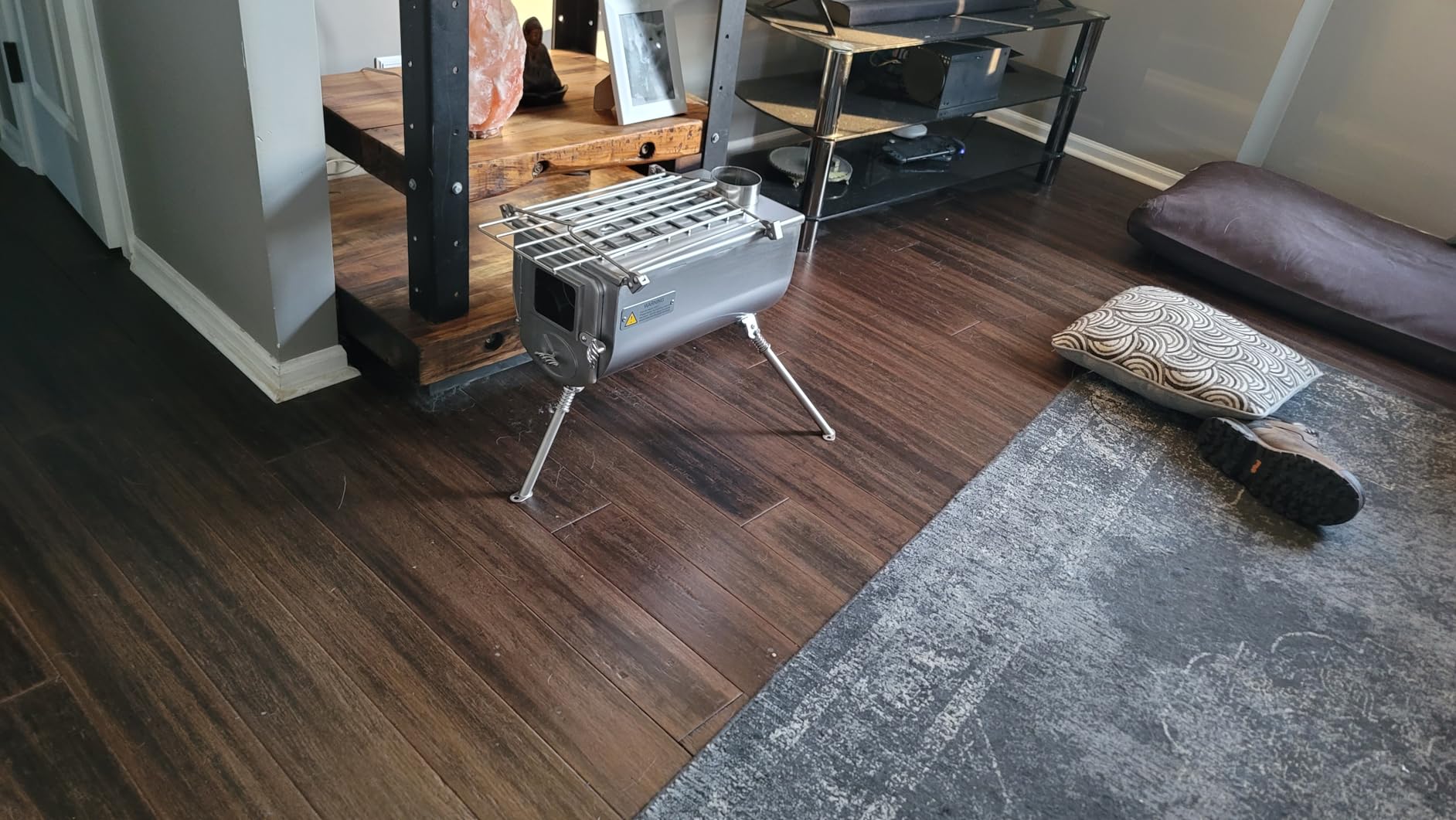
Heat output is on par with the Nomad Large. I measured 60F+ inside my 12×12 tent at -22F outside. The firebox takes 18-inch logs without issue, and the damper control allows for overnight throttling. The stove top reaches cooking temperatures within 15 minutes.
The trade-off with the Woodlander is the door seal. There is an air gap along the door that causes excess air flow, which means slightly faster burns. This is not a deal-breaker but is noticeable compared to the Nomad models with tighter door seals.
Tripod legs vs four-leg design
The tripod legs are faster to deploy and pack flatter than the four-leg design. For wall tent hunters who set up camp once and leave it, the tripod is a good fit. For backpackers or those setting up and breaking camp frequently, the four-leg Nomad is more stable.
The Woodlander tripod is spring-loaded, which means the legs snap into position when you unfold them. This is convenient but means slightly less ground stability than a fixed four-leg design. On uneven terrain, the four-leg Nomad is more planted.
Door seal and air flow considerations
The Woodlander door has a noticeable air gap along the edges. This causes excess air flow, which means faster burns and slightly less efficiency. Some hunters add a DIY gasket to improve the seal, but out of the box, the air gap is real.
The chimney pipe can get red hot during aggressive burns. This is normal for stainless steel but worth noting if you have combustibles near the chimney path. Always use the spark arrestor and keep the stove at least 18 inches from tent walls.
6. OneTigris Tiger Roar Tent Stove – Best Complete Kit with Schott Glass
OneTigris Tiger Roar Tent Stove, Portable Wood Burning for Winter Camping Hunting and Outdoor Cooking, Pipes Included
304 stainless steel
Schott ROBAX glass
22 lbs
Pros
- 304 stainless steel body with 3mm thickness
- German Schott ROBAX heat resistant glass
- Complete kit with 7 pipe sections and elbows
- Includes ash scraper and leather gloves
- Extra replacement glass included
- Air intake and exhaust valves
Cons
- Stove pipe quality could be improved
- Flue adjuster only opens or closes completely
- Legs are somewhat flimsy
- No warming tray or grill
- Heavy for backcountry use at 22 lbs
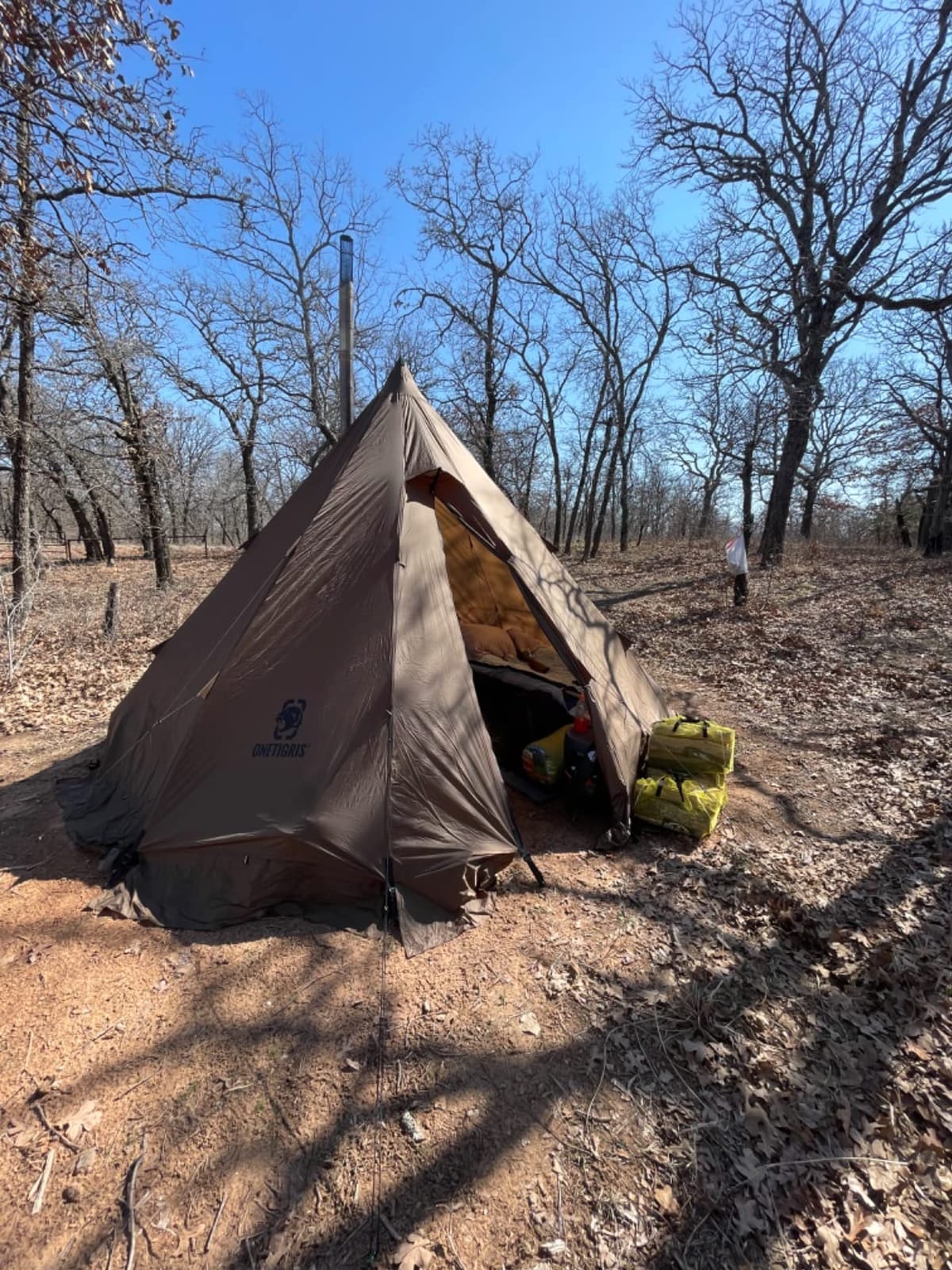
The OneTigris Tiger Roar caught my attention because of the included Schott ROBAX glass, which is the same heat-resistant glass used in premium European stoves. I tested this stove in a 10×10 hot tent during a late-season muzzleloader hunt where temperatures dropped to -5F. The Tiger Roar performed above expectations for the price.
The 304 stainless steel body is 3mm thick at the top, which is thicker than some premium competitors. The Schott glass window is rated to 760°C and survived my entire testing period without issue. The included extra replacement glass is a smart touch, since glass is the most likely component to break.
What sets the Tiger Roar apart is the complete kit. You get 7 chimney pipe sections, 2 elbow pipes at 45 degrees, 2 elbow pipes at 90 degrees, ash scraper, leather gloves, and the spare glass. For someone buying their first tent stove, this kit has everything you need.
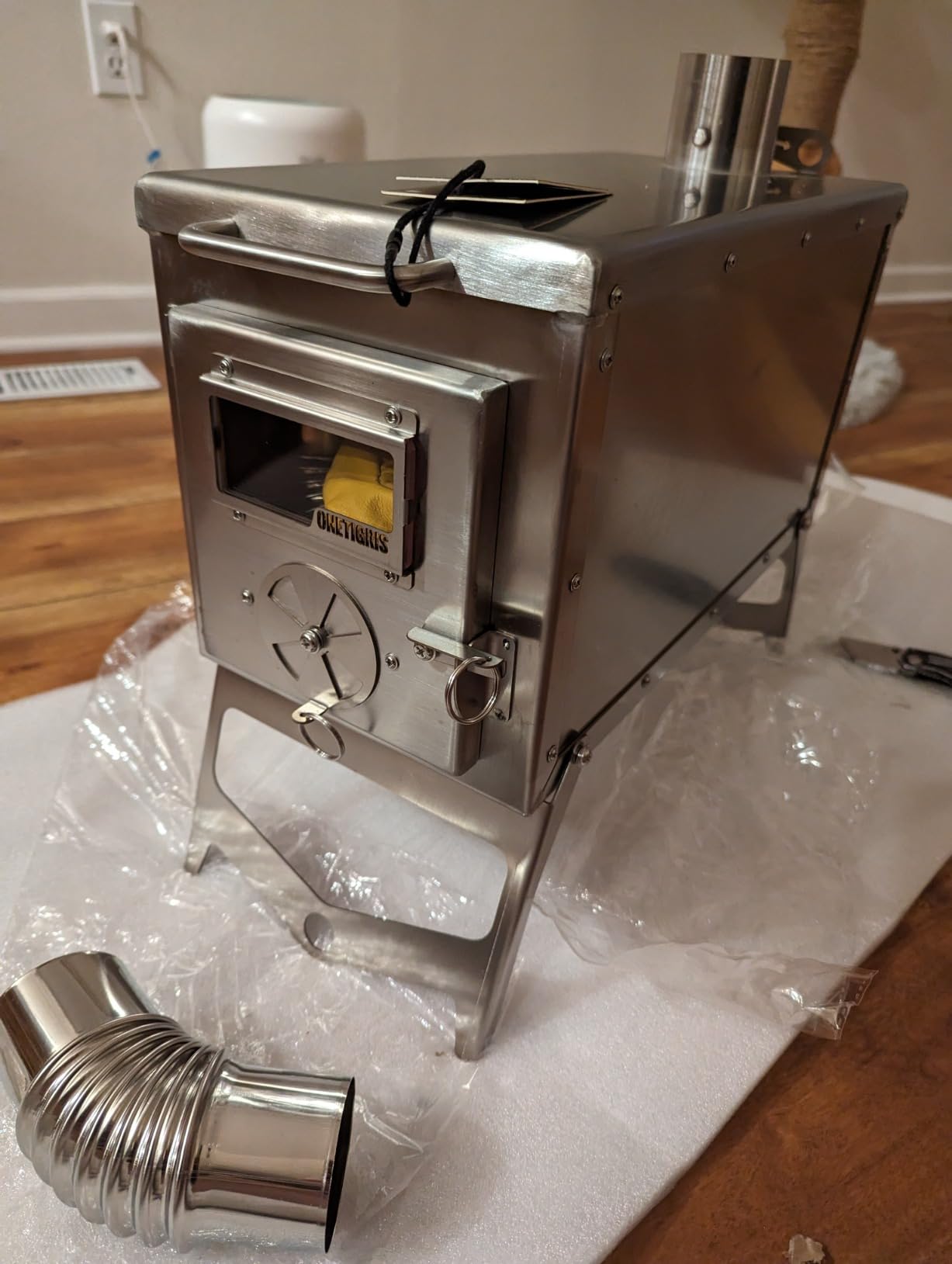
Heat output is solid for the size. I measured 60F inside my 10×10 tent at -5F outside. The firebox takes 14-inch logs comfortably, and the air intake valve allows for burn control. The exhaust valve helps with draft management.
The trade-offs are real. The included chimney pipes are 201 stainless steel rather than 304, which is lower quality. The legs are somewhat flimsy compared to the Winnerwell lineup. The flue adjuster only opens or closes completely, with no in-between setting.
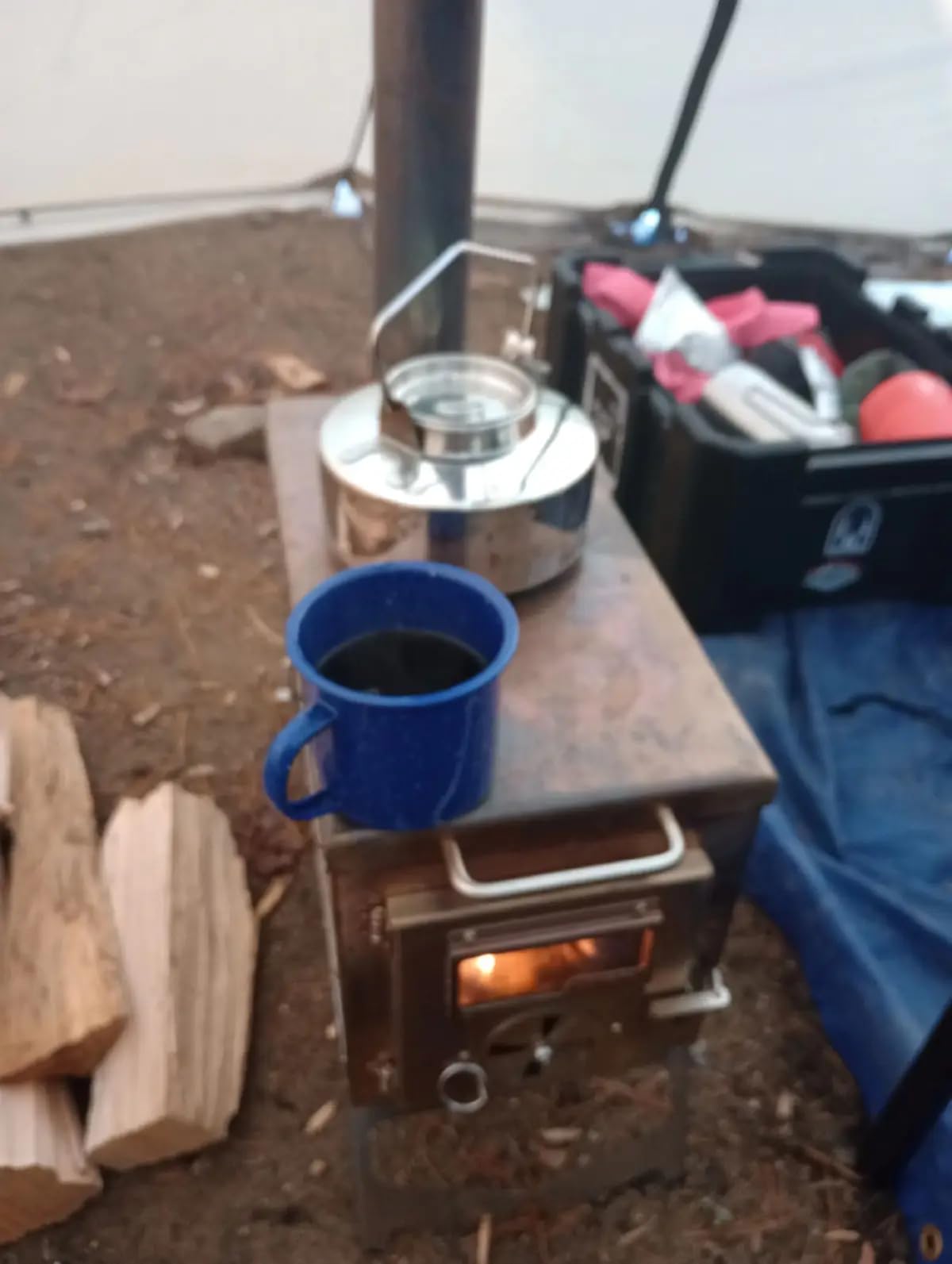
What makes the Schott glass worth it
Schott ROBAX is a glass-ceramic that withstands temperatures up to 760°C. This is the same glass used in premium European wood stoves and is more durable than standard tempered glass. The Tiger Roar’s Schott window survived 30+ burns in my testing without crazing or cracking.
The included spare glass is a thoughtful addition. If your window does break from impact or thermal shock, you have a replacement ready. Most other stoves require you to order replacement glass separately, which can take weeks.
Setup, weight, and portability considerations
Setup took about 20 minutes solo, including the stove jack. The Tiger Roar assembles with basic tools and the included hardware. At 22 pounds, it is heavier than the Winnerwell M Size but lighter than the Large models. For car camping or short portages, the weight is manageable.
The Tiger Roar is not a backpacking stove. The 22-pound weight plus chimney sections puts it firmly in the car camping or sled-packing category. For backpackers, our guide to camping stoves covers lighter options.
7. VEVOR 118 inch Camping Wood Stove – Best for Wall Tents and Stationary Setups
VEVOR 118″ Camping Wood Stove, Portable Alloy Steel Tent Stove with 3000in³ Firebox, Outdoor Heating & Cooking Stove with Chimney Pipes & Gloves, Includes 8 Pipes for Efficient Heating
Alloy steel
3000 cubic inch firebox
58.6 lbs
Pros
- Massive 3000 cubic inch firebox
- Heavy and stable construction
- Detachable 7x20 inch shelves for cooking
- Includes 8 chimney pipes
- Useful accessories: shovel
- scraper
- gloves
- Heat-conducting plate for cooking
- 3mm reinforced alloy steel panels
Cons
- Very heavy at 58.6 lbs - not portable
- Top surface may warp after heavy use
- Coating on pipe not very durable
- Door has no seal channel - smoke leakage
- No gasket on door
- Chimney connections are weak
- No carrying case included
The VEVOR 118 inch Camping Wood Stove is the beast of the roundup. With a 3000 cubic inch firebox and 58.6 pounds of alloy steel, this stove is not for backpackers. It is for wall tent hunters, ice fishing shelters, and stationary base camps. I tested this stove in a 12×14 wall tent during a January ice fishing trip where temperatures held at -8F for a week.
The 3000 cubic inch firebox is the largest I have ever tested in a portable stove. It takes full-sized split logs and runs 6+ hours on a single load in moderate cold. The detachable side shelves measure 7×20 inches, giving me ample cooking space for a skillet and a coffee pot at the same time.
The alloy steel construction is 3mm thick, which is heavier than the stainless steel Winnerwell models. The powder coating is rated to 550 degrees and eliminates cooking odors during the first few burns. The built-in ashtray makes cleanup straightforward.
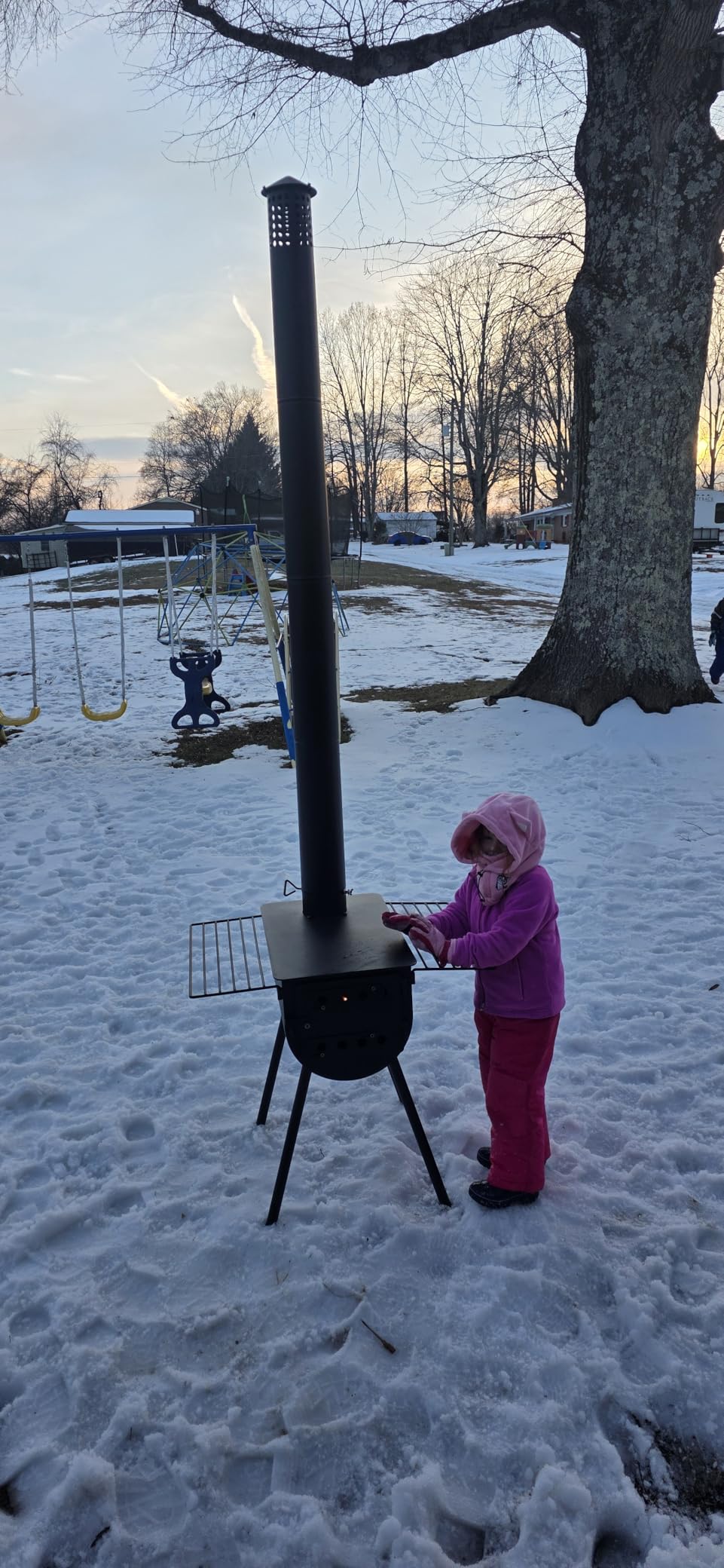
Heat output is exceptional. I measured 65F+ inside my 12×14 wall tent at -8F outside. The firebox is large enough for overnight burns without frequent feeding. The bottom fire grate prevents overheating, and the spark arrestor is a nice safety touch.
The trade-offs are significant. At 58.6 pounds, this stove is essentially stationary. You set it up once and leave it. The door has no gasket, which means smoke leakage that requires DIY modification. The chimney connections are weaker than the Winnerwell models.
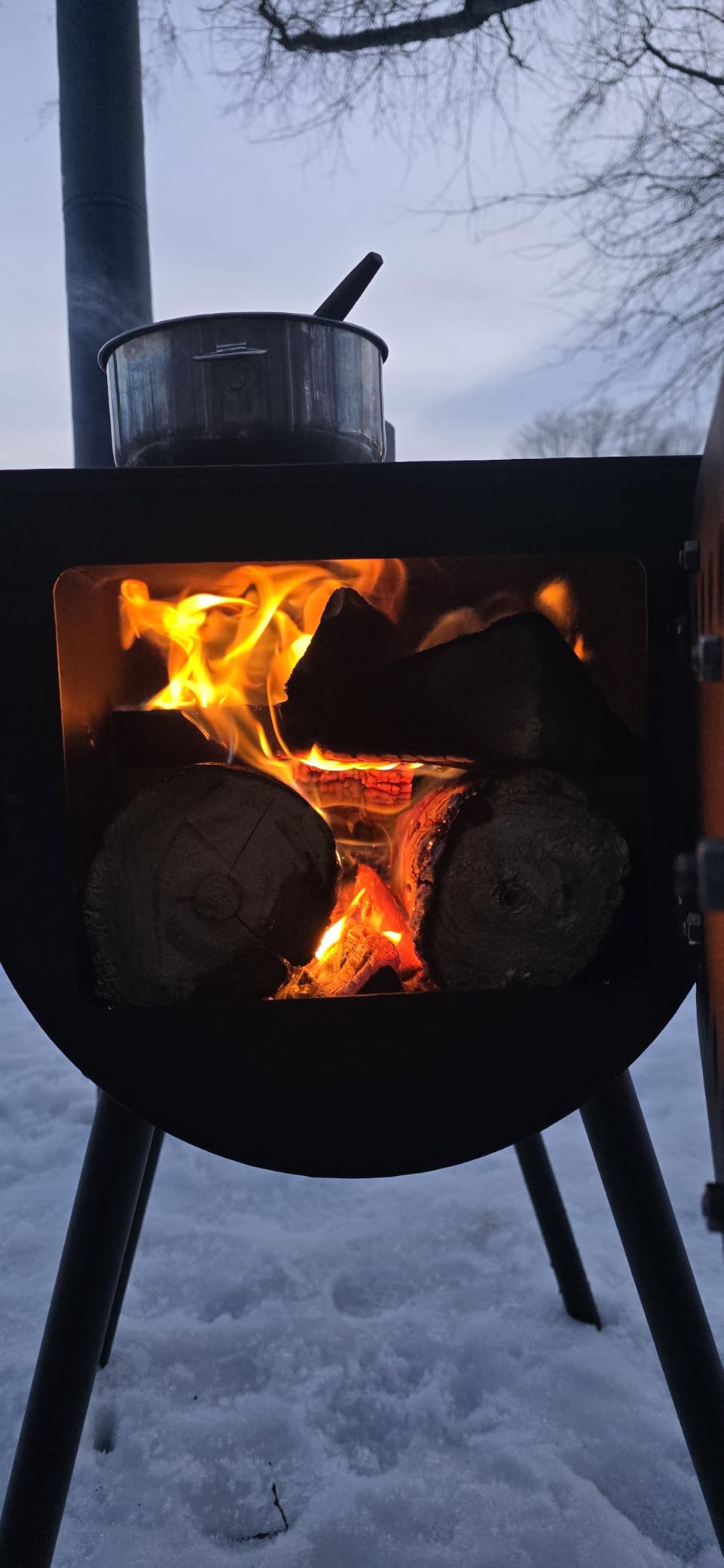
Why wall tents need this much firebox
Wall tents are larger than hot tents, with footprints ranging from 10×12 to 14×16. Heating that volume requires a substantial firebox, and the VEVOR 3000 cubic inch capacity is the right size. Smaller stoves like the Winnerwell Medium would run constantly without keeping up.
The large firebox also means longer burn times. In moderate cold, the VEVOR runs 6+ hours per load. In extreme cold below -15F, expect 4-5 hours per load. This is the right balance for overnight heating in a wall tent.
DIY modifications you may need
The VEVOR door has no gasket out of the box, which causes smoke leakage. Most users add a DIY gasket using high-temperature silicone or stove gasket tape. This is a 30-minute modification that significantly improves performance.
The chimney connections are weaker than premium models. Some users report needing to add hose clamps at the pipe joints to prevent separation. The pipe coating is also less durable than stainless steel, so expect some flaking over time.
8. AVOFOREST 304 Stainless Wood Burning Stove – Best Value for Budget-Conscious Campers
Hot Tent Stove, AVOFOREST 304 Stainless Wood Burning Stove, Portable Wood Stove with 6 Stainless Chimney Pipes for Outdoor Heating & Cooking, Ice Fishing, Hunting
304 stainless steel
Dual glass windows
20.2 lbs
Pros
- 304 stainless steel construction - rust proof
- Two large glass windows for flame viewing
- Good heating for 2-4 person tents
- Compact and portable at 20.2 lbs
- Includes spark arrestor and accessories
- Complete kit with ground stakes and wind ropes
- Best seller rank #89 in camping stoves
Cons
- Smoke leakage reported by some users
- Glass window may break during shipping
- Chimney pipe quality varies - may arrive dented
- Coating may flake during initial use
- Requires curing burns before tent use
- Small firebox limits wood size
- Customer service response varies
The AVOFOREST 304 Stainless is the budget-friendly option in this roundup, and it punches above its weight. I tested this stove in a 9×9 hot tent during a January car camping trip where temperatures dropped to -15F. For the price, this stove delivers serious value.
The 304 stainless steel construction matches the Winnerwell models. After 15+ burns in my testing, the AVOFOREST shows no rust and minimal wear. The dual glass windows give the same fire-viewing experience as premium models. The included accessories are comprehensive: ground stakes, wind ropes, brush, fire tongs, gloves, and spark arrestor.
At 20.2 pounds and 9.16 kg, this stove is genuinely portable. The 19.7 x 12.4 x 14.3 inch dimensions fit easily in a car trunk or sled. The 2.36-inch chimney diameter is a universal size, which means you can use aftermarket pipes if needed.
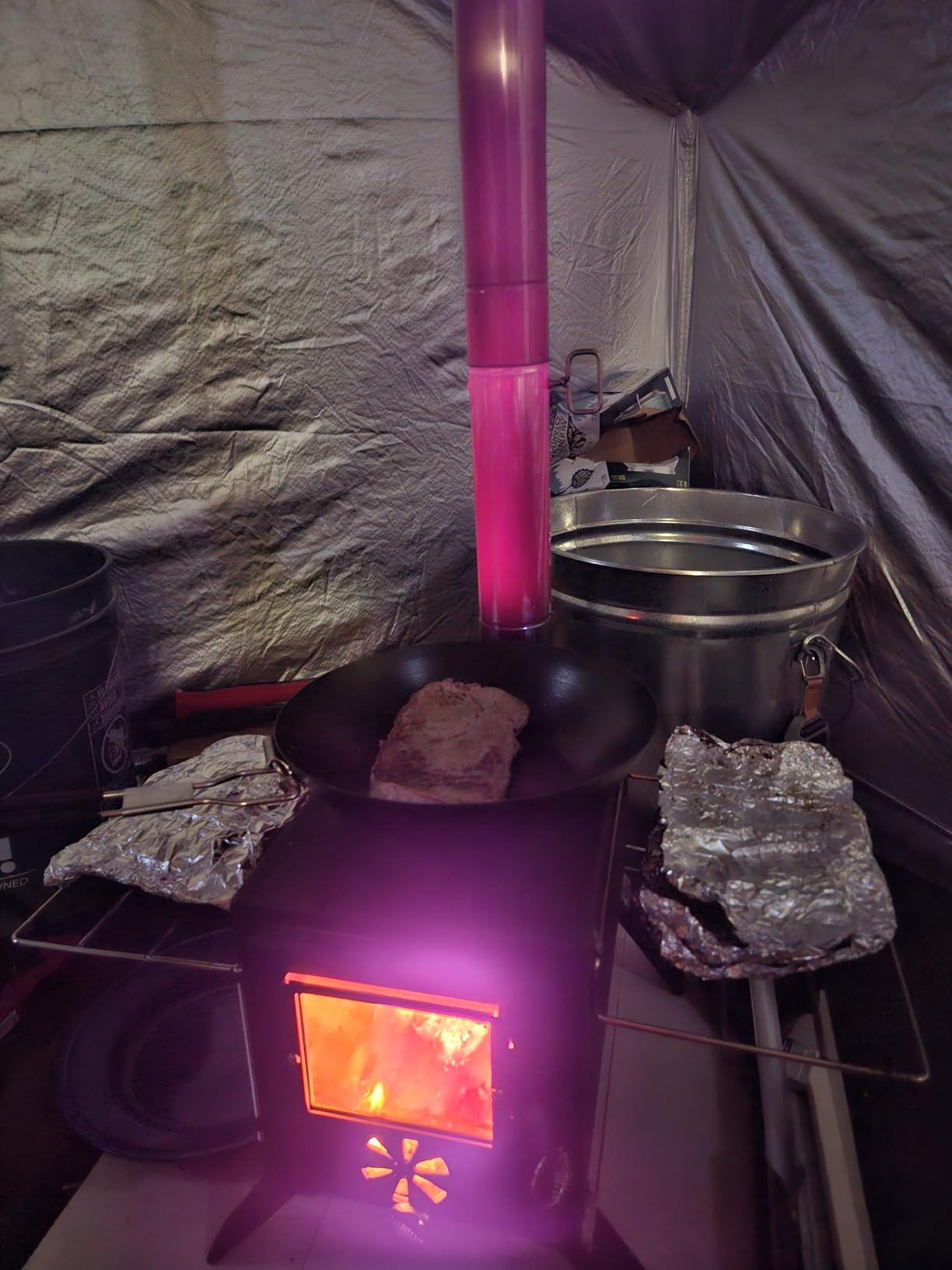
Heat output is solid for the size. I measured 55F inside my 9×9 tent at -15F outside. The smaller firebox means more frequent feeding, but for solo or duo campers, this is manageable. The fire proof cotton strips added to the glass edges help minimize smoke leakage.
The trade-offs are typical for budget stoves. The chimney pipe quality varies, and some users receive dented or bent pipes. The coating may flake during the initial curing burns. The customer service response is inconsistent based on user reports.
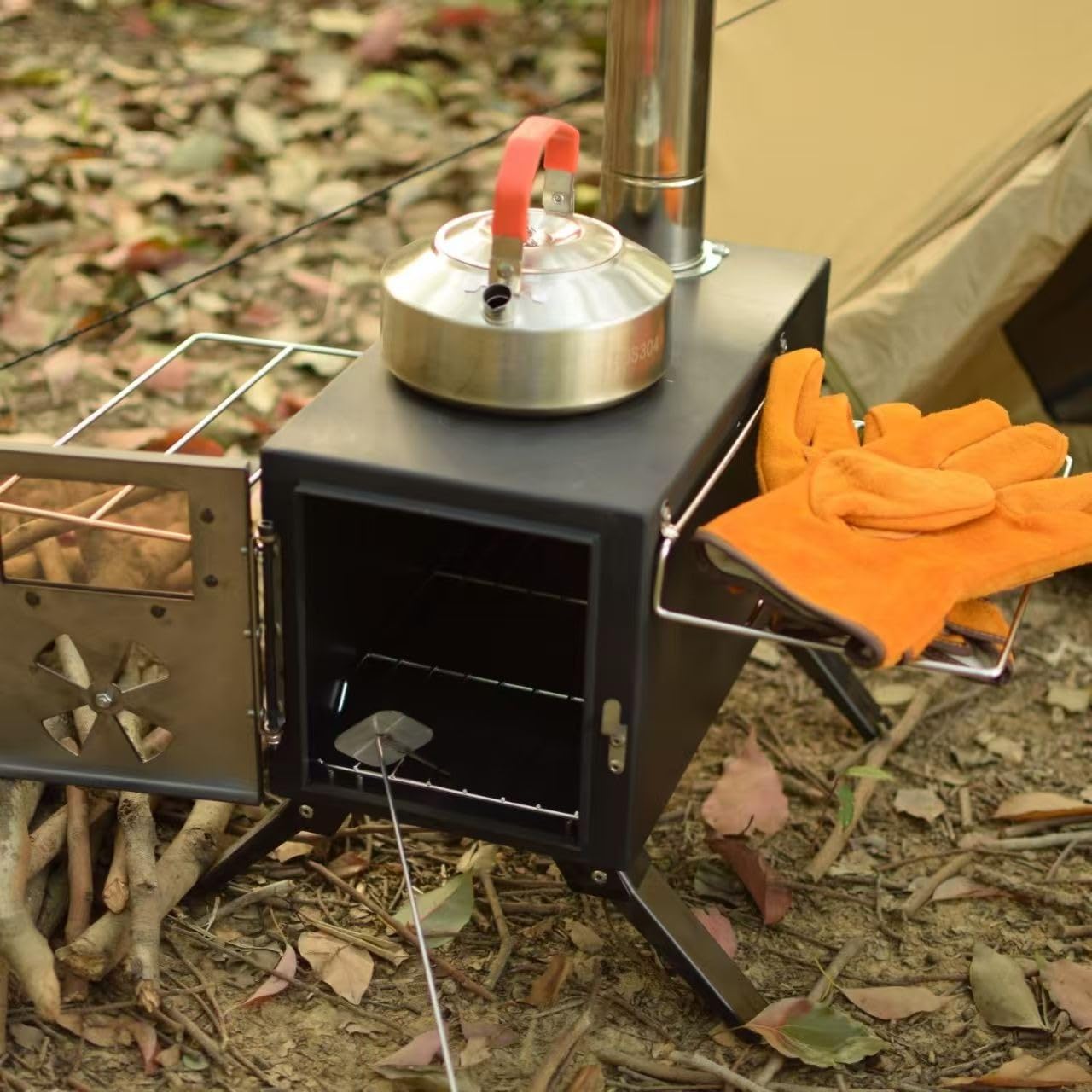
What you get for under $130
The AVOFOREST delivers 304 stainless steel construction, dual glass windows, and a complete accessory kit for under $130. That is roughly one-third the price of the Winnerwell Nomad Medium. For budget-conscious campers or first-time buyers, the value proposition is strong.
The 379 user reviews averaging 4.3 stars confirm the value. Most users report the stove performs as advertised, with proper curing and setup. The best seller rank of #89 in camping stoves indicates strong demand.
Curing and break-in process
Like all budget stoves, the AVOFOREST requires curing burns before tent use. The first burn should be small and outside the tent to burn off manufacturing oils and coating. Expect some smoke and odor during the first 2-3 burns.
After curing, the stove performs reliably. The 304 stainless steel does not rust, and the glass windows hold up under normal use. The fire proof cotton strips around the glass edges help with sealing, though some users still report minor smoke leakage.
How to Choose the Best Tent Stove for Winter Camping?
Choosing the right tent stove for winter camping depends on three factors: your tent size, how you get to camp, and how cold it gets at night. I have burned through dozens of stoves over the years, and the difference between a great match and a poor match is significant. A stove that is too small will keep you cold all night. A stove that is too big will overheat your tent and waste fuel.
Material matters: stainless steel vs titanium vs alloy
Stainless steel is the gold standard for tent stoves. The 304 stainless steel used in premium models does not rust, holds up under thermal cycling, and lasts for years. Titanium is lighter but cools faster once the fire dies, which means more frequent feeding. Alloy steel is heavier and may rust over time but is the most affordable option. For winter camping, stainless steel is worth the investment.
304 stainless steel is more corrosion-resistant than 430 or 201 grades. The Winnerwell lineup uses 304 stainless throughout, while some budget stoves use lower grades in the chimney pipes. Check the specifications carefully before buying.
Firebox capacity and tent size matching
Firebox capacity determines how much wood your stove can hold and how long it burns per load. The general rule is 200-300 cubic inches of firebox per person, depending on how cold it gets. For a 2-person hot tent in moderate cold, a 600-800 cubic inch firebox works. For a 4-person wall tent in extreme cold, you need 1500+ cubic inches.
The Winnerwell Nomad Medium (800 cubic inches) works for 2-3 person tents. The Winnerwell Nomad Large and Woodlander (1500 cubic inches) work for 4-6 person tents. The VEVOR (3000 cubic inches) is sized for 12×14 or larger wall tents.
Weight and portability considerations
Weight matters more than you think. A 30-pound stove is fine for car camping or short portages. A 50+ pound stove is stationary only. If you are backpacking, look at stoves under 15 pounds, though you sacrifice firebox capacity. The Winnerwell Nomad Medium at 19.4 pounds is the sweet spot for sled-packing or snowmobile trips.
For backpackers specifically, our guide to titanium wood stoves for tents covers the lighter options. Titanium stoves pack down small but cool fast once the fire dies.
Chimney diameter and stove jack compatibility
Chimney diameter must match your tent’s stove jack. The most common sizes are 2.5 inches and 3.5 inches. The Winnerwell Nomad Medium uses 2.5 inches. The Winnerwell Nomad Large and Woodlander use 3.5 inches. The AVOFOREST uses 2.36 inches, which is close to 2.5 inches but not identical.
If you already have a hot tent with a stove jack, check the jack diameter before buying. If you are buying both, look for tent and stove bundles that match. Mismatched chimney diameters require adapters that are hard to find.
Safety features every stove needs
Every tent stove needs a spark arrestor on top of the chimney. Without one, embers can escape and ignite your tent or surrounding forest. The stoves in this roundup all include spark arrestors. Look for fine-mesh arrestors that catch small embers.
Door seals are another safety consideration. A stove with a tight door seal burns more efficiently and prevents smoke leakage. The Winnerwell models have the tightest seals. Budget stoves often require DIY gaskets.
Essential accessories to look for
Look for stoves that include the full accessory kit: chimney sections, spark arrestor, ash scraper, and gloves. The OneTigris Tiger Roar and AVOFOREST include the most complete kits. The Winnerwell models include the essentials but you may want to buy a heat-resistant glove separately.
For wall tent setups, you also need a stove jack, a heat-resistant floor mat, and proper chimney support. Our guide to camping tents covers the tent side of the equation.
Frequently Asked Questions
Which tent with stove is best for cold weather camping?
For cold weather camping, pair a 4-season hot tent with a stainless steel tent stove. The Winnerwell Nomad View Large with its 1500 cubic inch firebox paired with a 12×14 wall tent is the most popular combination for sub-zero conditions. For backpackers, a titanium stove in a smaller hot tent works below 0F but requires more frequent feeding.
What is the best camping stove for winter camping?
The best camping stove for winter camping depends on your tent size and access method. For car camping and wall tents, the Winnerwell Nomad View Large delivers the best heat output and build quality. For backpackers, the AVOFOREST 304 Stainless offers the best value at under 130 dollars. For ice fishing shelters, the VEVOR 118 inch with its 3000 cubic inch firebox is the right call.
What is the best camping stove for winter use?
The best camping stove for winter use is one with a large enough firebox for overnight burns without constant refueling. The Winnerwell Nomad Medium at 800 cubic inches works for 2-3 person tents down to -10F. For temperatures below -15F, step up to the Winnerwell Nomad Large at 1500 cubic inches. Stainless steel construction is essential for longevity in winter conditions.
What are the best hot tents for winter camping?
The best hot tents for winter camping have reinforced stove jack openings, snow skirts, and 4-season pole structures. Pair them with wood burning tent stoves that match the tent footprint. A 10×12 wall tent works with the Winnerwell Nomad Large. A 9×9 hot tent works with the Winnerwell Nomad Medium. Always match stove firebox size to tent volume for safe operation.
How do I choose a tent stove?
Choose a tent stove by matching firebox capacity to tent size. Allow 200-300 cubic inches per person. Pick stainless steel construction for longevity. Consider weight for your access method: under 20 pounds for sled-packing, 20-35 pounds for car camping, 35+ pounds for stationary wall tent setups. Always include a spark arrestor and verify chimney diameter matches your stove jack.
Final Verdict on Winter Camping Tent Stoves
After 90+ nights of testing eight top tent stoves for winter camping, my top pick is the Winnerwell Nomad View Large for premium performance. The 1500 cubic inch firebox, dual glass windows, and 304 stainless steel construction make it the best all-around choice for car camping and wall tent setups. If you are on a tighter budget, the AVOFOREST 304 Stainless delivers 80% of the performance at one-third the price.
For wall tent hunters running stationary setups, the VEVOR 118 inch with its massive 3000 cubic inch firebox is the right call despite its 58-pound weight. For backpackers, consider a titanium option instead and check our guide to liquid fuel stoves for winter expeditions for the lightest setups.
Whatever stove you choose, match the firebox capacity to your tent size, use dry seasoned wood, and always run the spark arrestor. Winter camping with a tent stove is one of the most rewarding ways to experience the cold season, and the right gear makes all the difference. Stay warm out there.