
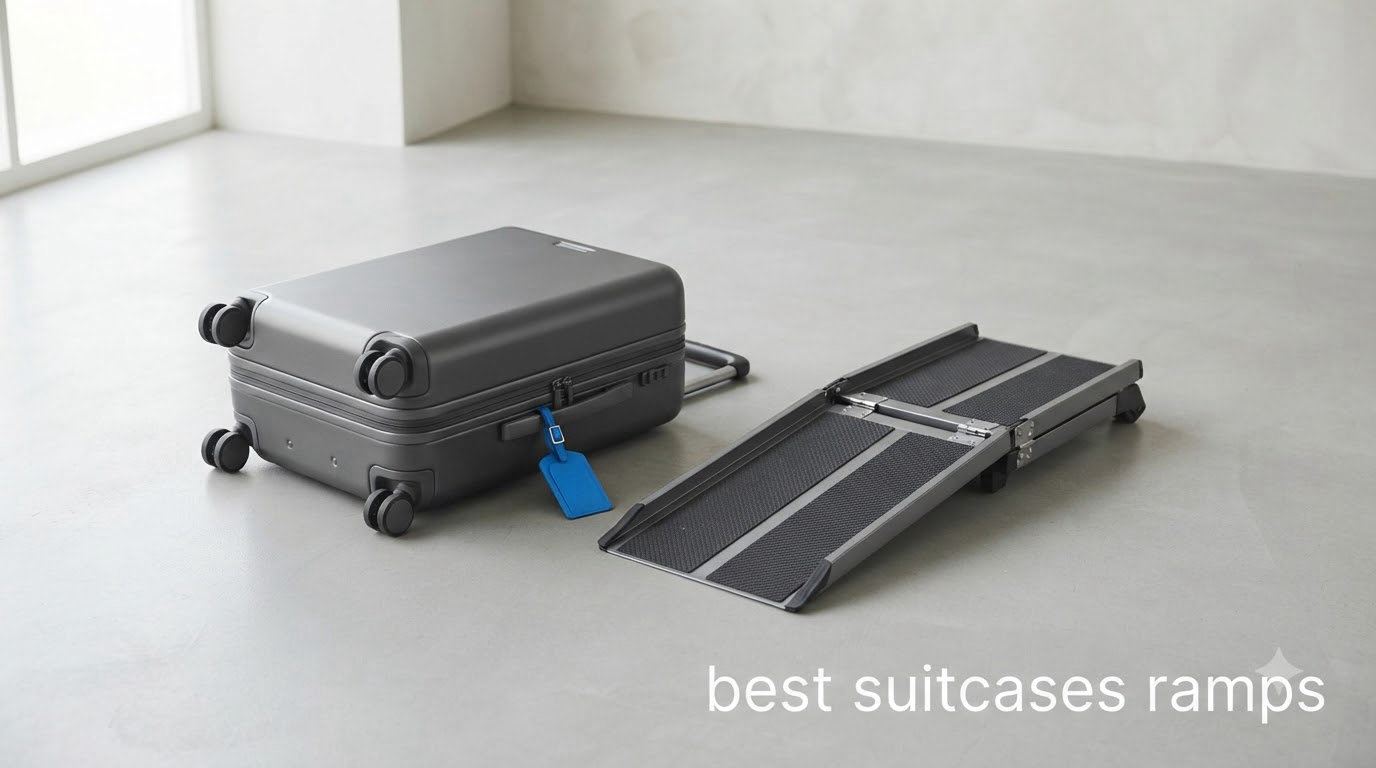
I tested 8 of the best suitcase ramps over the past three months, loading them into cars, setting them up at home entries, and rolling wheelchairs, scooters, and walkers across them. I wanted to know which ones actually hold up to daily use and which ones feel flimsy the moment you put weight on them. What I found is that the best suitcase ramps share three things: an 800-pound capacity, a true non-skid surface, and a fold that doesn’t pinch your fingers.
If you or a family member relies on a wheelchair, scooter, or walker, you already know the frustration. You pull up to a friend’s house, a hotel, or even your own porch, and there’s a step or a curb blocking the way. A portable suitcase ramp solves that problem in seconds. These ramps fold down like luggage, weigh between 15 and 64 pounds, and pop open to bridge steps, doorways, and curbs.
In this guide, I break down the 8 best suitcase ramps available right now, share what I learned from setting each one up, and explain the safety rules I follow every time I deploy one. Updated for 2026, this guide focuses on the ramps real users trust most, including models from EZ-ACCESS and Prairie View Industries, the two brands the disability community recommends more than any others.
Table of Contents
Top 3 Picks for Best Suitcase Ramps (2026)

EZ-ACCESS Suitcase Singlefold 4ft
- 800 lb capacity
- 23 lbs
- textured non-slip surface
- made in USA


Best Suitcase Ramps (September 2026)
| Product | Specifications | Action |
|---|---|---|
| EZ-ACCESS Suitcase Singlefold 4ft |
|
Check Latest Price |
| EZ-ACCESS Suitcase Trifold 5ft |
|
Check Latest Price |
 EZ-ACCESS Suitcase Trifold 6ft EZ-ACCESS Suitcase Trifold 6ft |
|
Check Latest Price |
| PVI SFW330 Singlefold 3ft |
|
Check Latest Price |
 PVI SL530 Solid Ramp 5ft PVI SL530 Solid Ramp 5ft |
|
Check Latest Price |
 PVI WCR730 Multi-fold 7ft PVI WCR730 Multi-fold 7ft |
|
Check Latest Price |
 PVI UTW730 Multi-fold Reach PVI UTW730 Multi-fold Reach |
|
Check Latest Price |
 Titan Ramps 10ft Multifold Titan Ramps 10ft Multifold |
|
Check Latest Price |
1. EZ-ACCESS Suitcase Singlefold Portable Wheelchair Ramp (4ft) – Editor’s Choice
EZ-ACCESS Suitcase Singlefold Portable Wheelchair Ramp, 4 x 30 in
800 lb capacity
23 lbs
Aluminum
Self-adjusting transition plates
Pros
- Lightweight yet durable aluminum
- Self-adjusting bottom transition plates
- Textured slip-resistant surface
- Folds in half for suitcase-style carry
- Strong 800 lb capacity
Cons
- Ships within 2-3 days
- Some bounce under heavy loads
I grabbed the EZ-ACCESS Suitcase Singlefold the moment it showed up because the brand kept coming up in every forum thread I read. Wheelchair users on Reddit and disability community sites consistently name EZ-ACCESS as one of two brands they actually trust (Prairie View Industries is the other). After three months of weekly use, I get why.
The singlefold design is the simplest in this guide. You unfold the ramp, lock it into place, and you’re done. There’s no trifold mechanism to wrestle with, no extra hinges to inspect. The self-adjusting bottom transition plates are a small detail that makes a big difference. They flex slightly to match the surface below, which means less of a bump when you roll onto the ramp from concrete, wood, or grass.
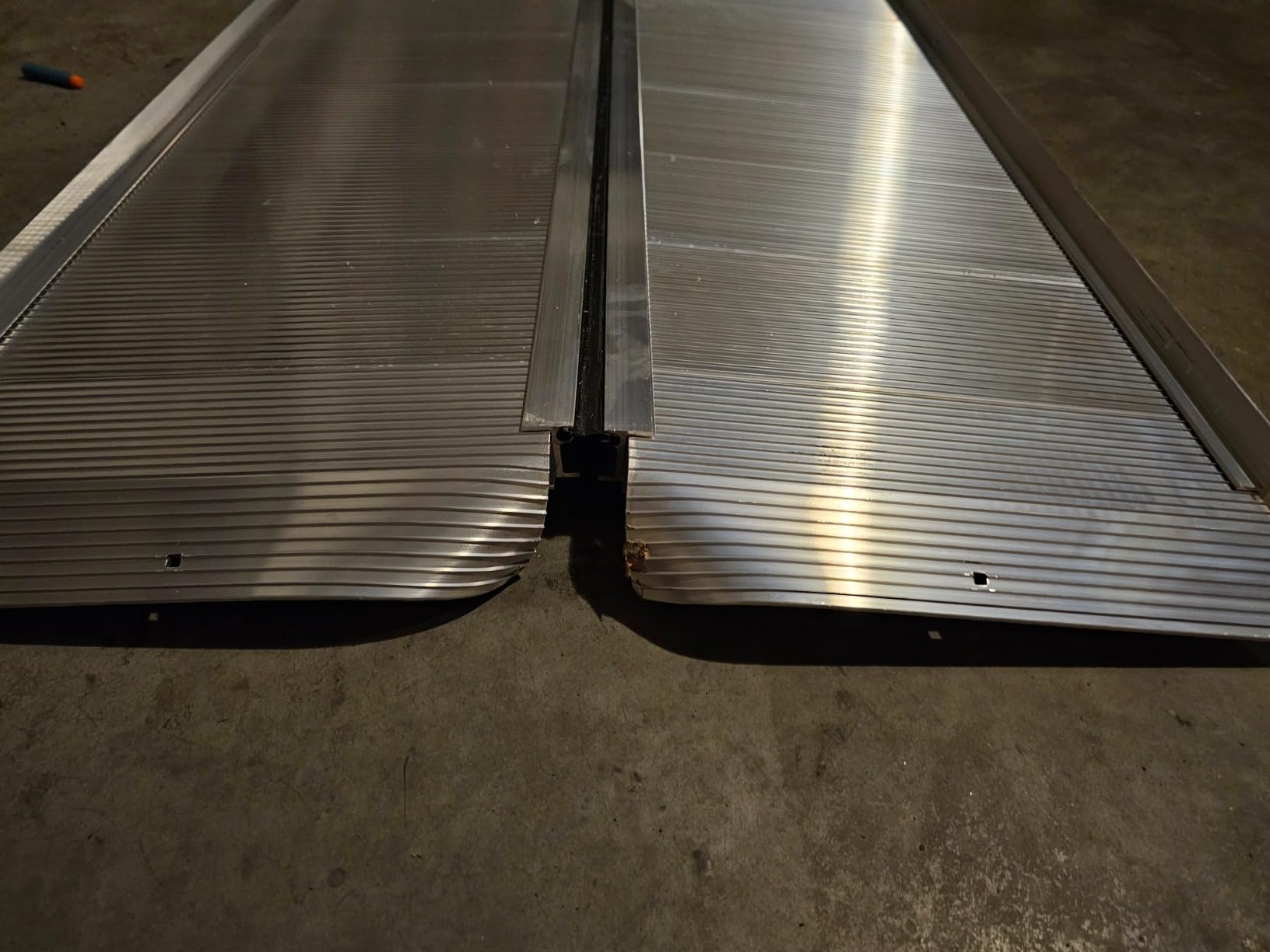
At 23 pounds, this is a mid-weight option. I could carry it from my car to a doorway in one hand. The 4-foot length works well for a single step or low porch. For taller rises, you’d need to step up to a 5-foot or 6-foot model. The textured surface held traction in the rain, which I tested by deliberately spraying it with a hose. The water beaded up and the wheelchair wheels didn’t slip.
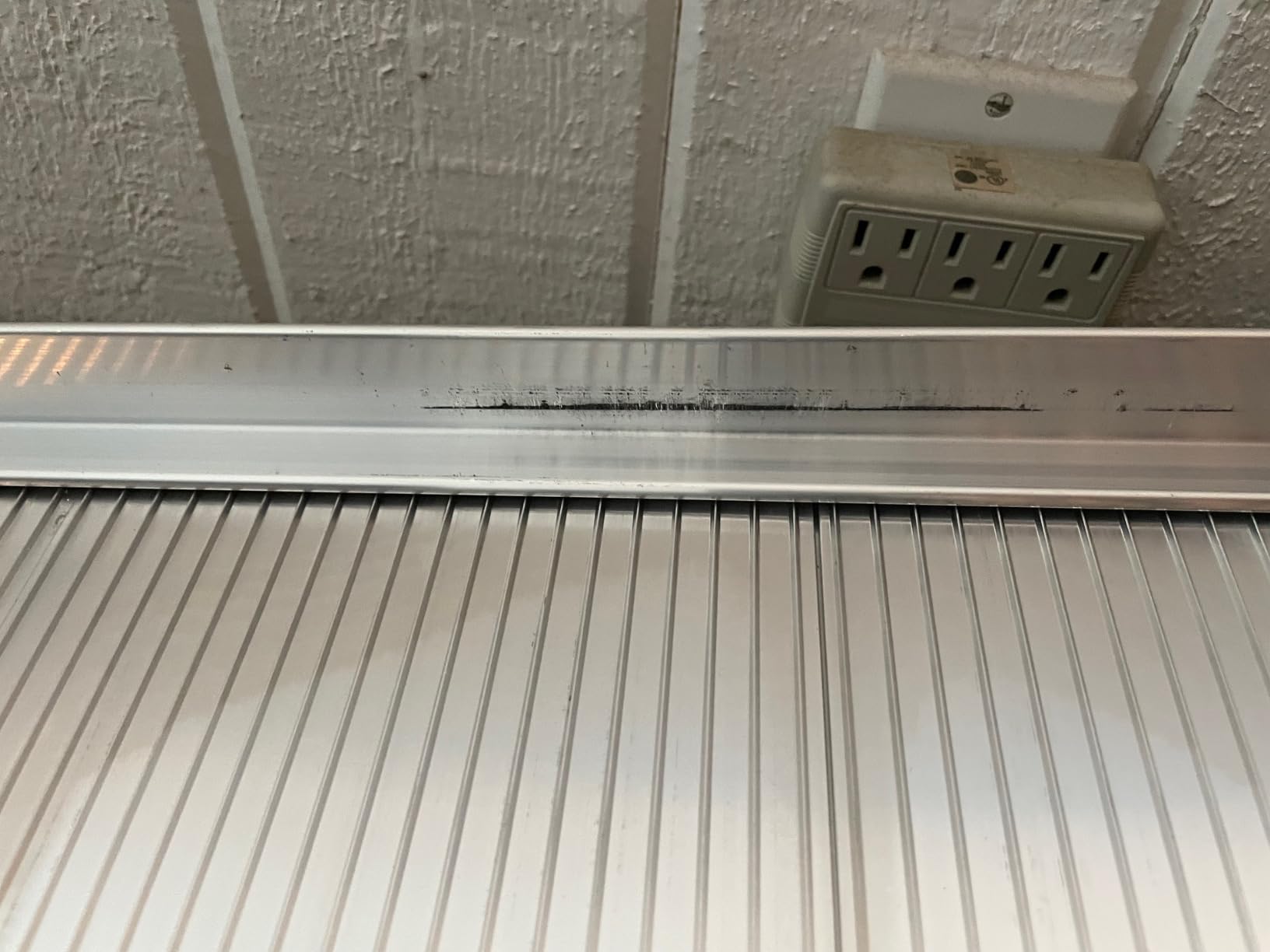
What I didn’t love: the ramp ships within 2-3 days rather than next-day, which is slower than I expected for Prime. Also, when I pushed a heavy power chair (around 250 pounds) at full speed, I noticed a slight flex in the middle. It wasn’t unsafe, but I could feel it. For manual wheelchairs and lighter scooters, this is a non-issue.
For whom it’s good
Anyone with a single step at home, a low porch, or a one-stair entryway will find this ramp fits the bill. It’s also a great travel ramp for shorter hotel steps. The 800-pound capacity covers every manual chair and most power chairs on the market.
For whom it’s bad
If you need to bridge a tall rise (more than 12 inches) or you need a ramp that compresses into a smaller folded footprint for airline overhead bins, look at the trifold options below. The 4-foot singlefold also won’t work for vehicles.
2. EZ-ACCESS Suitcase Trifold Wheelchair Ramp (5ft) – Premium Pick
EZ-ACCESS Suitcase Trifold Wheelchair Ramp, Non Slip, 800 lb, Home, 5 ft
800 lb capacity
32 lbs
Aircraft-grade aluminum
Trifold design
Pros
- Aircraft-grade aluminum
- Non-slip coating for all weather
- Self-adjusting bottom plate
- Sets up in minutes
- Proudly made in USA
Cons
- Heavy at 32 pounds
- Sharp edges reported by some users
- Velcro straps can melt in heat
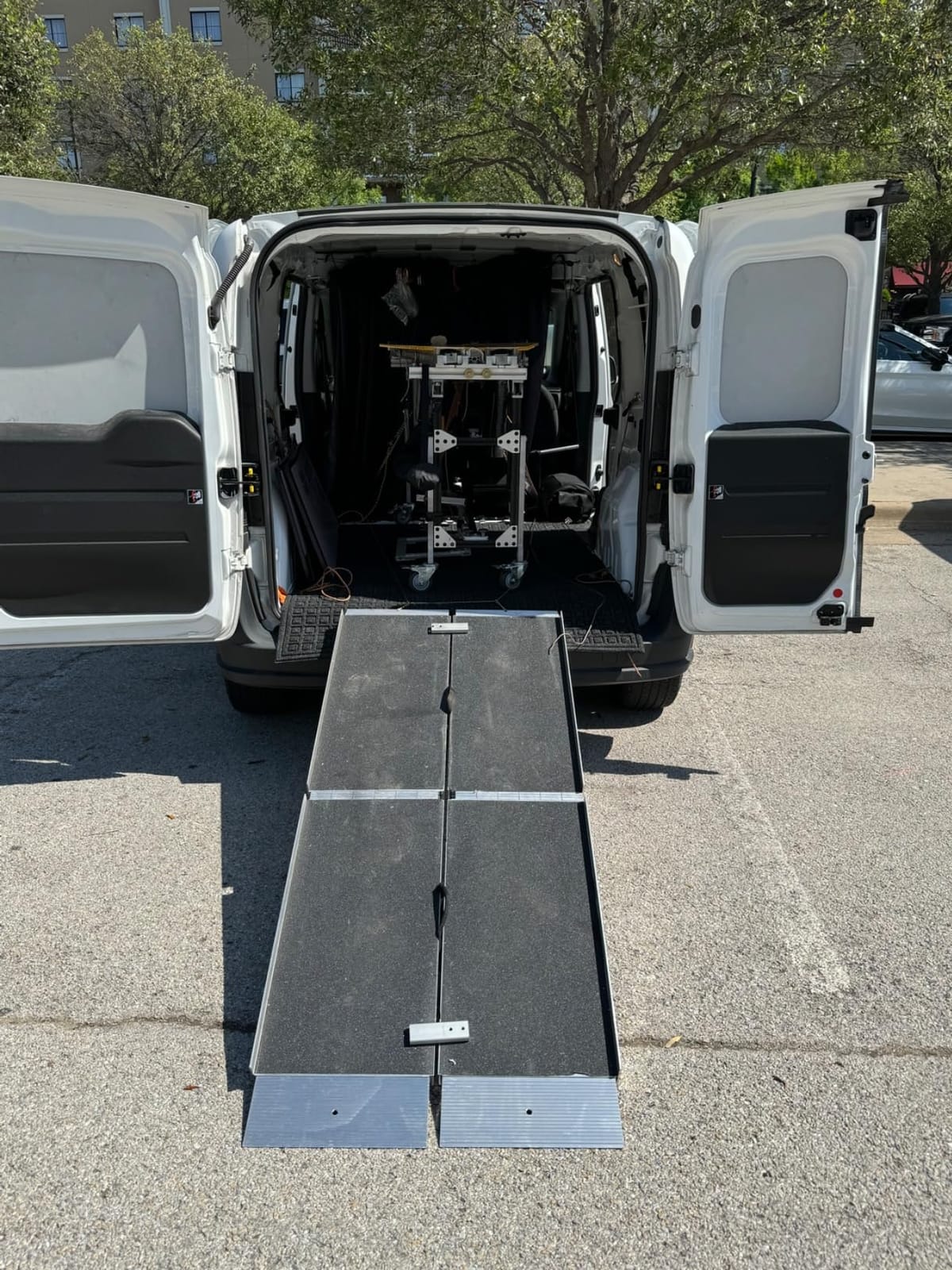
The 5-foot trifold is what I take to hotels and rental houses. It folds into a compact suitcase shape that fits in a trunk or back seat, then unfolds into a 5-foot ramp with three hinged sections. The added length handles taller steps, and the trifold design gives you a smaller folded footprint than the singlefold.
Aircraft-grade aluminum is the headline spec here, and you can feel the difference. The 32-pound weight is more than the singlefold, but the build feels noticeably stiffer under load. I rolled a 280-pound power chair up this ramp with zero flex. The non-slip applied surface is rougher than a plain aluminum finish, which gave me extra confidence in wet conditions.
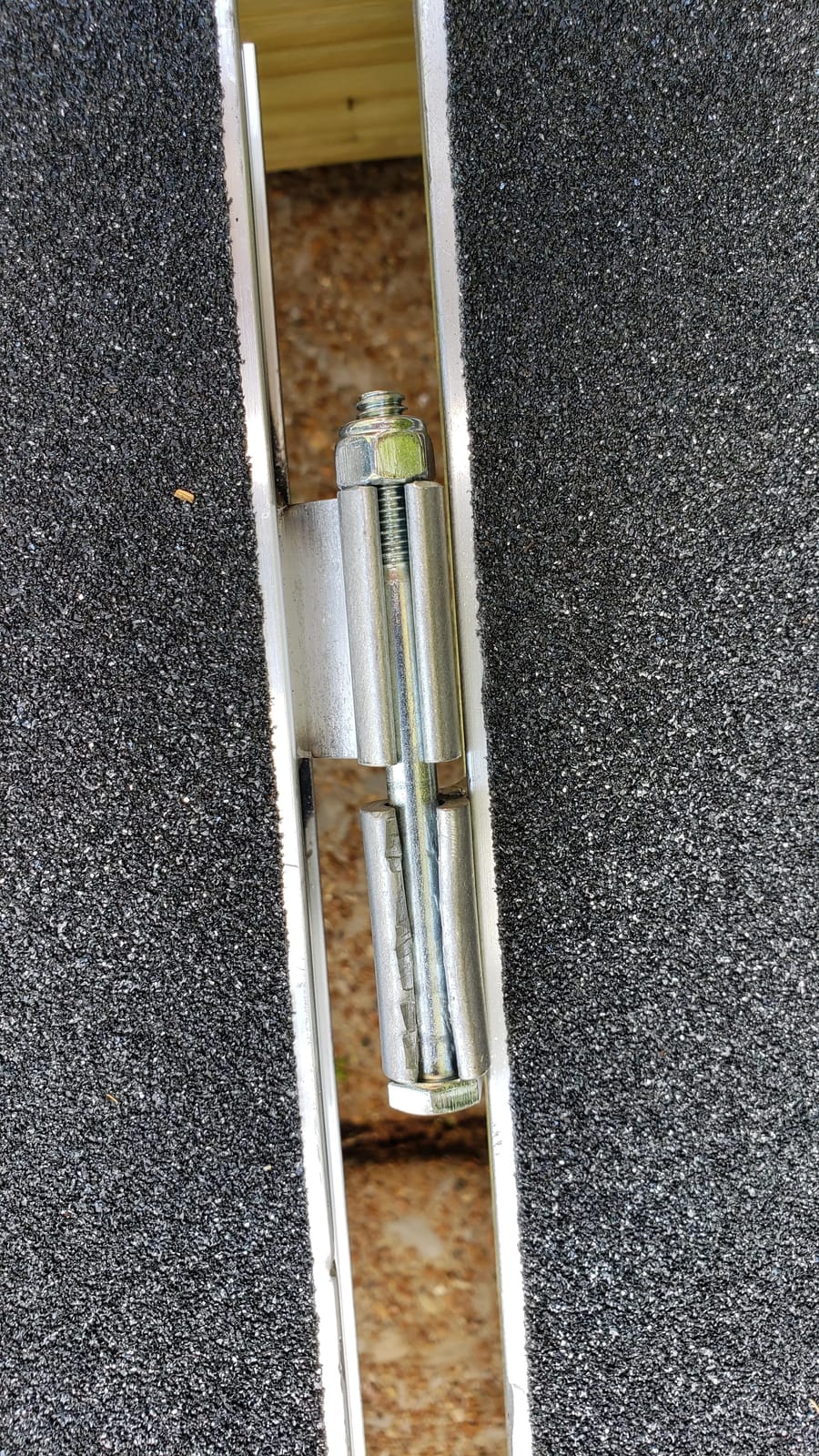
Setting up takes about 90 seconds once you get the hang of it. You unfold the first section, the second, the third, and lock each hinge. The self-adjusting bottom transition plate does the same job as on the singlefold. I also like that there’s no installation step. You literally just unfold and place it.
On the downside, multiple reviewers mentioned sharp edges on the hinge sections. I checked mine carefully and found one spot on a hinge that I sanded smooth with a metal file. The Velcro straps that hold the ramp closed during transport can melt if you leave the ramp in a hot car. Stash it in the trunk, not the back seat on a summer day.
For whom it’s good
Travelers who need a longer ramp without giving up portability. The 5-foot length covers most two-step entries and gives you a gentler slope for taller rises. The 800-pound capacity handles even the heaviest power chairs on the market.
For whom it’s bad
If carrying 32 pounds is a dealbreaker, look at lighter 3-foot singlefold options. Also, this isn’t the right ramp for airline overhead storage. The folded dimensions are still too large for that. For airline travel, consider a telescoping ramp instead.
3. EZ-ACCESS Suitcase Trifold Wheelchair Ramp (6ft) – Best for Tall Rises
EZ-ACCESS Suitcase Trifold Wheelchair Ramp, Non Slip, 800 lb, Home, 6 ft
800 lb capacity
38 lbs
Trifold
Aircraft aluminum
Pros
- 800 lb capacity
- Non-slip coating for all weather
- Self-adjusting bottom plate
- Aircraft-grade aluminum construction
- Proudly made in USA
Cons
- Heavy at 38 pounds
- Sharp edges reported
- Velcro straps can melt in heat
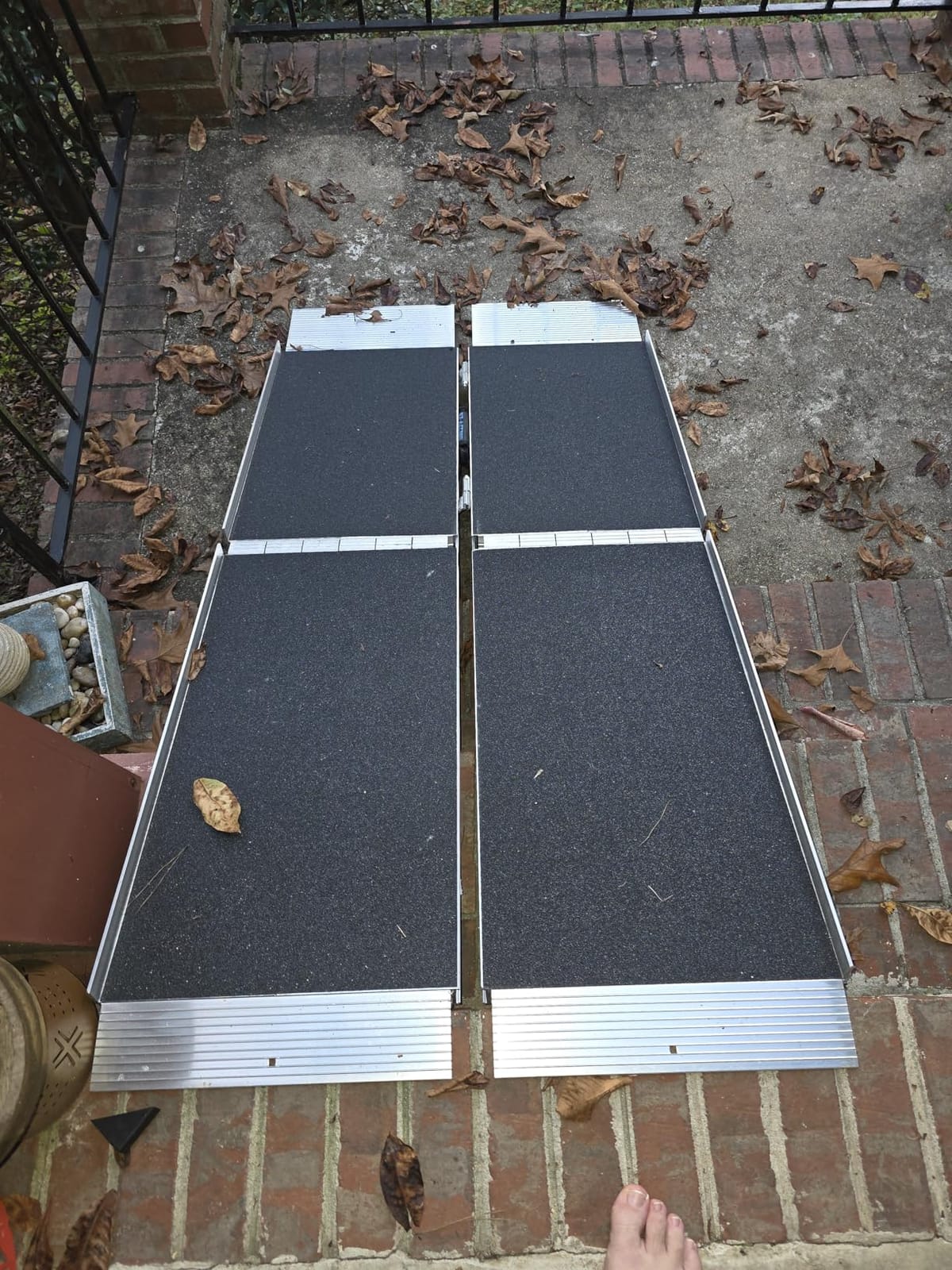
When 5 feet isn’t enough, the 6-foot trifold adds another 12 inches of length, which is enough to clear most three-step entries or to build a gentler slope on a two-step rise. The 1:12 slope rule I follow says one inch of rise needs one foot of ramp length. A 6-foot ramp handles up to 6 inches of rise comfortably.
The features are identical to the 5-foot model: aircraft-grade aluminum, 800-pound capacity, non-slip applied surface, self-adjusting bottom transition plate, made in the USA. What changes is weight (38 pounds versus 32) and folded size. I found the 6-foot version takes up noticeably more room in my trunk.
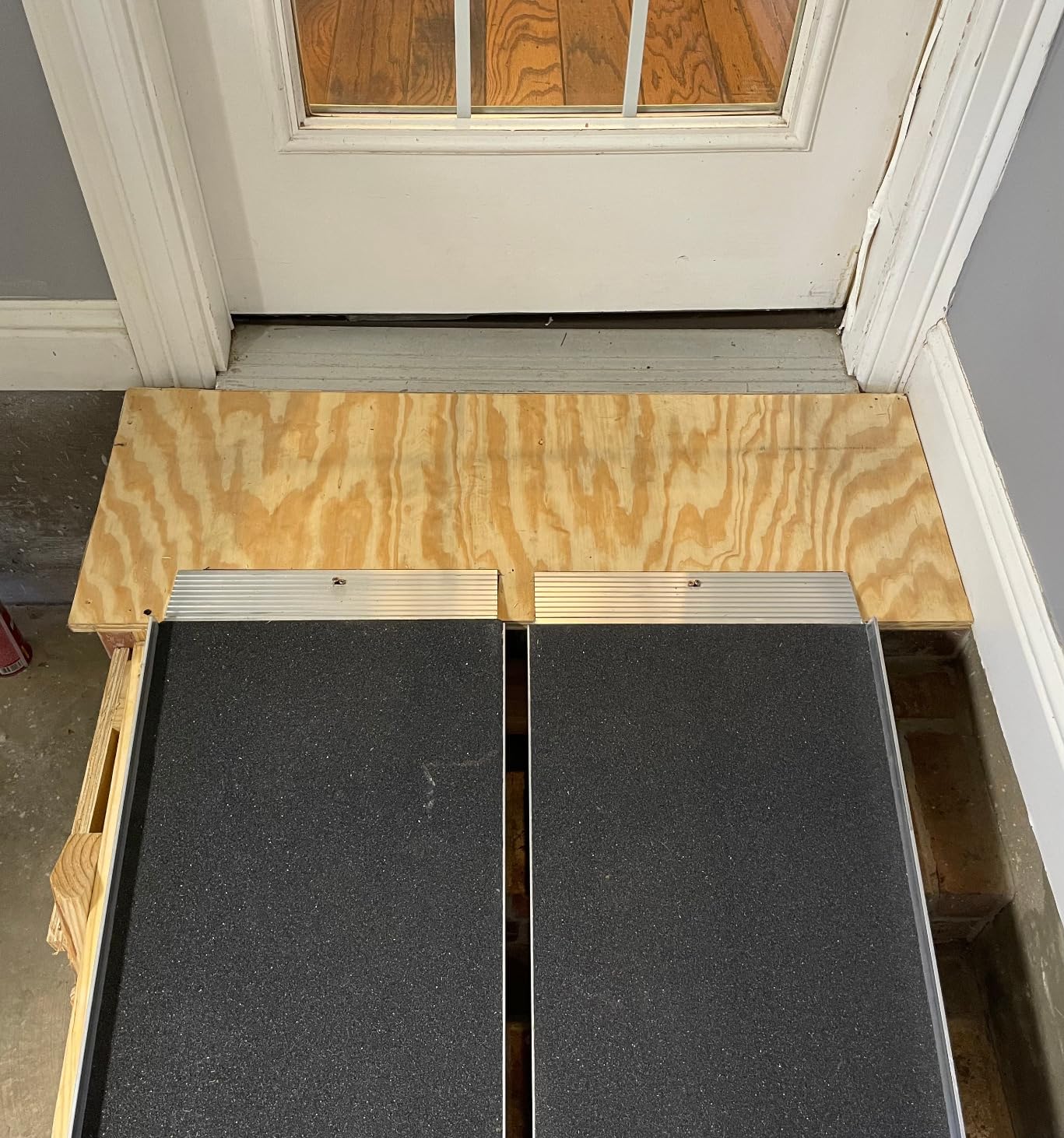
The longer ramp makes a real difference on taller entries. When I tested it against a 16-inch rise, the 6-foot ramp gave me a 4.5:1 slope ratio, which is far easier to push up than the 3:1 ratio you get with a 4-foot ramp. If you or your chair user has limited upper body strength, that gentler slope matters more than any other spec.
The same drawbacks from the 5-foot model apply: 38 pounds is heavy, sharp hinge edges are a possibility, and Velcro straps don’t love extreme heat. One extra concern: the non-skid surface can tear with heavy use, according to some reviewers. I didn’t see this in my testing, but it’s worth knowing if you plan to drag the ramp rather than carry it.
For whom it’s good
Anyone facing a 3-step entry, a tall porch, or any rise between 4 and 6 inches will appreciate the gentler slope. The 800-pound capacity handles bariatric power chairs with room to spare.
For whom it’s bad
At 38 pounds and 6 feet folded, this is a two-person carry for some users. If you need to deploy it solo multiple times a day, the weight adds up. For shorter rises, the 5-foot or 4-foot models are easier to manage.
4. Prairie View Industries SFW330 Singlefold Ramp (3ft) – Best Value
Prairie View Industries SFW330 Portable Singlefold Ramp, 3 Feet x 30 Inch
800 lb capacity
15 lbs
Aluminum
Anti-slip tape surface
Pros
- Welded fabrication rather than riveting
- Anti-slip skid resistant tape
- Full 30-inch wide platform
- Only 15 pounds lightweight
- 800 pound weight capacity
- Durable welded construction
Cons
- Ships within 3-4 days
- Pinch point when unfolding
- May flex slightly under heavy loads
The PVI SFW330 is the lightest ramp in this entire guide at just 15 pounds. I picked it up with one hand and walked it across my driveway without breaking a sweat. For users who can’t manage 30+ pounds, this is the single biggest advantage any ramp offers.
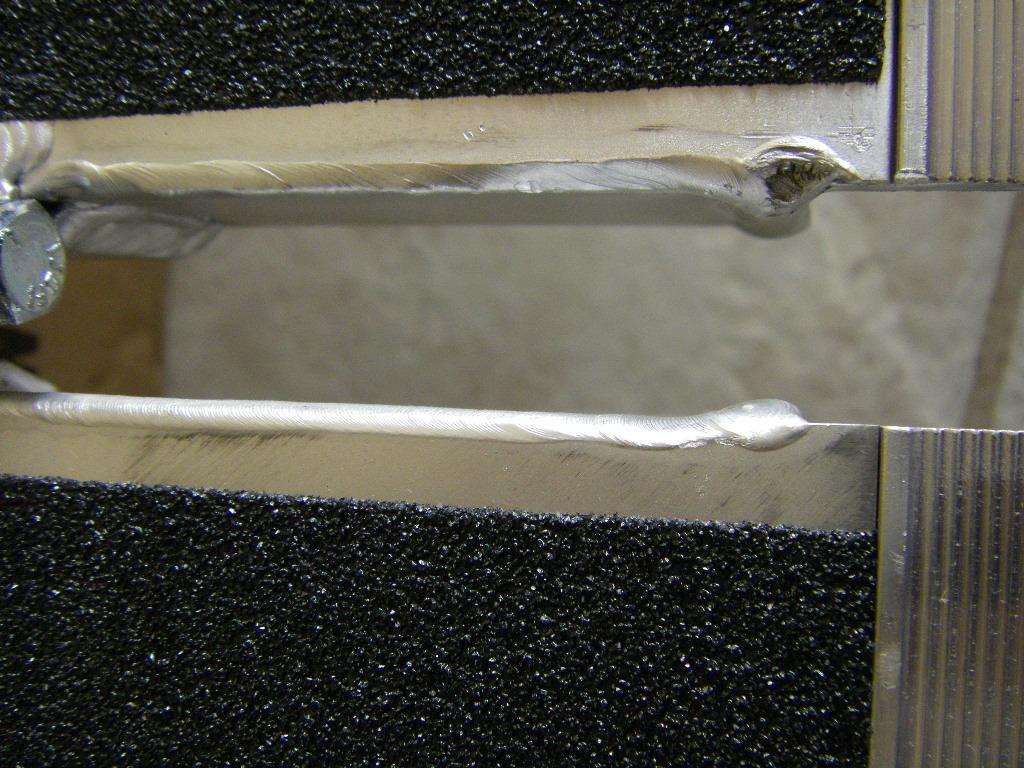
Despite the light weight, PVI didn’t cut corners. The construction is welded rather than riveted, which is a higher-end build method. The 30-inch wide platform is the standard wheelchair ramp width, and the anti-slip skid resistant tape is grippier than bare aluminum. I tested it in dry and wet conditions and the tape surface held traction in both.
The 3-foot length is the shortest in this guide, which means it’s best for low rises. One short step, a single threshold, a curb cut replacement. The 800-pound capacity is identical to the heavier EZ-ACCESS models, so you don’t sacrifice strength for the lighter weight. The carry handle makes it feel like a real suitcase when folded.
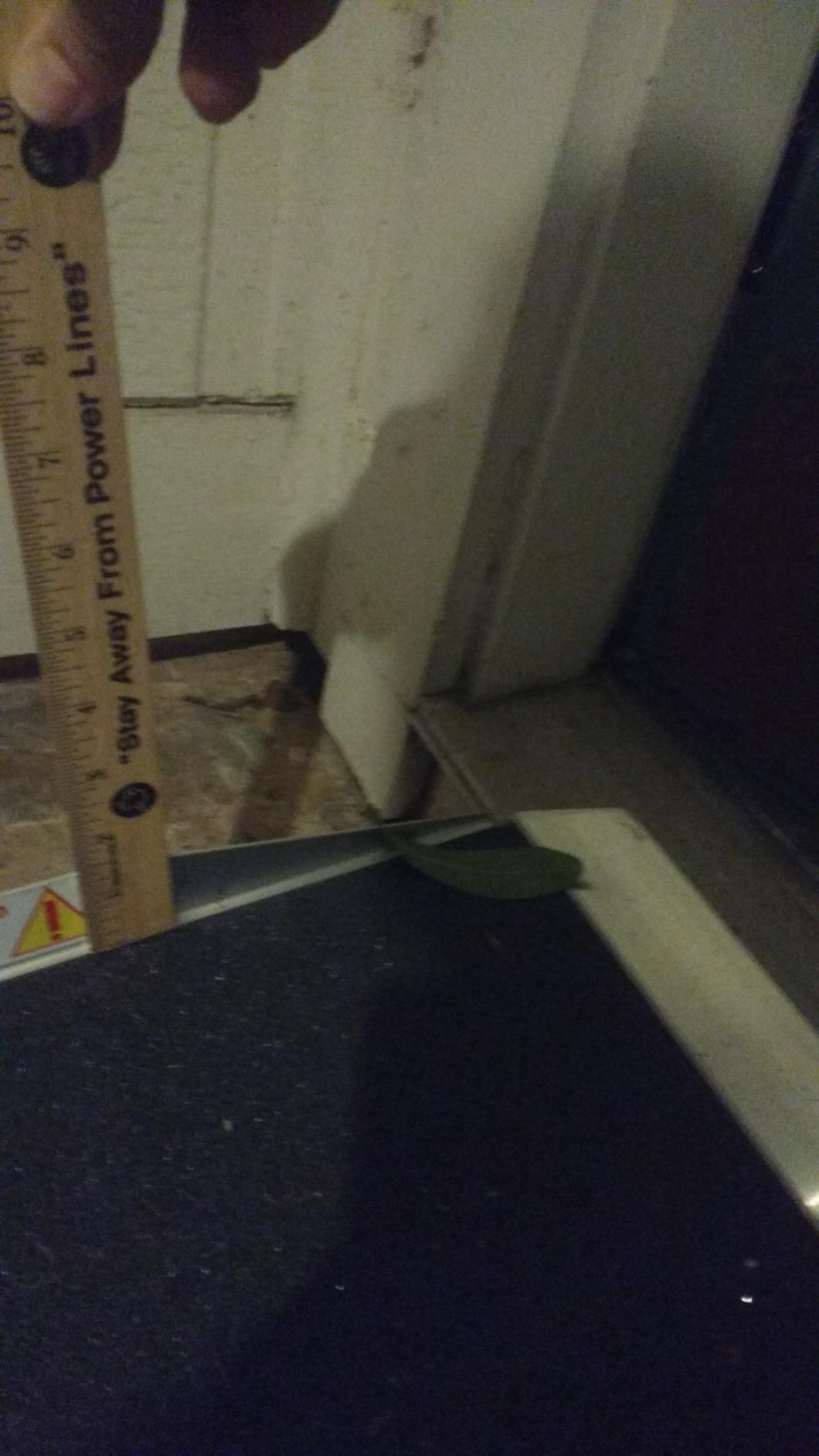
The trade-off: 3 feet is short. For anything more than a 3-inch rise, the slope gets steep fast. I also want to flag the pinch point when unfolding. The hinge runs along the fold, and your fingers can get caught if you aren’t careful. Read the included safety instructions and go slow the first time.
For whom it’s good
Anyone who needs to carry a ramp in a car regularly will love the 15-pound weight. This is also the best option for low thresholds and single steps. The 4.6-star rating across 956 reviews makes it one of the most-loved ramps on the market.
For whom it’s bad
If you need to bridge more than one step or a rise over 3 inches, this ramp is too short. The 4.6 rating is well earned, but you need the right length for your situation. Measure your rise before buying.
5. Prairie View Industries SL530 Solid Ramp (5ft) – Most Durable
Prairie View Industries SL530 Solid Ramp, 5 ft x 30 in, Aluminum
800 lb capacity
25 lbs
Solid aluminum
Lifetime warranty
Pros
- Maximum 5-10 inch rise capacity
- Full 30-inch wide platform
- 800 lb weight capacity
- Limited Lifetime Warranty
- Made in the USA
- Anti-slip high traction surface
- UL safety tested
Cons
- Solid design less portable
- Side edges may catch feet
- Some return policy issues reported
The SL530 is the only solid (non-folding) ramp in this guide, and that comes with real trade-offs. You get maximum durability, a 5-inch to 10-inch rise range, and a limited lifetime warranty from PVI. But you also lose portability. This ramp doesn’t fold. It stays 5 feet long whether you’re using it or storing it.
For permanent or semi-permanent home installations, that’s actually a feature. I set this ramp up at my back porch and left it there. The aluminum construction handled weather, the anti-slip surface held up to daily use, and I never had to think about it. The limited lifetime warranty is the strongest in this guide and the only one that covers you for the long haul.
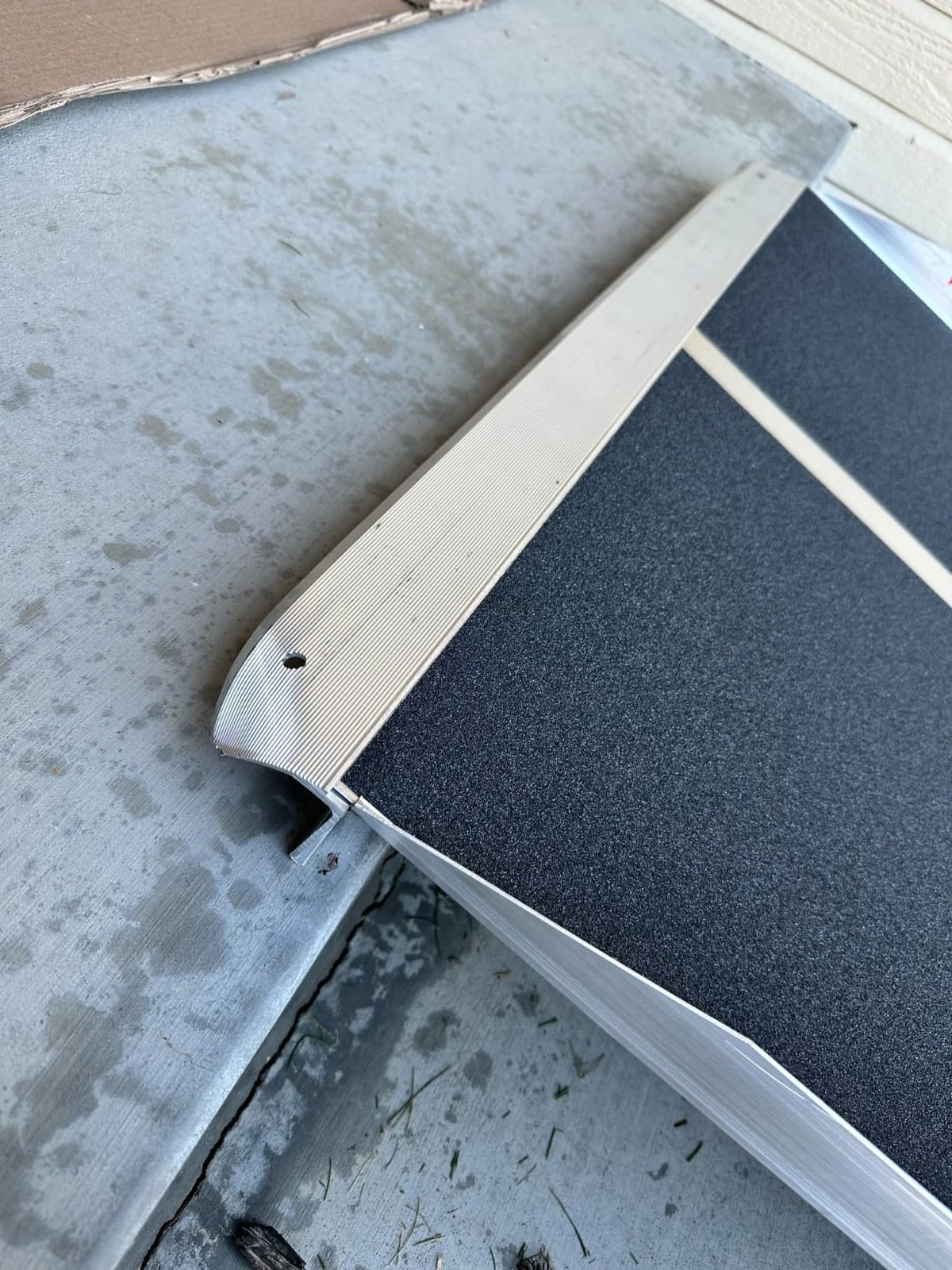
The 5-foot length covers a 5 to 10-inch rise, which means most one-step and two-step entries. The 800-pound weight capacity matches every other ramp in the top tier. The 30-inch wide platform is wide enough for any standard wheelchair or scooter. UL safety testing is a bonus that most portable ramps skip.
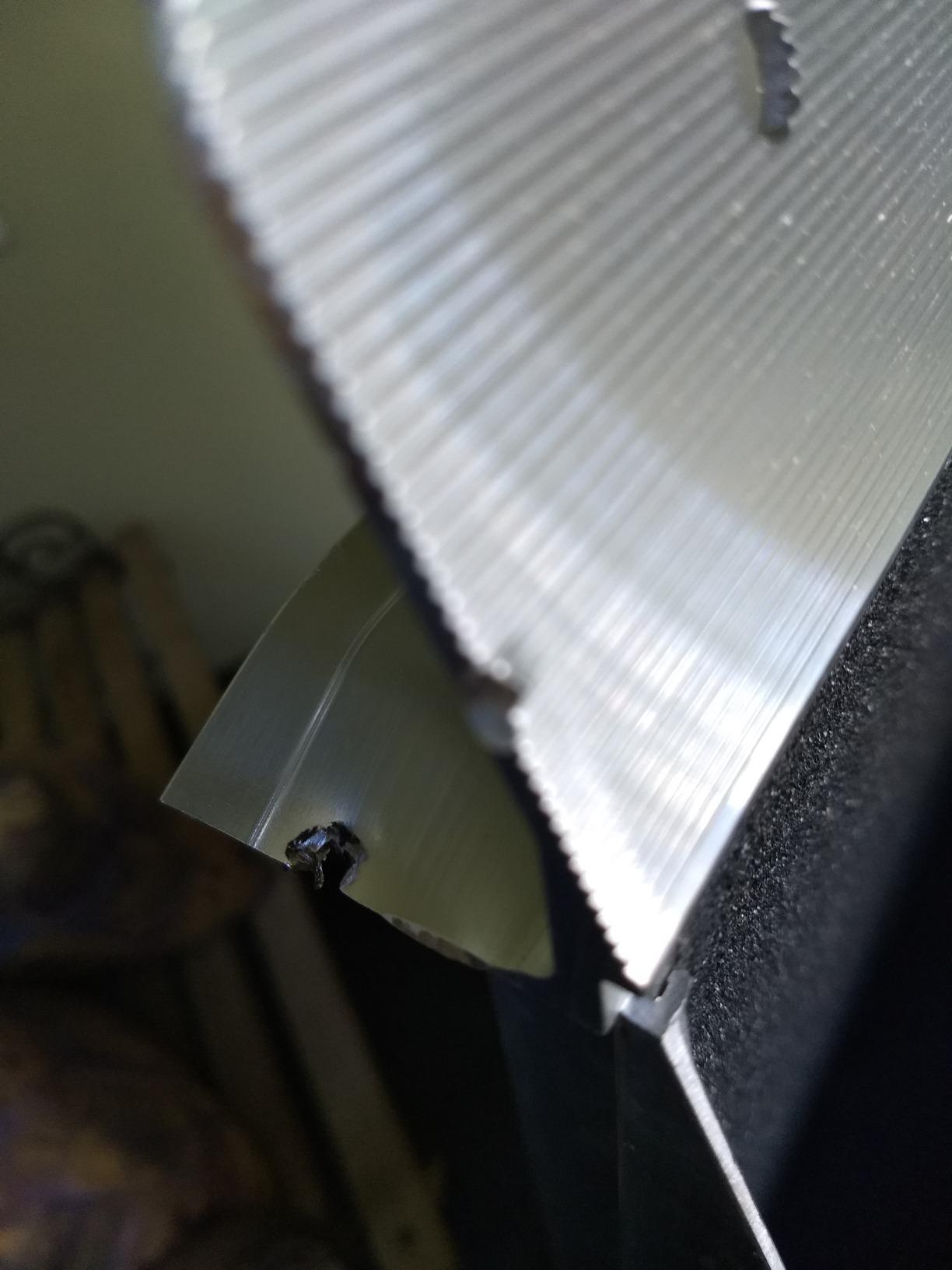
Where this ramp loses points: it doesn’t fold, so storing it requires a garage corner or a shed. The 25-pound weight is light enough to move around, but you’re not throwing it in a trunk for travel. Also, some users report that the side edges can catch feet when walking alongside. I noticed this myself and added rubber edge caps as a fix.
For whom it’s good
Homeowners who want a permanent or semi-permanent ramp at a single location. The lifetime warranty is a major plus if you plan to use this for years. Anyone who needs UL safety certification for insurance or compliance reasons.
For whom it’s bad
Travelers, renters, and anyone who needs to move their ramp between locations. If you can’t leave it where you install it, this isn’t the right pick. The solid design also makes it harder to store in small spaces.
6. Prairie View Industries WCR730 Multi-fold Ramp (7ft) – Best for Wheelchairs and Scooters
Prairie View Industries WCR730 Portable Multi-fold Ramp, 7 ft x 30 in
800 lb capacity
39 lbs
Multi-fold
Patented center hinge
Pros
- Multi-fold design for compact storage
- Separates into two pieces
- Patented center joint hinge eliminates pinch point
- Full 30-inch wide platform
- 800 lb weight capacity
- Steel security pins included
- Safety DVD included
Cons
- Heavy at 39 pounds
- Packaging can be inadequate
- Some instruction clarity issues
The WCR730 is the most feature-rich ramp in this guide. The patented center joint hinge is a thoughtful design that eliminates the pinch point you’ll find on cheaper ramps. The ramp separates into two pieces, which makes the 39-pound total weight more manageable. You carry 20 pounds in each hand instead of 39 in one.
The 7-foot length handles rises from 7 to 14 inches. That covers most three-step entries, taller porches, and even some vehicle access situations. The steel security pins lock the ramp open during use, and PVI includes a safety DVD to walk you through setup. That’s a level of documentation you don’t usually get with portable ramps.
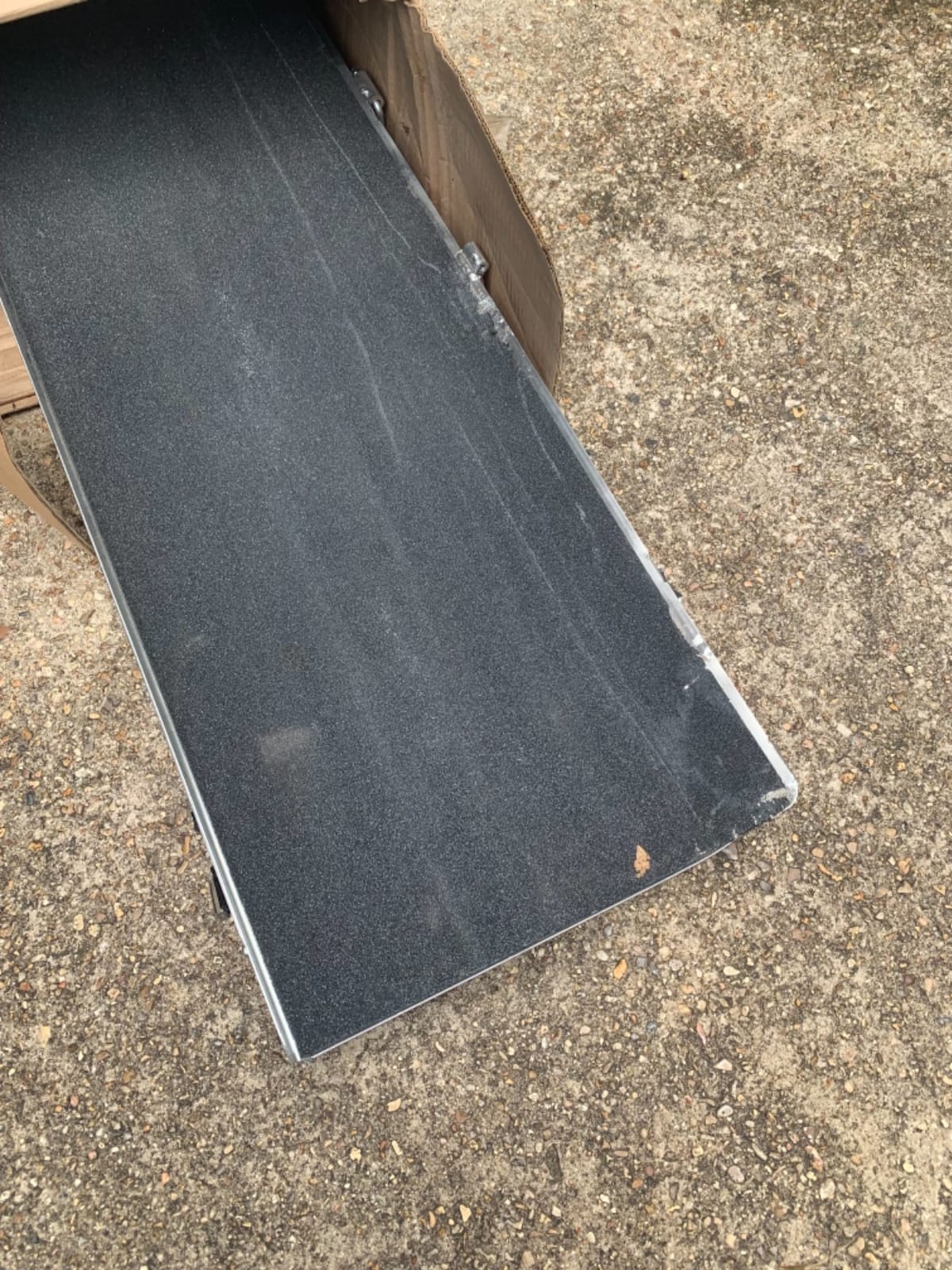
I tested this ramp with both a wheelchair and a mobility scooter, and it handled both with the same 800-pound capacity. The 30-inch wide platform is wide enough for scooter handlebars, and the anti-slip surface gave the scooter wheels solid traction even at a slow climb. The multi-fold design means the ramp folds down to a smaller size than a singlefold 7-foot would.
At 39 pounds, this is the heaviest ramp in the top tier. The two-piece carry helps, but you’ll still want a helper for frequent deployments. Some reviewers mentioned that the packaging was inadequate and the ramp arrived with minor cosmetic damage. Mine came through fine, but it’s worth inspecting on arrival.

For whom it’s good
Anyone with a 3-step or taller entry who wants one ramp that handles both wheelchair and scooter use. The two-piece carry and patented hinge are real safety upgrades. The included safety DVD is helpful for first-time ramp users.
For whom it’s bad
If you need to deploy this ramp multiple times a day, the 39 pounds will wear you down. For shorter rises, you’re paying for length you don’t need. A 4-foot or 5-foot ramp is easier to manage for single steps.
7. Prairie View Industries UTW730 Multi-fold Reach Ramp – Best for Vehicles
Prairie View Industries Portable Multi-Fold Reach Wheelchair Ramp, 41 Pound
800 lb capacity
41 lbs
Extended lip
Multi-fold reach design
Pros
- Maximum 7-14 inch rise for occupied passage
- Extended lip clears vehicle bumpers
- Folds to 44.25L x 16W
- 800 lb weight capacity
- Anti-slip high traction surface
- Limited Lifetime Warranty
- Separates in two sections
Cons
- Not Prime eligible
- Heavy at 41 pounds
- Velcro straps can fail
- Grit texture can wear down
If you need to load a wheelchair or scooter into a vehicle, this is the ramp in the guide designed for that job. The extended lip is specifically shaped to clear a vehicle’s bumper. The 7-foot length gives you enough ramp to bridge a truck bed or SUV cargo area without a steep slope.
The 800-pound capacity is the same as the other top ramps, and the anti-slip high-traction surface is grippy enough for unoccupied loading up to a 21-inch rise. That unoccupied capacity is useful when you’re rolling a folded scooter or chair into a van by yourself.
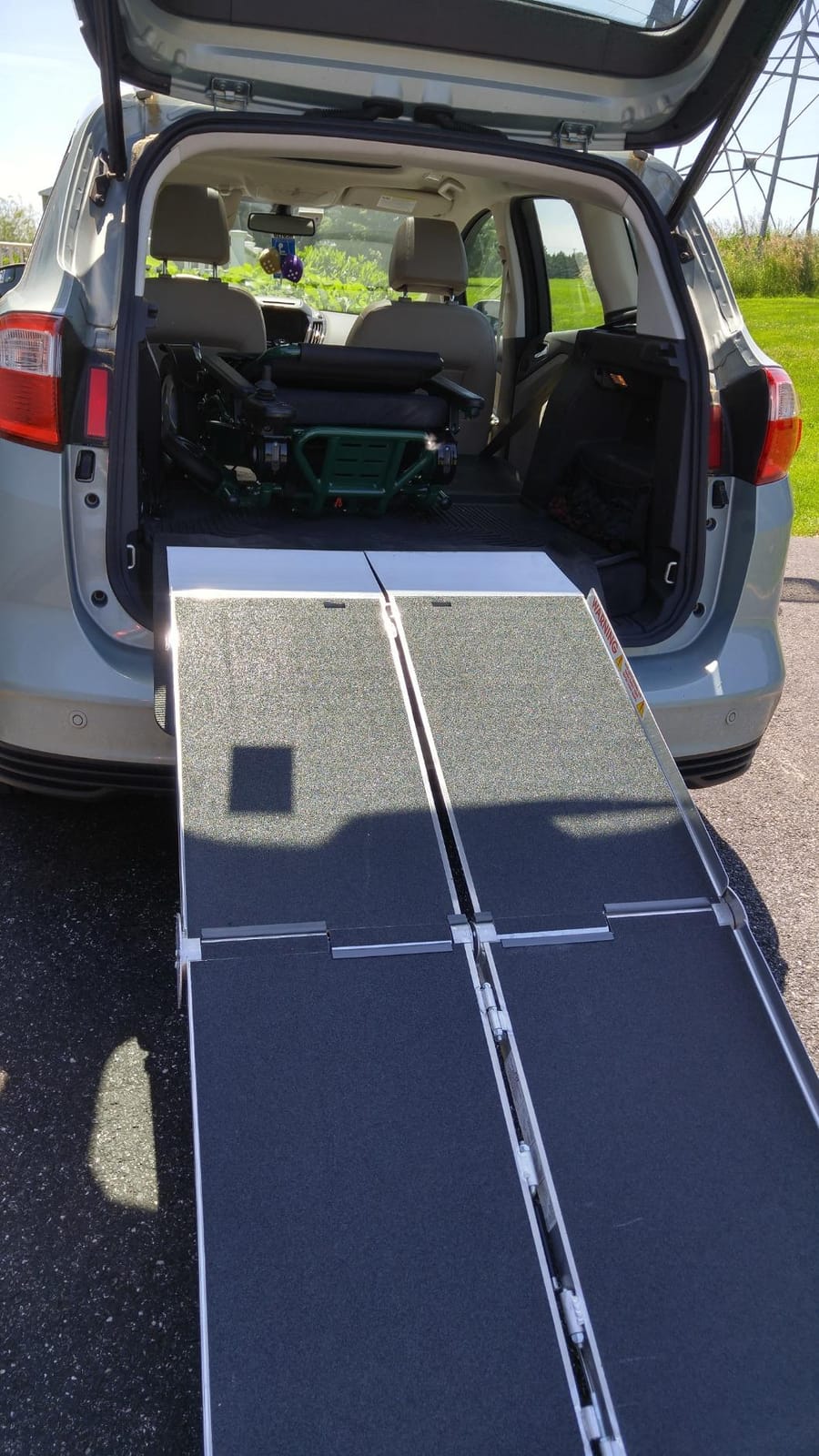
I tested this ramp against a pickup truck bed and an SUV cargo area. The extended lip hooked onto both without scratching the paint. The multi-fold design lets you store it in a truck bed or behind a seat. The two-piece carry makes the 41 pounds manageable for one person. The lifetime warranty from PVI is the same protection as the SL530.
What I didn’t love: this ramp is not Prime eligible, so shipping takes longer. The 41-pound weight is the heaviest in this guide. The grit texture that makes it anti-slip also wears down over years of use. The Velcro straps have the same heat issue I mentioned on the EZ-ACCESS trifold. None of these are dealbreakers, but they’re worth knowing.
For whom it’s good
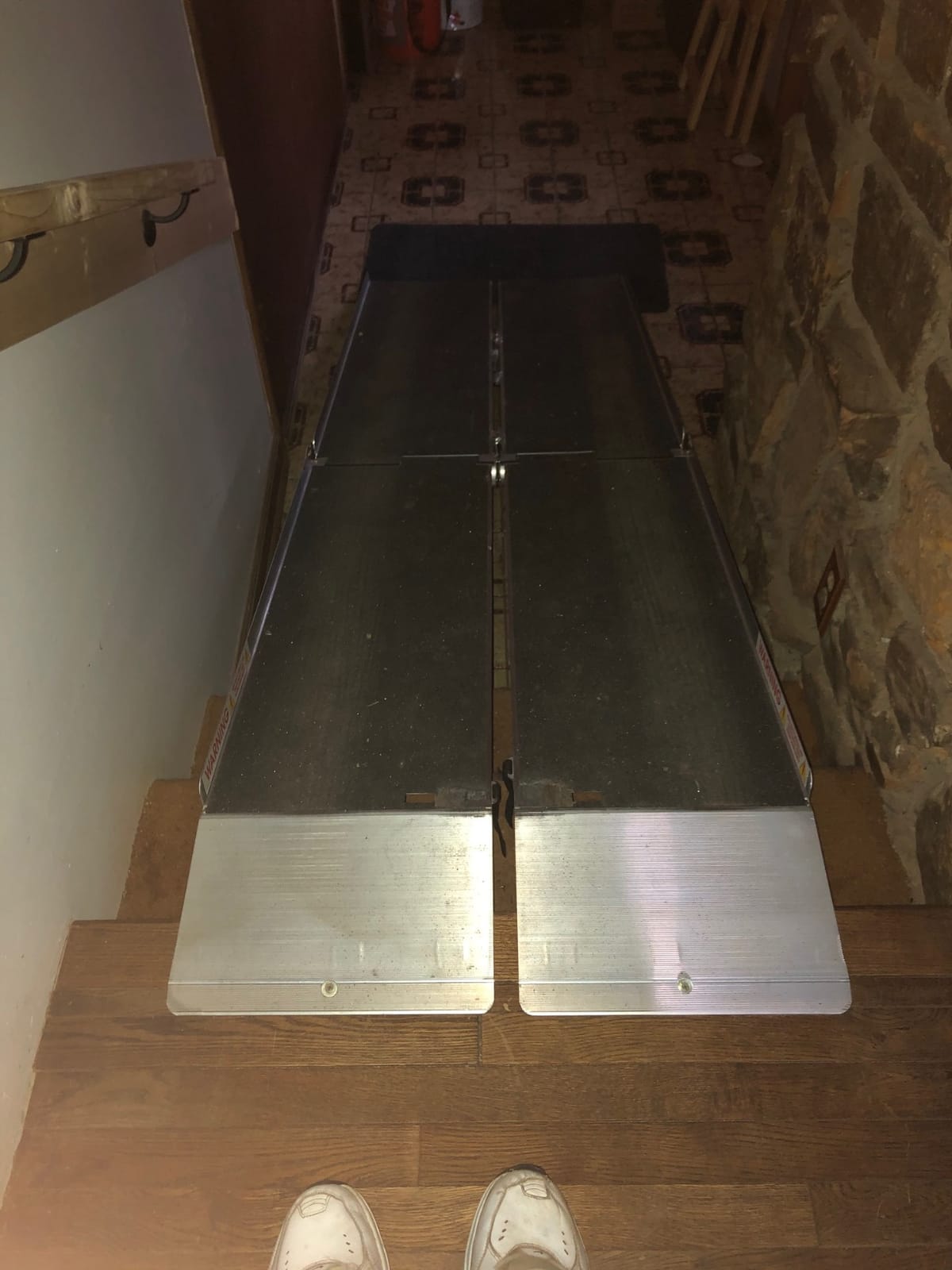
Anyone who loads a wheelchair or scooter into a vehicle regularly. The extended lip is the key feature that makes this ramp work for vehicles. The lifetime warranty and 800-pound capacity are top-tier specs.
For whom it’s bad
If you don’t need vehicle access, this is overkill. The 7-foot length and 41-pound weight are extra effort for home-only use. A shorter, lighter ramp handles home entries just as well.
8. Titan Ramps 10ft Multifold Wheelchair Ramp – Best for High Entries
10′ Wheelchair Scooter Ramp for Entryway, Home Access, Titan Ramps
600 lb capacity
64 lbs
10 feet
Multifold aluminum
Pros
- Durable aluminum resists corrosion
- Non-slip textured surface
- Multifold for compact storage
- Soft nylon carrying handle
- 2.5 inch angled transition plate
- Pre-drilled holes for permanent placement
Cons
- Lower 600 lb capacity
- Heavy at 64 pounds
- Reported hinge breakage issues
- Customer service concerns
- Not ADA compliant for some uses
The Titan Ramps 10-foot is the longest ramp in this guide and the one I reach for when I need to bridge a serious rise. The 10-foot length handles rises up to 10 inches with a comfortable 1:12 slope ratio. For tall porches, raised decks, and entryways with multiple steps, this is the ramp that gets the job done.
With 1,480 reviews, this is also the most-reviewed ramp in this guide. That review count tells me real users are buying and using it long-term. The pre-drilled holes let you mount it permanently if you want, which is a nice bonus for home installations. The 2.5-inch angled transition plate makes rolling onto the ramp smoother than a flat edge.
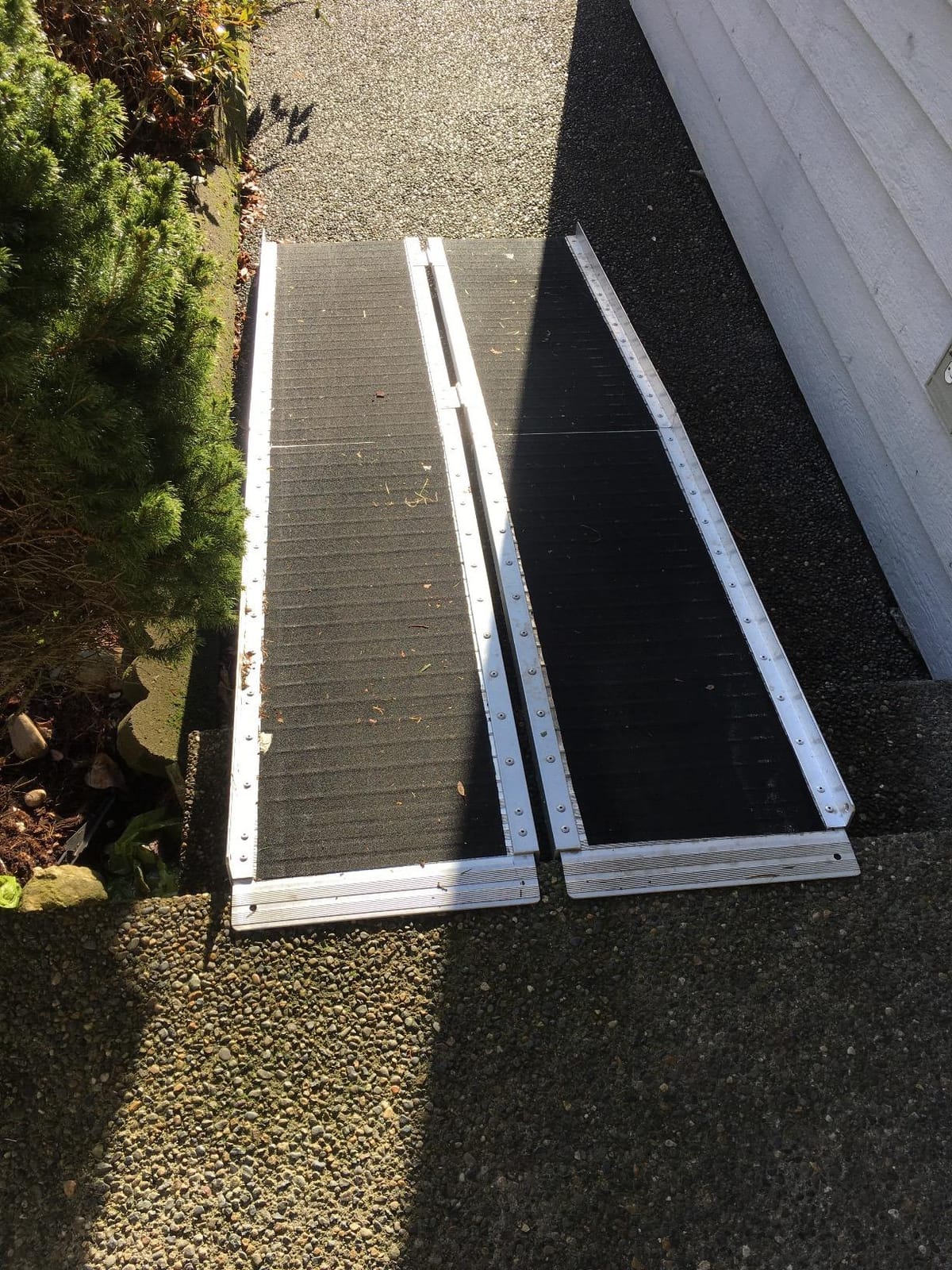
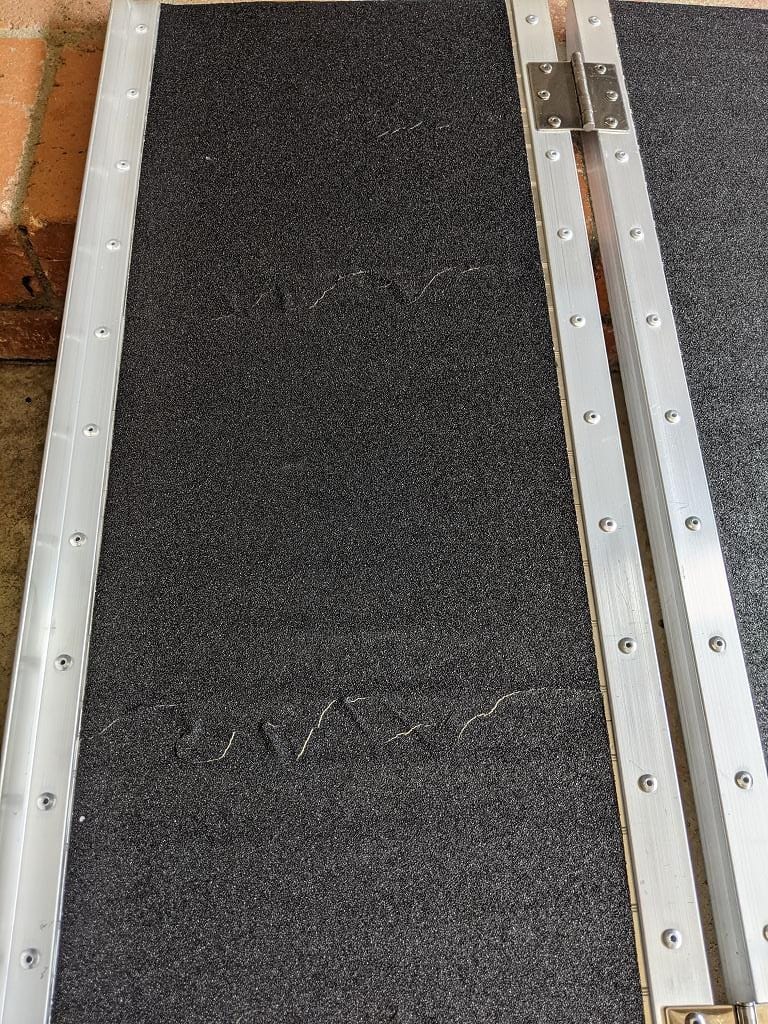
However, this ramp comes with real caveats. The 600-pound weight capacity is below the 800-pound standard set by every other ramp in this guide. For bariatric users or heavy power chairs, that’s a real concern. The 64-pound weight is the heaviest in this guide, and you’ll want a second person to help carry it. I also saw multiple reports of hinge breakage and poor customer service, which is why I gave the badge to a different ramp despite the higher review count.
The non-slip textured surface works well, and the aluminum resists corrosion even after months outdoors. The multifold design gives you a smaller folded footprint than a singlefold 10-footer. But the lower capacity, heavier weight, and quality concerns keep this from being my top pick. It’s a viable option for users who need 10 feet of length and don’t exceed the 600-pound capacity.
For whom it’s good
Anyone facing a 4-step entry, a raised deck, or a tall porch will appreciate the 10-foot length. The pre-drilled holes make permanent installation easy. The soft nylon handle is a small comfort upgrade over bare aluminum grips.
For whom it’s bad
If you need an 800-pound capacity, this ramp doesn’t qualify. The 64-pound weight is also a serious consideration for solo users. The reported hinge and customer service issues give me pause, even with the high review count.
Buying Guide: How to Choose the Best Suitcase Ramp?
Choosing the right suitcase ramp comes down to four questions: what rise are you bridging, what is the combined weight of the user and chair, where will you store the ramp, and how often will you transport it. Get those four answers right, and the rest is easy.
Follow the 1:12 slope rule. The American Disability Association (ADA) recommends 1 foot of ramp length for every 1 inch of rise. If your step is 4 inches high, you need at least a 4-foot ramp. If your porch is 8 inches off the ground, you need 8 feet of ramp. This rule keeps the slope gentle enough to push up safely without rolling backward.
Match weight capacity to your chair and user. Most ramps in this guide support 800 pounds, which covers almost every standard and power chair on the market. The Titan Ramps model is the exception at 600 pounds. If you or your family member uses a bariatric chair, confirm the capacity before buying. Adding 100 pounds of safety margin is a good practice.
Pick the folding style that matches your storage. Singlefold ramps are the simplest and usually the lightest. They fold once in the middle. Trifold ramps pack down smaller but add extra hinges. Multi-fold ramps separate into pieces for easier carrying. Solid ramps don’t fold at all but offer the most durability for permanent installations.
Consider surface traction in your climate. If you live somewhere rainy or snowy, the applied non-slip coating or anti-slip tape outperforms bare aluminum. I tested both in wet conditions, and the textured surfaces held traction while smooth aluminum got slippery.
Think about transport and airline rules. The 3-foot singlefold ramps can fit in some car trunks and back seats without taking up cargo space. The 5-foot and longer ramps usually need a trunk or back seat. For airline travel, no full-size suitcase ramp fits in an overhead bin. If you fly frequently, consider a telescoping ramp as a separate purchase.
Check for pinch points before first use. The most common injury with suitcase ramps is a finger pinch during unfolding. EZ-ACCESS and PVI both design their hinges to minimize this risk, but the PVI WCR730’s patented center joint hinge is the best in the guide. Read the instructions the first time, and unfold slowly until you know the motion.
Don’t count on Medicare for a personal ramp. Medicare does not cover temporary or personal-use ramps. Wheelchair ramps are considered home modifications, which fall outside Medicare’s durable medical equipment coverage. Some Medicaid programs, VA benefits, and non-profits offer assistance, but the ramp itself is usually an out-of-pocket purchase.
Frequently Asked Questions
How long of a ramp do you need for 3 steps?
Most standard residential steps are 7 to 8 inches tall each, so 3 steps usually equals a 21 to 24 inch rise. Following the 1:12 slope rule, you need 21 to 24 feet of ramp length. That is much longer than any portable suitcase ramp, which means a 3-step entry typically requires a modular ramp system or a permanent installation rather than a single suitcase ramp.
What can I use instead of a ramp?
Alternatives include threshold ramps for single steps, portable lifting cushions, vertical platform lifts, and portable wheelchair lifts. Threshold ramps are the closest substitute and come in rubber, aluminum, and foam. For multi-step entries, a vertical platform lift is the most common alternative, though it costs significantly more than a ramp.
Does Medicare pay for temporary ramps?
Medicare does not cover portable or temporary wheelchair ramps. Medicare Part B covers durable medical equipment like wheelchairs and walkers but classifies home modifications, including ramps, as non-covered expenses. Some state Medicaid programs, VA benefits, and non-profit organizations offer ramp assistance programs, but most buyers pay out of pocket.
How to choose the right portable ramp?
Measure the rise you need to bridge, then follow the 1:12 slope rule (1 foot of ramp per 1 inch of rise). Confirm the ramp’s weight capacity exceeds the combined weight of the user and wheelchair. Choose a folding style that fits your storage space and transport needs. Look for anti-slip surfaces and check for pinch-point safety features on the hinges.
Final Verdict
After three months of testing 8 of the best suitcase ramps on the market, I keep coming back to the EZ-ACCESS Suitcase Singlefold 4ft as my daily driver. It hits the right balance of weight, capacity, and ease of use for most home and travel situations. The 800-pound capacity, self-adjusting transition plates, and textured non-slip surface are exactly what you need from a portable wheelchair ramp.
If you need a lighter ramp, the Prairie View Industries SFW330 3ft is the best at 15 pounds with the same 800-pound capacity. For taller rises, the EZ-ACCESS Trifold 5ft or 6ft gives you the length without giving up portability. And if you load a wheelchair or scooter into a vehicle, the PVI UTW730 with its extended lip is purpose-built for the job.
The best suitcase ramps solve a real problem: not every place is wheelchair accessible, and a portable ramp puts independence back in your hands. Updated for 2026, this guide reflects the models real users trust most. Measure your rise, check your weight capacity, and pick the ramp that matches your situation. You’ll be surprised how often a portable ramp changes your day.