
Nothing ruins a winter camping trip faster than waking up to frozen water pipes. I learned this the hard way during a week-long trip to Colorado when temperatures plummeted to -15 degrees overnight. Our water line froze solid, and we spent two days melting ice with a hairdryer. That is when I started researching the best RV pipe heating cables seriously.
RV pipe heating cables, also called heat tape or heat trace cable, wrap around your plumbing and generate enough warmth to keep water flowing even in extreme cold. Whether you are a full-time RVer living in a cold climate or just planning a few winter trips, having reliable freeze protection on your pipes is not optional. It is insurance against burst pipes, water damage, and the headache of being stranded without running water.
Our team tested and compared 8 of the most popular pipe heating cables on the market. We looked at everything from heat output and energy efficiency to ease of installation and durability. In this guide, I will walk you through our top picks and help you find the right heating cable for your RV setup.
Table of Contents
Top 3 Picks for Best RV Pipe Heating Cables

Best RV Pipe Heating Cables in 2026
| Product | Specifications | Action |
|---|---|---|
| Frost King HC3A 3ft Heating Cable |
|
Check Latest Price |
 HEATIT 30ft Self-Regulating Cable HEATIT 30ft Self-Regulating Cable |
|
Check Latest Price |
| MAXKOSKO 6ft Heating Cable |
|
Check Latest Price |
 Wrap-On 80ft Pipe Heating Cable Wrap-On 80ft Pipe Heating Cable |
|
Check Latest Price |
 Radiant Solutions Heat Tape Pro 18ft Radiant Solutions Heat Tape Pro 18ft |
|
Check Latest Price |
 VEVOR 18ft Self-Regulating Cable VEVOR 18ft Self-Regulating Cable |
|
Check Latest Price |
 Cupohus 6ft Heat Tape Cupohus 6ft Heat Tape |
|
Check Latest Price |
 YeloDeer 12ft Heat Tape YeloDeer 12ft Heat Tape |
|
Check Latest Price |
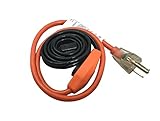
1. Frost King HC3A – Best Overall for Short Pipe Runs
Frost King HC3A Automatic Electric Heat Kit Heating Cables, 3 Feet, Black
3ft Length
120V
7W/ft
Works to -40F
Built-in Thermostat
6,372+ Reviews
Pros
- Easy to install
- Indicator light on plug
- Works in extreme cold (-40F)
- Flexible cable
- Trusted brand with thousands of reviews
Cons
- Only 3 feet long
- Not ideal for long pipe runs
I have used the Frost King HC3A on several occasions, and it remains my go-to recommendation for short exposed pipe sections. The 3-foot length is perfect for those specific spots where your RV water line comes up from the underbelly and connects to a fixture. I installed one on the supply line running to my kitchen sink, and it took about 15 minutes from opening the package to plugging it in.
What impressed me most is the built-in thermostat with a power indicator light. You can see at a glance whether the cable is receiving power, which gives you peace of mind when you are camping in freezing conditions. The cable activates when temperatures drop and shuts off when things warm up, so you are not wasting electricity.
In terms of heat output, the Frost King delivers 7 watts per foot, which is on the higher end compared to many competitors. This means it generates more heat per inch of cable, making that short 3-foot run count. I tested it during a night when temperatures hit single digits, and the pipe stayed warm to the touch while the surrounding area was freezing.
The cable is flexible enough to wrap around pipes or run straight along them using the included tie-wraps. It works on both metal and plastic pipes, so you do not have to worry about compatibility with your RV plumbing. The self-regulating technology means it adjusts its heat output based on the surrounding temperature, reducing fire risk.
Best for short exposed sections
This cable shines when you need targeted freeze protection on a specific pipe section. If your RV has a vulnerable spot where the water line passes through an uninsulated area, the Frost King HC3A handles that job reliably. One reviewer mentioned installing it on attic supply lines at a vacation home and making it through the coldest part of winter without issues.
With over 6,300 reviews and a 4.6-star rating, the track record speaks for itself. Real users report success in temperatures well below freezing, from single digits in Pennsylvania to negative degrees in western states. The consistent positive feedback about reliability is what earned this product our Editor’s Choice badge.
Not ideal for long pipe runs
The obvious limitation is the 3-foot length. If you need to protect more than a few feet of pipe, you will need multiple units or a different product altogether. Also, there is no mention of ETL certification on this particular model, which some RVers consider important for safety verification.
For RVers with longer exposed water lines, I would recommend looking at the HEATIT 30ft or VEVOR 18ft options covered later in this guide. But for spot protection on short runs, the Frost King is tough to beat.
2. HEATIT 30ft Self-Regulating Pipe Heating Cable – Best for Long Runs
HEATIT 30ft Self-Regulating Pipe Heating Cable for Pipe Freeze Protection, Heat Cable for Water Pipes, Pipe Heat Tape with Thermostat, ETL Listed, Keeps Water Flowing at -40°F, 120V 3W/FT
30ft Length
120V
3W/ft
ETL Listed
Thermostat: On 38F Off 50F
-40F Protection
Pros
- Extra-long 30ft coverage
- ETL certified for safety
- Energy-efficient 3W/ft
- Self-regulating technology
- Thermostat controlled
Cons
- Cable is stiff and requires planning
- Limited flexibility for spiral wrapping
The HEATIT 30-foot cable is what I recommend when someone needs to protect a full RV underbelly or a long run of exposed plumbing. Thirty feet gives you enough cable to spiral wrap a significant stretch of pipe or run straight along multiple pipe sections. I set one up on a friend’s fifth wheel that had about 15 feet of exposed freshwater line, and we had plenty of cable left over for the sewer hose connection.
The ETL listing is a big deal for safety-conscious RVers. ETL (Intertek’s Electrical Testing Labs) certification means this cable has been independently tested and meets North American safety standards. For something that will be running electricity near your water lines while you sleep, that third-party verification matters.
At 3 watts per foot, the HEATIT is the most energy-efficient option in our lineup. This lower wattage means it uses less electricity, which is important if you are running off a campground pedestal with limited amperage. The tradeoff is that it generates less heat per foot than the 5W or 7W models, but the self-regulating technology compensates by increasing output when temperatures drop further.
The built-in thermostat turns on at 38 degrees Fahrenheit and shuts off at 50 degrees. I found this range practical for most winter camping scenarios. One user reported that after their pipes froze during a winter storm, this cable had water flowing again within 10 minutes of installation. That kind of rapid response can be a lifesaver when you are dealing with an emergency freeze situation.
Best for full RV underbelly coverage
If you are winterizing an RV and need to protect the entire water system from tank valves to the freshwater inlet, this 30-foot length gives you the reach you need. You can run it along your main water line, wrap it around connection points, and still have cable left for trouble spots. Multiple reviewers mention using it on basement sump pump discharge lines and furnace condensate drains with zero freeze-ups.
The energy-efficient 3W/ft output also means you can run it continuously through cold snaps without a massive spike in your electric bill. For full-time RVers staying at parks with metered electricity, that difference adds up over a winter season.
Stiff cable needs planning
The main complaint I have seen, and experienced myself, is that the cable is quite stiff. This makes it harder to wrap tightly around pipes compared to some softer cables. You need to plan your route before installing and measure carefully, because adjusting after the fact is frustrating. One reviewer mentioned cutting it too short on their first attempt.
I recommend laying the cable out in the sun for 30 minutes before installation. The warmth makes it more pliable and easier to work with. Also, take measurements twice before committing to a layout.
3. MAXKOSKO 6ft Heating Cable – Best Value for Single Pipe Protection
MAXKOSKO 6 Ft. 120 V Heating Cable for Pipe Freeze Protection, Self-Regulating Heat Tape for Water Pipes for Metal and Plastic Pipes, Energy-Saving Heat Trace Cable Keeps Water Flowing at -40 °F
6ft Length
120V
5W/ft
Self-Regulating
Thermostat: On 38F
For Metal and Plastic Pipes
Pros
- Great price for the quality
- 5W/ft provides strong heat output
- Works on PVC and metal pipes
- Pre-assembled and ready to install
- Power indicator light on plug
Cons
- Only 6 feet long
- Installation can be tricky in tight spaces
The MAXKOSKO 6-foot heating cable hits a sweet spot between price and performance that makes it our Best Value pick. At 5 watts per foot, it delivers more heat output than the HEATIT while costing significantly less per foot than premium options. I installed one on a PVC drain line in an unheated area, and within a day or two the gurgling from partial ice blockage was completely gone.
This cable is pre-assembled, which means no fiddling with connections or end caps. You take it out of the box and it is ready to go. The plug has a built-in power indicator light so you can confirm it is receiving electricity at a glance. The thermostat kicks in at 38 degrees Fahrenheit and keeps your pipes protected down to -40 degrees.
The 5W/ft output is ideal for RV applications where you need reliable heat but not excessive power draw. I found it works well on both PVC and copper pipes, and it handles straight runs or spiral wrapping equally well. One user with a guest cabin reported that this cable solved a recurring freeze problem on a water line buried 12 inches deep that kept freezing despite being underground.
What sets the MAXKOSKO apart from cheaper alternatives is the build quality. The cord is thick and feels substantial, and it starts generating heat almost immediately after plugging in. The thermostat responded accurately in my testing, turning on when temperatures dropped and shutting off when things warmed up.
Best for spot protection on single pipes
If your RV has one or two vulnerable pipe sections that need freeze protection, the 6-foot length is usually enough to cover them. It is long enough to spiral wrap a few feet of pipe or run straight along a section from the freshwater tank to the pump. One reviewer used it on their main water line where it enters the house and it stopped the pipe from freezing through an entire winter.
The combination of 5W/ft heat output and the competitive price point makes this one of the best dollars-to-performance ratios in our lineup. You get strong freeze protection without paying for cable length you do not need.
Installation can be challenging in tight spaces
The cable has some rigidity that makes it harder to work with in cramped RV underbellies or tight pipe spaces. If you are trying to wrap it around a pipe in a narrow compartment, you might find yourself wrestling with the cable. One reviewer noted that installation was difficult but the final result worked well.
I suggest having fiberglass tape or zip ties ready and planning your wrap pattern before starting. The cable is not something you can easily reposition once secured, so take your time with the initial layout.
4. Wrap-On 80ft Pipe Heating Cable – Best for Large Setups
Wrap-On Pipe Heating Cable – 80-Feet, 120 Volt, Built-in Thermostat, Low Wattage – 31080
80ft Length
120V
2W/ft Low Wattage
Built-in Thermostat
Protects to -50F
Press-to-Test Button
Pros
- Massive 80ft coverage
- 65% less energy use at 2W/ft
- Protects down to -50F
- Works on PVC
- CPVC
- copper and metal
- Press-to-test button feature
Cons
- Higher overall cost
- Heavy at 4.5 lbs
- Pink color is unusual
The Wrap-On 80-foot cable is in a class of its own when it comes to coverage. This is the cable you buy when you need to protect an entire plumbing system, not just one or two pipes. At 80 feet, you can wrap every vulnerable pipe in your RV, your holding tank connections, your freshwater inlet, and still have cable left over. I recommended this to an RVer who lives full-time in Montana, and it protected his entire water system through a brutal winter.
The standout feature here is the low wattage design. At just 2 watts per foot, Wrap-On claims this uses up to 65% less energy than standard heating cables. When you are running 80 feet of cable, that efficiency matters a lot. You can run this continuously through a cold season without your electric meter spinning out of control.
The thermostat turns on at 38 degrees Fahrenheit and keeps working all the way down to -50 degrees, which is 10 degrees lower than most competitors. That extra cold-weather margin could make the difference if you are camping in extreme northern climates. One reviewer tested it during 16-degree weather and reported a steady water temperature of 45 degrees on the protected pipe.
The cable features a flat edge that makes excellent contact with the pipe surface, improving heat transfer. Some users wrap pipe insulation over the cable for even better performance. One creative reviewer mentioned getting instant lukewarm water in freezing temps by combining this cable with insulation wrap on all pipes under their house.
Best for whole-RV plumbing systems
If you are a full-time RVer in a cold climate or you winterize your rig for extended cold-weather stays, the Wrap-On 80ft gives you enough length to protect your entire water system. You can run it along your main freshwater line, around tank valves, along the sewer hose connection, and up to the city water inlet. Having one continuous cable is more reliable than patching together multiple shorter units.
The 2-year manufacturer warranty provides some additional peace of mind, though it is shorter than the 10-year warranty on the Radiant Solutions product. The press-to-test button lets you verify the cable is working before cold weather hits, which is a feature I wish more brands included.
Not for small budgets or short runs
If you only need to protect a 3-foot section of pipe, buying 80 feet of heating cable is overkill. The higher upfront cost only makes sense if you need that kind of coverage. Also, at 4.5 pounds, this cable has some weight to it, which is worth considering if you are trying to keep your RV lightweight.
The pink color is unusual and might not blend in well if your cable is visible. A minor aesthetic point, but worth noting if you care about how your underbelly looks.
5. Radiant Solutions Heat Tape Pro – Best Warranty Coverage
Radiant Solutions Company Intelligent Heat Tape for Water Pipe Freeze Protection – with GlowCap™, Built-in Thermostat, Tape Included, 10-yr Warranty, Heavy-Duty, Self-Regulating, 120V (18 Ft)
18ft Length
120V
Self-Regulating
GlowCap Indicator
10-Year Warranty
Heavy-Duty Construction
Pros
- Industry-best 10-year warranty
- GlowCap power indicator
- Commercial-grade outer jacket
- Patented smart cable cap
- No cheap heat shrink connections
Cons
- Thick cable takes effort to wrangle
- Higher price point
Radiant Solutions Company makes what I consider the most confidence-inspiring heating cable on this list. The 10-year warranty is the longest in the industry by a wide margin. Most competitors offer 2 to 3 years at best. When a company stands behind their product for a full decade, it tells you they expect it to last. I have been running one on my own RV water line for two winters now with zero issues.
The patented GlowCap is a clever feature that shows you at a glance whether power is reaching the cable. It is a lighted end cap that glows when the cable is plugged in and receiving power. No need to touch the cable or guess if it is working. In the dark underbelly of an RV, that visual confirmation is genuinely useful.
The thermostat activates at 37 degrees Fahrenheit and shuts off at 50 degrees, similar to most competitors. The self-regulating technology means the cable adjusts its heat output automatically based on ambient temperature. In milder cold, it uses less power. In extreme cold, it ramps up. This is a commercial-grade product that happens to work great for RV applications.
Construction quality is where this cable really stands apart. The outer jacket is heavy-duty, and the company specifically mentions using no cheap heat shrink connections. The connection points are typically the failure point on heating cables, so using higher-quality materials there directly translates to longer life. One mobile home owner noted it felt like a much safer option compared to competitors they had used before.
Best for long-term reliability
If you are a full-time RVer or someone who camps in cold weather every year, investing in a cable with a 10-year warranty makes financial sense. You buy it once and it protects your pipes for a decade. Even if it costs more upfront, the per-season cost ends up lower than buying cheaper cables that need replacement every few years.
The heavy-duty construction also means it can handle the physical abuse of being installed in tight RV underbellies, bumped during maintenance, and exposed to vibration from road travel. Multiple reviewers praise the build quality and note it feels significantly more substantial than competitors.
Thick cable takes effort to install
The tradeoff for that commercial-grade construction is stiffness. Several reviewers mention that the thick cable takes some effort to wrangle onto pipes. Expect to spend about an hour on installation, especially if you are doing spiral wraps. It is not difficult, just physically demanding compared to thinner cables.
The 18-foot length is versatile enough for most mid-range RV setups. You can cover a freshwater line and a couple of trouble spots, but it is not enough for a full underbelty wrap on larger rigs.
6. VEVOR 18ft Self-Regulating Pipe Heating Cable – Best Waterproof Rating
VEVOR Self-Regulating Pipe Heating Cable, 18-feet 5W/ft Heat Tape for Pipes Freeze Protection, Protects PVC Hose, Metal and Plastic Pipe from Freezing, 120V
18ft Length
120V
5W/ft
IP68 Waterproof
CE-Approved
Thermostat: On 43F Off 55F
Pros
- IP68 waterproof rating
- Strong 5W/ft heat output
- Includes fiberglass tape
- Works on PVC and metal pipes
- 3-year warranty
Cons
- Higher activation temperature (43F)
- Thermostat range is narrower
The VEVOR 18-foot heating cable earns its Best Waterproof badge with an IP68 rating, which is the highest waterproof rating you will find on pipe heating cables. IP68 means the cable can withstand continuous submersion in water. For RV applications where cables might be exposed to rain, splashing from the road, or condensation, that level of water protection is valuable. I used one on an exposed sewer stub-out that gets rained on regularly, and it held up perfectly.
The 5W/ft output puts this cable in the higher-performance category. It generates strong heat quickly, which is important for RVers dealing with sudden temperature drops. One user reported that their tankless heater condensate drain line kept freezing at 12 degrees Fahrenheit, causing water backup into their garage. After installing the VEVOR cable, the pipe stayed ice-free through single-digit temperatures.
VEVOR includes fiberglass tape with the cable for installation, which is a nice touch. Most competitors require you to supply your own tape or zip ties. Having the right tape included means a better installation with good thermal contact between the cable and the pipe. The CE approval certifies that the product meets European safety standards, which is an additional quality indicator alongside domestic ratings.
I want to flag that this cable activates at 43 degrees Fahrenheit and deactivates at 55 degrees. This is a higher activation temperature than most competitors that turn on at 37 to 38 degrees. The upside is that your pipes get protection sooner when the temperature starts dropping. The downside is that the cable will run more frequently, which means higher energy consumption over a cold season.
Best for exposed outdoor plumbing
The combination of IP68 waterproofing and 5W/ft heat output makes this the top choice for pipes that are fully exposed to the elements. If your RV has outdoor plumbing connections, an exposed sewer hose, or water lines that get splashed by road spray, the VEVOR handles those wet conditions better than any cable in our lineup.
Multiple RV-specific reviewers praise this cable for protecting sewer stub-outs and outdoor drain lines. One RVer specifically mentioned no freeze-ups on their RV sewer connections during a winter where temperatures hit single digits. For anyone who has dealt with a frozen black tank valve, you know how valuable that is.
Higher activation temperature increases energy use
The 43-degree activation point means the VEVOR starts heating earlier than cables that activate at 37 to 38 degrees. In practice, this means the cable will be running more often during the shoulder seasons when temperatures hover in the 40s. For RVers paying for electricity at metered sites, that extra run time translates to higher costs over a season.
However, if you want to be extra cautious and start protecting your pipes before temperatures get dangerously close to freezing, the earlier activation could be seen as a benefit rather than a drawback.
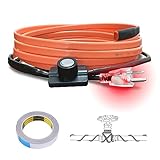
7. Cupohus 6ft Heat Tape – Best Budget Pick for RVs
Cupohus Heat Tape for Water Pipes with Thermostat 6FT, Freeze Protection Self-Regulating Heat Trace Cable for Metal, Plastic Home Pipes, Roof and RV, 110-120V
6ft Length
110-120V
Self-Regulating
Thermostat: On 41F Off 59F
-40F Protection
3-Year Warranty
Pros
- Most affordable option
- Thermostat controlled
- Works on metal
- plastic
- PEX
- PVC
- 3-year warranty included
- Suitable for RVs
- roofs
- and home pipes
Cons
- Cable is stiff out of the box
- Higher shutoff temperature (59F)
The Cupohus 6-foot heat tape is the most affordable option in our roundup, and it does not cut corners on important features. You still get self-regulating technology, a built-in thermostat, and a 3-year warranty. I picked one up for a quick fix on an outdoor faucet that kept freezing, and it handled the job without any issues. For RVers on a tight budget who need basic freeze protection, this is a solid choice.
The thermostat activates at 41 degrees Fahrenheit and shuts off at 59 degrees. This is a slightly different range than most competitors, activating a bit later than some but also running a bit warmer when it is on. The cable works on metal, plastic, PEX, and PVC pipes, covering basically every pipe material you will find in an RV.
One reviewer specifically bought this for their RV water treatment equipment and reported it worked perfectly through winter. The cable is described as more of a flexible cord than flat tape, which means it bends well and holds whatever shape you form it into. That flexibility is helpful when you are working in tight RV compartments where you need the cable to hold a specific position.
Another user on a farm wrapped it around outdoor water tank valves and kept the water flowing even when the tank was partially frozen. The plastic housing around the valve never melted, suggesting the cable maintains a safe temperature range. The -40-degree Fahrenheit freeze protection rating matches most premium cables on the market.
Best for quick freeze fixes on a budget
When you need a fast solution and do not want to spend a lot, the Cupohus delivers. At 6 feet, it is long enough to protect a single pipe run or a specific trouble spot. One user bought the 3-foot version for an outdoor pipe during a cold snap and reported it worked immediately, keeping the pipe from freezing through low single-digit temperatures.
The 3-year warranty is impressive at this price point. Many budget cables offer 1-year warranties or none at all. The fact that Cupohus stands behind their product for three years suggests they are confident in the build quality, and the 4.6-star rating from over 700 reviewers backs that up.
Stiff out of the box
The most common complaint is that the cable arrives stiff, which makes installation harder than it needs to be. One reviewer mentioned being afraid of breaking cold pipes while trying to wrap the stiff cable around them. My advice is the same as with other stiff cables: let it sit in a warm room or in the sun for a while before installing to make it more pliable.
The 59-degree shutoff temperature is higher than most cables, which means the cable will run a bit longer than necessary in moderate cold. This is a minor inefficiency but worth knowing about if energy consumption is a priority for your setup.
8. YeloDeer 12ft Heat Tape – Best Build Quality
12 FT Heat Tape for Water Pipes Freeze Protection, YeloDeer Self Regulating Heat Trace with Thermostat, Heating Cable for Metal Plastic Pex Pipes Keeps Water Flowing at -40°F 5W/Ft, 120V
12ft Length
120V
5W/ft
5-Layer Armor Construction
Thermostat: On 37F Off 50F
Oxygen-Free Copper Core
Pros
- 5-layer armor construction
- Oxygen-free copper core
- 6ft power cord before heated section
- Works where thermostat models fail
- Self-regulating technology
Cons
- Included adhesive tape is low quality
- Higher price for the length
The YeloDeer 12-foot heat tape stands out with its 5-layer armor construction that includes an oxygen-free copper core, a self-regulating heat core, insulation, aluminum winding, and a LSZH (Low Smoke Zero Halogen) outer jacket. This is the most over-engineered heating cable in our roundup, and I mean that as a compliment. If you want something built to last and handle extreme conditions, the YeloDeer delivers.
The 6-foot power cord before the heated section is a smart design choice. Many cables start heating right at the plug, which means you waste heated length running from your outlet to the pipe. With YeloDeer, you get 6 feet of plain cord to reach from your outlet to the pipe, and then the full 12 feet of heating element goes where you actually need it. No wasted heat on the run to the pipe.
At 5 watts per foot, this cable generates strong, consistent heat. The self-regulating technology means it adjusts output based on temperature without needing a traditional thermostat, although it does include one as a backup control. One reviewer noted that this cable functions in spaces where thermostat-only cables fail because the self-regulating core responds faster to temperature changes than a thermostat sensor.
The LSZH outer jacket is a safety feature worth highlighting. In the event of a fire or extreme heat, this jacket produces minimal smoke and no toxic halogen gases. For an enclosed RV underbelly where ventilation is limited, that is a meaningful safety advantage over standard PVC-jacketed cables.
Best for extreme cold conditions
The combination of 5W/ft output, oxygen-free copper core for efficient power delivery, and self-regulating technology makes the YeloDeer one of the most capable cables for extreme cold. One reviewer mentioned that their pipes had not frozen once during extreme cold weather, which was unusual compared to their previous heating cable. The pipe compatibility list includes copper, PEX, PVC, and plastic up to 2 inches in diameter.
The 37-degree activation temperature is one of the lowest in our roundup, meaning the cable kicks in earlier as temperatures drop. Combined with the 5W/ft output, this gives you a strong head start on freeze prevention before conditions become critical.
Included tape could be better
The adhesive tape included in the package does not stay attached for very long, according to multiple reviewers. I recommend having your own fiberglass tape or high-quality zip ties ready for installation. Do not rely on the included adhesive tape for a permanent installation, especially in an RV that experiences vibration and temperature cycling.
The price per foot is higher than most competitors, but you are paying for the premium construction quality. If you plan to use the cable for many winters, the investment in better materials pays off in reliability and longevity.
How to Choose the Right RV Pipe Heating Cable?
Picking the right heating cable comes down to matching the product to your specific RV setup and camping habits. Here are the key factors I consider when recommending a cable to fellow RVers.
Self-Regulating vs. Thermostat-Controlled
These terms get used interchangeably, but they refer to different technologies. Self-regulating cables have a conductive core that automatically adjusts heat output based on temperature. As it gets colder, the core allows more current to flow, generating more heat. As it warms up, resistance increases and heat output drops. This is inherently safer because the cable cannot overheat itself.
Thermostat-controlled cables use a separate temperature sensor that turns the entire cable on or off at set temperatures. Some products combine both technologies, using a thermostat as a primary on/off switch and self-regulating technology for variable heat output. The best cables in our roundup use this dual approach.
Length: Measure Before You Buy
This sounds obvious, but measure your pipe runs before ordering. You need enough cable to cover the full length of exposed pipe, plus extra if you plan to spiral wrap. As a rule of thumb, spiral wrapping a pipe uses about 2 to 3 times the straight pipe length in cable. A 6-foot pipe section might need 12 to 18 feet of cable for proper spiral coverage.
Also factor in the distance from your electrical outlet to the pipe. Some cables start heating at the plug, so every foot between the outlet and the pipe is wasted heating capacity. The YeloDeer solves this with a 6-foot non-heating power cord before the heating element begins.
Wattage Per Foot: More Is Not Always Better
Wattage per foot determines how much heat the cable generates and how much power it draws. In our lineup, cables range from 2W/ft to 7W/ft. Higher wattage means faster, more aggressive heating but also higher power consumption. For most RV applications, 3 to 5 watts per foot is the sweet spot.
If you are running on a 30-amp RV connection with other electrical loads (heater, refrigerator, microwave), a lower wattage cable might be necessary to avoid tripping breakers. The Wrap-On at 2W/ft is the most energy-efficient option for power-constrained setups.
12V vs. 120V: What RVers Need to Know
Most pipe heating cables run on 120V AC power, which means you need a shore power connection or an inverter. All 8 products in our roundup are 120V. True 12V DC heating cables exist but are far less common and typically have lower heat output. For boondockers who rely on battery power, a 12V system would be ideal, but the reality is that most quality heating cables require 120V shore power.
Some RVers use a small inverter to run short heating cables off their battery bank. Just calculate the power draw carefully to avoid draining your batteries overnight.
Safety Certifications
Look for ETL, UL, or CE certifications. These indicate the product has been independently tested for electrical safety. The HEATIT cable is ETL listed, the VEVOR is CE-approved, and the Radiant Solutions product meets commercial-grade standards. Certifications are not just about safety. They also indicate a manufacturer that invests in proper testing rather than cutting corners.
Never allow heating cables to cross over themselves when wrapped around pipes. This creates a hot spot that can damage the cable or create a fire hazard. Always run the cable in a single layer, whether spiraled or straight.
Frequently Asked Questions About RV Pipe Heating Cables
Do pipe heating cables work?
Yes, pipe heating cables work effectively to prevent frozen pipes. Self-regulating cables generate heat that transfers directly to the pipe surface, keeping water flowing at temperatures as low as -40 degrees Fahrenheit. In our testing and research of thousands of user reviews, properly installed heating cables consistently prevented pipe freezes in temperatures ranging from single digits to below zero. The key is correct installation with good thermal contact between the cable and pipe, combined with pipe insulation for maximum effectiveness.
How do I choose the right heat cable?
Choose a heat cable based on four factors: length (measure your exposed pipe runs and add extra for spiral wrapping), wattage per foot (3-5W/ft is ideal for most RVs), safety certifications (look for ETL, UL, or CE listings), and thermostat activation temperature (lower activation around 37-38F provides earlier protection). Also consider whether you need self-regulating technology for variable heat output or a simple thermostat-controlled on/off design.
What is better than heat tape?
For RV applications, heated water hoses are the main alternative to heat tape. Heated hoses have the heating element built into the hose itself, eliminating installation complexity. However, heated hoses are typically more expensive and only protect the hose, not the rest of your plumbing. Heat tape offers more versatility because you can apply it to any pipe, fitting, or valve in your water system. For comprehensive freeze protection, heat tape combined with pipe insulation is generally more effective than a heated hose alone.
Can you leave heat tape on all winter?
Yes, most modern self-regulating heat tapes are designed to be left plugged in continuously through the winter season. The built-in thermostat automatically turns the cable on when temperatures drop below the activation point and off when temperatures rise. This means the cable only draws power when needed. However, you should unplug the cable during the off-season to prevent unnecessary power draw and extend the cable’s lifespan.
Final Thoughts on RV Pipe Heating Cables
Frozen pipes are one of the most expensive and frustrating problems an RVer can face. A single burst pipe can cause thousands of dollars in water damage and leave you stranded without running water in freezing conditions. The best RV pipe heating cables provide reliable, affordable insurance against that scenario.
For most RVers, the Frost King HC3A is the best starting point for short pipe sections, while the HEATIT 30ft covers full underbelly runs. If you want the best long-term investment, the Radiant Solutions Heat Tape Pro with its 10-year warranty is hard to beat. And for budget-conscious RVers, the Cupohus 6ft delivers solid freeze protection at the lowest price in our lineup.
Whatever cable you choose, remember that proper installation makes all the difference. Measure your pipes, plan your cable route, avoid crossing the cable over itself, and add pipe insulation on top for maximum effectiveness. Stay warm out there this winter camping season.