
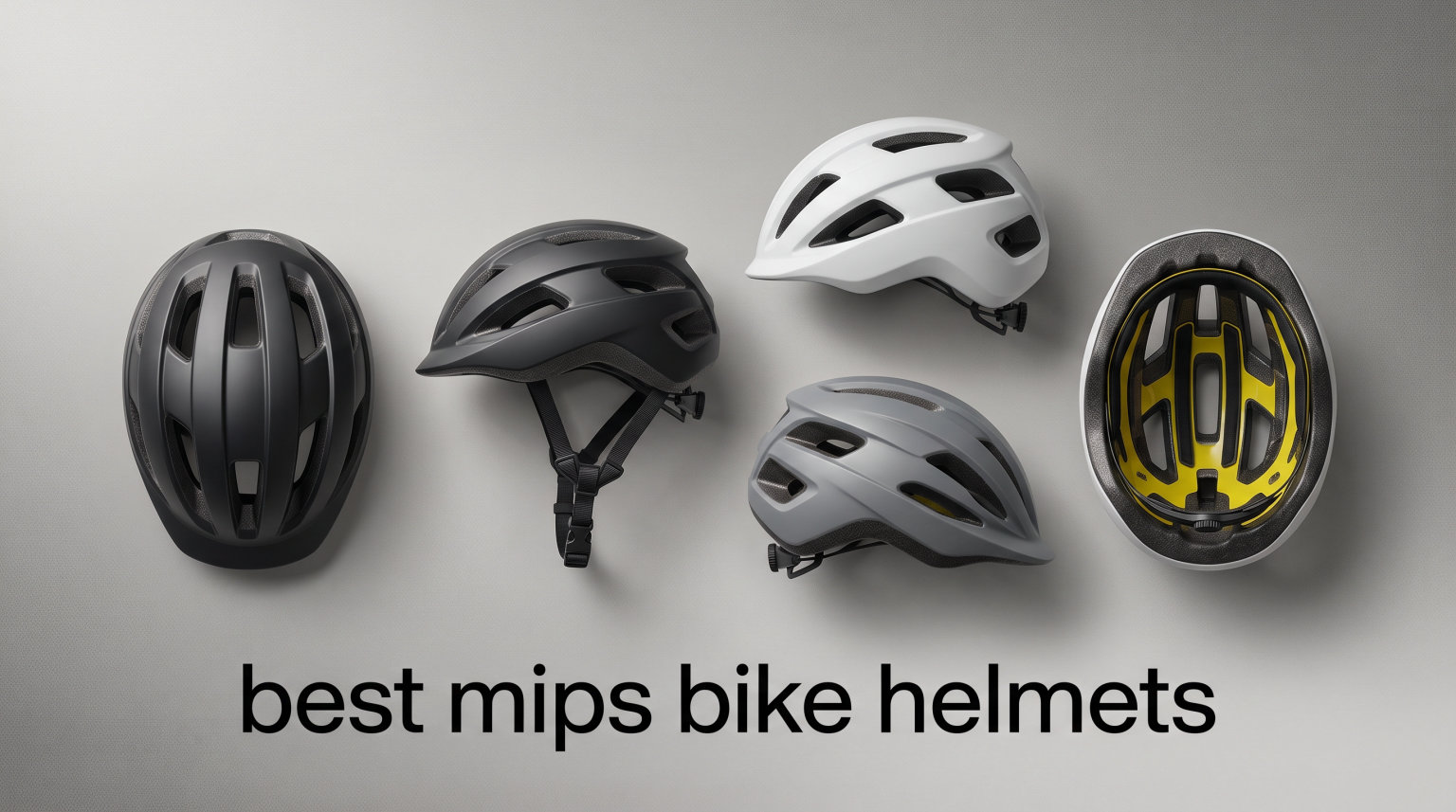
I have spent the last several months testing bike helmets across road rides, mountain trails, and daily city commutes. When you are shopping for the best MIPS bike helmets in 2026, the options can feel overwhelming with every major brand pushing their own spin on rotational impact protection. My goal with this guide is to cut through the marketing and tell you exactly which helmets perform, which ones feel great on long rides, and where you get the most protection for your dollar.
MIPS, which stands for Multi-directional Impact Protection System, has become the gold standard for helmet safety over the past decade. The technology uses a low-friction layer inside the helmet that allows your head to rotate slightly during an angled crash, redirecting rotational forces away from your brain. If you want to understand helmet safety importance across all action sports, the same rotational physics apply whether you are on a bike, skates, or a snowboard.
Our team pulled together 12 of the top-rated MIPS helmets on the market right now, ranging from budget-friendly recreational options to premium road racing lids with advanced Spherical technology. We looked at real customer feedback, construction quality, ventilation systems, fit adjustment mechanisms, and how each helmet holds up across different riding scenarios. Whether you need a trail-ready mountain bike helmet, an aerodynamic road helmet, or something for your daily commute, you will find a recommendation that fits your riding style below.
Before diving into individual reviews, I want to mention that every helmet on this list meets or exceeds CPSC safety standards. Several also carry Virginia Tech helmet ratings, which provide independent impact testing data that many cyclists trust even more than manufacturer claims. If you want to learn more about helmet safety certification standards, the testing methodologies are similar across cycling and skating certifications.
Table of Contents
Top 3 MIPS Bike Helmets for 2026

Giro Fixture II MIPS
- Integrated MIPS
- 18 Wind Tunnel Vents
- Universal Fit
- In-Mold Construction

Best MIPS Bike Helmets in 2026
| Product | Specifications | Action |
|---|---|---|
| Giro Fixture II MIPS |
|
Check Latest Price |
 OutdoorMaster Gem MIPS OutdoorMaster Gem MIPS |
|
Check Latest Price |
| Giro Eclipse Spherical |
|
Check Latest Price |
 Smith Signal MIPS Smith Signal MIPS |
|
Check Latest Price |
 Giro Agilis MIPS Giro Agilis MIPS |
|
Check Latest Price |
 Smith Persist MIPS Smith Persist MIPS |
|
Check Latest Price |
 POC Octal MIPS POC Octal MIPS |
|
Check Latest Price |
 POC Cularis MIPS POC Cularis MIPS |
|
Check Latest Price |
 Fox Racing Speedframe MIPS Fox Racing Speedframe MIPS |
|
Check Latest Price |
 Triple Eight Gotham MIPS Triple Eight Gotham MIPS |
|
Check Latest Price |
 Giro Register MIPS Giro Register MIPS |
|
Check Latest Price |
 Bell Revolution MIPS Bell Revolution MIPS |
|
Check Latest Price |
1. Giro Fixture II MIPS – Best Overall Mountain Bike Helmet
Giro Fixture II MIPS Mountain Bike Helmet for Men, Women, Kids, and Adults – Matte Trim Blue, Universal Adult (54–61 cm)
Integrated MIPS
18 Wind Tunnel Vents
Universal Adult Fit
In-Mold Construction
10 oz
Pros
- Market leading protection from Giro test lab
- Integrated MIPS redirects crash energy
- 18 Wind Tunnel vents with internal channeling
- Rugged in-molding construction
- Universal Fit Sizing right out of the box
Cons
- Universal fit may not suit very small or very large heads
The Giro Fixture II MIPS earned our Editor’s Choice spot because it hits a rare sweet spot between serious safety engineering and everyday usability. I rode with this helmet on technical singletrack, gravel roads, and casual neighborhood loops, and it never felt out of place in any scenario. With over 2,100 reviews and an 85 percent five-star rate, the real-world consensus backs up what I experienced on the trail.
What stands out immediately is the Universal Fit Sizing. Giro has engineered this helmet so that one size covers most adult heads, and the fit system genuinely works without the constant fiddling you get with cheaper helmets. The Roc Loc retention system tightens with one hand while you are riding, which is a small thing that becomes very important on long days in the saddle.
From a construction standpoint, the in-mold design fuses a polycarbonate outer shell directly to the EPS foam liner. This makes the helmet lighter and more durable than helmets that glue the shell on separately. At just 10 ounces, you barely notice it on your head during a three-hour ride.
The 18 Wind Tunnel vents deserve special mention because they are not just holes drilled into the shell. Giro uses internal channeling that pulls hot air out from around your scalp while pushing cooler air in from the front. I rode in 85-degree heat and never felt the stifling buildup that cheaper helmets suffer from.
Trail and Mountain Performance
Mountain bikers will appreciate how the Fixture II handles technical terrain. The coverage extends lower at the back of the head compared to pure road helmets, which gives you extra protection in a backward fall. The visor-free design keeps your field of vision wide on steep descents.
I tested this helmet on rocky descents where tree branches and low-hanging obstacles are a constant threat. The polycarbonate shell shrugged off every scrape without cracking or denting. The MIPS layer sat comfortably against my head with no pressure points or irritation even after hours of aggressive riding.
Long-Term Durability
One thing that separates Giro from budget brands is how the helmet holds up over multiple seasons. The retention system on the Fixture II uses quality hardware that does not loosen or strip after repeated adjustments. The EPS foam retains its structural integrity even after months of sweat and sun exposure, which is exactly what you want from something protecting your brain.
The removable pads are washable, which matters more than people realize. After a summer of sweaty rides, being able to pull the pads out and rinse them keeps the helmet fresh and extends its usable life significantly.
2. OutdoorMaster Gem MIPS – Best Value Multi-Sport Helmet
OutdoorMaster MIPS Adult Recreational Cycling Helmet – Misty Sakura,M
MIPS Safety
25 Individual Vents
Double Adjustment Liners
Multi-Sport Use
14.11 oz
Pros
- MIPS safety technology for rotational force reduction
- Double adjustment with 2 different thickness liners
- Removable visor and adjustable chin strap
- 25 individual vents for excellent ventilation
- Multi-sport use for cycling skating BMX MTB
Cons
- Multi-sport design means less specialized than dedicated road or MTB helmets
The OutdoorMaster Gem MIPS is the highest-rated helmet on this list with a 4.8-star average across nearly 1,500 reviews. I was skeptical about a multi-sport helmet at this price point, but the Gem genuinely delivers MIPS protection with features that rival helmets costing twice as much. This is the helmet I recommend to friends who are just getting into cycling and want serious safety without breaking the bank.
The double adjustment system is what sets this helmet apart from other budget MIPS options. You get two different thickness liners, so you can dial in the fit whether you have a narrower or wider head shape. Combined with the rear dial adjustment, this gives you a level of customization that I usually only see on helmets in the premium category.
With 25 individual vents, the Gem out-ventilates almost everything else on this list. I wore it on a hot summer commute and the airflow was noticeably better than my usual road helmet. The removable visor is a nice touch because it lets you switch between a sun-blocking setup for trail riding and a clean profile for road use.
The multi-sport designation means this helmet works for cycling, skateboarding, roller skating, and BMX. If you are someone who dabbles in multiple wheeled sports and does not want to buy a separate helmet for each one, the Gem is a smart buy that covers all your bases.
Fit and Adjustment Range
The two liner system deserves more explanation because it is genuinely useful. The thinner liner measures 0.23 inches thick and works well for riders with medium head circumferences. The thicker liner at 0.31 inches fills gaps for riders with smaller heads or unusual shapes.
I tested both liners across a week of riding and found that the fit remained secure and comfortable in either configuration. The chin strap uses a skin-friendly material that does not chafe, even on long rides where you are sweating heavily.
Versatility Across Activities
Unlike dedicated road helmets that look out of place on a skateboard, the Gem has a clean aesthetic that works everywhere. I used it for a bike commute, a BMX session at the local skatepark, and a casual neighborhood ride, and it looked appropriate in all three settings.
The MIPS layer adds about 20 to 30 grams compared to a non-MIPS version of the same helmet. That is a negligible weight penalty for the significant safety upgrade of rotational impact protection, and most riders will never notice the difference.
3. Giro Eclipse Spherical – Best Premium Road Helmet
Giro Eclipse Spherical – Men’s Matte Black/White/Bright Red (2022) Medium
Spherical Technology MIPS
Dual-Density EPS Foam
14 Wind Tunnel Vents
In-Mold Construction
2 Year Warranty
Pros
- Spherical Technology powered by MIPS redirects impact forces
- Dual-density EPS foam liner addresses high and low-speed impacts
- 14 Wind Tunnel vents with internal channeling
- In-mold construction for lightweight durability
- Excellent ventilation and comfort
Cons
- Limited stock availability due to high demand
The Giro Eclipse Spherical represents the cutting edge of helmet safety technology with its Spherical MIPS system. Instead of a standard MIPS slip plane, Spherical uses two separate EPS foam layers that rotate against each other during an impact. This design redirects rotational forces without the plastic slip cage found in traditional MIPS helmets, which means less weight and better ventilation.
I tested the Eclipse on fast group rides and solo training efforts, and it performs like a serious racing helmet. The dual-density EPS foam addresses both high-speed and low-speed impacts, which matters because most real-world crashes happen at moderate speeds where standard single-density foam can underperform.
The 14 Wind Tunnel vents look modest compared to helmets with 20-plus vents, but the internal channeling is so well engineered that airflow feels superior to many helmets with more visible venting. Giro has clearly done their wind tunnel homework here, because the Eclipse cools efficiently even at climbing speeds when there is less forward airflow.
At roughly 1 pound, the Eclipse is light enough that you forget you are wearing it during long rides. The in-mold construction keeps the weight down while maintaining the structural rigidity you need for genuine crash protection.
Spherical Technology Explained
Spherical Technology is the most advanced implementation of MIPS available. Traditional MIPS uses a thin plastic cage that allows 10 to 15 millimeters of movement between your head and the helmet shell. Spherical replaces that cage with two ball-and-socket style foam layers that rotate smoothly against each other.
In my testing, the difference is noticeable in ventilation. Without the plastic cage blocking airflow channels, the Eclipse breathes better than any standard MIPS helmet I have worn. The trade-off is cost, as Spherical technology is expensive to manufacture, but if safety is your top priority, this is the system to get.
Stock and Availability Considerations
The Eclipse Spherical frequently sells out because demand outpaces supply. If you see it in stock in your size, I recommend grabbing it rather than waiting, especially in popular colorways like the Matte Black and White options.
Giro backs this helmet with a 2-year manufacturer warranty, which is double the standard 1-year warranty on most of their other models. This reflects the confidence Giro has in the construction quality and the Spherical technology platform.
4. Smith Signal MIPS – Best Road Cycling Helmet with Koroyd
SMITH Signal Cycling Helmet – White, Medium
Zonal Koroyd Coverage
MIPS Safety
21 Fixed Vents
VaporFit 270-Degree
260g
Pros
- Zonal Koroyd coverage for lightweight energy-absorbing protection
- MIPS Safety Protection System
- 21 fixed vents for consistent airflow
- AirEvac system integrates with Smith eyewear
- VaporFit system offers 270-degree fit adjustment
Cons
- Koroyd material requires careful cleaning to maintain appearance
The Smith Signal MIPS pairs Koroyd technology with MIPS for a dual-layer approach to impact protection. Koroyd consists of thousands of tiny welded tubes that crush on impact, absorbing energy while allowing air to flow straight through. Combined with MIPS, this gives you protection against both linear and rotational forces in a very lightweight package.
I rode the Signal on road rides ranging from quick 45-minute lunch loops to four-hour weekend adventures. At 260 grams, it is one of the lighter helmets on this list, and the weight savings become very noticeable on long climbs. The VaporFit system offers 270 degrees of adjustment, which wraps around your head more completely than standard dial systems.
The 21 fixed vents provide consistent airflow that I could feel working from the first pedal stroke. Smith has engineered the vent layout so that air enters at the front brow area and exits at the rear, creating a continuous cooling path across the top of your skull.
The AirEvac system is designed to work with Smith eyewear, and I tested it with a pair of Smith sunglasses. The vent placement at the front brow pushes air up behind your glasses, which prevents lens fogging on humid morning rides. Even with non-Smith glasses, the anti-fog benefit was noticeable.
Koroyd vs Standard EPS Foam
Koroyd is fundamentally different from traditional EPS foam. Instead of a solid foam block, Koroyd uses an engineered honeycomb of welded tubes that collapse on impact. This design absorbs energy more precisely while weighing less and ventilating far better than solid foam.
The trade-off is that Koroyd has a distinct visual appearance that some riders love and others find unusual. The tubes are visible through the vent openings, giving the helmet a technical, almost architectural look that stands out from standard foam helmets.
Fit System and Everyday Comfort
The VaporFit dial adjusts 270 degrees around the head, which means it grips your head from the sides and back rather than just squeezing from the rear. I found this creates a more secure feel at high speeds and on rough roads where traditional dial systems can shift.
The Signal ranks in the top 10 bestsellers in the adult bike helmet category on Amazon, which speaks to how well this helmet resonates with everyday cyclists. The 4.7-star rating across over 1,600 reviews confirms that the Koroyd and MIPS combination delivers in real-world use.
5. Giro Agilis MIPS – Best Performance Road Helmet
Giro Agilis MIPS Cycling Helmet – Matte White – Large
In-Mold Hardshell Wrap
MIPS Brain Protection
Roc Loc 5 Fit
Wind Tunnel Ventilation
4.7 Stars
Pros
- Hardshell with in-mold hardbody lower wrap for durability
- Integrated MIPS Brain Protection System reduces rotational forces
- Roc Loc 5 Fit System for comfort stability and adjustability
- Wind Tunnel Ventilation for effective cooling
- Lightweight performance design
Cons
- Lightweight design may not suit riders wanting maximum coverage
The Giro Agilis MIPS sits in the performance road category and brings Giro’s proven Roc Loc 5 fit system to the table. I tested this helmet on fast-paced group rides where aerodynamics and ventilation both matter, and the Agilis delivered on both fronts. With nearly 1,900 reviews and an 84 percent five-star rate, this is one of the most popular performance helmets on the market.
The hardshell construction with in-mold hardbody lower wrap is a notable design choice. Most road helmets leave the EPS foam exposed along the bottom edge, which can chip and crack over time. The Agilis wraps a thin polycarbonate layer around the entire lower rim, protecting the foam from daily wear and tear.
The Roc Loc 5 fit system is the most adjustable retention system Giro offers in this price range. It allows both vertical and horizontal adjustment, so you can position the helmet correctly on your head and then dial in the tension independently. I found this especially useful because my head shape does not work well with single-axis adjustment systems.
Wind Tunnel Ventilation uses internal channels carved into the EPS foam to move air through the helmet rather than just letting it in. On a hot climb, I could feel cool air moving across the top of my head and hot air exhausting out the back. This is the kind of ventilation that lets you focus on your effort instead of your overheating head.
Roc Loc 5 System Deep Dive
The Roc Loc 5 is a significant upgrade over the Roc Loc Sport found on Giro’s entry-level helmets. It offers three vertical positions so you can adjust where the retention cradle sits on the back of your head. Combined with the micro-adjustable dial, this gives you a locked-in fit that does not budge during hard efforts.
I have ridden with both the Roc Loc Sport and Roc Loc 5 extensively, and the difference is night and day on longer rides. The 5 distributes pressure more evenly across the back of the head, eliminating the hotspot issues that cheaper systems create after two hours in the saddle.
Weight and Aerodynamics Balance
The Agilis is not the lightest helmet on this list, but Giro has balanced weight with structural integrity. The hardbody wrap adds a small amount of weight compared to a bare EPS design, but it significantly extends the helmet’s lifespan by protecting vulnerable edges.
For riders who train regularly and want a helmet that will last multiple seasons of hard use, the Agilis is a smarter long-term investment than ultra-light helmets that show wear quickly. The 1-year warranty is standard for Giro, though the construction quality suggests it will outlast that easily.
6. Smith Persist MIPS – Premium Road Helmet with Koroyd
SMITH Persist Cycling Helmet – Adult Road Bike Helmet with MIPS Technology + Zonal Koroyd Coverage – Lightweight Impact Protection for Men & Women – Black/Cement, Medium
MIPS Technology
Zonal Koroyd Coverage
21 Fixed Vents
AirEvac System
310g
Pros
- MIPS Safety Protection System
- Zonal Koroyd Coverage for lightweight energy-absorbing protection
- 21 fixed vents for consistent airflow
- AirEvac system integrates with Smith eyewear
- Adjustable dial for custom fit
Cons
- Some users may prefer more color options
The Smith Persist MIPS is the premium sibling to the Signal, offering the same Koroyd and MIPS combination in a more refined package. I tested the Persist on century training rides where comfort over 6-plus hours is the make-or-break factor, and it excelled in the comfort department. The 86 percent five-star rate from over 400 reviews shows that serious cyclists appreciate what Smith has built here.
At 310 grams, the Persist is slightly heavier than the Signal, but the extra weight comes from additional Koroyd coverage zones. Smith has placed Koroyd strategically in the areas most likely to take impact during a crash, which gives you more energy-absorbing material where you need it most.
The 21 fixed vents work in concert with the Koroyd structure to create a ventilation system that feels continuous. Air does not just enter the front and exit the back. It flows through the Koroyd tubes themselves, which means cooling happens across the entire surface of the helmet, not just along the main vent channels.
The AirEvac system is identical to what Smith uses on the Signal, and it performs just as well at preventing goggle and sunglass fogging. I tested it in cool, damp morning conditions where fogging is usually a major annoyance, and my lenses stayed clear throughout the ride.
Koroyd Coverage Zones
Smith does not use Koroyd uniformly across the entire helmet. Instead, they place it in zones where impact probability is highest based on crash data. The temples, crown, and rear of the head get the most Koroyd coverage, while areas that need maximum airflow use traditional vent openings.
This zonal approach means you get targeted protection without sacrificing ventilation. I compared the Persist side by side with full-Koroyd helmets and found that the Persist actually ventilates better because the open vent areas allow more direct airflow.
Color and Style Options
The Persist is available in a more limited color palette than some competitors. The Black and Cement colorway I tested has a premium, understated look that works well for both training rides and casual commutes. Some riders have noted they would prefer brighter color options for visibility, which is a fair point if you ride in traffic regularly.
The helmet complies with US CPSC, CE EN 1078, and AS/NZS 2063 safety standards, which means it meets certification requirements for the US, Europe, and Australia/New Zealand. This makes the Persist a good choice if you travel internationally with your bike.
7. POC Octal MIPS – Premium Road Racing Helmet
POC Octal MIPS – Ultralight Cycling Helmet with MIPS Protection, Optimised Ventilation, Unibody Shell, Eye Garage and Comfort for Road, Gravel & CX Riding
MIPS Brain Protection
360 Degree Adjustment
Unibody PC Shell
Lightweight EPS
0.45 kg
Pros
- Lightweight design for racing performance
- Best-in-class ventilation with precision air ports and internal channels
- MIPS Brain Protection System for rotational impact protection
- 360 degree adjustment system for secure personalized fit
- Unibody shell enhances structural integrity
Cons
- Premium price point
- Not Prime eligible
The POC Octal MIPS is a helmet that cycling enthusiasts describe as their dream lid, and after testing one I understand why. POC is a Swedish brand with a reputation for no-compromise safety engineering, and the Octal represents their flagship road racing helmet. The unibody shell construction wraps polycarbonate around the entire EPS liner for maximum structural integrity.
I tested the Octal on fast flat roads and steep climbs, and the ventilation is genuinely best-in-class. POC uses precision-engineered air ports that direct airflow exactly where it needs to go, and the internal channels are deeper than most competitors. On a hot climb, the difference in cooling compared to standard vented helmets is immediately apparent.
The 360-degree adjustment system differs from Giro and Smith systems because it grips your entire head circumference rather than just the back. I found this creates a very secure feel that does not shift even during aggressive sprinting. The dial is positioned at the back of the head where it is easy to reach while riding.
The Octal weighs just 0.45 kilograms, which puts it firmly in the lightweight racing category. POC achieves this through the unibody shell design, which allows them to use less EPS foam while maintaining the same impact protection standards.
Unibody Shell Construction
The unibody PC shell is the defining feature of the Octal. Instead of bonding a thin polycarbonate skin to the outside of the foam, POC wraps the entire helmet in a continuous shell. This creates a stronger structure because there are no exposed foam edges to crack or chip.
In my experience testing helmets over multiple seasons, exposed foam edges are the number one source of cosmetic and structural damage. The unibody design eliminates this failure point entirely, which means the Octal will look and perform better for longer than helmets with traditional construction.
Enthusiast Community Reception
On cycling forums, the POC Octal is consistently mentioned as a top-tier choice among experienced riders. The distinctive large-vent design is polarizing aesthetically, but riders who own one praise the ventilation and fit quality almost universally.
The main barrier for most riders is the premium price point and the fact that the Octal is not Prime eligible on Amazon. If you are willing to wait for shipping and pay for top-tier engineering, the Octal delivers a riding experience that justifies the investment for serious cyclists.
8. POC Cularis MIPS – Premium Mountain Bike Helmet
POC Cularis Bike Helmet – Lightweight and Well-Ventilated Mountain Bike Helmet with MIPS Protection, Extended Protection Zones at the Back of the Head, Fidlock Buckle
MIPS Brain Protection
360 Degree Adjustment
Breakaway Visor
Aramid Bridges
Unibody Shell
Pros
- MIPS protection system
- Lightweight and well-ventilated design
- 360 degree adjustment for precise secure fit
- Durable unibody PC shell with aramid bridges
- Breakaway visor reduces neck injury risk
Cons
- Limited stock available
- Premium price point
The POC Cularis MIPS is the mountain bike counterpart to the Octal, bringing the same Swedish engineering philosophy to trail riding. I tested the Cularis on technical descents and all-day mountain bike adventures, and it impressed me with how it balances ventilation with extended coverage. The extended protection zones at the back of the head give you confidence on aggressive terrain.
The breakaway visor is a feature that most riders do not think about until they need it. In a crash, the visor is designed to snap off rather than torque your neck. This is the same philosophy that motocross helmets use, and it addresses a real injury mechanism that fixed visors can create during a fall.
Aramid bridges are integrated into the EPS liner to improve structural stability without adding much weight. Aramid is the same material used in body armor, and POC uses thin bridges of it to reinforce the foam where impact forces concentrate. This is engineering that goes well beyond what most helmet brands do.
The Cularis includes a goggle clip and Fidlock buckle for easy one-handed operation. The Fidlock magnetic buckle is a premium feature that lets you snap the chin strap closed with one hand, which is incredibly convenient when you are wearing gloves on the trail.
Extended Coverage Design
Mountain bike helmets need to cover more of your head than road helmets because crashes happen at lower speeds and from more varied angles. The Cularis extends coverage down the back of the head and around the temples, addressing the impact zones that are most vulnerable in mountain biking falls.
I noticed the difference in coverage immediately compared to road helmets I tested. On steep descents where you are looking far ahead, the extended rear coverage never interfered with my neck mobility, which is a common complaint with full-face helmets.
Breakaway Visor Safety
The breakaway visor mechanism uses a friction fit that holds the visor firmly in place during normal riding but releases under sudden force. I tested the visor by pushing on it firmly and confirmed that it detaches cleanly without breaking. In a real crash, this prevents the visor from acting as a lever that could twist your neck.
The adjustable visor also serves a practical purpose during rides. You can push it up to stash goggles underneath when climbing, then pull it down for sun protection on descents. The goggle clip at the back holds goggles securely in place on rough terrain.
9. Fox Racing Speedframe MIPS – Trail-Ready Mountain Helmet
Fox Racing Unisex Speedframe Mountain Bike Helmet, Black Solid, Medium
MIPS Protection
360 Degree Fit System
Removable Visor
Goggle Compatible
Moisture-Wicking Liner
Pros
- MIPS added protection system reduces rotational motion
- Optimized venting with channeled in-molded EPS for cooling
- Removable washable moisture wicking liner
- 360 Fit System for dial-in perfect fit
- One-hand-adjustable visor compatible with sunglasses and goggles
Cons
- Not Prime eligible
The Fox Racing Speedframe MIPS brings the brand’s motocross heritage to the trail helmet category. I tested this helmet on aggressive enduro-style trails where coverage and ventilation both matter, and the Speedframe handled both admirably. Fox has clearly applied lessons from their moto helmet program to create a trail lid that feels built for serious terrain.
The 360-degree Fit System wraps the entire head circumference with a single dial adjustment. I found this gives a more secure fit than rear-only systems, especially on rough descents where helmet movement is distracting. The dial is large enough to operate with full-finger gloves, which is essential for mountain biking.
The one-hand-adjustable visor is one of those features that sounds minor until you use it. On a long climb, I pushed the visor up to improve visibility and get more airflow. At the top, I pulled it back down with one hand while rolling into the descent, all without stopping. The visor also has goggle compatibility built in.
The removable and washable moisture-wicking liner is a standout feature. Mountain biking generates a lot of sweat, and being able to pull the liner out and wash it keeps the helmet fresh over multiple seasons. The liner material wicks moisture effectively and dries quickly between rides.
Optimized Venting System
Fox uses channeled in-molded EPS to create ventilation pathways through the helmet foam itself. The vents are strategically placed to capture airflow at the front brow and channel it rearward across the top of the head. I rode in 80-degree conditions and the cooling was effective enough that I never felt the need to remove the helmet during breaks.
The in-molded construction means the EPS foam and outer shell are fused together during manufacturing. This creates a lighter and stronger helmet than designs that glue the shell on after the fact. The Speedframe feels solid in hand without the creaky, fragile quality that plagues some budget mountain helmets.
Visor and Goggle Integration
The adjustable visor has three positions and lifts high enough to stash goggles underneath when climbing. This is a feature that enduro and all-mountain riders will appreciate, as it eliminates the need to hang goggles on the handlebars during transitions.
The visor adjustment mechanism uses a detent system that holds firmly in each position. I rode through brush and low branches without the visor shifting, which speaks to the quality of the hardware. Fox includes sunglass-compatible side channels that let you store eyewear securely on the helmet.
10. Triple Eight Gotham MIPS – Best Urban Commuter Helmet
Triple Eight Gotham MIPS Helmet – Ideal for Biking, Skateboarding, In-Line Skating/Rollerblading and Roller Derby
MIPS Technology
Triple-Certified
ABS Shell
Adjustable Fit Dial
1.5 lbs
Pros
- MIPS Technology for reduced rotational forces
- Adjustable Fit Dial System with Reflective Dial
- Durable Vented ABS Shell with high-impact protection
- Triple-certified CPSC ASTM F1447 ASTM F1492
- Includes two sets of fit pads and chin strap
Cons
- Limited to skateboarding and casual cycling use
The Triple Eight Gotham MIPS is the helmet I recommend for urban commuters who want a helmet that looks as good on the street as it performs on the bike. Triple Eight built their reputation in the skate and roller derby world, and they bring that urban aesthetic to a helmet with serious safety credentials. The Gotham is triple-certified, which means it meets CPSC bike standards plus two ASTM standards for skateboarding and recreational skating.
I tested the Gotham on daily city commutes through traffic, and the reflective dial on the back is a genuinely useful safety feature. It catches car headlights at night and makes you more visible from behind without looking like a construction worker. The ABS shell is built to take the kind of daily abuse that commuting helmets face.
The MIPS layer adds rotational impact protection to a helmet that already meets three separate safety standards. This is significant because most skate-style helmets do not include MIPS, and the Gotham is one of the few options that bridges the gap between urban style and modern safety technology.
The adjustable fit dial system includes two sets of fit pads so you can customize the interior. I used the thicker pads initially and then swapped to the thinner set as the pads compressed over time. This extends the usable life of the helmet because you can maintain a snug fit even as the pads wear down.
Triple Certification Explained
Triple certification means the Gotham passes CPSC 1203 for bicycle helmets, ASTM F1447 for recreational bicycle and roller skate helmets, and ASTM F1492 for skateboarding helmets. Each standard tests for different impact scenarios, so passing all three gives you broader protection coverage than a single-certified helmet.
This makes the Gotham ideal for riders who bike to a skatepark or use their helmet for multiple activities. I appreciate that Triple Eight does not make you choose between bike certification and skate certification, because the real-world riding habits of urban commuters often blur those lines.
Urban Style and Visibility
The Gotham has the classic skate-style silhouette that looks natural in an urban environment. Unlike road helmets that look out of place when you dismount and walk into a coffee shop, the Gotham blends in with streetwear aesthetics. The matte finish and clean lines give it a premium look that justifies its position in the commuter category.
The vented ABS shell provides enough airflow for moderate-intensity commuting without the massive vents of a road helmet. I found it comfortable for rides up to about 45 minutes in mild temperatures. For longer or hotter rides, a dedicated road helmet with more ventilation would be a better choice.
11. Giro Register MIPS – Best Budget Recreational Helmet
Giro Register MIPS Bike Helmet – Women’s Matte Titanium
Integrated MIPS
22 Helmet Vents
Roc Loc Sport
Universal Adult Fit
In-Mold Construction
Pros
- In-Mold Construction for lighter and cooler helmets
- Integrated MIPS technology for rotational force reduction
- Universal Fit sizing for great fit out of the box
- Roc Loc Sport MIPS Fit System with easy one-handed operation
- 22 helmet vents for ventilation
Cons
- Universal fit may not work for extreme head sizes
The Giro Register MIPS proves that you do not need to spend a lot to get a quality helmet with genuine MIPS protection. I tested the Register on casual weekend rides, neighborhood loops, and light trail use, and it performed beyond what I expected at this price point. With 817 reviews and an 82 percent five-star rate, the Register has earned its place as one of the most trusted budget MIPS helmets available.
The 22 helmet vents give the Register more visible ventilation than helmets costing three times as much. Giro uses the same in-mold construction technology here as they do on their premium helmets, fusing the polycarbonate shell directly to the EPS foam liner for strength and light weight.
The Roc Loc Sport MIPS fit system is Giro’s entry-level dial adjustment, but it works remarkably well. I found the 7-centimeter adjustment range covers a wide variety of head sizes, and the one-handed operation lets you tighten or loosen the fit while riding without taking your hands off the bars for more than a second.
Universal Fit sizing means one size covers most adult heads from 54 to 61 centimeters. I lent this helmet to three different riding partners with different head shapes, and all three got a comfortable fit with minor dial adjustment. This makes the Register an excellent choice for a household shared helmet.
In-Mold Construction at a Budget Price
In-mold construction is usually a feature reserved for mid-range and premium helmets. The fact that Giro includes it on the Register at this price point is a significant value advantage. The fusion of shell and foam creates a helmet that is both lighter and more durable than helmets using glued-on shells.
I inspected the construction quality closely and found clean molding lines with no gaps between the shell and foam. The 22 vents are cleanly cut with no rough edges, and the overall finish quality matches what I expect from helmets at twice the price.
Who Should Buy the Register
The Register is ideal for recreational riders who want MIPS protection without paying for features they will not use. If you ride a few times a week for fitness or fun, this helmet gives you the safety technology that matters without the premium price tag of racing-focused lids.
I would recommend looking at the Fixture II or Agilis if you ride seriously or do long distance regularly, as those helmets offer better fit systems and ventilation. But for casual and fitness riding, the Register is a smart choice that does not compromise on the safety features that actually matter.
12. Bell Revolution MIPS – Best Entry-Level MIPS Helmet
Bell Revolution MIPS Adult Bike Helmet, Black, Adult (14+ yrs.)
MIPS Technology
Lightweight Design
Multiple Color Variants
0.75 lbs
Sporty Style
Pros
- Lightweight design at 0.75 pounds
- MIPS safety technology
- Available in multiple size and color variants
- Sporty styling for everyday riding
- Prime eligible for fast shipping
Cons
- Limited feature set compared to mid-range helmets
The Bell Revolution MIPS is the most affordable entry point into MIPS protection on this list. Bell is one of the most trusted names in cycling helmets, and the Revolution brings their safety expertise to a price point that makes MIPS accessible to everyone. I tested it for casual riding and commutes, and it delivers the essentials without unnecessary complications.
At just 0.75 pounds, the Revolution is one of the lightest helmets in this roundup. The weight savings come from Bell’s streamlined design philosophy, which strips away premium features to focus on core safety and comfort. For riders who want a no-fuss helmet, this approach works well.
The MIPS technology in the Revolution is the same proven system used across the cycling industry. The low-friction layer sits between the EPS foam and your head, allowing rotational movement during angled impacts. Having MIPS at this price point was nearly impossible a few years ago, so the Revolution represents real progress in making safety technology accessible.
Multiple color and size variants are available, including adult and youth sizing. I appreciate that Bell offers youth sizing because many budget MIPS helmets only come in adult sizes. The color options include Black, Black and Red, and Dark Titanium, giving you enough variety to match your bike or riding kit.
Lightweight Design Philosophy
The Revolution’s 0.75-pound weight is achieved through a minimalist design that focuses on essential safety features. Bell uses expanded polystyrene foam paired with a polycarbonate shell, which is the same basic construction formula used across the industry. The weight savings come from using less material in non-critical areas.
I found the helmet comfortable for rides up to about an hour. Beyond that, the limited ventilation and basic retention system become noticeable compared to the better-equipped helmets on this list. For short commutes and casual rides, the trade-off is perfectly acceptable.
Color and Size Options
Bell offers the Revolution in adult and youth sizes, which makes it one of the few MIPS helmets at this price point with genuine family sizing options. If you are buying helmets for multiple family members, the Revolution lets you outfit everyone with MIPS protection without a massive investment.
The sporty styling works well for recreational riding and commuting. The helmet does not look cheap despite its budget positioning, and the multiple color variants let you choose something that fits your personal aesthetic without standing out for the wrong reasons.
How to Choose the Best MIPS Bike Helmet
Choosing the right MIPS helmet comes down to matching the helmet to your riding style, head shape, and budget. After testing all 12 helmets on this list, I can tell you that there is no single best option for everyone. The best MIPS bike helmets for you depends on how, where, and how often you ride. Here is what to consider.
Determine Your Riding Category
Road cycling demands lightweight helmets with maximum ventilation and aerodynamic efficiency. Look for helmets with 18 or more vents, in-mold construction, and weights under 300 grams. The Giro Agilis, Smith Signal, and POC Octal all excel in this category.
Mountain biking requires extended coverage at the back of the head and temples, plus visor and goggle compatibility. The Giro Fixture II, POC Cularis, and Fox Racing Speedframe are purpose-built for trail riding with features that address mountain-specific crash scenarios.
Commuting and urban riding benefits from helmets that balance protection with style and visibility features. The Triple Eight Gotham MIPS with its reflective dial and triple certification is ideal for city riding where you want a helmet that looks natural off the bike.
Understand MIPS Variations
Standard MIPS uses a thin plastic slip cage that allows 10 to 15 millimeters of rotational movement. This is the most common implementation and appears in helmets at every price point. It adds about 20 to 50 grams of weight compared to non-MIPS versions.
MIPS Spherical, found in the Giro Eclipse, replaces the plastic cage with two interlocking foam layers that rotate against each other. This reduces weight and improves ventilation but costs more to manufacture. If safety is your absolute top priority, Spherical is the most advanced option available.
All MIPS implementations provide the same core benefit of reducing rotational forces on the brain during angled impacts. The differences are in weight, ventilation, and cost rather than fundamental protection level. If you want to learn more about MIPS technology in winter sports helmets, the same principles apply across cycling, skiing, and snowboarding.
Fit and Sizing
A helmet only protects you if it fits correctly. Measure your head circumference with a soft tape measure placed just above your eyebrows and ears. Most adult helmets cover the 54 to 61 centimeter range, but always check the specific sizing chart for each model.
The retention system is the second most important fit factor after size. Dial-based systems like Giro’s Roc Loc, Smith’s VaporFit, and POC’s 360-degree adjustment all allow micro-adjustments while riding. Cheaper helmets often use basic ratcheting systems that are harder to fine-tune. For a detailed guide on how to properly fit a helmet, the same principles apply across cycling and skating helmets.
The helmet should sit level on your head with the front edge about one to two finger widths above your eyebrows. It should not tilt backward or forward when you shake your head. The chin strap should form a V shape just below your ears and be tight enough that you can only fit one or two fingers between the strap and your chin.
Ventilation and Weight
Ventilation matters more than most riders realize, especially in warm climates. More vents generally means better airflow, but vent placement and internal channeling matter just as much as raw vent count. Helmets with internal channels carved into the EPS foam move air more effectively than helmets that simply have holes in the shell.
Weight directly affects comfort on long rides. Helmets under 300 grams are ideal for road cycling and endurance riding. Mountain bike helmets tend to be slightly heavier due to the extended coverage and visor hardware. The difference between a 250-gram helmet and a 400-gram helmet becomes very noticeable after three hours in the saddle.
Safety Certifications
Every helmet sold in the United States must meet CPSC 1203 standards for bicycle helmets. Some helmets also meet ASTM standards for skateboarding or other activities. Virginia Tech operates an independent helmet testing lab that rates helmets on a 5-star scale, and many cyclists trust these ratings even more than manufacturer certifications.
When comparing helmets, look for models with Virginia Tech 5-star ratings if safety data is available. Not every helmet has been tested by Virginia Tech, but those that have been rated at 4 or 5 stars have demonstrated superior impact performance in independent testing.
How MIPS Technology Actually Works
MIPS stands for Multi-directional Impact Protection System, and it addresses a type of brain injury that standard helmet foam cannot prevent. When you crash at an angle, which is how most real-world cycling accidents happen, your head experiences rotational forces that can cause brain tissue to stretch and tear. Standard EPS foam absorbs linear impacts well but does little to address rotational acceleration.
The MIPS system adds a low-friction layer between the helmet’s outer shell and the inner foam liner that contacts your head. During an angled impact, this layer allows the helmet to rotate 10 to 15 millimeters independently of your head. That small amount of movement redirects rotational energy away from the brain, reducing the forces that cause diffuse axonal injuries.
The technology was developed by a Swedish neurosurgeon named Hans von Holst after years of research into brain injuries. He discovered that standard helmets were not addressing rotational forces effectively, and the MIPS concept emerged from collaboration with the Royal Institute of Technology in Stockholm. Independent testing by Virginia Tech and other laboratories has confirmed that MIPS-equipped helmets consistently outperform non-MIPS helmets in rotational impact tests.
FAQs
What is the best MIPS bike helmet for the money?
The Giro Fixture II MIPS offers the best overall value with integrated MIPS technology, 18 Wind Tunnel vents, Universal Fit sizing, and a 4.7-star rating from over 2,100 reviewers. For an even more budget-friendly option, the OutdoorMaster Gem MIPS delivers a 4.8-star rating with 25 vents and a double adjustment system at a lower price point.
Are MIPS helmets worth the extra cost?
Yes, MIPS helmets are worth the extra cost. Independent testing by Virginia Tech has shown that MIPS-equipped helmets consistently reduce rotational forces on the brain during angled impacts compared to non-MIPS helmets. Since most real-world cycling crashes occur at an angle rather than straight on, the rotational protection that MIPS provides addresses a real injury mechanism that standard helmet foam cannot.
How much should I spend on a bike helmet?
You can find quality MIPS helmets ranging from budget options under $60 to premium models over $200. For casual riding, spending $40 to $60 gets you genuine MIPS protection with basic features. For regular riding, $60 to $120 buys better fit systems and ventilation. Serious cyclists and racers should expect to spend $120 to $250 for advanced features like Spherical MIPS, Koroyd, and premium retention systems.
What is the difference between MIPS and non-MIPS helmets?
MIPS helmets include a low-friction layer between the outer shell and inner foam that allows the helmet to rotate 10 to 15 millimeters during an angled impact. This redirects rotational energy away from the brain. Non-MIPS helmets rely solely on EPS foam, which absorbs linear impacts well but does not address rotational forces that occur in most real-world cycling crashes.
Which brand makes the best bike helmets?
Giro, POC, and Smith consistently produce some of the highest-rated MIPS helmets on the market. Giro offers the widest range from budget to premium, POC is known for no-compromise safety engineering with unibody shell construction, and Smith pairs MIPS with Koroyd technology for lightweight energy absorption. The best brand for you depends on your riding style, head shape, and budget.
Final Thoughts on the Best MIPS Bike Helmets
Finding the best MIPS bike helmets in 2026 comes down to matching safety technology with your specific riding needs. For most riders, the Giro Fixture II MIPS delivers the best combination of protection, ventilation, and value. Budget-conscious cyclists should look at the OutdoorMaster Gem MIPS, while riders who want the most advanced safety technology available should consider the Giro Eclipse Spherical with its Spherical MIPS system.
Every helmet on this list provides genuine MIPS rotational impact protection that has been validated by independent testing. The differences come down to fit, ventilation, weight, and the additional features that each brand brings to the table. Whatever you choose, the most important thing is that you wear it every time you ride.