
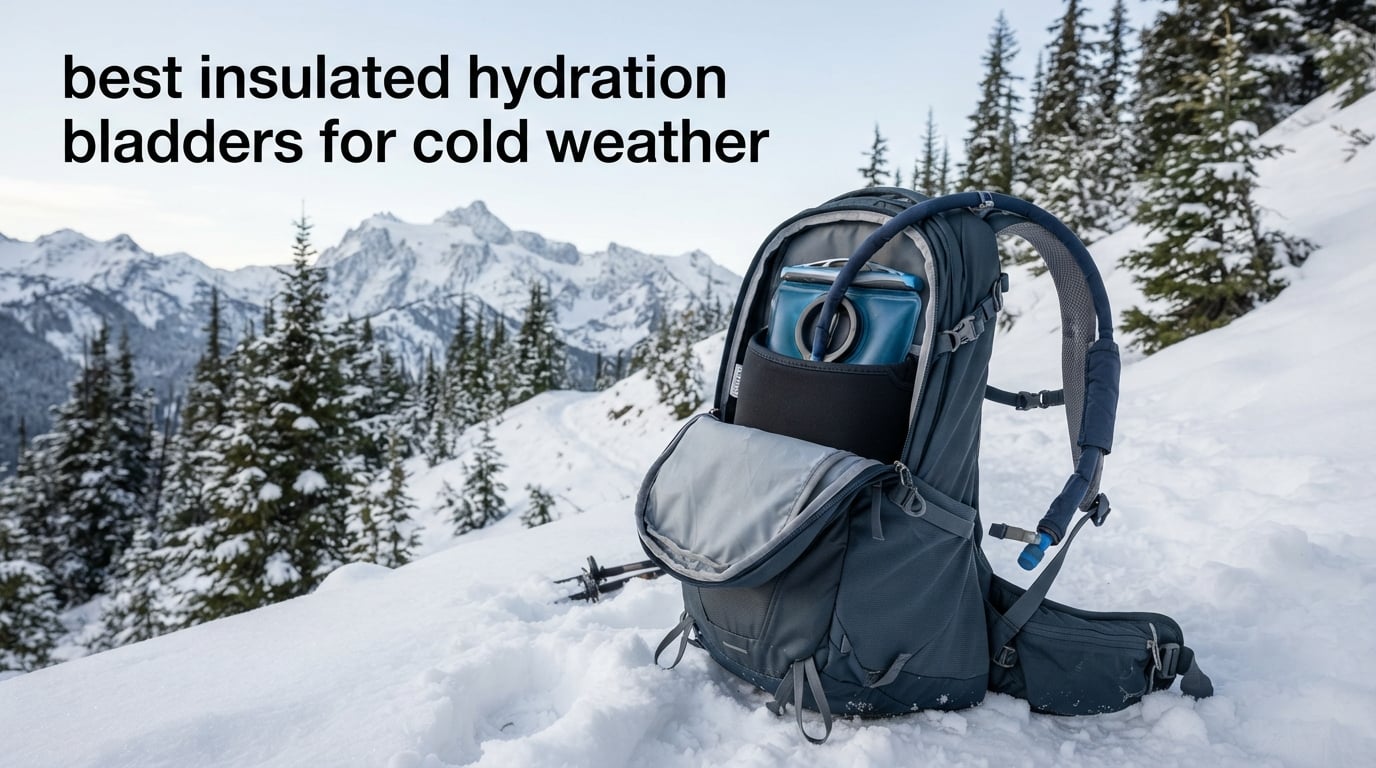
The best insulated hydration bladders for cold weather protect both the reservoir and the drinking path, because the hose and bite valve usually become the weak point first. My top pick is the HydraPak HydraSleeve 3L for people who need a full-capacity system: it combines a 3-liter Shape-Shift reservoir with an insulated sleeve, a high-flow Comet valve, and a reversible design for cleaning.
Insulation buys time; it does not turn water into an all-day freeze-proof supply in every condition. Forum reports are consistent on this point: an unprotected tube can freeze in roughly 20 to 40 minutes around 15 to 20 degrees F, while an insulated tube, a covered valve, body heat, and blowing water back after drinking give you a much better working system.
For 2026, I compared the seven analyzed reservoirs by the insulation that is actually included, capacity, filling and cleaning design, valve control, stated materials, warranty, and review signal. I did not invent temperature ratings where the product data provides none; wind, pack placement, drink temperature, and how often you sip change cold-weather results too much for a universal number.
A reservoir also has to fit the pack and the trip. If you are building a ski-touring kit, start by checking these winter daypacks with ice axe loops; riders deciding where to route a hose may also find our guide to splitboard backpacks with hydration compatibility useful.
Table of Contents
The top 3 choices cover full insulation, cold-specific protection, and easy cleanup
Pick the HydraPak HydraSleeve for maximum carried volume and a sleeve-based system, the CamelBak Stoaway for closed-cell foam plus tube and valve coverage, or the HydraPak Velocity IT when dishwasher-safe cleanup matters as much as insulation. These are different solutions to the same problem, so the right one depends on trip length and how much protection your exposed hose needs.

These insulated hydration bladders for cold weather show the key differences at a glance
The table includes every reservoir in this guide. A full sleeve or insulated reservoir protects stored water, but keep reading the feature line for the tube and valve: the most practical winter hydration bladder protects the parts exposed to moving cold air as well.
| Product | Specifications | Action |
|---|---|---|
| HydraPak HydraSleeve 3L |
|
Check Latest Price |
 CamelBak Stoaway 2L CamelBak Stoaway 2L |
|
Check Latest Price |
 HydraPak Velocity IT 2L HydraPak Velocity IT 2L |
|
Check Latest Price |
 Mazama Intake ICE 2L Mazama Intake ICE 2L |
|
Check Latest Price |
 CamelBak UnBottle 2L CamelBak UnBottle 2L |
|
Check Latest Price |
 MARCHWAY 2.5L MARCHWAY 2.5L |
|
Check Latest Price |
 N NEVO RHINO 2L N NEVO RHINO 2L |
|
Check Latest Price |
I treat stated insulation claims as design information, not a promise that a bladder will remain drinkable at a particular temperature. The most useful comparison is therefore simple: decide whether your reservoir will sit inside your pack near your back, then spend attention on the hose route and bite valve that stay outside it.
1. The HydraPak HydraSleeve 3L is the strongest choice for long, high-output winter days
Hydrapak HydraSleeve – Insulated Sleeve with Shape-Shift Low-Profile Water Bladder/Reservoir for Hydration Backpacks, 3-Liter (100 oz.), High Flow Bite Valve, Safe & Reliable
3L capacity
Insulated sleeve
Reversible for cleaning
Pros
- 3 liter capacity
- wide Slide-Seal opening
- self-sealing Comet valve
- lifetime warranty
Cons
- Only 129 reviews
- weight listed inconsistently
The HydraPak HydraSleeve is the most purpose-built option here for someone who wants a 3-liter winter reservoir rather than a regular bladder with only a tube cover. Its product data pairs the insulated sleeve with a low-profile Shape-Shift reservoir, and the 3-liter volume is useful for ski touring, snowshoeing, or a long day when refills are inconvenient.
I like the system logic: the sleeve addresses the water in the reservoir while the high-flow, self-sealing Comet bite valve handles the point you use most often. It also has a Slide-Seal top that opens wide for filling and ice, a universal hanger, and a flexible grab tab, which are practical details when hands are cold or gloved.
The listed 4.4 rating comes from 129 reviews, so it is a positive but smaller review sample than several other picks. Its reviewed strengths are fit in standard hydration vests and packs, low weight, and the Comet valve; that makes it a compelling choice when you do not want a bulky, dedicated hydration pack.
The HydraSleeve fits best when you need a 3-liter insulated system in a normal pack
Use this one if you carry long stretches between water sources and your pack has a standard reservoir sleeve. The universal hanger works with clips, hooks, and loops, while the low-profile reservoir should sit more neatly against the pack’s hydration compartment than an unstructured water bag.
Capacity is not automatically better for every activity. Three liters adds water weight, so I would reserve this capacity for extended touring, cold-weather hiking, or winter backpacking rather than short resort laps.
The HydraSleeve needs tube management even though its reservoir insulation is substantial
The available data describes an insulated sleeve and Comet valve, but it does not state a specific ambient-temperature limit or claim a covered bite valve. Keep the hose under a shoulder strap or jacket layer where possible, and use the blow-back technique after each drink.
HydraPak says the reservoir is reversible for deep cleaning and drying. That matters after winter use, since water left in folds or at the valve can freeze on the next outing and can also make storage hygiene harder.
2. The CamelBak Stoaway 2L gives the most complete stated protection around the drinking path
CamelBak Stoaway Insulated Hydration Bladder Reservoir, All‑Season Crux Reservoir with Freeze Protection, 70oz, Black 2.0
2L Crux reservoir
Closed-cell foam
Tube and valve cover
Pros
- Closed-cell foam insulation
- insulated tube and valve cover
- on off lever
- lifetime warranty
Cons
- 110 review sample
- 2 liter capacity only
The CamelBak Stoaway puts its strongest cold-weather feature in plain view: closed-cell foam insulation, an insulated tube, and a bite valve cover. This combination directly addresses the common winter failure sequence where the line freezes even while water in the bladder remains liquid.
Its 70-ounce Crux reservoir holds 2 liters and is designed to deliver more water per sip. I would choose that capacity for snowshoeing, day hiking, or skiing where a compact load beats carrying the extra liter offered by the HydraSleeve.
The ergonomic handle includes an on/off lever, a small feature with a large practical payoff when a pack is tossed into a car or laid on snow. Attachment points and an adjustable carry loop give it a more flexible setup than a reservoir that only works in one dedicated pocket.
The Stoaway is the clearest fit for skiers and snowshoers concerned about a frozen valve
Choose the Stoaway when your route exposes the hose to wind and you want listed protection at the tube and valve, not just around the water bag. The product is identified for snow and snowshoeing among its sports uses, and its insulation is described as suitable for hot and cold conditions.
This is also a sensible starting point for someone setting up an avalanche pack. Hydration routing varies by model, so check hose exits before you commit; our comparison of avalanche airbag packs for backcountry skiing can help with that wider gear decision.
The Stoaway works best with a two-liter hydration plan rather than an all-day reservoir load
Two liters is enough for many active winter days, especially when you can refill, but it is less generous than a 3-liter design for dry, high-output efforts. Carry a backup insulated bottle if you expect a very long route or if a refill source may be frozen.
The product data does not publish a freeze-proof temperature rating. Treat the foam, hose insulation, and valve cover as a better defense system, then still keep the bladder close to your back and clear the line after sipping.
3. The HydraPak Velocity IT 2L is the practical pick for people who want insulated hydration and easy cleanup
HydraPak Velocity IT (2L Hydration Reservoir) – Insulated Water Bladder/Reservoir for Hydration Pack – Self-Sealing Bite Valve, Leak Proof and Dishwasher Safe
2L insulated reservoir
HydraFusion tube
Dishwasher safe
Pros
- Insulated reservoir and tube
- dishwasher safe
- one-hand lock
- Plug-N-Play connector
Cons
- 2 liter maximum
- only 603 reviews
The Velocity IT has a well-rounded winter design: an insulated reservoir, a 36-inch HydraFusion insulated drink tube, and a high-flow Comet bite valve that opens and locks with one hand. Its 4.4 rating from 603 reviews gives it the broadest review base among the fully insulated HydraPak choices in this guide.
Cleaning is the reason this model moves near the top of my list. It is dishwasher safe, and its Slide-Seal top opens extra wide for filling and adding ice; those two points reduce the unpleasant cleanup routine that makes many people put off using a reservoir.
The Plug-N-Play connection lets you disconnect the tube, which is helpful when you are threading the reservoir through a pack or drying separate components. A universal hanger also supports clips, hooks, and loops, so this is a realistic option for hydration vests and packs rather than a system tied to one bag.
The Velocity IT suits day tours that need a cleanable, two-liter insulated reservoir
I would select this reservoir for winter hiking, snowboarding, or a half-day ski tour when two liters fits the plan. The included insulated tube matters for exposed routing, and the one-hand valve lock is useful when you need a positive stop between drinks.
The reservoir and tube are said to keep water colder longer and prevent sweating. Those are stated product benefits, not a measured cold-weather duration, so apply the same winter habits you would with every bladder.
The Velocity IT is easiest to live with when post-trip drying is part of your routine
Dishwasher-safe construction is unusual enough to be meaningful if you dislike brushes and drying racks. Still, open the Slide-Seal top and let the valve and tube dry fully before storage; dishwasher-safe does not mean water trapped in a tube evaporates on its own.
For very cold outings, do not count on cleaning convenience as freeze protection. Route the hose under an outer layer where it is safe to do so, keep the valve tucked away, and push remaining water back into the reservoir after drinking.
4. The Mazama Intake ICE 2L is the flow-focused fully insulated option
Mazama Intake ICE 2L Insulated Water Hydration Reservoir – Keeps Liquids Cold for up to 4 Hours – GYZR Bite Valve – Water Bladder for Hiking and Outdoor Adventures
2L insulated reservoir
Insulated tube
GYZR 3-way valve
Pros
- Fully insulated design
- 20 percent faster stated flow
- no plastic taste claim
- welded seams
Cons
- Only 24 reviews
- weight not provided
The Mazama Intake ICE is built around a fully insulated 2-liter reservoir, insulated drink tube, and insulating bite-valve cover. That full coverage makes it a serious candidate for cold weather hydration, especially for people who have already learned that a neoprene tube sleeve alone does not solve a frozen mouthpiece.
Mazama lists Insotek insulation technology that keeps a drink cool 40% longer, plus a GYZR three-way bite valve with a stated 20% faster flow. The 360-degree dispensing spout auto-seals, and a Flip-n-Stick magnetic retainer gives you a clear place to park the valve rather than letting it swing in the wind.
It also uses food-grade, USA-made film that is BPA-free and described as free from plastic taste, with welded seams for puncture resistance. Those material notes are appealing for long-term reservoir users who are tired of taste transfer or fragile seams.
The Intake ICE is best when a protected valve and quick flow matter more than a high review count
This is the model I would examine for winter activities where you take short, frequent drinks and want the valve close at hand. The valve cover, automatic seal, and magnetic retainer work as a system for keeping the mouthpiece cleaner and less exposed between sips.
The supplied 2-liter capacity keeps the package focused on active day use. It can fit universally through a mid-line quick disconnect, but confirm the reservoir dimensions against a particularly narrow pack because the available product data does not list them.
The Intake ICE has less crowd-sourced history than the established HydraPak and CamelBak picks
Its 4.4 rating is based on 24 reviews, which is a much smaller sample than the MARCHWAY or Velocity IT. I would read current owner feedback closely if broad review volume is one of your deciding factors.
The 40% cooling claim describes the listed insulation technology; it is not a sub-freezing test result. For winter safety, treat it as a well-protected hydration system and keep the same line-clearing routine you would use with any reservoir.
5. The CamelBak UnBottle 2L is the easiest choice for quick external refills
CamelBak UnBottle Insulated Hydration Reservoir Set with Crux Reservoir, External Fill Design for Adventure and Travel, 2L, Frost Grey Turkish Sea
2L Crux reservoir
Insulated sleeve
External fill design
Pros
- External filling
- Crux high water delivery
- on off lever
- multiple attachment points
Cons
- 2 liter capacity
- 410 review sample
The CamelBak UnBottle pairs a 2-liter Crux reservoir with an insulated sleeve and an external fill design. That design is its standout benefit: a quick top-off does not require removing the reservoir from its setup, which is particularly nice when stopping in cold wind is already an awkward job.
The Crux system is designed to deliver more water per sip, while the ergonomic handle has an on/off lever to prevent leaks. A zippered tube access route and multiple attachment points let you mount it to packs, boats, or vehicles, so the UnBottle is broader in purpose than a traditional reservoir-only unit.
At 13 ounces, this is not the lightest listed product, but the sleeve and adaptable carrying arrangement explain some of that tradeoff. The 4.4 rating comes from 410 reviews, and owners most often praise the external fill design, insulated sleeve, and attachment choices.
The UnBottle is best for travel and pack setups that make reservoir removal a chore
Pick this if your hydration compartment is hard to access, or if you alternate among bags and want attachment points rather than a fixed internal-only setup. The external fill layout can shorten a break because you are not wrestling a wet reservoir out of a packed winter bag.
Its zippered tube access is also useful for tidier routing. A tidier route can keep the tube nearer the pack or a protected layer, though the available details do not call the tube itself insulated.
The UnBottle needs extra attention at the exposed hose because the sleeve mainly protects the reservoir
The product data clearly identifies an insulated sleeve that maintains water temperature consistency, but it does not list an insulated tube or a valve cover. That makes it a better fit for cool conditions, protected routing, or users willing to add their own hose strategy than for an exposed sub-zero line.
Keep the valve’s on/off lever closed when packing to reduce leak risk. For cold days, tuck the mouthpiece inside a jacket or pack strap pocket after use and blow water back from the tube.
6. The MARCHWAY 2.5L is the durable wide-mouth choice with tube-only insulation
MARCHWAY 2L/2.5L/3L TPU Hydration Bladder, Ultra Durable Water Reservoir Bag with Insulated Tube for Hydration Pack for Cycling, Hiking, Running, Climbing, Biking (2.5L Grey 85oz)
2.5L TPU reservoir
Neoprene tube sleeve
3.35 inch opening
Pros
- 0.4mm TPU film
- wide filling port
- rotating shutoff valve
- internal baffle
Cons
- Tube sleeve only
- heavy-use durability reports
The MARCHWAY is a 2.5-liter TPU hydration reservoir with a neoprene sleeve on the tube, rather than full reservoir insulation. It earns a place here because it combines a 0.4mm-thick TPU film with a large 3.35-inch opening, a shutoff-enabled 360-degree rotating bite valve, and a 4.5 rating from 3,439 reviews.
That extra half-liter over a standard 2-liter bladder is a useful middle ground. An internal baffle helps limit sloshing, while the wide opening supports easier filling, adding ice, and drying than designs with a narrow screw cap.
The quick-release connection has an automatic shutoff valve, which can make removing a reservoir from a pack less messy. MARCHWAY also says it is compatible with most hydration backpacks, a good feature for replacing a worn reservoir without changing the rest of your kit.
The MARCHWAY is best when durability, capacity, and a wide filling opening come before full insulation
This is a sensible pick for winter hikers who already keep the reservoir deep in an insulated pack compartment and primarily need protection for the exposed tube. The TPU film is stated to resist pressure, abrasion, and punctures, and the neoprene tube sleeve addresses heat loss along the line.
Its 0.55-pound listed weight is heavier than the scant weight listing for the HydraSleeve, though those listings may reflect different included components. In real use, the 2.5 liters of water will dominate the carry difference more than a few ounces of reservoir material.
The MARCHWAY cannot replace a fully insulated reservoir on the coldest, windiest days
The insulation is on the tube, not around the reservoir bag. That distinction is important: a hydration bladder for extreme cold needs help at both the stored water and the drinking path, particularly if it rides in an outer pack pocket.
Reviews are favorable overall, but some users report durability issues with heavy use. Check the quick-release, valve, and seams before a major trip, and carry a backup water option whenever a remote outing depends on hydration.
7. The N NEVO RHINO 2L is the lightweight set with a foil-lined insulation sleeve and cleaning tools
N NEVO RHINO Hydration Bladder 2L with Bladder Insulator, Water Bladder for Hiking Backpack, Leakproof Water Pouch, BPA-Free Water Reservoir Hydration Pack for Hiking Running Camping Cycling Skiing
2L reservoir
Foil-lined sleeve
Insulated tube and brushes
Pros
- Insulated sleeve and tube
- wide opening
- cleaning brushes
- lightweight design
Cons
- One-year warranty
- 51 review sample
The N NEVO RHINO package combines a 2-liter bladder, an insulated sleeve with aluminum foil lining on both sides, an insulated hose cover, and two cleaning brushes. It is the most complete accessories-first option of the seven, especially for a new reservoir user who otherwise would need to source cleaning tools separately.
The manufacturer says the insulation bag keeps water fresh for five to seven hours and that the material remains soft in freezing weather. It also lists double sealing for leak prevention, a wide top opening for filling and cleaning, and an interior baffle that reduces water movement while hiking or skiing.
At a listed 3.17 ounces, it is light on paper, although product-weight comparisons can vary according to whether a sleeve or accessories are included. Its 4.3 rating from 51 reviews is respectable, but I would factor in the shorter one-year warranty and the smaller body of ownership feedback.
The N NEVO RHINO is best for a first insulated bladder setup that includes cleaning basics
Choose this set if you want sleeve, hose cover, and brushes in one package for hiking, running, cycling, or skiing. The product data says it works with most running vests and hiking backpacks, while 2-liter and 3-liter variants let you match capacity to your route.
The foil-lined sleeve is a meaningful layer around the reservoir, and the included tube cover is better than leaving the line bare. The stated five-to-seven-hour freshness duration should be read as a manufacturer claim, not as a guarantee of ice-free flow in every winter condition.
The N NEVO RHINO is less convincing for repeated hard use than the lifetime-warranty alternatives
Forum users place a high value on brands with strong customer support because a small leak or damaged valve can ruin a cold outing. This model’s one-year manufacturer warranty is more limited than the lifetime warranties stated for the HydraPak, CamelBak, and Mazama products in this comparison.
Review feedback praises its leak resistance and insulation, while also raising long-term durability concerns. I would use the included brushes after each trip, inspect the double-sealed areas, and reserve it for users comfortable with a shorter warranty commitment.
An insulated bladder works best when the reservoir, hose, and bite valve are treated as one system
A cold weather hydration reservoir can use three distinct levels of protection. The first is an insulated tube, such as the neoprene sleeve on the MARCHWAY; it helps the exposed line but leaves stored water dependent on pack placement.
The second is an insulated sleeve around the reservoir, as on the HydraSleeve, UnBottle, and N NEVO RHINO. This slows heat transfer at the water bag, although hose routing still decides whether water reaches your mouth.
The third is coverage across the whole system: reservoir insulation plus an insulated tube and a protected bite valve. The CamelBak Stoaway and Mazama Intake ICE most clearly state this approach, while the Velocity IT pairs an insulated reservoir with an insulated HydraFusion tube.
There is no honest universal answer to “how cold can it get?” because a reservoir against your back inside a pack behaves differently from one in an outer pocket in wind. Start with an insulated system whenever temperatures head toward freezing, then pick extra protection according to the exposed length of tube and your ability to keep the valve sheltered.
The best way to prevent a hydration bladder from freezing is to protect the line and clear it after drinking
Insulation improves the margin, but technique makes the difference on a cold, active day. The following routine addresses the specific failures winter users report most often: a frozen hose, frozen bite valve, and liquid water trapped in an exposed section of tube.
- Start with lukewarm water, not hot water. A modestly warm fill gives you a thermal head start without risking damage or an uncomfortable drink. Do not rely on ice as a winter strategy.
- Place the reservoir against your back and inside the pack. Your body heat and the pack’s layers help the reservoir more than any sleeve that sits exposed to wind.
- Route the tube under a shoulder strap cover or jacket layer when your movement and safety allow it. The goal is less exposed line, not a complicated route that snags when you need to move.
- Drink regularly, then blow back. After a sip, gently blow into the mouthpiece to push water from the tube toward the reservoir. Community reports repeatedly identify this as the most useful no-cost habit for slowing hose freeze-ups.
- Stow or cover the bite valve between drinks. A valve cover like the Stoaway’s or Intake ICE’s is helpful, but putting the valve inside a protected pocket adds another layer.
- Carry a backup insulated bottle for long or remote days. It is not redundant when a water source is part of your safety plan; it gives you drinking water while you troubleshoot a frozen line.
Do not force a frozen valve or hose. A hard squeeze can damage a connection or valve, and warming it gradually inside a jacket is a safer response. Regular small drinks also help you stay hydrated, which is easier than trying to thaw a system after it has stopped flowing.
The right capacity and pack fit depend on your winter activity and refill plan
Two liters is the common sweet spot for active day use. It keeps weight reasonable, works in many hydration sleeves, and is the capacity of the Stoaway, Velocity IT, Intake ICE, UnBottle, and N NEVO RHINO base model.
Choose 2.5 liters if you want more range without moving to a full 3-liter setup, as with the MARCHWAY. Choose 3 liters for long snowshoe routes, tours with no refill point, or winter backpacking, where the HydraSleeve’s extra capacity has a clear job.
Pack fit is not only about whether the bag fits inside a sleeve. Check the hanger type, the position of the tube exit, whether you can reach the fill opening without unpacking, and whether the insulated reservoir adds enough bulk to crowd layers or avalanche gear.
For winter camping, hydration and overnight insulation are linked: a reservoir left in a freezing vestibule will not work like one stored inside your shelter. Match the whole setup with other cold-weather gear, including these insulated sleeping pads for winter camping, rather than treating water storage as an isolated choice.
Cleaning and drying are the habits that keep a winter reservoir reliable next time
Cold temperatures slow problems during a trip, but they do not remove the need to clean a water reservoir afterward. Open wide-fill reservoirs fully, drain the tube, separate quick-disconnect components where possible, and allow the inside to dry before storage.
The Velocity IT is dishwasher safe, and the HydraSleeve is reversible, both of which simplify maintenance. The N NEVO RHINO includes two brushes, while the MARCHWAY has a removable valve head and wide 3.35-inch opening; each offers a different route to a dry, clean system.
Before the next cold outing, inspect seams, the bite valve, the shutoff lever, and the tube connector. This takes very little time and is especially useful for models with lower review volume or a shorter warranty, where a failure in the field is harder to justify.
If you prefer a non-bladder backup for rink-side or short outdoor use, our guide to insulated water bottle holders offers a different way to keep a drink available in cold conditions. For hiking and skiing, though, a protected hands-free system remains much easier to use while moving.
The answers below explain cold-weather hydration bladder choices in plain terms
How do you keep a hydration bladder from freezing?
Keep the reservoir inside the pack against your back, use an insulated reservoir and tube, protect the bite valve, drink regularly, and blow water back through the tube after each sip. Insulation slows heat loss, but clearing the exposed tube is the practical step that helps prevent an ice plug.
What is the most durable hydration bladder?
Among these products, the MARCHWAY lists 0.4mm TPU film for pressure, abrasion, and puncture resistance, while the Mazama Intake ICE lists welded puncture-resistant seams. Durability also depends on valve care, tube routing, and drying; HydraPak, CamelBak, and Mazama list lifetime warranty coverage for several reviewed models.
Is Osprey or CamelBak better?
Neither brand is universally better because the right choice depends on the pack and winter protection needed. CamelBak has two reviewed insulated systems here: the Stoaway includes closed-cell foam, an insulated tube, and a valve cover, while the UnBottle adds an external-fill layout. Match the reservoir to your pack’s fit and hose routing.
What hydration bladder does the military use?
Military hydration systems vary by unit, mission, issued gear, and procurement contract, so there is no single bladder that every military user carries. For cold-weather civilian use, look instead for stated reservoir insulation, an insulated tube, a covered bite valve, compatible pack mounting, and a reliable shutoff.
The right insulated hydration bladder is the one that protects your actual weak point
For the best insulated hydration bladders for cold weather, I would start with the HydraPak HydraSleeve when 3-liter sleeve coverage is the priority, the CamelBak Stoaway when tube and valve protection matter most, and the Velocity IT when easy cleaning belongs at the top of the list. The Mazama Intake ICE is a strong fully insulated alternative, while the UnBottle, MARCHWAY, and N NEVO RHINO each fit a more specific setup.
In 2026, choose the reservoir that fits your pack, then use it as a complete winter system: protect the water, protect the hose, protect the valve, and blow the line clear. That simple routine matters as much as the insulation printed on the product description.