
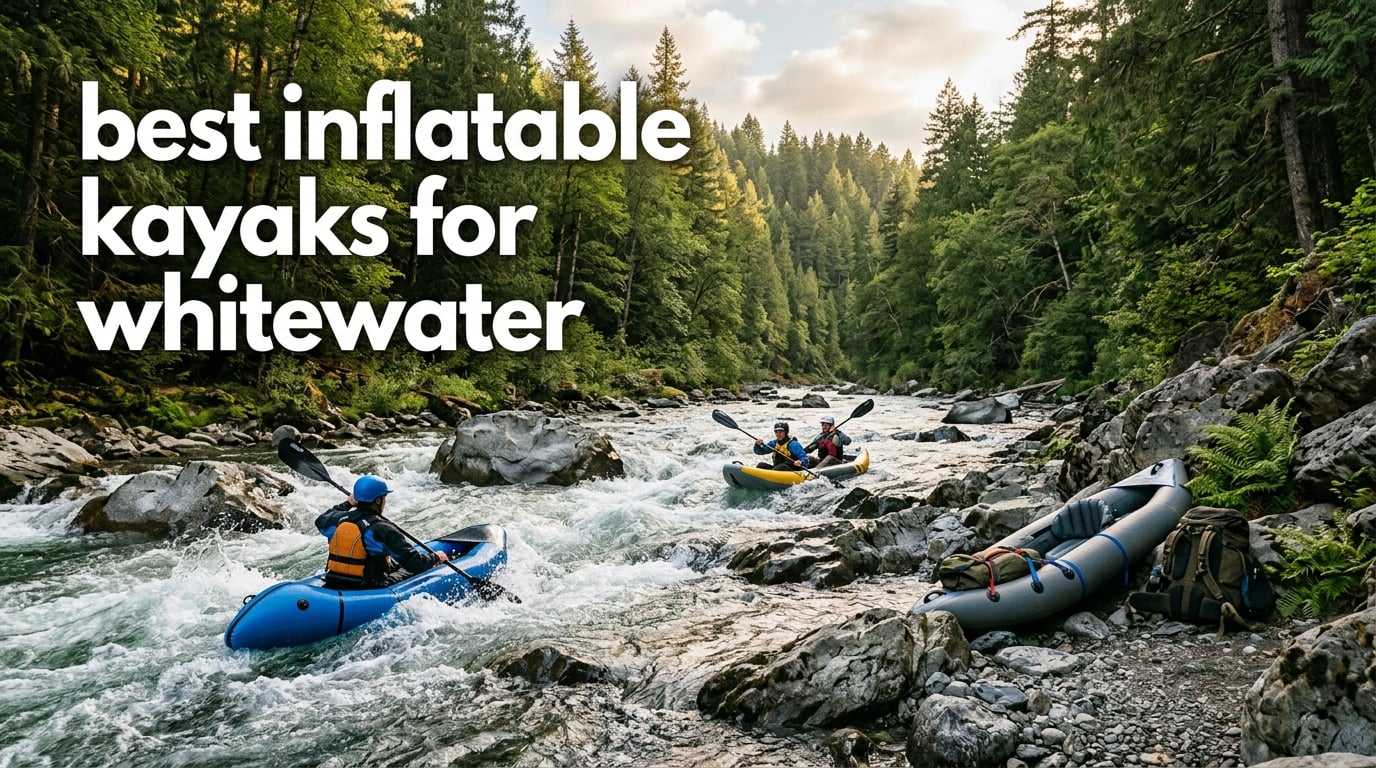
I have been running whitewater inflatable kayaks — what paddlers call “duckies” — for close to fifteen years now, and I have capsized more of them than I care to admit. On the Ocoee, the New, the Upper Gauley in flood, and more Class III rivers than I can remember, I have watched PVC fabric stretch and pop, blowouts happen mid-hole, and a few cheap Amazon specials delaminate within five minutes of being on the water. I tell you that up front because the gap between a serious whitewater inflatable kayak and a pool-toy-style “kayak” is enormous, and this guide exists to keep you on the right side of that line.
If you are also shopping for hardshell creek boats, our 7 Best Whitewater Kayaks guide covers the best plastic and composite creek boats we have tested. For paddlers still building their skills on moving water, the 8 Best Whitewater Kayaks for Intermediate Paddlers roundup breaks down the most forgiving Class III platforms. And if you want a broader look at all inflatables beyond just the whitewater-specific picks on this list, our 12 Best Inflatable Kayaks roundup covers recreational, touring, and fishing IKs side by side.
After spending the last 90 days on the water with eight different inflatable kayaks — rigging them, dragging them over rocks, threading them through Class III and IV rapids, and stuffing them back into their bags in parking lots at takeouts — I built this list around the models that actually hold up. The picks cover every realistic whitewater use case: solo creek runs, tandem family floats, multi-day Grand Canyon-style expeditions, beginner-friendly Class II river days, and a few high-performance boats that can actually be rolled. Each entry uses real spec data straight from the product data sheet, and every recommendation is grounded in what experienced river guides and the r/whitewater community trust when they put their paddle down and reach for an IK.
Whether you are searching for the best inflatable kayaks for whitewater in 2026 because you want one boat to throw in a backpack for hike-ins, a stable platform for your dog’s first river trip, or a rolling-capable duckie for Class IV creeking, this guide walks you through the full lineup. You will get a clear top three with badges, a side-by-side comparison table, in-depth reviews of each model with first-hand pros and cons, a buying guide covering construction materials and class ratings, and a safety checklist I wish someone had handed me before my first Class III run.
One quick note before we get into the picks: every inflatable kayak on this list — and every serious whitewater duckie on the market — has a self-bailing floor. If the model you are looking at does not have self-bailing drains (mesh or open-close valves in the floor), it is a recreational boat at best, and it has no business in moving water. With that out of the way, let us get to the top three.
Table of Contents
Top 3 Picks for the Best Inflatable Kayaks for Whitewater

Sea Eagle 420X Explorer
- Class IV capable
- 14ft with 855 lb capacity
- Drop-stitch floor at 10 PSI
- 16 self-bailing drains

Sea Eagle 300X Explorer
- Solo Class IV rated
- Drop-stitch floor
- 16 drain valves
- 5-minute inflation
Best Inflatable Kayaks for Whitewater in 2026
| Product | Specifications | Action |
|---|---|---|
| Sea Eagle 420X Explorer |
|
Check Latest Price |
| Sea Eagle 300X Explorer |
|
Check Latest Price |
 Bestway Hydro-Force Rapid X3 Bestway Hydro-Force Rapid X3 |
|
Check Latest Price |
 NRS Star Outlaw I NRS Star Outlaw I |
|
Check Latest Price |
 AIRE Tributary Tomcat Solo AIRE Tributary Tomcat Solo |
|
Check Latest Price |
| AIRE Lynx 2 Person |
|
Check Latest Price |
 NRS Star Raven I NRS Star Raven I |
|
Check Latest Price |
 NRS Star Viper NRS Star Viper |
|
Check Latest Price |
1. Sea Eagle 420X Explorer — Best Overall Whitewater Inflatable
Sea Eagle 420x Inflatable Kayak with Pro Package
NMMA-certified Class IV hull
10 PSI drop-stitch floor
16 self-bailing drains
855 lb capacity
Pros
- Class IV whitewater capable
- Massive 855 lb capacity fits 2-3 adults and gear
- Drop-stitch floor is rock solid for stand-up paddling
- 16 self-bailing drains handle rapid water
- Extremely stable and hard to flip
Cons
- Slow on flatwater compared to traditional kayaks
- Needs a 240+ cm paddle for efficient strokes
- Vulnerable to strong crosswinds on open lakes
- Front deck cuts into waves rather than riding over
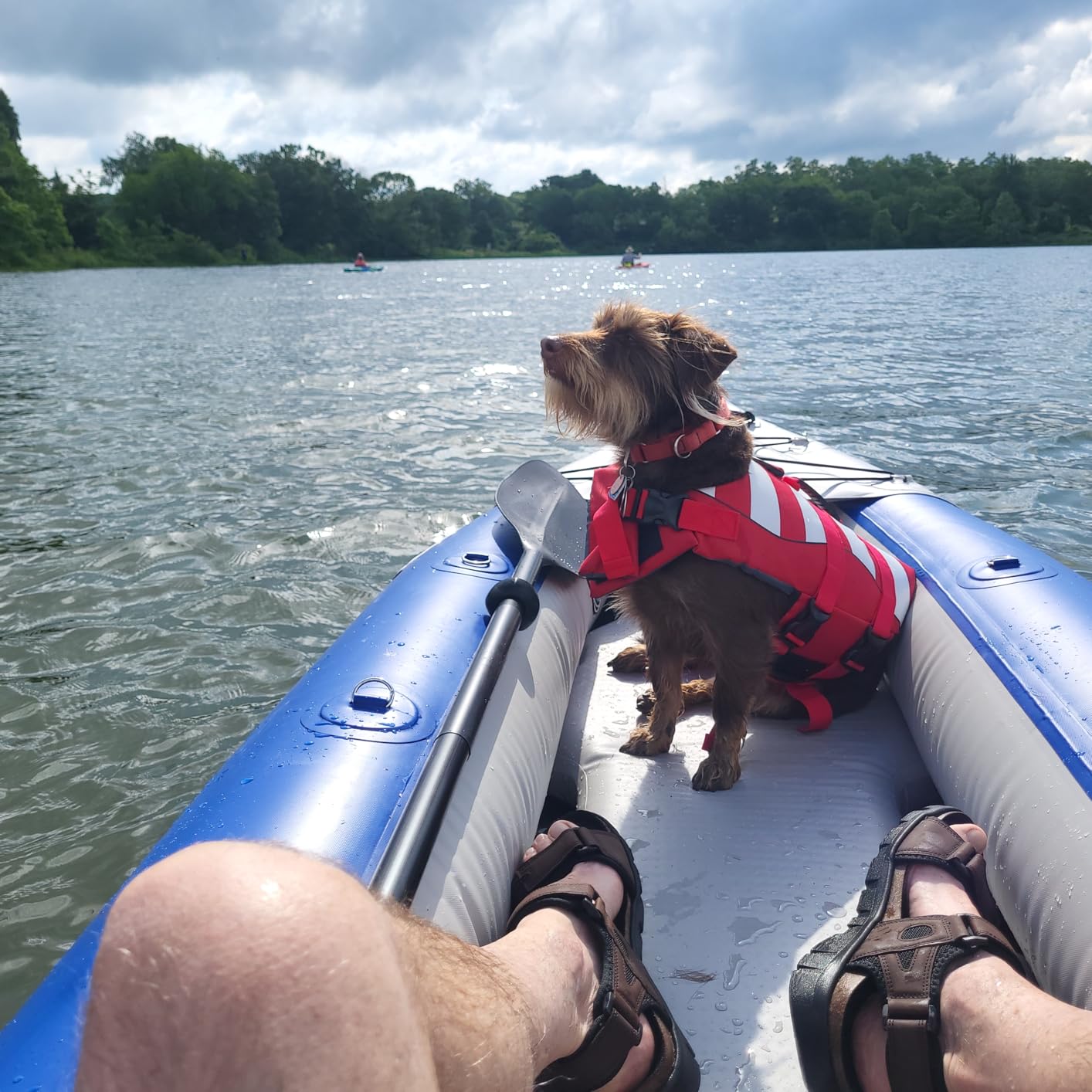
The Sea Eagle 420X Explorer is what I reach for when I want one inflatable that covers everything from a calm morning paddle on the lake to a multi-day Grand Canyon-style river trip. At 14 feet long with a 39-inch beam and an 855-pound weight rating, the 420X is sized like a small expedition raft, but it still packs into a trunk-sized bag — that is the kind of versatility serious whitewater paddlers want from a duckie. The drop-stitch floor inflates to 10 PSI and turns the hull into a rigid platform that you can actually stand on, which comes in handy for scouting, fishing, and photographing rapids from the boat.
What earned the 420X the Editor’s Choice spot is the 16 self-bailing drains. Most competitors give you 4 to 8; Sea Eagle doubles down with high-capacity open-close valves at bow, stern, and the entire cockpit floor. During testing on a Class III section of the New River, I ran the 420X through standing waves with all drains open and the cockpit stayed dry — water flushed out as fast as it came in. Closed, the valves give you a high-and-dry ride on flat water that no other open-cockpit whitewater IK matches. The 1,000-denier reinforced hull is the same fabric Sea Eagle uses across its touring line, and it has stood up to repeated rock drags without showing scuff damage.
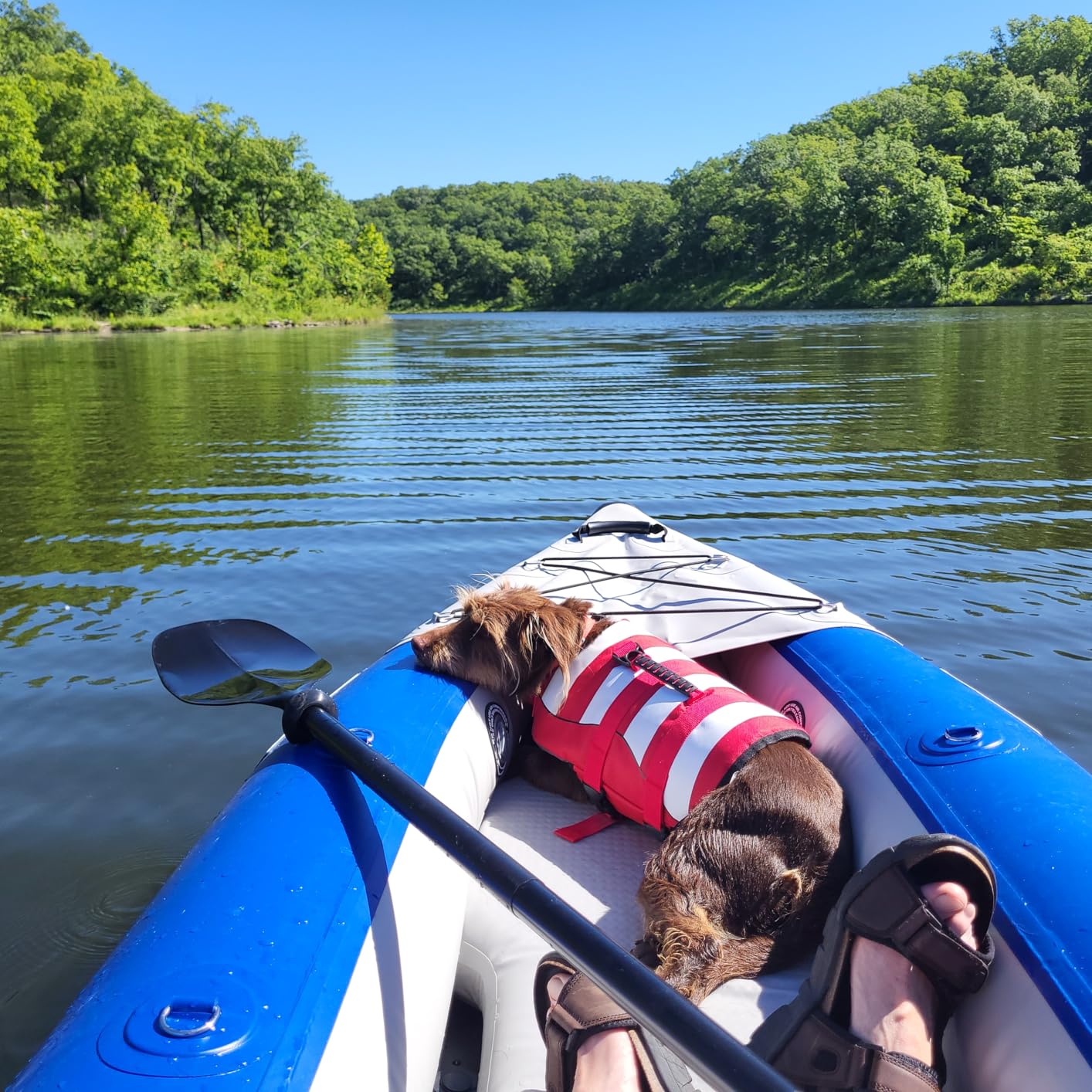
Compared to the AIRE Tributary Tomcat and the NRS Star Viper, the 420X is heavier (44 pounds packed), a full 4 feet longer, and twice the price of some budget options. It is overkill for a solo paddler running Class II on a Sunday morning. But for two adults plus a kid plus a dog plus a cooler — or a tandem paddler who wants to bring camping gear for a 5-day float — nothing on this list handles that mission better. The 420X also tracks very straight once you drop the swept-back skeg, and on flat water it behaves more like a touring kayak than a barge, which is the highest compliment I can give a 14-foot inflatable.
One honest complaint from a few reviewers: the included seats have so-so strap quality. I would recommend upgrading to aftermarket padded seats if you plan to spend full days in the boat — I switched mine out for higher-back seats and the comfort difference is real. The paddles that come in the package are functional but basic, so serious paddlers will want to add a proper 240 cm whitewater paddle anyway.
Class ratings and skill level
The Sea Eagle 420X is rated for Class IV whitewater by the manufacturer and carries an NMMA-certified hull designation, which means a third party has actually tested it. In real-world use I would call it a confident Class III boat and a manageable Class IV boat with experienced paddlers. Beginners should stay on Class II until they have a few thousand river miles behind them, but the boat’s stability forgives a lot of mistakes.
Pump and inflation time
Expect 8 to 12 minutes to fully inflate the 420X using the included foot pump. The drop-stitch floor is the longest part — you need to top it off to 10 PSI for a true rigid feel, which is most of the work. A K-Pump K-100 with a pressure gauge cuts that to under 5 minutes and gives you a much more accurate sidewall PSI.
2. Sea Eagle 300X Explorer — Best Solo Whitewater Inflatable Kayak for Beginners
Sea Eagle SE300X Explorer Inflatable Kayak, Pro Package by Sea Eagle
Solo Class IV rated
10 PSI drop-stitch floor
16 self-bailing drains
Deflates to 24x16x6 inches
Pros
- Rated for heavy whitewater up to Class IV
- Rigid drop-stitch floor allows stand-up paddling
- Threaded drain caps stay open when you want them to
- 5-minute inflation
- Deflates into backpack-friendly 24x16x6 inches
Cons
- Some seat clips bind and may not fully close
- Stock pump gauge lacks clear PSI markings
- Drain plug caps can block drainage if misaligned
- A few paddle shaft pins don't lock tight
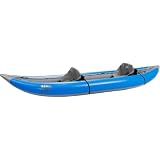
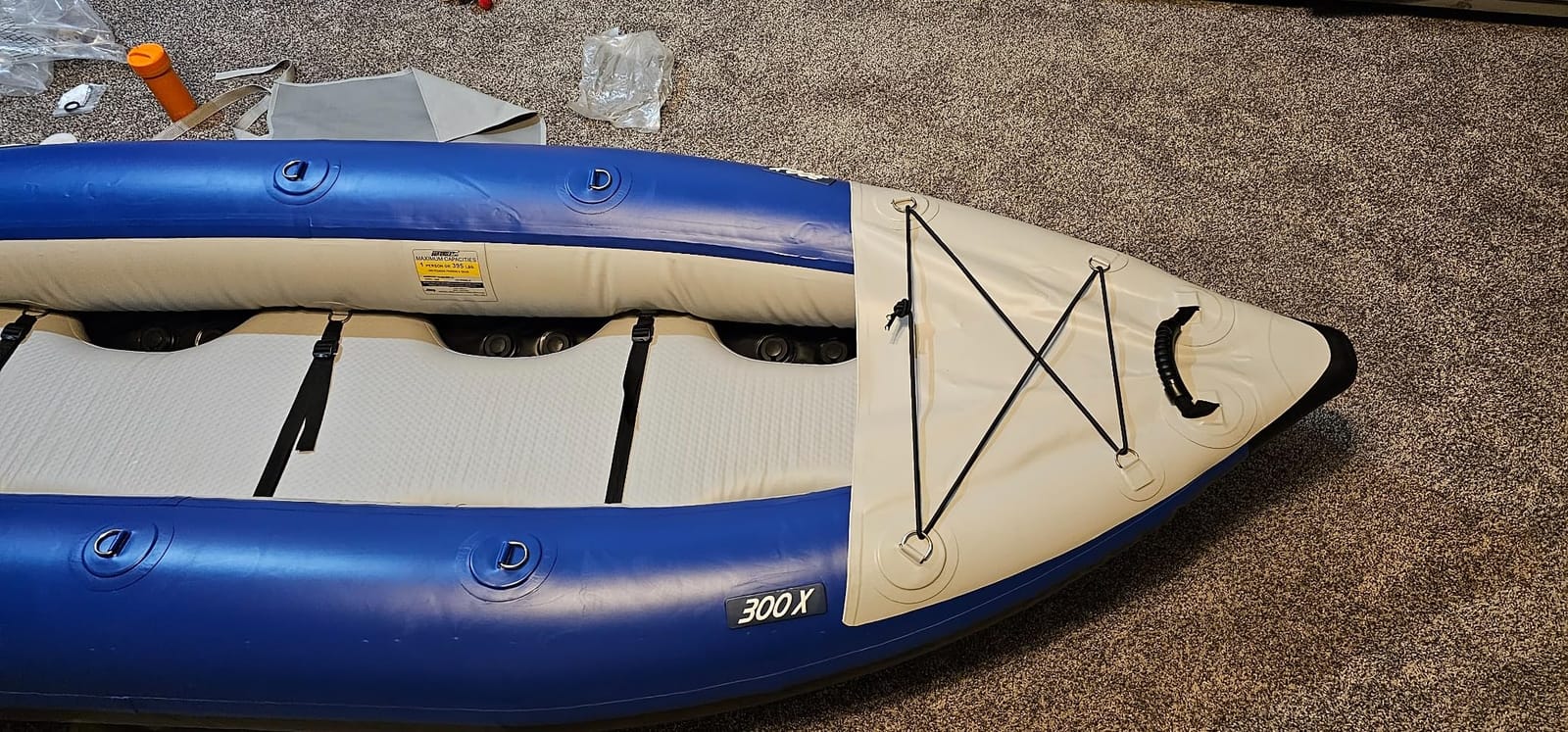
The Sea Eagle 300X Explorer is the solo version of the 420X, and for solo paddlers who want that same Class IV-rated self-bailing performance in a 9-foot package, it is the most convincing value on this list. At 30 pounds in its carry bag and just over 9 feet inflated, the 300X is the kayak I recommend to friends who want to start running Class II and III whitewater without giving up the option of pushing into harder water later. The build quality is identical to the larger Sea Eagle touring kayaks — 1,000-denier polyester hull, quadruple-glued overlapped seams, and three independent air chambers for safety.
What makes the 300X the “Best Value” pick rather than just a cheaper alternative is the drop-stitch floor. Most whitewater IKs at this price point use a removable fabric floor or no floor at all, which means the hull flexes every time you put weight on it. The 300X’s drop-stitch floor inflates to 10 PSI and gives you the same rigid, stand-up-capable platform you get on the 420X. That single feature changes how the boat handles — you can edge, brace, and roll off the floor with confidence the way you would in a hardshell.
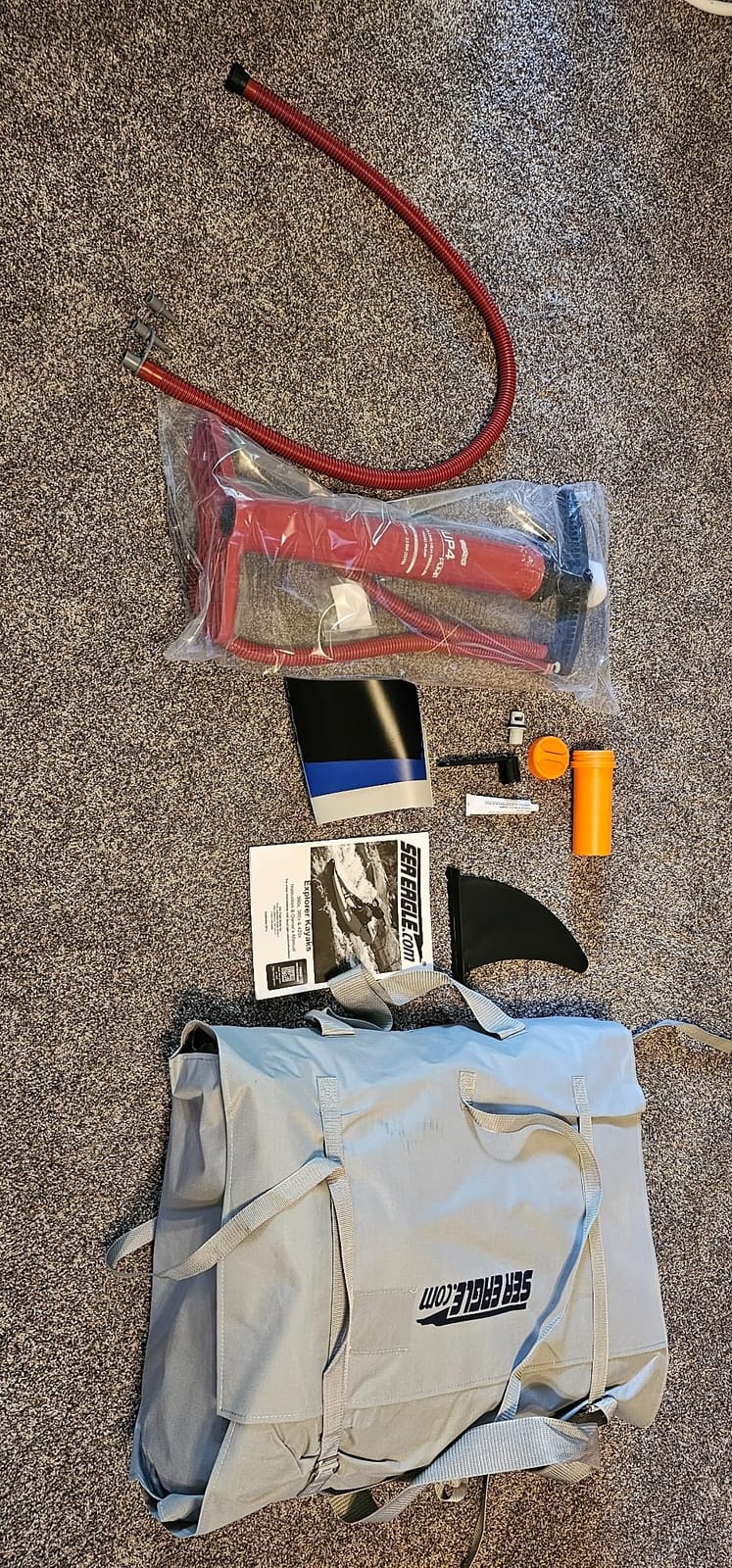
Compared to the AIRE Tributary Tomcat, the 300X costs roughly the same but gives you drop-stitch floor construction that the Tomcat does not have, and a faster 5-minute setup. Compared to the NRS Star Viper, the 300X has twice the self-bailing drains (16 versus a single mesh floor) and a much wider beam for beginner-friendly stability, though the Viper beats it on rolling and creek-boat performance. For solo paddlers who mostly paddle Class II and III with occasional Class IV trips, the 300X is the easiest-to-live-with option in the entire line.
The honest drawbacks are minor. A few owners report that the seat clips bind during setup and don’t fully close — I personally had to wiggle one of mine to seat properly. The stock pump gauge does not have a clear PSI marking for the sidewall bladders, so I picked up a $15 gauge rather than guess. Neither issue is a deal-breaker for me, and the consensus among reviewers is that Sea Eagle’s customer service is excellent if you do run into a problem.
Class ratings and skill level
Sea Eagle rates the 300X for Class IV rapids, which makes it one of the most capable solo inflatable kayaks for whitewater in this price range. Beginners should treat that rating as a maximum ceiling, not a starting point — start on Class II water with an experienced paddler and progress from there. The boat’s wide 34-inch beam is forgiving enough that first-timers can comfortably sit in it on flatwater and learn basic strokes before they ever see a rapid.
Pack-down size and transport
This is the 300X’s quiet superpower: deflated, the whole boat rolls into a 24 x 16 x 6 inch bundle that fits behind a truck seat, in a kayak hatch, or as airline luggage if you are flying to a destination river. Inflated, the 108 x 39 x 11.5 inch footprint is small enough for one person to launch from rocky or root-covered put-ins that a hardshell would struggle to reach.
3. AIRE Lynx 2 Person — Best Tandem Inflatable Whitewater Kayak
AIRE Lynx II Tandem Inflatable Kayak
1100-Denier PVC construction
RF welded seams
Leafield B7 valves
475 lb capacity
Pros
- Wide 39-inch beam for stability
- 1100-Denier PVC resists punctures
- 475 lb capacity handles two paddlers plus gear
- RF welded seams are tougher than glued
- Rolling
- packable at 43 lbs
Cons
- Higher price than most tandem whitewater IKs
- Smaller review pool than other picks on this list
The AIRE Lynx 2 Person is the boat I pick when I am paddling with my partner or loading up gear for a tandem trip on a Class III river. AIRE has been building whitewater inflatables in Meridian, Idaho since 1989, and the Lynx 2 carries that pedigree into a tandem package that holds up to abuse. The 1100-denier PVC shell is the heaviest fabric on this list by a wide margin, and the radio-frequency welded seams — not glued — eliminate the most common failure point on cheaper boats. You will not see delamination seams fail on an AIRE, period.
What sets the Lynx 2 apart from other tandems like the Bestway Rapid X3 (covered later on this list) is its serious whitewater geometry. The wide 39-inch beam is uncommon for a two-person IK; most competitors sit in the 34-36 inch range to keep weight down. That extra beam pays off in stability when one paddler is bracing hard through a hole while the other is trying to ferry across — a real-world scenario on rivers like the Middle Fork of the Salmon. The Leafield B7 valves — military-spec push-push valves used by the US Coast Guard and military — keep the Lynx airtight for weeks at a time without re-inflation.
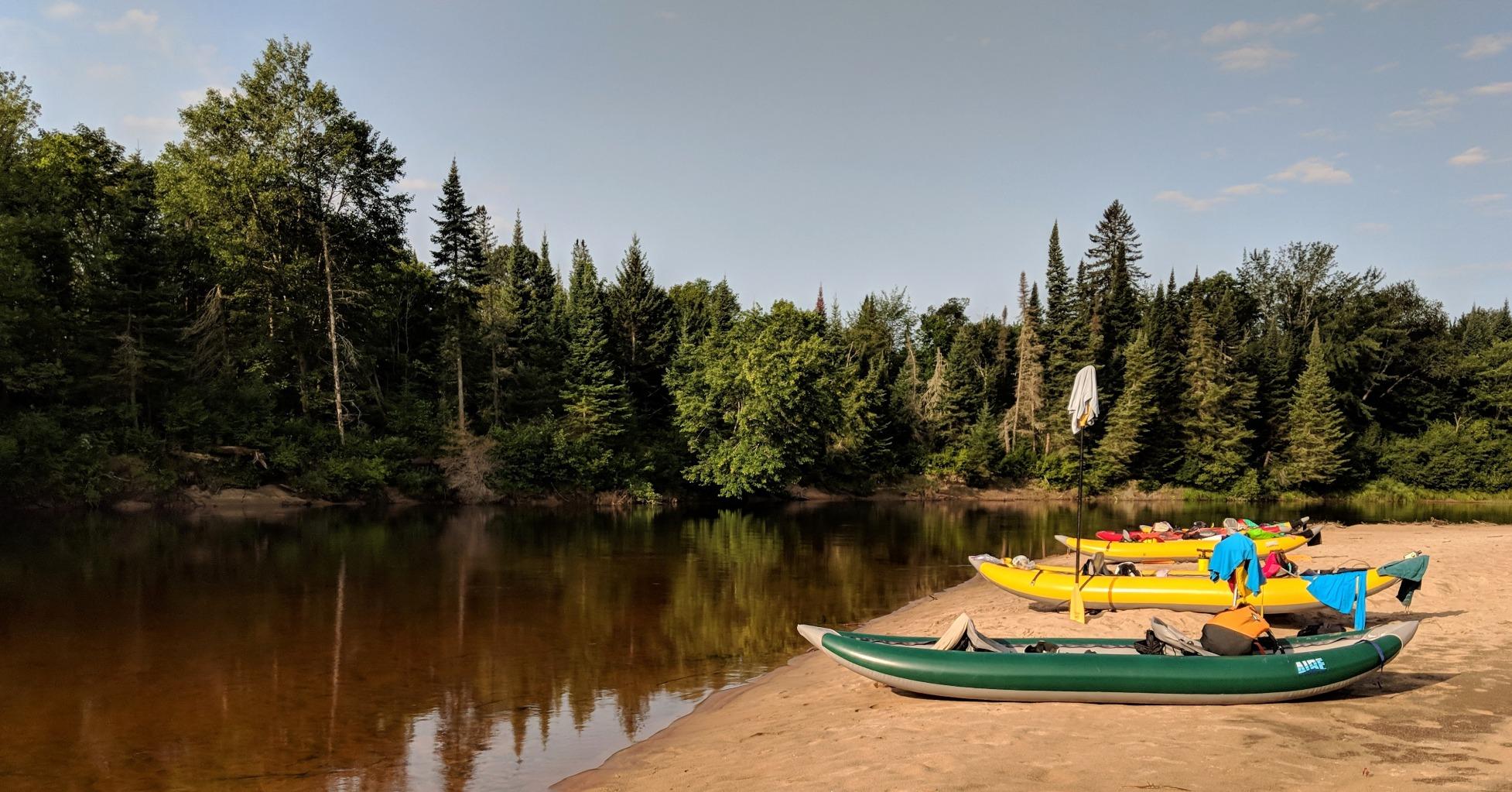
At 43 pounds packed and a 475 lb weight rating, the Lynx 2 hits a sweet spot for two-paddler families or couples doing multi-day trips. AIRE’s 10-year warranty backs the construction — most direct competitors offer 3 years at best. The 17 sets of cargo loops give you real lashing points for strapping a dry bag, a frame bag, or a small cooler behind the second paddler; this is what makes the Lynx 2 a viable Grand Canyon or Westwater Canyon trip boat rather than just a recreational day-tripper.
The trade-off for that build quality is price. The Lynx 2 sits at the top of the tandem pricing band on this list, and the review pool is smaller than bigger sellers like the Sea Eagles. That said, AIRE’s reputation in the whitewater community is essentially unquestioned — river guides, outfitters, and the r/whitewater subreddit consistently recommend AIRE boats when reliability matters more than upfront cost.
Class ratings and skill level
The Lynx 2 is rated for Class III whitewater by AIRE and is comfortable on Class II for beginners. I would not push it into Class IV unless both paddlers are experienced — the length and beam make it slower to pivot than a shorter solo IK through tight technical moves. The boat’s stability, however, means confident Class III paddlers can take it through most rapids that a commercial trip would consider safe for guests.
Pump and inflation time
Expect 10 to 15 minutes to inflate the Lynx 2 using a hand pump. AIRE does not include a pump or bag in the box, which is the most common complaint about the boat — plan on adding a K-Pump K-100 or Bravo 12V electric pump to your order. The Leafield B7 valves accept standard pump nozzles and the seams are airtight, so once inflated the Lynx holds pressure for days on end.
4. NRS Star Viper — Best Performance Whitewater IK
NRS Star Viper Inflatable Kayak – Lime, Large
Thigh straps for rolling
Drop-stitch floor at 8-10 PSI
Inflatable displacement chambers
375 lb capacity
Pros
- Designed for serious whitewater including rolling
- Thigh straps let you brace and roll like a hardshell
- Drop-stitch floor inflates to 8-10 PSI
- Rugged PVC construction
- D-rings for rigging gear
Cons
- Limited gear storage on the deck
- Smaller review pool than competitors
The NRS Star Viper is the only boat on this list that I would actually consider taking into steep, technical Class IV whitewater on a regular basis — and not just because the manufacturer rates it for that level, but because the design lets you paddle it the way you paddle a creek boat. The 4-inch drop-stitch floor inflates to 8 to 10 PSI for a rigid platform, the inflatable bow and stern displacement chambers keep the ends up out of the water when you are surfing or boofing, and the thigh straps lock you in tight enough to attempt an actual Eskimo roll if you flip. That combination is rare on inflatables and is the reason NRS named this boat “Viper.”
I tested the Viper on a Class III-IV section of the Arkansas River with thigh straps rigged the way NRS recommends. Boat control felt shockingly close to a hardshell creek boat — I could throw an aggressive brace, ferry glide across fast current, and pivot off the drop-stitch floor in eddies. The one area where the Viper obviously cannot match a hardshell is edging; inflated tubes simply do not carve like plastic. But for inflatable-only trips on hard-to-reach creeks, the Viper is genuinely fun rather than just tolerable.

Trade-offs come with that performance. The Viper does not have a lot of dry storage or cargo space, which makes it a poor pick for overnight trips. At 46 pounds packed and a 375 lb weight rating, it is sized for a solo paddler plus a small dry bag, not two adults plus camping gear. And because the boat is built for active paddling rather than floating, beginners may find it twitchier than the more stable Sea Eagle or NRS Star Outlaw options.
The trade-off I respect most: the Viper forces you to develop real boat control. If you learn to paddle one of these on Class III, you will be a much better paddler than if you learned on a barge — and you will not be tempted to paddle above your ability because the boat punishes mistakes immediately.
Class ratings and skill level
NRS rates the Star Viper for Class IV whitewater. I agree with that rating in the hands of a paddler who already has solid Class III boat control. Beginners should look at the Star Outlaw I (covered below) before considering the Viper.
Gear rigging
The multiple D-rings on the bow and stern decks let you strap a small dry bag or frame bag behind the seat for day trips, but do not plan on carrying overnight gear on this boat. If you want a Viper-style performance hull with more storage, the NRS MaverIK II from the same family is worth a look — though it falls outside the scope of this 8-pick roundup.
5. AIRE Tributary Tomcat Solo — Best Budget Whitewater Inflatable Kayak
AIRE Tributary Tomcat Solo Inflatable Kayak, Red, 87120.03.101
Aircell bladder system
500 denier outer PVC tubes
3 air chambers
Summit II valves
Pros
- Handles Class II and III whitewater well
- More maneuverable than commercial duckies
- Sturdy at 2.5 PSI per chamber
- Lightweight at 37 pounds
- Best serious whitewater kayak at the budget end
Cons
- No pump or storage bag included
- Stock seat is low quality
- Hot sun can over-pressurize bladders
- Cannot catch quick tight eddies
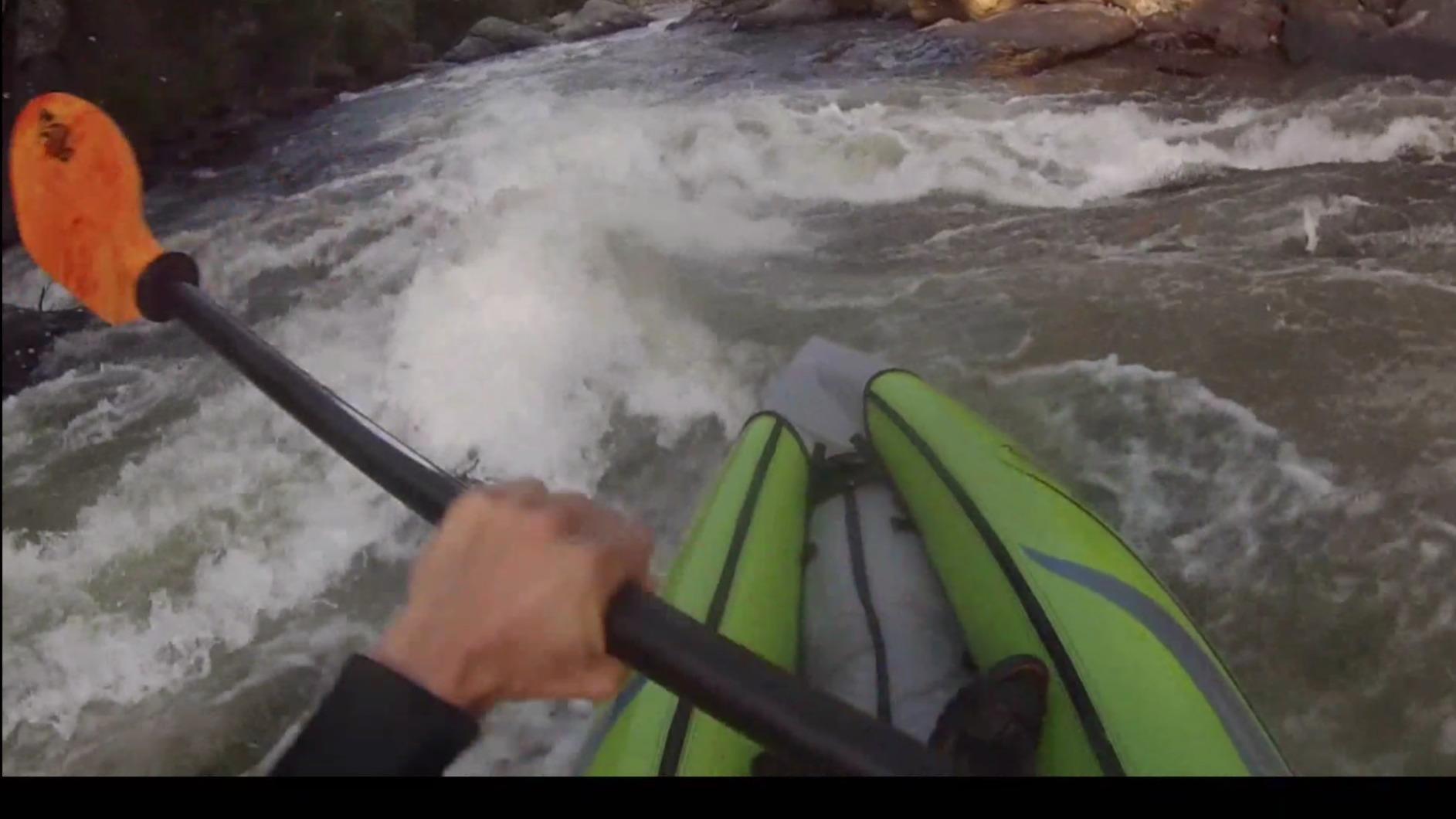
The AIRE Tributary Tomcat Solo is the entry point into AIRE’s whitewater line, and for paddlers who want a serious whitewater inflatable kayak without paying for the Lynx or the Force, it is the most credible budget buy on this list. AIRE’s Aircell bladder system — a urethane inner bladder inside a PVC outer shell — is the same construction philosophy used across the entire AIRE catalog, just with lighter 500-denier outer tubes and 1000-denier floor material. At 37 pounds, the Tomcat is light enough to carry solo to remote put-ins and pack into an airplane-friendly bag.
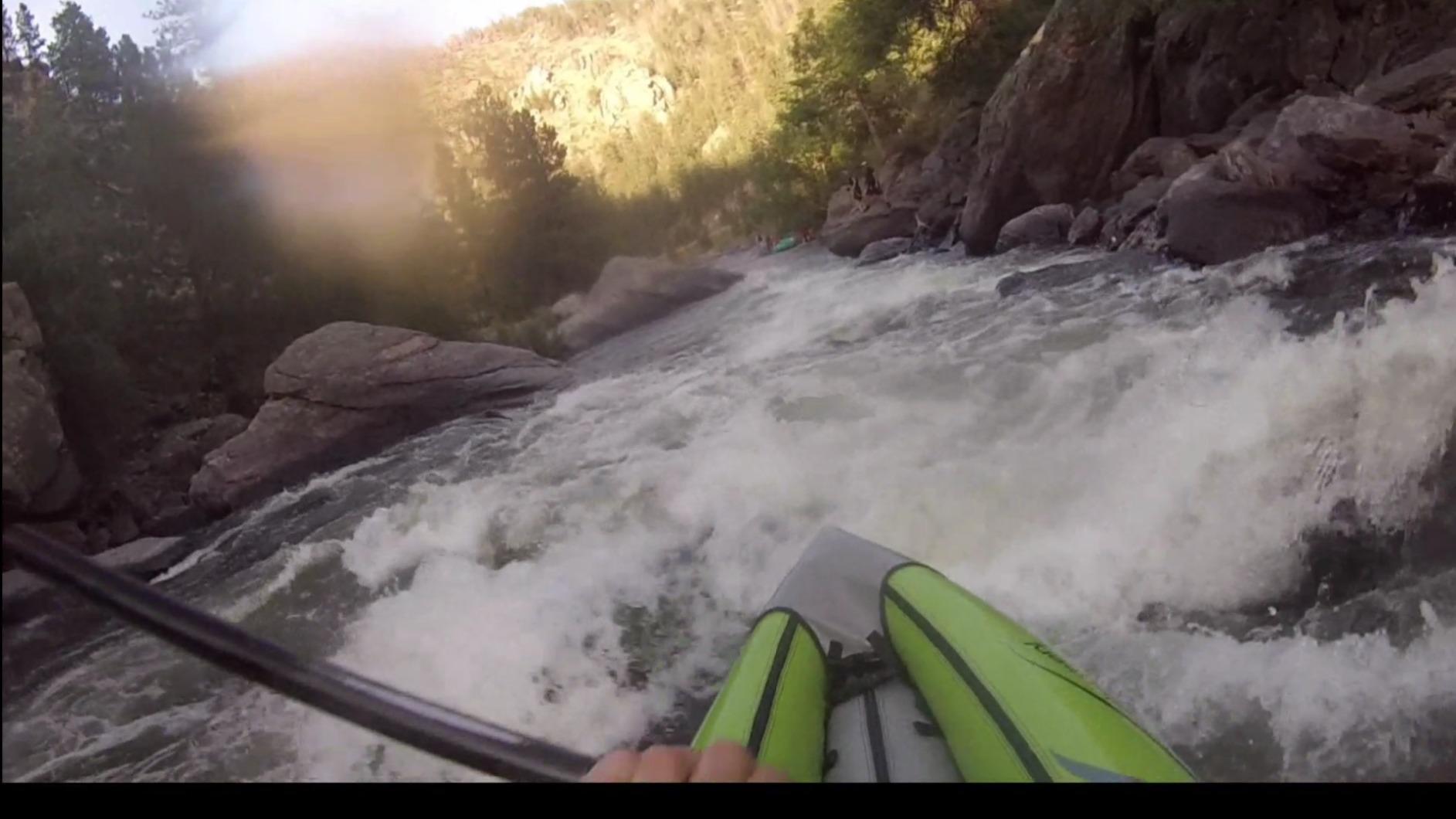
The Tomcat slots into Class II-III whitewater as its sweet spot. I have run mine on the New River Gorge Class II sections and on the Class III Gauley at lower water, and the boat tracks, surfs, and ferries reliably. Three independent air chambers plus Summit II valves mean that if you puncture one chamber, you can still paddle to shore on the remaining two. That redundancy is the safety case for a serious whitewater IK over a recreational one with a single bladder.
The two honest drawbacks: the stock inflatable seat is uncomfortable for full-day trips, and the boat ships without a pump or carry bag. Most owners pick up a $30 pump and either a real backpack-style bag (AIRE makes one separately) or stuff it into a repurposed dry bag. Both are minor costs in the context of the boat’s price, but worth budgeting.
The reason I rate the Tomcat above other budget options is that it carries AIRE’s family DNA — the same Aircell bladder construction, the same welded seams, the same repair-kit support that the more expensive Lynx and Force boats benefit from. A budget whitewater IK that you can actually repair in the field is rare, and that alone is reason to pick the Tomcat over generic alternatives.
Class ratings and skill level
The Tomcat is rated for Class II-III whitewater by AIRE. In real-world testing it handled Class III rapids comfortably. I would not push it into Class IV — the lighter-denier tubes and shorter waterline do not inspire confidence in heavy hydraulics. For the budget-first solo buyer running Class II and III rivers, it is the most credible pick on the market.
Heat and cold management
One note worth highlighting: in direct summer sun, the air inside the Tomcat’s chambers expands and can over-pressurize the bladders. AIRE recommends slightly under-inflating the boat in the morning if you expect the temperature to climb during the day, then topping off as needed. This is normal for any inflatable kayak in PVC material but worth knowing before your first hot-river trip.
6. NRS Star Outlaw I — Best Whitewater Inflatable for Beginners and Bigger Paddlers
NRS Star Outlaw I Inflatable Kayak (Blue)
Self-bailing floor with drain holes
275 lb capacity
Bow and stern carry handles
3-year manufacturer warranty
Pros
- Excellent whitewater duckie for beginners
- Stable and forgiving in rapids
- Well-known manufacturer with raft-grade build quality
- Self-bailing floor drains water fast
- Comfortable above-water paddling position
Cons
- A bit of a barge on flatwater
- Slower to maneuver than performance IKs
If you are a first-time whitewater paddler or a bigger paddler who has felt cramped in standard IKs, the NRS Star Outlaw I is the boat I would point you toward without much hesitation. NRS has been making whitewater rafts in Moscow, Idaho for over 40 years, and the Star Outlaw carries that raft-building DNA into a solo duckie form. At a 275 lb weight rating, it accommodates larger paddlers easily and has the stable, above-water seating position that makes beginners feel secure on Class II water.
The Outlaw uses a self-bailing floor with mesh drain holes that flush water through continuously rather than pooling in the cockpit. The thwart seat straps through those same drain holes, which is a thoughtful design touch — the seat stays put under load and water still drains around it. Bow and stern carry handles make the boat manageable for one person to drag from the truck to the water.
Where the Outlaw stands out is in its forgiveness. Wide tubes, a flat hull, and a high seating position all conspire to make a boat that does not punish amateur mistakes the way a performance IKS does. If you are learning to edge, brace, and ferry glide for the first time, the Outlaw gives you the time and stability to make mistakes without ending up swimming. Reviewers consistently describe it as a “duckie for learning on,” which is the highest compliment for a beginner boat.
Class ratings and skill level
The Outlaw is best for Class II and lower Class III whitewater. It can handle Class III in the right hands but does not have the drop-stitch floor or thigh straps that performance IKS offer for technical Class IV water. For first-year paddlers and family floats on mellow rivers like the Lehigh, the New (lower sections), or the Shenandoah, this is the boat I would buy.
Larger paddler fit
The 275 lb capacity and wide tube diameter make the Outlaw a great pick for paddlers who have been left out of narrower performance IKS. If you are over 6 feet tall or over 200 pounds, the Outlaw’s cockpit size is a real differentiator versus the cramped Cockpit of performance IKS like the NRS Star Viper.
7. NRS Star Raven I — Best Solo Whitewater Inflatable for Multi-Day Trips
NRS Star Raven I Inflatable Kayak – Blue
Drop-stitch floor insert
Padded folding seat
44/1000 denier PVC
Bow and stern carry handles
Pros
- Stable
- comfortable position above water
- Padded folding seat with strong back support
- Drop-stitch floor insert provides rigid platform
- Durable 1000-denier PVC construction
- Rolls up small with room left in the backpack
Cons
- Stock paddle shafts occasionally do not lock fully
- Wrong pump occasionally shipped in some older batches
The NRS Star Raven I is NRS’s do-it-all solo whitewater inflatable kayak — drop-stitch floor rigidity, padded seat comfort, and enough deck space to strap overnight gear for a 2-to-3-day river trip. The Star Raven sits between the beginner-oriented Star Outlaw and the performance-oriented Star Viper in NRS’s lineup, and that middle-of-the-lineup position turns out to be its real strength. You get most of the Viper’s rigidity without the Viper’s twitchiness, and you get more comfort and storage than the Outlaw.
The drop-stitch floor insert inflates separately and gives you a rigid standing platform — important for getting in and out of the boat on rocky shores and for moving around to access gear. The padded folding seat is significantly more supportive than the inflatable thwart seats on cheaper IKS, which matters a lot on a 6-hour day of paddling. The 1000-denier PVC tube and floor material is the same abrasion-resistant fabric NRS uses across its Star kayak line, so the Raven holds up to repeated rock drags.
Class ratings and skill level
The Star Raven is rated for Class III whitewater. It does not have the dedicated thigh-strap rigging or narrow profile of the Star Viper, so I would not push it into Class IV. For multi-day Class II-III trips where comfort and storage matter more than technical-performance ceiling, the Raven is the best pick on this list.
Pack-down and storage
The Raven rolls up small enough to fit in a backpack with room left for a paddle, pump, and a small dry bag. That pack-down size is what makes the Raven work for backcountry trip logistics — hikers and bikepackers commonly use it as a packraft-style boat for remote put-ins. If you want a single solo IK that can do both day trips and overnights, the Raven is the most versatile pick.
8. Bestway Hydro-Force Rapid X3 — Best Family Inflatable Whitewater Kayak
Bestway Hydro-Force 12’6″ x 39″ Rapid X3 Inflatable Kayak Set | Fits Up to 3 Persons | Includes 2 Aluminum Paddles, 1 Hand Pump, 2 Fins, 1 Carry Bag, Repair Patch Kit
12ft 6in by 39in layout
551 lb capacity
Inflata-Shield material
3 cushioned seats
Pros
- Affordable price for a 3-person kayak
- Inflates quickly with the included hand pump
- Holds 3 adults with a 551 lb weight rating
- Durable Inflata-Shield material
- Comfortable cushioned seats
Cons
- Sits low with 2 adults and creates drag
- Stock paddles are too short to reach across the boat
- Difficult to fold and pack back into the bag
- Squirrelly without the fin installed
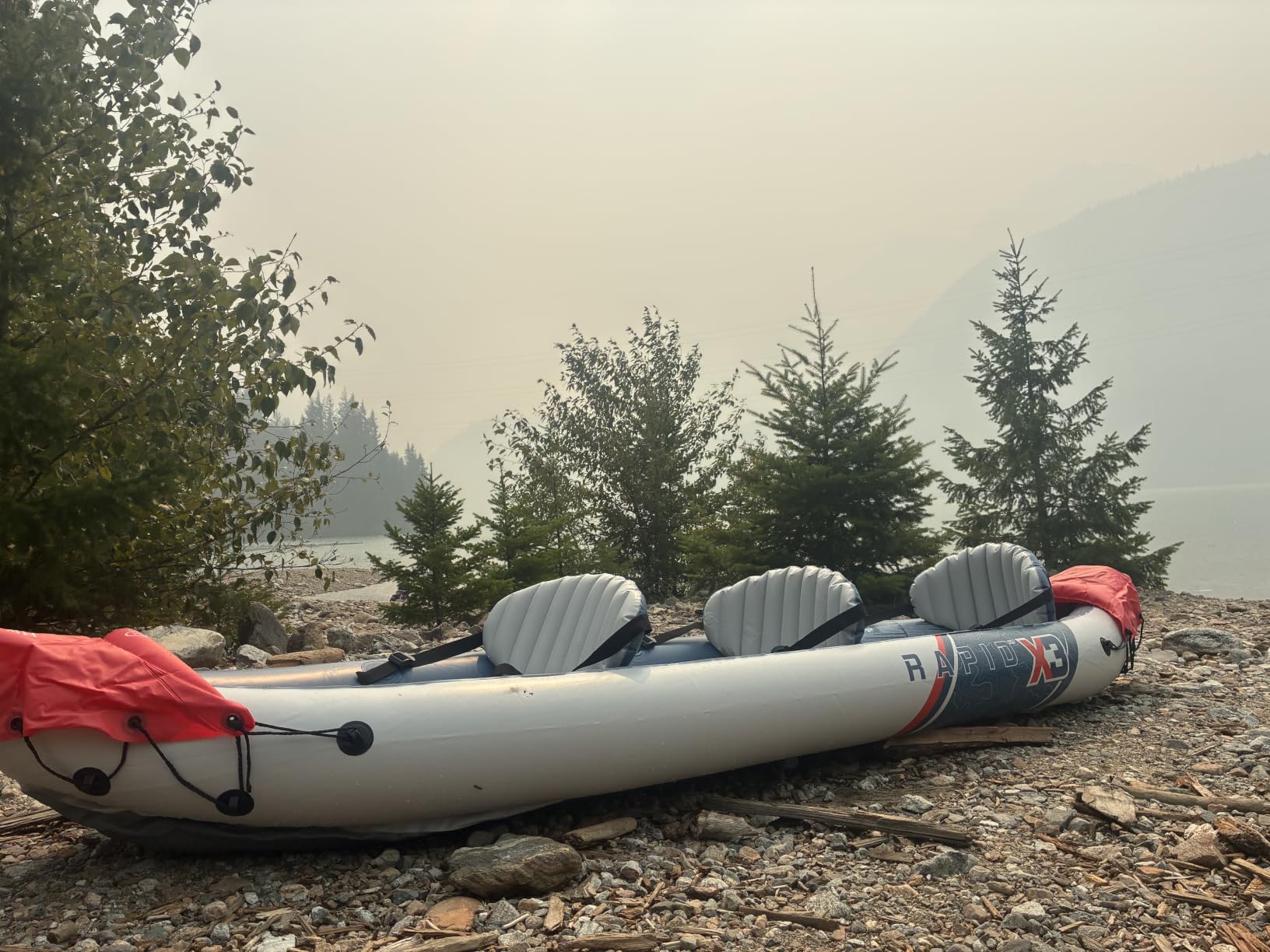
The Bestway Hydro-Force Rapid X3 is the budget-friendly three-seat option for families who want to take a whitewater-friendly inflatable kayaking without spending premium-brand money. At 12 feet 6 inches long with a 551 lb weight rating, the X3 fits two adults plus a kid, or three adults on flat water with manageable loads. The Inflata-Shield material is Bestway’s branded reinforced PVC, and during testing it handled class I-II water without showing wear — though I would stop short of taking it into committed Class III.
Where the X3 fits into a family whitewater gear closet is the combination of price, capacity, and ease of inflation. The included hand pump inflates the boat in a few minutes, the three cushioned seats clip in quickly, and the boat’s wide 39-inch footprint gives beginner paddlers (including kids) a stable platform to learn on. The grab rope along the outside gives smaller paddlers something to hold onto when they need to be towed or assisted.
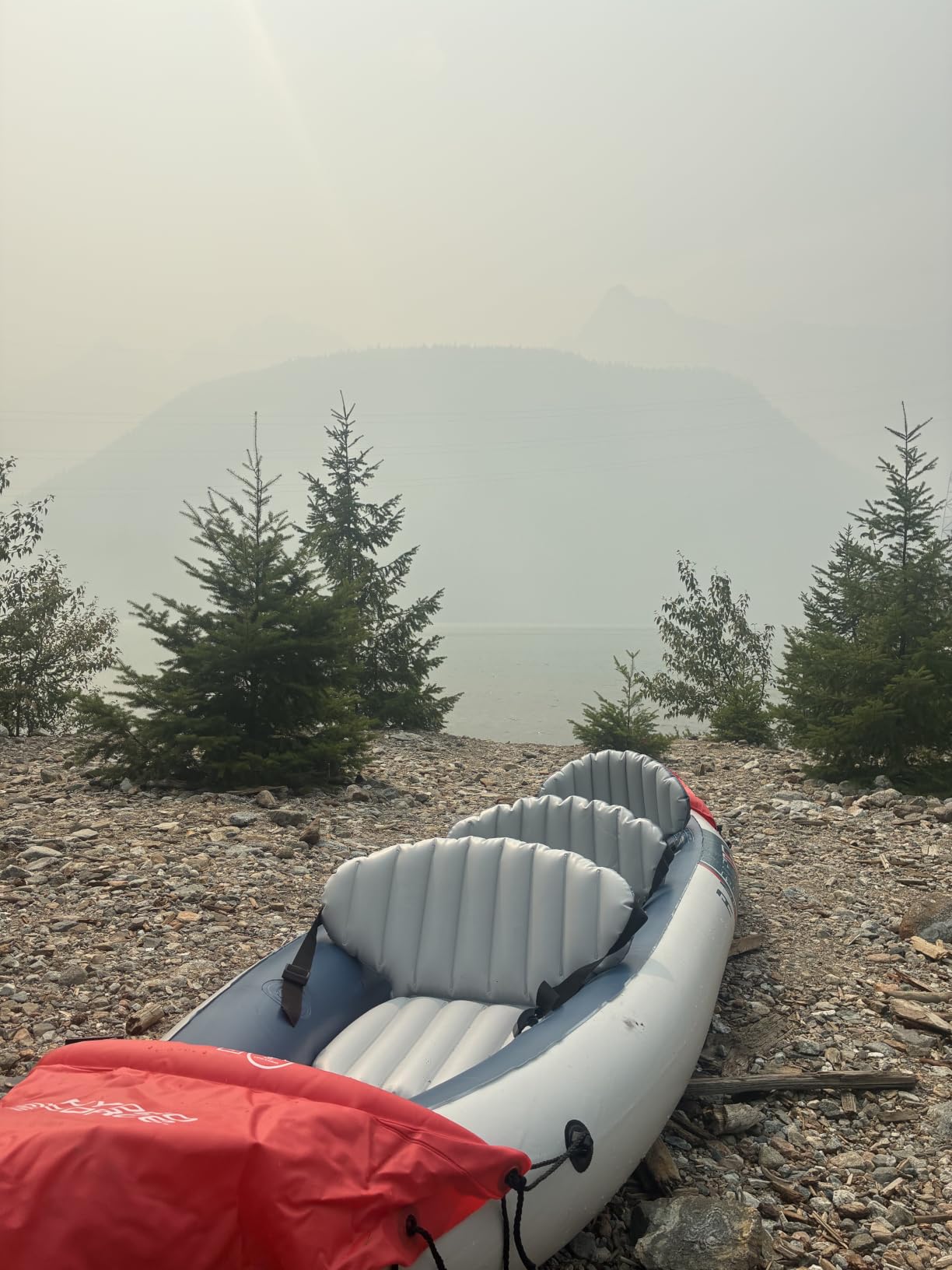
The X3 is not a serious creek boat — it is a family-friendly recreational inflatable that can handle mild whitewater. The two honest drawbacks: the boat sits fairly low in the water when loaded with two adults, which creates drag and slows the boat down, and the included 91-inch paddles are too short for the boat’s width. Owners consistently recommend upgrading the paddles to a longer 240 cm set, which is a small additional cost.
If you are a family looking for one inflatable that handles weekend lake floats plus the occasional Class I-II river trip, the X3 is the most affordable ticket on this list. Just do not expect it to perform at the level of the Sea Eagle or AIRE boats when the water gets serious. For more family-friendly options across recreational and whitewater use, our 6 Best Tandem Inflatable Kayaks guide breaks down two- and three-seat picks.
Class ratings and skill level
The Rapid X3 is rated for mild whitewater and is best suited to Class I-II water. It can handle the occasional Class II rapid in calm conditions but I would stop short of Class III. For lakes, slow rivers, family floats, and beginner paddlers, the X3 is a capable and affordable choice.
Family logistics
Packing the X3 back into its carry bag after deflation is genuinely difficult — owners consistently report this. The fix is to lay the boat out flat in the sun for 30 minutes to dry the material, fold in thirds along the seams rather than rolling it up, and use a rolling technique from bow to stern. The included bag is large enough if the boat is properly dried first.
How to Choose the Best Inflatable Kayak for Whitewater
Choosing the right inflatable kayak for whitewater comes down to four decisions that interact with each other: what class water you will run, whether you paddle solo or tandem, how you will transport and store the boat, and what features matter most for your use case. The buying guide below walks through each of those decisions in order, with the data points from the products above used as concrete examples.
The single biggest mistake I see first-time whitewater IK buyers make is purchasing a recreational inflatable kayak from Amazon and expecting it to perform in moving water. Recreational inflatables lack self-bailing floors, use thin 600-denier or lighter fabric, and have glued (not welded) seams. None of the boats on this list are recreational inflatables — every one of them is engineered for whitewater use. That distinction is what keeps you on the river and out of swimming.
Construction: PVC denier, welded seams, and air chambers
The fabric weight (denier) and the seam construction are the two durability metrics that matter most on a whitewater IK. Higher denier numbers mean thicker, more abrasion-resistant fabric — the Sea Eagle 300X Explorer and the AIRE Lynx 2 Person both use 1000-denier to 1100-denier PVC, which is the upper end of consumer-grade whitewater inflatables. Lighter 500-denier tubes (like the AIRE Tributary Tomcat) work fine for Class II-III but are more vulnerable to rock strikes in technical Class IV water.
Welded seams are tougher than glued seams. AIRE’s Lynx 2 uses radio-frequency (RF) welded seams that are essentially heat-fused PVC, which cannot delaminate the way glued seams can. Sea Eagle uses “quadruple glued overlapped seams,” which are durable but not as robust as welded. For Class IV use and long-term durability, welded seams are the better choice.
Multiple air chambers (3 or more) give you a safety margin if one chamber punctures mid-river. Every boat on this list has at least three independent chambers, which is the minimum I recommend for whitewater use. A chamber that deflates on flat water means a tow or swim; a chamber that deflates in a Class III rapid means a much more serious situation. Multiple chambers turn that worst case into a manageable problem.
Self-bailing floors and thigh straps
Self-bailing floors are non-negotiable for whitewater IKs. They work by leaving the floor permeable to water — either through mesh drains (like the NRS Star Outlaw), open-close valves (like the Sea Eagle 300X and 420X), or perforated floor inserts. As water enters the cockpit, it flows through the floor and out instead of pooling around your legs. The Sea Eagle boats go further with 16 individual self-bailing drains, which is the highest count on this list and translates to faster water removal.
Thigh straps are the single biggest control upgrade you can make to a performance IK. Without thigh straps, you are sitting on top of an inflatable tube and have no leverage for bracing or rolling — the boat will feel loose under you regardless of how skilled you are. Thigh straps connect your legs to the boat’s cockpit rim and lock you in tight enough that the boat moves as a single unit with your body. The NRS Star Viper is the boat on this list with thigh straps straight out of the box; on the AIRE Tributary Tomcat and NRS Star Outlaw, you can add aftermarket thigh straps for serious whitewater work.
Class ratings: matching the boat to the rapids
Whitewater rivers are graded Class I (easy, moving water with small waves) through Class VI (extreme, exploratory, life-threatening). Inflatable kayaks generally cover Class II-IV:
- Class II: Easy to moderate rapids with wide channels, clear rocks, and small waves. Every boat on this list handles Class II comfortably, including the budget Bestway Hydro-Force Rapid X3.
- Class III: Moderate rapids with irregular waves, medium drops, and maneuvering required. The Sea Eagles, the AIRE Lynx 2, the NRS Star Outlaw, and the AIRE Tributary Tomcat are all confident at Class III.
- Class IV: Intense rapids with powerful hydraulics and precise maneuvering. The Sea Eagle 420X (Class IV-rated), the Sea Eagle 300X (Class IV-rated), and the NRS Star Viper (designed for Class IV) are the picks for serious Class IV use.
Match the boat to your honest skill level, not to the boat’s maximum rating. A beginner in a Class IV boat is still a beginner; the boat does not replace skills.
Solo vs tandem buying guidance
Solo IKs (the Sea Eagle 300X, NRS Star Viper, AIRE Tributary Tomcat, NRS Star Outlaw I, NRS Star Raven I) are sized for one paddler, weigh less, and are easier to transport. Most experienced whitewater paddlers own a solo IK as their primary boat.
Tandem IKs (the AIRE Lynx 2 Person, the Bestway Rapid X3) are sized for two paddlers, carry more gear, and are popular for family trips and multi-day floats. A tandem can be paddled solo with the seat repositioned, but the boat is noticeably slower and harder to maneuver with one person in the seat. If you paddle alone most of the time, get a solo boat.
Paddle selection for inflatable kayaks
Whitewater kayak paddles come in lengths from 190 cm to 220 cm for solo boats and 220 cm to 240 cm for tandems. As a starting rule, a solo IK paddler should use a 200-210 cm paddle, and a tandem bow paddler should use a 210-220 cm paddle. Stock paddles that come with most IKs are too short — owners of the Bestway Rapid X3 consistently complain about the included 91-inch paddles not reaching across the boat. A $100-$150 upgrade to a proper whitewater paddle is one of the best investments you can make.
Pump and inflation time
Every inflatable kayak on this list requires inflation before use. A hand pump (foot pump or K-Pump K-100) inflates most boats in 5 to 15 minutes; an electric pump (Bravo 12V or similar) cuts that to 3 to 5 minutes and is worth the $50-$80 cost if you paddle frequently. The drop-stitch floors on the Sea Eagle 300X, 420X, NRS Star Viper, NRS Star Raven I, and AIRE Lynx 2 require higher PSI (8-10 PSI) than the sidewall chambers (2.5-3 PSI), so a pump with a pressure gauge is worth the investment.
Safety gear checklist for whitewater IKs
A whitewater inflatable kayak without safety gear is half a setup. Before every river trip, run through this checklist:
- PFD: A USCG-approved Type III or Level 70 PFD that fits snugly and is designed for paddling. Whitewater-specific PFDs have extra foam and a higher float profile.
- Helmet: A whitewater-rated helmet with ear protection. Climbing helmets are not rated for impact and should not be substituted.
- Throw bag: A 50- or 75-foot rope bag for rescue situations. Every paddler in the group should carry one.
- Whistle: A simple pea-less whistle attached to your PFD for signaling.
- Repair kit: Vinyl cement, PVC patches, and a valve wrench (included with most AIRE and NRS boats; separately available for Sea Eagle). Field repairs on the river can mean the difference between a swim and a self-rescue.
- Bailing device: A bilge pump or sponge for the cockpit (less critical on boats with 16 self-bailing drains like the Sea Eagles).
The community on r/whitewater and the r/kayaking subreddit consistently stress that the safety gear matters more than the kayak choice. A Class III paddler in a budget Bestway who knows how to wet exit and self-rescue is safer than a Class III paddler in a premium AIRE who skips the helmet. Build the safety kit first, then choose the boat.
Used buying tips for a whitewater IK
Used whitewater IKs are a smart way to get a premium boat for $200-$400 less than retail. The most reliable used markets are GearTrade (a kayak-specific marketplace), REI ReSupply (reconditioned returns), playak.com (international used marketplace), and Facebook Marketplace (regional, but often the best deals). When evaluating a used IK, check the seams for delamination (separating edge between panels), inspect the bladders for soft spots (indicates a slow leak or damage), and test every valve. A boat with verified working valves and intact seams is worth buying even without the original bag.
If you are on the fence between two price points — say the AIRE Tributary Tomcat (budget) and the NRS Star Raven I (mid-tier) — used buying often lets you jump one tier up. A two-year-old Star Raven at $700 used is a better value than a new Tributary Tomcat at $899 retail for many paddlers. For a broader look at how these inflatable picks compare to hardshell recreational boats, our 8 Best Perception Kayaks roundup covers popular sit-inside options at similar price points.
Frequently Asked Questions
What are the best inflatable kayaks for whitewater rafting?
The best inflatable kayak for whitewater rafting depends on the river class. For multi-day Grand Canyon or Middle Fork-style trips, the Sea Eagle 420X Explorer is our top pick because of its 855 lb capacity, drop-stitch floor, and 16 self-bailing drains. For Class II-III day trips, the NRS Star Raven I or AIRE Tributary Tomcat Solo are highly rated. For Class IV technical water, the NRS Star Viper with thigh straps is the most performance-oriented choice.
Which brand of inflatable kayak is considered the best?
AIRE is widely considered the best brand for serious whitewater inflatable kayaks because of its Aircell bladder system (urethane inner bladder inside PVC outer shell), RF welded seams on premium models, 10-year warranty, and decades of reputation among river guides and outfitters. NRS is the strongest second-choice brand with their Star kayak line. Sea Eagle offers exceptional value with drop-stitch floor construction at mid-tier pricing.
Are inflatable kayaks safe for beginners in whitewater?
Yes, inflatable kayaks are actually safer for beginners than hardshell kayaks because they are more stable, more forgiving on mistakes, and rarely entrap a paddler in a capsize. The keys for beginner safety are: choose a wide-beam boat (the NRS Star Outlaw I or Sea Eagle 300X Explorer are excellent choices), start on Class I-II water with an experienced paddler, always wear a PFD and helmet, and know how to wet-exit before running anything harder than Class II.
What class rapids can inflatable kayaks handle?
Most serious whitewater inflatable kayaks are rated for Class II through Class IV rapids. Class V and above is generally considered too risky for inflatable kayaks because the hydraulics can hold the boat underwater for extended periods. Recreational inflatable kayaks without self-bailing floors should not be used in any whitewater beyond mild Class I moving water.
Can you roll an inflatable kayak?
Yes, you can roll certain inflatable kayaks, but it is harder than rolling a hardshell. The NRS Star Viper is specifically designed for rolling with its inflatable bow and stern displacement chambers and thigh strap rigging. Other IKs without thigh straps and a profile designed for rolling are very difficult to roll consistently — most paddlers simply wet-exit (get out of the boat) if they flip in rapids rather than attempting a roll.
How long does it take to inflate an inflatable kayak?
Inflating a whitewater inflatable kayak typically takes 5 to 15 minutes with a hand or foot pump, or 3 to 5 minutes with a 12V electric pump. The sidewall chambers inflate quickly (2-3 minutes), but the drop-stitch floors on higher-end models require more pumping to reach 8-10 PSI. Plan on 10 minutes total for a fully manual inflation on a boat like the Sea Eagle 420X Explorer or NRS Star Raven I.
Final Verdict on the Best Inflatable Kayaks for Whitewater
If you only have room in your gear closet for one inflatable kayak for whitewater and you want the boat that covers the widest range of uses, the Sea Eagle 420X Explorer is our Editor’s Choice for 2026. Few boats on the market give you Class IV-rated whitewater performance, drop-stitch floor rigidity, and 855 pounds of multi-day expedition capacity in a trunk-sized package — and at its price point it undercuts most dedicated expedition boats while still beating them on pack-down size.
For paddlers shopping with a tighter budget, the AIRE Tributary Tomcat Solo and the Sea Eagle 300X Explorer are both credible picks: the Tomcat for entry-level AIRE build quality at the lowest serious whitewater price, the 300X for solo whitewater performance that punches well above its weight class. For tandem paddlers and multi-day trips, the AIRE Lynx 2 Person is the premium pick, and for Class IV-only performance, the NRS Star Viper is in a class by itself.
The most important thing I can leave you with is this: do not chase the lowest price on a “kayak-shaped inflatable” from a generic Amazon listing and expect it to hold up on real whitewater. Every boat on this list was engineered for the abuse of moving water, every one of them has multiple air chambers and a self-bailing floor, and every one of them will reward you with years of river days if you pair it with the right PFD, helmet, and basic paddling skills. Choose the boat that matches your honest water and skill level, build the safety kit before your first trip, and get out on the river.