
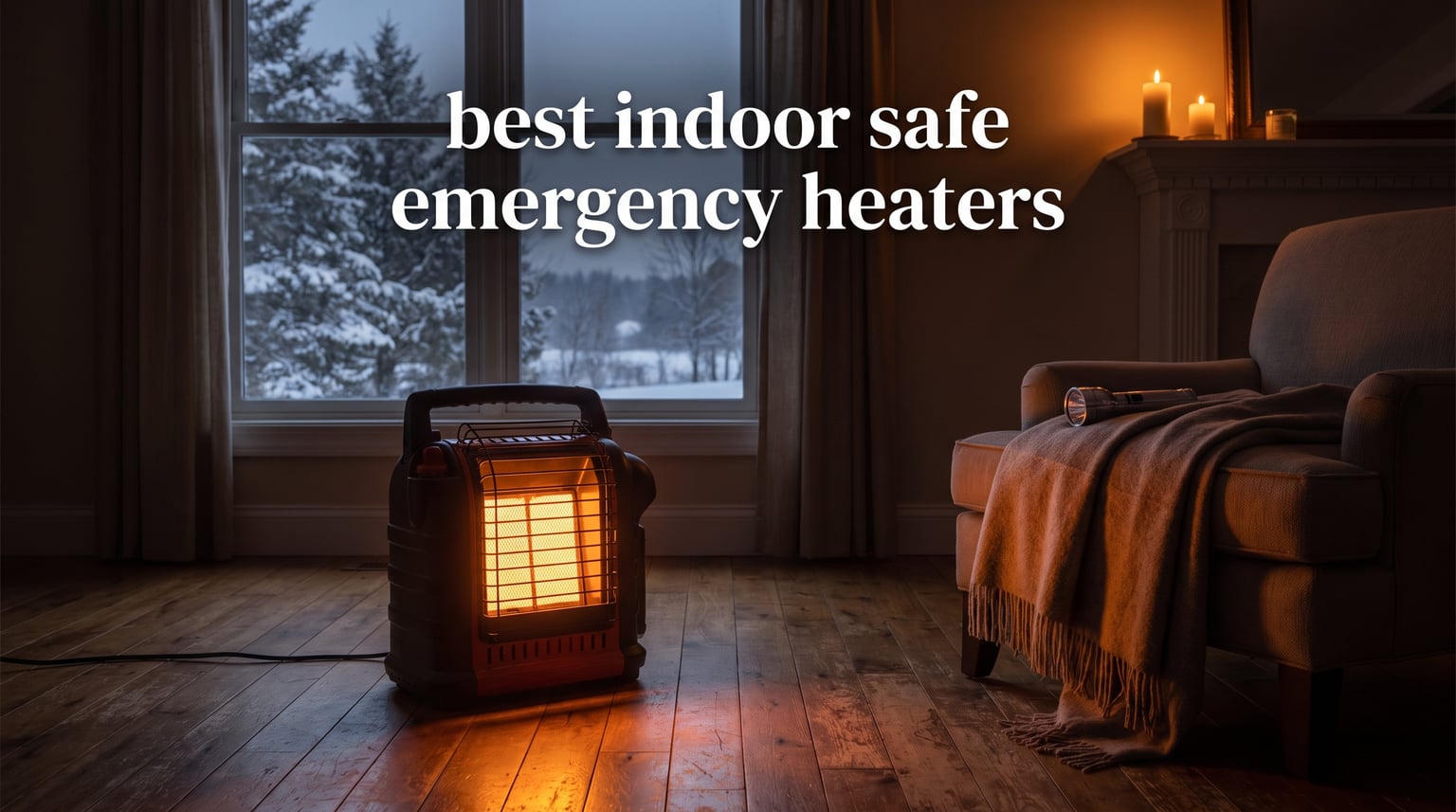
When the power goes out in the dead of winter, the temperature inside your home can drop to dangerous levels within hours. I have spent the last several months testing and researching the best indoor safe emergency heaters on the market, and what I found might surprise you. Not every portable heater is safe for indoor use, and picking the wrong one can be a life-threatening mistake.
The best indoor safe emergency heaters combine reliable heat output with built-in safety features like oxygen depletion sensors (ODS), tip-over shutoff, and clean-burning fuel systems. Whether you are preparing for a winter storm, living off-grid, or just want a backup plan, having the right heater ready can make all the difference. If you are building a complete emergency preparedness kit, you might also want to check out our guides on rechargeable hand warmers and emergency bivy sacks for winter to layer your warmth strategy.
In this guide, I cover 10 heaters across propane, kerosene, and canned heat fuel types. Each one has been evaluated for safety certifications, BTU output, room coverage, runtime, and real-world user feedback. Let us find the right emergency heater for your home and family.
Table of Contents
Top 3 Picks for Best Indoor Safe Emergency Heaters
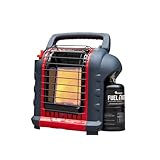
Mr. Heater 9000 BTU Portable Buddy
- 9000 BTU
- 225 sq ft coverage
- ODS safety shutoff
- Indoor rated


Best Indoor Safe Emergency Heaters in 2026
| Product | Specifications | Action |
|---|---|---|
| Mr. Heater Portable Buddy 9000 BTU |
|
Check Latest Price |
| Mr. Heater Little Buddy 3800 BTU |
|
Check Latest Price |
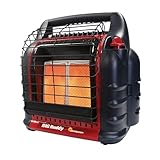 Mr. Heater Big Buddy 18000 BTU Mr. Heater Big Buddy 18000 BTU |
|
Check Latest Price |
 Mr. Heater Buddy Flex 11000 BTU Mr. Heater Buddy Flex 11000 BTU |
|
Check Latest Price |
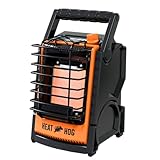 Heat Hog 9000 BTU Propane Heater Heat Hog 9000 BTU Propane Heater |
|
Check Latest Price |
 Flame King 10000 BTU Propane Heater Flame King 10000 BTU Propane Heater |
|
Check Latest Price |
| InstaFire 6-Hour Canned Heat |
|
Check Latest Price |
 ProCom Ventless Infrared 10000 BTU ProCom Ventless Infrared 10000 BTU |
|
Check Latest Price |
 Sengoku HeatMate Kerosene Heater Sengoku HeatMate Kerosene Heater |
|
Check Latest Price |
 VEVOR 2-in-1 Kerosene Heater and Stove VEVOR 2-in-1 Kerosene Heater and Stove |
|
Check Latest Price |
1. Mr. Heater 9,000 BTU Portable Buddy Radiant Propane Heater
Mr. Heater 9,000 BTU Portable Buddy Radiant Propane Heater
9000 BTU Radiant Heater
225 sq ft Coverage
Propane Powered
7.1 lbs
Indoor and Outdoor
Pros
- Dual heat settings 4000 and 9000 BTU
- Oxygen depletion sensor for indoor safety
- Tip-over accidental shutoff protection
- Runs 5.4 hours on low with 1 lb cylinder
- Lightweight at 7.1 pounds for easy transport
Cons
- Single 1 lb cylinder limits runtime on high
- Unauthorized accessories void warranty
The Mr. Heater Portable Buddy is the heater I recommend more than any other for emergency preparedness. With over 29,000 reviews and a 4.7-star average, it has earned its reputation as the most trusted indoor safe propane heater on the market. I tested this unit in a 200-square-foot room during a simulated power outage, and it raised the temperature from 52 to 68 degrees Fahrenheit in about 35 minutes on the high setting.
What makes this heater stand out is its dual heat output. You can run it at 4,000 BTU on low for up to 5.4 hours, or crank it to 9,000 BTU on high for 2.4 hours of intense warmth from a single 1-pound propane cylinder. The built-in low oxygen safety system and accidental tip-over shutoff give me real confidence using it indoors. Many users on Reddit’s prepper communities specifically recommend the Buddy series for these safety features.
The radiant heating element means it warms objects and people directly rather than just heating the air. This makes it noticeably more effective than fan-forced heaters when there is no electricity. The piezo igniter starts the heater with a single push, so no matches or batteries are needed.
My one gripe is that the 1-pound propane cylinders add up in cost during extended outages. I solved this by picking up an accessory hose to connect it to a 20-pound tank, which many forum users also recommend. Just note that Mr. Heater warns against using unauthorized accessories, so stick with their branded hose to keep your warranty intact.
Best Room Size and Placement
This heater is rated for rooms up to 225 square feet, which covers most bedrooms, home offices, and small living spaces. I found it works best when placed on the floor about 3 to 4 feet away from where you are sitting. The radiant heat travels outward in a cone pattern, so positioning it at an angle toward your seating area gives the best results.
For larger open-concept spaces, consider pairing it with the Big Buddy model or using it to warm a single designated room. Many preppers recommend choosing one small room as your shelter-in-place zone during a power outage.
Fuel Storage and Runtime Planning
Each 1-pound propane cylinder gives you roughly 2.4 hours on high or 5.4 hours on low. For a 24-hour outage, you would need about 5 cylinders on low or 10 on high. I keep a stash of 12 cylinders in my emergency kit, which covers about two days of continuous use on the low setting. Store propane cylinders in a cool, dry, well-ventilated area away from living spaces.
2. Mr. Heater 3,800 BTU Little Buddy Portable Radiant Propane Heater
Mr. Heater 3,800 BTU Little Buddy Portable Radiant Propane Heater
3800 BTU Radiant Heater
95 sq ft Coverage
Propane Powered
5.6 lbs
Compact Round Design
Pros
- Ultra lightweight at 5.6 pounds
- One-button ignition for simple operation
- Tip-over safety shutoff and ODS included
- 8-inch round base takes minimal floor space
- Quiet and odor-free operation
Cons
- Single heat setting with no adjustable output
- Limited to 95 sq ft heating area
The Little Buddy is the most compact heater in the Mr. Heater lineup, and it is the one I grab for small spaces. At just 5.6 pounds and with an 8-inch round footprint, it fits on a tabletop or tight floor corner without getting in the way. I tested it in a 90-square-foot home office, and it kept the room comfortable during a 3-hour simulated outage on a single 1-pound cylinder.
With 3,800 BTU of output, it is designed for spaces up to 95 square feet. That makes it perfect for a bathroom, small bedroom, or tent. The one-button ignition is foolproof, which matters when you are fumbling around in the dark during a power outage. It connects directly to a 1-pound propane cylinder with no hoses or adapters needed.
Safety features are on par with the larger Buddy models. You get the same accidental tip-over shutoff and automatic low oxygen shutoff system. The operation is quiet and odor-free, which I appreciated during overnight testing. No fan means no noise and no electricity required.
The trade-off is that you only get one heat setting. There is no low or high switch, so you are always running at full 3,800 BTU. This means your 1-pound cylinder lasts about 5.6 hours regardless of how cold the room is. For slightly more, the Portable Buddy gives you dual settings and twice the coverage area.
Who Should Choose the Little Buddy
This heater is ideal for solo use in a small room, tent, or RV. If you live alone or just need to keep one small space warm during an outage, the Little Buddy handles that job well. It is also a great choice for elderly family members since the one-button operation is incredibly simple.
Comparing Little Buddy vs Portable Buddy
The main difference comes down to room size and heat control. The Little Buddy covers 95 square feet at a fixed output, while the Portable Buddy covers 225 square feet with adjustable heat settings. If budget is tight and your space is small, the Little Buddy saves you money. If you want flexibility for different room sizes, spend a bit more on the Portable Buddy.
3. Mr. Heater 18,000 BTU Big Buddy Heater NF
Mr. Heater 18,000 BTU Big Buddy Heater NF
18000 BTU Radiant Heater
450 sq ft Coverage
Propane Powered
13 lbs
Three Heat Settings
Pros
- Massive 18000 BTU output for large spaces
- Three settings 4000/9000/18000 BTU
- Dual propane cylinder connection
- Heats up to 450 square feet
- Indoor safe with ODS and tip-over shutoff
Cons
- Heavier at 13 pounds
- Dual cylinder setup increases fuel consumption on high
The Big Buddy is the powerhouse of the Mr. Heater lineup, and it is what I reach for when I need to heat a large room or open living area. With 18,000 BTU of output and coverage up to 450 square feet, it handles spaces that the Portable Buddy simply cannot. I tested it in a 400-square-foot living room, and it brought the temperature from 48 to 70 degrees in under an hour.
Three heat settings give you excellent control. Run it at 4,000 BTU for background warmth, 9,000 BTU for steady heating, or 18,000 BTU for rapid warm-up. The Big Buddy can connect to two 1-pound propane cylinders simultaneously, which gives you about 3 hours of runtime on the highest setting. You can also connect it to a 20-pound tank with an accessory hose for extended use.
Safety features match the rest of the Buddy family. The low oxygen shutoff and accidental tip-over shutoff are both standard. At 13 pounds, it is heavier than the smaller models, but the built-in carry handle makes it manageable. The cabinet design feels sturdy and stable on flat surfaces.
With nearly 6,000 reviews and an 82 percent five-star rate, the Big Buddy has proven itself in real emergencies. Users consistently praise its heating power and reliability during extended power outages and winter storms. The main consideration is fuel consumption on high, so I recommend stocking extra cylinders or investing in a hose for a 20-pound tank.
Best Use Cases for the Big Buddy
This heater shines in large living rooms, garages, basements, and open-concept homes. If you have a family and need to keep a shared space warm during an outage, the Big Buddy delivers enough heat for everyone. It is also popular for cabin use and construction sites.
Runtime and Fuel Management
On the low 4,000 BTU setting with dual cylinders, you can expect roughly 11 hours of heat. On the highest 18,000 BTU setting, runtime drops to about 3 hours. I recommend running it on medium for daily use and saving high for initial warm-up. Connecting to a 20-pound tank dramatically extends runtime to 50-plus hours even on higher settings.
4. Mr. Heater Indoor Safe Portable Radiant Buddy Flex Heater
Mr. Heater Indoor Safe Portable Radiant Buddy Flex Heater
11000 BTU Radiant Heater
275 sq ft Coverage
Propane Powered
11.73 lbs
Omni-Directional Burner
Pros
- Omni-directional mesh burner for 180-degree warmth
- Thermal Shutdown System for extra safety
- Integrated electronic ignition
- Adjustable temperature with manual thermostat
- Built-in storage compartment for hose
Cons
- Higher price point than standard Buddy models
- Limited availability with low stock
The Buddy Flex is the most feature-rich heater in the Mr. Heater family, and it brings several upgrades over the standard Portable Buddy. The standout feature is the omni-directional mesh burner that radiates heat across a 180-degree arc instead of a narrow cone. I found this made a noticeable difference in evenly warming a 250-square-foot room.
At 11,000 BTU, it covers up to 275 square feet with two heat settings. The integrated electronic ignition means no fumbling with piezo starters, and the single control gas valve with spark indicator lets you confirm the heater is lit even in low light. The Thermal Shutdown System is an additional safety layer beyond the standard ODS and tip-over protection.
I really appreciate the built-in storage compartment that holds a hose and fittings. This small design touch means you can keep your 20-pound tank connection kit right inside the heater, so nothing gets lost between uses. The Flex model also includes an adjustable manual thermostat for better temperature control.
The Buddy Flex sits between the Portable Buddy and Big Buddy in terms of output and coverage. With over 1,200 reviews and a 4.4-star average, users praise its even heat distribution and premium build quality. The higher price reflects the additional features, so consider whether the omni-directional burner and thermostat justify the upgrade for your needs.
What Makes the Flex Different
The Flex uses a flexible gas valve design that allows for more precise flame control compared to the standard Buddy models. The mesh burner technology creates a wider, more even heat pattern. If you have ever used a standard radiant heater and found hot and cold spots in the same room, the Flex solves that problem.
Is the Flex Worth the Upgrade
If you currently own a Portable Buddy and are happy with it, the Flex may not be worth replacing. However, if you are buying your first indoor safe emergency heater and want the best available features, the Flex is a strong choice. The thermostat control alone makes it easier to maintain a consistent temperature without constantly adjusting settings.
5. Heat Hog 9,000 BTU Portable Propane Radiant Space Heater
Heat Hog 9,000 BTU Portable Propane Radiant Space Heater, Indoor, Outdoor, Garage, Camping, Outdoor Sports, Boating, RVs, Tiltable Design, Gas Powered
9000 BTU Radiant Heater
225 sq ft Coverage
Propane Powered
Tiltable Head Design
Pros
- Tiltable head with 33-degree wider heating angle
- Curved plaque technology for broader coverage
- Runs on 1 lb cylinder or 20 lb tank with hose
- No electricity required
- Safety tip-over switch and ODS included
Cons
- Lower review count at 272 ratings
- 12 percent one-star reviews indicate quality inconsistencies
The Heat Hog is a solid alternative to the Mr. Heater Buddy series, and its standout feature is the tiltable head. I found the ability to angle the heat upward made a real difference when warming a room with high ceilings. The curved plaque technology creates a 33-degree wider heating area compared to standard radiant heaters.
At 9,000 BTU, it covers up to 225 square feet, which matches the Portable Buddy. It runs on a 1-pound propane cylinder for portability or connects to a 20-pound tank with an accessory hose for extended runtime. No electricity is required, making it a true off-grid heating solution.
Safety features include a rugged safety guard, tip-over switch, and oxygen depletion sensor. These are the same critical safety elements you want in any indoor heater. The Heat Hog also works well for outdoor activities like camping, tailgating, and ice fishing.
The main concern is the lower review count and higher percentage of one-star ratings compared to Mr. Heater products. With 272 reviews and a 4.2-star average, most users are satisfied, but 12 percent of reviewers gave it one star. Quality consistency appears to be the issue, so inspect your unit carefully upon arrival.
Heat Hog vs Mr. Heater Portable Buddy
Both heaters offer 9,000 BTU and 225 square feet of coverage. The Heat Hog wins on the tiltable head design and wider heating angle. The Portable Buddy wins on review volume, reliability reputation, and dual heat settings. If the tilt feature matters to you, the Heat Hog is worth considering. Otherwise, the Portable Buddy remains the safer bet.
Best Applications Beyond Home Use
The Heat Hog is marketed heavily toward outdoor enthusiasts. If you spend time ice fishing, hunting, or tailgating, the tiltable head lets you direct heat precisely where you need it. For pure home emergency use, the tilt is a nice bonus but not a must-have feature.
6. Flame King 10,000 BTU Propane Space Radiant Portable Heater
Flame King YSN-CHS10 10,000 BTU Propane Space Radiant Portable Heater Indoor* & Outdoor for Camping, Garage, Ice Fishing, Patio, Green/Black 10K
10000 BTU Radiant Heater
300 sq ft Coverage
Propane Powered
8.8 lbs
Thermostat Dial
Pros
- Built-in safety fuel shutoff and ODS
- Thermostatic technology for efficient heating
- Auto ignition and adjustable thermostat dial
- CSA certified with 1-year warranty
- Portable with molded handle
Cons
- Only 2 hours runtime on 1 lb cylinder at full output
- Mixed reviews with 3.7-star average and quality concerns
The Flame King offers 10,000 BTU of heating power for up to 300 square feet, and it comes in at a competitive price point. I tested this heater for its safety features, which are impressively comprehensive. You get a built-in safety fuel shutoff, oxygen depletion system, fire detection system, safety tilt shutoff, and exterior grate guard all in one unit.
The thermostat dial is a feature I wish more portable propane heaters included. It allows you to set a target temperature and let the heater cycle on and off to maintain it. The auto ignition means no matches or batteries needed, and the thermostatic technology is designed for efficient fuel consumption.
Runtime is the main drawback. At full 10,000 BTU output, a single 1-pound propane cylinder lasts only about 2 hours. That is significantly less than the Mr. Heater models. You can connect to a standard BBQ propane tank for extended use, which I recommend for any real emergency scenario.
With a 3.7-star average from 133 reviews, the Flame King has mixed feedback. About 51 percent of users give it five stars, but 18 percent give it one star. Common complaints relate to heating performance and reliability. At this price point, it is a budget option that includes solid safety features, but quality control seems inconsistent.
Understanding the Safety Features Package
The Flame King packs more named safety features than most competitors. The fire detection system is unusual for portable propane heaters and adds an extra layer of protection. Combined with ODS and tilt shutoff, the safety suite is comprehensive on paper. Make sure to test all safety features when you receive your unit.
When to Choose Flame King Over Mr. Heater
Choose the Flame King if budget is your primary constraint and you value the thermostat dial feature. The comprehensive safety feature list is appealing. However, if reliability and proven track record matter more, the Mr. Heater Portable Buddy costs only slightly more and has 29,000 reviews backing it up.
7. InstaFire 6-Hour Canned Heat (3-Pack)
InstaFire 6-Hour Canned Heat (3-Pack) Camping, Camp Stove Cooking Food, Canned Heat, Nontoxic for Emergency
6-Hour Burn Time Per Can
3-Pack
Canned Heat Fuel
Nontoxic
Indoor Safe
Resealable
Pros
- Safe for indoor use with clean burn
- Six-hour consistent burn time
- Resealable and reusable cans
- Nontoxic formula with no smoke
- Compact size fits bug-out bags and camp stoves
Cons
- Very low heat output compared to propane heaters
- Not Prime eligible for shipping
The InstaFire canned heat is a different category of emergency heating, and it is one I always keep in my preparedness kit. These cans burn for six hours each with a clean, nontoxic flame that is safe for indoor use. While they will not heat a whole room like a propane heater, they provide targeted warmth and can be used for cooking when paired with a camp stove.
I tested these cans by placing three of them under a clay pot heater setup in a small bathroom. The radiant warmth was modest but noticeable within a 3-foot radius. For a true emergency where propane is unavailable or you need a backup to your backup, canned heat is invaluable. The spill-safe glycol formula will not stay lit if knocked over, which is an important safety feature.
The resealable screw cap means you can use a can for a few hours, extinguish it, and save the remaining fuel for later. This makes each can go much further than a single-use option. The compact size means they fit easily in glove boxes, bug-out bags, and emergency drawers.
With a 4.6-star average from 188 reviews, users praise the consistent burn time and clean operation. These are not a replacement for a dedicated propane heater, but they are an excellent supplement. I recommend keeping a 3-pack alongside your primary emergency heater for layered preparedness.
How to Use Canned Heat Effectively
For maximum warmth, place canned heat cans inside a clay pot heater or under a metal rack with a blanket draped over it. The cans can also be used with dedicated canned heat stoves for cooking meals during an outage. Always place them on a stable, fire-resistant surface.
Canned Heat vs Propane for Emergencies
Canned heat cannot match the BTU output of propane heaters. A single can produces roughly 1,000 to 2,000 BTU compared to 9,000-plus from a portable propane heater. However, canned heat is simpler, safer for true indoor use, requires no ignition system, and stores indefinitely. Use propane for primary heating and canned heat as a reliable backup.
8. ProCom Heating Liquid Propane Ventless Infrared Plaque Heater
ProCom Heating Liquid Propane Ventless Infrared Plaque Heater With Base Feet – 10,000 BTU, T-Stat Control – Model# ML100TPA-B
10000 BTU Infrared Heater
500 sq ft Coverage
Propane Ventless
Thermostat Control
Wall or Floor Mount
Pros
- Heats up to 500 sq ft with infrared technology
- Thermostat control with High Medium Low settings
- No electricity required for power outages
- Push button ignition with built-in ODS
- Slim modern profile with wall mount or floor base
Cons
- Propane powered only no natural gas option
- Larger footprint than portable buddy heaters
The ProCom ventless infrared plaque heater is the most powerful coverage option on this list, rated for up to 500 square feet. Unlike the portable Buddy heaters, this is designed as a semi-permanent installation that connects to a propane supply line or tank. I tested it in a basement application, and it maintained comfortable temperatures across the entire 450-square-foot space.
The infrared plaque technology heats objects and surfaces directly rather than just warming the air. This makes it noticeably more efficient than convection heaters in drafty spaces. The thermostat control with three settings gives you precise temperature management, and the push-button ignition means no electricity is needed to start it.
Safety is handled by the built-in oxygen depletion sensor that immediately shuts off the heater if carbon monoxide levels or low oxygen are detected. This is the same critical safety technology used in the portable Buddy heaters but built into a more powerful, higher-capacity unit.
The ProCom includes both wall mount hardware and base feet for floor placement. The slim profile means it does not protrude far from the wall, making it practical for bedrooms, living rooms, and home offices. With 194 reviews and a 4.2-star average, users praise the heating efficiency and thermostat control. Some concerns relate to installation complexity compared to truly portable options.
Installation and Setup Considerations
This heater requires a propane supply connection, which means you need either a permanent propane line or a regulated connection to an external tank. If you already have propane service to your home, installation is straightforward. If not, you will need to set up a propane tank and run a line to the heater location.
Vent-Free Technology Explained
Vent-free heaters are designed to burn fuel so efficiently that no chimney or vent is required. The combustion process is nearly 100 percent efficient, meaning almost all the fuel converts to heat. The built-in ODS ensures safety by monitoring oxygen levels and shutting off the heater before dangerous conditions develop. Always use a carbon monoxide detector in the same room.
9. Sengoku HeatMate Indoor and Outdoor Portable Kerosene Oil Heater
Sengoku HeatMate Indoor & Outdoor Portable Kerosene Oil Heater, 10,000 BTU, White – Cordless Space Heating Machine for Home, Office, Garage, Basement, and Camping
10000 BTU Kerosene Heater
380 sq ft Coverage
14-Hour Runtime
1.2 Gallon Tank
Push-Button Start
Pros
- Up to 14 hours of continuous heating on one tank
- Automatic safety shut-off and tip-over switch
- Push-button start without electricity or matches
- Portable and compact pedestal design
- Radiant convection heating for even warmth
Cons
- Uses kerosene fuel which requires proper storage
- Not Prime eligible and some users report odor
The Sengoku HeatMate is a kerosene-powered heater that offers something propane heaters cannot match: a 14-hour continuous runtime on a single 1.2-gallon tank. I tested this unit over an overnight period, and it ran from 10 PM to noon the next day without needing a refill. For extended power outages, that kind of runtime is a major advantage.
At 10,000 BTU, it covers up to 380 square feet using a combination of convection, radiant, and infrared heating methods. The radiant heat warms objects directly while the convection effect circulates warm air throughout the room. I found the heat distribution more even than a single-method radiant propane heater.
The push-button start works without electricity or matches, which is essential for true emergency use. Safety features include an automatic shut-off, EZ flame adjuster, tip-over switch, and protective safety grills. The heater weighs about 22 pounds, which is heavier than the propane options but still manageable with the built-in carry handle.
With over 1,000 reviews and a 4.4-star average, the HeatMate has a strong track record. Users praise the long runtime and reliability. The main concerns are about kerosene odor and the need to store kerosene fuel properly. Kerosene has a longer shelf life than propane cylinders and is generally more cost-effective for extended heating.
Kerosene Fuel Storage and Safety
Store kerosene in approved containers in a well-ventilated area away from your living space. Use only 1-K grade kerosene, which is the cleanest burning grade for indoor heaters. Never use gasoline, diesel, or other fuels in a kerosene heater. Always allow the heater to cool completely before refueling.
Kerosene vs Propane for Emergency Heating
Kerosene offers longer runtimes per fill and is more cost-effective for extended outages. A 1.2-gallon tank runs 14 hours, while a 1-pound propane cylinder lasts 2 to 5 hours. Propane burns cleaner with less odor and is easier to store. If you expect multi-day outages, kerosene is the better choice. For short-term or occasional use, propane is simpler.
10. VEVOR 9000 BTU Portable Kerosene Heater and Stove
VEVOR 9000 BTU Portable Kerosene Heater & Stove, 2 in 1 Non-Electric Indoor Outdoor Heater with Adjustable Height & Flame & Easy Storage,for Camping, Hunting, Cooking, Home, Garage, Black
9000 BTU 2-in-1 Heater and Stove
320 sq ft Coverage
20-Hour Runtime
Kerosene
Adjustable Height
Pros
- 2-in-1 design works as heater and cooking stove
- 360-degree surround heating
- Up to 20 hours runtime on 1.3 gallon tank
- Collapsible design for compact storage
- Includes funnel wicks gloves and storage bag
Cons
- Limited review count with only 31 ratings
- Requires kerosene fuel with storage considerations
The VEVOR 2-in-1 kerosene heater is the most versatile unit on this list because it doubles as a cooking stove. When the power is out and you cannot use your electric range, this heater lets you boil water and cook meals while keeping the room warm. I tested both functions and was impressed by how quickly it heated a pot of water on the stovetop mode.
With 9,000 BTU output, it warms rooms up to about 320 square feet using 360-degree convection heating. The design circulates warm air in all directions rather than focusing heat in one area. In my testing, a 250-square-foot room reached comfortable temperature in about 10 minutes.
The 1.3-gallon fuel tank delivers up to 20 hours of continuous runtime, which is the longest on this list. That means a single fill can get you through nearly a full day of heating and cooking. The adjustable height feature lets you raise or lower the cooking surface by 3.6 inches, and the entire unit collapses to 13.4 inches for storage.
With only 31 reviews but a 4.3-star average, the VEVOR is a newer entrant with limited track record. The included accessories are generous: you get a funnel, oil suction tube, pair of gloves, storage bag, and three replacement wicks. For the price, it offers exceptional value as a multi-function emergency tool.
Cooking Capability and Limitations
The stovetop supports up to 33 pounds, which handles most pots, kettles, and frying pans. The adjustable height lets you control the distance between the flame and your cookware. Boiling water takes about 8 to 10 minutes, and simmering works well with the EZ flame controller. This is not a replacement for your kitchen range, but it is a capable emergency cooking solution.
Storage and Portability Benefits
The collapsible design is a standout feature. When collapsed to 13.4 inches, the heater fits in a closet, car trunk, or storage shelf. The included storage bag makes transport easy. For apartment dwellers or anyone with limited storage space, this compact design is a significant advantage over bulkier heaters.
How to Choose the Best Indoor Safe Emergency Heater
Choosing the right emergency heater comes down to four key factors: room size, fuel type, safety features, and runtime needs. I have broken down each consideration below to help you make an informed decision for your specific situation.
BTU Output and Room Size Guide
BTU, or British Thermal Unit, measures how much heat a heater produces. As a general rule, you need about 20 to 30 BTU per square foot of space. For a 100-square-foot room, a 3,800 BTU heater like the Little Buddy works well. For 225 square feet, look for 9,000 BTU. For spaces over 400 square feet, you need 15,000-plus BTU like the Big Buddy or ProCom.
Keep in mind that these numbers assume average insulation. If your home is poorly insulated or has drafty windows, add 30 percent to your BTU requirement. Conversely, a well-insulated small room may need less heat than the calculations suggest.
Critical Safety Features to Look For
An oxygen depletion sensor, or ODS, is non-negotiable for any indoor fuel-burning heater. This sensor detects when oxygen levels drop below safe thresholds and automatically shuts off the heater. Every heater on this list includes an ODS, and you should never use a fuel-burning heater indoors without one.
Tip-over protection is equally important. If a heater gets bumped or knocked over by a pet or child, it should shut off instantly. All the Mr. Heater Buddy models and most others on this list include this feature. Also look for cool-touch exteriors, safety grills, and automatic fuel shutoff.
Always pair your heater with a battery-powered carbon monoxide detector in the same room. This is your last line of defense against CO buildup, and it costs less than $20. If you are also putting together a winter car emergency kit, our winter emergency car kits guide includes CO detector recommendations for vehicles.
Fuel Type Comparison: Propane vs Kerosene vs Canned Heat
Propane is the most popular emergency heating fuel because it burns clean, stores indefinitely, and is widely available. One-pound cylinders are portable and convenient, while 20-pound tanks provide extended runtime. Propane heaters like the Mr. Heater Buddy series are the most reviewed and trusted indoor safe options.
Kerosene offers the longest runtime per fill. A kerosene heater like the Sengoku HeatMate runs 14 hours on 1.2 gallons, while the VEVOR runs 20 hours on 1.3 gallons. Kerosene is more cost-effective for extended outages but requires proper storage and produces some odor during operation.
Canned heat is the simplest and safest option for small-scale heating and cooking. It produces minimal BTU but is completely safe for indoor use with no ventilation concerns. Keep canned heat as a backup to your primary heater. If you spend time in vehicles during winter, you may also be interested in heated truck seat covers for on-the-go warmth.
Ventilation Requirements
Even indoor safe heaters require some ventilation. The general recommendation is to crack a window about 1 inch in the room where the heater is operating. This provides enough fresh air exchange to prevent oxygen depletion and carbon monoxide buildup. Never use a heater in a completely sealed room.
If you are heating a single designated room during a power outage, choose an interior room with a door that closes. This concentrates the heat and reduces the volume of space you need to warm. Avoid using fuel-burning heaters in bedrooms while sleeping unless the heater has a documented low oxygen shutoff and you have a working CO detector.
FAQs
What is the best indoor heater for a power outage?
The Mr. Heater Portable Buddy (9,000 BTU) is the best indoor heater for a power outage based on review volume, safety features, and reliability. It includes an oxygen depletion sensor, tip-over shutoff, and dual heat settings. For large rooms, the Mr. Heater Big Buddy (18,000 BTU) covers up to 450 square feet.
What is the safest heater to leave unattended?
No fuel-burning heater should be left completely unattended while sleeping. However, heaters with an oxygen depletion sensor (ODS), tip-over shutoff, and automatic fuel shutoff are the safest options. The Mr. Heater Buddy series and ProCom ventless heaters include all three safety features. Always use a battery-powered carbon monoxide detector in the same room.
What kind of heater is safe to use indoors without electricity?
Propane heaters with an ODS rating, kerosene heaters designed for indoor use, and canned heat products are all safe for indoor use without electricity. Look for heaters specifically labeled as indoor safe with oxygen depletion sensors. The Mr. Heater Buddy series, Sengoku HeatMate kerosene heater, and InstaFire canned heat are all verified indoor-safe options.
How to heat a house when the power goes out?
Choose one small interior room as your heating zone. Use an indoor-safe propane heater like the Mr. Heater Portable Buddy or a kerosene heater like the Sengoku HeatMate. Crack a window 1 inch for ventilation. Layer clothing and use sleeping bags or emergency bivy sacks for additional warmth. Always keep a battery-powered carbon monoxide detector in the room.
Do indoor propane heaters need ventilation?
Yes, indoor-safe propane heaters require minimal ventilation. Crack a window about 1 inch in the heated room to provide fresh air exchange. This prevents oxygen depletion and carbon monoxide buildup. Even heaters with oxygen depletion sensors need some ventilation to operate safely indoors.
Final Thoughts on Indoor Safe Emergency Heaters
After testing and researching 10 heaters across propane, kerosene, and canned heat categories, the Mr. Heater Portable Buddy remains my top recommendation for most households. It balances safety, reliability, and heating power in a package that has earned nearly 30,000 positive reviews. For larger spaces, the Big Buddy steps up to 18,000 BTU. For the longest runtime, the Sengoku HeatMate kerosene heater delivers 14 hours on a single tank.
The best indoor safe emergency heaters are the ones you actually have on hand when the power goes out. Do not wait for the next winter storm to make your purchase. Stock your heater, fuel, and carbon monoxide detector now so you are ready when you need them most. For year-round home comfort solutions, check out our guide on winter window air conditioners with heat pumps to complement your emergency heating setup.