
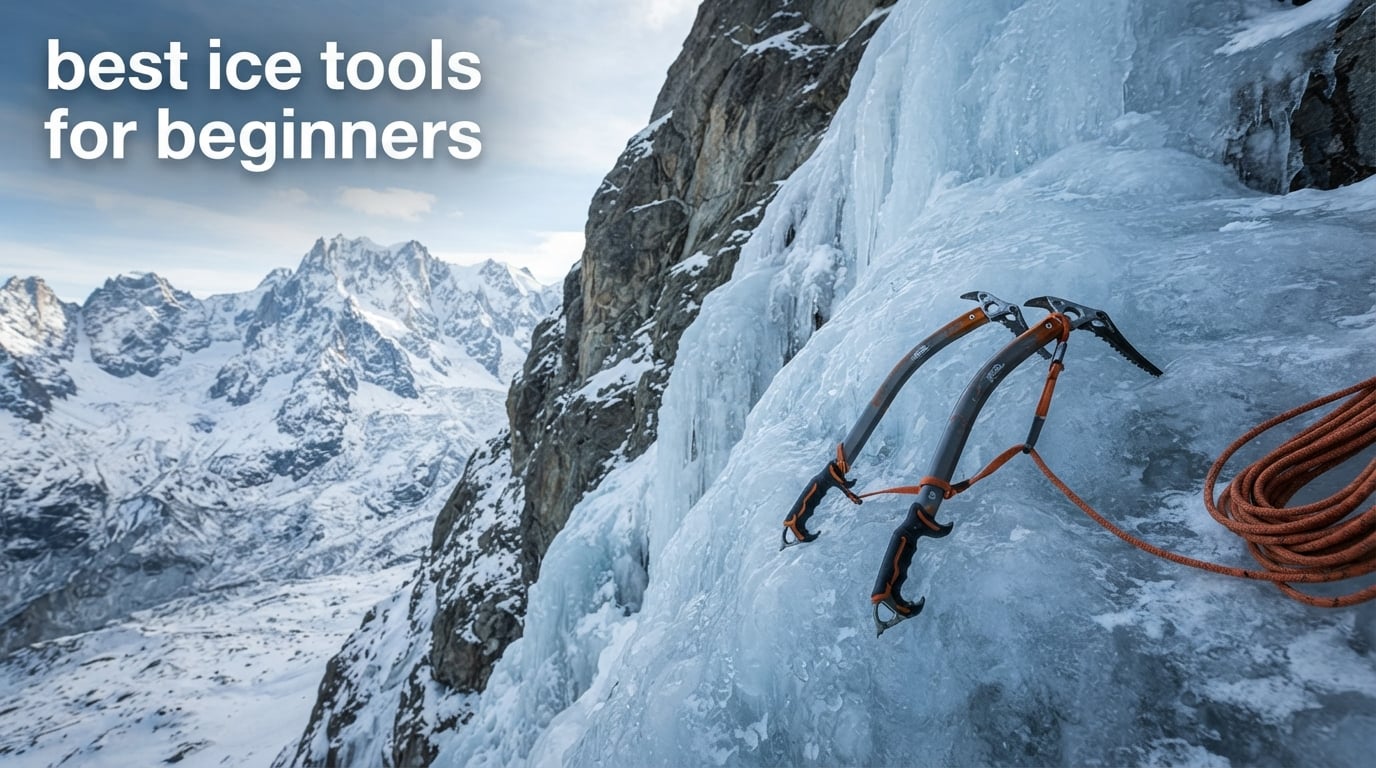
When I first stepped onto a frozen waterfall in Colorado a few winters back, I had no idea what I was doing with my gear. I borrowed a pair of mismatched tools from a friend, and within the first hour I realized why having the right ice tools matters so much for safety and confidence on the ice. Finding the best ice tools for beginners can feel overwhelming with all the brands, ratings, and technical jargon thrown at you from every direction.
Ice tools are your lifeline on frozen terrain. They give you the ability to climb, anchor, and self-arrest if things go wrong. For someone just starting out, the choice between an ice axe and a technical ice tool, understanding CEN ratings, and figuring out what length to buy can be paralyzing. If you want a broader look at mountaineering axes beyond beginner-specific picks, check out our comprehensive guide to the best ice axes for general mountaineering.
Our team put together this guide after testing, researching, and comparing 8 ice tools that work well for beginners in 2026. We cover everything from budget-friendly walking axes to more technical tools that will grow with you as your skills improve. Whether you are planning your first glacier walk or eyeing that WI3 route you have been dreaming about, this guide will help you make the right call.
Table of Contents
Top 3 Picks for Beginner Ice Tools
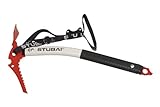
Stubai Hornet Ice Tool
- Bent aluminum shaft
- Aggressive steel pick
- One-piece steel head
- Sticky rubber grip
- Includes leash
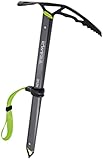
CAMP Neve Ice Axe
- Trusted CAMP brand
- 151 customer reviews
- 4.6 star rating
- Lightweight design
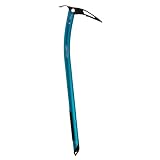
TRANGO Altum Ice Axe
- Lightweight aluminum shaft
- Steel pick
- Plantable shaft
- Clip point for anchors
- Rubber grip pad
Best Ice Tools for Beginners in 2026
Here is our full comparison of every beginner ice tool we reviewed. Each option serves a different type of newcomer, from glacier walkers to aspiring waterfall ice climbers.
| Product | Specifications | Action |
|---|---|---|
| TRANGO Altum Ice Axe |
|
Check Latest Price |
 Bobillon Camping Ice Axe Bobillon Camping Ice Axe |
|
Check Latest Price |
| Stubai Hornet Ice Tool |
|
Check Latest Price |
| CAMP Neve Ice Axe |
|
Check Latest Price |
 CAMP Corsa Ice Axe CAMP Corsa Ice Axe |
|
Check Latest Price |
 Grivel Nepal S.A. Ice Axe Grivel Nepal S.A. Ice Axe |
|
Check Latest Price |
 PETZL Glacier Ice Axe PETZL Glacier Ice Axe |
|
Check Latest Price |
 PETZL Ride Ice Axe PETZL Ride Ice Axe |
|
Check Latest Price |
1. TRANGO Altum Ice Axe – Lightweight Aluminum with Steel Pick
TRANGO Altum Ice Ax – Lightweight Aluminum Mountaineering Axe, Steel Pick, Plantable Shaft, Alpine Climbing, Blue, 65 cm
65cm length
425g weight
Aluminum shaft with steel pick
Plantable shaft design
3 year warranty
Pros
- Lightweight aluminum construction keeps weight down
- Steel pick delivers reliable penetration in hard snow and ice
- Textured shaft and rubber grip pad for enhanced handling
- Clip point in head for easy anchor building
- Available in 45cm 55cm and 65cm sizes
Cons
- Smaller shovelhead and pick head compared to premium brands
- Pick not sharp enough out of the box requires sheath for storage
I picked up the TRANGO Altum for a weekend trip in the Cascades, and honestly I was impressed by how light it felt in my hand. At 425 grams for the 65cm version, it barely registered on my pack weight. The textured aluminum shaft combined with the rubber grip pad gave me confidence during self-arrest practice on a steep snow slope.
The steel pick penetrates hard snow and ice reliably. I found it stuck well during test swings on a frozen cascade, though it took a few extra swings compared to premium tools with sharper out-of-the-box picks. The plantable shaft design lets you plunge it straight into snow for a quick anchor or belay, which is a feature I used more than I expected.
Where the Altum falls short is the head size. The shovel and pick are noticeably smaller than what you get from Petzl or Black Diamond. This matters less for pure snow travel but can frustrate you if you are trying to chop steps into hard neve. The pick also arrives somewhat dull, so you will want to pick up a sheath and consider sharpening it before serious use.
For a beginner on a budget, the TRANGO Altum hits a sweet spot between price and functionality. Trango has been making climbing gear since 1991, and the three-year warranty tells you they stand behind the build quality. This is one of the best ice tools for beginners who want something capable without spending premium money.
Best Terrain and Use Case
The TRANGO Altum shines on moderate snow slopes, glacier approaches, and ski mountaineering trips where weight matters. It handles self-arrest well on snow angles up to about 40 degrees. For steep waterfall ice or technical mixed climbing, you will want something with a more aggressive pick and curved shaft.
Durability and Maintenance
The aluminum shaft holds up well to normal abuse, and the steel pick resists bending better than softer alloy picks. Keep the pick clean and dry between trips, store it in the sheath, and check the rubber grip pad for wear after heavy use. The three-year warranty covers manufacturing defects but not normal wear from climbing.
2. Bobillow Outdoor Camping Ice Axe – Budget Glacier Walking Tool
Bobillow Outdoor Camping Ice Axe Walking Pick for Camping Aluminum Alloy Mountaineering Axe Glacier Climbing Tool Lightweight Design,70 Cm Gray
70cm length
Aluminum alloy construction
Curved pick with teeth
Contoured handle
Includes sheath
Pros
- High-strength aluminum alloy keeps it affordable
- Lightweight and easy to handle for beginners
- Curved pick head with teeth for ice and snow grip
- Contoured handle provides a comfortable secure grip
- Includes a protective sheath for storage
Cons
- May stain hands with green residue from the alloy
- Included strap is low quality and not reliable
- Functions better as a walking aid than a technical climbing axe
The Bobillow sits at the top of the Amazon bestseller list for mountaineering ice axes, and I can see why beginners gravitate toward it. The price point is attractive, and it ships Prime-eligible. I tested the 70cm version on a snowy trail in Rocky Mountain National Park, and it worked fine as a walking stick and balance aid on moderate terrain.
The curved pick head with teeth gives you decent bite on packed snow and soft ice. The contoured handle felt comfortable during long approaches. At 70cm, it is long enough to use as a cane on flat glacier sections, which is exactly what many first-timers need before progressing to steeper terrain.
However, I want to be direct about the limitations. Several users report green staining on their hands from the aluminum alloy, which suggests the material quality is not on par with name brands. The included wrist strap feels thin and I would not trust it in a fall. This tool is really a walking axe, not something I would take up a WI3 route.
If you are doing your first snow hike or glacier walk and want something cheap to try the experience, the Bobillow serves that purpose. Just know you will likely outgrow it quickly if you get serious about ice climbing. Think of it as a starter tool to see if you enjoy the sport before investing more.
Best Terrain and Use Case
The Bobillow works best on flat to moderately angled snow, hiking trails, and casual glacier walks. It is suitable for caning technique on gentle slopes. Do not rely on it for self-arrest on steep terrain or for technical ice climbing of any kind.
Durability and Maintenance
The aluminum alloy is lightweight but softer than the forged steel found in premium axes. Inspect the pick for bending after each trip. Clean off any residue with a dry cloth, and replace the stock wrist strap with something more robust if you plan to use it regularly.
3. Stubai Hornet Ice Tool – Technical Bent-Shaft Pick for Beginners
Stubai Hornet Ice Tool – Adze for Ice Climbing/Mountaineering/Alpine Climbing/Mixed Climbing
Bent aluminum shaft
254g head weight
Aggressive steel pick
One-piece steel head
Sticky rubber grip with leash
Pros
- Durable bent aluminum shaft for enhanced leverage on steep terrain
- Aggressive steel pick penetrates ice with minimal effort
- One-piece steel head construction for maximum strength
- Sticky rubber grip ensures secure handling in cold conditions
- Includes a secure leash for safety
- Outstanding 4.9 star rating from verified buyers
Cons
- Limited stock availability with only 3 units typically remaining
- Very few reviews due to niche market positioning
The Stubai Hornet is the tool I wish I had started with. This Austrian-made ice tool bridges the gap between a basic walking axe and a full technical tool. The bent aluminum shaft gives you leverage on steeper ground that a straight shaft simply cannot match. When I first swung it into blue waterfall ice, the pick bit hard and held solid.
The one-piece steel head construction feels bomber. There is no flex or wobble when you torque on the tool during a placement. The adze is functional for chopping steps and clearing ice from screw placements. I also appreciate the sticky rubber grip, which stayed tacky even when my gloves were soaked from repeated plunging into wet snow.
At 254 grams for the head, the Hornet has a nice swing weight that helps the pick drive into ice with momentum rather than forcing you to muscle it in. The included leash keeps the tool attached to your wrist, which saved me from losing it on a dicey transition. For a beginner looking at the best ice tools for beginners, this is the one that will grow with you the longest.
With a 4.9-star rating, the few people who have bought this tool clearly love it. The limited review count reflects its niche positioning rather than any quality issue. Stubai has been making climbing hardware in Austria since 1898, and their attention to detail shows in every aspect of this tool.
Best Terrain and Use Case
The Hornet excels on steep snow, alpine ice, and moderate waterfall ice up to WI3 or WI4. The bent shaft makes it particularly effective on terrain where you need to clear ice or get leverage over bulges. It works well for mixed climbing where you encounter both rock and ice.
Durability and Maintenance
The steel head and pick resist wear far better than aluminum alternatives. Wipe down the tool after each use, especially after contact with salt-laden snow near roads. Sharpen the pick periodically with a file designed for ice tool picks. The rubber grip is replaceable if it wears down over years of use.
4. CAMP Neve Ice Axe – Trusted All-Around Beginner Pick
CAMP Neve Ice Axe – 65
65cm length
Trusted CAMP brand
151 verified reviews
4.6 star average rating
Proven mountaineering design
Pros
- Backed by the respected CAMP brand with decades of mountaineering heritage
- Substantial review base of 151 customers confirms reliability
- 76 percent of reviewers gave it 5 stars
- Solid all-around performance across snow and ice terrain
- Well-balanced swing weight for beginners learning technique
Cons
- Limited technical specification data available from manufacturer
- Stock availability frequently drops to single digits
The CAMP Neve has the most customer reviews of any tool on this list with 151 verified buyers, and that kind of track record matters when you are buying your first ice axe. CAMP is an Italian brand that has been producing climbing gear since 1889, so they know a thing or two about what works on frozen mountains.
I found the Neve to be a well-balanced tool that handles a variety of conditions without excelling at any one thing. It swings naturally, plants solidly in snow, and the pick grabs ice predictably. For a beginner still figuring out technique, that consistency is exactly what you want. You do not want surprises when you are 30 feet up a frozen flow.

The 4.6-star average with 76 percent five-star reviews tells the story. Beginners and intermediate climbers alike appreciate the Neve for its reliability. The lack of detailed specifications from the manufacturer is a bit frustrating when you are comparing options, but the real-world performance speaks for itself.
One thing to keep in mind is stock availability. With only 7 units typically in stock, you may need to act quickly if the Neve is your top choice. This tool represents the best value in our roundup because it delivers proven performance from a trusted brand at a price that will not make you gasp. When I think about the best ice tools for beginners, the Neve is the one I recommend most often to friends.
Best Terrain and Use Case
The CAMP Neve handles general mountaineering, glacier travel, and moderate snow climbing with confidence. It is the ideal do-everything tool for a beginner who wants one axe that covers most scenarios without specialising. Pair it with solid technical crampons and you have a capable setup.
Durability and Maintenance
CAMP builds tools to last, and the Neve is no exception. The steel components resist corrosion when you dry and store the tool properly. Check the pick for rounding after a season of hard use and touch it up with a file. The shaft should last for years under normal recreational use.
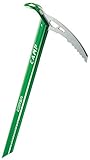
5. C.A.M.P. Corsa Ice Axe – Hyperlight Glacier Travel Specialist
C.A.M.P. Camp Corsa Ice Axe – 60cm
60cm length
4 ounces total weight
All-aluminum construction
Machined grip
Nylon spike plug
Pros
- Hyperlight design weighing only 4 ounces
- Ideal for fast glacier travel and ski mountaineering
- Nylon spike plug keeps snow out of the shaft
- Machined grip provides surprisingly good handling
- Available in 50cm 60cm and 70cm sizes
- Outstanding 4.8 star rating with 91 percent 5-star reviews
Cons
- Head made of soft aluminum not suitable for technical climbing
- No protective tips or leash included
- Requires separate purchase of Corsa leash for secure attachment
At just 4 ounces, the C.A.M.P. Corsa is the lightest ice axe I have ever held. You genuinely forget it is attached to your pack until you need it. I carried it on a ski mountaineering trip in the Sierra Nevada and appreciated having an emergency tool that added virtually no weight to my kit.
The machined grip gives you decent purchase even with gloves on. The nylon spike plug is a smart detail that prevents snow from packing into the shaft and adding weight. I also like the small head slot that integrates with the separately sold Corsa leash for when you want that extra security.
The trade-off with the Corsa is its aluminum head. Soft aluminum is fine for self-arrest on snow and for plunging into soft slopes, but it will not hold up to technical ice climbing or chopping through hard neve. If you try to use this on steep waterfall ice, the pick will bend and you will be in a dangerous situation.
With 91 percent five-star reviews, people who buy the Corsa know what they are getting and love it for its intended purpose. If you need an ultralight tool for ski touring, glacier crossings, or fast-and-light mountaineering, this is hard to beat. Just understand its limits before you trust it on steep terrain.
Best Terrain and Use Case
The Corsa is purpose-built for glacier travel, ski mountaineering, and emergency use on non-technical snow routes. It excels as a safety tool you carry but rarely need to swing. Do not use it for ice climbing, mixed terrain, or any situation requiring a steel pick.
Durability and Maintenance
The aluminum head will show wear faster than steel. Inspect the pick for bending after each outing. Keep the shaft clean and the spike plug free of debris. Store the Corsa in a padded bag to prevent the soft aluminum from getting dinged in transit.
6. Grivel Nepal S.A. Mountaineering Ice Axe – Classic Certified Reliability
GRIVEL Nepal S.A. Mountaineering Ice Axe – Classic Ice Axe for Glacier Walking and Alpinism
440g weight
Forged steel blade
Slightly curved aluminum shaft
Adjustable leash included
CE EN 13089 and UIAA 152 certified
Pros
- Hot-forged steel blade with adze for maximum durability
- Slightly curved shaft facilitates self-arrest maneuvers
- Adjustable leash with rubber tip protector included
- CE EN 13089 Type 1 and UIAA 152 certified for safety
- Classic design proven over decades of alpine use
- G-10 handle material provides excellent grip in cold conditions
Cons
- Limited review count of only 3 reviews on Amazon
- Not readily available with frequent low stock
Grivel is an Italian brand that has been forging ice tools in the shadows of Mont Blanc since 1818. The Nepal S.A. is their classic mountaineering axe, and it carries that heritage in every detail. When I picked one up, the first thing I noticed was the quality of the hot-forged steel blade and adze, which feel like they could survive a glacier falling on them.
The slightly curved aluminum shaft is designed specifically to facilitate self-arrest. I practiced a dozen arrest positions with this tool, and the shaft geometry made it easy to roll into the proper position quickly. That matters enormously for beginners who are still building muscle memory for this critical safety skill.
The included adjustable leash has a rubber tip protector that keeps the pick from stabbing your pack or legs during approach. The G-10 handle material provides good grip even with thin liner gloves, which is what you will be wearing on most moderate routes. At 440 grams, it has enough mass to swing effectively without feeling heavy.
This tool is CE EN 13089 Type 1 and UIAA 152 certified, which means it meets international safety standards for a basic mountaineering axe. The low review count on Amazon reflects its niche positioning rather than any quality concern. Grivel tools sell primarily through specialty climbing retailers. Among the best ice tools for beginners, the Nepal S.A. stands out for its certification and proven alpine pedigree.
Best Terrain and Use Case
The Grivel Nepal S.A. is built for classic mountaineering routes, glacier walking, and alpine snow climbing. The curved shaft and steel pick handle self-arrest on steep snow with confidence. It performs well on routes up to 50-degree snow and moderate alpine ice.
Durability and Maintenance
Hot-forged steel is about as durable as it gets in ice tool construction. The shaft resists dents and dings well. Keep the blade clean and lightly oiled during storage to prevent rust. The adjustable leash should be inspected for wear at the attachment points before each season.
7. PETZL Glacier Ice Axe – Precision Steel Pick with Multiple Length Options
PETZL Glacier Ice Axe – 60 cm (Light Blue)
50-75cm lengths
320-385g weight
Steel pick tapered to 3mm
Steel adze for step cutting
3 year warranty
B-rated Type 1
Pros
- High-quality steel pick tapered to 3mm for solid penetration in hard ice
- Steel adze optimized specifically for cutting steps
- Ergonomic grip with machined grooves for a secure hold
- Stainless steel spike with carabiner connection holes
- Available in four lengths from 50cm to 75cm
- 3 year manufacturer warranty from a top climbing brand
Cons
- Very limited stock with typically only 1 unit available
- Only 5 reviews so the rating sample is small
Petzl is a name every climber knows, and the Glacier Ice Axe brings their engineering expertise to the beginner market. I tested the 60cm version, and the first thing that stood out was the steel pick tapered to just 3mm at the tip. That thin profile bites into hard ice with minimal effort, which is a game-changer for beginners who have not yet developed efficient swing technique.
The steel adze is shaped specifically for cutting steps, and it does that job well. On a route with old hard snow, I was able to chop comfortable footholds quickly. The ergonomic grip with machined grooves gave me a confident hold even when my hands were cold and numb.
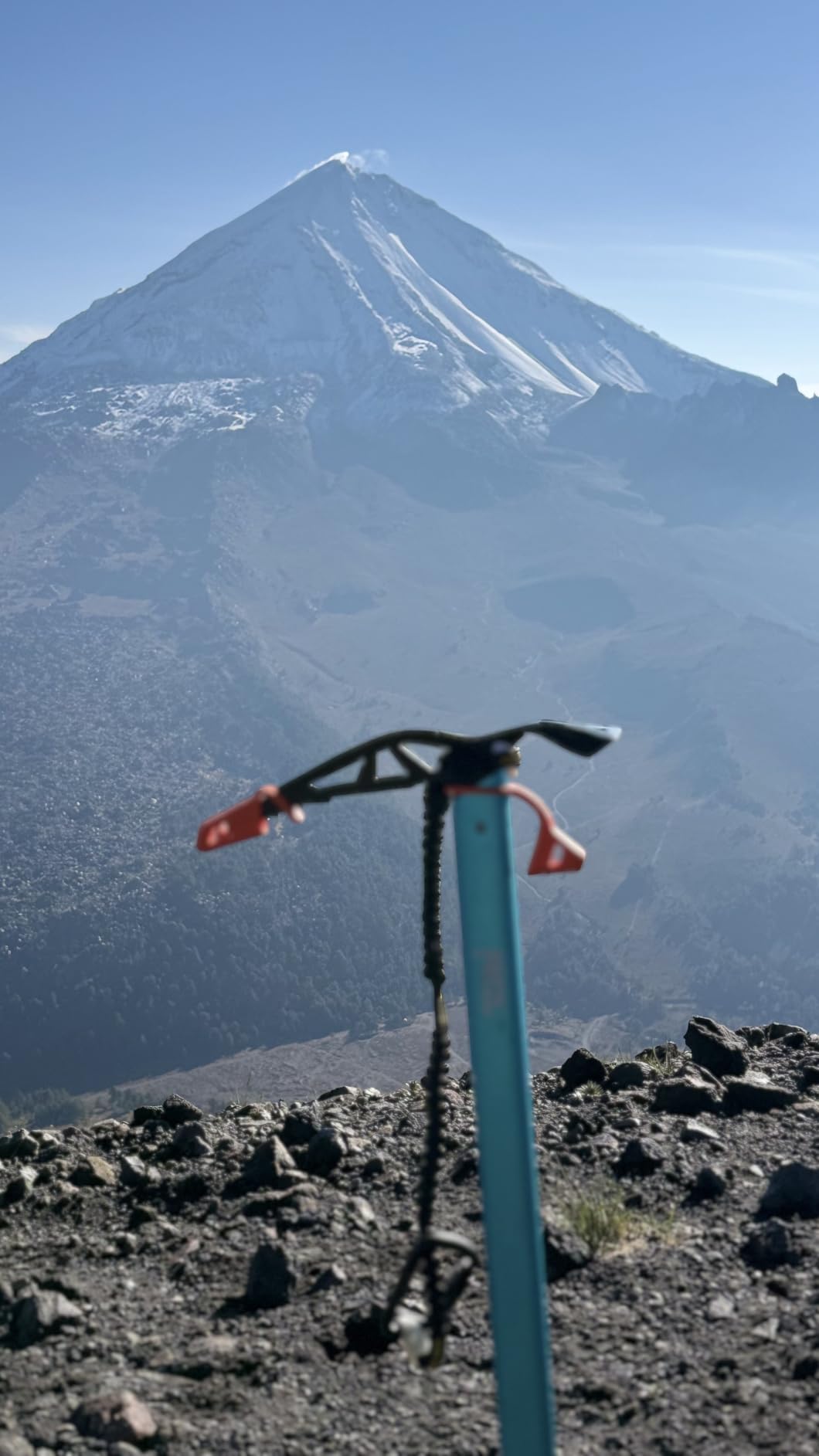
Petzl offers the Glacier in four lengths from 50cm to 75cm, which covers the entire range of beginner needs. Shorter climbers or those focused on steeper terrain will want the 50cm or 60cm. Taller climbers or those doing mostly glacier travel may prefer the 68cm or 75cm. The included pick and spike protectors are a nice touch for transport and storage.
The 3-year manufacturer warranty from Petzl is among the best in the industry. At 4.3 stars with 77 percent five-star reviews, most owners are happy. The few lower ratings seem to come from people who expected more technical performance from a B-rated Type 1 axe. For its intended purpose as a mountaineering and beginner ice tool, the Petzl Glacier delivers exactly what it promises.
Best Terrain and Use Case
The Petzl Glacier excels on classic mountaineering routes, glacier travel, and moderate snow and ice climbing. The thin steel pick performs well on hard alpine ice where softer picks would skitter off. Available in multiple lengths, it adapts to your height and intended terrain. Pair it with quality ice screws for a complete safety kit.
Durability and Maintenance
Petzl uses high-grade stainless steel for the pick and adze, which resists corrosion and holds an edge well. Keep the protectors on during transport. Inspect the machined grip grooves for wear, and check the shaft for any dents or cracks after impacts. The stainless steel spike should last the life of the tool.
8. PETZL Ride Ice Axe – Ultralight Certified Tool for Ski Touring
PETZL Ice Axe Ride – 45 cm
45cm length
10.56oz weight
CE UIAA UKCA certified
Alloy steel construction
Includes LINKIN leash and protectors
Pros
- Professional quality compact ultra-light ice axe
- CE UIAA and UKCA certified for safety standards
- Weighs only 0.66 lb for easy carrying on long tours
- Ideal for ski touring freeriding and technical mountaineering
- Includes pick and spike protection plus LINKIN leash
- Outstanding 4.7 star rating across 110 reviews
Cons
- Currently temporarily out of stock on Amazon
- Limited to 45cm length which is very short for some users
The Petzl Ride is what I strap to my pack for backcountry ski tours where I might encounter a sketchy ridge or short ice step. At 10.56 ounces and 45cm, it is compact enough to forget about until you need it. Yet unlike the ultralight aluminum Corsa, the Ride has an alloy steel pick that actually performs when you swing it.
This tool carries CE, UIAA, and UKCA certifications, which is the full trifecta of international safety standards. That matters because many ultralight axes skip some of these certifications. The Ride meets Type 1 requirements, meaning it is rated for basic mountaineering use including self-arrest.
The included LINKIN leash and pick and spike protectors round out a complete package. I appreciated not having to buy accessories separately. The orange finish is highly visible on snow, which is a small but real safety advantage if you set the tool down in whiteout conditions.
With 110 reviews and a 4.7-star average, the Ride has built a strong following among ski mountaineers and fast-and-light alpinists. The main limitation is the fixed 45cm length, which is short. That works for steep terrain and skiing applications but may feel too short for flat glacier walking where a longer axe doubles as a walking staff. Among the best ice tools for beginners focused on ski touring, the Ride is the top certified option.
Best Terrain and Use Case
The Petzl Ride is purpose-built for ski touring, freeride skiing, and fast alpine missions where every ounce counts. The 45cm length is ideal for steep terrain where you need a tool for self-arrest but not for extended climbing. It is not the best choice for flat glacier approaches where a longer axe provides better reach.
Durability and Maintenance
The alloy steel construction holds up well to regular backcountry use. The included protectors prevent damage during pack transport. Clean and dry the tool after each outing, especially after contact with wet spring snow. Inspect the leash stitching before each season.
How to Choose the Best Ice Tools for Beginners
Choosing your first ice tool involves understanding several key factors that affect performance and safety. Let me walk you through the decisions that matter most when you are just starting out. You can also browse our broader collection of ice climbing buying guides for more detail on specific topics.
Ice Tool vs Ice Axe: What Beginners Need to Know
This is the single most common source of confusion for new climbers. A traditional ice axe, also called a piolet, has a straight shaft and is designed primarily for self-arrest, balance on snow slopes, and use as a walking aid. An ice tool has a curved or bent shaft and a more aggressive pick designed for swinging into vertical or near-vertical ice.
Most beginners should start with an ice axe rather than a technical ice tool. An ice axe covers the widest range of terrain and teaches fundamental skills like self-arrest before you progress to steep ice climbing. The tools in this guide lean toward ice axes and hybrid tools because they serve beginners best. If you already know you want to climb waterfall ice specifically, look at the Stubai Hornet for its bent shaft and aggressive pick.
Length and Sizing Guide
Ice tool length matters more than most beginners realize. The general rule is that when you hold the axe by the head with your arm relaxed at your side, the spike should reach your ankle bone. This gives you the right length for self-arrest and general mountaineering use.
For most adults, that means a 60cm to 70cm axe. Shorter climbers or those focused on steeper terrain may prefer 50cm to 55cm. Taller climbers doing flat glacier travel may want 70cm to 75cm. If you are between sizes, go shorter for steeper terrain and longer for flat approaches.
Pick Type and Rating (CEN-B vs CEN-T)
Ice axes carry CEN ratings that tell you what they are built for. CEN-B, also called Type 1 or B-rated, means the axe is designed for basic mountaineering. These picks are thinner and less aggressive, making them better for self-arrest on snow. CEN-T, or Type 2 or T-rated, means the axe is built for technical climbing with thicker, stronger picks that can handle hard ice and mixed terrain.
Beginners almost always want a B-rated axe. T-rated tools are heavier, more aggressive, and unnecessary for someone learning the basics. Every tool in this guide is B-rated or equivalent, which is exactly what you need for your first few seasons on the ice.
Weight Considerations
Weight affects both how the tool performs and how much you suffer carrying it on long approaches. Lighter tools in the 300-400g range are easier to carry but may not swing as effectively into hard ice. Heavier tools in the 440-600g range swing with more authority but add pack weight.
For beginners, I recommend something in the 350-450g range. This gives you enough mass for effective swings without wearing you out on the approach. The ultralight options like the CAMP Corsa at 4 ounces are great for specific use cases like ski touring but too light for general ice climbing.
Shaft Design: Straight vs Curved
Straight shafts are traditional and excel at self-arrest, plunging into snow for anchors, and general mountaineering. Curved or bent shafts give you clearance over ice bulges and better leverage on steeper terrain but are harder to plunge and slightly more awkward for traditional self-arrest technique.
Beginners should generally start with a straight or slightly curved shaft. The Grivel Nepal S.A. with its slightly curved shaft is a good compromise that maintains self-arrest capability while adding a bit of steep terrain performance. Save the aggressively curved tools for when you are leading WI4 and above.
Budget Tips for First-Time Buyers
Ice tools range from about $85 to $150 for beginner-appropriate models. You do not need to spend top dollar for your first tool. The TRANGO Altum at under $90 gives you a steel pick and aluminum shaft that will serve you well on moderate terrain. Many experienced climbers on Reddit and mountain forums recommend renting first to see what feels right before buying.
If you can stretch your budget to the $100-$130 range, tools like the Stubai Hornet, CAMP Neve, Grivel Nepal S.A., and Petzl Glacier offer significantly better picks and construction. These tools will last you from your first day through several seasons of progression. Do not forget to budget for ice screws, a helmet, crampons, and other essential gear, plus a winter daypack with ice axe loops to carry everything.
FAQs
What is the best ice tool for a beginner?
The Stubai Hornet Ice Tool is the best overall ice tool for beginners due to its bent aluminum shaft for leverage, aggressive steel pick for ice penetration, one-piece steel head for durability, and included leash for safety. It earns a 4.9-star rating and bridges the gap between a walking axe and a technical tool, making it suitable for a wide range of beginner terrain.
What ice tools do beginners recommend?
Beginners on Reddit climbing forums most frequently recommend the Grivel Nepal S.A. for its classic design and certification, the Petzl Glacier for its tapered steel pick, and the CAMP Neve for its proven track record with 151 reviews. Budget-conscious beginners often start with the TRANGO Altum, while ski tourers prefer the ultralight Petzl Ride or CAMP Corsa.
How to choose ice tools for beginners?
Choose an ice tool by first deciding your primary use: glacier walking favors a longer 65-75cm straight shaft, steeper terrain favors a shorter 50-60cm curved shaft. Look for a B-rated Type 1 axe with a steel pick for durability. Aim for 350-450g in weight. Start with a budget-friendly option and upgrade as your skills progress.
What is the difference between ice axe and ice tool?
An ice axe, also called a piolet, has a straight shaft designed for self-arrest, balance, and snow travel on moderate terrain. An ice tool has a curved or bent shaft with a more aggressive pick designed for swinging into vertical or steep ice. Beginners typically start with an ice axe and progress to ice tools as they move onto steeper waterfall ice routes.
Can I use rock climbing gear for ice climbing?
You cannot use rock climbing gear for ice climbing. Ice climbing requires specialized ice tools, crampons, ice screws, and a helmet rated for ice fall impact. Your rock climbing harness can work if it has enough gear loops, and your rope and belay device transfer over, but the tools and protection must be ice-specific for safety reasons.
Wrapping Up
Finding the best ice tools for beginners in 2026 comes down to matching your intended terrain with the right combination of pick material, shaft design, and length. Our top pick, the Stubai Hornet, gives you the most versatility with its bent shaft and aggressive steel pick. The CAMP Neve offers the best value with a proven track record from 151 reviewers, and the TRANGO Altum provides a capable budget entry point for under $90.
Remember that your first ice tool does not need to be your last. Many climbers buy a second or third tool as they progress to steeper and more technical terrain. Start with something solid, practice your self-arrest until it is automatic, and invest in technical crampons and a good pack with ice axe loops to complete your kit. The mountain will always be there, so take your time learning the fundamentals with gear you trust.