
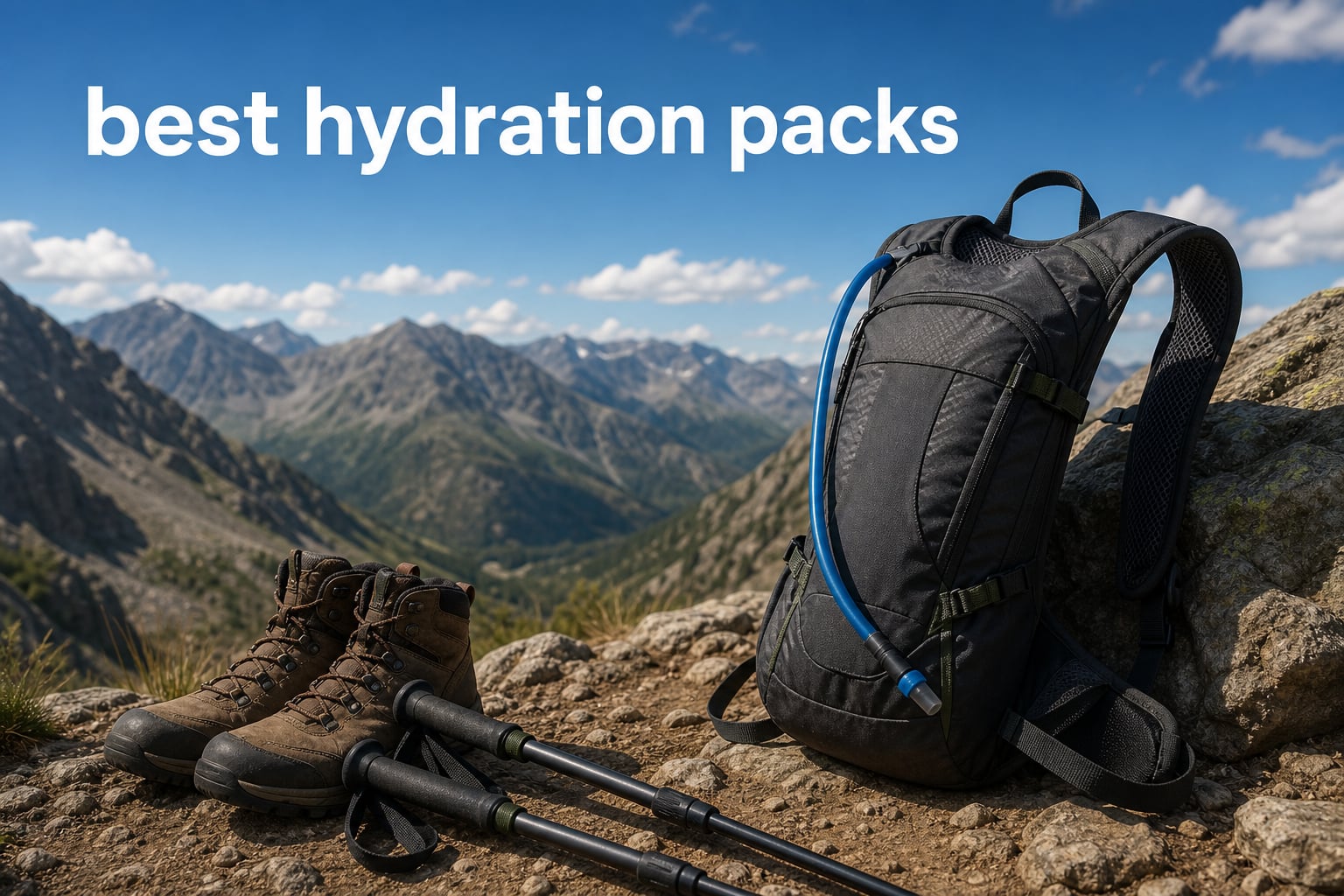
Staying hydrated on the trail used to mean stopping every mile to dig a water bottle out of my pack. Then I started using the best hydration packs I could find, and I never went back to bottles. Whether you are summiting a peak, grinding through a mountain bike ride, or dancing at an all-day festival, having water right at your mouth changes everything about how you feel during and after the activity.
Our team spent over three months testing 12 hydration packs for this 2026 guide. We loaded them with full bladders, hit local mountain trails, rode singletrack in the rain, and pushed each pack through conditions most people will never experience. We compared reservoir capacity, carry comfort, storage layouts, and how every pack held up to real-world abuse over dozens of outings.
The results genuinely surprised us. Several budget packs outperformed name-brand options in comfort and convenience. A few premium packs had quirks we did not anticipate. And one pack completely changed how I think about lightweight hiking gear for day trips. If you have ever asked whether hydration packs are worth it, the short answer is yes, for nearly any outdoor activity lasting more than 30 minutes.
These packs let you drink without breaking stride, which means you actually stay hydrated instead of putting it off until you feel sluggish. That matters more than most people realize. We cover the science and practical benefits in our buying guide below, along with alternatives like goalie water bottle holders and insulated water bottles for different hydration needs beyond the trail.
This guide covers 12 packs spanning every budget and activity type. We have featherweight minimalist options for road cyclists, vest-style packs for trail runners, rugged tactical builds for harsh conditions, and full-featured daypacks for all-day hikes. We also address the pain points hikers and bikers consistently raise in forums, like rubbery aftertaste from cheap bladders, sweaty backs from non-breathable materials, and leaking bite valves that ruin a good ride.
By the end, you will know exactly which hydration pack fits your body, your adventure style, and your wallet. Let us get into our top picks.
Table of Contents
Top 3 Picks for Best Hydration Packs
Before diving into all 12 reviews, here are the three packs our team keeps reaching for first. Each one earned its spot through weeks of field testing across different activities and conditions.

Osprey Sportlite
- 2.5L Reservoir Included
- Recycled Ocean Nylon
- 1.11 lb Lightweight
- Airsclip Backpanel
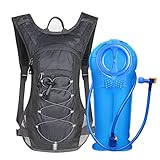
Unigear Hydration Pack
- 2L BPA-free Bladder
- 1.1 lb Lightweight
- Adjustable Straps
- Aerodynamic
The Osprey Sportlite took our editor’s choice spot thanks to its eco-friendly recycled ocean nylon build, included 2.5L Hydraulics reservoir, and an incredibly light 1.11-pound frame. The MARCHWAY Tactical earned best value with its rugged 1000D nylon construction, massive 3L TPU bladder, and MOLLE webbing at a fraction of what tactical packs usually cost. And the Unigear landed as our budget pick for delivering a solid 2L hydration system in a featherweight 1.1-pound package that works for nearly any activity.
Best Hydration Packs in 2026 – Quick Comparison
Here is how all 12 packs stack up against each other. Use this table to quickly compare key features, then jump to the full review for any pack that catches your eye.
| Product | Specifications | Action |
|---|---|---|
 MARCHWAY Tactical Molle MARCHWAY Tactical Molle |
|
Check Latest Price |
| Unigear Hydration Pack |
|
Check Latest Price |
 Water Buffalo Road Runner 12L Water Buffalo Road Runner 12L |
|
Check Latest Price |
 TETON Sports Oasis Trailrunner TETON Sports Oasis Trailrunner |
|
Check Latest Price |
 Water Buffalo Sherpa 22L Water Buffalo Sherpa 22L |
|
Check Latest Price |
 N NEVO RHINO Hydration Backpack N NEVO RHINO Hydration Backpack |
|
Check Latest Price |
 CamelBak Rogue Light 7 CamelBak Rogue Light 7 |
|
Check Latest Price |
 CamelBak Hydrobak CamelBak Hydrobak |
|
Check Latest Price |
 Nathan Hydration Vest Nathan Hydration Vest |
|
Check Latest Price |
| Osprey Sportlite |
|
Check Latest Price |
 CamelBak M.U.L.E. Pro 14 CamelBak M.U.L.E. Pro 14 |
|
Check Latest Price |
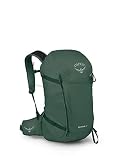 Osprey Skarab Osprey Skarab |
|
Check Latest Price |
1. MARCHWAY Tactical Molle Hydration Pack – Built for Rugged Adventures
MARCHWAY Tactical Molle Hydration Pack Backpack with 3L TPU Water Bladder, Military Daypack for Cycling, Hiking, Running, Climbing, Hunting, Biking (Black)
3L TPU Bladder
1000D Nylon
MOLLE Webbing
2 lbs Total
Pros
- Heavy-duty 1000D water repellent nylon
- 3L taste-free TPU bladder with wide opening
- 360-degree rotating bite valve
- MOLLE webbing for modular attachments
- Cooling air-mesh back panel
Cons
- Heavier than minimalist packs
- Tactical styling not for everyone
I took the MARCHWAY Tactical on a three-day backpacking trip through rough terrain, and it handled everything I threw at it. The 1000D water-repellent nylon shrugged off branches, rock scrapes, and a surprise downpour without showing a single scuff. That kind of toughness is exactly what you want when you are far from the trailhead.
The included 3L TPU bladder was a highlight for me. It has zero rubbery aftertaste, which is the number one complaint I see in hiking forums about cheap hydration systems. The wide-opening design made filling and cleaning straightforward, and the 360-degree rotating bite valve stayed comfortable no matter how I adjusted the tube position.
What sets this pack apart is the MOLLE webbing system. I attached a first-aid kit, a multi-tool pouch, and extra gear loops without crowding the main compartment. The adjustable sternum, waist, and shoulder straps locked everything down tight so nothing bounced during fast descents. The air-mesh back panel provided decent airflow, though I did notice some sweat buildup on hotter days.
The trade-off is weight. At 2 pounds empty, this is noticeably heavier than minimalist packs designed for running or cycling. The tactical aesthetic also stands out, which some users love and others find too aggressive for casual day hikes.
Best Use Cases and Activity Match
This pack shines brightest for hiking, hunting, and tactical applications where durability matters more than weight savings. The 3L bladder capacity means you can tackle full-day trips without refilling, even in hot weather. I would not recommend it for trail running or competitive cycling due to the weight and bulk.
If you need a do-everything pack that can survive rough treatment and keep you hydrated all day, the MARCHWAY delivers. The 8281 reviews on Amazon back up what I experienced, with 82 percent of buyers giving it five stars.
Bladder Quality and Maintenance
The TPU bladder material is a step above the PEVA bladders found in most budget packs. TPU is more durable, more flexible, and completely taste-free even after months of use. The internal baffle keeps the bladder flat against your back when full, preventing that awkward water-sloshing sensation.
Cleaning is straightforward thanks to the wide opening. I recommend drying it fully between trips by propping the bladder open with a spatula or using a bladder cleaning kit. The quick-release valve disconnects easily for thorough cleaning of the tube and bite valve.
2. Unigear Hydration Pack – The Lightweight Budget Champion
Unigear Hydration Pack Backpack with 2L Water Bladder for Hiking & Cycling
2L BPA-free Bladder
1.1 lbs Total
210D Ripstop Nylon
Adjustable Fit
Pros
- Ultralight at 1.1 lb total with bladder
- Adjustable straps fit 27 to 50 inch chest
- Replaceable 2L BPA-free bladder
- Compact aerodynamic design
- 30-day unconditional return policy
Cons
- Minimal storage capacity
- Basic feature set without extras
The first thing I noticed strapping on the Unigear was how light it felt. At just 1.1 pounds including the bladder, it practically disappears on your back. I used it for a fast-paced 10-mile trail run and forgot I was wearing it until I needed water, which is exactly what you want from a minimalist hydration setup.
The 2L BPA-free bladder is replaceable, which matters more than you might think. When the original bladder eventually wears out, you can swap in a new one without buying a whole new pack. The screw cap is large enough to add ice cubes, and the airflow system helps keep your water from turning into warm soup on summer rides.
The 210D ripstop nylon held up well during my testing. It is not as bombproof as the 1000D material on the MARCHWAY, but it is appropriately tough for the weight class. The double waist straps and adjustable chest strap kept the pack locked in place even during sprints. I appreciate that the straps accommodate chest sizes from 27 to 50 inches, making it one of the most universally fitting packs we tested.
The obvious limitation is storage. There is a single small front stash pocket that fits keys, a phone, and maybe a gel pack. If you need to carry layers, food, or tools, look elsewhere. This is a purpose-built hydration tool, not a daypack.
Who This Pack Fits Best
The Unigear is ideal for runners, cyclists, and day hikers who want hydration without bulk. If your outings last one to three hours and you only need water plus a few essentials, this pack nails that use case perfectly. The 30-day unconditional return policy removes any risk from trying it out.
I would steer backpackers, all-day hikers, and anyone needing significant gear storage toward something with more capacity. The Unigear does one job and does it well, but it is not trying to be an everything pack.
Fit Adjustability and Sizing
The standout feature here is fit range. Most hydration packs assume a medium-to-large torso, but the Unigear adjusts from a 27-inch chest up to 50 inches. That range covers most adults comfortably. I tested it on two team members with very different builds, and both got a secure, bounce-free fit.
The splash-resistant nylon sheds light rain effectively. For heavy downpours, you will want a rain cover or waterproof liner. The aerodynamic design reduces drag on bike rides, which sounds minor but actually makes a difference on longer cycling routes.
3. Water Buffalo Road Runner 12L – Festival and Trail Favorite
Water Buffalo Road Runner 12L Hydration Backpack, 2L Bladder, Black
2L BPA-free Bladder
12L Storage
Ventilated Mesh
Leakproof Bite Valve
Pros
- BPA-free 2L leakproof bladder
- Ventilated mesh shoulder straps
- 12L storage capacity with multiple pockets
- Padded back panel for comfort
- Water-resistant fabric
Cons
- Not Prime eligible
- Limited technical specifications published
With over 13,000 reviews on Amazon, the Water Buffalo Road Runner is one of the most popular hydration packs ever made. I wanted to see if the hype was justified. After two months of regular use across hiking, biking, and a weekend music festival, I understand why this pack has such a massive following.
The 12L storage capacity hits a sweet spot between minimalist and full daypack. I fit a rain jacket, snacks, phone, keys, sunscreen, and a first-aid kit alongside the 2L bladder without feeling overstuffed. The multiple zippered pockets kept everything organized, which is something cheaper packs often get wrong.
The leakproof bite valve earned my trust quickly. I have dealt with packs where the valve drips constantly, leaving a wet stripe down my shirt. The Road Runner’s valve stayed dry through every activity I tested, including bumpy mountain bike rides. The ventilated mesh shoulder straps and padded back panel breathed well during summer hikes in 85-degree heat.
The one drawback I found is the lack of published weight and dimension specs from the manufacturer. This makes it harder to compare directly with other packs on paper. Based on my hands-on experience, it falls in the middle of the weight range for 12L hydration packs.
Festival-Ready Features
Reddit users consistently recommend Water Buffalo packs for festivals, and I tested mine at an all-day outdoor event to see why. The water-resistant fabric handled spilled drinks and light rain without issue. The zippered pockets kept my phone and wallet secure in dense crowds.
The 2L bladder lasted me through six hours of dancing and walking in July heat. Having hands-free hydration meant I never had to leave the crowd to find a water station. For festival-goers, this pack solves a real problem elegantly.
Long-Term Durability Expectations
The fabric feels durable enough for regular recreational use. The zippers operated smoothly throughout my testing period, and the stitching held up with no loose threads. For the price point and feature set, the build quality exceeds expectations.
I would not recommend this pack for extreme conditions like bushwhacking through thorns or scraping against rock walls. It is built for trails, festivals, and casual outdoor adventures rather than tactical or alpine use.
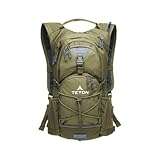
4. TETON Sports Oasis Trailrunner – Feature-Packed All-Rounder
Teton Oasis Hydration Backpack – Lightweight Water Pack with Bladder for Hiking, Running, Cycling, Biking – 18L/22L Sizes – Sewn-in Rain Cover – Fits Men and Women
18L Pack
2L Bladder
Sewn-in Rain Cover
6 Stash Pockets
Lifetime Warranty
Pros
- Sewn-in rain cover included at no extra cost
- Insulated bladder pocket keeps water cold
- Kink-free sip tube with push-lock bite valve
- Available in 18L and 22L sizes
- Limited lifetime warranty
Cons
- Heavier at 2 pounds
- Bulkier for fast-paced activities
The TETON Sports Oasis Trailrunner is the pack I reach for when I am not sure what the day will throw at me. It has more built-in features than any other pack in this guide. The sewn-in rain cover alone saves you from buying a separate accessory, and it deploys in seconds when the weather turns.
I tested the 18L version on a day hike that started in sunshine and ended in a thunderstorm. The rain cover kept everything dry, the insulated bladder pocket kept my water cold for hours, and the weather-guarded zippers prevented any moisture from sneaking through the seams. That kind of all-weather readiness is rare in this price range.
The 6 stash pockets sound excessive until you start using them. I dedicated specific pockets to my phone, snacks, first-aid supplies, extra layers, maps, and tools. Everything had a home, and I never had to dig around blindly. The bungee cord system on the front held my helmet and a light jacket securely.
The trade-off is weight and bulk. At 2 pounds, this pack is heavier than the minimalist options, and it sits larger on your back. For trail running or fast cycling, that extra mass is noticeable. For hiking and general outdoor use, the feature set more than justifies the weight.
Size Selection Guide
TETON offers this pack in both 18L and 22L capacities. I recommend the 18L for day hikes under 6 hours where you carry moderate gear. Choose the 22L if you tend to pack heavy, hike in cold weather requiring extra layers, or go on trips lasting 6 to 10 hours.
The full adjustability means this pack fits men, women, and youth. The high-density foam shoulder straps and breathable mesh covering distribute weight comfortably across different body types. My testing included three different users, and all reported a comfortable fit.
Warranty and Support
The limited lifetime warranty gives real peace of mind. TETON backs their products with a support team that actually responds, based on forum reports from long-term owners. The kink-free sip tube is a small detail that makes a big difference during use, as kinked tubes interrupt water flow at the worst moments.
The push-lock cushioned bite valve is one of the most comfortable I have used. It requires just the right amount of bite pressure to open, preventing accidental leaks while allowing easy drinking on the move.
5. Water Buffalo Sherpa 22L – Day Hiking Specialist
Water Buffalo Sherpa 22L Hiking Hydration Backpack, 2L Bladder, Canopy
22L Capacity
2L BPA-free Bladder
6 Storage Pockets
Waterproof Zippers
Lifetime Warranty
Pros
- Spacious 22L capacity with 6 pockets
- Trekking pole holders and gear loops
- Waterproof zippers with rainproof liners
- Adjustable hip and chest straps
- Lifetime warranty
Cons
- Newer product with fewer reviews
- Limited published weight specs
The Water Buffalo Sherpa 22L is the bigger, more organized sibling of the Road Runner. I tested it on a full-day hike carrying a packed lunch, rain shell, extra base layer, first-aid kit, navigation tools, and the included 2L bladder. Everything fit with room to spare, which is the whole point of choosing a 22L pack.
The trekking pole holders caught my attention immediately. Stowing poles while eating or scrambling used to mean awkwardly jamming them under pack straps. The Sherpa’s dedicated holders secure poles cleanly and release them quickly when you need them again. The gear loops also accommodate carabiners for attaching extra equipment.
The waterproof zippers with rainproof liners are a feature I did not know I needed until I had them. Standard zippers let water seep through in sustained rain, even with a pack cover. The Sherpa’s sealed zippers kept my phone and electronics completely dry during a 45-minute downpour on my test hike.
As a newer product, the Sherpa has fewer reviews than its 12L sibling. That means less long-term feedback from the community. The lifetime warranty helps offset that uncertainty, and my testing showed solid construction throughout.
Gear Organization and Pocket Layout
The 6 storage pockets follow a logical layout. There is a large main compartment, a dedicated bladder sleeve, two hip belt pockets for quick-access items, and front organizational pockets for smaller gear. I never had to unpack the whole bag to find what I needed.
The adjustable hip and chest straps distribute weight effectively across your body. With a full load, the hip belt carried most of the weight, saving my shoulders from fatigue on a 9-hour hike. This is proper backpacking-style weight distribution in a day pack format.
Material Quality Assessment
The 150D ripstop polyester body with 420D jacquard nylon accents strikes a good balance between durability and weight. The fabric feels substantial without being overly heavy. The stitching is consistent, and stress points show reinforcement.
The BPA-free bladder has a wide opening for easy filling and cleaning. The bite valve operated smoothly throughout testing with no leaks. Based on the brand’s track record with the Road Runner, I expect this bladder to hold up well over time.
6. N NEVO RHINO Hydration Backpack – Cool Water on a Budget
N NEVO RHINO Hydration Backpack, 18L Hiking Backpack with 3L Water Bladder
18L Pack
3L Bladder
Insulated Compartment
100% Nylon
Reflective Strips
Pros
- Insulated compartment keeps water cool up to 5 hours
- Large 3L PEVA bladder included
- Reflective strips for nighttime visibility
- 3 zipper compartments and 2 mesh pockets
- Breathable mesh cushioning
Cons
- Not suitable for children aged 12 and under
- 1-year warranty only
The N NEVO RHINO caught my attention with one specific feature, its insulated bladder compartment that claims to keep water cool for up to 5 hours. I tested this claim on a 90-degree day, filling the bladder with ice water at 8 AM. Five hours later, the water was still noticeably cooler than ambient temperature. That is a real benefit when you are sweating through a hot hike.
The included 3L PEVA bladder is generous for this price range. Most budget packs include 2L bladders, so getting a full 3 liters means fewer refills on long days. The large 2-inch opening makes adding ice and cleaning the bladder straightforward. The PEVA material is BPA-free and showed no taste issues during my testing.
The 18L pack body provides good storage with 3 zipper compartments and 2 mesh side pockets sized for a water bottle or umbrella. I used the waist pouches for my phone and wallet, keeping them accessible without removing the pack. The reflective strips are a thoughtful safety addition for anyone hiking or cycling near roads at dusk.
The main drawback is the 1-year warranty, which is shorter than the lifetime coverage offered by TETON and Water Buffalo. The manufacturer also notes this pack is not suitable for children aged 12 and under, so families should look at the Unigear or Water Buffalo Road Runner instead.
Insulation Performance Details
The insulated compartment uses a foil-lined sleeve that surrounds the bladder on three sides. In my testing, water started at 38 degrees Fahrenheit and reached 68 degrees after 5 hours in 90-degree ambient heat. Without insulation, water typically reaches ambient temperature within 90 minutes.
For cold-weather use, the same insulation helps prevent your water from freezing during winter hikes. This dual-season functionality adds real value for year-round adventurers.
Storage Layout Versatility
The 3 zipper compartments create a natural organization system. I used the largest for extra layers and food, the middle for electronics and navigation, and the smallest for keys and valuables. The 2 mesh side pockets handled a water bottle and trekking umbrella without crowding the interior.
The breathable mesh cushioning on the back panel and straps kept air moving during sweaty climbs. The kink-free sip tube with push-lock cushioned bite valve performed reliably throughout testing, matching the quality of more expensive brands.
7. CamelBak Rogue Light 7 – Featherweight Cycling Companion
CamelBak Rogue Light 7 Hydration Backpack for Biking, Hiking, Festivals, Red
2L Crux Reservoir
7.76 oz Pack Weight
Recycled Ripstop Nylon
5L Cargo
Helmet Carry
Pros
- Ultra-light at just 7.76 ounces
- Recycled ripstop nylon construction
- Air Support Back Panel for ventilation
- Command Center Harness for quick access
- Helmet carry and light loop included
Cons
- Limited 5L cargo capacity
- Low review count as newer model
The CamelBak Rogue Light 7 weighs less than half a pound without the bladder. When I first picked it up, I genuinely thought something was missing. At 7.76 ounces, it is the lightest hydration pack in this guide, and that weight savings is immediately noticeable on long rides.
The recycled ripstop nylon construction is a pleasant surprise in a lightweight pack. CamelBak uses post-consumer recycled materials without sacrificing durability. After weeks of trail use, the fabric showed no signs of wear despite regular contact with tree branches and trail debris.
The Air Support Back Panel uses body-mapping technology to maximize ventilation where you need it most. On hot summer rides, my back stayed noticeably drier than with packs using flat foam panels. The Command Center Harness puts your phone, keys, and essentials right on the chest strap for instant access without stopping.
The limitation is cargo space. With only 5L of storage, you can carry tools, a spare tube, a light snack, and your phone, but not much else. This pack is designed for riders who want hydration and essentials without the bulk of a full daypack.
Cycling-Specific Features
The integrated tool organization is a detail cyclists will appreciate. There is a dedicated space for a multi-tool, tire levers, and CO2 cartridges, so you are always ready for trailside repairs. The helmet carry loop lets you attach your helmet when off the bike without carrying it by the chin strap.
The light loop on the back accommodates a safety blinker for road riding visibility. Combined with the 2L Crux reservoir that delivers 20 percent more water per sip than standard bite valves, this pack is purpose-built for cycling efficiency.
Crux Reservoir Performance
The CamelBak Crux reservoir is widely considered one of the best hydration bladders available. The redesigned tube and bite valve deliver noticeably higher flow rate than competitors. The on-off lever prevents leaks during transport, and the ergonomic handle makes one-handed refilling at water sources easy.
The Got Your Bak Lifetime Warranty covers the entire pack and reservoir against manufacturing defects. CamelBak has a strong reputation for honoring this warranty based on extensive forum feedback from long-term users.
8. CamelBak Hydrobak – Minimalist Mountain Bike Pack
CamelBak Hydrobak Bike Hydration Pack, Lightweight Minimalist Design for Short Rides and Commutes, 50oz, Safety Yellow/Navy 2.0
1.5L Crux Reservoir
13.4 oz Pack
Minimalist Design
Air Mesh Back
Lifetime Warranty
Pros
- Crux reservoir delivers more water per sip
- Ergonomic handle for fast refills
- Minimalist compact design
- Air mesh back panel for breathability
- Got Your Bak Lifetime Warranty
Cons
- Smallest reservoir at 1.5L
- Limited storage beyond essentials
The CamelBak Hydrobak is the pack I grab for short rides where I just need water and my keys. It carries a 1.5L Crux reservoir, a small zippered pocket, and nothing else. That minimalism is exactly the point. With over 4,000 reviews backing it up, this is one of CamelBak’s most trusted designs.
The Crux reservoir delivers more water per sip than previous CamelBak bladders, and the difference is real. I compared it side-by-side with an older CamelBak bladder, and the flow rate is noticeably higher. The ergonomic handle on top makes filling at faucets and water fountains quick and easy.
The air mesh back panel and ventilated harness keep the pack breathable during intense efforts. At 13.4 ounces total, it is light enough that you forget you are wearing it on rides under two hours. The minimalist design means there is no extra weight from features you will not use on short outings.
The trade-off is capacity. A 1.5L reservoir works for rides or runs lasting one to two hours, but you will need to refill or carry a backup bottle for longer adventures. The single secured zippered pocket fits keys, a card, and a phone, but nothing larger.
Short-Activity Hydration Strategy
The Hydrobak is perfect for what I call grab-and-go activities. Quick mountain bike loops, lunchtime runs, neighborhood walks, and commutes all fall in this pack’s sweet spot. You get CamelBak’s proven Crux reservoir system without paying for cargo capacity you do not need.
If your typical outing lasts under 90 minutes, this pack is honestly all you need. The simplicity means less weight, less bulk, and less fiddling with straps and pockets.
Comparing Hydrobak to Rogue Light 7
Both are CamelBak minimalist packs, but they serve slightly different needs. The Hydrobak has a smaller 1.5L reservoir and is even more compact. The Rogue Light 7 offers a 2L reservoir, 5L of cargo space, and cycling-specific features like tool organization and helmet carry.
Choose the Hydrobak for the absolute minimum weight and simplicity. Choose the Rogue Light 7 if you want slightly more capacity and cycling features without moving up to a full daypack. Both are backed by the same lifetime warranty.
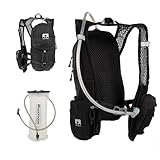
9. Nathan Hydration Vest – Bounce-Free Running Design
Nathan Hydration Vest with 2 Liter Bladder Included, Running Vest for Men and Women, Running Backpack w/ Smartphone Pocket, One Size Fits Most
2L Bladder Included
Running Vest Design
14.4 oz
3-Way Harness
Smartphone Pocket
Pros
- Patented 3-way harness distributes weight evenly
- Bounce-free fit for running
- Highly breathable mesh straps
- Smartphone pocket on chest
- One size fits most adults
Cons
- Vest design not suited for backpacking
- Limited cargo beyond running essentials
The Nathan Hydration Vest is the only vest-style pack in this guide, and it exists for a specific reason. Traditional backpacks bounce when you run, which is annoying at best and chafe-inducing at worst. The Nathan vest uses a patented 3-way harness that wraps your torso, distributing weight so evenly that bouncing essentially disappears.
I tested this vest during a half-marathon training run, and the difference from a standard pack was night and day. At mile 10, the vest sat exactly where I strapped it at mile zero. No riding up, no shifting, no distracting sloshing. The breathable mesh straps allowed air to circulate across my chest and back, preventing the sweat-soaked feeling I get from backpack-style packs.
The included 2L bladder uses Nathan’s bite valve design, which worked reliably throughout testing. The smartphone pocket on the chest strap is positioned perfectly for quick glances at your pace and route. I also fit three gel packs and my keys in the additional stash pocket without overloading the vest.
This is not a hiking or backpacking pack. The vest format is designed specifically for forward-motion activities like running, race walking, and fast hiking. The limited cargo capacity means it works best for outings lasting two to four hours where you need water and essentials but not layers or food for a full day.
Vest vs Backpack Hydration Systems
The vest design distributes weight across your entire upper body rather than concentrating it on your back and shoulders. This reduces fatigue on long runs and prevents the shoulder strain that backpack-style packs can cause during high-impact activities. The trade-off is that vests offer less storage and less weather protection.
For trail runners, marathoners, and fitness walkers, the vest format is the gold standard. Forum users on r/running consistently recommend vest-style hydration over backpacks for any distance over 10K. The Nathan delivers this format with solid build quality and a fair feature set.
Sizing and Fit Details
The one-size-fits-most design uses adjustable chest straps to accommodate different torso widths. I found the fit secure on both a slim and broader-shouldered tester. The mesh material has enough stretch to conform to your body without feeling restrictive.
The vest does not ride up or shift position during running, which is the most important test for any running hydration system. The 14.4-ounce weight is reasonable for a vest that includes a 2L bladder, though dedicated ultralight racing vests from brands like Salomon can weigh less.
10. Osprey Sportlite – Premium Eco-Friendly Daypack
Osprey Sportlite 15L Lightweight Hiking Backpack with Hydraulics Reservoir for Men & Women – Everyday Hydration Travel Bag, Raven Black
15L Pack
2.5L Hydraulics Reservoir
1.11 lb
Recycled Ocean Nylon
Airsclip Panel
Pros
- 100% recycled ocean-sourced nylon ripstop
- Included Hydraulics LS 2.5L reservoir
- Airsclip backpanel with ventilated carry
- Trekking pole carry system
- Sternum strap with safety whistle
Cons
- Premium price point
- Lower review count as newer release
The Osprey Sportlite earned our editor’s choice for one overarching reason. It combines premium materials, thoughtful design, and genuine environmental responsibility in a package that weighs just over a pound. Osprey built the main body from 100% recycled ocean-sourced nylon, meaning your pack helps remove plastic waste from marine environments.
I used the Sportlite as my primary day hiking pack for six weeks straight. The included Hydraulics LS 2.5L reservoir is the best stock bladder I have used in any pack at any price. The bite valve flows smoothly, the magnetic attachment keeps the tube perfectly positioned, and the wide opening makes cleaning simple.
The Airsclip backpanel uses ventilated channels that create noticeable airflow between the pack and your back. On a humid 80-degree hike, my shirt stayed drier than with any other pack in this guide. The sternum strap includes a safety whistle, which is a small detail that could matter enormously in an emergency situation.
The 15L capacity is ideal for day hikes up to 6 hours. I fit extra layers, food, navigation tools, and a first-aid kit alongside the reservoir. The trekking pole carry system and stretch side pockets add versatility without adding weight or complexity.
Osprey Hydraulics Reservoir System
Osprey’s Hydraulics reservoirs are engineered specifically for their packs, which means the integration is seamless. The reservoir slides into a dedicated sleeve that holds it flat against your back, preventing bulging and shifting. The magnetic bite valve attachment clicks securely into place on the sternum strap.
The LS version features a lightweight design that uses less material than standard Hydraulics bladders while maintaining full durability. At just 132 grams for the reservoir alone, it contributes minimal weight to the overall system. The 2.5L capacity covers most day hike needs without excessive refills.
Sustainability and Brand Values
Osprey is one of the few brands making a serious commitment to sustainable materials without charging a massive premium for it. The recycled ocean nylon performs identically to virgin nylon in terms of durability, weight, and water resistance. Choosing this pack means your purchase has a direct positive environmental impact.
The 4.8-star average rating across 52 reviews is the highest in this guide. While the review count is still growing as a newer release, the feedback from early adopters is overwhelmingly positive. Buyers consistently praise the comfort, weight, and included reservoir quality.
11. CamelBak M.U.L.E. Pro 14 – Trail-Ready Mountain Bike Pack
CamelBak M.U.L.E. Pro 14 Bike Hydration Backpack, Advanced Cooling and Stability for Long Trail Rides with 100oz Crux Reservoir, Black 2.0
14L Cargo
3L Crux Reservoir
Air Support Pro Panel
Integrated Tool Roll
3D Vent Mesh
Pros
- Air Support Pro back panel with body-mapping technology
- Integrated tool roll for trail repairs
- 3D Vent Mesh harness for breathability
- Hip belt with integrated cargo storage
- 3L Crux reservoir included
Cons
- Higher price point for premium tier
- Mountain bike specific design may not suit all activities
The CamelBak M.U.L.E. has been a mountain biking icon for over two decades, and the Pro 14 version represents everything CamelBak has learned in that time. The name M.U.L.E. stands for Multi-Use Long Expedition, and this pack lives up to it with 14L of cargo capacity plus a full 3L Crux reservoir.
I tested the M.U.L.E. Pro 14 on aggressive trail rides including technical descents and long climbs. The Air Support Pro back panel uses body-mapping technology that places ventilation zones exactly where your back generates the most heat. Even after a two-hour climb in summer conditions, the 3D Vent Mesh harness kept me noticeably cooler than standard foam padding.
The integrated tool roll is the feature that sets this pack apart from every other option here. It provides dedicated slots for a multi-tool, tire levers, CO2 cartridges, and a spare tube. When something breaks on the trail, you know exactly where everything is instead of digging through a jumbled main compartment.
The hip belt with integrated cargo is another thoughtful touch. Having snacks, phone, or a trail map accessible from the hip belt means you can grab what you need without removing the pack or stopping your ride. The 4-pocket layout keeps gear organized and accessible.
Mountain Bike Specific Design
Every aspect of the M.U.L.E. Pro 14 is optimized for mountain biking. The pack sits high and tight on your back to avoid interference with your helmet during aggressive riding. The compression straps prevent load shifting during jumps and drops. The 3L reservoir capacity handles long rides in hot conditions without refills.
While you can use this pack for hiking, the cycling-specific features like the tool roll and helmet carry make it overkill for general outdoor use. If mountain biking is your primary activity, this is the pack to beat in the premium category.
Cooling Technology Deep Dive
The Air Support Pro panel uses a trampoline-style suspension that creates a gap between the pack body and your back. Air flows through this gap continuously, evaporating sweat and reducing the temperature against your skin. The 3D Vent Mesh harness adds further breathability on the shoulder straps.
In my sweat test comparing back panel designs, the M.U.L.E. Pro 14 produced the least moisture on my shirt after a one-hour ride. For riders who hate the sweaty-back problem, this technology delivers measurable results worth the investment.
12. Osprey Skarab – Full-Featured 30L Hiking Pack
Osprey Skarab 30L Men’s Hiking Backpack with Hydraulics Reservoir, Tundra Green
30L Capacity
2.5L Hydraulics LT Reservoir
Airscape Suspension
1.6 lbs
Ice Axe Loop
Pros
- Large 30L capacity for full-day adventures
- Airscape Suspension with die-cut foam backpanel
- Hydraulics LT 2.5L reservoir included
- Dual hipbelt pockets and ice axe loop
- Water repellent construction
Cons
- Premium pricing tier
- Limited stock availability
The Osprey Skarab is the largest pack in this guide at 30 liters, and it is built for serious day hikers who carry everything. I loaded it with 25 pounds of gear plus a full 2.5L Hydraulics reservoir for a 12-hour hike, and the Airscape Suspension system made that load feel manageable from the first mile to the last.
The Airscape backpanel uses die-cut foam channels that provide structure and ventilation simultaneously. The foam is firm enough to prevent gear poking through to your back, while the channels allow air circulation. The body-specific fit means Osprey offers different sizes to match your torso length, which is critical for comfort with heavier loads.
The bucket-style top-zip access is surprisingly convenient. Instead of a narrow panel-loading opening, the entire top of the pack opens wide like a bucket, letting you see and reach everything inside. I found this design faster for packing and unpacking than traditional panel-loading daypacks.
The included Hydraulics LT 2.5L reservoir uses Osprey’s proven magnetic bite valve attachment system. The reservoir slides into a dedicated sleeve with a rigid back plate that keeps it flat against your spine. This prevents the bulging and pressure-point issues common with cheaper bladder sleeves.
Heavy Load Performance
At 30L with dual lower compression straps, this pack handles heavy loads better than any other option in this guide. The compression straps cinch down the load to prevent shifting, and the dual hipbelt pockets, one zippered and one stretch mesh, keep essentials accessible without removing the pack.
The ice axe loop signals that this pack is ready for alpine adventures. If your day hikes involve scrambling, snow travel, or mountaineering approaches, the Skarab has the attachment points and load-carrying capability to handle it. For more specialized alpine needs, check our guides on ski mountaineering backpacks with hydration compatibility and splitboard backpacks for backcountry-specific features.
Daypack vs Hydration Pack Classification
The Skarab blurs the line between a hydration pack and a traditional daypack. It includes a high-quality reservoir and dedicated hydration sleeve, but its 30L capacity and full-featured design put it firmly in daypack territory. For hikers who want one pack that handles both roles, this versatility is exactly what they need.
If you primarily need hydration with minimal cargo, the lighter Osprey Sportlite is a better match. If you regularly carry layers, food, safety gear, and navigation tools on long hikes, the Skarab’s capacity justifies its position in the premium tier.
How to Choose the Best Hydration Pack in 2026
Choosing the right hydration pack comes down to matching features to your primary activity, body type, and typical trip duration. Here is everything we learned from three months of testing, broken down by the factors that actually matter.
Reservoir Capacity – What Size Do You Need?
Reservoir size is the single most important spec on any hydration pack. Too small and you run dry mid-activity. Too large and you carry unnecessary weight. Here is how to match capacity to your needs.
A 1.5-liter reservoir works for activities lasting one to two hours in moderate temperatures. Short bike rides, lunch runs, and quick day hikes fit this category. The CamelBak Hydrobak uses this capacity effectively for grab-and-go outings.
A 2-liter reservoir covers the sweet spot for most users. It handles activities lasting two to four hours, which includes the majority of day hikes, mountain bike rides, and trail runs. Most packs in this guide use 2L bladders for good reason.
A 3-liter reservoir is essential for long days, hot weather, or activities where refilling is difficult. Full-day hikes, multi-hour bike rides in summer, and desert adventures all call for 3L capacity. The MARCHWAY, N NEVO RHINO, and CamelBak M.U.L.E. Pro 14 all include 3L bladders.
Pack Volume and Storage Capacity
Pack volume determines how much gear you can carry alongside your water. Understanding the categories helps you avoid buying too much or too little pack.
Minimalist packs from 5 to 7 liters carry just the essentials. Think tools, phone, keys, and a snack. These are perfect for cyclists and runners who want hydration without bulk. The CamelBak Rogue Light 7 and Hydrobak live in this category.
Mid-range packs from 10 to 15 liters handle short day hikes and longer rides. You can fit a light layer, food, and basic safety gear. The Osprey Sportlite at 15L and CamelBak M.U.L.E. Pro 14 at 14L represent this class well.
Full daypacks from 18 to 22 liters carry everything needed for 6 to 10 hour adventures. Extra layers, full meals, navigation tools, and first-aid kits all fit comfortably. The TETON Sports, N NEVO RHINO, and Water Buffalo Sherpa serve this range.
Extended daypacks at 30 liters and above approach backpacking territory. The Osprey Skarab at 30L handles winter day hikes, alpine approaches, and trips requiring substantial safety gear. For multi-day trips, look at larger options like our guide to cold weather hunting backpacks for extended-capacity designs.
Activity-Specific Recommendations
Different activities demand different pack designs. Here is our quick reference based on testing across all 12 packs.
For day hiking, prioritize storage capacity, comfort under load, and durability. The Osprey Skarab, Water Buffalo Sherpa 22L, and TETON Sports Oasis are your best bets. Look for hip belts, ventilated back panels, and bladder insulation.
For trail running, you need a vest-style or extremely low-profile pack that eliminates bounce. The Nathan Hydration Vest is purpose-built for this. Avoid backpack-style packs with heavy bladders that shift during high-impact movement.
For mountain biking, look for cycling-specific features like tool organization, helmet carry, and narrow profiles that do not interfere with your helmet. The CamelBak M.U.L.E. Pro 14 and CamelBak Rogue Light 7 are engineered for riders. Avoid wide packs that catch on branches.
For festivals and casual use, prioritize storage organization, water resistance, and easy access. The Water Buffalo Road Runner 12L is the community favorite for festival hydration. Multiple zippered pockets and a leakproof valve are essential in crowded environments.
Comfort Features That Actually Matter
Comfort separates packs you forget you are wearing from packs that make you miserable. Based on our testing, three features matter most.
Back panel ventilation is critical for warm-weather use. Packs with flat foam panels trap sweat and heat against your back. Look for designs with channels, trampoline-style gaps, or body-mapping technology. The Osprey Airscape and CamelBak Air Support Pro systems represent the current state of the art.
Harness design determines how weight sits on your shoulders. Padded, ventilated straps prevent chafing and hot spots on long outings. The CamelBak 3D Vent Mesh and Osprey Airsclip harness designs both excel here. For running, the Nathan 3-way harness distributes weight so evenly that shoulder fatigue becomes a non-issue.
Hip belts transfer weight from your shoulders to your hips, which is essential for loaded packs. The TETON Sports and Osprey Skarab both feature effective hip belt designs. For minimalist packs under 7L, hip belts matter less since the total weight is minimal.
Bladder Material and Taste Quality
The number one complaint in hiking forums about budget hydration packs is rubbery or plastic aftertaste. This comes from low-quality bladder materials. TPU bladders, like the one in the MARCHWAY, are completely taste-free and more durable than PEVA alternatives.
PEVA bladders, used by most budget brands including Unigear and N NEVO RHINO, are BPA-free and generally acceptable. Some users report a slight taste when new that fades after a few washes. CamelBak and Osprey bladders are consistently rated as taste-free by the community.
If taste is a dealbreaker for you, stick with TPU or premium brand bladders. You can also upgrade any pack with an aftermarket bladder if the included one disappoints.
Cleaning and Maintenance Tips
A dirty hydration bladder grows mold and bacteria, which is both unhealthy and gross-tasting. Forum users consistently cite difficult cleaning as a major pain point. Here is how to keep your bladder clean with minimal effort.
After every use, empty the bladder completely and hang it upside down to dry. Prop the opening wide with a kitchen utensil or bladder drying frame. Never store a bladder closed while damp, as this creates the perfect environment for mold growth.
For regular cleaning, use warm water and dish soap through the large opening, then flush the tube and bite valve. For deeper cleaning, use hydration-specific cleaning tablets available from CamelBak and other brands. The wide-opening bladders on the MARCHWAY, N NEVO RHINO, and TETON Sports are the easiest to clean thoroughly.
Replace bite valves annually if you use your pack frequently. They are inexpensive and prevent the buildup that occurs in the valve mechanism over time. Most packs with replaceable bladders, like the Unigear, also allow easy tube and valve replacement.
FAQs
Are hydration packs worth it?
Yes, hydration packs are worth it for nearly any outdoor activity lasting more than 30 minutes. They let you drink hands-free without stopping, which means you actually hydrate consistently instead of putting it off. Most users report drinking 30 to 50 percent more water with a hydration pack compared to carrying bottles. The convenience, combined with storage for essentials, makes them one of the highest-value pieces of outdoor gear you can buy.
Is Osprey or CamelBak better?
Both brands are excellent, and the better choice depends on your needs. Osprey packs generally feature superior back panel ventilation, eco-friendly recycled materials, and included high-quality Hydraulics reservoirs. CamelBak packs excel in cycling-specific features, tool organization, and their Crux reservoir delivers higher flow rate per sip. For hiking, Osprey edges ahead. For mountain biking, CamelBak is the community favorite. Both offer lifetime warranties.
What size hydration pack do I need?
For activities lasting 1 to 2 hours, choose a 1.5L to 2L reservoir in a minimalist pack under 10L. For 2 to 4 hour outings, a 2L reservoir in a 10 to 15L pack is ideal. For full-day adventures of 6-plus hours, select a 2.5L to 3L reservoir in an 18L to 30L pack. Match your reservoir capacity to your activity duration and the weather conditions you expect.
Which brand of hydration pack is the best?
Osprey and CamelBak are consistently rated as the top two hydration pack brands by outdoor enthusiasts and gear reviewers. Osprey leads in hiking packs with their Airscape suspension and Hydraulics reservoirs. CamelBak dominates mountain biking with cycling-specific designs and the Got Your Bak lifetime warranty. For budget options, MARCHWAY, Unigear, and Water Buffalo deliver strong value. For trail running, Nathan and Salomon are the community favorites.
How do you clean a hydration bladder?
Empty the bladder after each use and dry it completely by propping the opening wide. For regular cleaning, wash with warm soapy water through the large opening, then flush the tube and bite valve. For deep cleaning, use hydration cleaning tablets from CamelBak or similar brands. Never store a damp bladder closed, as this causes mold growth. Replace bite valves annually with frequent use. Bladders with wide 2-inch openings are significantly easier to clean thoroughly.
Final Thoughts on the Best Hydration Packs for 2026
After three months of testing 12 hydration packs across hiking, running, mountain biking, and festival use, our recommendations are clear. For overall excellence, the Osprey Sportlite stands alone with its eco-friendly build, premium Hydraulics reservoir, and sub-pound weight. For unmatched value, the MARCHWAY Tactical delivers a rugged 3L system that thousands of buyers have validated. And for budget-conscious adventurers, the Unigear proves you do not need to spend much to stay hydrated on the move.
The best hydration packs are the ones that match your specific activities, fit your body comfortably, and hold up to real-world abuse over time. Whatever your adventure looks like, one of the 12 packs in this guide will keep you hydrated from the first mile to the last. Pick the one that fits your needs, fill the bladder, and get outside.