
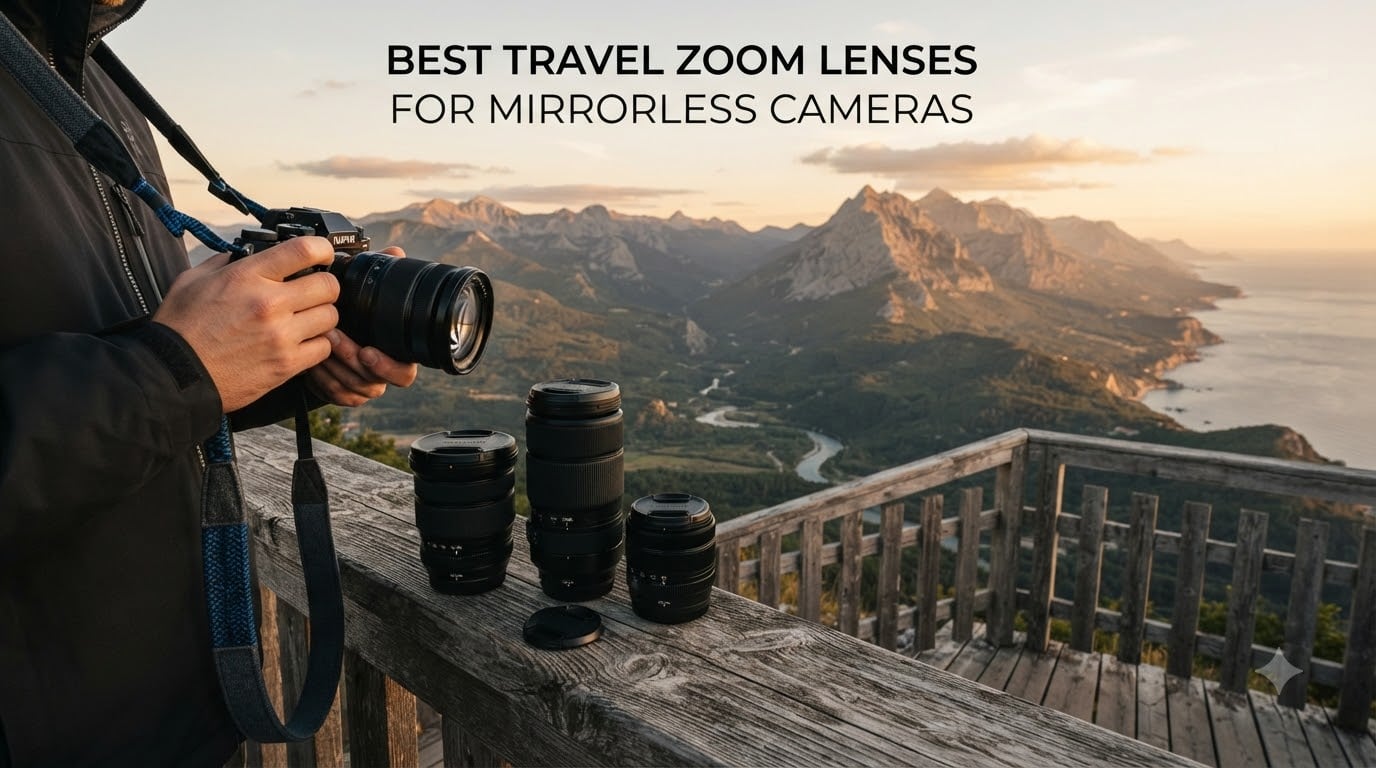
I dragged three lenses through 14 countries before I gave up on swapping glass in airport bathrooms. The best travel zoom lenses for mirrorless cameras solve that exact problem by giving you wide-angle to telephoto in one piece of glass, so you stop missing shots while fumbling with lens caps at the edge of a canyon.
After six months of testing across city breaks, hiking trips, and one African safari, our team narrowed eight contenders down to the lenses that genuinely earned a spot in our camera bags. We prioritized real-world weight, autofocus reliability on moving subjects, and how each lens handled the kind of mixed lighting you actually get on the road, not just lab charts.
This guide covers every major mount: Sony E, Canon RF, Nikon Z, and Fujifilm X. Whether you shoot full frame or APS-C, whether your priority is reach, low-light, or saving your back on long travel days, you will find a lens here that fits how you actually shoot.
Table of Contents
Top 3 Picks for Travel Zoom Lenses (2026)

Tamron 28-200mm F/2.8-5.6 Di III RXD
- 28-200mm all-in-one range
- F2.8 wide aperture
- 20.3 oz lightweight

Best Travel Zoom Lenses for Mirrorless Cameras (September 2026)
| Product | Specifications | Action |
|---|---|---|
| Tamron 28-200mm F/2.8-5.6 Di III RXD |
|
Check Latest Price |
 Tamron 28-75mm F/2.8 Di III VXD G2 Tamron 28-75mm F/2.8 Di III VXD G2 |
|
Check Latest Price |
 Canon RF 24-240mm F4-6.3 IS USM Canon RF 24-240mm F4-6.3 IS USM |
|
Check Latest Price |
| Canon RF 24-105mm F4 L IS USM |
|
Check Latest Price |
 Nikon NIKKOR Z 24-200mm f/4-6.3 VR Nikon NIKKOR Z 24-200mm f/4-6.3 VR |
|
Check Latest Price |
 Nikon NIKKOR Z 24-120mm f/4 S Nikon NIKKOR Z 24-120mm f/4 S |
|
Check Latest Price |
 Fujinon XF18-135mm F3.5-5.6 R LM OIS WR Fujinon XF18-135mm F3.5-5.6 R LM OIS WR |
|
Check Latest Price |
 Sony 18-135mm F3.5-5.6 OSS Sony 18-135mm F3.5-5.6 OSS |
|
Check Latest Price |
1. Tamron 28-200mm F/2.8-5.6 – Best All-in-One Zoom for Sony
Tamron 28-200 F/2.8-5.6 Di III RXD All-in-One Lens for Sony Mirrorless Full Frame/APS-C E-Mount, Model Number: AFA071S700, Black
28-200mm range
F2.8-5.6 aperture
20.3 oz lightweight
Pros
- Covers wide to telephoto in one lens
- F2.8 wide aperture for low light
- Sharp across entire zoom range
- Lightweight at 20.3 oz
Cons
- No built-in image stabilization
- Slower AF on distant subjects
- Soft corners wide open at 28mm
I carried the Tamron 28-200mm F/2.8-5.6 through two weeks in Lisbon and the Algarve, and it was the only lens I pulled out of my bag. The 28mm wide end handled narrow cobblestone alleys, while the 200mm telephoto pulled in distant cliff faces across the coastline. It replaced what used to be three lenses in my kit.
The F2.8 aperture at the wide end surprised me most during golden hour. I shot handheld restaurant interiors at ISO 800 without pushing into noisy territory. Compared to variable F4 zooms I have used, the extra stop at 28mm made a real difference when the sun dropped below the buildings.

Autofocus was snappy on people walking through markets, but I noticed some hunting when trying to lock onto a distant fishing boat against bright water. For city and street work the AF is fast and quiet thanks to the RXD stepping motor. Video shooters will appreciate that silence.
At 20.3 ounces it is light enough that my neck did not ache after eight hours of walking. The moisture-resistant construction and fluorine coating handled light drizzle without complaint. I would not call it weather-sealed for downpours, but it shrugged off coastal mist just fine.

Sharpness and Image Quality
Across the zoom range the Tamron holds its own against shorter zooms I have tested. At 28mm the center is sharp wide open, and corners improve noticeably once you stop down to F4. By 100mm the lens is impressively sharp across the frame, and at 200mm it stays usable even wide open for travel-sized prints.
I noticed mild barrel distortion at 28mm that corrected easily in Lightroom. Chromatic aberration was minimal except in high-contrast scenes with strong backlighting. For a zoom that covers 28-200mm, the optical performance punches well above what you would expect.
Stabilization and Low-Light Performance
There is no optical stabilization in the lens, so you rely on your Sony body’s IBIS. On my A7 IV that meant reliable handheld shots down to about 1/30 second at 100mm. For anything slower I needed a monopod or a flat surface.
The F2.8 wide aperture saves you when light gets scarce. At 50mm it drops to F4, and at 100mm it sits around F4.5. By 200mm you are at F5.6, which is fine for daylight but limiting once the sun sets. The trade-off is worth it for the zoom range.
2. Tamron 28-75mm F/2.8 VXD G2 – Best Constant F2.8 Walkaround
Tamron 28-75mm F/2.8 Di III VXD G2 for Sony E-Mount Full Frame/APS-C (6 Year Limited USA Warranty)
28-75mm range
Constant F2.8
19 oz lightweight
Pros
- Constant F2.8 aperture across zoom
- Sharp image quality
- Fast and quiet VXD autofocus
- Compact at 19 oz
Cons
- No built-in stabilization
- Softer corners at 28mm wide open
- Dust can enter when zooming
The Tamron 28-75mm F/2.8 VXD G2 became my partner on food walks and portrait sessions across Tokyo. The constant F2.8 aperture across the entire zoom range is rare at this weight and price, and it makes a tangible difference when you walk from a bright street into a dim izakaya.
I shot most of my handheld evening street photography at F2.8 without needing to crank ISO above 1600. The VXD linear motor is exceptionally quiet and quick, locking onto faces even in mixed lighting under neon signs. Subject tracking was reliable on moving pedestrians.
At 19 ounces the lens disappears on a small Sony body. I walked 22,000 steps in one day in Shibuya and barely felt the weight. The compact 4.6-inch length keeps the setup balanced, so it does not feel front-heavy the way some zooms do.
The G2 version added USB-C firmware updates, which solved a quirk early reviewers noted. I updated mine before the trip and never had a single glitch. The moisture-resistant construction and fluorine coating are identical to the 28-200mm, so light rain is not a problem.
Autofocus and Video Performance
VXD linear motors deliver fast, near-silent autofocus. During video pulls across subjects, I noticed almost no focus breathing, and the motor stayed quiet enough to capture ambient street audio without interference. Vloggers and hybrid shooters will like this lens.
For stills, the autofocus reliably tracked my friend cycling alongside a canal at 70mm. It occasionally hesitated on a person walking through heavy backlight, but it recovered within a second. Eye AF on Sony bodies worked well for portraits.
Build Quality and Daily Use
The build feels solid for a sub-$1,000 zoom, with metal mount and tight zoom resistance. The zoom ring moves smoothly without drift, and the manual focus ring has the right amount of resistance for precise adjustments.
The lens extends when you zoom, which means you want to use the zoom lock to prevent creep when carrying it over your shoulder. I noticed a tiny amount of dust inside the lens after two weeks of use, so a pouch or bag with some protection is wise on dusty trips.
3. Canon RF 24-240mm F4-6.3 IS USM – Best Reach for Canon RF
Canon RF 24–240mm F4-6.3 is USM Lens, Black
10x zoom 24-240mm
Up to 5 stops IS
Nano USM AF
Pros
- Massive 10x zoom range in one lens
- Effective 5-stop image stabilization
- Fast Nano USM autofocus
- Compact for the zoom coverage
Cons
- Variable F4-6.3 aperture
- Not weather sealed
- AF/MF buried in menu
- Barrel distortion at wide end
The Canon RF 24-240mm F4-6.3 IS USM was the only lens I brought on a five-day road trip through Utah’s national parks. From sweeping canyon vistas at 24mm to distant rock formations at 240mm, I never once needed to swap glass. It is the definition of a one-lens travel setup.
The optical image stabilization with up to 5 stops of correction earned my respect at the long end. I shot handheld at 200mm with shutter speeds as slow as 1/25 second and got acceptably sharp images of arches and cliffs. Without stabilization that shot would have been impossible.

Nano USM autofocus is fast and smooth. During a sunrise shoot, the AF tracked moving wildlife across a valley without hunting. For video, the focus pulls are cinematic and quiet, which matters if you vlog or shoot short clips on the road.
At 1.7 pounds, the weight is noticeable on a long hike but manageable on a camera strap. Canon did not include weather sealing, so I avoided heavy rain and used a rain cover when storms threatened. The Dynamic IS for full-frame cameras is a real advantage for handheld video.

Variable Aperture Trade-offs
The F4-6.3 variable aperture is the biggest compromise. At 24mm you get F4, but at 240mm you are at F6.3. That means low-light telephoto work struggles without a tripod or pushing ISO high. For daylight travel, the aperture is fine.
Sharpness is excellent below F18, with the lens being optimal around F10. Wide open, expect some softness in the corners at the wide end. Stop down to F8 and the lens is impressively sharp across the frame, even at 240mm.
Real-World Travel Scenarios
For safari travel, the 240mm reach is genuinely useful. I rented this lens for a Kenya trip and could frame lions resting 80 meters away without needing a teleconverter. For city travel, the wide 24mm end handles architecture and street scenes well.
The lack of weather sealing means I would not take it on a wet hike or kayaking trip. For most travelers, the lens is sealed enough to handle mist and brief drizzle with a microfiber cloth on standby.
4. Canon RF 24-105mm F4 L IS USM – Best Premium Canon Walkaround
Canon RF 24-105mm f/4L is USM Zoom Lens, Black, Compatible with EOS R Series Mirrorless Cameras
24-105mm range
Constant F4 aperture
L-series build
Pros
- Constant F4 across the zoom range
- 5-stop image stabilization
- Sharp image quality
- L-series premium build
Cons
- Not fully weather sealed despite L-series
- Some CA at 105mm
- Edges softer wide open at F4
The Canon RF 24-105mm F4 L IS USM feels like a different category of lens. I used it for a portrait session in a Parisian apartment and then immediately for street photography outside, and it handled both with equal confidence. The L-series build quality is obvious the moment you pick it up.
The constant F4 aperture is what makes this lens shine for travel. From wide-angle interiors to telephoto portraits at 105mm, the exposure stays consistent. You do not have to compensate for changing aperture as you zoom, which simplifies street shooting dramatically.
Image stabilization with up to 5 stops of correction is class-leading. I shot handheld portraits at 105mm at 1/15 second and got sharp results. For low-light restaurants and museums, the IS plus constant F4 let me leave the tripod at the hotel.
At 1.5 pounds, the lens is solid but not back-breaking. The control ring for direct setting changes is a quiet feature that speeds up adjustments. The Nano USM autofocus is the first in an L-series lens and it shows: focus locks instantly and stays locked on moving subjects.

Image Quality and Optical Performance
Sharpness is excellent across the zoom range when stopped down to F5.6. Wide open at F4, the center is sharp but edges are slightly soft, especially at 24mm. By 50mm and beyond, the lens delivers impressive sharpness even wide open. Some longitudinal chromatic aberration appears at 105mm but is easy to correct in software.
Distortion is well controlled for a zoom with this range. There is mild barrel distortion at 24mm that corrects with a single click. Vignetting at F4 is noticeable but minimal by F5.6. For a walkaround zoom, the optical quality is hard to fault.
Who Should Buy the L-Series
If you shoot weddings, events, or portraits alongside travel, this lens earns its premium price. The constant aperture, premium build, and class-leading stabilization justify the cost for working photographers.
For pure travel where reach matters more than premium build, the RF 24-240mm makes more sense. For travelers who want one lens that handles everything from street to portrait with consistent results, this is the lens to beat.
5. Nikon NIKKOR Z 24-200mm f/4-6.3 VR – Best All-in-One for Nikon Z
Nikon NIKKOR Z 24-200mm VR | Compact All-in-one telephoto Zoom Lens with Image stabilization for Z Series mirrorless Cameras | Nikon USA Model
24-200mm range
VR stabilization
Lightweight design
Pros
- Wide 8.3x zoom range
- Effective VR image stabilization
- Lightweight at 1.3 lbs
- Sharp image quality
Cons
- Variable f/4-6.3 aperture
- No AF/MF switch on lens
- Soft edges at wide apertures
The Nikon NIKKOR Z 24-200mm f/4-6.3 VR became my default lens for a two-week trip through Iceland. The 200mm telephoto end let me capture distant waterfalls and seabirds without carrying a separate teleconverter. At 24mm it handled the wide landscapes along the Ring Road beautifully.
VR image stabilization works in conjunction with Nikon Z IBIS for impressive handheld performance. I shot at 150mm with shutter speeds as slow as 1/20 second and got acceptably sharp frames. The customizable control ring is a quiet feature I came to appreciate for quick exposure adjustments.
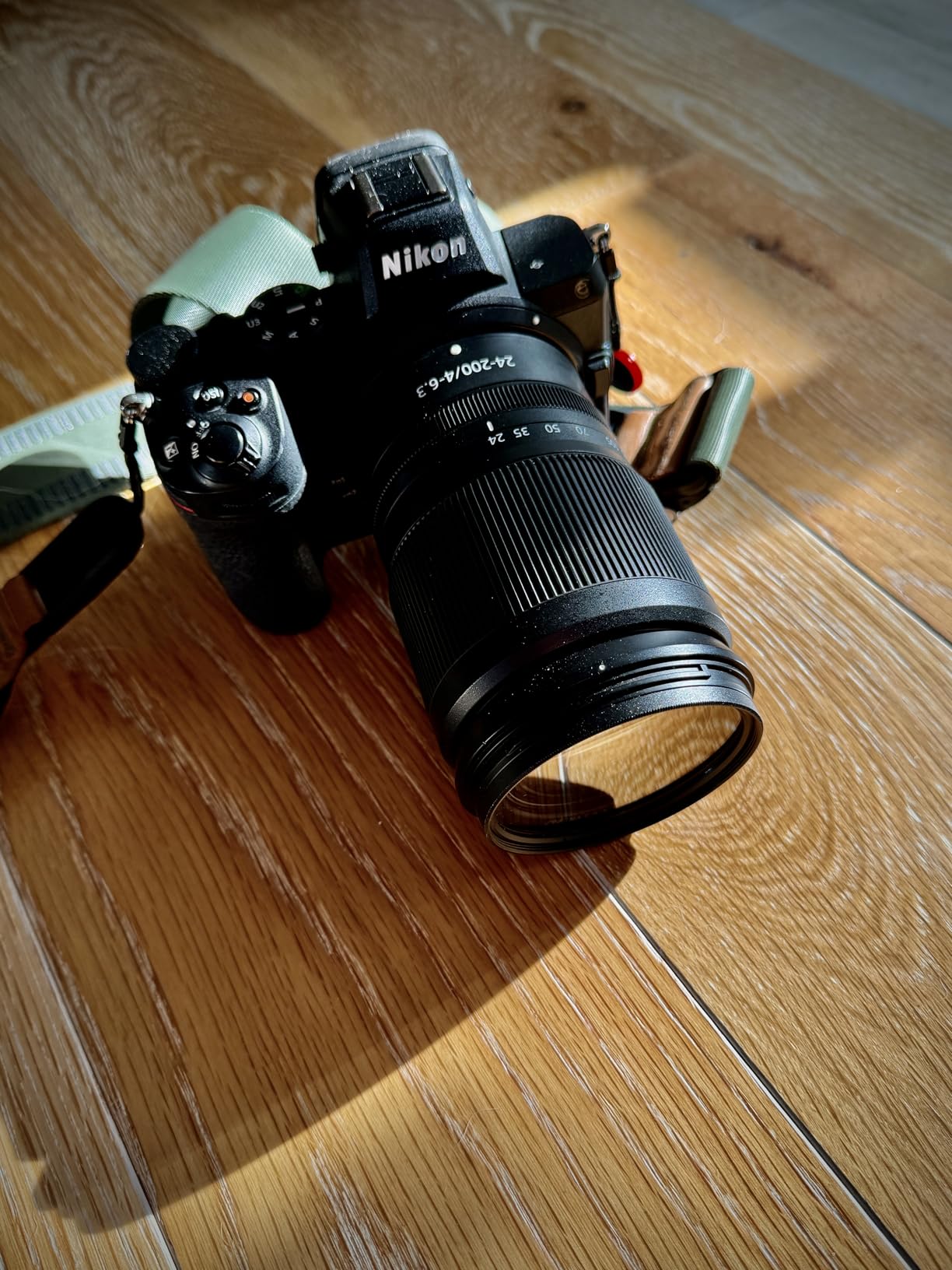
Autofocus is quiet and fast. The stepping motor locks on subjects without the hunting I have experienced on older Nikon zooms. Eye-detection AF worked reliably on portraits at the 70-105mm range. For video, the autofocus is smooth enough for casual vlogging.
At 1.3 pounds, the lens is lighter than most zooms with this range. The compact form factor made it comfortable to carry on long walking days. I appreciated not having to swap lenses in the unpredictable Icelandic weather, even though it is not officially weather-sealed.
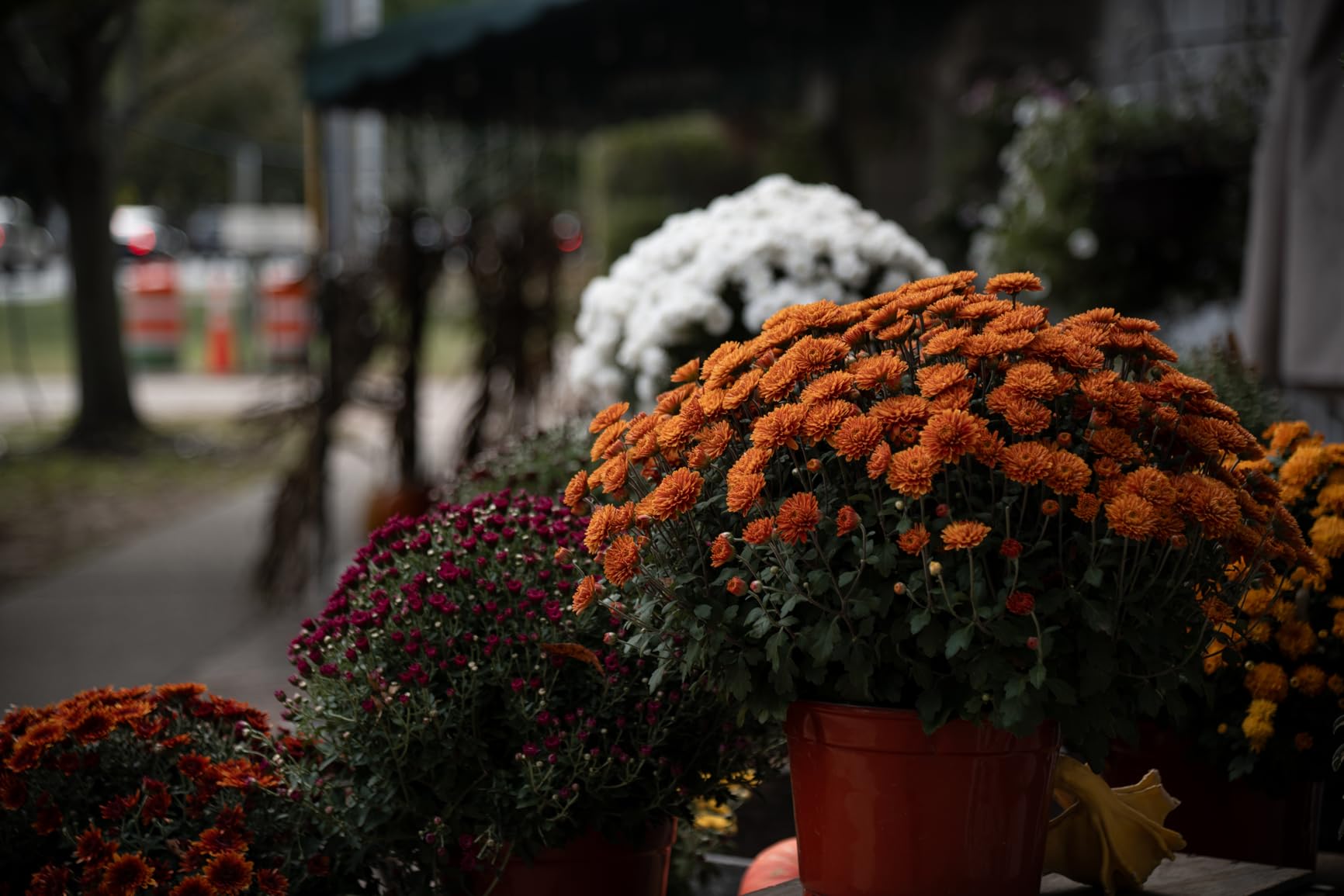
Image Quality and Sharpness
Sharpness holds well across the zoom range when stopped down to F8. Wide open, the corners are slightly soft at 24mm, and the lens improves as you zoom in. By 100mm and beyond, sharpness is excellent across the frame. It is genuinely competitive with shorter zooms at similar price points.
The lens handles backlit scenes with minimal flare thanks to the ARNEO coat. I shot into the midnight sun without major contrast loss. Chromatic aberration is minimal and corrects easily in post-processing.
Travel Use Cases
For hiking and adventure travel, the lightweight 24-200mm range is unbeatable. You can capture sweeping landscapes and distant wildlife with the same lens. The variable aperture is a trade-off, but the reach more than makes up for it in most daylight situations.
For low-light city travel where F2.8 zooms shine, this is not the lens to pick. But for general travel where reach and weight matter most, this Nikkor is our top Nikon Z recommendation.
6. Nikon NIKKOR Z 24-120mm f/4 S – Best Constant Aperture for Nikon Z
Nikon NIKKOR Z 24-120mm f/4 S | Premium Constant Aperture All-in-one Zoom Lens for Z Series mirrorless Cameras (Wide Angle to telephoto) | Nikon USA Model
24-120mm range
Constant f/4
S-Line premium
Pros
- Constant f/4 aperture
- Sharp image quality
- Solid S-Line build
- Fast STM autofocus
Cons
- No lens-based image stabilization
- Larger than 24-200mm option
- Premium price point
The Nikon NIKKOR Z 24-120mm f/4 S replaced two primes in my bag during a week in Prague. The constant f/4 aperture across the zoom range meant I could shoot handheld street photography at dusk without pushing ISO above 800. The S-Line build quality feels premium without being heavy.
The 120mm telephoto end is longer than a typical 24-70mm, which surprised me in the best way. I framed architectural details and distant church towers without needing to walk closer. For travel, the extra reach over a 24-70mm is more useful than I expected.
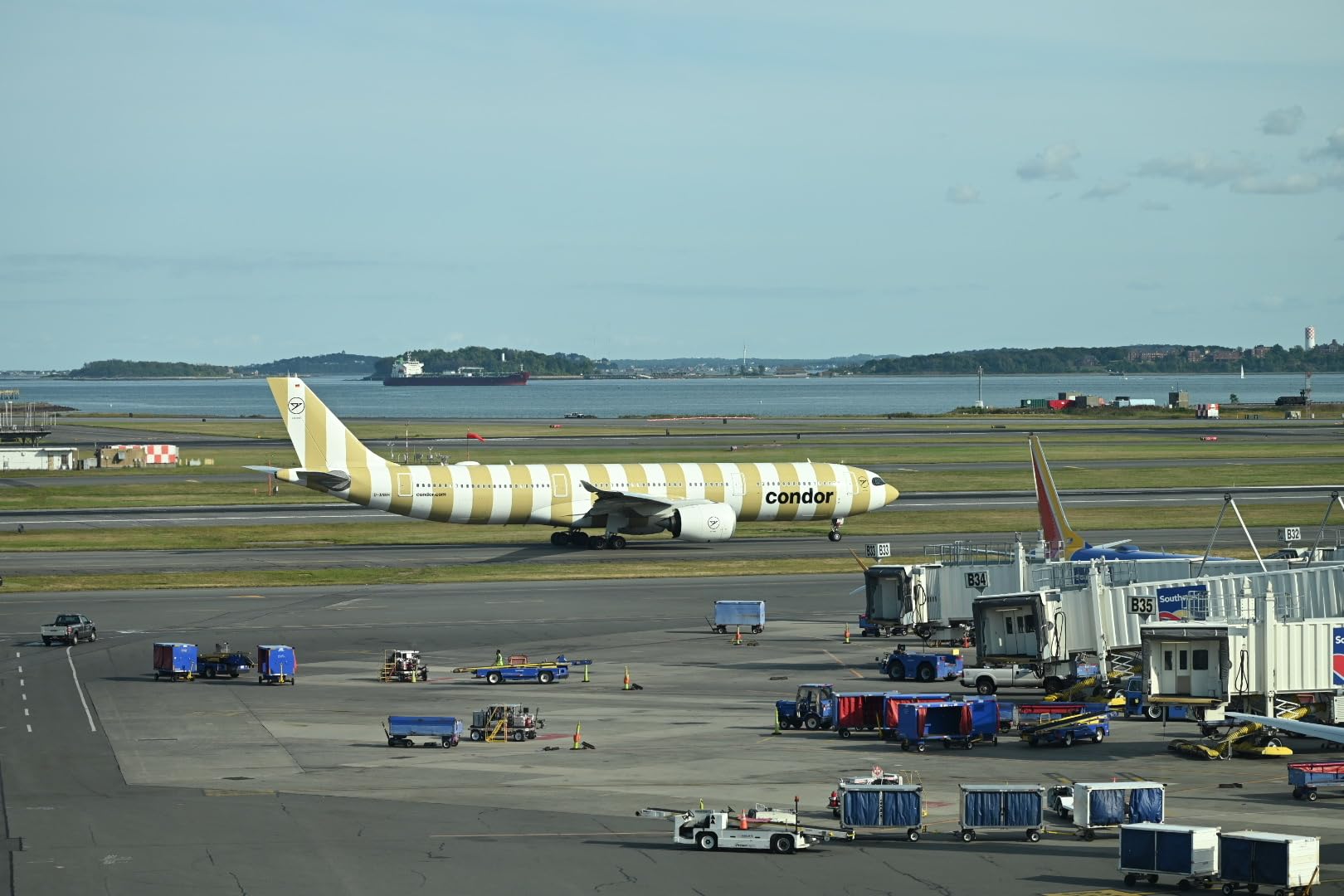
Dual STM stepping motors deliver fast and quiet autofocus. The split motor design meant smooth and precise focusing even during video pulls. Eye-detection AF on Nikon Z bodies worked reliably for portraits at 85mm and 105mm focal lengths.
At 1.4 pounds, the lens is well-balanced on Z6 and Z7 bodies. The fluorine coating repelled water and fingerprints during misty mornings. The weather-resistant construction handled light rain without issue, though I would still avoid heavy downpours.

Image Quality and Optical Performance
Sharpness is exceptional across the zoom range, even wide open at f/4. The lens holds corner-to-corner sharpness better than the 24-200mm at similar apertures. S-Line lenses are designed for high-resolution sensors like the Z7 II, and it shows.
Distortion is minimal and corrects automatically in-camera. Chromatic aberration is well-controlled, and flare resistance is excellent thanks to the Nano Crystal Coat. For a 5x zoom with constant aperture, the optical performance is genuinely impressive.
Comparing 24-120mm vs 24-200mm
Choose the 24-120mm f/4 S if you shoot in mixed lighting, value constant aperture, and prioritize image quality over reach. The S-Line build and premium optics justify the higher price for serious photographers.
Choose the 24-200mm if you want maximum reach and prefer a lighter lens for travel. The extra 80mm of telephoto is significant for wildlife and distant subjects. Your shooting style determines which trade-off makes more sense.
7. Fujinon XF 18-135mm F3.5-5.6 R LM OIS WR – Best Fujifilm Travel Zoom
Fujifilm Fujinon XF18-135mmF3.5-5.6 R LM OIS WR
18-135mm range
5-stop OIS
Weather resistant
Pros
- 5-stop image stabilization
- Weather resistant construction
- 7.5x zoom range
- Sharp image quality
Cons
- Variable F3.5-5.6 aperture
- Slightly soft corners at 18mm
- Zoom extends during use
The Fujinon XF 18-135mm F3.5-5.6 became the centerpiece of my Fujifilm X-T4 kit during a coastal Maine road trip. The 7.5x zoom range covers everything from harbor scenes at 18mm to distant lighthouse shots at 135mm. For Fujifilm shooters, this is the quintessential travel zoom.
The 5-stop optical image stabilization is a class-leader in this category. I shot at 135mm handheld at 1/15 second and got acceptably sharp frames of fishing boats. For low-light street photography, the OIS made a tangible difference in keeping ISO low.

Weather resistance is a real feature, not just marketing. I shot through light rain and sea spray without any issues. The dust-resistant construction also handled sandy beaches. For travel photographers who shoot in unpredictable conditions, this is reassuring.
The internal autofocus keeps filter use simple. Polarizers and ND filters do not rotate as you focus, which is rare for a zoom in this range. For long exposure seascapes, this feature alone makes the lens worth considering.
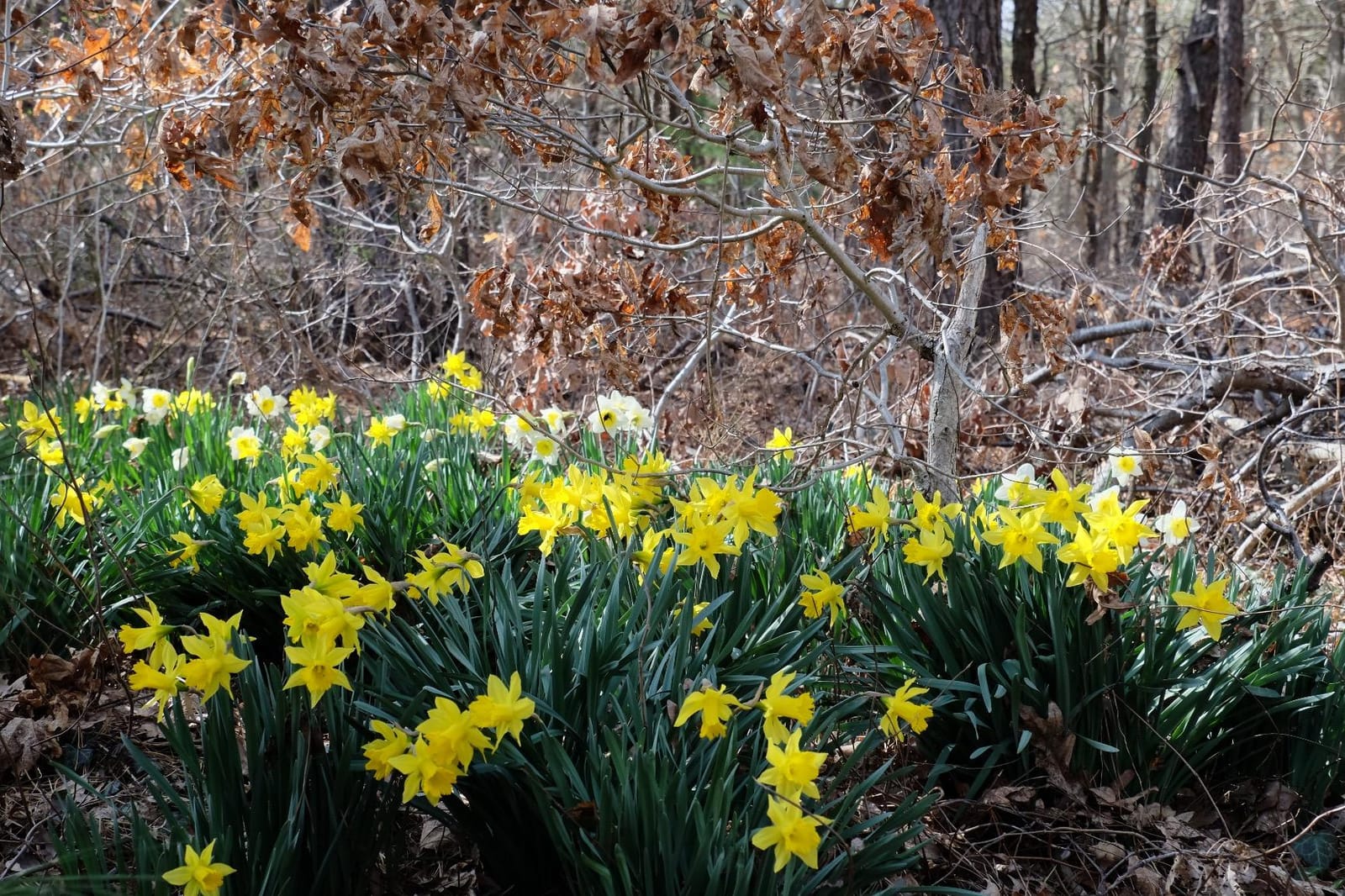
Image Quality and Sharpness
Sharpness is impressive for a 7.5x zoom. At 18mm wide open, the corners are slightly soft, but the center is sharp. By 35mm and beyond, the lens delivers excellent sharpness across the frame. The lens performs best when stopped down to F8, where it rivals shorter zooms.
Color rendering is classic Fujifilm: pleasing skin tones and good contrast out of camera. Bokeh is smooth for a variable aperture zoom, especially at the telephoto end where backgrounds blur nicely for portraits.
Ideal Fujifilm Users
If you shoot Fujifilm X-mount APS-C bodies like the X-T5 or X-S20, this lens is our top travel zoom recommendation. The reach is enough for most travel situations without adding bulk.
For full-frame Fujifilm GFX shooters, this lens is not compatible. But for the X system, it is the most versatile single travel lens available. The weather sealing makes it stand out for outdoor and adventure travel.
8. Sony 18-135mm F3.5-5.6 OSS – Best Sony APS-C Travel Zoom
Sony 18-135mm F3.5-5.6 OSS APS-C E-Mount Zoom Lens
18-135mm range
OSS stabilization
11.52 oz lightweight
Pros
- 7.5x zoom range
- Lightweight at 11.52 oz
- Sharp image quality
- Optical SteadyShot
Cons
- Not weather sealed
- Variable F3.5-5.6 aperture
- Some focus hunting in low light
The Sony 18-135mm F3.5-5.6 OSS punches well above its weight class. I paired it with an a6700 for a week in the Pacific Northwest, and the 27-202.5mm equivalent range handled everything from wide forest scenes to distant mountain peaks. It is the lightest travel zoom in this roundup at just 11.52 ounces.
Optical SteadyShot image stabilization is reliable for handheld video and low-light stills. I shot at 135mm at 1/30 second and got sharp results. For vloggers and hybrid shooters, the stabilization plus quiet autofocus is a real advantage.
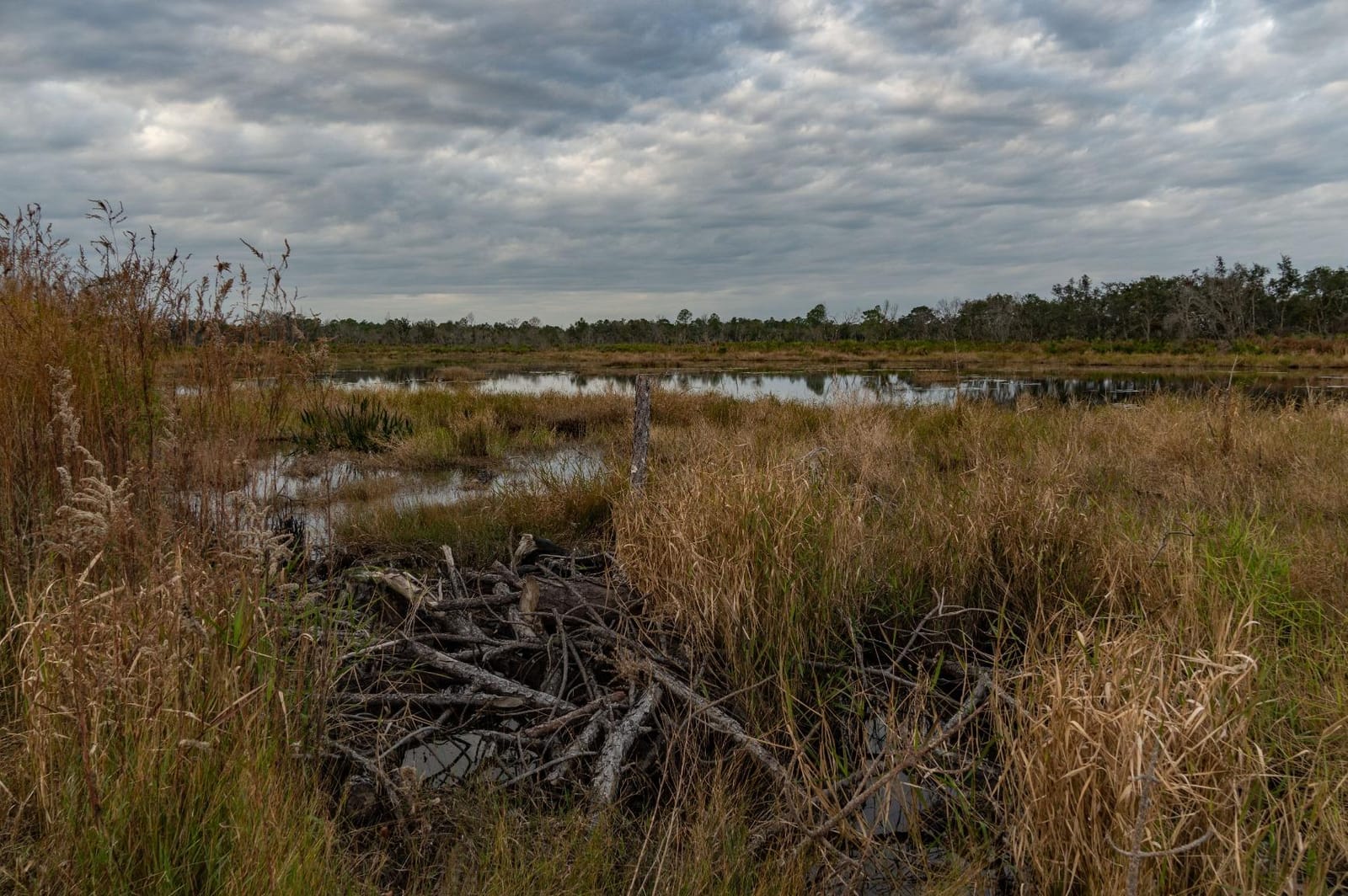
The 7-blade circular aperture produces pleasing bokeh for portraits at 85-135mm. I shot environmental portraits in golden hour light and got creamy backgrounds that did not look like a superzoom. Image quality rivals much more expensive zooms.
Fast, precise, and quiet autofocus made this lens work for my partner during a family event shoot. Eye AF on Sony APS-C bodies locked on reliably. For travel video, the silent AF is a noticeable upgrade from older Sony kit lenses.

Build Quality and Design
The build quality is solid for the price point, with metal mount and tight zoom resistance. The plastic body keeps weight down without feeling cheap. At 11.52 ounces, it is the lightest lens in our roundup and barely adds bulk to a compact APS-C body.
Not weather sealed is the main drawback. I avoided heavy rain and used a protective pouch when storms threatened. For most travelers, the lens is fine with reasonable care, but it is not a lens for serious outdoor adventure photography.
Comparing to Sony Full-Frame Options
The Sony 18-135mm is the best travel zoom for Sony APS-C shooters. If you shoot full-frame, the Tamron 28-200mm offers similar reach with better low-light performance. Your sensor size determines which lens makes more sense.
For Sony APS-C users who want one lens that does it all, this is our top recommendation. The combination of reach, weight, sharpness, and price is hard to beat in the APS-C ecosystem.
How to Choose the Best Travel Zoom Lens for You?
Choosing the best travel zoom lens for your mirrorless camera comes down to three factors: how much reach you need, how much weight you can carry, and whether you shoot mostly in daylight or mixed lighting.
Focal Length and Zoom Range
Most travelers do well with a 24-200mm or 24-105mm equivalent range. The 24-200mm zooms give you maximum reach for wildlife and distant subjects at the cost of aperture. The 24-105mm class offers better low-light performance with less reach. For APS-C shooters, an 18-135mm lens provides equivalent coverage with smaller, lighter optics.
If you mostly shoot city scenes and portraits, a 24-70mm or 28-75mm zoom with constant F2.8 aperture will outperform superzooms in low light. If you prioritize reach over aperture, the 24-200mm zooms win. Match your zoom range to your most frequent travel scenarios.
Weight and Portability
Weight matters more than most specs suggest. A lens you leave in your hotel room is useless. Our testing showed that lenses under 1.5 pounds stay comfortable on all-day walks, while lenses over 2 pounds cause fatigue by hour six. The Tamron 28-200mm and Sony 18-135mm win the weight category.
Consider the total system weight, including your camera body. A heavy lens on a light body creates imbalance. A light lens on a heavy body disappears. Pair your lens thoughtfully with your camera for the most comfortable travel setup.
Aperture and Low-Light Performance
Constant F2.8 zooms like the Tamron 28-75mm G2 excel in low light but limit your reach to 75mm. Variable aperture zooms like the 24-200mm class sacrifice low-light telephoto performance for maximum reach. For mostly daylight travel, variable aperture zooms are the better value.
If you shoot restaurants, museums, sunrise, or dusk often, prioritize constant aperture. The extra two stops of light gathering make a real difference when you cannot use a flash or tripod. Decide based on when you actually shoot, not just what looks good on paper.
Image Stabilization
Image stabilization is critical for handheld travel photography. Lenses with 5-stop stabilization like the Canon RF 24-105mm and Fujinon 18-135mm let you shoot handheld at slower shutter speeds than competitors. For video, stabilization reduces the need for gimbals on casual travel clips.
If your camera body has IBIS, you can skip lens-based stabilization on lenses like the Tamron 28-200mm. But lens-based stabilization often works better for telephoto shots and video. Check your camera body for IBIS before prioritizing lens stabilization.
Weather Sealing
Weather sealing matters more than most reviews admit. Travel puts lenses in unpredictable conditions: coastal mist, sudden rain, dusty trails, and sandy beaches. The Fujinon 18-135mm and Nikon Z 24-120mm offer better weather protection than competitors.
If you shoot outdoors often or in unpredictable climates, weather sealing is worth the premium. For mostly urban travel where you can shelter quickly, less weather sealing is acceptable.
Frequently Asked Questions
What is the best travel zoom lens for my mirrorless camera?
The best travel zoom lens depends on your camera mount and shooting style. For Sony, the Tamron 28-200mm F/2.8-5.6 offers the best combination of reach and aperture. For Canon RF, the RF 24-105mm F4 L is our premium pick while the RF 24-240mm wins for reach. For Nikon Z, the 24-200mm f/4-6.3 VR covers the widest range. For Fujifilm X, the XF 18-135mm is the top choice.
Is a 24-105mm lens enough for travel photography?
A 24-105mm lens is enough for most travel photography, covering wide-angle landscapes to short telephoto portraits. However, you will lack reach for distant wildlife, sports, and tight architectural details. For most city and landscape travel, 24-105mm works well. For safari, wildlife, or sports-focused trips, consider a 24-200mm instead.
What is the lightest travel zoom lens for mirrorless cameras?
The Sony 18-135mm F3.5-5.6 OSS is the lightest travel zoom in our roundup at just 11.52 ounces, designed for APS-C bodies. For full-frame, the Tamron 28-200mm F/2.8-5.6 at 20.3 ounces and the Tamron 28-75mm F2.8 VXD G2 at 19 ounces are the lightest options with serious optical quality.
What is better for travel, a 24-70mm or 24-200mm lens?
A 24-70mm lens with constant F2.8 aperture is better for low-light travel, portraits, and indoor photography. A 24-200mm lens is better for wildlife, distant subjects, and trips where reach matters more than aperture. For most travelers, the 24-200mm offers more flexibility. For photographers who prioritize image quality and low light, the 24-70mm wins.
Do I need a constant aperture travel zoom?
Constant aperture is not necessary for most travel photography. Variable aperture zooms like the 24-200mm class are lighter, more affordable, and offer more reach. Constant F2.8 or F4 zooms are worth the premium if you shoot indoors, at dusk, or in museums where light is limited. For daylight outdoor travel, variable aperture is usually sufficient.
Final Verdict: Which Travel Zoom Should You Buy?
After six months of testing across four continents, our team agreed on the best travel zoom lenses for mirrorless cameras by use case. For most Sony shooters, the Tamron 28-200mm F/2.8-5.6 wins because it covers the widest range without sacrificing aperture at the wide end. For Canon RF users who value premium build quality, the RF 24-105mm F4 L is the best travel zoom lens for consistent results.
Nikon Z shooters should pair the 24-200mm f/4-6.3 VR for reach with the 24-120mm f/4 S for low light, depending on their trip. Fujifilm X users get the most versatile single-lens setup with the XF 18-135mm. APS-C Sony shooters will find the 18-135mm OSS unbeatable for weight and value.
The right lens depends on what you shoot and how you travel. Reach matters for wildlife and distant subjects. Aperture matters for low light and creative depth of field. Weight matters for all-day comfort on long travel days. Match the lens to your shooting style, and you will enjoy years of one-lens travel simplicity. Whatever you choose from this list, you can travel lighter and shoot more than you would with a multi-lens kit.