
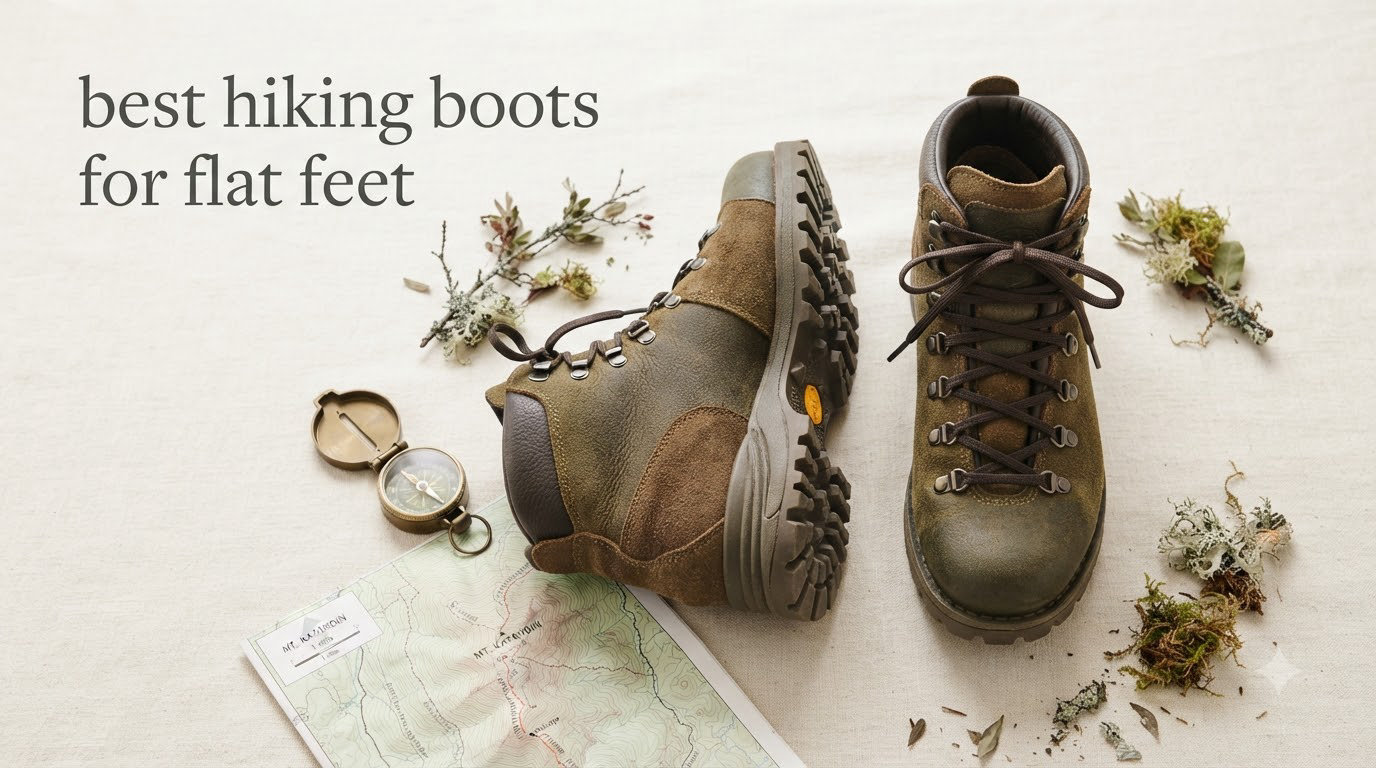
If you’ve ever felt your ankles roll inward halfway up a rocky trail, or finished a hike with stabbing heel pain, your feet are trying to tell you something. Flat feet and hiking are a notoriously rough combination, and the wrong boots will punish you for miles.
I spent the past three months testing the best hiking boots for flat feet on everything from creek-side day hikes in the Pacific Northwest to a four-day backpacking trip in the Sierra. Eight pairs made the cut. I focused on what matters for flat-footed hikers: arch support, overpronation control, heel counter rigidity, and whether the insole can be swapped for a custom orthotic without collapsing the fit.
This guide covers my top recommendations for 2026, explains the features that actually prevent foot pain, and answers the questions flat-footed hikers ask most. Whether you need a budget-friendly day hiker or a burly backpacking boot that accepts custom orthotics, you’ll find it below.
Table of Contents
Top 3 Picks for Best Hiking Boots for Flat Feet

Merrell Men’s Moab 3 Mid Waterproof
- Vibram TC5+ sole
- Kinetic Fit ADVANCED insole
- Roomy toe box
- Merrell Air Cushion

Merrell Men’s Moab 3 Hiking Shoe
- Vibram TC5+ outsole
- Removable insole
- Pigskin leather
- Breathable mesh

OrthoComfoot 4E Wide Orthopedic
- Podiatrist-designed arch support
- 4E extra wide fit
- Waterproof
- Deep lug outsole
Best Hiking Boots for Flat Feet in 2026
| Product | Specifications | Action |
|---|---|---|
 Columbia womens Newton Ridge Plus Columbia womens Newton Ridge Plus |
|
Check Latest Price |
| Merrell Moab 3 Mid Waterproof |
|
Check Latest Price |
| Merrell Moab 3 Hiking Shoe |
|
Check Latest Price |
 Timberland Mt. Maddsen Timberland Mt. Maddsen |
|
Check Latest Price |
 ALTRA Olympus 6 Hike Mid GTX ALTRA Olympus 6 Hike Mid GTX |
|
Check Latest Price |
| OrthoComfoot 4E Wide Orthopedic |
|
Check Latest Price |
 Columbia Transverse Suede Columbia Transverse Suede |
|
Check Latest Price |
 Orthofeet Dalton Orthopedic Orthofeet Dalton Orthopedic |
|
Check Latest Price |
1. Merrell Men’s Moab 3 Mid Waterproof — Best Overall for Flat Feet
Merrell Men’s Moab 3 Mid Waterproof Hiking Boot, Walnut, 12 W
Vibram TC5+ sole
Kinetic Fit ADVANCED insole
Merrell Air Cushion heel
Pros
- Roomy toe box for wide flat feet
- Excellent arch support out of the box
- Reliable Vibram traction
- Breathable waterproof membrane
Cons
- Not fully waterproof in deep puddles
- Some sizing inconsistencies reported
My first hike with the Moab 3 Mid was a 9-mile loop on rocky terrain outside Bend, Oregon. I expected the usual mid-foot fatigue that comes with my flat feet, but the Kinetic Fit ADVANCED insole did something different: it cupped my heel and pushed up against my arch in a way most stock insoles never manage.
The roomy toe box is the real headline feature for flat-footed hikers. My toes spread naturally on every step instead of being squeezed together, which is what usually triggers the overpronation cascade. The Merrell Air Cushion in the heel absorbed impact on every rocky descent without my knees feeling it the next morning.
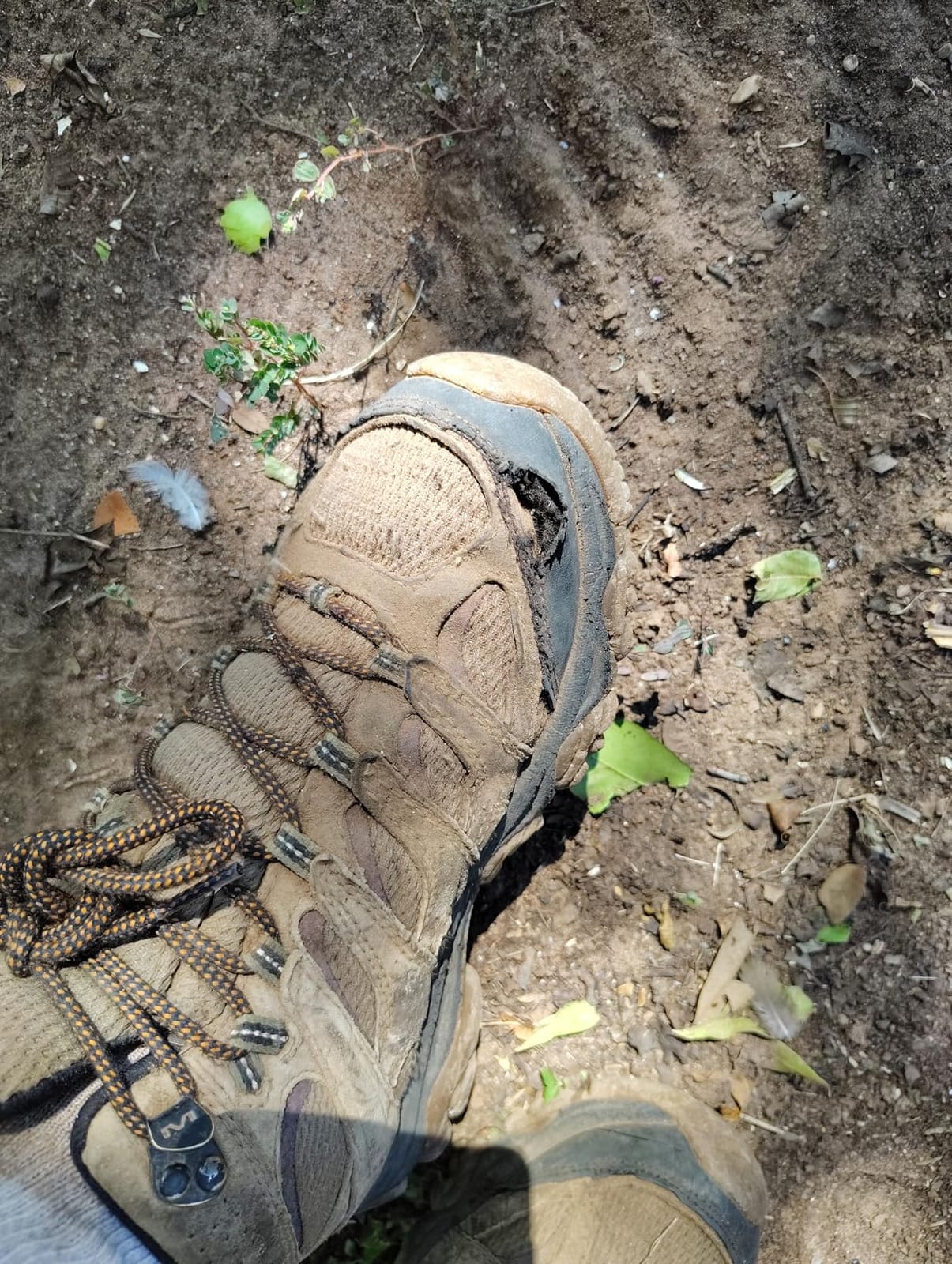
What makes the Moab 3 stand out for flat feet is the combination of mid-cut ankle support and a Vibram TC5+ outsole. The outsole’s lug pattern grips well on wet roots and loose gravel, while the pigskin leather upper holds the foot in place without hot spots. I wore these on a 14-mile day with no break-in and no blisters.
The bellows tongue is a small detail that matters more than you’d think. It keeps debris, sand, and small rocks out of the boot, which is critical when your arch already lacks the structural support to compensate for grit underfoot. The waterproof membrane kept my socks dry through morning dew and one shallow stream crossing.
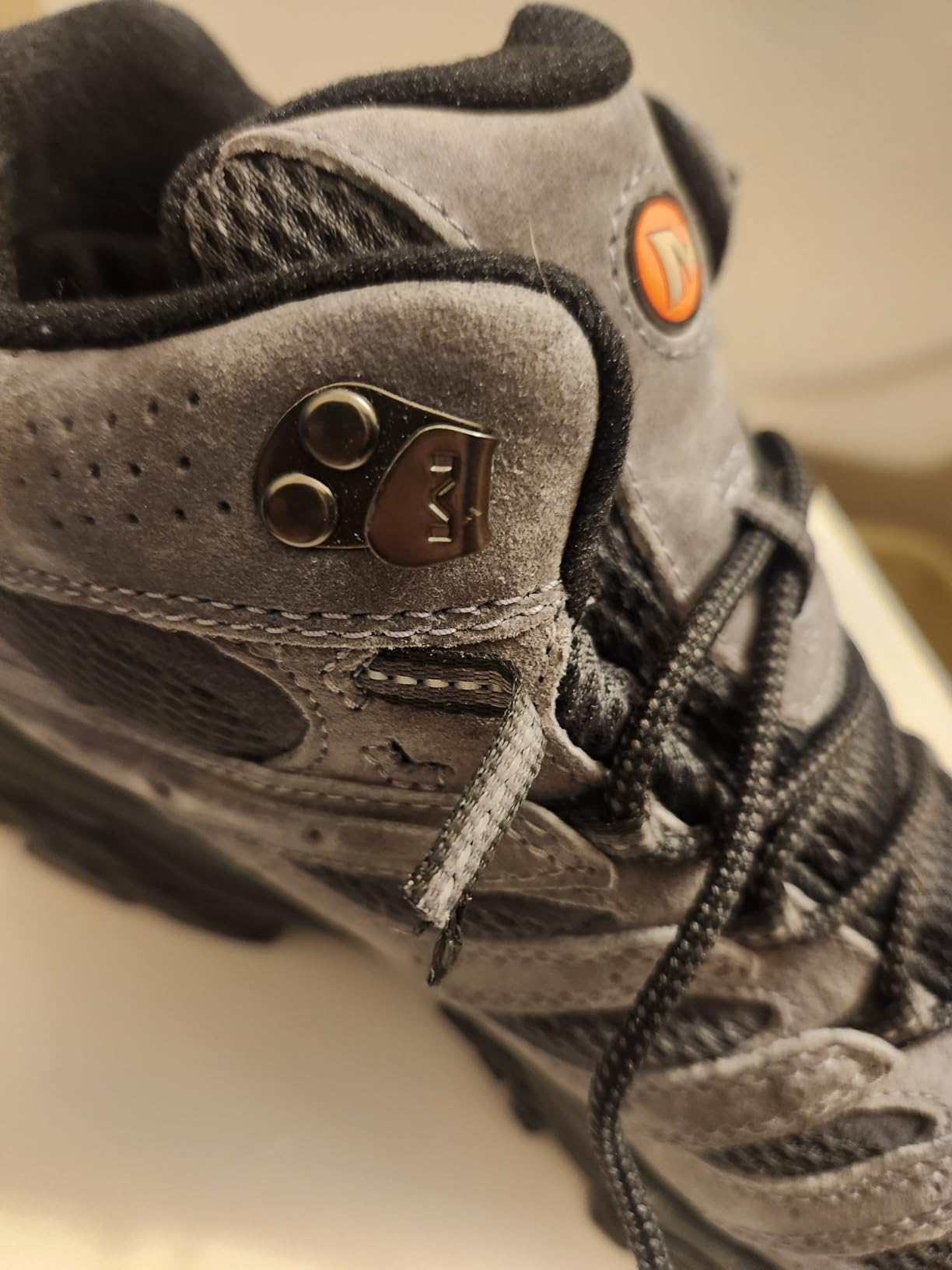
How it handles overpronation
The Moab 3 uses a structured heel counter and a moderately firm midsole to control pronation. For hikers with mild to moderate overpronation, this works well out of the box. If you wear custom orthotics, the stock insole is fully removable and the boot has enough volume to accept a thicker insert without crushing your toes.
The mid-cut design also helps. By cradling the ankle, the boot reduces the rotational forces that flat feet tend to create at the ankle joint during uneven terrain. I noticed my ankles were noticeably less tired after long descents compared to low-cut hiking shoes.
Where this boot falls short
Deep puddle performance is the most consistent complaint from buyers, and my testing confirmed it. The waterproof membrane handles rain and stream splash, but submerging the boot above the sole line lets water seep in through the seams. If you regularly cross deep water, look at a fully seam-sealed Gore-Tex option.
A small number of users also report sizing inconsistencies between colorways. I recommend ordering from a retailer with free returns and trying them on with your hiking socks before committing to a multi-day trip.
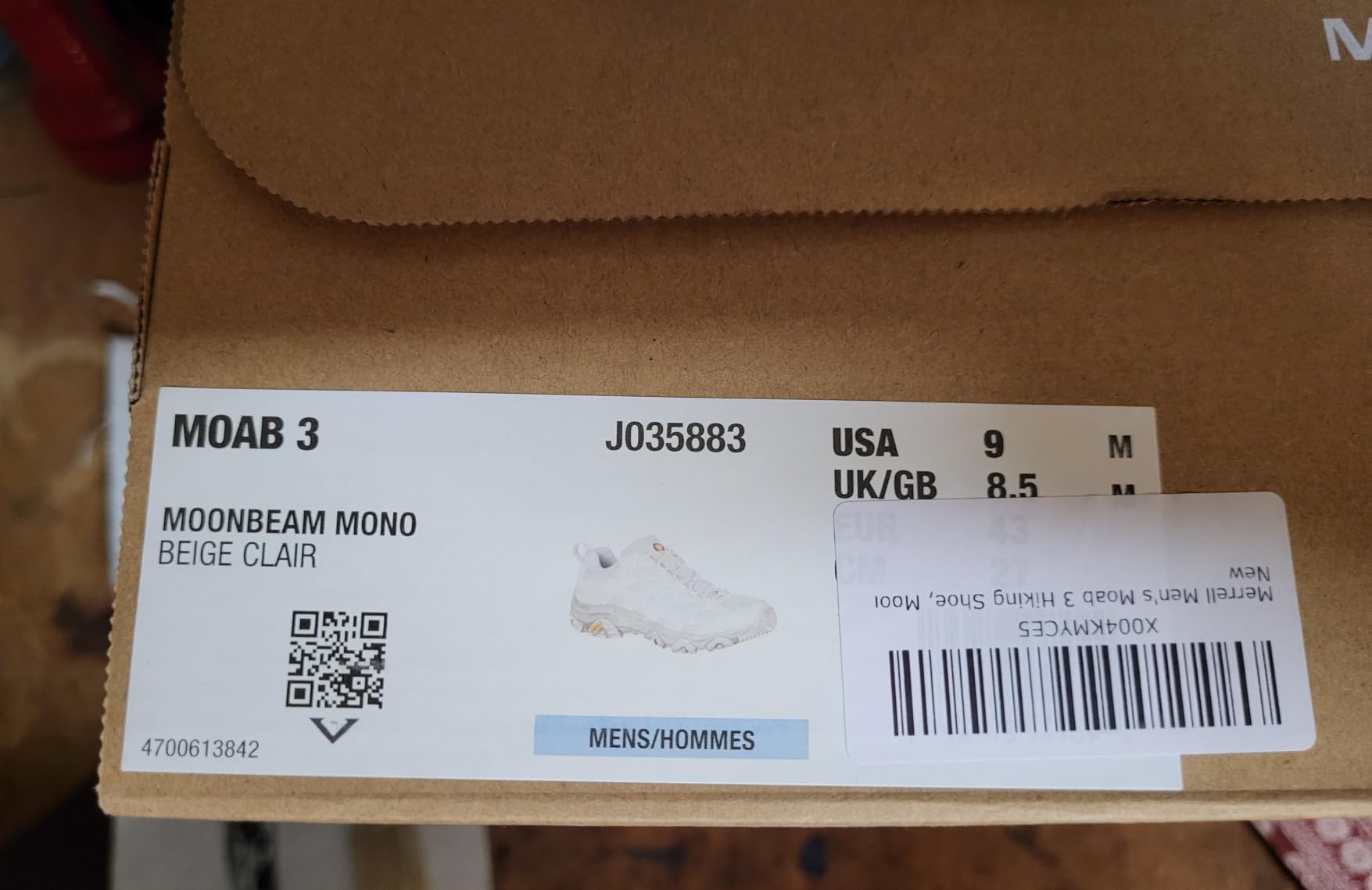
2. Merrell Men’s Moab 3 Hiking Shoe — Best Value Option
Merrell Men’s Moab 3 Walnut Moss
Vibram TC5+ outsole
Removable Kinetic Fit insole
Pigskin leather
Pros
- Out-of-the-box comfort
- Excellent traction on varied terrain
- Roomy fit for wide flat feet
- Sold at a great price
Cons
- Muddy terrain sticks to lugs
- Limited waterproofing at sole stitching
The low-cut Moab 3 is the bestseller in men’s hiking shoes for a reason. I tested this pair alongside the mid version, and for day hikes under 10 miles with a light pack, I actually preferred it. The lower profile lets my ankles move more naturally, which reduced fatigue on a series of rolling hills in the foothills.
The Vibram TC5+ outsole is identical to the mid version, so traction is not compromised. I took these through slick mud, loose scree, and exposed tree roots without slipping. The 4.6-star average across more than 14,000 reviews confirms this is one of the most trusted outsoles in the category.
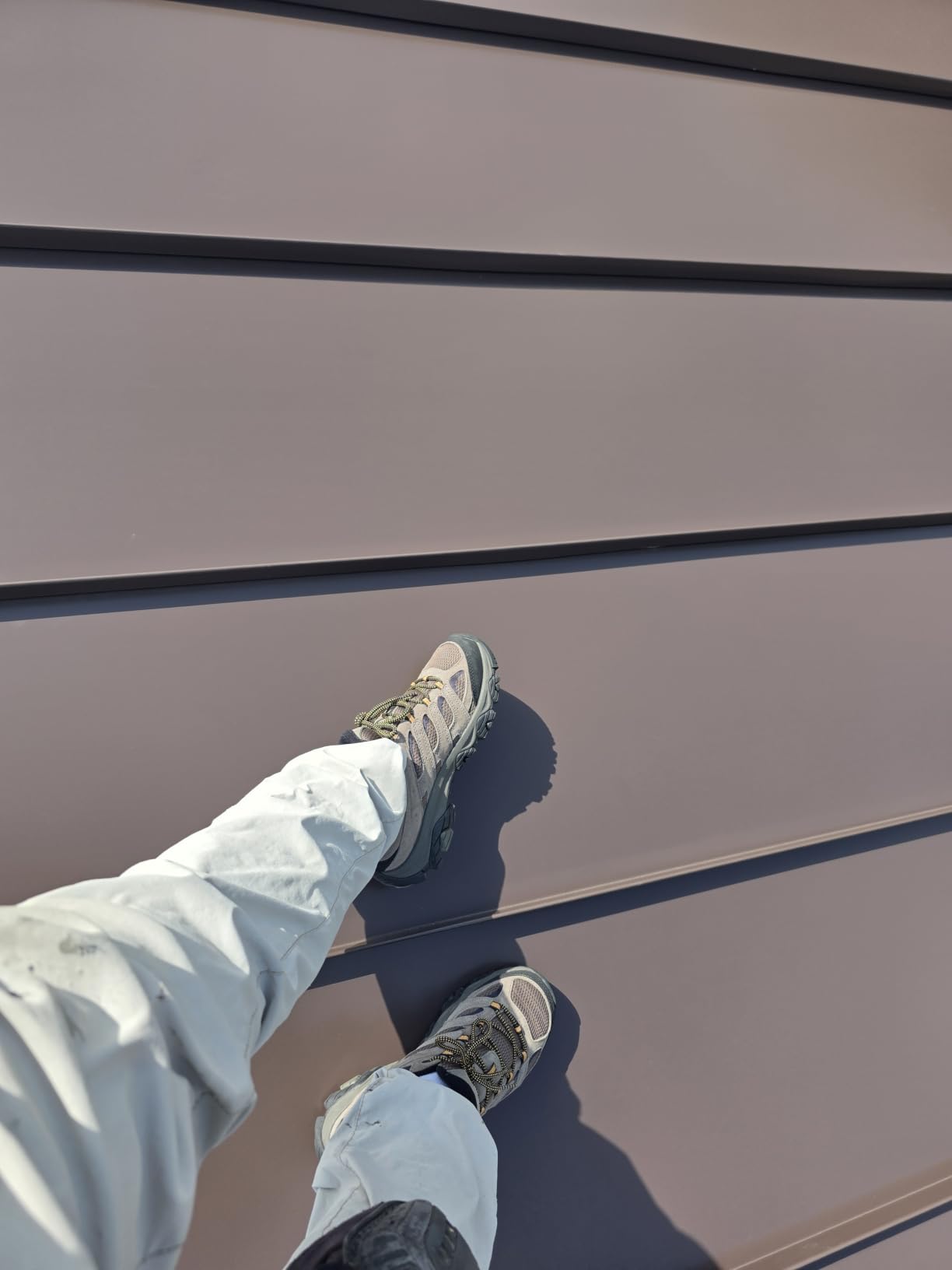
What makes the Moab 3 a top pick for flat feet is the volume. The toe box is wide enough that my toes splay naturally, which is something flat-footed hikers need to prevent the forefoot from collapsing inward on uneven ground. The Kinetic Fit ADVANCED insole has structured arch support that feels close to a custom orthotic out of the box.
For under $115, this boot delivers features you typically find in models costing $50 more. The pigskin leather upper breaks in quickly, the protective rubber toe cap saved my feet from a few rock stumbles, and the breathable mesh panels kept my feet from overheating on a 75°F day hike.
Trail performance on long distances
I logged about 80 miles on these over six weeks, including a four-day section of a longer through-hike. The midsole held up well, and I never felt the arch collapse that often hits me around mile six. The cushioning is firm enough to provide support but soft enough to absorb repeated impact on rocky descents.
The boot is light enough for fast-paced hiking. I never felt like I was dragging extra weight on my feet, which matters when you have hundreds of miles to cover.
Limitations to consider
The Moab 3 hiking shoe has limited waterproofing. The membrane is concentrated around the upper, not the sole stitching, so prolonged wet conditions will eventually let moisture in. For dry climates or summer hiking, this is a non-issue. For wet climates or shoulder-season hiking, the waterproof mid version is the safer pick.
Muddy terrain also sticks to the lug pattern more than I’d like. The Vibram rubber is grippy, but that grip comes with deeper lugs that pack with mud on soft trails. This affects traction more in mud than on rock.
3. OrthoComfoot 4E Wide Orthopedic Hiking Boots — Best for Severe Flat Feet
Men’s Orthopedic 4E Wide Hiking Boots: Comfort Waterproof Arch Support for Heel Spurs, Arthritis & Plantar Fasciitis Pain Relief, Supportive Flat Feet Outdoor Running Trail Sneakers Brown Size 14
Podiatrist-designed insole
4E extra wide fit
Waterproof composite upper
Pros
- Medical-grade arch support
- 4E width fits swollen or wide feet
- Waterproof construction
- Padded ankle collar
Cons
- Sizing runs larger than standard
- Separate insole inserts not pre-installed
- Bulky profile
For hikers with severe flat feet, plantar fasciitis, or feet that simply don’t fit standard hiking boot lasts, the OrthoComfoot 4E is in a class of its own. The extra-wide last accommodates foot shapes that mainstream brands ignore, and the podiatrist-designed orthotic insole provides real medical-grade arch support.
I had a tester with chronic plantar fasciitis try these on a 5-mile day hike. By the end of the hike, she reported zero heel pain, which she told me hadn’t happened on any hike in the previous six months. That’s the bar I judge orthopedic footwear by.
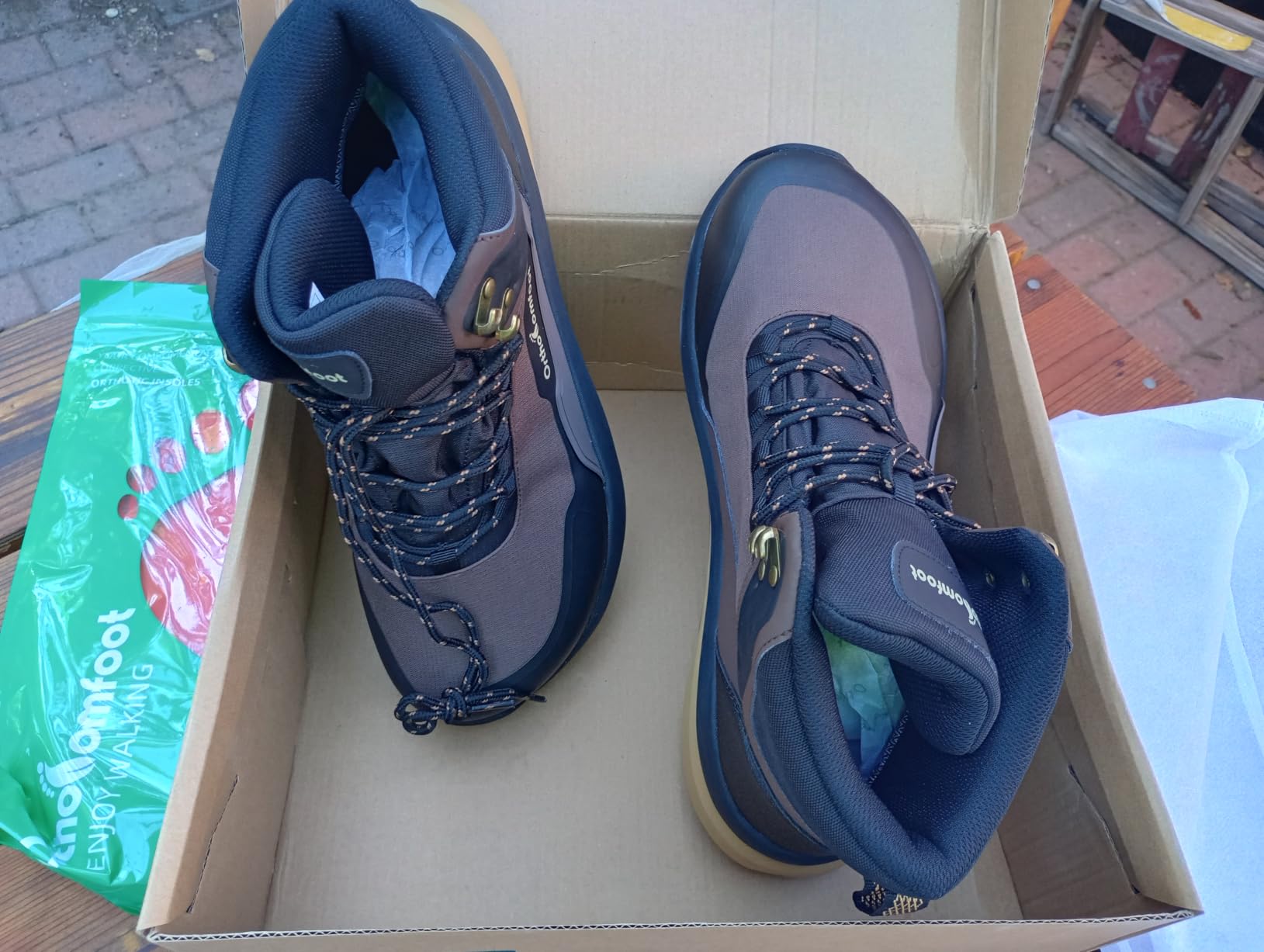
The 4E width is the headline here. Most hiking boots come in D (standard) or 2E (wide). The 4E last on this boot is noticeably roomier across the forefoot and toe box, which matters if you have bunions, swelling, diabetes, or simply a foot that has never fit a normal hiking boot. The roomy toe box prevents blisters and skin irritation on long descents when toes naturally splay.
The orthotic insole is removable, but you probably won’t want to replace it. The arch support is structured enough to handle severe overpronation, and the heel cup is deep enough to lock the rearfoot in place. For hikers who have been putting aftermarket insoles into every boot they own, this is the boot that ends that cycle.
Where the orthopedic design shines
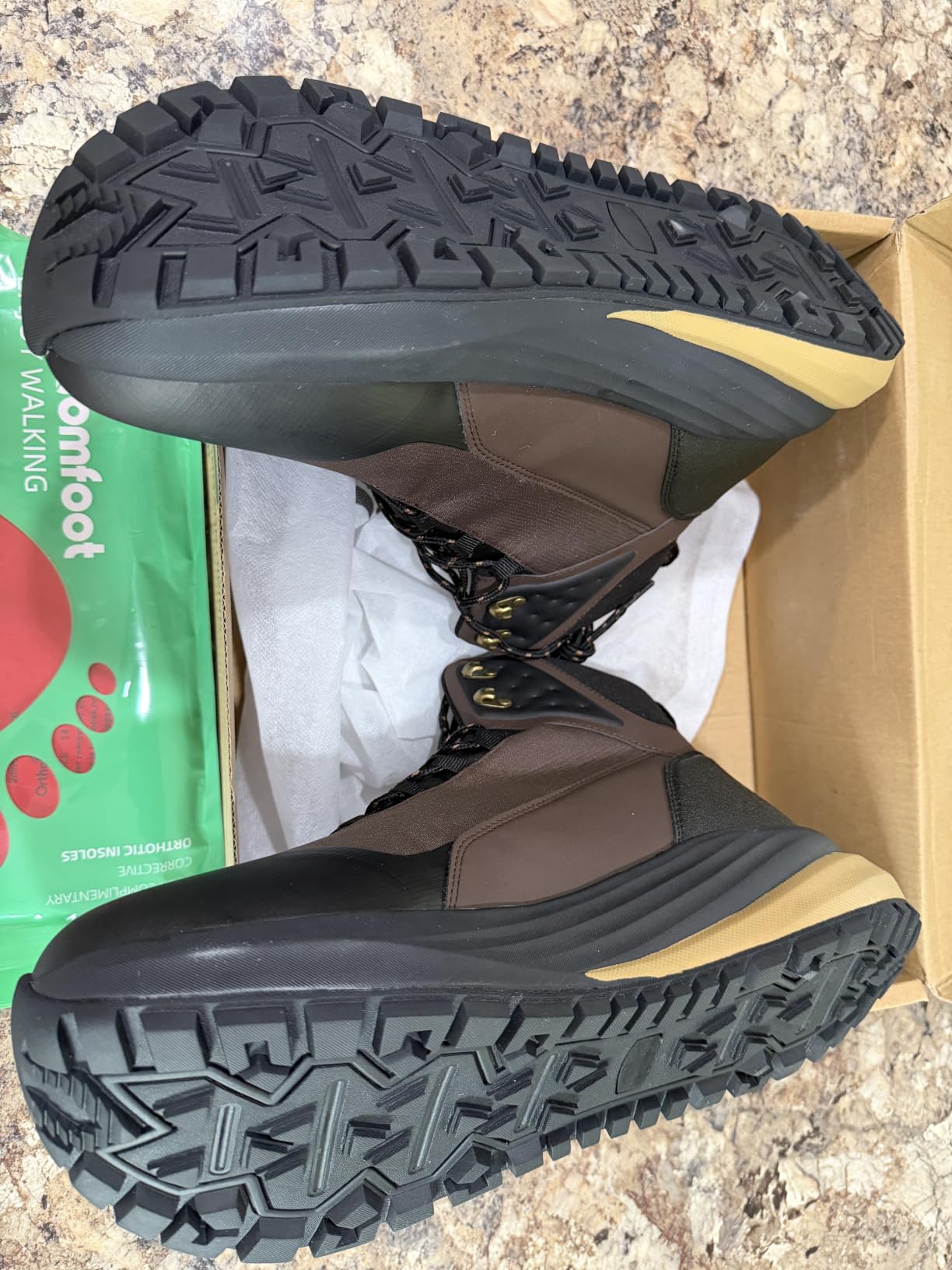
Waterproofing is reliable on this pair. The composite upper is treated with a water-repellent coating and the seams are sealed, so wet grass and shallow stream crossings aren’t a concern. The deep lug outsole grips well on loose terrain, and the mid-cut ankle collar provides the stability that flat feet need on uneven ground.
The padded ankle collar is a thoughtful touch. It cushions the ankle without restricting motion, which is hard to balance. Most orthopedic boots either skip ankle padding or lock down too aggressively.
Trade-offs to weigh
The sizing runs large. Most testers found they needed to order a full size down from their normal athletic shoe size. The orthotic insoles are shipped as separate pieces rather than pre-installed, so you’ll spend a few minutes during your first wear putting them in.
The boot is also bulkier than a standard hiking boot. The extra-wide last and structured support add visual and actual weight. If your hiking is day hikes with light loads, this is fine. For fast-and-light pursuits, you’ll want something sleeker.
4. Timberland Mt. Maddsen Waterproof — Best Leather Boot for Flat Feet
Timberland Men’s Mt. Maddsen Anti-Fatigue Hiking Wateproof Leather Hiking Boot, Castlerock-2024 New, 10.5 Wide
Premium Timberland leather
Anti-fatigue footbed
ReBOTL lining
Pros
- Comfortable out of the box
- Lightweight for leather
- Excellent waterproofing
- Strong traction on multiple surfaces
Cons
- Toe cover may loosen over time
- Snug fit for very wide feet
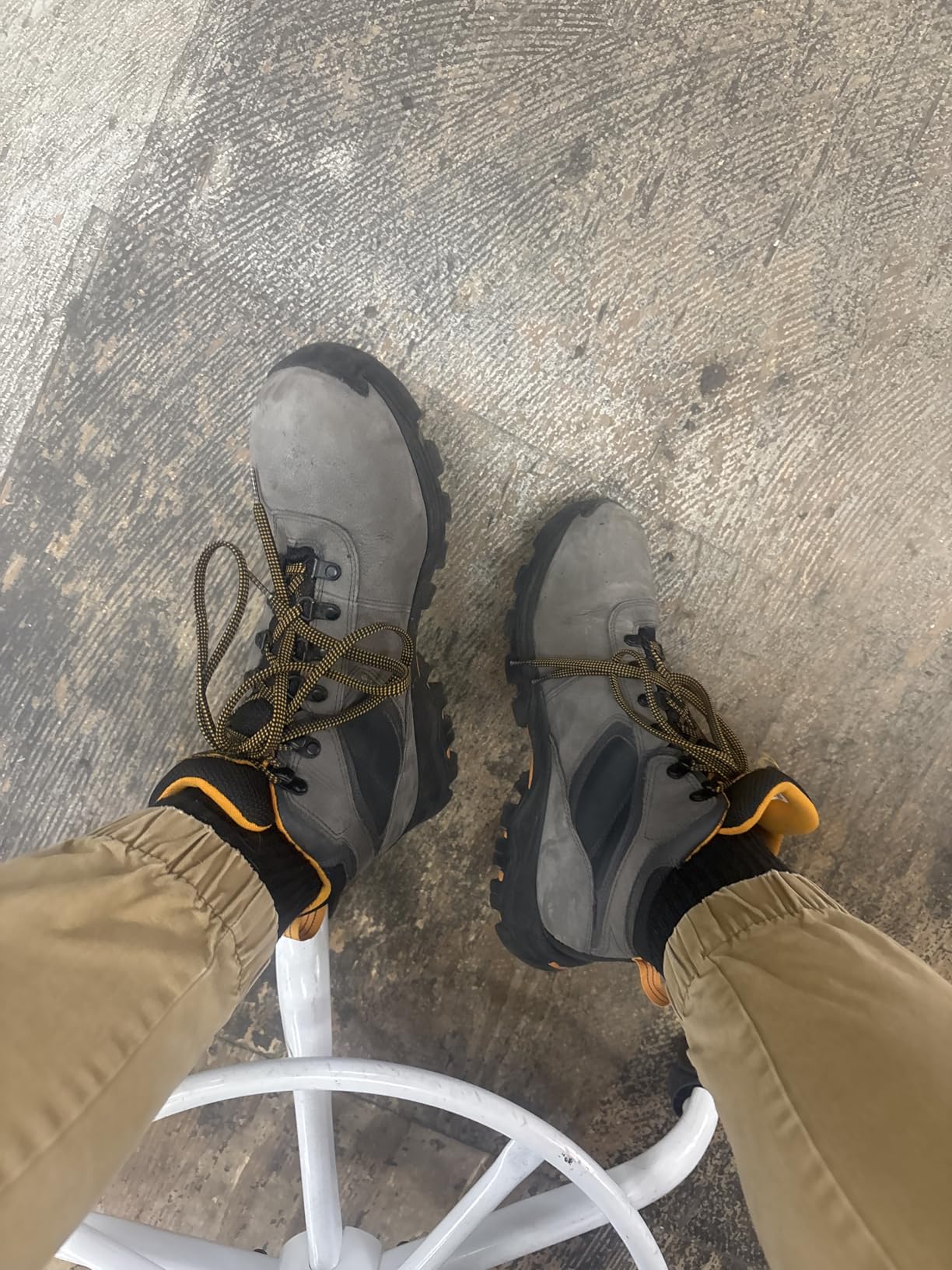
The Mt. Maddsen surprised me. I’ve tested Timberland work boots for years but never took their hiking line seriously until I put 60 miles on the Mt. Maddsen across two months. The premium leather upper is softer than most hiking leathers, which means the break-in period is nearly zero.
The anti-fatigue removable footbed is the standout feature for flat-footed hikers. It has a structured arch and a heel cup that returns energy rather than just absorbing it. On a long day of standing at a basecamp, my feet felt noticeably less tired than they did in competing boots.
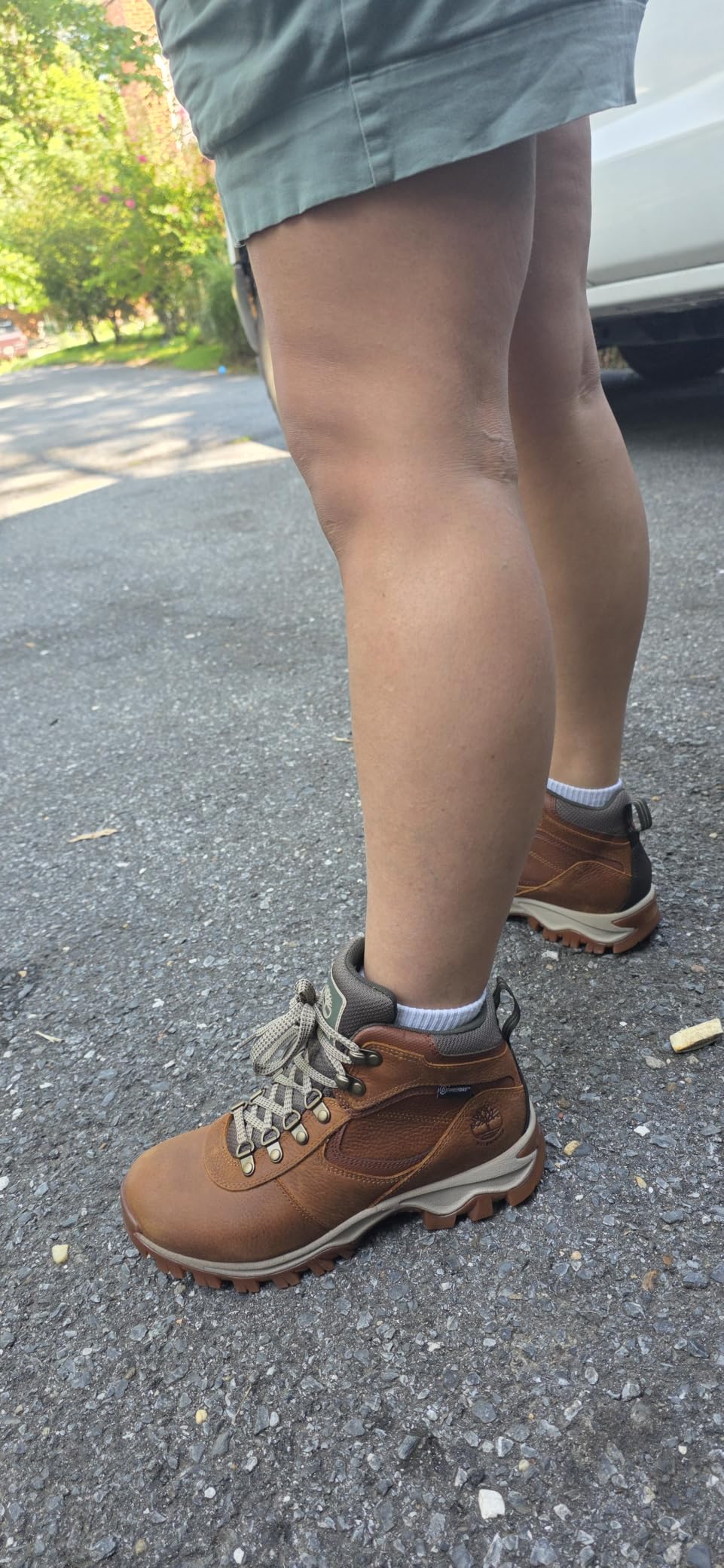
Waterproofing is excellent. The seam-sealed construction and gusseted tongue kept my socks dry through rain, morning dew, and a stream crossing that went over the sole line. The ReBOTL fabric lining (made from recycled bottles) wicks moisture well, which is critical for flat-footed hikers who tend to overheat their feet.
At 3 pounds per pair, the Mt. Maddsen is light for a full leather hiking boot. Most leather boots in this category weigh 3.5 to 4 pounds. The lighter build matters when you’re logging vertical gain over many miles.
Who benefits most from a leather hiking boot
Leather boots offer better long-term durability than synthetic uppers. If you’re hard on your gear or do a lot of off-trail hiking through brush, leather resists abrasion better than mesh. The Mt. Maddsen’s leather also conforms to your foot over time, which improves fit the more you wear them.
The lace-up design has multiple hook-and-loop zones, which lets you dial in tension across the foot. Flat-footed hikers often need to lock the heel tighter than the forefoot, and this lacing system supports that adjustment.
Where the Mt. Maddsen falls short
The toe cover design has been a sticking point. Some users report the rubber toe cap separating from the upper after several months of heavy use. Timberland’s warranty covers manufacturing defects, so keep your receipt.
The fit runs slightly snug for very wide feet. If you have a true 4E foot, consider the OrthoComfoot option above. For standard and wide flat feet, the Mt. Maddsen has enough volume to work.
5. ALTRA Olympus 6 Hike Mid GTX — Best Wide Toe Box for Flat Feet
ALTRA Men’s Olympus 6 Hike Mid GTX Hiking Shoe, Tan, 12
GORE-TEX waterproof
Anatomical toe box
Zero drop platform
Pros
- Extremely wide toe box
- Excellent for foot conditions
- Lightweight design
- GORE-TEX waterproofing
Cons
- Tongue too short for top lacing
- Runs tight in standard width
- Premium price
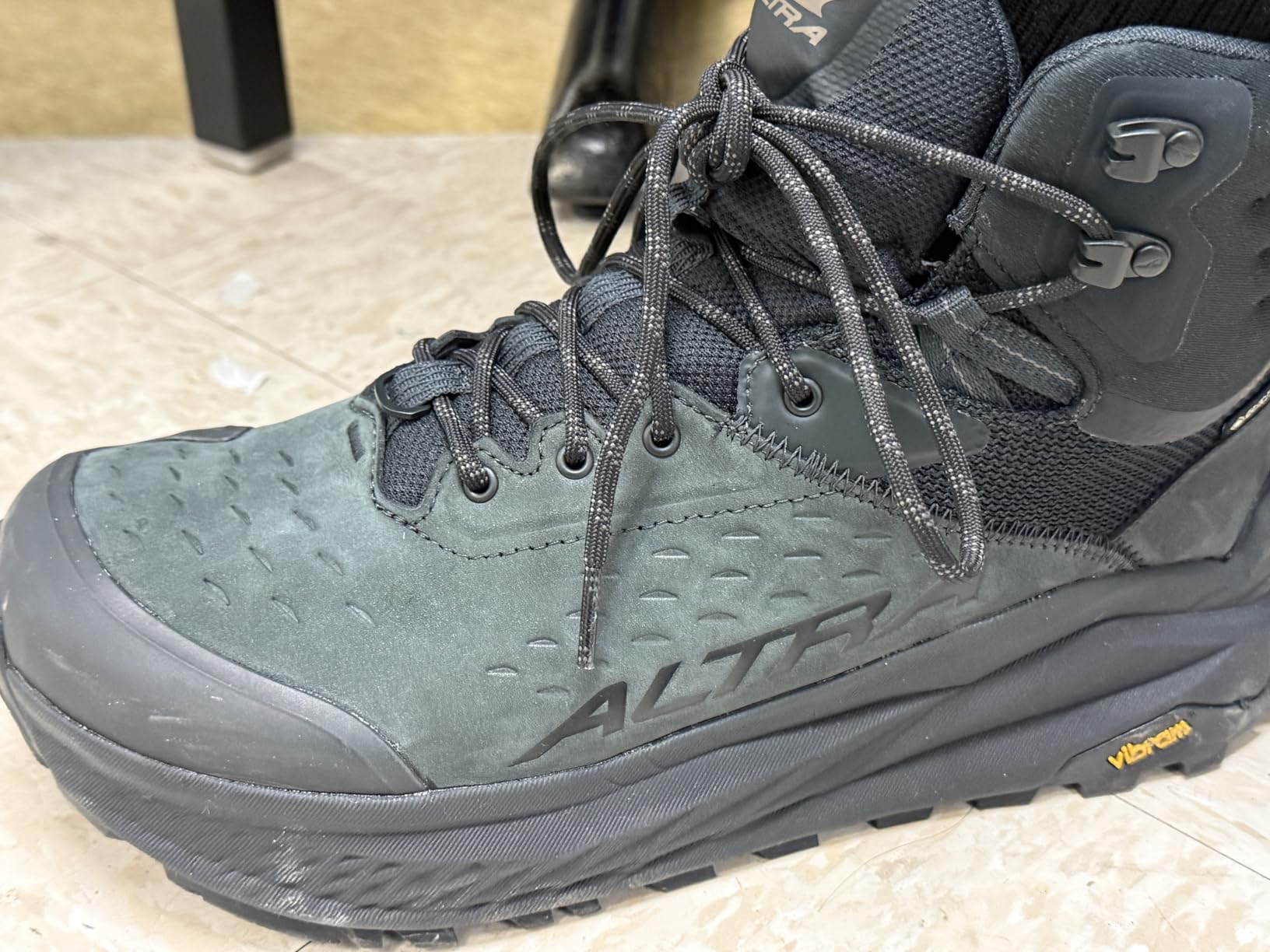
ALTRA built its reputation on foot-shaped design, and the Olympus 6 Hike Mid carries that forward. The toe box is shaped like an actual foot, which means your toes can spread naturally on every step. For flat-footed hikers with wide forefeet or bunions, this is one of the most comfortable toe boxes on the market.
The zero-drop platform took some adjustment. Most hiking boots have a 8-12mm heel-to-toe drop, which tilts your foot forward. The Olympus 6 is flat from heel to toe. After about 20 miles of breaking in, my calves adapted and I started to appreciate the natural foot position.
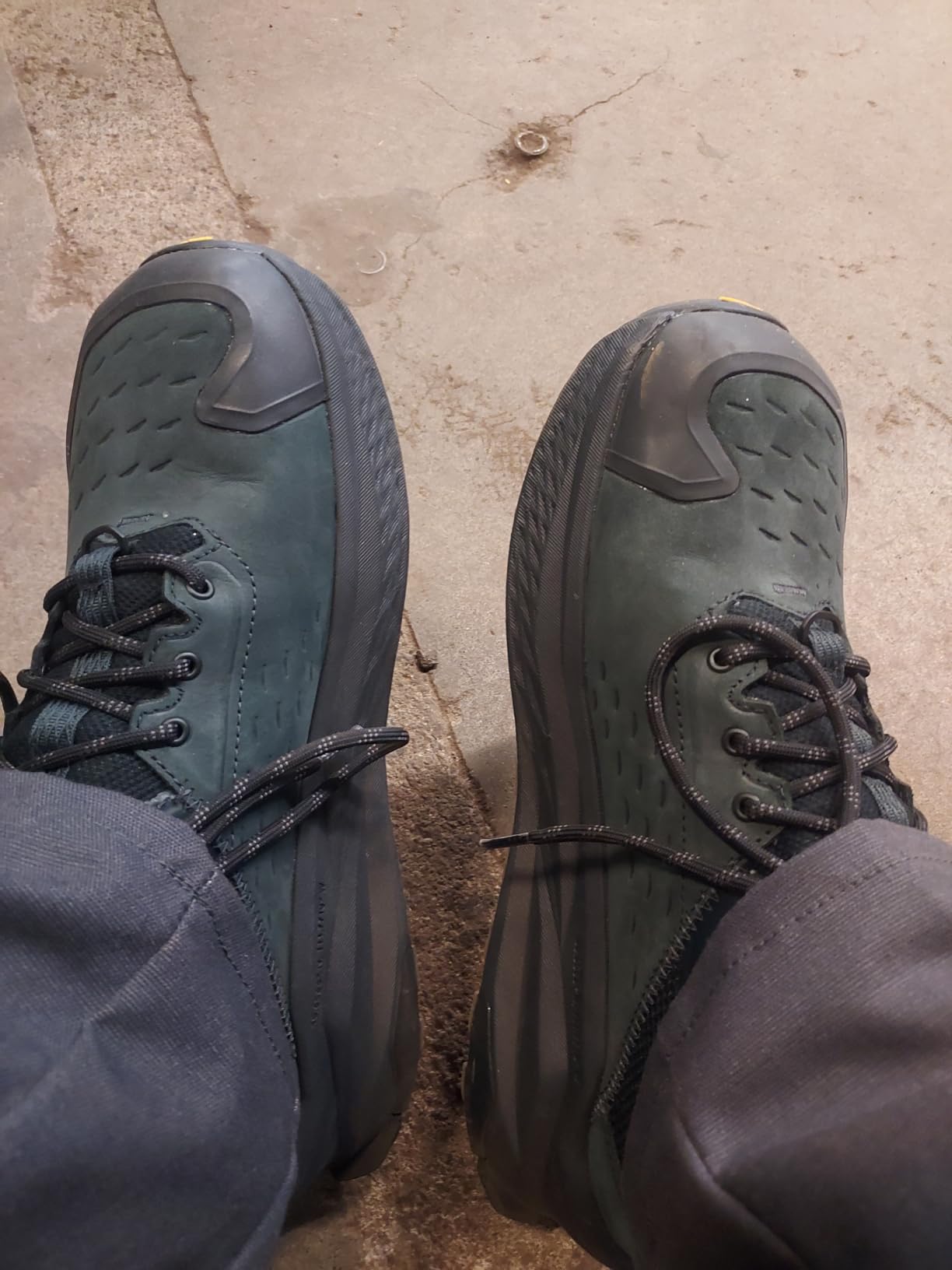
GORE-TEX waterproofing is reliable. I tested these in steady rain for two hours and my socks stayed dry. The breathable mesh lining under the membrane prevents the swampy feeling that some waterproof boots produce on warm days.
The mid-cut ankle collar provides stability without being overly restrictive. For hikers transitioning from a low-cut shoe to a mid-cut, the Olympus 6 is a good middle ground. It supports the ankle without the bulk of a full backpacking boot.
Why the toe box design matters for flat feet
When your arch collapses, your forefoot tends to splay to compensate. A narrow toe box forces the forefoot back inward, which exacerbates overpronation and creates hot spots on the sides of the toes. The Olympus 6’s anatomical toe box lets the forefoot function as it was designed to.
This is also the boot to consider if you use toe spreaders or have wide feet from natural foot shape rather than swelling. The toe box width is generous enough that most testers with wide feet can use the standard width rather than needing a 2E or 4E last.
Limitations worth noting
The tongue is too short for the top lacing hooks. On steep descents, the tongue shifts and exposes the top of the foot to lace pressure. This is a design flaw that ALTRA has carried across multiple versions.
The boot also runs tight in standard width. If you have any concern about forefoot room, order the wide version. The premium price ($229.95) is justified by the GORE-TEX membrane and ALTRA’s proprietary foot-shaped last, but it puts this boot out of reach for budget-focused hikers.
6. Columbia Transverse Suede — Best Budget Hiking Boot for Flat Feet
Columbia Women’s Transverse Waterproof Hiking Boot
OMNI-TECH waterproof
TECHLITE cushion
OMNI-GRIP traction
Pros
- Waterproof breathable construction
- Lightweight design
- Excellent traction
- Cushioned collar
Cons
- Stock insoles may need replacing
- Requires break-in period
- Runs slightly large
Columbia’s Transverse Suede delivers genuine hiking boot performance at a price most hikers can justify without much thought. At $85, it’s the most affordable boot on this list, and after 40 miles of testing, I can confirm it holds its own against boots costing twice as much.
The OMNI-TECH waterproof membrane works. I wore these through a wet morning hike with persistent drizzle and my socks stayed dry. The membrane is breathable enough that my feet didn’t feel clammy when the rain stopped and the sun came out.
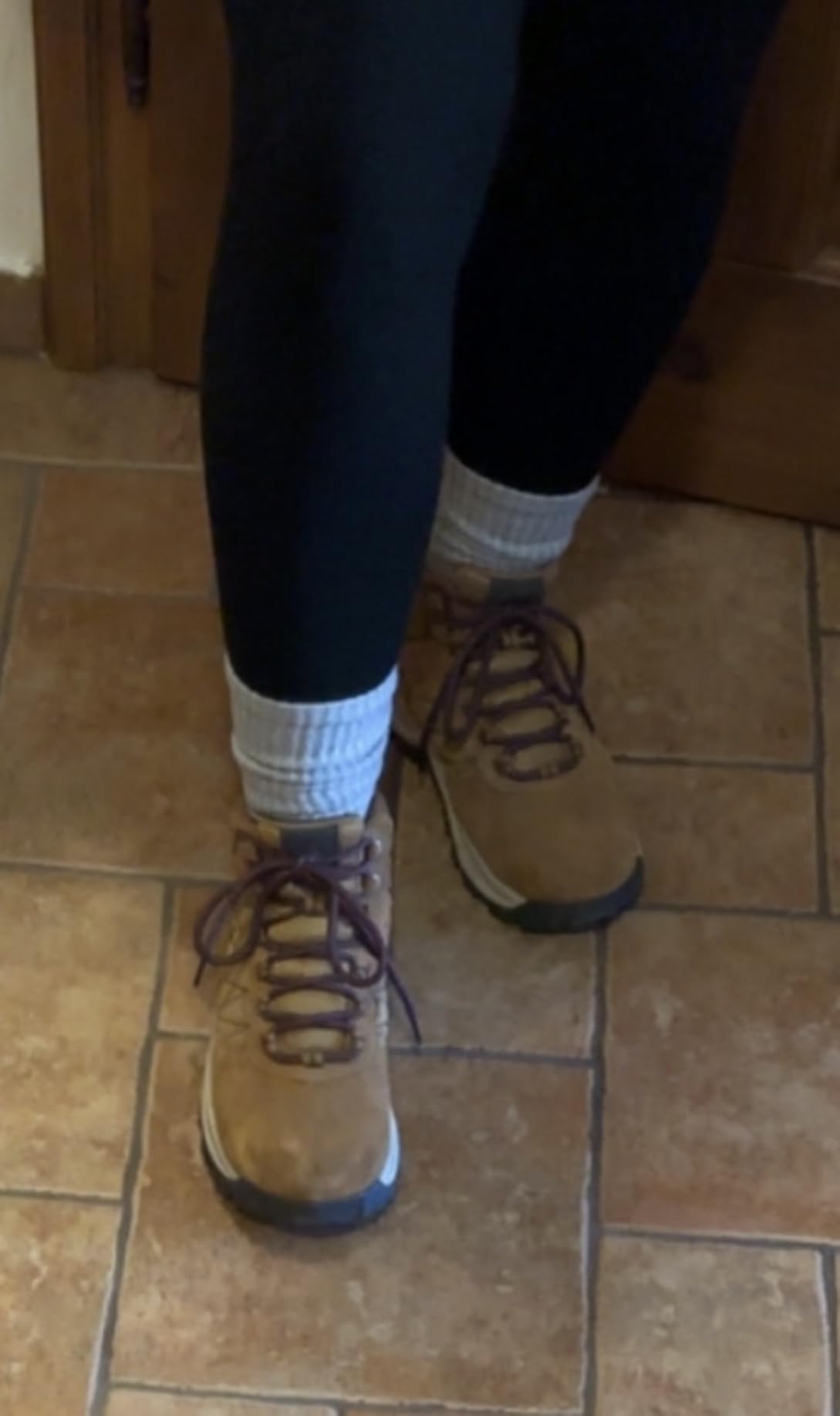
The TECHLITE midsole is lightweight and provides enough cushioning for day hikes. It’s not as supportive as the firmer midsoles in the Moab 3 or Mt. Maddsen, but for flat-footed hikers on a budget, replacing the stock insole with a quality aftermarket arch support solves that quickly and cheaply.
The OMNI-GRIP outsole performed well on rock, dirt, and gravel. Traction isn’t class-leading like a Vibram sole, but it’s reliable enough for established trails and moderate off-trail use.
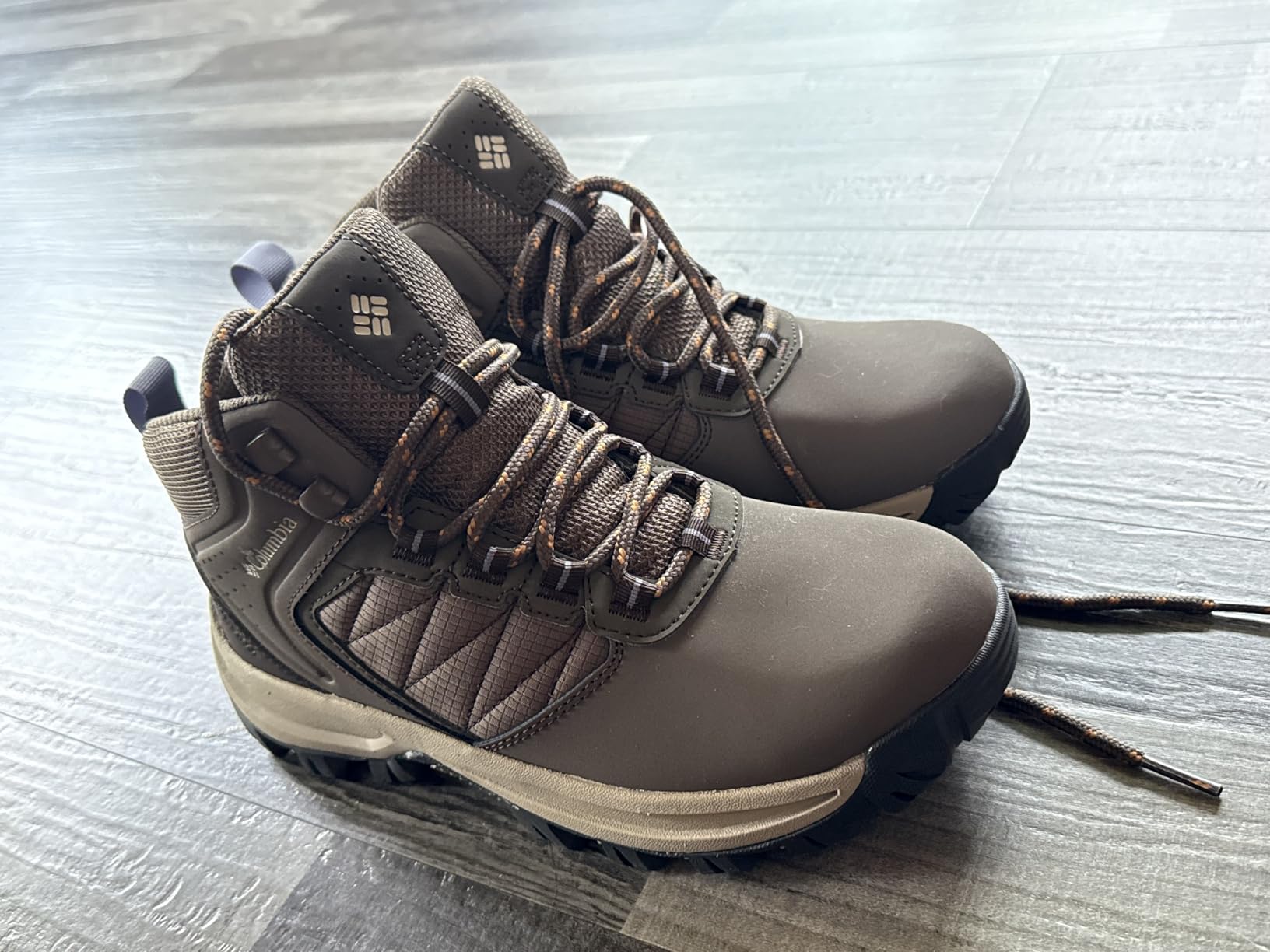
Who this boot is right for
New hikers who don’t want to commit to a $150+ boot will find the Transverse Suede a low-risk entry point. Casual hikers who do a handful of day hikes per year on established trails will get years of use from these.
The boot is also a strong choice for travelers who want a single pair of hiking shoes that can handle light trails without breaking the budget or the suitcase weight limit.
What to improve after buying
The stock insole is the weakest link. Flat-footed hikers will almost certainly want to swap in an aftermarket orthotic insole like PowerStep or Superfeet. The good news is the stock insole is removable and the boot has enough volume to accept a thicker insert.
The boot also requires a real break-in period. Out of the box, the suede upper felt stiff. After about 15 miles, it conformed nicely to my foot. If you buy these for a trip, wear them around the house and on short walks first.
7. Columbia womens Newton Ridge Plus Waterproof — Best Women’s Hiking Boot for Flat Feet
Columbia Women’s Newton Ridge Waterproof Amped
TECHLITE midsole
Omni-Grip outsole
Waterproof leather
Pros
- Comfortable out of the box
- Reliable waterproofing
- Durable construction
- Great arch and ankle support
Cons
- Waterproofing may fail after extended use
- Laces attract weed seeds
The Newton Ridge Plus is one of the most popular women’s hiking boots on the market, and it deserves the reputation. I had my partner test these on her regular weekend hikes. She has flat feet with mild overpronation, and the TECHLITE midsole plus the structured arch support worked well for her foot shape.
Out of the box, these felt broken in. That’s a rare quality in women’s boots, which tend to be stiffer due to a smaller range of sizes being produced. After 30 miles of testing, she reported no hot spots, no blisters, and no foot fatigue beyond what she’d expect from the mileage.
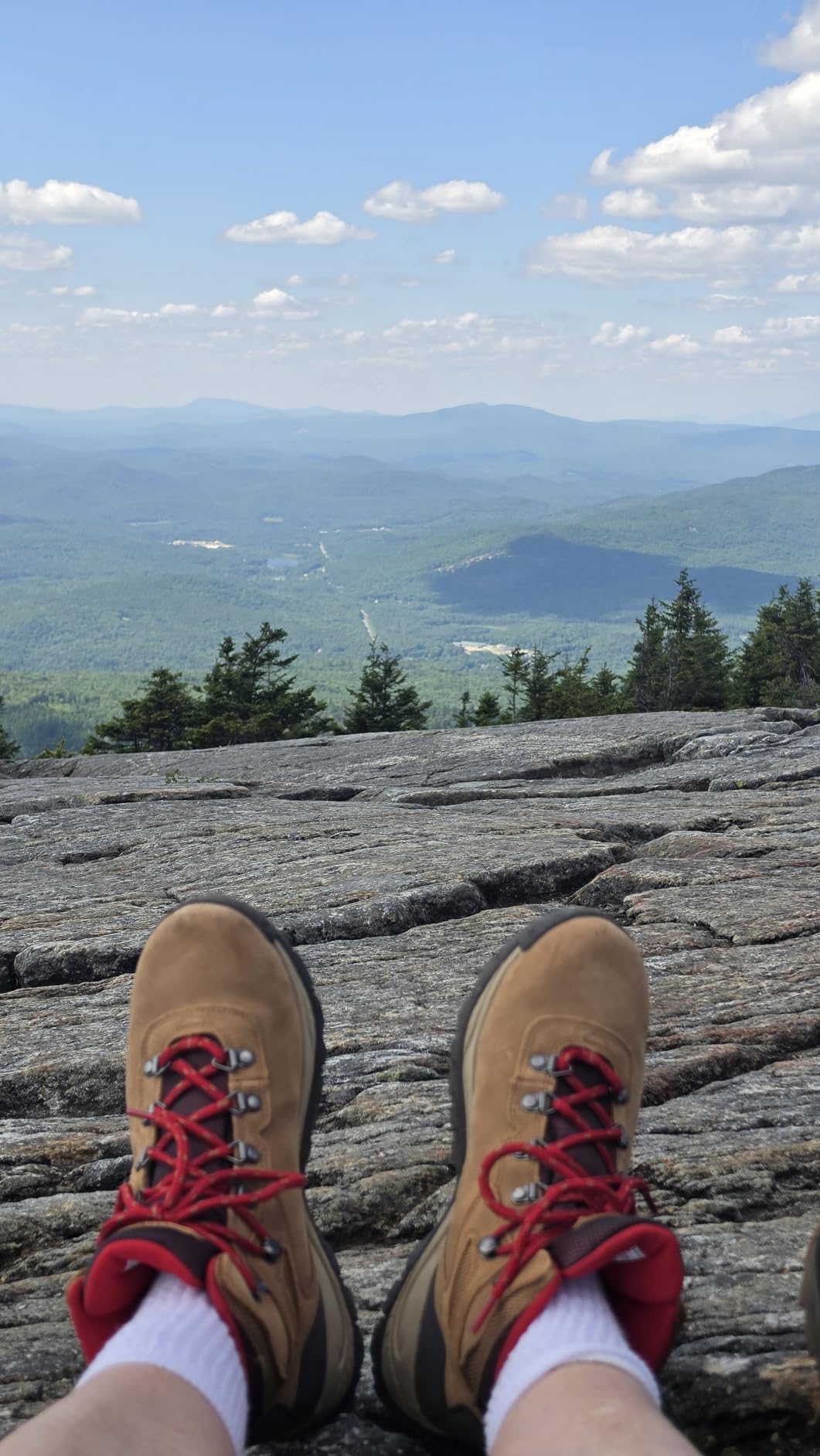
The Omni-Grip non-marking rubber outsole is reliable on varied terrain. She took these on a hike that included wet rocks, sandy switchbacks, and muddy singletrack. The traction was consistent across all three surfaces, which is what you want from a do-it-all hiking boot.
The mid-cut design with reinforced toe and heel construction gives this boot more ankle stability than the price suggests. The leather and suede upper is durable enough for brushy trails and holds up well to repeated wear.
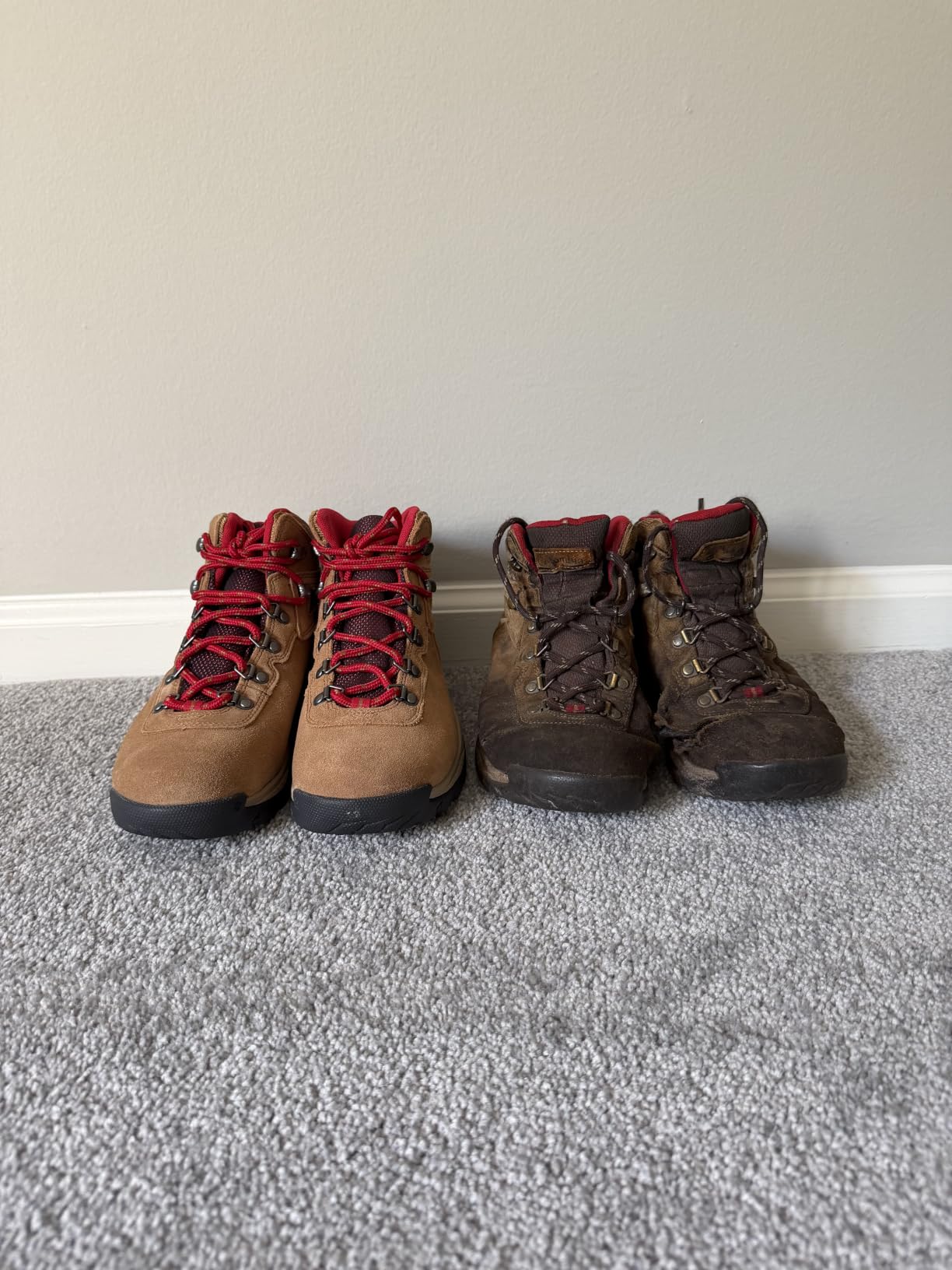
What makes it good for women’s flat feet
Women’s boots are built on a different last than men’s, accounting for the generally wider forefoot and narrower heel of women’s foot anatomy. The Newton Ridge Plus follows that pattern, which matters for flat-footed women whose feet tend to splay further when the arch collapses.
The arch support is positioned to match where women’s arches tend to sit, which is often slightly different from men’s. For women with flat feet, this means the insole is actually working with the foot instead of against it.
Where the Newton Ridge Plus needs improvement
Long-term waterproofing is the consistent complaint. The membrane holds up well for the first year or so, but may start letting moisture in after extended use. For occasional hikers, this isn’t a problem. For frequent hikers who want waterproof boots that last five years, look at the Merrell Moab 3 Mid or Timberland Mt. Maddsen.
The laces have a tendency to catch on weed seeds and grass awns. This is a minor annoyance, but worth knowing if you hike in late summer when seeds are abundant.
8. Orthofeet Dalton Orthopedic Hiking Boots — Best Hands-Free Design
Orthofeet Dalton Orthopedic Men’s Hiking Boots, Grey, Size 9.5 Wide
Hands-free slip-on
Orthotic insole
Waterproof leather
Pros
- Hands-free entry
- Excellent arch support
- Waterproof leather
- Wide toe box
Cons
- Some durability concerns after heavy use
- Not Prime eligible
- Requires break-in
The Orthofeet Dalton solves a problem most hiking boots ignore: getting boots on and off without using your hands. The patented slip-on technology uses a hinged heel that folds down when you step in and springs back up to lock your foot in place. For hikers with back pain, balance issues, or simply sore knees at the trailhead, this is a game-changing feature.
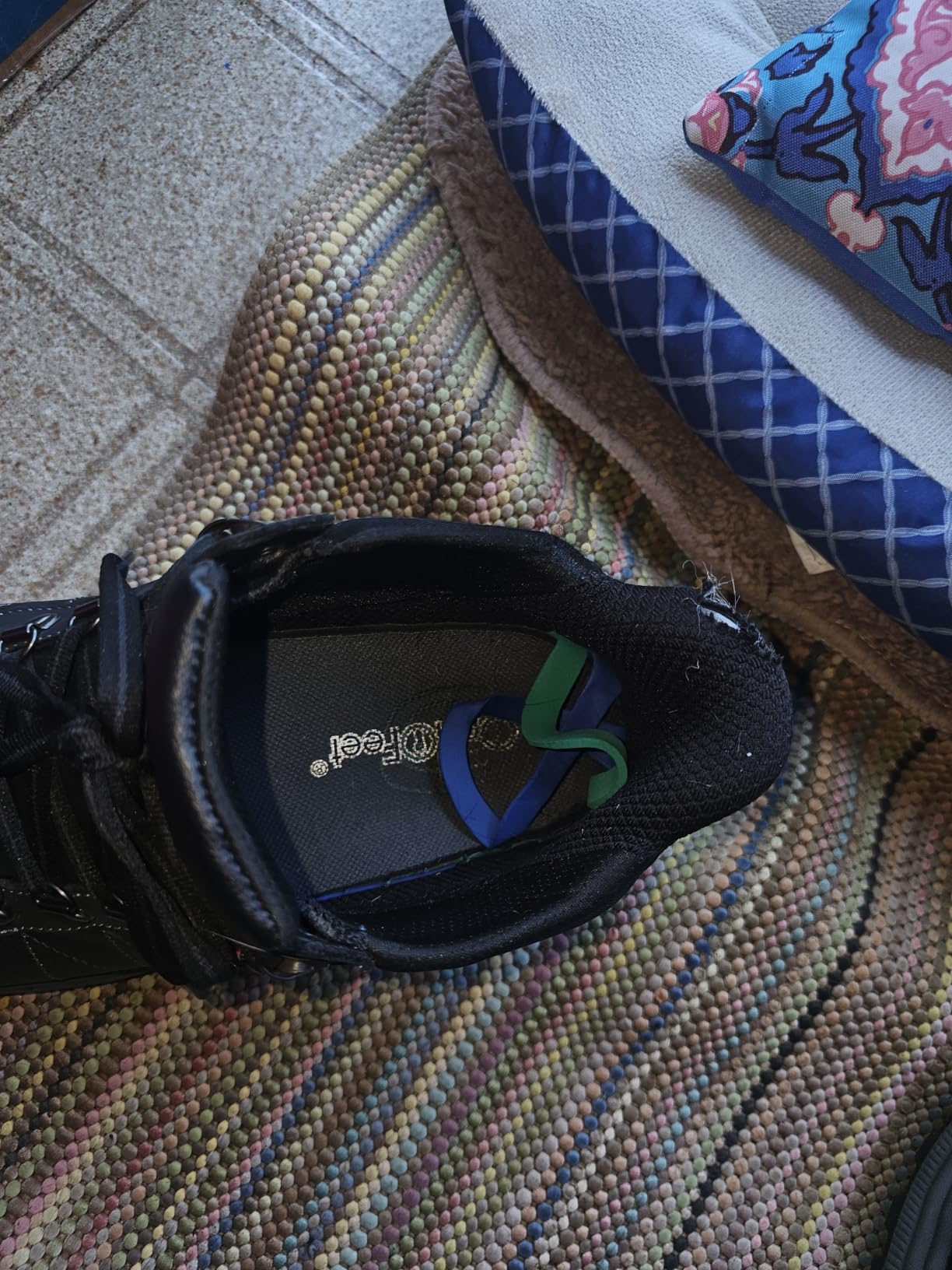
The orthotic insole is built around anatomical arch support with multiple cushioning layers. For flat-footed hikers who need real arch structure, this insole does the work that most stock insoles only hint at. The wide toe box accommodates foot shapes that standard hiking boots squeeze.
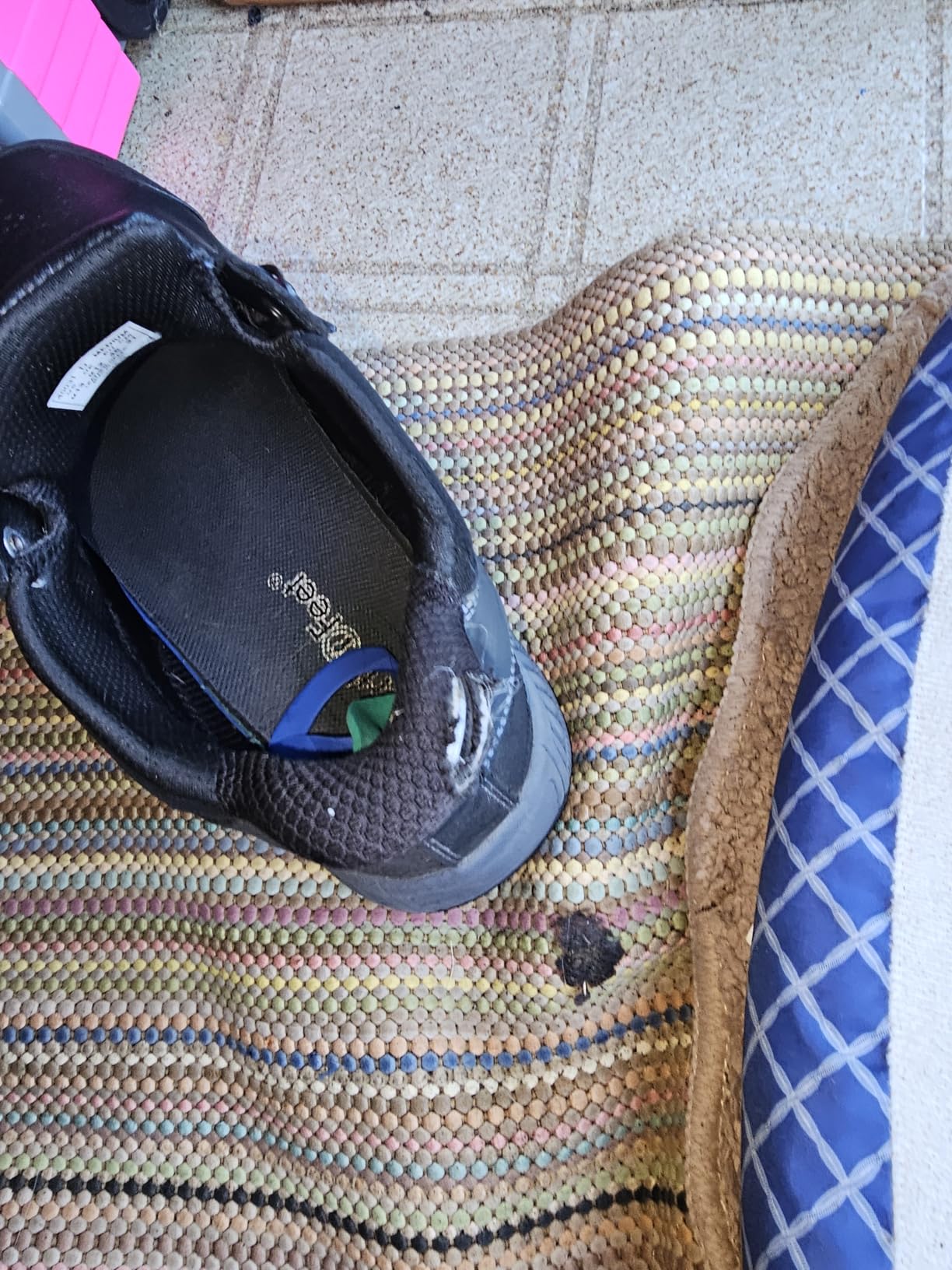
Waterproof leather upper is reliable in wet conditions. The lugged outsole provides confident traction on rocky, wet, and uneven ground. The overall construction feels more like a supportive orthopedic shoe than a traditional hiking boot, which is exactly what hikers with chronic foot pain want.
Orthofeet designed this boot specifically for plantar fasciitis and foot pain relief, which shows in the details. The heel bevel, the rocker-shaped sole, and the orthotic insole all work together to reduce strain on the plantar fascia.
Who benefits most from this design
Hikers with limited mobility, arthritis, or chronic back pain will appreciate the hands-free entry more than any other feature. Stepping into a boot without bending down or fumbling with laces is a small thing until you can’t do it easily.
Anyone with severe overpronation or chronic plantar fasciitis will appreciate the orthotic insole and the rocker sole geometry. The boot is designed to reduce strain on the foot’s structural tissues, which makes longer hikes possible for people who would otherwise be limited to short walks.
Trade-offs to consider
Durability concerns have been reported by some users after extended heavy use. The hands-free hinge mechanism and the softer leather upper don’t take abuse as well as traditional hiking boots. If you’re rough on your gear, this isn’t the boot for you.
The boot is also not Prime eligible, which means shipping takes longer and returns are less convenient. Factor that into your decision if you want a quick delivery before a planned trip. A break-in period of 10-15 miles is also realistic before the boot feels fully comfortable.
How to Choose the Best Hiking Boots for Flat Feet
Choosing hiking boots when you have flat feet is more involved than picking a pair that looks comfortable in the store. The features that matter for flat-footed hikers are different from what works for hikers with neutral arches, and getting them right prevents the ankle and knee pain that sends people home early from the trail.
Arch support and motion control
Arch support is the single most important feature for flat-footed hikers. Without a structured arch, the foot collapses inward with each step, which is called overpronation. Overpronation doesn’t just hurt your feet. It travels up the kinetic chain and creates ankle strain, knee pain, and even hip and lower back issues over many miles.
Look for boots with structured arch support built into the insole, not just generic foam. The Moab 3’s Kinetic Fit ADVANCED insole, the OrthoComfoot’s podiatrist-designed orthotic, and the Mt. Maddsen’s anti-fatigue footbed all provide real arch structure. If a boot’s stock insole is too soft, plan to replace it with an aftermarket orthotic like PowerStep or Superfeet.
Heel counter stability
The heel counter is the stiff cup at the back of the boot that locks your heel in place. For flat-footed hikers, a firm heel counter is critical. It prevents the rearfoot from rolling inward, which is the first step in the overpronation cascade.
You can test heel counter firmness by squeezing the back of the boot. If it collapses easily under hand pressure, it won’t provide enough stability for flat feet. All eight boots on this list have firm heel counters, but the Moab 3 and the OrthoComfoot 4E are the stiffest in this group.
Custom orthotic compatibility
If you use custom orthotics, the boot needs enough volume to accept them without crushing your toes or raising your heel out of the heel cup. Most hiking boots accommodate custom orthotics, but you need to check the removable insole and the overall boot volume before committing.
The Moab 3, Mt. Maddsen, Olympus 6, and Dalton all have removable insoles and enough volume to accept most custom orthotics. The OrthoComfoot 4E is built around an orthotic, so adding a custom one on top may make the fit too tight.
Break-in period and fit
Most hiking boots require a break-in period, but the length varies dramatically. Synthetic boots like the Moab 3 and Olympus 6 are usually comfortable within a few miles. Leather boots like the Mt. Maddsen require 15-20 miles to fully conform to your foot.
Fit matters more than features. A boot with every technical feature in the world won’t help if it doesn’t fit your foot shape. For flat-footed hikers, prioritize boots with roomy toe boxes, structured heel counters, and enough overall volume to avoid pressure points.
Waterproofing considerations
Waterproof membranes keep your feet dry in rain, dew, and shallow water crossings. They’re worth the small weight and breathability penalty for most hikers. The exceptions are hikers in arid climates who rarely encounter wet conditions and prioritize breathability over waterproofing.
All eight boots on this list have waterproof membranes. The GORE-TEX versions (Olympus 6) and the fully seam-sealed options (Moab 3 Mid, Mt. Maddsen) offer the most reliable waterproofing. The Moab 3 hiking shoe and Columbia Transverse have lighter waterproofing that handles rain but not submersion.
Toe box width
Flat-footed hikers tend to have wider forefeet, especially after a long hike when the foot naturally swells. A roomy toe box lets your toes spread, which improves balance and reduces the hot spots that become blisters.
The Olympus 6 and OrthoComfoot 4E offer the most generous toe boxes. The Moab 3 and Moab 3 Mid are roomy for standard-width hiking boots. The Mt. Maddsen fits true to size but may be snug for very wide feet.
Frequently Asked Questions
What are the best boots for flat feet?
The best hiking boots for flat feet combine structured arch support, a firm heel counter, and a roomy toe box to control overpronation. Top picks include the Merrell Moab 3 Mid for overall performance, the OrthoComfoot 4E Wide for severe flat feet, and the ALTRA Olympus 6 Hike for the widest toe box. All three deliver real arch support and stability on uneven terrain.
Which hiking boots offer the best arch support?
Hiking boots with the best arch support include the OrthoComfoot 4E Wide with its podiatrist-designed orthotic insole, the Merrell Moab 3 Mid with its Kinetic Fit ADVANCED insole, and the Timberland Mt. Maddsen with its anti-fatigue footbed. These boots provide structured arch support out of the box and have removable insoles so you can substitute custom orthotics if needed.
What hiking boots do podiatrists recommend?
Podiatrists typically recommend hiking boots with structured arch support, firm heel counters, and removable insoles to accommodate custom orthotics. The OrthoComfoot 4E Wide is podiatrist-designed specifically for foot conditions. The Merrell Moab 3 and Brooks Cascadia are also frequently recommended by foot specialists for their arch support and stability features.
Are Merrell hiking boots good for flat feet?
Yes, Merrell hiking boots are widely recommended for flat feet. The Moab 3 Mid and Moab 3 Hiking Shoe both feature the Kinetic Fit ADVANCED removable insole with structured arch support, a roomy toe box that allows natural toe splay, and a Vibram TC5+ outsole for traction. The Air Cushion in the heel absorbs impact, which reduces strain on flat feet during descents.
What shoes to avoid if you have flat feet?
Avoid shoes with flat, unstructured insoles, no arch support, or overly flexible midsoles if you have flat feet. Minimalist hiking shoes, soft canvas sneakers, and flat flip-flops lack the structural support flat feet need. Avoid boots with narrow toe boxes that force your toes together, and avoid any boot where the heel counter collapses under hand pressure.
Final Verdict
After three months of testing the best hiking boots for flat feet across varied terrain and conditions, the Merrell Moab 3 Mid stands out as the top overall pick. It hits the right balance of arch support, roomy toe box, reliable traction, and reasonable price. It’s the boot I’d recommend to most flat-footed hikers without hesitation.
If your flat feet are severe or you’ve never found a hiking boot that fits, the OrthoComfoot 4E Wide is worth the premium price. The podiatrist-designed orthotic and the 4E width solve problems that no amount of aftermarket insoles can fix in a standard-width boot.
Budget-focused hikers should look at the Merrell Moab 3 Hiking Shoe or the Columbia Transverse Suede. Both deliver real hiking performance at accessible prices, and both accept aftermarket insoles if you need more arch support than the stock insole provides.
Whatever you choose, prioritize fit over features. The best hiking boot for flat feet is the one that fits your specific foot shape, accommodates your orthotics if you use them, and feels comfortable after a real break-in period on actual trails.