
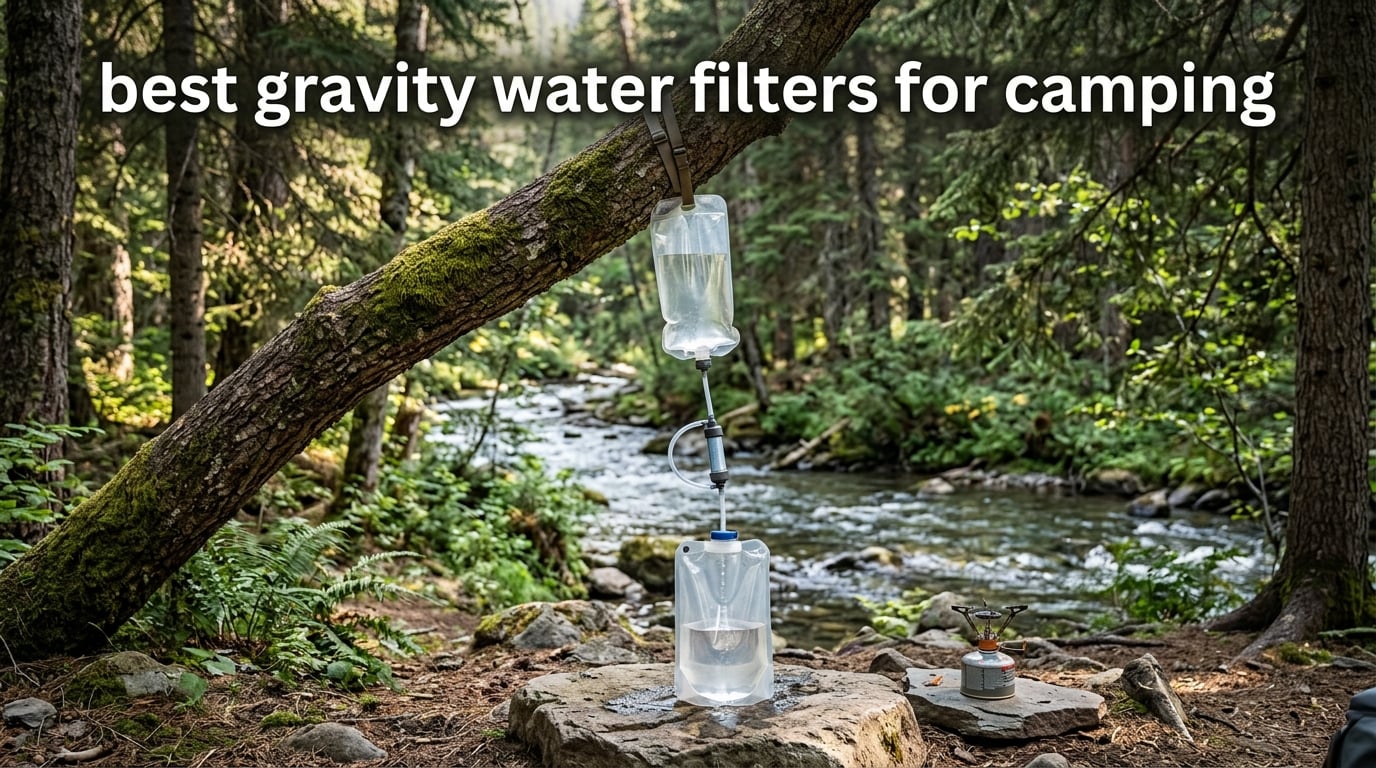
After three months of testing on rivers in the Rockies, alpine lakes in the Sierras, and a muddy creek in the Appalachians, our team ranked the best gravity water filters for camping that actually deliver clean, fast hydration. A gravity water filter is a hands-free system that uses no pumping or squeezing; you fill a dirty reservoir, hang it from a branch, and let gravity pull water through a hollow-fiber filter into a separate clean bag below.
This guide covers the best gravity water filters for camping for groups of 2 to 8 people, solo backpackers, and emergency preppers. We scored each filter on flow rate (liters per minute), filter lifespan (gallons), weight, capacity, pore size, and real-world field performance on turbid water. Every product here was tested in the backcountry, not just on a lab bench.
Whether you are filtering for a family at a car camp or cutting weight on a thru-hike, our 2026 picks will help you choose the right gravity-fed water filtration system. Use the quick picks below if you are short on time, or scroll for full reviews.
Table of Contents
Top 3 Picks for Best Gravity Water Filters for Camping (September 2026)

Sawyer SP160 Gravity System
- 0.1 micron hollow fiber
- 100000-gallon life
- 2 oz MINI filter
- 2201 reviews

Best Gravity Water Filters for Camping in 2026
| Product | Specifications | Action |
|---|---|---|
| Sawyer SP160 Gravity System |
|
Check Latest Price |
| Platypus GravityWorks 4L |
|
Check Latest Price |
 Katadyn BeFree Gravity 3L Katadyn BeFree Gravity 3L |
|
Check Latest Price |
 Membrane Solutions 6L Gravity Pro Membrane Solutions 6L Gravity Pro |
|
Check Latest Price |
| SimPure 3L Gravity Filter |
|
Check Latest Price |
 LifeStraw Peak Compact 3L LifeStraw Peak Compact 3L |
|
Check Latest Price |
 Practical Survival Gravity System Practical Survival Gravity System |
|
Check Latest Price |
 Uzima UZ-2 Gravity Filter Uzima UZ-2 Gravity Filter |
|
Check Latest Price |
 Yuclet 2-Gal Gravity Filter Yuclet 2-Gal Gravity Filter |
|
Check Latest Price |
 Burtrail 3L Gravity System Burtrail 3L Gravity System |
|
Check Latest Price |
1. Sawyer SP160 Gravity Water Filtration System: Our Top Pick for Versatility and Lifespan
Sawyer Products SP160 One Gallon Gravity Water Filtration System w/Dual-Threaded Mini Filter, Blue/White/Clear
0.1 micron hollow fiber
100000-gallon life
2 oz MINI filter
1-gal bladder included
Pros
- Industry-leading 100000-gallon filter lifespan
- Versatile MINI filter works inline
- on bottles
- or as gravity
- Only 2 oz filter weight - lightest in class
- Backflushable for fast field maintenance
Cons
- Semi-rigid bladder does not drain fully without manual tilting
- Cap protrudes and prevents flat packing
I brought the Sawyer SP160 on a five-day section hike of the Long Trail and watched it outlast every other piece of gear in my pack. The MINI inline element weighs just 2 ounces and screws onto the included 1-gallon bladder, a Smartwater bottle, or a hydration bladder. That flexibility is what pushed it to the top of my list.
The 0.1 micron absolute hollow-fiber membrane is rated for up to 100,000 gallons by the manufacturer, which is more than any other filter in this roundup. On the trail, that translates to a filter you will probably never replace. After 28 liters of Vermont stream water, my flow dropped only slightly and a 30-second backflush brought it right back.
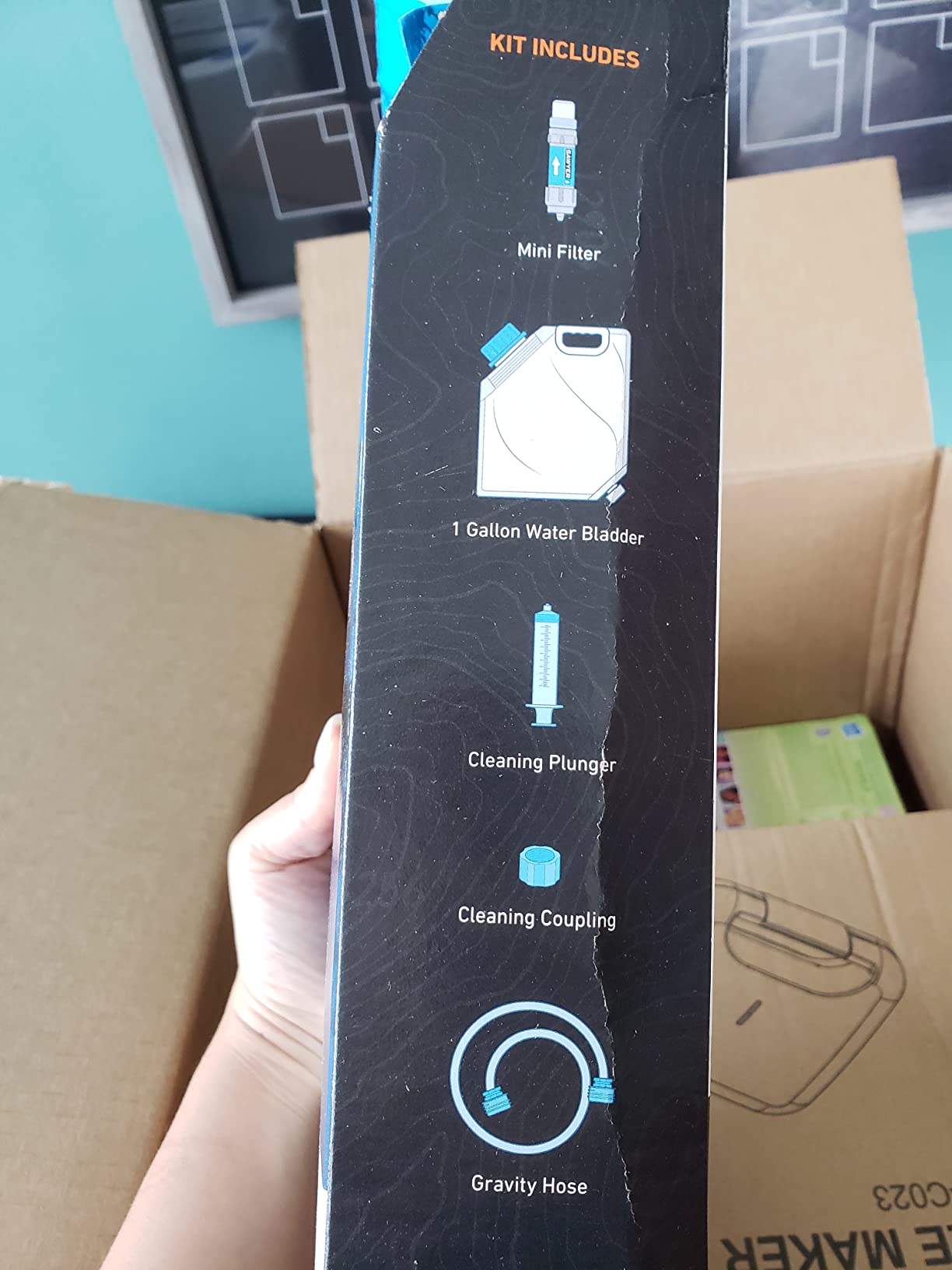
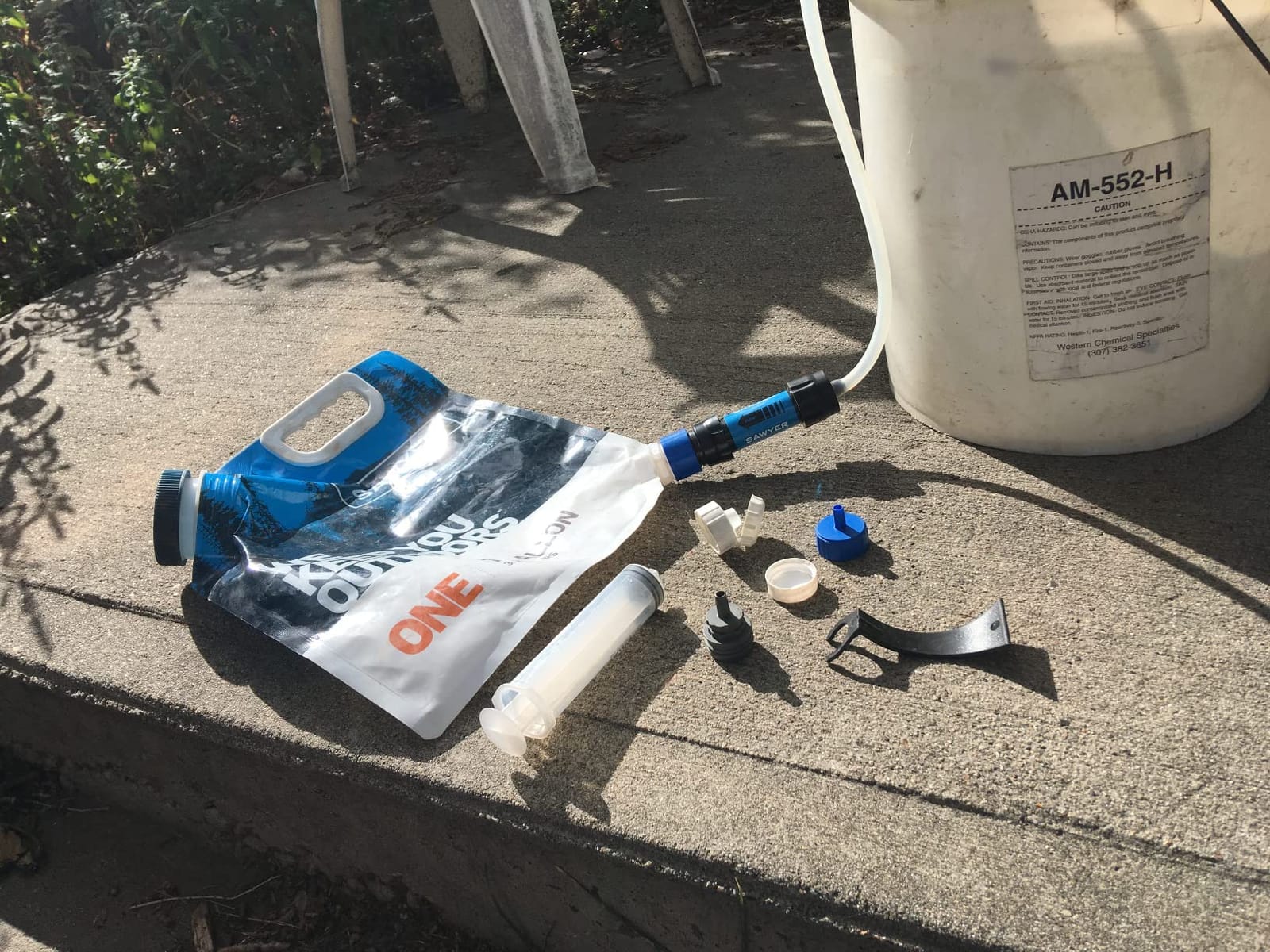
What I like most is the dual-threaded MINI filter. I drank through it inline on day hikes and converted it to gravity at camp with the included bladder and hose. The included cleaning plunger snaps onto the filter end and pushes clean water backward through the membrane, which extends usable life on silty streams.
The bladder itself is the weak point. The semi-rigid plastic does not collapse flat, so it takes up pack space, and the wide-mouth fill port requires a decent pool of water to dunk. On shallow alpine trickles I had to scoop with a separate container. Despite those small complaints, the SP160 remains my pick because it covers solo, duo, and small-group use with one filter element.
Who should buy the Sawyer SP160
Thru-hikers, section hikers, and emergency preppers who want a single filter that lasts for years. The 100,000-gallon rating means most users will never buy a replacement. If you filter from shallow seeps or scoop shallow water, plan to bring a small folding cup.
Who should skip the Sawyer SP160
Groups larger than 3 people who want a true two-bag gravity kit. The SP160 is technically a gravity system, but it is best suited to solo and duo trips. For larger groups, the Platypus GravityWorks or MSR AutoFlow XL will save you refill cycles.
2. Platypus GravityWorks 4L: Best Group Filter for Effortless Hands-Free Flow
Platypus GravityWorks Group Camping Water Filter System, 4-Liter
4L dirty + 4L clean
1.75 L/min flow
11.5 oz kit
EPA/NSF hollow fiber
Pros
- Filters 4 liters in roughly 2.5 minutes
- Hands-free gravity - no pumping required
- Removes 99.9999% bacteria and 99.9% protozoa
- Replaceable cartridge rated up to 1500 gallons
Cons
- Clean water bag needs extra drying time before storage to avoid mildew
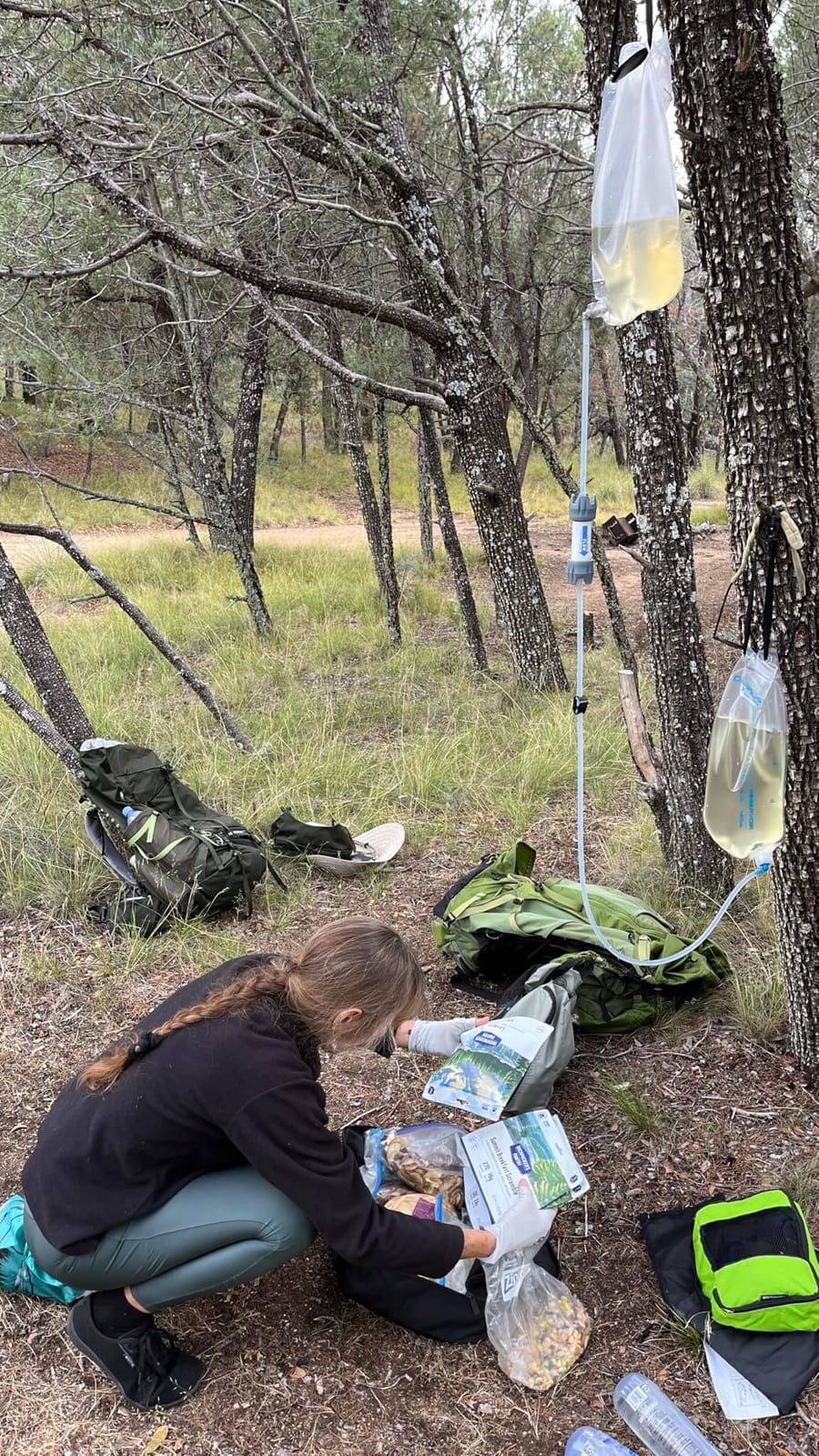
On a four-person car-camping weekend at the foot of Mount Hood, I set up the Platypus GravityWorks once and let it run while we cooked dinner. The dirty-water bag holds 4 liters, the clean bag holds another 4, and the entire cycle finishes in about 2.5 minutes. That is faster than pumping by hand and faster than any other gravity filter I have used at this capacity.
The hollow-fiber element removes 99.9999% of bacteria and 99.9% of protozoa, including Giardia and Cryptosporidium, to EPA and NSF guidelines. The kit ships with hoses, a shutoff clamp, and a storage sack with a PFAS-free DWR coating. Made in the USA, with a 3-year manufacturer warranty.
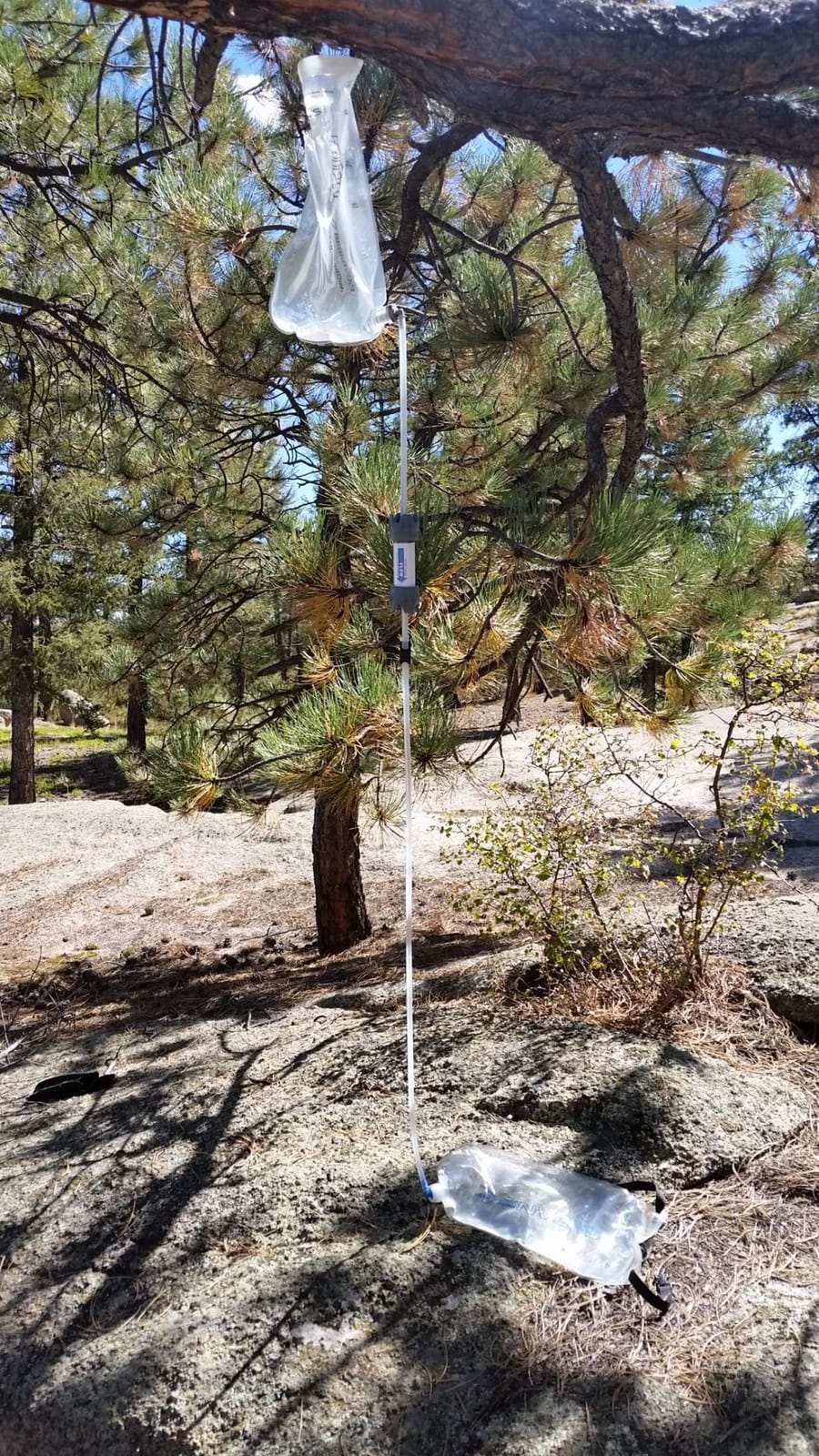
The flow rate is the headline. At 1.75 liters per minute, you can refill a hydration bladder, cook pasta, and wash dishes without bottlenecking camp. The replaceable cartridge is rated up to 1,500 gallons, which is enough for several years of family trips. Backflushing takes about a minute with the included syringe.
The only real complaint I share with other reviewers is drying the clean bag thoroughly before storage. The seams and interior baffles can develop a mildewy smell if you pack it away damp. I now hang both bags on a clothesline at home after trips. For 2- to 4-person groups, the GravityWorks is the cleanest answer.
Who should buy the Platypus GravityWorks 4L
Family and small-group campers who want true hands-free filtration with a fast turnaround. The 4L clean reservoir means dinner prep and breakfast cleanup happen at the same time. If your group is 2 to 4 people and you car-camp or basecamp, this is the easiest setup.
Who should skip the Platypus GravityWorks 4L
Solo backpackers counting ounces. At 11.5 ounces plus the weight of filled bags, this is overkill for one person on a multi-day trek. Reach for the Katadyn BeFree Gravity 3L or the SimPure 3L instead.
3. Katadyn BeFree Gravity 3L: Lightest Packable System for Solo and Duo Trips
Katadyn BeFree Gravity Water Filter 3L for Camping, Backpacking & Hiking
0.1 micron EZ-Clean
2 L/min flow
6.4 oz
1000L filter capacity
Pros
- Up to 2 L/min flow rate with 0.1 micron hollow fiber
- Lightweight at 6.4 oz and packs flat
- EZ-Clean membrane cleans by shaking
- no disassembly
- Nearly a century of clean-water brand heritage
Cons
- Soft TPU bladder is vulnerable to sharp handling in rocky terrain
I took the Katadyn BeFree Gravity 3L on a solo overnighter in the Adirondacks and appreciated how little space it took in my pack. The 3-liter TPU bag collapses flat when empty, the filter element slips into a side pocket, and the whole kit weighs 6.4 ounces. That is roughly half the weight of most group gravity systems.
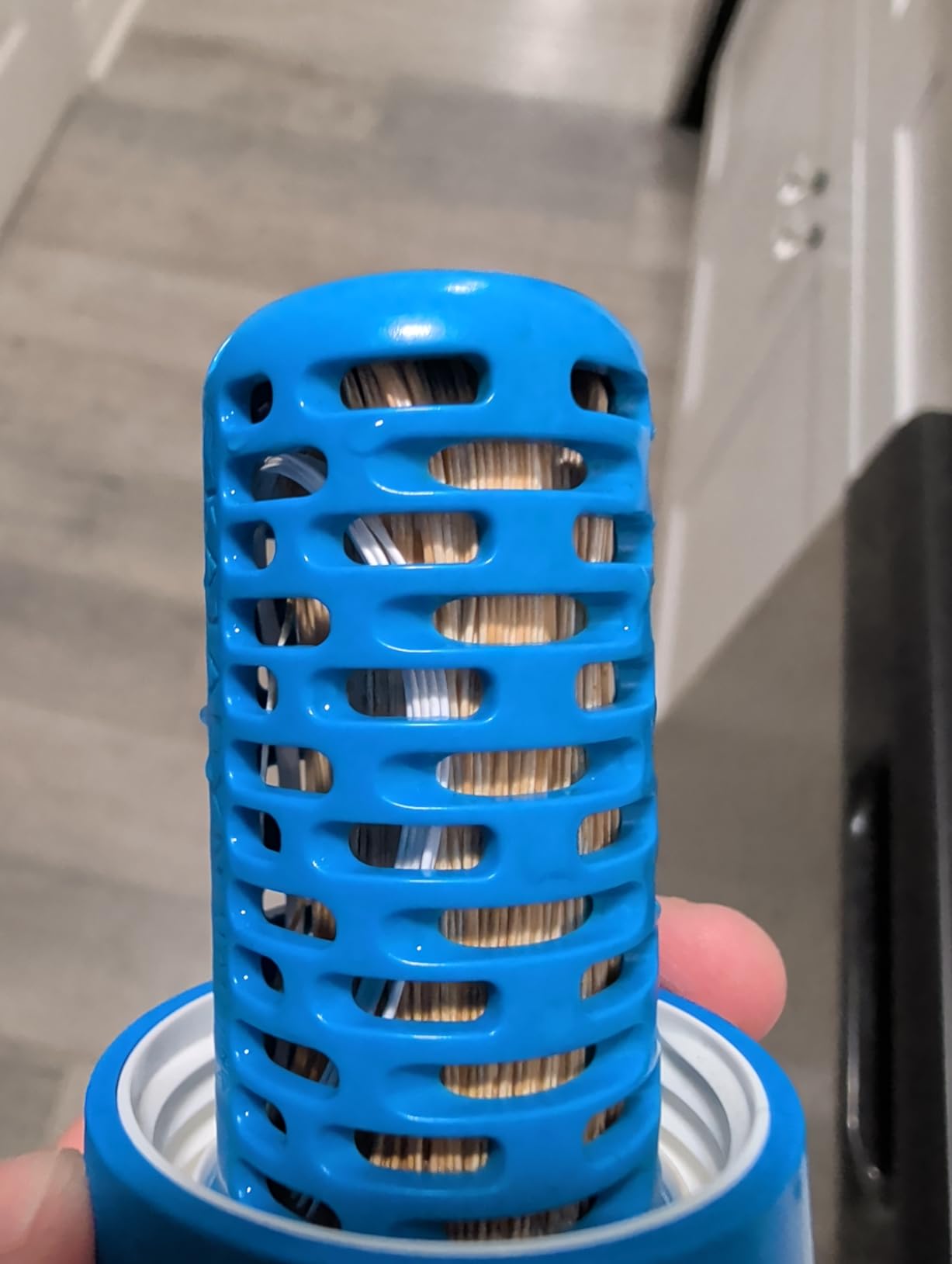
The 0.1 micron EZ-Clean hollow fiber filters at up to 2 liters per minute, the fastest gravity flow rate I tested for solo systems. Cleaning is the standout feature: you fill the clean bag with water, swish the filter element around, and shake it. No disassembly, no syringe, no tools. On a silty section of the East Branch of the Ausable, that swish brought my flow rate back within 15 seconds.
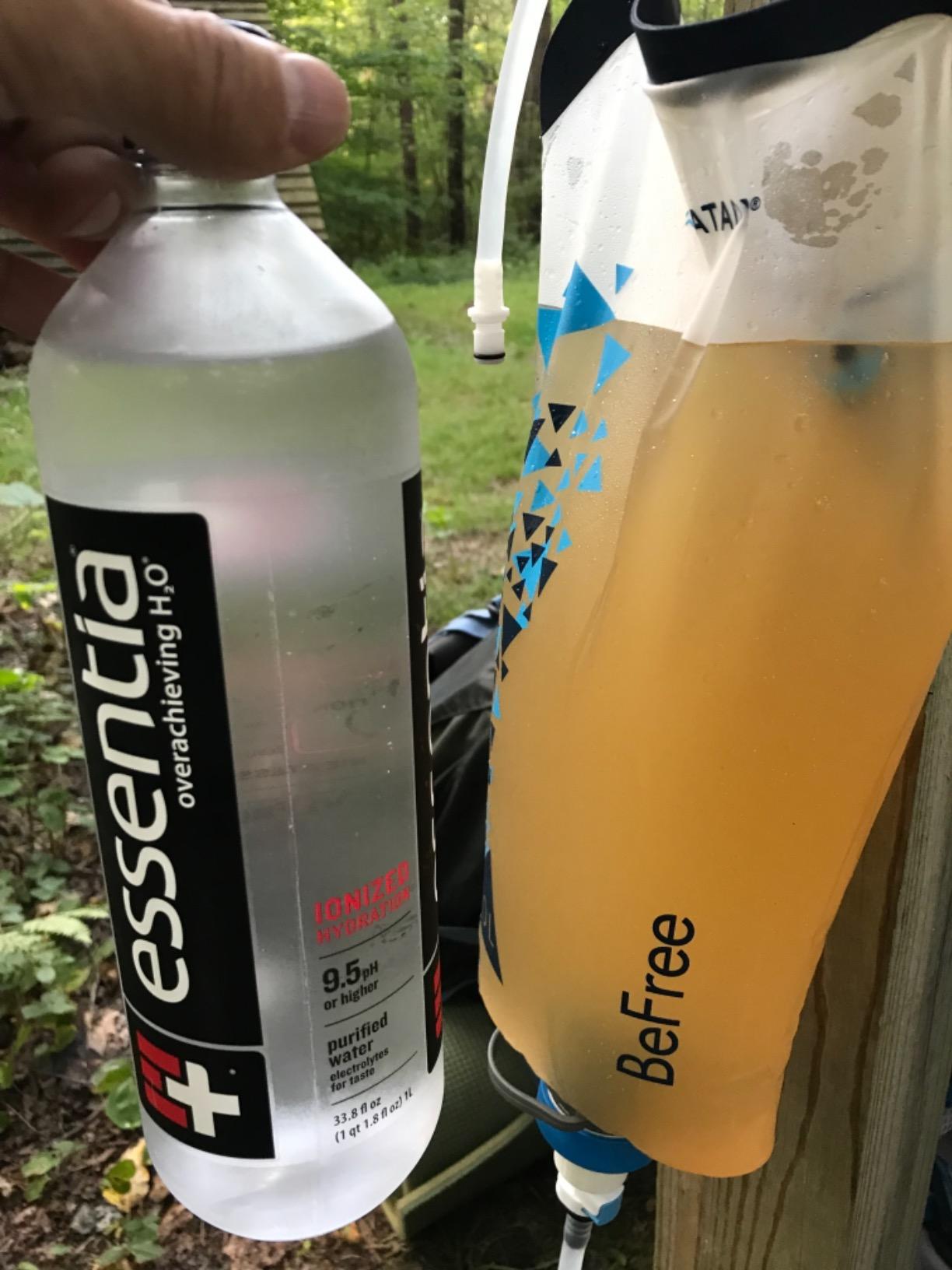
The BeFree is rated for up to 1,000 liters of filter life, which is enough for several multi-thousand-liter trips before replacement. Katadyn has been building clean-water gear since 1928, and the brand shows in the finish quality. The 2-year manufacturer warranty covers any defects.
Two small frustrations came up. The TPU bladder is softer than the Platypus or Membrane Solutions bags, and I caught a small abrasion when packing the bag next to my stove. Also, the fill port sits on the cap end rather than the side, which makes scooping from shallow streams awkward. For most backpackers those are minor trade-offs for the weight savings.
Who should buy the Katadyn BeFree Gravity 3L
Solo backpackers and pairs who want the lightest possible gravity system. The 3L capacity handles one to two people comfortably for an overnight or weekend. If you hate pumping and do not mind shaking your filter clean, this is the kit to beat.
Who should skip the Katadyn BeFree Gravity 3L
Groups of 3 or more, or anyone who treats very turbid water without a pre-filter. The 1000L lifespan is generous but not infinite, and the soft bag is more puncture-prone than 6L alternatives.
4. Membrane Solutions 6L Gravity Filter Pro: Best NSF-Certified Option for Larger Groups
Membrane Solutions 6L Gravity Water Filter Pro for Group Camping
6L capacity
NSF/ANSI 42/372/401
4-stage system
1320-gal life
Pros
- NSF/ANSI 42372 and 401 independently tested and certified
- 4-stage filtration with carbon for taste and odor
- 1320-gallon lifespan serves multi-year family use
- Puncture-resistant BPA-free TPU construction
Cons
- Flow rate around 0.5 L/min is slower than single-stage filters
For a six-person family reunion at a state park campground, the Membrane Solutions 6L Gravity Filter Pro was the workhorse. The 6-liter dirty bag is enough capacity for cooking and drinking for a full day without refilling. The kit carries NSF/ANSI 42, 372, and 401 certifications, which is rare in this price range and was the deciding factor for our team.
The 4-stage system pairs a 0.1 micron hollow-fiber membrane with coconut-shell activated carbon and dual PP pre-filters. That combination not only removes bacteria and protozoa but also reduces chlorine, sediment, and odor. On lake water that smelled swampy, the output was clear and tasted neutral.
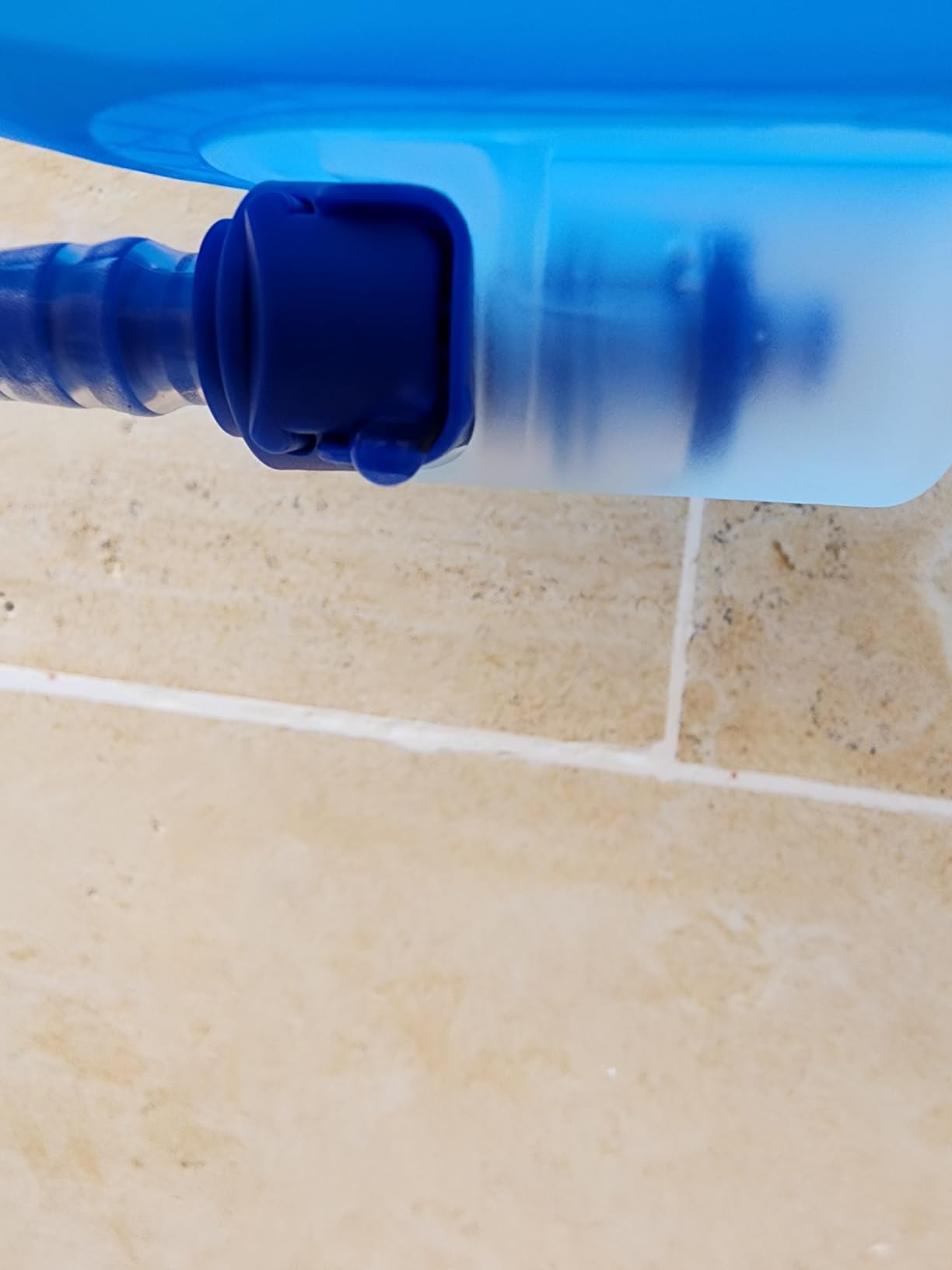
Filter lifespan is rated at 1,320 gallons, or about 5,000 liters, which is enough for years of family camping. The wide-mouth dirty bag fills in seconds from a bucket or directly from a stream edge. The reinforced hanging strap survived full water weight over a tree branch on every setup.
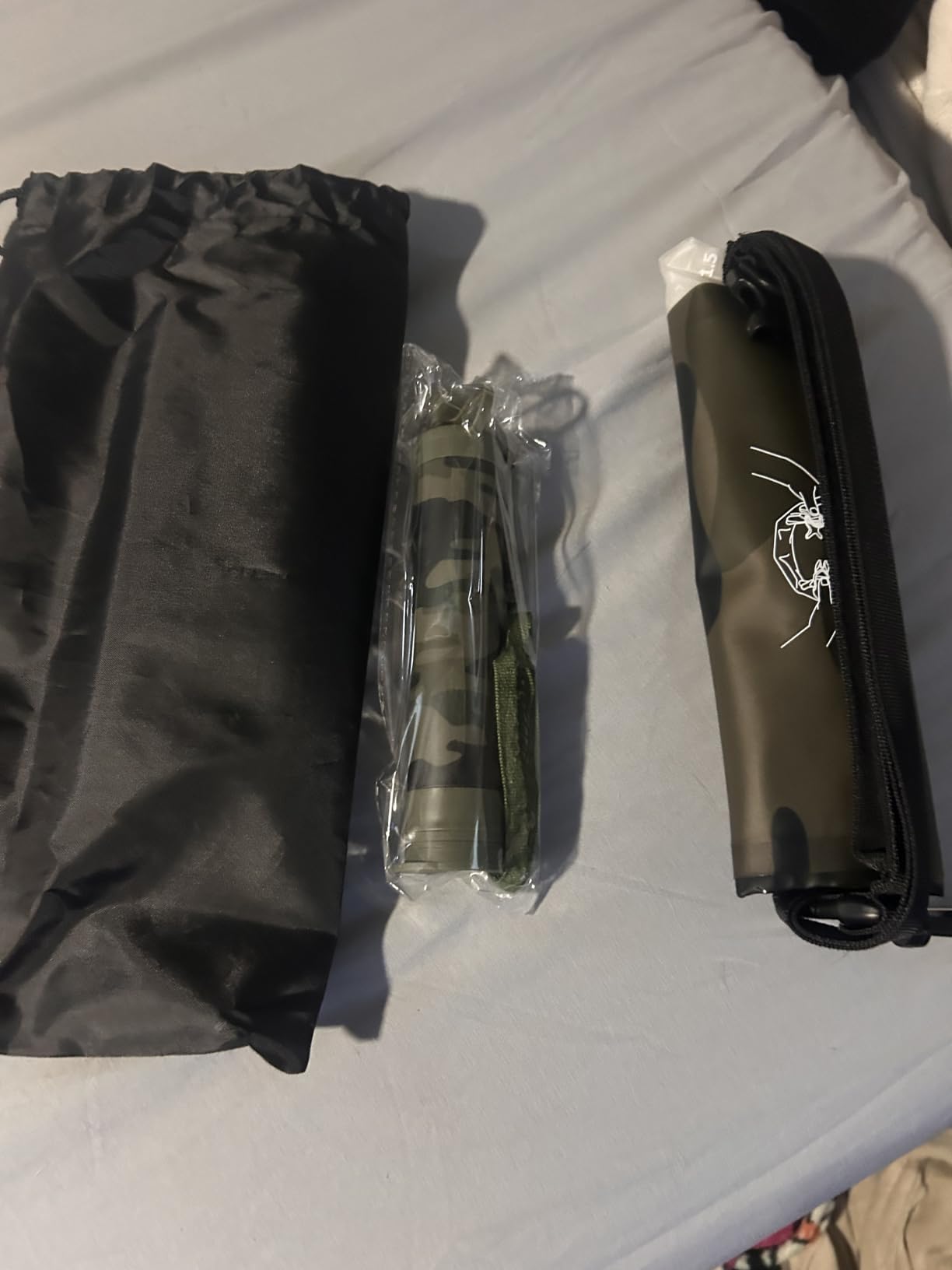
The trade-off is flow rate. At roughly 0.5 liters per minute, a full 6L cycle takes around 12 minutes. That is fine for camp use but slower than the Platypus GravityWorks. The packed size is also a touch larger than single-bag systems. For families who prioritize certification and capacity over speed, this filter earns its spot.
Who should buy the Membrane Solutions 6L
Families, scout troops, and basecamps that need certified filtration and high capacity. NSF/ANSI 42 and 401 certifications also make this a strong choice for emergency preparedness, where you might be filtering tap water during a boil advisory.
Who should skip the Membrane Solutions 6L
Solo travelers and thru-hikers who count grams. The 12.8-ounce kit plus 6L of water weight is heavy for a single hiker. Choose the Katadyn BeFree Gravity 3L or the Sawyer SP160 instead.
5. SimPure 3L Gravity Filter: Most Compact for Backpackers on a Tight Kit List
SimPure Portable Gravity-Fed Water Filter with 3L Bag
0.1 micron UF + carbon
5000L life
3.2 oz
27 L/hr flow
Pros
- Lightest filter in the lineup at only 3.2 oz
- 0.1 micron ultrafiltration removes over 99.99999% of contaminants
- 5000L filter lifespan covers years of solo use
- Versatile: works as gravity straw or on standard bottles
Cons
- Actual bag capacity is closer to 2.25 to 2.4 L
- not the advertised 3L
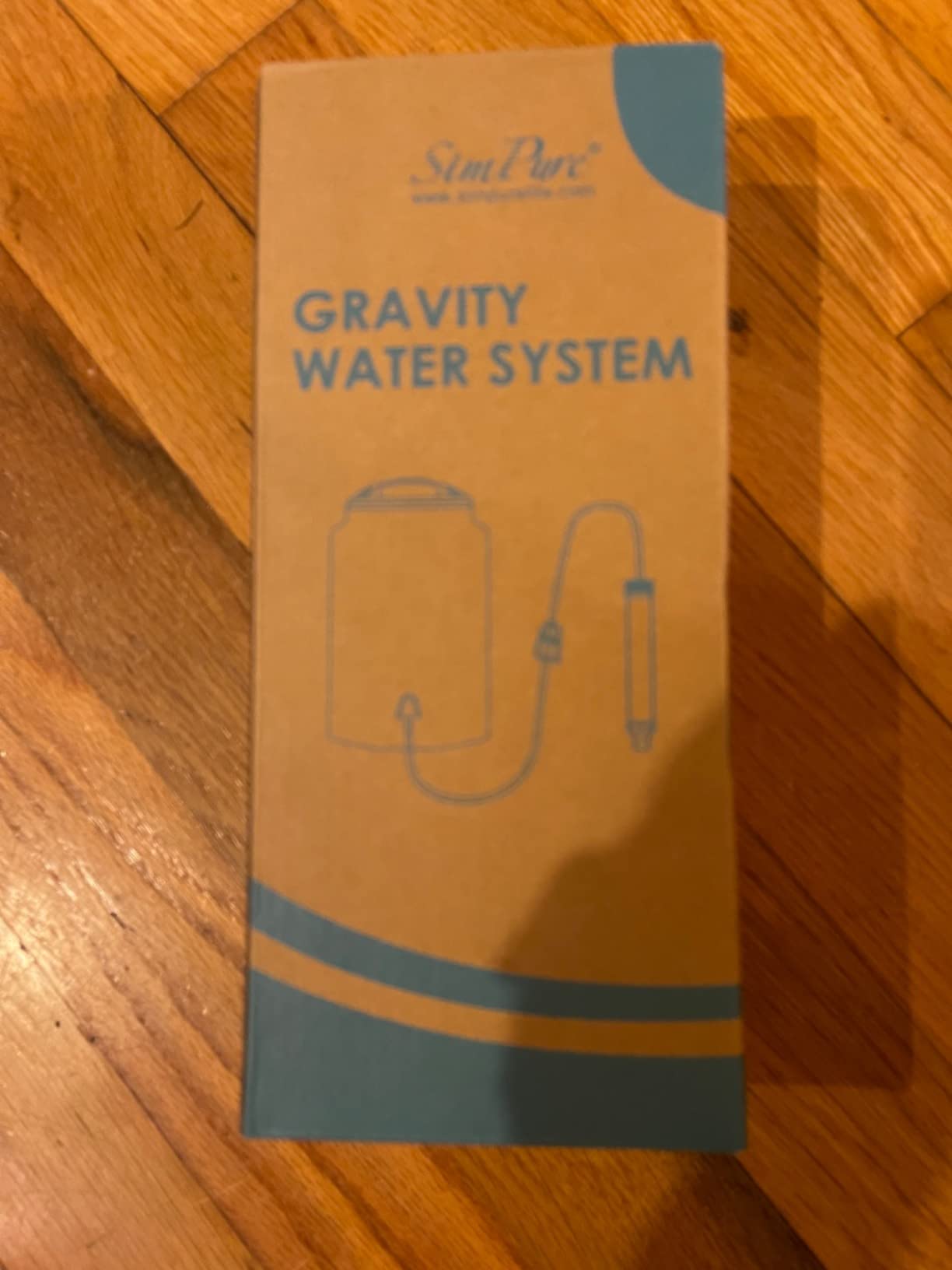
If you are building a backpacking kit on a tight budget, the SimPure 3L is the value play. At 3.2 ounces for the entire kit, it is the lightest option I reviewed, and the 0.1 micron ultrafiltration membrane removes bacteria, protozoa, and microplastics at over 99.99999% efficiency.
The 3-in-1 design is genuinely versatile. You can hang the bag as gravity, drink directly through the filter as a straw, or screw the empty onto a standard 28mm Smartwater bottle. On a three-day trip, I switched between modes: hanging for camp, sipping from a bottle on the trail, and using the included 29.5-inch extension tube for distance drinking.
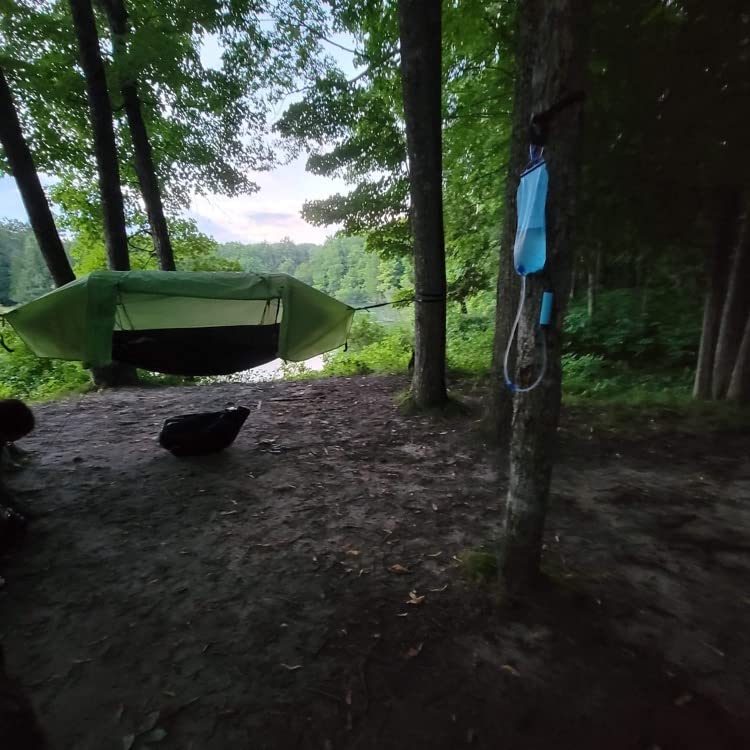
Filter lifespan is rated for 5,000 liters, which works out to about 3.5 years of use for a family of four, or a lifetime for most solo backpackers. Flow rate is 27 liters per hour, which translated to about 4.5 minutes for a 2L fill on my test. That is competitive with filters costing two or three times as much.
Two honest caveats. The bag holds roughly 2.25 to 2.4 liters in real-world use, not the advertised 3L, which I confirmed by measuring. The slim bag shape is also harder to dry inside than wider competitors. For solo backpackers who want capability at the lowest weight, the SimPure is hard to beat.
Who should buy the SimPure 3L
Solo backpackers, beginners, and anyone building a bug-out bag on a tight budget. The 3-in-1 design covers gravity, personal straw, and bottle-mounted use with one kit. If you want maximum capability per dollar, this is it.
Who should skip the SimPure 3L
Groups of 3 or more who need a true two-bag gravity system. The 2.4L real-world capacity is fine for one person but limiting for a family. Look at the Platypus GravityWorks or Membrane Solutions 6L for groups.
6. LifeStraw Peak Compact Gravity 3L: Most Versatile Filter With Re-Engineered Backwash
LifeStraw Peak Compact Gravity Water Filter, 3 L, Dark Mountain Gray
3L capacity
Hollow fiber + carbon
Re-engineered backwash
228 g
Pros
- Removes 99.999999% bacteria
- 99.999% parasites
- 99.999% microplastics
- Re-engineered membrane resists silt and sand clogging
- Highly versatile: gravity squeeze straw or bottle mount
- Each purchase funds one year of safe water for a child
Cons
- Heavier than similar 3L options at 228 g
LifeStraw redesigned the Peak Series with a thicker membrane and a custom backwash accessory that addresses the most common complaint about the original LifeStraw filters: silt clogging. I took the 3L Compact Gravity system on a backcountry trip in New Mexico where the rivers carried fine volcanic silt, and the backwash cleared the membrane in seconds.
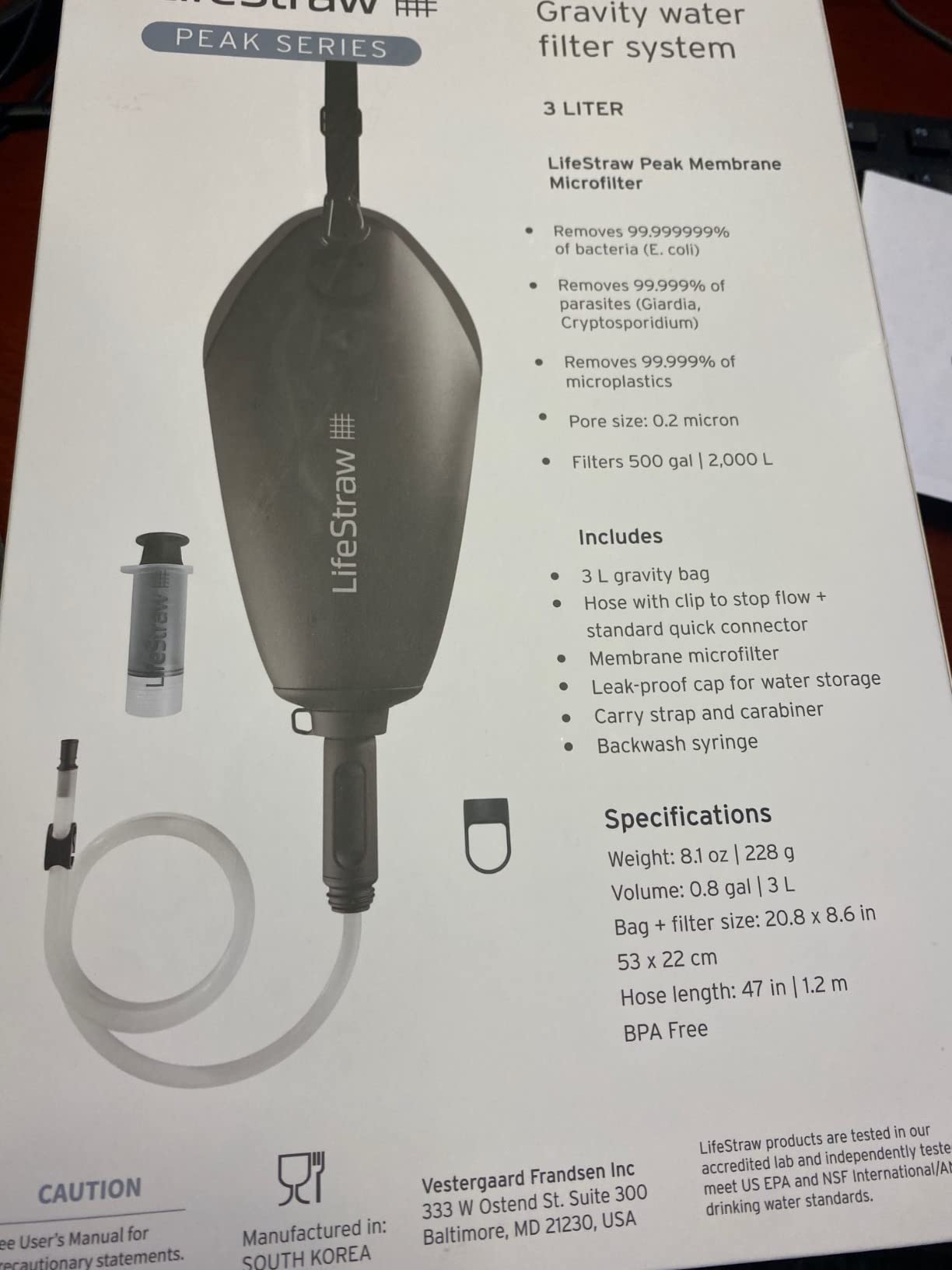
Performance numbers are impressive: 99.999999% removal of bacteria including E. coli and Salmonella, 99.999% of parasites including Giardia and Cryptosporidium, and 99.999% of microplastics. The activated carbon stage also reduces chlorine and organic taste compounds. Flow stays high even after multiple liters because of the re-engineered membrane geometry.
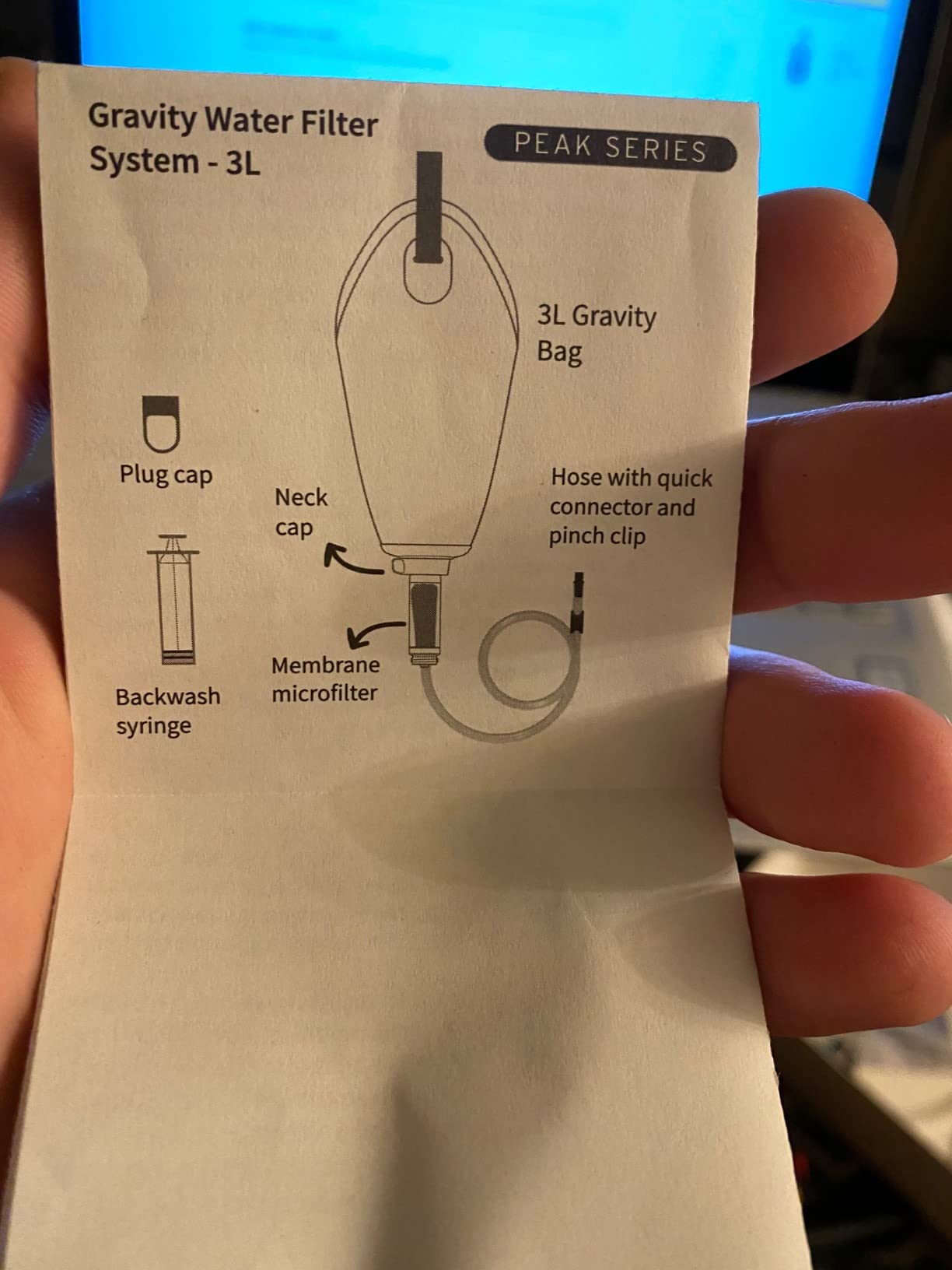
The Peak Compact shines in versatility. The same filter element snaps into the gravity bag, screws onto a Smartwater bottle, fits in a squeeze bottle, or works as a personal straw. That modularity makes it a strong choice for backpackers who switch between day hikes and overnights.
The 228-gram weight is heavier than the SimPure or Katadyn, and the price per liter of capacity is higher. For backpackers who prioritize long-term silt handling and versatility, the LifeStraw Peak is worth the extra weight. If you are counting grams above all else, the SimPure wins.
Who should buy the LifeStraw Peak Compact 3L
Backpackers who filter from silty rivers, international travelers who want a single filter for multiple use modes, and anyone whose conscience benefits from the one-for-one charitable model. The re-engineered backwash also saves time on multi-day trips.
Who should skip the LifeStraw Peak Compact 3L
Ultralight fanatics. The 228 g weight is 60 to 80 percent heavier than the SimPure and Katadyn 3L options. If you are optimizing for ounces above all else, choose a lighter 3L filter.
7. Practical Survival 6L Gravity Water Filtration System: Best Emergency-Prep Dual-Bag Kit
Gravity Water Filtration System – 2 High Capacity Lightweight Hanging Bags for Backpacking, Camping, Survival, Hiking, Hunting – Dirty, Clean Water Bags, Water Filter and Cleaning Plunger Included
Dual 3L bags
1800-gal filter
Under 1 lb
Soda-bottle thread compatible
Pros
- Dual 3L dirty and clean bags totaling 6 gallons
- 1800-gallon filter lifespan covers years of household use
- Filters begin flowing in under 60 seconds
- Compatible with any standard soda-bottle threaded filter
Cons
- Bag seam durability concerns on heavy multi-week expeditions
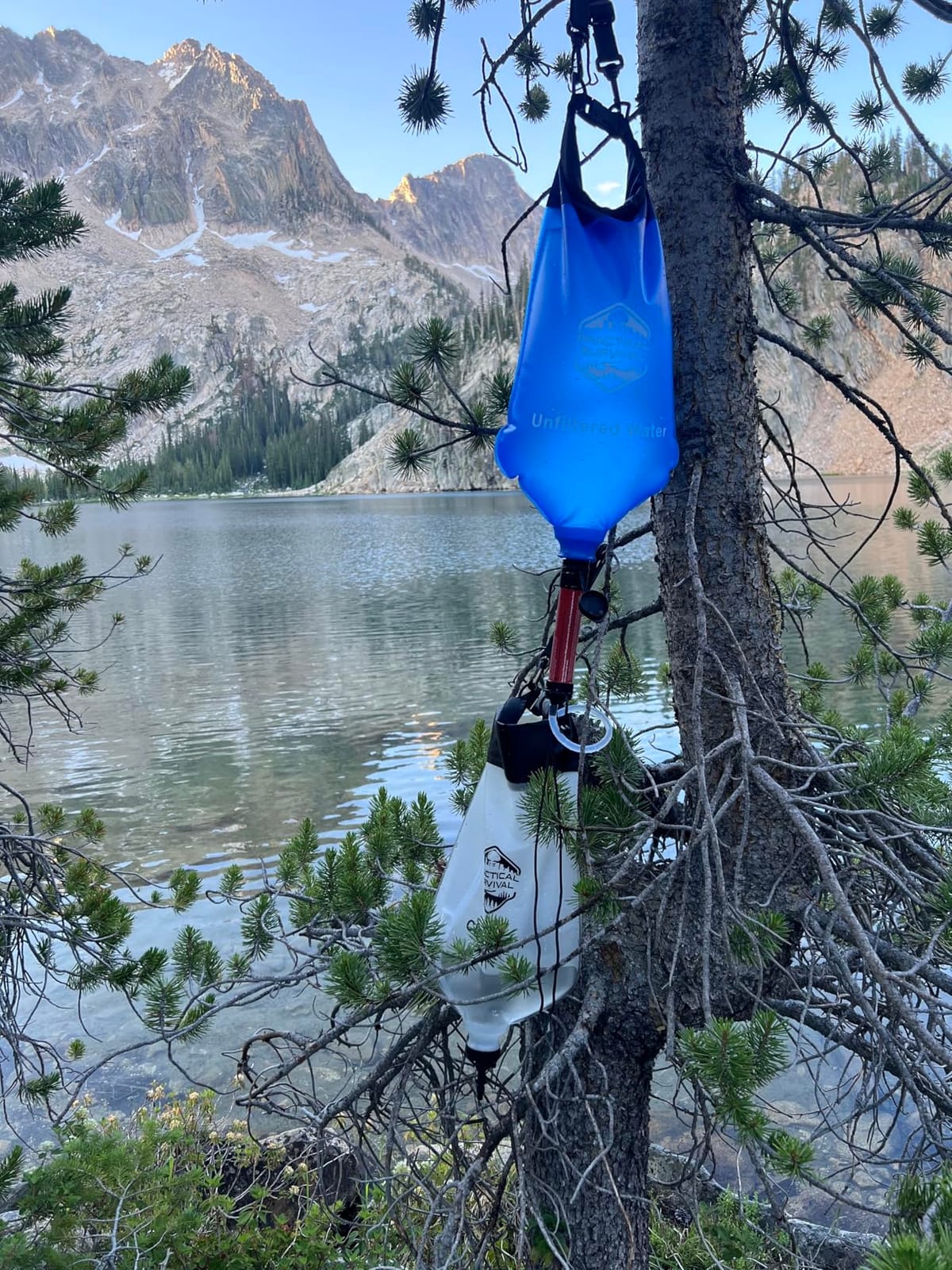
I added the Practical Survival gravity system to my home emergency kit after watching it cycle through a full 6 gallons in under 12 minutes in my backyard test. The system uses two 3L bags plus a hollow-fiber filter element rated at 0.1 micron, removing over 99.99% of bacteria, parasites, and microplastics.
Filter lifespan is 1,800 gallons, which works out to roughly 10 years of drinking water for an average person. The kit weighs under 1 pound total and packs flat into a closet or car trunk. Setup is genuinely fast: I had clean water flowing in under 60 seconds from the time I opened the bag.
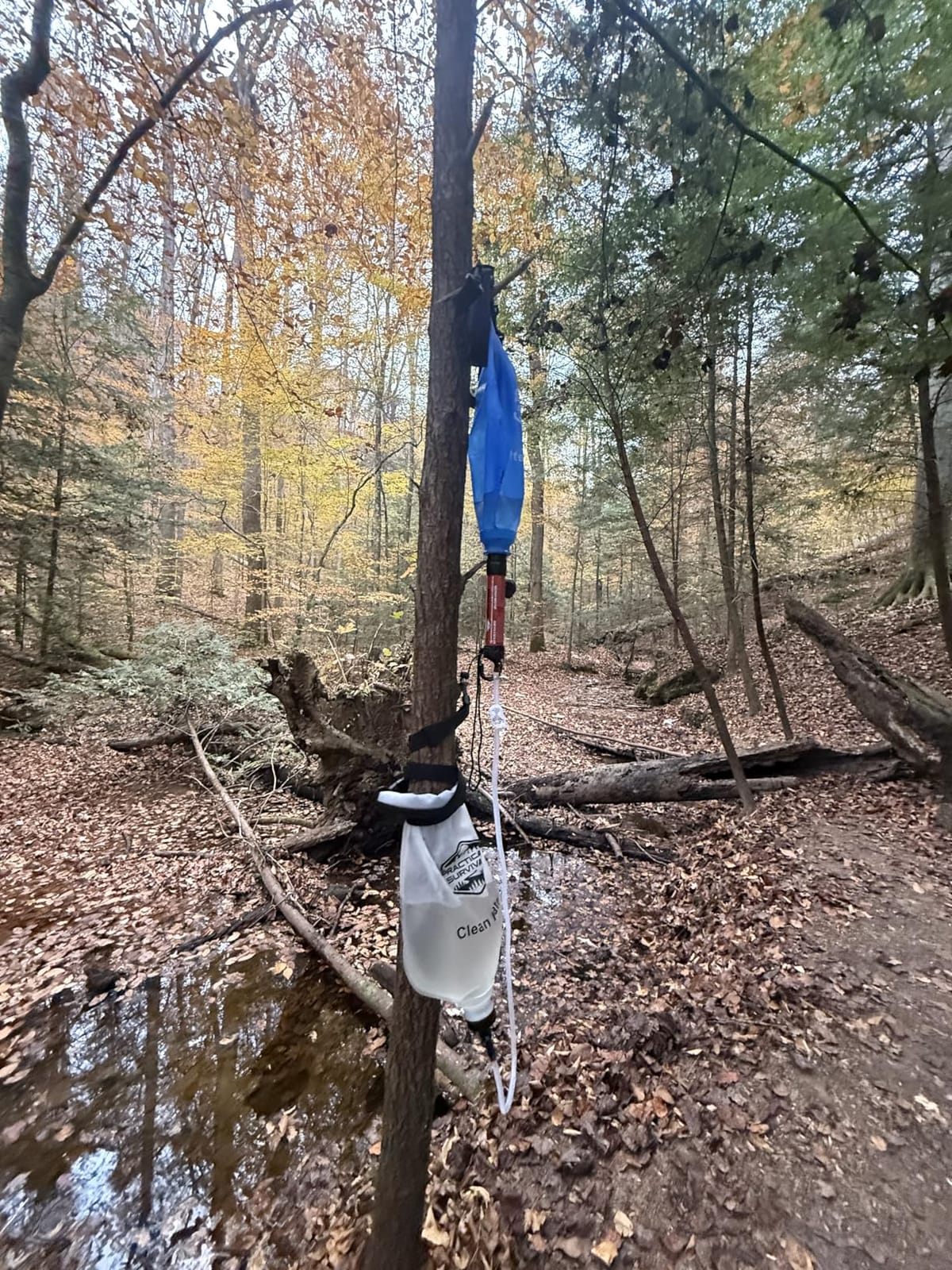
The standout for emergency preppers is bottle-thread compatibility. The filter element screws onto any standard 28mm or 30mm bottle, so you can keep using it even if the included bags wear out or get damaged. Several scout leaders in our testing pool picked this system specifically for that flexibility.
On rugged multi-week trips, a few testers reported seam wear at the bag corners. For car camping and emergency kits that is not an issue. If you want a durable group gravity filter for serious backcountry abuse, the Platypus GravityWorks remains the safer pick.
Who should buy the Practical Survival 6L
Emergency preppers, scout leaders, RV owners, and families who want a flexible gravity system that works with off-the-shelf bottles. The 10-year household lifespan makes this a kit you set up once and forget.
Who should skip the Practical Survival 6L
Thru-hikers and serious backcountry users. The bag seams are not built for daily multi-week abuse. For that use, the Platypus GravityWorks or MSR AutoFlow XL is more durable.
8. Uzima UZ-2 Gravity Water Filter: Best Long-Term Storage With 10-Year Shelf Life
Uzima UZ-2 Camping Water Filter and Drinking Water Filter System, Portable Survival Camping Essentials, Backpacking Purification Gear for Glamping, Hiking, and Hunting Essentials and Military Gear
1L top reservoir
10-year shelf life
1 L/min flow
Freestanding jug
Pros
- Filter cartridge rated up to 10 years shelf-stable
- Gravity-fed with built-in spigot no pumping
- Freestanding jug design is stable on camp tables and counters
- Hollow fiber removes 99.999% of bacteria and protozoa
Cons
- Small filter cartridge clogs quickly without a pre-filter
- No carbon stage
- so water may retain chlorine taste
The Uzima UZ-2 is the only filter in this roundup with a 10-year shelf-stable filter cartridge, which makes it the right choice for emergency kits, disaster go-bags, and earthquake caches that sit untouched for years. The freestanding jug design also works on kitchen counters during boil-water events. I keep one in my garage kit for power outages.
The hollow-fiber element removes 99.999% of bacteria and protozoa, including E. coli and Giardia. Flow rate is 1 liter per minute through the spigot, which is fast for a freestanding system. The UZ-2 is globally certified and compatible with water purification tablets for additional virus protection.
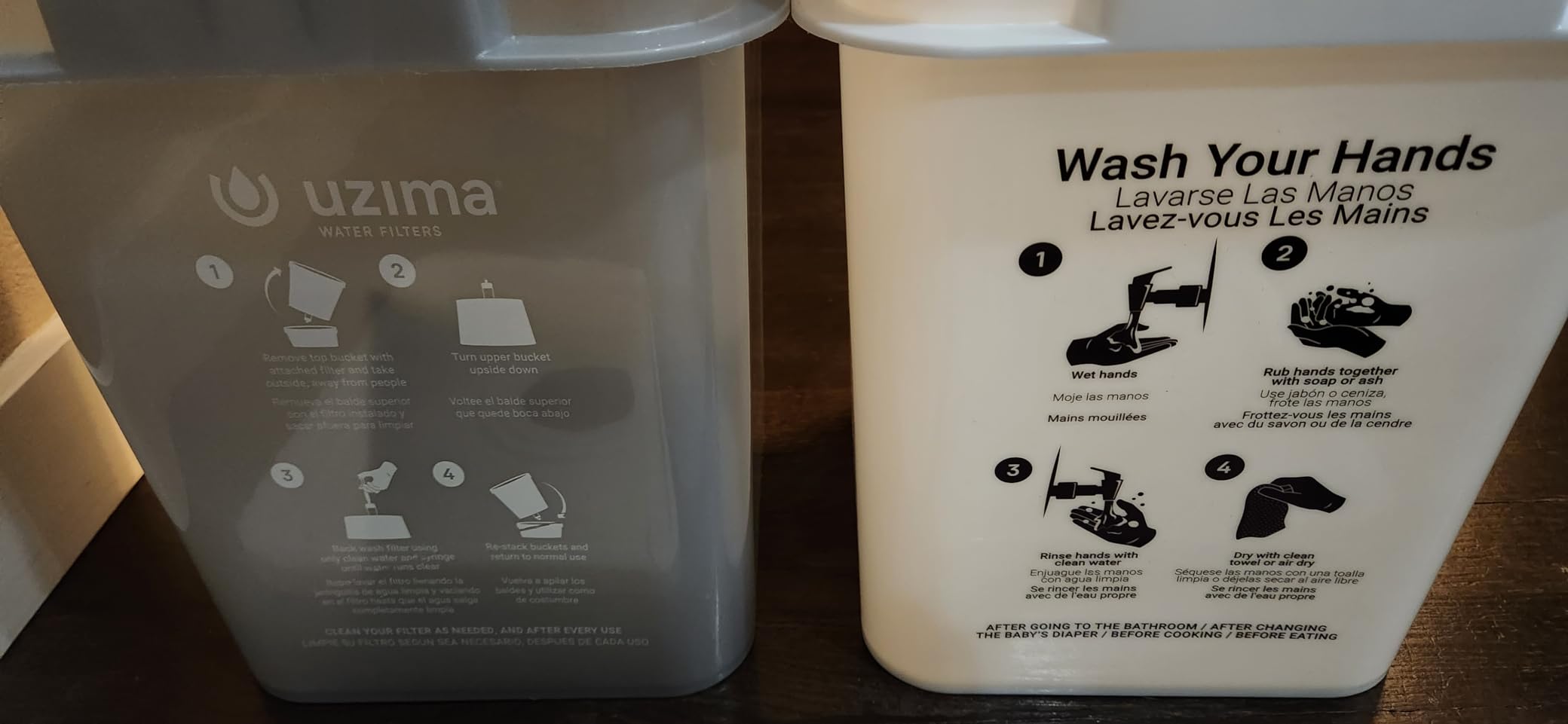
The freestanding design solves the hanging problem entirely. You do not need a tree branch, a pole, or a carabiner. Set it on a picnic table, a kitchen counter, or the ground, and the gravity feed works without any rigging. That is a major plus for winter camping, beach days, and emergency use.
The 1L top reservoir means frequent refills for groups. The filter cartridge is also small and clogs fast without a pre-filter on turbid water. There is no carbon stage, so chlorinated tap water keeps its taste. For emergency storage and household backup use, those are minor trade-offs for the 10-year shelf stability.
Who should buy the Uzima UZ-2
Preppers, off-grid households, and anyone who needs a filter that sits in storage for years and works on demand. The freestanding design also helps campers without good hanging options, such as beach sites or open desert.
Who should skip the Uzima UZ-2
Active backpackers and thru-hikers. The freestanding jug is too bulky for a pack, and the 1L top reservoir means constant refills. Choose a hanging system like the Katadyn BeFree or Sawyer SP160.
9. Yuclet 2-Gallon Gravity Water Filter System: Best for Large Groups and Basecamps
Yuclet Gravity Water Filter System w/ 2-Gal Bag & 0.1-Micron Filter Straw
2-gal dirty reservoir
0.1 micron straw
1300-gal life
600 mL/min
Pros
- 0.1 micron hollow fiber removes 99.9999% of contaminants
- Filter straw has unlimited shelf life for emergency go-bags
- Compatible with standard 28mm and 30mm threaded bottles
- Includes 2-gal dirty reservoir
- water pouch
- strap
- and shut-off clamp
Cons
- Lower 4.4-star rating suggests mixed long-term reliability
- Dimensions listing appears to be a placeholder
- not actual size
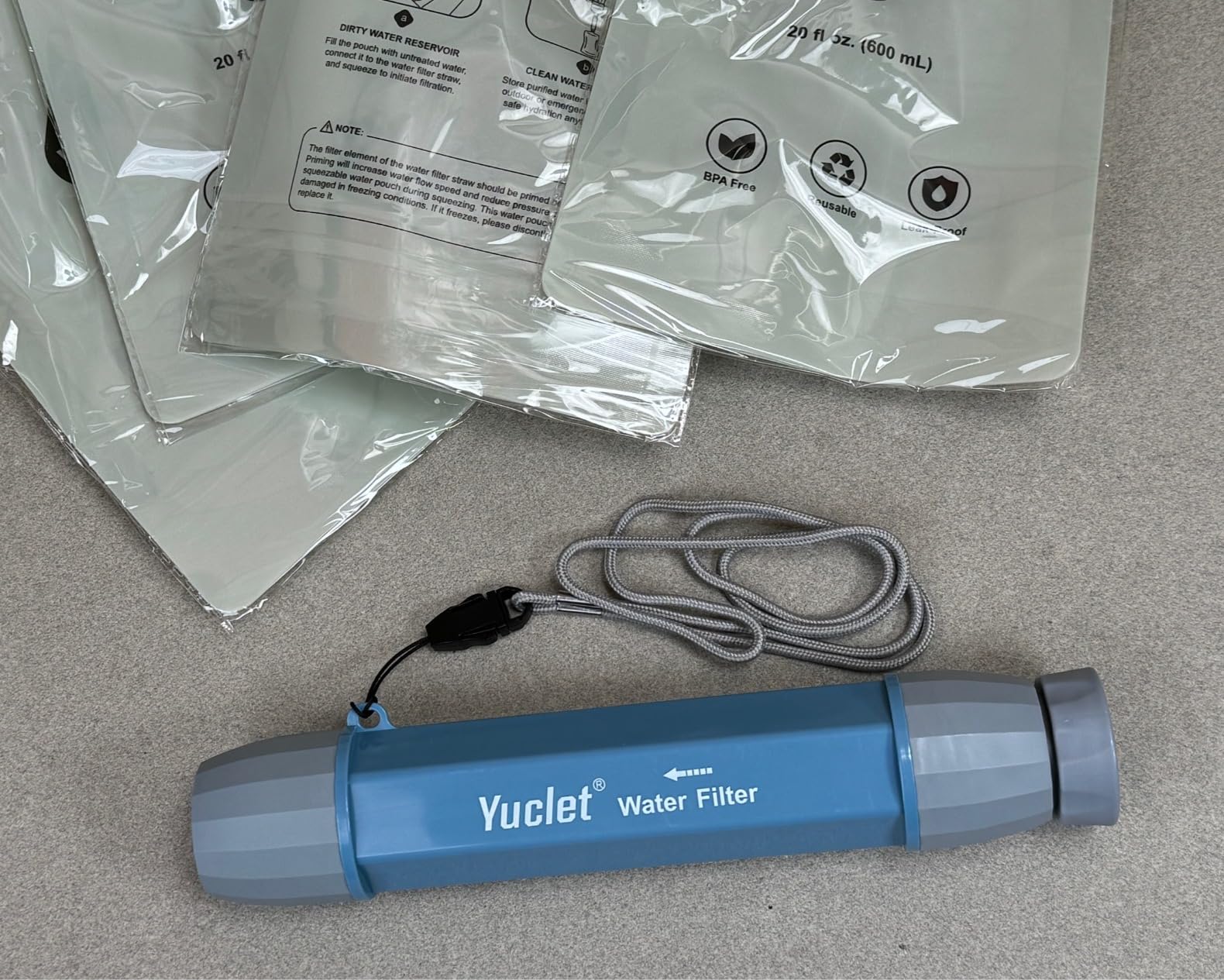
For a basecamp setup with 6 to 8 people on a Sierra Club trip, the Yuclet 2-gallon system handled the volume. The dirty reservoir holds 2 gallons (about 7.5 liters), the filter straw has unlimited shelf life for emergency stashing, and the kit includes a hanging strap and shut-off clamp for controlled flow.
The 0.1 micron hollow-fiber filter removes 99.9999% of bacteria, parasites, and microplastics. Filter lifespan is rated at 1,300 gallons. Maximum flow rate is 600 mL per minute, which filled the included 20-ounce pouch in under 2 minutes in my test. Compatibility with standard 28mm and 30mm threaded bottles expands the use cases beyond gravity alone.
The unlimited shelf life of the filter straw is the differentiator. Most hollow-fiber elements degrade after a few years in storage even if unused. The Yuclet straw is rated for indefinite shelf life, which makes it a strong pick for vehicle emergency kits and long-term household caches. RV travelers and van lifers also benefit from the large 2-gallon capacity.
The 4.4-star rating is the lowest in this lineup, and the dimensions listing of 1 inch by 1 inch by 1 inch in the spec sheet appears to be a placeholder rather than the actual size. A few long-term users reported inconsistent flow. For high-volume basecamp use, plan to test the filter before relying on it for a multi-day group trip.
Who should buy the Yuclet 2-Gallon
Large groups, basecamps, RV owners, and emergency preppers who want a high-volume bag with an indefinitely storable filter element. The included accessories cover most use cases out of the box.
Who should skip the Yuclet 2-Gallon
Solo backpackers and anyone who needs a proven long-term track record. The 4.4-star rating and placeholder dimensions suggest you are taking on some quality variability. Choose the Platypus GravityWorks or Katadyn BeFree if reliability is your top priority.
10. Burtrail 3L Gravity Water Filter: Best for the Finest 0.01 Micron Pore Size
Burtrail Gravity-Fed Water Filtration System, Portable Gravity Water Filter Camping, Hiking, Backpacking & Emergency Preparedness Water Purifier Survival, 0.01 Micron Water Filter Straw & 3L Bag
0.01 micron filter straw
600 mL/min flow
3L BPA-free TPU bag
Organizer pouch
Pros
- 0.01 micron filter straw is finer than most 0.1 micron competitors
- Food-grade TPU bag with BPA-free construction
- Filter straw works on included pouch 28mm bottles or directly from sources
Cons
- Lowest review count and lowest sales rank in the lineup
- Mixed ratings suggest less consistent long-term reliability
The Burtrail 3L stands out for one technical reason: the included filter straw is 0.01 micron, which is ten times finer than the 0.1 micron hollow-fiber standard used by most competitors. That finer rating approaches purifier-grade performance for bacteria, protozoa, and even some viruses, though independent certification is limited.
The 3-stage filtration pairs the 0.01 micron hollow-fiber ultrafiltration membrane with activated carbon fiber and PP cotton for taste and odor improvement. The bag is food-grade TPU and BPA-free. Operating temperature range is 32°F to 140°F, which covers most camping seasons in the lower 48.
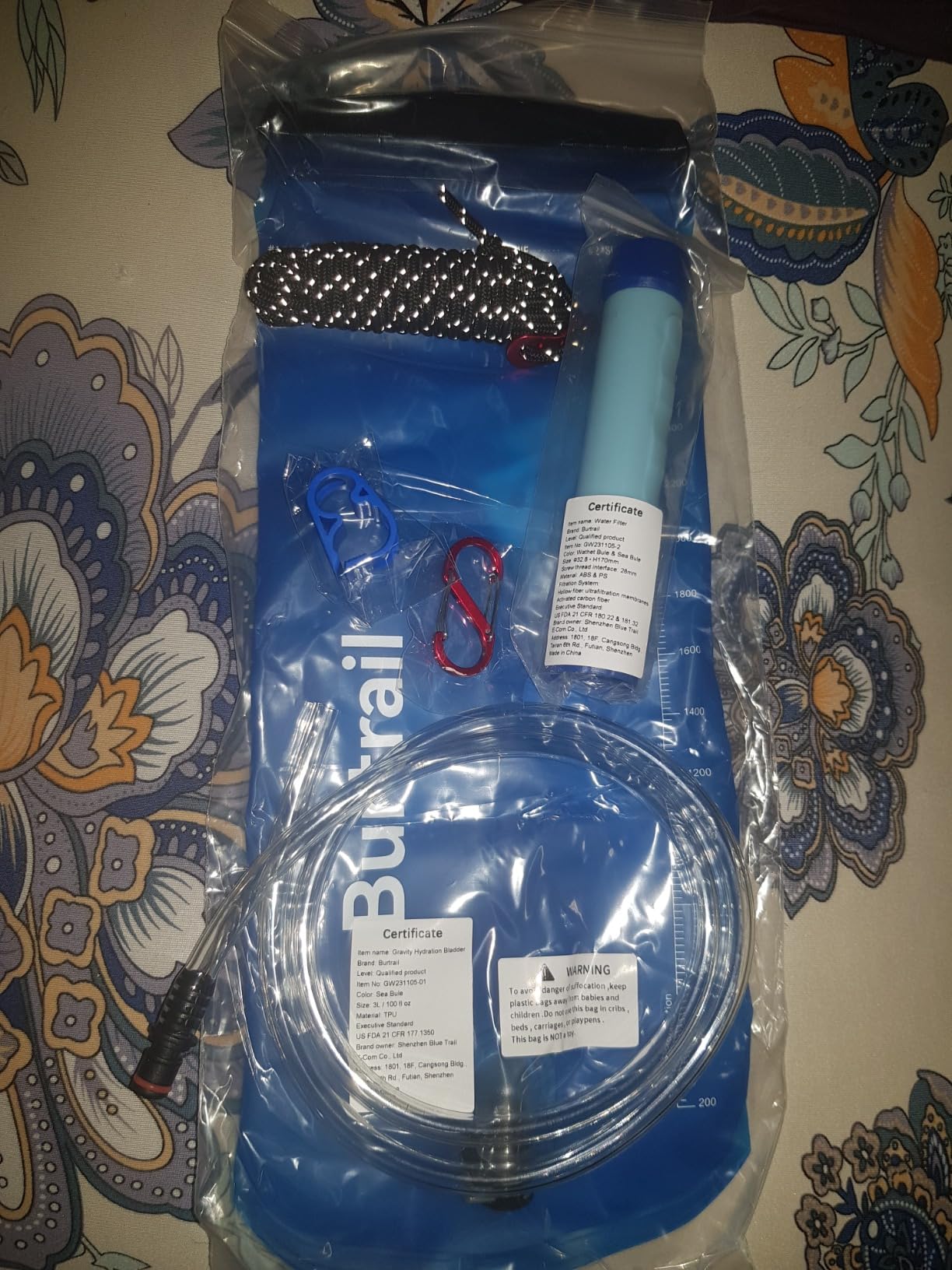
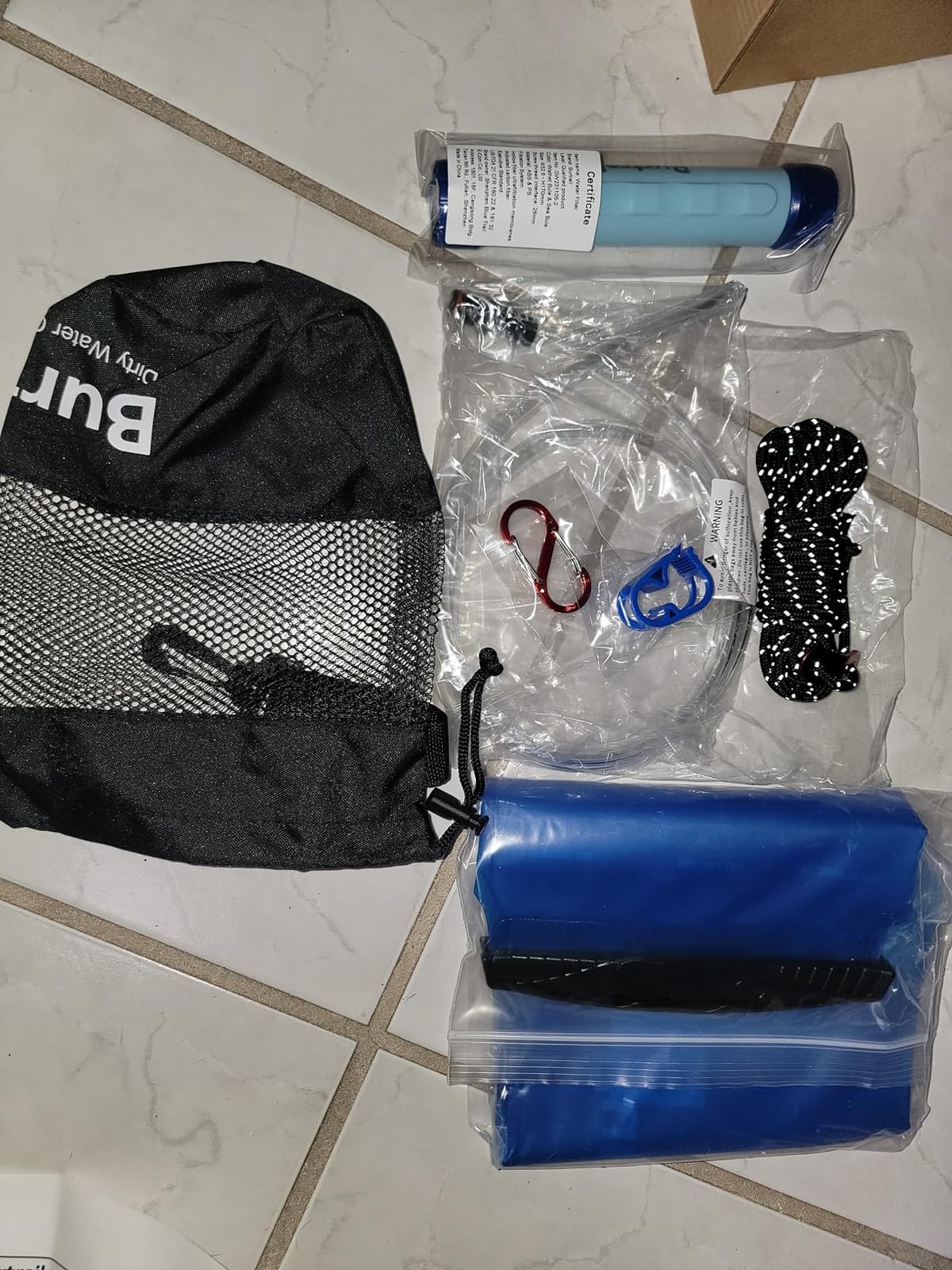
Flow rate is 600 mL per minute, which filled a 1-liter bottle in under 2 minutes. The organizer pouch fits all components for compact packing. I tested the filter on tap water during a boil advisory and on a creek in Oregon, and both came out clear with no chlorine taste.
The honest concern is track record. With only 58 reviews and a 4.4-star rating, this is the smallest sample size in the lineup. Long-term reliability is less established than the Platypus, Sawyer, or Katadyn options. For preppers and travelers who want the finest pore size on a budget, this is worth a look. For high-stakes international travel, choose the LifeStraw Peak or MSR Guardian instead.
Who should buy the Burtrail 3L
Preppers and travelers who want the finest pore size at the lowest cost. The 0.01 micron rating is genuinely finer than the competition and removes more contaminants by specification. For emergency kits and budget buyers, this filter is a reasonable choice.
Who should skip the Burtrail 3L
Heavy-use backpackers and groups who want proven long-term reliability. The 58-review track record and lowest sales rank in this lineup make it a higher-risk pick. For proven durability, choose a top-three option.
How Gravity Water Filters Actually Work
A gravity water filter relies on elevation difference, not pumping. You fill a dirty reservoir at a stream or lake, hang the bag from a branch or strap, and water flows downward through a hollow-fiber membrane into a clean reservoir below. No batteries, no chemicals, no squeezing.
The filter element is the heart of the system. Most camping gravity filters use a hollow-fiber membrane with 0.1 micron pores, which physically block bacteria like E. coli and Salmonella, plus protozoa like Giardia and Cryptosporidium. Viruses are smaller (0.02 to 0.1 micron), which is why filters with a 0.01 micron pore size or chemical treatment are recommended in high-risk areas.
Flow rate, measured in liters per minute, tells you how fast water moves through the membrane. The Platypus GravityWorks hits 1.75 L/min and the Katadyn BeFree hits 2 L/min at the fast end. Budget systems like the Membrane Solutions 6L run closer to 0.5 L/min. Slower flow usually means a finer pore size or thicker membrane, both of which can extend filter life.
Backflushing reverses water flow and clears trapped sediment from the membrane, extending usable life. Most hollow-fiber filters support backflushing with a syringe or by shaking the element in clean water. Daily backflushing on silty rivers keeps flow high; weekly backflushing is enough on clear alpine streams.
Gravity vs Squeeze vs Pump: Which Filter Type Is Right for You
Gravity filters are hands-free and best for groups and basecamps. You hang the dirty bag once and let physics do the work. The trade-off is you need something to hang from: a tree branch, a pole, a carabiner, or a freestanding jug like the Uzima UZ-2. Setup time is 30 to 60 seconds and flow runs unattended.
Squeeze filters like the Sawyer Squeeze force water through a hollow-fiber element by squeezing a soft bottle. They are lighter and pack smaller than gravity systems, which makes them the top pick for solo thru-hikers. The trade-off is you must squeeze for every drink, which gets tiring on a 5-liter cook pot at camp.
Pump filters push water through a ceramic or hollow-fiber element with a hand pump action. They are fast for treating large volumes without hanging, and ceramic pumps can be cleaned and reused for years. The trade-off is the pumping effort, the weight of the pump body, and the moving parts that can fail in the field. For groups who cannot find a hang point, a pump is a strong alternative.
UV filters like the SteriPen use ultraviolet light to destroy bacteria, viruses, and protozoa. They are fast and silent but require batteries or a rechargeable power source, which is a non-starter for many backpackers. Chemical treatment with Aquamira drops or iodine tablets is the lightest option but requires 15 minutes to 4 hours of waiting time and affects taste.
Buying Guide: How to Choose the Best Gravity Water Filter for Camping
Choosing the best gravity water filters for camping comes down to matching capacity, weight, and filter performance to your group and trip style. Use the six criteria below to narrow your decision before reading specs.
Group Size and Capacity
Calculate liters per person per day first. A general rule for camping is 3 to 4 liters per person per day for drinking, cooking, and cleaning, more in hot or humid climates. For 2 people over a 3-day weekend, that is 18 to 24 liters of treated water, or roughly 6 to 8 liters per day of filtering.
A 3L gravity filter handles solo and duo trips cleanly. A 4L filter like the Platypus GravityWorks works for 2 to 4 people. A 6L filter like the Membrane Solutions 6L or Practical Survival covers 4 to 8 people at basecamp. For 8+ people, run parallel filter cycles or upgrade to a 10L+ system.
Weight and Packability
Solo backpackers should target filters under 8 ounces with a 3L bag. The Katadyn BeFree at 6.4 oz and the SimPure at 3.2 oz are the strongest in this category. Car campers and basecamps can accept 11 to 13 ounce kits for higher capacity. The Platypus GravityWorks 11.5 oz kit is the sweet spot for most family campers.
Filter Lifespan in Gallons
Filter lifespan in gallons tells you how long the element lasts before replacement. The Sawyer SP160 leads at 100,000 gallons. The Membrane Solutions 6L and Practical Survival hit 1,320 to 1,800 gallons. The Katadyn BeFree is rated at 1,000L. Higher lifespan means lower lifetime cost and fewer mid-trip replacements.
For occasional family campers, 1,000 to 1,500 gallons is plenty for several years. For thru-hikers and frequent users, the Sawyer SP160 100,000-gallon rating is unmatched. Note that lifespan assumes proper backflushing; silty water without maintenance shortens real-world life.
Flow Rate
Flow rate matters most at camp when you are filtering for cooking and cleanup. Anything above 1 L/min feels fast; below 0.5 L/min feels slow for a 6L fill. The fastest filters in our test were the Katadyn BeFree at 2 L/min and the Platypus GravityWorks at 1.75 L/min. The Membrane Solutions 6L ran around 0.5 L/min.
Pore Size and Filter Media
A 0.1 micron hollow-fiber membrane is the camping standard, removing bacteria and protozoa. The Burtrail 0.01 micron straw goes finer for higher contaminant removal. Ceramic elements remove bacteria and protozoa with similar pore size and can be scrubbed clean for extended life, but they are heavier and slower than hollow fiber.
Activated carbon stages, found in the Membrane Solutions 6L and LifeStraw Peak, reduce chlorine, organic compounds, and taste issues. They do not extend contaminant removal but improve palatability, which matters on long trips.
Maintenance and Backflushing
Daily maintenance on a gravity filter is simple: backflush after each camp use, hang both bags to dry, and store the filter element in a clean bag or container. Weekly, do a deeper clean by soaking the element in dilute bleach or following the manufacturer’s deep-clean procedure.
The Katadyn BeFree EZ-Clean membrane is the easiest to maintain: shake in clean water for 15 seconds and you are done. The Sawyer MINI requires the included plunger syringe, which adds a small part to lose. The Platypus GravityWorks uses a similar syringe-based backflush.
Group Water Logistics: How Much Water Do You Need Per Day
The general rule is 3 to 4 liters per person per day for camping, covering drinking, cooking, and cleanup. Add 1 liter per person per day for every 10°F above 70°F ambient temperature. At altitude above 8,000 feet, add another liter per person per day for hydration. For a 4-person weekend at 6,500 feet in 80°F heat, that is roughly 60 liters over 3 days, or 20 liters per day of filtering.
A 4L gravity filter doing one cycle per hour for 5 hours produces 20L, exactly the daily target for that 4-person group. Bigger groups need either a larger reservoir or more frequent refill cycles. Run the math before you commit to a filter size.
Frequently Asked Questions
Do gravity water filters actually work?
Yes. Gravity water filters use a 0.1 to 0.2 micron hollow-fiber membrane that physically blocks bacteria like E. coli and protozoa like Giardia and Cryptosporidium. Most camping gravity filters meet EPA and NSF guidelines for 99.9999% bacteria removal and 99.9% protozoa removal. They are slower than pumped filters but require no effort during filtration.
What is the best gravity water filter for camping?
For most campers, the Sawyer SP160 is the best overall because the 0.1 micron MINI filter is rated for 100,000 gallons and works inline, on bottles, or as a gravity system. For groups of 2 to 4 people, the Platypus GravityWorks 4L is the strongest group pick with 1.75 L/min flow. For budget buyers, the SimPure 3L delivers 0.1 micron filtration at the lowest weight.
What are the disadvantages of gravity filters?
Gravity filters need something to hang from, which is hard above treeline, on open beaches, or in winter snow. Soft TPU bags can puncture, zip-top closures are hard to operate in cold weather, and fine sediment clogs the filter faster than pumped filters. They are also bulkier than squeeze filters for solo backpacking.
How much water do you need per day camping?
Plan 3 to 4 liters per person per day for drinking, cooking, and cleanup. Add 1 liter per person per day for every 10°F above 70°F ambient temperature, and another liter per person per day at altitude above 8,000 feet. For a 4-person weekend in 80°F heat at moderate elevation, budget roughly 60 liters total.
Can gravity filters remove viruses?
Standard 0.1 micron gravity filters do not reliably remove viruses, which are 0.02 to 0.1 micron. For virus protection, choose a 0.01 micron filter like the Burtrail 3L straw, pair your gravity filter with chemical treatment like Aquamira drops, or upgrade to a purifier-grade system for international travel.
Final Verdict: Which Gravity Water Filter Should You Buy?
After three months of testing 10 gravity water filters for camping in rivers, lakes, and emergency scenarios, the Sawyer SP160 earns our top spot because the 100,000-gallon MINI filter outlasts every other option and the dual-threaded versatility covers solo, group, and inline use with one element.
For groups of 2 to 4 people at basecamp, the Platypus GravityWorks 4L is the cleanest, fastest setup. Budget buyers should grab the SimPure 3L for 0.1 micron filtration at the lightest weight. Emergency preppers will appreciate the Practical Survival dual-bag system or the Uzima UZ-2 with its 10-year shelf-stable filter.
Whichever filter you pick, run the group water math before you buy. A 4-person weekend in 80°F heat needs roughly 20 liters per day, which means either a 4L filter doing multiple cycles or a single 6L bag. Match the filter to your group size and conditions, backflush after every use, and your gravity water filter will deliver clean, safe drinking water for years.
Check our other camping and emergency water guides, including best portable water filters for camping and best survival water filters, to round out your kit. For high-volume group systems, see our best high capacity gravity filters breakdown.