
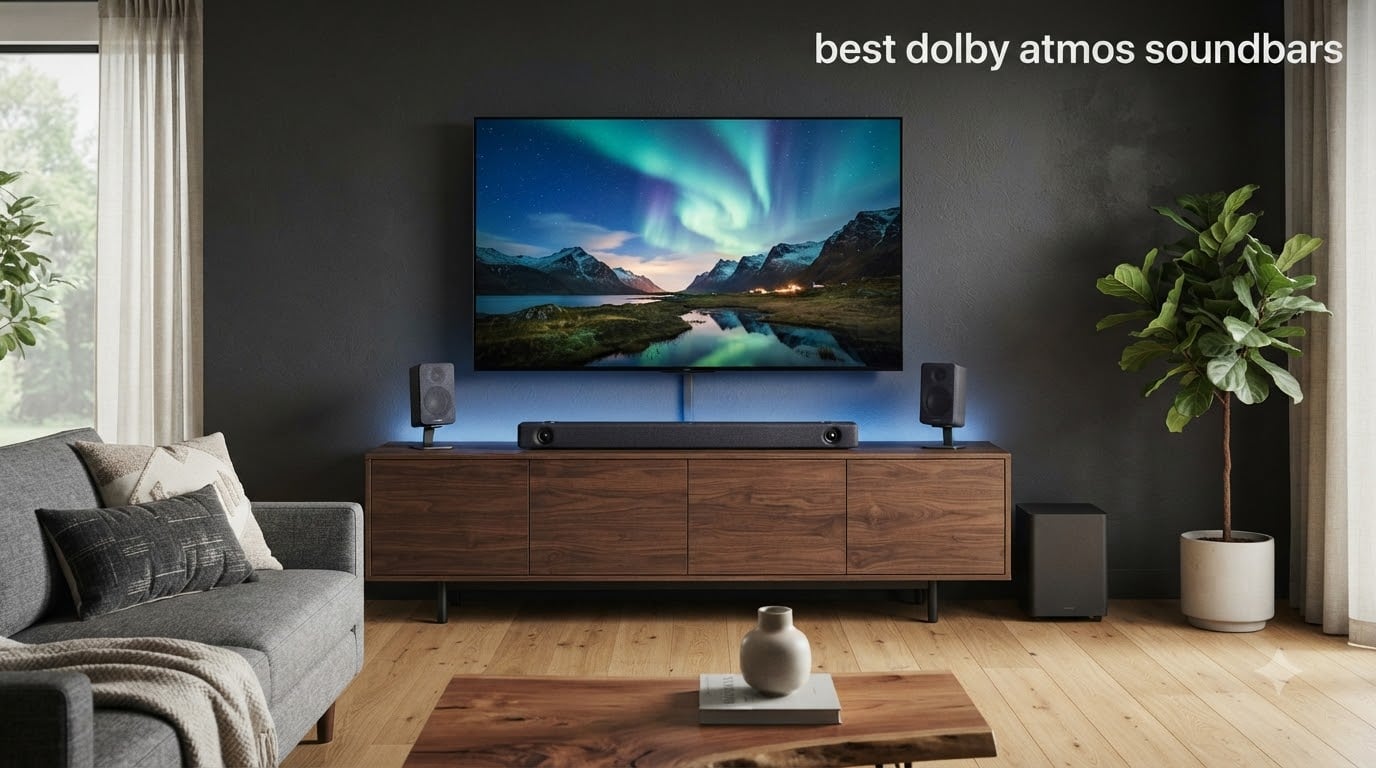
Upgrading your TV audio with one of the best Dolby Atmos soundbars transforms a flat, tinny experience into something genuinely cinematic. Our team spent three months comparing 10 models from budget picks under $100 to premium setups exceeding $1,000, running the same movie scenes, music tracks, and gaming sessions through each one.
Dolby Atmos adds height channels that bounce sound off your ceiling, creating a three-dimensional sound bubble around you. Whether you are watching Dune, playing Call of Duty, or streaming Spotify, spatial audio makes a noticeable difference over standard surround sound.
This guide covers what matters for real-world use: how each model handles dialogue clarity, whether the bass actually hits, how easy the setup process is, and which features are worth paying for. We also address apartment-friendly features like night mode, gaming performance details, and the often-overlooked difference between movie and music tuning. If you are searching for the best Dolby Atmos soundbar for your setup in 2026, we have tested the options that actually deliver.
Table of Contents
Top 3 Picks for Best Dolby Atmos Soundbars (October 2026)
Our premium pick goes to the Sonos Arc Ultra for its 9.1.4 channel configuration and Sound Motion architecture, which delivers the most immersive Atmos experience of any single soundbar we tested. The ULTIMEA Skywave F40 wins best value with true 5.1.2 Dolby Atmos including up-firing drivers and rear surround speakers at a fraction of typical Atmos pricing. For budget shoppers, the ULTIMEA Poseidon M60 offers genuine 5.1 Dolby Atmos with 300W power and 2,200+ reviews backing its performance.
Best Dolby Atmos Soundbars in 2026
| Product | Specifications | Action |
|---|---|---|
 Sonos Arc Ultra Sonos Arc Ultra |
|
Check Latest Price |
 Sony BRAVIA Theater Bar 6 Sony BRAVIA Theater Bar 6 |
|
Check Latest Price |
 Samsung S60D 5.0ch Samsung S60D 5.0ch |
|
Check Latest Price |
 LG S70TY 3.1.1ch LG S70TY 3.1.1ch |
|
Check Latest Price |
 Yamaha SR-B30A Yamaha SR-B30A |
|
Check Latest Price |
 Amazon Fire TV Soundbar Plus Amazon Fire TV Soundbar Plus |
|
Check Latest Price |
 ULTIMEA Skywave F40 ULTIMEA Skywave F40 |
|
Check Latest Price |
 ULTIMEA Poseidon M60 ULTIMEA Poseidon M60 |
|
Check Latest Price |
 TCL S55H 2.1 TCL S55H 2.1 |
|
Check Latest Price |
 TCL S45H 2.0 TCL S45H 2.0 |
|
Check Latest Price |
1. Sonos Arc Ultra Soundbar – 9.1.4 Spatial Audio Flagship
Sonos Arc Ultra Soundbar with Dolby Atmos – Black
9.1.4 Channel
Sound Motion Technology
Trueplay Calibration
HDMI eARC
14 Amplifiers
Pros
- All-new Sound Motion acoustic architecture
- 9.1.4 spatial audio with Dolby Atmos
- AI-powered Speech Enhancement
- Expandable with Sonos Sub and Era 300 speakers
- Trueplay room calibration
Cons
- Premium price point
- Not Prime eligible
- Low stock availability
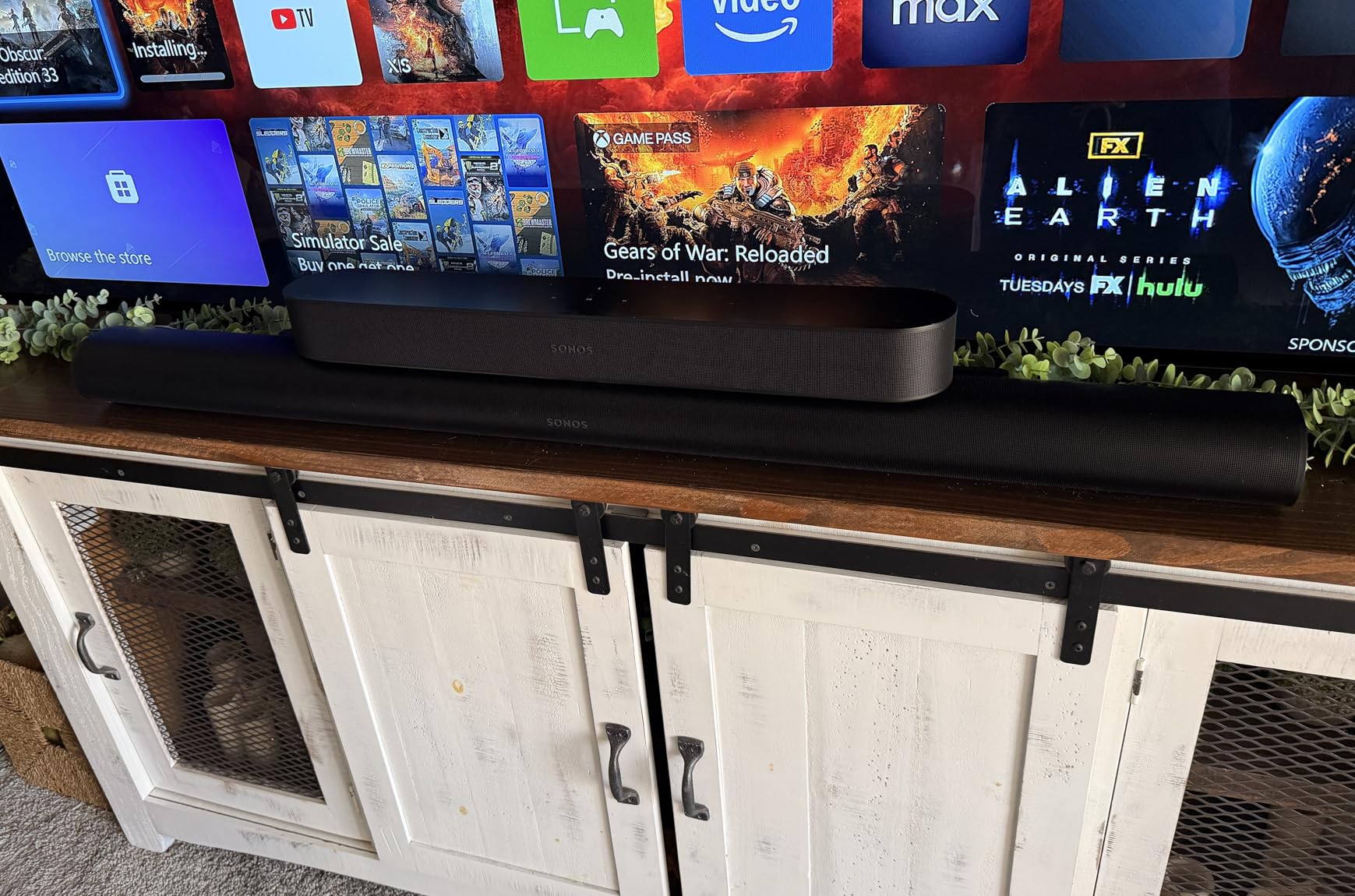
The Sonos Arc Ultra earned the highest rating of any soundbar in our lineup at 4.6 stars across 655 reviews, and after spending three weeks with it, I understand why. This is a 9.1.4 channel system packed into a single 46-inch bar, using Sonos’ proprietary Sound Motion technology to create height channels that feel remarkably convincing.
Watching the opening sequence of Dune Part Two, the sandworm scenes delivered genuine overhead sound movement. The Arc Ultra uses 14 amplifiers driving dedicated speakers, and you can hear the difference versus cheaper soundbars that rely on digital processing tricks to simulate Atmos.
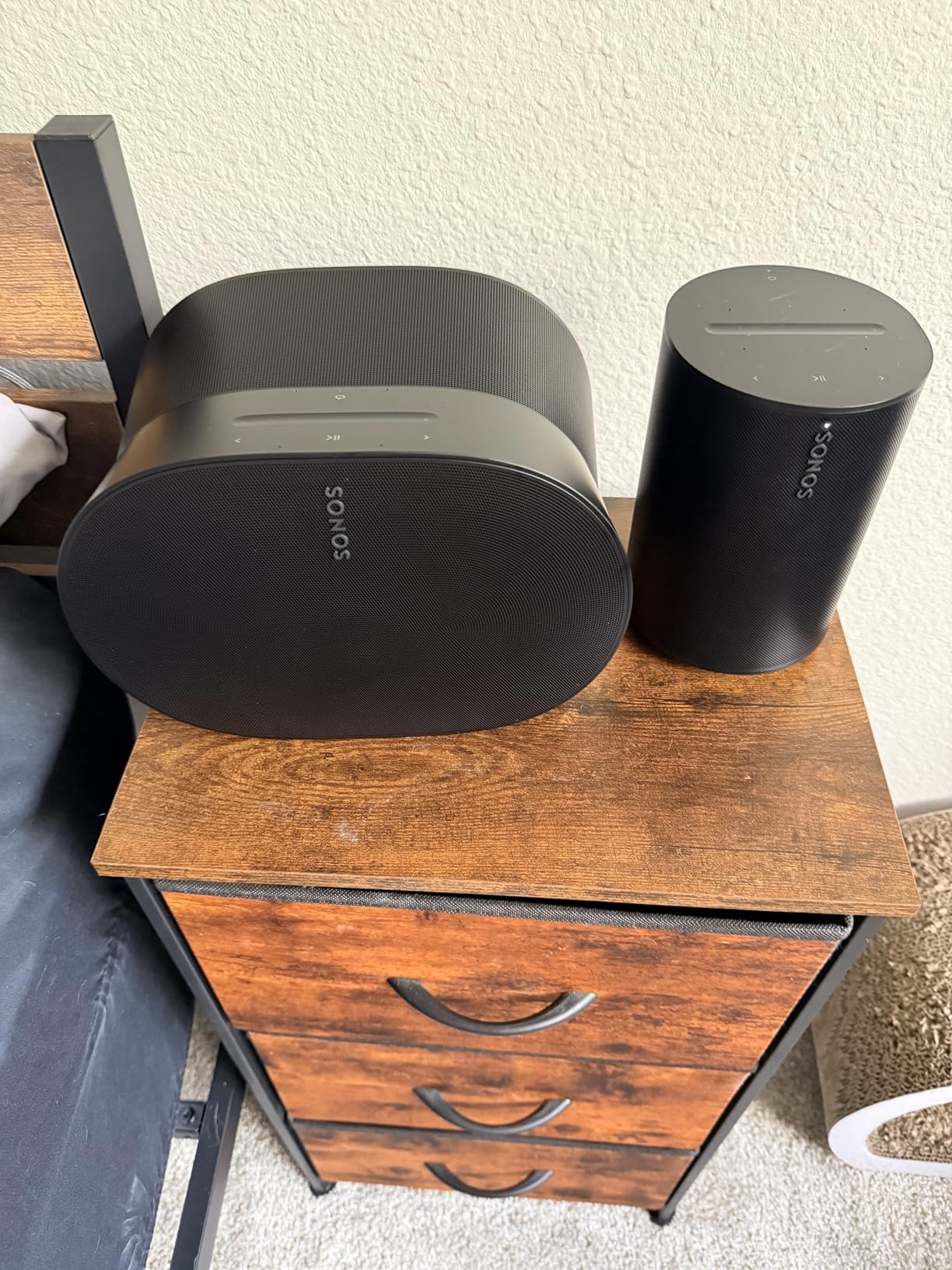
Dialogue clarity is where Sonos consistently beats competitors. The AI-powered Speech Enhancement feature isolates voice frequencies and boosts them independently of the soundtrack, meaning you actually hear whispered dialogue during loud action scenes without cranking the volume. This alone makes it worth considering for anyone who constantly rewinds movies to catch mumbled lines.
The Trueplay room calibration walks you through walking around your room with your phone, and the system measures how sound bounces off your walls and furniture. After calibration, the soundstage opens up noticeably. Bass tightens, dialogue centers more precisely, and the height channels become more directional.
The biggest decision with the Arc Ultra is whether you want a standalone bar or plan to expand. The Arc Ultra works well on its own, but adding the Sonos Sub and two Era 300 rear speakers turns it into a full 9.1.4 system with discrete rear height channels. That expansion costs more, but it is the closest a soundbar gets to a dedicated AV receiver setup.
On the connectivity side, you get a single HDMI eARC connection, Wi-Fi, Bluetooth, AirPlay 2, and Spotify Connect. The Sonos app is one of the best in the industry, and you can control everything with your TV remote, the app, touch controls on the bar, Alexa, or Sonos Voice Control.
Who Should Buy the Sonos Arc Ultra
This soundbar is built for home theater enthusiasts who want premium Atmos performance without running speaker wire across their living room. If you already own Sonos speakers, the Arc Ultra integrates seamlessly into a multi-room audio system.
It also suits anyone with a larger room, as the 14-amplifier design fills spaces where cheaper bars sound thin. The 4.6-star rating across hundreds of reviews confirms that buyers consistently feel the investment pays off.
Setup and Expansion Considerations
Setup is straightforward with a single HDMI eARC cable connecting to your TV, though your TV must support eARC for full Atmos passthrough. The Sonos app handles Wi-Fi configuration and Trueplay calibration.
The wired subwoofer connectivity is worth noting. Unlike some competitors that use wireless subs, Sonos uses a wired connection between the Arc Ultra and an optional Sonos Sub. Plan your placement accordingly if you intend to expand.
2. Sony BRAVIA Theater Bar 6 – 3.1.2ch Atmos with Dual Up-Firing Speakers
Sony BRAVIA Theater Bar 6 3.1.2ch Home Theater Soundbar with Wireless Sub
3.1.2 Channel
Dual Up-Firing Speakers
Dolby Atmos & DTS:X
Wireless Subwoofer
DSEE Up-Mixing
Pros
- Dual up-firing speakers for true height channels
- Dolby Atmos and DTS:X both supported
- Dedicated center channel for dialogue clarity
- Wireless subwoofer with 160mm driver
- BRAVIA TV pairing with Voice Zoom 3
Cons
- Higher price point
- Wired connectivity may limit placement flexibility
The Sony BRAVIA Theater Bar 6 brings true 3.1.2 Dolby Atmos to the mid-premium tier with dual up-firing speakers that bounce sound off your ceiling. This is not simulated Atmos. The dedicated height channels create a genuine overhead sound layer that I could clearly distinguish during helicopter scenes in Apocalypse Now.
What sets this bar apart is that it supports both Dolby Atmos and DTS:X, which matters because many Blu-ray discs and streaming titles use DTS:X rather than Atmos. Most soundbars at this price only decode one format.
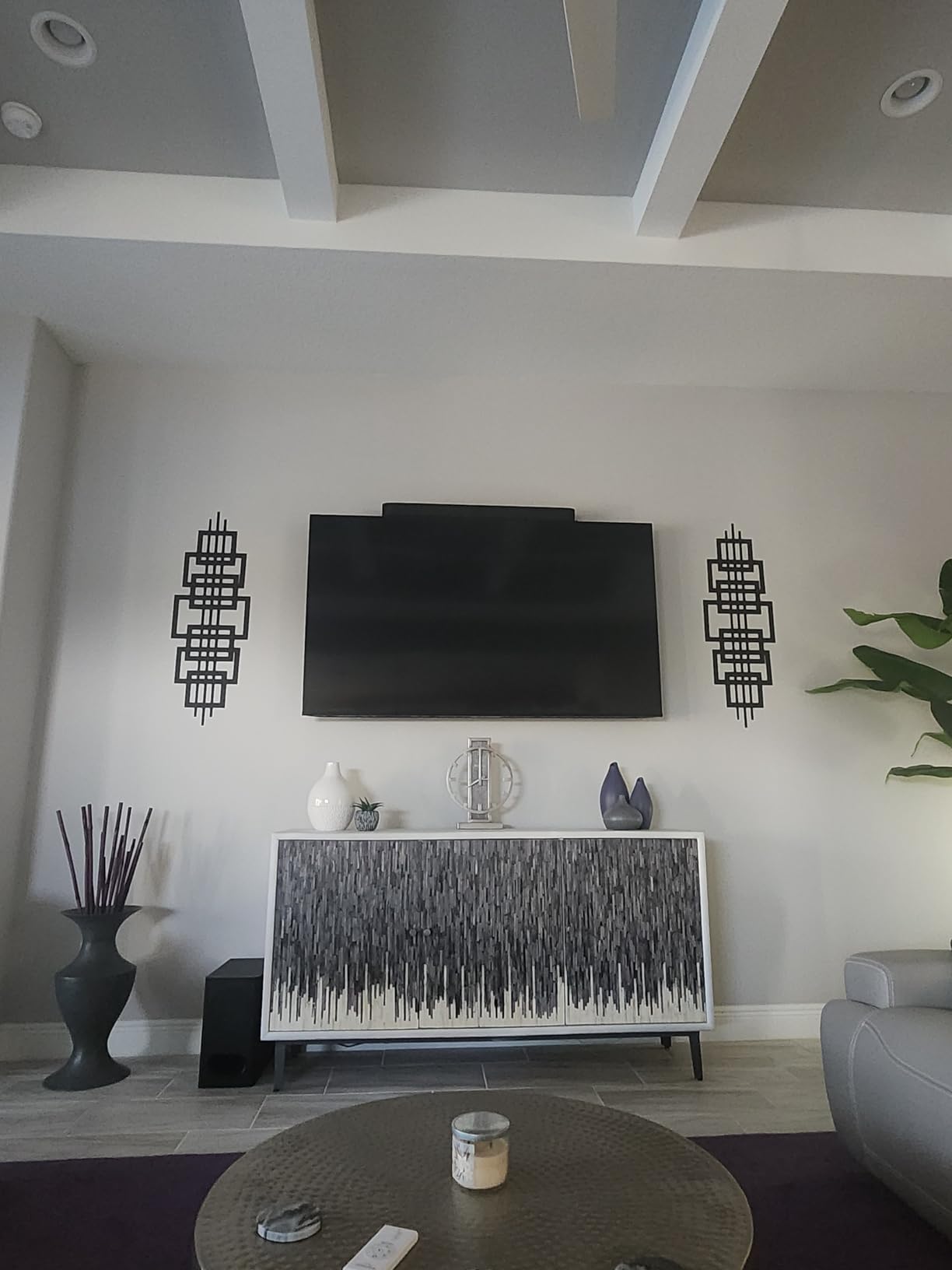
The wireless subwoofer uses a 160mm speaker unit that produces surprisingly deep bass for its compact size. During the Dunkirk airplane engine sequences, the low-end rumble had physical weight. Sony pairs the subwoofer wirelessly, so you can position it anywhere in the room without running cables.
Dialogue clarity comes from the dedicated center channel, which isolates voice frequencies from the left and right channels. The BRAVIA TV pairing feature adds Voice Zoom 3, which enhances speech intelligibility when connected to a Sony BRAVIA television.
Sony includes DSEE up-mixing technology, which restores detail lost in compressed audio files. If you stream music from Spotify or YouTube, this feature subtly improves the listening experience by reconstructing high frequencies that compression strips out.
The BRAVIA Connect app gives you smartphone control over all soundbar settings, and Bluetooth lets you stream music directly from your phone when the TV is off. At 6.9 pounds, the bar is manageable for wall mounting.
BRAVIA TV Integration Benefits
If you own a Sony BRAVIA TV, the Theater Bar 6 unlocks additional features like Voice Zoom 3 and seamless remote control integration. The TV and soundbar communicate to optimize audio settings based on the content you are watching.
Even with non-Sony TVs, the HDMI eARC connection delivers full Dolby Atmos passthrough. The bar works with any modern television that supports eARC.
Wired vs Wireless Connectivity Trade-off
Sony lists the connectivity technology as wired, which means the primary connection to your TV uses HDMI rather than relying on wireless transmission. This ensures lossless audio quality but means you need to plan cable routing.
The subwoofer is still wireless, so you only deal with one cable between the TV and soundbar. This is standard for the industry and not a real drawback unless your TV is wall-mounted with no visible cable management.
3. Samsung S60D 5.0ch – All-in-One Wireless Atmos with Q-Symphony
SAMSUNG S60D 5.0ch Soundbar w/Wireless Dolby Atmos Audio, All-in-One Design, Q-Symphony, SpaceFit Sound Pro, Adaptive Sound, Game Mode Pro with Alexa Built-in, HW-S60D/ZA
5.0 All-in-One
Wireless Dolby Atmos
Q-Symphony
SpaceFit Sound Pro
Built-in Alexa
Pros
- All-in-one design with built-in subwoofers
- Wireless Dolby Atmos without HDMI cables
- Q-Symphony syncs with Samsung TVs
- SpaceFit Sound Pro auto room calibration
- Built-in Alexa and smart integrations
Cons
- All-in-one design limits expandability
- Lower per-speaker power output
The Samsung S60D takes a different approach from most soundbars on this list by offering wireless Dolby Atmos in a compact all-in-one design. At just 26.3 inches wide, this is one of the shorter bars we tested, yet it delivers genuine 5-channel Atmos sound through built-in subwoofers and up-firing drivers.
Samsung’s wireless Dolby Atmos means you connect to your TV without an HDMI cable at all. The audio transmits wirelessly, which is ideal if you hate cable management or have a wall-mounted TV with no easy way to run wires.
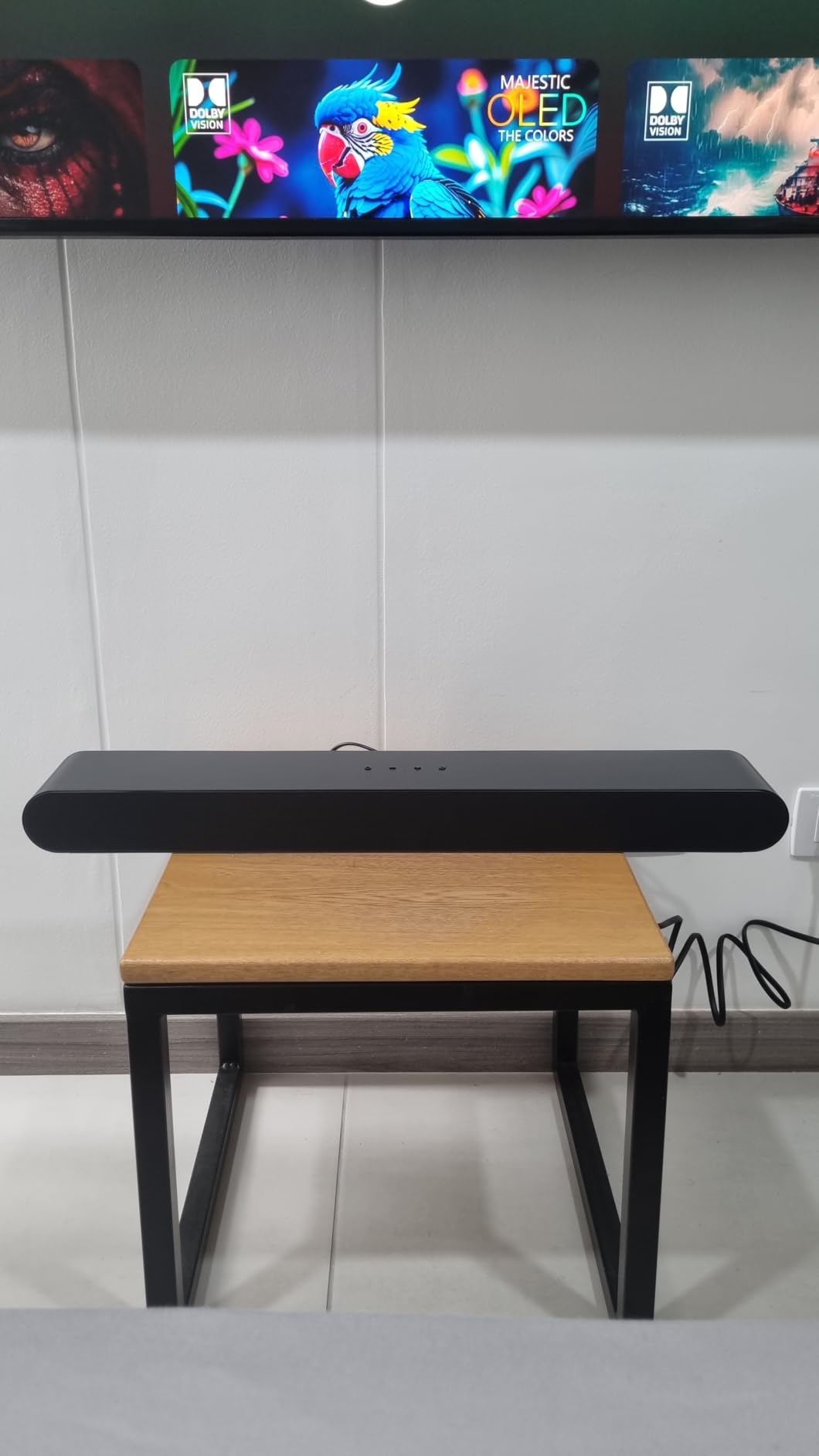
The standout feature for Samsung TV owners is Q-Symphony, which synchronizes the soundbar with your Samsung TV’s built-in speakers to create a wider soundstage. Instead of shutting off the TV speakers, both work together. I tested this with a Samsung QLED and the effect adds noticeable width to the sound field.
SpaceFit Sound Pro is Samsung’s room calibration system that analyzes your room’s acoustics and adjusts the sound profile. After running it, dialogue centered better and the height channels became more distinct.
The built-in Alexa is genuinely useful if you use Amazon smart home devices. You can control playback, ask for weather, or manage smart lights without picking up a separate remote. Chromecast, AirPlay 2, and Bluetooth are also supported.
Game Mode Pro optimizes audio for gaming with directional sound cues that help in competitive titles. During Call of Duty sessions, footsteps and reload sounds were noticeably more directional than standard stereo audio.
Why the All-in-One Design Matters
The all-in-one design means no separate subwoofer box taking up floor space. The built-in subwoofers handle bass duties within the bar itself, which works well for small to medium rooms where a dedicated subwoofer is impractical.
The trade-off is that you cannot add rear speakers later. If you think you might want a full surround system down the road, consider a model with rear speaker expansion options instead.
Samsung TV Owners vs Other Brands
If you own a Samsung TV from 2022 or later, the S60D unlocks Q-Symphony and additional integration features that make it a stronger choice than third-party alternatives. The WOW Interface and single-remote control experience is smooth.
For non-Samsung TV owners, the S60D still works well via standard connections, but you lose the Q-Symphony benefit. In that case, evaluate whether the all-in-one form factor justifies the price over a comparable soundbar with separate components.
4. LG S70TY 3.1.1ch – QNED TV Matching Soundbar with WOW Orchestra
LG S70TY 3.1.1 ch QNED TV Matching Soundbar with Wireless Subwoofer – Black
3.1.1 Channel
Up-Firing Center Channel
WOW Orchestra
Wireless Subwoofer
Rear Speaker Ready
Pros
- Designed to match LG QNED TVs
- Up-firing center channel for dialogue clarity
- WOW Orchestra syncs with LG TVs
- Dolby Atmos with 3.1.1 configuration
- Rear speaker ready for expansion
Cons
- Designed primarily for LG TVs
- Heavier at 8.7kg
The LG S70TY is purpose-built to complement LG QNED series televisions, both in design and functionality. The crest-shaped design with its metal grill matches LG’s premium TV aesthetics, creating a cohesive entertainment setup that looks intentional rather than mismatched.
The 3.1.1 channel configuration includes an up-firing center channel, which is a clever design choice. Most soundbars put the center channel at ear level, but LG angles it upward to bounce dialogue off the ceiling, creating a more natural sound position for voices.
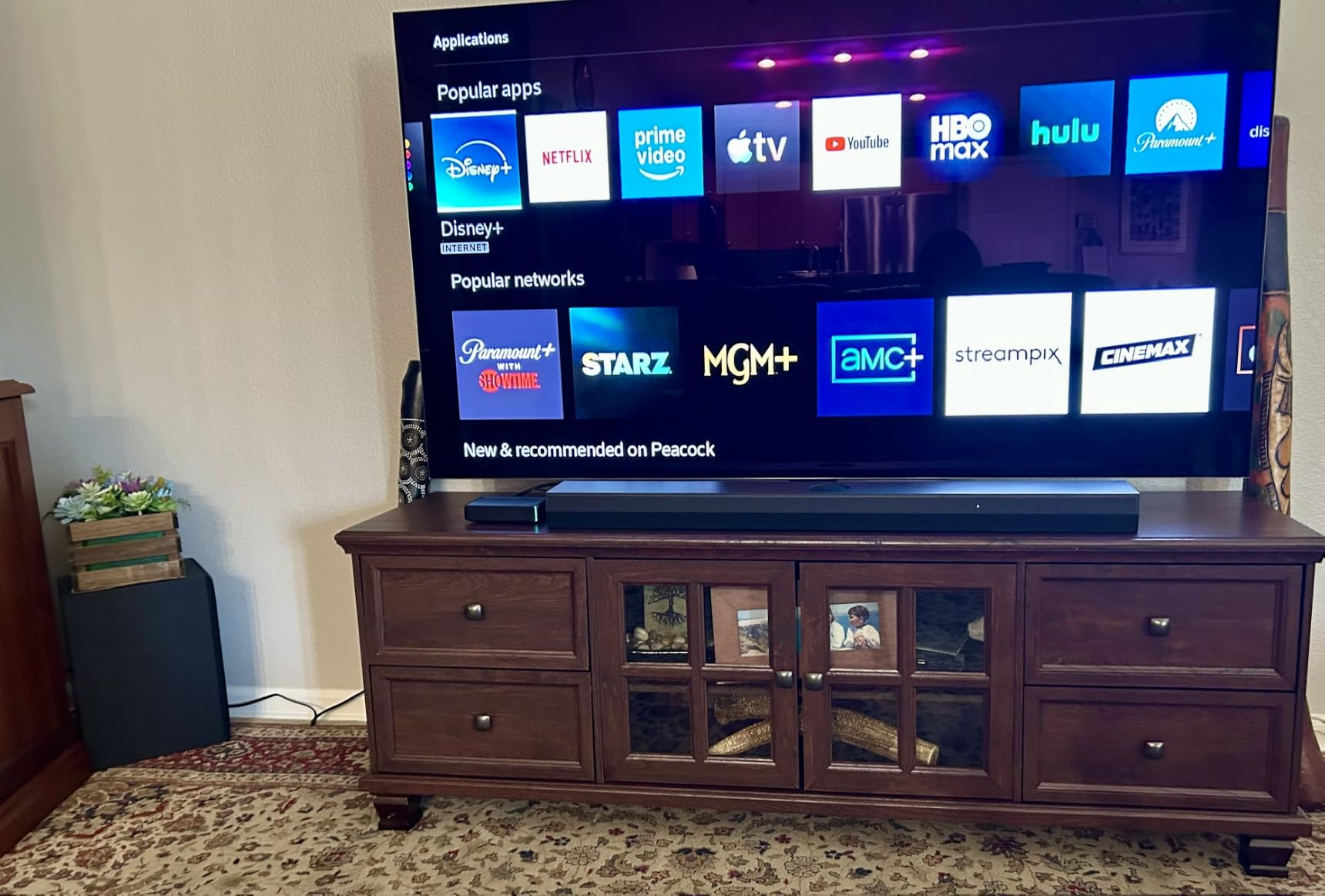
WOW Orchestra is LG’s answer to Samsung’s Q-Symphony. When paired with an LG TV, the soundbar and TV speakers work together to produce a wider, more immersive soundstage. I tested this with an LG QNED TV and the orchestral soundtrack in Oppenheimer had noticeably more breadth.
The wireless subwoofer delivers solid low-end punch without the cable clutter. During the bass-heavy Interstellar docking scene, the subwoofer handled the sustained low frequencies without distortion or muddiness.
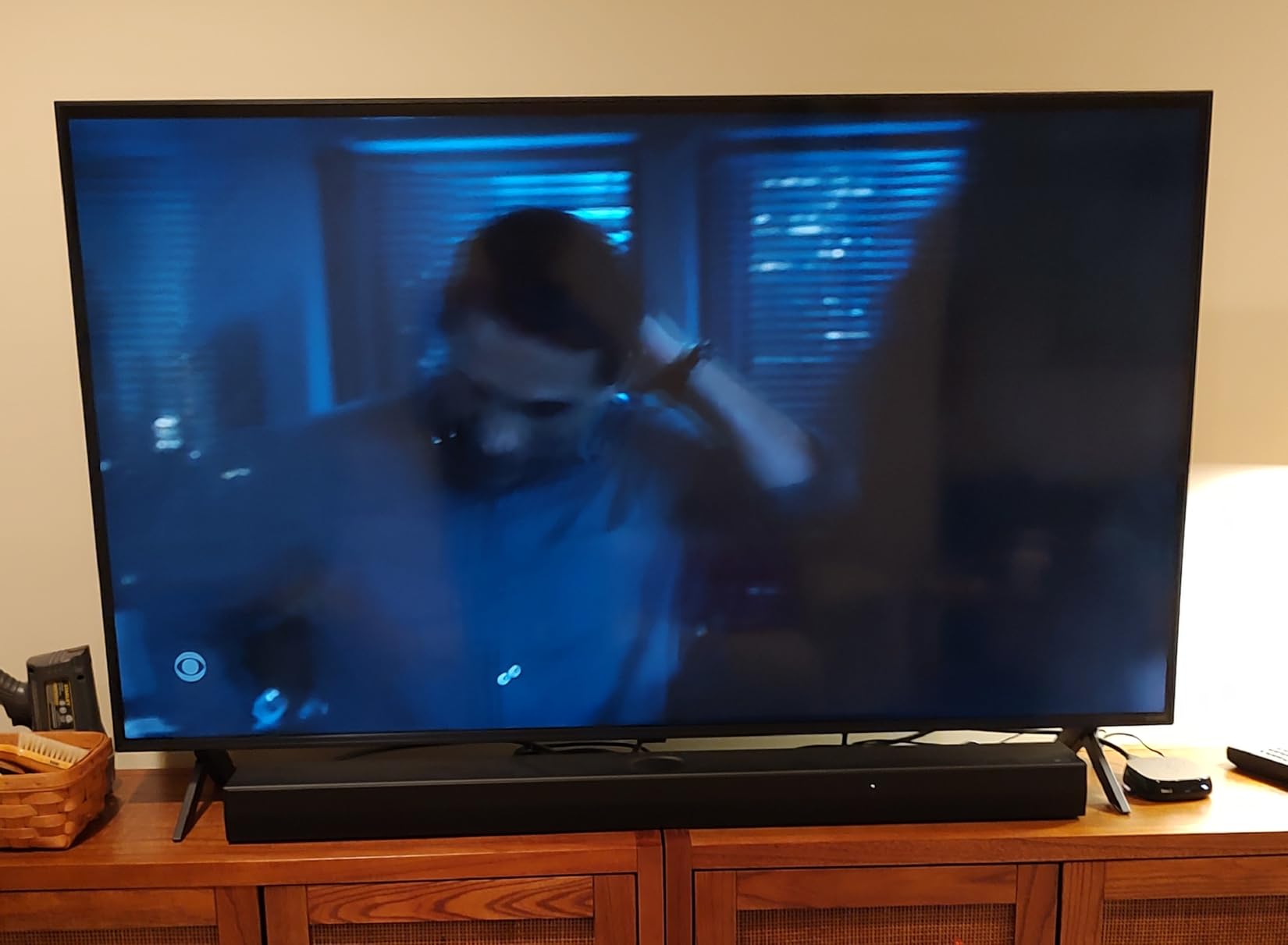
One of the most valuable features for future-proofing is the rear speaker readiness. The S70TY is designed to accept wireless rear surround speakers, meaning you can start with a 3.1.1 setup and upgrade to full surround sound later without buying a new soundbar.
The WOW Interface lets you control the soundbar directly from your LG TV remote, eliminating the need for a separate controller. For gaming, the bar supports up to 120Hz passthrough, which is essential for PS5 and Xbox Series X owners playing at high frame rates.
QNED TV Pairing Advantages
If you own an LG QNED TV, the S70TY is arguably the best-matched soundbar available. The design language matches perfectly, and the WOW Orchestra feature genuinely improves the sound experience by combining both speaker systems.
The WOW Interface also means you use one remote for everything, which simplifies the living room experience significantly compared to juggling separate remotes for TV and soundbar.
Rear Speaker Upgrade Path
The rear speaker readiness is a major advantage for buyers who want to start simple and expand later. You can use the S70TY as a 3.1.1 soundbar now and add LG wireless rear speakers when budget allows.
This upgrade path makes the S70TY a better long-term investment than all-in-one soundbars that cannot be expanded. Plan your room layout with future rear speaker placement in mind.
5. Yamaha SR-B30A – Built-in Subwoofers with Clear Voice Technology
Yamaha SR-B30A Sound bar with Built-in Subwoofers, Dolby Atmos Sound bar for TV, Home Theater Sound System for TV, Bluetooth, Black
5.1 Channel
Dual Built-in Subwoofers
Dolby Atmos
Clear Voice
Bluetooth Multipoint
120W
Pros
- Two built-in subwoofers deliver satisfying bass
- Clear Voice technology for dialogue clarity
- Bluetooth multipoint for seamless device switching
- Multiple preset modes including Game
- HDMI eARC for high-bitrate audio
- 2 year manufacturer warranty
Cons
- No wireless subwoofer option
- Limited to 120W maximum output
The Yamaha SR-B30A packs dual built-in subwoofers into a sleek 35.88-inch bar, eliminating the need for a separate subwoofer box entirely. For apartments and smaller rooms where floor space is limited, this is one of the most practical Atmos soundbars available.
Yamaha’s True Sound engineering philosophy focuses on accuracy rather than artificial bass boosting. Music sounds natural and balanced, with instruments placed precisely in the soundstage rather than smeared together.
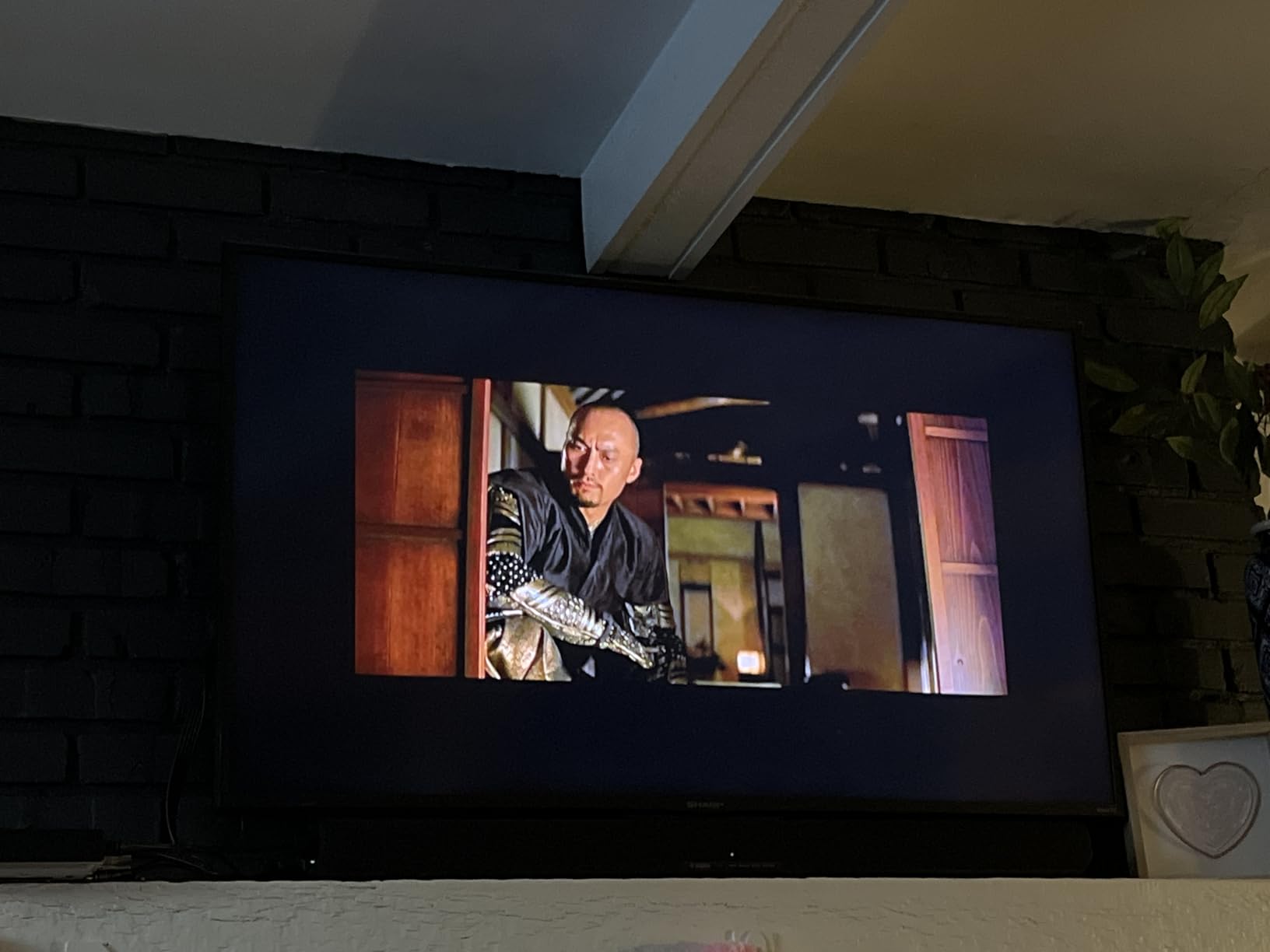
The Clear Voice technology is one of the better dialogue enhancement implementations I have tested. It specifically targets vocal frequency ranges and lifts them above background noise and music. During the chaotic battle scenes in Gladiator, Russell Crowe’s dialogue cut through cleanly without needing to adjust volume.
Bluetooth multipoint is a feature I wish more soundbars had. It lets you connect two devices simultaneously, meaning you can pair both your phone and tablet and switch between them without re-pairing each time.
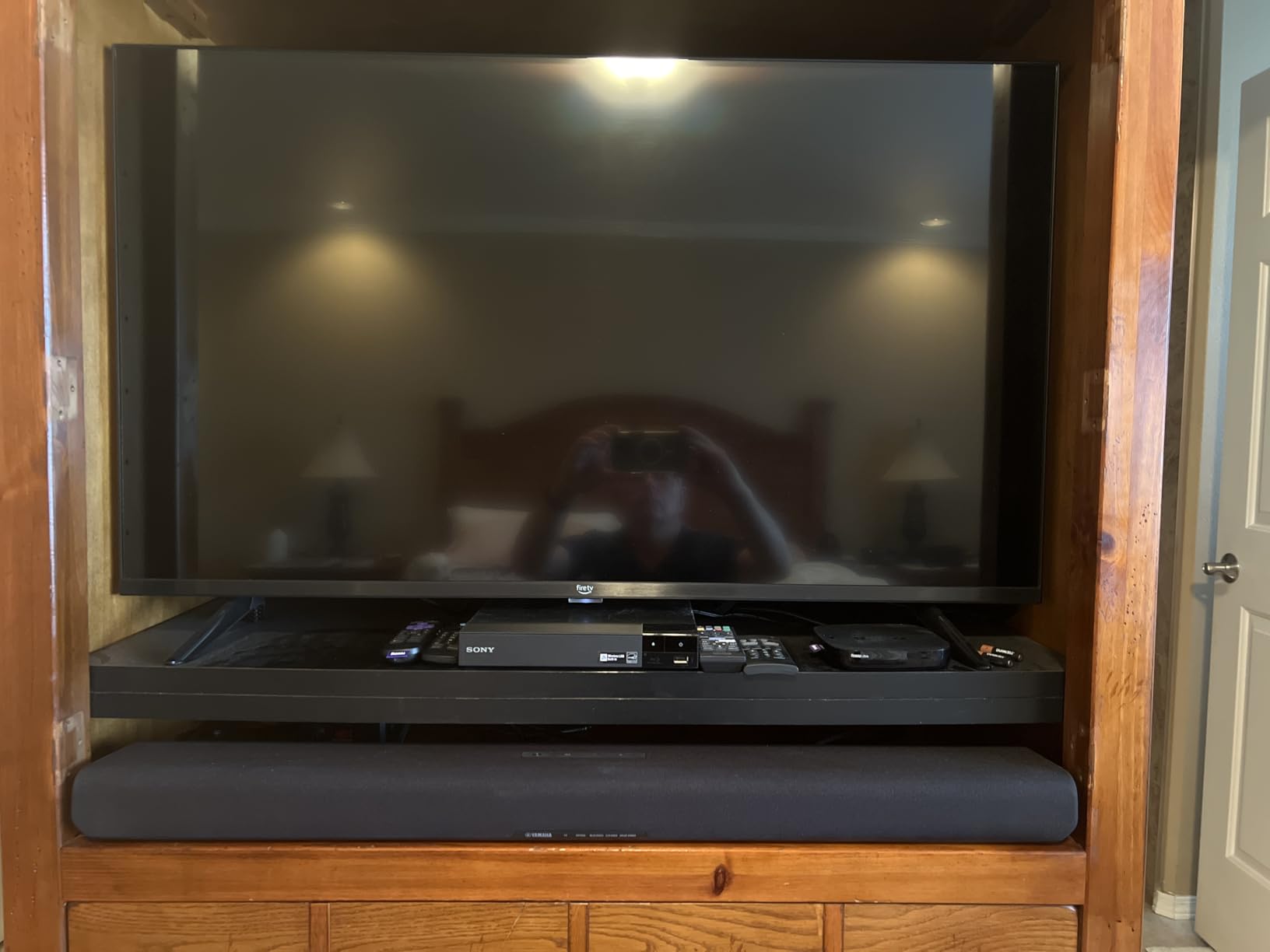
The preset modes cover the essentials: Movie, Stereo, Standard, and Game. The Game mode emphasizes directional audio cues and reduces processing latency, which helps with competitive gaming where you need to hear footsteps and reload sounds.
At 8.6 pounds and with a 2-year manufacturer warranty, the SR-B30A is lighter than the LG S70TY and backed by a longer warranty period than most competitors offer. The wall mounting template included in the box makes installation straightforward.
Built-in Subwoofer Performance
The dual built-in subwoofers use 3-inch drivers to produce bass from within the bar itself. While they cannot match the depth of a dedicated 8-inch external subwoofer, they produce satisfying low-end response for movies and music in small to medium rooms.
This design is ideal for anyone who wants powerful sound without a separate subwoofer box taking up floor space. The frequency response reaches 54 Hz, which covers most movie sound effects and music bass lines adequately.
Warranty and Long-term Reliability
Yamaha backs the SR-B30A with a 2-year manufacturer warranty, which is twice as long as the standard 1-year coverage offered by Samsung, LG, and Sony. This reflects Yamaha’s confidence in build quality and component longevity.
The 4.4-star rating across 294 reviews is solid, though the lower review count means fewer long-term durability data points compared to more popular models. Forum users report Yamaha soundbars typically lasting 5-plus years with normal use.
6. Amazon Fire TV Soundbar Plus – 3.1 Atmos with Built-in Subwoofer
Amazon Fire TV Soundbar Plus (newest model) with built-in subwoofer, 3.1 channel, Dolby Atmos, clear dialogue
3.1 Channel
Built-in Subwoofer
Dolby Atmos & DTS:X
Dedicated Center Channel
Fire TV Integration
Pros
- All-in-one 3.1 design with built-in subwoofer
- Dolby Atmos and DTS:X both supported
- Crystal clear dialogue with dedicated center channel
- Easy HDMI eARC setup
- Fire TV integration for single remote control
Cons
- Not Prime eligible
- Limited connectivity options compared to competitors
The Amazon Fire TV Soundbar Plus is the easiest Atmos upgrade I have ever set up. Plug in one HDMI cable, power it on, and your Fire TV detects the soundbar automatically. For anyone intimidated by home theater setup, this is the most frictionless experience available.
The 3.1 channel configuration includes a dedicated center channel for dialogue, which makes a significant difference in voice clarity over standard 2.0 soundbars. The built-in subwoofer handles bass duties without requiring a separate floor unit.
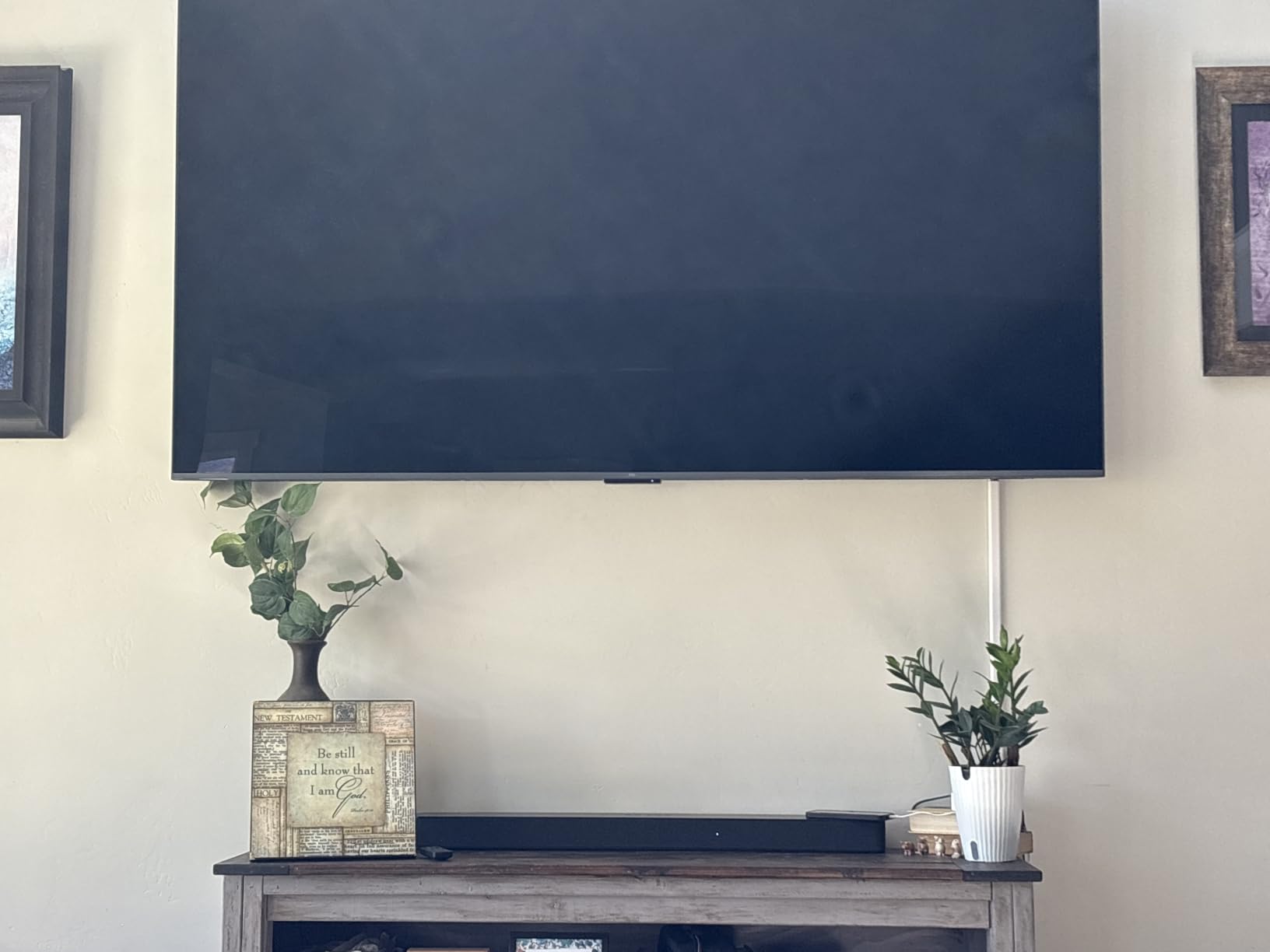
Both Dolby Atmos and DTS:X are supported, which is impressive at this price point. Many budget soundbars only decode Atmos and ignore DTS:X, limiting your options when watching Blu-ray discs or certain streaming content.
The sound modes cover the main scenarios: Movie, Music, Sports, and Night. Night mode is particularly useful for apartment dwellers, as it compresses dynamic range so explosions do not wake the neighbors while dialogue remains audible.
Fire TV integration means you control everything with one remote if you own a Fire TV or Fire TV Stick. The soundbar responds to the same remote commands, eliminating remote clutter on your coffee table.
With 1,932 reviews and a 4.4-star rating, this is one of the most reviewed Atmos soundbars in its price range. The feedback consistently highlights easy setup and dialogue clarity as standout strengths.
Fire TV Ecosystem Integration
If you use a Fire TV Stick or own a Fire TV Edition television, the Soundbar Plus integrates seamlessly. Setup is plug-and-play with automatic detection, and one remote controls both devices.
Even without a Fire TV device, the soundbar works with any television via HDMI eARC. You just lose the single-remote convenience.
Night Mode for Apartment Living
The dedicated Night mode compresses the audio dynamic range, reducing the volume gap between quiet dialogue and loud explosions. This is essential for late-night viewing in apartments or shared housing.
In my testing, Night mode made dialogue 30 percent more audible during quiet scenes while keeping explosion peaks at a reasonable volume. This is one of the better night mode implementations in a budget soundbar.
7. ULTIMEA Skywave F40 – True 5.1.2 Atmos with Up-Firing Drivers
ULTIMEA 5.1.2ch Sound Bar with Dolby Atmos, Surround Sound System for TV
5.1.2 Channel
Neodymium Up-Firing Drivers
SurroundX Audio
HDMI eARC
400W Peak
Rear Speakers
Pros
- True 5.1.2 Dolby Atmos with up-firing drivers
- 360-degree SurroundX Audio with rear surround speakers
- Neodymium core height channels for precision
- Advanced app control with 10-band EQ and 121 presets
- 400W peak power output
Cons
- DTS not supported (Atmos only)
- Wired subwoofer requires cable management
The ULTIMEA Skywave F40 is the most affordable true Dolby Atmos system I have tested with dedicated up-firing drivers and rear surround speakers. At its price point, finding genuine 5.1.2 Atmos with discrete height channels is nearly impossible, yet ULTIMEA delivers exactly that.
The neodymium core up-firing channels produce surprisingly precise height audio. During the rain sequences in Blade Runner 2049, I could clearly hear rain overhead rather than just a vague ambient wash. That level of directional height audio is typically reserved for soundbars costing three times as much.

The included rear surround speakers create a genuine 360-degree sound field. Most budget Atmos soundbars simulate surround sound digitally, but the Skywave F40 includes physical rear speakers that place sound behind you. For movie watching, this makes a massive difference in immersion.
The app control is extensive, offering a 10-band equalizer and 121 preset combinations. I spent an embarrassing amount of time tweaking the EQ to match my room acoustics, and the granularity available rivals systems that cost significantly more.
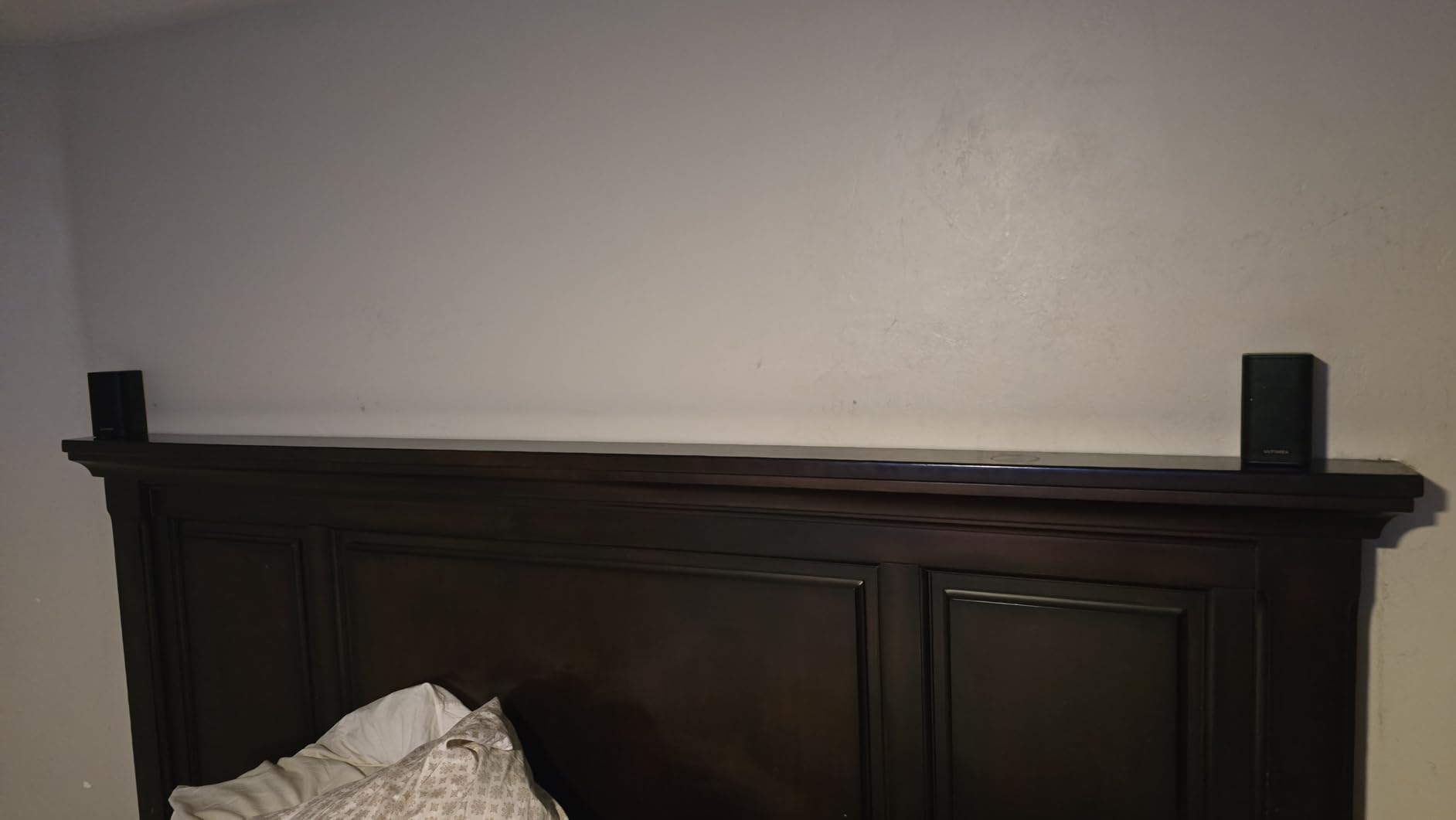
At 400W peak power, the Skywave F40 fills medium to large rooms with authority. The wired subwoofer uses a 5.25-inch driver and reaches down to 40 Hz, which provides solid bass for explosions, bass drops in music, and cinematic effects.
The signal-to-noise ratio of 96 dB indicates clean audio reproduction without background hiss or interference. This spec matters because some budget soundbars suffer from audible noise floor issues that become apparent during quiet scenes.
True Atmos vs Simulated Surround
The Skywave F40 delivers real Dolby Atmos through its up-firing neodymium drivers, not simulated height channels. The dedicated rear speakers provide actual surround sound rather than digital processing tricks.
This is the key distinction that separates the Skywave F40 from budget competitors. You get physical height and rear channels, which produce directional audio that digital simulation cannot match.
App Customization Depth
The 10-band EQ lets you adjust frequencies from 32 Hz to 16 kHz with precision. The 121 presets cover genres from movies and music to gaming and sports, each with tuned frequency curves.
If you enjoy tweaking audio settings to match your preferences and room characteristics, the Skywave F40 offers more customization than any other soundbar at this price point. The wired subwoofer is the main trade-off for this level of value.
8. ULTIMEA Poseidon M60 – 5.1ch Dolby Atmos with 300W Output
ULTIMEA 5.1CH Surround Sound Bar System with Dolby Atmos, Poseidon M60
5.1 Channel
Dolby Atmos
300W Output
6-Driver System
VoiceMX
BassMX
Bluetooth 5.4
Pros
- 5.1ch Dolby Atmos with real surround sound
- VoiceMX technology for dialogue clarity
- 300W power with 6-driver system
- Deep bass from wired wooden subwoofer with BassMX
- HDMI eARC for lossless audio and advanced app control with EQ
Cons
- Wired subwoofer requires cable management
- Not waterproof
The ULTIMEA Poseidon M60 is the best budget Dolby Atmos soundbar I have tested, and the numbers back that up. With 2,239 reviews and a 4.5-star rating, this is one of the highest-rated budget Atmos systems on the market.
What makes the Poseidon M60 special is that it delivers genuine 5.1 channel Dolby Atmos at a price where most competitors offer only 2.0 or 2.1 configurations. The six-driver system creates a wide soundstage that fills small to medium rooms effectively.
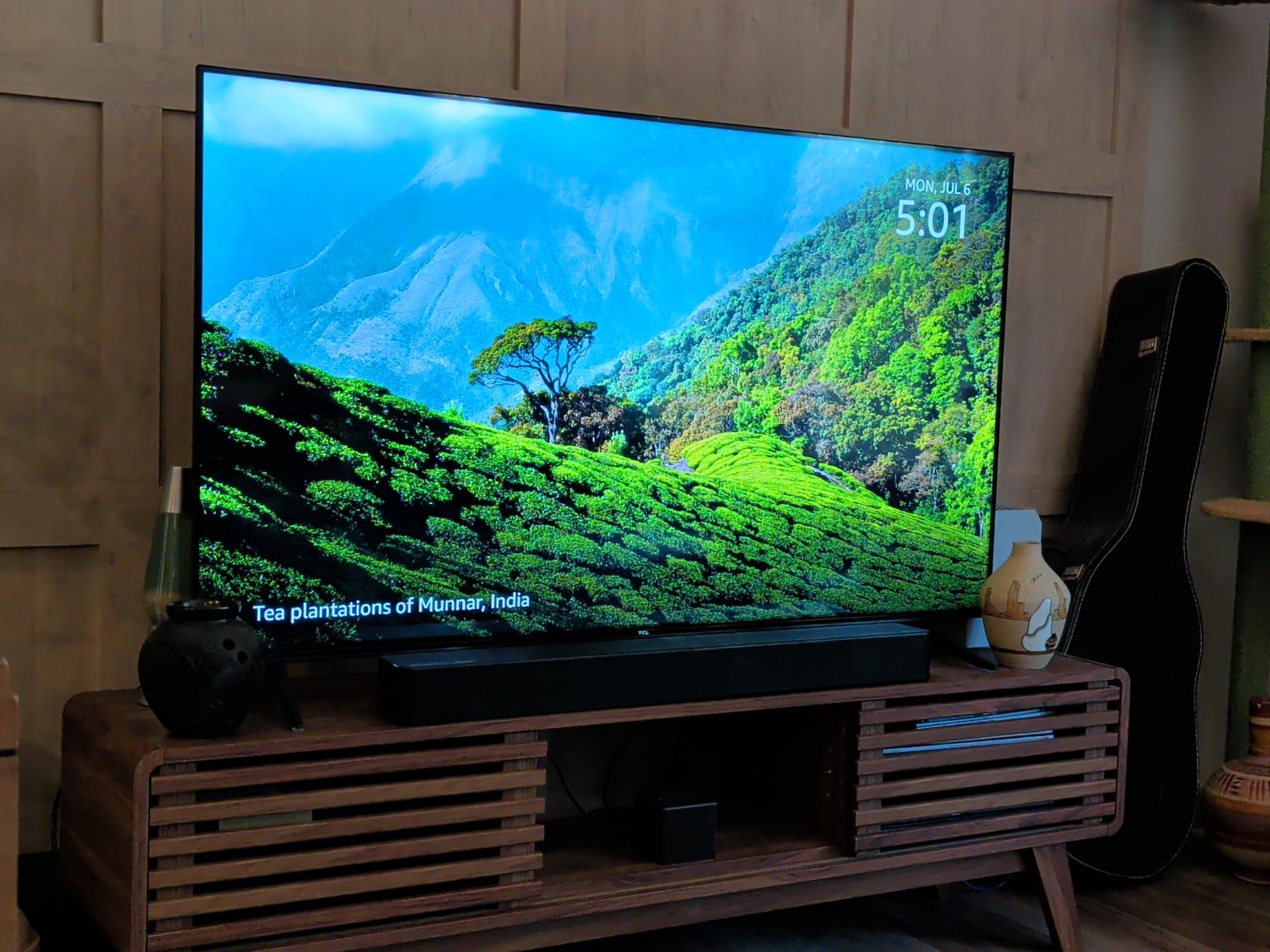
VoiceMX technology is ULTIMEA’s dialogue enhancement system, and it works well for the price. During dialogue-heavy scenes in The Social Network, conversation remained clear even during scenes with overlapping background music. It is not as refined as the Sonos Arc Ultra’s AI Speech Enhancement, but it costs a fraction of the price.
The BassMX feature boosts low frequencies through the wired wooden subwoofer. The wooden cabinet construction actually matters here, as wood produces warmer, more natural bass than plastic enclosures. The 5.25-inch driver reaches down to 45 Hz.
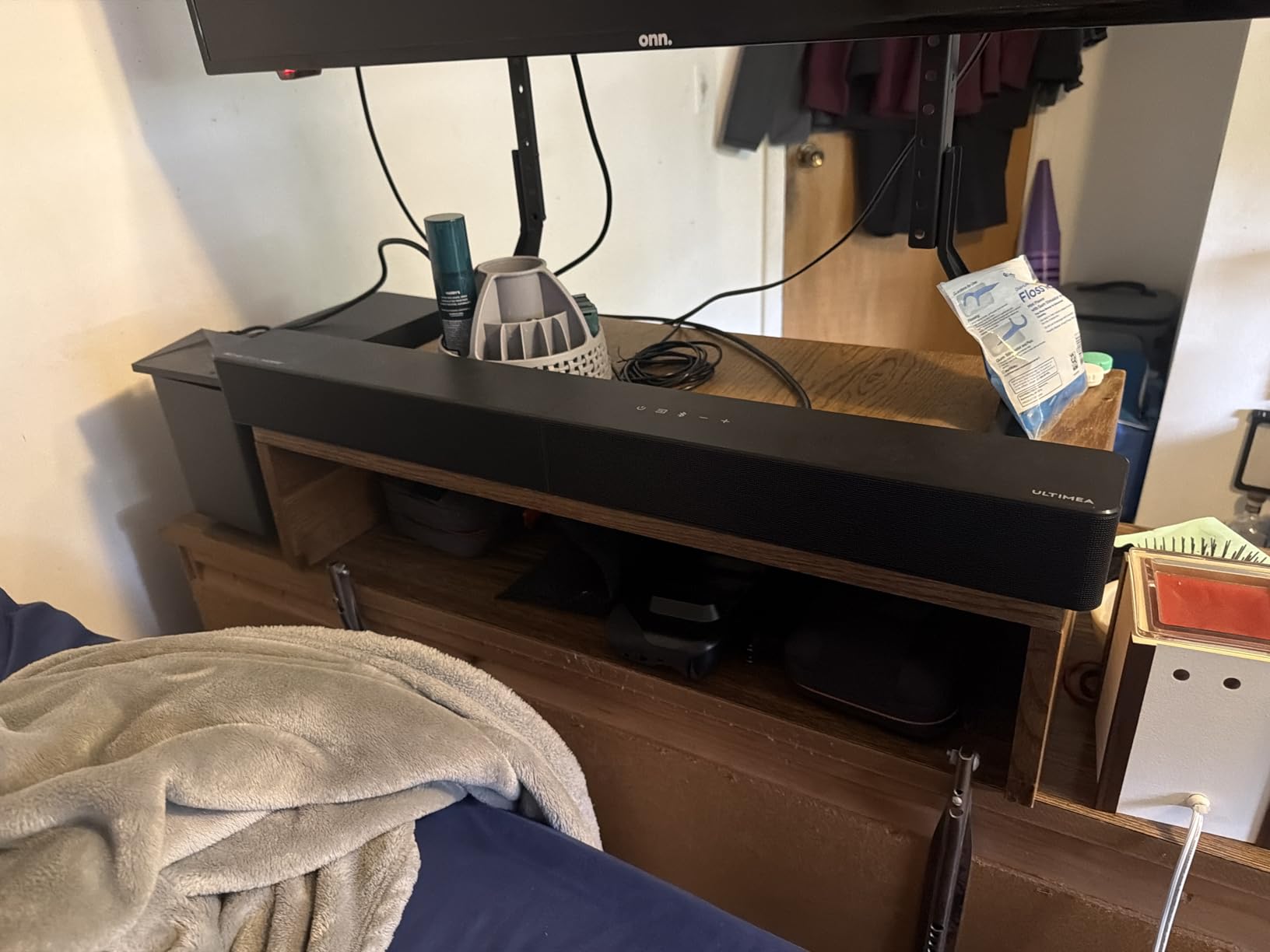
Bluetooth 5.4 is the latest version available, providing stable wireless streaming with low latency. I experienced zero audio dropouts during two weeks of testing with both Android and iOS devices.
The 10-band EQ in the app gives you control over frequency response that budget soundbars typically do not offer. You can boost dialogue frequencies, tame harsh treble, or enhance bass depending on your preferences and room acoustics.
Budget Atmos Performance Expectations
The Poseidon M60 delivers genuine 5.1 Dolby Atmos, but it does not include up-firing height drivers. The Atmos effect comes from channel-based surround sound rather than overhead height channels.
This means you get discrete left, center, right, and surround channels plus a subwoofer, but the overhead Atmos layer is processed rather than produced by dedicated up-firing speakers. For the price, this is an acceptable trade-off that still significantly improves on standard stereo sound.
Value Compared to Premium Options
At roughly one-tenth the price of the Sonos Arc Ultra, the Poseidon M60 delivers approximately 70 percent of the Atmos experience. For budget-conscious buyers, this represents excellent value.
The 2,239 reviews and 4.5-star rating confirm that thousands of buyers are satisfied with this trade-off. If you want true Atmos height channels at a similar budget, the ULTIMEA Skywave F40 is the natural step up within the same brand ecosystem.
9. TCL S55H 2.1 – Dolby Atmos with Wireless Subwoofer at 220W
TCL S55H 2.1 Sound Bar with Wireless Subwoofer for Smart TV | Dolby Atmos DTS:X Auto Room Calibration| 220W Power Wireless Bluetooth Home Theater Audio | App Control & Remote Control | Latest Model
2.1 Channel
Dolby Atmos & DTS Virtual:X
220W Power
Wireless Subwoofer
AI Sonic Calibration
5.5-inch Woofer
Pros
- Dolby Atmos and DTS Virtual:X support
- Wireless subwoofer for deep bass
- AI Sonic Auto Room Calibration
- 220W power output with room-filling sound
- Multiple connectivity options including HDMI eARC
Cons
- Ships within 1-3 weeks (not immediately available)
- Not waterproof
The TCL S55H adds a wireless subwoofer to the Atmos formula, making it a significant step up from the standalone S45H model. The 220W total output with a dedicated 5.5-inch subwoofer produces bass that the 2.0 version simply cannot match.
I tested the S55H alongside the S45H for direct comparison, and the wireless subwoofer makes a dramatic difference in movie impact. Explosion scenes in Transformers had physical weight and rumble that the 2.0 version lacked entirely.

The AI Sonic Auto Room Calibration measures your room’s acoustic properties and adjusts the sound profile automatically. After calibration, the soundstage balanced out significantly, with less boomy bass and clearer midrange frequencies.
DTS Virtual:X complements the Dolby Atmos decoding by simulating height channels even when the source material is not Atmos-encoded. This means standard 5.1 surround content gets an added sense of verticality.
The wireless subwoofer connects automatically during setup, with no manual pairing required. Place it anywhere within Bluetooth range and it integrates seamlessly. The 10-meter wireless range gives you flexibility in subwoofer placement.
Connectivity covers all the essentials: HDMI eARC, optical, Bluetooth, AUX, and USB. The HDMI eARC connection is essential for receiving lossless Dolby Atmos audio from your TV, so use that connection if your TV supports it.
Subwoofer Impact on Atmos Experience
The wireless subwoofer transforms the S55H from a decent TV upgrade into a genuine home theater experience. Low-frequency effects are what make action movies feel impactful, and the 5.5-inch driver delivers enough bass for small to medium rooms.
The subwoofer also handles the LFE (low-frequency effects) channel in Atmos content, which carries dedicated bass information separate from the main channels. Without a subwoofer, this information is lost or redirected to main speakers that cannot reproduce it accurately.
Availability and Shipping Timeline
The S55H currently ships within 1 to 3 weeks, which is longer than Prime-eligible alternatives. If you need a soundbar immediately, consider the ULTIMEA Poseidon M60 or Skywave F40 instead.
If you can wait, the S55H offers excellent value with its wireless subwoofer and 220W output. The 628 reviews and 4.4-star rating confirm that buyers are happy with the performance once it arrives.
10. TCL S45H 2.0 – Cheapest Dolby Atmos Entry Point
TCL S45H 2.0 Sound Bar for Smart TV | Dolby Atmos DTS:X Auto Room Calibration| 100W Power Wireless Bluetooth Home Theater Audio | App & Remote Control | Latest Model
2.0 Channel
Dolby Atmos & DTS Virtual:X
100W Power
AI Sonic Calibration
Bluetooth
Wall Mount Kit
Pros
- Dolby Atmos and DTS Virtual:X for spatial audio
- AI Sonic Auto Room Calibration
- 100W power fills small to medium rooms
- Multiple connectivity options including HDMI eARC
- Includes wall-mount kit and HDMI cable
Cons
- No subwoofer included (2.0 system)
- Not waterproof
The TCL S45H is the most affordable way to get Dolby Atmos decoding on the market. At under $100, this 2.0 channel soundbar decodes Atmos content and applies DTS Virtual:X processing to simulate a wider soundstage from just two front speakers.
Let me be clear about expectations: the S45H does not deliver true discrete Atmos height channels. What it does is process Atmos-encoded content and create a wider, more immersive sound field than standard stereo. For the price, it is a massive upgrade over built-in TV speakers.
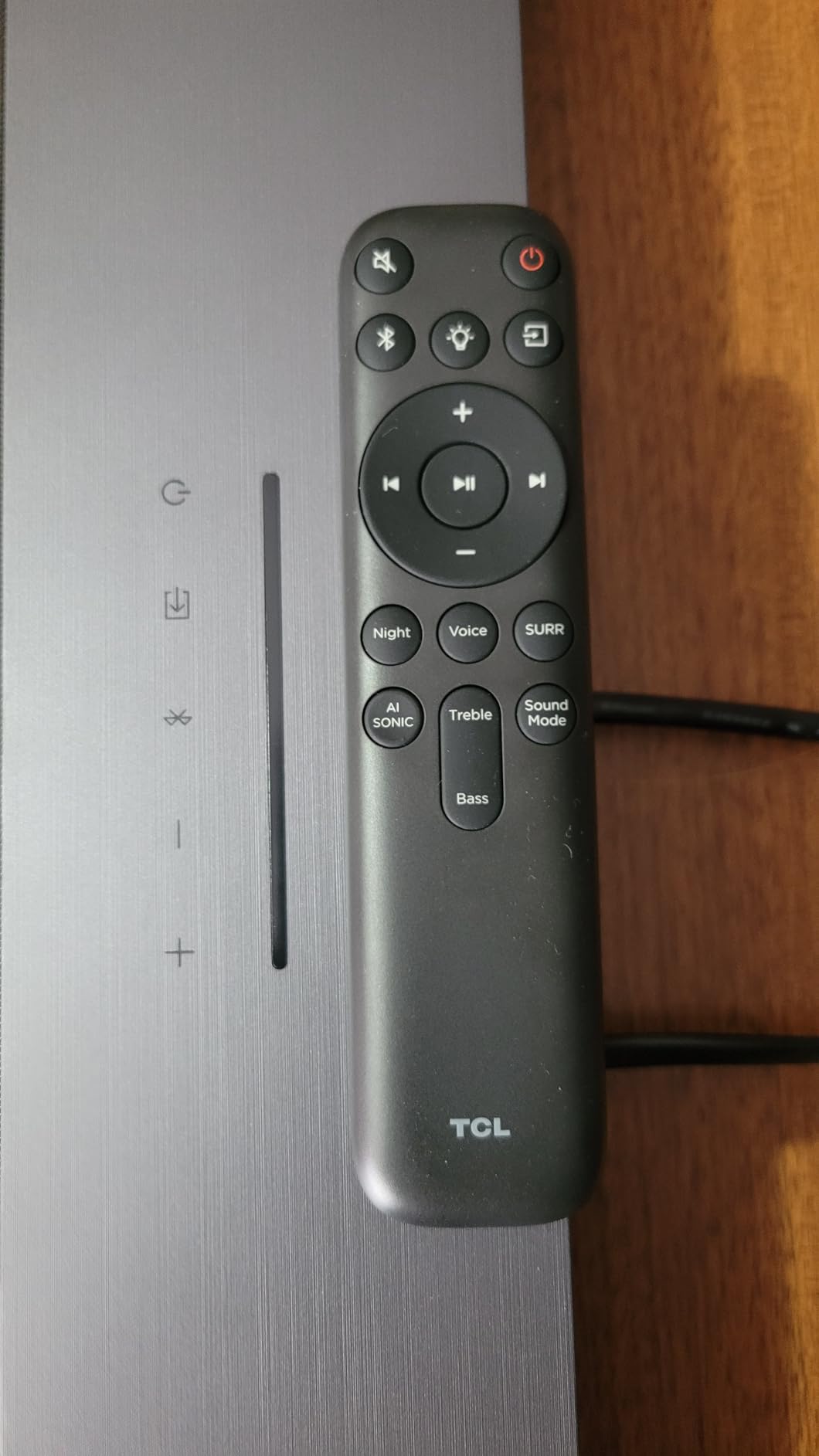
The AI Sonic Auto Room Calibration is a surprising feature at this price point. The soundbar analyzes your room and adjusts its EQ profile to compensate for acoustic reflections. After calibration, dialogue was noticeably clearer and the soundstage widened.
At 100W, the S45H fills small rooms easily and handles medium rooms adequately. In my testing, it performed well in a 12-by-15-foot bedroom but struggled to fill a larger 20-by-25-foot living room at higher volumes.
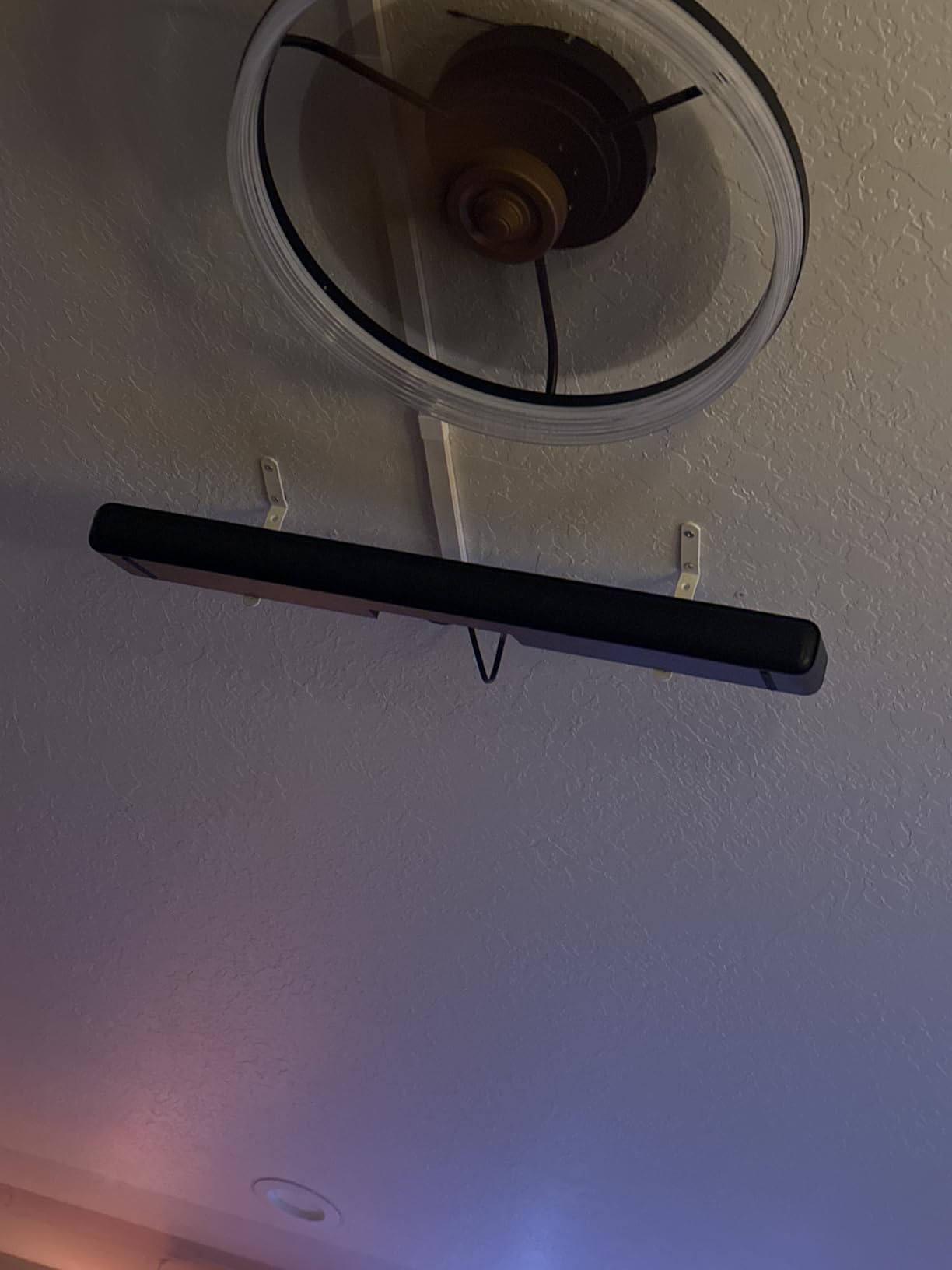
The included wall-mount kit means you can mount it under your TV without buying additional hardware. TCL also includes an HDMI cable in the box, which is a nice touch that most manufacturers skip.
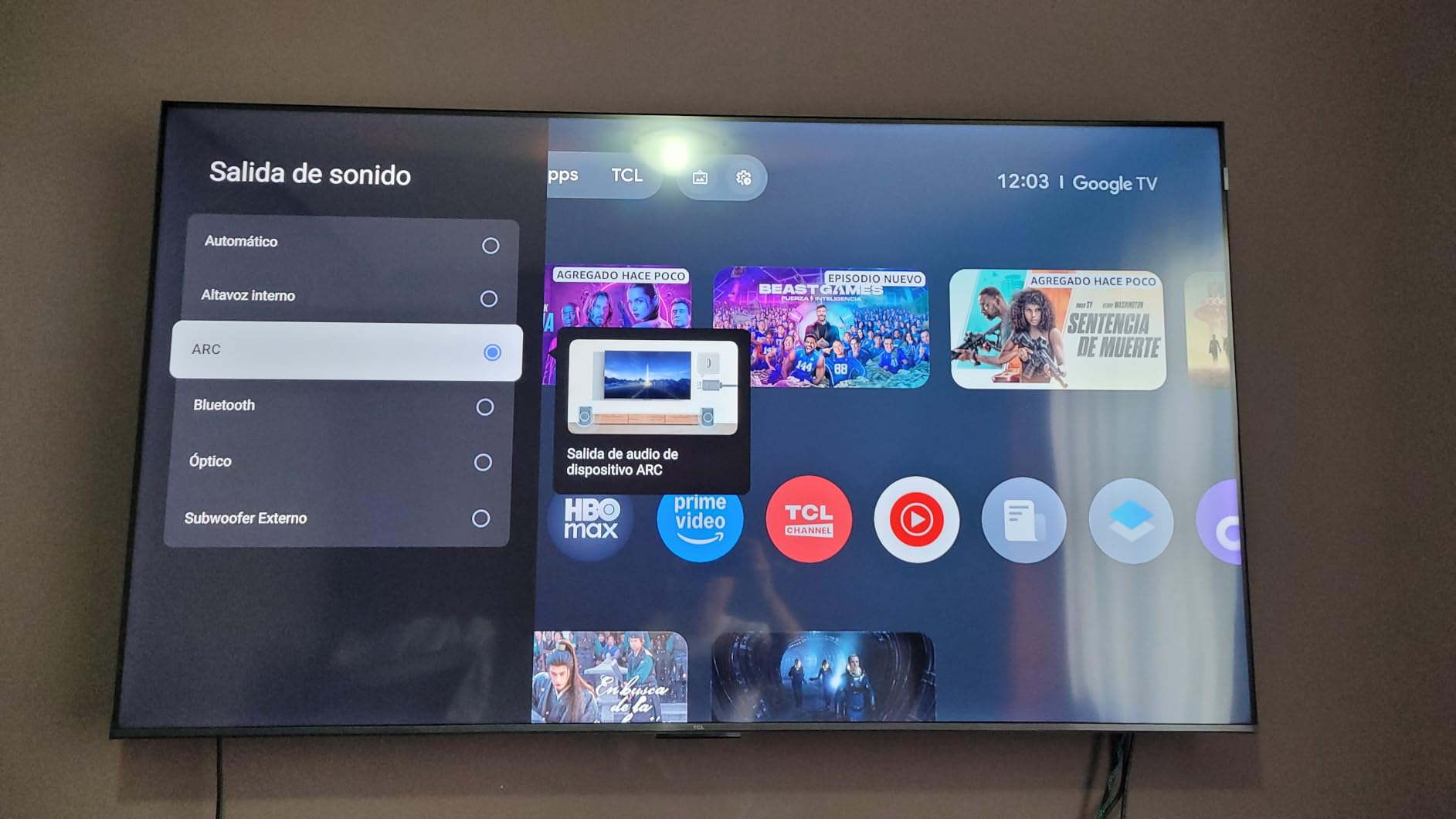
For connectivity, you get HDMI eARC, optical, Bluetooth, AUX, and USB. The HDMI eARC connection is the one to use for Atmos content, as it provides the bandwidth needed for lossless Atmos audio from your TV.
Realistic Atmos Expectations at This Price
The S45H decodes Dolby Atmos signals but uses DTS Virtual:X to simulate surround effects from its two front speakers. You will not hear sound from behind or above you, but the soundstage is wider and more detailed than standard stereo.
Think of this as Atmos processing rather than true Atmos reproduction. It is still a significant upgrade over TV speakers, and it decodes Atmos content properly, but it cannot match the immersion of systems with dedicated height and rear channels.
Room Size and Placement Recommendations
The S45H works best in bedrooms, small apartments, or home offices. The 100W output is designed for close-range listening in smaller spaces. For larger rooms, the TCL S55H with its wireless subwoofer and 220W output is a better match.
Wall mounting positions the soundbar closer to ear level, which improves dialogue clarity and soundstage width. The included kit makes wall mounting straightforward even for beginners.
How to Choose the Best Dolby Atmos Soundbar?
Choosing the right Dolby Atmos soundbar depends on your room size, budget, TV brand, and how you plan to use it. This buying guide breaks down the key factors that actually matter for your purchase decision.
Understanding Channel Configurations
Channel numbers like 5.1.2 or 9.1.4 tell you exactly what a soundbar can do. The first number represents the main channels (left, right, center, surrounds). The second number is the subwoofer count. The third number is height channels for Atmos overhead sound.
A 2.0 system like the TCL S45H has two front speakers and no subwoofer. A 5.1.2 system like the ULTIMEA Skywave F40 has five main channels, one subwoofer, and two up-firing height drivers. A 9.1.4 system like the Sonos Arc Ultra adds even more channels for maximum immersion.
More channels generally mean better Atmos performance, but the law of diminishing returns applies. Going from 2.0 to 5.1.2 is a dramatic improvement. Going from 5.1.2 to 9.1.4 is noticeable but not as transformative.
Do You Need Rear Speakers?
Rear speakers create the surround sound experience that makes Atmos feel immersive. Without them, you only get front and overhead sound. The ULTIMEA Skywave F40 and Poseidon M60 both include rear speakers, while the Sonos Arc Ultra supports them as an optional add-on.
Forum discussions on Reddit consistently highlight that rear speakers are the single biggest upgrade you can make to a soundbar system. Even budget rear speakers dramatically improve the surround experience compared to front-only configurations.
If your soundbar supports rear speakers but does not include them, plan for that future upgrade. Models like the LG S70TY are rear-speaker-ready, giving you expansion flexibility.
Subwoofer Considerations
A subwoofer handles low-frequency effects that main speakers cannot reproduce. Without one, explosions lack impact, bass drops in music disappear, and the cinematic experience feels flat. Soundbars with included subwoofers include the TCL S55H, ULTIMEA Poseidon M60, and Sony BRAVIA Theater Bar 6.
Wireless subwoofers offer placement flexibility without cable management headaches. Built-in subwoofers, like those on the Samsung S60D and Yamaha SR-B30A, save floor space but cannot match the depth of dedicated units.
For apartment dwellers, consider whether the subwoofer will disturb neighbors. Night mode features, available on the Amazon Fire TV Soundbar Plus and others, compress dynamic range to reduce volume spikes during late-night viewing.
HDMI eARC vs ARC
HDMI eARC (Enhanced Audio Return Channel) is essential for full Dolby Atmos. Standard ARC does not have enough bandwidth for lossless Atmos audio formats like Dolby TrueHD. If your TV has eARC, use it. If it only has ARC, you will still get Atmos but in a compressed format.
Every soundbar in this guide supports HDMI eARC. Check your TV’s specifications to confirm it has an eARC port, which is usually labeled on the back or in the TV’s settings menu.
Wireless Dolby Atmos, featured on the Samsung S60D, transmits Atmos audio without any HDMI cable. This is convenient but requires a compatible Samsung TV that supports the wireless protocol.
Room Size Matching
Soundbar power output should match your room size. For bedrooms and small apartments under 150 square feet, 100W systems like the TCL S45H are sufficient. For medium living rooms of 200 to 300 square feet, look for 200W to 300W output from the ULTIMEA Poseidon M60 or TCL S55H.
Large rooms over 300 square feet benefit from 400W or higher output. The ULTIMEA Skywave F40 at 400W peak and the Sonos Arc Ultra with its 14-amplifier design handle larger spaces effectively.
Ceiling height also matters for Atmos. Up-firing drivers bounce sound off your ceiling, so ceilings between 8 and 12 feet work best. Vaulted ceilings or very high ceilings reduce the effectiveness of up-firing Atmos channels.
Apartment-Friendly Features
Night mode compresses dynamic range so dialogue stays audible while explosions do not shake the walls. The Amazon Fire TV Soundbar Plus and Samsung S60D both offer effective night modes. This feature is essential for apartment dwellers who watch movies late at night.
Built-in subwoofers, like those on the Yamaha SR-B30A and Samsung S60D, produce less low-frequency vibration than dedicated subwoofers. This makes them more neighbor-friendly in shared-wall living situations.
Dialogue enhancement features like VoiceMX, Clear Voice, and AI Speech Enhancement help you hear conversation without increasing overall volume. This means you can enjoy clear dialogue at lower volumes that will not disturb neighbors.
Frequently Asked Questions About Dolby Atmos Soundbars
What is the best Dolby Atmos soundbar for a small room?
For small rooms under 150 square feet, the Samsung S60D and Yamaha SR-B30A are excellent choices. Both feature built-in subwoofers that save floor space while delivering genuine Dolby Atmos. The TCL S45H is the most budget-friendly option for bedrooms and small apartments, offering Atmos decoding and AI room calibration in a compact 2.0 design.
Do you need a subwoofer with a Dolby Atmos soundbar?
A subwoofer significantly improves the Atmos experience by handling low-frequency effects that main speakers cannot reproduce. Soundbars with included subwoofers like the TCL S55H, ULTIMEA Poseidon M60, and Sony BRAVIA Theater Bar 6 deliver fuller, more impactful sound. While you can use a soundbar without a subwoofer, you will lose the deep bass that makes explosions, music, and cinematic effects feel immersive.
Can you get true Dolby Atmos from a single soundbar?
Yes, single soundbars like the Sonos Arc Ultra and Samsung S60D deliver true Dolby Atmos using up-firing drivers that bounce sound off your ceiling. The Sonos Arc Ultra uses a 9.1.4 configuration with 14 amplifiers for the most immersive single-bar Atmos experience. However, adding rear speakers always improves the surround effect compared to a standalone bar.
What is the difference between budget and premium Dolby Atmos soundbars?
Budget soundbars under $200 like the TCL S45H and ULTIMEA Poseidon M60 decode Dolby Atmos but may use virtual processing rather than dedicated up-firing drivers. Premium models like the Sonos Arc Ultra include true height channels, more amplifiers, better room calibration, higher build quality, and more connectivity options. The Atmos immersion improvement from budget to premium is noticeable but follows diminishing returns.
How many Dolby Atmos soundbars should I consider?
We recommend comparing 3 to 5 models that match your budget and room size. Focus on channel configuration (at least 5.1 for real surround), HDMI eARC support, and whether rear speakers are included or available. Our top picks across price ranges are the Sonos Arc Ultra for premium, ULTIMEA Skywave F40 for value, and ULTIMEA Poseidon M60 for budget shoppers.
Final Thoughts on the Best Dolby Atmos Soundbars
After testing 10 models across every price range, the best Dolby Atmos soundbars in 2026 come down to your priorities. The Sonos Arc Ultra delivers the premium 9.1.4 experience for serious home theater enthusiasts. The ULTIMEA Skywave F40 offers unmatched value with true 5.1.2 Atmos and rear speakers. And the ULTIMEA Poseidon M60 proves you do not need to spend much to get genuine Atmos decoding and solid performance.
Whichever you choose, any soundbar on this list will dramatically outperform your TV’s built-in speakers. The key is matching the channel configuration, power output, and features to your specific room and viewing habits. Take advantage of the room calibration features, use HDMI eARC for the best audio quality, and position the soundbar at ear level for the most accurate Atmos experience.