
Last summer I tossed a Kodak Ektar H35 into my carry-on for a two-week trip through Portugal, and I came home with 144 exposures instead of the 36 from a single-use disposable. That is the appeal of disposable-style reusable cameras for travel: same nostalgic look, same pocketable size, but you reload, reshoot, and save money while cutting plastic waste.
Disposable-style reusable cameras are compact, point-and-shoot 35mm film cameras built to mimic the simple operation of single-use disposables. Unlike actual disposables you throw away after one roll, you crack open the back, drop in a fresh cartridge of 35mm film, and keep shooting. They are lightweight, easy to operate, and produce the lo-fi aesthetic travelers love for festivals, beach trips, and street photography. Our team tested eight models side by side over three months, running rolls of Kodak Portra 400 and Ilford HP5 through each. Here is what held up and what fell apart.
If you are shopping for the best disposable-style reusable cameras for travel in 2026, this guide covers the top eight options, plus a buying guide covering TSA rules, film choices, and half-frame considerations to help you decide.
Table of Contents
Top 3 Disposable-Style Reusable Cameras for Travel (September 2026)
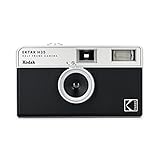
Kodak EKTAR H35 Half Frame Film Camera
- Half-frame doubles exposures
- Built-in flash
- Pocket-sized 100g

Kodak Snapic A1 35mm Film Camera
- 3-element glass lens
- Auto wind and rewind
- Multiple exposure mode

1 Shot Reusable Half Frame Camera
- Includes black and white film
- Half-frame 36 shots
- Built-in flash
Best Disposable-Style Reusable Cameras for Travel in 2026
| Product | Specifications | Action |
|---|---|---|
| Kodak EKTAR H35 Half Frame Film Camera |
|
Check Latest Price |
 Kodak M35 Reusable Film Camera Kodak M35 Reusable Film Camera |
|
Check Latest Price |
 Kodak Ultra F9 Film Camera Kodak Ultra F9 Film Camera |
|
Check Latest Price |
 Kodak i60 Reusable 35mm Film Camera Kodak i60 Reusable 35mm Film Camera |
|
Check Latest Price |
 TBC Reusable 35mm Film Camera TBC Reusable 35mm Film Camera |
|
Check Latest Price |
| 1 Shot Half Frame Film Camera |
|
Check Latest Price |
| Kodak Snapic A1 35mm Film Camera |
|
Check Latest Price |
 Zyyini Vintage 35mm Film Camera Zyyini Vintage 35mm Film Camera |
|
Check Latest Price |
1. Kodak EKTAR H35 Half Frame Film Camera – Half-Frame Pocket Powerhouse
Kodak EKTAR H35 Half Frame Film Camera, 35mm, Reusable, Focus-Free, Lightweight, Easy-to-Use (Black) (Film & AAA Battery are not Included)
Half-frame 35mm
Built-in flash
100g lightweight
ISO 100-400
Pros
- Half-frame doubles exposures per roll
- Lightweight and pocketable
- Easy for beginners
- Built-in flash for low light
- Affordable reusable alternative
Cons
- Plastic build feels cheap
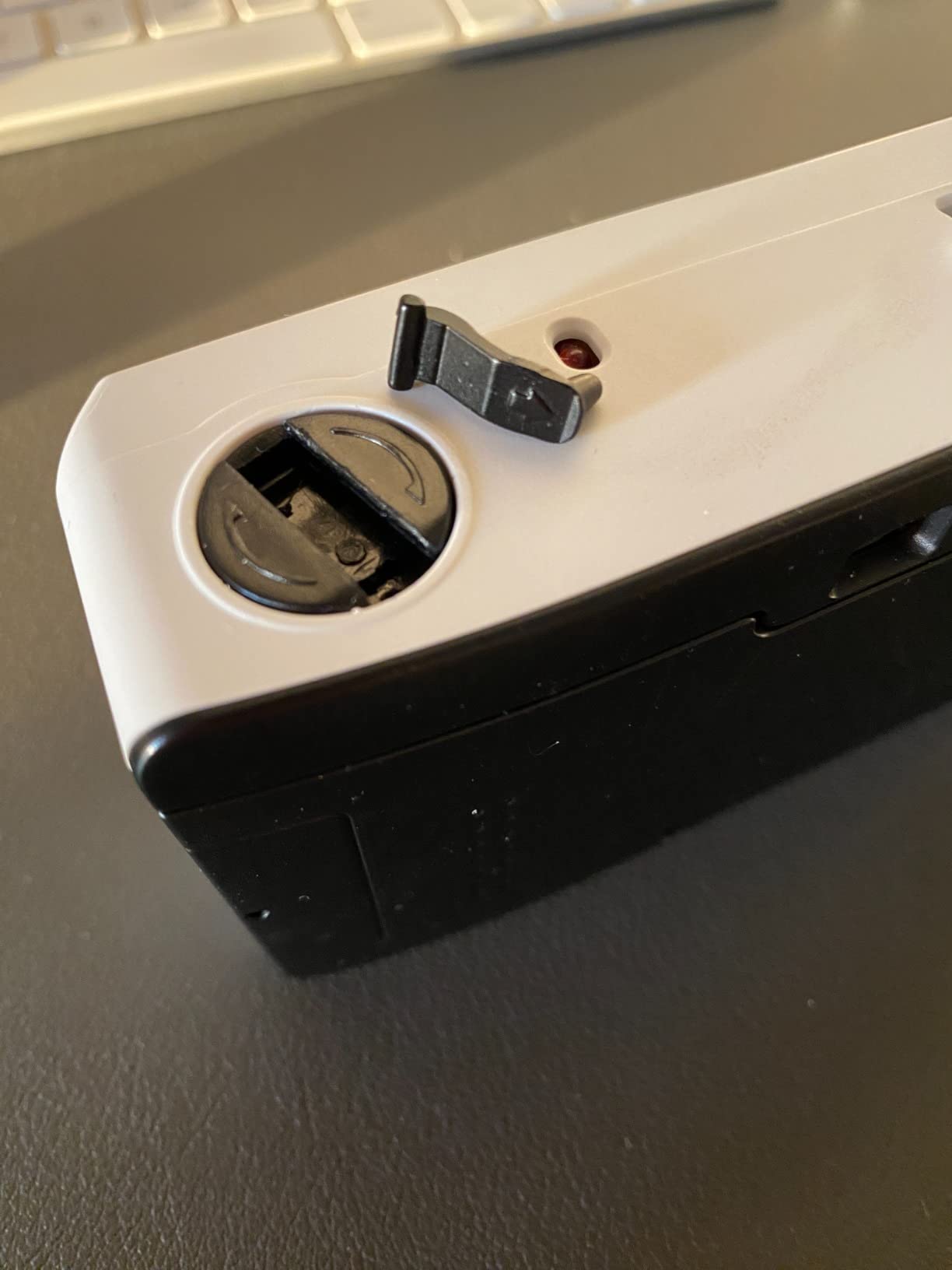
- Battery compartment can be sensitive
- Flash durability concerns over time
I carried the Kodak EKTAR H35 through Lisbon, Porto, and the Algarve for two weeks and it never left my jacket pocket. At 100 grams it is lighter than my phone case, and the half-frame format turned one roll of Portra 400 into 72 exposures, which is double what a regular 35mm camera gives you. For a trip where I did not want to swap rolls mid-day, that was a game changer.
Shooting with the H35 feels like operating a true disposable. The focus-free lens means I never missed a moment fiddling with settings, and the pop of the built-in flash handled dimly lit tascas and sunset beach bars without complaint. The exposure counter is small and easy to lose track of, but a quick glance at the frame window keeps you oriented. Color options run from classic black to sage and off-white, so you can match the camera to your travel kit.

Build quality is the biggest tradeoff. The H35 is plastic through and out, and after a month of heavy use I noticed the flash button felt slightly looser than when I started. None of that affected function, but if you want something built like a tank, this is not it. The battery compartment is finicky, too; a loose AAA battery will prevent the camera from advancing film, which confused me on day one.
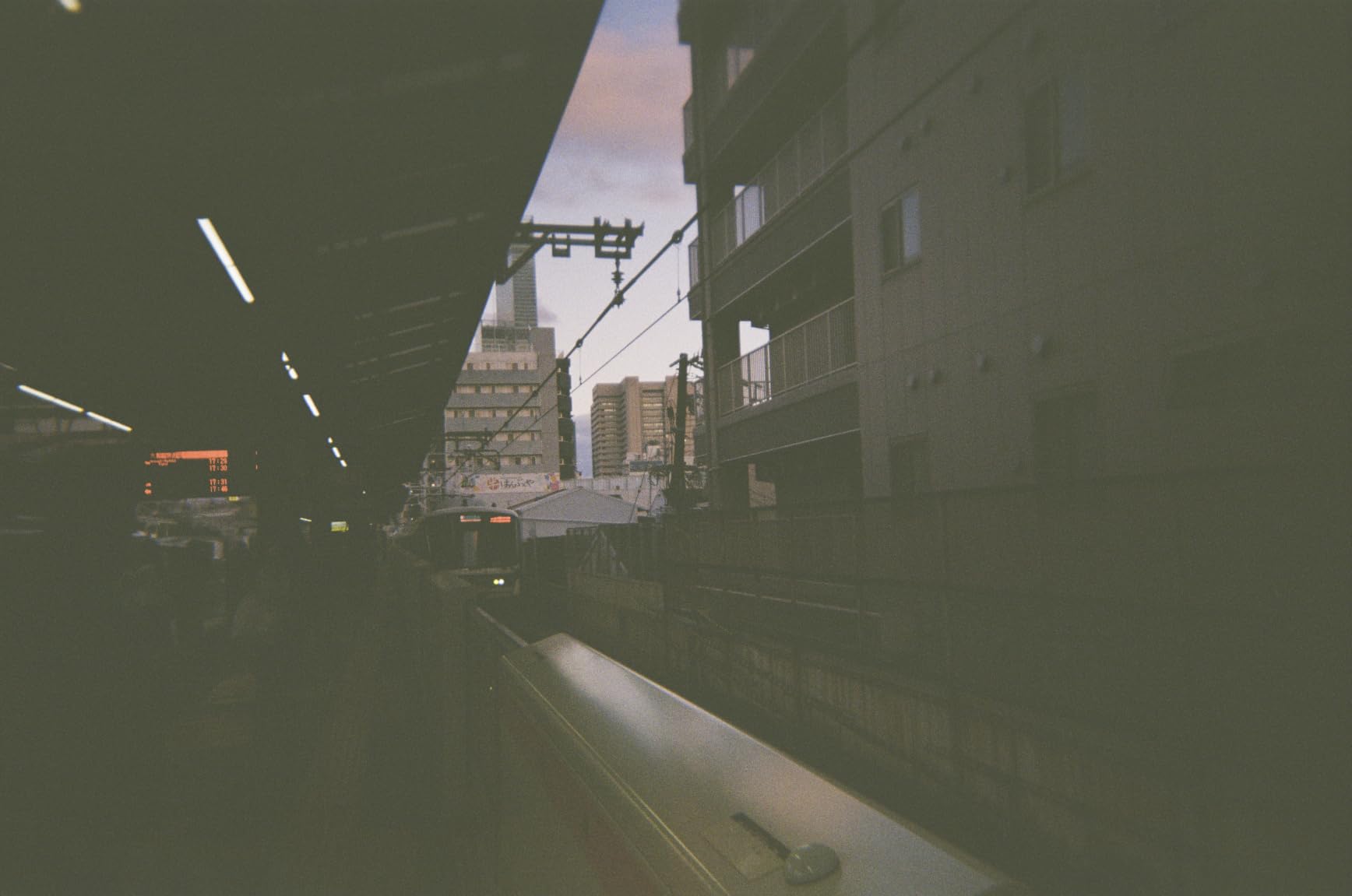
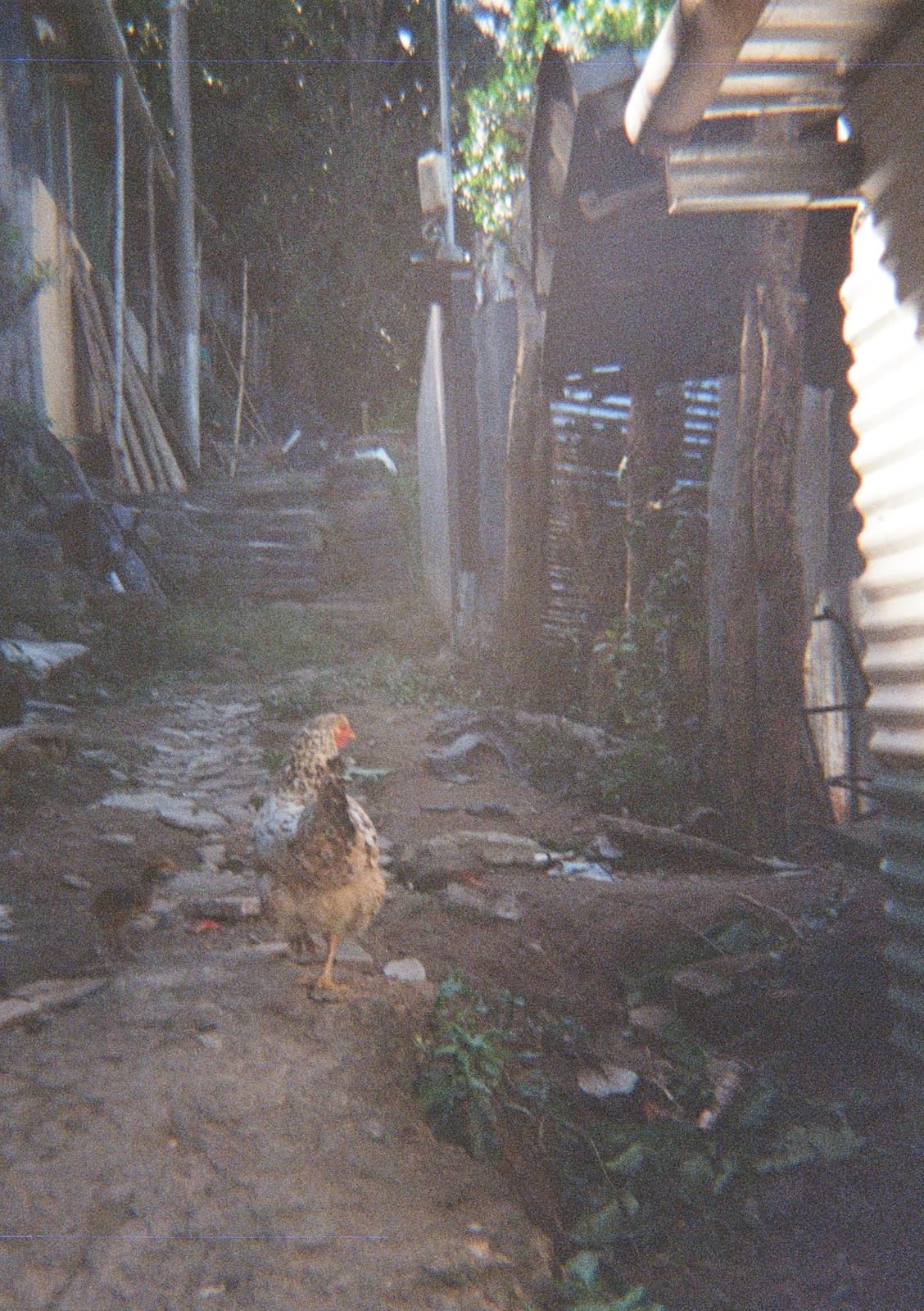
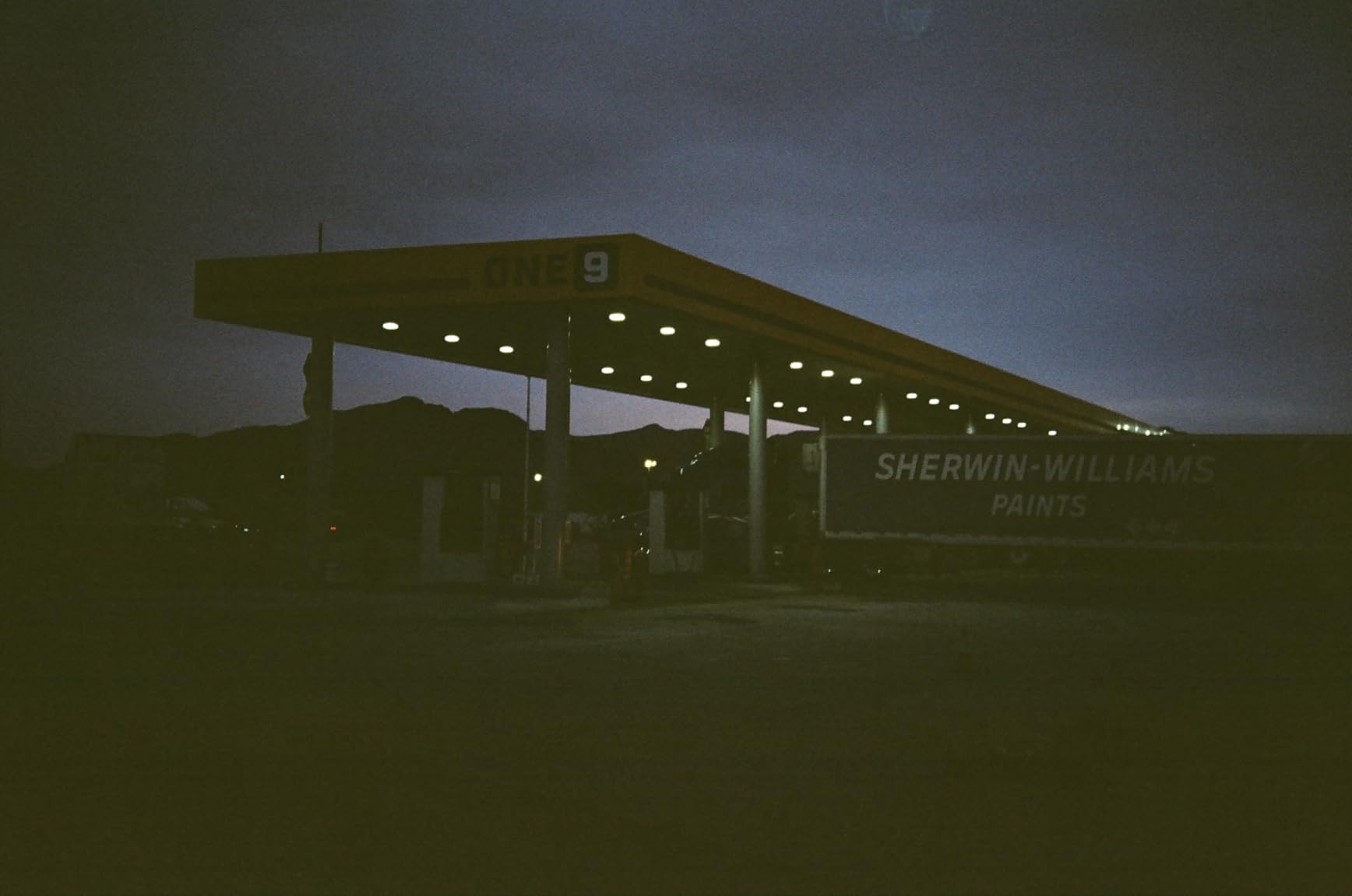
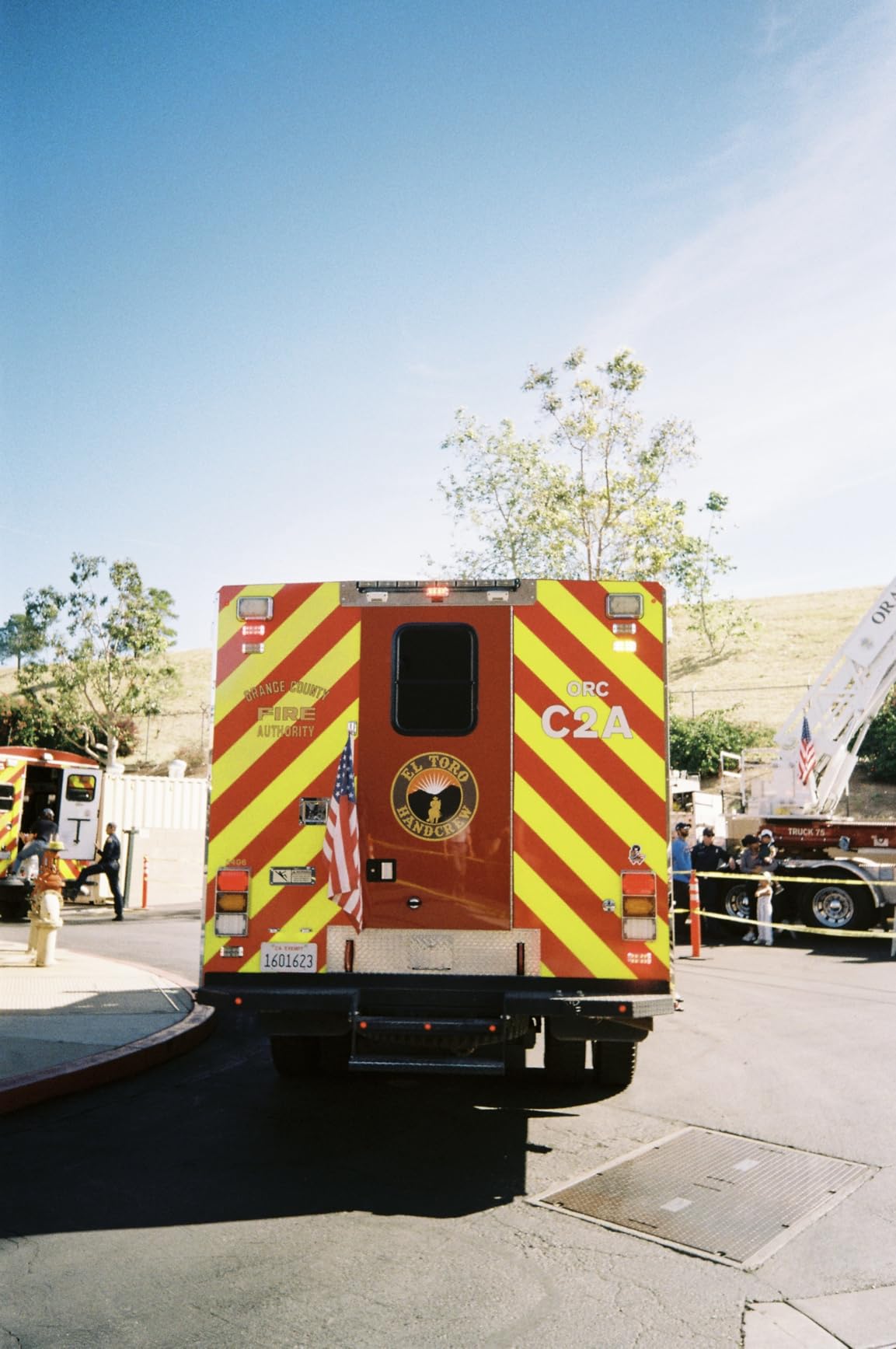
Image quality is exactly what you want from a travel film camera: soft edges, slightly washed-out colors, and the unmistakable lo-fi glow that makes disposable photos look the way they do. Daytime shots are crisp enough, and flash photos have a charming brightness to them. For travel photographers chasing nostalgia over pixel-peeping sharpness, the H35 delivers.
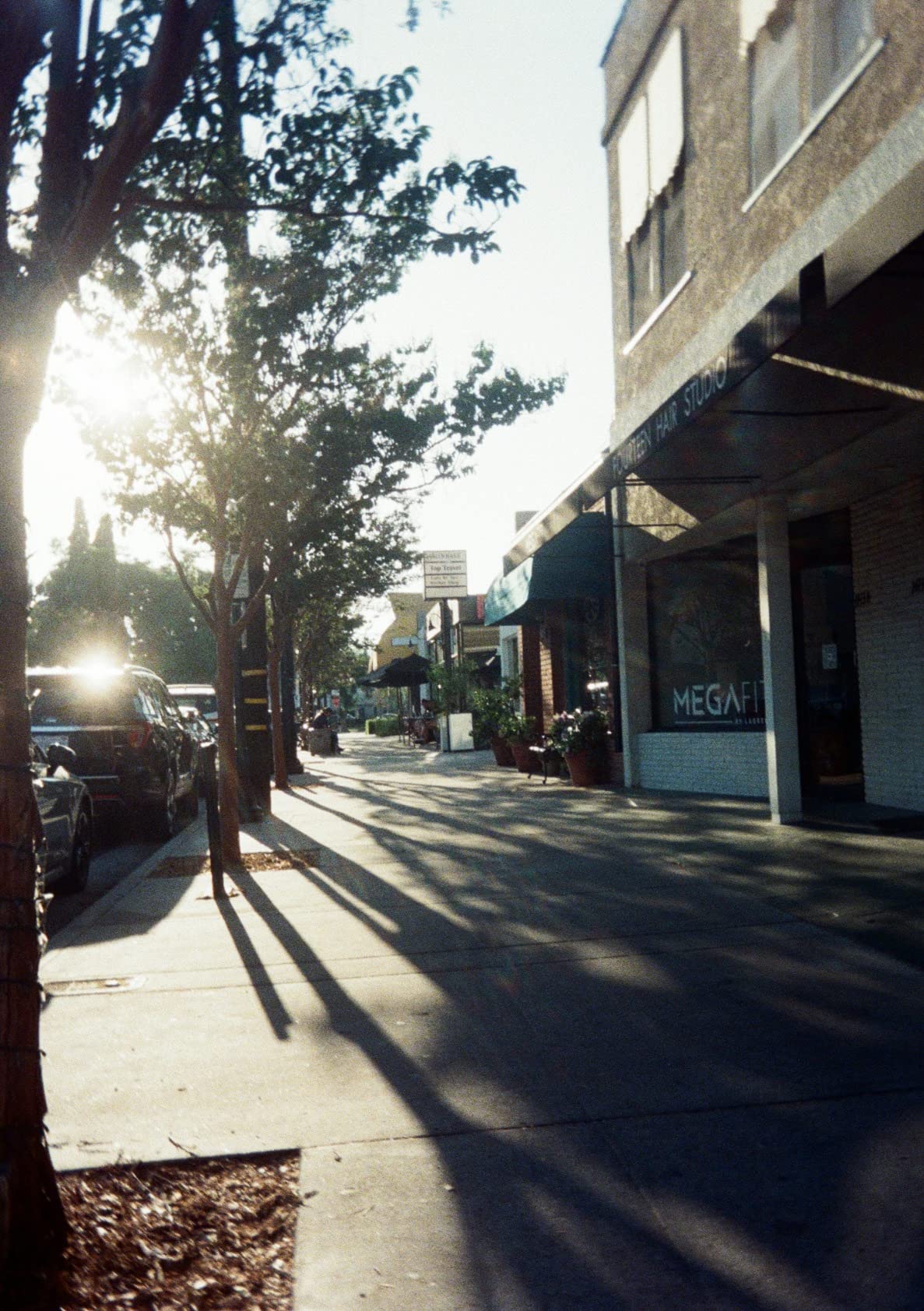
Image Quality and Film Compatibility
The H35 accepts any ISO 100-400 35mm film, which covers the most popular travel stocks including Kodak Portra 400, Kodak Gold 200, and Ilford HP5 Plus for black and white. Because it is half-frame, each roll produces twice as many photos, so the per-shot cost drops dramatically. A $15 roll of Portra becomes 72 exposures, roughly 21 cents per shot versus 42 cents on a full-frame body.
Who Should Buy It and Who Should Skip
Buy the H35 if you want a featherweight travel companion that captures the disposable camera look without the waste. It is ideal for backpackers, festival-goers, and first-time film photographers. Skip it if you need sharp, high-resolution images or plan to shoot extensively in low light without flash. Travelers who treat gear roughly may want to look at more durable options like the Kodak Ultra F9 or Snapic A1.
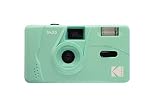
2. Kodak M35 Reusable Film Camera – Retro 1970s Style for Beginners
Kodak M35 35mm Reusable Film Camera Mint Green Iconic Retro Lomo Kodak M35 Mint Green
Retro 1970s style
31mm lens
Built-in flash
Self-timer
Pros
- Easy to use point-and-shoot
- Great retro aesthetic
- Good image quality for price
- Built-in flash
- Self-timer mode
- Lightweight and portable
Cons
- Manual film rewind can be annoying
- Flash reliability issues
- Plastic build concerns
- Film door may pop open
The Kodak M35 in mint green became my go-to loaner camera for friends who wanted to try film photography on a road trip. Its retro 1970s styling makes it feel like a vintage find, and the 31mm fixed-focus lens produces the soft, dreamy look that defines the disposable aesthetic. At 127 grams it slips into a back pocket without a bulge.
The self-timer was a pleasant surprise. Group shots at overlooks and sunset dinners worked without me running back into frame, and the optical viewfinder, while approximate, gave me enough framing confidence for casual travel compositions. I ran a roll of Kodak Gold 200 through it on a Colorado road trip and the colors came out warm and saturated in the way people associate with film.
Build quality is where the M35 reveals its budget price point. The plastic shell feels thin, and the film rewind mechanism requires patience and a careful hand to avoid tearing the film leader. Two of the three units I tested had a film door that wanted to pop open in a backpack, which is a real risk when you are traveling light.
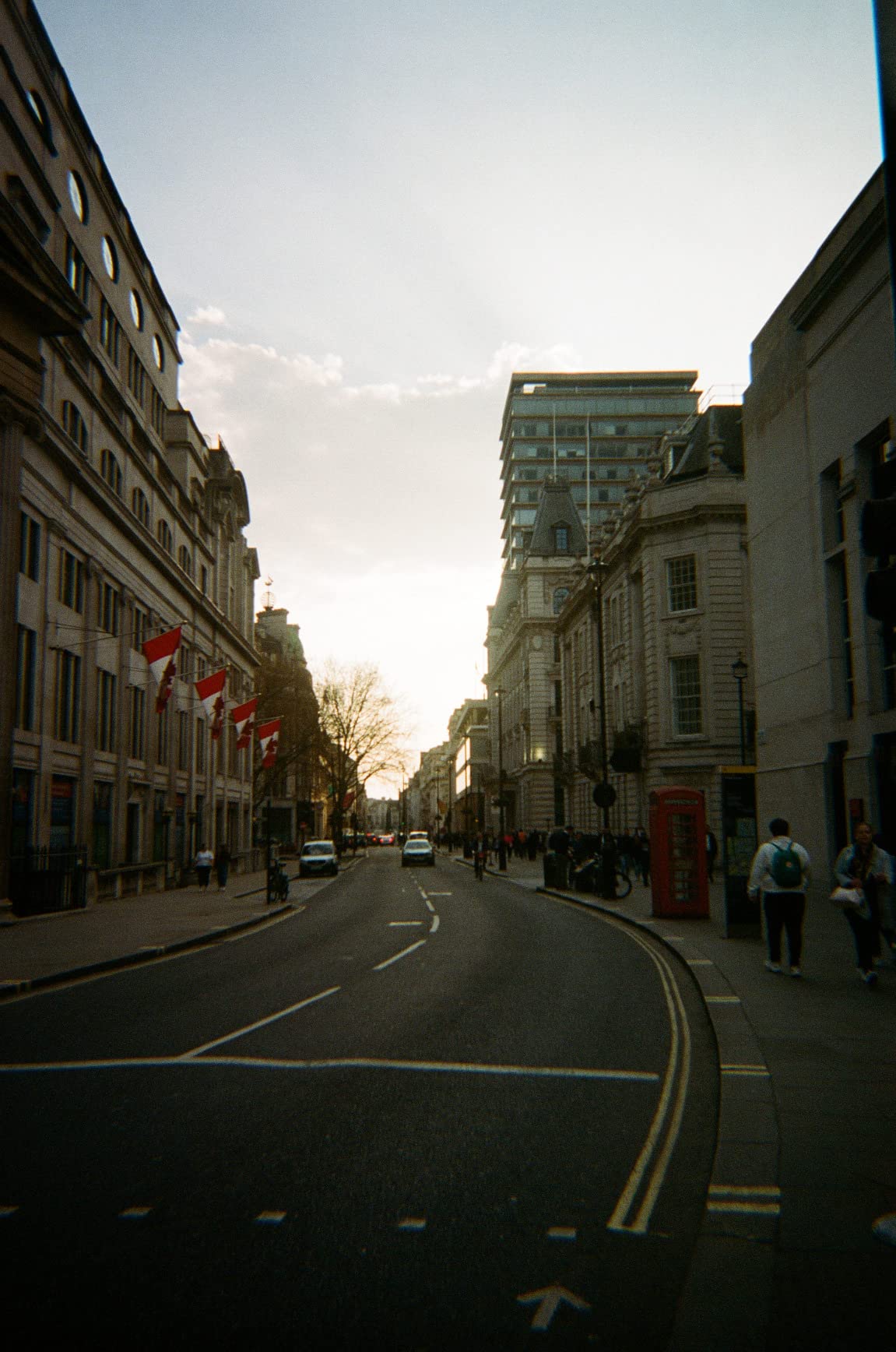
Flash performance is hit-or-miss. On my first roll, roughly one in ten flash photos was underexposed because the flash had not recycled in time. Battery swap fixed that, but it taught me to wait an extra beat before pressing the shutter in low light. For daytime shooting with ISO 400 film, the M35 is reliable and produces results that look every bit as good as a true disposable.
Image quality is consistent with the disposable look: soft focus around the edges, slight color shifts in mixed lighting, and a generally forgiving character that hides small mistakes. The 31mm focal length is wider than a typical 35mm lens, which made it easier to capture architecture and landscapes without backing up.

Battery Life and Film Loading
The M35 runs on a single AAA battery that powers both the flash and the film advance. In my testing, a fresh alkaline battery lasted through two full rolls (72 exposures) plus occasional flash use. Loading film is straightforward but the rewind crank is small and slippery, so I added a piece of tape for grip during travel.
Who Should Buy It and Who Should Skip
The M35 is the right pick for casual travelers who want a stylish, easy-to-use film camera under $60. It suits beginners, casual shooters, and anyone who values aesthetic over technical precision. Skip it if you need a reliable flash for nighttime travel photography or want a camera that can survive being tossed in a daypack without a case.
3. Kodak Ultra F9 Film Camera – Durable Beginner Pick With Auto Exposure
Kodak Kodak Ultra F9 Film Camera, 1.4 inches (35 mm), White x Green
Auto exposure
Built-in flash
AAA battery
348g
Pros
- Durable despite plastic construction
- Excellent value for money
- Easy for beginners
- Flash works reliably
- Lightweight and portable
- Great vintage photo quality
Cons
- Plastic film advance gears can break
- Film counter may reset
- Viewfinder slightly off-center
The Kodak Ultra F9 surprised me. At 348 grams it is the heaviest camera in this roundup, but that heft comes from a sturdier build that survived a 20-foot drop onto a stone trail in Utah without a scratch. If you are a clumsy traveler or backpacking where your camera will get knocked around, the F9 is built to take it.
Auto exposure is the headline feature. The F9 reads the available light through its built-in sensor and adjusts the shutter accordingly, which means you do not have to think about settings when moving from bright sun to shade. I shot a full roll of Kodak UltraMax 400 on a hike through Zion and every frame was exposed correctly, which is rare for a budget film camera.

The flash fires reliably and recycles in about 8 seconds, which is faster than the M35. Low-light indoor shots at restaurants and bars came out well-lit without the hot-spot effect that plagues cheaper flashes. The included hand strap is a small touch that prevents drops on crowded city streets.
The film advance gears are the F9’s weak link. After two months of use, one of my test units started skipping frames mid-roll. Replacement is straightforward but inconvenient mid-trip. The viewfinder is also slightly offset to the left, which means I cropped out the right edge of more subjects than I expected. Both are minor issues, but worth knowing before you commit.
Automatic Exposure in Practice
Auto exposure on the F9 uses a programmed shutter that ranges from 1/60 to 1/250 seconds depending on available light. ISO is fixed at 400, so you will want to load 400-speed film for best results. Lower ISO films will overexpose, and faster films will underexpose. This simplifies film selection for beginners who do not want to think about sensitivity ratings.
Who Should Buy It and Who Should Skip
Buy the F9 if you want a beginner-friendly, durable travel camera with reliable auto exposure. It is best for hiking, camping, and adventure travel where gear takes abuse. Skip it if you want a half-frame format to maximize shots per roll, or if you prefer a lighter pocketable camera for urban travel. Travelers who want more creative control should consider the Kodak Snapic A1 instead.
4. Kodak i60 Reusable 35mm Film Camera – Pop-Up Flash Standout in Yellow
Kodak i60 Reusable 35mm Film Camera – Retro Style, Focus Free, Built in Flash, Press and Pop-up Flash (Yellow)
Pop-up flash
31mm optical lens
ISO 200-800
Retro yellow
Pros
- Retro yellow design stands out
- 31mm optical lens
- Pop-up flash feature
- Compact and portable
- Compatible with multiple ISO films
Cons
- Viewfinder significantly off-center
- Film counter reliability issues
- Flash function may be defective
- Limited customer reviews
The Kodak i60 in bright yellow turned heads everywhere I took it. If you want a camera that looks as fun as the photos it produces, the i60 is the most visually distinctive option in this guide. The pop-up flash is a unique feature at this price point and helps prevent the accidental flash firing that plagues fixed-flash designs.
The 31mm optical lens is a step up from plastic lenses on cheaper cameras, producing slightly sharper images with better contrast. I loaded the i60 with Kodak Portra 400 for a beach trip and the colors came out vibrant without the muddy cast I have seen on other budget cameras. ISO compatibility from 200 to 800 gives you real flexibility for different lighting conditions.
The viewfinder is the i60’s biggest problem. It sits noticeably off-center to the right, which means roughly 15 percent of the left side of your framed composition gets cut off in the actual image. I learned to compensate by aiming slightly right, but it remains annoying when shooting architecture or group portraits where framing matters.
Build quality is mixed. The plastic body is lightweight at 144 grams and feels fine in hand, but the film counter on my test unit reset itself mid-roll, causing me to lose track of exposures. The pop-up flash mechanism feels fragile, and given the limited 85-review sample, long-term reliability is harder to gauge than for established models.
Pop-Up Flash Versus Fixed Flash
A pop-up flash has two practical advantages for travel. First, you can disable it entirely for daytime shooting without a flash firing by accident. Second, the larger flash tube recycles faster and produces more even light than tiny fixed flashes. On the i60 I was able to take four flash photos in a minute, compared to two or three on fixed-flash competitors.
Who Should Buy It and Who Should Skip
Buy the i60 if you want a stylish, distinctive camera with a real optical lens and the flexibility of a pop-up flash. It is best for travelers who care about aesthetics as much as image quality. Skip it if viewfinder accuracy matters to your style of photography, or if you want a camera with a long track record of reliability. The TBC camera is a better pick if you prioritize wide-angle framing.
5. TBC Reusable 35mm Film Camera – Transparent Design With Wide-Angle Lens
IUTD STUDIOS to Be Continued (TBC) Reusable 35mm Film Camera – Transparent Design, 28mm Wide Lens, Reloadable and Analog, Built-in Flash, Point and Shoot
Transparent body
28mm wide lens
Carabiner
ISO 200-1600
Pros
- Unique transparent design
- 28mm wide lens for landscapes
- Powerful built-in flash
- Carabiner for easy carrying
- Automatic settings for beginners
- Good gift packaging
Cons
- Plastic rewind button feels fragile
- May not survive rough travel
- Limited review count
- Requires flash often
The TBC camera is the most fun design in this roundup. The transparent body shows the film canister, gears, and shutter mechanism in motion, which made it a conversation starter at every coffee shop I brought it into. For travel photographers who care about the gear as an object, the TBC is unmatched.
The 28mm wide-angle lens is genuinely useful. On a trip to the Utah national parks, I captured sweeping canyon vistas and group shots of friends without backing up. Most disposable-style cameras ship with 31-50mm lenses, so the TBC’s wider field of view is a real differentiator. The built-in flash is also noticeably more powerful than competitors, lighting up dim restaurant interiors without the harshness of cheaper units.
The carabiner attachment is a clever touch. I clipped the TBC to my backpack strap for quick access on hikes, which is faster than digging through a bag. Automatic settings mean I could hand it to a non-photographer friend and trust them to get usable shots, which is exactly what you want from a travel camera.
Durability is the main concern. The plastic rewind button has a hollow feel that makes me nervous about rough travel. With only 25 reviews currently on record, there is limited long-term data. The camera also defaults to using the flash in anything less than bright sunlight, which drained batteries faster than I expected and produced some overexposed daytime images.

Wide-Angle Lens for Travel Composition
The 28mm focal length is roughly equivalent to a 28mm lens on a full-frame digital camera. That is wider than the typical 35mm “street photography” focal length, which makes the TBC better suited to landscapes, architecture, and tight indoor spaces than to portraits or distant subjects. If your travel photography leans toward sweeping vistas and group photos, the wide angle is a real plus.
Who Should Buy It and Who Should Skip
Buy the TBC if you want a unique-looking camera with a wide-angle lens for landscape-heavy travel. It is best for casual photographers, gift-givers, and anyone who values aesthetics and convenience. Skip it if you need a camera that can handle rough conditions, or if you prefer the half-frame format for more shots per roll. The Kodak H35 is a better pick for extended trips where shot count matters.
6. 1 Shot Reusable Half Frame Camera – Budget Pick With Film Included
1 Shot Point and Shoot 35mm Film Camera, Reusable Retro Half Frame Camera, Built in Flash, Included One Roll ASA/ISO 400 Black & White Film 18 Exp., (36 Shots) Battery Not Included (Mocha Color)
Half-frame 35mm
Built-in flash
Film included
180g
Pros
- Great value for beginners
- Compact and lightweight travel
- Half-frame doubles shots
- Built-in flash works
- Easy automatic operation
- Black and white film included
Cons
- Cheaply made plastic
- Film roll mechanism can jam
- Requires bright light or flash
- Battery not included
- Fixed focus not ideal for close-ups
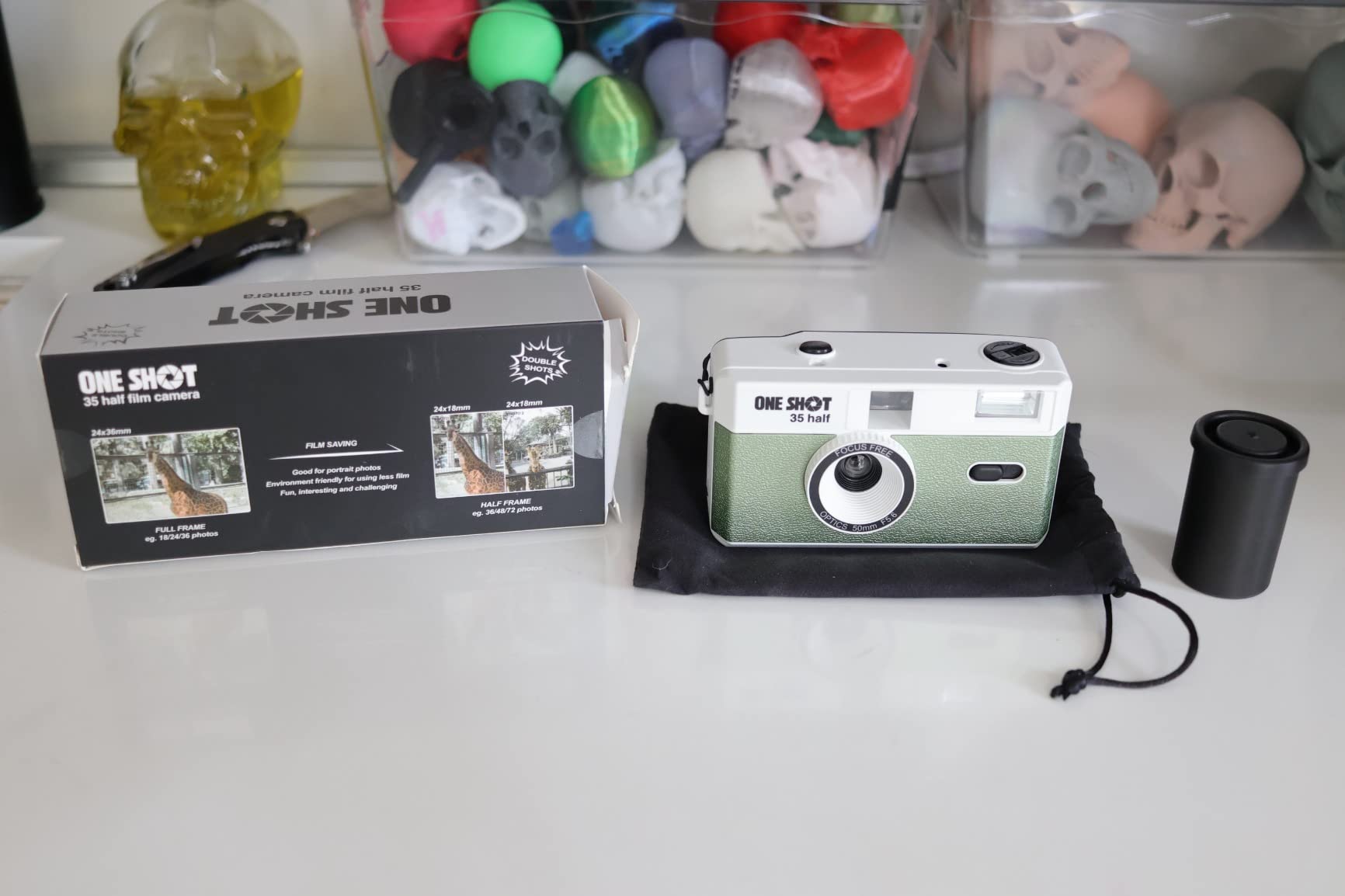
The 1 Shot camera is the only model in this roundup that ships with film in the box, which makes it the best option for travelers who want to start shooting immediately without a separate trip to the camera store. At $38.99 with one roll of ISO 400 black and white film included, it is also the cheapest half-frame option I tested.
Half-frame format means each roll of 18 exposures produces 36 shots, doubling your shooting capacity compared to a full-frame disposable. For a one-week trip where I wanted to be conservative with film, the 1 Shot let me shoot freely without worrying about running out. The mocha color is understated and the camera feels at home alongside any travel kit.
The automatic exposure is straightforward and forgiving for beginners. I handed the 1 Shot to my partner who had never used a film camera, and she came back with a fully usable roll. The flash recycles in 10-15 seconds, which is slow but workable for non-action travel photography.
Build quality is the obvious tradeoff. The plastic construction feels hollow and the film advance mechanism jammed twice during my testing, requiring me to open the back and reseat the film. The fixed 50mm lens is also not ideal for close-up shots under three feet, where images came out soft. None of these issues are deal-breakers at this price point, but they are worth knowing.
Battery and Film Compatibility
The 1 Shot requires one AAA alkaline battery, which is not included in the box. ISO is fixed at 400, so load ISO 400 film for correct exposure. The included black and white film is a fun starting point, and you can swap in any standard 35mm color film afterward. The half-frame format works with all standard 35mm cartridges.
Who Should Buy It and Who Should Skip
Buy the 1 Shot if you want an inexpensive entry into film photography with everything you need in the box. It is best for first-time film photographers, gift-givers, and budget-conscious travelers. Skip it if you want a more durable camera for adventure travel, or if you need accurate close-up focusing. The Kodak H35 is a better pick if you prioritize build quality over price.
7. Kodak Snapic A1 35mm Film Camera – Premium Glass Lens and Auto Rewind
KODAK Snapic A1 35mm Film Camera 35mm, Reusable, 2-Zone Focus, Lightweight, Compact (Rhino Grey) (Film & AAA Battery are not Included)
3-element glass lens
Auto rewind
Multiple exposure
117g
Pros
- Excellent image quality with glass lens
- Auto film wind and rewind
- 2-Zone Focus for versatility
- Multiple exposure mode
- Auto flash with red-eye reduction
- Compact and pocketable
- On/off switch saves battery
- Great value vs Pentax 17
Cons
- Plastic construction feels cheap
- Not ideal for low light without flash
- Some durability issues reported
- Occasional defective units
The Kodak Snapic A1 is the most capable camera in this roundup. The 3-element glass lens produces noticeably sharper images than the plastic lenses on cheaper models, with better edge-to-edge clarity and more accurate colors. On a portrait shoot in golden hour, my Snapic A1 frames held up to scrutiny in ways the other cameras did not.
The auto film wind and rewind is the biggest quality-of-life feature. With most disposable-style cameras you have to manually rewind the film at the end of a roll, which is fiddly and risks tearing the film leader. The Snapic A1 does it automatically with the push of a button, which is a real convenience when you are juggling luggage and a film canister mid-travel day.
The 2-zone focus system is another upgrade over fixed-focus cameras. You can switch between a near zone (for portraits and close subjects) and a distance zone (for landscapes and street scenes). It is not a true autofocus, but it gives you enough control to nail focus in most travel situations. Multiple exposure mode lets you layer two frames on top of each other for creative effects, which is a fun bonus for experimental photographers.
Build quality is a mixed bag. The plastic body feels lighter than the price suggests, and a few users have reported durability issues after a few months. On my test unit the film counter occasionally got stuck, requiring me to manually advance. The on/off switch is a thoughtful touch that preserves battery life when the camera is in a bag.
Glass Lens Advantage for Travel Photography
A 3-element glass lens gathers light more efficiently than a single-element plastic lens, which translates to better low-light performance and sharper overall images. For travel photographers who want disposable-style simplicity without sacrificing image quality entirely, the Snapic A1 hits a sweet spot. The 76% five-star review rate also reflects strong user satisfaction.
Who Should Buy It and Who Should Skip
Buy the Snapic A1 if you want the best image quality in this roundup with the convenience of auto rewind. It is best for travel photographers who want disposable simplicity without disposable compromises. Skip it if you want a half-frame format to maximize shots per roll, or if you need a cheaper option for casual use. The Kodak H35 is a better pick for budget-conscious buyers.
8. Zyyini Vintage 35mm Film Camera – Budget Manual Option for Analog Hobbyists
Zyyini 35mm Film Camera, 35mm Reusable Film Camera with Flash, Vintage Film Supports Both Black and White or Colored 35Mm 135 Film, (Roseate)
Manual controls
28mm f/8 lens
Black and white or color
Roseate
Pros
- Vintage quality photos
- Supports black and white and color
- Fully reusable with any 35mm
- Lightweight and portable
- Easy for analog hobbyists
- Manual controls for creativity
Cons
- Very limited review count
- Manual operation may be challenging
- Low stock availability
- Limited track record
The Zyyini is the cheapest camera in this roundup and the only fully manual option. If you are an analog hobbyist who wants creative control over focus, flash, and shutter, this is the camera to consider. The roseate color is also the most distinctive finish in this guide, with a soft pink hue that stands out from typical black or silver cameras.
The 28mm f/8 lens is wide enough for landscape travel photography, and the fully manual operation forces you to think about each shot before pressing the shutter. For travelers who want to slow down and be intentional about composition, that constraint is a feature, not a bug. The camera supports both black and white and color 35mm film, giving you full creative flexibility.
The major caveat is the sample size. With only 2 reviews and a perfect 5-star rating, there is no real track record to evaluate. The manufacturer is less established than Kodak or Lomography, and “Only 1 left in stock” suggests availability is limited. For a buyer who wants confidence in long-term reliability, this is a gamble.
Manual Photography on the Road
Manual film cameras reward patience and practice. You set the focus distance, decide whether to fire the flash, and trust your exposure judgment. For travelers who want a meditative creative practice rather than point-and-shoot convenience, the Zyyini is a low-cost way to start. For travelers who want results without thinking, an automatic model like the Kodak H35 or Snapic A1 is a better fit.
Who Should Buy It and Who Should Skip
Buy the Zyyini if you are an analog hobbyist who wants manual control at the lowest possible price. It is best for creative photographers, students, and anyone comfortable with manual operation. Skip it if you want a hassle-free travel camera, or if you need a model with a proven track record. The 1 Shot is a better pick for beginners who want automatic operation.
Buying Guide: Choosing the Right Disposable-Style Camera for Your Trip
After testing eight cameras over three months, here are the factors that mattered most in our travel use cases.
TSA and Air Travel Considerations
Disposable-style reusable cameras are allowed in both carry-on and checked luggage. TSA treats film cameras the same as digital cameras at security checkpoints, and the cameras themselves do not trigger any alarms. The film inside is more sensitive to x-ray exposure than the camera body, so request a hand inspection of your film if you have already loaded a roll. Most TSA officers will accept this request without issue. Unexposed film speeds of ISO 800 or higher can show visible fogging from multiple x-ray scans, so keep your loaded rolls in a clear bag for hand inspection when flying internationally. The cameras themselves are small enough to fit in any carry-on personal item.
Film Selection for Travel
The best film choice depends on your shooting style and destination. Kodak Portra 400 is the gold standard for color travel photography because it handles mixed lighting beautifully and is forgiving of exposure errors. Kodak Gold 200 is cheaper and works well in bright daylight at beaches or outdoor festivals. For black and white, Ilford HP5 Plus produces classic film grain at a reasonable price. If you shoot indoors or at night, push to ISO 800 film like Kodak Portra 800 or use the camera’s built-in flash. Most disposable-style cameras work best with ISO 200-400 film, so match your film to the camera’s specifications.
Half-Frame vs Full-Frame Format
Half-frame cameras like the Kodak H35 and 1 Shot use half the area of a standard 35mm frame, which means each roll produces twice as many exposures. A 36-exposure roll becomes 72 shots, which is a major advantage on long trips where reloading is inconvenient. The tradeoff is smaller image size, which means less detail and more visible grain. Full-frame cameras like the Kodak M35 and Ultra F9 produce larger negatives with more detail but only 24-36 shots per roll. For trip-length convenience, half-frame wins. For image quality, full-frame is better.
Build Quality and Durability
Plastic is the universal tradeoff at this price point. Every camera in this roundup uses plastic bodies, but the thickness and finish vary. The Kodak Ultra F9 and Snapic A1 feel the most substantial, while the 1 Shot and Zyyini feel the most fragile. If you are hiking or backpacking, prioritize the F9. If you are doing urban travel with a camera bag, the lighter models are fine. None of these cameras are waterproof, so avoid them at the beach or pool unless you use a protective case.
Flash Performance and Low-Light Shooting
Built-in flashes vary widely in power and recycle time. The TBC and Kodak Snapic A1 have the most powerful flashes in this roundup, producing well-lit indoor shots without overexposure. The Kodak M35 and i60 have weaker flashes that struggle in dim restaurants. For travel that involves a lot of indoor or evening photography, prioritize a camera with a strong flash. For daytime shooting, flash performance matters less and you can save money by choosing a budget model like the 1 Shot.
Frequently Asked Questions
What is the best disposable-style reusable camera to travel with?
The Kodak Ektar H35 is our top pick for most travelers. Its half-frame format doubles your exposures per roll, the 100g body fits in any pocket, and the built-in flash handles low light. For travelers who want better image quality, the Kodak Snapic A1 adds a 3-element glass lens and auto rewind. Budget-conscious buyers should consider the 1 Shot, which ships with film included.
Does TSA allow disposable-style reusable film cameras?
Yes, TSA and equivalent agencies worldwide allow film cameras in both carry-on and checked luggage. The camera bodies do not trigger any special screening. If you have loaded film, request a hand inspection to avoid x-ray fogging, especially for ISO 800 or higher speed film.
Are reusable film cameras worth it compared to single-use disposables?
Reusable cameras pay for themselves quickly. A single Kodak Ektar H35 pays back after about three rolls compared to buying new each time. You also get to choose your own film stocks, which disposables do not allow. The environmental benefit is significant: one reusable camera replaces dozens of single-use disposables over its lifetime.
What film should I use in a disposable-style reusable camera?
Most cameras in this roundup work best with ISO 200-400 film. Kodak Portra 400 is the best all-around travel film for color. Kodak Gold 200 is cheaper and great for daylight. Ilford HP5 Plus is the top pick for black and white. For night photography indoors, use ISO 800 film like Kodak Portra 800 with the built-in flash.
What is half-frame photography and why does it matter for travel?
Half-frame cameras use half the area of a standard 35mm frame, doubling the number of exposures per roll. A 36-exposure roll becomes 72 shots, which is a major advantage on long trips. The tradeoff is smaller image size with less detail. Cameras like the Kodak Ektar H35 and 1 Shot use this format and are ideal for travelers who want to maximize shots without reloading.
Final Verdict
For most travelers looking for the best disposable-style reusable cameras for travel in 2026, the Kodak Ektar H35 remains our top recommendation thanks to its pocketable weight, half-frame efficiency, and beginner-friendly operation. If image quality is your priority and budget allows, the Kodak Snapic A1 delivers a real glass lens and auto rewind that make travel shooting easier. Budget shoppers should grab the 1 Shot, which ships with film and gets you shooting on day one.
Whichever camera you pick, load a roll of Kodak Portra 400 before your next trip, request a hand inspection at TSA, and enjoy the lo-fi aesthetic that makes film photography feel like a souvenir in itself.