
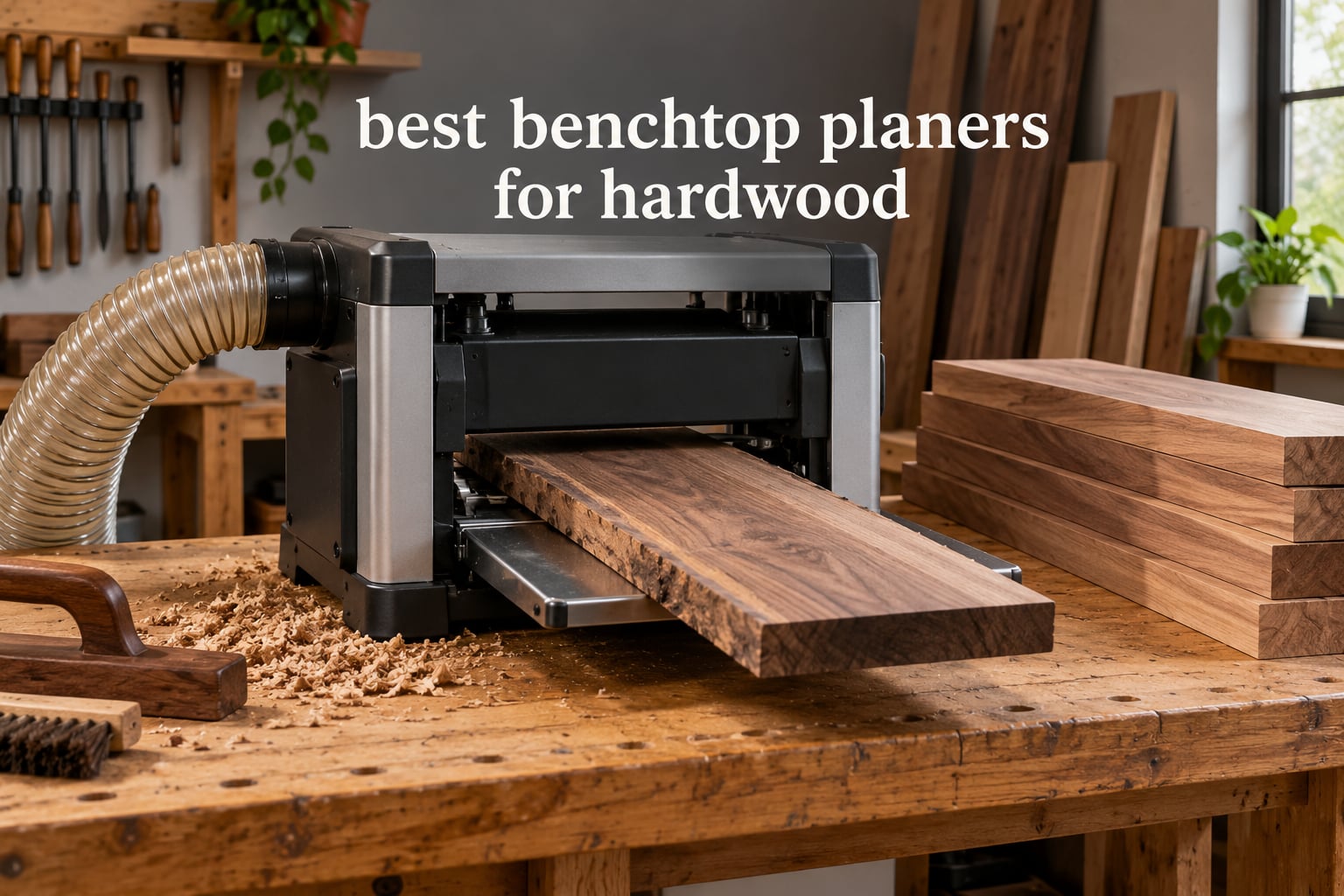
Short answer: the DEWALT DW735X is the best benchtop planer for hardwood overall in 2026, because its 15 amp motor, three-knife head and two-speed gearbox handle dense stock without bogging down. If tear-out on figured maple is your main worry, the WEN PL1326 spiral head or the JET JWP-13BT helical head changes the surface you get.
Hardwood is where benchtop planers earn or lose their reputation. Pine forgives almost anything. Walnut, white oak, hard maple and curly maple do not. They are dense, they have interlocked grain in places, and they will dull a dull blade in an afternoon. Every pick below was judged on how it behaves with real boards rather than on how it looks on a spec sheet.
This roundup covers ten machines, from a two-knife Craftsman starter planer to a helical-head JET with a cast iron bed. We compare cutterhead type, width capacity, feed speed, weight, dust handling and the honest drawbacks of each. If you are still working out which machine fits your shop, our broader wood planer overview covers the wider market.
Two things to keep in mind before you read on. A planer needs a flat reference face underneath the board, from a jointer or a planer sled, or it simply copies the cup and twist that is already there. And a benchtop planer puts out a serious chip load on hardwood, so dust collection is not optional.
Table of Contents
Top 3 Benchtop Planers for Hardwood in 2026
10 Best Benchtop Planers for Hardwood (October 2026)
| Product | Specifications | Action |
|---|---|---|
 DEWALT DW735X DEWALT DW735X |
|
Check Latest Price |
 DEWALT DW734 DEWALT DW734 |
|
Check Latest Price |
 CRAFTSMAN CMEW320 CRAFTSMAN CMEW320 |
|
Check Latest Price |
 Makita 2012NB Makita 2012NB |
|
Check Latest Price |
 WEN PL1326 WEN PL1326 |
|
Check Latest Price |
 VEVOR 13 in. Three-Blade VEVOR 13 in. Three-Blade |
|
Check Latest Price |
 JET JWP-13BT JET JWP-13BT |
|
Check Latest Price |
 RIKON 25-135H RIKON 25-135H |
|
Check Latest Price |
 WOODERS 13 in. Planer WOODERS 13 in. Planer |
|
Check Latest Price |
 Triton TPT125 Triton TPT125 |
|
Check Latest Price |
1. DEWALT DW735X — Best Overall for Rough Hardwood
DEWALT Thickness Planer, 13-inch Wood Planer, Three Knife Two Speed, 15 Amp, 20,000 RPM Motor (DW735X)
13 in. width
15 amp 20000 rpm motor
96 or 179 CPI
102 lb
3 year warranty
Pros
- Motor pulls deep cuts without stalling
- Three knife head rated for longer knife life
- Two speed gearbox at 96 or 179 cuts per inch
- Fan assisted chip ejection
- Wide cast aluminium base resists movement
Cons
- Included knives dull quickly on hardwood
- Very loud in operation
- Heavy at 102 lb
- Draws high current
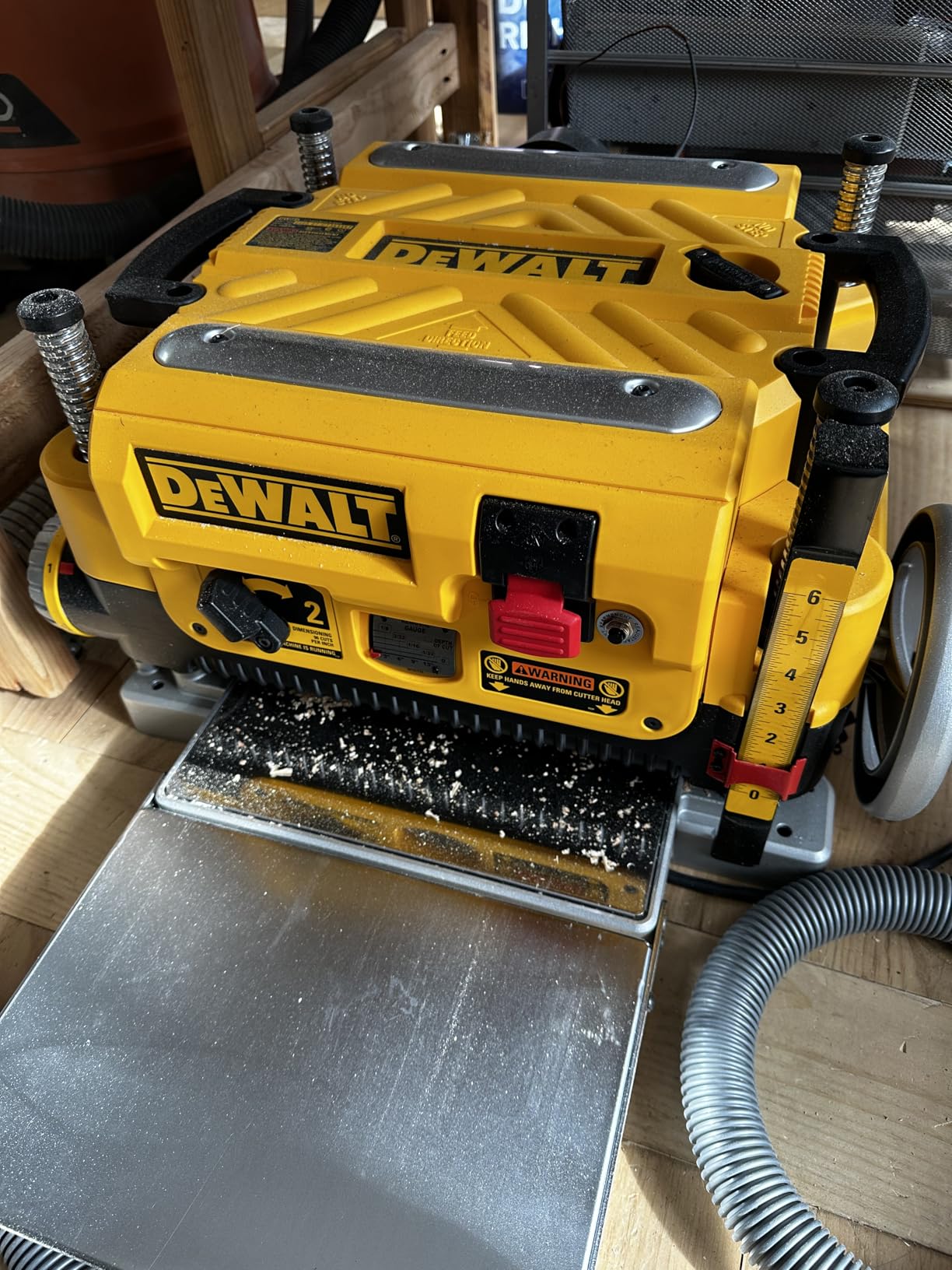
The DW735X is the machine most small shops end up owning, and after working through a stack of rough walnut and white oak with it, the reason is obvious. The 15 amp motor and 19-3/4 in. cast aluminium base give it the weight and stiffness to hold a heavy pass instead of bouncing off the board.
That two-speed gearbox is the feature hardwood users care about most. At 96 cuts per inch you get a slower, cleaner pass, and at 179 cuts per inch you move through thick rough boards quickly. The automatic carriage lock is what keeps snipe down, because it removes the play that makes a planer mark the first and last inch of every board.
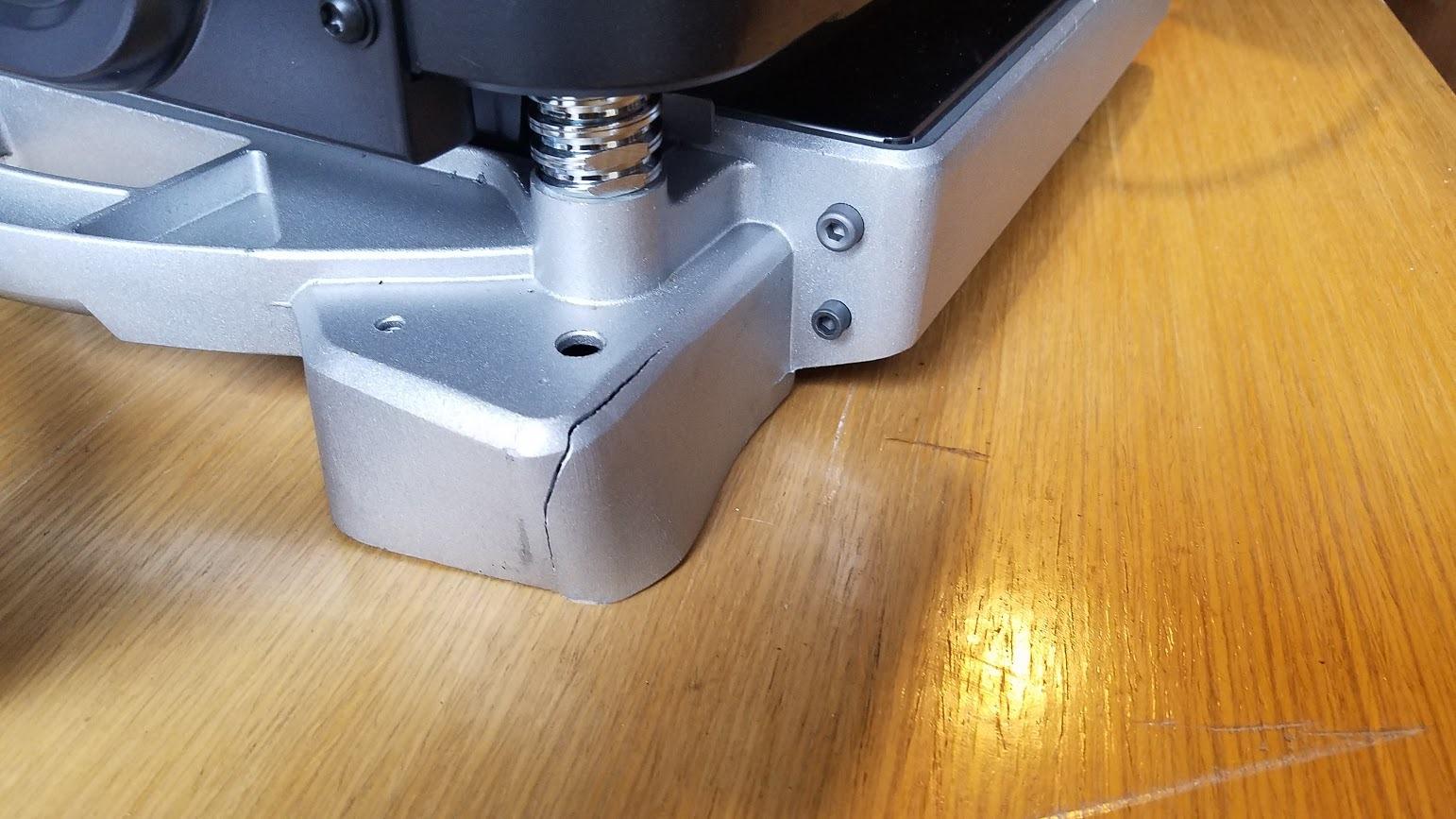
Owner reviews describe glass-smooth results on ash, cherry and oak, and the fan-assisted ejection moves chips out hard enough to keep a collector or separator honest. Service access is good too, with the top and dust shroud coming off in under a minute.
The honest weakness is the cutter. It ships with straight disposable knives that dull sooner on hardwood than on pine, and replacements are a recurring line item. Owners also consistently mention noise at table saw level, the 102 lb weight, and current draw high enough to trip a 15 amp circuit.
If your work is mostly straight-grained walnut, ash and oak and you want power above all, this is the pick. If curly maple dominates your project list, read the helical sections below before you commit.
How it handles figured maple and walnut
On straight-grained walnut and ash the DW735X produces a surface that needs very little sanding. Expect to plane figured maple in lighter passes, because the straight knives bite harder where the grain reverses direction.
When a helical head is the better buy
If most of your boards are curly maple, spalted or reclaimed wood, the money is better spent on a helical or spiral head that shears rather than chops. The DW735X is also the wrong shape for a shop where the machine has to move between a table saw and a miter saw every weekend, at 102 lb.
2. DEWALT DW734 — Best for Fine Finish on Narrow Boards
DEWALT Benchtop Planer, 15-Amp, 12-1/2-Inch, 3-Knife Cutter, 20,000 RPM, Corded (DW734)
12-1/2 in. width
96 CPI three knife head
15 amp
33-1/2 in. tables
3 year warranty
Pros
- 96 cuts per inch for a very fine finish
- Four column carriage lock cuts snipe
- Extra long infeed and outfeed support
- Material removal gauge aids repeat cuts
Cons
- Disposable knives cannot be sharpened
- 12-1/2 in. width is narrower than 13 in. machines
- Dust control needs the supplied hood set up
The DW734 shares the motor architecture of its bigger brother but runs a single-speed 96 cuts per inch head. That single ratio is the reason we like it for hardwood: one consistent chip load, no droning motor sound between gears, and a very fine finish on oak and cherry with light passes.
Buyers single out the four-column carriage lock and the 33-1/2 in. of infeed and outfeed support. Long boards stay flat as they travel, which is exactly what you want on a glue-up panel that has to match its neighbours after the clamp comes off.
The tradeoff is width. At 12-1/2 in. you cannot feed a 13 in. rough board without working it edgewise, and the disposable knife system means there is no sharpening option. Knife cost simply recurs for as long as you own the machine.
Choose this one if you build drawer parts, small panels and shop furniture from 10 to 12 in. stock and want the finest finish in the roundup. Skip it if you routinely break down wide rough lumber or hate recurring consumables.
Cut width and board support for long hardwood boards
The extended tables matter more than they sound. A board that sags between rollers dips under the cutterhead at the ends, and that is where snipe comes from. Support turns the problem down rather than trying to fix it with technique alone.
Knife cost on a straight-knife head
On dense hardwood the disposable knives lose their edge faster than they do on softwood, and there is no way to send them out for sharpening. Budget for replacement sets as an annual cost of doing business with a straight-knife benchtop planer.
3. CRAFTSMAN CMEW320 — Best for a First Planer in a Small Shop
CRAFTSMAN Planer, 15 Amp, For Benchtops, Two Knife Solid Steel Cutter Head (CMEW320)
12.25 in. width
Two knife steel head
8000 rpm
Poly-V drive
3 year warranty
Pros
- Accurate thicknessing that holds over long runs
- Quick setup under 15 minutes
- Heavy enough to stay put on the bench
- High carbon reversible blades give long life
Cons
- Only two knives means more passes
- End snipe needs light passes to control
- Knives wear quickly on hardwood
- Loud with a vacuum attached
The CMEW320 is the most sensible way into thickness planing hardwood without spending serious money. The carbon steel bed and a 15 amp motor handle hard maple and red oak without complaint, and owners report accuracy that has held across roughly 1200 board feet of work.
It is also a machine you can set up in a weekend. The poly-v drive and quick-change two-knife head take minutes to familiarise, and mounting holes let you bolt it to a bench so it stops walking during a heavy pass.
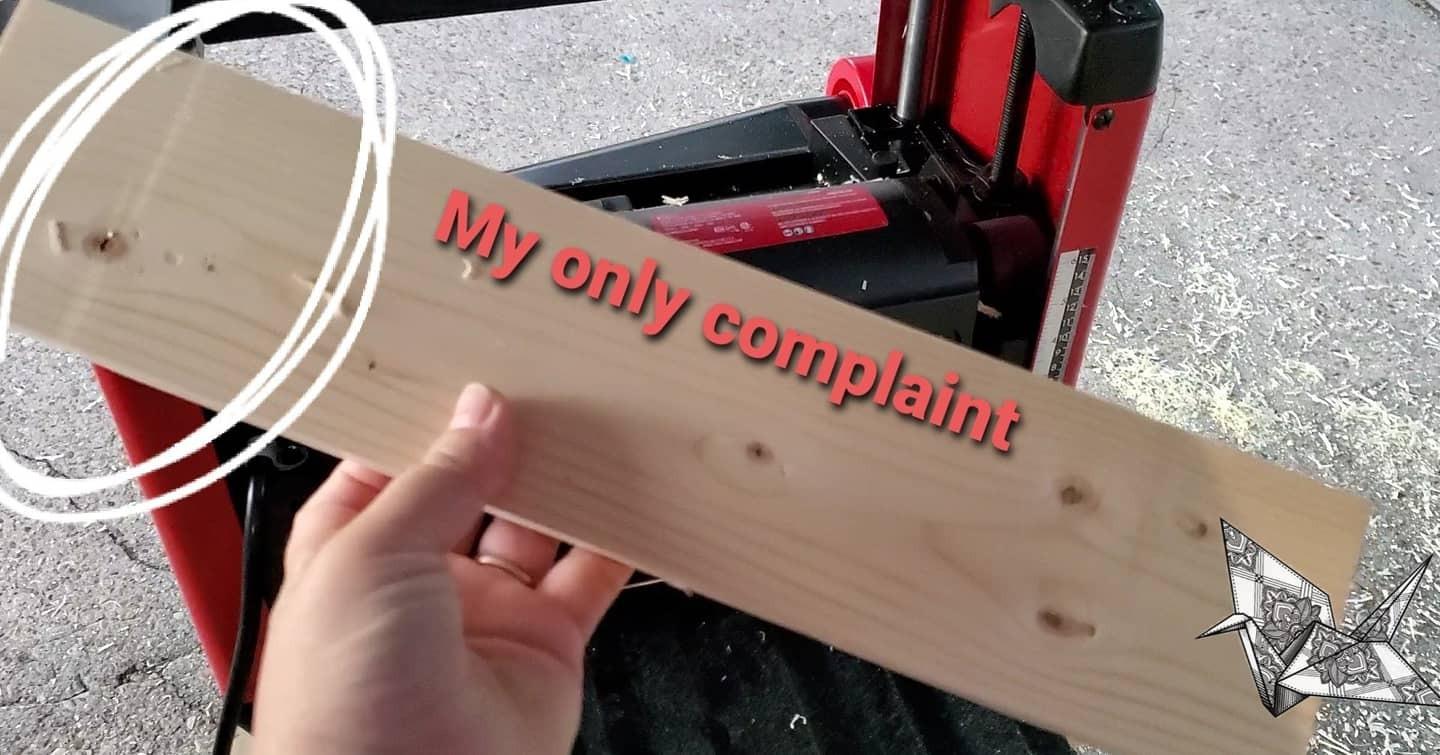
Two knives is the whole story. Fewer edges means more passes to remove the same amount of material, and end snipe shows up more often than on a three-knife head. On hardwood, blade wear is the recurring annoyance, so keep a spare set on the shelf.
Pick it if this is your first planer and you want reliable thicknessing without a large outlay. Skip it if most of your stock is figured, or if noise matters because your shop shares a wall with the house.
Two knives versus three on hard maple
A three-knife head spreads the same depth of cut across more edges, which means lower chip thickness per edge and less deflection in the board. On hard maple that difference shows up as fewer fuzzy spots and less time on the sanding step.
Snipe and heavy passes
Take light passes, feed the boards end to end, and alternate between the two faces. Reviewers are consistent that this reduces both the lip at the ends and the tendency of wide boards to cup after milling.
4. Makita 2012NB — Best for Quiet Shops and Mobile Setups
Makita 2012NB 12″ Portable Planer
83 dB operation
12 in. class width
Four post design
Disposable double edge blades
1 year warranty
Pros
- Published noise rating of 83 dB
- Repeatable accuracy over many years of service
- Feeds dense hardwoods like oak and ipe
- Fast blade change system
- Large adjustable table extensions
Cons
- Dust hood is sold separately
- Blades often changed every 4 to 6 months
- Long boards need extra support
- Packing is minimal so check for transit damage
The Makita is the outlier in this group on one measurable point: a published 83 dB. For a small shop, a basement, or a workspace where a neighbour is close, that number changes what you can get away with. Most competing machines in this roundup are noticeably louder.
Everything else about it is aimed at longevity. The four-post design with diagonal cross supports resists the twisting that makes a planer wander off its thickness, and long-term owners describe accuracy that has not drifted across two decades of service on dense woods.
The finish is clean and near-gloss with minimal machine marks, and the disposable double-edge blades are the quickest change in the class. That last point matters more than it sounds when you are changing blades every few months of hardwood work.
The catch is the dust hood, which is not included and has to be sourced separately. Without it you will be cleaning chips by hand, which on dense oak is a daily chore. One year of warranty is also the shortest in the roundup.
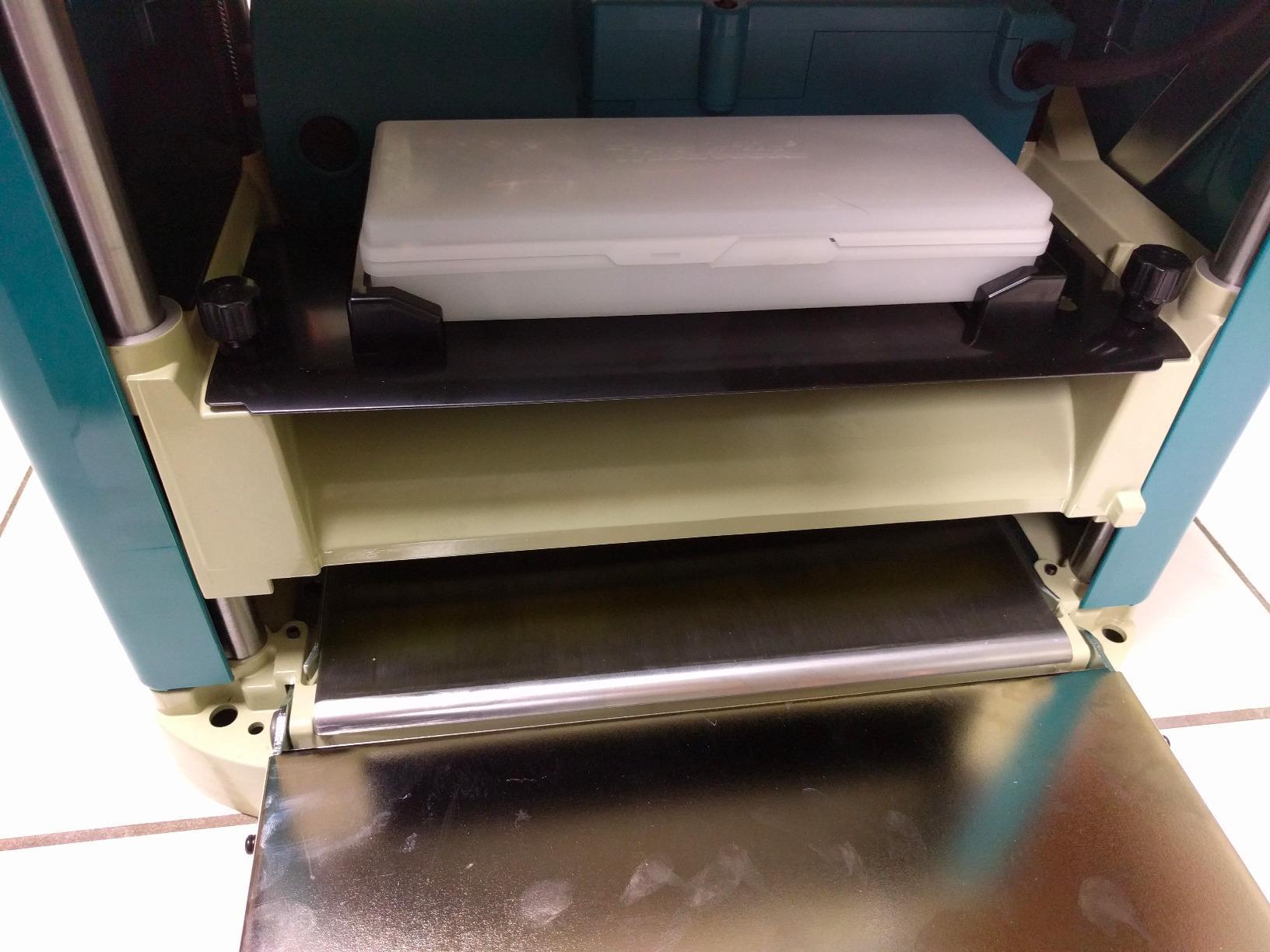
Quiet operation for a small or shared shop
Noise is the single most common reason people regret a planer. Hearing protection solves the safety side, but if you run framing and projects at odd hours, a machine rated at 83 dB is a meaningfully better neighbour than one that sounds like a table saw.
The missing dust hood and long board support
Budget for the hood and the adapter hose before the first board goes through, because a benchtop planer on hardwood will fill a bin in minutes. Long boards over 60 in. also need help at the outfeed end or they will leave a dip at the tail.
5. WEN PL1326 — Best Value Spiral Head for Figured Wood
WEN PL1326 15-Amp 13-Inch Spiral Benchtop Thickness Planer
13 in. width
26 rotatable HSS spiral blades
10000 rpm
26 FPM feed
6 in. thickness
Pros
- Spiral head gives a tear-free face on oak walnut and maple
- Rotatable four-sided blades double blade life
- Runs cleanly with the feed tables set
- Solid 15 amp machine for the money
Cons
- Brush motor is as loud as straight-knife machines
- End snipe unless boards run long or supported
- 13 in. width limits wide stock
- Depth indicator is a small round pin
The PL1326 is the pick that changes the most people’s minds. Its spiral cutterhead carries 26 staggered, rotatable HSS blades, and that shear-style cut is the difference between a board that needs sanding and one that does not. Owners consistently praise the finish on red oak, walnut and maple.
Rotating a nicked blade instead of throwing away a whole set is the quiet superpower here. On hardwood, where a single embedded nail or stone will nick a straight knife, that capability pays for itself quickly.
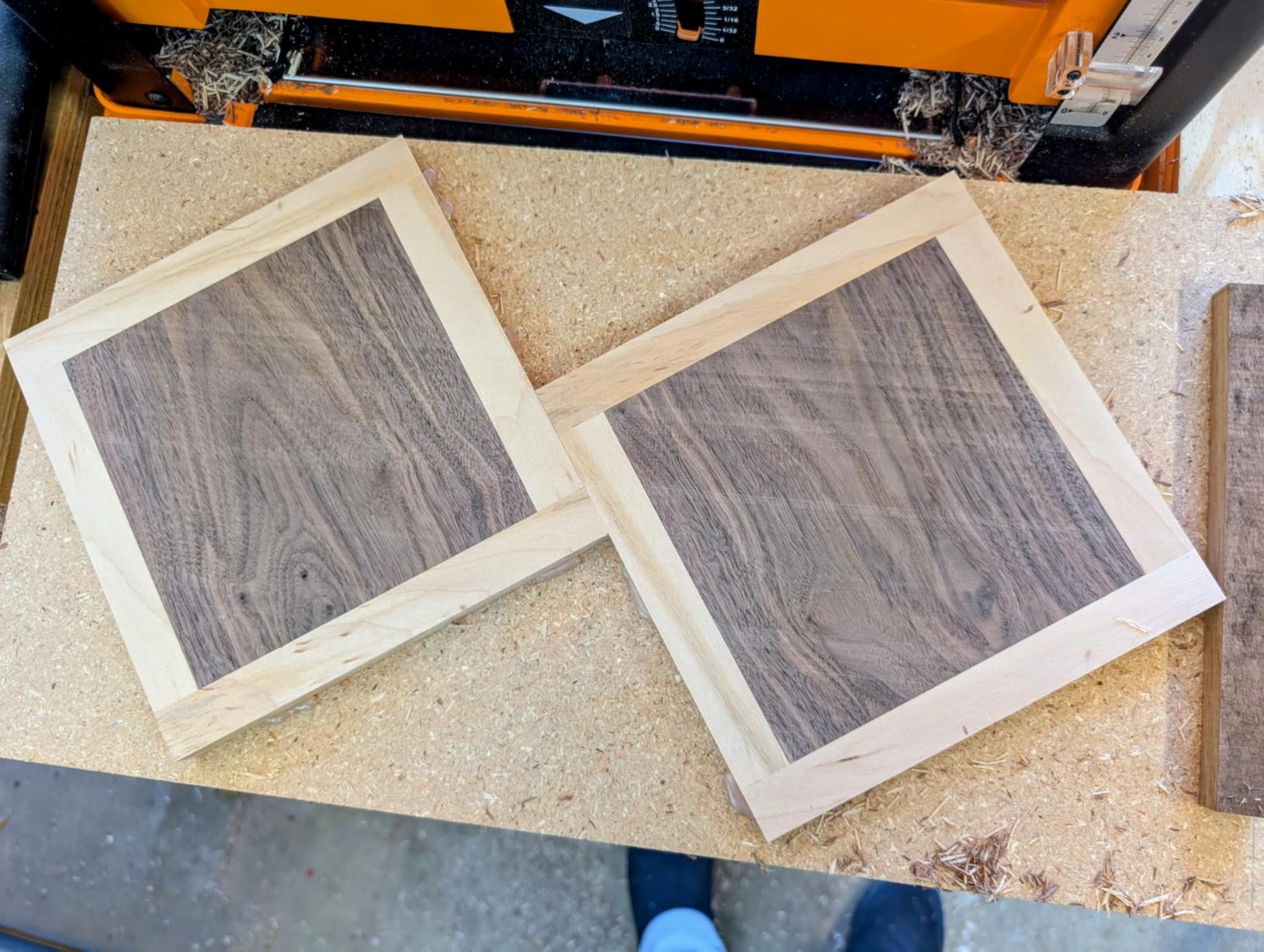
The onboard material removal gauge is small, and the depth of cut indicator is a round pin rather than a full-width gauge, so read it carefully on figured stock. Snipe still appears at both ends unless boards are run long or properly supported.
Brush motor noise is a genuine surprise given the spiral head. If the machine can be converted to carbide inserts once the HSS blades are spent, that is the natural upgrade path for a shop that plans years of hardwood work.
This is our best value pick, and our recommendation for anyone whose first real hardwood project is a curly maple table. It costs more than the straight-knife options and gives back a cleaner surface on every figured board.
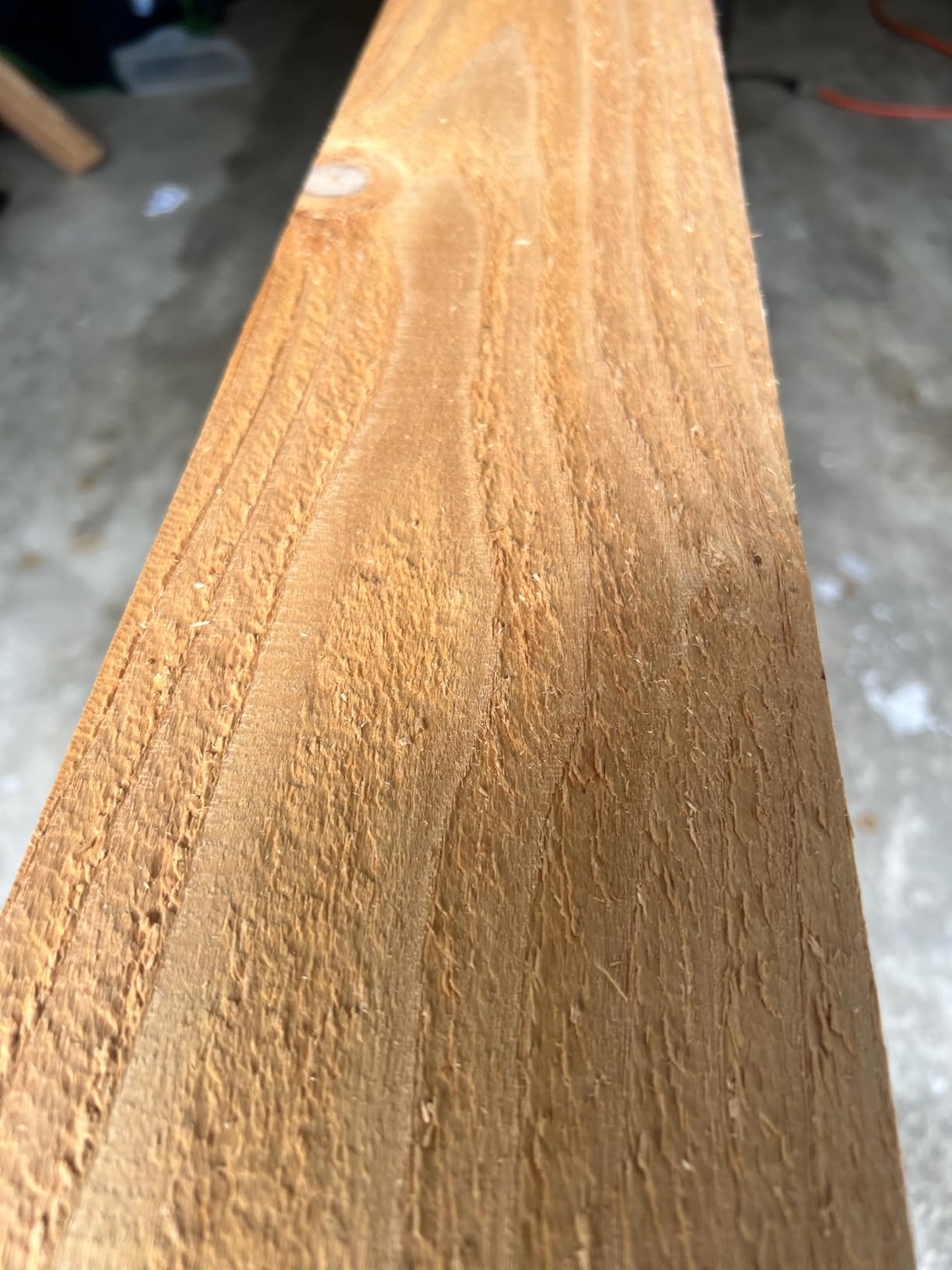
Why 26 rotatable HSS blades matter for tear-out
Spiral blades cut at a slight angle to the fibre, so each edge shears a thin shaving instead of knocking a chip out of the surface. On interlocked grain that is the difference between a clean face and a surface covered in loose fibres.
When the 13 inch width runs out
Thirteen inches covers most furniture stock, but not slabs and not wide reclaimed boards. Boards also need to clear the minimum length the machine can grip, so short offcuts are not a good use of this machine’s time.
6. VEVOR 13 in. Two-Speed Three-Blade Planer — Best for Two-Speed Control on a Budget
VEVOR Power Benchtop Planer Three-Blade Two Speed 13″ Thickness Planer
13 in. width
Two speeds at 24 or 15 FPM
23500 rpm motor
Cast iron bed
35 in. table length
Pros
- Two feed speeds including a slow pass for figured stock
- Owners report quieter running than many competing planers
- Clean surface with little sanding
- Built in tool storage and a stable base
Cons
- Outboard table extensions are hard to level
- Factory knives have arrived dull on some units
- Manual is poorly translated
- Rear table extension will not lock up
This machine is interesting for one specific reason: the slow feed speed. At 15 feet per minute instead of 24, the chip load per tooth drops and the surface on figured stock improves noticeably. That is a genuinely useful feature on a machine at this tier, where helical heads are out of reach.
The 2000W motor at 23,500 rpm pulls through pecan and red oak cleanly, and owners report the finish needs very little sanding. It also runs quieter than many of the machines in this roundup, with the exception of the Makita.
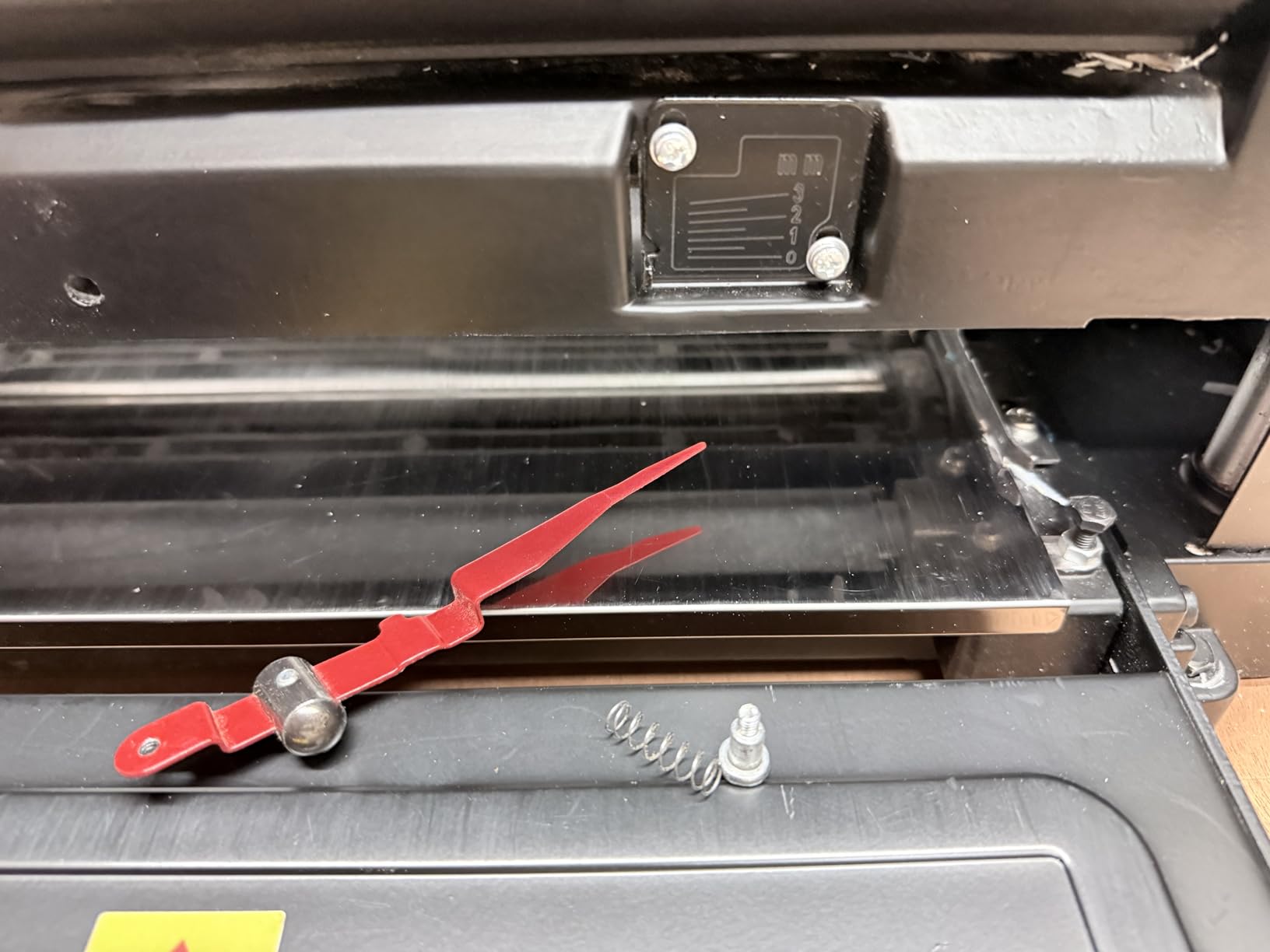
The 4.1 average reflects real gripes. The outboard table extensions are difficult to level, and unlevel tables mean boards are not perfectly flat under the cutterhead. Some units have also arrived with dull factory knives, and the dust hood can clog with large shavings and dimple the workpiece.
Pick it if you want two feed speeds and a cast iron bed at the low end of the market. Skip it if you need precise table levelling for glue-ups, or if replacement parts matter to you and support has been inconsistent.
Two feed speeds for rough and figured lumber
Fast feed is for taking heavy stock down close to final thickness. Slow feed is for the last pass on anything with figure, where lower chip thickness reduces the fuzz that appears after drying.
Levelling the outboard tables
Before the first board, level the extensions to the bed with a straightedge and feeler gauges, then re-check after a few passes. This machine in particular punishes a lazy setup, because the bed is rigid and accurate enough that an unlevel tray stands out immediately.
7. JET JWP-13BT — Best Helical Head for Interlocked Grain
JET 13-Inch Benchtop Thickness Planer for Woodworking, Helical Style Cutterhead with 2-Speed (18 FPM / 26 FPM) Feed Rate, 2 HP, 120V 1Ph (JWP-13BT)
13 in. width
Helical style HSS inserts
2 HP 15 amp motor
18 or 26 FPM
75 lb
5 year warranty
Pros
- Helical style insert head cuts smoother and quieter than straight knives
- Cast iron bed and steel cover help hold boards flat
- Four post head support aids repeatability
- Two feed speeds plus an adjustable depth stop
Cons
- Priced well above the rest of this group
- HSS inserts add to ongoing ownership cost
- Ratings include a meaningful share of one-star reviews
The JWP-13BT is the machine to buy if tear-out on figured wood is ruining your projects. Its helical-style cutterhead carries 26 quick-change HSS inserts arranged in six rows, and the shearing action is noticeably more forgiving than any straight-knife head in this roundup.
Underneath that head sits a notably substantial base. A precision-machined cast iron bed, a four-post design and adjustable folding tables that level to the bed give you a setup that repeats pass after pass, which is what long glue-ups demand.
The 2 HP motor gives it plenty of headroom for demanding hardwood work and it turns the cutterhead at 10,000 rpm, with feed speeds at 18 and 26 feet per minute. Maximum depth of cut is 1/8 in. at 6 in. depth and 13 in. width capacity, and the warranty runs five years.
Two cautions. The insert head means HSS consumables for as long as you own it, and the 4.2 average with 175 reviews includes a noticeable share of one-star feedback, so the long-term record here is thinner than the numbers on the DeWalt and WEN machines.
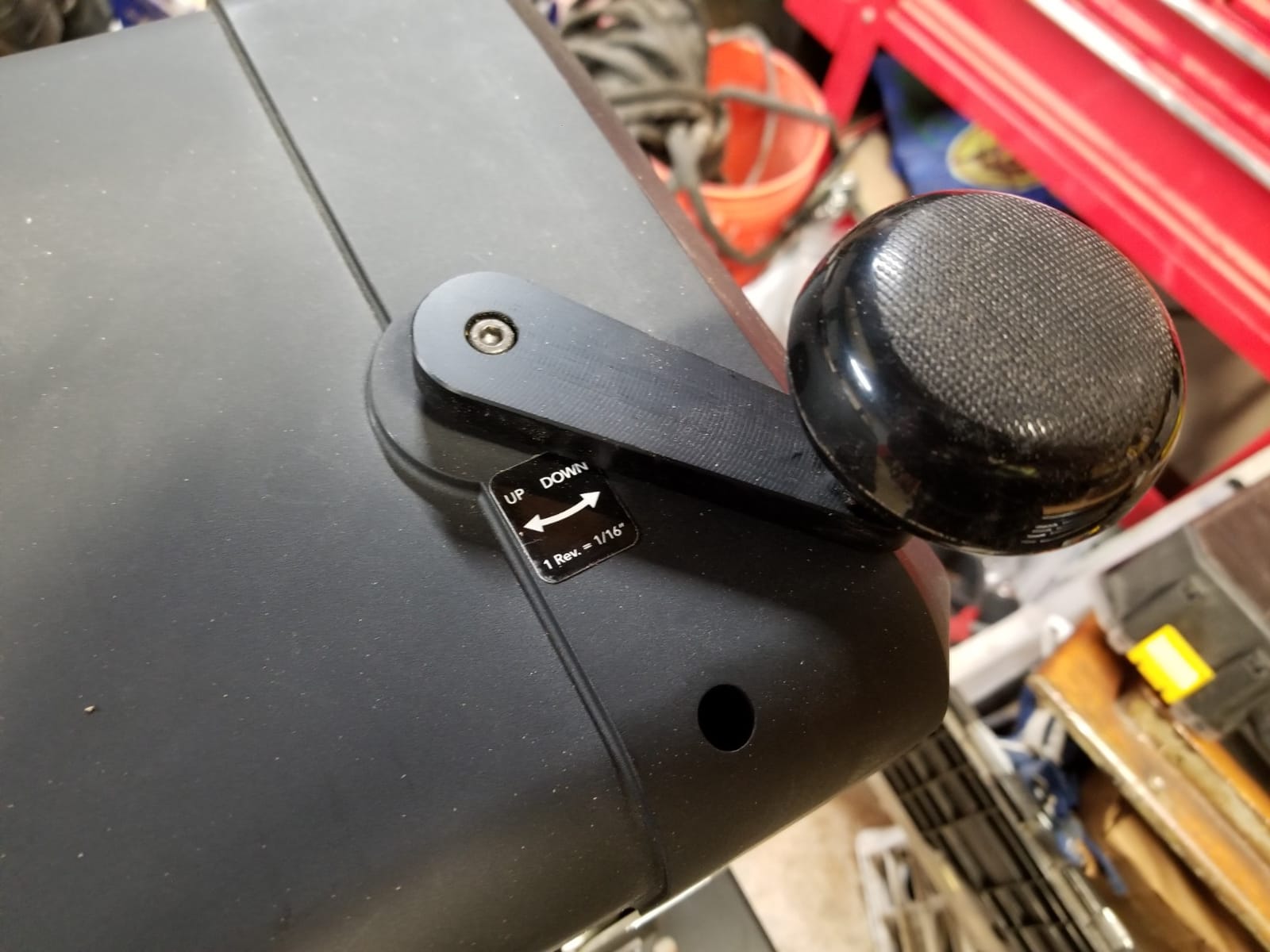
Helical inserts on curly maple and reclaimed wood
Curly maple, spalted wood and reclaimed lumber are exactly the cases where a straight knife lifts fibre. Inserts shearing at a shallow angle cut those surfaces cleanly, and because they are quick-change, you can rotate a nicked edge instead of replacing a full knife set.
Insert cost and the thin review history
Helical setups cost more up front and again with every insert change. Given the small number of ratings behind this machine, it is worth budgeting for consumables deliberately rather than assuming the headline figure covers everything.
8. RIKON 25-135H — Best for Repeat Cuts on Panel Glue-Ups
RIKON 25-135H 13-Inch Portable Planer with Helical-Style Cutterhead
13 in. width
26 two-edge HSS inserts
16 or 26 SFPM
Four post head support
67.9 lb
Pros
- Helical style head with rotatable two-edge inserts
- Threaded four post support for repeatable thicknessing
- Two feed speeds to trade removal against finish
- Dust hood plus 4 in. to 2-1/2 in. adapter included
Cons
- Only 54 ratings so durability is not well documented
- HSS inserts need periodic rotation and replacement
The RIKON is built around repeatability, which makes it the pick for panel work. The threaded four-post head support, depth gauge, thickness scale and repeat-cut control are all aimed at returning to the same number pass after pass, and that is what you need when five boards have to come out equal.
The cutterhead uses 26 two-edge HSS inserts in a six-row helical-style arrangement, and each insert rotates when it wears or picks up a nick. Two feed speeds at 16 and 26 feet per minute let you rough down and then finish without changing machines.
It handles boards up to 13 in. wide and 6 in. thick, with up to 1/8 in. of depth of cut on boards 6 in. wide or less. At 67.9 lb it is heavy but far easier to move around than a 100 lb machine.
The included dust hood and the 4 in. to 2-1/2 in. adapter make hooking up a common collector straightforward, which saves you the adaptation headaches that slow down the first project with a new machine.
The limitation is evidence. With only 54 ratings, long-term durability is not well documented, so treat it as a capable machine with an unproven service history rather than a known quantity.
Repeat-cut control for panel glue-ups
When you are gluing up a tabletop, the depth that matters is the one you return to on every single board. A repeat-cut control removes the guesswork and the small drift that otherwise shows up as a glue line that does not sit flat.
Dust port matching and the included adapter
Planer chips are bulkier and heavier than dust, so hose diameter matters more than it does elsewhere in the shop. The supplied adapter means you can connect to a common collector without hunting for parts after the machine arrives.
9. WOODERS 13 in. Planer — Best for Included Spare Blades and Heavy Motor
WOODERS 13-Inch Benchtop Thickness Planer, 15A Wood Planer with 4 HSS Blades, 2000W All Copper Motor, Overload Protection for Woodworking
2000W copper motor
10000 RPM
Four HSS blades
13 in. width
60 lb
Overload protection
Pros
- All-copper motor and iron blade shaft for stability
- Overload protection cuts in under extreme loads
- Oversized depth crank and clear height indicator
- Two spare HSS blade sets are included in the box
- Anti-snipe infeed and outfeed design
Cons
- Weakest average rating in the roundup at 4.1
- Four HSS blades dull on dense hardwood
- Dual-blade config gives fewer usable edges
This one appeals for practical reasons. The all-copper motor and iron blade shaft are built for sustained load, and the built-in overload protection cuts power rather than letting the motor cook itself during a heavy pass on oak or walnut.
The handling details are thoughtful. An oversized smooth-turning depth crank and a high-visibility height indicator from zero to 1/8 in. make it easier on the hands, which matters more than it sounds on a long milling session. Two spare HSS blade sets also ship in the box, so the first dulling on hardwood will not stop you.
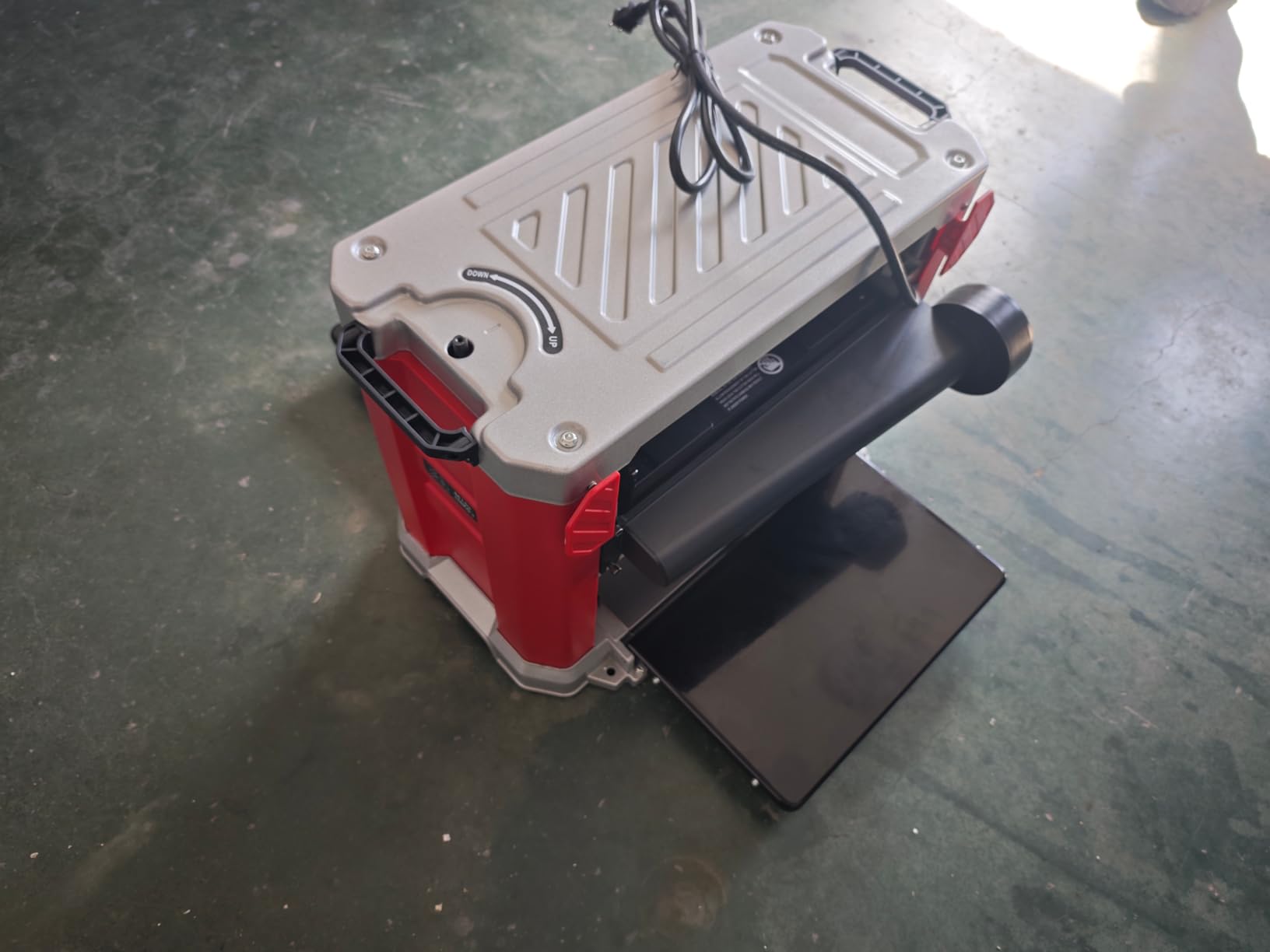
The anti-snipe dual-blade system and the integrated dust port help with the two most common benchtop complaints. Width capacity is 13 in. with a 1/4 to 6.3 in. height range.
Be realistic about the rest. The 4.1 average is among the weakest here, with about a tenth of ratings at one star, and four HSS blades dull on dense hardwood just as straight knives do. A dual-blade configuration also gives fewer usable edges than a three-knife or spiral head.
Choose it for the motor, the spare blades and the handling. Skip it if finish consistency on figured stock is the priority.
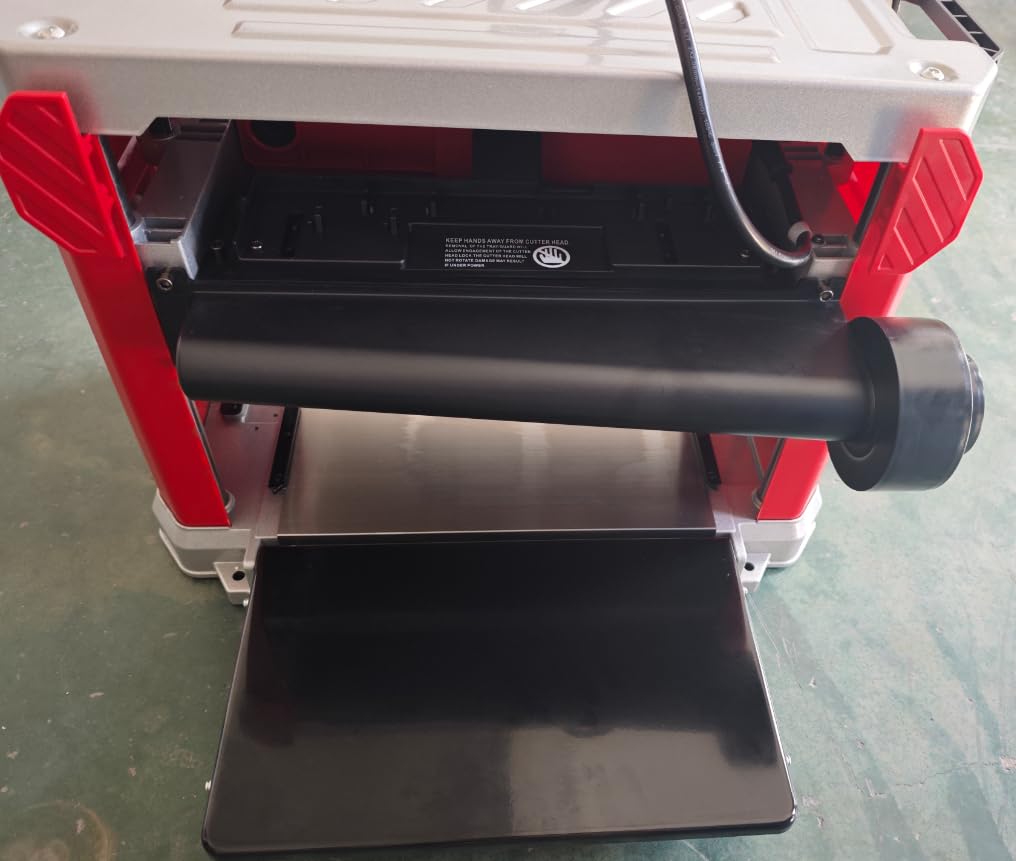
The copper motor on oak and walnut
Dense hardwood puts a thermal load on a planer motor, and a copper winding with overload protection is a sensible answer to that. If you expect long sessions on hard maple rather than short bursts, motor durability deserves real weight in the decision.
Blade wear and the rating spread
Keeping spare blades in the box helps with the first change, not the annual one. Straight HSS edges on dense hardwood still need sharpening on a schedule, and that ongoing cost is the reason many shops move to rotatable spiral or helical inserts after a few years.
10. Triton TPT125 — Best for Simple Depth Setting and Easy Sharpening
Triton TPT125 High Performance Benchtop Planer with 12-1/2″ Cutting Width
12-1/2 in. width
17500 cuts per minute
1/16 in. depth increments
Circuit breaker
65 lb
Pros
- 17500 cuts per minute gives a consistently smooth finish
- Depth of cut sets in 1/16 in. increments
- Side mountable dust chute
- Knives are easy to remove and sharpen
Cons
- End snipe is common and needs adjustment
- Depth crank can be bumped during use
- Machine can vibrate off its setting
- Loud enough to need hearing protection
- Motor struggles on wide weathered rough material
The TPT125 is the simplest machine here and that is the point. Depth of cut sets in 1/16 in. increments, the knives lift out for sharpening, and at 17,500 cuts per minute it delivers a consistent finish on the boards it can handle.
Owners report blades lasting years on oak and poplar with a single replacement over two years, which is a good sign for anyone who sharpens rather than replaces. The dust chute mounts on either side, so you can point the chip stream toward the collector instead of across the bench.
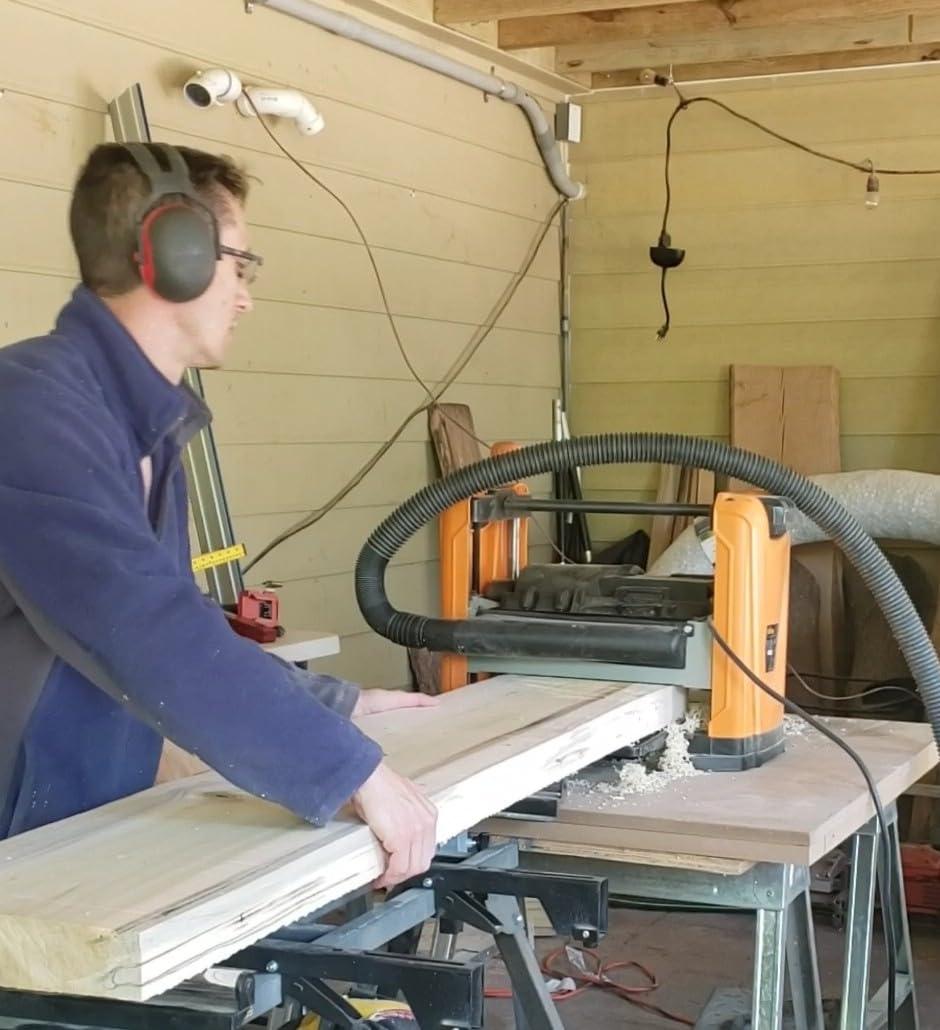
The compromises are real. Snipe at the board ends shows up often, the depth crank can be knocked during a pass, and the machine can vibrate itself off its setting. The motor also struggles with wide, weathered, rough material such as 7/8 in. rough cedar.
Pick it for weekend projects on already-milled hardwood and for the shortest blade-change routine in the roundup. Skip it if you are buying rough lumber as a way to save money, because the motor is the wrong tool for that job.
Simple depth setting and sharpening access
Knives that come out for sharpening are unusual in this category, where most machines use disposable blades. If you already sharpen, that removes the biggest recurring cost line and makes a light-use planer a practical purchase.
When the motor runs out of steam
Planers are happiest removing a modest amount of material per pass. On wide, weathered, wet rough lumber a smaller motor bogs, and the recovery takes time. If your plan is to buy the roughest grade you can find, buy more motor than width.
How We Picked These Benchtop Planers
We built this list around hardwood rather than around general planing. Every machine here is a benchtop thickness planer capable of taking rough or uneven hardwood boards to a uniform, parallel thickness.
Our process had four steps. First, we looked for machines that reach at least 12 in. of width, since anything narrower wastes time on boards wider than it can handle. Second, we compared cutterhead construction, because that decides how the machine behaves on figured grain. Third, we weighed feed speed options, since a second ratio changes the finish more than most buyers expect. Fourth, we read the ownership record, looking for repeated reports of the same weakness rather than a single complaint.
Specs are taken from manufacturer listings. Ratings and review counts come from the customer review record on each listing, and we quote them as they stand rather than adjusting them. Where a complaint appears across many reviews, we say so plainly.
Straight vs Spiral vs Helical Cutterheads for Hardwood
Cutterhead choice is the single decision that changes your results on hardwood. Three kinds appear in this roundup, and they behave very differently on figured stock.
Straight knives sit in a row and chop straight down through the fibre. They are simple, cheap to replace and produce an excellent surface on straight-grained ash, walnut and cherry. On interlocked grain they pull fibre out of the surface, which is the tear-out that ruins figured maple.
Spiral and helical heads arrange many small inserts in a helix around the drum. Each insert cuts at a slight angle, shearing a thin shaving rather than knocking out a chip. The surface stays clean on curly maple, the noise drops, and individual inserts can be rotated when they dull or pick up a nick.
The WEN PL1326 and RIKON 25-135H use spiral-style heads with rotatable HSS inserts. The JET JWP-13BT uses a helical-style head with 26 quick-change HSS inserts. That is the tier where hardwood finish quality stops being a compromise.
Snipe, Tear-Out and Chatter on Hardwood
Snipe is the slightly deeper cut at the first and last inch of a board. It happens when the board moves as the cutterhead engages and again as it leaves. Tear-out is chunks of grain pulled from the surface rather than sliced. Chatter is a regular ripple that means the board is being held unevenly or the blades are dull.
Four things reduce snipe. Run the boards end to end so the cutterhead is already at speed. Take light passes, because a heavy cut amplifies any carriage movement. Check that the infeed and outfeed tables are level with the bed, since a drooping table pushes the board down as it enters. On machines with a carriage lock, confirm the lock is fully engaged before the first board.
Tear-out is a cutterhead problem, not a technique problem. Slow the feed, lighten the pass, and if the surface still fuzzes, the answer is a different head rather than more sanding. For dull blades, a marker on the round cutting edge of each knife makes it obvious which blade needs work.
Feed Speed and Cuts Per Inch on Dense Wood
Feed speed and cuts per inch describe different halves of the same cut. Cuts per inch is how many times the cutterhead strikes each inch of board; feed speed is how fast the board travels past it. The DW735X offers 96 or 179 cuts per inch through its two-speed gearbox, the DW734 runs a single 96 CPI head, and feed rates on the two-speed machines range from 15 to 26 feet per minute.
Higher cuts per inch means more, thinner shavings, which is why 179 CPI leaves a cleaner surface on figured stock. Slower feed rate has a similar effect because each tooth removes less material. Buyers on forums consistently run the slow ratio for the final pass and the fast ratio for bulk removal.
On the machine itself, a faster feed rate is not the main driver of blade wear. Dense hardwood, dirty stock and a dull knife wear edges far more than the gear setting does. Keep the blades sharp and the feed ratio becomes a finishing choice rather than a maintenance problem.
Dust Collection for Hardwood Chips
Hardwood chips are heavier and bulkier than softwood dust, and they overwhelm a shop vacuum in minutes. A benchtop planer with a full width cut on oak can fill a bin faster than you expect, so plan the collection path before you plan the first board.
A cyclone separator ahead of the filter is the arrangement most owners end up with, because it catches the bulk of the material before it reaches the filter bags. Make sure the hose is sized for the machine and that the connection is short and sealed, since a leaking joint means dust on the floor no matter how good the collector is.
Keeping shop air clean also makes the job easier to sustain. If you work near clients, indoors, or in a shared space, a dedicated air handler matters as much as the chip hose. Our notes on benchtop fume and smoke extraction cover the same idea for a different kind of shop hazard.
Preparing Hardwood Before You Plane It
A planer needs a flat reference face. If the board is cupped when it goes in, the cutterhead makes the top parallel to a curve underneath and the cup stays. Joint one face first, or use a planer sled, and that cup becomes something you sand out instead of something you machine around.
Check moisture content before you start. Rough lumber that has just arrived from the yard will move as it dries, so let boards acclimate in the shop, stacked with stickers, until the reading stabilises. Planing wet wood makes the machine work harder than it needs to and leaves a surface that changes dimension later.
On the shop floor, our hardwood floor care guide has advice that applies equally to shop floors. Boards spilled with glue and sanding grit will travel into the machine and nick blades faster than any species of wood.
Always feed boards end to end, and alternate between the two faces in light passes. That releases stress evenly, so boards are less likely to cup or bow after you put them on the bench.
Which Machine Handles Which Hardwood
Walnut is forgiving on straight-knife machines as long as the blades are sharp. White oak has open pores and ray fleck that show tool marks, so take light passes and expect a little sanding. Ash and cherry behave well everywhere and are the easiest way to learn a new machine.
Hard maple is where straight knives start to struggle, because the dense interlocked grain lifts under a heavy cut. Curly maple is the hardest test in this list, and helical or spiral heads win it clearly. Reclaimed and barn wood is its own problem, with embedded metal and stone that make rotatable inserts worth having.
If your list is mostly walnut and ash, spend on motor and width. If your list is mostly figure, spend on the cutterhead. That single split explains most of the differences between the picks above.
Frequently Asked Questions
Who makes the best benchtop planer?
For hardwood work, the DEWALT DW735X leads this roundup. Its 15 amp motor, three-knife head and two-speed gearbox at 96 or 179 cuts per inch handle rough dense boards, and the automatic carriage lock keeps snipe down. For figured maple, the WEN PL1326 spiral head or the JET JWP-13BT helical head gives a cleaner surface.
What is the best benchtop planer right now?
The best benchtop planer depends on the wood. For straight-grained walnut, ash and oak the DEWALT DW735X is the strongest all-round choice. For curly maple and other figured stock, a spiral or helical cutterhead beats straight knives, so the WEN PL1326 is the value pick and the JET JWP-13BT the premium one.
What are some common problems with the Dewalt DW735 planer?
Owner reviews mention the same issues repeatedly. The included straight knives dull relatively quickly on hardwood, the machine is very loud in operation, it weighs roughly 100 lb so it is awkward to reposition, and the high current draw can trip a 15 amp circuit. A flat blade head is also less tear-free on figured wood than a helical head.
What are people saying about the DeWalt DW735 planer in reviews?
Reviews describe it as the go-to portable planer, citing raw power, minimal snipe and near-glass finishes on hardwoods such as ash, cherry and oak. The recurring gripes are noise, weight, blade durability on hardwood and current draw. Many owners also note the machine can be upgraded with an aftermarket helical cutterhead for tear-free figured wood.
What is the best helical head benchtop planer?
The JET JWP-13BT is the dedicated helical option here, with six rows of 26 quick-change HSS inserts, a cast iron bed and a four-post design. The RIKON 25-135H is the value helical-style alternative with 26 rotatable two-edge inserts and two feed speeds, and it suits shops that want repeat-cut control for panel work.
What is the best thickness planer for the money?
The WEN PL1326 is the value pick in this roundup. Its spiral cutterhead carries 26 staggered, rotatable HSS blades that shear the surface instead of chopping it, which is the finish advantage normally reserved for pricier machines. The main caveats are brush motor noise, end snipe and 13 in. width.
Is the Harbor Freight planer any good?
Harbor Freight portable planers sit in the entry tier of the market, so expect the same trade-offs as other budget machines: a straight knife head that dulls faster on hardwood, end snipe and limited service for heavy work. We did not test one for this roundup, so we cannot give first-hand results. Our budget-tier picks are the CRAFTSMAN CMEW320 and the VEVOR 13 in. two-speed planer.
How do I reduce snipe on a thickness planer?
Run boards end to end so the cutterhead is at speed, take light passes, level the infeed and outfeed tables to the bed, and confirm the carriage lock is engaged. Machines with a carriage lock and a rigid cast base, such as the DW735X, DW734 and JET JWP-13BT, cut snipe down at the source.
How much dust collection does a thickness planer need?
Dense hardwood chips fill a bin or a shop vacuum in minutes, so plan for a cyclone separator ahead of the filter and a short, sealed hose matched to the machine port. If chips back up at the port or dimple the workpiece, the collector is undersized for the chip volume rather than misconnected.
The Verdict: Which Benchtop Planer Should You Buy?
The DEWALT DW735X is our editor’s choice and the best benchtop planer for hardwood in 2026, because power, base rigidity and a two-speed gearbox matter more than anything else once you start buying rough lumber. If your boards are mostly figured, pick the WEN PL1326 instead and stop fighting tear-out. If noise is your constraint, the Makita 2012NB runs at a published 83 dB.
Buy the collector first, joint one face before every board, and take light passes. Those three habits will do more for your results than any machine on this list.