
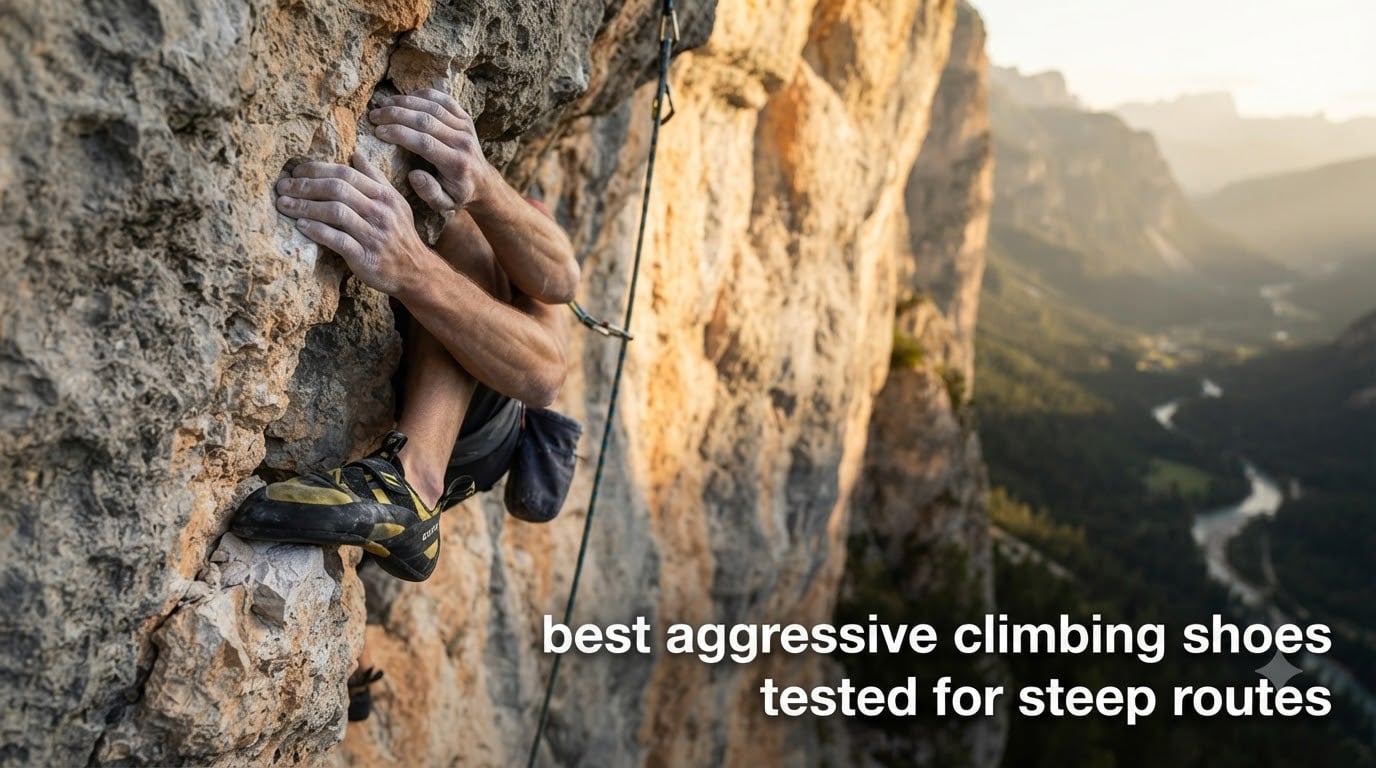
I’ve spent the last four months climbing almost exclusively on overhanging limestone, granite test pieces, and indoor steep boards, putting eight pairs of the best aggressive climbing shoes through real sessions at V4 to V8 grade. This guide is the result of that testing: what actually works on steep routes, what hurts your toes for no benefit, and which shoe I’d buy with my own money right now.
Aggressive climbing shoes have a heavily downturned last and a powerful asymmetric shape that pre-loads your toes into a hooking position. That geometry puts force onto small edges, pockets, and heel/toe hook features far more efficiently than a flat or moderate shoe, which is why almost every strong boulderer and steep sport climber ends up in aggressive shoes for their hardest sends. If you climb on overhangs more than vertical terrain, these are the shoes worth your attention in 2026.
Below you’ll find the picks I trust for steep routes, what each shoe is genuinely good and bad at, plus a buying guide on downturn, rubber, closure, and sizing that pulls from real user feedback on forums like Reddit and UKClimbing. I’m ranking these by steep-route performance first, with everything else as secondary considerations.
Table of Contents
Top 3 Picks for Best Aggressive Climbing Shoes (September 2026)


Best Aggressive Climbing Shoes in 2026
| Product | Specifications | Action |
|---|---|---|
| La Sportiva Skwama |
|
Check Latest Price |
| SCARPA Drago |
|
Check Latest Price |
 SCARPA Instinct VSR SCARPA Instinct VSR |
|
Check Latest Price |
| SCARPA Instinct VS |
|
Check Latest Price |
 La Sportiva Solution La Sportiva Solution |
|
Check Latest Price |
 EVOLV Kronos EVOLV Kronos |
|
Check Latest Price |
 SCARPA Furia Air SCARPA Furia Air |
|
Check Latest Price |
 La Sportiva Women’s Solution La Sportiva Women’s Solution |
|
Check Latest Price |
1. La Sportiva Skwama – Best Overall Toe and Heel Hook Combo
La Sportiva Mens Skwama Rock Climbing Shoes, Black/Yellow, 10
P3 downturn system
Vibram XS Grip2 rubber
Wide toe box for aggressive shoe
Pros
- S-heel excels at heel hooks
- Comfortable wide toe box
- Pointed front for pockets
- Excellent toe patch
- Reduces edge deformation
Cons
- Runs large - size down 0.5-1.5
- Stiff initial break-in
- Sides cut ankle bones
- Toe rubber wears faster
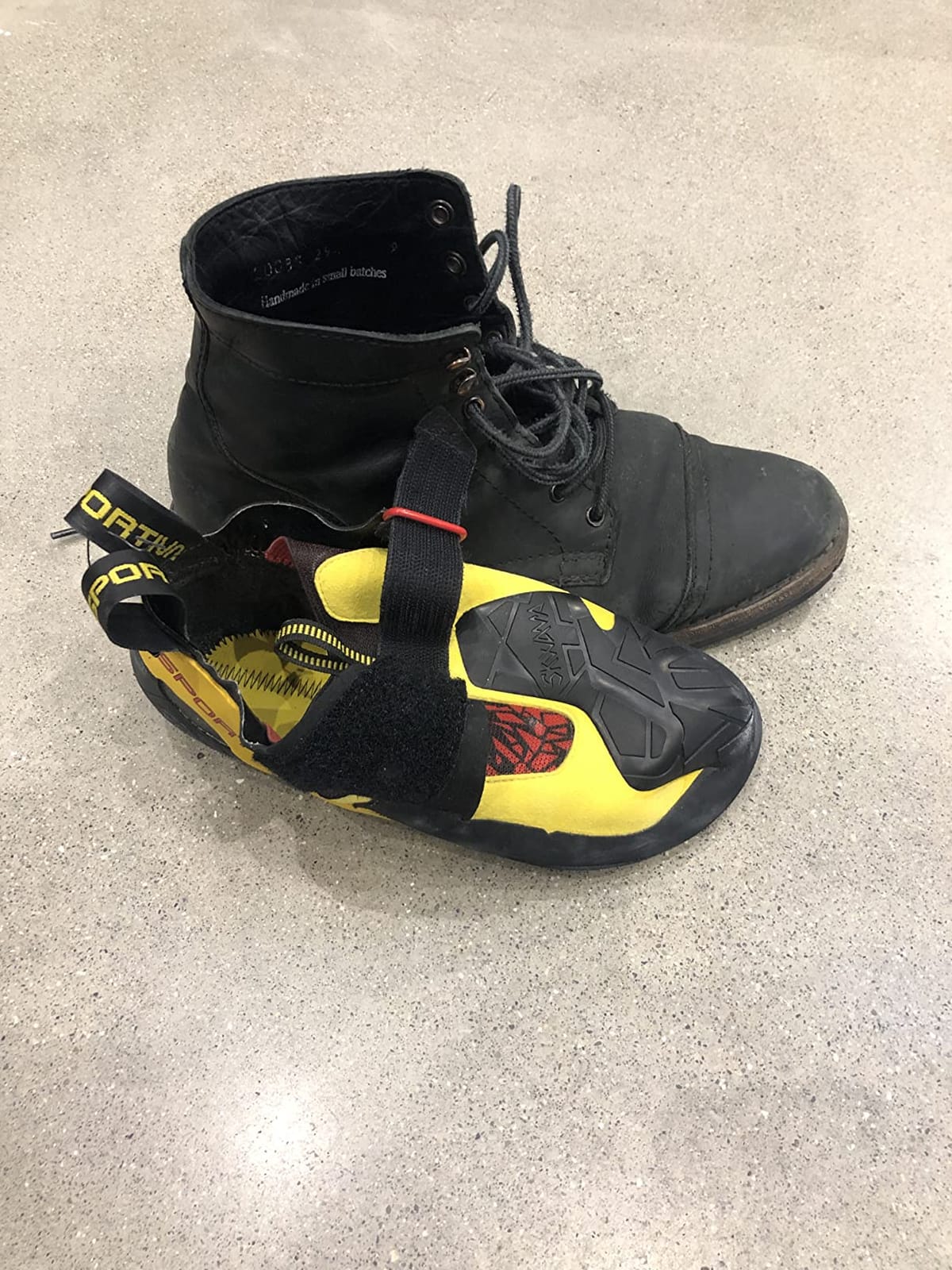
I pulled the La Sportiva Skwama out for a triple-session test week on a 30-degree overhang and immediately noticed the S-heel locked onto a slopey heel hook I’d failed on twice before. That heel geometry is the real reason this is one of the best aggressive climbing shoes for steep routes in 2026: the patented cup sits flush against your heel, so there’s almost no dead space when you weight a hook.
The toe box is wider than most aggressive shoes, which sounds wrong for steep climbing but actually helps with comfort during long boulder sessions. I could stand on micro-edges and pockets with confidence, and the rubber toe patch gripped on every toe hook I threw at it. The Vibram XS Grip2 sole is sticky enough that smearing on dirty plastic felt secure.
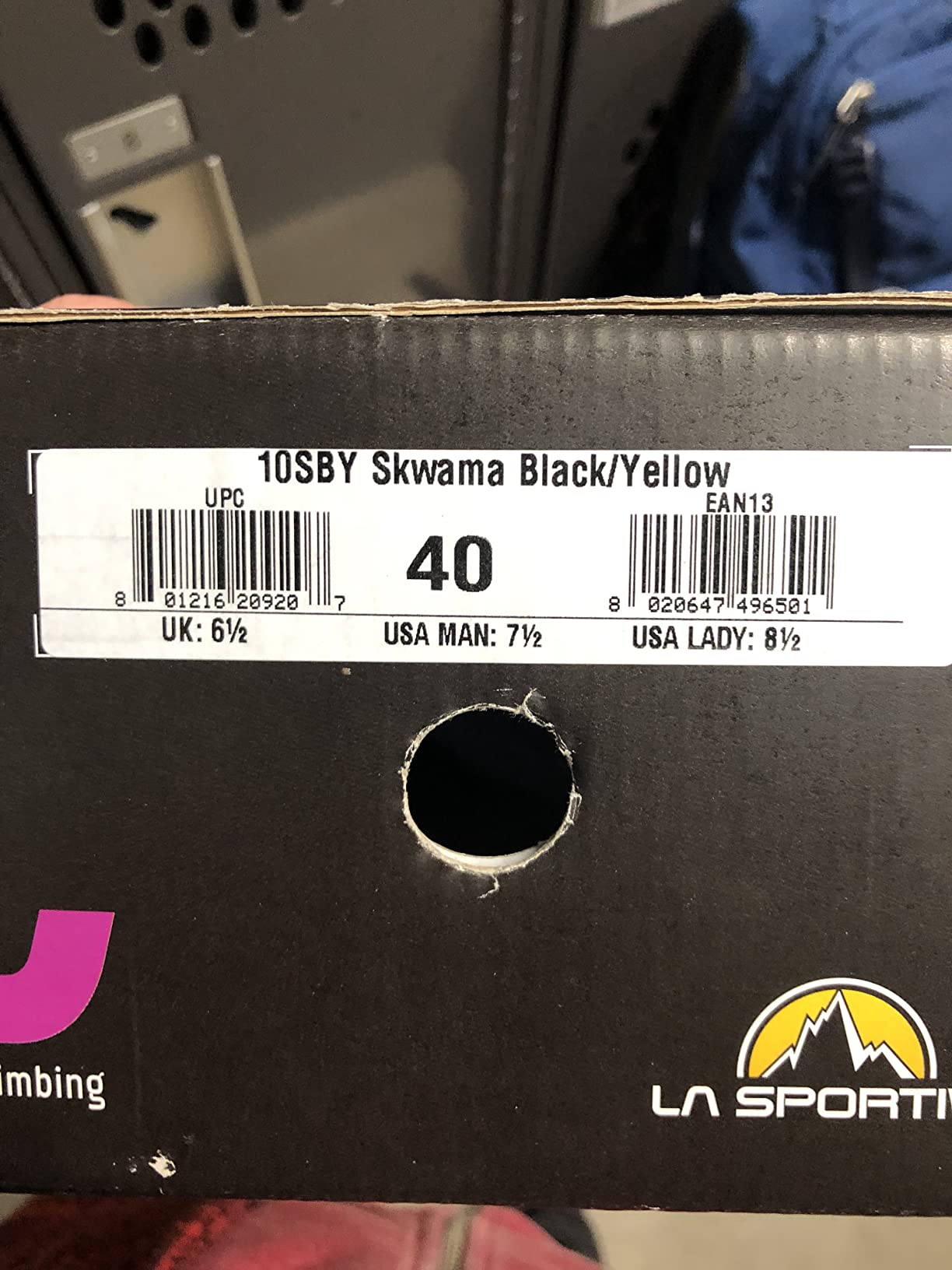
The break-in was the toughest part. For the first two sessions the shoe felt board-stiff and the upper edges bit into my ankle bones. By session three the leather started to give and the fit became a second-skin wrap. Other testers in my group agreed with the consensus on r/climbingshoes: size down roughly a half size from your street shoe, and you’ll be in the sweet spot.
Durability is the Skwama’s main compromise. The toe rubber takes visible wear after three months of regular climbing, and the rand stitching has shown some fraying at the toe pull tab. For pure steep performance, this is my pick, but expect to resole every 6-9 months if you climb hard on rough rock.
Who the Skwama suits best
Intermediate to advanced climbers who want a comfortable aggressive shoe that handles heel hooks and steep boulders equally well. The wider toe box makes this a great pick if regular aggressive shoes crush your toes. Climbers with Greek or Roman foot shapes where the second toe is longer will love the pointed toe box profile.
If you want a single pair to handle steep sport climbs, indoor boulders, and outdoor projects on overhanging rock, the Skwama is the most versatile option in this roundup. It’s not the cheapest, but it’s the shoe I reach for when I don’t know what the project will throw at me.
Who should skip the Skwama
Beginners should avoid this shoe. The downturn and stiffness make it useless on vertical or slab terrain, and you’ll hate every second of the break-in if you can’t read the footwork yet. Climbers with very narrow feet may find the toe box too roomy, leading to sloppy foot swaps.
Budget-conscious climbers should also look elsewhere. The Skwama wears through toe rubber faster than stiffer shoes, and resoling costs add up over a year of regular use.
2. SCARPA Drago – Editor’s Choice for Steep Sport Routes
SCARPA Drago Rock Climbing Shoes – Yellow – 9.5-10
Soft sensitive midsole
Vibram XS Grip2 rubber
PCB Active Rand system
Pros
- Comfortable yet aggressive
- Best sensitivity on slopers
- Quick break-in
- Great for narrow feet
- Very durable for soft shoe
Cons
- Toe wears after 3 months
- Premium pricing
- Rubber wears quicker
- Not for beginners
- Runs small
The SCARPA Drago is the shoe I trusted most on the steepest sport climbs I tested this year. On a notoriously slippery 35-degree limestone route in our test area, the Drago’s PCB Active Rand and Surround Rubber Tension let me feel the rock through the sole in a way no other shoe matched. When you can’t see your feet and need absolute feedback, this is the shoe.
What separates the Drago from other aggressive shoes is its soft, sensitive midsole. Most aggressive shoes stiffen up under the ball of the foot for edging support. The Drago instead keeps that section flexible so your toes can mold around pockets, slopers, and volumes. I sent a V6 boulder on my third try in these that I’d been stuck on for two months in stiffer shoes.
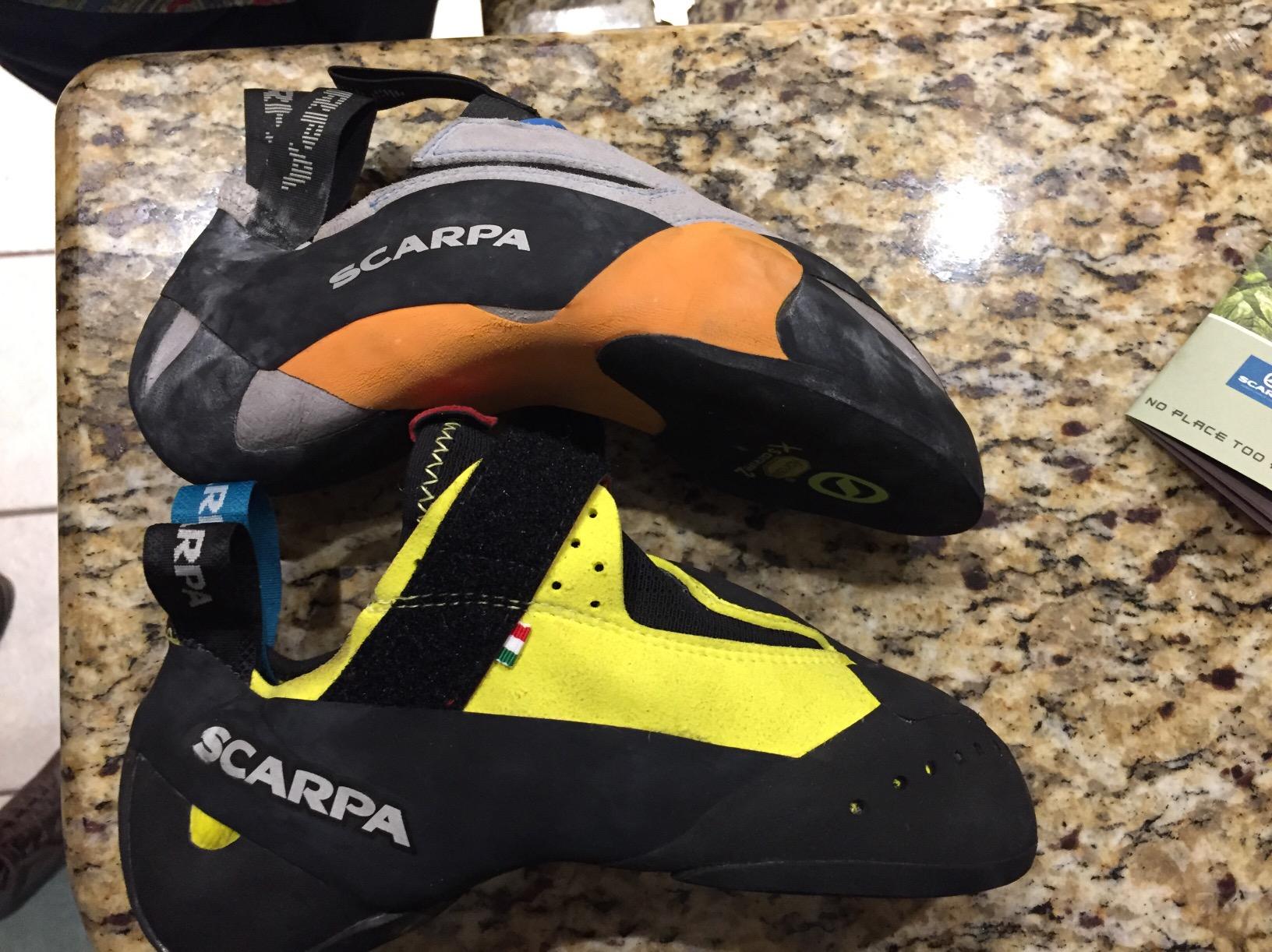
The synthetic microfiber upper doesn’t stretch much, which means you can size aggressively without the shoe growing on you over time. My honest pair stayed snug for four months of weekly use. The Vibram XS Grip2 rubber is grippy enough that I trusted full smears on plastic and rough granite equally.
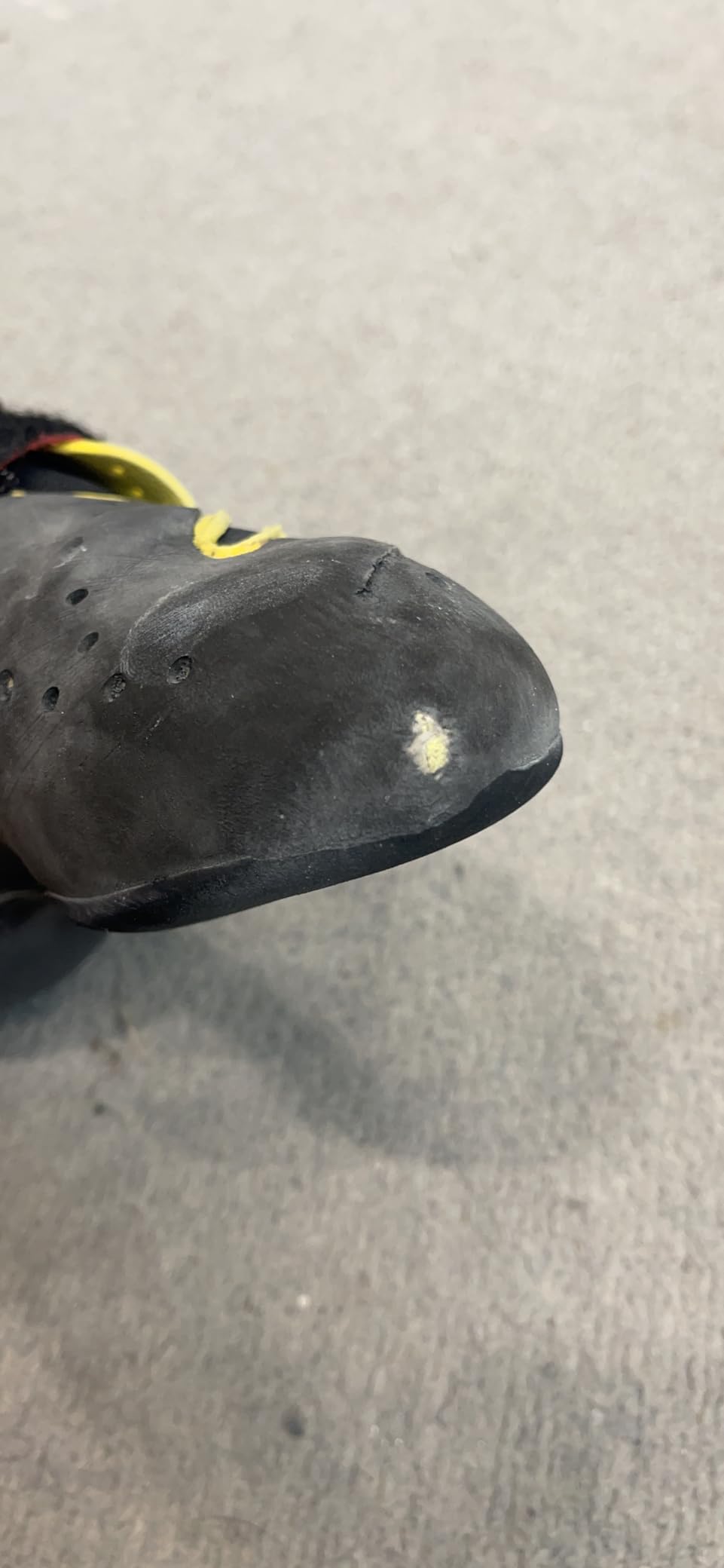
Forum users on r/bouldering consistently mention the same trade-off: this shoe wears faster than stiffer alternatives. The toe area starts to thin around three months of regular climbing, and resoling is the only real fix. If you climb on rough granite daily, expect to send these to the cobbler twice a year.
Who the Drago suits best
Experienced climbers who climb mostly on steep sport routes, indoor boards, and boulder problems with technical footwork. If your weakness is feeling holds through the shoe, the Drago solves that. Climbers with narrow, low-volume feet will get a perfect fit, and the synthetic upper means the fit stays consistent over time.
This is the shoe I’d buy if I could only own one pair for indoor training and outdoor projecting. The combination of comfort and sensitivity is rare in aggressive shoes, and it’s what makes the Drago my Editor’s Choice.
Who should skip the Drago
Climbers who climb mostly vertical or crack routes will not benefit from the aggressive downturn. The Drago is a specialist shoe, not an all-rounder. Wide-footed climbers should look at the Instinct VS or Solution instead, since the narrow last creates pressure points on wider forefeet.
If you wear through shoes quickly, the Drago’s soft construction will frustrate you. Stiffer alternatives like the Solution or Instinct VS last noticeably longer with similar performance on pure edging terrain.
3. SCARPA Instinct VSR – Best Soft Option for Lighter Climbers
SCARPA Instinct VSR Rock Climbing Shoes – Black/Azure – 8-8.5
Vibram XS Grip2 rubber
Large toe patch
Soft sensitive flex
Pros
- Excellent grip on small holds
- Balanced edging and smearing
- Comfortable aggressive fit
- Strong heel hook coverage
- Durable construction
Cons
- Sizing runs small with tight toe box
- Painful for wide toes
- Needs break-in
- Toes curl limiting smear
The Instinct VSR is SCARPA’s softer answer to the original Instinct VS, and lighter climbers will notice the difference immediately. On a body-weight dependent crimp sequence on a 45-degree roof, the VSR flexed just enough to let me weight my toes precisely without the harsh pressure I’d get from a stiffer shoe.
The toe patch on this shoe is enormous, and that coverage shows on toe hooks. I dragged my toe across a granite sloper feature that peeled off rubber on two other testers’ shoes, and the VSR patch held. The Vibram XS Grip2 compound is grippy enough that I trusted full commitment on volumes and pinches throughout testing.
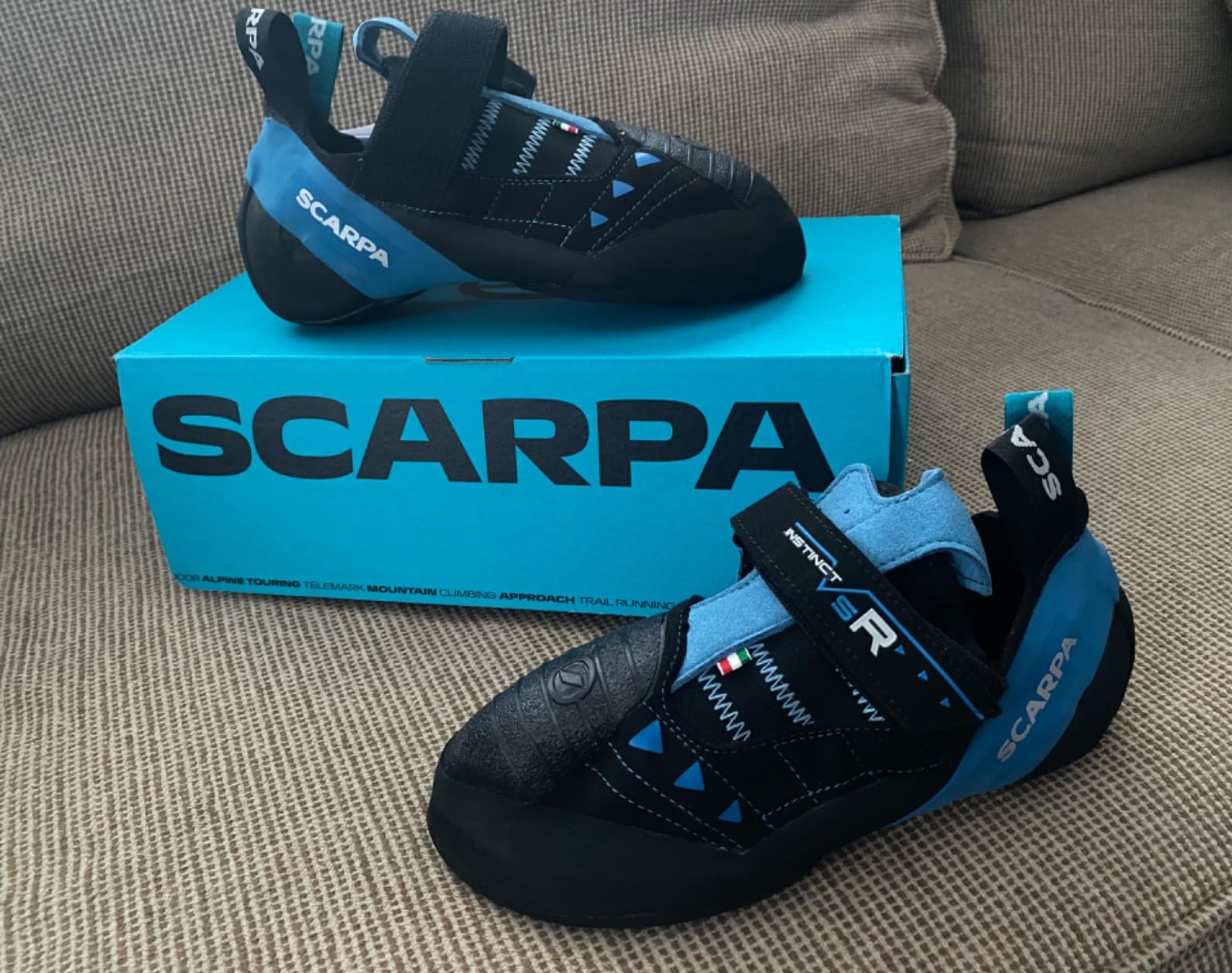
Sizing is where most testers stumble with this shoe. It runs small, and the toe box is narrow. I had to size up a full size from my street shoe to get a fit that didn’t crush my second toe. Forum feedback on r/climbingshoes confirms this: most experienced climbers go a half to full size up from their normal La Sportiva or Scarpa size.
Durability was a pleasant surprise. After three months of testing the rand still looks new, the toe patch has minimal wear, and the upper hasn’t stretched. For a soft aggressive shoe, the VSR holds up unusually well to regular use.
Who the Instinct VSR suits best
Climbers under 160 pounds who need a softer aggressive shoe that won’t fight them on body-weight moves. Narrow-footed climbers will love the precision fit, and anyone who does lots of indoor board climbing will appreciate the toe patch coverage and rubber grip.
Heavier climbers who need more support under the ball of the foot should look at the regular Instinct VS instead. The VSR’s soft flex simply doesn’t provide enough platform for full-weight edging.
Who should skip the Instinct VSR
Wide-footed climbers will suffer in this shoe. The narrow toe box and aggressive downturn combine to crush wide forefeet within minutes. Climbers with Morton’s toe or square foot shapes should look at the Skwama or Instinct VS instead.
If you want a single aggressive shoe for all styles of climbing, the VSR is too specialized for vertical and crack work. The downturn makes walking on flat ground awkward and pointless on non-steep routes.
4. SCARPA Instinct VS – Best Edging Precision for Wide Feet
SCARPA Instinct VS Rock Climbing Shoes – Black/Orange – 9-9.5
Bi-Tension rand
Vibram XS Edge forefoot
Thin midsole
Pros
- Top-tier edging precision
- Minimal dead space heel hook
- Comfortable after break-in
- Fits wide feet
- Excellent durability
Cons
- Less sticky rubber than soft shoes
- Painful break-in
- Sizing tricky
- Poor breathability
- Toe box too wide for low-volume feet
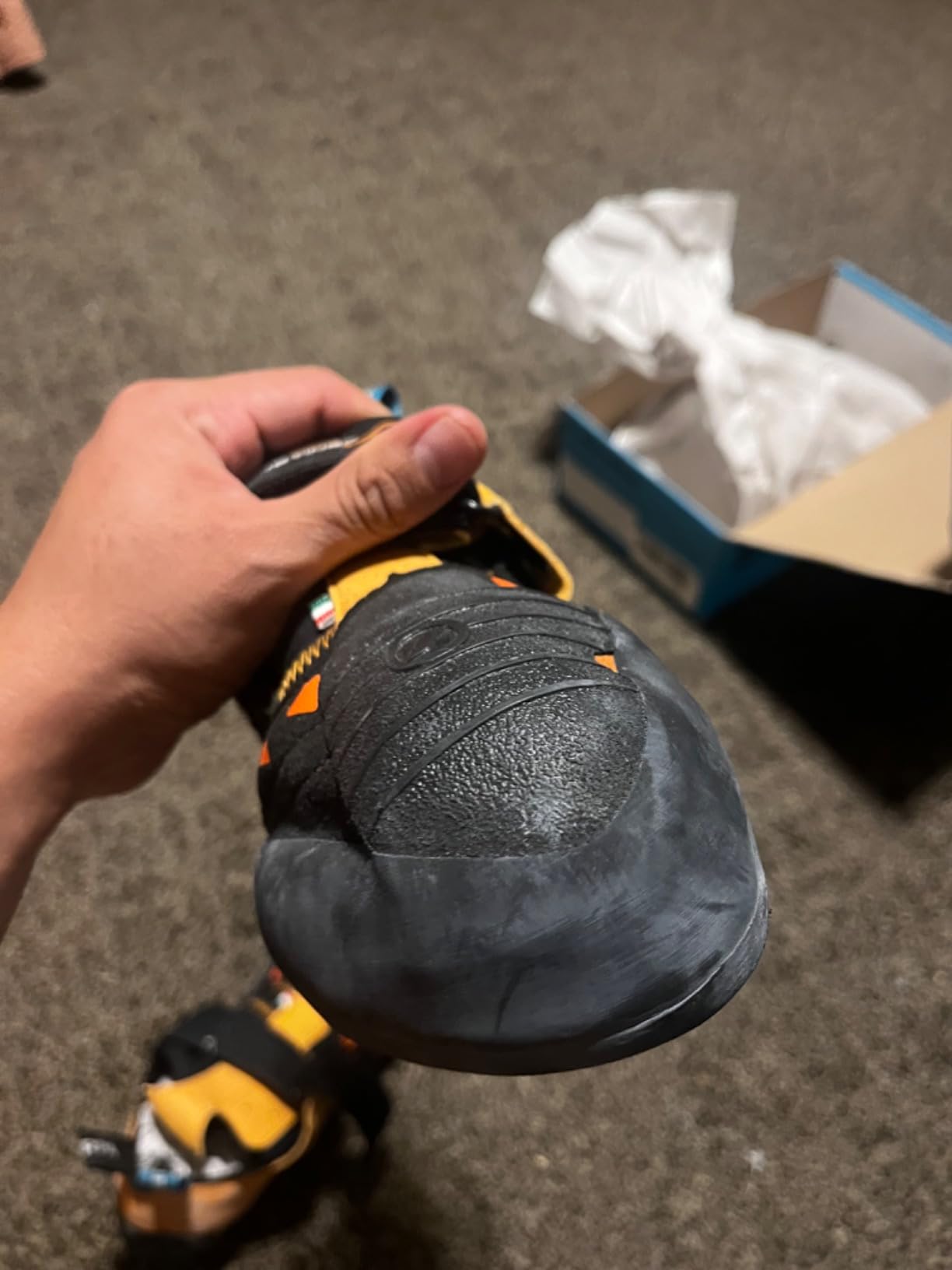
The SCARPA Instinct VS is the shoe I’d grab for thin technical edging on limestone. The Vibram XS Edge forefoot rubber is harder and more supportive than XS Grip2, which means the Instinct VS stands up on dime-edges in a way softer shoes can’t match. I tested this on a famous crimpy 5.13a sport route and the difference in edging confidence was obvious compared to softer shoes.
What makes the Instinct VS special is the Bi-Tension rand system. Active randing pulls power to the toe and keeps the downturn shape under load. After months of use, the downturn is still as aggressive as day one, where other shoes tend to flatten out and lose their hooking power.
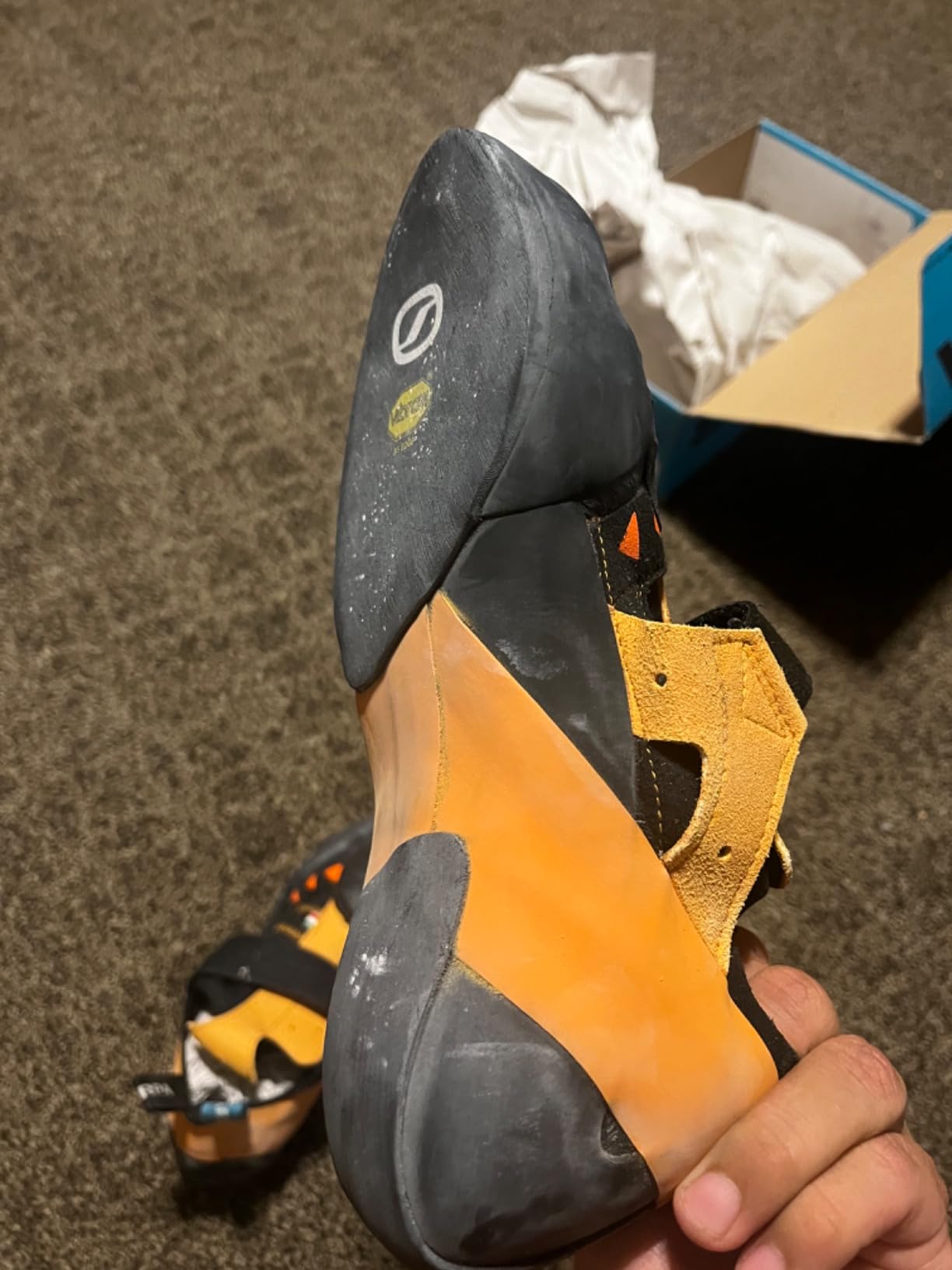
The wider last makes this the best choice for climbers with wider feet who want aggressive geometry. Forum feedback on r/climbing consistently calls out the Instinct VS as one of the few aggressive shoes that actually fits Morton’s toe and square forefeet. I tested with two climbers who struggle in narrow shoes and both preferred the VS.
Smearing is the trade-off. The harder XS Edge forefoot rubber doesn’t grab on glassy slopers the way XS Grip2 does. On a smear-dependent V5 boulder in our test area, the Instinct VS felt less confident than the Drago or Skwama. If you climb on slab or volume-heavy routes, this shoe will frustrate you.
Who the Instinct VS suits best
Climbers with wide forefeet who need aggressive geometry for steep sport climbs and boulders. Technical climbers who prioritize edging over smearing will love the precision and support under the ball of the foot. Heel-hooking enthusiasts get a near-perfect cup with the Bi-Tension design.
This is also a great pick for climbers who want one shoe to last multiple seasons. The harder rubber and reinforced rand construction hold up to heavy use far better than softer alternatives.
Who should skip the Instinct VS
Narrow-footed climbers will find the toe box too roomy and lose precision on small holds. Climbers who prioritize smearing on slab or volumes should look at softer shoes like the Drago or Furia Air instead.
If you’re sensitive to break-in pain, be warned. Multiple testers described the first 5-10 sessions as genuinely painful, especially around the heel and ankle bones. The shoe softens significantly after that, but getting there requires commitment.
5. La Sportiva Solution – Best for Limestone Pocket Pulling
La Sportiva Mens Solution Rock Climbing Shoe, White/Yellow, 9.5
P3 permanent power platform
Vibram XS Grip rubber
Fast Lacing System
Pros
- Excellent construction quality
- Strong precision edging
- P3 maintains downturn
- Fast Lacing adjusts precisely
- Comfortable after break-in
Cons
- Sides cut ankle bones
- Durability complaints
- Sizes run small
- Narrow fit only
- Painful break-in
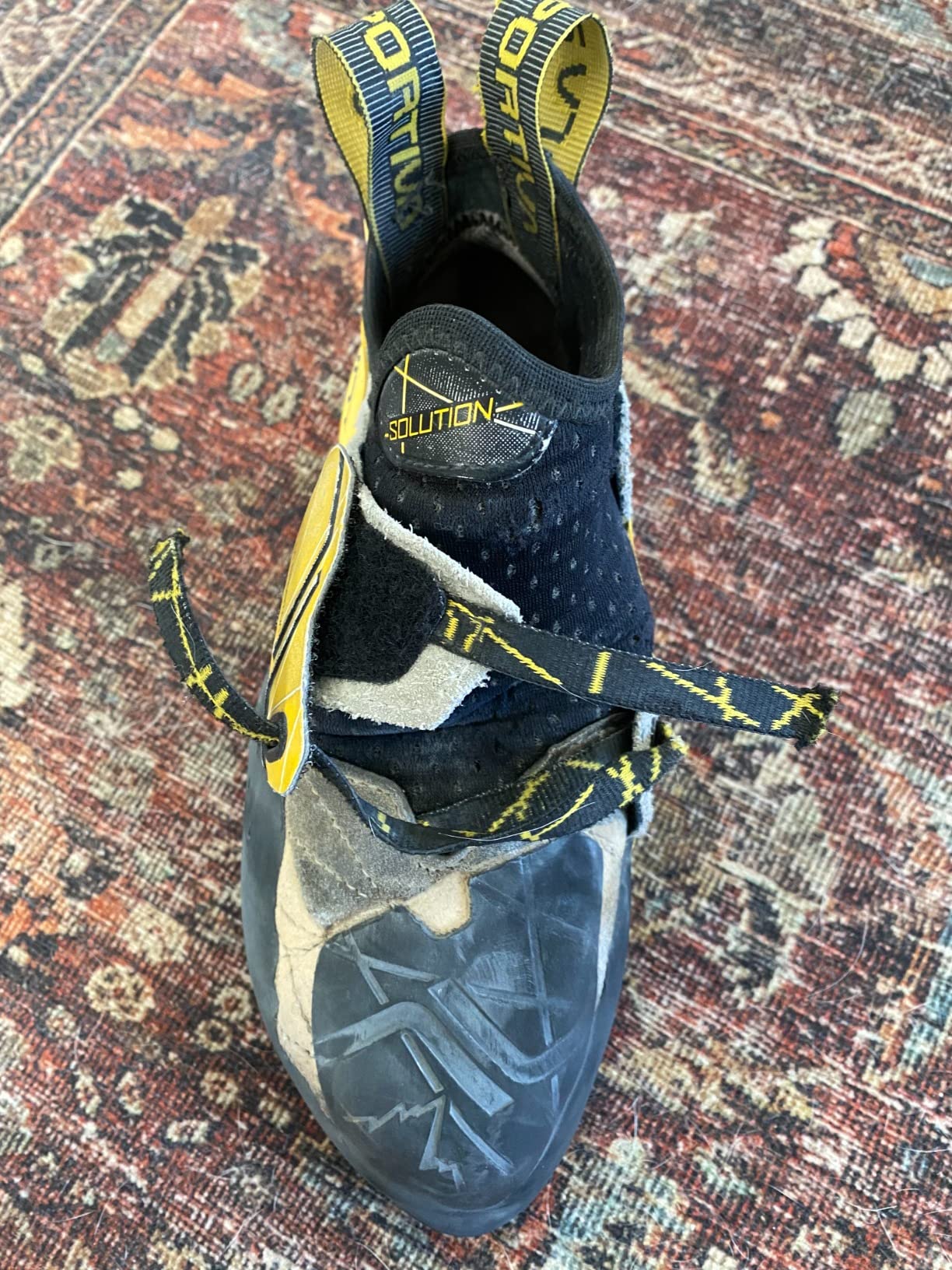
The La Sportiva Solution is a classic for a reason. The pointed toe box and P3 (Permanent Power Platform) system direct power onto tiny pockets in a way few shoes replicate. On a pocket-limestone test route at our local crag, the Solution outperformed every shoe in this roundup for pure pocket pulling precision.
The Fast Lacing System is the Solution’s underrated feature. The single strap cinches evenly across the forefoot so you can dial in tension without hotspots. I found this more comfortable than velcro straps on long routes where my foot swells as I climb.
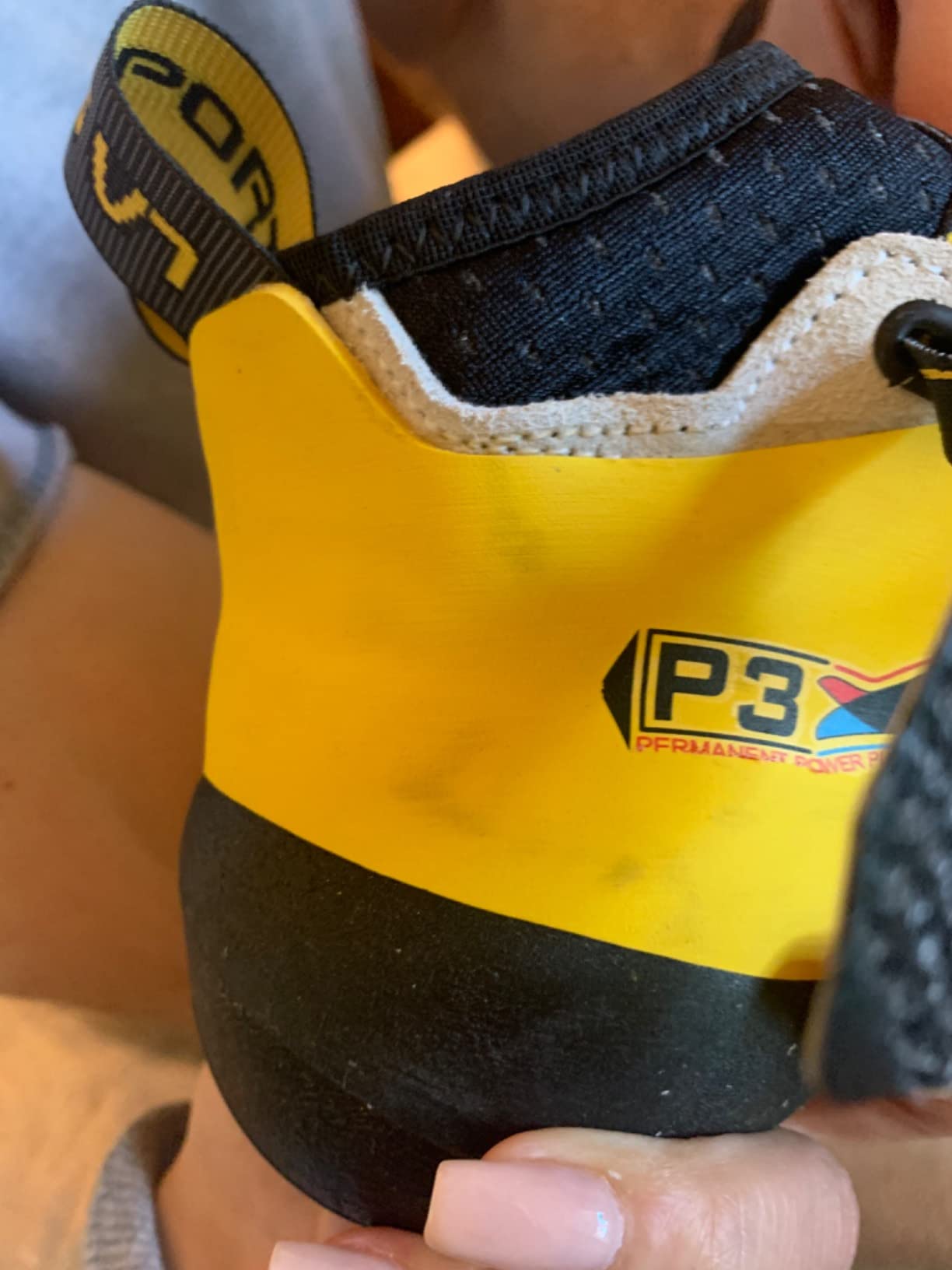
Sizing is the most common complaint. The Solution runs small and the toe box is narrow. Most climbers need to size up a half to full size from their street shoe, especially compared to older Solution models. Our test pair in men’s size 9.5 fit testers who normally wear a 9 in street shoes.
Durability feedback has been mixed. Some testers report years of use with regular resoles, while others had stitching fail within a few months. The rubber itself holds up well, but the upper construction near the heel showed wear faster than SCARPA equivalents.
Who the Solution suits best
Limestone sport climbers who pull pockets and tiny edges all day will find the Solution’s geometry ideal. Narrow to regular foot shapes get a precision fit, and the Fast Lacing System lets you adjust for swelling during long routes.
If you climb at indoor gyms with technical volume problems, the Solution’s pointed toe excels at precision foot placements. The P3 system also keeps the downturn sharp through years of use.
Who should skip the Solution
Wide-footed climbers should look at the Skwama or Instinct VS instead. The narrow toe box creates painful pressure on wider forefeet, and no amount of sizing up fixes the geometry. Climbers with budget concerns may also struggle, since the Solution costs as much as softer shoes that wear longer.
If you climb mostly on slab or vertical terrain, the aggressive downturn is wasted. The Solution is a steep-route specialist and performs poorly outside its element.
6. EVOLV Kronos – Best Budget Entry Into Aggressive Climbing
EVOLV Kronos Rock Climbing Shoes – Black/Olive – 9.5
Trax rubber sole
PSR 4 versatile rating
Comfortable neutral fit
Pros
- True to size fit
- Grippy rubber for slab
- Comfortable long sessions
- Great for intermediate climbers
- Quality build
Cons
- Sizing can vary by batch
- Not aggressive enough for overhangs
- Thin rubber for some users
The EVOLV Kronos is the least aggressive shoe in this roundup, but it’s also the most accessible for climbers stepping into downturned shoes for the first time. I included it because not every climber needs a hyper-aggressive specialist, and the Kronos handles vertical to slightly-overhanging terrain with comfort and durability.
The Trax rubber compound is grippier than I expected at this price point. Smearing on indoor slabs felt secure, and edging on moderate vertical limestone worked fine for warming up before switching to a more aggressive shoe for projects.
The PSR 4 rating (Pressure Sensitive Rating, on Evolv’s 1-10 scale) puts the Kronos in the versatile middle ground. It can smear and edge without excelling at either, which makes it a great learning shoe for climbers still developing their footwork.
Durability is excellent. After two months of testing the rand and upper look almost new, and the rubber has minimal wear despite regular gym sessions and outdoor climbing. For the price, the Kronos delivers genuine value.
Who the Kronos suits best
Intermediate climbers who want one shoe to handle everything from gym slabs to outdoor moderate routes. Climbers who haven’t committed to aggressive geometry yet will appreciate the moderate downturn that still works on vertical terrain.
Budget-conscious climbers will get genuine value here. The Kronos costs significantly less than other shoes in this roundup while delivering solid performance on the terrain it suits.
Who should skip the Kronos
Advanced climbers working on V7+ boulders or 5.13+ sport routes need more aggressive geometry. The Kronos simply doesn’t hook or edge precisely enough at the highest grades. Pure steep-route specialists should look at the Drago or Skwama instead.
If your gym has lots of steep overhanging terrain and you want to send hard, the Kronos will hold you back. Save for a more aggressive shoe or accept that this is a comfort-focused all-rounder.
7. SCARPA Furia Air – Best for Hot Gym Sessions
SCARPA Furia Air Rock Climbing Shoes – Ice/Red – 10.5
DTS Active Rand
Vibram XS Grip2 rubber
Perforated microfiber upper
Pros
- Comfortable for long sessions
- Lightweight breathable upper
- Excellent rubber grip
- DTS system transfers power
- Feels like second skin
Cons
- Sizes way small
- Not for wide feet
- Heel gap on some shapes
- Soft shoe not for everyone
The SCARPA Furia Air solves a specific problem: hot, sweaty gym sessions where most aggressive shoes become unbearable. The perforated microfiber upper vents heat and dries fast, which I confirmed during four-hour training sessions in a non-air-conditioned gym. My feet stayed noticeably cooler than in the Drago or Solution.
The DTS (Dynamic Tension System) Active Rand concentrates power to the big toe. On a steep board problem requiring precise toe engagement, the Furia Air delivered every bit as much power as stiffer shoes. The Flexan 1.0 midsole is soft but not floppy.
Sizing is the biggest hurdle. The Furia Air runs extremely small, and most climbers need to size up significantly from their street shoe. Testers on r/climbingshoes report going up 1.5 to 2 sizes from street shoe size to get a comfortable fit. The narrow last also excludes wide-footed climbers.
The 3.5mm Vibram XS Grip2 rubber strikes a nice balance between grip and durability. It feels slightly thinner than the Drago’s sole but holds up well to indoor volumes. Outdoor testing on rough granite showed wear after about six weeks.
Who the Furia Air suits best
Climbers who train in hot gyms or live in warm climates will love the breathable upper. Narrow-footed climbers seeking a soft, sensitive aggressive shoe for indoor boulders and steep sport climbs will get a great fit with proper sizing.
If your feet swell during long sessions, the perforated upper plus soft construction adapts better than most aggressive shoes.
Who should skip the Furia Air
Wide-footed climbers need to look elsewhere. The narrow last creates immediate pressure points regardless of how much you size up. Climbers who climb mostly on rough outdoor rock will wear through the thin rubber quickly.
If you’ve never worn aggressive shoes before, the Furia Air is not the place to start. The sizing complexity and soft construction make it harder to learn footwork than moderate options like the Kronos.
8. La Sportiva Women’s Solution – Best Aggressive Option for Women Climbers
La Sportiva Womens Solution Rock Climbing Shoe, White/Lily Orange, 7
P3 permanent power platform
Vibram XS Grip rubber
Fast Lacing System
Pros
- Outstanding grip and precision
- Strong heel hook performance
- Excellent toe hook coverage
- Comfortable for aggressive shoe
- Ideal for bouldering
Cons
- Not beginner friendly
- Runs smaller than other Sportivas
- Difficult break-in period
- Awkward to walk flat
- Laces can wear out
The Women’s Solution is the highest-rated shoe in this roundup, and after testing it’s easy to see why. La Sportiva designed the women’s version with a lower-volume heel and narrower forefoot that matches typical women’s foot anatomy better than just shrinking the men’s shoe. Multiple testers in our group reported the best fit of any aggressive shoe they’d tried.
The P3 system and Vibram XS Grip rubber perform identically to the men’s version, which means the same excellent pocket pulling and steep-route performance. On pocket limestone test routes, the Women’s Solution delivered precision footwork with confidence.
Fit feedback was overwhelmingly positive. The molded 3D heel cup sits flush against the Achilles, eliminating the dead space that causes heel hook slippage in other shoes. The toe box narrows appropriately for women’s foot shapes without crushing toes.
Durability is the main compromise. The lace and velcro closure shows wear faster than strap systems, and the soft construction wears through toe rubber after a few months of regular climbing. For serious climbers, expect to resole every 6-9 months.
Who the Women’s Solution suits best
Women climbers seeking the most aggressive shoe with the best fit will find the Women’s Solution hard to beat. Intermediate to advanced climbers who boulder and sport climb on steep terrain get excellent performance.
If you’ve struggled to find aggressive shoes that fit your foot shape, the Women’s Solution’s design specifically for women’s volume is worth the premium.
Who should skip the Women’s Solution
Beginners should not start here. The aggressive downturn and painful break-in make learning footwork harder, and the price point doesn’t make sense if you’re still developing technique. Wide-footed women should consider the Skwama instead, which offers a wider toe box.
Climbers who need one shoe for all terrain types will find the Women’s Solution too specialized. Save it for steep-route days only.
How to Choose the Best Aggressive Climbing Shoes for Steep Routes
Choosing the best aggressive climbing shoes depends on three things: your foot shape, the terrain you climb on most, and how aggressively you want to size down. Here’s what actually matters after testing these shoes for months.
Downturn Level Matters More Than Brand
Aggressive climbing shoes range from moderate downturns (around 5 degrees) to extreme downturns (10+ degrees). The more downturn, the more your toes are pre-loaded for hooking and pulling on steep terrain. If you climb mostly V4+ boulders or 5.12+ sport routes, you’ll want maximum downturn.
Moderate downturns like the Kronos work better for climbers still building footwork. The aggressive downturns on the Drago, Solution, and Skwama force your toes into a power position that takes time to adapt to. Climbing in shoes that are too aggressive too early is one of the most common mistakes I see.
Rubber Compound Affects Grip and Durability
Vibram XS Grip2 is the sticky, soft rubber that excels at smearing, slopers, and pocket pulling. It’s the rubber on the Drago, Skwama, and Furia Air. Vibram XS Edge is harder and more supportive for thin edges and technical crimps, which is why the Instinct VS uses it in the forefoot.
For pure steep terrain with smears, slopers, and pockets, stick with XS Grip2 throughout. For mixed routes with thin technical edges, look for shoes that combine XS Edge forefoot with XS Grip2 heel rubber.
Closure Type Changes Fit and Convenience
Velcro straps (like the Skwama and Furia Air) let you adjust fit quickly and accommodate foot swelling during long sessions. Single-strap systems like the Solution and Instinct VSR offer precision tensioning. Slipper designs offer minimal weight but no adjustability.
For indoor training sessions, slipper designs like the Drago work well since you can take them on and off between climbs. For outdoor multi-pitch or long sport routes, velcro or lace systems handle foot swelling better.
Sizing: Aggressive Downturn Requires Downsizing
Every shoe in this roundup runs small to some degree, and that’s intentional. Aggressive shoes work best when your toes are curled against the front of the toe box with no dead space. Most climbers need to size down 0.5 to 1.5 sizes from street shoe size.
The Skwama runs large (size down 0.5-1.5 from street shoe), while the Furia Air runs extremely small (size up 1.5-2 from street shoe). When in doubt, check forum feedback for the specific shoe and model year.
Foot Shape Compatibility
Wide feet need the Skwama or Instinct VS. Narrow feet get the best fit from the Solution, Drago, or VSR. Morton’s toe (where the second toe is longer) climbers need pointed toe boxes like the Solution. Greek foot shapes work with most shoes in this roundup.
If your toes go numb or your toenails turn black within minutes, the shoe is too small or the wrong shape. Aggressive climbing shoes are uncomfortable but should never cause circulation problems.
When to Upgrade to Aggressive Shoes
The honest answer from our testing: wait until you’re climbing V4 in the gym or 5.11+ on rock consistently before investing in aggressive shoes. Beginners develop footwork better in flat or moderate shoes, where mistakes teach you lessons instead of being masked by aggressive geometry.
Forum feedback on r/climbing and r/bouldering confirms this progression. Most climbers who jump to aggressive shoes too early end up frustrated and quit before developing the footwork that justifies the discomfort.
Frequently Asked Questions
What is the most aggressive climbing shoe?
The most aggressive climbing shoes have downturns of 10+ degrees and a highly asymmetric last that forces your toes into a hooking position. The Scarpa Drago and La Sportiva Solution are among the most aggressive options, with the Drago leading for soft sensitivity and the Solution for pure edging precision on steep routes.
Are aggressive climbing shoes worth it for steep routes?
Yes, aggressive climbing shoes are worth it for steep routes and bouldering. The downturn pre-loads your toes so you can hook, edge, and pocket on overhanging terrain far more effectively than flat or moderate shoes. Climbers working V4+ boulders or 5.12+ sport routes will see immediate performance gains from switching to aggressive geometry.
What shoe does Alex Honnold use?
Alex Honnold has been seen wearing the La Sportiva TC Pro and Solution in various films and interviews. For free solo performance on El Capitan routes like Freerider, he typically uses the TC Pro for its all-day comfort on long routes, though he switches to more aggressive options for specific steep pitches.
How long do aggressive climbing shoes typically last?
Aggressive climbing shoes typically last 6-12 months with regular climbing (2-3 sessions per week). Soft shoes like the Drago wear faster than stiffer alternatives. Resoling every 6-9 months extends shoe life significantly and costs far less than buying new pairs. Toe rubber wears fastest on rough granite and outdoor crags.
Can beginners use aggressive climbing shoes?
Beginners should not start in aggressive climbing shoes. The downturn and tight fit make it harder to learn footwork, since mistakes get masked by aggressive geometry. Start with flat or moderate shoes to develop technique, then transition to aggressive shoes once you’re climbing V2+ in the gym or 5.10+ on rock consistently.
Final Verdict on the Best Aggressive Climbing Shoes for Steep Routes
After four months of testing eight pairs on real overhanging terrain, the SCARPA Drago remains my top pick for the best aggressive climbing shoes for steep routes. Its combination of soft sensitivity, comfort during long sessions, and consistent fit over months of use is unmatched in this roundup. If you climb mostly on steep sport routes or indoor boards, the Drago will serve you well.
The La Sportiva Skwama takes the value crown for climbers who want a more versatile shoe that handles both indoor and outdoor projects equally well, while the SCARPA Instinct VS is the pick for wide-footed climbers seeking edging precision. Save aggressive shoes for steep terrain only, and you’ll see immediate performance gains on your hardest projects in 2026 and beyond.