
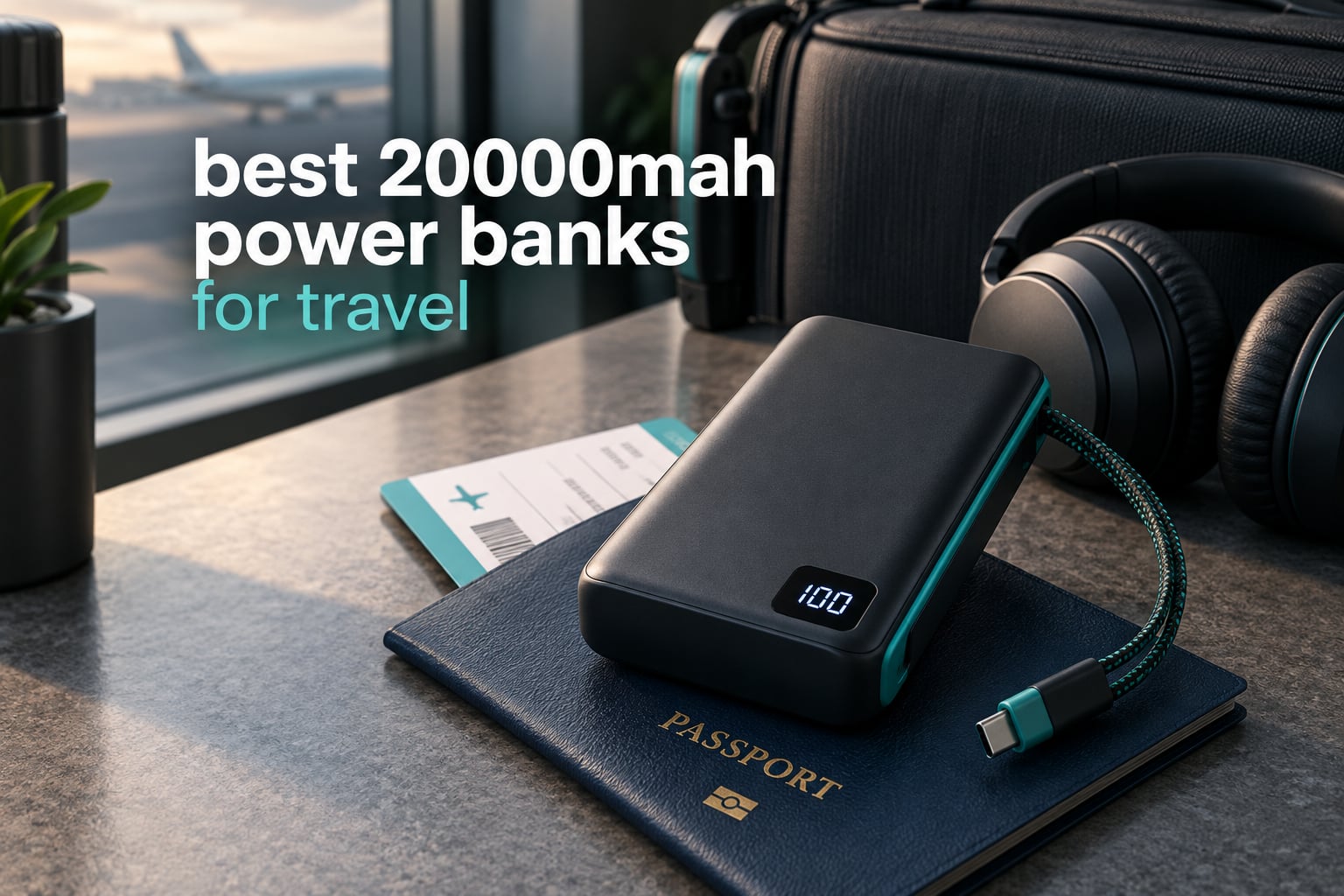
A 20000mAh power bank is the sweet spot for travel because it carries roughly 74 watt-hours of energy, which sits comfortably under the 100Wh cabin limit that airlines and TSA enforce at the gate, while still covering a multi-day trip with a phone, earbuds and a watch. Anything smaller runs out on long-haul routes, and anything larger either breaks the carry-on rule or pushes past the spare-lithium-battery limit.
That is the short version. The detail that catches most people at the airport is that airlines do not measure capacity in mAh at all, they measure it in watt-hours, and the two numbers are not interchangeable. A bank labelled 20000mAh at a 3.7V cell voltage is about 74Wh, but a bank labelled 20000mAh with higher internal voltage can behave differently, which is why the printed watt-hour figure on the casing is the one that matters.
Our team compared twelve 20000mAh-class banks across weight, real output wattage, port layout, refill speed and stated airline compliance. Every pick below sits in the same capacity bracket, so the ranking is decided by the things that actually change a travel day: how much it weighs in your hand, how fast it refills itself the night before a flight, and whether it can charge a laptop or only a phone.
If you also carry gear that needs a tougher body, our picks for waterproof power banks for travel and high capacity power banks cover the cases where 20000mAh is not the right number.
Table of Contents
Top 3 Picks for 20000mAh Travel Power Banks (September 2026)

INIU 20000mAh 22.5W Power Bank
- 320 g body
- Honest 20000mAh label
- Built-in lanyard cable
- 3-year warranty

Anker 20000mAh 87W Power Bank
- 87W total and 65W to one device
- 1.5-hour self-recharge
- Built-in USB-C cable

Anker Zolo 20000mAh 30W
- 30W two-way charging
- ActiveShield thermal control
- 5-hour refill
- Built-in cable
Quick Overview: Best 20000mAh Power Banks for Travel in 2026
The table below is the whole shortlist in one view. Capacity is identical across all twelve by design, so read the watt-hour column against the 100Wh carry-on limit, then weigh the gram figure against your bag allowance before you look at charging speed.
| Product | Specifications | Action |
|---|---|---|
| INIU 20000mAh 22.5W Power Bank |
|
Check Latest Price |
 AONIMI 20000mAh Two-Pack AONIMI 20000mAh Two-Pack |
|
Check Latest Price |
| Anker Zolo 20000mAh 30W |
|
Check Latest Price |
| Anker 20000mAh 87W Travel Essential |
|
Check Latest Price |
 Belkin 20000mAh 15W Three-Port Belkin 20000mAh 15W Three-Port |
|
Check Latest Price |
 INIU Laptop 20000mAh 65W INIU Laptop 20000mAh 65W |
|
Check Latest Price |
 NOBIS 20000mAh 45W NOBIS 20000mAh 45W |
|
Check Latest Price |
 RONEGN 20000mAh Four-Cable Pack RONEGN 20000mAh Four-Cable Pack |
|
Check Latest Price |
 Charmast 20000mAh 77Wh Six-Output Charmast 20000mAh 77Wh Six-Output |
|
Check Latest Price |
 Orfeika 20000mAh 77Wh Four-Cable Pack Orfeika 20000mAh 77Wh Four-Cable Pack |
|
Check Latest Price |
 GENSROCK 20000mAh 35W Two-Pack GENSROCK 20000mAh 35W Two-Pack |
|
Check Latest Price |
 Neoseek 20000mAh 45W Ultra-Slim Neoseek 20000mAh 45W Ultra-Slim |
|
Check Latest Price |
1. INIU Portable Charger 20000mAh 22.5W – A Compact Body With Honest Capacity
INIU Portable Charger, Smallest 20000mAh 22.5W Fast Charging Power Bank
20000mAh lithium polymer
320 g
22.5W USB-C output
4.1 x 2.8 x 1.2 inch
Pros
- Genuinely pocket-sized for 20000mAh
- 3-4 full phone charges per refill
- Built-in cable doubles as a carry lanyard
- 3-year replacement warranty
Cons
- Conversion efficiency measured near 70 percent
- Slow self-recharge with no fast input
- Heavier than the size suggests
This is the bank we end up packing most often. At 4.1 x 2.8 x 1.2 inches and 320 g it is one of the few 20000mAh packs that genuinely disappears into a jacket pocket or a small day bag, and that matters far more on a travel day than an extra 10W of output.
Independent testing backs the capacity claim rather than just repeating it. A verifying reviewer measured 16494mAh against a 16800mAh cell spec, which is close enough that we treat the 20000mAh label as honest. That matters because inflated capacity labelling is the single most common complaint in this category.
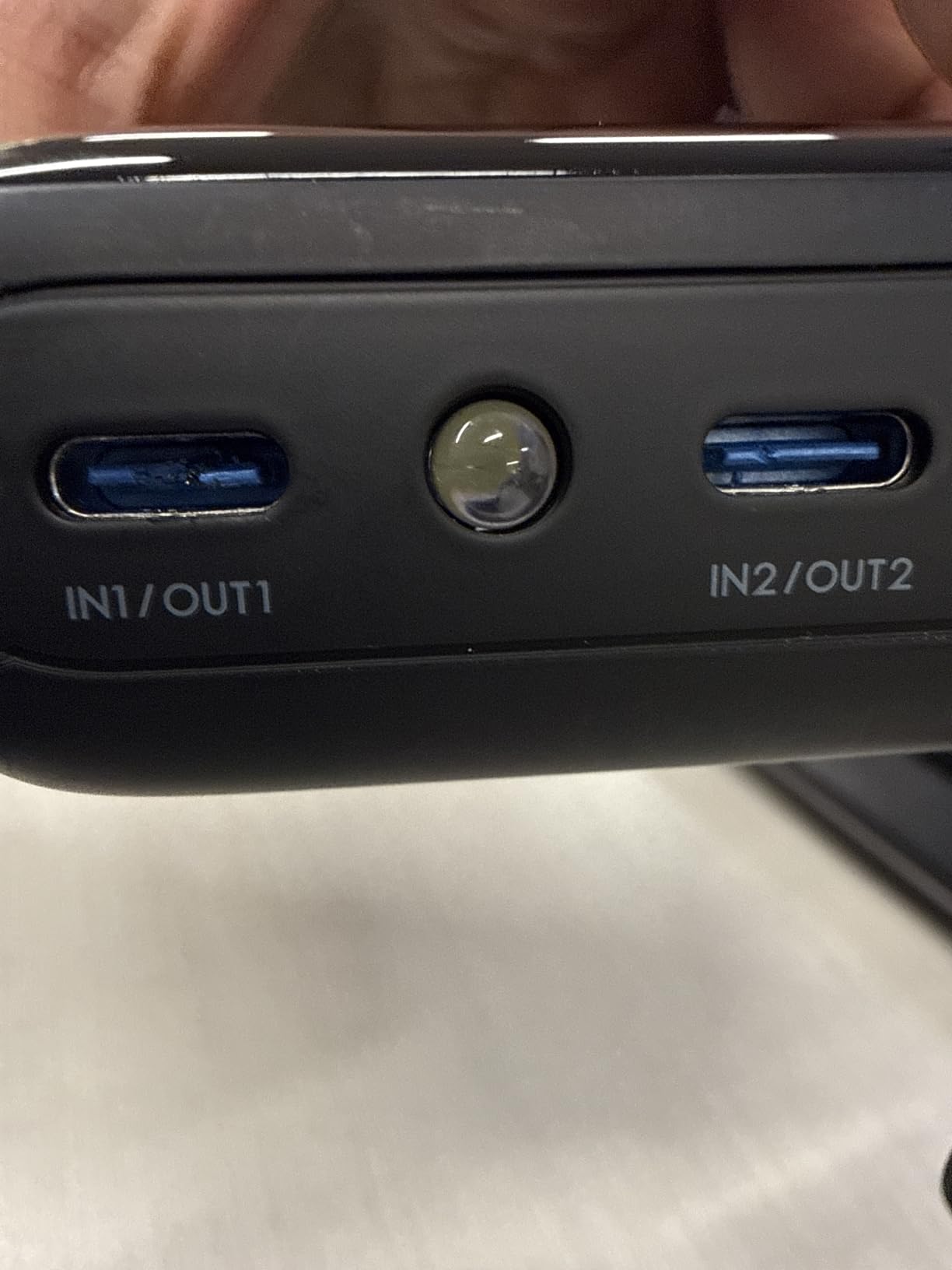
The 22.5W output is real rather than aspirational. One reviewer measured close to 21W at the port, and the brand quotes an iPhone 16 to 60 percent in about 25 minutes, which is enough to fill a phone while you sit at a gate.
Two additions are unusual in this class: a built-in flashlight for emergencies, and a digital display of remaining capacity rather than the usual four ambiguous LED dots. The detachable braided nylon lanyard doubles as a carry handle and can be replaced if it frays, which removes the built-in-cable failure risk that trips up other designs.
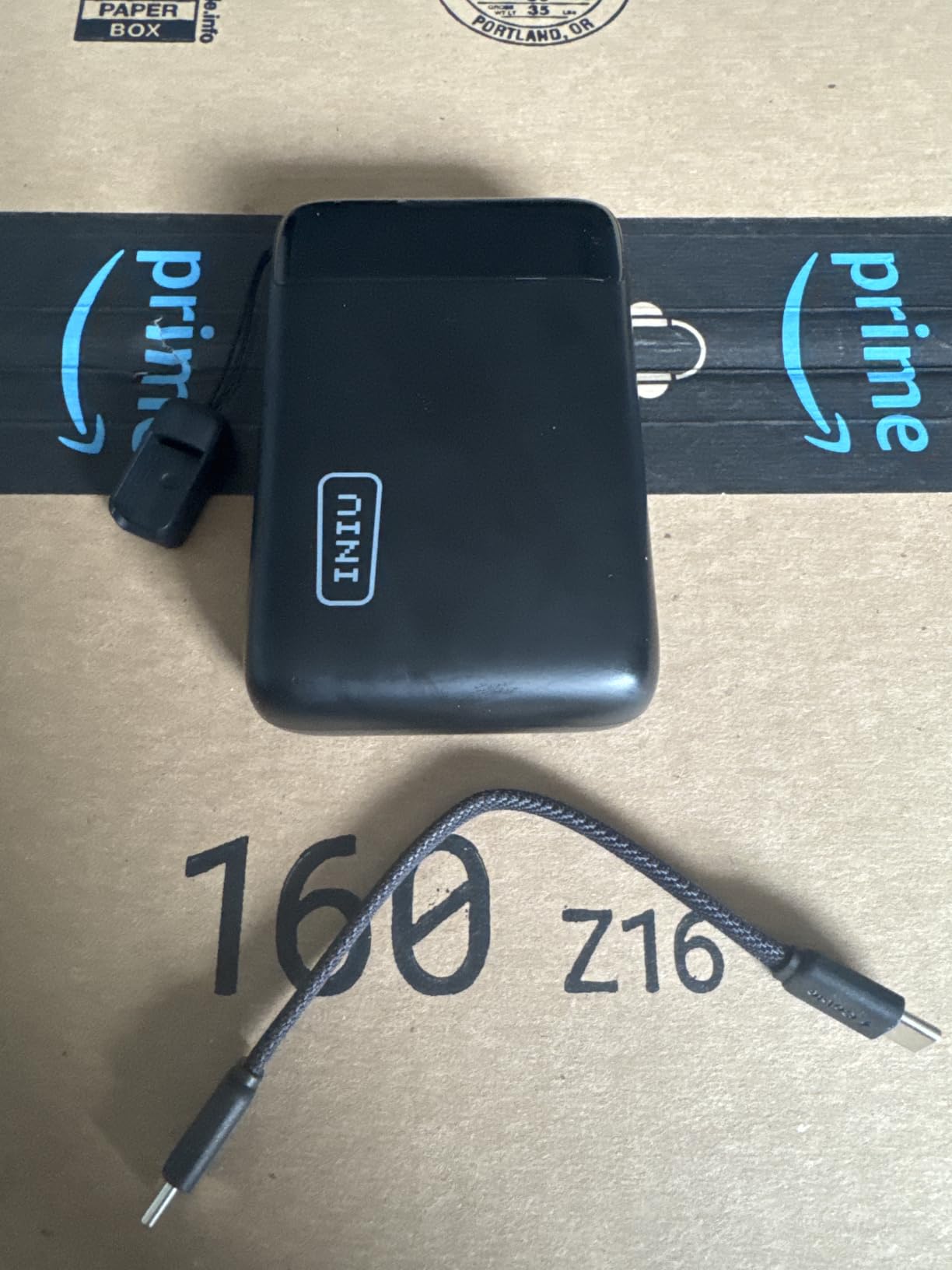
What 20000mAh means in real charge counts
Users report three to four full phone charges per refill, and the number you get depends on how much you are also feeding earbuds, a watch and a tablet. Treat the printed mAh as a ceiling and plan on roughly 80 percent of it reaching your devices.
The 320 g figure is the honest trade-off against the 4.1-inch footprint. It is not a pocket weight for long stretches, but it slides into a bag’s front pocket where a 426 g brick would not.
Where this bank falls short
Conversion efficiency measured around 70 percent, below the 80 to 85 percent typical of good banks, so you lose more of the stored energy than some competitors here. Refilling it takes 5.4 hours and it lacks fast input, so it needs an overnight charge before a morning flight.
One review reports a battery swelling failure after months of use. That is a single report rather than a pattern, but it is the kind of failure that matters if you travel constantly.
2. AONIMI 20000mAh Two-Pack – Two Banks in One Purchase
[2-Pack] Portable Charger Power Bank 20000mAh,Ultra Slim Fast Charging Battery Pack with Dual USB Outputs,Travel Essential Portable Phone Charger for iPhone 17/16/15/14/13/12/X,Galaxy S24, Android etc
Two 20000mAh banks per pack
Lithium polymer
4 USB-A outputs total
24-month support
Pros
- Two separate banks in one pack
- Thin enough for a fanny pack or small purse
- Survives repeated drops
- Dual USB-A per unit for two devices
Cons
- USB-C input-only on some variants
- Modest charging speed
- Output splits when two devices charge
The logic here is simple and it is the reason this pack works for travel: two independent banks mean you can charge one while you use the other, which is the single most common complaint among digital nomad users who carry a single pack. It also solves the family problem without carrying two different products.
Each unit measures roughly 4 x 1 x 2 inches and ships with built-in cables, so the whole set fits into a fanny pack. Reviewers who have dropped these repeatedly report no damage, and four LED indicators per unit give a clearer charge read than a single dot.
![[2-Pack] Portable Charger Power Bank 20000mAh,Ultra Slim Fast Charging Battery Pack with Dual USB Outputs,Travel Essential Portable Phone Charger for iPhone 17/16/15/14/13/12/X,Galaxy S24, Android etc customer photo 1](https://www.pwice.com/wp-content/uploads/2026/09/B0FNCSKYVH_customer_1.jpg)
The overvoltage, overcharge, overcurrent and short-circuit protection and the non-flammable casing are the details that separate a bank you put in a checked bag of gear from one you keep close. Each unit has dual USB-A outputs, so two people can charge at once.
Airline approval for carry-on travel is stated, and the capacity per unit is the 20000mAh this roundup is built around. One practical warning: a large share of the reviews cover the 10000mAh sibling variant, so check which capacity the selected set actually is.
![[2-Pack] Portable Charger Power Bank 20000mAh,Ultra Slim Fast Charging Battery Pack with Dual USB Outputs,Travel Essential Portable Phone Charger for iPhone 17/16/15/14/13/12/X,Galaxy S24, Android etc customer photo 2](https://www.pwice.com/wp-content/uploads/2026/09/B0FNCSKYVH_customer_2.jpg)
Why two banks beat one bank for long trips
Digital nomad users consistently report carrying one bank per trip and topping it up during layovers rather than carrying two. This pack inverts that, and the trade is a slower per-device speed in exchange for never being stranded with a dead pack.
It also solves a specific travel failure: a bank left in a hotel safe across a multi-country trip. With two units, one stays with you.
What to watch out for
The USB-C port is input-only on some variants, so it cannot charge a modern phone at USB-C speeds. Charging speed is modest, with roughly 5 percent of phone battery per ten minutes reported.
When both USB-A ports are used, output splits and both devices slow down. Refill time is capped around eight hours, and the instructions call for a 5V/2A-or-lower adapter.
3. Anker Zolo 20000mAh 30W – Built-In Cable and Thermal Management
Anker Zolo Power Bank,20,000mAh 30W Portable Charger with Built-in USB-C
20000mAh lithium polymer
365 g
30W out and 20W in
4.72 x 2.89 x 1.24 inch
Pros
- ActiveShield 2.0 temperature monitoring
- 30W gives a real half-hour top-up
- Built-in cable removes a packing item
- 4 iPhone 15 charges
Cons
- Heavier than most rivals at 365 g
- 30W is under the laptop threshold
- Only one built-in lead
Anker’s mainstream 20000mAh is the pick for anyone who wants a recognised brand’s thermal management without paying for laptop-class output. ActiveShield 2.0 monitors temperature three million times a day, which addresses the heat complaint that shows up repeatedly in this category.
At 30W two-way with 20W input, it refills in about five hours and tops an iPhone 15 from zero to 57 percent in half an hour. The 4.72-inch footprint is compact for a full 20000mAh, and the 18-month warranty is the shortest of the three Anker options here.
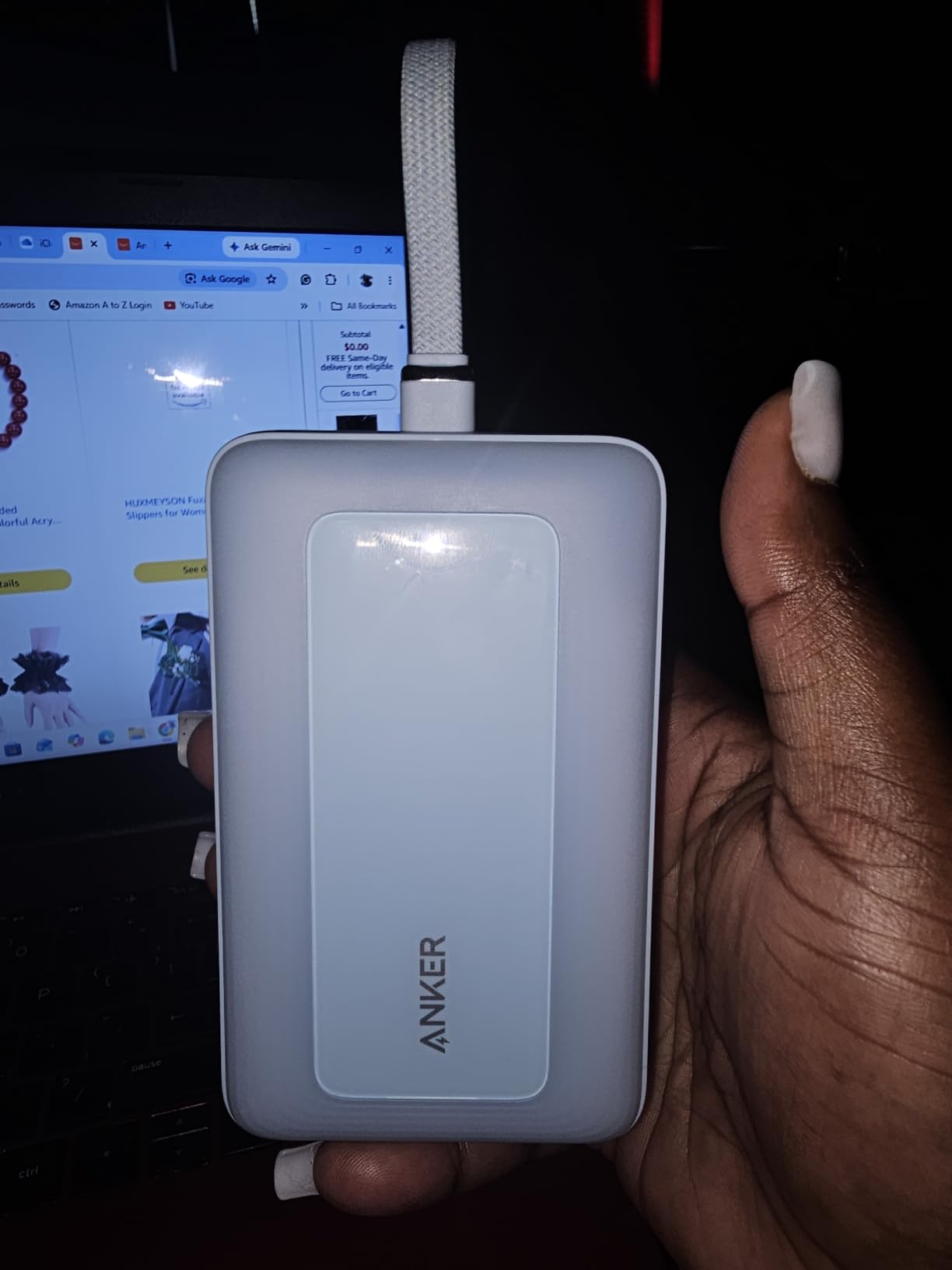
The built-in USB-C cable is rated for more than 10000 bends, which is the number to look for on any built-in-cable bank. A fixed lead that frays inside the housing is unrepairable, so the bend rating is the difference between a feature and a future repair bill.
Capacity is stated as four iPhone 15 charges or 3.79 Samsung S24 charges, and the pack holds rated capacity in use. That puts it in the same delivery class as the INIU at the top of this list, with more headroom than the 20W packs below it.
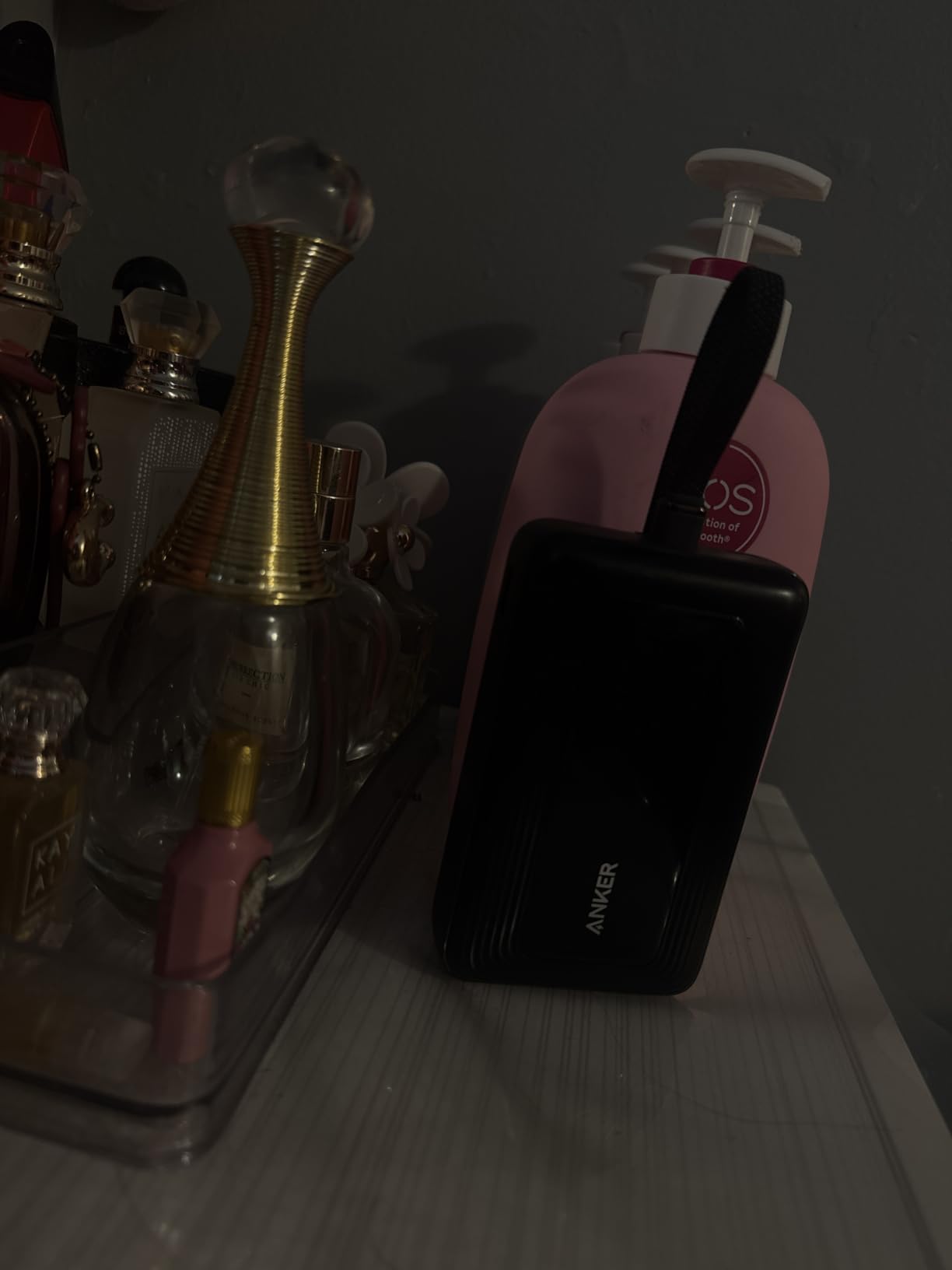
When 30W is enough and when it is not
30W comfortably fast-charges current phones and tablets. It sits below the 45W to 65W needed to meaningfully charge a laptop, so if your bag includes a MacBook or a Windows machine, this is the wrong pick for that device.
Users who switch from no-name brands tend to notice the difference in steady output and phone temperature rather than in raw speed. That steadiness is what the thermal monitoring buys.
The weight and cable trade-offs
At 365 g it is heavier than most 20000mAh competitors, so it needs a bag pocket rather than a jacket. Only one built-in USB-C lead is fitted, so extra USB-C devices still need their own cable.
Users on r/anker regularly ask which 20000mAh model to buy, and the answers cluster on exactly two variables: whether you need laptop power and how much you mind the weight. This is the middle answer.
4. Anker 20000mAh 87W Travel Essential – The Only Strong Laptop Performer Here
Anker Power Bank, 20,000mAh Travel Essential, Built-in USB-C Cable(Black)
20000mAh lithium polymer
15.2 oz
87W total and 65W single port
6.2 x 2.9 x 1.0 inch
Pros
- 87W total output across three devices
- Refills in 1.5 hours on a 65W charger
- Three devices at once
- Built-in cable rated 10000+ bends
Cons
- Heaviest in the roundup at 15.2 oz
- Needs a 60W-plus charger for full refill speed
- Not pocketable
- Charging cube sold separately
This is the bank for anyone who travels with a laptop and wants to stay under the 100Wh carry-on limit. It distributes 87W across three devices and can push up to 65W to a single one, which is the threshold that matters for a 14-inch MacBook Pro, hitting 50 percent in under 40 minutes.
For a phone it manages an iPhone 15 Pro to 58 percent in half an hour while still feeding a tablet. Owners who carry this describe swapping two of them so one charges while the other is in use, which is the pattern frequent-flyer users settle into.
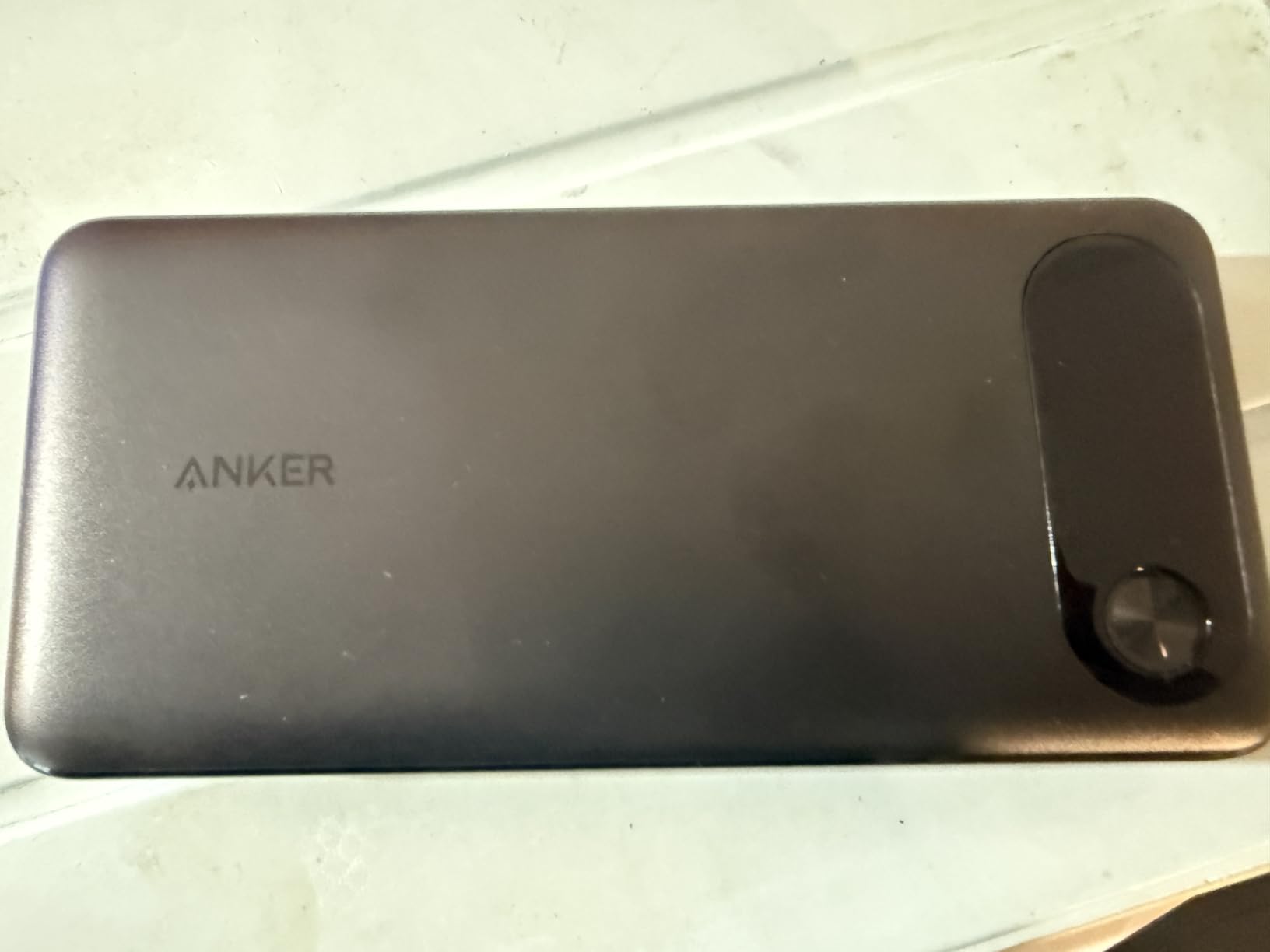
Self-recharge takes 1.5 hours on a 65W charger, the fastest refill of any 20000mAh bank in this roundup. That speed only appears with a high-wattage USB-C PD source, and the charging cube is not included, so budget for a charger if your current one is under 60W.
Long-term owners report more than a year of daily use without issue, and the built-in cable carries the same 10000-plus bend rating as Anker’s Zolo. The 18-month warranty is the shortest of the three, which is a real gap for a bank this size.
Laptop power thresholds you actually need
A phone tops up comfortably from 20W. A tablet wants 30W to 45W. A laptop needs 45W to 65W to charge rather than merely survive. This is the only pick here that clears the laptop bar while staying at 20000mAh and inside the cabin limit.
Below 60W of total output, charging a laptop works but crawls, and the pack empties fast. Forum regulars describe the Anker 87W as the model they stop at precisely because most travellers are not carrying a 16-inch machine.
Where the weight bites
At 15.2 oz this is the heaviest option in the roundup, and the 6.2 x 2.9 x 1.0 inch body is not pocketable despite the built-in cable. For one-bag carry-on travel that is acceptable; for a minimal daypack it is not.
That single trade, weight for laptop capability, is why this sits at number four rather than first. If you do not need laptop power, the smaller banks above do the same phone job for less mass.
5. Belkin 20000mAh 15W Three-Port – Plain, Labelled and Predictable
Belkin 20000mAh 15W 3 Port Power Bank, USB A to USB C Cable Included
20000mAh lithium ion,74Wh stated
426 g
1 USB-C plus 2 USB-A
6.3 x 3.2 x 0.9 inch
Pros
- 74Wh printed on the spec sheet
- Established brand with 2-year warranty
- Pre-charged and ready on arrival
- Charges three devices at once
Cons
- Bulky at 426 g
- Four LED bars with no percentage
- Self-recharge takes 10-11 hours
- 15W shared output slows with more devices
Belkin is the most transparent pick in this group, and transparency is worth something at an airport. The capacity is stated as 20000mAh, which is 74Wh, right on the spec sheet rather than buried, so a gate agent sees a compliant figure immediately.
It offers three ports, one USB-C and two USB-A, charging a phone plus a watch plus earbuds at once. Belkin ships it pre-charged, which means it works the moment you land instead of needing a wall socket first, and a 6-inch USB-A to USB-C cable is included.
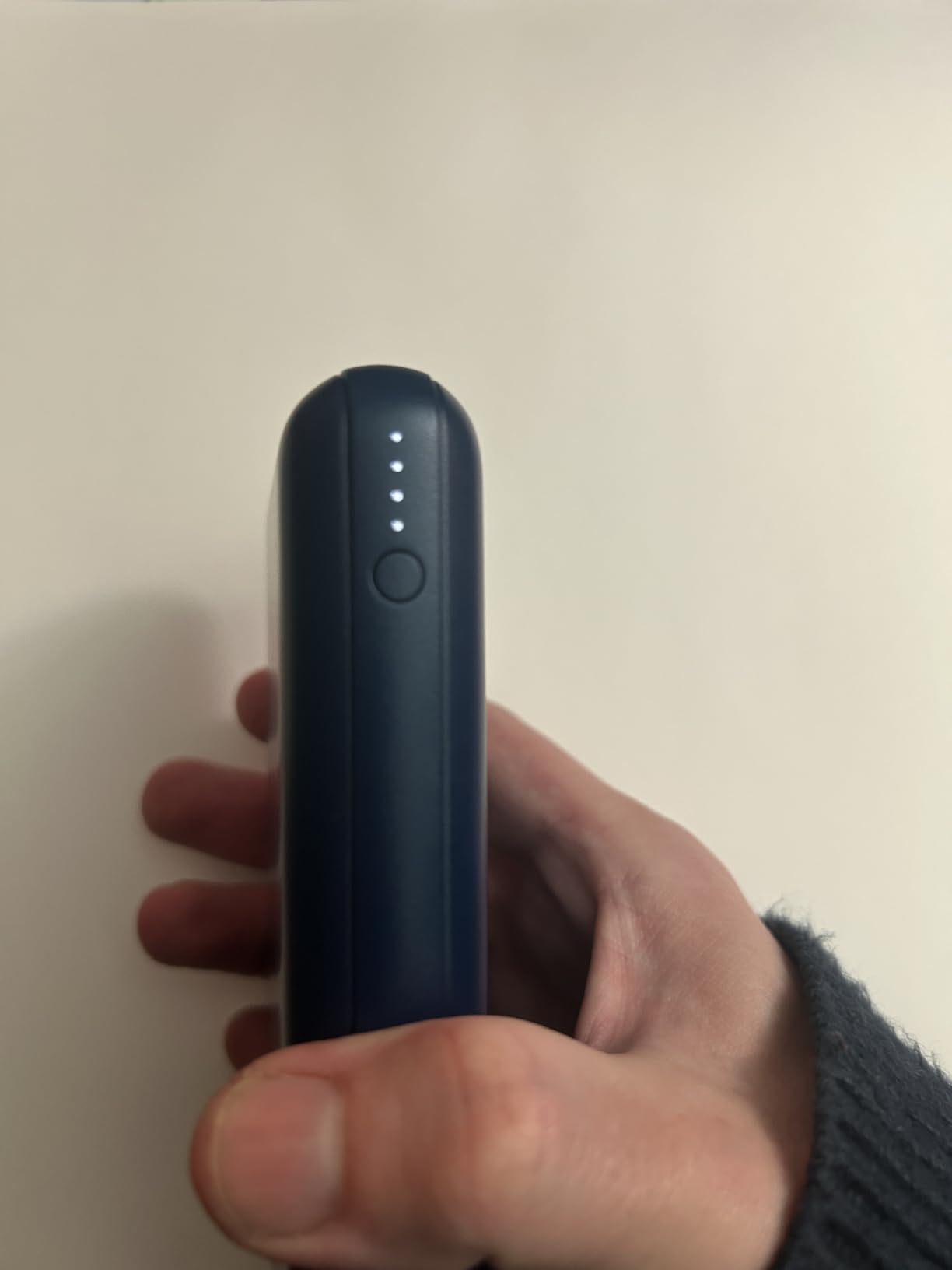
Buyers who moved over from no-name brands specifically praise the clean, efficient power transfer and the absence of phone heat, which is a recognised Belkin trait. Travellers report two to three full phone charges plus partial top-ups for accessories.
Overcharge protection is built in, and the two-year limited warranty sits in the middle of this roundup. Nothing about this bank is new technology, which is exactly why it behaves predictably.
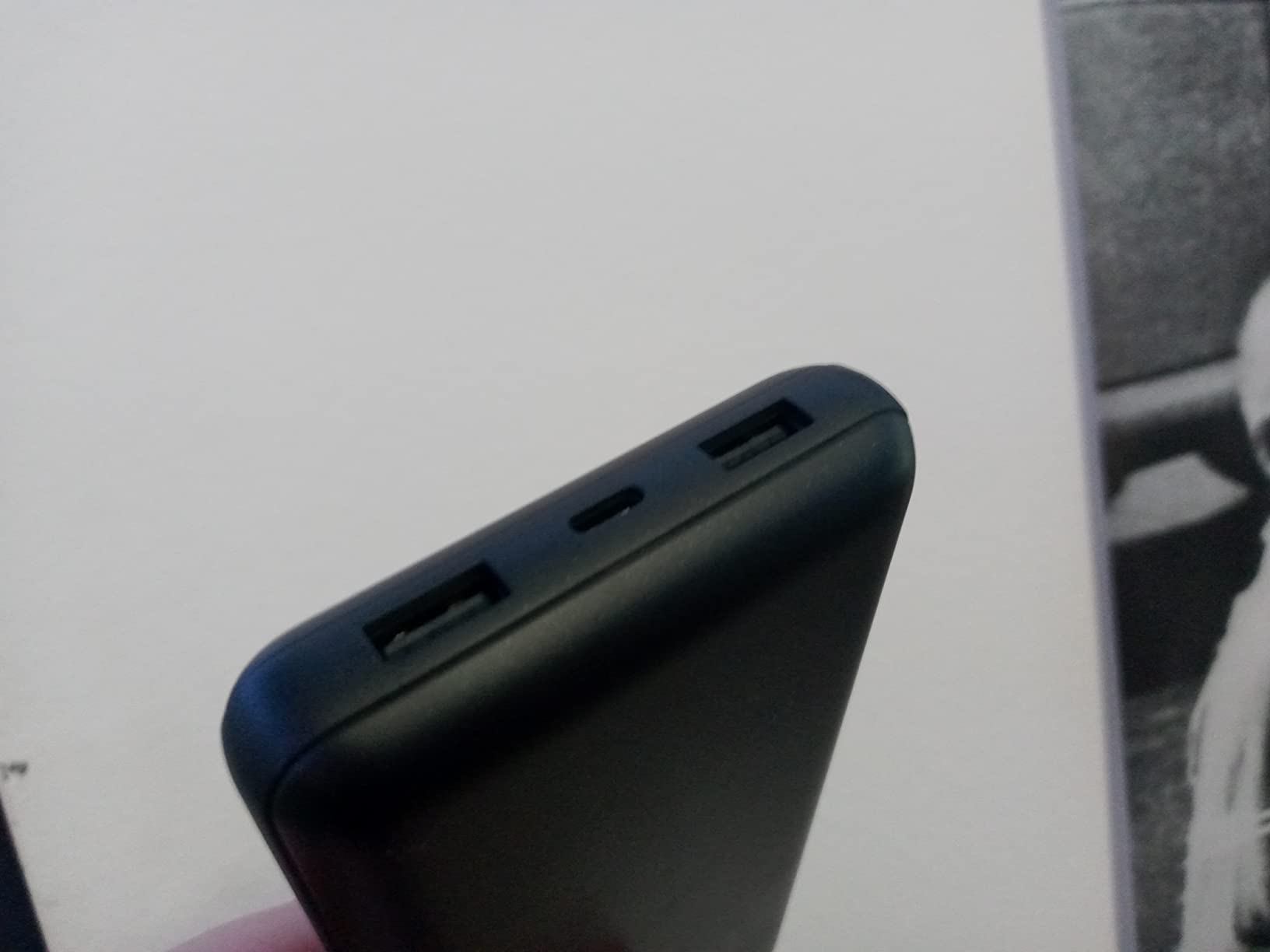
Why the printed watt-hour figure matters
This is one of only three banks here that states 74Wh outright, alongside the Charmast and Orfeika at 77Wh. When the watt-hour number is printed, the gate conversation takes seconds instead of turning into a calculation on your phone.
If you fly often and want the least friction possible, a labelled watt-hour rating is worth more than a faster charge protocol.
The bulk and the slow refill
At 426 g and 6.3 x 3.2 x 0.9 inches, this is one of the heaviest and largest in the roundup, and it is not a pocket product. Self-recharge takes 10 to 11 hours from empty on a 9W adapter, the slowest input here.
The 15W USB-C output is shared across devices, so adding a second device slows everything. The USB-A ports also need a button press to wake from sleep, and a few owners report units that stopped holding charge after a few months.
6. INIU Laptop Power Bank 20000mAh 65W – Wallet-Sized With Laptop Power
INIU Laptop Power Bank, Smallest 20000mAh 65W Fast Charging Battery Pack
20000mAh lithium polymer
320 g
65W across three ports
4.3 x 2.8 x 1.1 inch
Pros
- 65W output fast-charges a MacBook
- Smaller than a wallet despite 20000mAh
- Detachable cable can be replaced
- 3-year replacement warranty
Cons
- Laptop use drains it to about one charge
- 13.4 oz is heavy for the class
- Phone charging will not reach 65W
- 4.3 average rating
This is the answer to the most common objection about laptop-capable banks, which is size. High-density cell stacking cuts the volume by 38 percent and the body measures 4.3 x 2.8 x 1.1 inches at 320 g, smaller than a standard wallet’s worth of footprint.
Output is 65W total across two USB-C ports and one USB-A, reviving MacBook, HP, Lenovo and Dell laptops to 50 percent or more in about 30 minutes. It also powers a Steam Deck without the slow-charger warning, which matters if you travel with one.
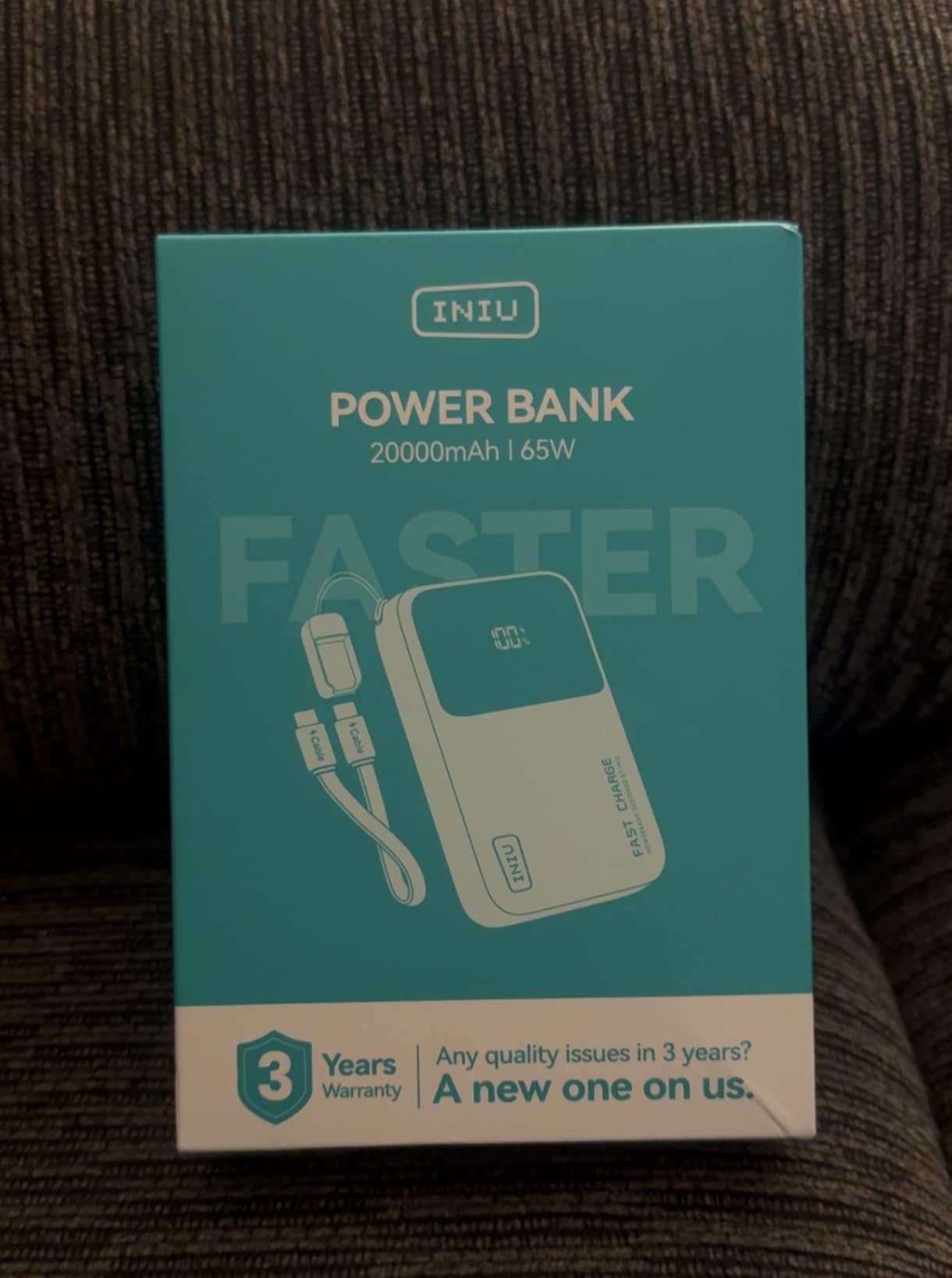
Three ports let a laptop, phone and earbuds or watch draw at once, which is the multi-device scenario that drains most 20000mAh banks by lunchtime. The detachable 4.7-inch braided nylon cable snaps off, so if it wears you replace the cable rather than the bank.
TSA approval and multi-layer overheat protection are stated, and the three-year replacement warranty is among the strongest here. Users who travel with a laptop consistently rate this as one of the more compact ways to carry real charging power.
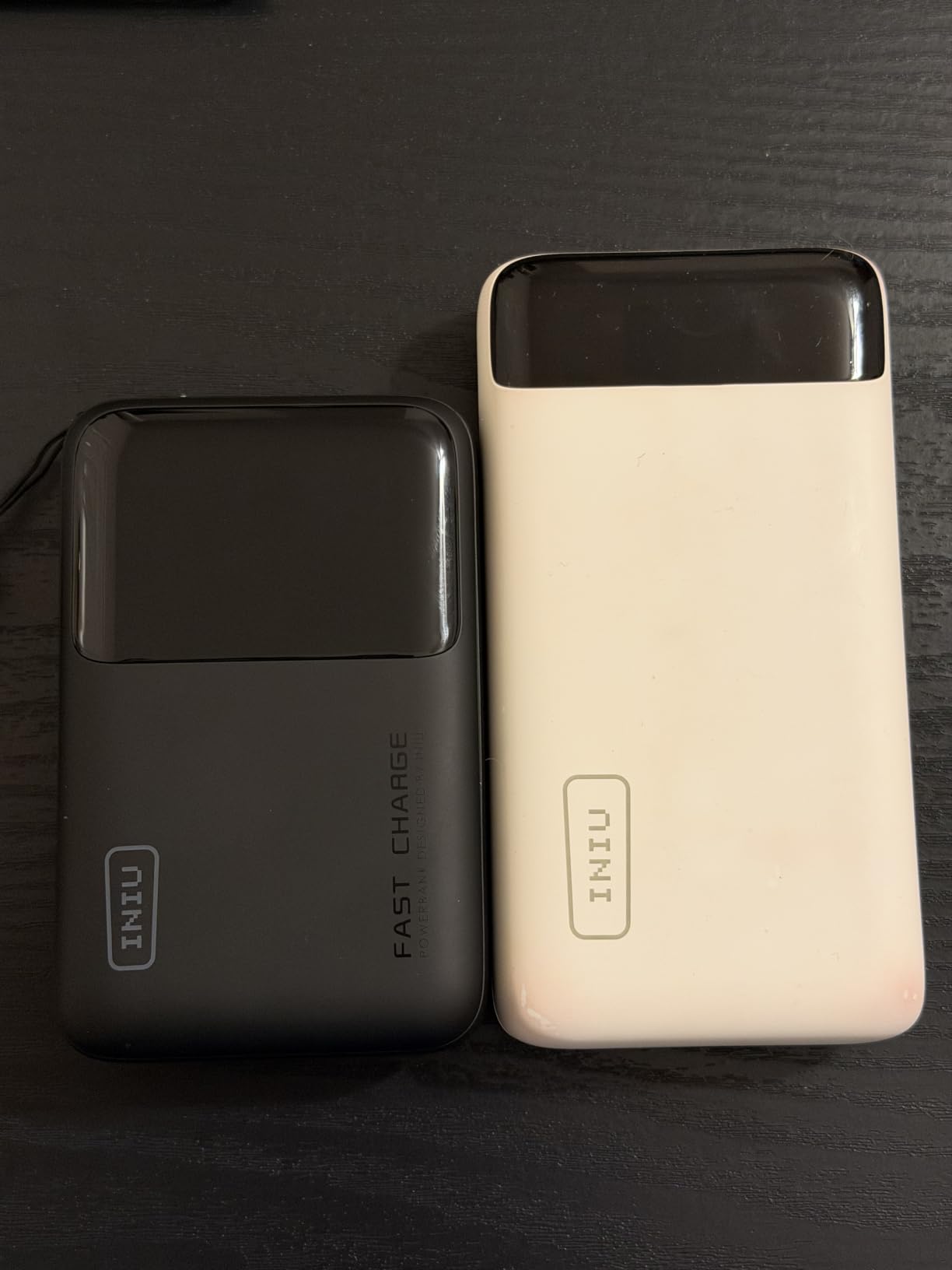
Laptop power versus phone power
The 65W headline is laptop-oriented. A phone will never draw 65W from it, so if you are a phone-only traveller you are paying in weight for capability you will not use, and the INIU at number one is the better fit.
For a laptop traveller it inverts: 65W in a 4.3-inch body beats 87W in a 6.2-inch body when pack volume is the constraint.
Where it runs out
A working laptop drains a 20000mAh pack quickly, so plan on roughly one laptop charge rather than two. At 13.4 oz it is one of the heavier units in the capacity class despite the small footprint.
The 4.3 average rating reflects more mixed feedback than INIU’s phone-only models, with owners citing weight and fast drain as the two recurring points.
7. NOBIS 20000mAh 45W – Numeric Display and Two-Hour Refill
NOBIS Portable Charger 45W 20000mAh Power Bank Fast Charging
20000mAh lithium polymer
376.2 g
45W two-way, PD 3.0 and QC 4.0
5.4 x 2.75 x 1.04 inch
Pros
- Full recharge in about 2 hours
- Exact 0-100 percent digital display
- Four ports charge four devices
- 45W handles tablets and lower-power laptops
Cons
- One of the heavier units at 376.2 g
- 45W is short for full-size ThinkPad-class laptops
- Cannot run a phone and demanding laptop together
- Some buyers get 2.5 phone charges not 3-4
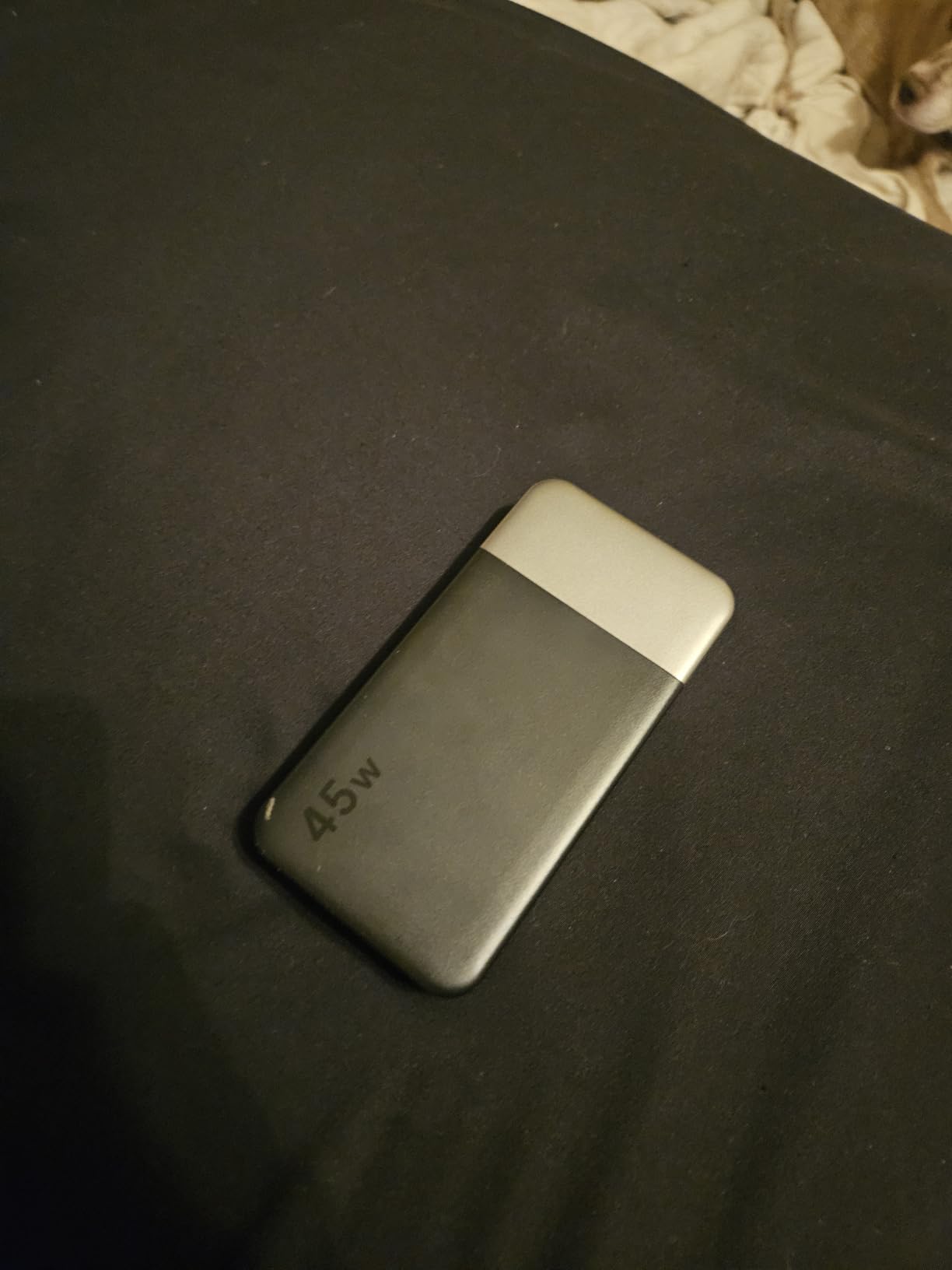
The 45W two-way input is the standout here. Most 20000mAh banks in this class refill overnight, and this one is full again in about two hours, which means you can top it up during a layover instead of planning a night around it.
The high-precision LED display reads 0 to 100 percent exactly rather than showing four vague bars. Owners who need to know how much juice remains before committing to a long flight single that display out as the reason they bought it.
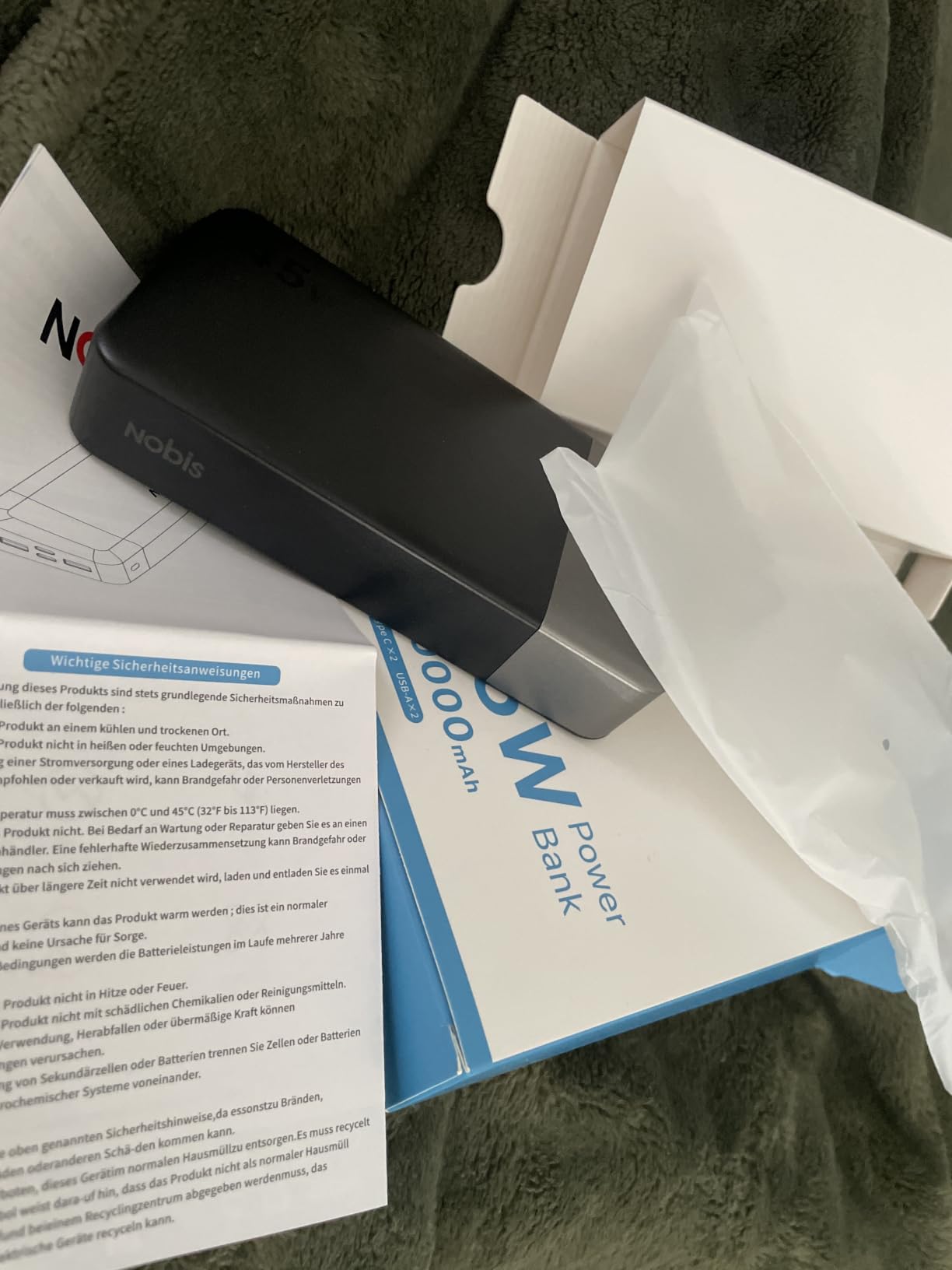
Four ports, two USB-A and two USB-C that both input and output, let four devices charge at once. PD 3.0 and QC 4.0 protocols cover current phones and tablets, and quoted results are a MacBook Pro 14-inch to 47 percent and an iPhone 15 Pro to 60 percent in half an hour.
The three-year manufacturer warranty matches the strongest in this roundup, and airline-approved 20000mAh capacity is stated. The 5.4 x 2.75 x 1.04 inch footprint is narrower than most, which helps in a side pocket.
Why the numeric display changes travel behaviour
Four LED bars leave you guessing whether you have 20 percent or 60 percent left, and guessing badly is how people end up stranded. A percentage readout lets you decide when to spend the bank and when to save it for the connection home.
It also removes one of the recurring complaints on forum threads, where users describe working out remaining charge by trial and error on a phone with no battery left.
The weight and laptop ceiling
At 376.2 g it is the heaviest unit in the roundup, which is noticeable in a daypack. Forty-five watts handles tablets and lower-power laptops but is insufficient for a full-size ThinkPad-class machine under load.
It also cannot charge a phone and a demanding laptop simultaneously. Some buyers report about 2.5 full phone charges rather than the three to four they expected, so budget accordingly.
8. RONEGN 20000mAh Four-Cable Pack – A Very Light Body With Four Built-In Cables
Portable Charger Power Bank with Built in Cable 20000mAh Fast Charging
20000mAh lithium polymer
8.48 oz
22.5W USB-C and 20W iOS
5.5 x 3.5 x 1 inch
Pros
- Very light body at 8.48 oz
- Four built-in cable types cover most devices
- LED display accurate to 1 percent
- 5 outputs and 3 inputs
Cons
- Only a 1-year warranty
- 22.5W and 20W outputs are modest
- Inconsistent dimension listings
- Smaller review base
At 8.48 oz this is one of the lightest 20000mAh bodies in the roundup, and weight is the constraint that decides purchases for anyone packing one bag. For a traveller counting every gram, that is worth more than a higher wattage number.
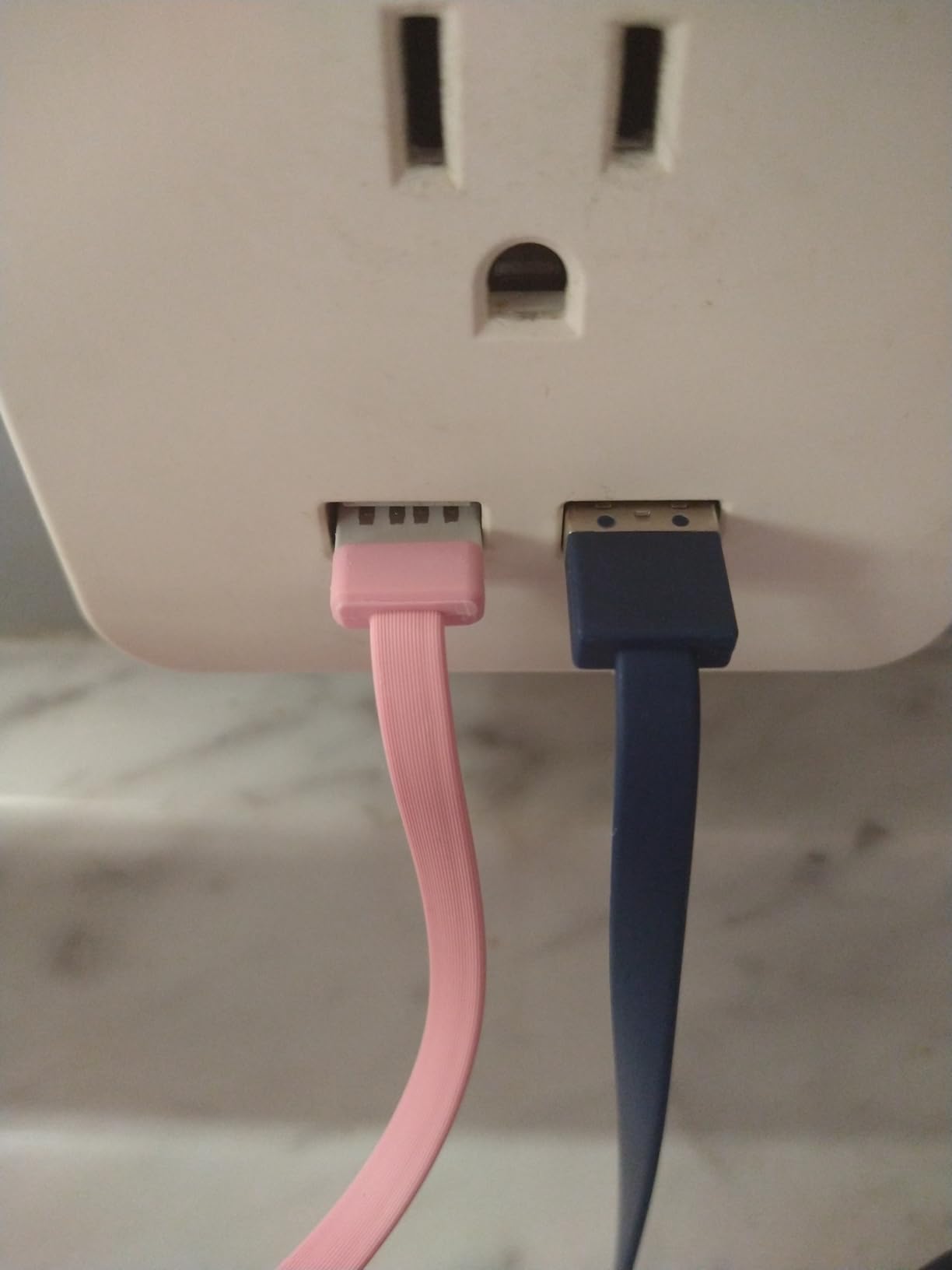
Four built-in cables cover iOS and Lightning, USB-C, USB-A and Micro-USB, so the pack replaces the small bag of adapters most travellers carry. Five output ports and three input options mean almost any charger can refill it.
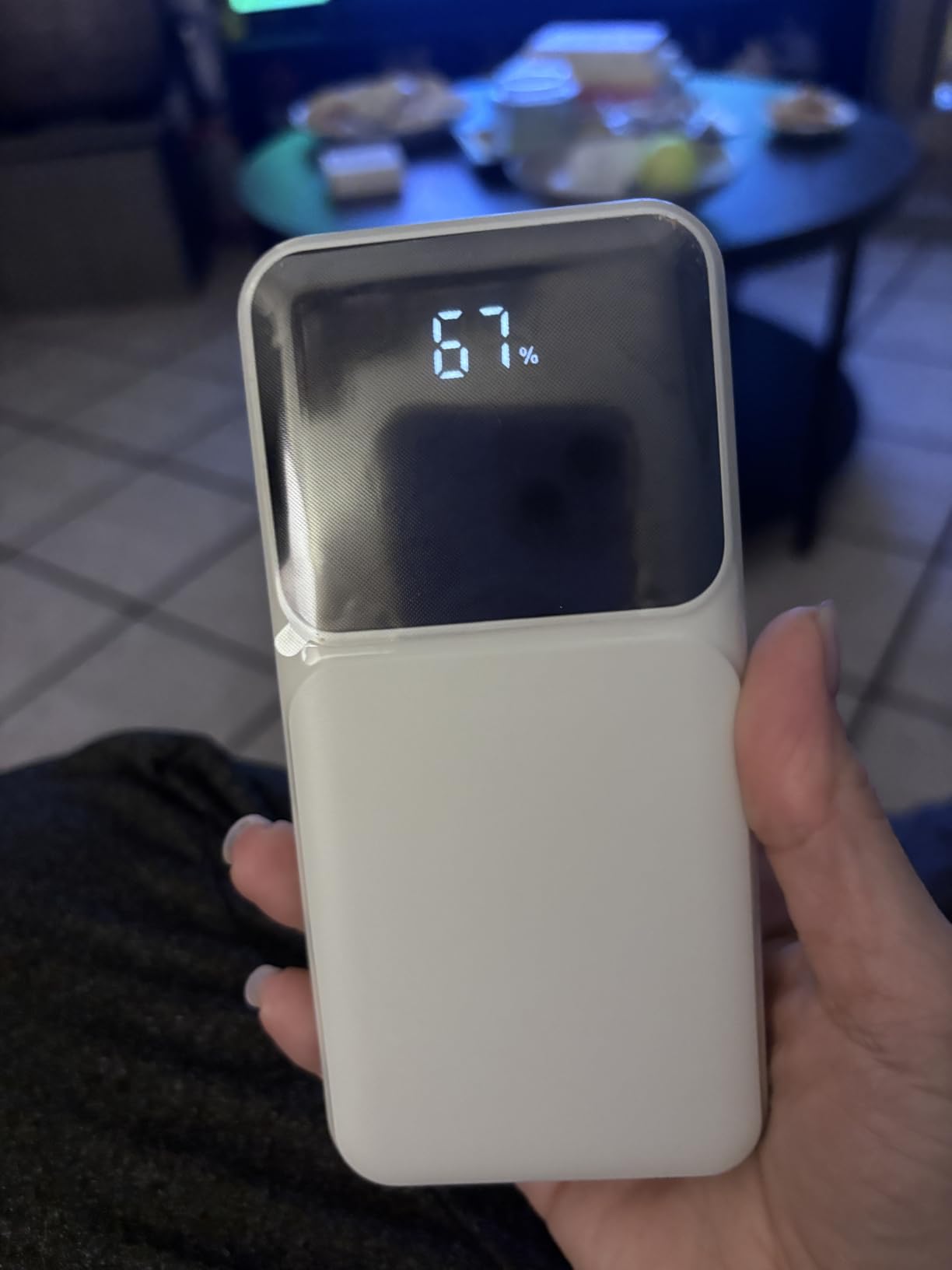
The LED display reads remaining charge to 1 percent accuracy, which is more precise than most displays at this level. Built-in USB-C output runs at 22.5W and the iOS lead at 20W under QC4.0, enough for a genuine fast top-up on a phone.
Overcharge and short-circuit protection are stated. The catch is the one-year manufacturer warranty, the shortest of any bank here, and a smaller review base than the established brands.
When the four-cable design earns its place
Built-in cables remove the failure mode reviewers complain about most, a frayed lead that cannot be replaced. It also removes packing weight, since four spare cables of your own add more than this pack does.
The downside is that the fixed leads cap your speed. If your only USB-C device is a laptop, 22.5W will not cut it.
What the lower wattage costs you
Twenty-two and a half watts is fine for a phone and acceptable for a tablet, but it sits well below the 45W-plus competitors in this list. A traveller carrying one device that draws hard will feel the difference.
Dimension listings are also inconsistent across sources for this model, so the real footprint is harder to gauge than the weight figure suggests. With fewer reviews than the big-name banks, there is less long-term durability data to lean on.
9. Charmast 20000mAh Six-Output 77Wh – Built for Group Trips
charmast Portable Charger Built-in Cables, 20000mAh Power Bank 6-Output
20000mAh lithium polymer,77Wh stated
340 g
6 outputs,22.5W
6.3 x 2.85 x 0.75 inch
Pros
- 77Wh printed and clearly under 100Wh
- Exact 0-100 percent display
- Six outputs charge a whole group
- Stores extremely well
- Travel pouch and 36-month support
Cons
- Heavier than the slim profile suggests
- Takes about 6 hours to self-recharge
- Runs warm under load
- 22.5W is below the 45W class
Six output ports is the reason to pick this one for a family or group trip, letting a phone, tablet, earbuds and smartwatch all charge from one body instead of three smaller packs. Six devices at once means one pack replaces a pile.
The 77Wh rating is stated on the spec sheet, comfortably under the 100Wh cabin limit, and the 0.75-inch profile is thin enough for a back pocket. Three built-in cables cover USB-C, Micro-USB and a dedicated iPhone lead.
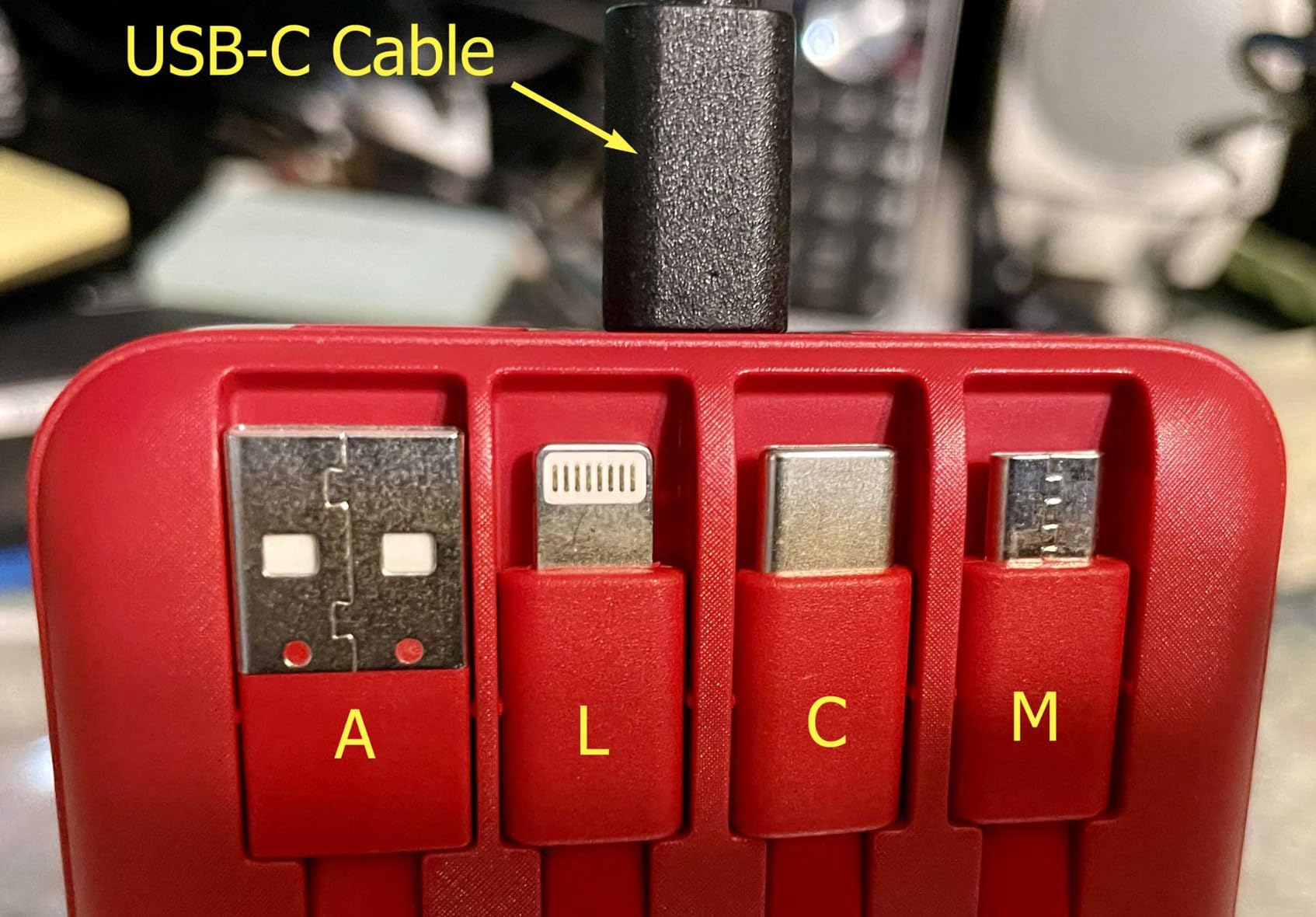
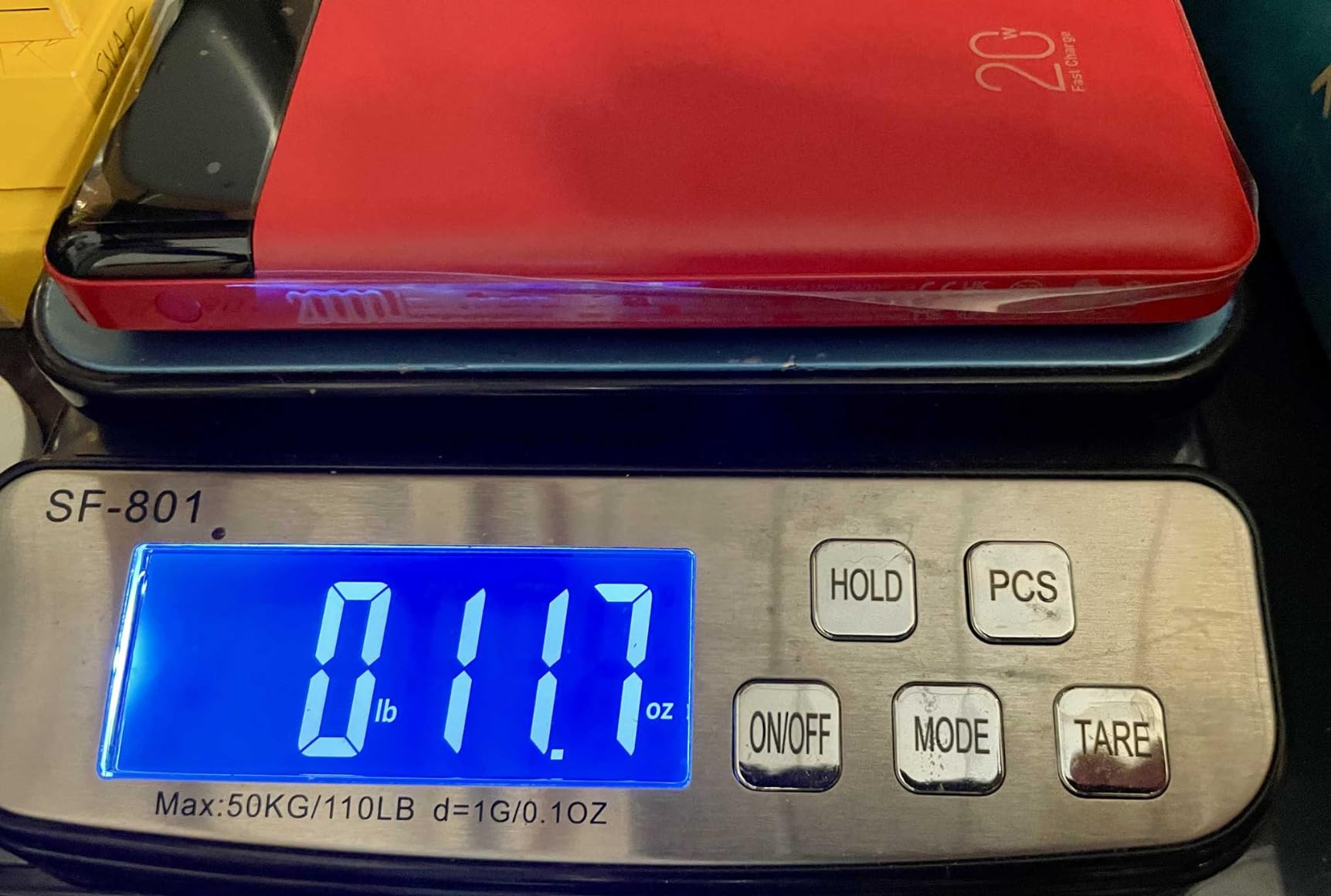
The digital display reads exact remaining percentage from 0 to 100, and storage behaviour is excellent: one owner reported only a 1 percent drop over two months. That answers the self-discharge worry that most people raise about banks sitting in a bag between trips.
Dual voltage 100V to 240V built-in cables work worldwide without a converter, which is genuinely useful on multi-country routes. A travel pouch and 36-month support are included, giving the joint-longest warranty here.
Group travel and the one-bank rule
When several people are travelling, one six-output bank is easier to manage than two personal ones. It also means fewer things to charge overnight in a hotel room with limited sockets.
The exact percentage readout and the 77Wh label together make this the least gate-friction option for group travel, since everyone can check the state before a boarding queue.
Where it holds back
It is heavier than its slim profile suggests, and self-recharge takes about six hours. It can also run warm while charging a device, so keep it out of a tight pocket during a charge.
At 22.5W the output sits below the 45W-plus class, so it is a multi-device phone and tablet solution rather than a laptop solution.
10. Orfeika 20000mAh 77Wh Four-Cable Pack – Six Devices, One Body
Orfeika 20000mAh Power Bank, Portable Charger with 4 Built-in Cables
20000mAh lithium polymer,77Wh stated
11.84 oz
4 built-in cables,20W PD
6.3 x 2.85 x 0.74 inch
Pros
- UL 2056 and UN38.3 certified
- Four built-in cables cover most devices
- Six outputs and four inputs
- Low power mode for earbuds and watches
- Travel pouch included
Cons
- Heavier than a phone-sized bank
- 20W output is entry-level
- Slower to refill than 45W two-way models
- One report of a heat-triggered charging pause
Orfeika combines the 77Wh label with the strongest safety certification in this group. UL 2056 and UN38.3 compliance plus six-layer protection is what to look for when a battery will spend weeks in a suitcase, and reviewers travelling abroad cite airline compliance as a reason to trust it.
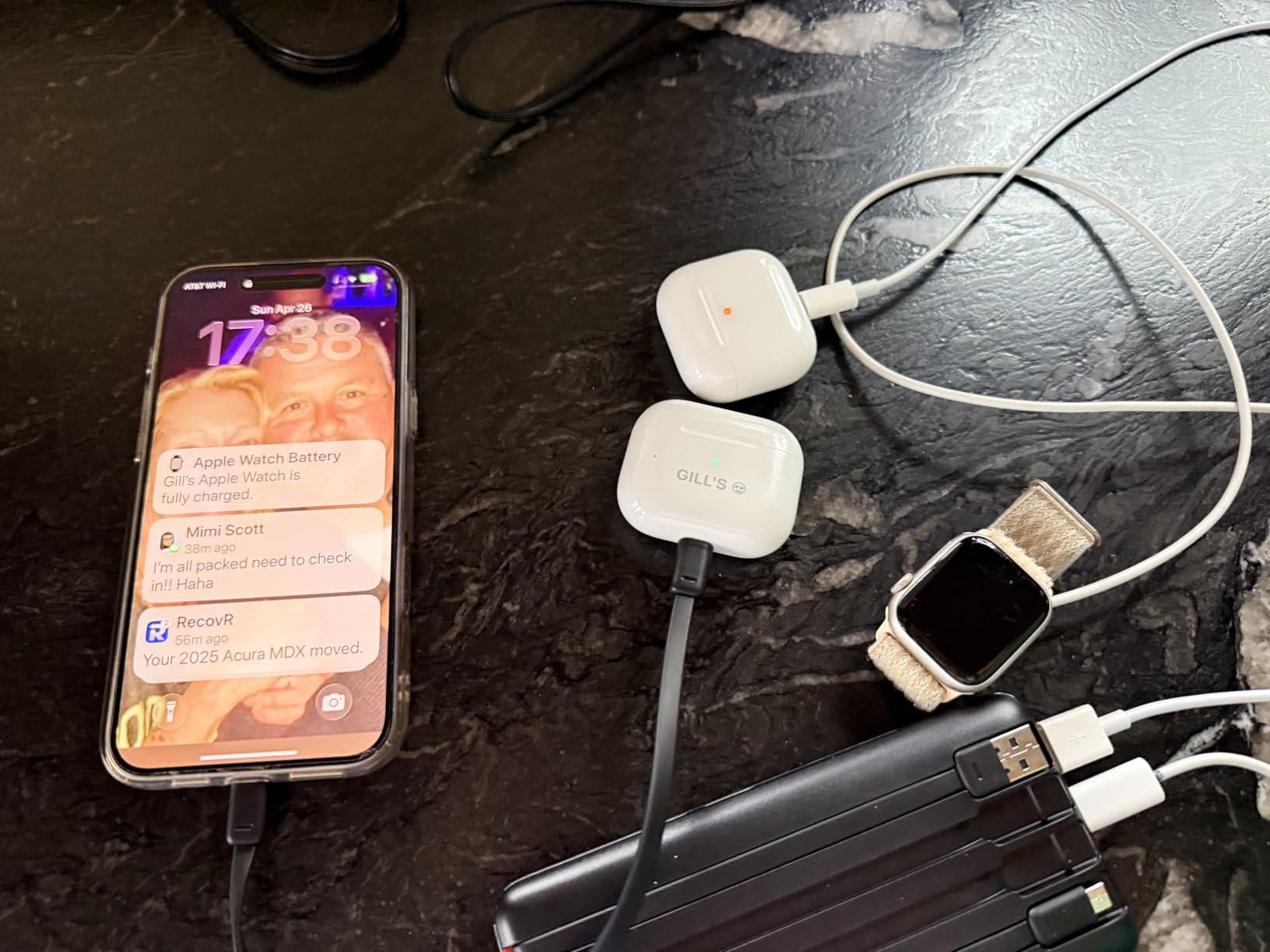
Four built-in cables cover iPhone, USB-C, USB-A and Micro, with six outputs and four inputs total so any charger can refill it. The low power mode is designed for small-draw devices like earbuds and smartwatches, which otherwise fail to trigger the pack.
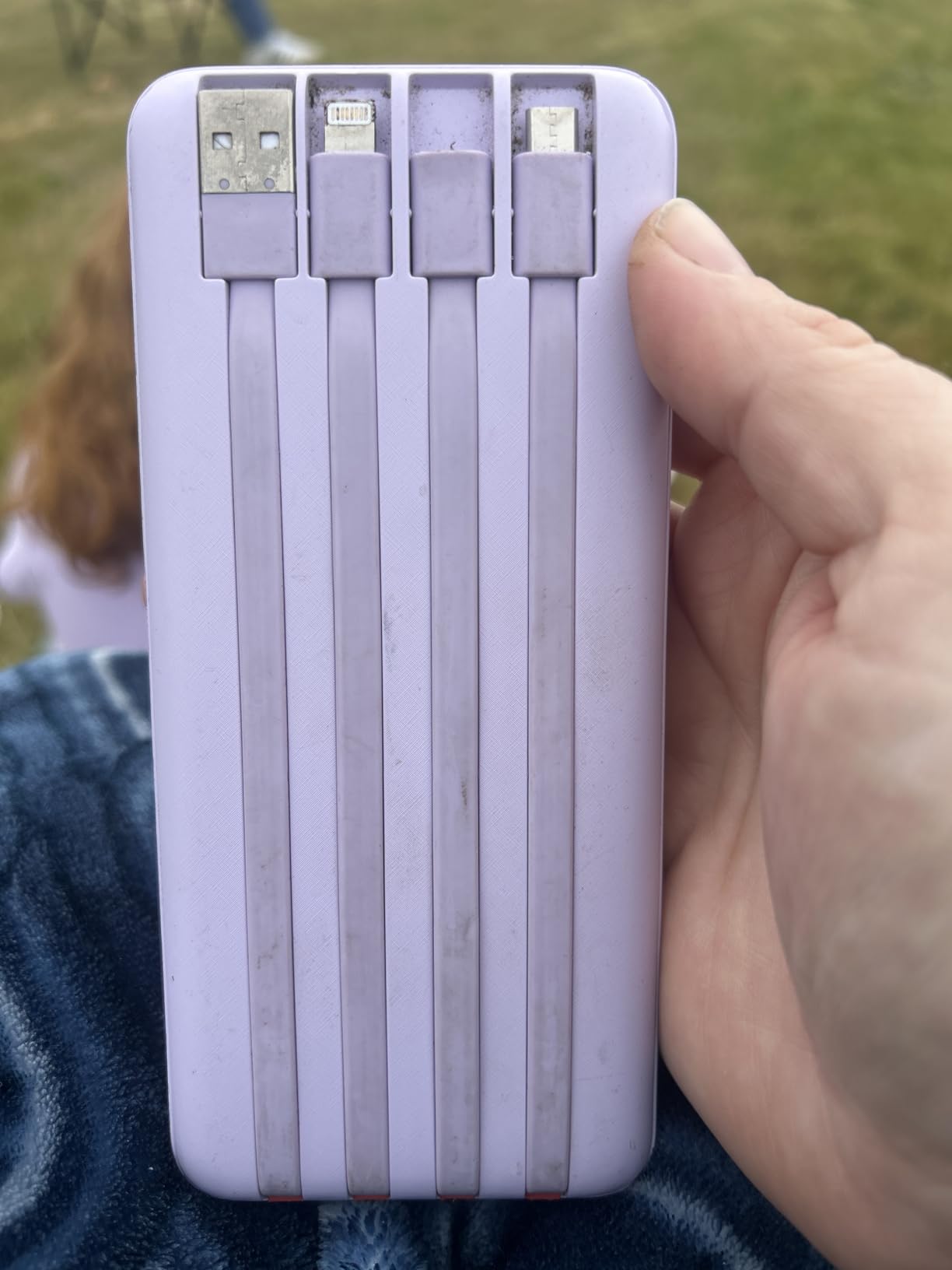
Stated results are an iPhone 16 to three full charges, a Galaxy S24 to 2.9 and a Pixel 9 to 2.3, with 20W PD charging taking an iPhone 16 to 50 percent in about 45 minutes. Self-recharge runs at up to 18W.
The scratch-resistant, fire-retardant textured shell has a secure grip, and owners report it working reliably over months. Two years of cover with lifetime technical support is listed.
Certification versus wattage
This is the pick if safety certification matters more to you than charging speed. UL 2056 and UN38.3 are the standards that travel and logistics recognise, and they are stated plainly rather than buried.
The 20W output is entry-level next to the 45W and 65W options, so pair it with a phone-first travel kit rather than expecting laptop charging.
Where to be careful
At 11.84 oz it is heavier than a phone-sized bank of the same class, and it refills more slowly than 45W two-way models. One owner reported it briefly stopping mid-charge until cooled and reconnected, which points to thermal protection behaving correctly but interrupting your charge.
If you are packing for a hot destination, take it out of direct sun and give it airflow during a long charge.
11. GENSROCK 20000mAh 35W Two-Pack – Cheap, but Read the Listing Carefully
GENSROCK Portable Charger Power Bank 20000mAh,Travel Power Bank
20000mAh class lithium ion
0.91 lb
35W PD 3.0 and QC 4.0
7.24 x 4.25 x 1.49 inch
Pros
- Two units in one pack
- Digital capacity display
- Dual USB-C charge two USB-C devices
- UL
- CE
- UN38.3 and RoHS certified
Cons
- Listing states 20000mAh in the title but 10000mAh in the spec block
- 35W output is inconsistent across the listing
- Audible cooling fan under heavy load
- Premature shutdown reported after months
This is the one pick in the roundup we handle carefully, because the listing contradicts itself. The product name states 20000mAh while the specification block reports 10000mAh for the two-pack variant, and that is exactly the kind of ambiguity travellers get burned by.
Capacity labelling that does not match the internal cell count is the top complaint across this whole category, so if you buy this, confirm which variant you are actually getting before you rely on it for a multi-day trip. The certification list is genuinely strong by comparison, with FCC, CE, UN38.3, RoHS and UL all stated.
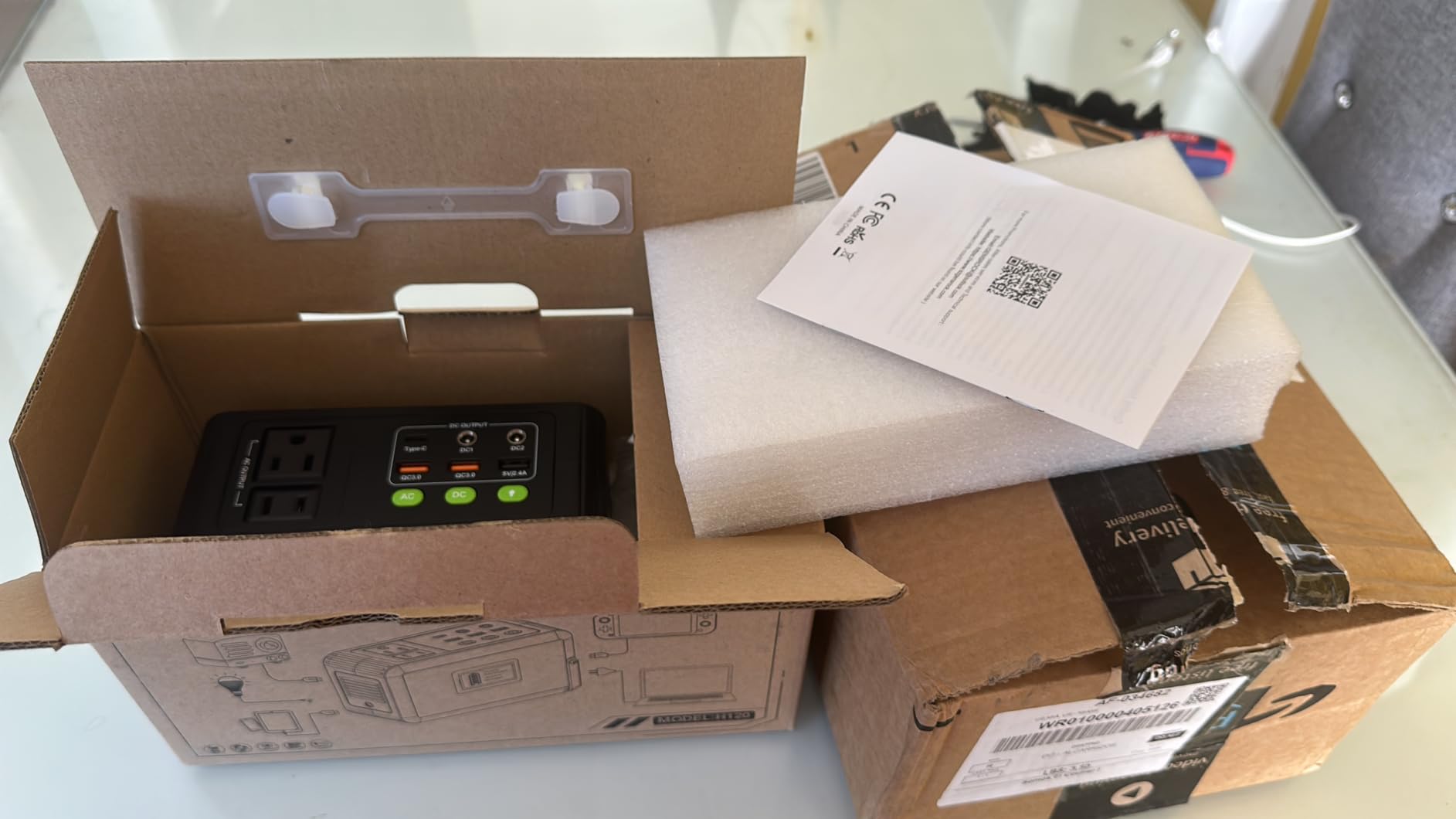
Output is 35W with PD 3.0 and QC 4.0, taking an iPhone from zero to 60 percent in about half an hour, across two USB-C ports and one 5V/3A USB-A. A digital display shows remaining capacity, and the two-unit format suits a road trip with two drivers and two phones.
Buyers like the readable display and the low weight for the capacity. The recurring complaints are an audible cooling fan during heavier draws, and some owners reporting the pack reading a low percentage and shutting off prematurely after months of heavy use.
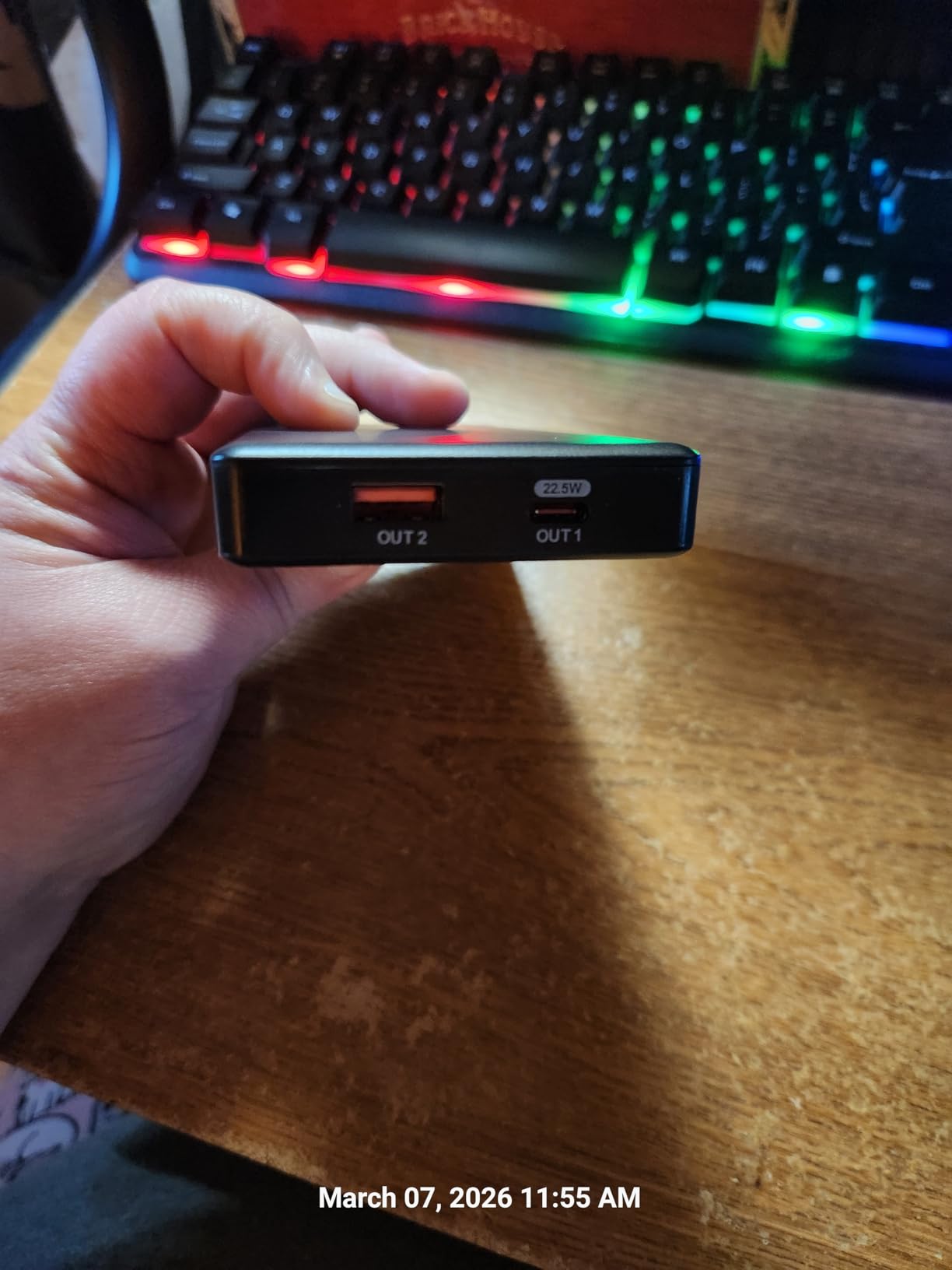
When a two-pack is still the right call
Two units let you charge one while using the other, and for a long road trip with several passengers that is worth more than any single-port speed. The 0.91 lb figure per unit stays within a reasonable pack budget.
The 7.24 x 4.25 x 1.49 inch body is larger than most of the slim options here, so measure your bag before committing.
Why we rank it low despite the rating
Marketing elsewhere on the same listing claims 22.5W while the spec block says 35W, and the capacity fields disagree with each other. Inconsistent numbers on the listing are the first warning sign that other figures may be loose too.
Short-circuit behaviour after extended use and a 12-month warranty reinforce the caution. It is the lowest-rated pick here at 4.2, and for a battery you depend on in transit we would rather recommend a bank whose numbers agree with themselves.
12. Neoseek 20000mAh 45W Ultra-Slim – The Thinnest at 0.71 Inch
Neoseek 0.7” Ultra-Slim 20000mAh Power Bank 45W Fast Charging Battery Pack
20000mAh lithium polymer
10.5 oz
45W out, 40W in
5.79 x 2.74 x 0.71 inch
Pros
- Thinnest 20000mAh body at 0.71 inch
- Aerospace aluminum unibody with no sharp edges
- 45W output among the fastest here
- Built-in braided cable plus a USB-C port
Cons
- Only 108 reviews
- 4-5 hour overnight self-recharge
- 12-month warranty
- Aluminum shell conducts heat under load
At 0.71 inches this is the thinnest full-capacity bank in the roundup, and thickness is what stops a 20000mAh pack sliding into a passport bag or a slim laptop sleeve. The 5.79 x 2.74 inch footprint is card-sized in two dimensions.
Output is 45W with 40W input, taking an iPhone 16 Pro to 50 percent in about 27 minutes, and the quoted result is up to four full iPhone 16 charges. The aerospace aluminum unibody is well built with no sharp edges to catch a lining.
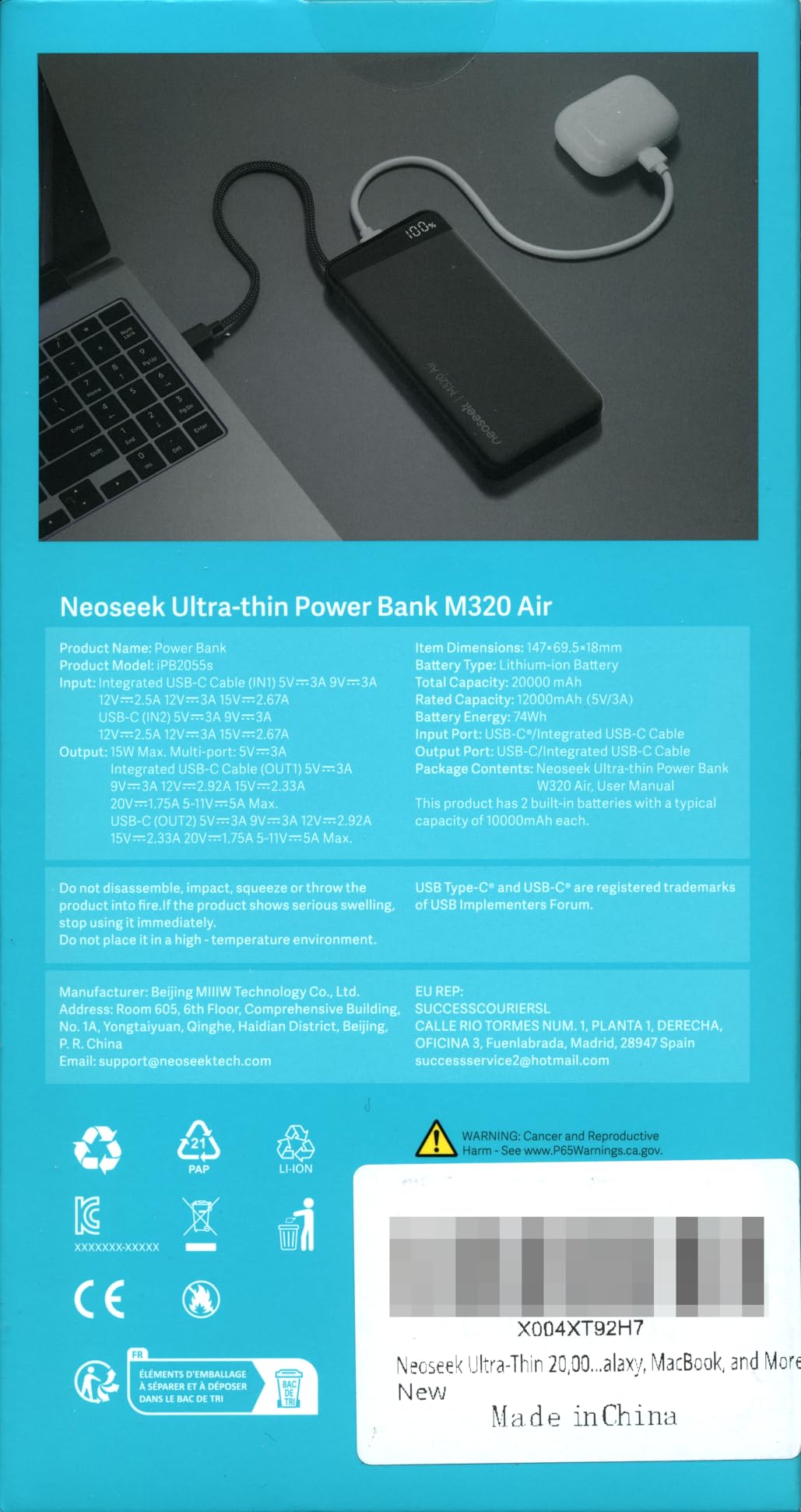
Two devices charge at once through the built-in braided USB-C cable and the separate USB-C port, which is the more common two-device combination in travel than USB-A. Owners report it still working months after a two-unit purchase.
Self-recharge runs 40W input, which sounds quick but still takes roughly four to five hours overnight from empty. The 12-month warranty matches the shortest in this group.
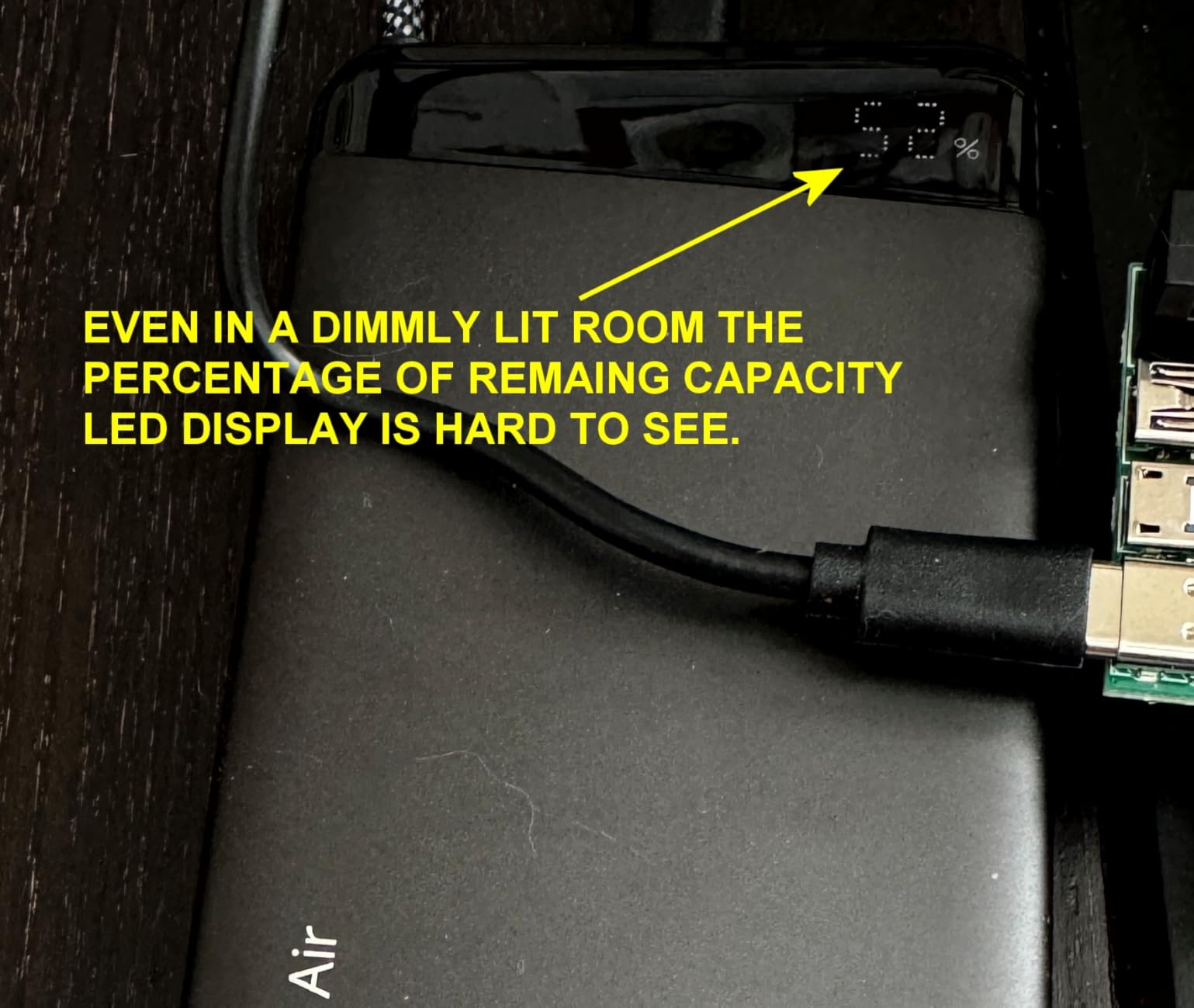
When thinness is the deciding factor
If you pack a document folder, a laptop sleeve or a jacket with a narrow zip pocket, the difference between 0.71 inches and 1.2 inches is the difference between carrying a bank and leaving it behind. For that specific traveller, this is the right pick.
Forty-five watts also makes it one of the faster banks here for a phone, well above the 20W and 22.5W entry-level options.
What the small review base means
There are only 108 reviews, the smallest base in this roundup, so there is limited long-term durability evidence compared with the established brands. A 4.6 average on 108 reviews tells you current owners are happy, not that it will still work in three years.
The aluminum shell also conducts heat, so it warms under sustained load. A 12-month warranty gives less cover than the three-year options at the top of this list, which matters for a pack this thin.
Can You Fly With a 20000mAh Power Bank? Airline and TSA Rules
Yes. A 20000mAh power bank is allowed in carry-on baggage and must not go in checked baggage. Spare lithium batteries, which includes every power bank, are prohibited in the hold because a fire in the cargo hold cannot be reached.
The limit that matters is 100 watt-hours for cabin baggage. Airlines and TSA measure energy in watt-hours, not mAh, and 20000mAh at a 3.7V nominal cell voltage works out to about 74Wh, which is inside the limit. Batteries between 100Wh and 160Wh need airline approval in advance, and anything above 160Wh is barred from passenger aircraft.
Three of the banks in our list print their watt-hour figure directly: the Belkin at 74Wh, and the Charmast and Orfeika at 77Wh. For the rest, the capacity class places them under 100Wh, but you should still know how to produce the number at the gate.
If your bank has no printed watt-hour figure, multiply the mAh rating by the nominal cell voltage in volts and divide by 1000. For 20000mAh at 3.7V that gives 74Wh. Write it on the casing before you leave home so nobody has to interpret the maths in a boarding queue.
Keep the bank in your personal item rather than a checked suitcase, keep the terminals covered, and never use or charge it during the flight. For travellers heading somewhere with more demanding device habits, our guides to portable power banks for international travel and power banks in general cover the wider picture.
mAh vs Watt-Hours: The Number That Decides Your Gate Result
mAh measures charge, watt-hours measure energy, and only the second one is what any rule is written against. A power bank stores energy in lithium-ion cells at a nominal voltage of about 3.7V, and the arithmetic is straightforward: 20000mAh multiplied by 3.7V equals 74Wh.
That 74Wh is stored energy, not delivered energy. Converting the cell’s higher voltage down to the 5V to 20V your phone expects loses roughly 20 percent as heat, so a realistic usable figure is around 59Wh. Independent testing on this class of bank lands between 70 and 85 percent conversion efficiency, which is why charge-count claims vary so much between brands.
Run the numbers on your own trip and the size question answers itself. A modern phone battery is roughly 15Wh, so a 20000mAh bank with realistic losses gives three full phone charges, or two full charges plus earbuds and a watch top-ups across a four-day trip. That is why 20000mAh is the practical sweet spot rather than 10000mAh or 27000mAh.
Single-port output versus total output is the second number worth learning. Total output is what the pack can deliver across all ports at once; single-port output is the ceiling for any one device. A 45W pack might deliver 45W total but only 30W to a single laptop while a phone is also plugged in, which is why laptop charging needs a high single-port figure rather than a high headline number.
Pass-through charging is the third term you will see. It means the bank charges your phone while the bank itself is plugged in, so one cable at a hotel desk does both jobs. It works well, though the bank refills more slowly and it is not something to leave running unattended overnight in a bag.
How to Choose a 20000mAh Power Bank for Travel
Start with the device that draws the most power, not the device you use most. If a laptop is coming, you need 45W to 65W on a single port, and only four picks in this roundup reach that band, with just two of them clearing 60W for a fast charge. If everything you carry is a phone, earbuds and a watch, 20W to 30W is genuinely enough and you can carry less.
Second, check the weight against your bag. Published figures here run from 8.48 oz to 15.2 oz, and a gap of that size decides whether a bank fits in a jacket pocket, a day bag or only a suitcase. For one-bag carry-on travel, anything under 11 oz disappears into a personal item without being noticed.
Third, look for a printed watt-hour figure. Three picks state it outright, and a labelled bank ends the gate conversation instantly. If yours does not, calculate it before you leave and write it on the case.
Fourth, check the refill time and the input wattage, because that number governs your travel day. A 45W two-way input bank refills in about two hours, a 30W bank takes five, and a 9W adapter bank takes ten to eleven. If you move every two days, refill speed matters more than peak output.
Fifth, decide whether built-in cables help or hurt. They save packing weight and remove the need to find a cable at a gate, and the bend rating tells you how long the fixed lead will last. A detachable cable is better still, because you can replace it. A bank with no built-in cable is fine if you already travel with two cables you like.
Sixth, think about how many devices need power at once. A six-output bank suits a family or group; a two-output bank suits a solo traveller carrying a phone and earbuds. Ports beyond that rarely get used, and each extra port adds size.
Finally, weigh warranty length against how much you travel. The three-year options here suit frequent flyers, while a one-year warranty on a bank you will use weekly is a poor exchange. And whatever you buy, never charge it inside a pocket or a closed bag, store it around half charged between trips, and retire a bank that swells, runs unusually hot or drops its capacity suddenly.
If your trips lean towards outdoor and overnight routes rather than airports, our picks for portable power banks for camping cover heavier bodies and cooler charging conditions.
Frequently Asked Questions
Is a 20000mAh power bank allowed in flight TSA?
Yes. A 20000mAh power bank is permitted in carry-on baggage and is never allowed in checked baggage. TSA and airlines measure energy in watt-hours, not mAh, and a 20000mAh lithium polymer cell at its 3.7V nominal voltage equals about 74Wh, which is under the 100Wh cabin limit.
Can I bring a 20000mAh power bank on a plane?
Carry-on only, with terminals protected. The standard cabin limit is 100Wh. Between 100Wh and 160Wh you need airline approval in advance, and above 160Wh power banks cannot travel on passenger aircraft at all. Keep the bank in your personal item rather than a checked bag.
Which power bank is best for flight travel?
For phone-led travel the INIU 20000mAh at 320 g is the strongest all-rounder, with an honest capacity label and a cable that doubles as a lanyard. If you travel with a laptop, the Anker 87W model is the only pick here that delivers 65W to a single device while staying under the 100Wh cabin limit.
What are the top 5 best 20000mAh power banks?
Our top five are the INIU 22.5W at 320 g for compact all-round use, the AONIMI two-pack for charging one bank while using the other, the Anker Zolo 30W for built-in cable and thermal control, the Anker 87W for laptop power, and the Belkin 15W for its printed 74Wh rating and three-port layout.
Is a 20000mAh power bank overkill?
Only if you are away for a weekend with one phone. A 20000mAh bank stores about 74Wh and delivers roughly 59Wh after conversion losses, which is three full phone charges or a mix of phone, tablet, earbuds and watch top-ups. That covers four days or more without a wall socket, which is why it suits most multi-country trips.
How many times can a 20000mAh power bank charge a phone?
About three full charges for a current phone, sometimes four on smaller models, once you account for the roughly 20 percent of energy lost converting cell voltage down to USB output. Brands quote between 2.5 and 4.79 full charges depending on the phone, and adding earbuds, a watch or a tablet cuts that number quickly.
How long does a 20000mAh power bank take to recharge?
It depends entirely on input wattage. A 45W two-way input model refills in about two hours, a 30W bank takes around five hours, a 22.5W bank takes five to six, and a model taking a 9W adapter needs ten to eleven hours. For frequent travel, the input figure matters more than peak output.
The Verdict: Best 20000mAh Power Banks for Travel
The INIU 20000mAh at 320 g is our pick for the best 20000mah power banks for travel in 2026, because it is the rare bank in this class that is genuinely small, carries an honestly labelled capacity, and includes a cable that doubles as a carry strap. Its 70 percent conversion efficiency is the one number we would watch, and its slow refill means you charge it the night before.
Buy the Anker 87W instead if a laptop comes with you, the AONIMI two-pack if you want to charge one bank while using the other, and the Belkin if you want the watt-hour figure printed on the case so the gate takes no time at all. Whatever you pick, check the watt-hours, weigh it against your bag, and refill it the night before you fly.