

If you run stationary machines in a garage, basement, or one-room shop, the answer to the best dust collectors for small woodworking shops is simpler than most spec sheets make it sound: a 1 HP to 1.5 HP unit moving 500-1,300 CFM is the sweet spot. Below that you fight a clogged filter on every board, above it you are hauling around hardware your machines never needed.
That shortlist is only half the story, though. A dust collector, a dust extractor, and a cyclone separator are three different tools, and the woodworkers who get the best results usually end up owning two of them: a collector for the table saw, jointer, and planer, plus an extractor or separator for handheld sanders and routers. We put all 12 options below through the same filter, separating what each one actually does from what the marketing claims.
Fine wood dust is a genuine respiratory hazard, and particles down around 10 microns and below are the ones that reach deepest into the lungs. Standard collection bags capture larger debris well and fine dust poorly, so filtration rating matters as much as airflow in a small shop where the collector exhausts back into the same air you breathe. We sorted every pick on real airflow, filtration spec, bag or canister capacity, noise, footprint, and what it costs you in bags and adapters over five years.
If you want the wider picture on larger systems and shop layouts, our companion roundup on dust collectors for every shop size covers the heavy-duty end. For the small-shop picks below, this is the short version: the Oneida Dust Deputy is the one most garages should start with, the WEN DC3401 is the least expensive honest upgrade from a shop vac, and the POWERTEC DC5371 is the one to buy if fine dust capture is the reason you are shopping at all.
Table of Contents
Top 3 Dust Collectors for Small Woodworking Shops in 2026

Oneida Dust Deputy DIY Cyclone
- Up to 99.9% capture
- 20% more efficient
- Works with any wet dry vac
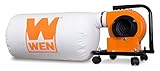

POWERTEC DC5371 Wall Mount
- 1 micron reusable bag
- 560 CFM
- Dual voltage motor
- Wall mount bracket
12 Best Dust Collectors for Small Woodworking Shops (October 2026)
| Product | Specifications | Action |
|---|---|---|
| Oneida Dust Deputy DIY Cyclone |
|
Check Latest Price |
| WEN DC3401 Rolling Dust Collector |
|
Check Latest Price |
 WEN DC3474 Induction Collector WEN DC3474 Induction Collector |
|
Check Latest Price |
 BUCKTOOL DC50 750 CFM Collector BUCKTOOL DC50 750 CFM Collector |
|
Check Latest Price |
| POWERTEC DC5371 Wall Mount |
|
Check Latest Price |
 Shop Fox W1826 Wall Dust Collector Shop Fox W1826 Wall Dust Collector |
|
Check Latest Price |
 Mullet High-Speed Cyclone Mullet High-Speed Cyclone |
|
Check Latest Price |
 WEN DC1300 1300 CFM Collector WEN DC1300 1300 CFM Collector |
|
Check Latest Price |
 Festool CT Cyclone Separator Festool CT Cyclone Separator |
|
Check Latest Price |
 JET DC-1100VX-CK Canister Collector JET DC-1100VX-CK Canister Collector |
|
Check Latest Price |
 Dustopper PRO Separator Dustopper PRO Separator |
|
Check Latest Price |
 DEWALT 6 Gallon Dust Separator DEWALT 6 Gallon Dust Separator |
|
Check Latest Price |
1. Oneida Dust Deputy DIY Cyclone Separator
Oneida Air Systems Dust Deputy DIY Anti-Static Retrofit Cyclone Separator for Wet/Dry Shop Vacuums (DD DIY)
Cyclone pre-separator
99.9% capture claim
Tapered 2 inch ports
0.8 ounce body
Pros
- Captures most debris before it reaches the vac filter
- Extends filter and bag life dramatically
- Simple drill-and-bolt installation
- Handles wood and drywall dust as well as metal shavings
Cons
- Hose and adapters not included
- You supply the pail and lid
- Anti-static plastic still builds some static
- Both ports are the same gender
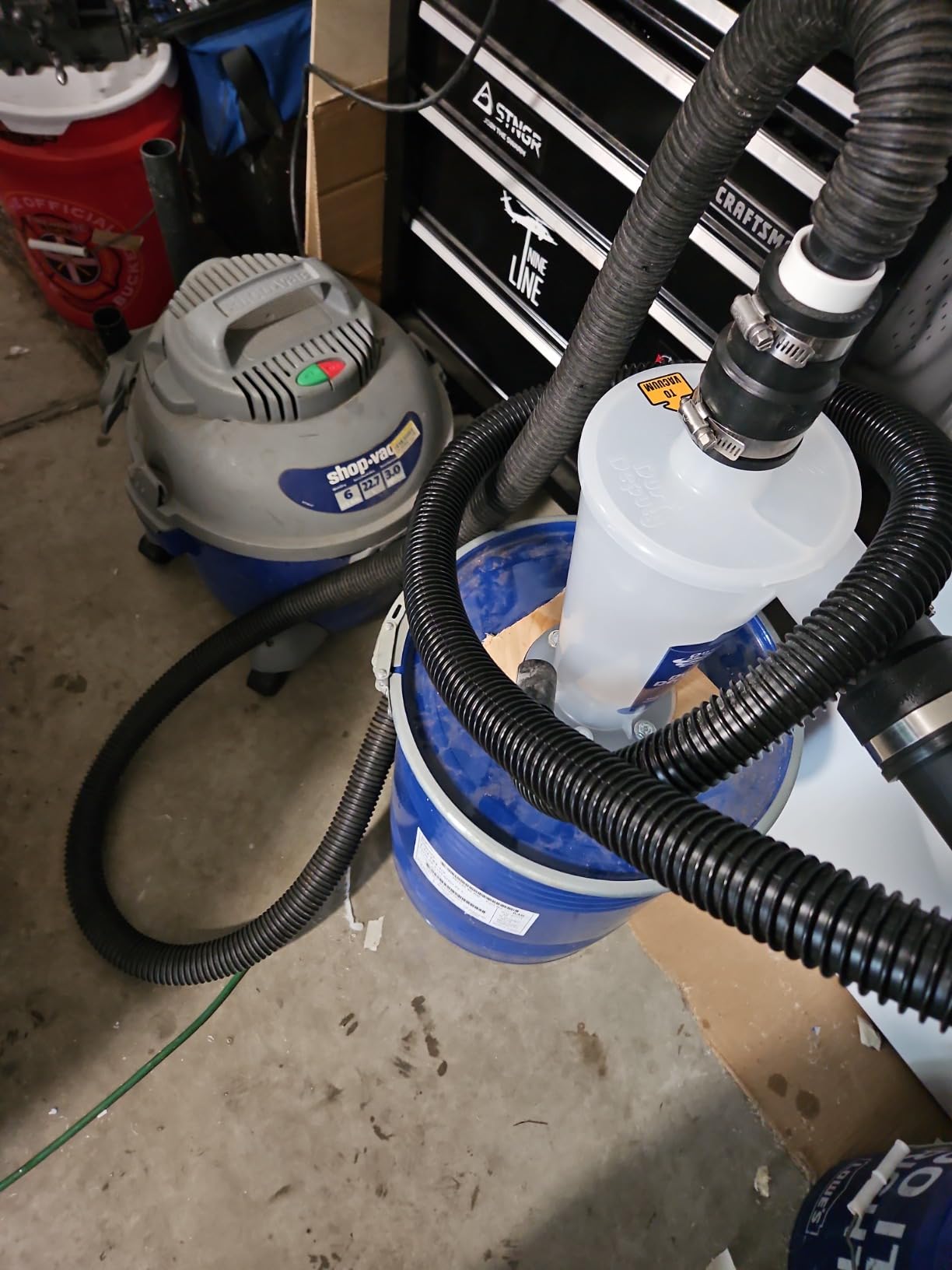
The Dust Deputy is not a collector, it is a separator that bolts onto a bucket lid, and that distinction is exactly why it belongs at the top of a small shop list. You keep the shop vac you already own, and the cyclone strips chips and coarse dust out of the airstream before anything reaches the expensive filter. With 4,205 reviews averaging 4.6 stars, it is the most widely owned item in this roundup.
Reviewers consistently describe it as the highest-return upgrade to a wet/dry vac. Instead of a filter clogging every few minutes on planer shavings, the bucket fills with chips you can shake straight into a glue-up or a compost pile. Fine dust still gets through, which is the honest limitation of any separator at this size.
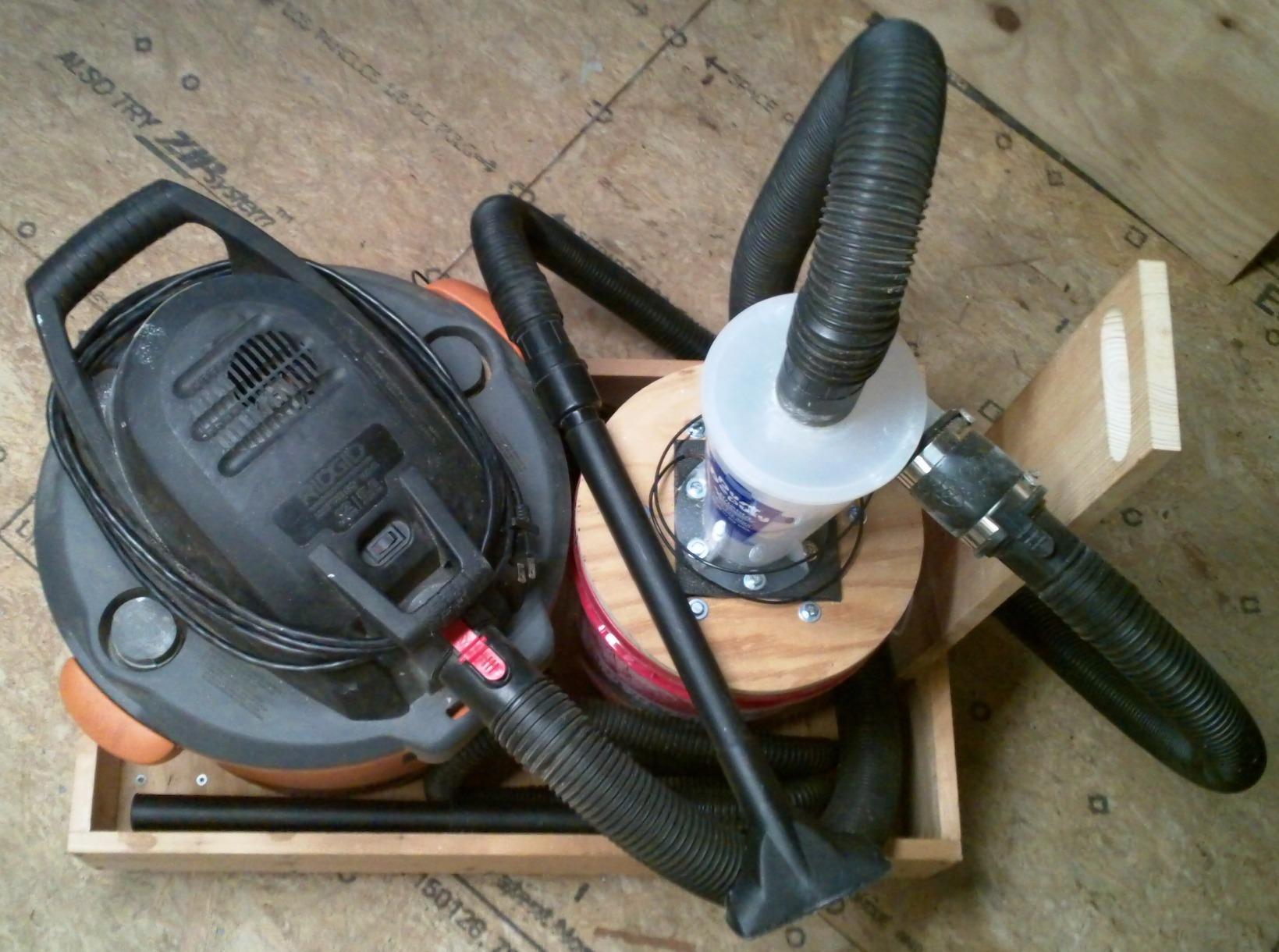
Installation is the part people get stuck on, and the answer is less complicated than the reviews make it sound. You drill a hole pattern in a standard pail lid, bolt the cyclone on with the included gasket and hardware, and run hose from your machine into the tapered 2 inch ports. The included parts are the cyclone, the gasket, and the mounting hardware; the bucket, lid, hose, and clamps come from you.
That missing-hardware list is also the most common complaint. Two hose adapters and a length of 4 inch flex hose will get you running, and a metal or heavy-wall 5-gallon pail holds suction better than a thin plastic bucket. Several builders report a warped base that needs a bead of caulk to seal.
What a one-car garage shop should check before buying
Check the hose diameter first. Both ports are the same gender, so you need one adapter from your machine port and one to your vac port, and neither is in the box. If your main machine has a 2.5 inch outlet, buy a 4 inch to 2.5 inch reducer rather than forcing a smaller hose into a larger port, which is what kills suction.
Also check pail thickness. Thin big-box buckets flex under suction and eventually collapse inward against the cyclone throat. A 5-gallon metal pail or a nested pair of heavy-wall plastic pails solves it for very little money.
Where this setup falls short
A separator cannot do the job of a dedicated collector on a planer or wide drum sander. Airflow through a shop vac motor drops fast once the hose and cyclone are in the path, and reviewers report suction loss on small-diameter sander hoses. If your heaviest machine makes serious volume, pair it with a real collector instead.
Static also builds on the anti-static plastic, which is why dust clings to the outside of the cyclone. Grounding the pail helps, and it costs nothing.
2. WEN DC3401 Rolling Dust Collector
WEN Woodworking Dust Collector, 5.7-Amp Motor with 12-Gallon Bag, Mobile Base, and Optional Wall Mount (DC3401)
5.7-amp brushed motor
6-inch impeller
Up to 660 CFM
17 pounds
Pros
- Moves far more air than a shop vac at this tier
- Light 17-pound body with carry handle
- Lockable swivel casters
- Wall mountable to free floor space
Cons
- Suction drops with reduced hose diameter
- Inlet screen clogs on planer shavings
- Brushed motor bushings wear around 250 hours
- Louder than users expect
The DC3401 is the shortest jump from a shop vac to a real collector. A 5.7-amp brushed motor and a 6-inch impeller move up to 660 CFM into a 4-inch dust port, and the whole thing weighs 17 pounds, so it moves like a floor fan rather than a machine. Owners run it on a table saw, bandsaw, and router table without complaint.
Its 4.1 average across 676 reviews is well below the other powered collectors here, and the reviews explain why. This is a light-duty unit matched to one machine at a time, not a shop that also owns a planer. Think of it as the first rung above a vac rather than a final system.
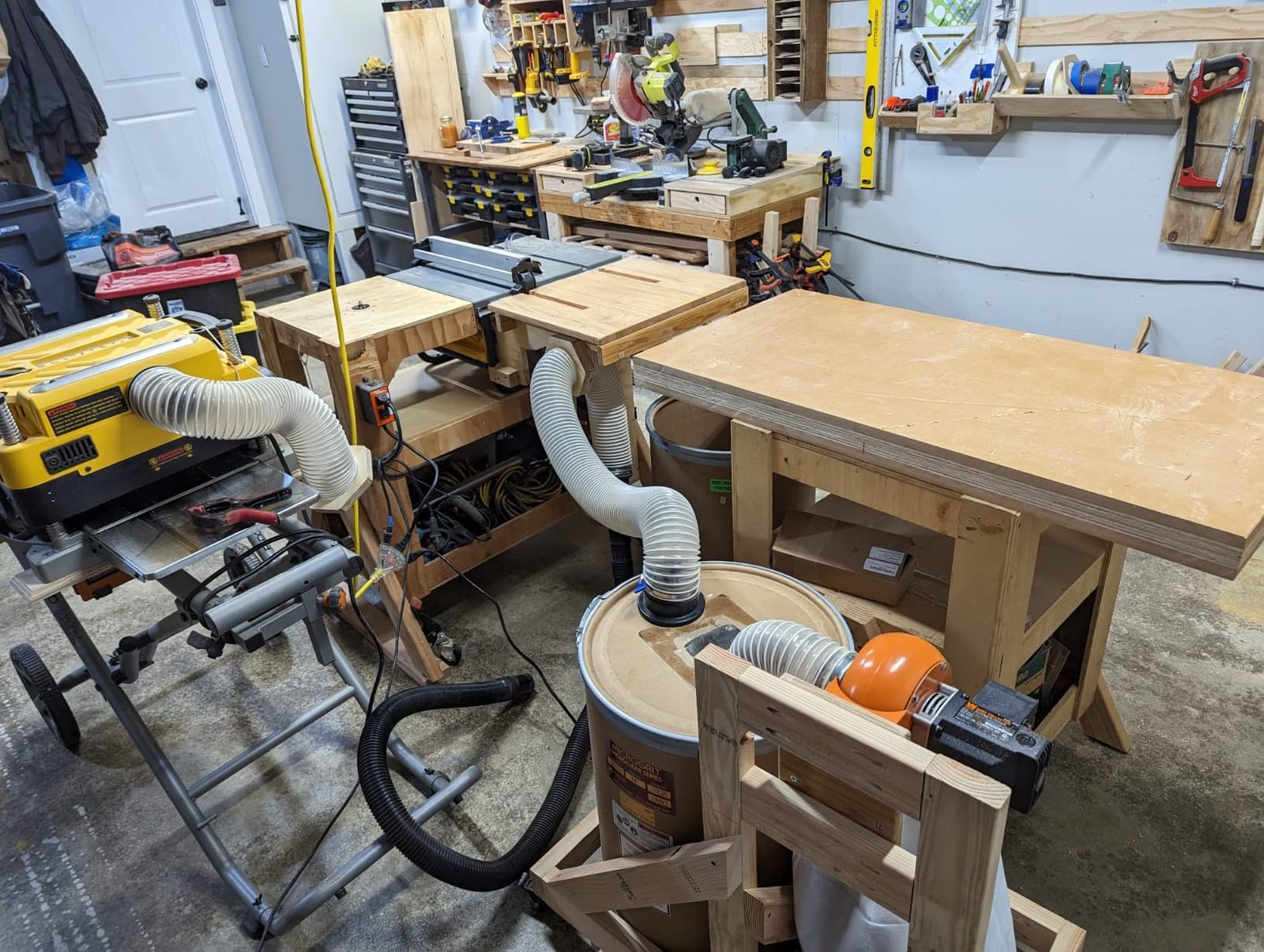
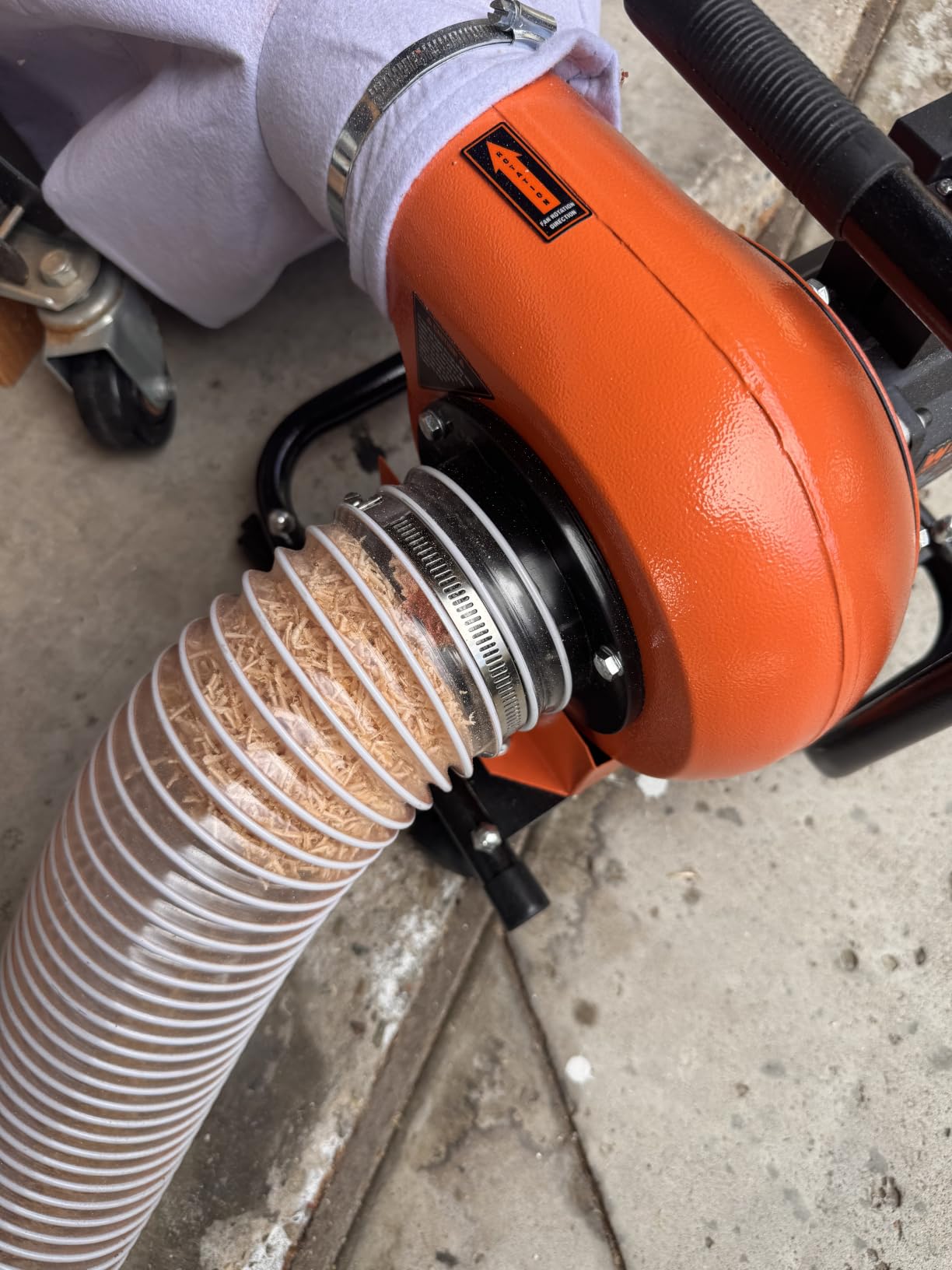
The inlet screen is the recurring headache. Light planer or jointer shavings wrap around the protective grate and cut airflow until you clear it, and the casters lock, so at least it stays put while you work. The 12-gallon 5-micron zippered bag empties from the bottom without removing anything.
That 5-micron rating is fine for workshop dust with decent air movement, but it is not a fine-dust answer. If you work indoors with no open window or run mostly MDF, look at the POWERTEC unit further down for a 1-micron bag.
What to verify before you commit
Check your shop floor. At 34.25 by 13 by 14.2 inches it fits almost anywhere, and the optional wall mount frees up the space entirely when you are not collecting. That is a real advantage over bulkier 1 HP units in a single-car garage.
Check your electrical circuit too. The 5.7-amp draw runs fine on a standard 15-amp household outlet, which removes one of the usual small-shop barriers. The two-year warranty is shorter than the JET unit’s five years, so factor that into how long you expect to keep it.
Where this collector falls short
Two limits show up again and again. Reducing a 4-inch hose down to 2.5 inch for a sander costs more suction than most people expect, and brushed-motor carbon bushings on this class of motor are reported needing replacement around 250 hours of run time.
Noise is the other limit, and reviews describe it as louder than buyers expect for its class. If you plan to run it while working on something else in the same room, an induction motor unit is a better fit.
3. WEN DC3474 Induction Motor Dust Collector
WEN Woodworking Dust Collector, 7.4-Amp Induction Motor with 15-Gallon Bag, Mobile Base, and Optional Wall Mount (DC3474)
7.4-amp induction motor
9-inch impeller
Up to 600 CFM
41.1 pounds
Pros
- Induction motor runs noticeably quieter
- Draws about half the power of a shop vac
- Wall mount plus casters
- Pairs well with jointer and bandsaw
Cons
- Thin cloth bag leaks fine dust as it fills
- Inlet guard tangles on long shavings
- Casters do not lock
- Handle mounts to flexing sheet metal
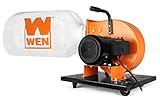
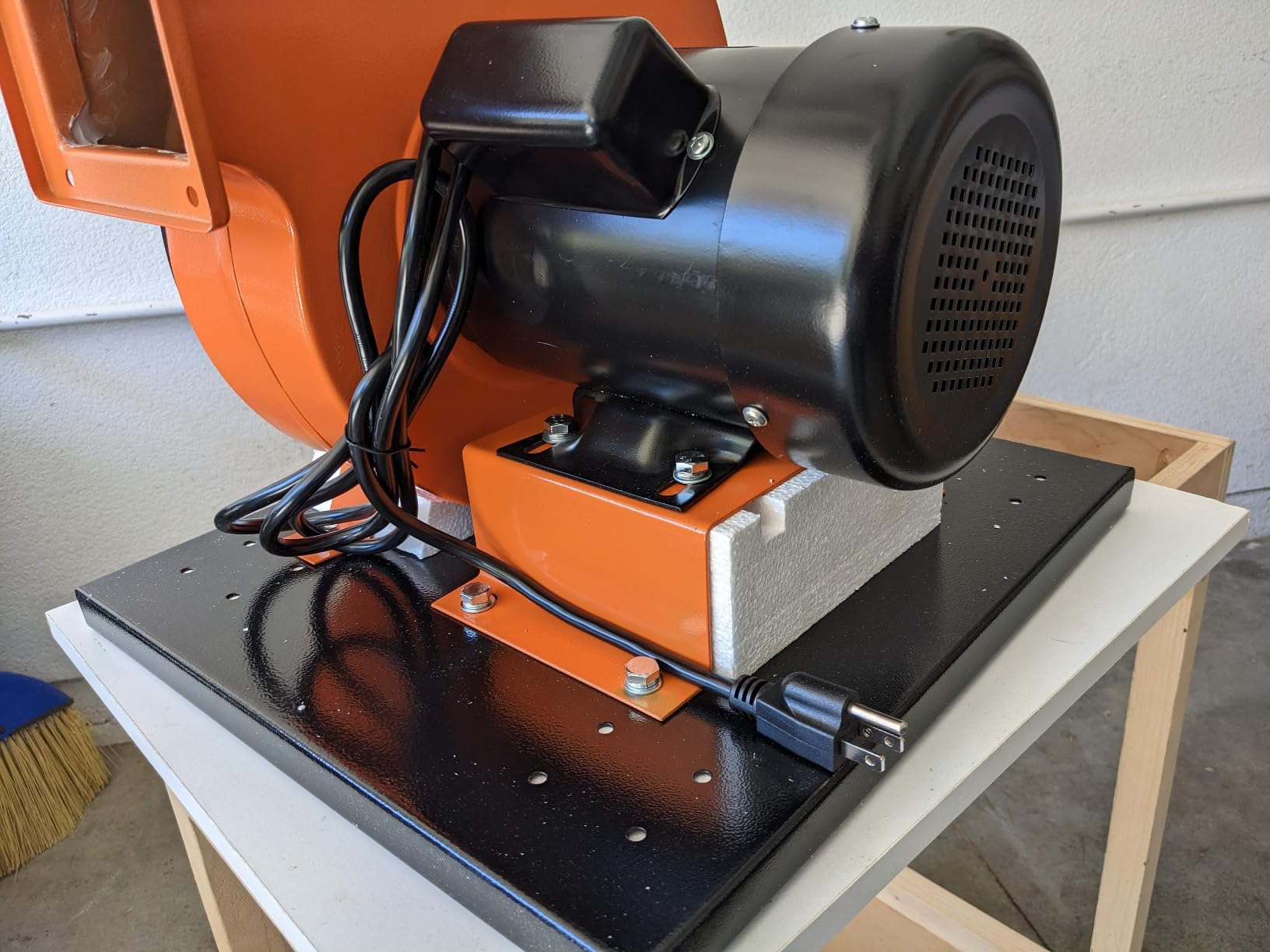
The DC3474 swaps the brushed motor for a 7.4-amp induction motor driving a 9-inch impeller, and that single change is why owners mention it. Reviewers report markedly lower noise than a shop vac while moving comparable air, with one side-by-side measurement landing near 72 dB. For a shared shop or a basement workspace, that difference is real.
Owners pair it with a jointer, a bandsaw, and a job-site table saw on hardwoods and report it handles that load well. The 4.3 rating tells you it is not perfect, and the review distribution shows a solid core of five-star owners alongside a meaningful group who bought it for the wrong job.
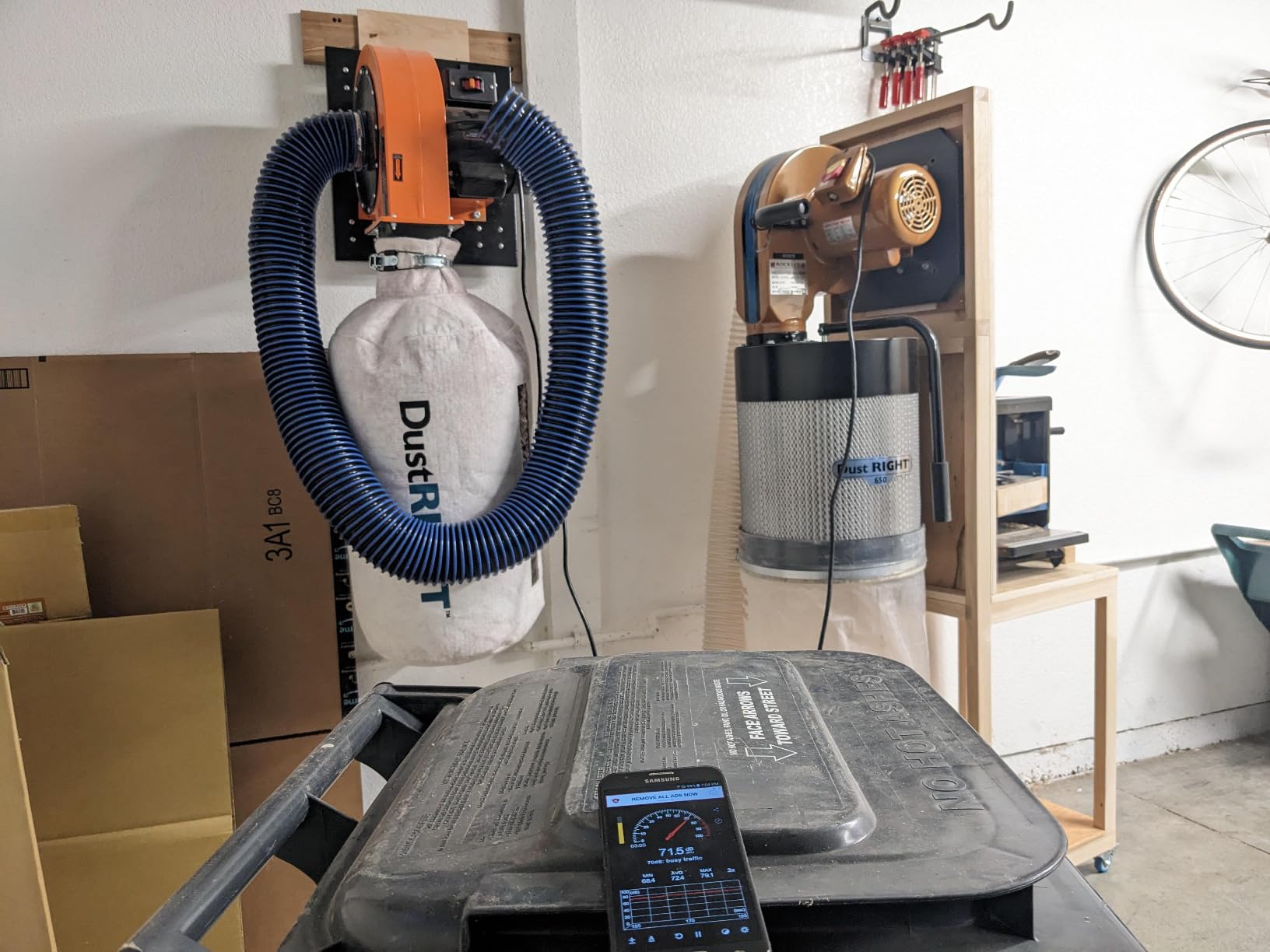
The bag is the first thing most people change. The supplied 15-gallon cloth bag is thin and leaks fine dust as it fills, so a lot of owners fit a canister filter or a heavier bag instead. Plan on that swap as part of the purchase rather than a surprise expense.
At 43.3 by 17.7 by 20.1 inches and 41.1 pounds, this is a mid-size machine. It rolls on swivel casters, but the casters do not lock, so it can creep when you switch it on. The wall mount is optional and worth having in a tight garage.
What matters most before you buy this one
Check your ceiling height and whether the unit will hang on a stud. The optional wall mount is the feature that decides this machine in a small shop, since it takes a floor footprint of about three square feet out of circulation space.
Check your heaviest machine honestly. Owners consistently report enough headroom for jointing and sanding, and less for planer duty. If the planer is your main dust source, step up in airflow rather than pushing this one.
Where the induction motor setup falls short
The inlet guard tangles with long shavings from a three-blade jointer, which is exactly the situation where you most want smooth airflow. Two more practical notes: the handle attaches to sheet metal that flexes under load, and the listing photos show a mirrored discharge the unit cannot actually do.
It is also the quieter option, not a quiet option. At 41.1 pounds with a 9-inch impeller it still needs hearing protection if you are working in the same room at full speed.
4. BUCKTOOL DC50 750 CFM Auto-Start Dust Collector
BUCKTOOL 750 CFM Auto-Start Dust Collector,1.2HP 13-Gallon Capacity
1.2 HP 120V motor
3450 RPM
750 CFM
6.5 amp full load
Pros
- Tool power outlet starts the collector with your machine
- Hose and five reducers included
- Two-micron cloth upper bag
- Mobile base with casters
Cons
- Lowest average rating in this roundup
- Mixed reports on motor performance under load
- Assembly and impeller alignment complaints
- 10 percent one-star share
The DC50 is the only unit here with a built-in tool power outlet, and in a small shop that single feature can change your workflow. Plug a machine into the collector and the 1.2 HP, 3450 RPM motor starts with it, so nobody has to hunt for a second outlet in a crowded wall. It is CSA listed and pulls 6.5 amps on a 120V circuit.
It also includes more than most competitors. You get five reducers, a 5-foot length of 4-inch hose, a plastic lower bag, a cloth lower bag, a 2-micron cloth upper bag, and a PET bag clamp, which means it runs out of the box instead of after a parts run.
The 4.0 average across 204 reviews is the lowest of the twelve, with a 10% one-star share, and the complaints cluster on motor performance under sustained load. If your dust comes in short bursts from a table saw and jointer, the convenience may win. If you run a planer or drum sander all afternoon, look elsewhere.
Physically it is a tall unit at 29.53 by 20.19 by 65.01 inches and 56 pounds, and the listed depth is 16.5 inches. That height is the thing to measure first, since it is the difference between the DC50 working in your garage and the DC50 living in the corner collecting dust.
The three-bag arrangement is straightforward: chips land in the plastic lower bag, and finer material works up to the 2-micron cloth upper bag. Owners report the PET bag clamp is easier on the hands than a metal band, though several mention alignment problems during assembly that need a second pass.
What to check in your shop
Measure the vertical clearance first. At roughly 65 inches tall plus bag clearance, the DC50 will not fit under a low workbench or in a basement with a dropped ceiling. Its portable base at 16.5 by 26.375 inches helps once the height works.
Check what you plan to plug into the tool outlet. It is rated for machines up to 7 amps, which covers most table saws and sanders but not everything. The auto-start feature is genuinely useful, so it is worth checking your machine list against that 7 amp ceiling.
Where the auto-start design falls short
Motor durability is the recurring concern. Owners report weak and inconsistent performance for the effort, and mixed reviews on the motor under load rather than at startup. The 56-pound weight also makes it awkward to move without two people when the casters are not cooperating on a threshold.
If you want the auto-start convenience with more proven hardware underneath, the JET unit later in this list shares the same idea in a far more durable package.
5. POWERTEC DC5371 Wall Mount Dust Collector
POWERTEC 1 HP, 560 CFM Wall Mount Dust Collector with 1 Micron Dust Collector Bags, Dust Collectors for Woodworking Dust Collection System (DC5371)
1 HP induction motor
560 CFM
1 micron reusable bag
35.5 pounds
Pros
- Finest filtration rating in this group with a 1 micron bag
- Viewing window shows fill level
- Dual 120V and 240V operation
- Zipper bottom empties in place
Cons
- Inlet grate collects debris over time
- Cloth bag loads up with fine dust
- 80 dB is loud indoors
- One 4-inch hose run at a time
If your reason for buying a collector is fine dust rather than chips, this is the unit to look at. The 1-micron reusable bag is the finest rating listed on any collector here, and it comes with a built-in window so you can see how loaded it is instead of guessing. At 4.4 stars from 433 reviews, it holds up well, and the wall mount solves the floor-space problem in a tight garage better than any floor-standing unit in this range.
The motor is a 1 HP induction unit rated for 120V and 240V, drawing 12 amps at 120 and 6 amps at 240, running at 3450 RPM for 560 CFM of rated airflow. That dual-voltage flexibility is a genuine advantage if your shop grows past a single household circuit later.
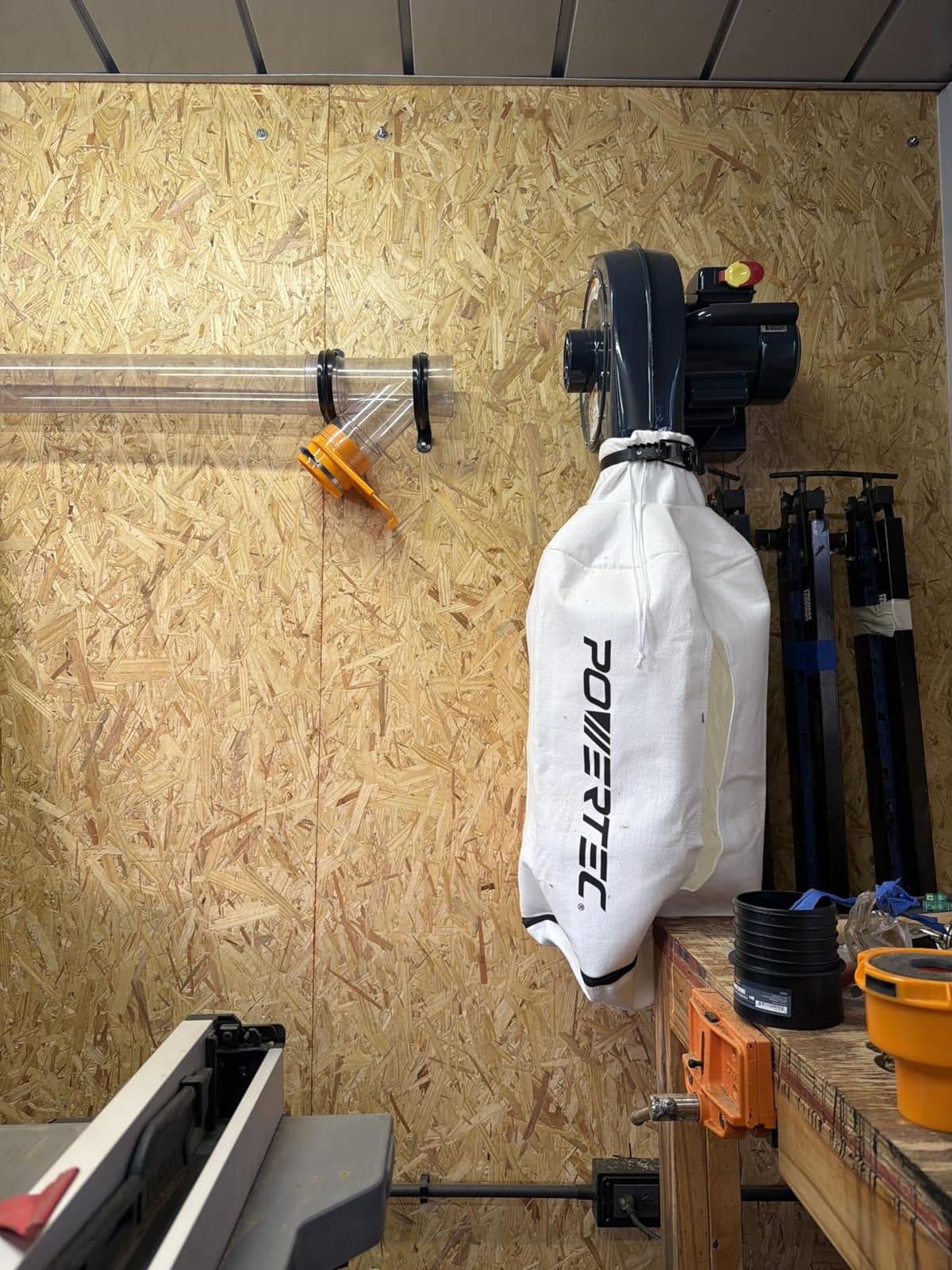
The wall-mount bracket frees the floor entirely, which matters a lot in a one-car garage where a floor-standing unit competes with your walking space. Below it, the vortex base guides airflow to reduce turbulence and moves more dust for the same motor speed, which is where the extra efficiency comes from.
The maintenance point that comes up most is the inlet grate. It sits inside the 4-inch port and quietly collects debris, slowly choking airflow if you never check it. A glance at the grate every few sessions keeps the 560 CFM honest.
What to check before installing
Check your stud layout and whether the bag has vertical clearance below the port. Fine-dust bags need to hang straight and full, because a bag that touches the floor picks up dust from the shop instead of staying clean.
Check your circuit. At 12 amps on 120V it sits under a 15-amp limit but not by a wide margin, so it shares a circuit poorly with a table saw. If you have a 240V-capable circuit, that is the configuration reviewers prefer.
Where a 1 micron bag falls short
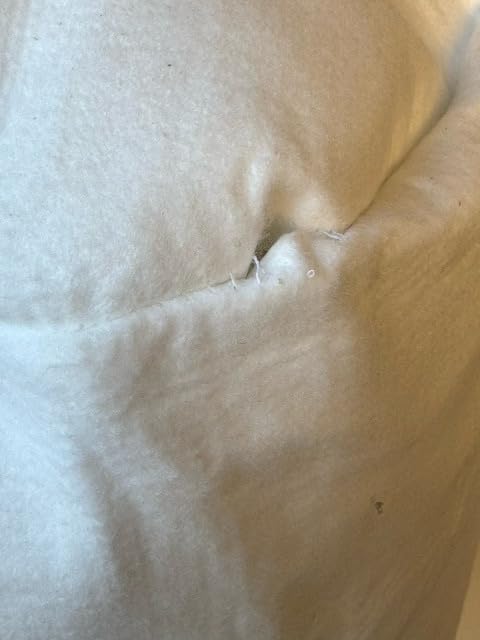
A 1-micron cloth bag is a fine dust filter, not a chip separator. Fine material loads the surface quickly, so airflow drops sooner than with a coarse chip bag, and the bag is the part that needs replacing over time. Watch the viewing window rather than pushing until suction fades.
It is also rated for a single 4-inch hose run, so running a table saw and a jointer at once means buying the dual-inlet unit instead. At 80 dB it is loud enough that hearing protection matters in an enclosed shop.
6. Shop Fox W1826 Wall Mount Dust Collector
Shop Fox W1826 Wall Dust Collector, 2.5 Micron Filtration,White
1 HP single-phase motor
537 CFM
2.5 micron bag
Approximately 57 pounds
Pros
- Quiet next to a shop vac of similar size
- Steel construction feels durable
- Viewing window plus bottom zipper
- Prewired 110V with a rewire path to 240V
Cons
- Inlet cage traps long shavings
- Needs a drum-style pre-separator
- Bag clamp needs support under the bag
- Arrives with dented parts often
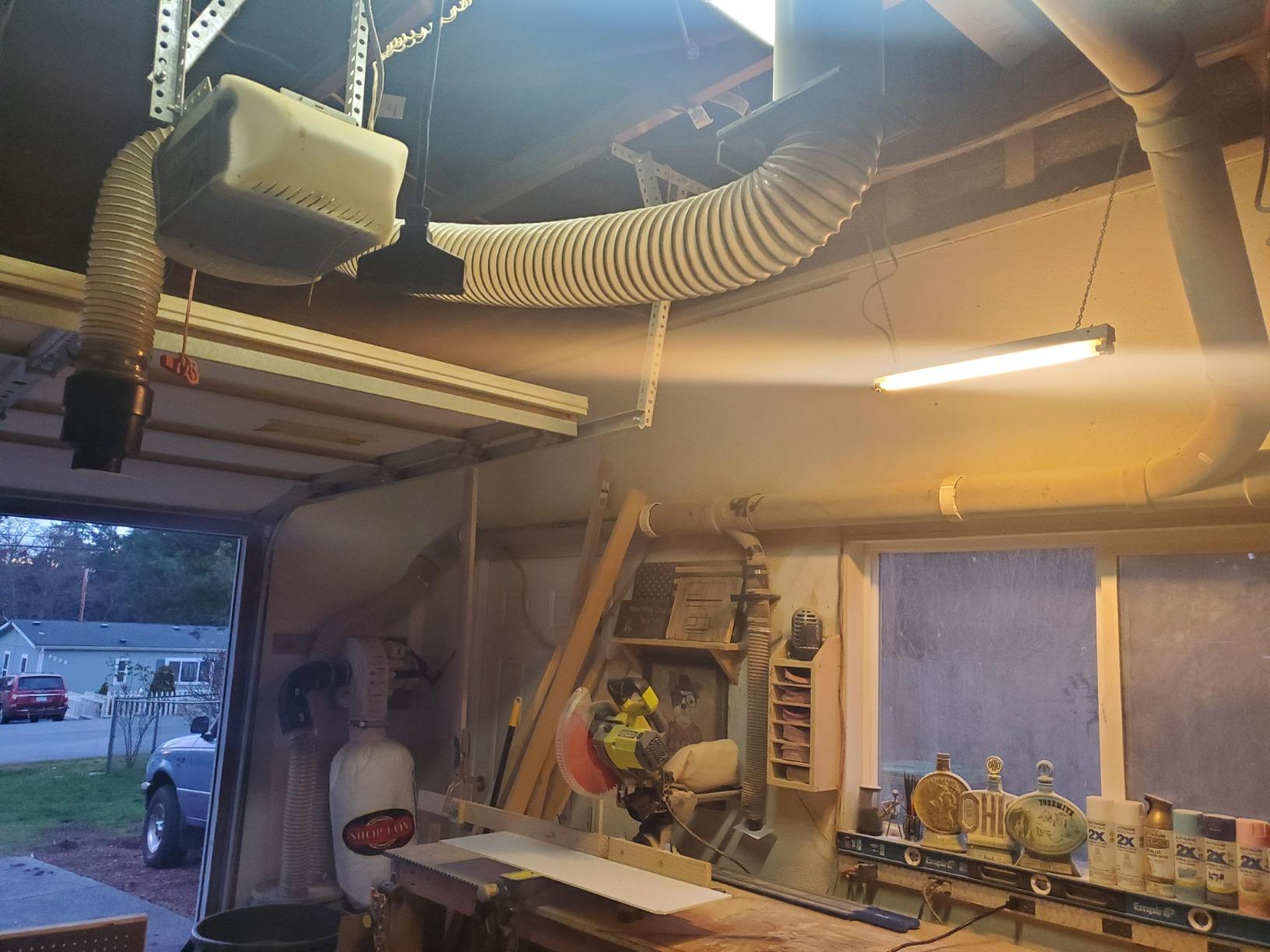
The W1826 is the unit the forum crowd points to for a small garage, and it earns its place with a 1 HP single-phase motor, 537 CFM of rated airflow, 7.2 inches of water column static pressure, and a 2.5-micron cloth bag. At 4.3 stars from 459 reviews it has a long, consistent owner base.
Owners treat it as the quiet replacement for a shop vac, running one tool at a time on a proper 4-inch run. Wall mounting plus a drum-style pre-separator gives noticeably cleaner shop air than any bag-only arrangement, which is how most of them use it.
The bag design is a quiet advantage: a viewing window to gauge dust level and a bottom zipper so you empty it in place. The wall bracket uses a locking screw system rather than a simple hook, so it stays put once loaded.
It arrives prewired at 110V pulling 7 amps, and the manufacturer supplies a color wiring diagram, so converting to 240V later is a straightforward job rather than a mystery. The listed footprint is 19.5 by 18 by 44 inches and it weighs about 57 pounds.
What to check before you mount it
Check that you have somewhere to put a drum. Reviews are consistent that this collector wants a larger-drum pre-separator, and using it like a shop vac with no drum underperforms noticeably. Budget for a 20-gallon drum and the fittings that go with it.
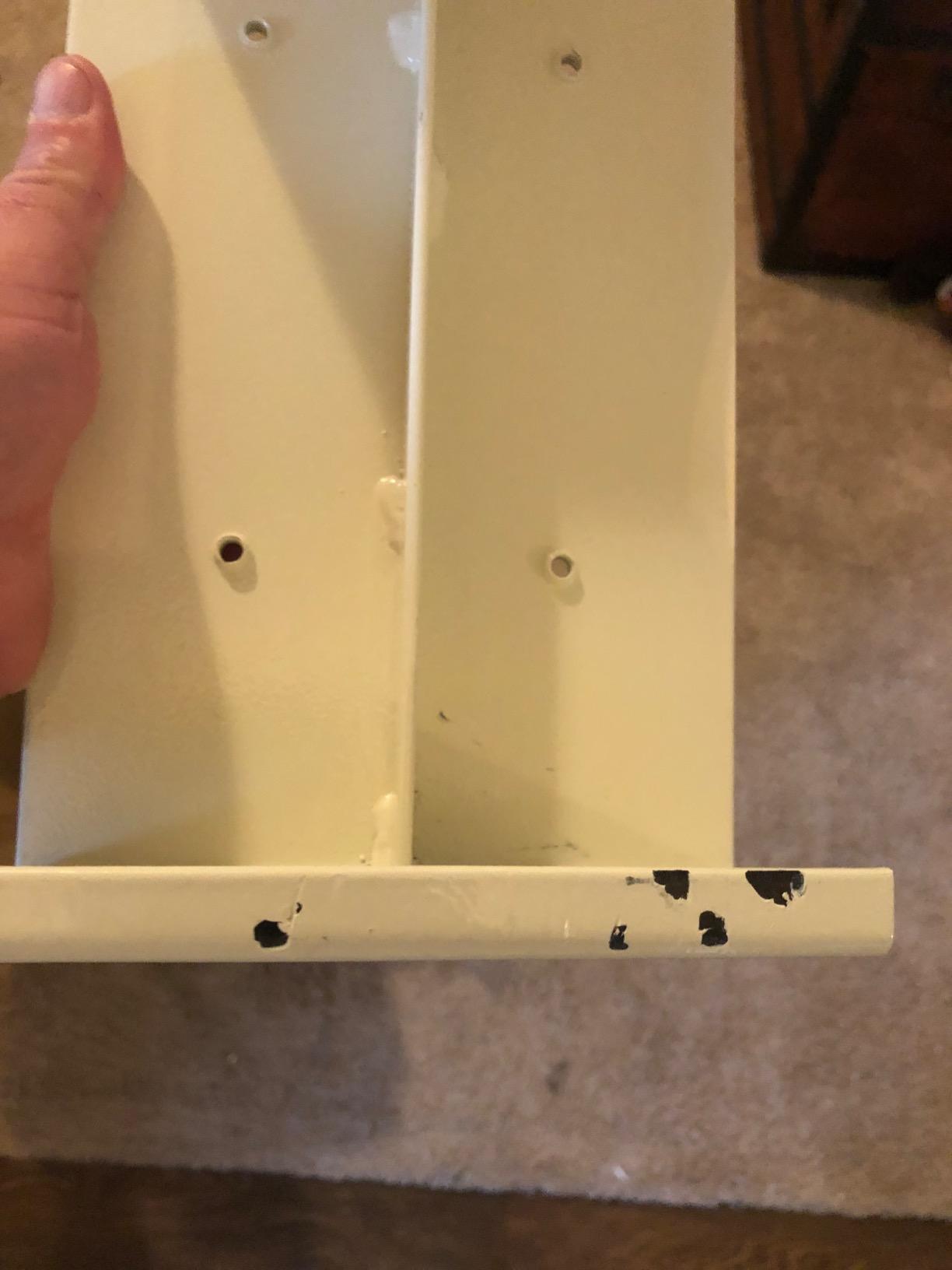
Inspect the machine on arrival. Multiple owners report dented shrouds and bent mounting plates from transit, and because the shroud and bracket are structural to a wall mount, check them before you drill anything into a stud.
Where the W1826 falls short
The inlet safety cage traps long shavings and clogs when you run a planer or jointer, which is a direct conflict with how most people want to use it. The clamp also grips the bag poorly unless you support it from underneath.
Two smaller notes: the exhaust port inner diameter is not published, so you may need a fabricated fitting, and the 85 dB rating is the loudest figure listed among these picks. In a closed garage, plan on hearing protection and a way to vent the exhaust air.
7. Mullet High-Speed Cyclone Dust Separator
Mullet Cyclone Dust Collector, High-Speed Separator for Shop Vac
Parabolic one-piece body
Pre-separates over 99% of debris
72 dB
7.5 pounds
Pros
- Highest average rating in this roundup
- Parabolic body spins dust faster than straight-wall designs
- Rigid cut-to-fit connection avoids bungee cords
- Includes hose adapters that fit most wet dry vacs
Cons
- Adds a stage so some suction loss is inherent
- Needs a rigid PVC run rather than flex hose
- Requires a suitable rigid container
- Single-duct capacity depends on the paired vac
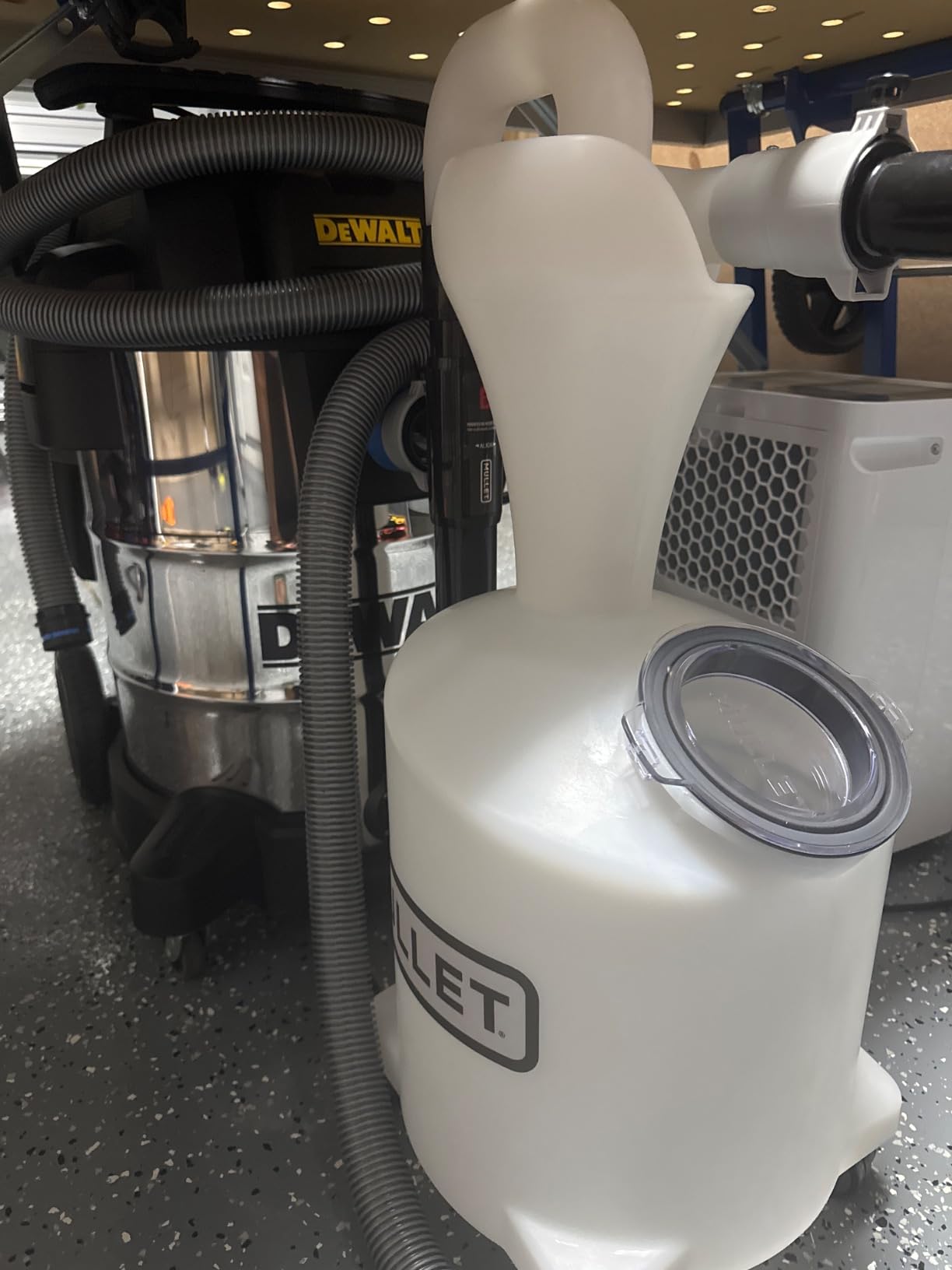
The Mullet is a separator like the Dust Deputy, but it takes a different approach to the same problem. Its parabolic, one-piece body creates a faster airstream than the usual straight-wall cyclone-and-bucket assembly, and it pre-separates over 99% of debris before that material reaches your vacuum filter.
At 4.8 stars across 289 reviews with 88% five-star ratings, it has the highest average rating of anything on this list. Owners credit the geometry and the airtight rigid connection for the difference, and many describe it as cleaner than their own DIY attempts.
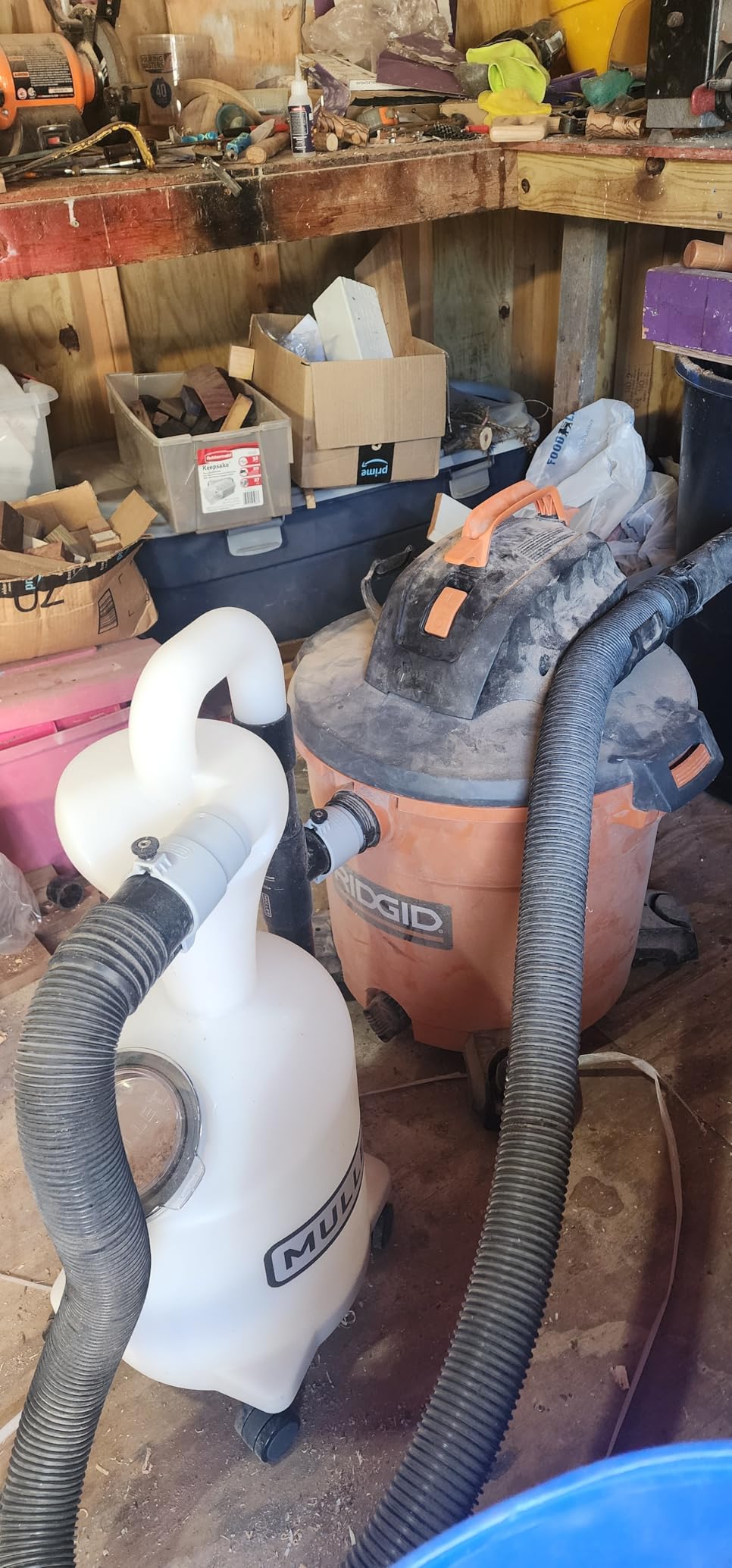
The connection detail is what separates it from the bucket-lid crowd. A rigid cut-to-fit PVC joint replaces the bolts, bungee cords, and duct tape that usually show up in these builds, and that keeps the seal tight enough to protect the vac filter. Two wet/dry vac hose adapters are included, which covers most brands.
It weighs 7.5 pounds, so moving it between machines or taking it to a job site is not a two-person job. Rated at 72 dB in the product data, it is quiet in the context of separators.
What to check before building
Check that you can run rigid PVC. This is not a flex-hose install, and the rigid run is the reason the seal holds. Measure from your machine port to the container and plan the sweep elbows into that distance before you buy fittings.
Check your container. The unit needs a rigid vessel it can mount to, and a solid container with a flat lid makes the difference between a clean install and a leaky one. Plan for a pail or drum rather than a thin utility tub.
Where a pre-separator falls short
Every pre-separator adds a stage to the airflow path, so some suction loss is built into the design no matter how good the geometry is. Owners report the loss is modest, but it is real and it grows with hose length.
Single-duct capacity also depends entirely on the vac you pair it with. With a 5-gallon wet/dry vac you get 5-gallon-vac performance with much better filter life; with a small extractor, you are still limited by that motor.
8. WEN DC1300 1300 CFM Dust Collector
WEN DC1300 1,300 CFM 14-Amp 5-Micron Woodworking Dust Collector with 50-Gallon Collection Bag and Mobile Base , Black
14-amp motor
1300 CFM
10-inch steel impeller
50-gallon bag
Pros
- 1300 CFM handles a saw
- bandsaw
- and CNC without bogging
- Dual 4-inch inlets run two tools at once
- 50-gallon bag empties every month or two
- Much quieter than running multiple vacs
Cons
- Metric fasteners complicate assembly
- Tall profile needs overhead clearance
- Bag loop can slip off the upper hook
- Handle install steps come out of order in the manual
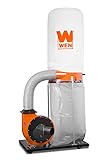
The DC1300 is the step-up pick when one machine is no longer enough. A 14-amp motor drives a 10-inch steel impeller up to 3450 RPM and circulates 1,300 cubic feet of air per minute, and reviewers confirm the airflow claims on CNC and heavy sawdust workloads. It holds a 4.5 rating from 233 reviews.
The feature that changes daily workflow is the dual 4-inch inlets. You can attach two tools at once, which is the difference between moving a hose every time you switch jobs and leaving both machines connected. That matters most in shops where the table saw and jointer are your two biggest dust producers.
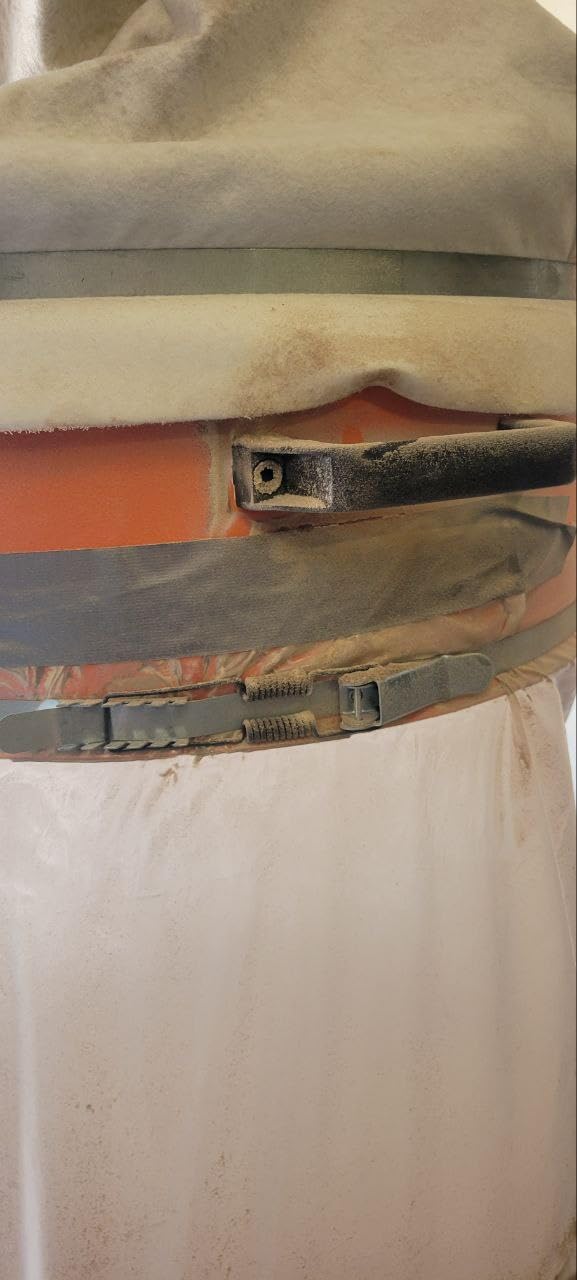
The vertical 50-gallon bag is the other practical win. Owners report emptying roughly once a month or two instead of every few days, and the bag is a vertical design so the collected material compacts downward on its own. A mobile base with four swivel casters lets you roll it into a corner when it is not in use.
Filtration is 5-micron, which handles wood chips and coarse dust well and is the same class of filter most budget collectors use. If your real concern is airborne fine dust rather than cleanup, a 1-micron or canister setup is the better direction.
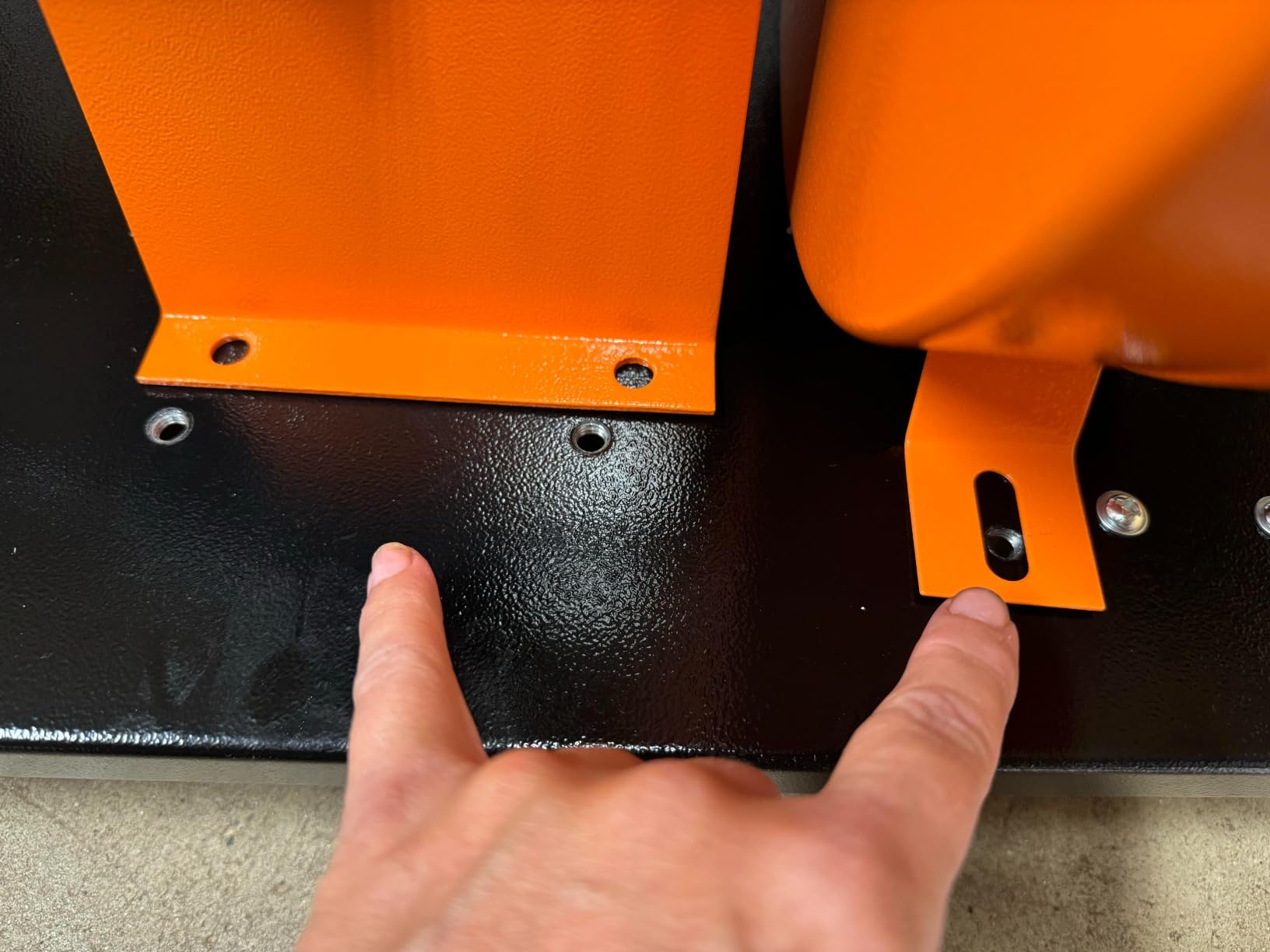
What to measure before you buy
Measure ceiling clearance. This is a tall, floor-standing unit and the bag support height is not adjustable, so a low-ceiling basement shop may not work. Leave enough room above the bag to lift it out when full.
Measure floor space and path width. A 50-gallon vertical bag plus the motor housing needs a real footprint, and this is where a one-car garage starts to feel the difference between a collector and a major appliance. If floor space is the binding constraint, a wall-mount unit is the more honest answer.
Where the high-CFM design falls short
The physical fit complaints dominate the reviews rather than the function. Metric fasteners can complicate assembly for people without the right hex keys, the fabric bag loop can slip off the upper hook and needs taping, and the manual sequences the handle installation after the bags, which is awkward.
One reviewer reported chips escaping the secondary port and missing hardware on arrival, so a careful unpack is worth five minutes. At 1,300 CFM you are also moving a lot of air past the filter, which is audible.
9. Festool CT Cyclone Dust Separator
Festool 204083 CT CYCLONE Dust Separator CT-VA-20
Aluminium flat cyclone
Fits the Systainer format
7 kg
Works with CT 26 to CT 48
Pros
- Compact flat profile stores inside a Systainer
- Extends filter bag and filter life
- Covers the full CT extractor range
- Empty the tub straight into a rubble sack
Cons
- Only works with Festool CT extractors
- Friction-fit sections are easy to misalign
- Needs the Systainer lid to hold sections
- Some suction lost against a direct hose
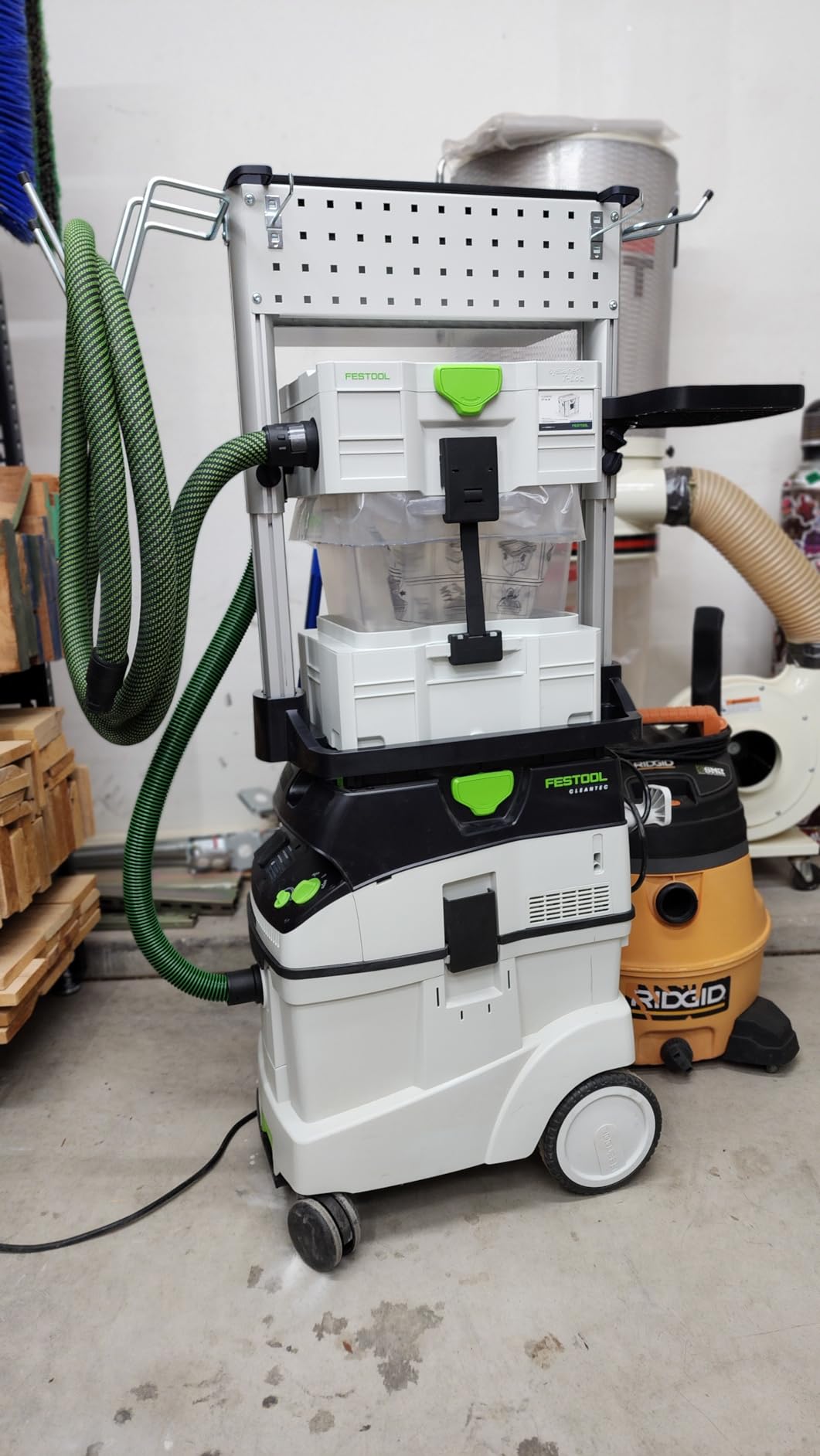
The CT Cyclone is an accessory rather than a standalone machine, and it exists to solve one specific problem: a Festool extractor filling its bag with chips before the filter is spent. It fits CT 26, CT 36, and CT 48 extractors, with and without Autoclean. At 4.5 stars from 422 reviews, owners consistently call it the accessory that makes the extractor far more usable.
The flat profile is the quiet engineering win. It packs into the Systainer format, so it lives between tasks instead of occupying bench space. When you are done, it empties from the tub straight into a rubble sack.
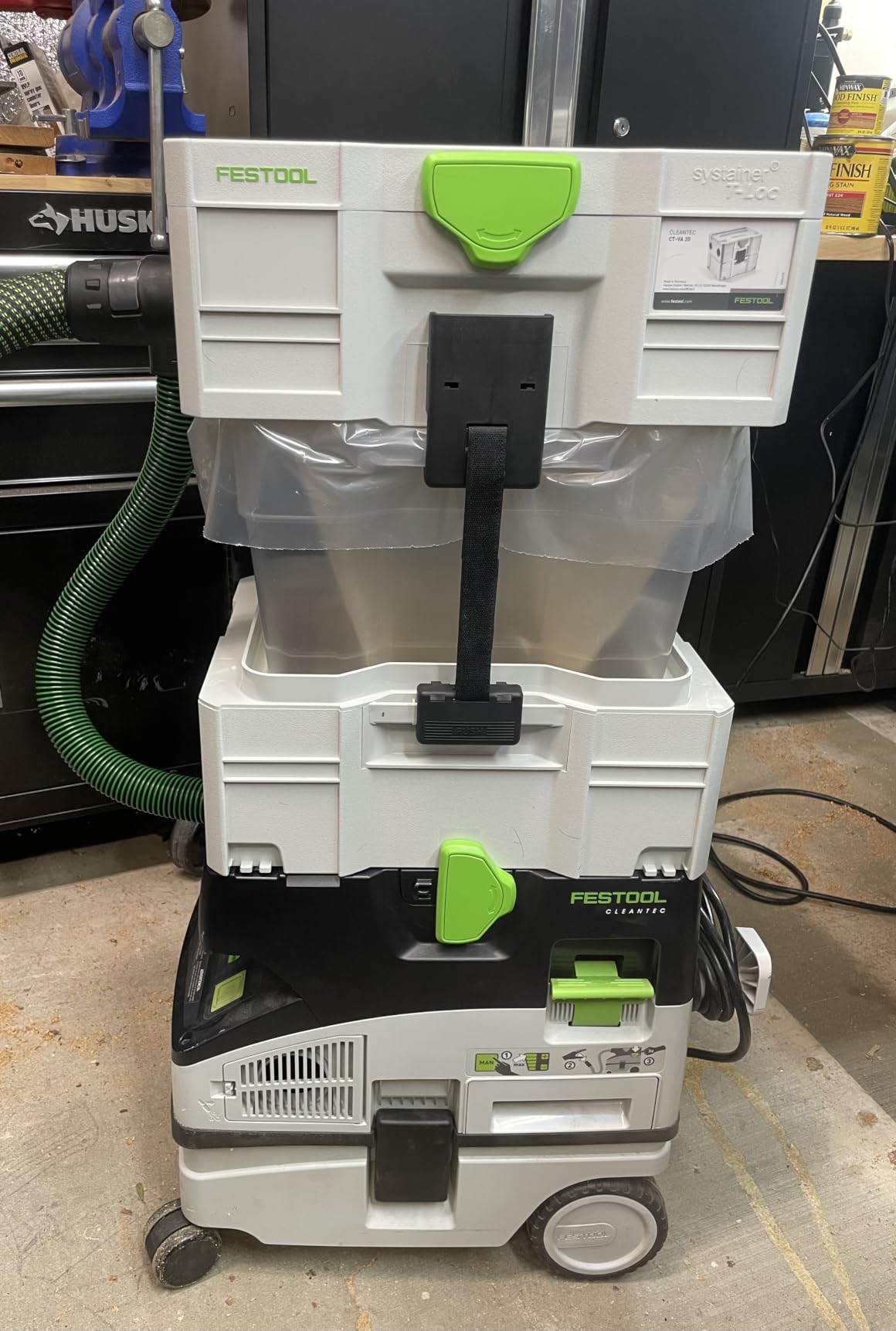
The compliance angle matters if you handle material with a silica component. Used with a HEPA-certified CT extractor, the cyclone keeps the system in line with OSHA Table 1 requirements for that dust type, which is a real advantage for anyone doing composite work in an indoor shop.
Extending bag and filter life is the financial argument. Because larger debris never reaches the extractor bag, you buy bags on a schedule instead of on frustration, and owners report the cost paying for itself within months of regular use.
What to check before buying
Check your extractor model number first. This unit works with the CT 26, CT 36, and CT 48 range and nothing else, so if your shop mixes brands, this does not help you. Buyers who already own a Festool extractor get clear value; everyone else should look at a general-purpose separator instead.
Check that you own a Systainer. The friction-fit sections are held together by the Systainer lid, so without one you have an expensive pile of aluminium parts. The 15.55 by 11.61 by 20.28 inch footprint and 7 kg weight are otherwise very manageable.
Where the flat cyclone design falls short
Seating is everything. Misaligned friction-fit sections cause a dramatic and immediate suction drop, and that is the single most repeated caution in the reviews. Take two extra minutes to check the joints before you blame the extractor.
There is also an unavoidable trade: a cyclone in the path costs some suction relative to a direct hose connection, and the one-year warranty is the shortest coverage on this list. Budget for the fact that this is a dedicated-brand accessory.
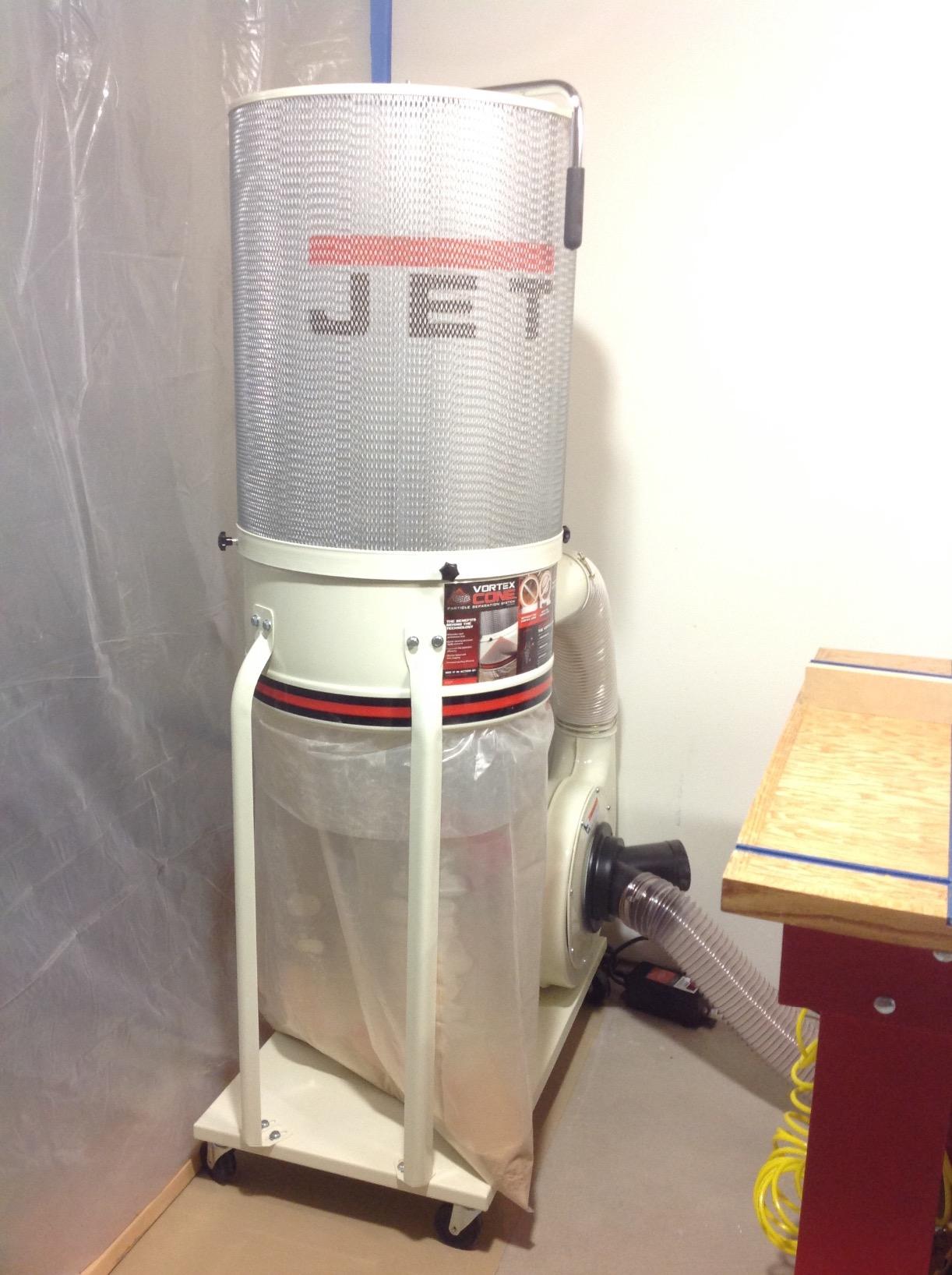
10. JET DC-1100VX-CK Vortex Cone Canister Dust Collector
JET Vortex Cone Dust Collector with 2-Micron Canister Filter, 1-1/2 HP, 115/230V 1Ph (DC-1100VX-CK)
1.5 HP 115 and 230V motor
2-micron canister filter
Continuous duty motor
80 dB
Pros
- Vortex Cone improves chip separation and bag packing
- 2-micron canister for premium fine dust capture
- Continuous duty permanently lubricated motor
- Quick-connect bag rings for fast changes
- Five-year warranty
Cons
- Floor-standing footprint is large for a small shop
- Canister hardware adds setup steps
- 80 dB is noticeable in an enclosed space
- Vortex cones need periodic emptying
This is the durable option, and for most small shops the floor-standing footprint is the only real argument against it. A 1.5 HP permanently lubricated, totally enclosed, fan-cooled motor rated for continuous duty drives a single-stage Vortex Cone that separates chips before they reach the 2-micron canister filter. It carries a five-year warranty, the longest coverage listed on any unit here.
Buyers who have outgrown bag collectors rate the Vortex Cone geometry highly for chip separation and sustained filter life. The quick-connect elastic bag rings make filter changes fast, and five collection bags plus the canister hardware come in the box.
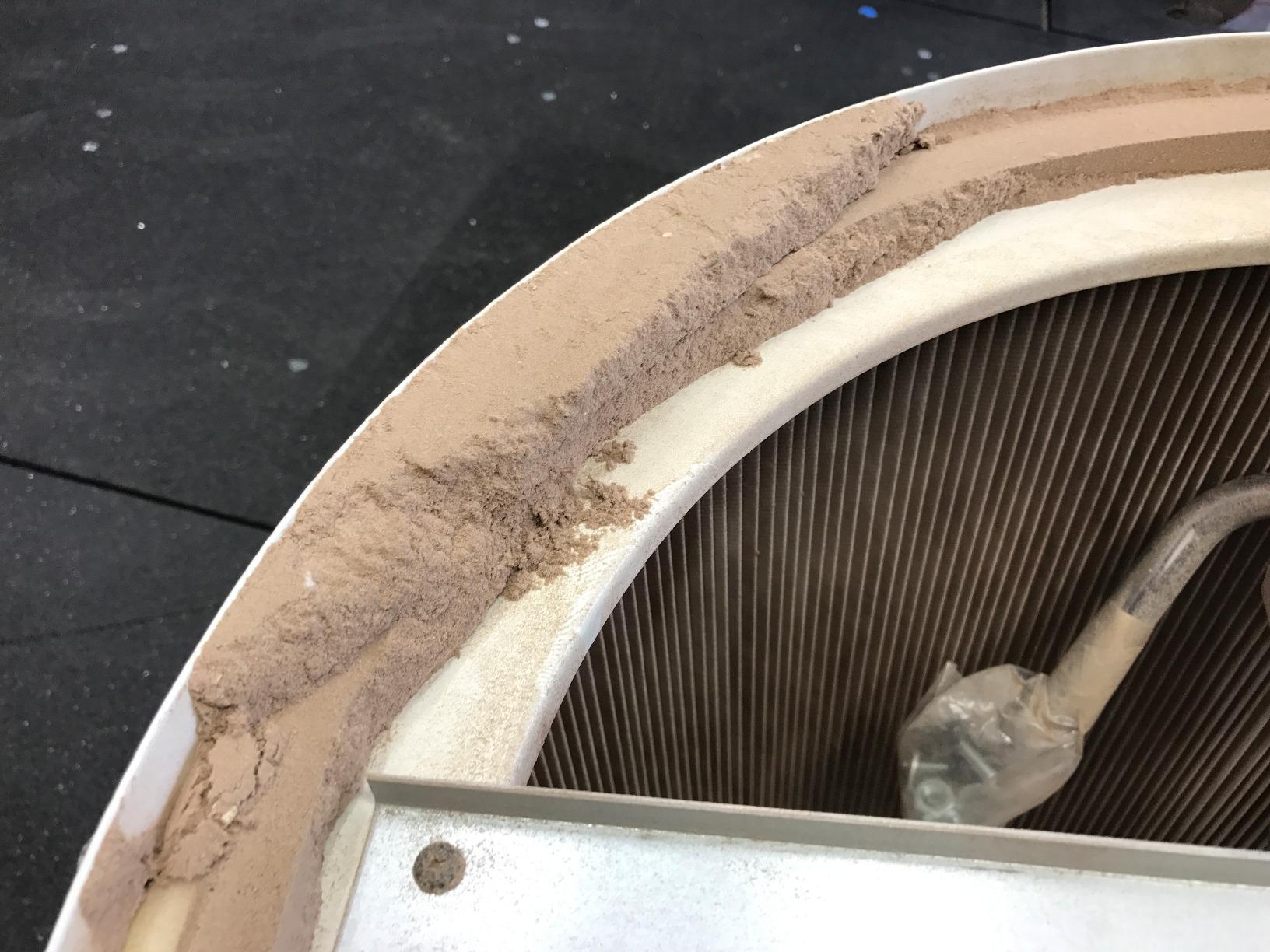
The motor is the long-term argument. A one-year warranty on a bag collector means you are gambling on the motor; a continuous-duty unit with a five-year warranty means you are buying a machine. If you run machines daily rather than occasionally, that difference in risk is worth more than the floor space it costs.
Four casters are included, so the unit rolls for repositioning, and the single-stage layout keeps it economical and comparatively quiet for the output class at a listed 80 dB.
What to check before you buy
Check the floor space. This is a full-size floor-standing collector, and reviewers are direct about it being large for a compact shop. Measure the footprint plus the clearance you need to lift the canister out and empty it.
Check your circuit. It runs on 115V or 230V single phase, and owners note you need the 240V feed for full output. Running it on 120V is convenient for a first install but costs performance, so plan the circuit before the machine arrives.
Where the canister collector falls short
Setup has more steps than a bag collector. Five bags and the canister hardware mean more parts to assemble and more surfaces to seal, and getting a canister seated properly matters for airflow. Budget an afternoon rather than an hour for the first setup.
Two operating notes from owners: the Vortex cones need periodic emptying before they choke airflow, and 80 dB in an enclosed small shop is noticeable. Neither is a defect, but both are daily annoyances you can plan around.
11. Dustopper PRO Low-Profile Dust Separator
Dustopper PRO Dust Collector – 99.9% Efficiency Cyclone Dust Separator
99.9% efficiency cyclone
13 by 13 by 7 inch footprint
1.63 kg
Anti-static resin
Pros
- Preinstalled gasket seals to a standard pail with no assembly
- Keeps vac filters and bags almost clean
- Clear body shows dust level
- Two high-flow sweep elbows included
- Light enough to move between machines
Cons
- Needs a genuinely heavy-duty pail
- Some reports of more static buildup
- 2.25 inch inside diameter limits adapter availability
- Very fine drywall dust still passes through
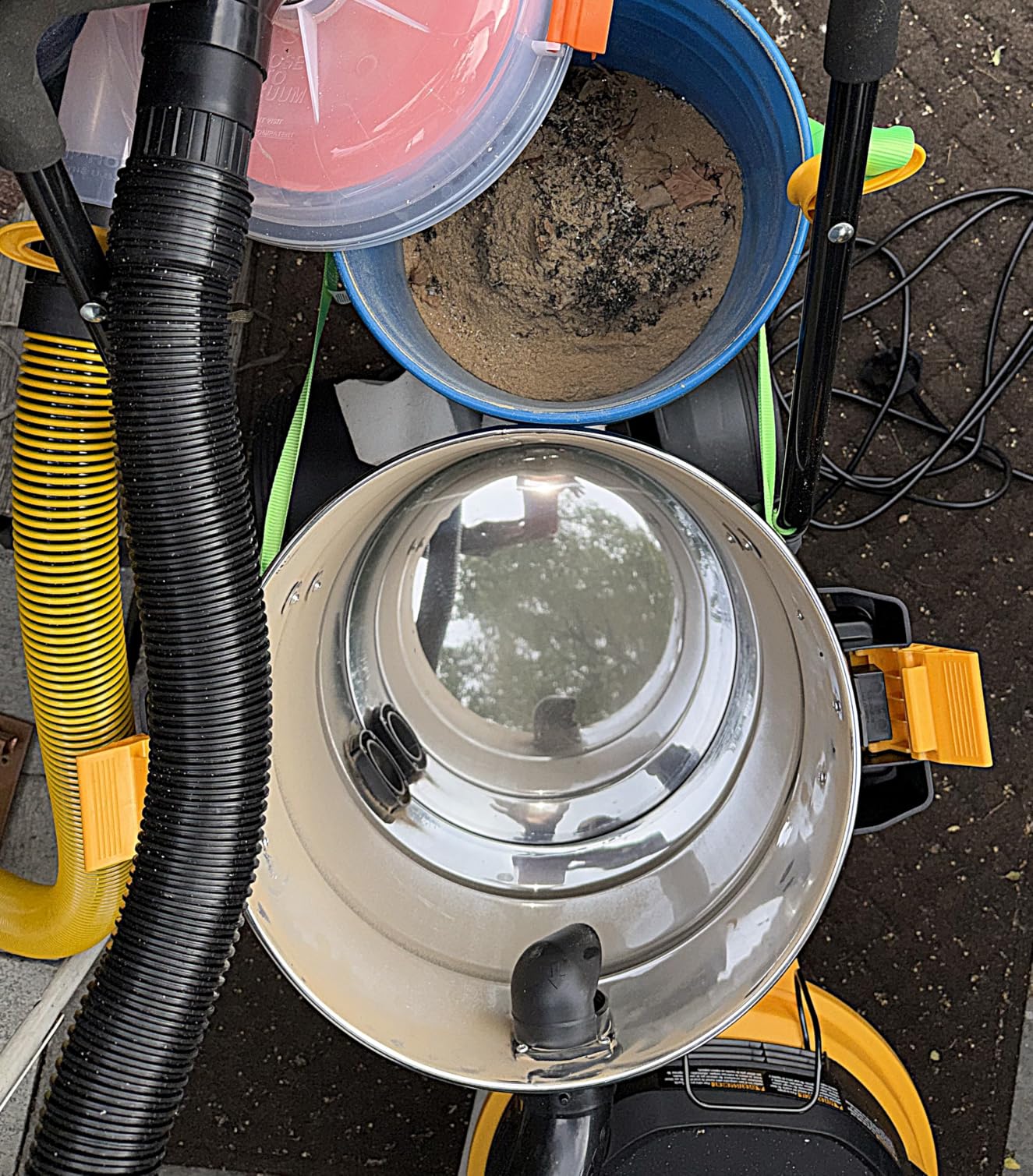
The Dustopper PRO has 1,218 reviews at a 4.6 average and needs no assembly at all. Where most bucket separators require drilling a hole pattern and fitting a gasket, this one arrives with a hollow-core EPDM gasket preinstalled in its groove that seals to a standard 5-gallon pail.
It is also third-party tested. Aerodyne Environmental ran it on fine sawdust, coarse sawdust, and drywall powder, and found consistently higher efficiency than other low-profile separators. The design was engineered for separation rather than raw airflow, since excess CFM can create eddy currents that lower capture.
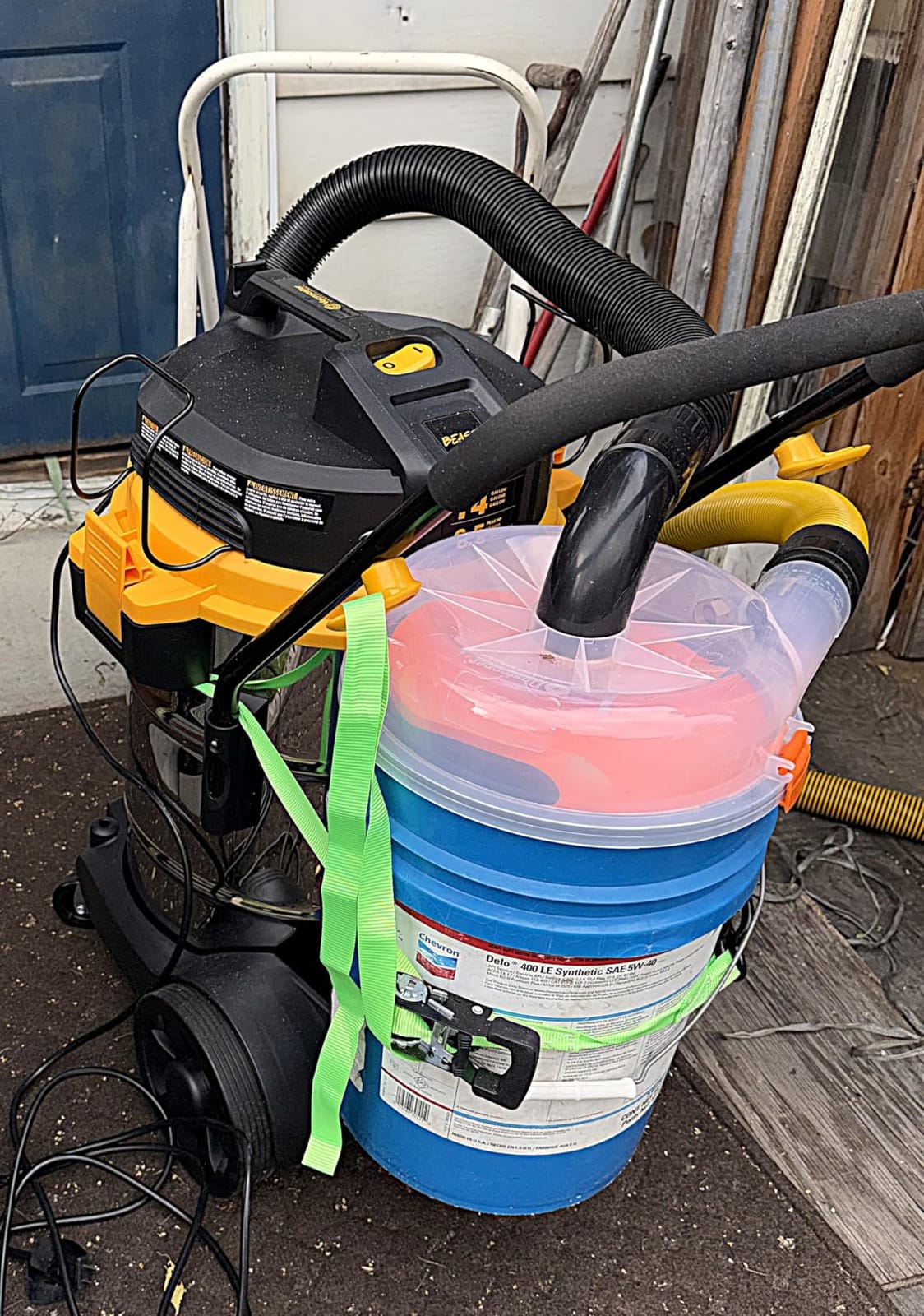
Two patented high-flow sweep elbows come in the box, and their job is removing turbulence to lower flow restriction. Owners who use them report better airflow through the whole path than with straight elbows, which is the difference between this and a plain bucket lid.
The 13 by 13 inch footprint and 7-inch height keep it low, and the clear body lets you see the dust level without opening the pail. At 1.63 kg it moves between machines easily or fits in a car for a job site.
What to check before building
Check your pail. This is the single most repeated setup tip: thin big-box buckets collapse under suction, so use a thick-wall or nested-bucket pail. Owners also recommend pairing it with a 5 HP or stronger vac, since the separator can only handle what the motor delivers.
Check your hose sizes before you commit. The inside diameter is 2.25 inch, which is smaller than some people expect, and adapters can be hard to source outside the US. That is a real friction point for buyers elsewhere.
Where the low-profile separator falls short
Two honest limits. Very fine drywall powder still passes through to the vacuum, so this does not solve a drywall-heavy shop. And some users report more static buildup than cheaper imported separators, which is a real consideration next to wood dust and a combustible-dust mindset.
There is also a small assembly annoyance: the gasket can pop out of its groove when you lift the unit off the pail. Check that it is seated before you seal up and every time you reattach it.
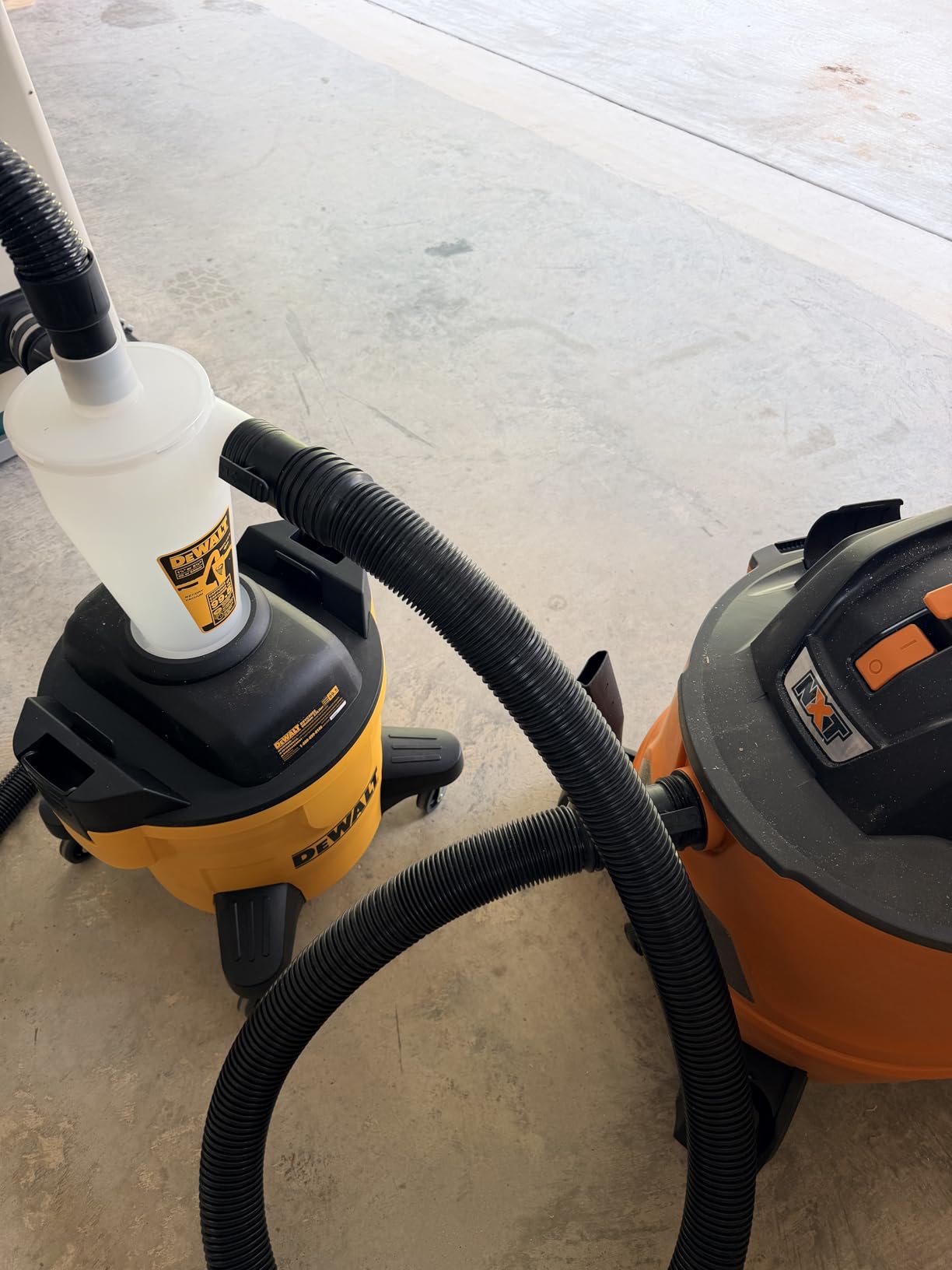
12. DEWALT 6 Gallon Dust Separator
DEWALT 6 Gallon Dust Separator for Wet/Dry Shop Vacuums,DXVCS002
6-gallon poly bucket
Cyclonic separation
1-7/8 and 2-1/2 inch ports
12 pounds
Pros
- Complete kit with bucket
- lid
- latches
- hose
- and caster hardware
- Four-caster base keeps the barrel stable and movable
- Handles both 1-7/8 and 2-1/2 inch vac connections
- Heavy-duty heat-resistant materials with an anti-clogging design
- Three-year limited warranty
Cons
- Vacuum not included
- Cyclonic barrel is bulkier than a bare cyclone on a lid
- Needs consistent emptying to hold airflow
The DEWALT separator is the one to buy if you would rather assemble nothing. The box includes the separator, a 6-gallon poly bucket, the lid, sealing strips, latches, two handles, a length of 1-7/8 inch hose, a wheel bracket, caster bushing, and the screws. Combined with a three-year limited warranty, it is the most complete separator kit on this list.
It works with both 1-7/8 inch and 2-1/2 inch vacuum connections, so most existing wet/dry vacs connect without an adapter hunt. At 4.5 stars from 682 reviews, owners cite completeness and the rolling base as the main reasons to buy rather than assemble your own.
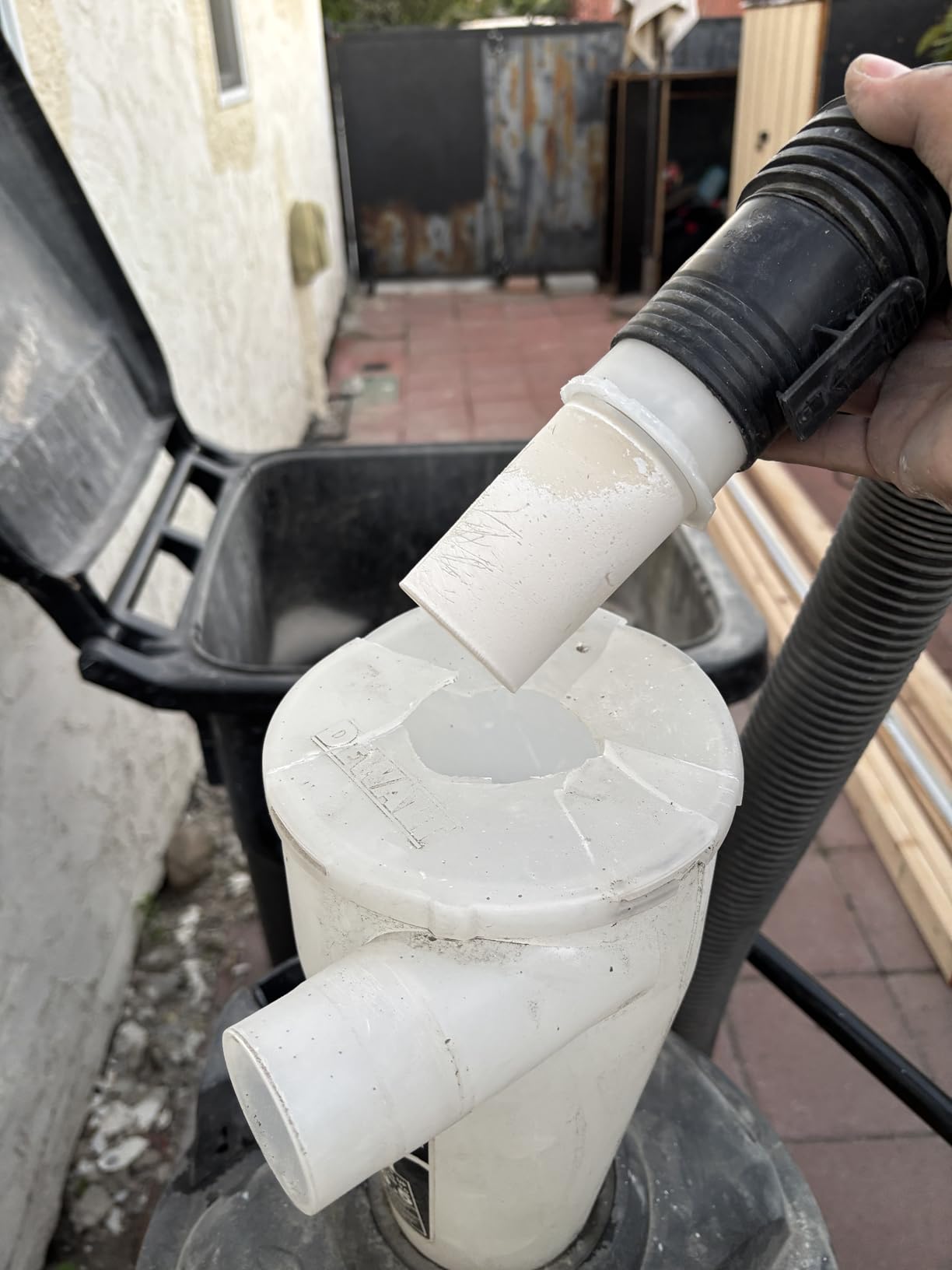
The four-caster base is more than a convenience. A 6-gallon barrel full of chips is top-heavy, and the wide base keeps it stable while you are moving it around a shop. At 12 pounds empty, it is also one of the lighter options to reposition.
Construction is heat-resistant with an anti-clogging design, and the manufacturer rates it for a broad material range from wood chips and concrete dust to cooled ash, metal shavings, and pet hair. That versatility is why it shows up in shops that do more than woodworking.
What to check before you buy
Check that you already own a wet/dry vac. The vacuum is not included, so this pairs with whatever you have. Confirm your vac port size matches 1-7/8 inch or 2-1/2 inch, since those are the two connections the kit supports.
Check your floor space. At 15.9 by 15.9 by 31.4 inches, the barrel format is bulkier than a bare cyclone mounted on a bucket lid. In a genuinely tight garage, that extra height is the deciding factor between this and a low-profile separator.
Where the barrel-style separator falls short
Airflow depends on how often you empty it. A 6-gallon barrel sounds large but fills fast on planer and jointer duty, and consistent emptying is what keeps suction from dropping. Treat it as a weekly habit rather than a monthly one.
The bulkier barrel format is the other limitation. It gives you stability and capacity in exchange for footprint, and in a small shop footprint is usually the scarcer resource. The 3 percent one-star share is mostly assembly and sealing complaints, not design faults.
How to Size a Dust Collector for Your Small Shop
Most sizing mistakes come from reading the CFM number on the box and stopping. Rated airflow is measured with a bare unit and a free outlet. Add 15 feet of 4-inch hose, two elbows, and a blast gate, and your real number drops well below the label. Size for the airflow you will actually see, not the one on the spec sheet.
Here is the practical version of the shop-to-CFM mapping we use. A single table saw in a one-car garage wants roughly 500-700 CFM, which is the band the 1 HP units here cover. Add a jointer and you are into the 700-1,000 range, and that is where dual inlets or a wall mount start earning their keep.
A thickness planer or a wide drum sander produces far more volume than a saw and will bog a single-stage collector before the bag fills. Those machines push you toward 1,000 CFM and above, or toward a cyclone that keeps chips out of the filter entirely. Handheld sanders and routers are the opposite case: they need volume, not static pressure, which is why a separator or extractor suits them better.
Filtration is the second decision, and it is about where the exhaust air goes. A 1-micron bag like the POWERTEC DC5371 uses is worth it when air returns to your breathing zone. A 2-micron canister on the JET is the premium version of the same idea. If your shop is open and ventilated, a 5-micron bag is a defensible compromise that lasts longer between changes.
Motor type decides your noise floor and your expected service life. Induction motors like the WEN DC3474 and the POWERTEC DC5371 run quieter and last longer than brushed units in the same airflow class, at the cost of more weight and more money. The WEN DC3401 proves a brushed motor can work well when the load is light and intermittent.
Collector, Extractor, Shop Vac or Separator: Which One Do You Need?
These four categories get blurred constantly, and buyers end up with the wrong machine for their heaviest tool. A dust collector is a floor-standing or wall-mounted machine with its own motor, built to sit next to a stationary machine and pull several hundred CFM through rigid ductwork. It is what a table saw, jointer, or planer needs.
A dust extractor is smaller, lighter, and designed to plug into a handheld tool. It follows the sander around the bench rather than the machine around the shop. A shop vac is the do-everything fallback that handles wet pickup, cleanup, and light collection, but its motor and filter get overwhelmed quickly on volume work.
A cyclone separator is an add-on, not a standalone machine. It bolts onto a bucket or pairs with a vac or extractor, spinning chips out of the airstream so the host machine’s filter stays clean. That is why the top pick on this list is a separator: for a small shop with one stationary machine and a good wet/dry vac, a separator often outperforms a collector on both cost and performance.
The combination most small shops converge on is a collector for the machines plus a separator or extractor for the handheld work. The natural upgrade later is a cyclone collector, which is the step to take when chips start overwhelming a bag filter. Our power carving tool guide covers the rotary tools that work best with that extractor side of the setup.
Ductwork, Adapters and Grounding
Getting two machines onto one collector is simpler than most guides make it sound. Run a 4-inch trunk line from the collector, tee off to each machine, and put a blast gate at each branch so only the running machine gets airflow. Add a Y-adapter with a gate at the collector for quick single-machine setups, and keep total hose length as short as the shop allows.
Adapters are where new owners get caught. Hand tools have 1-1/4 inch or 2-1/2 inch ports and almost no collector includes the reducers you need. Budget a 4 inch to 2-1/2 inch adapter and a 4 inch to 1-1/4 inch adapter up front, because a reduced hose diameter cuts suction far more than the extra length does.
Circuit requirements are the other common surprise. Machines at 6 to 7.5 amps run on a standard household outlet, while larger 1.5 HP and 14-amp collectors want a 20-amp or 240V feed. Running a table saw and a 12-amp collector on the same 15-amp circuit is a nuisance-breaker waiting to happen, so give the collector its own outlet if the panel allows it.
Finally, ground any metal collector or metal pail. Wood dust is combustible in a suspended cloud, and static discharge in a bag or drum is the ignition source that turns a settled-dust nuisance into a fire. A ground wire and a bonded metal lid cost almost nothing compared with the alternative. While you are there, keep the exhaust air moving with a fan or an air filtration unit, and never let dust accumulate on motor housings.
Frequently Asked Questions
How much CFM do I need for a small woodworking shop?
A one-car garage running a single table saw needs roughly 500-700 CFM, which is what most 1 HP collectors deliver. Adding a jointer pushes the target toward 700-1,000 CFM. A thickness planer or wide drum sander needs 1,000 CFM or more, or a cyclone setup that keeps chips out of the filter.
What is the difference between a dust collector and a dust extractor?
A dust collector has its own motor and moves several hundred CFM through ductwork to a stationary machine such as a table saw or planer. A dust extractor is smaller, lighter, and plugs directly into a handheld tool like a random orbit sander. Most small shops end up owning both, one for each job.
Do I need 240V for a small shop dust collector?
Most 1 HP collectors rated between 6 and 7.5 amps run on a standard 120V household outlet. Collectors with a 14-amp or 1.5 HP motor perform best on a 20-amp or 240V circuit. Several models are dual voltage, so check the label and give the collector its own circuit if you can.
Is a cyclone dust collector worth it for a small shop?
For many single-machine shops, a cyclone separator paired with an existing wet/dry vac beats buying a collector on both cost and filter life. Cyclones shine when chips are heavy, such as with a planer or jointer, because they keep debris out of the filter entirely. The upgrade is felt most on filter replacement frequency.
How often should I change dust collector bags?
It depends on material and airflow. On sawdust with a proper pre-separator, a 5-micron bag can run for weeks. A 1-micron cloth bag on fine dust loads much faster and may need replacing every few weeks. Watch the viewing window and change based on airflow loss, not on a calendar.
Do I need to ground my dust collector?
Yes. Wood dust is combustible as a suspended cloud, and static buildup on a bag, drum, or metal collector is the most likely ignition source. Bonding the metal unit and pail to ground with a wire is inexpensive and standard practice. Keep the exhaust air moving and clear dust from motor housings as well.
Which Dust Collector Should You Buy in 2026?
For most small woodworking shops in 2026, the Oneida Dust Deputy is the right first purchase. It costs less than a single drum of fittings, it makes the wet/dry vac you already own last several times longer, and 4,205 reviews at 4.6 stars make it the least risky decision on this list.
Once chips become the problem rather than fine dust, move up a tier. The WEN DC3401 is the least expensive real upgrade for light single-machine work. The Shop Fox W1826 handles a table saw and jointer with a drum pre-separator and stays quiet enough for a shared space. The WEN DC1300 is the answer when you want two machines connected at once.
Two situations deserve a different pick. Buy the POWERTEC DC5371 if fine dust and indoor air quality are your reason for collecting at all, and buy the JET DC-1100VX-CK if you run machines daily and want a five-year warranty behind the motor. Whichever route you take, measure your ceiling, your floor space, and your circuit before you order, and start collecting from the machine rather than sweeping up after it.