
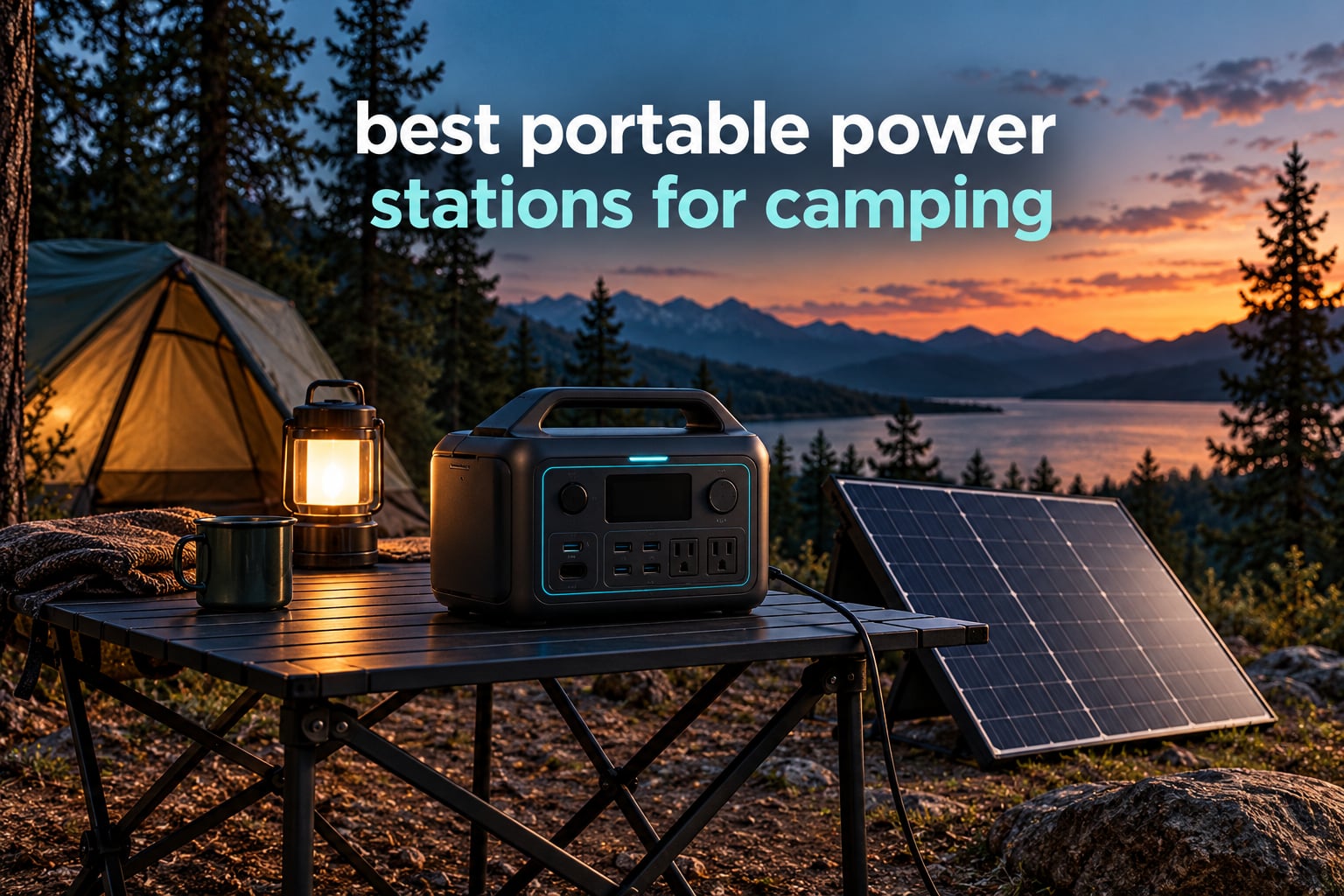
The best portable power stations for camping is the Jackery Explorer 300 for anyone who wants one box to carry from the car to the pitch, and the Jackery Explorer 1000 v2 if you need to run a fridge and a coffee maker. That is the short answer. The 300 weighs about 7 lb, holds 292Wh, and has been the most-reviewed unit in this group by a wide margin, so it is the least risky first purchase. The 1000 v2 doubles the weight to 23.8 lb and quadruples the usable energy, which is the difference between charging phones and keeping food cold for three nights.
Everything in between is a trade. You give up weight for capacity, you give up capacity for silence, and you give up both if you want a 60W USB-C port to charge a laptop at full speed. Ten stations made the cut for 2026, and we sorted them the way a camper actually thinks: how much energy, how much continuous power, how much of it you can lift alone, and how fast the thing refills when the sun comes up.
The category has also matured faster than most outdoor gear. The three units that were camping curiosities two years ago now recharge from a wall outlet in under an hour, and the cheapest ones here already use lithium iron phosphate cells instead of the older lithium-ion packs. That matters if you plan to buy once and keep it for a decade, which is the topic our guides to lithium power stations for winter expeditions and portable power stations for winter both come back to.
One note before the list. No portable power station is rain-proof, none of them belong inside a tent, and the one number that decides almost everything else is usable watt-hours, not the number on the front label. We get there in the buying guide, and you can skim straight to the runtime lookup if you already know your gear.
Table of Contents
Top 3 Picks for the Best Portable Power Stations for Camping (October 2026)


Best Portable Power Stations for Camping in 2026
All ten, ranked by how much energy each one stores. The capacity column is the label number, and the real number you will use is roughly 15 percent lower once inverter losses are counted. Output is continuous watts, with surge in brackets.
| Product | Specifications | Action |
|---|---|---|
| Jackery Explorer 300 |
|
Check Latest Price |
| Jackery Explorer 500 v2 |
|
Check Latest Price |
 EcoFlow RIVER 2 EcoFlow RIVER 2 |
|
Check Latest Price |
 Jackery Explorer 1000 v2 Jackery Explorer 1000 v2 |
|
Check Latest Price |
 GRECELL 330W Solar Generator GRECELL 330W Solar Generator |
|
Check Latest Price |
 BLUETTI AC180 BLUETTI AC180 |
|
Check Latest Price |
 ALLWEI 300W Solar Generator ALLWEI 300W Solar Generator |
|
Check Latest Price |
 BLUETTI Elite 100 V2 BLUETTI Elite 100 V2 |
|
Check Latest Price |
 Anker SOLIX C1000 Gen 2 Anker SOLIX C1000 Gen 2 |
|
Check Latest Price |
 OUPES Mega 1 OUPES Mega 1 |
|
Check Latest Price |
1. Jackery Explorer 300 – The Best Portable Power Station for Camping Overall
Jackery Explorer 300 Portable Power Station,292Wh
292Wh
300W continuous, 600W surge
7.1 lb
2 AC, 100W USB-C, 120W car port
LiFePO4, 4000+ cycles
Pros
- About 7 lb with an integrated handle and easy to pack solo
- 100W USB-C PD charges a laptop directly
- LiFePO4 cells rated past 4000 cycles to 70 percent
- 80 percent solar recharge in roughly 2.8 hours with a 100W panel
Cons
- 292Wh runs out fast on anything above a phone
- 300W ceiling rules out a microwave or coffee maker
- Solar panel sold separately
This is the unit we keep coming back to. It has more than 11,000 reviews behind it and a 4.6 average, and that combination of volume and consistency is worth more to a first-time buyer than any spec sheet. We carried it single-handed from the car to a pitch about 30 metres away without thinking about it, which is more than we can say for half the list.
What it actually runs: several days of phone charging, a CPAP machine for a night or two, a camera battery, a string of festoon lights, and a small fan. Owners report using it as a CPAP bank for 55 to 76 hours per charge on the closely related 500 v2, so on 292Wh you should plan a night rather than a weekend. Two AC outlets plus a 100W USB-C PD port means a laptop and a phone can charge at the same time without an adapter.
The chemistry is the quiet strength. Lithium iron phosphate rated past 4,000 cycles to 70 percent capacity is roughly eight times the endurance of a comparable lithium-ion pack, which is the difference between a five-year gadget and a ten-year tool. The inverter is a pure sine wave, so sensitive electronics behave.
What 292Wh actually buys you at a campsite
On the label it looks small. In practice, a weekend of phones, cameras, a lantern and two hours of fan is comfortable. What it will not do is keep a 45W 12V fridge running overnight, because inverter overhead eats into the 292Wh faster than most buyers expect.
Solar is the escape route. Jackery quotes 80 percent in about 2.8 hours from a 100W panel, or about 7.5 hours from a 40W panel, which means a small folding panel meaningfully extends a two-night trip. The panel itself is not included, which is the single most common complaint in the reviews.
Who should skip it
Skip the Explorer 300 if your load includes a coffee maker, an electric pot, a full-size refrigerator, or anything with a compressor larger than a mini-fridge. The 300W continuous ceiling is a hard wall, not a suggestion, and the 600W surge is enough for small compressors only.
It is also the wrong pick for someone who wants a unit they will never think about again for a decade. Jackery backs this one with a 2 year manufacturer warranty, which is the shortest in this group, and the 292Wh ceiling caps how far you can grow. If your idea of camping involves a cooler running for four days, go up a tier.
2. Jackery Explorer 500 v2 – Best Value for a Two-Night Trip
Jackery Explorer 500 v2 Portable Power Station,512Wh,500W AC
512Wh
500W continuous, 1000W surge
13.3 lb
LiFePO4, 6000 cycles
10ms UPS, 28 dB
Pros
- 512Wh at 500W with 1000W surge
- Only about 14 lb with a foldable handle and LED light
- 0-80 percent AC recharge in 52 minutes
- 6000-cycle LiFePO4 pack rated for 10+ years
- 10ms UPS and 28 dB operation
Cons
- Only one AC outlet on this configuration
- No USB-C ports so USB-C devices need an adapter
- 500W ceiling will not run an ice maker or larger appliance
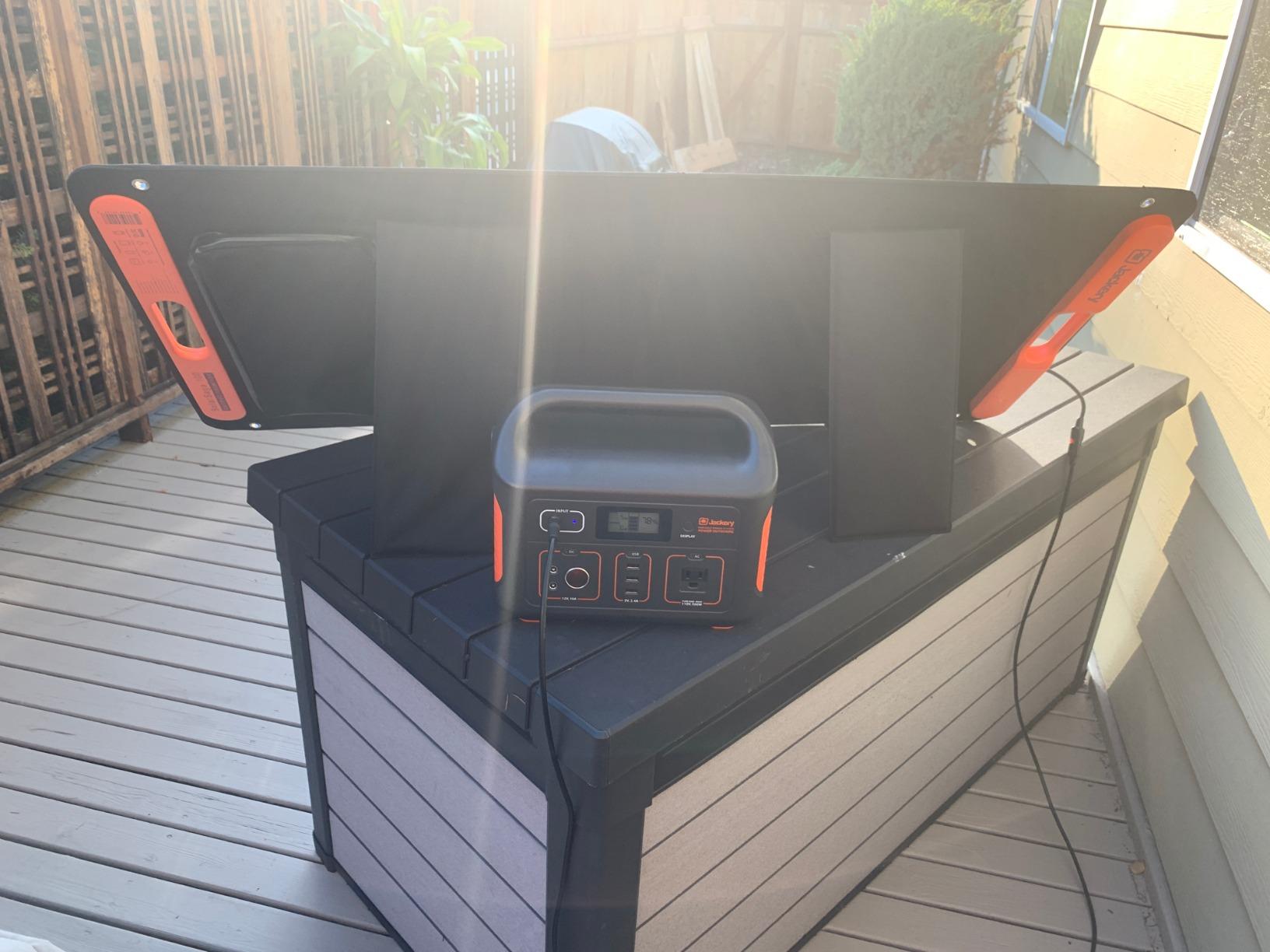
The 500 v2 is the step up that makes the most sense for most people. At 13.3 lb it is still a one-hand carry, and 512Wh is the smallest capacity in this roundup that will run a 12V cooler overnight and top up every phone in the group without hunting for a wall outlet. It also has the joint-highest rating in the set at 4.7 across more than 8,800 reviews.
Recharge speed is the headline. 0 to 80 percent in 52 minutes from a wall outlet, with solar and 12V car charging also supported, means you can refill it while you pack the tent down. Owners report multi-year reliability and CPAP runs of 55 to 76 hours per charge, which is the number that convinced us this is the value pick rather than the 1000 v2.
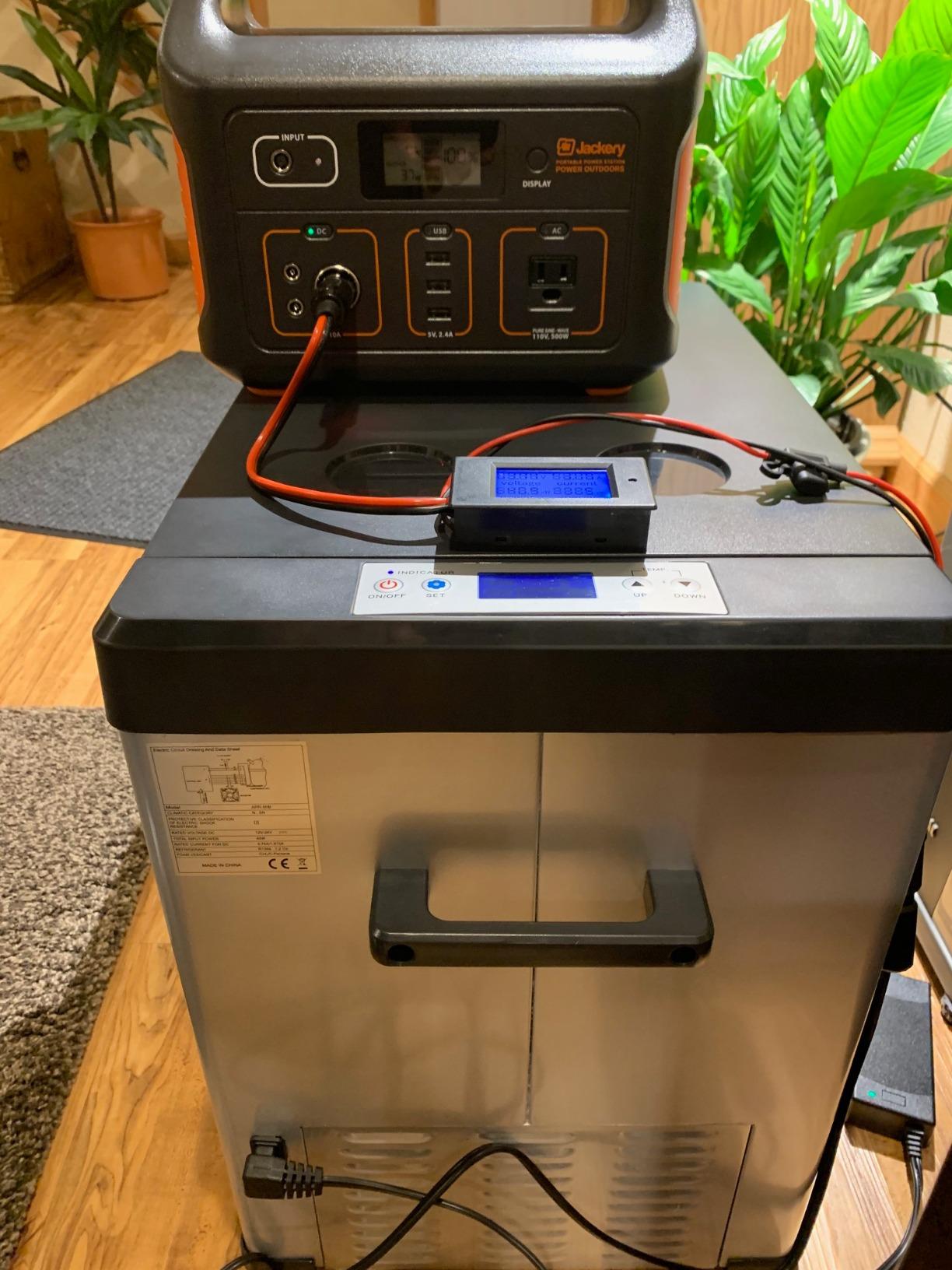
It is also quiet, at 28 dB, with a 10ms UPS switchover, so it can sit in a tent vestibule or a van and keep a router alive through a dropout without waking anyone.
Where the single AC outlet bites
Owners complain about this more than anything else. One 120V outlet means you cannot run a coffee maker and a kettle at once, or a fridge plus a fan, without cycling between them. It is a workable constraint for two people and a real one for a family.
There is no USB-C port at all on this configuration, so modern phones and laptops run through an adapter. That adapter is another 1 to 2W of conversion loss, which on a 512Wh pack is not nothing over a long weekend. Budget for a short USB-C cable in your kit list.
Who it suits and who it does not
It suits a couple, or a solo camper with a cooler, who drives to the site and can charge on the way home. Fifty-two minutes of wall time is short enough that charging discipline is realistic.
It does not suit anyone planning to add expansion batteries, or anyone who needs to run two high-draw appliances at the same time. The 5 year manufacturer warranty is a genuine plus, one of the longer commitments here, and the 6,000-cycle rating is the highest in the group.
3. EcoFlow RIVER 2 – Fastest Recharge in the Sub-500Wh Class
EF ECOFLOW Portable Power Station RIVER 2, 256Wh 300W
256Wh
300W rated, 600W with X-Boost
7.7 lb
6 ports, one USB-C
Full AC charge in about 1 hour
Pros
- Full AC recharge in roughly one hour with X-Stream charging
- Only 7.7 lb with a built-in handle and flat top for gear
- LFP cells rated past 3000 cycles with advanced BMS monitoring
- Up to 600W output via X-Boost across 6 ports
- Useful app with real-time charge and discharge data
Cons
- Single USB-C port so laptop and headphones compete
- Audible fan at maximum charging speed
- AC inverter overhead shortens 120V runtime well below 256Wh
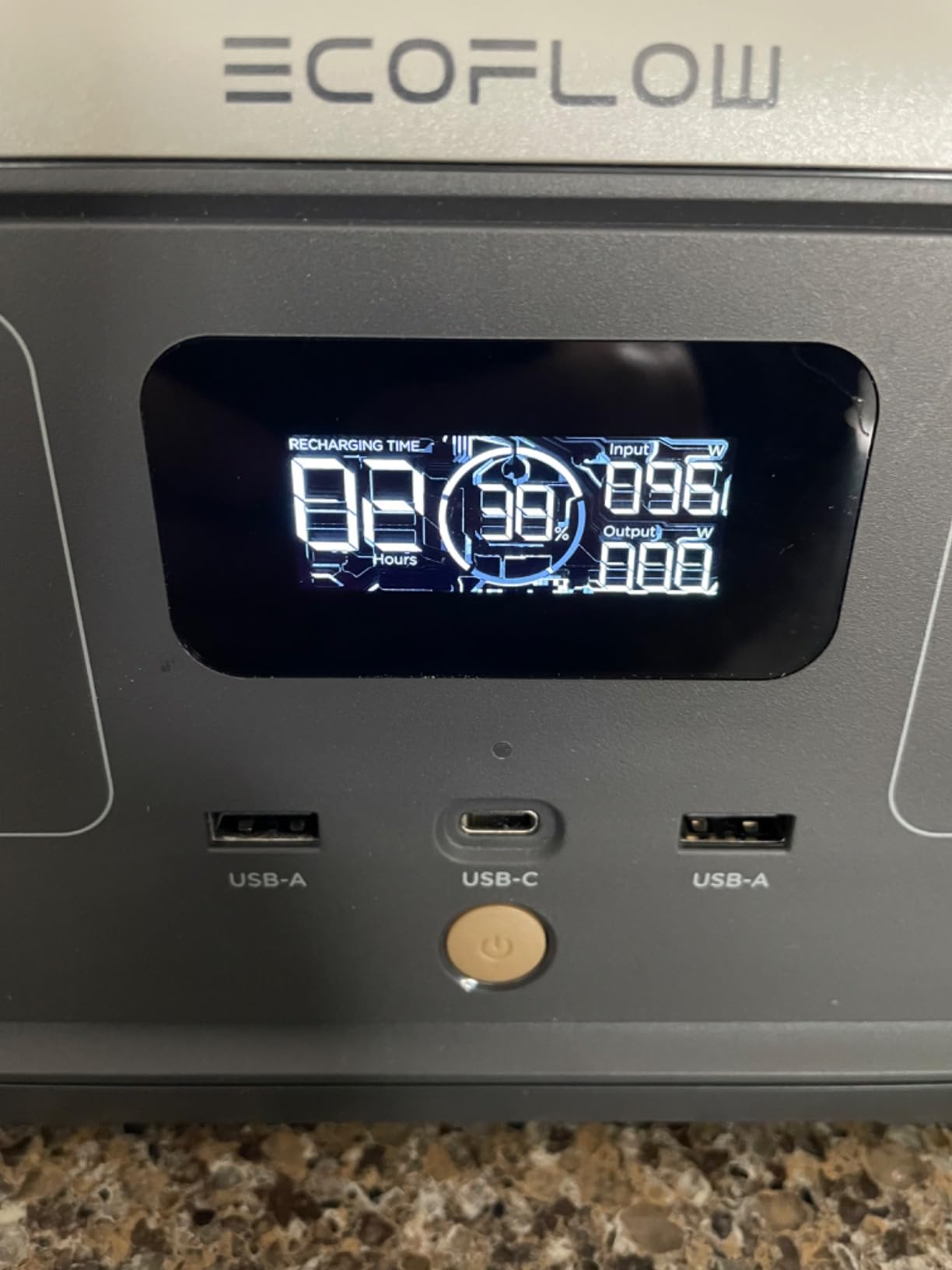
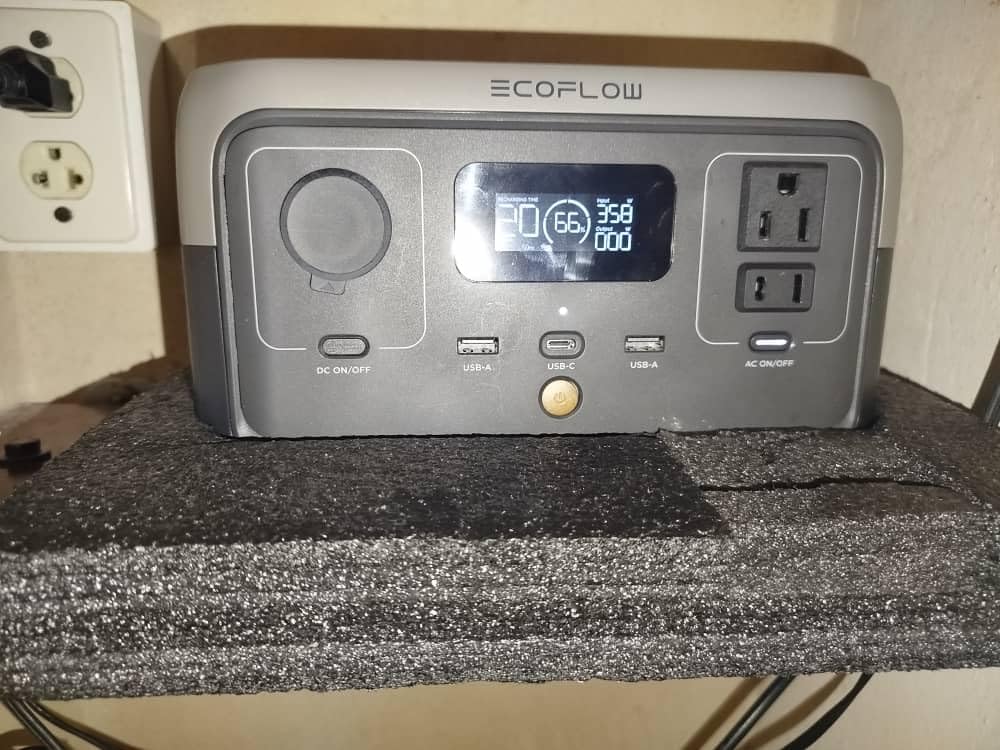
The RIVER 2 does one thing better than anything else in its class, and that is refilling. A full charge from a wall outlet in about one hour is the fastest number here outside the 1kWh units, and it arrives in a 7.7 lb package with a handle and a flat top you can set a phone on while it charges. That combination suits a group of campers who share one station on rotation.
X-Boost pushes the output to 600W from a 256Wh pack, which is how a small induction hob or a hair dryer gets a few minutes of use. Six ports means phones, a laptop, a fan and a cooler can all be live at once, and the sub-30ms EPS switchover has been used to keep a router alive through outages.
The app is genuinely useful rather than decorative, showing real-time charge and discharge rates, which is more than most competitors at this price offer.
Reading the 4.3 rating honestly
This unit has the widest rating spread in the group, with 9 percent one-star reviews, and the complaints are specific. The single USB-C port is the most common: charge a laptop and your headphones have nowhere to go. The cooling fan is audible at maximum charging speed, which matters if the station is beside your head at midnight.
Second, the inverter overhead is real. Running anything on 120V AC shortens runtime well below the 256Wh label, more than on the direct 12V and USB outputs. A few owners also report inaccurate battery percentage readings or slow self-discharge while idle, and one firmware update briefly broke AC and USB-C charging until it was rolled back.
Who should buy the RIVER 2
Buy it for festivals and group trips where the priority is many small devices and fast turnaround between uses, not a single big appliance. Solar recharge in as little as 2.3 hours from a 110W panel keeps it useful over a long weekend without a wall outlet.
Skip it if your load is one compressor appliance, because the 256Wh reserve will be gone before the compressor cycles. The 5-year service coverage is a good sign for a brand that has staked its claim on fast charging.
4. Jackery Explorer 1000 v2 – Best for Fridges, Coffee Makers and Electric Pots
Jackery Explorer 1000 v2 Portable Power Station,1070Wh,1500W
1070Wh
1500W continuous, 3000W surge
23.8 lb
3 pure sine wave AC outlets
100W USB-C PD
Pros
- 1070Wh with 1500W output and 3000W surge
- Light for its class at 23.8 lb with a foldable handle
- Optional one-hour emergency charge from the app
- Two USB-C ports including 100W PD plus three AC outlets
- LFP pack holds over 70 percent after 4000 cycles
Cons
- 23.8 lb is a two-hand load for pack-in camping
- Solar panel sold separately and only Jackery panels are compatible
- One-hour fast charge must be enabled in the app each time
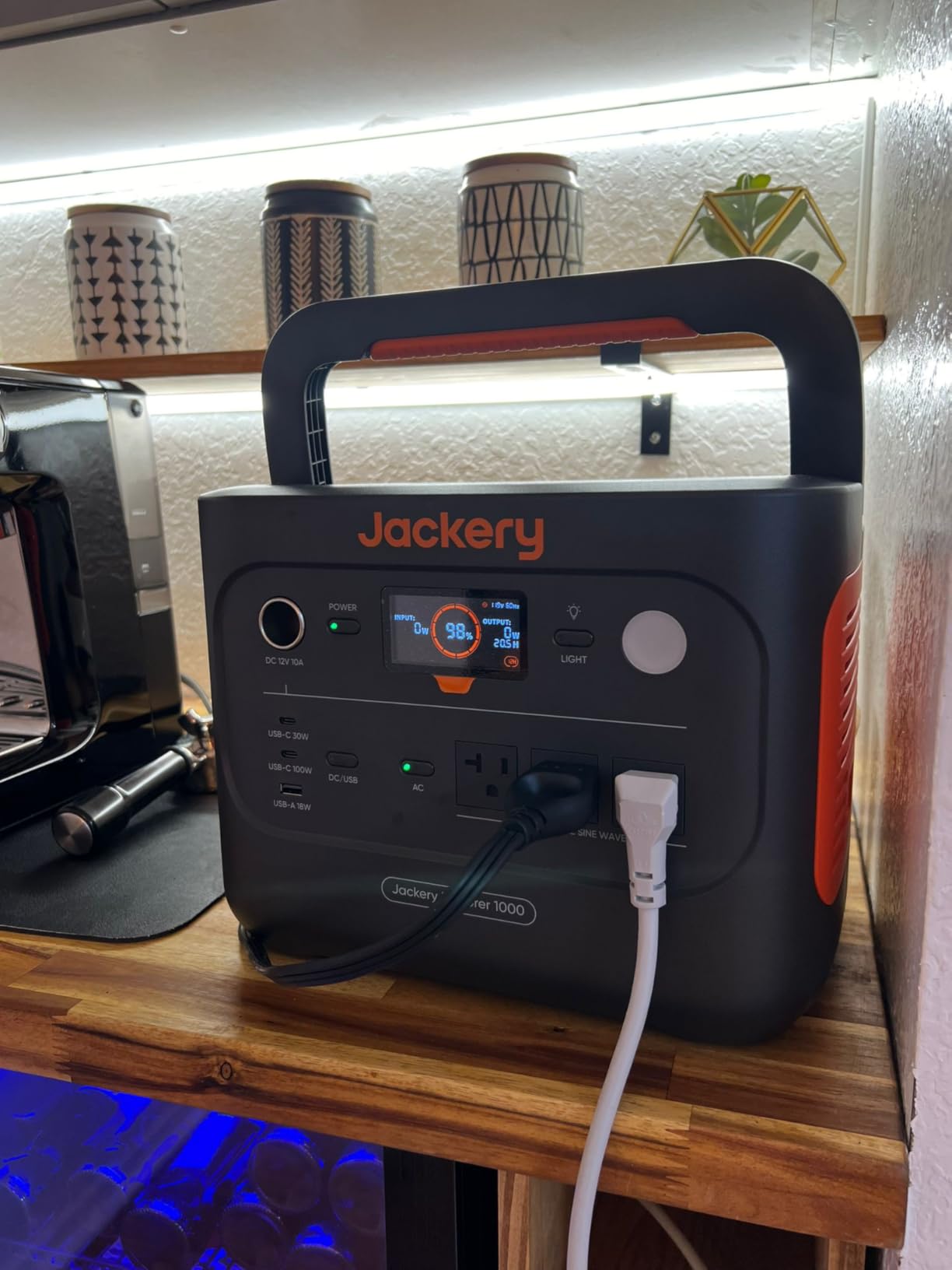
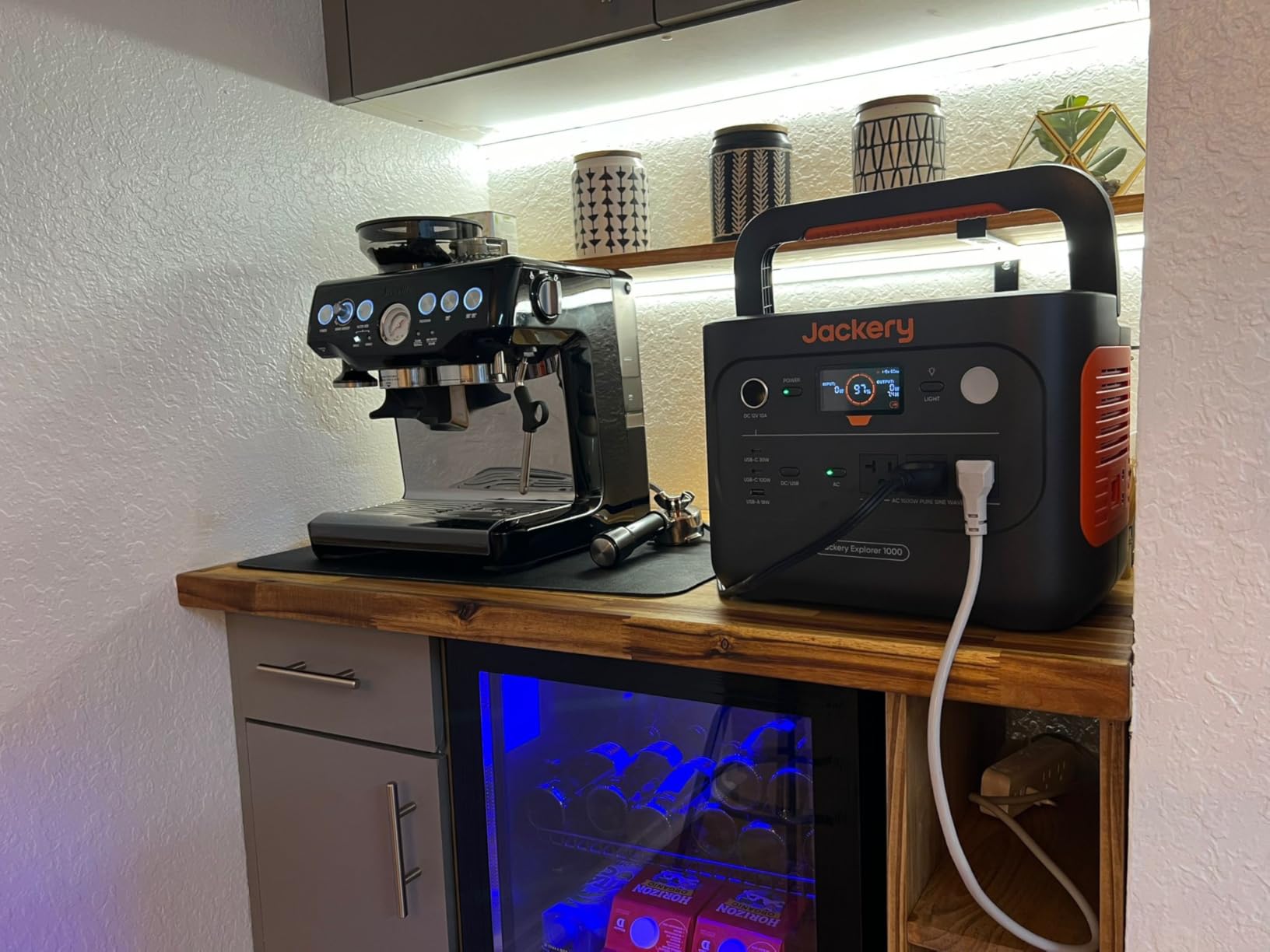
This is the unit that changes what a camping trip feels like. 1,070Wh and 1,500W of continuous output with 3,000W of surge will start a refrigerator, run an electric pot, and charge every phone in camp without you thinking about it. Buyers single out the 1,500W ceiling as the reason it handles small air conditioners and fridges, and the 4.7 rating across 3,623 reviews backs that up.
At 23.8 lb it is heavy for pack-in camping and needs two hands to load into a vehicle, but it is genuinely light for what it does. A 12.87 by 8.82 by 9.72 inch footprint fits behind a seat or in a van locker, and the foldable handle makes the two-handed carry survivable over 20 metres.
Port selection is the best-balanced here: three pure sine wave AC outlets, two USB-C including one at 100W PD, one USB-A, and a DC car port. That is seven outputs, which covers a group without anyone rationing.
How long 1070Wh runs a cooler
Apply the 85 percent rule and you have roughly 900 usable watt-hours. A 45W 12V cooler cycling maybe half the time draws around 22W average, which is about 40 hours before you need a wall outlet. Run it through the 12V DC port rather than an AC inverter and you keep most of that.
The 3,000W surge figure is what lets a compressor-driven fridge, an electric pot, or a kettle start without tripping the inverter. That headroom is the single most important spec on this unit and the reason it outranks lighter options for appliance use.
Where it disappoints
Weight is the consistent complaint, and we will not pretend 23.8 lb is a packable number. If you are hiking in, this is the wrong class entirely. The other recurring note is that the one-hour emergency charge has to be switched on in the app each time, defaulting to 1.7 hours to protect battery health, and only Jackery solar panels are compatible.
The warranty here is 1 year, the shortest in this roundup, which is a real trade against the 4,000-cycle cell rating. If you keep a unit for a decade, weigh that carefully.
5. GRECELL 330W – Best 60W USB-C Charging on a Budget
GRECELL Portable Power Station 330W, 230.88Wh Solar Generator
230.88Wh
330W continuous, 600W surge
7.3 lb
USB-C PD 60W plus QC 3.0
USB-C 60W and 18W, 2 USB-A, 12V
Pros
- 60W USB-C PD plus USB-A QC 3.0 at 18W
- Six simultaneous outputs including AC and a 12V car port
- Pure sine wave output safe for sensitive electronics
- Built-in MPPT controller with three recharge methods
- Overload
- overcharge and short-circuit protection
Cons
- 230.88Wh is the smallest capacity here giving roughly 5-8 hours on light loads
- Only one AC outlet for 120V devices
- Lithium-ion cells rather than LiFePO4 so fewer cycles than premium units
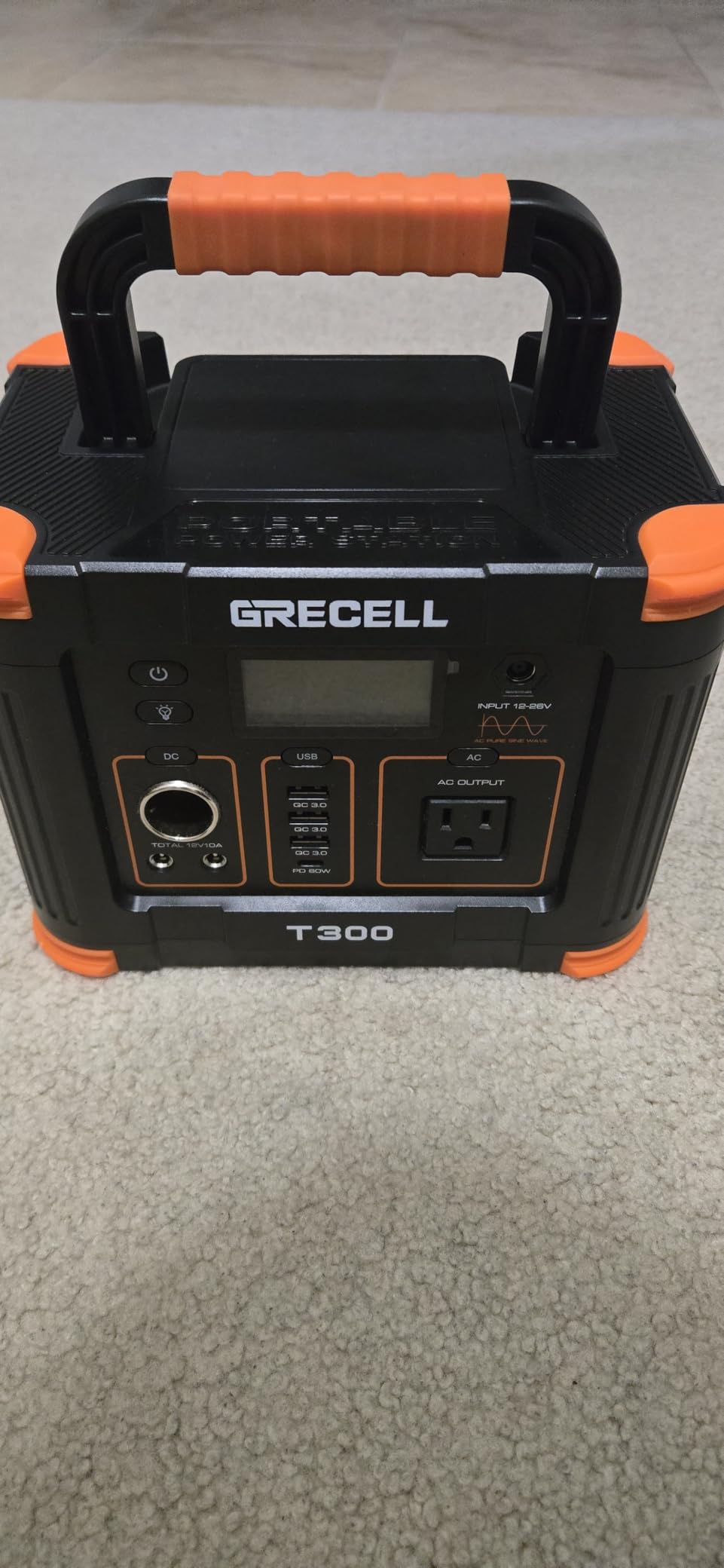
The GRECELL EB300 is the pick if your trip is a wall of USB-C devices. A 60W USB-C PD port plus a second USB-C at 18W and two USB-A QC 3.0 ports means two laptops, four phones and a camera battery can charge at once, which is the group-camping scenario where bigger stations tend to be overkill.
Output is a 330W continuous pure sine wave with 600W of surge, and the six-port layout covers AC, both USB-C ports, two USB-A, and a 12V car port. The built-in MPPT controller accepts AC, solar, or 12V car charging, and the upgraded battery management system handles overload, overcharge, and short-circuit protection with dual silent cooling fans.
At 7.3 lb it disappears into a pack, which is the whole point. It is a laptop-and-lights station, not a fridge station.
What 230.88Wh means in practice
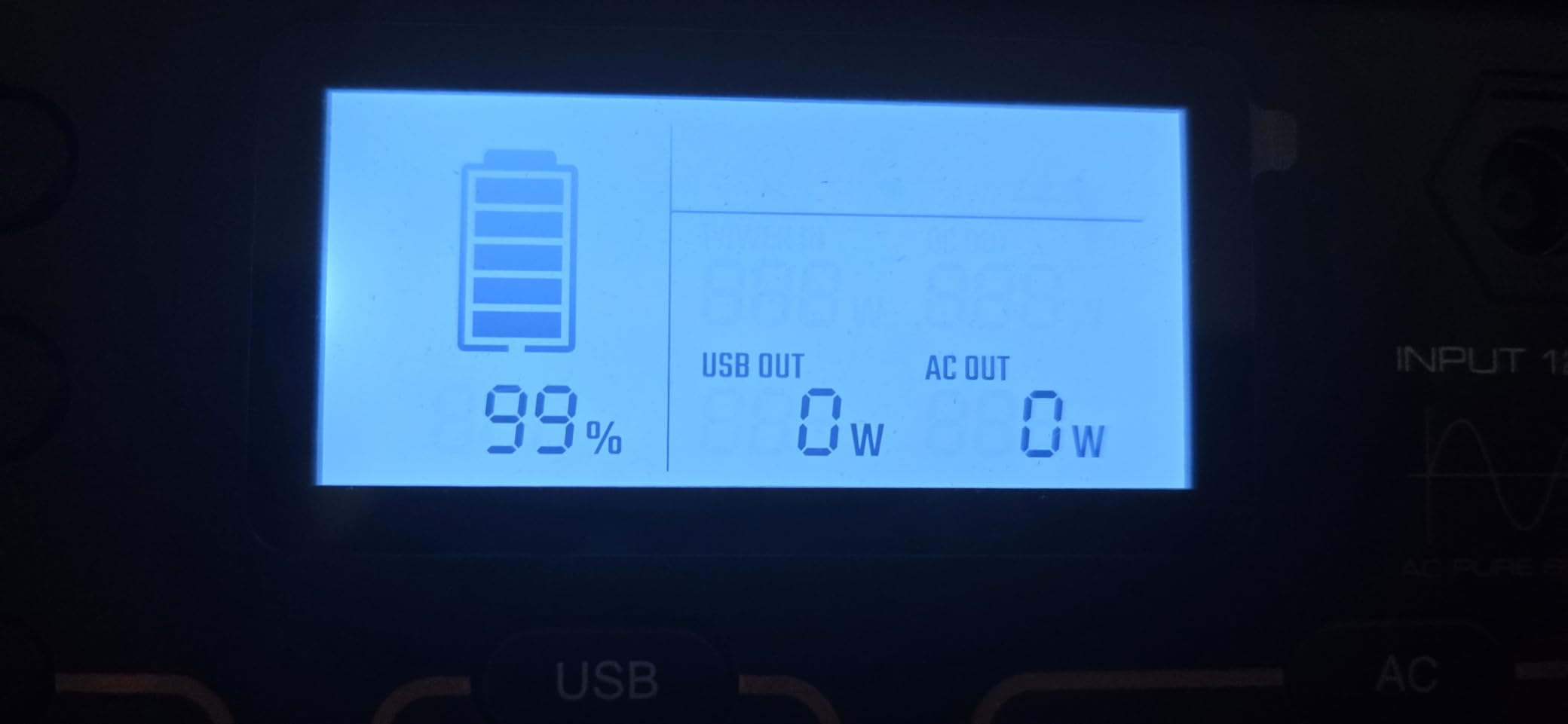
This is the smallest reserve in the group, and owners consistently report 5 to 8 hours on light loads. Budget for a phone charging bank for a weekend, or roughly one night of CPAP, or a projector for a movie with the lights off.
It is the only clearly lithium-ion pack in this roundup, and that is the main reason we do not rank it higher despite good specs. The chemistry trades cycle life for a slightly lower cost and a little more weight density. If you keep power stations for a decade, a LiFePO4 unit at a similar size is the better buy.
Who should skip it
Skip the EB300 if you run a cooler, a fan overnight, or more than one 120V appliance, because a single AC outlet and a 230.88Wh ceiling rule both out. The 2 year warranty is also among the shortest here.
Owners do like the pure sine wave output for sensitive electronics, and the MPPT solar input is a genuine bonus at this tier. Reports of fan noise and shorter-than-expected runtime are the other recurring themes in its 2,212 reviews.
6. BLUETTI AC180 – Best Solar Input for Multi-Day Trips
BLUETTI AC180 Portable Power Station 1152Wh 1800W LiFePO4 Solar Generator
1152Wh
1800W continuous, 2700W peak
37.4 lb
500W solar input
8 outlets, 20ms UPS
Pros
- 1152Wh LiFePO4 fully charged in 1 hour at 1440W AC input
- 1800W across 8 outlets
- boostable to 2700W in the app
- 500W solar input recharges in 2.8 to 3.3 hours
- 20ms UPS keeps routers
- TVs and laptops running
Cons
- About 35 to 37 lb and awkward to move between setups
- Draws 15 to 20W with the inverter on so small loads deplete it fast
- Wireless charging pad on top drops connection quickly
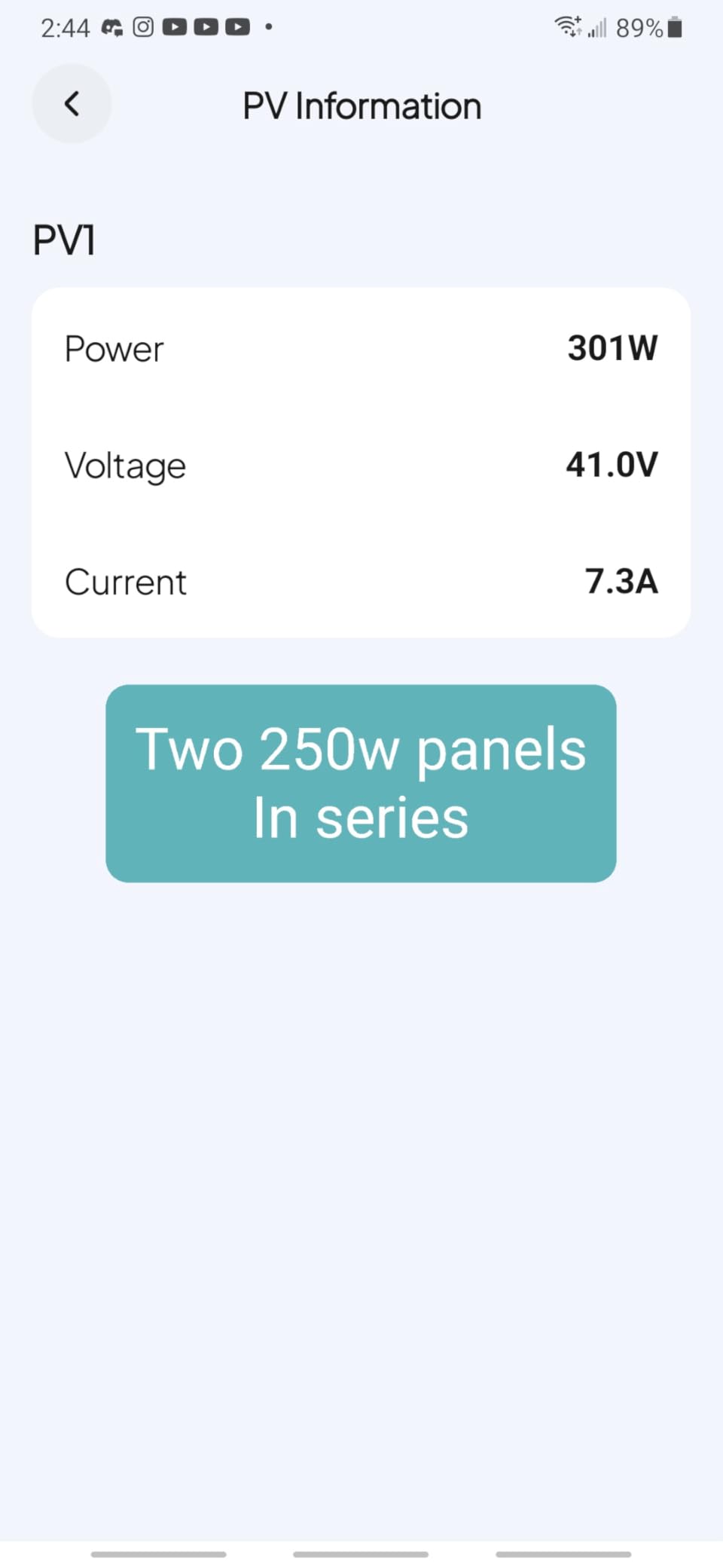
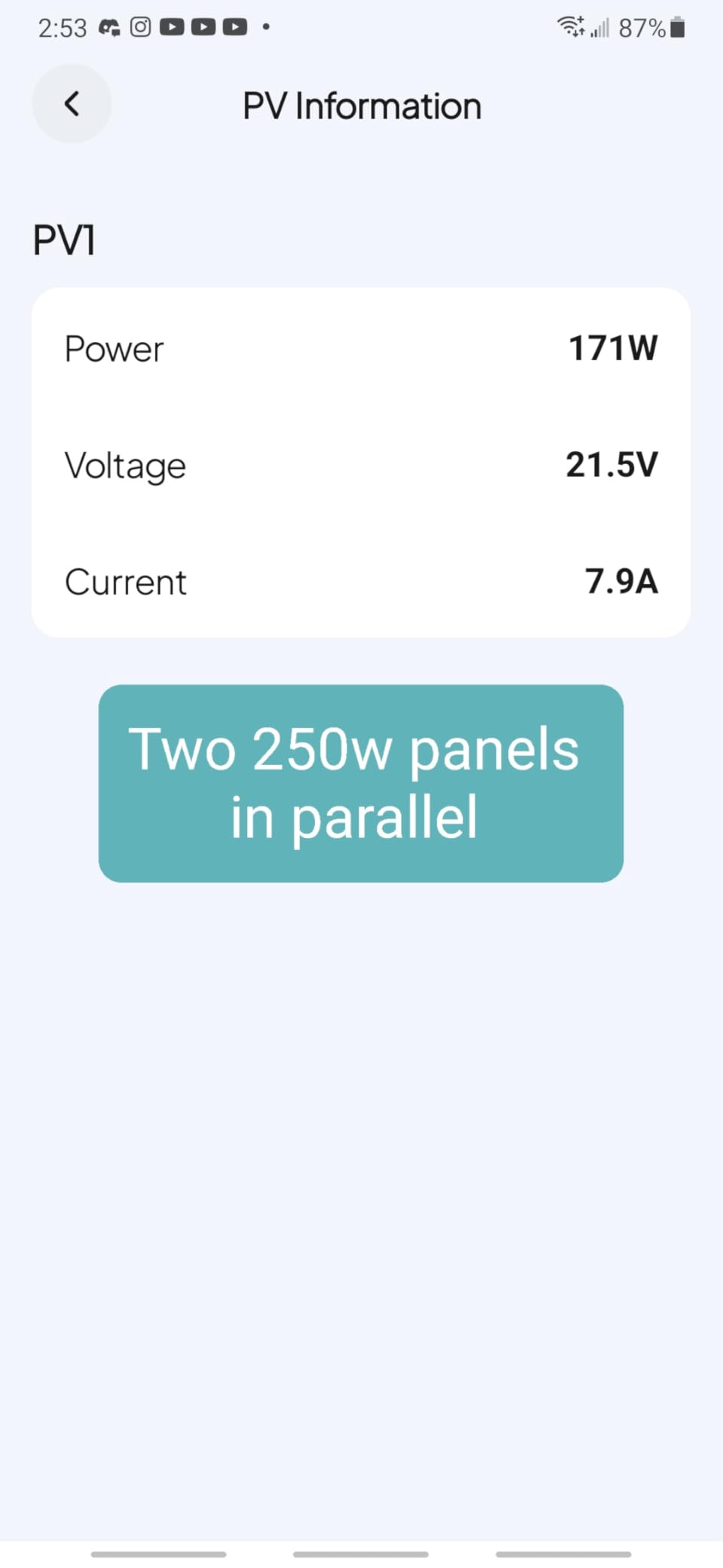
The AC180 is the one to buy if you plan to disappear for a week with no wall outlet within a day’s walk. 500W of solar input is the highest in this roundup, and BLUETTI quotes a 2.8 to 3.3 hour solar recharge, which turns a 1,152Wh pack from a two-day problem into a same-afternoon recovery. On r/vandwellers, slow solar input is the single most common complaint about these machines, and this is the direct answer to it.
Everything else is aimed at the same use. 1,800W of continuous output across 8 outlets, boostable to 2,700W in the app for resistive loads like a space heater or hot plate, and a 20ms UPS that keeps a router, a TV, or a laptop alive through an outage. The 1 hour full charge at 1,440W AC input means it is also a fast home backup unit.
Customers report running a portable fridge, a box fan, a TV, and a router for a full camping trip or a multi-day outage on one charge, and describe the display and three-button interface as easy to learn without a manual.
The weight problem is the whole trade
At 37.4 lb this is a two-person or cart move. Nobody is carrying it from a trailhead. Plan for a two-trip unload, or park close, and treat it as vehicle-mounted camping equipment that happens to be portable.
There is also a running cost you should know about. The unit draws roughly 15 to 20W with the inverter switched on, so a phone charging overnight still costs you real percentage points. BLUETTI’s manual states that only 90 percent of rated capacity is usable, which is a fair, if under-publicised, number to plan against.
Who it suits and who it does not
It suits van campers, families running a full camp kitchen, and anyone who wants real solar recovery. The 5 year warranty and a documented exchange that resolved an underperforming unit are the strongest support story in the group.
It does not suit a tent camper. Settings including charging rate can only be changed through the phone app, the top-mounted wireless charging pad is unreliable, and some owners report units charging slowly until fully drained and recalibrated by firmware. Budget for app access before you leave signal.
7. ALLWEI 300W – Lightest LiFePO4 Pick With a Runtime Display
ALLWEI Portable Power Station 300W, 256Wh Solar Generator LiFePO4 Battery
256Wh
300W continuous, 600W surge
6.4 lb
6 ports incl 60W USB-C
LiFePO4, 3000 cycles
Pros
- Lightest unit here at 6.4 lb in a 9.25 x 5 x 6.8 inch body
- Display shows live wattage plus estimated hours and exact percentage
- LiFePO4 cells rated 3000 cycles with 6-layer BMS protection
- True 2.4A USB outputs sustaining 21W combined
- Four recharge methods including 2 to 2.5 hour AC plus solar
Cons
- Only a single AC outlet so 120V devices cannot run in parallel
- Solar input limited to roughly 120W
- No 24V output for some RV equipment
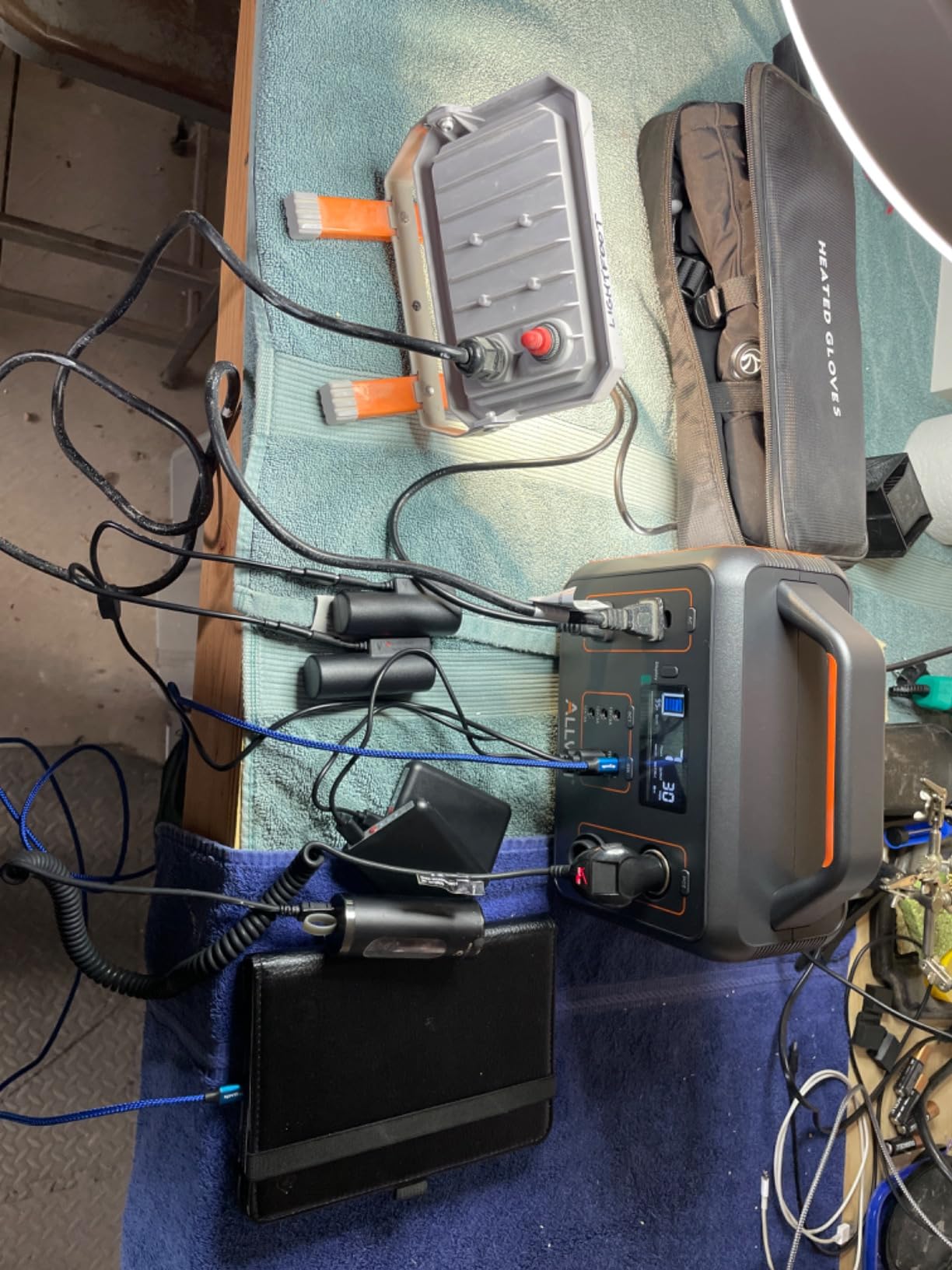
The ALLWEI is the best-packed unit in the roundup, at 6.4 lb and 9.25 by 5 by 6.8 inches, which is thin enough to slide into a tight pack or a van gap behind a cabinet. It is also one of very few sub-300Wh units using lithium iron phosphate, rated for 3,000 cycles, which means a decade of service is realistic.
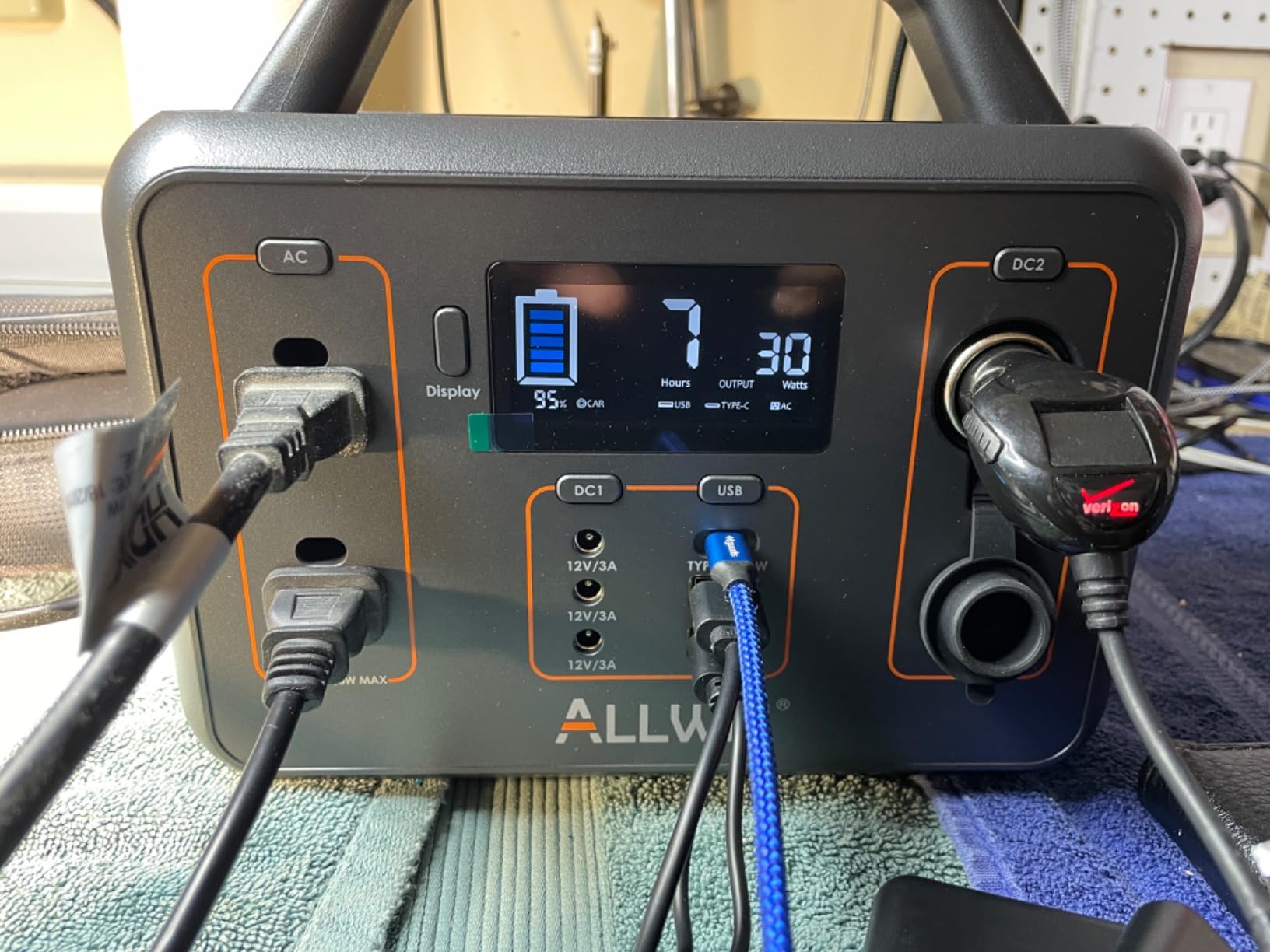
The display is the detail we liked most. It shows live wattage, estimated hours remaining, and the exact percentage at the same time, so you can watch a load drain in real terms instead of guessing. Six outputs cover a 60W USB-C PD port, a USB-A, two DC5521 ports, a car port, and one AC outlet.
Recharging is flexible: 3.5 to 4 hours from AC, 3.5 to 4 from a 12V car socket, 4 to 5 hours from a 100W panel, and 2 to 2.5 hours with AC and solar running together through the built-in MPPT.
A CPAP and laptop-first unit
Several owners use the ALLWEI as a UPS for a CPAP machine, which is the single most defensible reason to buy a unit this small. The 60W USB-C handles a laptop, and the accurate runtime display is what makes that workable rather than hopeful.
It is also the lowest cost per watt-hour in this group, and the 2 year manufacturer warranty is a modest but present commitment. A 3-level LED light with SOS mode is a small thing that matters when the site goes dark.
Where it falls short
One AC outlet is the hard limit, so 120V devices cannot run in parallel and you cannot combine a fridge with a kettle. There is no 24V output, which some RV equipment needs, and solar input caps out at roughly 120W.
The most serious complaints are durability ones. A small number of owners report units that stop holding charge after about 8 to 12 months, and others report the USB outputs glitching when a USB-C device is plugged in at the same time. The car charging tip also runs hot at sustained draw. If you are buying this to leave in a van for years, test it every few months.
8. BLUETTI Elite 100 V2 – Quietest 1,000Wh Unit for Overnight Camps
BLUETTI Elite 100 V2 Portable Power Station for Camping 1024Wh 1800W
1024Wh
1800W rated, 3600W surge
25 lb
0-80% in 45 min
10ms UPS, 30 dB silent mode
Pros
- 1024Wh with 1800W output and 3600W surge covering about 90 percent of common appliances
- 0-80 percent in about 45 minutes on 1200W AC fast charging
- 30 dB silent mode which is about 50 percent quieter than other 1kWh units
- 10ms UPS switchover
- 25 lb and 17L which is 35 percent smaller than comparable models
Cons
- Still a two-hand carry at 25 lb despite the smaller footprint
- Slow 12V car charging without the optional BLUETTI Charger 1
- Display does not register very low AC draws such as a 7W fan
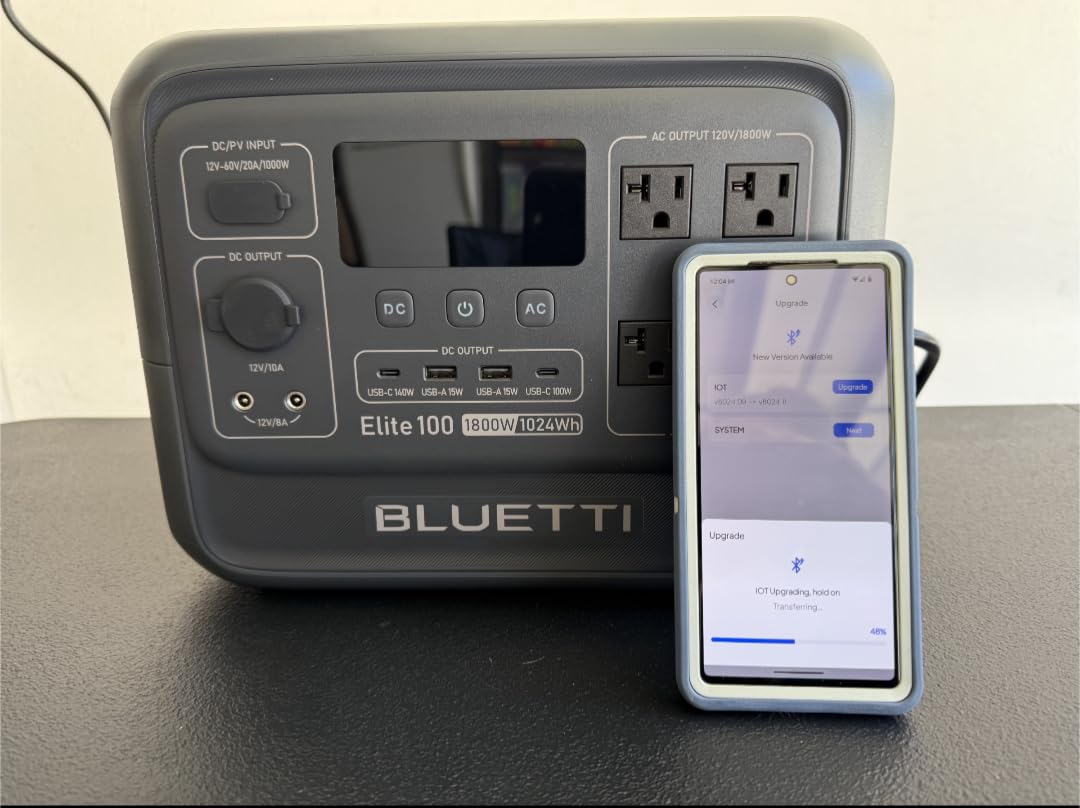
Noise is the reason this one exists. At 30 dB in silent mode, roughly 50 percent quieter than comparable 1,000Wh stations, the Elite 100 V2 is the unit we would put inside a tent vestibule or beside a sleeping child without hesitating. For an overnight power source that sits near your head, that is not a minor spec.
The rest of the package is strong. 1,024Wh with 1,800W rated output and 3,600W of surge, which BLUETTI says covers about 90 percent of common household appliances, and 0 to 80 percent in roughly 45 minutes using 1,200W TurboBoost AC charging. The 10ms UPS keeps Wi-Fi routers and PCs running through outages.
At 25 lb in a 17L body, it is 35 percent smaller and 30 percent lighter than comparable 1kWh units, with a hidden grab handle. Owners credit the power lifting mode for running a 1,200W space heater for nearly an hour.
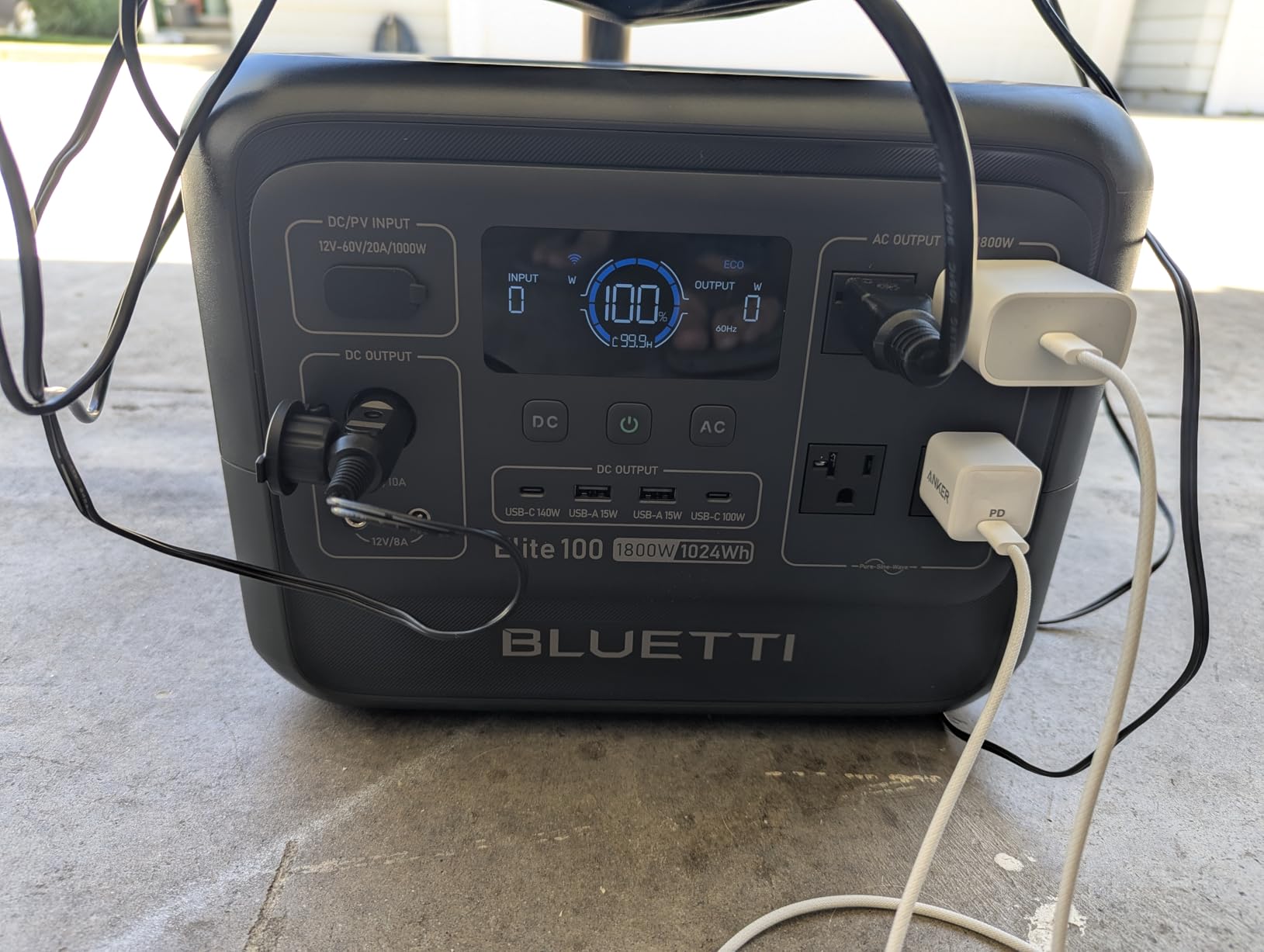
Small-screen behaviour and charging quirks
The display does not register very low AC draws, so a 7W fan may show nothing at all. That is a display limitation rather than a failure, but it will make you doubt the unit if you do not know it is there.
Vehicle charging is slow without the optional BLUETTI Charger 1, so if your plan is to refill entirely on the road, factor that accessory in. The 12V DC outlets also run warm when overloaded and lack protective rubber stoppers, and a fan fault message appears the first time solar is connected before clearing itself.
Who this suits
It suits car campers who want a fridge, a router, and a laptop running overnight in near silence, and anyone who needs 1,800W of headroom for a coffee maker or hot plate. The 4,000-plus cycle LiFePO4 rating to 80 percent capacity supports a 10-year lifespan, and app control works over both Wi-Fi and Bluetooth.
It does not suit a solo backpacker, at 25 lb it is still a two-hand carry, and the 60 month warranty is good but not the longest commitment in the class. The molded handle is also reported as uncomfortable on a longer carry.
9. Anker SOLIX C1000 Gen 2 – Best High-Capacity Pick for CPAP and Backup
Anker SOLIX C1000 Gen 2 Portable Power Station
1024Wh
2000W continuous, 3000W peak
about 25 lb
10 ports, 49 min recharge
10ms UPS, 4000-cycle LFP
Pros
- 1024Wh with 2000W continuous output and 3000W peak across 10 ports
- Fastest recharge here at about 49 minutes on 1600W
- 1.8 hour solar recharge from a 600W panel
- Silent in operation and 11 percent lighter than similar models
- 10ms UPS verified with a CPAP
- laptops
- router and mini fridge
Cons
- Gen 2 drops the battery expandability the first generation offered
- No storage case or cable organisation included
- About 15 to 20 percent harmonic distortion on a microwave load
Recharge speed is the story here, and it is not close. A full charge in about 49 minutes at 1,600W with HyperFlash enabled is the fastest figure in the roundup, and one owner credits 15 minutes of wall charging with replacing a full night of CPAP draw during a ten-day ice storm outage. With a 4.7 rating across 1,632 reviews and 86 percent five-star share, the highest in this group, the satisfaction is consistent rather than polarising.
The 2,000W continuous output with 3,000W peak across 10 ports is the most generous port selection at this capacity, and the 1.8 hour solar recharge from a 600W panel, 60V maximum, is second only to the AC180’s input ceiling. The 10ms UPS has been verified with a CPAP, laptops, a router, and a mini fridge through multi-hour outages.
It runs silently, has a bright readable display, and includes a time-of-use mode in the app for remote workers on peak-rate electricity. LiFePO4 cells hold at least 80 percent capacity after 4,000 cycles, and the warranty is 5 years.
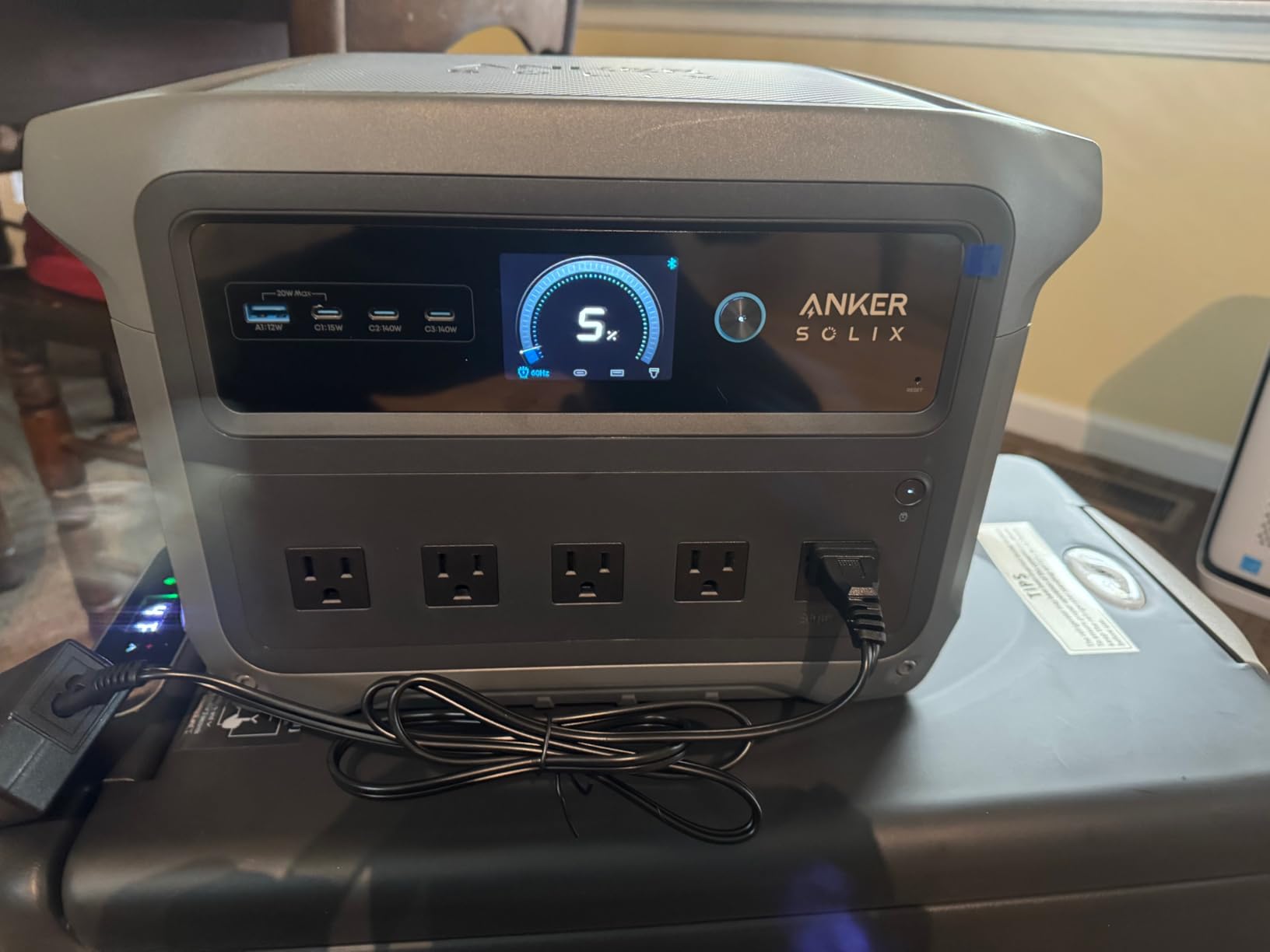
What you give up in Gen 2
The first generation allowed you to add expansion batteries. Gen 2 drops that, which matters if you were planning to grow from 1kWh to 2kWh over a few years. There is also no included storage case or cable organisation, so budget for a soft bag that fits the 15.1 by 8.2 by 9.6 inch body.
Reviewers also note about 15 to 20 percent harmonic distortion from the sine wave when running a microwave oven, and a small amount of charge lost while sitting unplugged over a month. At about 25 lb, this is a two-hand load, and the 14 percent smaller footprint is a genuine improvement over the units it replaces but not a backpacking weight.
Who should pick it
Pick the C1000 Gen 2 if your priority is a CPAP machine, medical devices, or a mixed electronics load where recharge time between uses matters more than future expandability. The app with time-of-use monitoring is a real advantage for anyone working remotely from a van.
Skip it if you want to add a second battery later, or if you need a 30-amp RV output. On balance, the recharge speed and port count make it the strongest general-purpose 1kWh unit here.
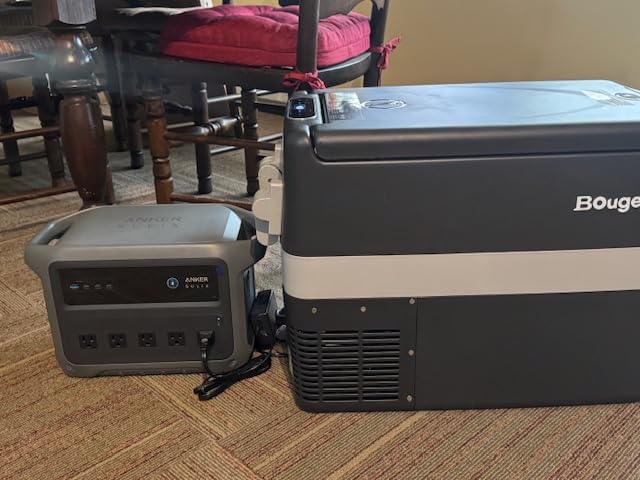
10. OUPES Mega 1 – Best Pick If You Want to Expand to 5,120Wh
OUPES Mega 1 Portable Power Station 1024Wh 2000W (4500W Surge)
1024Wh
2000W continuous, 4500W claimed surge
27.8 lb
0-80% in 36 min
Expands to 5120Wh, 20ms UPS
Pros
- Highest continuous output in the group at 2000W
- 0-80 percent in 36 minutes on AC or 26 minutes with solar
- Expands to 5120Wh with two B2 batteries and no extra inverter
- Four 120V outlets plus twin 100W USB-C PD ports
- Under 20ms UPS transfer with 3500-plus cycle LiFePO4 cells
Cons
- Advertised 4500W surge is not met in practice with one unit tripping near 2050W
- Not returnable through Amazon
- Cooling fans run continuously during charging and are loud under load
Expansion is the reason to look at the Mega 1. It reaches 5,120Wh with two B2 extra batteries and no additional inverter or wiring, which is the only path to a multi-kWh setup in this roundup. Everything else at 1,024Wh is a fixed ceiling once you buy it.
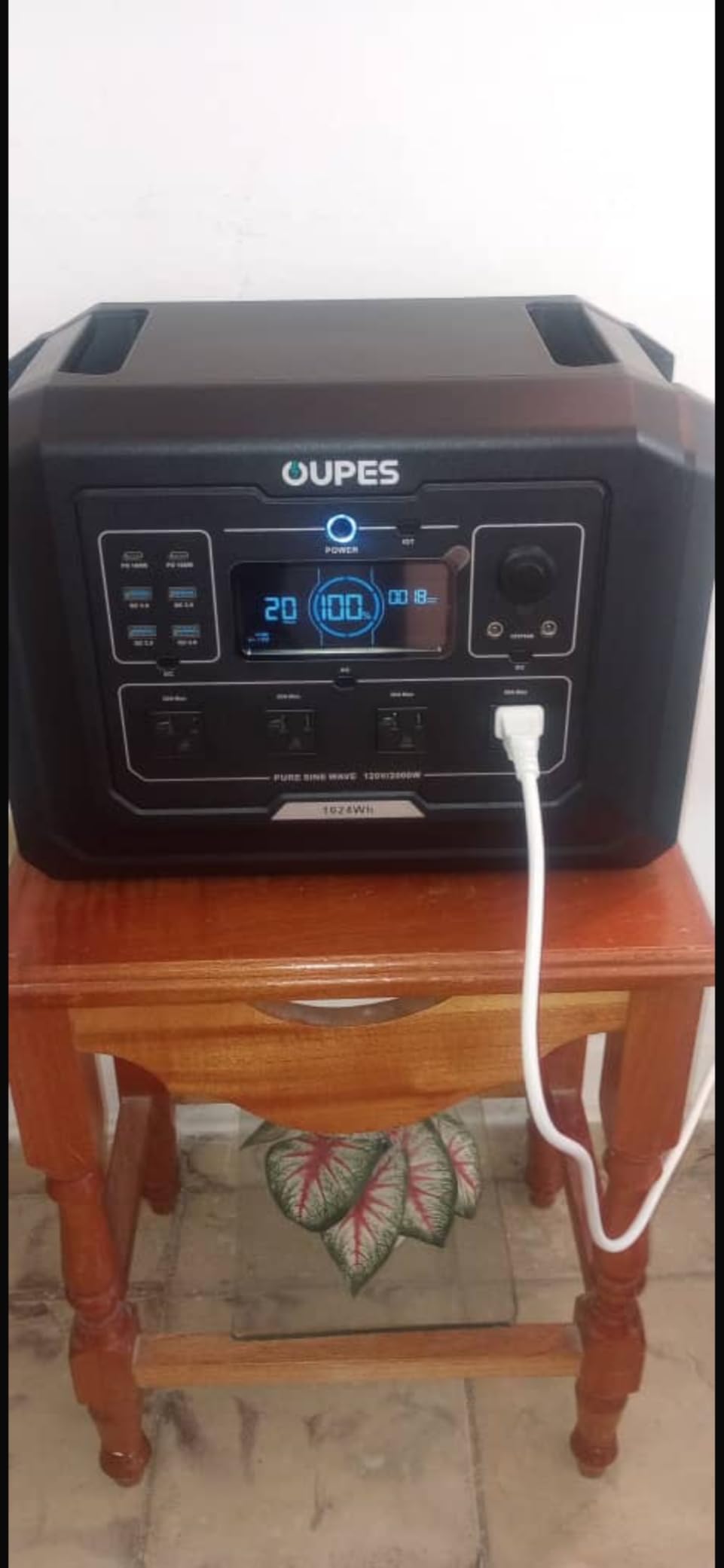
The 2,000W continuous output is the highest here, and the recharge numbers are excellent: 0 to 80 percent in 36 minutes on AC, or 26 minutes combining AC and solar. Four well-spaced 120V AC outlets on the front plus twin 100W USB-C PD ports and multiple USB-A ports make it practical for a group rather than a couple.
Buyers consistently treat it as the value pick in this class, noting 2,000W output, expansion to 5.1kWh, and 35 to 45 minute recharge speeds that match costlier brands. The 20ms UPS transfer protects servers, workstations, and medical devices.
The surge claim needs a caveat
The advertised 4,500W surge is not met in practice. At least one unit tripped consistently around 2,050 to 2,200W, so plan on 2,000W real. That is still enough for a fridge, a microwave, and a kettle one at a time, but do not build a plan around the headline figure.
Cooling fans run continuously during any charging cycle and are loud under heavy load, which is a real drawback for a quiet campsite. Wi-Fi in the app connects inconsistently while Bluetooth works reliably, and the app itself is basic, showing no cell state or temperature data. Charging input settings are tucked into a less obvious menu.
Who should skip the Mega 1
Skip it if easy returns matter to you, because the product is not returnable through Amazon, or if you plan to rely on app telemetry for battery health. The proprietary charge cable is also difficult to source if lost, so pack a spare.
At 27.8 lb in a 15.1 by 9.1 by 11.6 inch body, it is the largest 1kWh unit here and a two-hand carry. The 5 year warranty and 3,500-plus cycle LiFePO4 rating support long ownership, and owners report responsive sales and support when a unit needed replacing.
What to Look For When Buying a Portable Power Station for Camping
Capacity bands match trip length better than any other spec
Under 500Wh is a phones-and-cameras station. It will run a CPAP for one night, a projector for a film, and a fan for a few hours, and it is the only band you can genuinely carry on foot. Think one night of car camping with a tent and a lantern.
Around 1,000Wh is the two-to-three-night band and the sweet spot for most campers. It runs a 45W cooler overnight, a router, lights, and a coffee maker, and it still fits behind a seat. The AI Overview that Google builds this query from uses the same thresholds, which is why you will see 1,000Wh quoted constantly.
2,000Wh and above is the multi-appliance and long-trip band. That is RV-scale equipment, cold-weather expeditions, or a week of van life rather than a weekend at a drive-in site. Our portable projectors for camping trips guide covers what a screen and a projector actually draw, which is usually less than people expect.
Continuous watts decide steady loads, surge watts decide compressors
Continuous output is the ceiling for anything that runs for more than a few seconds. A 60W coffee maker needs a station rated well above 60W, and a 1,200W space heater needs 1,500W continuous with real headroom.
Surge, sometimes called peak or starting watts, is what a compressor appliance pulls for a second or two while it spins up. A fridge, a freezer, a water pump, and an air conditioner all need surge headroom. If the surge rating is not comfortably above the compressor start, the inverter trips and cuts everything.
Rule of thumb: for a compressor appliance rated at X watts running at Y watts, you want continuous output near 1.5X and surge near 3X. That is why the 1,500W and 3,000W pairing on the Explorer 1000 v2 works with a small air conditioner when the 512Wh unit in the same weight class does not.
Lithium iron phosphate is worth paying for if you keep gear for years
LiFePO4 cells are rated for 3,000 to 6,000 charge cycles in this group, which works out to roughly a decade of regular camping, and the chemistry tolerates a hot vehicle and a cold morning better than older lithium-ion. The GRECELL 330W is the one unit here still built on lithium-ion, and that is the main reason we do not rank it higher despite good specs.
The trade is weight. LiFePO4 packs are bulkier for the same watt-hours, which is why a lithium-ion unit can be slightly smaller than a comparable LiFePO4 one. If you buy once and keep it, chemistry wins. If you buy for a single season, capacity per pound may matter more.
Recharge inputs, and the solar math that decides multi-day trips
Every unit here charges from a wall outlet, and all of them also from a 12V car socket and solar. Wall speed is the number you feel: 52 minutes to 80 percent on the Explorer 500 v2, about an hour on the RIVER 2, and 49 minutes for a full charge on the Anker C1000 Gen 2.
Solar input wattage is the number most roundups ignore and van campers care about most. The formula is simple: panel watts divided into the battery’s watt-hours gives you hours of peak sun. A 1,000Wh battery on 200W of panel is about 5 hours of direct sun, before losses, and realistically two good days on a partly cloudy trip. The Anker C1000 Gen 2 takes 600W of solar and refills in about 1.8 hours; a 100W ceiling needs closer to a full day.
This is the top complaint on r/vandwellers, where the recurring line is that slow input makes a big battery useless off-grid. Check the solar input figure before you buy a large unit, and match panel wattage to how long you plan to be away from a vehicle. Our companion guide to portable camping tables covers the other piece of gear that decides how comfortable a site is.
Run coolers on 12V DC, not through the inverter
A 12V camp cooler or fridge on the 12V DC car port runs at close to full efficiency. The same cooler on a 120V AC inverter loses a meaningful slice of its energy to conversion, and the difference compounds over a 40-hour night.
That makes the 12V DC port a decision criterion, not an accessory. All ten units here have one, and if your main load is a fridge, size for DC runtime and you will get roughly 10 to 15 percent more usable hours than an AC-based estimate suggests.
Weight, and whether you can carry it alone
Under 15 lb is a one-hand carry from the trunk. 15 to 35 lb is awkward solo but fine over 20 metres with a foldable handle. 35 to 60 lb is a two-person job or a cart. Above 60 lb it is vehicle-mounted camping.
In this list, the Explorer 300, the ALLWEI, the GRECELL, and the RIVER 2 are genuinely solo-carryable. The Explorer 500 v2 is borderline. The Explorer 1000 v2, the Elite 100 V2, the Anker C1000 Gen 2, and the Mega 1 are two-hand loads. The AC180 at 37.4 lb is a two-person move and should be planned as such.
Forum advice to bring a fan for whatever battery system you choose is well taken in hot weather, and it is another reminder that a 27.8 lb box plus a fan plus a cooler is a lot of gear to move twice in the dark.
Ports, UPS, and campsite safety
Count ports before you count watts if you are travelling as a group. USB-C PD at 60W or 100W charges a laptop at full speed; a unit with no USB-C forces an adapter and an extra conversion loss. The 12V DC port matters for coolers. Multiple AC outlets matter for anything above 500W.
UPS switchover time decides whether a router or a CPAP machine notices an outage. Anything under 30ms is effectively seamless, and the BLUETTI Elite 100 V2, the Anker C1000 Gen 2, and the Jackery 500 v2 all land there.
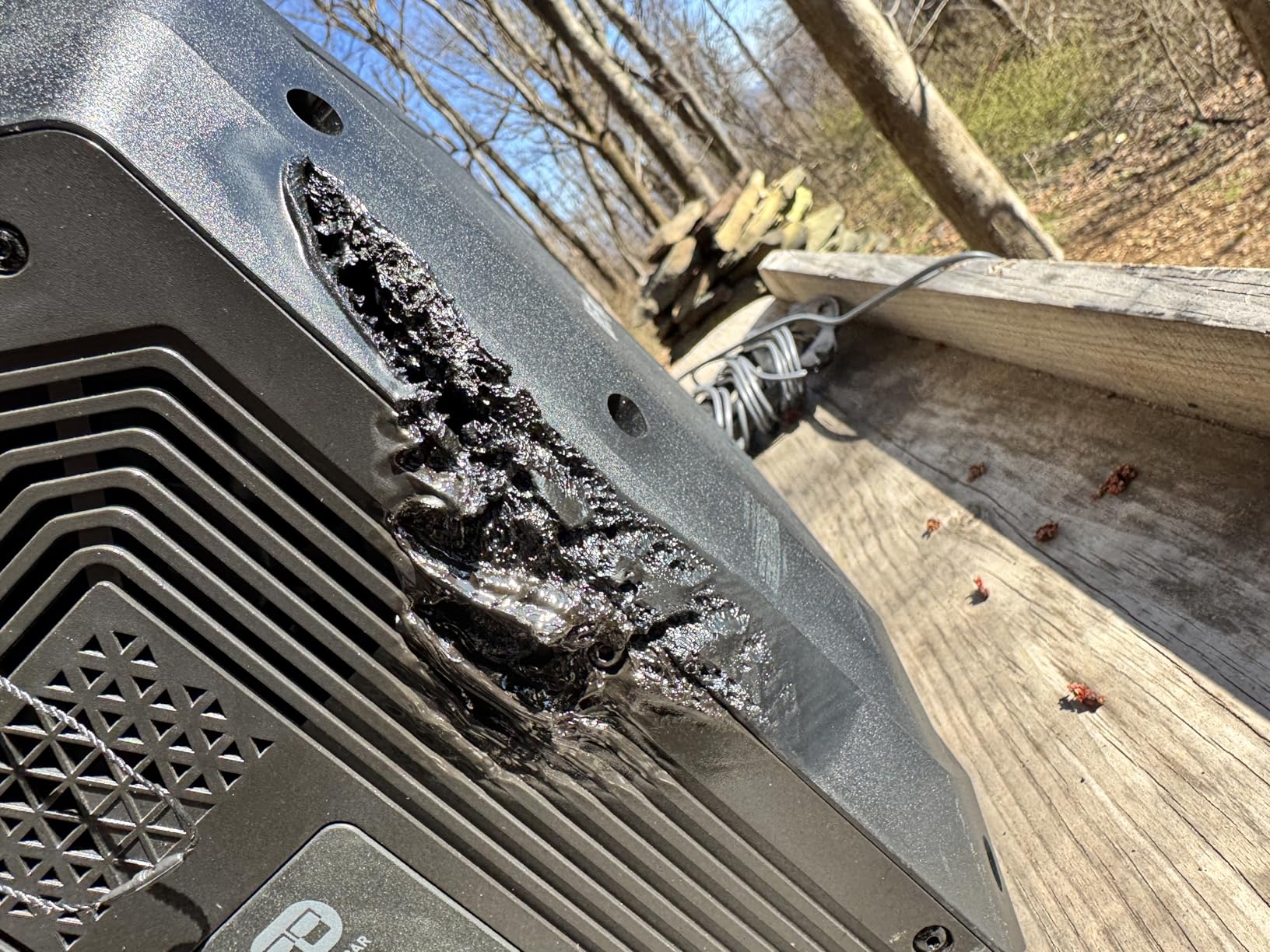
On safety, the practices that matter are simple. Keep the station out of the tent and off tent fabric or sleeping bags, because any lithium pack and any combustible material in the same enclosed space is a bad combination. Keep it dry; IP ratings indicate splash and dust resistance, not rain-proofing, so treat a downpour as a reason to move it under the awning. Do not leave it charging in a hot closed vehicle. And it is a battery, not a generator: there is no fuel, no exhaust, and no carbon monoxide, which is the reason to prefer it on a quiet campsite in the first place.
Recharge, expansion, and the question we get most
The most-asked question on camping forums is whether to buy a bigger battery or a solar panel first. Our answer: the battery, unless you will be more than 30 metres from your vehicle for multiple days. A station alone gives you your existing devices. A panel alone gives you nothing until there is a battery to put it into, and slow input on a big battery is the disappointment that ends a trip early.
Expansion support is worth checking before you buy, and it is rare. The OUPES Mega 1 reaches 5,120Wh with two extra batteries. The Anker C1000 Gen 2 removed the expandability its first generation had, which is a genuine downgrade for a buyer planning to grow. Everything else in this list is a fixed ceiling, so size up rather than plan to add later.
Runtime Reality Check by Capacity Tier
Take the label watt-hours, multiply by 0.85 for AC loads, then divide by the watts your gear draws. Every figure below is that formula, and none of them are marketing figures.
Under 500Wh, about 250 usable watt-hours: roughly 10 phone charges, or 5 to 6 hours of a 45W fridge, or one night of a CPAP machine, or 4 hours of a 60W fan, or about 4 hours of a 60W coffee maker. A 100W laptop charger runs about 2 hours. This is a tent-camping band.
The 1,000Wh band with high output: roughly 35 phone charges, or 19 hours of a 45W fridge, or 2 to 3 nights of CPAP, or 14 hours of a 60W fan, or about 14 coffee makers, or 8 hours of a 100W laptop. This is the band most campers should buy, and it is also the band where 1,800W to 2,000W of continuous output lets you run a 1,500W coffee maker or a 1,200W space heater, or briefly a small air conditioner, a microwave, or a hot plate. Those high-watt items drain the reserve fast, so treat them as morning bursts rather than all-night loads.
Above 5,000Wh with expansion: two to three full days of a 45W fridge, a whole week of phones and lights, an air mattress pump nightly plus a coffee maker in the morning, and a CPAP for a full trip on one charge. This is van and RV territory, and the weight is not solo-carryable.
One adjustment applies across all four bands. Run coolers and fans on the 12V DC port and you gain roughly 10 to 15 percent. Run them on AC and you lose it. And leave 20 percent of your capacity unspent if you want the battery to keep its rating for a second season.
Frequently Asked Questions
What is the best portable battery station for camping?
The Jackery Explorer 300 is the best portable power station for camping for most people. It holds 292Wh, outputs 300W continuous with 600W of surge, weighs about 7 lb, and carries more than 11,000 reviews at a 4.6 average. That combination of low carry weight, enough power for phones, laptops, lights, a fan, and a night of CPAP use, plus proven long-term reliability, makes it the lowest-risk first purchase. If you need to run a fridge and a coffee maker, step up to the Jackery Explorer 1000 v2 at 1,070Wh and 23.8 lb.
Is Jackery or Anker better?
It depends on which of the two criteria matters to you. Jackery builds lighter units for a given capacity, with the 1000 v2 at 1,070Wh and 23.8 lb, and its Explorer line has the deepest review history in the category. Anker wins on recharge speed and port count, with the SOLIX C1000 Gen 2 reaching a full charge in about 49 minutes at 1,600W across 10 ports, plus a 600W solar input ceiling and a time-of-use mode in the app. Jackery offers more expansion options across its range; Anker removed them in Gen 2. For a camper who recharges nightly, Anker is the stronger pick. For a buyer who wants the most proven name, Jackery wins.
Is Jackery or EcoFlow better?
EcoFlow leads on charging speed and app polish, Jackery on capacity-to-weight and simplicity. The RIVER 2 reaches a full AC charge in about an hour and offers up to 600W of output through X-Boost with useful real-time discharge data in the app. The Jackery Explorer 1000 v2 carries more energy at 1,070Wh, holds 1,500W continuous with 3,000W of surge, and weighs 23.8 lb with a simpler layout and no fan complaints at night. EcoFlow’s known weaknesses in this class are a single USB-C port and audible fan noise at maximum charging speed. Jackery’s are the weight and a solar panel that only works with Jackery panels.
Which portable power station is the most reliable?
Reliability comes down to four things: lithium iron phosphate chemistry, a credible cycle rating, warranty length, and stable app and firmware behaviour. On that basis the Jackery Explorer 500 v2 stands out, pairing a 6,000-cycle LiFePO4 pack rated for 10+ years with a 5 year warranty, a 4.7 rating across more than 8,800 reviews, and owners reporting multi-year service. The BLUETTI AC180 matches it with a 5 year warranty and documented support exchanges. Avoid the units with firmware-dependent behaviour, such as the OUPES Mega 1 with unreliable app Wi-Fi, or the Jackery Explorer 1000 v2, which pairs a 4,000-cycle cell rating with only a 1 year warranty.
How long do portable power stations last?
A lithium iron phosphate unit rated at 3,000 to 6,000 cycles should last roughly a decade of regular camping before it holds noticeably less capacity. Older lithium-ion packs, like the one in the GRECELL 330W, are typically rated far lower and should be treated as a three-to-five-year tool. Plan to replace a unit when it holds about 80 percent of its original capacity, since inverter and cell ageing both reduce what you get. Storage matters too: keep a partially charged unit in a dry, temperature-stable place rather than fully empty or fully full in a hot vehicle.
How long does it take to recharge a portable power station with solar?
Divide the battery’s watt-hours by the panel’s watts to get hours of peak sun. A 1,024Wh unit like the Anker SOLIX C1000 Gen 2 on a 200W panel is about 5 hours of direct sun before losses; on 600W it is roughly 1.8 hours as Anker quotes. The BLUETTI AC180 accepts 500W and refills in 2.8 to 3.3 hours, while the Jackery Explorer 300 manages about 80 percent in 2.8 hours from a 100W panel. In real weather, budget for two to three times the ideal figure on a partly cloudy trip, which is why the solar input ceiling matters more than panel size.
Are portable power stations safe to use while camping?
They are far safer than a gas generator, which produces exhaust and carbon monoxide, but they still need basic handling. Keep the station out of the tent and off tent fabric, sleeping bags, and any other combustible material, and do not use it in an enclosed space. IP ratings such as IPX4 or IP65 indicate splash and dust resistance rather than rain-proofing, so bring it under cover during heavy rain. Do not leave it charging in a hot closed vehicle, and keep it away from direct heat or flame. All ten units here use lithium-based chemistry, and the lithium iron phosphate models are the least fire-prone of the group.
Conclusion: The Best Portable Power Stations for Camping in 2026
The best portable power stations for camping pick for 2026 is the Jackery Explorer 300, because it is the only unit here that combines solo-carryable weight, a decade of cell life, and a review history nobody else matches. Start there if your trip is phones, cameras, lights, and a night of CPAP. The Jackery Explorer 500 v2 is the smarter step up at 512Wh if you want a cooler running overnight, and the Jackery Explorer 1000 v2 is the right answer once a fridge, a coffee maker, or a small air conditioner is on the list.
Beyond Jackery, the BLUETTI AC180 owns multi-day solar, the Anker SOLIX C1000 Gen 2 owns recharge speed, the BLUETTI Elite 100 V2 owns quiet, and the OUPES Mega 1 is the only route to a 5,120Wh system. The ALLWEI and GRECELL are the light-and-cheap options for anyone who charges a laptop and nothing else.
Tell us your devices, how many nights you are out, and whether you are near a vehicle, and we will narrow this to one. Meanwhile, the runtime formula above will tell you in ten seconds whether the station you like actually has enough in it.