
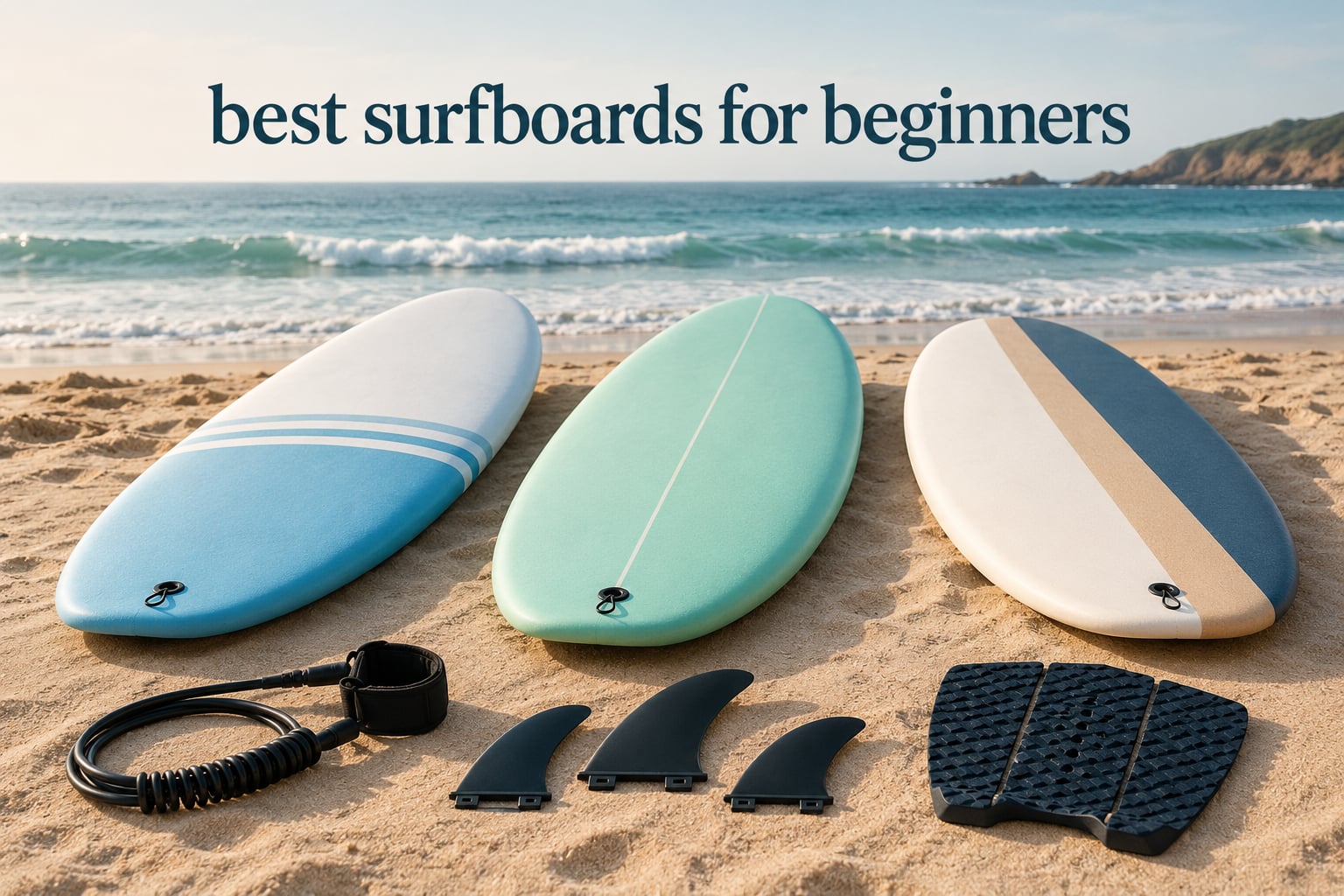
The best surfboards for beginners are 8 to 9 foot soft-top boards with 60 litres of volume or more, and most adults should aim for 80 litres and up. That combination floats high, catches weak waves early and takes a wipeout without hurting you.
That answer is not a hedge, it is the whole thing. Volume, measured in litres, is how much water a board displaces. The more litres a board carries relative to your body weight, the less effort it takes to paddle, float and stand. A beginner who catches ten waves in a session gets ten chances to practise the pop-up, while a beginner on a small board might spend the entire session failing to catch even one.
Over the last few seasons our team has pulled apart the spec sheets, the dimensions and the owner feedback on every soft-top we could find, so you can see how the numbers translate into time on the water. We compared the boards in this list on three things: litres against the rider weight the maker states, construction details that affect how long the board survives, and the complaint patterns that show up again and again in reviews.
If you are starting from nothing, buy the biggest board that will fit through your door and in your car rack. Everything else on this page is a refinement of that. Our beginner paddleboard accessories guide covers the leash, fins and traction pad side of things, which is where most first-timers get their add-ons wrong.
Table of Contents
Top 3 Beginner Surfboard Picks for 2026
Wavestorm 8ft Foam Soft Top
- 86 litres of volume
- 22.5 inch wide deck
- EPS core with three stringers
- Fins leash and traction pad included
Wavestorm 8ft Classic Longboard
- 86 litres of volume
- 11.5 lb carry weight
- Three stringer EPS core
- Soft deck and slick bottom
Wavestorm 7ft Classic Soft Top
- 70 litres of volume
- Trip fin setup for turning
- 10.2 lb
- Leash and tail pad included
Best Surfboards for Beginners (October 2026)
| Product | Specifications | Action |
|---|---|---|
| Wavestorm 8ft Foam Soft Top Longboard |
|
Check Latest Price |
| Wavestorm 8ft Classic Longboard |
|
Check Latest Price |
| Wavestorm 7ft Classic Soft Top |
|
Check Latest Price |
 Thurso Surf 7/8ft Soft Top Foam Beginner Board Thurso Surf 7/8ft Soft Top Foam Beginner Board |
|
Check Latest Price |
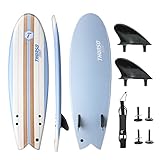 Thurso Surf Lancer 5’10 Soft Top Fish Thurso Surf Lancer 5’10 Soft Top Fish |
|
Check Latest Price |
 Giantex 6ft Stand Up Surfing Board Giantex 6ft Stand Up Surfing Board |
|
Check Latest Price |
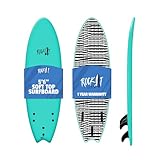 Rock-It Alberto 5ft6 Soft Top Rock-It Alberto 5ft6 Soft Top |
|
Check Latest Price |
 KOTEK 6ft EPS Softboard KOTEK 6ft EPS Softboard |
|
Check Latest Price |
 California Board Company 5’8 Foam Surfboard California Board Company 5’8 Foam Surfboard |
|
Check Latest Price |
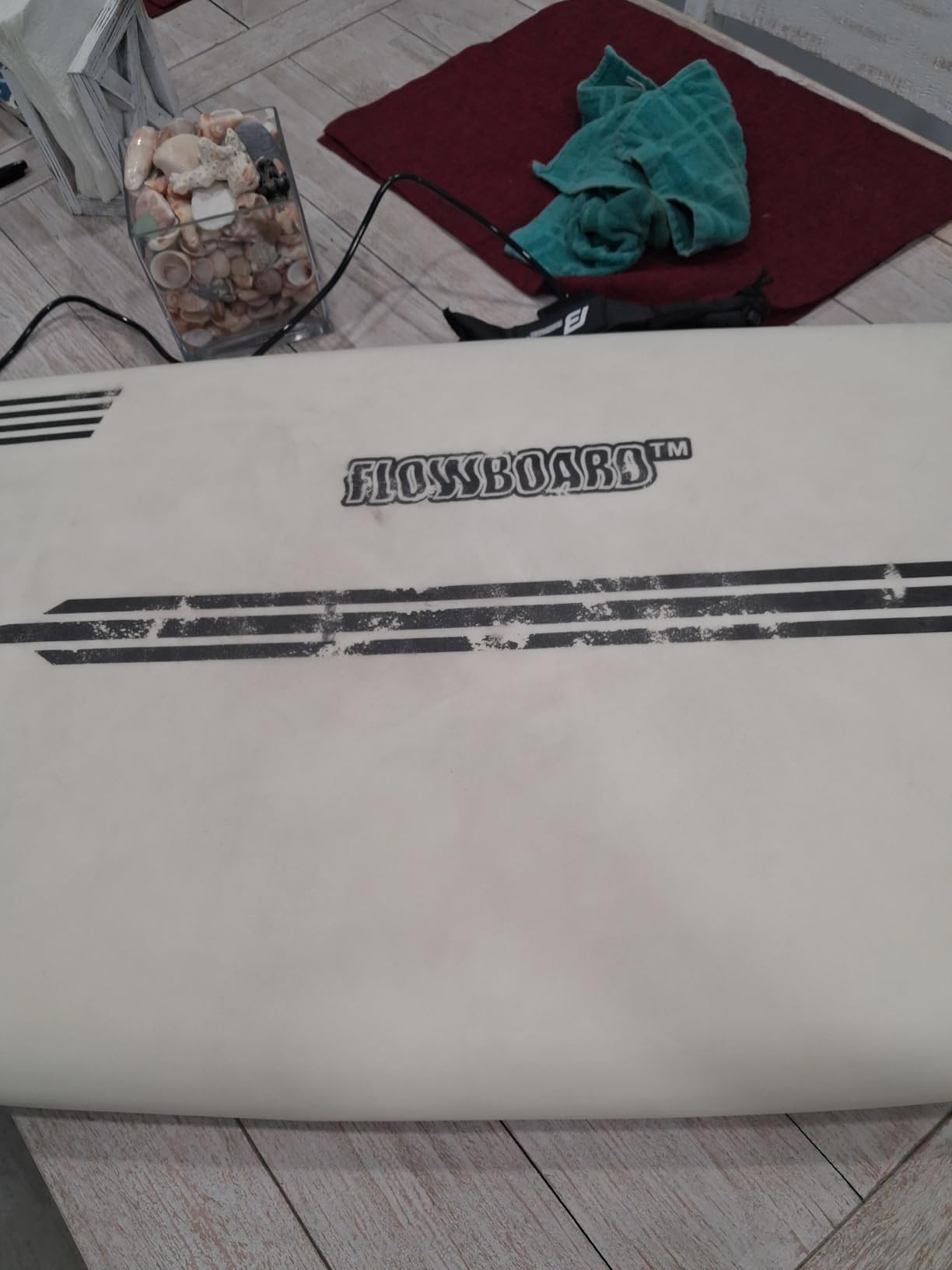
 Flowboard 6ft Softboard Foam Flowboard 6ft Softboard Foam |
|
Check Latest Price |
1. Wavestorm 8ft Foam Soft Top Longboard – Best All-Rounder
Wavestorm 8ft Surfboard // Foam Wax Free Soft Top Longboard for Adults and Kids of All Levels of Surfing, Multicolor
8ft long,22.5 inch wide,3.25 inch thick
86 litres of volume
11.5 lb carry weight
200 lb rider limit
Pros
- Huge 86 litres makes it easy to catch weak waves
- Soft deck absorbs falls instead of cutting you
- Comes with fins leash and traction pad in the box
- Only 11.5 lb for an 8ft board
Cons
- Very wide and bulky to carry on a long walk
- Soft deck can rub bare legs over long sessions
- Not manoeuvrable in any way
This is the board we keep coming back to. At 8 feet long, 22.5 inches wide and 86 litres, it is one of the highest-volume boards we reviewed, and that single number is why it works for almost anyone stepping off the sand for the first time. It floats before you have finished your first paddle stroke, which means you spend your session surfing instead of swimming.
The construction is the modern soft-top standard rather than the old cheap foamie. The core is EPS foam with a three stringer system, the top deck and rails are covered in a WBS-IXL water barrier skin, and the bottom is high density polyethylene for a slick, fast glide. The stringers are the part that matters over time, because they stop a foam core from folding under your weight in the middle of the board.
Owners treat it as a first board or a permanent backup, and the review pattern is consistent. People who fell on it describe the deck rather than the board as what took the impact, which is the whole argument for soft tops in crowded, shallow beginner lineups.

Everything you need to paddle out arrives in the box: the board, an ankle leash, removable bolt through fins and a tail pad for your back foot. Wax is deliberately left off the equation, so there is nothing to buy before your first session other than a wetsuit that fits.
Size matters here. The stated rider limit is 200 lb, and at 22.5 inches of width there is a lot of board between your feet. Owners who prefer a narrower platform under their feet call that a drawback, because a very wide board is harder to shift your weight on when you are trying to turn. In practice it is a good trade for your first hundred hours.
Who this board suits
It suits adults learning on a beach break, teenagers who need something stable, and anyone who wants a board that will not sting when they fall. The 86 litres gives a useful buffer for riders close to the 200 lb ceiling, and 11.5 lb is light enough for a child over about ten to carry to the water on their own.
Who should skip it
Skip it if you are under about 130 lb and want a board you can turn, or if you have to walk a long way across a hot beach with no trolley, because the width is the thing you feel in your arms. It is also the wrong first board for anyone hoping to be surfing turns within a month.
2. Wavestorm 8ft Classic Longboard – Highest Rated Starter Board
Wavestorm 8ft Classic Longboard Surfboard (Org Burst),
8ft long,22.5 inch wide,3.25 inch thick
86 litres of volume
11.5 lb carry weight
Surfboard leash fins and tail pad
Pros
- Highest average rating in the group
- Soft deck survives wipeouts without gouging
- Light enough for a teen to carry alone
- Wavestorm replaced a board that arrived damaged
Cons
- Sits between the 7ft and 9ft in feel
- Still not a performance shape
- Big footprint under a roof rack
This is the same 86 litre platform as the board above, sold under the Classic longboard name, and it carries the highest average rating of anything we tested. If you want the most consistently positive owner feedback in this roundup, this is the one, and the difference comes down to how many people have lived with it over multiple seasons rather than a single session.
Owners describe a slightly softer, more manoeuvrable ride than a 9ft log, which is a fair summary of where this board sits. The 200 lb rider limit and 11.5 lb weight are identical to the 8ft foam model, so the sizing logic carries straight across. The included kit is the same too: leash, three fins and a tail pad.
The build is EPS foam with three stringers under a WBS-IXL crosslink deck, and a high density polyethylene slick bottom. Stringers and a laminate skin are the two upgrades that separate this from a pool toy, and they are why the board keeps its shape after a season of being thrown on a shingle car park.
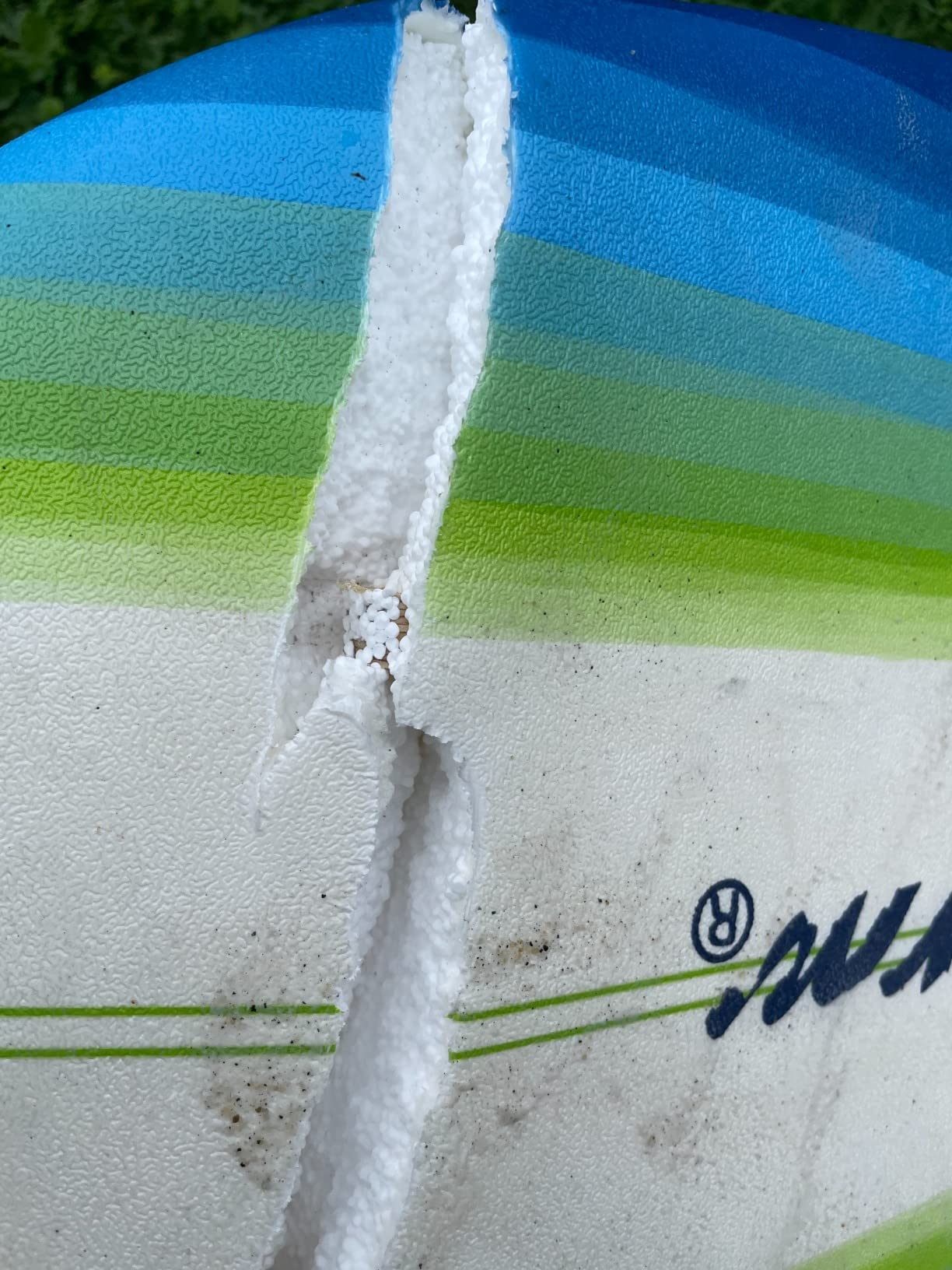
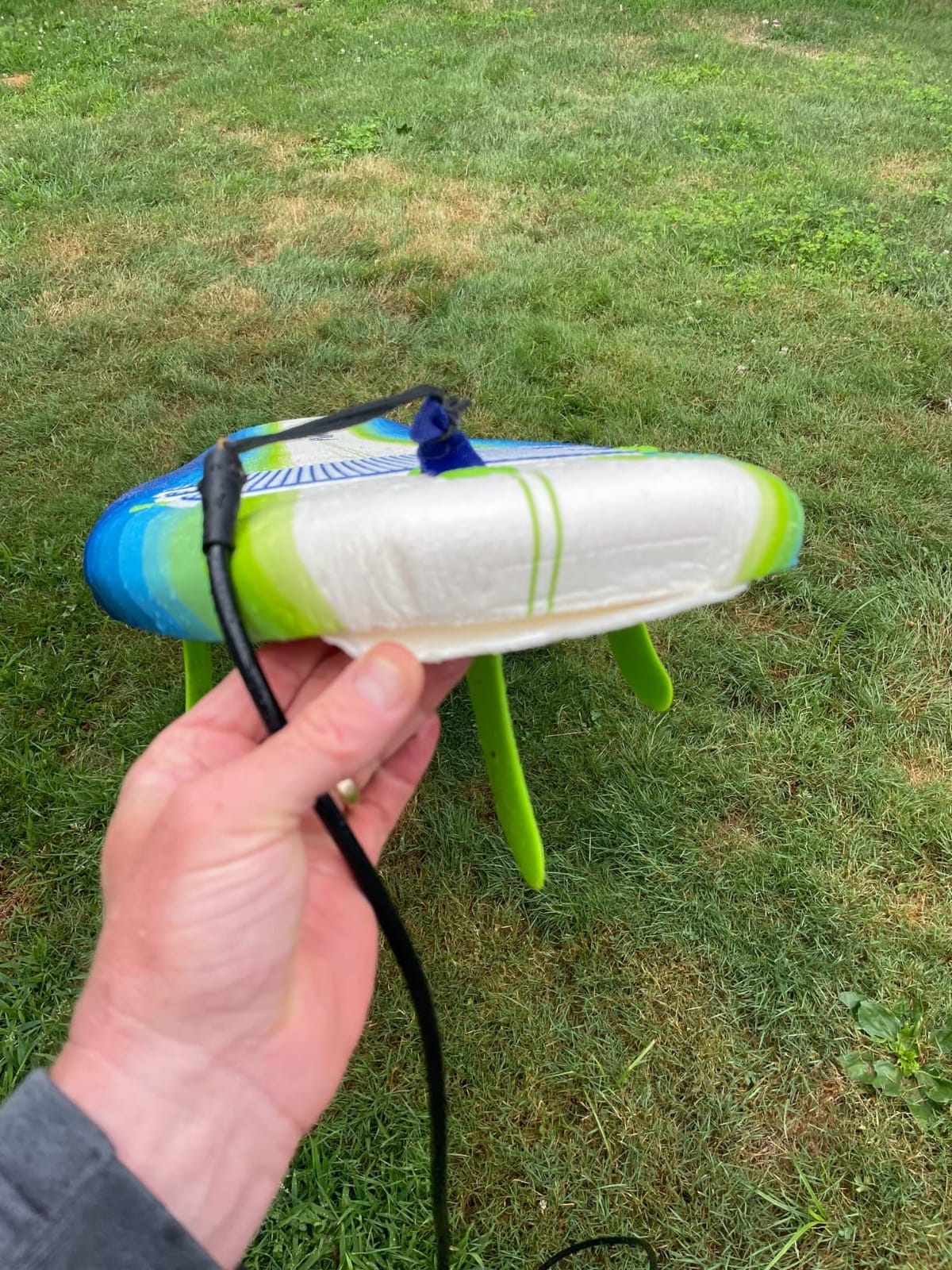
Customer service comes up more than once in the reviews, with owners reporting that a board which arrived damaged was replaced. That matters more than it sounds, because a dinged foam deck is where water gets in and buoyancy starts to fall away. A maker who honours the warranty on a first board removes one of the most common beginner regrets.
Reviewers also make the obvious comparison: this is not a high performance longboard, and it will not hold a line in steep surf. It is a learner board that happens to be very good at its job. Judge it on how many waves you catch, not on how it looks in a line-up.
Who this board suits
It suits a first-time surfer of any age within the 200 lb limit who wants the highest rated option and values a board that will still be good in a few years. It is a strong choice for a teenager, since the 11.5 lb weight is genuinely carryable and the deck is forgiving over shallow sandbars.
Who should skip it
Skip it if you are a strong paddler who wants to progress quickly, or if you surf somewhere with waves that break over your head. Owners who want more turning capability call 8ft a bit much, and the width does make weight shifts slower than a narrower board.
3. Wavestorm 7ft Classic Soft Top – Best for Progression
Wavestorm – Classic Soft Top Foam 7ft Surfboard Surfboard for Beginners and All Surfing Levels Complete Set Includes Leash and Multiple Fins Heat Laminated, Blue Pinline (AZ22-WSSF700-PIN)
7ft long,22 inch wide,3 inch thick
70 litres of volume
10.2 lb carry weight
Three fin setup
Pros
- Trip fin setup turns far better than a single fin log
- 70 litres still catches small waves
- Lightest of the 7 to 8ft boards we tested
- Tail pad and leash included
Cons
- Less stable than an 8ft in choppy water
- Included bolt through fins are basic
- Not built for steep or powerful surf
This is the board we would suggest to someone who wants to move on from foam within a season rather than a decade. At 7 feet, 22 inches wide and 70 litres, it drops 16 litres against the 8ft models on this list, and that difference is exactly what you feel when you start shifting your weight and putting the tail in.
The three fin setup is the other half of the story. A single fin longboard is stable but slow to turn, while a trip fin responds to pressure on the rails. The fins included are bolt through 4.5 inch units, which are not fine tuning equipment, but they are far more responsive than a centre fin.
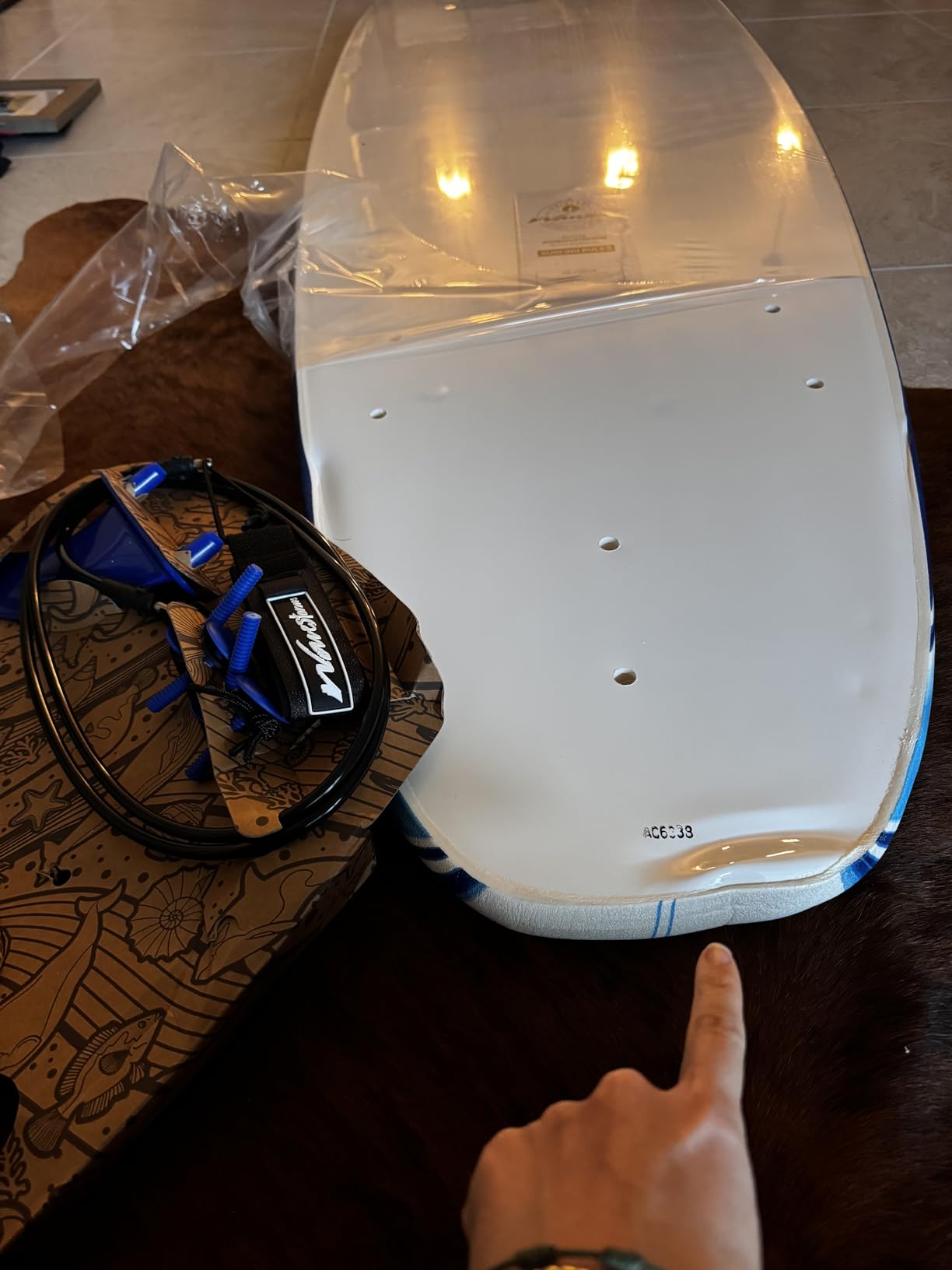
At 10.2 lb it is the lightest longboard on this list, which makes it the one we would pick for a teenager who has to walk from a car park to the beach on their own. The core uses the same three stringer EPS construction, with a UV inhibiting soft graphic deck and a high density slick bottom.
Reviewers consistently place the 7ft as the middle point between the 8ft and a real shortboard, and the feedback on wave catching stays positive even on small days. That is the key point, because losing the ability to catch waves is what makes beginners quit.
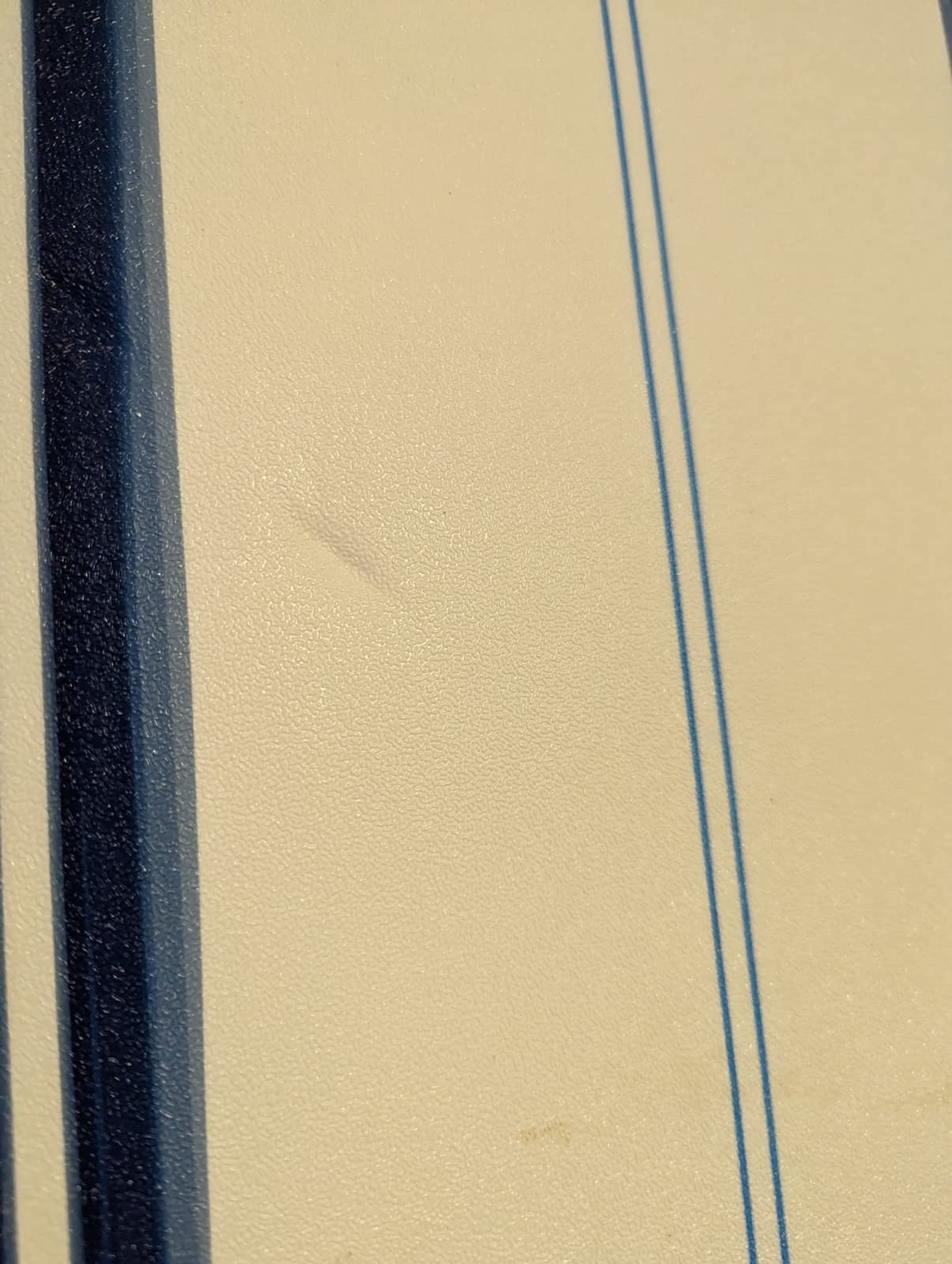
The honest limitation is chop. On a windy, confused beach break the smaller surface area gives you less to stand on, and some owners found standing up required more effort than on the bigger board. If your local spot is that kind of beach, the extra 16 litres of the 8ft is worth more than the extra turning.
Who this board suits
It suits lighter beginners who already paddle confidently, and anyone on a learning curve who wants to feel their turns start to work. The 70 litre figure sits comfortably under the 180 to 200 lb range, and the low weight is a genuine advantage for smaller surfers and for carrying.
Who should skip it
Skip it if you are heavier than the boards above can handle, if you have never surfed and are worried about popping up, or if your beach is exposed to wind. The included fins are basic, so plan on upgrading those before you chase fine trim.
4. Thurso Surf 7/8ft Soft Top Foam Beginner Board – Best for Bigger Riders
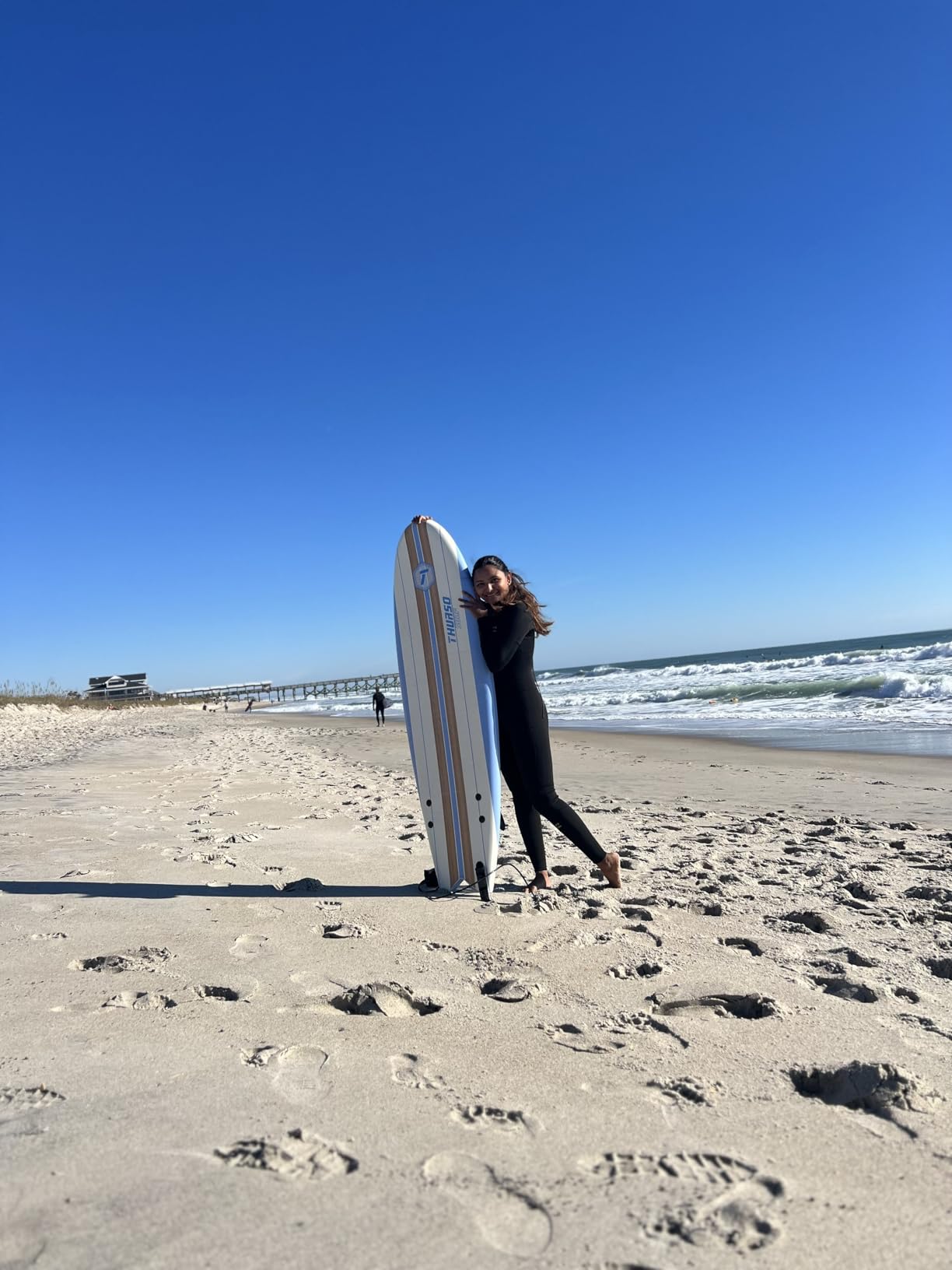
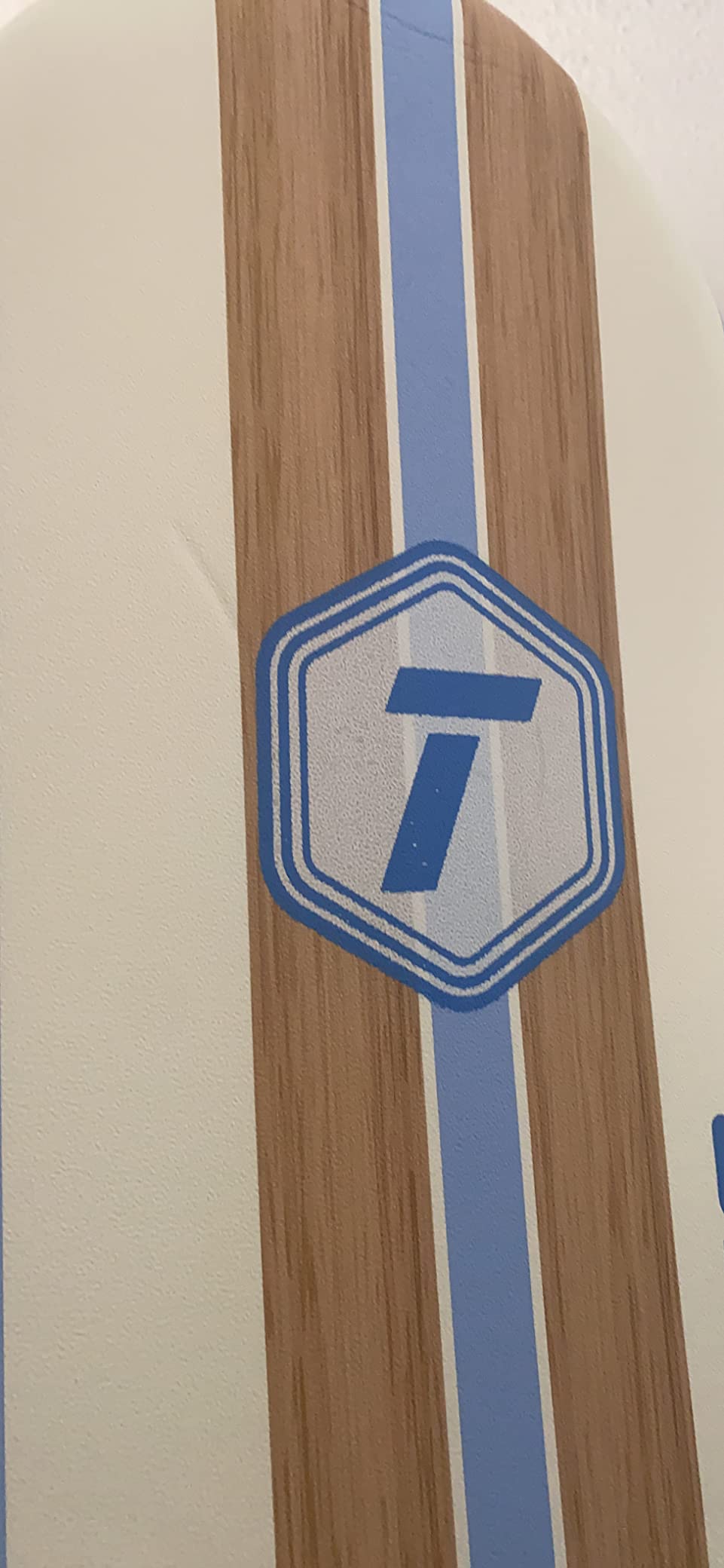
THURSO SURF Aero 7ft Soft Top Foam Surfboard for Beginner Adults and Kids Lightweight Shortboard for Surfing Beach Fun and Water Sports – Durable, Stable, and Easy to Ride for All Levels Surfers
22.8 inch wide,2.75 inch thick
9.05 lb carry weight
210 lb rider limit
Three wood stringers
Pros
- Highest stated rider limit in the roundup at 210 lb
- Very light at 9.05 lb for its size
- Three wood stringers add real rigidity
- Five year manufacturer warranty
Cons
- Deck grip wears down with heavy use
- Only intended for small to medium waves
- Less owner feedback than the Wavestorm boards
The reason this board is on the list is the number in the spec sheet: a 210 lb rider limit, the highest we saw across ten boards. If you are a heavier adult and most boards in the beginner category stop at 180 or 200 lb, that difference decides whether your first board floats properly or you spend every session duck diving.
Construction is an EPS foam core with a heat laminated HDPE slick bottom and an IXPE deck, plus three wood stringers through the middle. The stringers are the reason it is only 9.05 lb and still holds its shape, and the board is offered in both 7ft and 8ft lengths, so you can pick the volume that matches your height as well as your weight.
It also has the longest warranty we saw, five years from the manufacturer, against the 30 day or one year terms common elsewhere. A soft board lives a hard life, so that is worth more attention than it first appears.
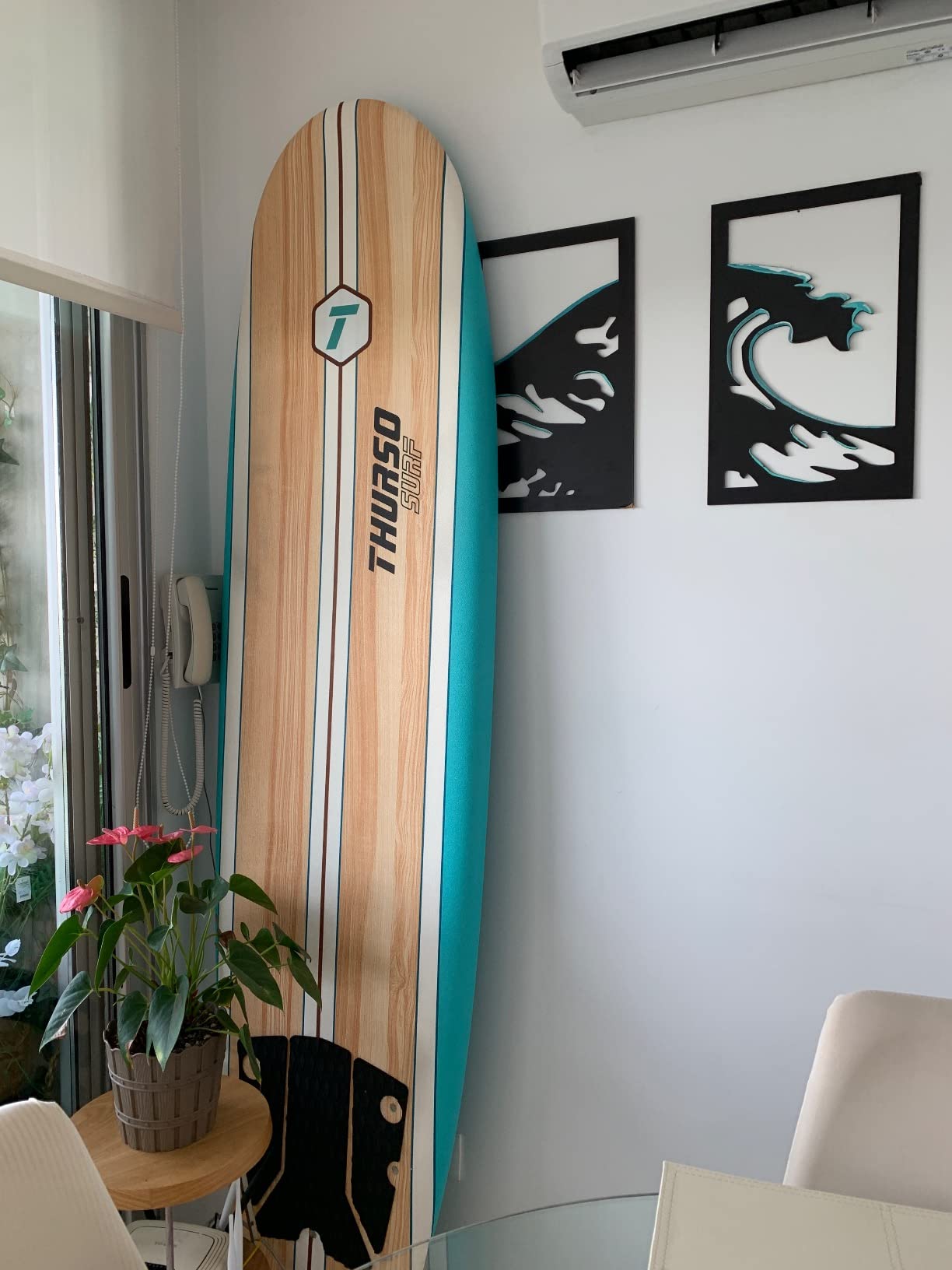
Owners describe a stable, forgiving platform that makes catching first waves straightforward, and the soft top is the reason it feels safe in a crowded beginner line-up. The textured deck and included tail pad help with grip, and an ankle leash is in the box.
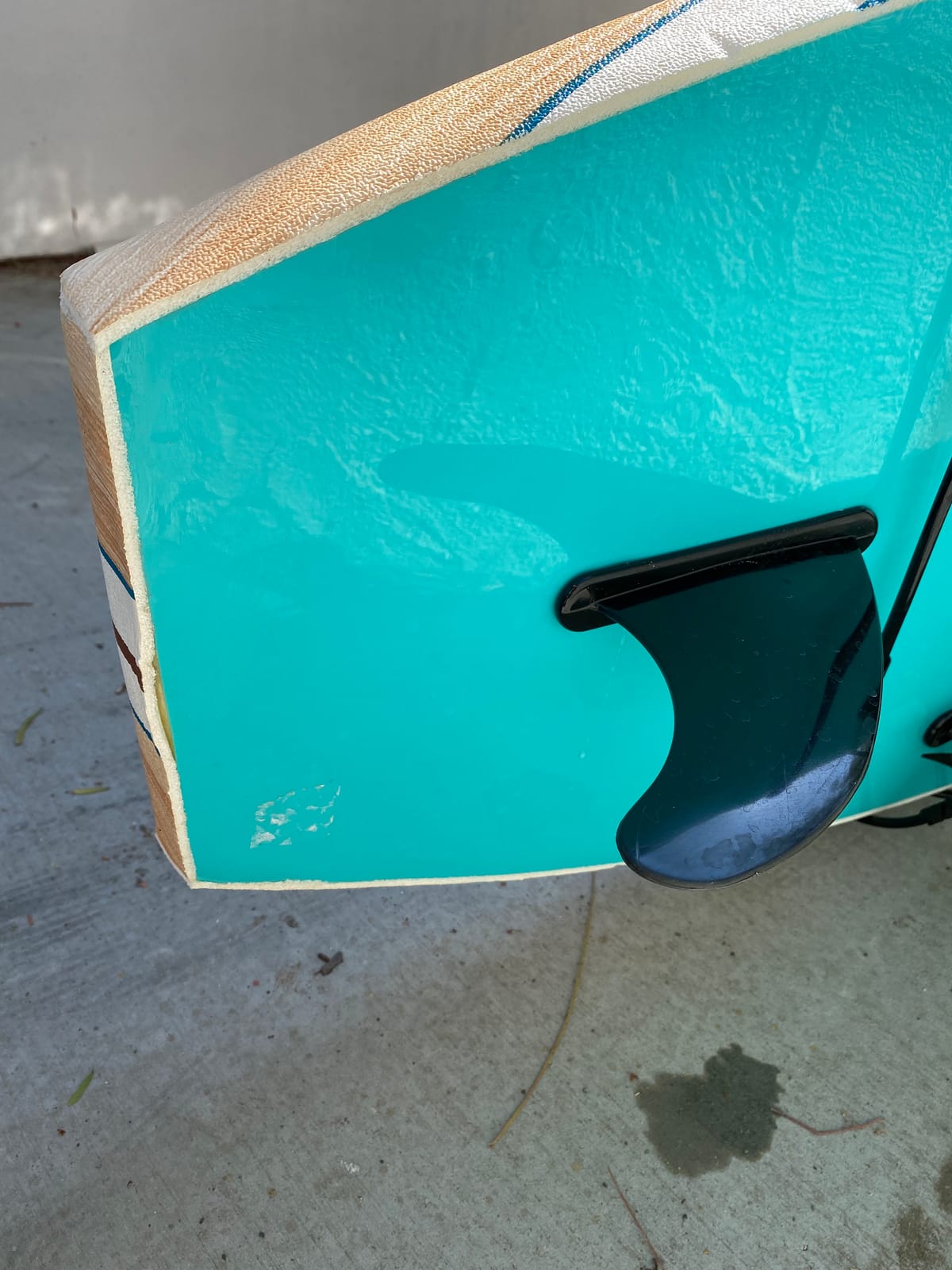
Two honest notes. The review pool is smaller than the Wavestorm boards, so you are trusting a thinner base of owner experience. And the IXPE deck grip is reported to wear with heavy use, which mostly shows up as wax feeling less secure late in a season.
Who this board suits
It suits heavier adults and older surfers, especially anyone over 40 who wants a high volume board with less mass to drag through the water. The 210 lb limit gives real headroom, and the 7ft and 8ft options mean one board can suit a tall rider and a shorter one in the same household.
Who should skip it
Skip it if you want a board that will hold up in head high surf, because this is built for small to medium waves. If you are a confident surfer with plenty of paddle power, the very light weight and forgiving template may feel more like a training aid than a surfboard.
5. Thurso Surf Lancer 5’10 Twin Fin – Best for Small Weak Waves
THURSO SURF Lancer 5’10” Soft Top Foam Surfboard Fish Surf board for Kids & Adults Includes Twin Fins Double Swivel Leash EPS Core IXPE Deck HDPE Slick Bottom Non-Slip Deck Grip – Perfect for Surfing
5ft10 long,20 inch wide,2.75 inch thick
6 lb carry weight
200 lb rider limit
Twin fin fish outline
Pros
- Twin fin fish outline turns quickly in small weak surf
- Only 6 lb so young surfers can carry it
- Dual swivel and rail saver leash for safety
- Step up board once you can catch waves unaided
Cons
- Much less stable than a longboard for a true beginner
- Narrower outline limits bigger riders
- Not intended for steep or powerful waves
This is the board you buy after a longboard, not before one. At 5 feet 10 inches, 20 inches wide and just 6 lb, it is a small, flat, twin fin fish that responds to the tiniest section of a weak wave, which is exactly the situation a longboard struggles with.
Owners buy it as an affordable step up, and the twin fin configuration is what does the work. Two small fins let the tail release and the board pivot quickly, so you can generate speed in a wave that a log would simply glide straight through. The EPO body armour bonding system adds a shell around the EPS core, and the double swivel leash with triple rail savers is a nice safety touch in a crowded area.
Two wood stringers run the length of the board, which is a reasonable level of reinforcement for a foam shape this short. The manufacturer also rates it for riders up to 200 lb, which is generous for the size.
Reviews consistently praise how manageable it is, particularly for kids and lighter riders, and how forgiving it feels on landings compared with a hard shortboard. The fish outline is also described as flatter and wider than a typical shortboard, which softens the whole ride.
The reason we are careful about recommending it as a first surfboard is the flip side. A 20 inch wide platform at 5ft10 is a lot narrower than anything else on this list, and a true beginner who cannot yet catch a wave will struggle more here than on an 8ft.
Who this board suits
It suits a beginner who has already spent time on a longboard and can catch waves unaided, ride in both directions and complete a basic turn. It is also a strong choice for a confident child or teenager who is learning on a small, weak, indoor or pool break.
Who should skip it
Skip it if you are on your very first lesson, or if your local waves are steep and hollow. The same narrow outline that makes it fun in weak surf makes it a poor match for anyone still building paddle power in bigger water.
6. Giantex 6ft Stand Up Surfing Board – Budget Pick Starter
Giantex Surfboard, 6 Ft Stand Up Surfing Board w/ 3 Detachable Fins, Safety Leash, Non-Slip Lightweight Foam Surfboard for Kids, Teenager, Adults (Yellow)
6ft long,20 inch wide,3 inch thick
3.5 lb carry weight
Three detachable fins
Adjustable safety leash
Pros
- Lightest board we reviewed at 3.5 lb
- Three detachable fins give real control
- Adjustable leash included
- Very low cost of entry
Cons
- Only two fiberglass stringers so it flexes more
- Highest share of one star feedback in the group
- Narrower and less stable than a full length longboard
The Giantex wins on one number above all others: 3.5 lb. Nothing else on this list is close, and for a child learning to carry their own board to the water, or for an adult on a beach with a long walk and no trolley, that is a real advantage rather than a spec sheet gimmick.
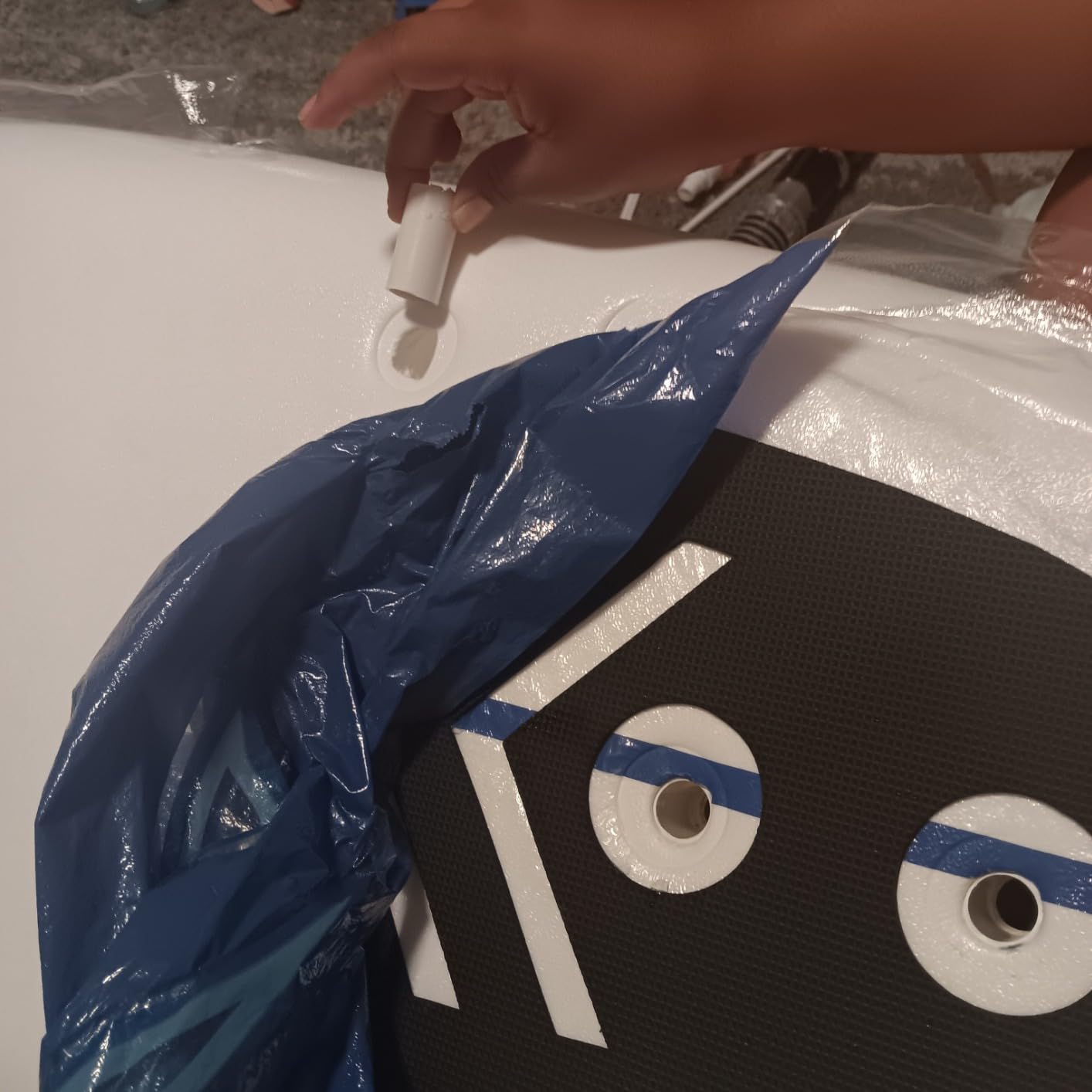
At 6 feet by 20 inches with three detachable fins and an arc linear buffer design, it gives you a usable platform for a first season. The build is an EPE deck over an EPS core with a polypropylene bottom, supported by two fiberglass centre stringers, and an adjustable safety leash is included.
The honest weakness is those two stringers. Every other full length board in this roundup uses three, and the difference shows up in stiffness: owners describe this one as more flexible, which feels fine to a beginner in small water but gets uncomfortable in chop.
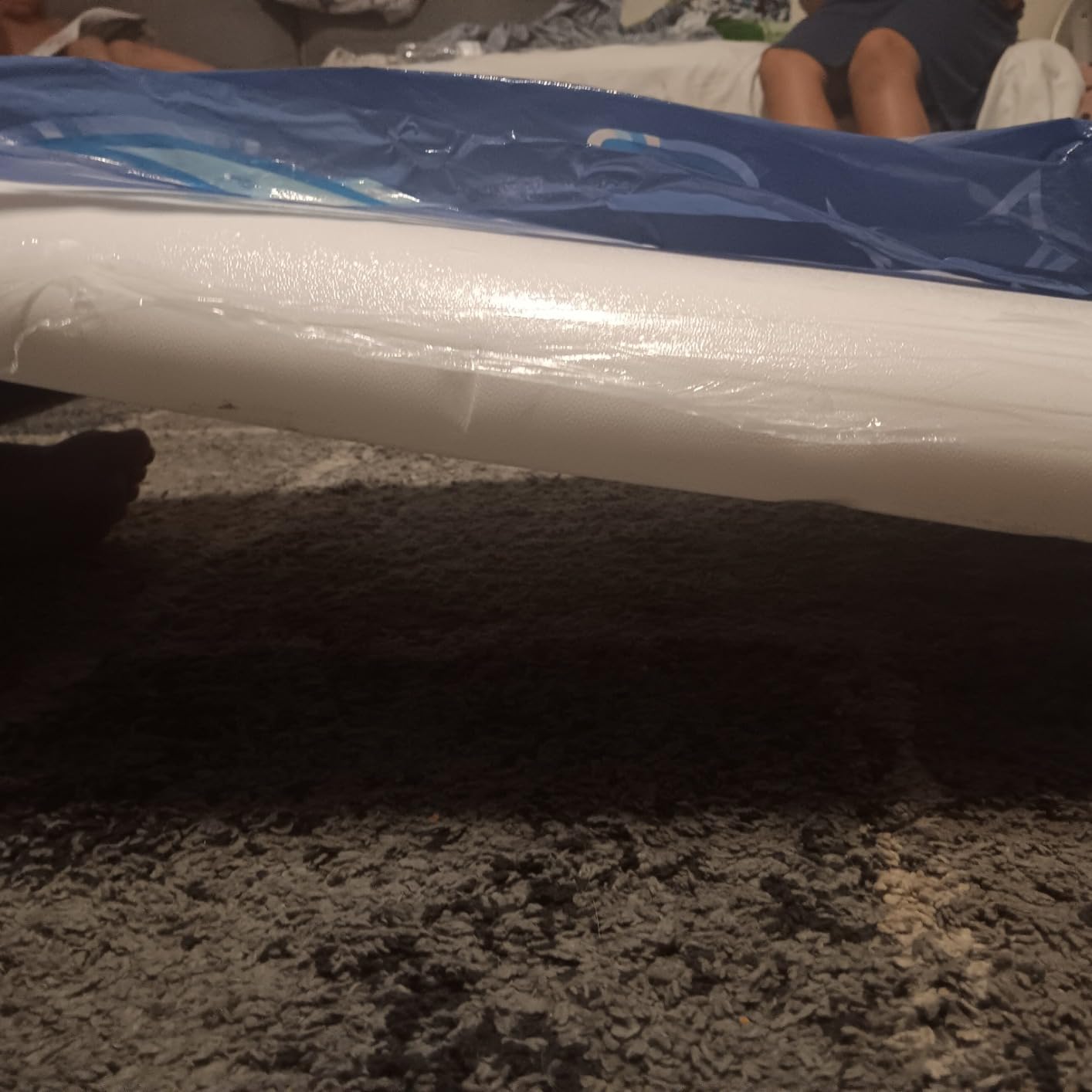
Owner feedback is genuinely split, and we would rather say that than pretend otherwise. The same people who love the weight for pool and casual paddling also raise durability concerns, and the one star share here is the largest of any board we reviewed. It is a 3.8 average across 300 reviews, which tells you the good experiences and the bad ones split about evenly.
It is also listed for a wide range of uses beyond surfing, including fishing, water yoga, sunbathing, pools and water parks. That is not a criticism, but it explains part of the mixed feedback, because a lot of buyers are using it far from a real wave.
Who this board suits
It suits a young child learning with a parent in a pool or on very small sand, and any beginner whose priority is the lowest possible cost and the easiest carry weight. The detachable fins mean a growing child can keep the same board as they get better.
Who should skip it
Skip it if you are a full size adult learning in real surf, because a 20 inch wide, 6ft board will feel twitchy once you are standing. Anyone planning regular sessions in open water will also find the two stringer build too flexed for comfort.
7. Rock-It Alberto 5ft6 Soft Top – Best for Kids Aged 6 to 12
Rock-It Alberto 5ft6 Soft Top Surfboard, Surf Board for Kids, Tabla De Surf, Kids Surfboard, Surfing Board Designed for Beginners – Innovative Design for Safety & Easy to Paddle (Teal)
5ft6 long,21 inch wide,2.8 inch thick
39 litres of volume
7 lb carry weight
175 lb rider limit
Pros
- 39 litres of buoyancy in a compact 5ft6 package
- Textured deck needs no wax at all
- One year warranty for multiple seasons
- 7 lb is easy for a child to carry
Cons
- 175 lb rider limit rules out most adults
- Short narrow outline is less stable than a longboard
- Only 65 reviews to judge it on
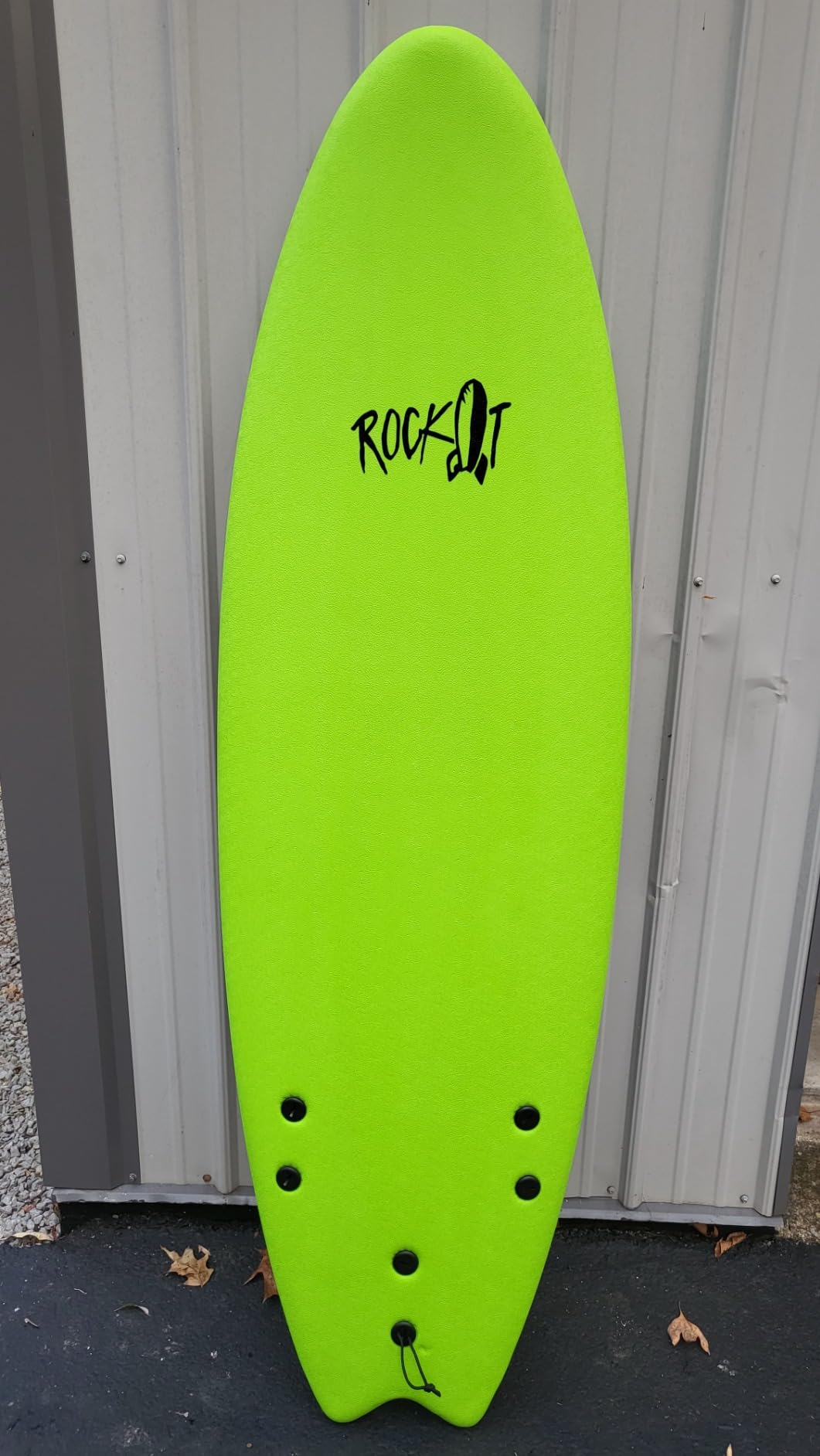
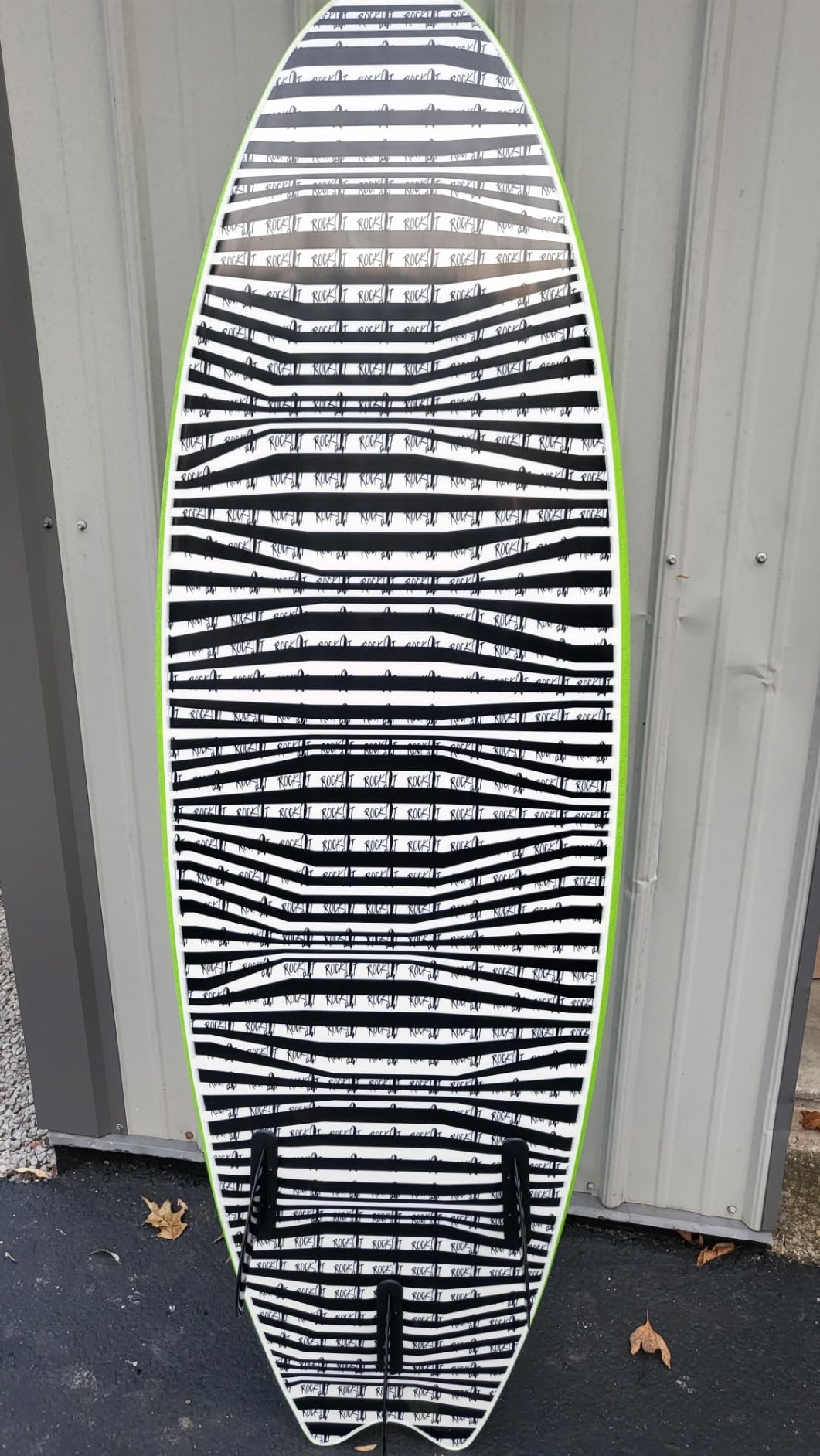
The Alberto solves a problem most soft tops ignore: how do you give a six year old something that is genuinely beginner friendly but small enough for them to control? The answer is volume packed into a short package. Thirty-nine litres in a 5 foot 6 shape gives buoyancy comparable to a much longer glass board, according to the manufacturer.
It weighs 7 lb, which a child can manage on a beach walk, and the soft textured top is designed so no wax is needed. That removes one of the fiddly parts of starting out. Three piece removable fins and dual nano polymer coated stringers are included, with a one year warranty against manufacturing defects.
Parents and small surfers rate it highly, and the reviews focus on exactly the right things: a child carrying the board alone, a stable ride and a deck that survives being dragged across wet sand.
Set your expectations by the stated limit of 175 lb. That is aimed squarely at ages 6 to 12, and it rules out the idea of an adult using the same board. The one star share here is higher than the longboards, which is normal for a small board, since a child at the top of the range can outgrow it quickly.
On construction, this is a foam and wood build with a fade resistant soft top rather than a laminated film skin. The finish will not look as glossy as a longboard, and it will not perform like one. But for a first board on a soft summer beach, the simplicity is the point.
Who this board suits
It suits parents buying a genuine first surfboard for a child in roughly the 6 to 12 age range, and anyone who wants a soft board that needs no wax at all. The compact size also makes it a workable option for smaller, more sheltered surf.
Who should skip it
Skip it if you are an adult beginner, if you ride in anything above small surf, or if you need a board that will last several years of regular sessions. The 39 litres will get you riding, but it will not keep you progressing on its own.
8. KOTEK 6ft EPS Softboard – Lightest Option for a Teenager
KOTEK 6′ Surfboard, Surfing Board with 3 Removable Fins, Safety Leash, EPS Core & EPE Deck, Lightweight Surf Board for Teenagers, Beginners (Yellow+Blue)
6ft long,20 inch wide,3 inch thick
4.9 lb carry weight
110 lb rider limit
Tool free fin fitting
Pros
- Only 4.9 lb to carry
- Tool free fin installation takes seconds
- Slip resistant EPE deck gives decent grip
- Buoyant platform that helps clean takeoffs
Cons
- 110 lb rider limit is the tightest in the roundup
- Lowest average rating of the ten boards
- 20 inch width feels narrow for an adult
The KOTEK is the lightest full length option here at 4.9 lb, and it has one feature none of the other entry boards share: tool free fin installation. If you are buying for a teenager who will be moving the fins around constantly, that removes a genuine annoyance rather than a theoretical one.
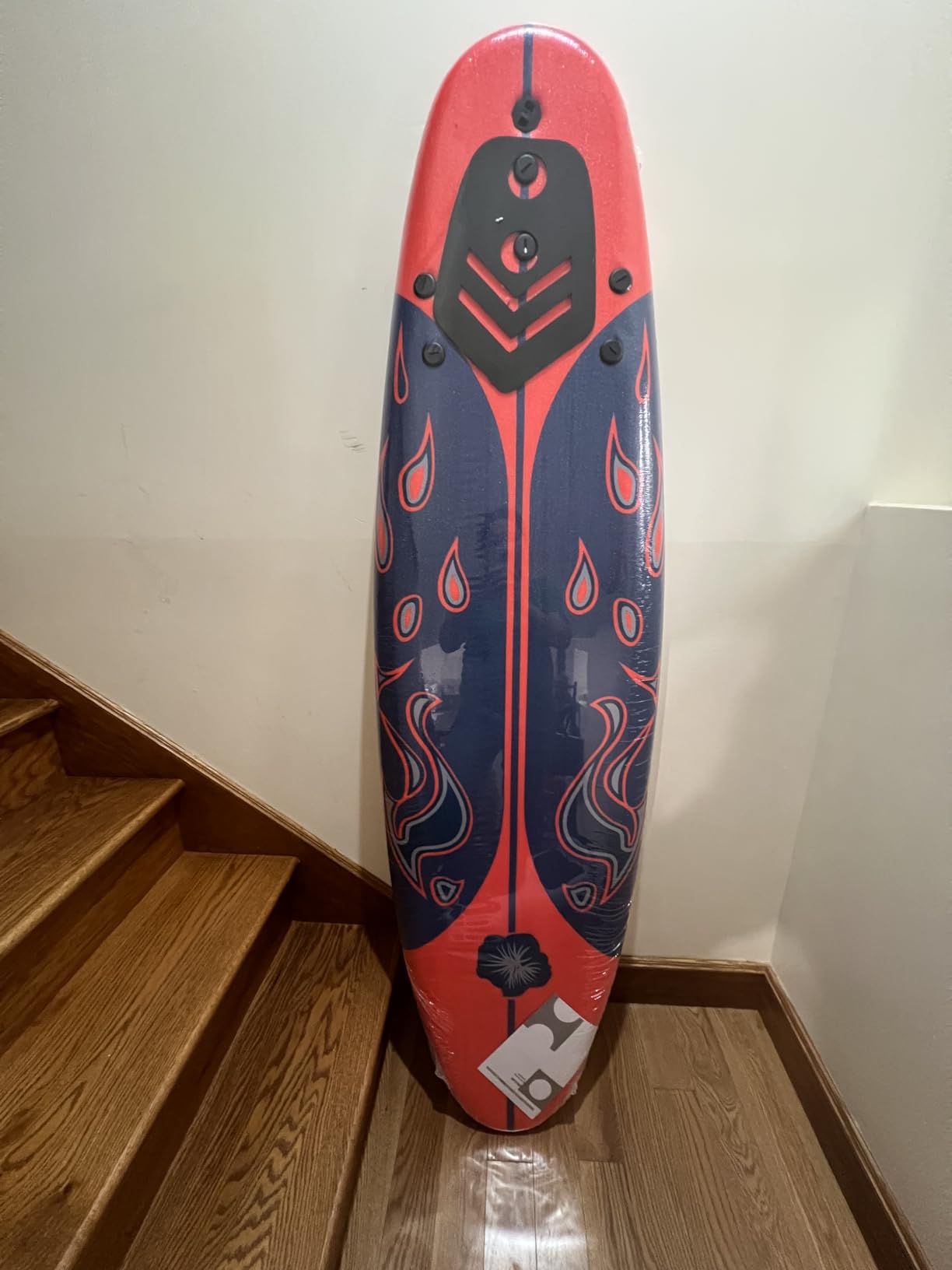
The build is an EPE slip resistant deck, EPS core and polypropylene bottom with dual integrated fiberglass rods for reinforcement. A 72 by 20 by 3 inch platform gives reasonable buoyancy, and a safety ankle leash is included in the box.
Owner feedback values the low weight, the grippy deck and the quick setup. It is also the board with the thinnest review base in the roundup at 36 reviews, so we are working with less evidence here than anywhere else.
We want to be straight about the rating, because it is the lowest of the ten. At 3.7, with a one star share of 20 percent, this is the board where owner experiences diverge most sharply. Buyers who sized themselves properly tend to be happy; buyers who expected a beginner longboard are not.
The 110 lb maximum rider weight explains much of that. It is a genuinely small board, and the 20 inch width reinforces the point. For a 70 lb teenager that is a lot of board. For a 170 lb adult buying the same listing, it is not a beginner board at all.
Who this board suits
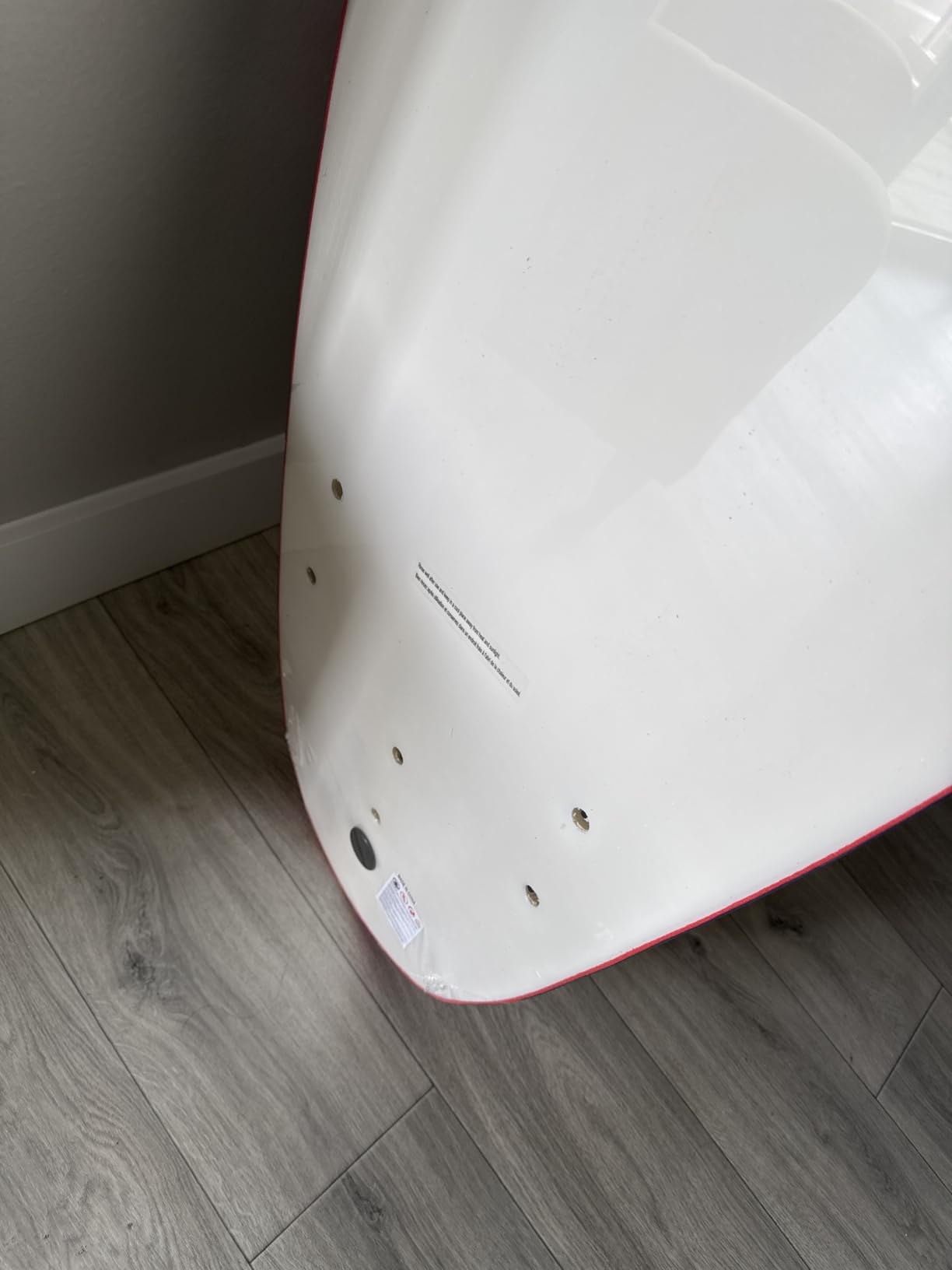
It suits a child or small teenager under about 110 lb who wants a board they can carry without help. It also suits anyone who wants fins that can be swapped without tools, and it carries a six month warranty.
Who should skip it
Skip it if you are an adult, if you are close to the 110 lb ceiling, or if you want a board that survives being used hard every weekend. The dual fiberglass rods are less rigid than a three stringer build, and the rating spread tells you what that means in practice.
9. California Board Company 5’8 Foam Surfboard – Best for Pool Practice
California Board Company CBC Surfboard, 5-Feet x 8-Inch, Assorted
5ft8 long,21.75 inch wide,2.75 inch thick
About 6 lb carry weight
180 lb rider limit
EPS core with polyurethane build
Pros
- Very light and safe for kids in a pool
- Full graphic deck and bottom look better than most foamies
- Leash and three fins included
- Affordable bridge between a longboard and a shortboard
Cons
- Does not float an adult reliably
- Seams and finishing are reported as inconsistent
- Fins feel fragile and slightly sharp
California Board Company built this one as a stepping stone, and owners use it that way. At 5 foot 8 inches and about 6 lb, it is a compact foam board with a high density EPS core and a polyurethane build, sold with a leash and three blue fins in the box.
The most consistent praise in the reviews is for kids and for pool pop-up practice. A flat, light, foamy board in a swimming pool is a genuinely good way to rehearse the pop-up a hundred times without fighting waves, and the attached traction pad gives your back foot somewhere to go.
The most consistent warning is aimed at adults. Reviewers are blunt that the board does not support heavier riders reliably, and one described it sinking under a 120 lb surfer. That is the single most important thing to know before buying it.
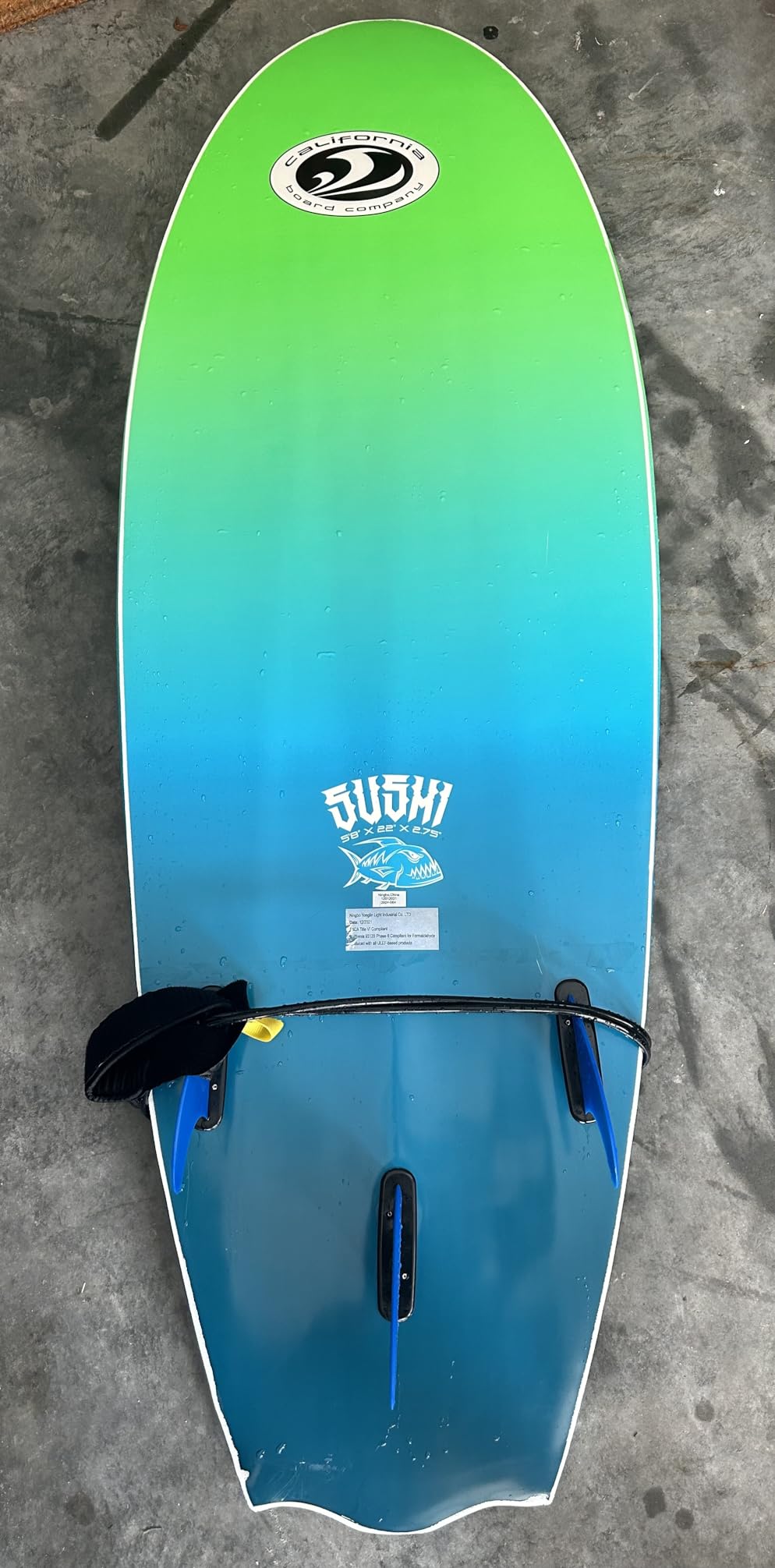
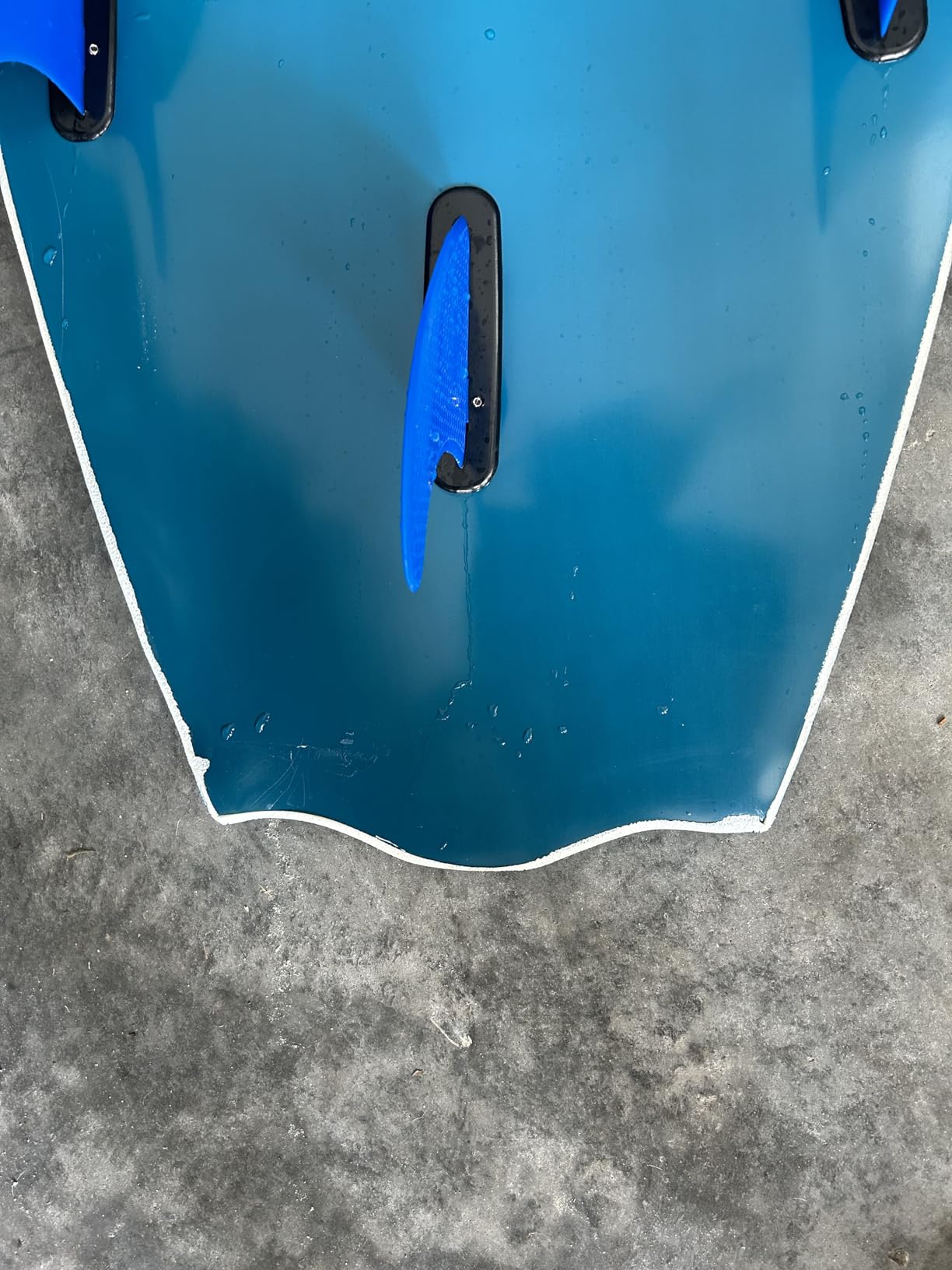
Finishing quality is the other theme. Owners describe the foam and plastic shell as cheap feeling, point out visible seams and an off centre logo as signs of inconsistent finishing, and warn that the fins can feel fragile and slightly sharp to handle bare foot.
It is also listed as an intermediate level board rather than a beginner one, which reframes the whole thing. This is a practice and progression board, not a first-wave catcher. If you need to catch waves, you need litres you do not have here.
Who this board suits
It suits parents who want a safe, light board for pool sessions, and beginner kids learning to pop up in flat water. It also suits a progressing surfer who has moved past the foamie stage and wants to practise turns on small soft waves.
Who should skip it
Skip it if you are an adult of any real size, because the buoyancy is simply not there for your weight. Anyone who cares about finish quality or wants fins that feel solid underfoot will also find cheaper alternatives elsewhere on this list.
10. Flowboard 6ft Softboard Foam – Three Lengths in One Range
6’ FLOWBOARD Surfboard Softboard Foam – Include (3) Fins 6’ Foot Leash and (2) Wood Stringers Inside Board – Kids and Adults Beginner Intermediate 6 Foot and Comes with High Performance Traction Pad
6ft long,20.5 inch wide,3 inch thick
Two internal wood stringers
Fins leash and traction pad included
HDPE skin
Pros
- Also made in 7ft and 8ft so you can size up later
- Fins leash and traction pad all in the box
- Two wood stringers add real rigidity
- Light and easy to handle
Cons
- HDPE skin dents more than laminated EPS boards
- Largest one star share here at 21 percent
- Basic construction in larger surf
The reason this board made our list is the length range. The same construction is offered in 6ft, 7ft and 8ft, which means a beginner can start on the shortest and step up without changing brand or learning a new board feel. Very few entry ranges offer that.
Construction is a foam softboard with an HDPE skin and two internal wood stringers for rigidity. It ships as a complete package: three fins, a 6 foot leash and a high performance traction pad, so there is nothing else to buy before your first session.
Buyers who are happy cite the value of the bundle and the option to grow the board length. Critical reviews concentrate on the HDPE skin, which dents and wears more readily than a laminated EPS board, and on how the board performs once the waves get bigger.
Be aware of the shape of that feedback. At a 3.8 average, this board has the largest share of one star reviews of anything we reviewed, at 21 percent, with no two star feedback at all. That is a distinctly polar response, and it is worth taking seriously if you are a cautious beginner.
It is also a 30 day limited warranty, the shortest protection on the list. For a board you might keep for years in a salty environment, that is a real consideration and worth factoring into how hard you expect to use it.
Who this board suits
It suits a family sharing one brand across different sizes, and a beginner who expects to move up in length within a year or two. The complete bundle also suits anyone who wants fins, leash and traction pad sorted from day one.
Who should skip it
Skip it if you are surfing in anything bigger than small surf, or if you want a board that will keep its shape after a hard season on gravel. Pick the 8ft version rather than the 6ft if you are a full size adult learning to stand.
How to Size Your First Surfboard in 2026
Everything above comes down to one number: litres. Board length is the easiest thing to look at and the least useful, because a wide, thick 7ft can hold more water than a narrow 8ft. Get the litres right and the length usually follows.
Here is the rule we use. Take your body weight in pounds, then aim for a board volume that is at least 45 to 50 percent of that number for an average beginner, and closer to 60 percent if you are over 40, cold-water paddling, or surf a beach with small mushy waves. Round up a full size if you are in any doubt.
The ranges below are the version we would keep on the fridge. They are based on the rider weight limits each manufacturer states, not on marketing claims, and the board length that pairs with each litre figure is noted alongside.
For a surfer in the 130 lb to 150 lb band, 60 to 70 litres is the working minimum, which points at a 7ft soft top or the smaller end of the 8ft range. Between 150 lb and 180 lb, aim for 70 to 80 litres. From 180 lb to 200 lb, 80 to 90 litres is the sweet spot, and that is where the 86 litre Wavestorm boards sit. Above 200 lb, look for 90 litres or more and expect to be choosing between 8ft and 9ft lengths.
Those are the numbers. If you want the other half of the kit covered, our beginner kayaks guide covers a lot of the same sizing logic for a different craft.
How many litres of volume do you actually need
Volume is simply the space inside the board, and the more of it there is relative to your weight, the more buoyant you are. Buoyancy is what stops you sinking between waves, and it is what lets you paddle with one arm while you get set up for a take-off.
A useful test: if you can hold your breath, float on your back and stay up easily, you are around 10 to 15 percent body volume in water. A beginner board should roughly triple that, which is where a 60 to 90 litre figure comes from for an adult.
Is a 7ft surfboard suitable for beginners
Yes, for lighter and more confident beginners, and no for a first lesson. A 7ft at 70 litres still catches small waves, and the 7ft board on our list is one of the best values here if you are under about 160 lb and already paddling well.
The mechanism to understand is simple. A shorter board has less planing area, so it needs more speed to get up and running. If your paddle power is not there yet, you will miss waves repeatedly, and the people who persist on small boards often report going months without catching one. That is the single most common way beginners stall.
8ft vs 9ft: which length to pick
An 8ft is more manoeuvrable and easier to carry. A 9ft catches more waves, holds speed in smaller surf and is a better match for heavier riders and for beginners over 40. If your beach is windy and confused, go longer. If your beach is small and weak with plenty of shape, 8ft is the more enjoyable option.
The overlap between the two is bigger than the marketing suggests. On most beginner beaches, an 8ft with 86 litres does everything a 9ft does for most people, and it fits in a garage and on a roof rack without a fight.
What to look for in a first board
Length is the starting filter, and volume is the deciding one. Beyond that, look at the width and thickness together, because they are what make a board stable under your feet, and check that the stated rider weight limit is comfortably above your own.
Construction matters less than people think. Three stringers rather than two is the upgrade that affects how long the board holds its shape, and a laminated skin beats a thin polyethylene film. Rocker is the curve of the board’s nose and tail, and beginners want low to medium rocker for speed in small waves.
Finally check what is in the box. A leash, fins and a traction pad should be included, and if they are not, factor that into your decision. A wax-free textured deck is also worth paying for, because it removes a fiddly task from your first session.
Should you rent or buy your first surfboard
Rent first, for a handful of lessons, then buy. This is the most common question on beginner surf forums and the least well answered anywhere, so here is the straightforward version. Renting costs less, and more usefully it tells you whether you are going to surf at all before you commit to a specific board.
Six to eight rented sessions will teach you a lot: whether you pop up on your own, whether you can catch a wave, and what your local waves actually feel like. Board rental shops hand out long soft tops because they survive being dropped in sand and returned wet and salty by someone who has no idea how to handle one.
The case for buying immediately is that you will improve faster on your own board, because you know where it is in the lineup and you can practise on it without paying for the session. The case for buying quickly is weak for your very first lesson.
What to avoid when buying your first board
Avoid buying a shortboard first. It is the most common and most expensive beginner mistake, and it shows up in forum threads constantly. Also avoid any board where you have to guess whether the stated rider limit covers you, and avoid thin or unpadded boards that will hurt your ribs and knees.
If you buy used, inspect the board before you pay. On a foam board, look for a deck skin that has lifted, delaminated or torn, because that lets water into the core and quietly kills the buoyancy that made the board good. For a hardboard, check the rails and nose for cracks and press the deck to see whether it flexes more than it should.
Finally, do not let a smaller, cheaper, more exciting board talk you out of volume. Every experienced surfer and every surf school says the same thing, and the boards on this list exist precisely because big, buoyant, forgiving boards are the correct first purchase.
Caring for and storing a foam board
Rinse with fresh water after every session, especially the deck and the fins, because salt crystallises in the foam and dries out the deck skin. Never drag a board across sand, as the grit cuts into the bottom skin. Carry it by the rails under the arm, not by the nose, and keep it out of direct sun when it is parked on a roof rack.
Store it flat, deck up, in a bag if you can. Leaning a foam board upright for months is what causes stringer-related warp, and warping a soft top effectively reduces the volume you paid for. Our beginner accessories guide covers board bags and leashes in more detail.
When to move up from a foam board
Move down in size when you can catch waves on your own without coaching, ride consistently in both directions rather than only the way you are pushed, and complete a basic bottom turn and cutback. Until then, more litres will still make you better faster.
The step from a long foam board is usually to a 7ft or 8ft soft top, then to a hard epoxy or polyurethane board once you are surfing in proper waves. That is the natural progression, and the board you buy first does not have to be the last one you buy.
Frequently Asked Questions
What size surfboard is best for a beginner?
Most adults should start on an 8 foot soft-top longboard with at least 60 litres of volume, and closer to 80 to 90 litres for a heavier adult. Aim for a board roughly two to three inches longer per foot of your height, and always check the stated rider weight limit before buying. A 7ft works for lighter, more confident beginners, but a first lesson on a board under 7ft usually ends in a lot of swimming.
What is the best foam board for beginners?
The Wavestorm 8ft foam soft top is the strongest all-round first board we reviewed, with 86 litres of volume, a 22.5 inch wide deck, three stringers under an EPS core and included fins, leash and traction pad. If you want the highest rated option, the Wavestorm 8ft Classic longboard shares the same platform. Heavier adults above 200 lb should look at the Thurso Surf, which is rated to 210 lb.
Is a 7 foot surfboard suitable for beginners?
A 7ft is suitable for a lighter beginner who can already paddle well, and for smaller surfers in the 130 to 160 lb range. The 7ft Classic soft top at 70 litres is a good middle step. For a complete beginner, a shorter board needs more speed to get going, so you will miss more waves, and going months without catching one is what stalls most new surfers.
Which is better for beginners, an 8ft or 9ft surfboard?
An 8ft is more manoeuvrable, easier to carry and fits most beginner garages, while a 9ft catches more waves and holds speed in smaller, weaker surf. Choose the 9ft if you are heavier than 200 lb, over 40, or surf a windy and confused beach break. Choose the 8ft for small clean waves, or if you will be walking a long way to the water.
What is the recommended surfboard volume for a beginner surfer?
At least 60 litres as an absolute floor, and 80 to 90 litres for an average adult. Scale up as your weight rises: 60 to 70 litres for 130 to 150 lb, 70 to 80 litres for 150 to 180 lb, 80 to 90 litres for 180 to 200 lb, and 90 litres or more above 200 lb. Volume matters more than length, so check litres before you check feet.
Conclusion
For most people reading this, the answer is the Wavestorm 8ft foam soft top. It has the volume to catch waves on a bad day, a soft deck to land on, three stringers so it survives the beach, and everything you need in the box. If you weigh more than 200 lb, the Thurso Surf is the one to look at instead.
Take a handful of lessons before you buy anything, if you can. You will learn more in six sessions on a rented board than in a weekend of reading product pages, and you will arrive at the purchase knowing how much volume you actually need.
Whichever board you settle on in 2026, buy the biggest one that fits your budget and your car, and keep it in the water as often as the tide allows.