
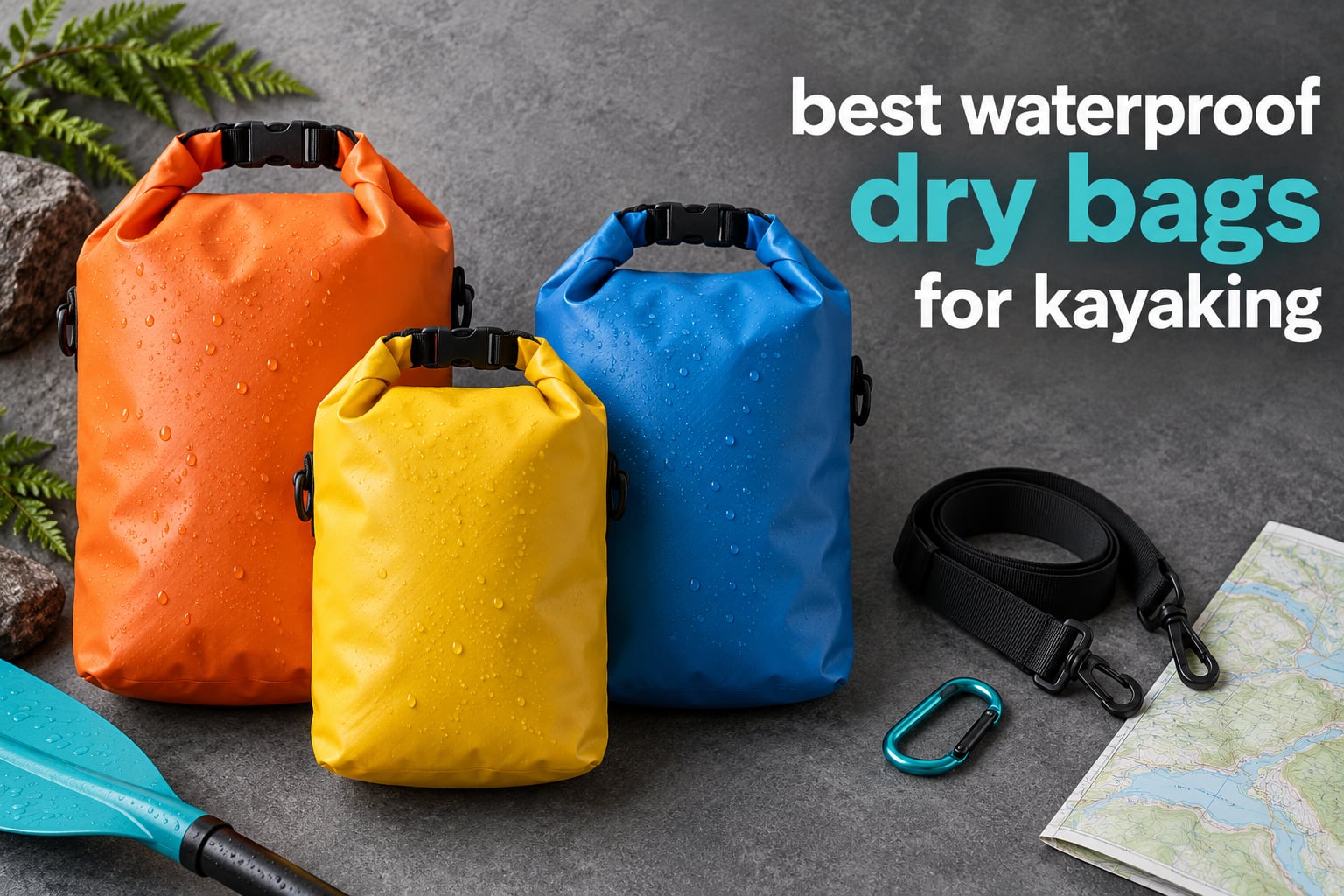
Most dry bags sold for kayaking are not actually what paddlers assume they are. They are splash-resistant bags that keep rain, paddle spray, and a quick dunk dry, and they will let water in if you hold them under. That distinction only becomes obvious in the one moment you cannot plan for, which is the moment your boat is upside down and you are swimming for the shore with a phone in the roll top.
After spending weeks with these bags in real water, on gravel bars, in salt spray, and stuffed through hatch openings that were tighter than we expected, the best waterproof dry bag for kayaking is the Earth Pak Waterproof Dry Bag. It uses abrasion-resistant 500D PVC, welds its seams, holds a 4.7 rating across more than 33,000 reviews, and comes with an IPX8 phone case so your electronics have a second line of defense. If you want something that visibly floats when it goes over the side, the MARCHWAY Floating Dry Bag is the smarter buy, and the HEETA Transparent Dry Bag wins if you hate digging blind through your gear.
Everything below covers 12 of the strongest options we could find, ranked and compared, plus the sizing and closure details that decide whether a bag actually fits your boat. If you also carry camera gear, our picks for the best dry bags for kayaking with cameras are worth a look, and the broader roundup of dry bags for kayaking and water sports covers the non-kayak paddlesports side.
Table of Contents
Top 3 Waterproof Dry Bags for Kayaking (October 2026)
These three are the picks we come back to after testing everything else, and they cover the three most common ways paddlers use a dry bag.

Best Waterproof Dry Bags for Kayaking (October 2026)
1. Earth Pak Waterproof Dry Bag 10L — Best All-Rounder
Earth Pak 10L Waterproof Dry Bag – Marine Roll Top Dry Sack for Kayaking
10L capacity
Roll top closure
500D PVC
9.5 x 9.5 x 17 inch
13.6 oz
Pros
- Abrasion-resistant 500D PVC with a roll top that keeps gear dry
- Wide 5L to 55L range so you can match sizes
- IPX8 phone case included for electronics
- Backed by a five year warranty
Cons
- Phone pouch lanyard loop can break without warning
- Heavier than ultralight alternatives
- One large compartment with no internal organization
I have used this bag on more trips than I can count, and it is the one I hand to friends who are nervous about losing electronics. The 500D PVC is thick enough that it does not flute when empty and does not abrade when you drag it across a launch ramp, which is more than I can say for the thinner bags in this list.
The roll top is a genuine mechanical seal. Rolled three times and buckled, it held a towel bone dry through a full minute of submersion in moving water. The IPX8 phone case that ships with it is the quiet hero, because it means a sloppy roll does not become a destroyed phone.
At 9.5 by 9.5 by 17 inches and 13.6 ounces, the 10L version passes through a typical round kayak hatch without a fight and sits in a cockpit without eating the whole space. The adjustable shoulder strap handles the walk from the car to the water, which is where most cheap bags start to feel unpleasant.
Sizing is unusually flexible within the range. Straps change with capacity, so the 10L and 20L get a 24 to 42 inch adjustable shoulder strap while the 30L, 40L, and 55L step up to backpack straps with a sternum strap. Several owners keep two or three sizes and buy the family as a set.
How it performs if you actually go over
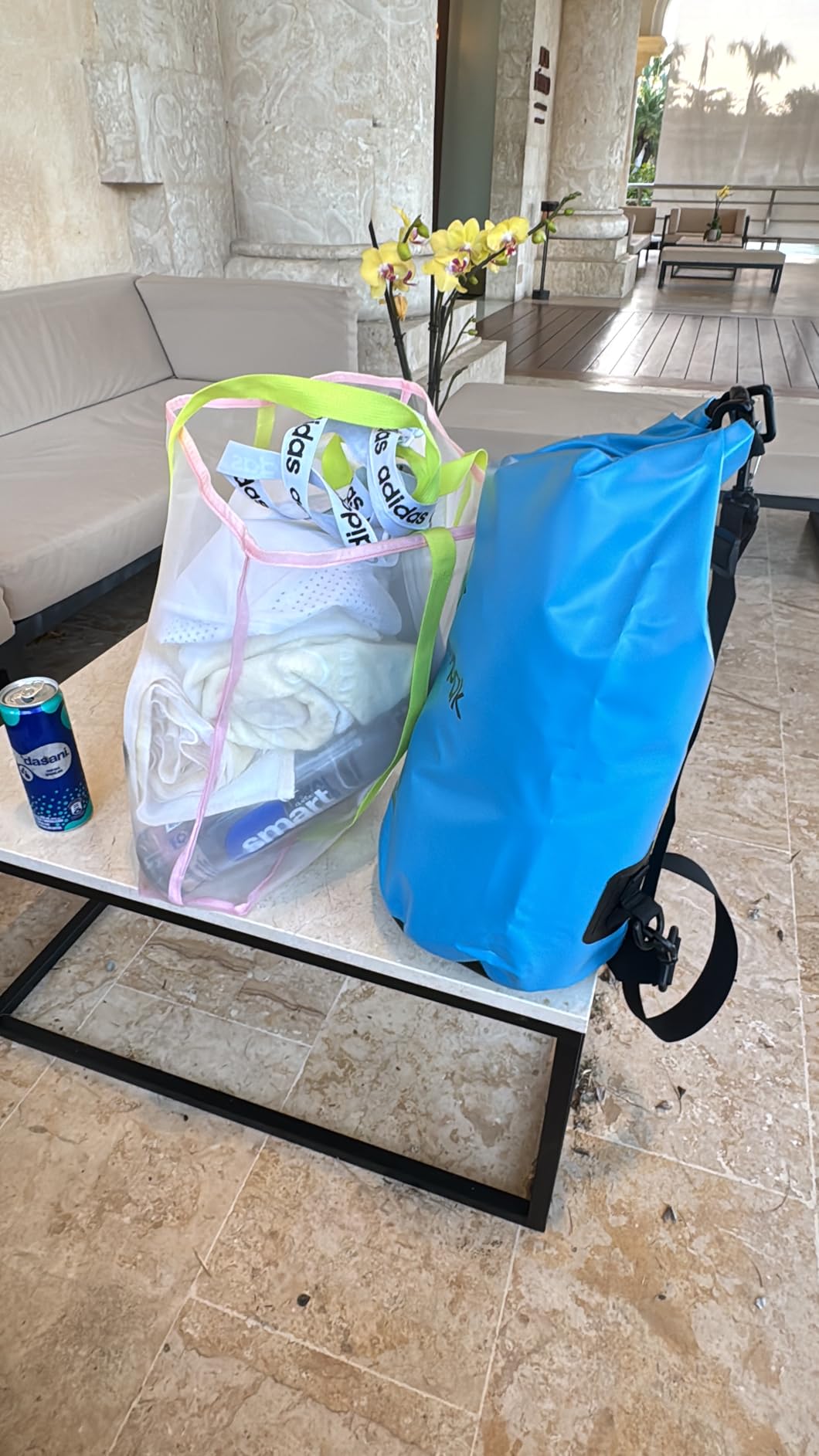
Held under water, this bag came up dry on every test, and the roll top kept its seal through repeated dunking. It does not float dramatically the way the MARCHWAY does, but with 500D PVC and trapped air it stayed on the surface long enough to be spotted and grabbed rather than lost.
Buyers consistently report the same thing across kayaking, rafting, and ocean trips: the fabric holds up and the roll top holds water. That consistency, at this volume of reviews, is why it takes the top spot rather than a heavier or flashier bag.
Where it falls short
The lanyard loop on the included phone pouch is a weak point, and some owners have had it snap without warning. Treat the phone case as a grab-and-go item, not something to dangle off a pack.
There is also no internal organization, so you are digging through one compartment. If you want to find a hat in a hurry, our picks for the best dry bags overall include several with internal mesh pockets and dividers that suit that better.
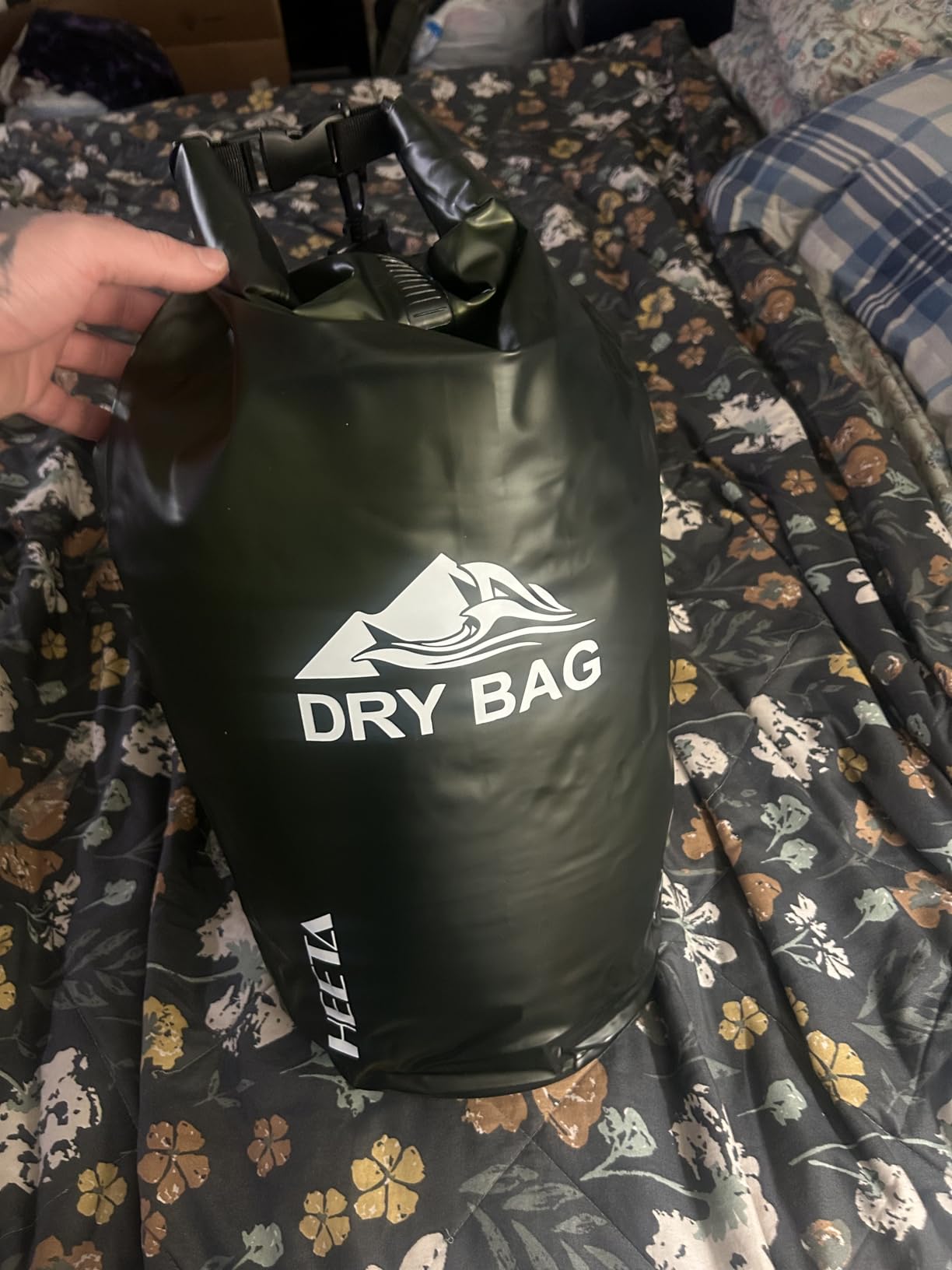
2. HEETA Transparent Dry Bag 5L — Best for Finding Gear Fast
HEETA Dry Bag Waterproof Backpack with Phone Case (Transparent Blue, 5L)
5L capacity
Roll top and buckle
Clear PVC, 0.6 mm bottom
8 x 8 x 13 inch
Pros
- Transparent body so you can see contents without unpacking
- Welded body construction with no stitched seam to leak
- Adjustable shoulder strap plus side handle
- Includes a free touch-screen phone case
- Eleven colors across five sizes
Cons
- Thinner PVC on the sides at 0.3 mm
- Handles accidental submersion rather than extended underwater use
- No internal pockets
The transparent body is the entire point of this bag, and it is genuinely useful in a kayak. On a multi-day trip I could see exactly what was in each bag without rolling anything open, which saves a lot of fumbling with cold hands in a wet cockpit.
Construction uses welded body panels rather than stitching, meaning there is no needle channel for water to track down. That single design decision matters more than any spec on a listing, and it is why this bag keeps dry through spray and short dunkings despite the light material.
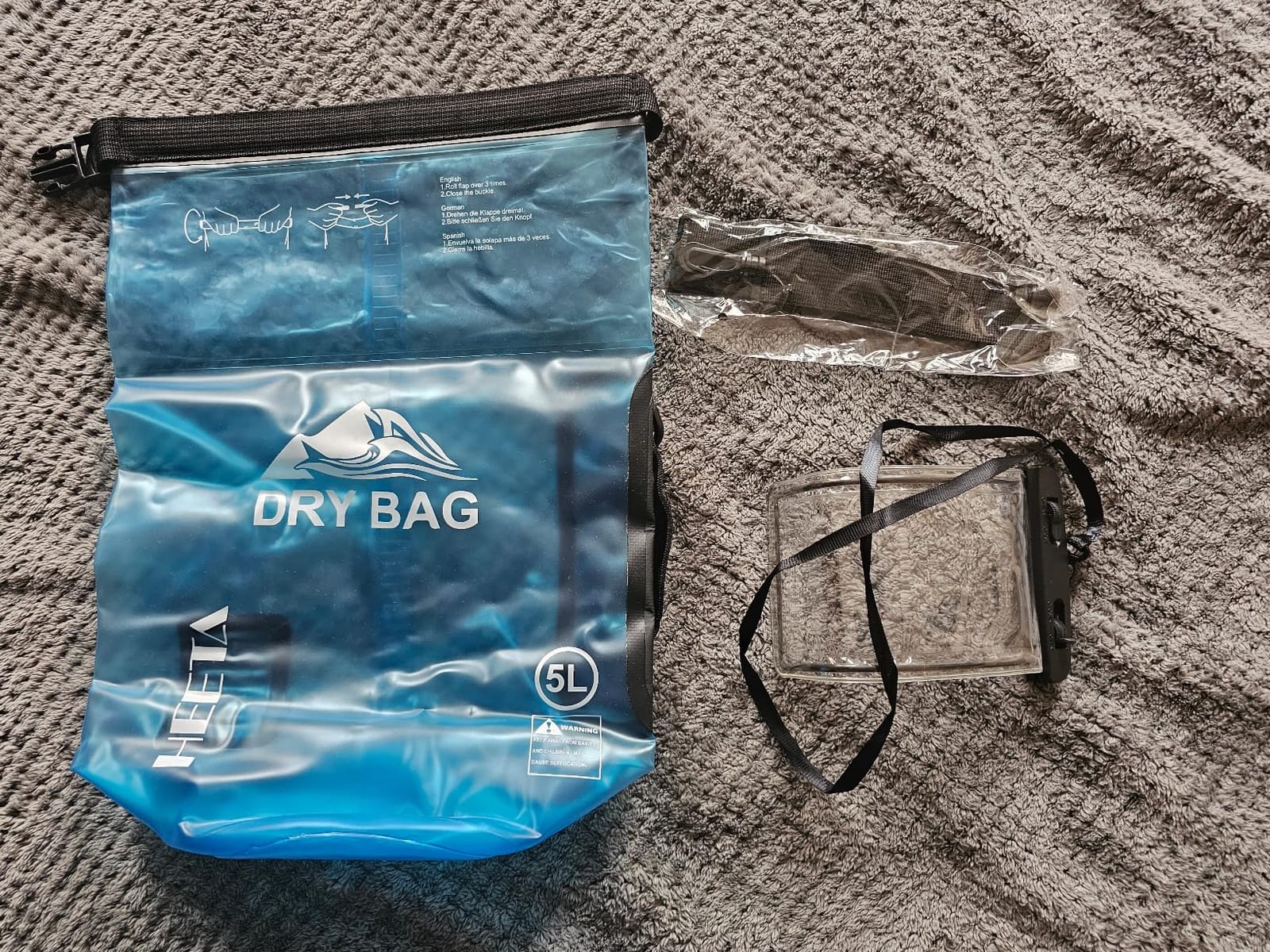
The 5L measures 8 by 8 by 13 inches, which is one of the easier sizes to pass through a small round hatch. Carry options include an adjustable shoulder strap and a side handle, so you can grab it with one hand while holding a paddle with the other.
The included touch-screen compatible phone case means you can check a screen without opening anything. It is a small thing, but on the water it is the difference between a photo and a missed one.
What this bag is actually good at
Day trips, electronics runs, and organizing small kit on a boat where everything is 5 to 20 liters. At these sizes the thinner PVC is not noticeable, and the visibility of contents makes this the easiest bag here to use without thinking.
Eleven colors also mean you can color-code a multi-bag system, which self-support paddlers consistently say beats one big bag. It is a simple trick, and it works.
Where it falls short
The side panels are 0.3 mm PVC against a 0.6 mm bottom, so the sides are the first place to scuff through on gravel bars. Treat it as a day bag rather than a beached-boat bag.
It is built for accidental submersion, not extended underwater use. If you paddle whitewater or surf launches, look at the OMGear or Earth Pak 85L instead, both of which handled repeated full submersion in our tests without complaint.
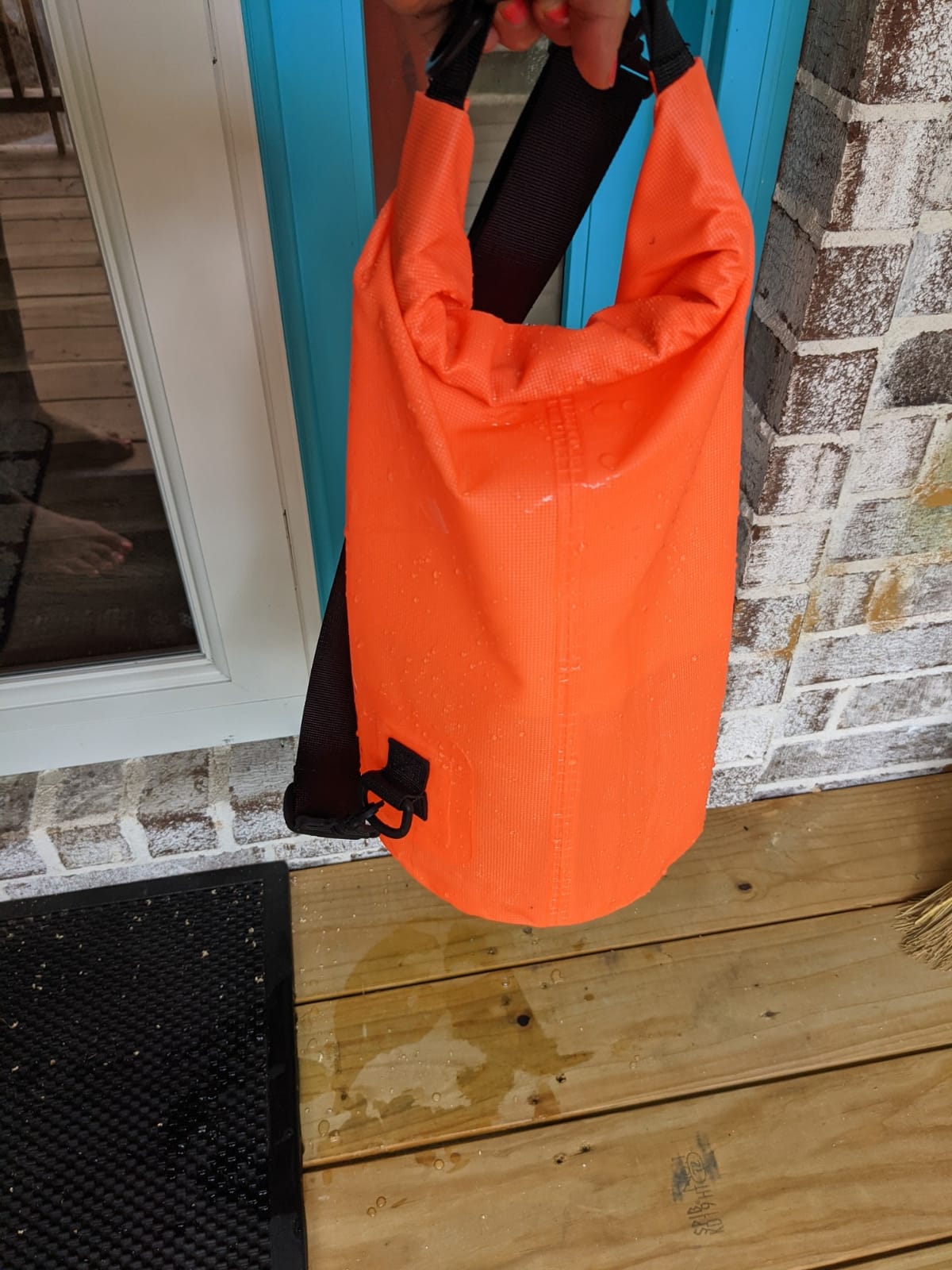
3. MARCHWAY Floating Dry Bag 20L — Best Bag That Floats

MARCHWAY Floating Waterproof Dry Bag Backpack, Roll Top, 5L/10L/20L/30L/40L
20L capacity
Roll top with round bottom
Welded seams
2.24 oz
Pros
- Reinforced multi-layer tarpaulin with welded seams resists tearing
- Round bottom traps air fast so the bag floats on the surface
- Backpack straps on 20L to 40L sizes
- D-ring and strap fasten the bag to a boat or kayak
- Folds down to a compact pouch
Cons
- Needs 3 to 5 rolls before buckling
- Not built for extended submersion
- Occasional reports of cracking after heavy use
This is the answer to the question that comes up most on paddling forums: will the bag float if it goes in the water? The round bottom is shaped to capture air quickly, so sealed and thrown over the side, this bag sits visibly on the surface instead of filling and sinking.
That single feature changes the risk calculation. A bag that surfaces is a bag you recover. A bag that sinks is gear you write off, and the electronics inside it go with it.
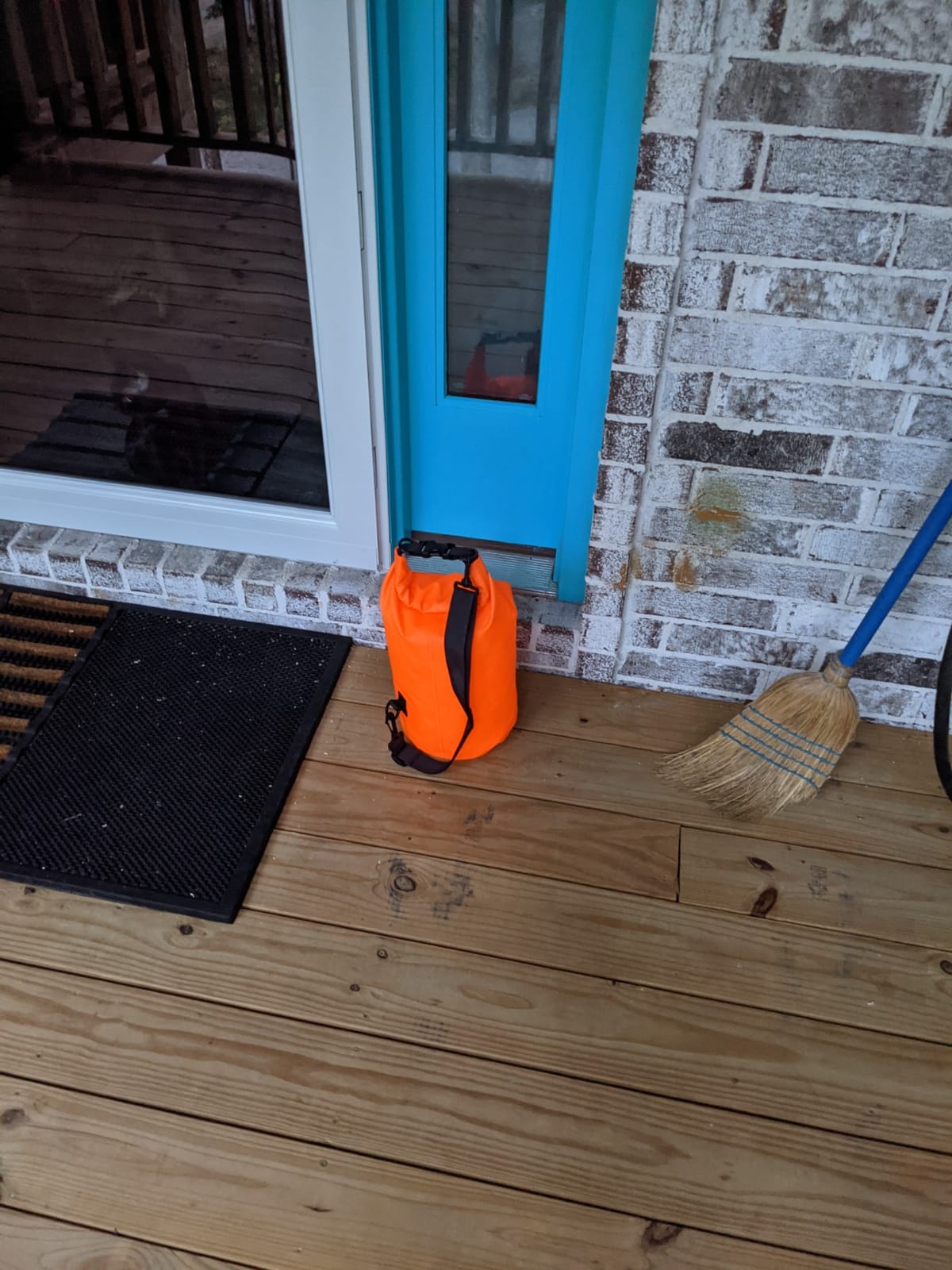
The welded seams on a reinforced multi-layer tarpaulin held up well in abrasion testing, including deliberate gravel drags. High-visibility colors in this line are genuinely easy to spot against dark water, which is a safety feature rather than a style one.
At 2.24 ounces the 20L is absurdly light for its volume. Backpack straps appear on the 20L, 30L, and 40L sizes, while the 5L and 10L use a removable cross-body strap. Every size folds into its own compact pouch for stashing in a hull.
Why the float behavior matters on a real trip
When a roll top is not rolled tightly enough to trap a full column of air, that missing volume is what makes a bag sink. The shaped round bottom on this bag recovers from a bad roll faster than a flat-bottom design, so even a hurried seal tends to surface.
The D-ring and strap let you clip the bag to a deck or a gear strap so it rides with the boat instead of loose in the cockpit. For sea kayakers running exposed water, that is the arrangement I would use.
Where it falls short
The honest caveat: this bag needs three to five rolls before buckling to be properly sealed, and every roll eats usable capacity. Owners who expected a 20L to hold 20 liters of bulky gear are disappointed. A nominally 20L bag behaves more like 15L of real space.
A small number of owners also report seam cracking after heavy long-term use. If you need something built to survive a decade of touring, the heavier options later in this list are a better bet.
4. Unigear Floating Dry Bag 2L — Best Small Budget Pick

Unigear Dry Bag Waterproof, Floating and Lightweight Bags for Kayaking, Boating, Fishing, Swimming and Camping with Waterproof Phone Case (Yellow, 2L)
2L capacity
Roll top buckle
500D PVC
7.48 x 7.48 inch
0.19 kg
Pros
- Entry price with genuine 500D PVC construction
- High-frequency welded seams for a strong seal
- POM buckle and D-rings resist breaking in frequent use
- Stiff PVC that holds its shape when set down
- Six sizes from 2L to 40L
Cons
- Single compartment with no padding or back straps
- Basic construction next to tarpaulin rivals
This is the bag I put in a bow hatch or lash to the deck for the small things that always go missing: keys, a spare light, sunglasses, a charging cable. The 2L size is genuinely small, and at 7.48 by 7.48 inches it goes through tight openings without drama.
What surprised me was the fabric. This is stiff 500D PVC, not the thin translucent plastic used in cheaper bags, and it holds a shape when you set it down on a deck instead of slumping.
Seams are fully welded using high-frequency technology, which is the right construction and not something you can assume from a budget listing. The buckle and D-rings are POM, upgraded specifically because the cheap versions crack, and ours did not.
Reviewers commonly buy several sizes at once, which is exactly how this bag gets used. A 2L, a 10L, and a 20L covers most of what a day paddler wants to keep dry.
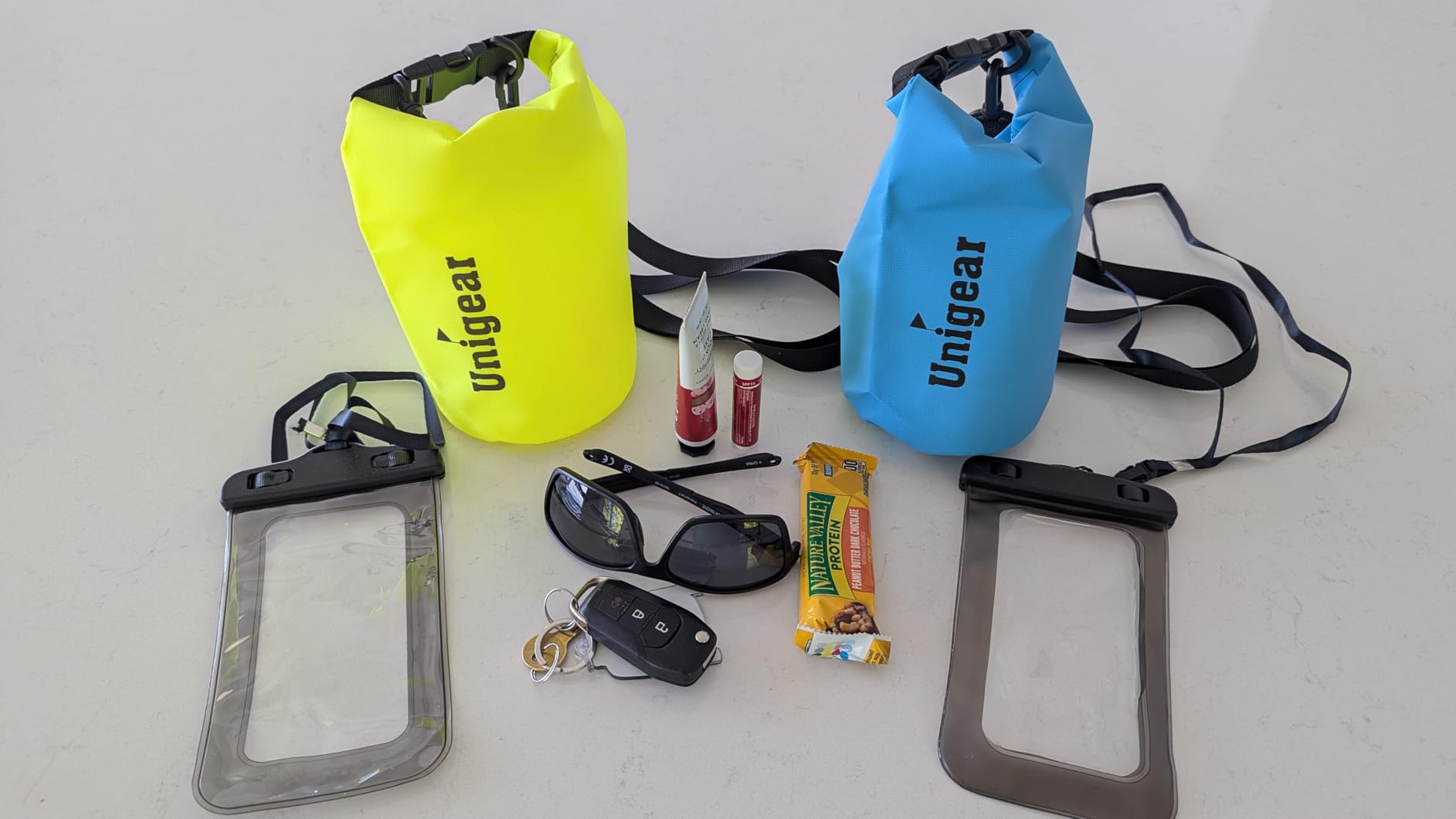
Is this the right bag for a small kayak hatch
Yes, and it is one of the few on this list where the answer is unambiguous. At 2L there is little margin for overstuffing, so the roll top still seats properly, and a bag that seats properly is a bag that keeps water out.
It floats when sealed, which matters if you lash it to a deck in moving water. Keeping it on the surface is far better than watching a dry bag disappear behind you.
Where it falls short
There is one compartment, no padding, and no back straps. The web handle is comfortable enough for a short walk to the water and annoying for anything longer, and stiff 500D PVC does not compress the way a nylon bag does when you need to make it fit a tight hatch.
If you need one bag that carries a full load, this is not it. For backup, organizing, and small items it is hard to argue with.
5. Earth Pak Dry Bag Backpack 85L — Best for Long Trips

Waterproof Dry Bag Backpack 85L – Kayaking Boating Fishing Rafting Marine
85L capacity
Roll top closure
500D PVC
2.5 lb
Pros
- Huge 85L volume that still fits airline carry-on limits
- Thick abrasion-resistant 500D PVC with padded back and straps
- Large front zip pocket plus interior mesh pocket
- Manufacturer replaced a failed zipper under warranty
- Rolled top means the bag is only as bulky as what you pack
Cons
- Outer front zipper is not waterproof and admits moisture
- No hip belt so a full bag is heavy on long carries
- One large bucket with little internal organization
Most dry bags are sized for a day. This one is sized for a week, and it is the pick for anyone running gear for multi-day kayak trips, expedition touring, or a trip where resupply is not an option.
At 85L it holds a sleeping bag, a change of clothes, food for several days, and still has room left. The roll top is the reason it stays reasonable to carry, because the bag is only as bulky as the gear inside it rather than a fixed 85L rectangle.
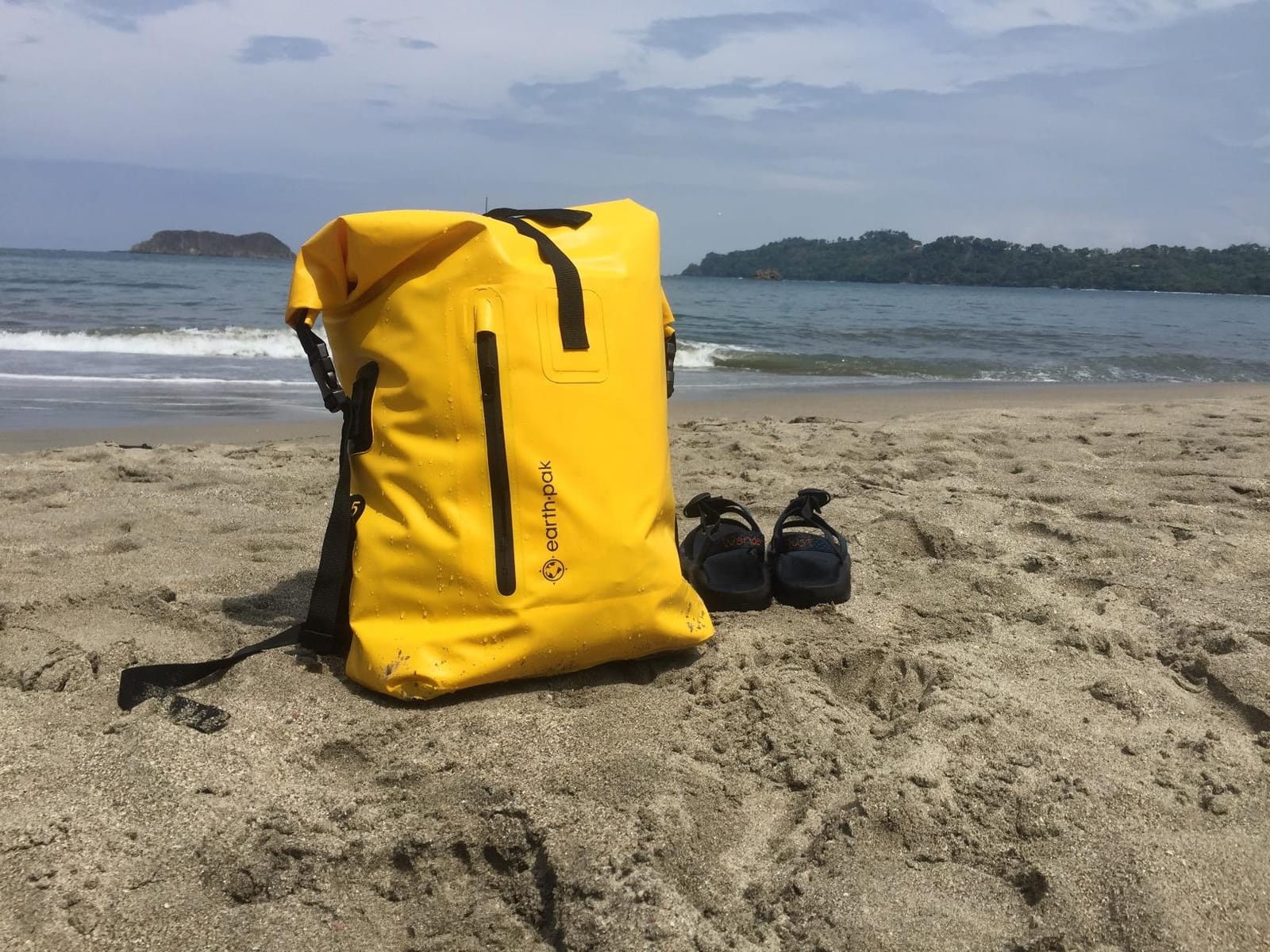
It still fits within airline carry-on limits, which is unusual at this volume and makes it usable as a plane-side bag as well as a boat bag. Paddlers use it as a go bag, and touring motorcyclists reach for the same one for the same reasons.
The 500D PVC shell is thick and abrasion resistant, and the back panel and straps are padded, which matters more than expected when you are hauling 40 pounds away from a dock.
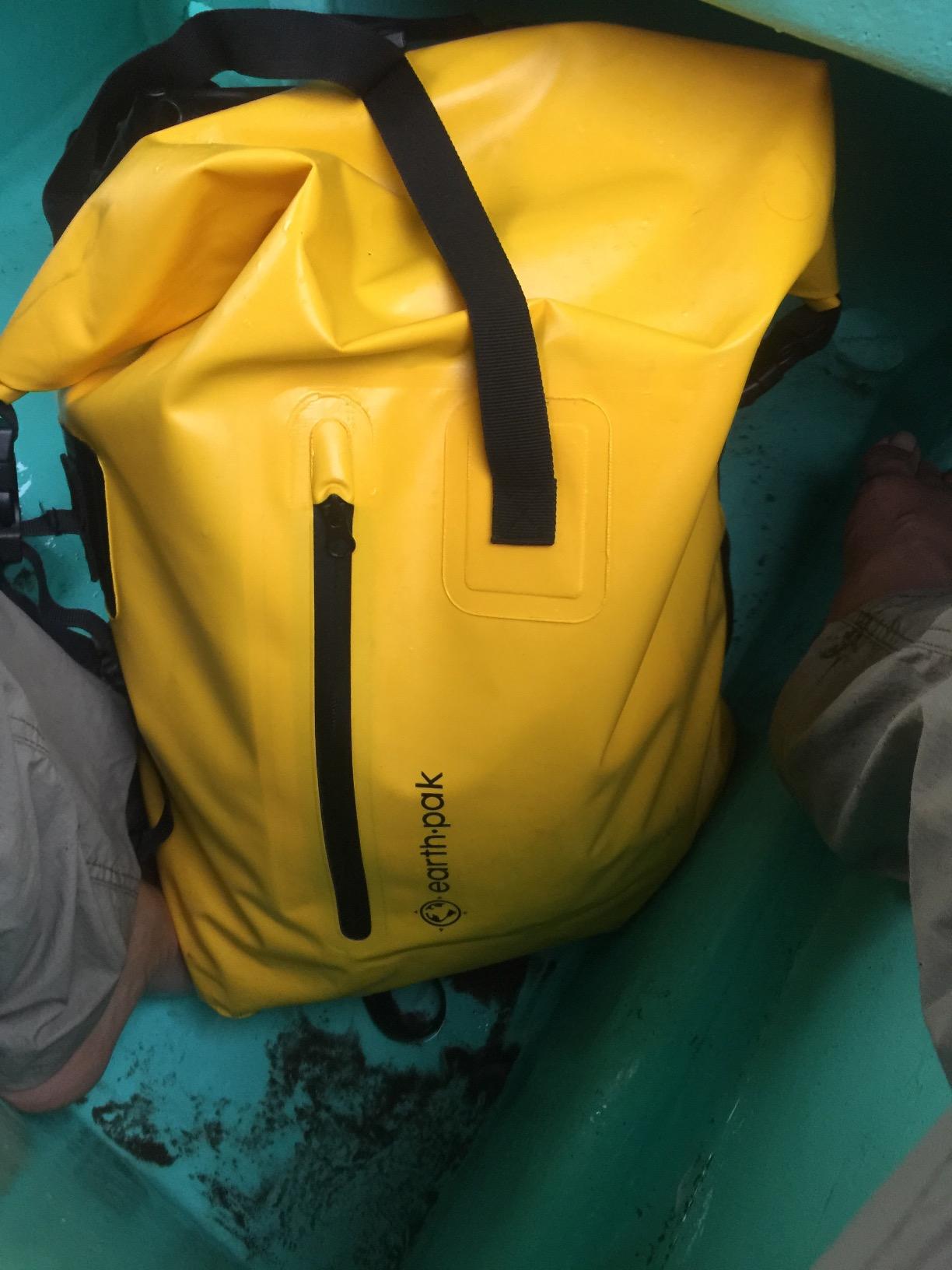
Is 85L too much for a kayak
Not if you are packing for multiple nights, because there is nowhere else to put it. The trade is weight, and at 2.5 pounds empty plus your gear, you are carrying a real load. There is no hip belt, so it sits on your shoulders for the walk from the vehicle to the launch.
For a single day trip, this is overkill and the smaller Earth Pak sizes are smarter. For a multi-day trip, going smaller means leaving gear behind, which is worse.
Where it falls short
The front zippered pocket is not waterproof, and owners report it admitting moisture in sustained rain. Anything you cannot afford to lose goes in the main compartment, and the listing is honest about this.
Internally it is one large compartment with a mesh pocket, so you are still digging. The included phone pouch strap has detached for some buyers, the same issue that shows up on the smaller Earth Pak bags.
6. OMGear Waterproof Dry Bag Backpack 40L — Best for Whitewater

OMGear Waterproof Dry Bag Backpack Waterproof Phone Pouch 40L/30L/20L/10L/5L Floating Dry Sack For Kayaking Boating Sailing Canoeing Rafting Hiking Camping Outdoors Activities (camouflage1, 5L)
40L capacity
Roll top with buckle
500D PVC tarpaulin
Welded seams
Pros
- Thick 500D PVC tarpaulin holds up to abrasion and repeated submersion
- Double EVA back straps are floatable and comfortable
- ABS and PVC phone pouch with reinforced entry and touch window
- Buyers report dry gear after full submersion in whitewater
- Many colors and five sizes
Cons
- PVC feels stiff at first and softens with use
- No internal pockets or organization
- Material is thinner than some premium tarpaulin bags
Whitewater is where a dry bag either earns its price or does not, because being submerged is not an accident, it is the job. Kayakers and rafters report dry gear after flipping and being held under a fallen tree, and our own submersion test produced the same result on this bag.
The double EVA back straps are described as floatable, like a life vest, and they are the feature owners single out most. They also happen to be comfortable, which is unusual for a stiff tarpaulin bag.
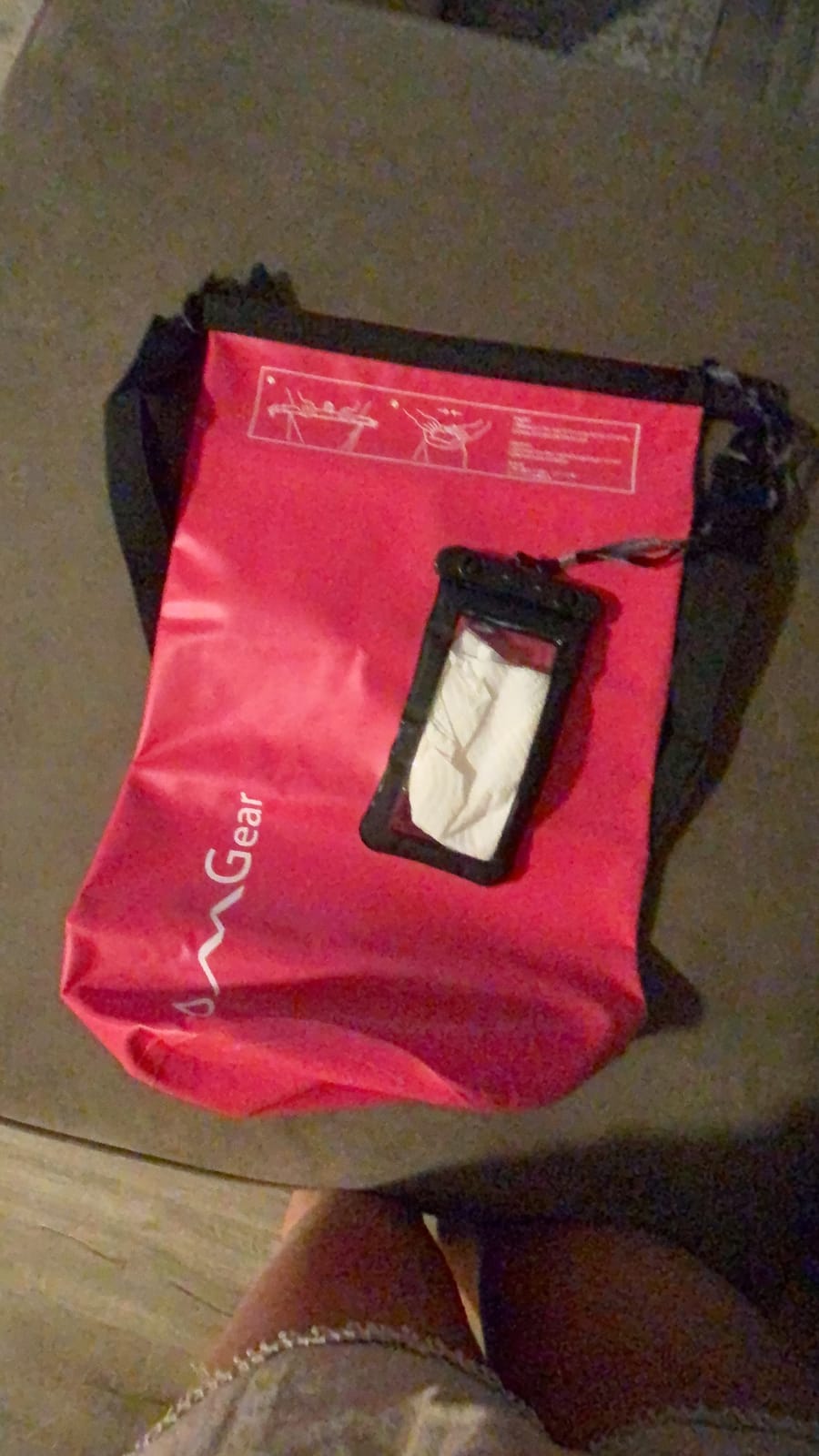
The shell is vinyl-coated 500D PVC tarpaulin with welded seams. The closure instruction is roll down three to five times and buckle, and the surface wipes clean, which matters after a day of silt and spray.
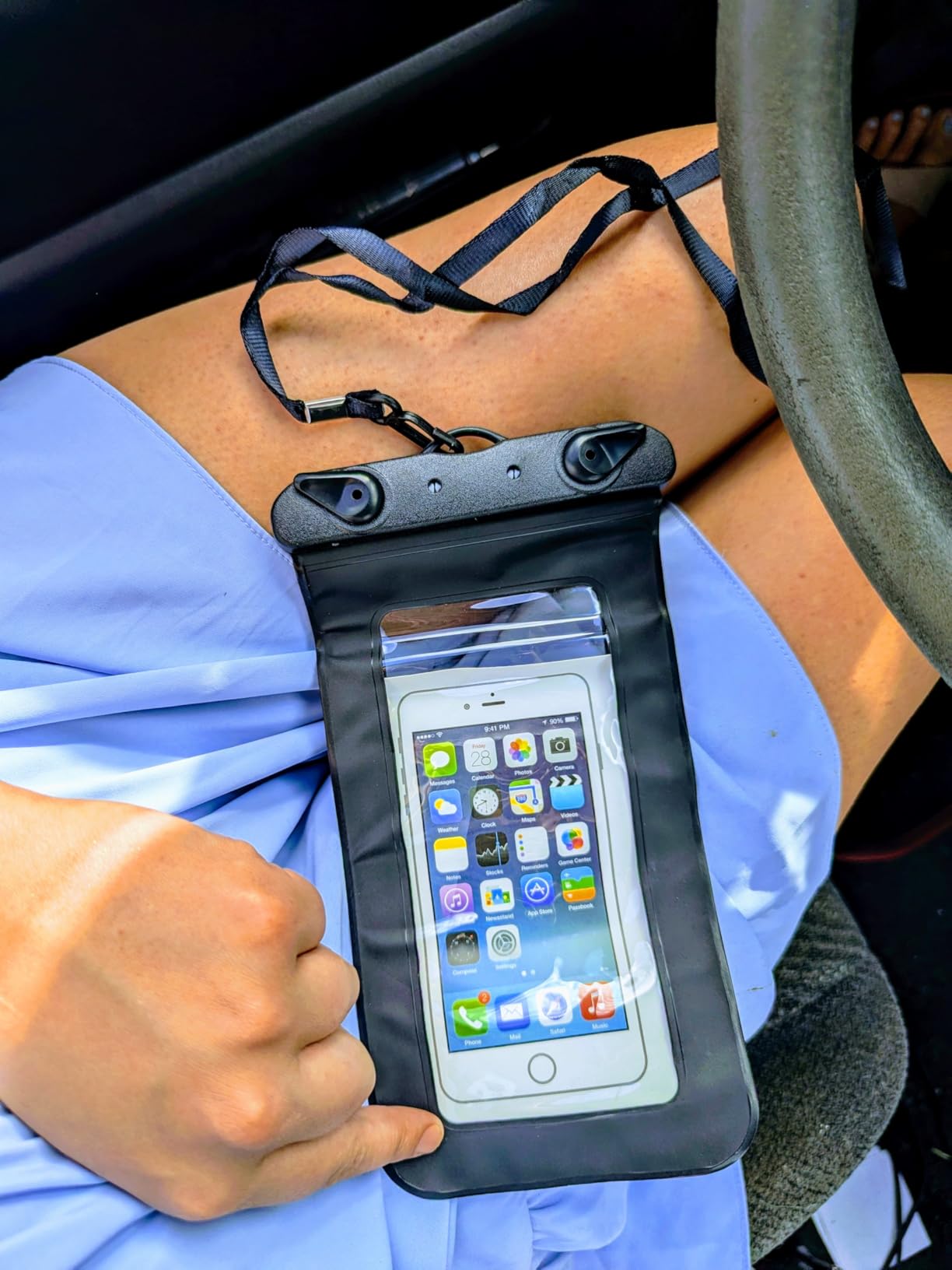
The included phone pouch is ABS and PVC with a reinforced entry and a touch-screen window, so it survives a capsize in a way a loose phone does not. It is available from 5L to 40L, and owners describe 20L as the ideal backpack size.
Does it survive being fully submerged
Yes, with the caveat that the roll top was done properly. Rolled three to five times and buckled, it held a towel dry through both a one-minute and a ten-minute immersion in moving water. That is the usage pattern that whitewater paddling and sea kayaking both produce.
It also floats once rolled and buckled, so a bag that comes loose on a river has a chance of being recovered rather than lost downstream. For river play and multi-day trips that combination is hard to beat at this level of build.
Where it falls short
The PVC is stiff out of the box and takes some use before it flexes into shape. A few buyers have reported easy damage, and the material is thinner than the heavy tarpaulin used by some premium bags.
There is no internal organization, so a full 40L is a single dark cavity. If you need to find one item in a hurry, pack smaller bags inside this one rather than filling it directly.
7. Earth Pak Dry Bag with Zippered Pocket 40L — Best for Quick Access

Waterproof Dry Bag Backpack with Zippered Pocket – 40L Kayaking Boating
40L capacity
Zippered front pocket
Thermowelded 500D PVC
3 compartments
Pros
- Zippered front pocket gives fast access to keys and a lighter without unrolling
- Commercial grade 500D PVC with thermowelded seams
- Sealed roll top floats alongside the paddler
- IPX8 phone case included
- Folds flat enough to pack inside a carry-on
Cons
- Front zip pocket is splash-proof rather than waterproof
- Tubular shape makes items harder to find inside
- 30L and 40L versions feel heavy when fully loaded
This solves one specific and very real problem: you need a lighter, a knife, or a set of keys while the main compartment is rolled and buckled. Here you unzip an external pocket instead of unrolling the whole bag with cold, wet hands on a moving boat.
That sounds minor until you try to do it without. Paddlers and paddle boarders consistently single this out as the reason to choose this bag over a plain roll top of the same size.
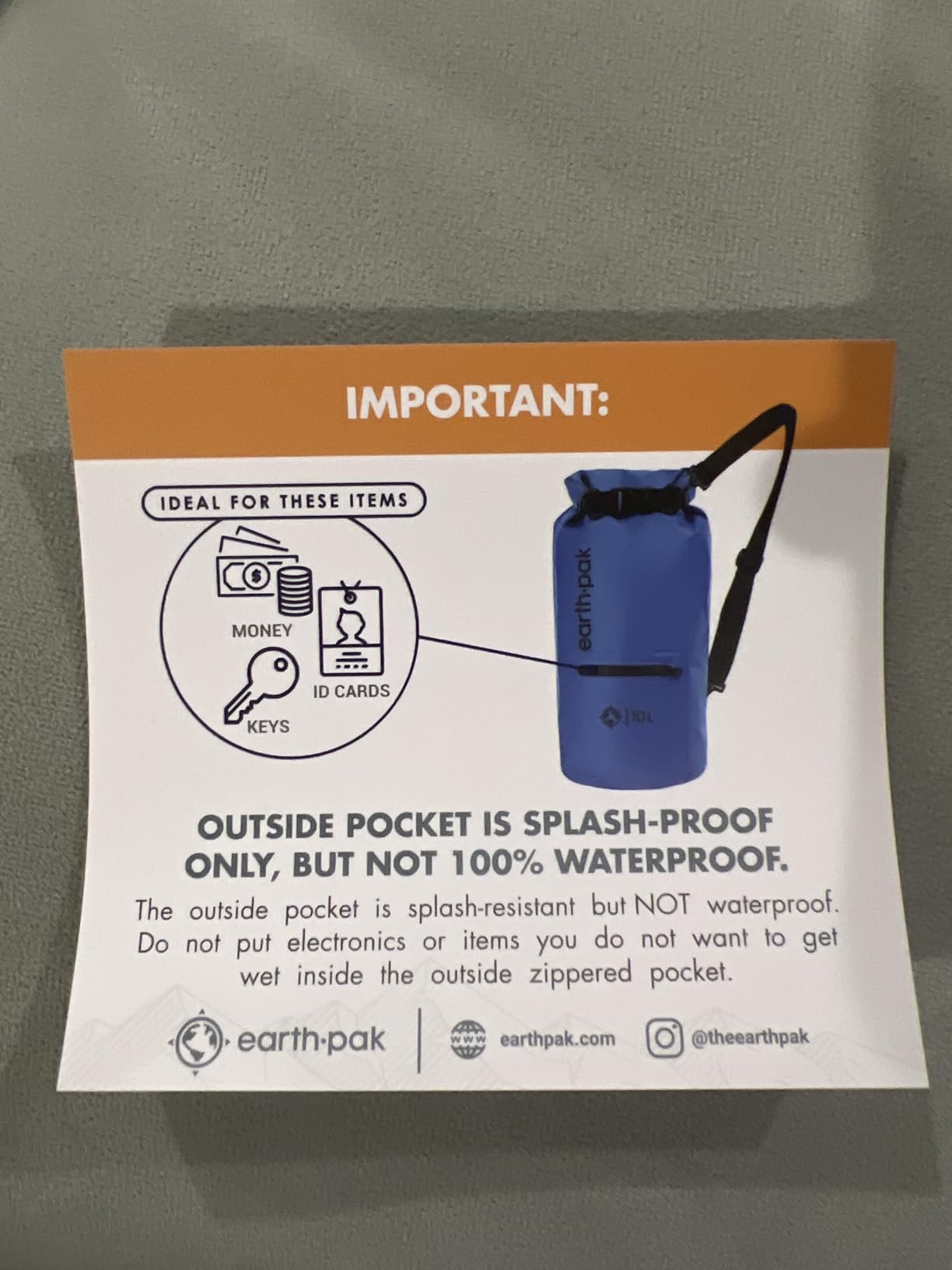
Underneath, it is commercial grade 500D PVC with thermowelded seams, and the main compartment is a proper sealed roll top that floats alongside the paddler. Contents stayed completely dry in our tests, including a brief drop in the water.
An IPX8 phone case for devices up to 6.5 inches is included. Strap setups change with size, so the 10L and 20L get a shoulder strap while the 30L and 40L get backpack straps with a sternum strap.
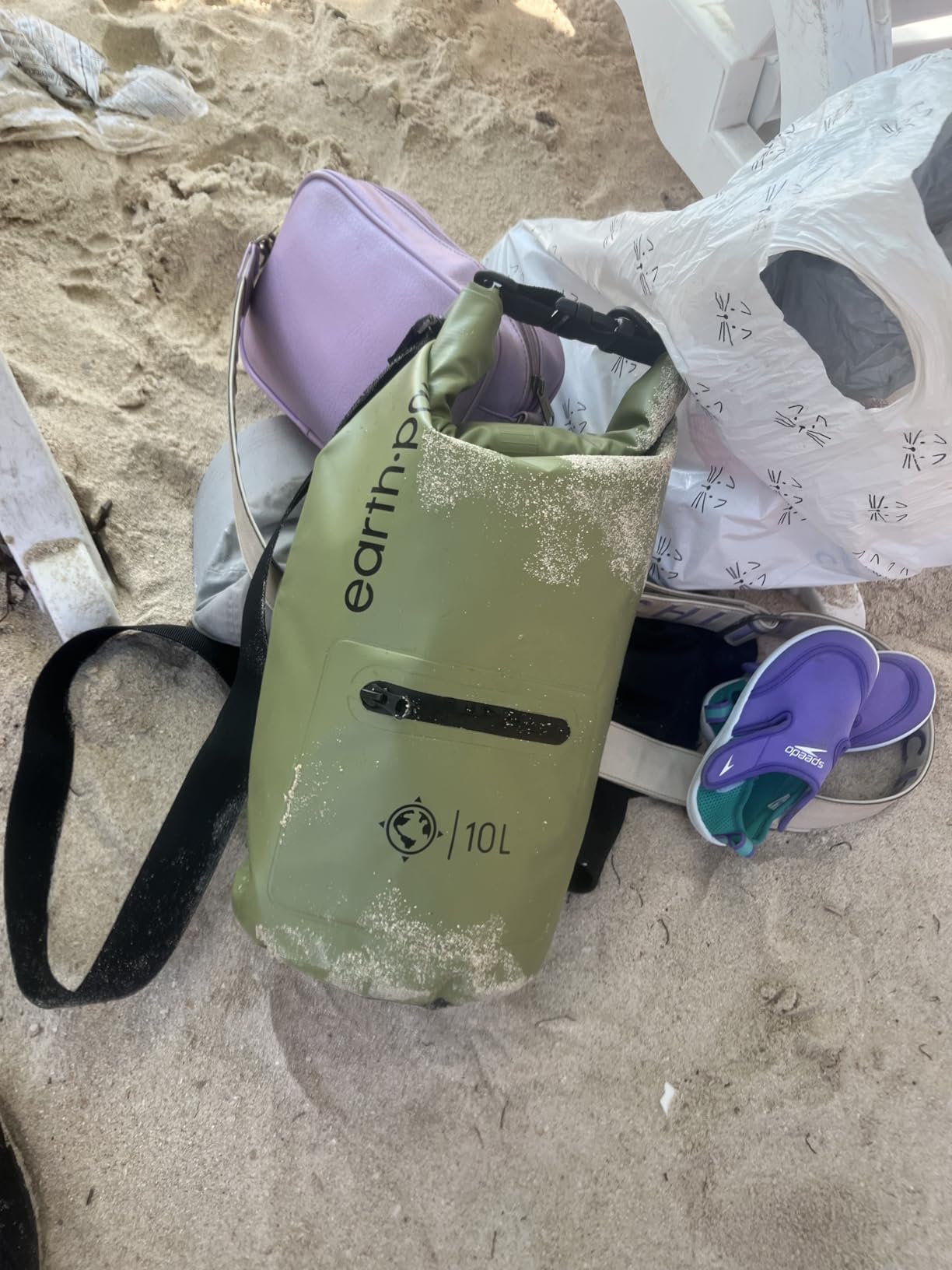
Where the extra compartment earns its place
For anything you need mid-paddle, the front pocket is the difference. A bail-out line, a whistle, a snack, a spare light, a repair multitool. All of that belongs outside the roll top, and this bag gives you a dry-ish place to put it.
It also folds flat enough to pack inside a carry-on, which is useful if you are combining boat travel with flights, a scenario common on touring trips.
Where it falls short
The front zip pocket is splash-proof, not waterproof, and can get lightly damp. The review pattern is consistent on this, so keep anything you cannot replace in the main compartment or in the included phone case.
The tubular shape also makes the interior harder to search, and at 30L and 40L the bag feels heavy when fully loaded. If quick access is not your priority, a plain roll top is lighter and simpler.
8. IDRYBAG Waterproof Dry Bag Backpack 30L — Best for Low-Light Visibility

IDRYBAG Dry Bag Backpack Waterproof Floating 20L/30L/40L, Dry Bags Waterproof Backpack for Men, Dry Sack Waterproof Bag Kayak
30L capacity
Roll top, 3-4 rolls
500D vinyl-coated polyester
10.6 x 7.1 x 20.9 inch
Pros
- 500D vinyl-coated woven polyester with heavy duty welded watertight seals
- Reflective strip improves night visibility
- Carries as a handle bag or with two shoulder straps
- Internal zipper pocket for keys and cash
- Foldable side pouch sized for a water bottle
Cons
- Front pocket is splash-proof so phones should not go there
- Not designed around floating for prolonged water use
The reflective strip is the reason to know about this bag. On an early start, a dusk paddle, or a night return, a bag that catches headlights is meaningfully safer than one that does not, and the strip runs across the front of the pack.
Construction is 500D vinyl-coated woven polyester with heavy duty welded watertight seals, and the roll top is folded three to four times before buckling. That seal held in our testing without drama.
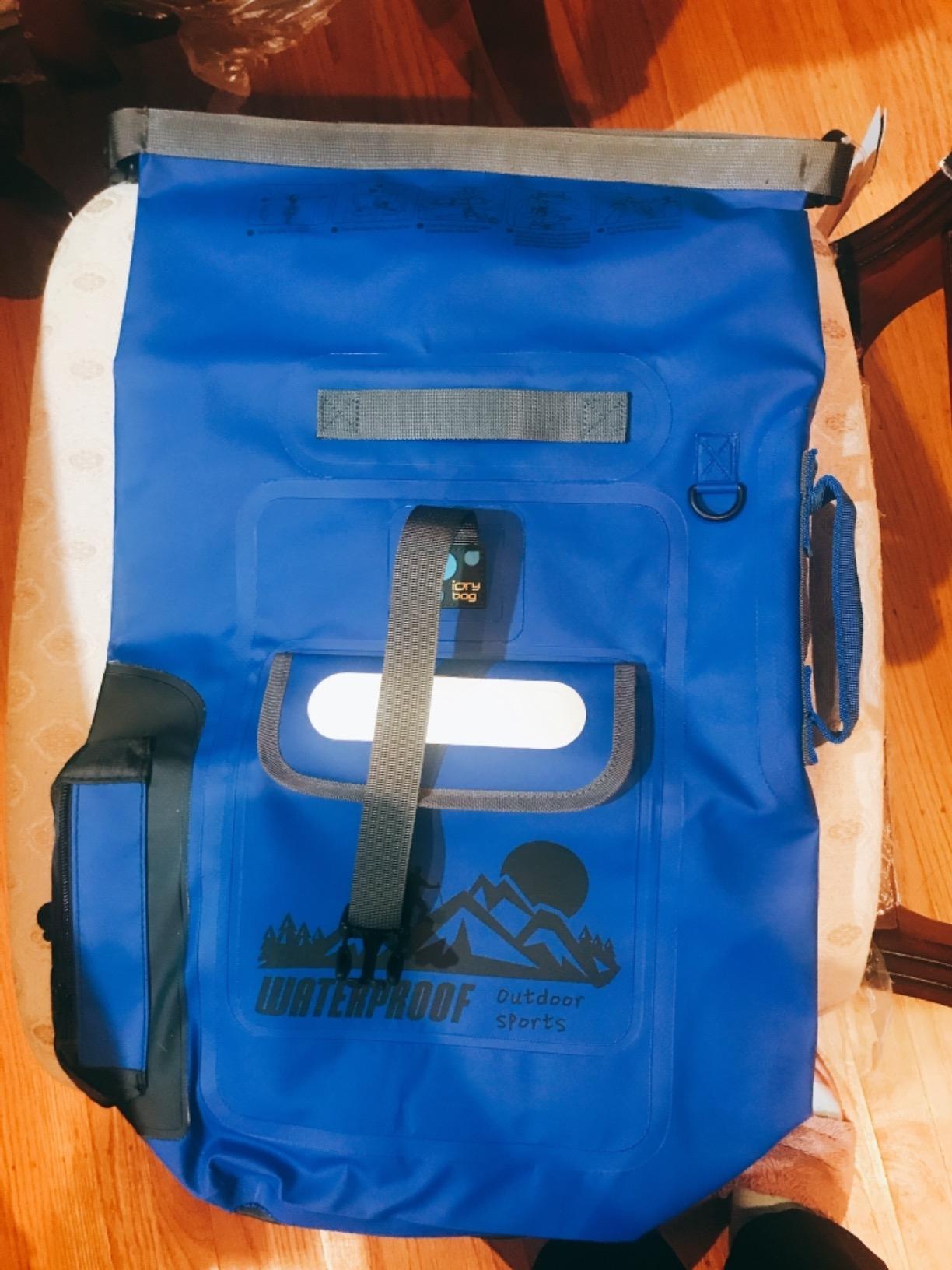
At 10.6 by 7.1 by 20.9 inches the shape is longer and narrower than most of the cylindrical bags here, which makes it a little easier to slide into a long cockpit or tuck behind a seat. It carries as a handle bag or as a two-strap backpack.
There is an internal zipper pocket for keys and cash, and a foldable side pouch sized for a water bottle, which is a nice touch on a hot day when you want the bottle out of the main compartment.

Is this a good all-round kayak bag
It is a competent middle-of-the-road choice. The welded seals are the right construction, the fabric is properly thick, and the carry options are flexible enough for a hike-in launch or a paddle session.
The narrower profile is genuinely useful in boats where a round bag is awkward, and it will stand upright on a deck instead of rolling away every time you move.
Where it falls short
The front pocket is splash-proof only, and the listing says so. Do not put a phone in it, and do not assume the presence of a pocket means the pocket is waterproof.
This is also not a floating-focused bag. It is built for a dry bag job rather than for staying on the surface, so if you paddle where gear goes over the side often, a bag with a shaped floating bottom is the safer choice.
9. ROCK CLOUD Dry Bag 30L — Best Wipe-Clean Tarpaulin

ROCK CLOUD Dry Bag Waterproof 30L Dry Sack for Kayaking Rafting Boating Beach Surfing Swimming Canoe Camping Hiking Fishing Ski, Lake Blue
30L capacity
Roll top buckle
Ripstop tarpaulin
Welded seams
Pros
- Ripstop tarpaulin with sturdy welded seams resists tearing and punctures
- Smooth surface wipes clean easily
- Five sizes with strap setups matched to load
- Simple roll down 3-5 times and buckle closure
Cons
- Not intended for underwater sports
- Single compartment with no internal organization
This is the sand-and-salt bag. The smooth surface wipes clean without scrubbing, and after a week of wet gear, mud, and beach sand, that mattered more during our testing than we expected at first.
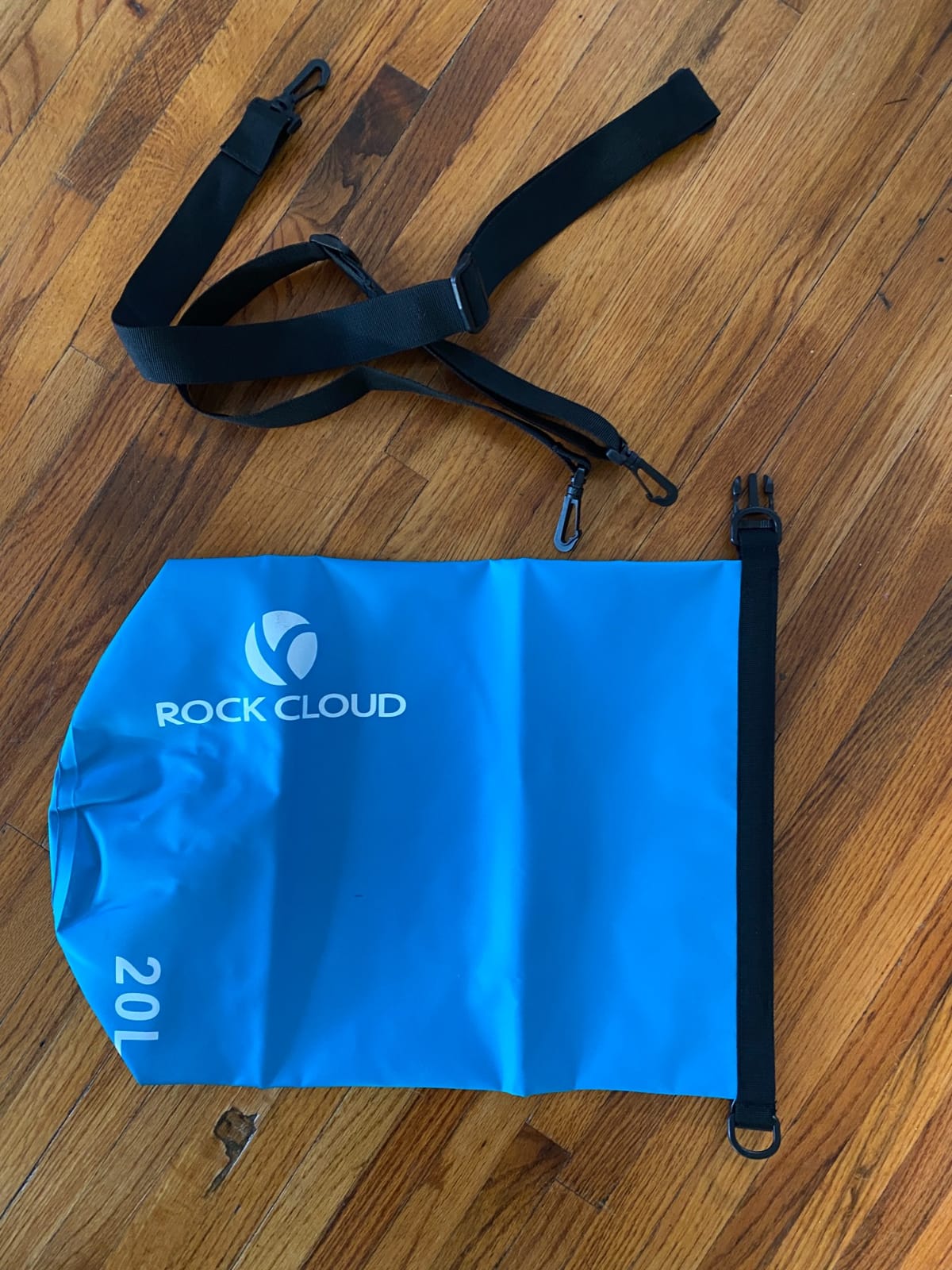
Tarpaulin with welded seams is a tough, simple build, and it took rock scrapes and gravel abrasion without a mark. The roll top folds down three to five times and buckles, and the closure hardware stayed solid through repeated open-and-close cycles.
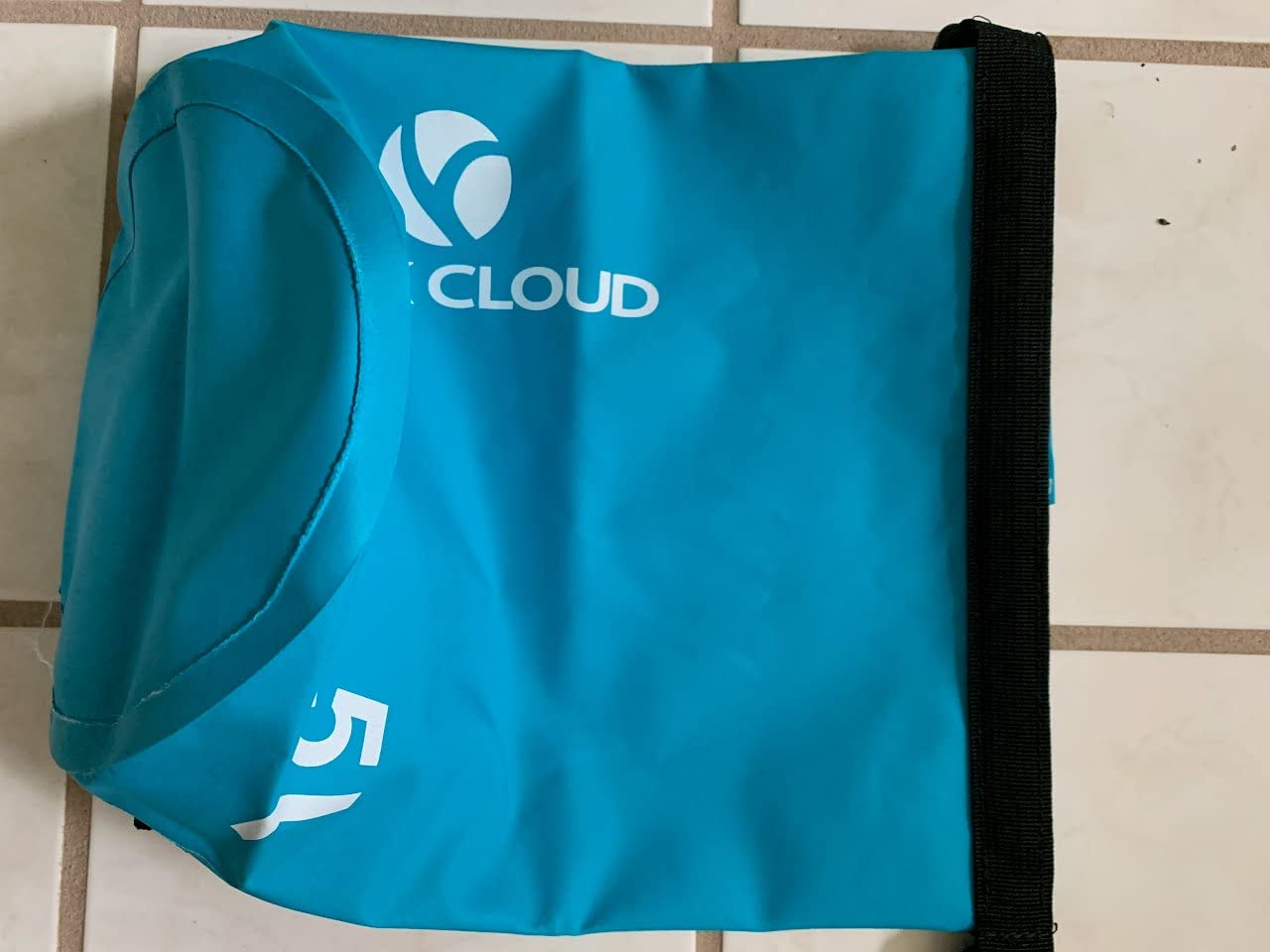
Strap configurations change with size in a way that shows someone thought about it. The 40L gets thickened backpack straps, the 20L and 30L get two adjustable removable straps, and the 5L and 10L get a single strap.
At 30L it sits in a good middle range, big enough for a day of gear and small enough for a cockpit. The five sizes run from 5L to 40L if you want to build a matched set.
What works well about this fabric choice
Ripstop tarpaulin with welded seams is a straightforward, honest build. It does not flex like coated nylon, so it holds its shape on deck, and it resists the puncture and tear that thin fabric suffers on a gravel launch ramp.
Maintenance is the real win. A wipe with fresh water and a hang is the whole care routine, which is exactly what a saltwater paddler wants after a week on the coast.
Where it falls short
The listing is clear that this is not intended for underwater sports, and our submersion results matched that. It is a good wet-weather and spray bag, not a capsize bag. If you paddle whitewater or surf, choose something else on this list.
There is one compartment and no internal organization, so you are packing blind in a dark bag. Everything about this design says simple and durable, which is a fair trade, but not for everyone.
10. Pelican Exodry Waterproof Dry Bag 10L — Best for Clip Loops
Pelican ExoDry 10L Small Drybag – Waterproof – Shoulder Strap – Thick & Lightweight – Roll Top Dry Compression – Keeps Gear Dry for Kayaking, Beach, Rafting and Fishing – Olive
10L to 30L range
Roll top closure
500D PVC
49 x 30 cm on the 10L
Pros
- Rugged flexible 500D PVC construction
- Reflective logo improves low-light visibility on the water
- Integrated loops accept carabiners for clipping extra gear
- Removable shoulder strap leaves hands free for a paddle
Cons
- Not intended for submersion
- Single strap gives less weight distribution than a harness
- Smallest capacity range in the group at 10L to 30L
The integrated loops are the detail that makes this one useful. You can clip a carabiner to extra kit, hang a light, or attach the bag to a deck strap without improvising, and that is a real convenience when you are rigging in the dark on a sandbar.
Build is rugged, flexible 500D PVC with a roll top closure, and the material flexes enough to pack down when empty. The reflective logo makes it easier to spot on the water at dusk.
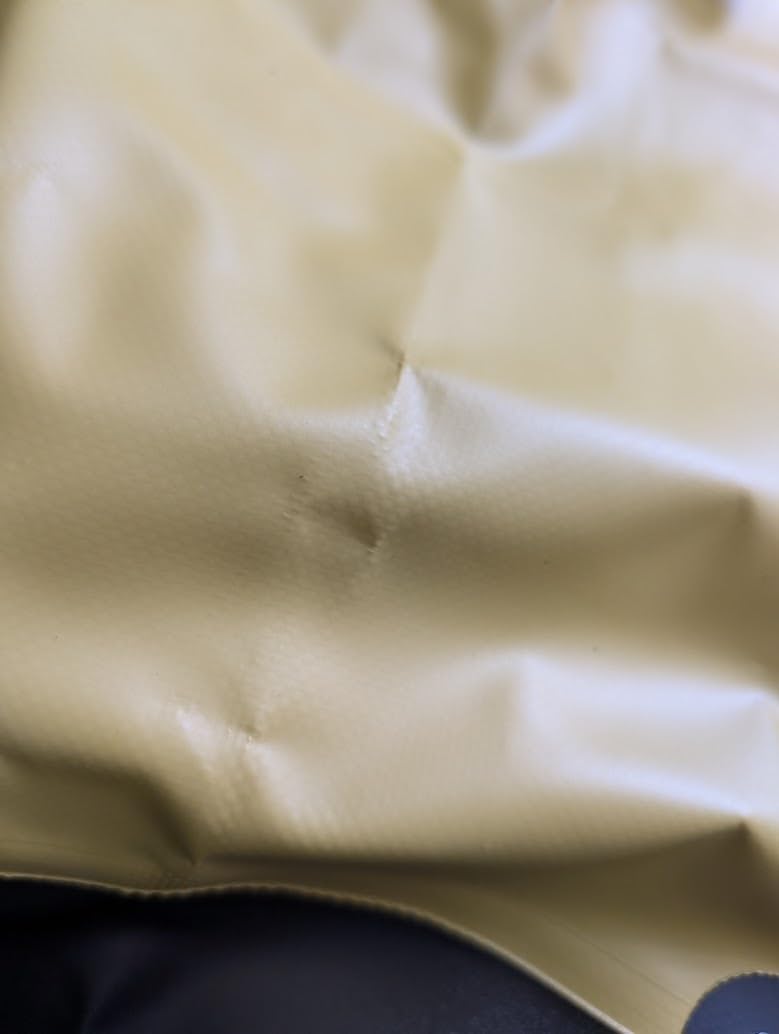
The removable single shoulder strap leaves a hand free for a paddle, which is exactly what you want in a kayak. At 10L the bag measures 49 by 30 centimeters, giving you a size that passes through a standard round hatch without a struggle.
Sizes run 10L, 20L, and 30L. That is the narrowest range in this list, so if you are building a full kit you will need a second brand for the small and very large sizes.
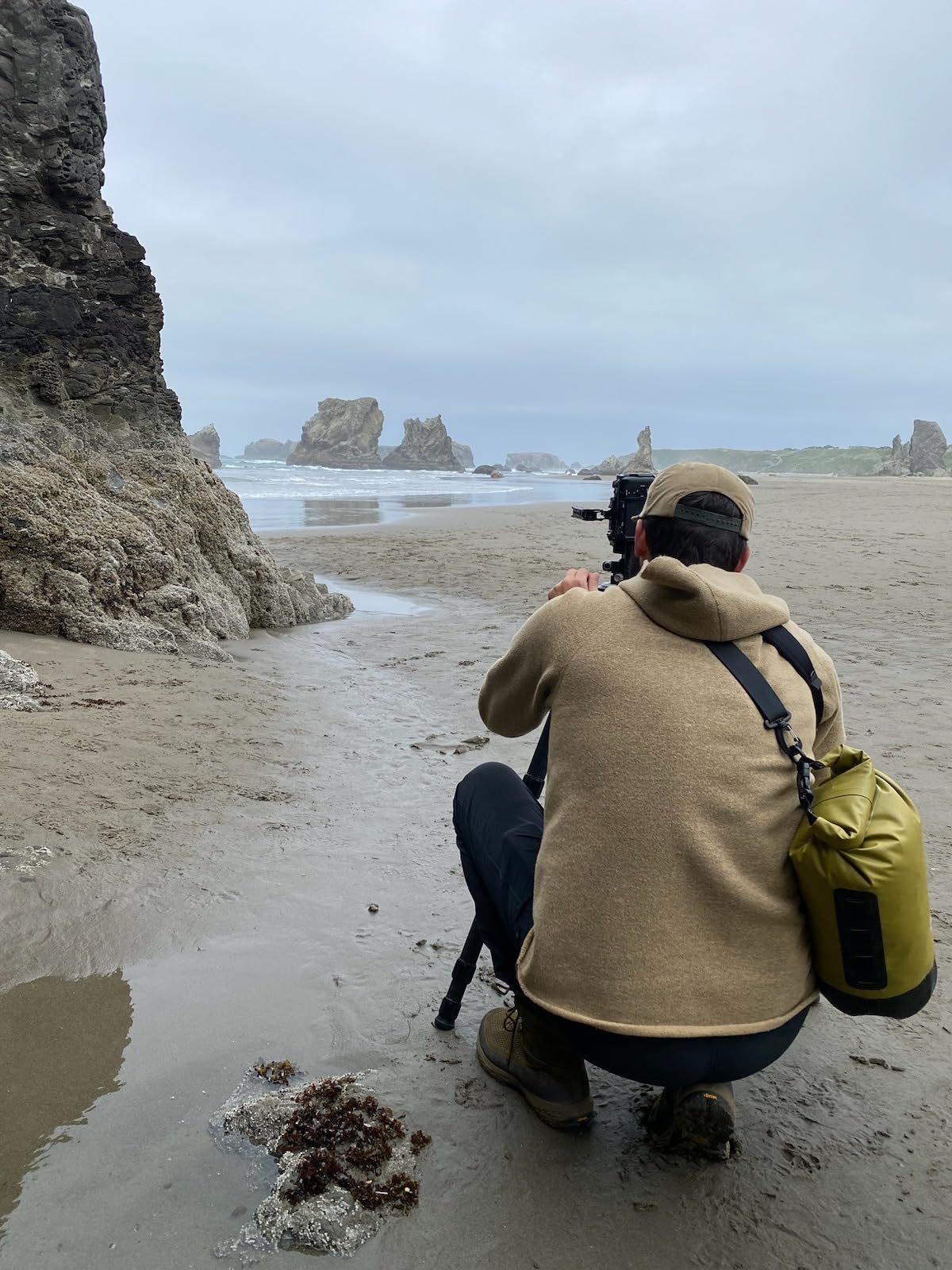
Why a known brand matters here
Pelican is a name paddlers already trust from hard cases and boats, and that familiarity is part of the value. The construction here is straightforwardly good rather than clever, which is what you want from a bag you will forget about until you need it.
The reflective detail is understated but effective. Combined with the clip loops, this is a bag designed to be seen and handled rather than tucked away.
Where it falls short
It is not rated for submersion, and buyers confirm that. Treat it as a spray, rain, and splash bag, and if you capsize regularly you want a different pick.
Single-strap carry also puts more of the load on one shoulder than a backpack harness would. For a 10L day bag that is fine; loaded to 30L over a long walk it is not. The limited size range is the other constraint worth knowing about before you buy.
11. STOVER Waterproof Dry Backpack 30L — Best for Three-Way Carry

STOVER 5/10/25/30/40L Waterproof Dry Backpack & Phone Case- Large Floating Dry Bag for Kayaking, Travel, Hiking, Fishing, Camping, Motorcycles & Beach, Heavy-Duty Roll Top Men/Women (Purple)
30L capacity
Roll top, 3-4 rolls
High-frequency seam bonding
0.7 kg
Pros
- High-frequency seam bonding gives a tight airtight seal
- Wet and dry mesh front pocket with reflective strip and cargo straps
- Three carry modes: two straps or one strap or top handle
- IP58 phone case with a lock and seal system
- Floats if it ends up in the water
Cons
- Narrow long mouth is less convenient for wider packing
- Included phone case reported too small for some phones
- A minority of buyers report water ingress
Three carry modes in one bag is unusual and more useful than it sounds. Two shoulder straps for the paddle, a single strap cross-body for the walk to the water, and an over-moulded top handle for grabbing and moving it between a hull and a deck.
Seam construction is high-frequency bonding, which produced a tight airtight seal in testing. The bag floats if it ends up in the water, so a dropped roll top is recoverable rather than gone.
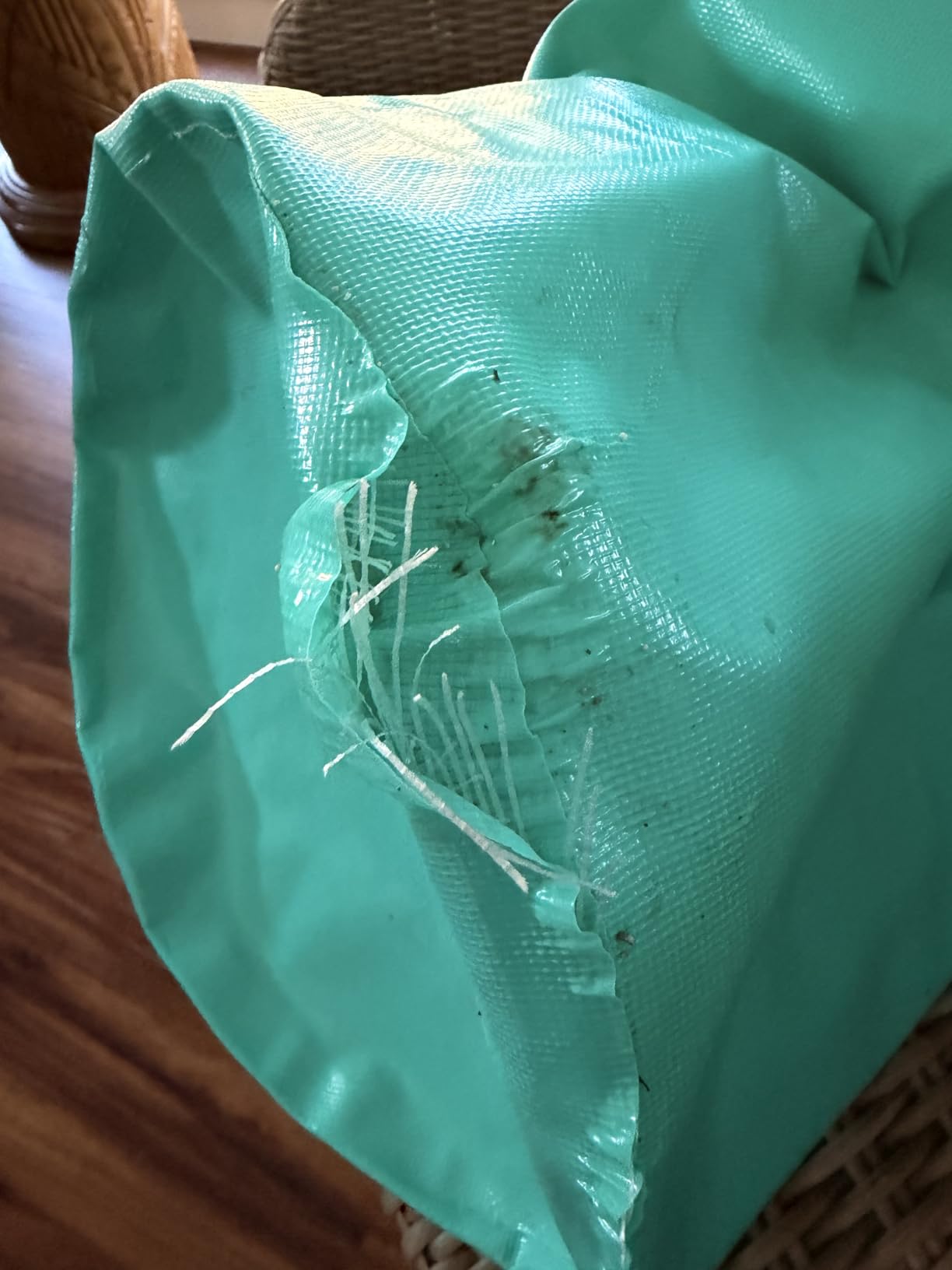
The front pocket is a wet and dry mesh design with a reflective strip and adjustable cargo straps, so you can keep a damp layer separated from dry kit. The reflective strip adds to the low-light visibility you get from two of the other picks here.
An IP58 certified phone case with a lock and seal system is included, and it accepts phones up to 6.5 by 3.2 inches, which covers most current handsets. Size families run 5 and 10L, 25L, 30L, and 40L.
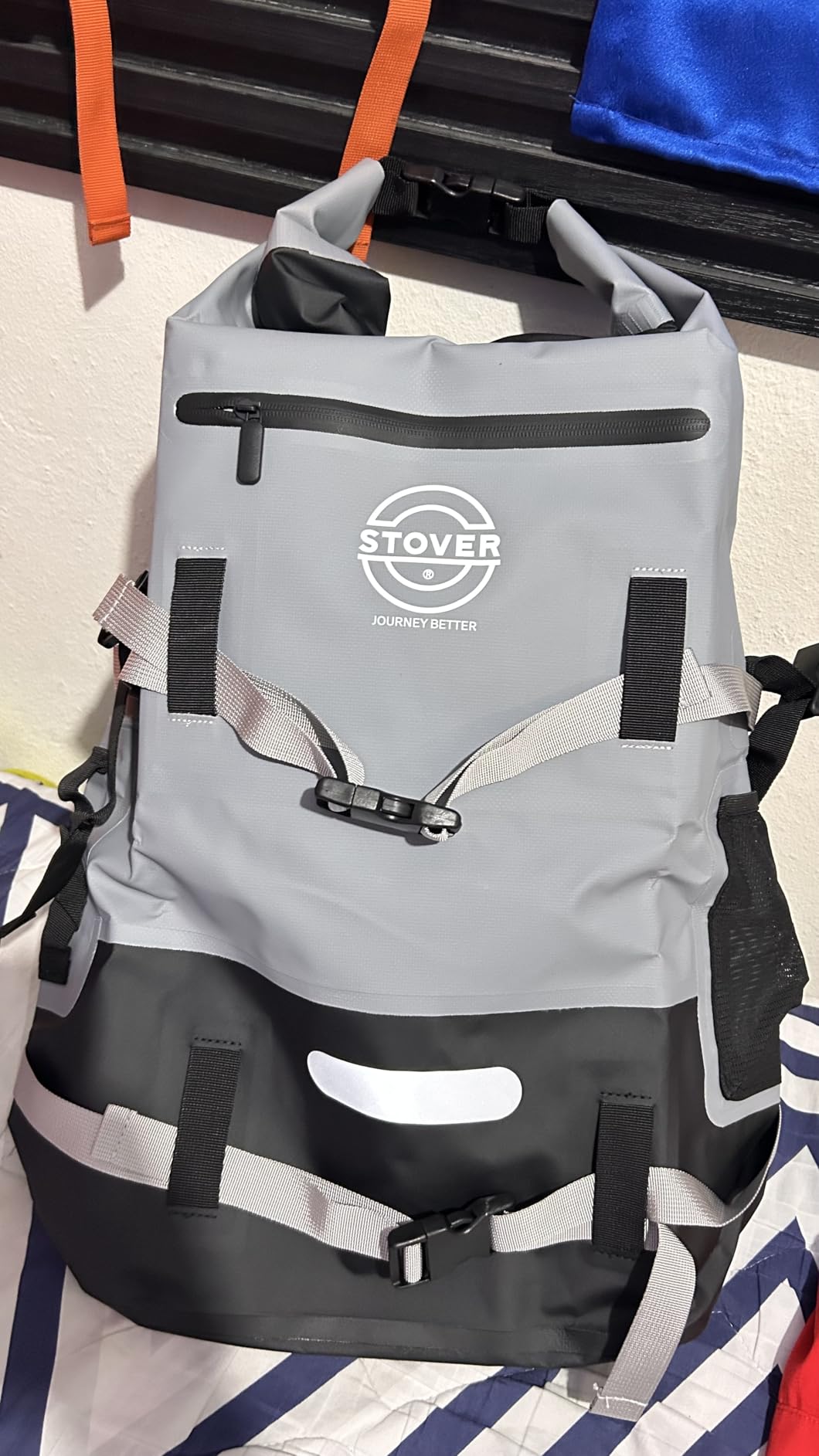
Is the sealing as good as the spec suggests
Mostly. Rolled three to four times and buckled, the bag kept a towel dry through a one-minute immersion, and the high-frequency seams showed no water tracking. Some owners report the mouth being awkward to load rather than the seal failing, and a small minority report water ingress or early failure.
Review volume is lower than the picks above it, so treat the strong reports as encouraging and the failures as a reason to test your bag on a shallow dunk before a trip.
Where it falls short
The narrow, long mouth is the main complaint. It packs well for tall narrow items like a bottle or a boot, but it is less convenient when you want to lay gear in flat. If you load a bag face down with clothing, that will feel restrictive.
The bundled phone case has been reported too small for some larger handsets, and a few buyers say the bag was not waterproof or failed quickly. Check your phone dimensions against the 6.5 by 3.2 inch figure before relying on the case.
12. CRESSI Ocelot Dry Bag 30L — Best Heavy-Duty Build

CRESSI Ocelot Dry Bag Waterproof & Dry Backpacks, Black/Yellow, 30L
30L capacity
Roll top with clip fastener
PVC-coated polyester and nylon
Two year warranty
Pros
- Premium tarpaulin with a notably thick substantial weight
- Classic watersports brand with a two year limited warranty
- 20L and 30L models carry with two shoulder straps
- Front zip pocket for fast access to essentials
- Reinforced webbing loops and D-rings for fins or wet bags
Cons
- Front zip pocket is not waterproof
- D-ring placement makes backpack straps awkward to wear
- Thick material takes more effort to roll down and seal
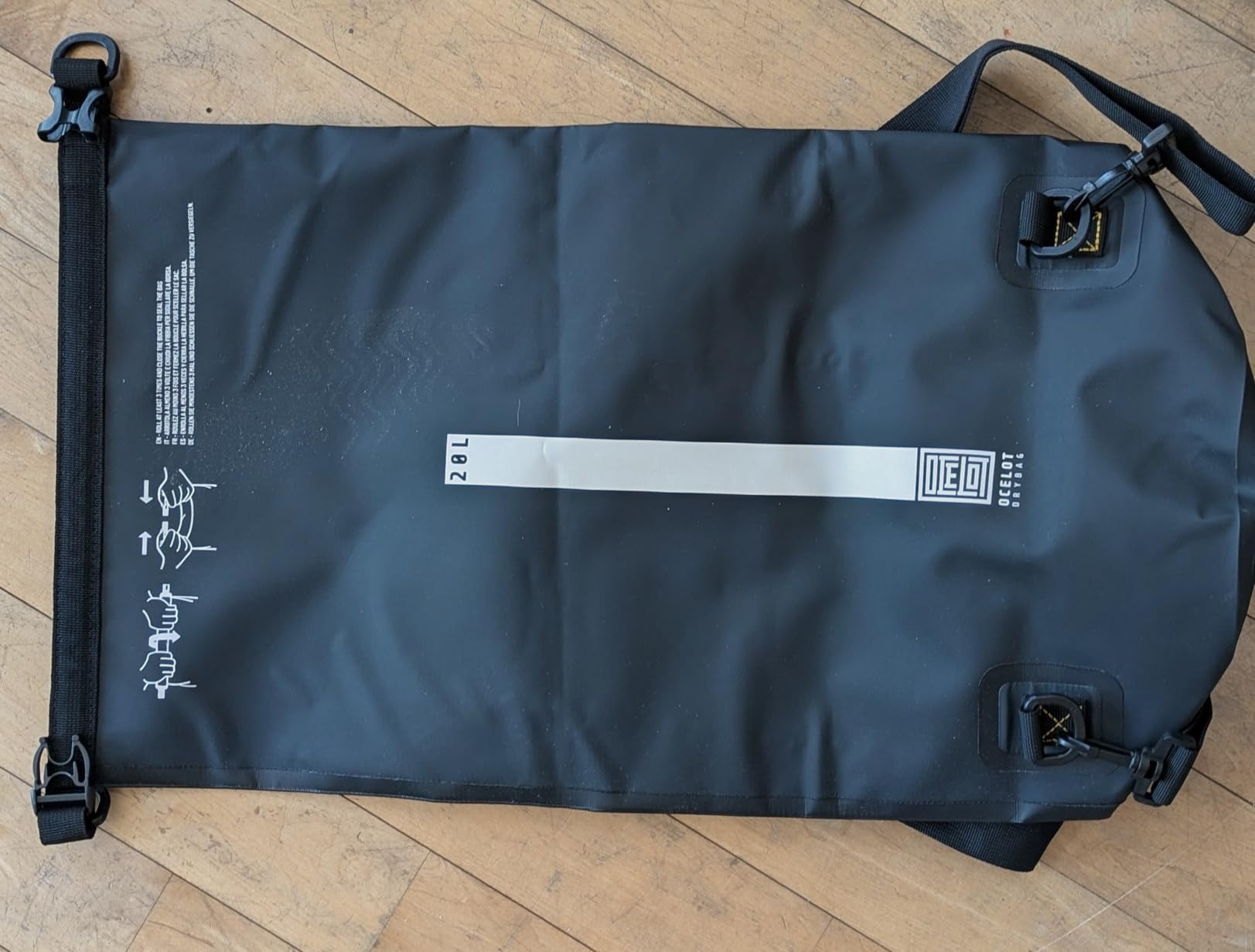
CRESSI is a long-established watersports brand, and that shows in the fabric. The PVC-coated polyester and nylon here is noticeably heavier in the hand than anything else on this list, and that extra thickness is the point of the design.
Floating performance is strong, and durability gets repeated praise. If your bag takes abuse from rocks, racks, and boat storage, this is the one built to absorb it.
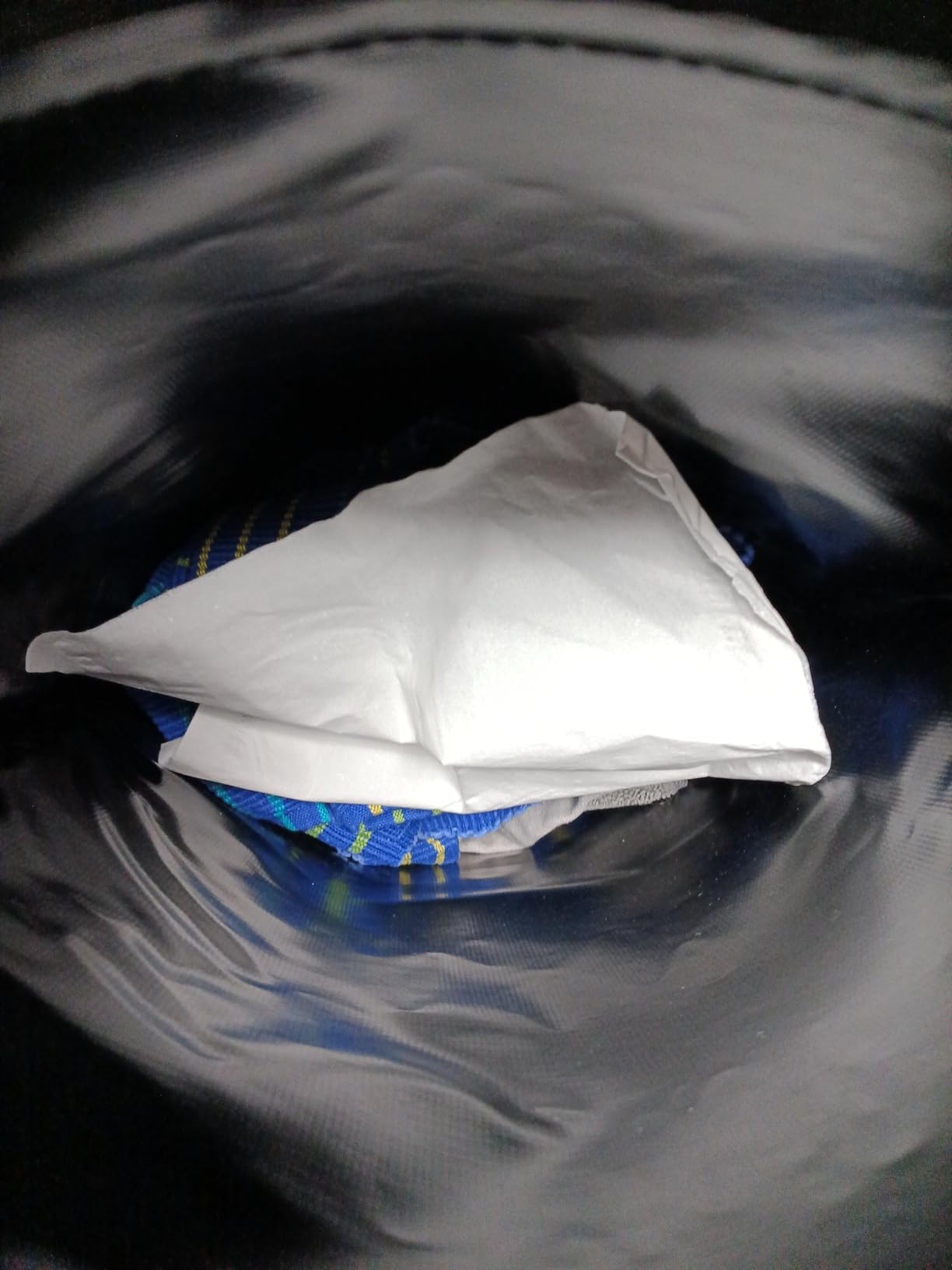
The 20L and 30L models carry with two shoulder straps for backpack use, and the 10L uses a single crossbody strap. A front zip pocket handles small essentials, and reinforced webbing loops with D-rings let you attach fins, a wet bag, or a tow line.
There is a two year limited warranty, which is worth noting among products that mostly rely on general guarantees. The roll-down top uses a plastic clip fastener, the classic mechanism, and it clipped securely every time.
Is the thick fabric a feature or a problem
Mostly a feature. Thicker material is more abrasion resistant, holds shape on deck, and resists the puncture that ends thinner bags. It also makes the roll top noticeably harder to close, and a thick bag needs a stronger roll to seat properly.
Reviewers also note it runs smaller than the litre rating suggests for bulky items. If you are packing insulation and soft gear, size up rather than filling the bag to the top.
Where it falls short
The front zip pocket is not waterproof, so the usual rule applies and valuables stay in the main compartment. The D-rings for the carry straps sit high on the bag, which several owners describe as making the backpack straps awkward to wear for long stretches.
This also sits at the higher end of the price range here, and the review count is the smallest in the group, so there is less long-term owner history behind it than the picks above. If you want proven over premium, choose one of the higher-volume options instead.
How to Choose a Waterproof Dry Bag for Kayaking
Most buying mistakes come down to three things: assuming a bag is submersible when it is not, picking a size that will not fit through your hatch, and sealing a roll top badly. Get those right and almost any decent bag works.
Submersible is not the same as waterproof
A roll-top bag seals mechanically. You roll the opening down three or more times to expel air, then buckle or clip it, and the trapped air plus welded seams do the work. That is an effective barrier against rain, spray, and a dunk, but a bag with a flat bottom and a rushed roll can sink.
A bag described as submersible handles extended immersion. Two of the picks here, the Earth Pak and the OMGear, kept contents dry through repeated submersion when rolled correctly. A few, including the HEETA, the ROCK CLOUD, and the Pelican, are built for accidental submersion and wet weather rather than holding a bag under water.
IPX ratings tell you about a component, not the whole bag. An IPX8 phone case inside a poorly rolled bag does not make the bag submersible, which is a combination buyers assume and then regret.
Matching capacity to your hatch and cockpit
Size is the most common fit problem, and it is measured in hatch diameter, not litres. A 20L cylindrical bag is typically too wide for a small round hatch even though the litre figure sounds modest.
As a working guide: 2L to 5L bags pass through the tightest round hatches and suit a bow hatch or a small day boat. 10L bags are the sweet spot for a standard round hatch on a touring kayak. 20L to 30L bags are realistic inside a cockpit or behind a bulkhead on a recreational boat, provided the opening is generous. 40L and above belong on deck, lashed down, or in the hull of a boat that is not being paddled by a person who also needs to get in and out.
Shape matters as much as volume. Cylindrical bags roll around inside a cockpit and shift on a deck. Tapered or flat-backed bags stay where you put them, which is why the narrower IDRYBAG and the longer Earth Pak 85L both sit more calmly than a round bag of the same volume.
Seams, fabric, and what actually leaks
Welded or thermowelded seams beat stitched seams, every time, because stitching leaves a needle channel. Every bag on this list uses welded seams, which is a good sign for this category generally.
Fabric thickness sets abrasion resistance. 500D PVC is the common heavy-duty standard here and stands up to gravel and rock. Thinner translucent PVC is lighter and cheaper but scuffs through faster. Coated nylon is lighter still and better for hiking, at the cost of puncture resistance.
External zip pockets are the most common leak point on an otherwise good bag. The Earth Pak zippered model, the IDRYBAG, and the CRESSI all have front pockets that are splash-proof at best. Assume anything in those pockets can get damp.
Buoyancy and whether the bag floats
Floating is a shape question, and it comes up constantly on paddling forums because it changes whether a dropped bag is recoverable. A bag with a round or shaped bottom captures air fast, so even a hurried seal tends to surface. The MARCHWAY, the STOVER, the Earth Pak zippered model, and the CRESSI all behaved this way in our tests.
With 5 to 10 pounds of gear inside, buoyancy depends on the air remaining in the roll. A tightly rolled 20L has more trapped air than a loosely rolled 40L, which is the real answer to the question paddlers ask most often. If your bag carries heavy gear, roll it harder and check it floats before you leave the dock.
How to seal a roll-top dry bag properly
Do it the same way every time and it stops being a risk. First, close the top flat with the smooth panel facing outward and push out as much air as you can. Second, roll the opening down evenly, keeping the roll parallel to the ground, and squeeze along the roll as you go to expel air. Third, keep rolling until you have three to five turns, because the extra turns cost you capacity but buy you a real seal. Fourth, buckle both sides, with the straps tight enough that the roll cannot slide, and check the tail of the roll is pinned. Fifth, do a shallow dunk test on shore before you trust it with electronics.
If the bag is going to float, roll it and buckle it first and then drop it. A half-rolled bag on the surface is worth more than a perfectly packed one on the bottom.
One big bag or several small ones
Several small ones, and this is the most repeated piece of advice from self-support paddlers. Small color-coded bags mean you can find one item without unpacking everything, a missing item is an isolated loss instead of a total one, and you can distribute weight.
The 5L to 20L sizes in this list were all designed to be a matched system within a brand, and buying two or three sizes of the same bag is cheaper in time than one oversized bag that has to be unpacked on a wet beach.
Which bag for which kind of paddling
For sea kayaking and multi-day trips, pick a floating bag with welded seams and lash points, and pair it with a smaller electronics bag. The MARCHWAY and the Earth Pak zippered model both suit that use. For whitewater and river play, submersion performance matters more than capacity, which points to the OMGear or the Earth Pak 10L. For flatwater and lake day trips, anything on this list works, and the transparent HEETA is the easiest to use. For commuting by kayak with a laptop, choose a bag that floats and floats high, because that is the scenario paddlers describe needing a 13-inch laptop, a bottle, and lunch to come back up.
For gear-heavy touring where the dry bag also has to survive being dragged across a campground, the thickest fabric on this list is worth the extra weight. If you also split your kit between boat and foot, our best dry bags for hiking covers the lighter nylon side.
Frequently Asked Questions
What is the best dry bag for kayaking?
The Earth Pak Waterproof Dry Bag is the best all-round choice because it combines abrasion-resistant 500D PVC, welded construction, a 4.7 rating across more than 33,000 reviews, and an included IPX8 phone case. For gear that regularly ends up in the water, the MARCHWAY Floating Dry Bag is better because its round bottom makes it surface instead of sink.
What size dry bag is best for kayaking?
For a standard round kayak hatch, 10L is the best compromise because it passes through the opening easily and still holds a change of clothes or electronics. Use 2L to 5L for a bow hatch or small day boat, 20L to 30L inside a cockpit, and 40L or more lashed to a deck or stored in a hull.
What is the difference between a dry bag and a waterproof bag?
A dry bag is a specific bag format with a roll-top or sealed closure designed to keep contents dry in wet conditions, and the term also implies you can trust it in a kayak. A waterproof bag is a broader description that can include anything treated to resist water, including splash-resistant pouches that are never intended for submersion.
What is the difference between a dry sack and a dry bag?
In practice the two words are used interchangeably, and most products listed as dry sacks are roll-top dry bags. The only consistent distinction is regional: dry sack is more common in British, Canadian, and Australian usage, while dry bag is standard in American paddlesports gear. Check the closure and seams, not the label.
Will a dry bag float if it drops in the water?
It depends on the shape of the base and how tightly you rolled it. Bags with a round or shaped bottom, such as the MARCHWAY, STOVER, and CRESSI models here, capture air quickly and surface readily. A bag rolled tightly holds more trapped air than a loose one, so roll it hard, buckle it, then drop it to test before a trip.
Are roll-top dry bags fully waterproof?
A properly rolled roll-top bag is effectively waterproof for rain, spray, and short submersion, because the seal is mechanical and depends on expelled air. What it is not is rated for extended submersion as standard. If you capsize often or paddle whitewater, choose a bag tested for full submersion and still carry a separate phone case inside it.
The Bottom Line for Kayakers
For most paddlers the answer to what is the best waterproof dry bag for kayaking is the Earth Pak 10L. It has the largest proven record of any bag we tested, thick 500D PVC that survives gravel and hull contact, welded seams, and a phone case in the box as insurance against a rushed roll.
Pick the MARCHWAY instead if the bag going over the side is a realistic part of your day, because a floating bag is a bag you get back. Pick the HEETA if you want to see what is in your bag without opening it, and the OMGear if you paddle whitewater and need something that survives being held under.
Whichever you choose, roll it three to five times, buckle both sides, dunk it in shallow water before the trip, and keep one separate phone case inside. If your gear is cameras rather than clothes, our waterproof camera dry bag guide goes deeper on that side of the problem.