
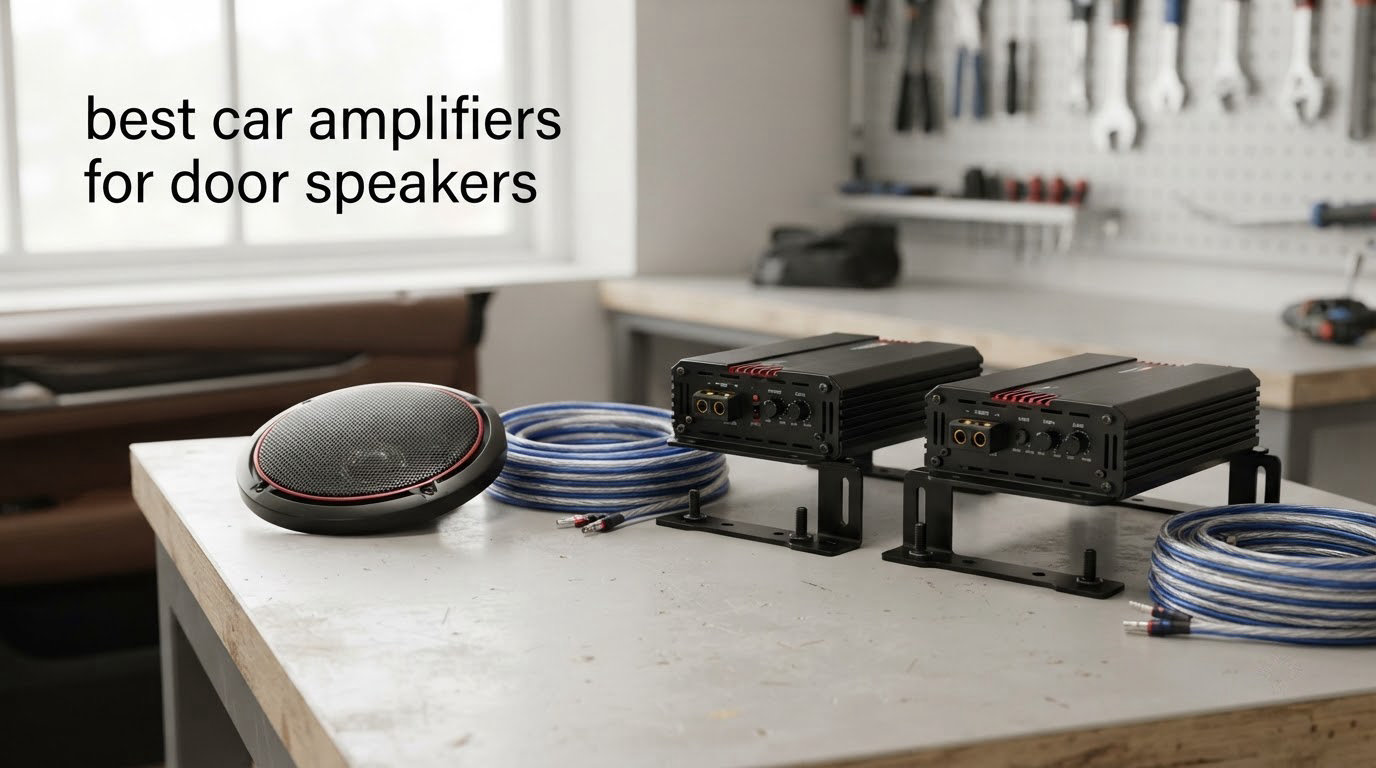
Short answer: run 1.2x to 1.5x your door speakers’ RMS power per channel at 4 ohms, and never less than 75W RMS per channel for typical 6.5-inch door speakers. That is the rule most experienced installers live by, and it is the one I use to sort every amplifier in this guide.
Here is the thing about door speakers that trips up most first-time buyers: the speakers are rarely the problem. A factory head unit is. The tiny amplifier inside a factory stereo is designed to move a paper-cone factory coaxial without ever sounding strained, and when you swap in a real 6.5-inch component set the same head unit simply cannot supply the current those drivers need. The result is a muddy, thin front stage that gets worse, not better, as you push the volume.
That is why the best car amplifiers for door speakers are all multi-channel units. Nobody in this roundup recommends a monoblock for a door, and that is not an accident. I went through ten amplifiers, checked their continuous RMS output against real 4-ohm door speaker ratings, and pulled out the ones that are stable at the impedances door speakers actually present. I also noted which accept high-level inputs, because if you want to keep your factory stereo, that single spec decides whether you need a converter or not.
Start with our best car speakers roundup if you have not chosen your drivers yet, because the amp decision changes depending on whether you go factory coaxial or component set. If you already own your speakers, skip ahead to the matching section further down. We update this guide for 2026 and every rating and review count below comes straight from the current product listings.
Table of Contents
Top 3 Picks for Door Speakers in 2026
BOSS Audio Systems PV3700
- 5 channels
- doors plus sub from one chassis
- Class A/B
- 2 to 8 ohm stable
- 0.01 percent THD
Rockford Fosgate PBR400X4D
- 4 channels
- 50W RMS x 4 at 4 ohm
- Ultra compact chassis
- High level inputs with auto on

Pioneer GM-A6704
- 4 channels
- 60W RMS x 4 at 4 ohm
- Class A/B
- Variable high and low pass filters
Best Car Amplifiers for Door Speakers (October 2026)
| Product | Specifications | Action |
|---|---|---|
| BOSS Audio Systems PV3700 5-Channel |
|
Check Latest Price |
| Pioneer GM-A6704 4-Channel |
|
Check Latest Price |
 Planet Audio AC1800.5 5-Channel Planet Audio AC1800.5 5-Channel |
|
Check Latest Price |
 Taramps TS1200X4 4-Channel Taramps TS1200X4 4-Channel |
|
Check Latest Price |
| Rockford Fosgate PBR400X4D 4-Channel |
|
Check Latest Price |
 Taramps TS400X4 4-Channel Taramps TS400X4 4-Channel |
|
Check Latest Price |
 Alpine S-A32F 4-Channel Alpine S-A32F 4-Channel |
|
Check Latest Price |
 Recoil DI550.4 4-Channel Recoil DI550.4 4-Channel |
|
Check Latest Price |
 AudioControl EPICFOUR 4-Channel AudioControl EPICFOUR 4-Channel |
|
Check Latest Price |
 PRV Audio QS400.4 4-Channel PRV Audio QS400.4 4-Channel |
|
Check Latest Price |
Two things to notice before you read the individual reviews. First, most of these amplifiers publish their headline wattage at 2 ohms, which is a harder load than your door speakers present, so the number on the box is rarely the number that matters. Second, none of these ten amplifiers includes a digital signal processor. That is not an oversight in the roundup, it reflects what this class of amplifier actually offers, and it is why the crossover controls and gain setting do most of the work in the installations described below.
1. BOSS Audio Systems PV3700 – Best 5-Channel Amp for Doors and Sub
BOSS Audio Systems PV3700 3700 High Output 5 Channel Car Amplifier
5 channels
2 to 8 ohm stable
0.01 percent THD
103 dB signal to noise
12.5 pounds
Pros
- Doors and a subwoofer from one chassis
- Very clean output at normal listening levels
- High and low level inputs with flexible crossover controls
- Runs cool with decent airflow behind it
Cons
- Headline wattage badly overstates real RMS output
- Runs warm under sustained load
- 17 inch chassis is hard to place in compact cars
The PV3700 is the pick I keep coming back to because it solves the whole problem in one box. Four channels handle the doors and rears, and a fifth channel handles a subwoofer, so you get a complete front stage plus bass from a single power wire. For most people building their first amplified system, that is the arrangement that makes sense.
Build quality is unremarkable in the way that means it will not let you down. It is a Class A/B design rated for 2 to 8 ohm speaker impedance, measures 17 by 10.3 by 2.3 inches, and weighs 12.5 pounds. Total harmonic distortion at RMS output is listed at 0.01 percent and signal to noise at 103 dB, which are honest numbers for a design in this category.
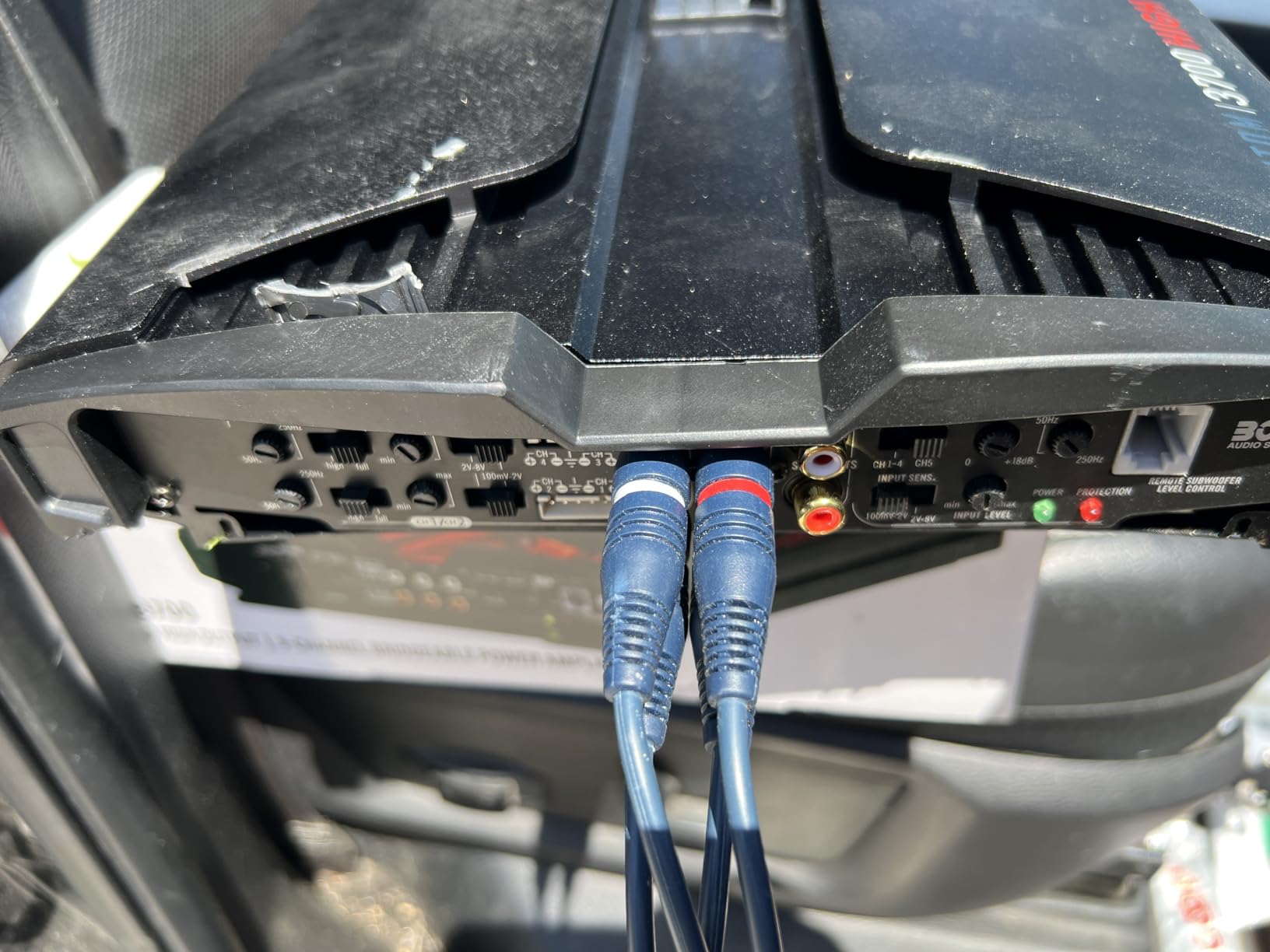
What I like most is how forgiving the crossover section is. You get high and low level inputs, full range operation for both speakers and subwoofers, and a variable bass boost for the sub channel with a remote level control in the box. You can run the doors on a high pass, the sub on a low pass, and everything stays inside the amplifier.
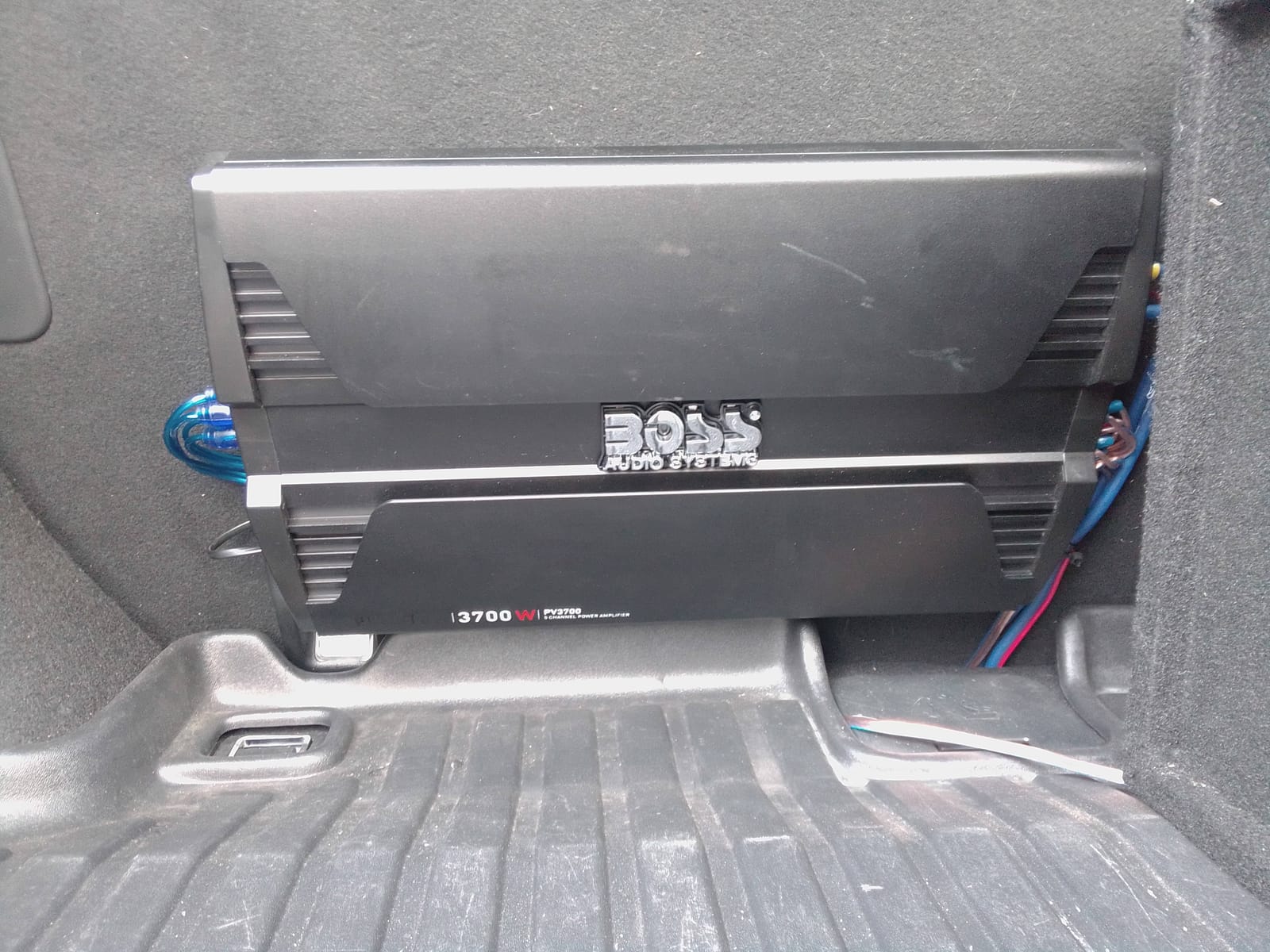
The honest drawback is the number on the box. The 3700 watt headline is a peak figure, and real continuous output is closer to 960 watts total at 2 ohms. Owners also report the amp running warm under sustained heavy load, and the 17 inch length is genuinely awkward in a compact car. Mount it with airflow behind it.
Who this amp suits
This is the right choice if you want doors plus a subwoofer without running two separate amplifiers and two power wires. It also works well as a factory system upgrade, because the high level inputs let you feed it from speaker wires off an amplified factory system.
The warranty is 3 years parts and labor, which is longer than most of the field, and with 1317 reviews on record there is a large body of owner feedback to draw on if you want to sanity check a wiring plan before you commit.
Who should skip it
If your car has very little space behind a seat or in the trunk, the footprint rules it out and you should look at the Rockford Fosgate or PRV Audio instead. If you are only powering front door speakers and nothing else, paying for a 5-channel chassis is money you do not need to spend.
It is also the wrong tool for anyone who expects the advertised 3700 watts. Judge it on roughly 960 watts total RMS and the whole system still makes sense. Judge it on the sticker and you will be disappointed.
2. Pioneer GM-A6704 – Best Value 4-Channel Amp for Door Speakers
Pioneer GM-A6704 1000W Max Class AB Bridgeable 4-Channel Car Amplifier
4 channels
60W RMS x 4 at 4 ohm
190W RMS x 2 bridged
Class A/B
4.9 pounds
Pros
- Clean distortion free output for the money
- Selectable 1 2 or 3 channel operation
- Stays cool running doors and a sub together
- Variable high and low pass filters
Cons
- Modest 60W per channel against newer Class D designs
- Runs warm if gain is set incorrectly
- Needs heavy gauge power wire and a substantial fuse
Sixty watts per channel at 4 ohms sounds unimpressive until you remember the long-running forum consensus that 75W RMS per channel is plenty for door speakers. The GM-A6704 delivers a little under that, which is why it works so well as a first amplifier on factory or entry level drivers.
It is a Class A/B design, so it trades a little efficiency for a very predictable sound character and manageable heat. Dimensions are 8.5 by 14 by 2.38 inches and weight is 4.9 pounds, which makes it one of the easier four-channel amps to actually install in a real car. The listed supply current of 5A and maximum supply voltage of 26V DC tell you it is not going to strain your electrical system.
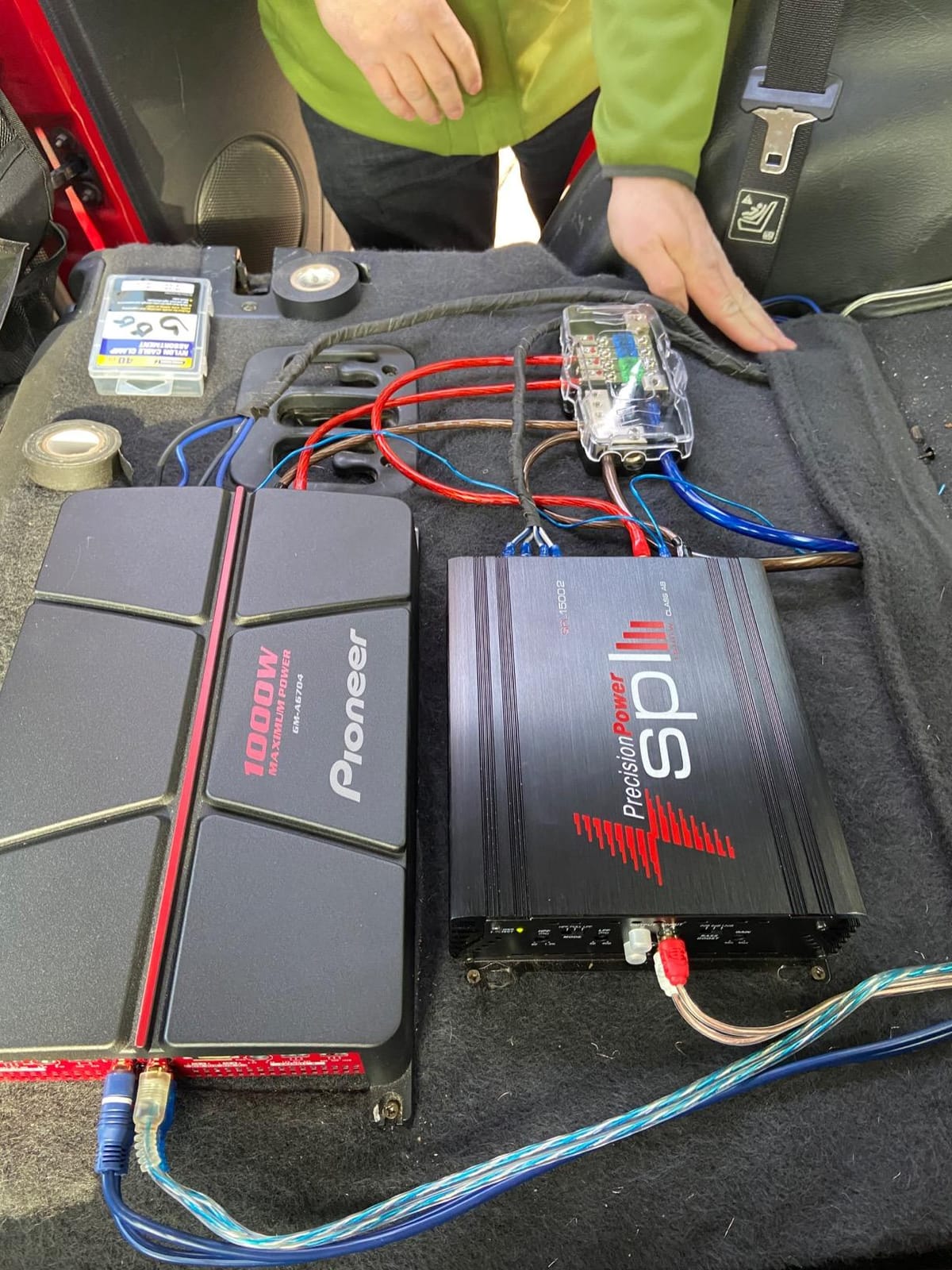
The filtering is the part that surprises people. Variable high pass and low pass filters are fitted as standard, and the amp is bridgeable for 190 watts RMS across two channels. That means you can run two channels for the doors and bridge the other pair into a subwoofer if your build grows later.
The complaints are consistent. Sixty watts per channel is modest next to modern Class D designs with far more output per channel, and a small number of reviews report defective amplifiers. Owners also stress that this amplifier runs warm if the gain is set incorrectly, so budget time for that step.
Who this amp suits
It suits a daily driver running a factory coaxial or a modest component set in the front doors, especially on a car where a large amplifier will not fit. The 4.9 pound weight and modest current draw make it a friendly first install for someone doing their own wiring.
It is also a sensible match if you want the classic Class A/B sound and do not need dramatic volume. At highway speed with the windows up, 60 clean watts per channel is genuinely plenty for most listeners.
Who should skip it
If you have high-excursion aftermarket door speakers rated well above 100W RMS, this amplifier will not have the headroom to drive them properly. The class mismatch is real: the speakers will ask for current this amp does not have, and you will end up turning the gain up to compensate.
The warranty is 1 year, which is the shortest we see in this roundup, so factor that in if you plan to keep the car. You will also need proper heavy gauge power wire and a correctly sized fuse to feed it reliably.
3. Planet Audio AC1800.5 – Best Warranty Coverage for a Door and Sub Build
Planet Audio AC1800.5 5 Channel Car Amplifier – 1800 High Output, High/Low Level Inputs, High/Low Pass Crossover, Full Range, Bass for Subwoofer
5 channels
150 max watts x 4 at 4 ohm
600 max bridged
Class A/B
14 pounds
Pros
- Four doors and a subwoofer from one amplifier
- Built in crossovers remove the need for external boxes
- Remote subwoofer level knob included
- High and low level inputs
Cons
- Nearly 20 inches long which is hard to fit
- Owners manual does not explain the controls well
- Terminals are small for the output current
The AC1800.5 has been around long enough that a lot of long-term ownership feedback exists, and the recurring description is a budget workhorse that delivers more than its packaging suggests. It is a 5-channel Class A/B amplifier with a MOSFET power supply, rated at 300 max watts x 4 at 2 ohms plus 600 max watts x 1 at 2 ohms on the fifth channel.
At 4 ohms the figures are 150 max watts x 4 for the door channels and 300 max watts x 1 for the sub channel, with 600 max watts bridged into a single 4 ohm load. As with every amplifier here, treat those as peak figures. The useful takeaway is the channel architecture, not the sticker.
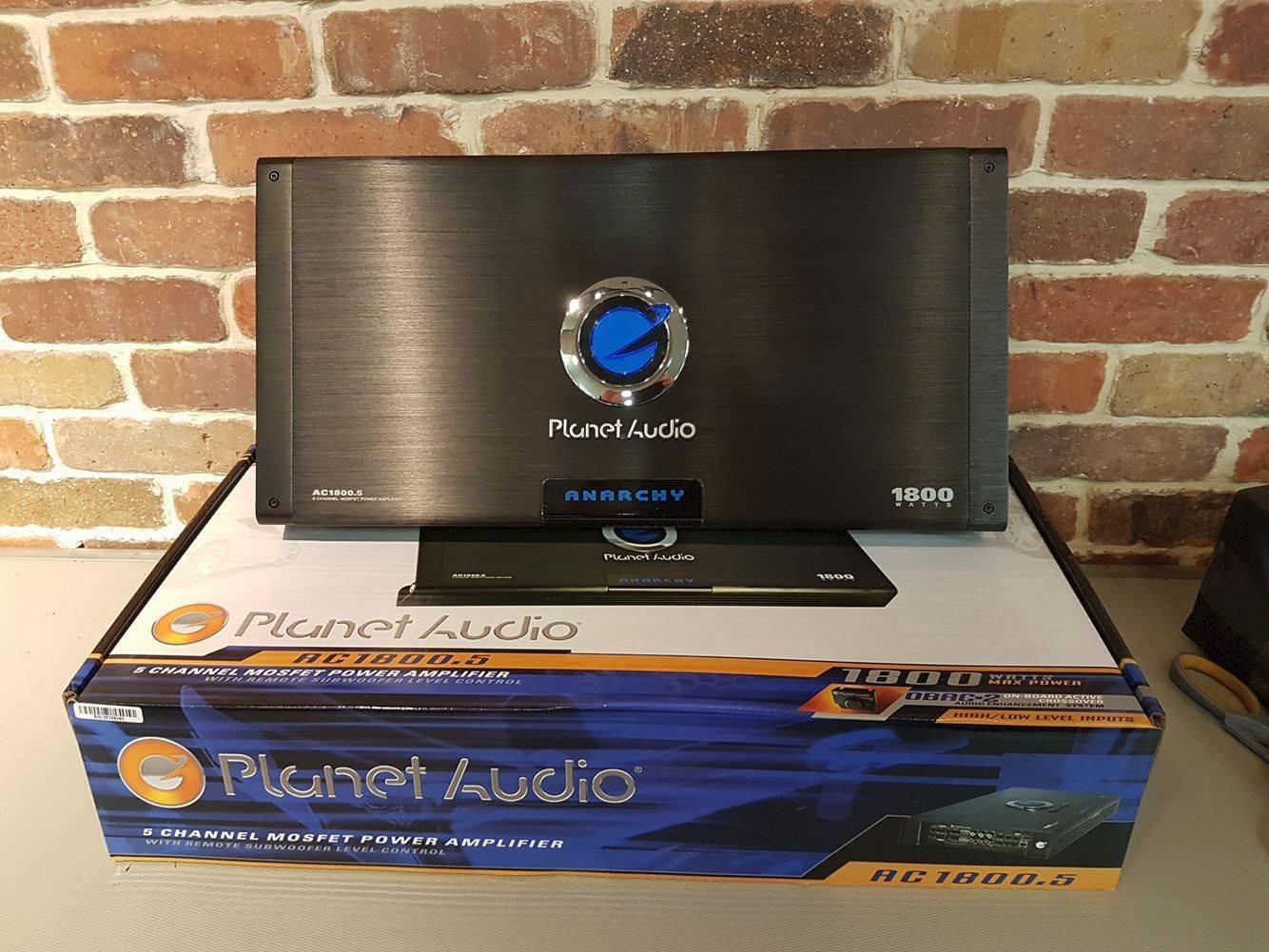
Both high level and low level RCA inputs are fitted, along with built in high pass and low pass crossover controls and a variable bass boost with a remote subwoofer level knob in the box. For an install where you want the bass level adjustable from the driver seat, that remote is a genuinely useful inclusion at this level.
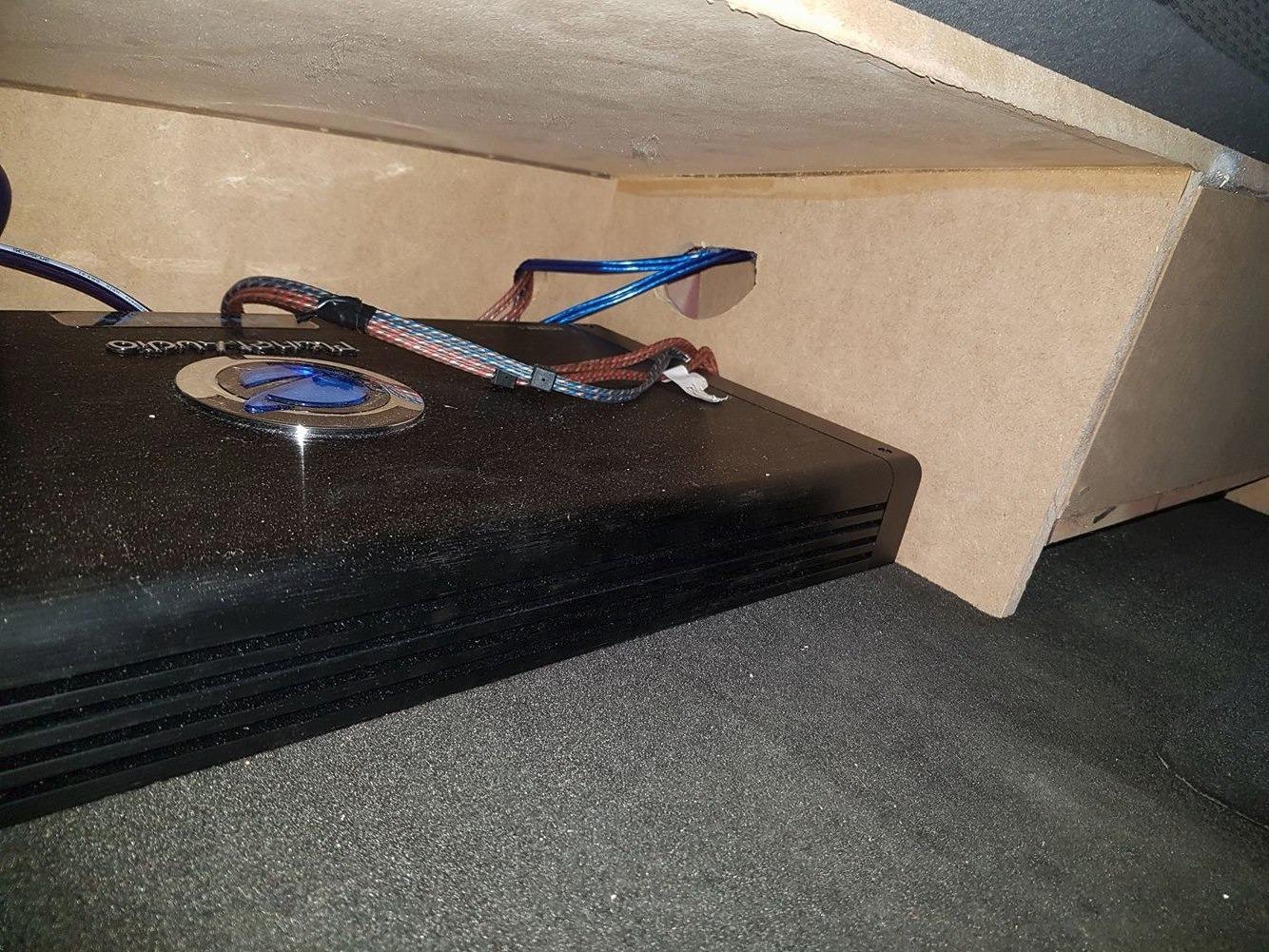
The drawbacks are physical and documentary. At 19.7 by 10 by 2.4 inches and 14 pounds, this is the largest chassis in the roundup, and the thin terminals are not ideal for the current it can push. The owners manual is also widely criticised for not explaining what the switches and adjustments do.
Who this amp suits
It suits builders who want doors and a subwoofer from one amplifier, on a budget, without giving up a sub level remote. Owners describe loud, clean results once gains and impedance are set correctly, which is exactly the outcome you want from a first system.
The warranty is the standout: a 6 year Platinum online dealer warranty is the longest coverage in this group by a wide margin. For a daily driver that will see summer heat, that matters more than most buyers give it credit for.
Who should skip it
Skip it in a small car. The footprint is the single biggest reason owners return this amplifier, and no amount of power justifies an install that does not physically fit. Mount it in a truck bed, a large SUV, or under a wide seat if you buy it.
You should also avoid it if you are the type who expects a well written manual. Plan to spend time understanding the crossover switches from online documentation instead, and double check the small terminals for adequate tightening when you terminate your speaker wire.
4. Taramps TS1200X4 – Best for Factory System Upgrades
Taramps TS 1200 Watt Amp 4 Channel Amplifier Car Audio, Full Range Crossover Fixed RCA/Wire Input – Multichannel Class D, 2 Ohm Car Amplifier Kit Profesional Installation Recommended
4 channels
300W RMS x 4 at 2 ohm
600W RMS x 2 bridged
Class D
1340 g
Pros
- Strong clean power per unit of cost
- High level inputs with automatic turn on for factory stereos
- HPF and LPF and full range crossover modes
- Efficient Class D design runs cool
Cons
- Fixed RCA and wire input options limit choices
- Needs care to match speaker impedance
- Professional installation recommended
Output here is 4 x 300W RMS at 2 ohms, or 2 x 600W RMS bridged at 4 ohms, and the total is 1200 watts RMS. The stated output here is higher than most of the four-channel amplifiers in this roundup, which is why this is the one I recommend to anyone driving loud door speakers on a daily basis.
It is a Class D design weighing 1340 grams, so it draws meaningfully less current than a Class A/B amplifier of the same output and runs cooler in a hot cabin. The trade-off with Class D is that you should not expect it to run cool with no airflow in a sealed trunk, so mount it somewhere with moving air.
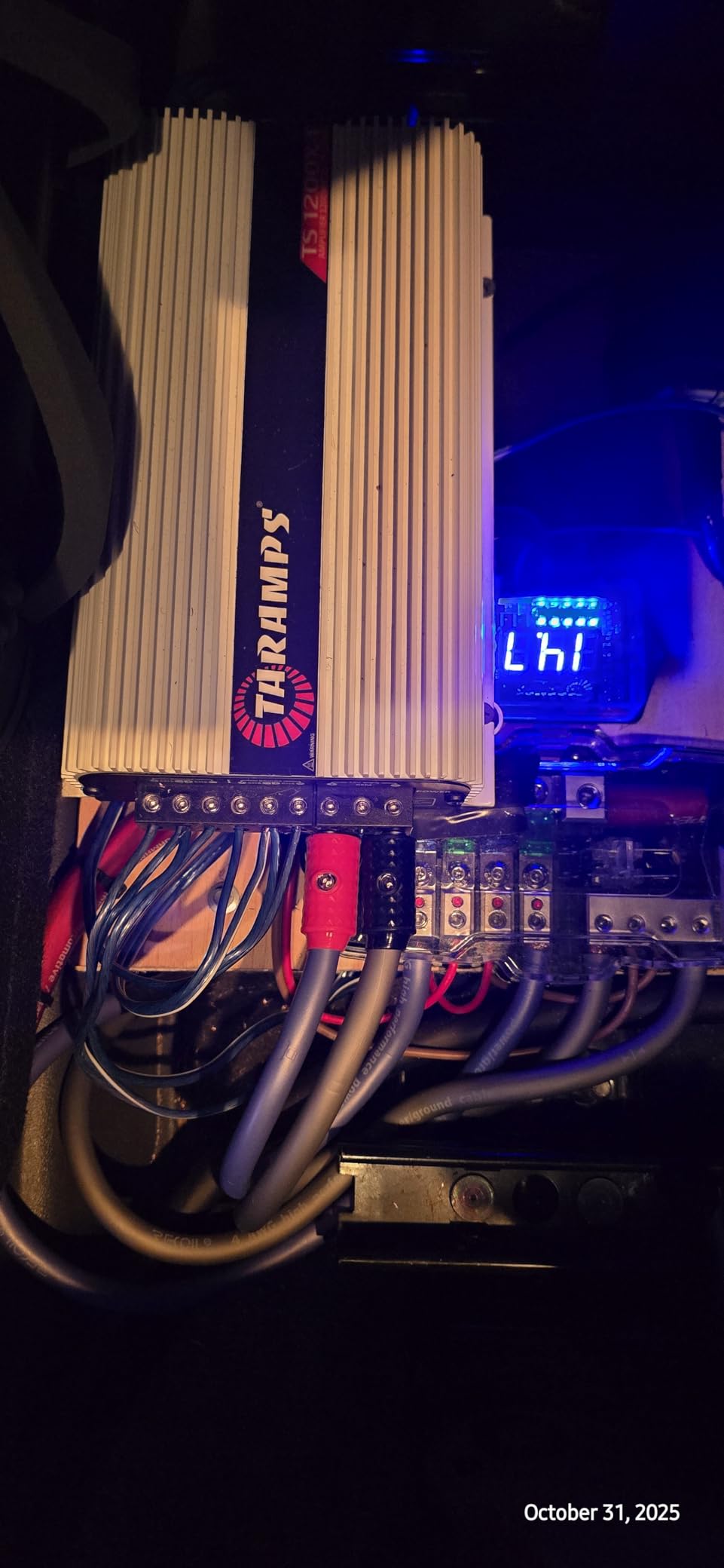
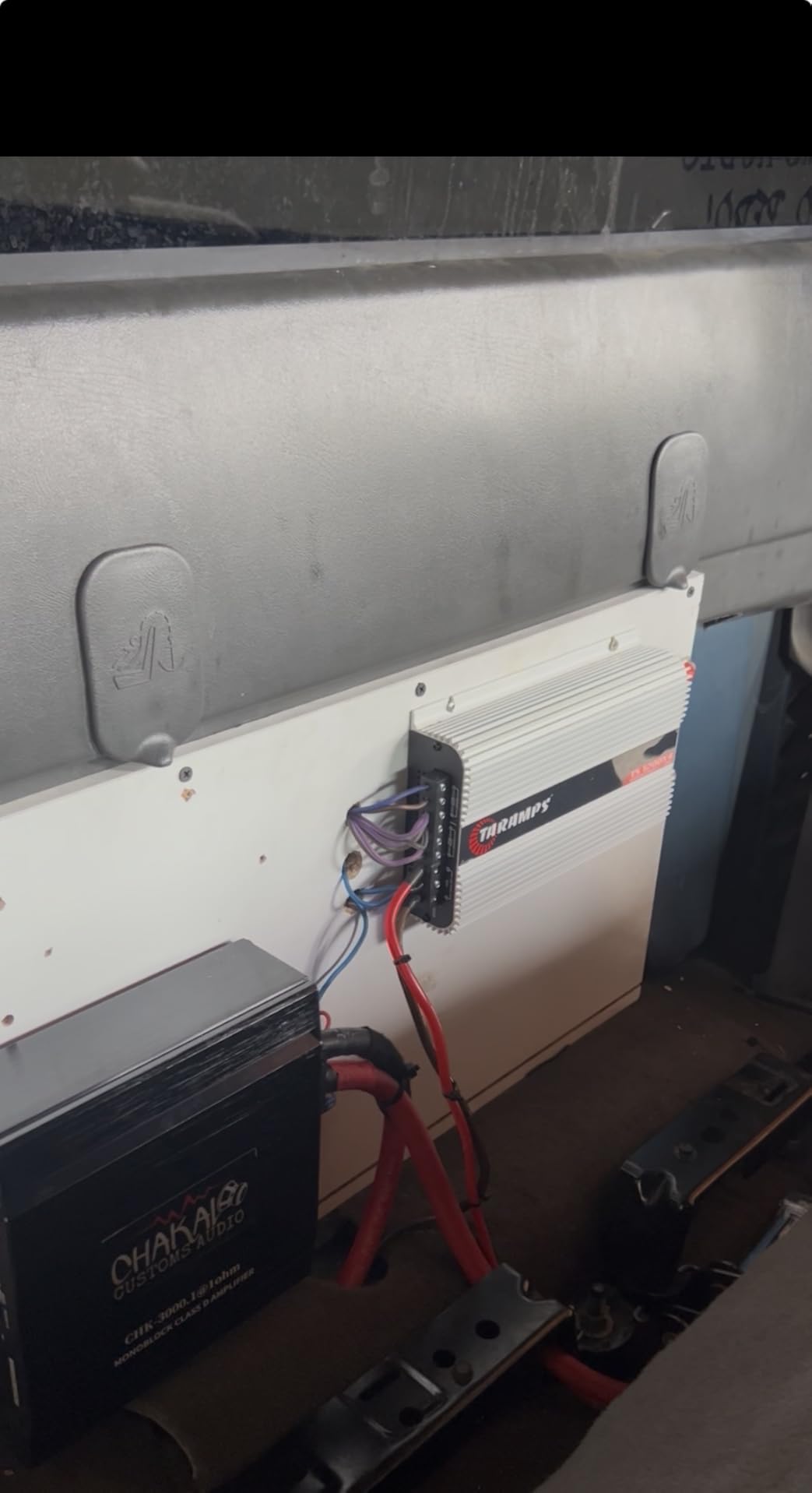
The factory integration story is the reason this one stands out. High level speaker inputs with automatic turn on mean you can feed it directly from a factory amplified system without a line output converter, which saves money and avoids the muddy bass that a badly summed converter can produce.
You also get RCA and high level inputs with HPF, LPF and full range modes, reinforced terminals, and bridgeable channels. That crossover flexibility is what lets you set tweeters on a high pass, midbass on full range, and still have the headroom for a sub later.
Who this amp suits
It suits factory system upgraders who want real power without replacing the head unit, and drivers who listen loudly on the highway. The high level auto turn on removes the most common source of install frustration, where the amp does not wake up when the head unit does.
It is also a good fit for hybrids of the setup: four channels for doors and rears, then a separate sub amp. Just remember the published output is specified at 2 ohms, so run 4-ohm door speakers at 50W per channel or so unless you have measured otherwise.
Who should skip it
The input options are fixed rather than selectable, so if your install needs both RCA and high level simultaneously, or a specific connector type, this is not the amplifier. Check what your head unit actually outputs before buying.
Owners also report that results depend heavily on correct gain and impedance matching, and the manufacturer recommends professional installation for optimum results. If you have never set gain before, that is a reason to budget for help rather than a reason to avoid the amp.
5. Rockford Fosgate PBR400X4D – Top Rated Compact 4-Channel Amp
Rockford Fosgate Punch PBR400X4D 400-Watt 4-Channel Amplifier
4 channels
50W RMS x 4 at 4 ohm
100W RMS x 4 at 2 ohm
CEA-2006
1.5 inch tall
Pros
- Exceptionally small chassis that fits tight spaces
- Distortion free volume increase audible at speed
- Works in 2 or 4 channel configurations
- High level and RCA inputs with auto on
Cons
- Documentation is thin and the test tone disc is discontinued
- Auto on did not trigger from some head units
- Small size means fewer features than larger amps
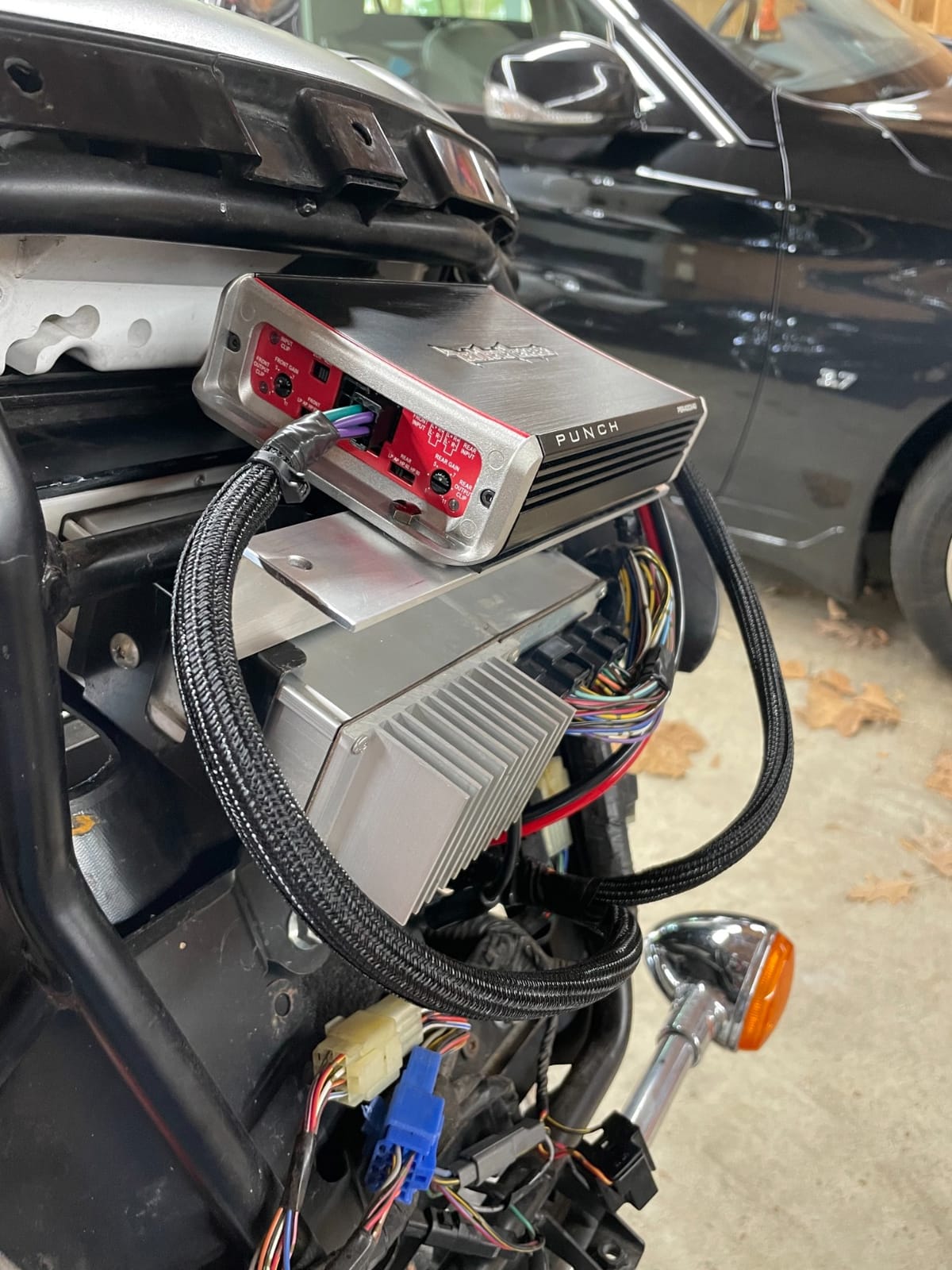
This is the amplifier I recommend when space is the constraint. The chassis measures 1.5 by 4.25 by 6.75 inches, which means it fits behind a motorcycle fairing, under a truck seat, in a boat console, or in the tight cavity beside a spare tyre. Nothing else in this roundup is this small.
Output is CEA-2006 compliant, which matters more than it sounds, because CEA ratings are measured at a defined voltage rather than quoted from a marketing department. That is 50 watts RMS x 4 at 4 ohms, 100 watts RMS x 4 at 2 ohms, and 200 watts RMS x 2 at 4 ohms bridged.
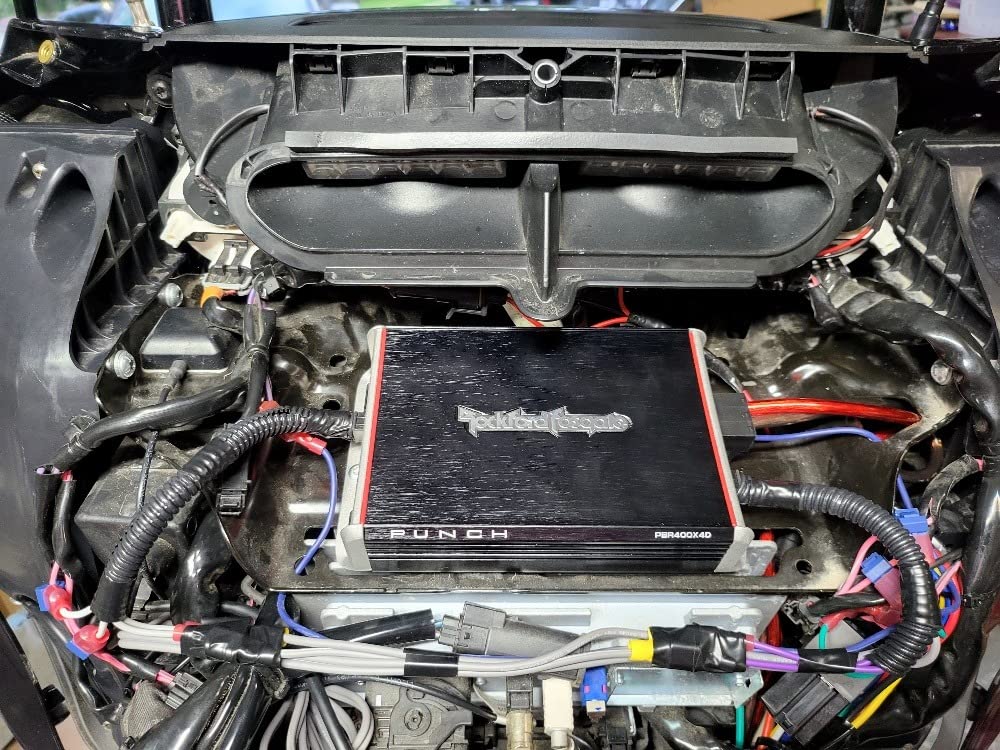
It is an ultra efficient Class D full range design, so it is gentle on the vehicle electrical system, and it can be used in either 2 or 4 channel configurations. That flexibility means you can run just the two front doors from two channels and leave the other pair free, or use all four for a complete system.
High level inputs with auto on sit alongside differential RCA inputs, and the crossovers are selectable fixed 12 dB per octave Butterworth filters. Fixed rather than variable, which limits fine tuning, but for the common case of a full range door speaker running on full range, that is perfectly adequate.
Who this amp suits
It suits anyone with a genuinely tight install. Owners consistently praise the combination of very small size and real, distortion free power, and 50 watts CEA rated per channel is enough for a factory or mid-power door speaker set.
It is also a natural fit for powersports and marine builds. Just make sure the mounting location gets air, because a sealed compartment will still overheat a Class D amplifier under sustained load.
Who should skip it
Skip it if you want to fine tune crossover points or dial in time alignment, because none of the ten amplifiers here does that and this one has the least adjustment of the bunch. It is a clean power and small size amplifier, not a tuning amplifier.
Two practical notes from owners: documentation is thin and the printed test tone disc is no longer included, so plan to set gain by ear. Owners also report that the auto on did not trigger from certain line output head units, so keep a manual turn on lead in mind.
6. Taramps TS400X4 – Most Versatile for Four Door Speakers
Taramps TS 400X4 Black 2 Ohms 400W RMS 4-Channel Car Audio Amplifier
4 channels
100W RMS x 4 at 2 ohm
200W RMS x 2 bridged
Class D
15.84 ounces
Pros
- True 4 channel Class D amp with 100W RMS per channel
- Built in HPF and LPF and full range crossover
- High level auto turn on plus RCA inputs
- Efficient design installs in tight spaces
Cons
- 100W per channel is modest for power hungry doors
- Needs a properly fused and gauged power feed
- A minority of buyers report early failures
The TS400X4 is a straightforward way to get four channels of clean power onto four door speakers, and at 15.84 ounces it is also one of the smallest amplifiers in the entire roundup. That combination of low cost and low weight makes it the obvious first amplifier for a lot of people.
Output is 4 x 100W RMS at 2 ohms or 2 x 200W RMS bridged at 4 ohms, in an efficient Class D full range design. The built in crossover offers HPF, LPF and full range modes, so you can protect a set of component tweeters without buying an external crossover box.
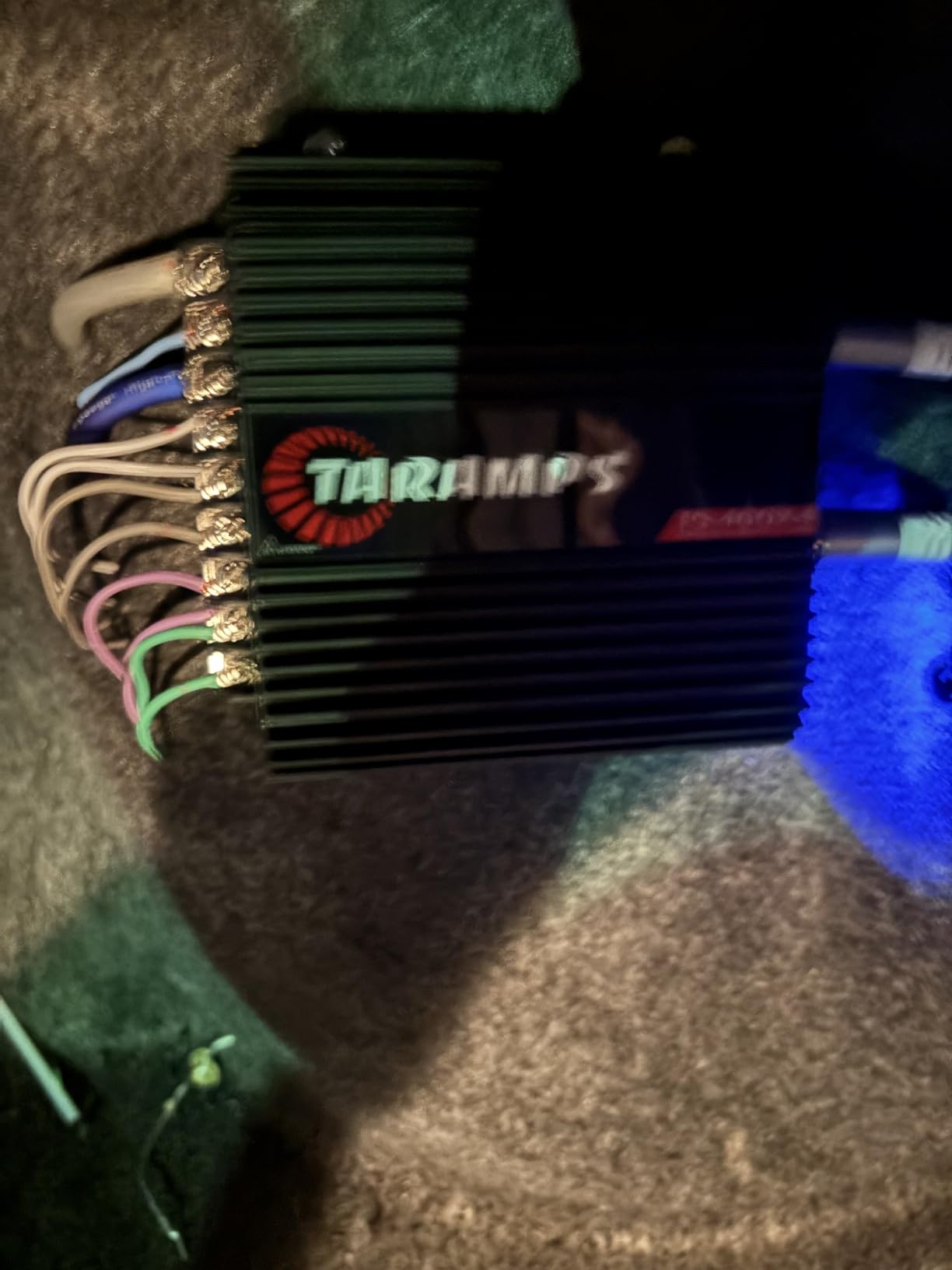
High level auto turn on and RCA inputs are both fitted, which means it works with factory stereos and aftermarket head units without an adapter. Owners using it in motorcycles, boats, ATVs and golf carts report the same clean, adequate volume they get in a car.
Be clear-eyed about the power though. One hundred watts per channel at 2 ohms translates to something closer to 50 watts per channel at a 4 ohm door speaker load, which is below the 75W baseline most enthusiasts aim for. It is enough to hear clearly, not enough to push hard.
Who this amp suits
It suits someone building a first system on a tight budget, driving factory or entry level coaxials, and prioritising clean volume over headroom. The weight and efficiency mean it draws little current, which matters in older vehicles with small alternators.
It is also good for a four-speaker distributed system where each driver is a small 4 or 5 inch coaxial that never sees low frequencies, because the flat power delivery across all four channels keeps the soundstage even.
Who should skip it
Skip it if your door speakers are rated 75W RMS or more. You will be asking the amp to run out of headroom on every loud passage, which is exactly the condition that leads to clipping and damaged drivers.
You also need a properly fused, adequately gauged power feed to get the rated output, and a minority of buyers report early unit failures, so do not buy it expecting a decade of service. Pair it with decent door speakers and treat the amp as a stepping stone rather than a final system component.
7. Alpine S-A32F – Best for Sound Quality on Factory Door Speakers
Alpine S-A32F, S Series Class D 4 Channel Digital Amplifier, 320 Watts
4 channels
55W RMS x 4 at 4 ohm
4 3 2 channel modes
Class D digital
83 dB at 1W
Pros
- Clean low distortion Class D output
- Consistent owner satisfaction across reviews
- Compact digital design for factory upgrades
- Flexible 4 3 and 2 channel operation
Cons
- Only 55W per channel so it suits factory style speakers
- May need separate integration for some head units
- Less feature rich on crossover controls
The Alpine is the choice when sound quality per watt matters more than volume, and it is the amplifier I would put behind a good factory door coaxial rather than behind a cheap one. Fifty five watts RMS per channel at 4 ohms and 14.4 volts is modest power, but the noise floor is what separates this from budget alternatives.
Signal to noise is listed at 83 dB referenced to 1 watt into 4 ohms, and better than 98 dB referenced to rated power. Those are the numbers that describe a genuinely quiet amplifier, and on a quiet stretch of road with the windows up you hear the difference.
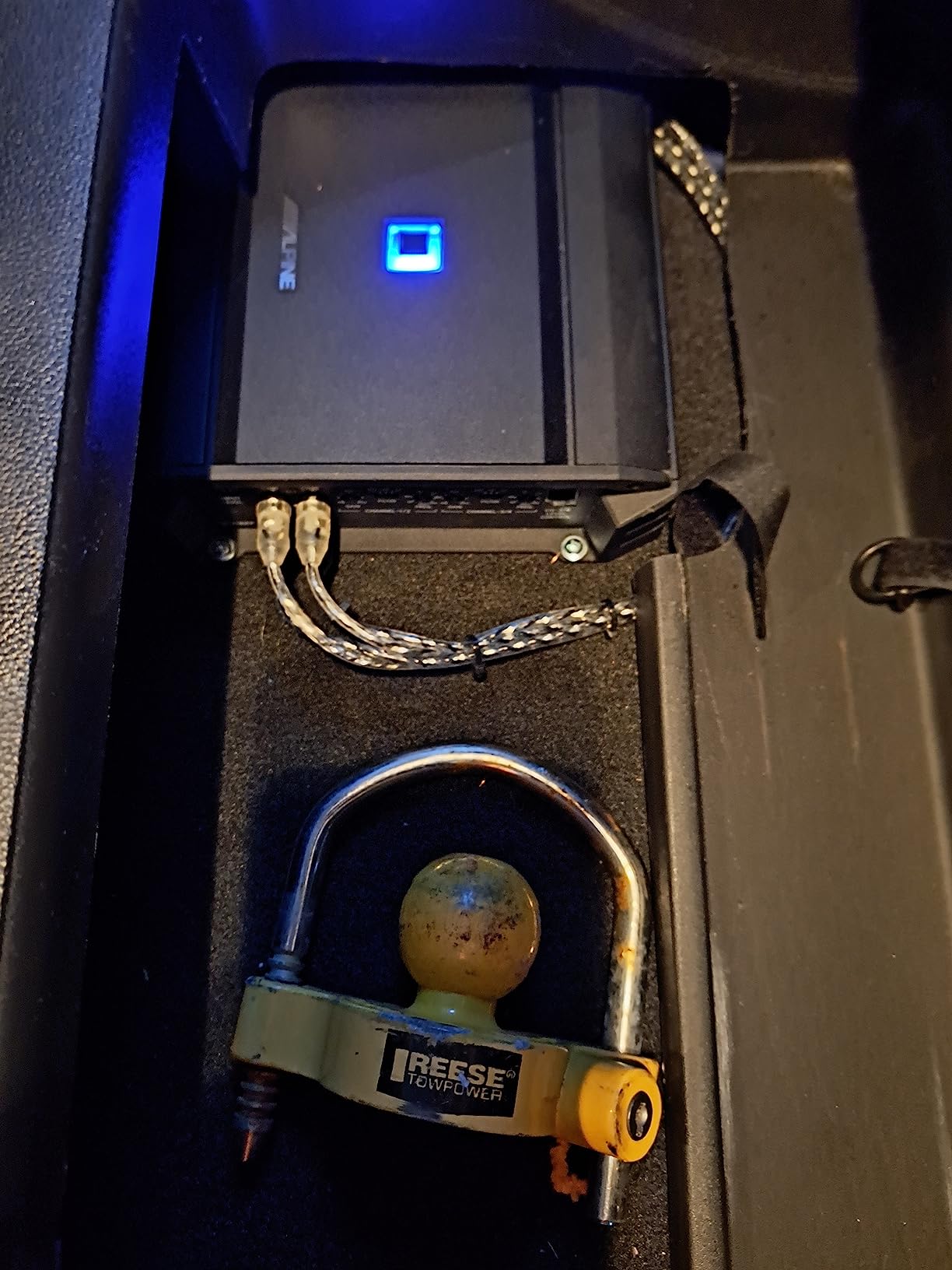
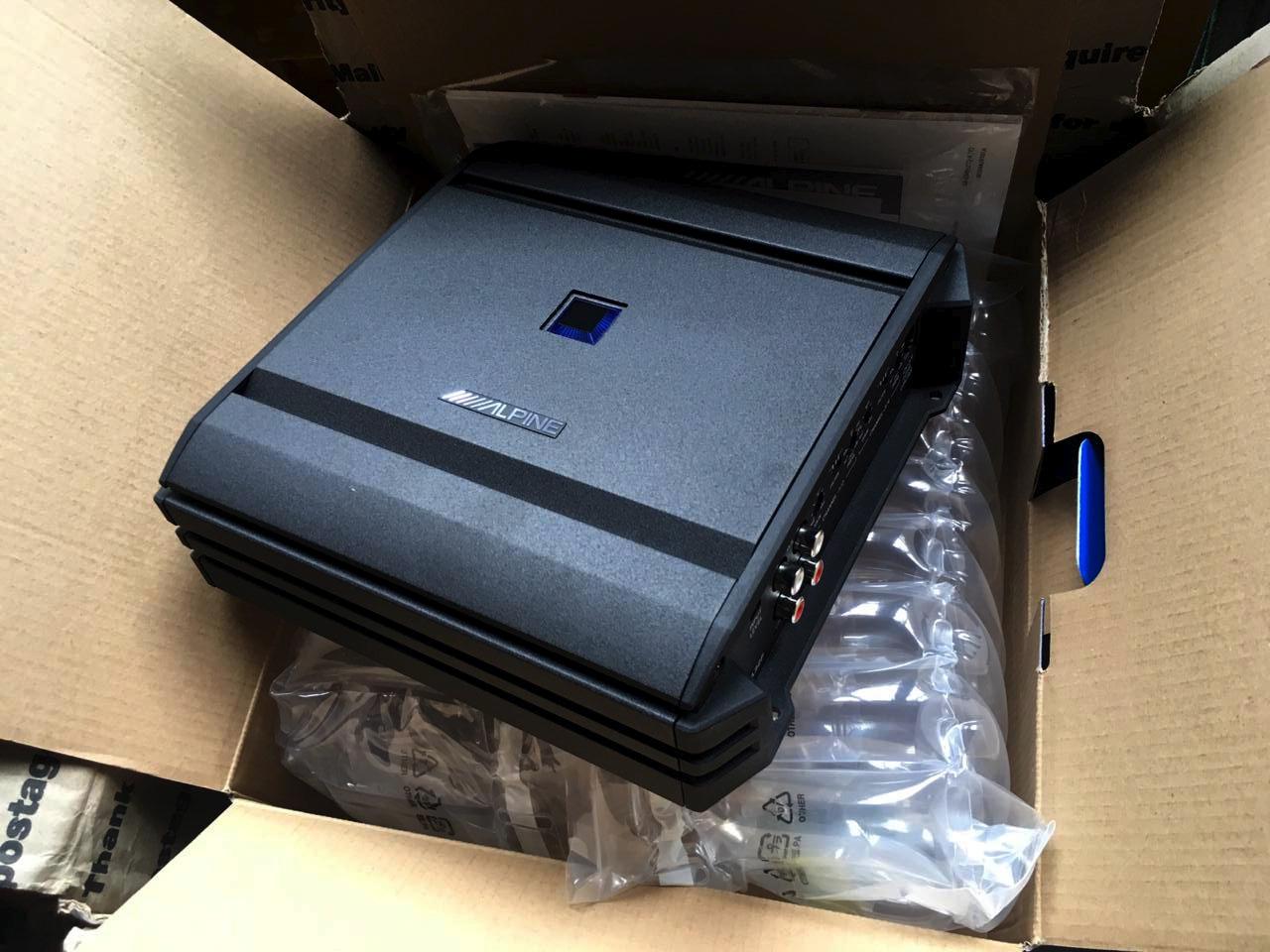
It is a digital Class D design in the Alpine S Series, and it can be configured as a 4, 3 or 2 channel amplifier. That means you can run two channels for the front doors and use the remaining pair for a subwoofer later, without changing hardware.
Dimensions are 11 by 11 by 5 inches, so it is a square, mid sized footprint rather than a slim unit. Owners credit the Alpine name for build consistency, which is a reasonable proxy for long term reliability in a car environment that bakes and freezes.
Who this amp suits
It suits listeners who are upgrading factory door speakers and want them to sound better at moderate volume rather than louder. If your goal is tonal accuracy on a daily drive, the low noise floor here is worth more to you than another 50 watts.
It also suits anyone who wants a simple front stage with the option to add bass later using the same amplifier, because of the flexible 4 3 and 2 channel configuration.
Who should skip it
Skip it if you drive with real authority and want your front stage loud enough to compete with road noise. Fifty five watts per channel, at 14.4 volts, is the honest ceiling here and you will run out of it before you run out of volume.
Be aware that crossover controls are less featured than on several competitors, and depending on your head unit you may need separate integration hardware. Check your factory system before buying if you are keeping the original stereo.
8. Recoil DI550.4 – Most Tuning Controls per Amp
Recoil DI550.4 Full-Range Class-D 4-Channel Car Audio Amplifier 1040W
4 channels
80W RMS x 4 at 4 ohm
130W RMS x 4 at 2 ohm
Bridgeable
Compact Class D
Pros
- Good real RMS output for the price class
- Adjustable gain plus LPF and HPF and bass EQ
- Bridgeable for a future subwoofer
- Compact chassis with efficient heatsinks
Cons
- Needs correct gain and crossover setup to sound clean
- 1040W max figure greatly exceeds real RMS output
- Documentation is limited
Where the Alpine and Rockford limit you with fixed crossovers, the Recoil gives you knobs. Adjustable gain, low pass, high pass, crossover selection and a bass EQ control are all fitted, and for a builder who wants to shape the sound rather than accept it, that is worth more than a handful of extra watts.
Real output is 80 watts RMS x 4 at 4 ohms and 130 watts RMS x 4 at 2 ohms, with 260 watts RMS x 2 at 4 ohms bridged. The 1040 watt maximum total on the packaging is a peak figure and dramatically overstates continuous power, so ignore it in your calculations.
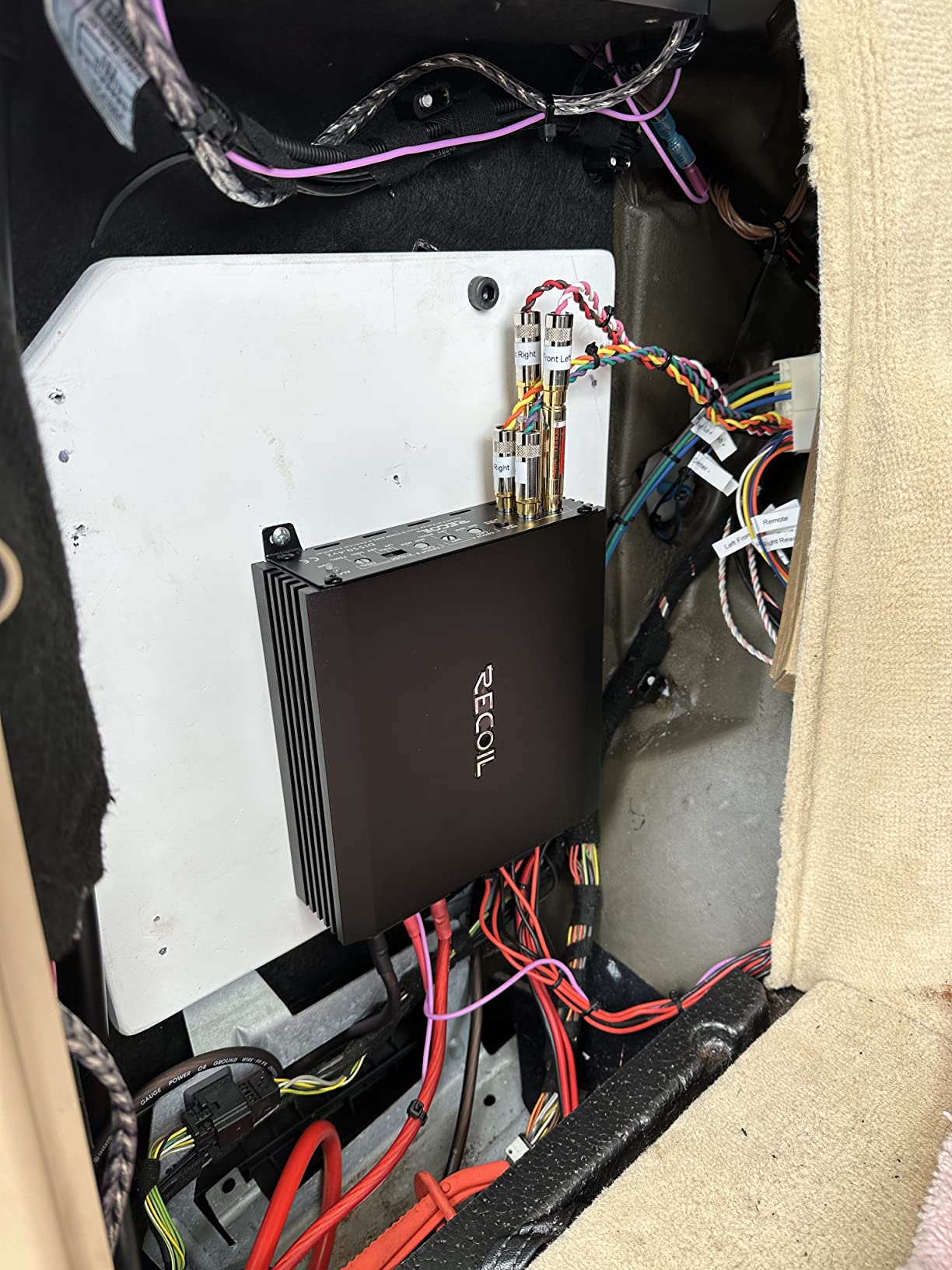
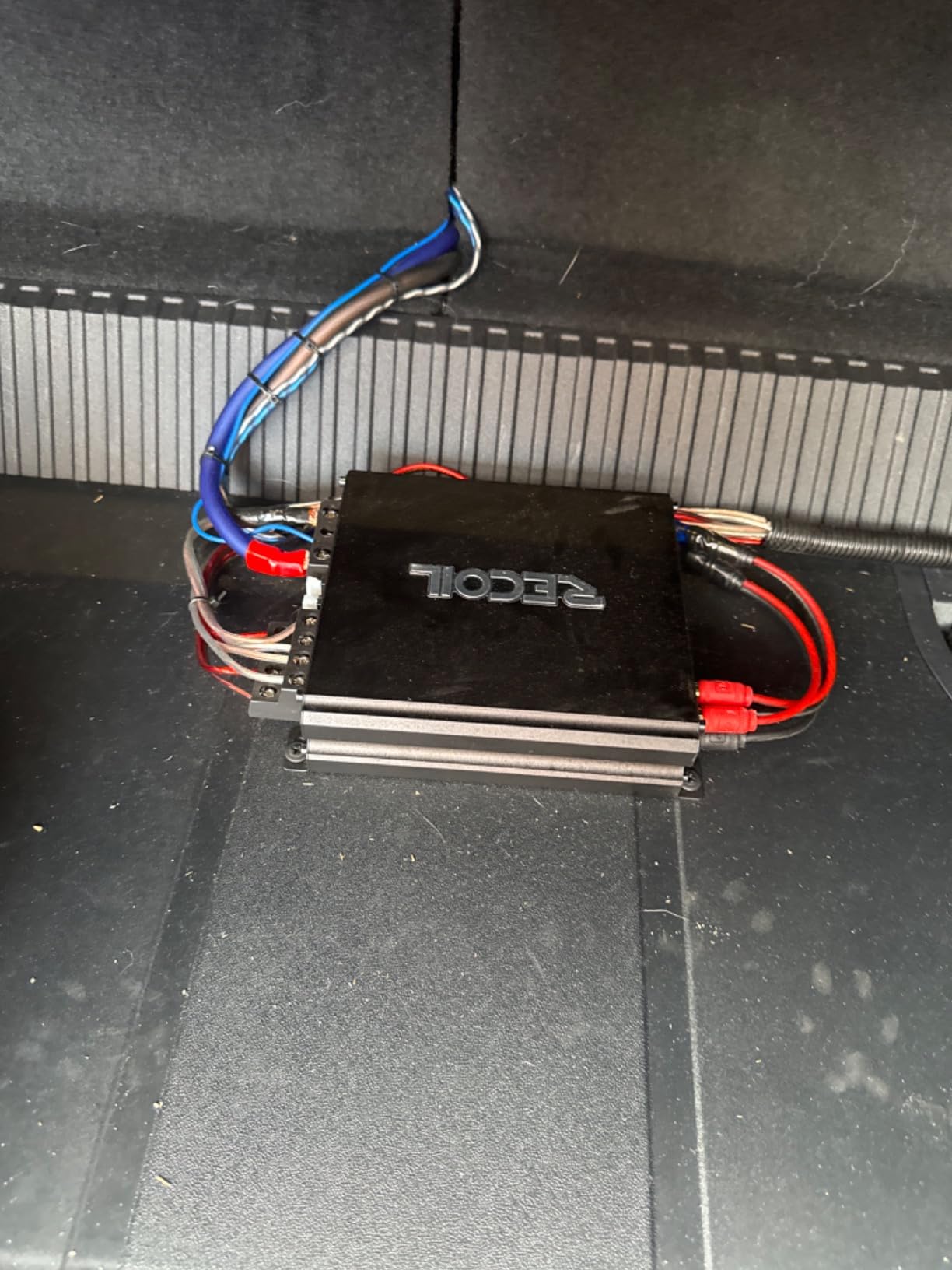
The chassis measures 7.48 by 5.90 by 1.77 inches, which is compact without being the tiny design that forces compromises, and the heatsinks are efficient enough that owners report it running cool. It is specified to 85 degrees C operating temperature, and it has 4-way protection circuitry.
That combination makes it a good match for a door speaker set that needs a high pass on the tweeters and a little low pass control on the midbass. You can dial the door speakers to suit the rest of the car rather than accepting whatever the amplifier decides for you.
Who this amp suits
It suits installers and enthusiasts who want real control over the door stage and already understand crossovers. Eighty watts RMS per channel at 4 ohms sits comfortably above the 75W baseline, so it also has adequate headroom for mid-power component sets.
It is a good value option if you are planning to add a subwoofer later, because the bridgeable channels give you a straightforward path to roughly double the power into a single 4 ohm subwoofer.
Who should skip it
Skip it if you want a turn and play amplifier. Every one of those adjustment controls is a chance to set something wrong, and owners consistently note that correct gain and crossover setup is required to get clean output from this amplifier.
The documentation is also limited, so budget time to work out the control behaviour yourself. And treat the marketing wattage as marketing: the number that matters is the 80W RMS per channel figure at 4 ohms.
9. AudioControl EPICFOUR – Best Protection Features
AudioControl EPICFOUR 4-Channel Car Audio Amplifier 800W, Digital Class D
4 channels
4 and 2 ohm stable
91dB+ signal to noise
Linkwitz-Riley filters
6.1 inch wide
Pros
- Compact low profile chassis for tight interiors
- High current 4GA power and 8GA speaker terminals
- Linkwitz-Riley crossovers for accurate band limiting
- 91dB+ signal to noise keeps output quiet
Cons
- Line level inputs only so factory systems need an interface
- Requires a separate 80A fuse and heavy power wiring
- EPICENTER bass processor is a separate purchase
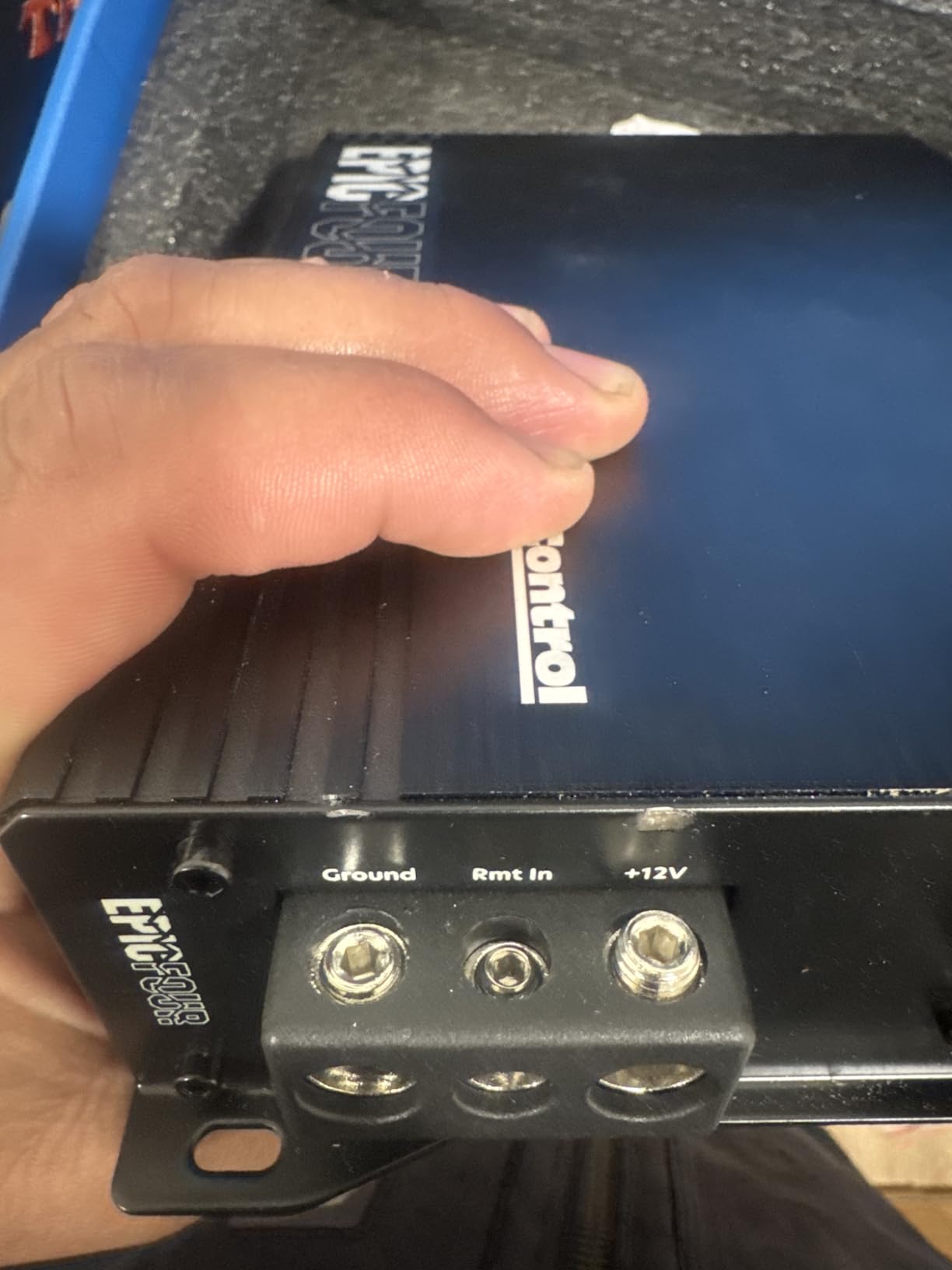
The EPICFOUR is the most technically specified amplifier in this roundup, and for a first serious install that values electrical safety it is hard to argue with. It is a digital Class D four-channel rated 4 or 2 ohm stable, with 800 watts total and a stated 100 percent RMS output rating.
The crossover filters are 12 dB per octave Linkwitz-Riley, which is the more sophisticated alignment compared with the basic Butterworth filters on cheaper amplifiers. Linkwitz-Riley filters maintain a flatter summed response at the crossover point, and for a component set with a separate tweeter that means a smoother transition instead of a bump in the middle of the vocal range.
Signal to noise is listed at 91 dB or better, and the chassis is a rugged low profile design at 6.1 inches wide by 9.41 inches long by 2.01 inches tall. The direct wire hex screw terminals accept 4GA power and 8GA speaker wire, which is a genuinely useful detail for anyone who cares about connection quality.
Built in protection covers low and high voltage, short circuits and thermal hazards, and the ultra efficient idle draw design is intended to prevent battery drain on a parked car. An 80 amp fuse is recommended and sold separately, as is the EPICENTER bass restoration processor it can plug into.
Who this amp suits
It suits the installer who wants a well protected, clean signal chain and does not mind buying the fuse and the power wire properly. The hex screw terminals and Linkwitz-Riley filtering are details you will appreciate at the point of installation rather than on the spec sheet alone.
It also suits anyone who is running a line output converter from a factory amplified system, because the amplifier itself expects clean line level signal and the interface does the summing properly.
Who should skip it
Skip it if you want to keep your factory stereo and tap speaker wires directly, because the EPICFOUR has line level inputs only. You will need an additional interface, which adds cost and another potential point of noise in the chain.
With 146 reviews, this is the thinnest feedback base in the group, and a 10 percent one-star share reflects some early reliability complaints. Treat it as a strong technical option rather than a proven volume seller, and make sure you budget the 80 amp fuse and heavy gauge power feed as part of the purchase.
10. PRV Audio QS400.4 – True RMS Rated in a Tiny Footprint
PRV Audio QS400.4 2 Ohm Mini Compact 4 Channel Car Audio Amplifier 4 x 100 Watts RMS at 2 Ohm – 400 Watt Amp Stereo 12 Volts Amp Class D Full Range Bridgeable
4 channels
4 x 100W TRUE RMS
2 ohm stable
Bridgeable to 200W
4 inch wide
Pros
- 4 x 100W TRUE RMS rating which is unusual at this size
- Exceptionally small footprint for a full 4 channel amp
- Efficient Class D design that is easy on the electrical system
- 2 ohm stability and bridgeability for flexible wiring
Cons
- Modest 100W per channel for larger door speaker loads
- Fewer documented tone controls than larger amplifiers
- Needs a correct fused power feed for full rated output
Most budget amplifiers quote peak watts on the box and leave you to work out the real figure. The QS400.4 is rated 4 x 100 watts TRUE RMS certified at full range output, which is an unusual level of honesty for a product at this end of the market, and it makes matching to your door speakers straightforward.
It is a digital Class D design stable at 2 ohms, and it bridges to 2 x 200 watts RMS at a minimum of 4 ohms per bridged channel. Supply voltage is listed as 9 to 12V DC, so it is happy on a car electrical system without needing a separate converter.
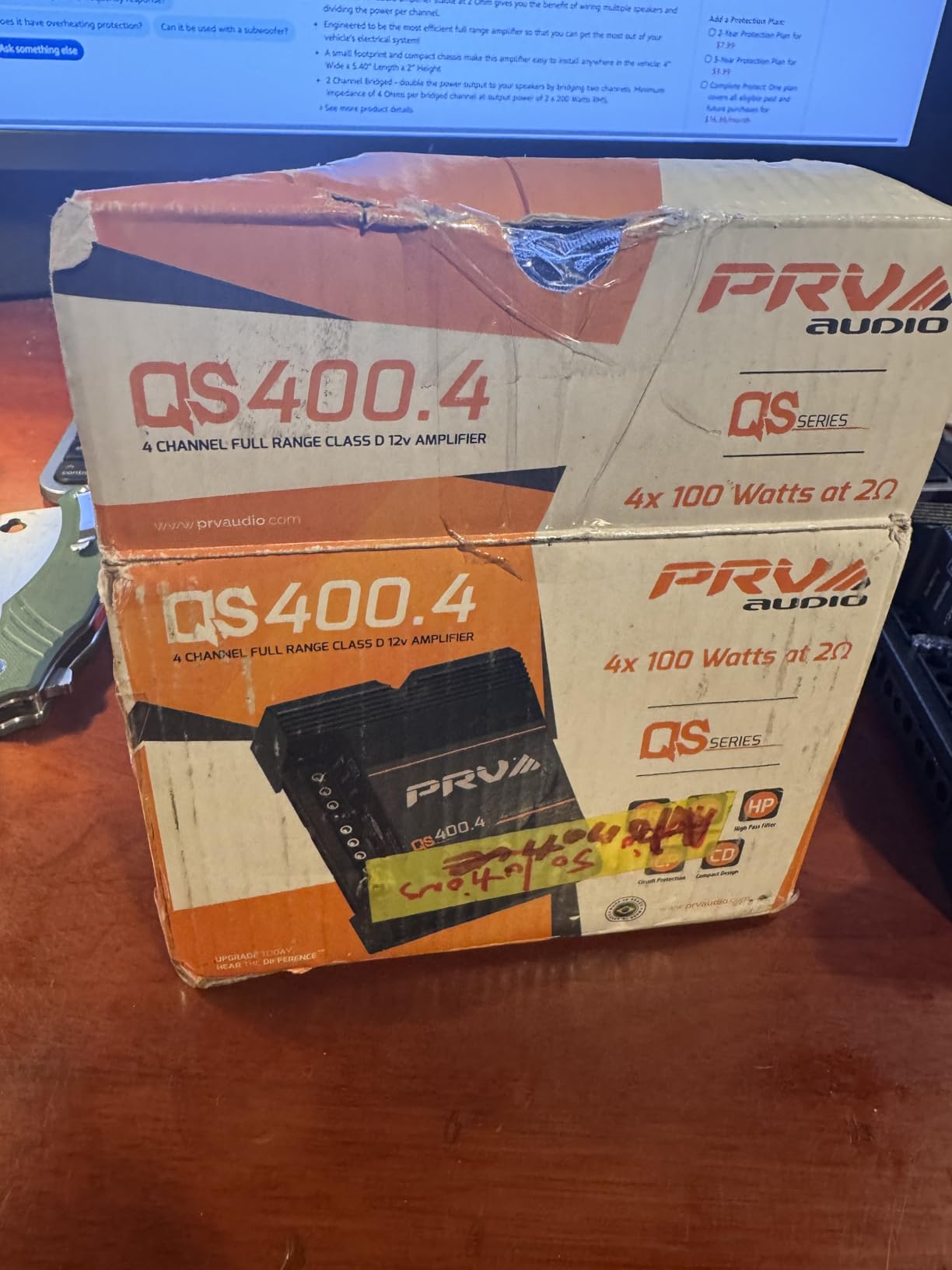
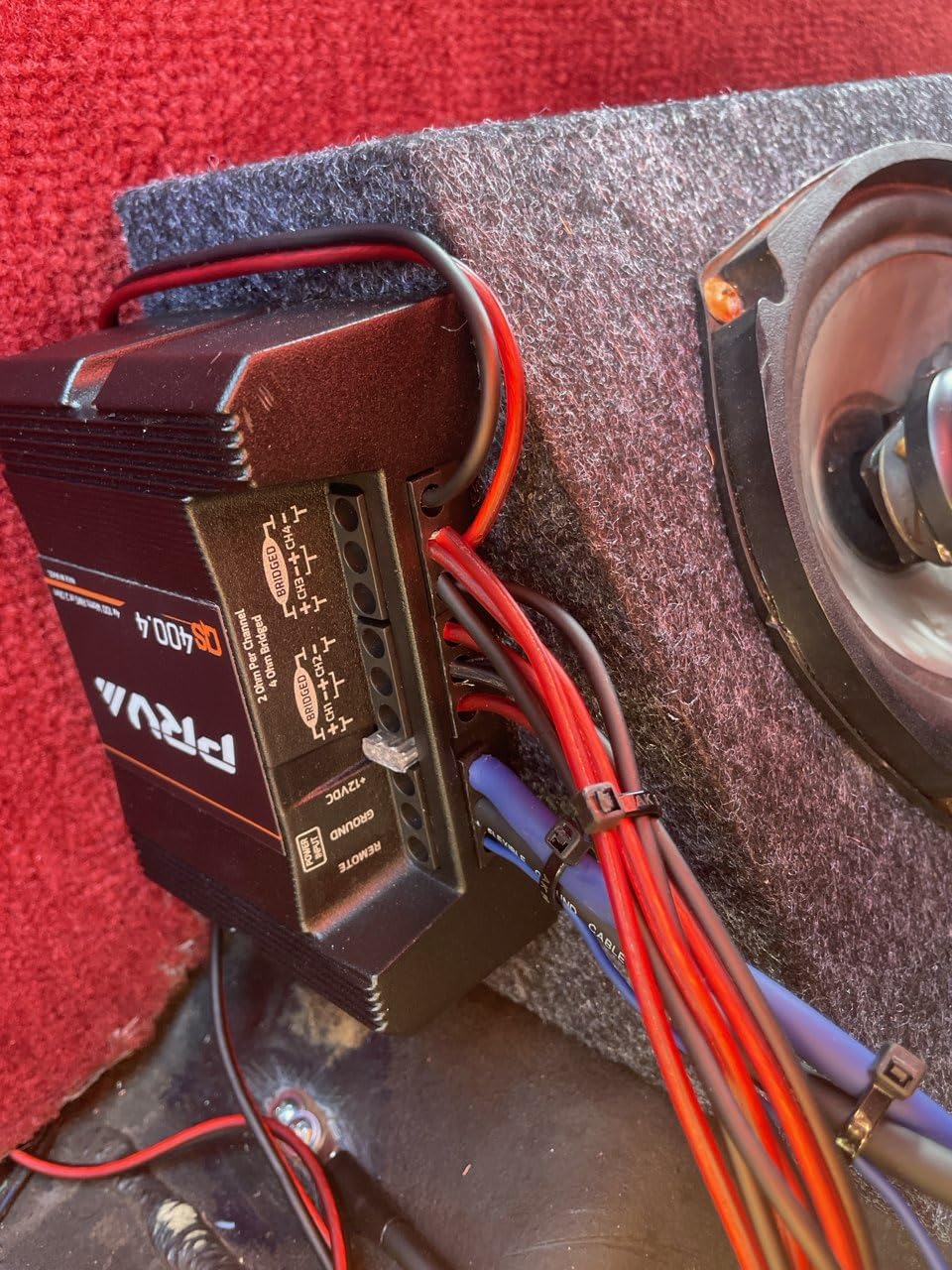
The chassis is the story here. At 4 inches wide by 5.40 inches long by 2 inches tall, this is a miniature four-channel amplifier in an aluminium body, and the design is built around high efficiency to get the most from a vehicle electrical system.
That size makes it genuinely versatile. It fits behind a panel, under a seat, in a motorcycle fairing or a boat console, and if you ever want to run two of them, the low current draw means your alternator and battery do not have to grow.
Who this amp suits
It suits space constrained installs where a full four-channel amplifier has never fitted before. The honest true RMS rating also makes it a good first amplifier for someone who does not want to be misled by a packaging number.
At 100 watts per channel it comfortably handles entry level and mid-power door speakers, and the 2 ohm stability gives you options if you later add a subwoofer on bridged channels.
Who should skip it
Skip it if you tune your system. The feature set is deliberately basic, with fewer documented tone controls than the larger, more expensive amplifiers in this roundup, so you are buying power and size, not flexibility.
You will also need a correct fused power feed to see the full rated output, and the 100 watt per channel ceiling is modest for high power door speakers. If your goal is a loud, high energy front stage, step up to one of the higher output four-channel options above.
Why an Amplifier Changes How Door Speakers Sound
The honest answer is that an amplifier makes door speakers sound better, but not for the reason most people expect. It is not about raw volume. It is about clean continuous power and headroom.
A factory head unit runs out of current quickly. When you reach the top of its range it clips, and clipped signal is harsh and fatiguing. Give the same speakers a properly matched amplifier and they play at the same volume without strain, with detail you could not hear before.
There is a second benefit that people notice only after a few weeks. A speaker that is not clipping has far better dynamics, so the difference between a quiet passage and a loud one feels bigger. That is the difference between a system that fatigues you on a long drive and one you can listen to for hours.
What an amplifier will not do is rescue cheap speakers or a badly treated door. If your door speaker is a flimsy factory coaxial and your door panel rattles, more power just makes the rattles louder. If you have not chosen your drivers yet, work through our car speaker picks first, and treat the door panel as the finishing step rather than the amplifier.
How Many Channels Do Door Speakers Need?
This is the first question worth answering, and the answer depends on how many speakers you actually need to power. Start from the door count rather than the channel count on the box.
Two channels for front doors only. If you are only powering the two front door speakers and leaving the rears on the factory system or unpowered, a 2-channel amplifier is the correct tool. There is no 2-channel unit in this roundup because all ten products are four-channel or larger, but any of the four-channel amps here can run in a 2-channel mode if your system grows.
Four channels for doors plus rears. This is the most common setup and the reason most of these amplifiers exist. Four channels means a proper front stage plus rear fill from one chassis, one power wire and one set of crossovers. The Pioneer, Alpine, Rockford and Recoil all sit in this lane.
Five or six channels for doors plus rears plus a subwoofer. A 5-channel amplifier gives you four door and rear channels plus a dedicated mono subwoofer channel, which is cleaner than bridging a pair because the sub channel gets its own filtering and its own level control. The BOSS PV3700 and Planet Audio AC1800.5 are the two options here, and both include a remote subwoofer level control.
Mono for a subwoofer only. This one is not a door speaker option at all. A monoblock drives a single low impedance subwoofer channel and is the wrong shape of amplifier for door speakers, no matter how good the mono amplifier is. We covered this in more detail in the section below.
One more decision worth making early: Class D versus Class A/B. Class D amplifiers like the Rockford, Taramps, Alpine, Recoil, AudioControl and PRV units here are far more efficient, run cooler and draw less current, which is why they suit modern cars and small mounting spaces. Class A/B designs like the Pioneer and BOSS units sound more conventional and are easier to run warm, but they are perfectly good choices if you have the space and the current to feed them.
How to Match Amp Power to Your Door Speakers
No, your amplifier RMS rating does not need to match your speaker RMS rating exactly. Matching impedance matters for safety. Power should exceed the speaker rating to give headroom.
The rule I use is 1.2x to 1.5x your door speakers’ RMS power per channel at 4 ohms. A door speaker pair rated 50W RMS per channel wants roughly 60 to 75W RMS per channel from the amplifier. A pair rated 75W wants about 90 to 110W. Matching exactly is not dangerous, but it leaves no headroom, and headroom is what keeps the amplifier out of clipping.
Here is the practical matching sequence. First, read the RMS rating on the back of the speaker, not the peak number on the front. Second, confirm the speaker impedance, which for most 6.5-inch door speakers is 4 ohms. Third, confirm the amplifier is stable at that impedance. Fourth, aim for 1.2x to 1.5x the RMS figure. Fifth, set the gain correctly so the amplifier uses that power without clipping.
30W RMS speakers want roughly 36 to 45W per channel. That is an easy match for the Alpine, the Rockford or the Pioneer.
50W RMS speakers want roughly 60 to 75W per channel. The Pioneer at 60W RMS per channel and the Recoil at 80W RMS per channel both land correctly.
75W RMS speakers want roughly 90 to 110W per channel. The Recoil and the Taramps units fall into this range, though remember those figures are published at 2 ohms and your door speakers are likely 4.
Most 6.5-inch door speakers are 4 ohm, so 4 ohm is your default and any amplifier rated stable at 4 ohms will do. Only move toward a 2 ohm stable amplifier if you have dual voice coil speakers you intend to wire in parallel, or if you are bridging channels into a subwoofer. Never run an amplifier below its stated minimum stable impedance, because that is how protection cutouts and shutdowns happen.
The failure mode to avoid is underpowering an amplifier and then turning the gain up to compensate. Forum users describe this as the fastest way to cook a speaker, and they are right. A gain knob turned too high does not create power, it creates distortion, and distorted power is harder on voice coils than clean power at a lower level.
What Not to Buy for Door Speakers
Shopping results for car amplifiers are full of the wrong product for this job, so it is worth naming what to skip. Every one of these applies specifically to a door speaker build.
Do not buy a monoblock amplifier. High power single channel amplifiers dominate shopping results because subwoofer builds are a bigger market. A monoblock has one channel, optimised for a low impedance subwoofer load, and there is no way to power a left and right door pair from it sensibly.
Do not buy a subwoofer amplifier on the assumption that more power is better. A 2000 watt subwoofer amplifier will not improve your front stage. It adds cost, heat and current draw, and it takes the tuning controls you actually need for tweeters and midrange.
Do not buy an amplifier that is not stable at your speaker impedance. Check the minimum stable impedance on the spec sheet before you buy, not after. Running below it causes protection mode cutouts, and repeated cutouts are where amplifier failures begin.
Do not buy a premium amplifier to run factory coaxial speakers. This is the overdress mistake that shows up constantly. A better amplifier cannot make a cheap speaker sound like an expensive one. If your speakers are stock, spend on the speakers first.
Do not buy a large chassis you cannot mount. The two longest amplifiers in this roundup are 17 and 19.7 inches, and both will fight you in a compact car, where an amplifier that does not fit is an expensive paperweight. Measure your available space, including airflow, before you commit.
High-Level Inputs and Factory Systems
If you plan to keep your factory head unit or factory amplified system, high level inputs are the single most important selection criterion on this page. Here is why.
A factory amplified system sends speaker level signals to its speakers, not line level signals. Most aftermarket amplifiers expect line level signal through RCA inputs. An amplifier with high level inputs, also called speaker level inputs, accepts the speaker wires directly and uses signal sensing to turn on when the head unit produces audio, so no additional converter is required.
Signal summing is the related concept and it is where a lot of confusion lives. When an amplifier with high level inputs is fed from a factory amplified system, the factory amplifier is still driving its own speakers. If you tap those speaker wires, the signal is a sum of the factory amplifier output and your new amplifier output. In a well designed system that is manageable, but it is why adding an amplifier to a Bose or JBL factory amplified system can produce muddy bass and harsh treble.
Five of the ten amplifiers here have high level inputs: the BOSS PV3700, the Taramps TS1200X4, the Rockford PBR400X4D, the Taramps TS400X4, and the Planet Audio AC1800.5, which takes high and low level inputs. The Pioneer, Alpine, Recoil, AudioControl and PRV units expect line level signal, so a factory system install on those requires an interface.
One practical warning from the community: buying a premium amplifier to pair with a factory amplified system that has heavy digital processing can produce a worse result than leaving the factory system alone. If your car has branded factory amplification, factor an interface into the cost before you decide the amp is at fault.
Install Essentials: Power Wire, Fuse, Ground, Gain
Amplifier selection is about a third of a good install. The other two thirds are power, grounding and gain, and these are the areas where forum troubleshooting threads concentrate. Get them right and any of the ten amplifiers above will sound excellent.
Power wire gauge. Undersized power wire is the most common cause of an amplifier going into protection mode. It causes voltage drop, and voltage drop means less output and more heat. As a rough guide, use 12 gauge for a four-channel amplifier up to about 100W RMS per channel, 10 gauge above that, and 8 gauge for the very high output amplifiers. Always run the power and ground cable to the amplifier, never to the speakers, and route the cable safely away from sharp edges and hot exhaust parts.
Fusing. Fuse the power wire where it leaves the battery, not at the amplifier. The AudioControl EPICFOUR recommends an 80 amp fuse, which is a good illustration of how this scales with output. A fuse protects the wire, not the amplifier, and an unfused power cable is a fire risk in a crash.
Grounding. The ground point should be bare metal on the chassis, close to the battery negative terminal, and the same gauge or heavier than the power wire. Scrape the paint, clean the surface, and tighten the terminal properly. The owners of the BOSS PV3700 note that its ground post strips easily if overtightened, so snug is the target, not torque.
Gain setting without a multimeter. Turn the gain fully down. Put the head unit volume at roughly 80 percent of maximum. Turn the gain up slowly until the music starts to sound harsh or strained, then back it off a fraction. That is your clean maximum. If you have a test tone or a distortion meter, use it, but this ear method works and it prevents the clipped gain that blows speakers.
Mounting and airflow. Every amplifier in this roundup needs air. Class D units like the Rockford and PRV run cool, but a sealed amplifier compartment in a hot car will still trigger thermal protection on a summer day. Mount away from the exhaust path and leave clearance on the heatsink side.
Frequently Asked Questions
What amp should I run for door speakers?
Run 1.2x to 1.5x your door speakers’ RMS power per channel at 4 ohms, and treat 75W RMS per channel as the practical floor for typical 6.5 inch drivers. Match the speaker impedance first, confirm the amplifier is stable at that impedance, then set the gain so the amplifier is using its power without clipping. More power than that is fine as long as the gain is set correctly.
Should an amp RMS match a speaker RMS?
No. Match the impedance exactly and exceed the speaker RMS rating by 1.2x to 1.5x for headroom. An amplifier that only just meets the speaker rating has nothing left over, so it clips on loud passages. What damages speakers is not too much clean power, it is too little power with the gain cranked up to compensate.
Does an amp make door speakers sound better?
Yes, but the gain is clean continuous power and headroom, not raw volume. A factory head unit runs out of current and clips as you push it, and clipped signal is harsh. A properly matched amplifier lets the same speakers play at the same volume without strain, with better dynamics and more detail. It will not rescue cheap speakers or a rattling door panel.
What amplifier do I need for 4 ohm speakers?
Most door speakers are 4 ohm, so any amplifier rated stable at 4 ohms works as your default. Check the minimum stable impedance listed on the amplifier before you buy, and never run a load below that figure because it causes protection cutouts and shutdowns. A 2 ohm stable amplifier is only necessary if you are bridging channels or wiring dual voice coil speakers in parallel.
What kind of amp do I need for car door speakers?
A 2-channel amplifier covers the front doors alone. A 4-channel amplifier covers doors plus rears from one chassis and is the most common choice. A 5 or 6-channel amplifier adds a dedicated subwoofer channel so you can run doors, rears and bass from a single power wire. In this class, prioritise high level inputs if you are keeping the factory stereo.
The Best Car Amplifiers for Door Speakers in 2026
After putting ten amplifiers through the matching rules, the BOSS Audio Systems PV3700 takes the top spot for most people. Four channels for the doors and rears, a fifth channel for a subwoofer, high and low level inputs, and a 3 year parts and labor warranty behind it. It is the one configuration that solves a complete first system without two power wires.
If you only need four channels and want the simplest install, the Pioneer GM-A6704 is the value pick and the Rockford Fosgate PBR400X4D is the pick when mounting space is tight. For the cleanest sound at moderate volume, the Alpine S-A32F has the quietest output. For factory system upgrades, the Taramps TS1200X4 handles high level inputs with automatic turn on better than anything else here.
Whatever you choose, remember the two numbers that decide the outcome: 1.2x to 1.5x your speaker RMS at 4 ohms, and a correctly set gain. Get those right and any of these amplifiers will drive your door speakers properly in 2026.