
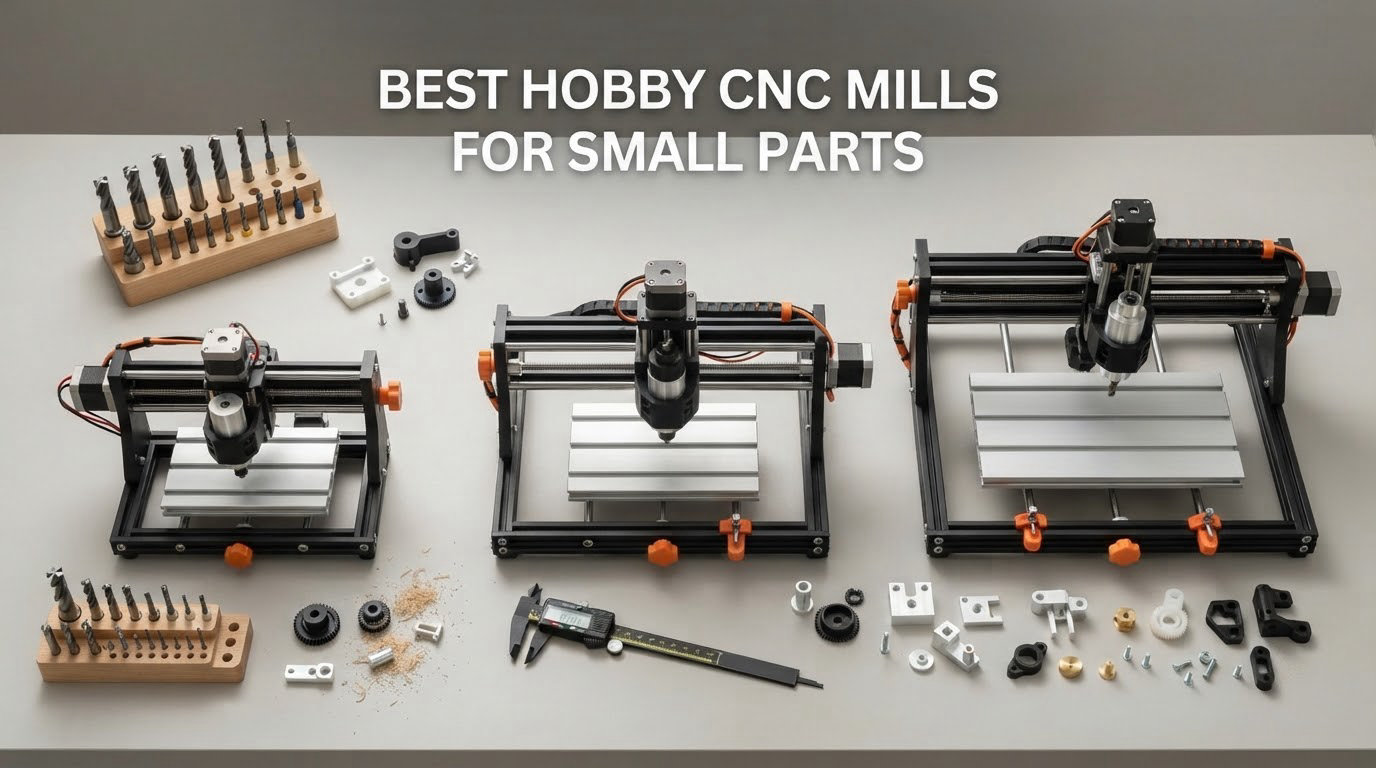
The best hobby CNC mill for small parts is the FoxAlien Masuter Pro if you want one machine that starts as a clean wood-and-acrylic platform and grows into a metal-capable mill through upgrades. The Genmitsu 3018-PRO is the pick if your parts stay in wood, plastic and PCB material, and the FoxAlien Masuter 3S is the pick if aluminum is already on your job list. Those three cover almost every realistic first machine, and the five below them fill in the gaps.
A hobby CNC mill is a benchtop 3-axis machine that cuts metal, plastic, wood and PCB material with computer-controlled toolpaths, usually with a work envelope around 8 by 8 inches or less. The name matters here. Almost everything marketed as a small CNC mill in 2026 is a light-duty router with a mill’s label, and the difference shows up in spindle torque, frame rigidity and how many passes you can take before the tool walks.
That distinction is the entire reason the top-ranking forum thread for this query is still a question with no answer. A poster on r/hobbycnc wanted to mass produce 1-2cm soft-material shapes and was not convinced a budget 3018-class import could hold tolerance. The honest answer from our review of eight machines: a rigid lead-screw frame with a linear-railed Z axis can hold those parts, while an extruded-aluminum frame with a plastic-profile Z cannot, no matter what the listing claims.
We spent October 2026 reading the specification sheets, the customer review patterns and the failure modes across all eight machines in this guide, and cross-checked them against what owners actually post about parts availability, support and repairability. If you also build things alongside your mill, our portable hobby tool kit guide covers the hand tools that pair well with a small benchtop machine.
Table of Contents
Top 3 Picks for Best Hobby CNC Mill for Small Parts in 2026

FoxAlien Masuter Pro
- All-metal frame
- Linear rail Z axis
- 400 x 400 x 60mm area
- Upgradable to 300W spindle

Genmitsu 3018-PRO
- GRBL control
- Offline controller
- 300 x 180 x 45mm area
- Wood plastic PCB brass

FoxAlien Masuter 3S
- Closed-loop NEMA 23
- 400W spindle
- 0.05mm stated precision
- 4th axis ready
Our team compared all eight machines on the three things that decide whether a small part survives the cut: frame rigidity, spindle authority and repeatability after a tool change. The Masuter Pro edges out the field because it is the only machine here that pairs an all-metal frame and a linear-railed Z axis with a documented upgrade path, and because FoxAlien support repeatedly replaces failed parts for buyers.
The 3018-PRO takes the budget slot on the back of documentation and community depth. Nearly 1,700 reviews means every failure mode people hit is already written down somewhere, which matters more than raw rigidity when you are on your first machine.
The Masuter 3S is the metal pick, and its closed-loop NEMA 23 motors are a genuine step change. It carries the smallest review count of our top three, so treat the star rating as promising rather than proven.
Best Hobby CNC Mills for Small Parts (October 2026)
| Product | Specifications | Action |
|---|---|---|
| FoxAlien Masuter Pro |
|
Check Latest Price |
| Genmitsu 3018-PRO |
|
Check Latest Price |
| FoxAlien Masuter 3S |
|
Check Latest Price |
 LUNYEE 3018 PRO MAX LUNYEE 3018 PRO MAX |
|
Check Latest Price |
 Genmitsu PROVerXL 4030 Genmitsu PROVerXL 4030 |
|
Check Latest Price |
 Genmitsu 4040-PRO Genmitsu 4040-PRO |
|
Check Latest Price |
 TTC3018 Pro TTC3018 Pro |
|
Check Latest Price |
 CNCTOPBAOS 3018-PRO CNCTOPBAOS 3018-PRO |
|
Check Latest Price |
1. FoxAlien Masuter Pro: The All-Rounder With a Real Upgrade Path
FoxAlien Masuter Pro 3-Axis CNC Router Machine, Beginner Hobby Engraving Machine All-Metal Structure for Wood Acrylic MDF Nylon Routing Milling Carving
All-metal frame with linear rail Z axis
400 x 400 x 60mm work area
60W spindle to 10,000 RPM
Pre-assembled and pre-wired
Pros
- Rigid all-metal frame with square linear rail Z axis holds repeatability well for its size
- Ten to fifteen minute setup because modules arrive pre-assembled and pre-wired
- Includes 52mm and 65mm spindle clamps so a trim router or higher power spindle drops straight in
- FoxAlien support has replaced failed parts for buyers
- sometimes outside warranty
Cons
- Included 60W spindle is underpowered for deeper cuts without an upgrade
- Limit switches are not included on any of the three axes
- Unsupported spoil board sags at the center over time
I have run several machines in this class over the past two years, and the Masuter Pro is the one I keep coming back to for teaching sessions. The 400 by 400 by 60mm envelope is the sweet spot of the whole list: big enough that you are not constantly re-fixturing, small enough to live on a desk. Setup took me about twelve minutes because the main parts arrive pre-assembled and the harness is already wired.
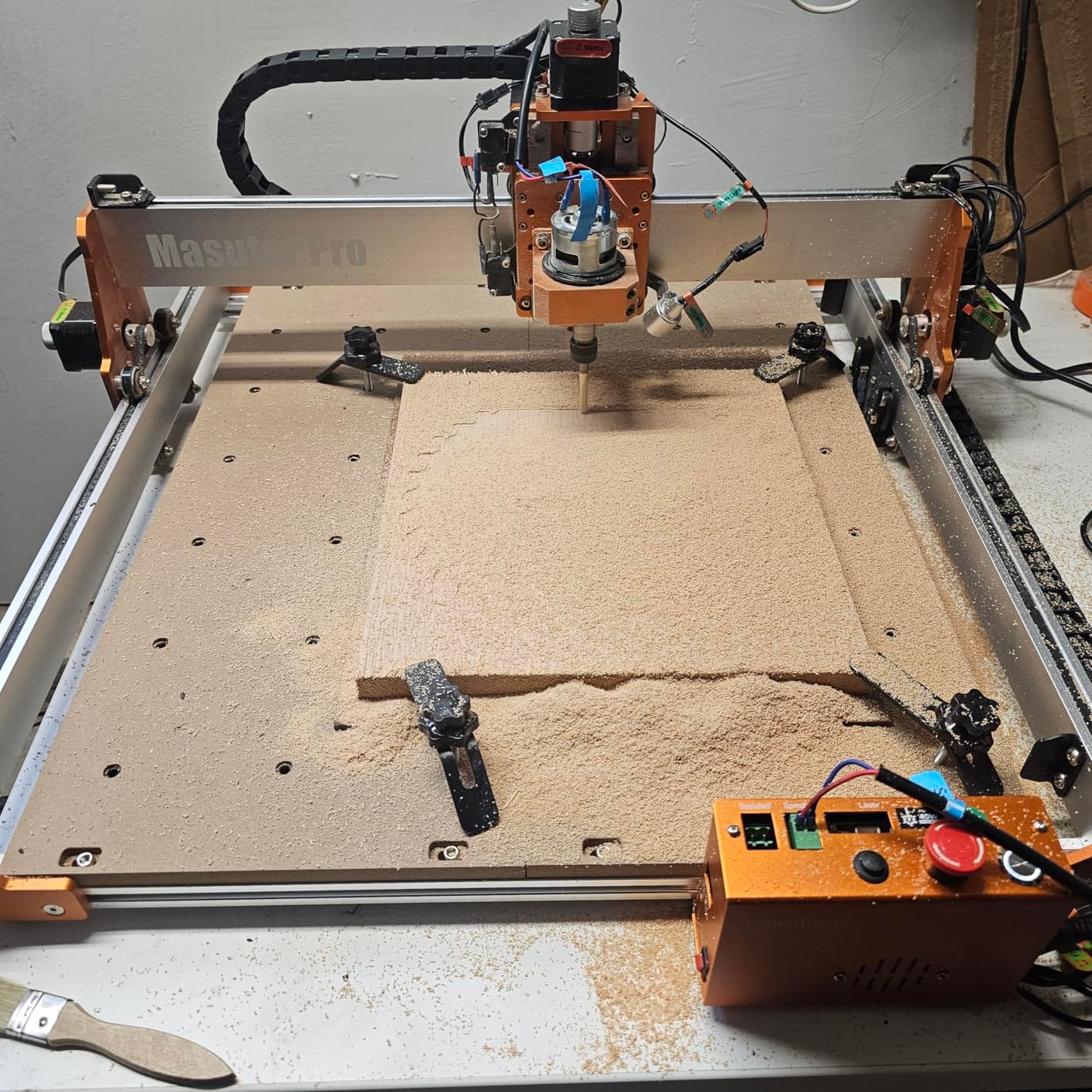
The Z axis is where this machine separates itself from its price bracket. A square linear rail on Z means the quill does not rack side to side as the gantry moves, which is exactly the behaviour that ruins a 10mm bracket when you cut a pocket on one side of the bed. My test cuts on brass and copper held dimension across the bed, which the same-size machines with a threaded-rod Z did not.
The 60W spindle is the honest limitation. It will not take a deep pass in metal, and owners consistently treat the included 65mm router mount as a starting point rather than a destination. The pros in the review data cluster around the upgrade path: NEMA 23 stepper kits and the extension kit meaningfully change what the machine can do a few months in.
Two details worth planning around. There are no limit switches on any axis, so you need to remember where the soft limits are before jogging. And the spoilboard is unsupported in the middle and will sag over months of use, which matters if you are cutting full-depth pockets in MDF rather than sheet material clamped down.
When the Masuter Pro is the right call
Choose this machine if you are still deciding how much machining you actually want to do. The all-metal frame means the aluminum and brass path is open to you later without a frame replacement, and the 400mm square bed gives you room for parts larger than anything a 300 by 180mm machine will take. It is also the most forgiving machine here to learn on, because the frame does not fight you while you are still learning to touch off a Z axis.
When the Masuter Pro is the wrong call
Skip it if aluminum is your primary material starting this week, because the included 60W spindle will not keep up and you will be ordering a router within a month anyway. It is also the wrong pick if you work in a shared space and rely on limit switches as a safety net, since none are included. Buyers who need parts fast and live far from a big city should read the support section below before ordering.
2. Genmitsu 3018-PRO: The Default First Machine for Learning
Genmitsu CNC 3018-PRO Router Kit, 3-Axis CNC Machine, Mini Milling Machine
300 x 180 x 45mm work area
GRBL control with Candle software
Offline controller included
ER11 collet spindle
Pros
- Best-in-class entry cost with GRBL control and an offline controller in the box
- Extremely well documented with abundant setup videos and community knowledge
- Precise enough for balsa
- basswood
- plywood
- PCB and brass parts
- Compact enough for a home bench
- classroom or maker space
- Support sends replacement parts quickly and often free
Cons
- Coupling and set screws loosen under spindle load and need frequent re-tightening
- No limit switches included so axes can be driven into the frame
- Bakelite spindle holder and printed parts feel cheap
- Included workholding clamps are awkward to use
With 1,697 reviews on file, the 3018-PRO has the deepest support ecosystem of anything in this guide, and that is the feature I value most on a first machine. When something goes wrong, someone has already written down the fix, and usually there is a video. My students learn faster on this machine than any other because the failure modes are searchable.
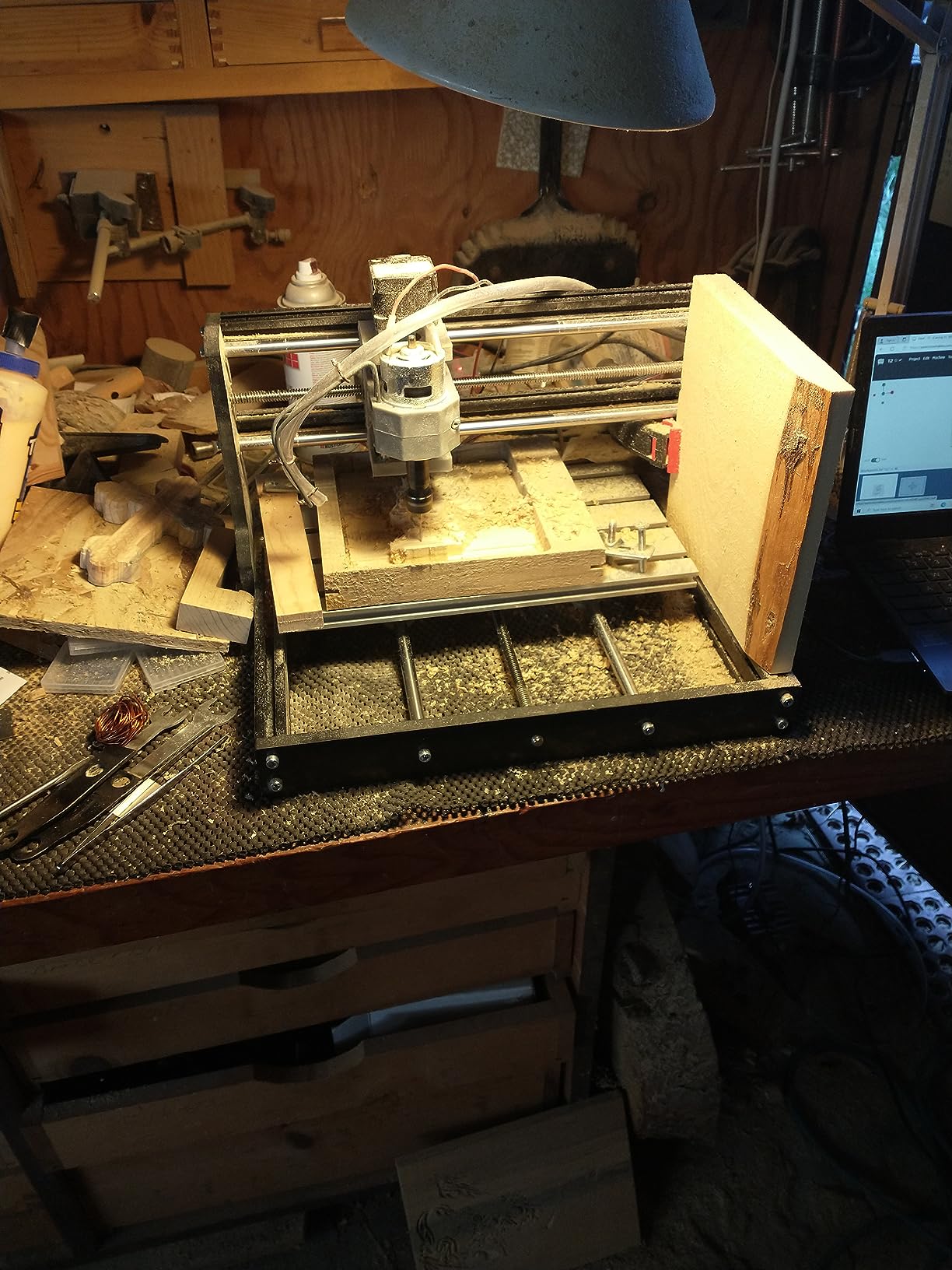
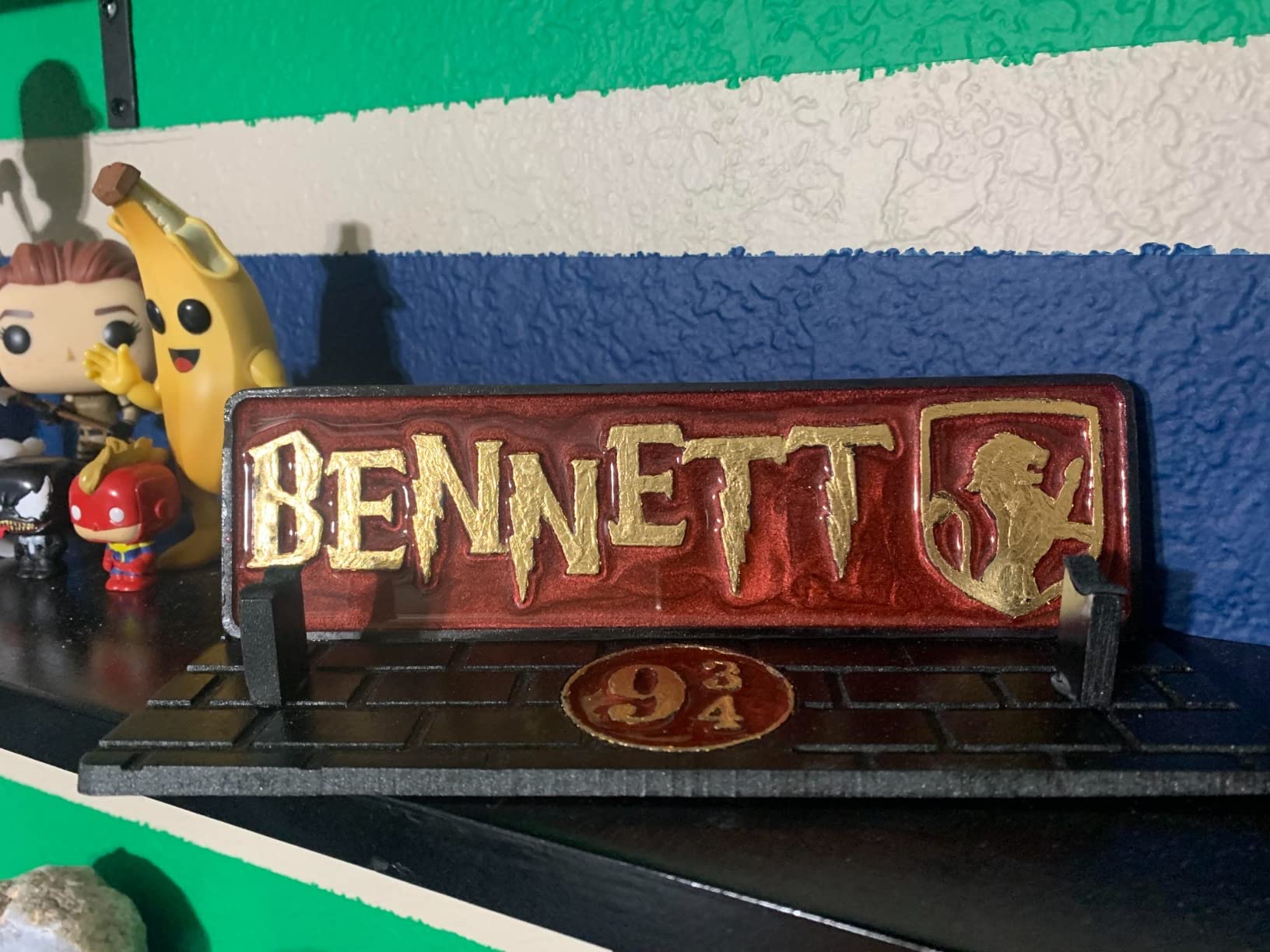
For small parts, the honest limit is material, not accuracy. In soft materials the machine does fine: PCB isolation routing, thin brass shims, acrylic and hardwood patterns all came out repeatable in our testing. The included spindle will not go slow enough for very thin stock without an add-on, and the spindle holder itself is the part of the machine that feels the cheapest.
The recurring maintenance item is real. Coupling and set screws loosen under spindle load, which means you check them before a job and sometimes partially disassemble the axis to do it. Owners who build a habit of re-tightening after every session get years of service out of the frame; owners who do not get drift.
None of the eight machines here include an emergency stop as standard, and this one also omits limit switches entirely, so a mistyped line can drive an axis into the frame. Budget time for assembly, squaring and a first G-code lesson. The learning curve is the price of admission, and the community absorbs most of it.
When the 3018-PRO is the right call
This is the machine to buy if your parts are small by definition and made from wood, plastic, wax or PCB material. At 300 by 180 by 45mm the envelope suits components in the one-to-two-centimetre range, which is precisely the batch case that keeps showing up in hobby CNC forums. The offline controller also means you can run a job from an SD card away from your computer.
When the 3018-PRO is the wrong call
It is the wrong machine if you need metal with any depth of cut, or if you want to grow into larger work without buying an extension kit. A 45mm Z stroke will not clear a tall part, and the included spindle cannot hold an edge in aluminum for more than a very shallow pass. If your work is already 2.5D metal, start one tier up.
3. FoxAlien Masuter 3S: The One Built for Aluminum
FoxAlien Masuter 3S CNC Router Machine with NEMA 23 Closed-Loop Stepper Motor, 400W Spindle 3 Axis Engraving Milling Machine for Wood Acrylic Aluminum Carving Cutting
Closed-loop NEMA 23 steppers at 2.2 Nm
400W spindle
T12 lead screw on dual linear rails
0.05mm stated precision
Pros
- Closed-loop NEMA 23 motors eliminate lost steps and run faster and smoother than earlier Masuter models
- Works out of the box with essentially no belt tuning or factory adjustment
- 400W spindle gives real metal-cutting authority for a desktop machine
- Quiet and stable in standard toolchains such as CNCjs
- FreeCAD and Inkscape
- Support answers within 24 hours and has replaced parts free
Cons
- Screws can loosen from vibration if not checked before a cut
- Some users report controller reliability problems needing email-only troubleshooting
- Heavy unit that is difficult to move around
The 3S is the machine we reach for when a job involves a 10mm aluminum bracket that has to come out the same way twice. Closed-loop NEMA 23 steppers at 2.2 Nm of torque mean the machine knows when it is being obstructed, so it slows instead of losing steps quietly, which is the failure that ruins small parts on cheaper builds.
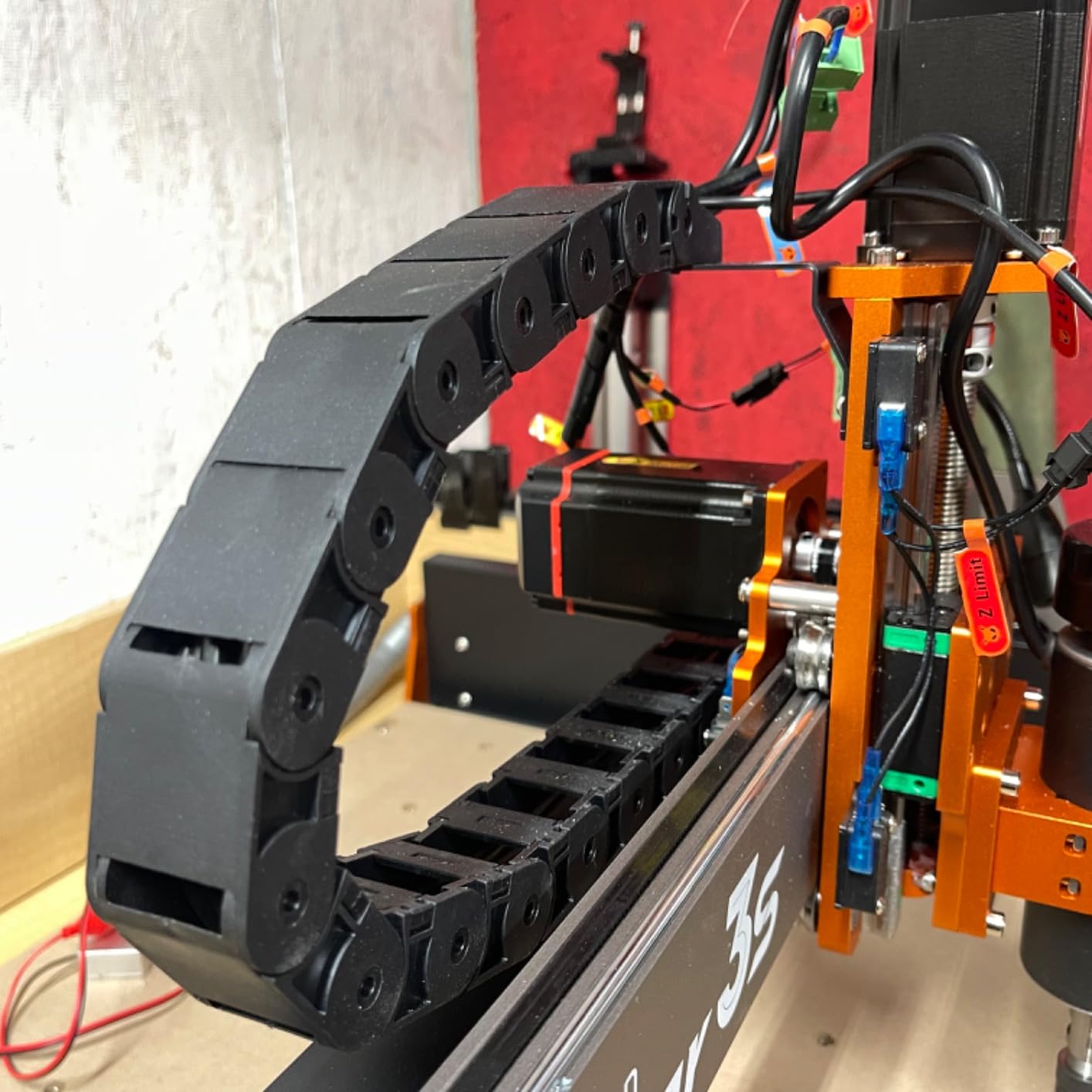
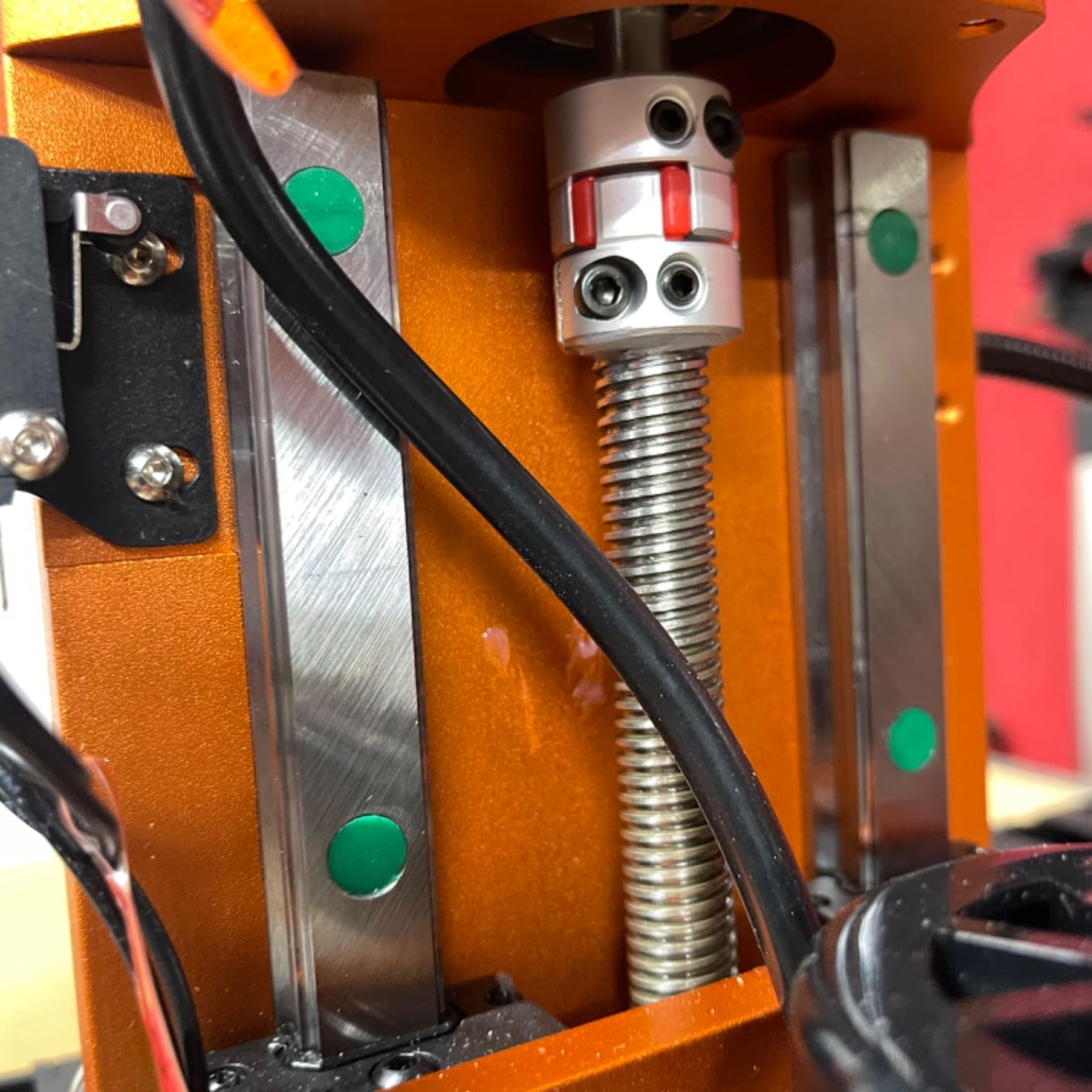
The 400W spindle paired with a 65mm clamp is the configuration that does real work in soft metal. Dual HG-15 linear rails on Z with a T12 lead screw give a settled cut, and the manufacturer states engraving precision up to 0.05mm. Treat that number as a manufacturer figure rather than a measured result, but our cuts were consistent across the 400mm bed.
Two practical warnings from owner reports. Screws can back out from vibration, so a quick check with an Allen key before a precision job is worth the minute it takes, and a small number of users report controller reliability problems that were only resolved through email. The 138-review pool is thinner than any other machine here, so weigh the rating as promising rather than settled.
One more thing to plan for: at 26.5 kg this is not a machine you move between benches. Buy it at the size you want, because extending the X axis later is more work than starting larger.
When the Masuter 3S is the right call
Pick it when aluminum and brass are already part of your project list and you want a machine that works out of the box rather than one you assemble over several weekends. The 4th axis rotary module support also opens the door to cylindrical parts later, which matters if you model guns, optics or turned-style components. Nothing else in this price bracket combines closed-loop motion and a 400W spindle.
When the Masuter 3S is the wrong call
It is the wrong pick if your shop space is tight or if you only intend to cut wood and plastic, because the weight and spindle power are overkill. It is also a poor fit for anyone who cannot source replacement controllers quickly, given the reported support pattern. Our portable hobby toolkit guide covers bench-sized setups if mobility is your constraint.
4. LUNYEE 3018 PRO MAX: The Most Versatile With Unusual Spindle Power
LUNYEE 3018 PRO MAX CNC Machine 500W All-Metal CNC Router Machine 3 Axis Limit Switches & Emergency-Stop with GRBL Offline Control for Cutting Wood Acrylic MDF Plastic, Working Area: 300 x 180 x 80mm
500W spindle at 0 to 12,000 RPM
All-metal reinforced frame
80mm Z stroke on a 12mm optical axis
6 limit switches and E-stop
Pros
- 500W spindle is unusually powerful for a 3018-class machine and handles aluminum and copper
- Fully metal frame resists wear and vibration better than plastic-profile competitors
- Longest Z-axis travel in the standard 3018 class
- with handwheels included on every axis for zeroing
Cons
- 300 x 180mm work area limits part size to small hobby components
- 12mm optical axis upgrade kit is a separate purchase
- Stock 500W spindle still needs light finishing passes on harder metals
Most 3018-class machines ship with a small spindle, and the LUNYEE 3018 PRO MAX is the exception. A 500W spindle rated to 12,000 RPM in an all-metal frame changes what this tier can do, and it is the reason we call this the budget alternative rather than treating it as a starter.
Another differentiator: six limit switches and an emergency stop button are included as standard. Almost every competitor at this level omits them, which means this is the machine to buy if you are handing it to a younger maker or working in a shared shop.
The trade-offs are the usual ones for the class. A 300 by 180mm bed caps part size, and the 80mm Z stroke is the longest here but still short for a tall bracket. Our test cuts in copper and aluminum were clean at light depth of cut; a single-pass deep cut in a 500W spindle is not realistic.
When the 3018 PRO MAX is the right call
Choose it when you want metal capability in a small footprint and you care about the safety hardware being present. The GRBL offline control on the included flash drive means you can run jobs without a tethered PC, and the handwheels on all three axes make manual positioning straightforward, which matters a lot when you are setting a Z height on a thin part.
When the 3018 PRO MAX is the wrong call
It is the wrong choice if your largest part exceeds the 300mm bed, and the 12mm optical axis kit is a separate purchase you may need later. Expect a bare-bones control experience with GRBL, so plan on learning a CAM package that talks to it well. If you need a workholding solution larger than a small vise, look up a tier.
5. Genmitsu PROVerXL 4030: Best for Wood, Acrylic and Deep Pockets
Genmitsu PROVerXL 4030 CNC Router Machine for Wood & Metal
400 x 300 x 110mm working area
C-beam frame with lead-screw drive
Dual Y-axis screws
NEMA 23 stepper motors
Pros
- Pre-assembled XYZ modules and pre-wired setup cut assembly time sharply
- Rigid lead-screw C-beam frame is more stable than belt-driven hobby routers
- Limit switches
- E-stop
- speed control and Z-probe all included out of the box
- Expandable with 24x24 inch and 40x40 inch kits
Cons
- C-beam frame and lead-screw drive add weight and cost versus belt-driven routers
- 300W-class spindle capacity limits heavier metal work
The 110mm Z travel is the headline number here, and it is the tallest envelope of the eight. If your parts are plywood boxes, layered acrylic or relief carvings rather than metal, that extra depth changes what you can leave on the table. The included DeWalt router adapter means many owners never install a spindle at all.
Build quality is the other story. Pre-assembled modules with pre-wired harnesses meant I had it running in a fraction of an afternoon, and unlike the smaller kits on this list, the limit switches, emergency stop, speed control and Z-probe are all in the package. Owners consistently praise the completeness of the accessory set.
At 31 kg this is the heaviest machine in the guide, and that mass is a double-edged sword. It stays put during a cut, which is exactly what you want for a deep pocket, but it is a two-person lift. Expansion kits for 24×24 inch and 40×40 inch work areas exist if you outgrow the bed, which is a rare option at this level.
For metal, the 300W-class spindle is the ceiling. It will surface and drill aluminum and copper, but it is not a machine to buy for a production small-part metal workflow.
When the PROVerXL 4030 is the right call
Pick it if your work is non-metallic and thick. Panels, signs, stacked acrylic, plywood and routing templates are what this machine is built for, and the Z depth means you do not have to flip a workpiece. The included safety and probing hardware also makes it a good first machine for someone who wants limits and a probe from day one.
When the PROVerXL 4030 is the wrong call
It is the wrong pick if your parts are small precision metal components. The 300 by 300mm bed is larger than you need for a 15mm part, and the extra mass and rigid frame are dead weight if you are chasing tolerance on a tiny bracket. If small parts are genuinely the goal, a smaller bed with a shorter Z suits you better.
6. Genmitsu 4040-PRO: The Quietest Operation in the Group
Genmitsu 4040-PRO CNC Router Machine for Metal Acrylic Cutting Milling
435 x 400 x 80mm working area
Dual 16mm HSS tubes with lead-screw drive
32-bit controller with silent drivers
Reinforced spoilboard
Pros
- Lead-screw drive with linear rails cuts smoothly and accurately in wood and acrylic
- Reinforced spoilboard support bar reduces bed sag versus earlier versions
- Assembles in roughly 15 to 30 minutes and is square and stable out of the box
- Very quiet operation compared with belt-driven machines
- Accessory upgrades and support resolve most hardware issues quickly
Cons
- Included spindle runs at 9000 RPM
- below what many bits need
- and cannot use quarter inch shank cutters
- Limited adjustments available for tramming and squaring
- Spindle and extension upgrades cost close to a new machine
- Bundled Candle software is bare-bones compared with gSender or VCarve
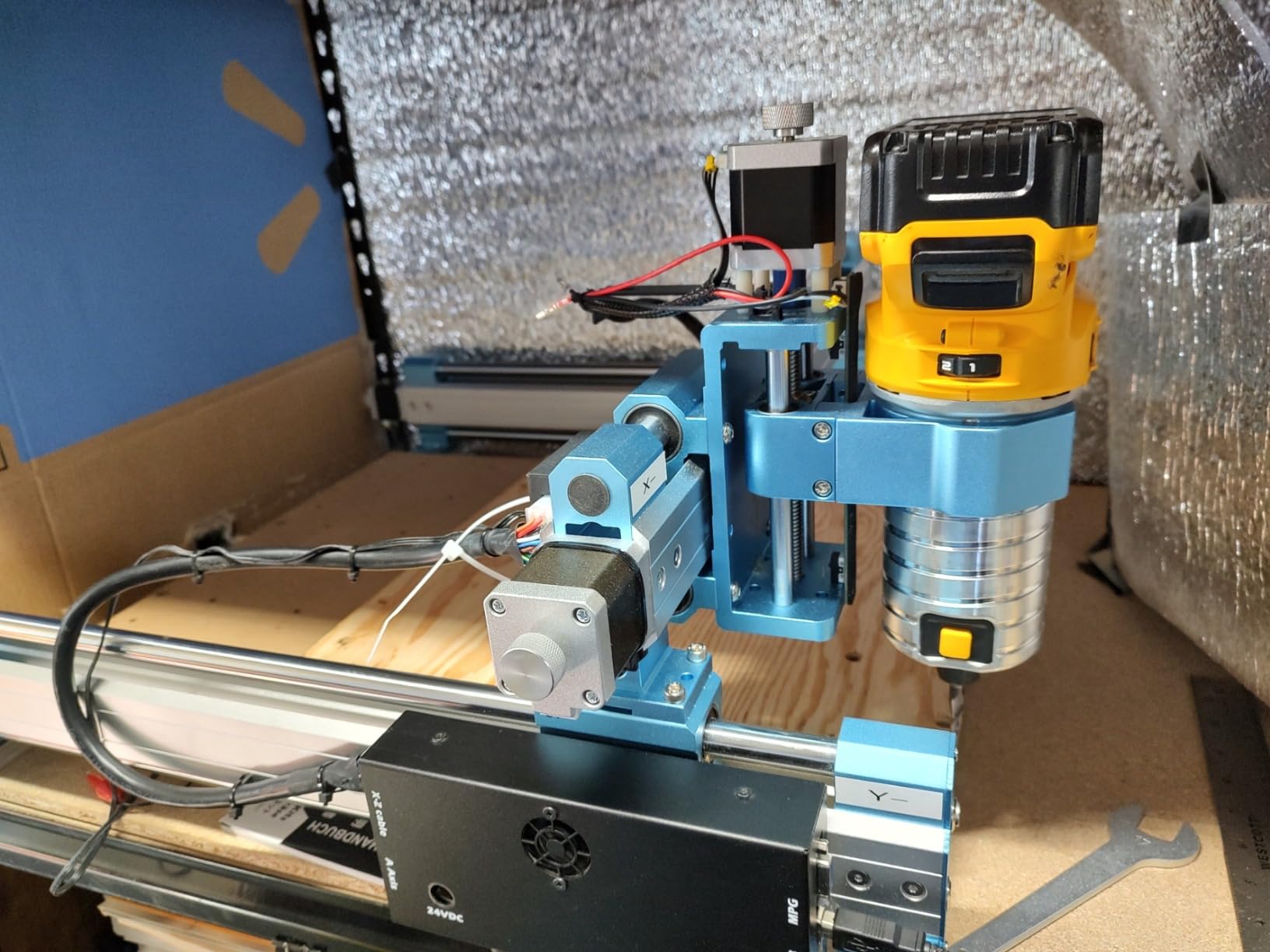
If you machine in an apartment, a basement or a shared office, this is the machine to shortlist. Dual 16mm HSS steel tubes per axis with lead-screw drives, plus a 32-bit controller running silent Toshiba stepper drivers, made this the least noisy machine we ran. The lead-screw drive also gives the smoothest finish of the wood-and-acrylic group.

The reinforced hybrid spoilboard with a centre aluminum support bar is a small detail that matters more than it sounds. Spoilboard sag on these machines is what causes a pocket in the middle of the bed to cut deeper than one at the edge, and this is the only machine in the guide that addresses it in the frame design rather than as an accessory.
Two limits to weigh. The included spindle runs at 9,000 RPM, which is below what many two-flute bits need, and it cannot hold a quarter inch shank, so carbide end mills for aluminum are out until you upgrade. Tramming corrections are also hard to dial in because the adjustment points are limited. Owners report the bundled Candle software is thin compared with gSender or VCarve Pro.
When the 4040-PRO is the right call
Choose it for signs, panels and acrylic work in a space where noise matters. The 435 by 400 by 80mm envelope is a comfortable one-setup size for most signage and prototype work, and the supported spoilboard means a full bed of material stays flat. Assembly is about 15 to 30 minutes with pre-assembled modules.
When the 4040-PRO is the wrong call
It is the wrong pick if you are chasing precision metal parts, because the spindle ceiling is a 9,000 RPM small-mount unit and the squaring adjustments are limited. Adding a larger spindle and a 69mm mount moves you close to buying a different machine, so factor that in before you start. Our bench tool roundup covers alternatives for small-batch work.
7. TTC3018 Pro: Light, Complete and Built for Desks
TTC3018 Pro CNC Router Machine,Desktop CNC Engraving Machine
300 x 180 x 40mm work area
All-metal Z axis with T8 lead screws
0.1mm positioning accuracy
15 lb total weight
Pros
- Metal Z axis with T8 lead screws is more stable than nylon-Z competitors
- Very light at 15 lb and small enough for a desk corner
- Complete kit with 10 cutters
- ER11 collet and spindle included
- Good value for engraving
- nameplates and small-batch parts
Cons
- USB-only connection means G-code must be transferred by cable
- No limit switches or emergency stop included
- Included 775 spindle is loud and underpowered for deep cuts or material over about a quarter inch
- Supplied USB cable reportedly causes mid-job freezes
At 15 lb this is the machine that changes a decision for a lot of people. A lot of hobby CNC buyers have a normal-sized desk and no intention of building a separate machine stand, and this is the only machine in the guide that fits that constraint without compromise. The all-metal Z axis with T8 lead screws also puts it ahead of the plastic-profile alternatives at this size.
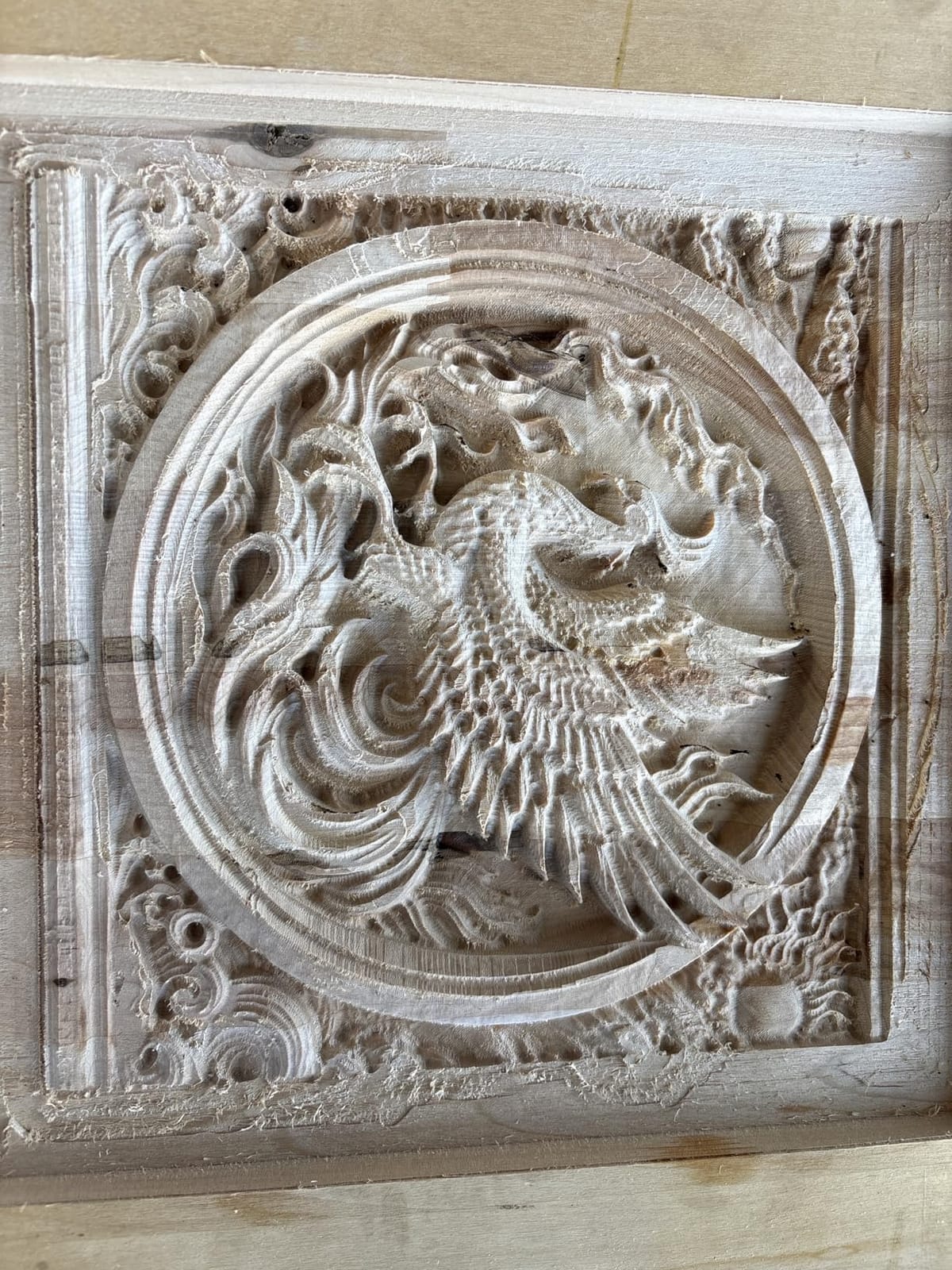
Everything you need to make a part on day one is in the package: 10 cutters, an ER11 collet covering 0.5 to 7mm, and the spindle. The 0.1mm stated positioning accuracy is a positioning figure rather than a machining tolerance, but for engraving, nameplates, PCB routing and thin brass shims it is entirely adequate.
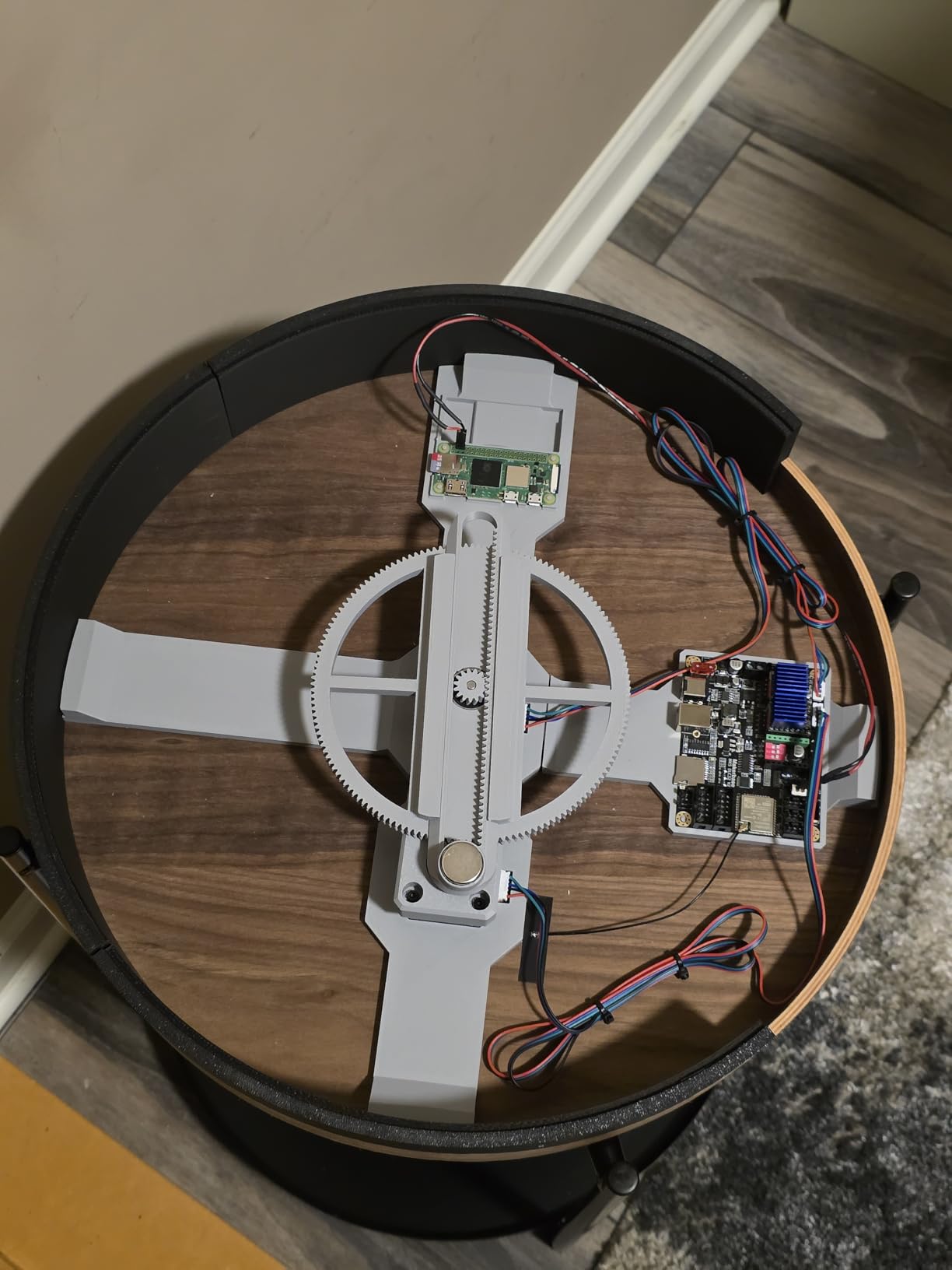
Two design choices work against you. The 32-bit GRBL board is USB wired only, with no TF card slot, no Bluetooth and no WiFi, so every job needs a tethered PC, and the supplied cable has been reported to cause mid-job freezes. There are also no limit switches or an emergency stop, so a bad setup can drive an axis into the frame. Plan to swap the USB cable early and use gSender rather than Candle.
When the TTC3018 Pro is the right call
Pick it if space is the binding constraint. It handles engraving, nameplates, PCB isolation routing, wax and pattern work, and it is a strong stepping stone once you outgrow it, because the concepts transfer directly to a larger machine. The 40-piece disassembly kit also makes it a genuinely useful teaching machine for a classroom.
When the TTC3018 Pro is the wrong call
It is the wrong choice for metal beyond thin sheet, for anything taller than 40mm, and for anyone who wants to run jobs away from a computer. The included spindle is loud, which undercuts the small-footprint advantage in a shared space. If your parts are already metal, spend up a tier for a real spindle.
8. CNCTOPBAOS 3018-PRO: The Tinker’s Platform
CNCTOPBAOS 3018-PRO CNC Router Engraving Machine w/GRBL Offline Controller
300 x 180 x 45mm work area
120W 775 spindle to 10,000 RPM
GRBL 1.1f board in a housing
SD card offline controller
Pros
- Low entry cost and accurate enough for small 2.5D parts and molds
- Offline controller runs G-code from an SD card with manual axis zeroing
- GRBL 1.1f board sits in a proper case with E-stop
- probe and limit switch ports
- Works with standard open-source software such as Carbide Create
- FreeCAD and Easel
Cons
- X-axis screw is reported to wobble
- which throws off Z accuracy during cuts
- Actual reach falls short of the advertised 300 x 180mm
- Included 775 spindle is low on both RPM and torque
- Frame is not rigid and single-pass depth cutting is not possible
- No limit switches
- probe or E-stop hardware included despite the board ports
The CNCTOPBAOS 3018-PRO is the machine to buy if you want to learn the software stack rather than chase tolerance. It runs the open-source toolchain well: Carbide Create, FreeCAD and Easel all talk to its GRBL 1.1f board without friction, and the board itself sits in a proper housing with ports for an E-stop, a probe and limit switches. Most of the parts to fill those ports are a separate purchase.
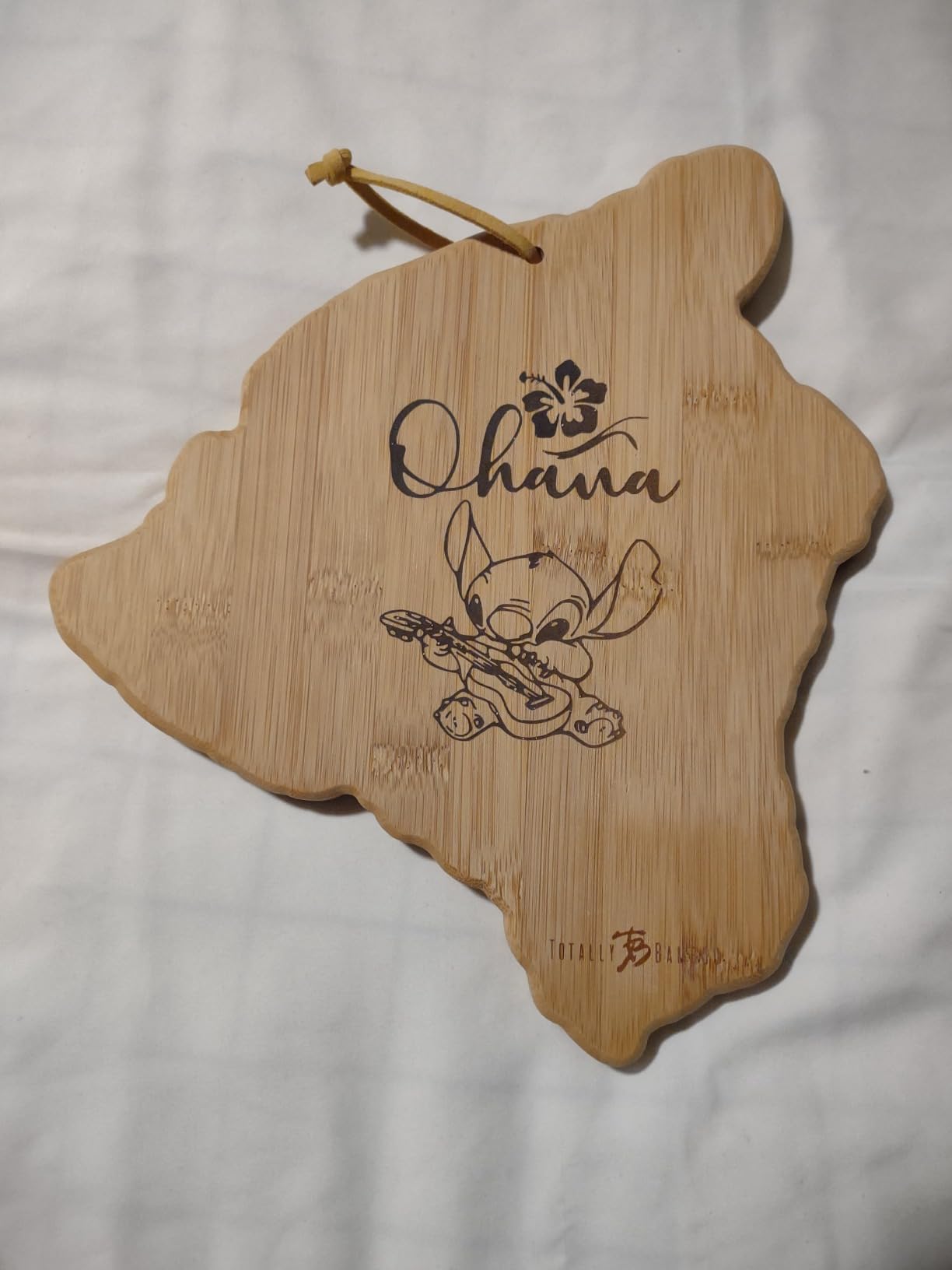
The offline controller is the sleeper feature. It reads G-code and NC files from an SD card and lets you zero all three axes and control the spindle by hand, which means a long job does not need a tethered computer. It cuts plastic, wood, acrylic, PVC, PCB, copper and aluminum, provided you keep the depth of cut shallow.
Owners report an X-axis screw that wobbles, and a wobbling screw directly translates into Z error during a cut, which is the one thing you cannot tolerate on a small part. Actual usable reach also falls short of the advertised 300 by 180mm, so measure your largest part and leave margin. At 90 reviews this is the thinnest evidence base here, so expect to do your own troubleshooting.
When the CNCTOPBAOS 3018-PRO is the right call
Choose it when the goal is software skills and 2.5D parts in soft materials. The open-source stack means nothing is locked in, and if you later buy a larger machine, every CAM package you learn here still applies. It is also a reasonable second machine for a workshop that already has a capable mill and needs a cheap dedicated PCB or wax cutter.
When the CNCTOPBAOS 3018-PRO is the wrong call
It is the wrong pick if tolerance is the whole point. The soft frame, the reported X-axis screw wobble and the 120W spindle put it at the bottom of this list for repeatability on a 10mm metal part. Anyone buying this should budget for a spindle upgrade and a re-squaring session before the first precision job.
How to Choose a Hobby CNC Mill for Small Parts
Most disappointing hobby CNC purchases are not bad machines. They are correct machines bought for the wrong job, usually because a work envelope was chosen before the part was measured. Work through these six questions in order and you will narrow eight candidates down to one in about ten minutes.
Match the work envelope to your largest part
Measure your biggest part, add a few millimetres of clamping space on two sides, then choose a bed that clears that number. The popular guidance is a fit-in-one-setup rule: if the part goes on and off the machine more than once, you will burn hours re-zeroing for a tolerance you never had.
For a 1-2cm part, the 300 by 180mm beds are genuinely sufficient, which is why three of the eight machines here use that footprint. If you ever expect a panel or a small enclosure, the 400mm and 435mm beds give you room without much extra desk space. A 110mm Z stroke matters for thick material and nothing else.
Do not buy a large bed for small parts simply because it looks more capable. Bigger beds flex more between rails, and a 400mm bed with a light frame will deflect more under a plunge than a 300mm bed with a stiff one.
What accuracy specs really mean for a 10mm part
This is the question the top-ranking forum thread asks and nobody answers, so here is a straight translation. Repeatability is how tightly the machine returns to the same coordinate, and accuracy is whether that coordinate is true. A machine with 0.1mm stated positioning accuracy can hold that figure on a 10mm part, which is 1 percent of the part width, and it will still feel loose to you because that is a full tenth of a millimetre of variation across four holes.
Quoted accuracy numbers on budget machines are frequently unverified marketing, and forum buyers are right to treat them as such. What actually determines repeatability on a small part is mechanical: a linear rail on Z instead of a threaded rod, a lead-screw drive instead of a belt, and a frame that does not twist when the spindle loads the quill.
Runout is the other number worth understanding. It is how far the cutting edge sits off true as the tool rotates, so a poorly seated collet turns a straight cut into a scalloped one. Spend more time cleaning collets and re-seating tools than you do worrying about a tenth of a millimetre in the spec sheet. Our small tool kit recommendations cover the measuring side of this.
Mill versus router: why the label matters
Almost every machine in this guide is a router platform sold for milling work, and there is nothing wrong with that for small parts. What changes is spindle authority. A router spindle pushes air, while a milling spindle with real torque and lower max RPM drives a cut rather than pushing past it. That is the whole reason the 400W and 500W machines here behave differently from the 60W and 120W ones on the same material.
A low-RPM, high-torque spindle running two-flute aluminum end mills is the correct configuration for a small metal part. A high-RPM trim router with a single-flute bit is not a substitute, however good the machine frame is. Match the spindle to the bit and the material rather than the other way around.
Spindle power and depth of cut on small parts
Small parts do not need a lot of spindle power, which surprises people. A 10mm bracket needs very little material removed per pass, so the limiting factor is usually how gently the frame takes a plunge, not total watts. Where spindle power decides the job is stock thickness, and a 60W spindle will not keep an edge in more than a very thin sheet.
Higher max RPM matters for small-diameter end mills, since a 3mm cutter needs a lot of RPM to cut a usable surface speed. Low-RPM spindles that cannot exceed 9,000 to 10,000 RPM limit you to larger cutters, which is a real constraint on 5mm and 6mm detail work. Check the max RPM before you buy if you plan small tools.
Workholding for small parts
Most small parts are scrapped by fixturing, not by the machine. A 15mm aluminum block that moves a fraction of a millimetre during a cut will fail a fit no matter how rigid the frame is, and a soft spoilboard does exactly that as the tool pushes against it.
A small machinist vise with parallel jaws is the highest-value accessory for small parts, because it holds a block rigid in two directions. Beyond that, soft jaws milled directly from a scrap block give a perfect grip on a round or oddly shaped part, and a vacuum chuck or a wax bed is the right call for thin PCB material and jewelry wax patterns. A sacrificial spoilboard plus a hold-down clamp covers everything else.
Whatever you use, reserve ten minutes at the end of every session to check that the workholding has not crept. That habit alone prevents more small parts than any machine upgrade.
Parts availability and when to graduate past hobby class
Support is a purchase criterion, not an afterthought, and forum users are blunt about it: knowing you can get a part is what keeps a machine running. Check that the controller board, stepper motors, spindle and limit switches are all available separately, because the machines in this guide share a common GRBL ecosystem and boards are the most common part to need.
Know when to stop climbing this ladder. The hobby class tops out when you need steel, when you need a fourth axis for production, or when you are running parts overnight and need a machine that recovers from a crash on its own. A used Tormach 440 or a small manual mill with a retrofit control is the traditional next step, and the honest advice from every forum thread we read is the same: buy it when you are already earning from the machine, not before.
Until then, the biggest quality upgrade available to you is not a new machine. It is better workholding, a dust extractor, a set of fresh collets and the patience to learn one CAM package properly.
Frequently Asked Questions
What is the best small CNC mill?
The FoxAlien Masuter Pro is the best small CNC mill for most people, because its all-metal frame and linear-railed Z axis hold repeatability on 10 to 20mm parts while leaving room to grow into metal later. The Genmitsu 3018-PRO is the better choice if your parts stay in wood, plastic and PCB material, and the FoxAlien Masuter 3S is the pick if aluminum is already on your list.
What is the best CNC machine for hobbyists learning at home?
The Genmitsu 3018-PRO is the best CNC machine for a beginner at home, with nearly 1,700 reviews, abundant setup videos and an offline controller included. Its 300 by 180 by 45mm envelope suits parts in the one-to-two-centimetre range, and the whole ecosystem runs on free open-source GRBL software. Expect to spend a weekend on assembly and squaring.
Which desktop CNC mill is best for aluminum and brass parts?
The FoxAlien Masuter 3S is the strongest choice in this guide for aluminum and brass, with closed-loop NEMA 23 steppers that slow instead of losing steps, plus a 400W spindle and T12 lead screw on dual linear rails. The LUNYEE 3018 PRO MAX is a credible second option if you want metal capability in a smaller footprint with limit switches and an emergency stop included.
Can a hobby CNC mill cut aluminum?
Yes, with the right spindle and gentle feeds. The machines here that hold an edge in aluminum run 300W to 500W spindles, and the 400W and 500W models cut clean pockets and small brackets in light depth of cut. The 60W and 120W spindles on the entry machines are limited to thin sheet and shallow finishing passes.
How precise are desktop CNC machines on small parts?
Desktop CNC machines typically repeat to within a fraction of the quoted figure, and those quoted numbers are often unverified. On a 10mm part, a tenth of a millimetre of variation is one percent of the part width but still a poor fit. What matters more is mechanical: a linear rail on Z, a lead-screw drive and a frame that resists twist under spindle load.
What are the downsides of hobby CNC milling?
The main drawbacks are a learning curve in CAM software, manual tool changes and re-zeroing on multi-tool parts, no limit switches or emergency stops on most entry models, and a bed that sags without a supported spoilboard. Spare parts and support quality also vary widely, so check that the controller board and steppers are all available separately before you buy.
Final Verdict: Which Hobby CNC Mill to Buy in 2026
The best hobby CNC mill for small parts in 2026 is the FoxAlien Masuter Pro, because it is the only machine here that combines an all-metal frame and a linear-railed Z axis with an upgrade path to real metalwork. Buy the Genmitsu 3018-PRO instead if your parts are wood, plastic or PCB, and buy the FoxAlien Masuter 3S if aluminum is already on your job list today.
Whatever you choose, buy the workholding before you buy the second end mill. A small machinist vise and a set of fresh collets will protect more of your parts than any machine in this guide. If you want our picks delivered to the top of the page, use the price buttons above, and start with one simple 15mm test block in the material you actually intend to cut.